
At the turn of the 20th century, El Paso, Texas, was shedding its frontier identity fast. In 1900, the city had a population of 15,906. By 1910, that number had jumped to 39,279, and by 1925, it reached 77,560. This was a city on the move — building institutions, expanding its streets, and drawing in people from across the United States and Mexico. El Paso sat at a crossroads, literally and figuratively, as a major industrial, commercial, and transportation hub along the U.S.-Mexico border.
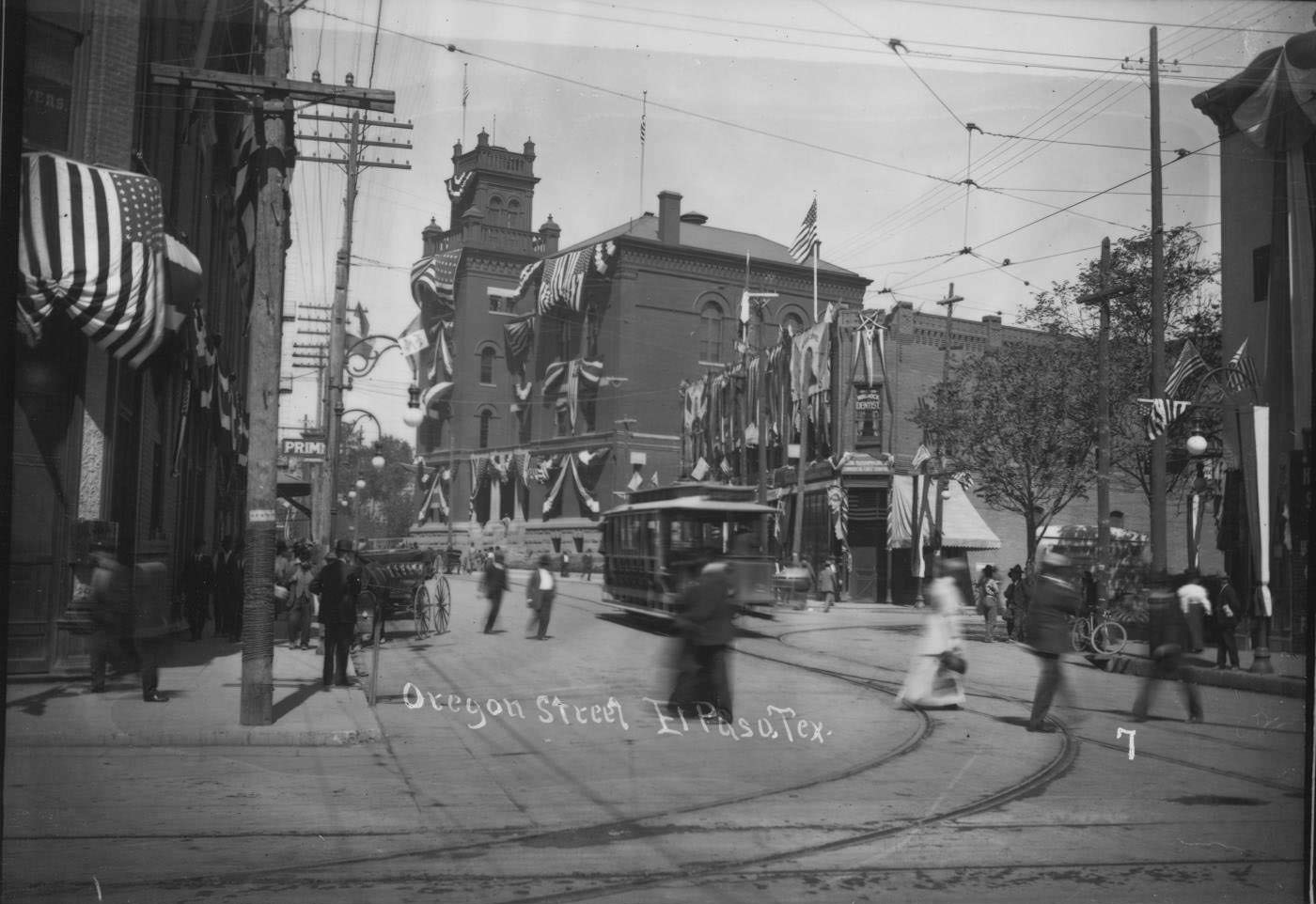
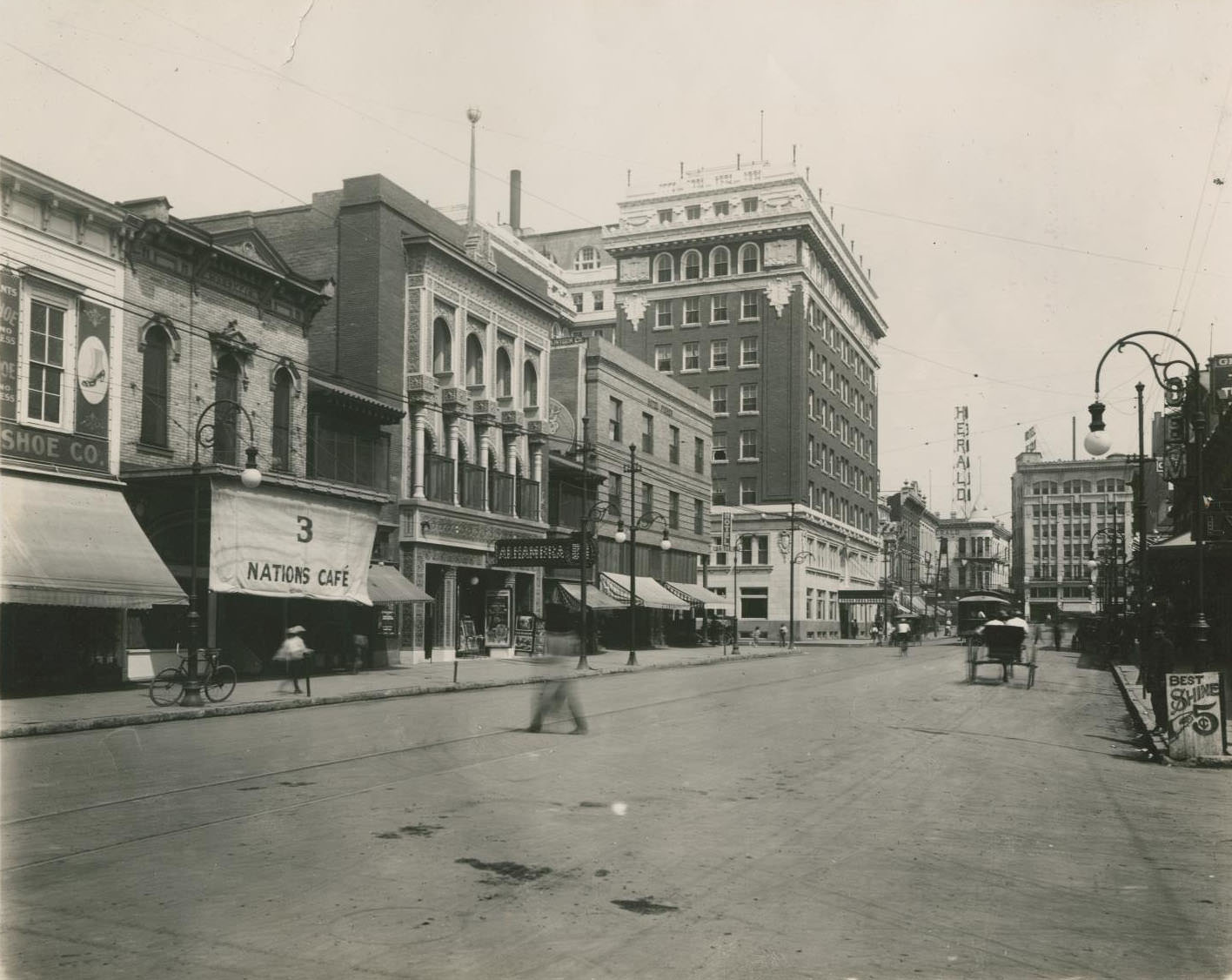
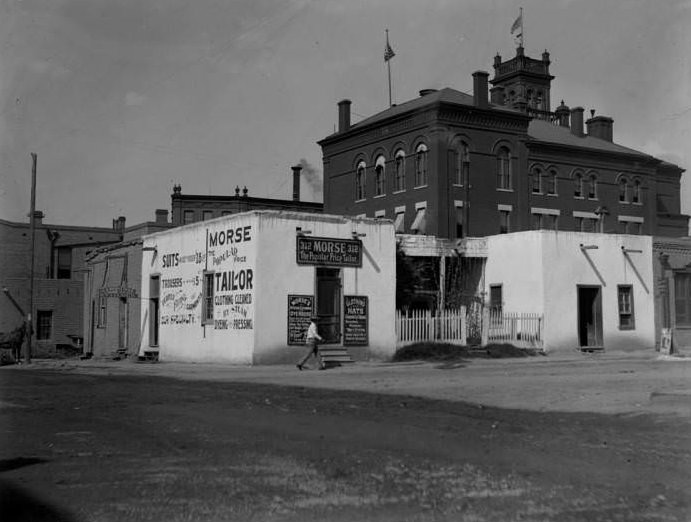
Downtown El Paso in 1900 showed a city already building upward and outward. Oregon Street was one of the city’s main commercial corridors, lined with brick storefronts and the Federal Building at its center. Trams ran down the major streets, carrying residents through a rapidly urbanizing grid. Businesses of all kinds competed for foot traffic, from tailors and hotels to saloons and theaters.
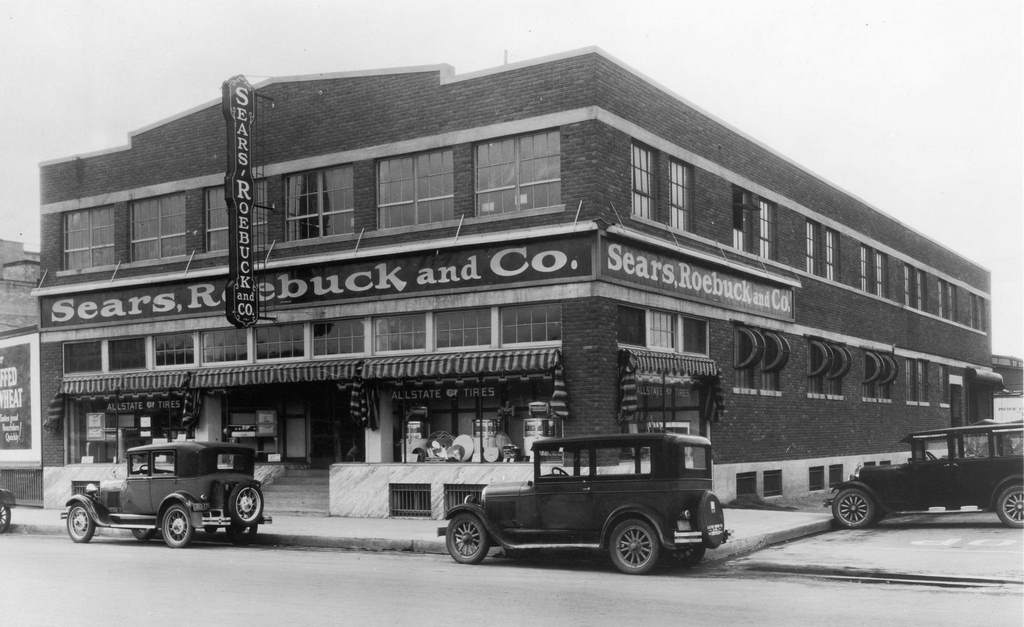
National retail chains had already made their way to El Paso by the early 1900s. Sears, Roebuck and Co. set up a storefront in the city, reflecting just how connected El Paso had become to the broader American commercial economy. The railroads that ran through El Paso made it possible to ship goods in and out at scale, and local shoppers were quick to take advantage.
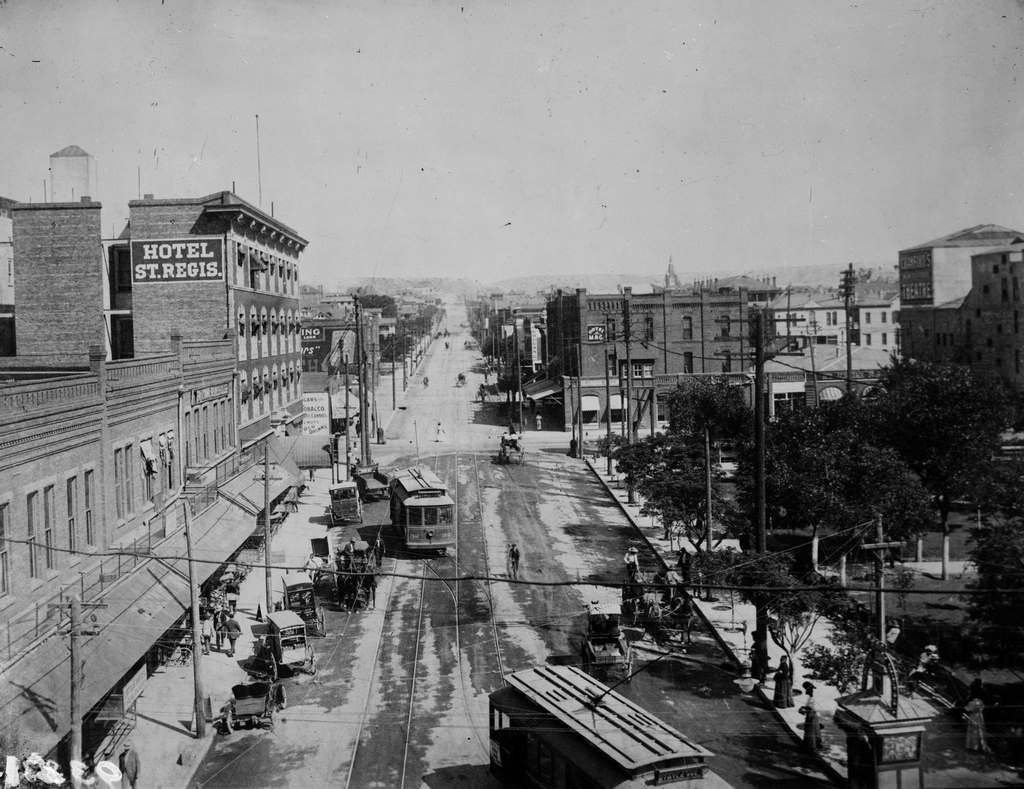
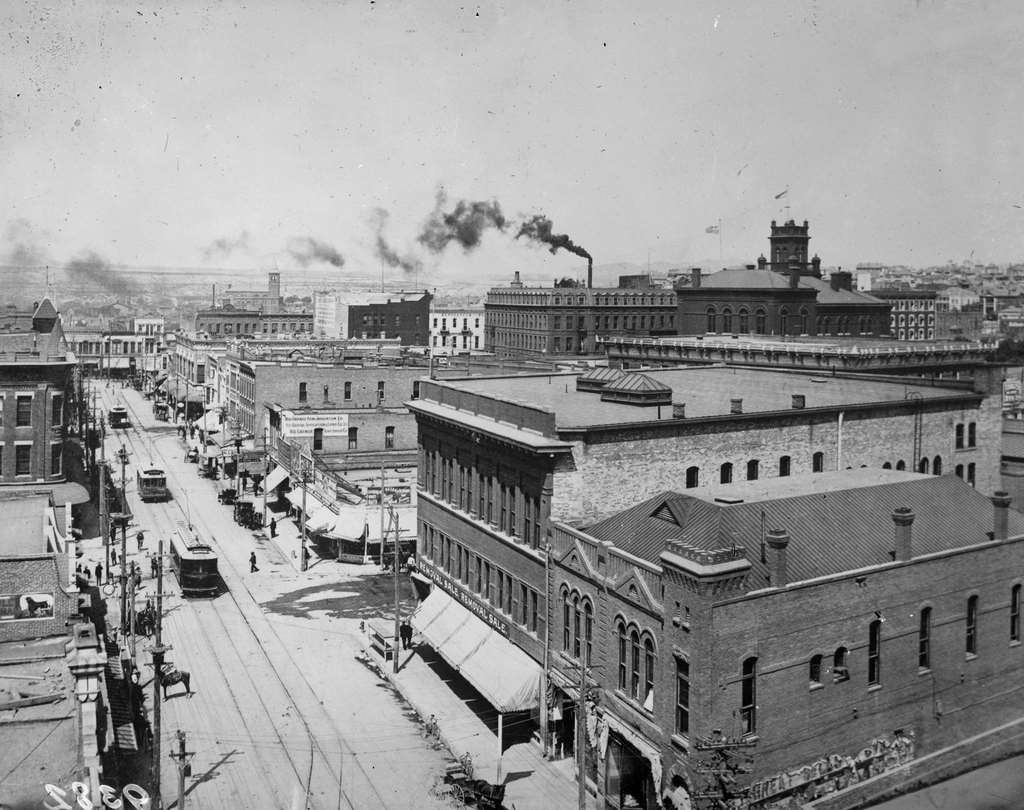
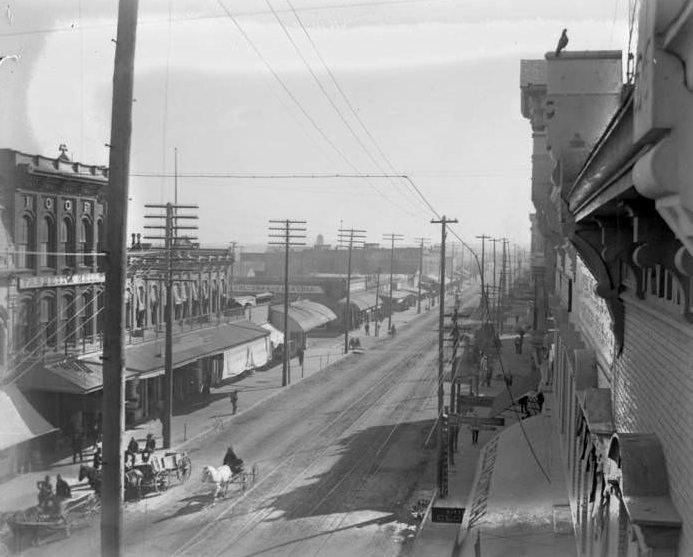
By 1909, electric trams were a fixture of daily life in El Paso. Lines ran down Oregon Street and San Antonio Street, connecting residents to the city’s growing commercial and civic districts. These streetcar systems were the backbone of urban movement in an era before the automobile dominated American roads. They also reflected the city’s investment in modern infrastructure.
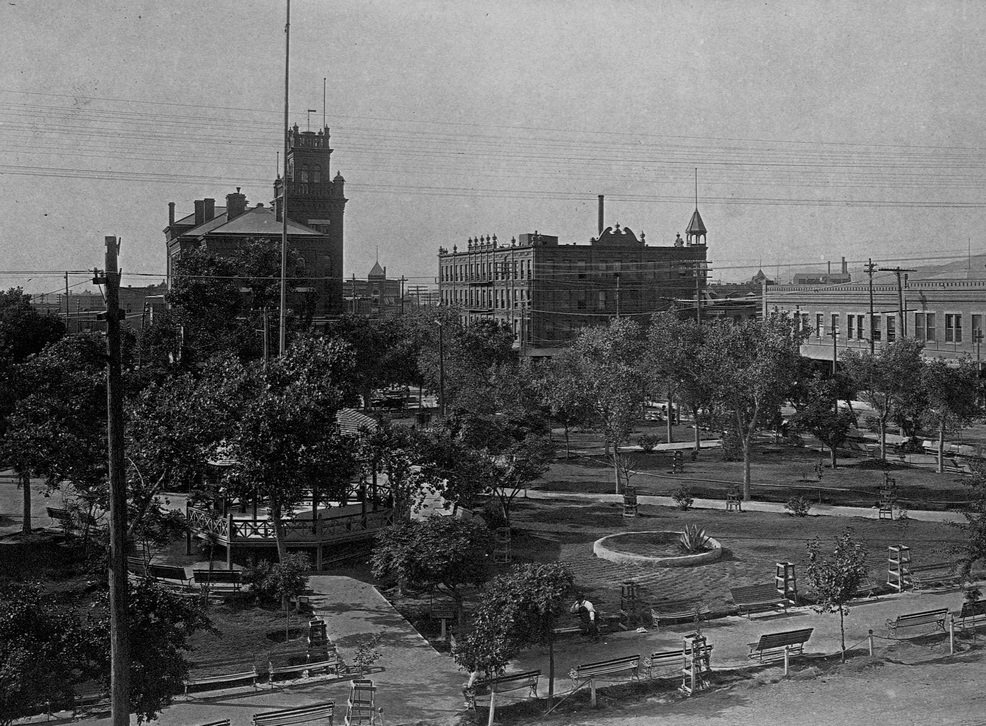
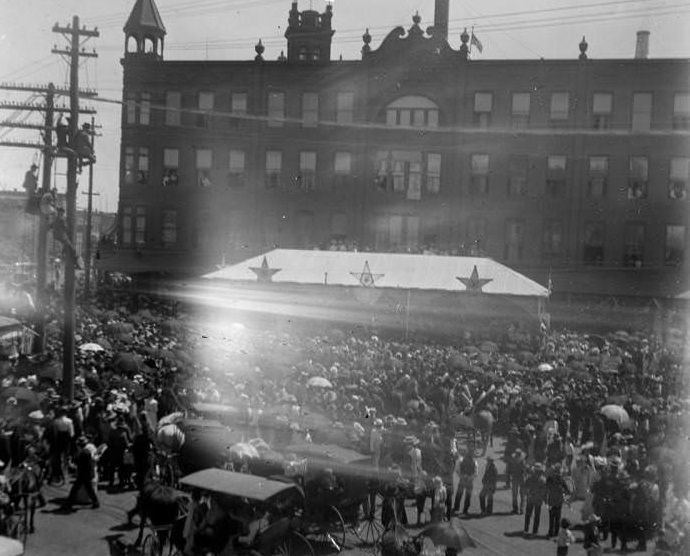
The Hotel Sheldon was one of El Paso’s most prominent landmarks in this era. It stood near the Federal Building and became a gathering point for the city’s political and social life. Crowds assembled in front of it for parades, official visits, and civic events. The park across the street gave residents a green space in the middle of the bustle.
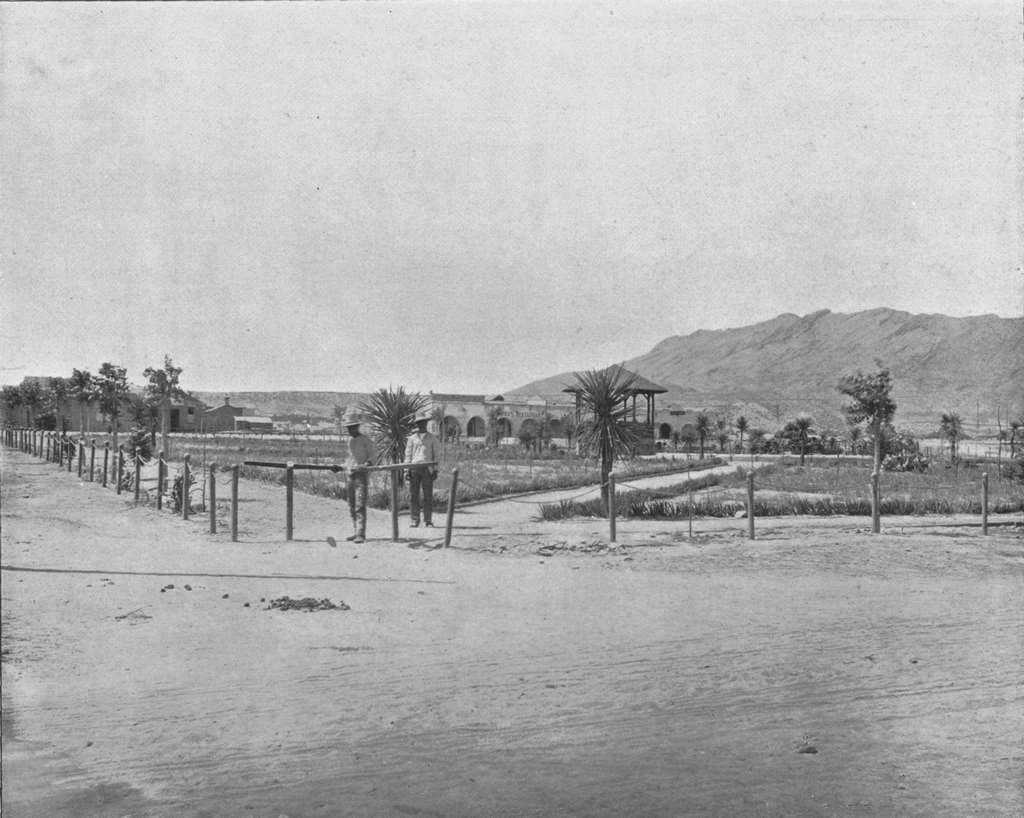
Religion played a central role in shaping El Paso’s communities during this period. Jesuit priests built a network of parishes and schools throughout the El Paso Valley between the 1880s and 1910s. Their work laid the groundwork for the establishment of the El Paso Diocese under Pope Pius X in 1914. Father Carlos Pinto (1841–1919) was among the most well-known of these Jesuits. He was widely called “the apostle of El Paso” for his dedicated ministry to the Mexican community in the region.
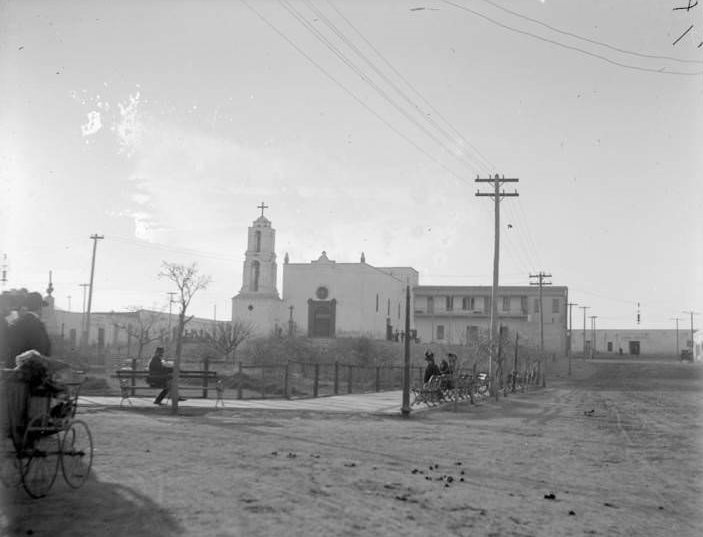
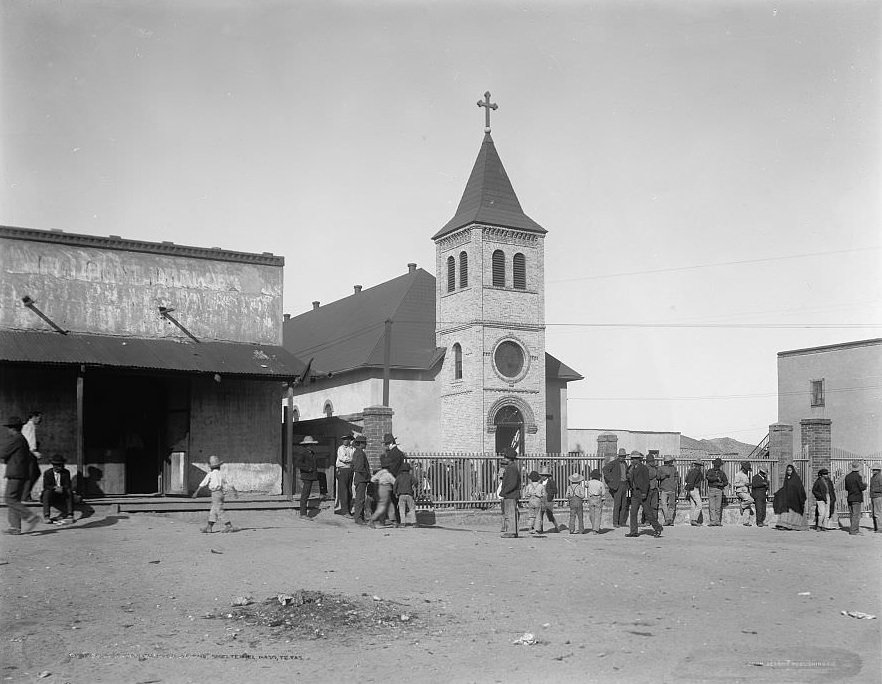
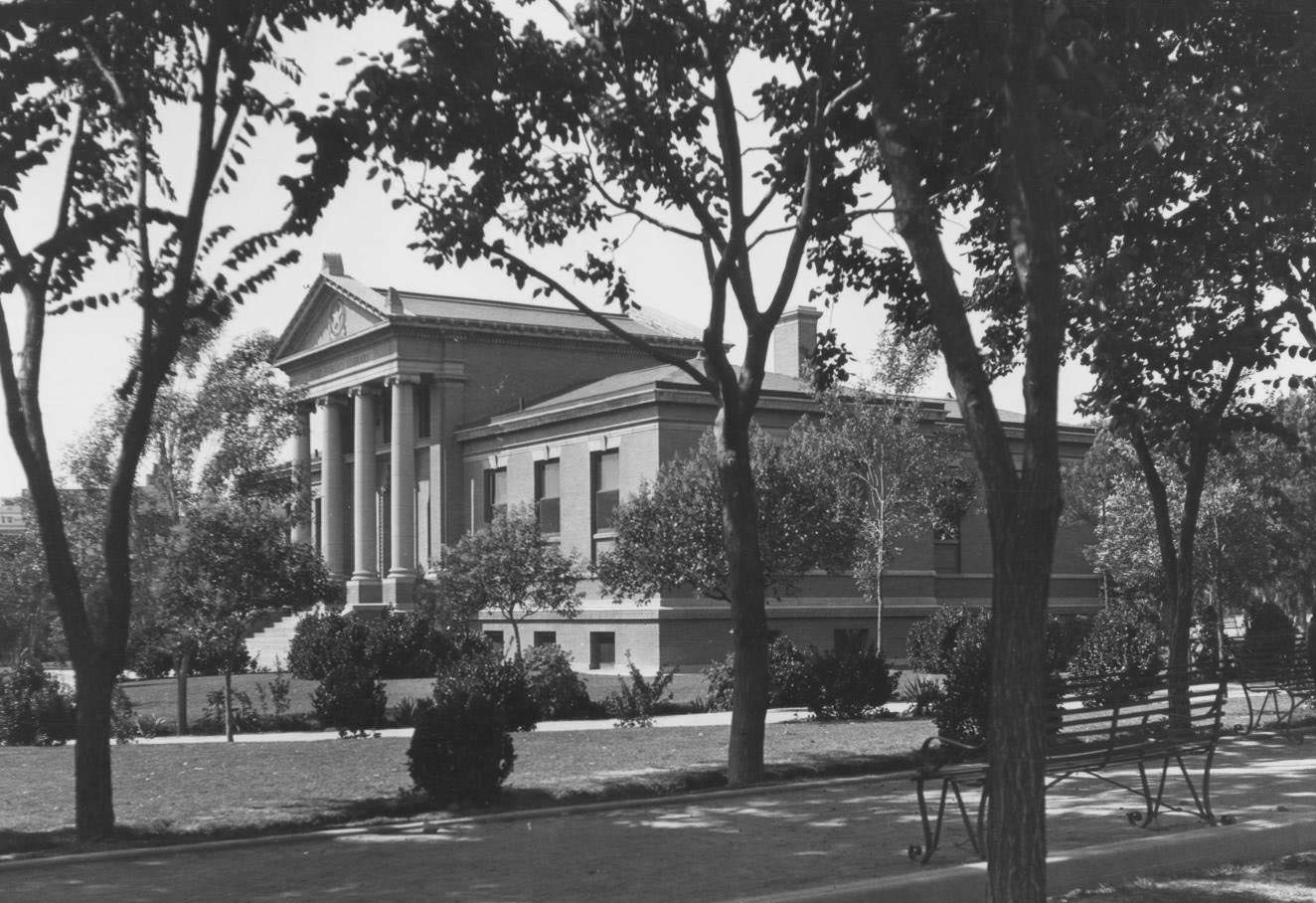
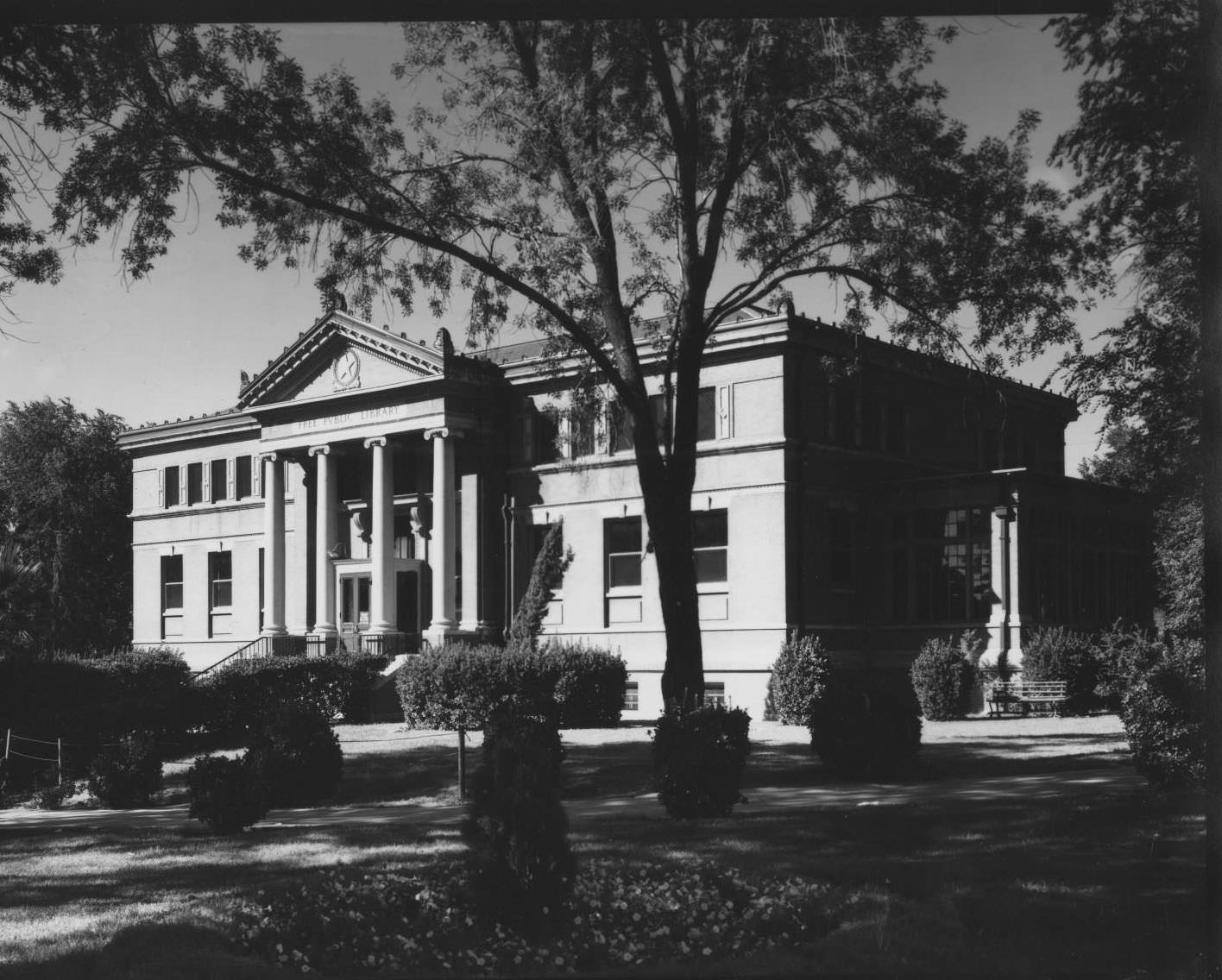
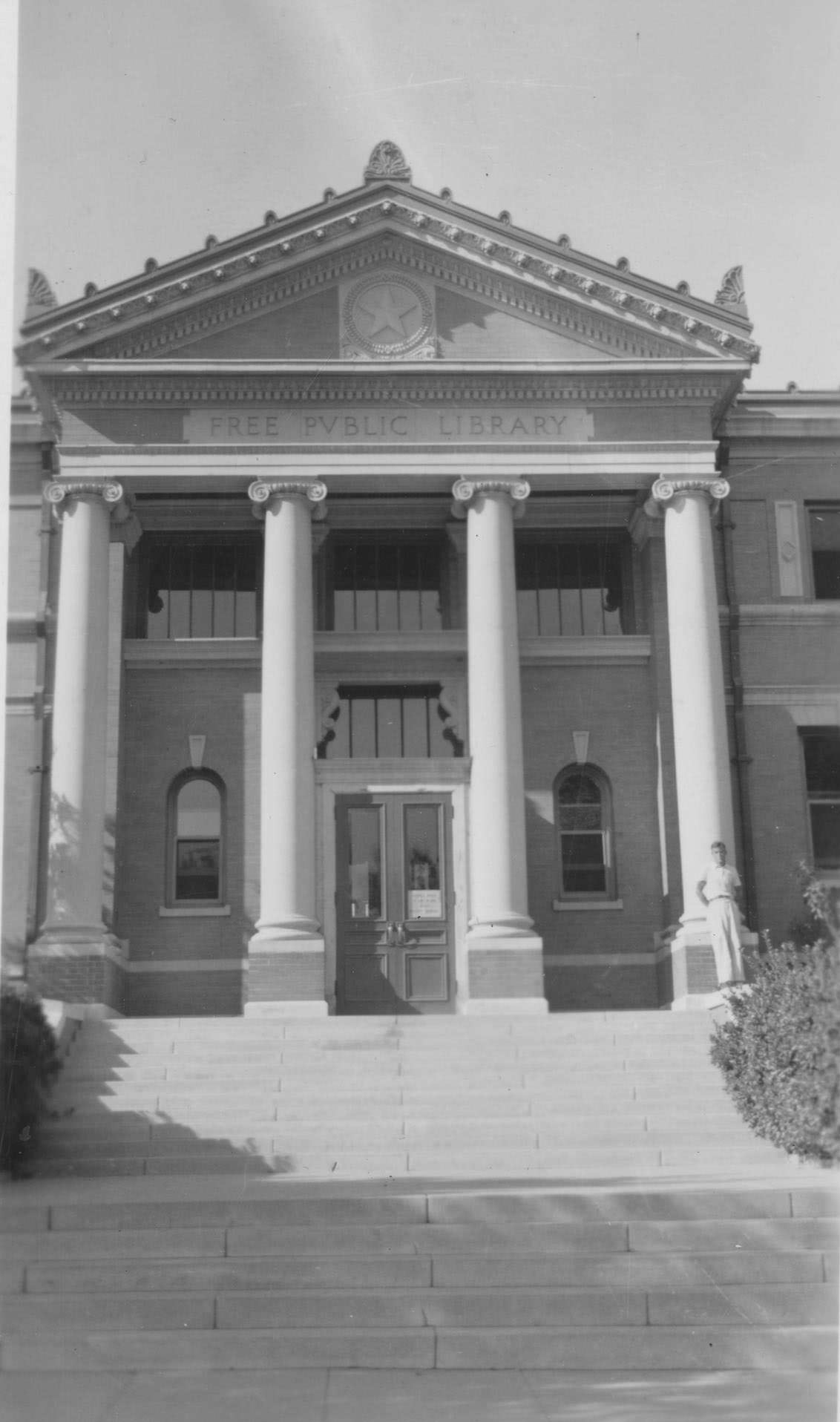
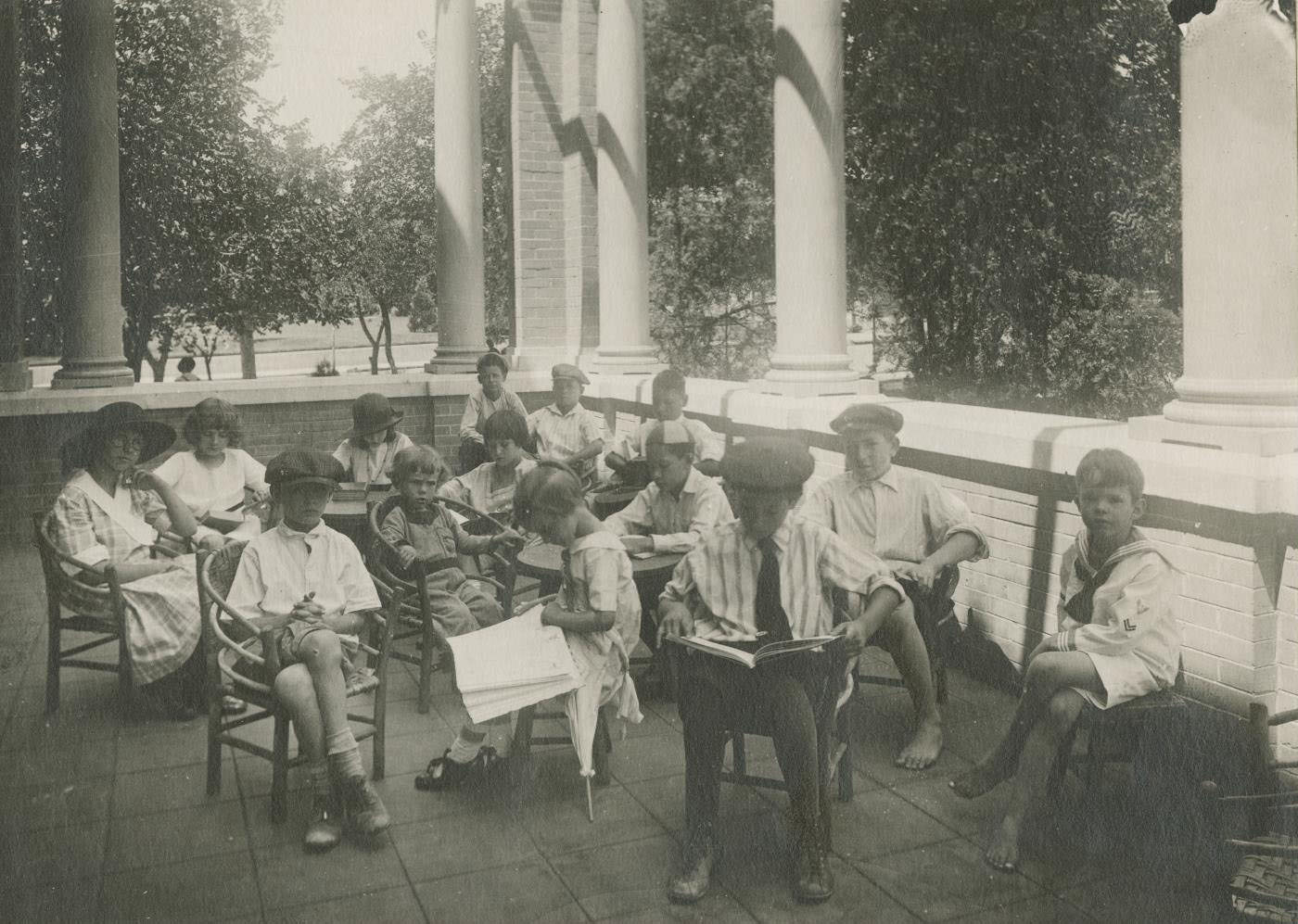
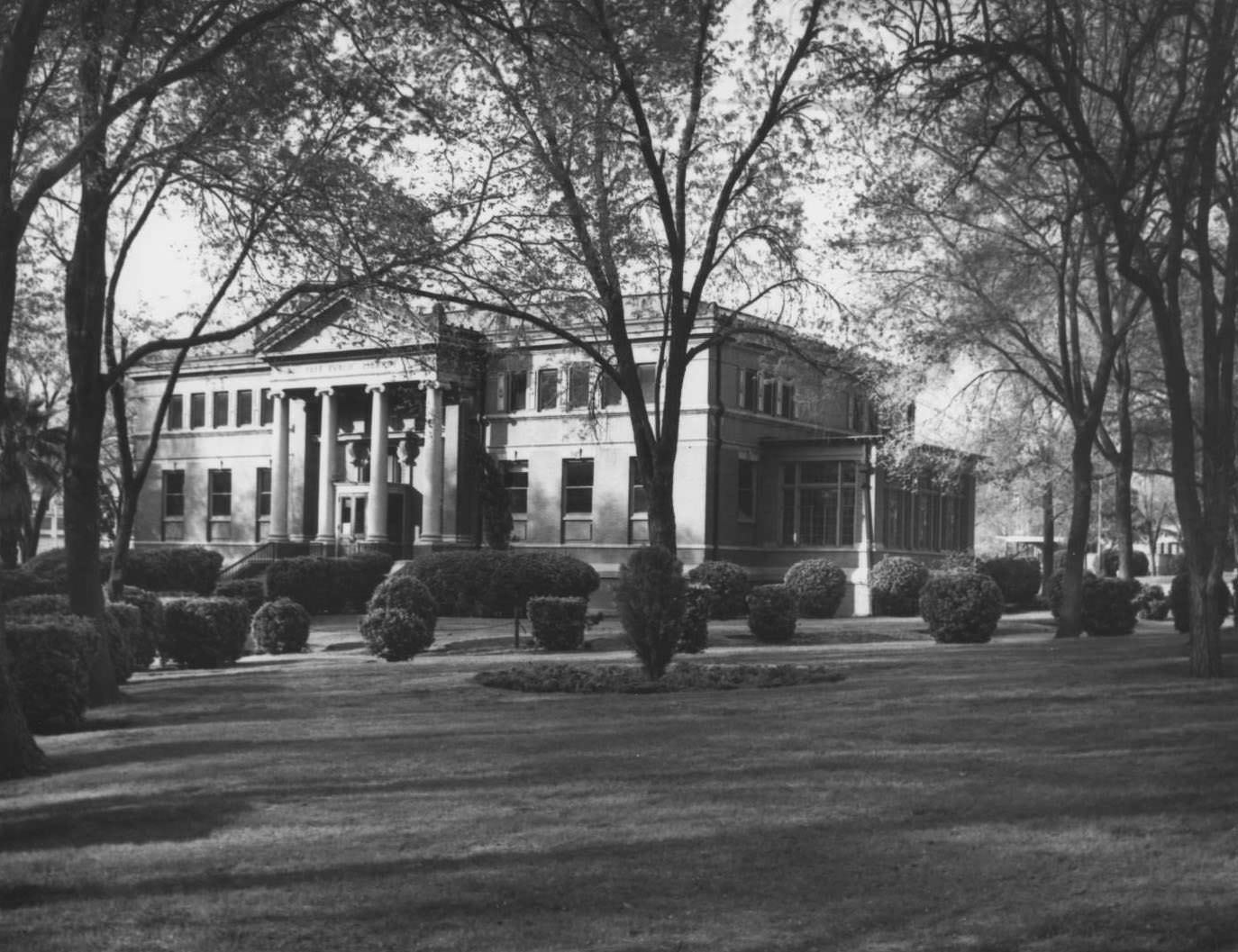
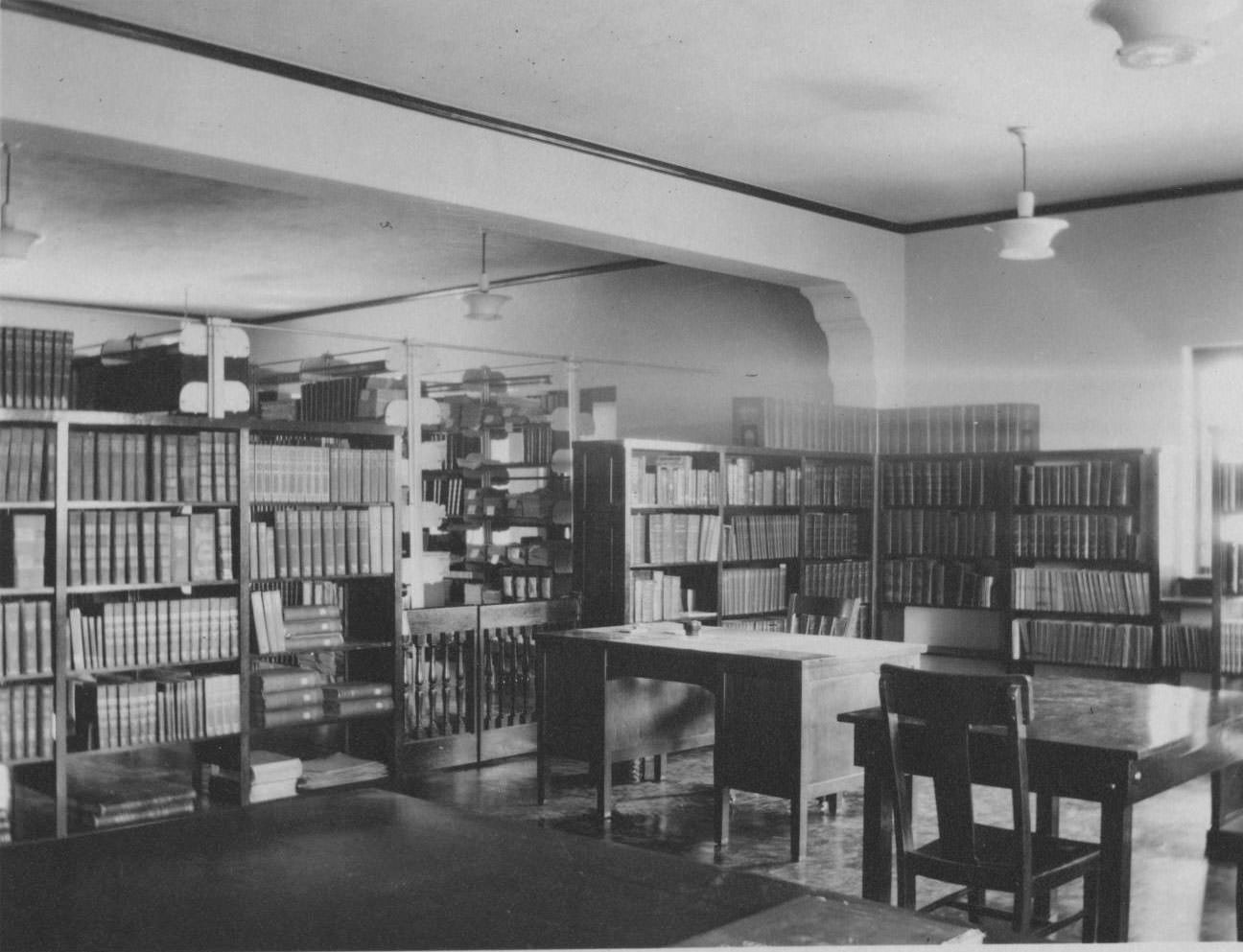
El Paso’s cultural institutions grew alongside its population. The city was home to the oldest symphony orchestra in Texas, and in 1904, Carnegie Library opened its doors, offering the public a free library with impressive architecture — four large Ionic columns, star engravings, and a well-kept lawn. The building became a point of civic pride, and its various spaces served residents of all backgrounds.
One of the most dramatic events of this era took place in October 1909, when U.S. President William Howard Taft and Mexican President Porfirio Díaz held a summit between El Paso and Ciudad Juárez. It was the first time a sitting U.S. president met with a Mexican president, and the first time a Mexican president crossed into the United States. The occasion drew enormous security: 4,000 U.S. and Mexican troops, Texas Rangers, FBI agents, Secret Service agents, and U.S. marshals were all deployed as threats — including assassination plots — circulated across the border.
The threat was real. On October 16, the day of the summit, scout Frederick Russell Burnham and Texas Ranger Private C.R. Moore spotted a man carrying a concealed palm pistol along the procession route. The two men moved quickly, capturing, disarming, and arresting the would-be assassin within feet of both presidents. The security operation had been partly arranged by John Hays Hammond, a wealthy investor with significant holdings in Mexico, who hired Burnham to lead a 250-man private security detail. Hammond and Taft had been close friends since their days at Yale.
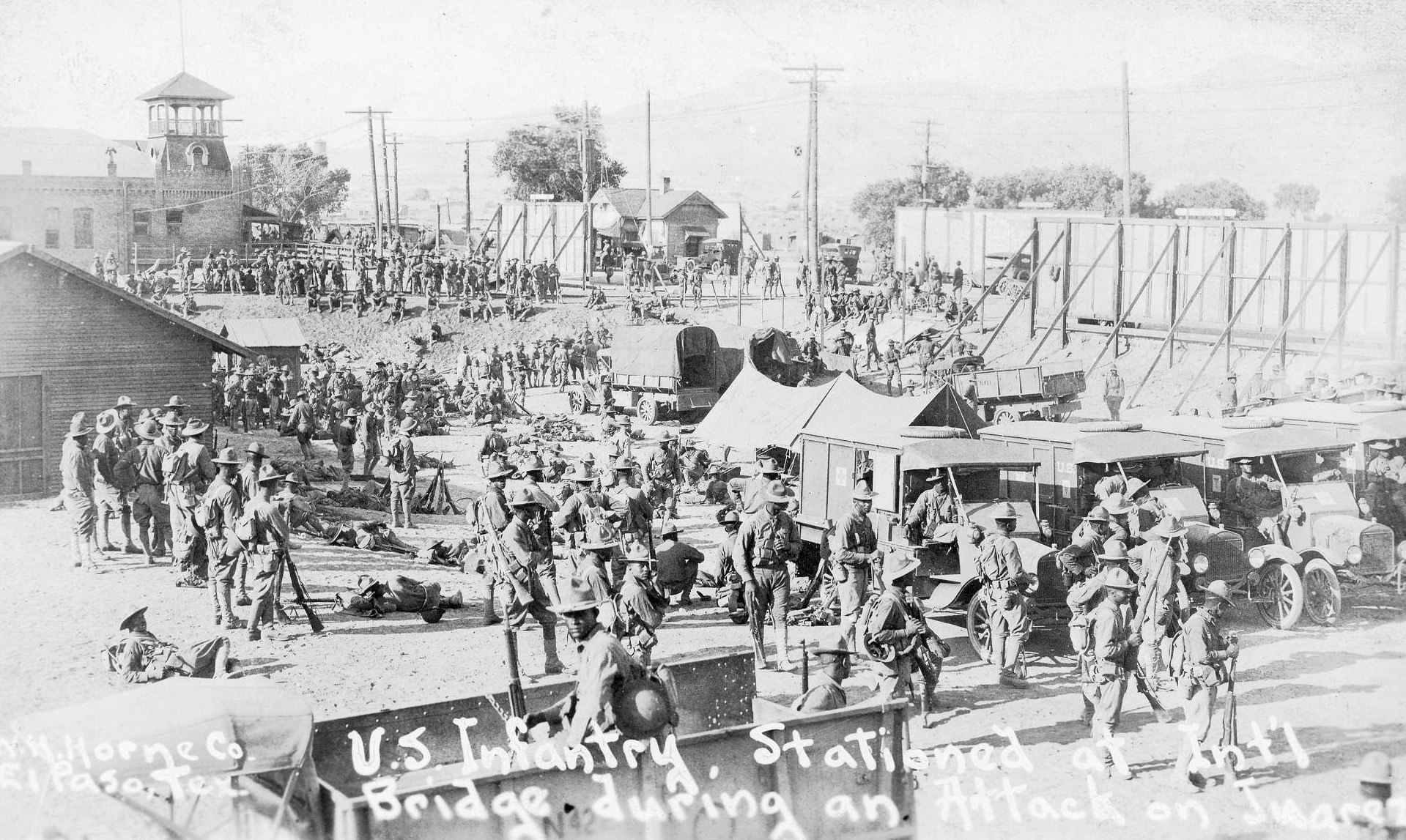
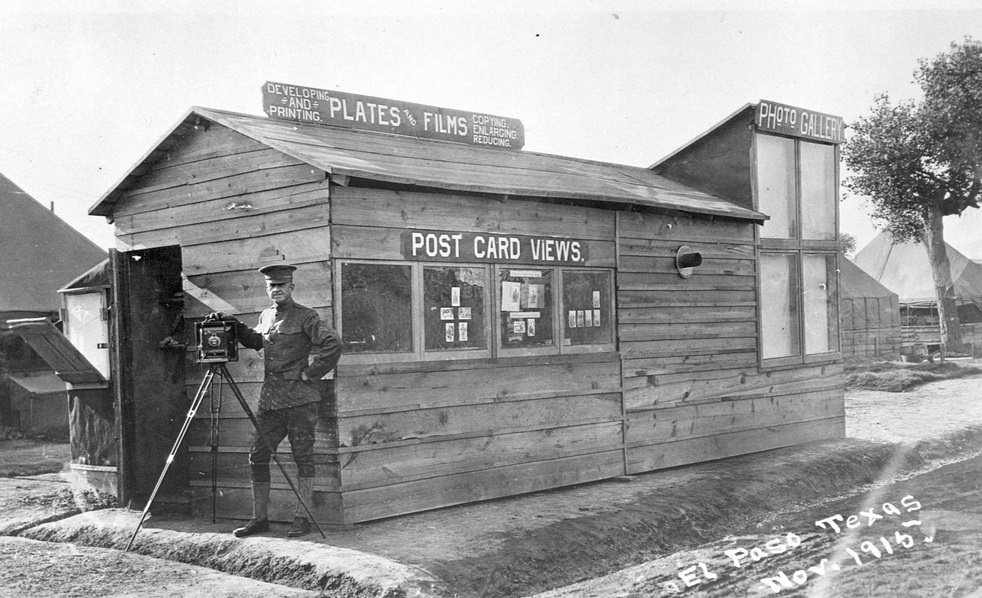
El Paso in the early 1900s was also a military town. African American soldiers of the U.S. Infantry were stationed at posts near the International Bridge, and the 16th Infantry Camp maintained its own facilities in the area. The proximity to Mexico made El Paso a strategic military location, especially as tensions in the region continued to build in the years leading up to the Mexican Revolution.
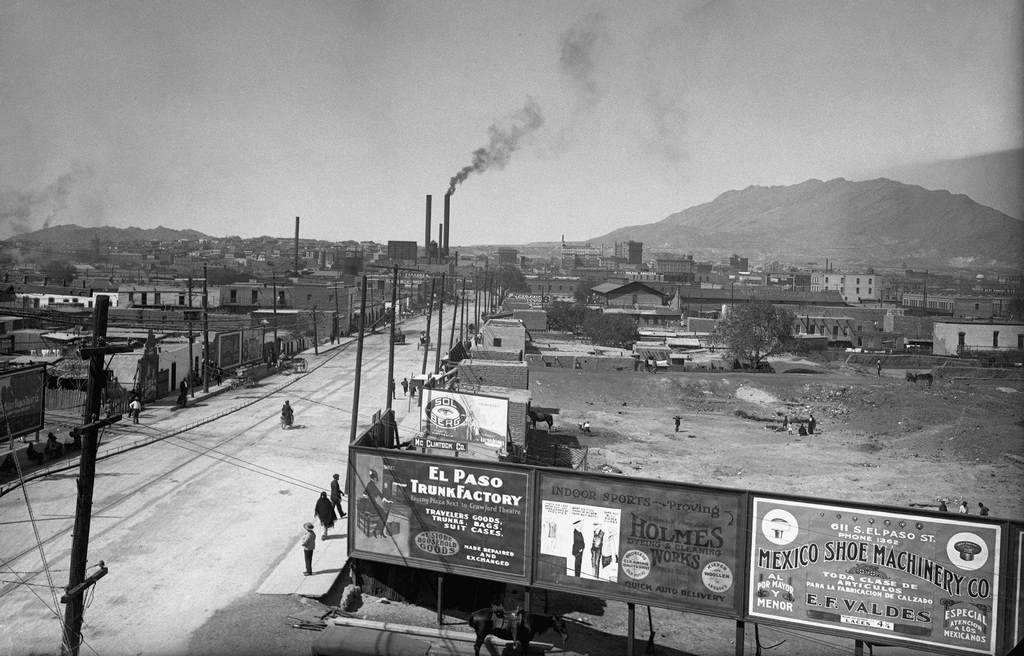
The International Bridge connecting El Paso to Ciudad Juárez was a busy and significant crossing. Looking north from the bridge, the Mexican quarter of El Paso was visible — a dense neighborhood that housed much of the city’s Mexican and Mexican-American population. This community maintained its own cultural identity while navigating life in a rapidly Americanizing city.
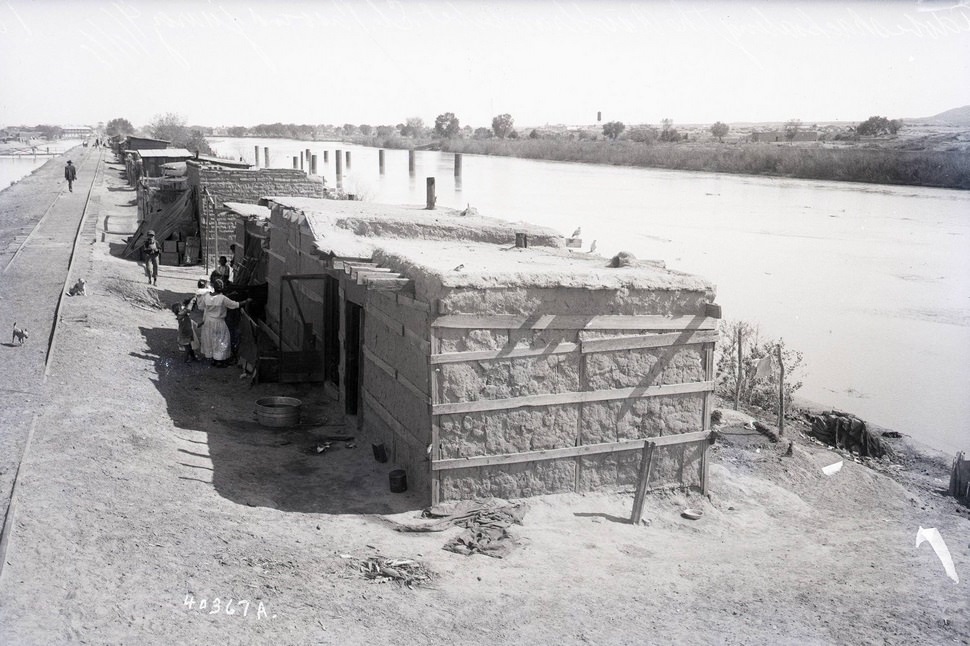
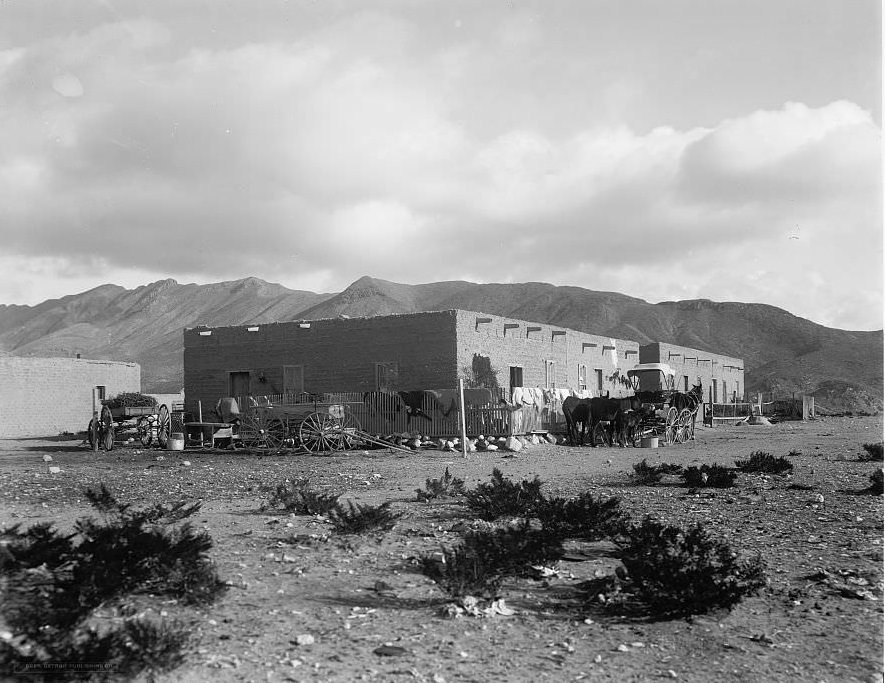
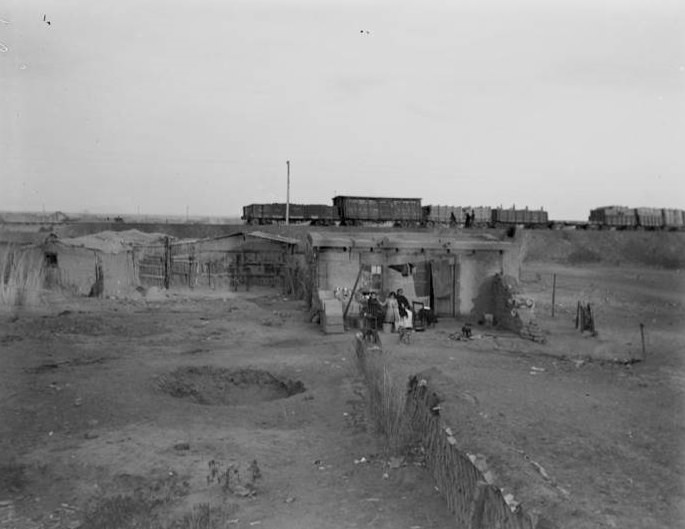
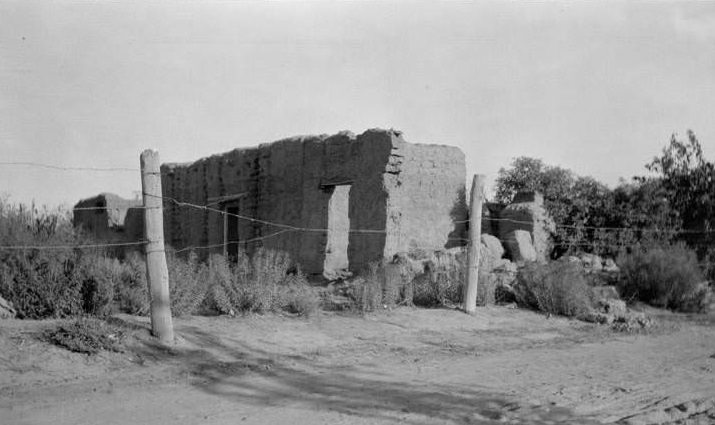
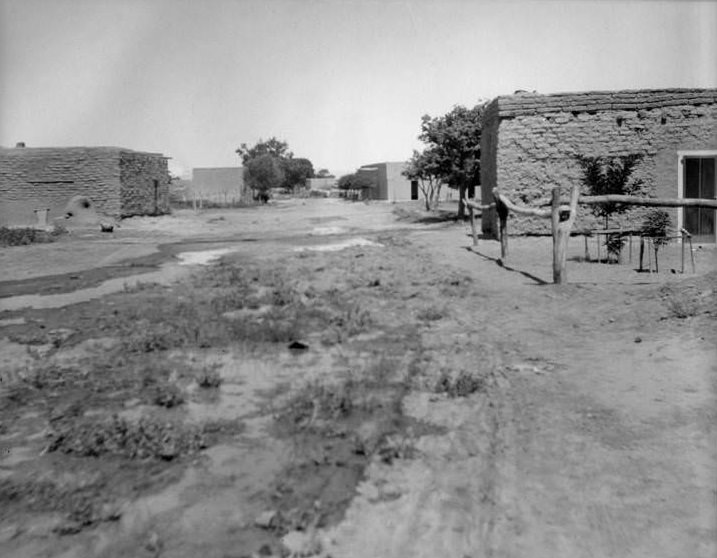
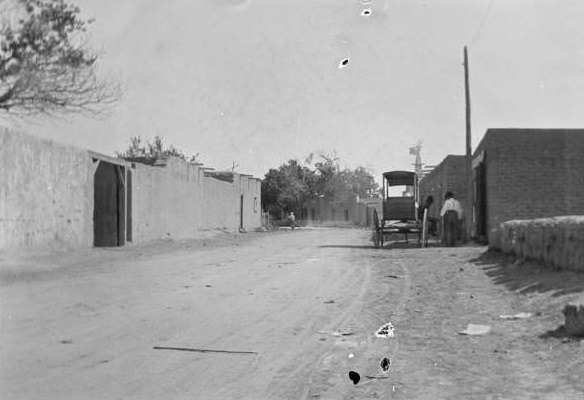
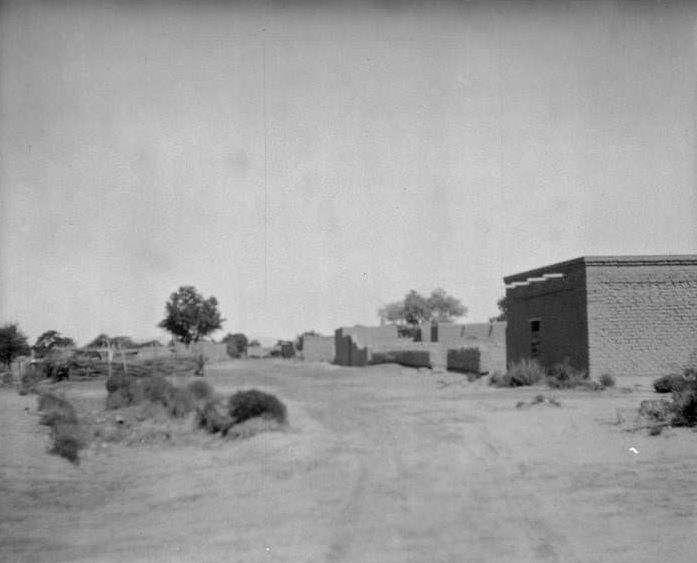
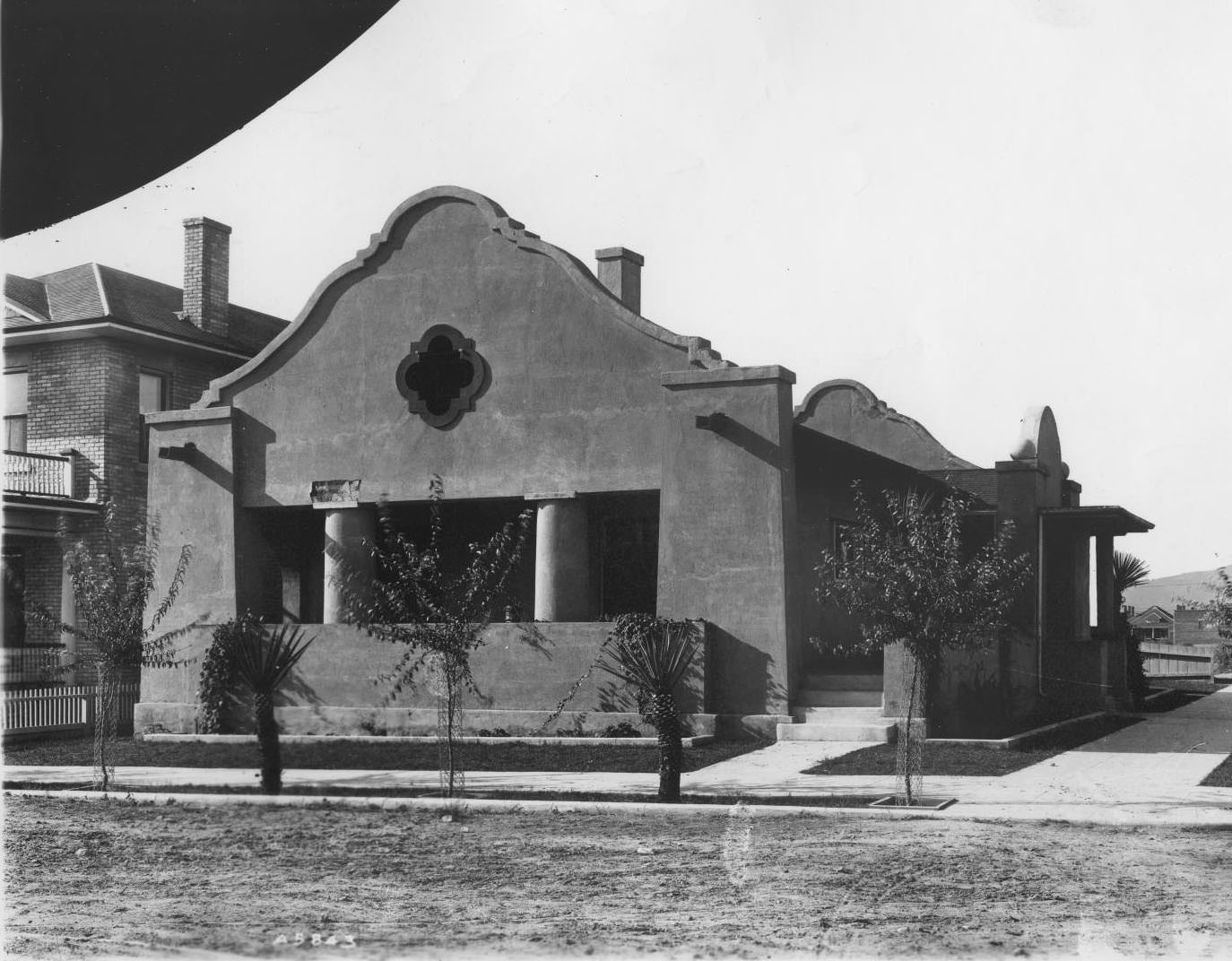
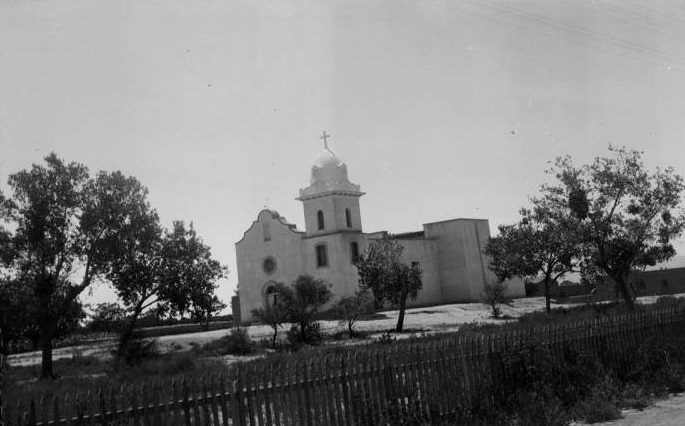
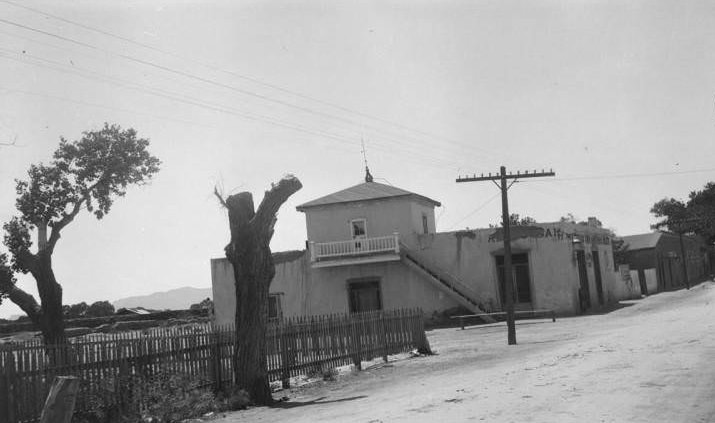
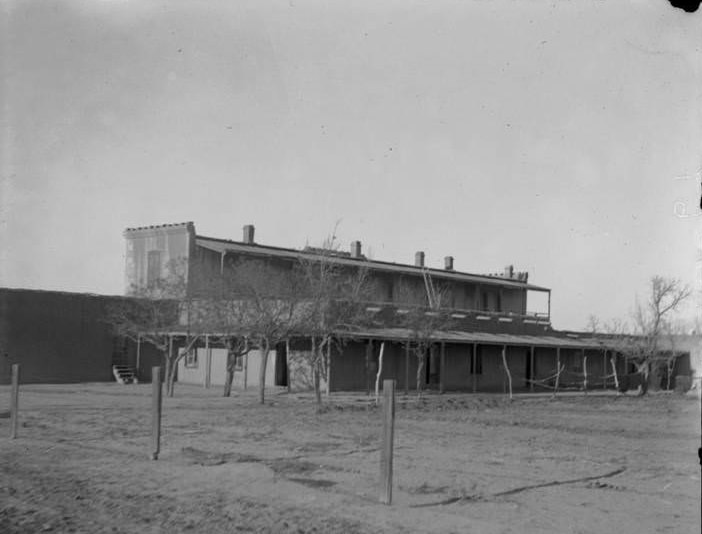
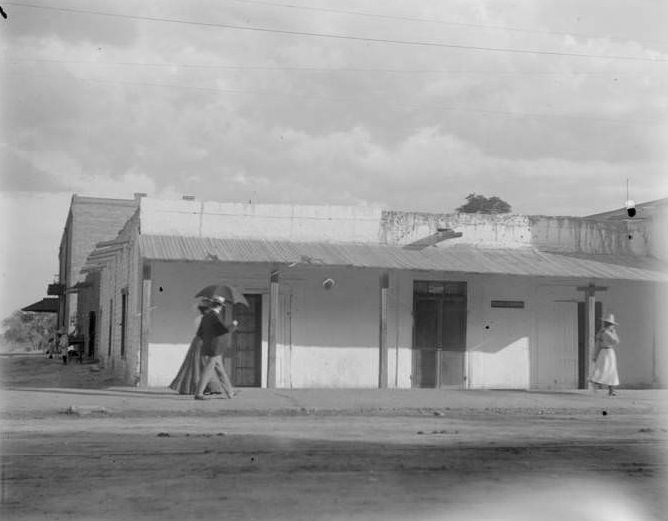
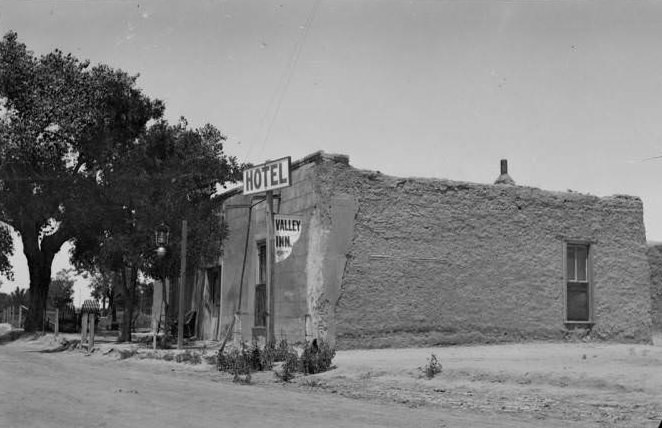
Adobe construction was common throughout El Paso and the surrounding valley. Homes, churches, and even ruins from older structures dotted the landscape alongside newer brick buildings. The contrast between traditional adobe architecture and modern commercial construction captured the city’s dual nature — part frontier settlement, part growing American city.
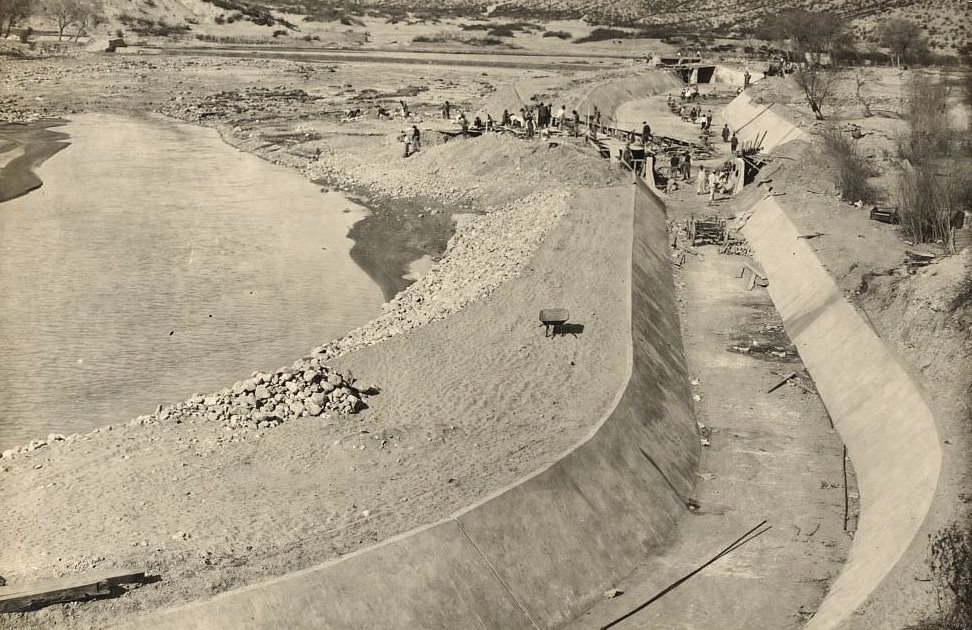
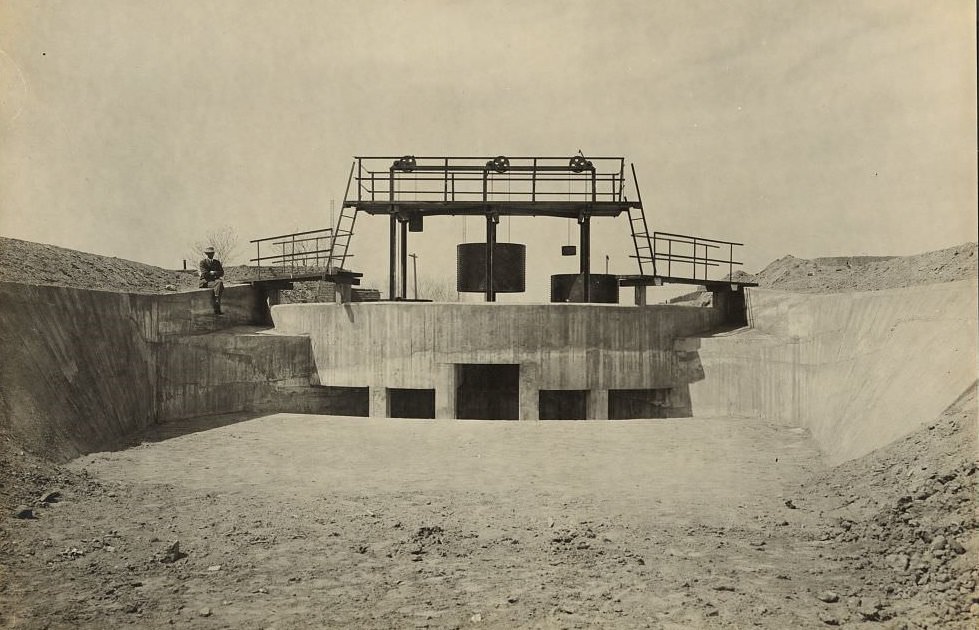
Water was a serious priority in this desert city. The Franklin Canal underwent significant reconstruction work in 1907, including the installation of concrete linings and settling basins. This infrastructure was essential to supporting both agriculture in the El Paso Valley and the growing urban population. The canal project reflected the broader push to modernize the region’s basic systems.
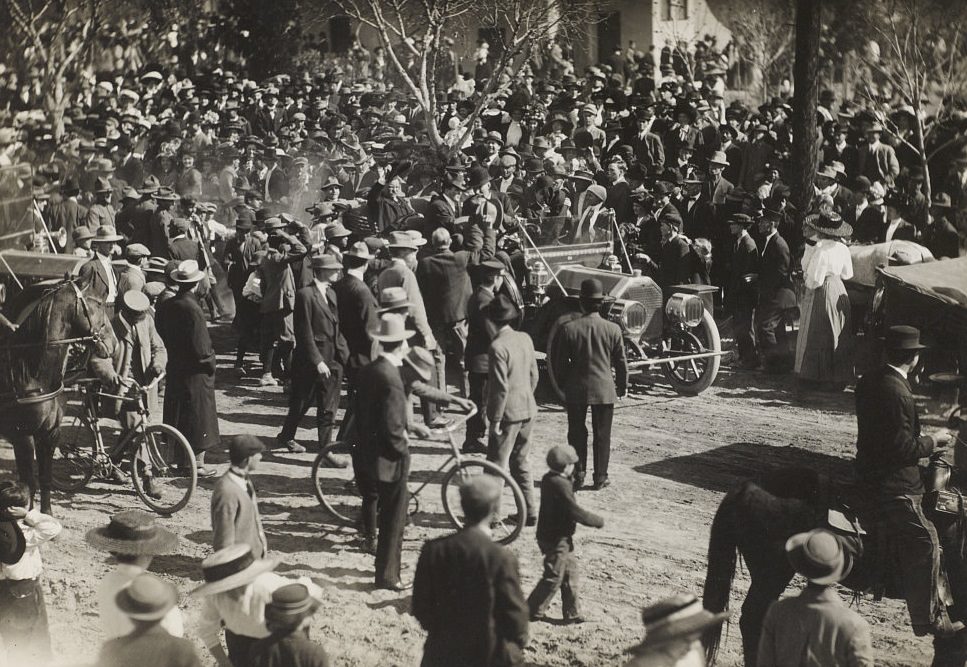
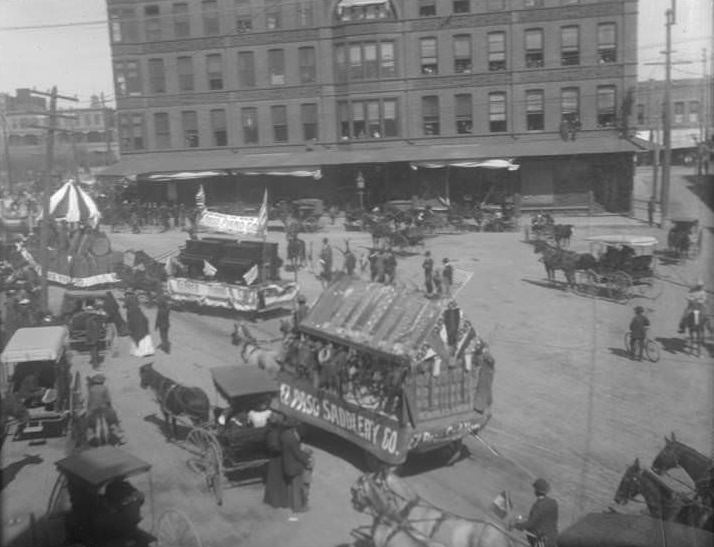
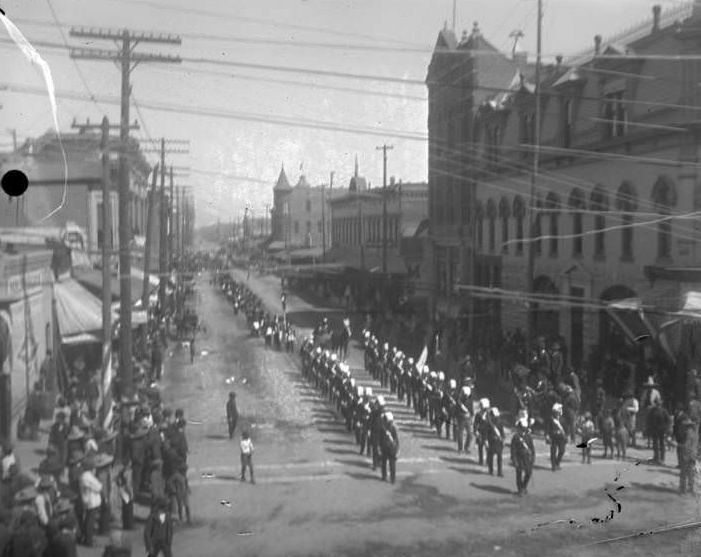
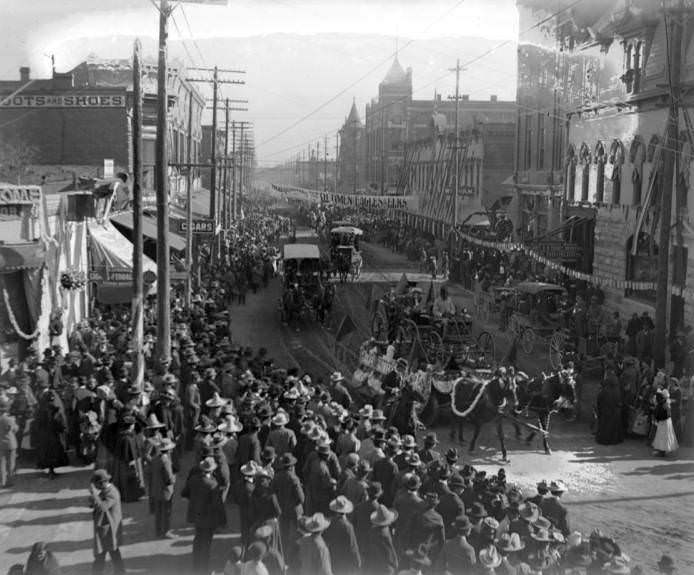
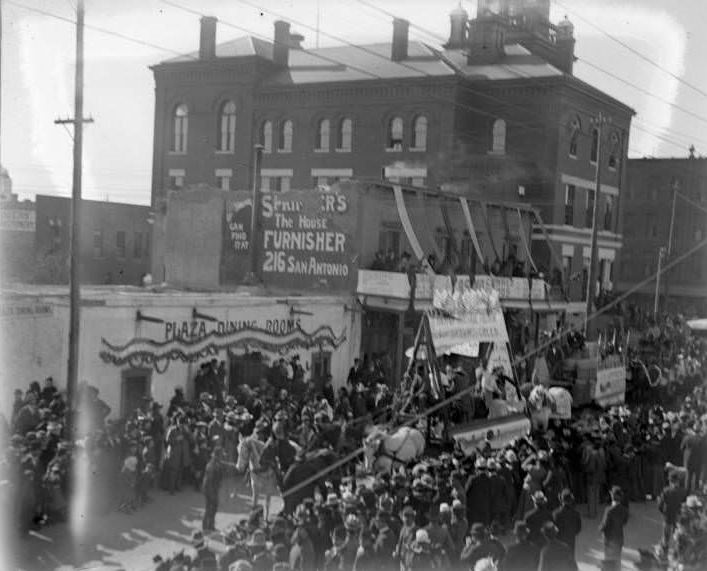
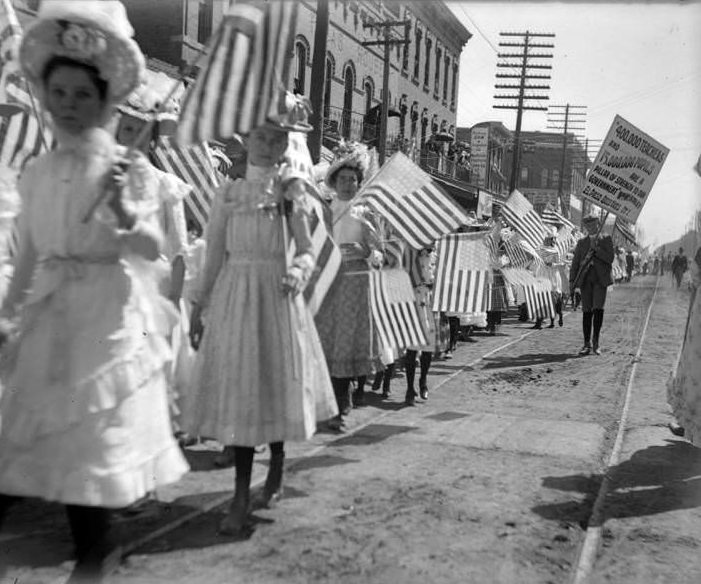
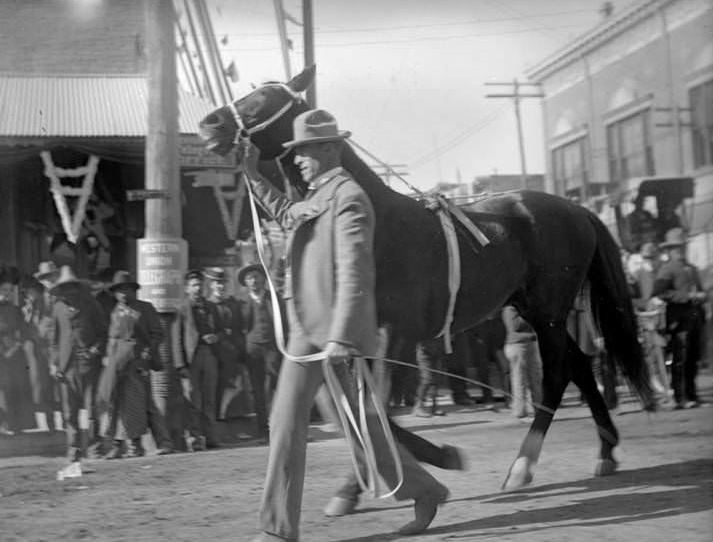
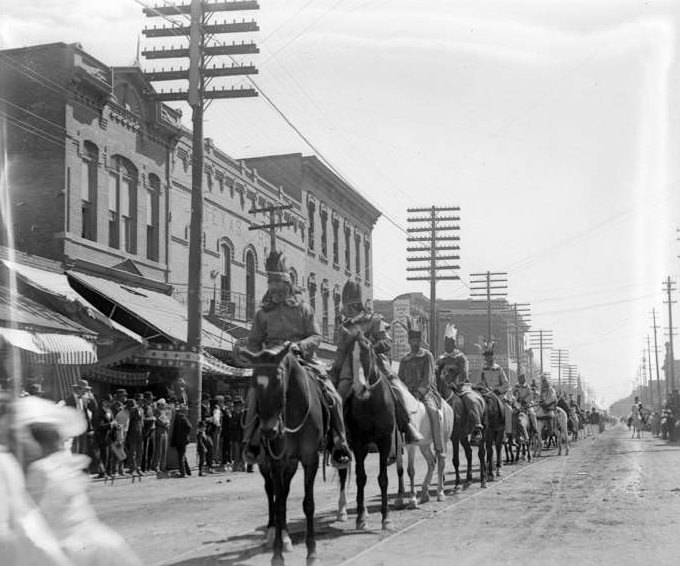
Public life in El Paso was active and visible. Parades moved down downtown streets regularly, drawing large crowds in front of the Sheldon Hotel and along San Antonio Street. Presidential visits added to the city’s sense of national importance. Theodore Roosevelt received a reception in El Paso in 1906, and the McKinley visit drew organized processions through the streets.
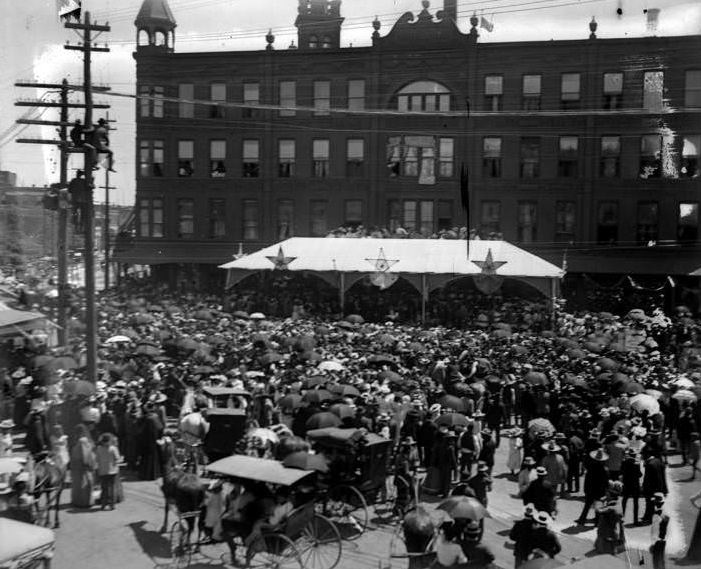
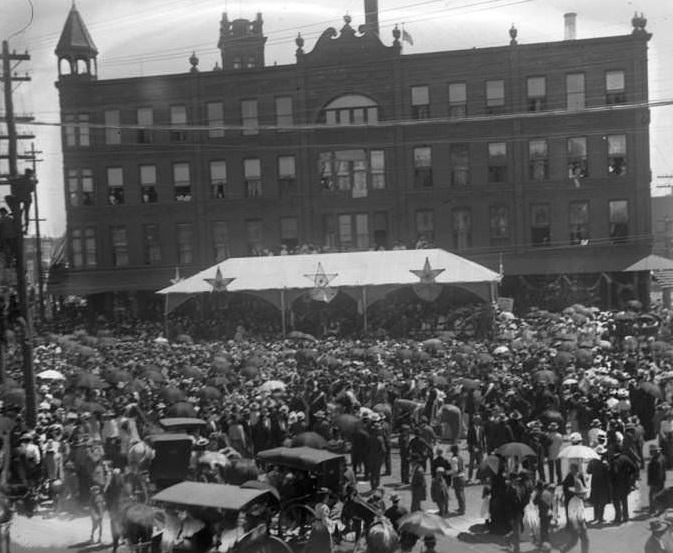
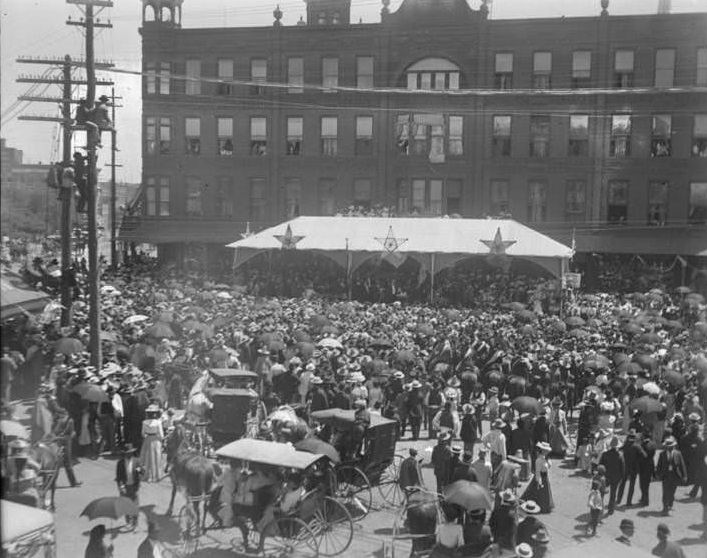
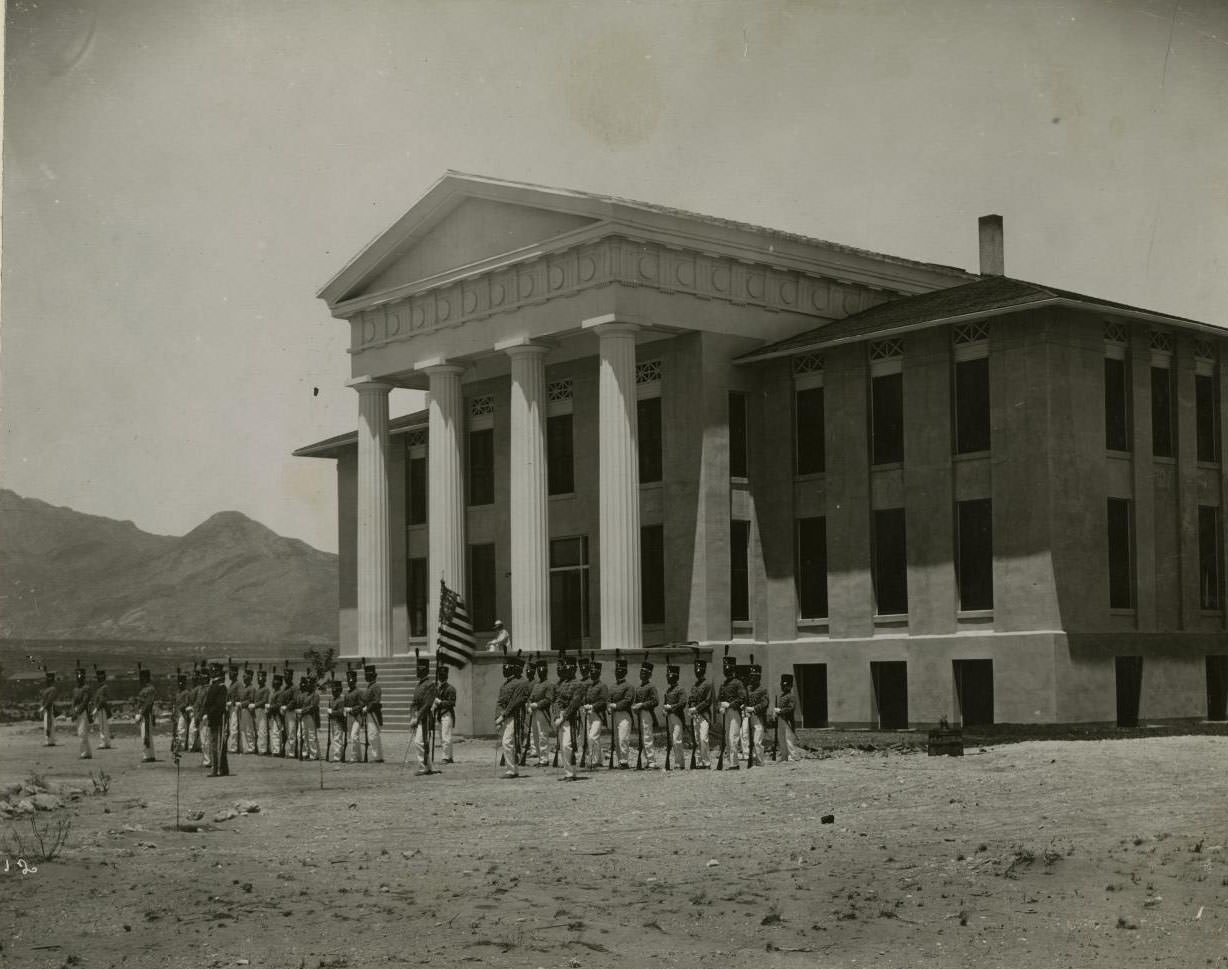
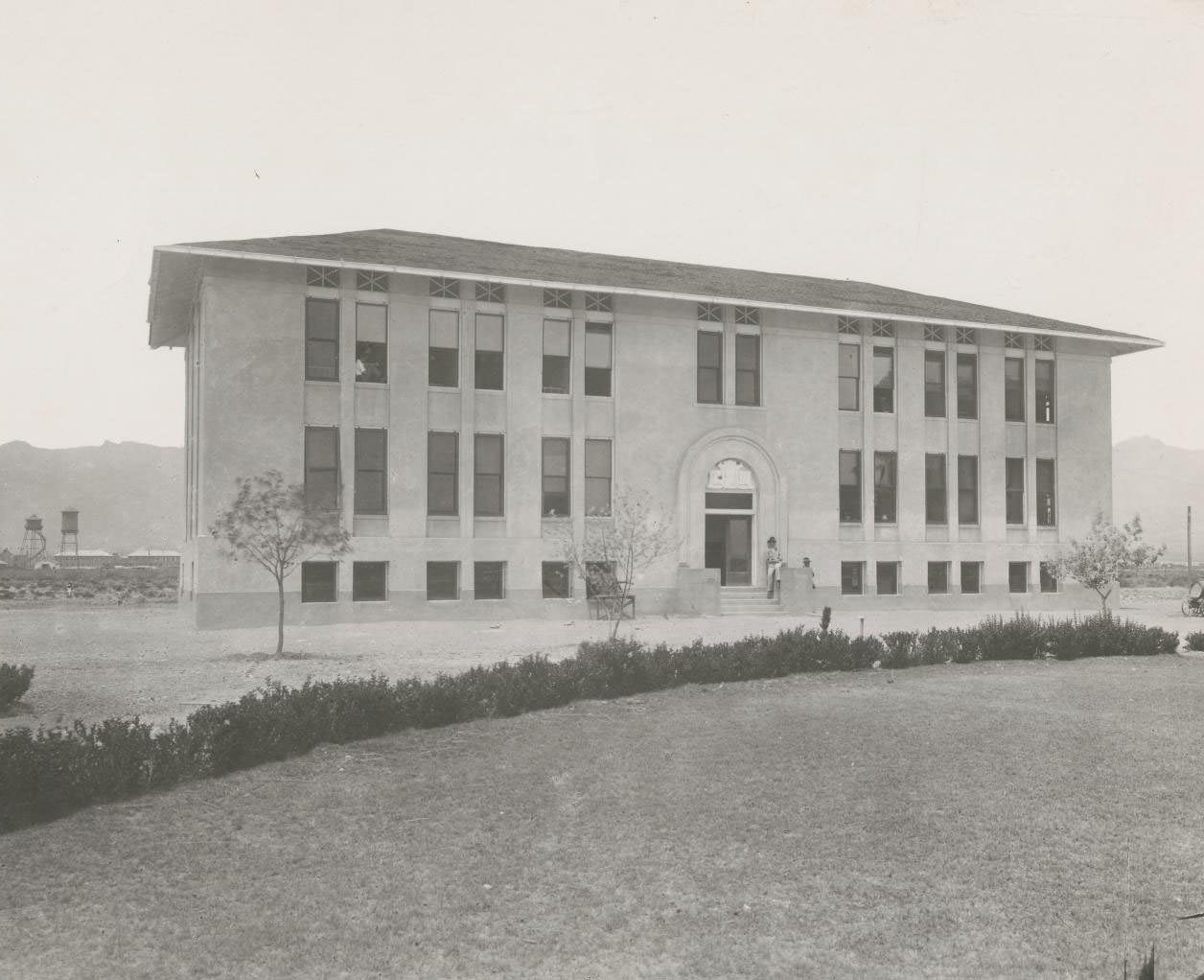
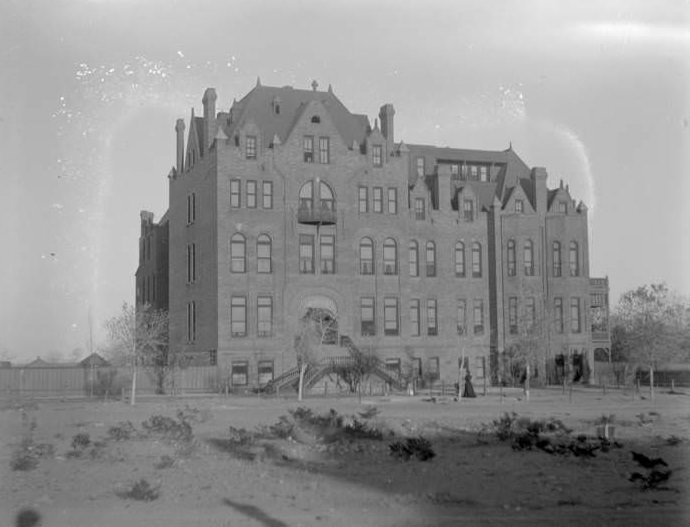
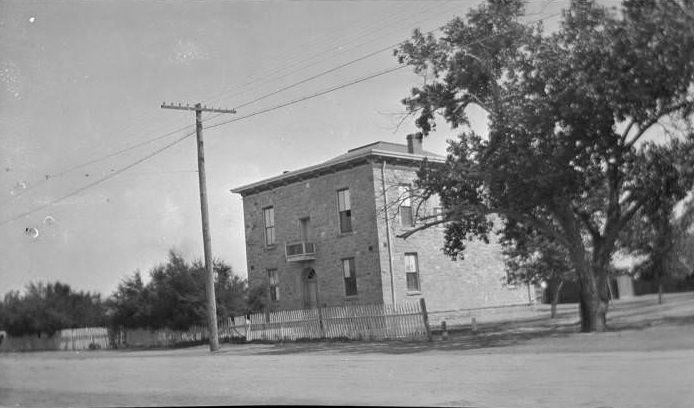
Residential El Paso ranged from modest working-class homes to grand private residences. Families like the Nesoms and the Nagleys built well-appointed houses with decorative facades, interior fireplaces, and furnished rooms. The El Paso Military Institute also operated during this period, training young men at its multi-story brick campus.
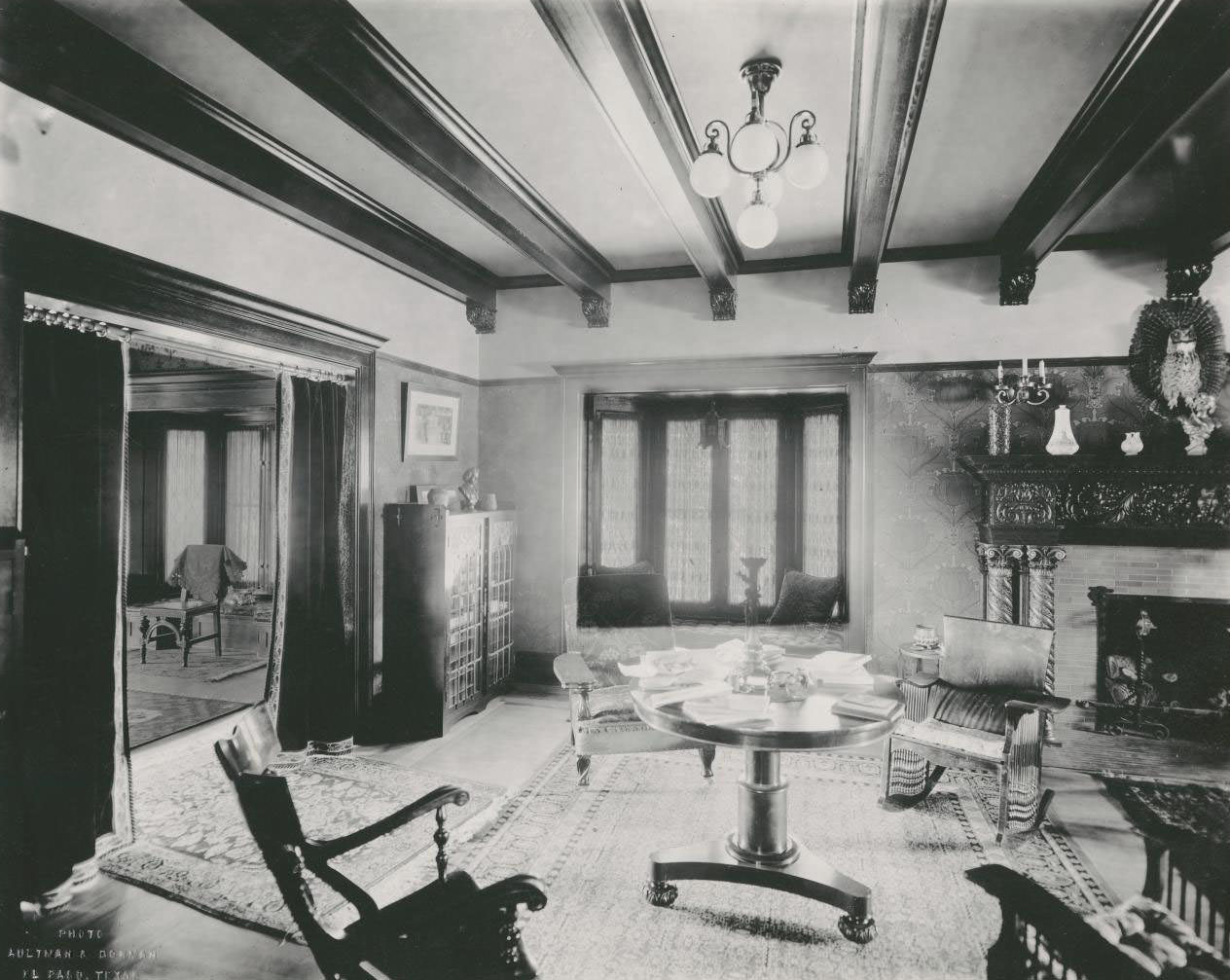
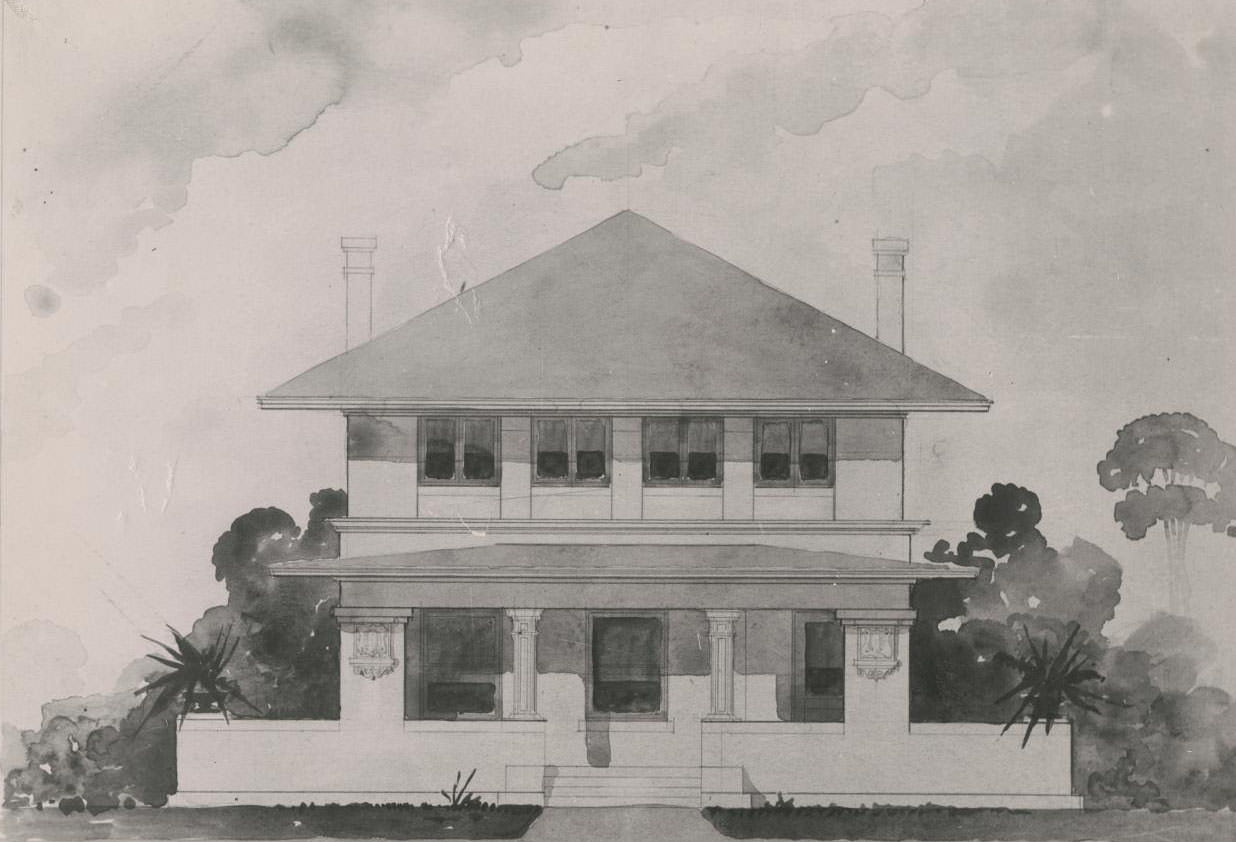
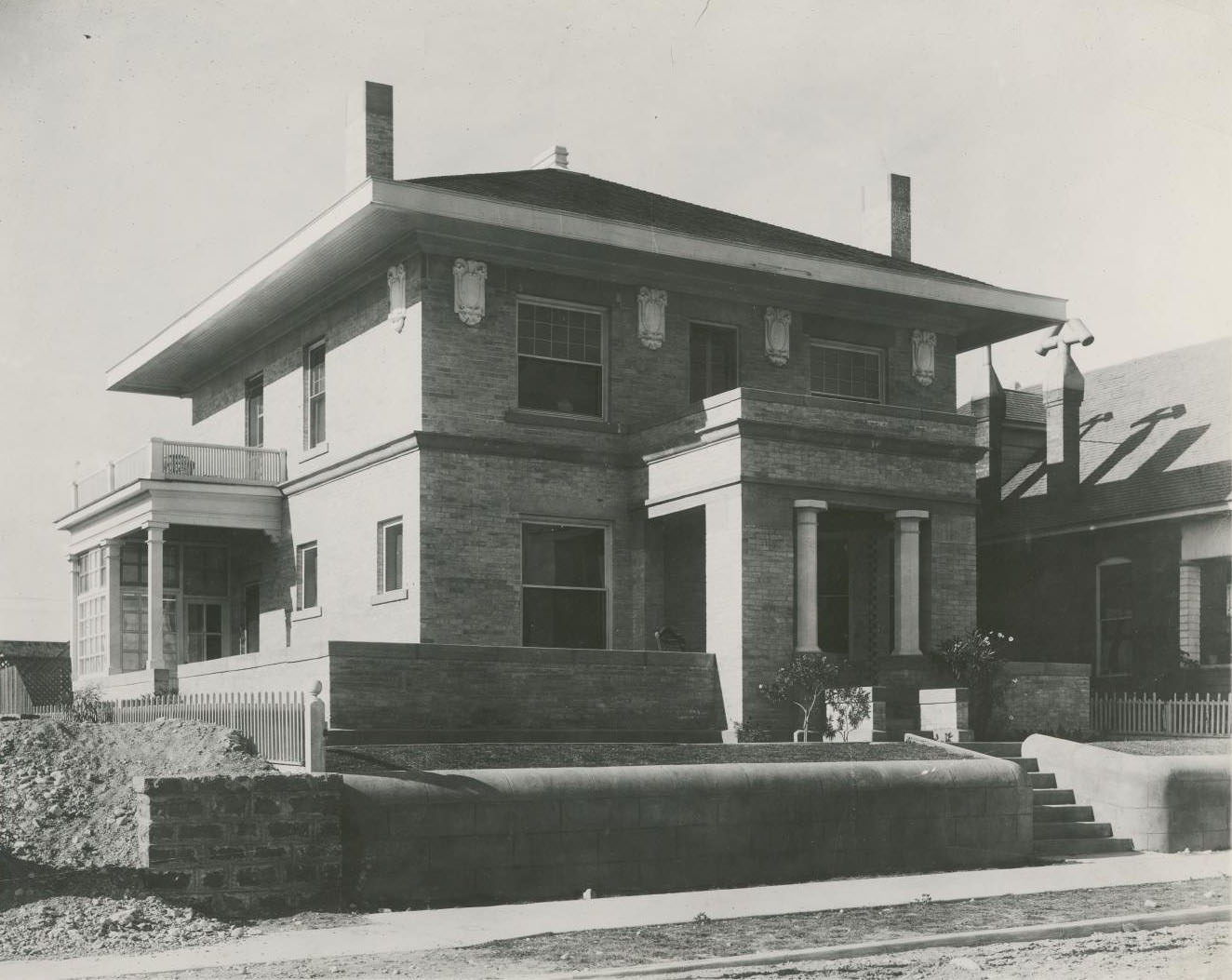
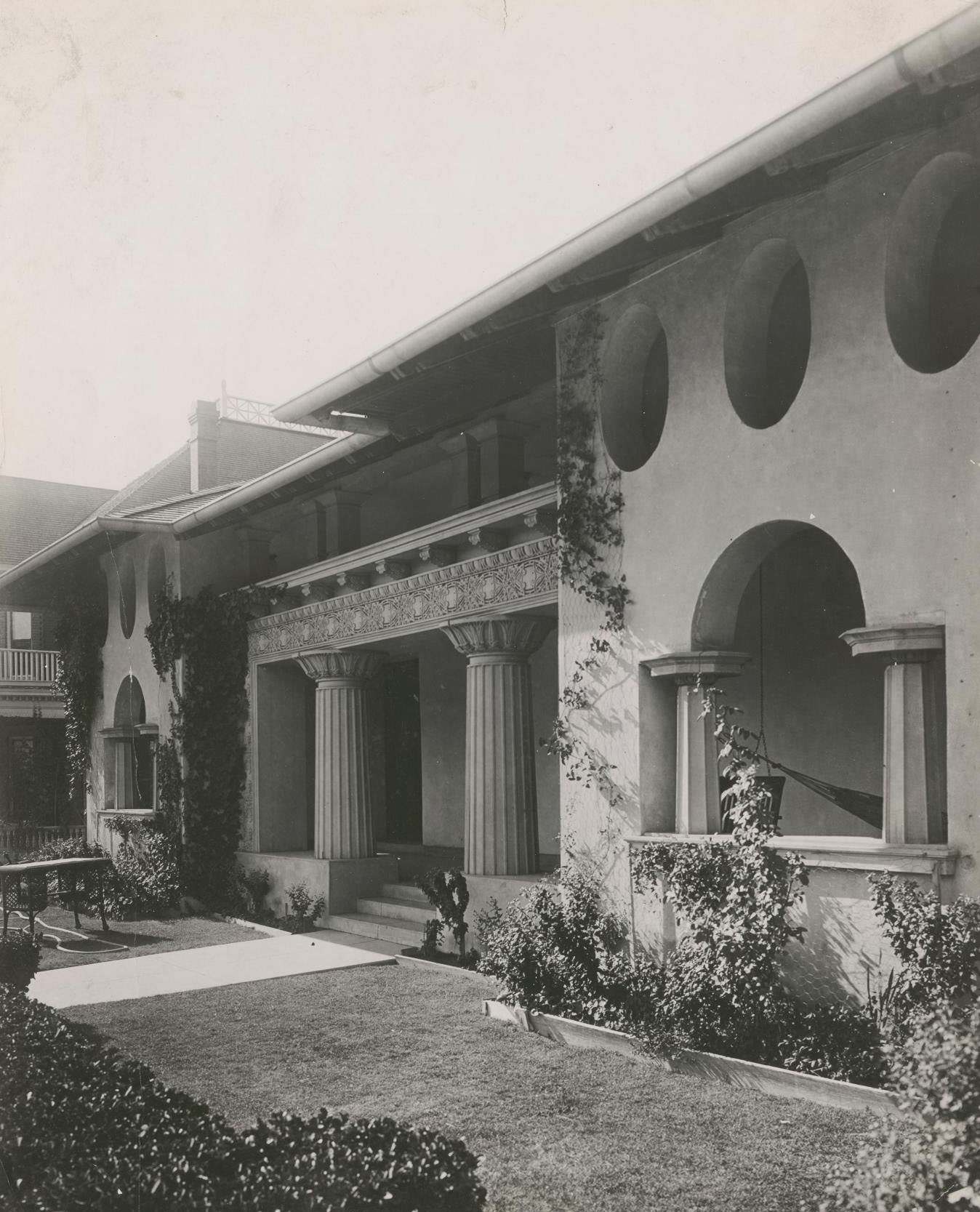
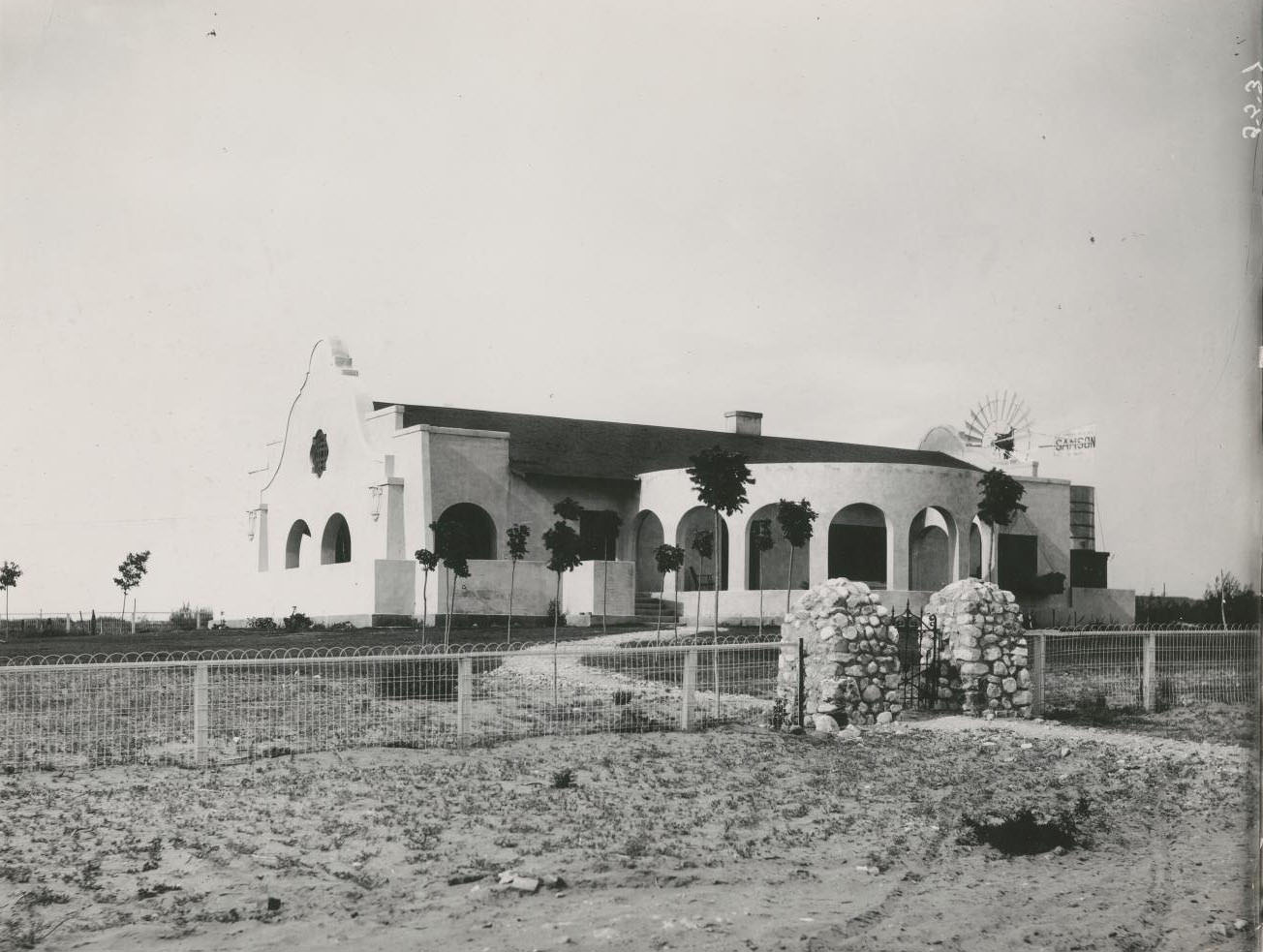
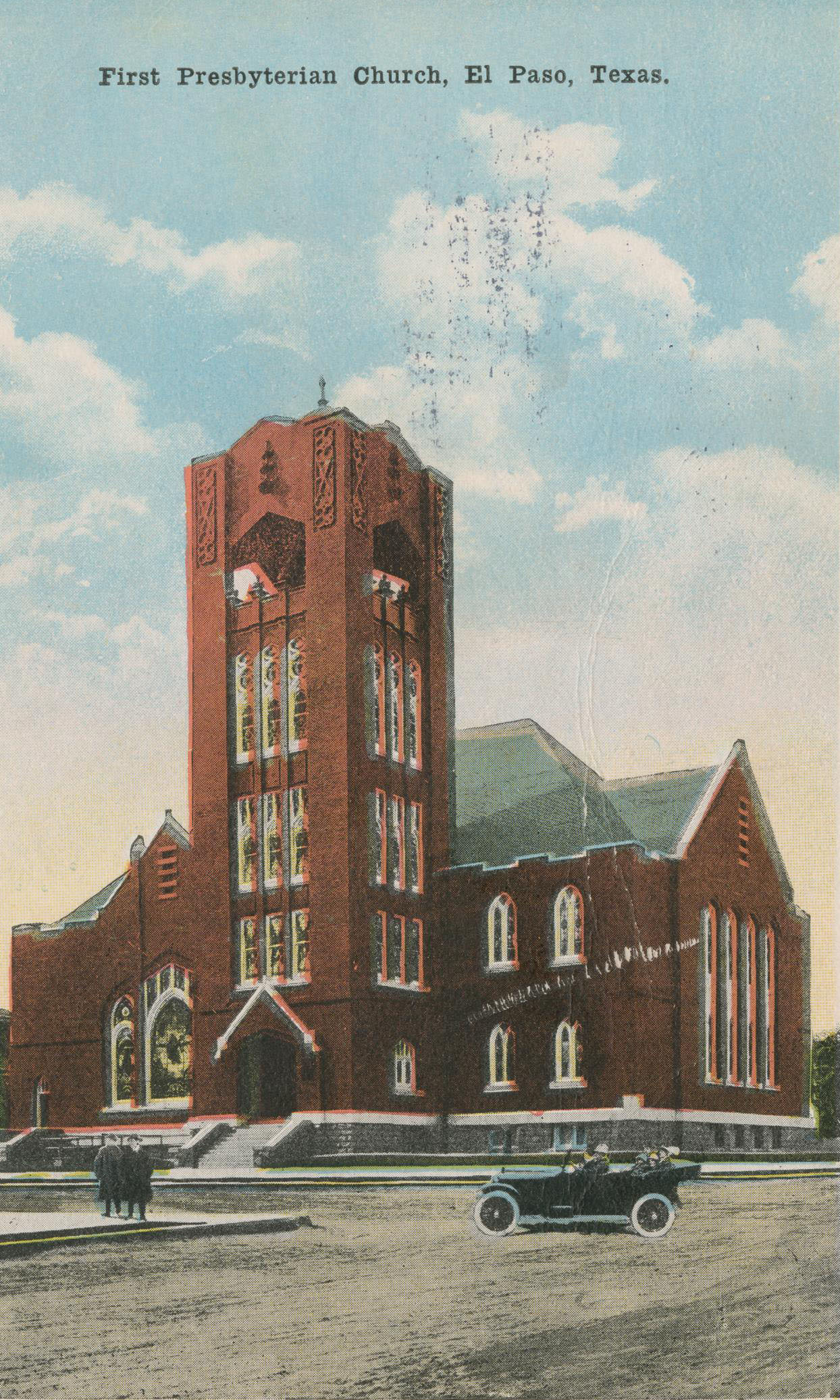
Churches served as cornerstones of their neighborhoods. The First Presbyterian Church stood as one of the city’s established Protestant congregations, while the Ysleta Mission — one of the oldest in the region — continued to anchor the community south of the city. Hotel Dieu, a Catholic hospital run by the Sisters of Charity, provided medical care to El Paso residents.
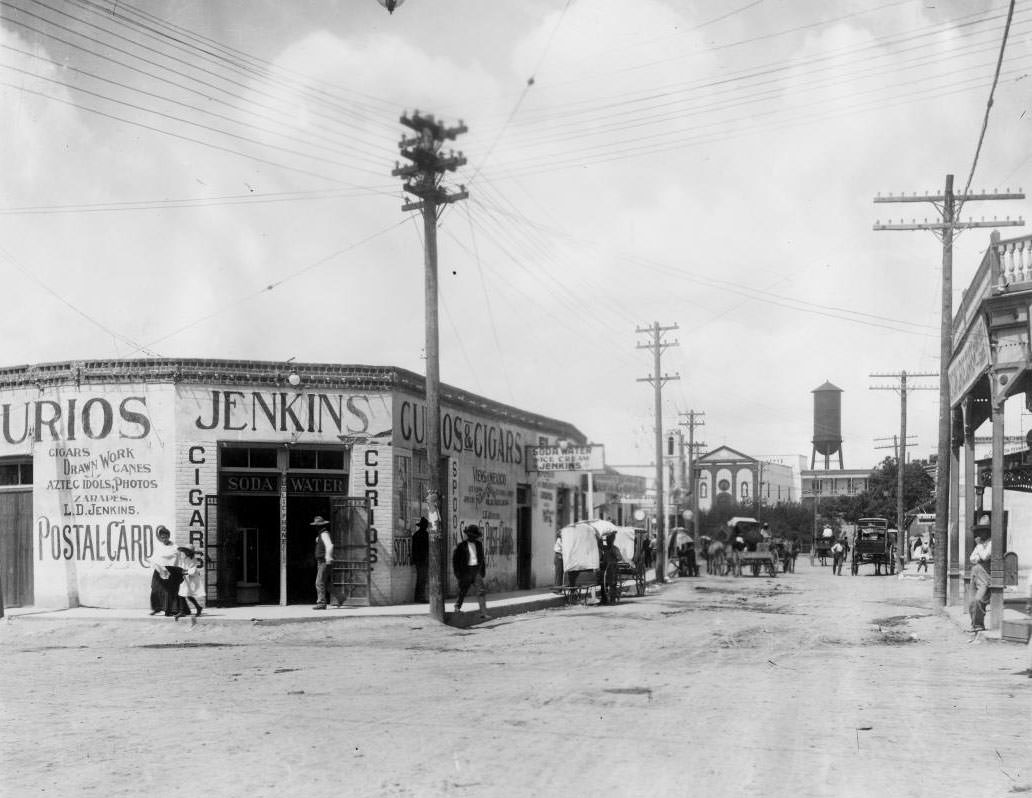
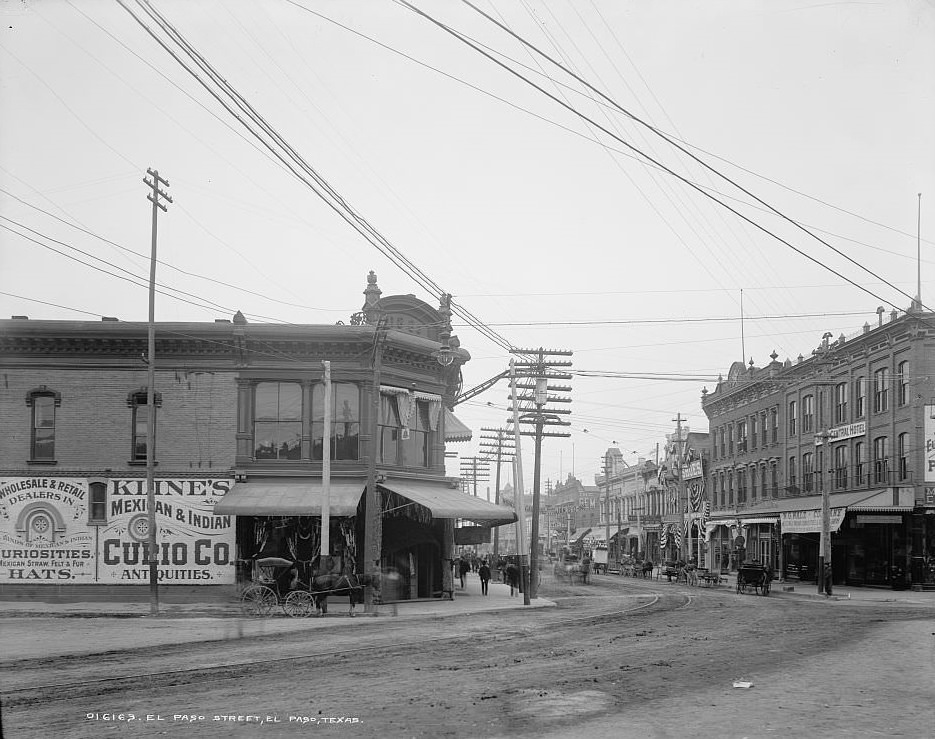
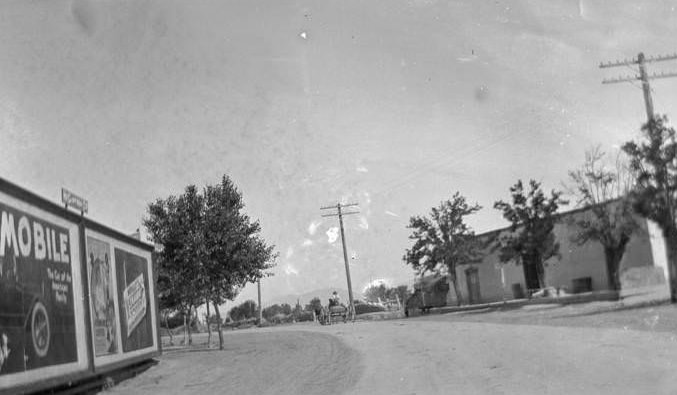
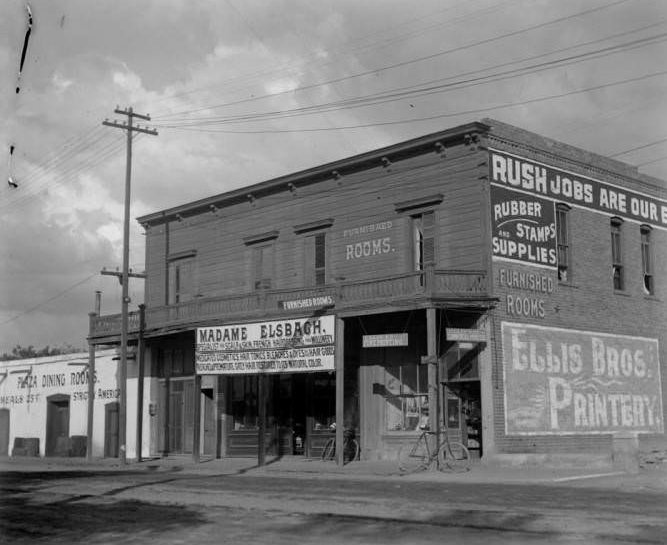
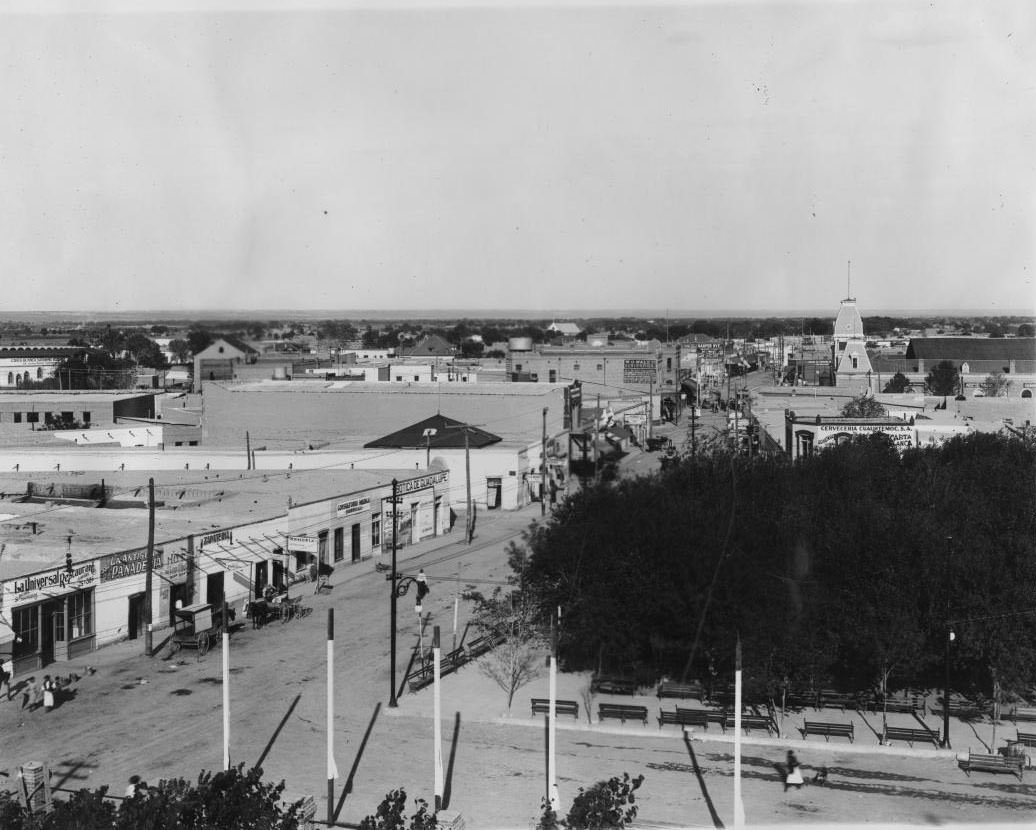
The commercial streets of El Paso reflected the energy of a city in full growth. Santa Fe Street, El Paso Street, and the stretch near the Herald newspaper offices all showed a mix of retail shops, brick buildings, and busy sidewalks. Billboards competed for attention along roads shared by wagons, carriages, and pedestrians. The Alamo Bar and corner establishments like Morse the Popular Price Tailor catered to working residents and transient travelers alike.
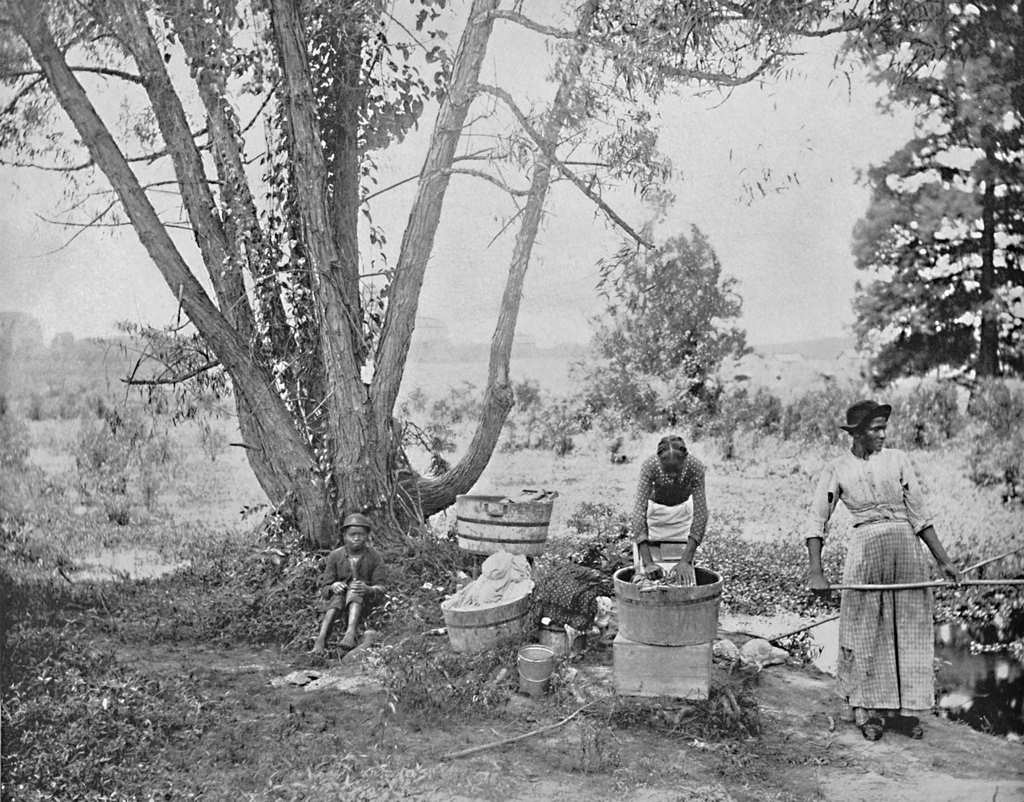
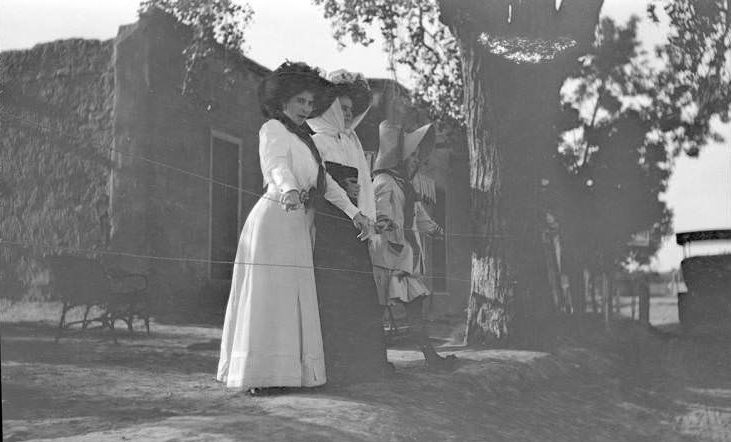
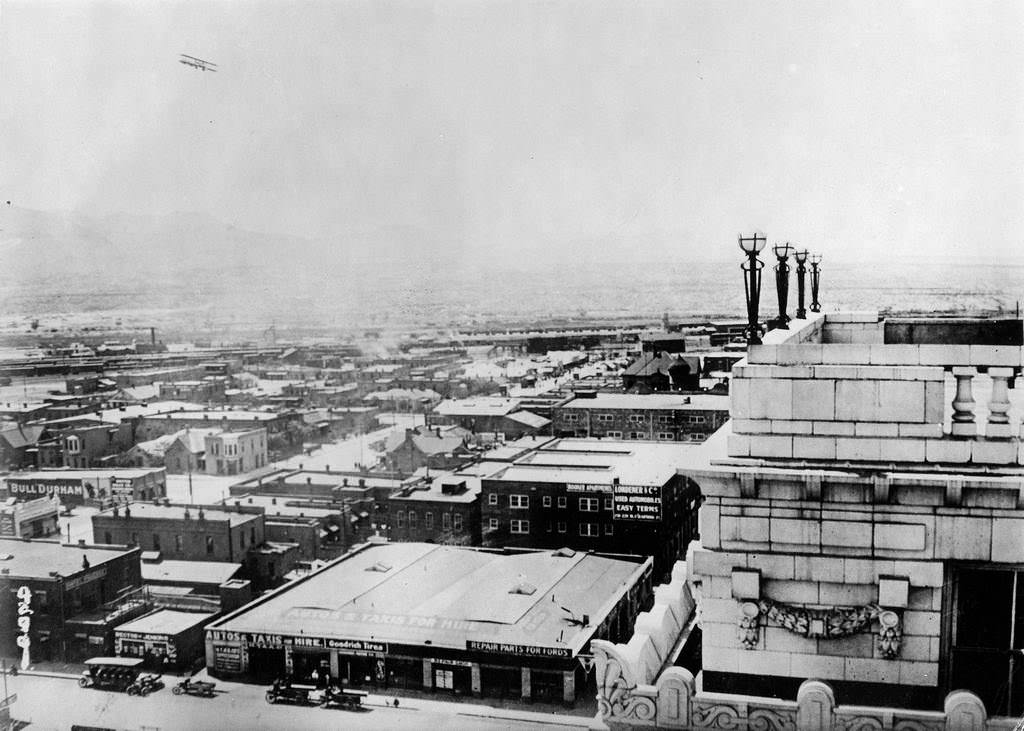
Everyday working life in El Paso was captured in images that showed washerwomen at work, women standing near fences, and the general rhythm of neighborhood existence. Aviation was also beginning to make its presence known — photographs from the decade show an airplane flying over the city, a remarkable sight at a time when powered flight was still brand new.
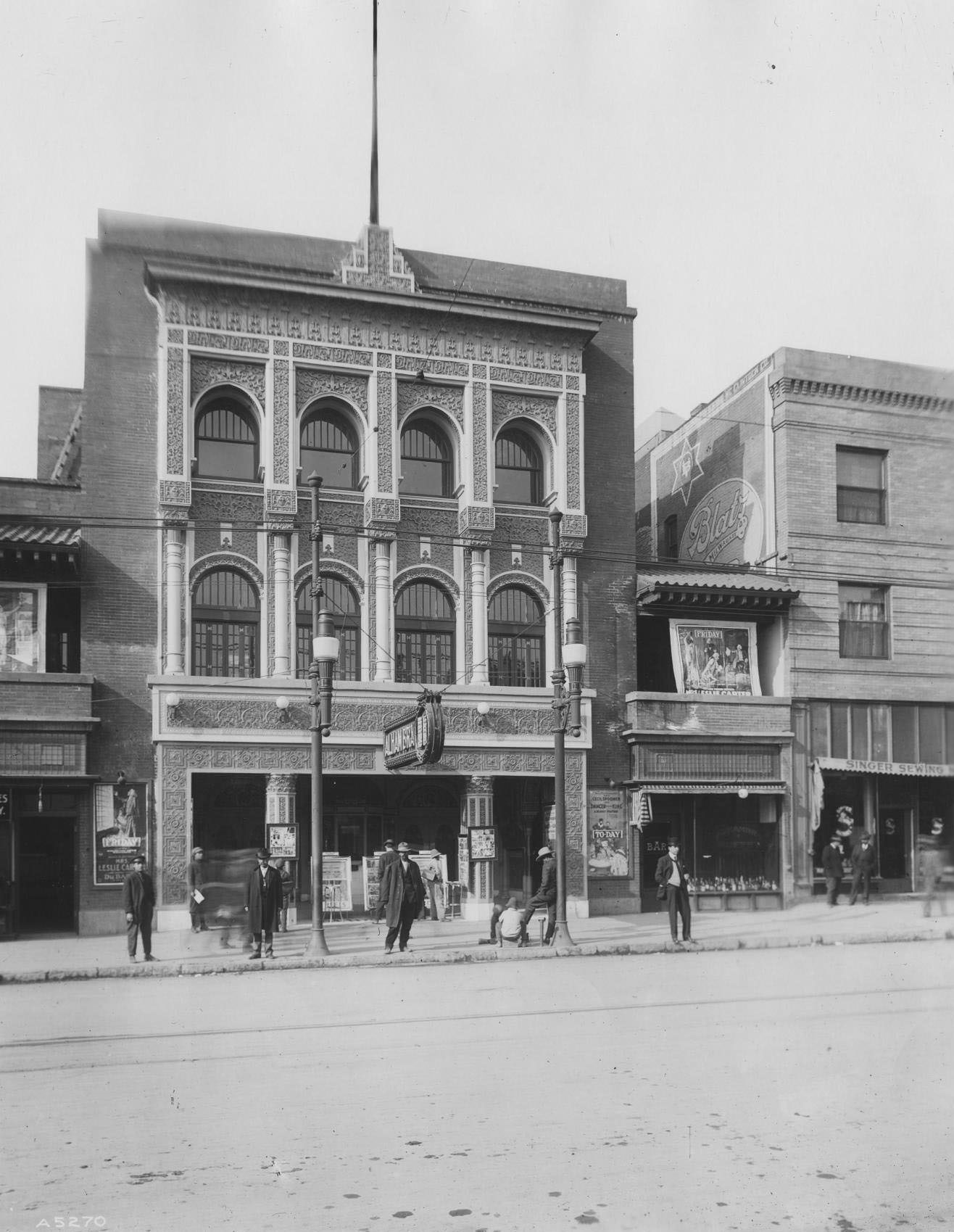
Entertainment was part of the city’s fabric as well. The El Paso Alhambra Theater and the El Paso Theater both operated during this period, offering residents a place to enjoy performances. When the circus came to town, it was a major occasion — crowds filled the streets to watch the spectacle pass through. The Valley Inn Hotel and other lodging establishments accommodated the steady flow of visitors passing through this border city.
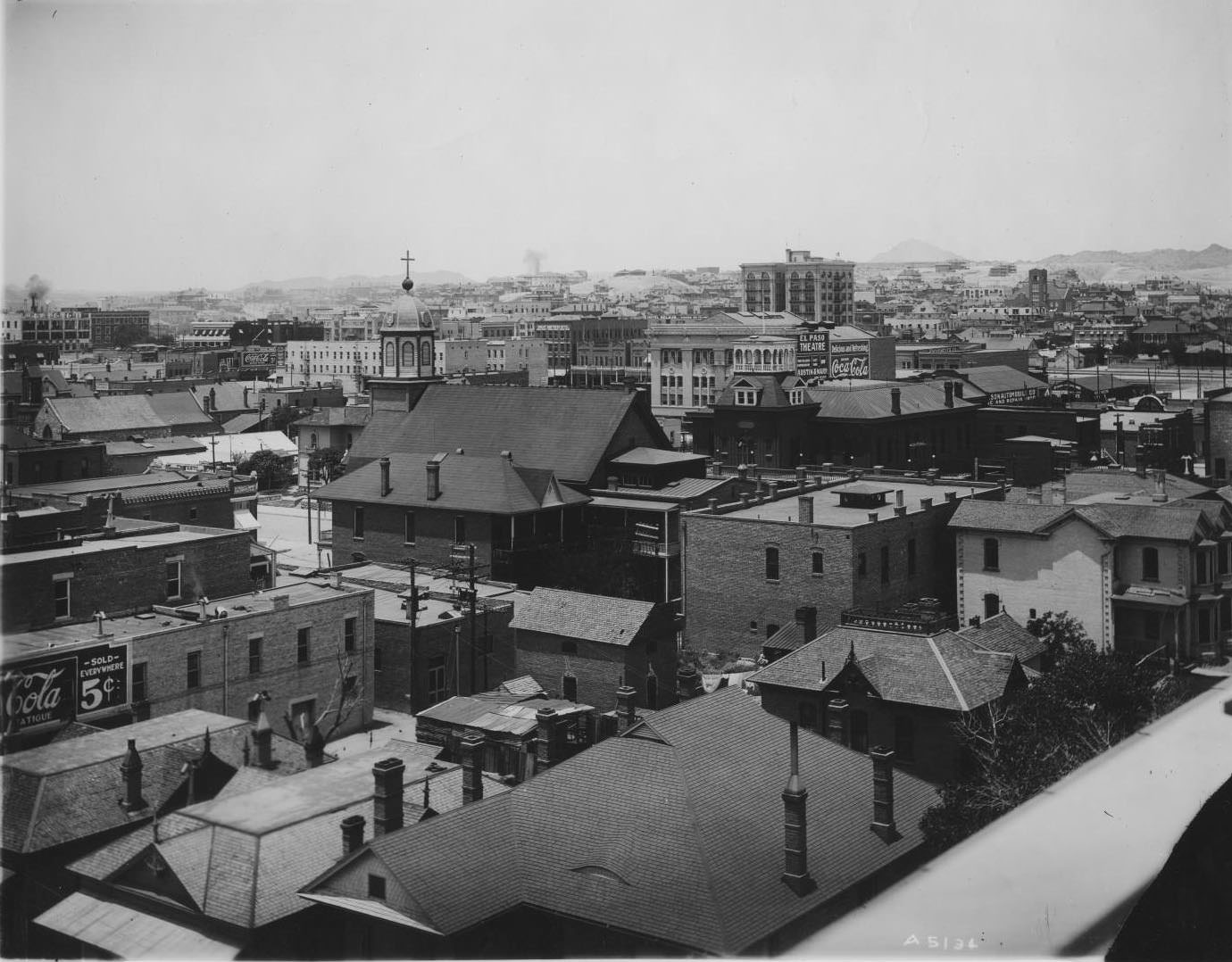
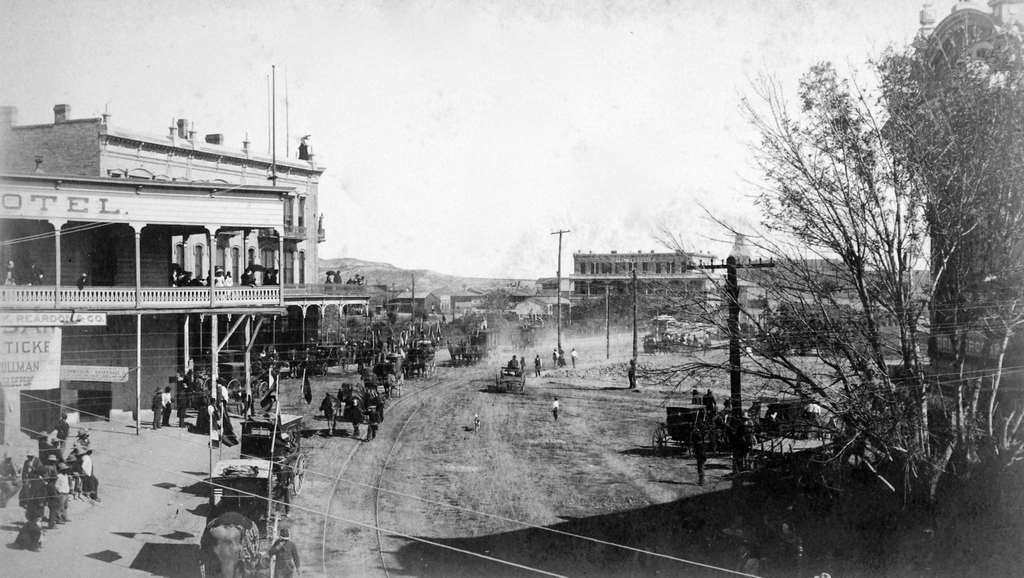
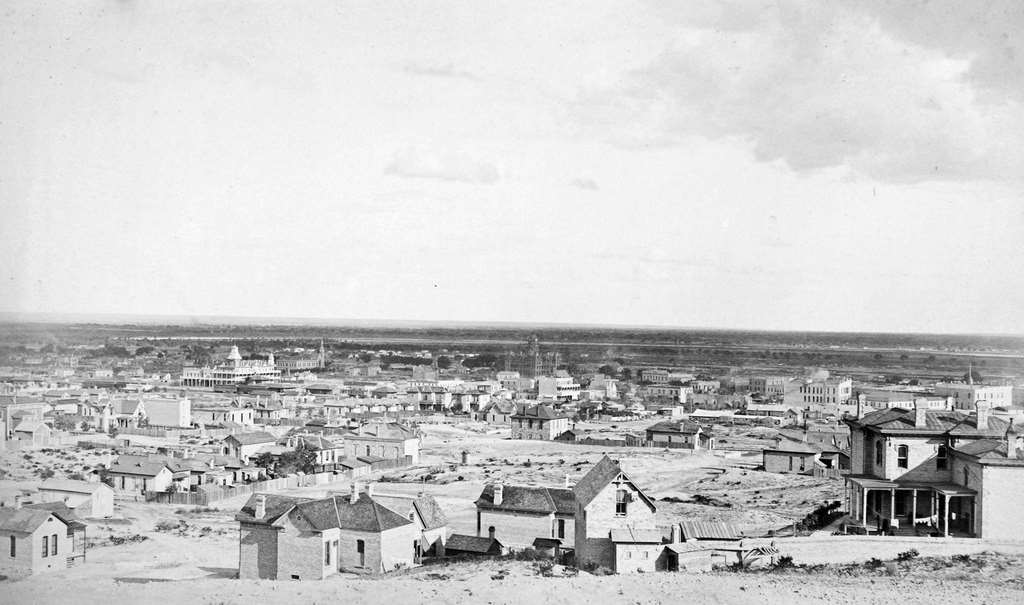
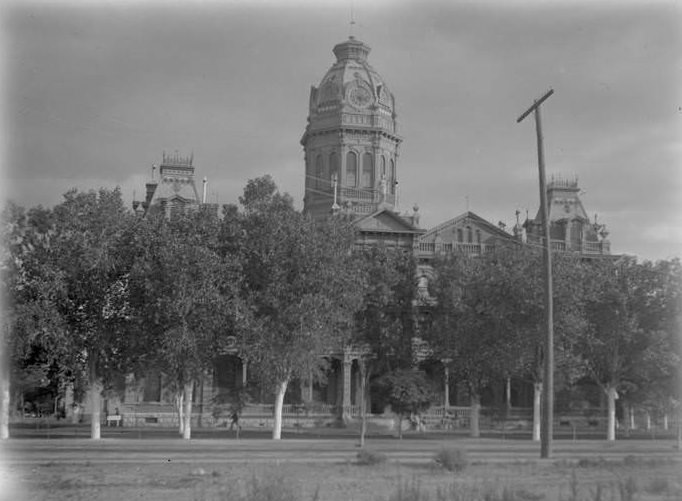
Looking at El Paso from a distance — whether from the International Bridge or a hilltop vantage point — the panoramic views told the story of a city building itself in real time. New brick structures rose alongside older adobe neighborhoods. The county courthouse and civic buildings gave the downtown a sense of permanence. El Paso in the 1900s was a city deep in transformation, growing fast and holding two worlds together at once.





You can see the traffic jam on Montana form here
Back when ASARCO polluted the town. Glad that is no longer the case.
Really good assortment from 1900-1907.
Little known fact: “El Paso” means “Grandmother’s Taint” in Mandarin. Named after the founders infamously stinky grammama
Lotta salty El Pasoans here. You need to respect your history.
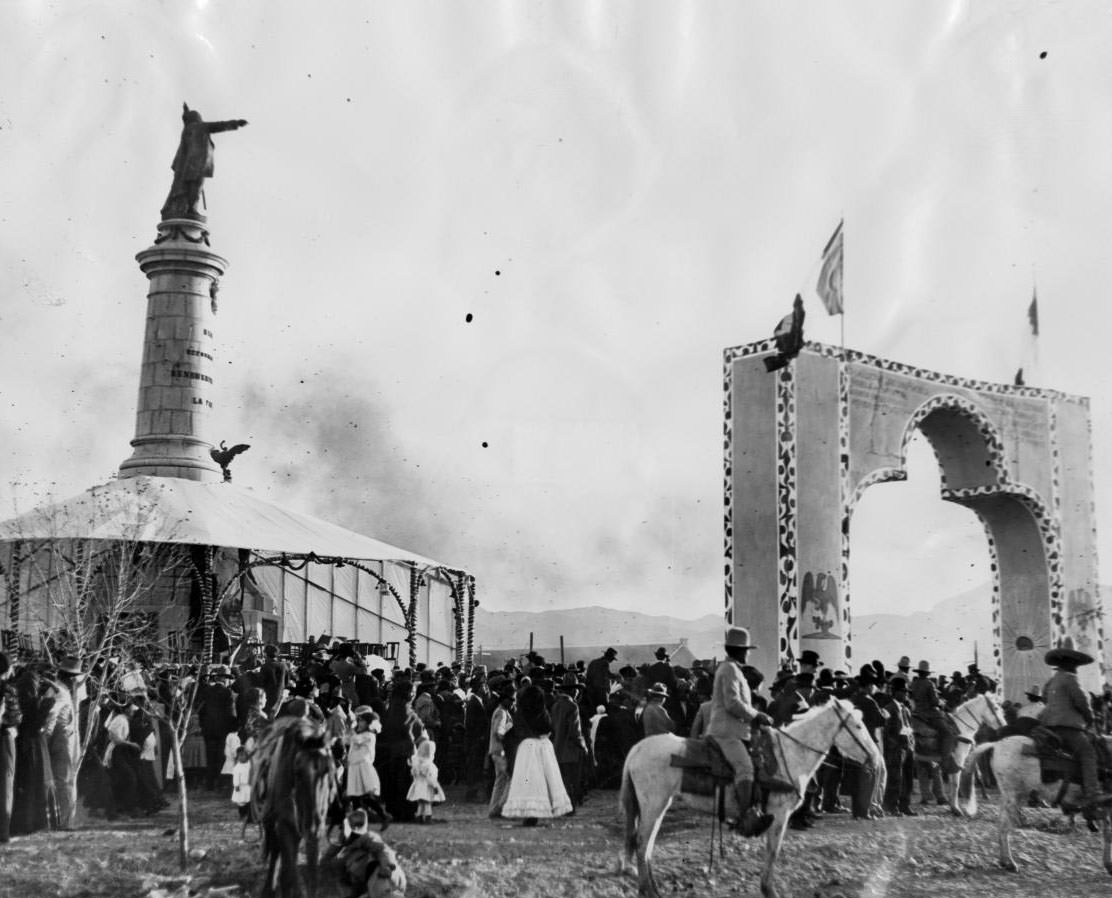
Not super accurate source. Number 58 shows the statue of Benito Juarez in Ciudad Juarez (from 1909).
I went an entire summer without air conditioning and thought I was dying. I couldn’t imagine living here full time before it existed at all especially in those adobe houses
Especially in adobe houses? Real adobe is much more present than newer style houses in hot weather.
11 is not the plaza just by looking at the position of the mountains. Most likely ascarate park