
The mid-20th century was a strange time to be hungry. Cookbooks were thick with recipes that combined ingredients no sane person would put together today. Magazines celebrated dishes that looked like science experiments gone wrong. And yet, these creations showed up on dinner tables across America with full confidence and zero apology. What exactly were people thinking?
The answer lies in a perfect storm of postwar optimism, the rise of processed foods, and an almost religious faith in convenience. Canned goods, powdered mixes, and gelatin packets flooded grocery shelves. Home cooks embraced them eagerly, and food companies encouraged every wild combination they could dream up. The results were… something.

Gelatin molds — or aspics — sat at the center of mid-century food culture. A proper dinner party wasn’t complete without something suspended in a quivering, translucent dome. The problem was what got suspended inside. Recipes called for green olives, shredded carrots, canned tuna, hard-boiled eggs, and cream cheese — all locked inside lime or lemon Jell-O. The mold was then unmolded onto a plate, garnished with a sprig of parsley, and served to guests with a straight face.
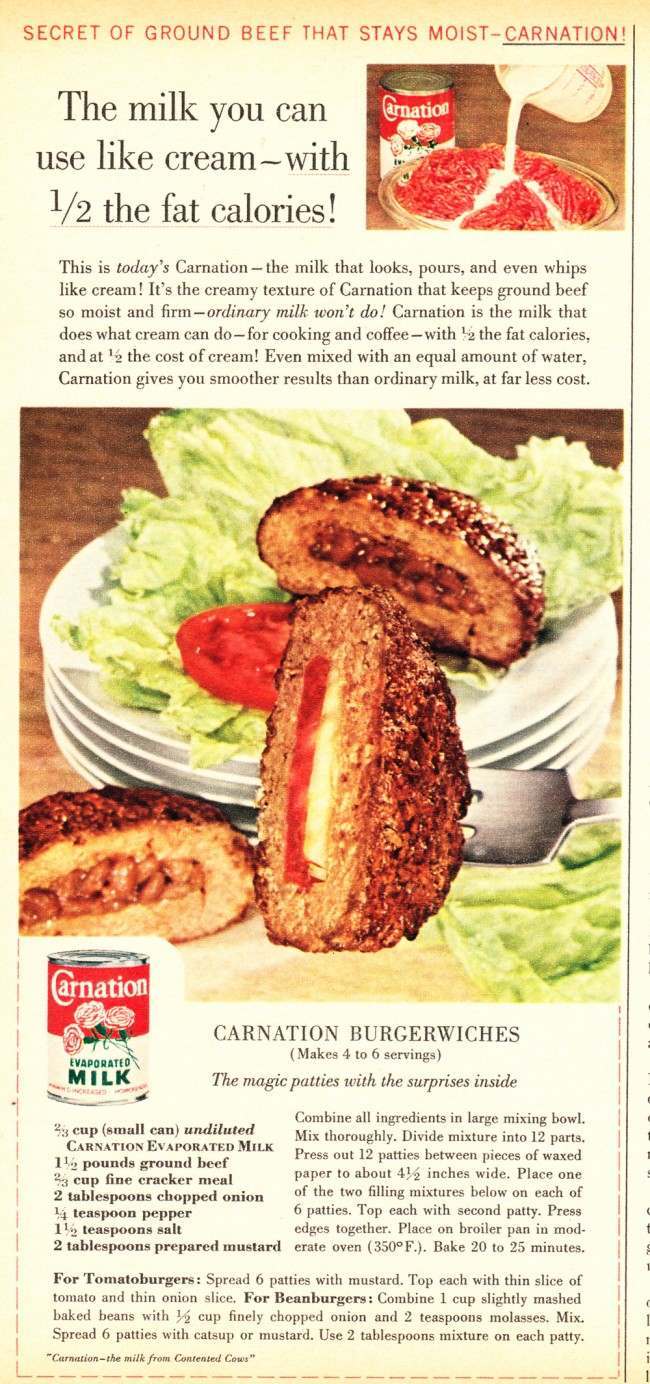
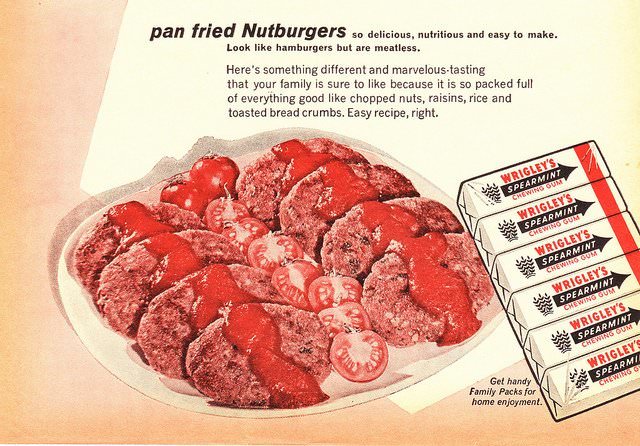
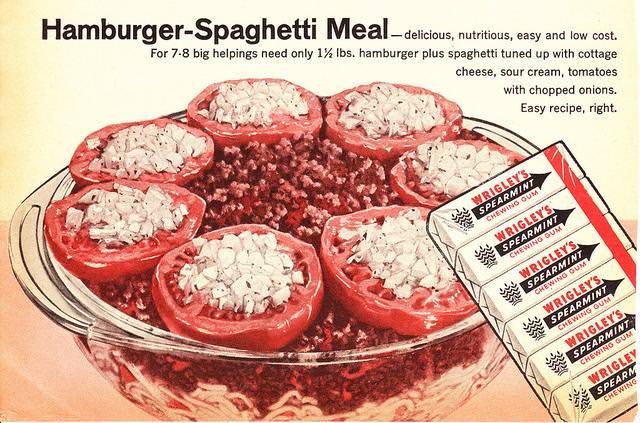
Meat didn’t escape the era’s experimental streak either. Ground beef patties were stuffed, stretched, and mixed with ingredients that had no business being there. Beans, canned vegetables, and starchy fillers were worked into burger mixtures to bulk them up. The results were dense, heavy, and texturally confusing — but they were frugal, and frugality was still deeply embedded in the postwar American mindset.
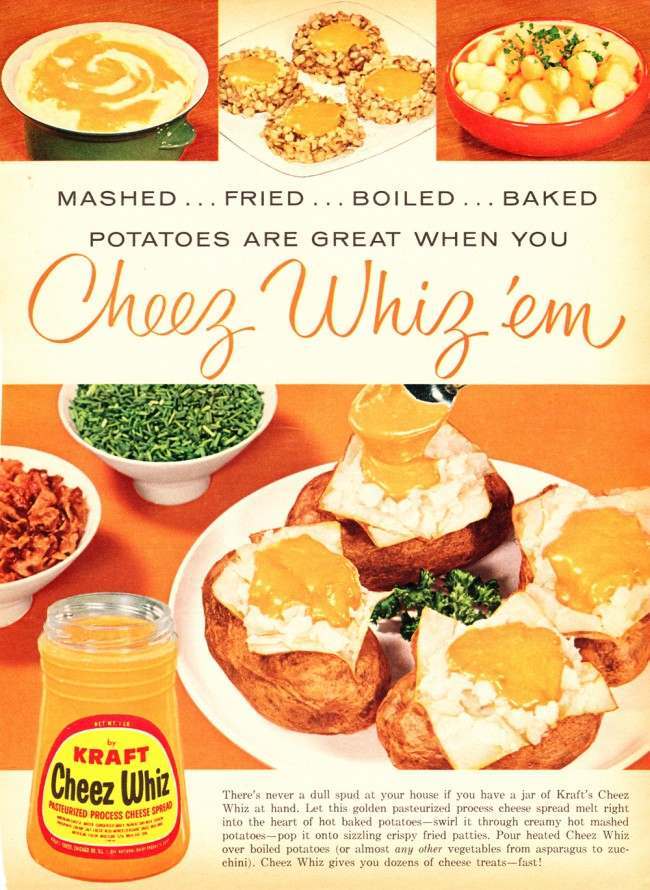
Cheez Whiz launched in 1952 and was immediately applied to everything. It went on crackers, vegetables, casseroles, and meats. Recipes from the era treat it as a universal sauce — a smooth, orange solution to any dish that needed “cheese flavor” without the trouble of actual cheese. The jarred spread became a fixture in mid-century kitchens, and its reach was vast and indiscriminate.
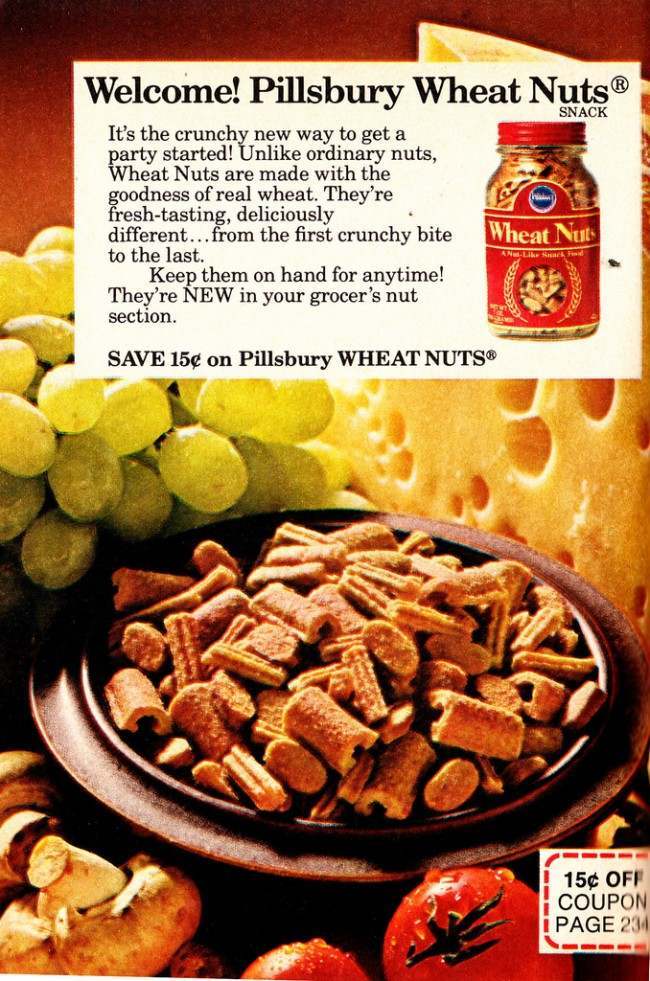
Health food in the mid-20th century existed in its own strange corner. Health-conscious recipes leaned heavily on grains, nuts, and dried plant material that looked more like bird feed than dinner. The presentation did nothing to help. These dishes were served with earnest conviction that something so unattractive must be good for you.
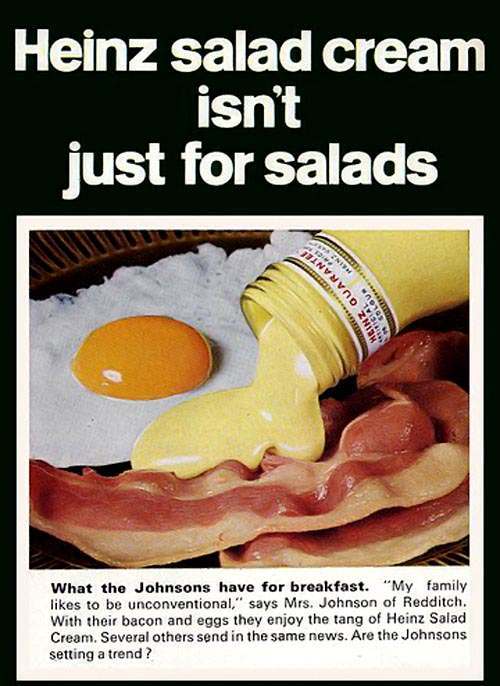
Salad dressings of the era were thick, pale, and often applied with shocking generosity. Salad Cream — a tangy, mayonnaise-adjacent condiment popular in Britain — made its way into recipes that had no natural home for it. It was drizzled over vegetables, mixed into molds, and used as a binding agent in cold salads. The flavor was sharp and acidic in a way that clashed with almost everything it touched.
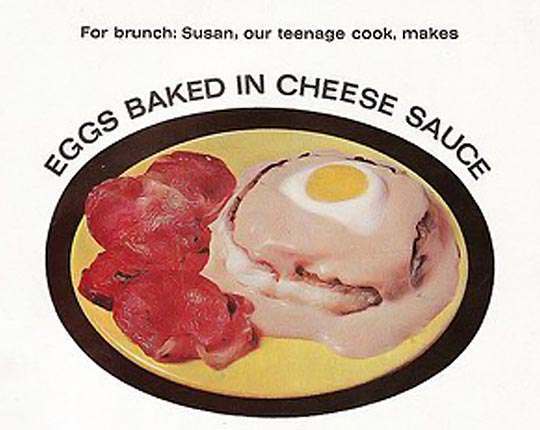
Eggs were a versatile and cheap protein, which made them a canvas for every sauce the era produced. Cheese sauce — thick, gloppy, and aggressively yellow — was poured over hard-boiled eggs in multiple cookbook recipes. The dish was baked, broiled, or simply assembled cold and served as a main course. It was filling, inexpensive, and deeply unpleasant to look at.
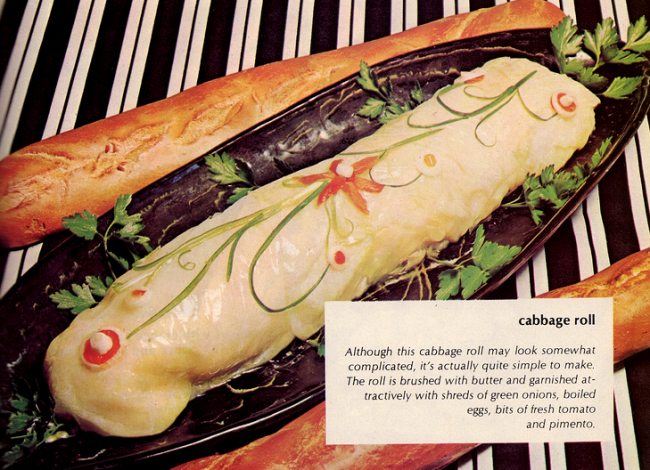
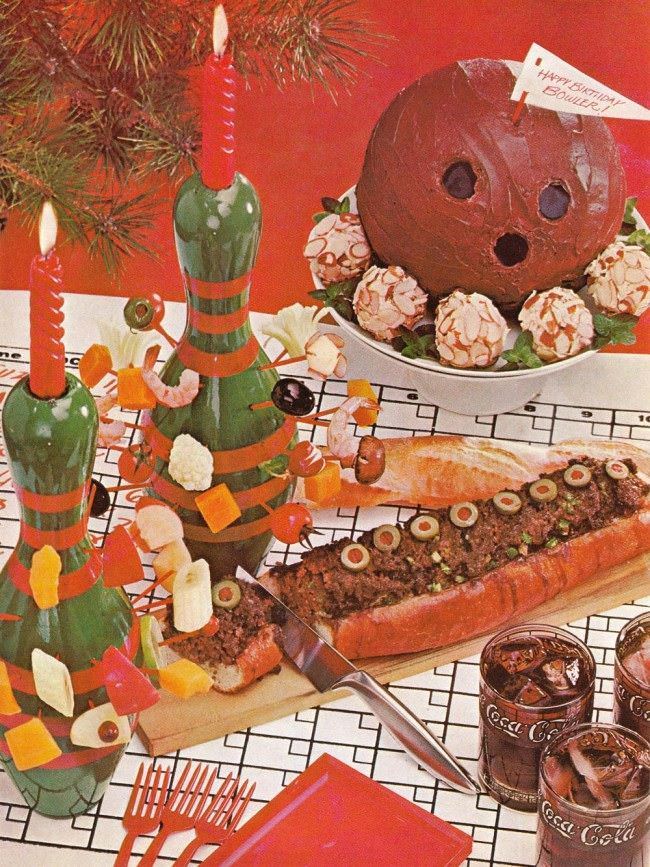
Presentation mattered enormously to mid-century cooks, even when the food itself was objectively alarming. Dishes were arranged with great care — garnished with radishes cut into roses, ringed with parsley, and shaped into elaborate centerpieces. The idea was that visual effort communicated hospitality and skill. The disconnect between the decorative effort and the actual food inside those arrangements was often spectacular.
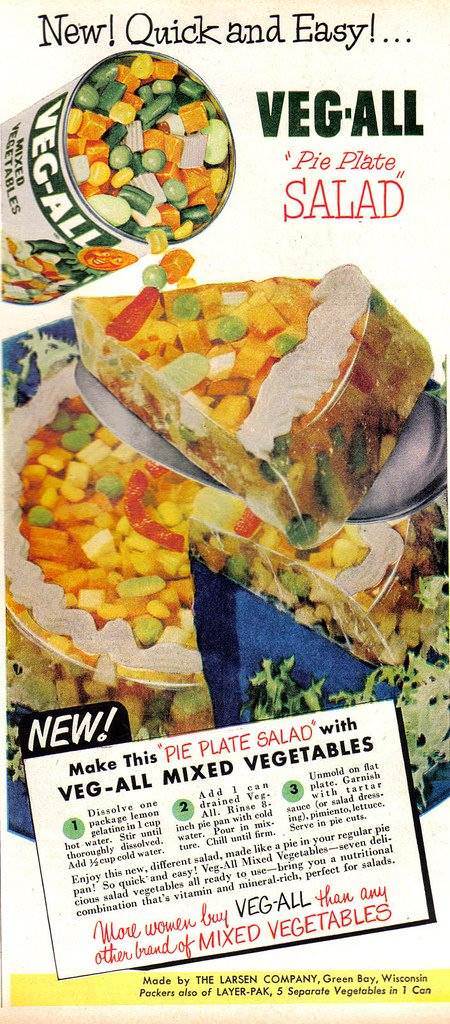
Veg-All — a canned mixed vegetable product — found its way into some of the era’s most perplexing dishes. Combined with gelatin, it produced a cold, wobbly pie filled with peas, carrots, lima beans, and potatoes suspended in savory aspic. The pie shell gave it structure. The gelatin gave it jiggle. The combination gave it a place in food history as one of the period’s most committed culinary mistakes.

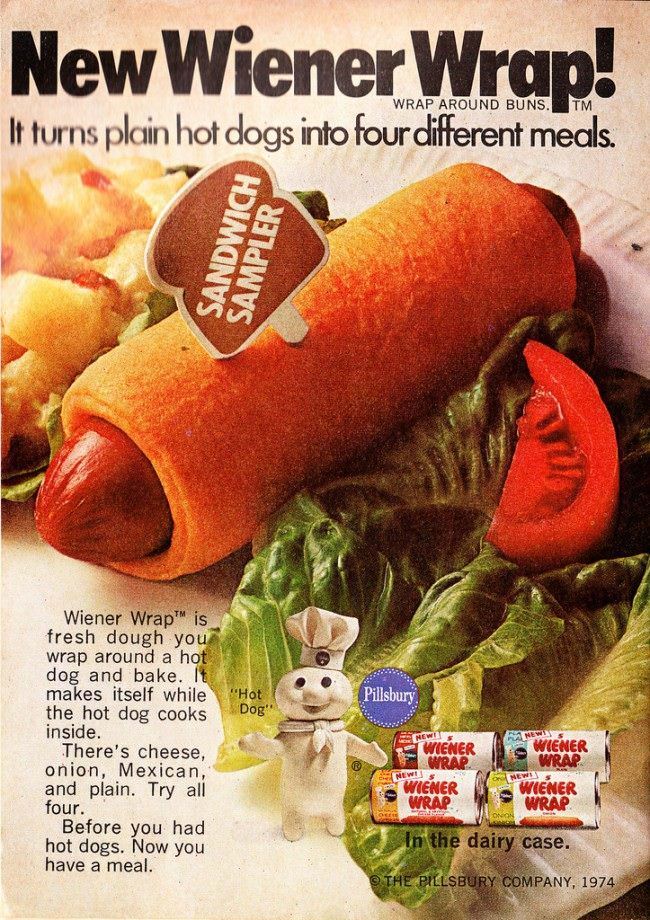
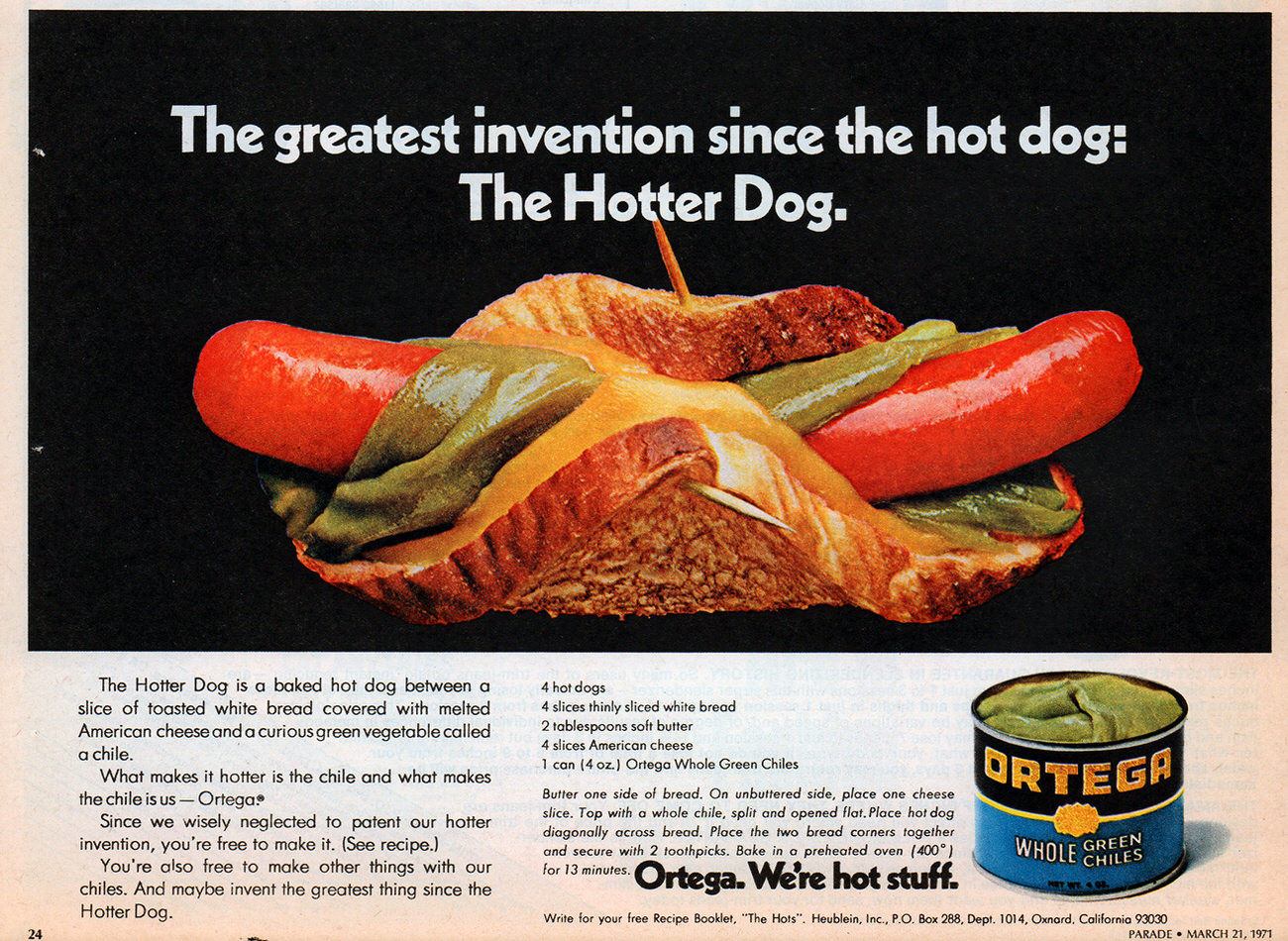
Hot dogs — or wieners — were endlessly versatile in the mid-20th century kitchen. They were wrapped in bacon, encased in dough, sliced into casseroles, and arranged into decorative wreaths. The wiener wrap was exactly what it sounds like: a hot dog bundled inside some form of pastry or bread dough and baked until the whole thing was puffy and vaguely concerning. Recipes presented it without irony as party food.
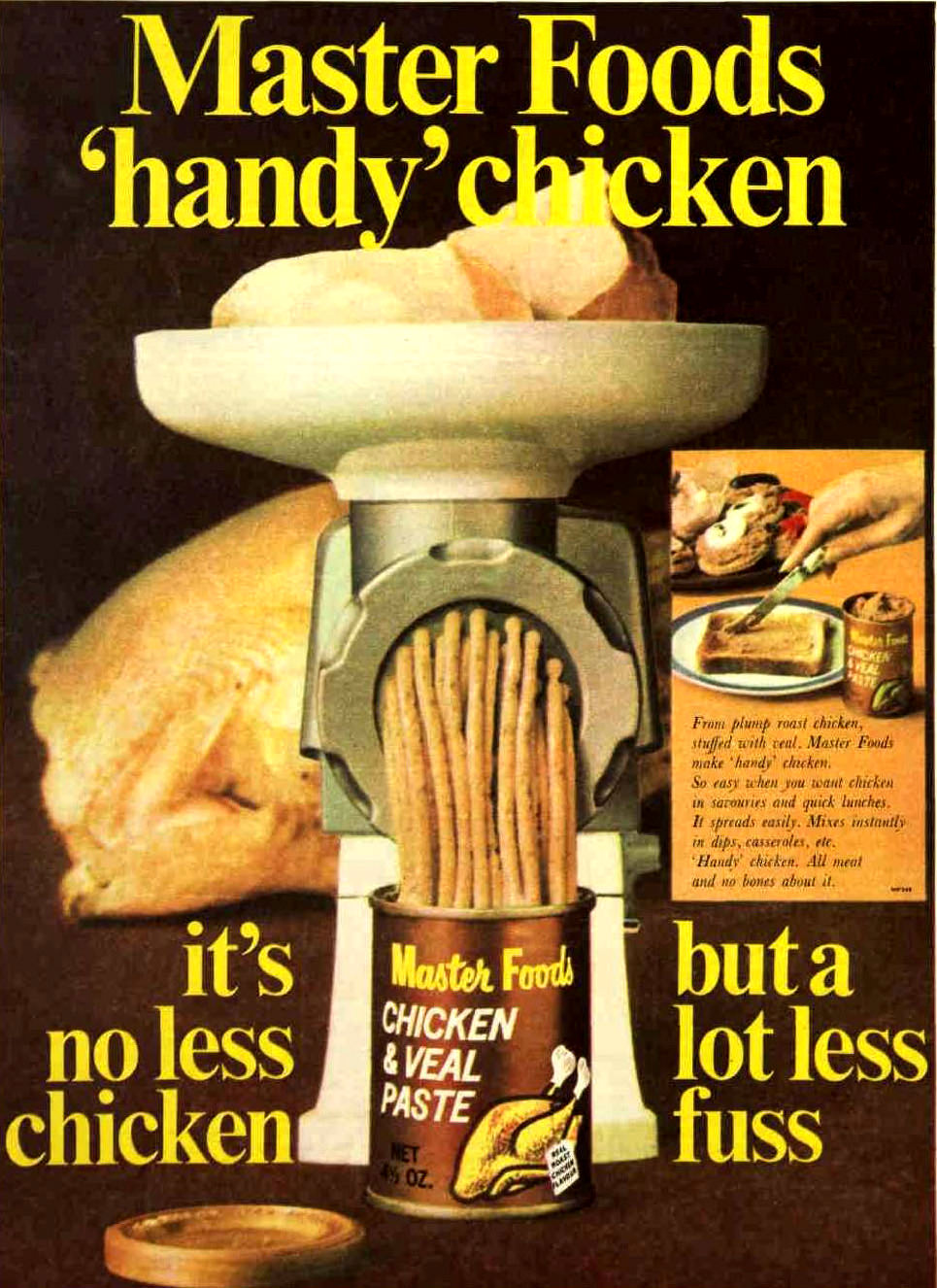
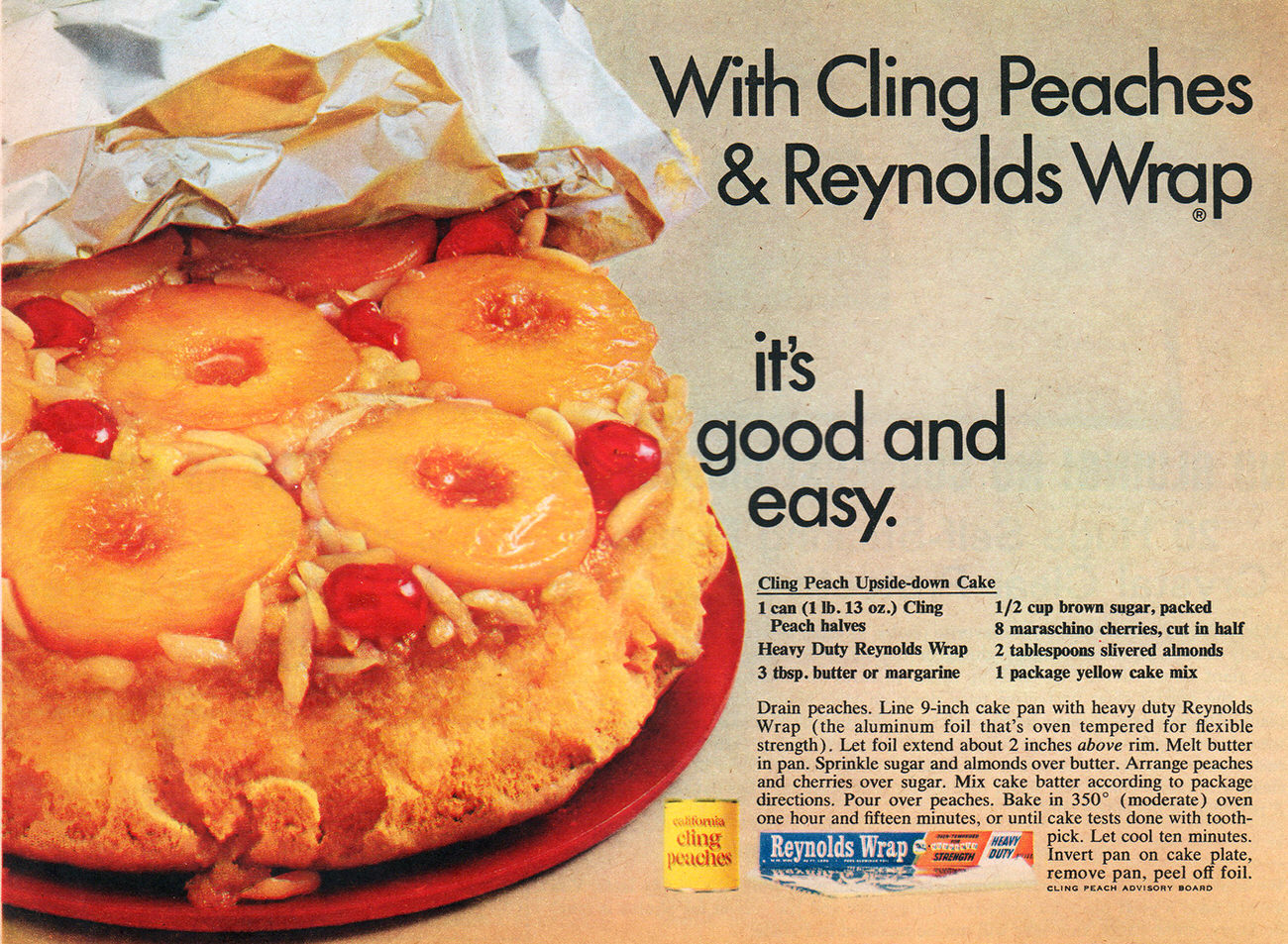
Visual deception was sometimes unintentional and sometimes deliberate. Slivered almonds arranged over a molded meat dish produced an effect that no amount of cookbook photography could make appetizing. The almonds lay in pale, curved rows across the surface of the food, looking precisely like something that doesn’t belong on a dinner plate. Whether the recipe developer noticed is unclear. Whether they cared is less clear still.
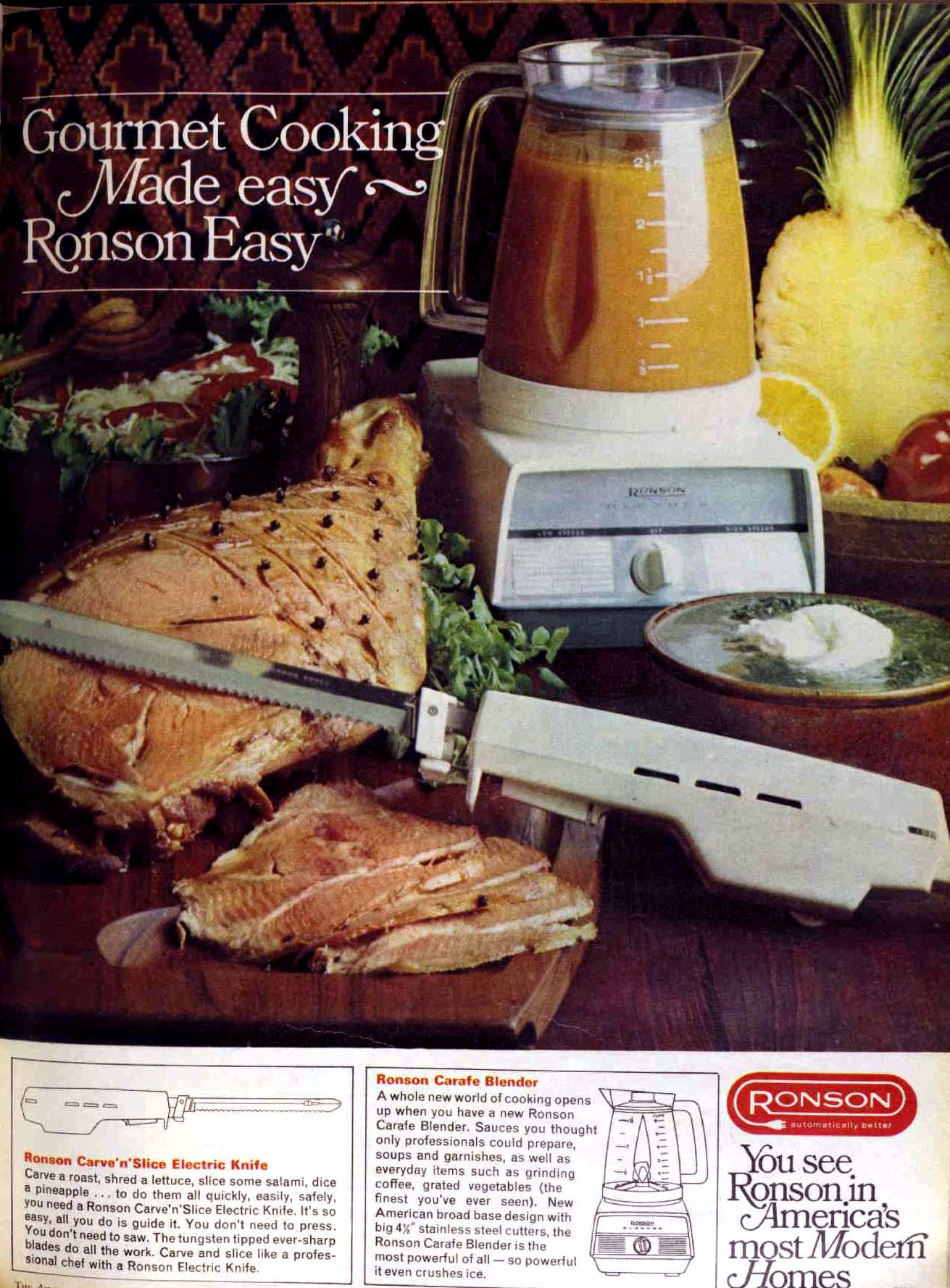
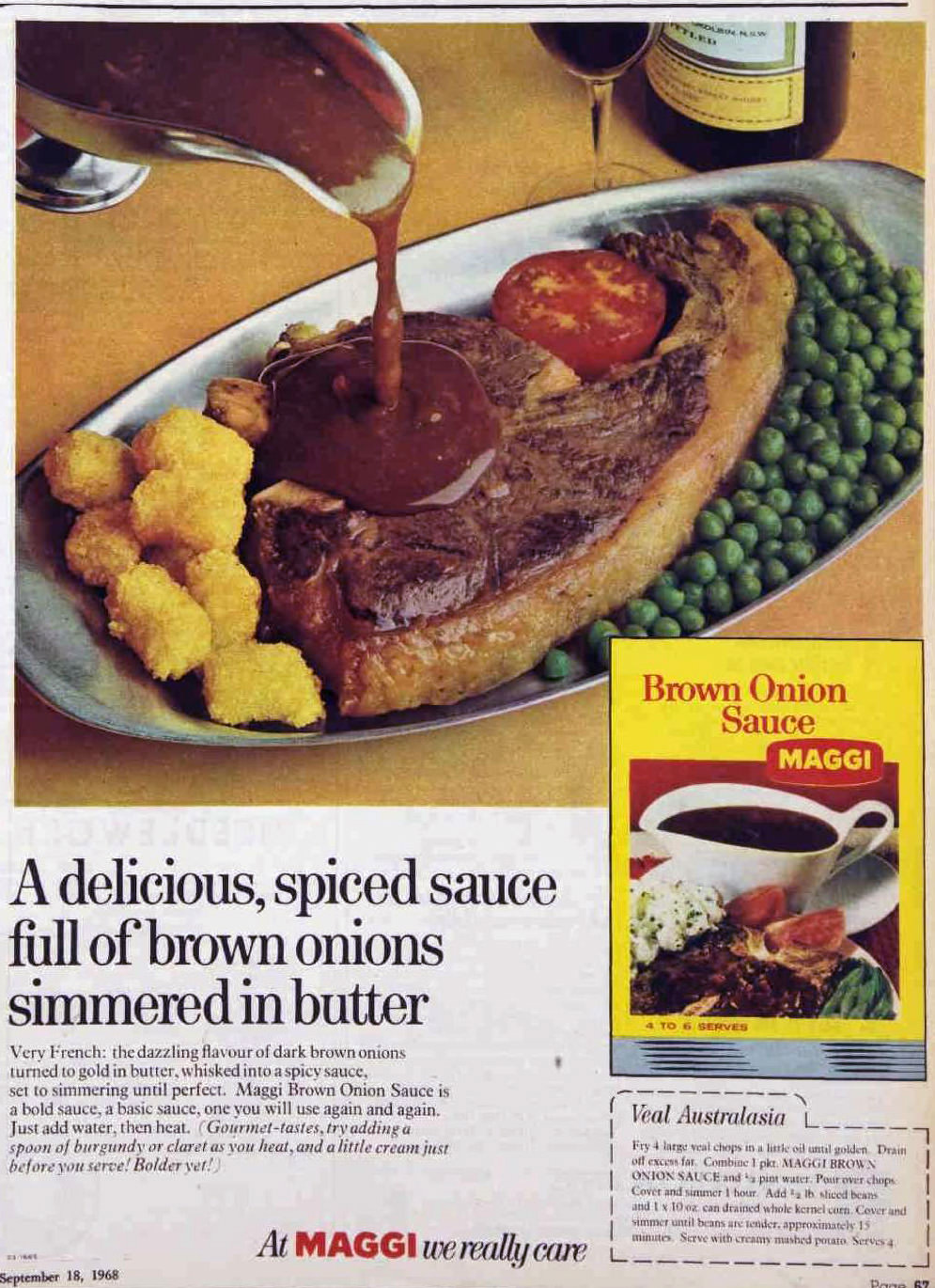
Packaged sauce mixes promised home cooks access to “professional” flavors without professional skill. The marketing leaned heavily on aspiration — these products would elevate everyday meals into something sophisticated. In practice, they produced glossy, sodium-heavy sauces that coated whatever they touched in a uniform, starchy sheen. They sold extraordinarily well.
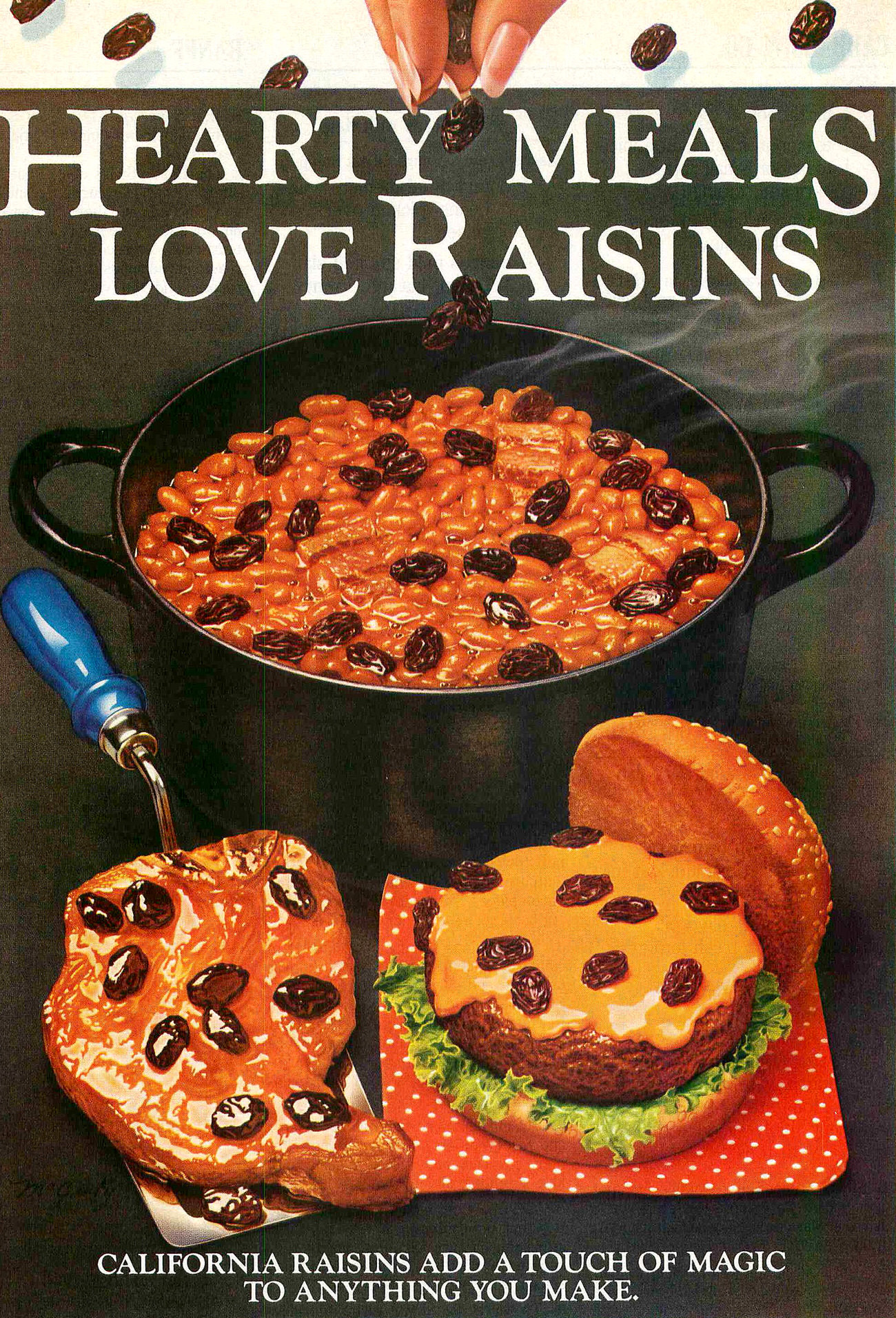
Raisins appeared in savory dishes with alarming frequency. They were stirred into rice casseroles, tucked into meat loaves, and scattered over salads. Food companies advertised raisins as a “touch of magic” that added sweetness and depth to main courses. The combination of sweet raisins with savory, creamy, or salty dishes produced results that most modern palates reject immediately.
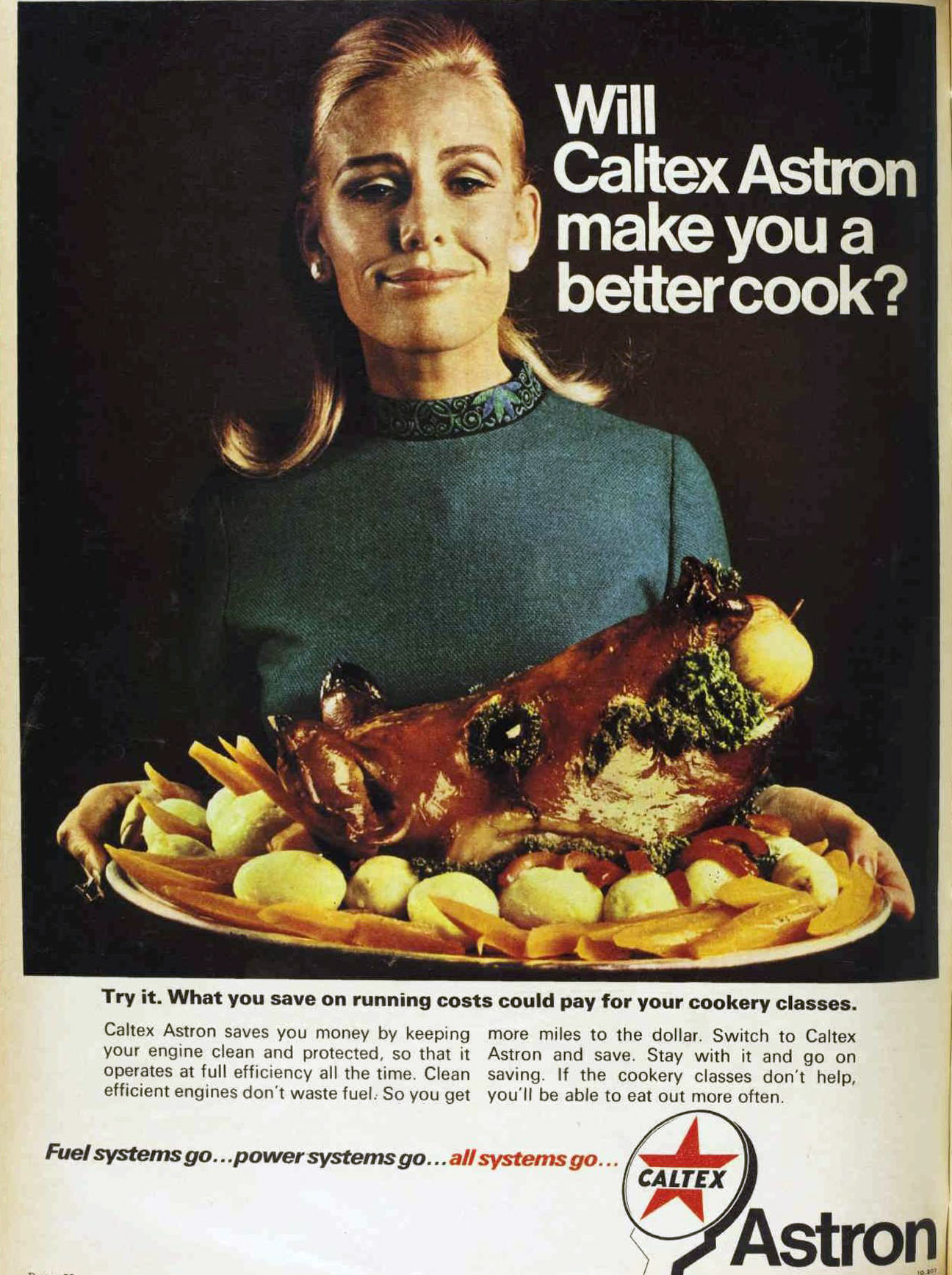
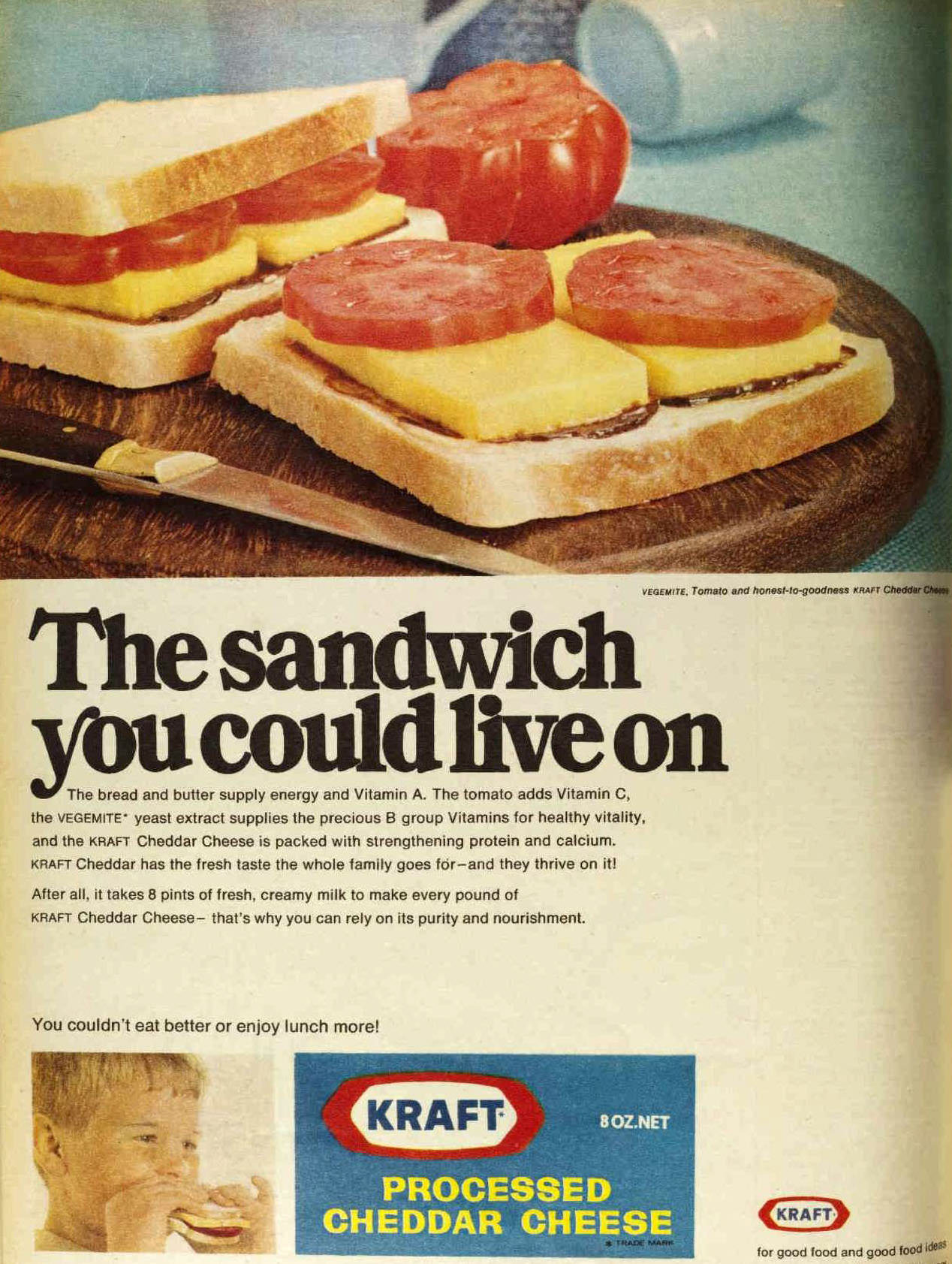
International dishes filtered through mid-century American and British sensibilities produced some genuinely strange hybrids. Sandwiches of the era incorporated Vegemite, processed meats, and strong condiments in combinations that reflected local tastes with full commitment. The ingredients were real and the flavors were intense — just not necessarily compatible with one another.
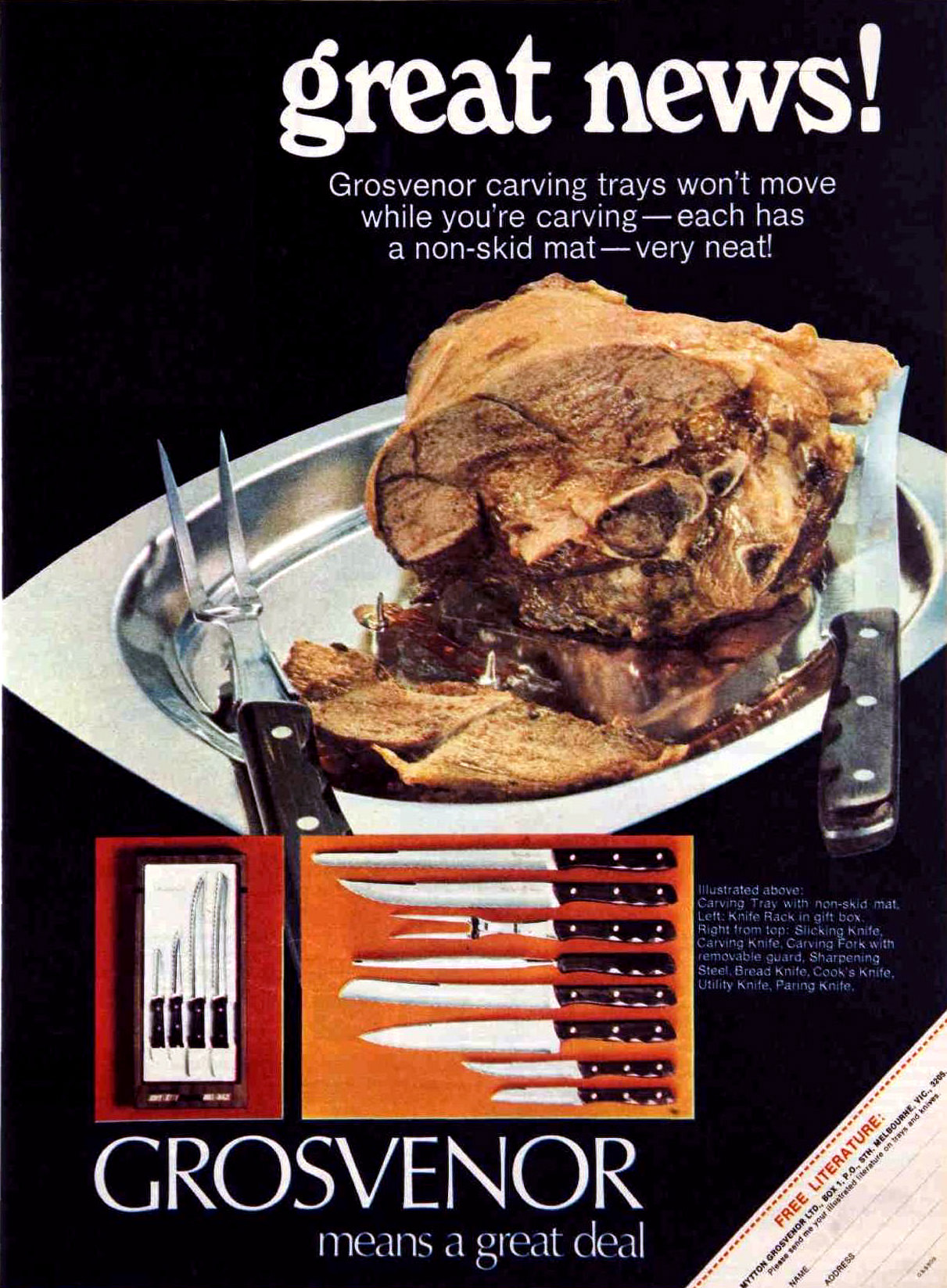
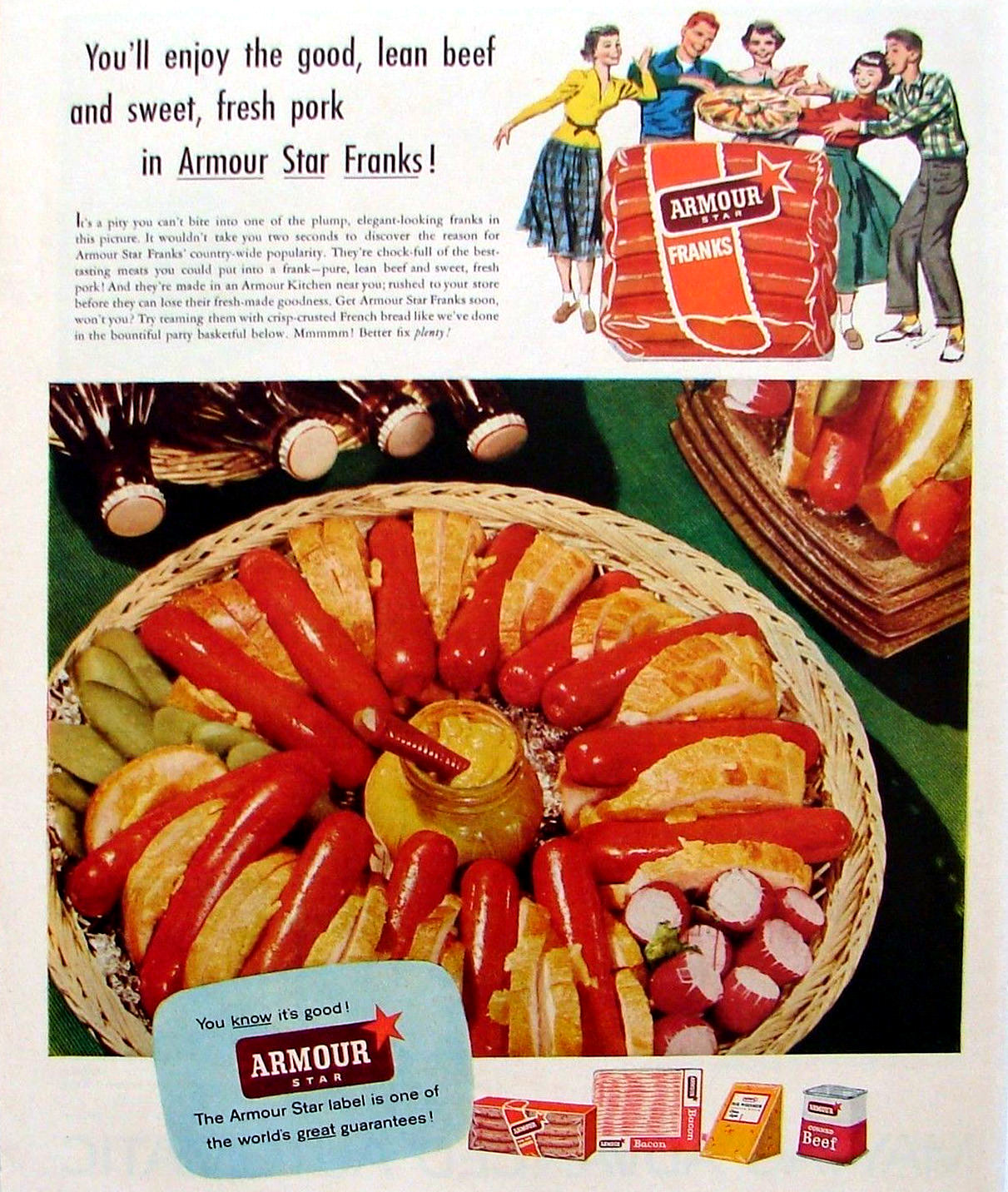
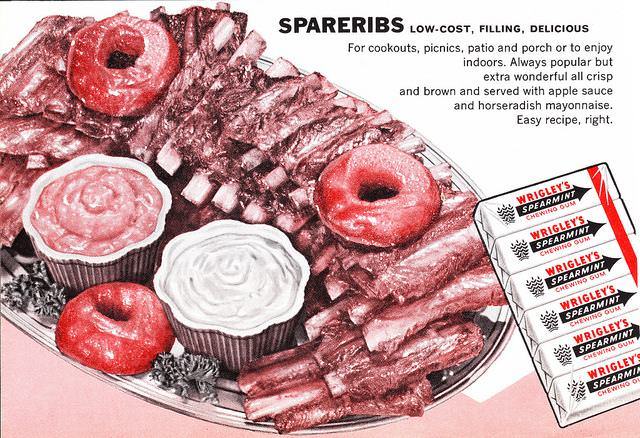
Food coloring and preservation methods gave mid-century meats vivid, unnatural hues. Hot dogs and wieners photographed in deep, saturated reds that looked nothing like the actual color of food. Garnishes — including, apparently, piles of radishes — were arranged around the main dish in ways that raised more questions than they answered. The radishes were decorative. They were not eaten.
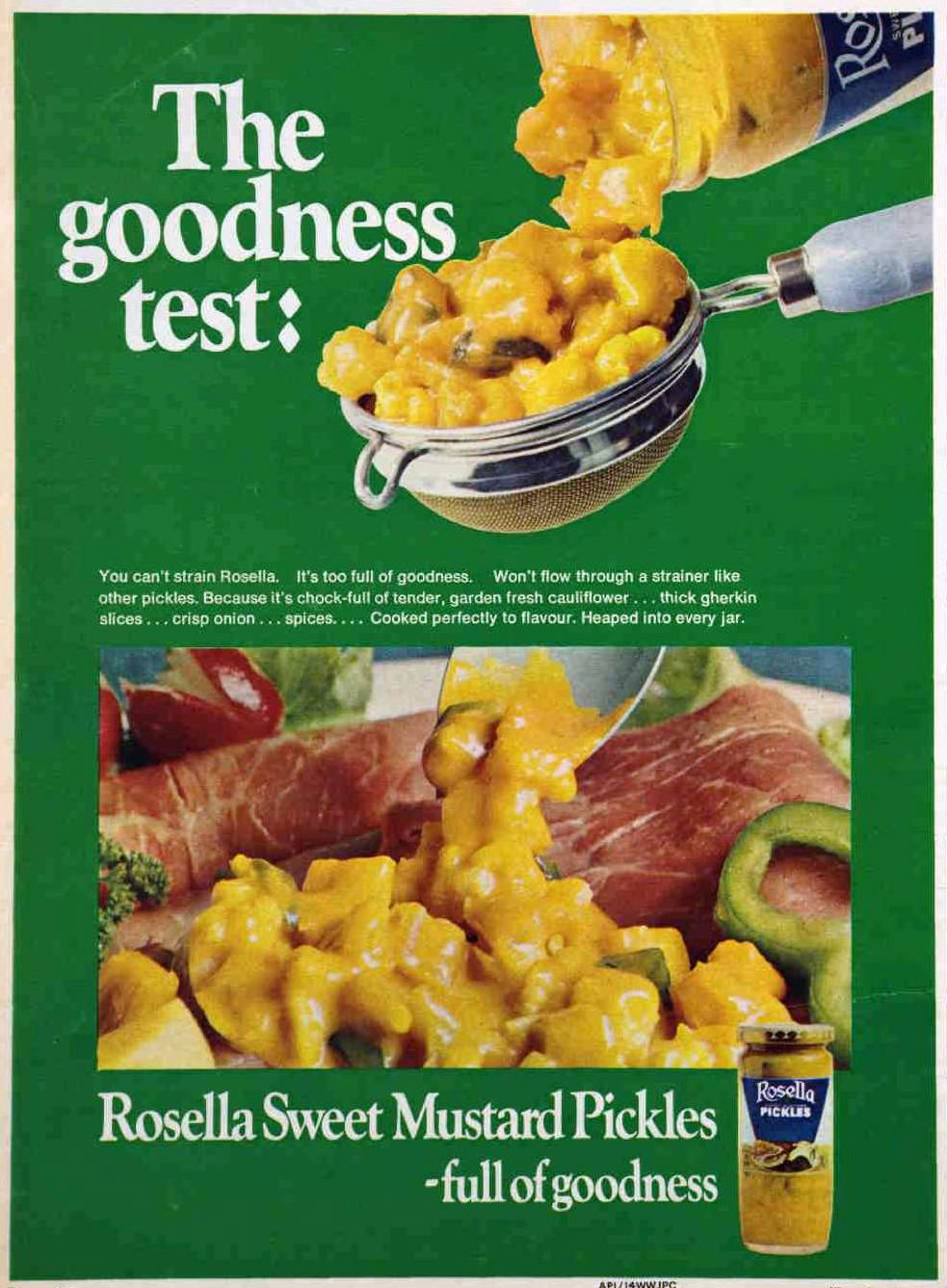
Mustard pickles were a staple condiment in mid-20th century kitchens — vegetables preserved in a sharp, turmeric-yellow mustard brine. They appeared alongside cold meats, in sandwiches, and as relish for hot dishes. The color was aggressively yellow. The flavor was sour, mustardy, and polarizing. They were served without apology at family tables across Britain, Canada, and Australia.
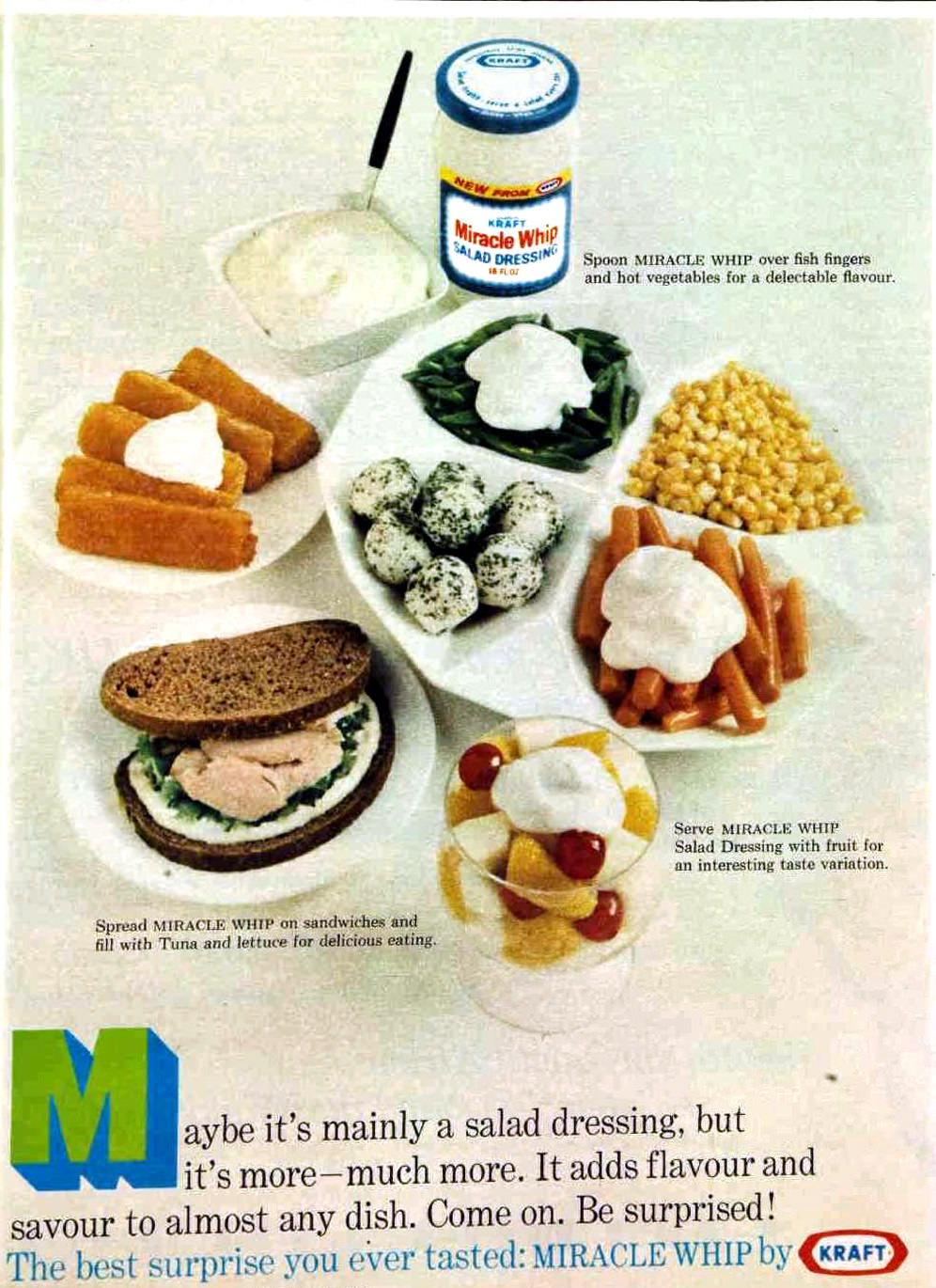
Mayonnaise — and its many processed imitations — was applied to mid-century dishes in quantities that today seem excessive. Cold salads, sandwiches, and molded dishes all called for cups of the stuff. Recipes using salad dressing products like Miracle Whip treated them as interchangeable with real mayonnaise, producing dishes with a sweet, tangy coating that blanketed everything beneath it.
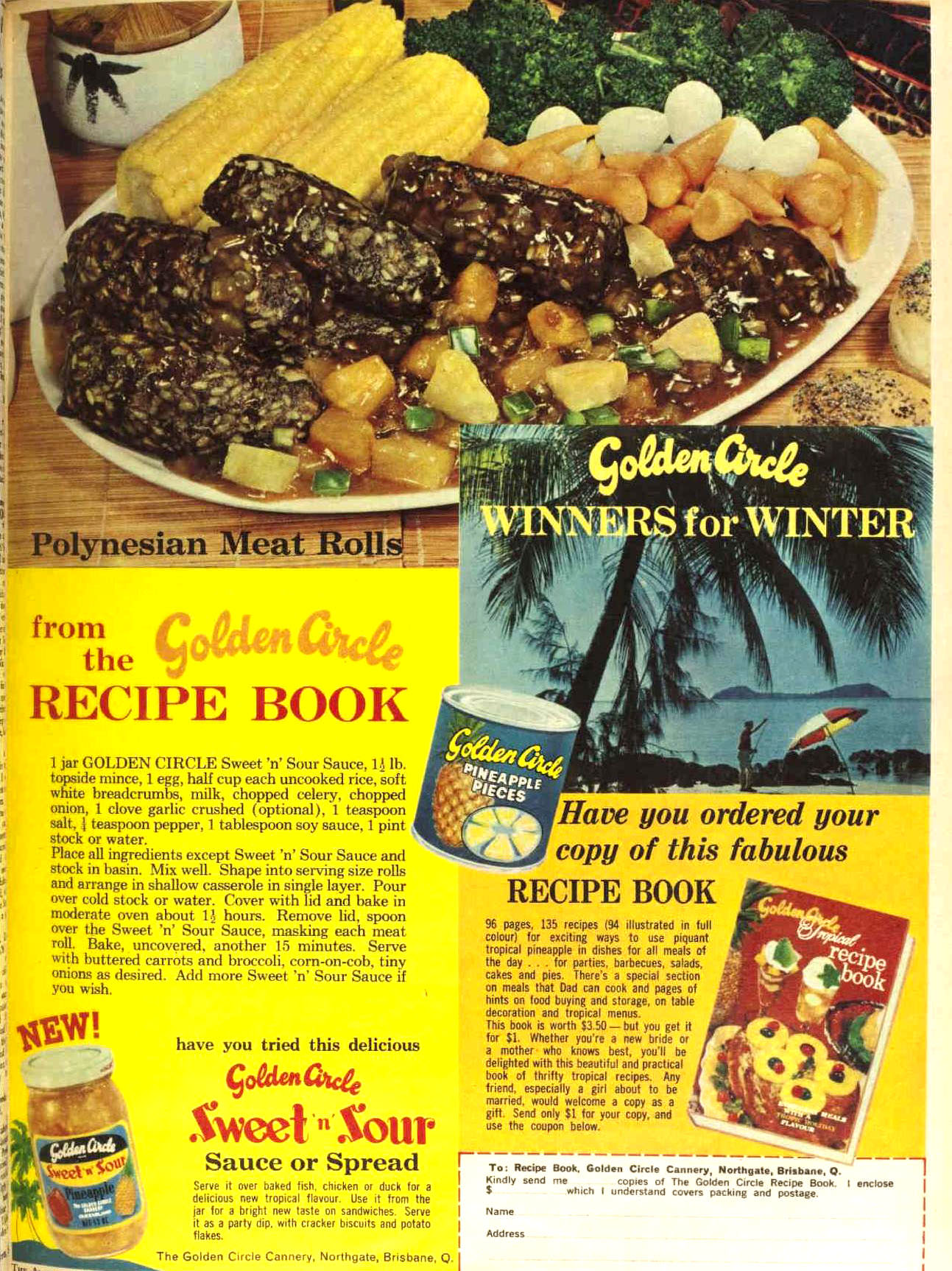
“Polynesian” was a popular mid-century food descriptor that had almost nothing to do with actual Polynesian cuisine. It meant sweet, usually involving pineapple, and often paired with canned or processed meat. Polynesian Meat Rolls combined ground meat with sweet sauces and tropical-adjacent flavors, then shaped them into cylinders and baked or broiled them. The aesthetic was ambitious. The execution was grim.
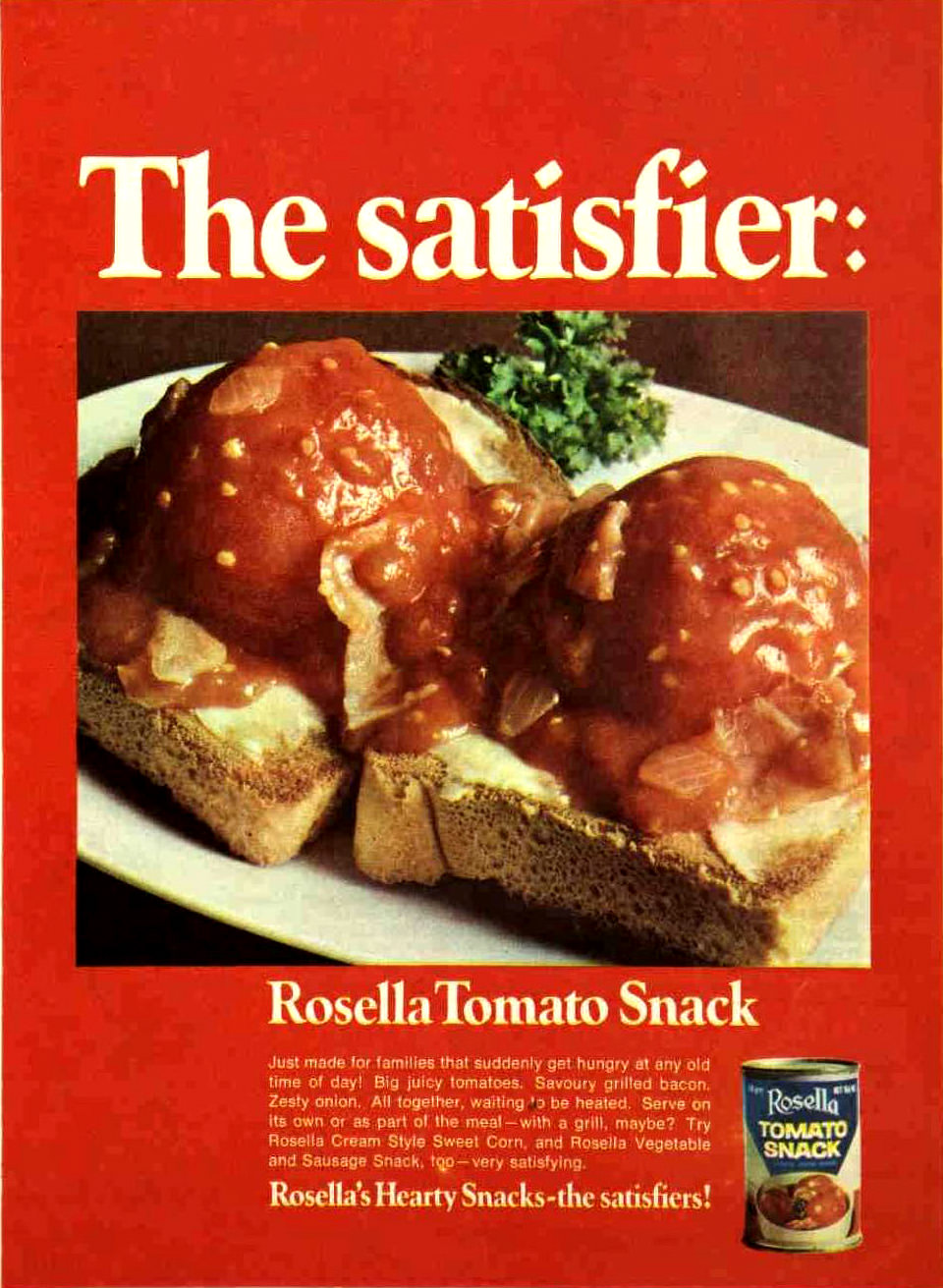
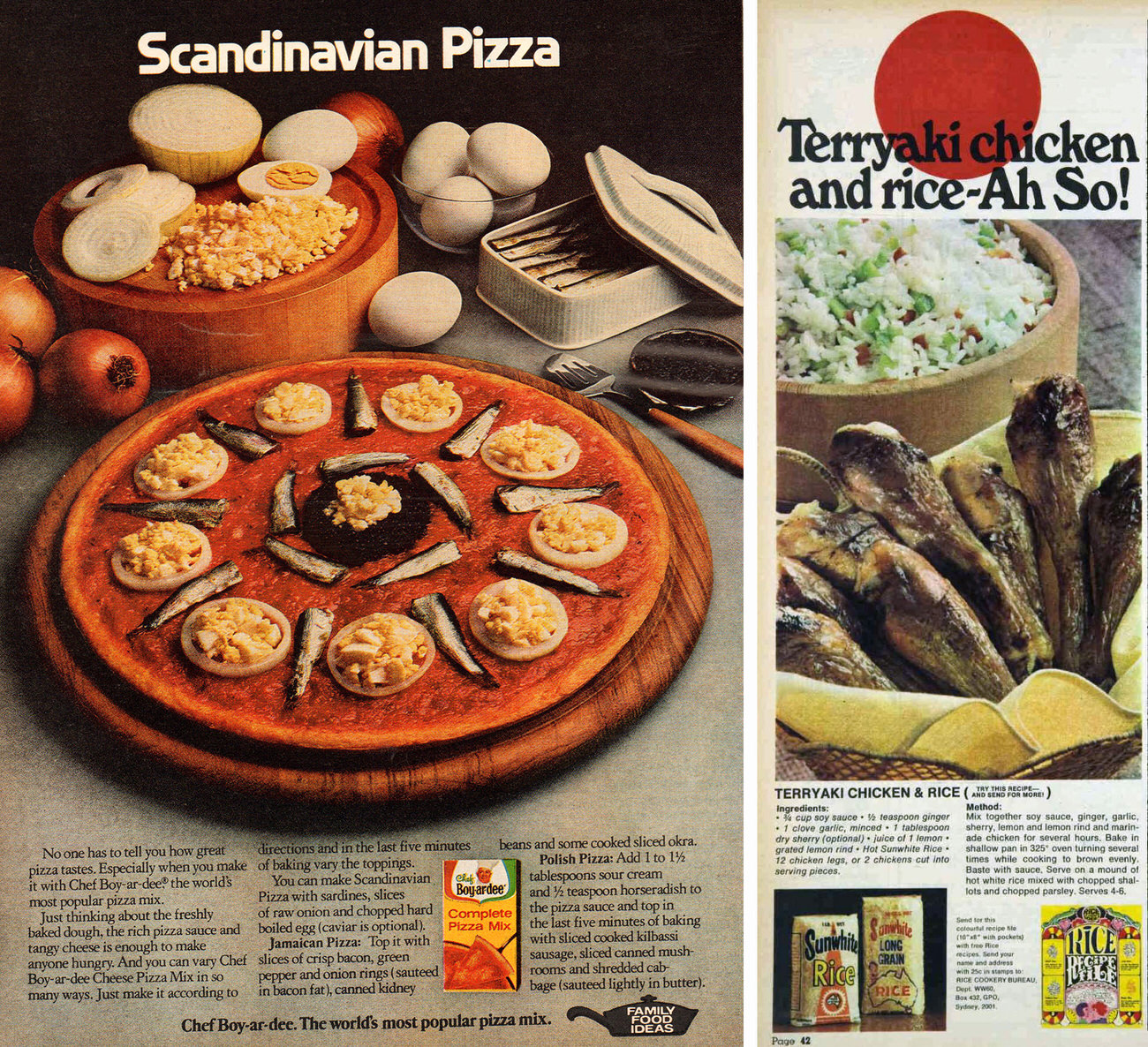
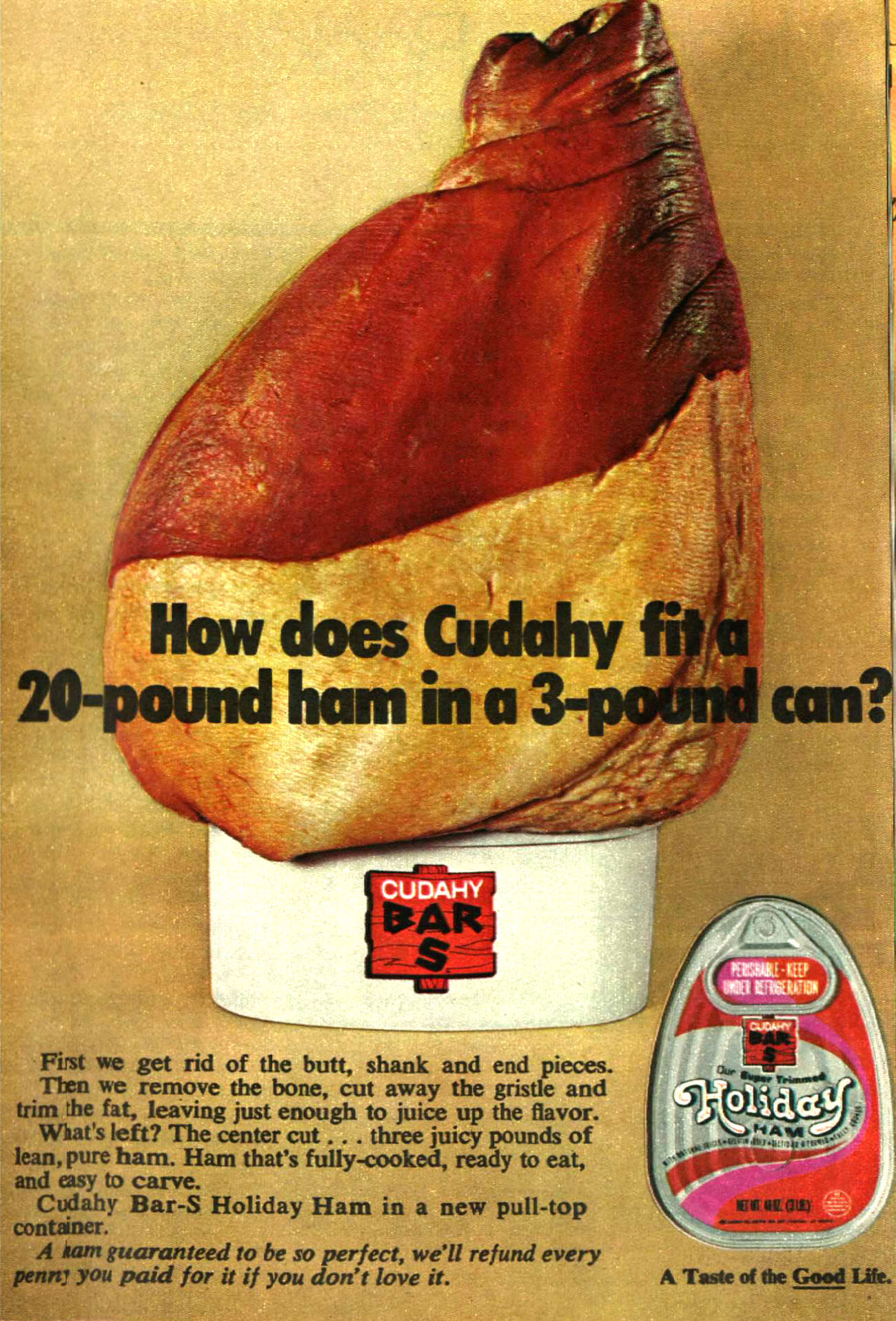
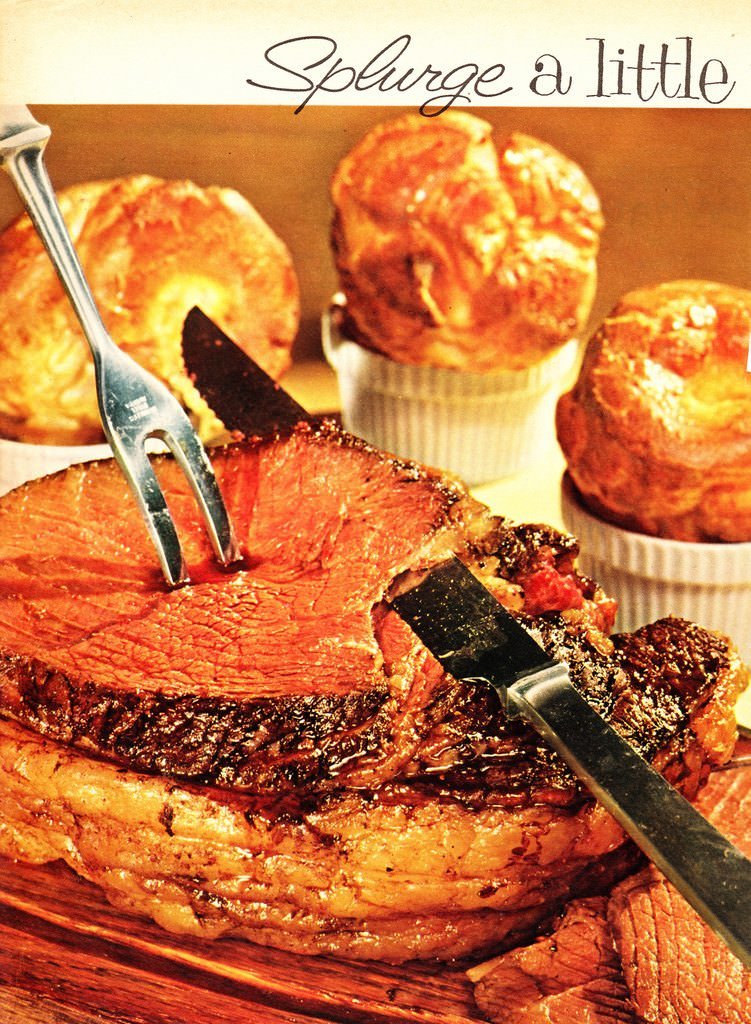
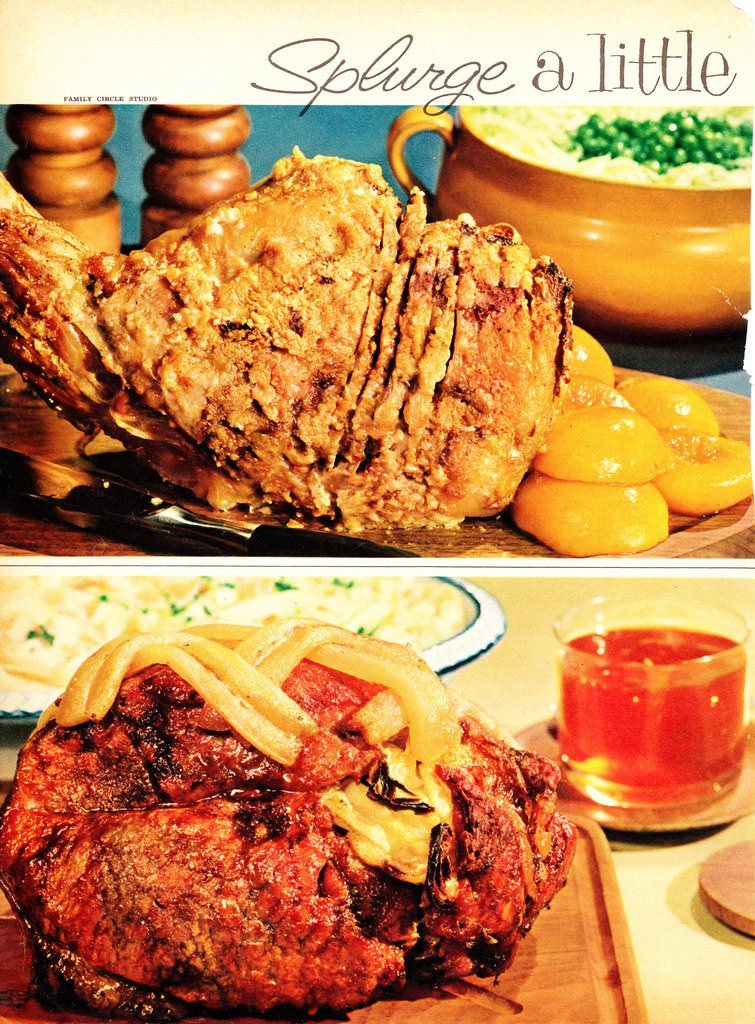
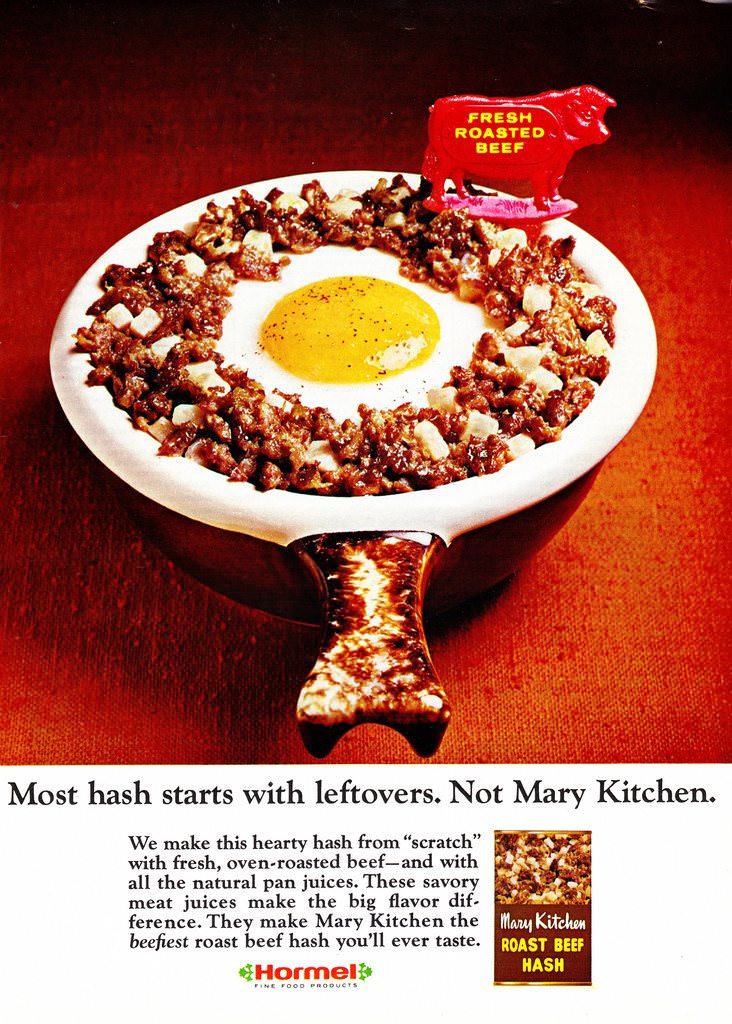
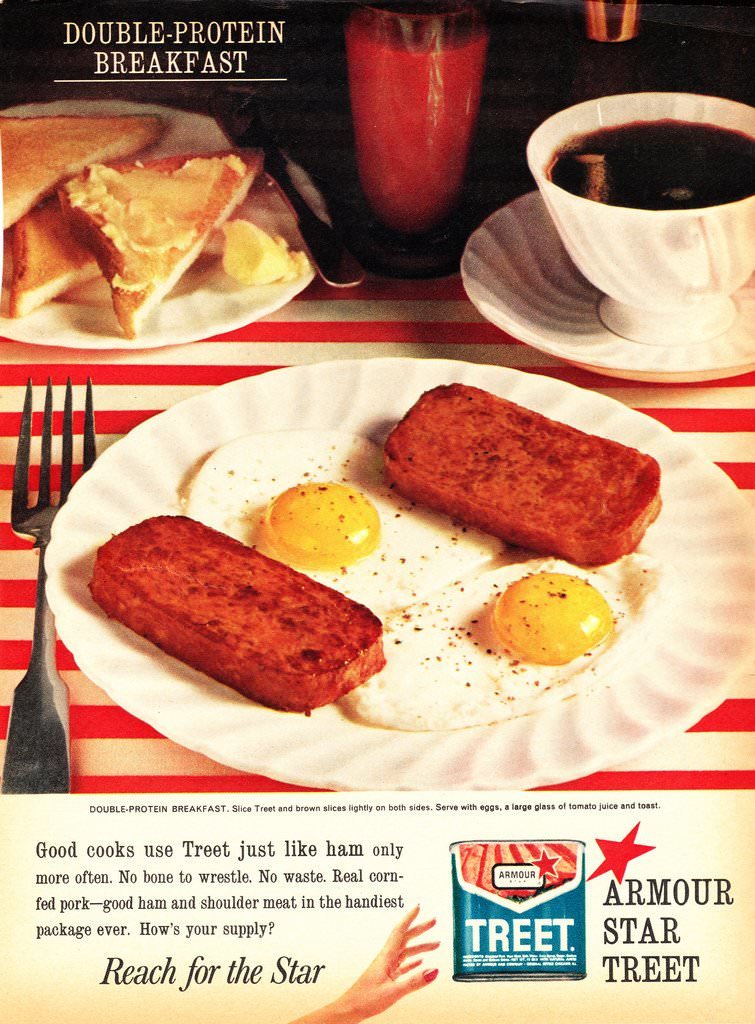
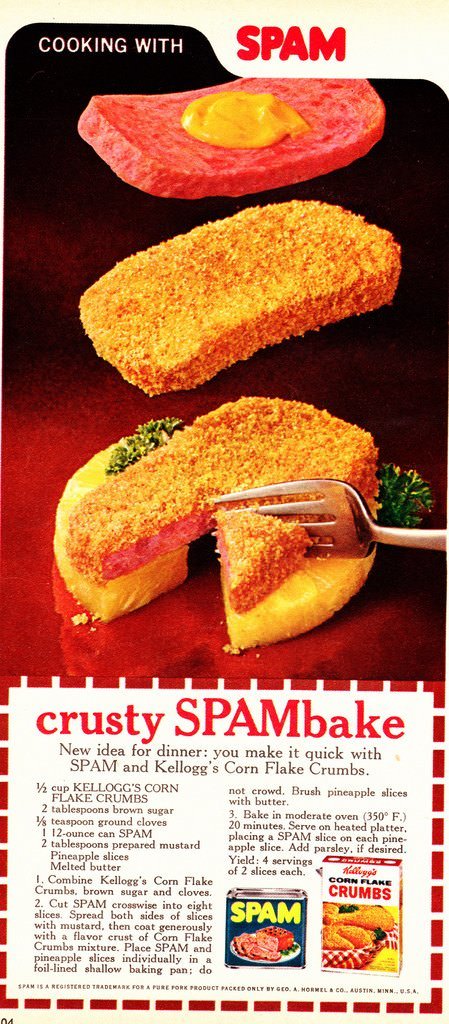
Spam — the canned pork product introduced in 1937 — became one of the defining foods of the mid-20th century. It was cheap, shelf-stable, and required no refrigeration, which made it invaluable during and after World War II. By the 1950s and 60s, cookbooks featured Spam in casseroles, glazed loaves, and elaborate presentations that tried to dress it up as something more than what it was. The food styling worked hard. The Spam remained Spam.
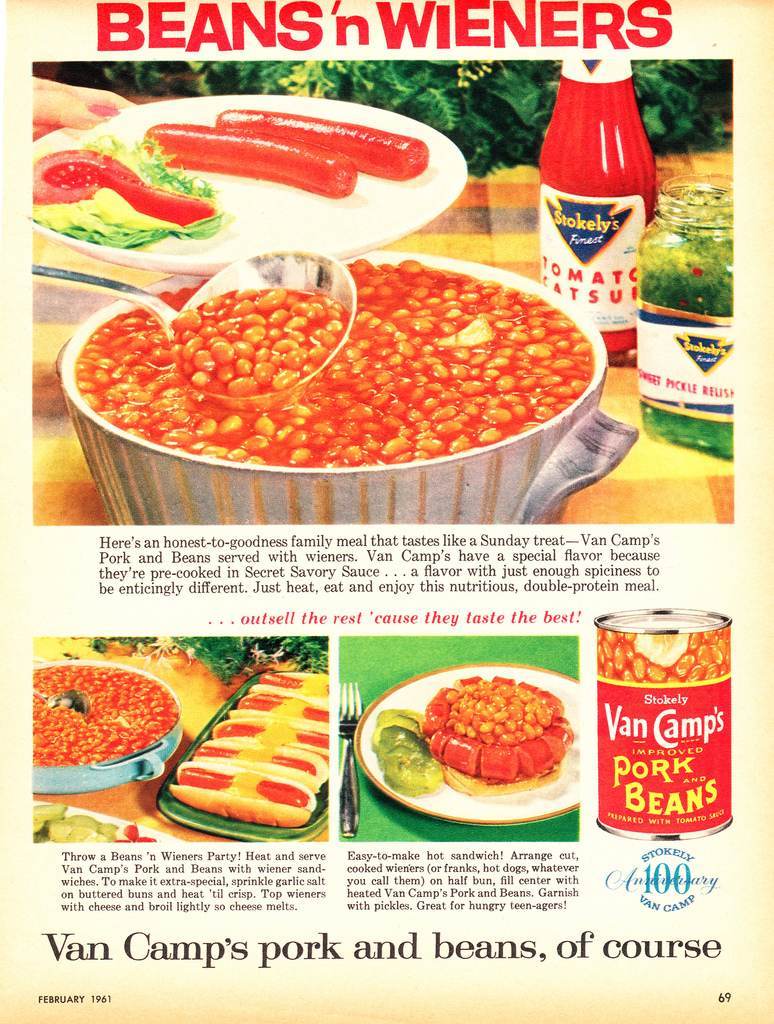
The hot dog wreath was a genuine mid-century party centerpiece. Hot dogs were arranged in a circular pattern, often interlocked or skewered, to form a wreath shape on the serving platter. They were glazed, stuffed, or decorated with pimentos and olives. The dish was meant to impress. It was served at holiday gatherings alongside the regular holiday food, occupying the same table as cranberry sauce and dinner rolls without a hint of self-awareness.
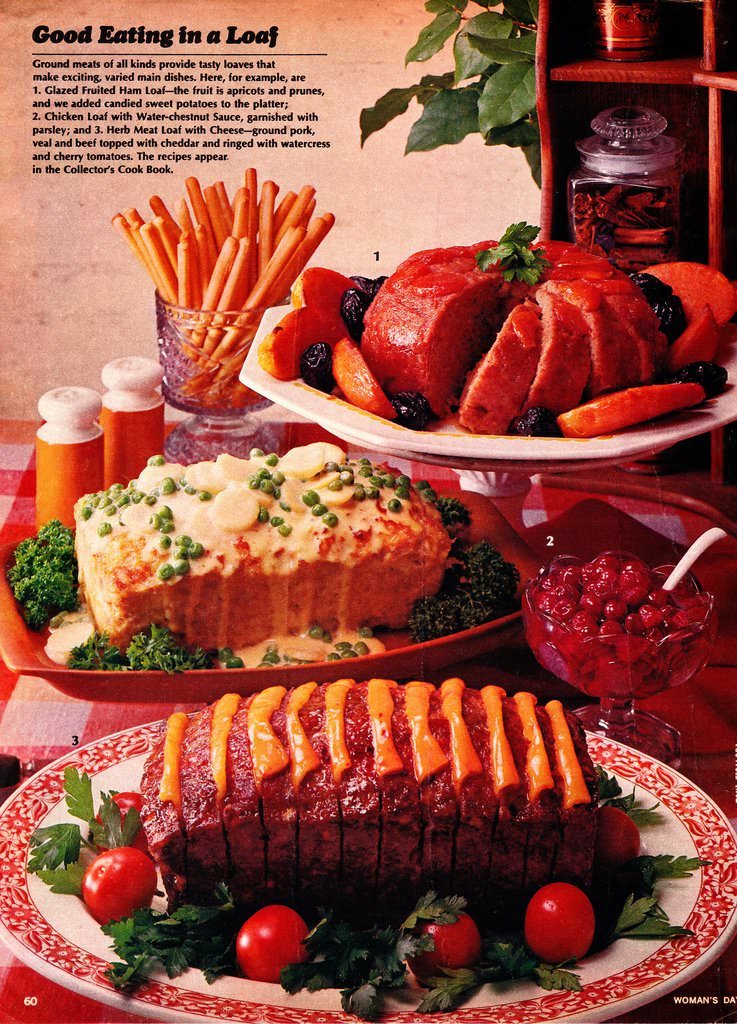
The cheese-layered meat loaf was exactly what it sounds like: a standard meat loaf sliced partway through before baking, with a slice of processed cheese inserted between each section. The cheese melted during cooking, binding the slices together and adding a layer of orange, glossy fat to every cut. The recipe appeared in multiple 1950s and 60s cookbooks and was described with genuine enthusiasm.
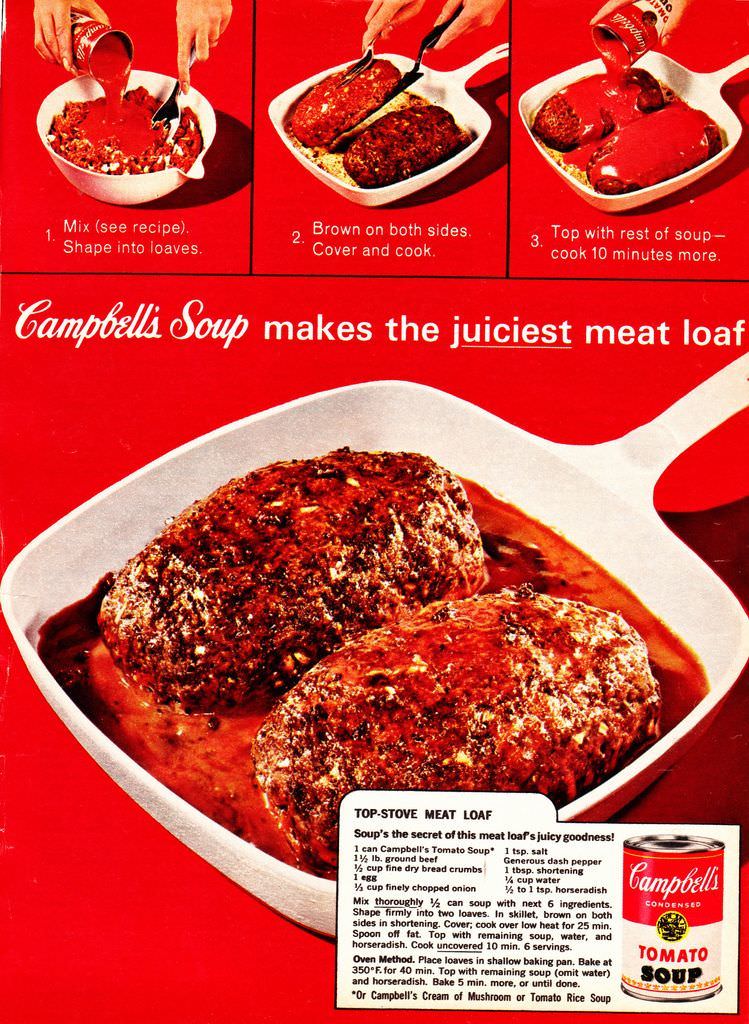
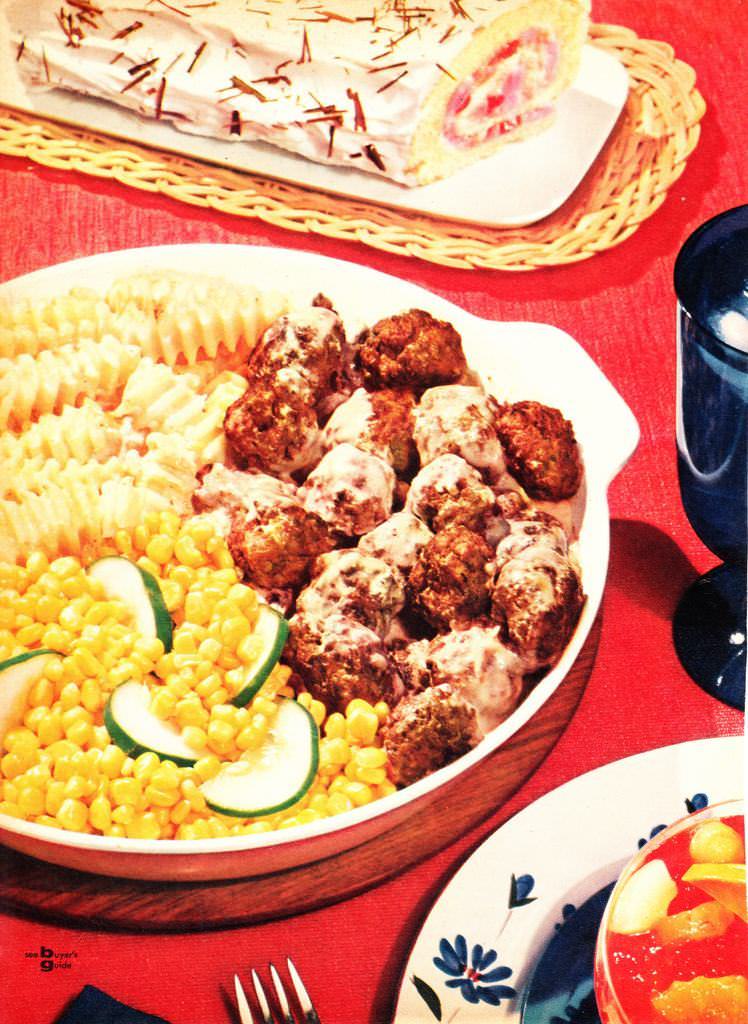
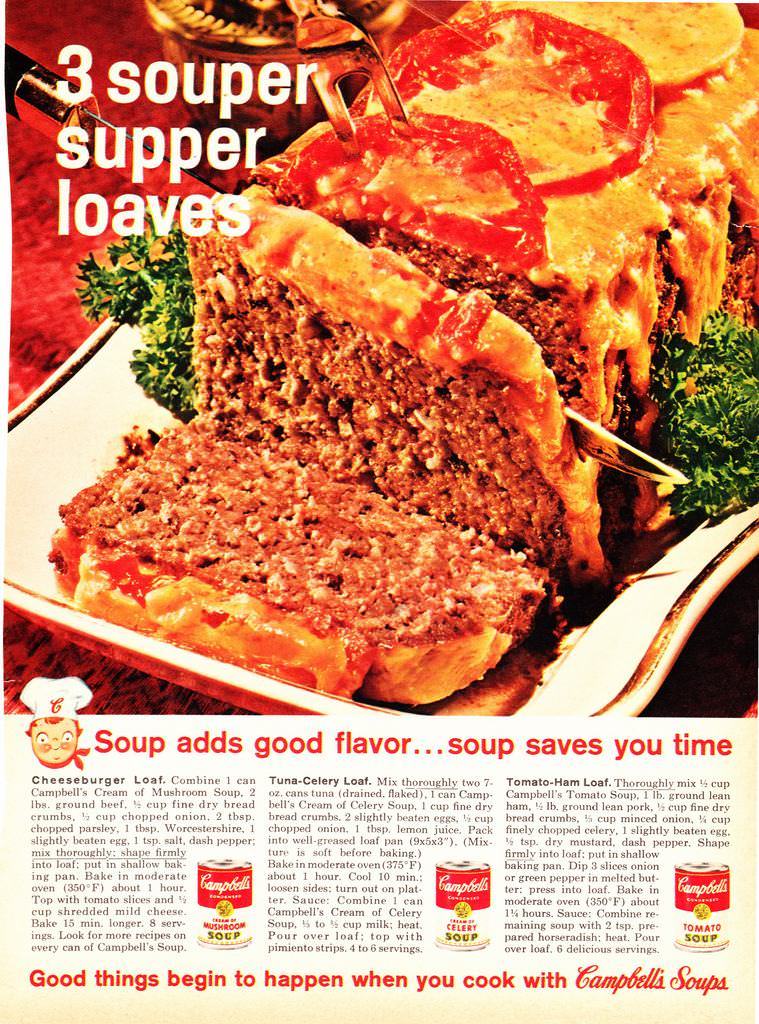
The absence of professional food styling in mid-century cookbook photography meant that dishes were photographed as they actually appeared — unretouched, unlit by modern standards, and frequently alarming. The food sat in its dish exactly as it came out of the oven or out of the mold, and the camera recorded it faithfully. There was no one on set to make it look better than it was. The honesty is, in its own way, remarkable.
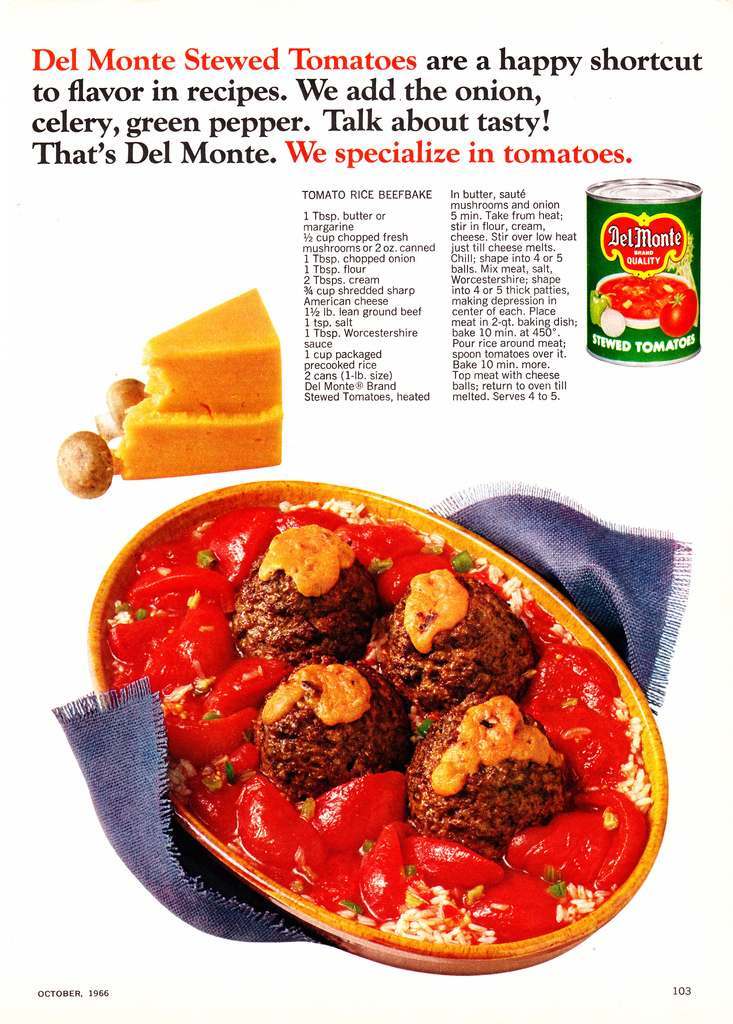
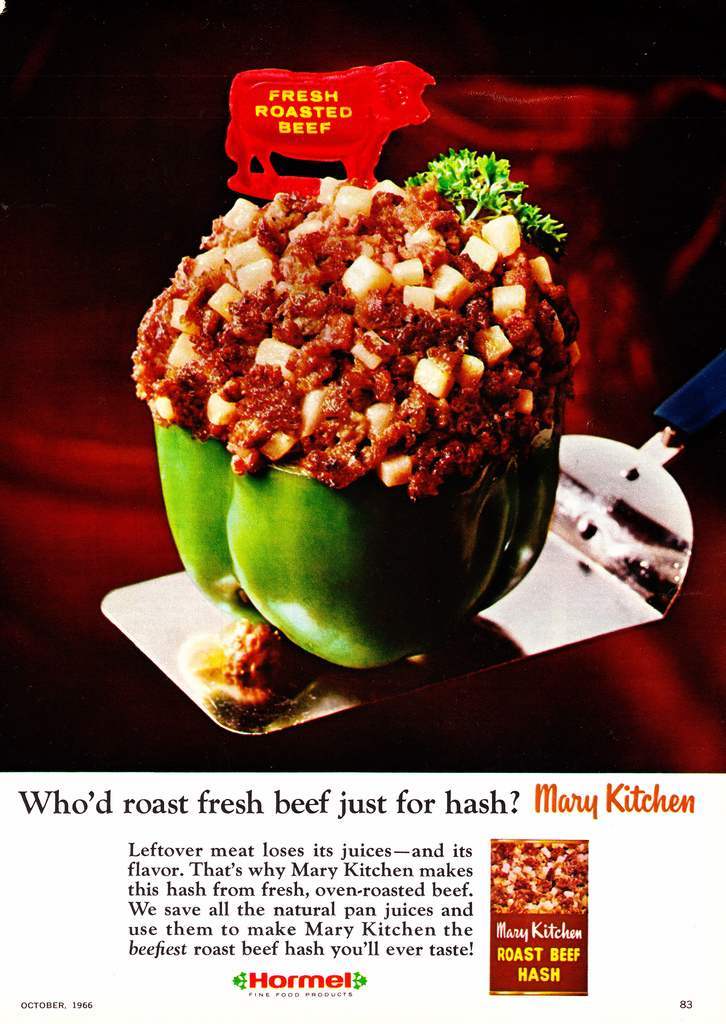
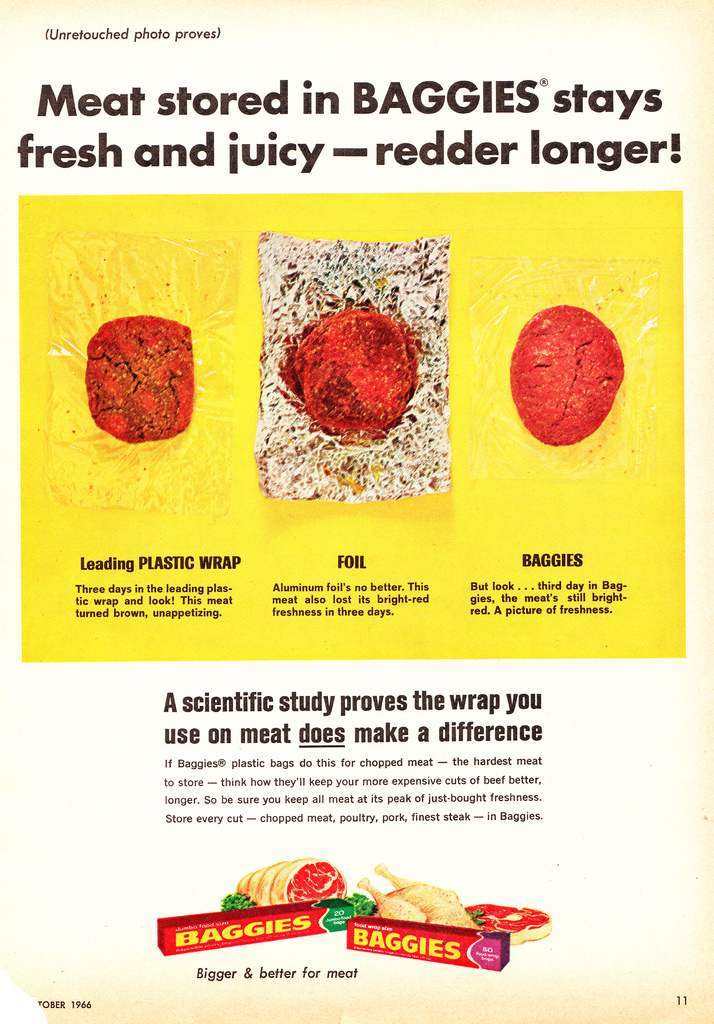
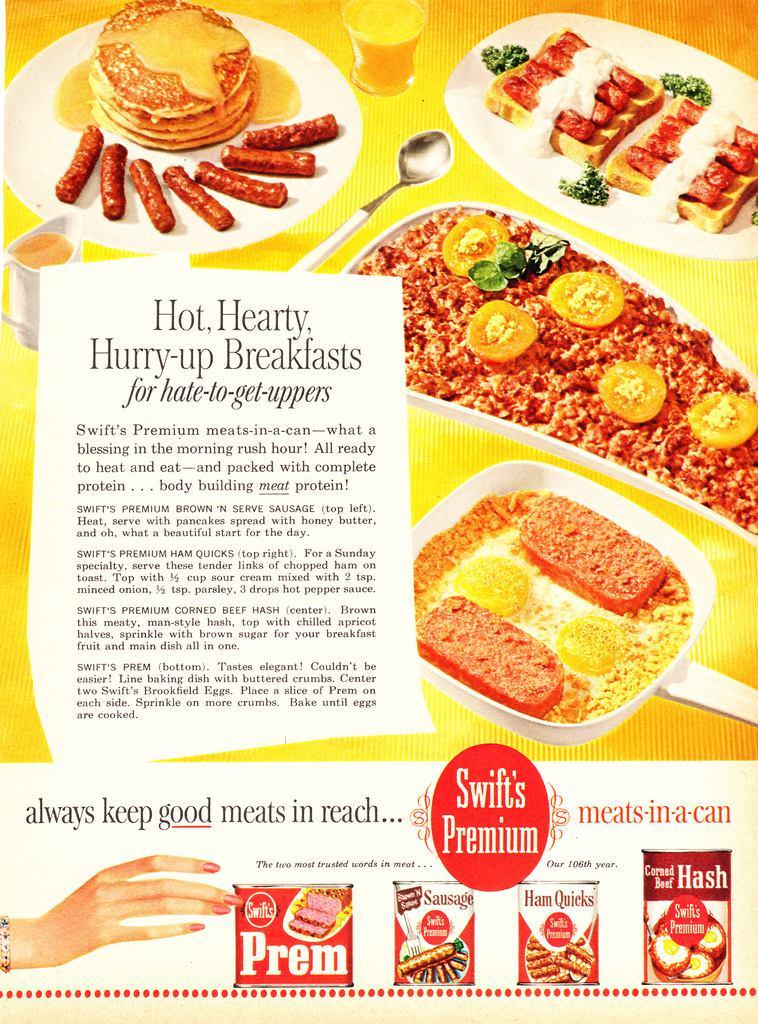
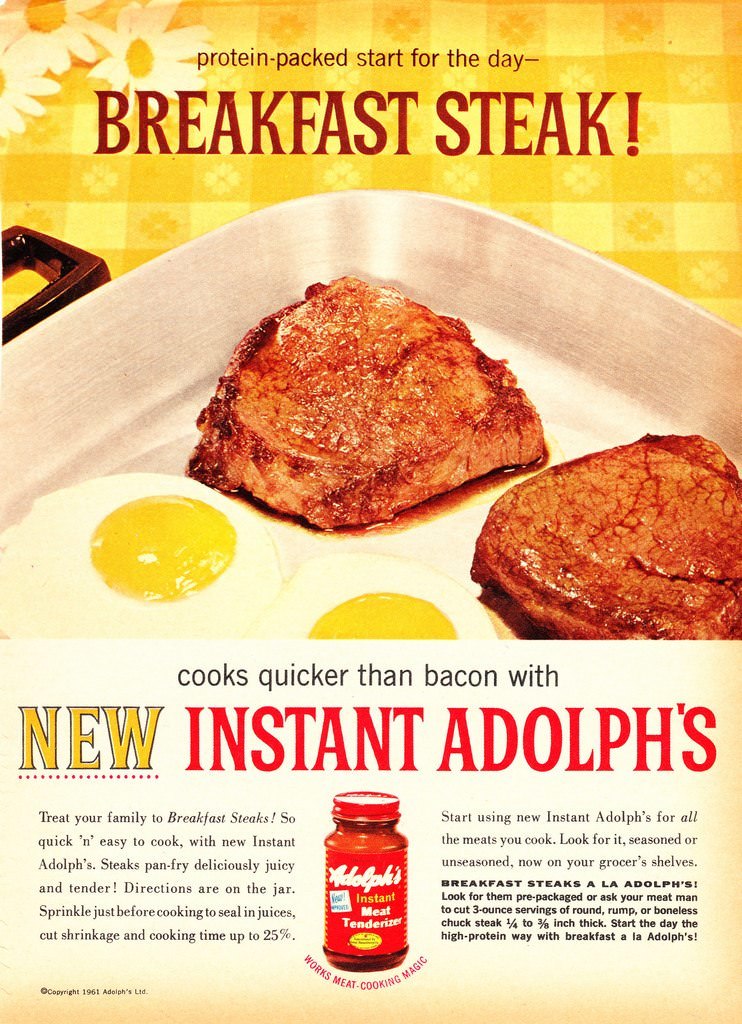
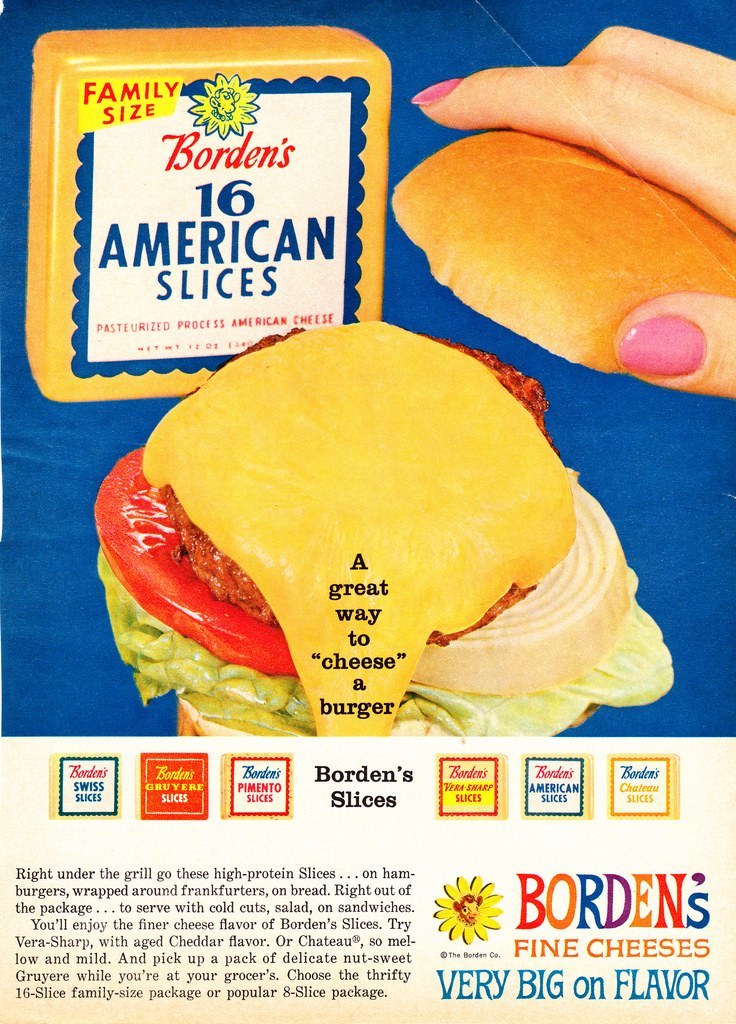

Advertising in the 1960s used food combinations that would stop a modern reader cold. A cracker ad featuring a hot dog wrapped in bacon — served on the cracker in question — was entirely normal. The logic was that anything tasted better on their product, and the more dramatic the topping, the better the demonstration. The hot dog. The bacon. The cracker. Together, in print, for all to see.
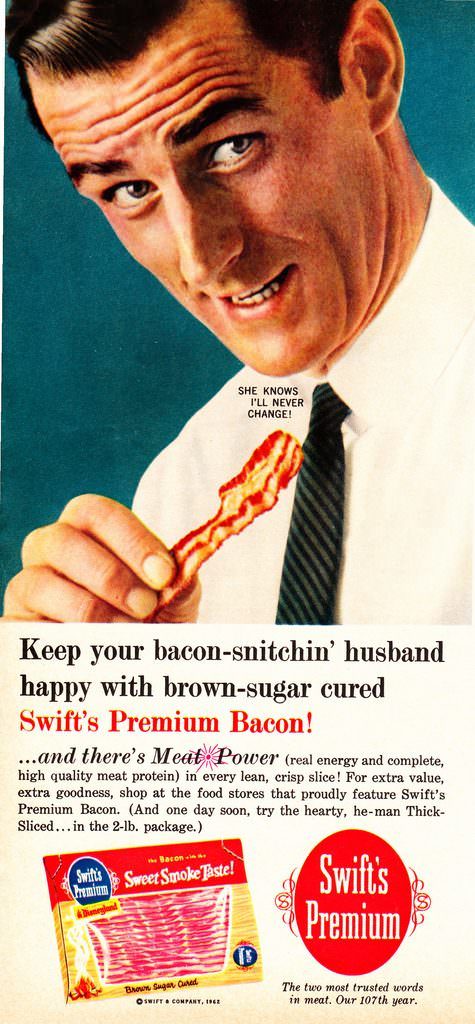
Food advertising of the mid-20th century operated in a world with very different rules. Bacon was marketed alongside cocktails and cigarettes as part of a leisure lifestyle. The pairing wasn’t considered ironic or dangerous — it was aspirational. These ads ran in mainstream magazines and reached millions of households, shaping what Americans considered normal, desirable, and modern.



There are a number of savory aspics from various different regions/cultures, not to mention the truffle infused aspic used on some patte.
I grew up with green bean casserole as a holiday dish and find it as good or better than creamed spinach.
I guess that it really depends on what/when/where you grew up and what you’ve been exposed to.
There writers of this are probably about 20 and need to get out of international coastal cities more (look! I’m a curmudgeon! off my lawn!).
Many of these (or variations) are still popular (tho the gelatin salads, yeah: ugh) and fruitcake had an ok reputation til Johnny Carson started ribbing it and the criticism stuck.
In the US we don’t use the traditional English method of preparation of fruitcake. Ideally one would start months prior to serving by poking holes on one side, pouring brandy or other alcohol on it then covering and placing it in a dark place for a month,then repeat on the other side. This process of alternating sides should happen for around six times and produce a moist fruit cake.
Aspics and molded foods have been around for hundreds of years. Definitely not “food trends”.
Weiner wrap was great. Long live Weiner wrap. Now I use crescent rolls
It’s one of my holiday favorites along with cranberry orange relish,a mock strawberry (cranberry,, apple, some cream and sugar ground together) and last but not least a corn bread pudding – a wetter corn bread with whole kernels mixed through out
In what world is the spam and cheese casserole you mentioned unusual? It’s meat, mushrooms, and cheese. Not exactly a strange combination!
I like to collect old cookbooks, but when I first began I was very naive about what “salad” meant to people in the 50’s and 60’s.
This article seems to be rather oblivious to the reality of what many folks still eat today: example, green bean casserole at Thanksgiving. And yes, tomato aspic is quite tasty.
Tomato aspic is tasty.
Is it? What would you equate it to?
My mom made tomato aspic a few times when I was a kid. It was basically gazpacho flavored Jello, which sounds disgusting but it was honest to god delicious.
You know what? You’ve convinced me to try it. Do you happen to have a preferred recipe?
I’m sick right now (bronchitis) and my throat is really sore. Eating hot soup is uncomfortable, so anything savory and cool sounds so good.
Number 23 is just beef Wellington.
And 11 is just pigs in a blanket. A fair portion of these aren’t all that crazy.
OMG, I love Wheat Nuts (#4). I wish they still made them. The person who wrote this has obviously never tried them, because they aren’t weird at all. I’d think that if someone liked dry roasted peanuts, they’d like these, too. The flavor isn’t all that different.
Did aspics fall out of fashion due to better dental care?