
At the start of the 1970s, Honolulu was home to more than 324,871 people. The U.S. Census Bureau recorded the city’s population as 33.9% white and 53.7% Asian and Pacific Islander. It had only been a decade since Hawaii became the 50th state in 1959, and the islands were still finding their footing as a fully American city with a deeply Pacific identity. That mix of cultures, coastlines, and construction defined the decade.
Tourism was the engine driving everything. Honolulu welcomed roughly 1.7 million visitors each year throughout the decade, and the city had to grow fast to keep up. New high-rise buildings went up across the skyline. Highways were widened and extended. Every available stretch of land was being developed, planned, or rezoned. The aerial views from this era make that growth impossible to miss.
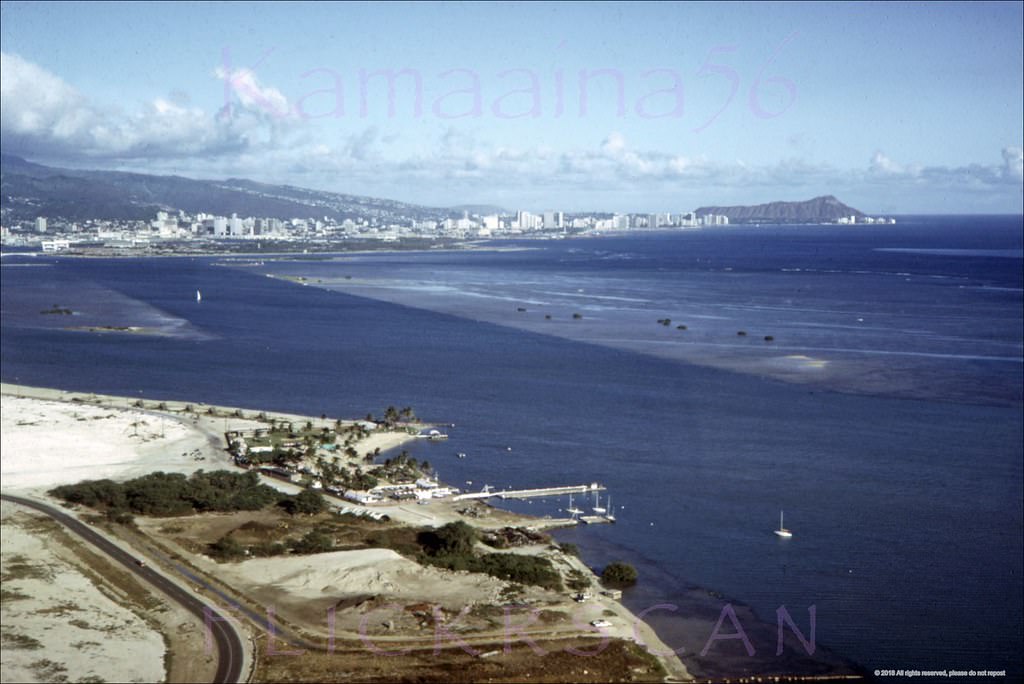
This aerial photograph captures Ahua Point at the southern end of Honolulu Airport, looking east toward Honolulu and Diamond Head. The beach frontage visible here vanished during the construction of the Reef Runway in 1977, making this image a rare record of a coastline that no longer exists.
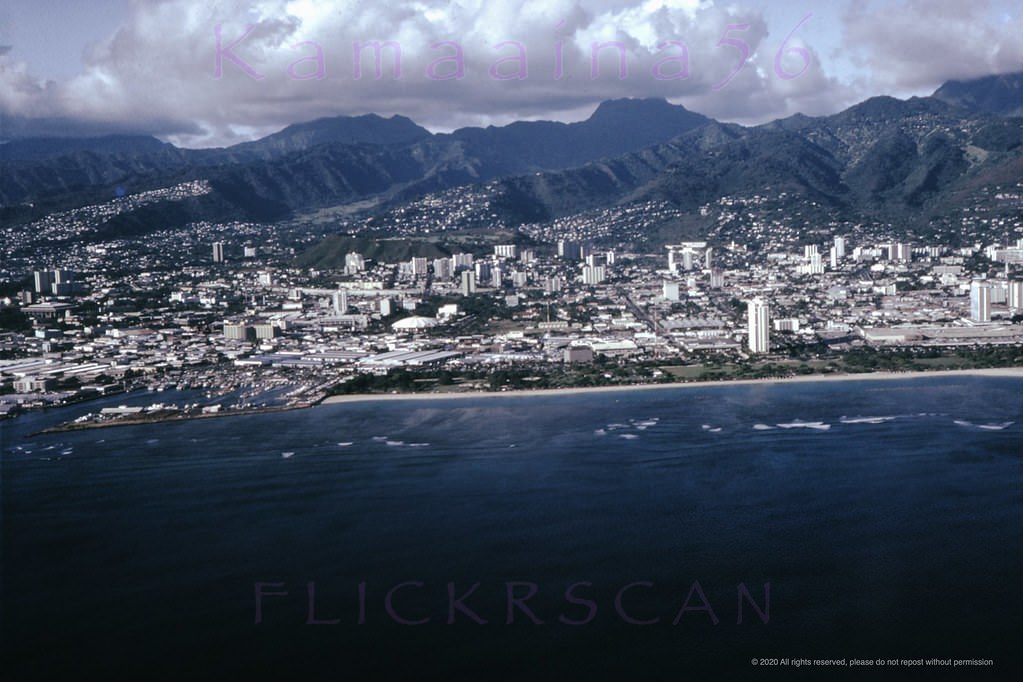
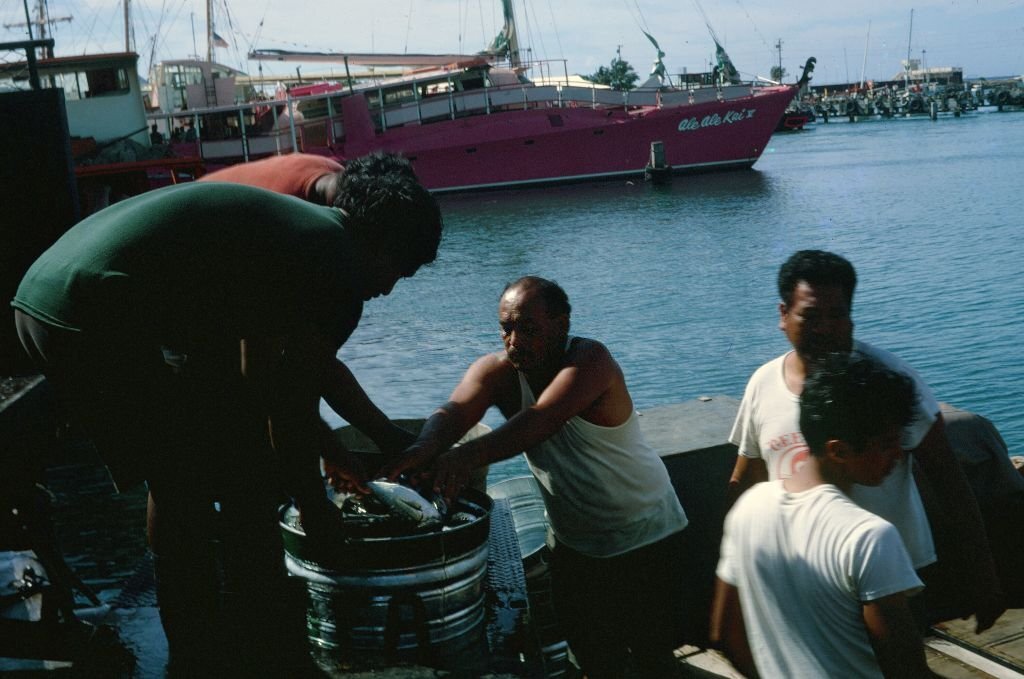
Honolulu’s working waterfront was just as busy as its beaches. Kewalo Basin, on the south shore of Oahu, served as a hub for commercial fishing vessels, including international trawlers that docked there regularly.
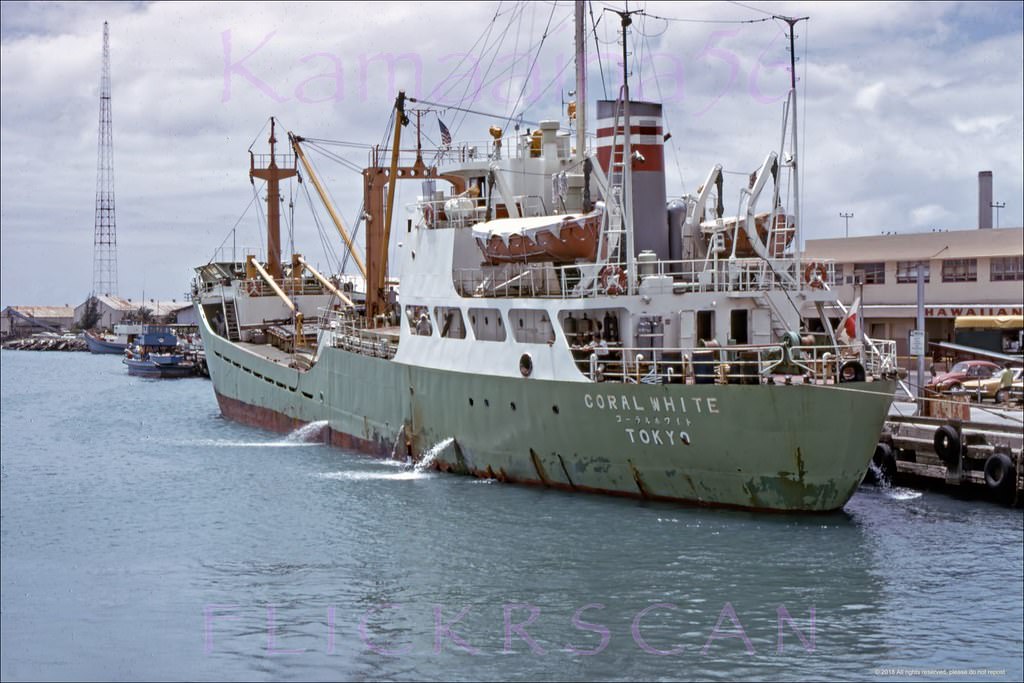
The Japanese trawler Coral White, home-ported in Tokyo, sits moored at Fisherman’s Wharf in Kewalo Basin. The old buildings surrounding the dock are long gone, though the KGU antenna in the background still stands today.
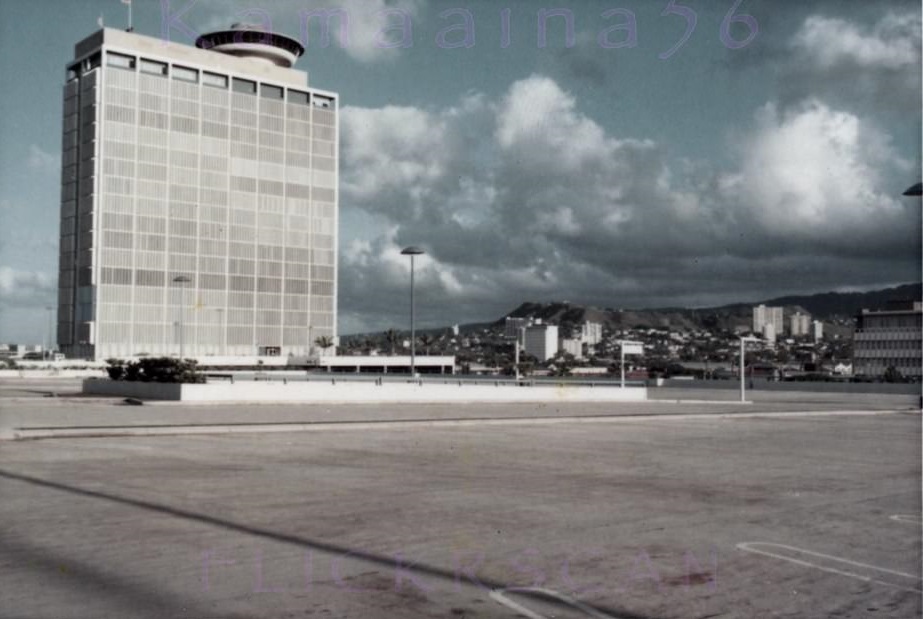
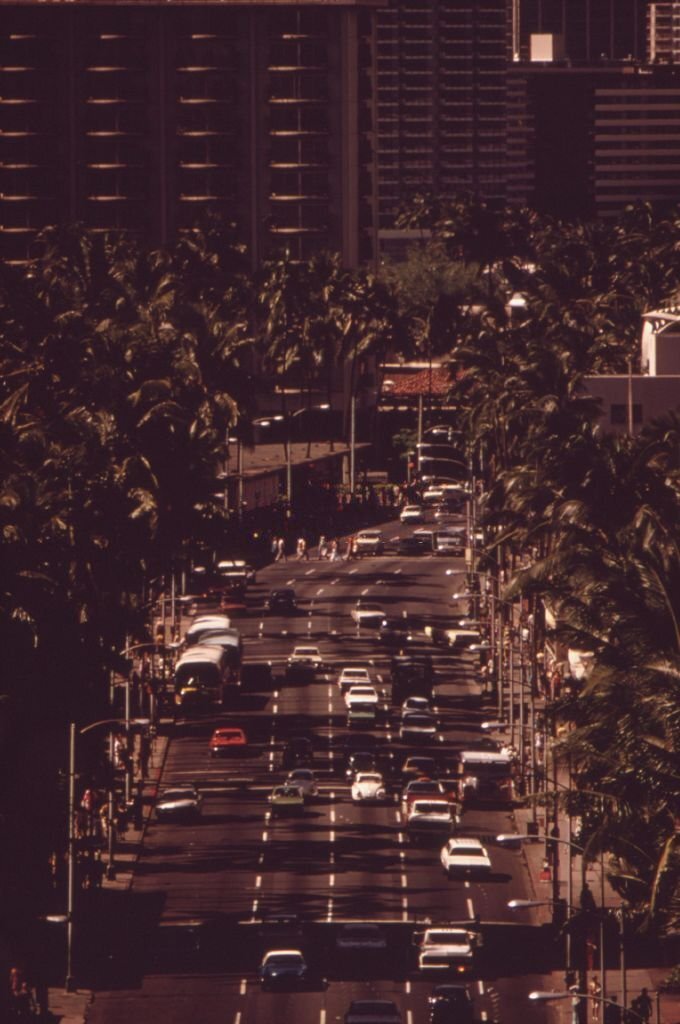
Ala Moana was one of Honolulu’s busiest commercial corridors. The stretch running toward Ala Moana Center saw heavy foot traffic and vehicle congestion throughout the decade. On ordinary days, the streets had the same gritty energy you’d find in any American city center of the era.
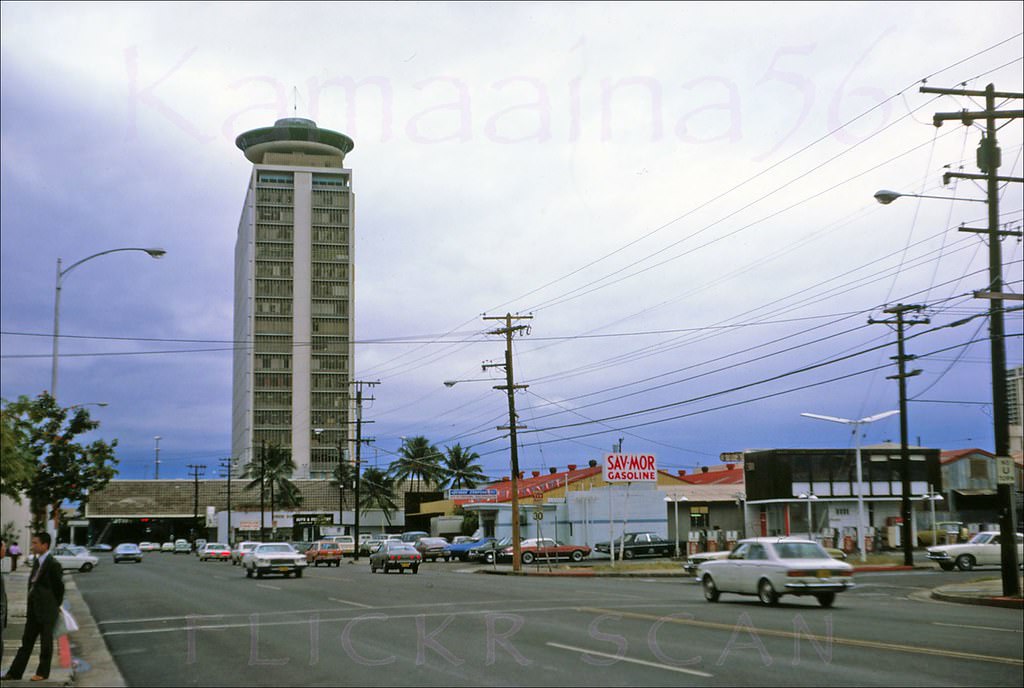
Looking south along Keeaumoku Street from the Makaloa Street intersection toward the entrance to Ala Moana Center on an overcast Honolulu day in 1975.
East of Diamond Head, the neighborhood of Kaalawai offered a quieter, more tucked-away version of beachfront life. Small cottage-style properties lined the shore near Black Point, a striking contrast to the high-rise towers rising elsewhere across the city.
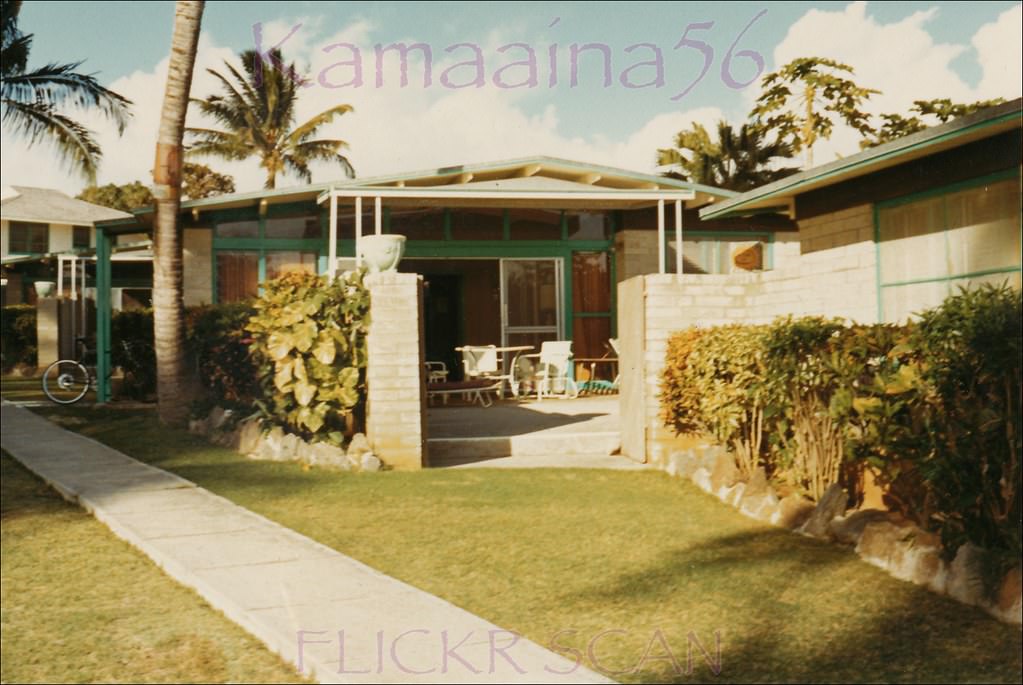
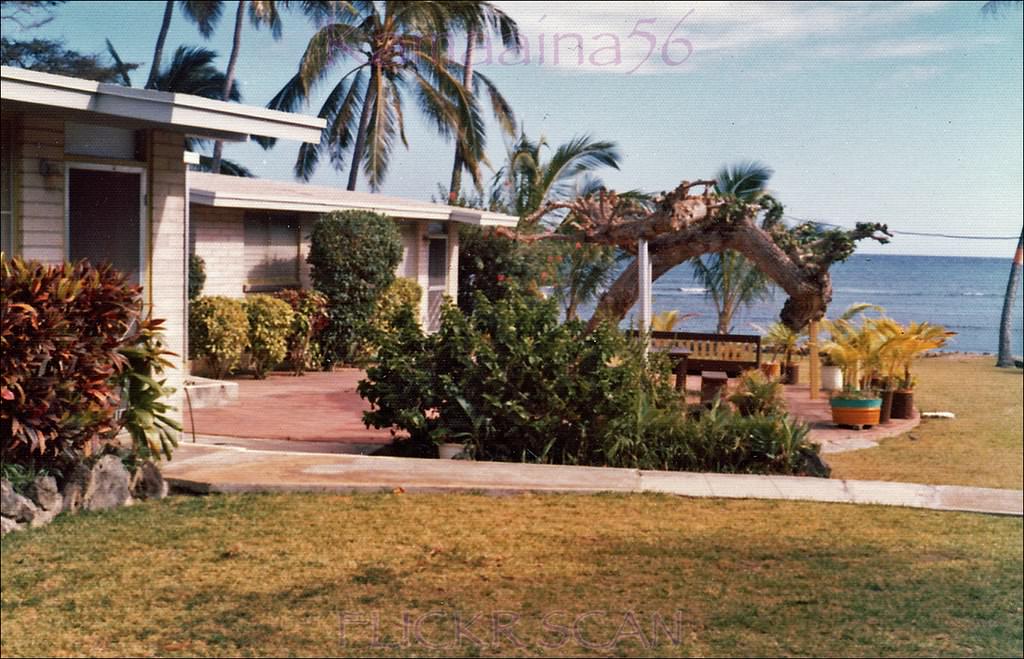
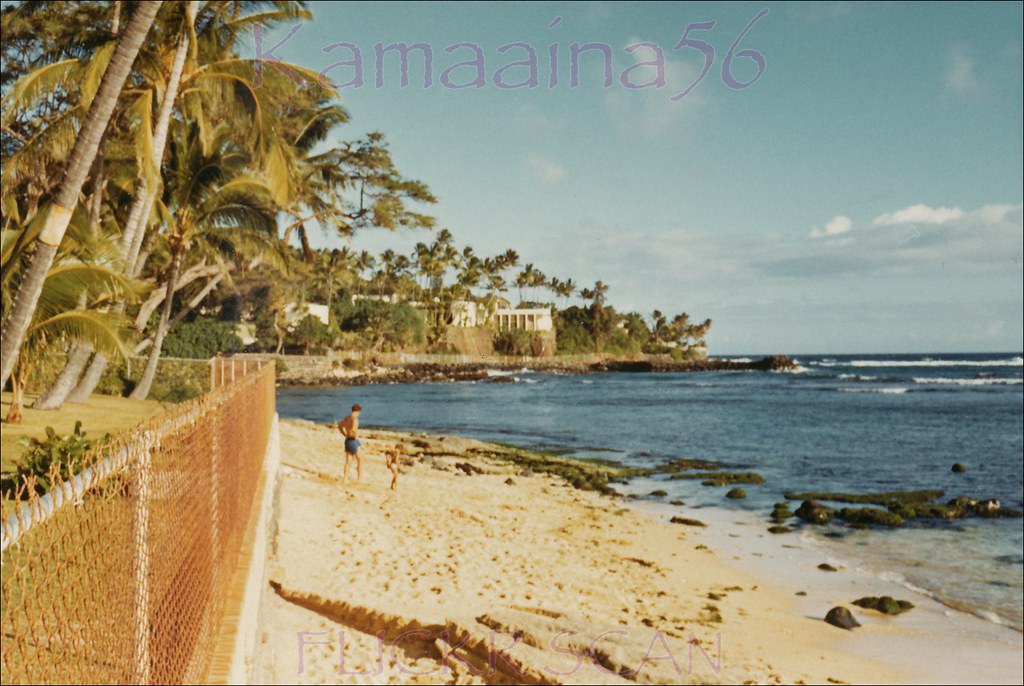
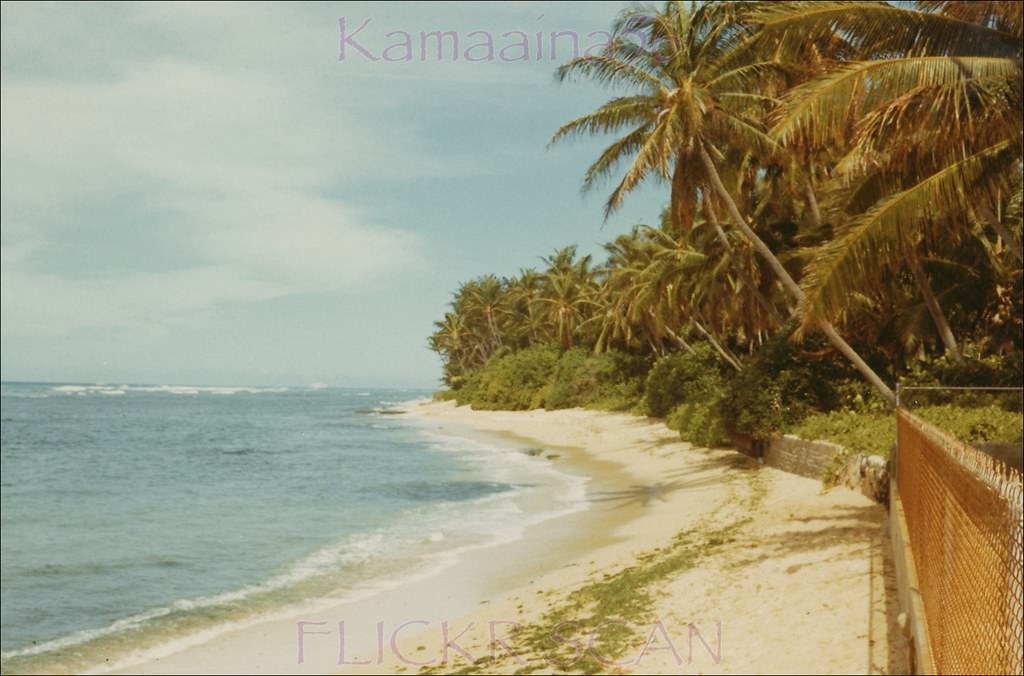
The Paterson Cottages that once lined this peaceful beachfront were eventually torn down and replaced with a large private residence.
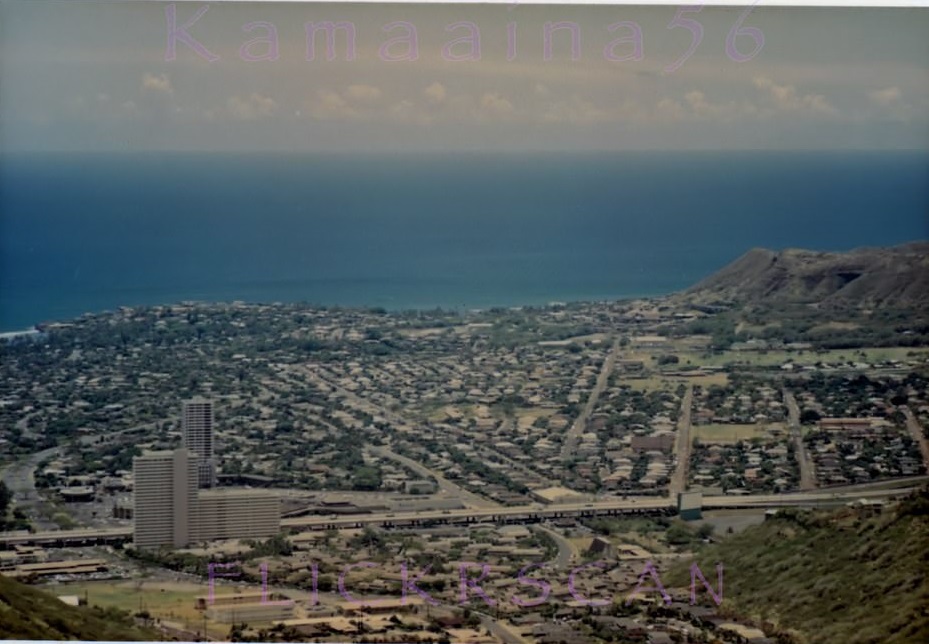
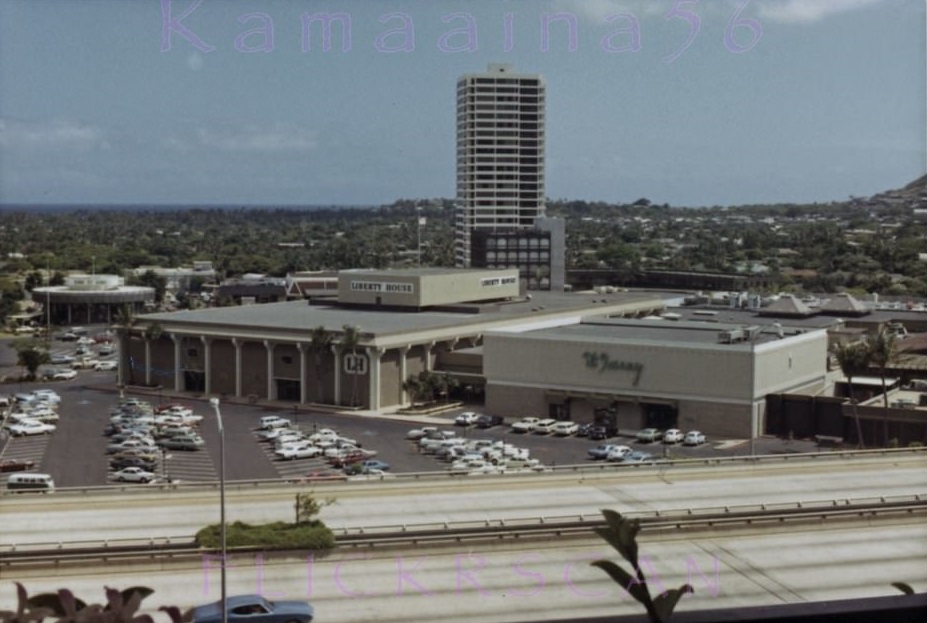
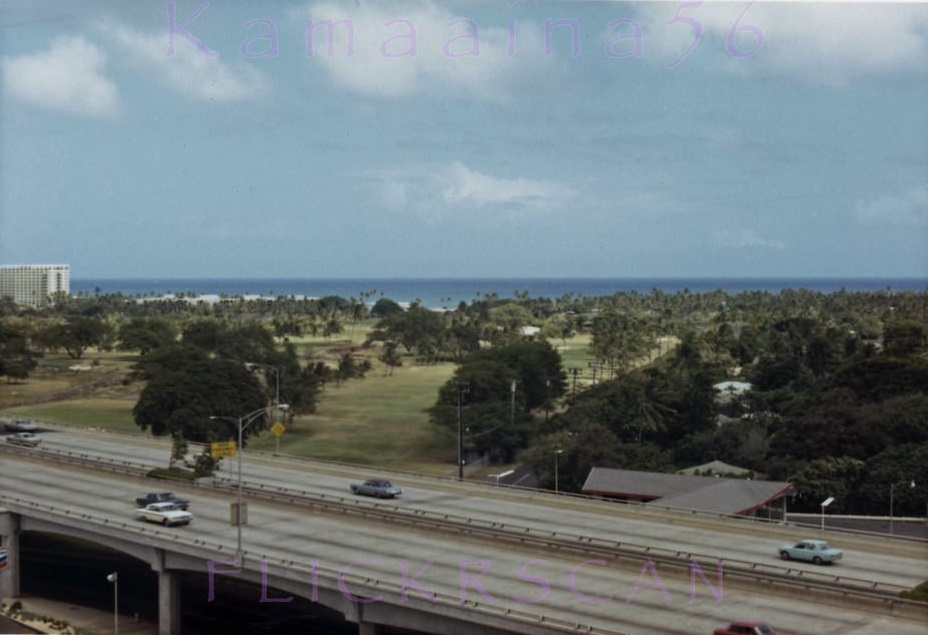
Inland from the coast, Honolulu’s retail and residential developments were also taking shape. The Waialae Shopping Center had been enclosed and rebranded as Kahala Mall by the early 1970s. Just across Waialae Avenue, the Kahala Towers — built in 1966 — provided a clear bird’s-eye vantage point over the mall and surrounding neighborhood.
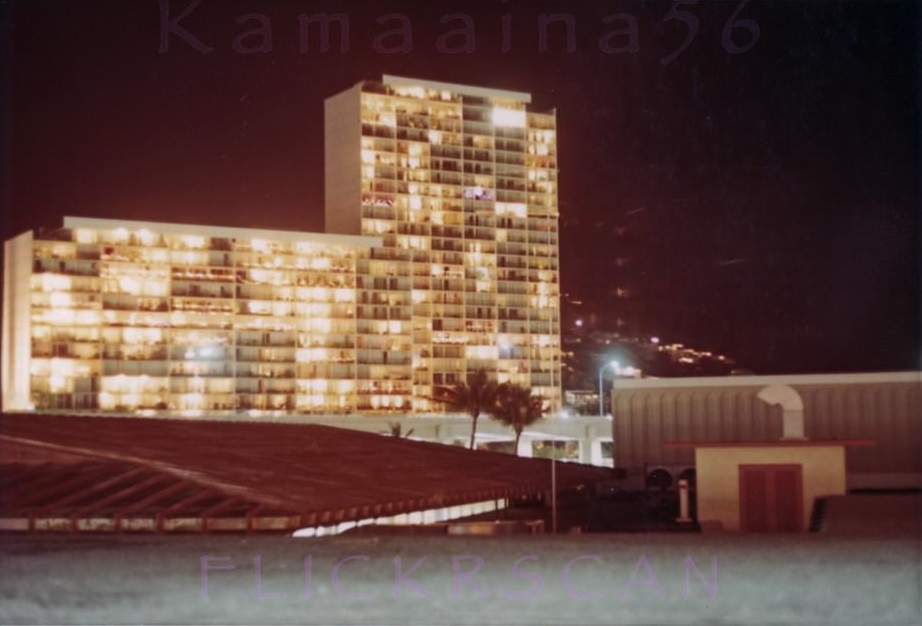
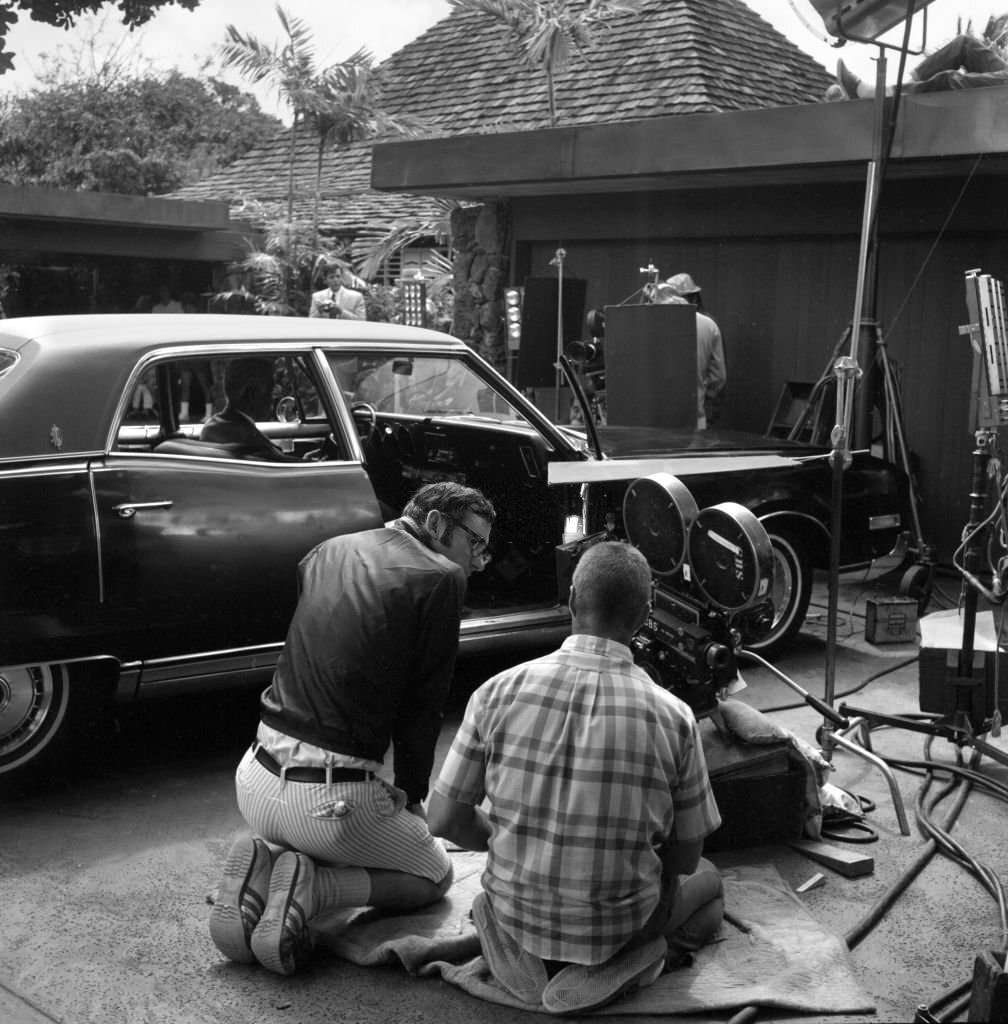
Honolulu wasn’t just a backdrop for daily life — it was also a backdrop for Hollywood. The long-running CBS crime drama Hawaii Five-O used the city extensively for filming, drawing production crews to locations across the island, from downtown studios to Pearl Harbor.
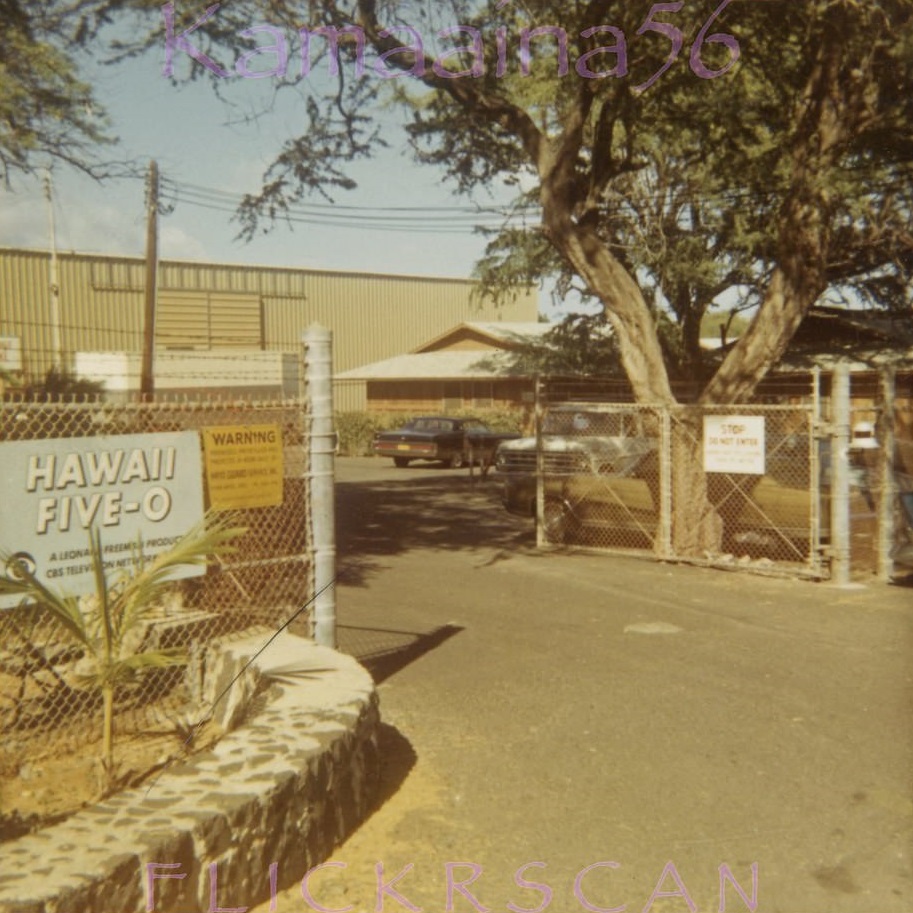
Waikiki Beach remained the centerpiece of Honolulu’s tourism industry. The hotels lining the shore catered to visitors from across the mainland and around the world. The Sheraton Moana, one of Waikiki’s oldest and most recognizable hotels, was a constant presence on the beachfront throughout the decade.
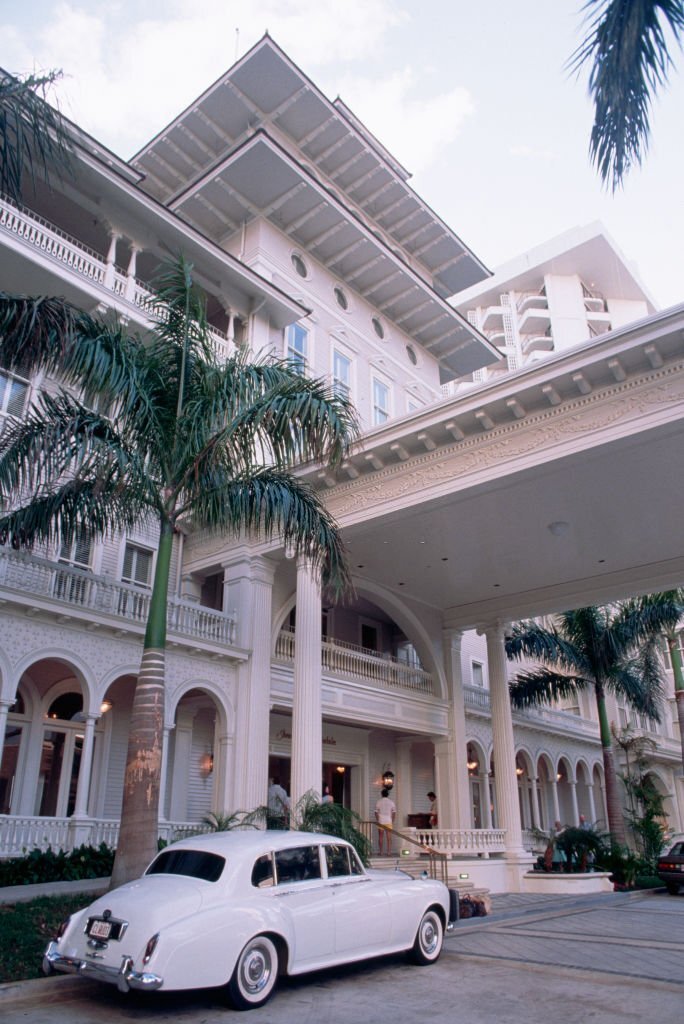
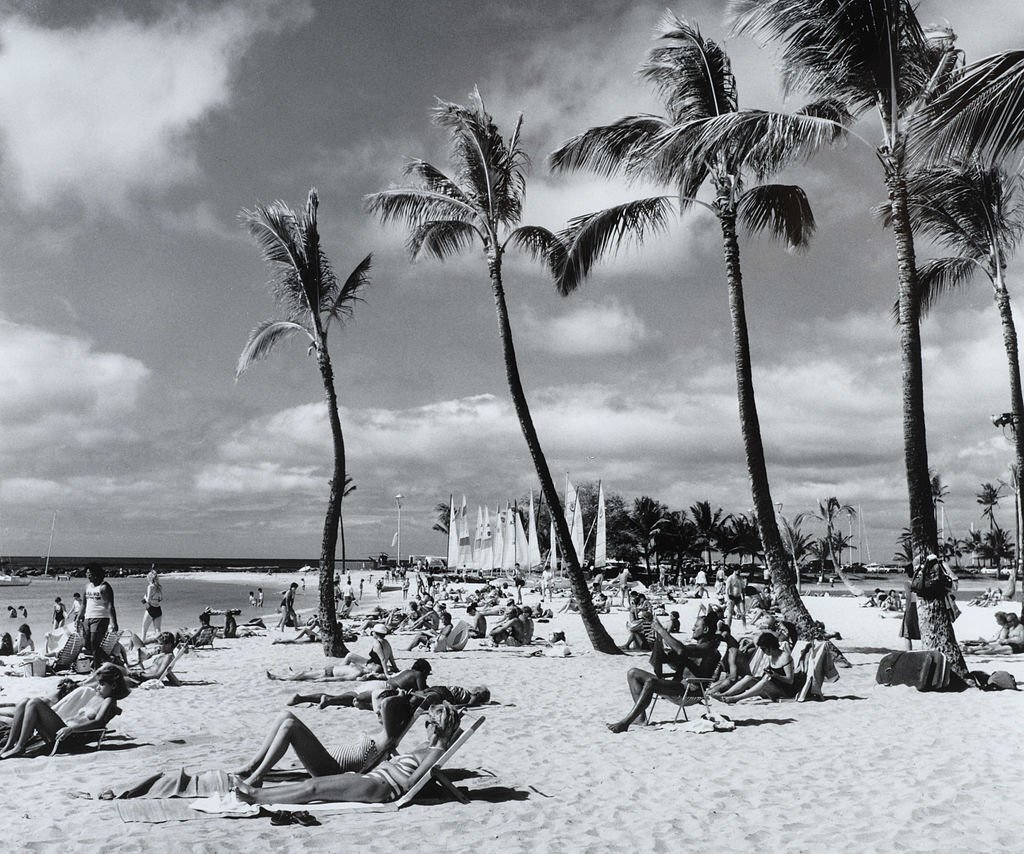
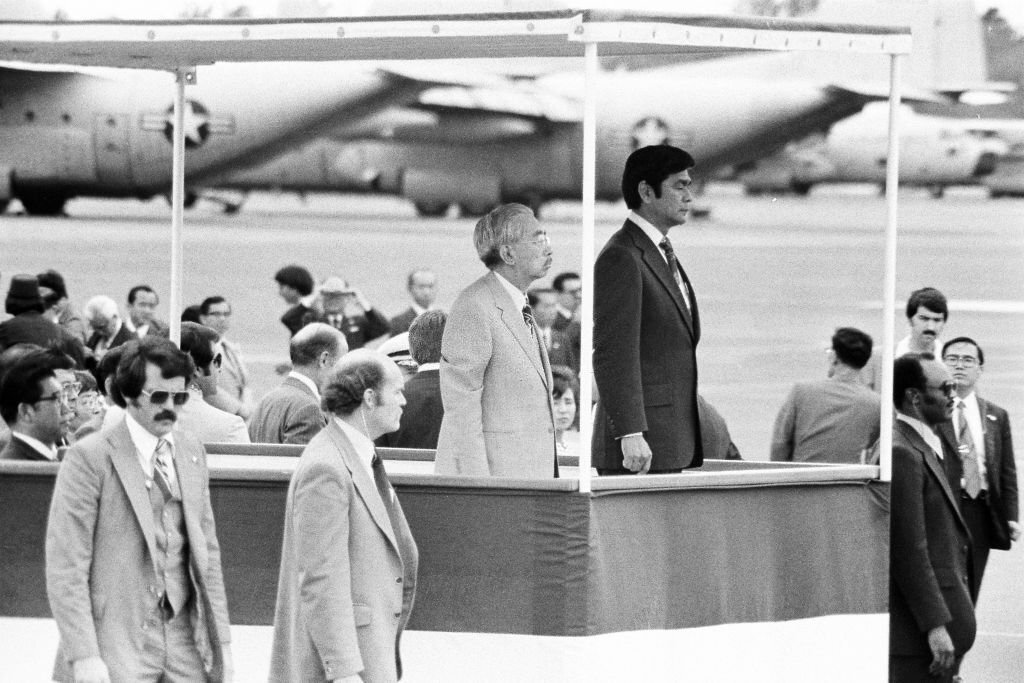
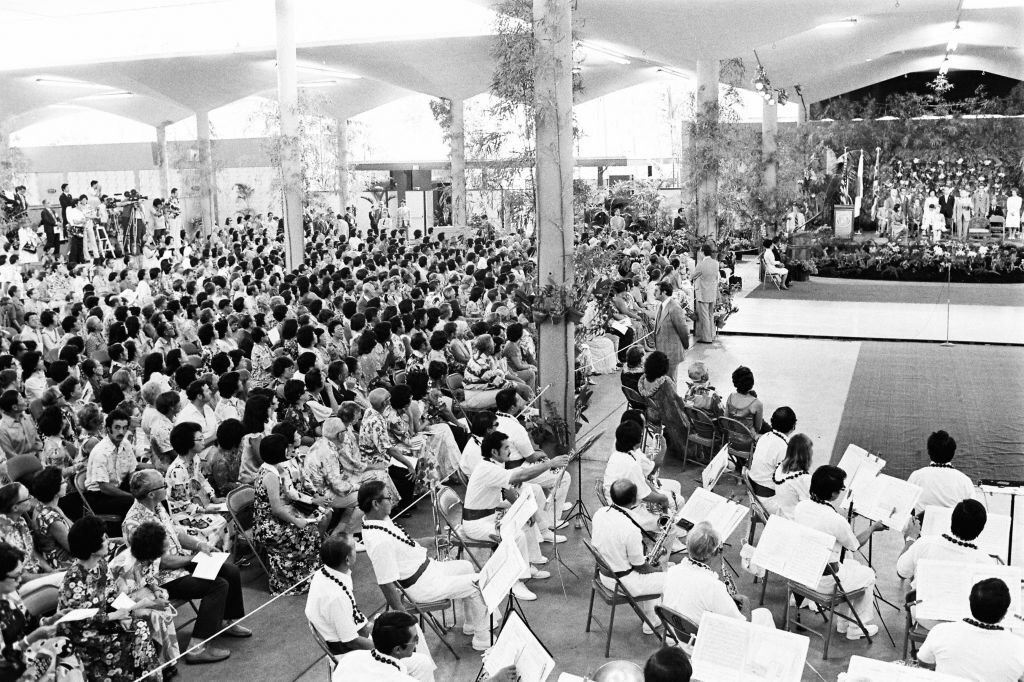
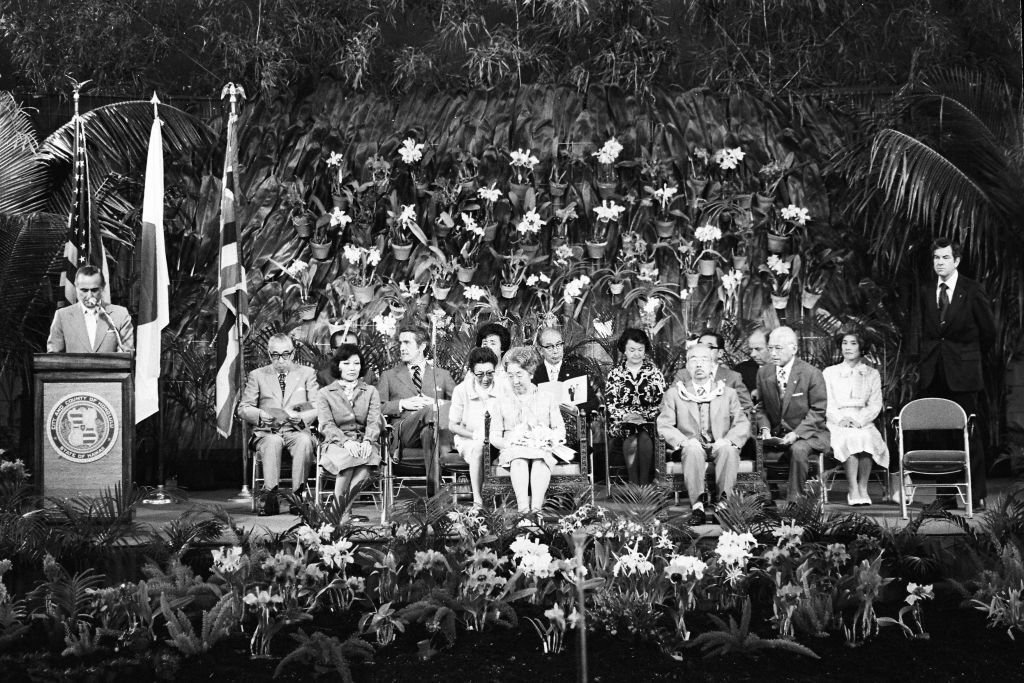
One of the most notable diplomatic events to take place in Honolulu during the decade was the visit of Japanese Emperor Hirohito and Empress Nagako in October 1975. The imperial couple stopped in Hawaii as part of a broader trip to the United States. Hawaii Governor George Ariyoshi presided over both the welcome and farewell ceremonies.
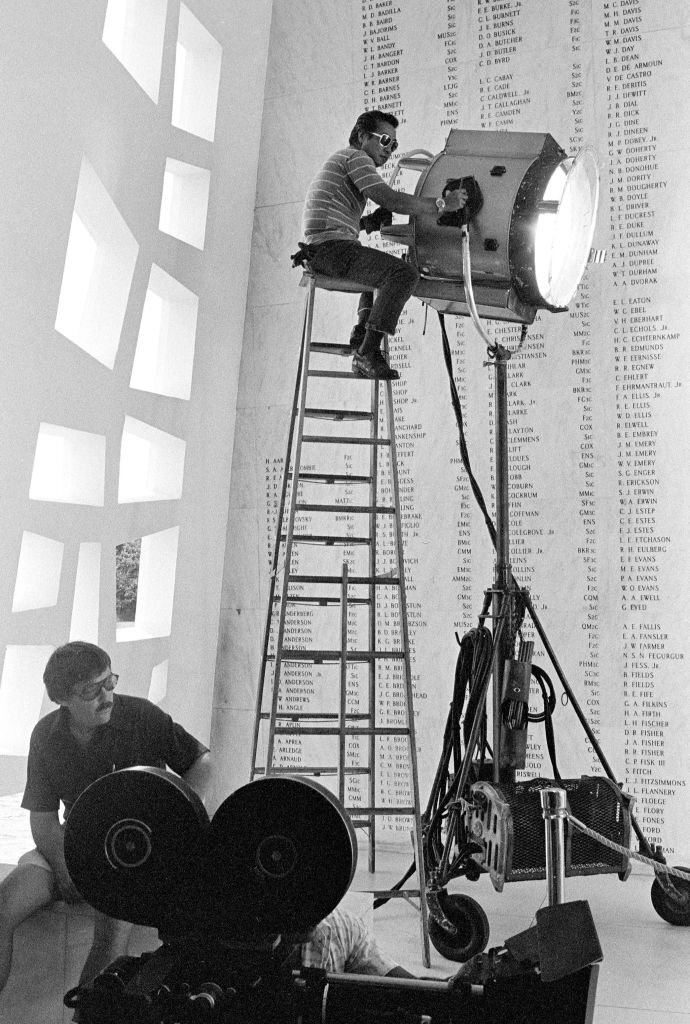
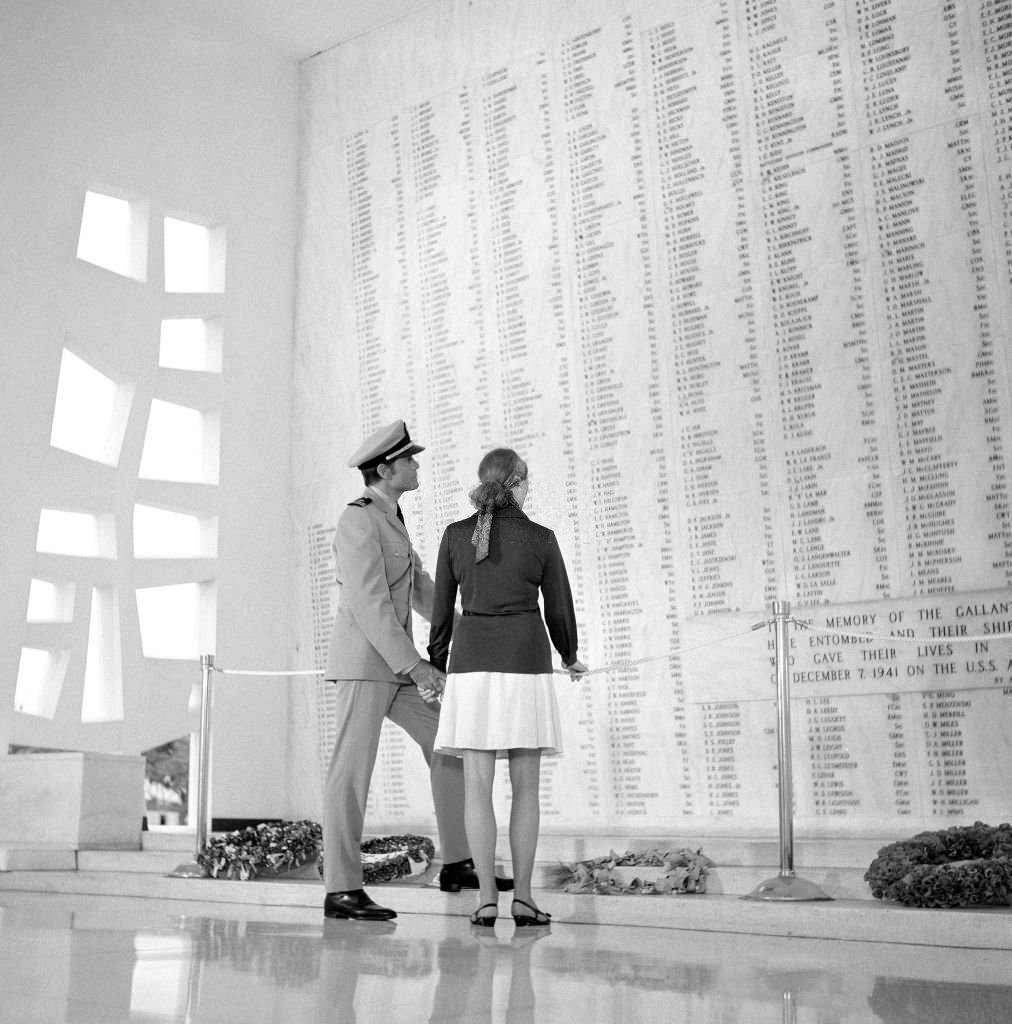
Hawaii Five-O continued filming across the decade, and Pearl Harbor’s USS Arizona Memorial served as one of its most memorable locations. The show used the memorial as a setting for the episode “Murder – Eyes Only,” filmed on-site in June 1975. Star Jack Lord, who played Detective Steve McGarrett, also appeared on location there alongside guest actress Diana Muldaur.
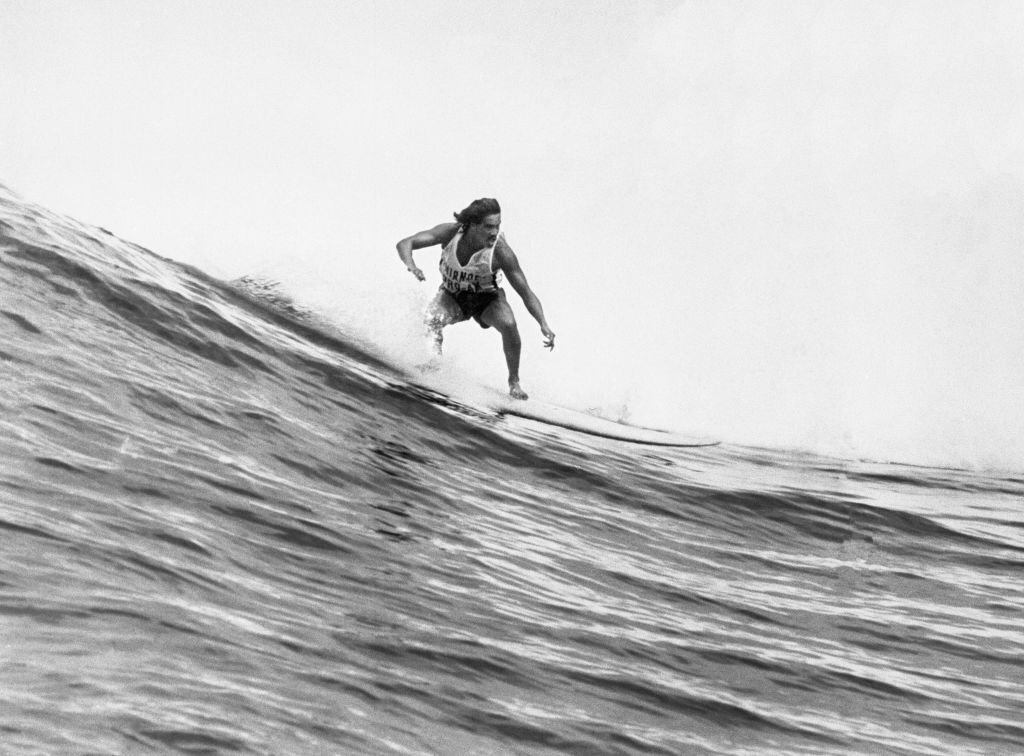
On Oahu’s north shore, surfing culture was thriving. The Smirnoff Pro-Am Surfing Classic brought professional surfers to the island’s powerful breaks each year. Hawaiian surfer Clyde Aikau — brother of the legendary Eddie Aikau — was among the competitors who rode the massive swells during the annual event.
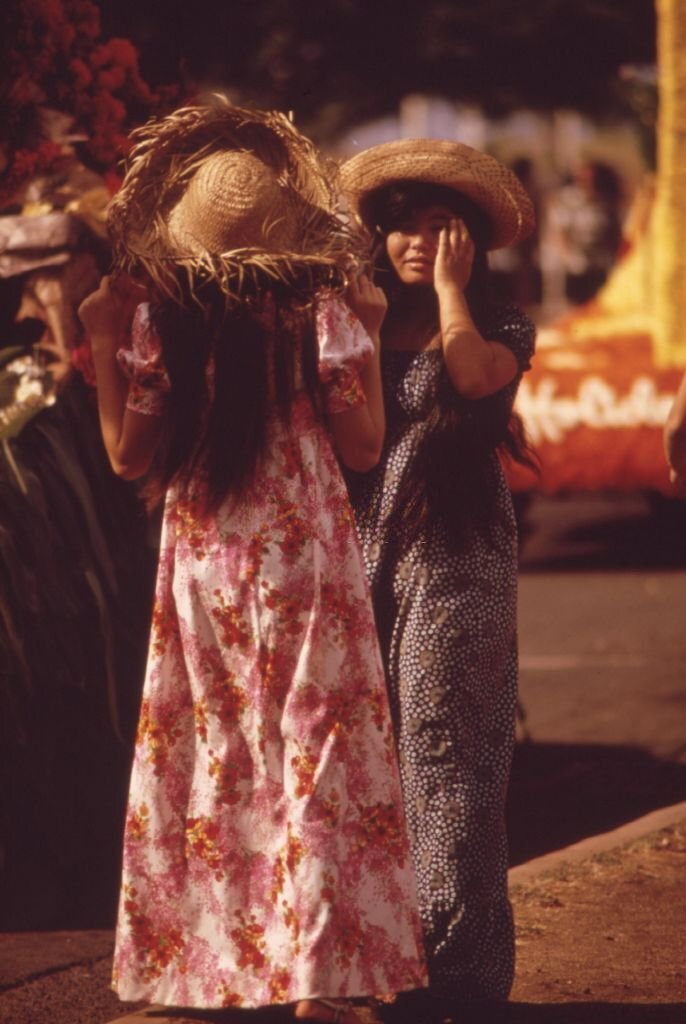
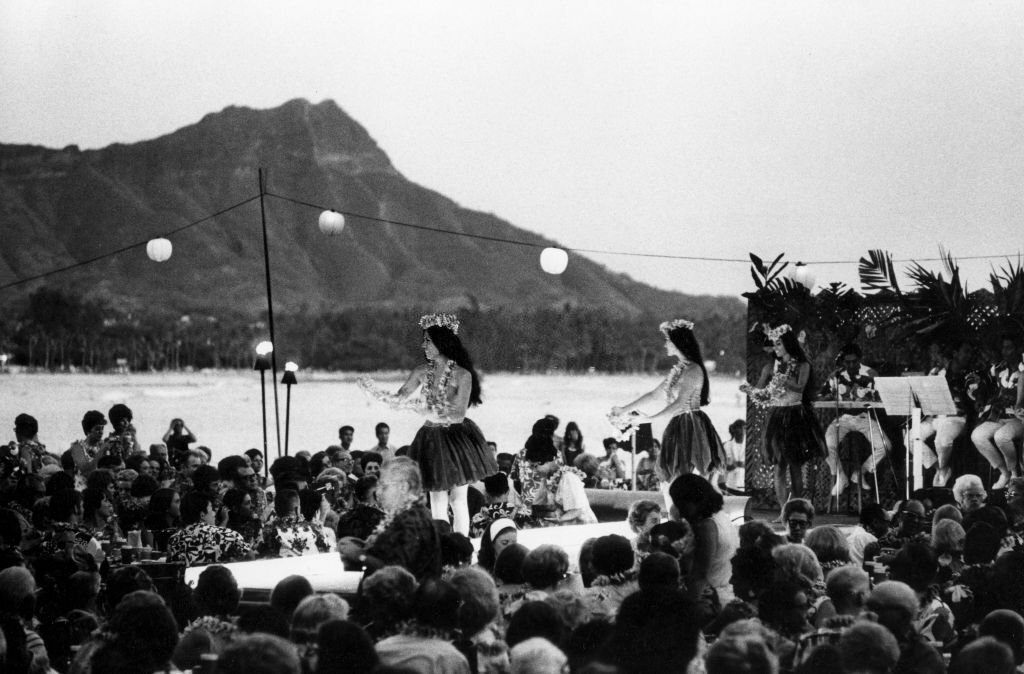
Honolulu also celebrated its cultural heritage through events like Aloha Week, an annual festival that filled the streets with traditional Hawaiian dress, music, and parades. In October 1973, the festivities drew crowds throughout the city, with participants dressed in elaborate traditional garments for the Aloha Day parade.
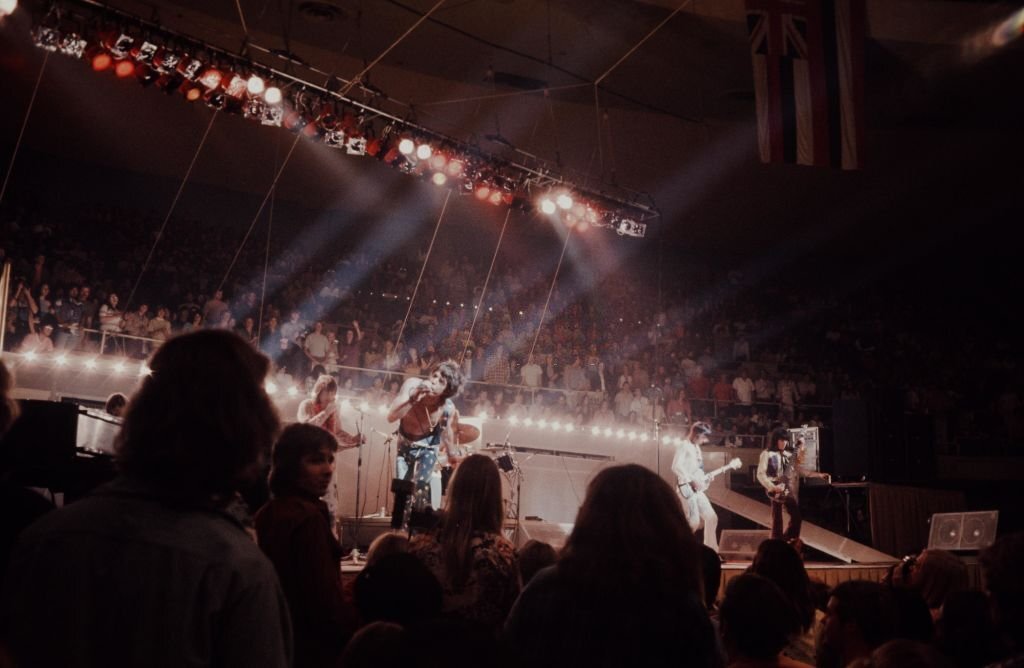
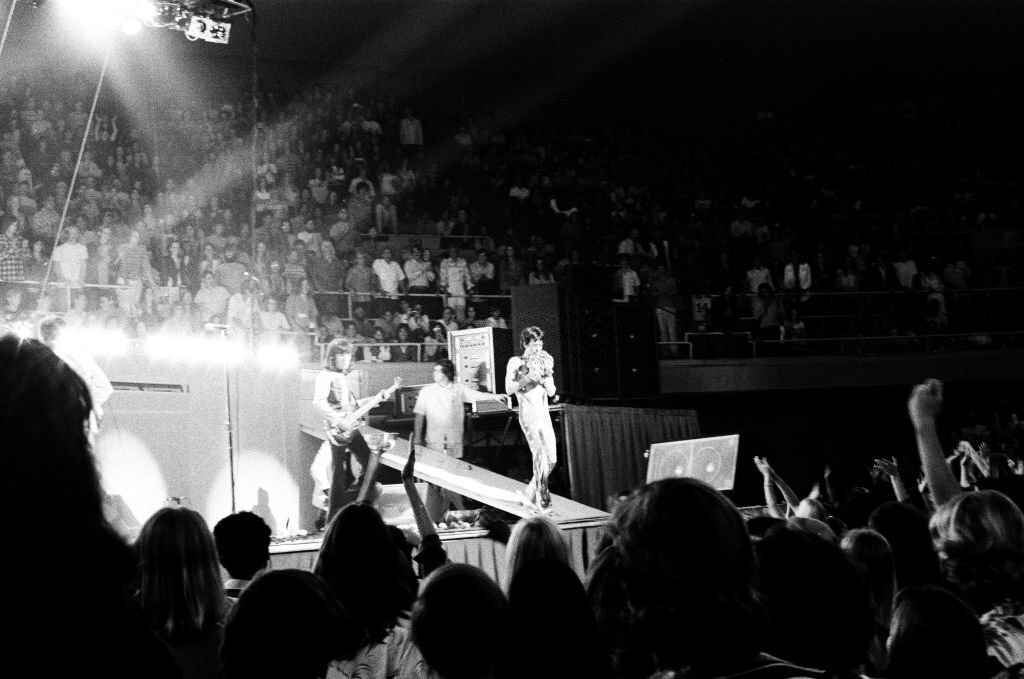
Honolulu wasn’t only drawing tourists — it was drawing some of the biggest names in rock and roll. The Rolling Stones performed at the Honolulu International Center in January 1973 as part of their Pacific Tour. Mick Jagger and Bill Wyman took the stage before a packed crowd, one of the defining concert moments the city hosted that decade.
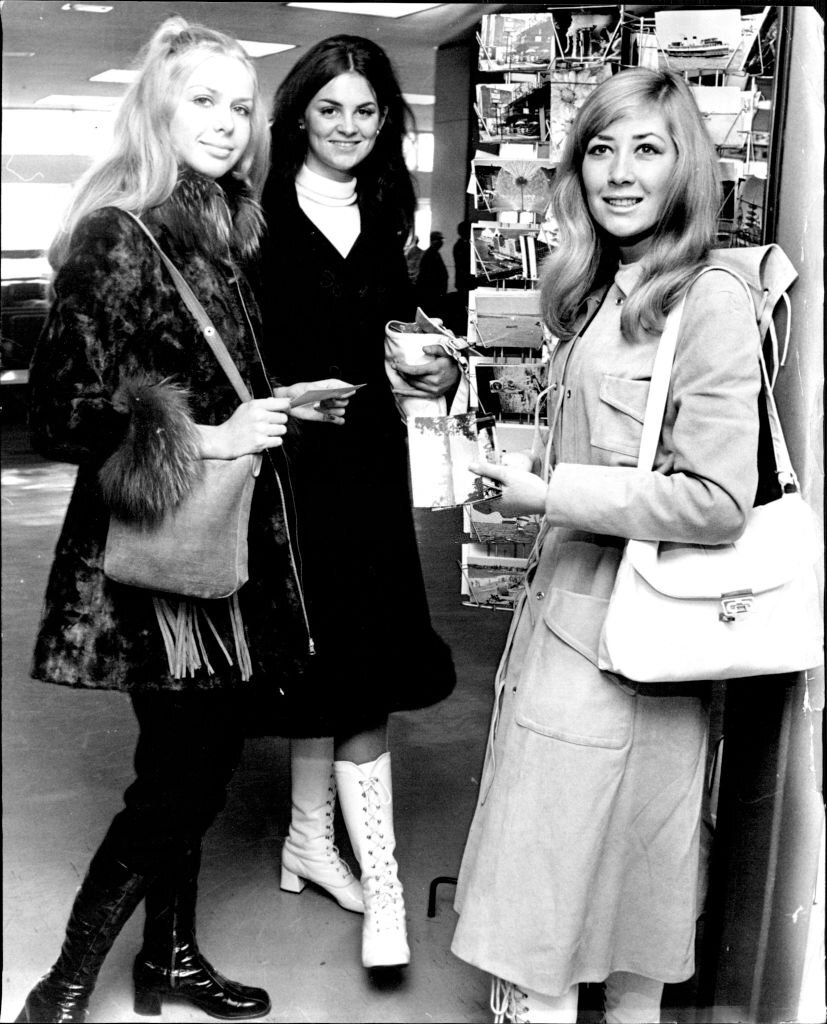
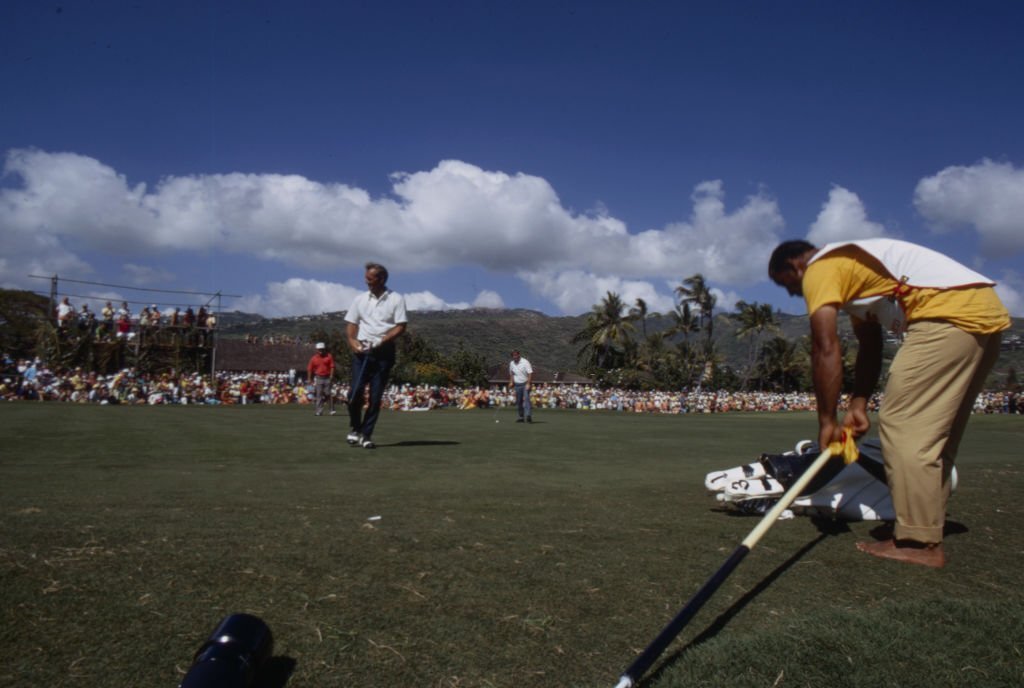
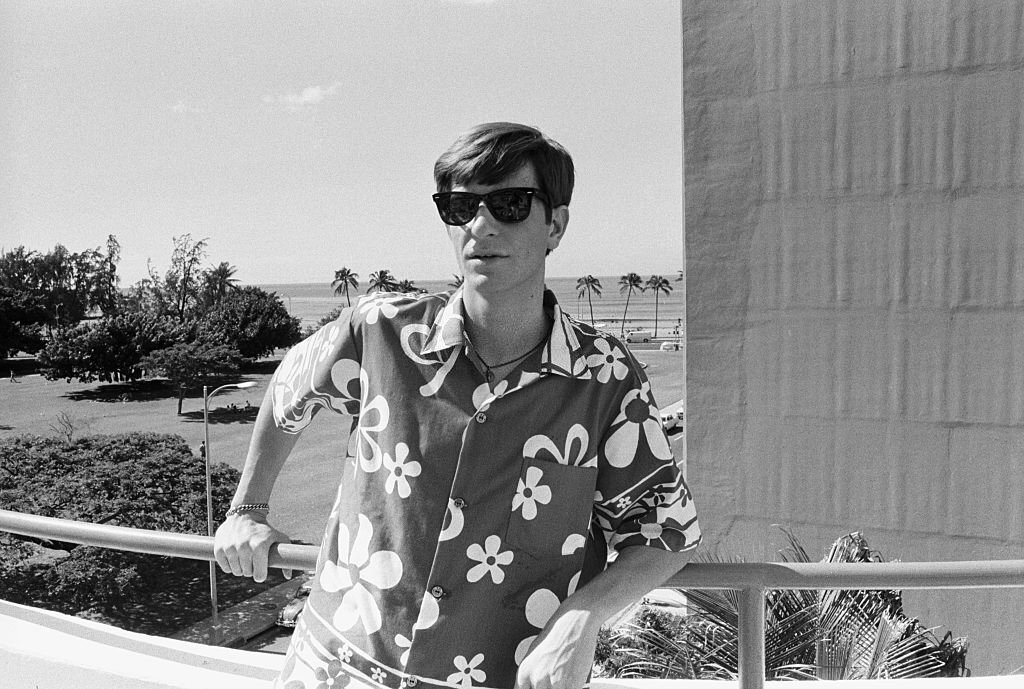
Sports brought its own stream of high-profile visitors to Honolulu. The Hawaiian Golf Open at Waialae Country Club attracted top-tier professional golfers, including Arnold Palmer, who competed in the 1971 tournament. Basketball star Pete Maravich — fresh off being the NBA’s top rookie pick — was also photographed in Honolulu in 1970, early in what would become a storied career.
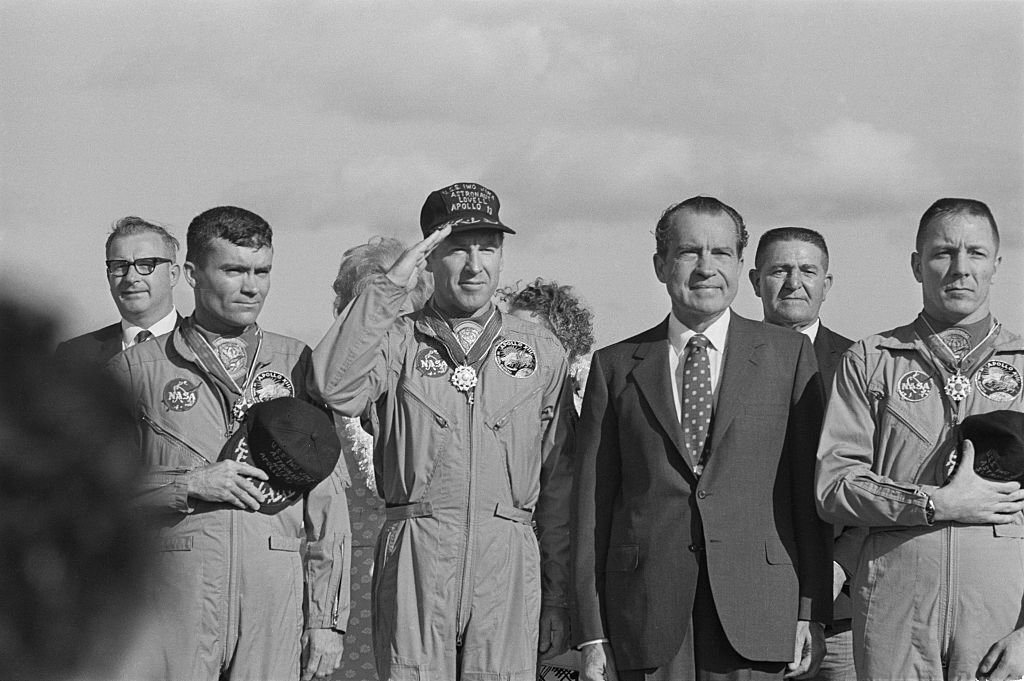
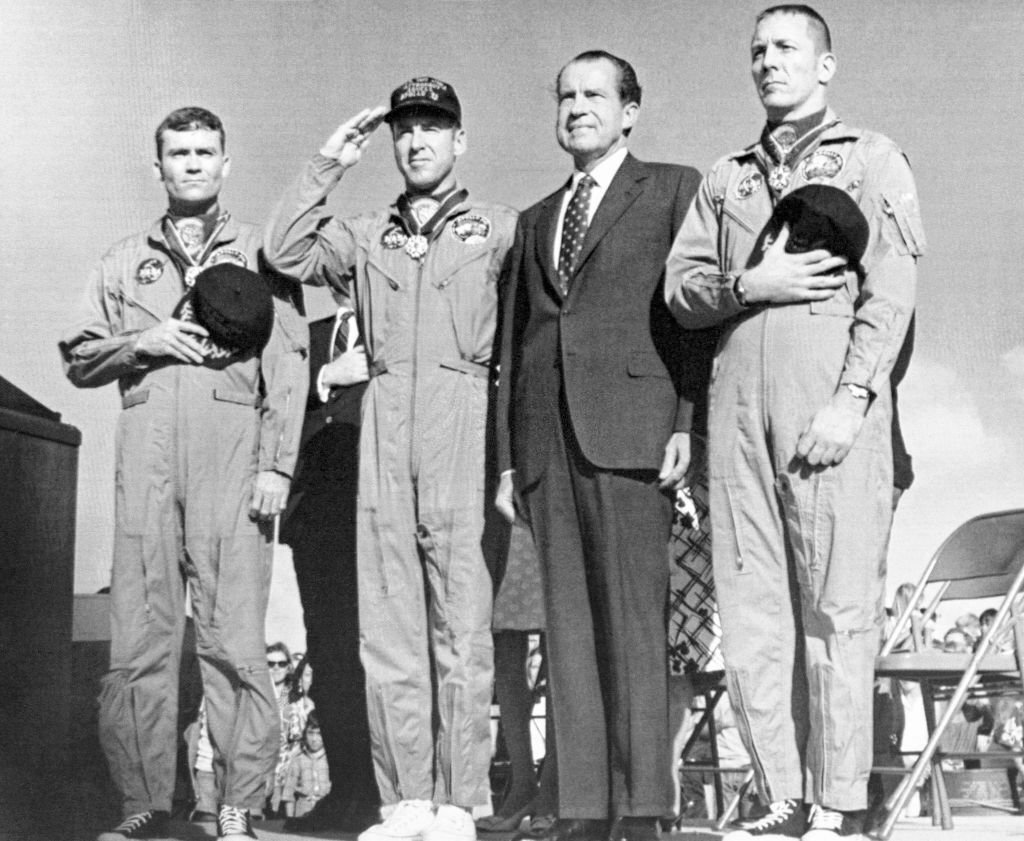
On April 23, 1970, President Richard Nixon flew to Honolulu to greet the crew of Apollo 13 following their dramatic return to Earth. Astronauts Fred Haise, James Lovell, and John Swigert stood alongside Nixon during the national anthem at the welcoming ceremony. The crew had stopped in Hawaii on their way back to Houston from the splashdown site in the Pacific Ocean.
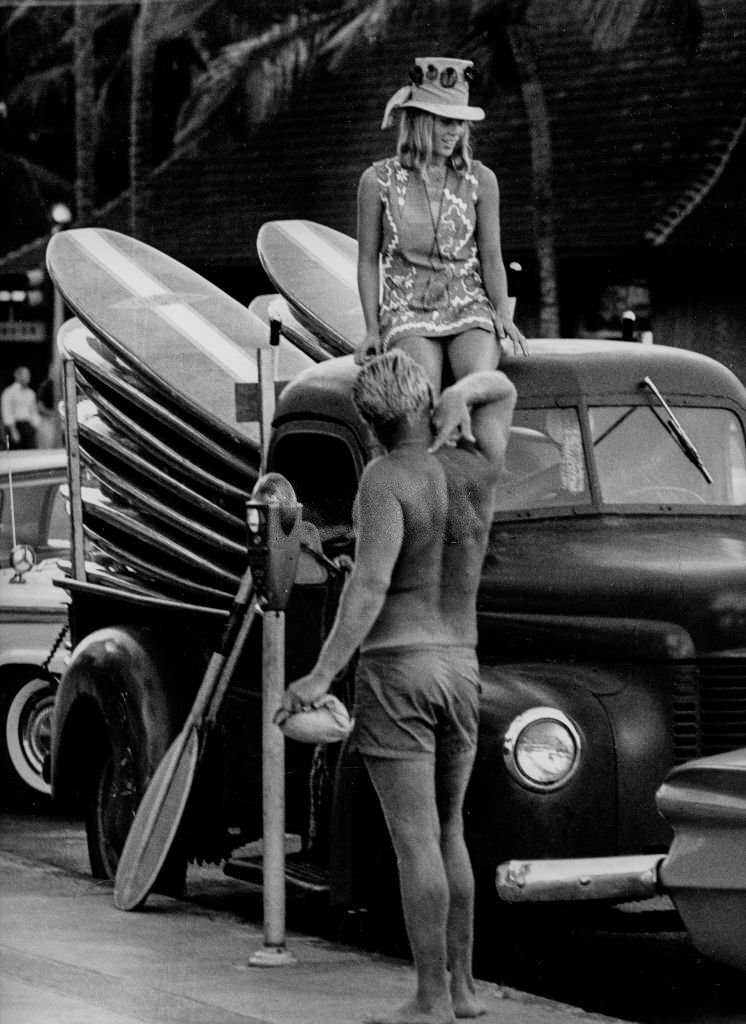
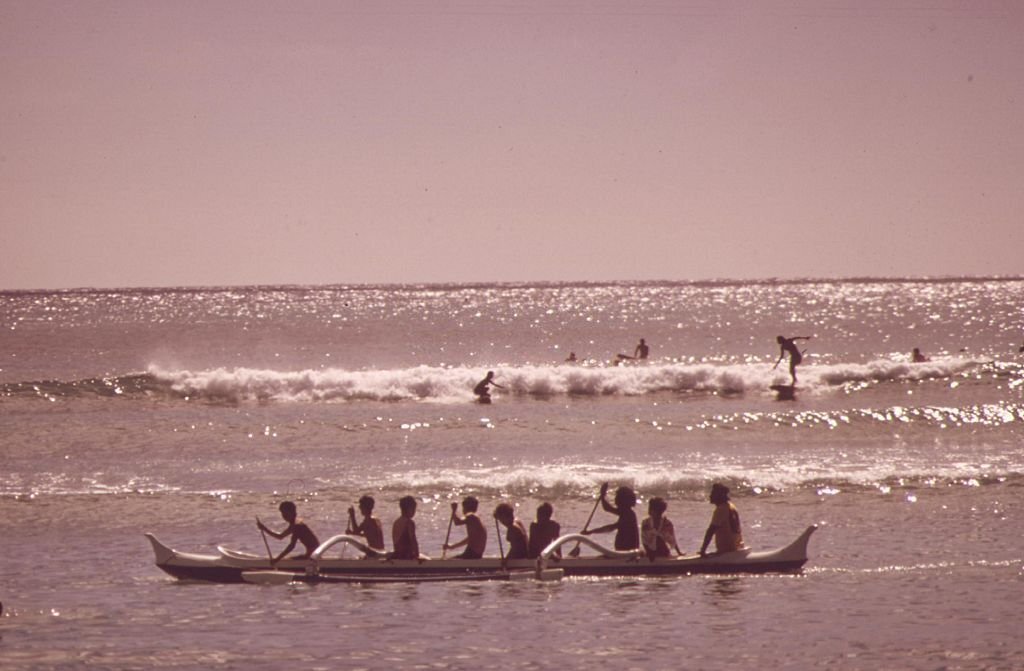
Back on the water, surfing and outrigger canoe paddling were woven into the everyday fabric of life in Honolulu. Waikiki Beach was as much a place for locals as it was for visitors, and the sight of surfers and canoes sharing the same break was entirely ordinary.
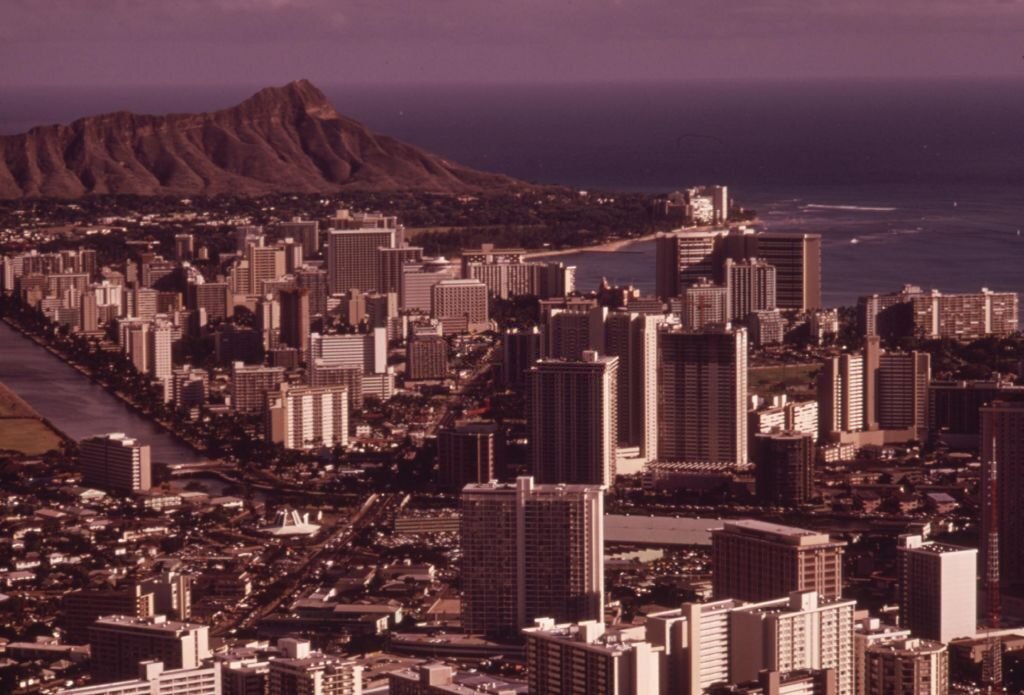
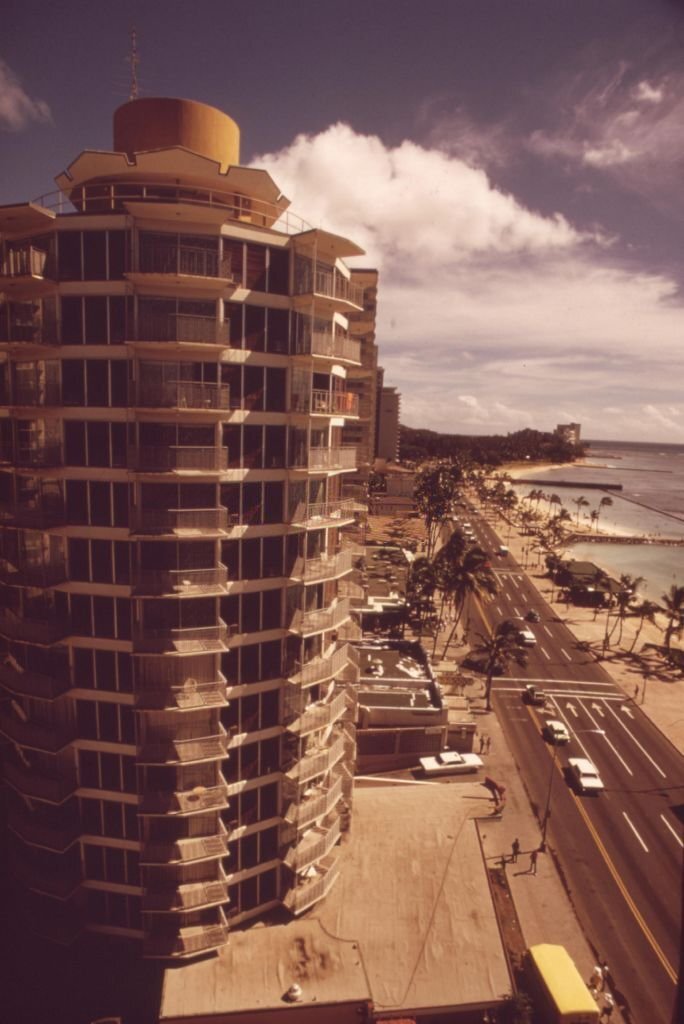
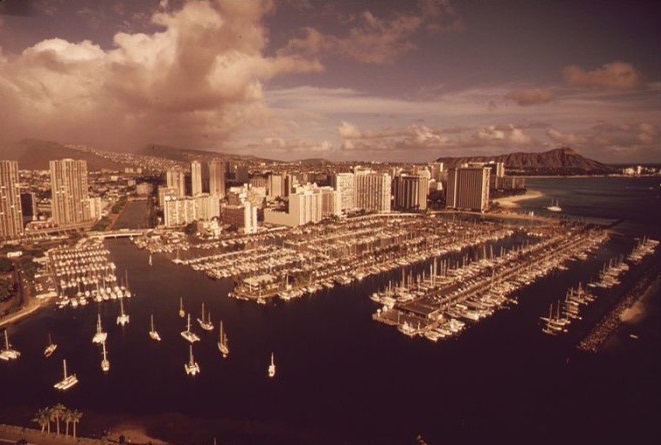
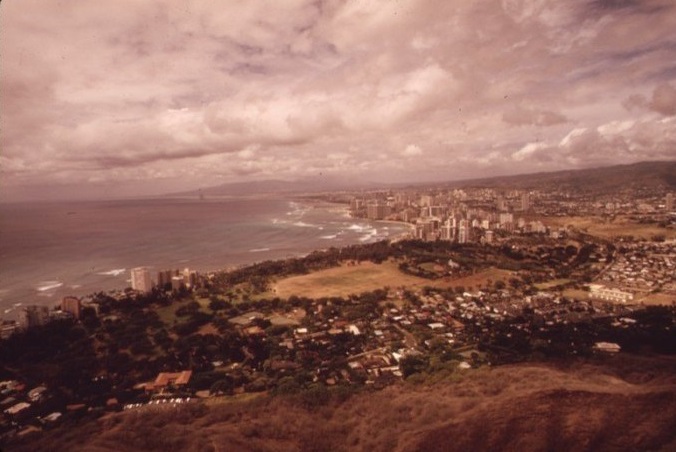
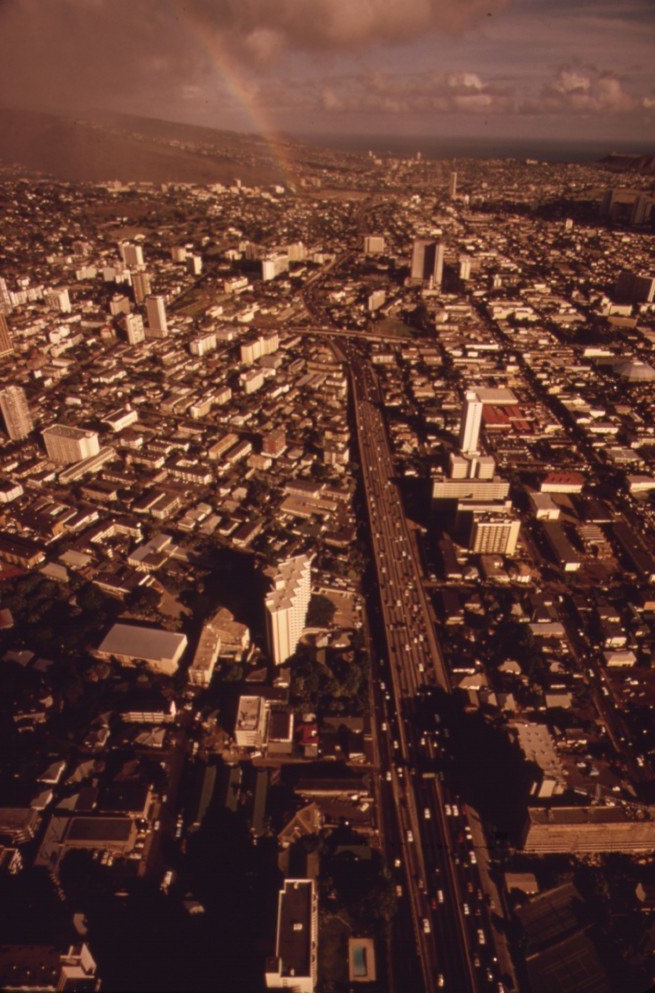
By October 1973, aerial photography of Honolulu captured just how dramatically the city had changed since statehood. Looking east toward Diamond Head from above, the density of development along the coast was striking. Kalakaua Avenue — the main street cutting through Waikiki — was thick with traffic and lined with hotels on both sides.
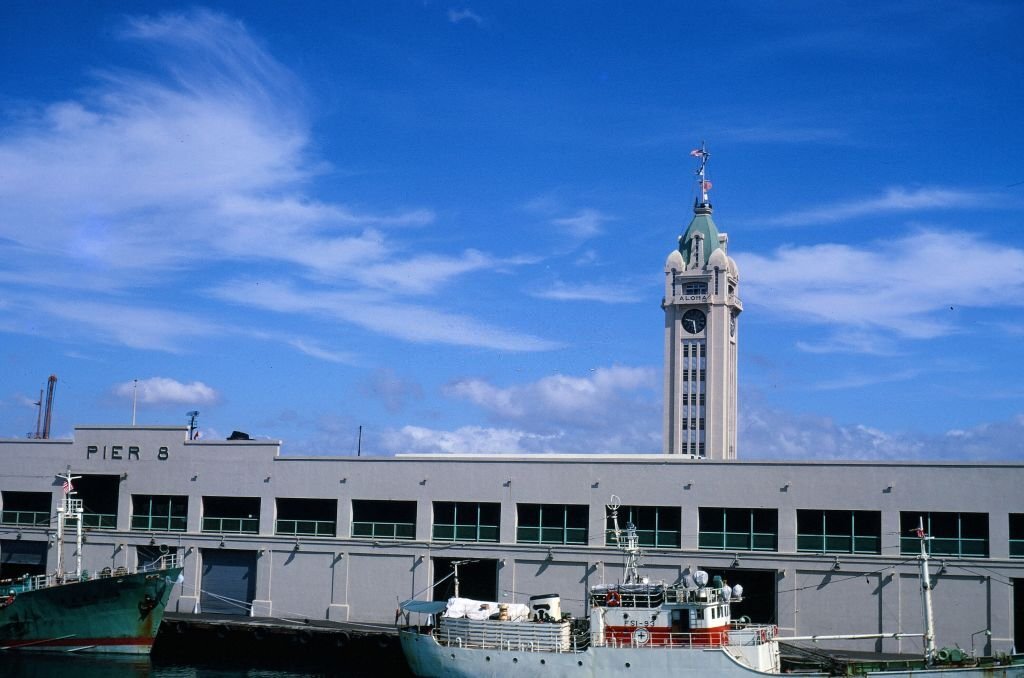
Honolulu Harbor remained one of the city’s most important connective points. Pier 8, with the Aloha Tower standing at its edge, had greeted arriving ships for decades. By 1970, the harbor was as active as ever, handling both commercial freight and passenger vessels.
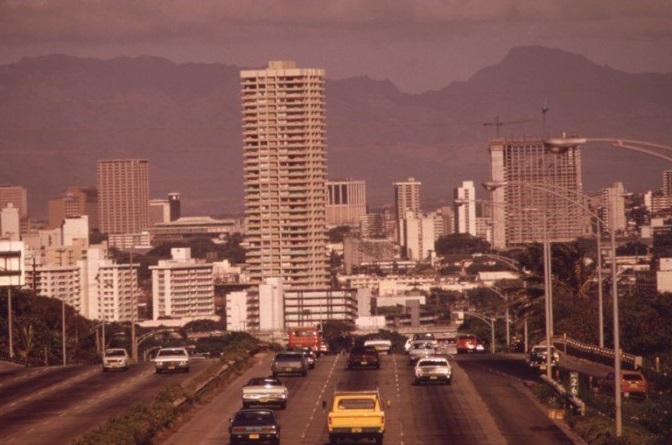
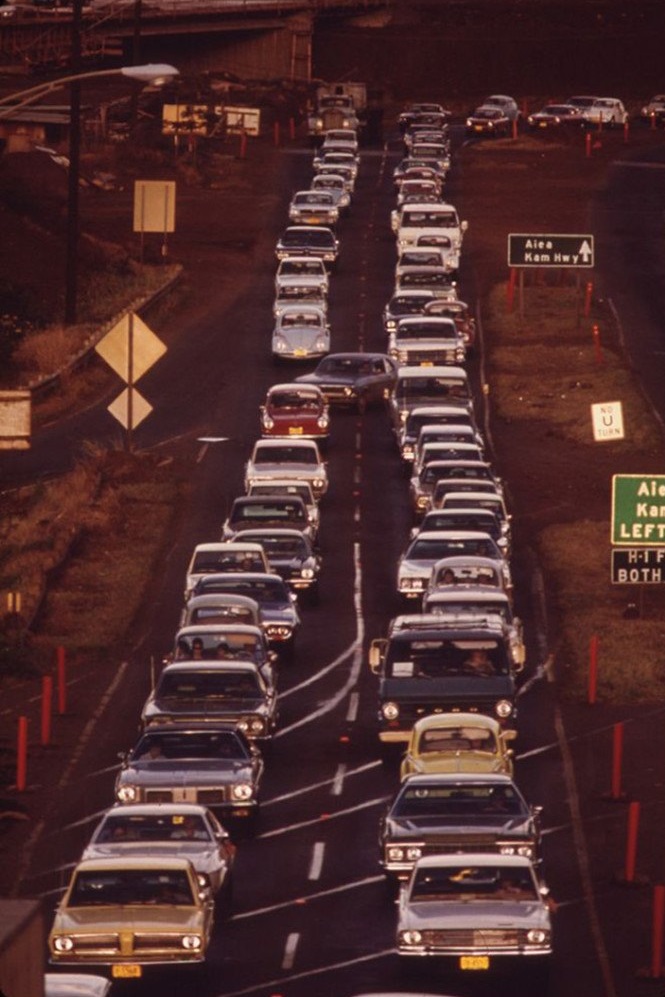
On land, the H-1 freeway carried a growing stream of commuters across the city. The highway expansion projects of the 1970s were designed to handle a population that kept climbing. Unlike many mainland cities, Honolulu’s freeways ran alongside mountains and ocean views rather than industrial sprawl, giving even rush-hour drives a scenic quality.
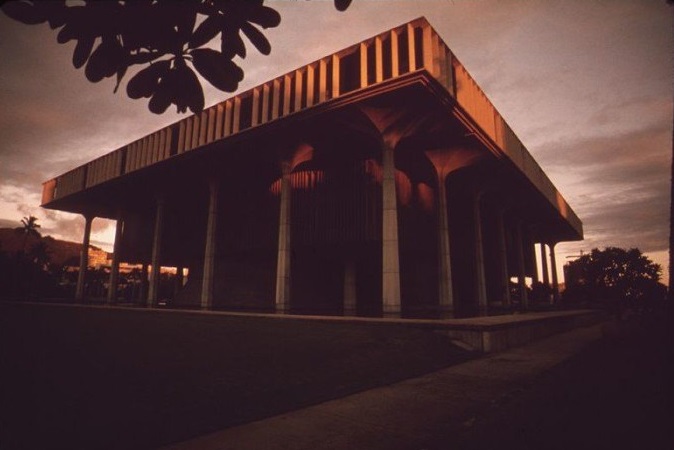
The Hawaii State Capitol Building, completed in 1969, was still brand new as the decade began. Its distinctive design — with columns shaped to evoke palm trees and a central open-air courtyard representing a volcano — set it apart from every other state capitol in the country. The building looked much the same then as it does today.
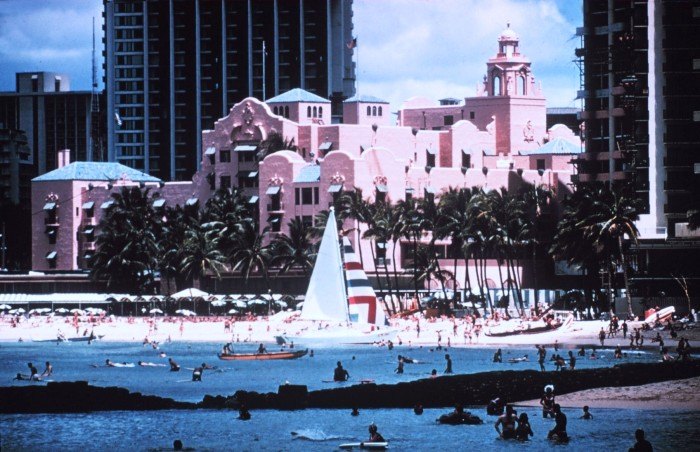
The Royal Hawaiian Hotel — nicknamed “The Pink Palace of the Pacific” — had been a Waikiki landmark since 1927, and by the 1970s it was surrounded by newer, taller towers that had risen around it. Despite the competition, it kept its status as one of the most recognized hotels on the beach. The skyline around it, though, looked nothing like it had a generation earlier.
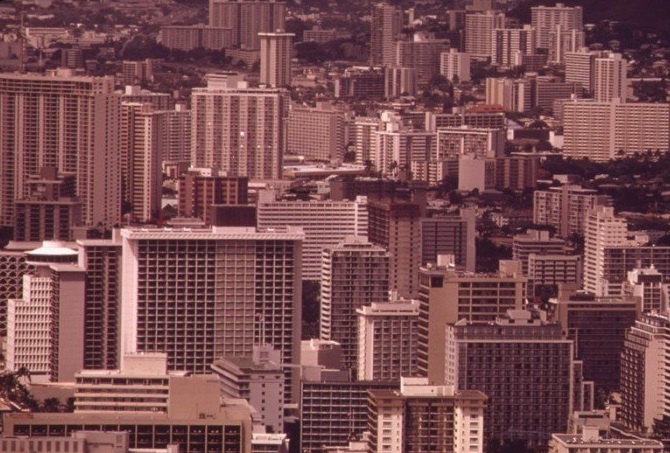
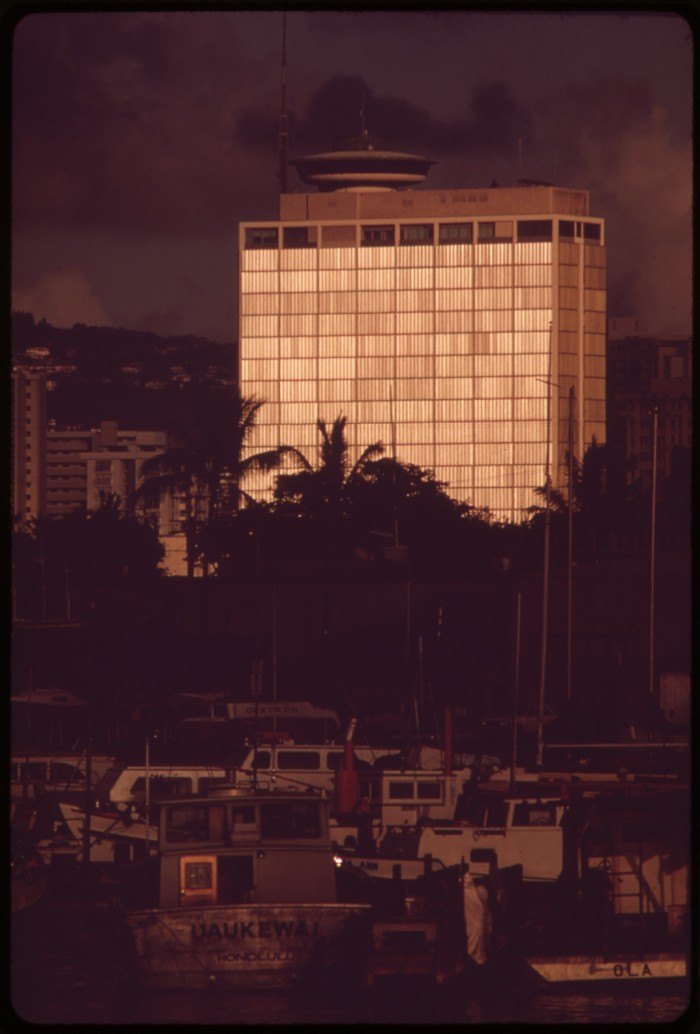
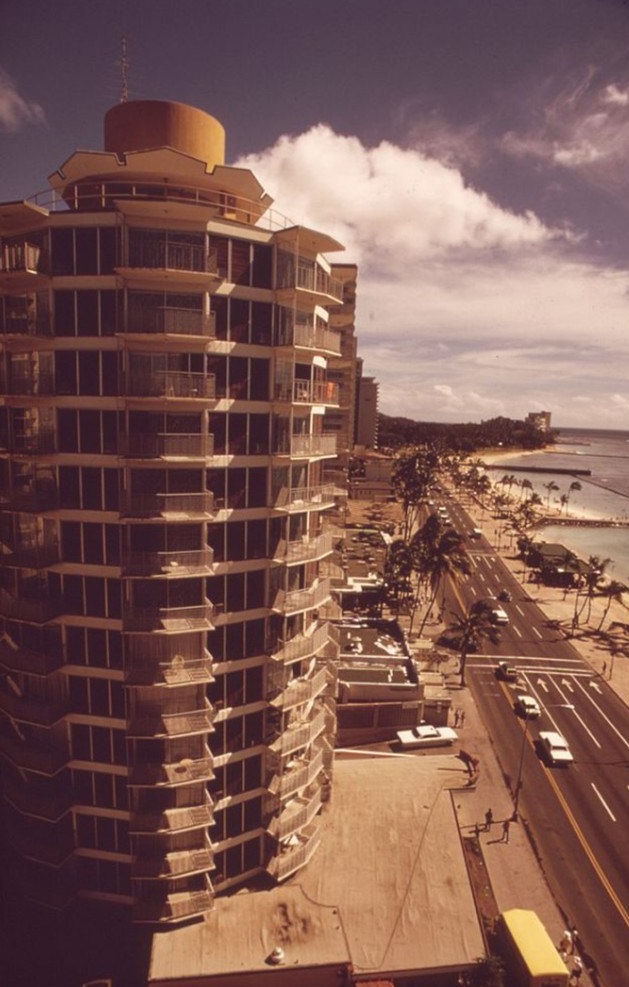
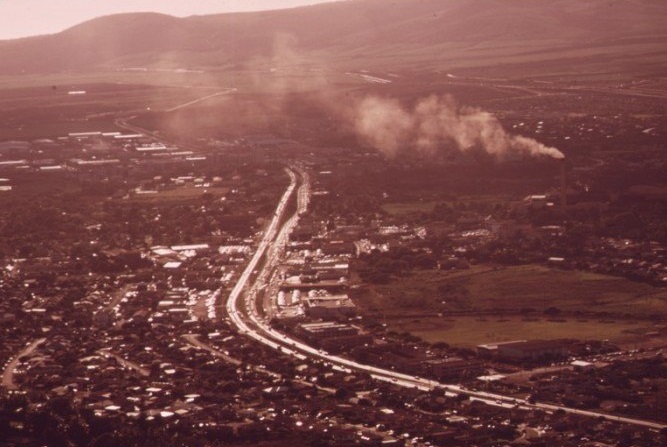
From above, Honolulu’s growth during the 1970s was undeniable. The skyline that had once been defined by low buildings and open space was now punctuated by dozens of high-rises. Military aircraft still flew over the city with some regularity, a reminder of the islands’ deep connection to the U.S. armed forces — a relationship that went back to Pearl Harbor and showed no signs of fading.
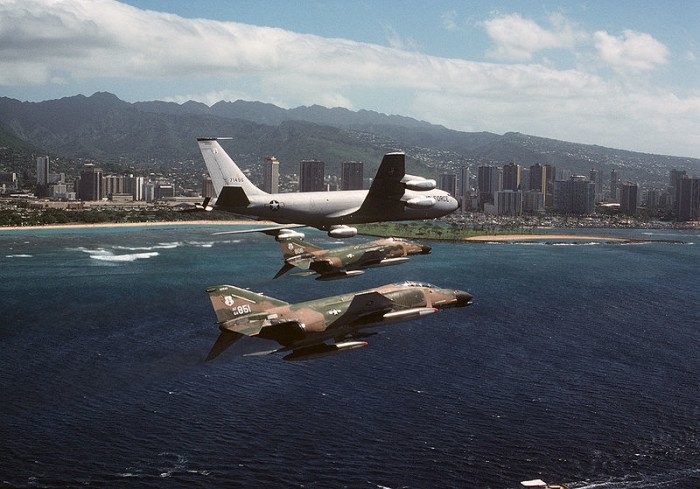





The scale was so much more reasonable back then then
I moved to Honolulu in June 1975 and lived there for almost 40 years. Moved away 10 years ago, great memories, but I don’t miss it.
Is that a UFO on top of the building??
It’s a restaurant
OH!! Thanks
Wow…. Very familiar. I was at the Stones Concert. And Waikiki was not so built up, you could see the ocean from our house.
Memories.
It’s a nice collection, glad it exists, but at least one of the captions are wrong (that is NOT Honolulu Harbor) and at least one picture (Circle Hotel) was repeated. Other than that, wish there was more detail and context in the captions. And not sure why Sydney is in there.
I’d like very much to find a book that describes the history of Honolulu and how it evolved over the decades. When did iconic hotels appear (Moana Surf Rider), when did the first commercial flights from the mainland start arriving. Or when did tourists first start visiting Waikiki and so on. Same with the harbors and other significant construction projects.
I was in my teens. I remember in the late 60’s esrly 70’s the storage yard of military equipment parked along Nimitz highway to supply the Vietnam war. Also the roar of the large jets taking off from Hickam that reverberated through city and into the valleys.
Wtf is with the black & white photos? It’s the frickin’ 1970’s, there was color film then. We had it and all of our photos when we lived there (’76-81).
#34 is mayor Frank Fasi at the podium