
World War I brought an industrial boom to Tacoma as lumber was used in local shipyards. The U.S. Army constructed Camp Lewis on 70,000 acres of land purchased by Tacoma voters on the Nisqually plain. The Tacoma Port was established in November 1918 to improve industrial waterways and facilities. Agriculture suffered after World War I, and the price of timber dropped by half. Take a look at these stunning historical photos from the 1910s that show Tacoma’s street scenes, landmarks, and everyday life from more than a century ago.
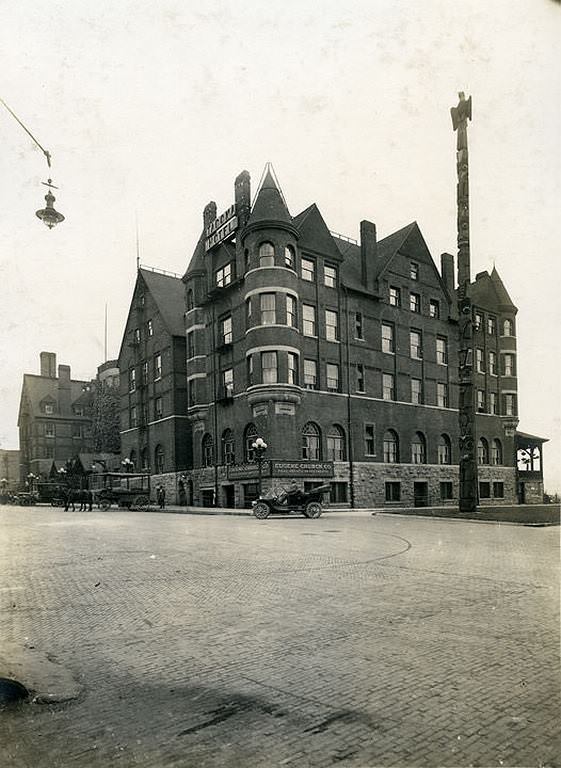
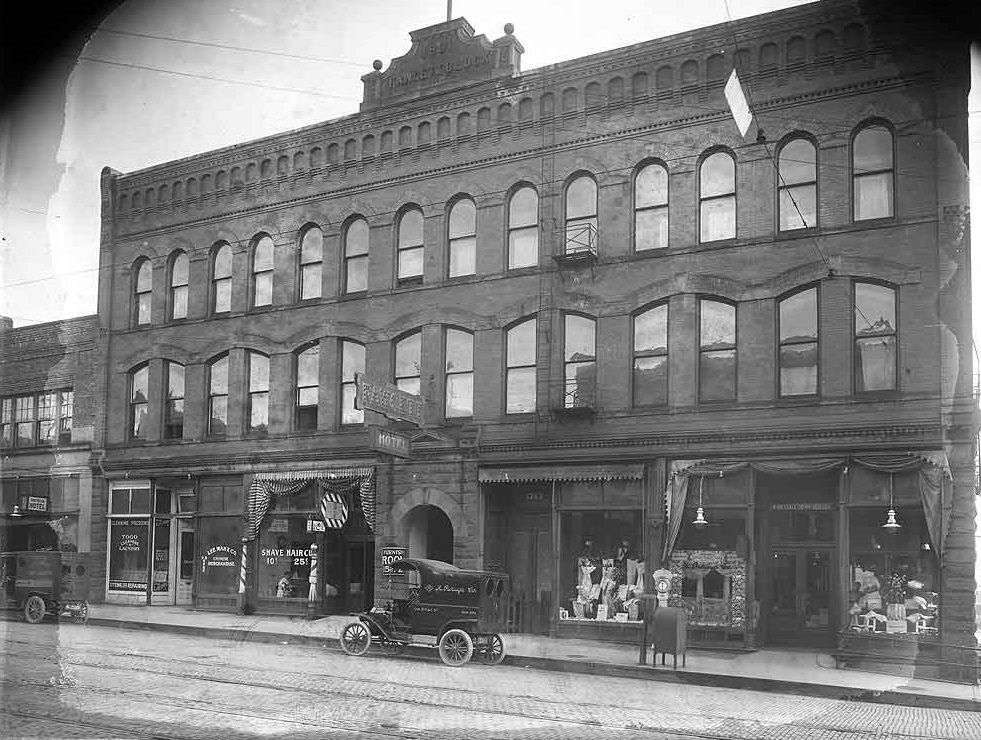
The Eugene Church Co. business is on the corner of the first floor of the building. The hotel was built in 1884 by architects McKim, Mead & White / Stanford White, and was demolished in 1935. An automobile is parked at the corner of the building. A horse-drawn vehicle is in front of the building in the left image. A totem pole is near the building in the right image.
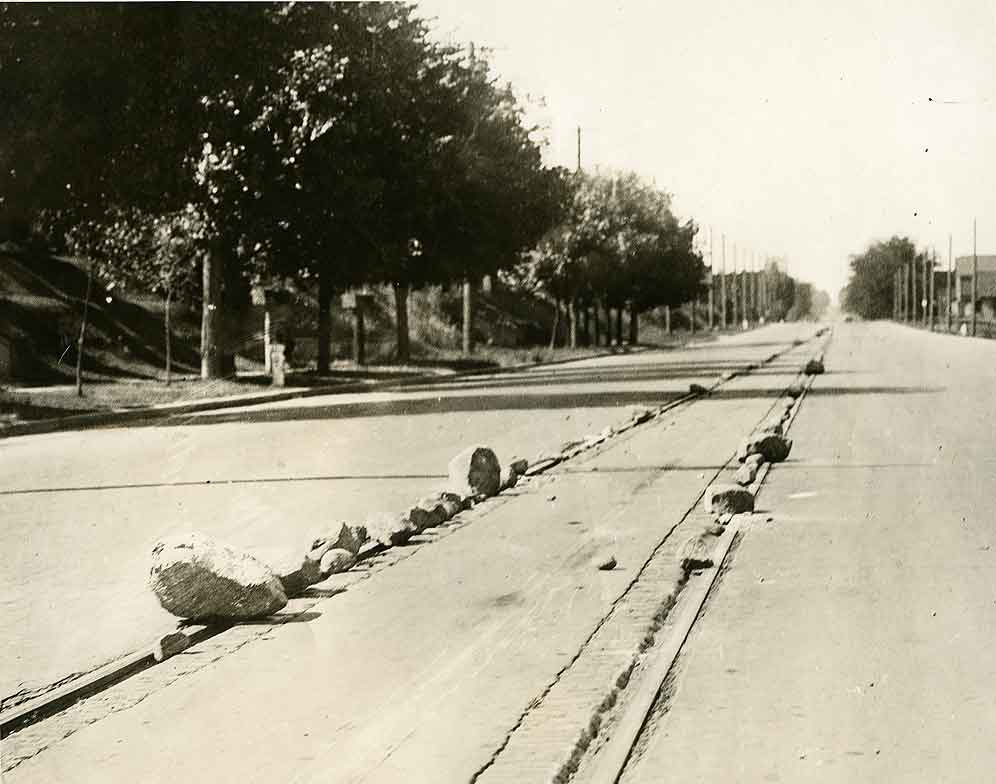
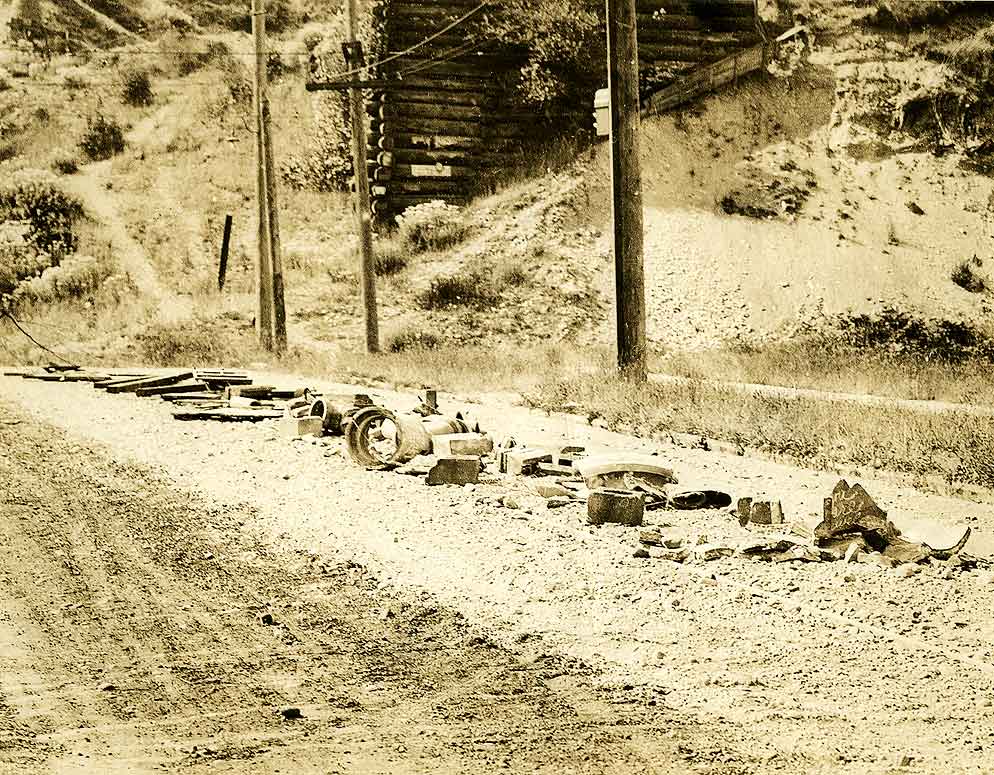
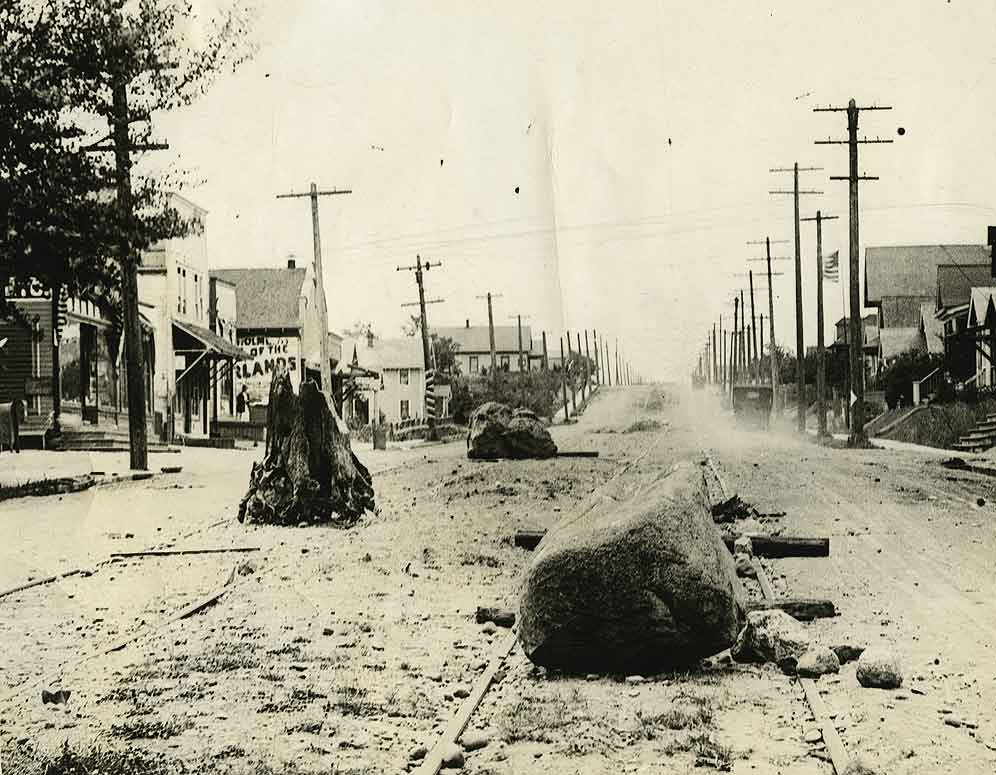
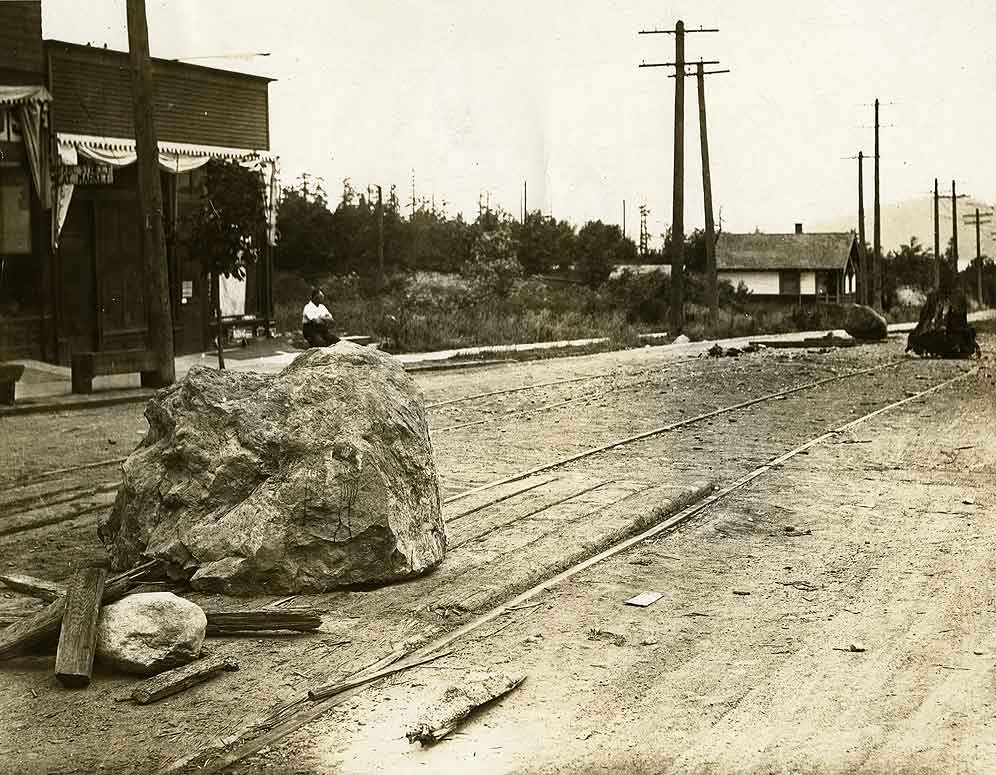
Black and white photograph shows large and small rocks scattered on the tracks of the Tacoma Rail and Power Company on the Tacoma Avenue line, July 16, 1917, during the strike by the Amalgamated Association of Street and Electric Railway Employees of America, Division 758, Tacoma, Pierce County, WA.
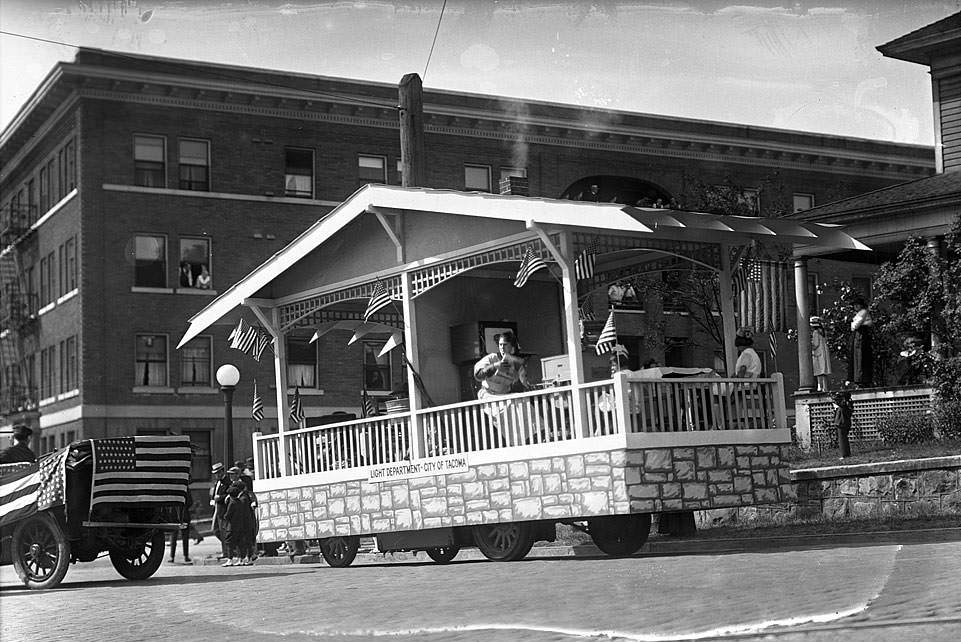
On the right side is a kitchen with a man and a woman. On the left side is what appears to be a laundry room.
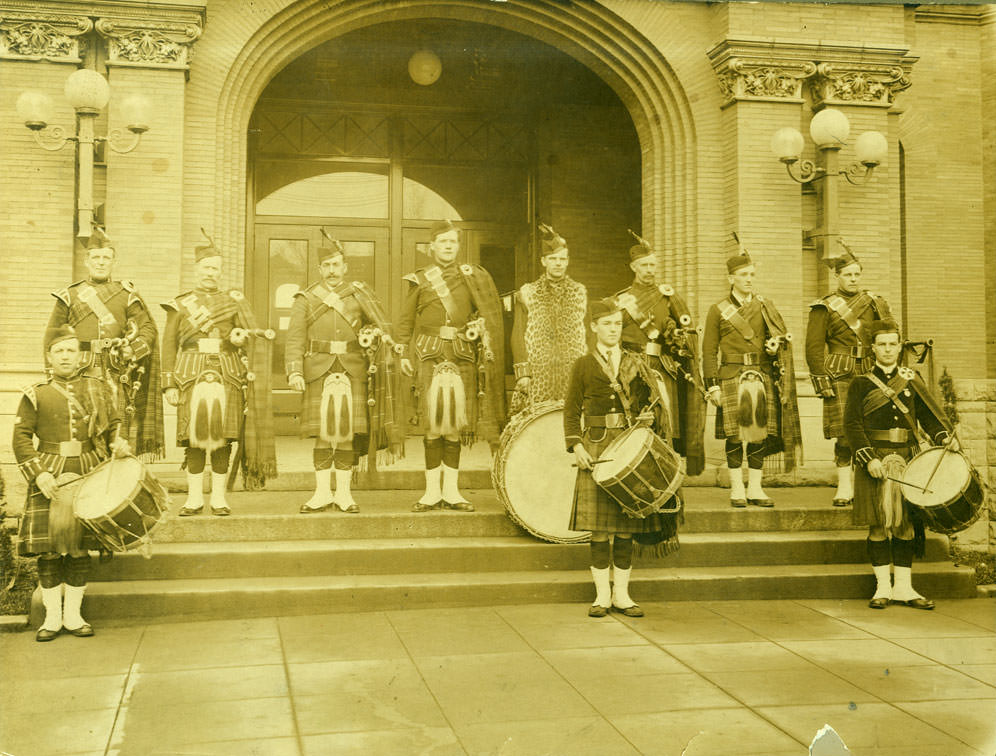
The Tacoma Pipe Band posing in front of a building. Tacoma Club 33 is noted on the photo. Andrew Lowe is the only person identified — top row and on the right of the bass drum.
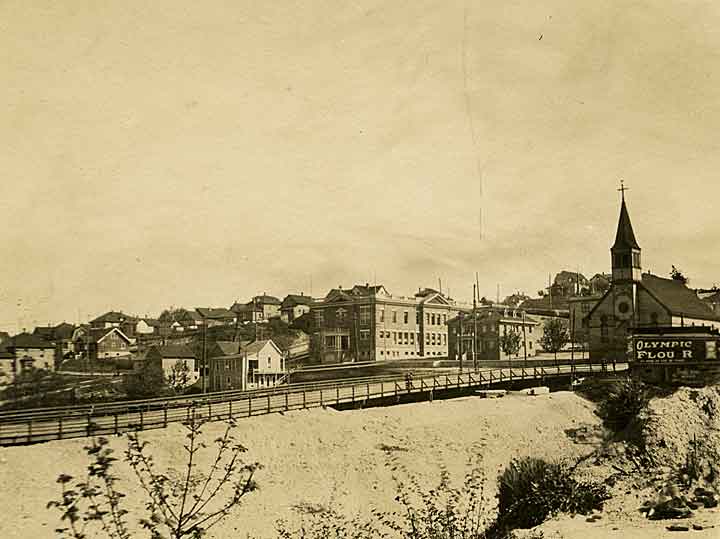
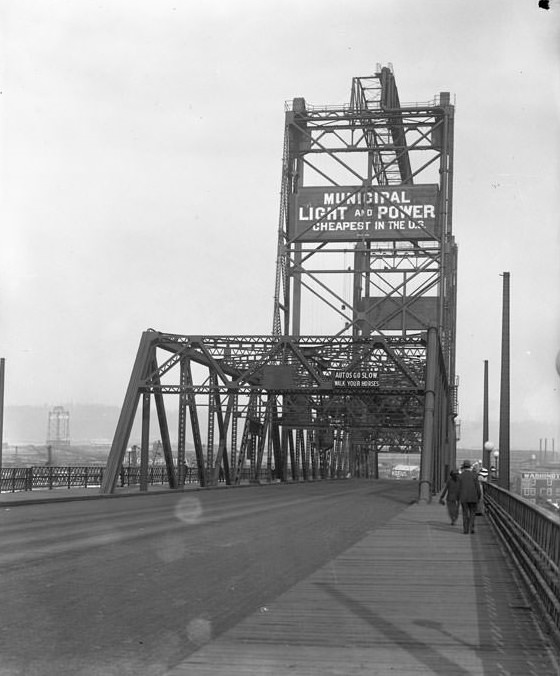
Houses, apartments, and a church are behind the bridge.
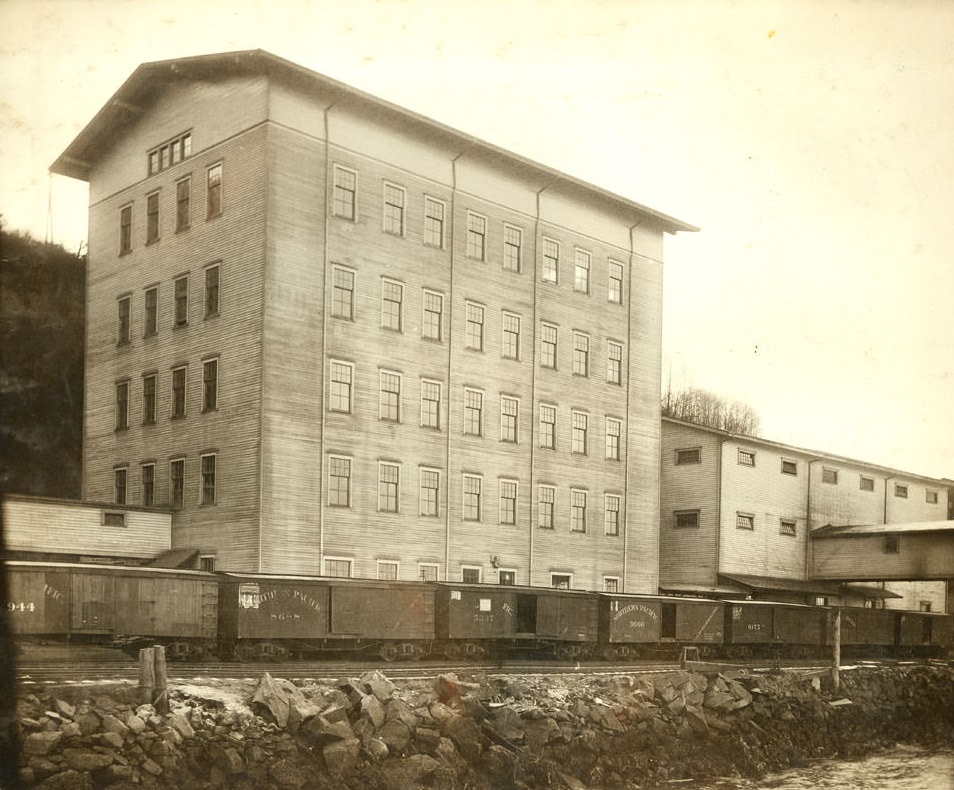
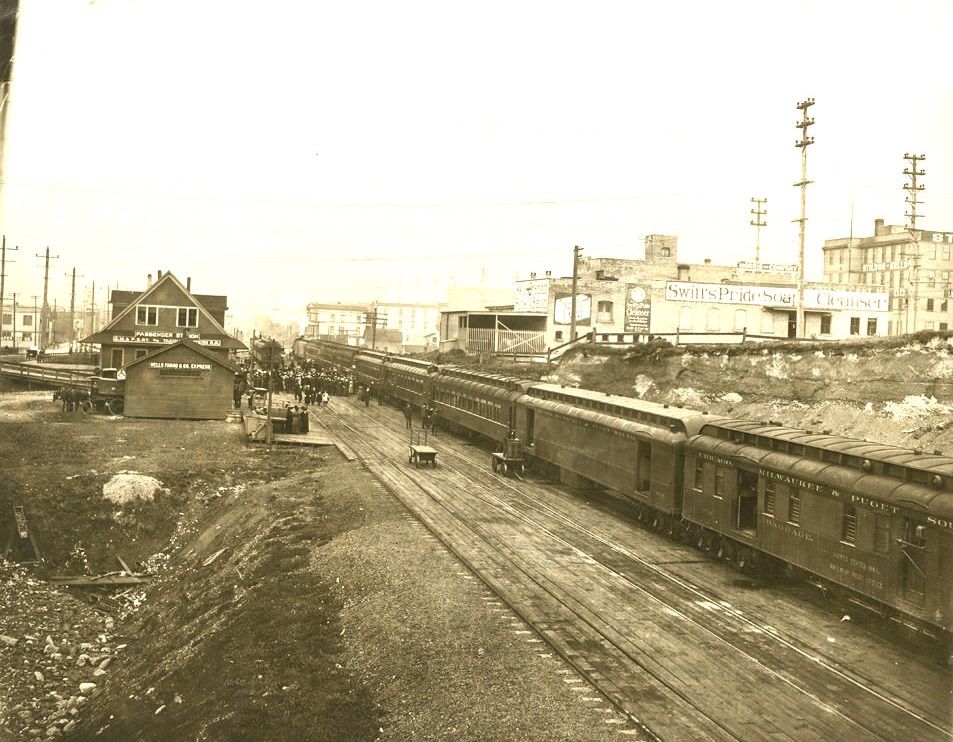
Several railroad cars are on tracks between the buildings and the water, with the Northern Pacific sign on their sides.
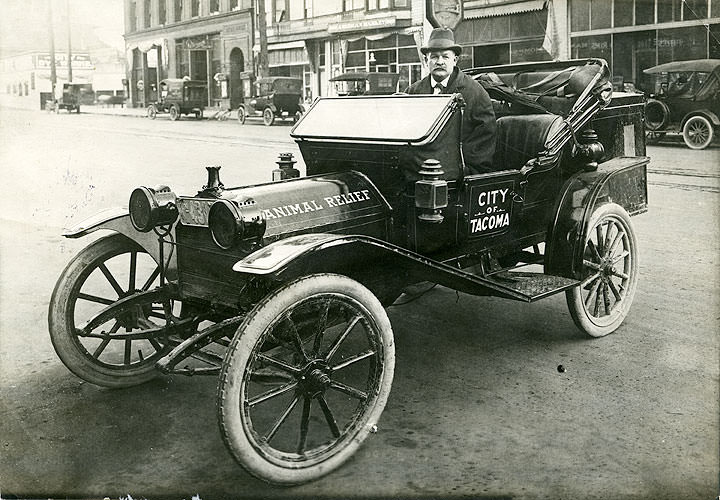
Tacoma City Humane Officer for many years. Here he is shown in a city automobile at 9th & Tacoma Avenue. The automobile was bought by friends for Van Voris when he was named Humane Officer because he had a disability, and his acceptance of the position would have been impossible without a car.
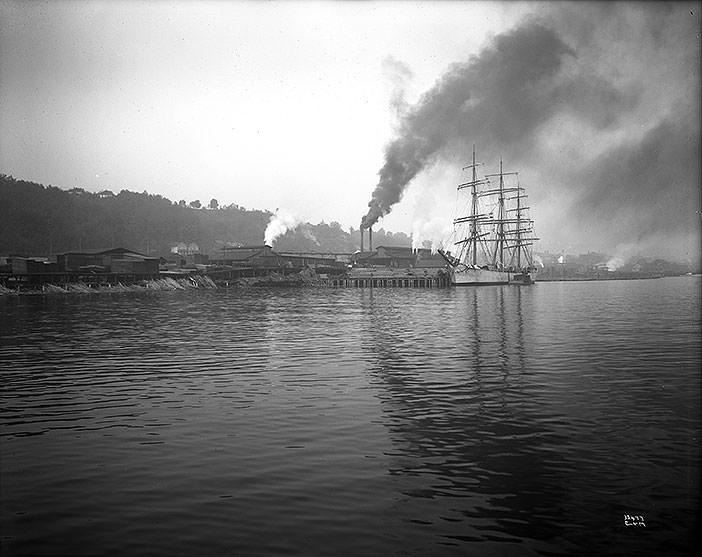
Stacks of lumber are visible on the dock. The buildings of the lumber mill are visible along the shoreline. In the distance are two houses behind the lumber mill and three additional houses on the bluff in the distance. A large plume of dark smoke emits from one of the stacks at the lumber mill.
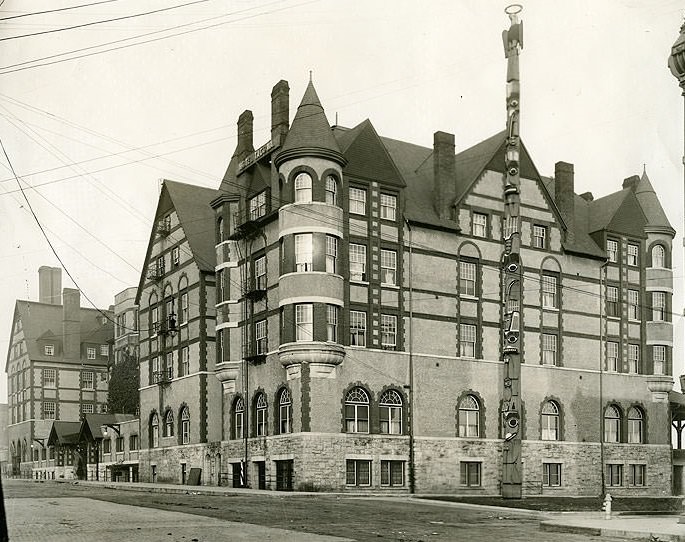
The street is deserted, and automobiles, wagons, and pedestrians are absent.
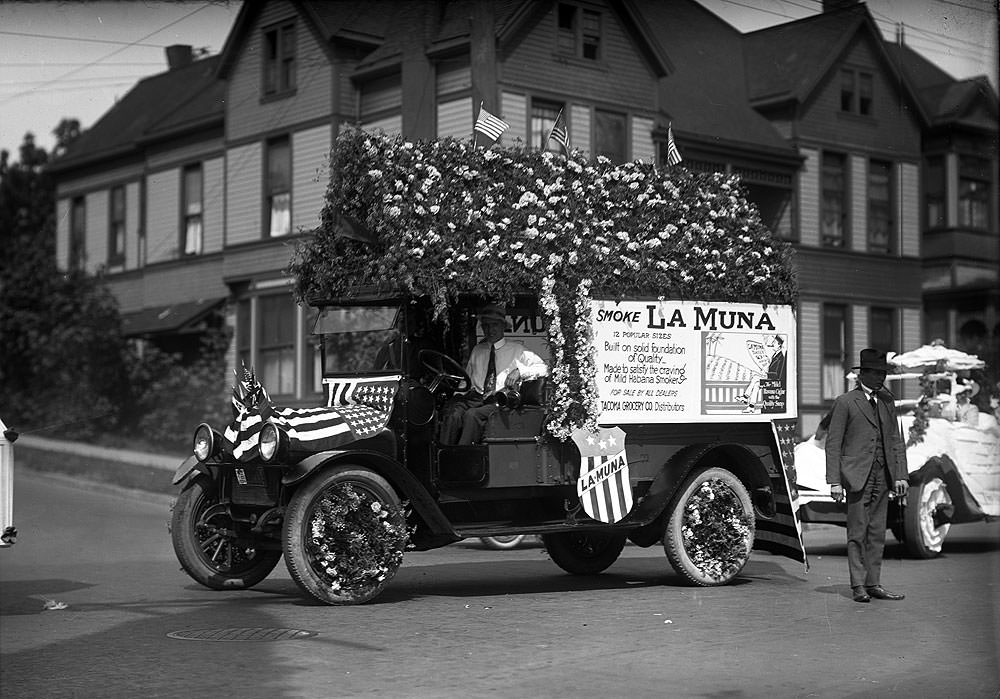
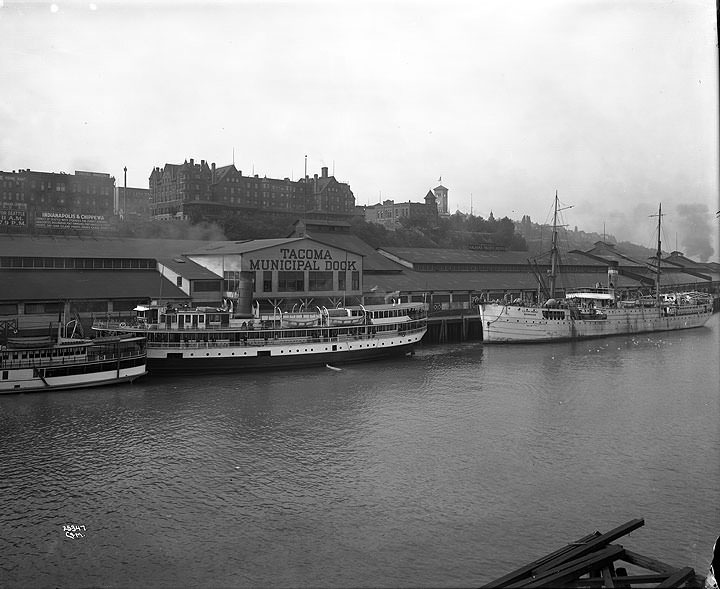
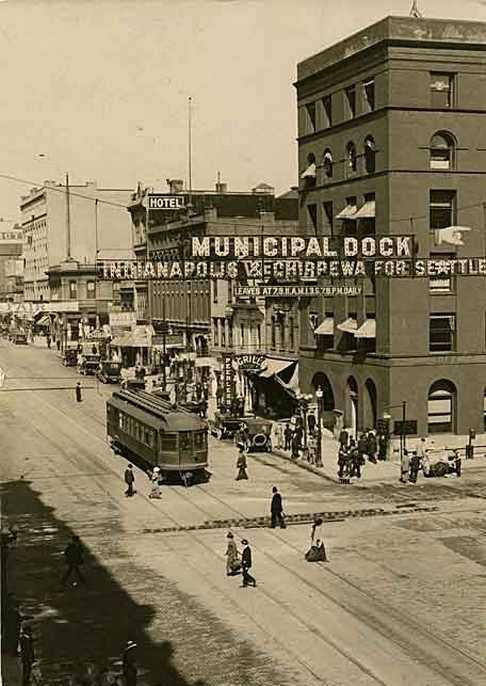
The stern of another steamship is partially visible at the left edge of the image. Warehouses along the dock are visible behind the ships. The Tacoma Hotel is on the horizon, above the Tacoma Municipal Dock building. The Mason Hotel and Old City Hall are on the right of the horizon. The sign on the building above the warehouses at the image left reads: Indianapolis & Chippewa. The S.S. Indianapolis was built in 1904 and ran the Seattle to Tacoma route from 1911 to 1930.
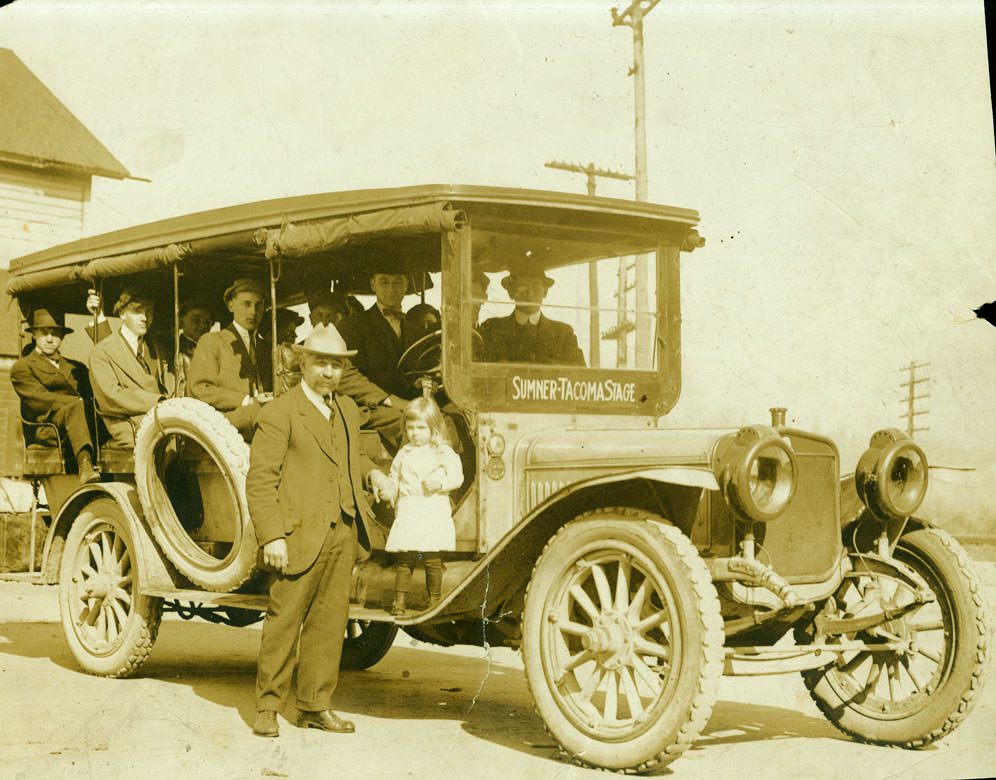
Photo of several male passengers seated in an open-sided motorbus of the Sumner and Tacoma Stage Co. The sign “Sumner-Tacoma Stage” is in front of the bus. A man standing beside the bus holds the hand of a little girl standing on the running board.
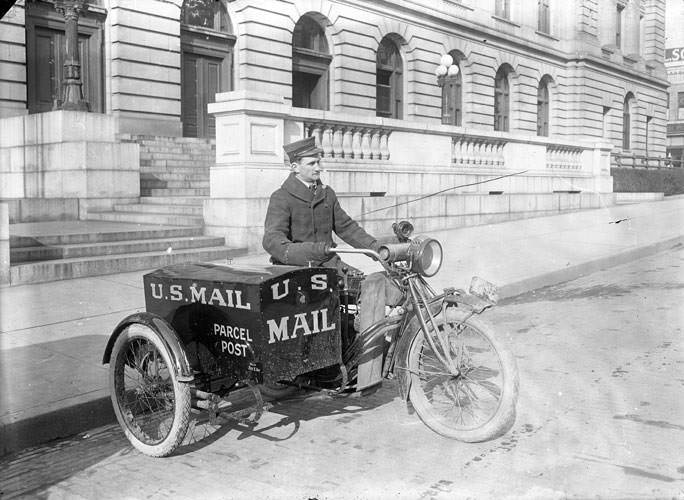
A U.S. Postal Service mailman, in uniform, posing while sitting on a motorcycle in front of the Tacoma Federal Building on A Street, Tacoma, Pierce County, WA.
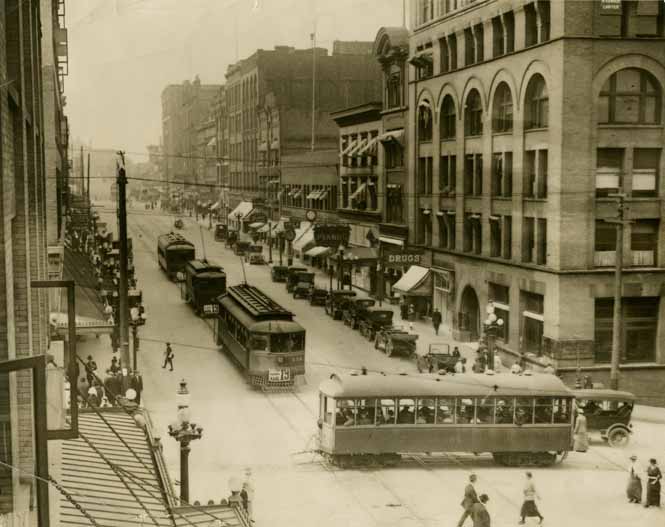
Busy street view of Broadway (formerly C Street) looking north from 11th, Tacoma. Four streetcars, parked automobiles, and pedestrians are present, and the names of various Tacoma businesses and merchants — including a drug store, piano store, shoe store, and Y.W.C.A. — are visible on signs.
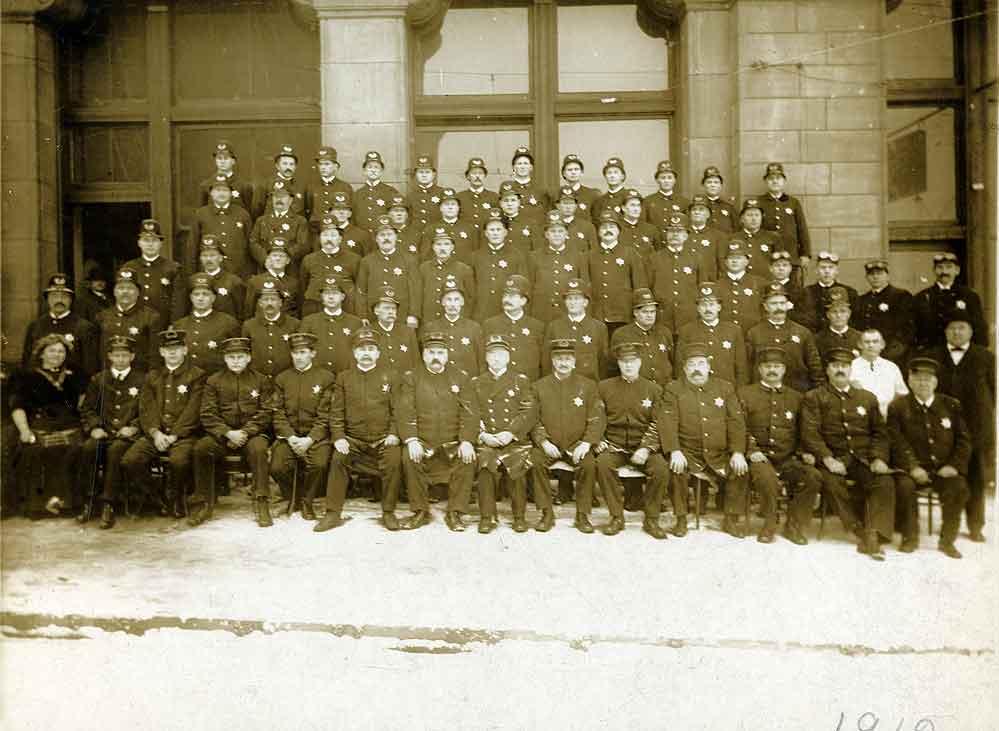
The photo shows about 50 or 60 uniformed policemen, a woman, and two men not in uniform, posing in front of the police station at 616 Pacific Avenue, Tacoma.
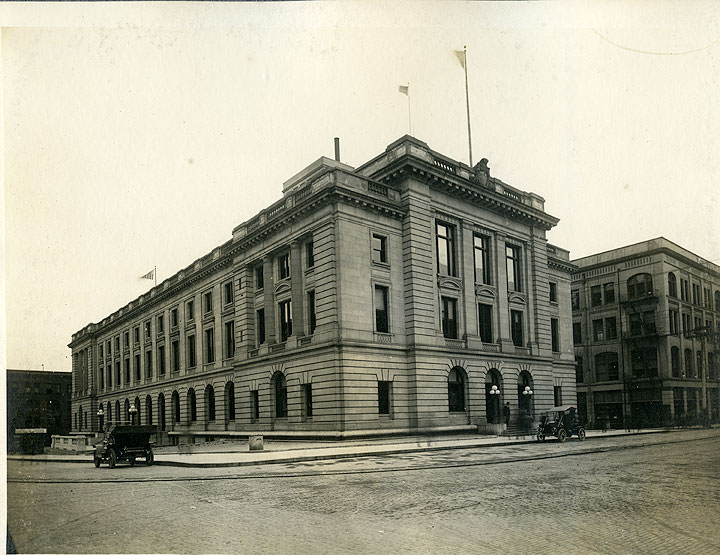
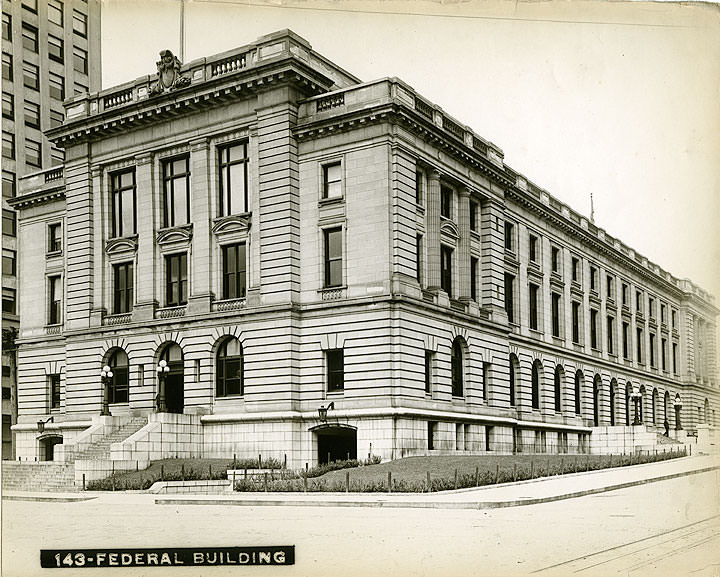
The Tacoma Federal Building, housing courts and the U.S. Post Office at 1102 A Street, Tacoma, Pierce County. It was built in 1910 by architect James Knox Taylor.
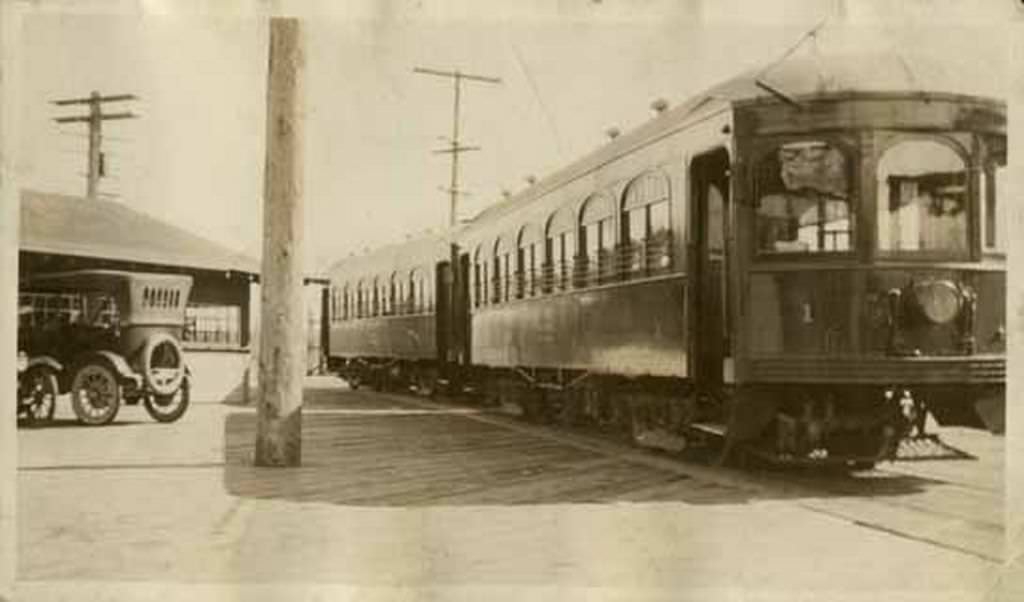
Tacoma Street Railway System belt line passenger cars are resting on track at the entrance to Todd Shipyards, with a building and an automobile visible in the background.
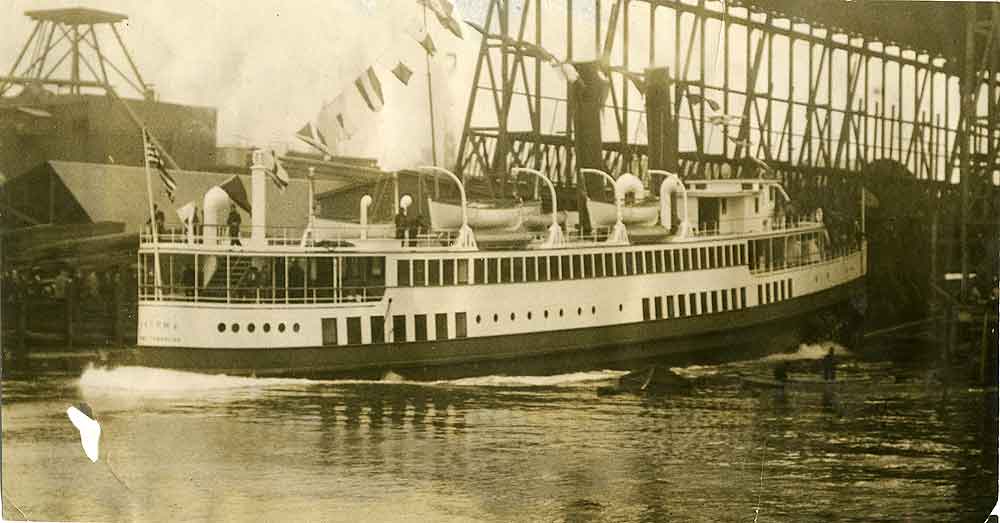
Black and white, undated image of the starboard side of the steamship S.S. Tacoma, taken from the stern end, as it appears to emerge from drydock into the water.
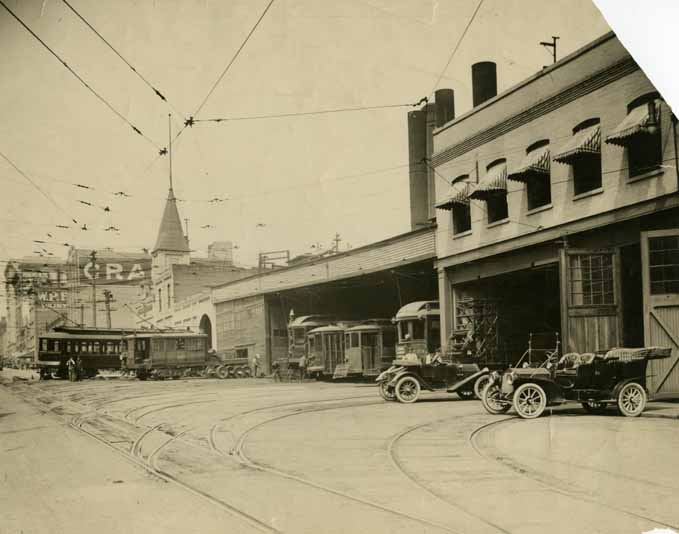
Street view of the Tacoma Railway and Power Company and Puget Sound Electric Railway streetcar barns, located on “A” Street, Tacoma.
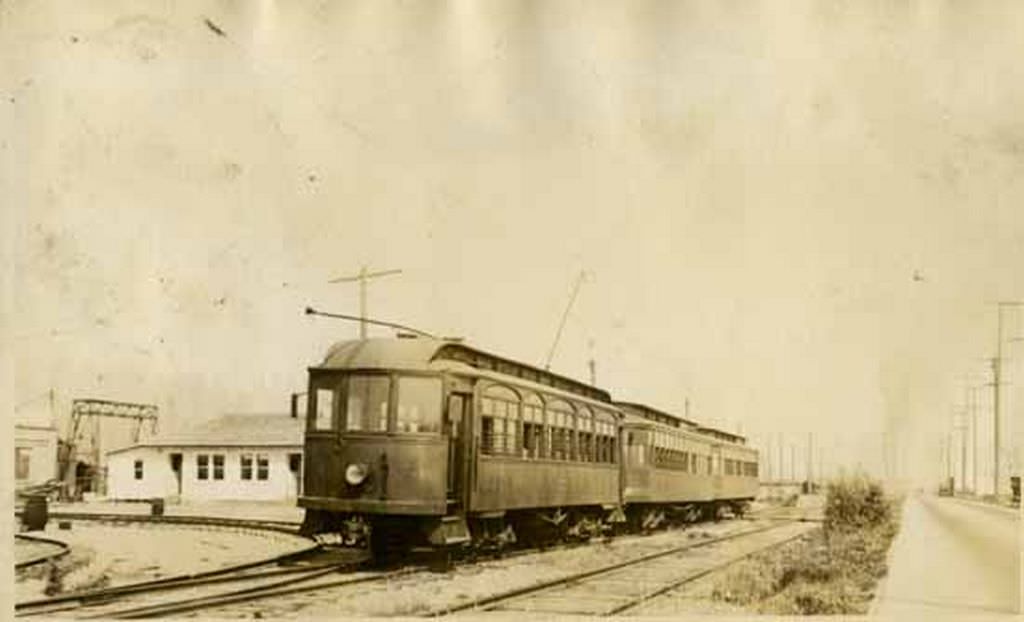
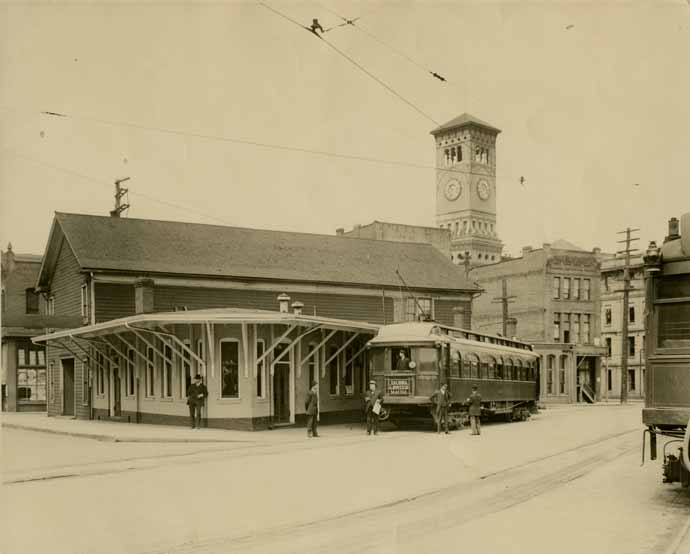
Street view of the Puget Sound Electric Railway Interurban train station on Pacific Avenue. Pedestrians, conductors, interurban trains, and surrounding buildings are visible. The old Tacoma City Hall building and bell clock tower are visible in the background.
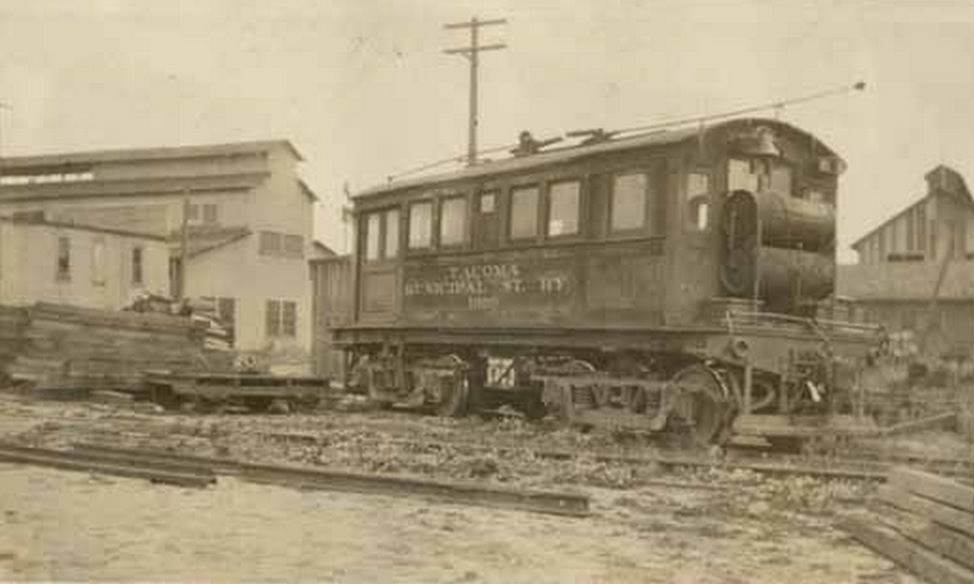
The first freight motor belt railway car was resting on the switch track located at the foot of the 11th Street bridge. One in a series of prints in a 73-page album containing photographs of the Tacoma Electric Street Railway System and Tacoma Railway and Power Company.
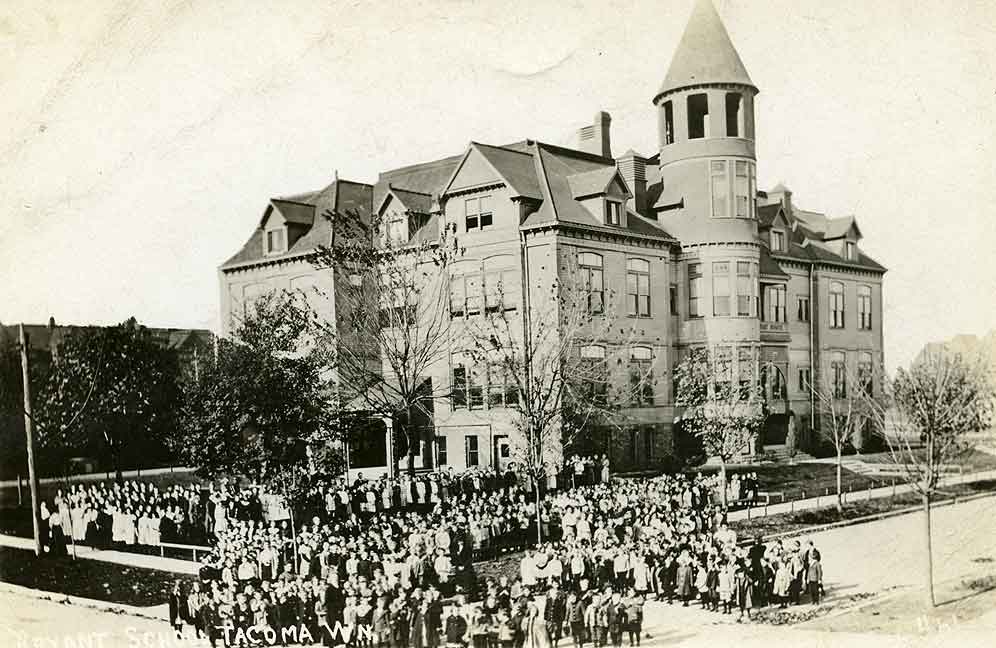
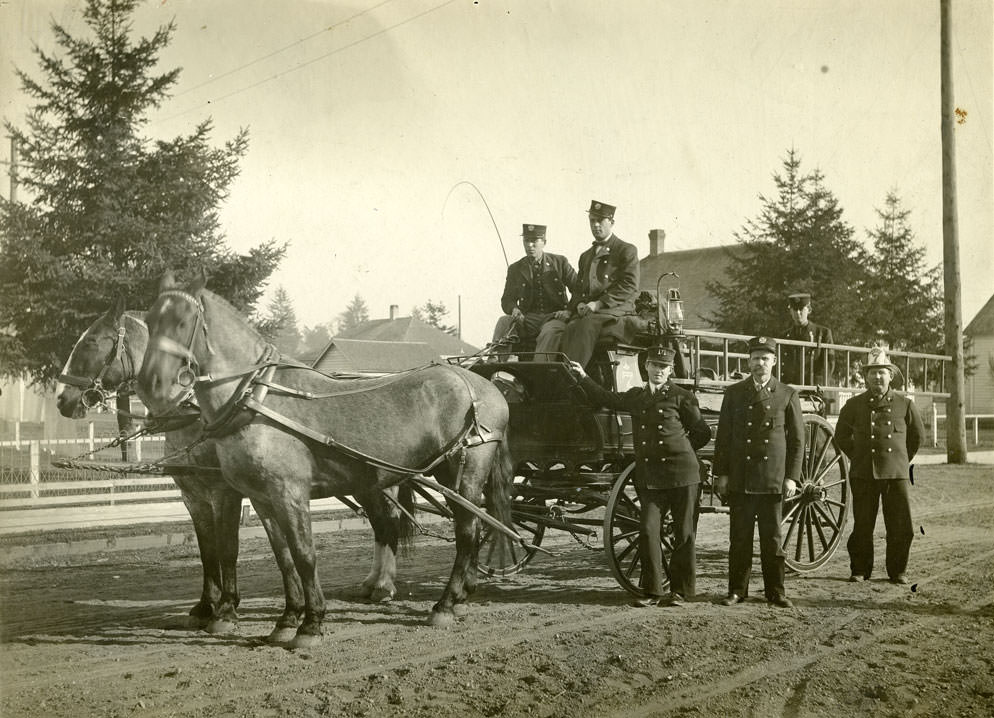
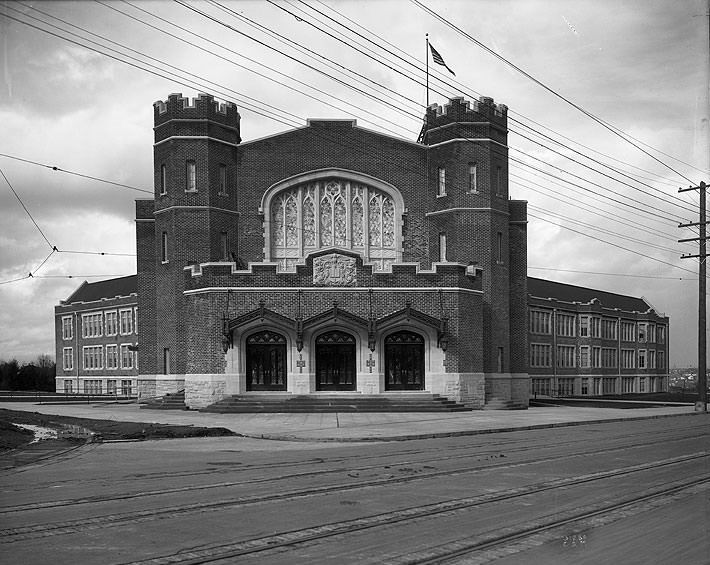
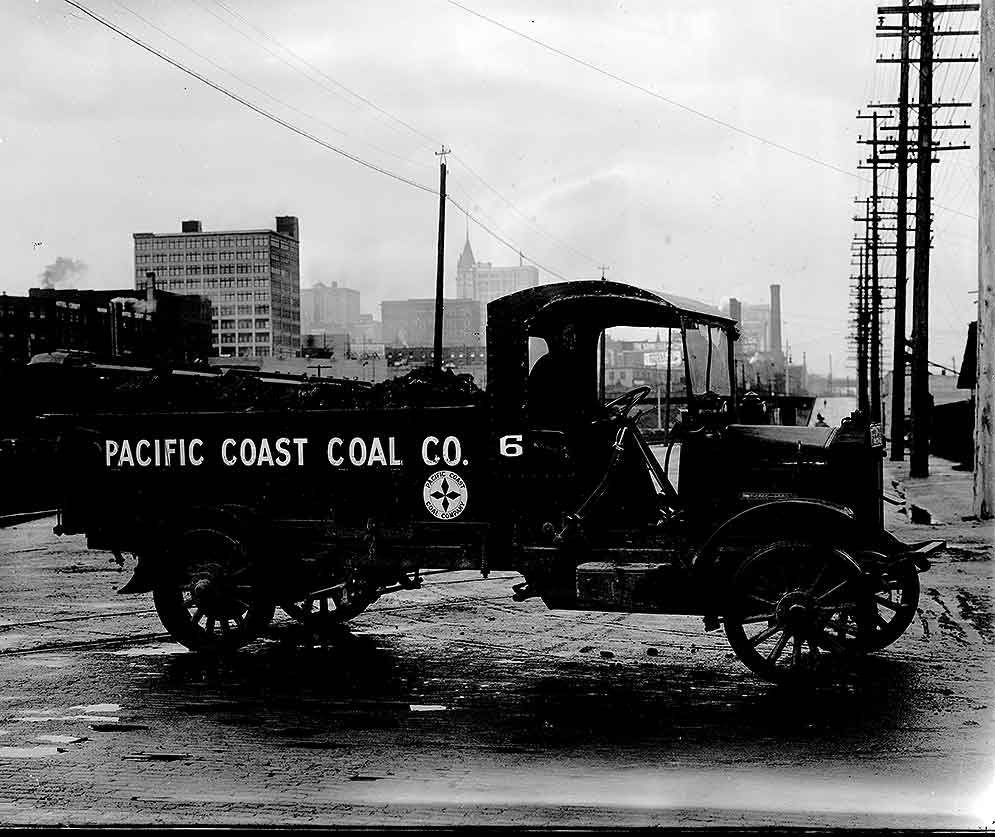
Downtown Tacoma buildings are in the background.
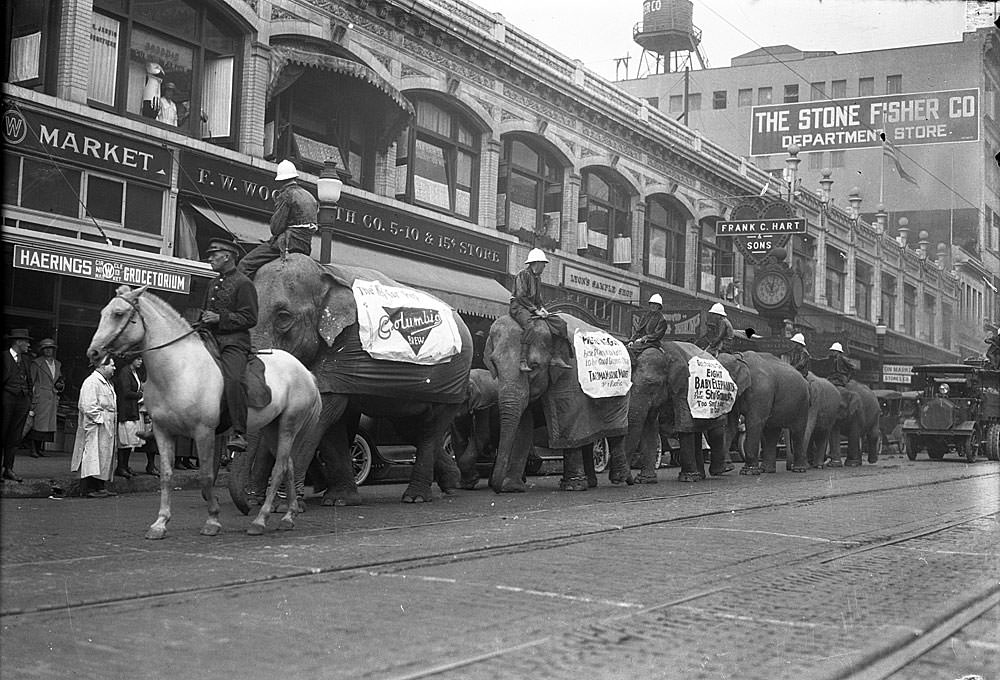
A row of elephants, including baby elephants, in front of the F.W. Woolworth store at 1122-1128 Broadway, built 1914. The building was designed by architects Heath & Gove. The elephants wear cloth advertisements for Columbia Brewery, Tacoma Marine Market, and an ad for the elephants’ appearance.
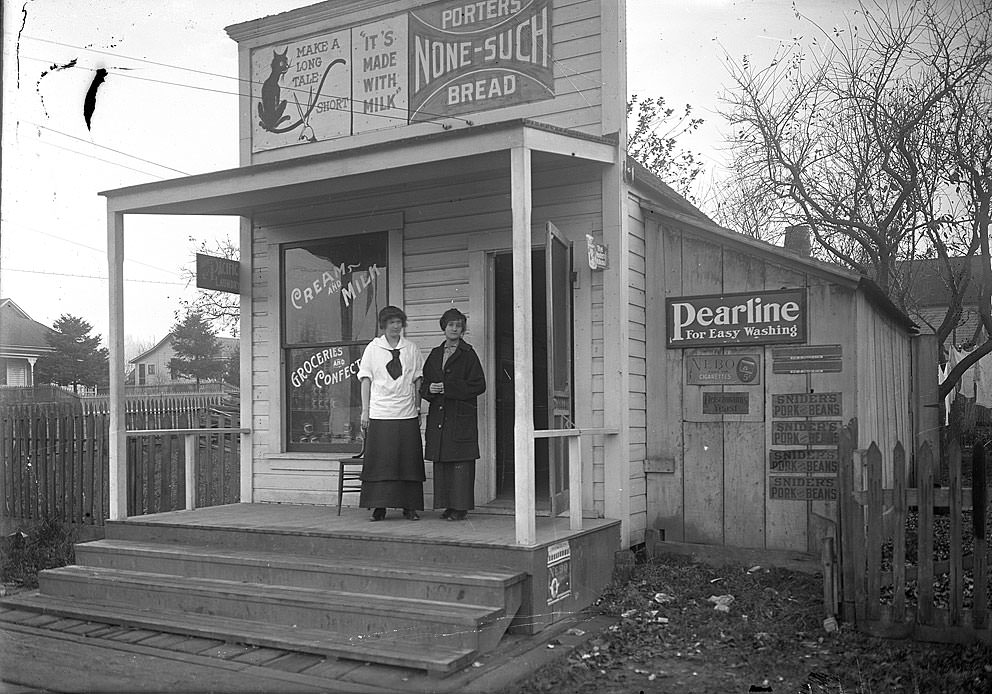
There is an advertisement for Porters None-Such Bread on the false front. A sign for Pacific Laundry is visible on the left side. Attached to the right side of the porch is a sign advertising Vebo cigarettes, and another is attached to a lean-to, along with a sign advertising “Pearline for Easy Washing.”
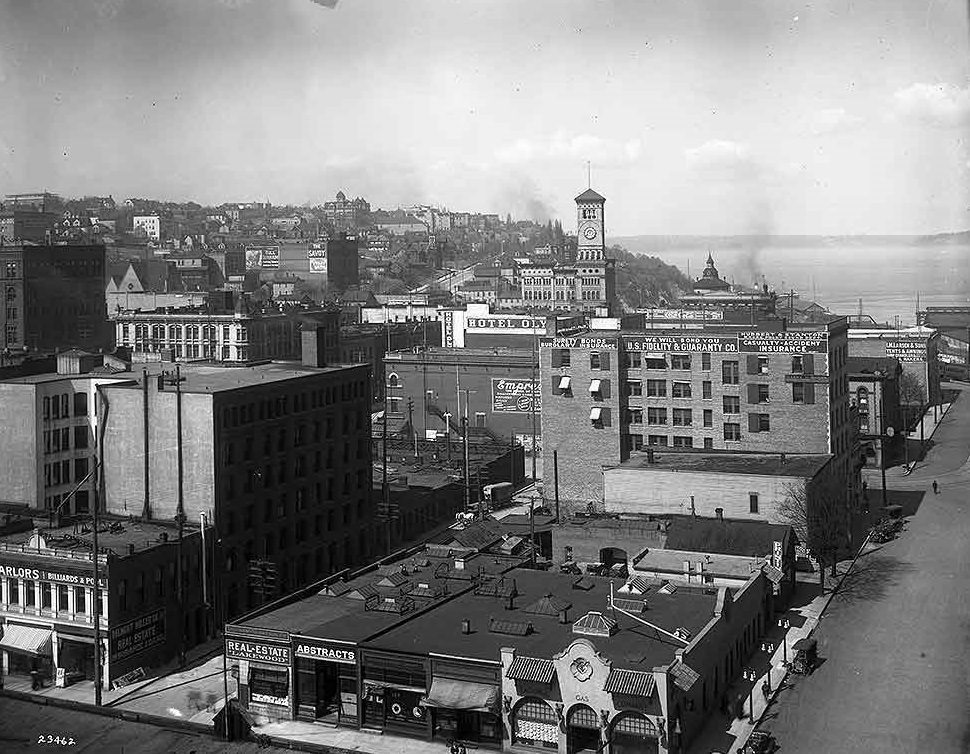
A Street is almost parallel to the right image edge, and South Tenth Street is lower. Lakewood Subdivisions, Lewis L. Tallman, president, and M. Roy Thompson, secretary-treasurer; Delmont Miller Co. Inc., Real Estate, Homebuilders, Insurance, Delmont Miller, secretary-treasurer.
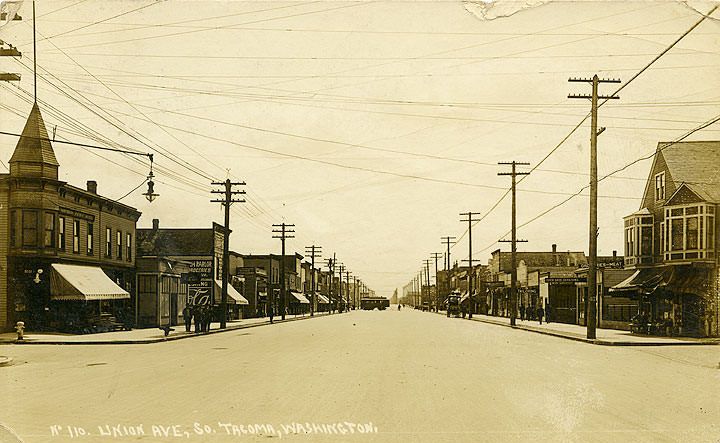
The Northern Pacific Hotel is at the left edge of the image, at the street corner. Commercial buildings recede in the distance. A streetcar is visible in the image center background. Personal message and canceled stamp on reverse.
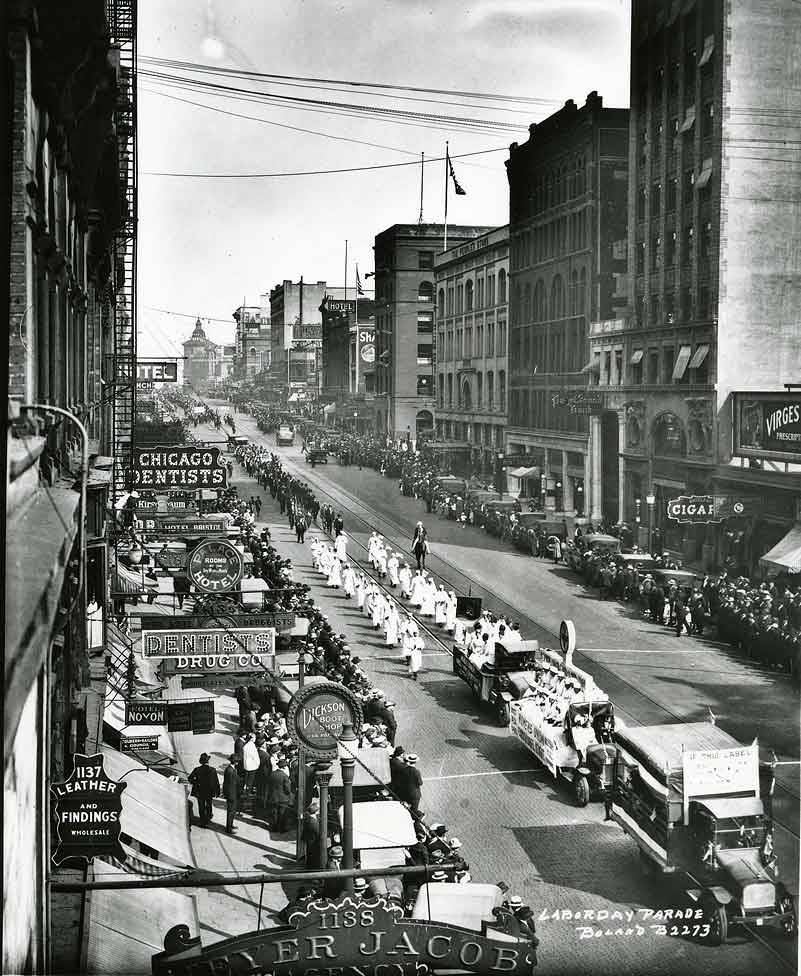
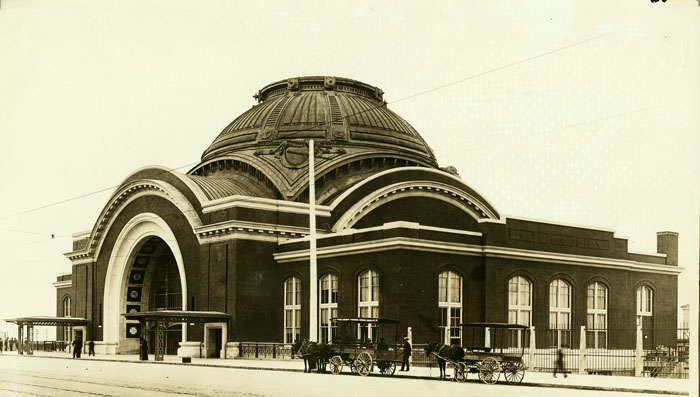
Pacific Avenue street view of the front of the Northern Pacific Railroad Union Station. Several horse-drawn carriages are parked outside the station, and pedestrians are visible on the sidewalk.
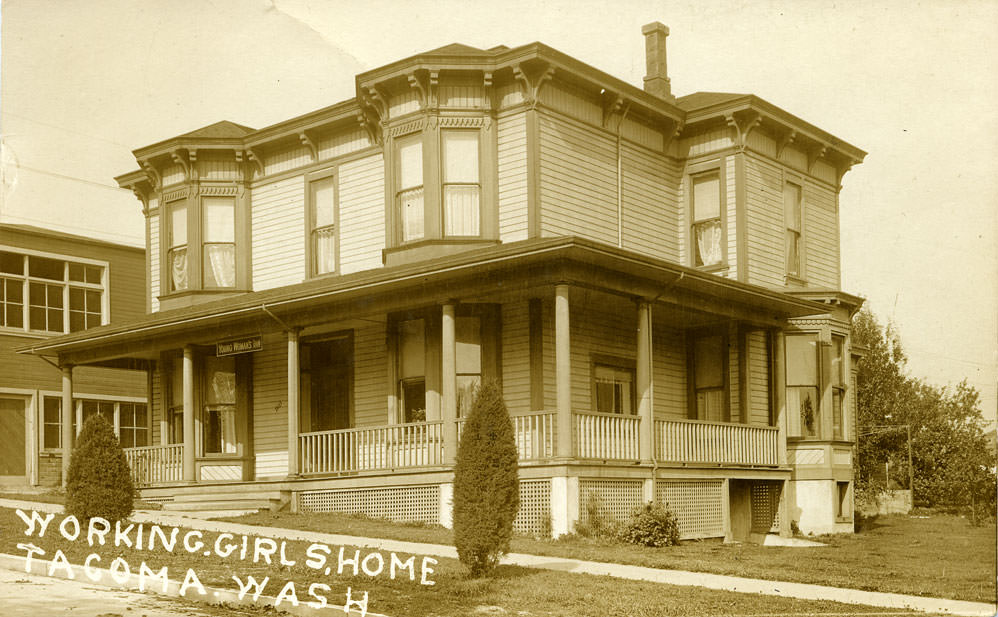
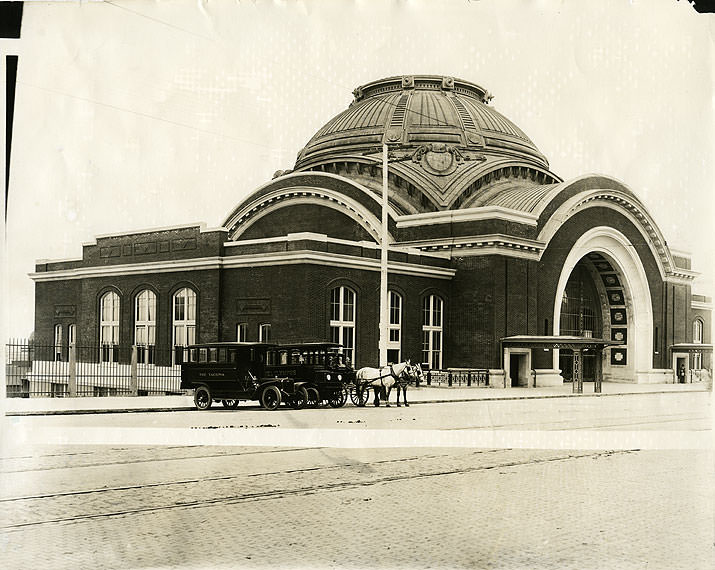
The Northern Pacific Depot, later known as Union Station or Union Depot, taken from across the street on Pacific Avenue, Tacoma. Two small passenger buses are parked side by side, perpendicular to the curb, in front of the depot.
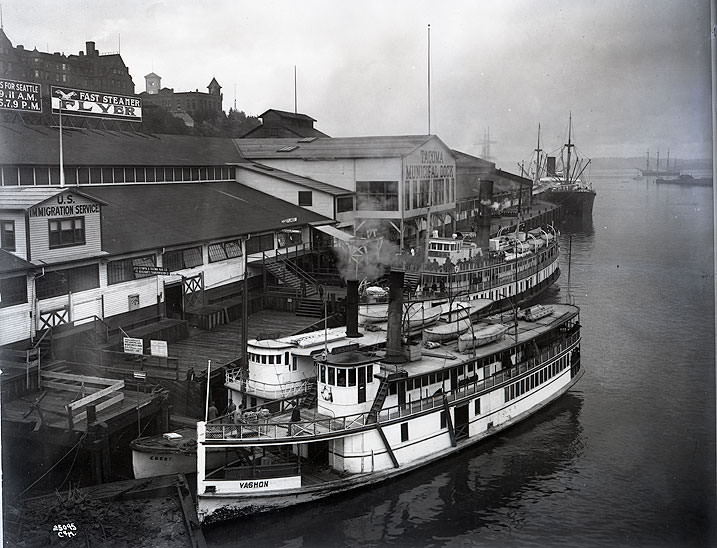
Signs visible on the deck buildings in the left image include U.S. Immigration Service and Fast Steamer Flyer. Part of the Tacoma Hotel, the City Hall tower, and the Northern Pacific Railroad Headquarters Building are visible on the horizon in the upper left of the image.
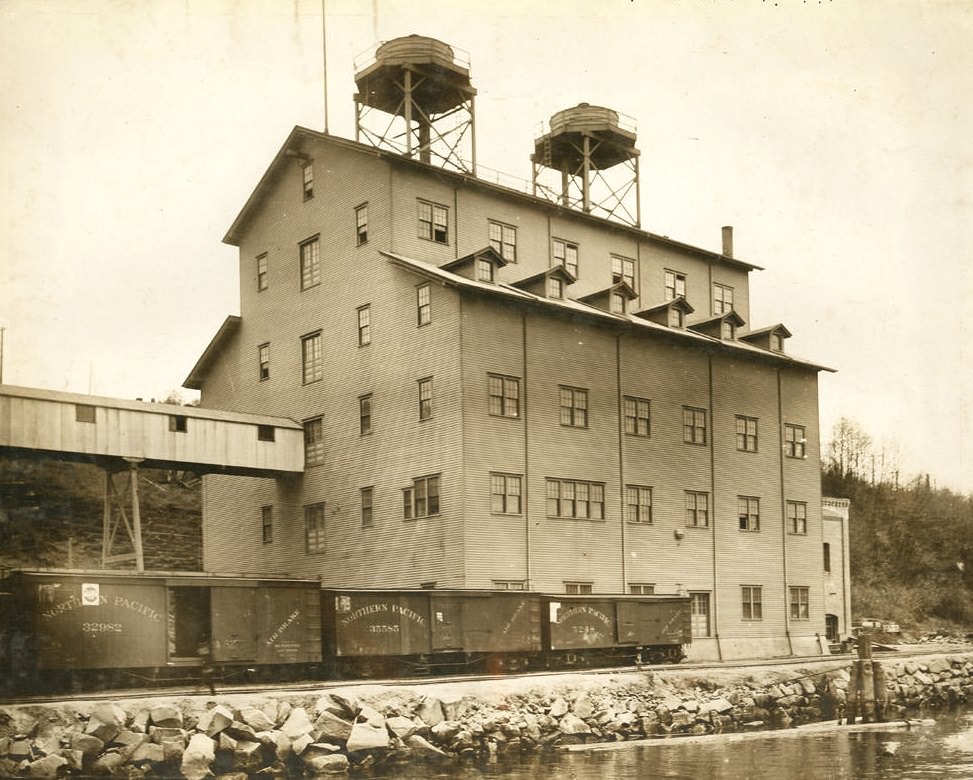
View of the Sperry Flour Company mill in Tacoma, WA, on Commencement Bay’s shoreline. Two water towers are on top of the building. Railroad tracks run between the bay and the building.
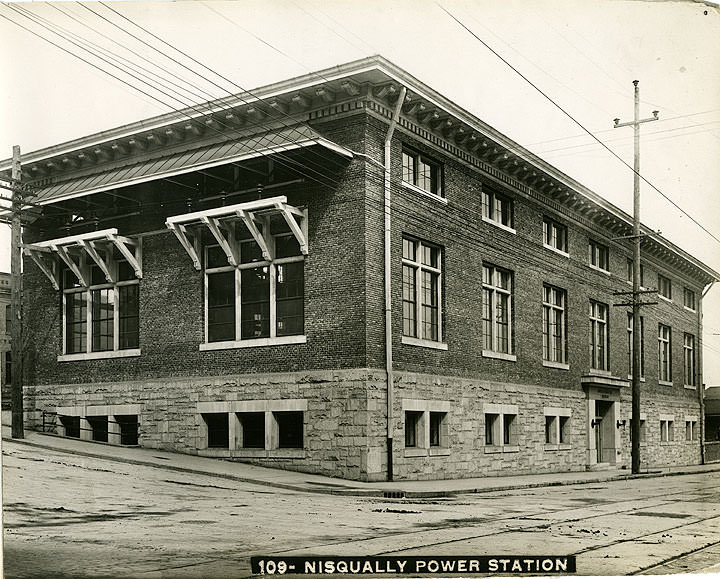
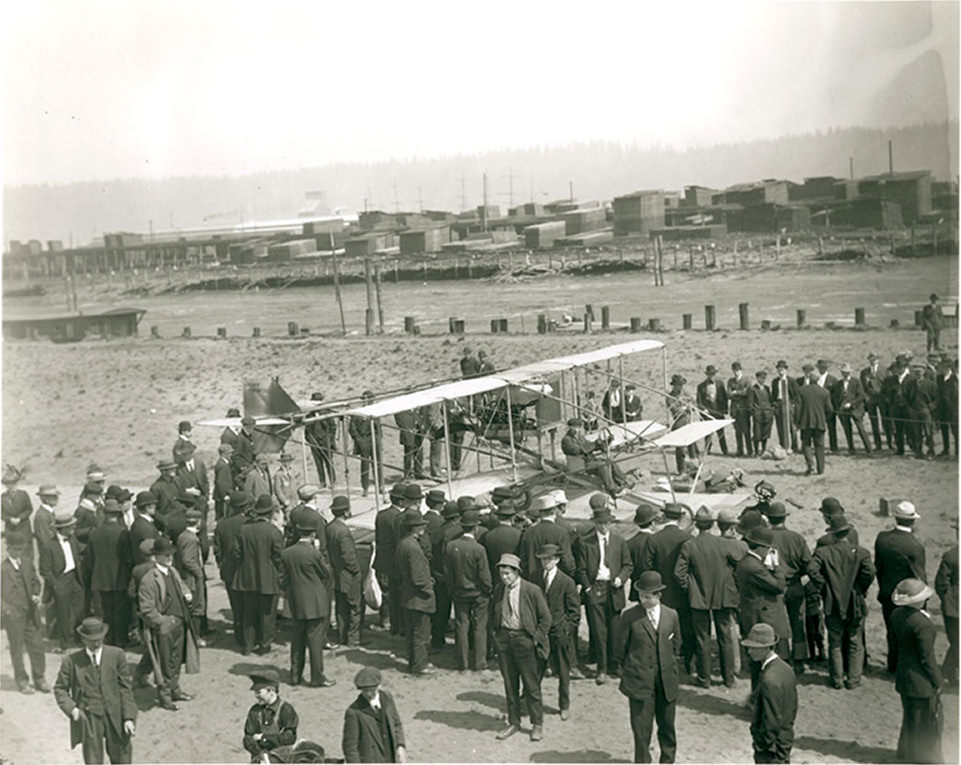
Elevated view of aviator Harvey Crawford seated in his biplane at Tacoma, following his flight near the Puyallup Valley Fair fairgrounds. A crowd of men surrounds the biplane, and 3 boys are in the background. A watercourse runs horizontally above the photo center, and many piles of lumber are on the far shore.
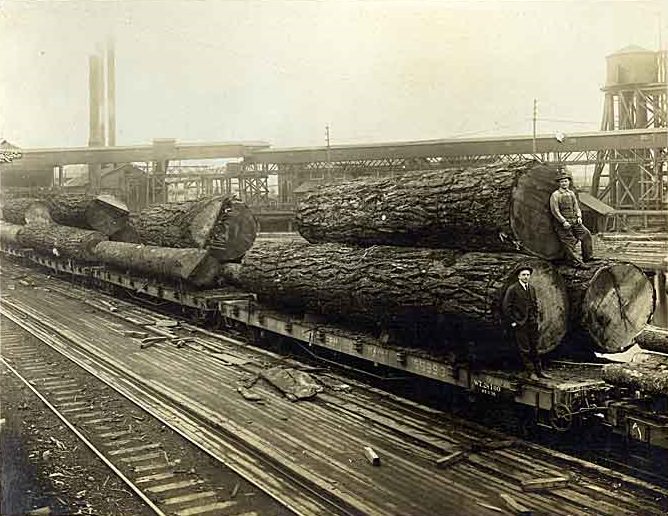
A man wearing a suit and a man in overalls pose by the 3 logs on the flatcar in the image center and right foreground. Industrial buildings and a water tower are in the image background.
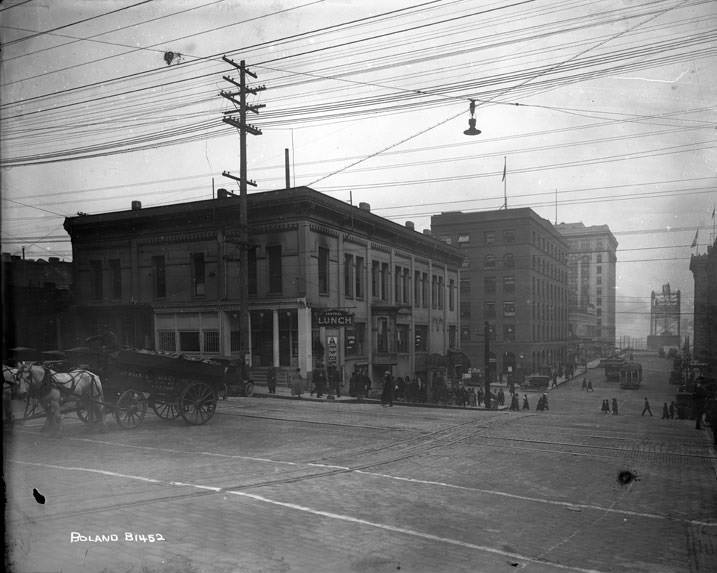
A St. Paul & Tacoma Lumber Company horse team-drawn delivery wagon, loaded with short wood pieces, is at the left of the image. The Central Lunch is in the image center, with a sign on the side of the building that reads: Save Food. Several pedestrians are on the sidewalk.
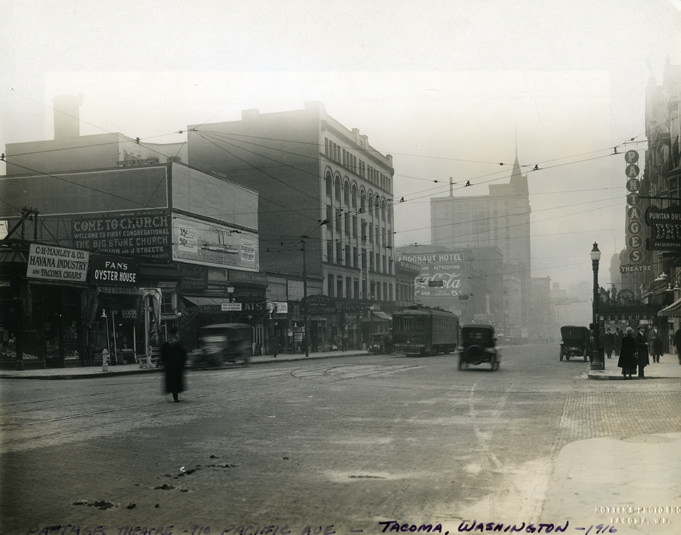
A man stands with a woman smoking a cigarette on the corner near the Pantages sign. Two cars drive down the street while others are parked on either side.
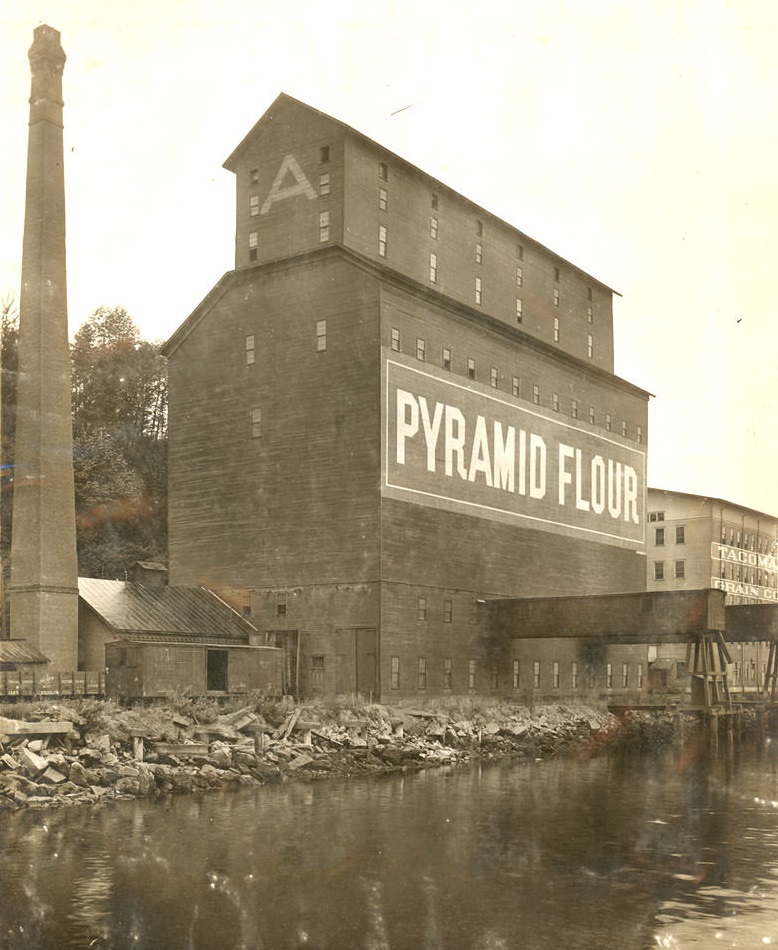
Bay water is in the foreground. On the side of the grain elevator: Pyramid Flour. On the side of the building behind it in the right of the photo: Tacoma Grain Co. A tall smokestack is in the left of the photo, and 2 railroad cars are in front of it.
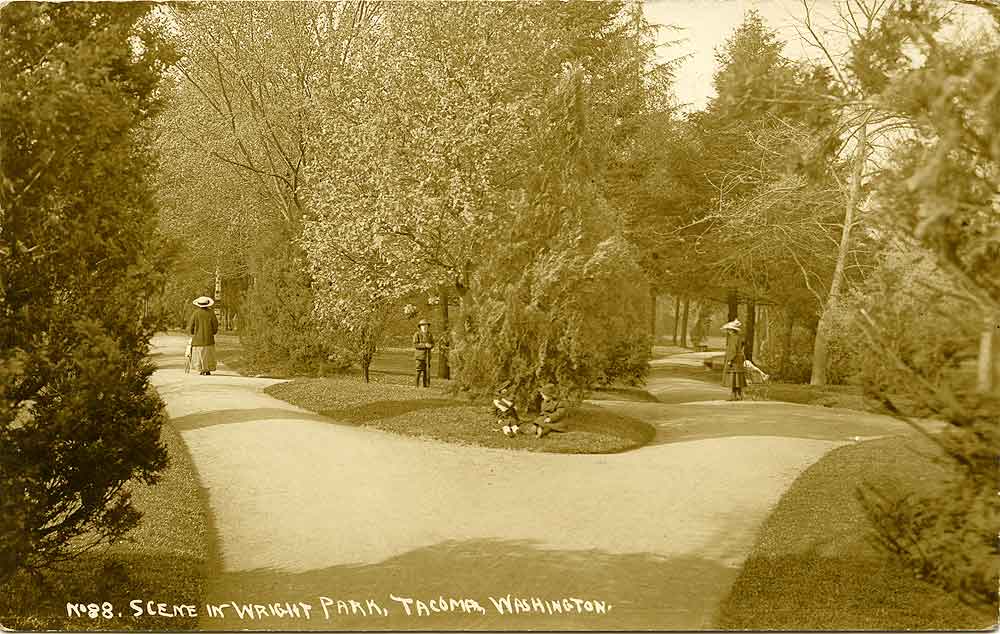
There is a fairly distant view of two women, a man, and two children in Wright Park, Tacoma, Pierce County, WA. Personal message and canceled stamp on reverse.
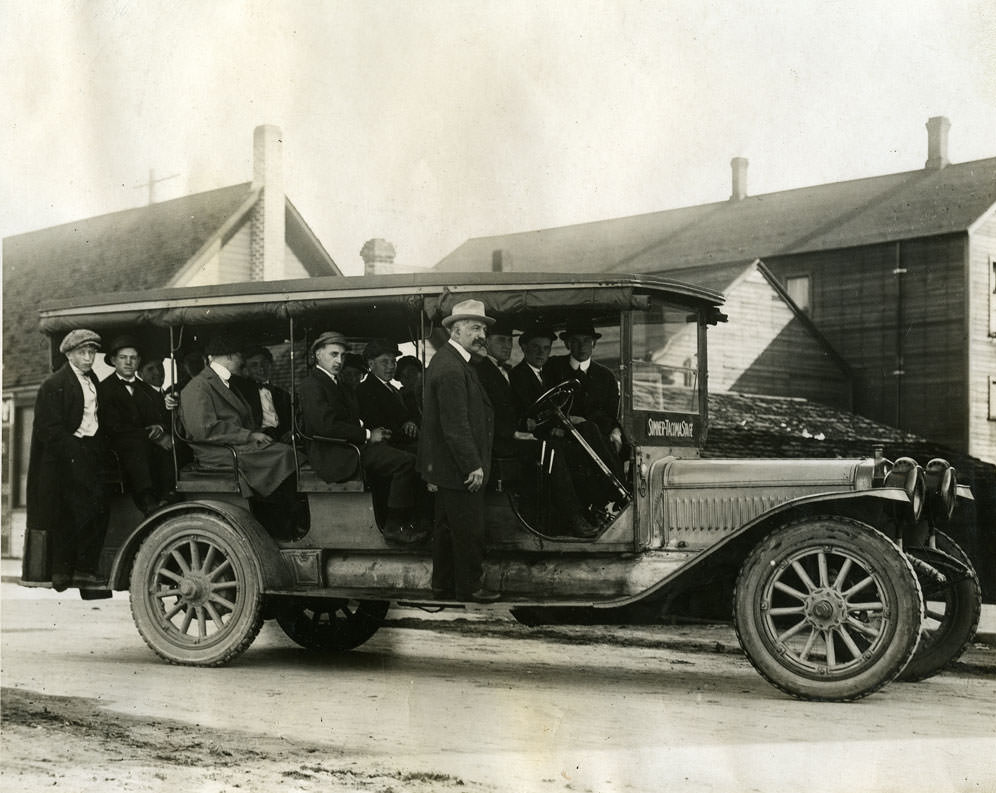
Two people stand on the running board. “Sumner-Tacoma Stage” is printed on the front of the bus.
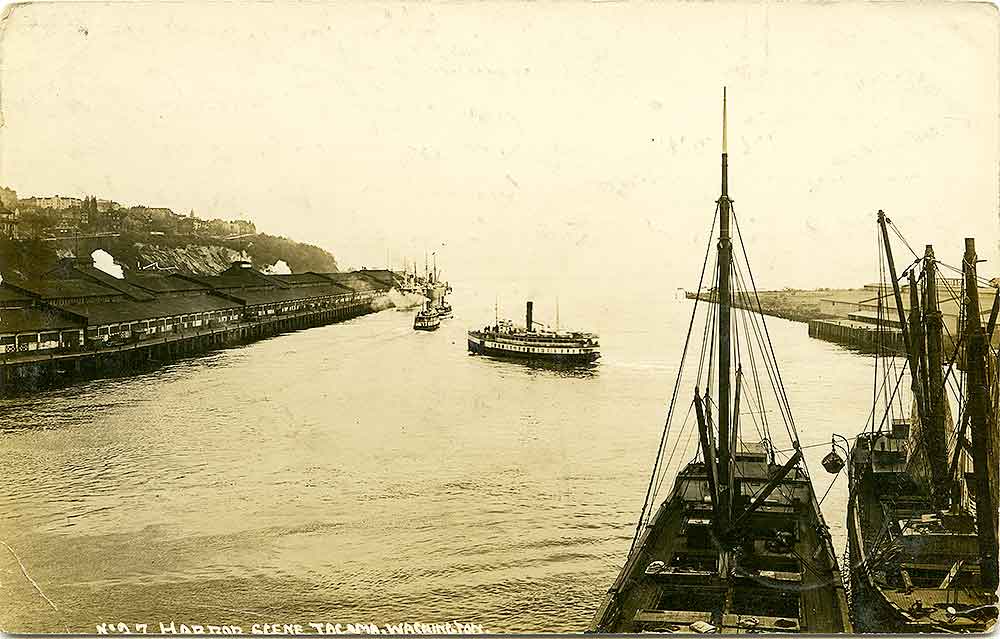
The photo shows two ships tied up and other ships heading out. There is a line of warehouses on the left of the photo and some on the right. Buildings can be seen on the bluff on the left.
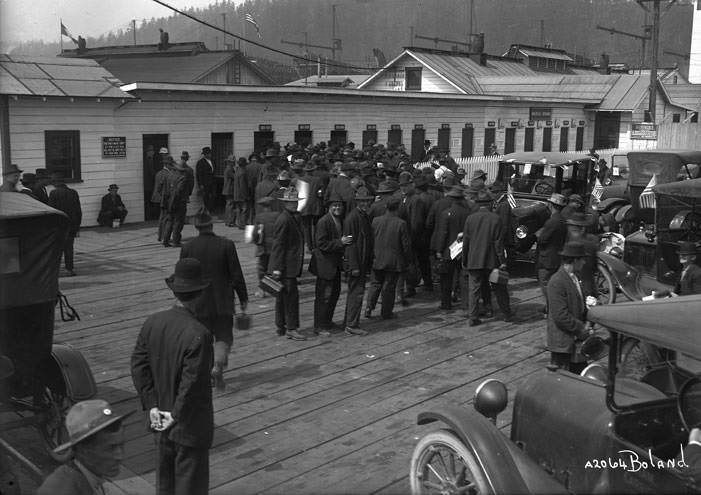
Two men hold lunch boxes. The building is probably part of the railway company’s streetcar barn. Several closely parked automobiles are partially visible at the right of the image.
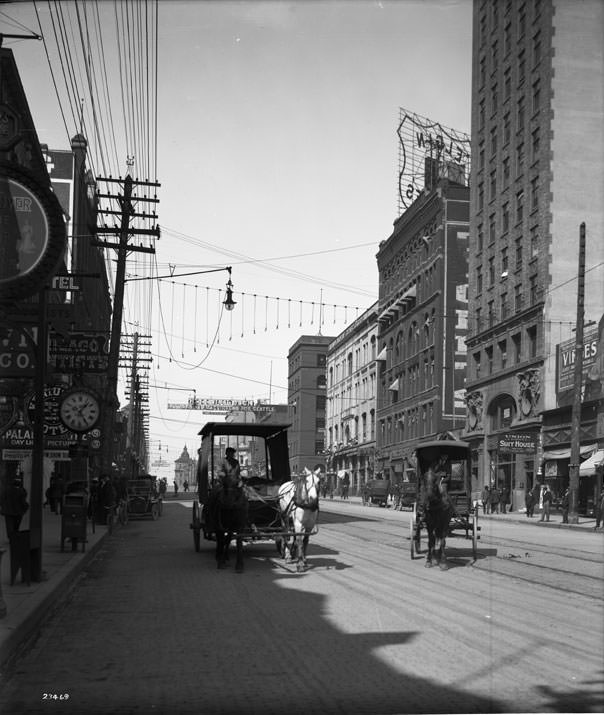
Two horse-drawn vehicles are in the foreground. The Northern Pacific Railroad Headquarters Building is in the background. Three automobiles are partially visible on the street. Partially visible business signs are at the left edge of the image.
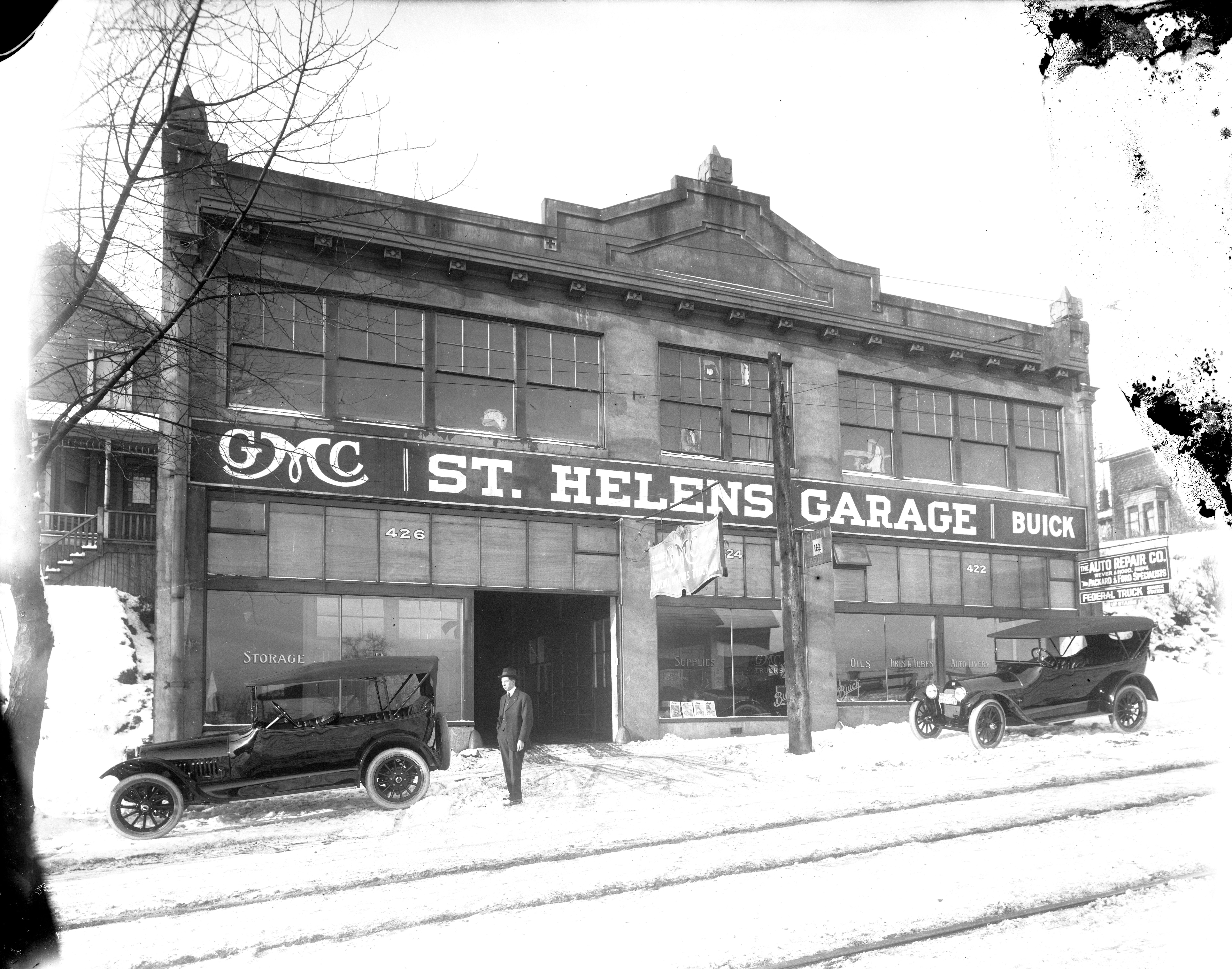
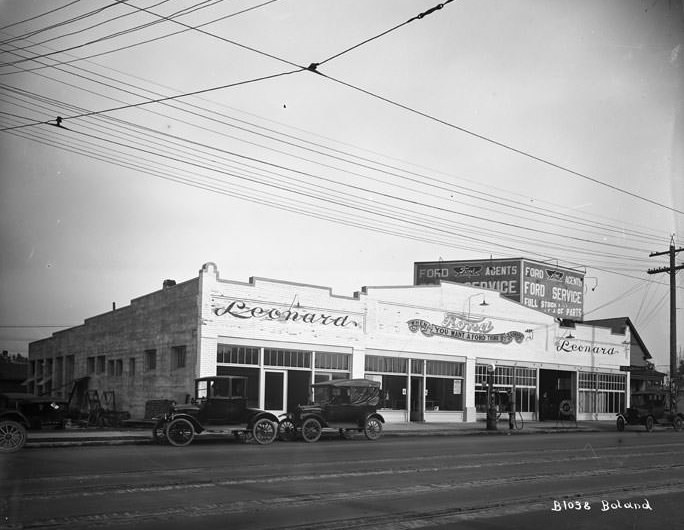
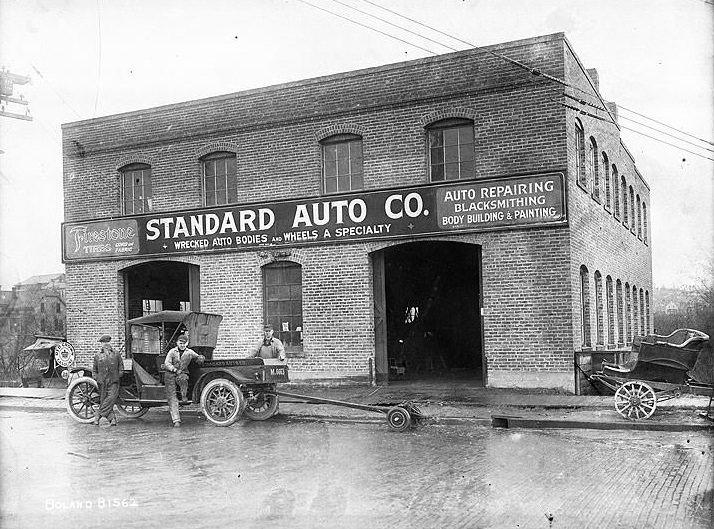
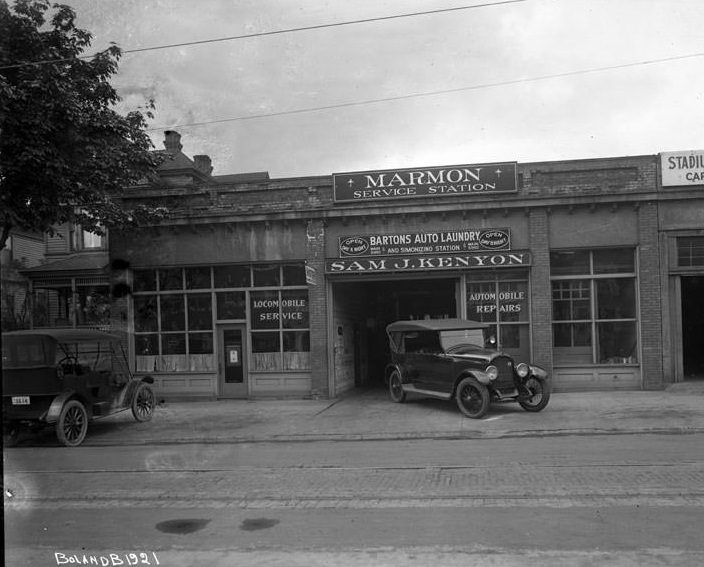
Dealer in GMC and Buick automobiles. A sign attached to the front of the building reads: “The Auto Repair Co. / Packard & Ford Specialists / Federal Trucks.” Two touring cars are parked in front, and a man stands behind one.
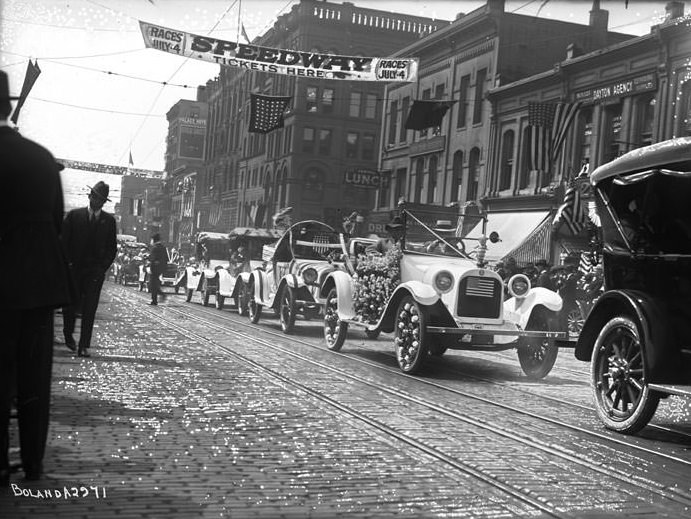
Signs on banners above the street: Welcome Northwest Sign Craft; Speedway Tickets Here, Races July 4. Business signs on buildings in the background: Palace Hotel; Central Lunch; Doctor Keefe (John J. Keefe, whose office is at 952 1/2 Pacific); Dayton Agency, Bicycles, Motorcycles, Repairing Supplies.
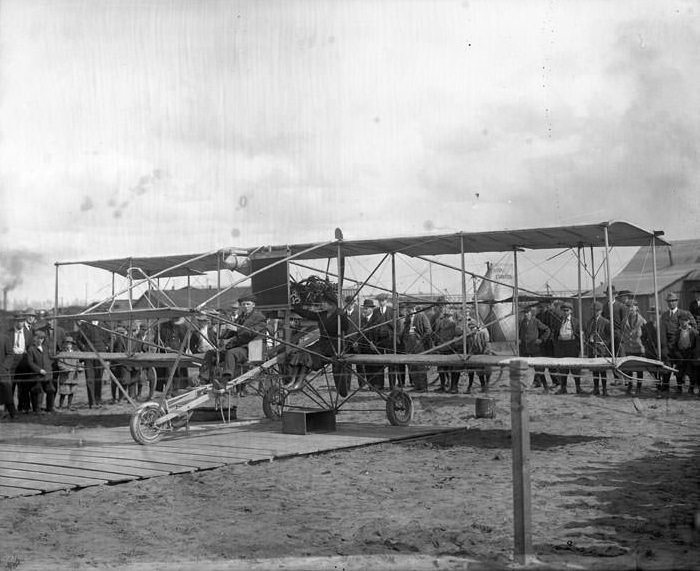
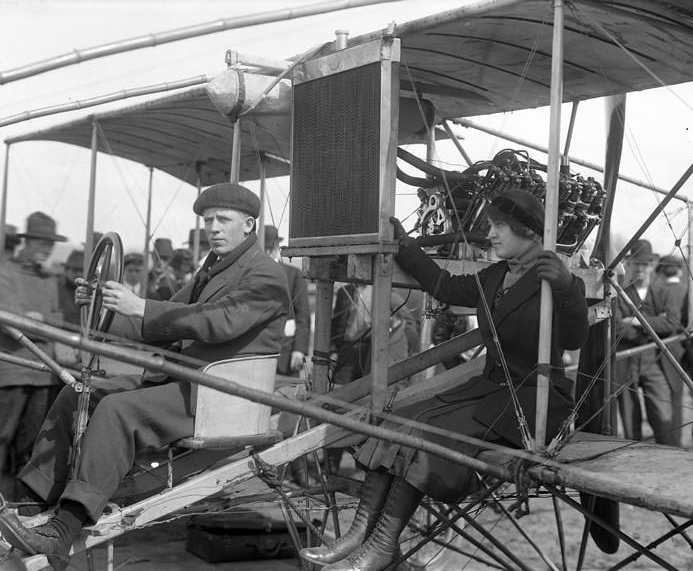
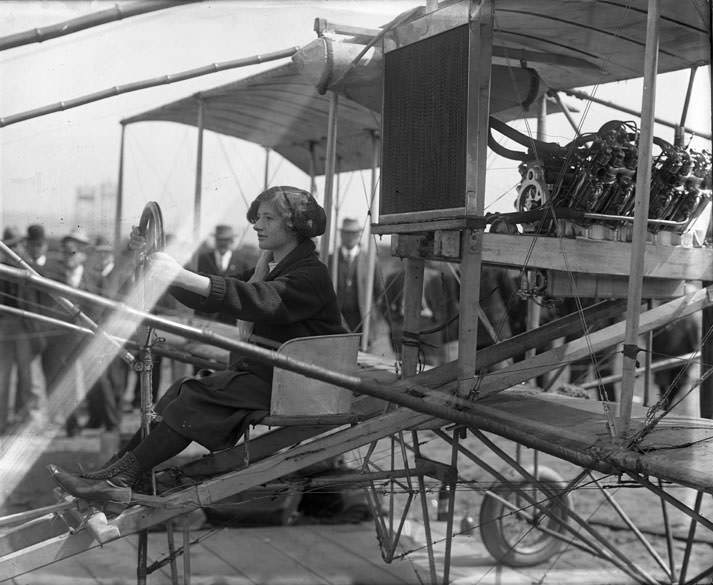
A female spectator sits on the wing near Crawford. A crowd of men and a few small boys stand behind the plane.
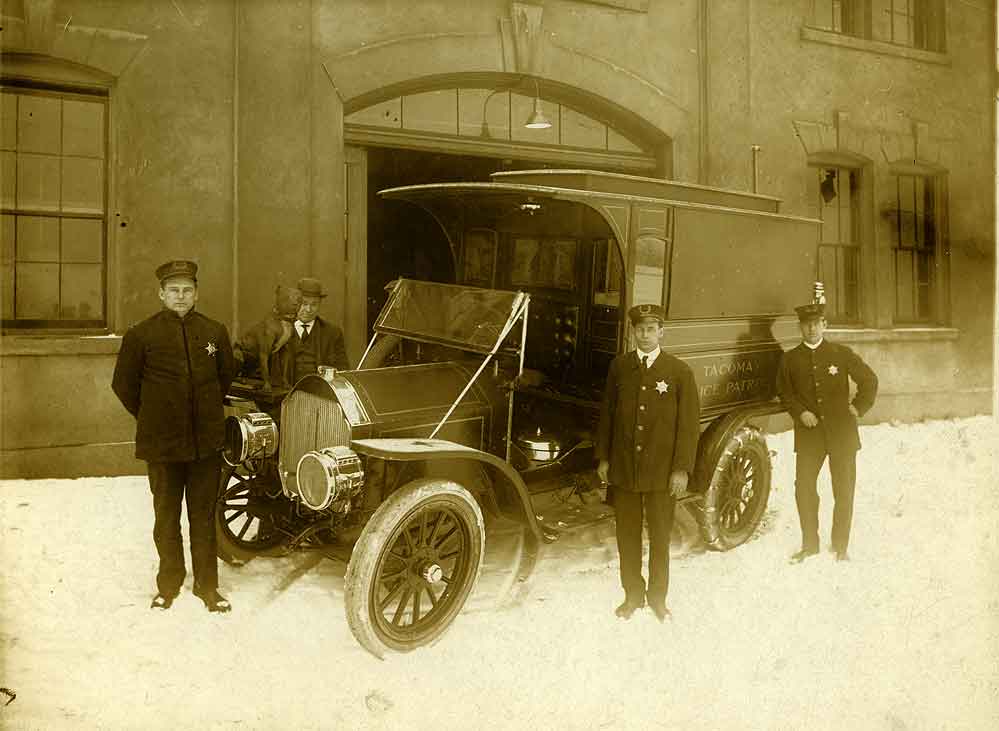
Three uniformed policemen stand next to a partially enclosed patrol wagon in the snow. A dog, probably a Pit Bull, is standing on the right front fender, and a man wearing a three-piece suit and hat stands behind the wagon.
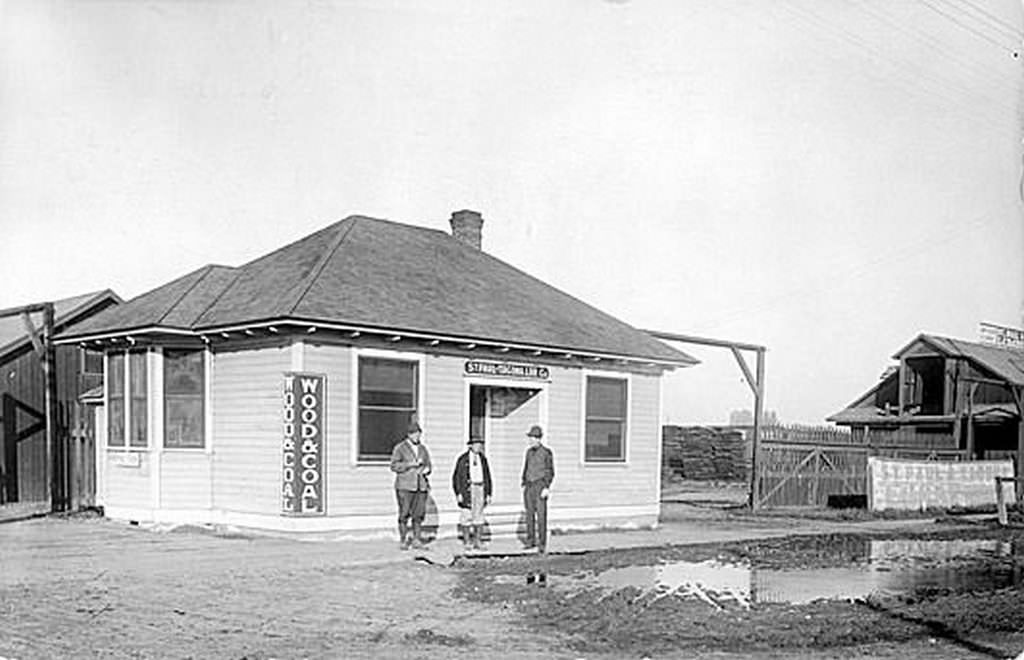
The image shows three men standing in front of the office. All the men wear hats. The two men on the left have their pants tucked into tall boots. A sign over the office door reads “St Paul-Tacoma Lbr Co.”
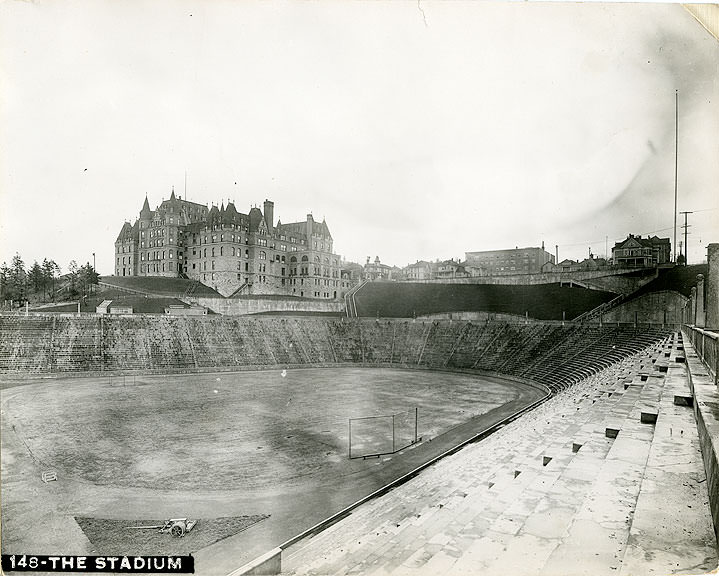
The Bayview Apartments are in the right-center distance. Two hurdles are on the Stadium Bowl track, and a piece of equipment possibly for leveling the track is nearby.
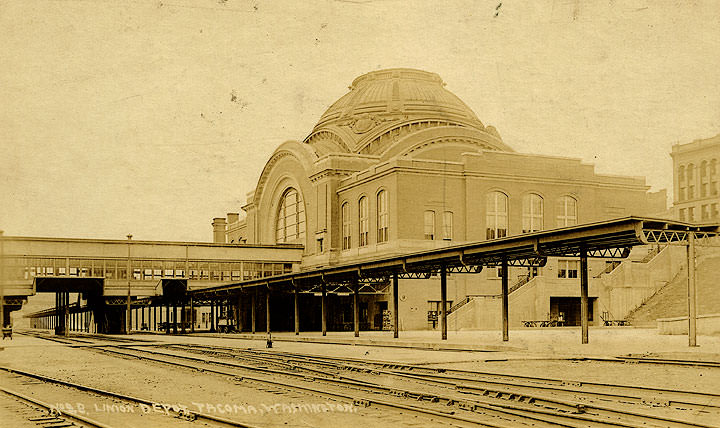
Railroad tracks and the passenger loading platform are in the foreground. The station building is in the image center and right. The building fronts on Pacific Avenue, between Seventeenth and Nineteenth Streets. Personal message and canceled stamp on reverse.
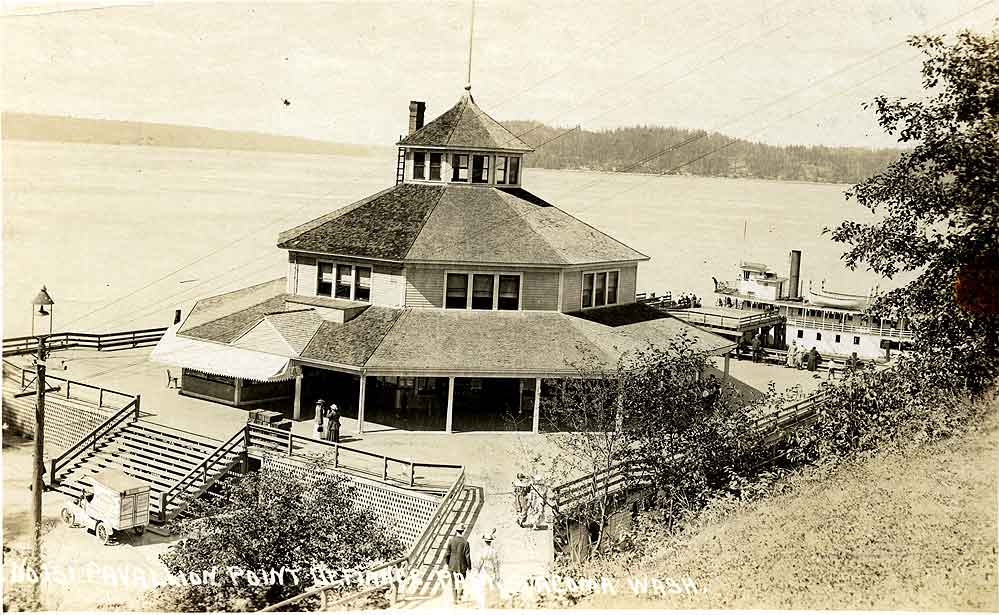
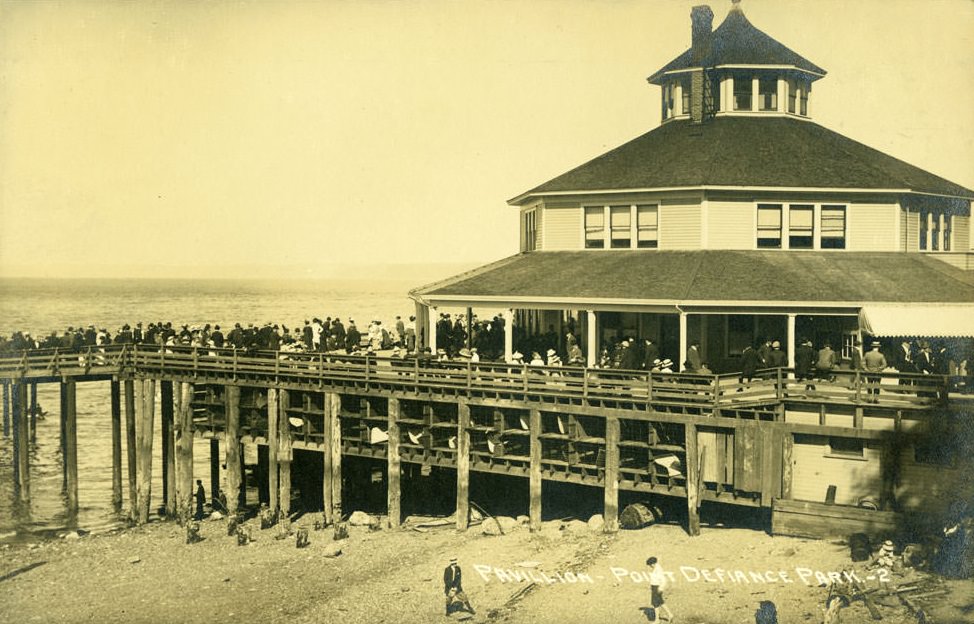
Commencement Bay is in the right background, and Puget Sound is at the left. Browns Point is in the background. A ferry or steamboat is partially visible docked behind the pavilion.
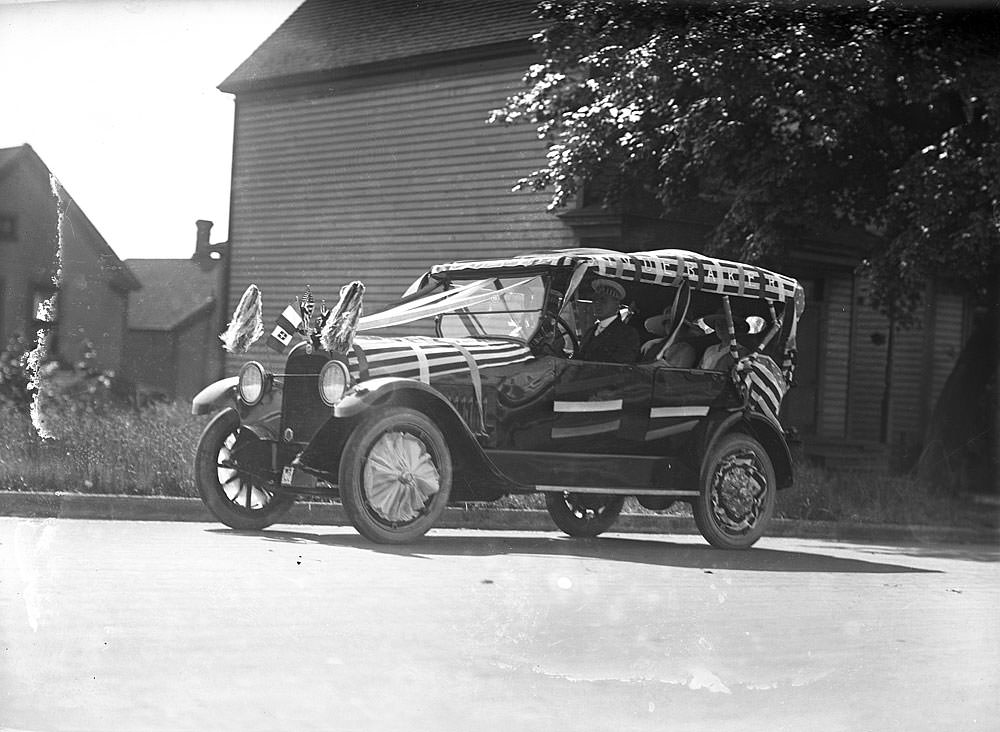
Letters along the top read “Studebaker.” There are U.S. and Italian flags attached to the radiator cap. Two men are in the front seat, and two women are in the back.
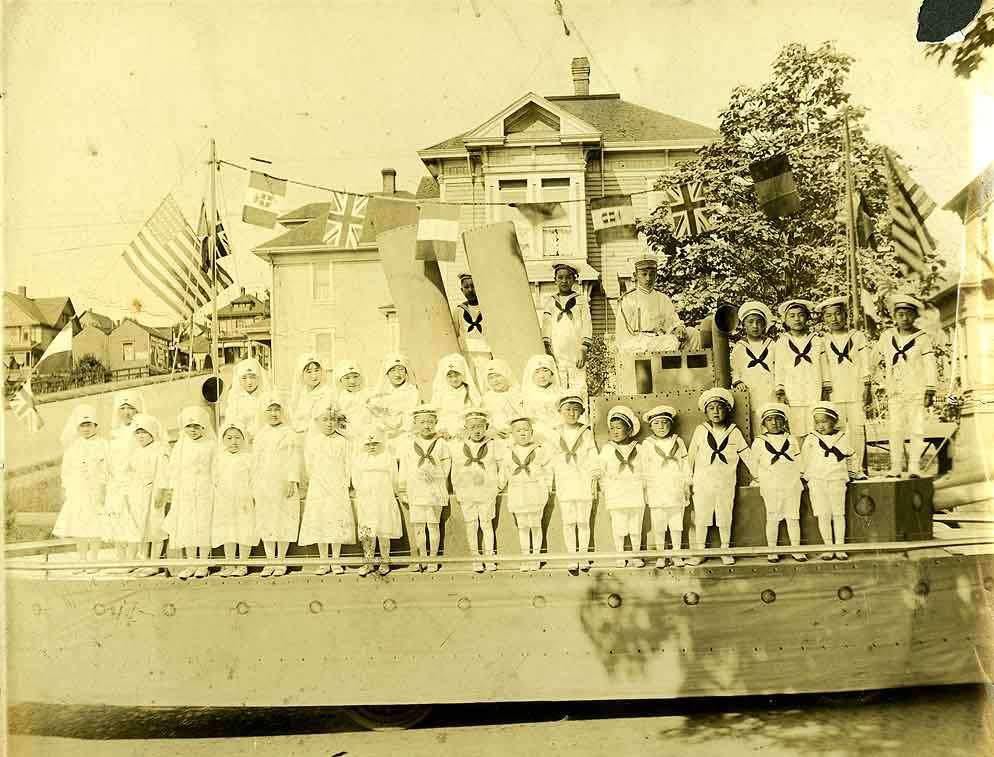
The girls in the left of the photo, including Matsuye Yamane, 4th from left in the second row, wear nurse uniforms. Standing in the right of the photo, including Kazuo Yamane, 6th from right in the front row, the boys wear sailor suits. Their hats appear to say: U.S. Navy.
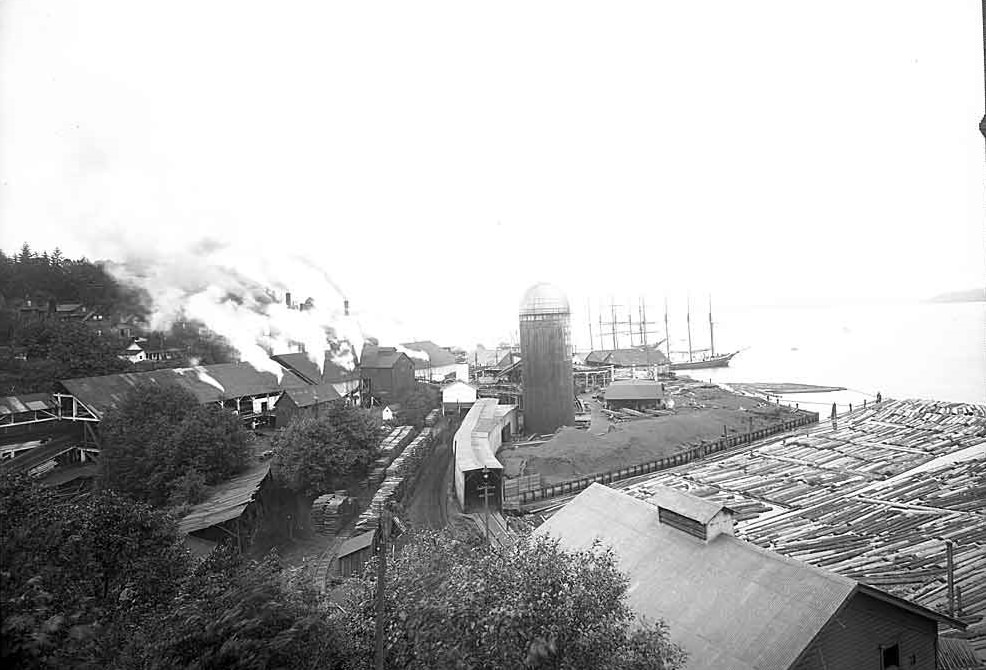
Image showing most of the mill’s buildings, a few homes on a hillside in the left of the image, 2 partially visible sailing ships in the center background, and logs in a log pond near the right edge of the image.
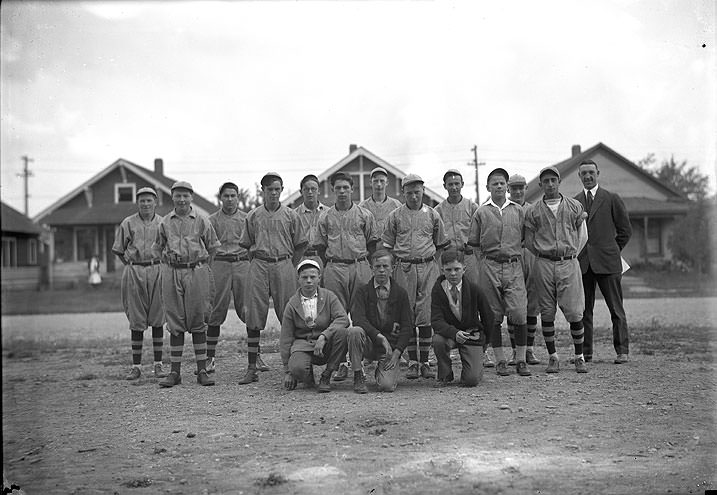
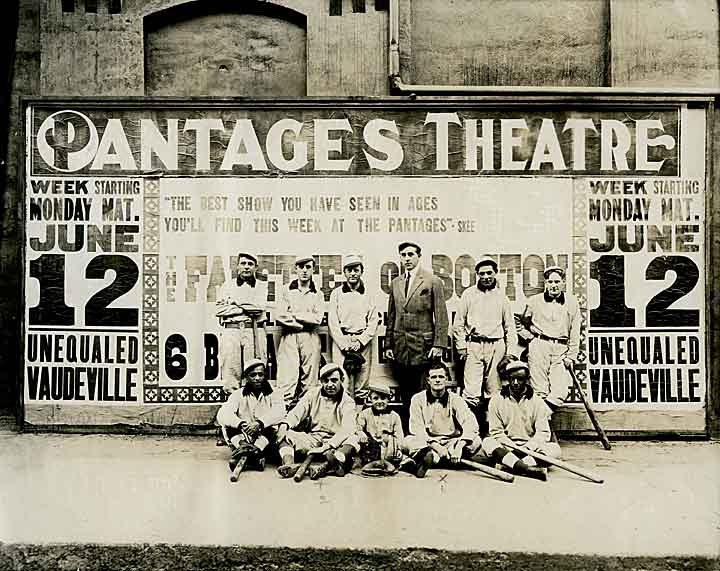
Three boys not in uniform crouch in front of the team. A man wearing a suit, probably a teacher, stands beside the team. Three houses are visible in the background.
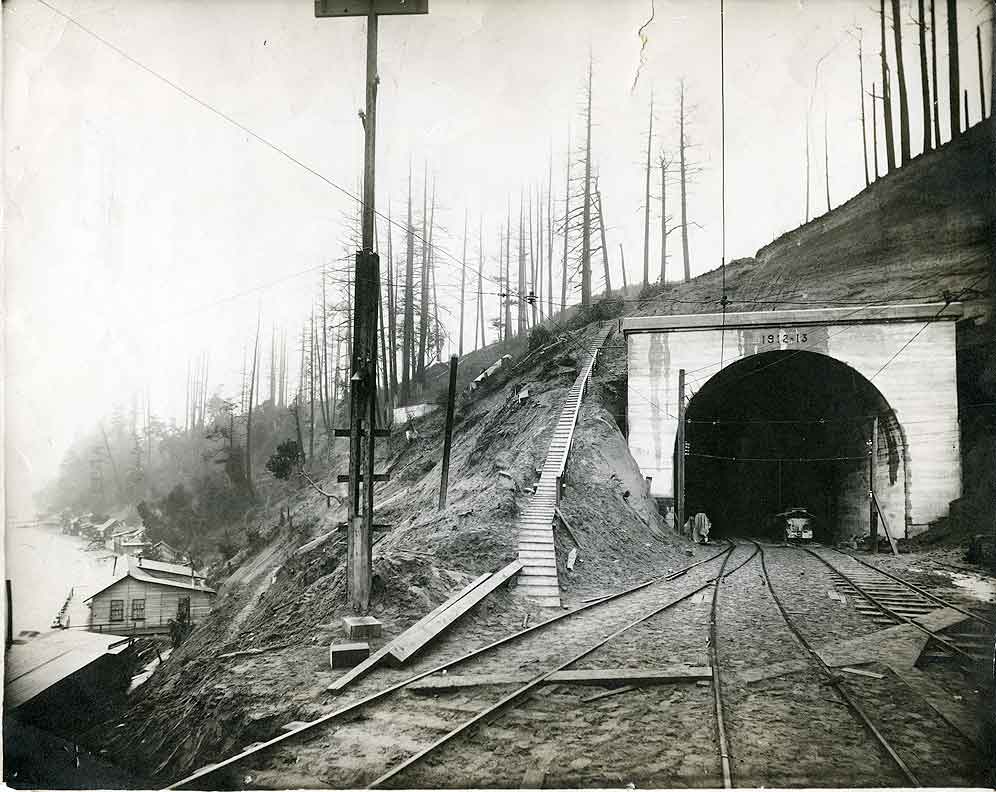
The hillside above the tunnel is covered with dead trees, possibly from a fire. A row of wooden houses is at the base of the hill on the water.
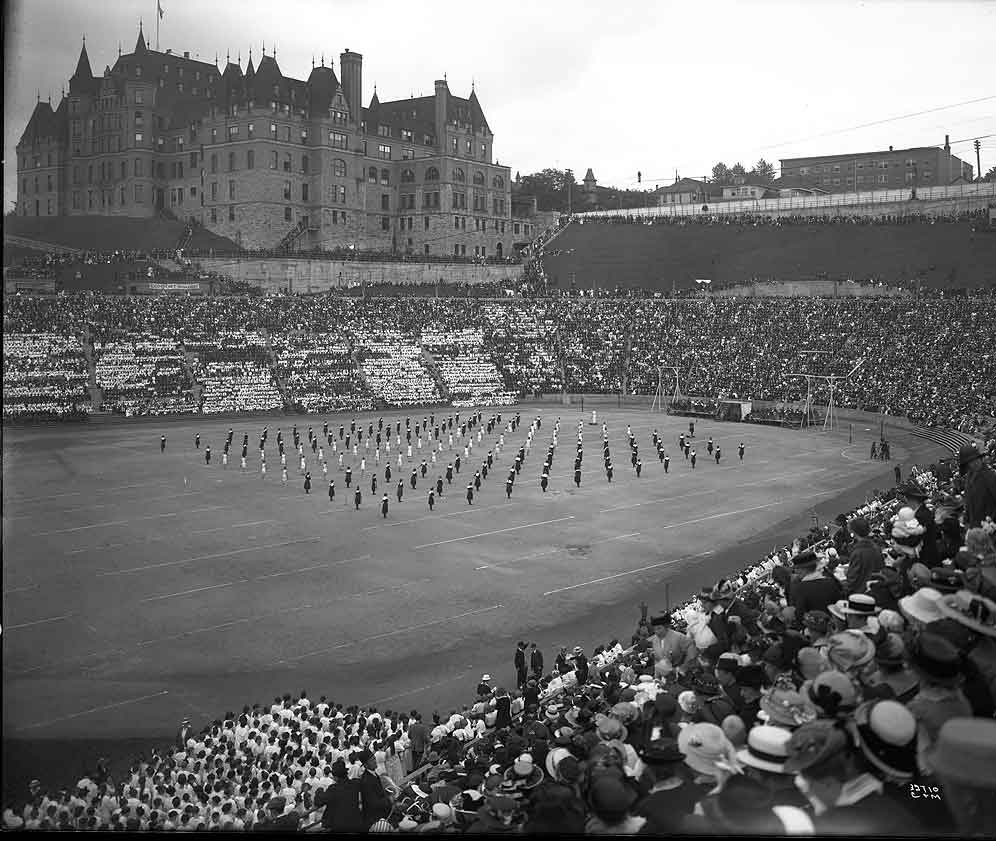
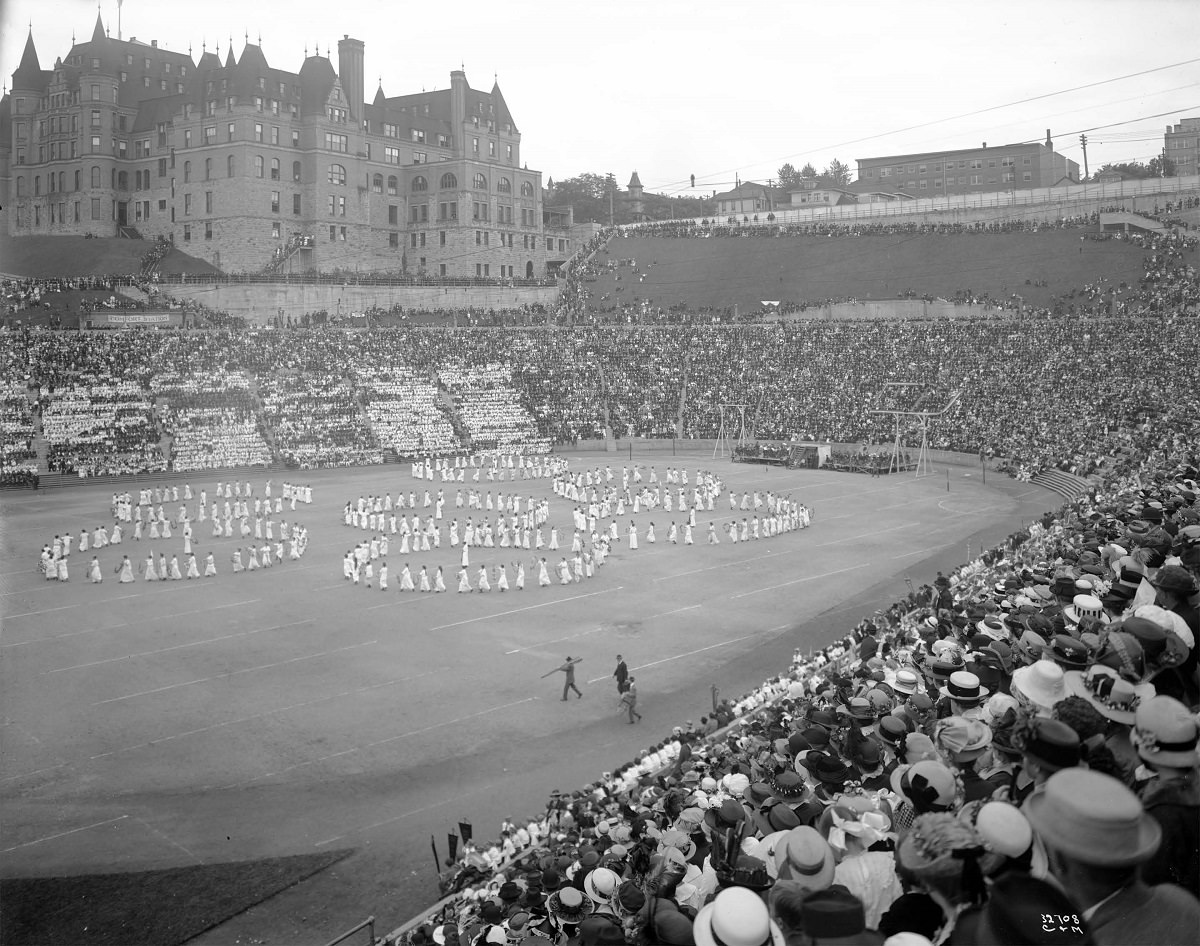
The bowl is filled with spectators, and Stadium High School is visible in the background. A grandstand, with possibly 2 musical groups seated on it, is at the far end of the field. A large group of women wearing light and dark gymnasium suits stands in rows on the field. A group of women in light-colored clothing stands close together at the near end of the field.
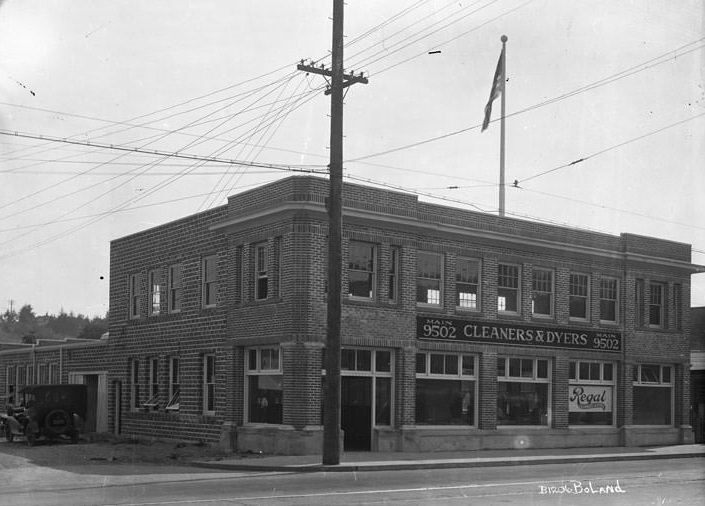
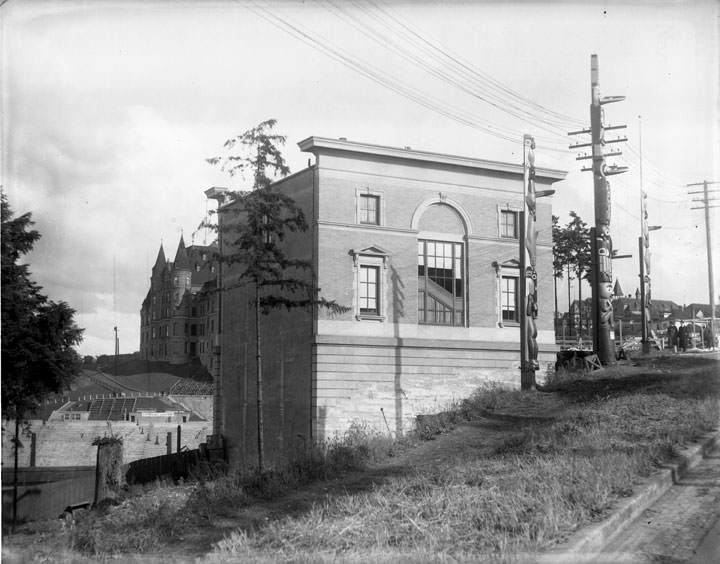
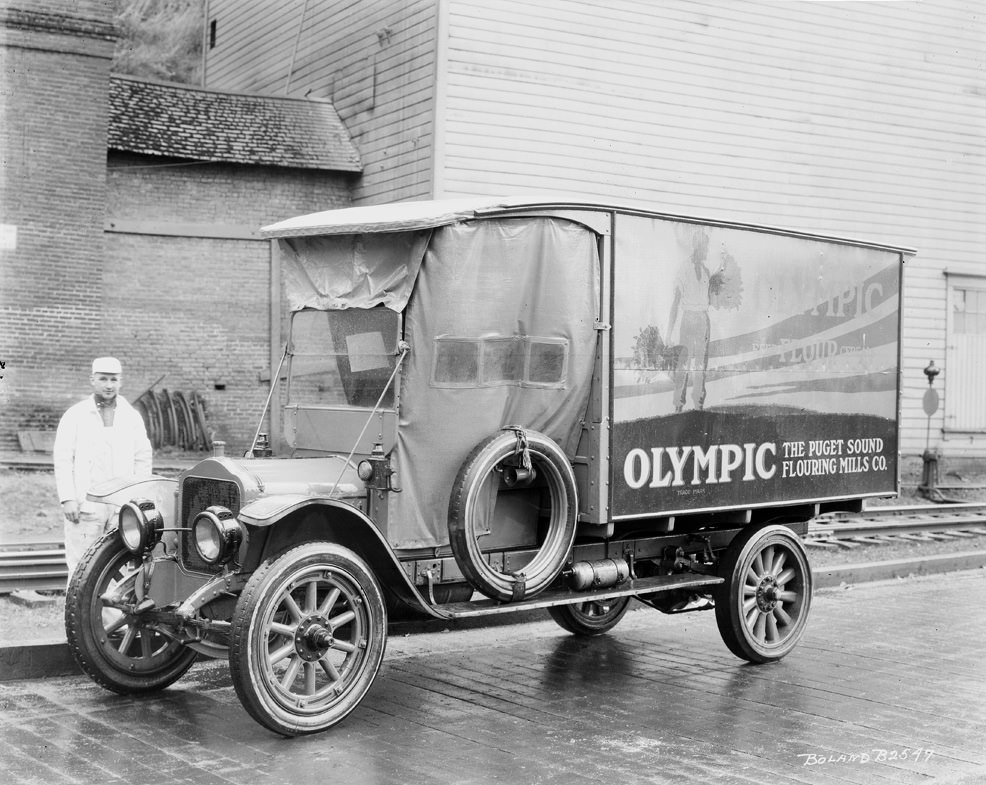
A sign on the side of the truck shows a farmer holding sheaves of wheat beside the words “Olympic Flour” in large lettering.
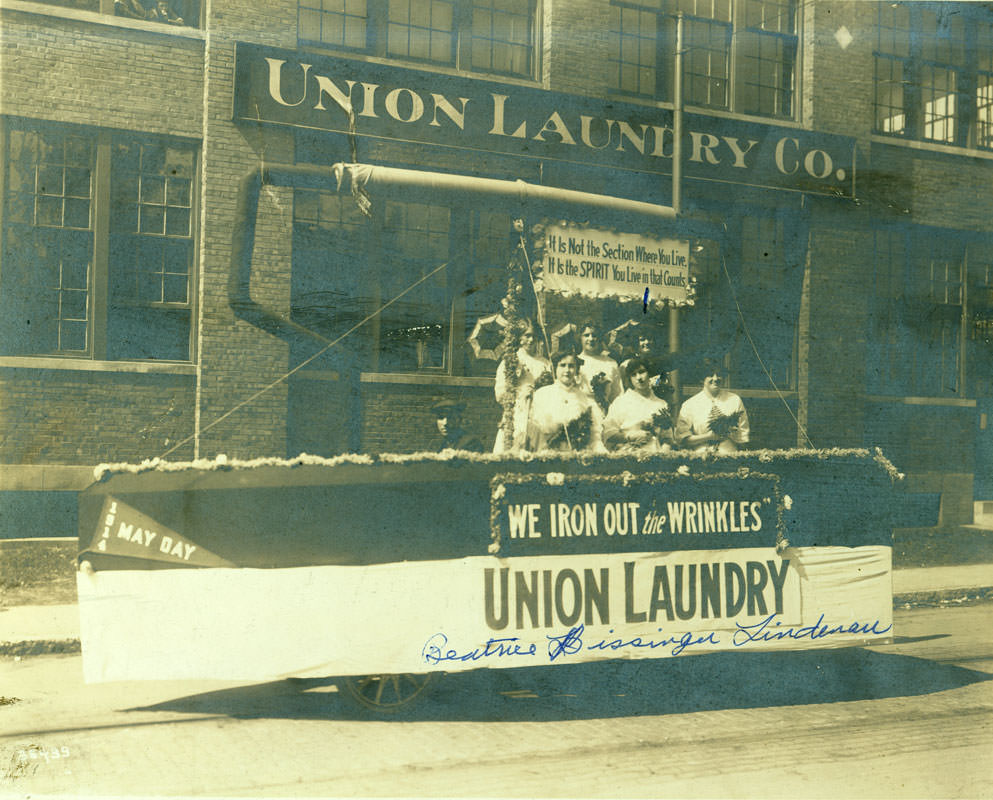
Six women ride in a Union Laundry Company float shaped like a flatiron in a 1914 May Day parade in Tacoma. They look from the side of the float at the photographer, all carrying small bouquets.
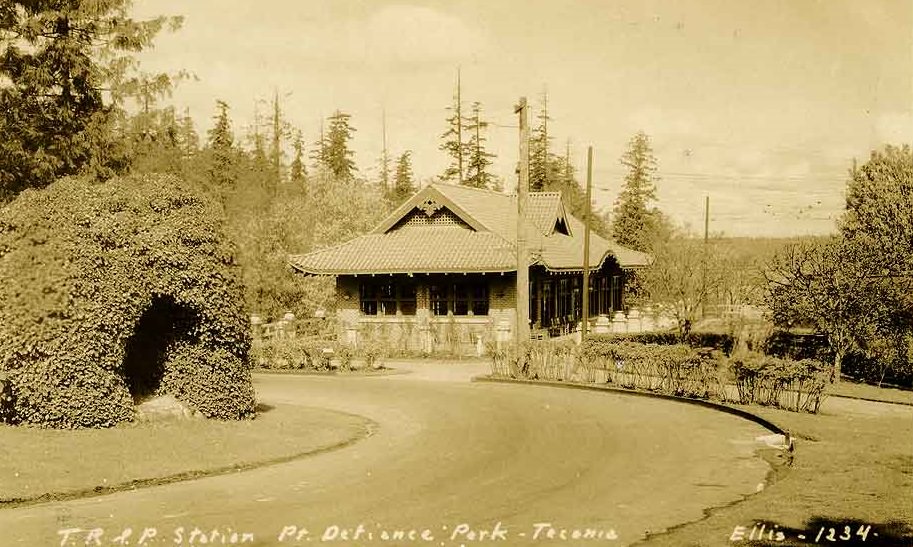
The station has a tiled roof and Japanese-style architecture. A porch extends along one side, and the ground slopes away. People are approaching and leaving the station, accessible via a long stairway from the lower level.
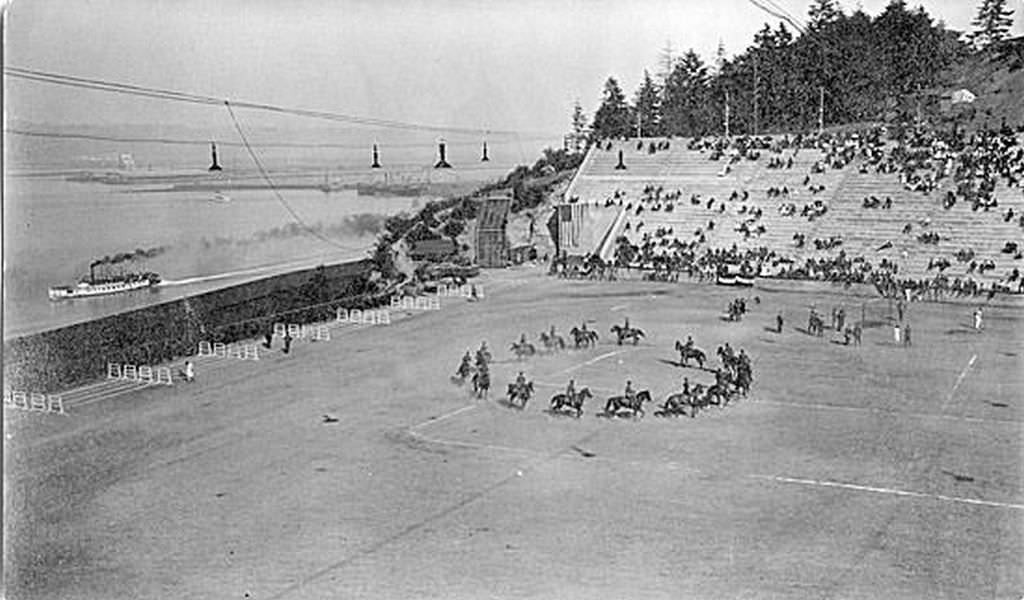
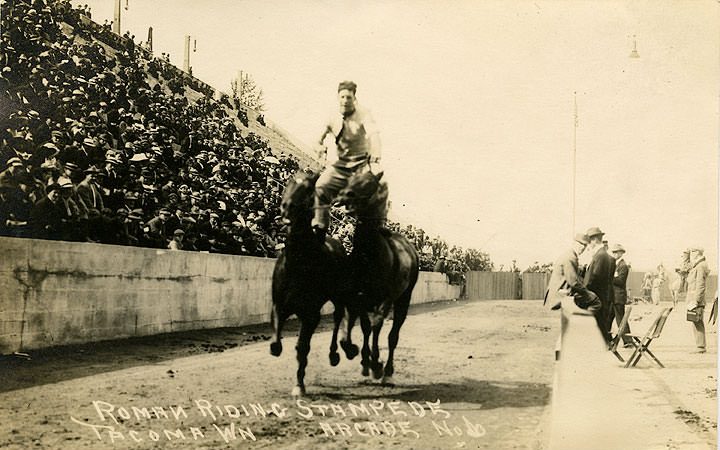
The image shows an equestrian event taking place at Stadium Bowl. A group of horses and riders are riding in a circle on the field while spectators watch from the stands on the right. A large American flag hangs from the far lower left of the bleachers. Hurdles are set up on the left of the field. Commencement Bay and the tideflats are at the far left.
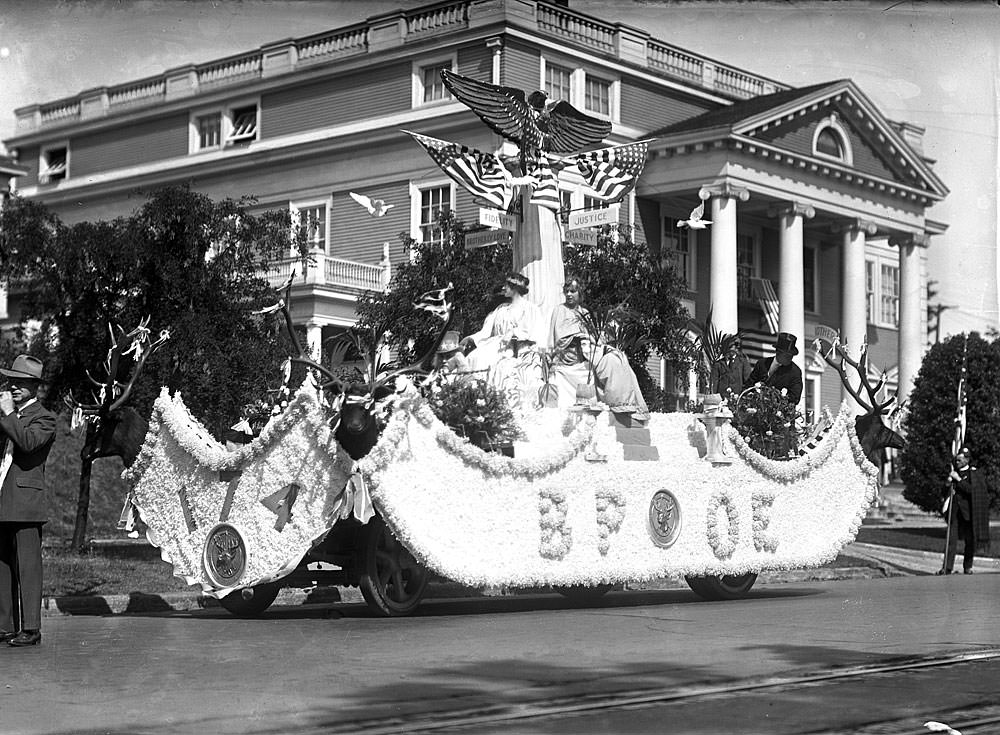
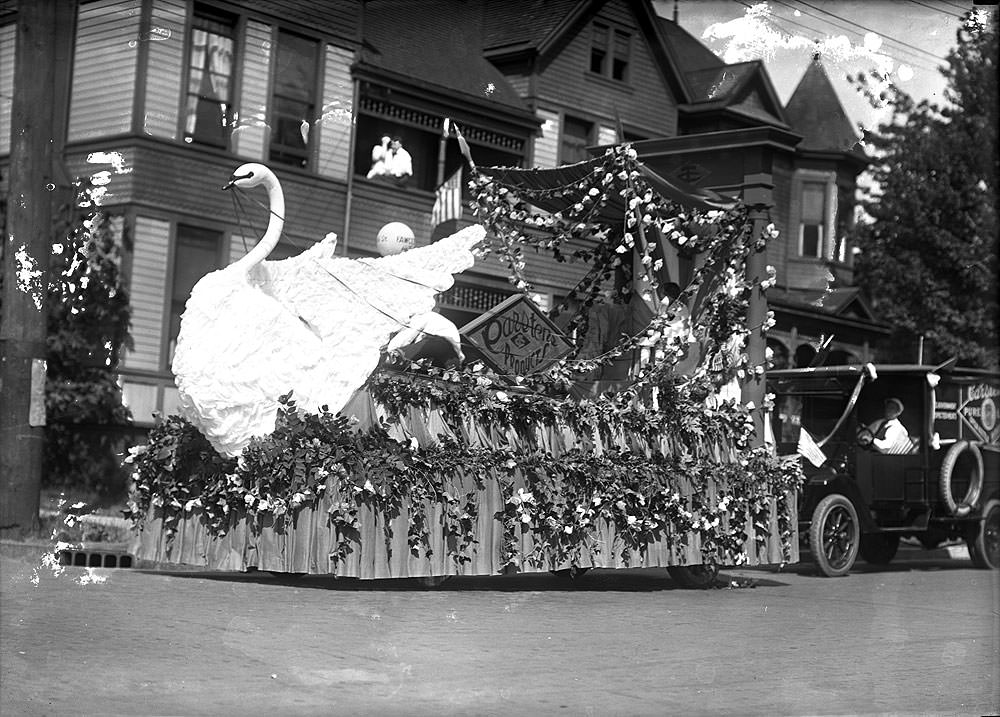
A highly decorated float with four women sitting at the base of a pillar decorated with American flags and a large eagle on top. In the front is the lodge number “174.” Along the side is “B.P.O.E.” Two men stand on the rear of the float, one wearing a top hat.
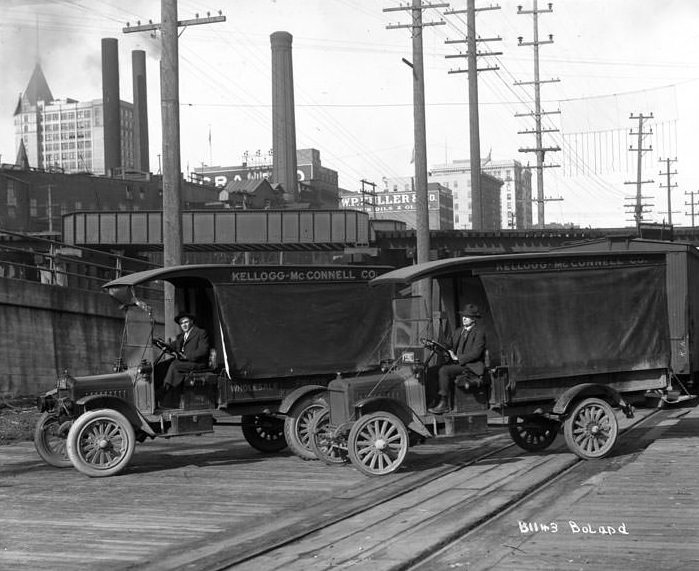
The business, located at Fifteenth and Dock Streets, deals in wholesale fruits and produce. One truck driver wears a long dress overcoat, and the other a suit coat, vest, and tie.
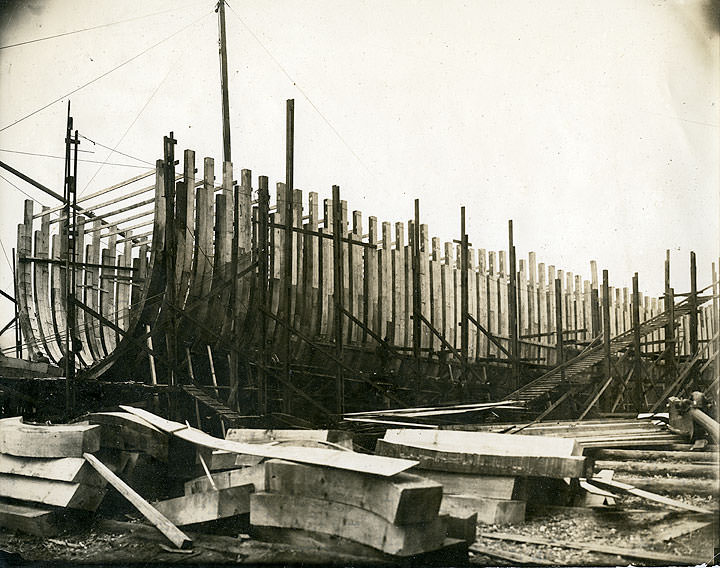
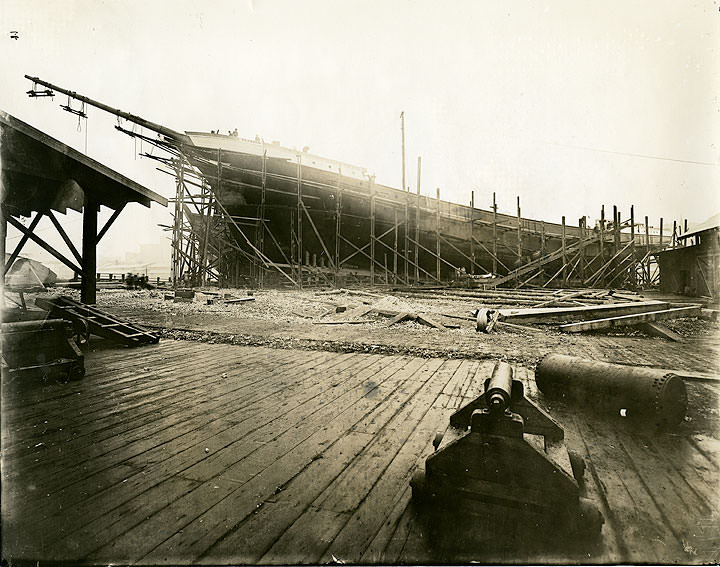
The hull is visible from the starboard side of the stern. Pieces of wood, probably used in the ship’s construction, lie on the ground in the foreground.
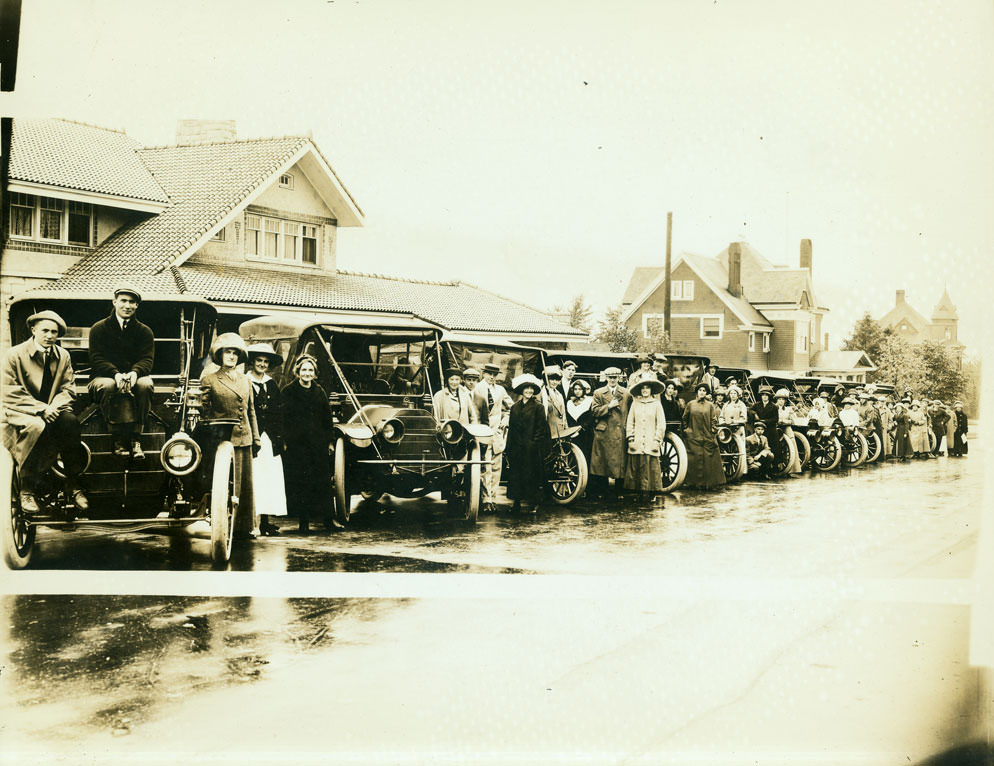
Approximately 10 cars are lined up side by side, with many men and women standing beside them and posing for the camera, in front of George C. Dickson’s home at 501 No. Tacoma Avenue, at the Fifth Street intersection.
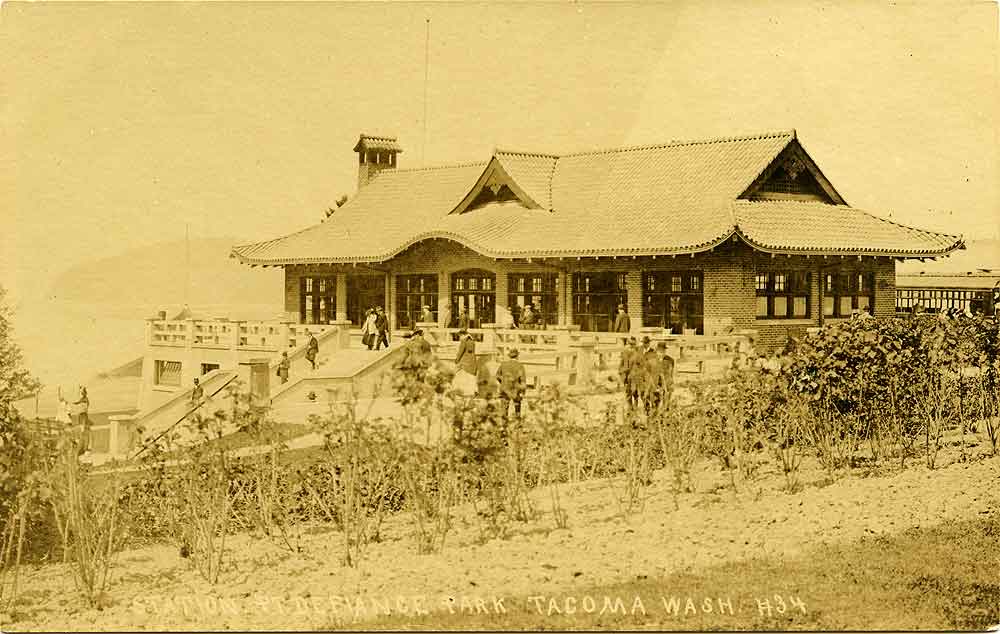
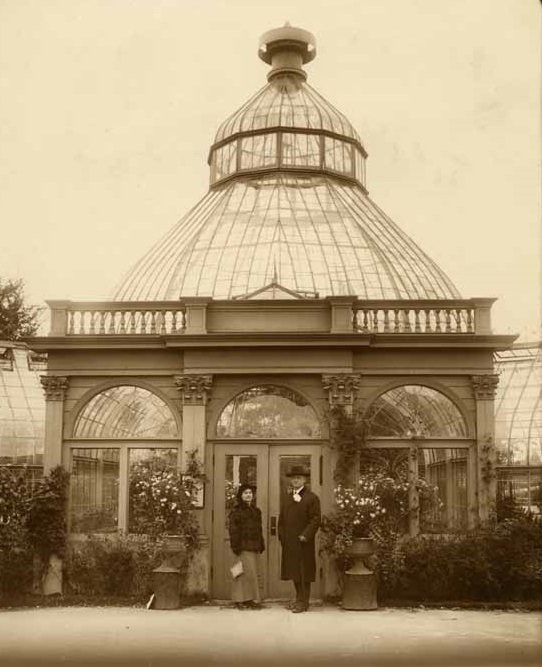
The station has a tiled roof and Japanese-style architecture. In the foreground is a curving drive, with an ivy-covered cave-like structure to its left. Rose bushes line the drive in front of the pagoda.
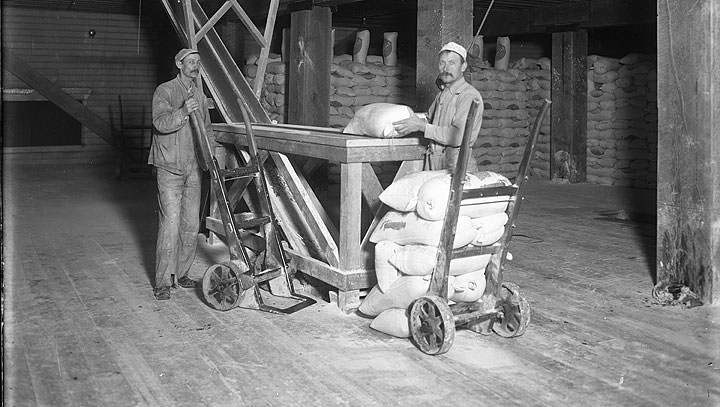
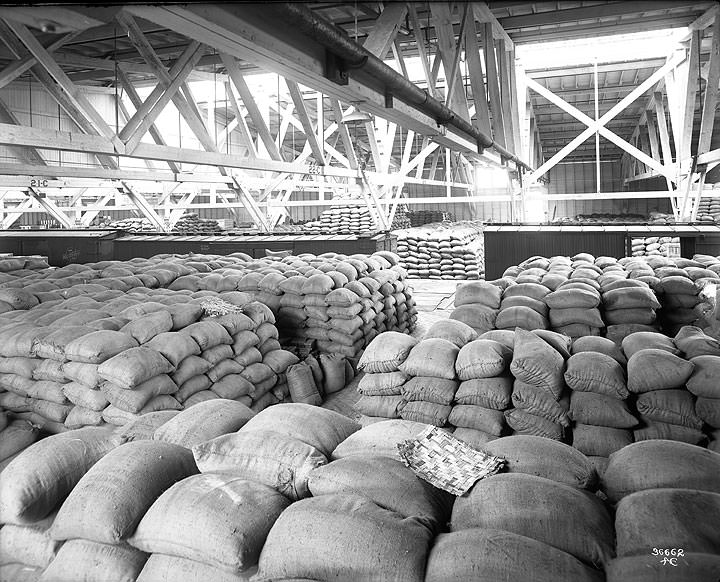
One man is holding a filled flour sack on a table built around the chute, descending from an upper story through the floor. A hand cart loaded with filled sacks is beside him. Another man stands by the table with an empty hand truck. Stacks of filled flour sacks are in the background.
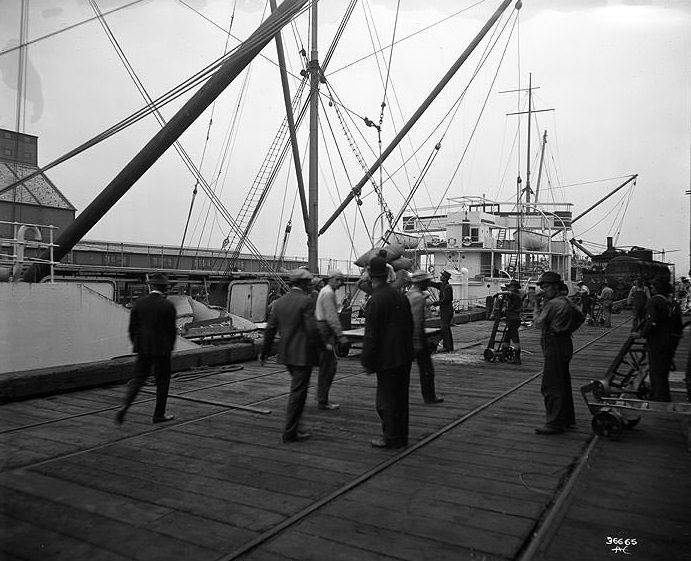
The image is taken from the dock. Some longshoremen wait on the dock with handcarts. Some, partially hidden behind other men, are unloading full sacks onto a small flat wheeled platform on tracks on the dock.
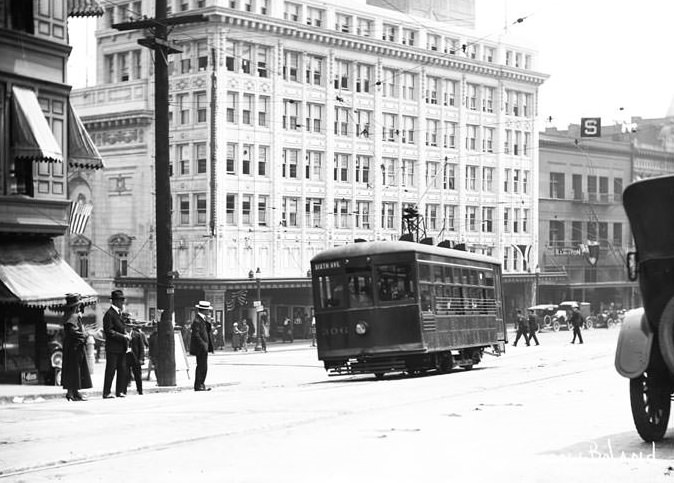
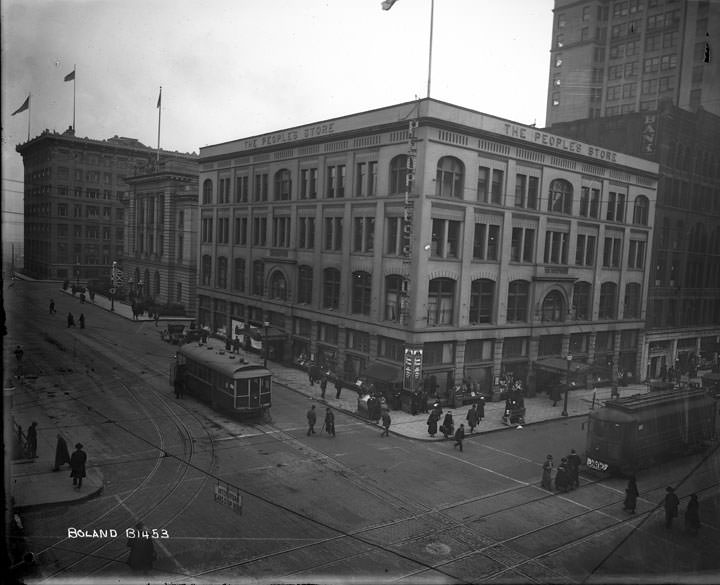
Two streetcars are visible, and several pedestrians are on the sidewalk and crossing the street. Near the lower-left corner of the image is a sign suspended above the street: Interurban Cars Stop Here.
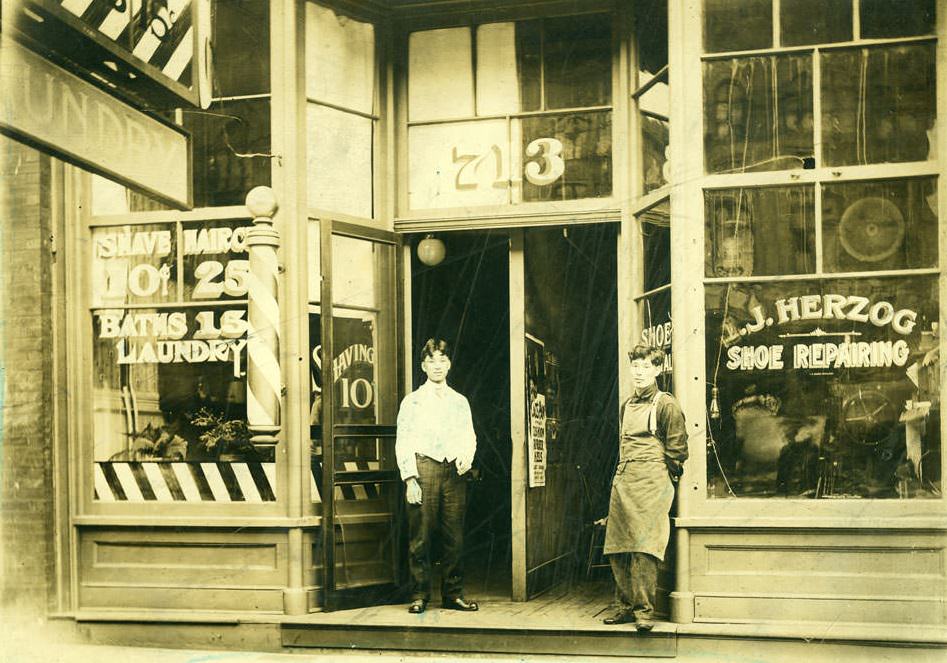
The left photo shows a barbershop with a barber pole mounted on the building. The names printed on the album page beside the photo identify Tanezo Niiyama, standing in the doorway, as the owner, and Moriichi Yamane, in a dark apron, as a worker. However, the man in the photo is not identified as one. The right photo shows the shoe repair business of John J. Herzog; the man standing in the doorway wears a dark apron.
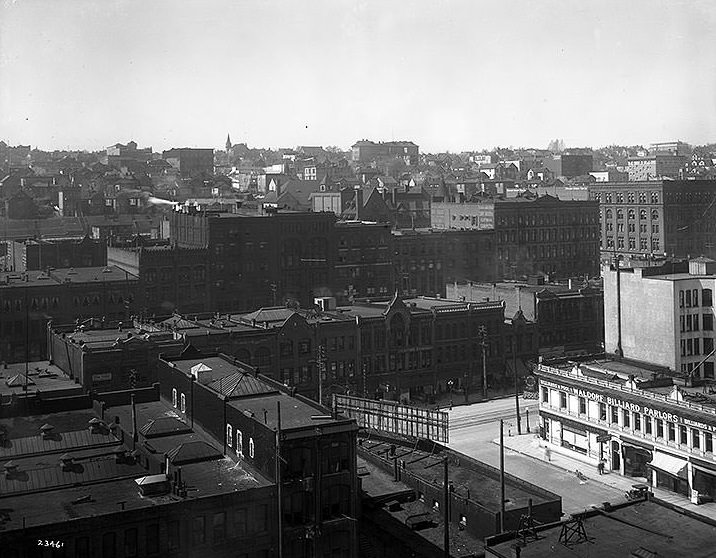
The image looks west from the corner of 10th and Pacific Avenue. The Waldorf Billiard Parlors and Northern Pacific Railway Ticketing Office are visible in the lower right corner. An automobile and bicycle are parked near the curb.
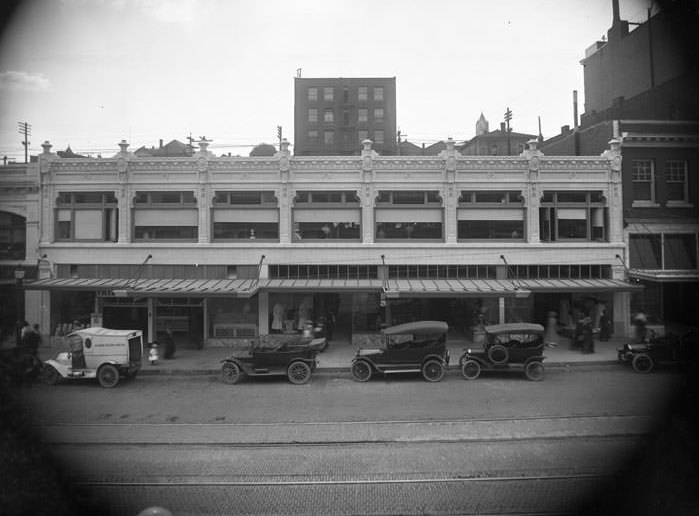
A sign on a case in the store window reads: Frye’s Washington Market. A women’s clothing store occupies the same building in the image center and right.
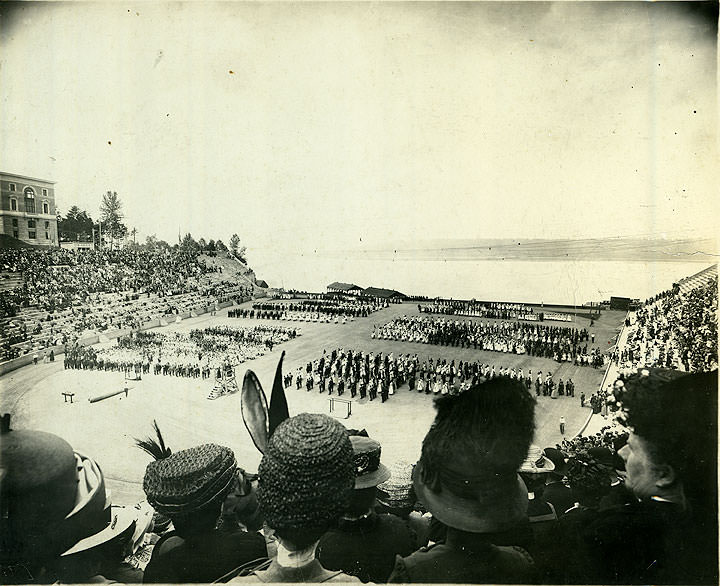
Five ladies’ heads, wearing hats, are in the lower foreground, and many boys and girl students are standing in ranks on the bowl field in the background. A man and woman stand on a platform by the students. The Washington State History Museum is at the left of the photo.
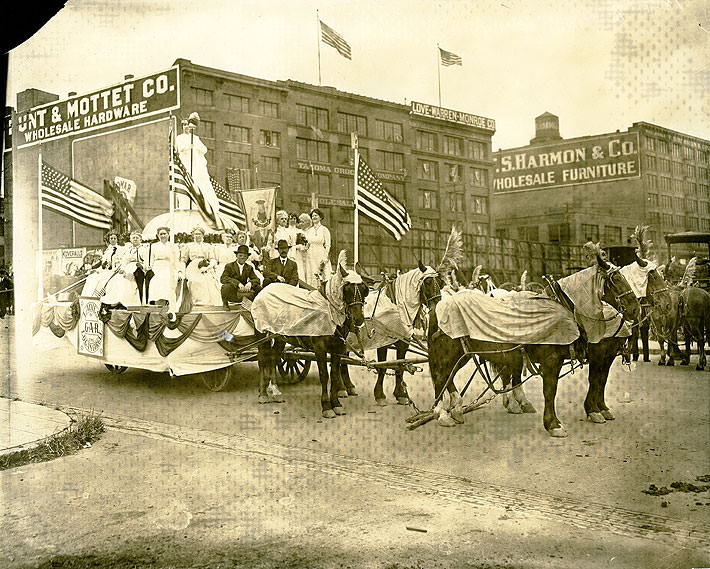
Several women sit on the float in a circle, surrounding an elevated central figure of a woman representing Lady Liberty. Some of the seated women hold umbrellas, parasols, and U.S. flags. Lady Liberty wears a headband with projecting spokes and holds a tall staff with a plume at the top. Four women stand on one side of the float. Two large U.S. flags are on the corners of the float.
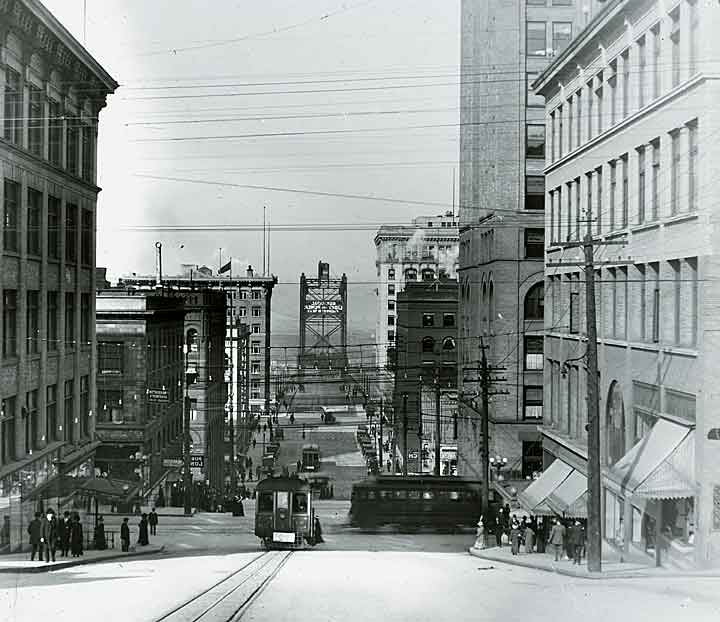
Commercial buildings are on both sides of the street. Two cable cars are on Eleventh Street. A streetcar is passing through a street intersection in the lower center. Automobiles are parked on the street in the distance.
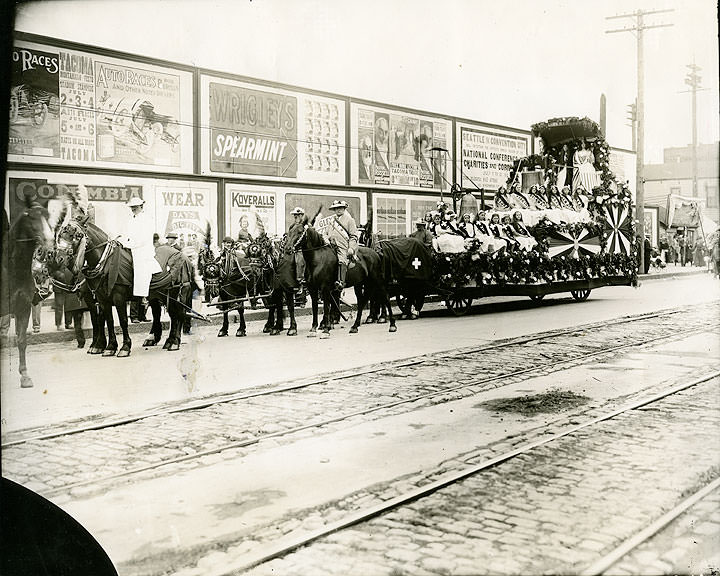
The float, pulled by 3 teams of decorated horses, has 3 levels. Eight girls wearing sashes across their chests with light-colored, Swiss-style crosses and illegible writing are visible on the lowest level. Seven girls wearing sashes with state names sit on the next level. Two women with long robes and one probably dressed as Lady Liberty sit on the highest level at the back of the float under a canopy with the word Liberty on top. Flowers and bunting arranged in designs decorate the sides of the float.
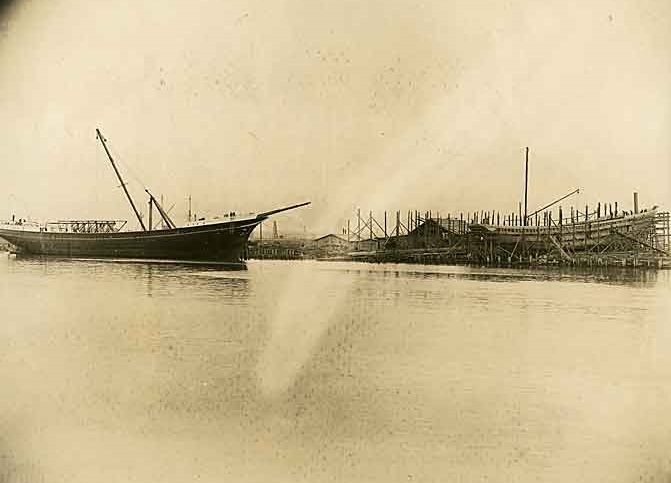
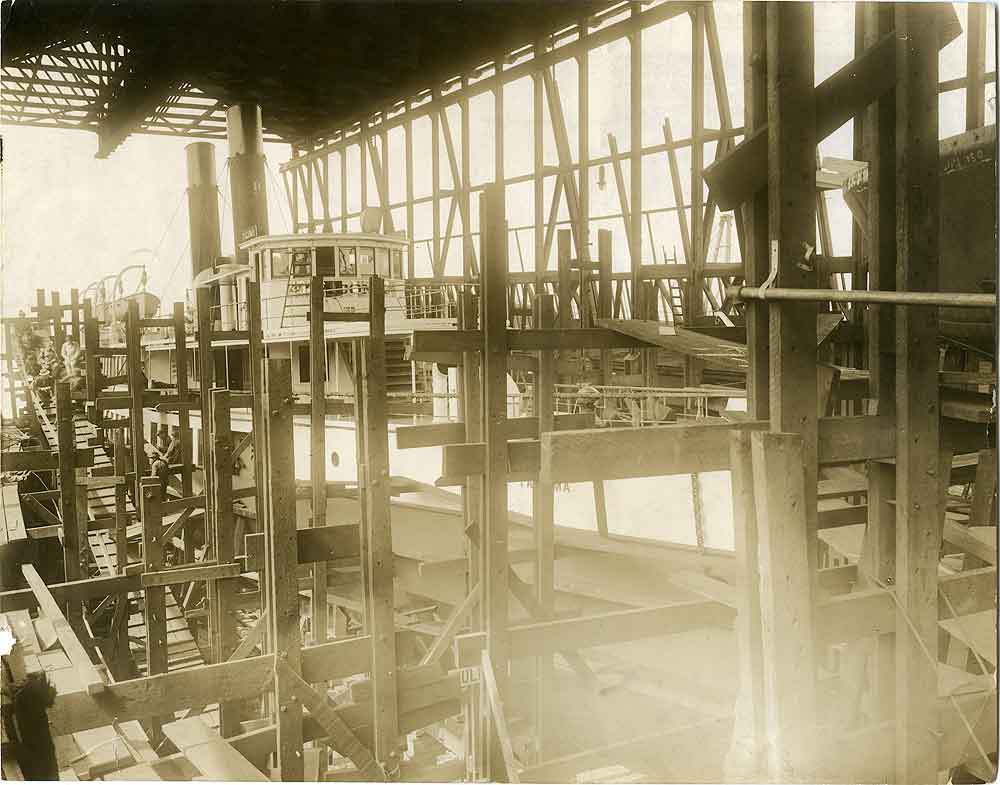
The ship in the water at the image center left, visible from the starboard side, is undergoing construction of its superstructure. At the image center right, a ship’s hull under construction in drydock is visible. Buildings on land or possibly on pilings in the water are visible in the image center background.
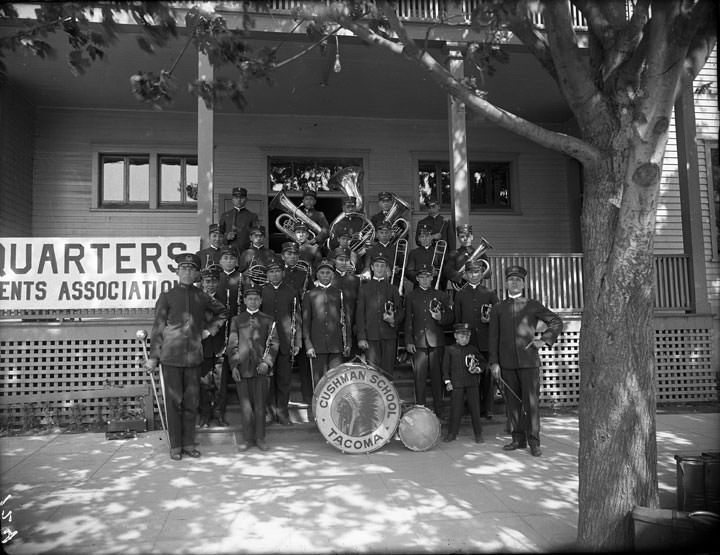
The Cushman Indian School Band members, including Puyallup and other North American Indian men and boys, are standing on the steps of a frame building in Tacoma, wearing band uniforms and holding their instruments.
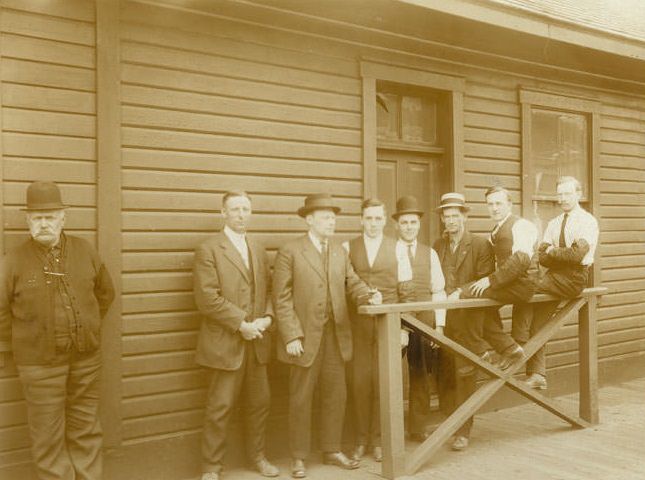
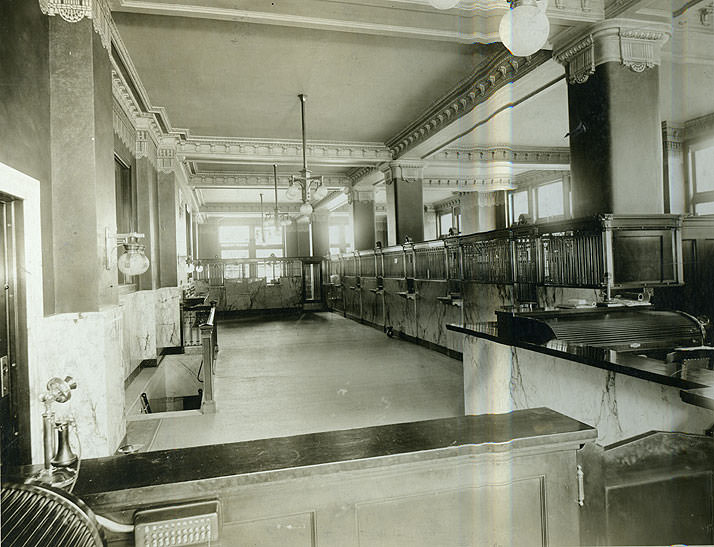
The image looks from behind a low wooden partition down the length of a room with several bank teller windows at the right of the image and across the back wall in the image center. A telephone is on the wooden partition in the lower-left corner, and a closed rolltop desk is in the right foreground. A stairway descends to a lower floor at the left of the image.
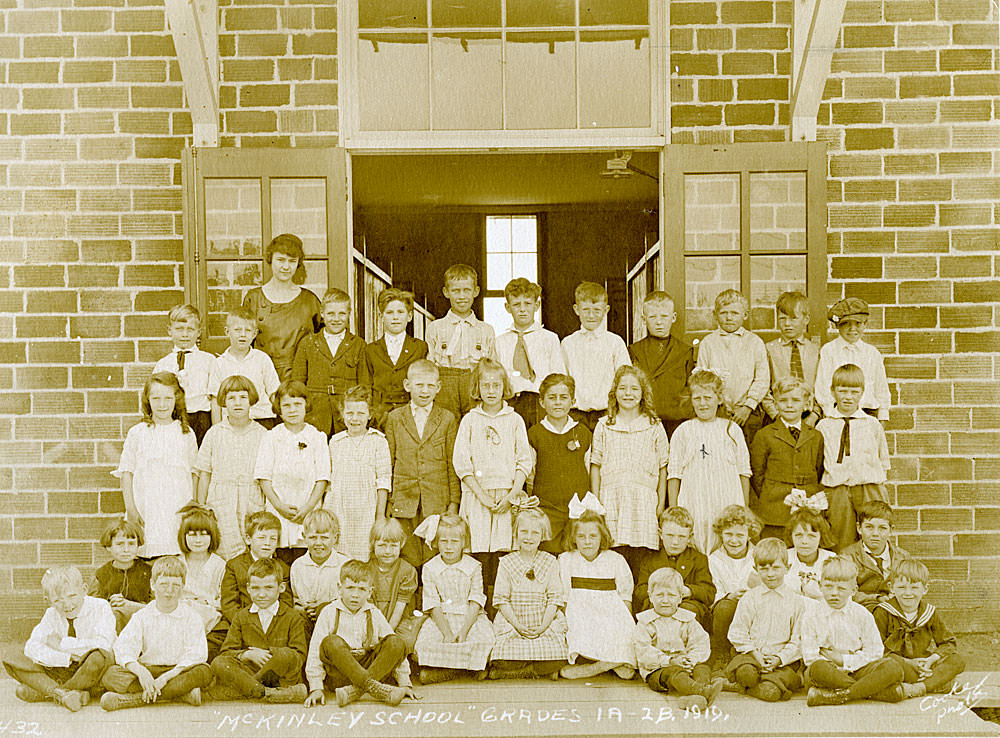
The students pose outside the open doors of the brick building. The female teacher stands in front of the door on the left. There are two rows of standing students and two rows of sitting students.
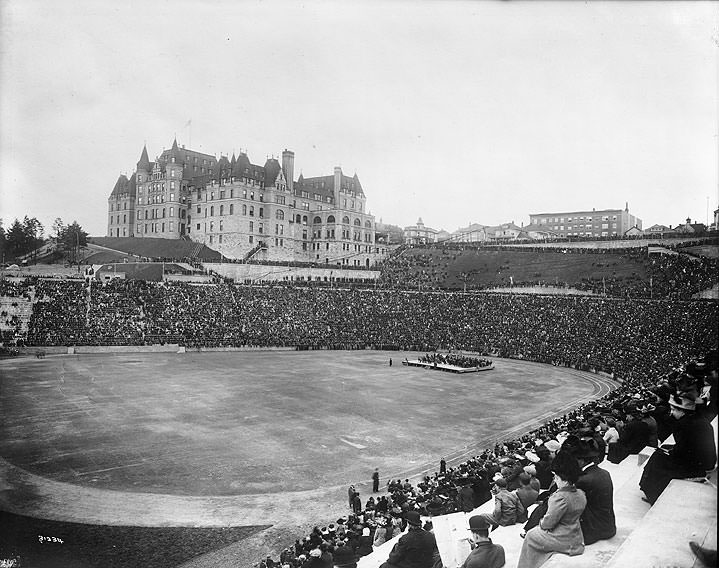
The image is taken from the top edge of the bowl, with the school in the upper left center of the image, located across and above the bowl, Oct. 26, 1914. The bowl is almost filled, and some people sit on the grassy slope above the bowl in the upper right center of the image.
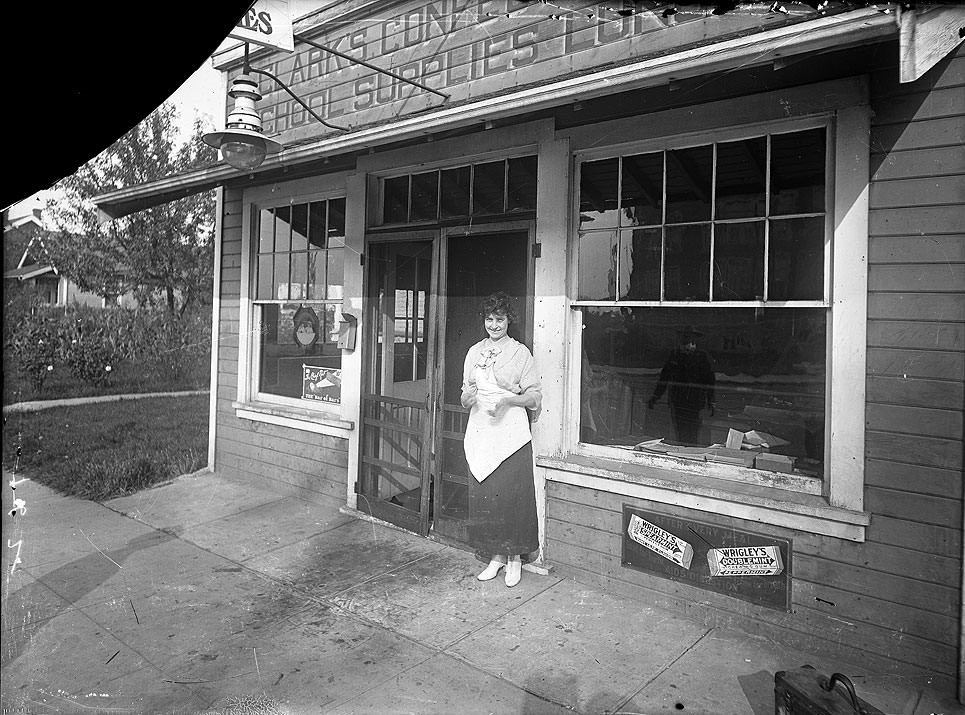
The image shows a woman posing outside a store located at 3615 South G Street, across from Lincoln High School. Lettering above the storefront identifies the business as Clark’s Confectionary and reads in part: “Clark’s Confectionary, School Supplies, Lunch.” The woman stands to the right of two screen doors at the entry to the store. She wears a white blouse and apron and a long dark skirt. Two large double-hung windows are on either side of the doorway.
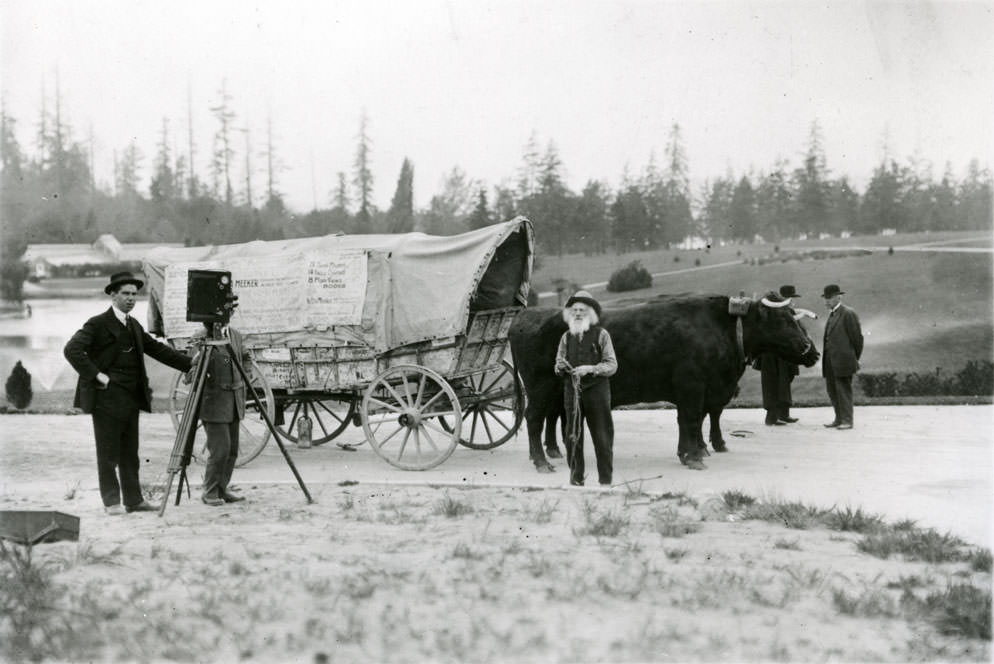
A large text sign is on the side of the wagon’s bonnet. Two men stand beside a large camera on a tripod beside the wagon. A large cleared area and a few distant buildings and trees are in the background.
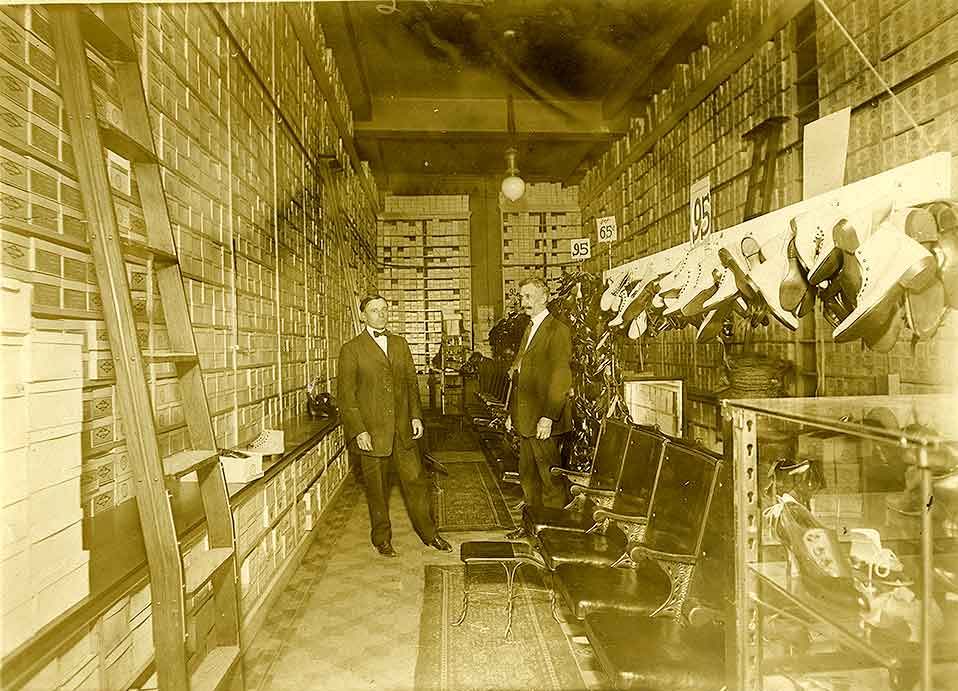
Shoe boxes are stacked floor to ceiling on the side and rear walls of the narrow room, and a ladder is in the left of the photo. Seats for customers and a low seat or stool for the salesman are in the photo center. Shoes are visible in a glass case in the right of the photo, and some hang from a display board behind the customer seats.
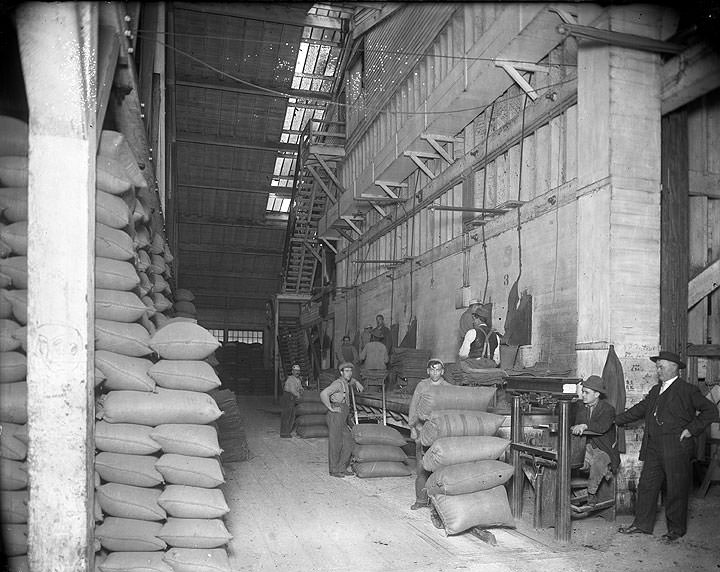
Another man sits at the scale controls. A man wearing a suit, vest, and hat stands beside this man as if supervising the process. Two more workers stand by partially loaded hand trucks in the background in the image center. They stand beside a platform on which 3 men sit, filling flour sacks from openings in the tall wall beside them. Stacks of empty flour sacks are piled beside these men.
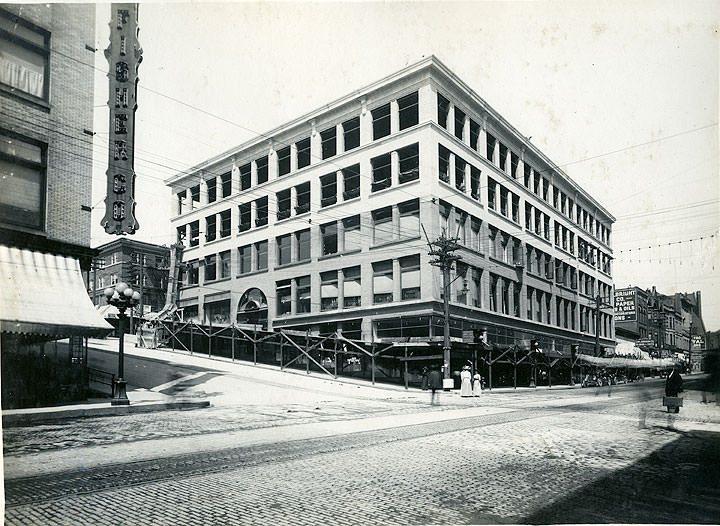
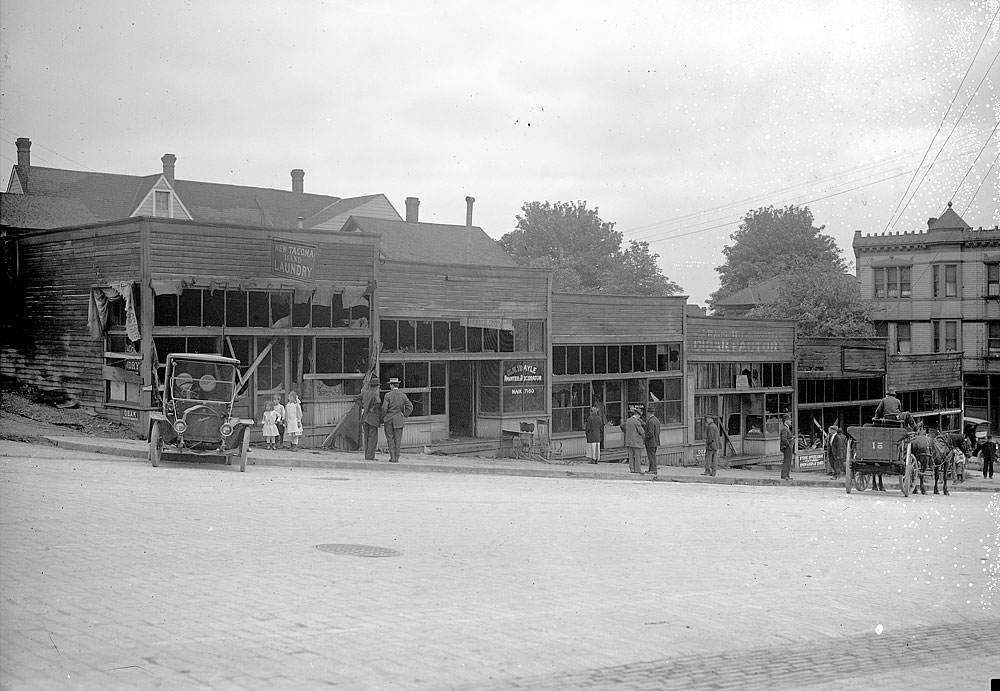
Some construction or remodeling is being done to the building. An overhead barrier protects pedestrians on both visible sides of the store. A chute is against the side of the building at the left of the image. Two women stand at the corner of the building.
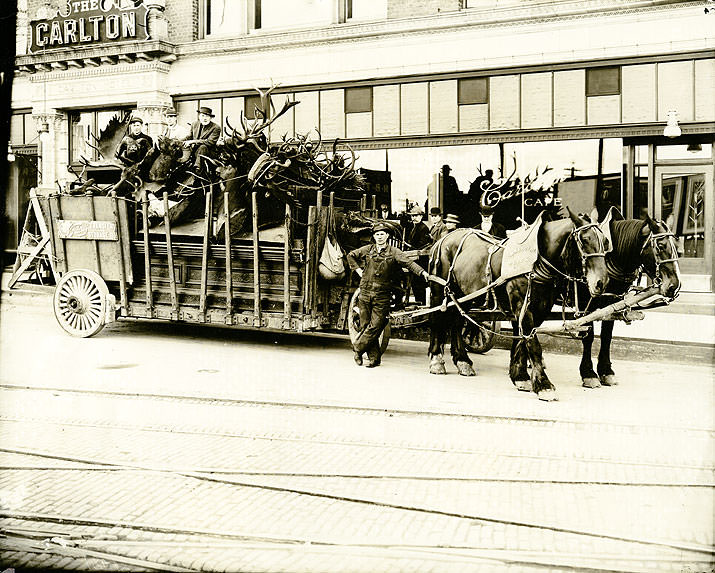
The wagon driver poses beside the horses, and 3 men sit on the wagon with the antlers. A sign on one horse’s harness reads: Commercial Truck Co. A horse feedbag hangs from the front of the wagon. Five men stand on the sidewalk behind the wagon.
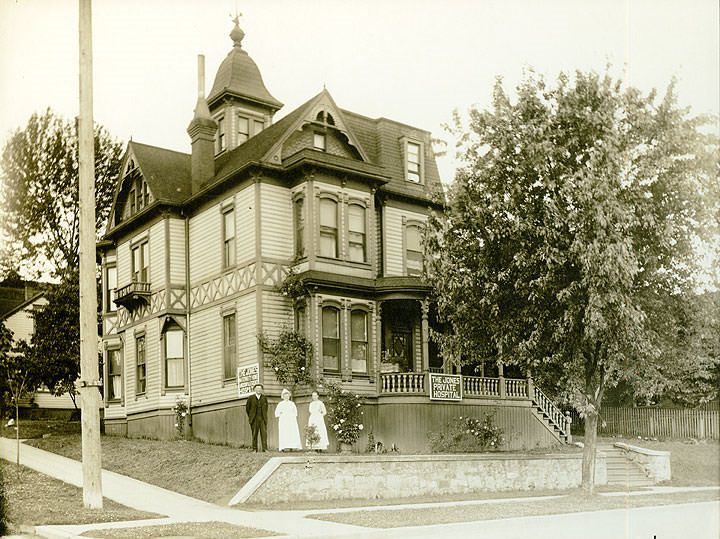
A uniformed nurse, a woman wearing an apron, and a man pose at the corner of the building. A sign on the front of the 3-story building reads: The Jones Private Hospital. A sign on the building’s side reads: The Jones Maternity Home and Convalescent Hospital. A large, possibly maple tree covers part of the right edge of the building at the right of the image.
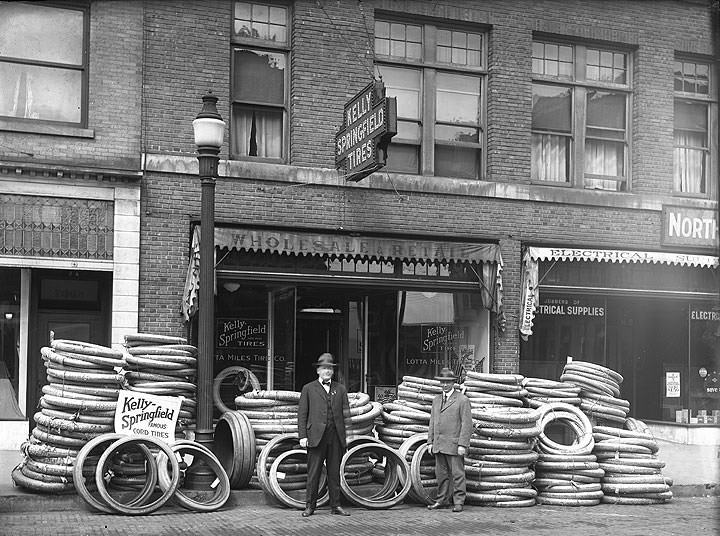
A storefront at the left of the image has a stained-glass window above the entry and show window. A sign on the storefront at the right of the image reads: Jobbers of Electrical Supplies.
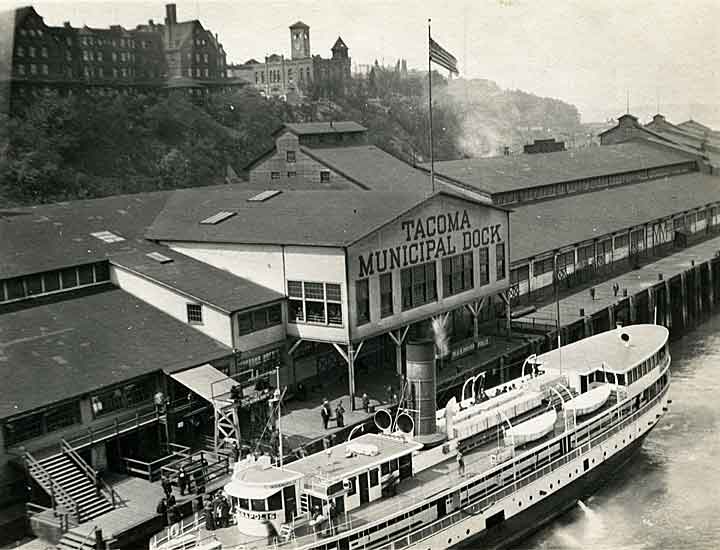
The ship’s name is visible on the ship. The Tacoma Hotel and Old City Hall are visible behind the dock building on the bluff.
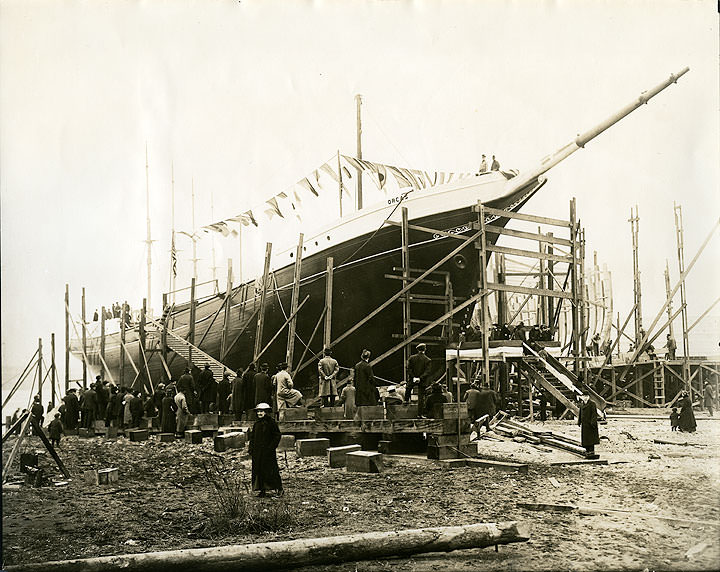
The ship’s hull, with a line of pennants flying on it, is visible from the starboard side of the bow end. The masts have not been erected. Several people, visible from their backs, are standing on the ground along the length of the hull. In the left foreground of the image, a woman stands alone, facing away from the ship.
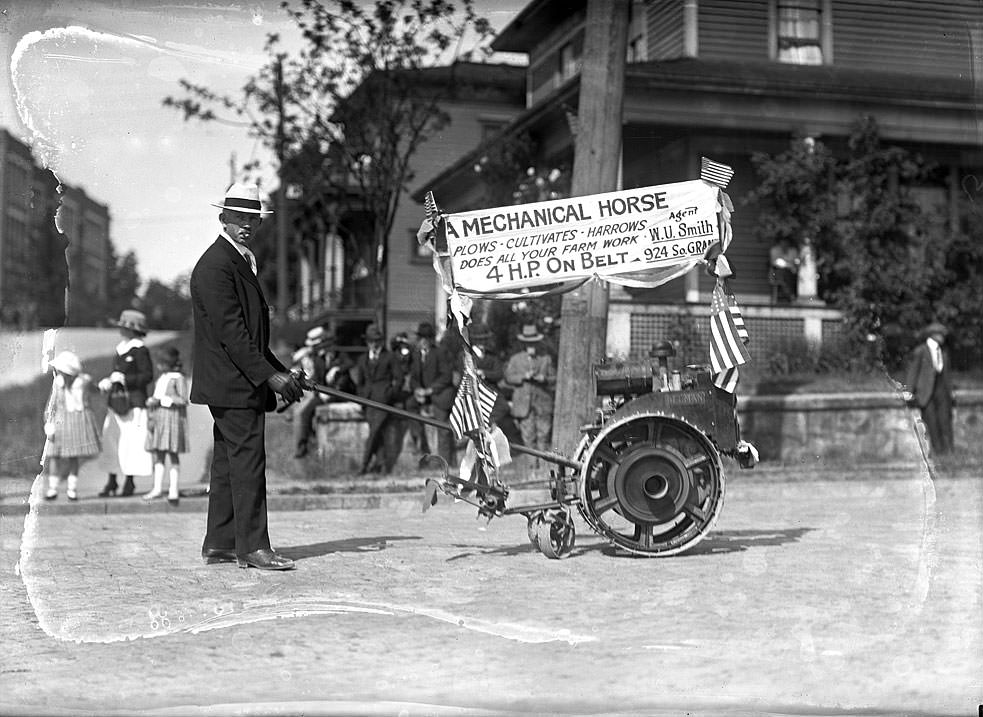
American flags decorate the tiller, and a sign across the top reads: A Mechanical Horse; Plows-Cultivates-Harrows; Does All Your Farm Work; 4 H.P. On Belt; Agent W.U. Smith, 924 So. Gran. The man wears a dark suit and a light-colored hat with a black band. Several men, a woman, and two girls stand on the sidewalk behind the man, watching the parade.
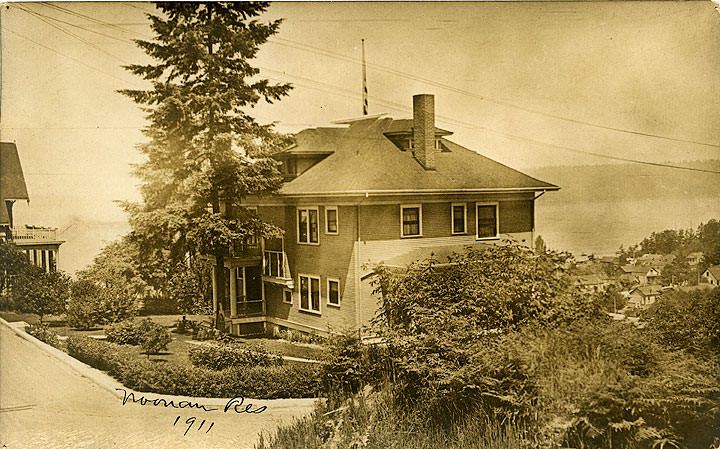
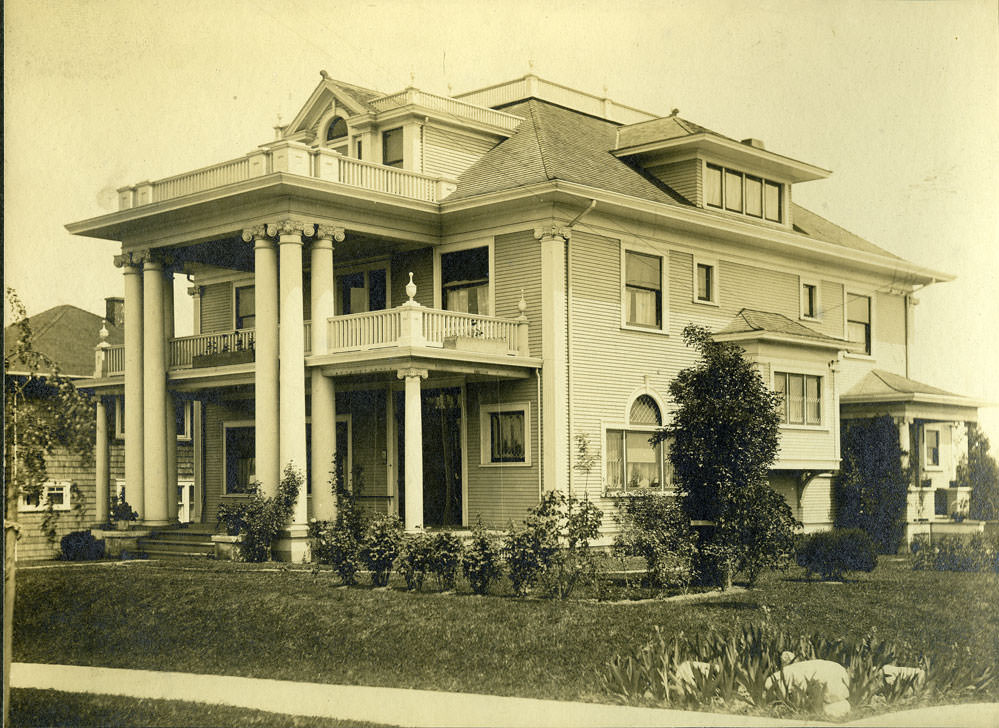
The two-story attic home is partially hidden by landscaping. The front door is visible in the left center of the image. Commencement Bay and Brown’s Point are partially visible in the right background.
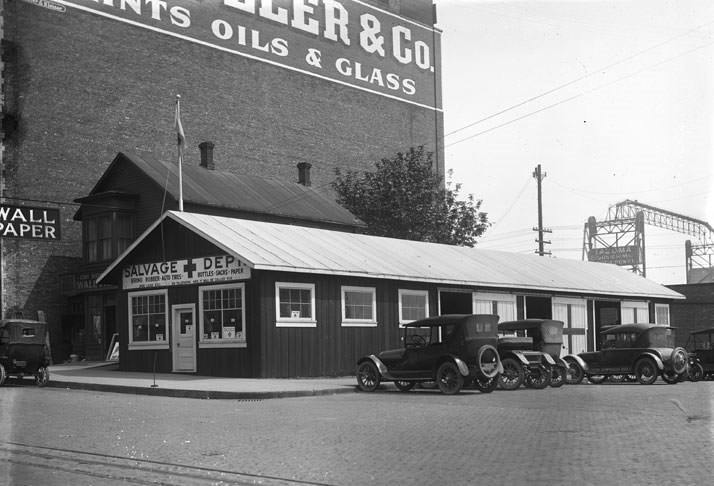
A cross similar to an American Red Cross insignia is also on the sign. Three automobiles are parked by the side of the building, which has 3 large sliding doors with crosses painted on them.
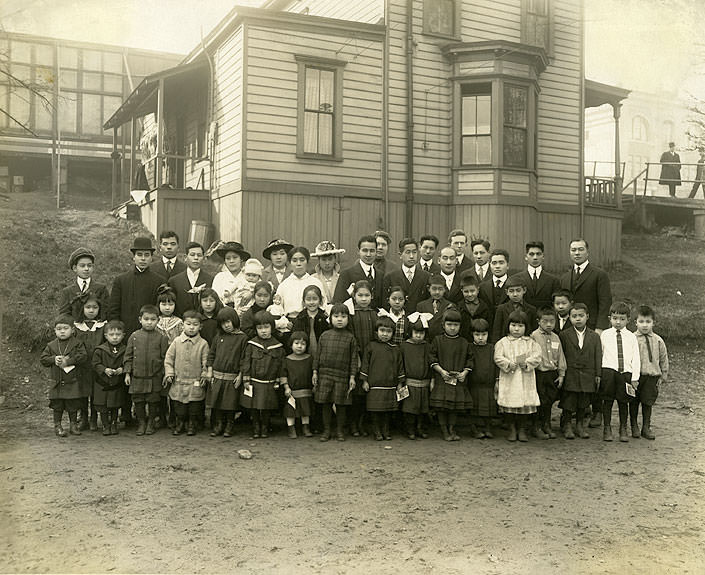
The group may be from a school or a church. The boys and girls are of varying ages. Some of them hold a small square piece of paper in their hands. Kazuo Yamane is in the front row, 4th from left. Matsuye Yamane stands behind him, wearing a bow in her hair. One of the girls holds a doll. One of the women holds an infant in her arms.
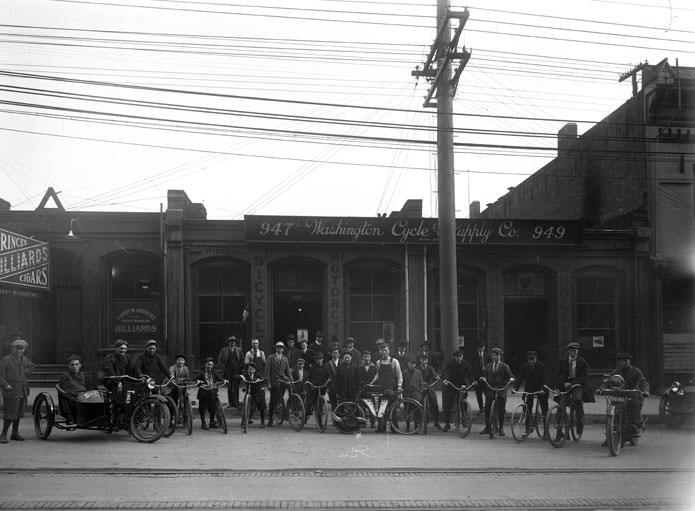
The photo is taken from across the street. Several young and older boys pose, sitting on their bicycles in front of the store. Three men pose on motorcycles, one with a sidecar carrying a male passenger. Two motorcycles bear the name: Dayton.
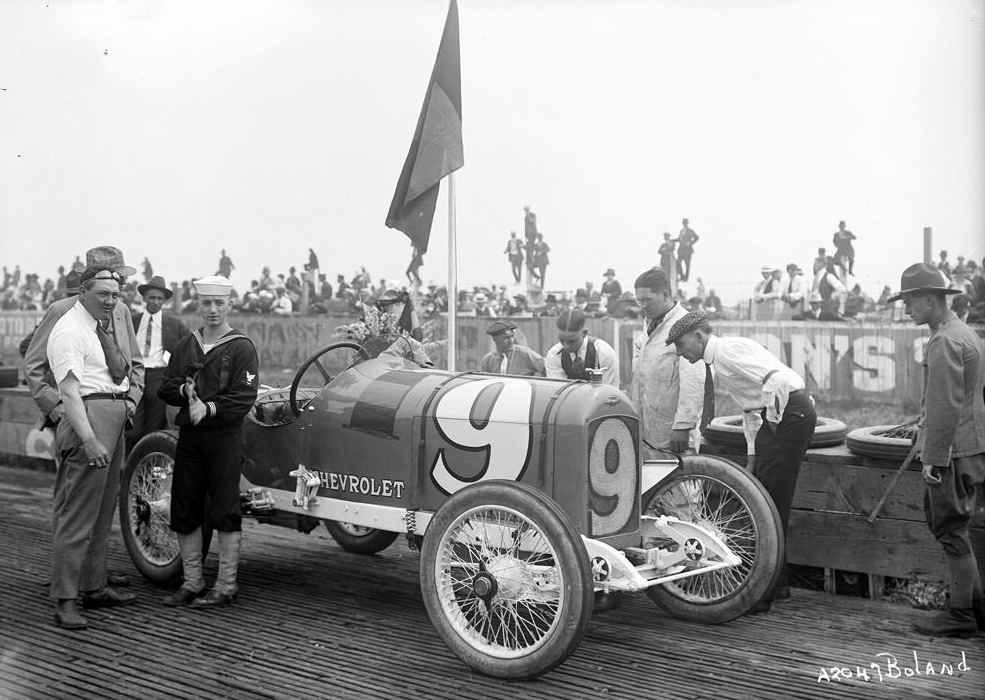
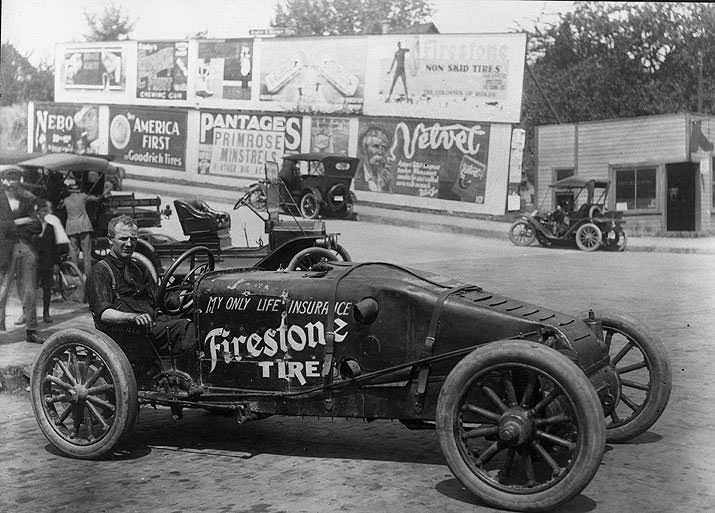
Driver Cliff Durant’s position is not identified. A sign on the side of the car reads: Chevrolet. A U.S. Navy sailor stands near the car with 2 other men at the left of the image. A World War I soldier stands at the right of the image near 2 tires lying on the wooden wall behind the car.
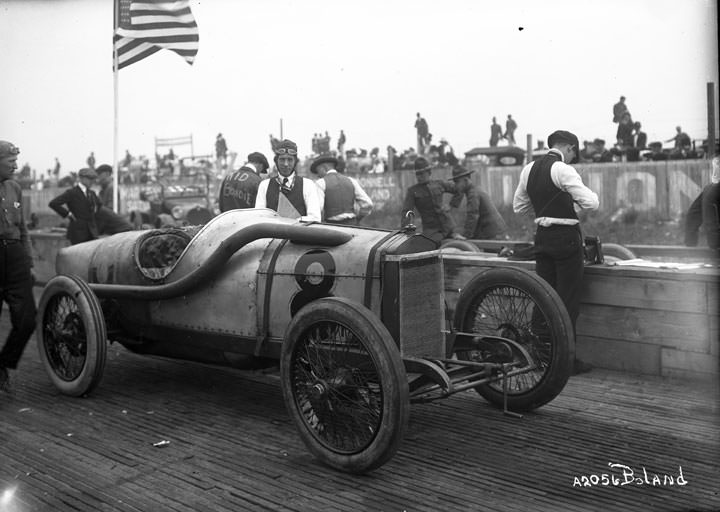
He has goggles hanging at his neck and also over his forehead. A wooden wall is behind the car. A man stands in front of it with his back to the photographer, and his camera sits on the wall in front of him.
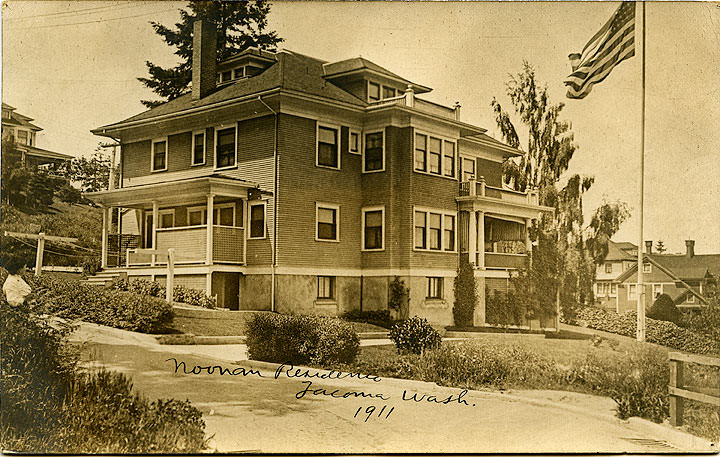
The house has two stories, a basement, and an attic. The back porch and steps to the yard are visible at the left of the image. Clotheslines between two posts are in the left foreground.
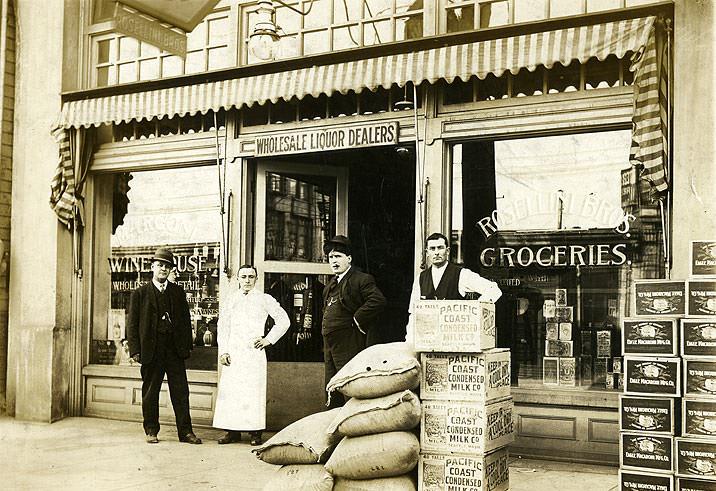
Posing at the store entrance is a man in shirtsleeves and a long apron, one in vest and shirtsleeves, and 2 wearing suits and hats, one of them smoking a cigar. Six full sacks sit next to a stack of Pacific Coast Condensed Milk Co. crates on the sidewalk in front of the store.
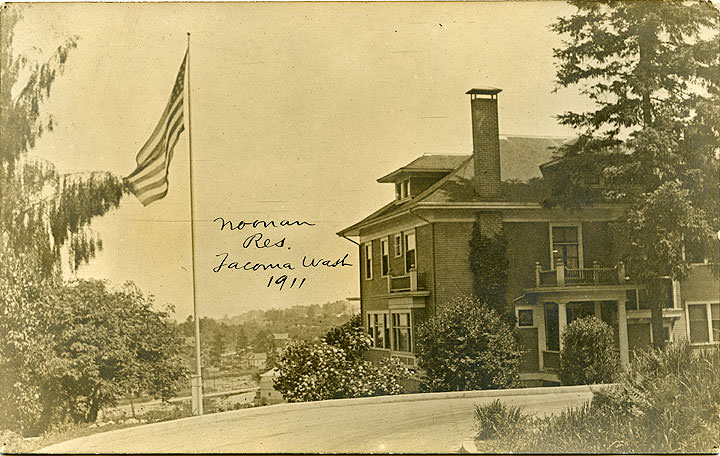
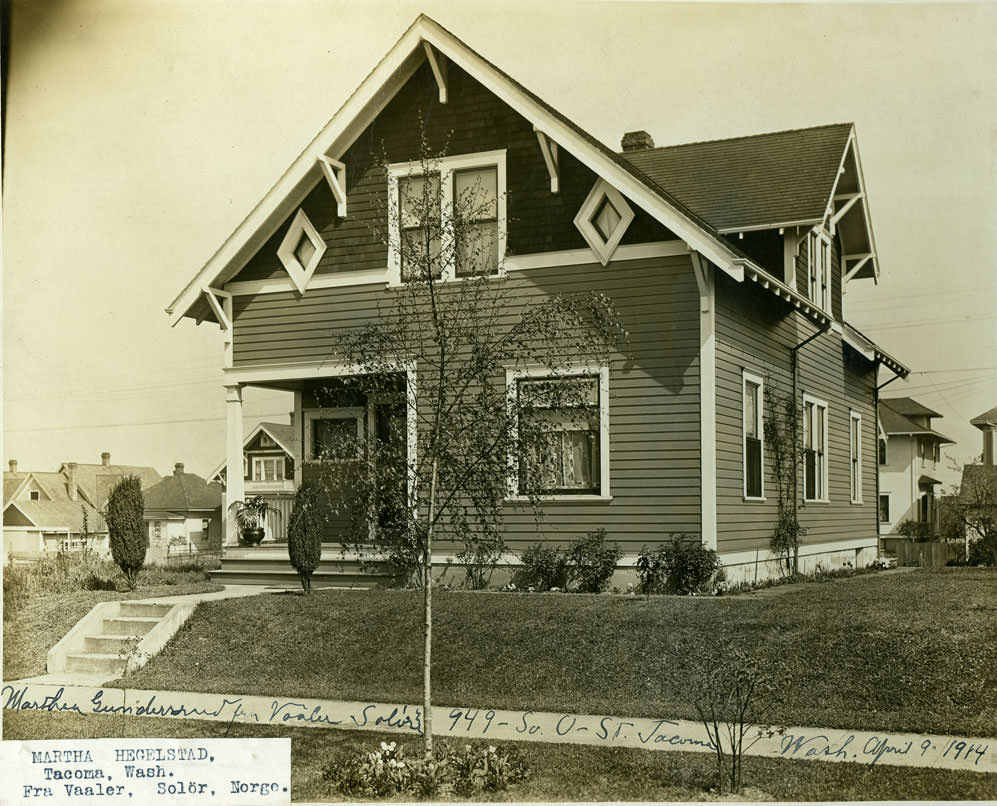
The two-story attic home is partially hidden by landscaping. The front door is visible at the right of the image. A U.S. flag flies from a pole at the left of the image.
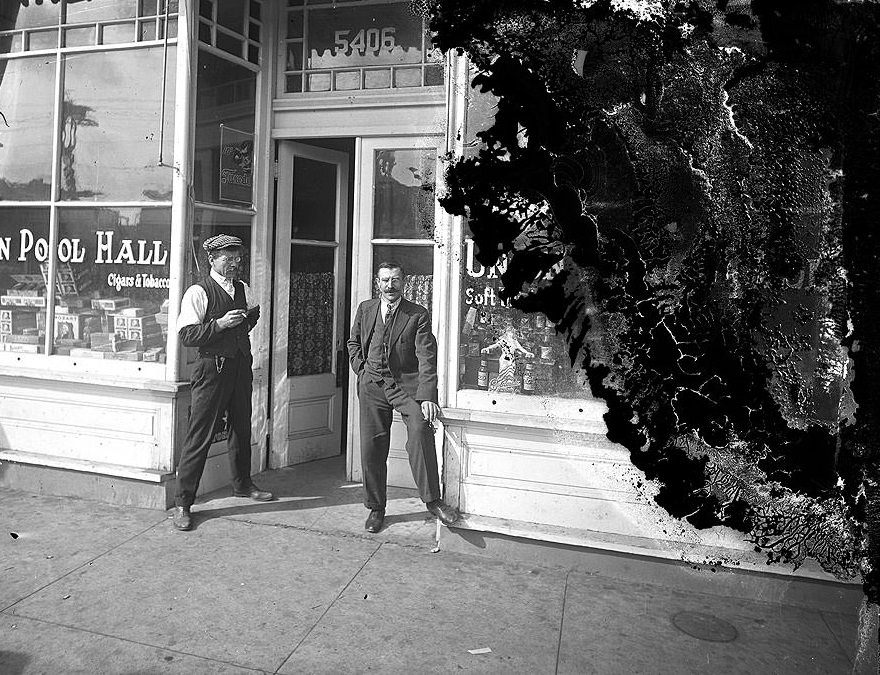
The man on the left wears a checkered cap, white shirt, dark vest, pants, and sleeve protectors. A watch chain is visible near his waist. He holds a cigarette in his right hand and wears glasses. The man on the right leans with one hand on the building and the other in his pocket. He has dark hair, a mustache, and glasses. He wears a dark tie, jacket, vest, and pants, and a light-colored shirt.
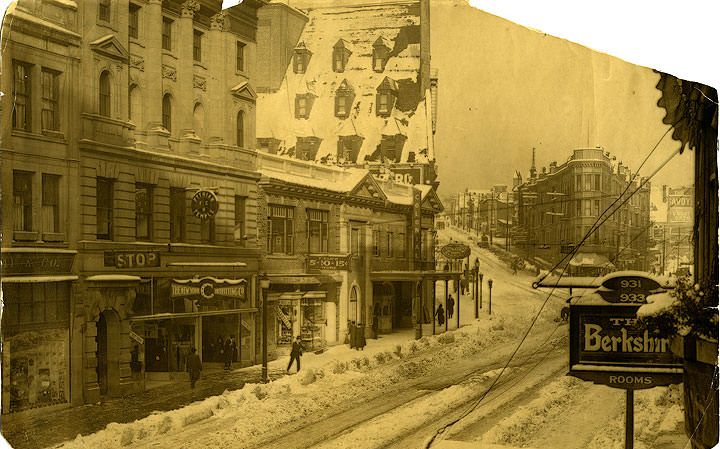
Traffic has made deep ruts in the snow on Broadway in the foreground, and snow shoveled from sidewalks is piled by the street curb. From left to right, signs on Broadway buildings include Pythian Temple; The New York Outfitting Co., on the first floor of the Knights of Pythias building; Field’s 5-10-15 cents Store; Colonial Theater.
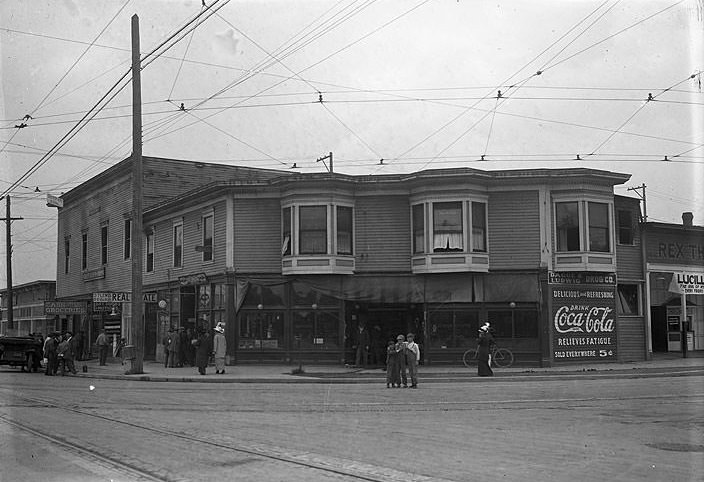
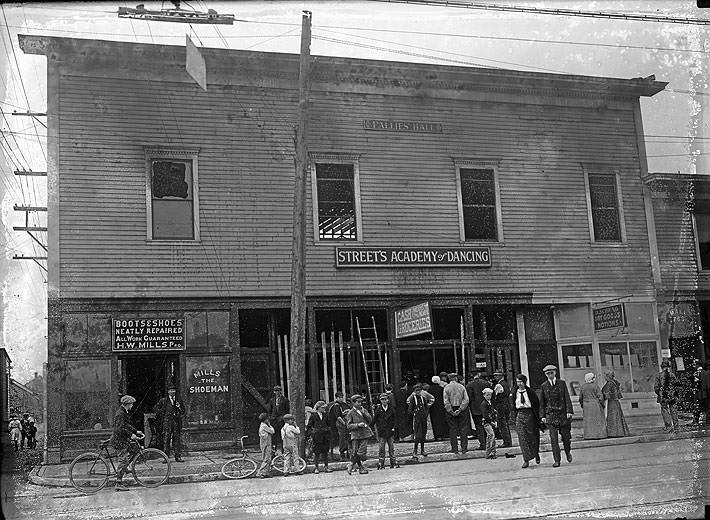
A few clusters of pedestrians, including women, are on the sidewalk. Yakima Avenue runs parallel to the lower edge of the image. Pallies Hall, housing the Street’s Academy of Dancing, is in the left background.
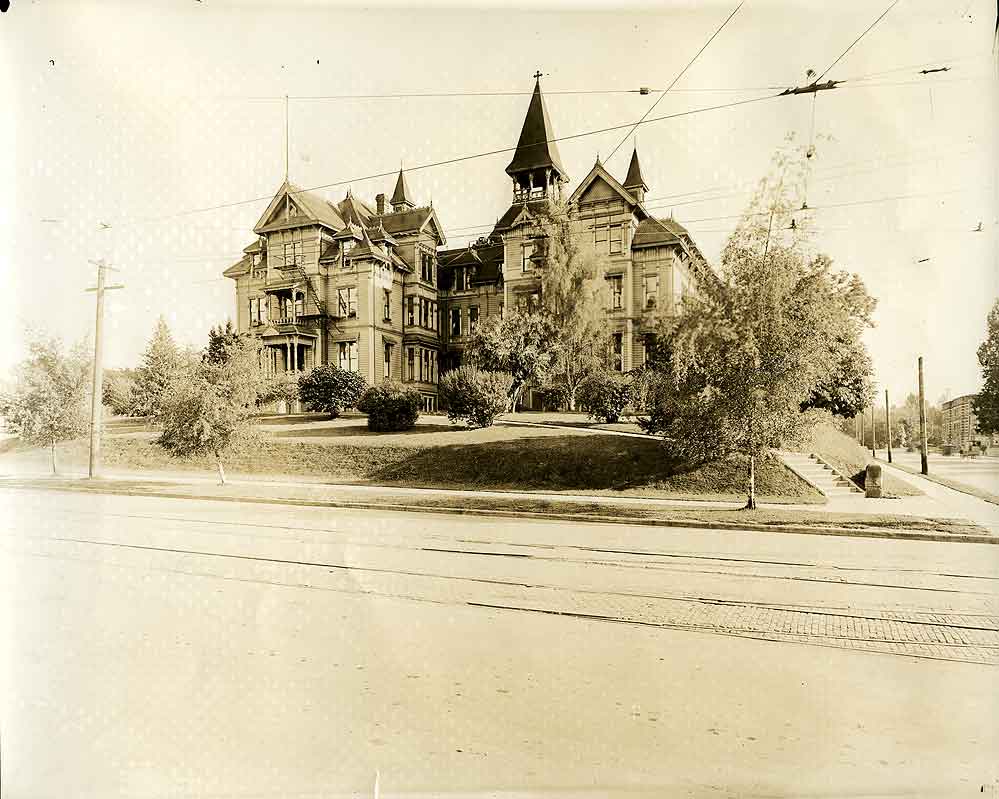
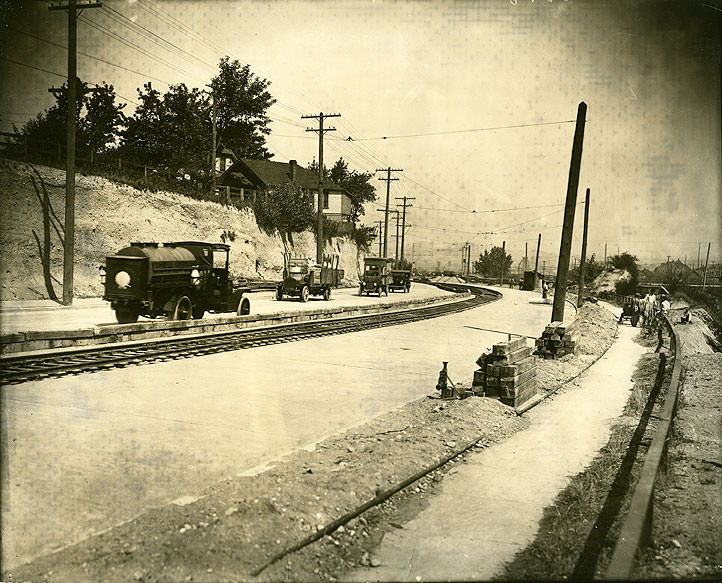
A trolley track runs down the middle of the street. A workman is on the near side of the street in the background. Short pieces of thick boards are stacked in 2 piles by the road in the foreground. Four men wearing work clothing stand together on the sidewalk near the right edge of the image. Three trucks, one possibly holding produce crates, and an automobile are in traffic on the far side of the street.
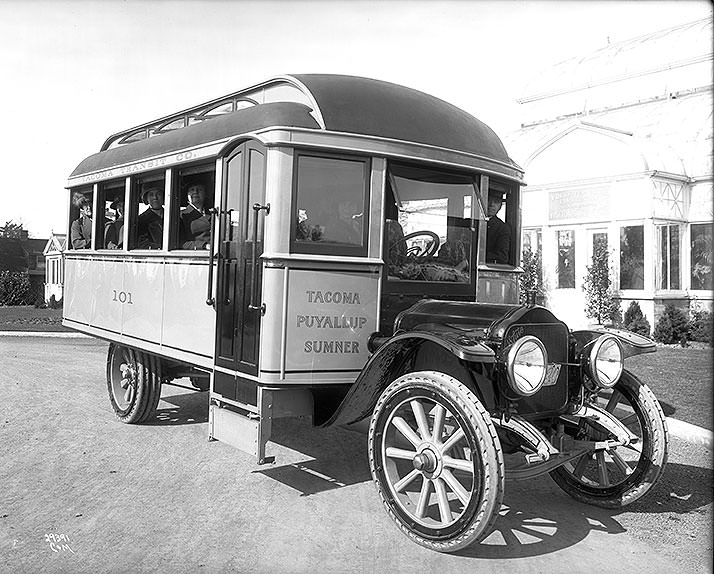
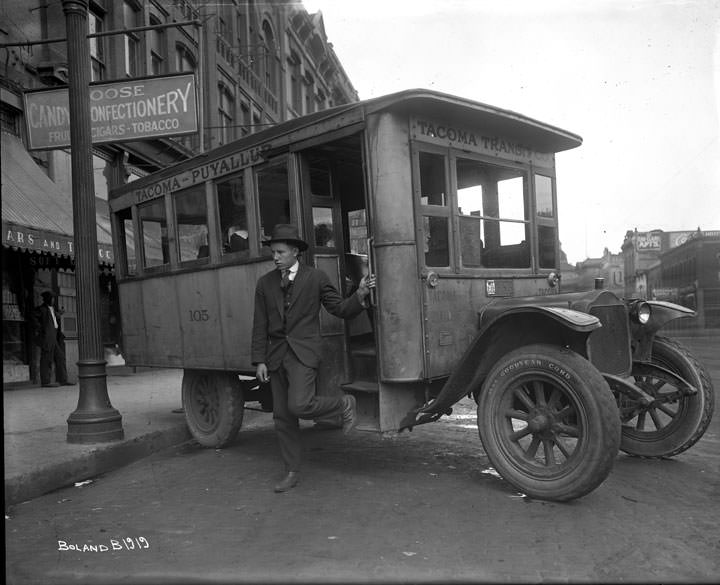
The image shows a Tacoma Transit Company bus. Four women wearing hats can be seen sitting at the four open windows on the left. A man looks through an open window on the front right. Lettering above the open side windows reads “Tacoma Transit Co.” Below the windows are the numbers “101.” At the front of the bus, the lettering reads “Tacoma, Puyallup, Sumner.”
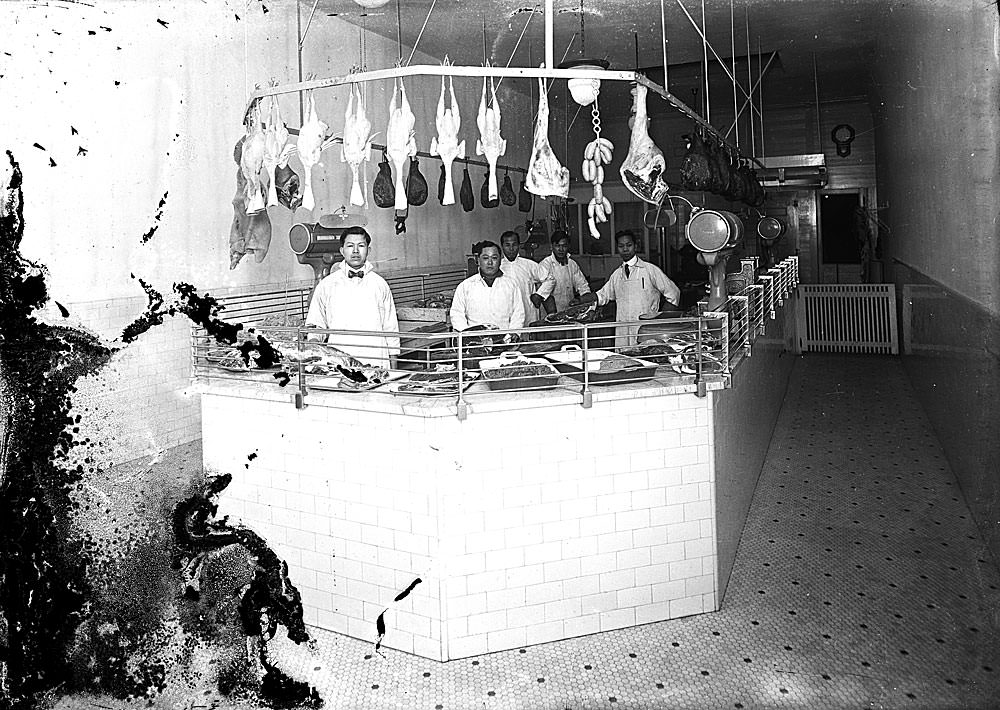
There are chickens, sausages, and large cuts of meat hanging from an overhead rack.
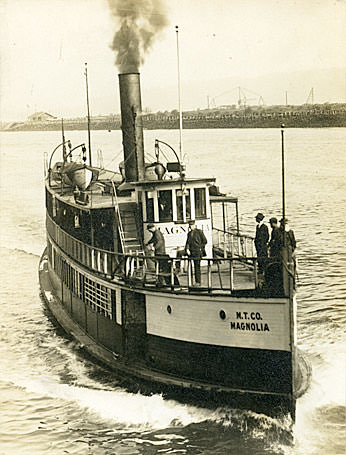
The Magnolia was built in Tacoma in 1907 and originally ran the Tacoma-Vashon route and later the Seattle-Olympia route. In this image, several men are visible on the upper deck of the steamship. Black lettering on the hull reads M.T. Co.; Magnolia. The land is visible in the distance.
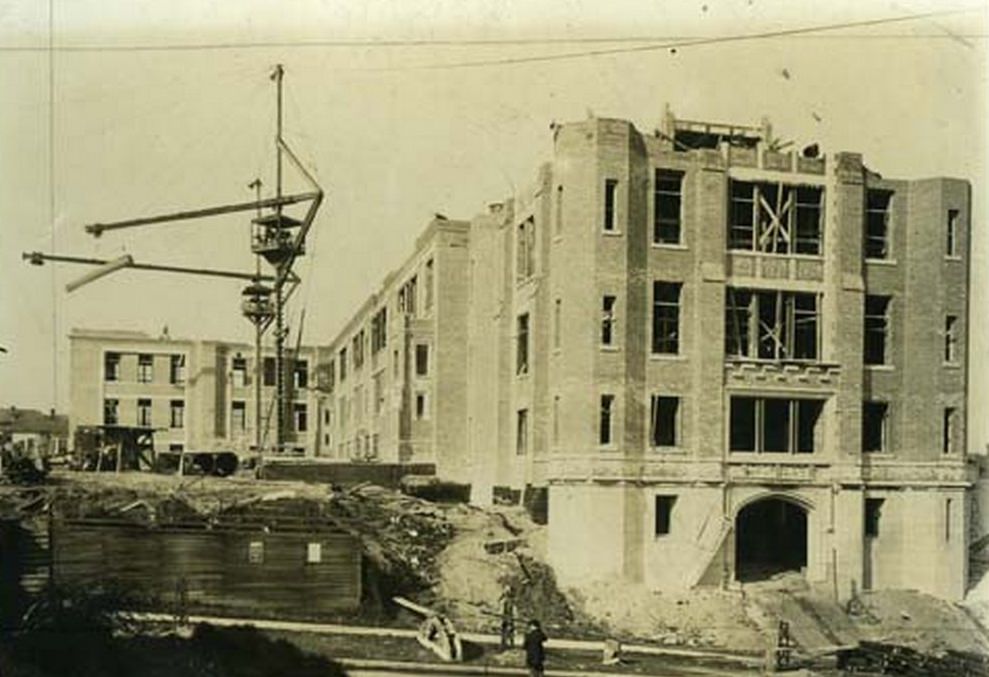
The outer brickwork and the first four floors of the school have been finished. The upper floors, roof, windows, front entrance, and landscaping have not been completed. Three men are visible on top of the building, laying more brickwork. Several tall crane towers are visible to the left of the building.
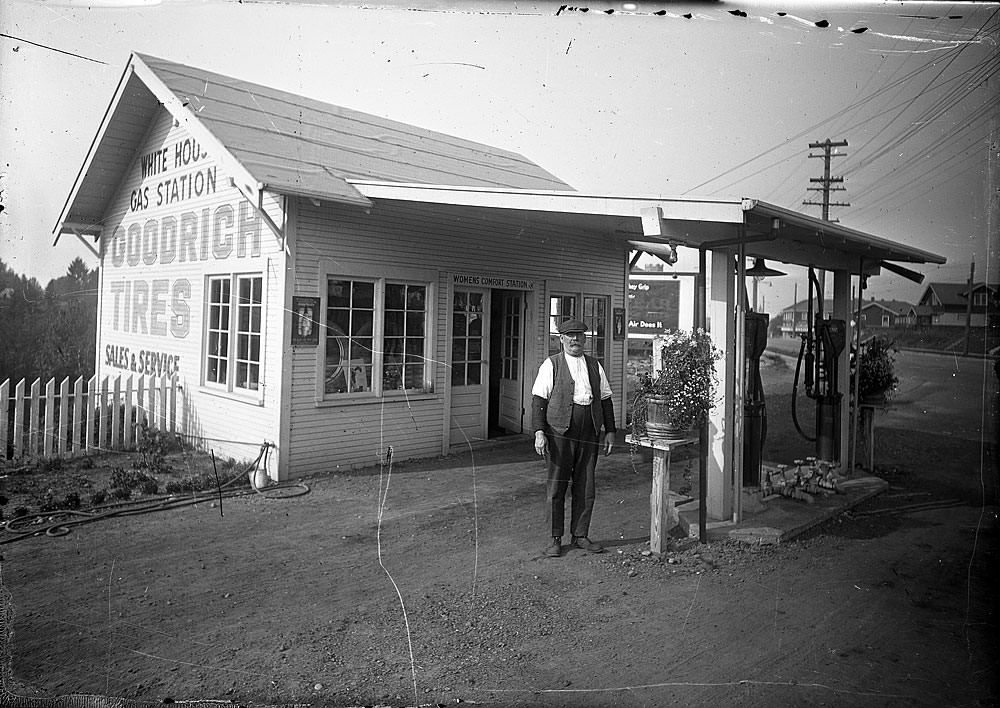
Two gas pumps are visible under the canopy. A planter of flowers is beside the man. Advertising for Goodrich Tires is painted on the side of the station.
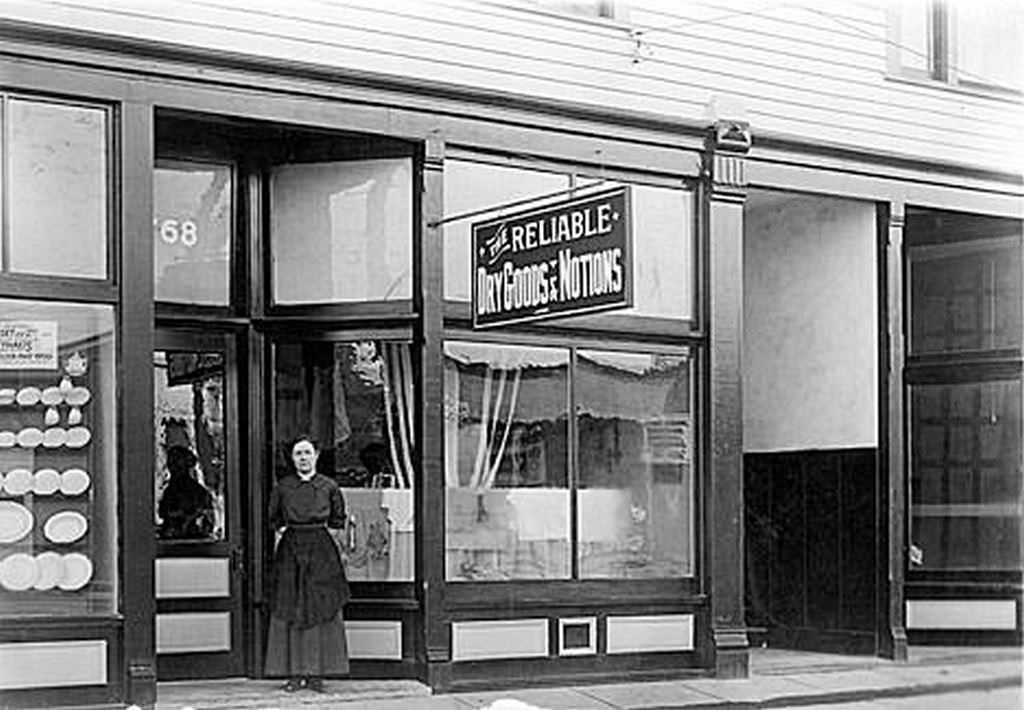
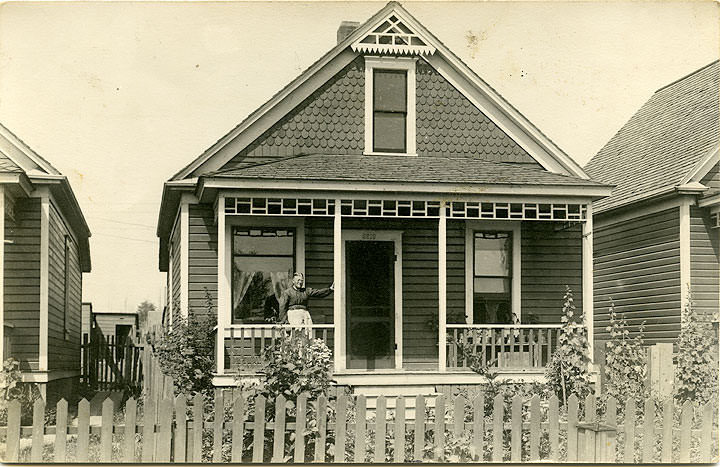
The image shows a woman identified as Florence Peacock standing outside the entrance to The Reliable Dry Goods and Notions store located at 768 South 38th Avenue in Tacoma. She wears a dark blouse with a bar pin at the neck, a dark skirt, and an apron. Her dark hair is pulled back, and she wears eyeglasses. Behind her and to the right are large plate glass display windows.
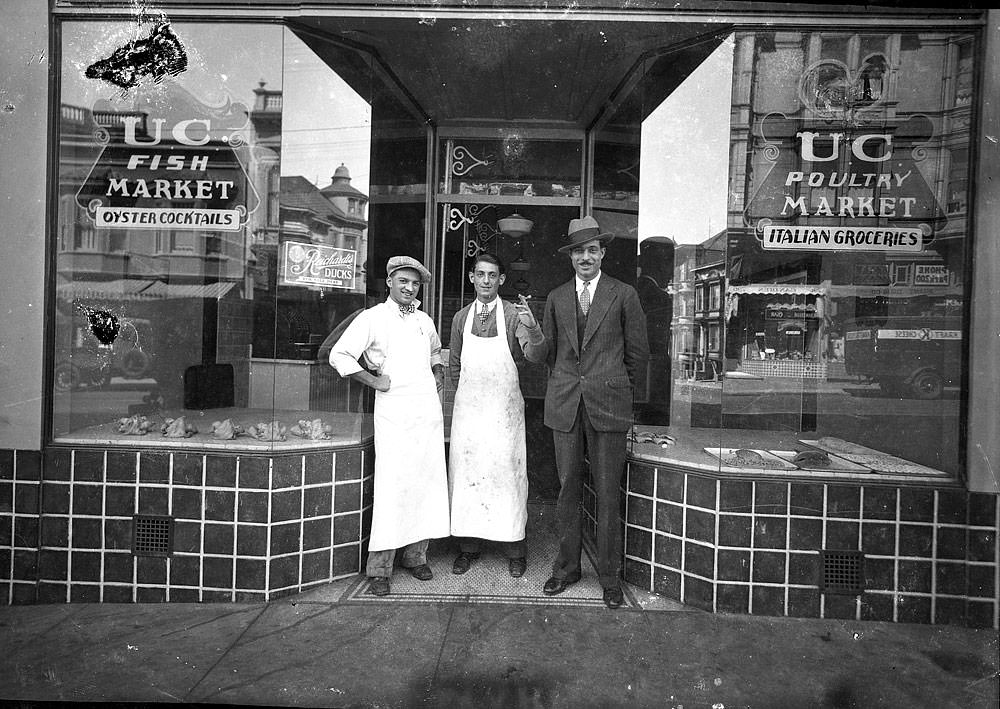
Two men wear long white aprons; one holds a cigar in his left hand. Various meat products are on display in the windows.
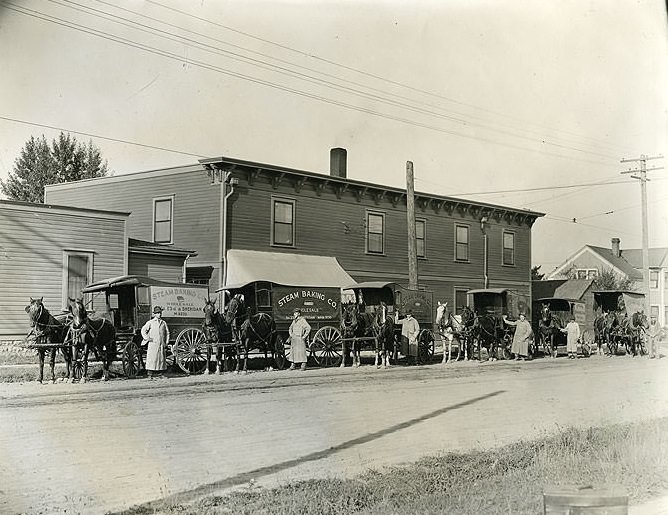
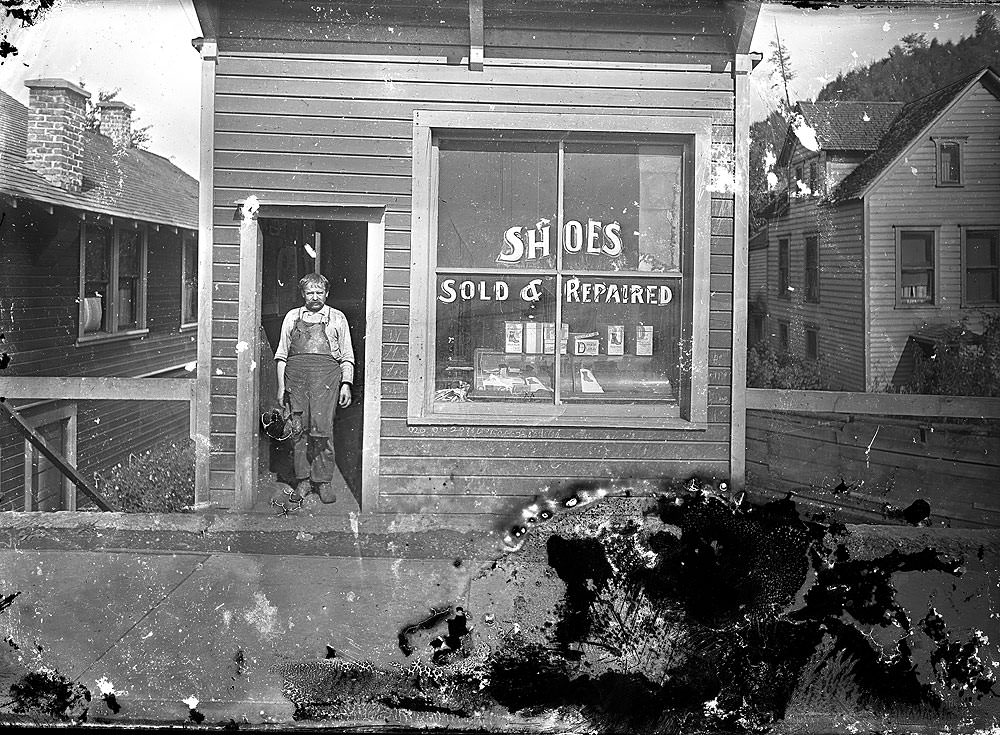
On display in the window are various shoe-related products and advertising. The lower right-hand quarter of the negative is water damaged.
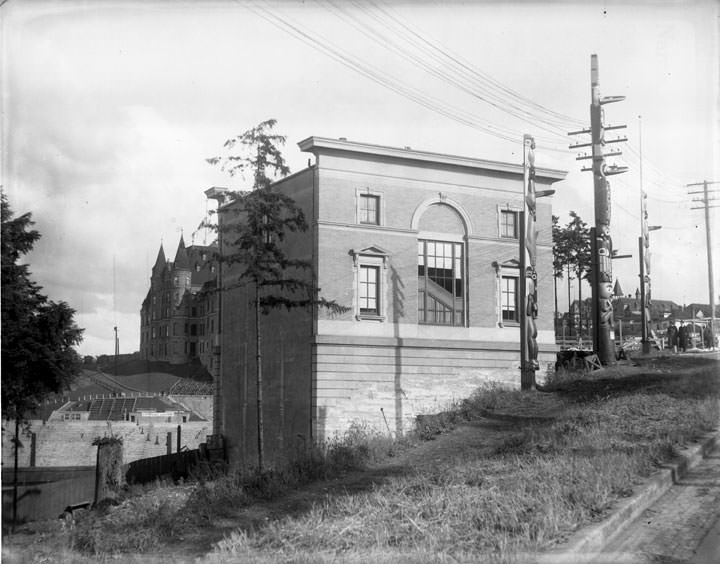
Stadium Bowl and Stadium High School are in the left background. The sign above the bowl seats reads: Comfort Station.
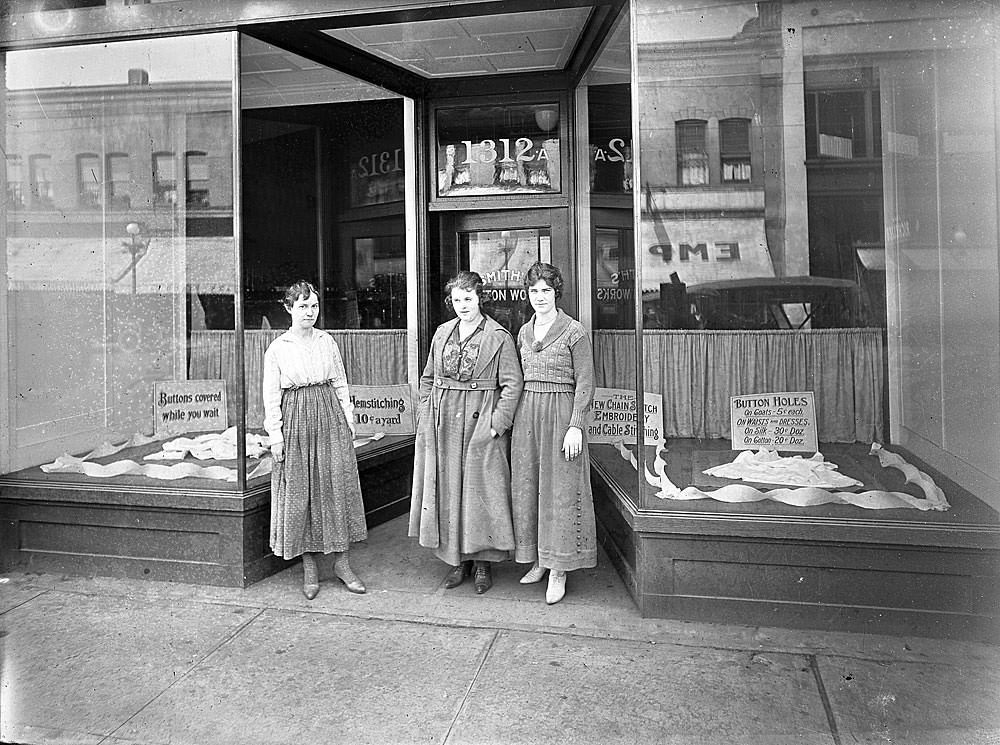
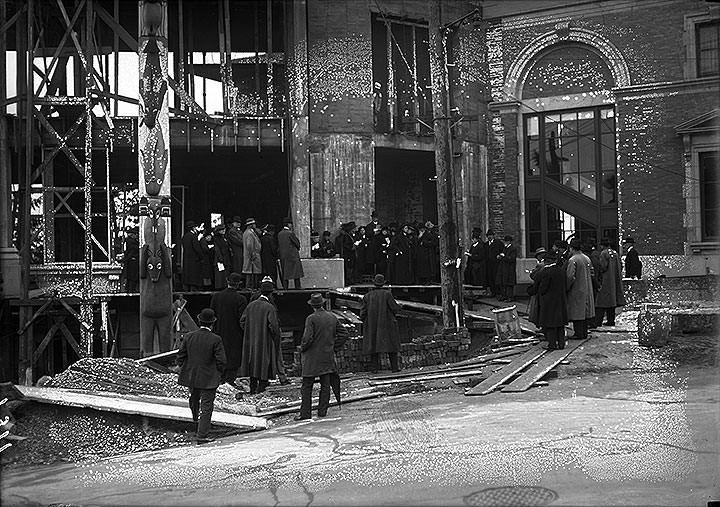
Their faces are not visible. People are standing on scaffolding in front of the building under construction, some near the cornerstone, which is in the image center.
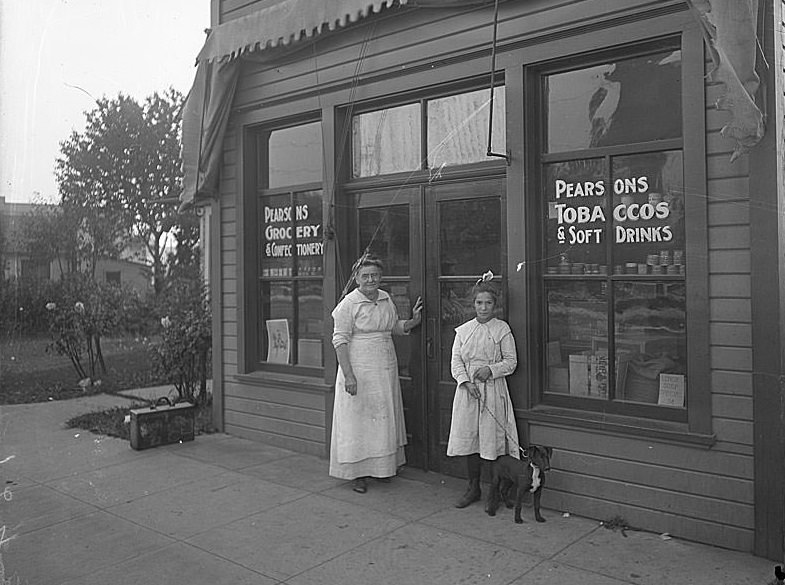
A woman and a girl holding a dog on a leash pose in front of the grocery. The woman wears a long skirt, blouse, apron, and glasses. The girl wears a long-sleeve knee-length dress with black stockings. The grocery has two glass doors with large glass windows on either side. Cans are stacked in both windows. White lettering painted on the left window reads Pearsons Grocery & Confectionery.
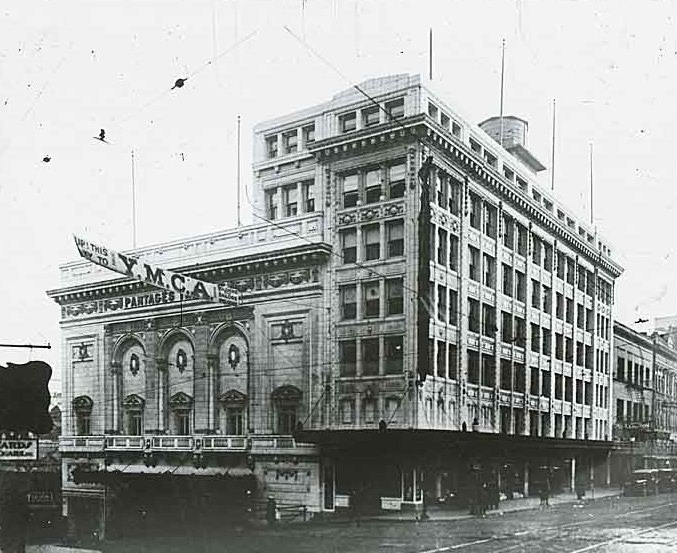
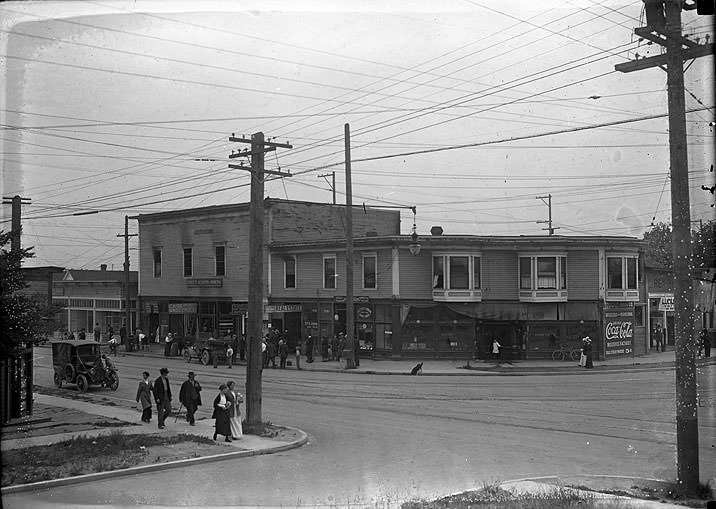
Broadway is visible above the lower right edge of the image. Ninth Street is visible above the left edge of the image. Two automobiles are partially visible parked on Broadway, near the right edge of the image.
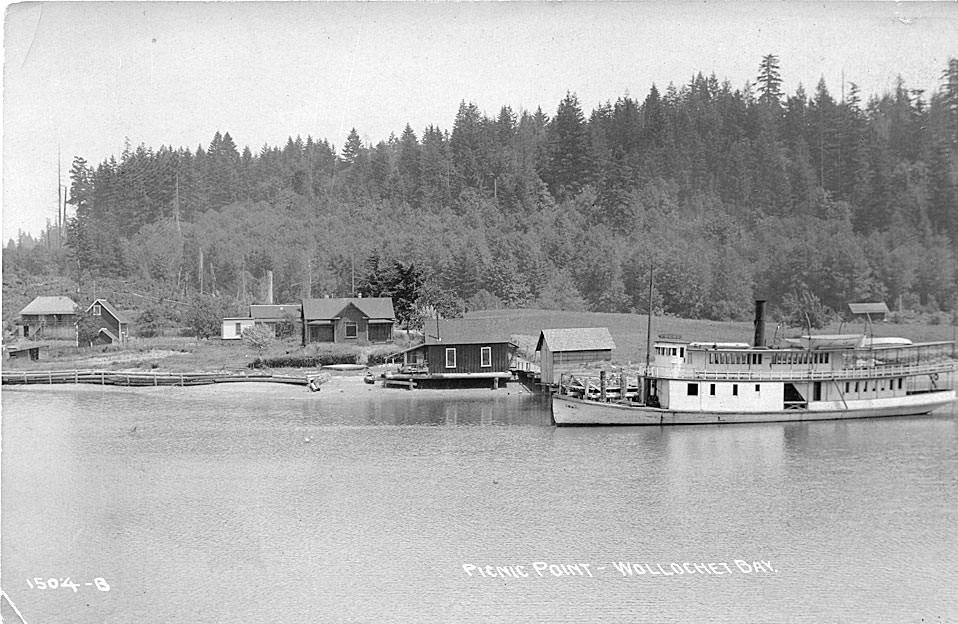
A heavily forested shoreline is visible farther in the distance, while a sandy shoreline is visible in the foreground. The Crest was built in 1900 in Tacoma, WA, by Crawford & Reid and ran various routes on Puget Sound.
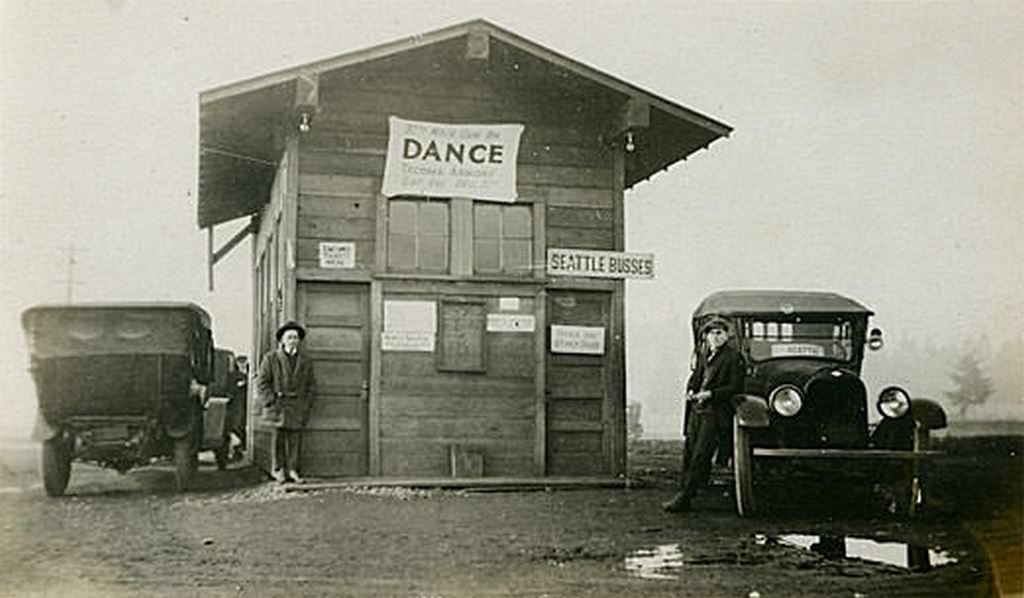
A man wearing a dark coat, pants, and cap leans against the automobile. Two more automobiles stand near a “Tacoma Tickets Here” sign to the left. One man is near the left front corner of the building, while another man is visible in the distance near the rear left corner.




