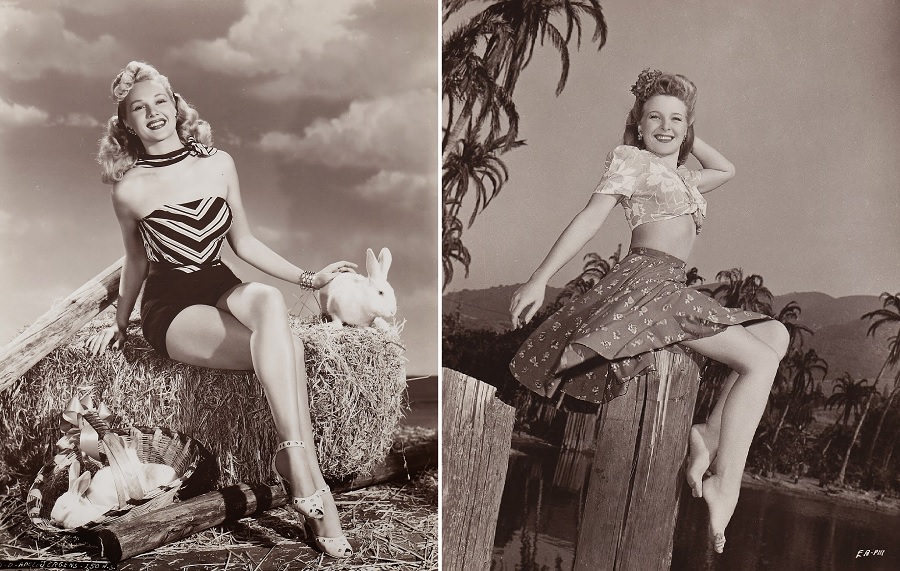
In November 1957, Jayne Mansfield purchased a sprawling 40-room mansion at 10100 Sunset Boulevard in Holmby Hills, Los Angeles. The property had previously belonged to entertainer Rudy Vallée, who acquired it in the 1930s but never actually lived there. The three-story home sat on three and a half acres and spanned 10,000 square feet with seven bathrooms. Architectural writers described it alternately as “Spanish Colonial” and, with a wink, as “Mediterranean Movie-Star Baroque.” Mansfield moved in with her husband, bodybuilder and actor Mickey Hargitay, and wasted no time making it her own.
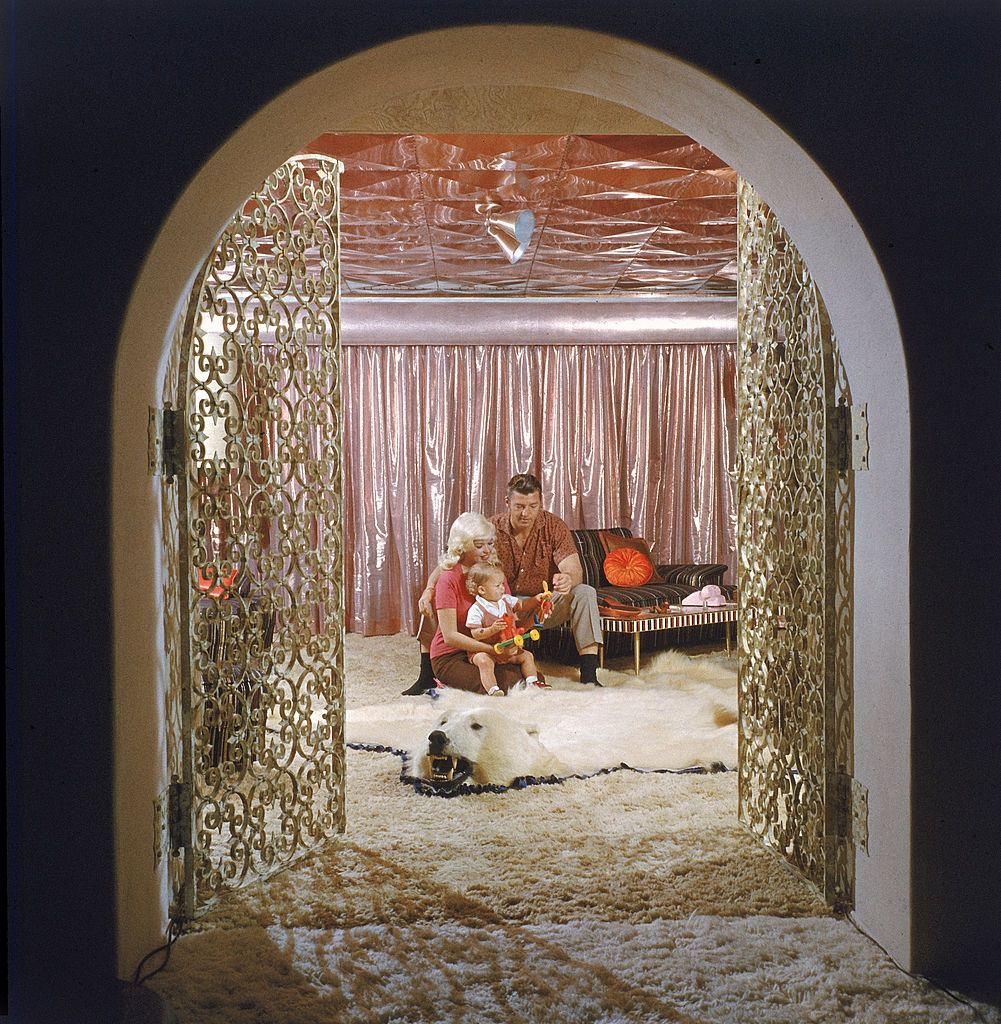
To transform the mansion into something that matched her larger-than-life persona, Mansfield and Hargitay brought in Los Angeles set decorator Glenn Holse. Pink was the defining theme throughout — a color Mansfield had loved since childhood. The exterior was painted pink, and cupids lined the entry surrounded by pink fluorescent lights. The wrought iron gates at the front of the compound were shaped into Mansfield’s own initials, leaving no doubt about who lived inside.
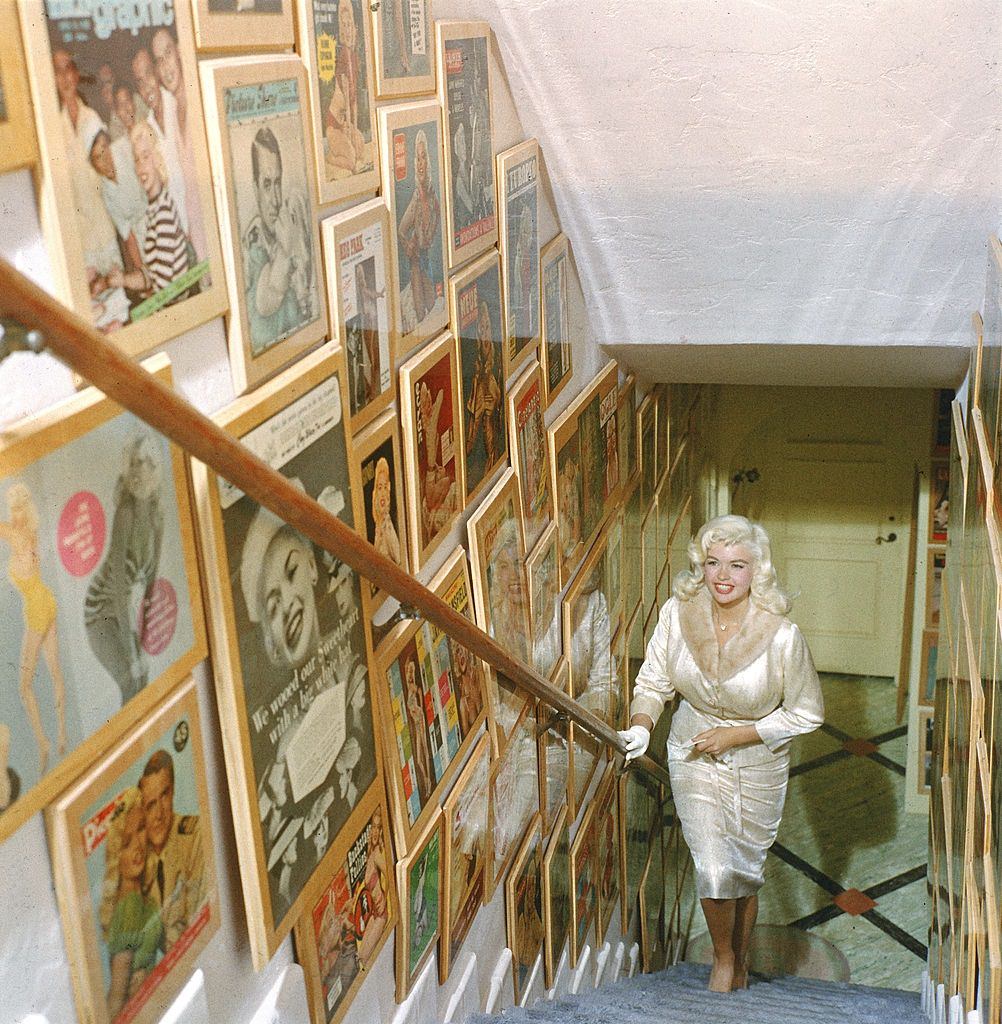
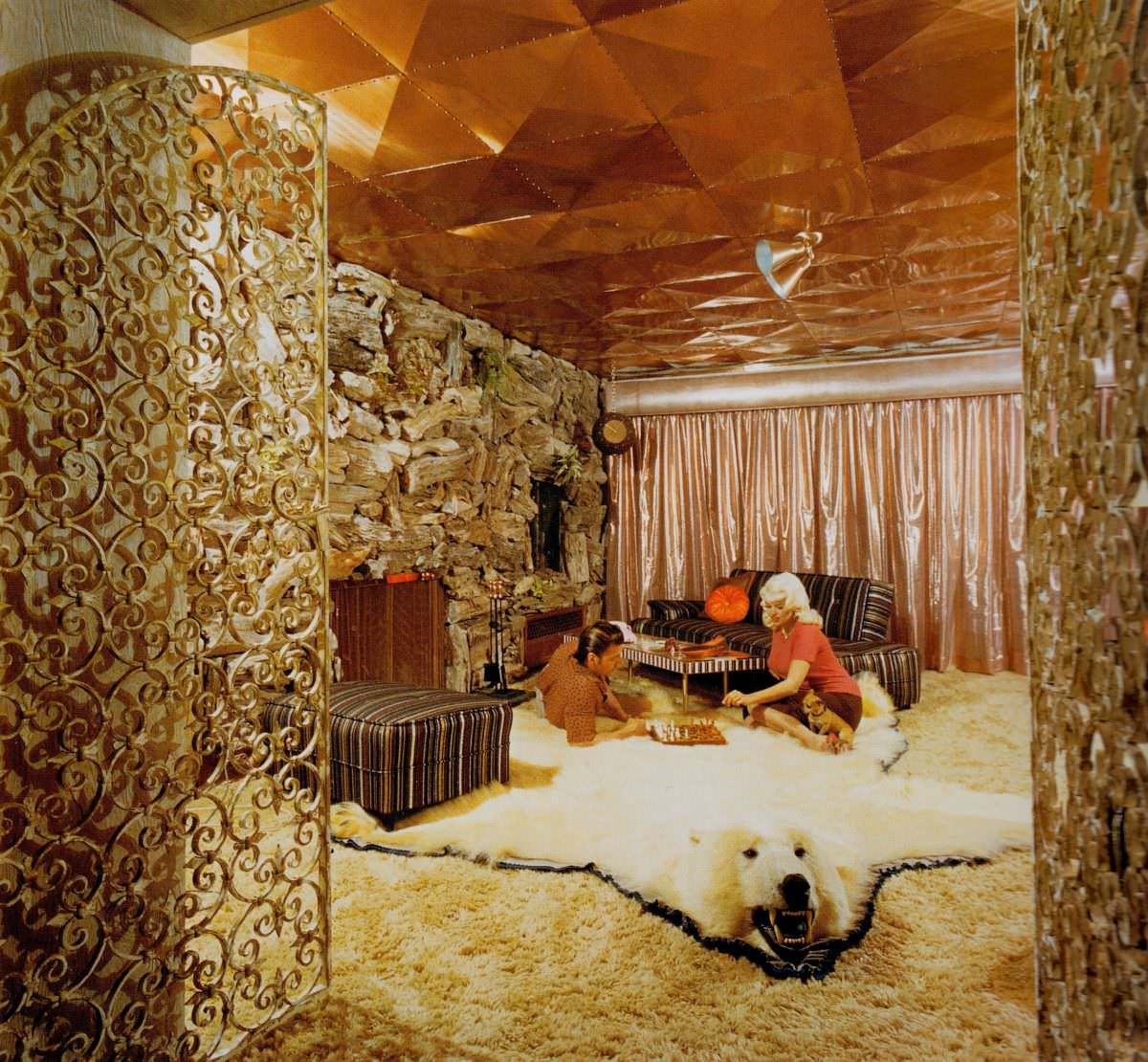
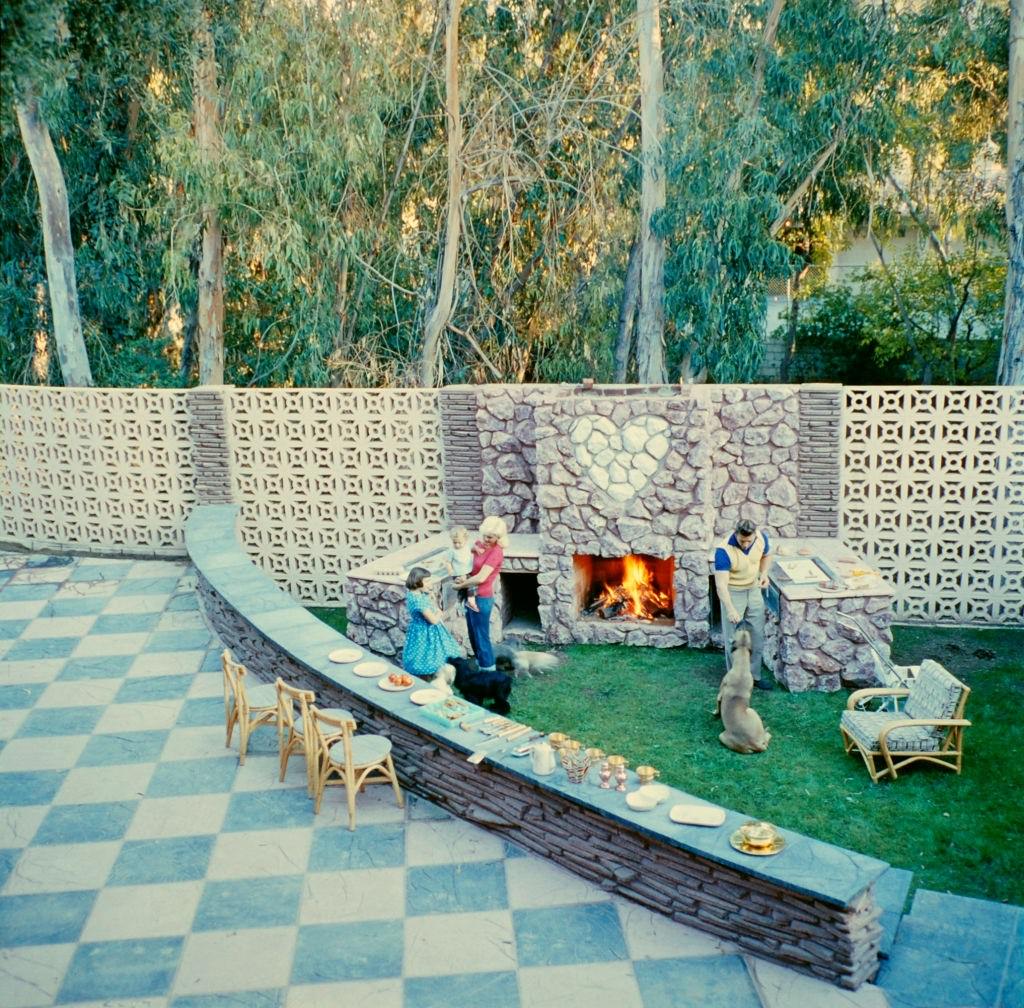
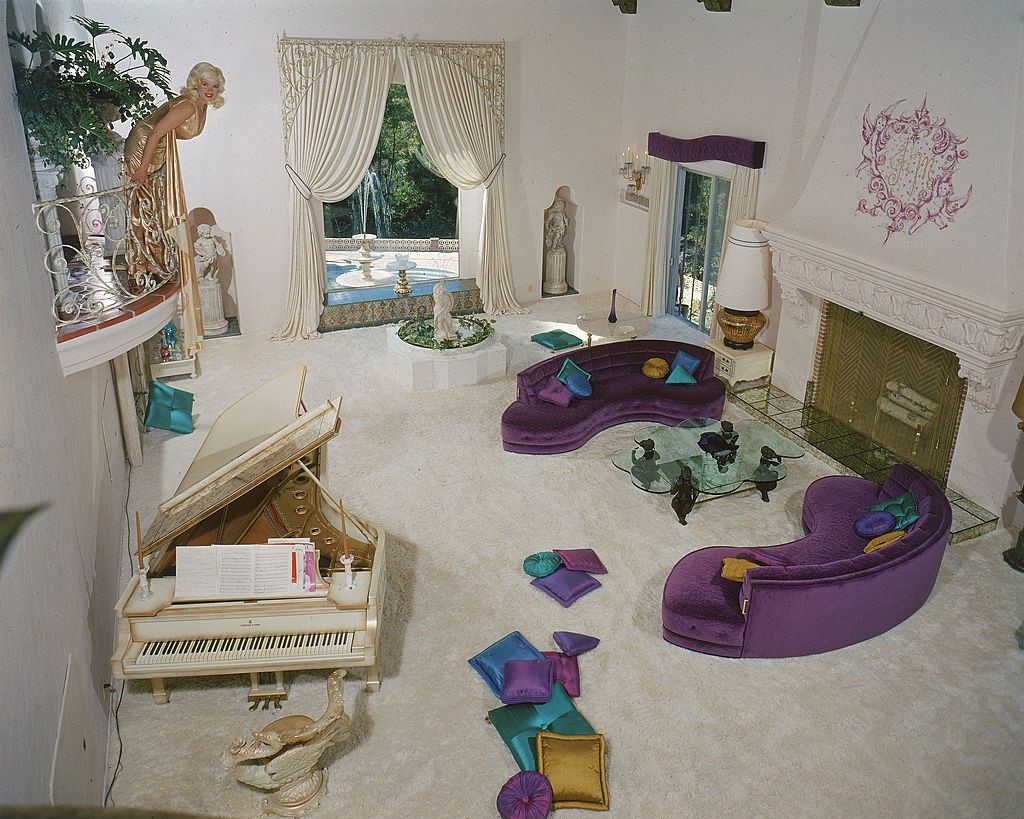
Inside, the enormous living room was blanketed in deep white shag carpet. Cupid statues stood on pedestals set into wall niches around the room. A fountain built to circulate champagne sat alongside a Steinway grand piano — both painted with cupid figures, matching the master bedroom walls. The heart motif ran throughout the entire property. Fireplaces featured heart carvings, including one above an outdoor patio fireplace and one carved indoors, with five additional fireplaces spread across the home.
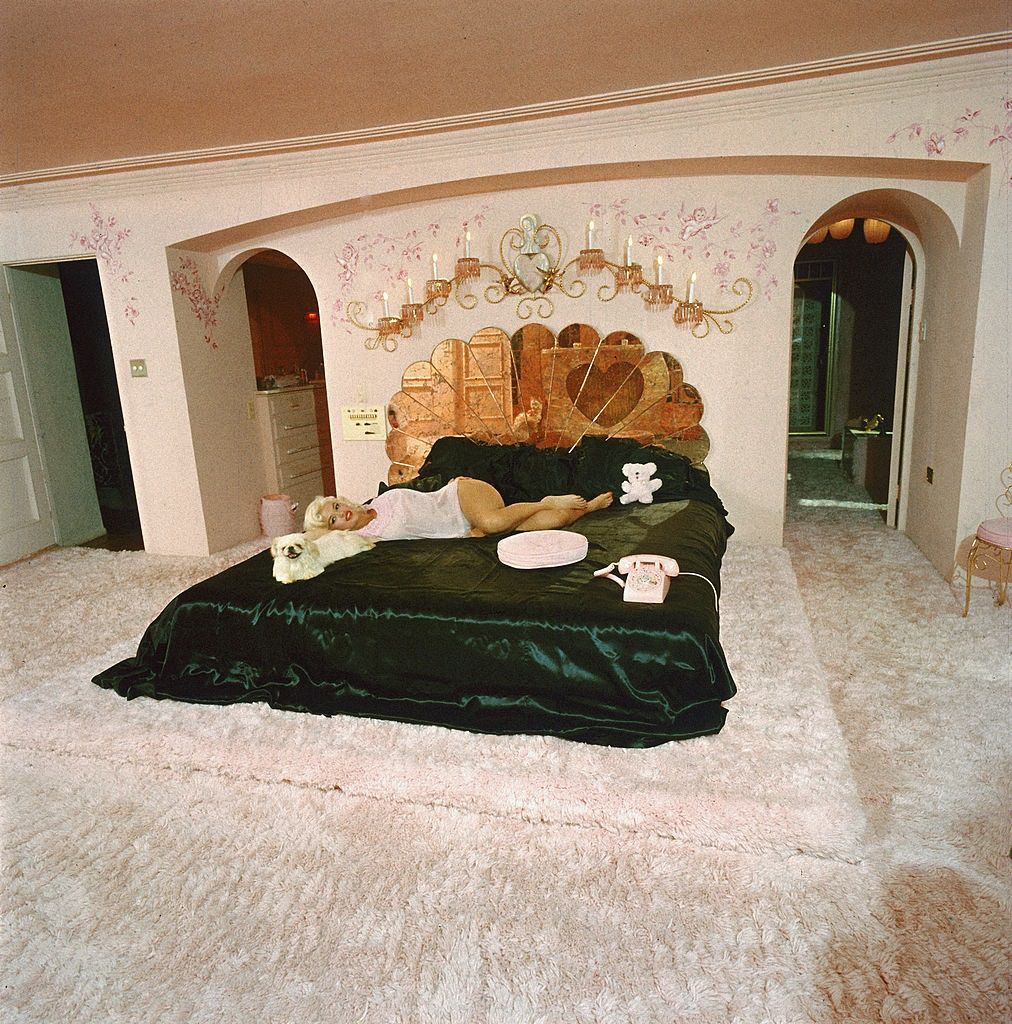
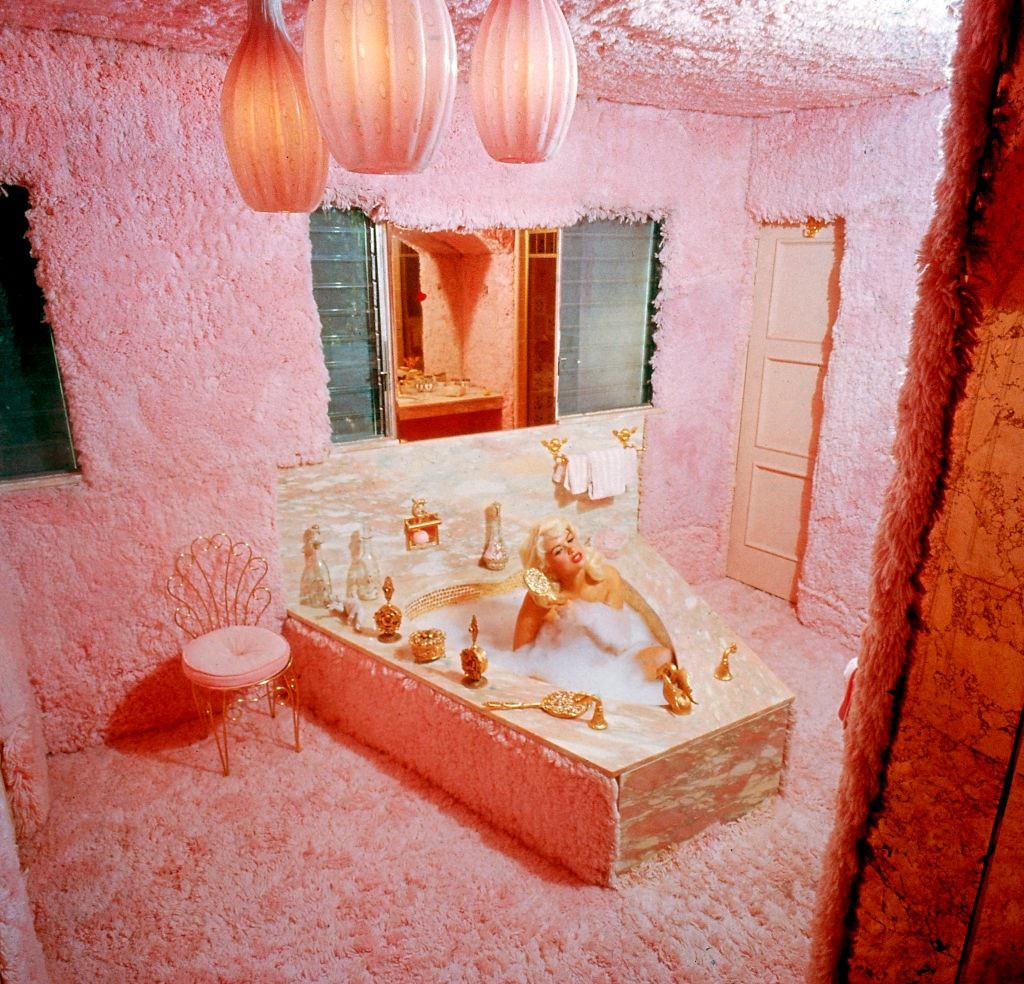
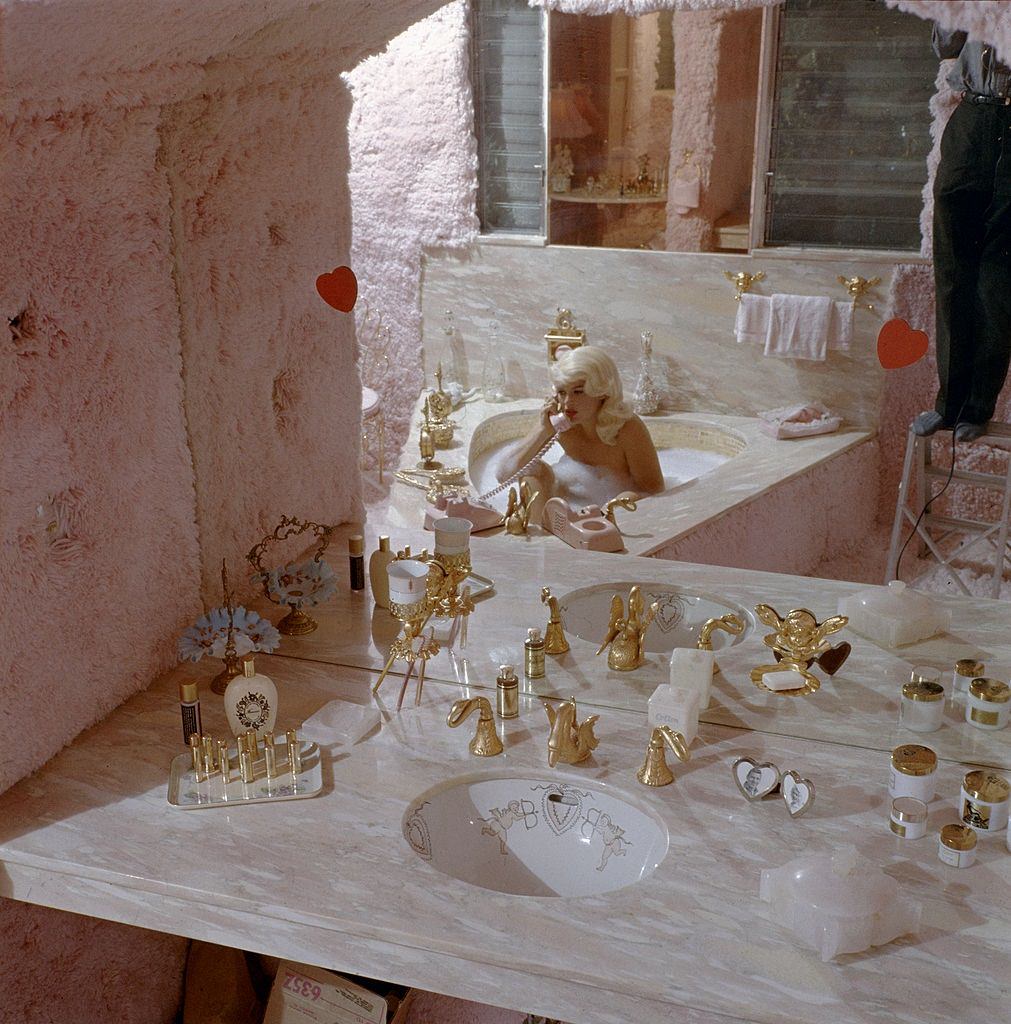
The bathrooms were equally over the top. Pink furs lined the walls, and a pink heart-shaped bathtub served as the centerpiece of the master bath. The commitment to the pink theme was total — no surface was left untouched.
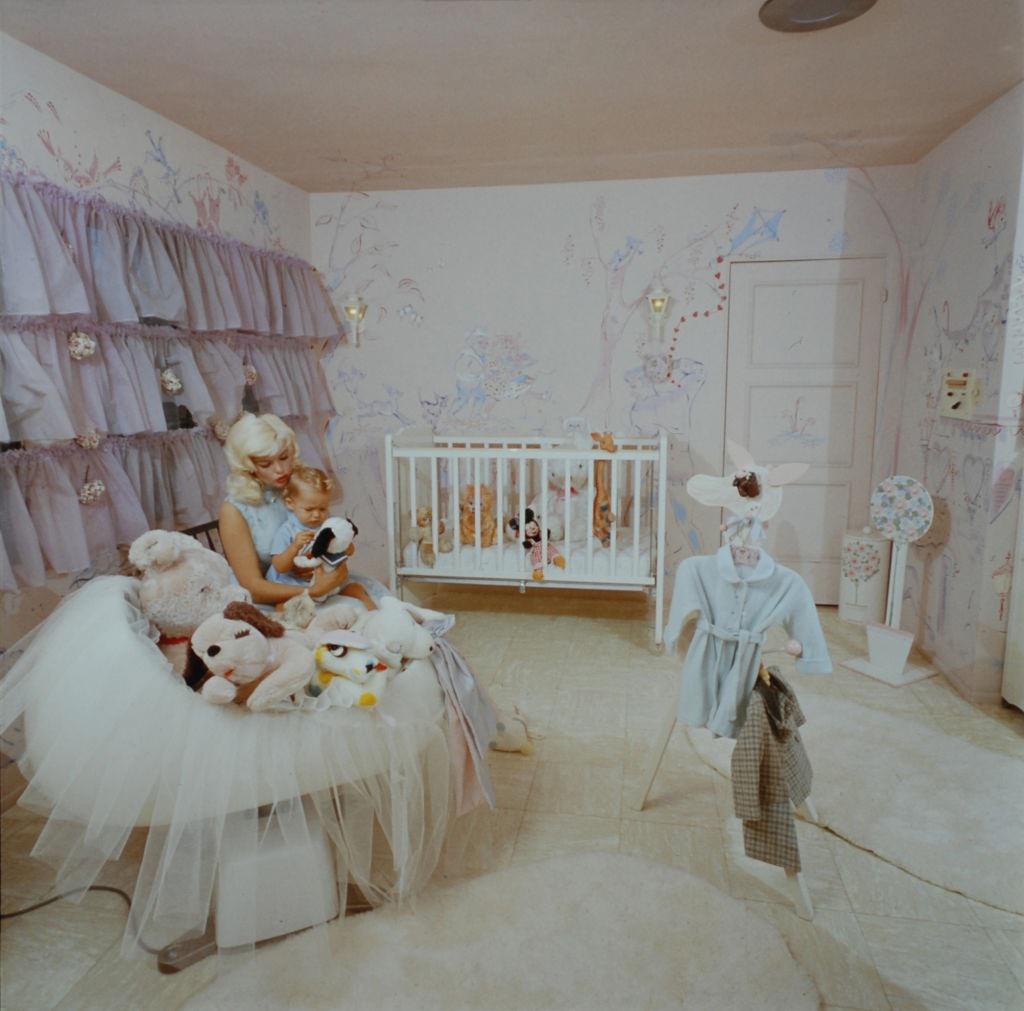
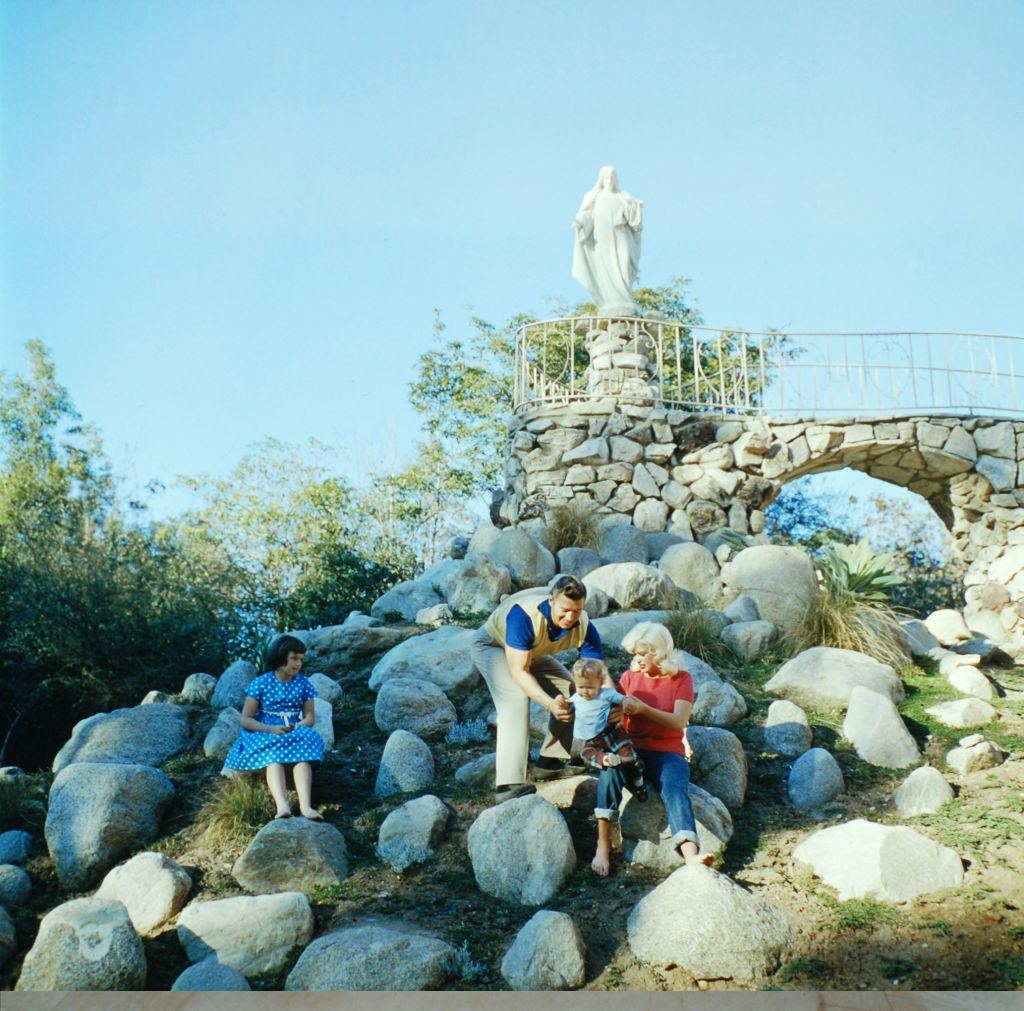
The nursery was just as carefully decorated, giving the family’s youngest members their own space within the elaborately styled home. Mansfield’s children were a constant presence in the Palace, and photos from the era show the family living fully within its flamboyant rooms.
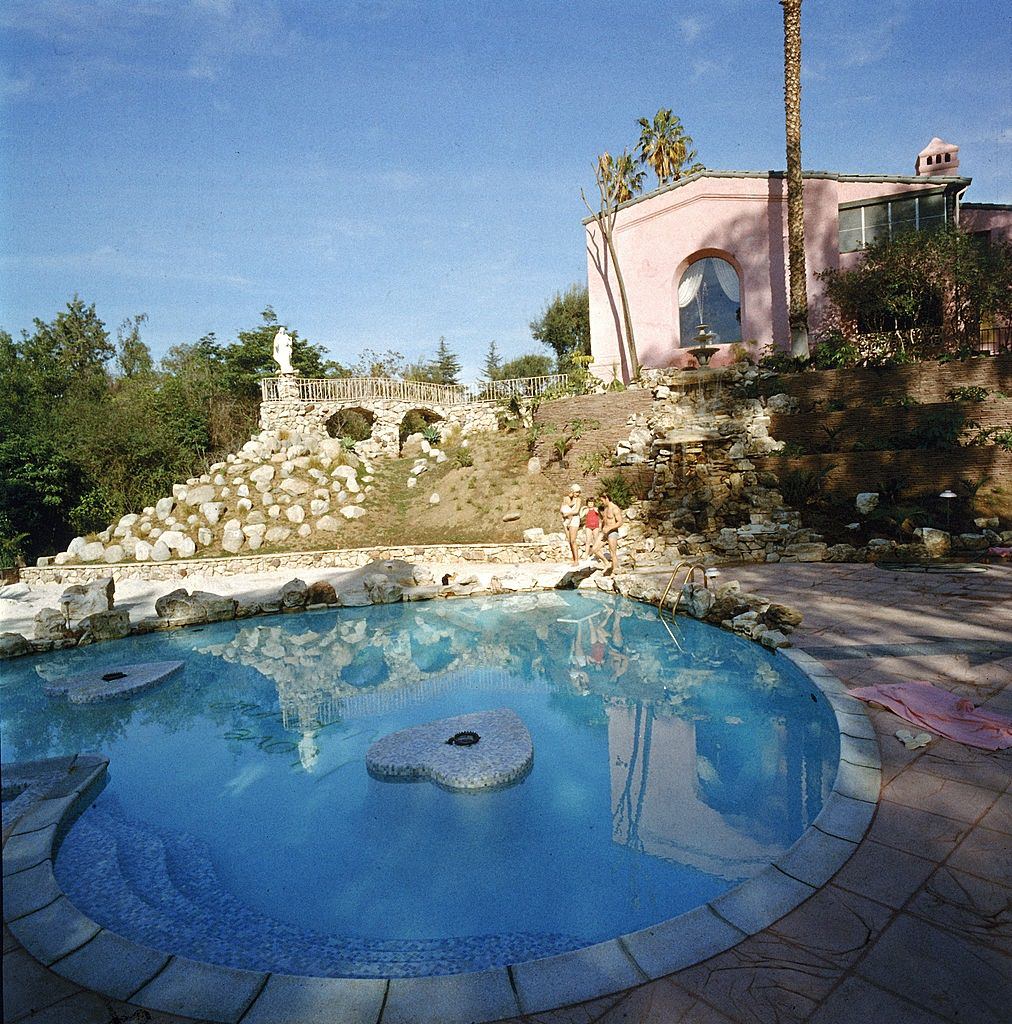
Outside, a new 40-foot heart-shaped swimming pool was constructed in the backyard. It became one of the most photographed features of the entire estate, and Mansfield frequently posed there with her family. The pool reinforced the heart motif that appeared again and again throughout the property’s design.
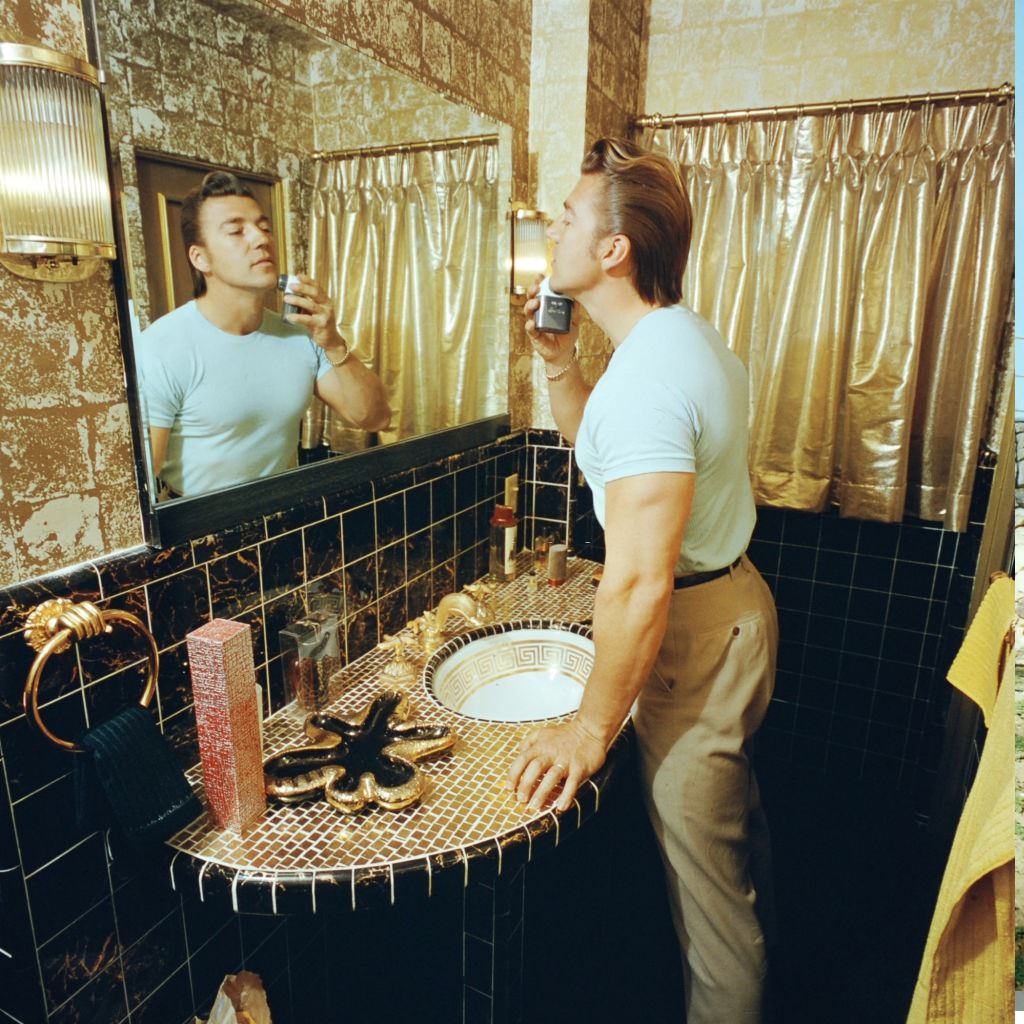
The pink-furred bathrooms weren’t just decorative backdrops — they were functional spaces used daily by the family. Phones were installed in the bathrooms, keeping Mansfield connected even during her most private moments. Every detail of the home was designed to reflect her brand as much as her lifestyle.
The living room, viewed from the balcony above, gave a full sense of just how dramatic the interior spaces were. The shag carpet, the cupid statues, and the champagne fountain came together in a room that felt more like a film set than a private home.
After Mansfield’s death in 1967, the Pink Palace changed hands several times. Ringo Starr of The Beatles bought the property first, followed by Cass Elliot of the Mamas and the Papas. Singer Engelbert Humperdinck purchased the home in 1976 and then sold it to developers. That same year, in November 1976, the mansion was demolished — ending nearly two decades of one of Hollywood’s most theatrical private residences.