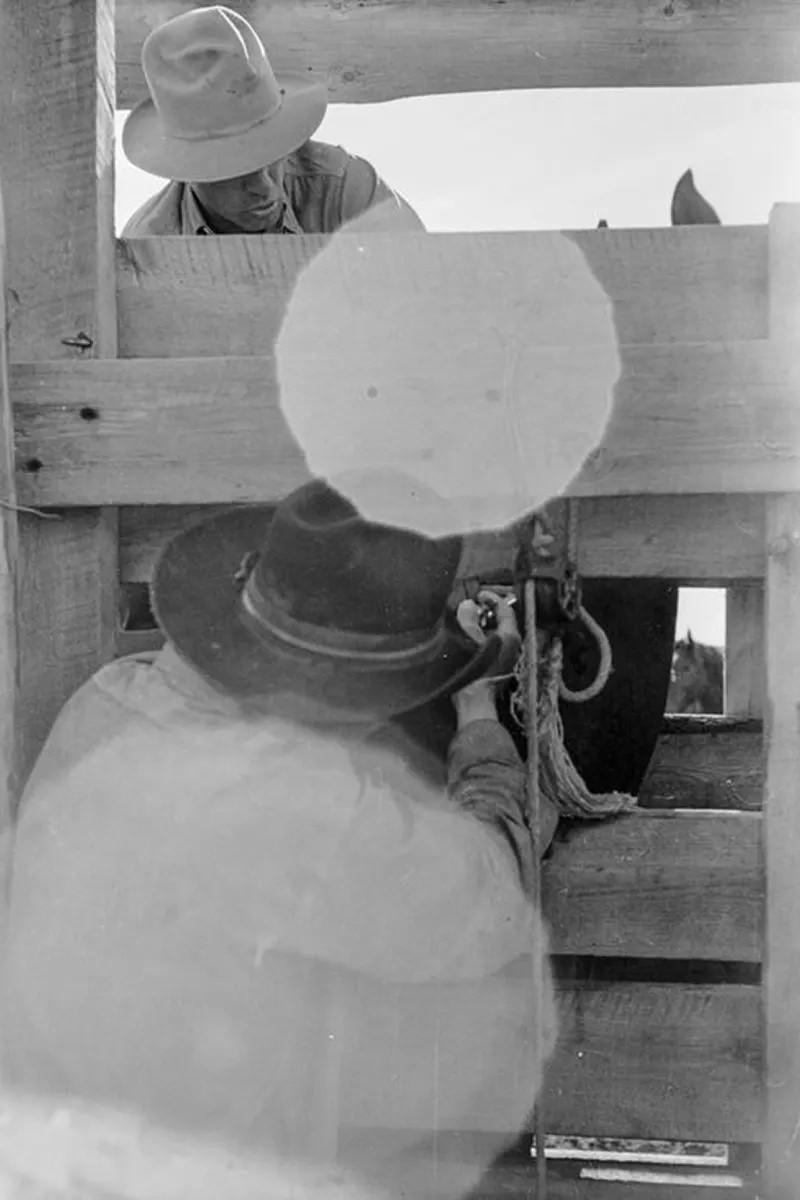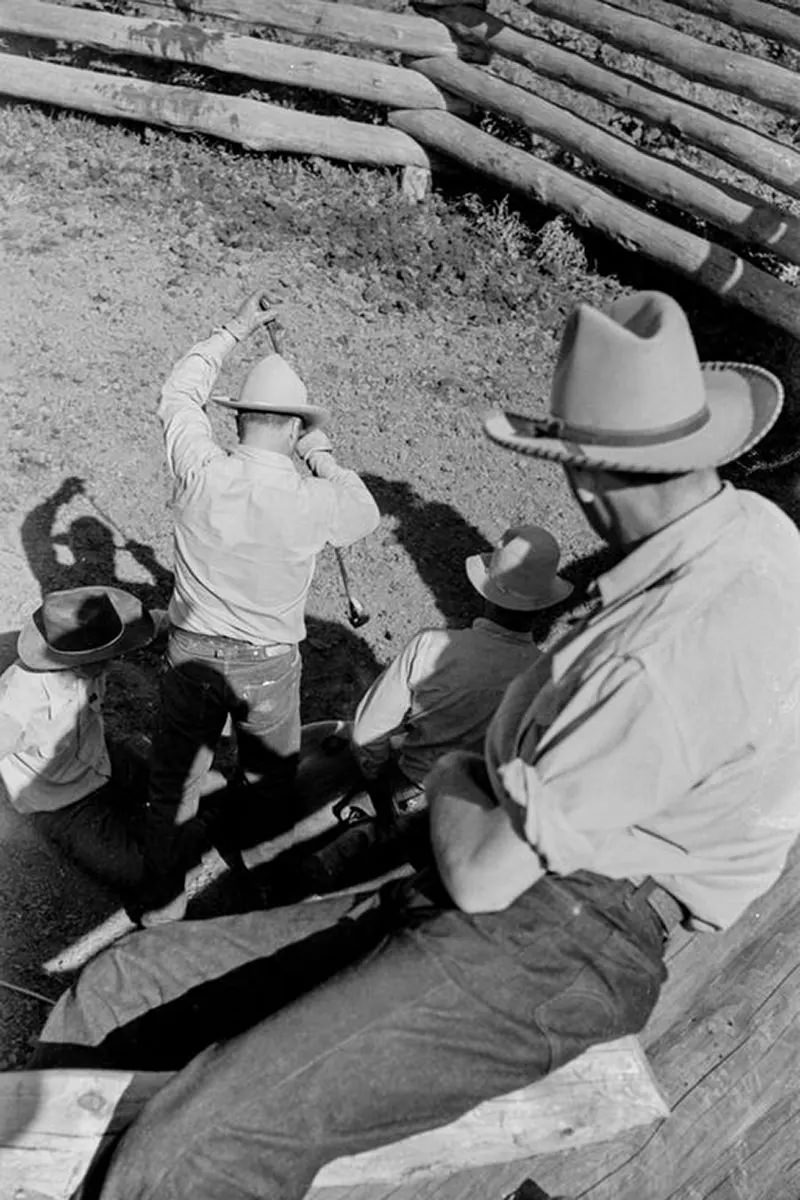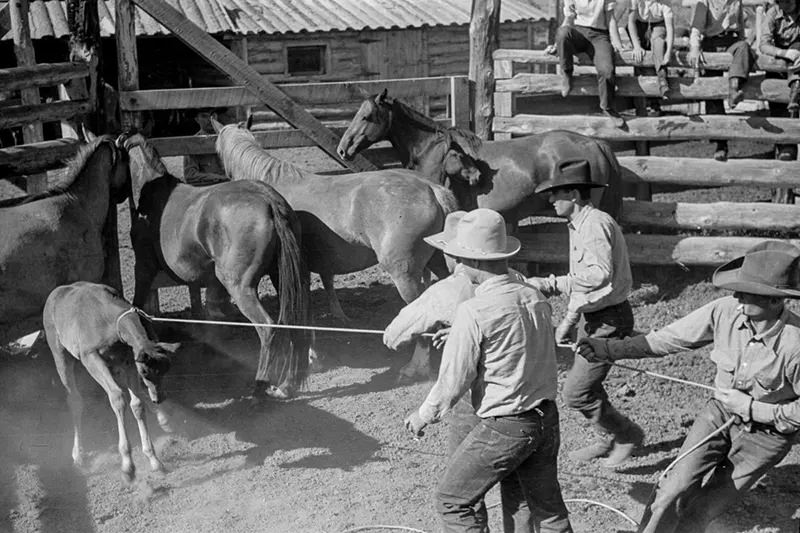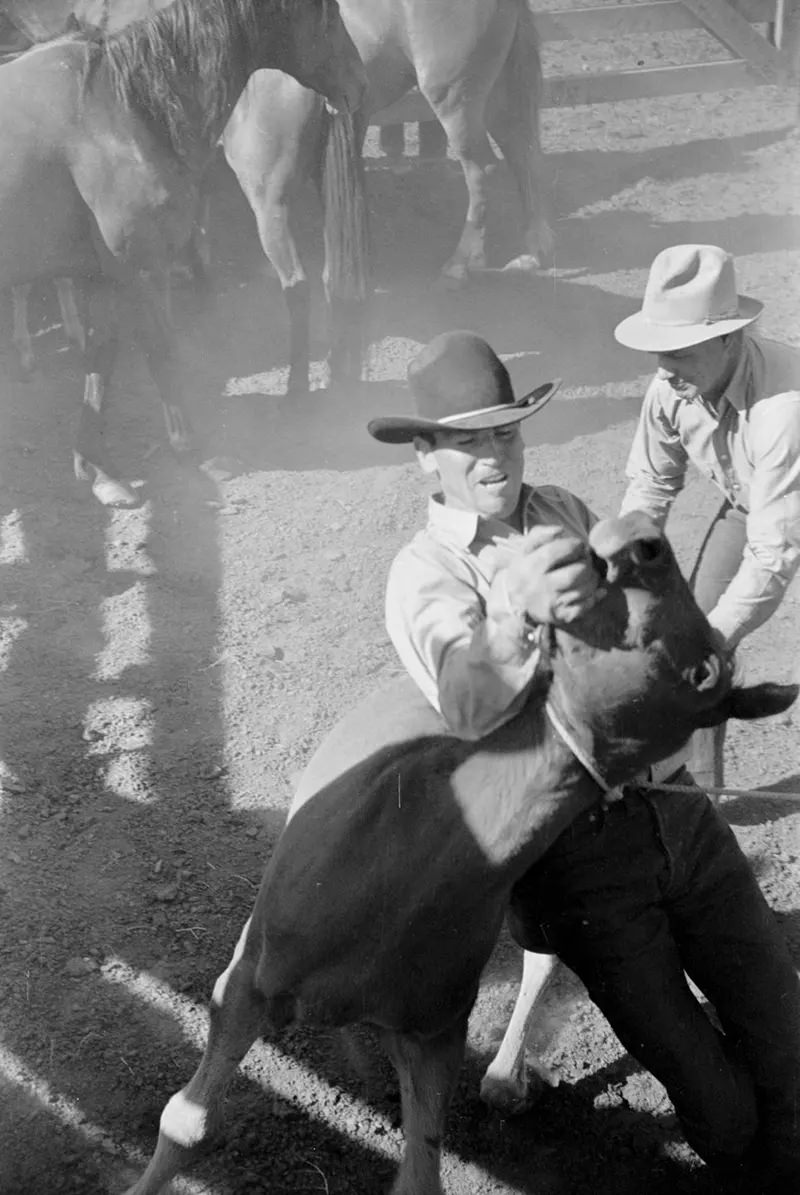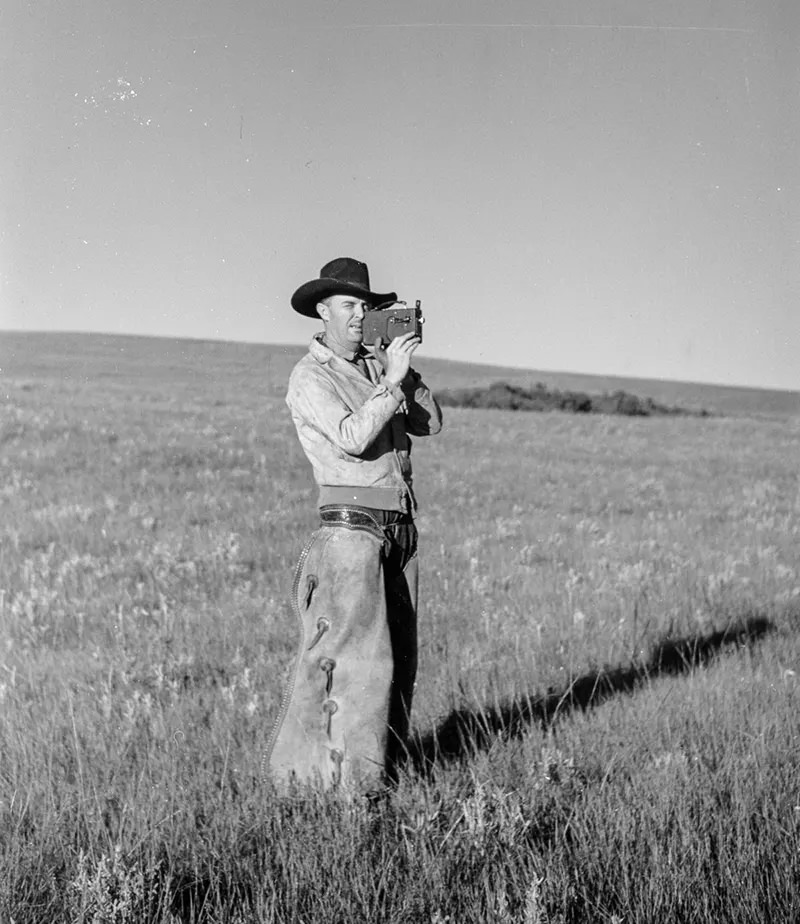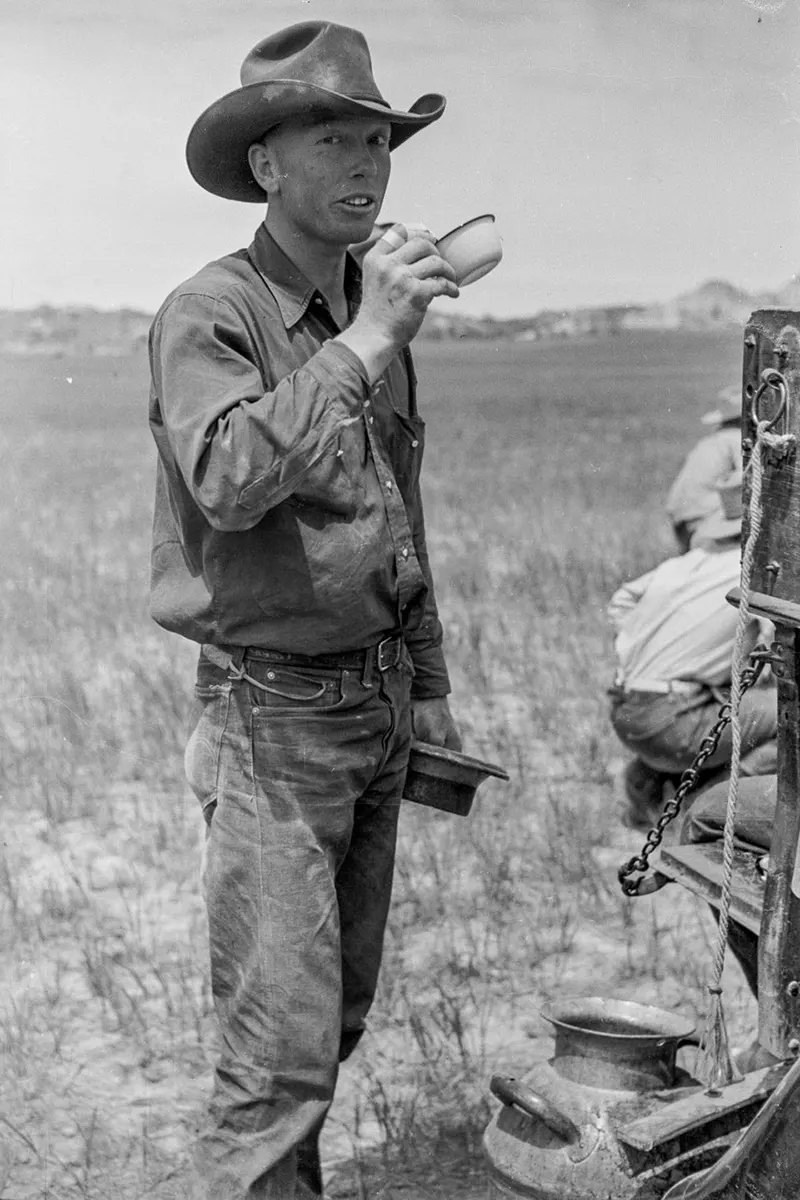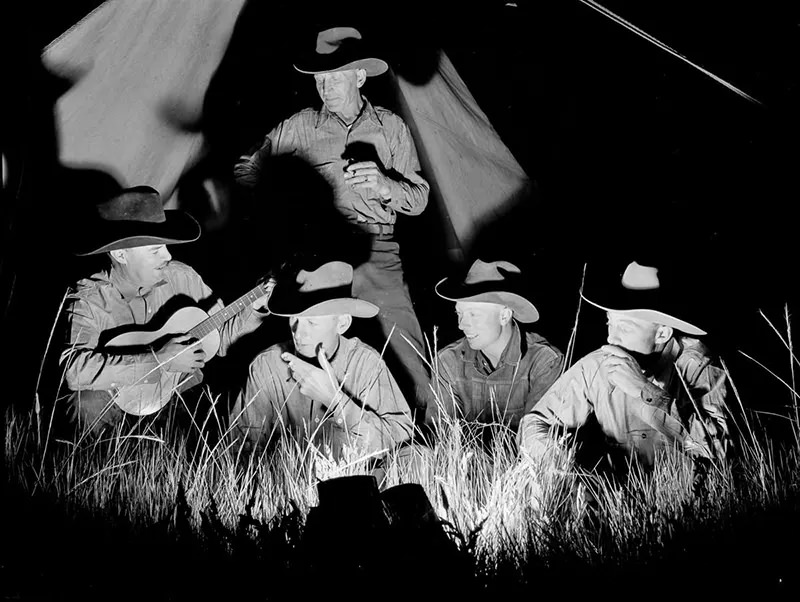

In 1939, photographer Arthur Rothstein traveled to Big Horn County, Montana, to document the working life of cowboys and ranch hands at the Quarter Circle U Ranch. What he captured was a roundup — one of the most physically demanding and skill-heavy operations in ranching. His photographs show the riders, the horses, and the cattle in raw, unposed moments across the open Montana range.
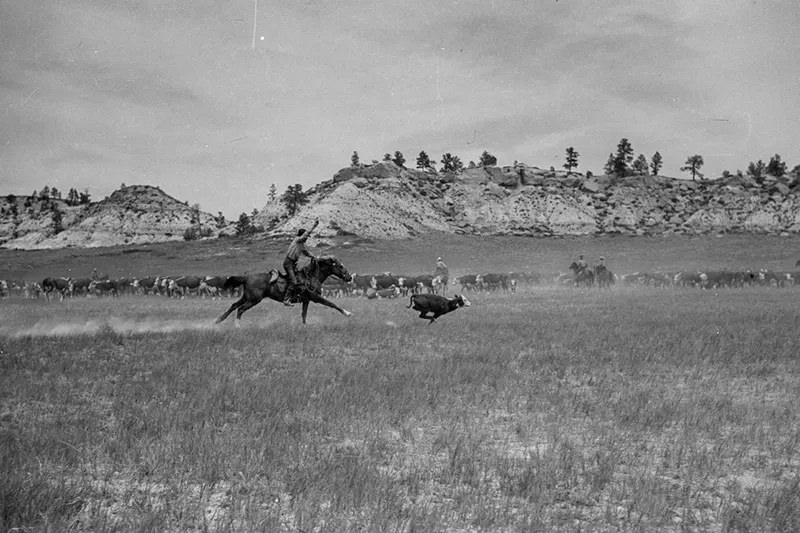
Ranches like the Quarter Circle U held two roundups each year — one in the spring and one in the fall. A roundup was not about moving cattle from one rangeland to another. It was a gathering of all animals grazing across a specific area, bringing them together in one place so they could be counted, checked, and sorted.
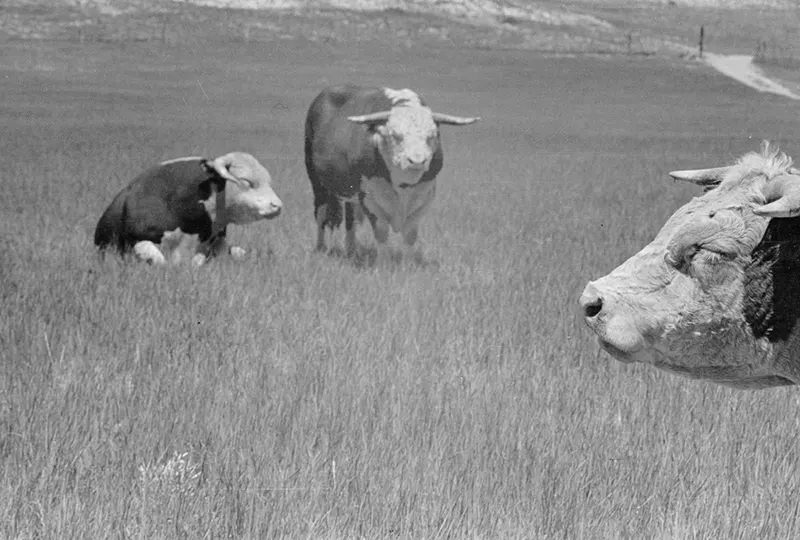
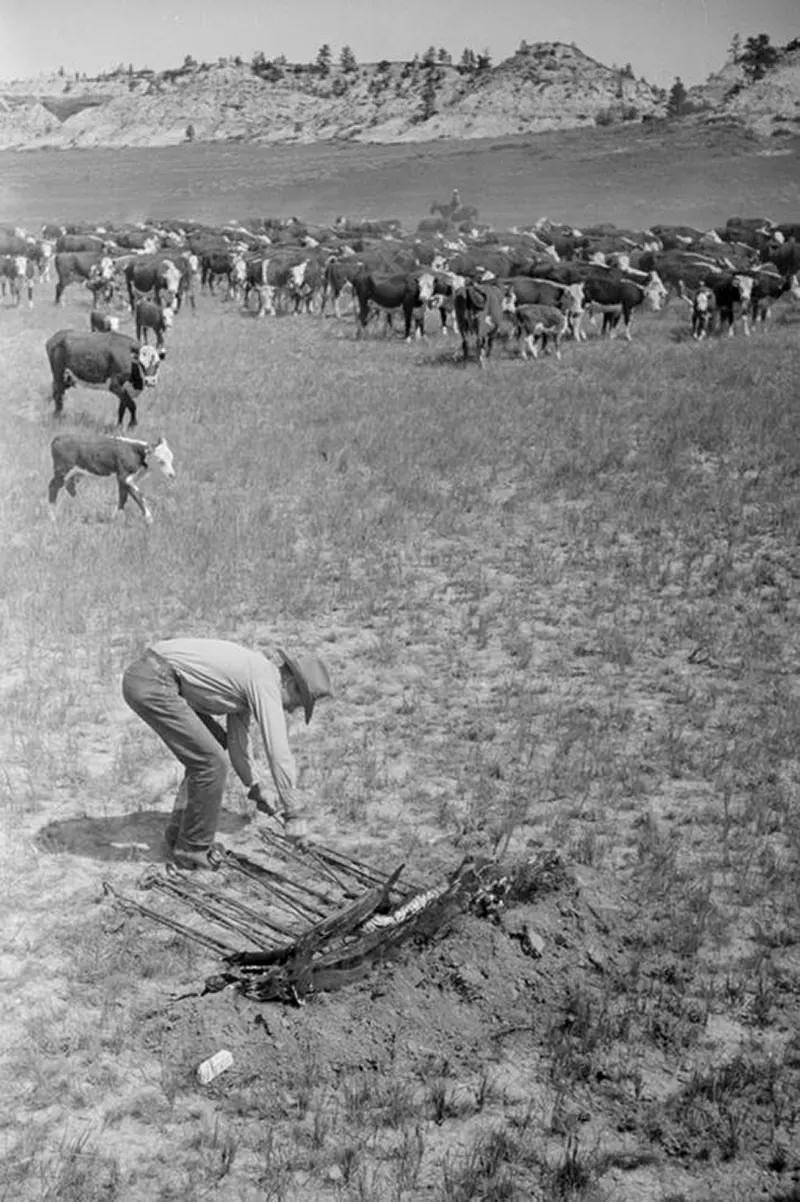
The spring roundup focused on the calves born over the winter. Cowboys branded each one and tallied the count so ranchers could estimate how the herd had grown. Along with branding, market-age steers — called “beeves” — were separated from the herd for sale. The fall roundup served a different purpose: steers ready for slaughter were selected and prepared for shipment to meatpacking plants.
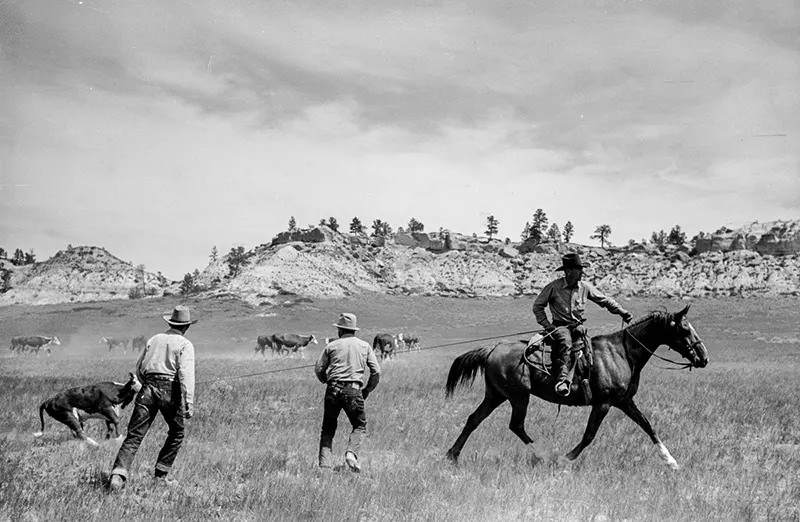
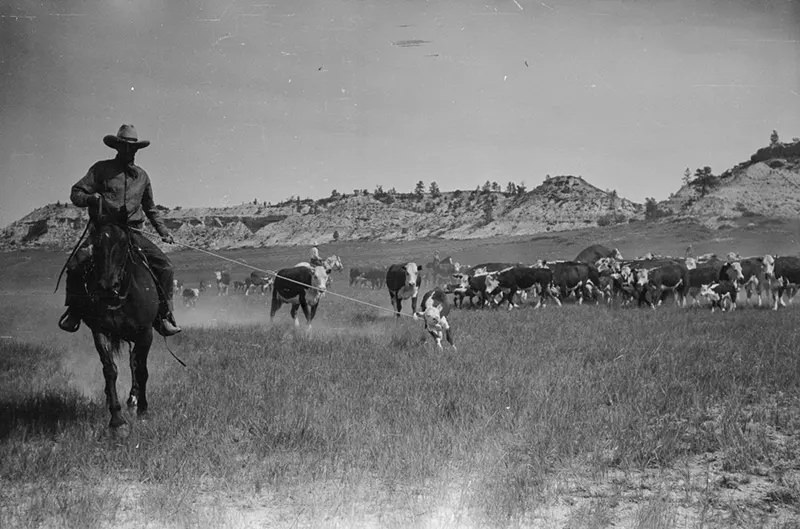
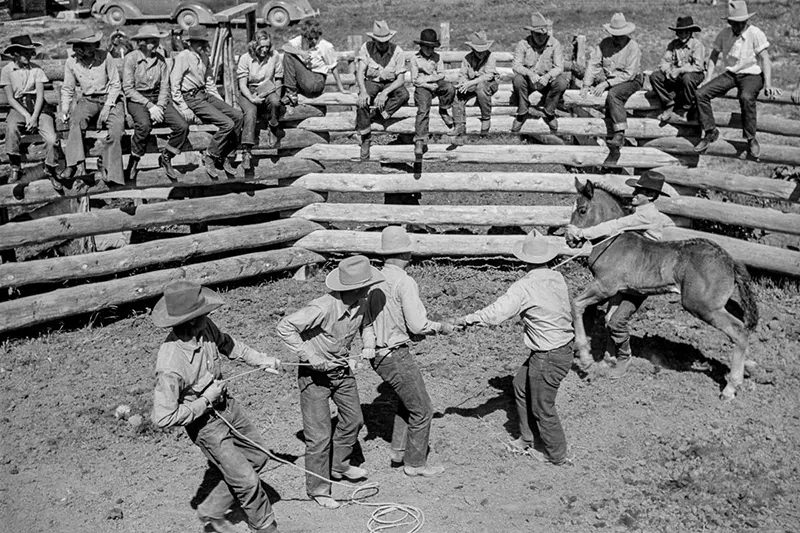
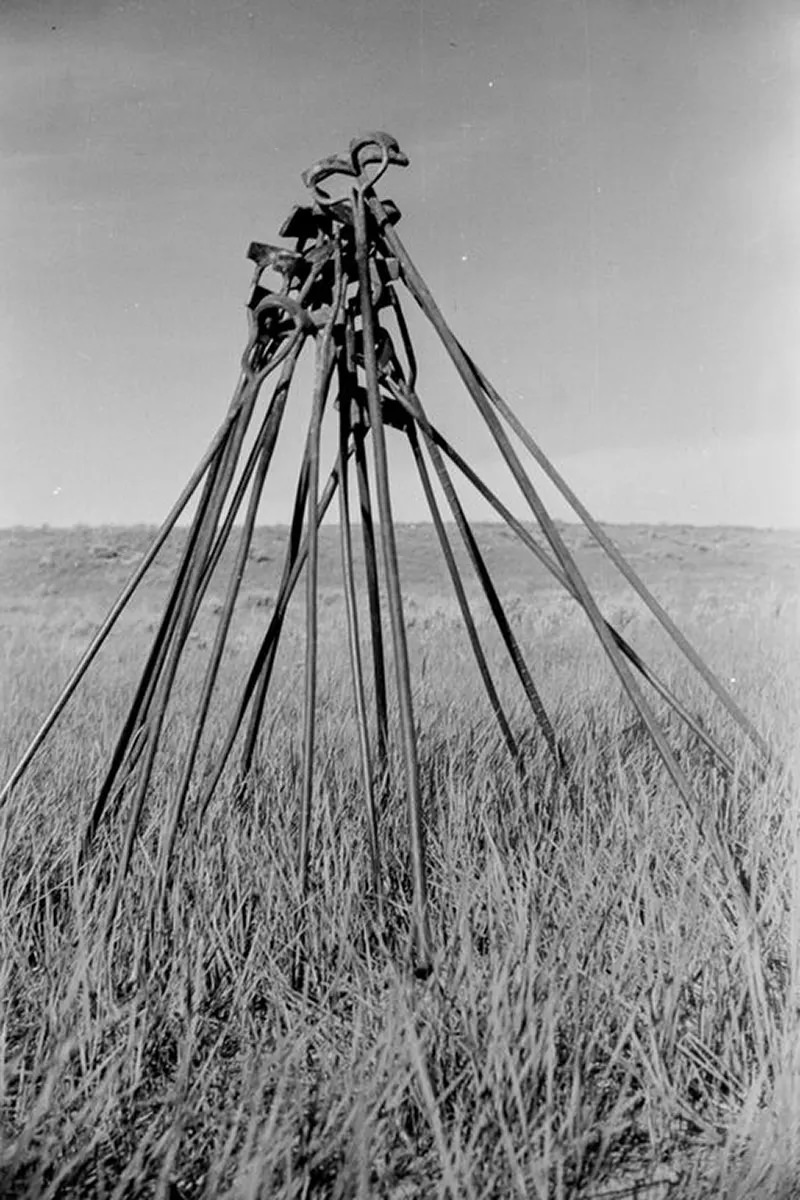
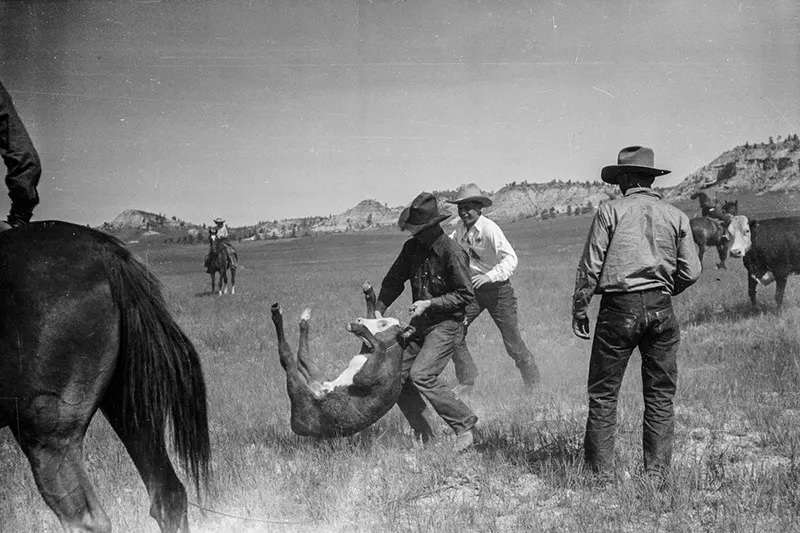
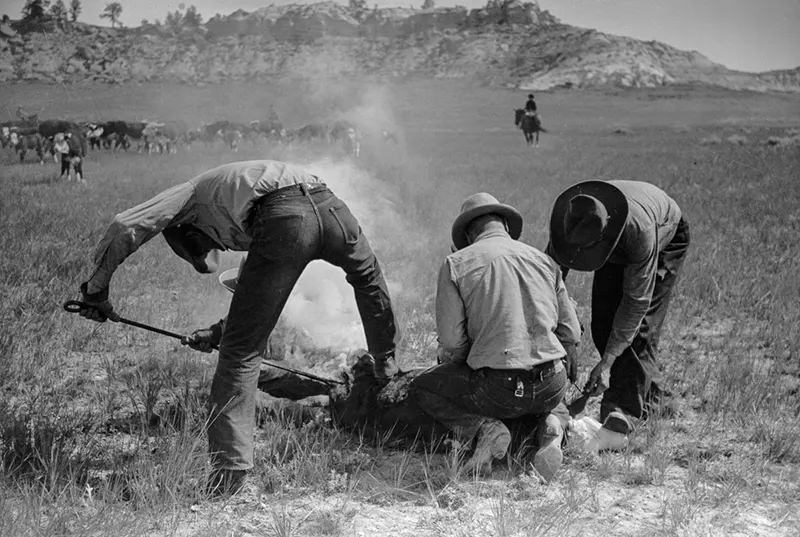
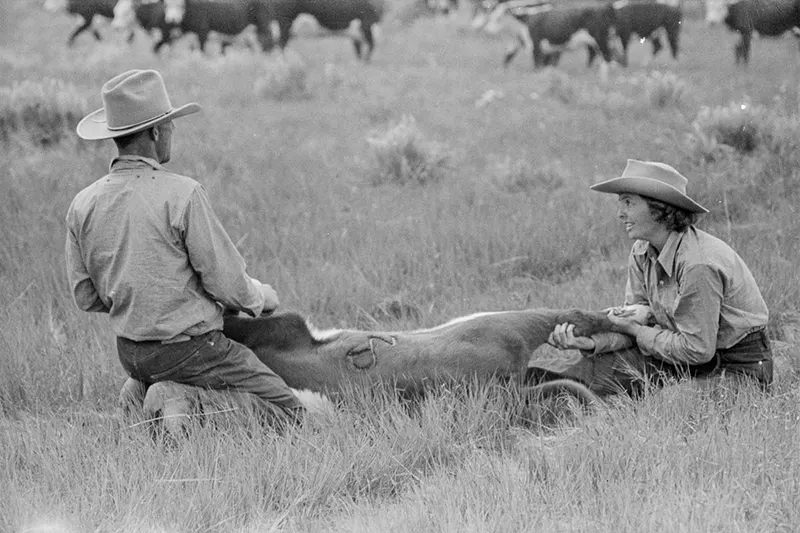
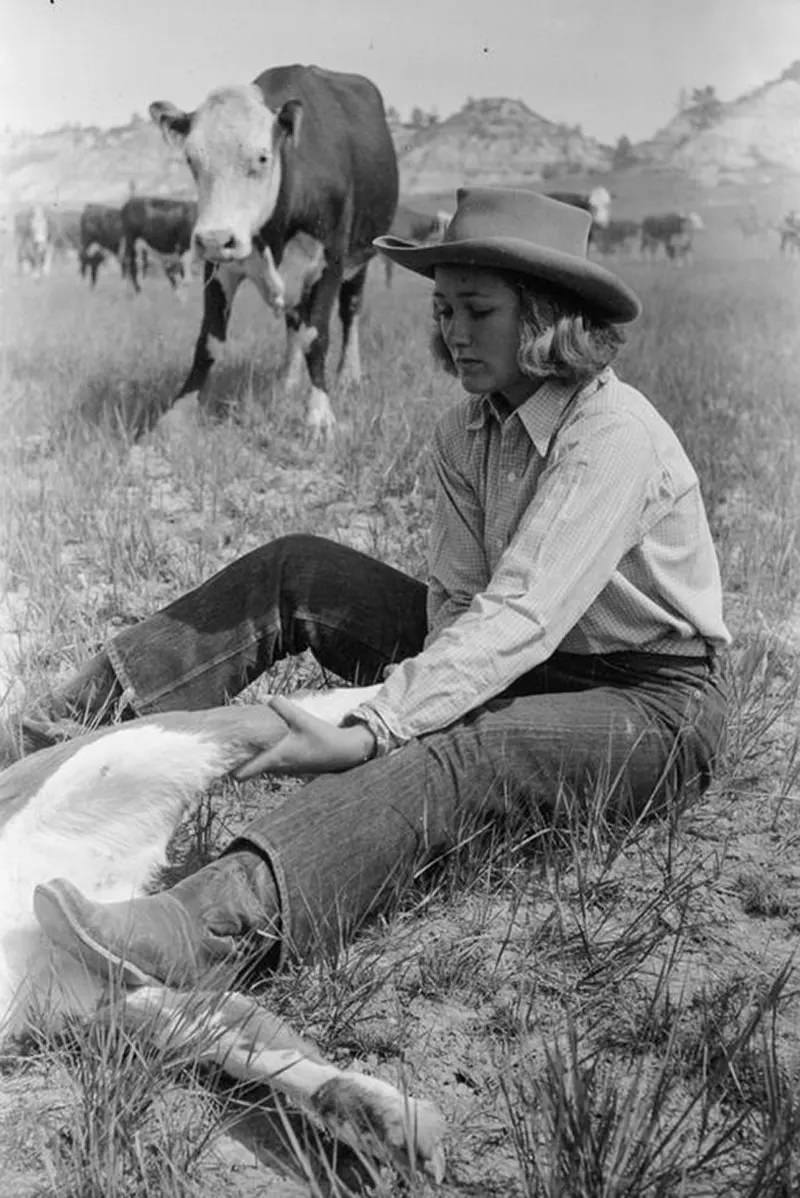
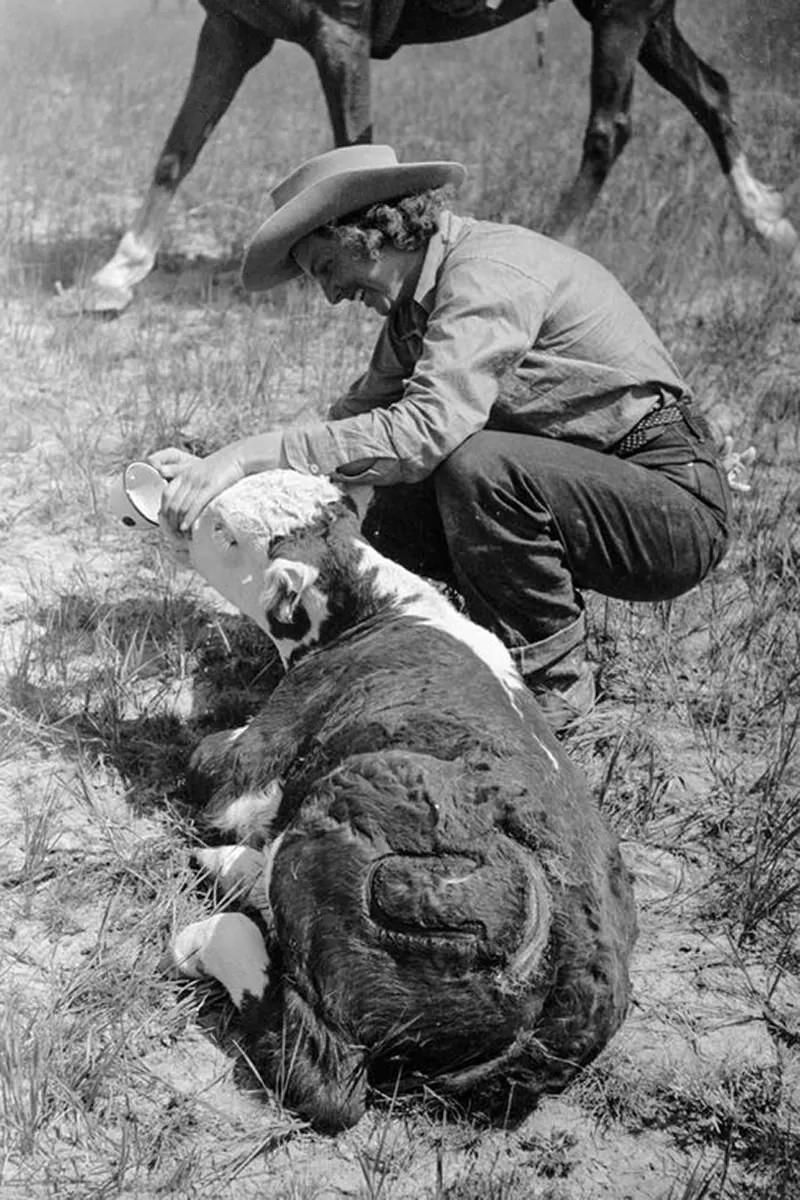
Once young calves were sorted from the herd, cowboys roped and restrained them on the ground. They were then branded, and most bull calves were castrated. Older cattle occasionally needed to be roped and held down for branding or medical treatment. It was fast, physical work that left little room for error.
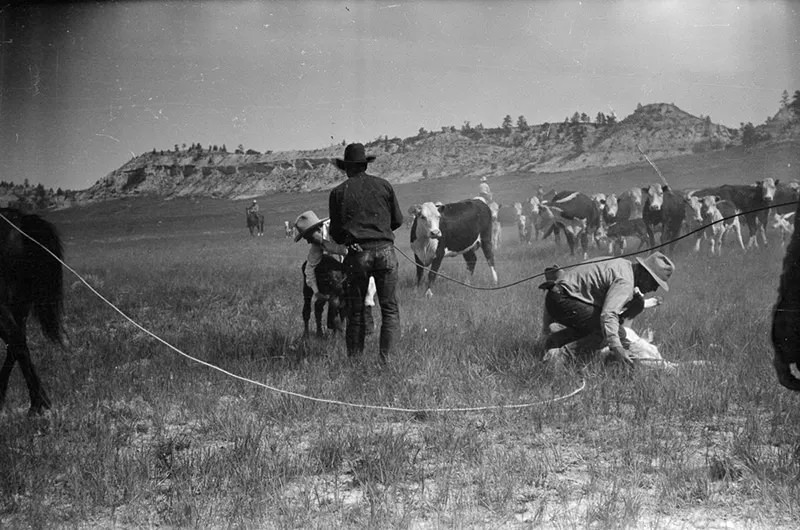
Not every cowboy performed the same job during a roundup. Cattle separators — the riders tasked with cutting specific animals out of the herd — needed the highest level of skill. Their horses were equally specialized. These animals were trained to mirror the movements of cattle, stopping and turning faster than ordinary ranch horses. A poor horse made the job nearly impossible.
The horses themselves required constant management. A single cowboy needed three to four fresh horses to get through one full day of roundup work. No single horse could keep up with the demands of a full day on the range. Because of this, the horse supply was just as important to a roundup as the cowboys riding them.
Young foals in the West were often born to tame mares but allowed to roam freely across the open range, growing up in a semi-wild state. Cowboys who specialized in horse training rounded up these animals alongside truly wild herds. The process of taming them was called bronc busting — a rough, demanding discipline that turned unbroken horses into working ranch animals.
The cowboy responsible specifically for managing and tending the horses used in ranch work was called a wrangler. Wranglers made sure horses were fed, rested, shod, and ready for the riders who depended on them. Without a capable wrangler, a roundup operation fell apart quickly.
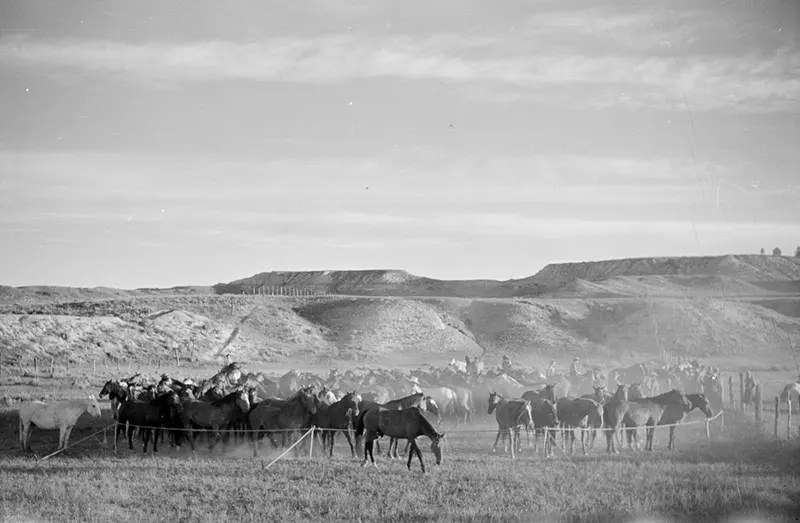
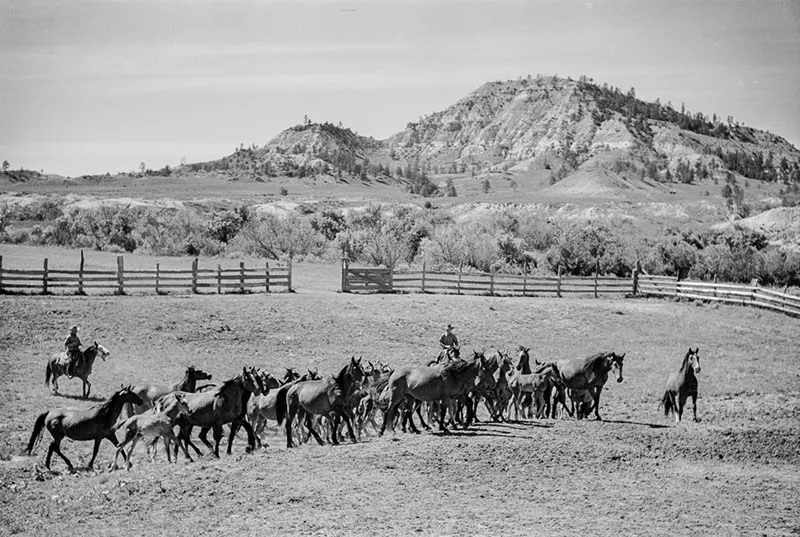
The time a roundup took depended entirely on the size of the land being worked. Riders had to cover every corner of their territory on horseback to locate scattered cattle. On large ranches with rough terrain, that could stretch the operation across multiple days. Every acre had to be checked.
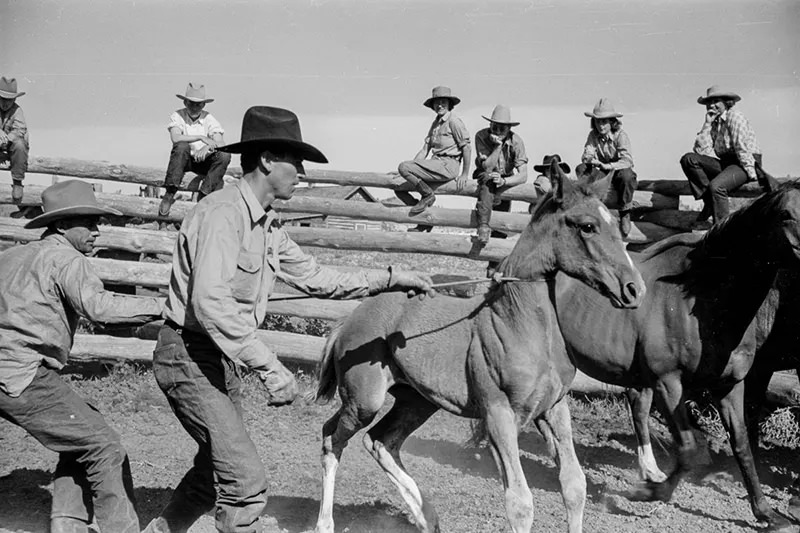
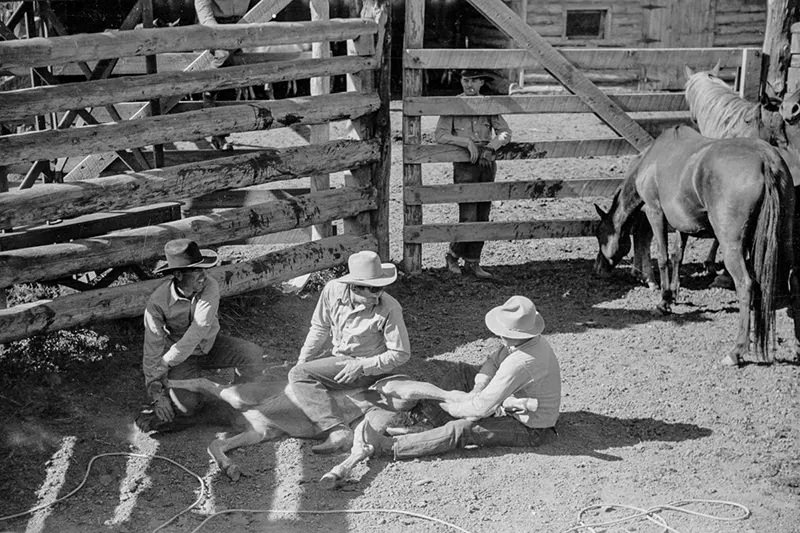
The roots of American cowboy culture trace back to Spain and the vaquero traditions that early European settlers brought to the Americas. Over generations, clothing, equipment, and animal-handling methods changed to match the terrain and climate of different regions. What cowboys wore and carried on the Montana range in 1939 reflected centuries of slow, practical adaptation.
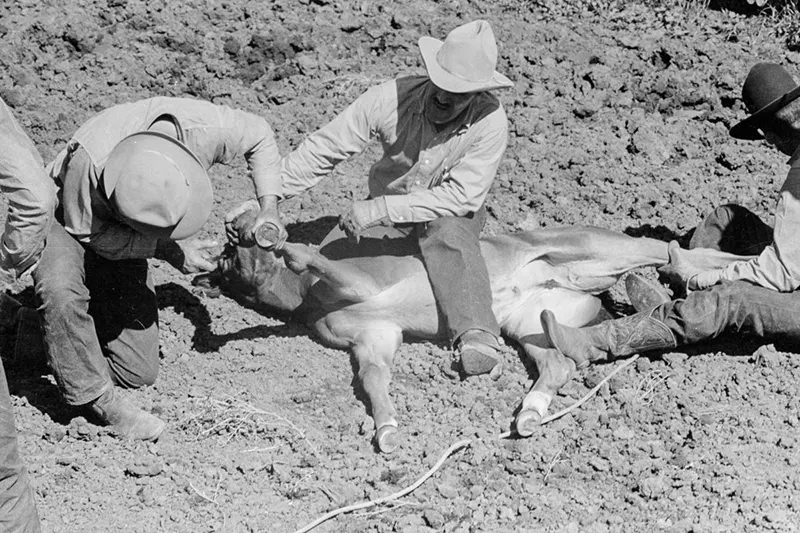
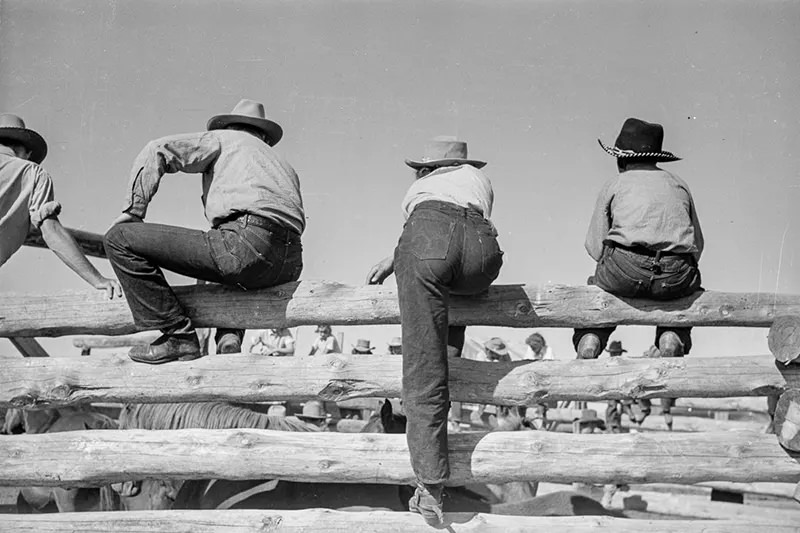
By the late 19th century, the American cowboy had grown into a cultural figure — part working laborer, part legend. But the daily reality of the job looked like what Rothstein documented at Quarter Circle U: long hours, dirty work, and an unbroken dependence on skilled horses and experienced hands.
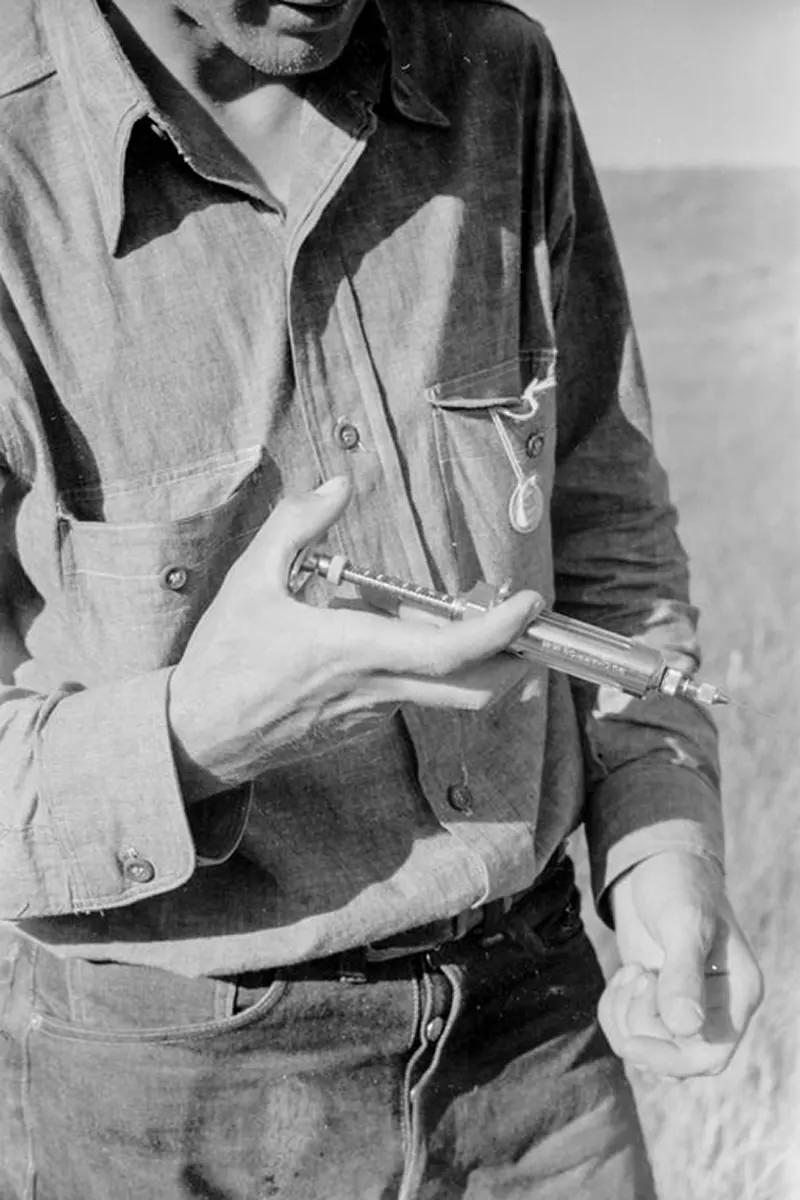
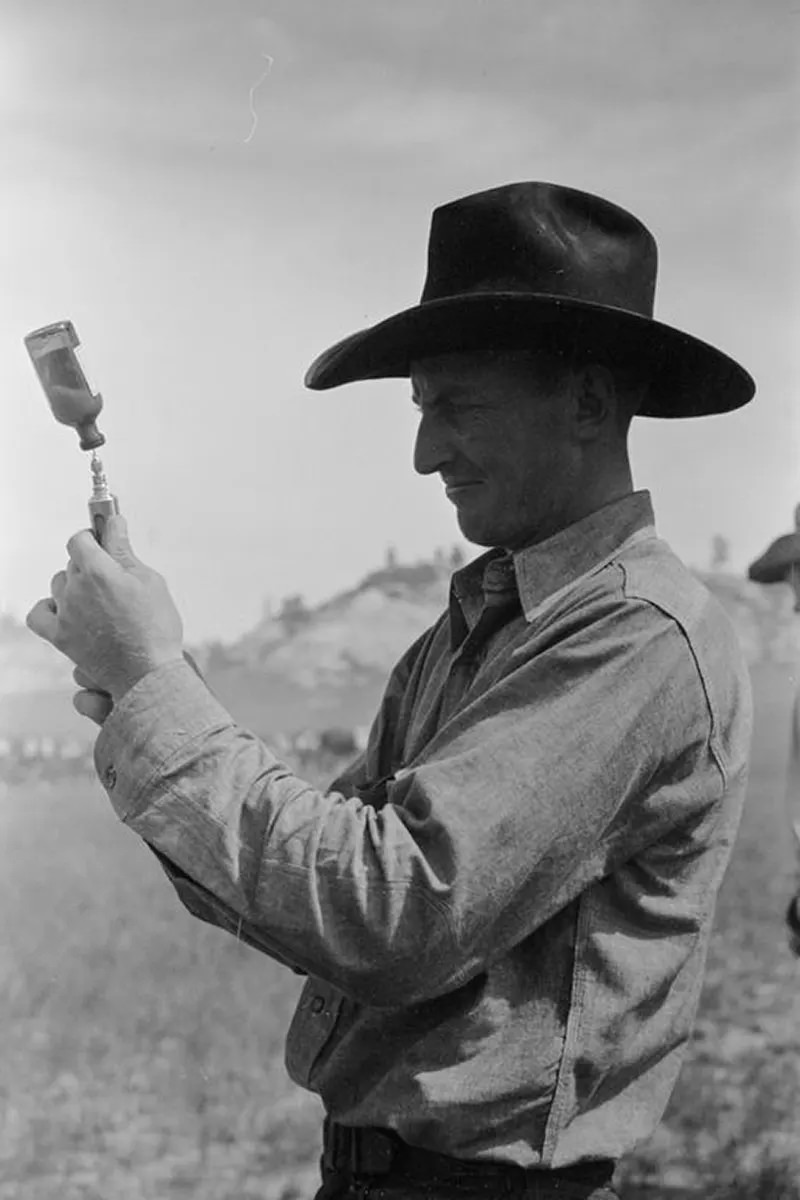
Cowgirls carried out the same range work as their male counterparts, though their contributions throughout history were far less documented. Their role on working ranches was real and equal in practice, even when it went unrecorded. Rodeos also drew cowboys and cowgirls alike, giving skilled riders a competitive outlet outside of regular ranch duties.