Along the Western Front in World War I, two armies sat locked in a standoff. Trenches stretched for hundreds of miles, and neither side could move freely without risking death. Watching the enemy was just as dangerous as fighting them. Any soldier who raised his head above the trench line long enough to gather useful information became an easy target. Military commanders needed a way to observe enemy positions without exposing their men. The solution they came up with was one of the most creative deceptions of the entire war: the camouflage tree.
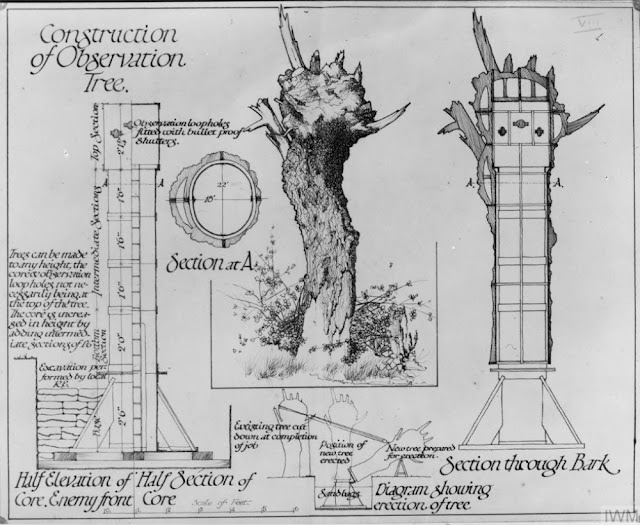
These were not decorations or props. Each fake tree was a fully functional observation post, built from steel and painted wood, designed to blend perfectly into the war-torn landscape of no man’s land. The construction process started with a military artist venturing close enough to sketch an actual tree that stood between the two front lines. The chosen tree had to be in a useful position — high enough or well-placed enough to offer a clear line of sight toward enemy trenches.
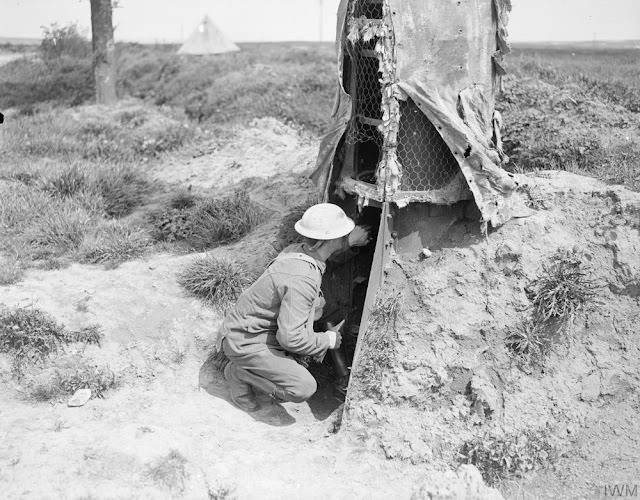
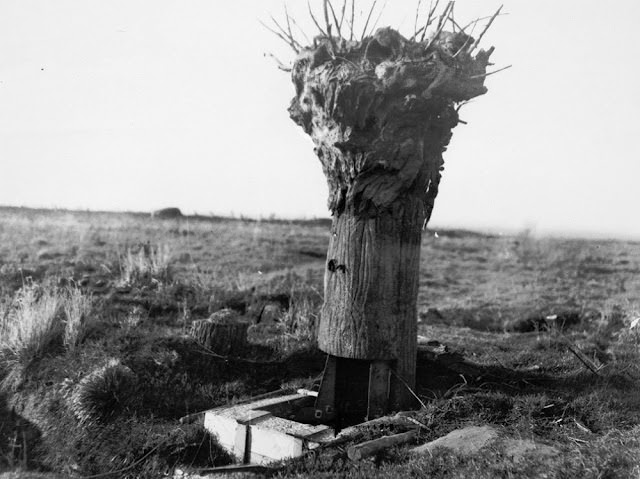
Back behind friendly lines, skilled craftsmen used the artist’s detailed drawings to build a hollow replica. At the center was a strong steel tube, which formed the core and gave the structure enough stability to support a man standing inside. Around that core, workers added a outer shell of painted steel plates shaped and textured to look like bark. Every knot, crack, and irregular bump from the original tree was carefully reproduced. Dead branches were attached at the correct angles. If the real tree had a lean, the replica leaned the same way.
Getting the fake tree into position was the most dangerous part of the entire operation. A team of soldiers carried the replica out into no man’s land under cover of darkness. Working quietly and quickly, they cut down the real tree and installed the steel replacement in its exact spot before sunrise. Any noise, any light, or any delay meant exposure. Enemy sentries were always watching, and even the slightest disturbance could draw fire or alert the opposing side that something was happening.
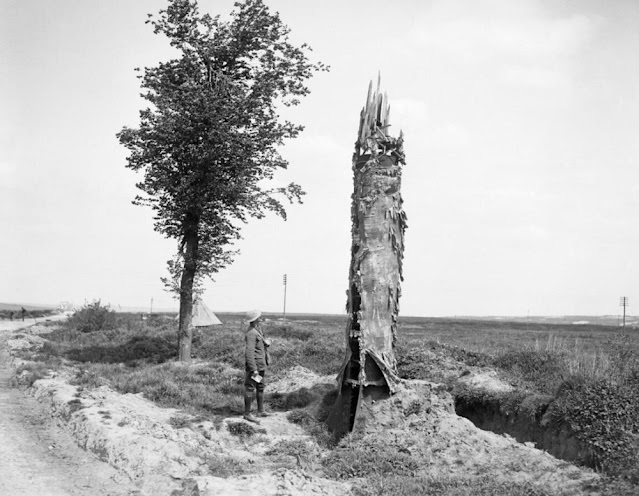
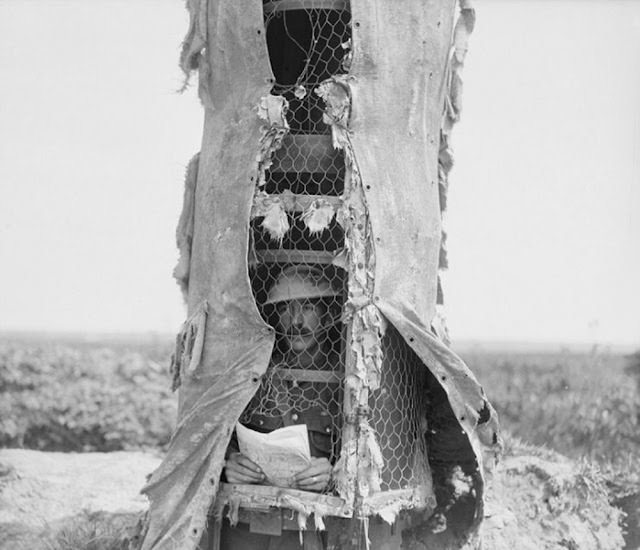
When dawn broke, the landscape looked exactly as it had the night before. To an enemy observer scanning the horizon, nothing had changed. But hidden inside the hollow steel trunk, a soldier was already at work. Armed with binoculars and a telephone line running back to headquarters, he tracked enemy movements, recorded troop positions, and reported any activity he spotted. He stayed inside for hours at a time, completely concealed, while the front lines hummed with tension around him.
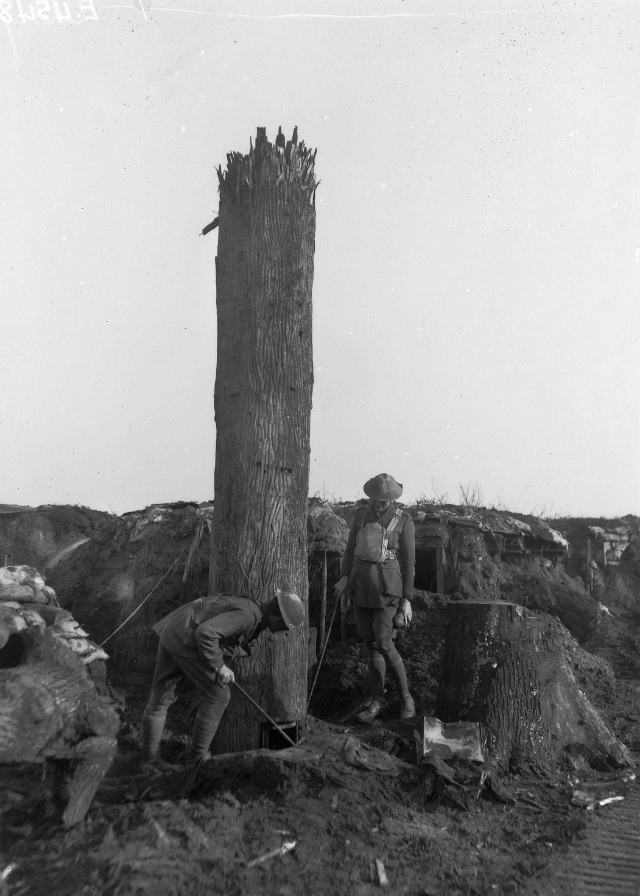
The British, French, and Germans all used versions of these observation posts. The idea spread along the Western Front as each side recognized how effective they were. Some accounts describe the Germans discovering a British camouflage tree and then building their own replica of the replica — a fake tree replacing a fake tree — to reclaim the surveillance advantage at that same spot.
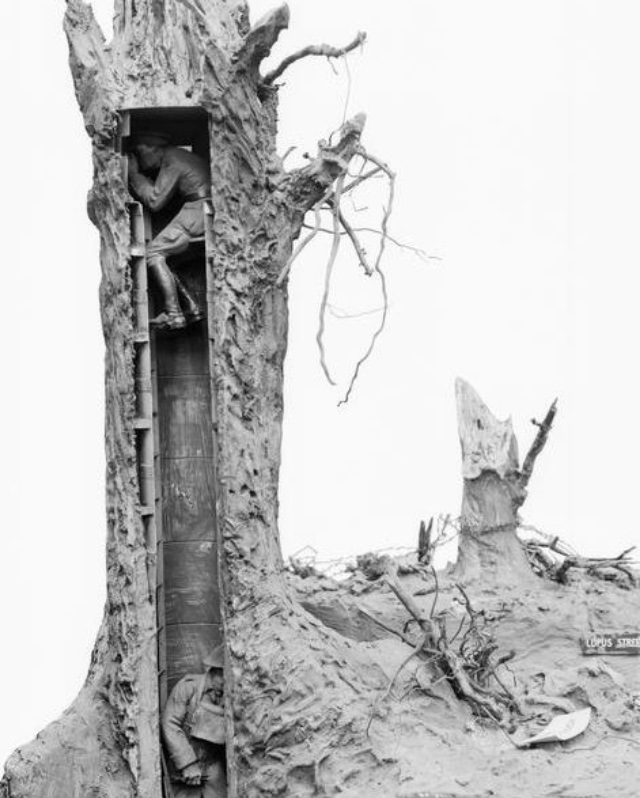
The soldiers assigned to these posts endured long, cramped shifts inside a steel tube in the middle of a battlefield. There was no room to sit comfortably, little air circulation, and no way to leave until nightfall. The observer had to stay completely still and silent. Any unusual movement in a tree — a branch swaying without wind, a silhouette visible through a hollow — could betray the position and draw a sniper’s shot.
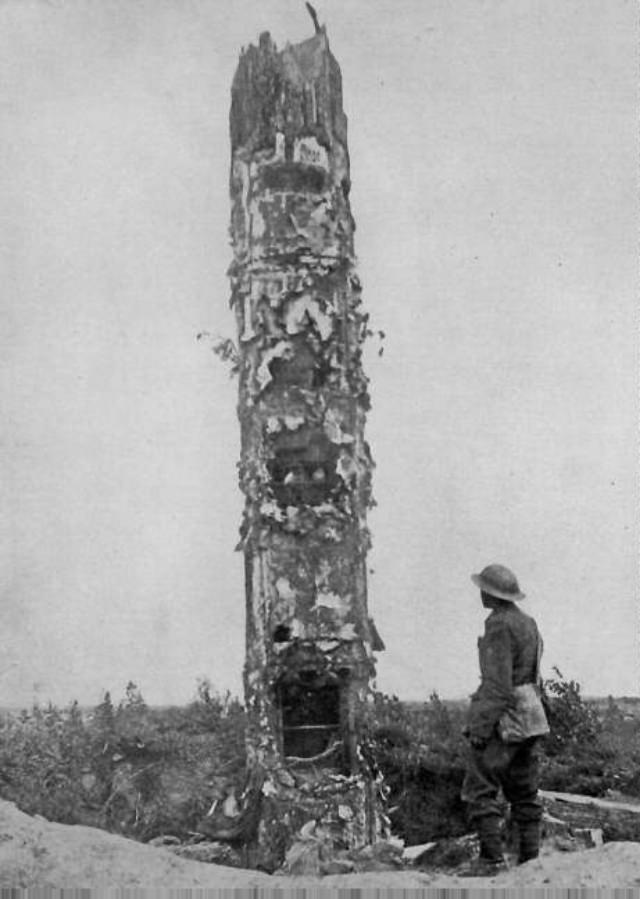
Camouflage as a military strategy was still relatively new during World War I. Both sides employed artists, designers, and engineers specifically to develop deception techniques. The fake tree was one of the most labor-intensive of these methods, requiring skilled craftsmen, brave soldiers for the nighttime swap, and a dedicated observer willing to spend hours hidden in hostile territory. It was a small operation in terms of manpower, but the intelligence it gathered could shape decisions that affected thousands of troops.