When the British Expeditionary Force landed in France in August 1914, it numbered just 80,000 professional soldiers. Four years later, millions of men — volunteers and conscripts alike — had served along a front line stretching from the Belgian border down to the Somme River. This was the British Western Front: a vast, lethal stretch of Northern France where geography ranged from the waterlogged plains of Flanders in the north to the chalky ridges of the Somme in the south. The photographs collected here document every layer of that experience, from the mud-caked trenches to the field hospitals, from sports days to the grinding advance of the Hundred Days Offensive.
British troops in France, 1914
The British trench system was far more than a single ditch dug into the earth. Engineers constructed three parallel lines: the front-line trench, the support trench, and the reserve trench, each separated by several hundred yards. Communication trenches ran perpendicular to all three, allowing men and supplies to move between the front and the rear without exposing themselves to German snipers. Walls were reinforced with sandbags and wooden frames. At the bottom of each trench, wooden slats called duckboards kept soldiers’ feet a few inches above the standing water that collected after every rainfall. Every front-line trench included a fire step — a raised ledge that let a man step up, level his rifle, and fire over the top of the parapet without fully exposing himself.
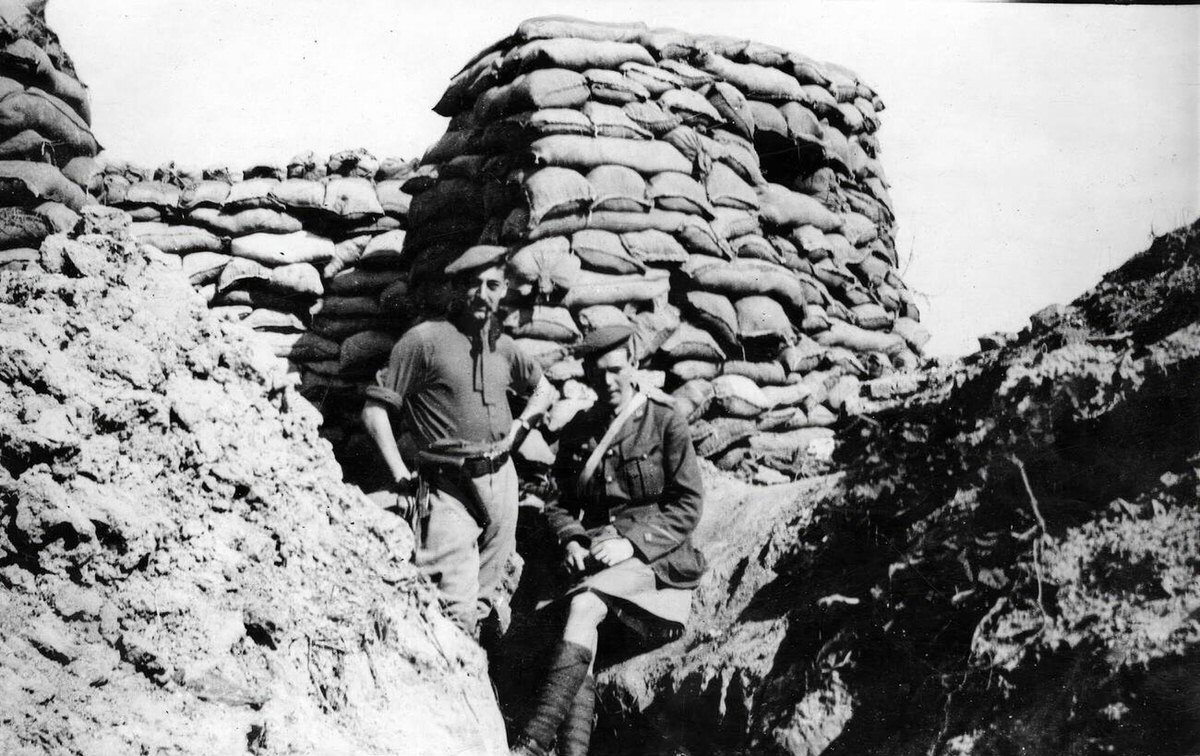
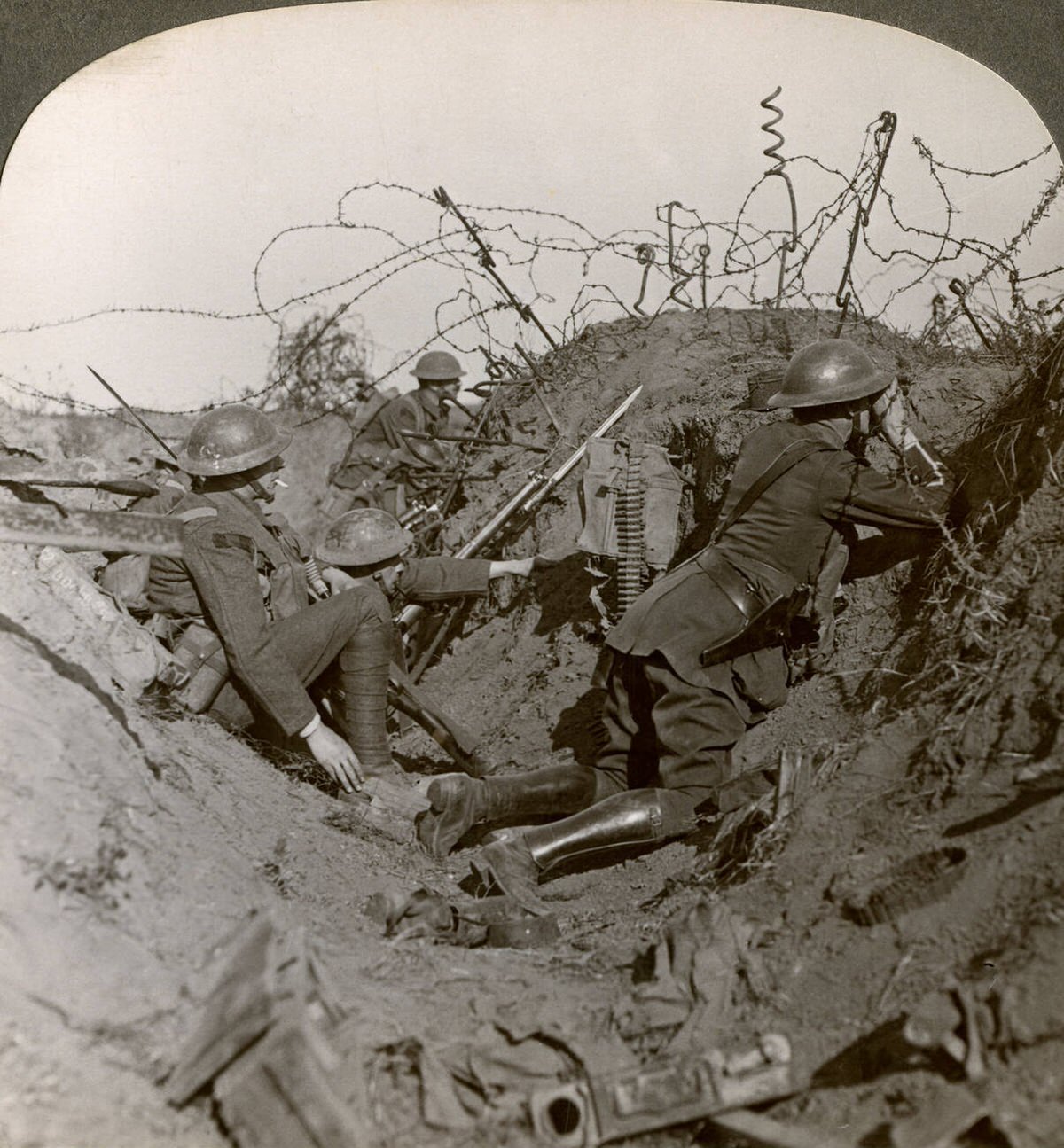
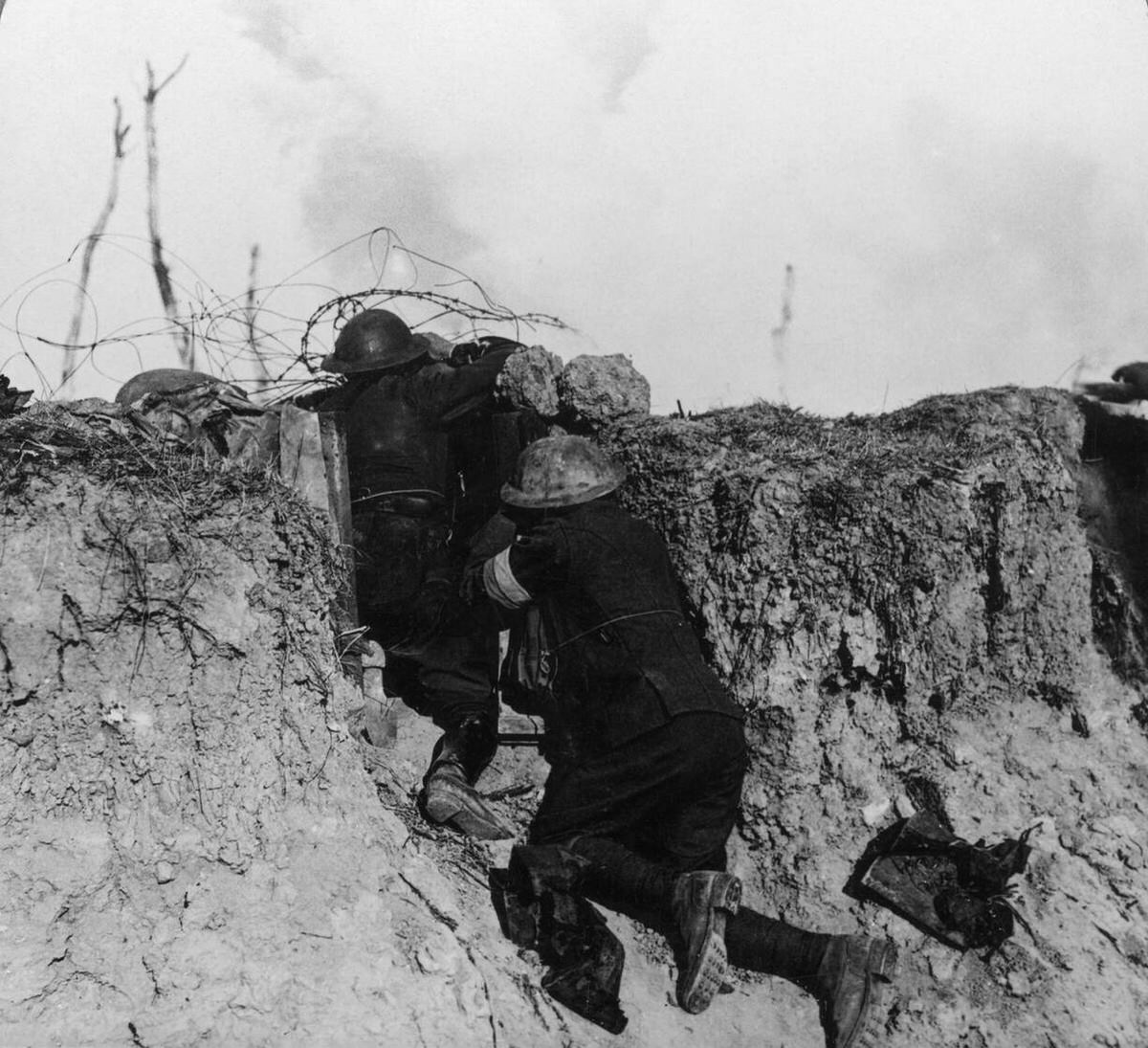
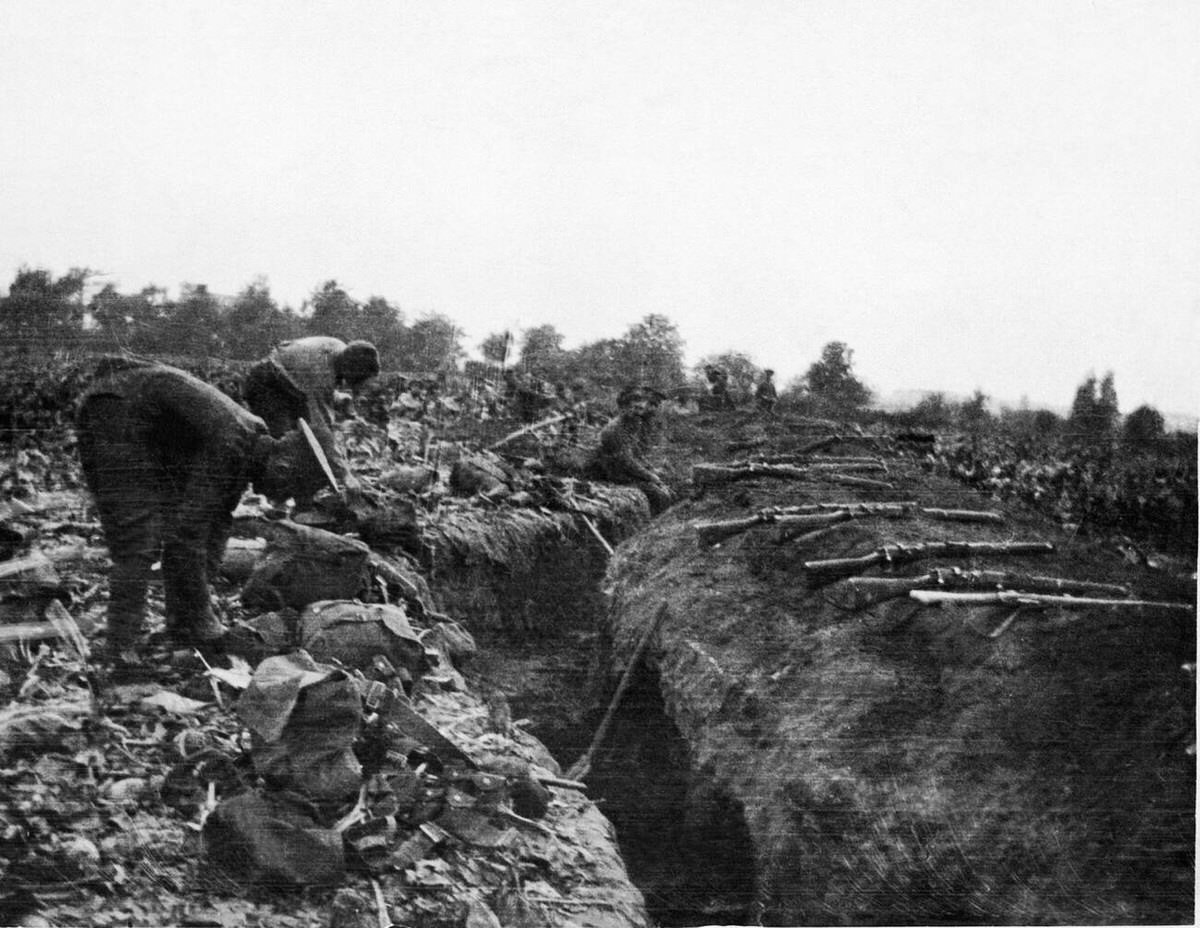
Front line trench on the French front occupied by British forces, 1915
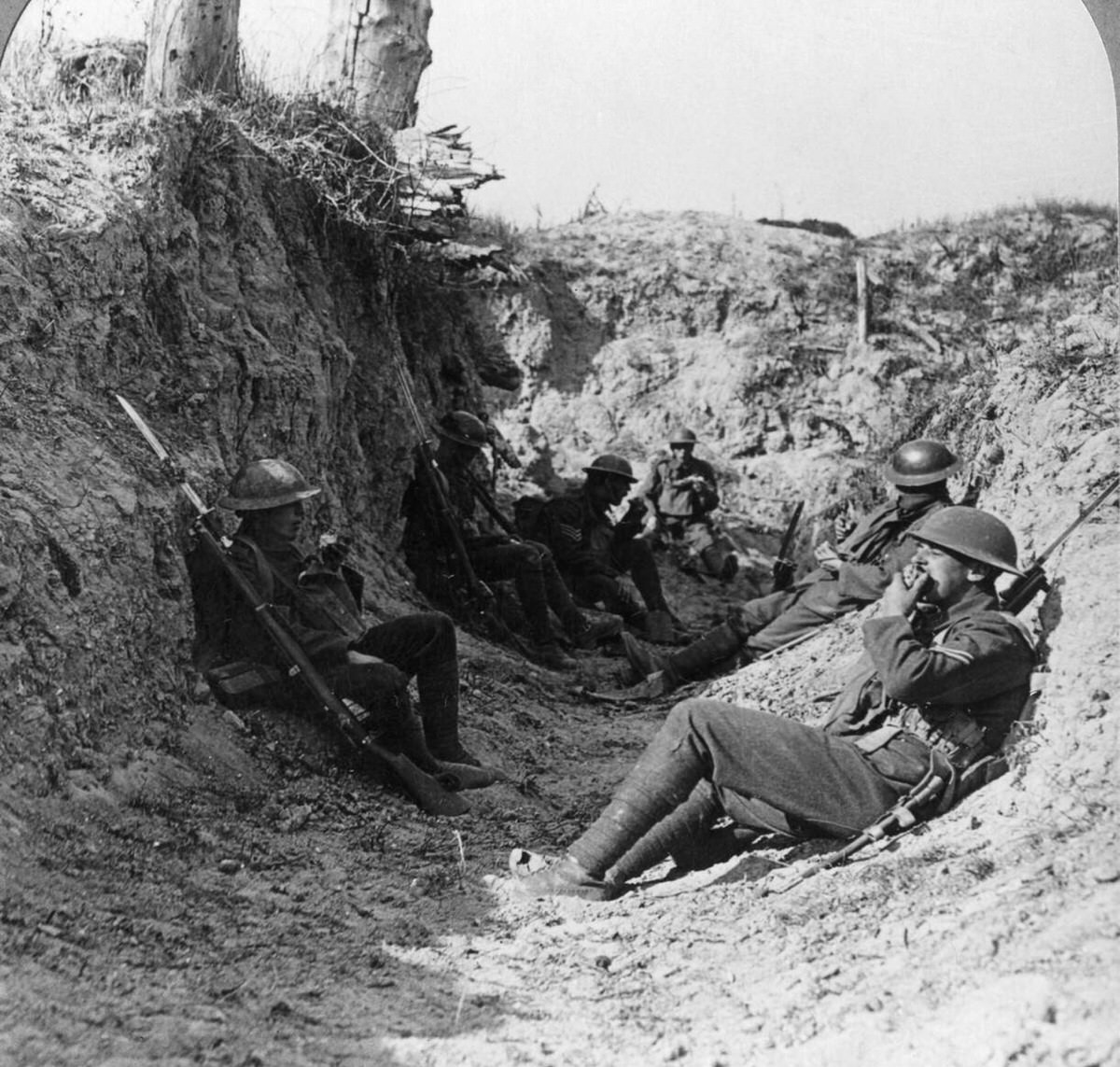
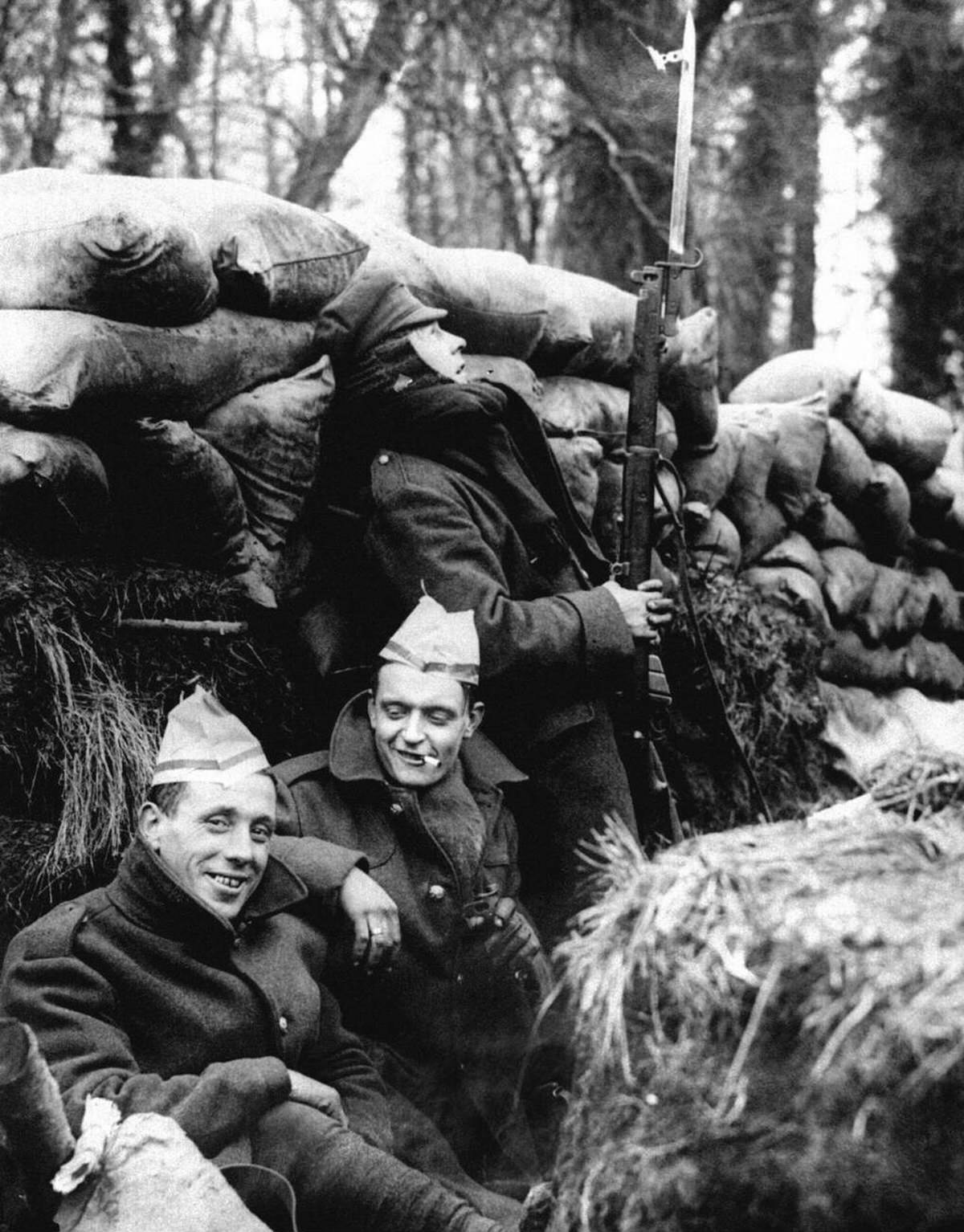
Life inside the trenches ran on a strict timetable. Each morning began with “Stand-to-Arms” in the dark before dawn. Every soldier climbed onto the fire step, bayonet fixed, and waited. Dawn was the hour enemy attacks were most likely. After an hour of silent watching, the men fired off a brief burst of rifle and machine gun fire toward the German lines — a daily ritual known as “Morning Hate” — to signal that the position was alert and manned. Then came breakfast, followed by long hours of maintenance work: filling sandbags, draining sumps, and cleaning mud-clogged rifles. At night, the real danger began. Small parties crept out into No Man’s Land to repair barbed wire or dig new trenches closer to the enemy. Soldiers slept in short bursts, curled into shallow holes cut into the trench walls called funk holes.
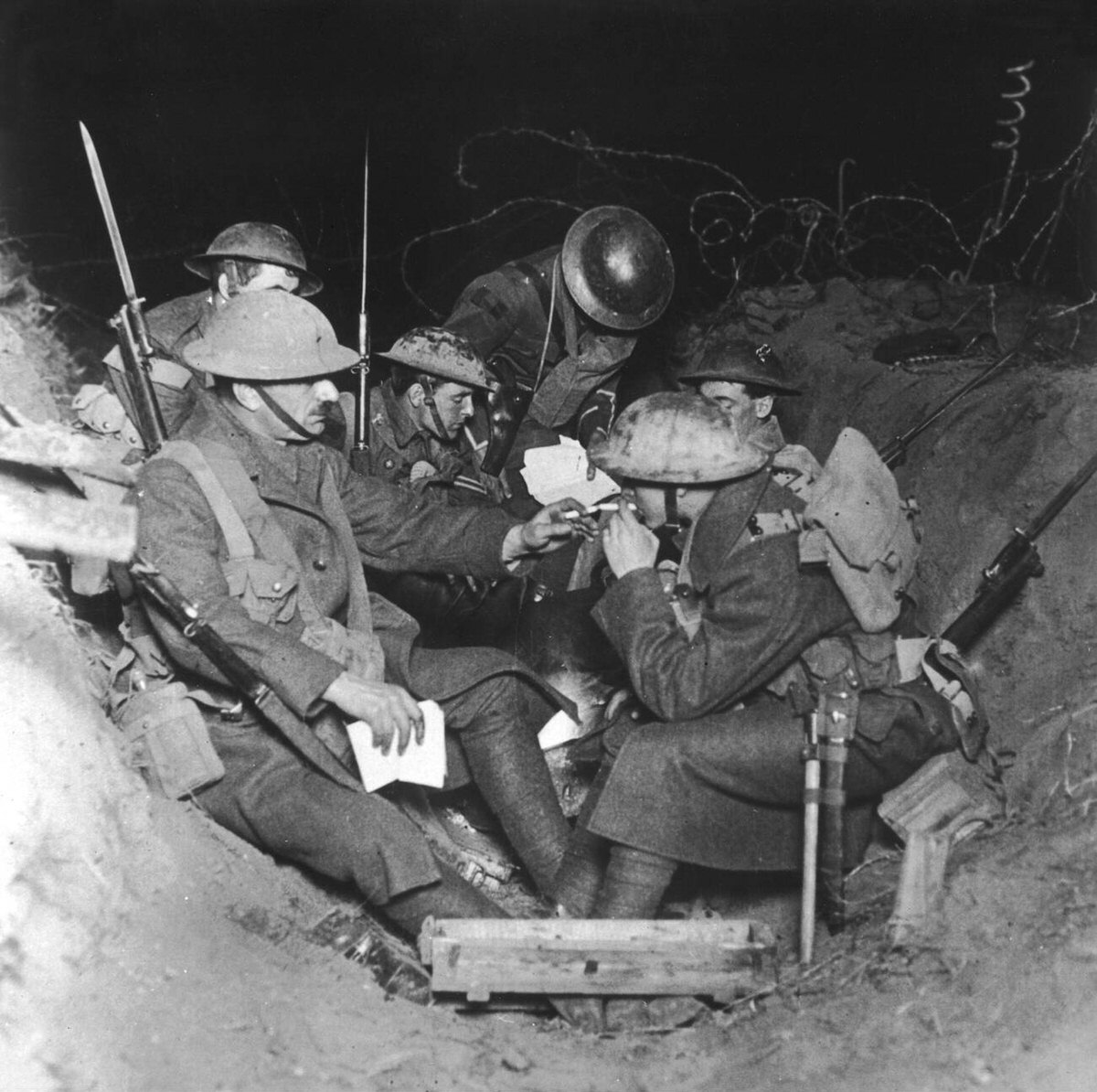
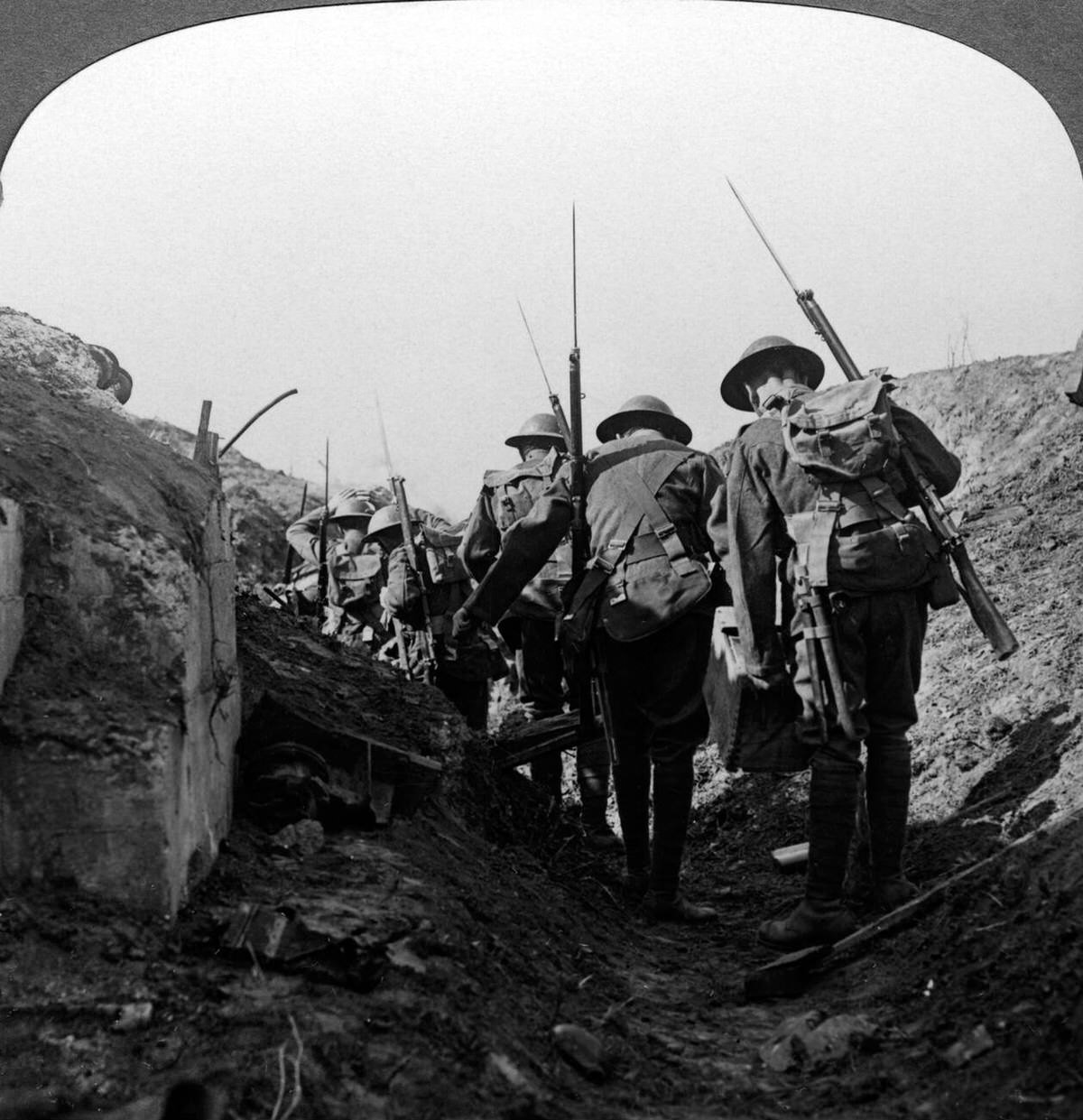
Troops waiting in a trench near Arras, France, 1914
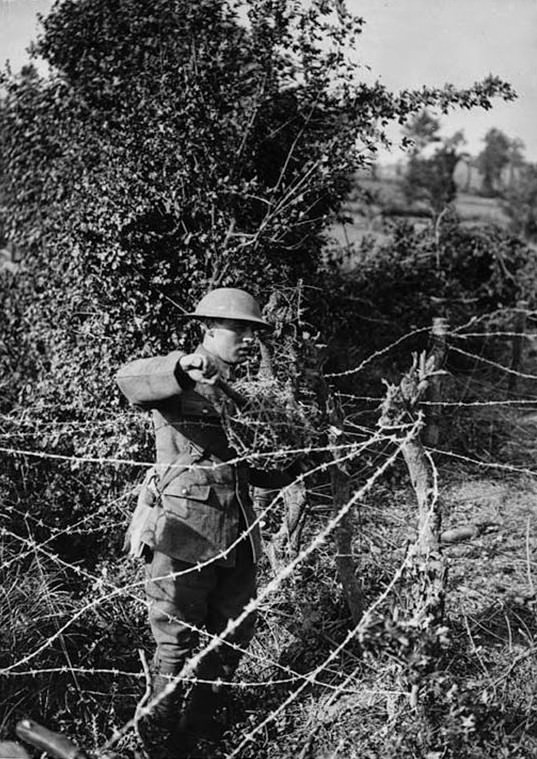
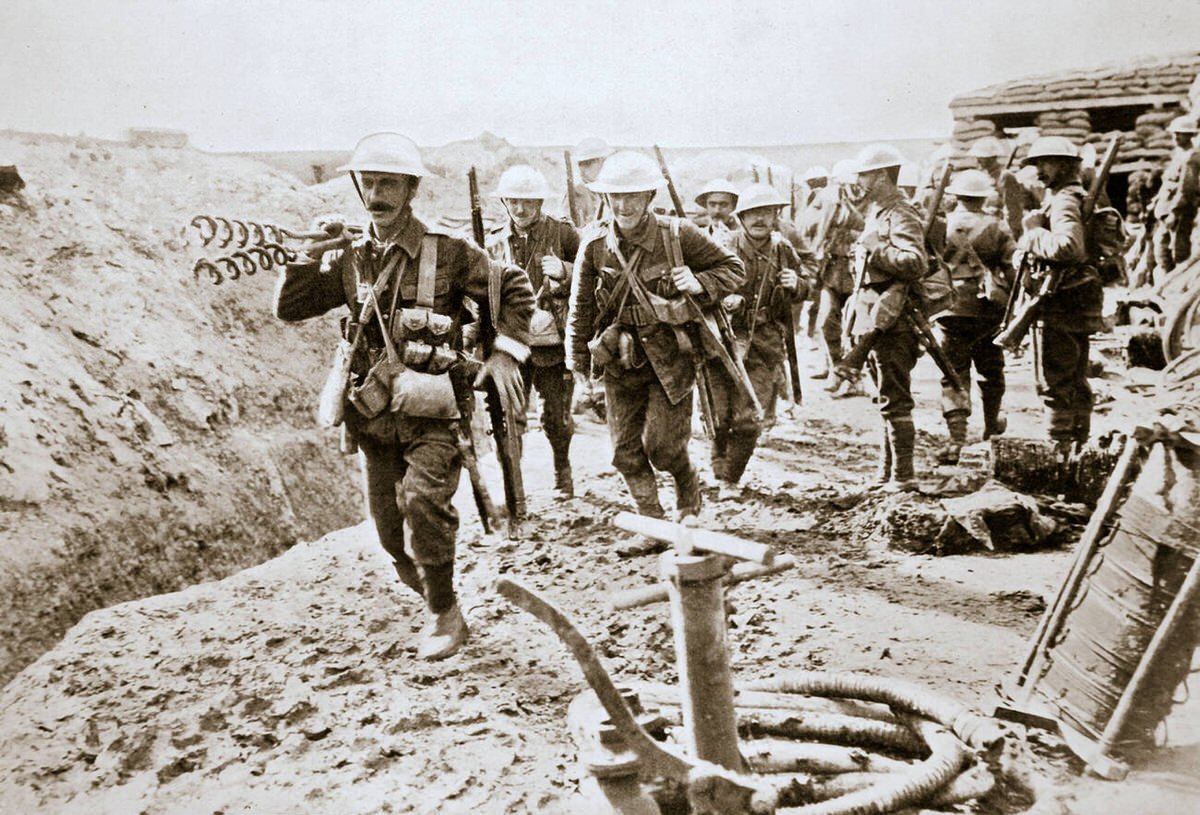
Steel wire entanglements in front of the trenches were essential defensive tools. Parties working under cover of darkness unrolled and staked the wire in overlapping tangles designed to break up any attacking formation and hold men in the open long enough for machine guns to find them. The soldier shown below, working alone in a ditch while stretching a heavy coil of barbed wire off its wooden spool, represents hundreds of thousands of such nighttime work details.
A soldier wearing his uniform, a tin helmet and a few bits of equipment is standing in the middle of a criss-cross of barbed wire. He is holding a huge spiral of it up in front of him and is winding it off the stick it is wrapped around. He is standing in a ditch with a field on the other side of the fencing and a lush, huge bush behind him. He is quite intent on his work.
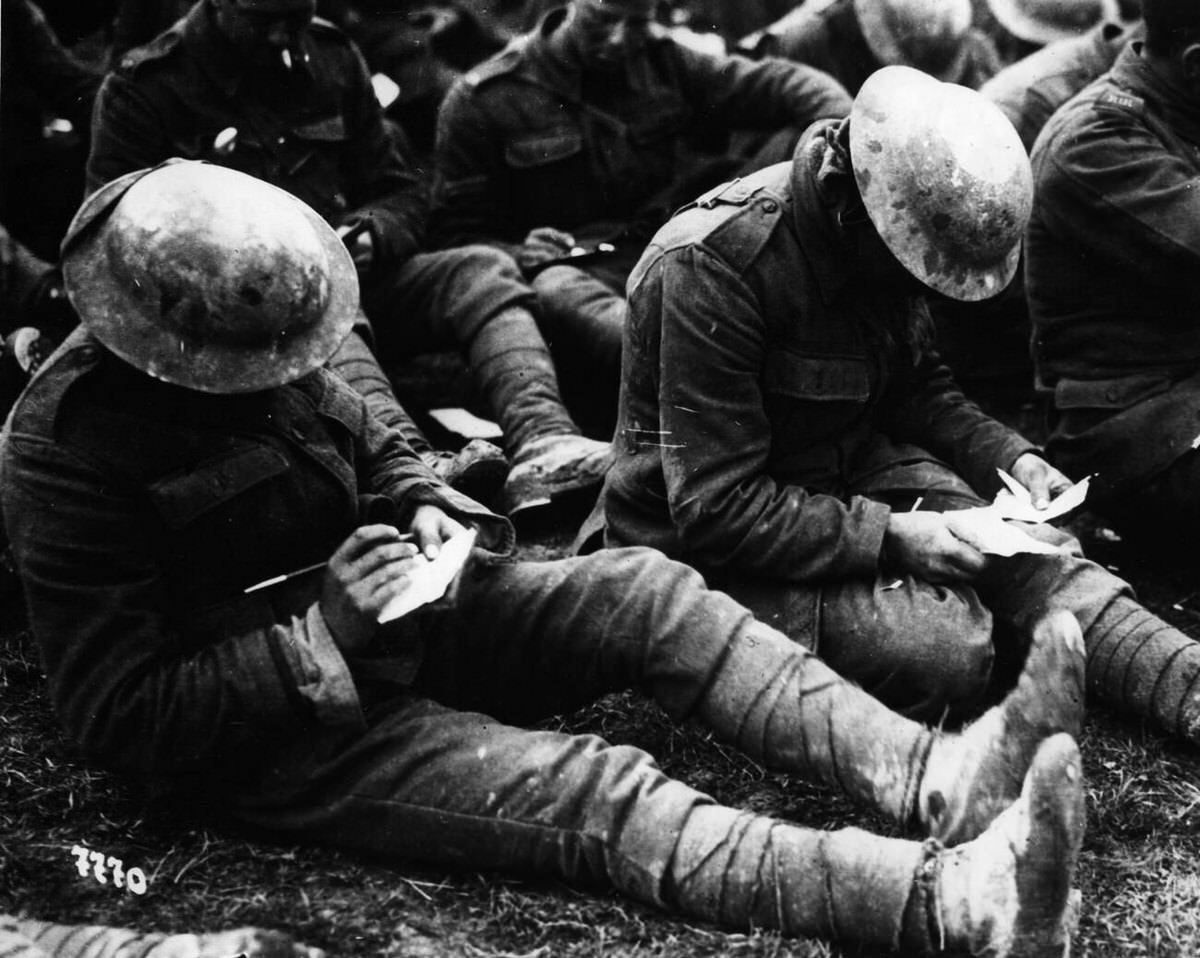
The British army ran a massive supply operation to keep millions of men fed, armed, and equipped. Each soldier’s daily ration included one pound of meat and one pound of bread or biscuits. The meat was almost always “bully beef” — salted corned beef in a tin — or Maconochie’s stew, a tinned mixture of meat, turnips, and potatoes. Biscuits were so hard that men soaked them in tea before eating. Tea itself arrived at the front in large metal containers that frequently tasted of gasoline. Each man received two ounces of tobacco per week. Mail from home was the most anticipated delivery of all; the Army Postal Service moved millions of letters and parcels every week.
British soldiers writing home, 1916
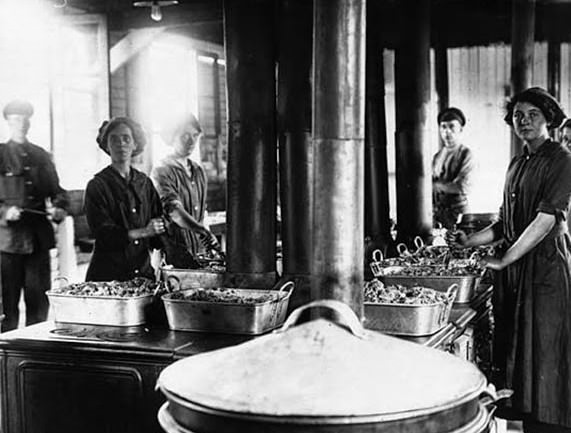
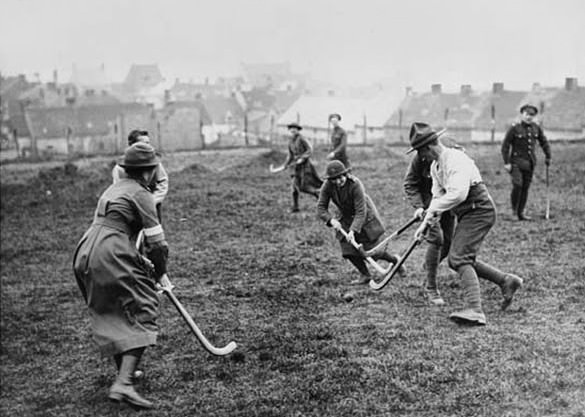
Women played a direct role in sustaining the war effort in France. Cooks, nurses, and members of the Women’s Army Auxiliary Corps worked across the rear areas, filling roles that freed more men for the front line. The photographs below show both the practical, unglamorous labor of field kitchens and the brief moments of recreation that the WAAC found time to enjoy.
Women cooks at the Front, during World War I. Six flues from a group of Agas, which are arranged in a square in the middle of a wooden shed. On top of the Agas are big square metal tins with food piled over the edge of the dishes. The women all have implements sunk into the food like they are chopping it up. There are two soldiers standing in the kitchen with the women. One is uniformed and the other is dressed very informally. The four women are all shiny faced with their hair tucked up into ‘mob- caps’. The are wearing big collared overalls on top of their clothes.
Members of the Women’s Army Auxiliary Corps, playing hockey, France. This action photograph is believed to be the work of David McLellan. McLellan was one of five official war propaganda photographers to be commissioned for the Western Front. The first two were Ernest Brooks and John Warwick Brooke. This may have been a personal moment for both McLellan and the players, which has now been caught in time and survives for posterity.
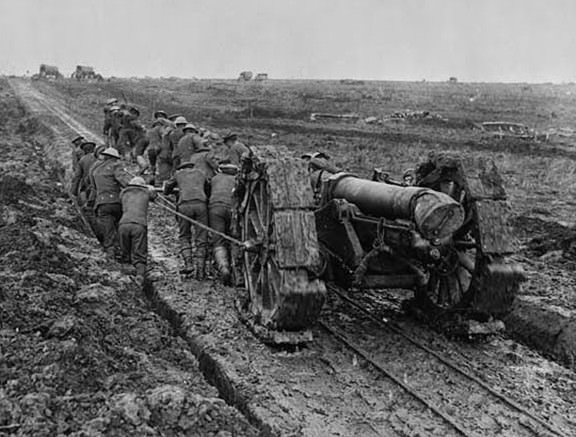
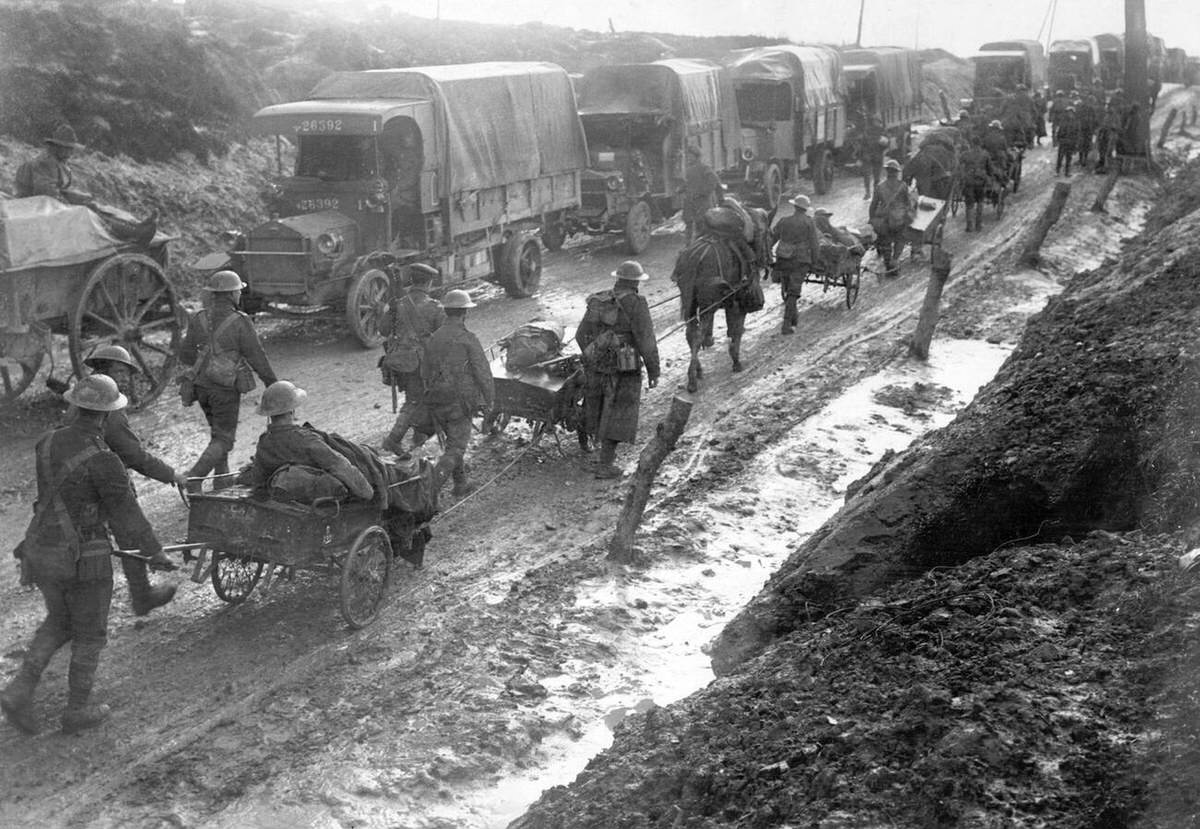
The environment itself was a constant enemy. Heavy rain turned the clay soil of Northern France into a thick, clinging mud that jammed rifle mechanisms, swallowed artillery wheels, and made movement across open ground exhausting. Winter temperatures dropped well below freezing. Thousands of men developed “trench foot,” a painful condition caused by standing in cold water for days at a stretch. Army orders required men to change their socks twice daily and rub whale oil into their feet to reduce the damage. Rats grew to the size of cats, fed by the remains of horses and men. Lice lived in the seams of wool uniforms, spreading a condition called trench fever that drove high temperatures and muscle pain through entire battalions.
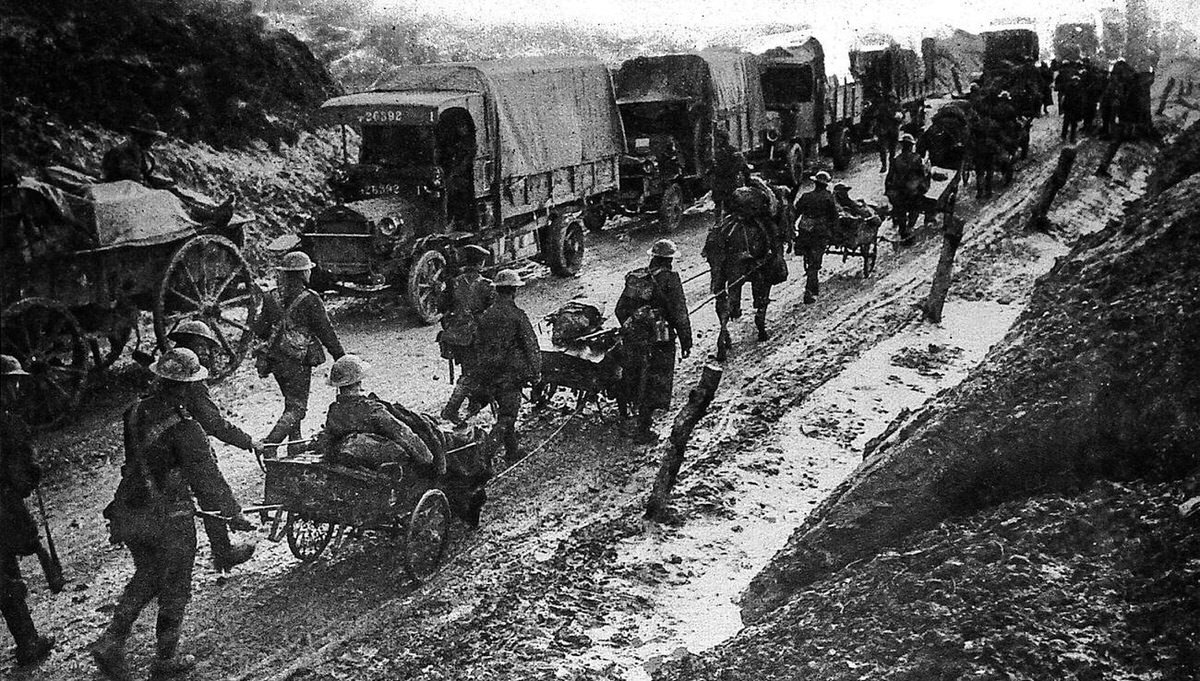
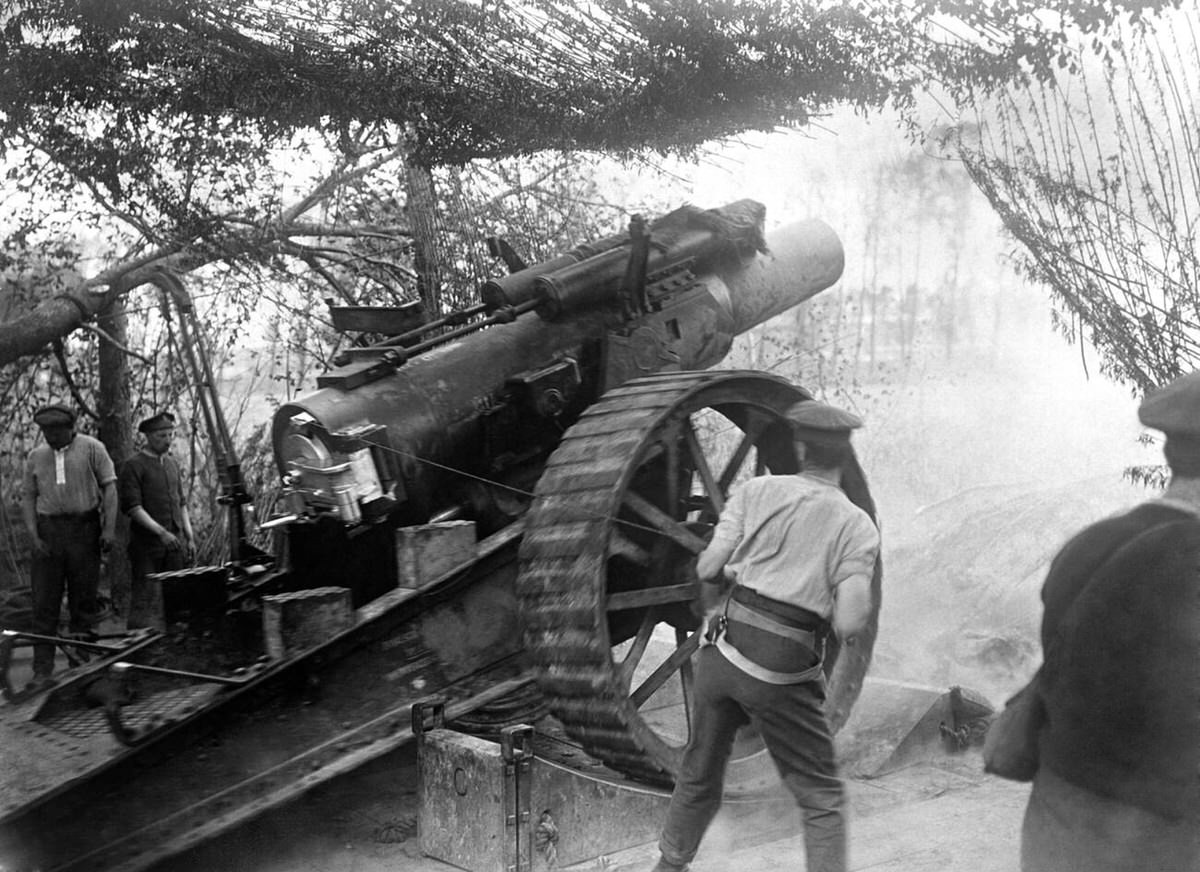
Soldiers struggling to pull a big gun through mud. The gun has been placed on a track created for a light railway. The soldiers are pushing a device, attached to the gun, that possibly slots into the tracks. Some of the men are in a ditch that runs alongside the track, the rest are on the track itself. A makeshift caterpillar tread has been fitted to the wheels of the gun, in an attempt to aid its movement through the mud. The surrounding landscape is bleak and desolate, with only a few trucks visible in the distance.
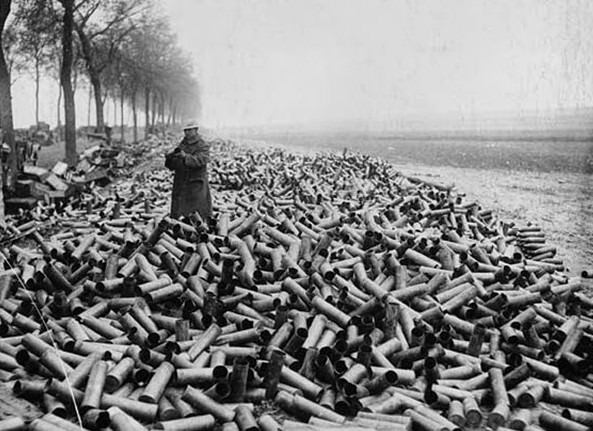
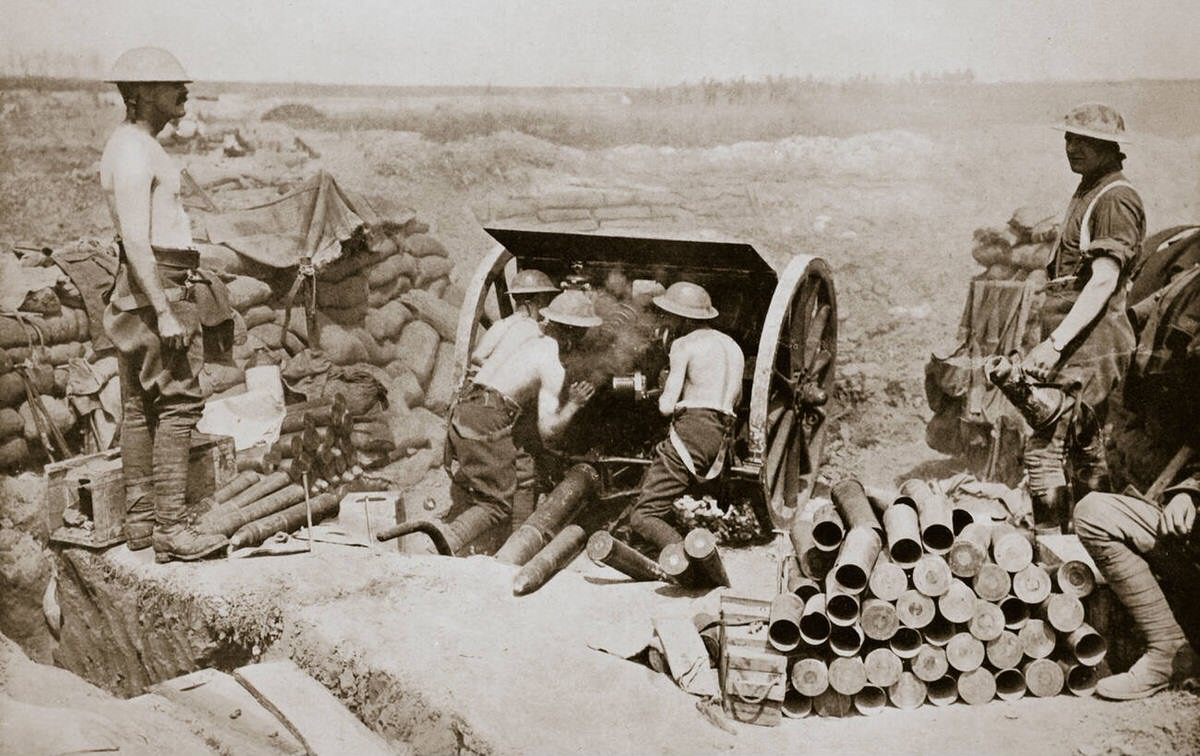
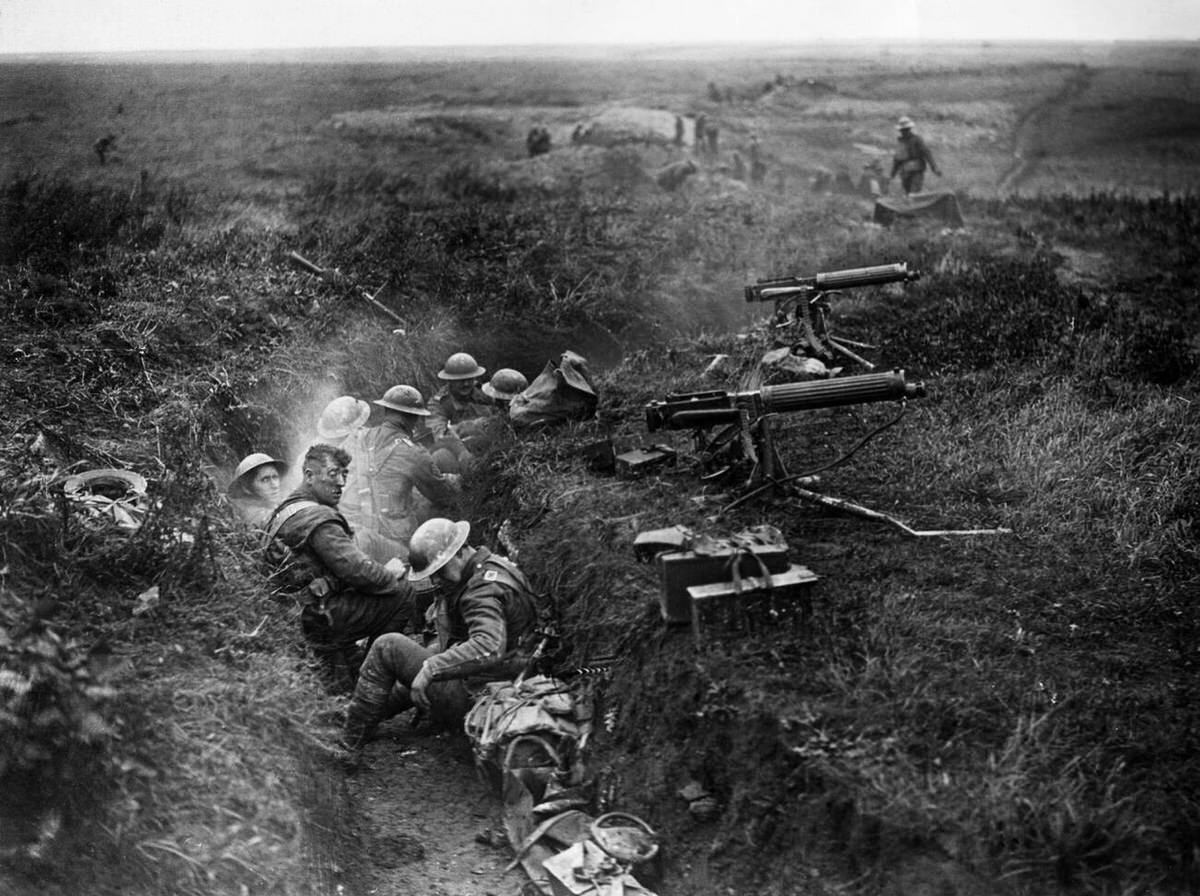
The British infantryman’s standard weapon was the Short Magazine Lee-Enfield rifle, a ten-round bolt-action weapon that a trained soldier could fire at fifteen aimed shots per minute. For sustained fire, battalions relied on the water-cooled Vickers machine gun, which could operate for hours without a barrel change. The Stokes Mortar allowed crews to lob explosive rounds directly into German trenches at a steep angle, hitting positions that flat-trajectory weapons could not reach. Artillery was the dominant weapon of the entire front. Howitzers positioned miles behind the lines fired high-explosive and shrapnel shells in enormous quantities. A lone British soldier standing knee-deep in spent shell casings, as photographed by Tom Aitken, gives a concrete sense of that scale.
Lone soldier surrounded by a mountain of empty shell cases, France. This lone British soldier up to his knees in spent shell cases, offers a striking impression of the destruction that took place on the Western Front. However, this picture only tells half the story, with the other part of the story being the damage that the shells from these cases inflicted upon the enemy. This photograph was taken by Tom Aitken, and may well have been used for propaganda purposes.
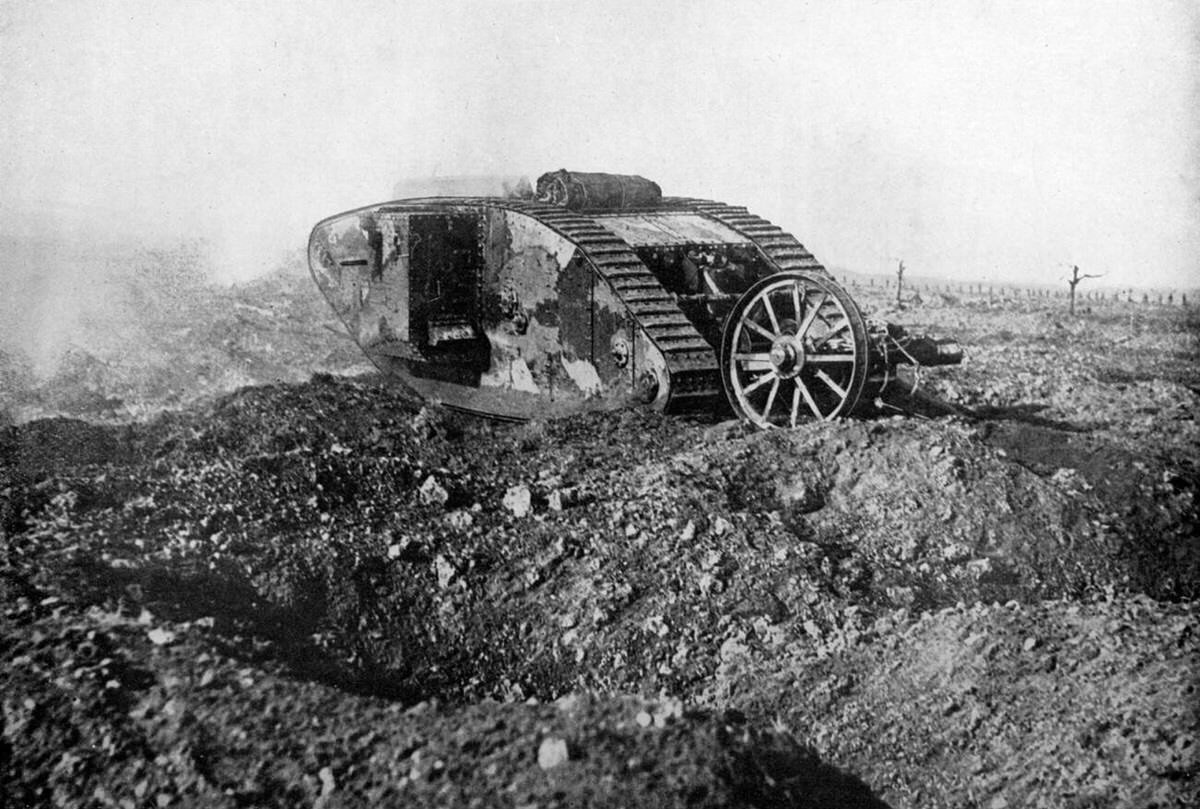
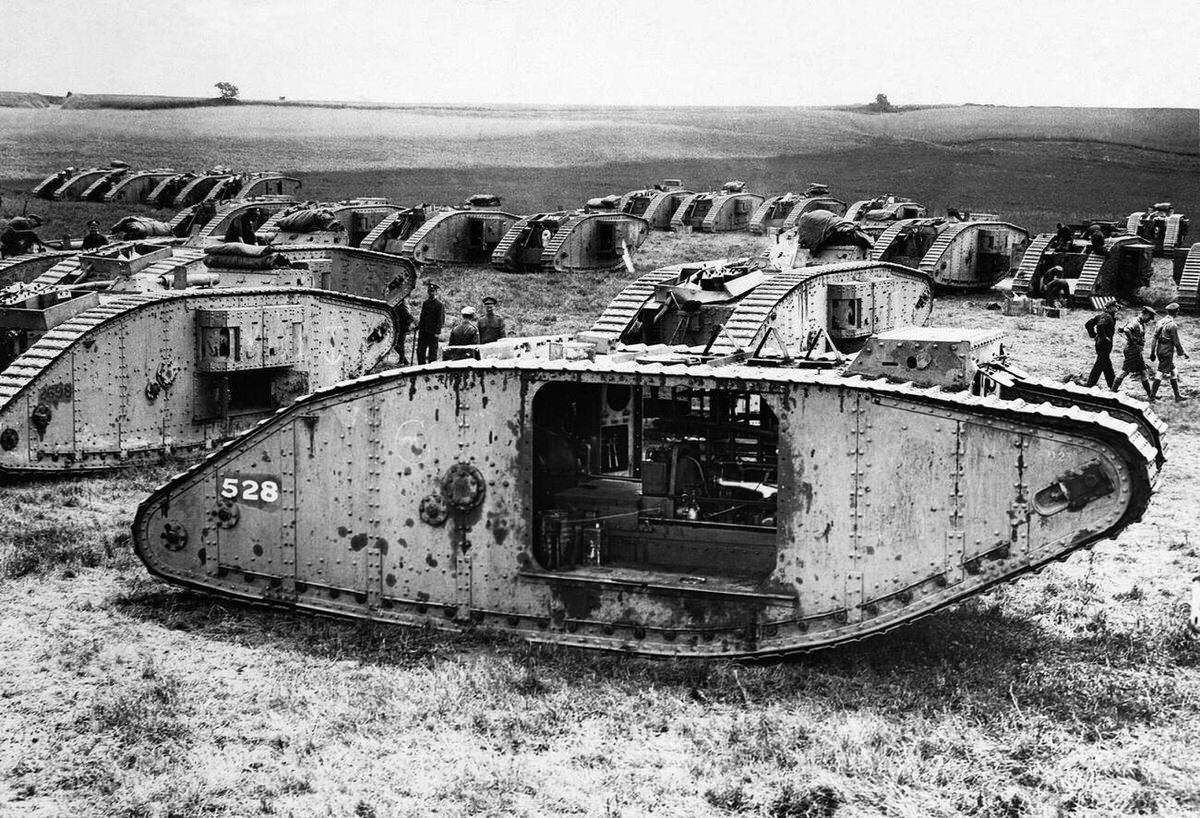
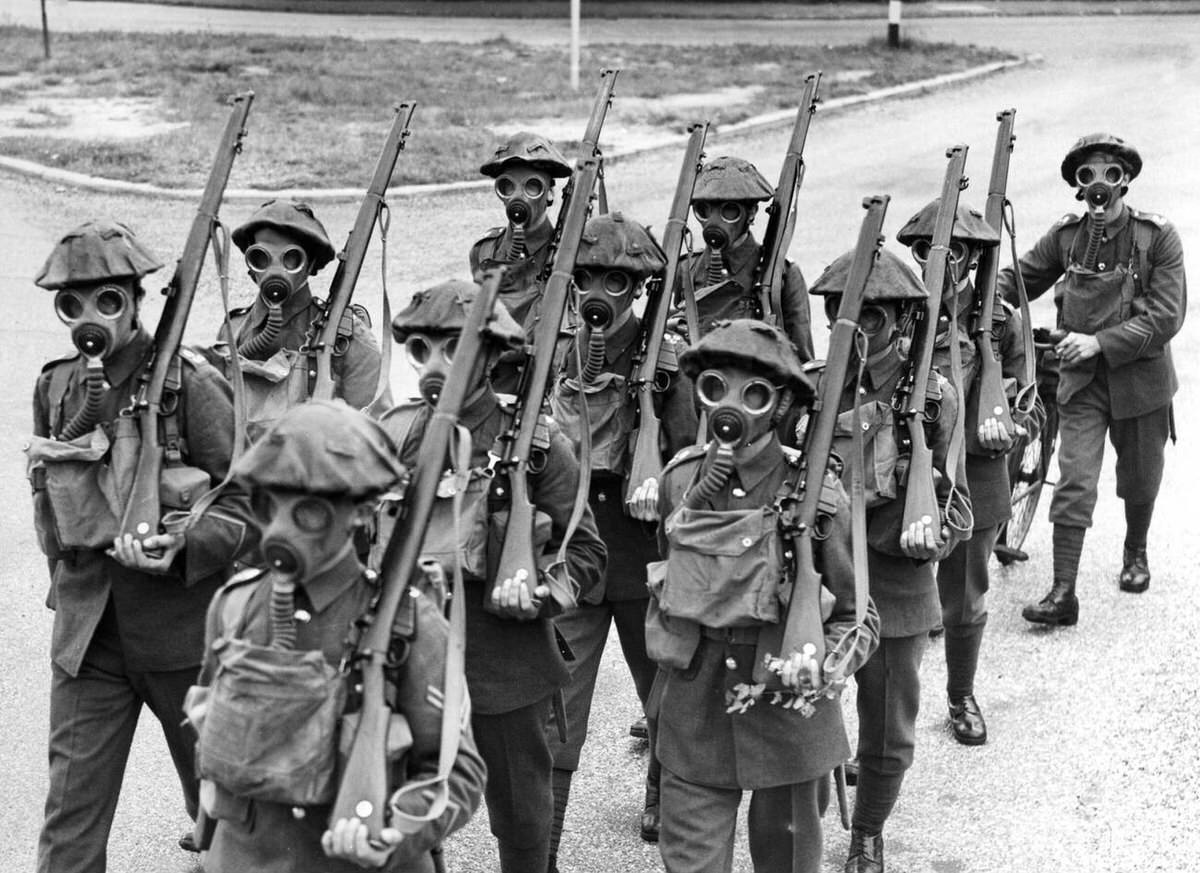
In 1915, Germany introduced chlorine gas attacks along the Western Front. The British army quickly developed rubber-and-glass gas masks to protect troops from chlorine and, later, mustard gas. By 1916, the British introduced the tank at the Battle of the Somme — armored vehicles that could crush barbed wire and cross trenches, though the early models were slow and prone to mechanical failure. The real breakthrough in tank tactics came at the Battle of Cambrai in November 1917, when 476 tanks attacked in a massed formation without the usual days-long artillery bombardment. The element of surprise worked. The tanks punched through the Hindenburg Line, the strongest section of the German defensive network.
Tank in action on the Western Front in Somme, France, 1914
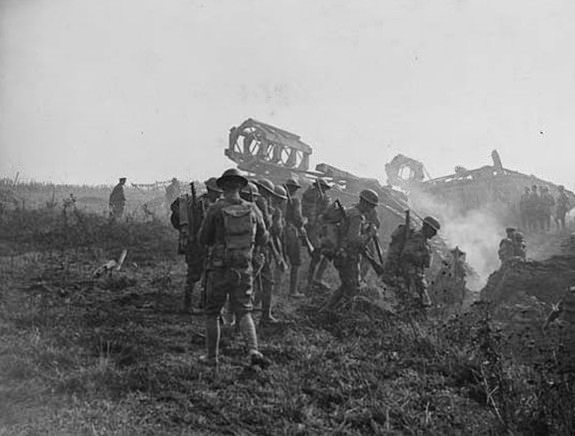
Attack on Hindenburg line. Tanks and Troops advancing. With ‘land battleships (tanks) in the background, this image shows infantry advancing during the attack on the famous Hindenburg Line. As the Hindenburg Line was finally overrun by the Allies in the autumn of 1918, it seems highly likely that this is when this photograph was taken.
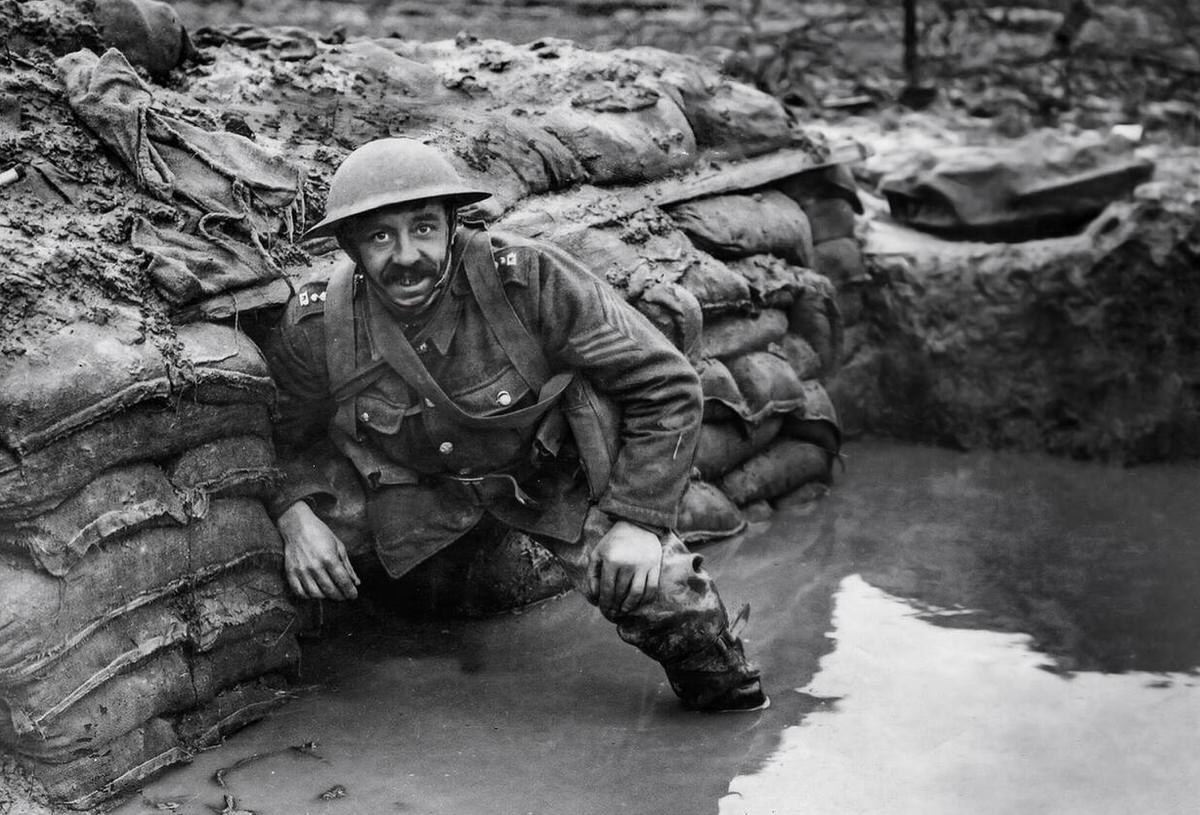
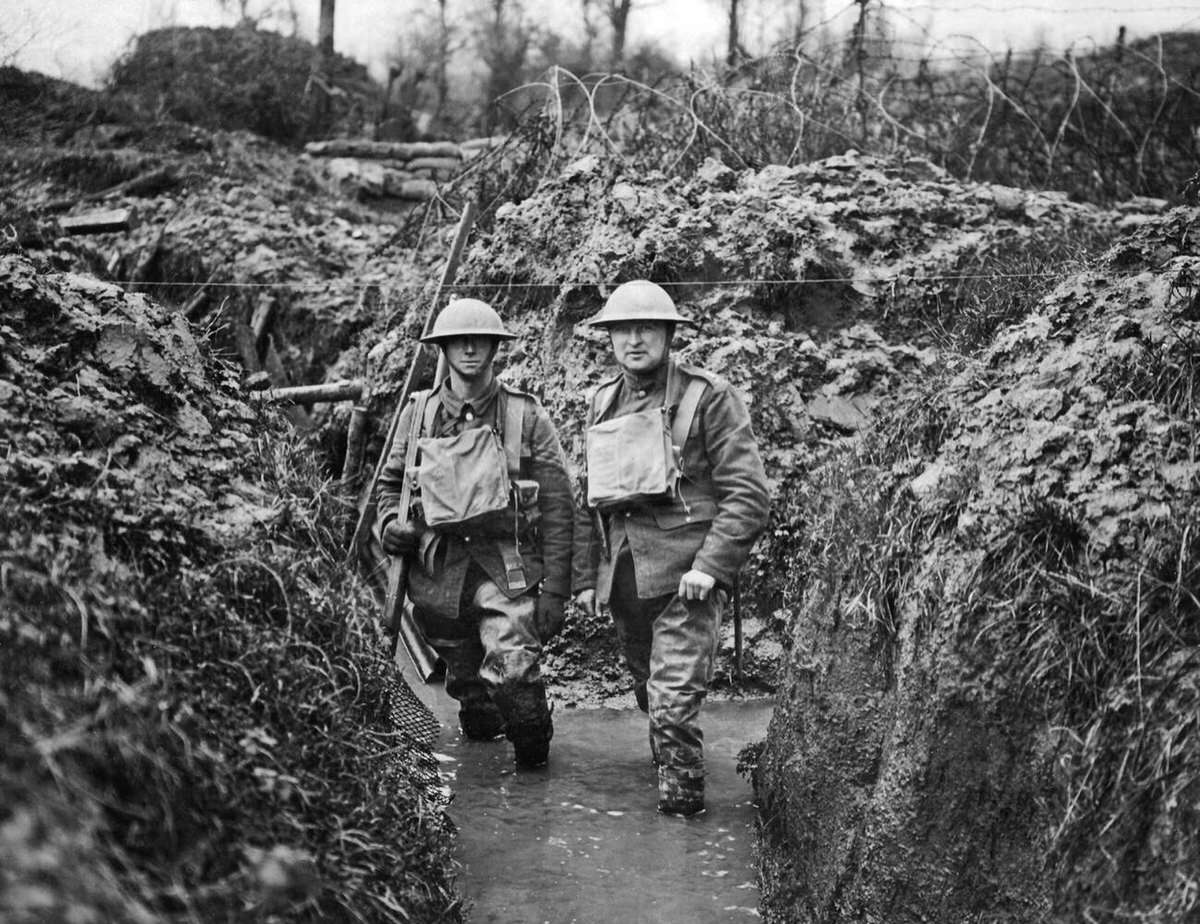
The Battle of the Somme in 1916 remains one of the bloodiest days in British military history. On July 1 alone, the British army suffered 57,470 casualties. The battle ground on until November and resulted in a gain of roughly seven miles. The following year, the Third Battle of Ypres — better known as Passchendaele — was fought across a landscape of shell craters and liquid mud. The photograph below, showing a British sergeant standing in a flooded trench during that campaign, captures the conditions that soldiers endured for months at a time.
British Army sergeant in a flooded trench during the Battle of Passchendaele, 1917
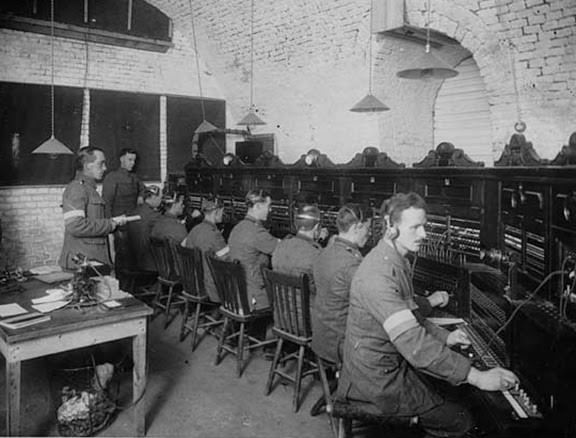
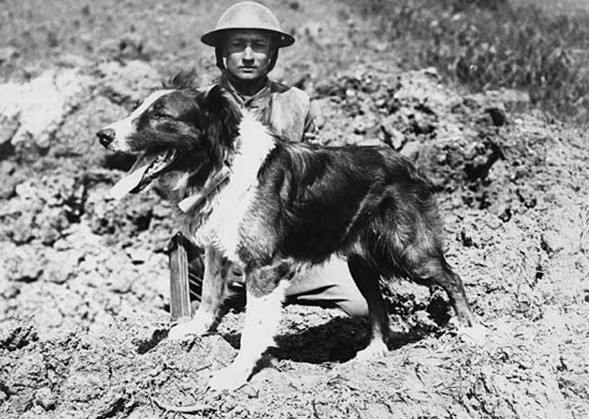
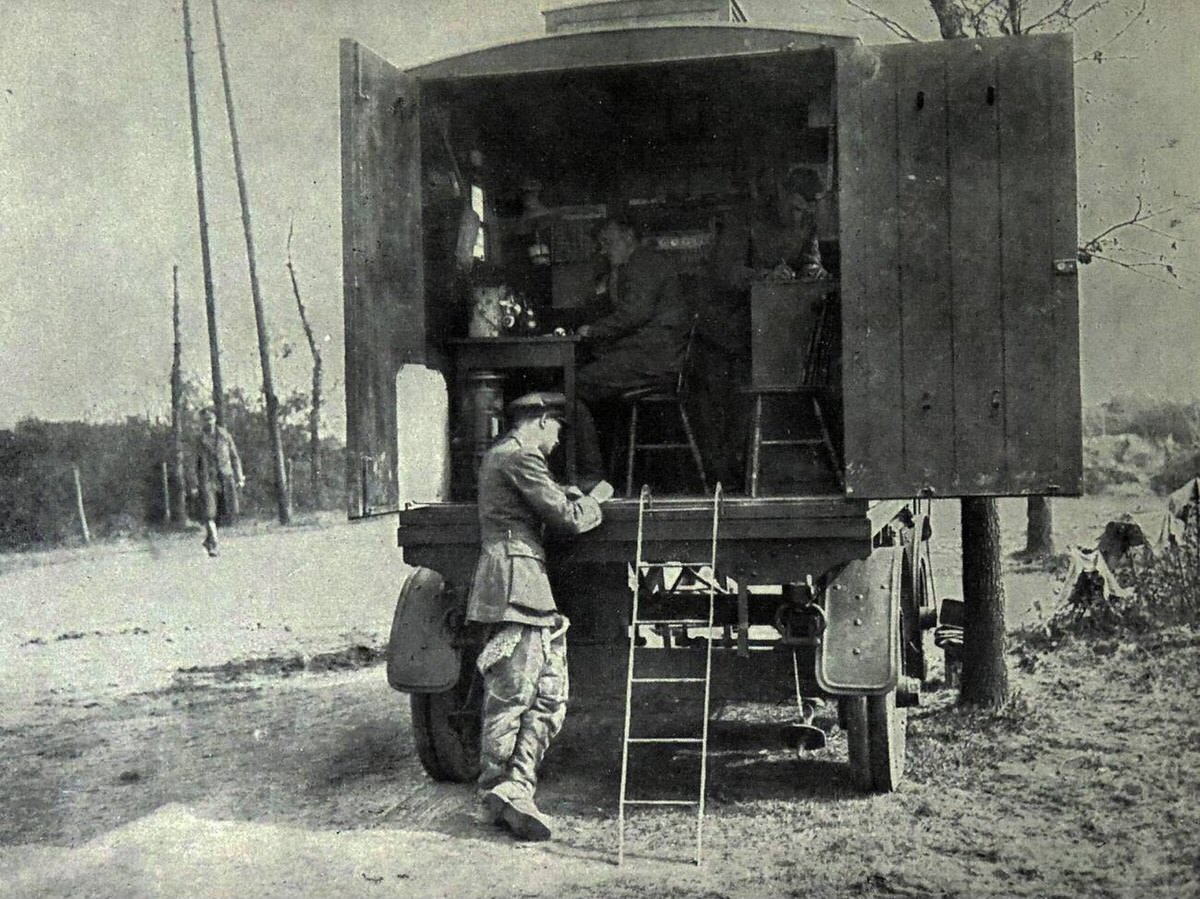
Coordination between arms was as important as firepower. Signallers at headquarters managed the constant flow of orders and reports that kept a multi-million-man army functioning. Telephone lines, wireless sets, and messenger dogs all formed part of the same communications network. Dogs trained to carry message canisters between the front line and command posts moved faster than any runner and made smaller targets.
Signallers working at the headquarters of R.E.S.S. in France, during World War I. Just like a team of operators working at a busy telephone switchboard, this image shows the network of communications at company HQ that was required to co-ordinate an armys activities. The object immediately in front of the signaller on the right looks like a mouthpiece, which suggests that they are using wireless sets or field telephones to communicate.
Messenger dog with its handler, in France, during World War I. This collie dog worked as a messenger in the front line under constant gunfire. A scrolled up message can be seen attached to the dogs collar. Dogs were also used in the trenches to kill rats and mice, thereby protecting food supplies. In addition to carrying out messenger duties and various other tasks, a regimental mascot also helped to maintain the troops morale.
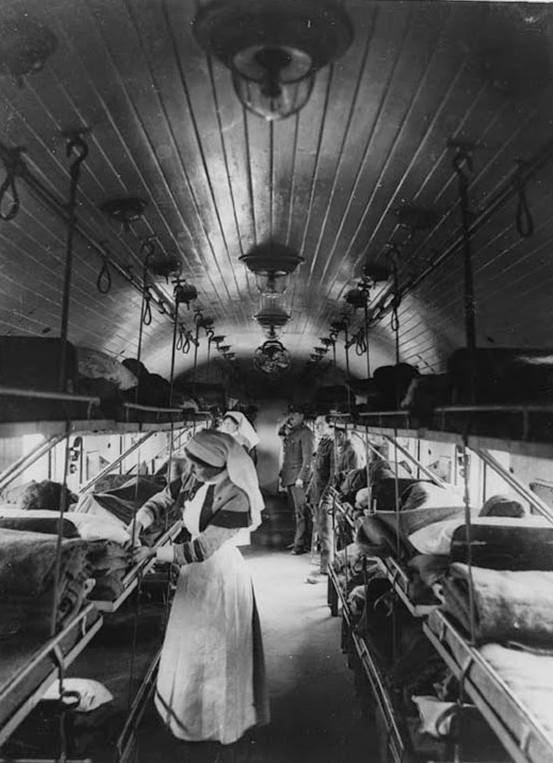
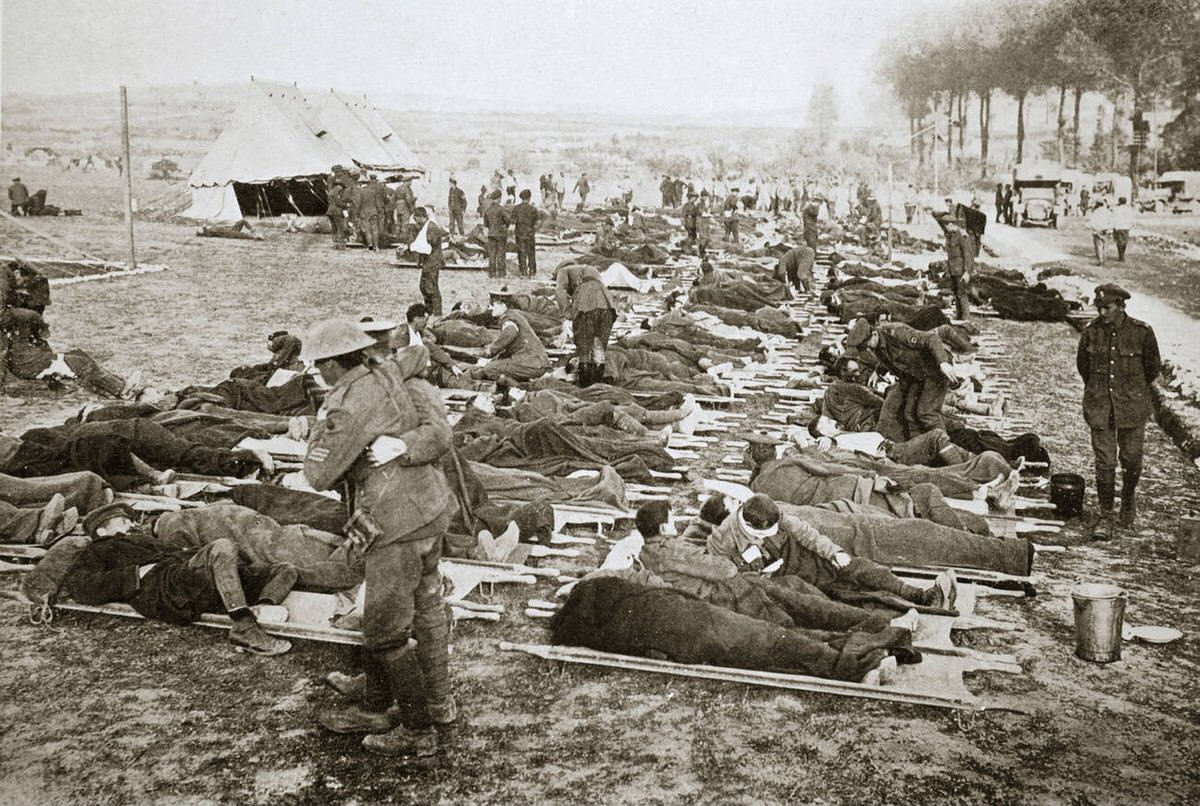
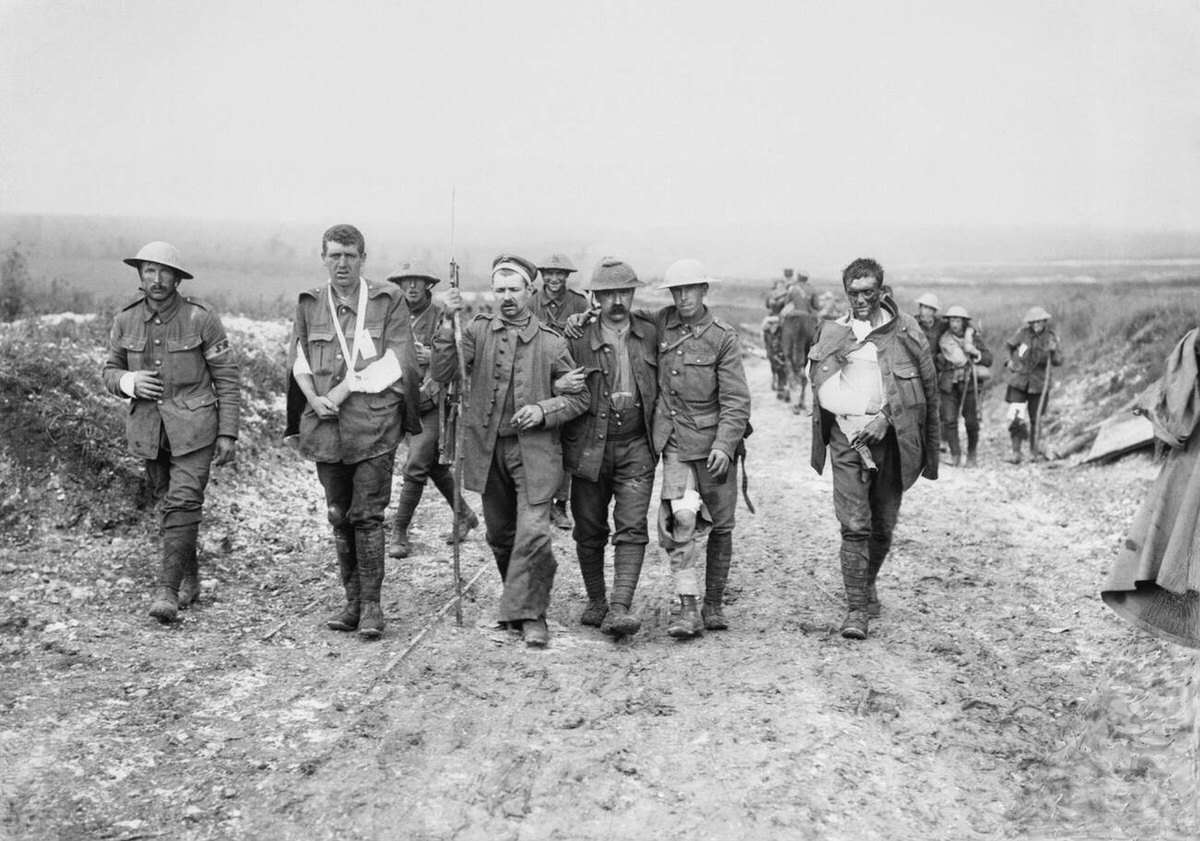
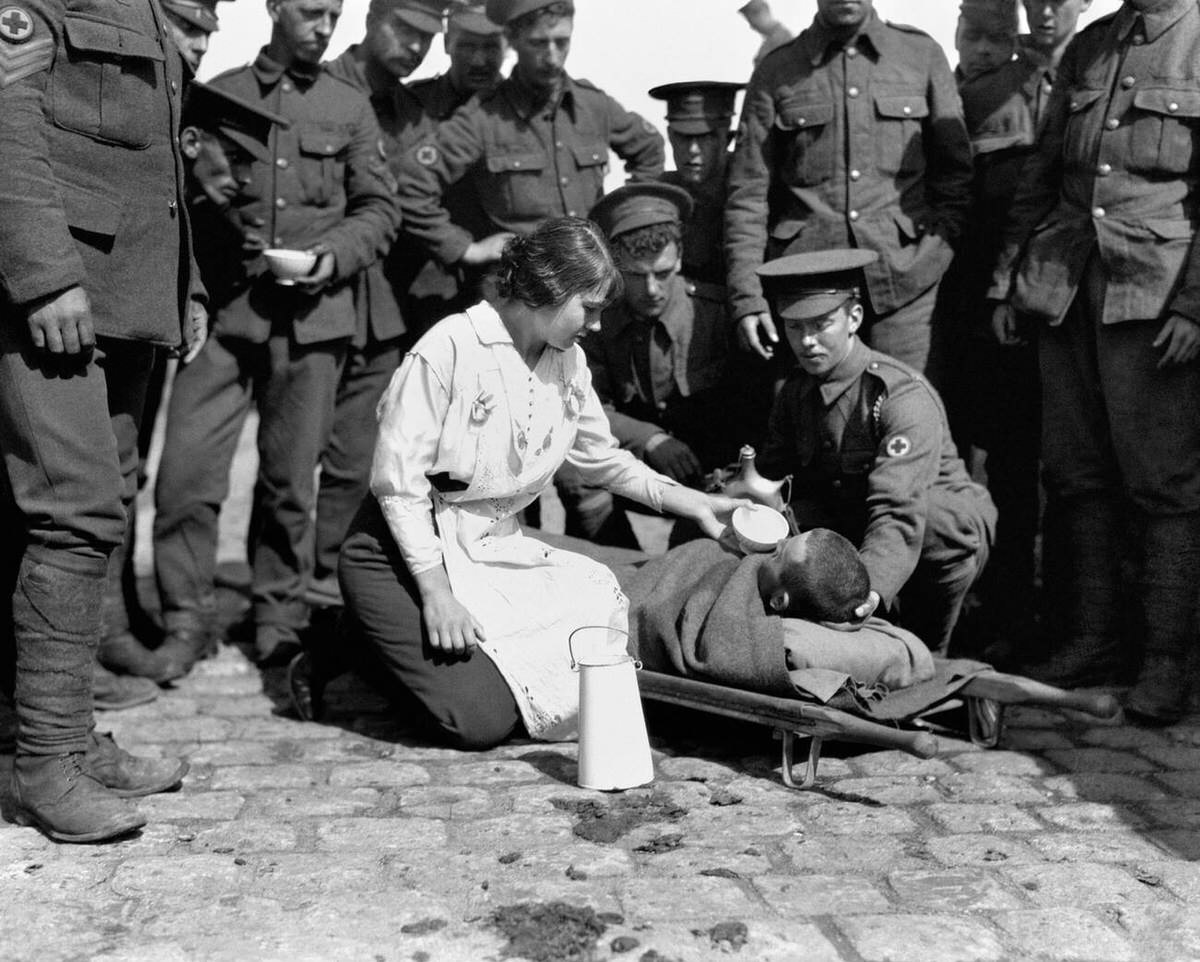
The wounded required a chain of care that began in the trenches and ended far behind the lines. Men who could still walk moved themselves to casualty clearing stations. Those more seriously hurt were carried out on stretchers or loaded onto horse-drawn wagons. Ambulance trains then moved the worst cases to base hospitals along the coast. Nurses worked in those train wards under difficult conditions, caring for men who had been pulled from battlefields hours or days earlier.
Interior of an ambulance-train ward, France, during World War I. This image is very striking due to the lighting and the tunnel effect of the train carriage, which is emphasised by the parallel lines of the wooden panelling on the roof. Two nurses are busy tending the wounded while two officers survey the scene from the top of the carriage.
Wounded men waiting to be taken to a clearing station in France, 1916
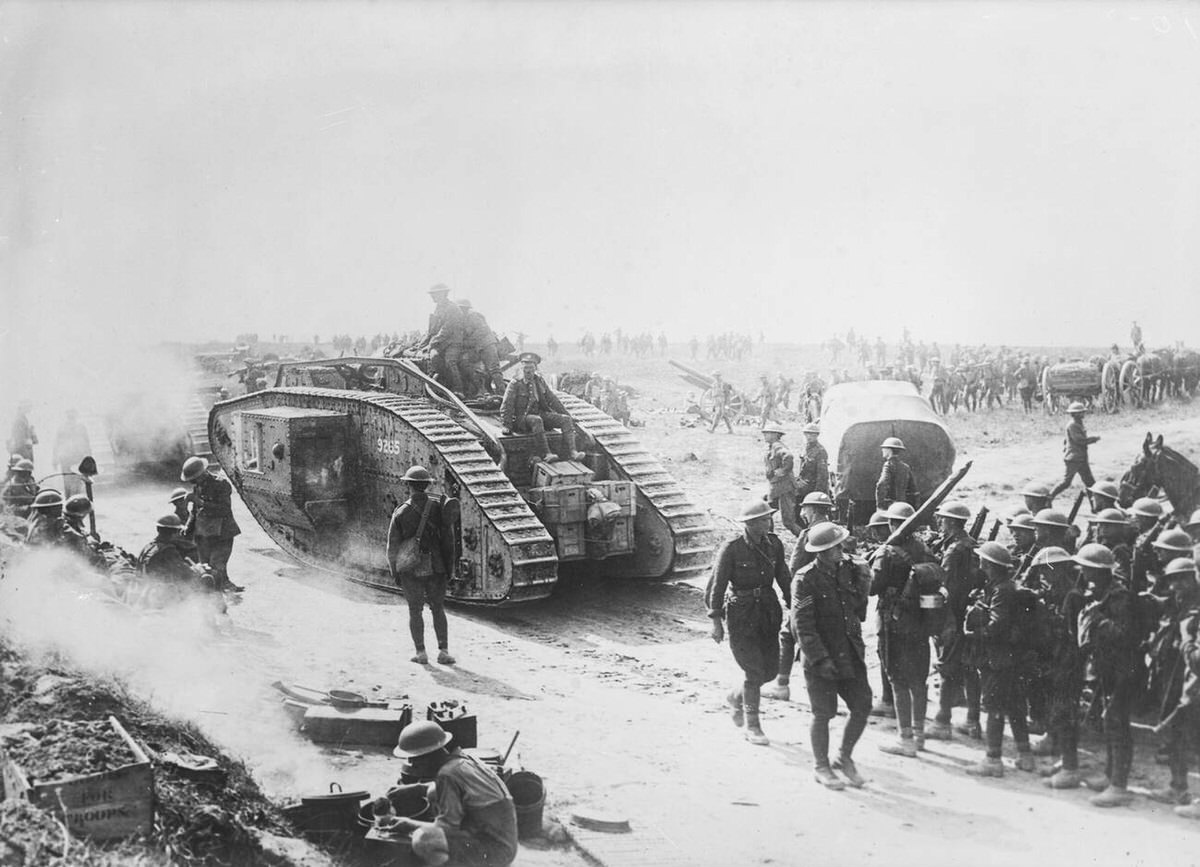
In August 1918, the British launched the Hundred Days Offensive. Artillery now used a “creeping barrage,” advancing its fire forward in timed stages while infantry followed close behind, taking ground before defenders could recover. Light Whippet tanks and armored cars drove deep into the German rear. The British coordinated their attacks with French and American forces across a wide front. By September, the German army was in full retreat, unable to hold any defensive line for long. Prisoners and artillery pieces were captured in the thousands each day. This momentum continued without pause until the armistice was signed on November 11, 1918.
British troops and a Mark V tank advancing on Bapaume, France, 1918
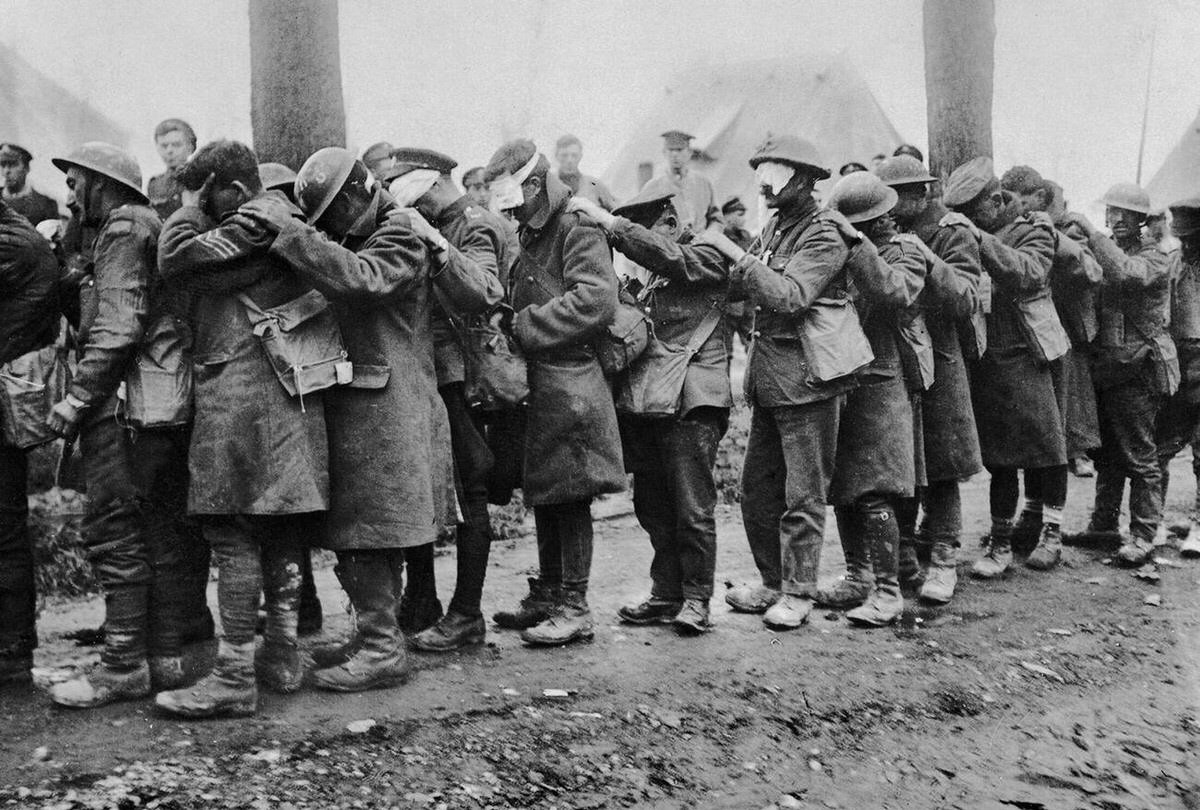
British soldiers of the 55th West Lancashire Division blinded by tear gas in Béthune, France, 1918
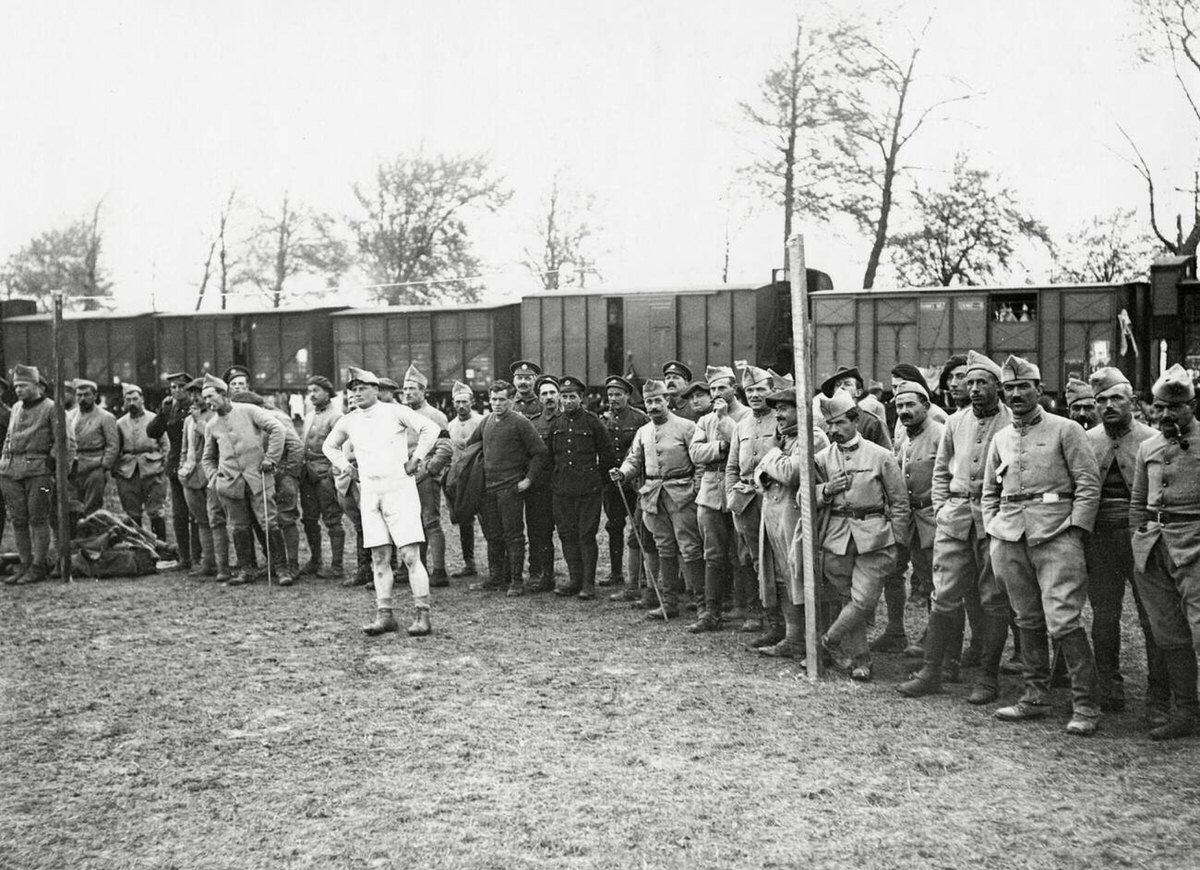
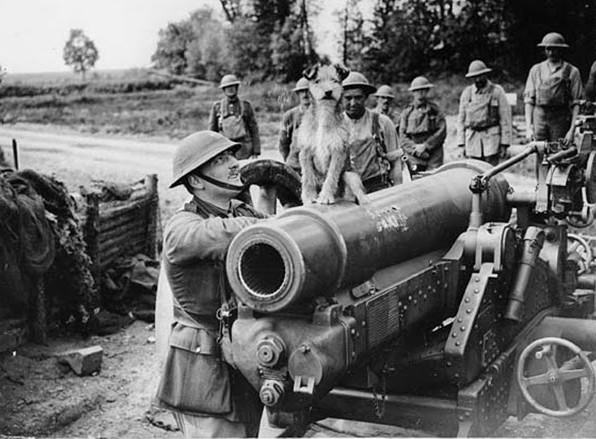
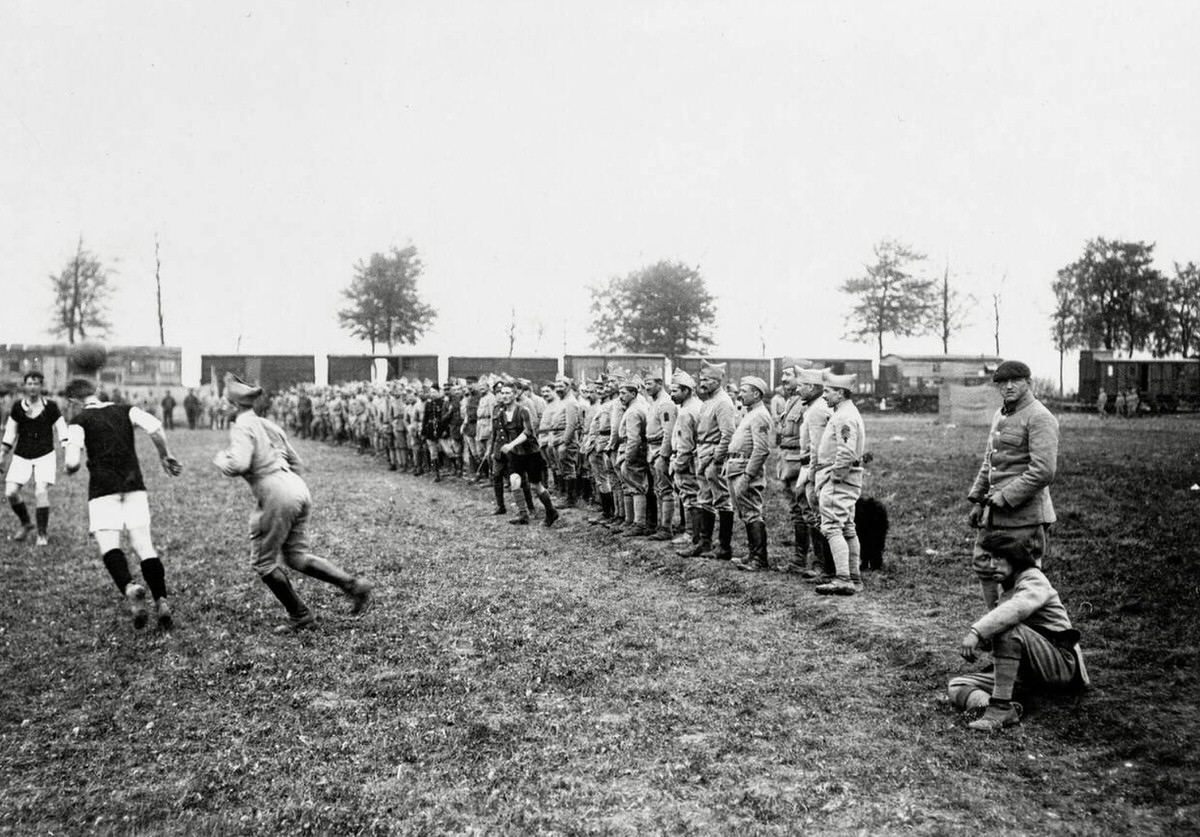
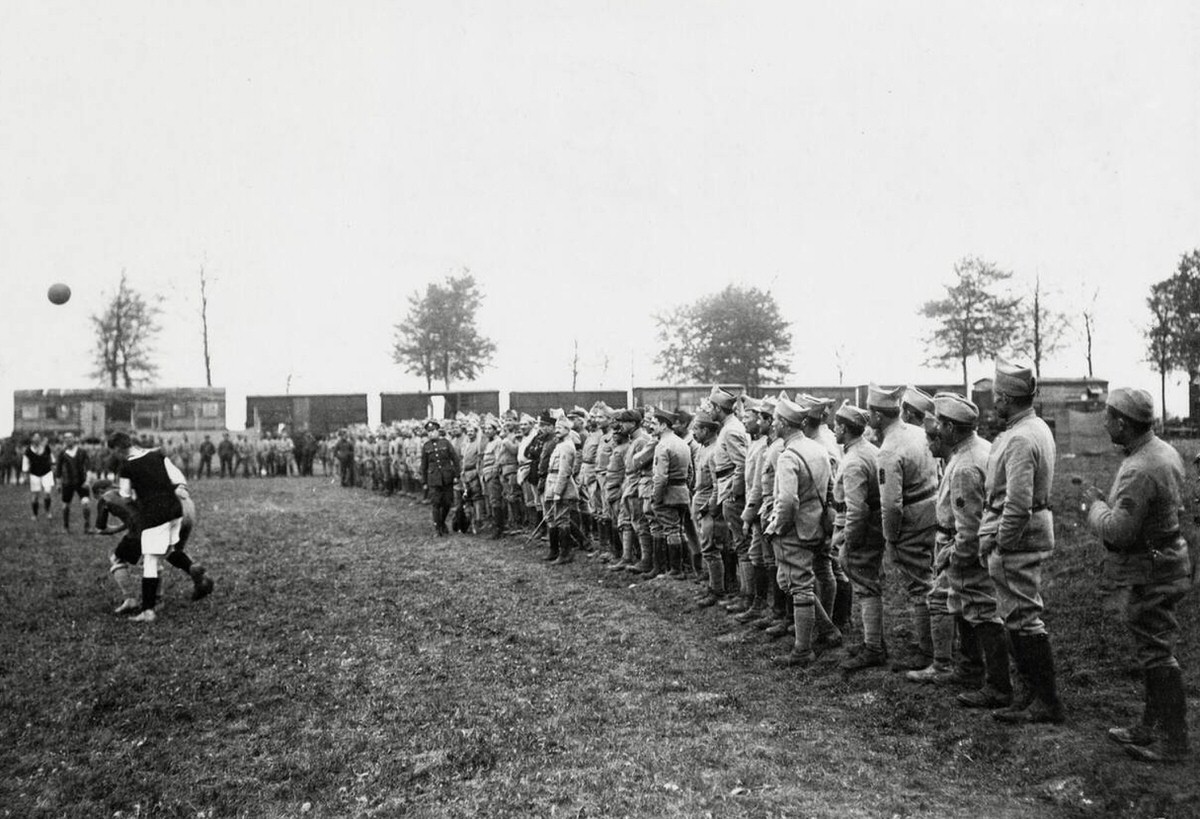
Not every photograph from the Western Front shows combat. Soldiers played football against French teammates, attended regimental sports days, and watched entertainers perform on makeshift stages. Regiments kept mascot dogs that sat atop artillery pieces while their crews gathered around. These images sit alongside the shell craters and the graveyards — together, they document four years of life and death along a 400-mile line in Northern France.
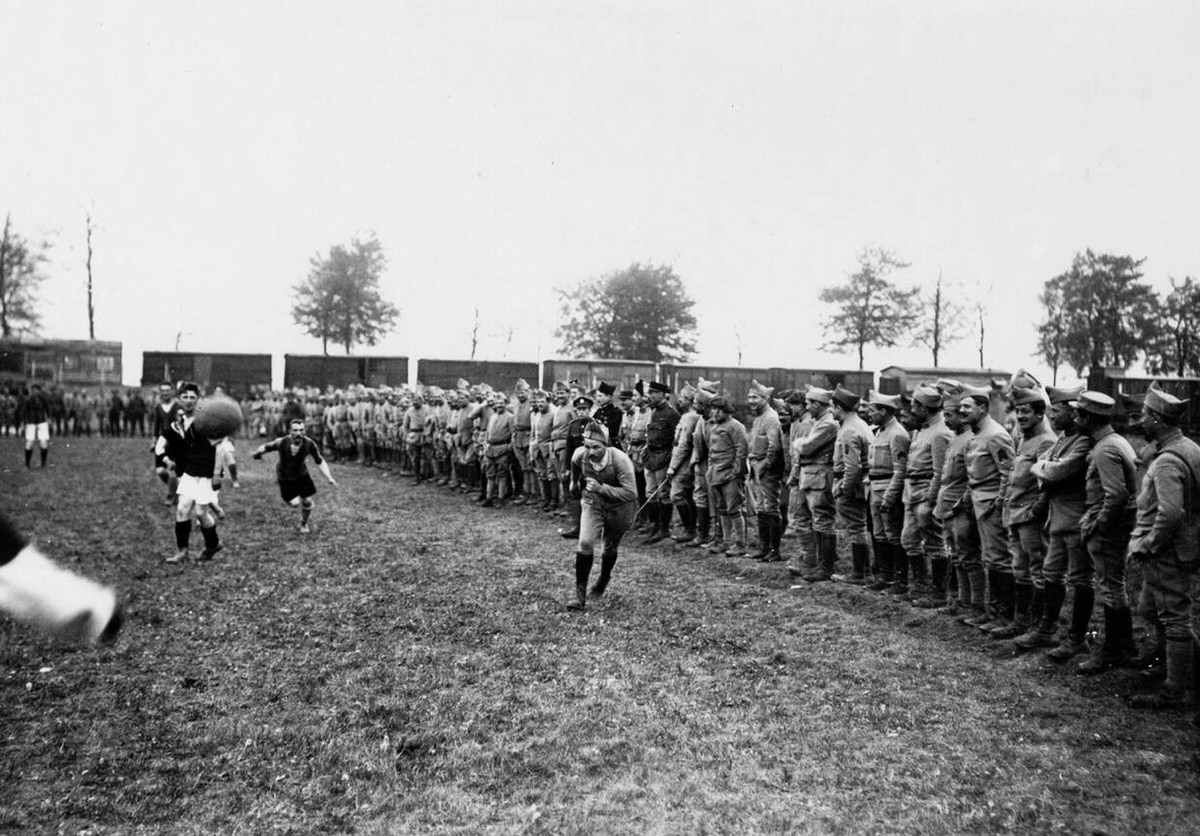
Football match between British and French soldiers in France, 1914
Triumphant dog sitting atop a gun surrounded by gunners, France, during World War I. Proudly perched on top of what looks like a howitzer, this pet dog was the regimental mascot of the artillery gunners also gathered round the gun. Despite the many dangers posed by life in and near the front line, many regiments kept pet dogs and cats. Keeping a regimental mascot also helped to maintain the troops morale.
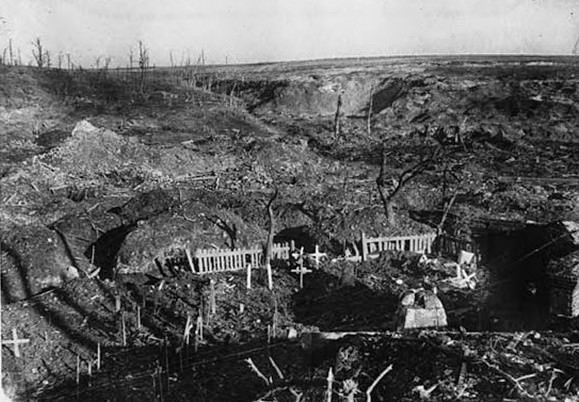
A German graveyard at Beaumont-Hamel, France, with makeshift wooden crosses marking the graves.
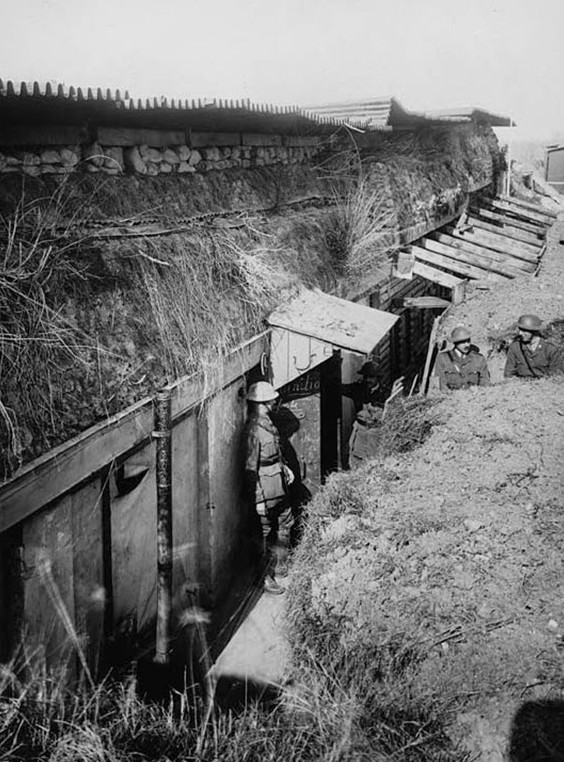
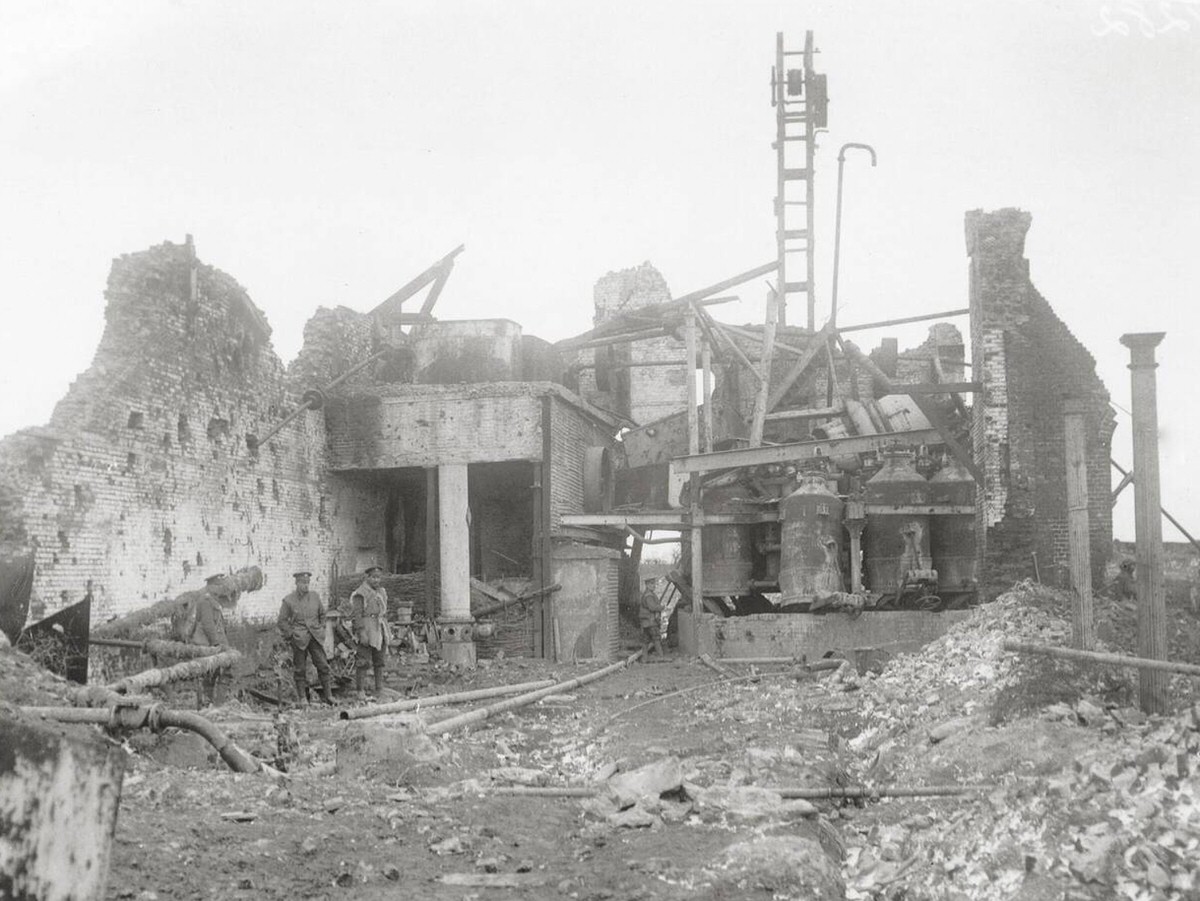
German General’s Headquarters’ dug-out being used by the British. The concrete on the tops is 10 feet deep. This photograph shows how well-engineered some of the German trenches were. The caption notes that there was 10 feet of concrete on top and the image shows a great depth of concrete and sod below the corrugated iron roof. Drain pipes and even porches can be seen in the dugout.
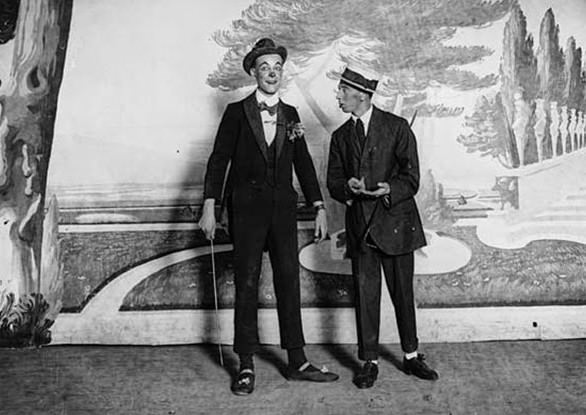
This image shows two entertainers on a stage, apparently in the middle of a stand-up comic turn. Both are in dark suits. One has a red clown’s nose and a bowler hat. He is wearing dancing shoes, so probably did some sort of dance routine as part of the act. There is a painted landscape as a backdrop.
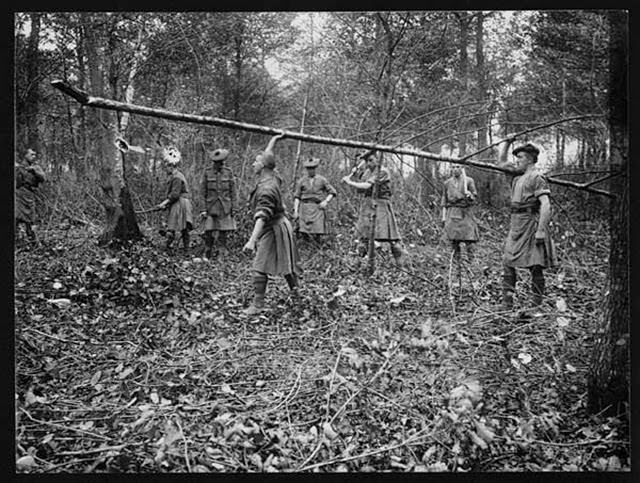
Soldiers in kilts, possibly from a Highland Regiment, working in a wooded area. They appear to be wearing a protective covering or ‘apron’ over their kilts. The two men in the foreground are carrying a long and narrow tree between them. Some of the men in the background are using axes to fell more trees. The ground is covered with branches and leaves.
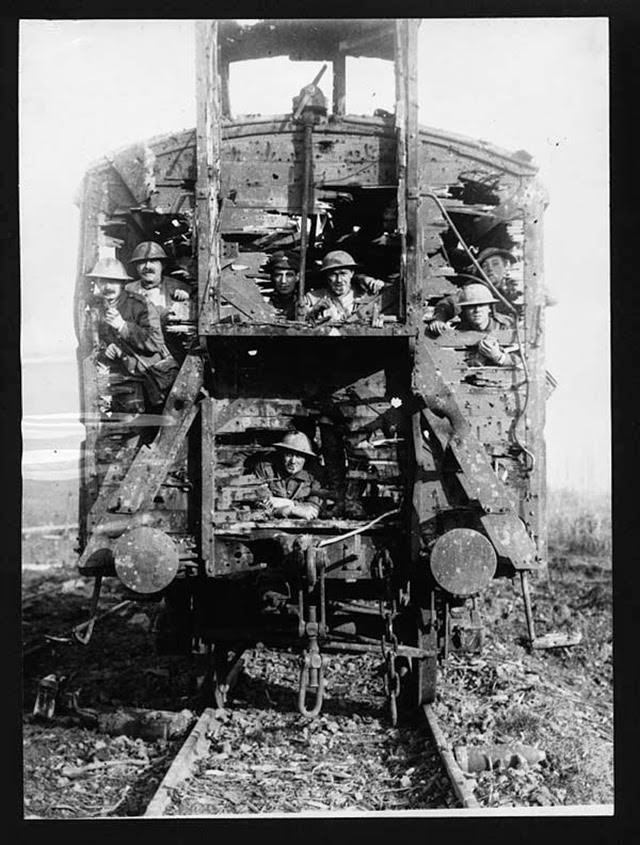
Derelict train with soldiers standing in it, France, during World War I. The camera is face-on to the end of a blown out train carriage which is still sitting on its lines. The ground around the train is littered with branches and bark. The metal structure of the train is still intact but the wooden sides have little holes as well as big missing chunks. Seven soldiers are standing inside the carriage and looking out through these large gaps. They all appear to be quite relaxed and smiling.
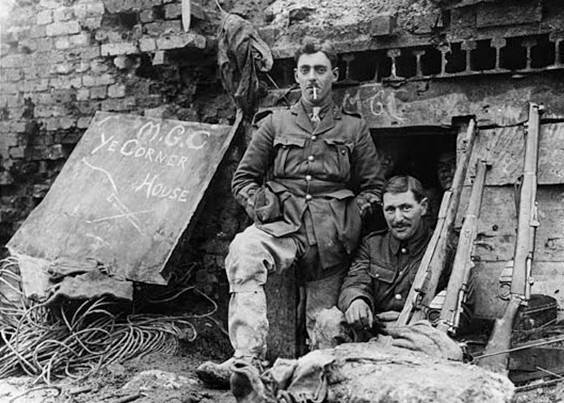
Some soldiers are jammed in the brick door way of a dugout while one man stands outside smoking. The two clearly visible soldiers look cocky and are wearing big grins. The dugout itself is half derelict with the structure clearly showing. The ground is very muddy and uneven. It is littered with equipment and debris. There is a sign leaning up against the wall which says ‘ye corner house’.
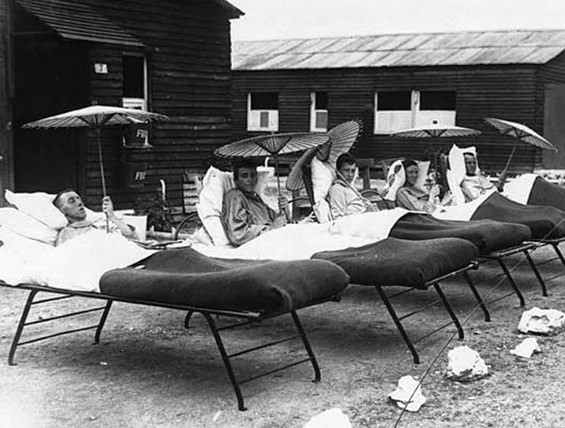
Five relatively young soldiers are lying in beds on a gravel path. The beds are made from pieces of metal tubing and look fairly compact. Each man has a number of pillows to prop him up and is holding a bamboo parasol. They are all sitting at different angles although it is unclear whether this is for medical reasons or just personal preference. The gravel path is marked with boulders which have been painted white. It skirts more wooden huts . The hut behind the soldiers has the number seven on it and a fire bucket is also visible.
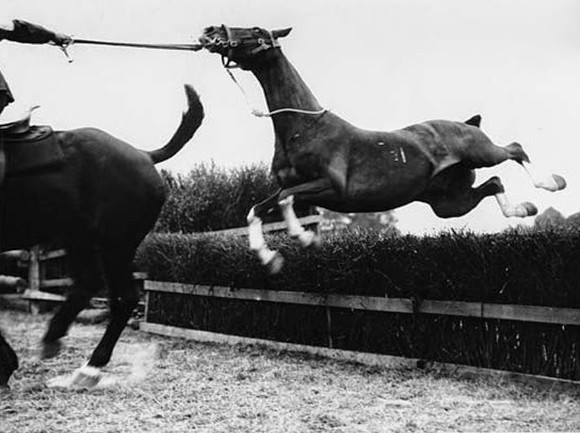
Two horses jumping fences during a show, one rider less. The picture is taken from below the height of the jump and the rest of the fences are visible in the background all at odd angles to each other. The first horse has just landed and there are dust clouds round his feet. His rump and the hand of his rider are disappearing of the left hand side off the picture. The hand is holding the leading rein of a rider less horse following them. This horse is just sailing over the fence although he is straining against the rein.
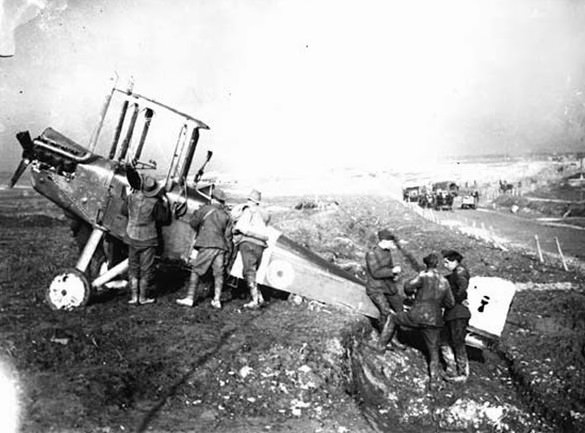
A few soldiers gather round an aeroplane. Three of them are looking at the cockpit, while three others perch near the tail. According to the original caption, these men are dismantling the plane. There are no wings attached which suggests they have either been removed or have suffered severe damage during combat. This photograph is bathed in a bright atmospheric light.
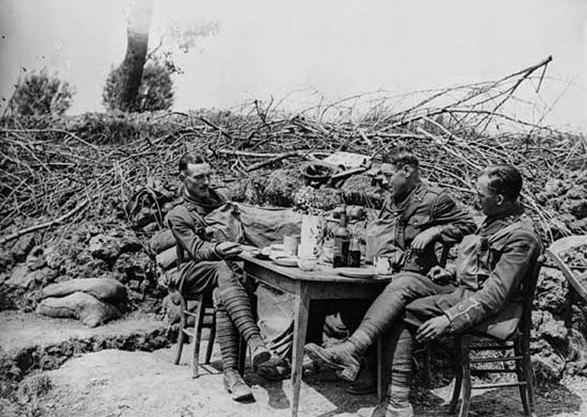
Three officers of the Duke of Wellington’s Regiment (West Riding) are sitting around a table. The table is laid with a vase of flowers, plates and mugs, but there is no food visible. The bottle appears to be labelled, ‘Dark Port.’ This photograph, which is attributed to John Warwick Brooke, shows the easier conditions often enjoyed by the officers.
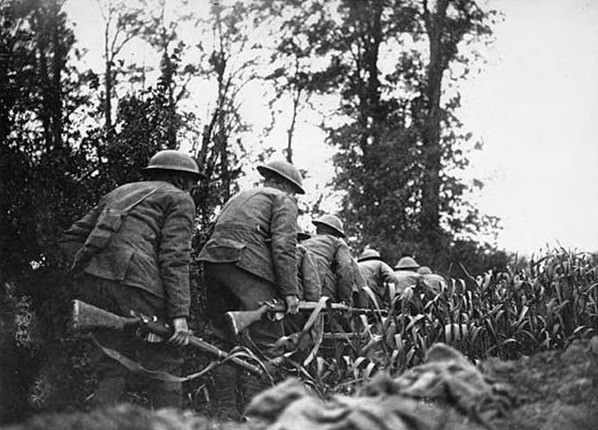
Royal Scots in No Man’s Land, France, during World War I. This photograph shows a party of soldiers from the Royal Scots Regiment creeping along between a field and a hedge. The caption indicates they were advancing in ‘No Man’s Land’, the ground between the Allied and German front line trenches.
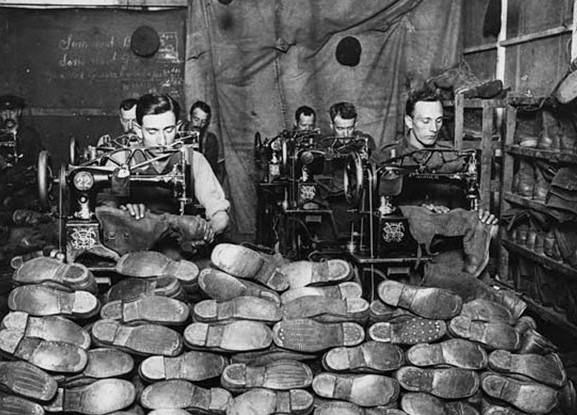
This view of the corner of a workshop for repairing army boots shows men using machines to mend calf-length boots. The machines have the logo and brand name of the American Singer Company, who produced both domestic sewing machines and larger industrial machines such as these, for sewing leather and canvas.
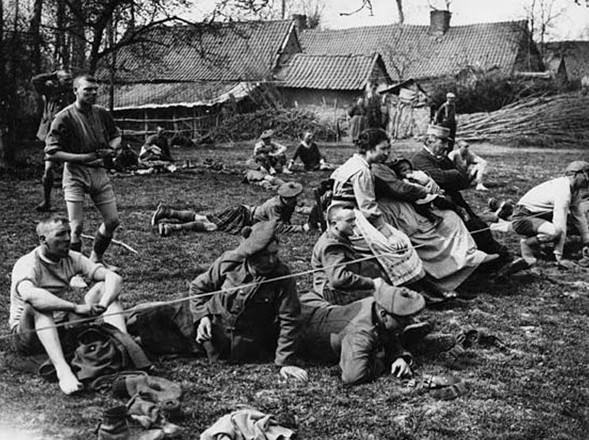
A crowd of onlookers at a sports day organised by the Black Watch Regiment. The spectators include some of the competitors, members of the Black Watch who were not taking part and a number of women and children, possibly from a nearby farm, town or village. A day such as this would have provided some light relief for those at the Front.
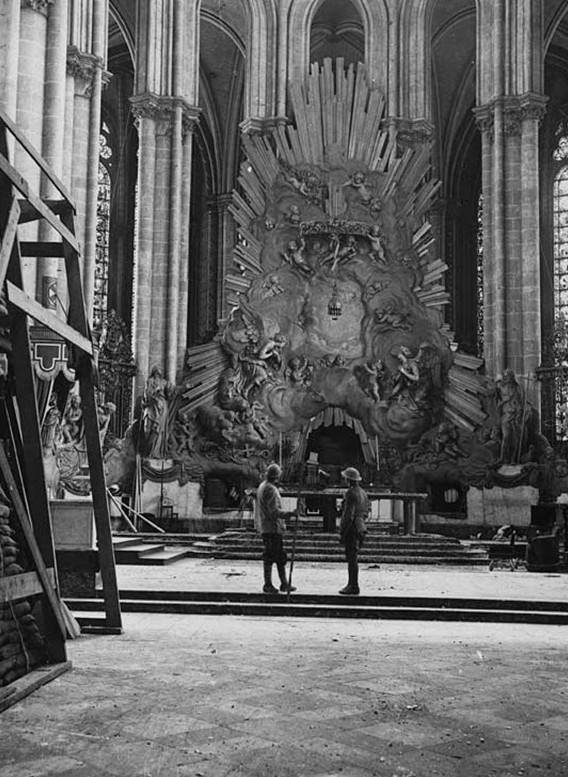
The wooden supports that were built to shield the altar at Amiens Cathedral from shell damage. In addition to these supporting planks, sandbags were also used to protect the interior furnishings and ornaments from bomb damage. Underneath the wooden support to the far left of the photograph, one can see some sandbags piled up on top of one another.
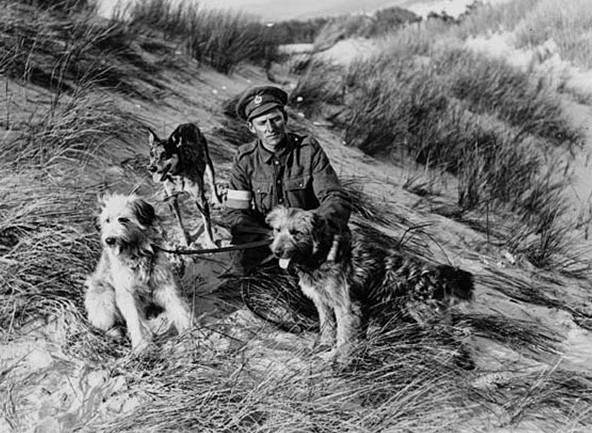
British messenger dogs with their handler, France, during World War I. A British soldier holds three dogs which were trained to carry messages between the lines and command during World War I. Usually the dogs had been strays, so one particular breed of dog could be not preferred. Generally, however, traditional working breeds, such as collies, retrievers, or large terriers, were chosen for messenger work.
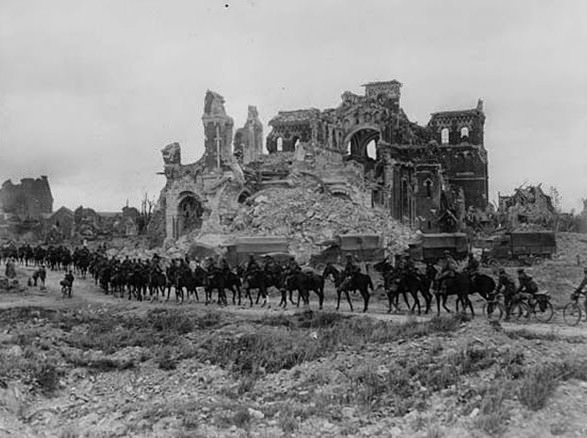
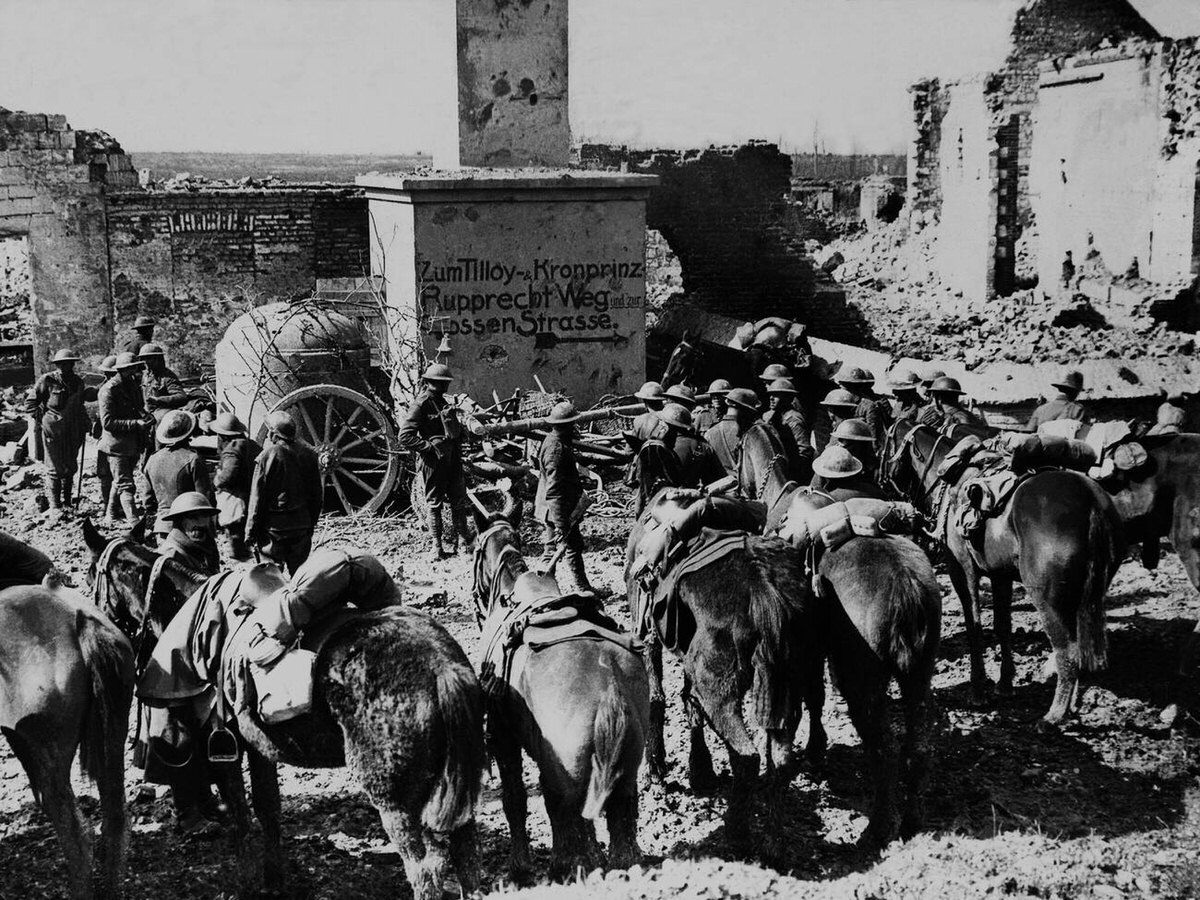
British cavalry passing the ruins of Albert cathedral, France, during World War I. World War I provided endless striking subjects for a photographer as skilled as Tom Aitken. There is something very funereal about the composition of this picture, with the procession of horses in the foreground trooping past the shell of a once-beautiful cathedral. The small town of Albert was badly damaged in fierce fighting during the Allied offensive of August 1918.
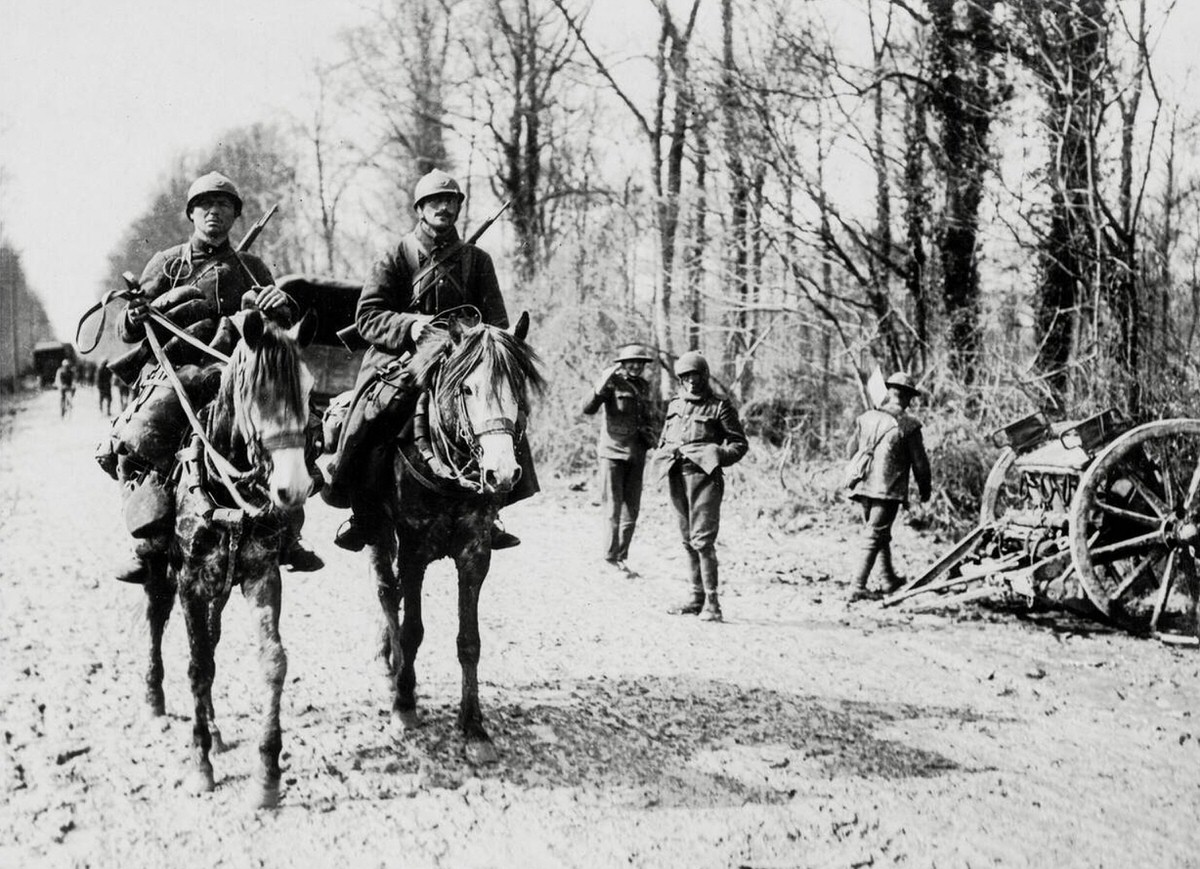
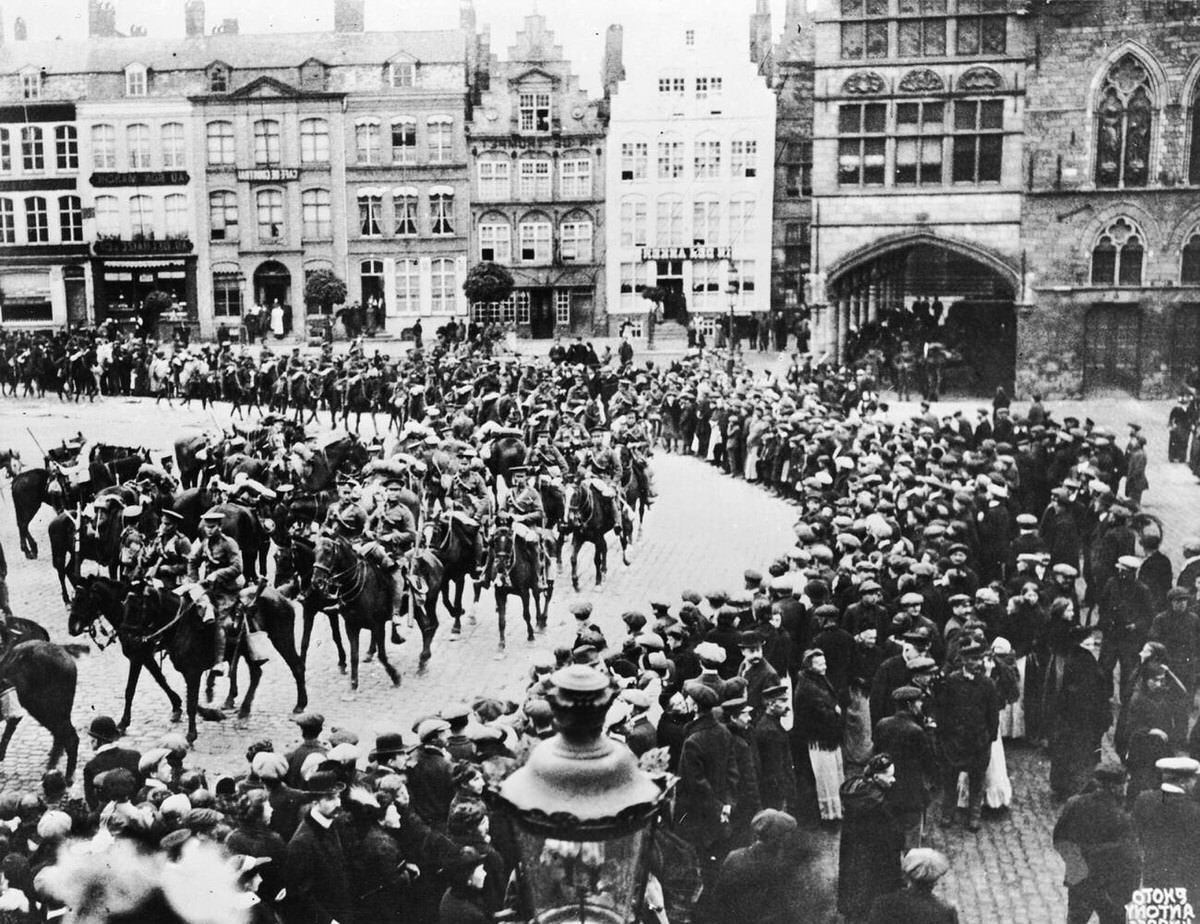
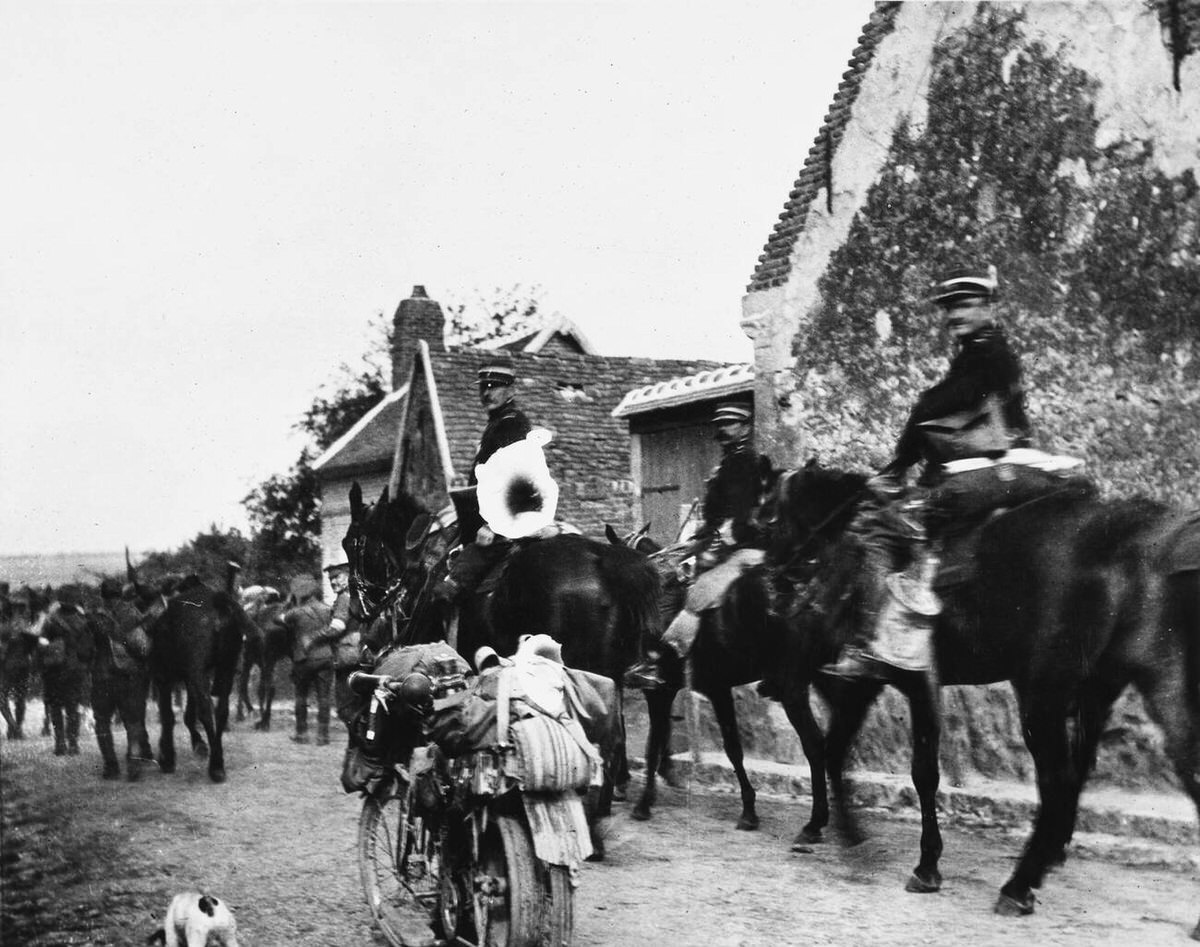
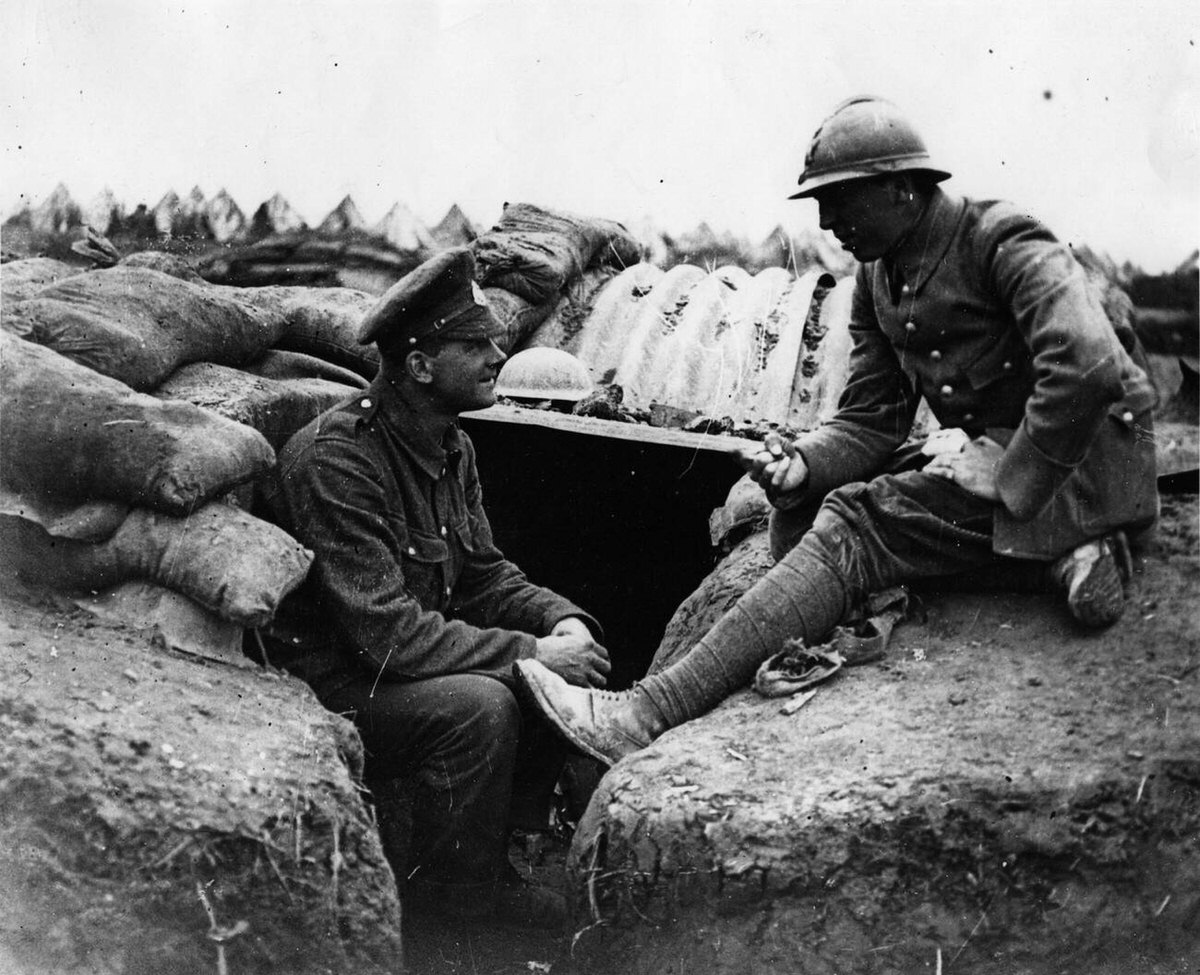
French cavalrymen moving through British lines to go into action in France, 1914
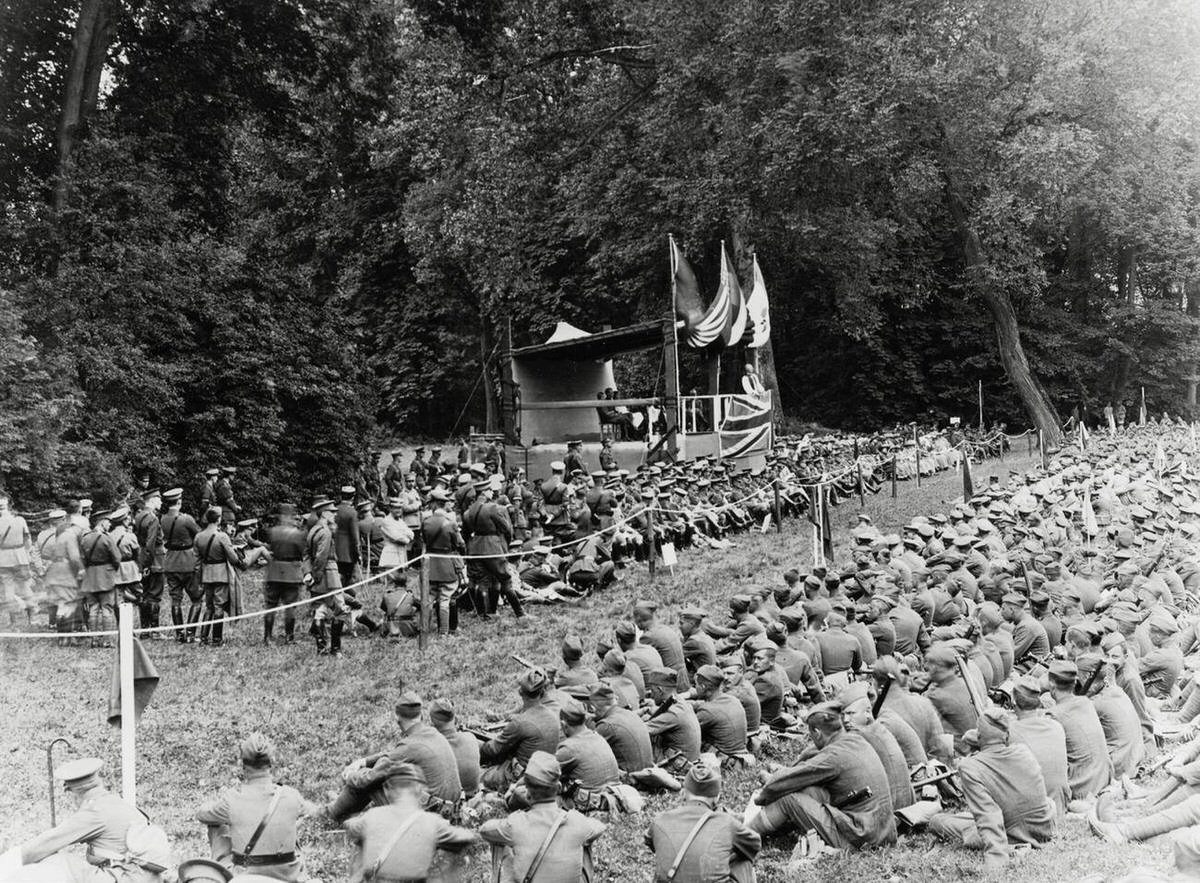
Assembly of British, American, Belgian, and Portuguese troops during August 4th celebrations in France, 1914
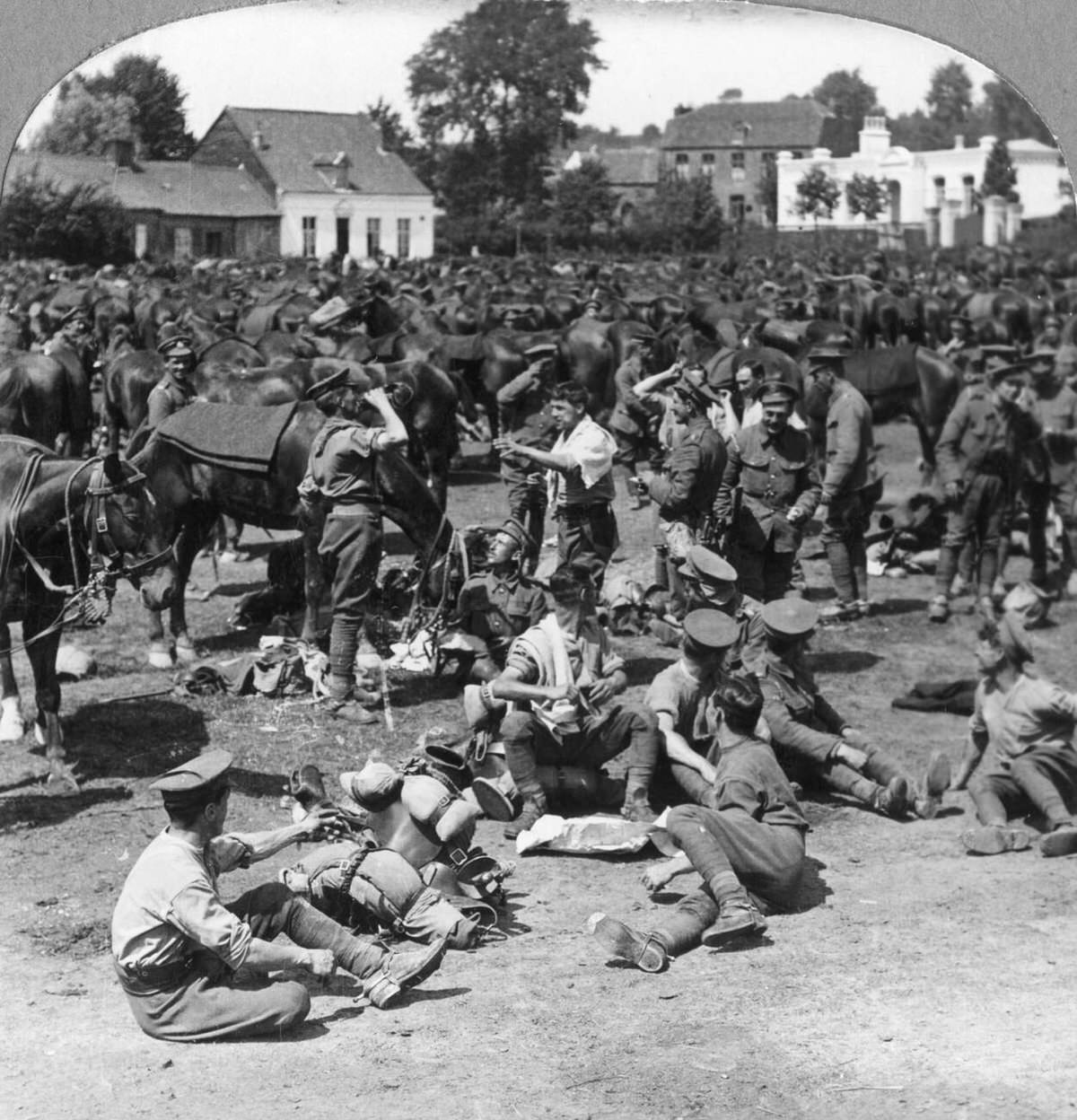
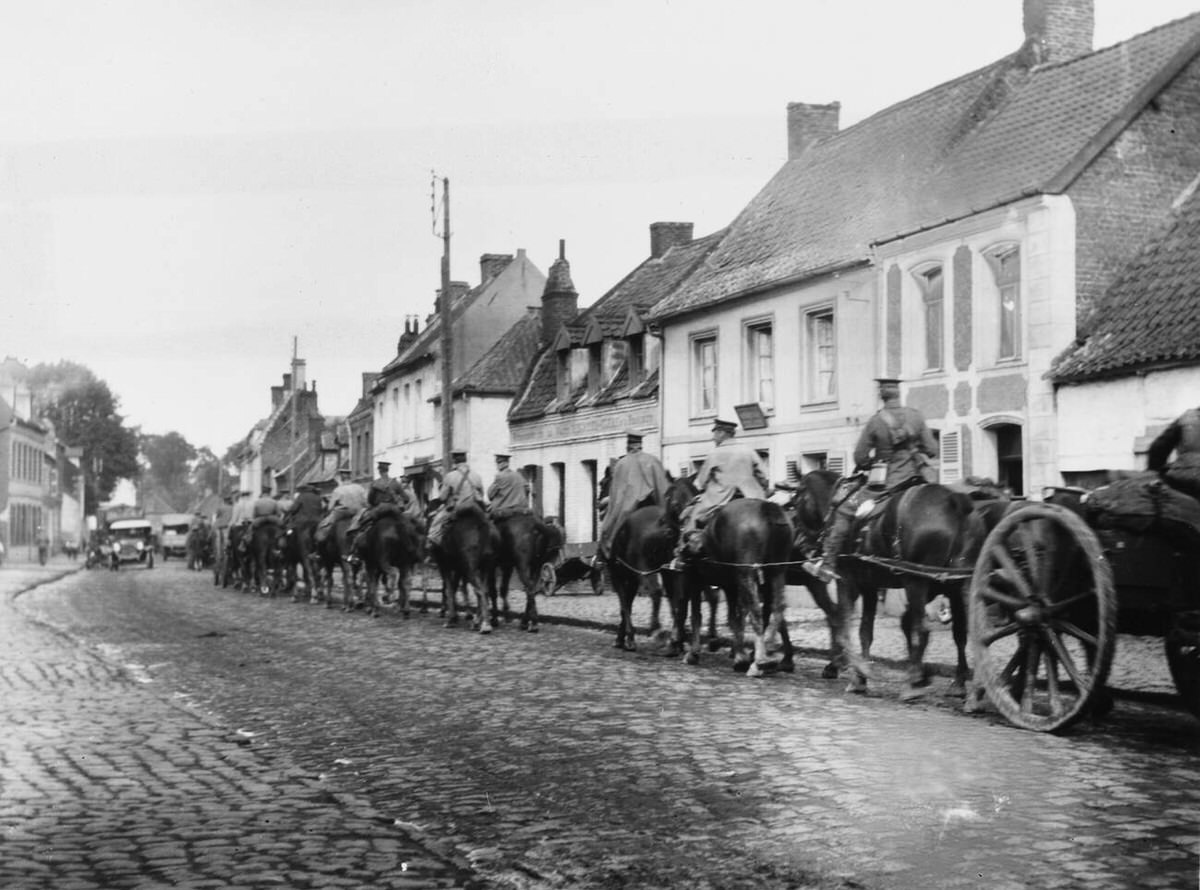
British cavalry troops resting in a French village, 1914
Observation officer and signallers in St. Quentin, France, 1914
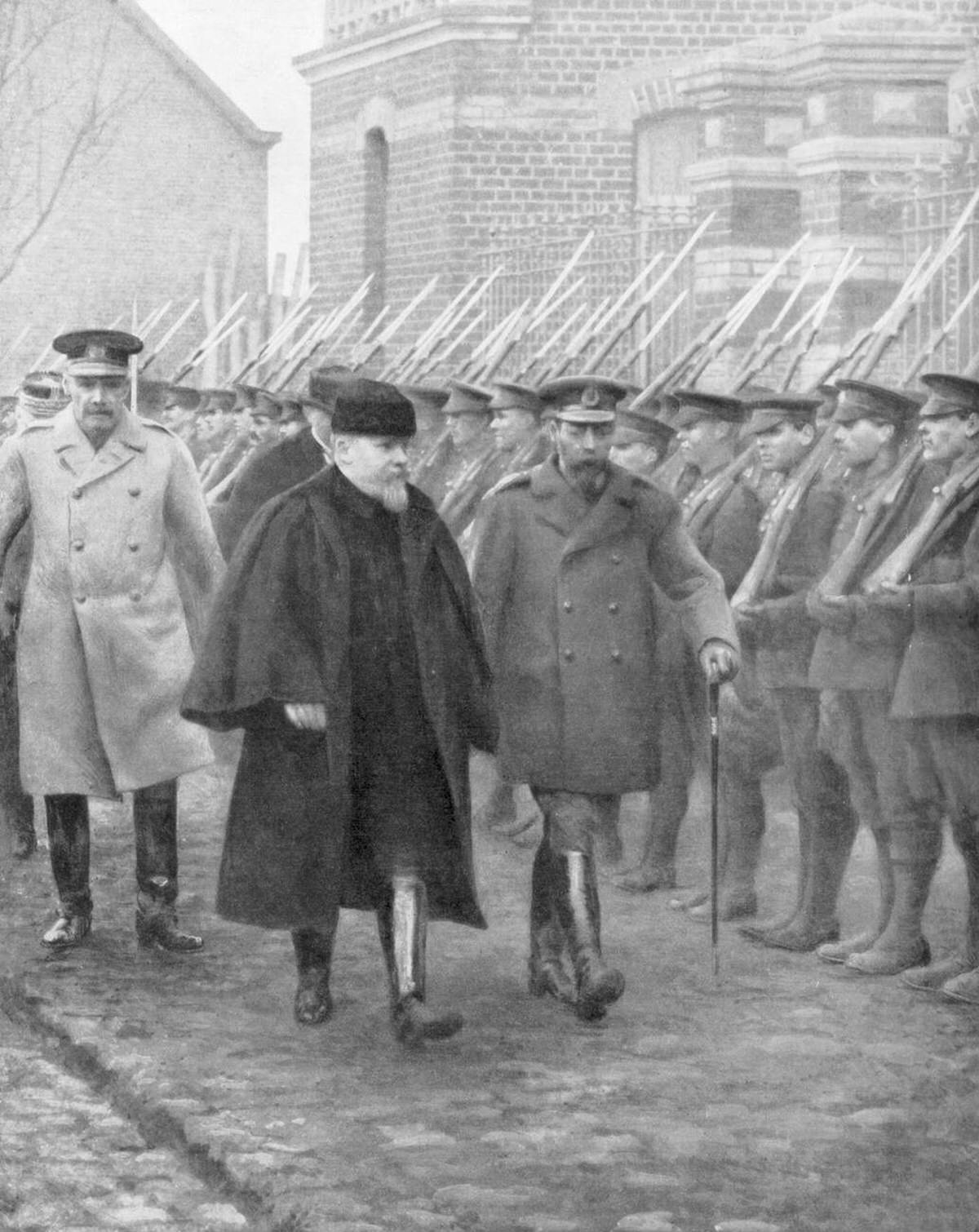
French President Raymond Poincaré and King George V, 1914
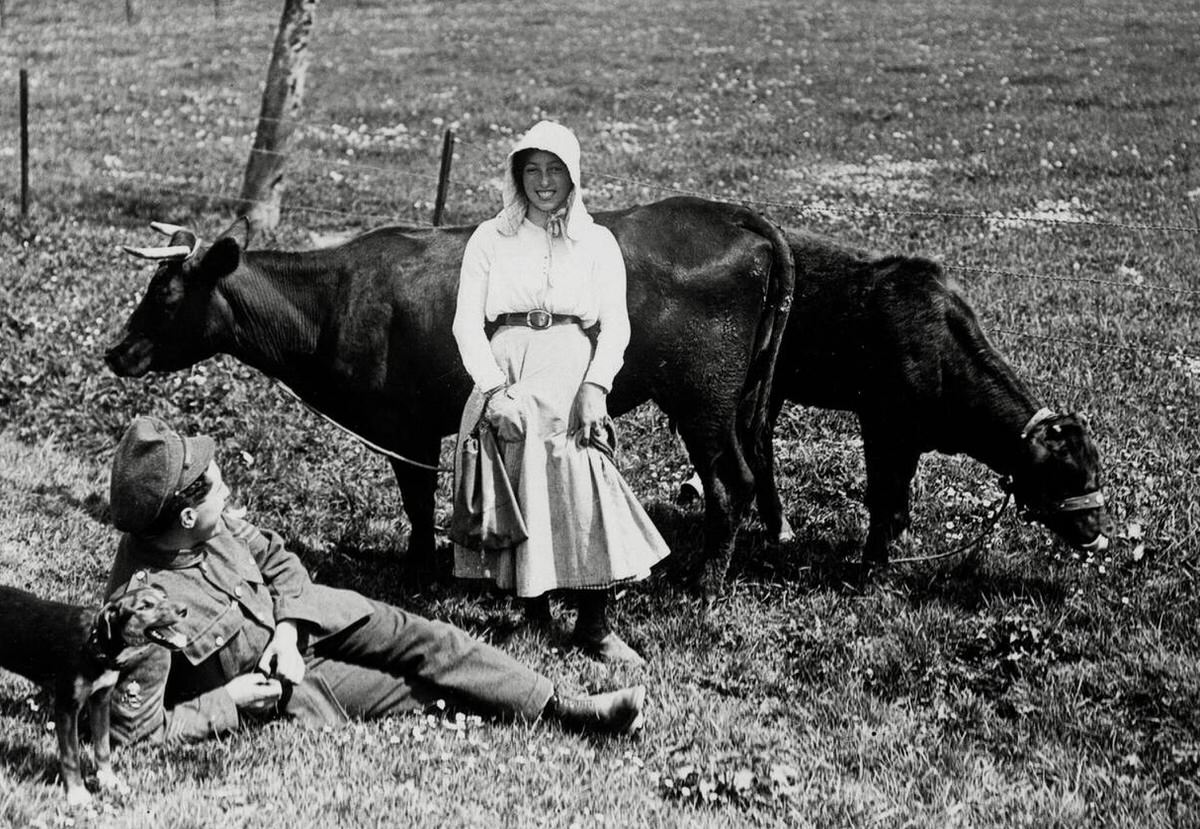
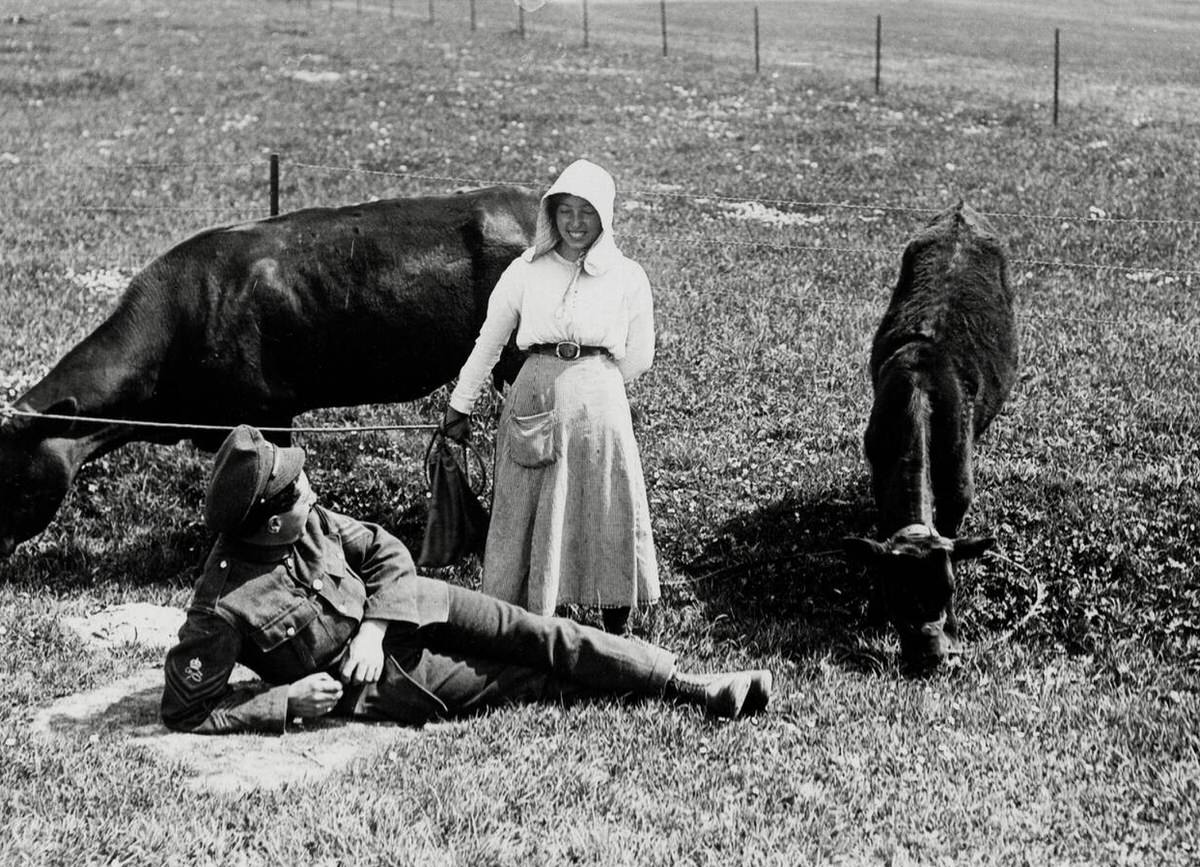
French peasant girl talking to a British soldier in France, 1914
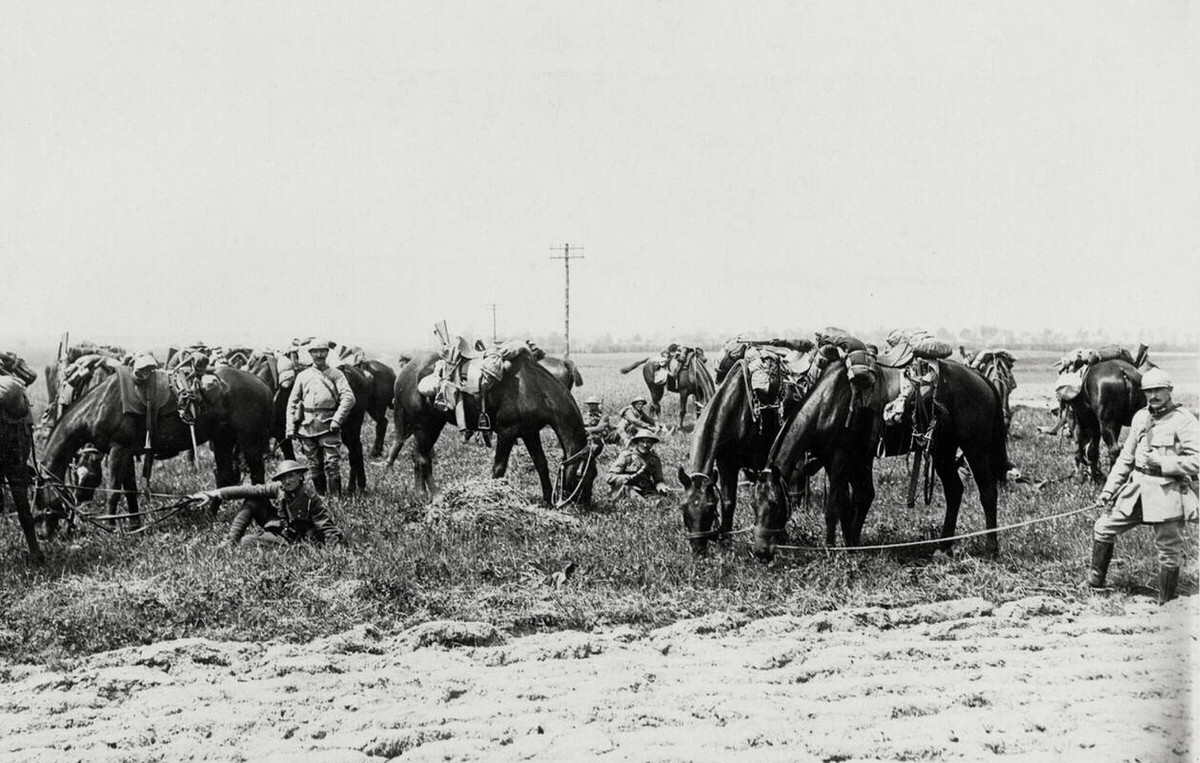
British and French cavalrymen grazing their horses together in France, 1914
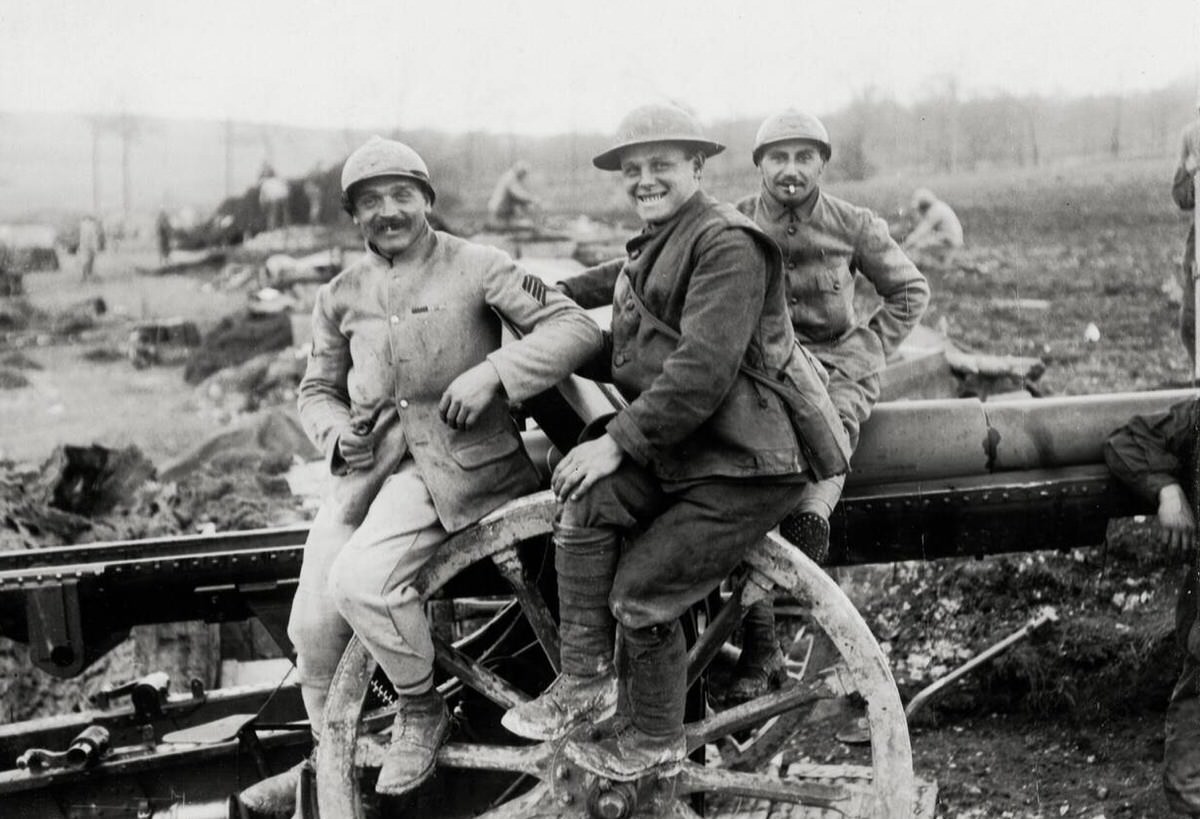
British and French soldiers sitting on the wheel of a French gun in France, 1914
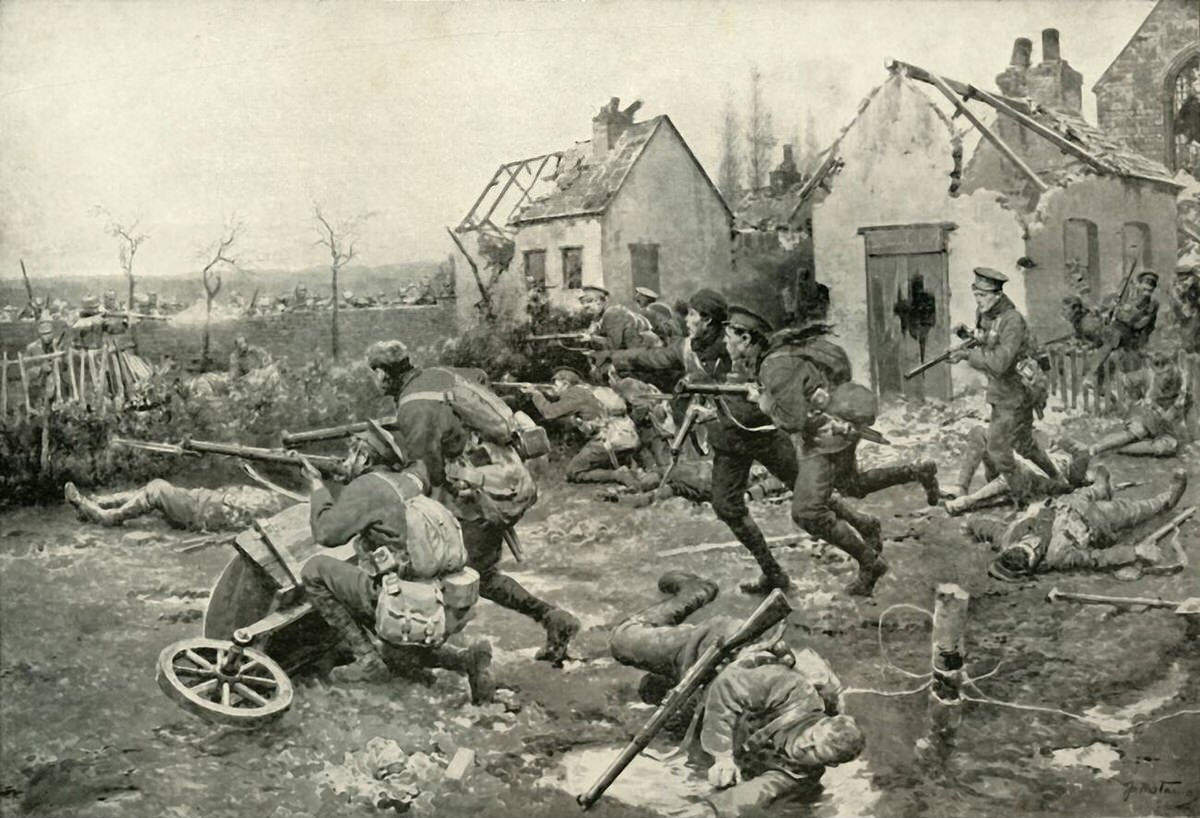
British soldiers on the battlefield behind their own lines in France, 1914
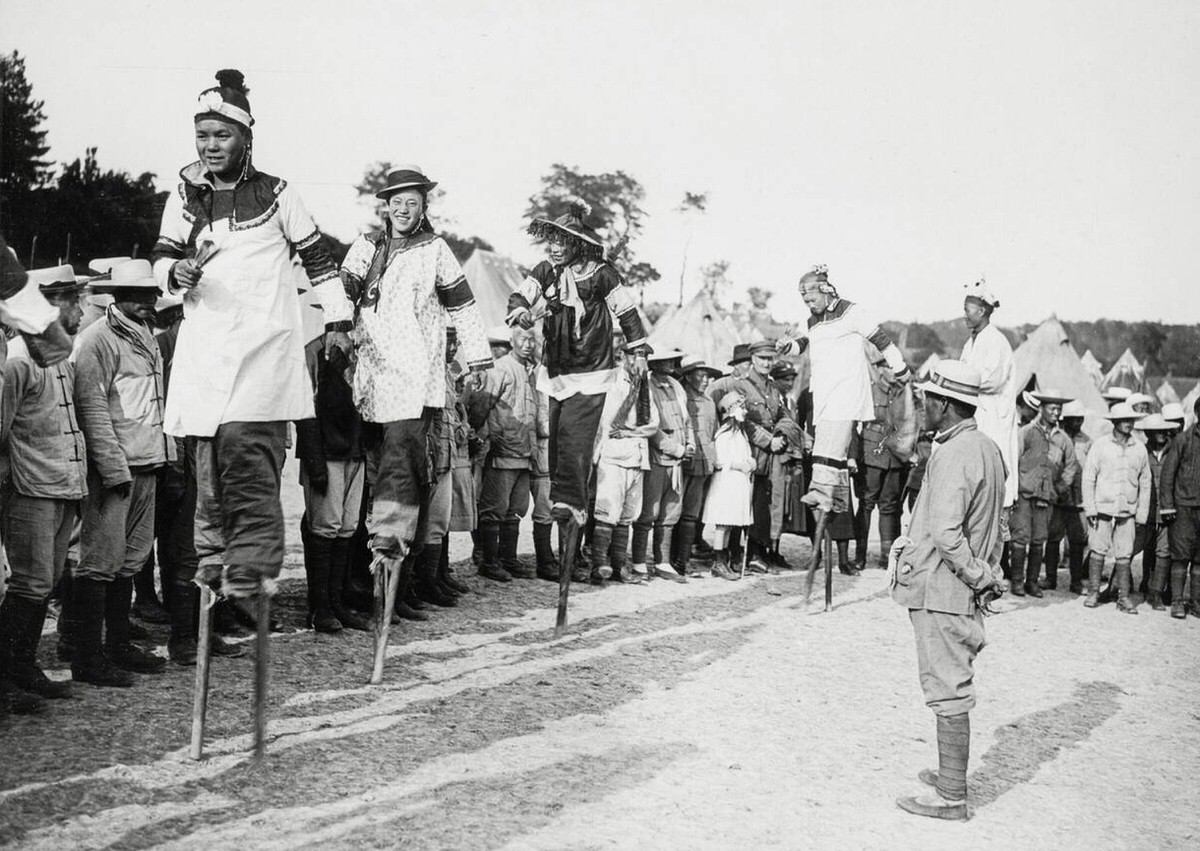
Chinese stilt walkers entertaining British troops in France, 1914
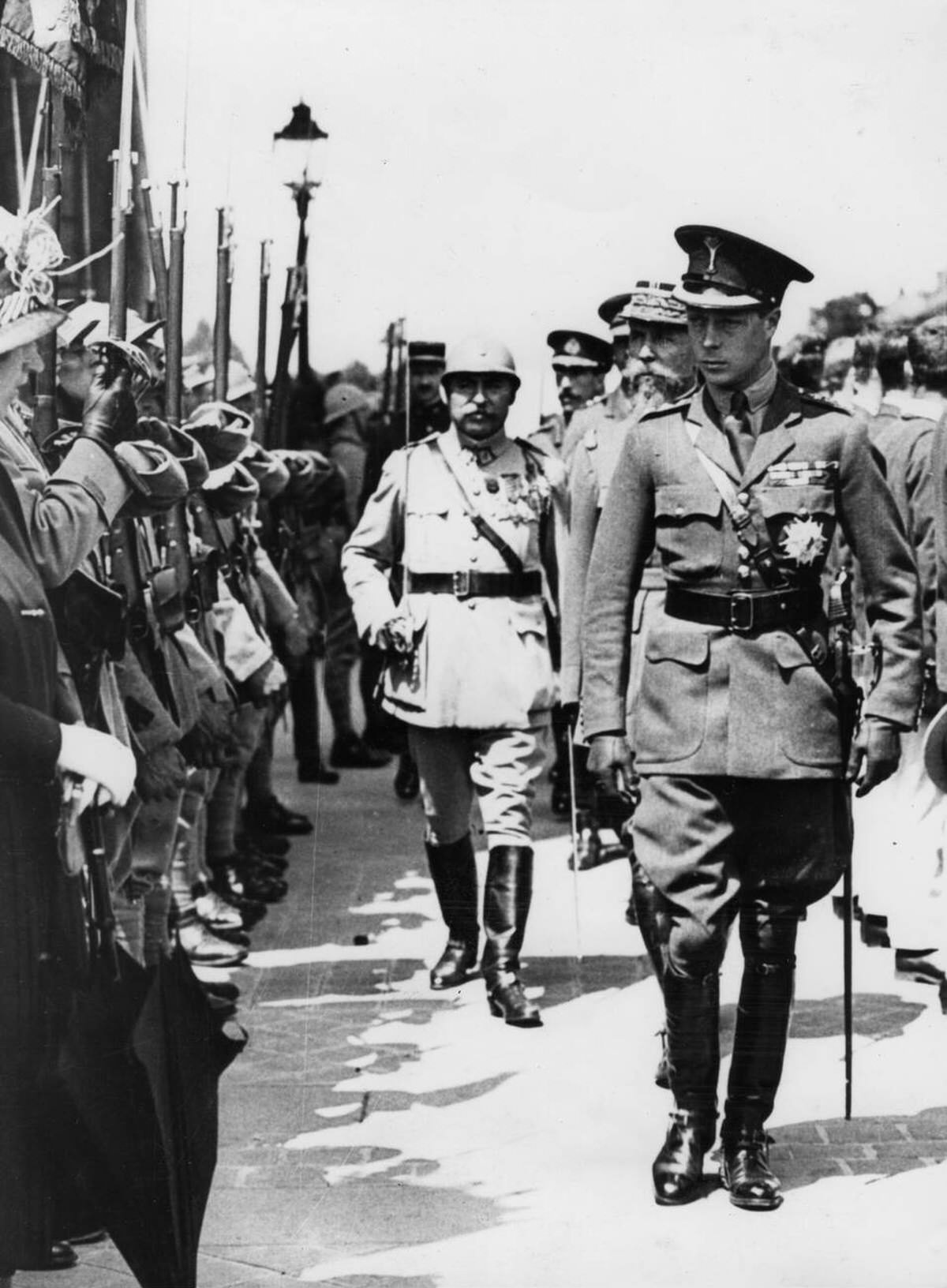
Edward, Prince of Wales inspecting French troops in France, 1914
British cavalry at the Western Front in France, 1914
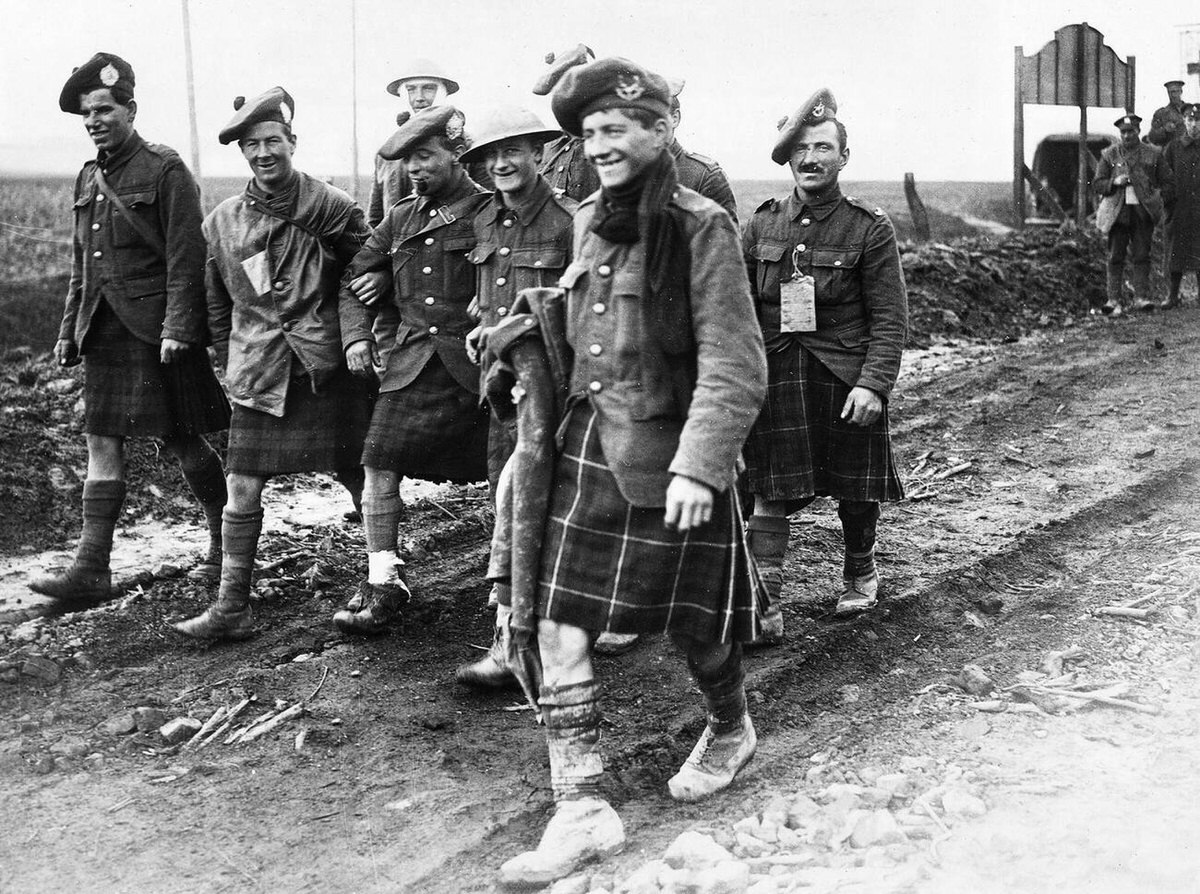
Soldiers of the 55th Division going for a rest after hard fighting on the British Western Front, 1914
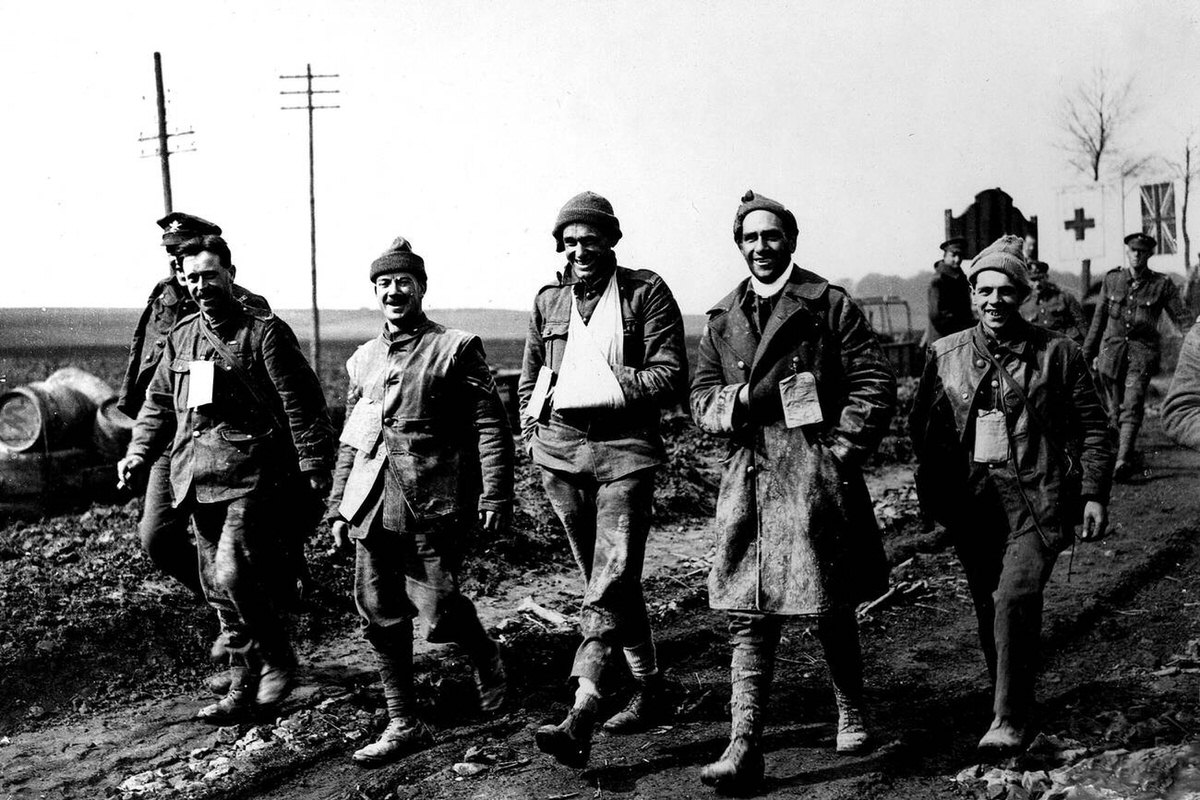
Wounded soldiers leaving a Casualty Clearing Station on the British Western Front, 1914
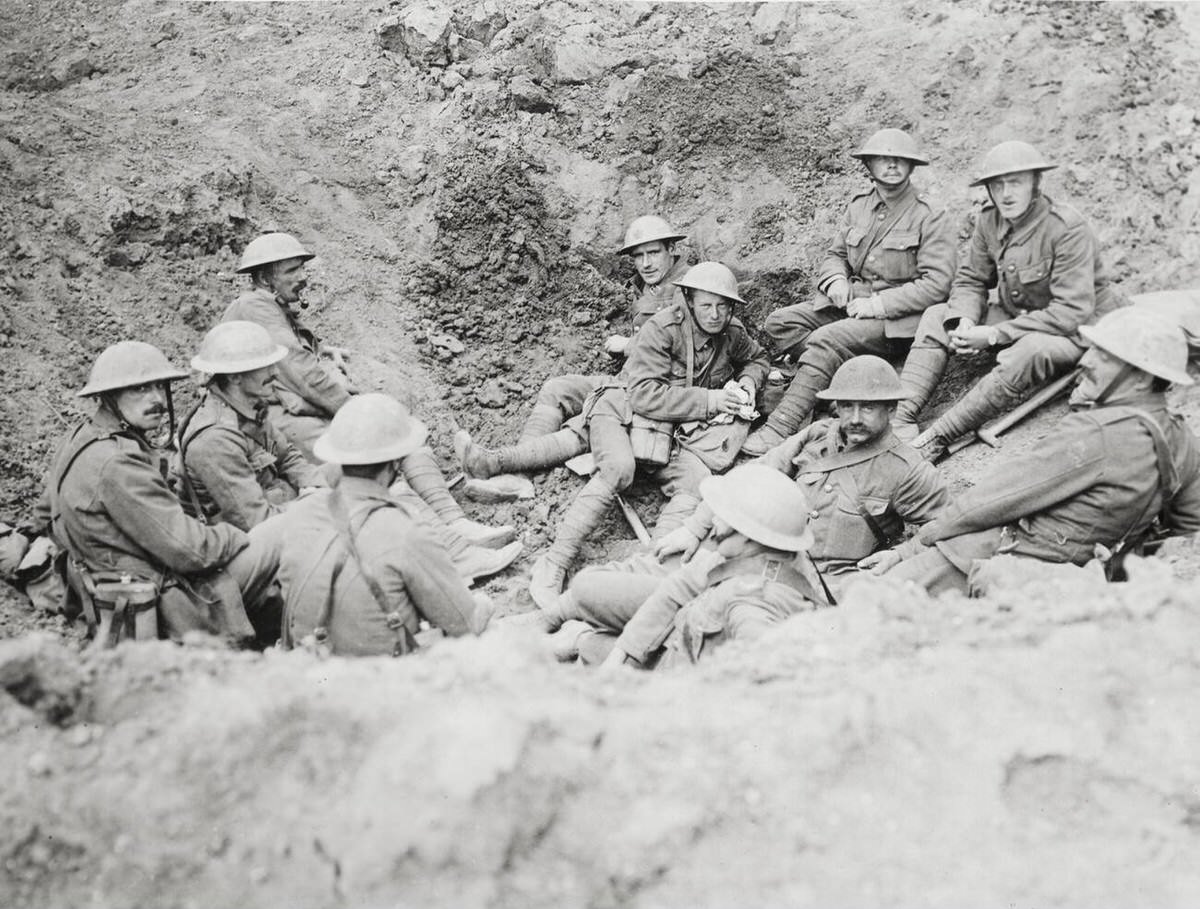
British troops in shell holes between Guillemont and Ginchy, 1914
British officers and men near Péronne, 1914
British troops at a ruined building taken from the Germans at Serre-lès-Puisieux, 1914
Observation post, 1914
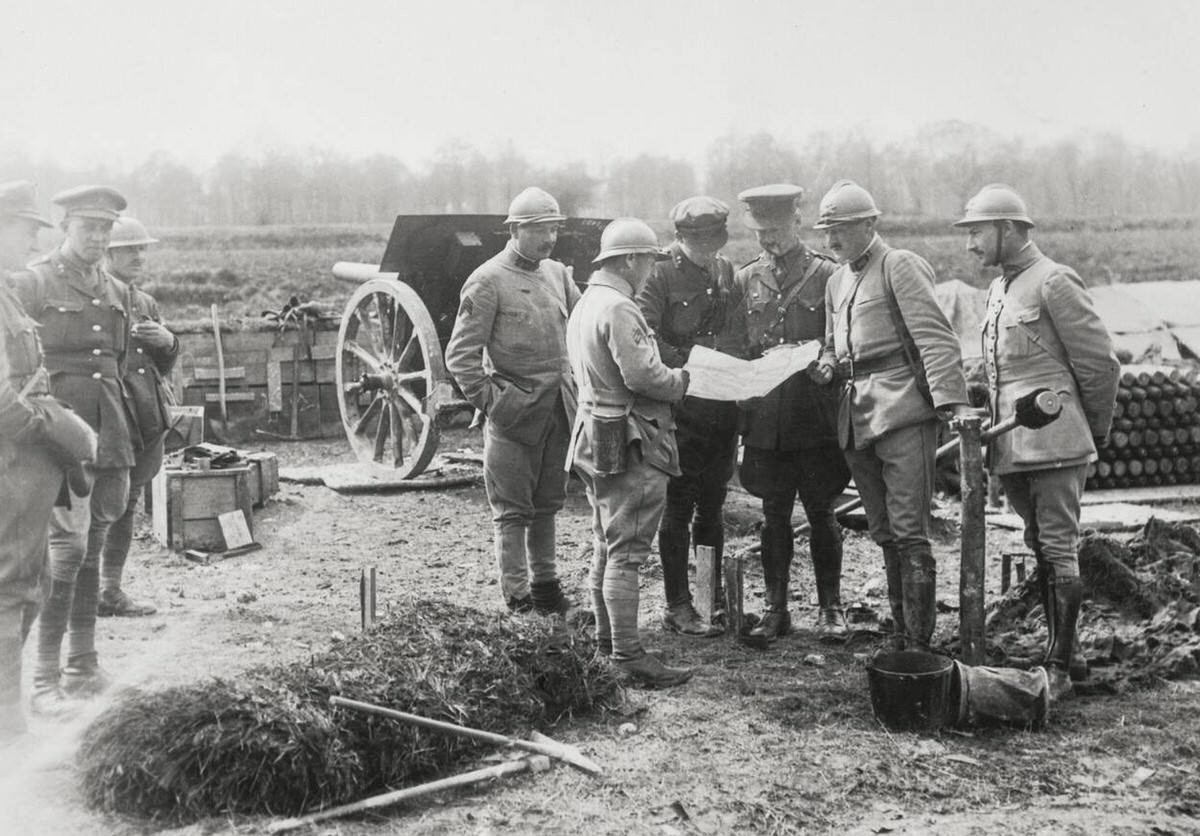
British and French men looking at a map in France, 1914
British troops watching shells being dropped on German trenches in France, 1914
Spectators watching a football match between British and French soldiers near the line in France, 1914
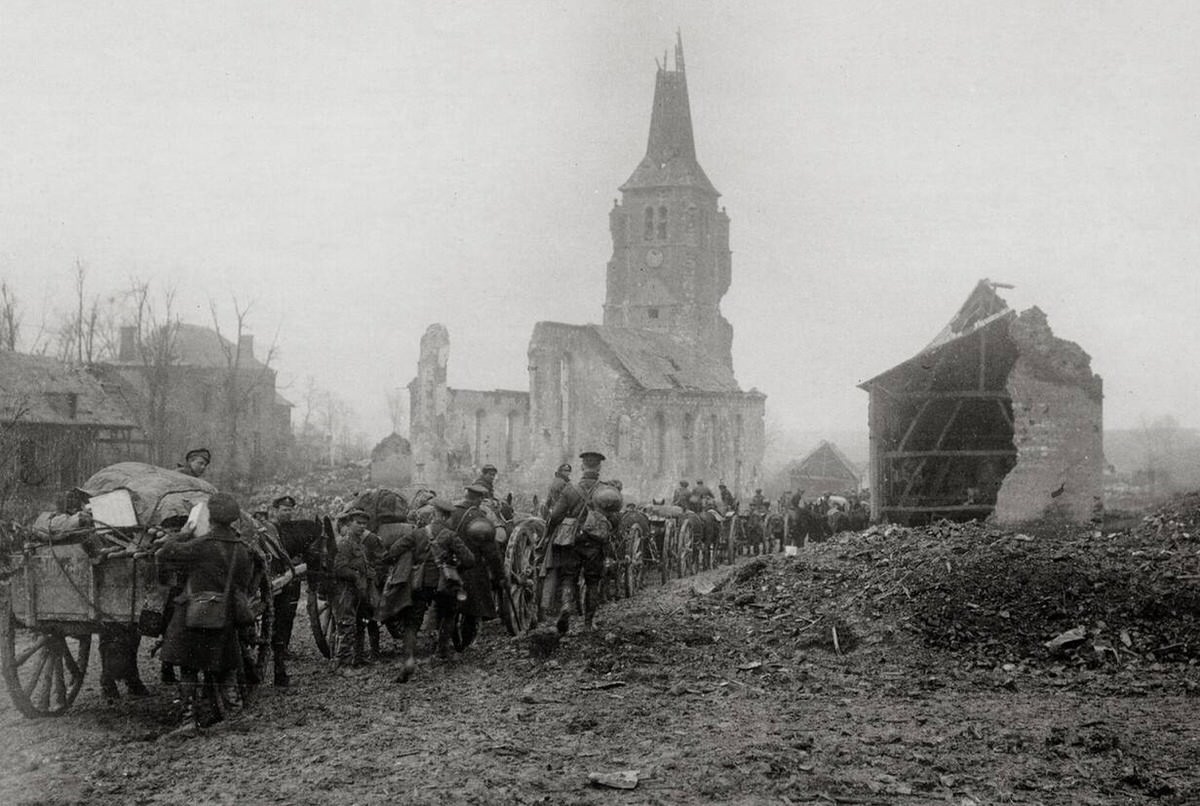
Troops moving through ruins behind the British line in France, 1914
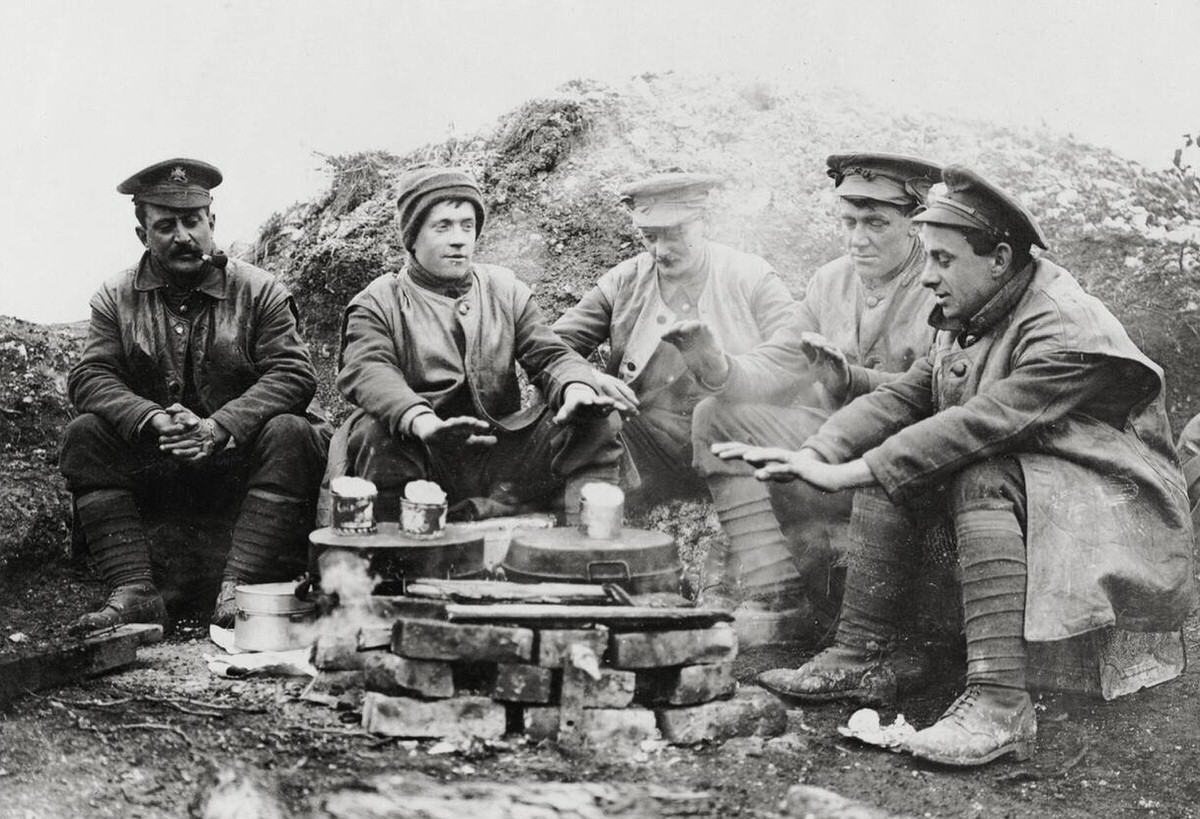
British soldiers keeping warm while waiting for lunch in France, 1914
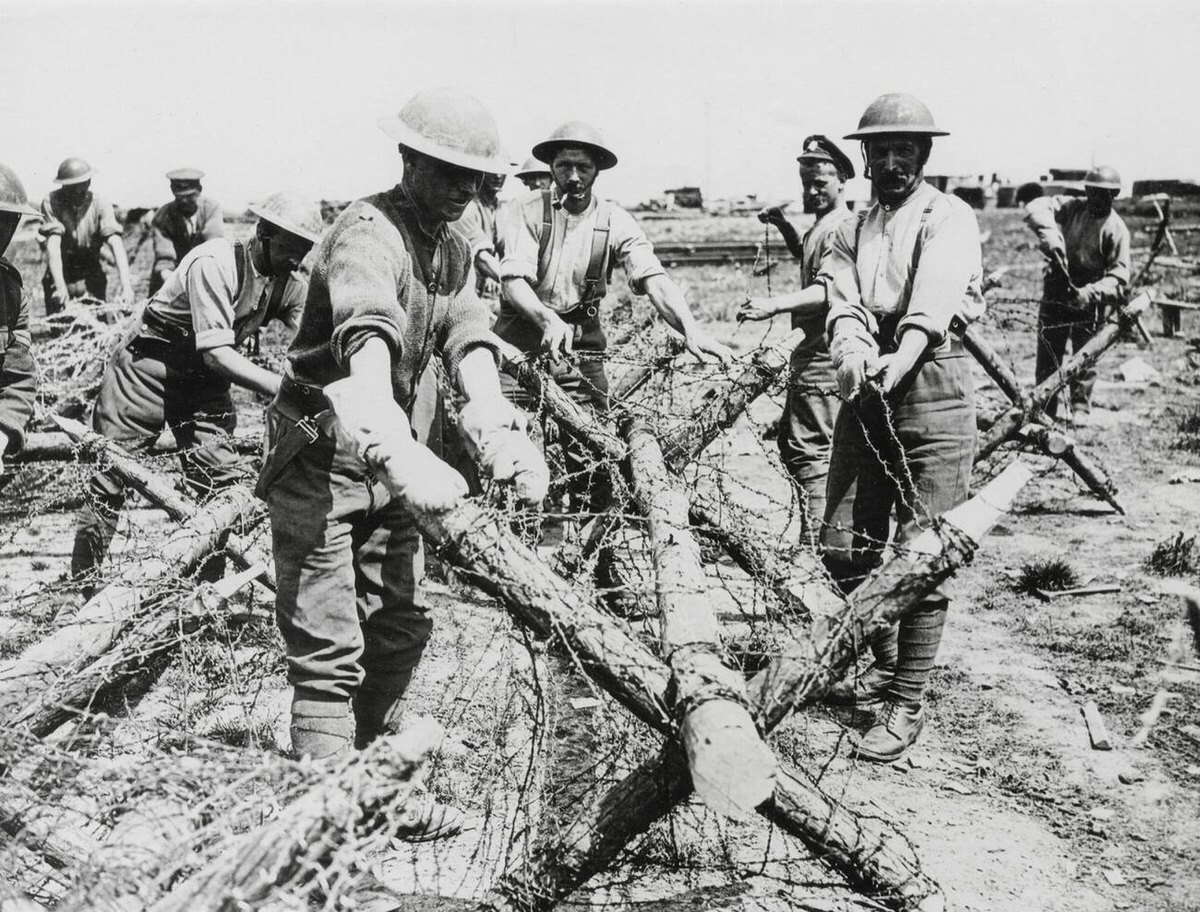
British troops fixing barbed wire to protect their trenches in France, 1914
Spectators watching a football match between British and French soldiers in France, 1914
Spectators watching a football match between British and French soldiers in France, 1914
World War I, 1914
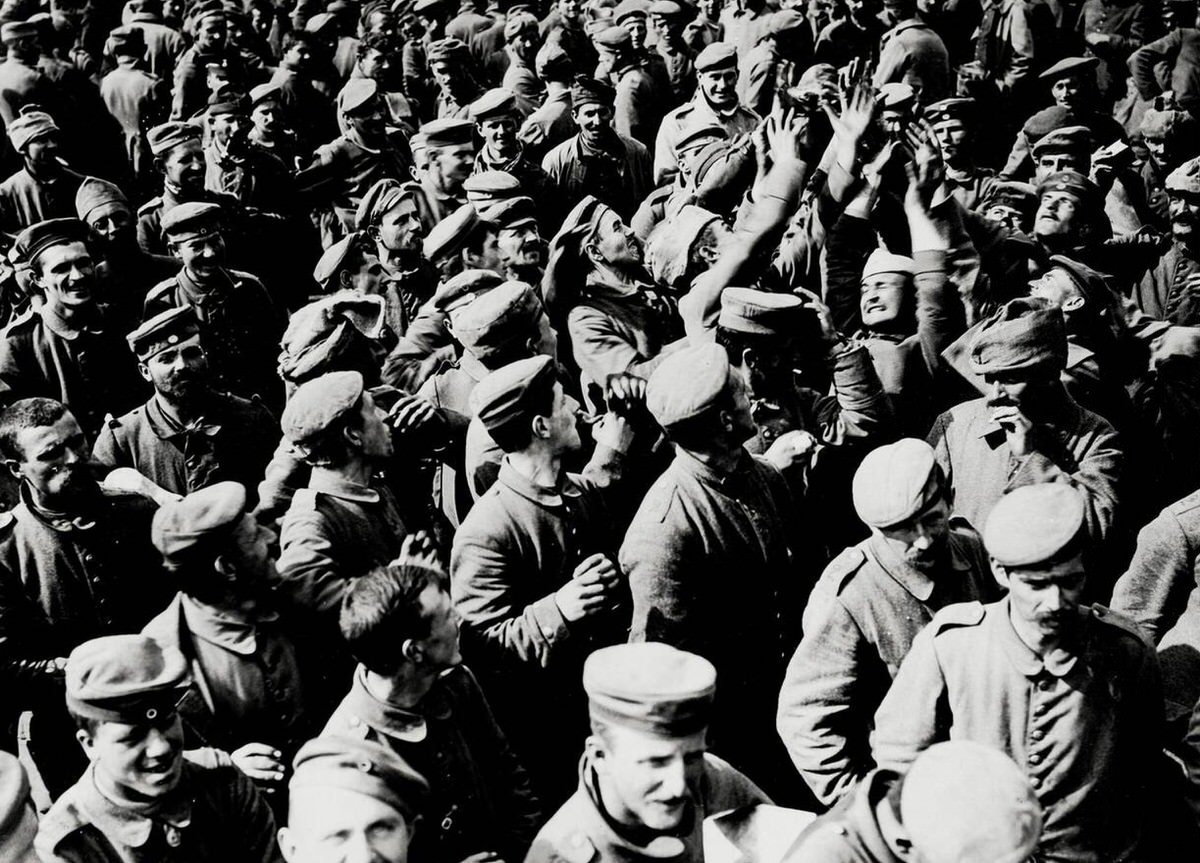
German prisoners scrambling for cigarettes thrown by British soldiers, 1914
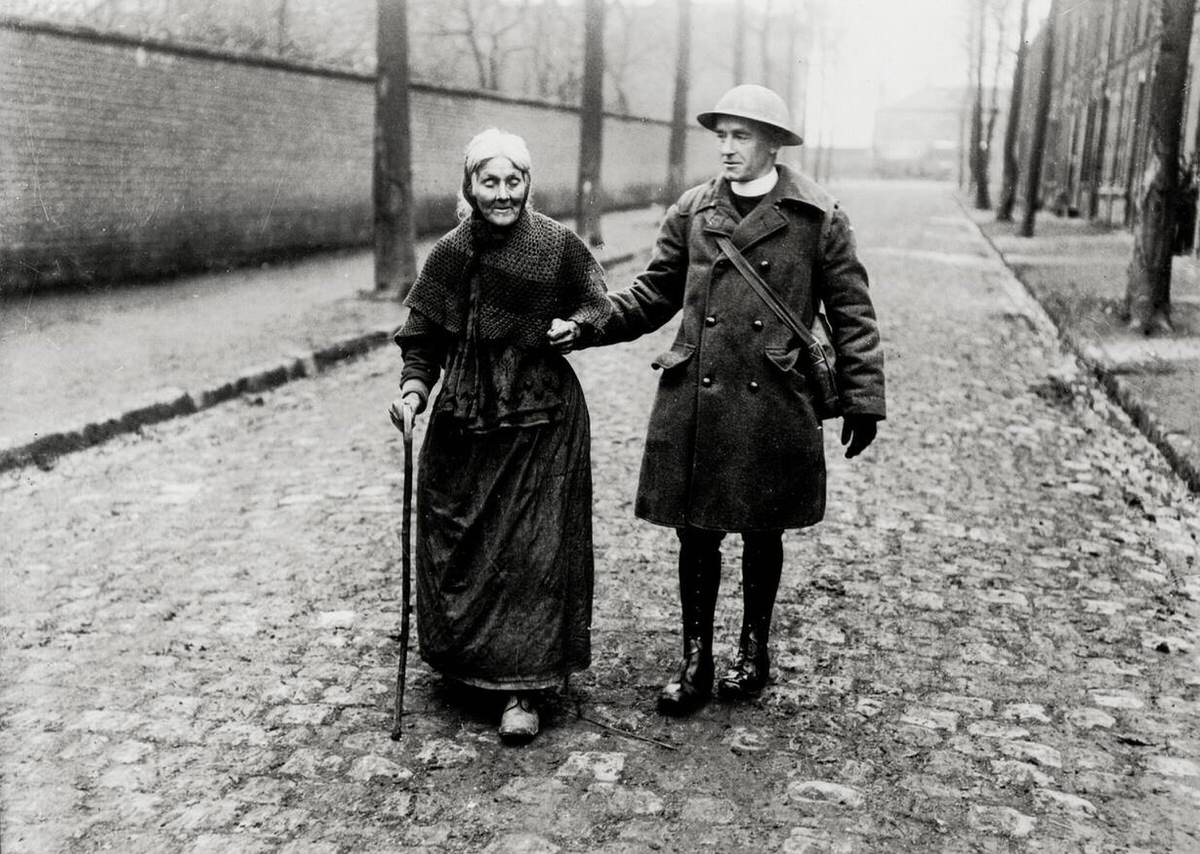
British priest helping a frail woman on a cobbled street in France, 1914
Artillery observation officer in a forward post in France, 1914
Spectators watching a football match between British and French soldiers in France, 1914
Wounded soldiers after stopping the German rush, 1914
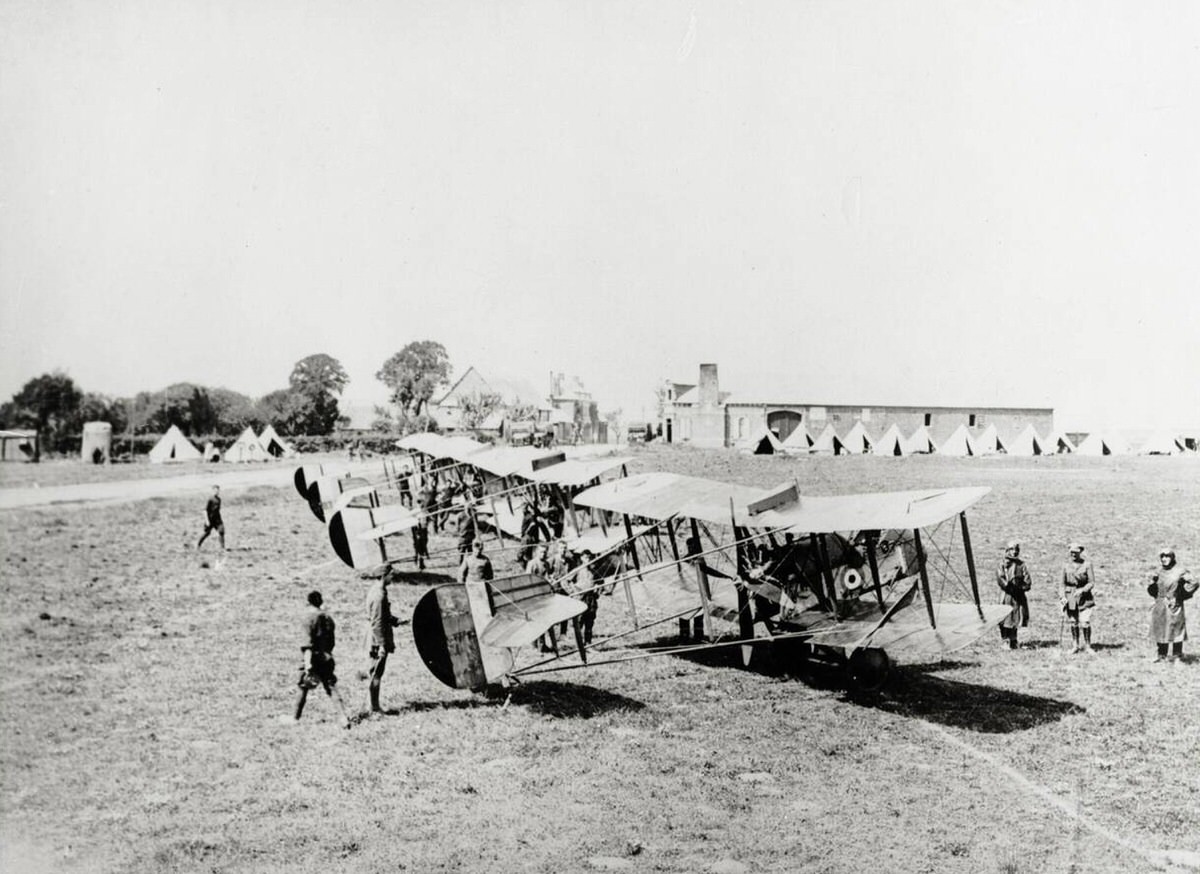
British aircraft about to start a patrol in France, 1914
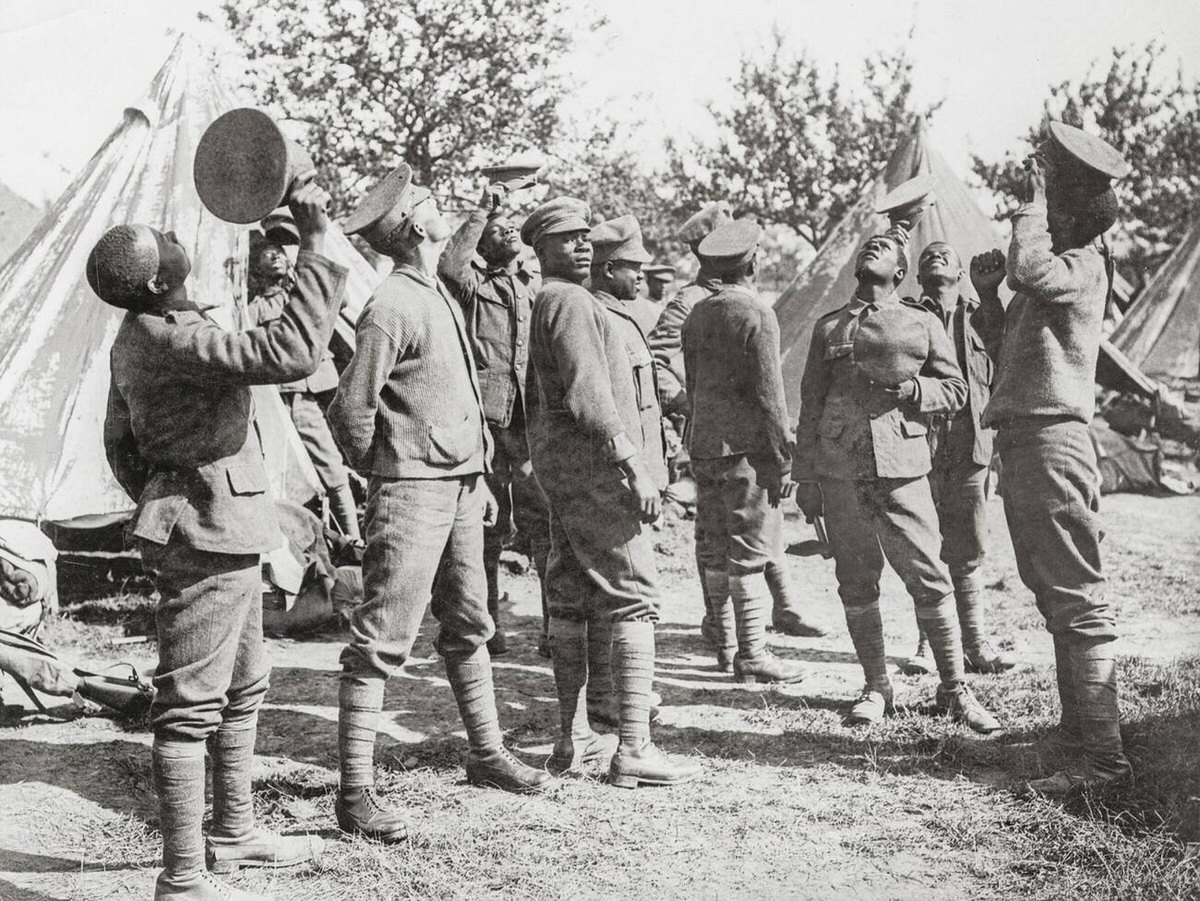
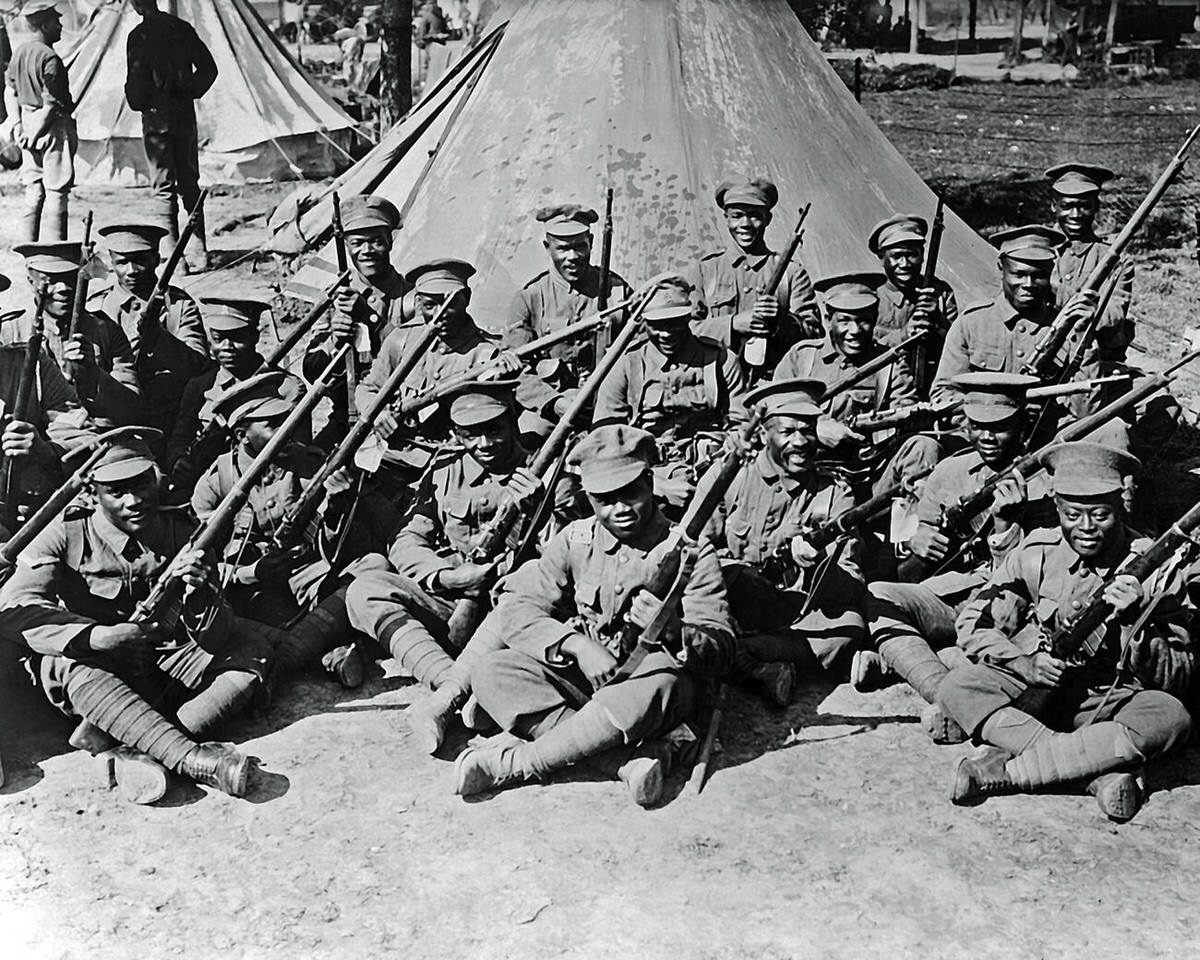
Men from a West Indian Regiment watching a German aeroplane being chased by British planes in France, 1914
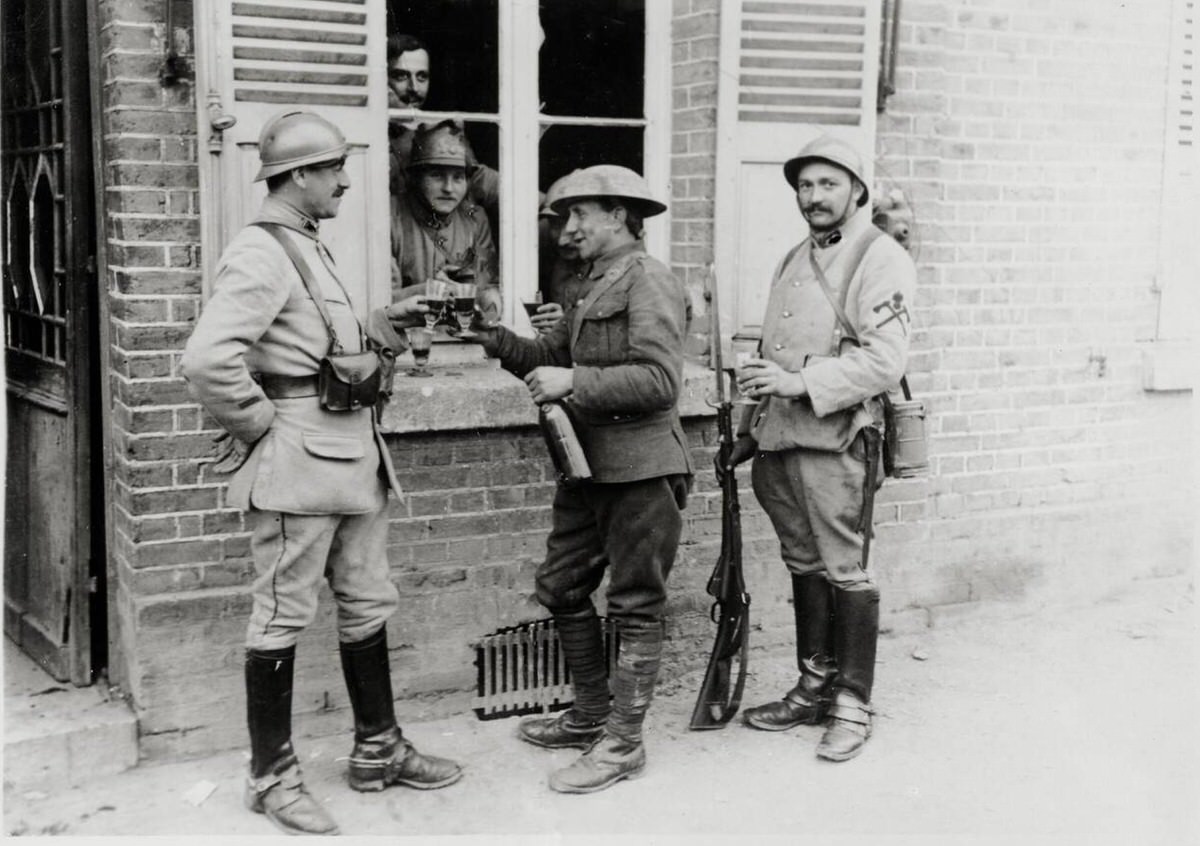
British and French soldiers having a drink at a window in France, 1914
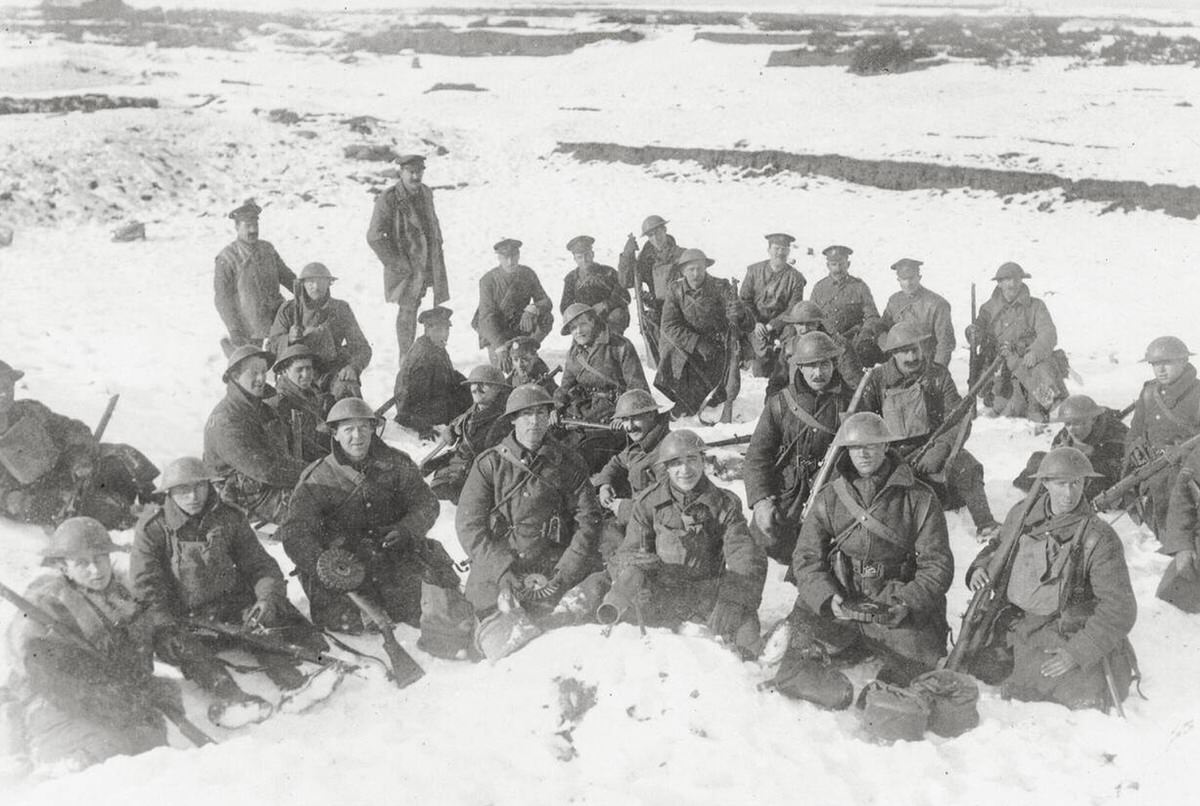
British troops in France, 1914
Battalion of the Royal Warwickshire Regiment going back for a rest on the British Western Front, 1914
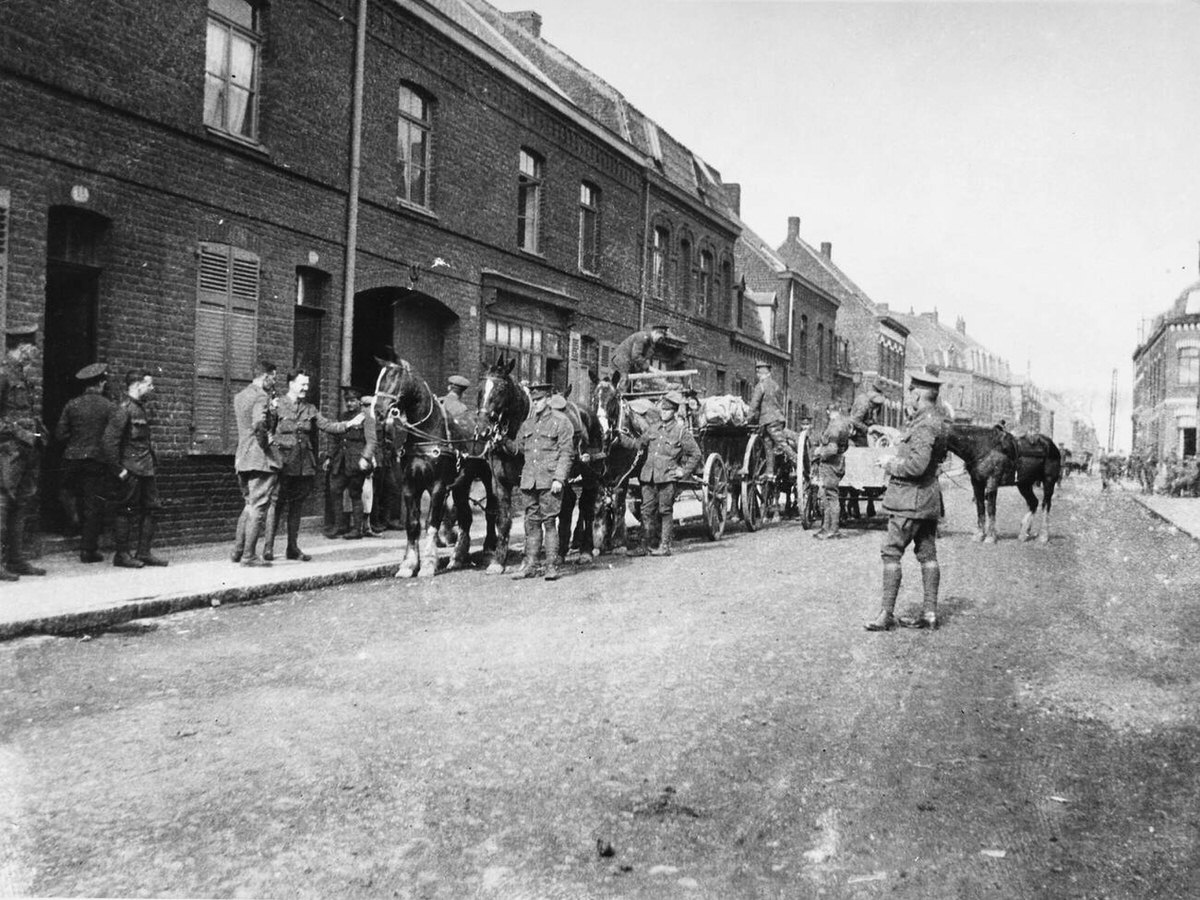
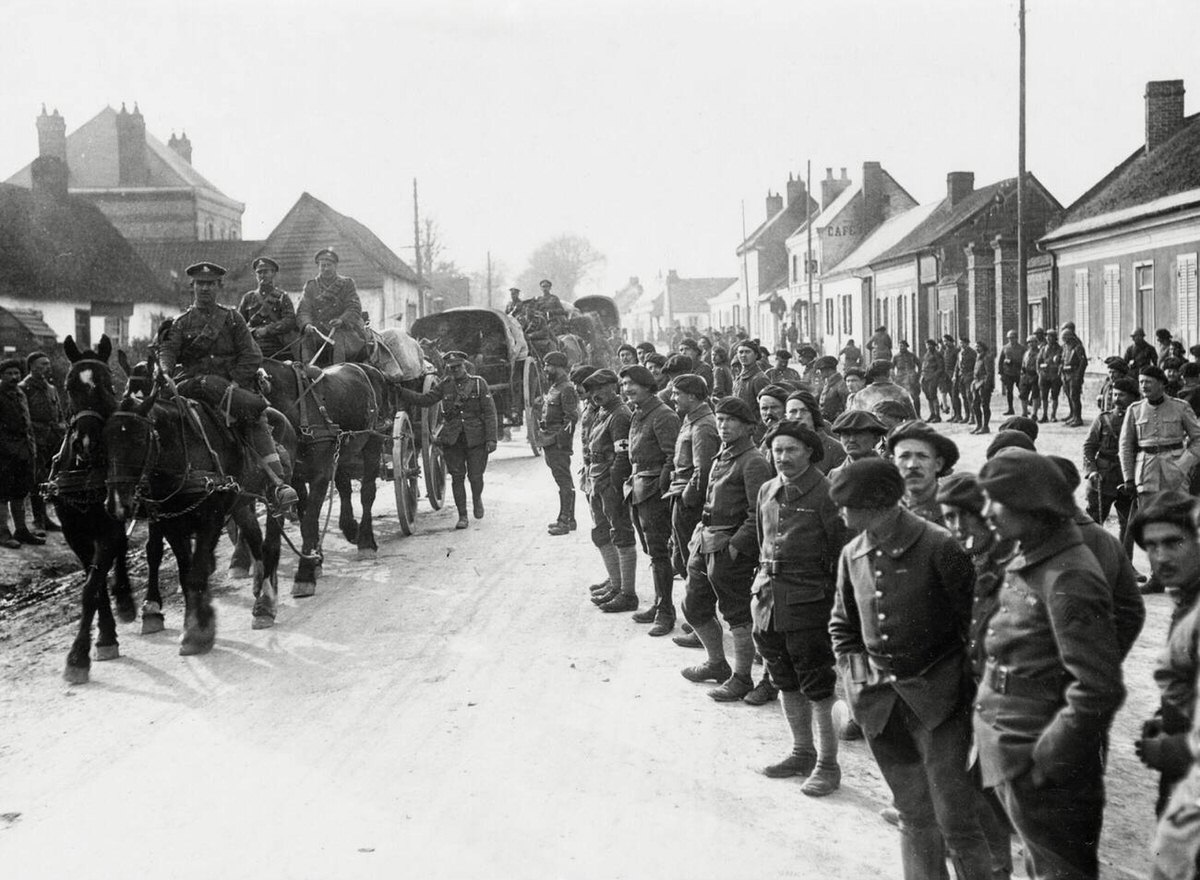
French troops watching British artillery passing through a village in France, 1914
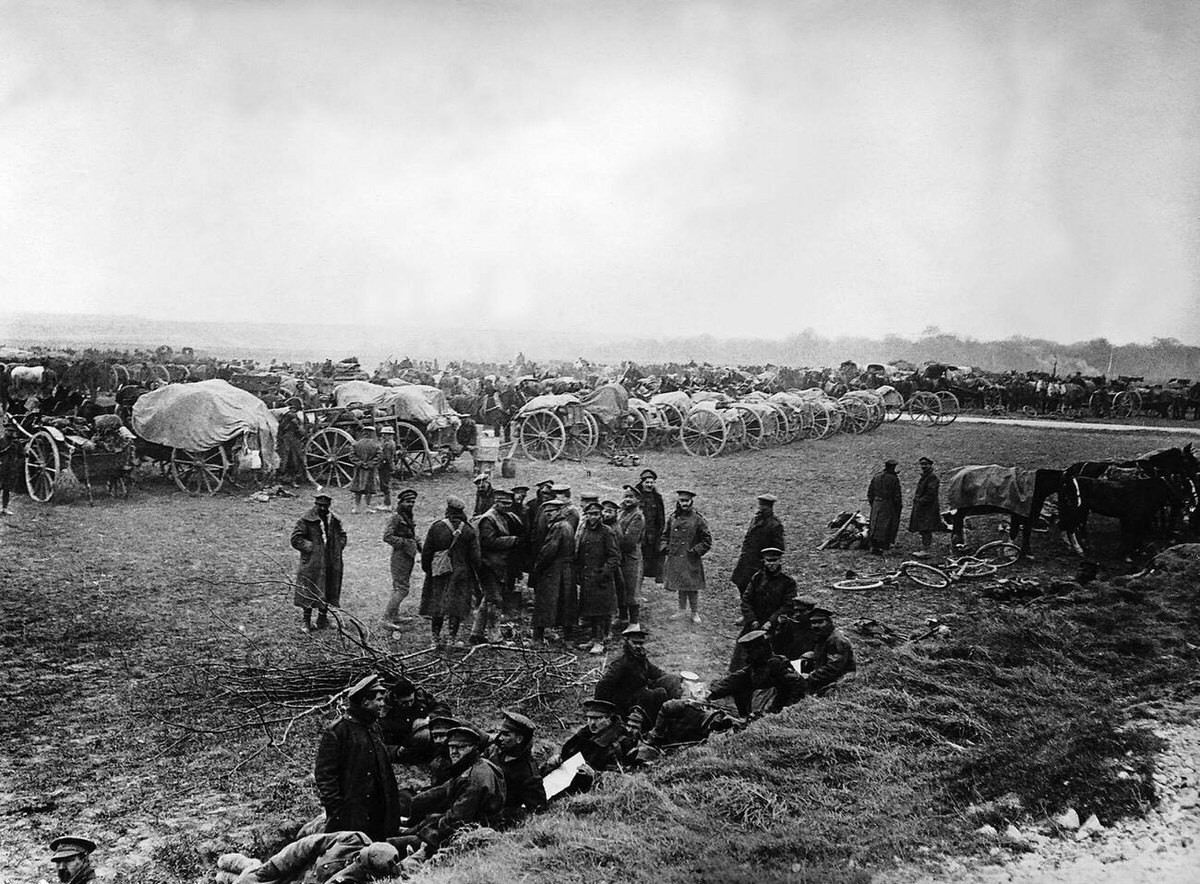
Artillery resting by the roadside on the British Western Front in France, 1915
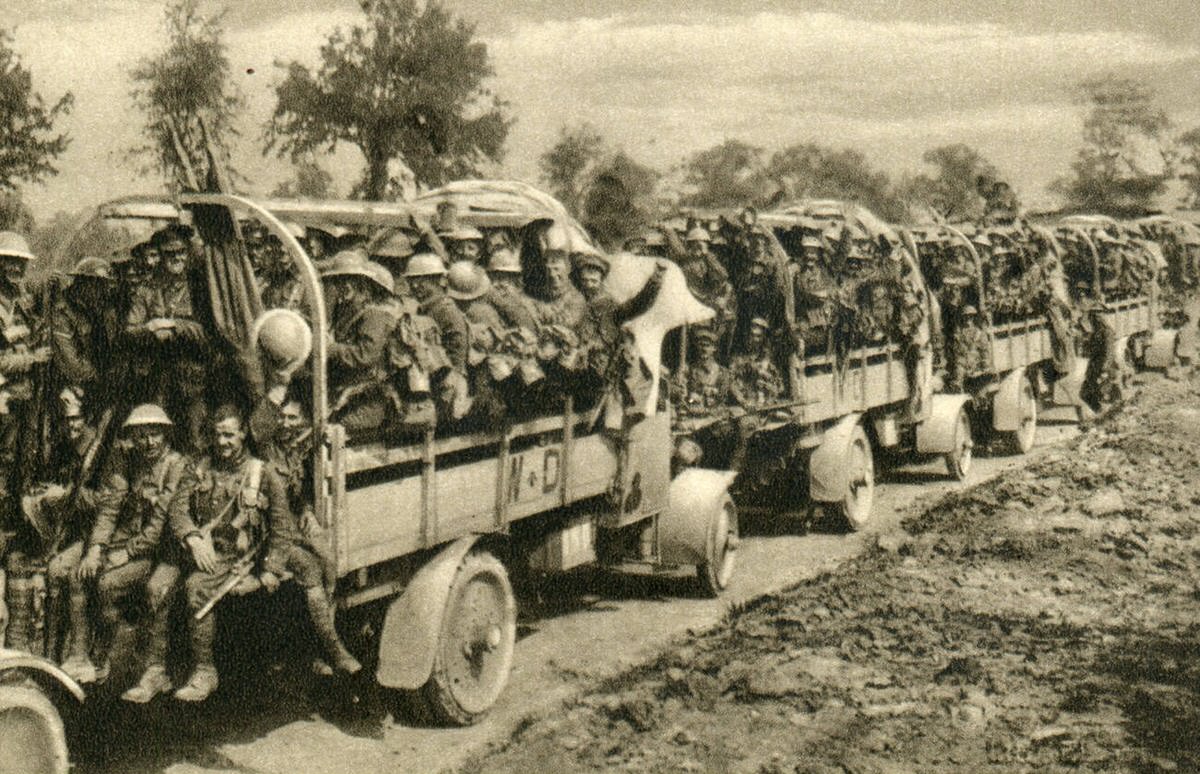
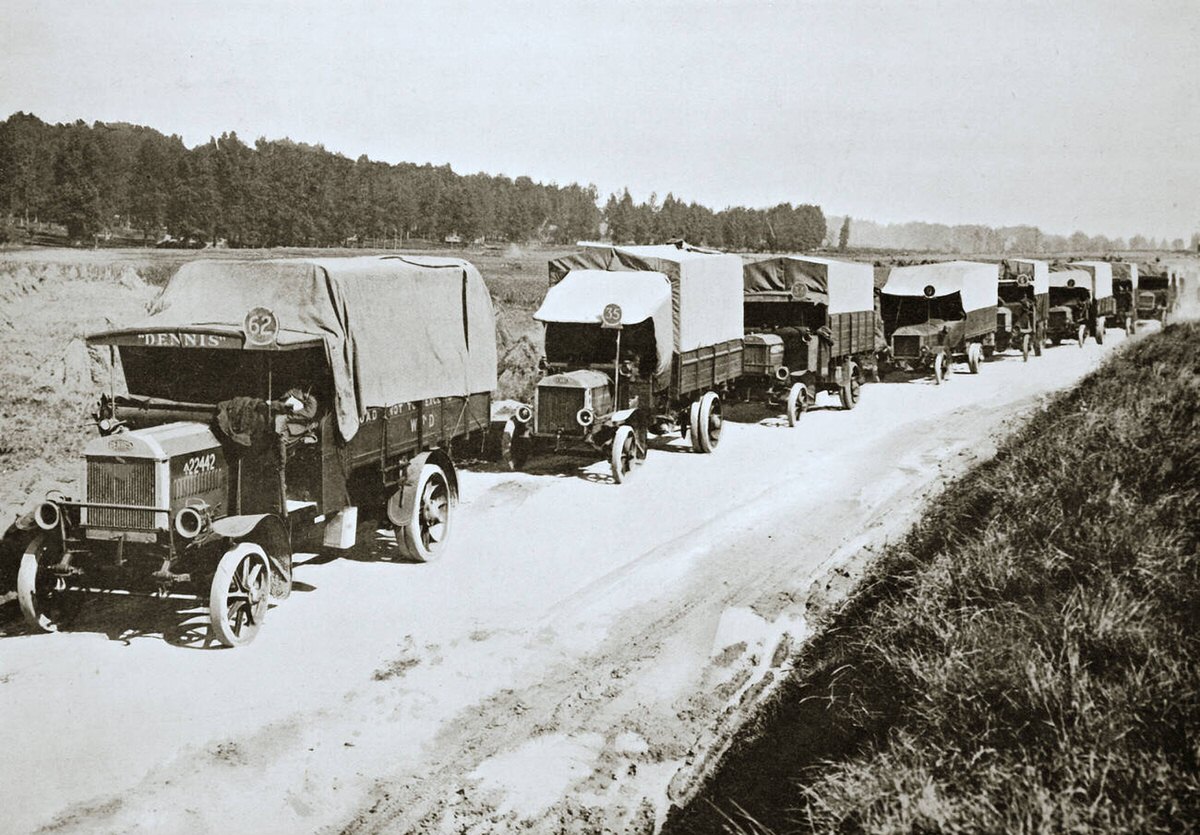
Troop transport, 1915
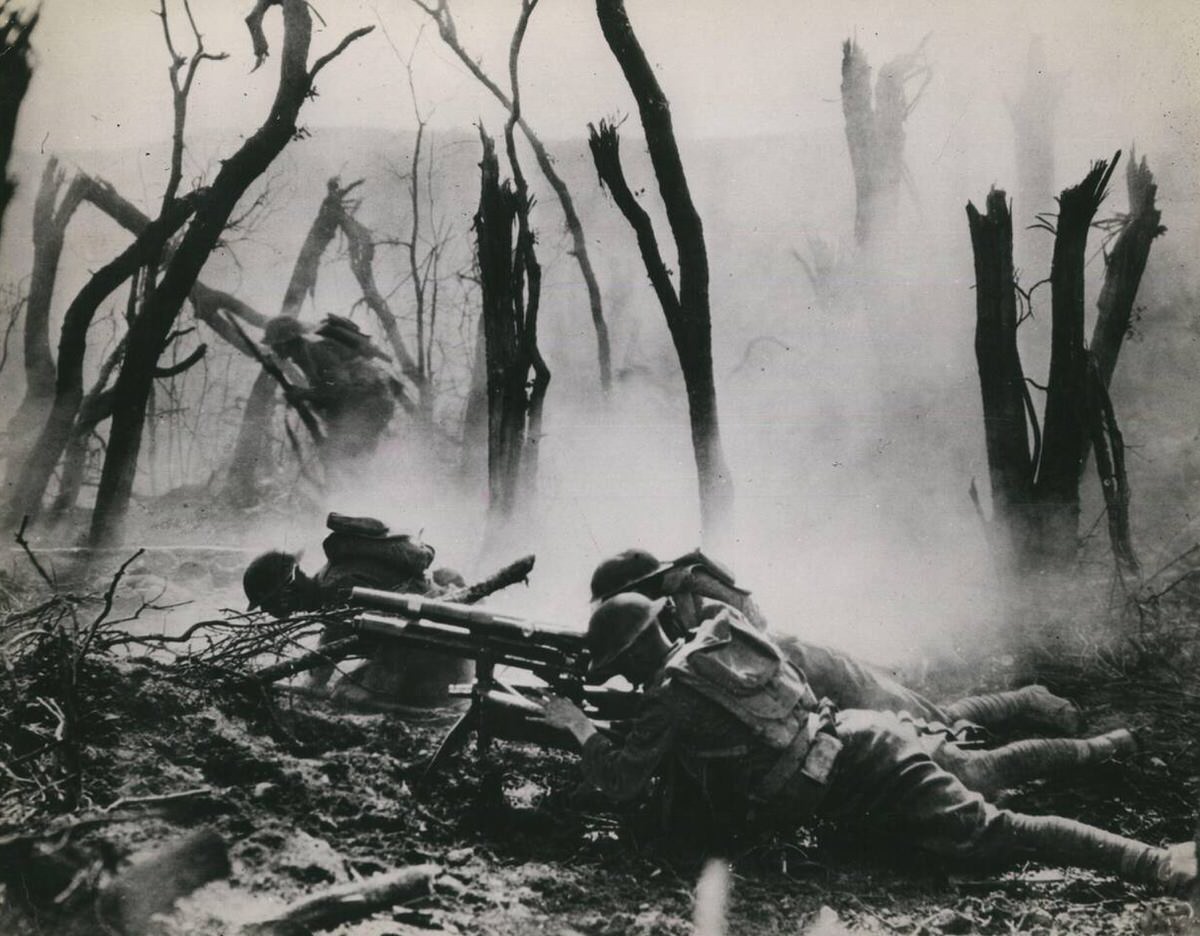
British machine gun team in action on the Western Front, 1915
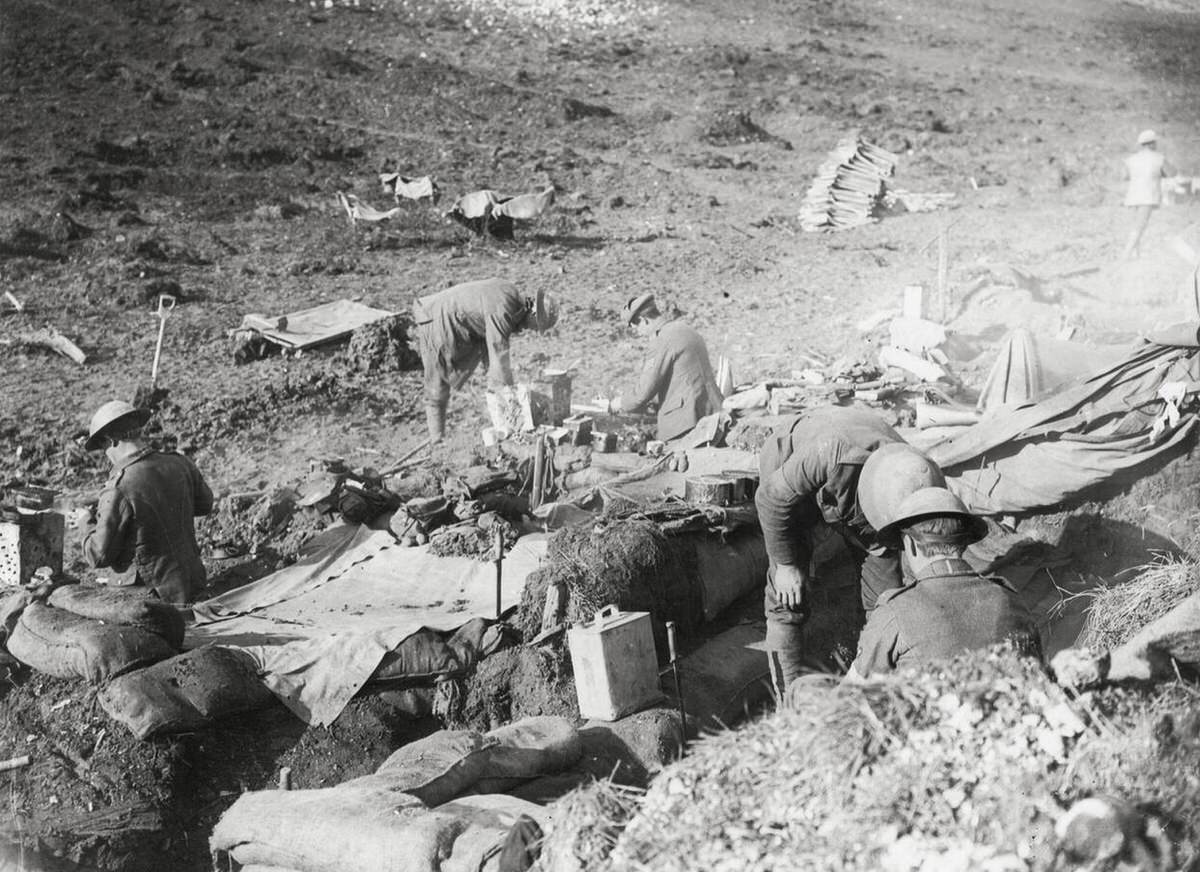
British troops drying their kits and draining a trench during a dry spell, 1915
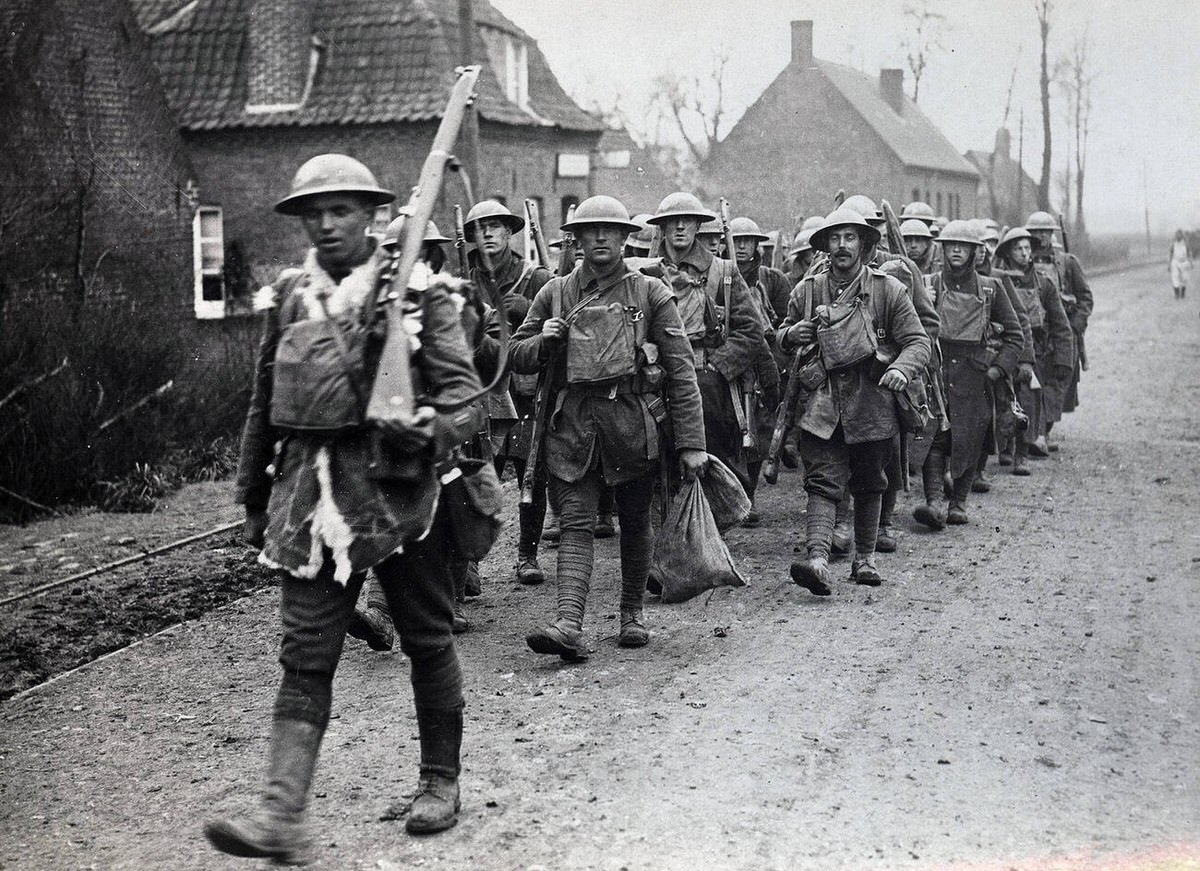
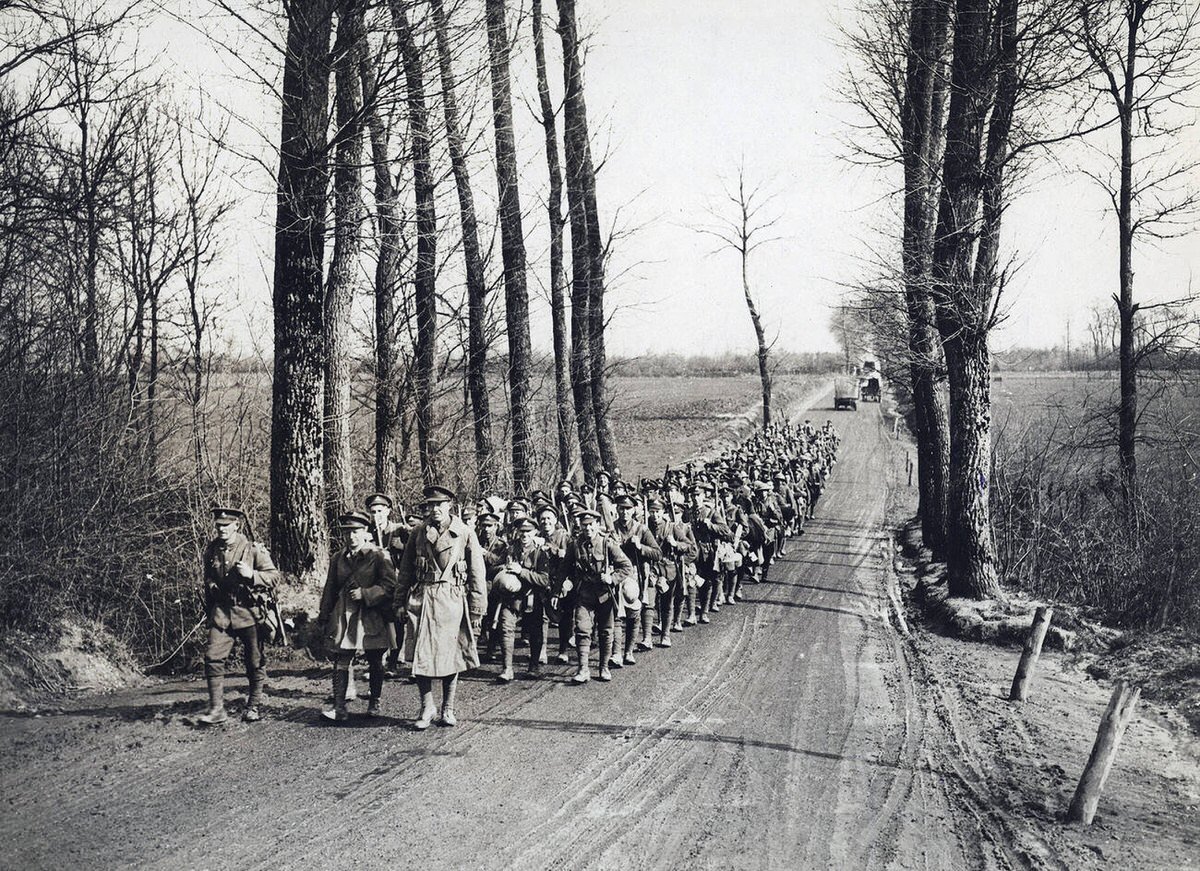
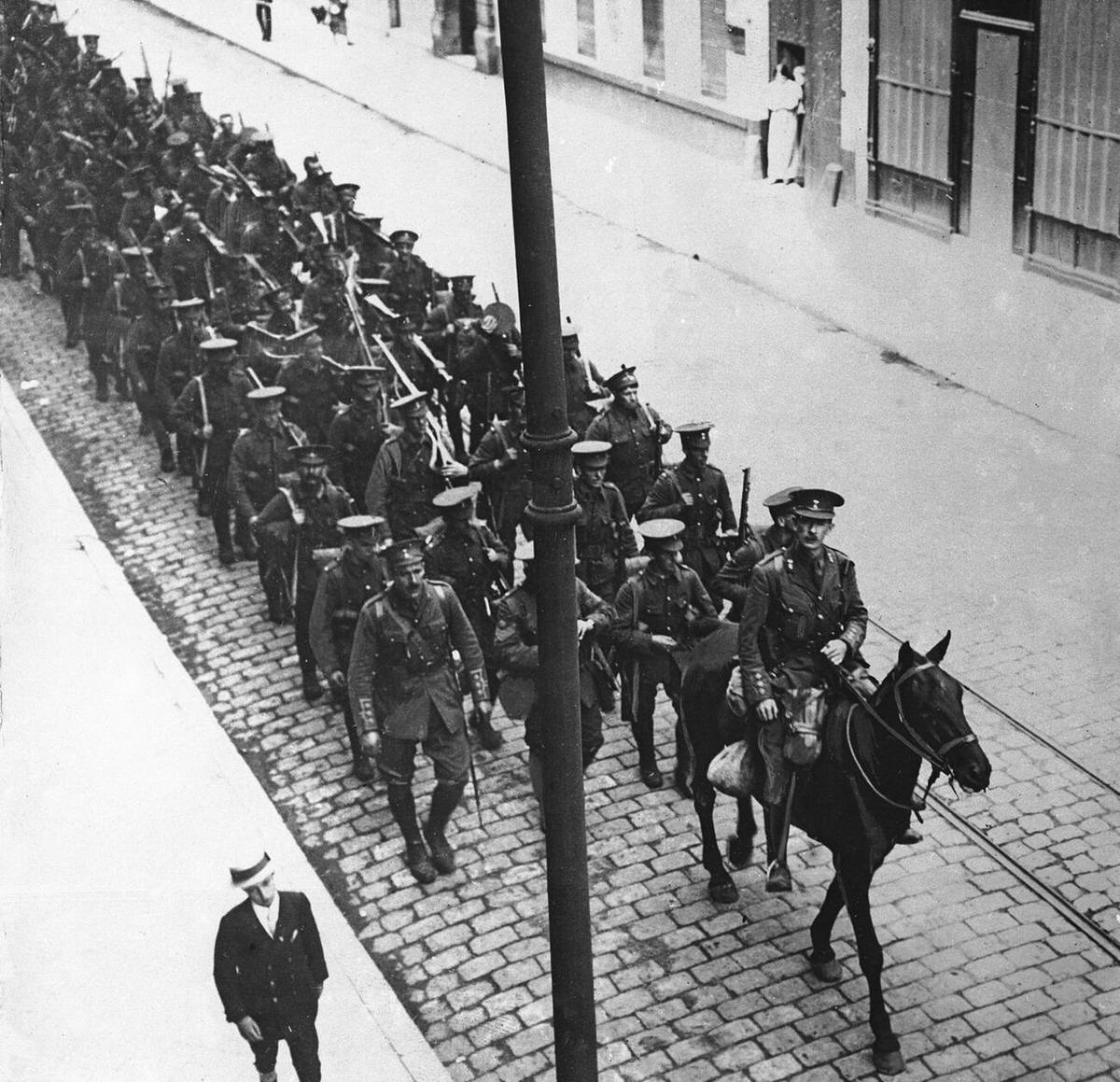
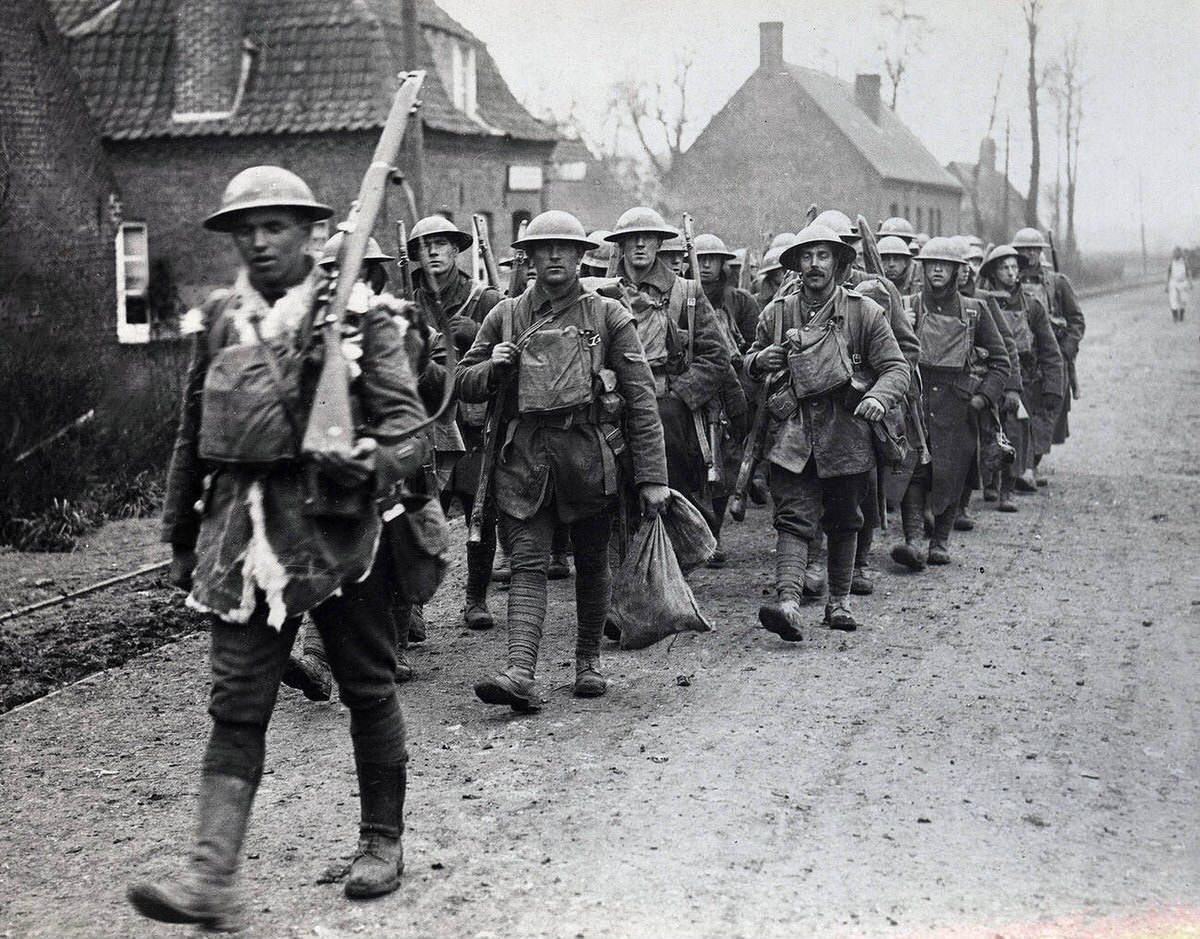
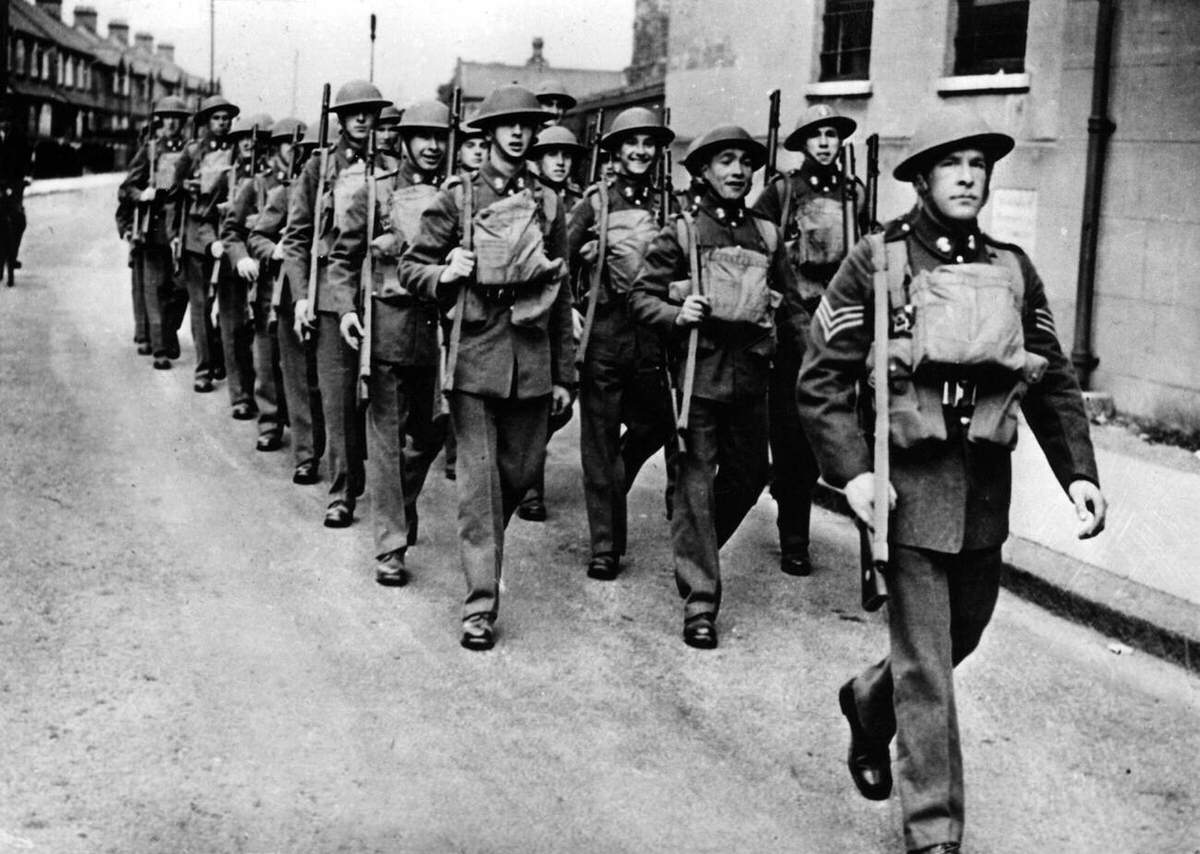
British troops marching to the front in northern France, 1915
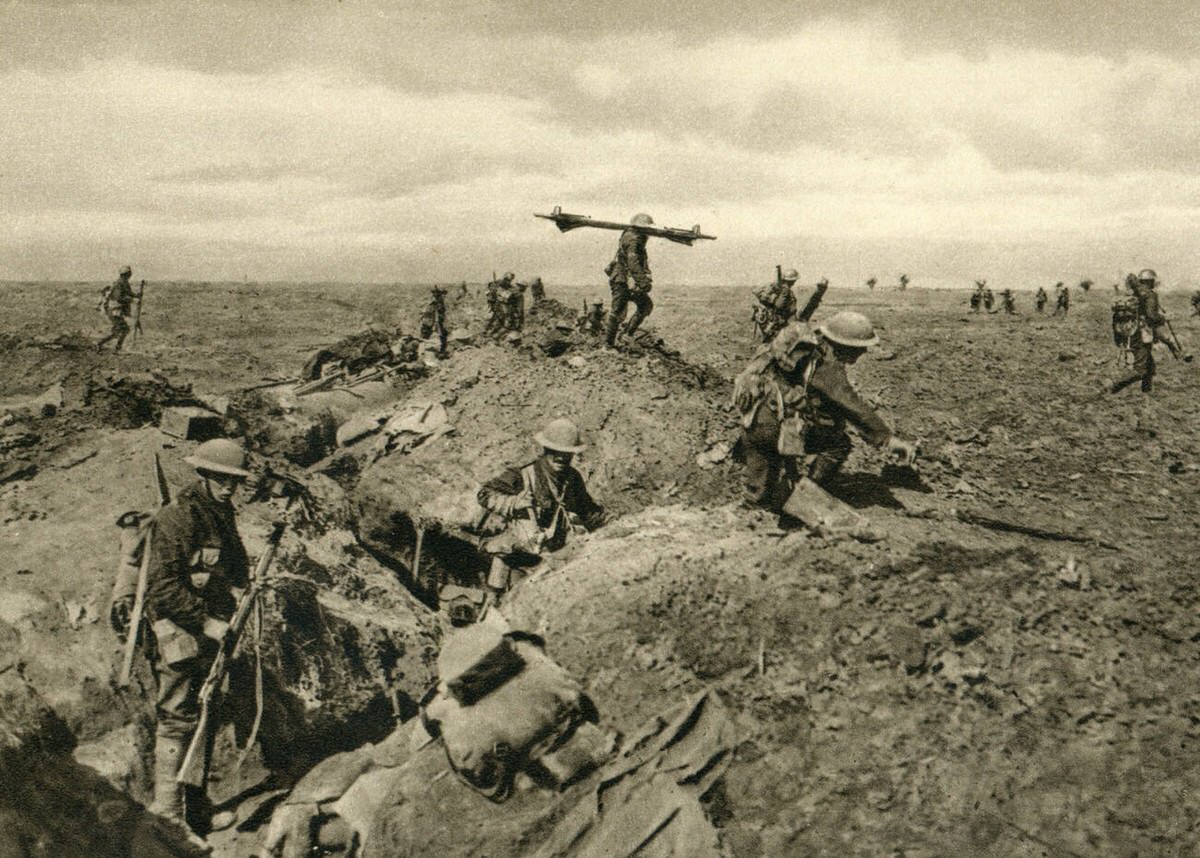
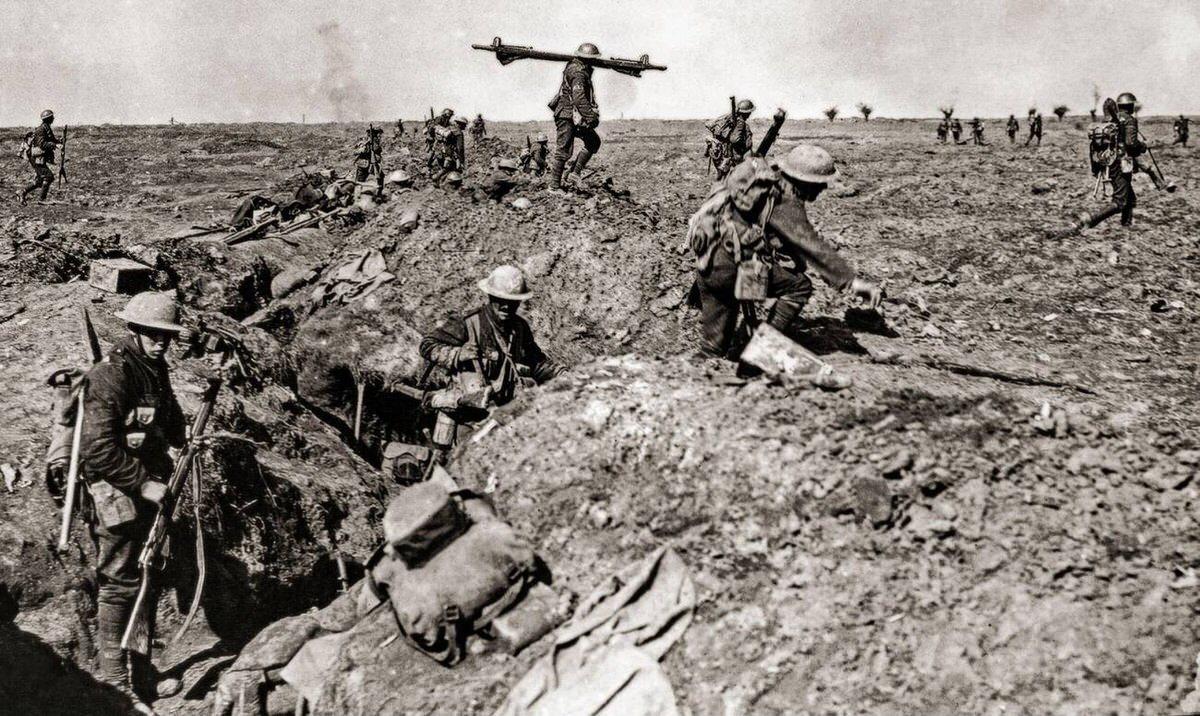
Middlesex Regiment soldiers withdrawing from trenches with munitions and wounded comrades in the Somme, 1916
British soldiers on the Western Front, 1916
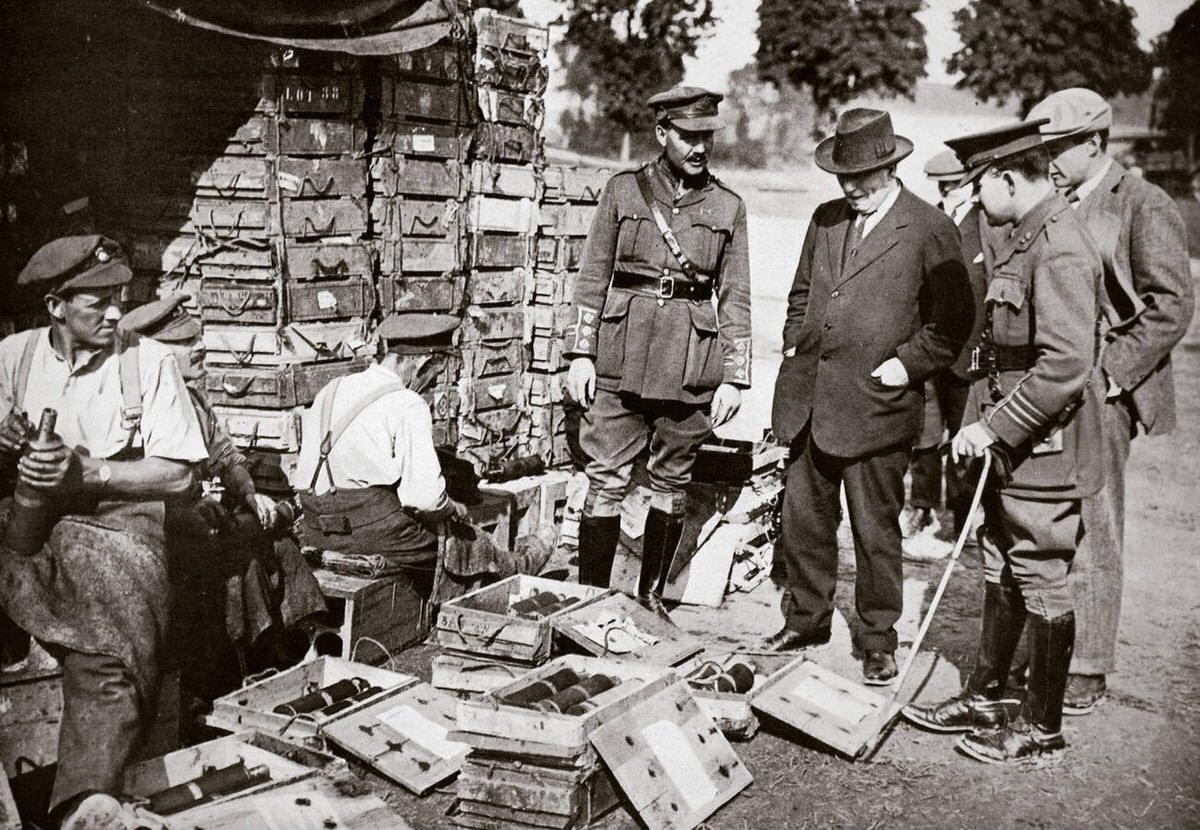
H.H. Asquith watching men adjusting fuses during the Somme campaign in France, 1916
Soldiers of a West Indian Regiment on the Western Front, 1916
Western Front, 1916
British wiring party going up to the trenches during the Somme campaign in France, 1916
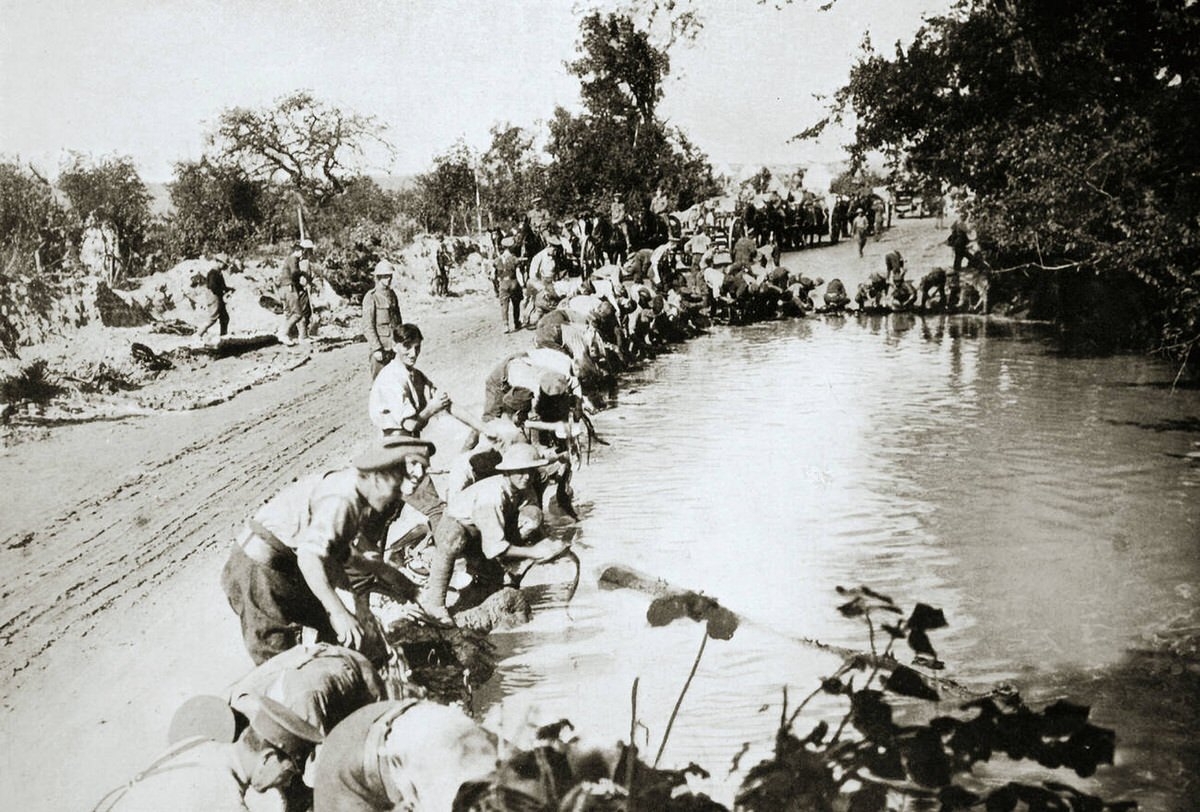
Transport men cleaning their harness at a pond in France, 1916
British soldiers advancing, 1916
British infantry advancing during the Battle of Morval, 1916
Long white line of soldiers in France, 1916
British soldiers at the guns during the Somme campaign in France, 1916
German prisoner helping British wounded to a dressing station near Bernafay Wood, 1916
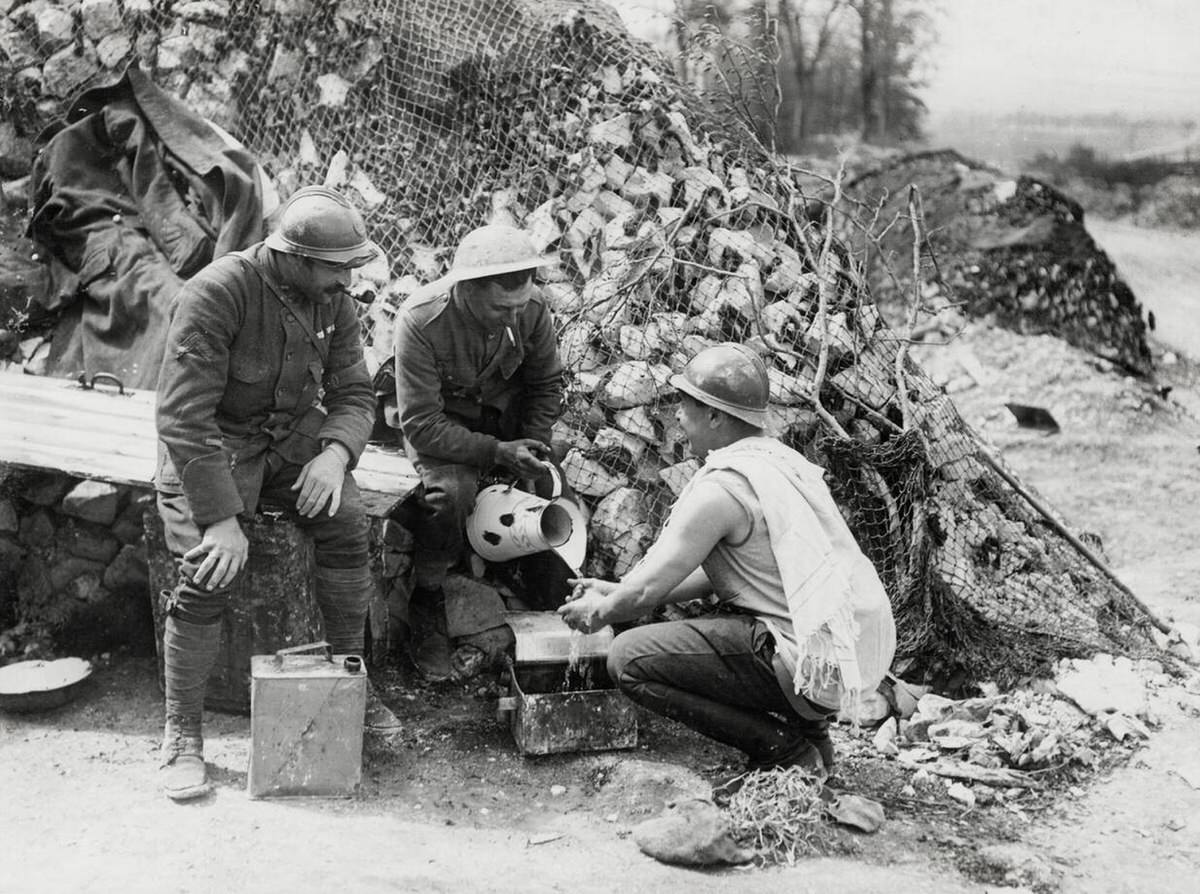
British soldier pouring water for a French soldier’s morning wash in France, 1914
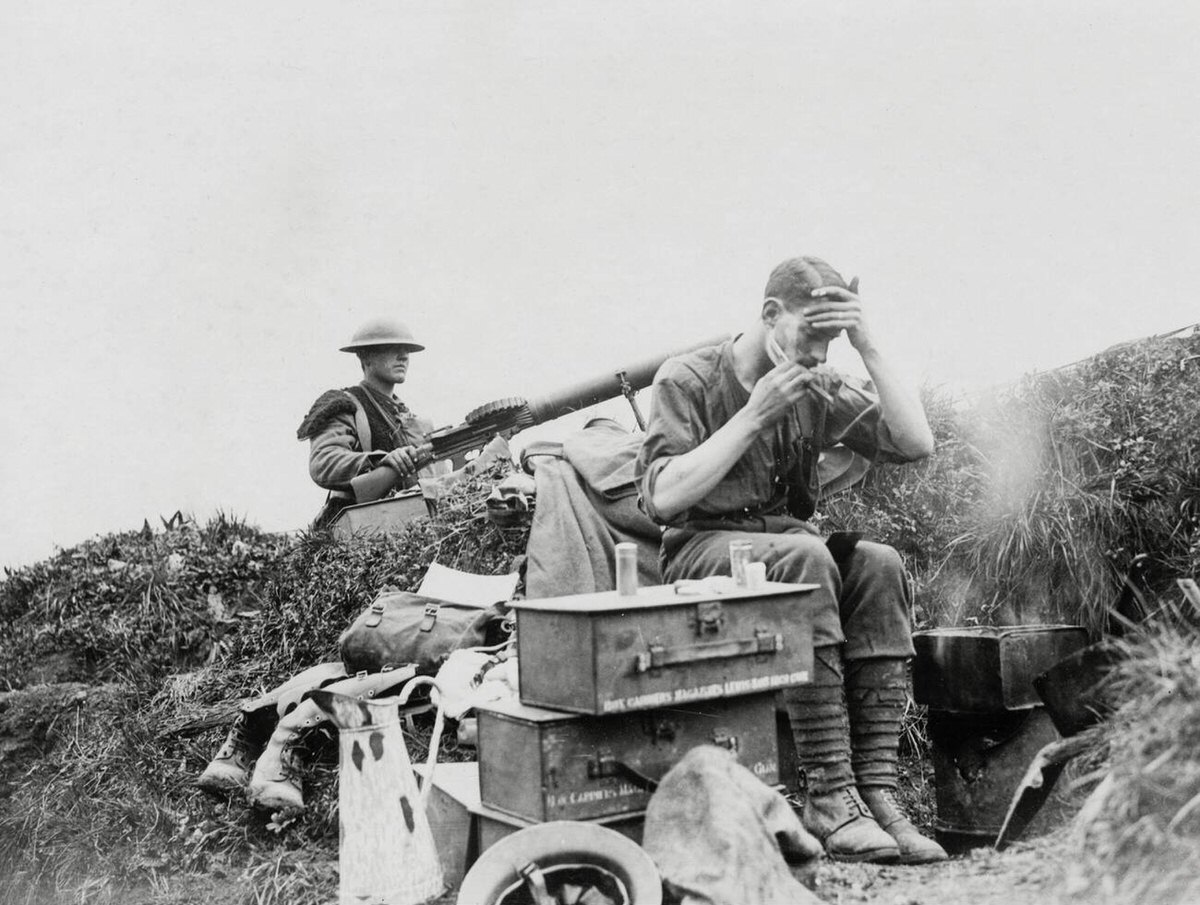
Man shaving at a British machine gun post in France, 1914
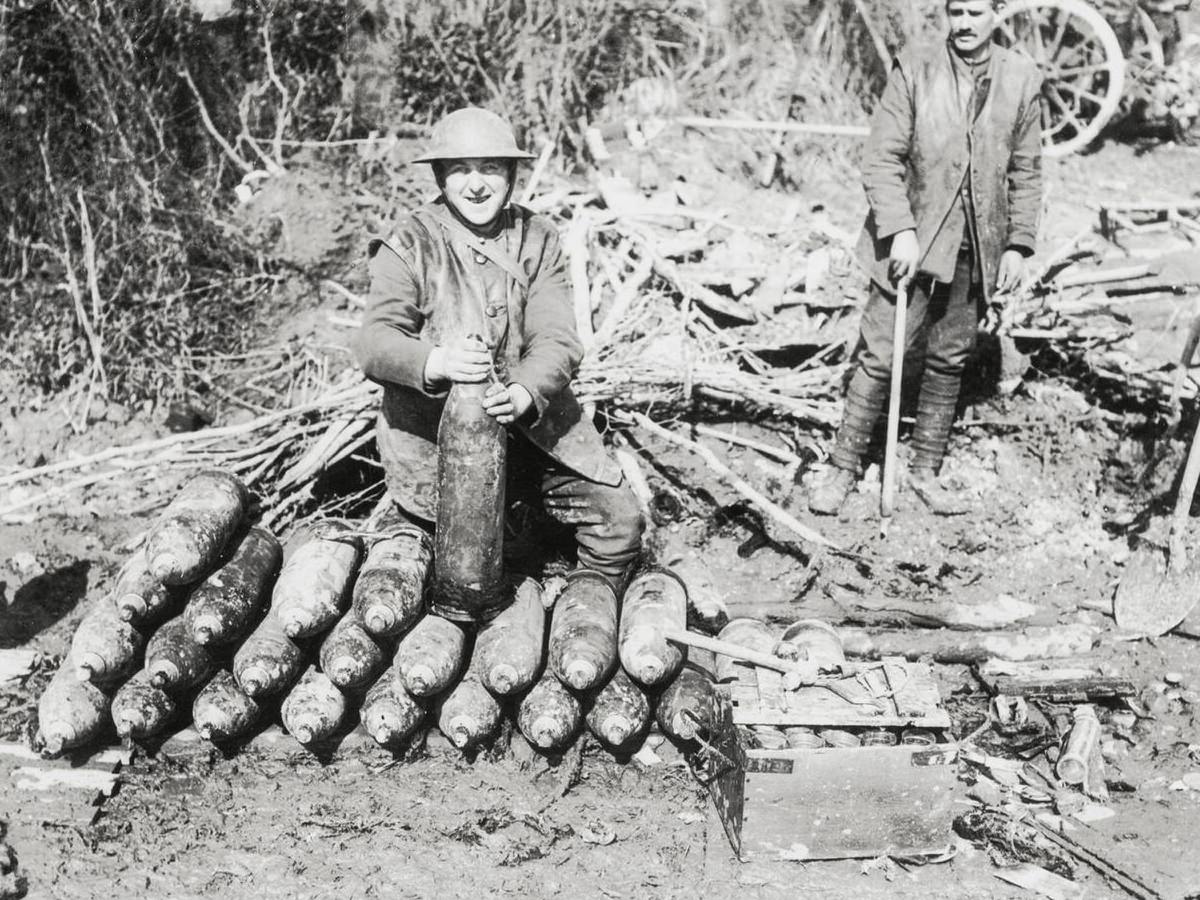
Soldier fusing shells behind British guns in France, 1914
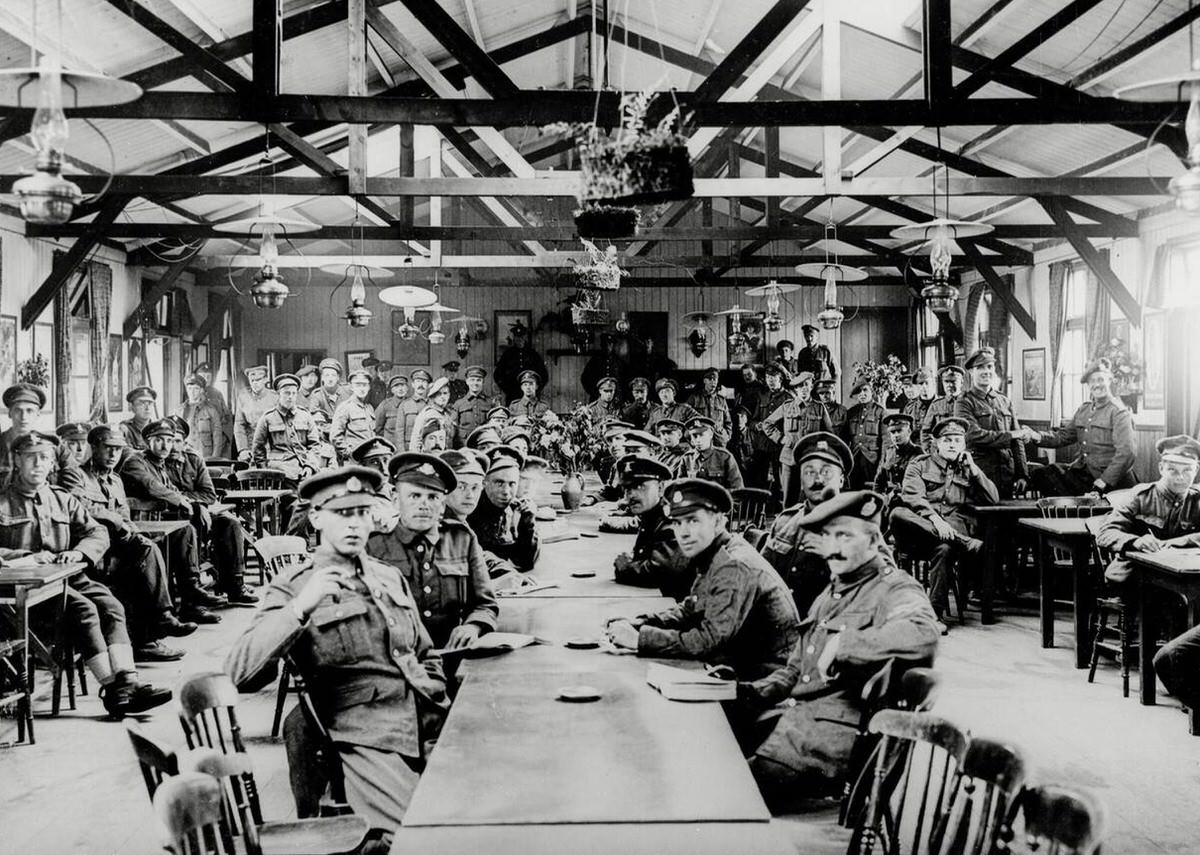
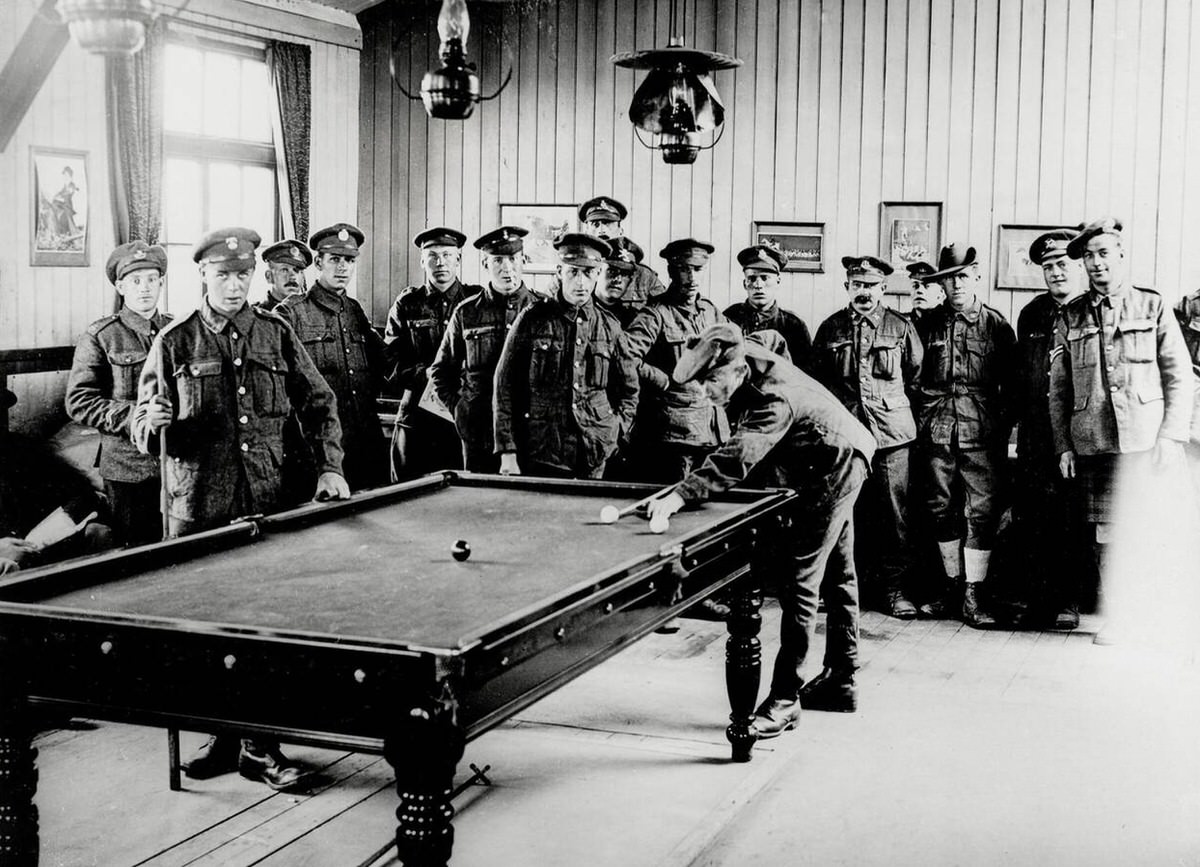
British soldiers convalescing in a recreation room in France, 1914
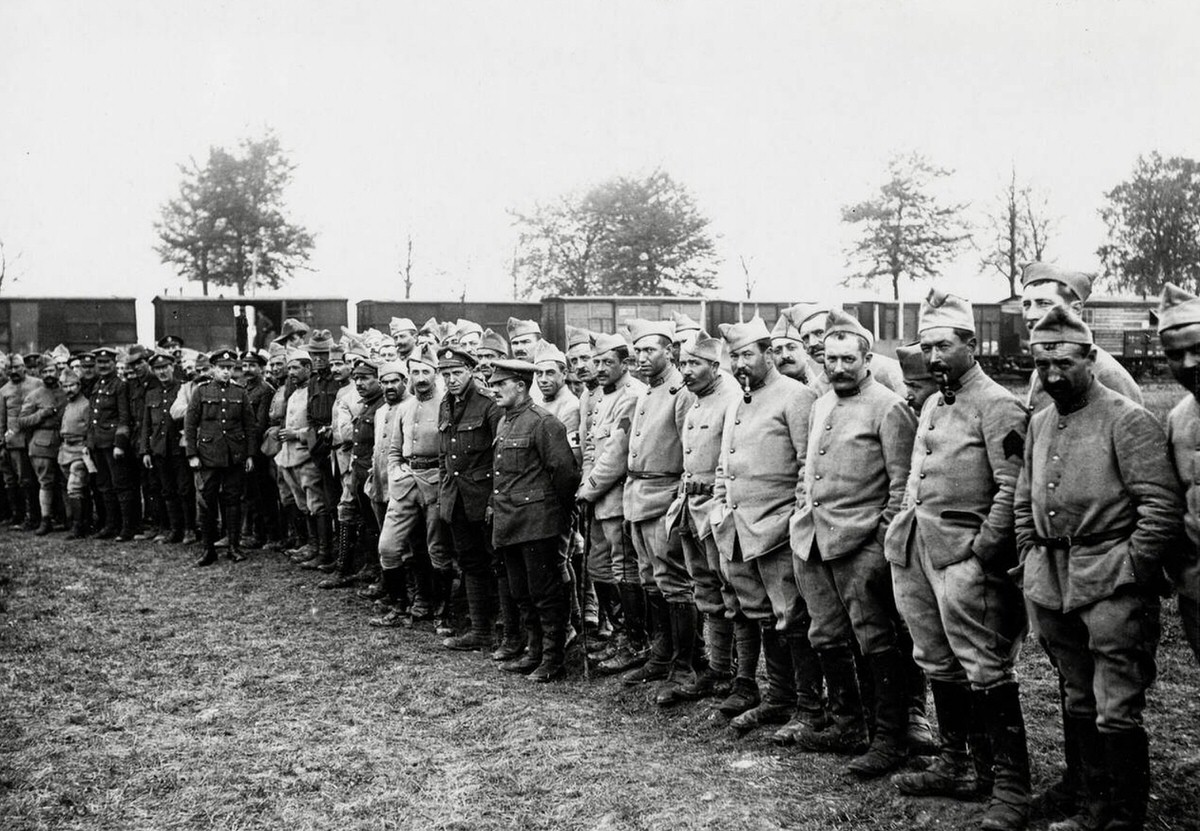
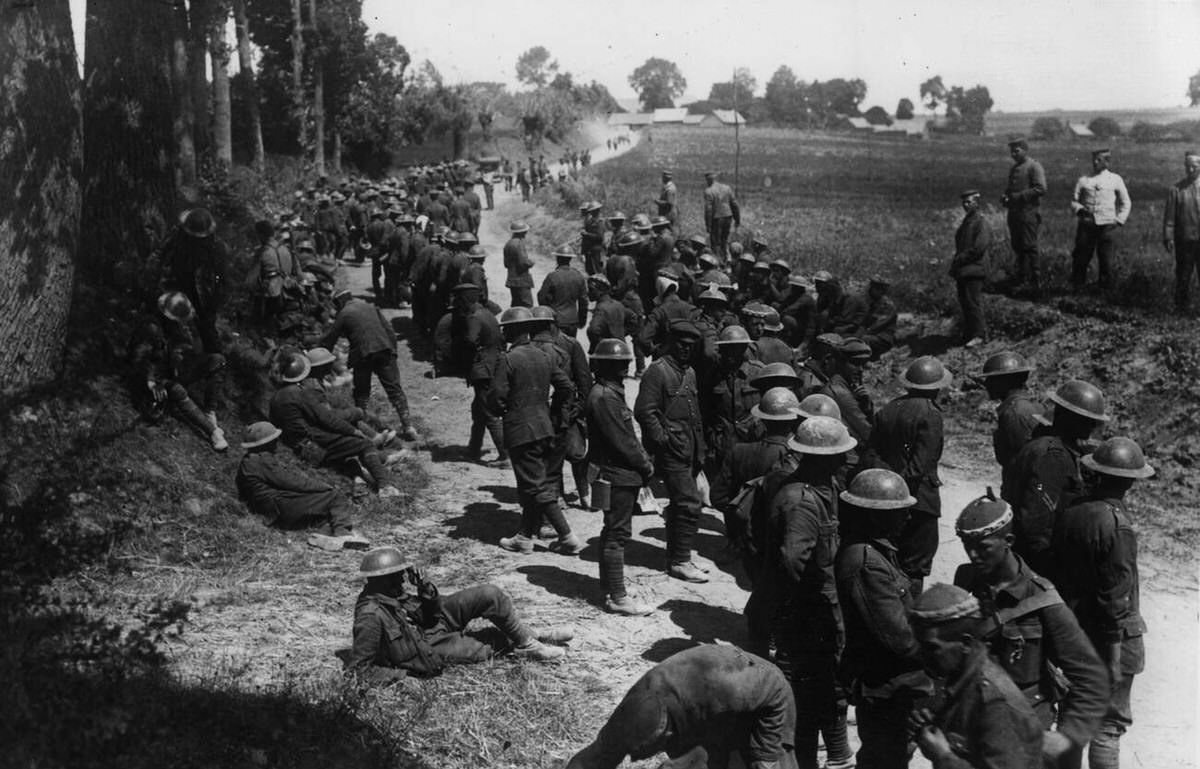
British soldiers captured by German troops at the Chemin des Dames near Berry-au-Bac, 1914
British soldiers convalescing in a recreation hut in France, 1914
British troops at a rest camp in France, 1914
Soldiers of the 55th Division going for a rest after hard fighting on the British Western Front, 1914
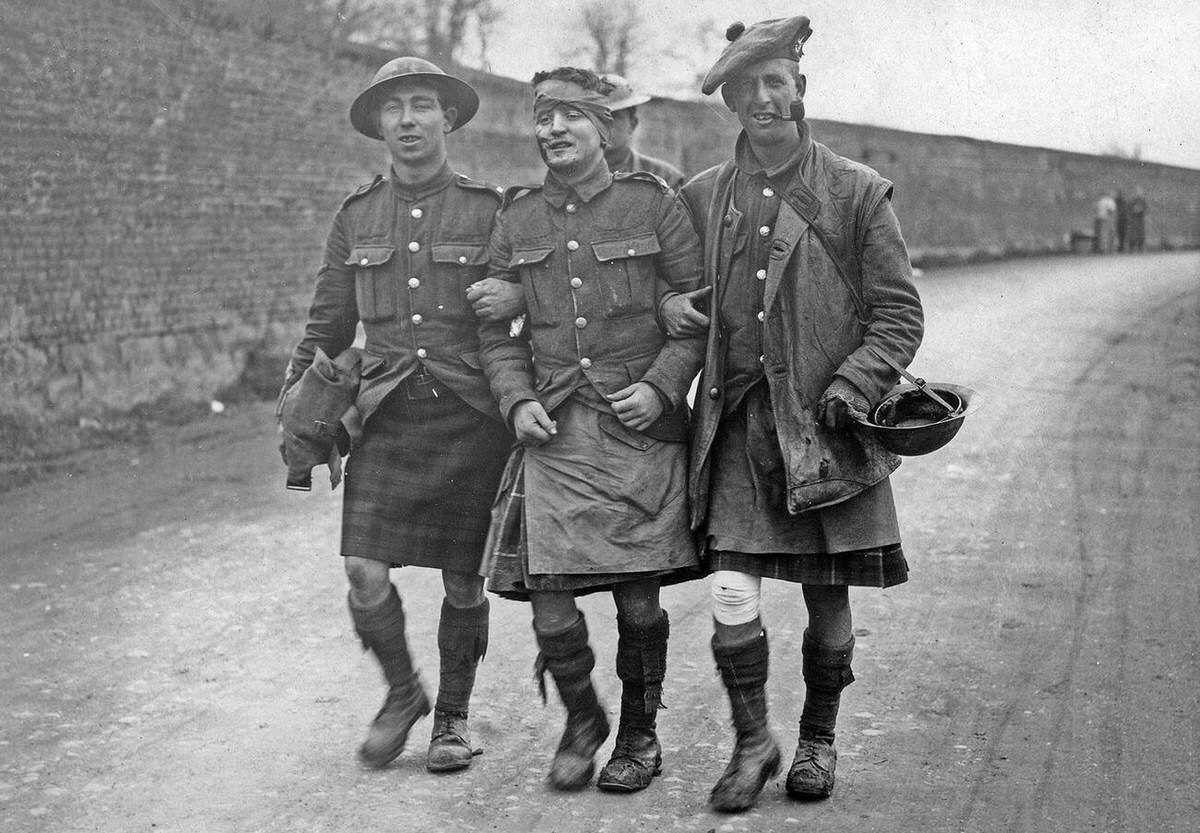
Walking wounded of the 51st Division on the British Western Front, 1914
French girl grazing her cattle and talking to a British soldier in France, 1914
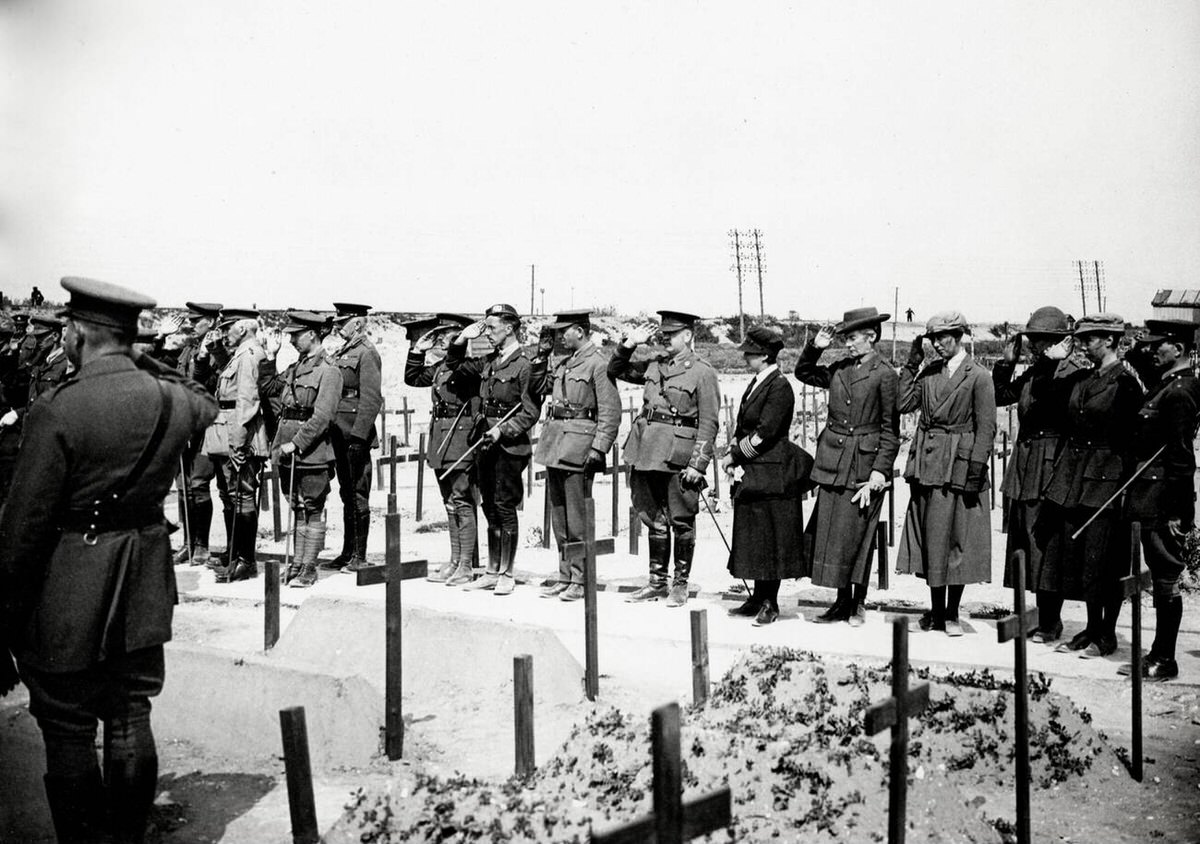
Funeral of a British Red Cross nurse killed during a German air raid in France, 1914
British troops in France, 1914
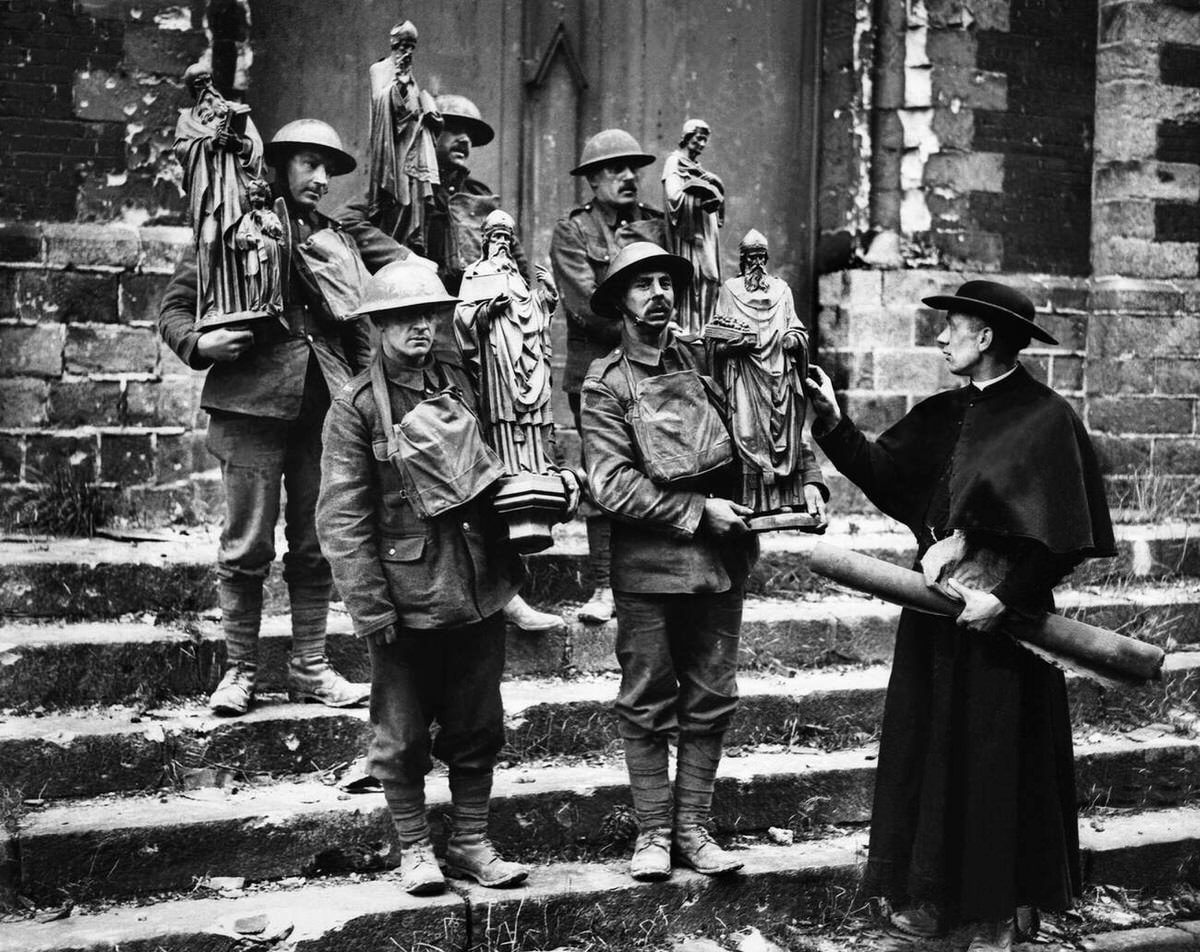
British soldiers saving statues from a bombed church at the Western Front in France, 1914
British tanks at the Western Front in France, 1914
Telephone lorry exchange during an observation exercise on the British Western Front in France, 1917
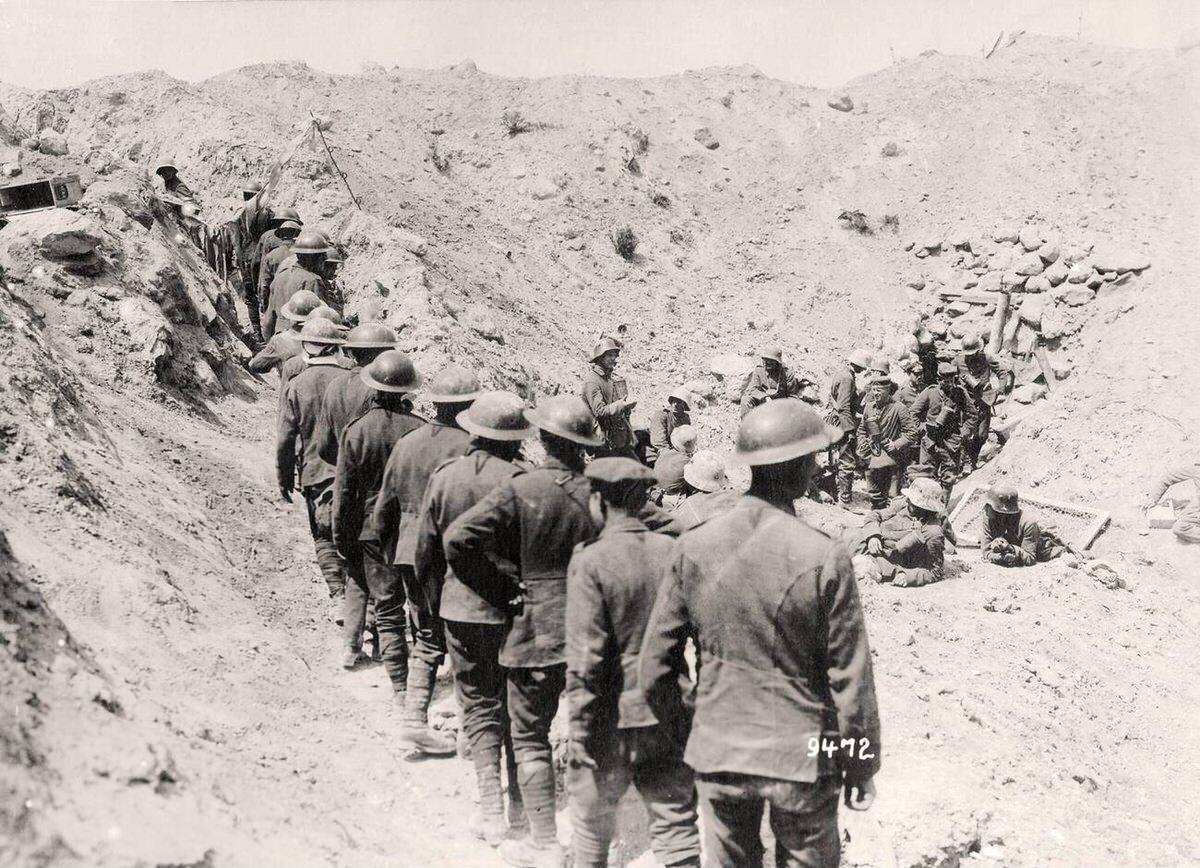
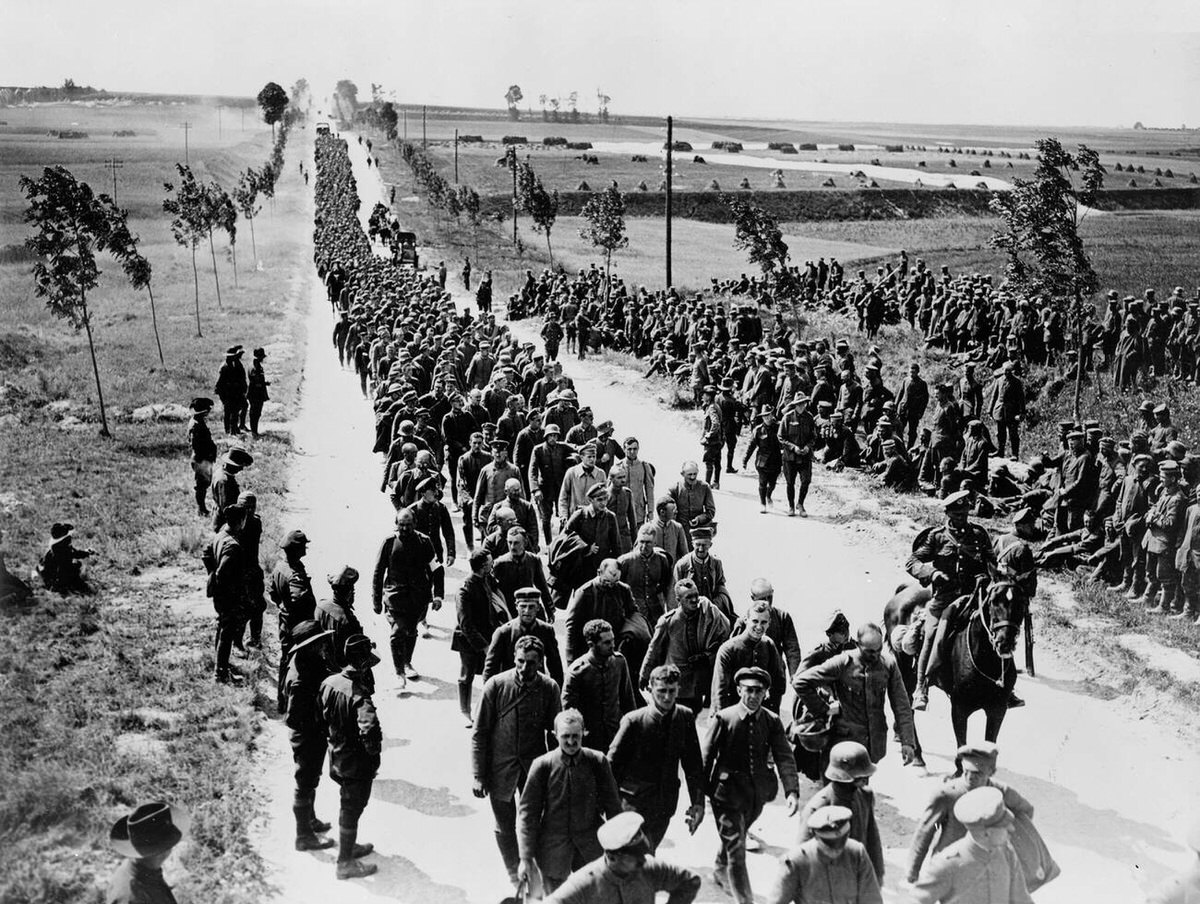
German prisoners arriving at a prisoners of war cage in France, 1917
Two soldiers in a flooded trench on the Western Front, 1917
British Front in France, 1917
Men of the 11th Leicester Regiment with machine guns in a captured trench at Ribécourt, 1917
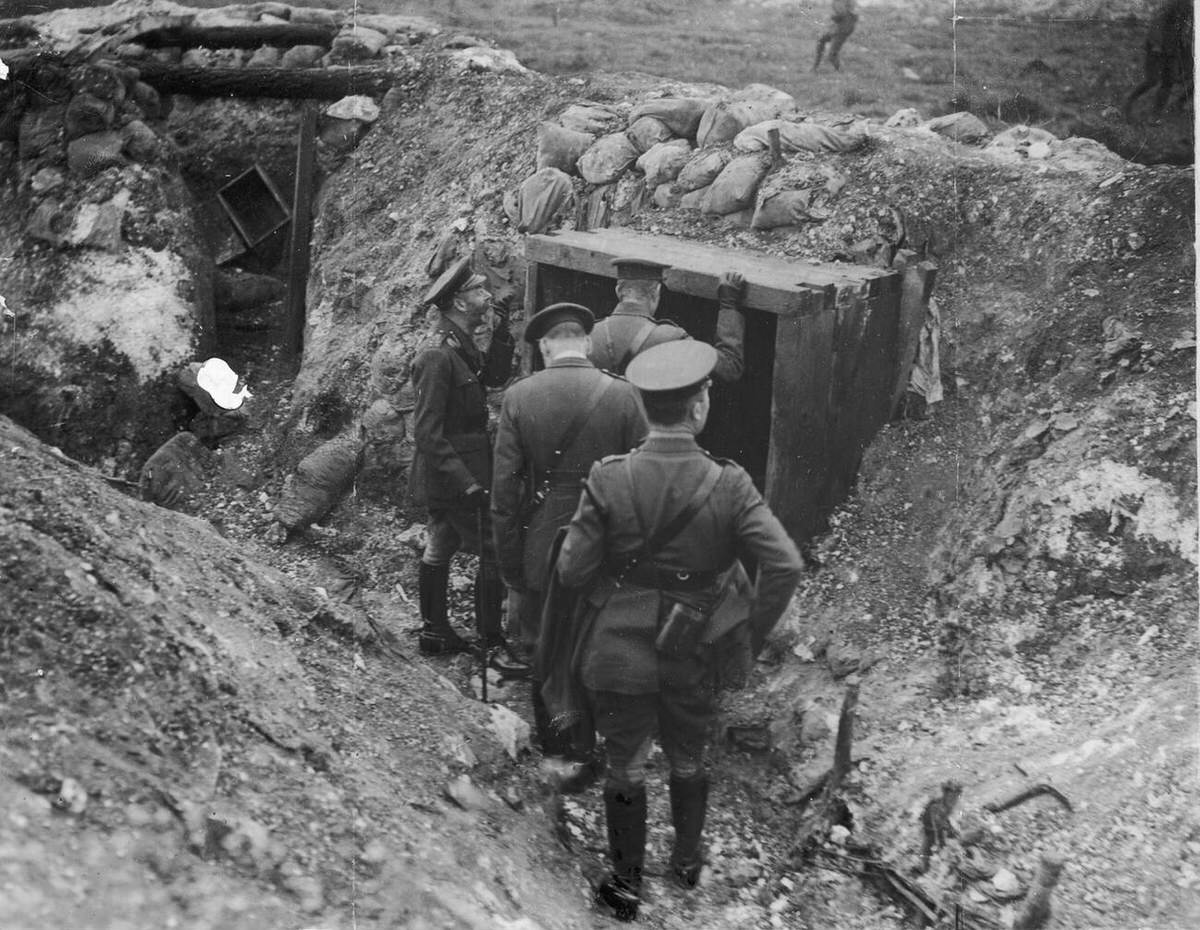
King George V and officers touring captured German trenches, 1918
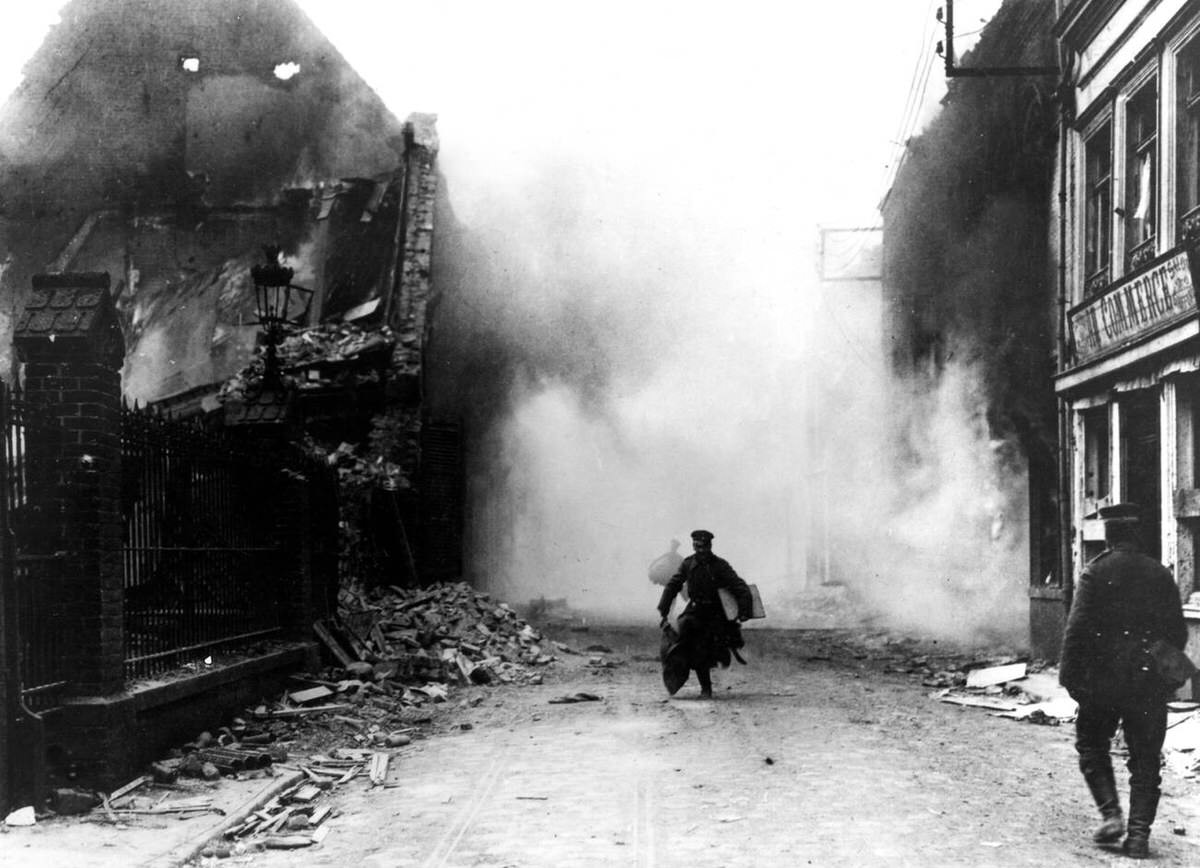
British shells exploding in Armentières, 1918
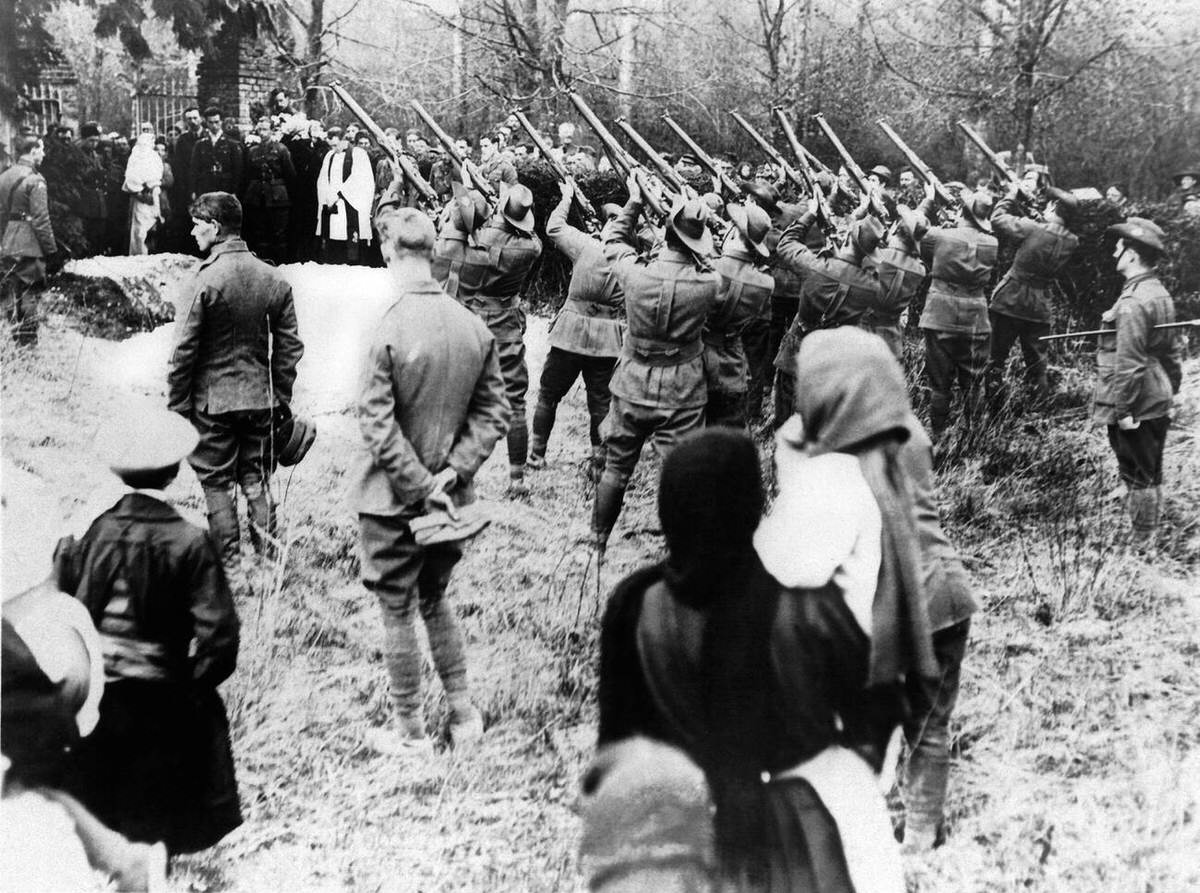
Australian troops firing a volley over the grave of Manfred von Richthofen in Amiens, France, 1918
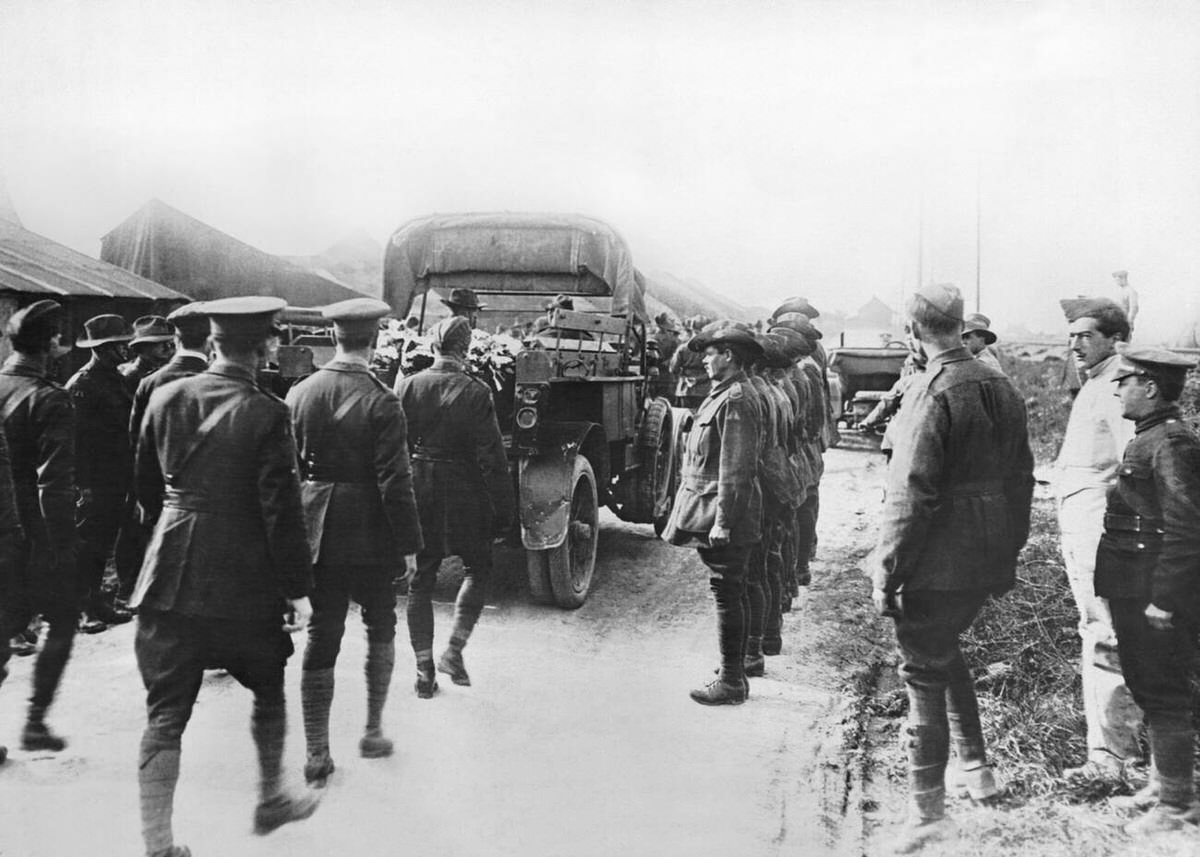
British flying officers following the funeral procession for Manfred von Richthofen in Amiens, France, 1918
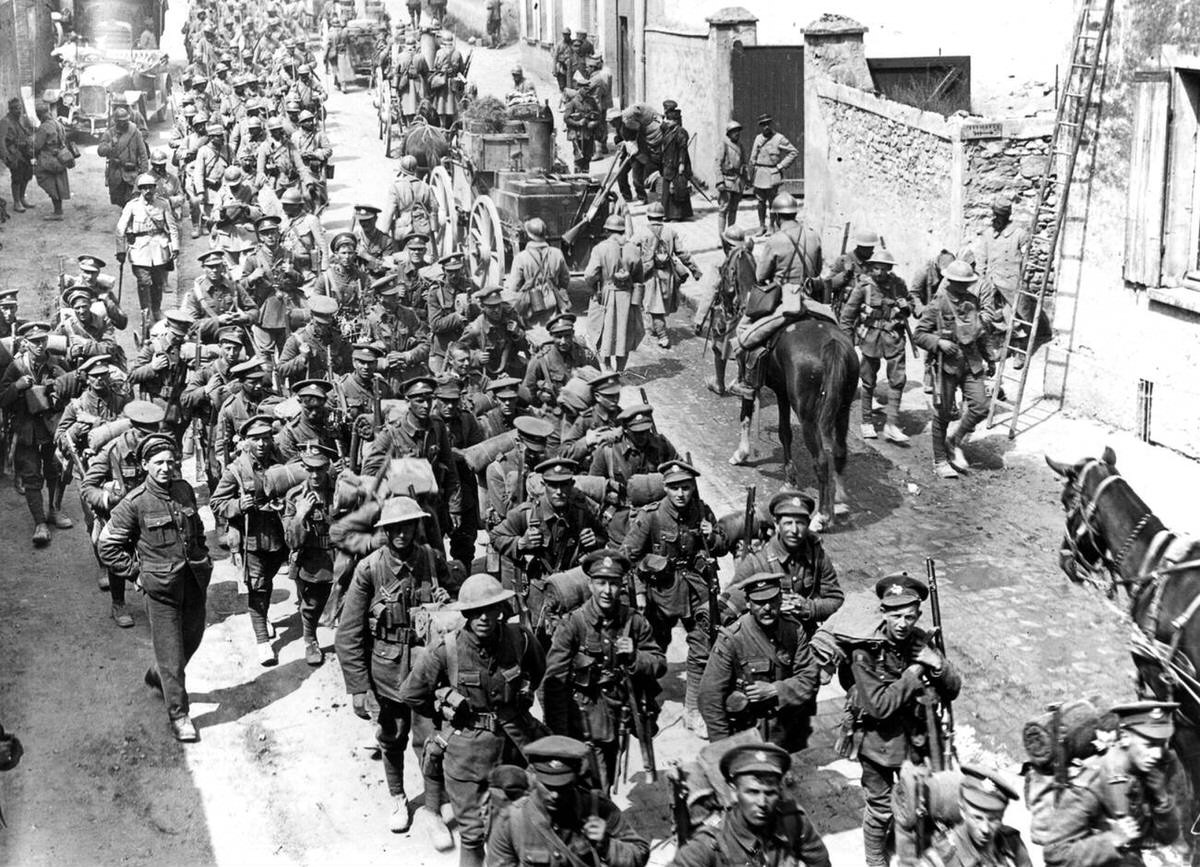
French and British troops marching through Passy-sur-Marne during the Third Battle of the Aisne, 1918
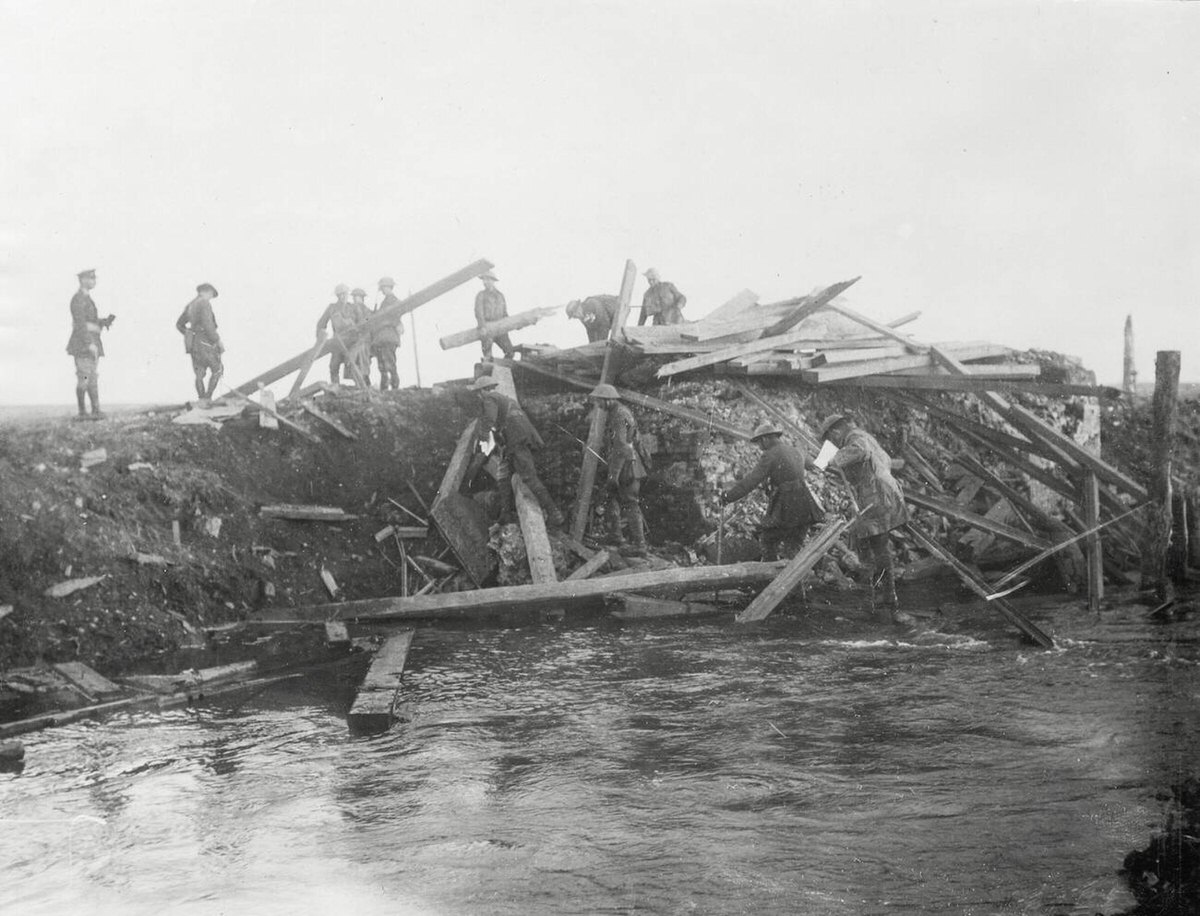
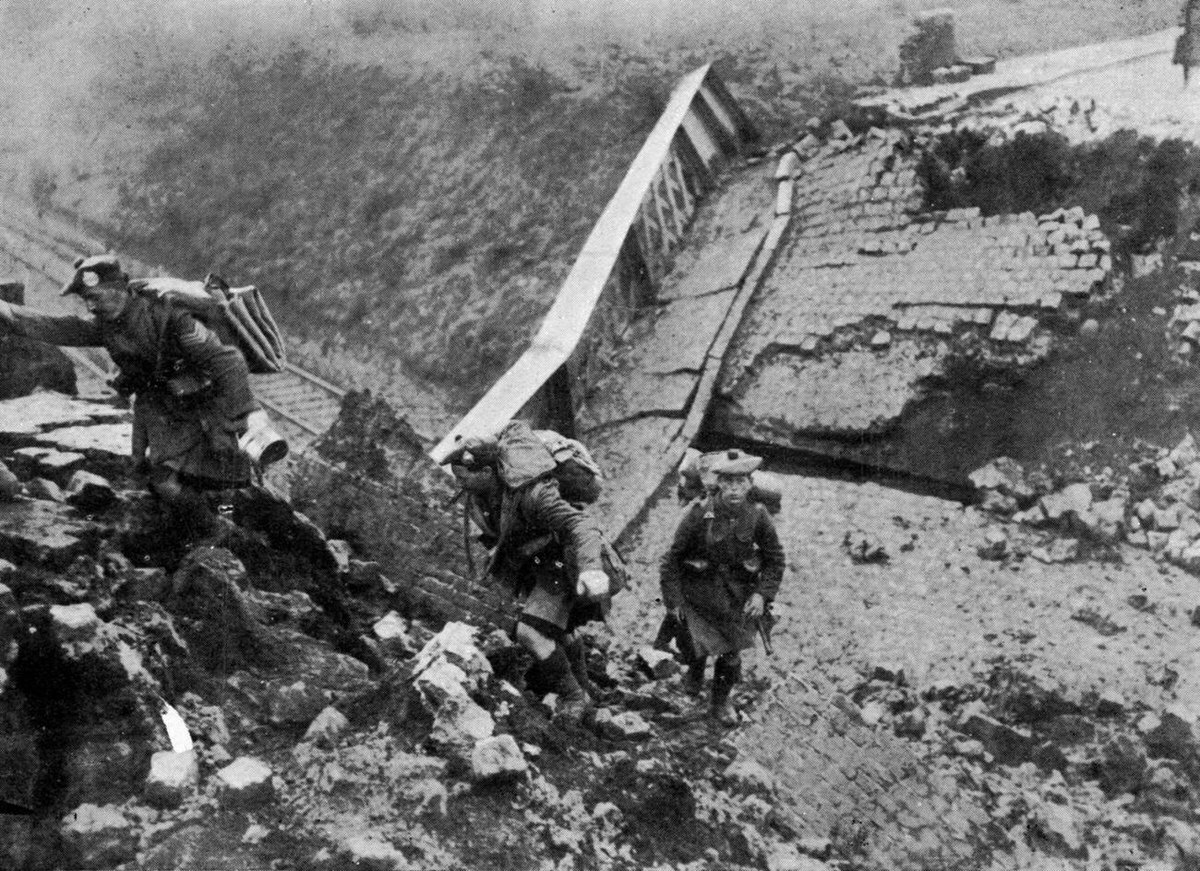
Highlanders crossing a railway bridge blown up by the Germans, 1918
The Capture of Givenchy, 1919
British troops in France, 1939
British troops wearing respirators during a training exercise, 1939
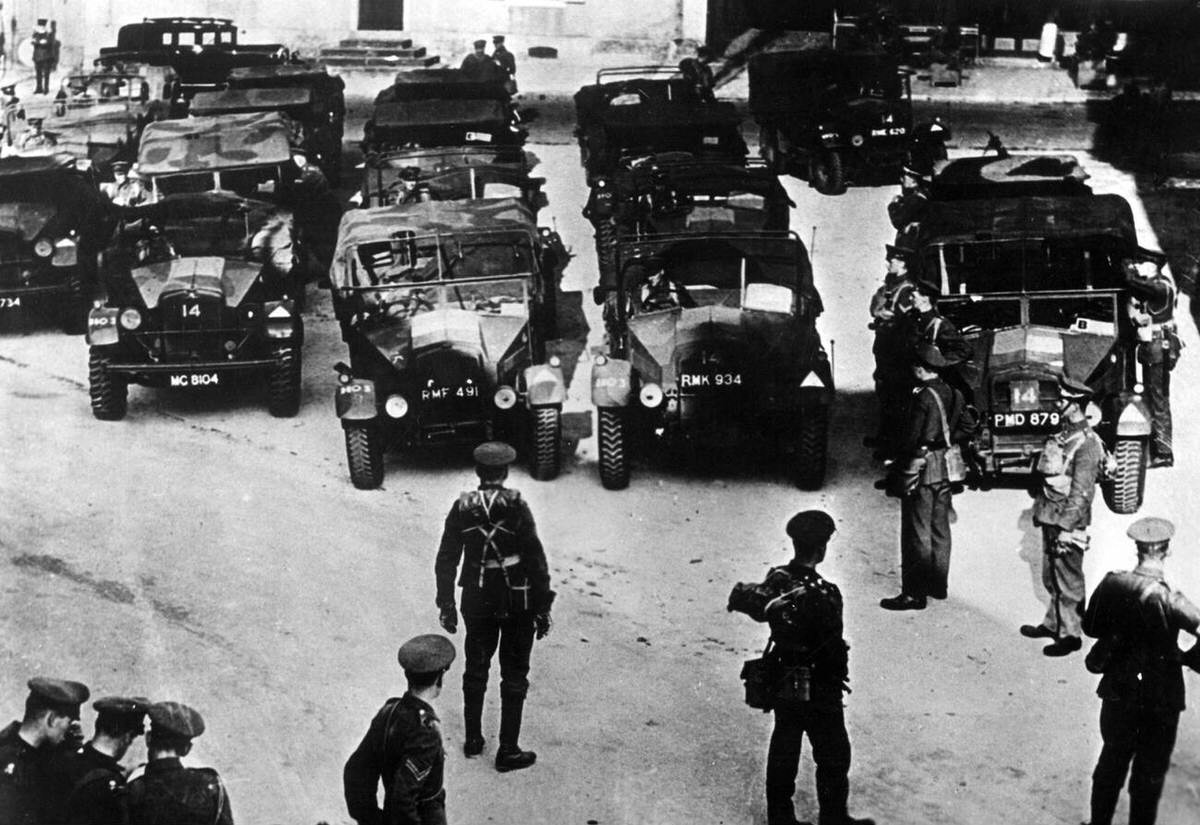
British lorry convoy in France, 1939
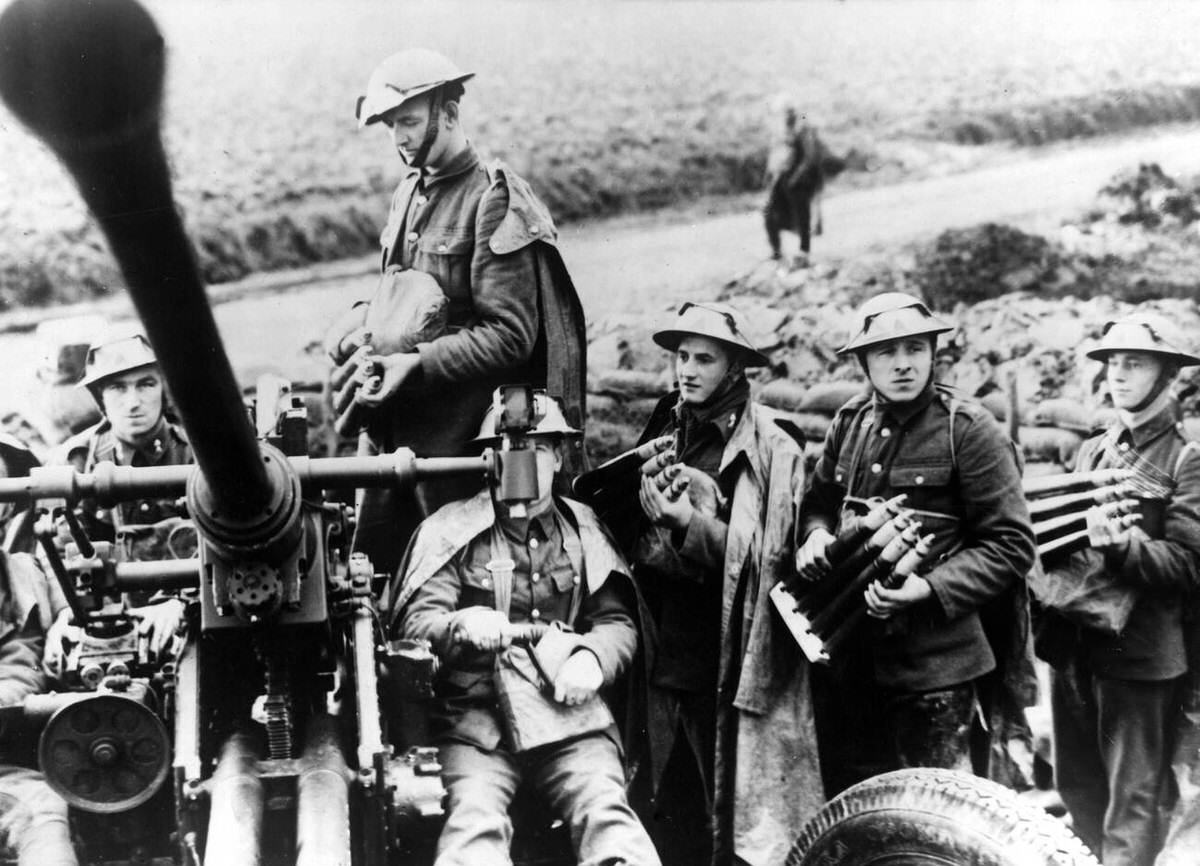
British troops with anti-aircraft guns in France, 1939
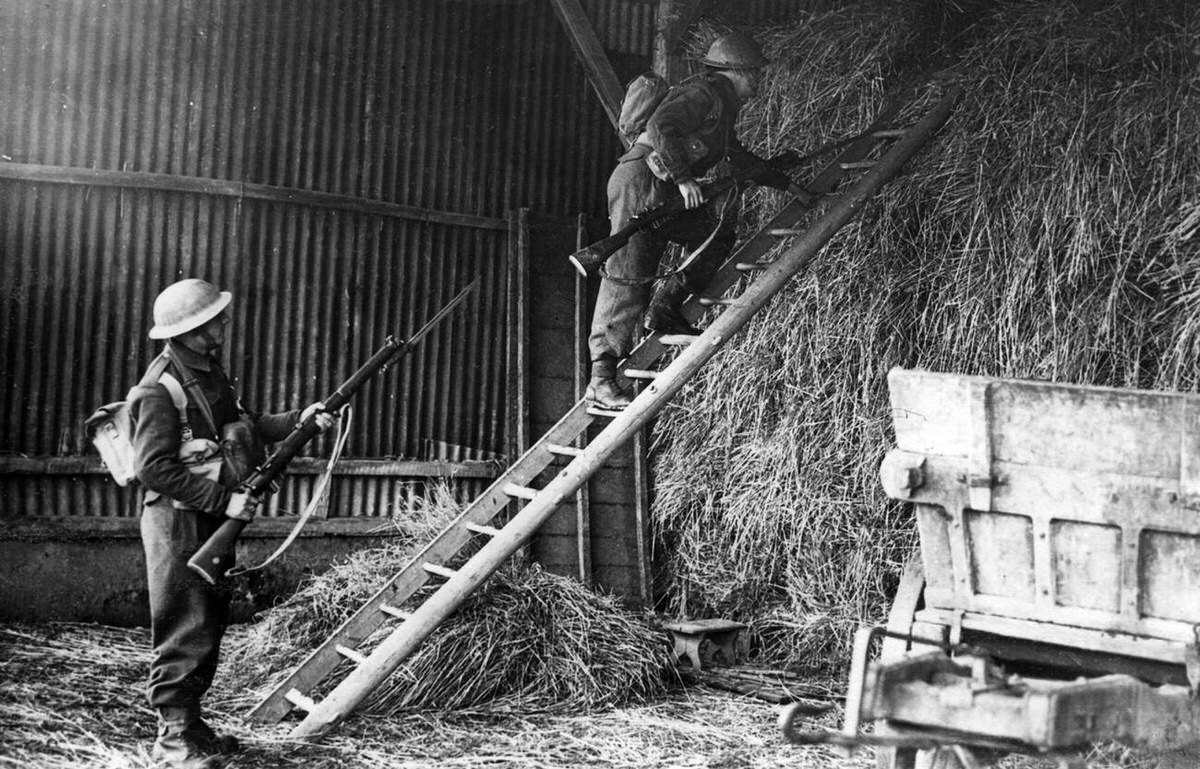
British soldiers searching a barn during an exercise in France, 1940
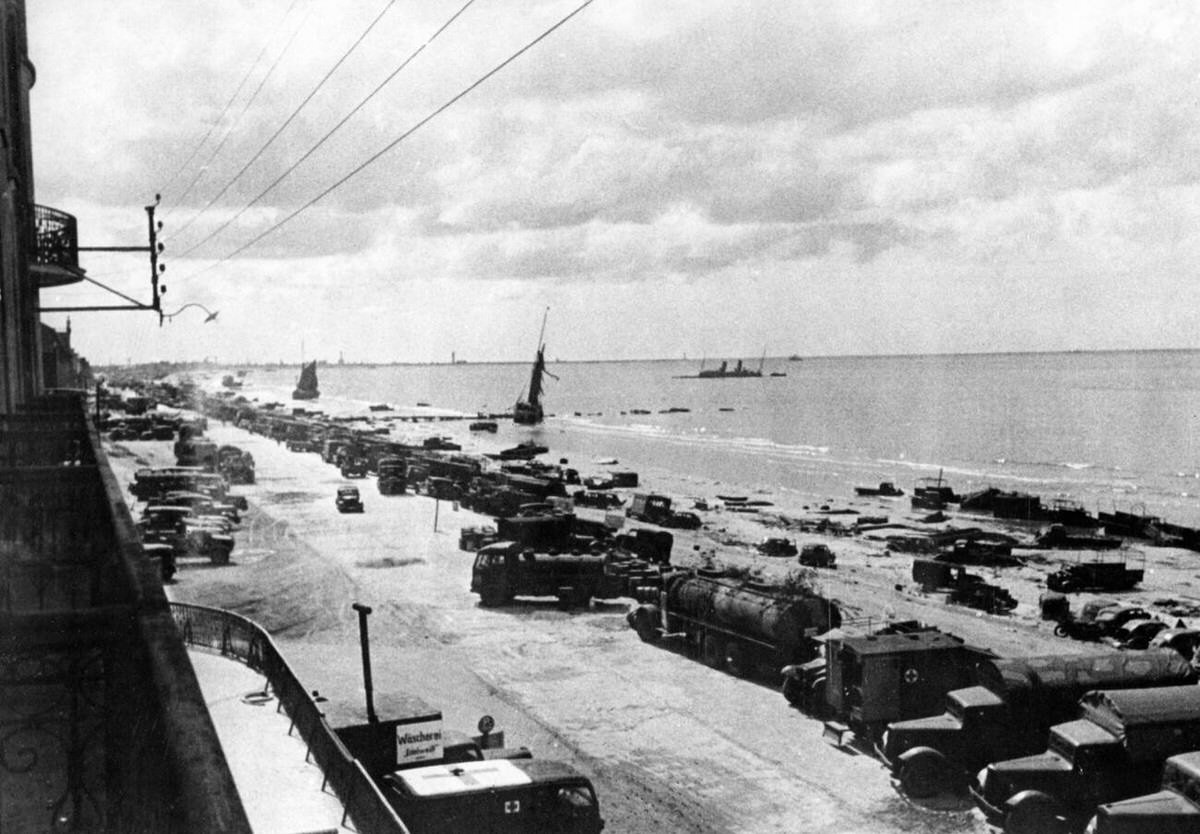
Equipment left on the beach after the evacuation of British troops at Dunkirk, 1940
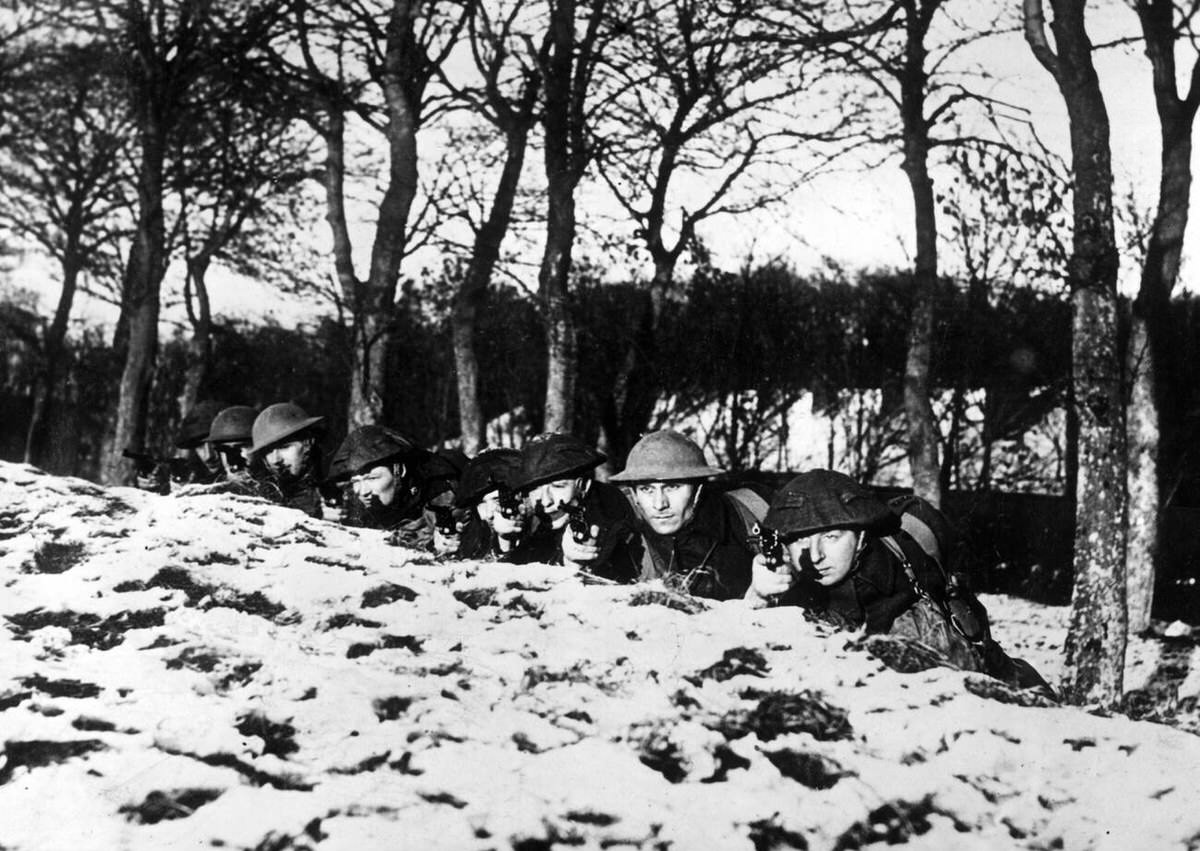
British soldiers shooting revolvers in France, 1940
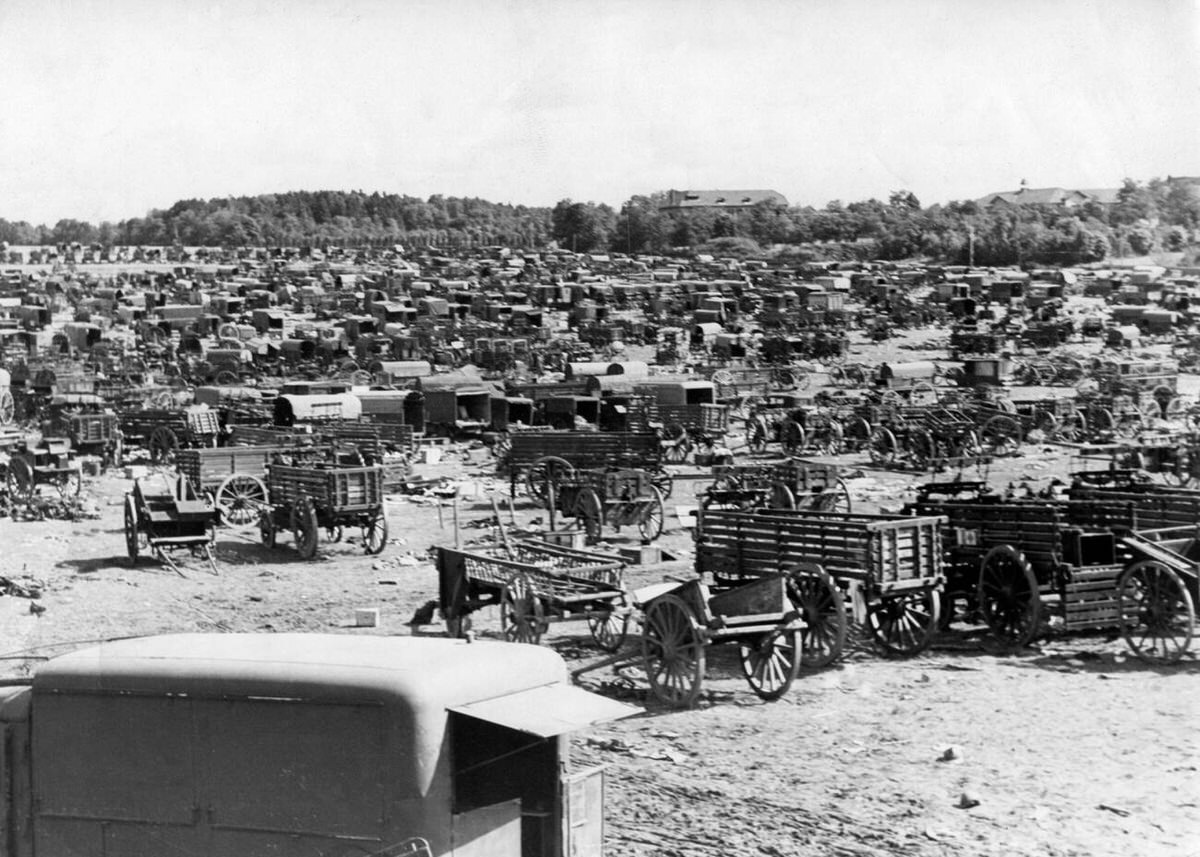
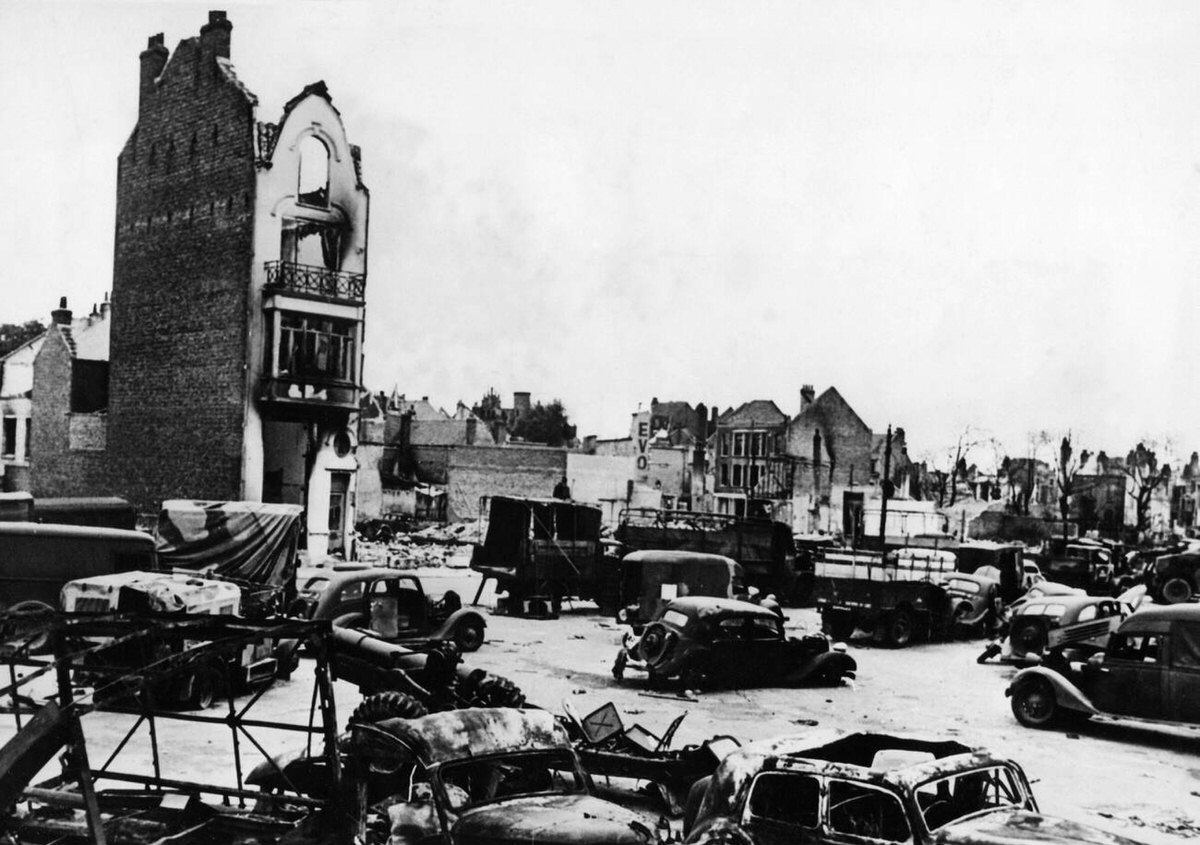
Munitions left in a French city after the withdrawal of British and French forces, 1940
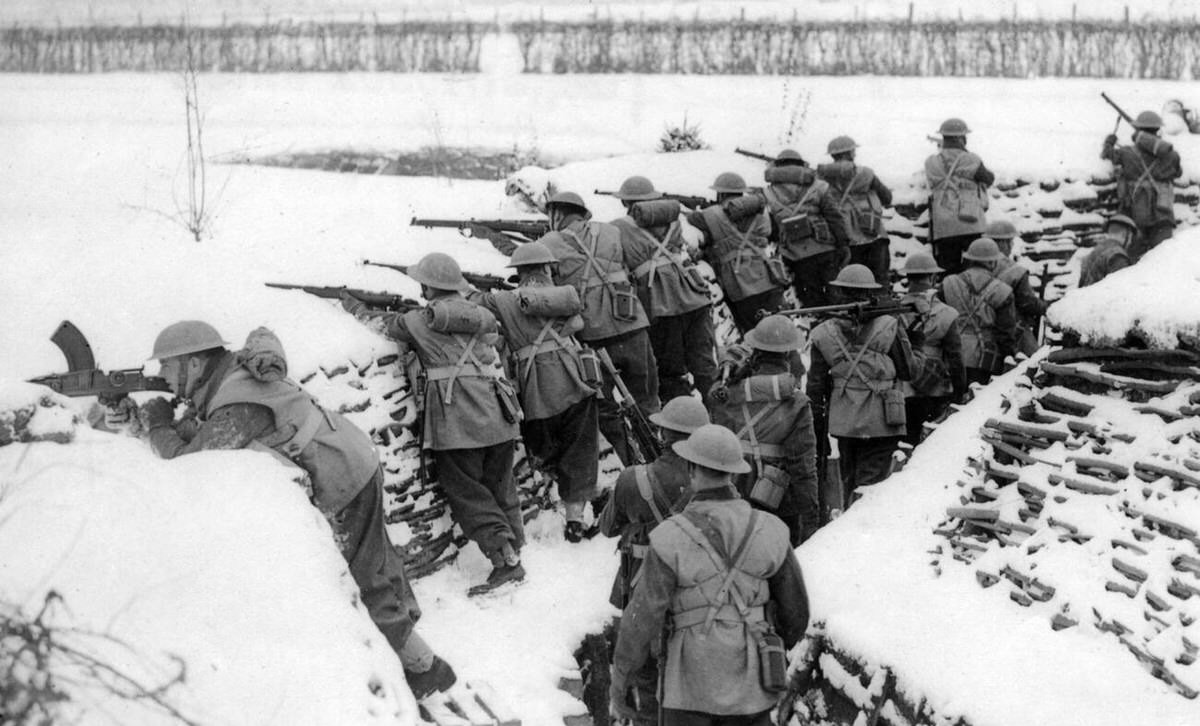
Soldiers of the Royal Warwickshire Regiment in a trench in France, 1940
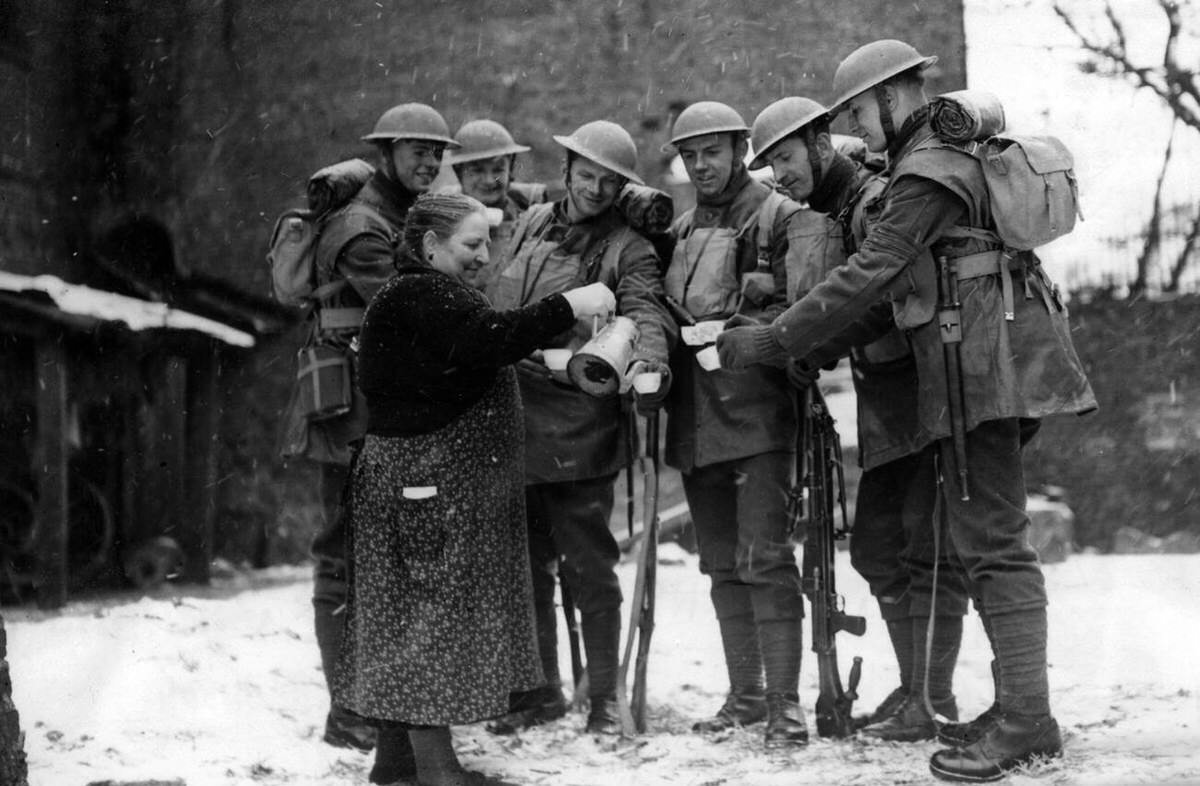
Soldiers of the Welsh Guards offered a drink by a local woman in France, 1940
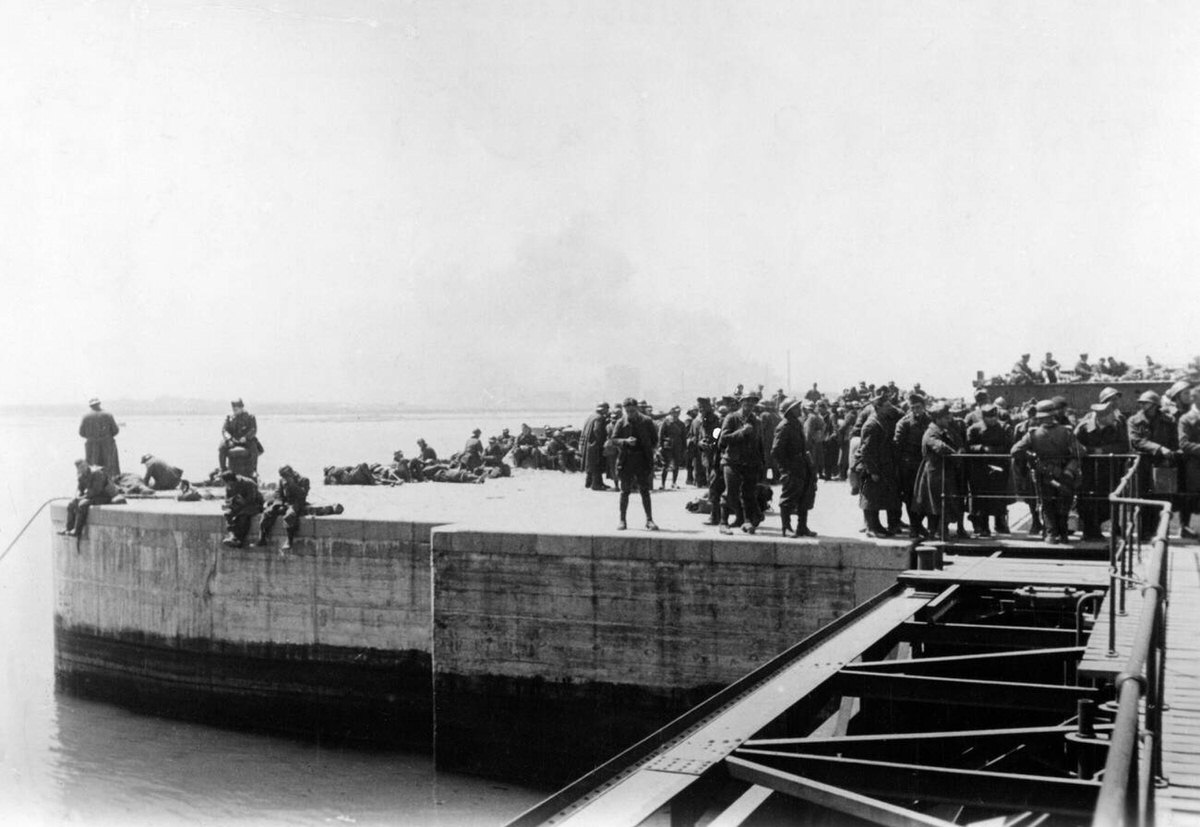
British and French soldiers in the port of Dunkirk waiting for transport to prison camps, 1940
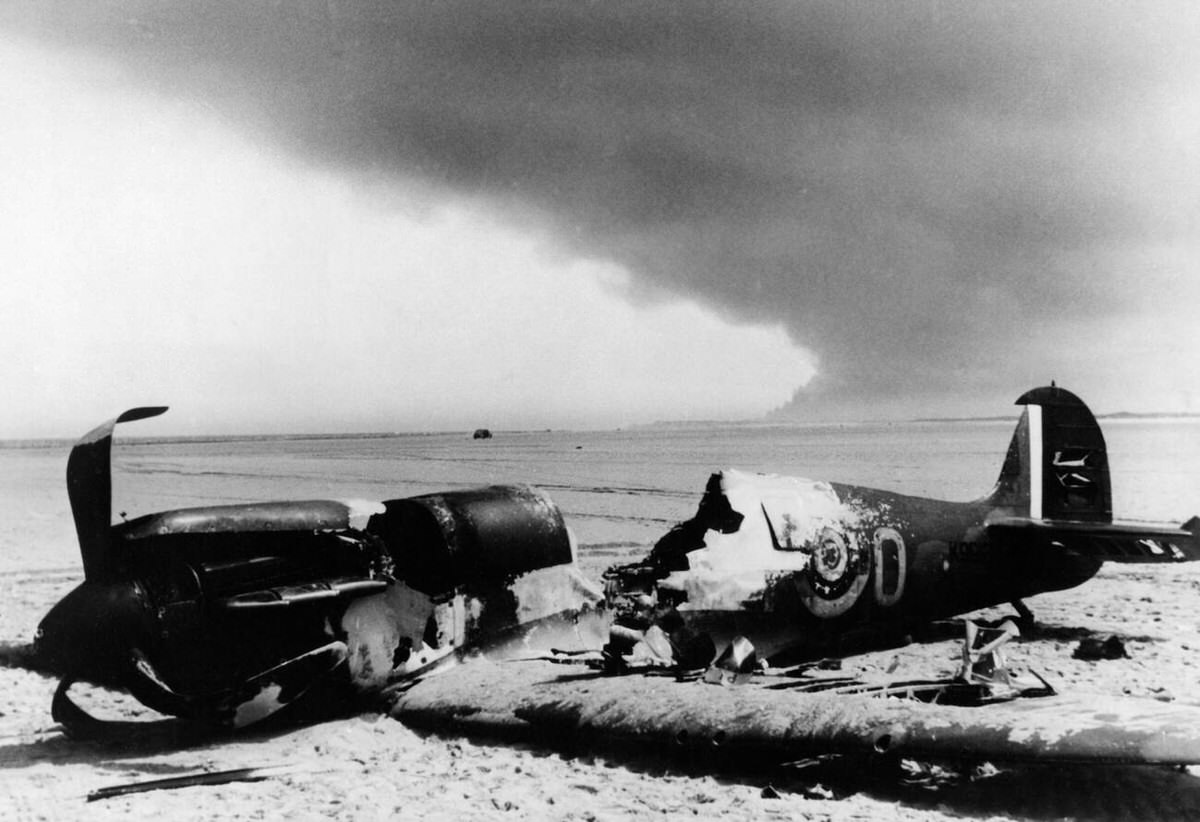
Fallen British Spitfire in the Dunkirk region, 1940
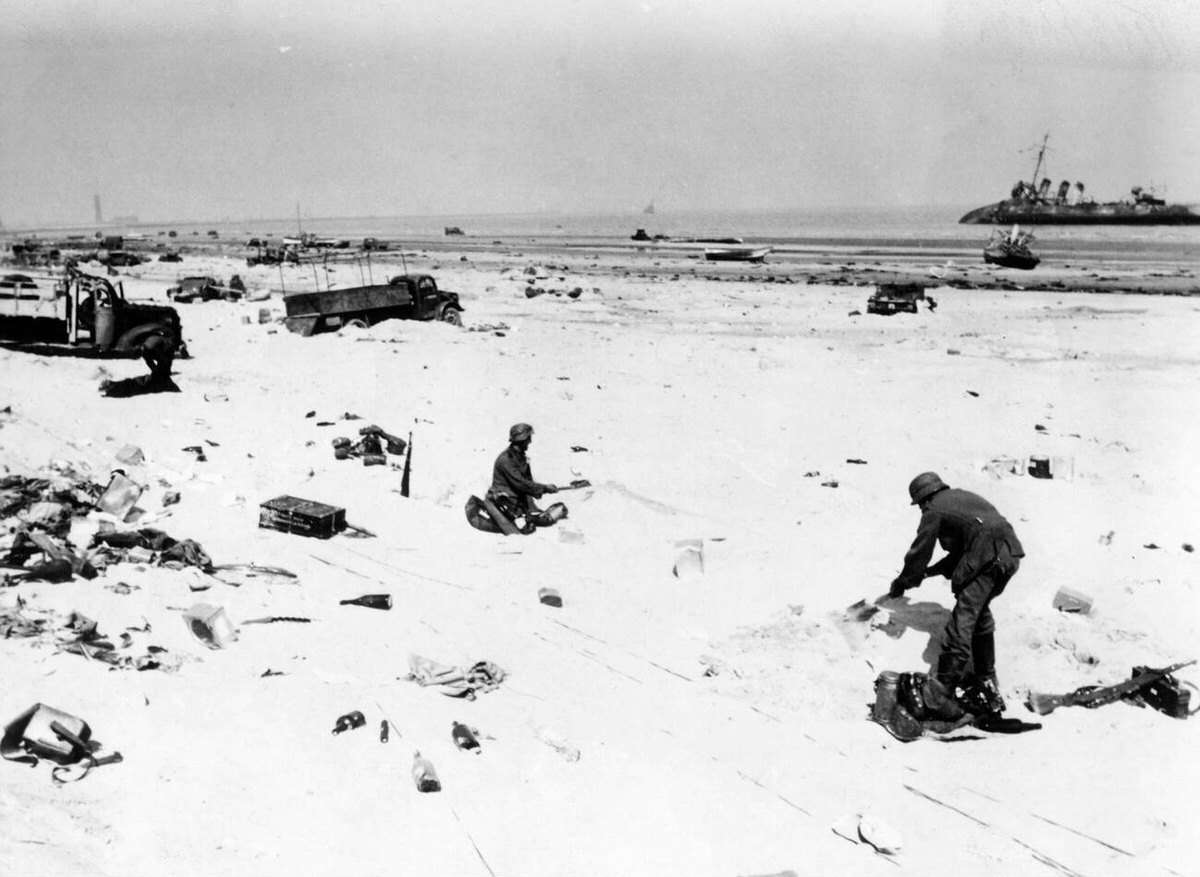
Soldiers digging in on the beach at Dunkirk after the evacuation of British troops, 1940
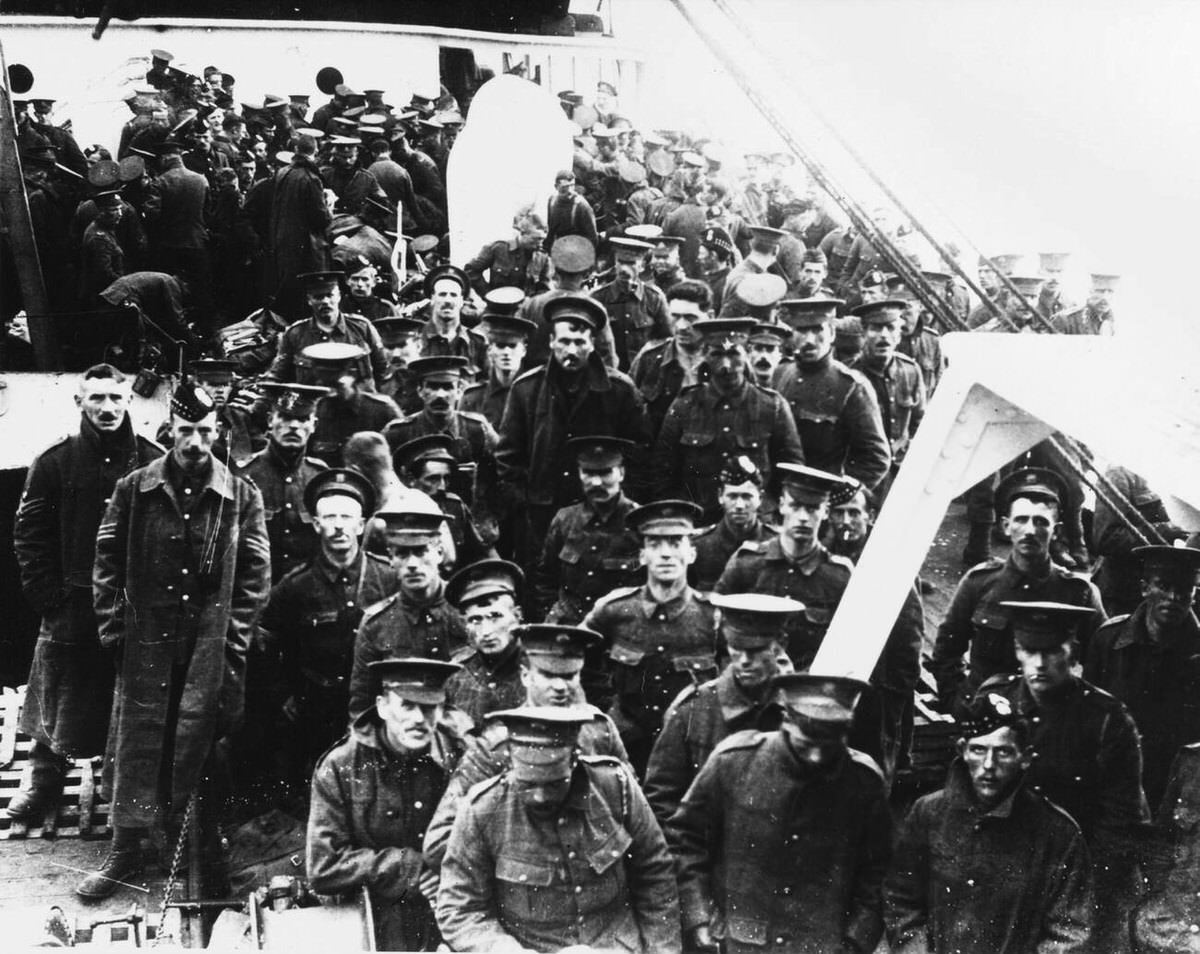
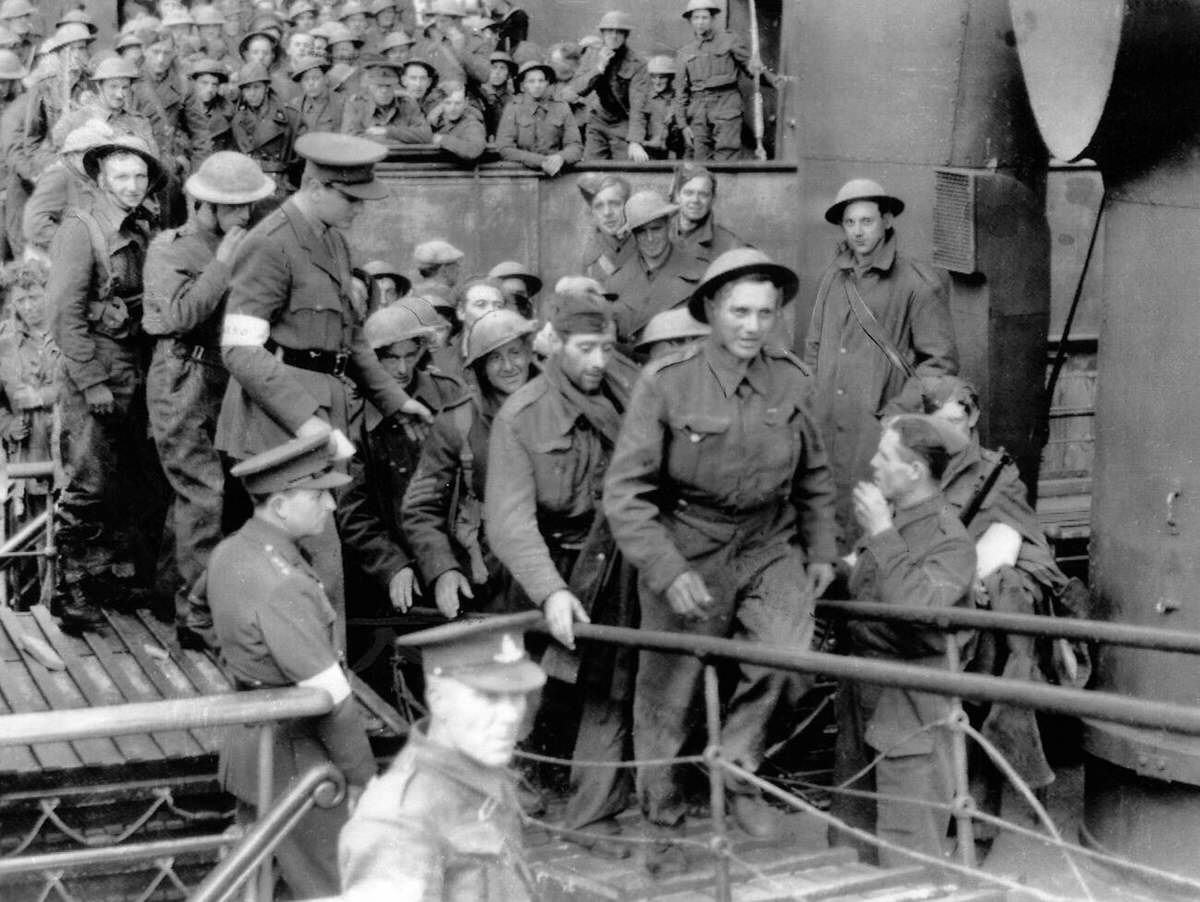
Arrival of British troops evacuated from France at a southern English port, 1940
War material left by the British army on the beach near Dunkirk, 1940
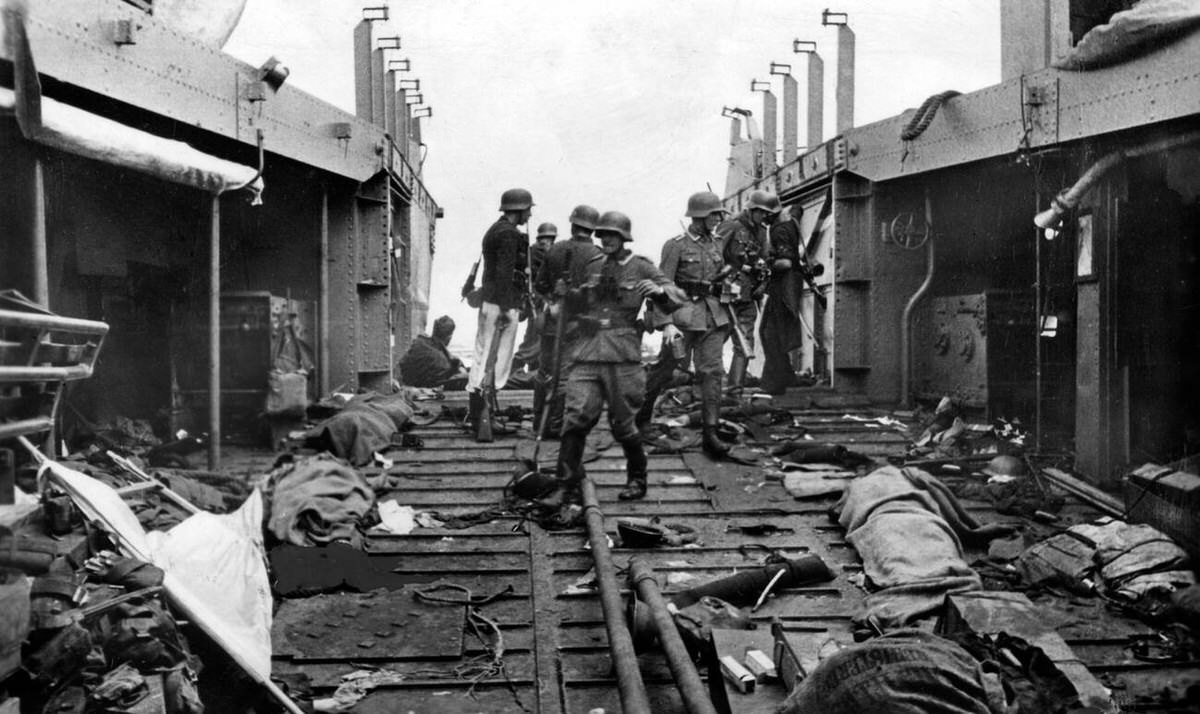
Wehrmacht soldiers searching a British transport ship during Operation Jubilee at Dieppe, 1942
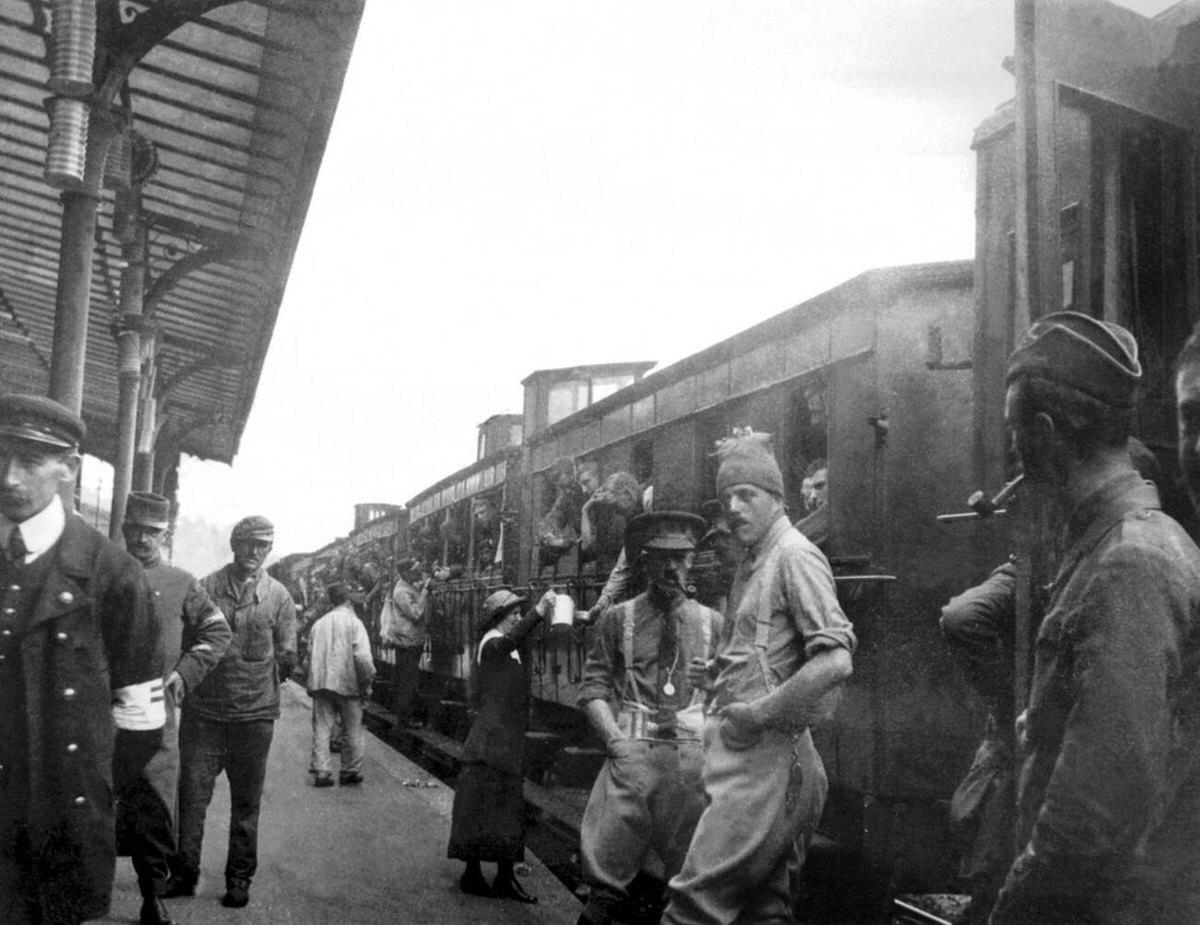
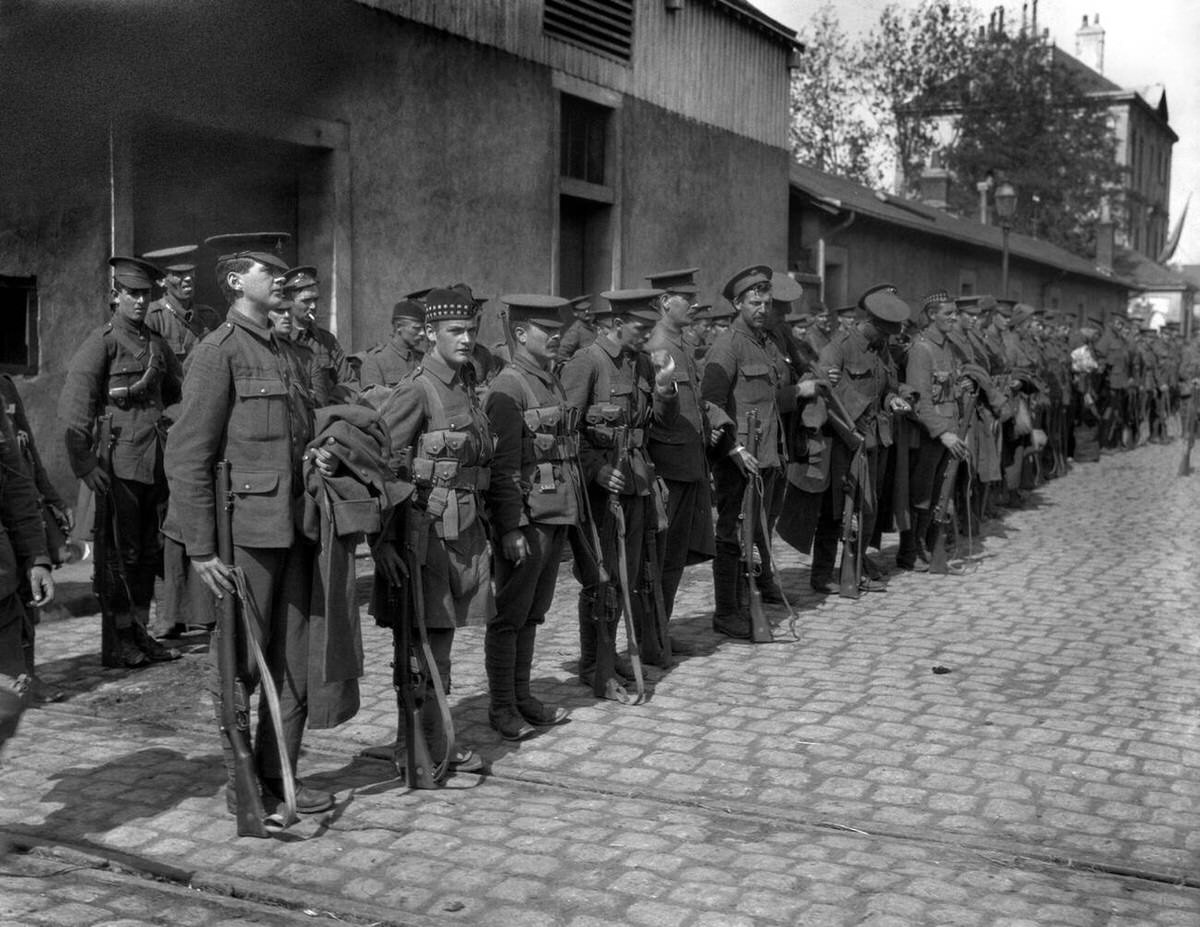
Train carrying the 11th Hussars to the concentration area in Rouen, 1914
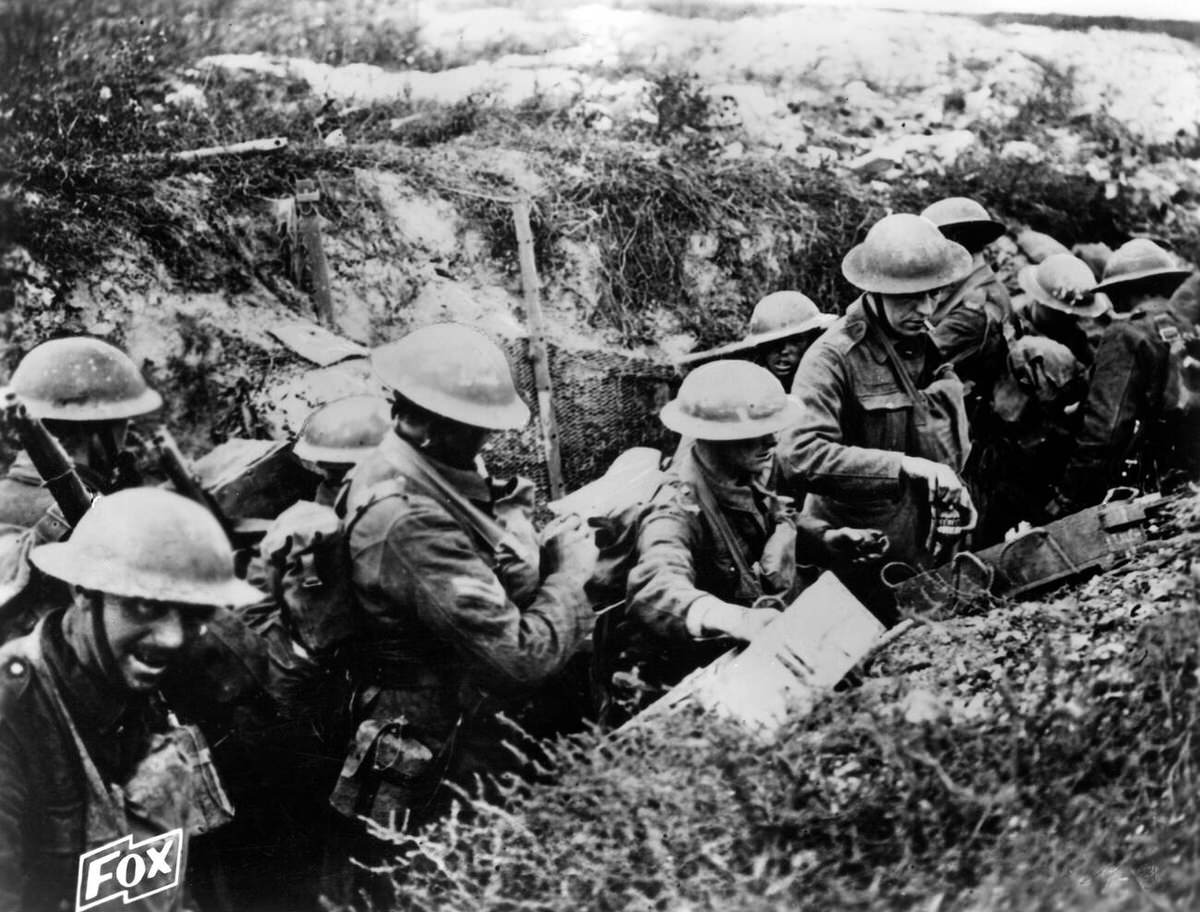
British soldiers in a trench during the Battle of the Somme, 1916
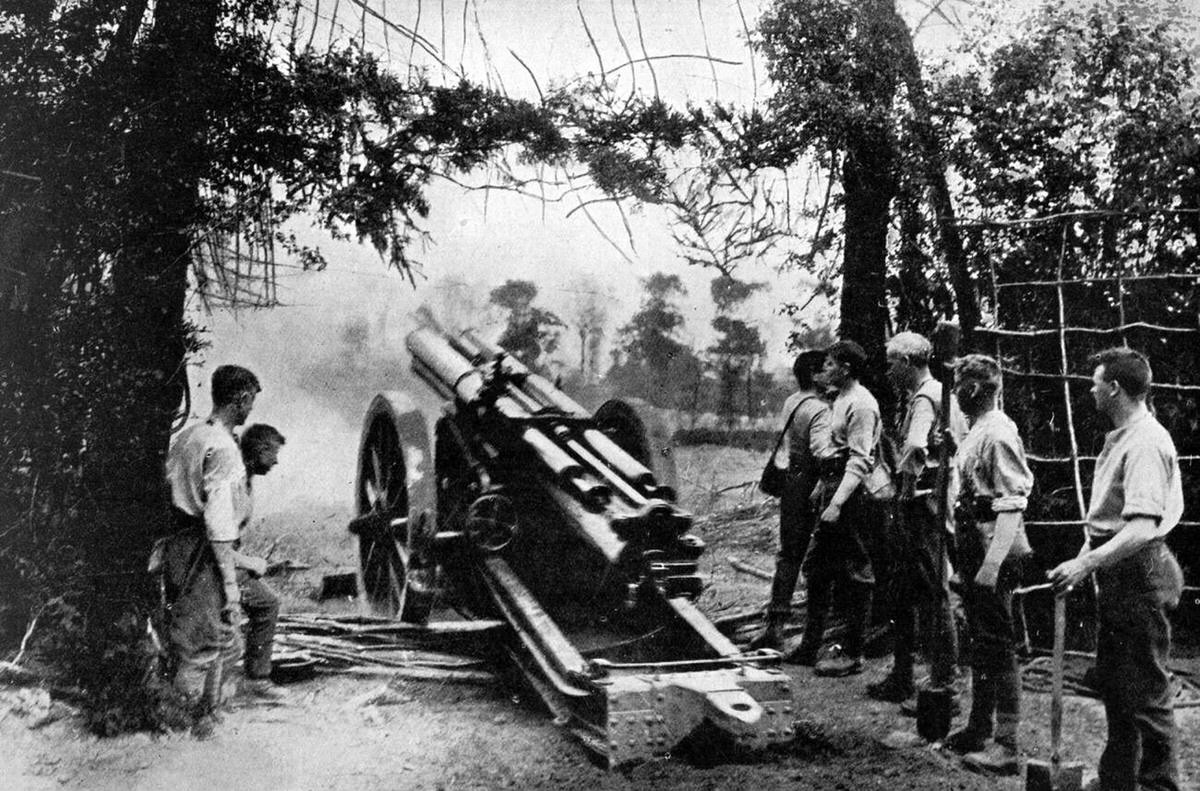
60-pounder gun in action in France, 1916
British soldiers of various regiments on a cobbled street in France, 1916
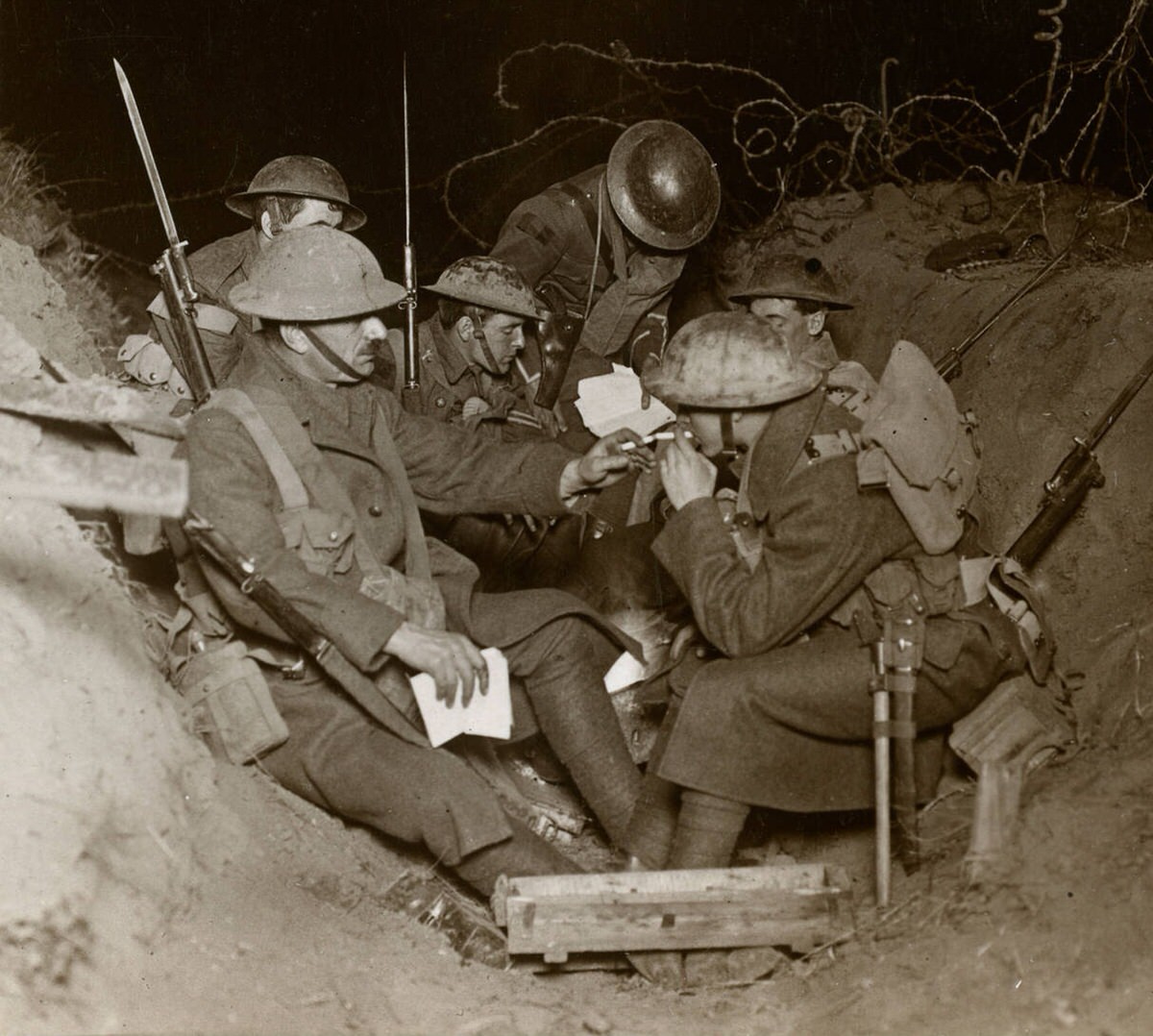
Evening in the reserve trenches at Beaumont-Hamel, France, 1914
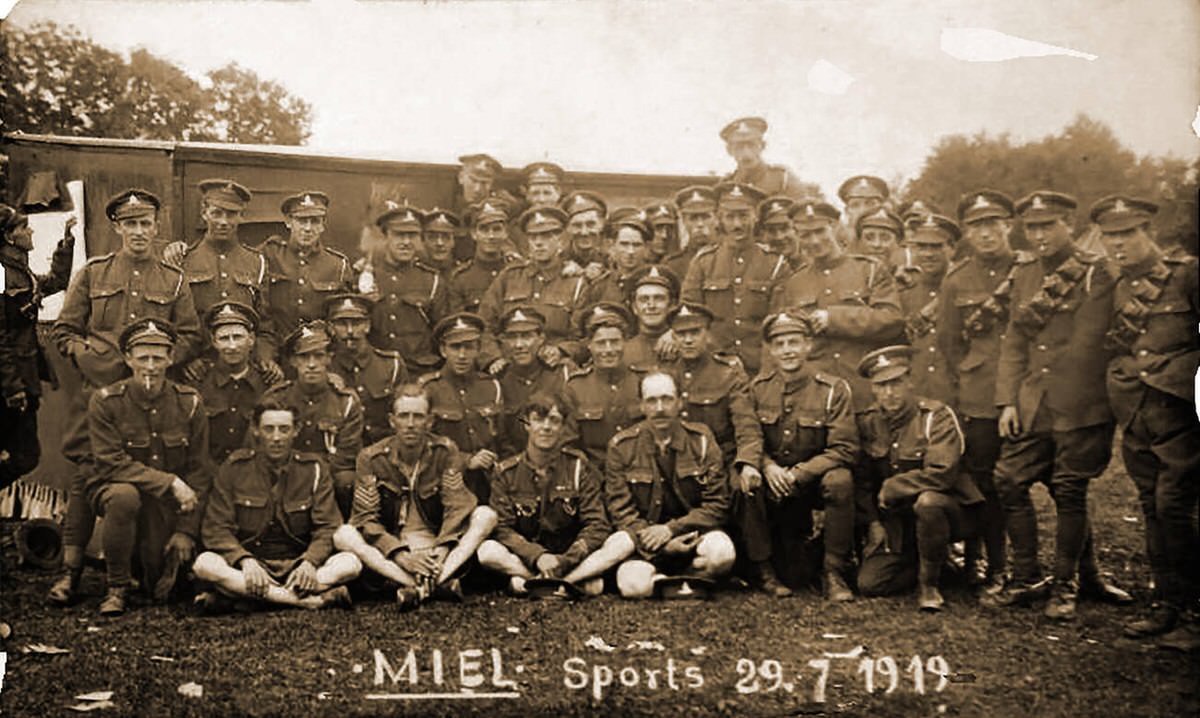
British soldiers forming a sports team after the Battle of Saint-Mihiel, 1914
British troops in a captured trench on the Hindenburg Line, 1917
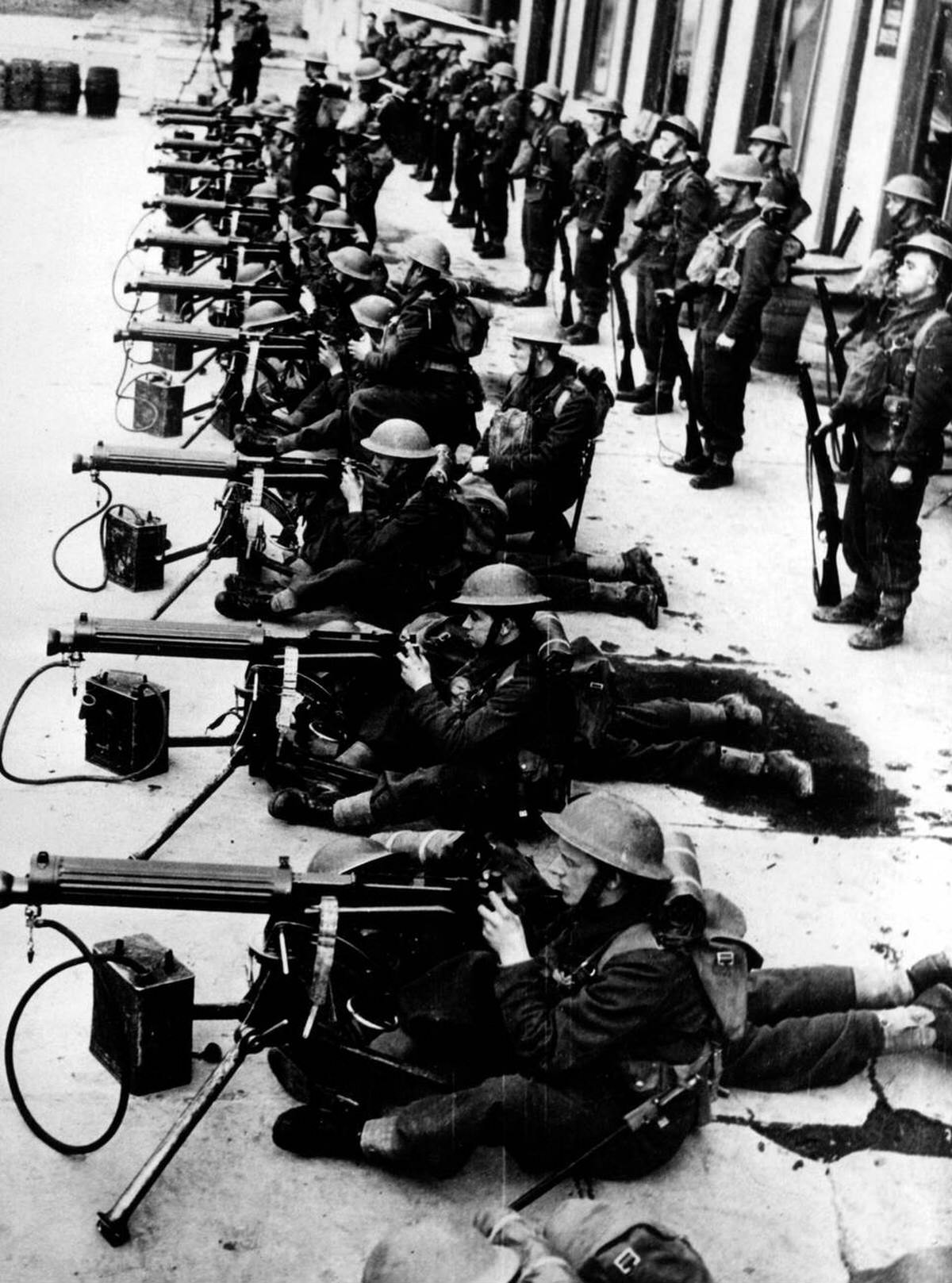
British machine gun division in France, 1940
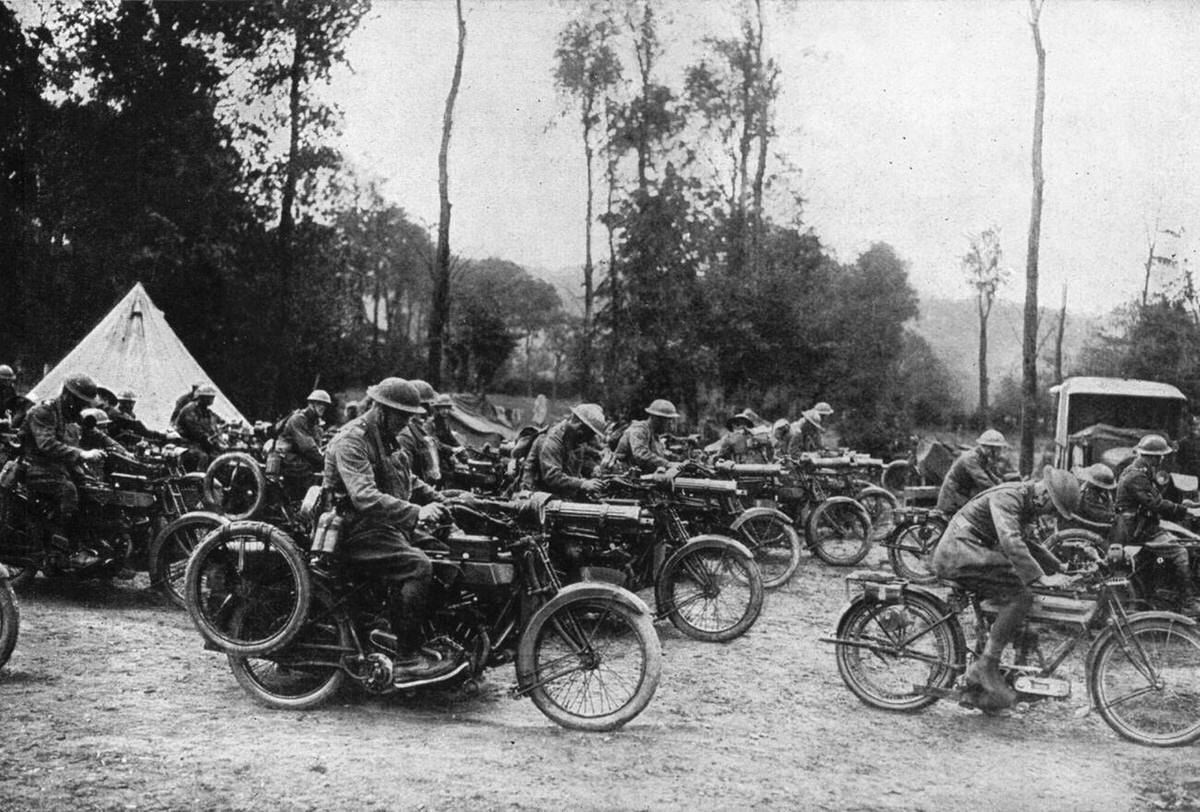
British machine gun section on motorbikes on the Western Front, 1917
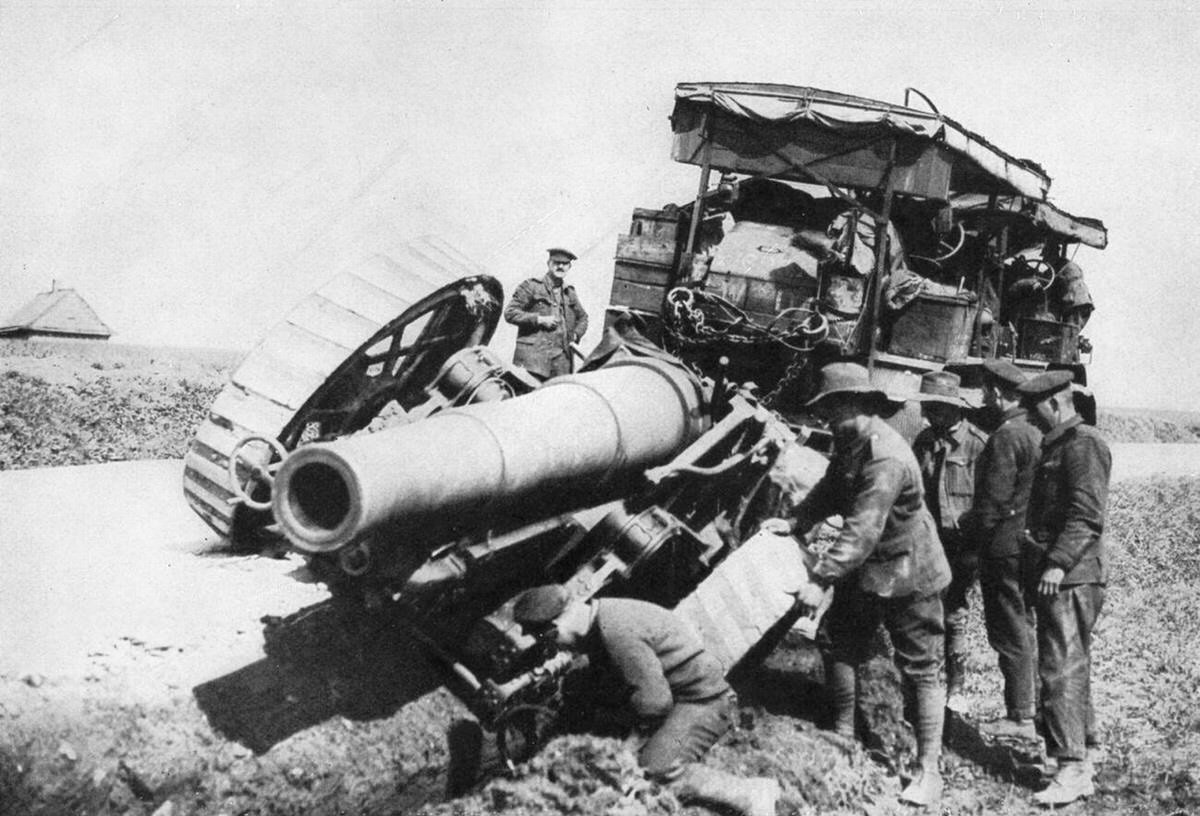
British heavy gun stuck in France, 1918
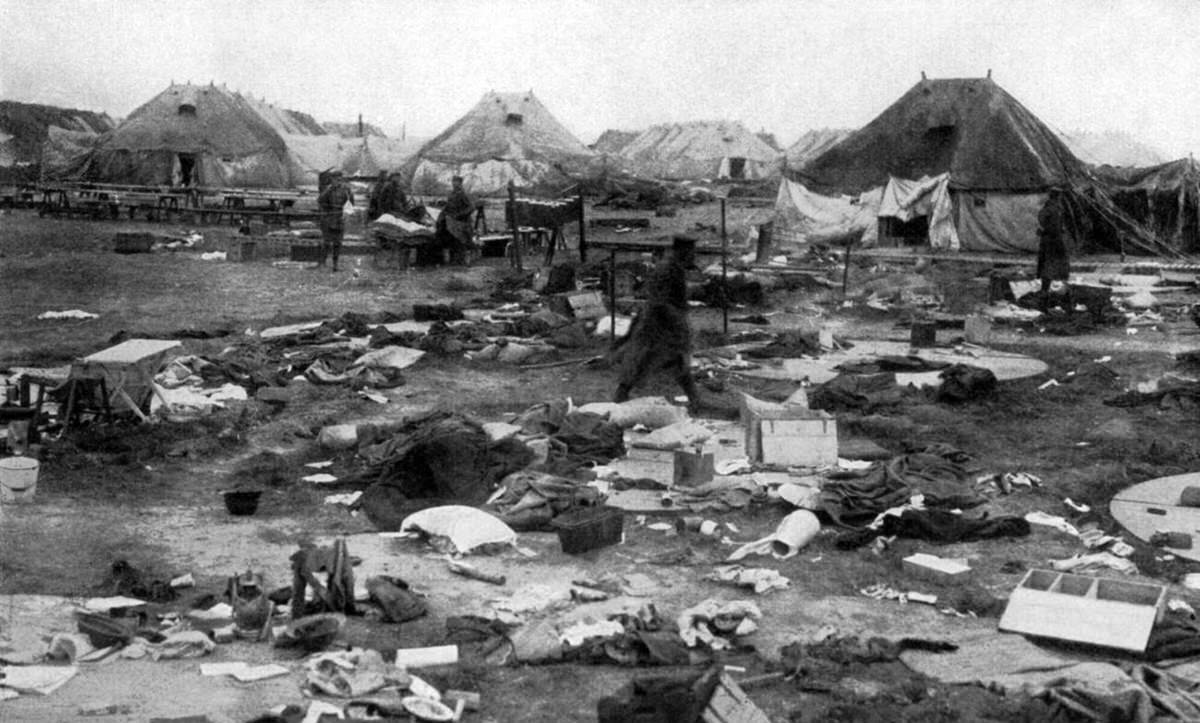
Captured British camp during the German spring offensive in France, 1918
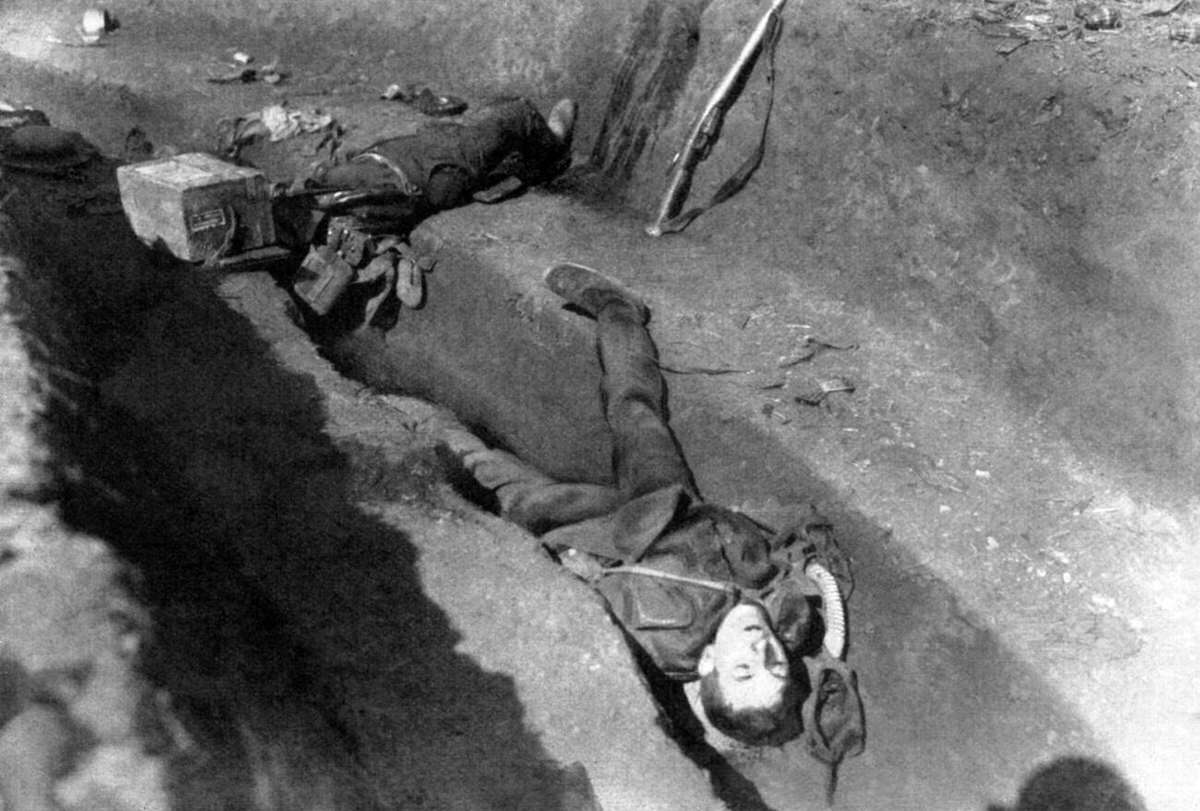
British sentry killed during a German reconnaissance in France, 1918
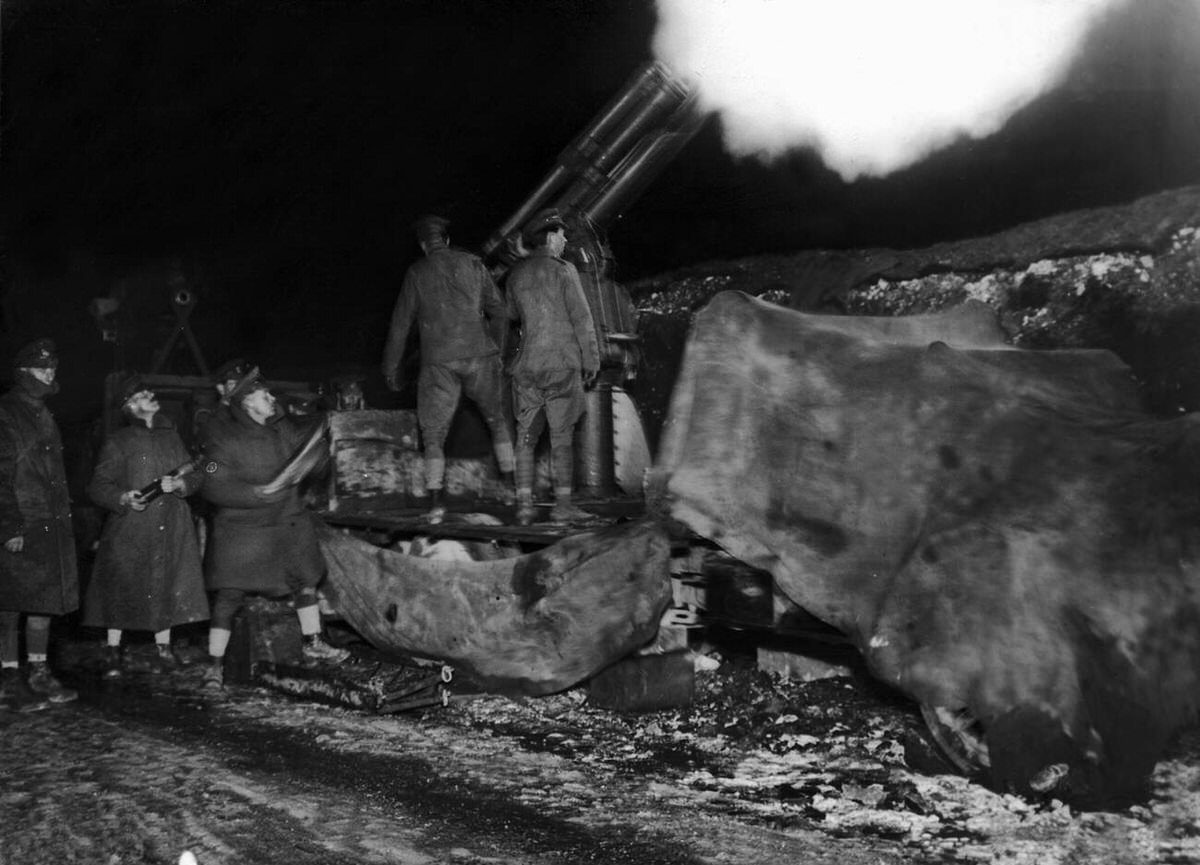
British 13-pounder anti-aircraft gun on a Daimler Mk.3 lorry near Wailly, 1916
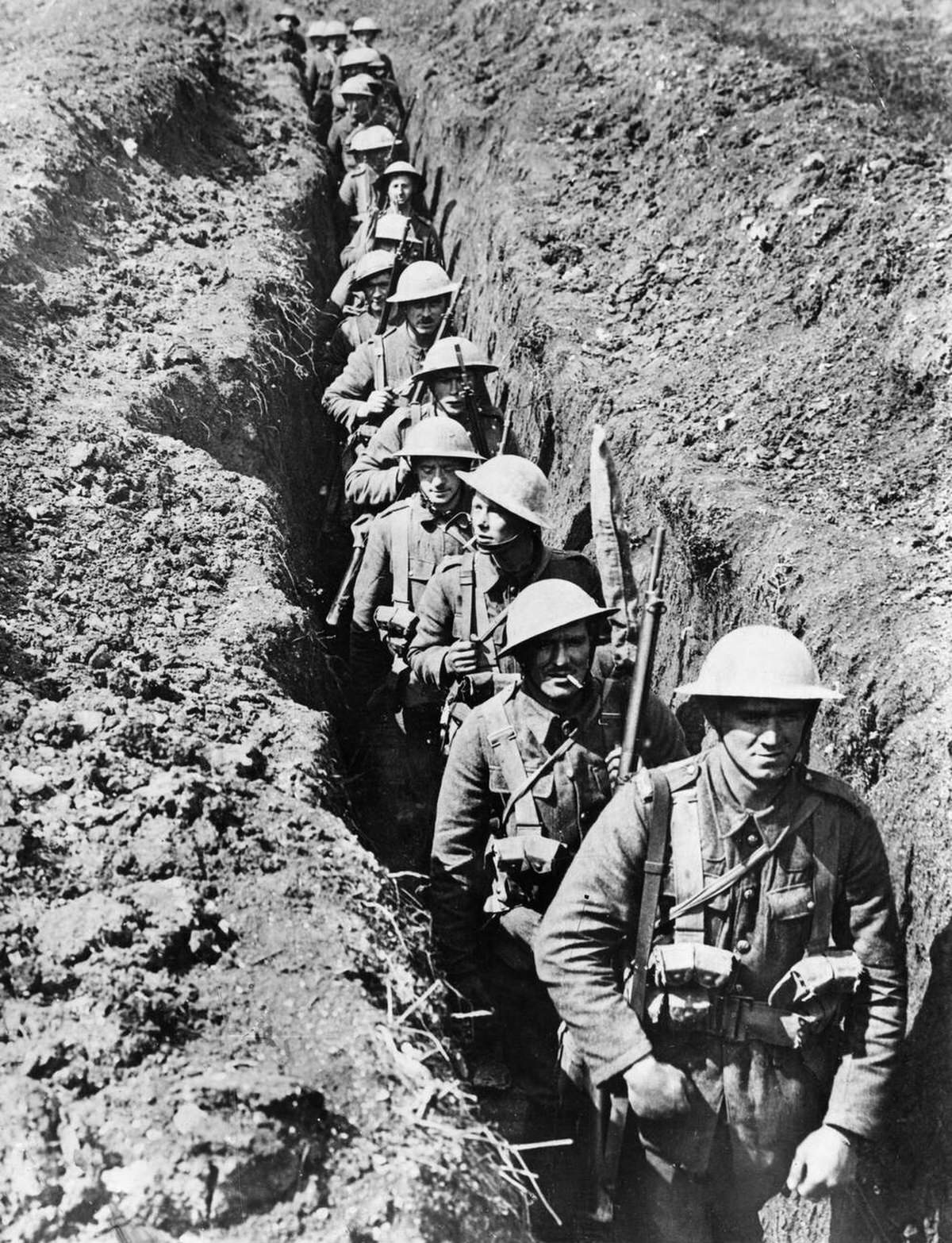
King’s Liverpool Regiment moving along a communication trench near Blairville Wood, 1916
Battle of the Somme on the Western Front, 1916
Battle of the Somme on the Western Front, 1916
British and French soldiers, 1916
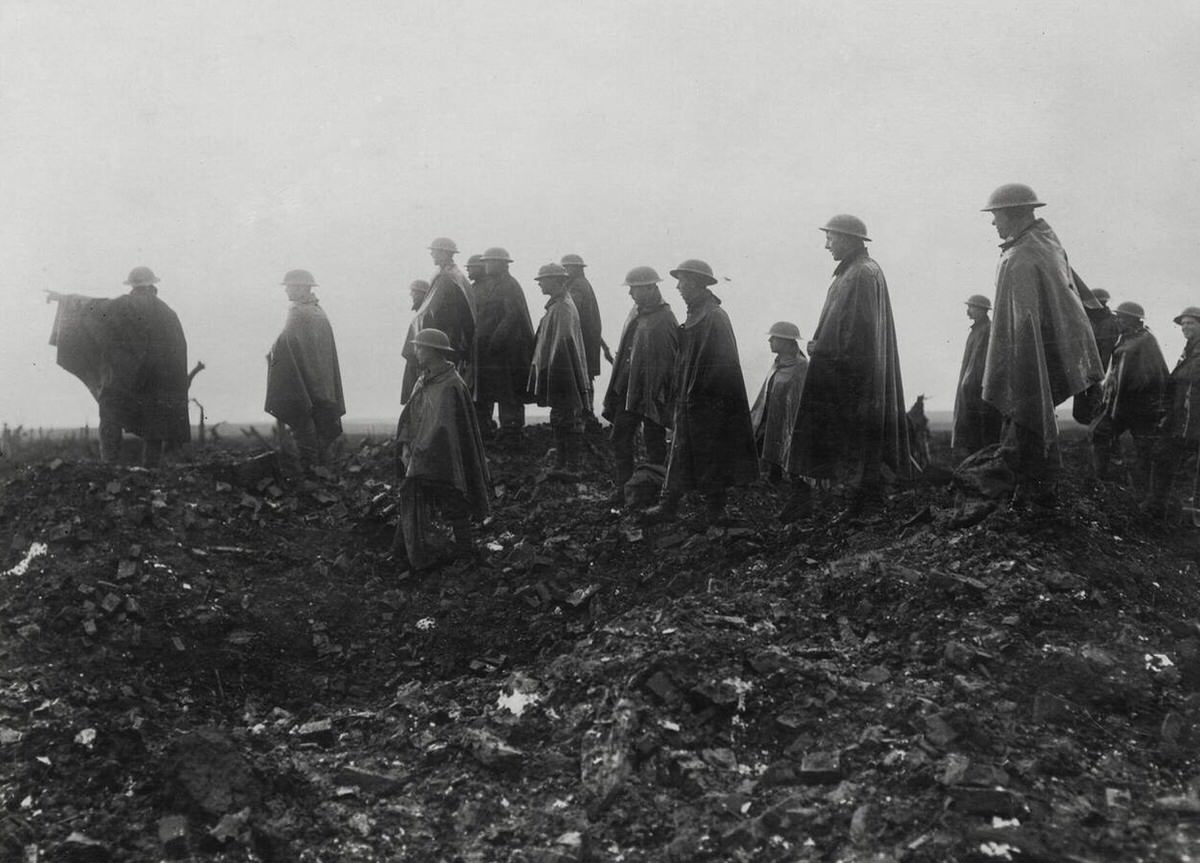
Members of the Middlesex Regiment returning from the trenches in the rain during the Somme campaign, 1916
Andrew Thompson is an archaeologist and historian who specializes in the study of war and conflict. He writes about the brutal history of warfare, including the World Wars and other significant conflicts. Through his work, he aims to deepen our understanding of the human cost of conflict and inspire us to work towards a more peaceful future.



2 captions claim to show Tanks in 1914.
I trust the images, the captions are dubious