Between 1914 and 1918, more than sixteen million animals served in World War I. They pulled artillery through mud, carried wounded soldiers, delivered messages under fire, and detected poison gas before any human could. While tanks and airplanes introduced a new era of warfare, the war’s daily machinery ran on the backs of animals. They did not volunteer, yet they died in the millions.
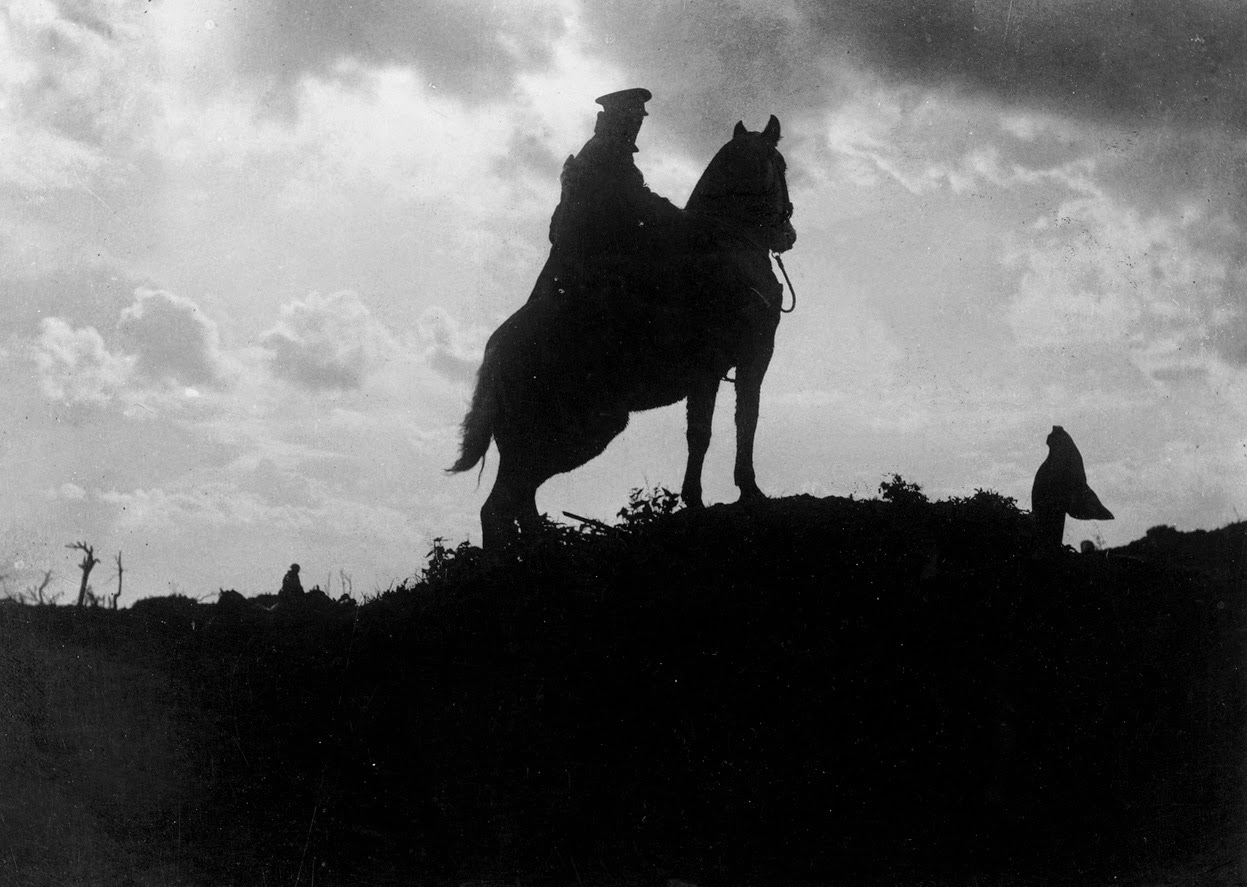
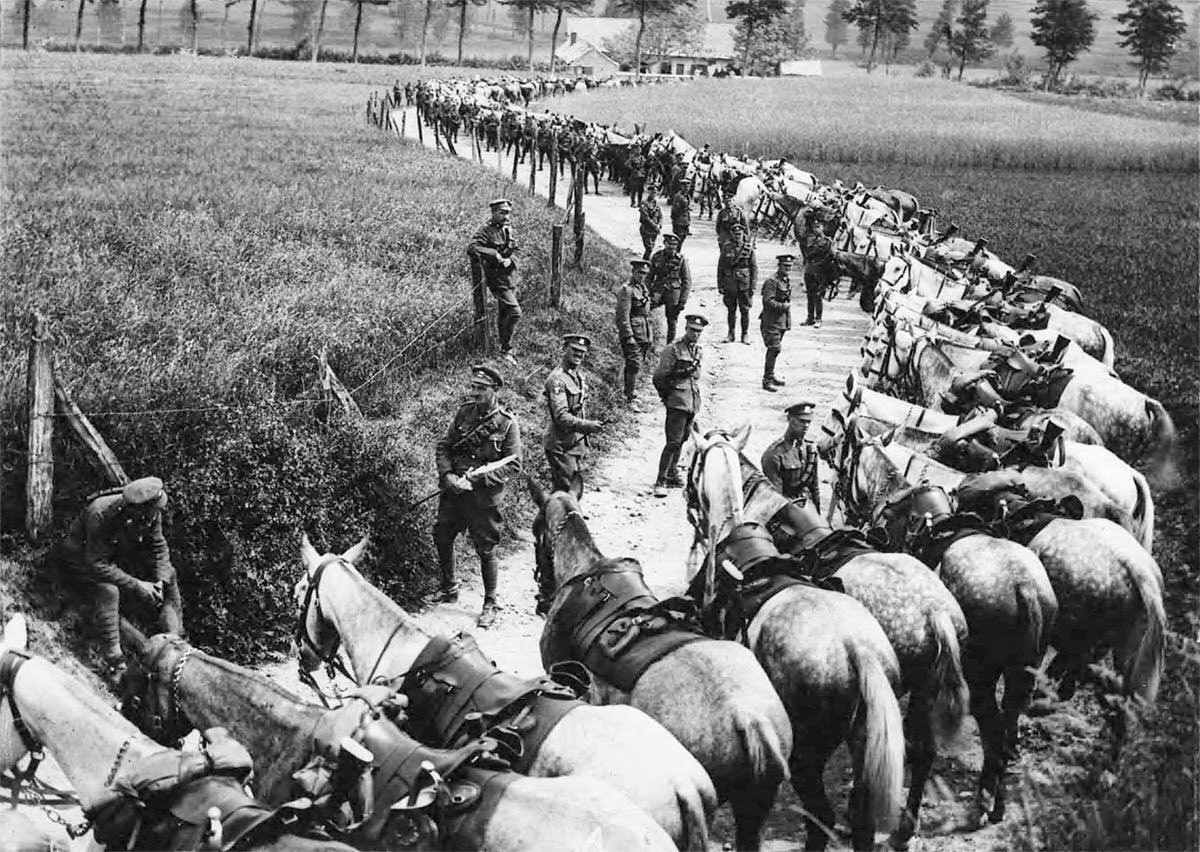
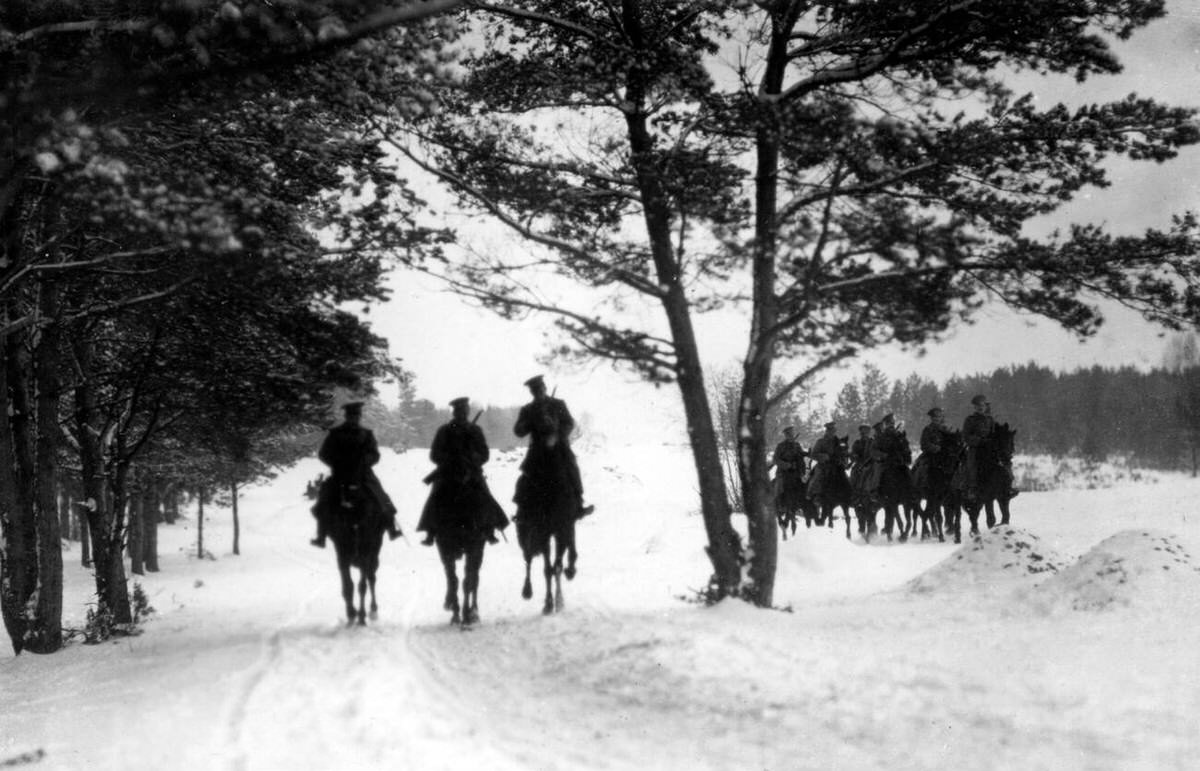
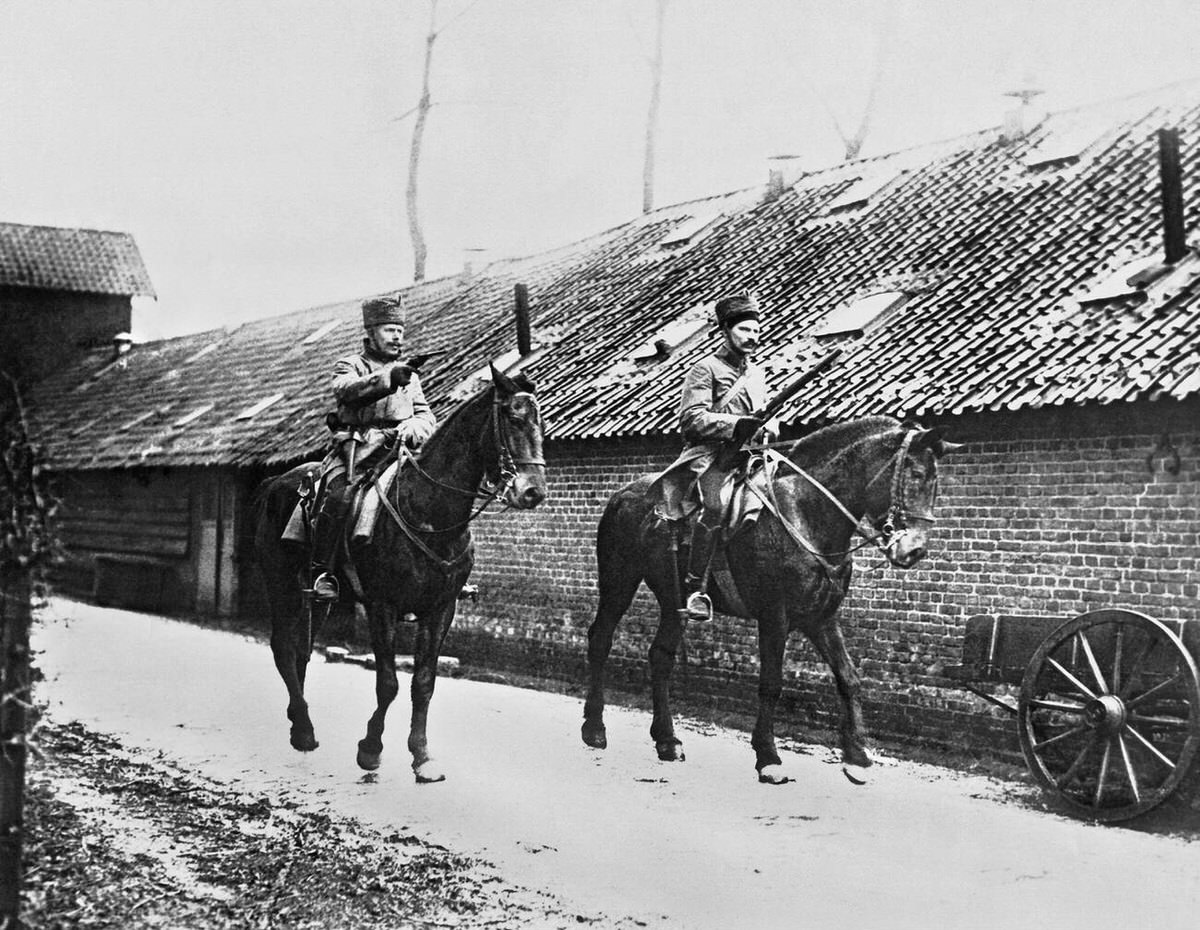
Cavalry patrol during World War I, 1914
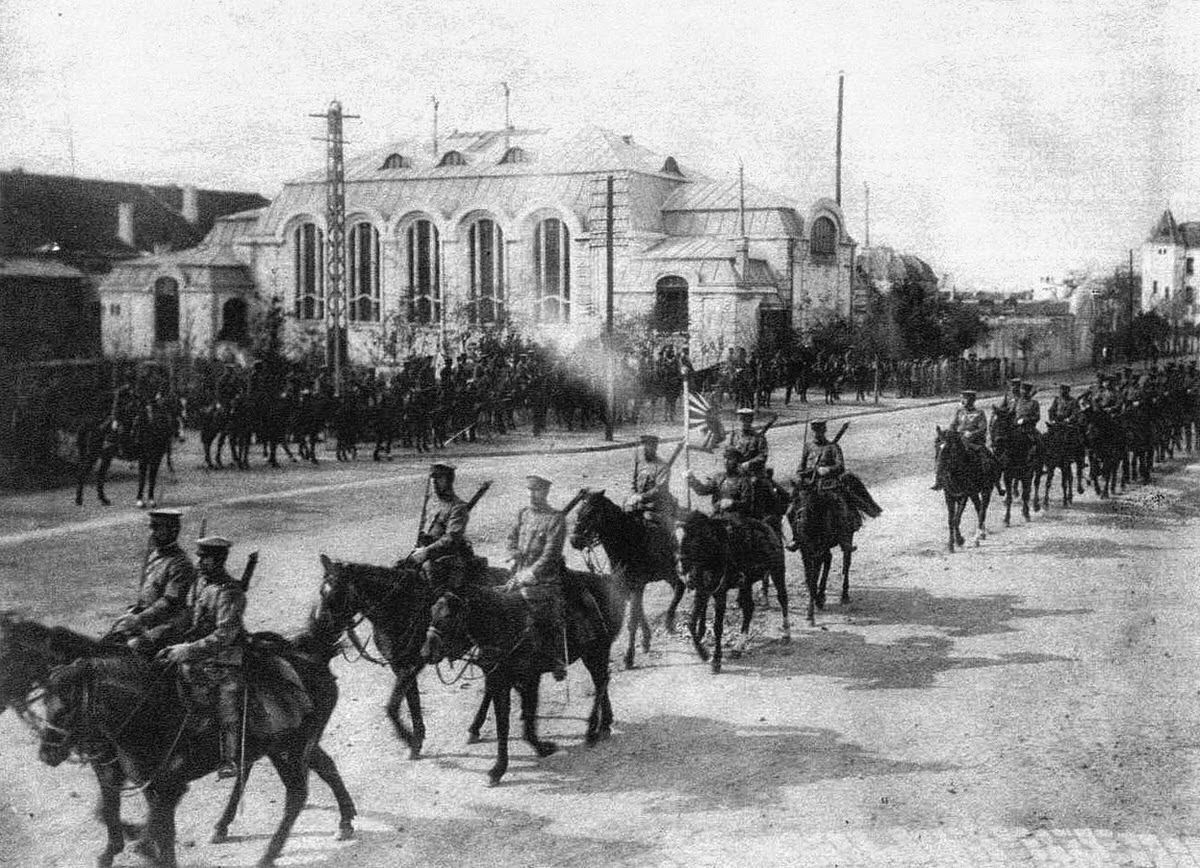
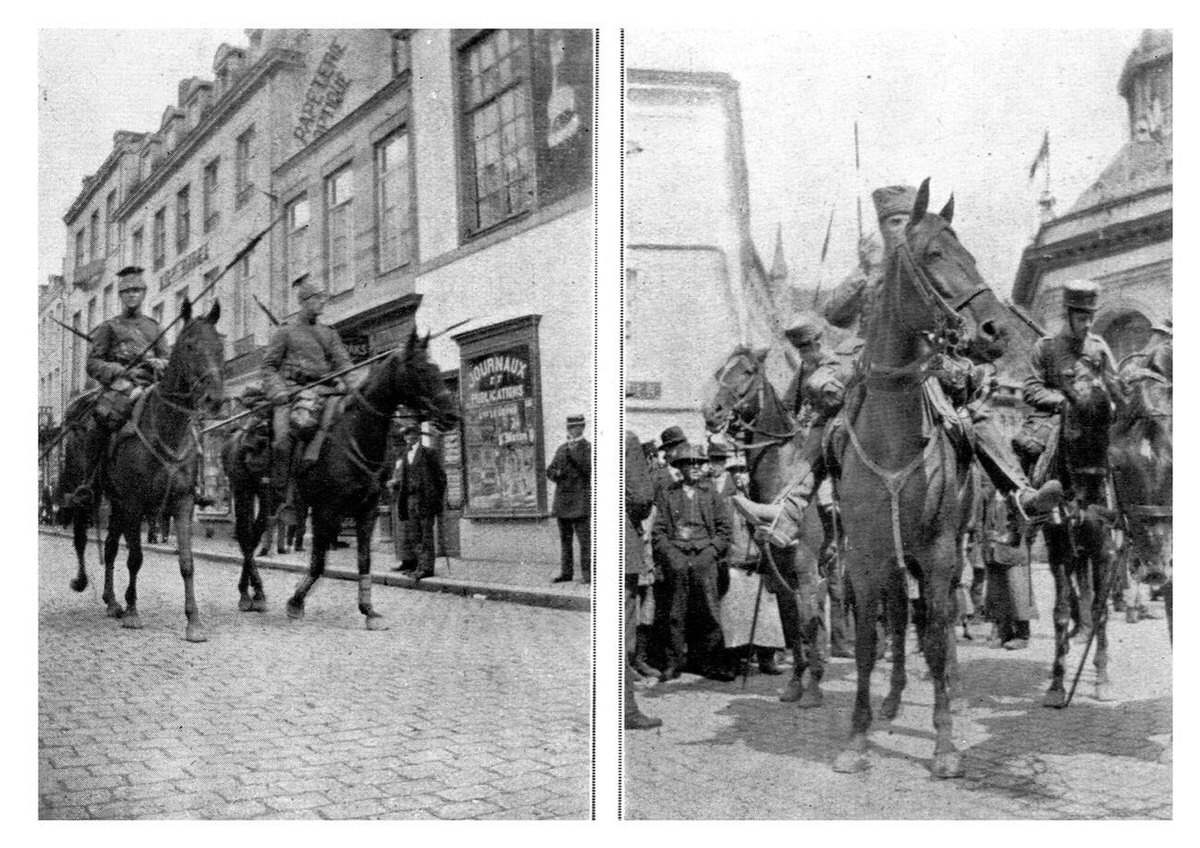
At the war’s start, the cavalry was still considered a primary combat force. Soldiers rode into battle with swords and lances. That changed fast. Machine guns and entrenched defensive lines made cavalry charges suicidal. Horses shifted from frontline fighters to the war’s most essential transport workers. The British Army alone used over one million horses and mules across the conflict, most of them purchased from the United States and Canada and shipped across the Atlantic.
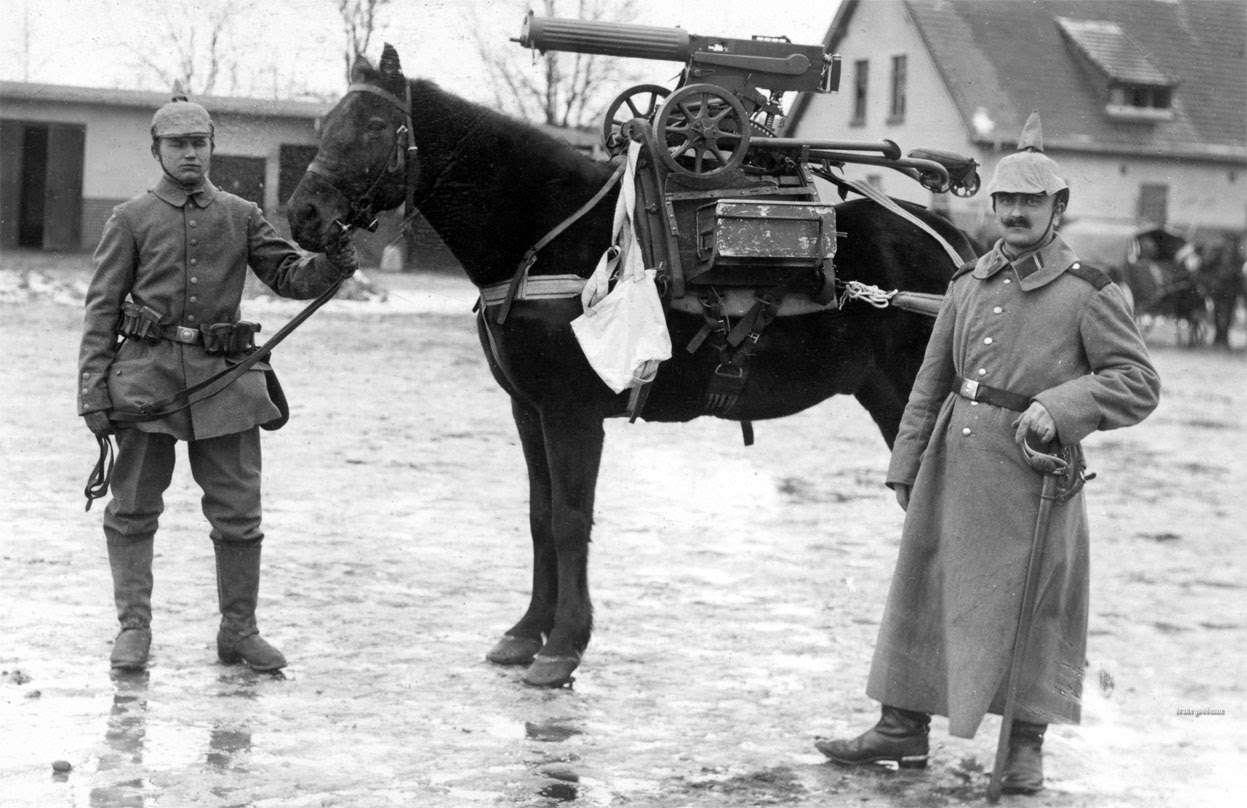
German soldiers with a horse mounted with a frame for a captured Russian Maxim M1910 machine gun, 1914
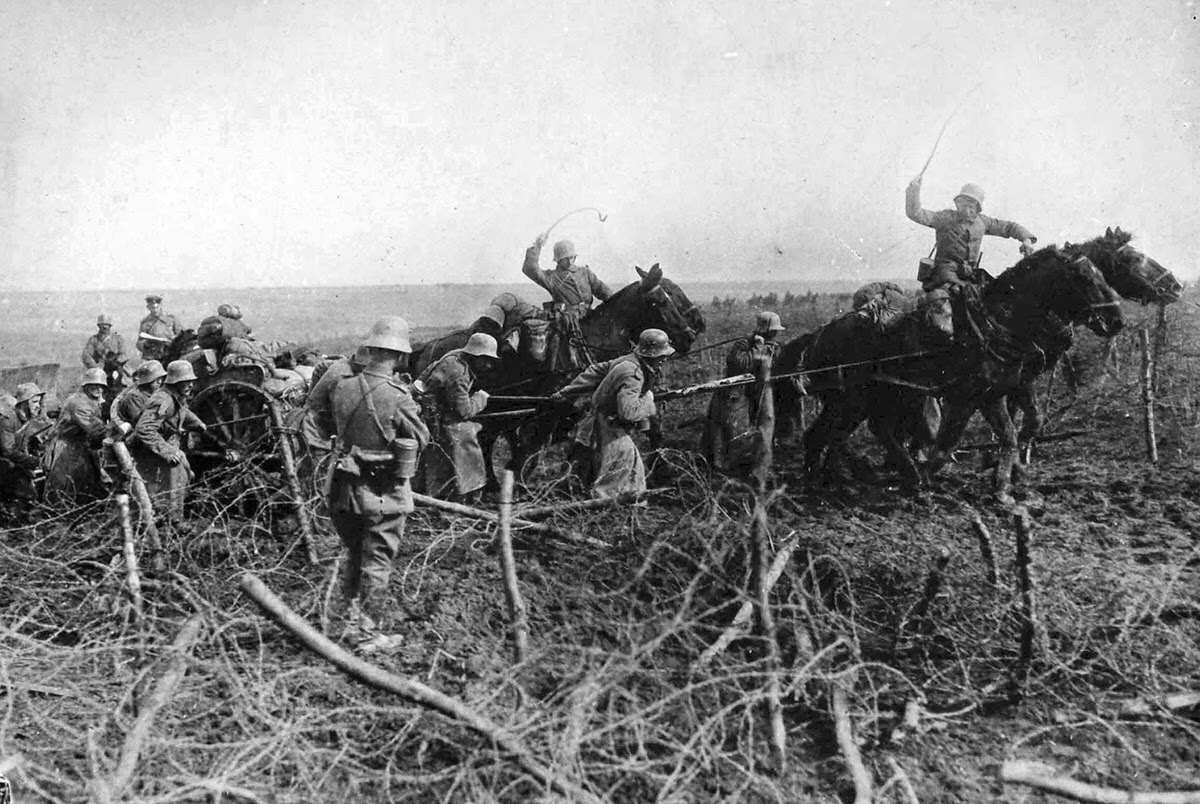
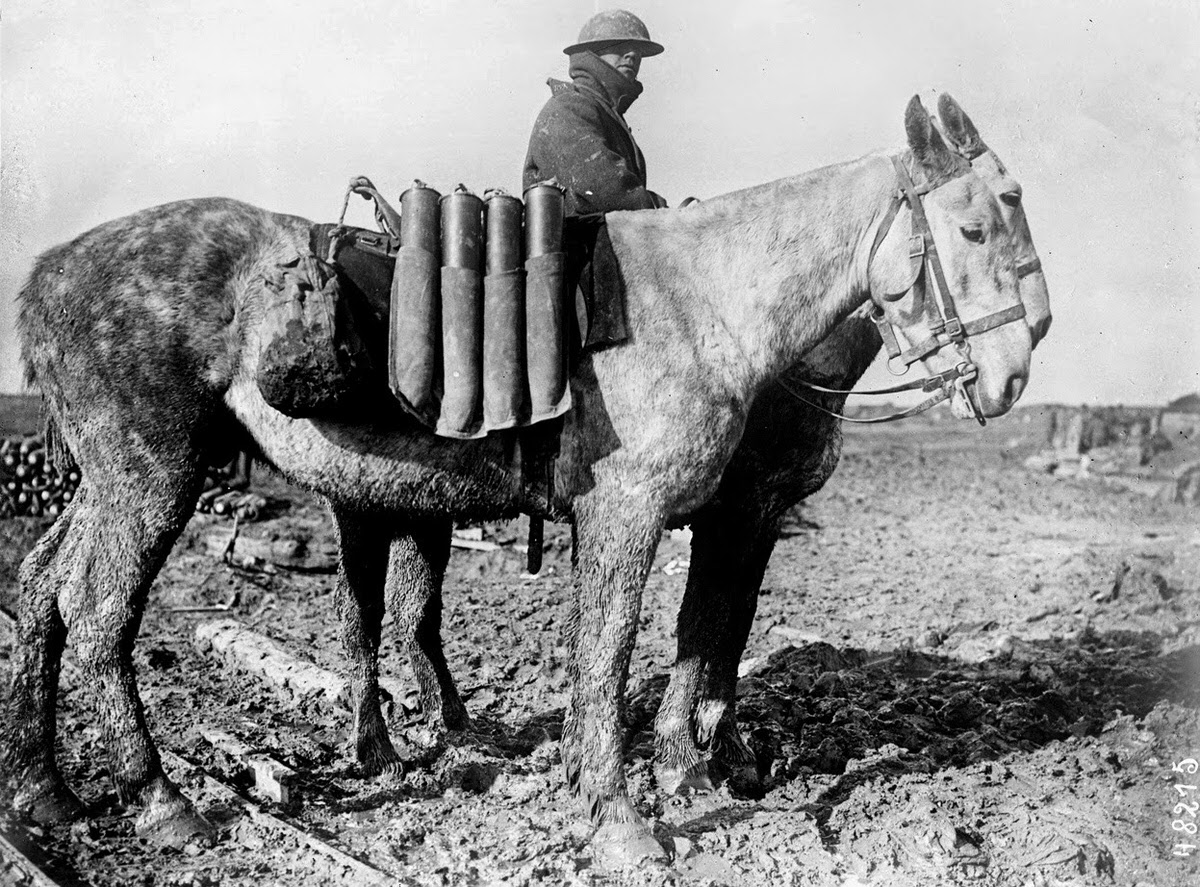
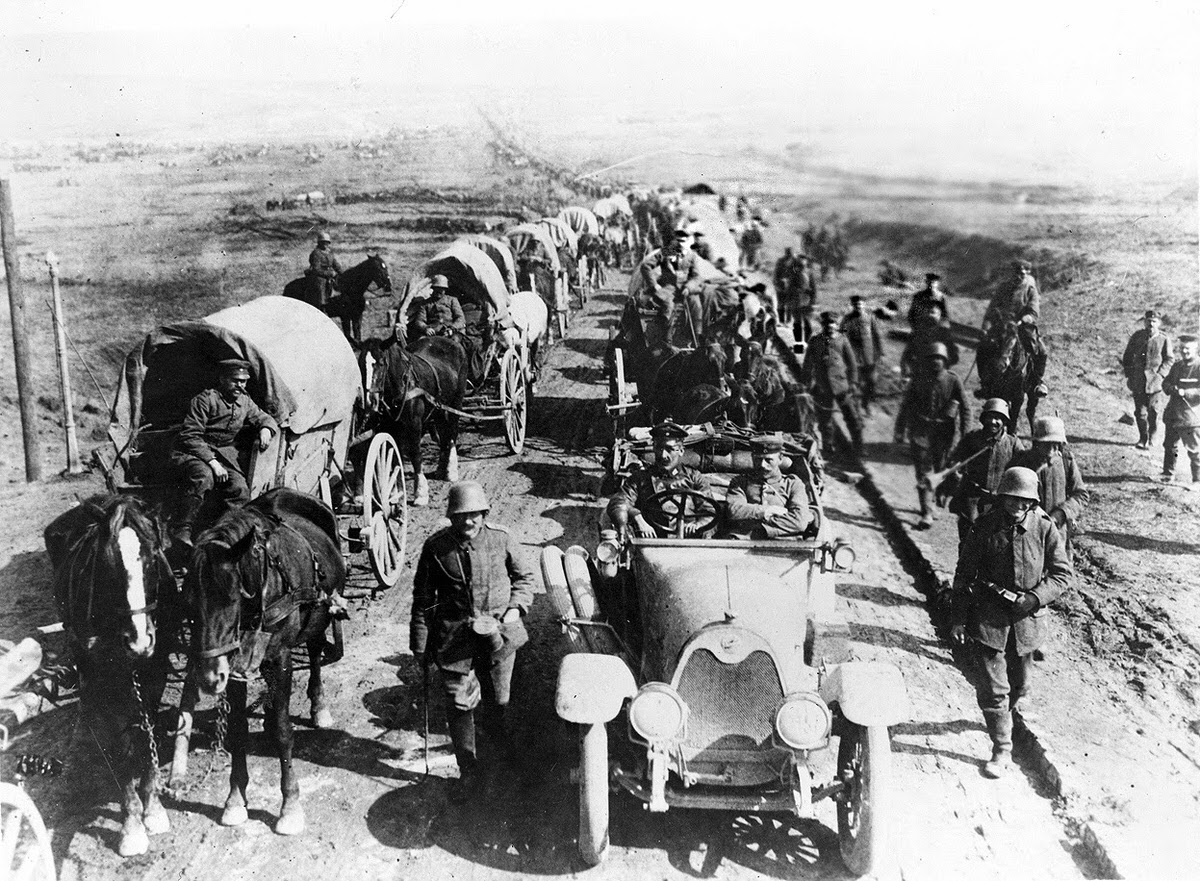
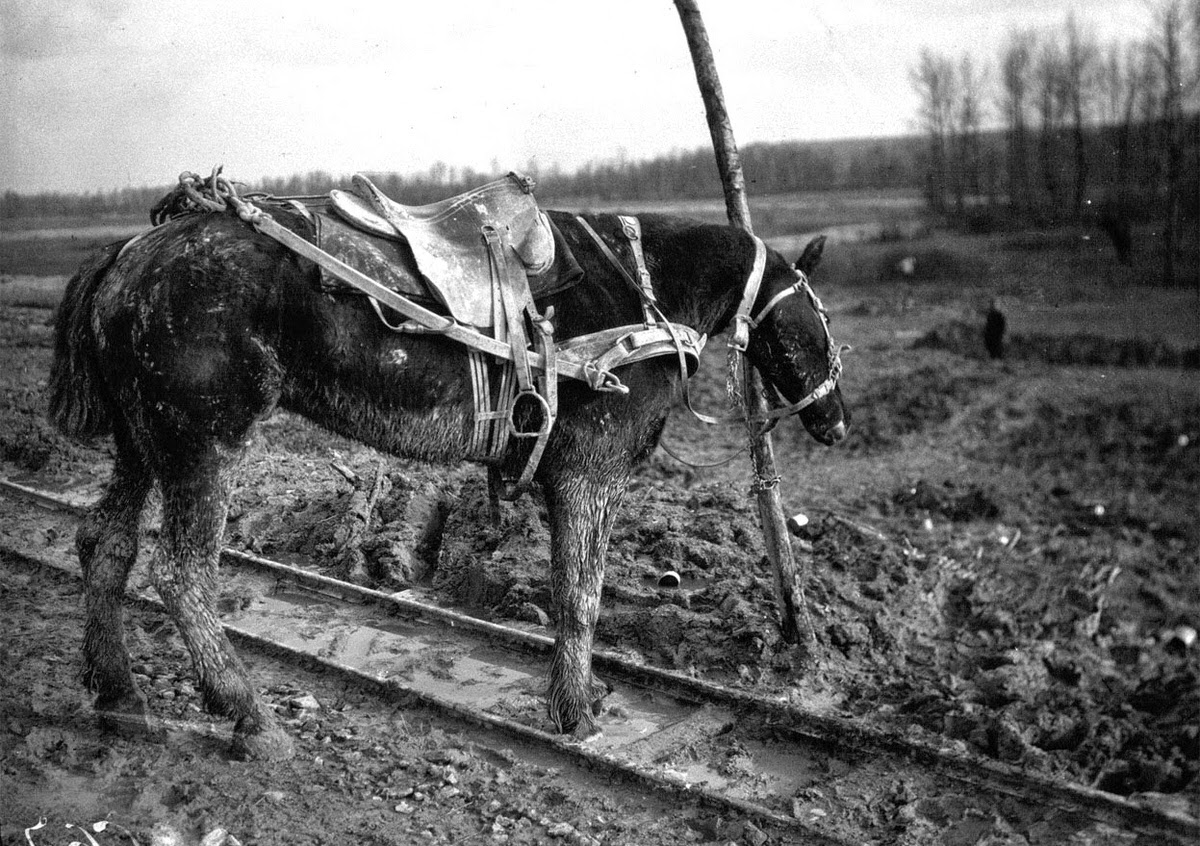
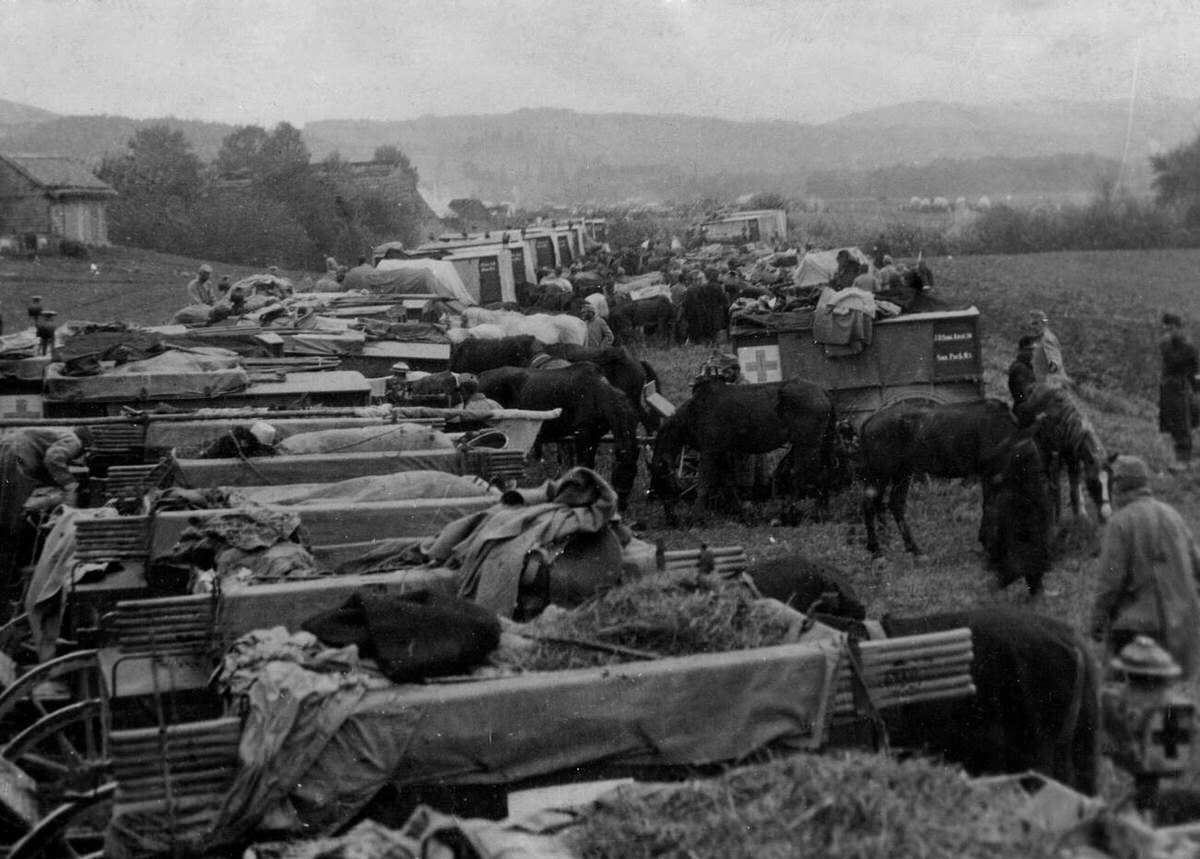
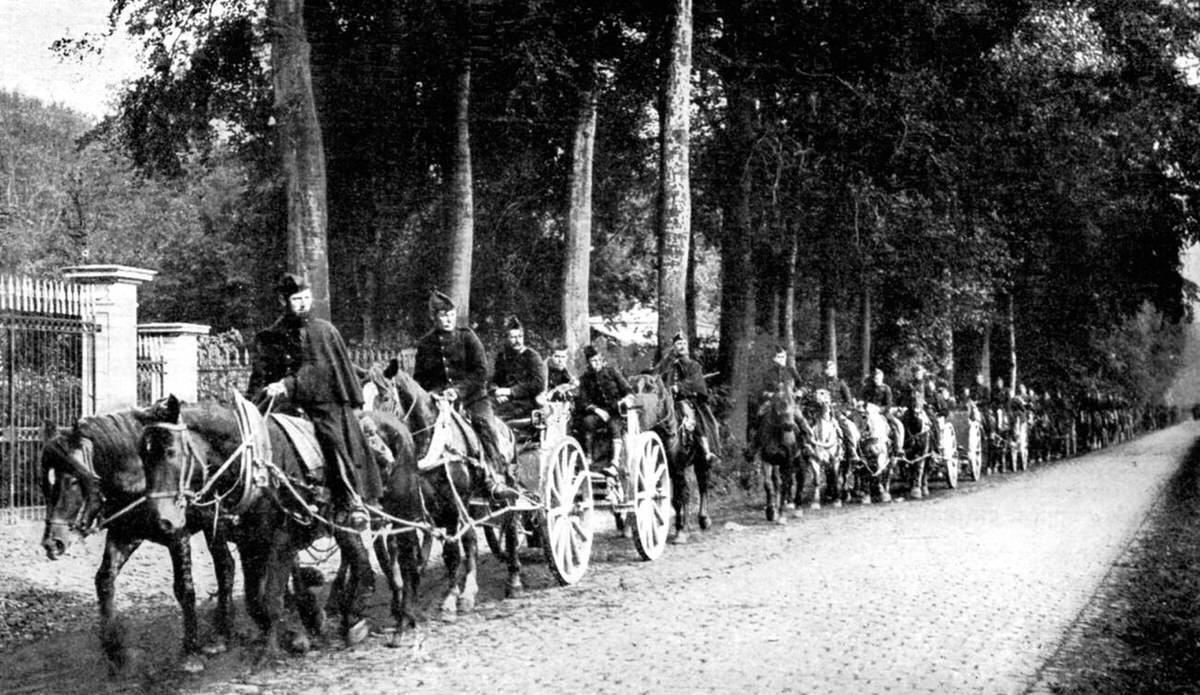
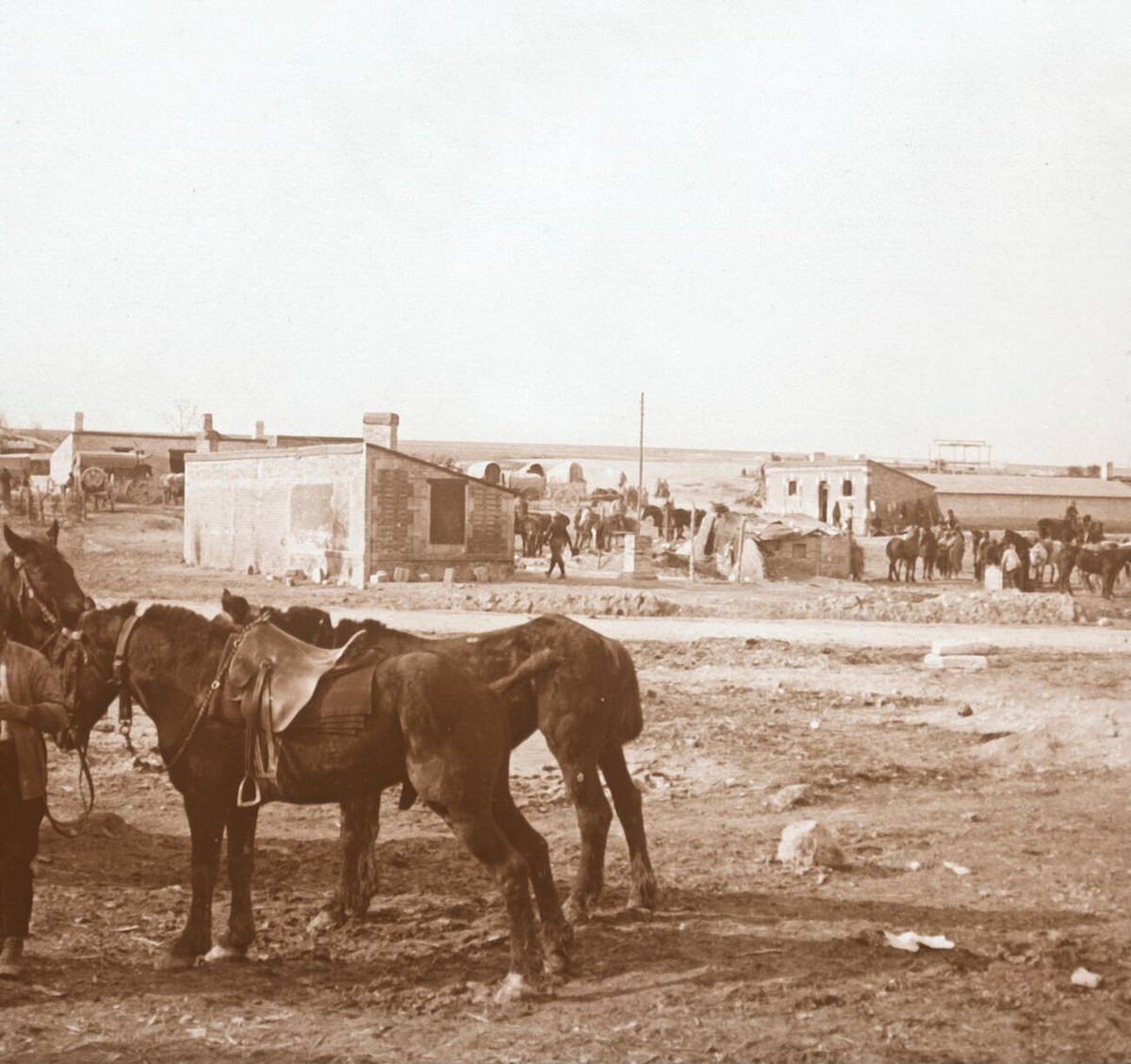
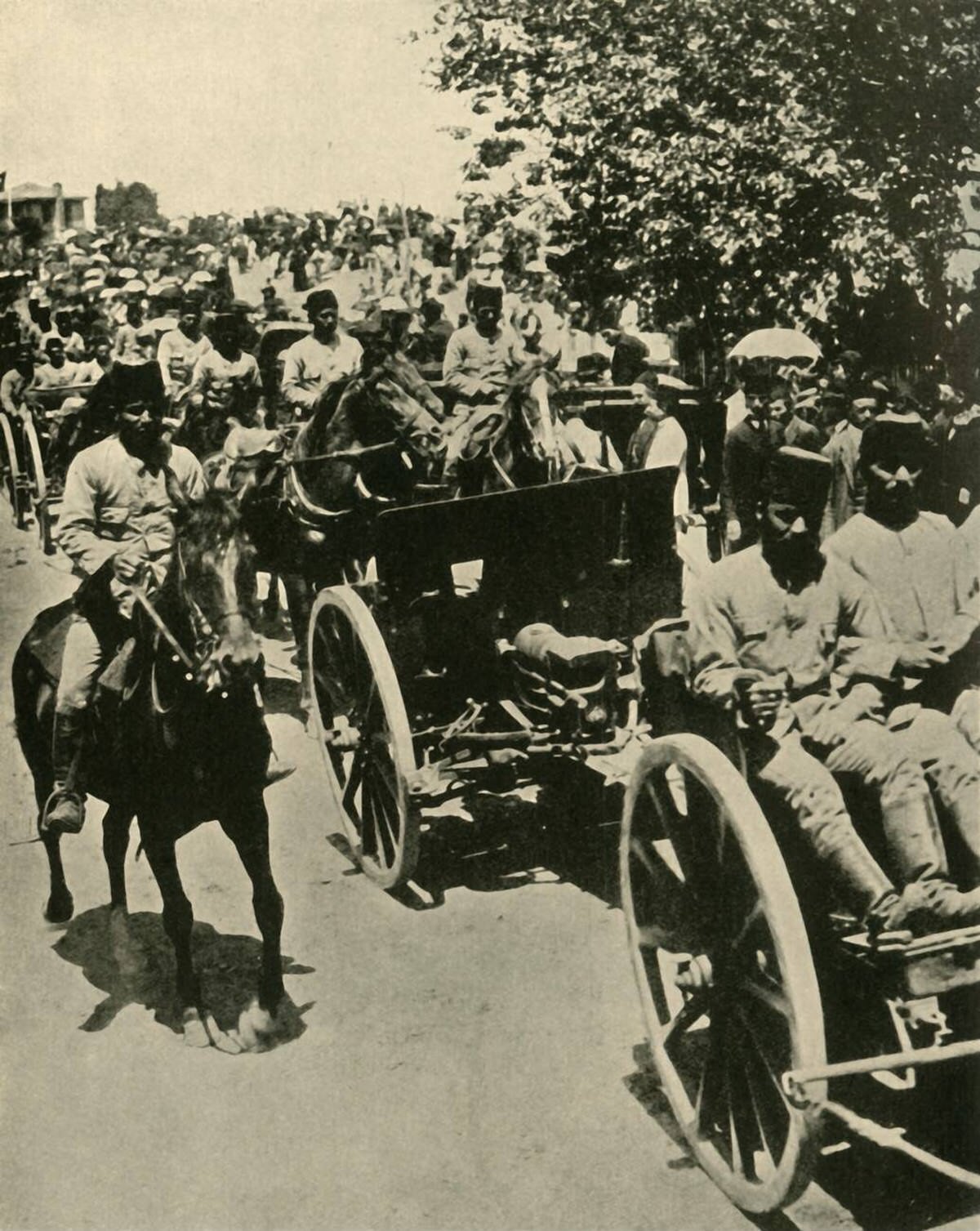
Horses hauled artillery pieces into position through deep mud that stalled motorized trucks. They pulled wagons loaded with food, ammunition, and water to the front-line trenches. Where roads ended and mountain paths began, mules took over. Sturdier and more patient than horses, mules carried heavy loads on their backs through terrain that no wagon could cross.
Horse-drawn artillery advancing through captured British positions west of St. Quentin, 1918Shells carried on horseback on the Western Front, 1916
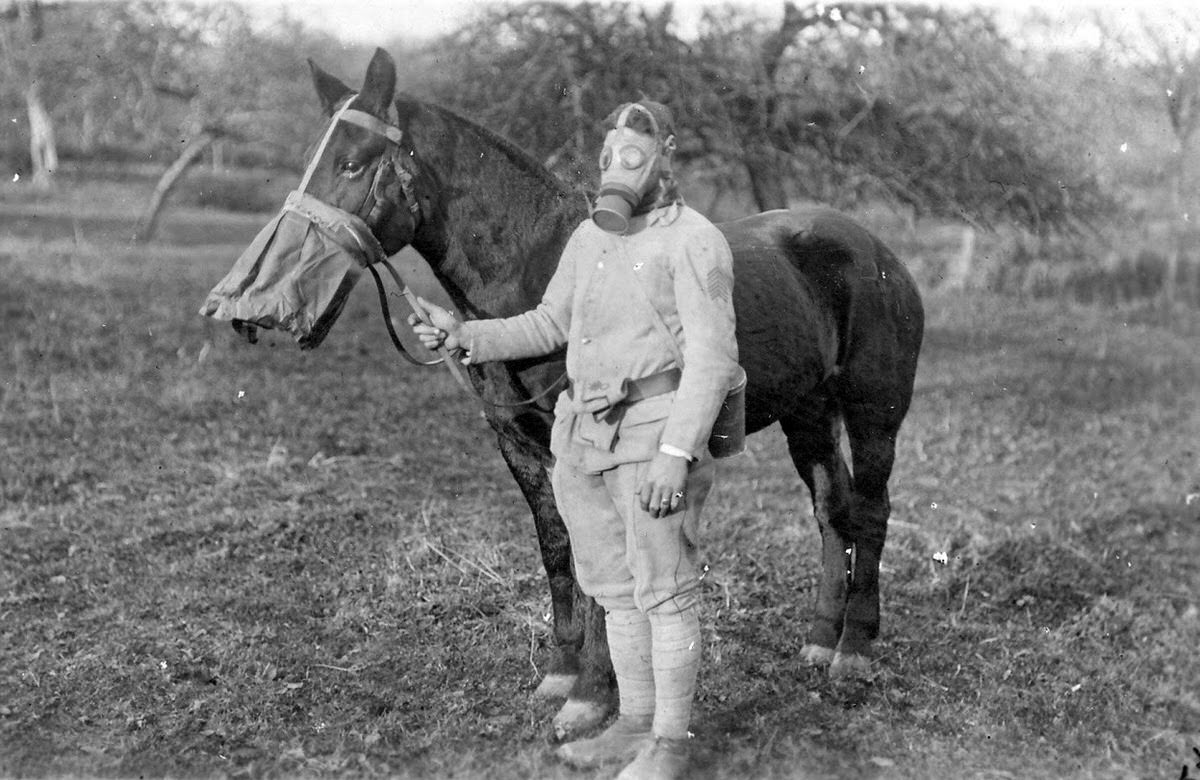
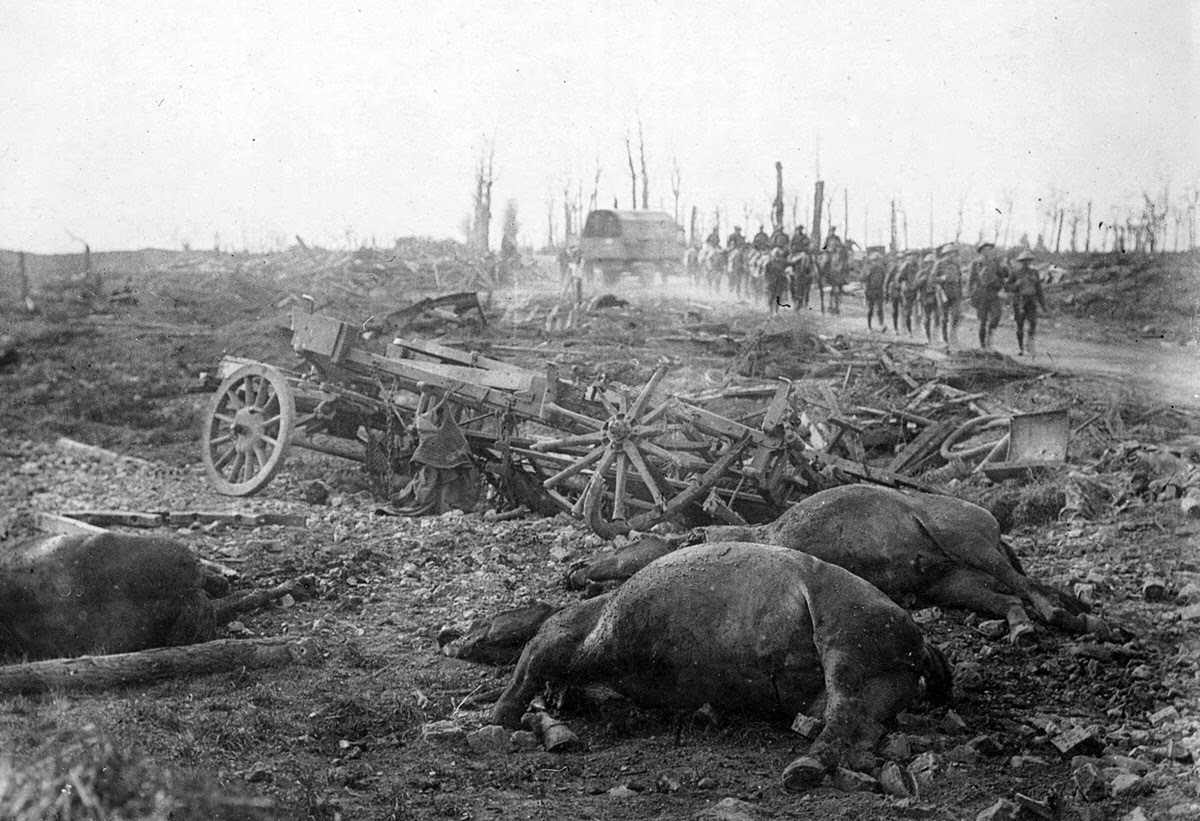
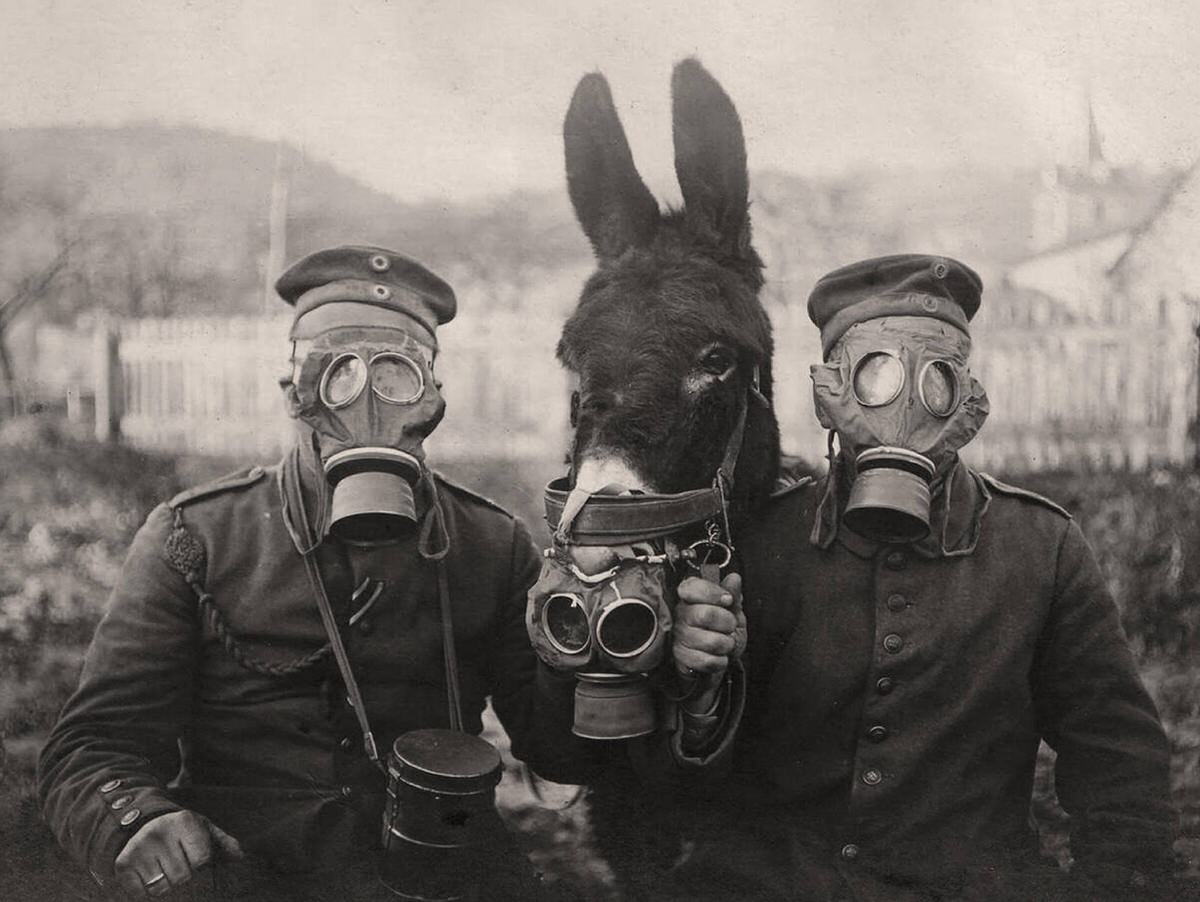
The cost was enormous. Approximately eight million horses died during the four years of fighting — from exhaustion, disease, and enemy fire. Engineers designed specialized gas masks that fitted over a horse’s muzzle to protect them from chemical attacks. Even with these measures, the losses were staggering.
Soldier and his horse wearing gas masks, 1918Dead horses and a broken cart on Menin Road in the Ypres sector, 1917
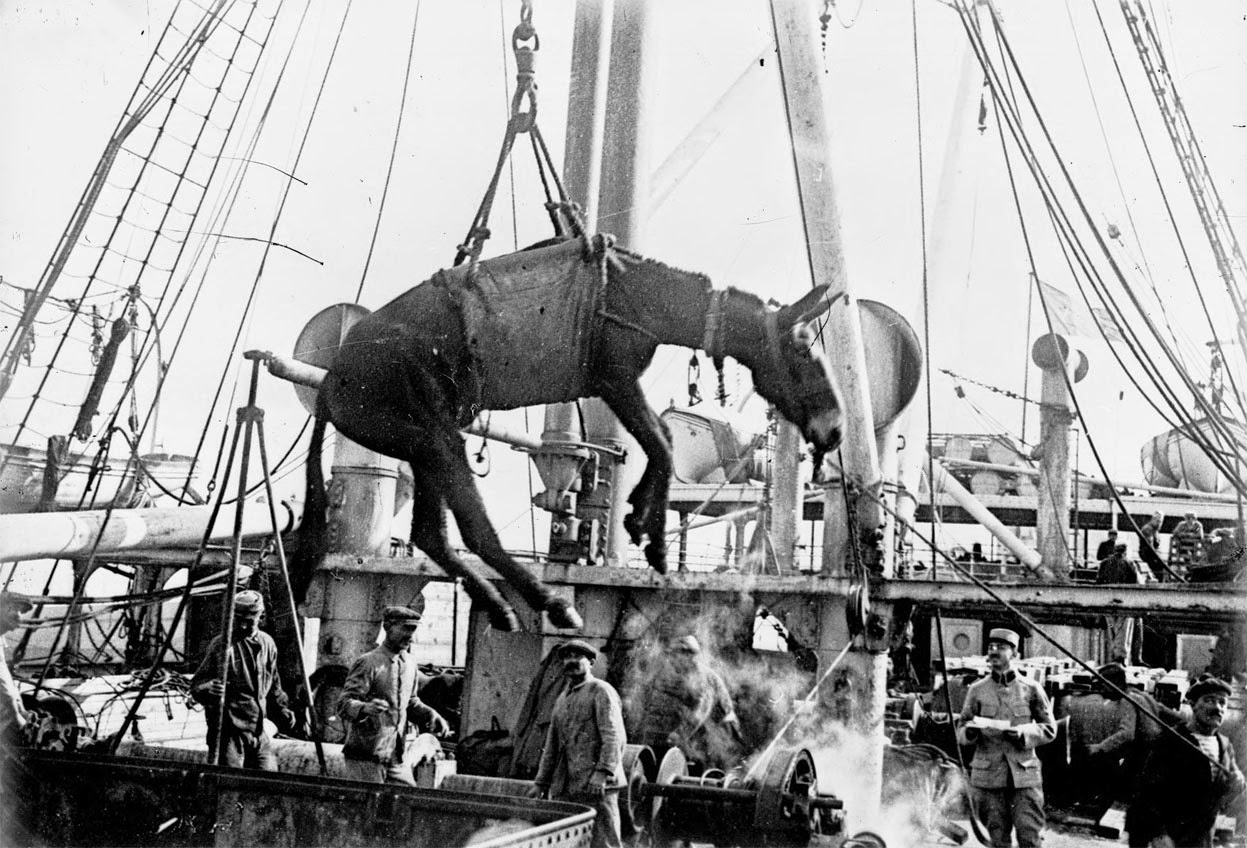
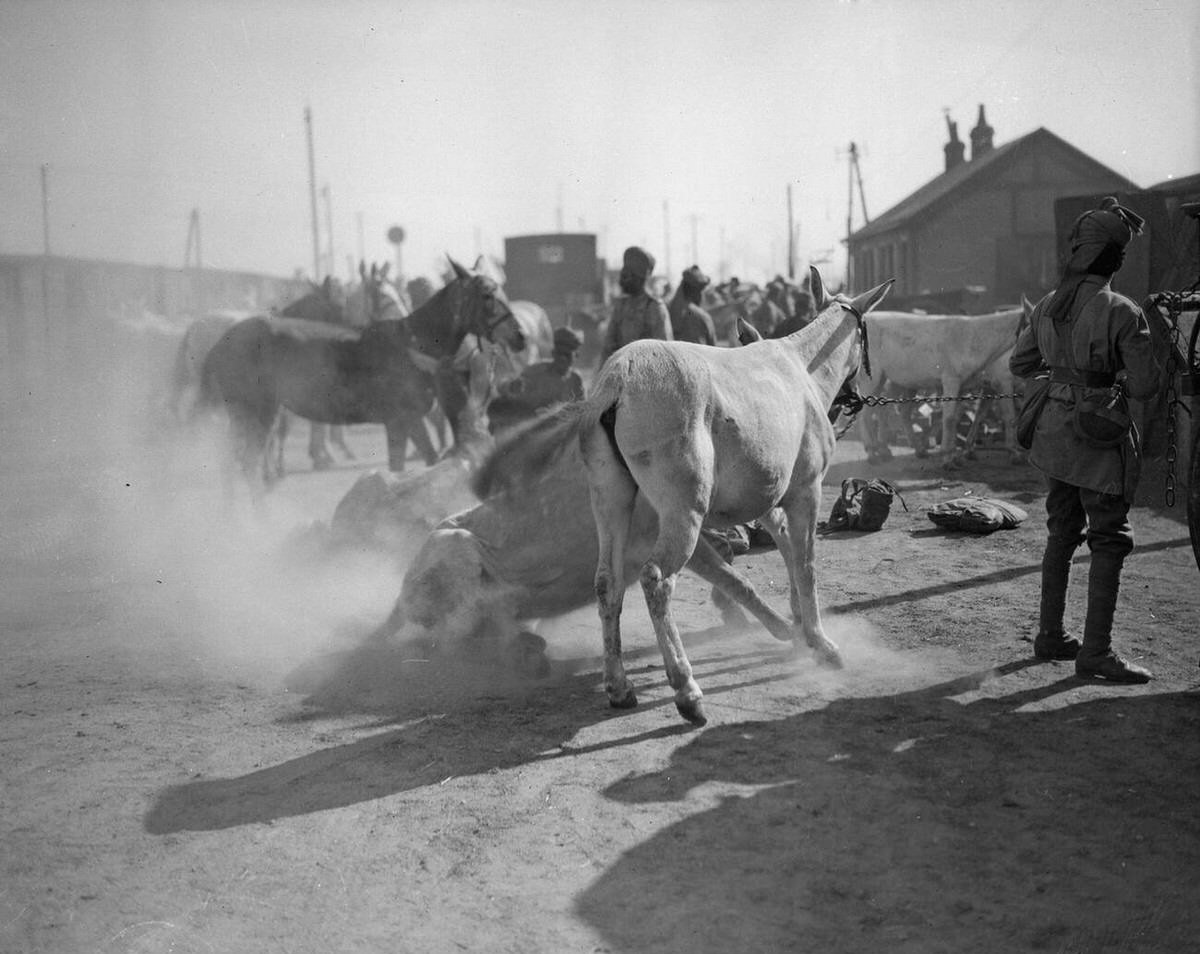
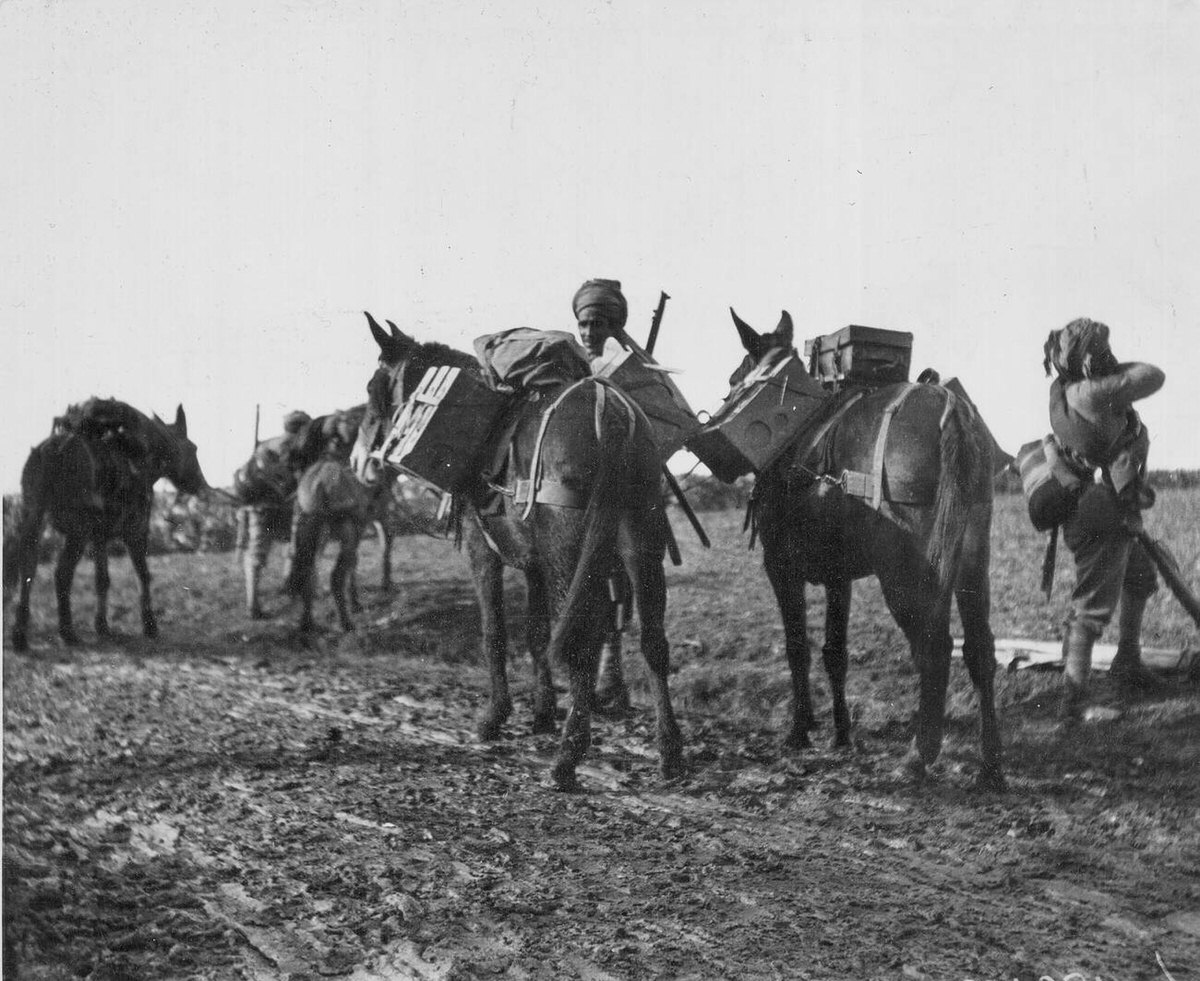
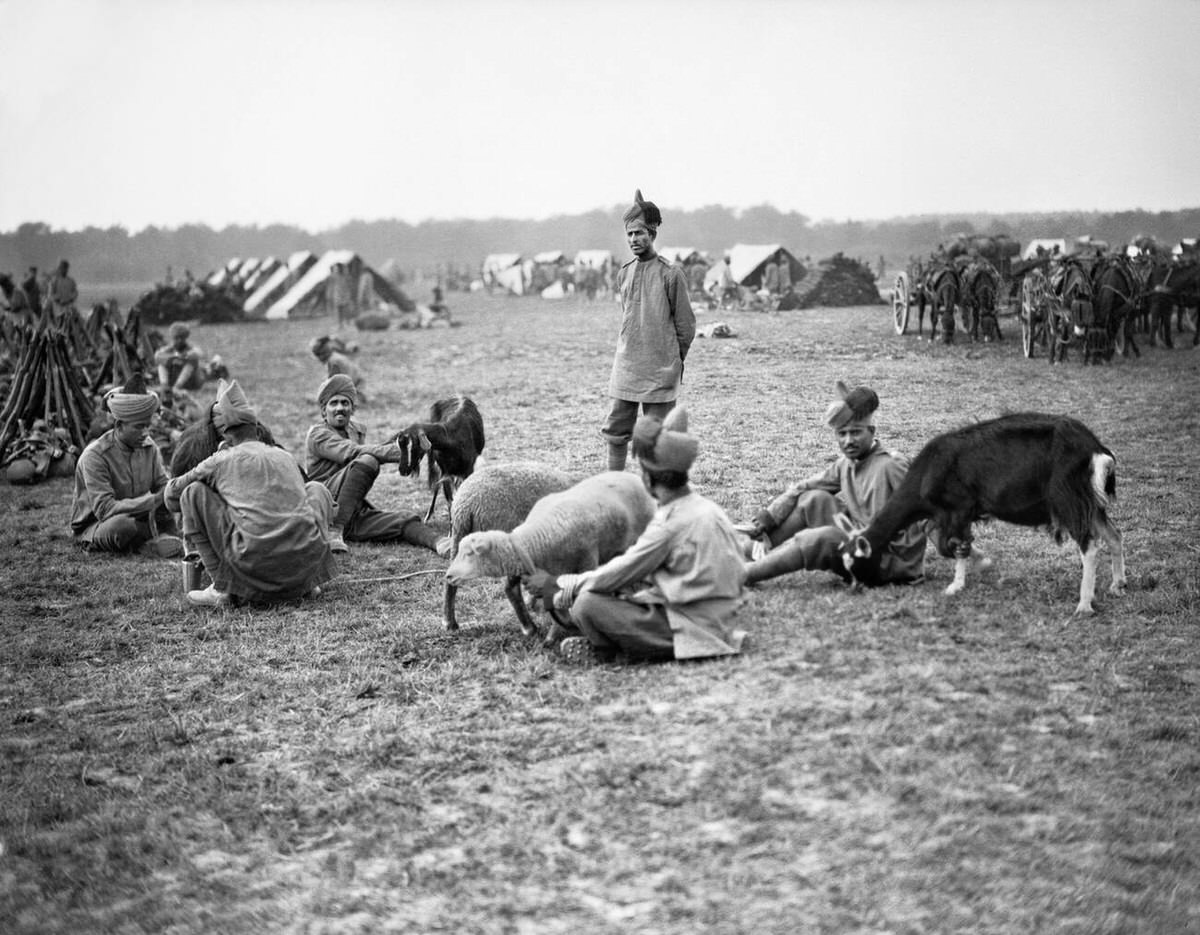
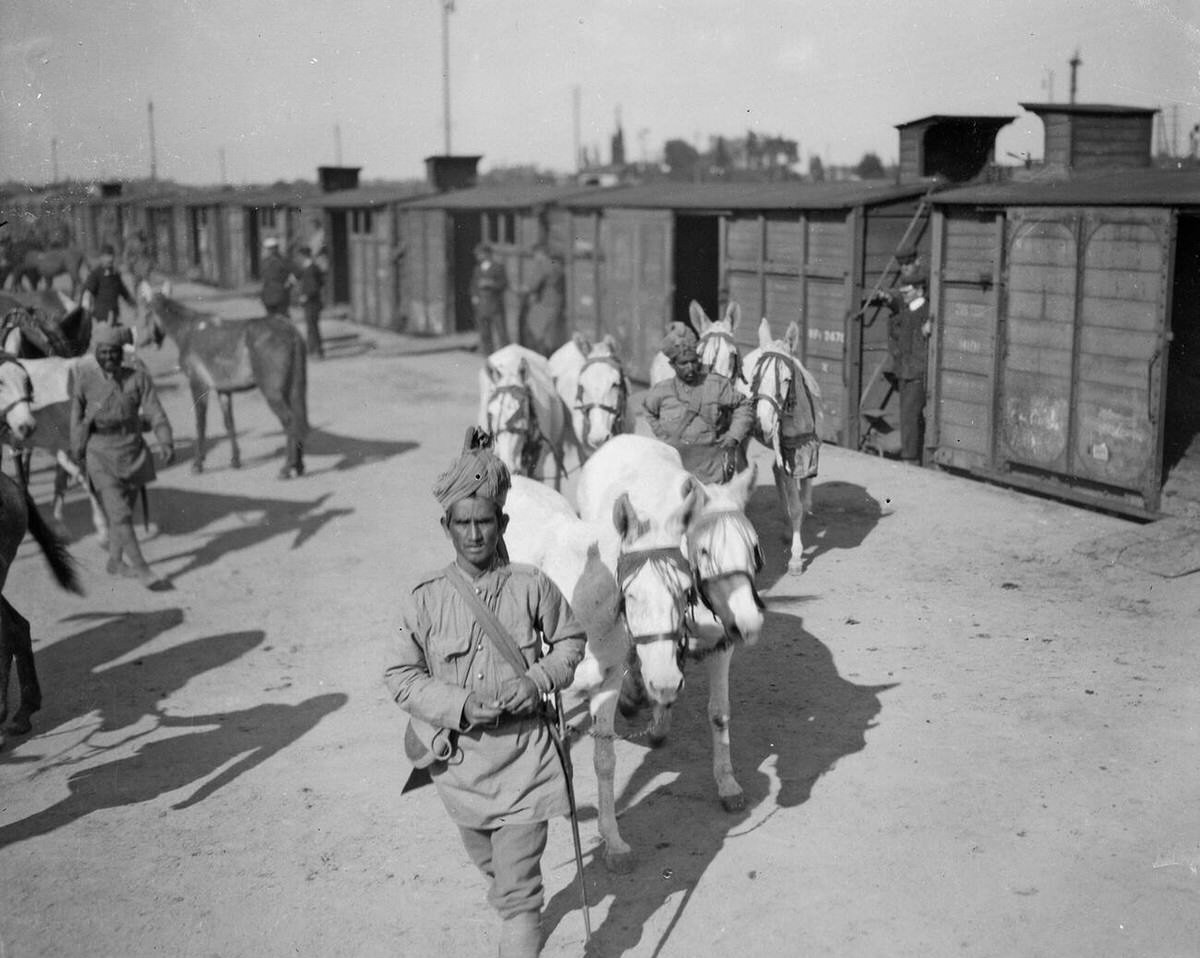
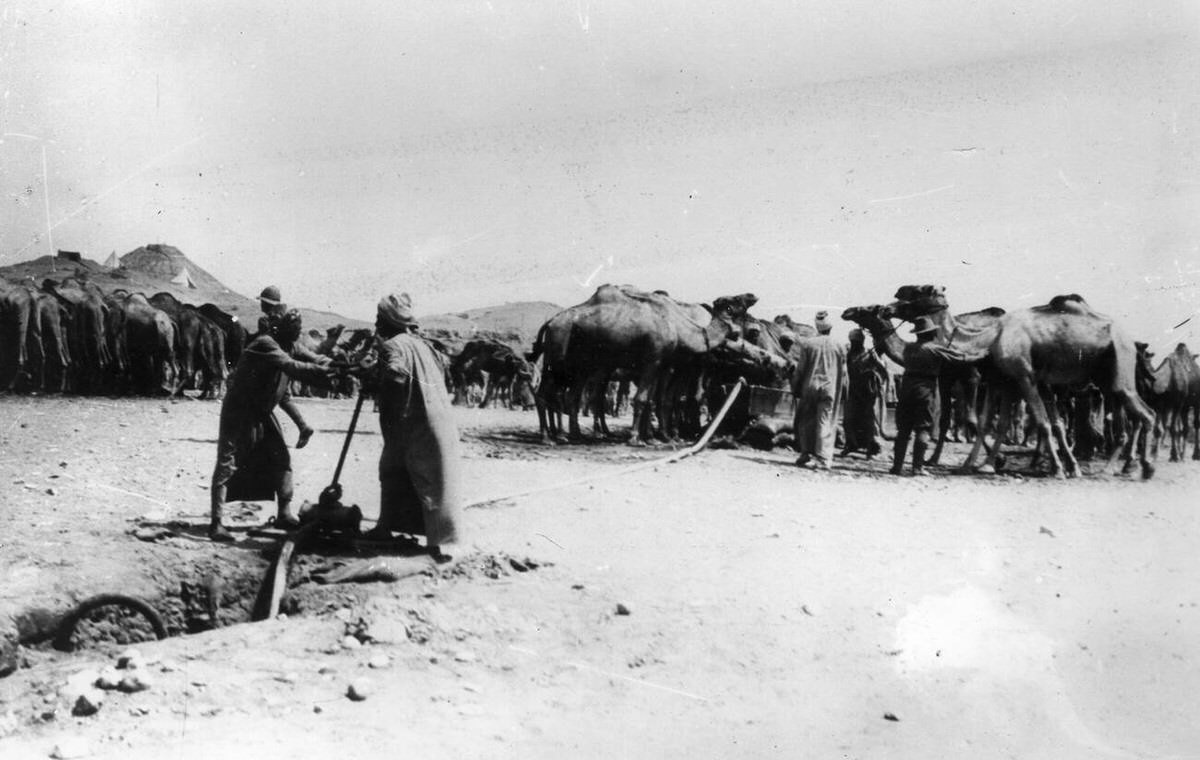
Mules were shipped to every theater of the war. Armies from India, Egypt, and Australia relied on them just as heavily as the Europeans did. They appeared at ports, on mountain fronts, and deep in desert campaigns where horses could not survive.
Unloading a mule in Alexandria, Egypt, 1915Mules of the 3rd Lahore Indian Division in Orleans, France, 1914
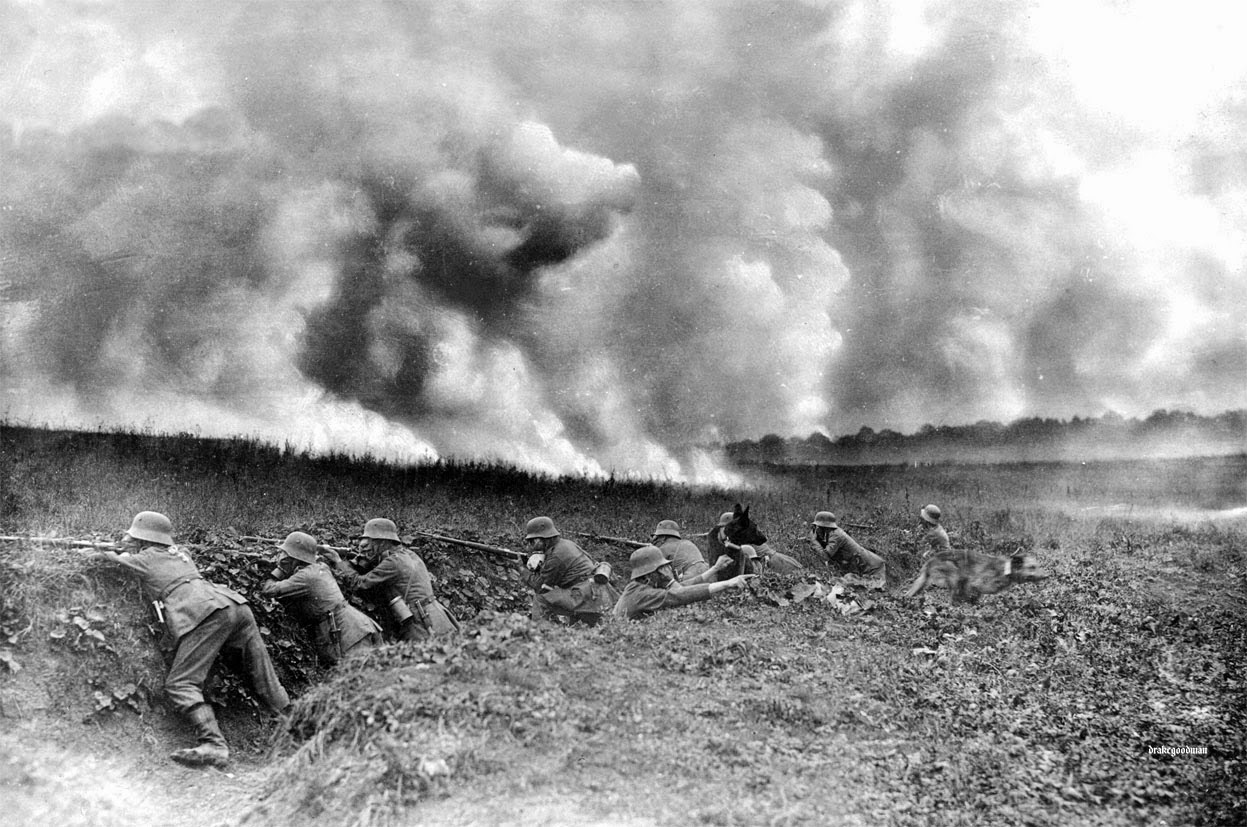
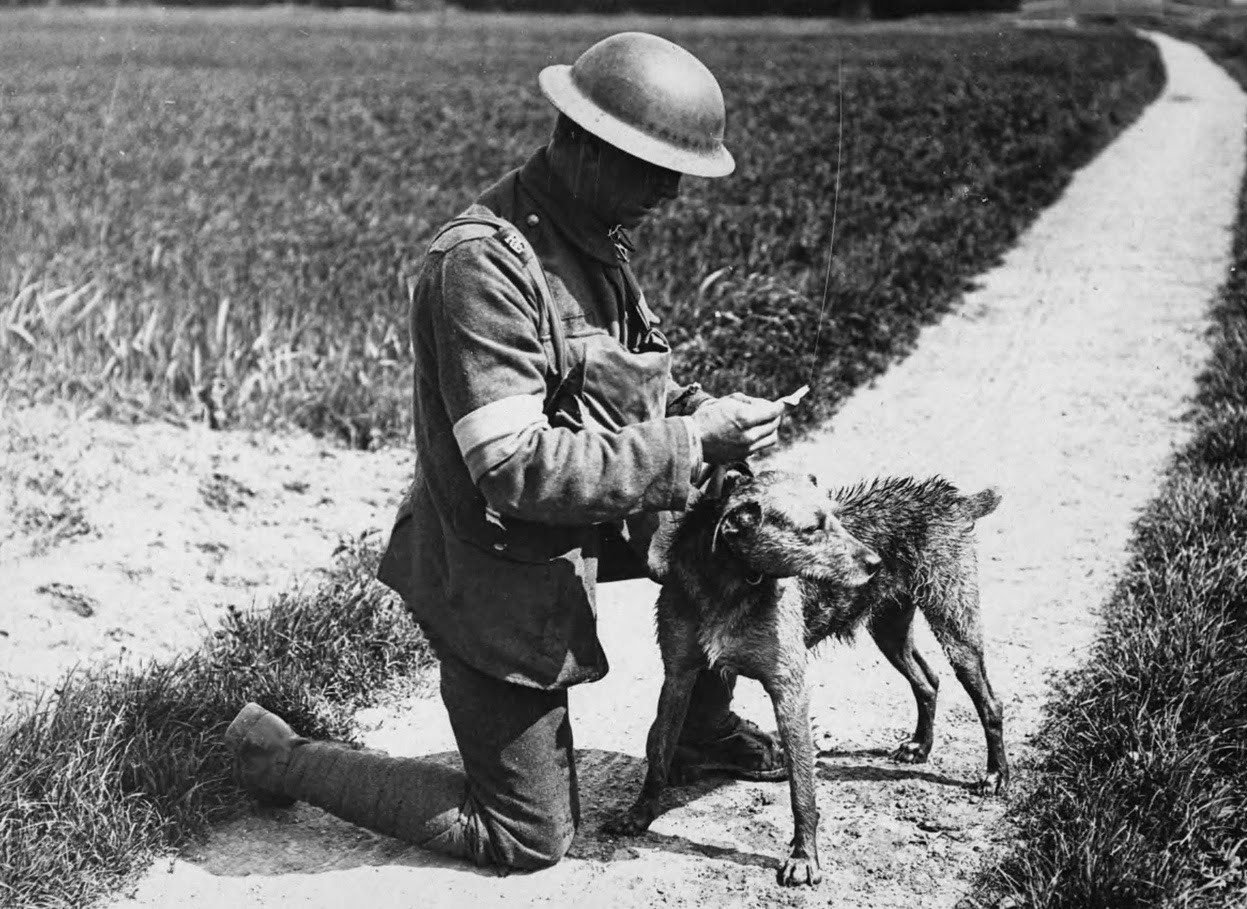
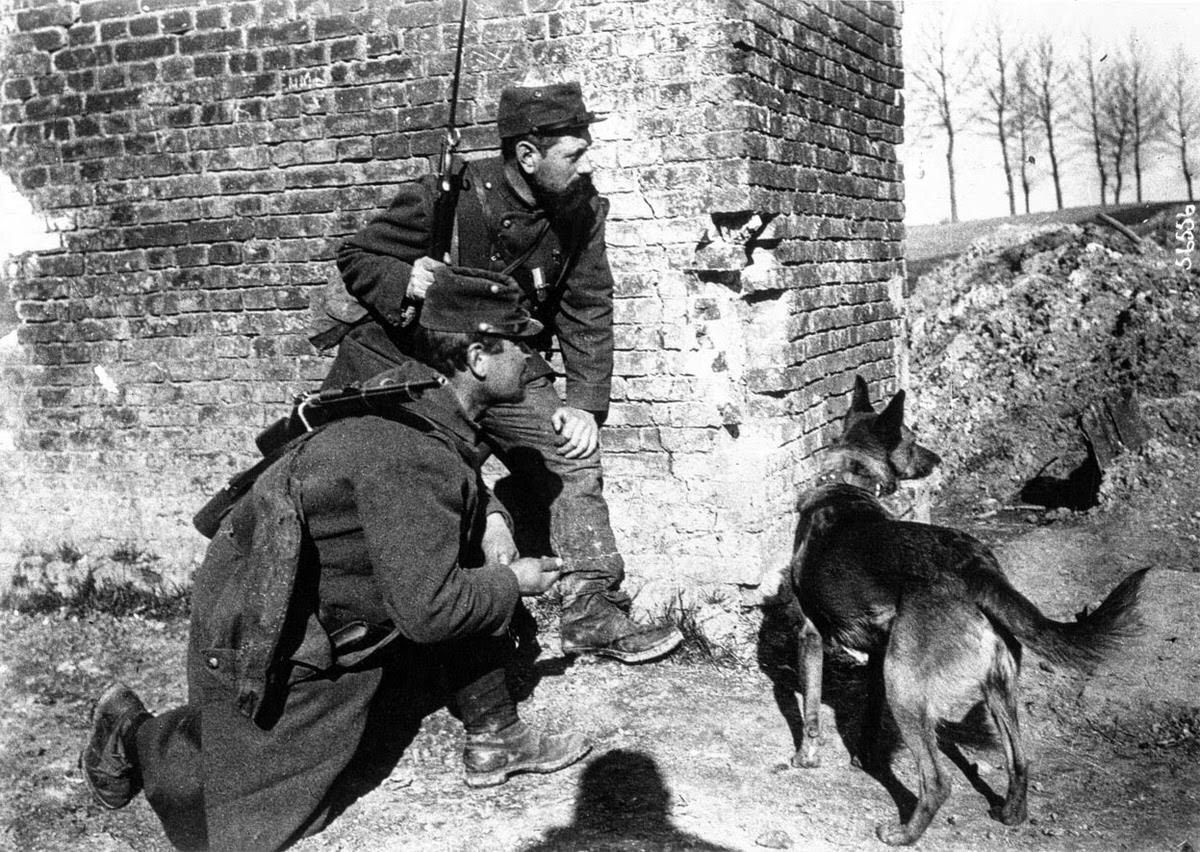
Dogs served in several distinct roles, each saving lives in a different way. Messenger dogs were trained to navigate the chaos of the battlefield. When artillery fire cut telephone wires, these dogs ran through trenches and shell craters to deliver maps and orders. They were faster than human runners and presented a far smaller target to enemy snipers.
German messenger dog loosed by a handler during a gas attack near St. Quentin, 1918Dog-handler reading a message brought by a messenger dog in France, 1914
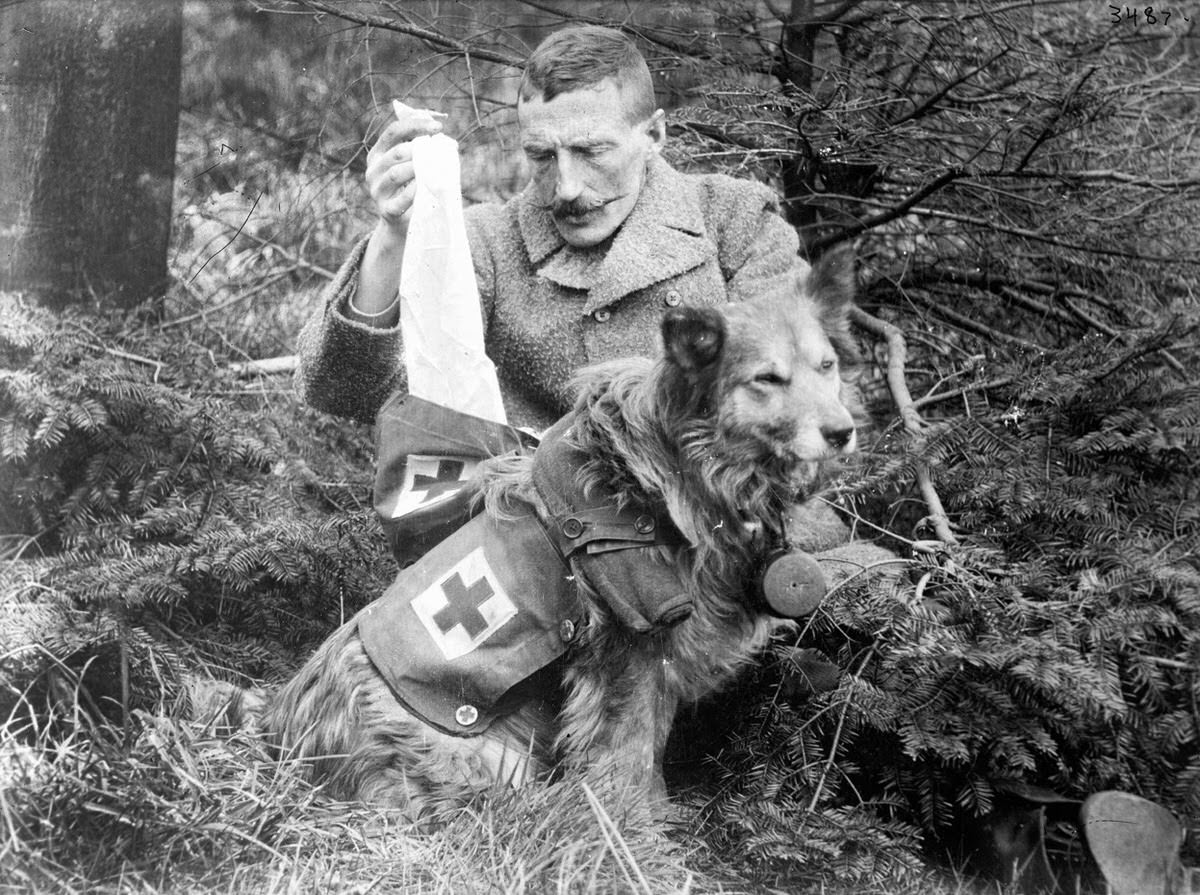
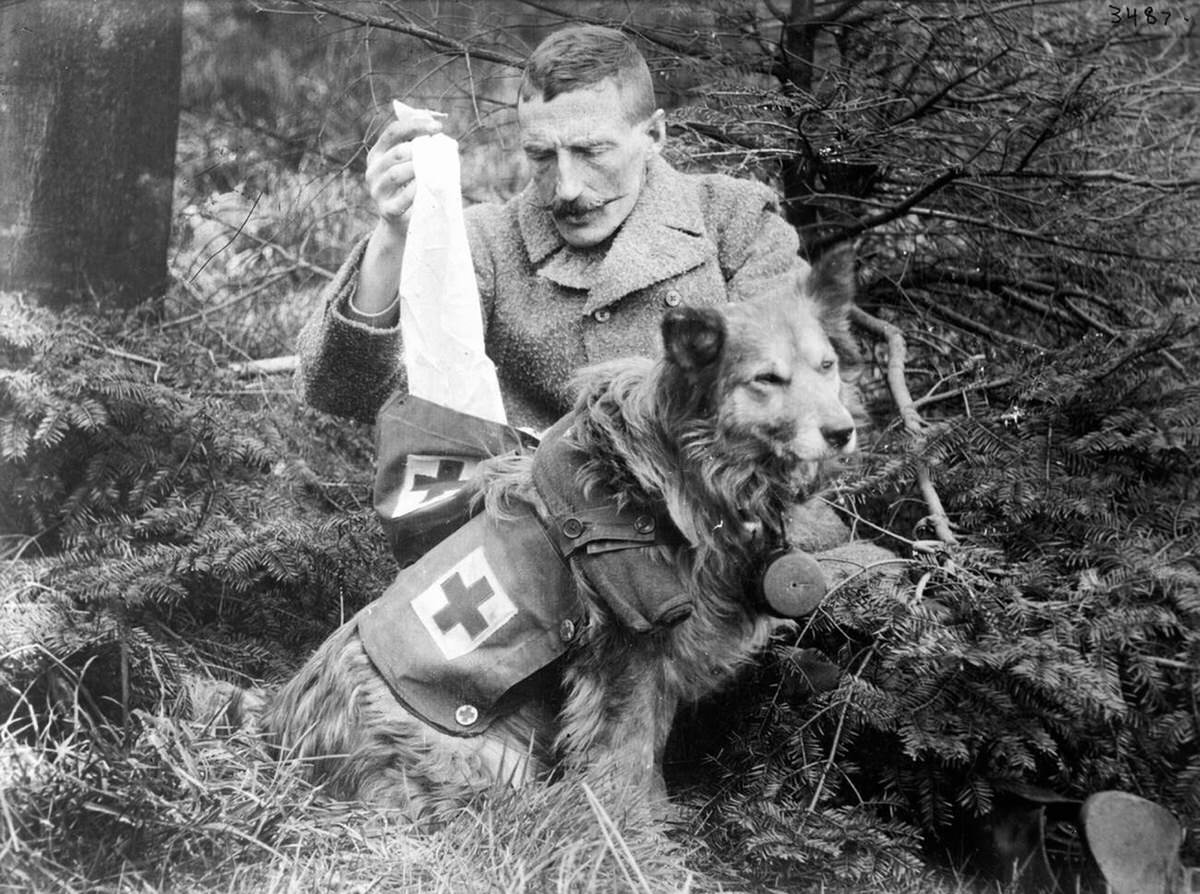
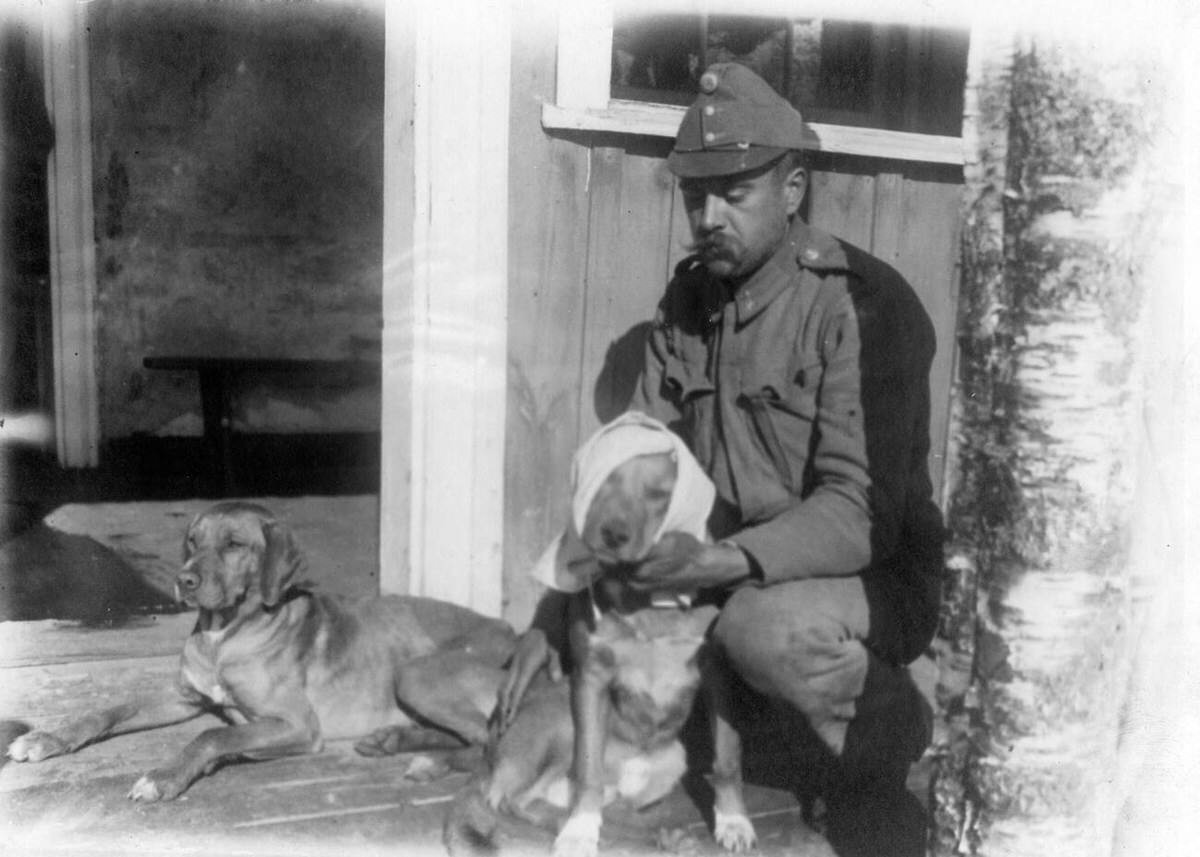
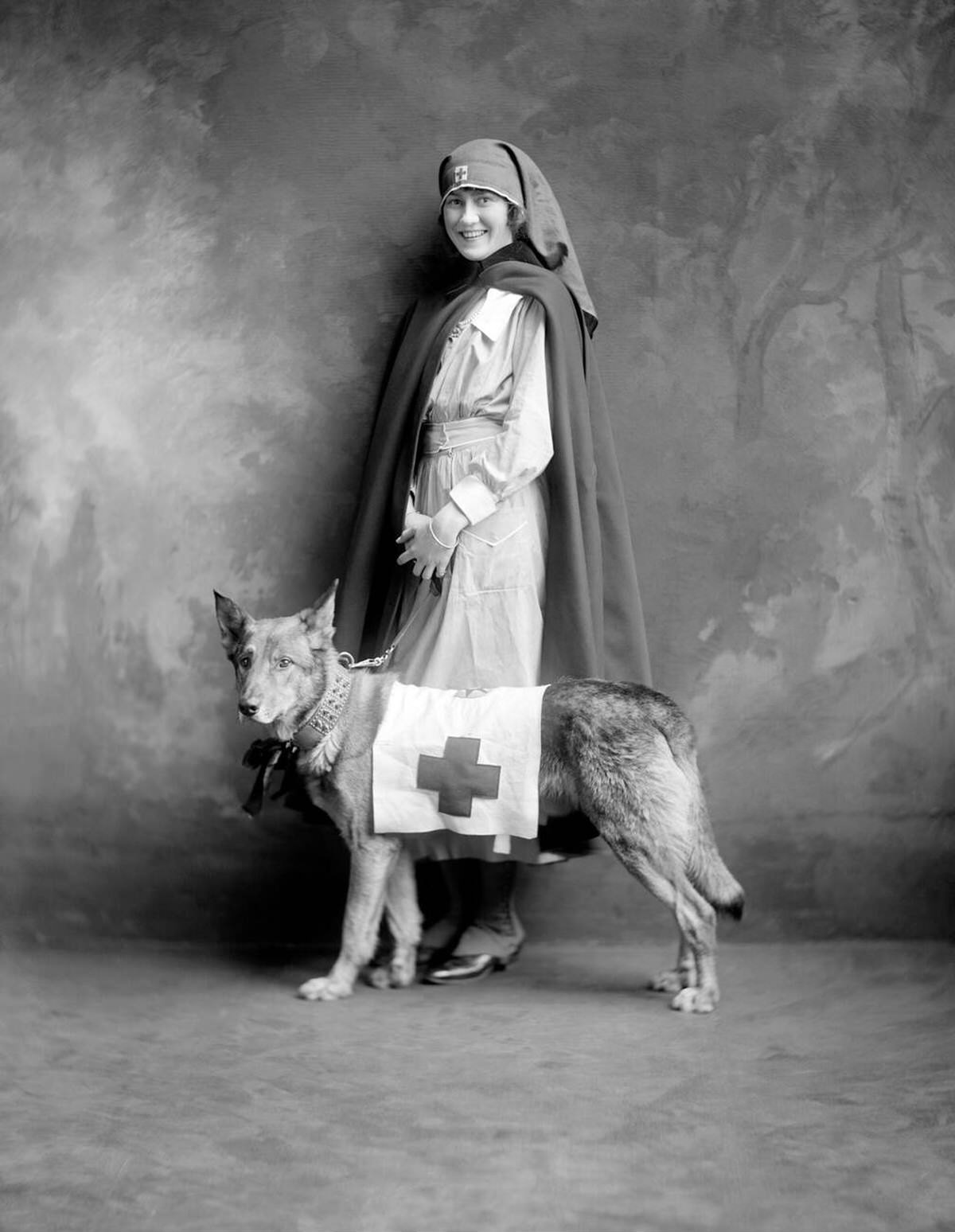
“Mercy dogs,” also called ambulance dogs, were trained to find wounded soldiers lying in No Man’s Land — the deadly open ground between opposing trenches. They worked at night or during lulls in the fighting, carrying small packs of medical supplies on their backs. A wounded soldier who could move would treat himself from the pack. If he was too badly hurt to move, the dog either stayed beside him or returned to the trenches carrying a piece of the man’s clothing to guide medics to his location.
Dog trained to search for wounded soldiers under fire, 1915Bandages retrieved from the kit of a British dog, 1915
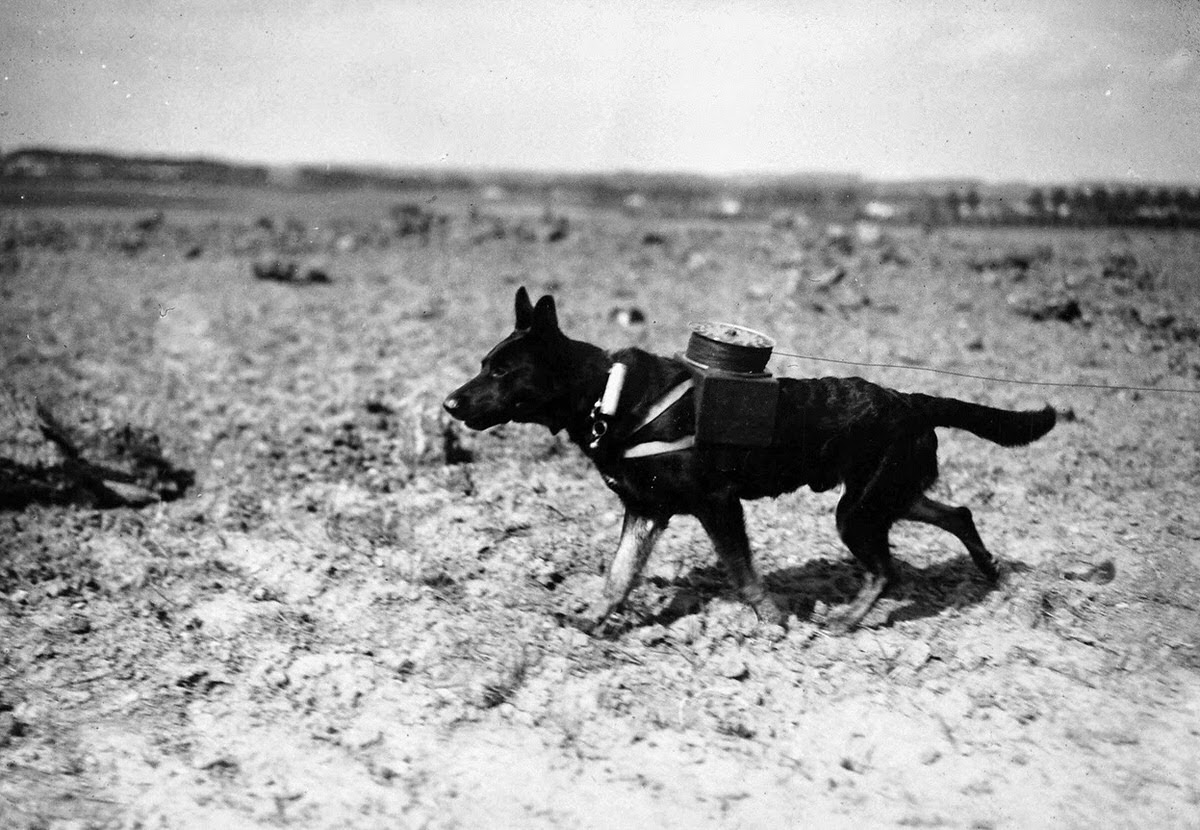
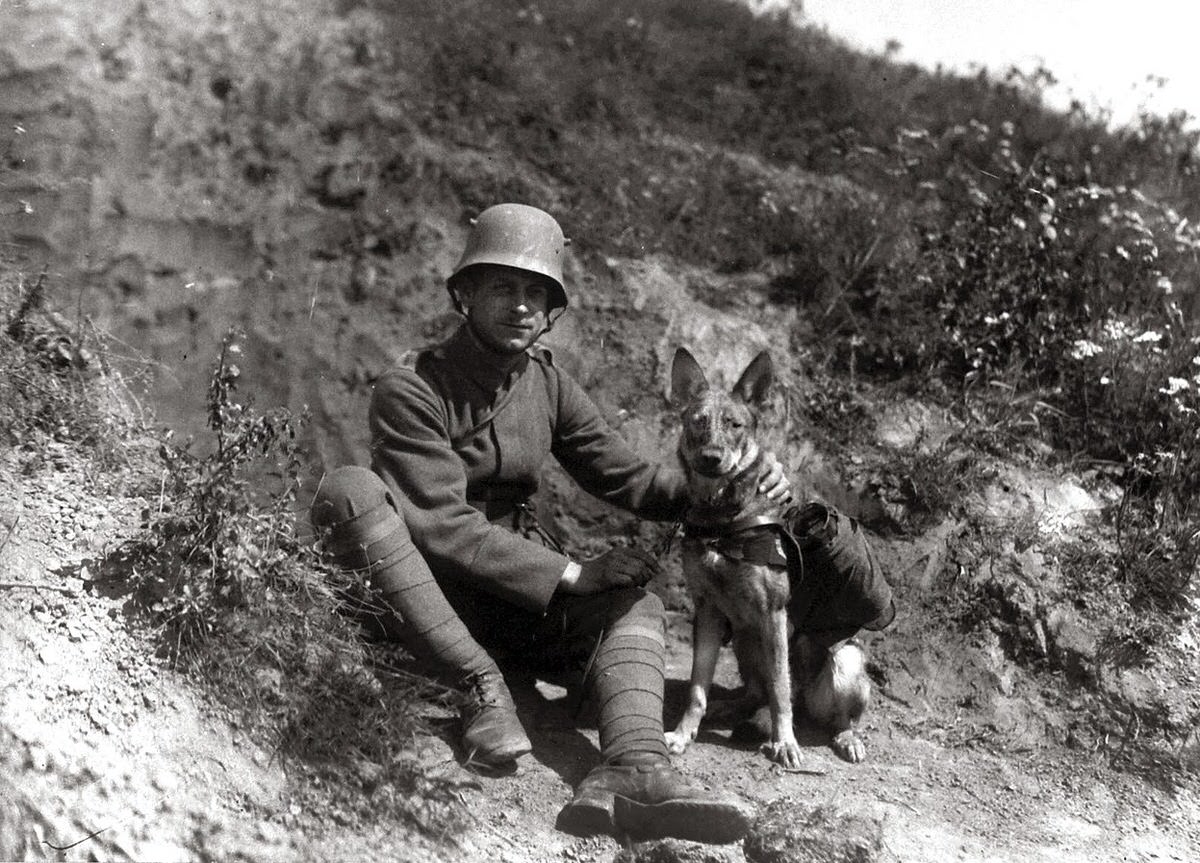
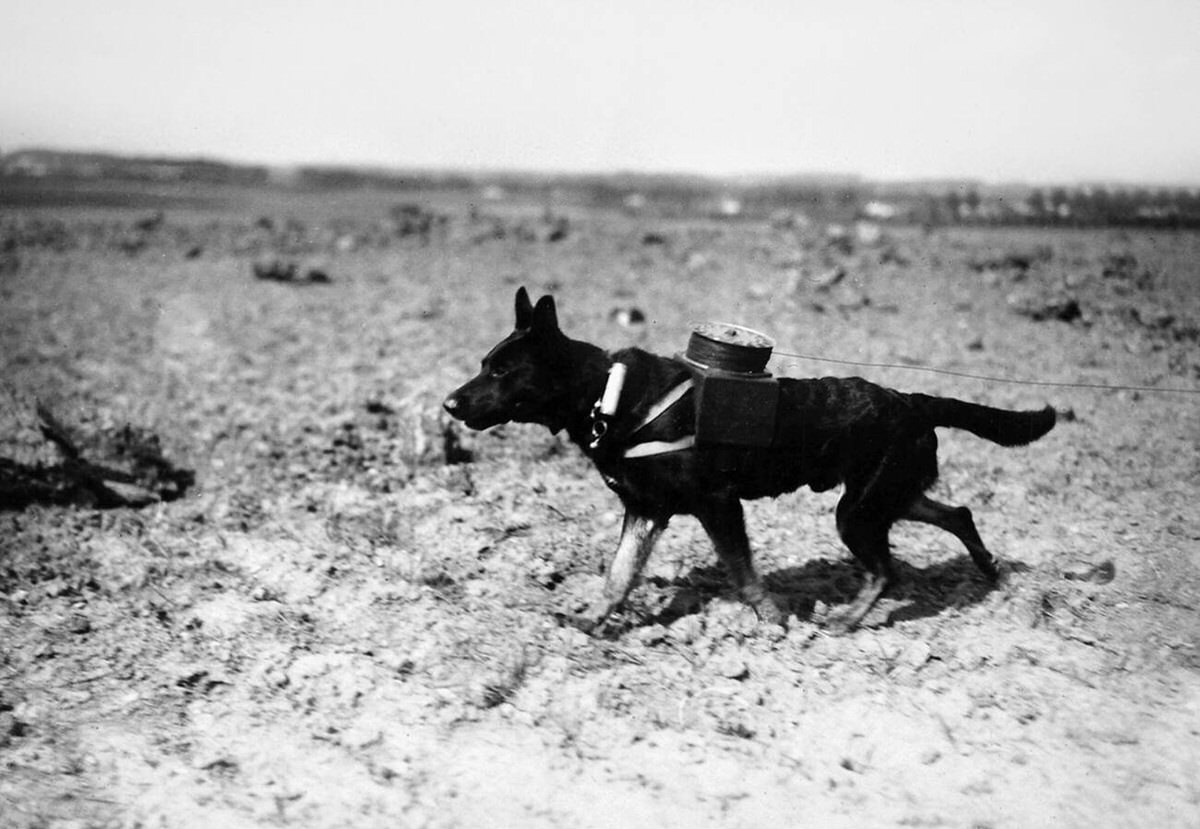
Sentry dogs worked alongside guards, using their superior hearing and sense of smell to detect enemy patrols long before any human could. Some dogs were even fitted with harnesses to lay electric communication wire across the battlefield, a job that would otherwise expose a soldier to direct fire.
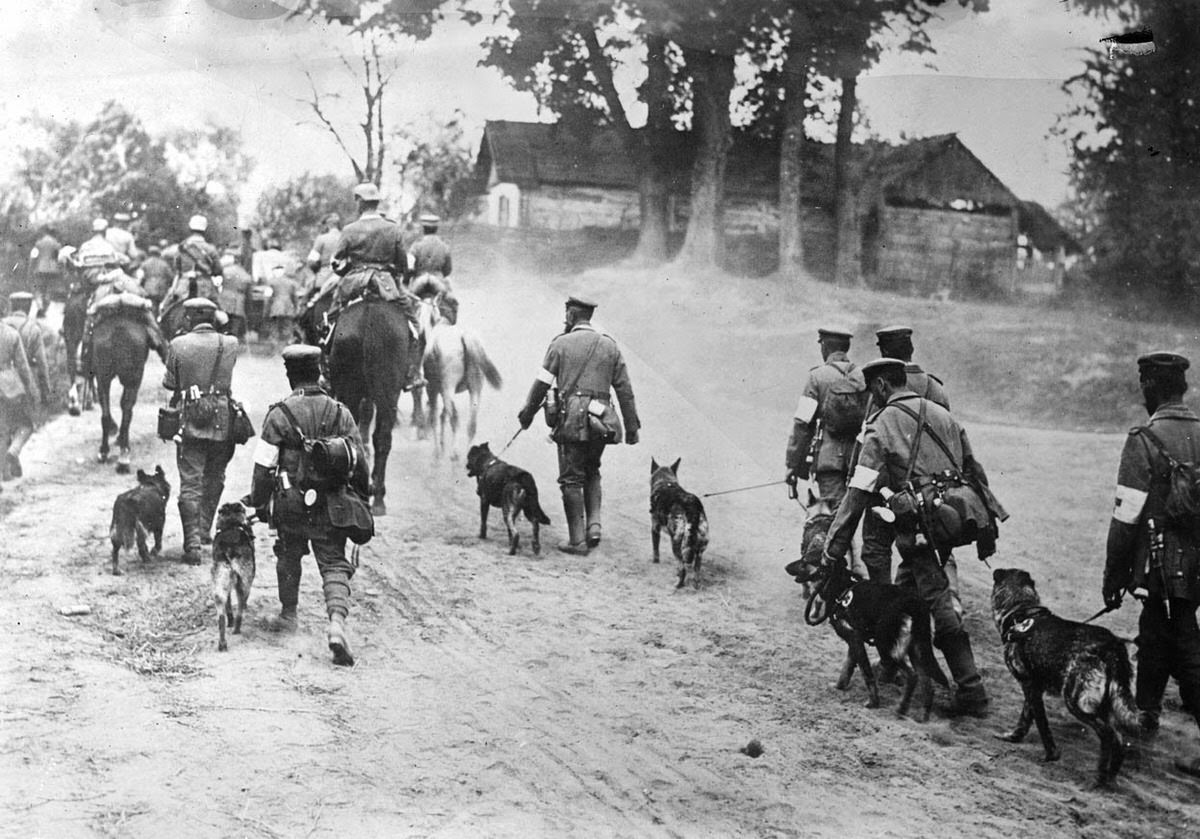
Messenger dog with a harness for laying electric line, 1917German Red Cross dogs heading to the front, 1914
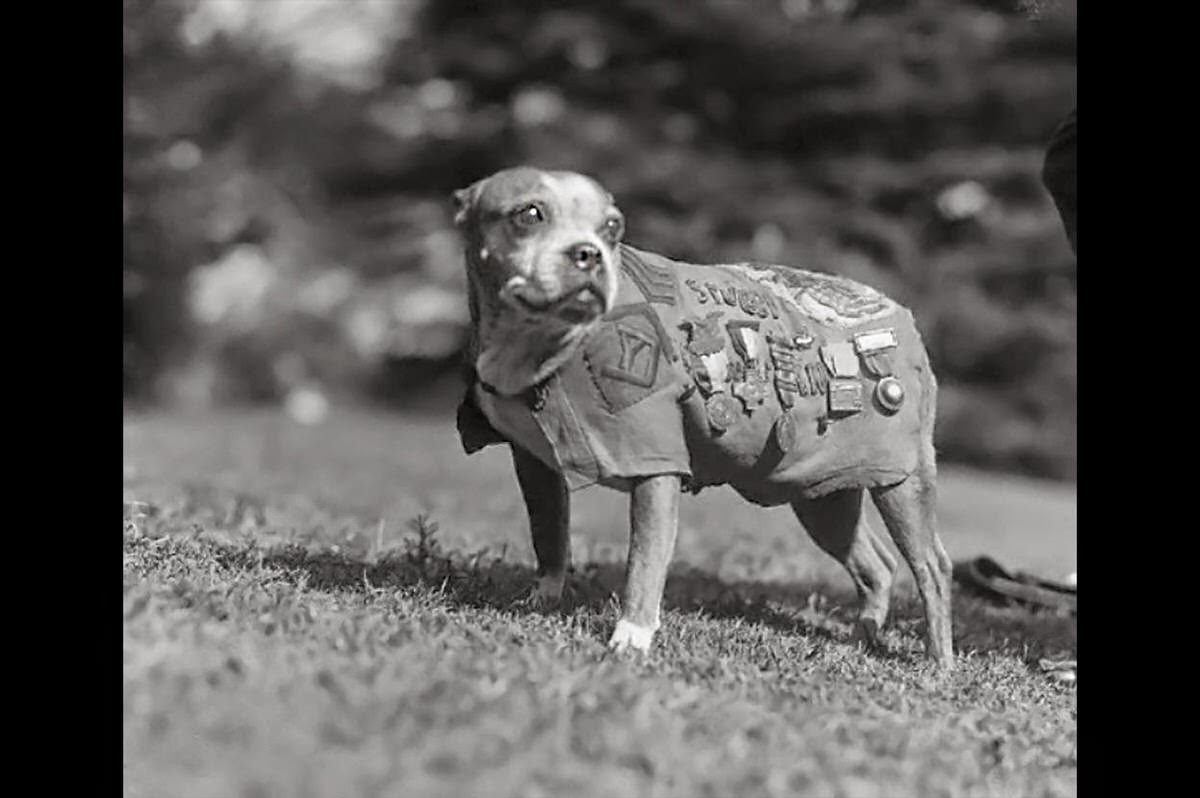
Sergeant Stubby of the 102nd Infantry became one of the most decorated war dogs of the entire conflict. He warned his unit of gas attacks, located wounded men in the field, and once caught a German spy by the seat of his pants and held him until soldiers arrived.
Sergeant Stubby, the decorated war dog of the 102nd Infantry, 1918
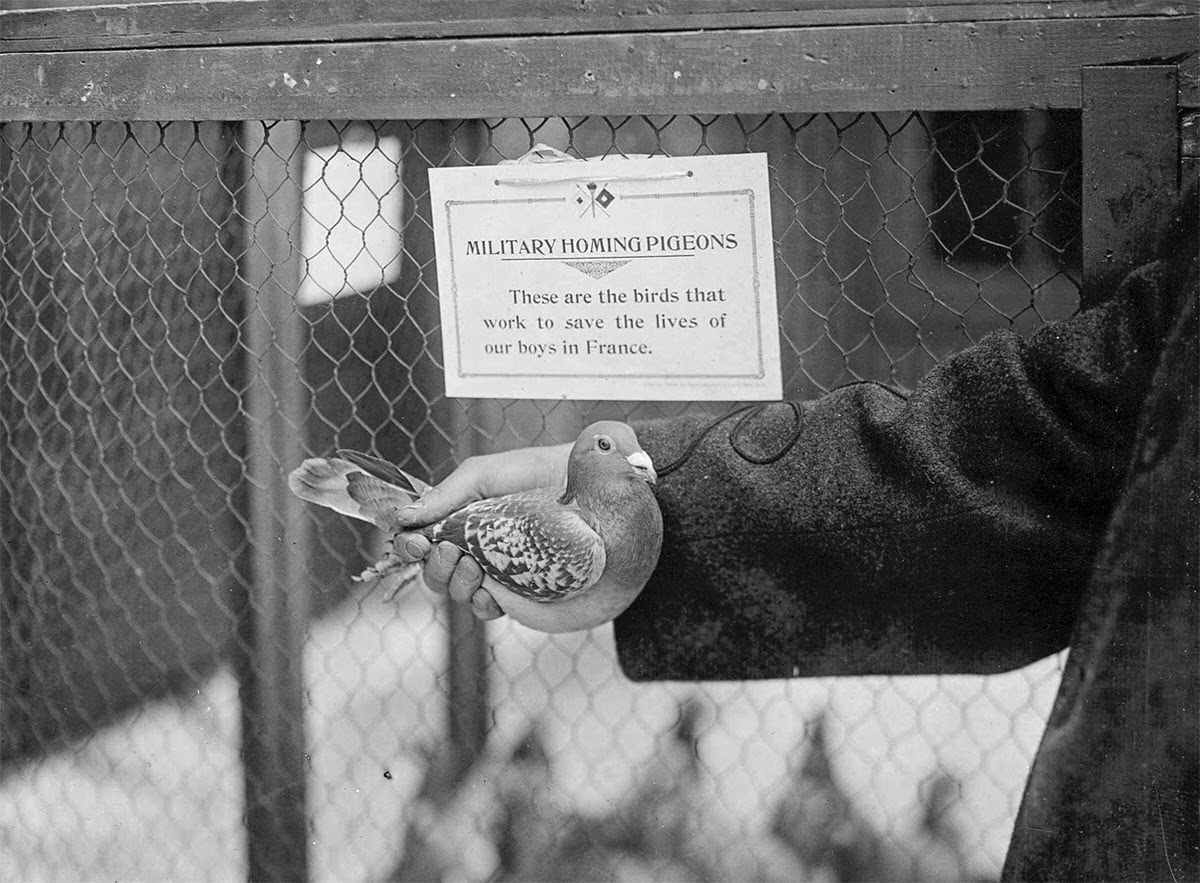
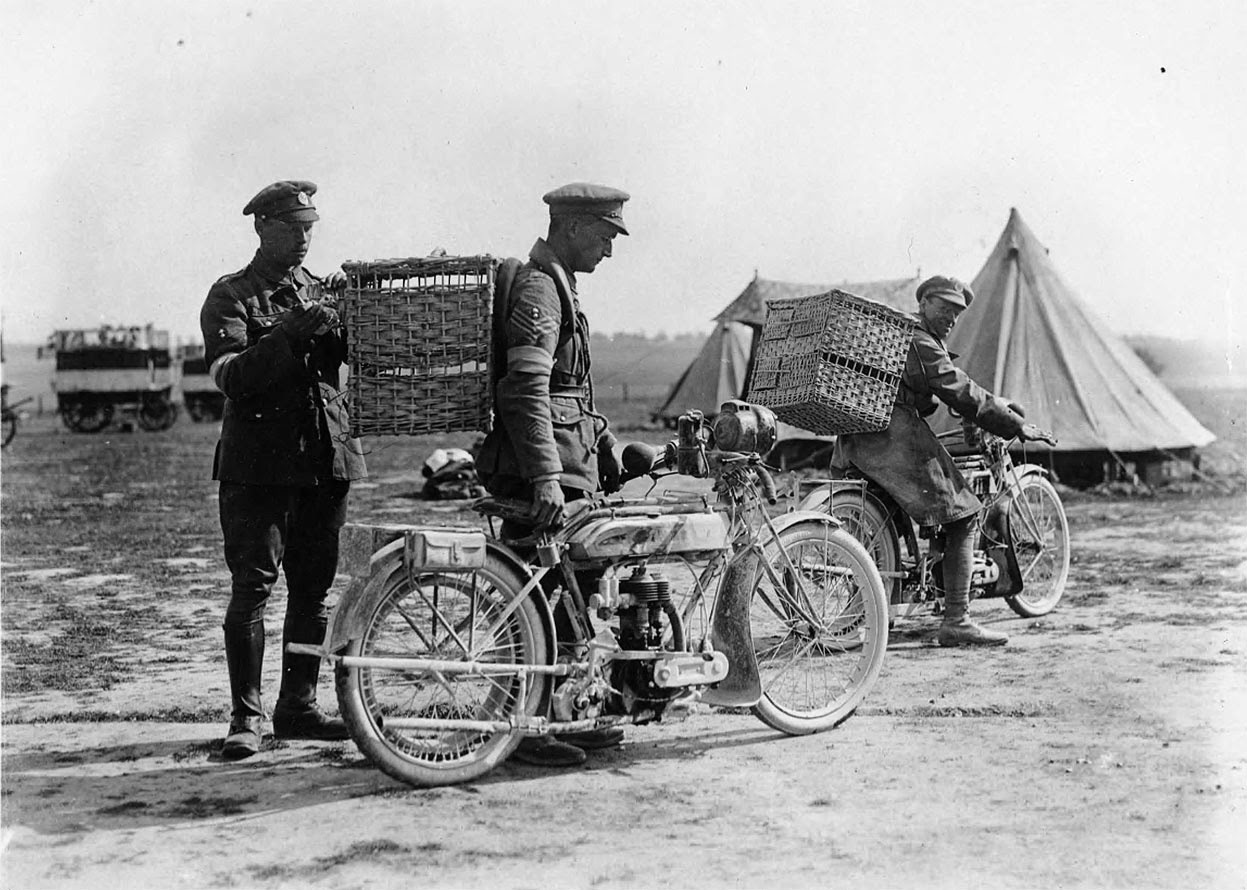
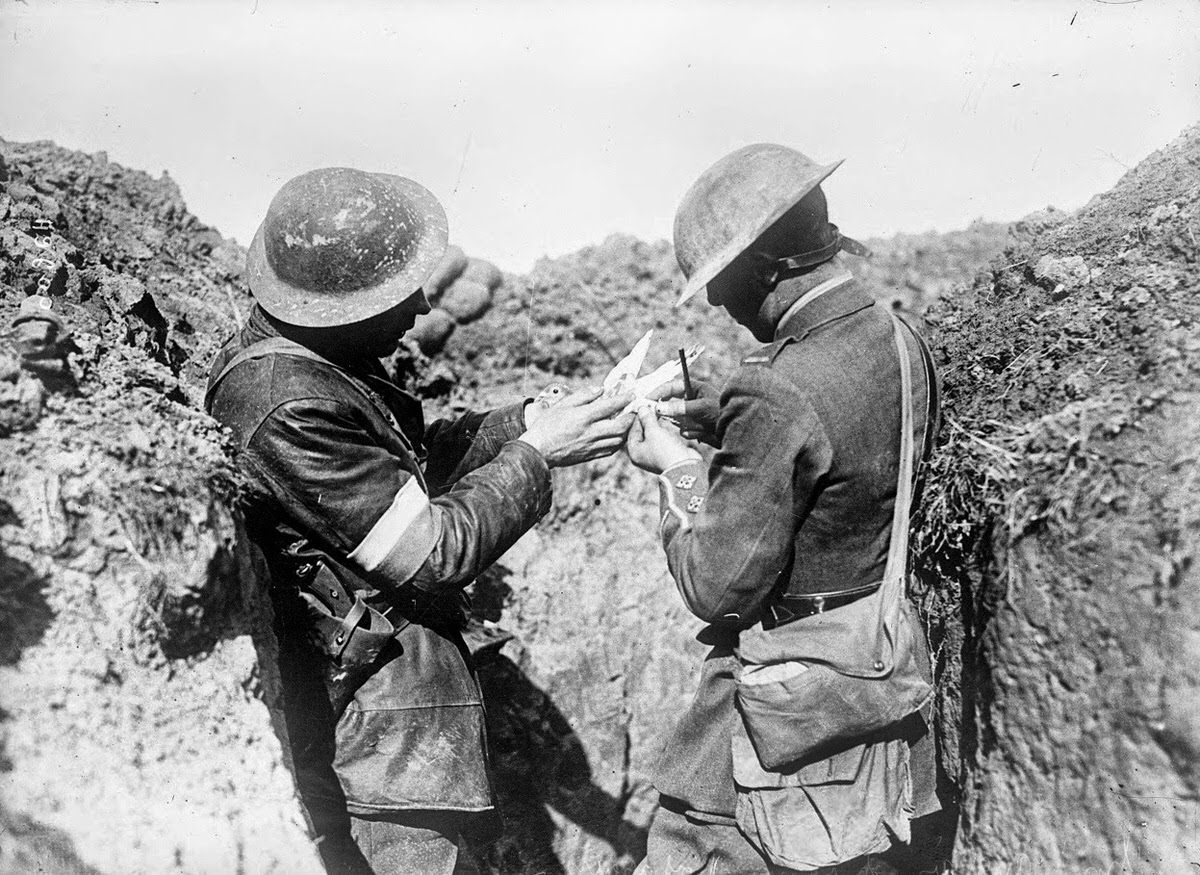
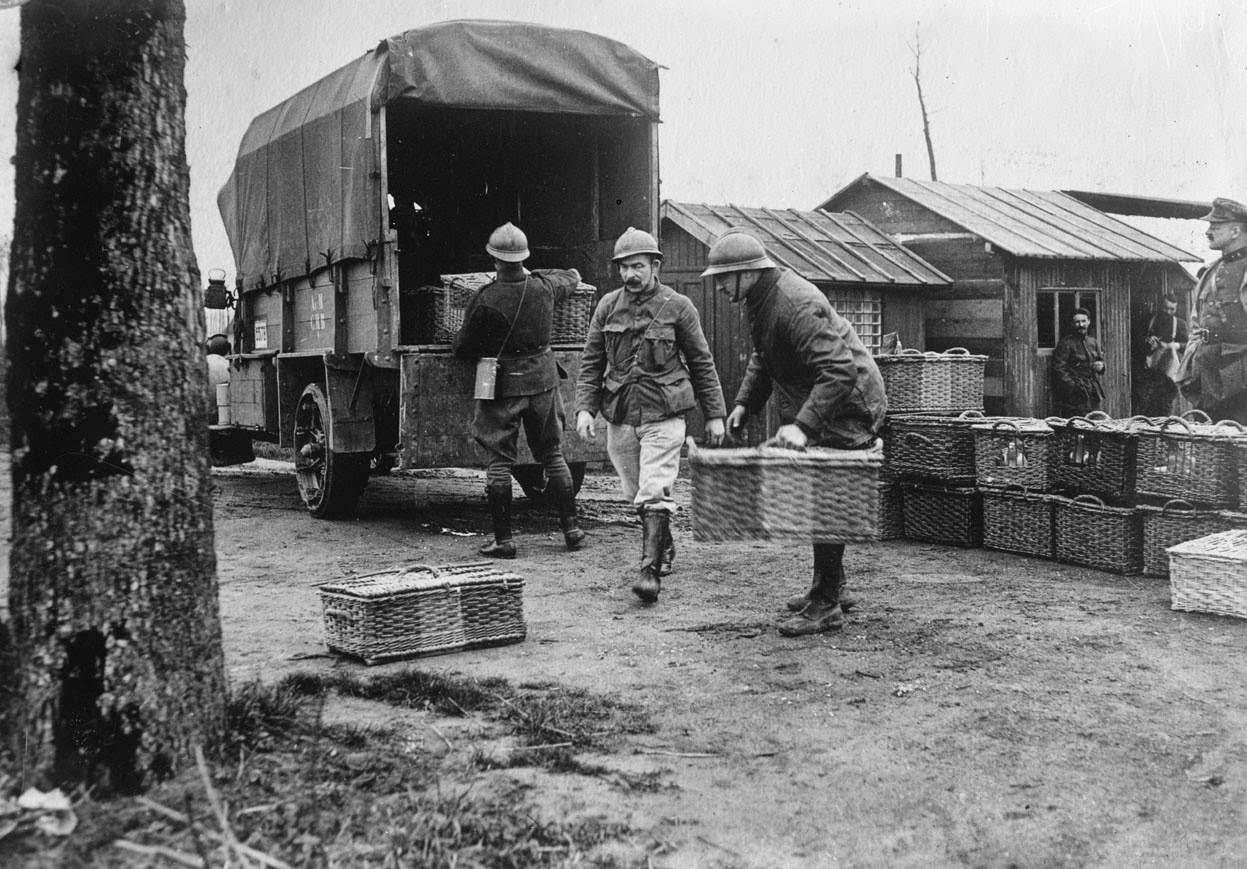
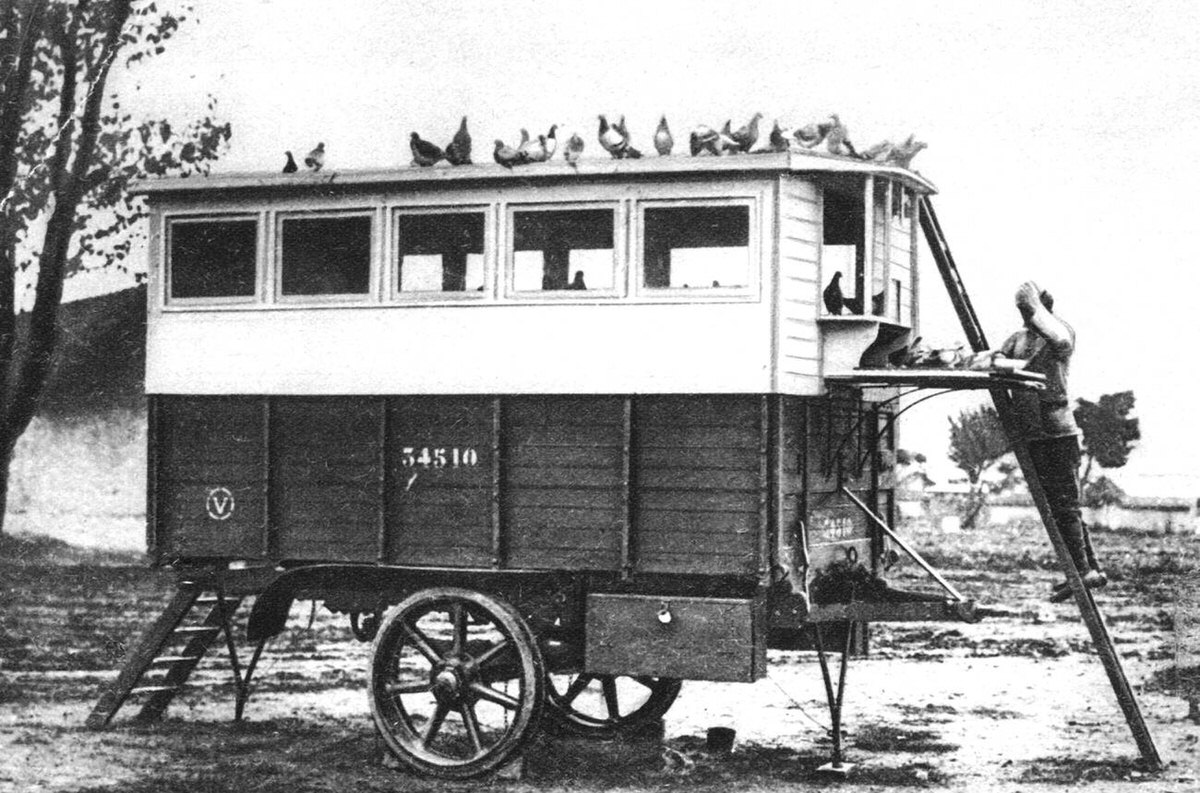
Carrier pigeons were the most reliable long-distance communication tool when every other system had failed. The military’s dedicated Pigeon Service deployed over 100,000 birds kept in mobile lofts that moved with the front lines. Soldiers carried the birds in small wicker baskets strapped to their backs, or transported them in tanks and airplanes. When a unit was cut off, they released a pigeon with a coded message attached to its leg.
Homing pigeons used as messengers and dispatch bearers in France, 1914Soldiers with motorbikes and wicker baskets for transporting pigeons, 1914
Pigeons delivered their messages at a success rate above 95 percent. The most famous was Cher Ami, who saved nearly 200 American soldiers known as the “Lost Battalion.” Shot through the chest and missing a leg, Cher Ami still flew twenty-five miles to deliver the message that stopped friendly artillery fire from killing the surrounded men.
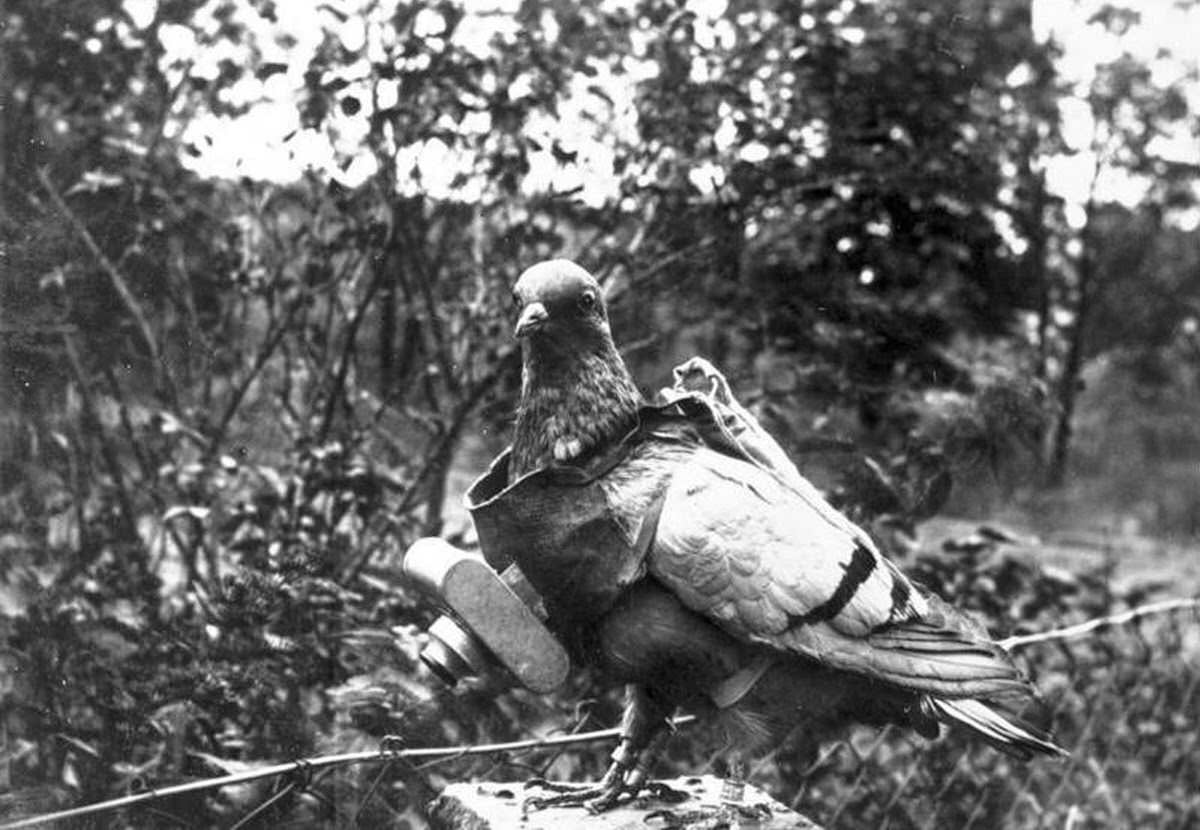
British troops attaching a message to a carrier pigeon on the Western Front, 1917Pigeon with a small camera attached for aerial photography, 1914
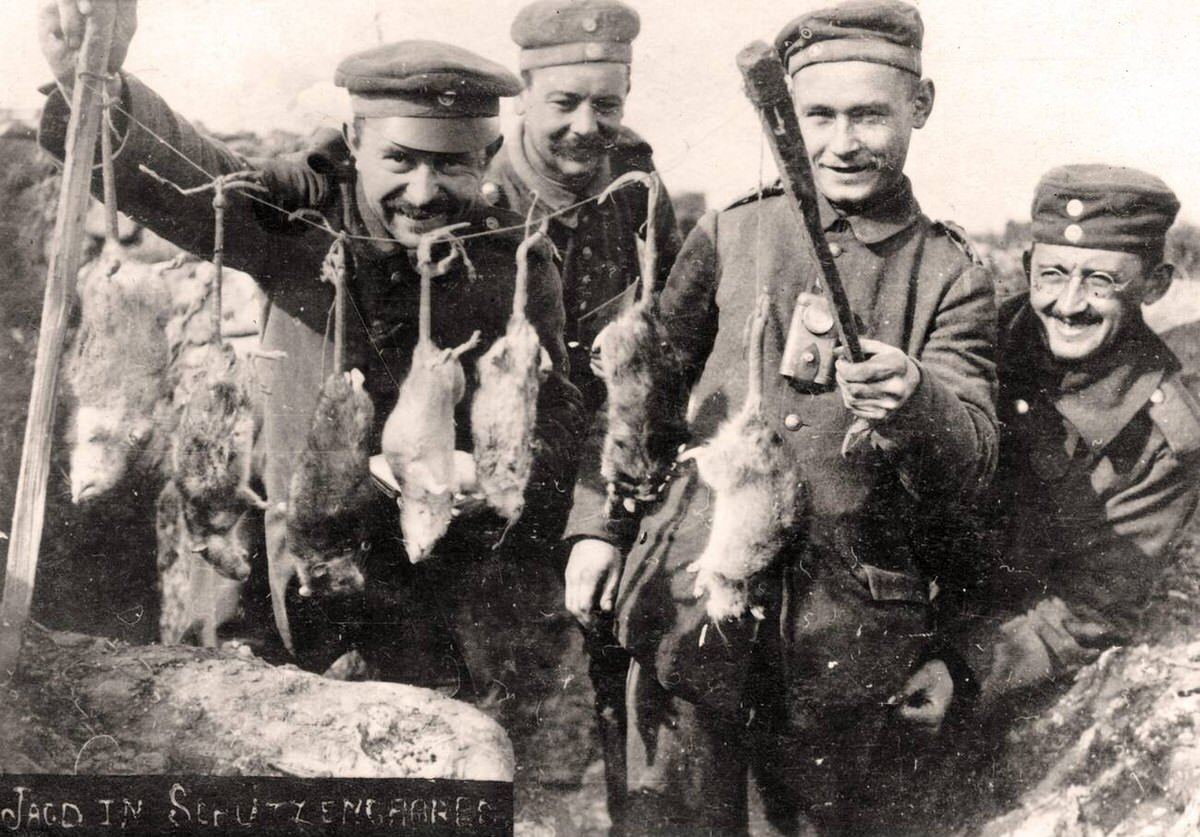
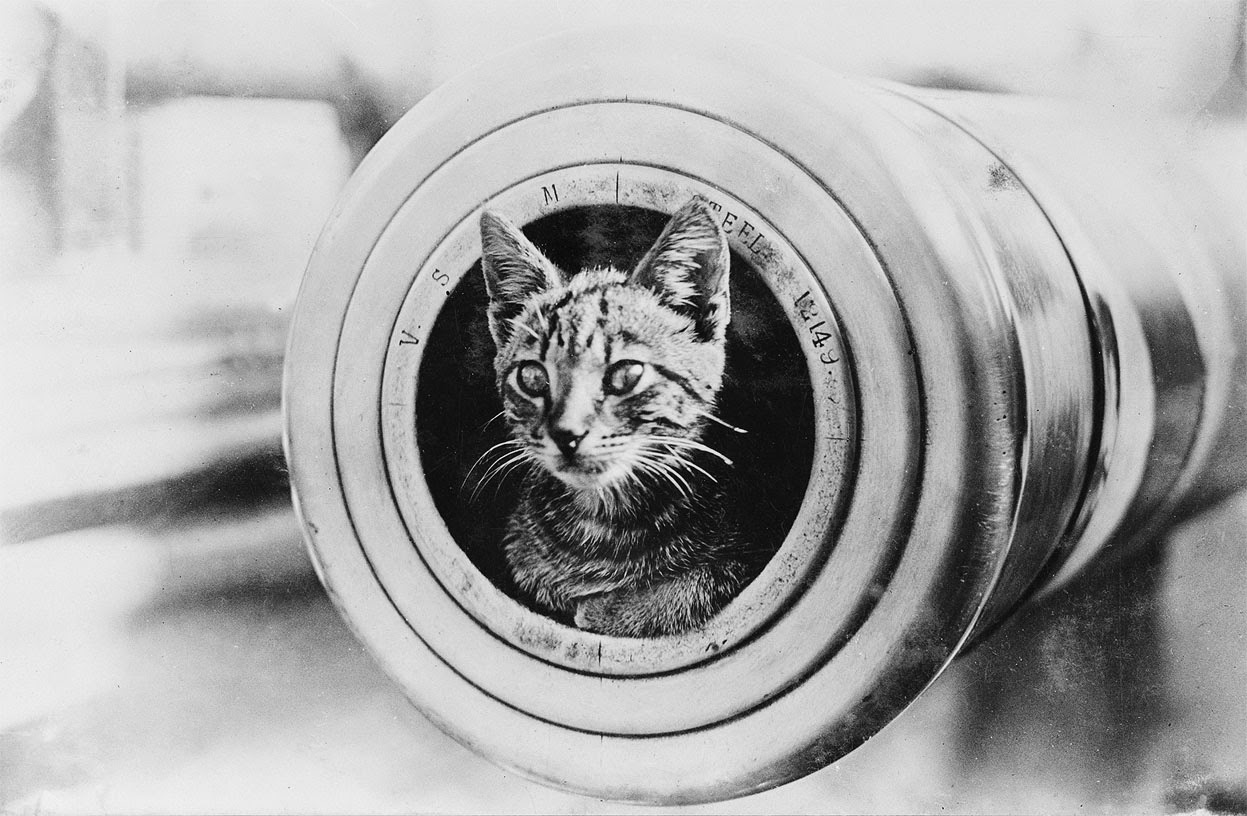
Smaller animals played technical roles that are largely forgotten today. Cats in the trenches controlled the massive rat populations and served as early warning systems for gas attacks, showing signs of distress before soldiers detected anything wrong. In the tunnels miners dug beneath enemy lines, canaries and white mice detected carbon monoxide and other deadly underground gases. If a canary fainted, the miners evacuated immediately.
German soldiers showing rats caught in the trenches, 1914Feline mascot of the light cruiser HMAS Encounter in the muzzle of a 6-inch gun, 1914
Glow-worms were collected by the thousands and placed in glass jars. In the dark of the trenches, a lit match could draw a sniper’s bullet, but the faint light from a jar of glow-worms let a soldier read a map or a letter safely. Slugs provided another unexpected form of protection. Researchers discovered that slugs sealed their breathing holes and compressed their bodies when mustard gas was present — long before a human nose detected anything — giving soldiers extra seconds to put on their gas masks.
German soldiers and their mule wearing gas masks, 1916
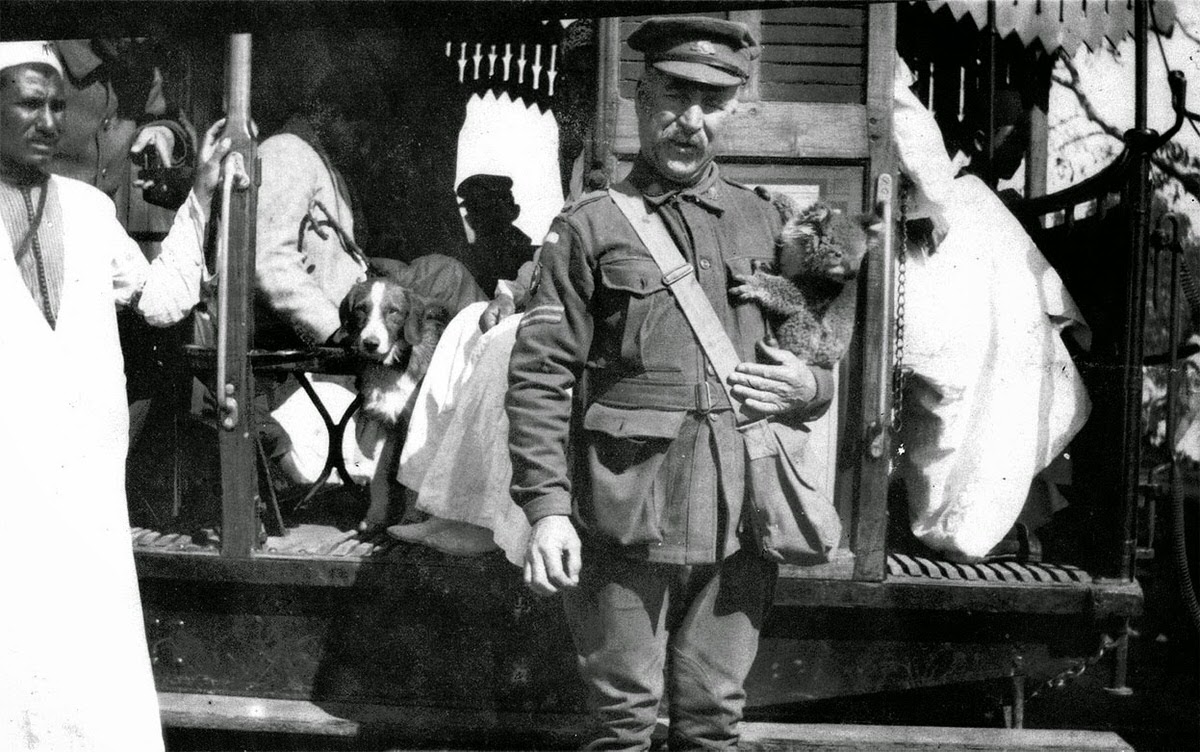
Many units adopted animal mascots to help cope with the psychological weight of the war. These were not always common pets. Some units kept monkeys, bears, or even lions. A Canadian soldier brought a bear cub named Winnipeg to England. The bear eventually lived in the London Zoo and became the direct inspiration for the character Winnie-the-Pooh. Mascots were given military ranks, small uniforms, and treated as full members of their units. In the long stretches of waiting between battles, they were often the only source of comfort available.
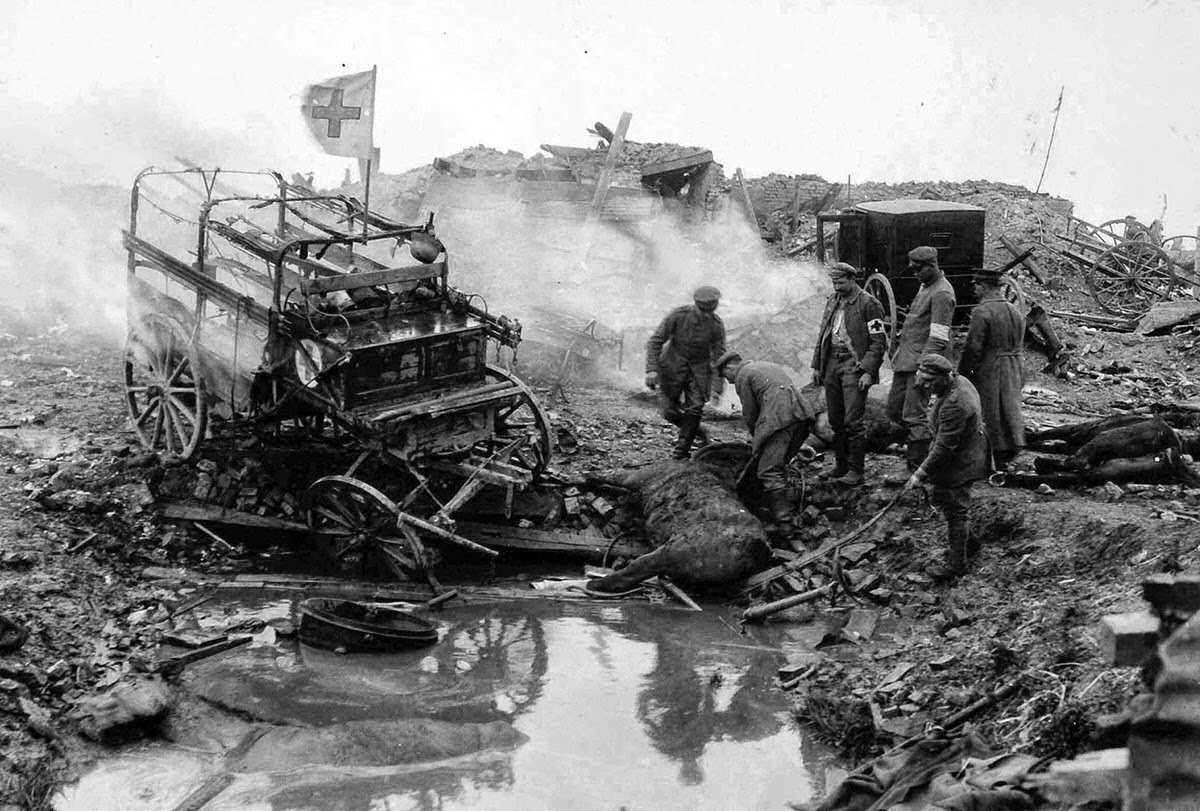
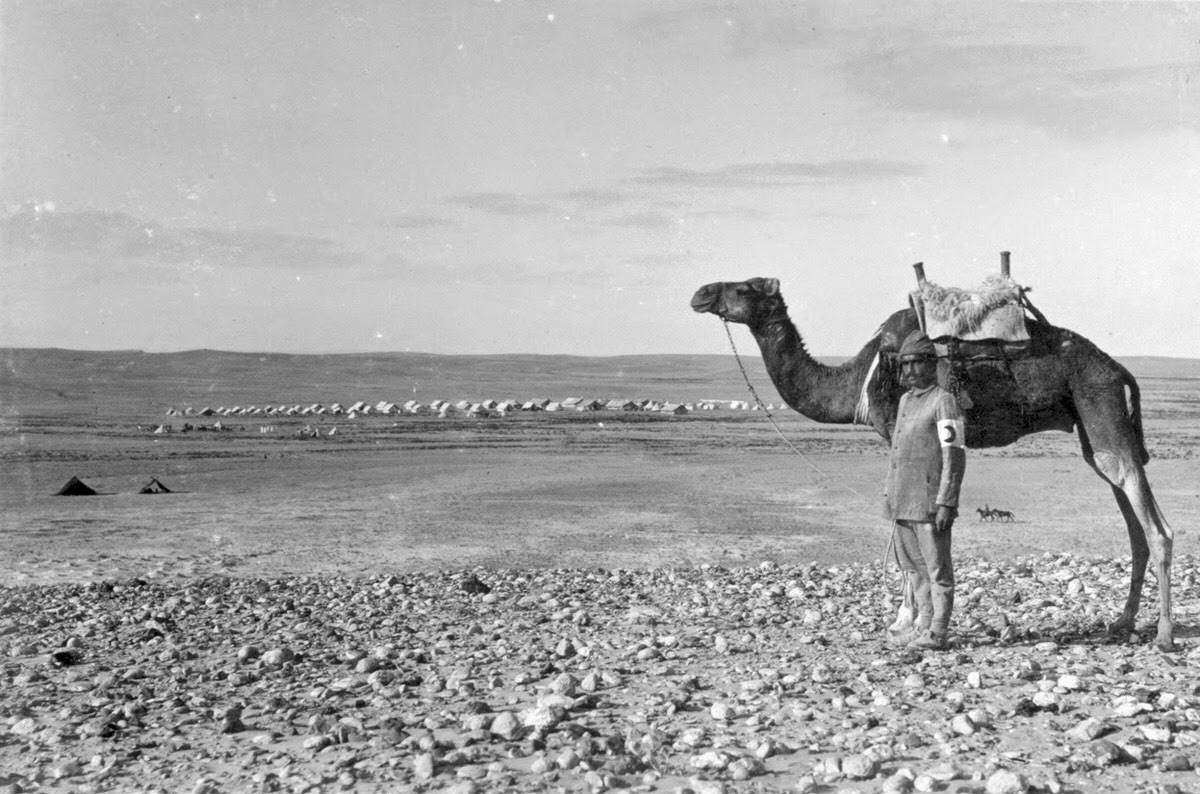
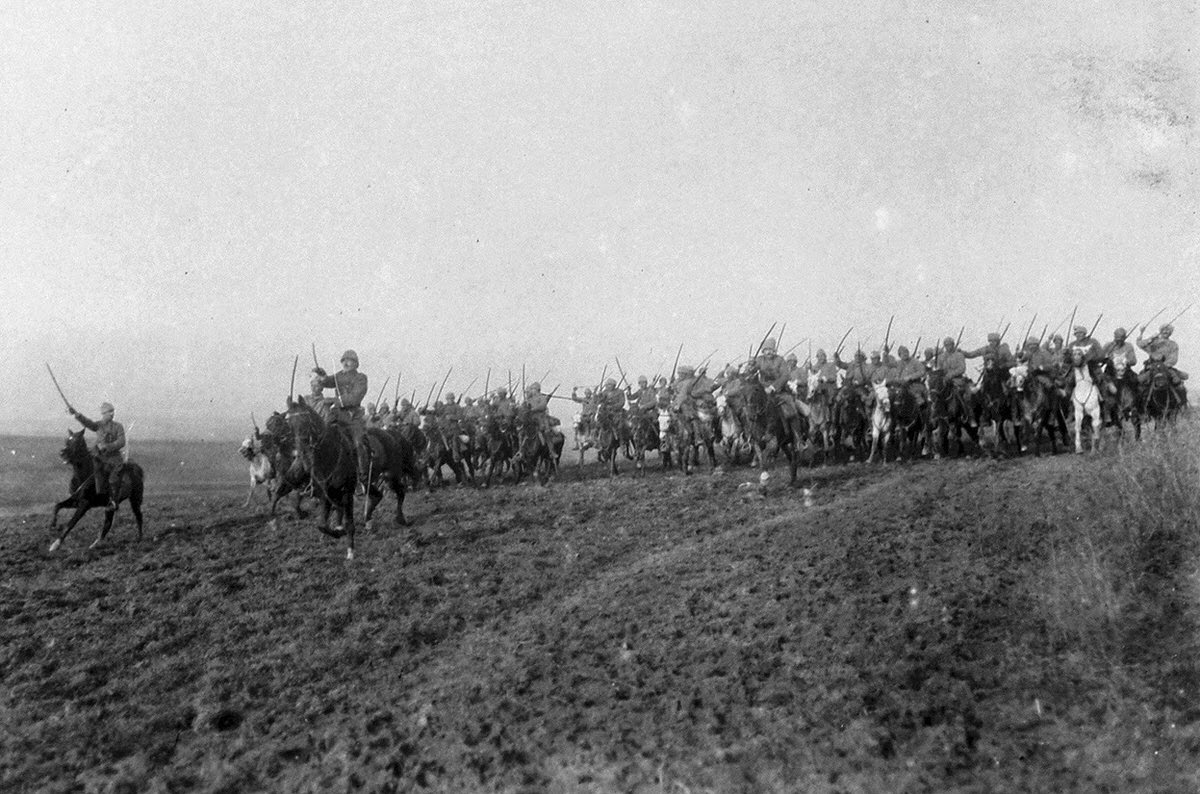
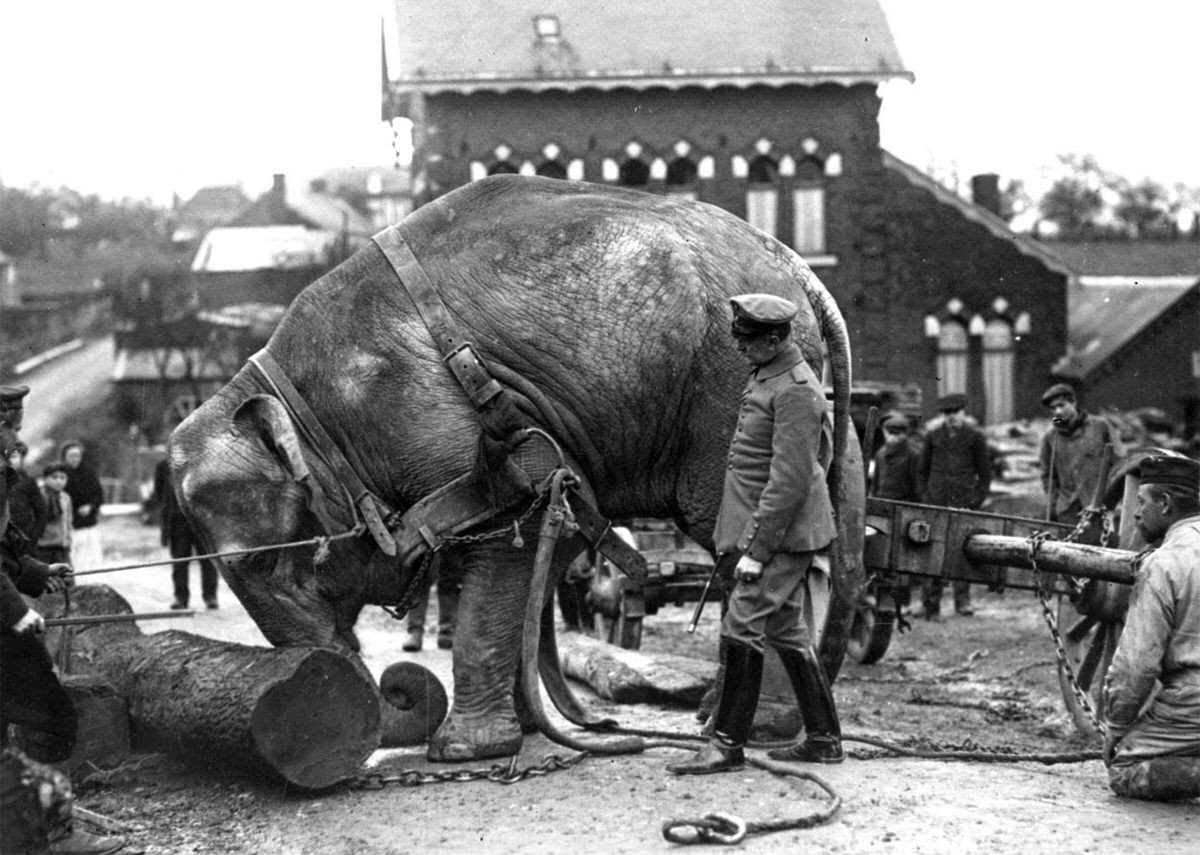
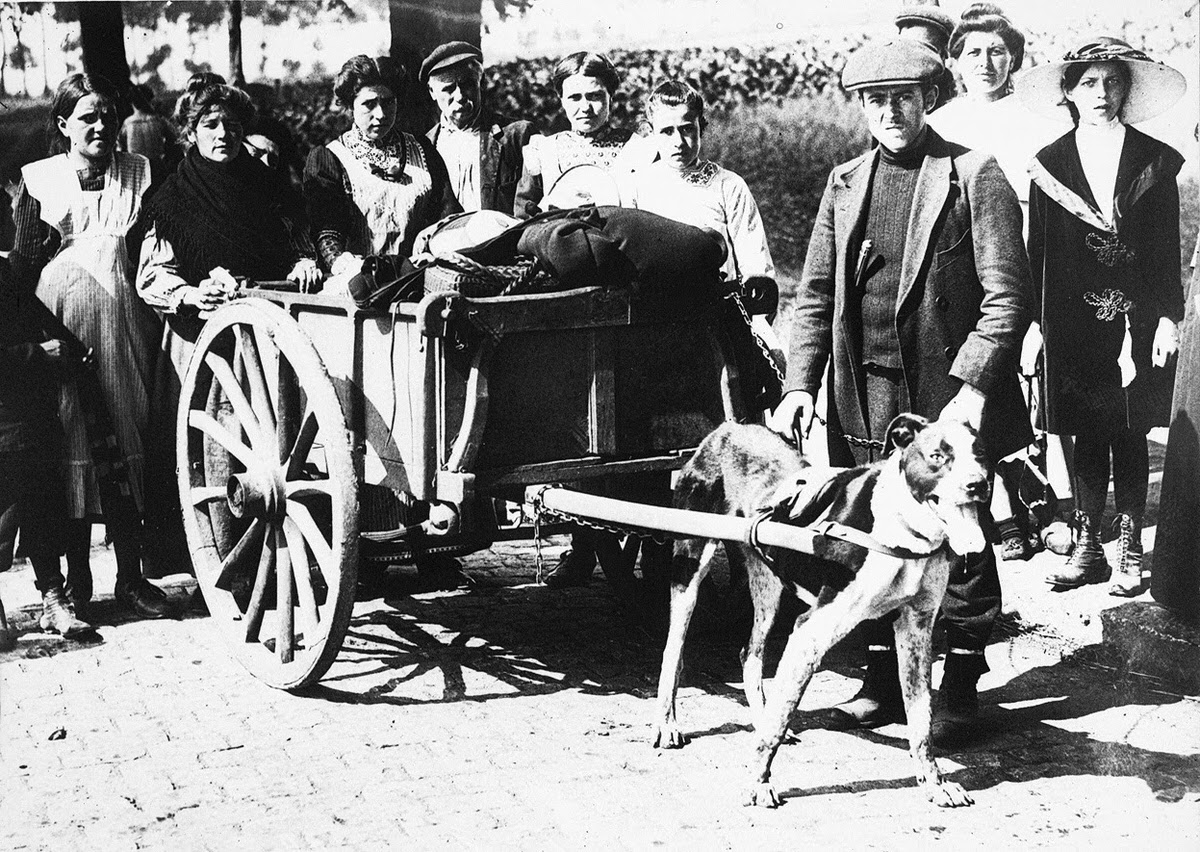
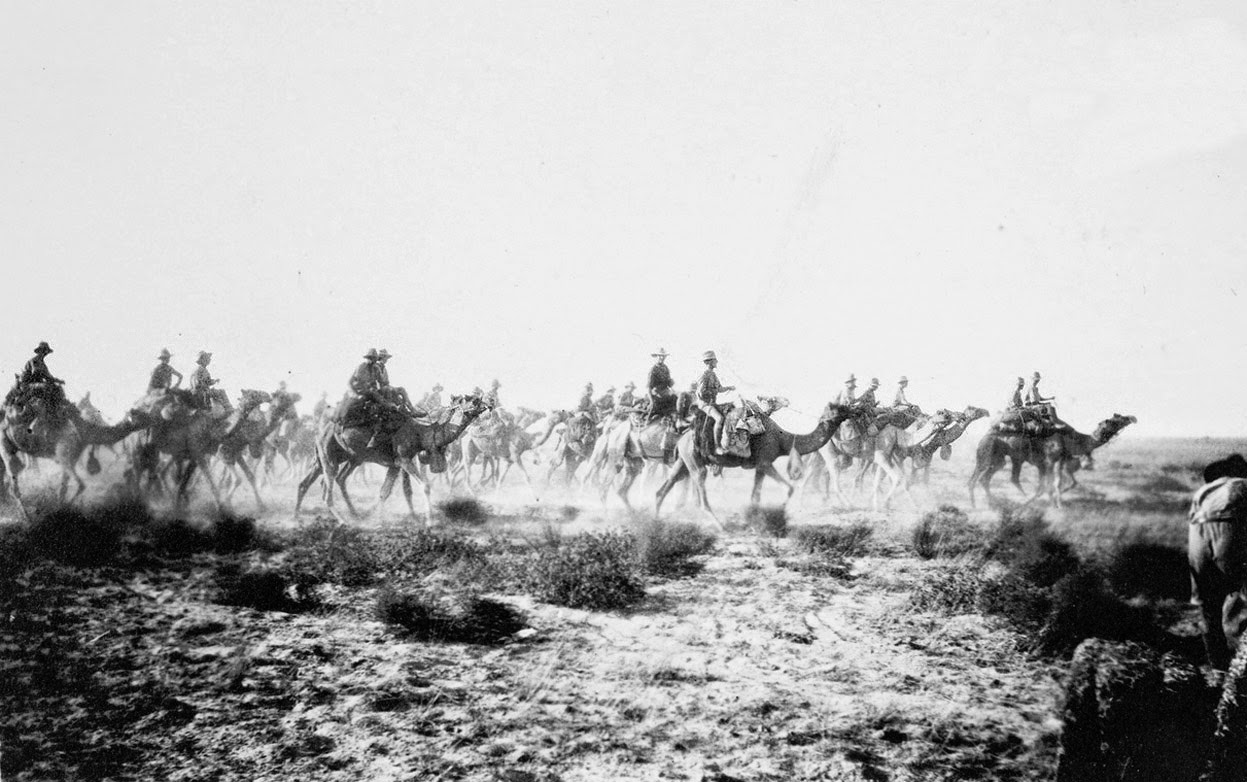
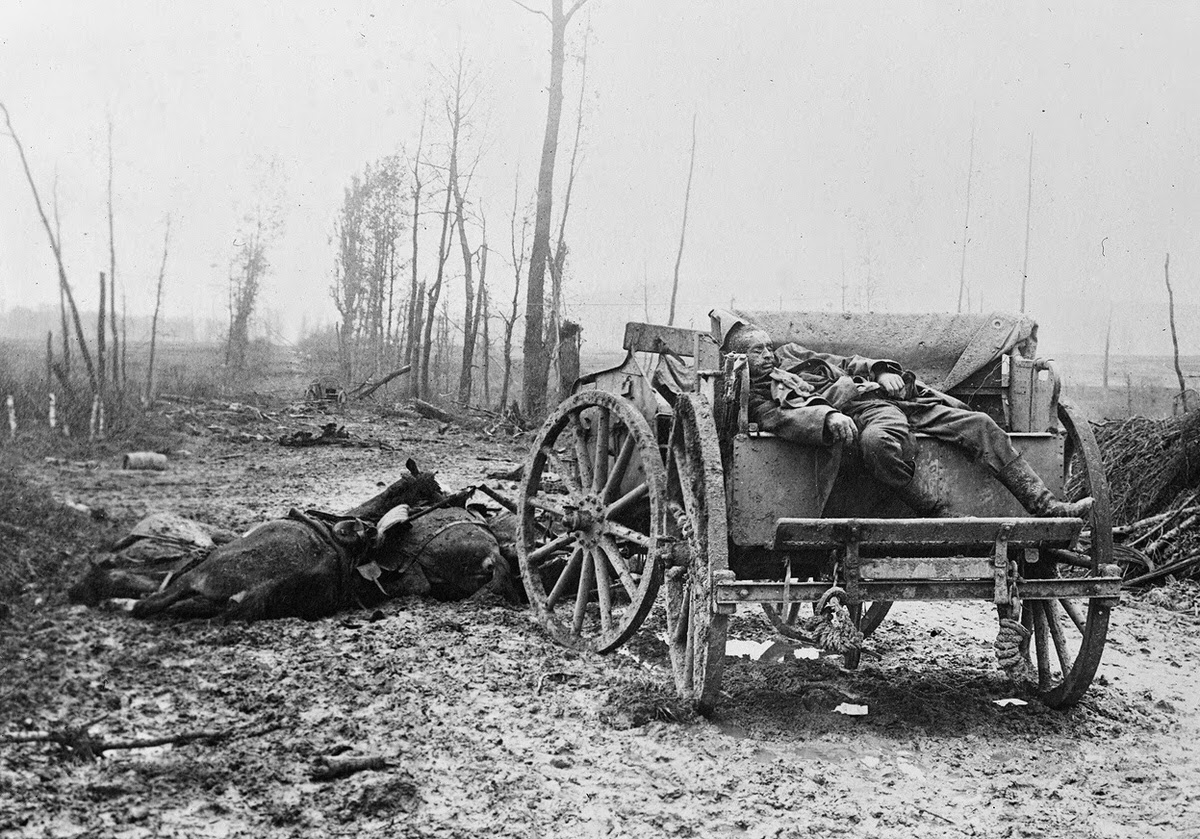
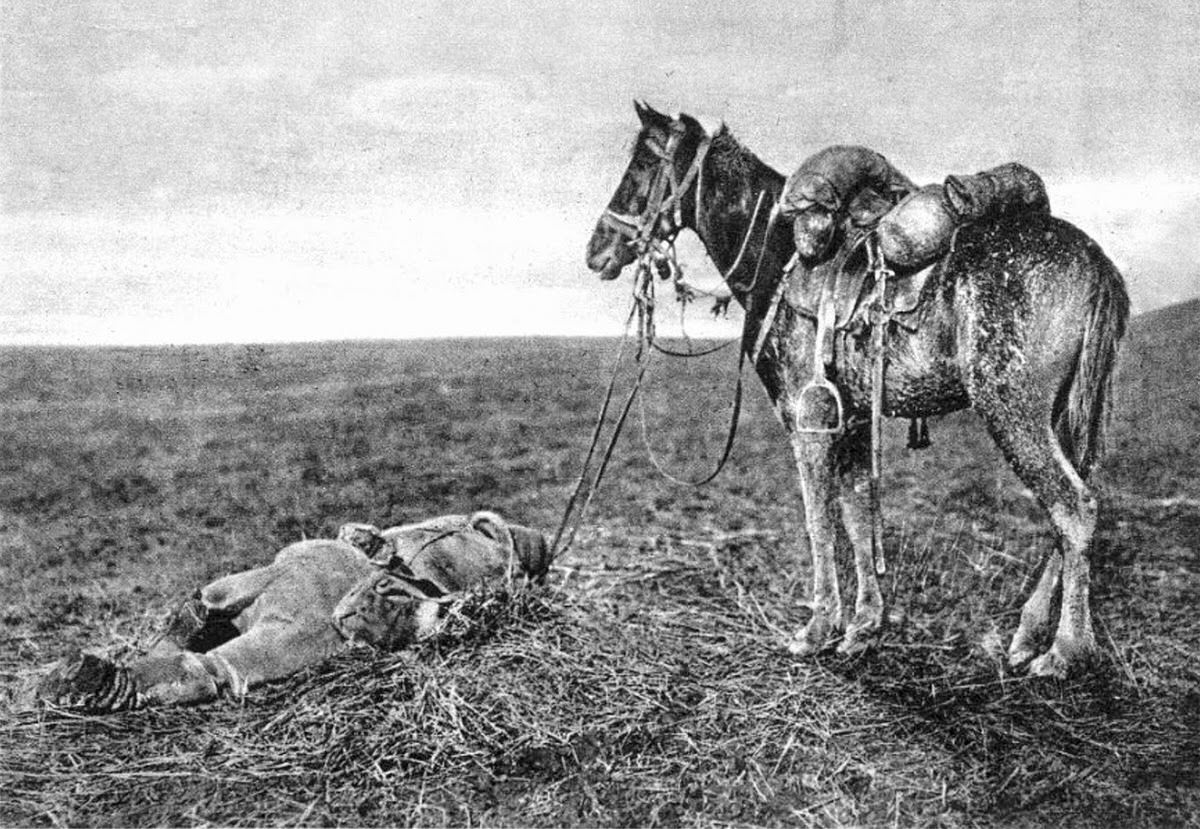
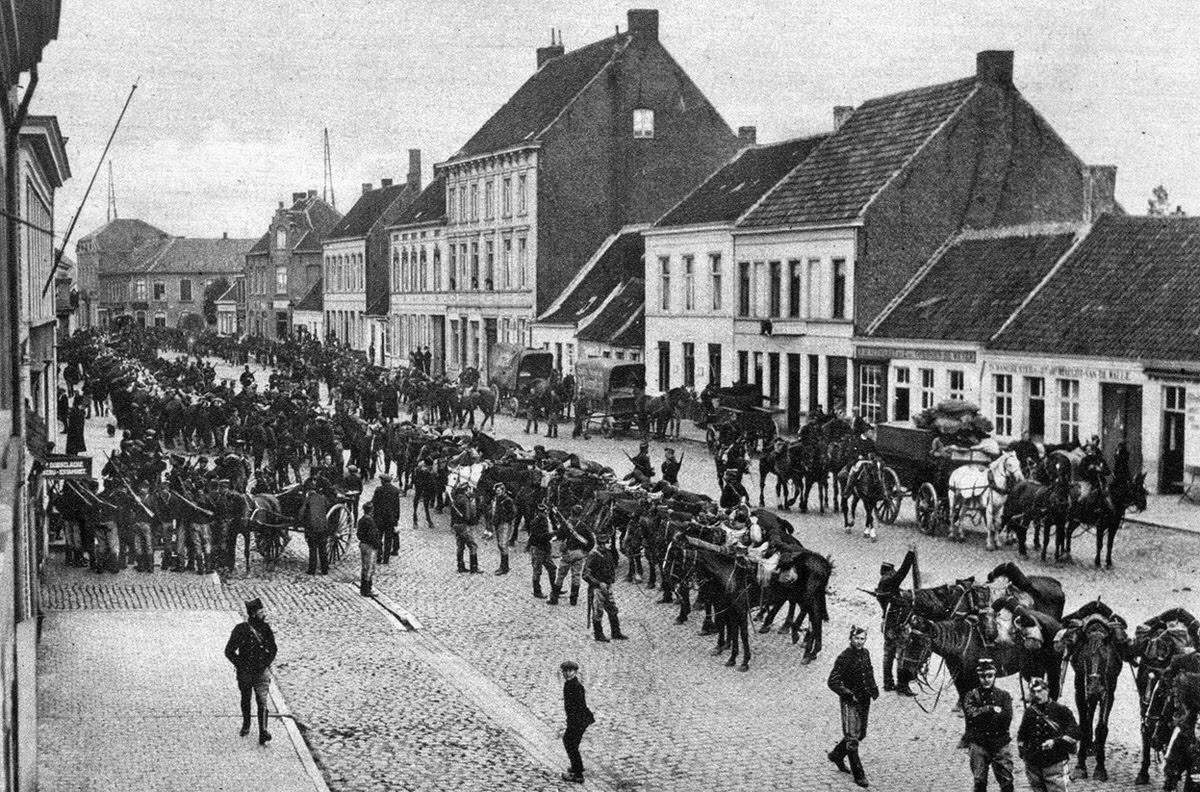
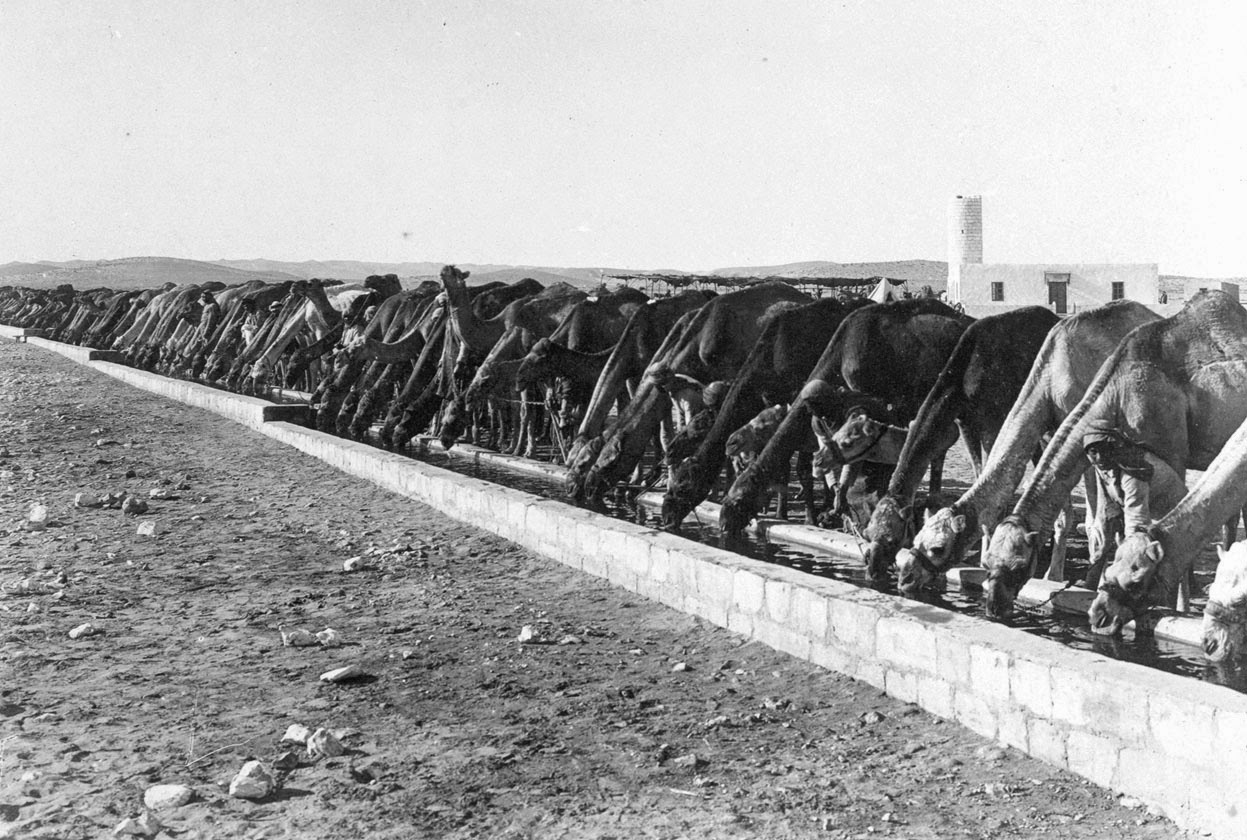
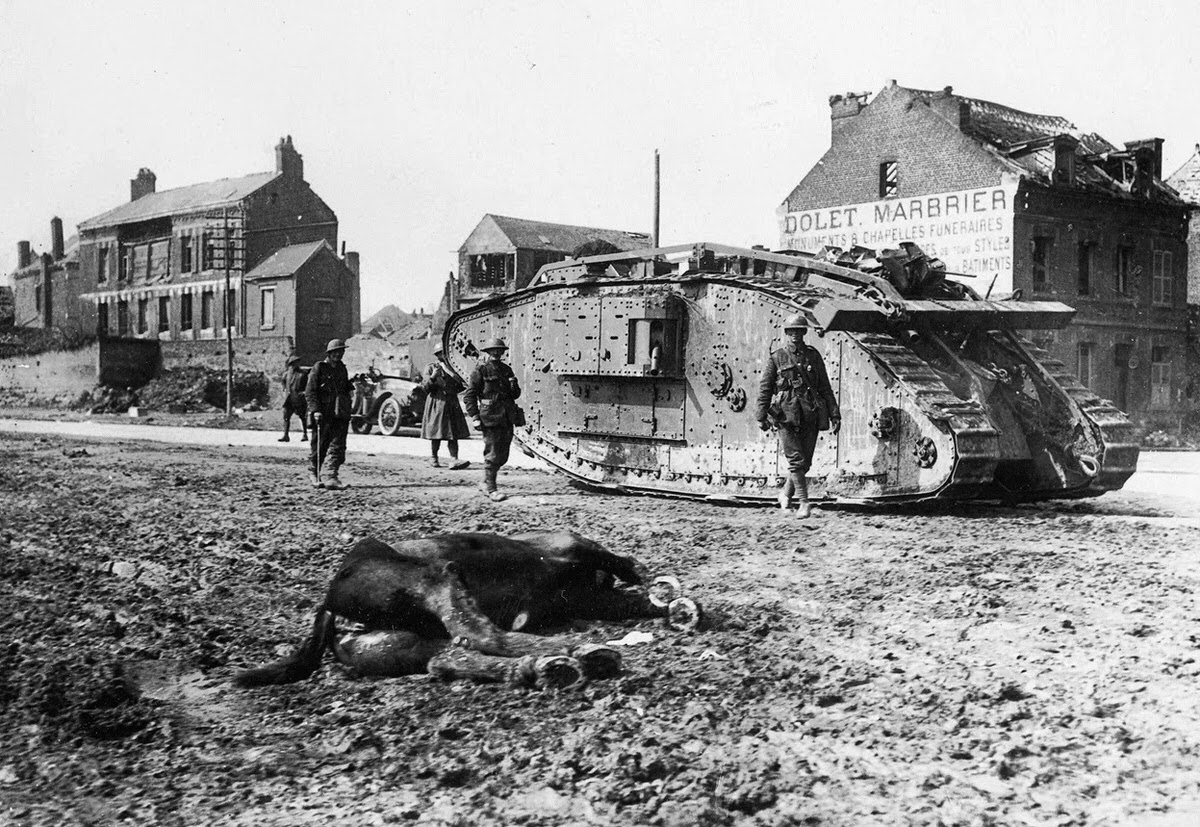
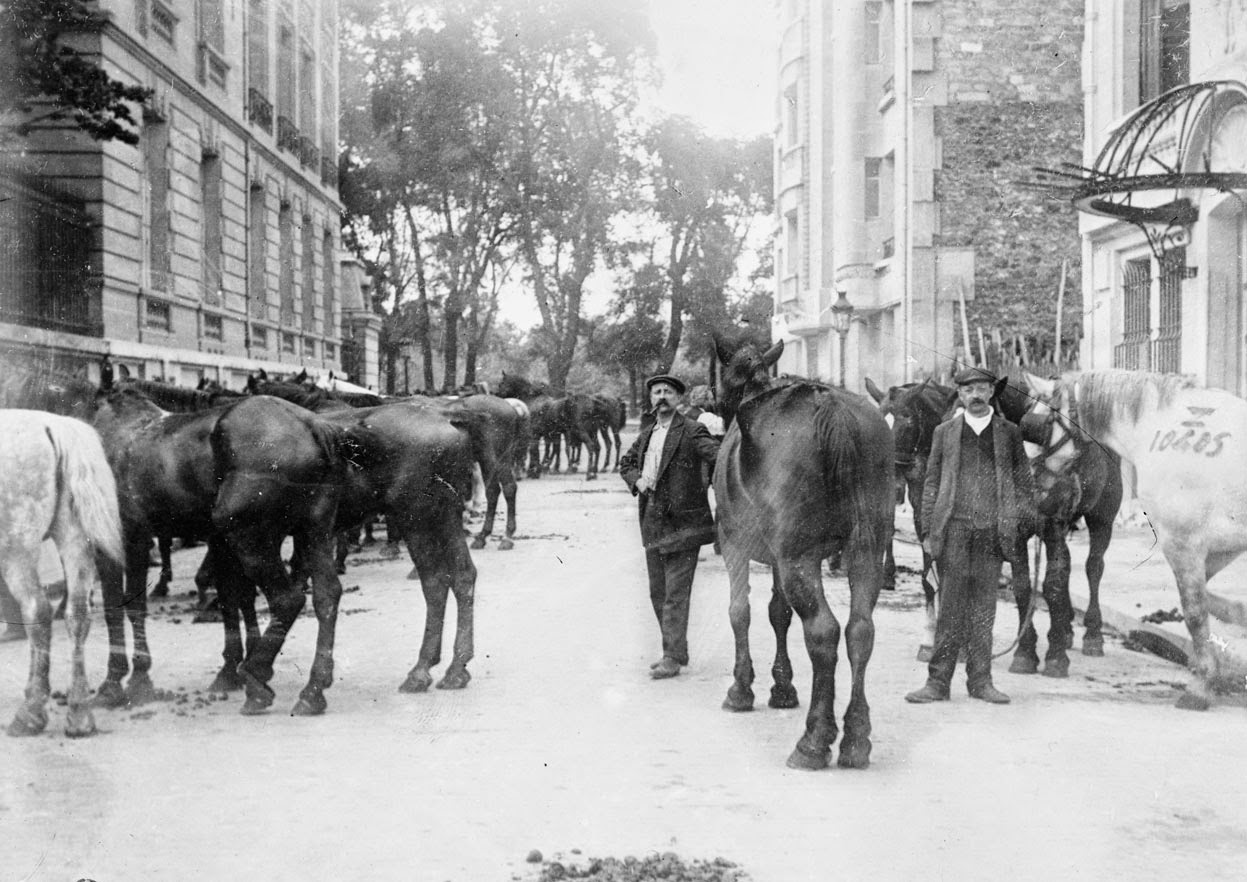
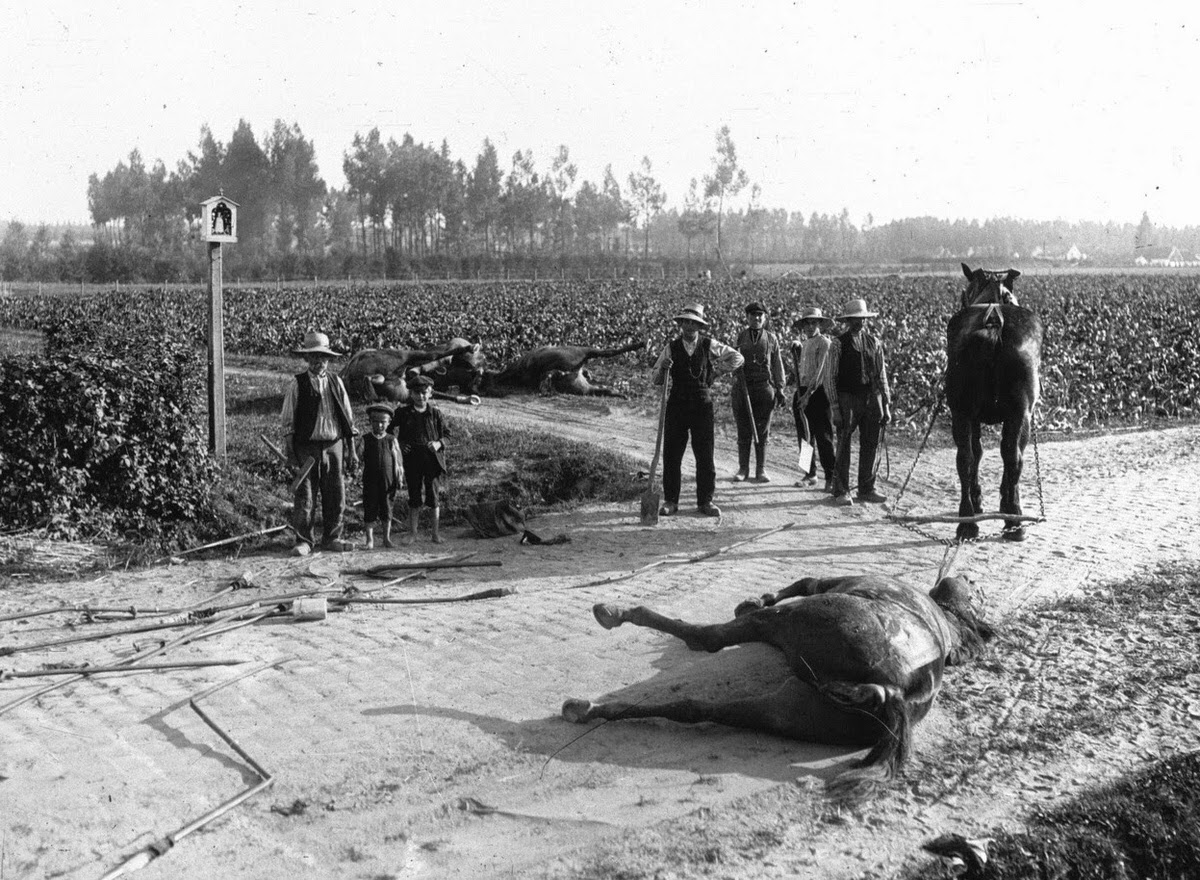
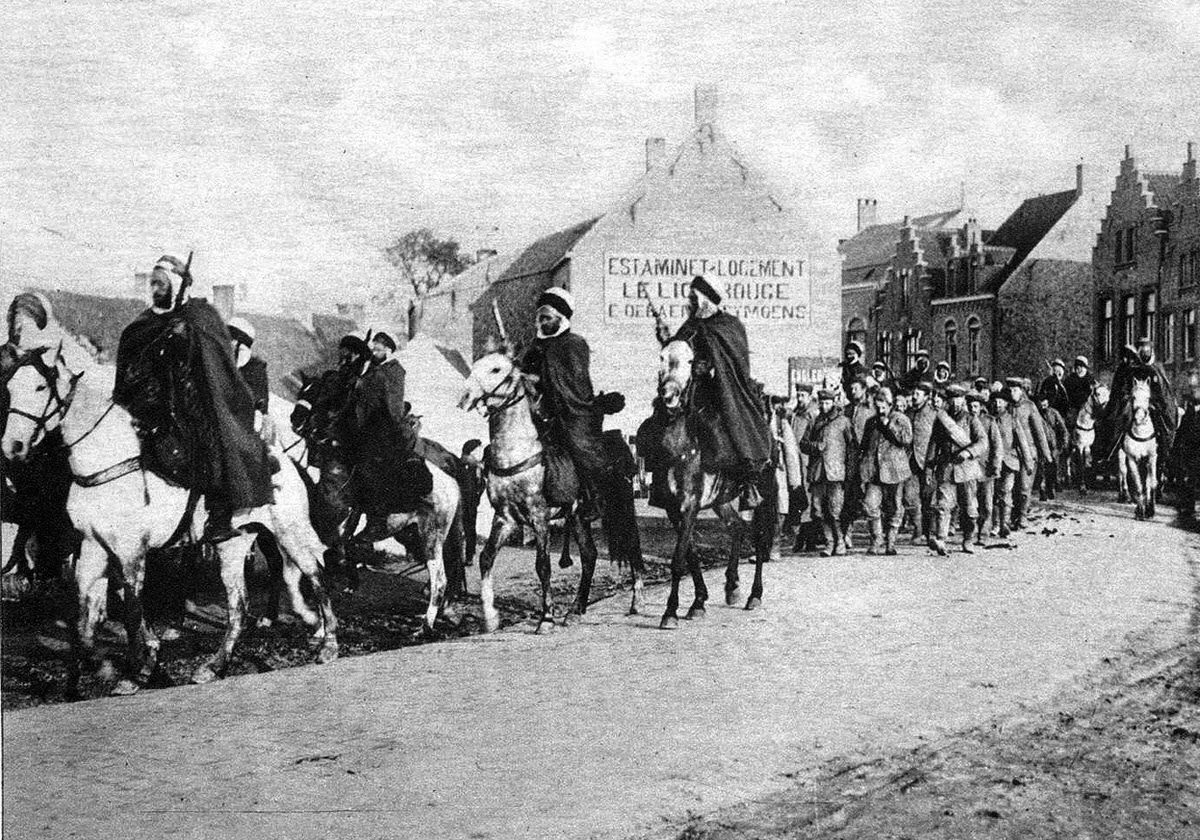
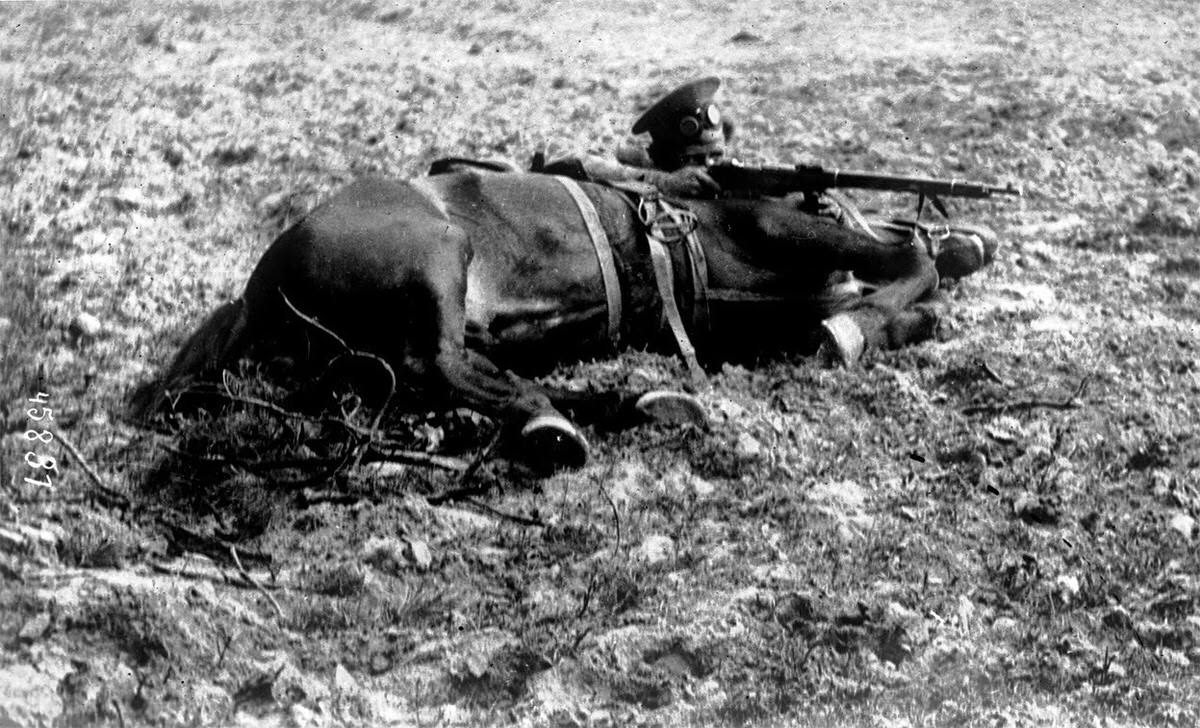
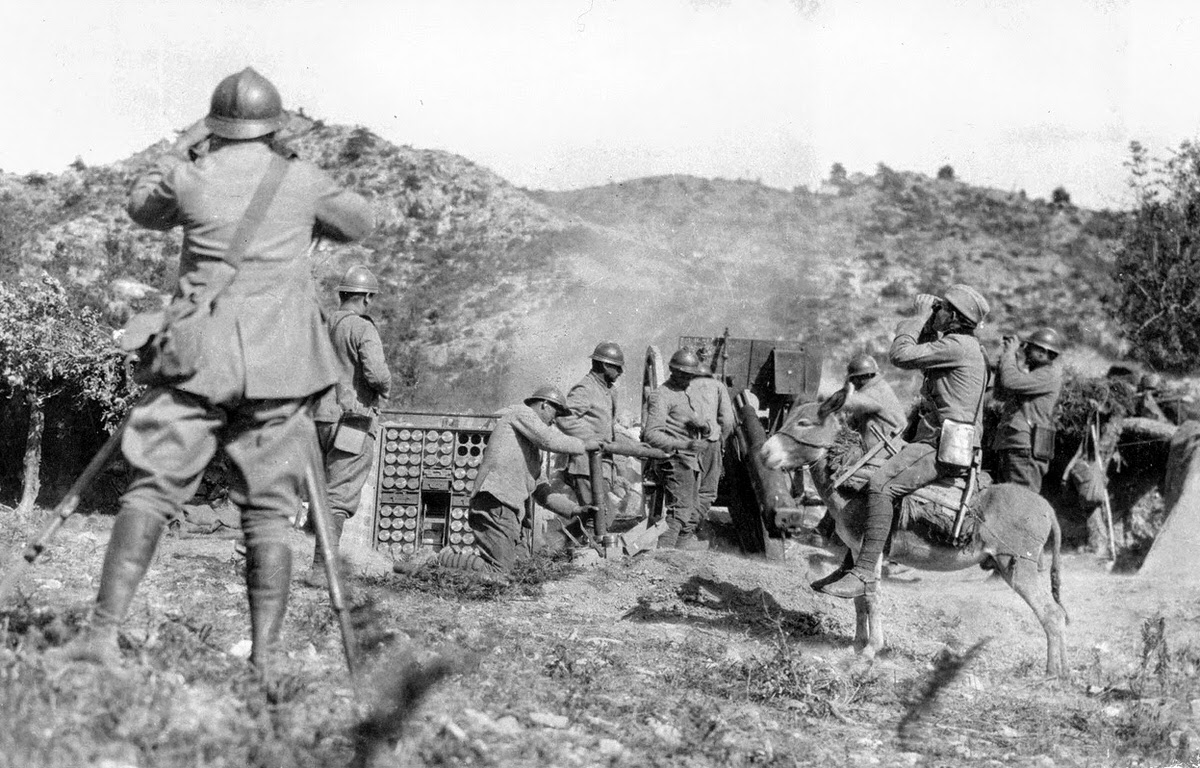
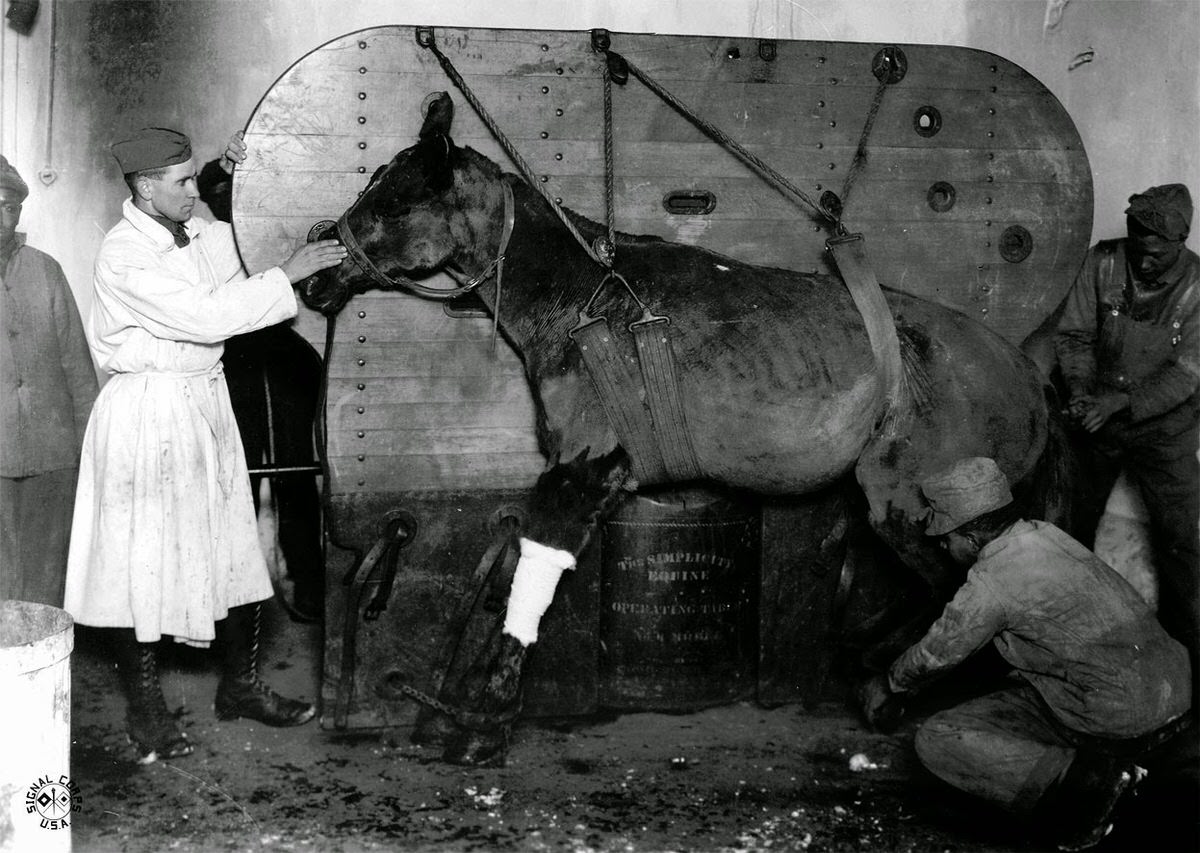
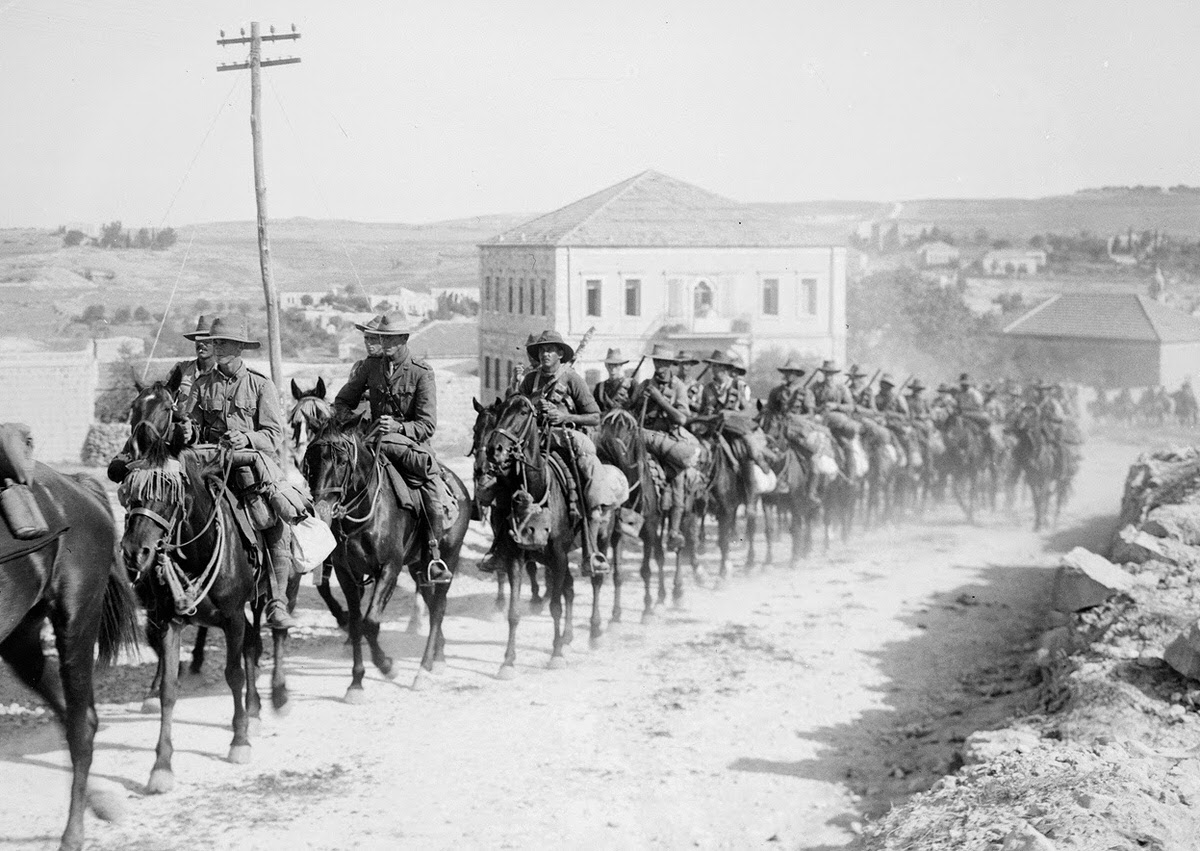
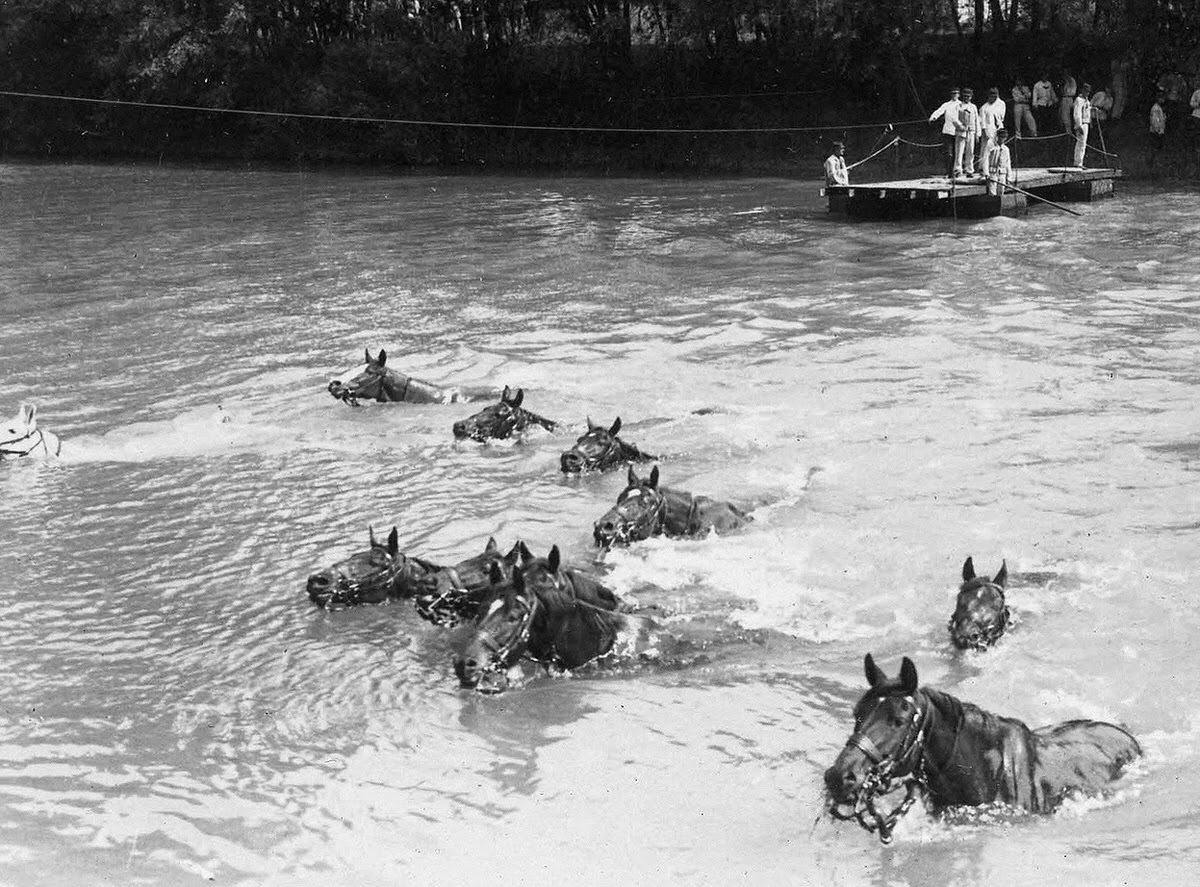
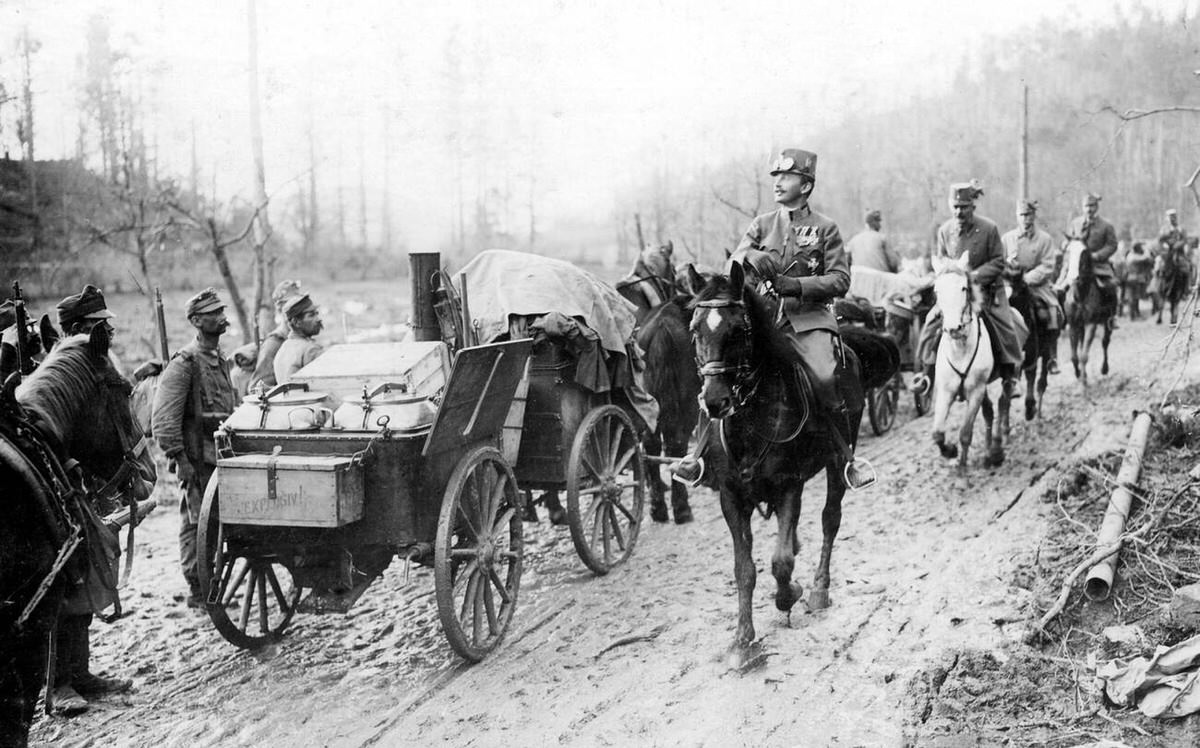
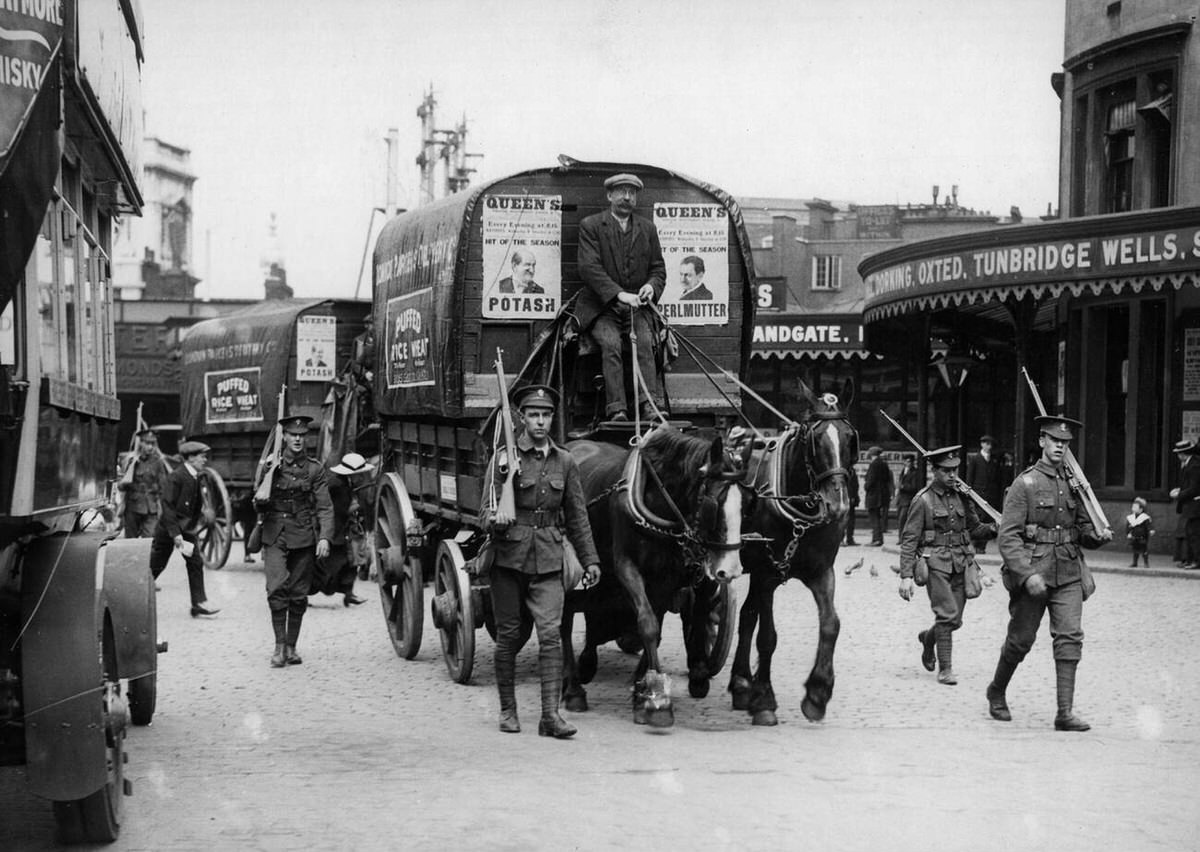
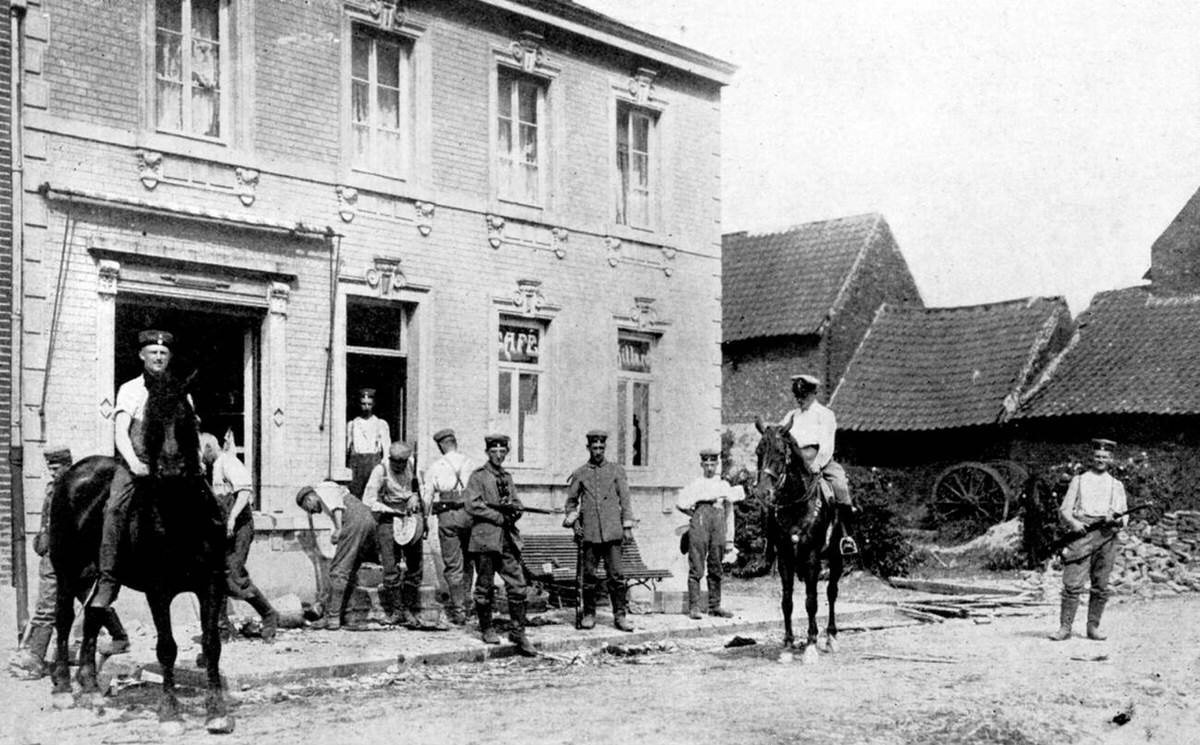
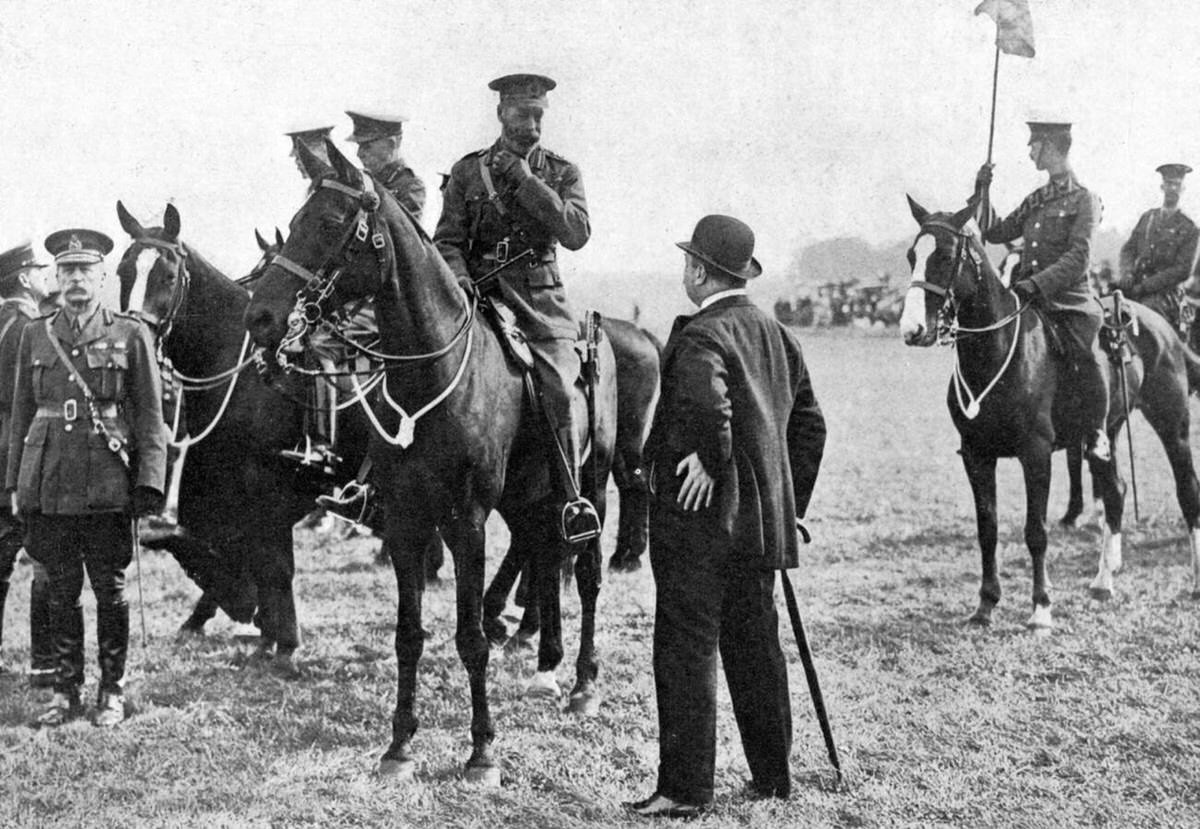
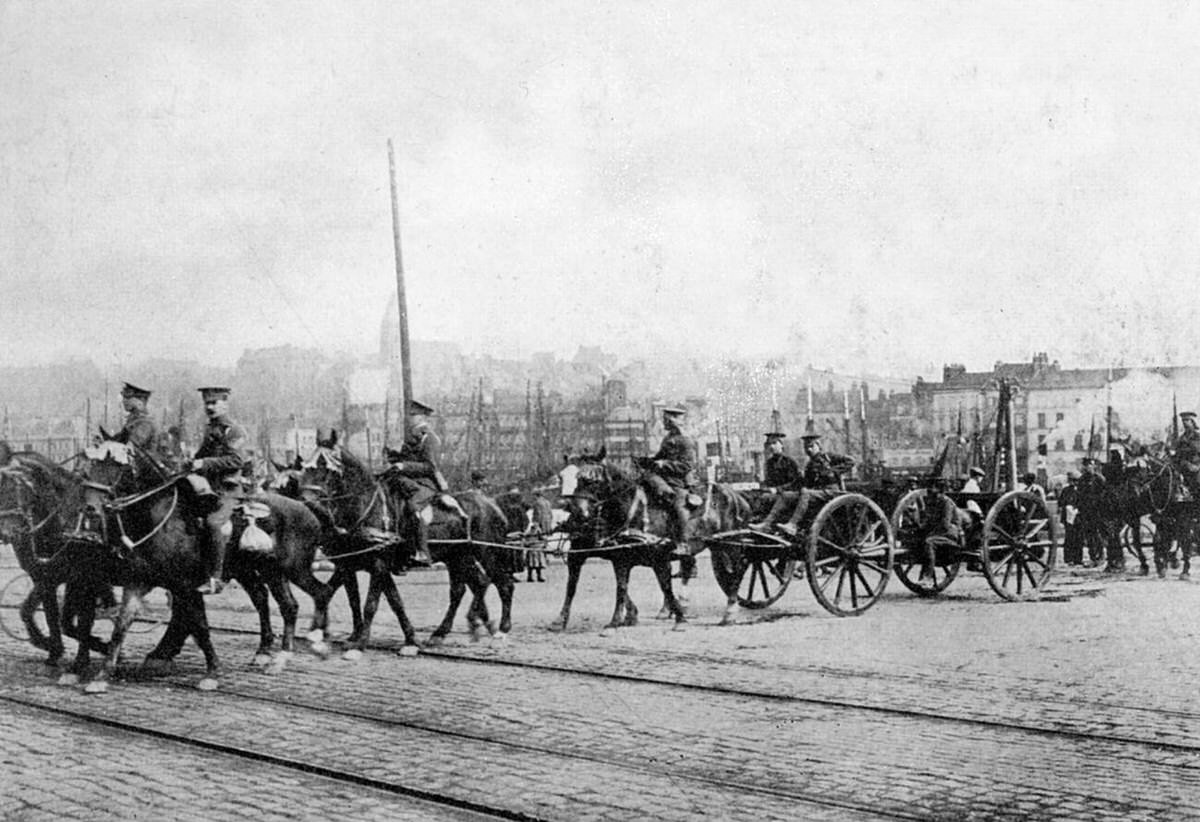
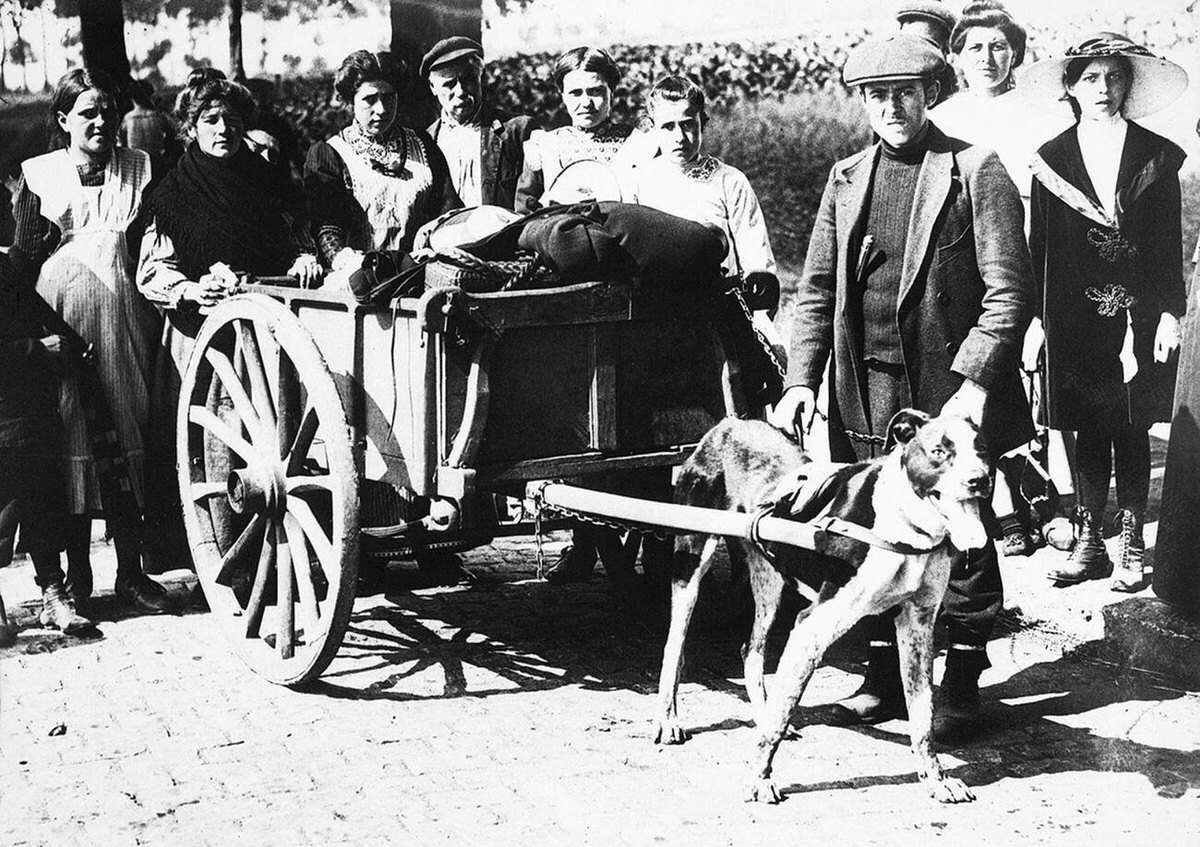
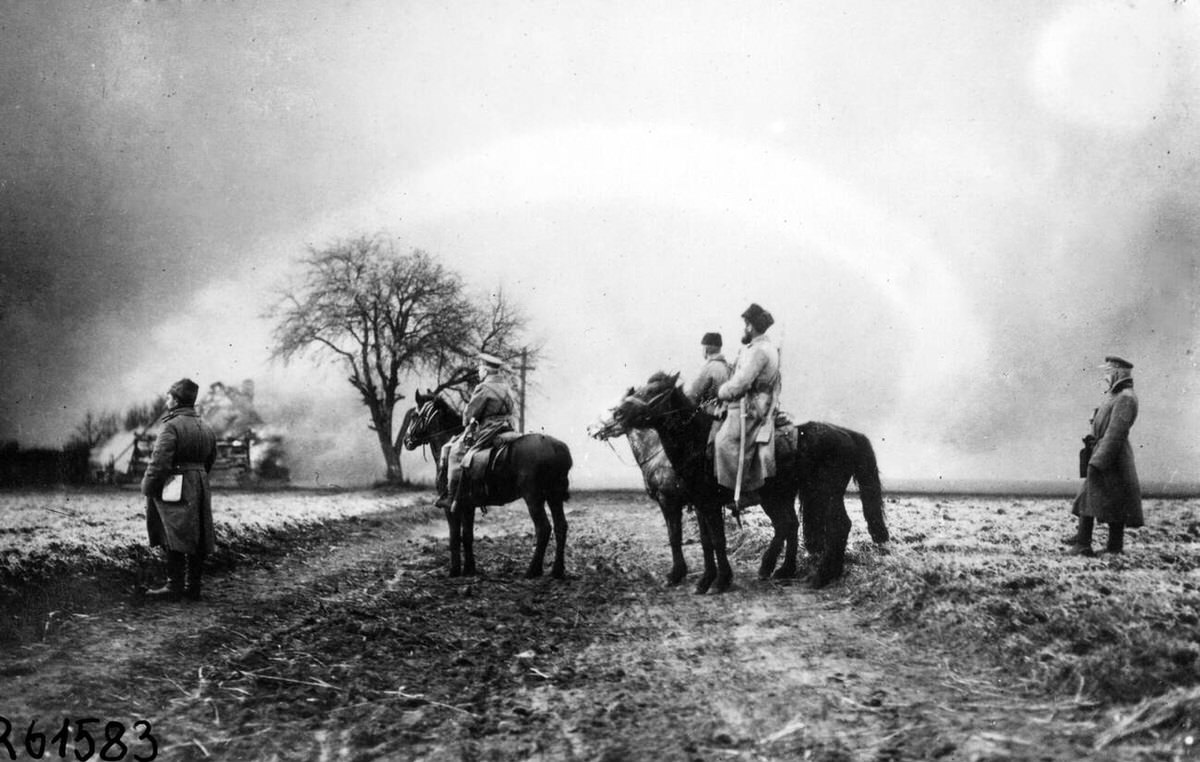
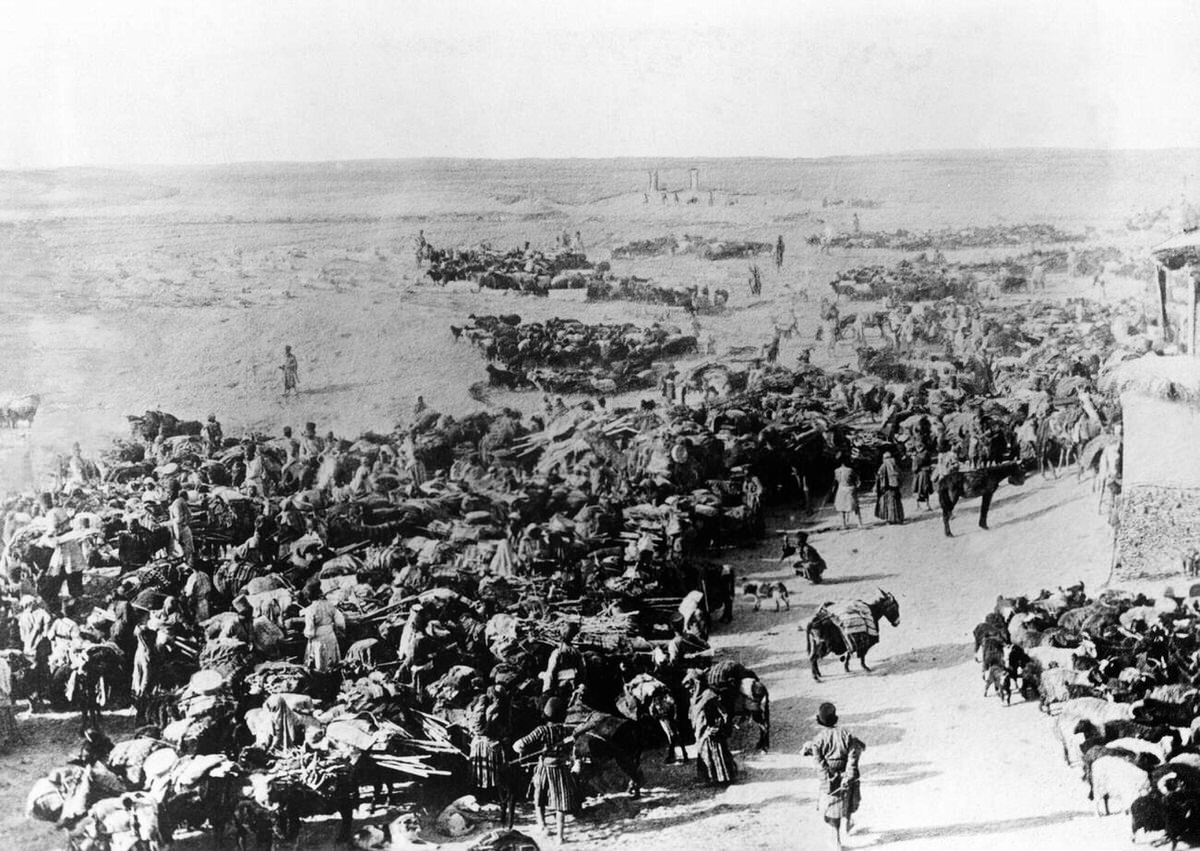
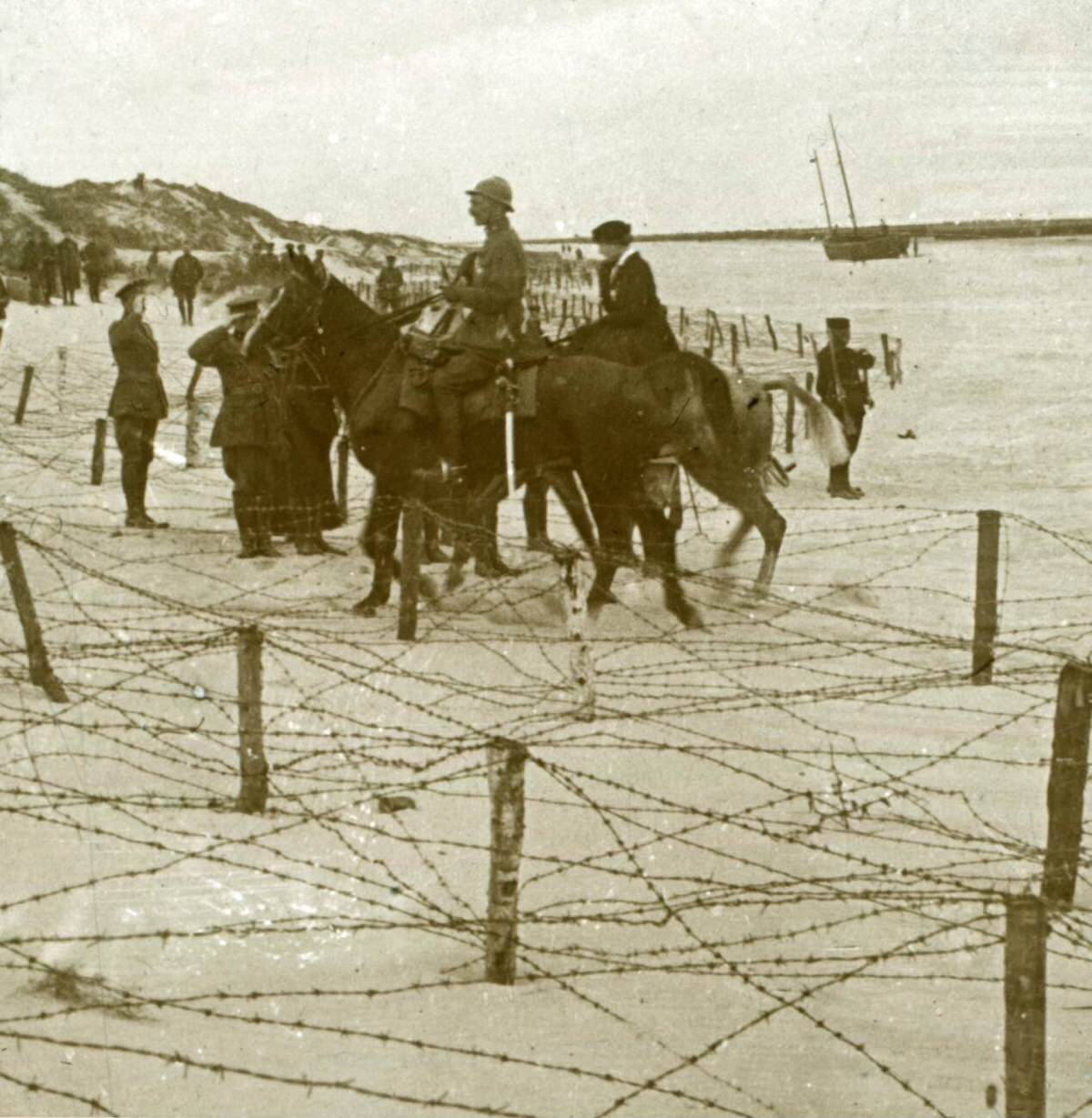
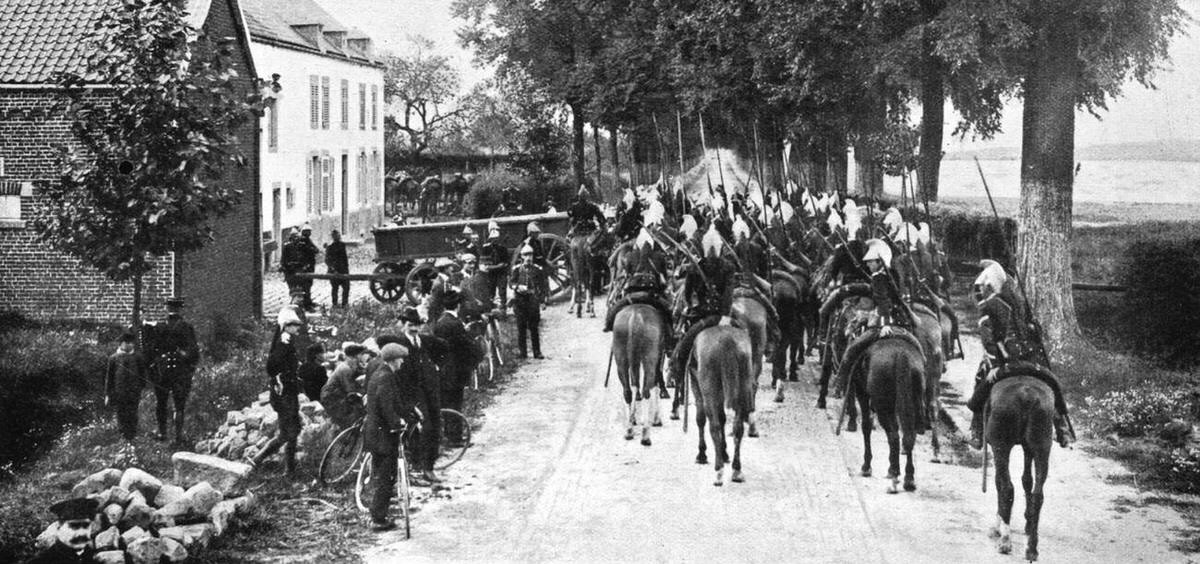
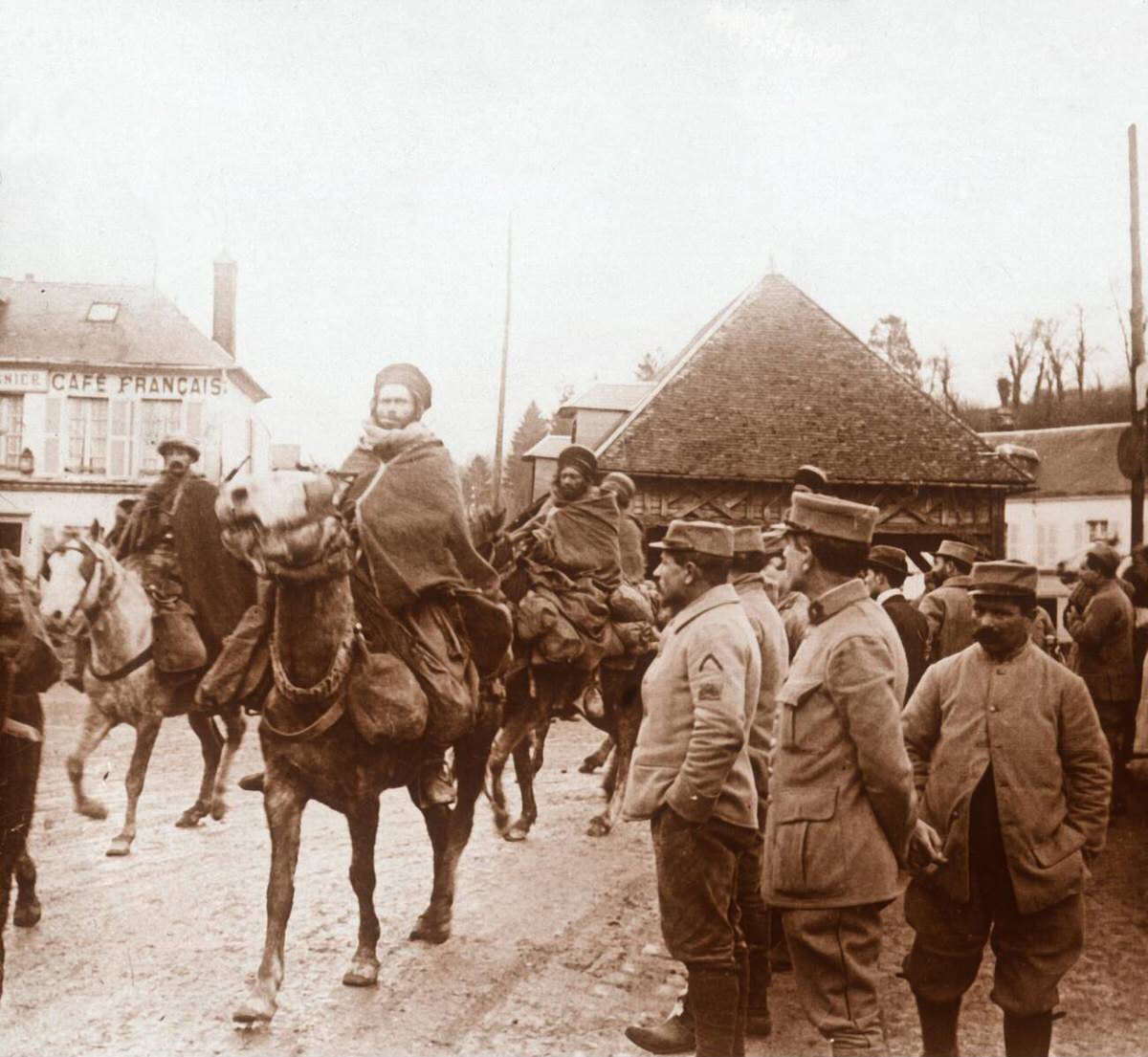
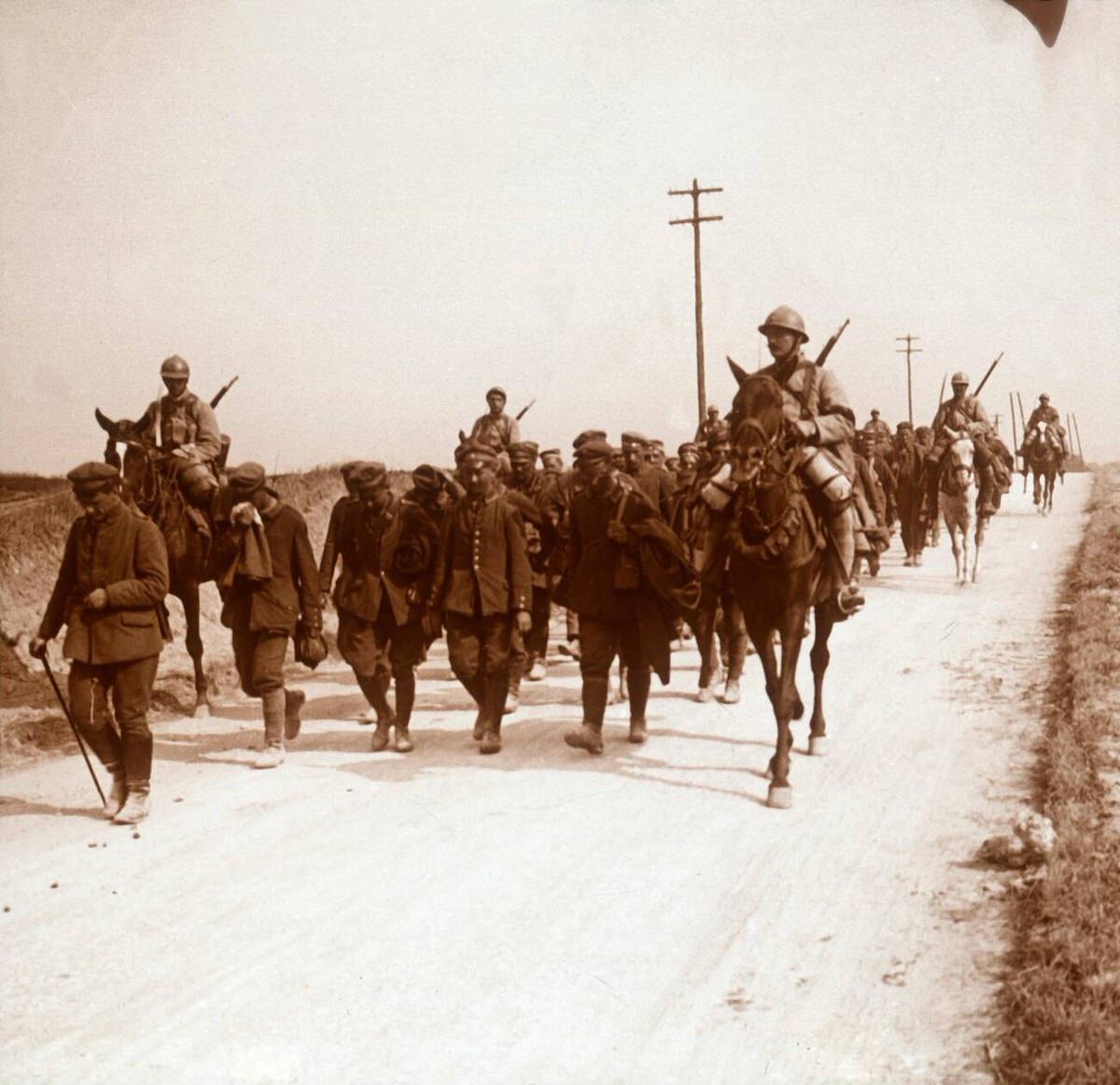
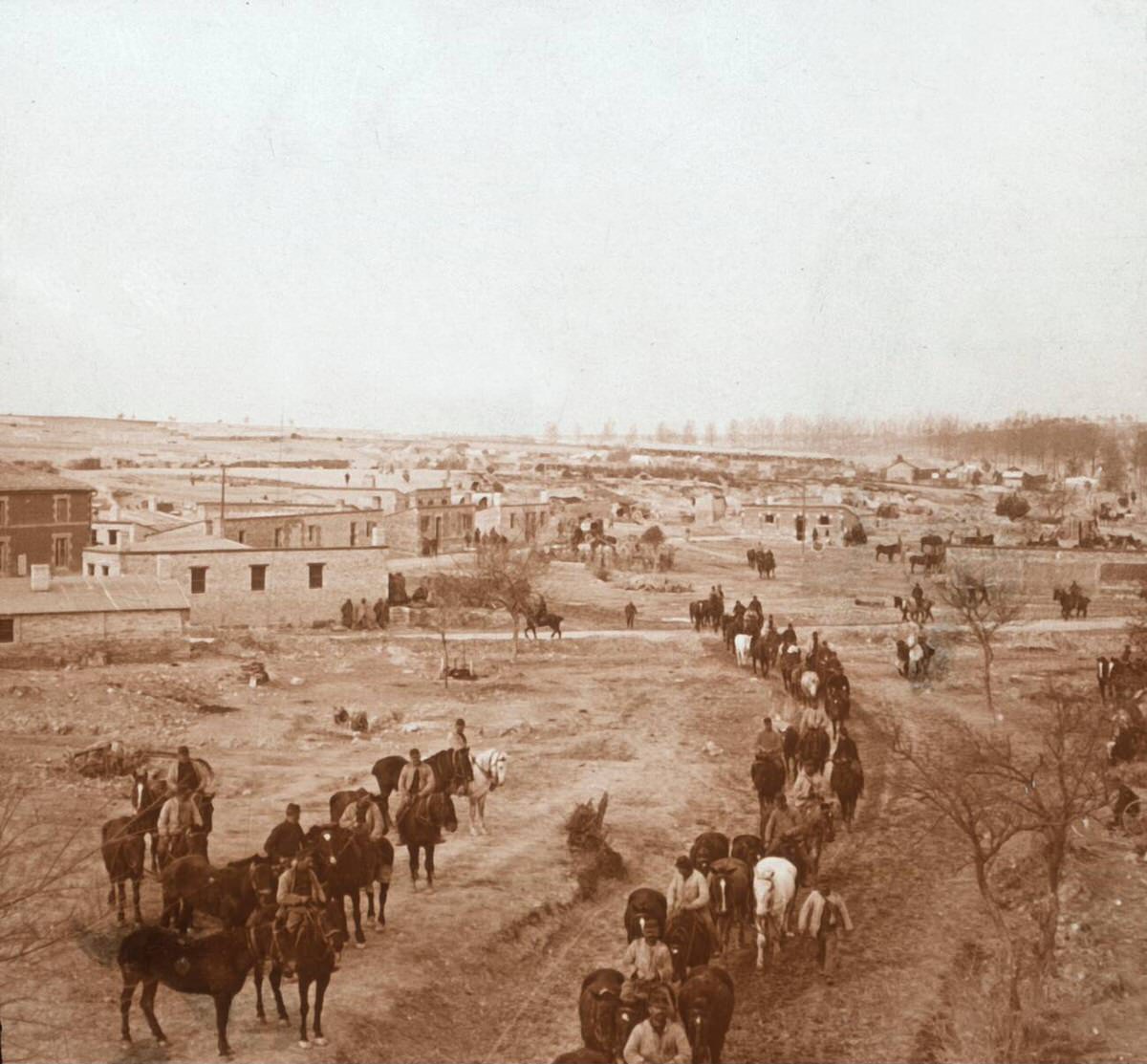
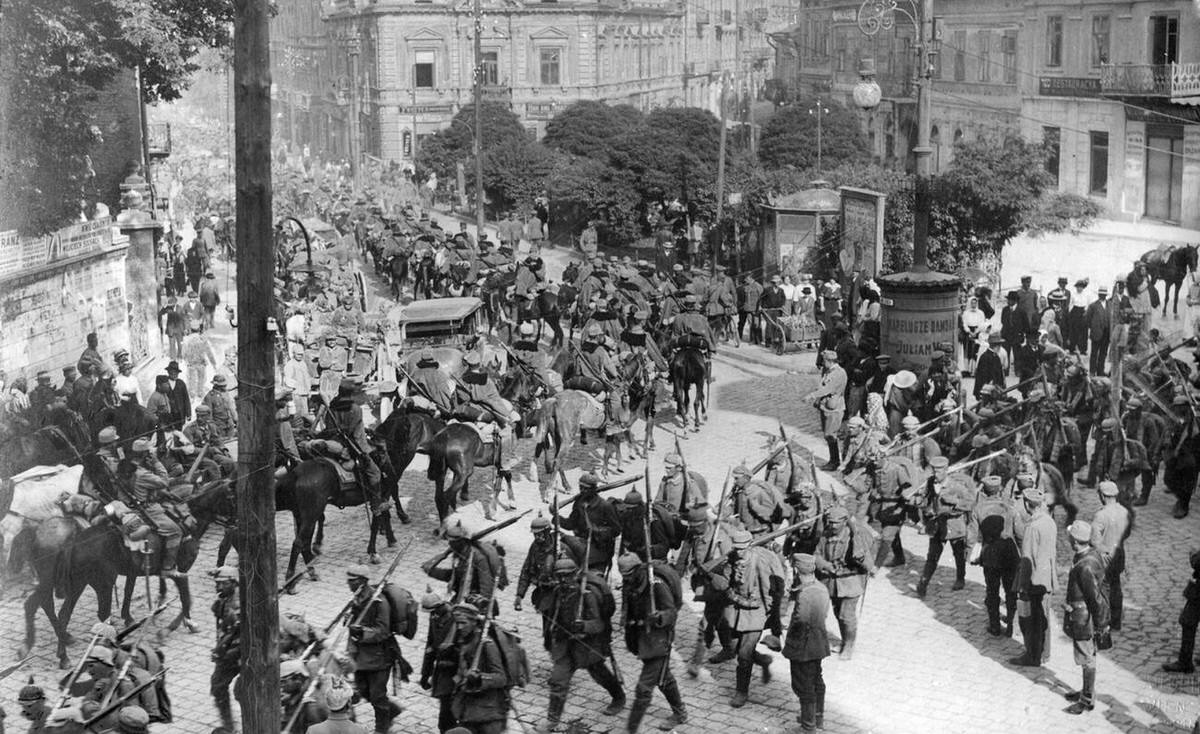
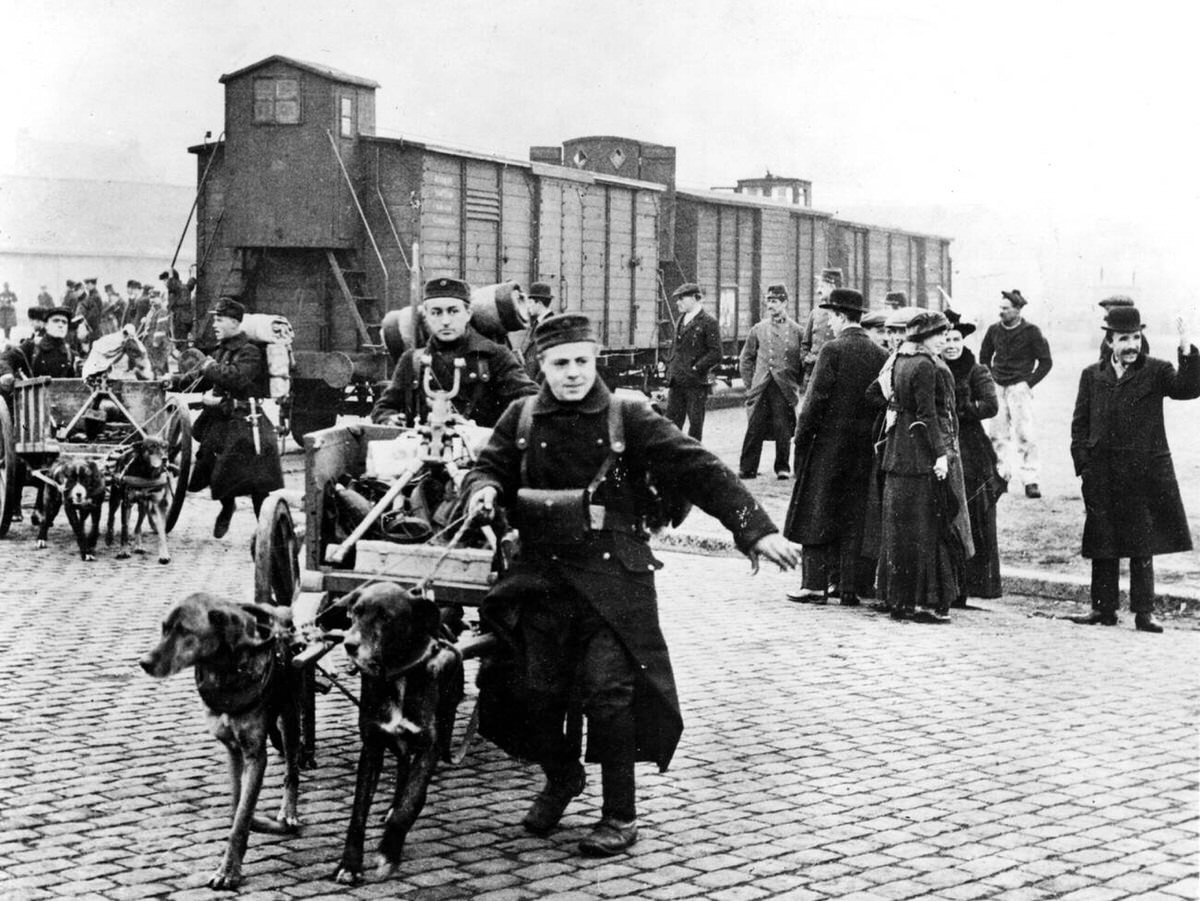
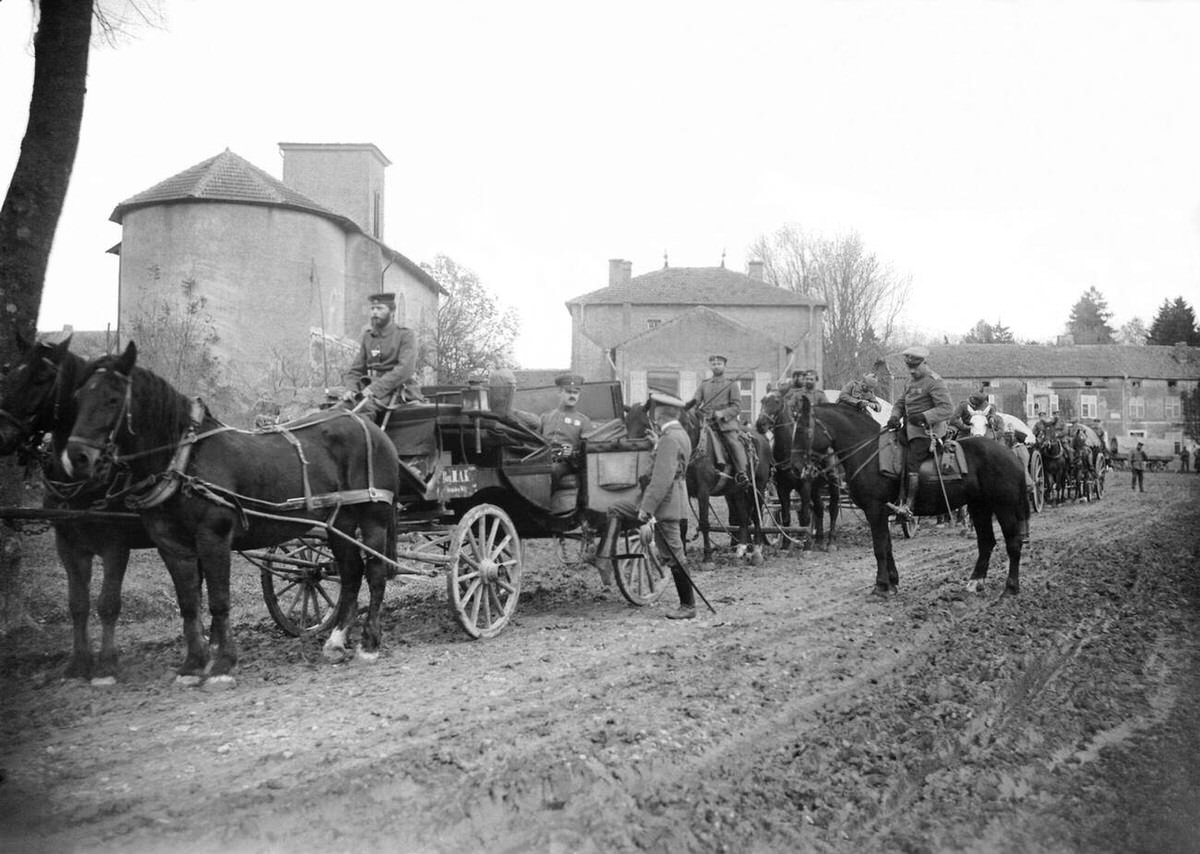
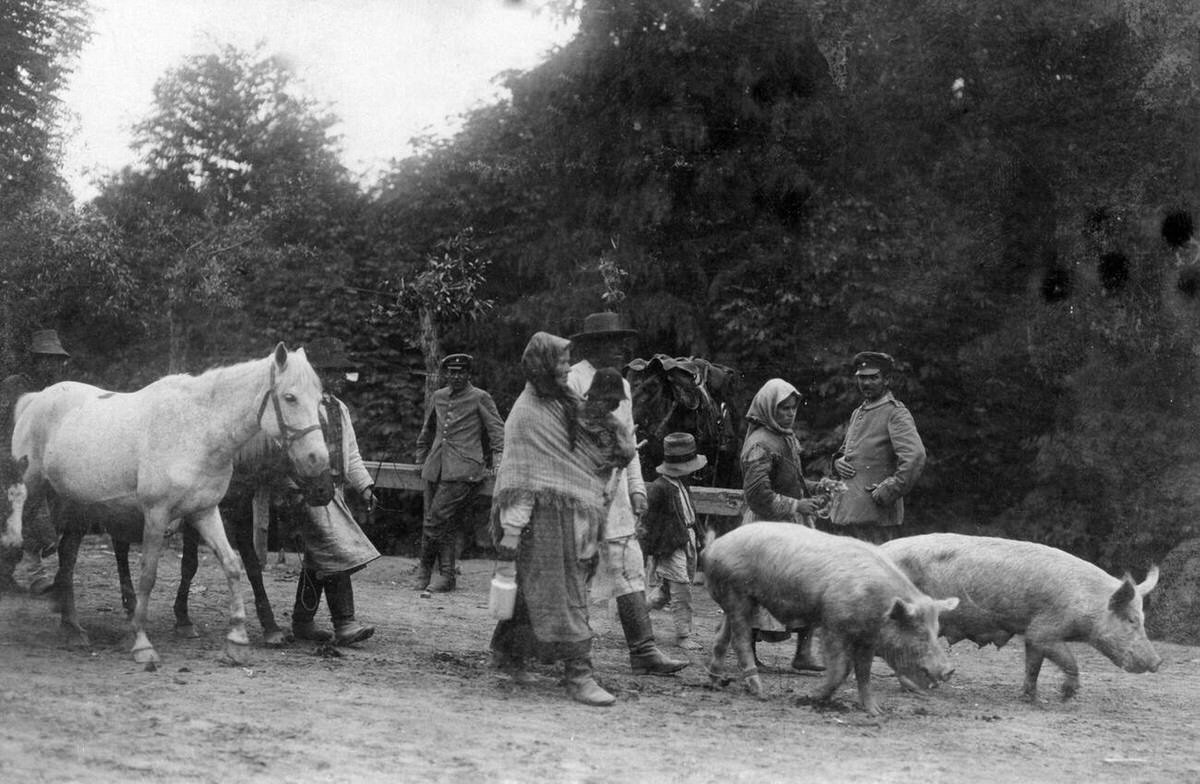
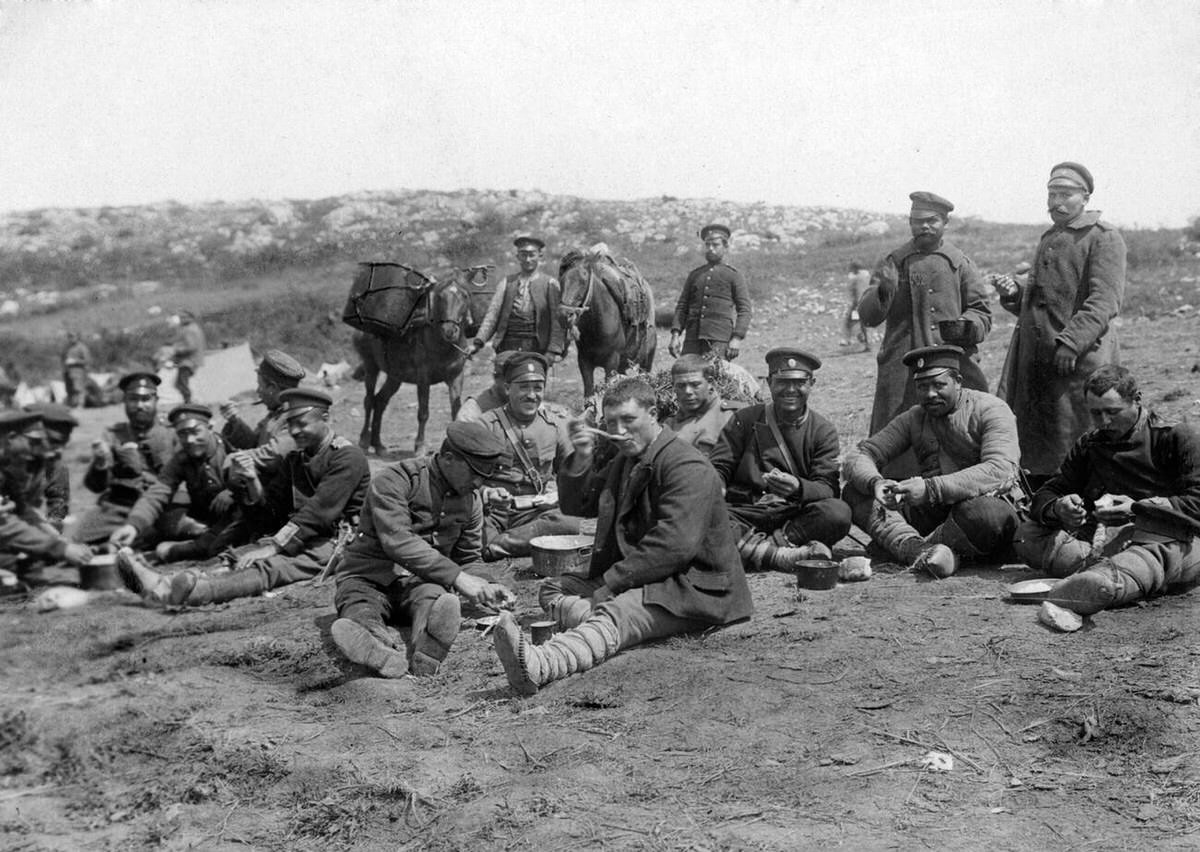
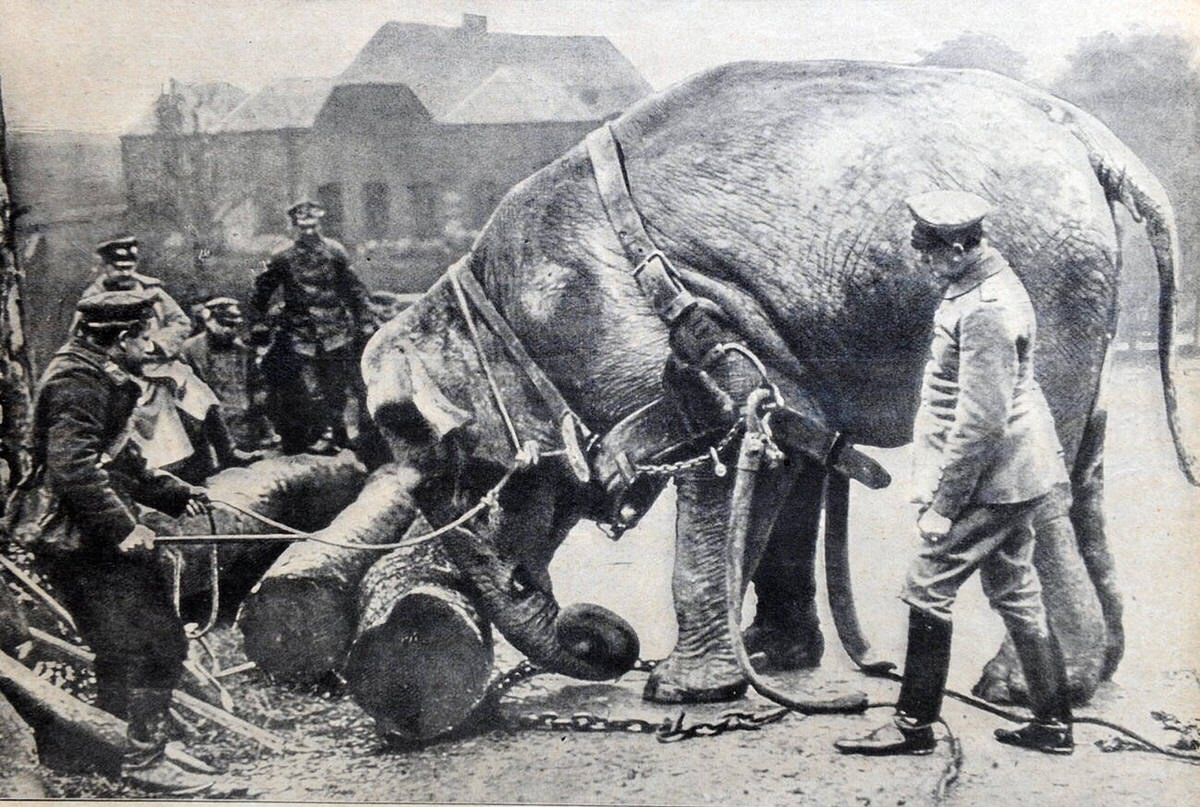
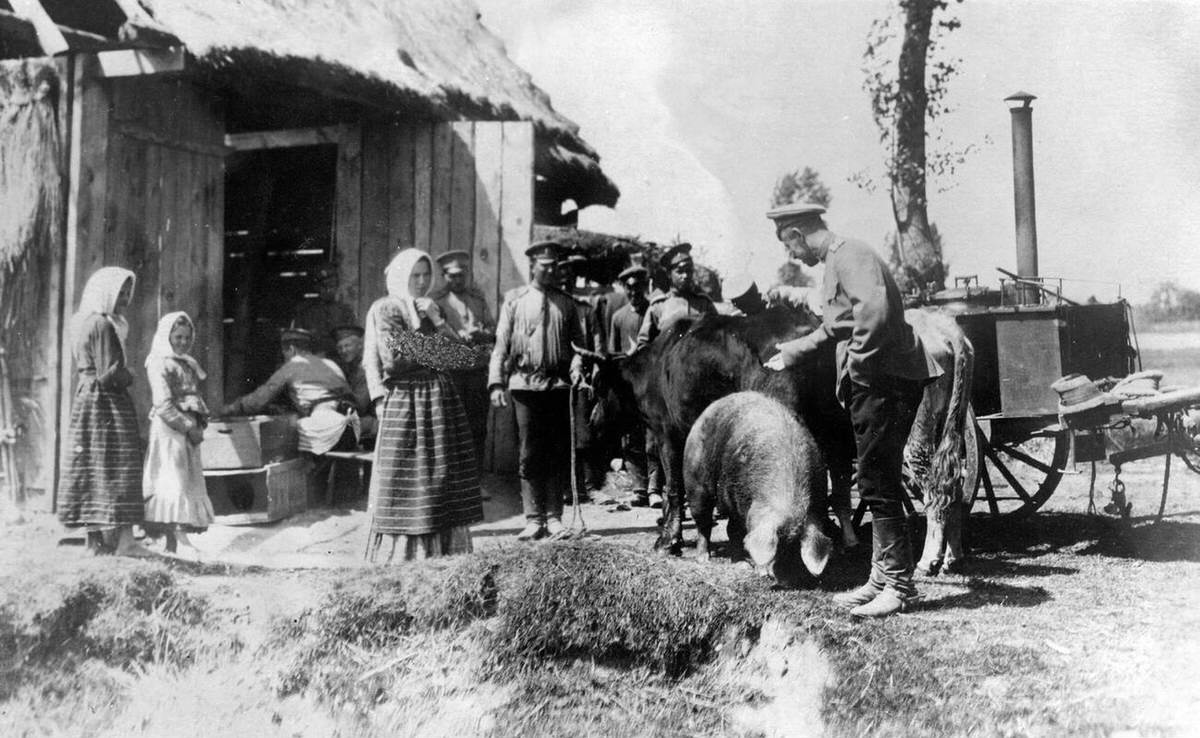
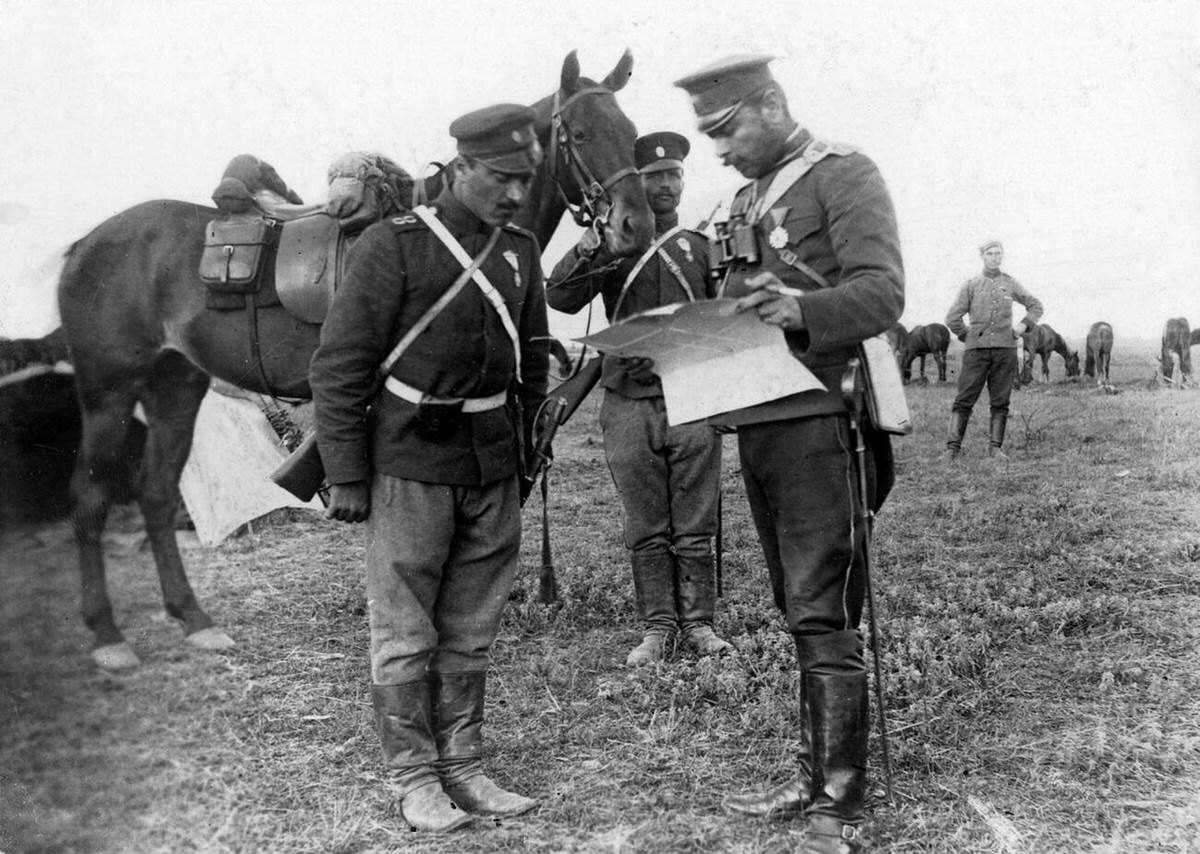
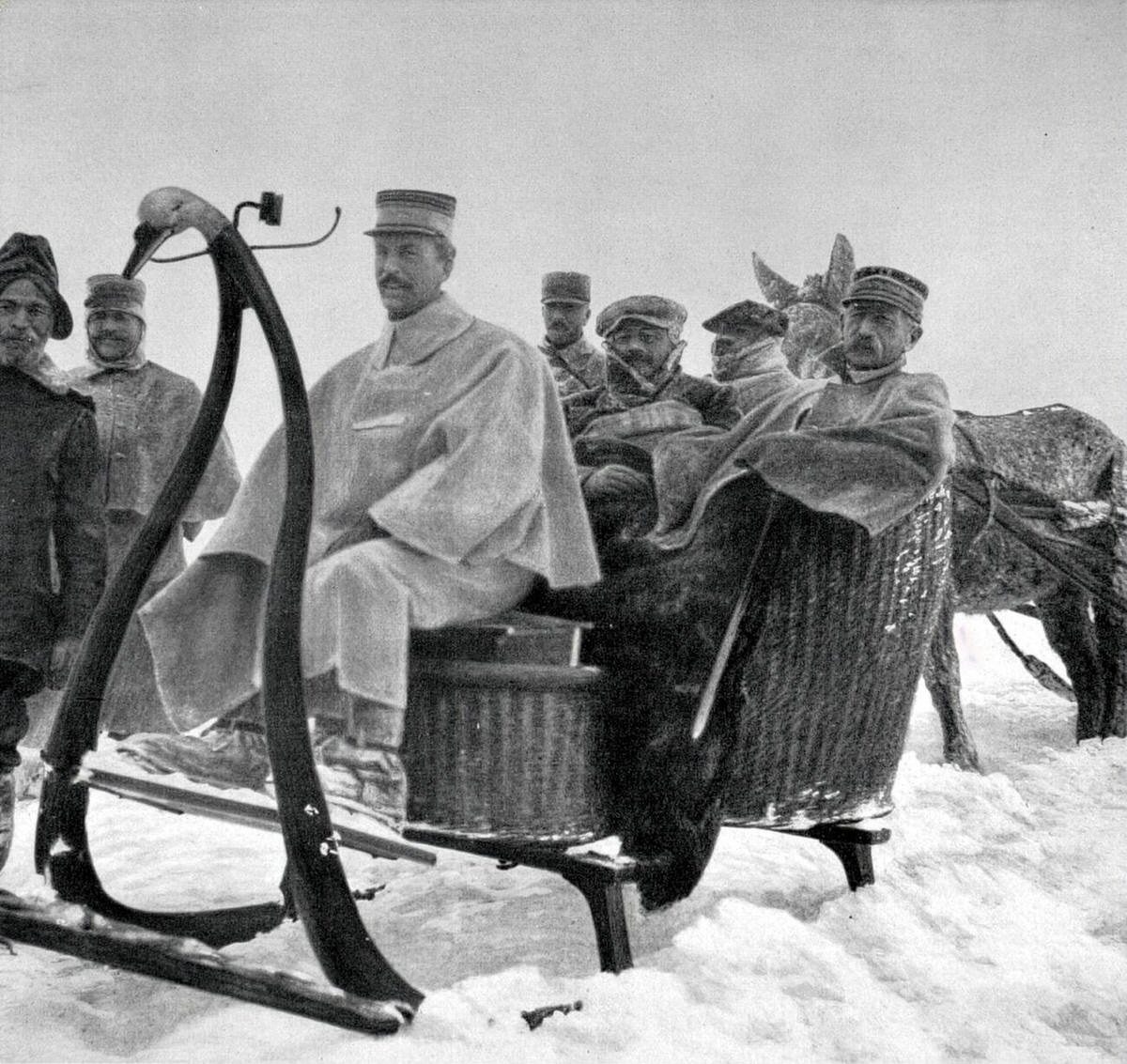
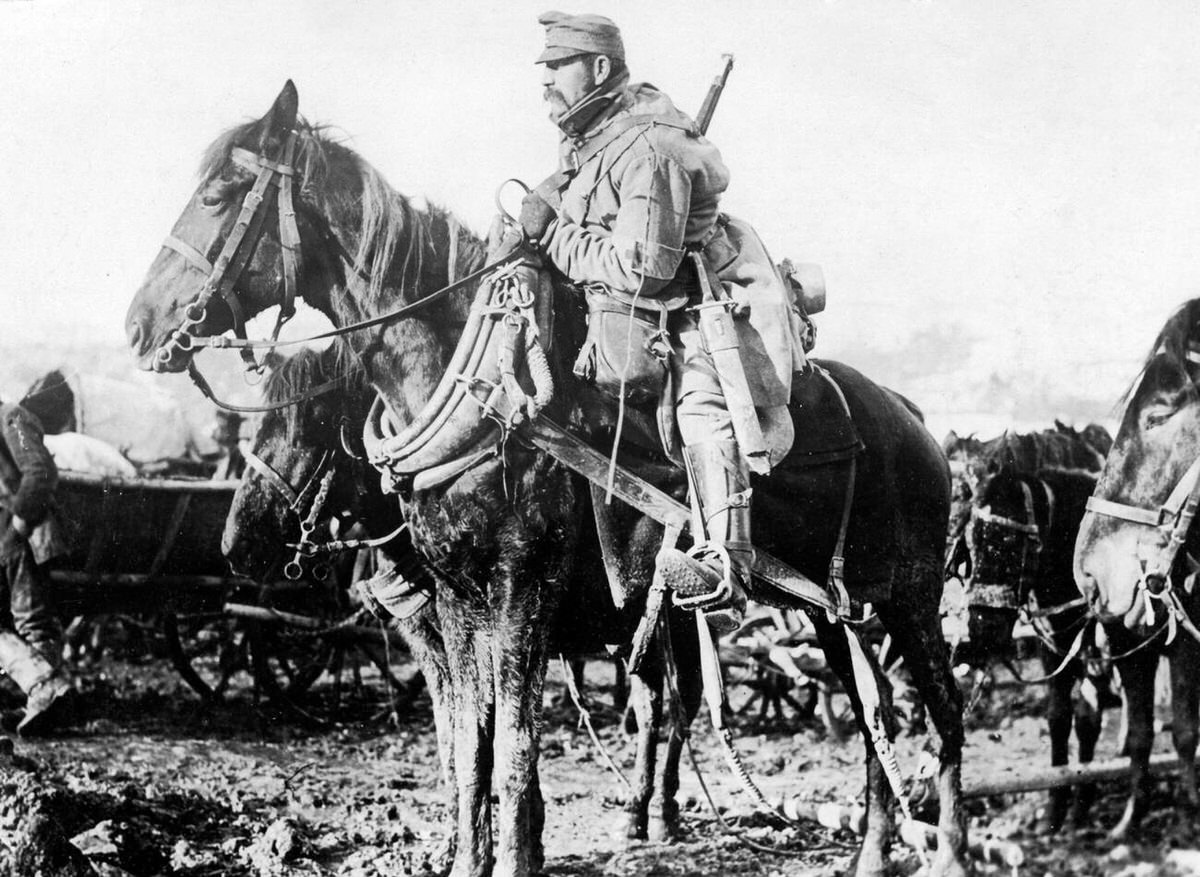
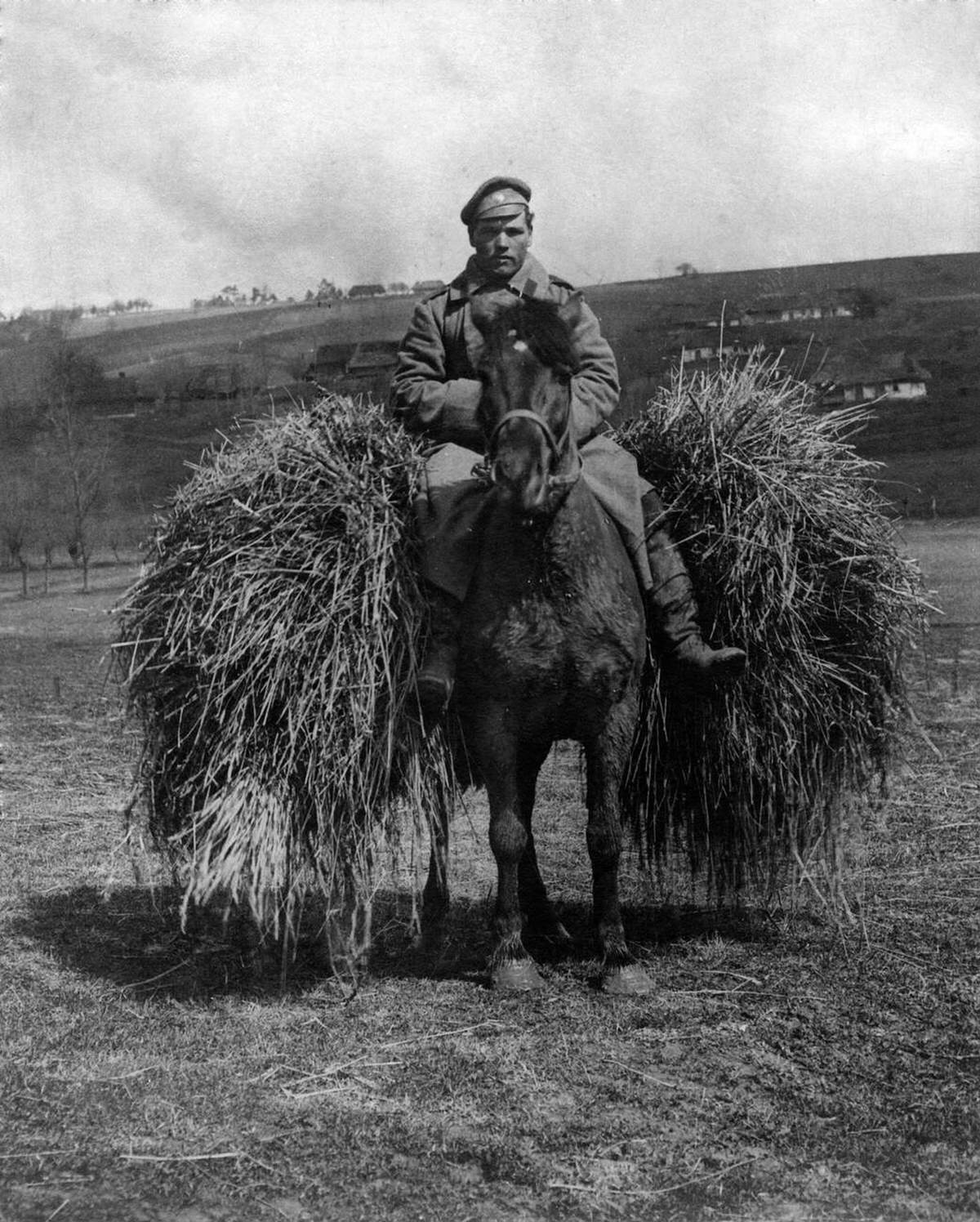
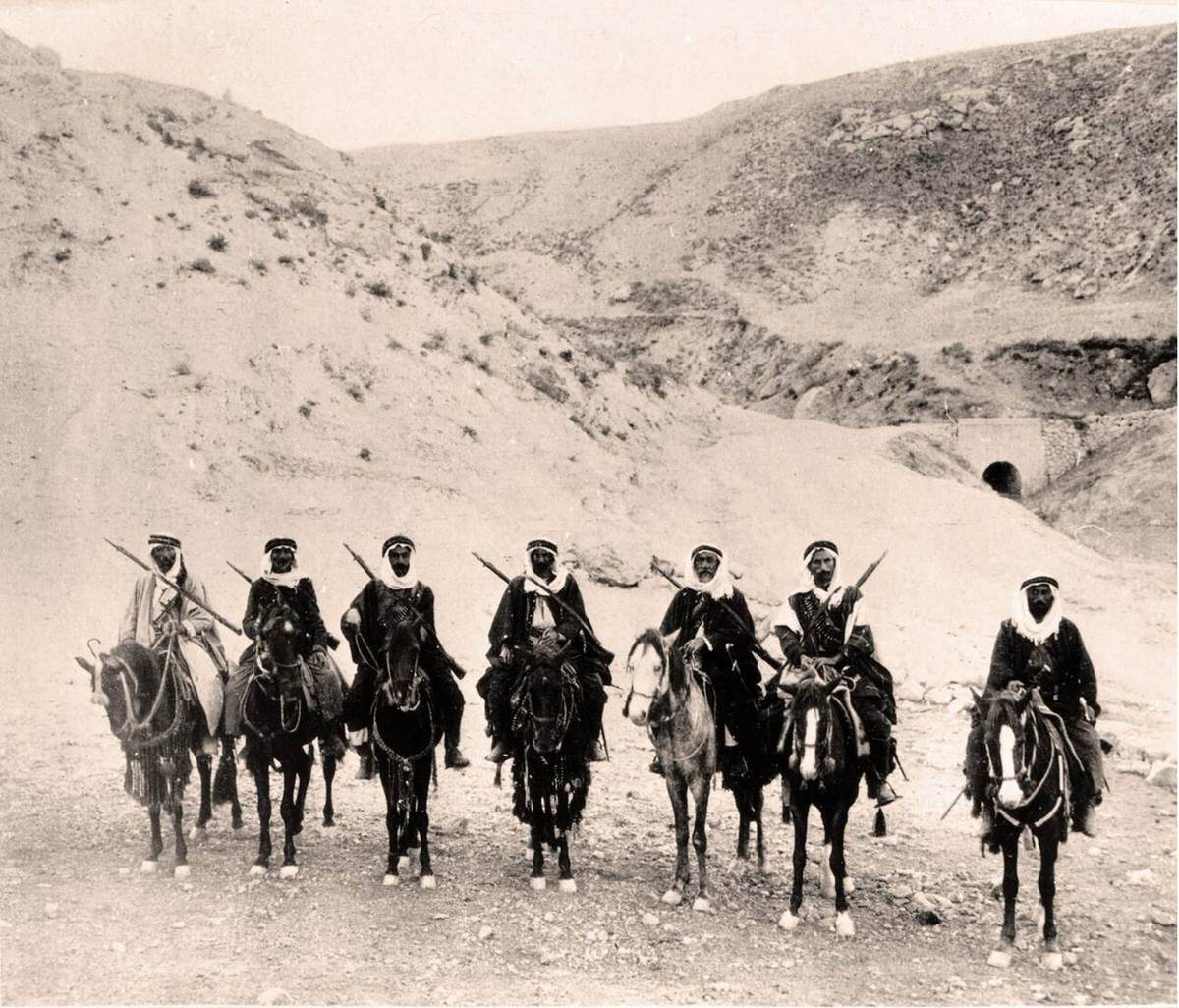
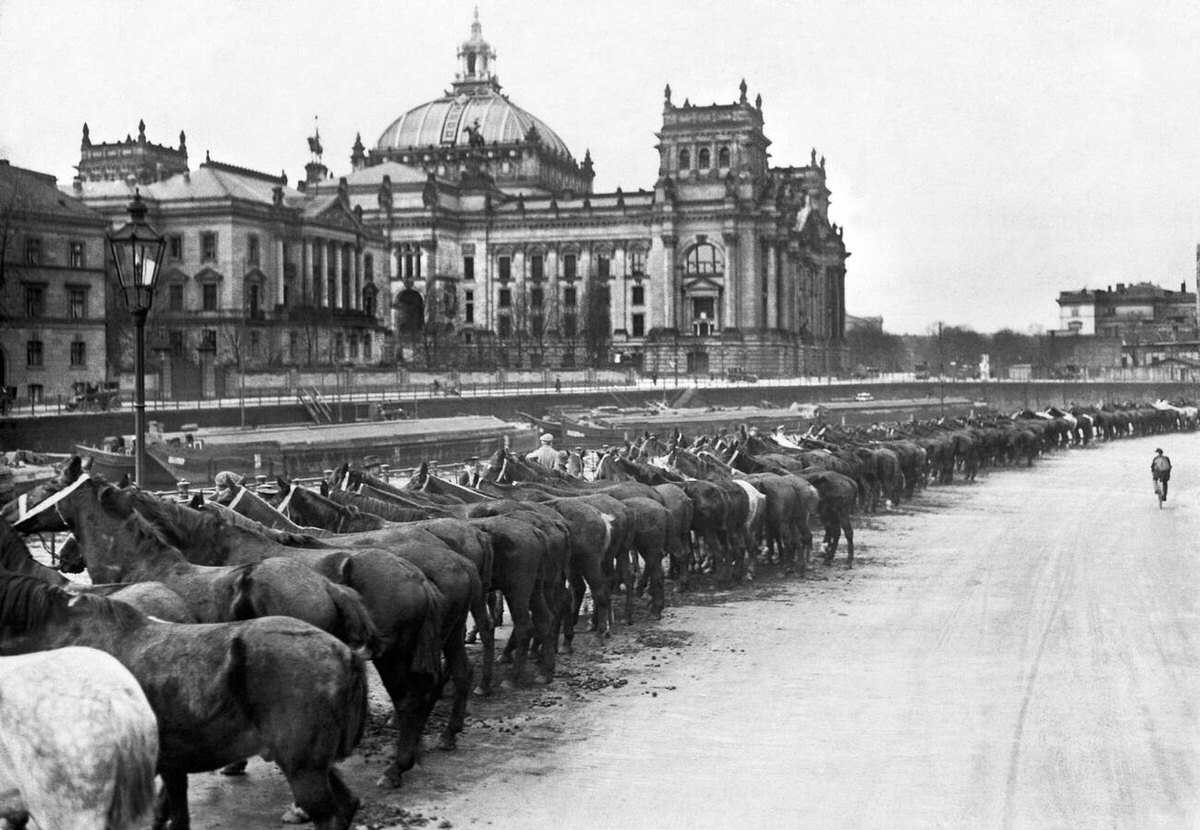
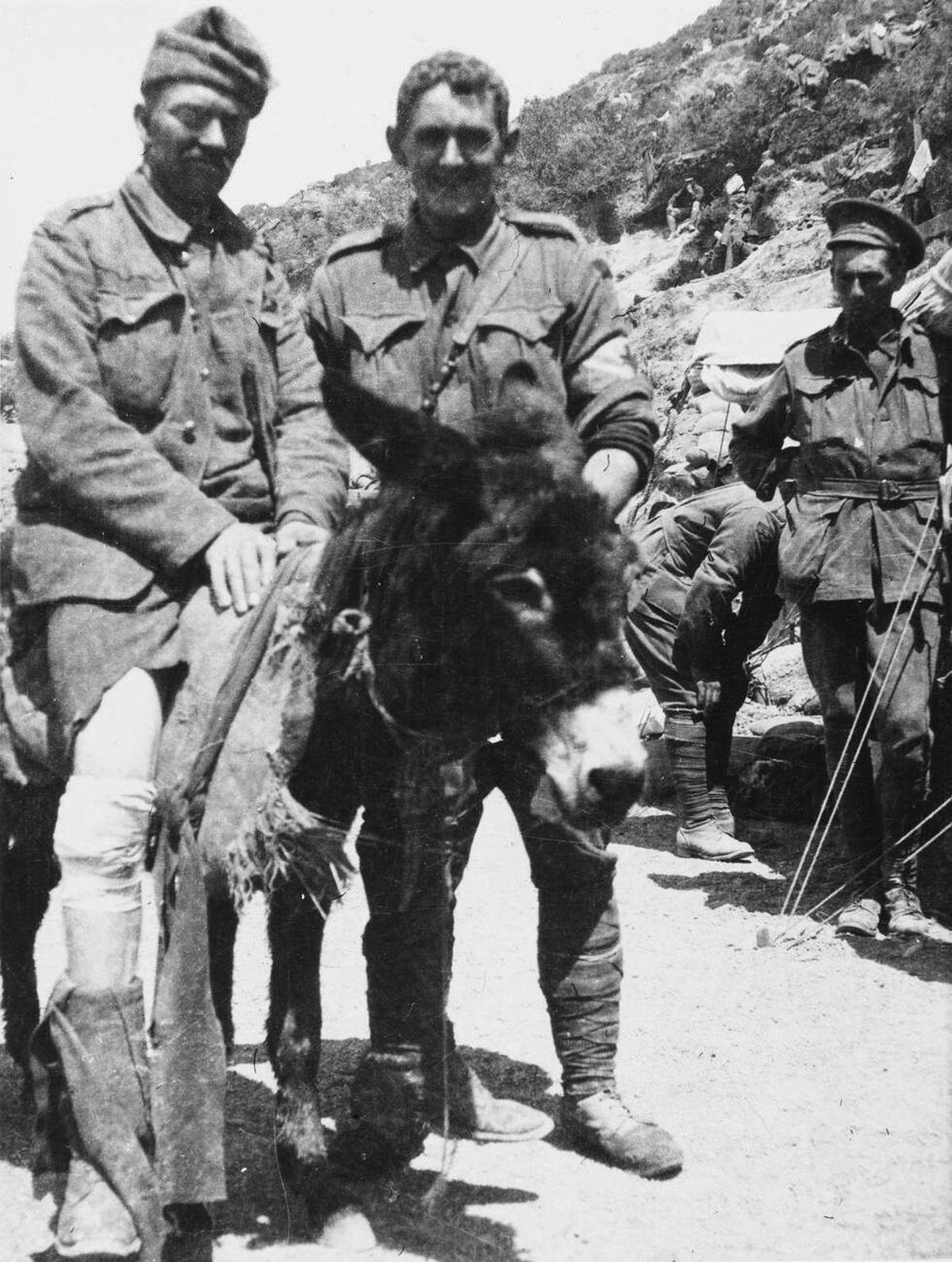
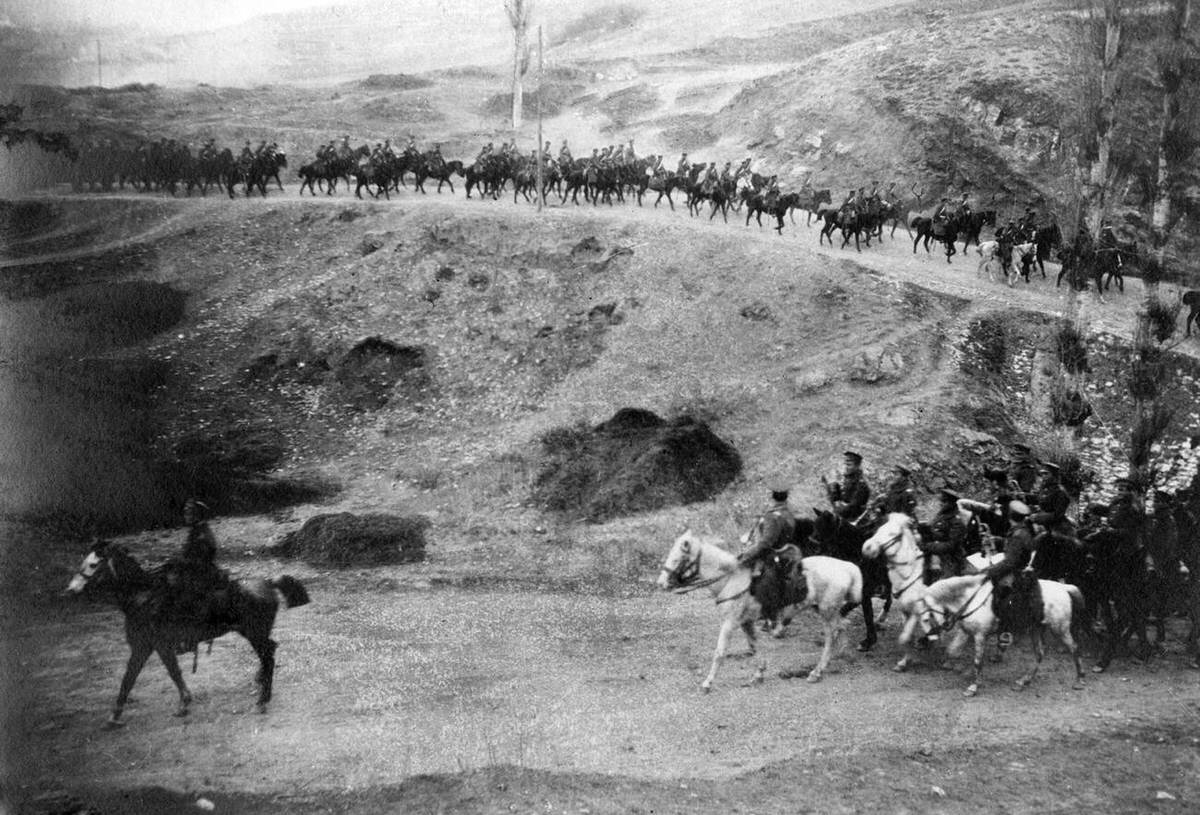
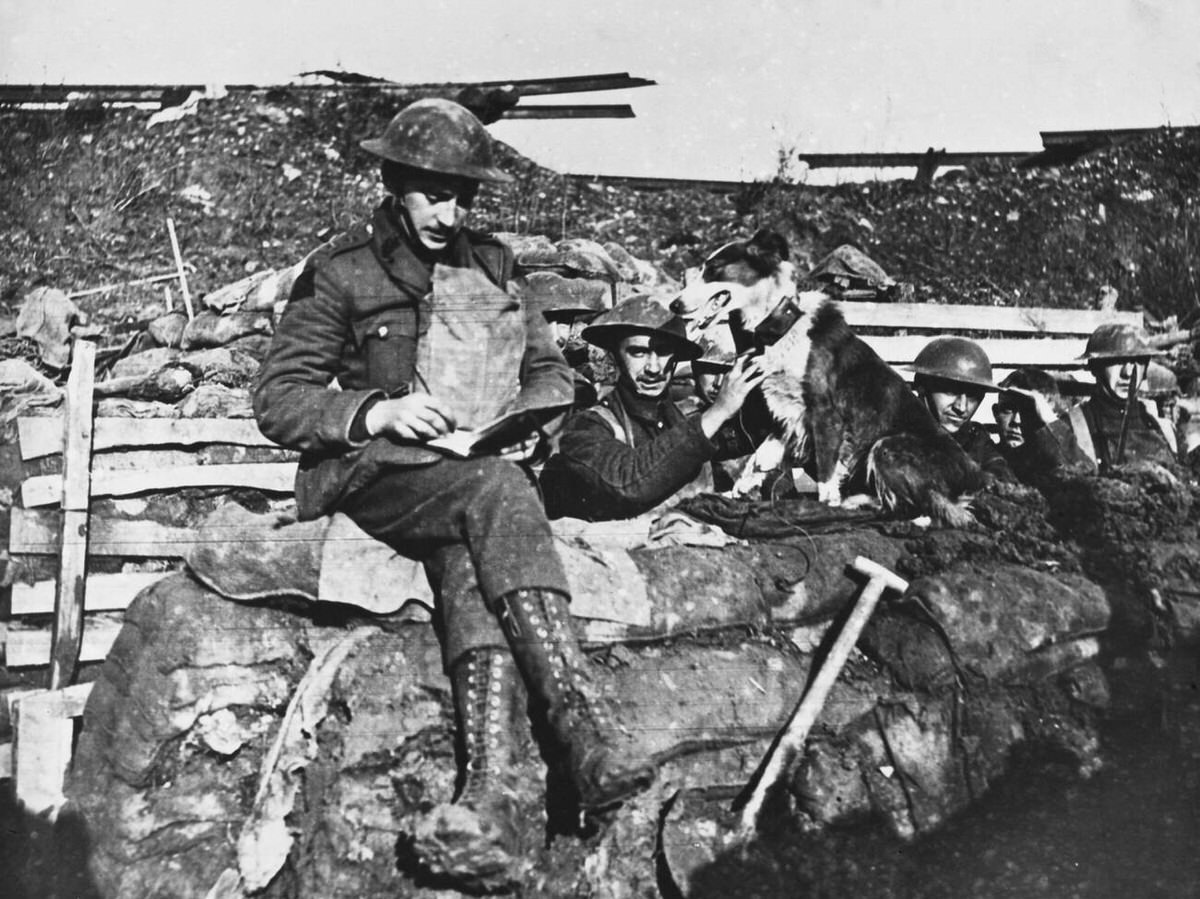
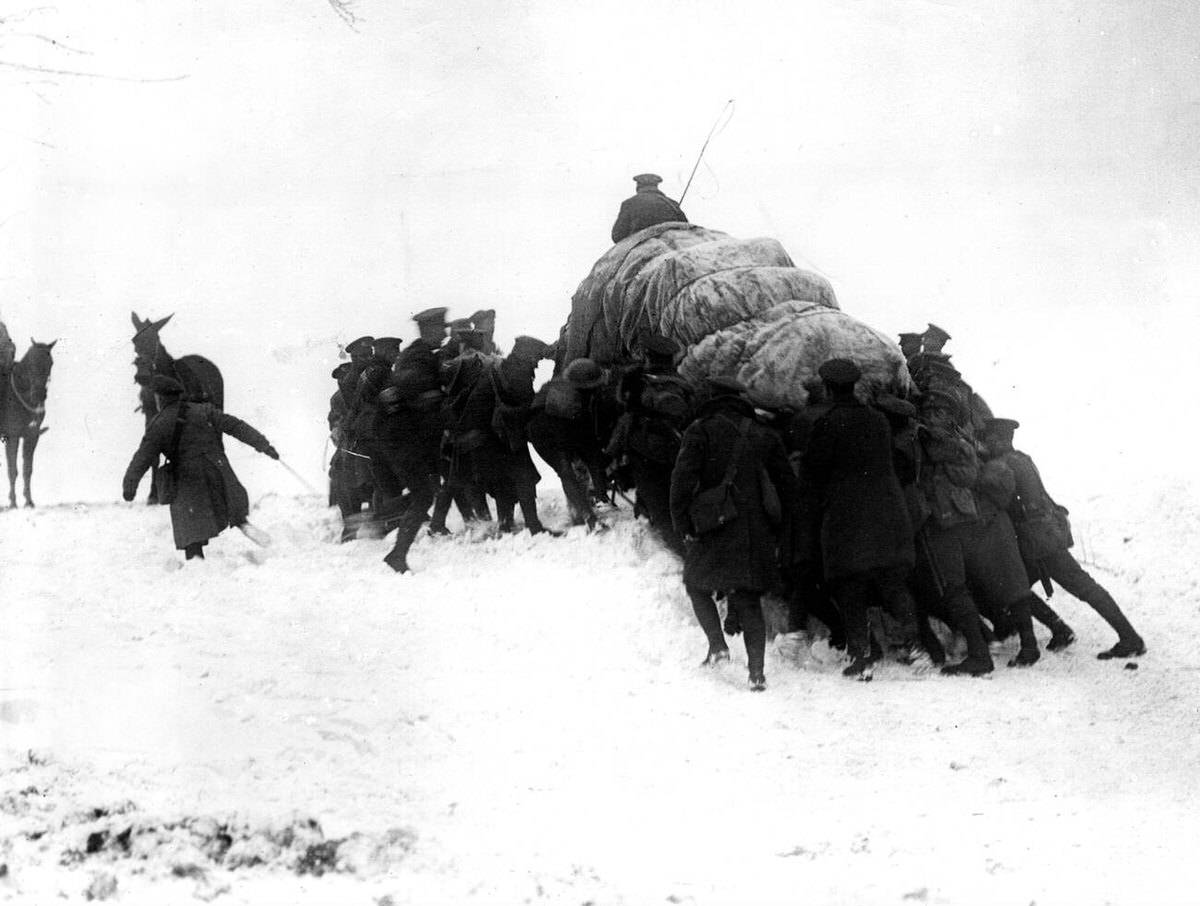
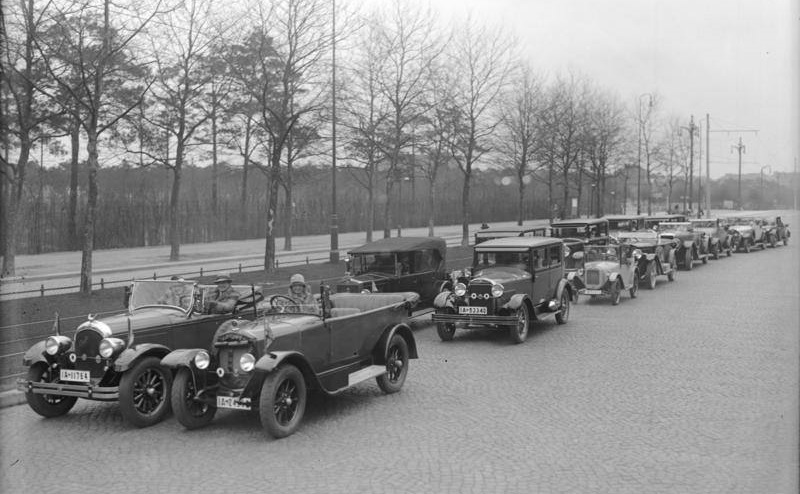
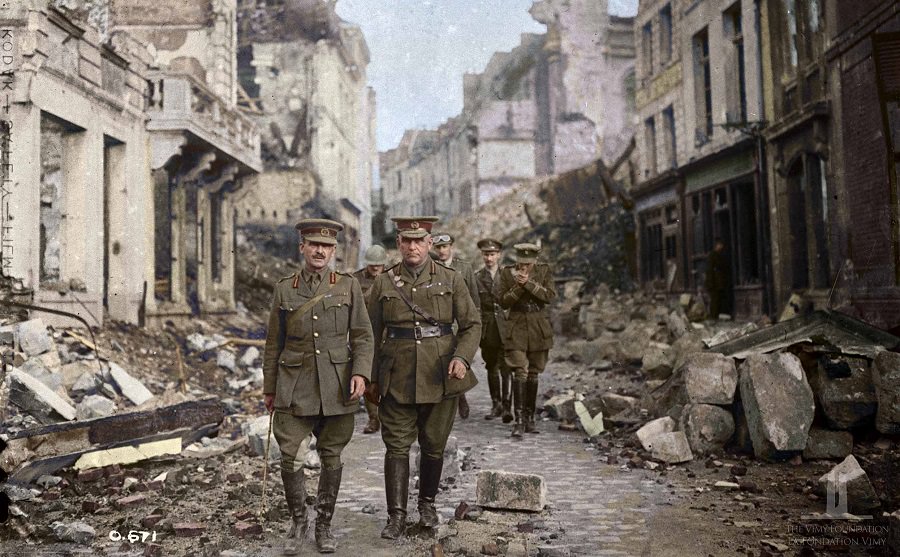
Corporal holding a koala pet in Cairo, 1915Members of the Royal Scots Greys cavalry regiment resting their horses in France, 1914Effect of enemy artillery fire upon German ambulances in Kemmel, West Flanders, 1918Red Crescent Hospital at Hafir Aujah, 1916Turkish cavalry exercises on the Salonika front, 1917Indian elephant from the Hamburg Zoo used by Germans to move tree trunks in Valenciennes, France, 1915German officers in an automobile with a convoy of wagons and soldiers, 1914Belgian Army homing pigeon stations, 1914Draft horse hitched to a post next to its partner killed by shrapnel, 1916General Kamio at the formal entry of Tsingtao, 1914Belgian refugees leaving Brussels with a wagon pulled by a dog, 1914Australian Camel Corps going into action at Sharia near Beersheba, 1917Dead German artilleryman and draft horses on the Western Front, 1918Military episode in Walachia, Romania, 1914Belgian chasseurs passing through Deinze on the way to meet the German invasion, 1914Camels at a watering station in Asluj during the Palestinian campaign, 1916British Mark V tank passing a dead horse in Peronne, France, 1918Horses requisitioned for the war effort in Paris, 1915Surviving horse used to remove dead horses after the Battle of Haelen, 1914Algerian cavalry escorting German prisoners in western Belgium, 1914Russian Cossack in firing position behind his horse, 1915Serbian artillery in action on the Salonika front, 1917Horse being operated on for a gunshot wound in Le Valdahon, France, 19186th Australian Light Horse Regiment marching in Sheikh Jarrah, Jerusalem, 1918French cavalry horses swimming across a river in northern France, 1914Dispatch dog fitted with a basket for transporting carrier pigeons in Namur, Belgium, 1914Karl I during a visit to the Italian front, 1917Escort party, 1910sDestroyed café in Mouland, 1914King George V inspecting troops at Aldershot, 1914British Expeditionary Force units in Boulogne, France, 1914Dogs pulling for the Belgian army, 1914Officer patrol in Russia, 1914Camp of a Persian tribe during World War I, 1914Austro-Hungarian field hospital, 1914Belgian artillery avoiding German Taube planes, 1914Arriving at La Panne, Flanders, Belgium, 1914French aid to Belgium and contact with German cavalry, 1914Horses in Somme-Tourbe, France, 1914Russian cavalry during World War I, 1914North African soldiers, 1914German prisoners, 1914British Front in Belgium during the First Battle of Ypres, 1914Turkish field artillery armed with Krupp quick-firing guns, 1914Mounted soldiers in Somme-Tourbe, France, 1914German cavalry entering Spa, Belgium, 1914Soldiers of the 3rd Lahore Indian Division with goats at their camp in Orleans, France, 1914Mules of the 3rd Lahore Indian Division being detrained in Orleans, France, 1914Austro-Hungarian and German troops entering Przemysl, 1914Belgian dog carts and guns heading to the fighting line, 1914German paymaster and his staff, 1915Ruthenian refugees returning to Galicia, 1915Bulgarian soldiers having lunch, 1915Elephant donated by Hagenbeck helping behind the Western Front, 1915Russian soldiers requisitioning livestock, 1915Medical supply dog, 1915Bulgarian dispatch rider with a map, 1915German cavalrymen entering a French village, 1915War Minister Millerand and General Gabriel Putz using a sleigh in the Vosges, 1915Austro-Hungarian soldier on horseback, 1915Russian picket on horseback, 1915Bedouins traveling from Jericho to Jerusalem, 1915Horses inspected behind the Reichstag in Berlin before leaving for the front, 1915John Simpson and his donkey, 1915Bulgarian cavalry in Romania, 1916Wartime messenger dog, 1917Injured war dogs in a field hospital, 1917French mobile carrier pigeon station on the Western Front, 1917Red Cross nurse and service dog during World War I, 1917Electric wire dog, 1917Camel Transport Corps watering camels in the Wadi Arish Redoubt, 1917British troops pushing a horse wagon up a snowy hill near Hesdin, France, 1917
Andrew's writing is grounded in research and provides unique insights into the cultural and historical contexts of vintage pieces. Through his work, he aims to foster a greater appreciation for the value and beauty of vintage items.