

The Blizzard of 1978, also known as the Northeastern United States Blizzard was a catastrophic snowstorm that struck New England, New Jersey, Pennsylvania, and the New York metropolitan area. The Blizzard dropped 27.1 inches of snow on Boston. The snow fell so quickly, streets and highways were disappeared. Several cars stuck on the roads and streets. Nearly all economic activity was disrupted in the worst-hit areas. The Blizzard killed around 100 people and thousands of people were injured. It caused more than US$520 million (US$2.04 billion today) in damage.
The lack of foreknowledge about the severity of snowfall impacted a lot on the preparations. Although the weather forecasting was adequate in the 1970s, the snow failed to arrive in the pre-dawn hours reported on the media. People thought it to be another failed forecast. Thousands of people were caught in the middle of the storm. Many people were stranded in their cars along roads throughout New England.
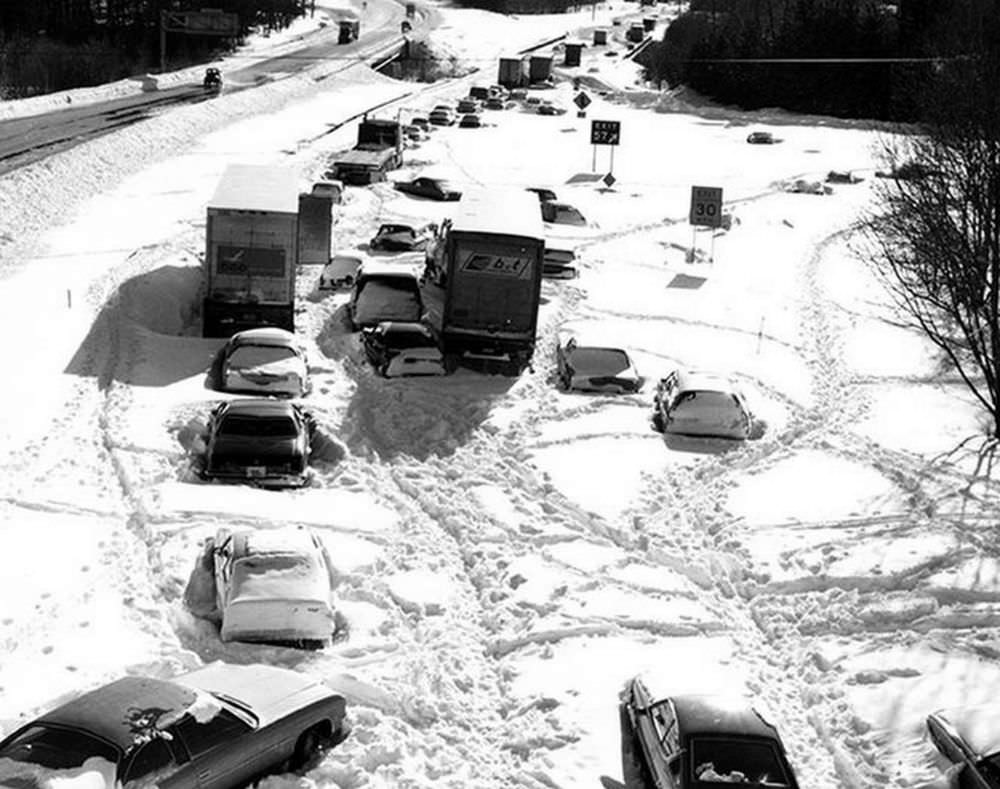
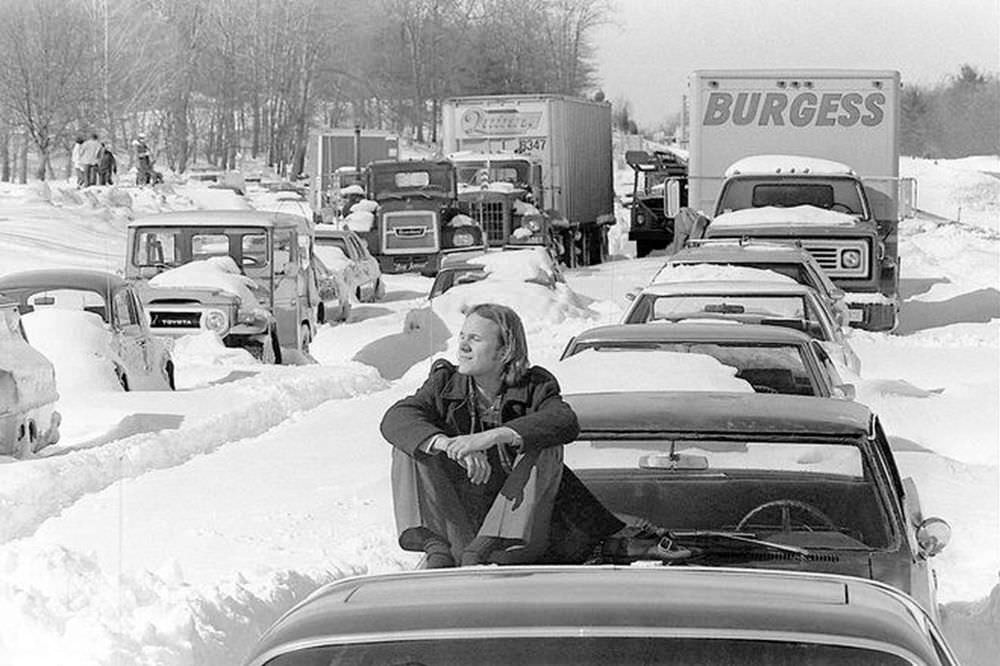
#1 Abandon cars along Route 128 near Needham, Massachusetts, during the Blizzard of 1978.
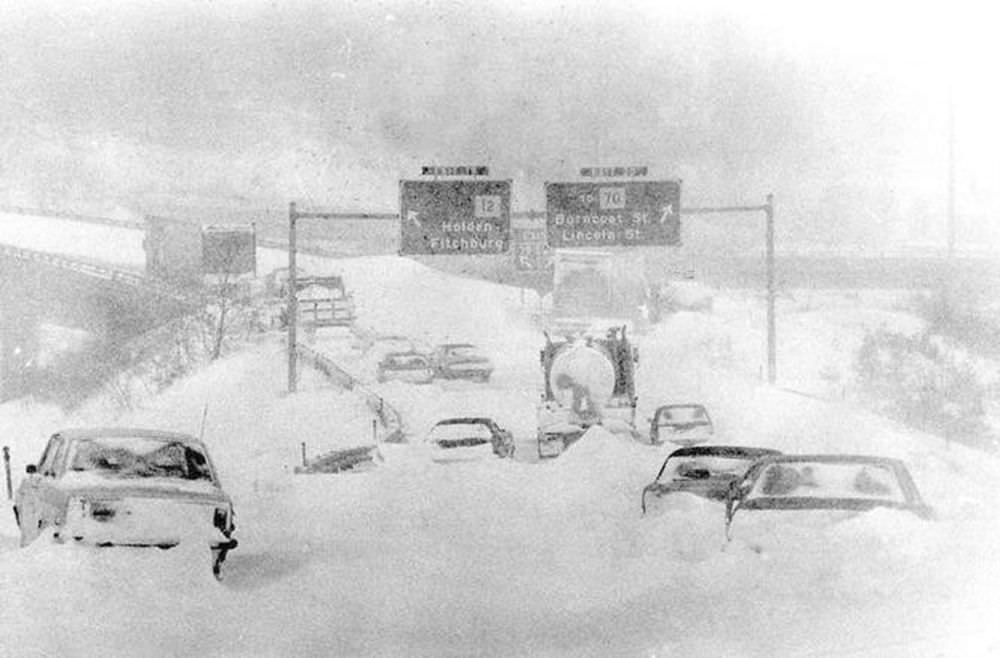
#2 Vehicles are seen stranded and abandoned in the deep snow on the exit for Burncoat Street off Interstate 290 in Worcester, Mass., Feb. 7, 1978.
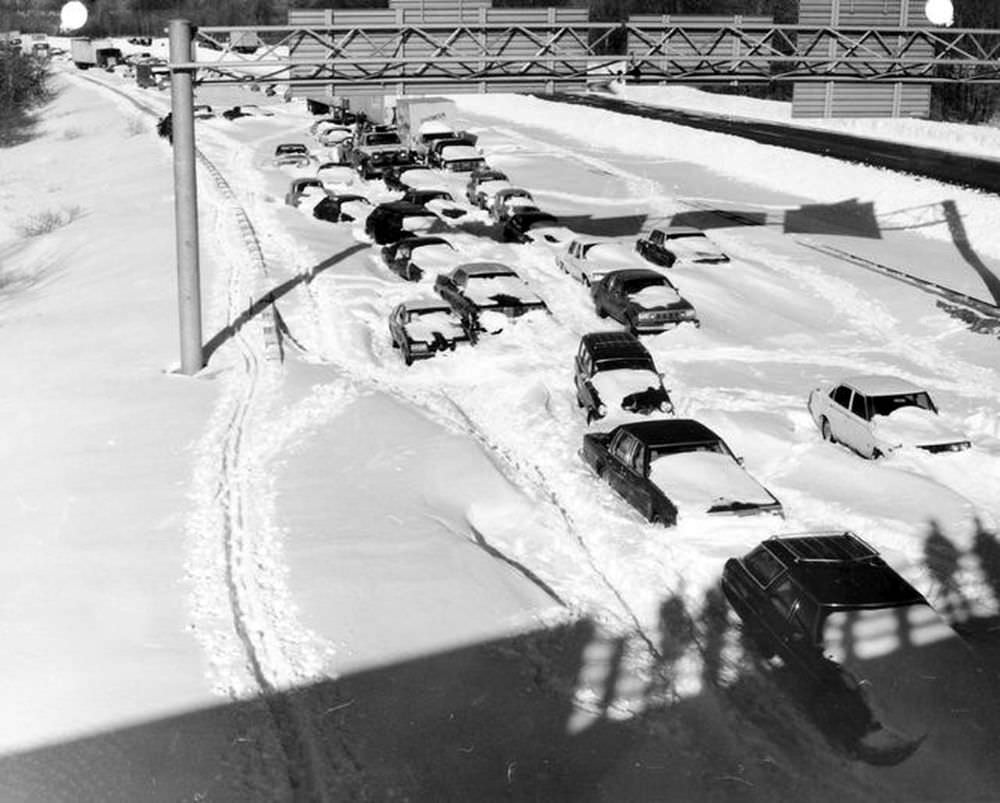
#3 Vehicles stranded in the snow in the southbound lanes of Route 128 in Needham, after the Blizzard of 1978.
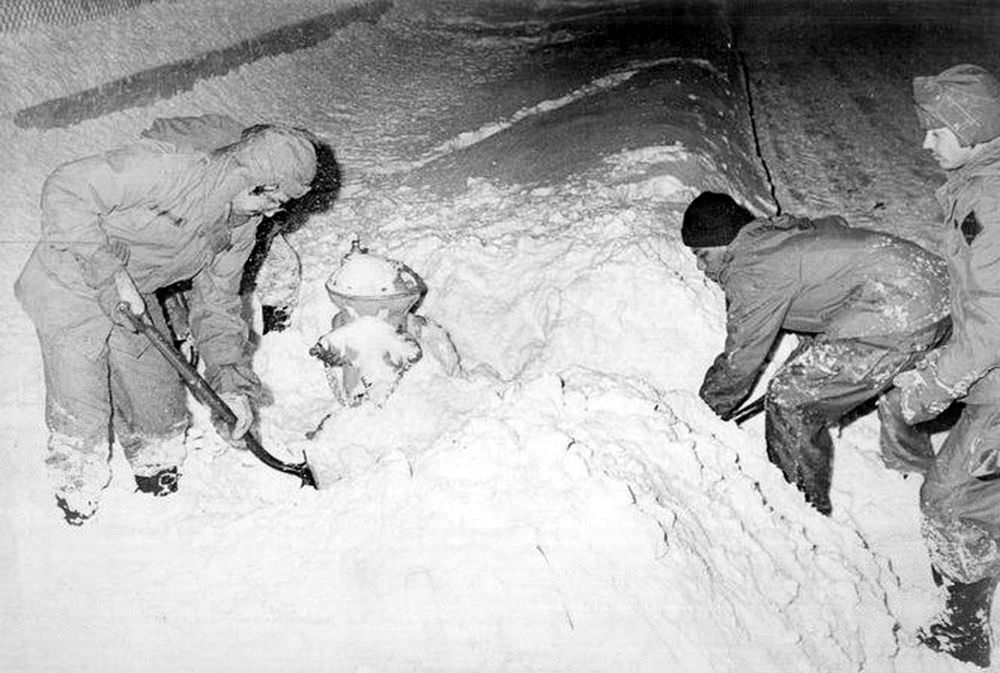
#4 Springfield firefighters dig out a hydrant on Feb. 7, 1978.
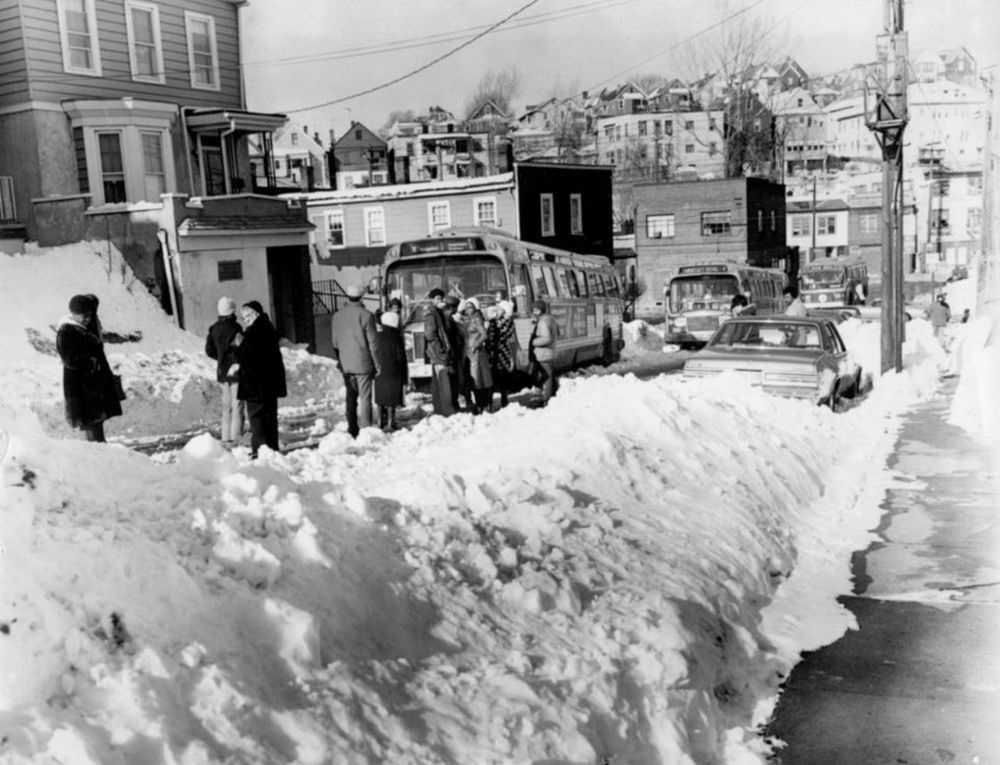
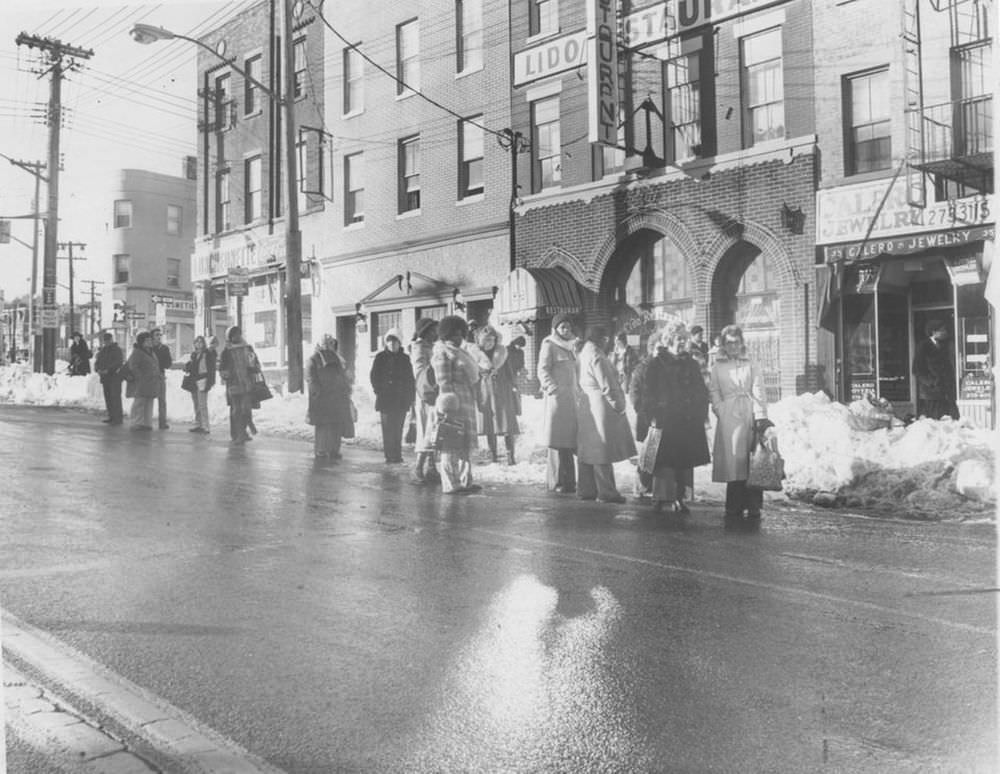
#5 February 9, 1978, some of these people had a long wait for the bus on Victory Boulevard. in Tompkinsville, only to have it get stuck in the snow around the corner after they boarded.
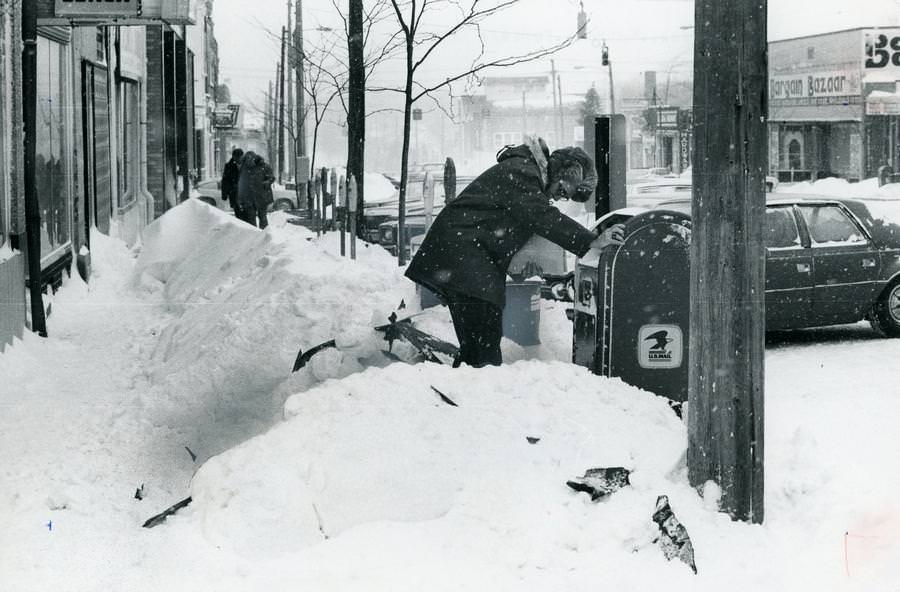
#6 Esther Wright, a clerk for the Ravenna Police Department, trudged through snow drifts to mail a letter on Jan. 27, 1978.
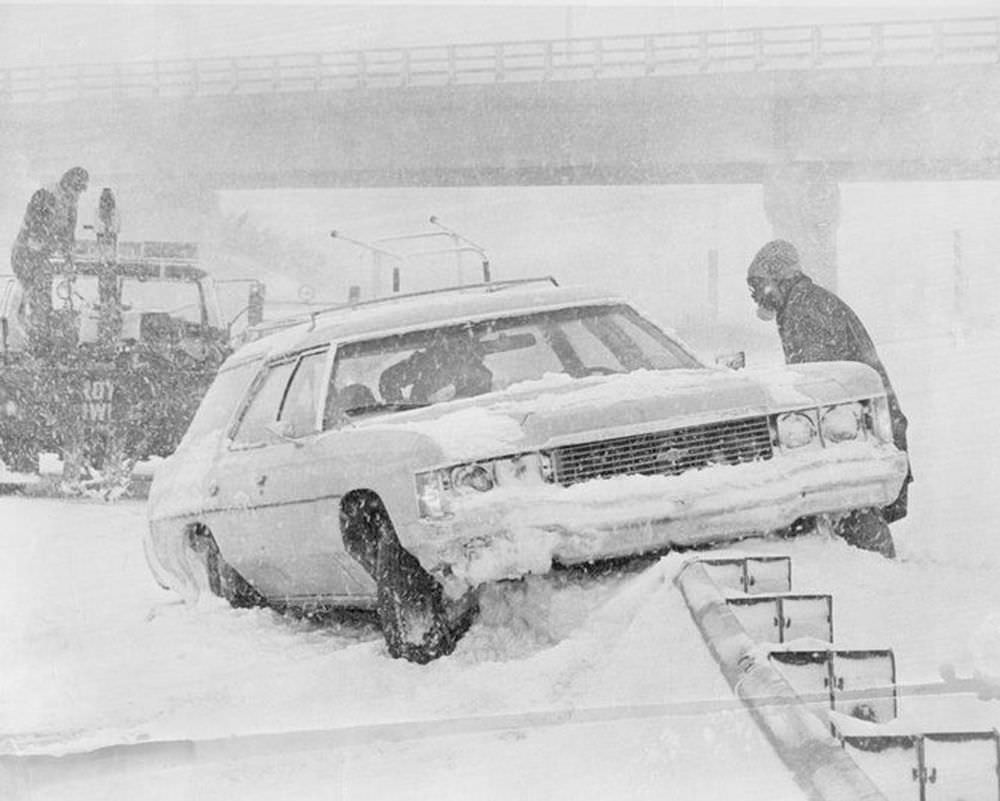
#7 A car rest on top of the Indian Orchard exit of I-291 east in Springfield on Feb. 7, 1978.
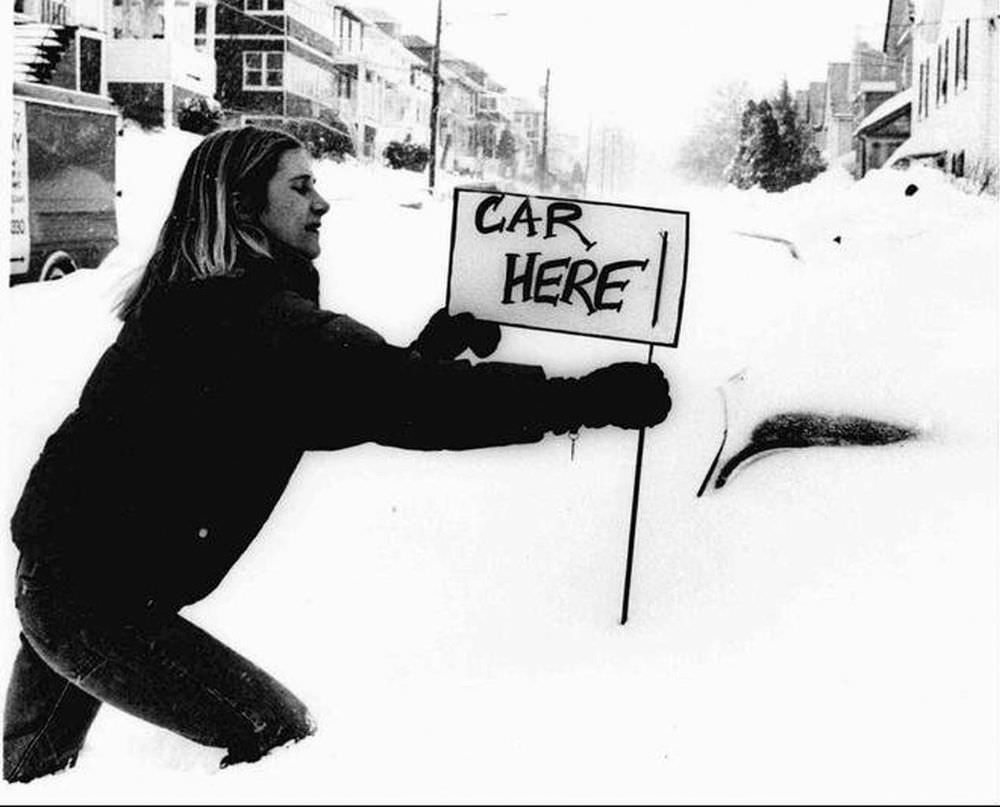
#8 Bonnie Alexandre, of Boston’s Brighton district, attaches a sign to the antenna of her car in Boston
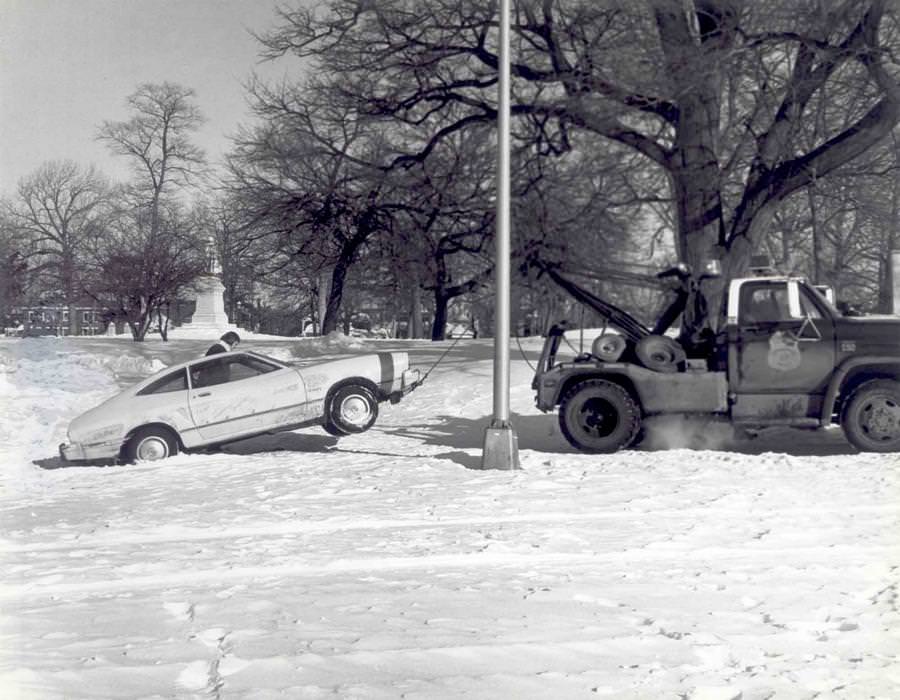
#9 Roy Sodersjerna of Higham, Mass. suns himself on the hood of his car which is stuck in snow on Massachusetts Route 128 in Dedham on Feb. 9, 1978.
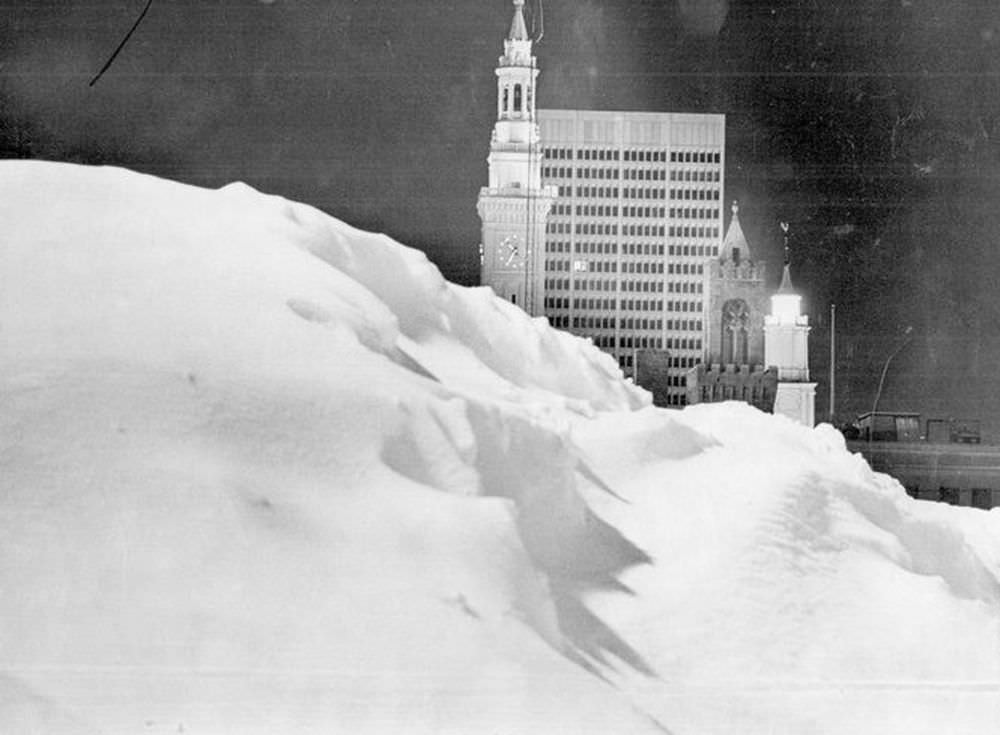
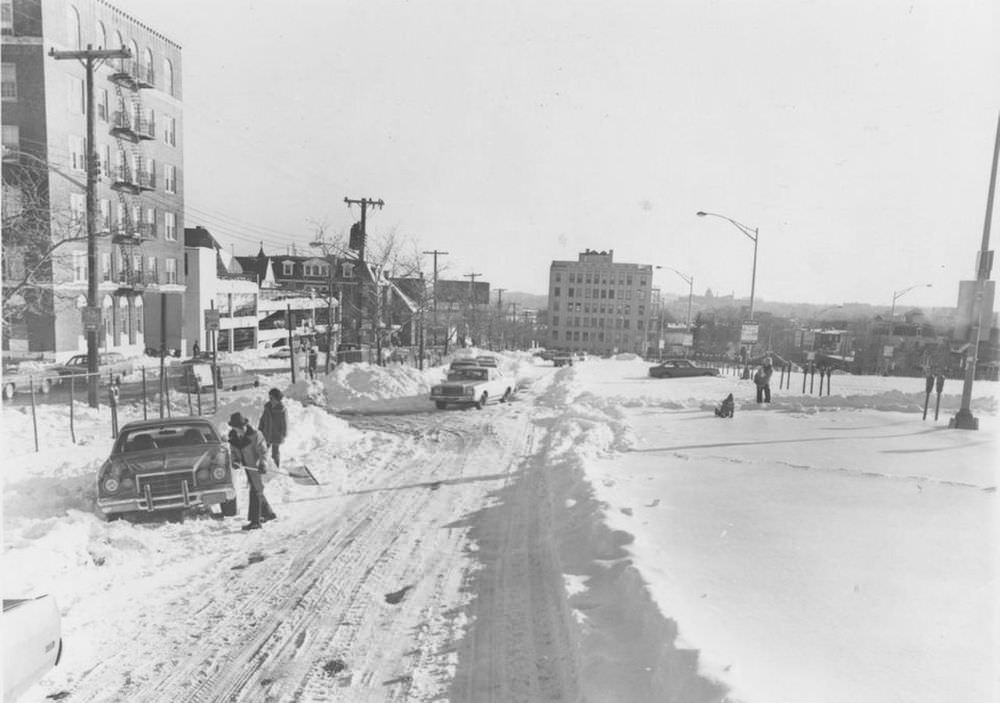
#10 A pile of snow in a parking lot frames a view of downtown Springfield during the Blizzard of 1978.
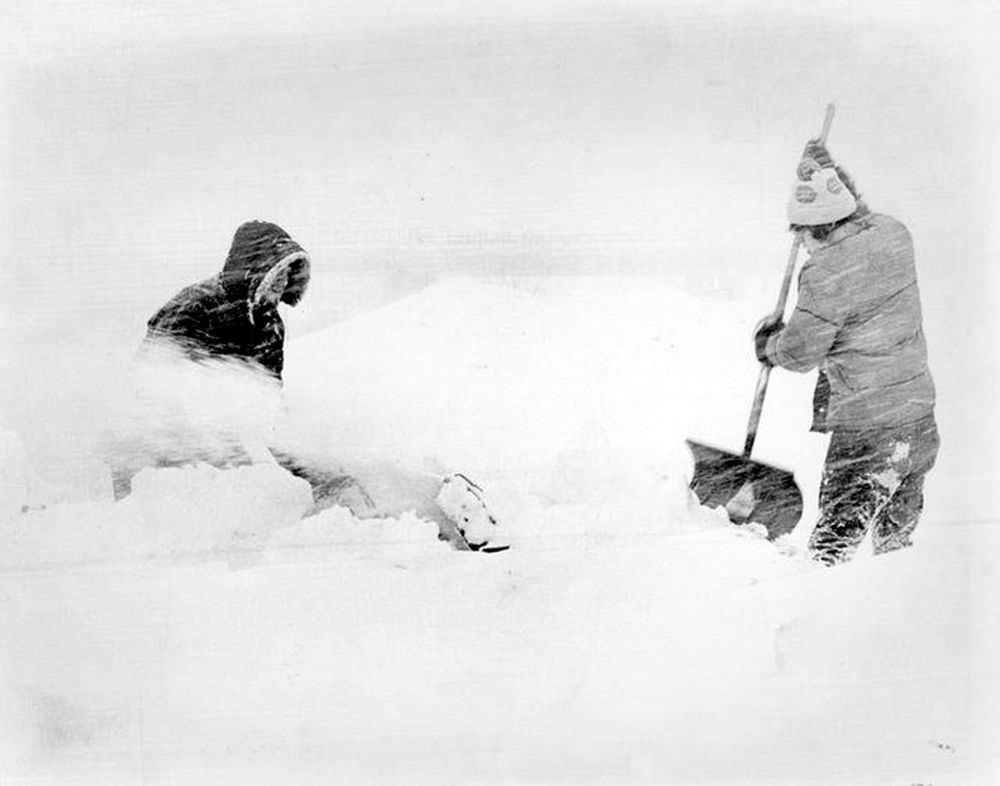
#11 Residents clear snow on Congress Street in Springfield during the Blizzard of 1978.
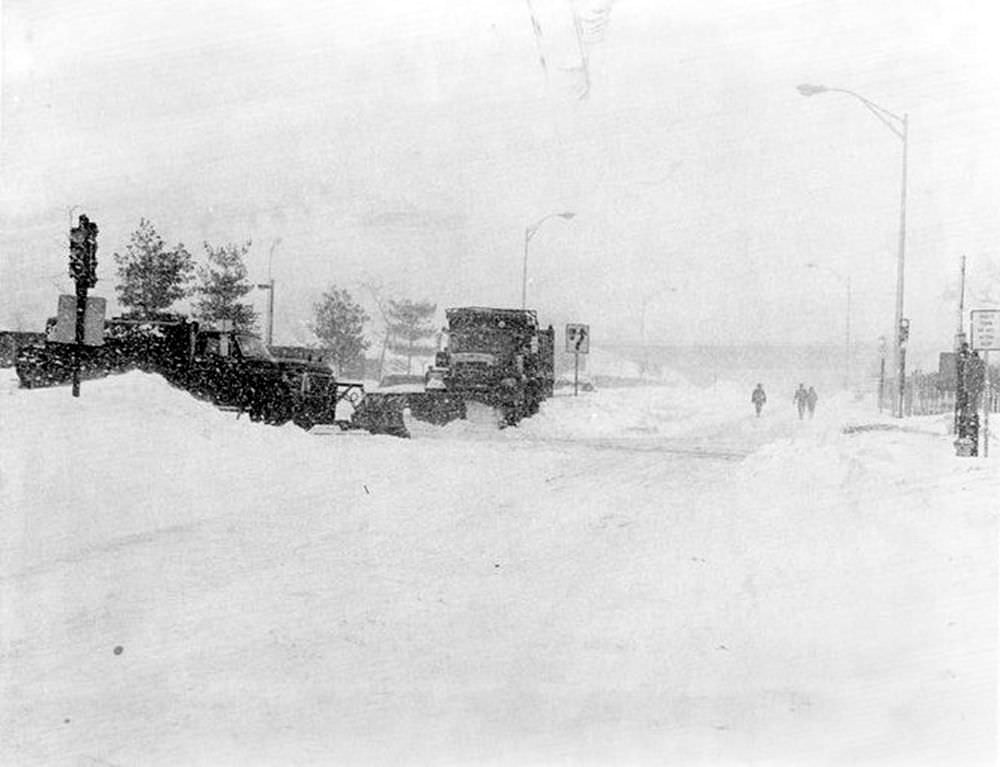
#12 Snow plows clear the intersection of Dwight and Carew Streets in Springfield on Feb. 7, 1978 during the Blizzard of 1978.
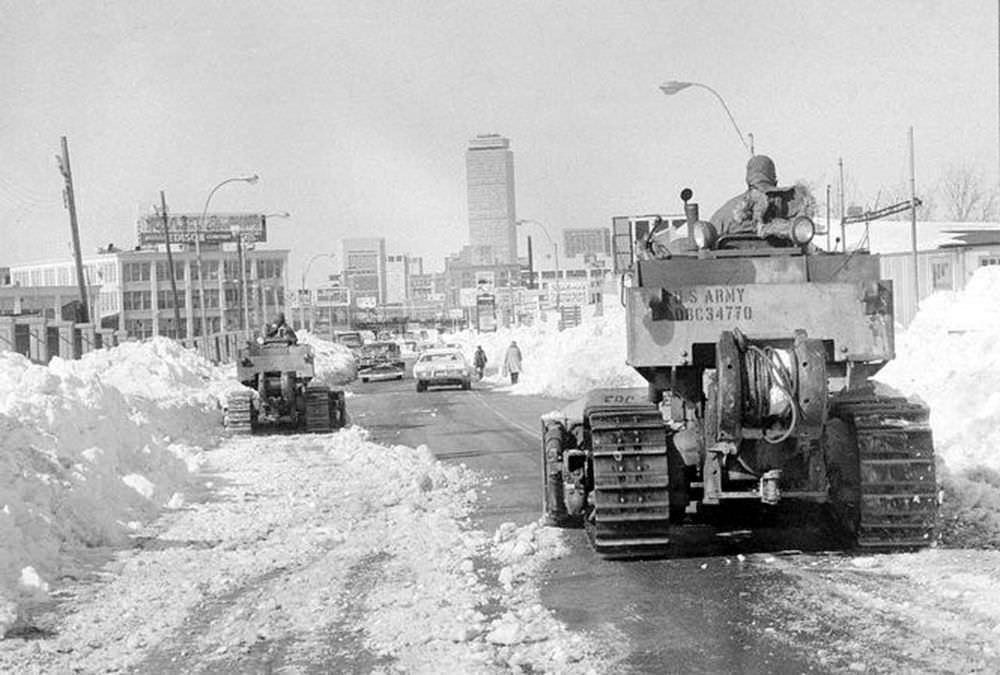
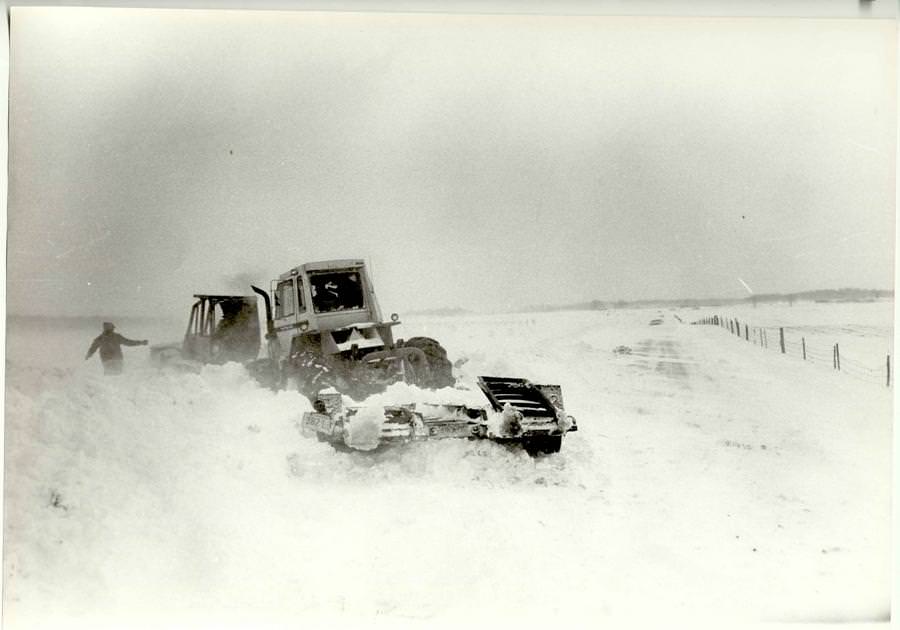
#13 Two members of the U.S. Army 27th Engineers from Fort Bragg, N.C. move their bulldozers slowly toward downtown Boston as the city began to remove the record snowfall from the streets, Feb. 11, 1978.
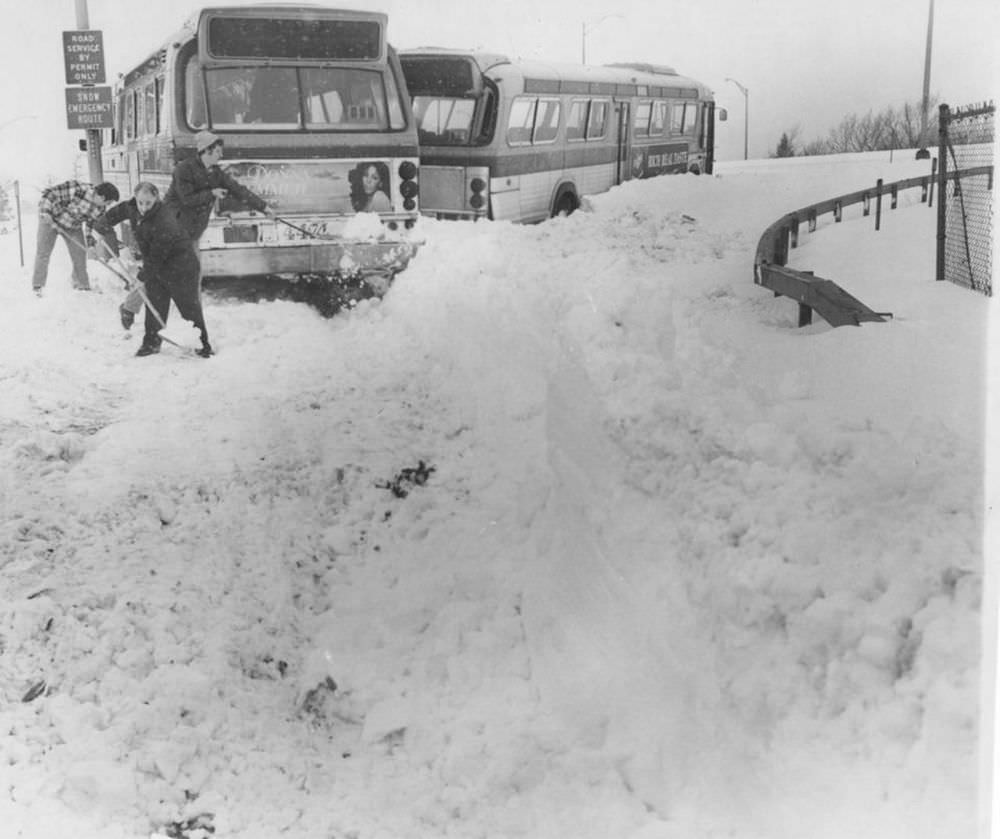
#14 Weary shovelers struggle to free two buses that blocked an entrance to the Staten Island Expressway for two hours, a common sight all along the highway.
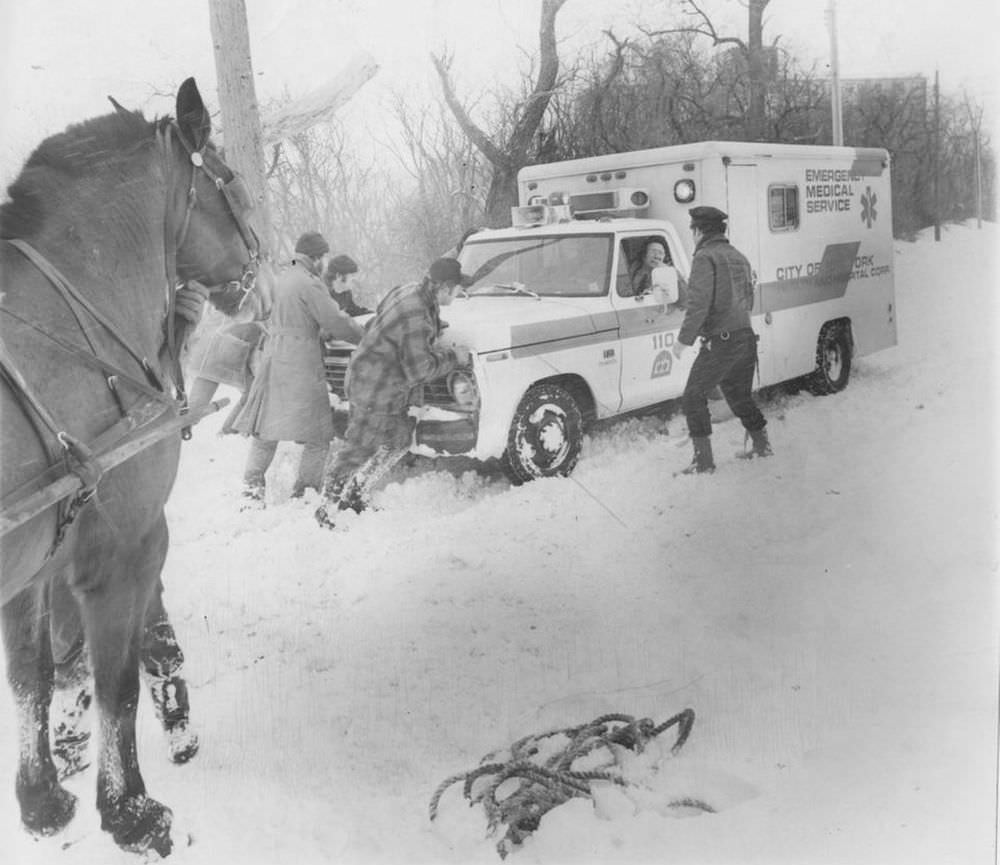
#15 Men struggle to free an ambulance carrying a heart patient that is stuck on Bard Ave., West Brighton.
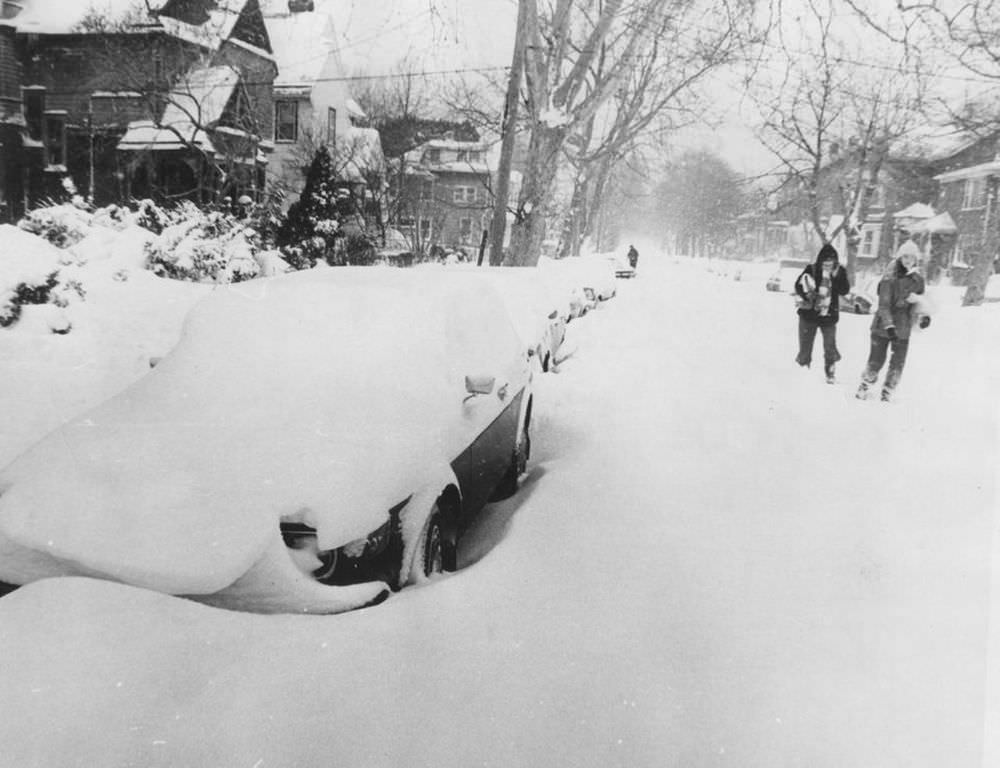
#16 Cars are barely visible on Townsend Ave., Clifton.
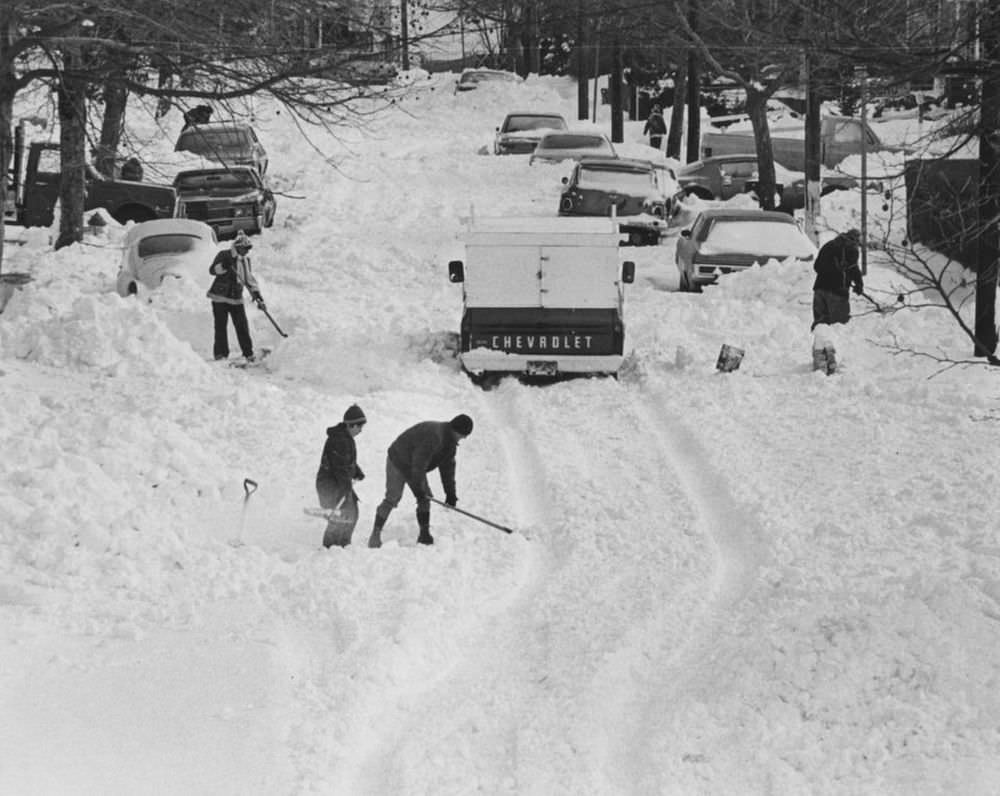
#17 Residents of Home Place., Graniteville, begin the arduous task of cleaning up from the record snow.
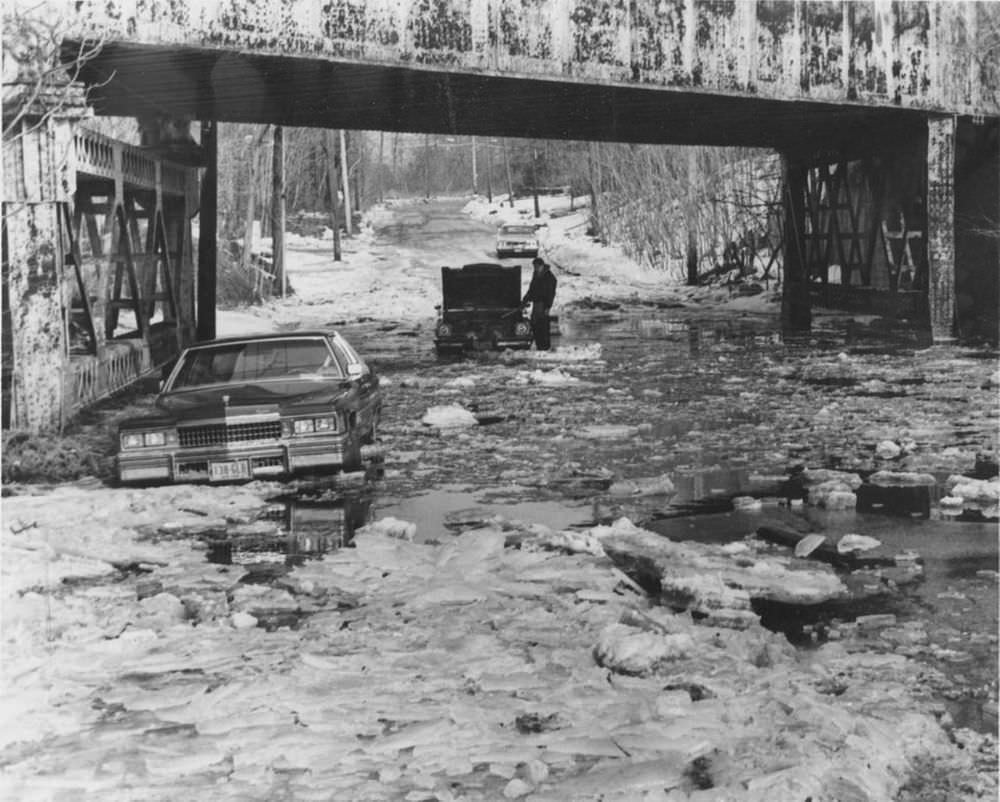
#18 Frigid temperatures turned many flooded streets into sheets – or chunks – of ice. These cars stuck under the Staten Island Rapid Transit overpass on Amboy Road, Bay Terrace.
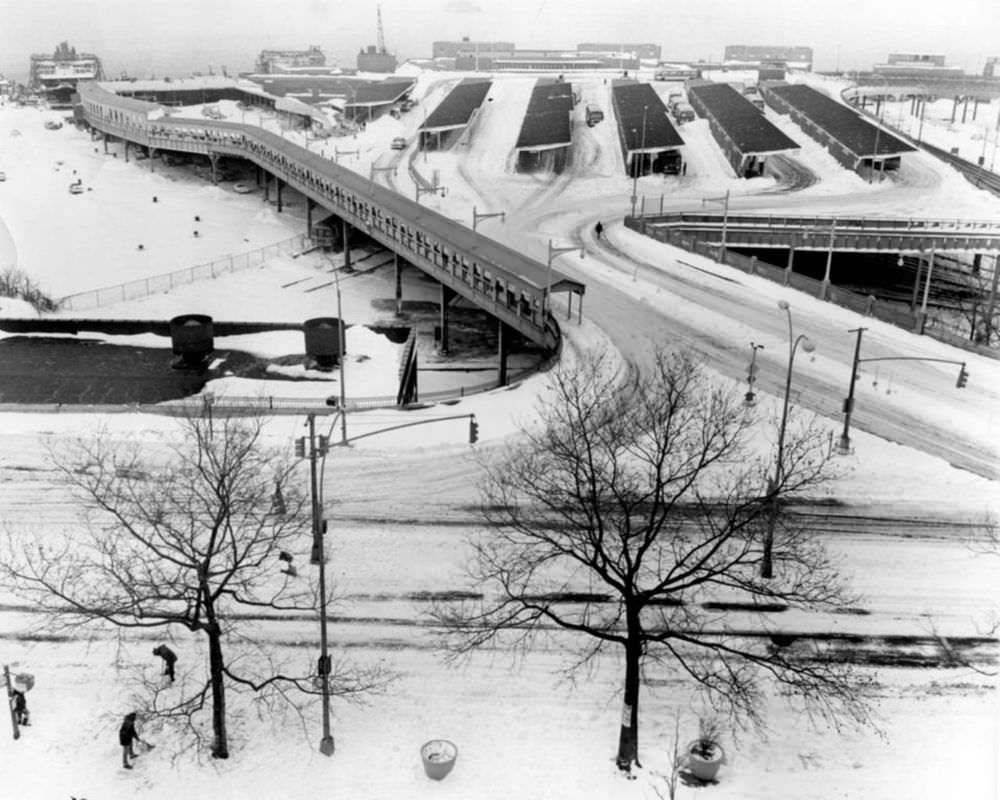
#19 At noon on February 8, 1978, business at the St. George Ferry Terminal was hardly “as usual” thanks to Ol’ Man Winter.
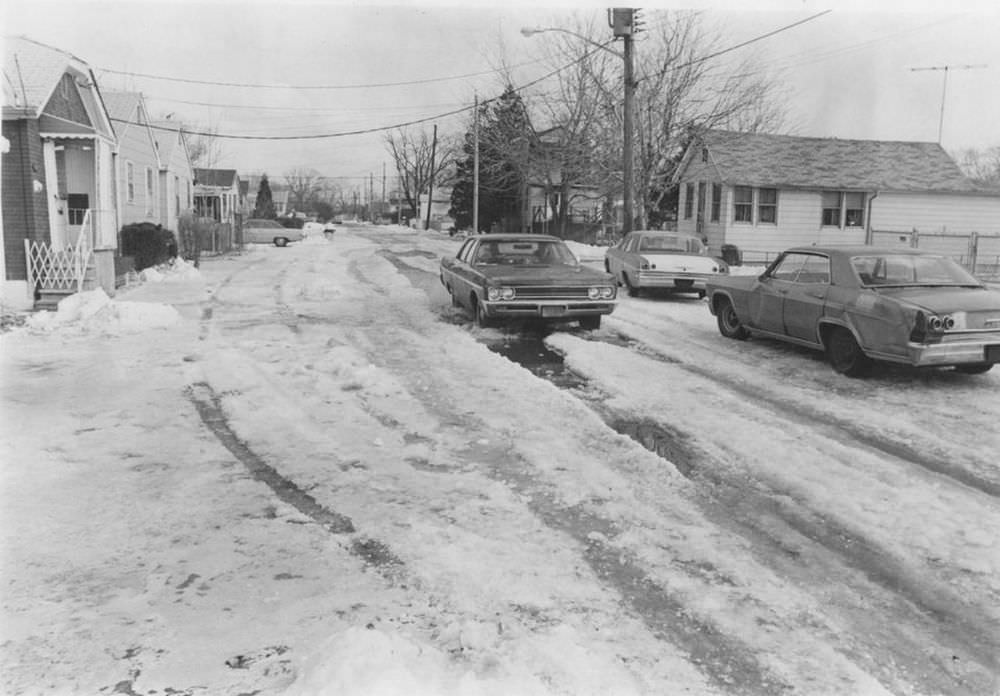
#20 Autos have made ruts in the ice on this section of Olympia Boulevard.
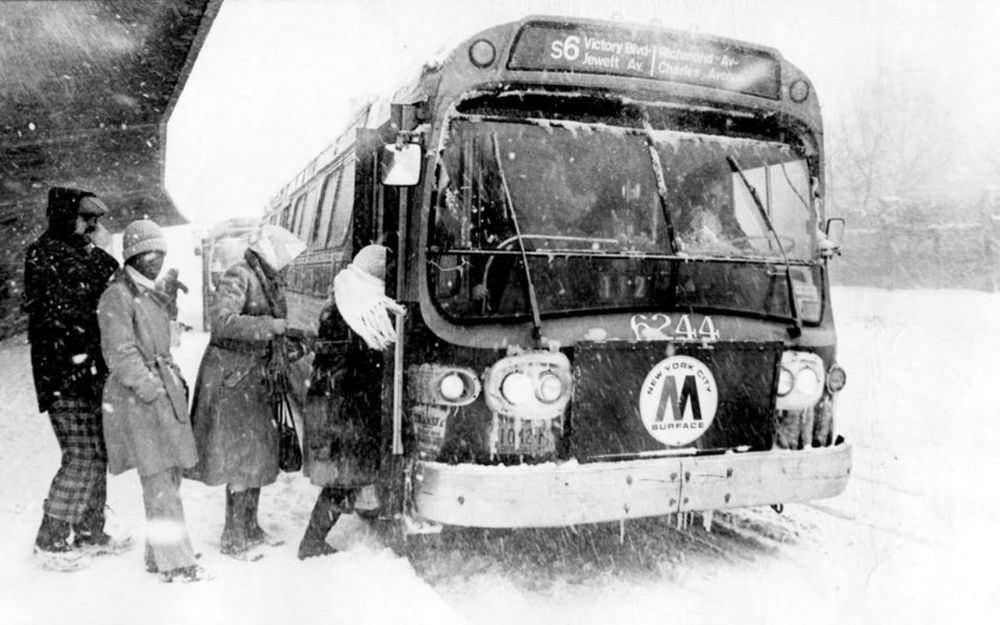
#21 Passengers board the S-6 bus on Bay St., near the ferry, during a blizzard on February 6-7, 1978.
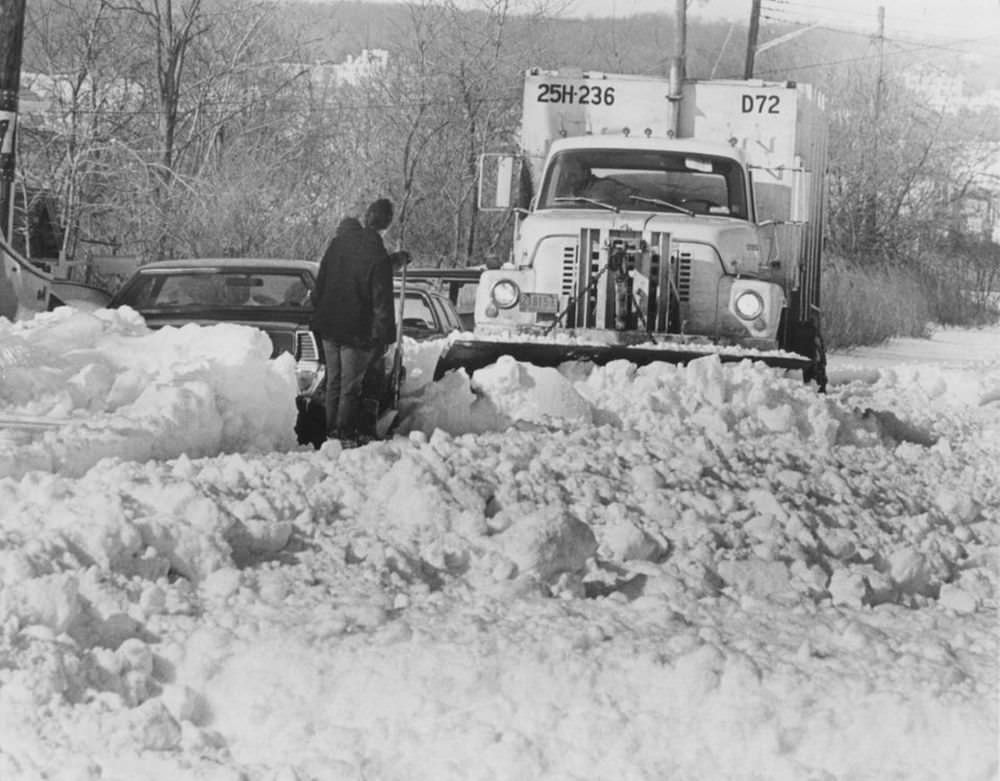
#22 A Sanitation snow plow is welcome relief to residents on Naughton Ave., Ocean Breeze.
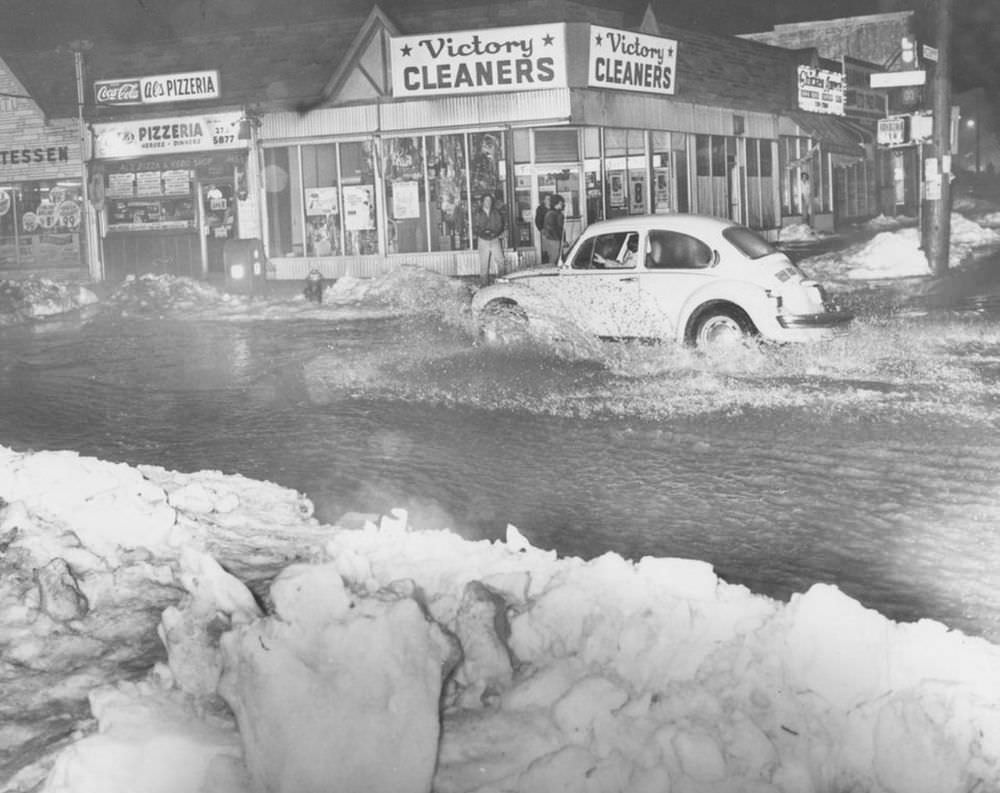
#23 A Volkswagen “bug” splashes through the water at Victory Blvd. and Jewett Ave.
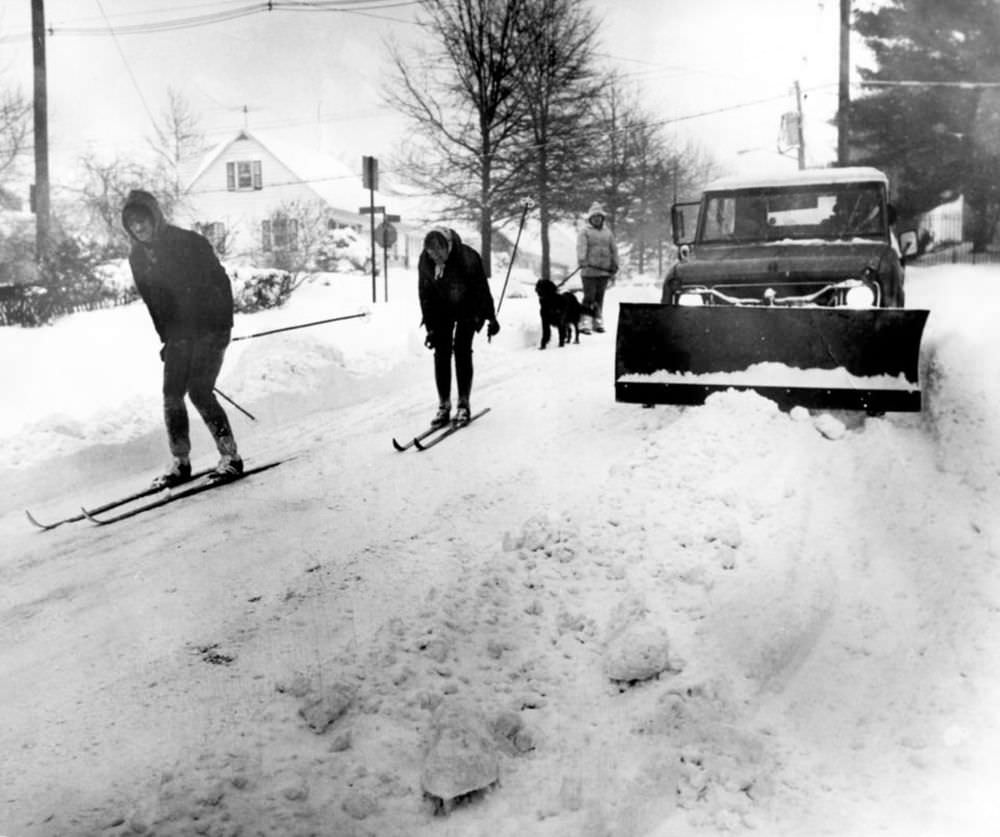
#24 On February 6, 1978, skis were a good way to get around, as this couple demonstrates on Kingsley Street in West Brighton.
#25 Parking was difficult on Richmond Terrace in front of the 120th Precinct in St. George
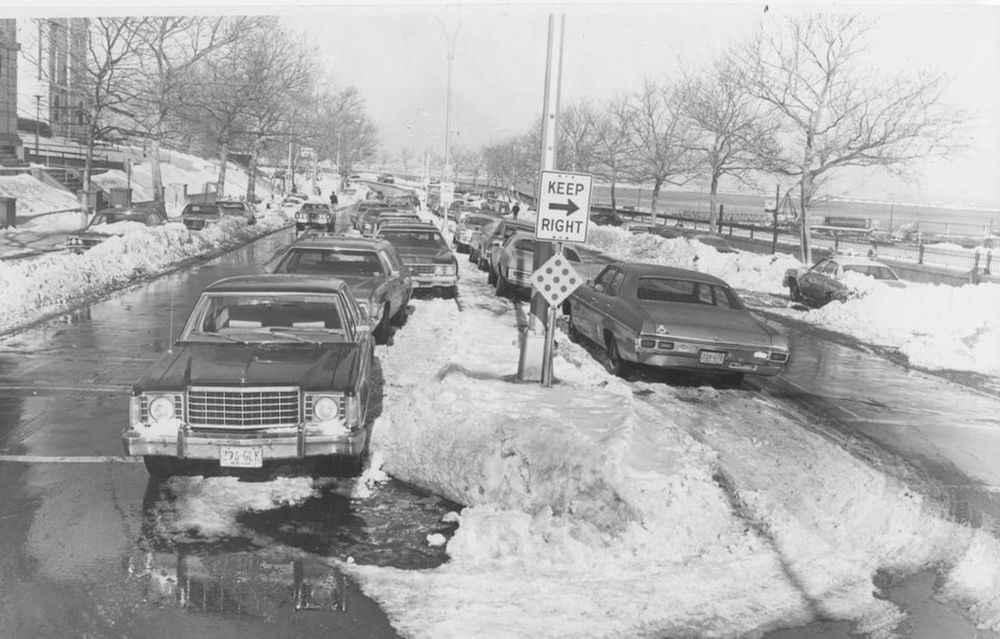
#26 Mounds of snow along Victory Boulevard in Tompkinsville
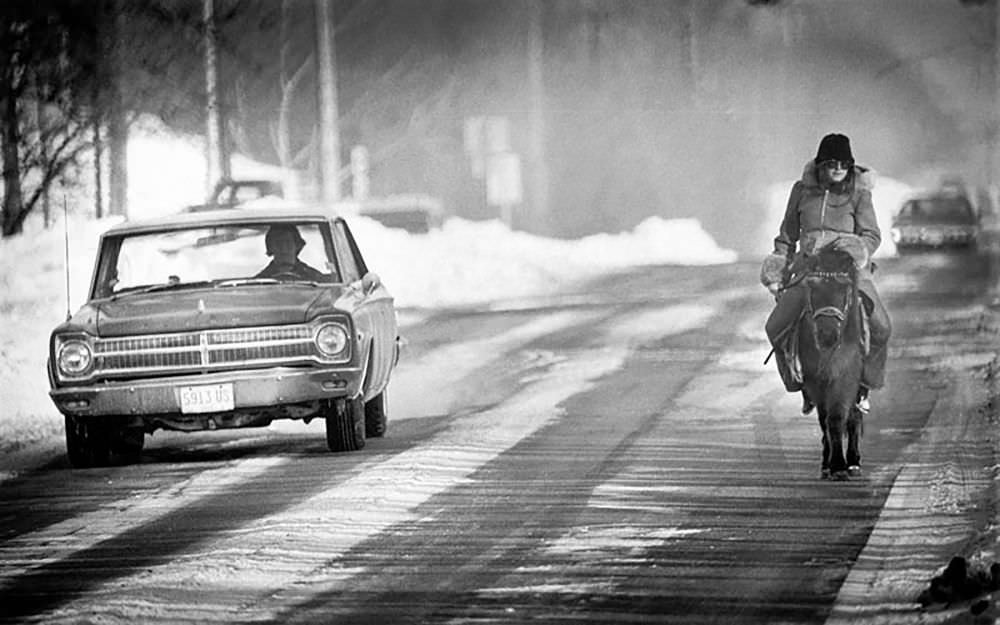
#27 This resident of Miami County, Ohio finds an innovative way to travel.
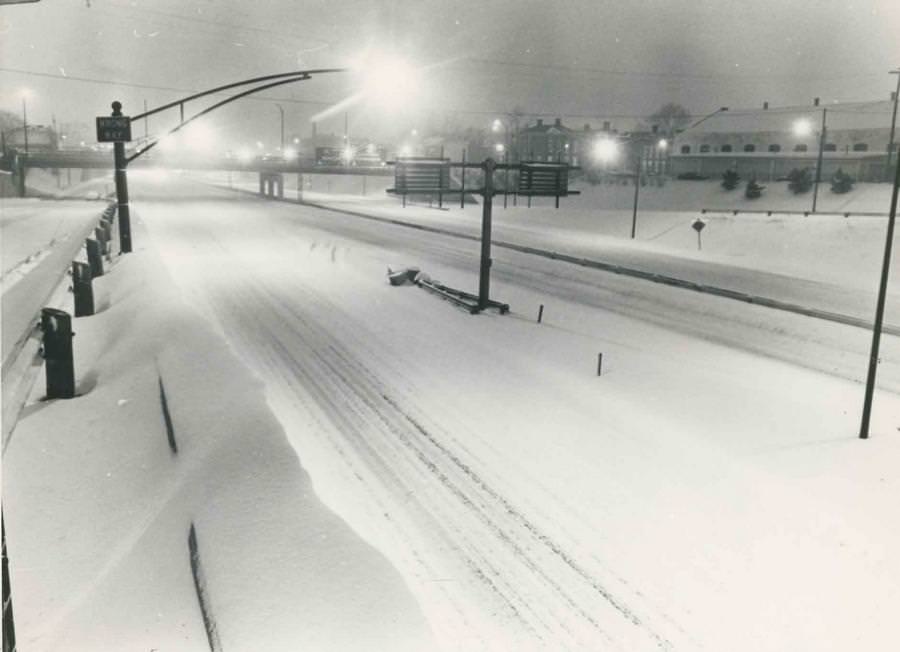
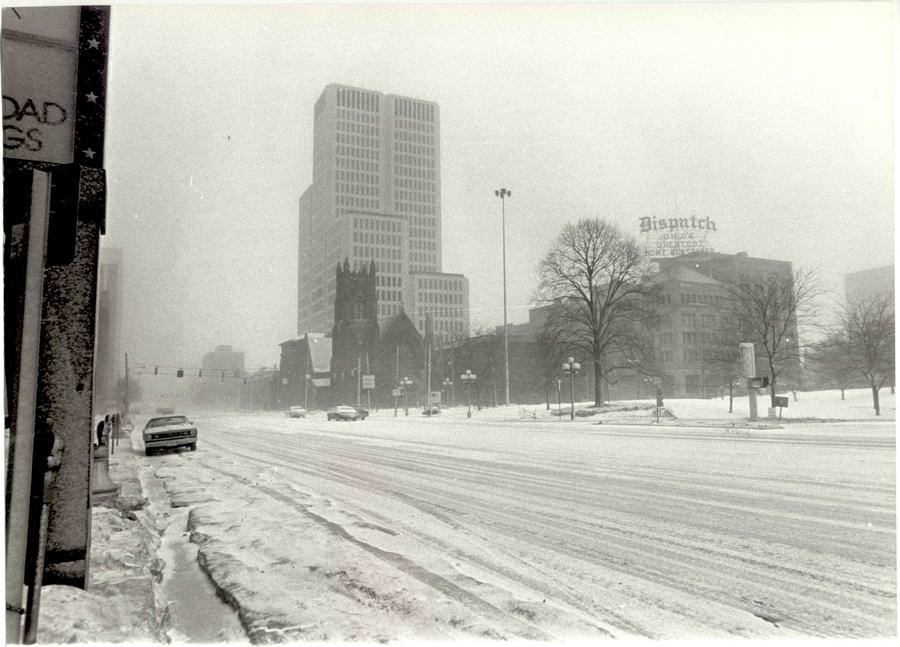
#28 Blizzard conditions arrived in Dayton early in the morning on Jan 26, 1978.

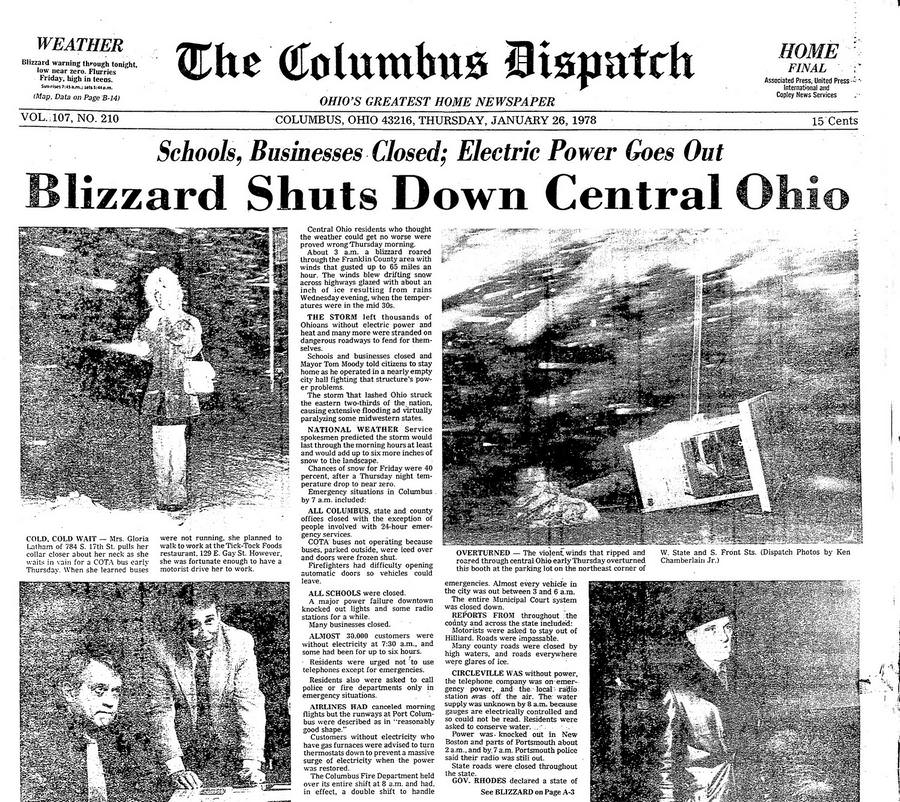
#29 Around 3 a.m. on Thursday, January 26, 1978, Ohio was hit by the worst blizzard in its recorded history.
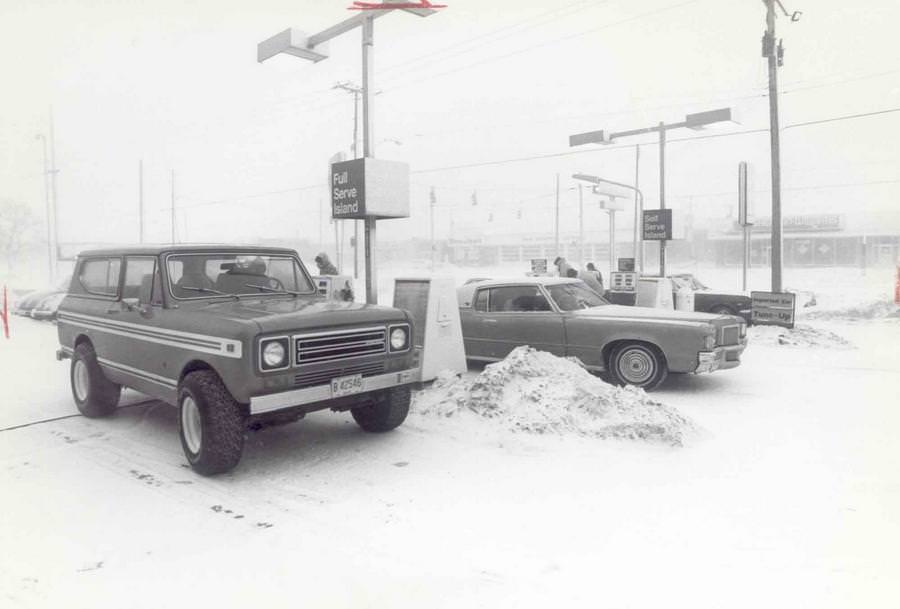
#30 Drivers kept this Reynoldsburg service station busy Thursday because they did not want to run short of fuel with a blizzard howling about.
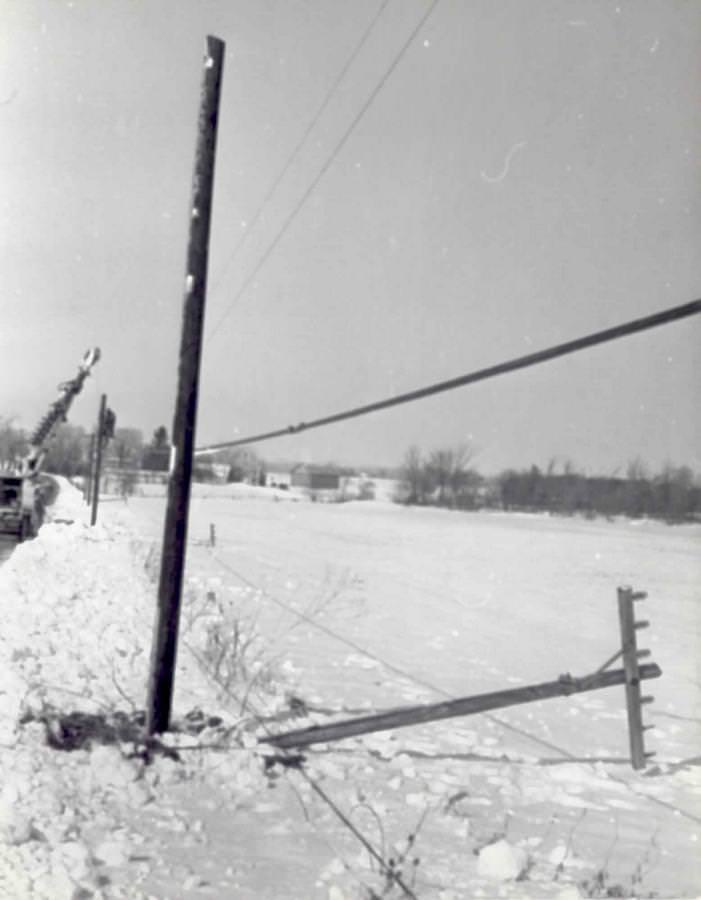
#31 On Friday morning, January 27, state and city officials still had major problems.
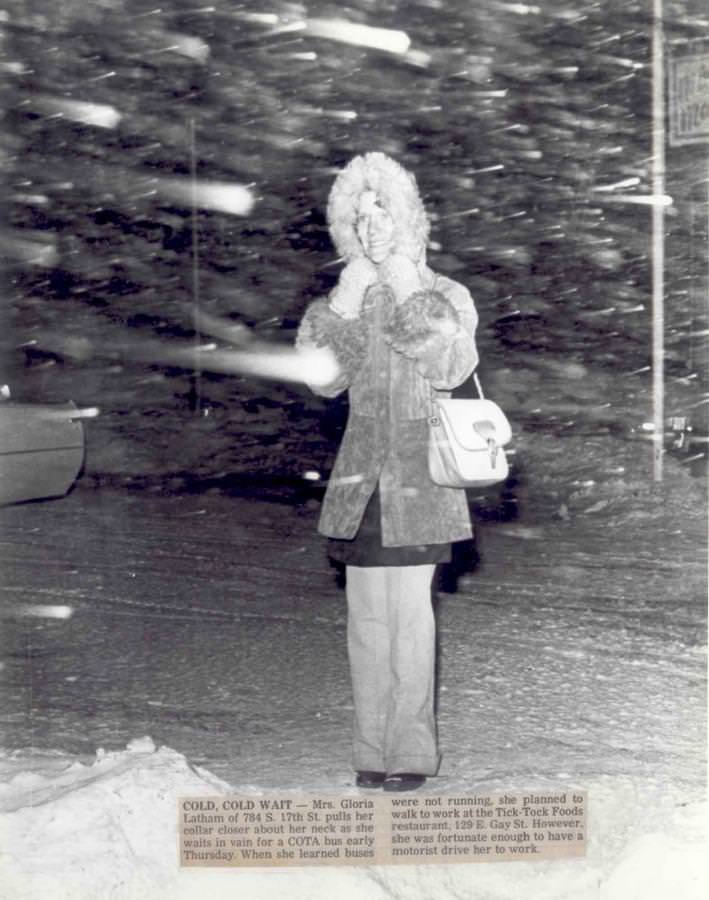
#32 A woman pulls her collar closer about her neck as she waits in vain for a COTA bus early Thursday.
#33 Snowfall ranged from 5 inches in Columbus to more than 20 inches in northern Ohio. President Jimmy Carter declared. a federal state of emergency for Ohio.
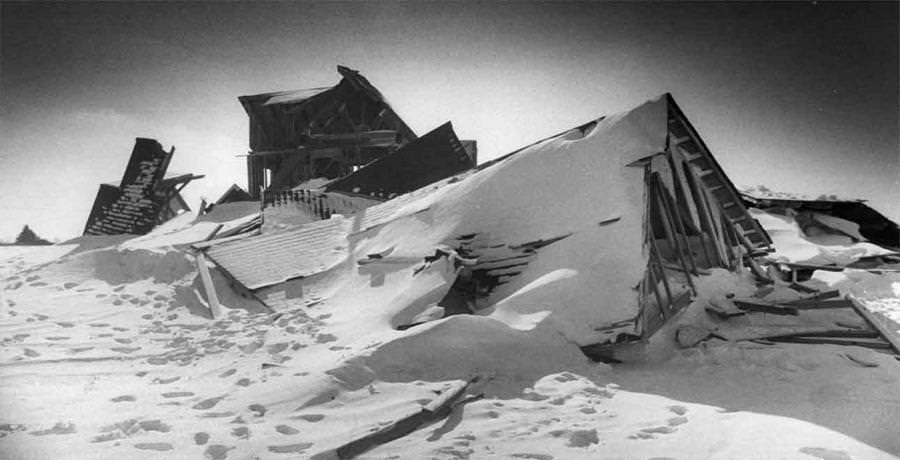
#34 The storm devastated this house under construction on Royalton Dr. south of Galloway, Ohio.
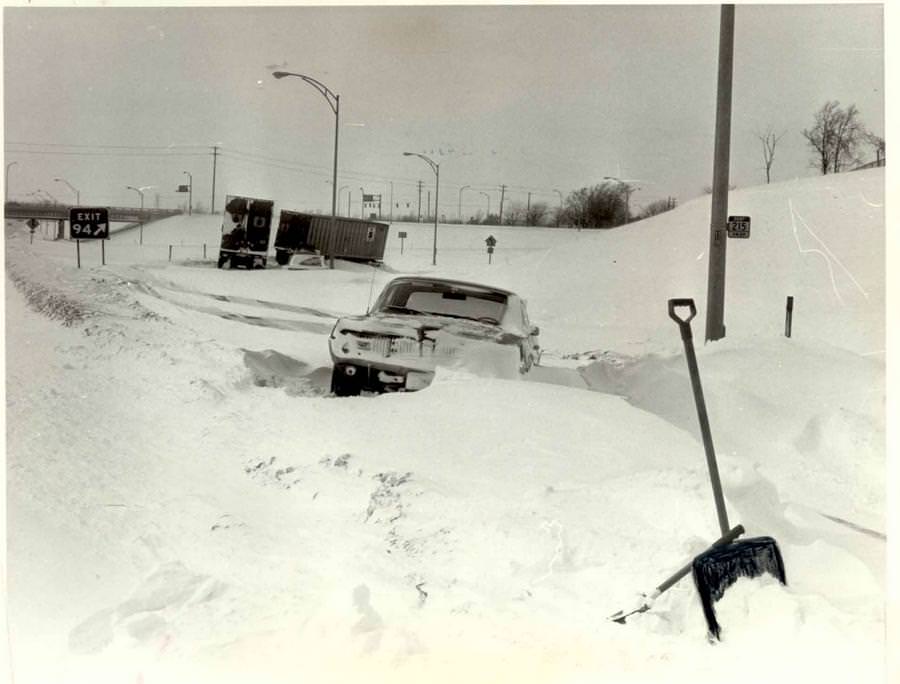
#35 West Freeway Exit Ramp to Wilson Road.; Taken Jan. 27, 1978.
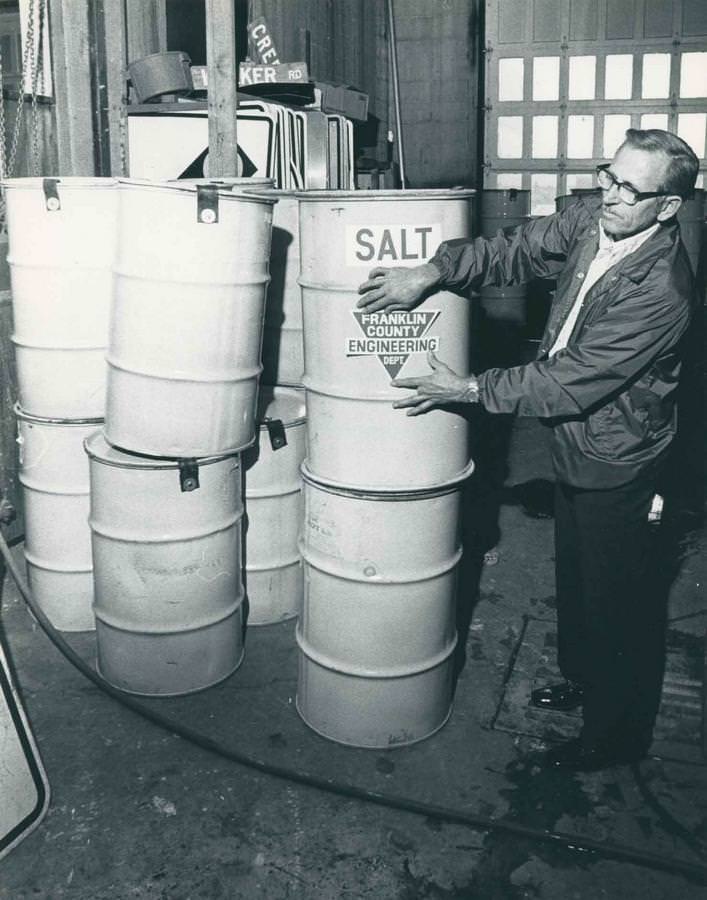
#36 No amount of road salt was adequate.
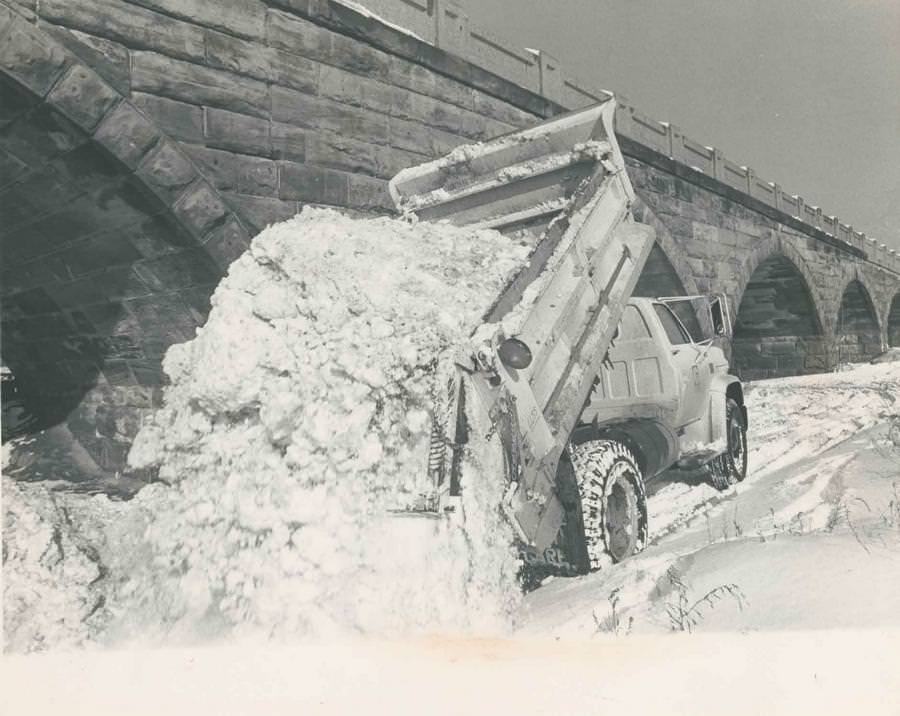
#37 Columbus had a record-low barometer reading of 28.47 inches.
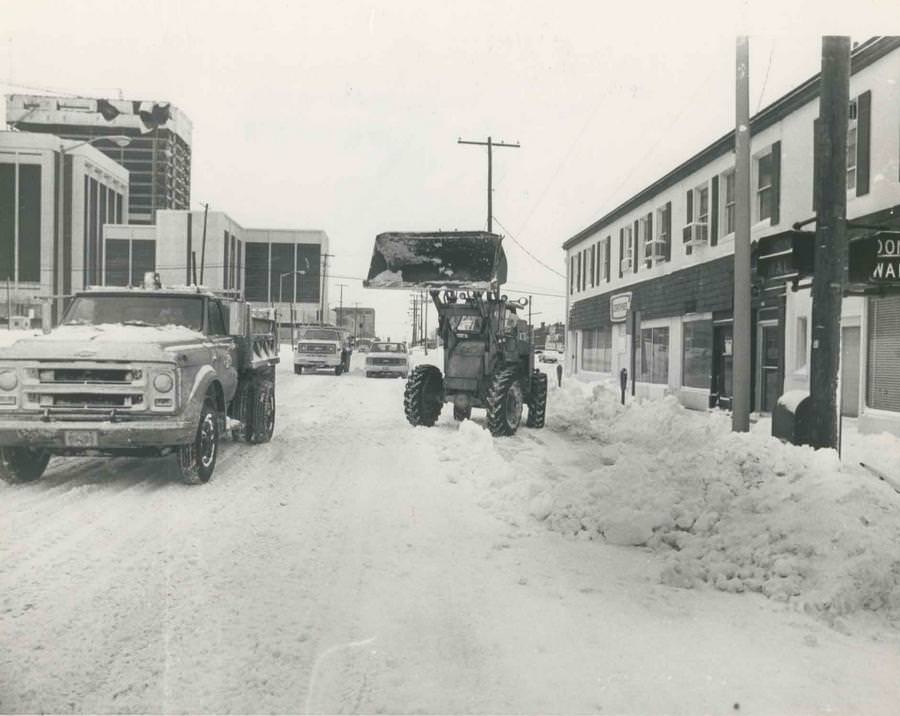
#38 This front-loader is working on Front St. just north of Main St., Jan. 29, 1978.
#39 Truck driver James Truly is helped from the cab of his rig after spending most of five days buried in the truck beneath a huge snowdrift in Mansfield, Ohio, Jan. 31, 1978.
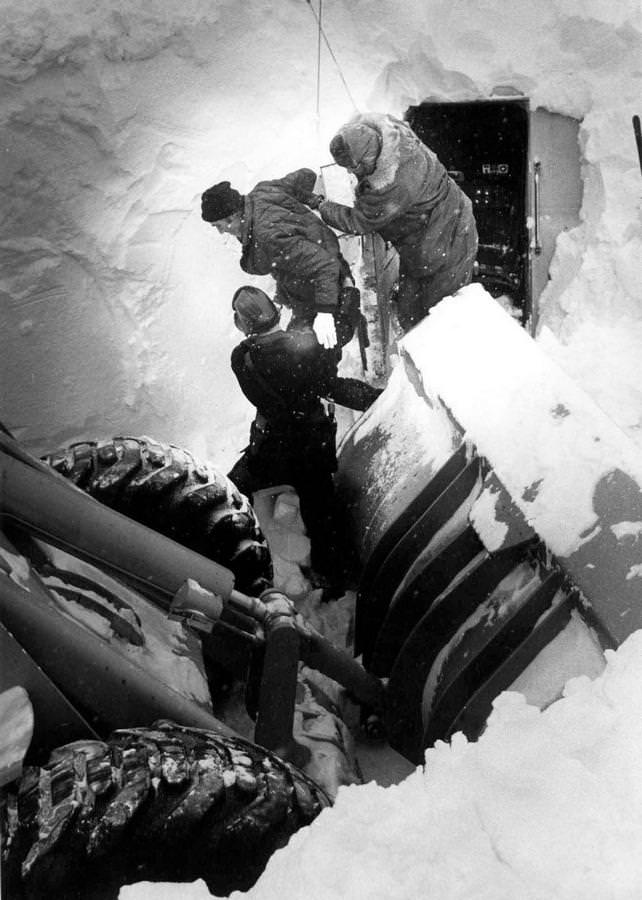
Truly stopped his semi-tractor trailer along Ohio Route 13 north of Mansfield during a massive blizzard. The storm raged for several days and snow completely covered the big rig. No one knew for a couple of days that Truly and his truck were in the drift. He was finally discovered on Jan. 31 when Ohio Air National Guard personnel were opening the state highway with a big snowblower. Mansfield News Journal photographer Alan King was there when Truly was rescued.
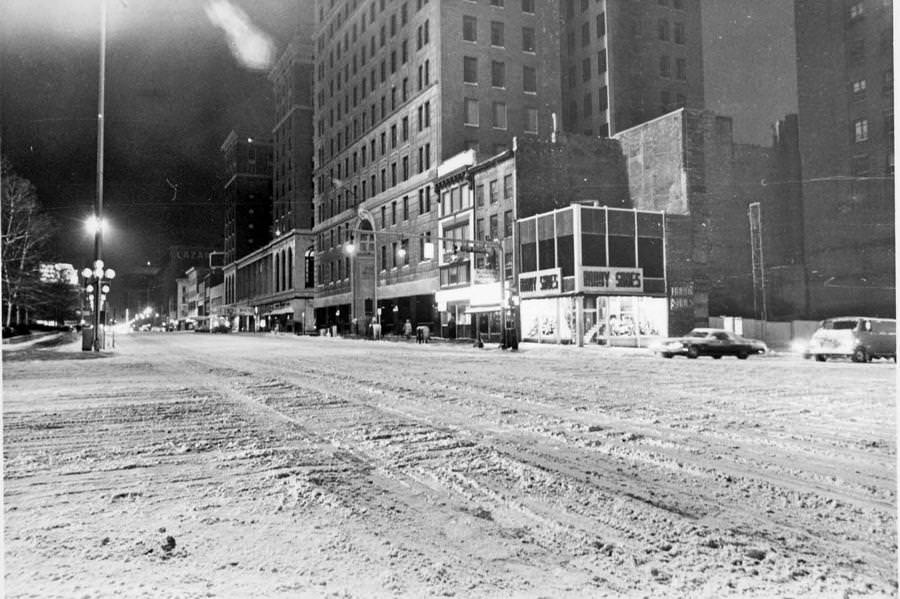
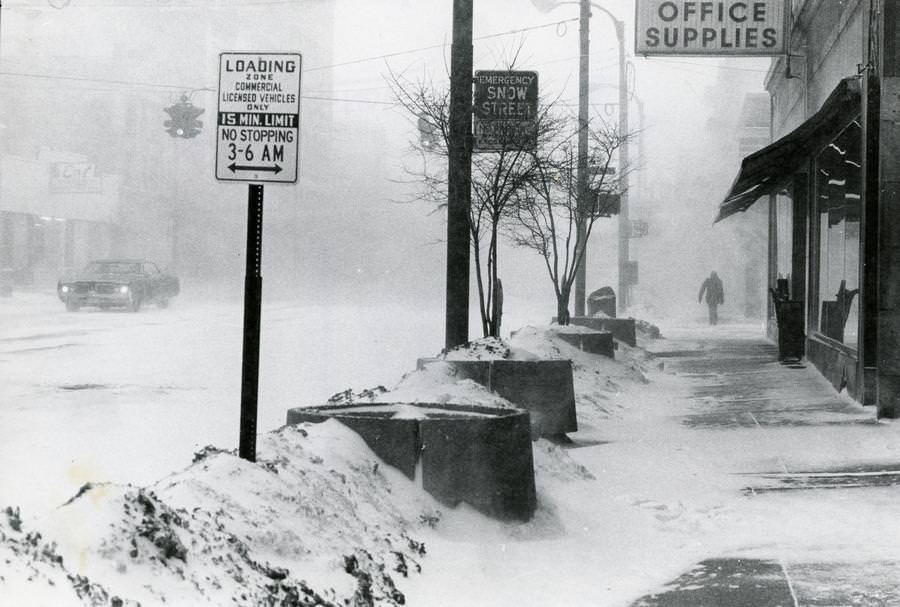
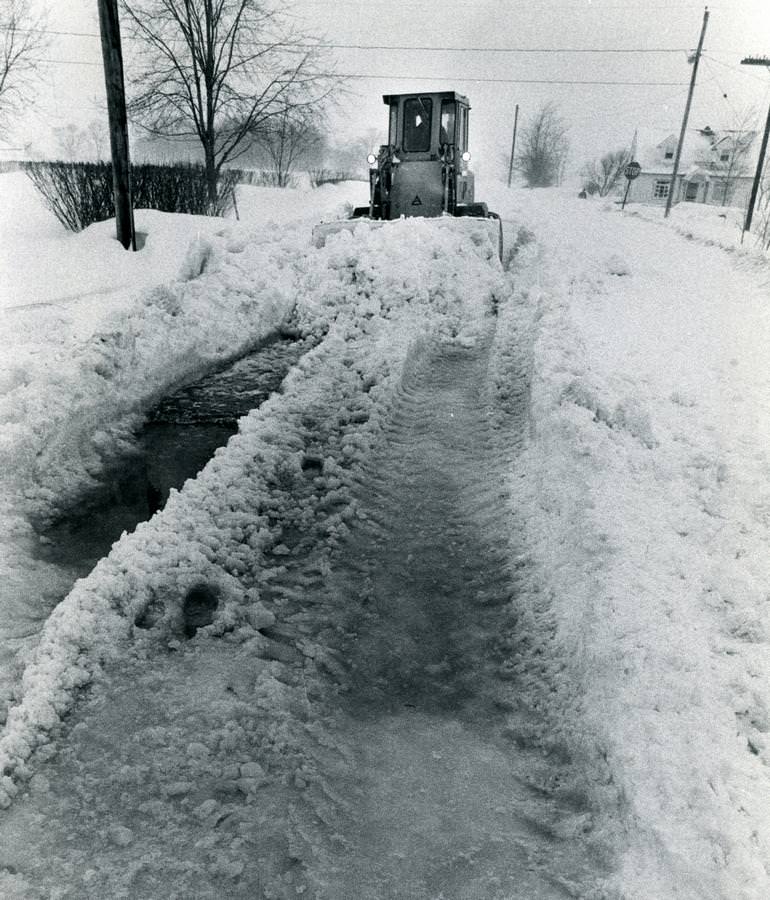
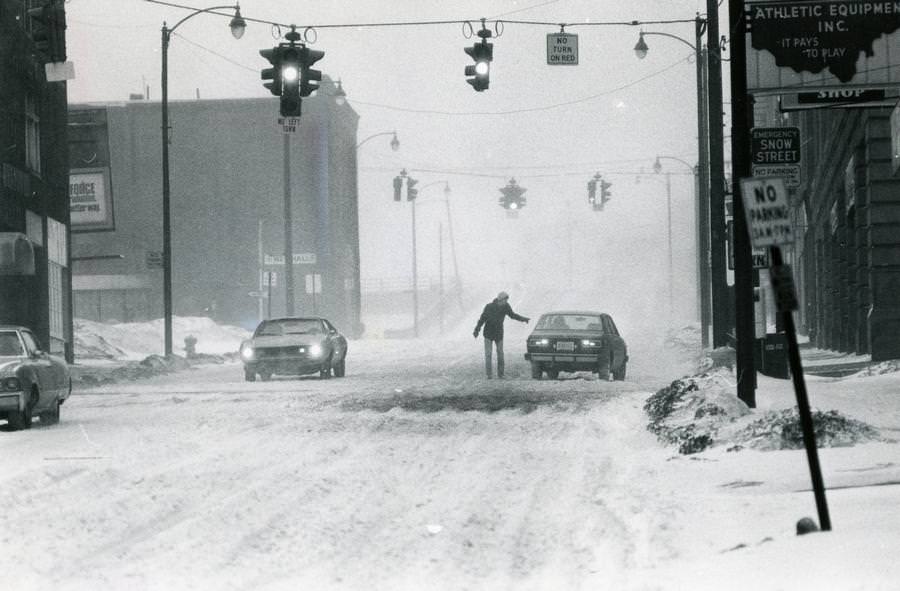
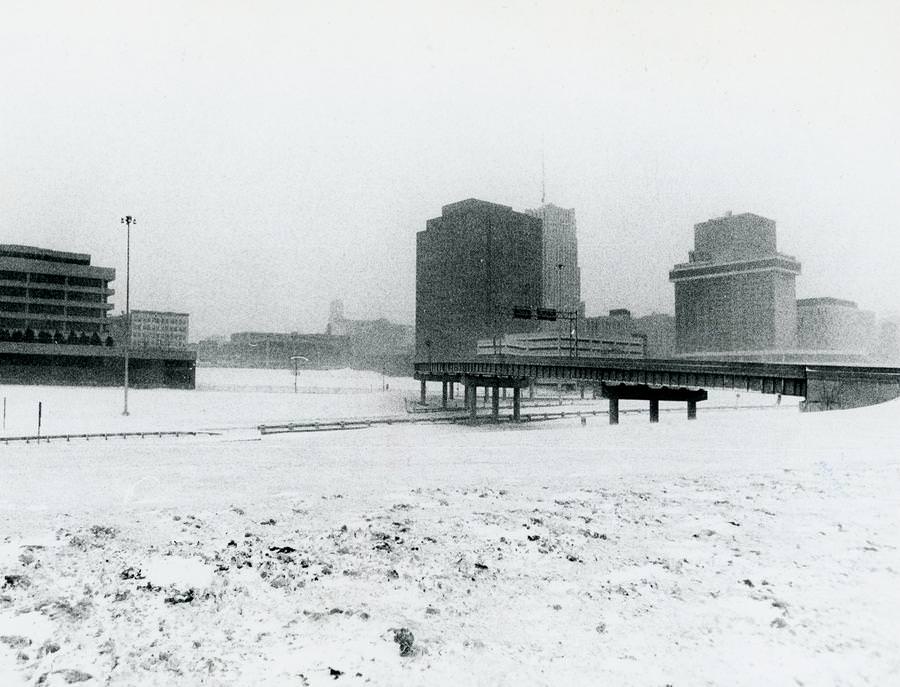
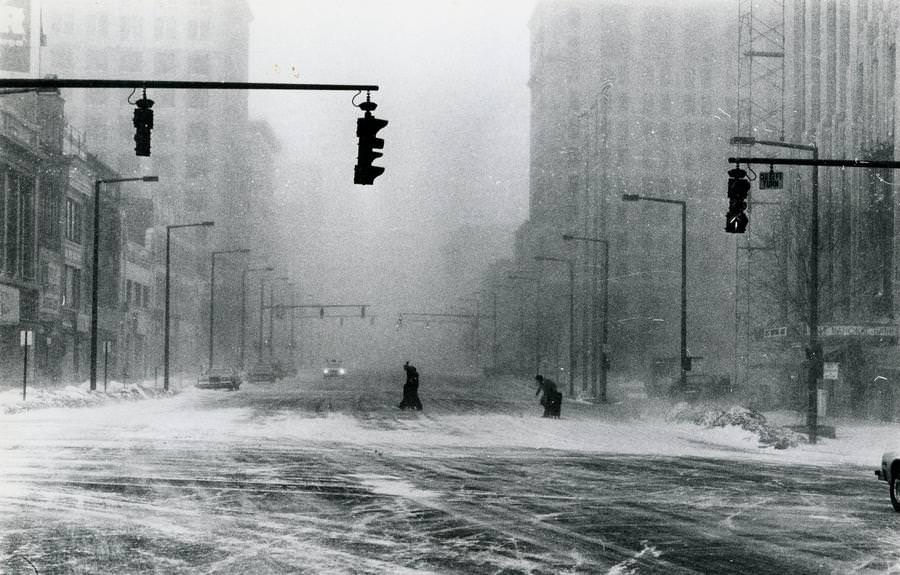
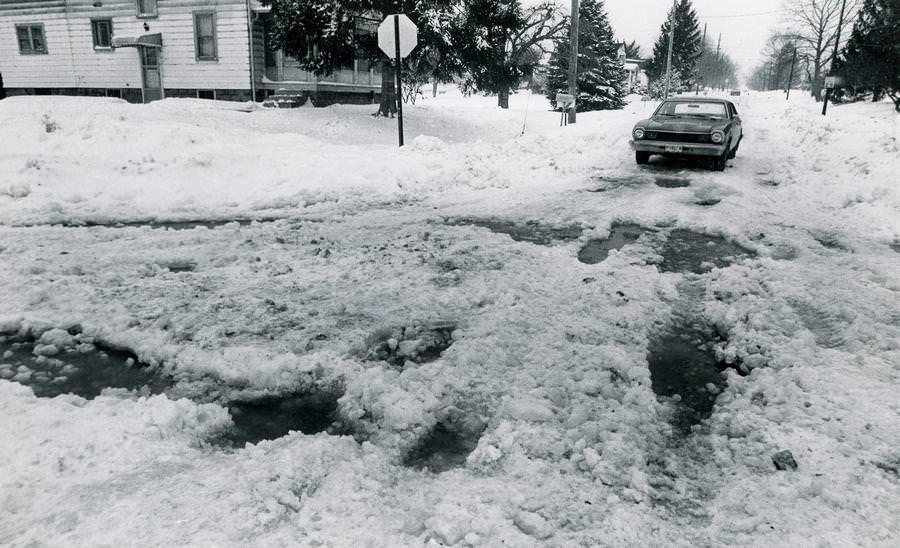
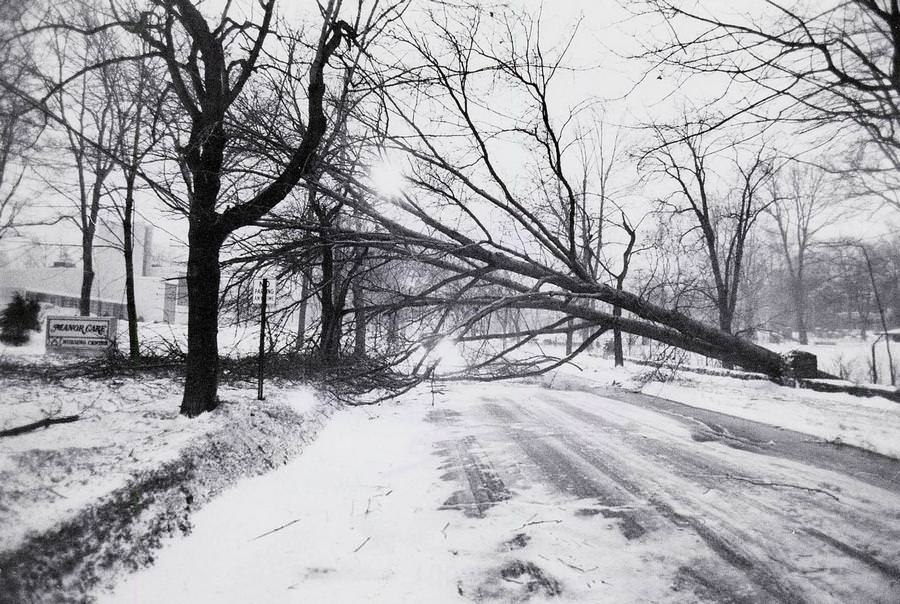
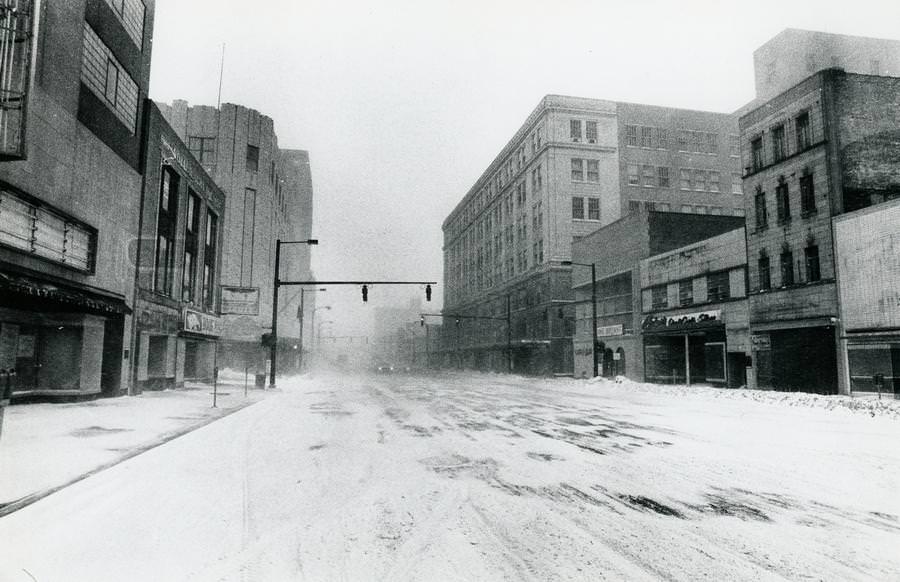
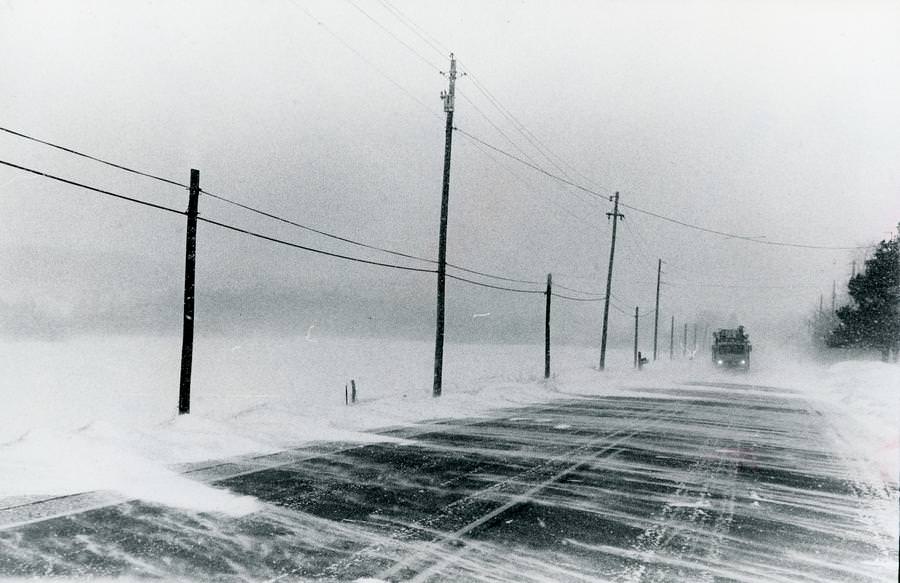
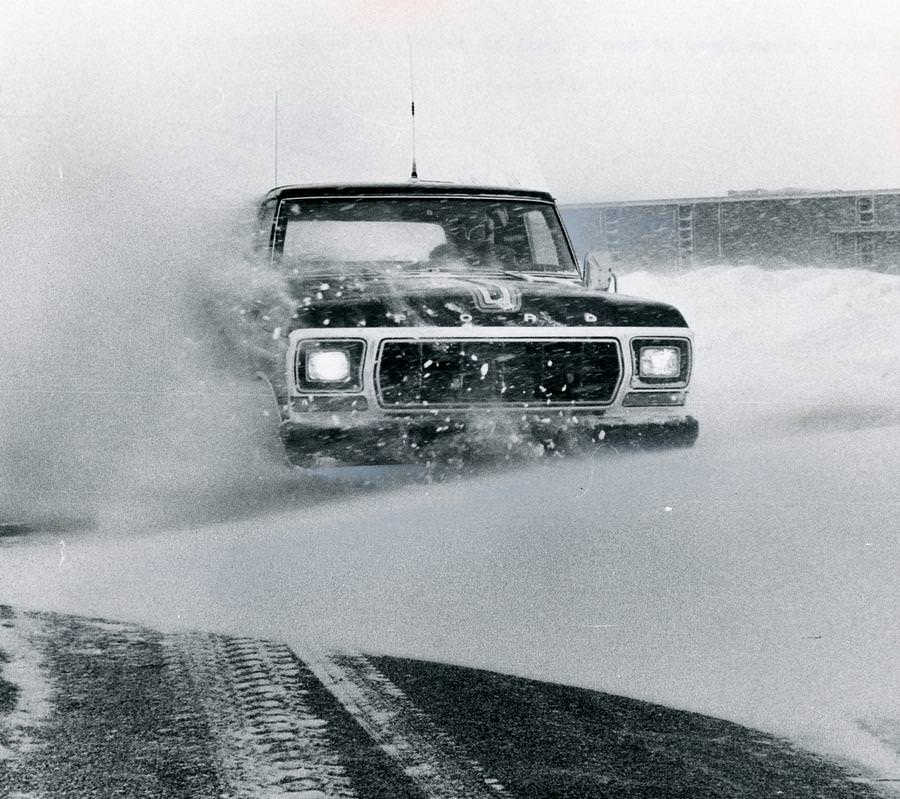
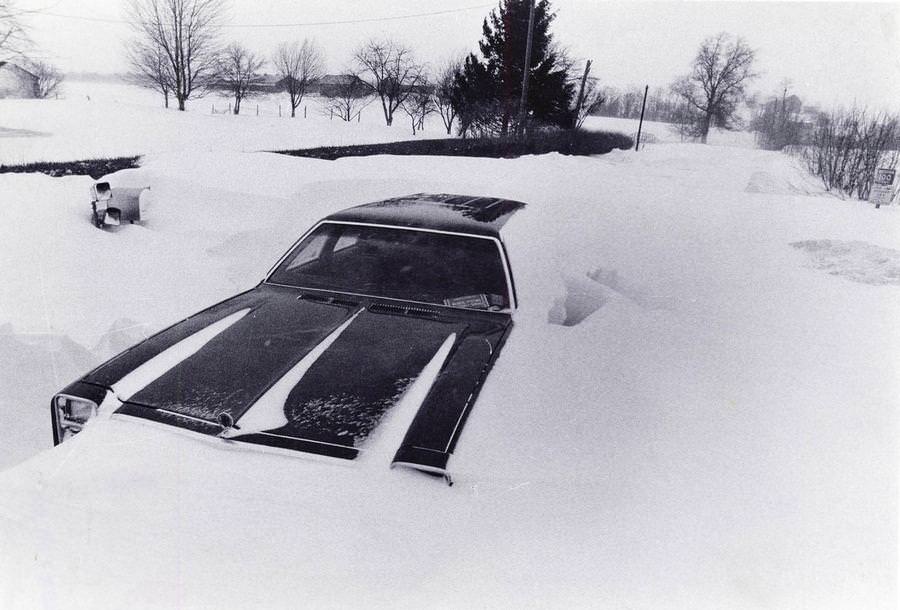
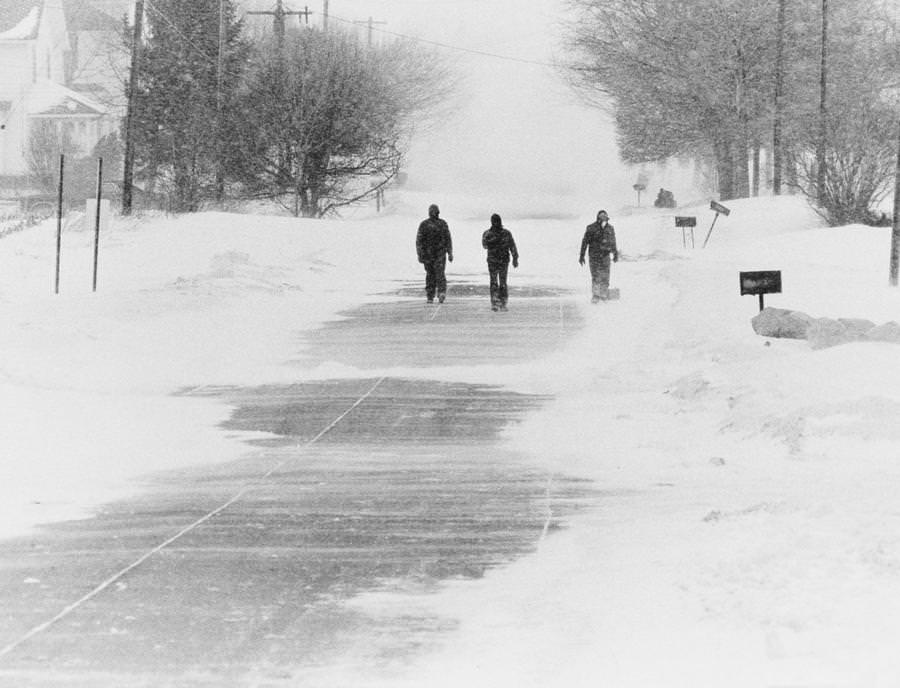
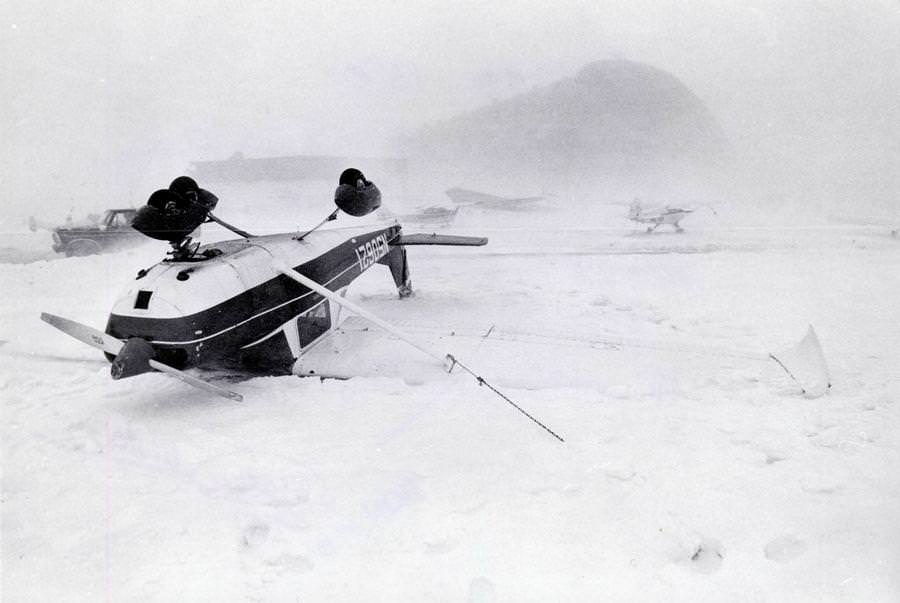
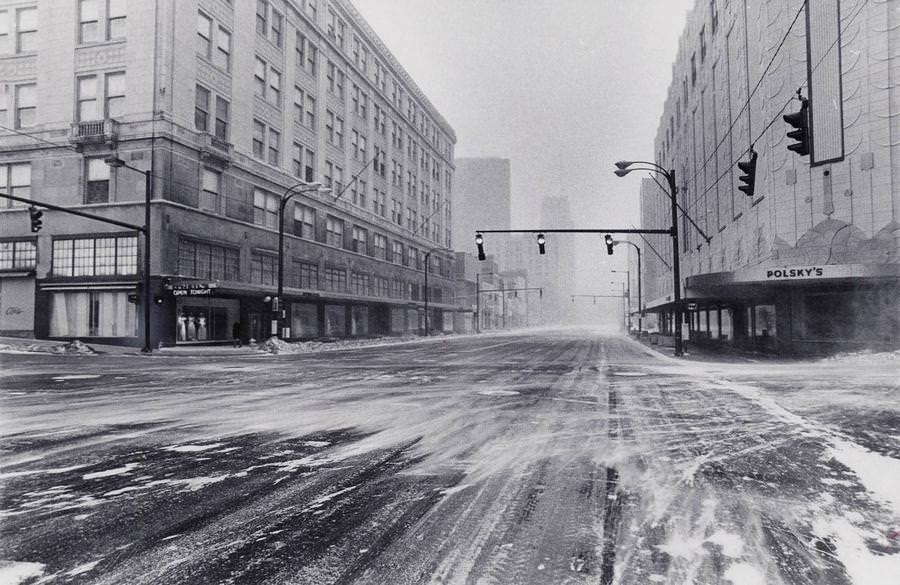
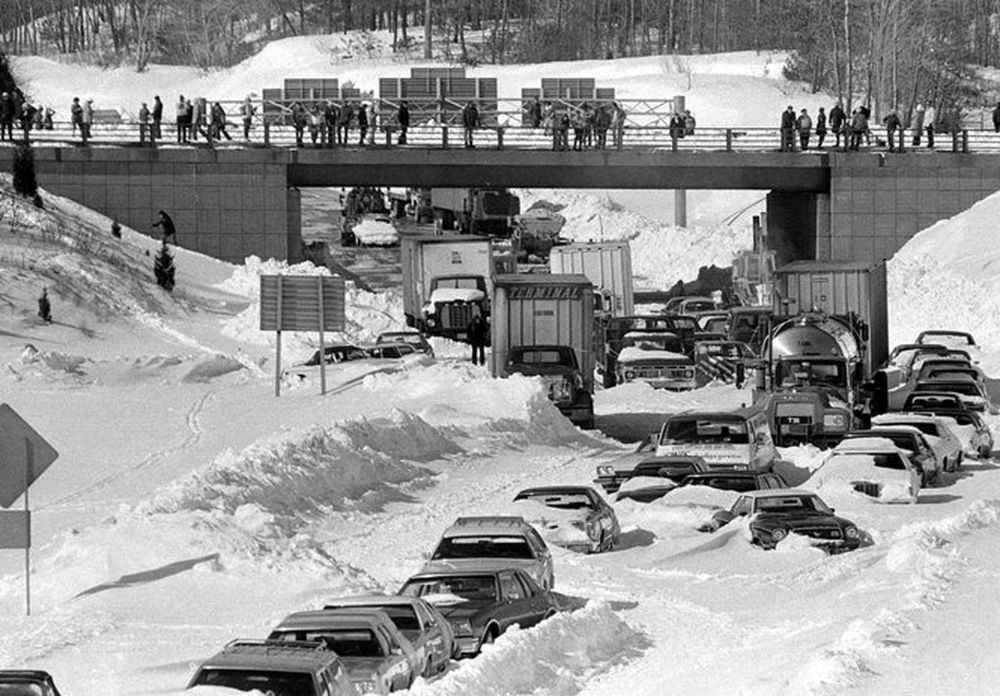
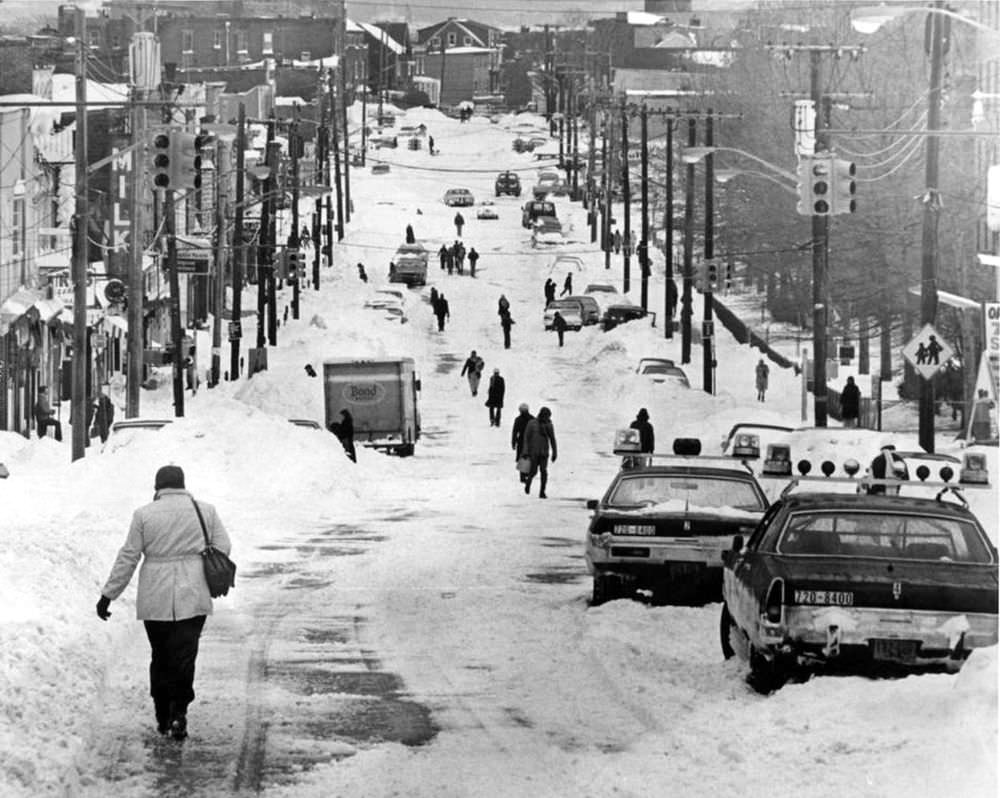

The photos are all in black and white, as if they were taken by WPA photographers. In 1978, we were able to shoot in color. After that storm, my friends and I built tunnels in drifts.
Black and white film was still cheaper then
Yup. Working at the Newton Boston Marriott off Comm Ave, right next to The 128. I’m a junior manager, and the weather guys were saying it is snowing, but won’t be much. All of the Senior Managers headed out early. Around 6-7pm, we have dozens, then hundreds of people walking to us because 128 was at a complete standstill. We set up a buffet, and let them sleep on the floor of the ballroom. Needless to say, everybody on duty was still on duty. I slept on a restaurant table for the first 4 days or so. The next day, absolutely nobody checked out, and nobody came in. But we had to feed them (it’s a 433 room hotel). Fortunately for us, 2 semi trailers had limped into our hotel with food for us and other hotels, but couldn’t leave. There was a Holiday Inn about 1/4 mile away that ran out of food after about the third day, so staff from there and some of their guests would trudge over through the 2-3 feet of snow, and we would give them whatever they could carry to get through the day. It became apparent that this would be at least a week before roads were cleared (the Governor declared everything inside 128 was illegal to drive a car for a week), so on Day 5 I was able to walk home (2 or so miles), take a shower and change clothes for the first time in 5 days, and back to work. I was finally relieved on Day 8.
I remember my brother and I making like $75 each shoveling snow and to a 14 and 12 year old that was a small fortune.
6 record albums maybe…..or of course more with Columbia House
Or 7500 Columbia House subscriptions
6 record albums was a years worth of record albums. And I’m pretty sure it would have been closer to 8 because albums were about $8 back then.
Yup. I jumped out my Staten Island bedroom’s 2nd story window, after it. Not by complete necessity; was just fun.
What many people forget is that the blizzard of 78 wasn’t just one storm. It was the culmination of several storms. We had had at least two major snowstorms within a few weeks before that storm, so there was already a ton of snow on the ground.
Just constant snow piled overhead for weeks in Manhattan. And so effing cold.
True. In the Boston area, 2 weeks before this blizzard we had a record setting snowfall (which had been predicted, so people were aware and stayed home, and the snow removal crews were out in force) that was still on the ground when this blizzard (UNpredicted) hit–catching everyone off guard. PLUS, a Nor’easter decided to hit at the same time, with up to 90 MPH winds. Communities on the shore were devastated by the winds, buildings destroyed, massive waves, etc. Even inland up to 20+ miles, the winds were such that any given house may have 6 feet of snow piled against the house, but grass is visible in the front yard. Happened to my family in Wellesley, about 12 miles in. They had to climb out a window to get out of the house because so much snow was piled against the house that you couldn’t open a door. Then, they had to had to climb onto the six feet of snow blown up against the garage and hand dig it out, to get the pressure off the garage door to allow it to go up.
One family lost their child due to this phenomenon….the child went out into the front yard, and then disappeared. Parts of the yard were only 1 foot of snow, others up to 5 feet. Police and neighbors looked everywhere to see where he may have wandered off to, to no avail. When the snow finally melted 2 months later, they discovered that the child had fallen into an air pocket of a 5 foot pile, and froze to death. 20 feet from the front door of their house.
In most cases, throughout Boston, snow plows were useless. Not merely because of how much it was, but because the blizzard had been unpredicted, cars were everywhere, abandoned in situ, stuck in the middle of roads. So front end loaders had to be called in, but this is a much slower process.
At the hotel that I was at, when the front end loaders finally came to try and dig out paths for the cars in our lot, they dinged over a dozen cars that were completely buried, and they were not aware there was a car in that pile.
In Wellesley, most of the front end loaders were loading it into trucks, because the piles were so high on the sides of the roads they couldn’t reach above it to drop. And then the trucks took it to dump it in the middle of the City Park. I remember distinctly that on the Fourth of July, there was still some snow in the park that had not yet melted.