
In 1877, photographer John Thomson and journalist Adolphe Smith published a groundbreaking book called ‘Street Life in London.’ It was one of the first works of social documentary photography ever produced, and it holds a specific distinction in history: it was the first time photographs were used as a tool for social documentation. Together, Thomson and Smith set out to do something no one had done before — use the camera not to flatter or commemorate, but to expose the raw, daily realities of poverty in one of the world’s greatest cities.
The book was released in monthly installments before being collected into a single volume. What made it revolutionary wasn’t just the photography. Thomson and Smith interviewed their subjects — street vendors, beggars, laborers, and tradespeople — and published their words, stories, and thoughts alongside the images. Poverty was treated not as a moral failing but as a sociological problem, one that could be studied and, they believed, alleviated. The photographs themselves were unposed and candid, capturing people mid-work, mid-conversation, mid-life.
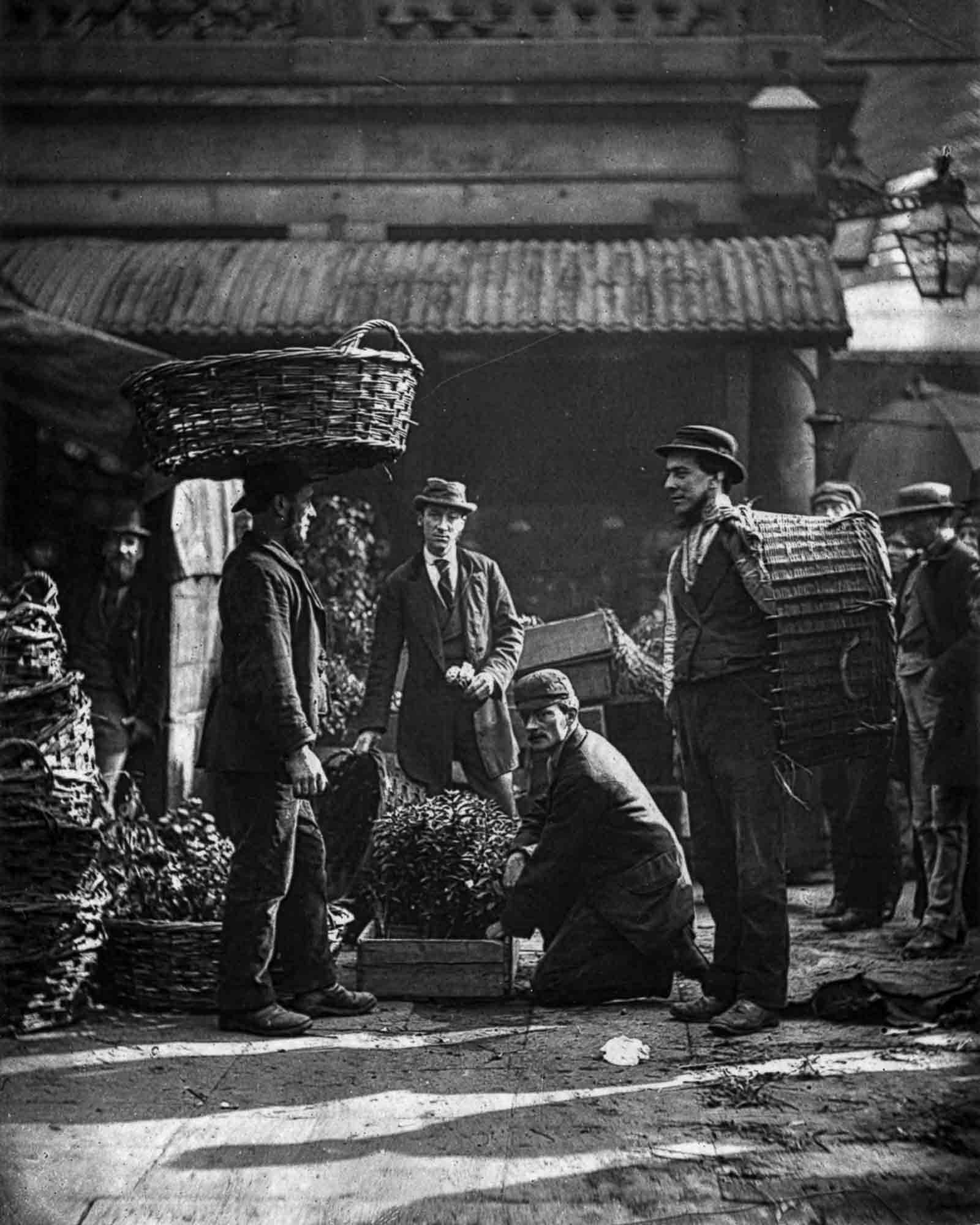
Covent Garden was one of London’s busiest commercial hubs in the 1870s. Porters hauled heavy loads through the market every morning, moving plants, produce, and goods before most of the city had woken up.
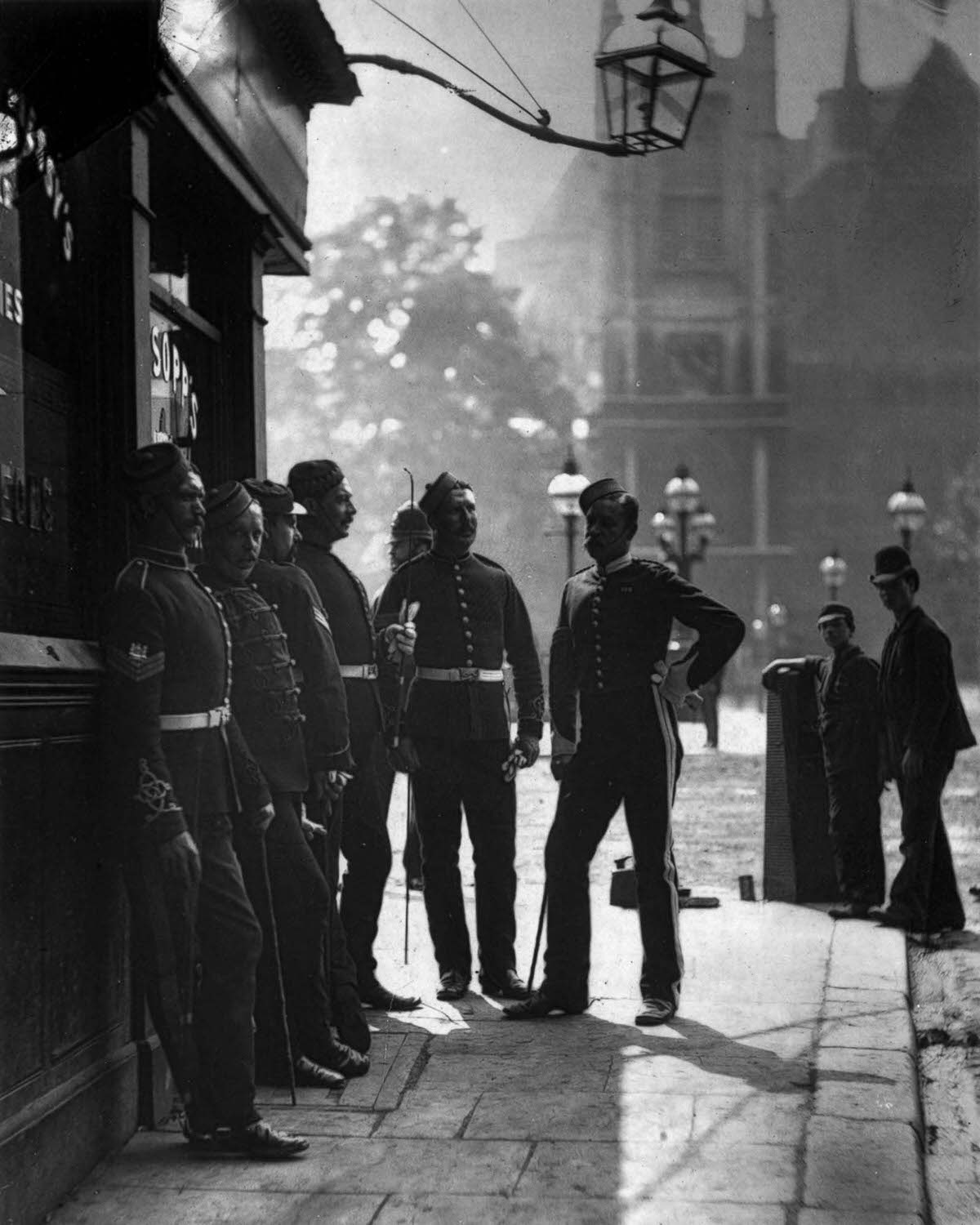
Military recruiters were a common sight on London’s streets. Outside public houses, Army sergeants made their pitch to working-class men who often had few other options for steady employment.
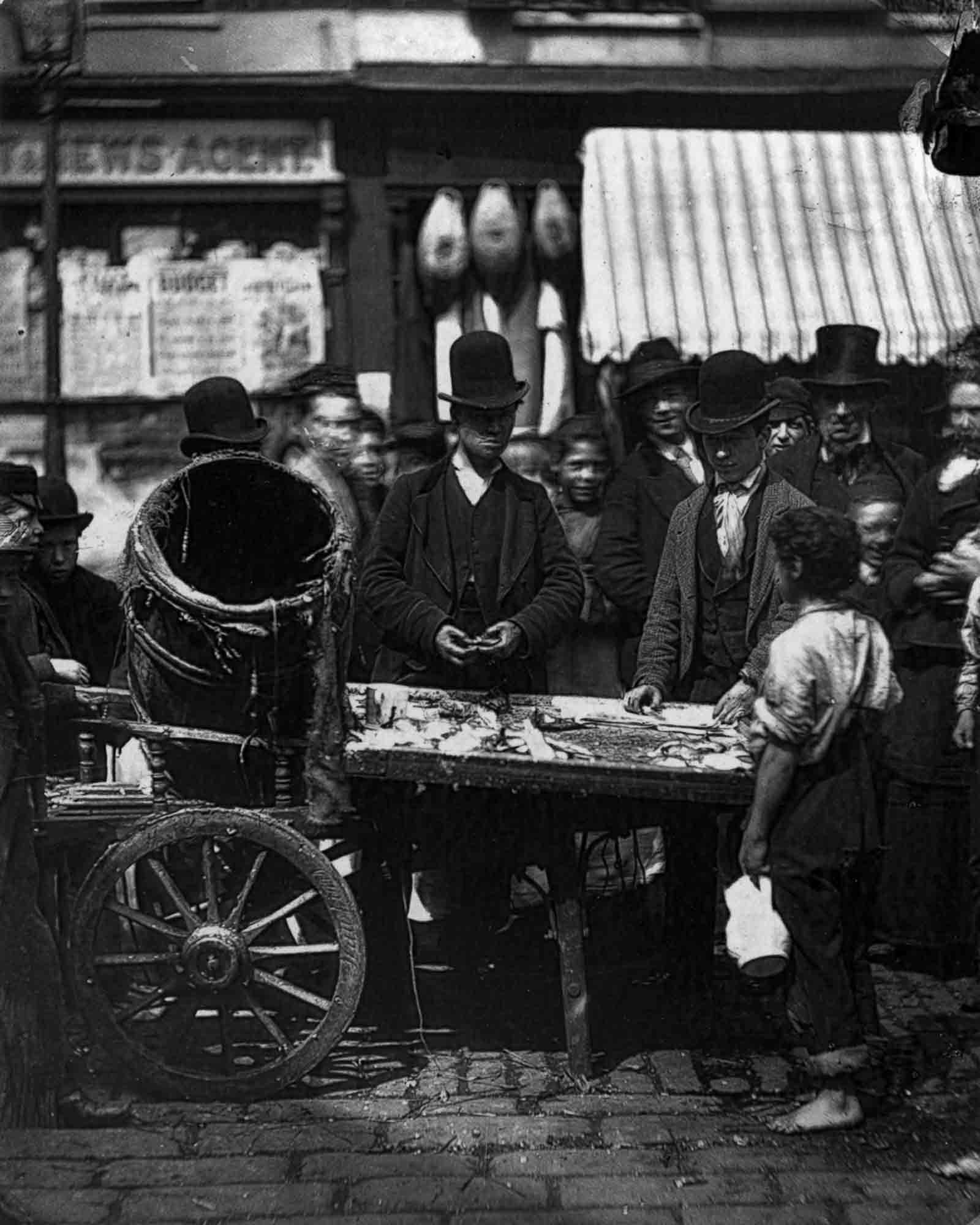
Street markets were the lifeblood of London’s poor neighborhoods. Costermongers — street sellers who worked from barrows — sold everything from vegetables to fish. Joseph Carney was one such figure, working the area between Seven Dials and Five Dials, selling fresh herring to local buyers.
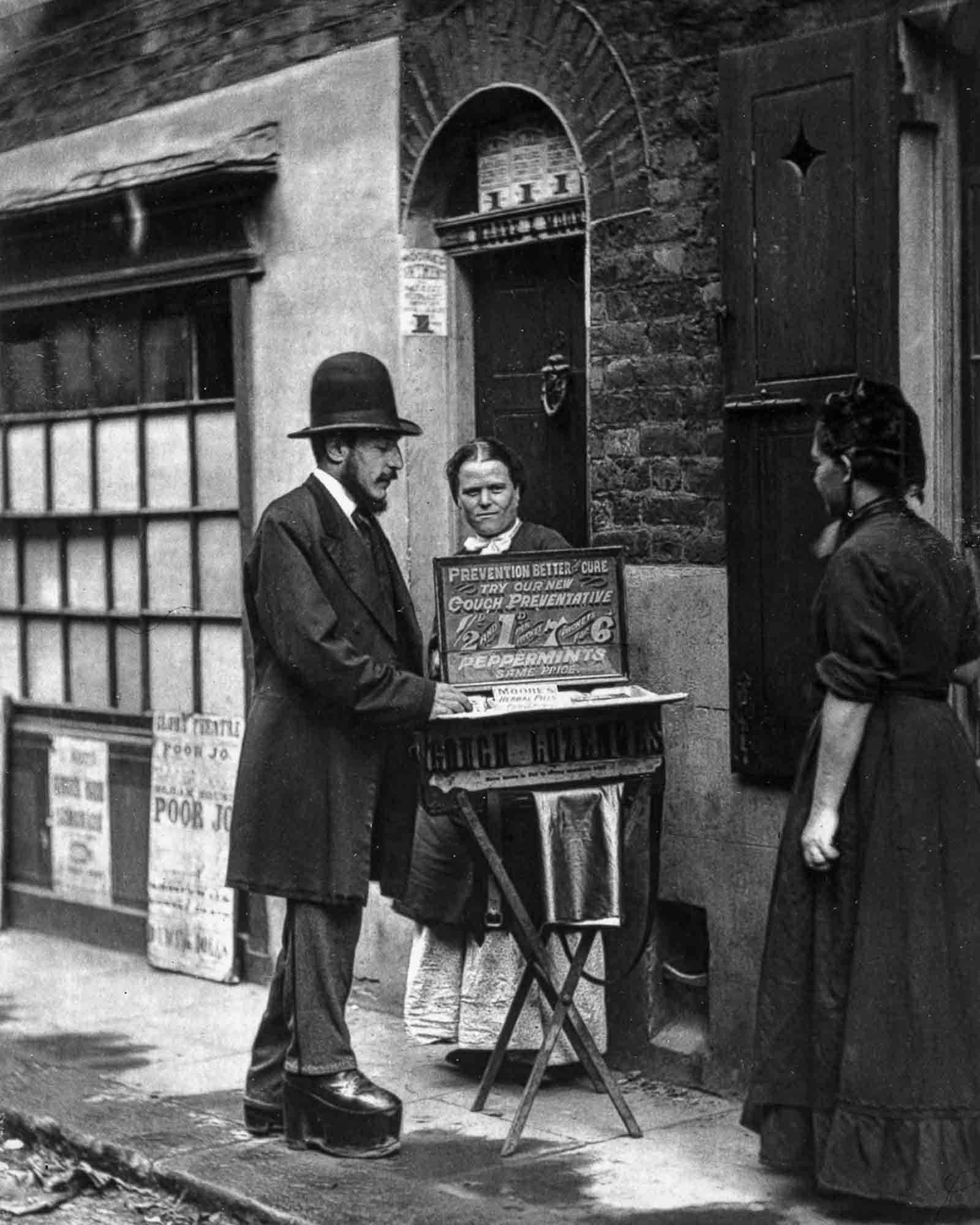
Not every vendor had a barrow. Some carried their goods on their person or set up makeshift stalls, selling whatever the market would bear — including remedies for common ailments like coughs and colds.
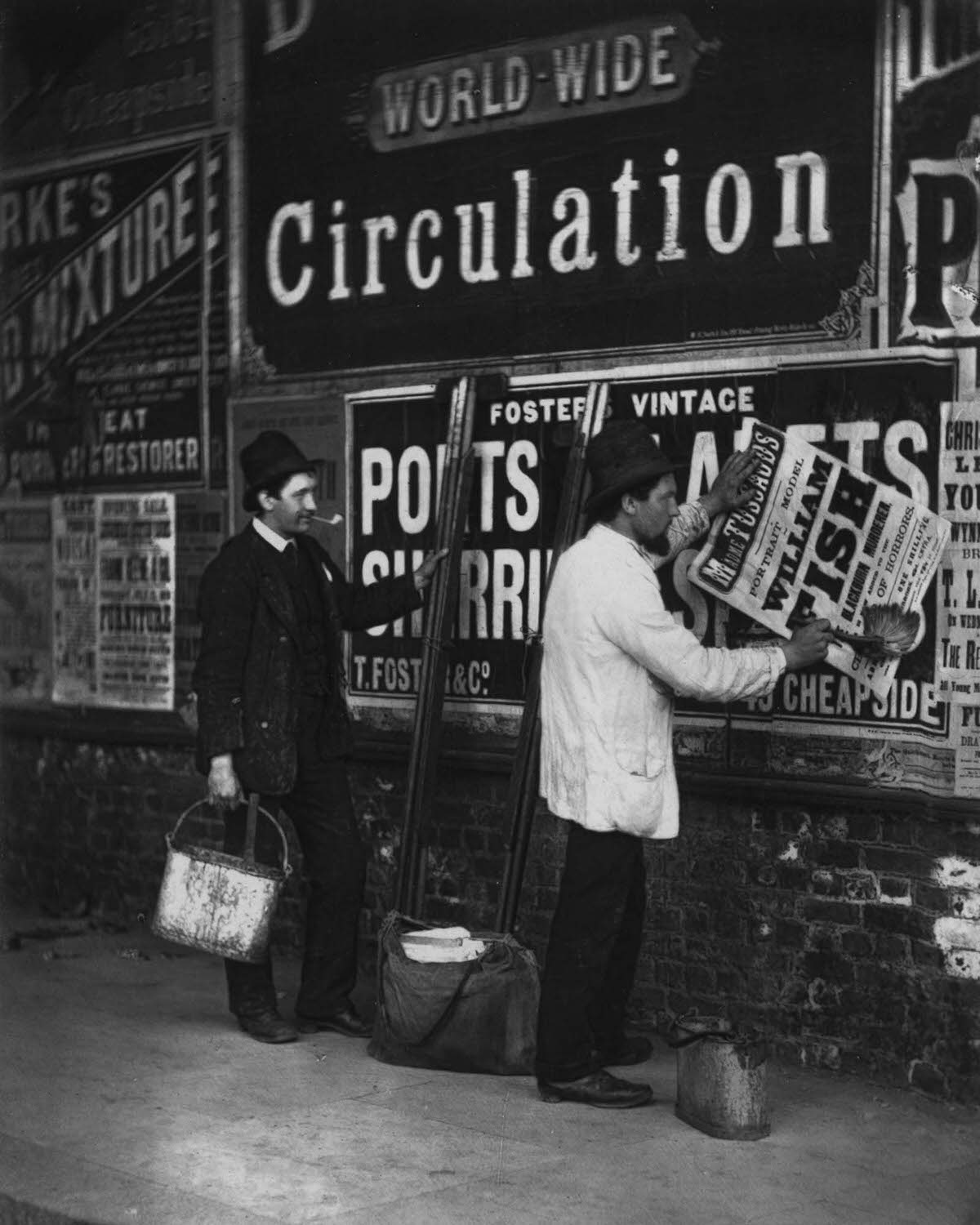
Advertising in Victorian London was a physical, hands-on business. Bill stickers roamed the city with buckets of paste and rolls of paper, covering walls and hoardings with announcements for theaters, exhibitions, and attractions like Madame Tussaud’s waxworks museum.
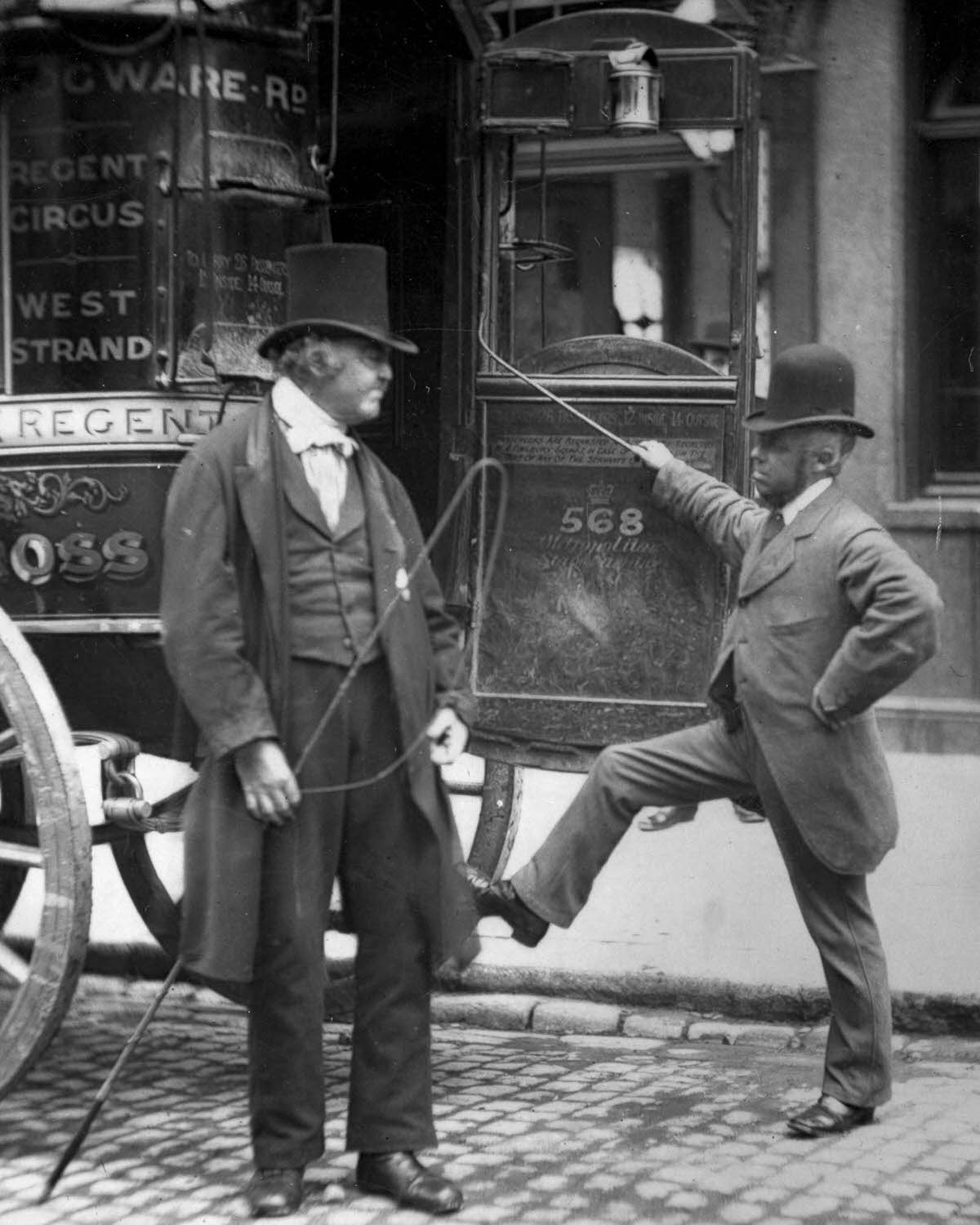
Public transport in Victorian London ran on horse power — literally. Omnibus drivers navigated crowded streets daily, often becoming well-known figures along their regular routes. One such driver earned the nickname ‘Cast-Iron Billy,’ a title that suggested both toughness and reliability.
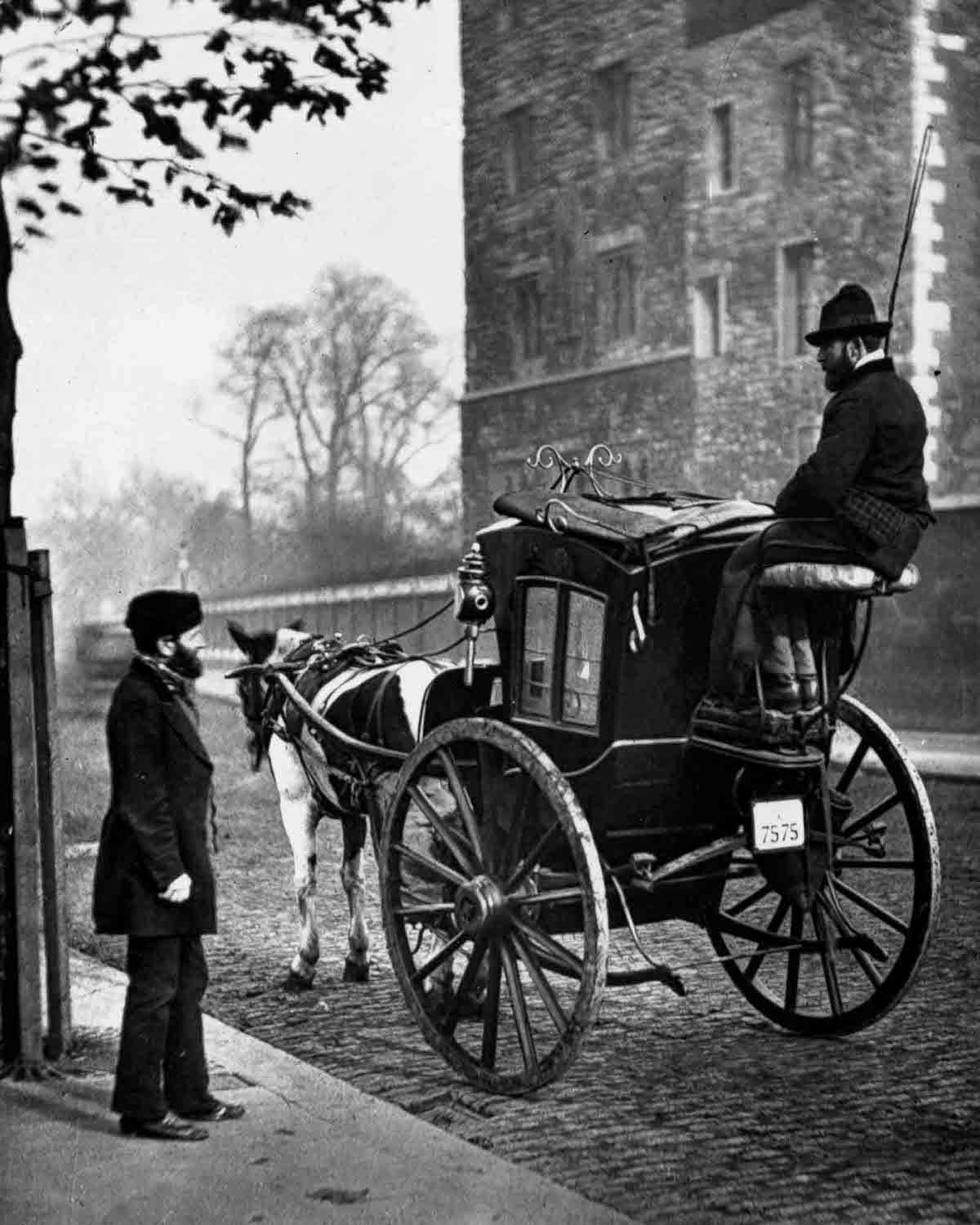
For those who could afford a faster, more private ride, the hansom cab was the vehicle of choice. These two-wheeled, horse-drawn carriages were a fixture of London’s streets and a symbol of the city’s busy, mobile character.
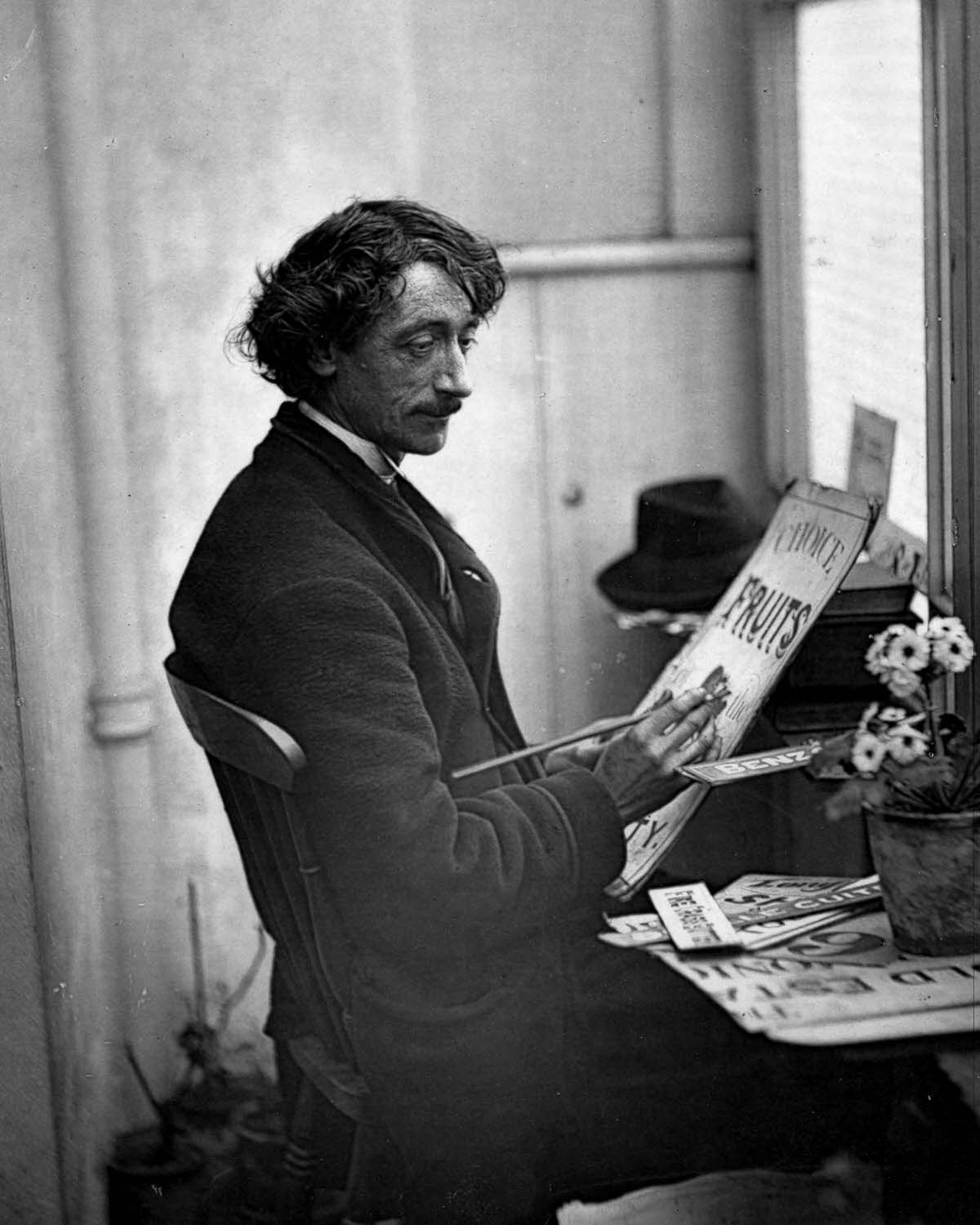
Trade skills were often practiced in small, personal workshops. A signwriter, for example, worked with careful precision — lettering was a craft, not a job to be rushed, and a well-painted sign was a point of professional pride.
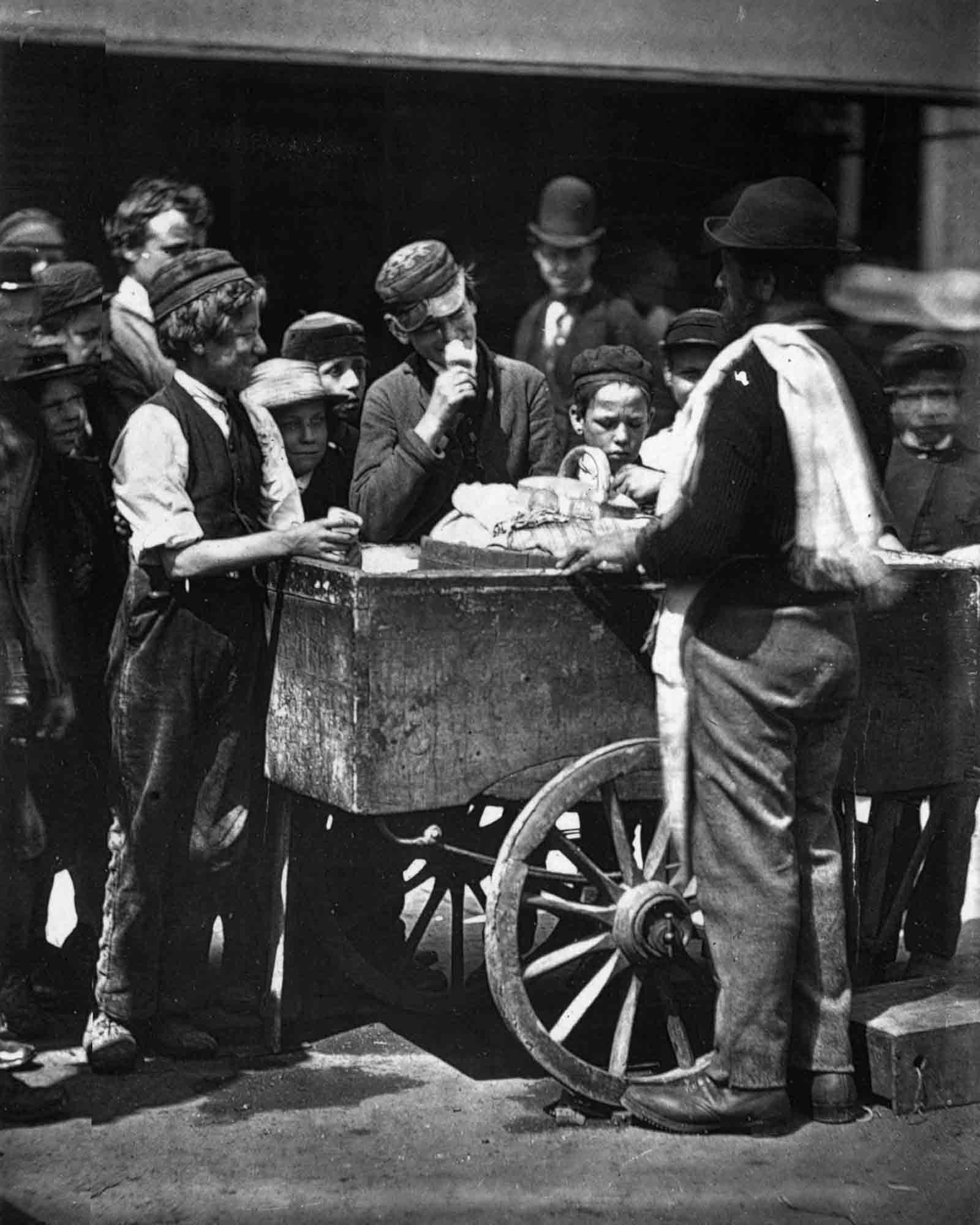
Street food was everywhere in Victorian London, and for the poorest residents, it was often their only affordable meal. Halfpenny ices — small frozen treats sold for a half-penny — were a popular summer purchase, especially among children.
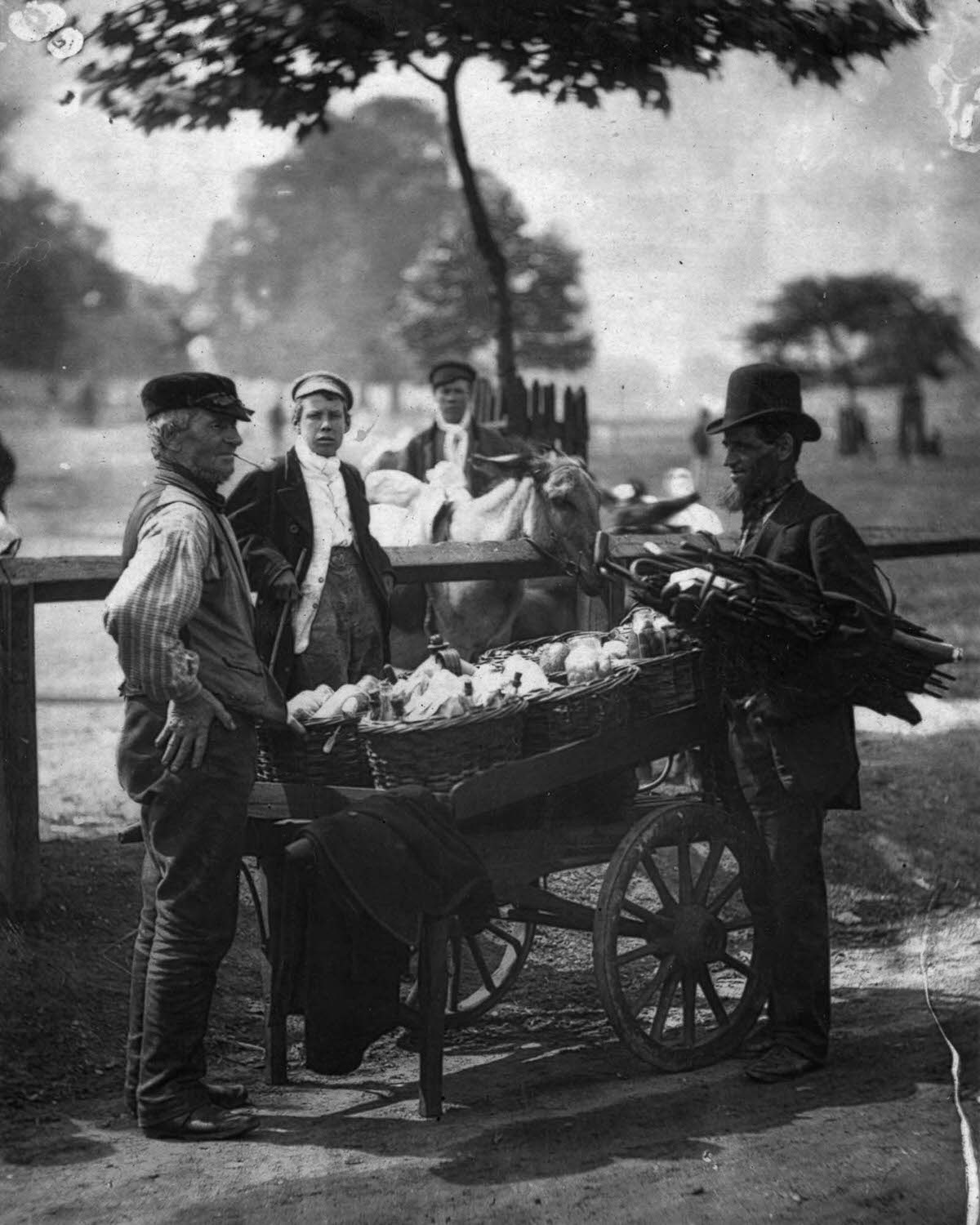
‘Mush-Fakers’ were umbrella repairmen who traveled the streets fixing broken umbrellas on the spot. Many paired this trade with other work, such as selling ginger beer, to cobble together enough income to survive.
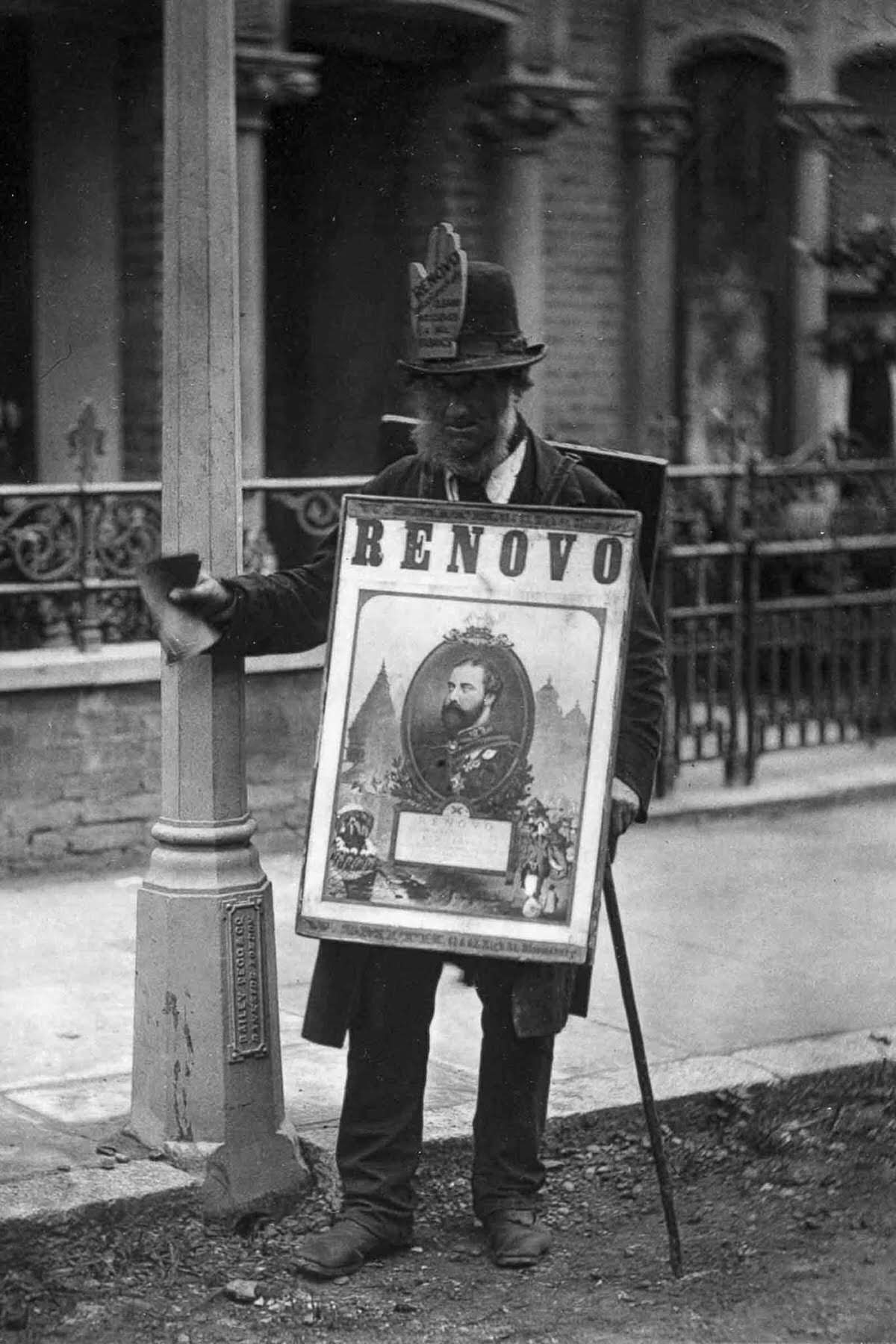
One of the most distinctive forms of street advertising was the sandwich-board man. Paid to walk through busy areas wearing large boards front and back, these men were living billboards — a cheap and direct way to reach pedestrian traffic.
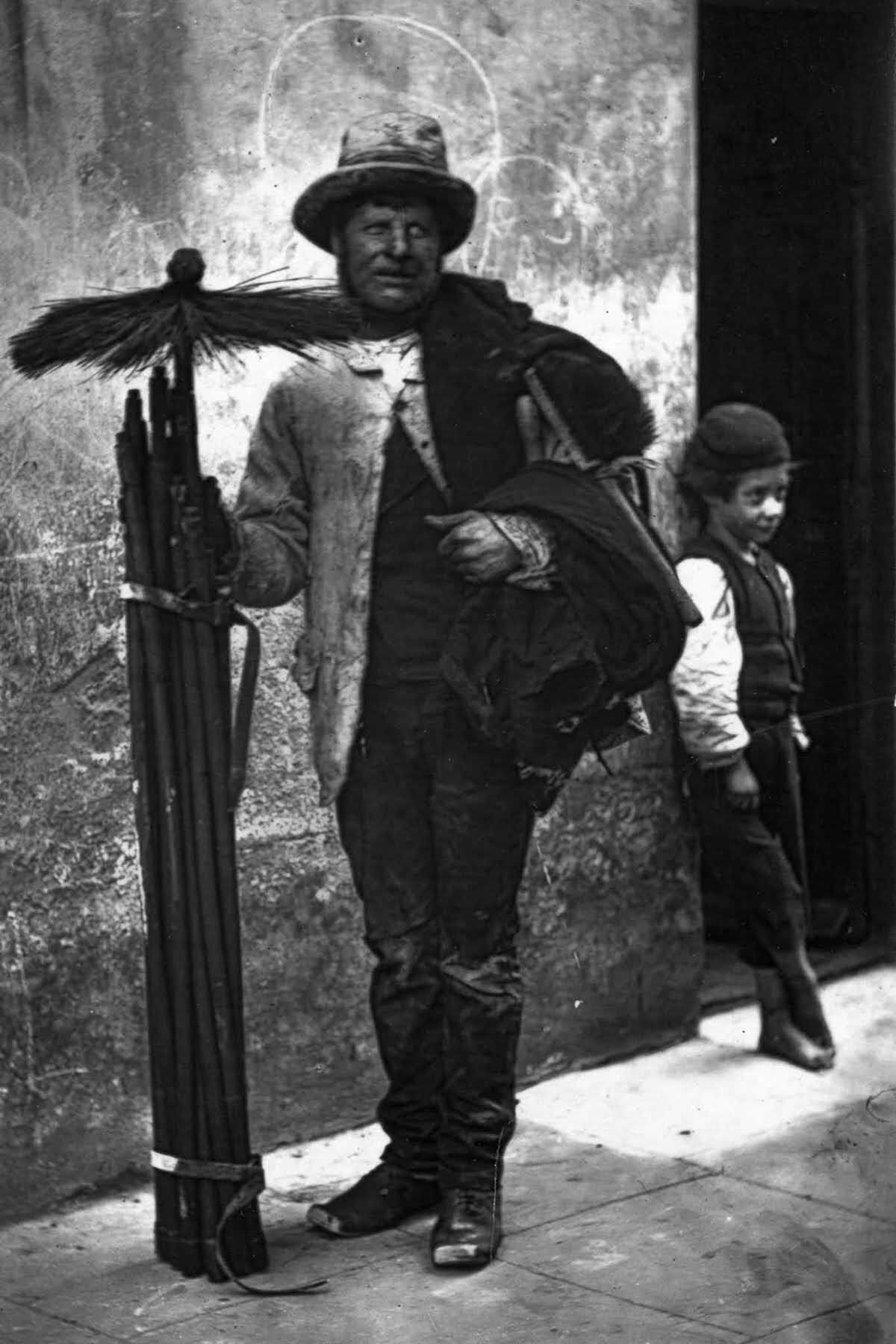
Chimney sweeps were essential workers in a city heated almost entirely by coal fires. The work was filthy and dangerous, and young assistants were often sent into the narrowest flues where adults couldn’t fit.
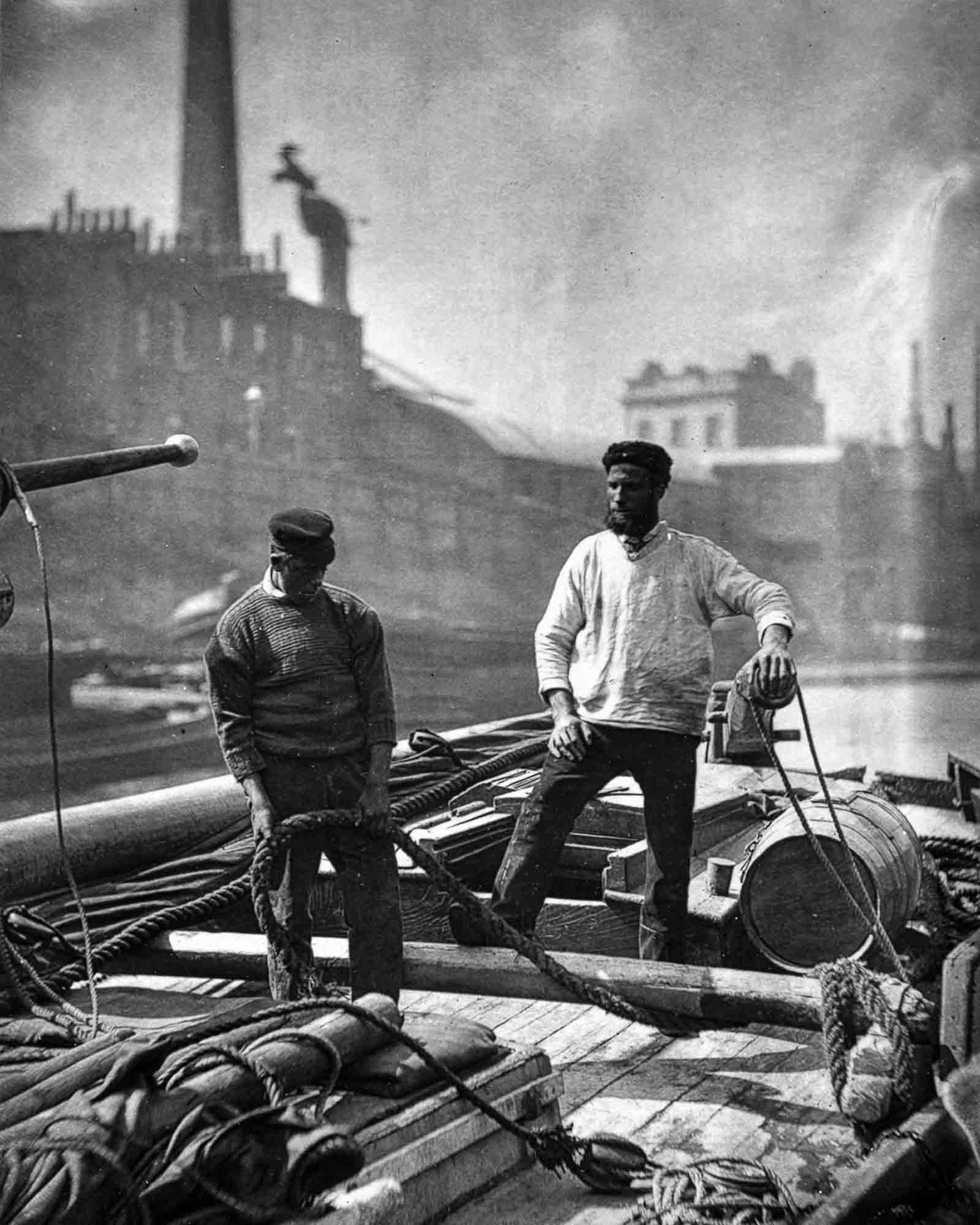
The Thames was London’s main commercial artery. Barge workers spent long hours moving cargo up and down the river, loading and unloading goods that kept the city supplied. It was hard, physical work with little pay and no stability.
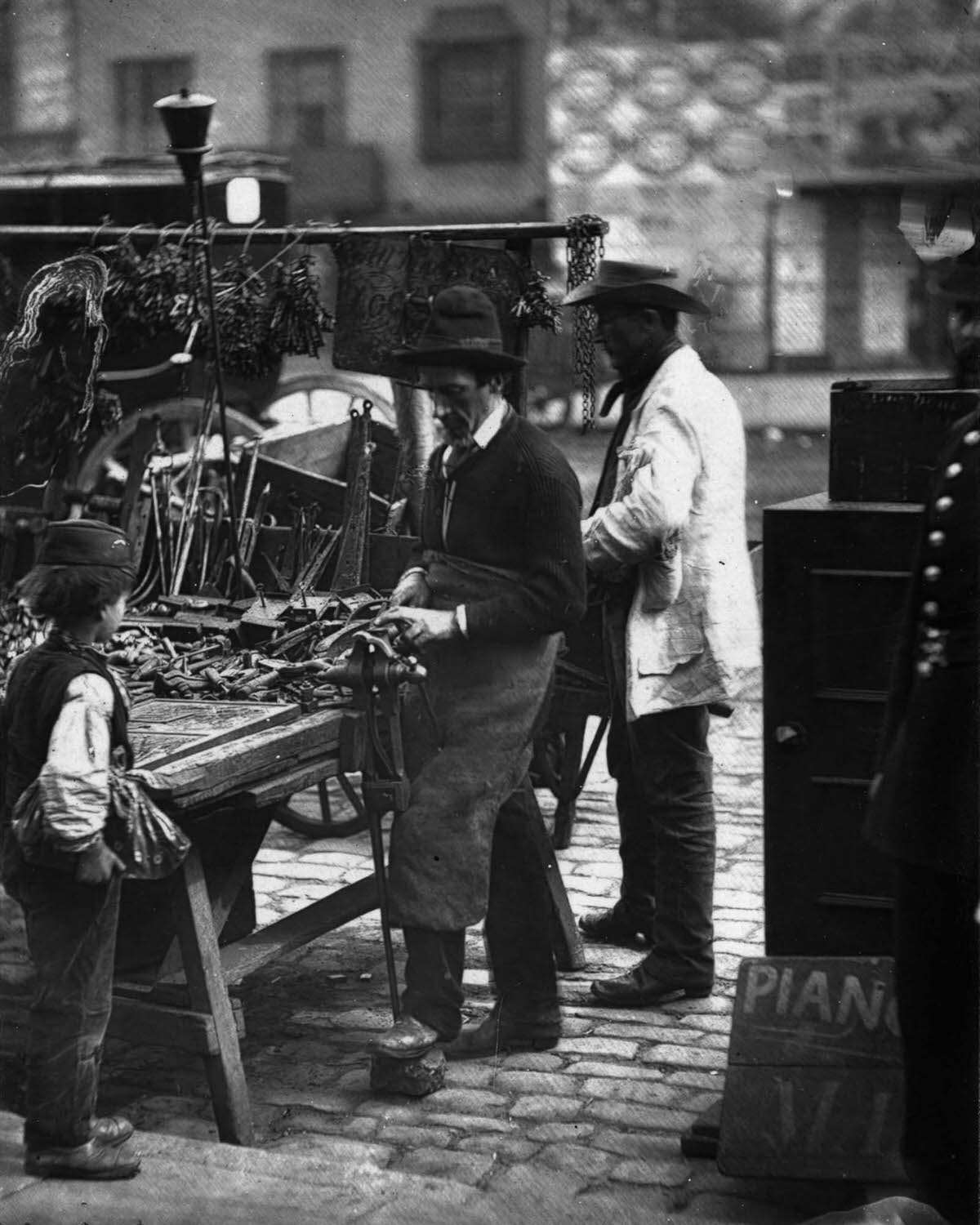
Locksmiths, cobblers, and other skilled tradespeople often worked directly on the street, setting up small stalls where passersby could bring broken or worn items for quick repair. These tradespeople served working-class customers who couldn’t afford to replace what they owned.
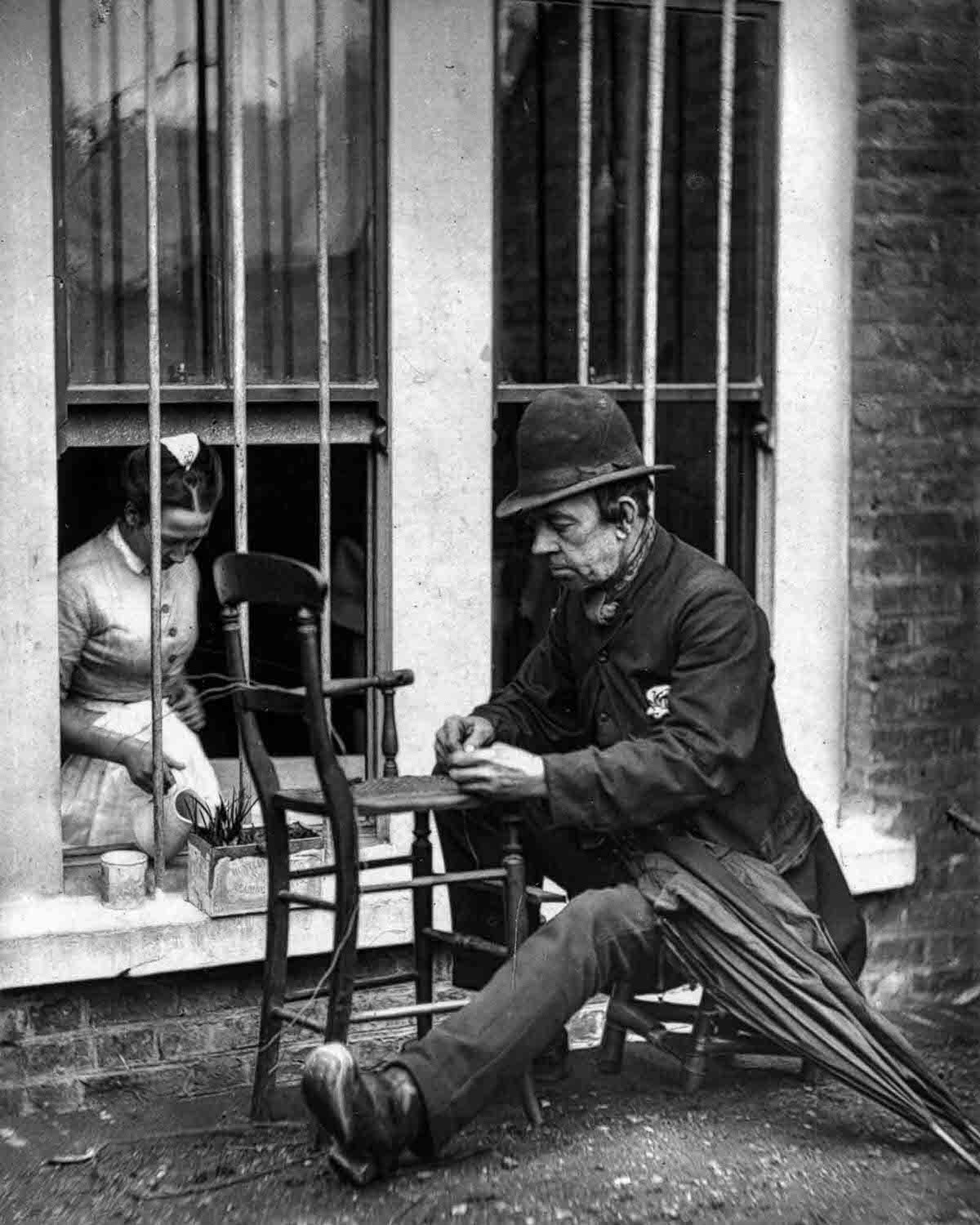
Some street workers blended craft with personality. ‘Caney’ the clown was a cane-chair weaver who worked under a theatrical nickname, weaving strips of cane into the seats of wooden chairs — a practical trade dressed up with a performer’s flair.
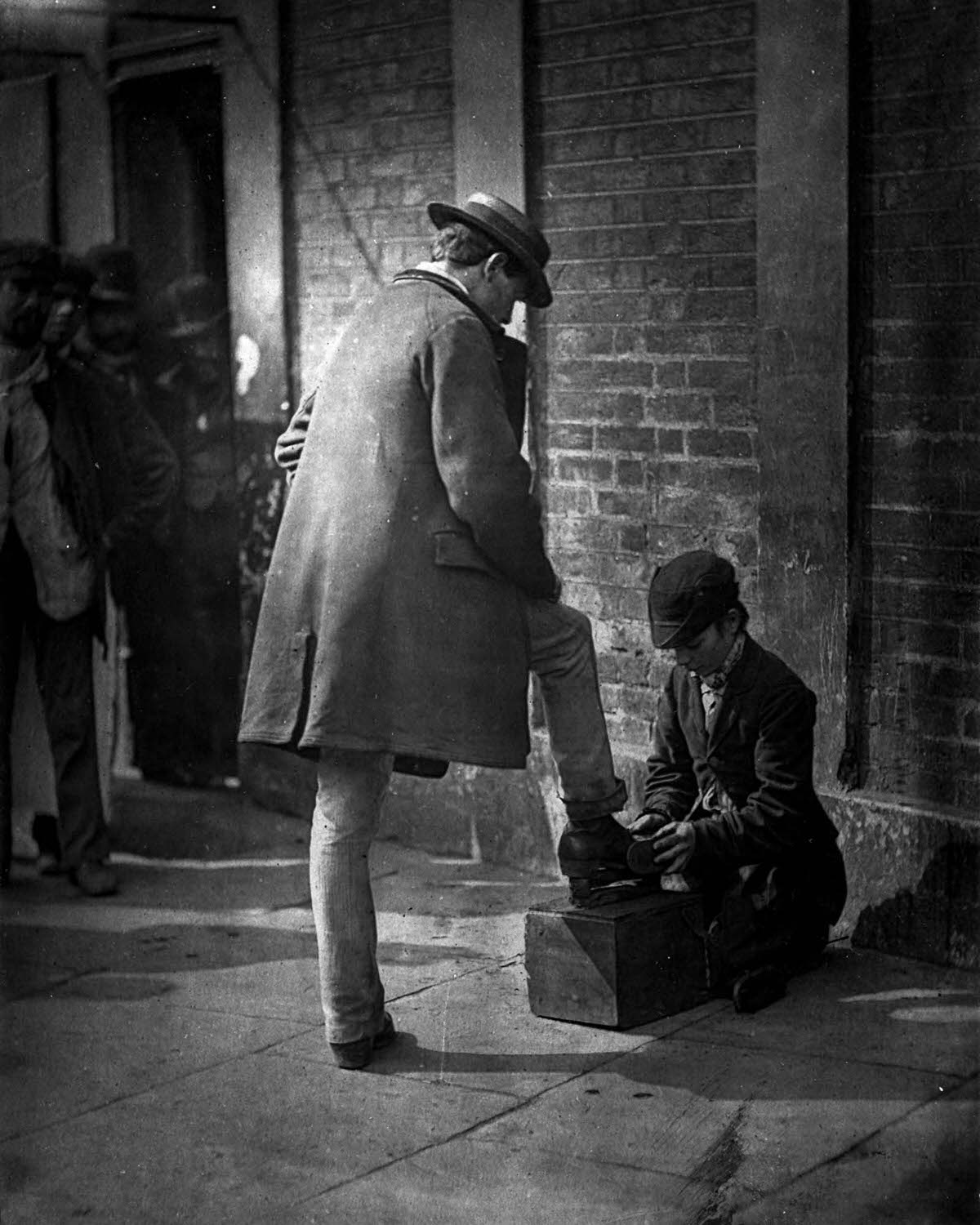
Shoeshine boys were a fixture of Victorian street corners. For a small coin, they would clean and polish the boots of working men and gentlemen alike. It was one of the most common ways for young, poor boys to earn money.
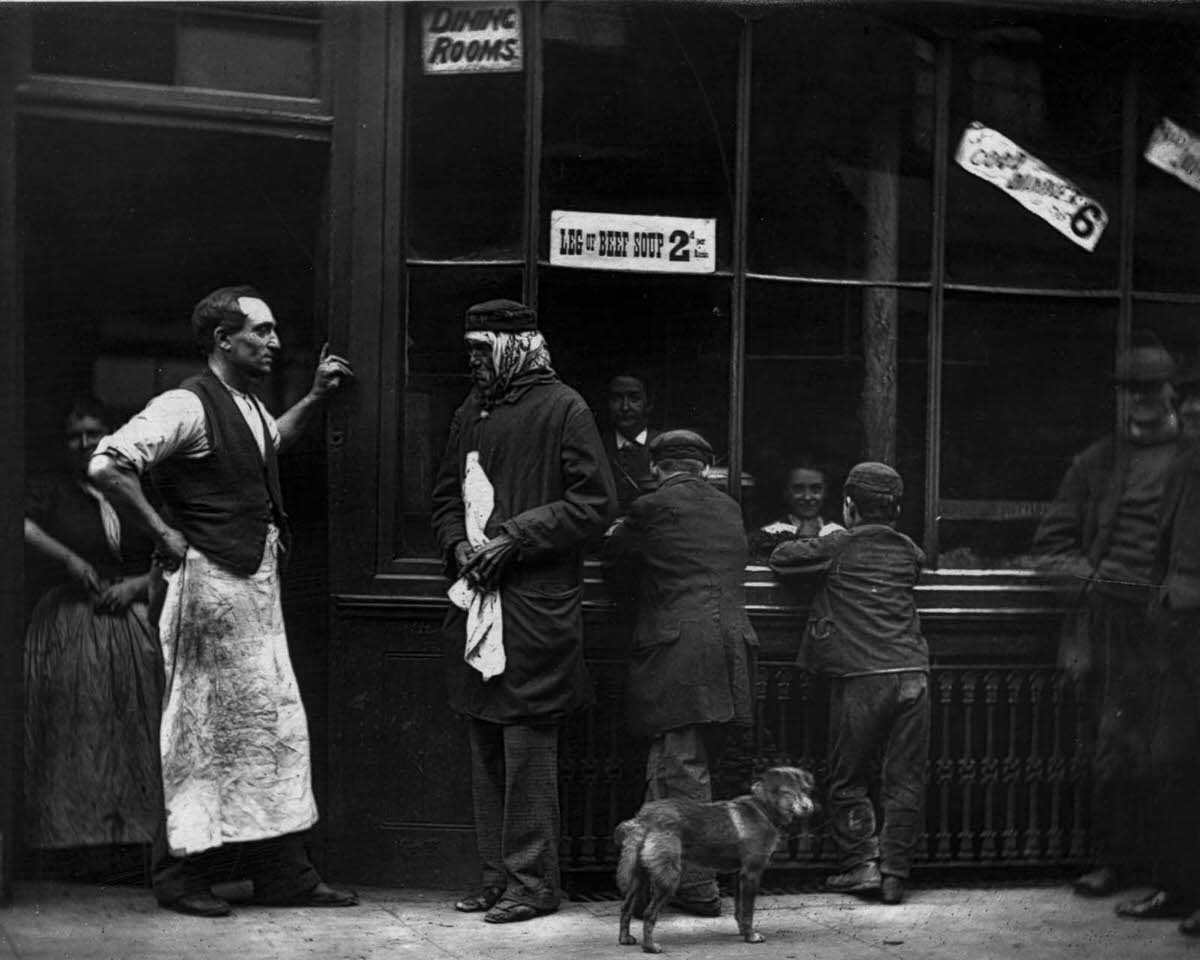
Thomson and Smith documented more than just vendors and tradespeople. They also captured the social institutions that existed on the margins of Victorian society. One such place was a dining room specifically for ex-convicts — men who faced extreme difficulty finding work or housing after release from prison. Among those photographed there was Ramo Sammy, a local Indian drummer known as the ‘tam tam man.’
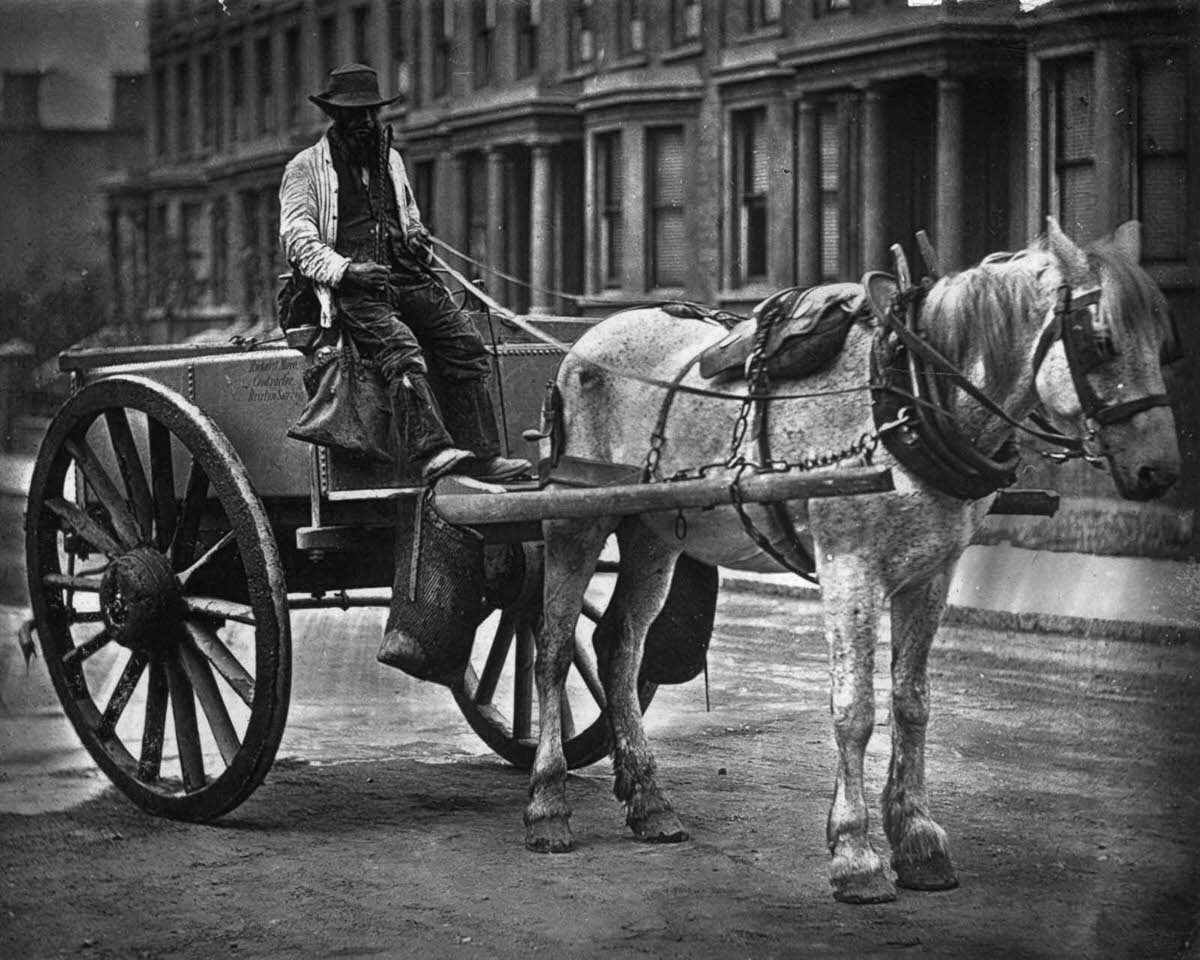
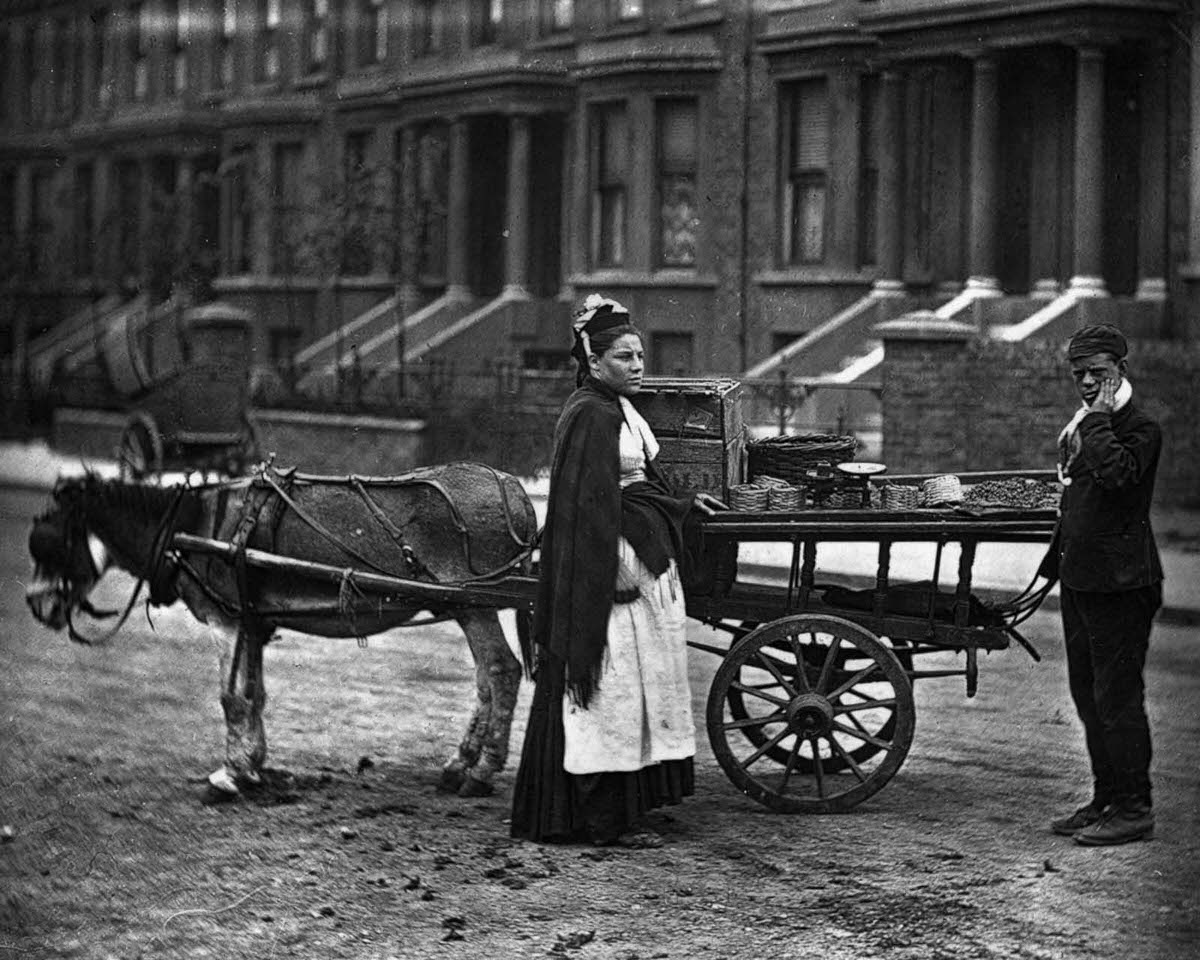
Clean water was a serious public concern in Victorian London. Water carts traveled through the streets to supply neighborhoods that lacked reliable plumbing, and they also dampened dusty roads in dry weather.
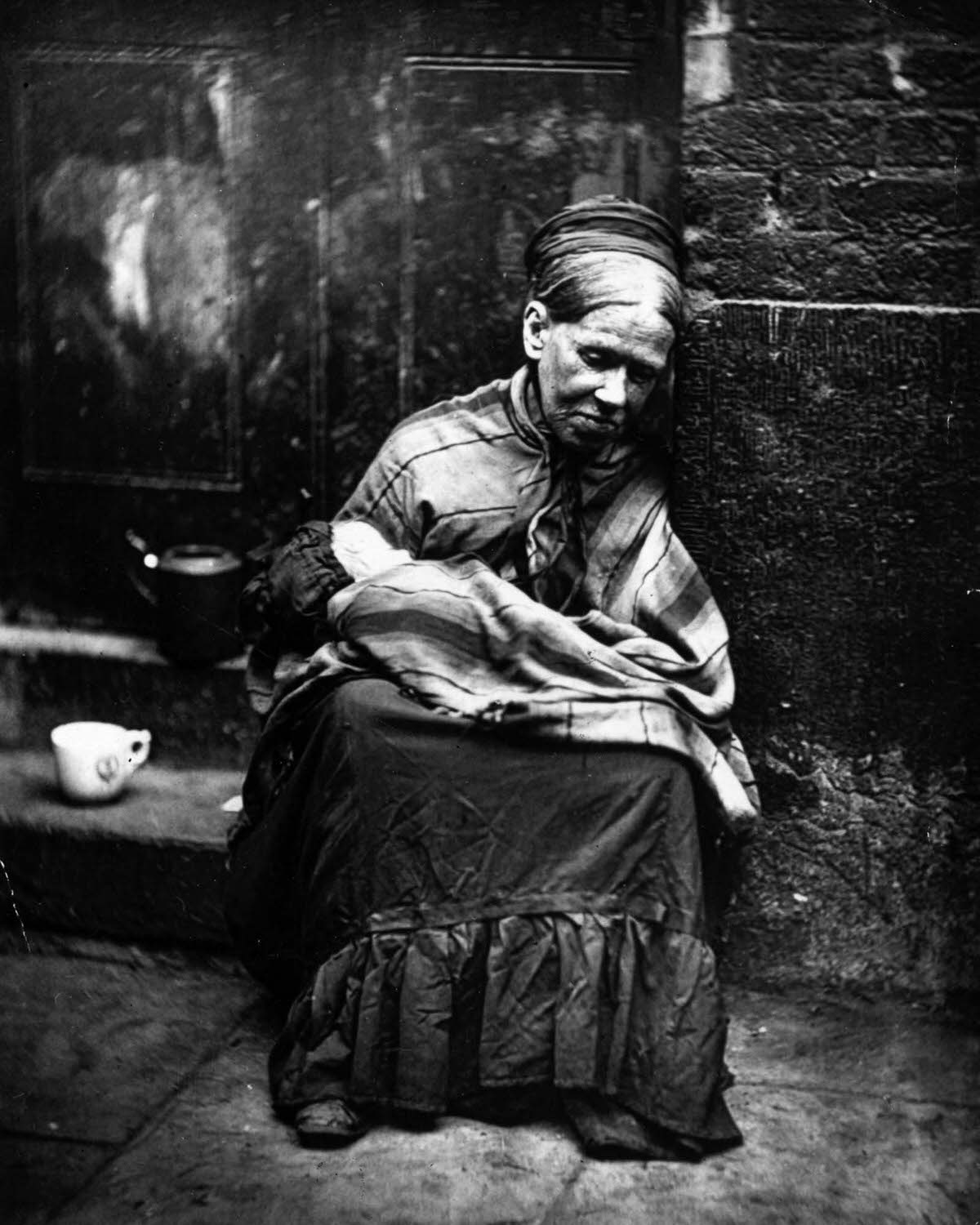
Poverty forced people into arrangements that would seem shocking today. Some beggars earned small amounts by minding the babies of working mothers — a transaction that reflected just how desperate daily survival could be for London’s poorest residents.
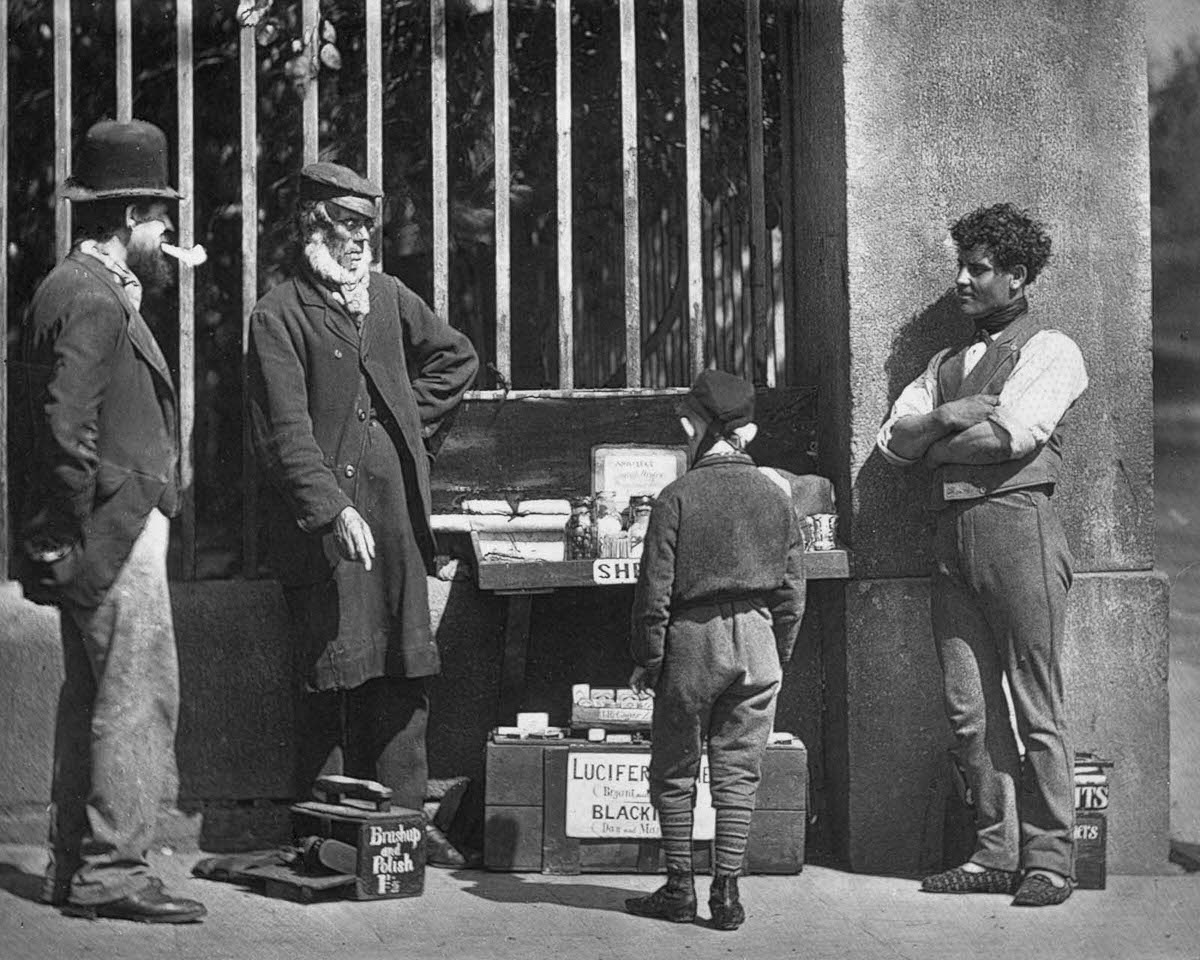
Many street workers combined multiple trades to survive. A single individual might sell goods from a small stall while also offering a shoeshine service — doing whatever it took to earn enough to eat that day.
Fruit sellers operated throughout the city, from market stalls to mobile carts. They served customers across all income levels, though their own earnings were typically meager and unpredictable.
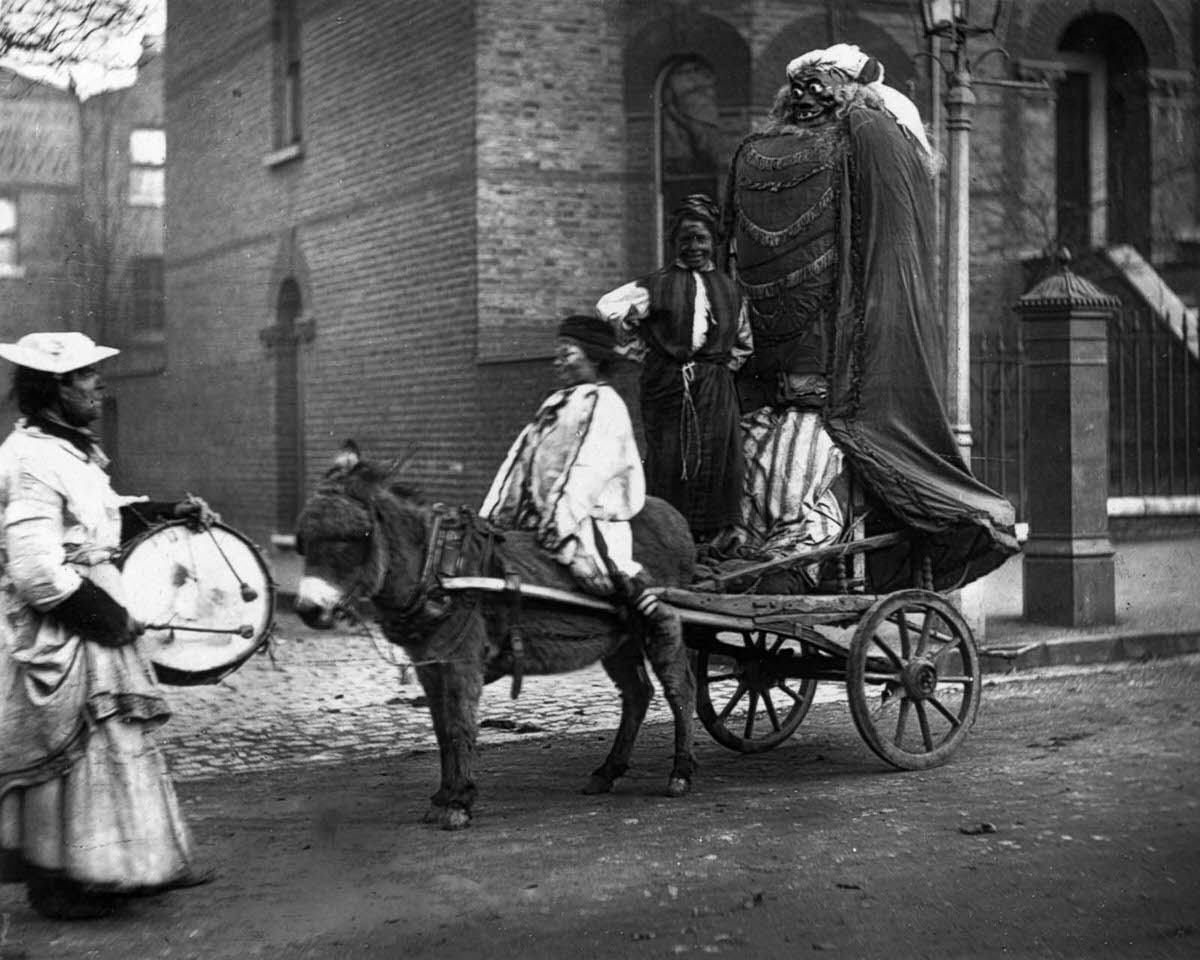
Not all of Thomson and Smith’s photographs captured hardship. Bonfire Night — also known as Guy Fawkes Night — was a major annual celebration. Street processions, bonfires, and fireworks marked November 5th across London, drawing crowds from every class.
Flooding was a recurring disaster for residents living near the Thames. In Lambeth, the river’s annual tidal overflow regularly pushed water into homes and businesses, leaving the poorest residents with water-damaged goods and nowhere else to go.
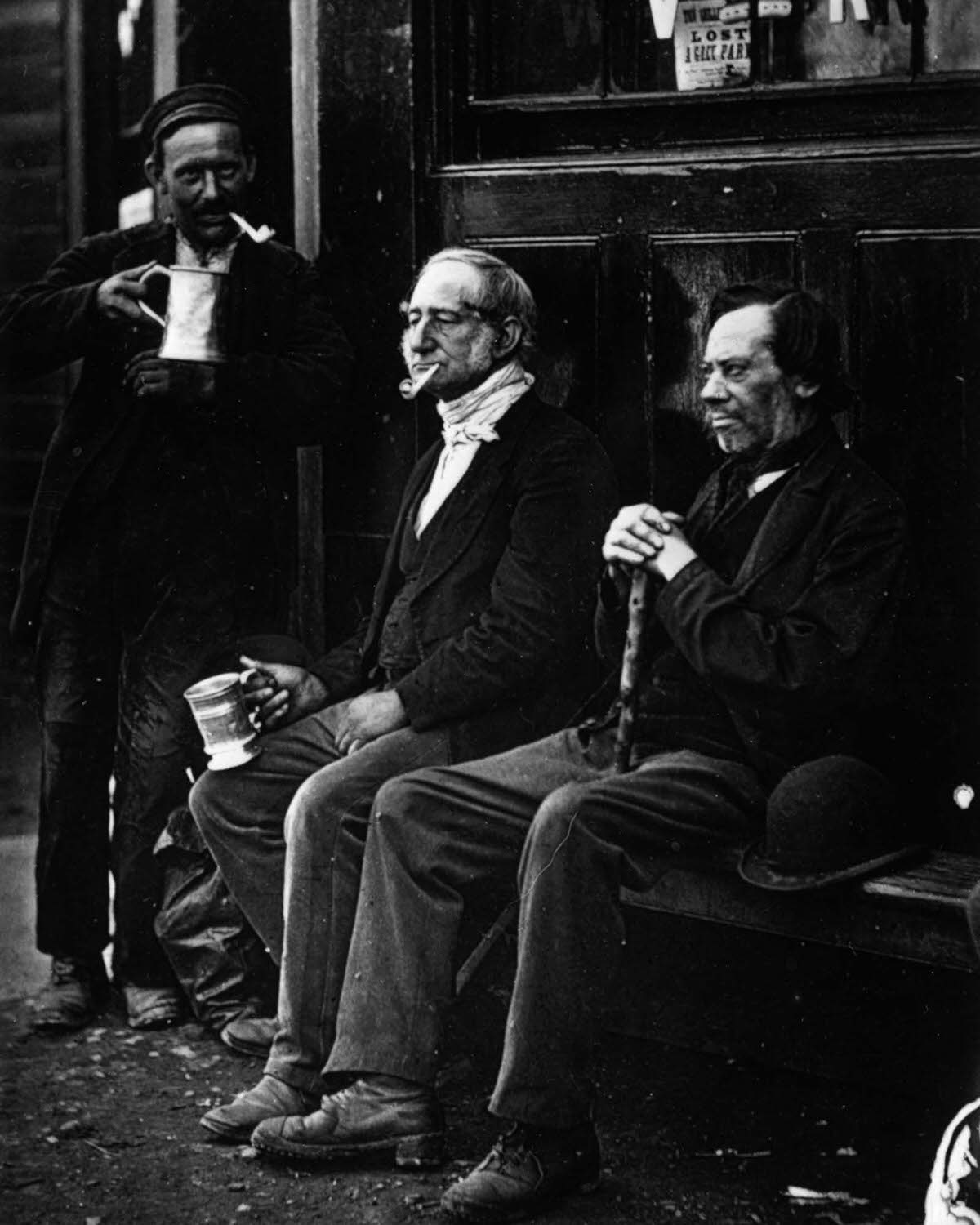
Public houses were central to working-class social life. For many laborers, the local pub was the one place where they could relax, meet neighbors, and share a drink at the end of a long day.
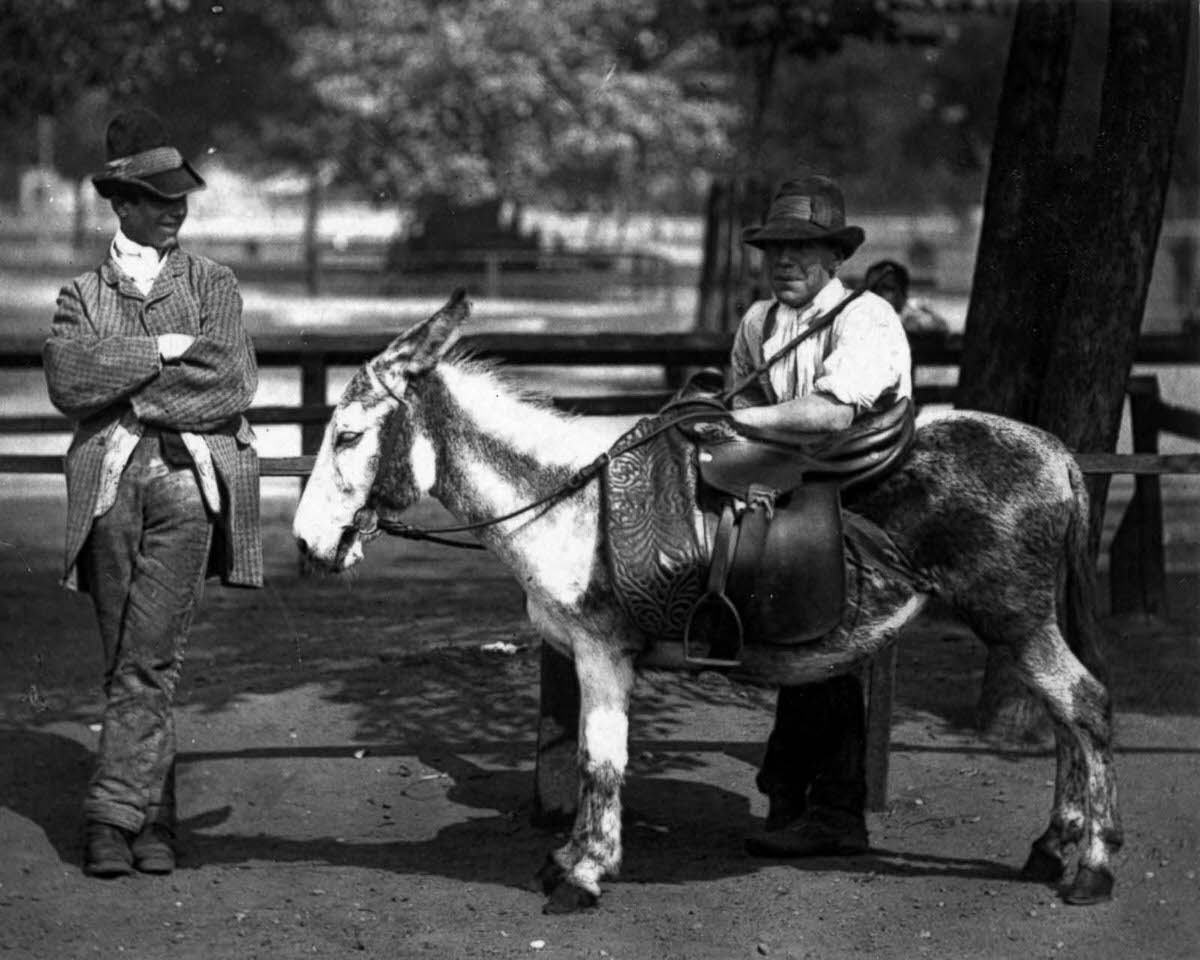
Open commons and parks offered one of the few free forms of entertainment available to Londoners. Entrepreneurs took advantage of the foot traffic — including men who offered donkey rides to tired or curious visitors walking the grounds.
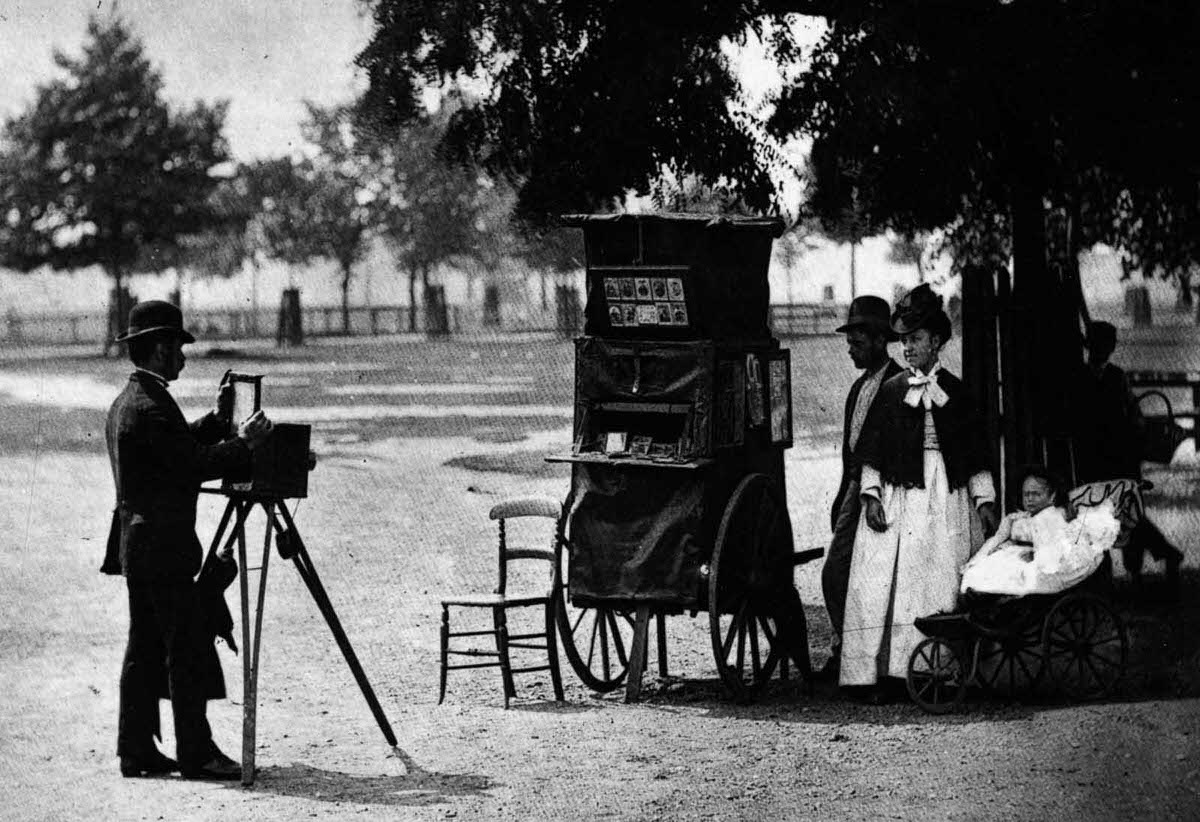
Photography itself was becoming a street trade by the 1870s. Photographers set up on commons and in parks, offering portraits to passersby for a small fee. Thomson captured one of his fellow practitioners at work on Clapham Common — a photographer photographing photographers.
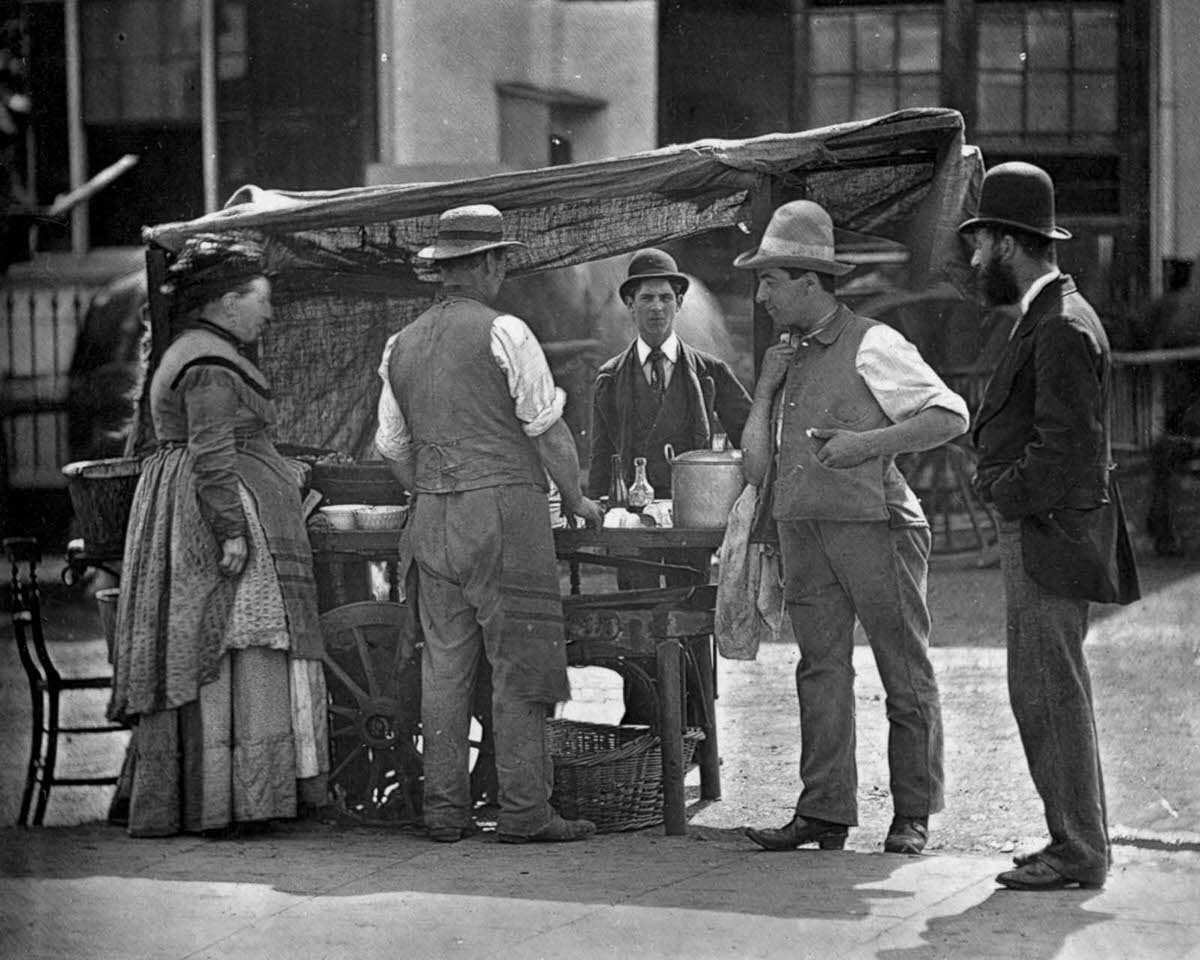
Shellfish stalls were popular stops in working-class neighborhoods. Oysters and whelks were cheap, filling, and widely eaten by people who couldn’t afford more expensive food. Stall owners like the one Thomson photographed were familiar faces in their local areas.
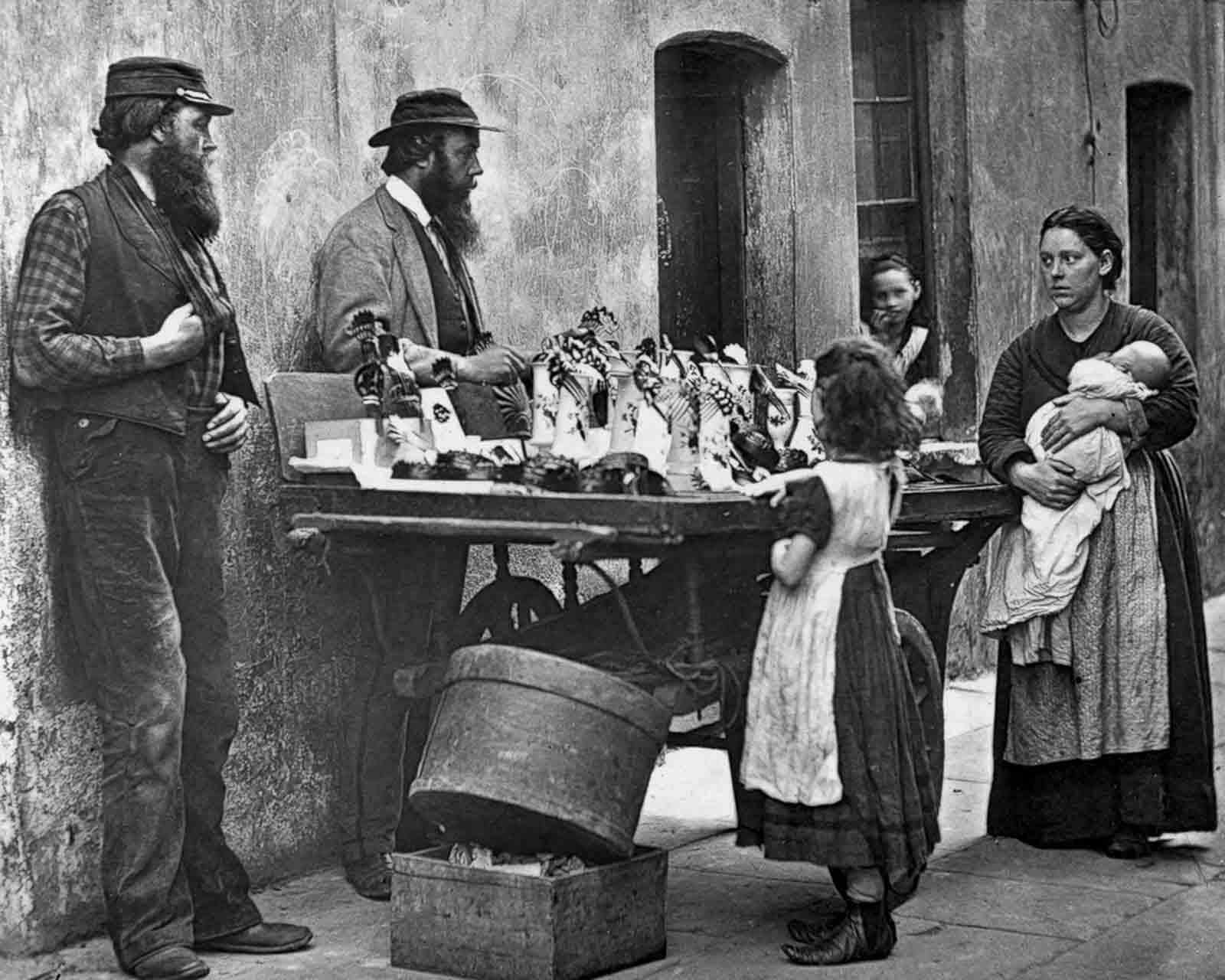
Fancy ware dealers sold small decorative items — ornaments, trinkets, and novelties — from barrows and street stalls. These sellers targeted buyers who wanted something a little beyond the purely functional, even on a tight budget.
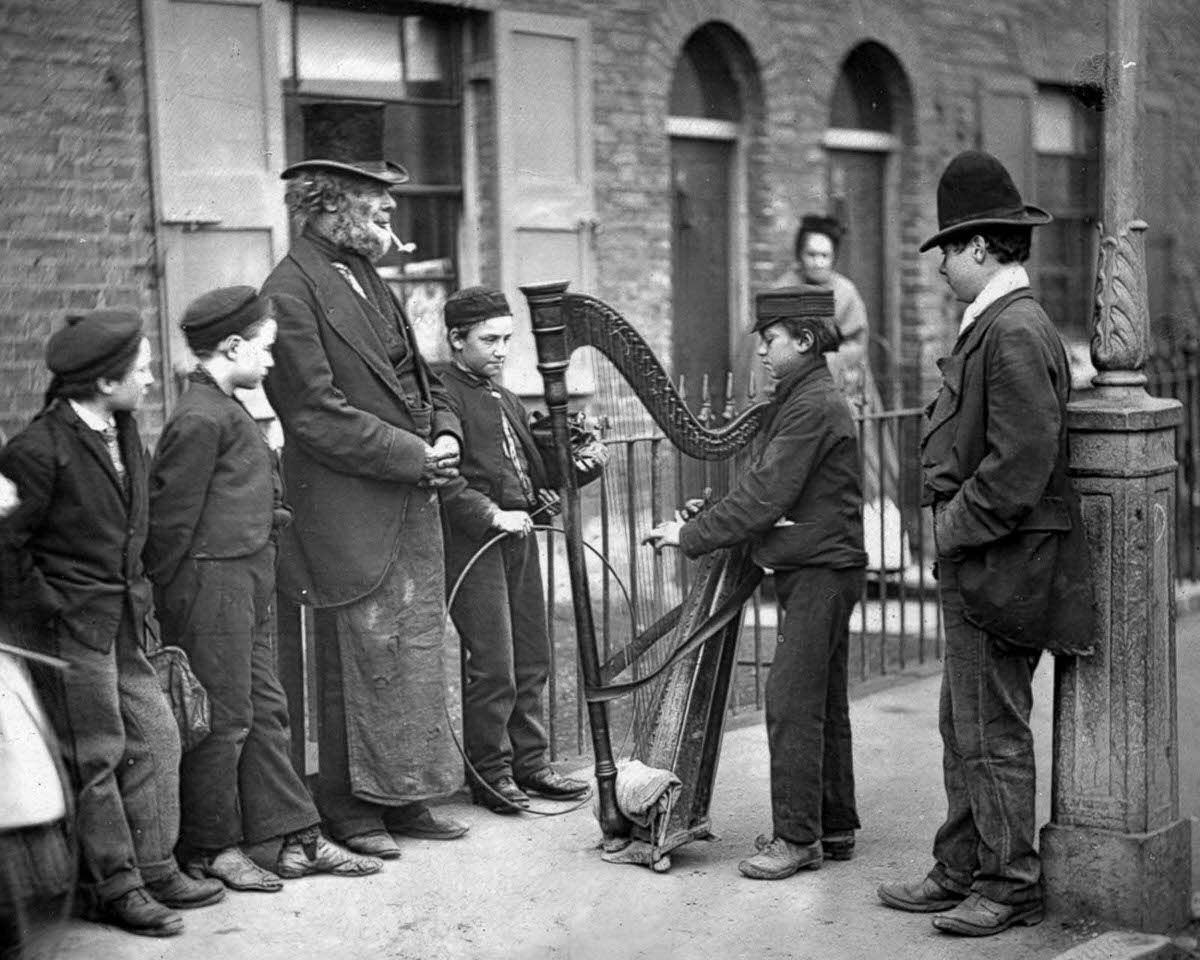
Street musicians were part of the fabric of London life. Italian harpists, organ grinders, and other performers moved through neighborhoods, drawing small crowds. Children especially gathered around musicians, and the performances provided a rare moment of free entertainment on otherwise hard days.
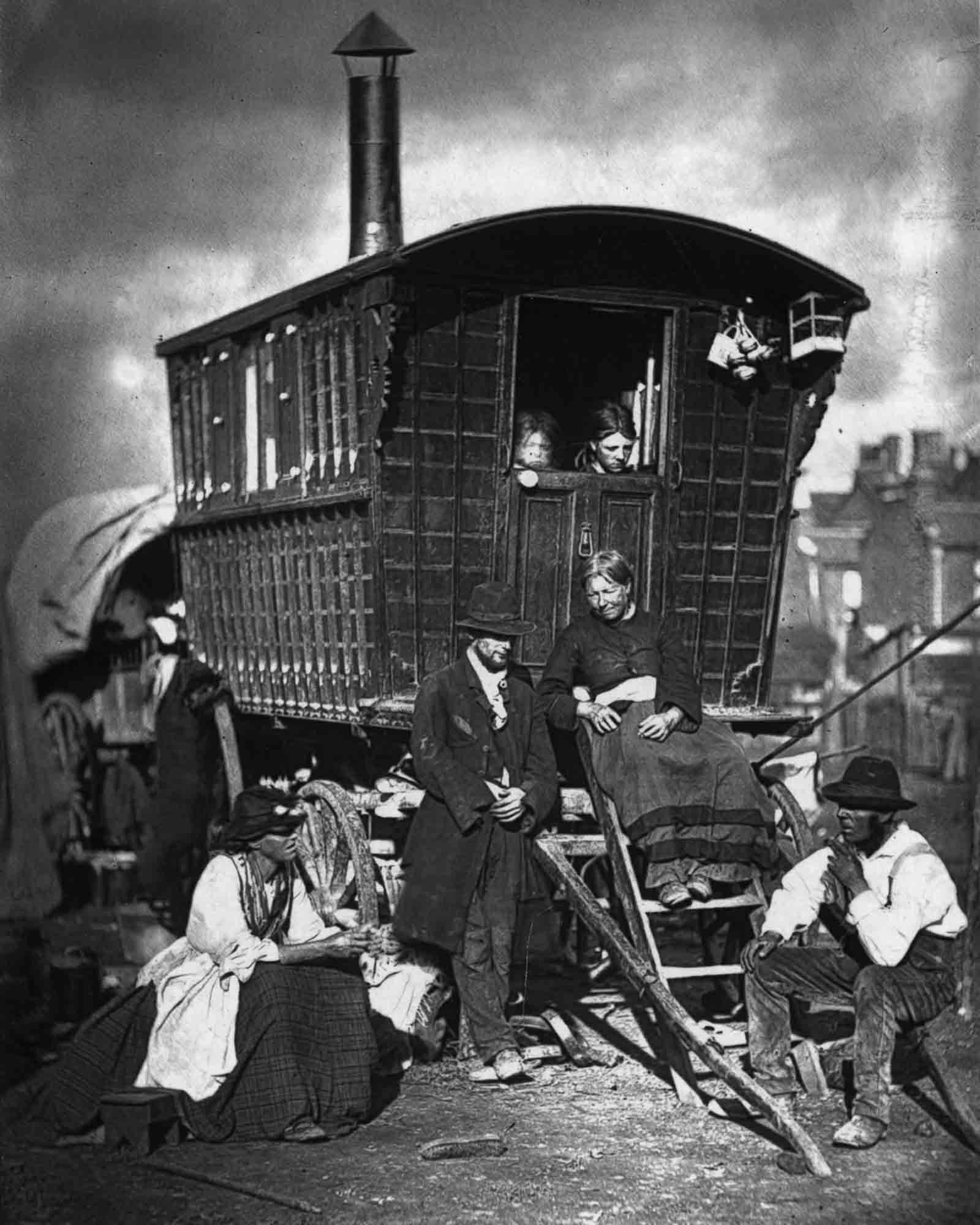
On the fringes of the city, Romani encampments existed in places like Notting Hill. These communities lived largely outside the formal economy, and their presence was documented by Thomson as part of the broader tapestry of London’s social margins.
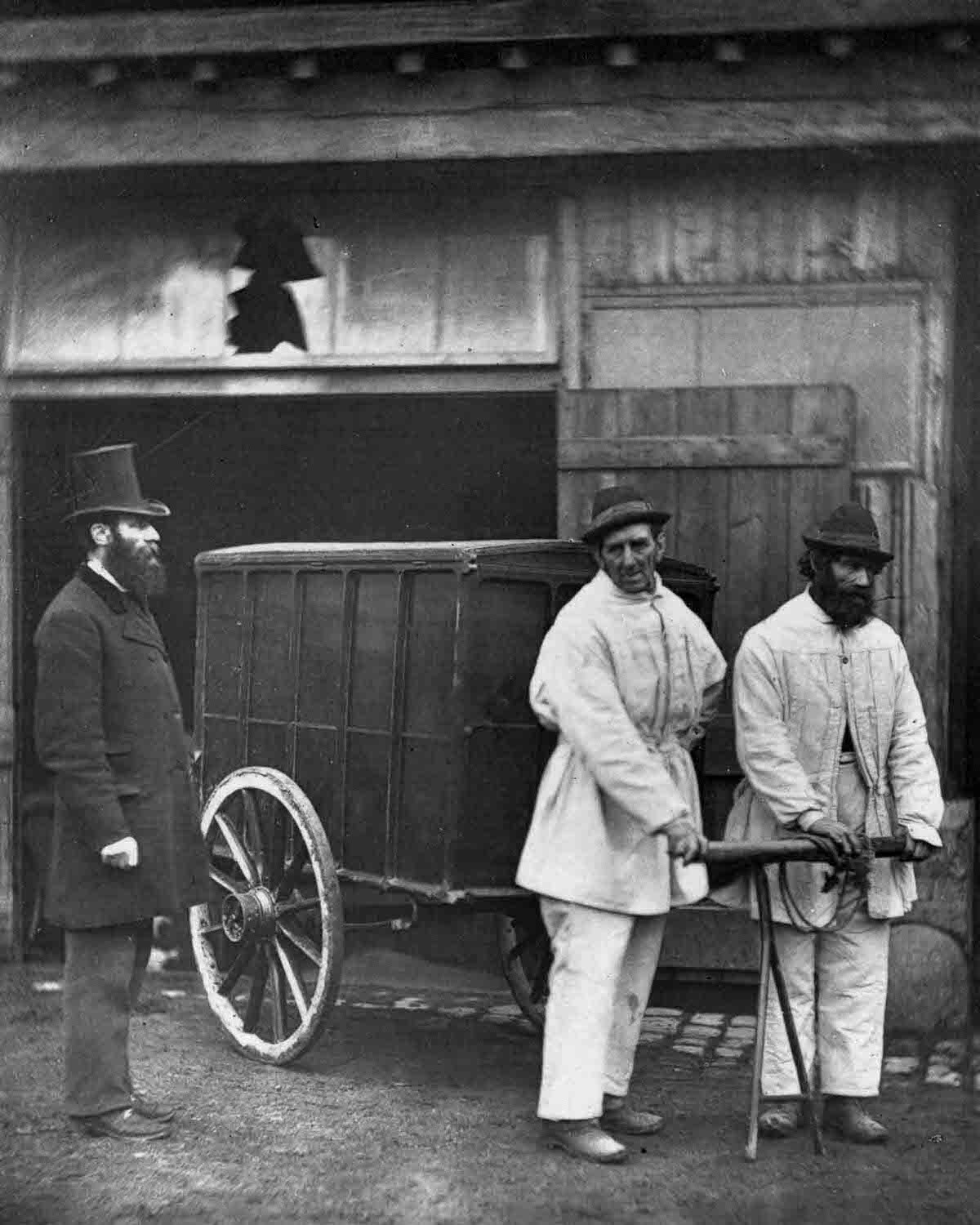
Disease was an ever-present threat in Victorian London. Smallpox outbreaks triggered public health responses, including teams of disinfectors who sanitized streets and dwellings to try to slow the spread of infection in densely populated areas.
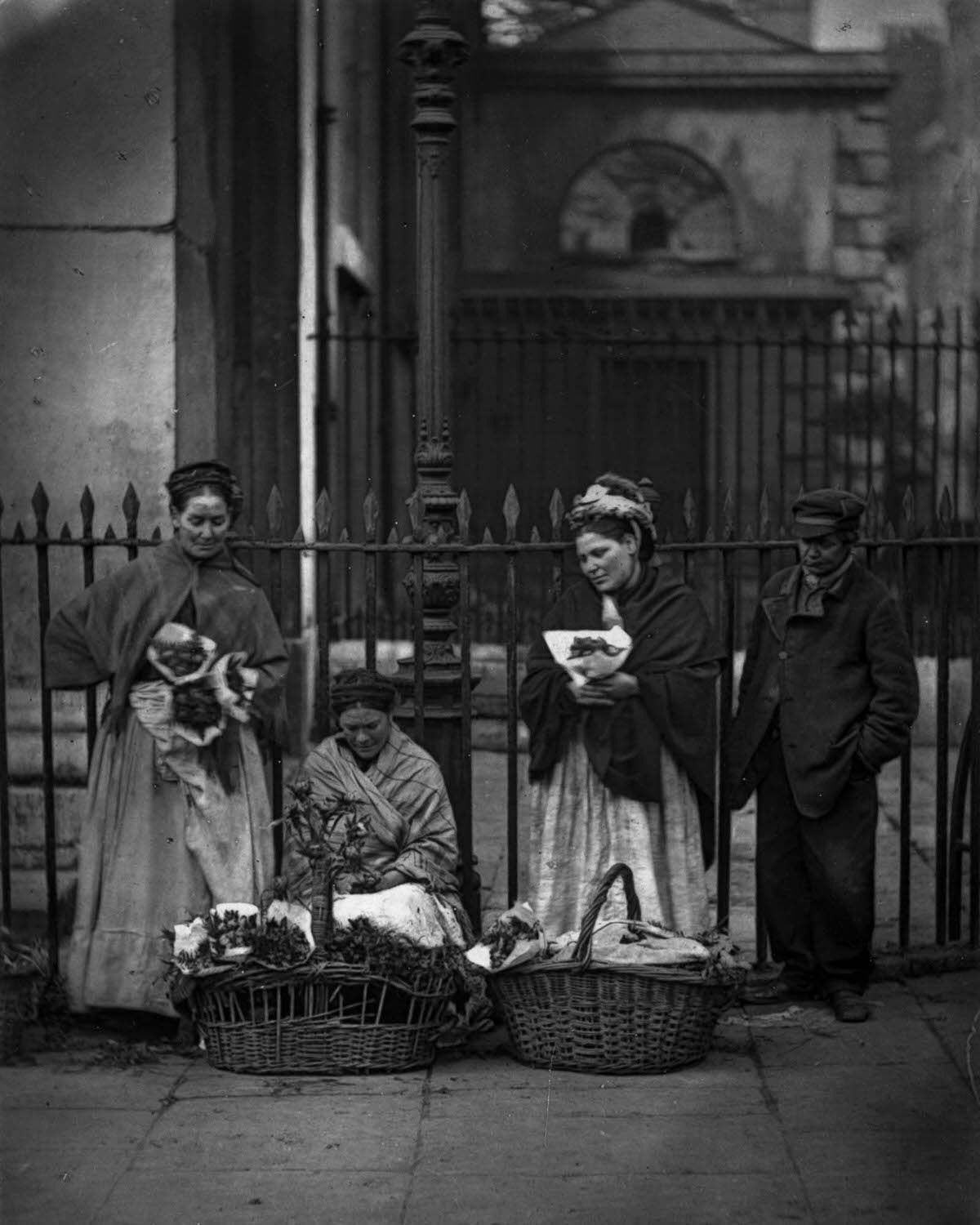
Back at Covent Garden, flower women worked long hours selling bouquets to market shoppers. Like the porters and costermongers, they were part of a vast network of street workers who kept London’s markets running every single day.
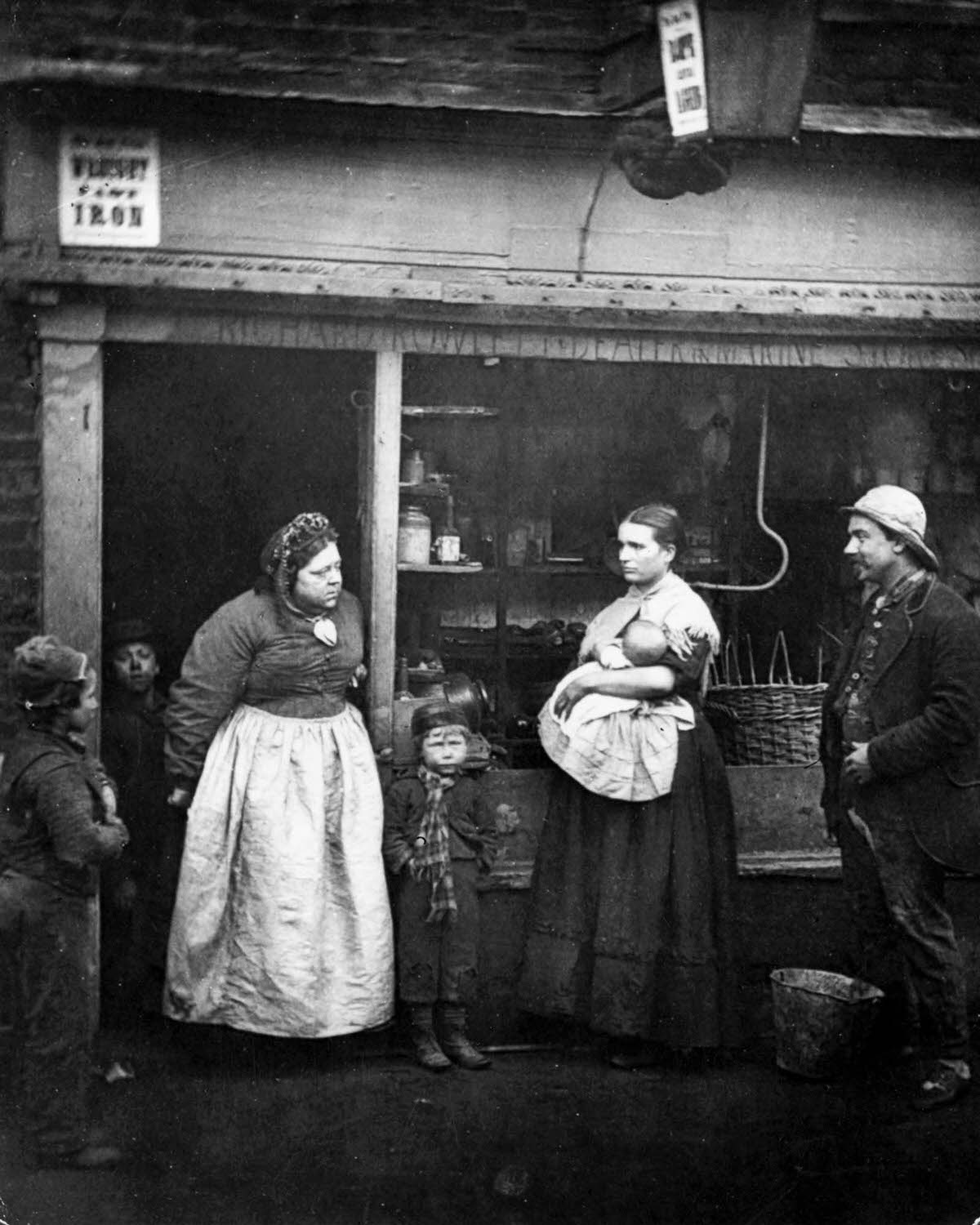
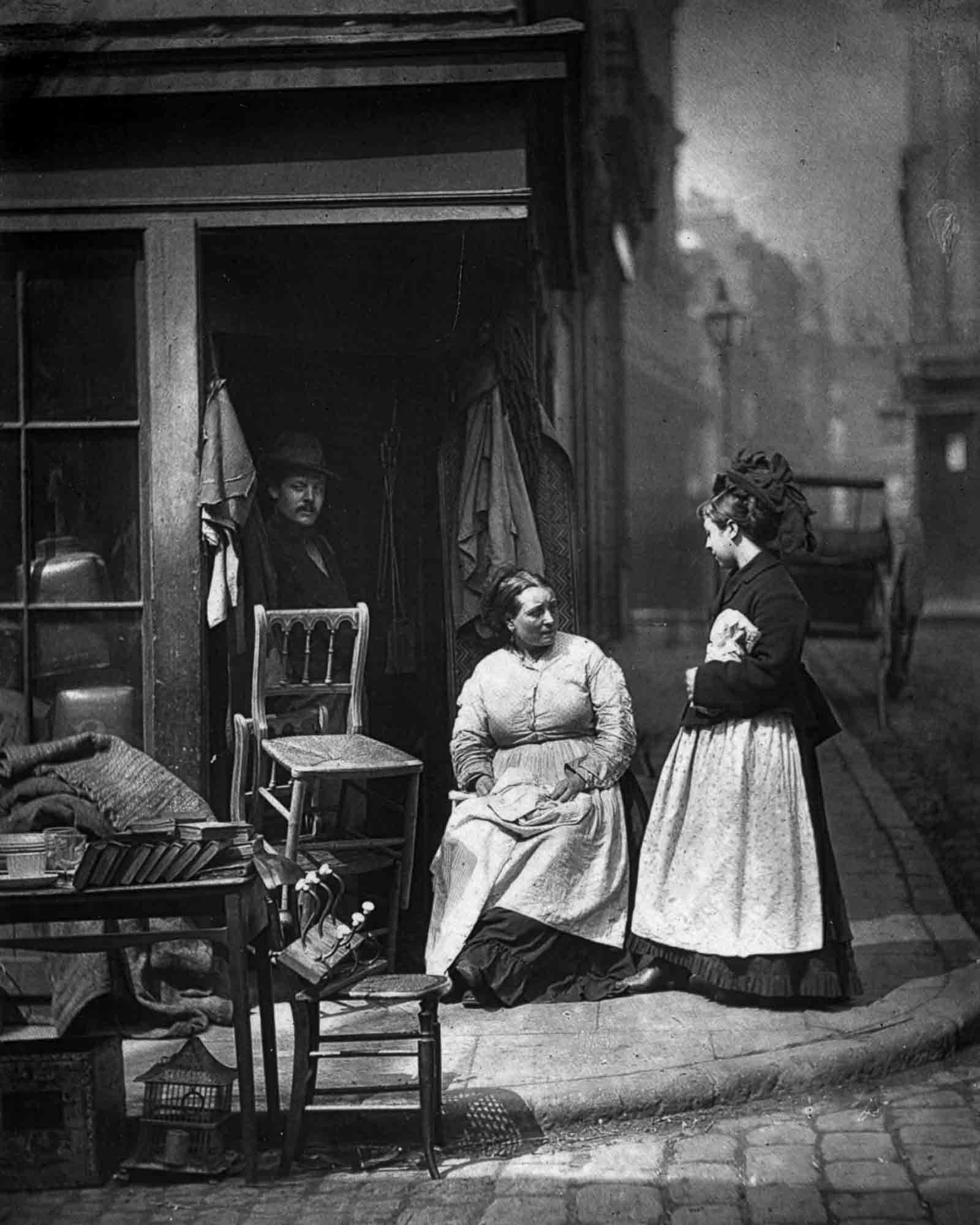
Secondhand shops served a crucial function in poor neighborhoods. Families who couldn’t afford new furniture bought worn pieces from dealers, repaired what they could, and sold items when money ran short. These shops were both a marketplace and a safety net.





Great photos; I enjoyed looking through them. It’s unbelievable how dirty everything was, especially their clothes, which probably lasted a lifetime.
I love those photos. Over 150 years later, they are still seen as those people who were alive at that time
You can almost smell the grime.
What poverty! Most of these people would be lucky to live off a halfpenny a day! The way they talk about poverty nowadays is like chalk and cheese in comparison to the Victorian era
I think one leg was shorter than the other.
Stunning. Thank you for sharing.
Stunning. Thank you for sharing.