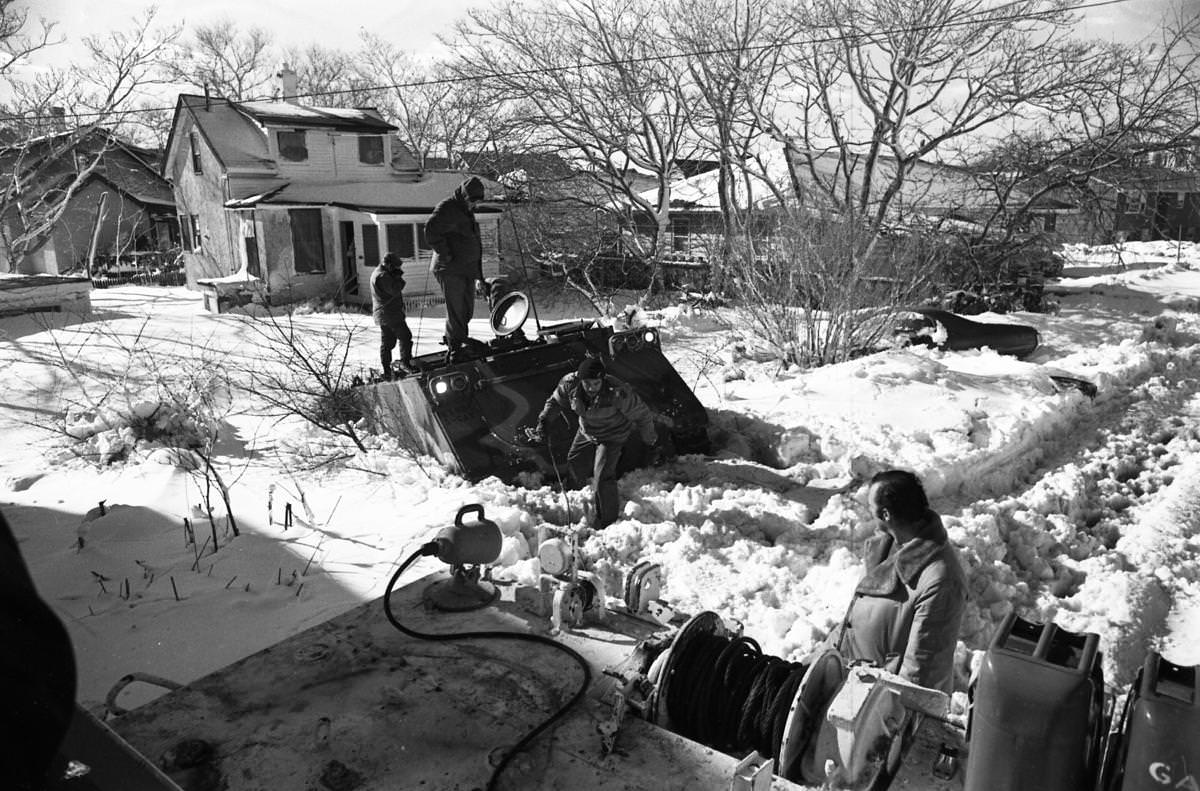
New England had barely caught its breath when the winter of 1977–1978 delivered two back-to-back blows that would go down as among the most destructive in Boston’s recorded history. The first storm hit on January 20–21, 1978, dropping 21 inches of snow on the city and clogging its narrow streets for days. Firefighters fanned out across every neighborhood to dig out hundreds of fire hydrants buried under the drifts. The cleanup had barely begun when a second, far deadlier storm arrived.
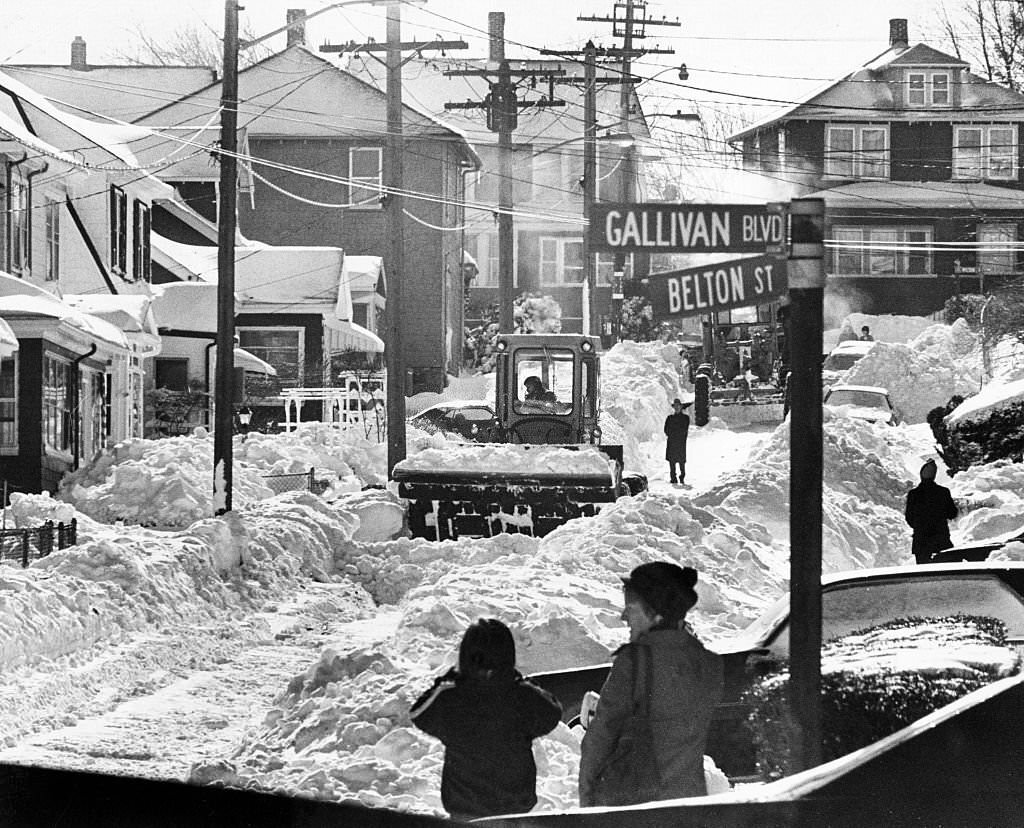
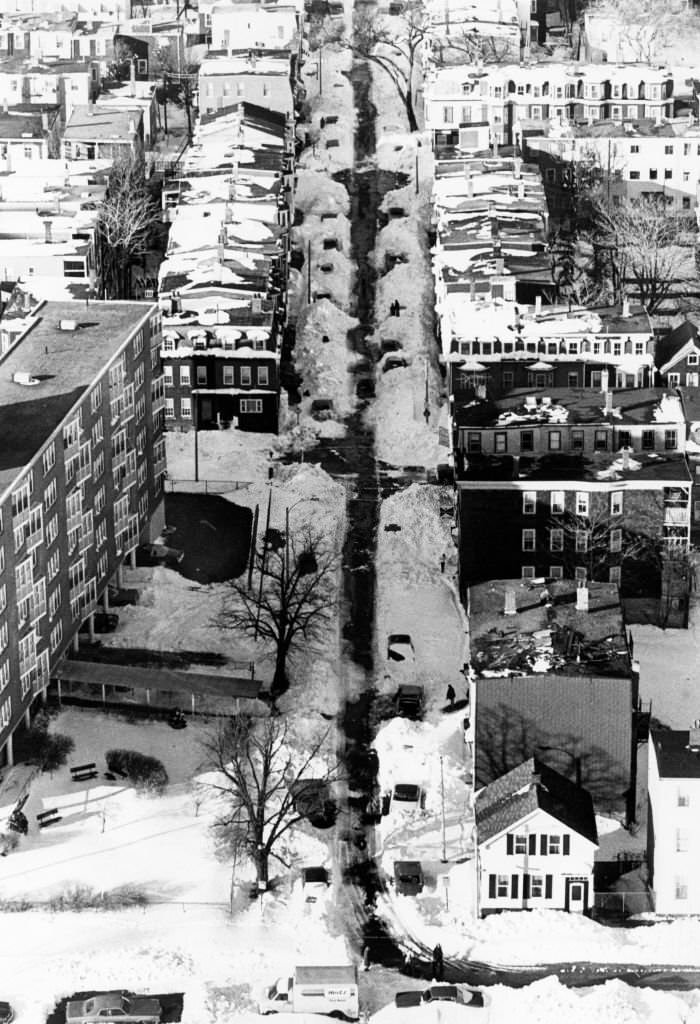
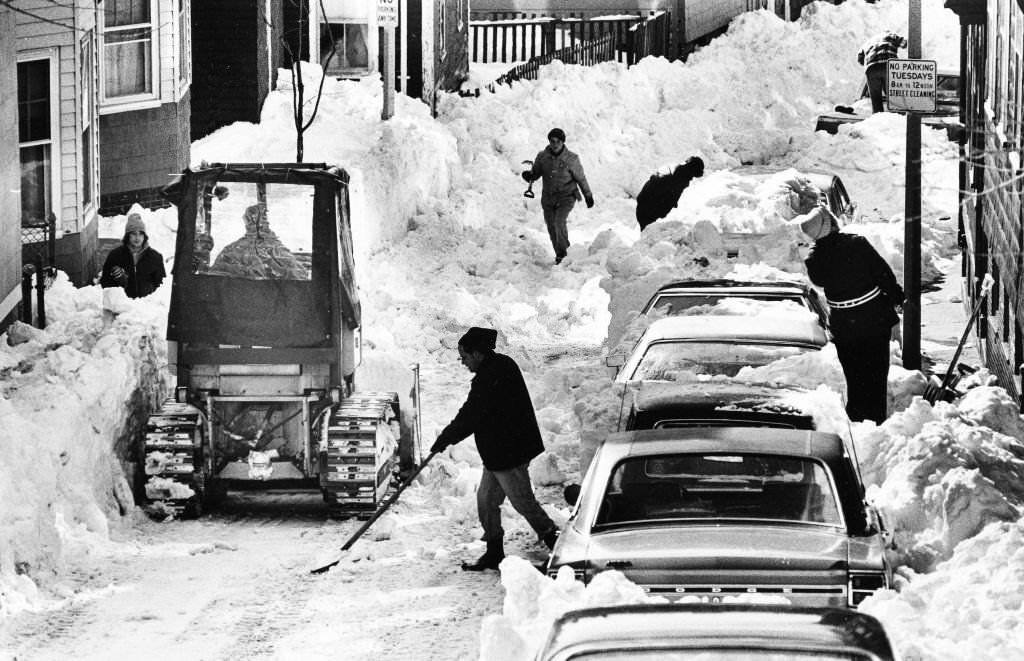
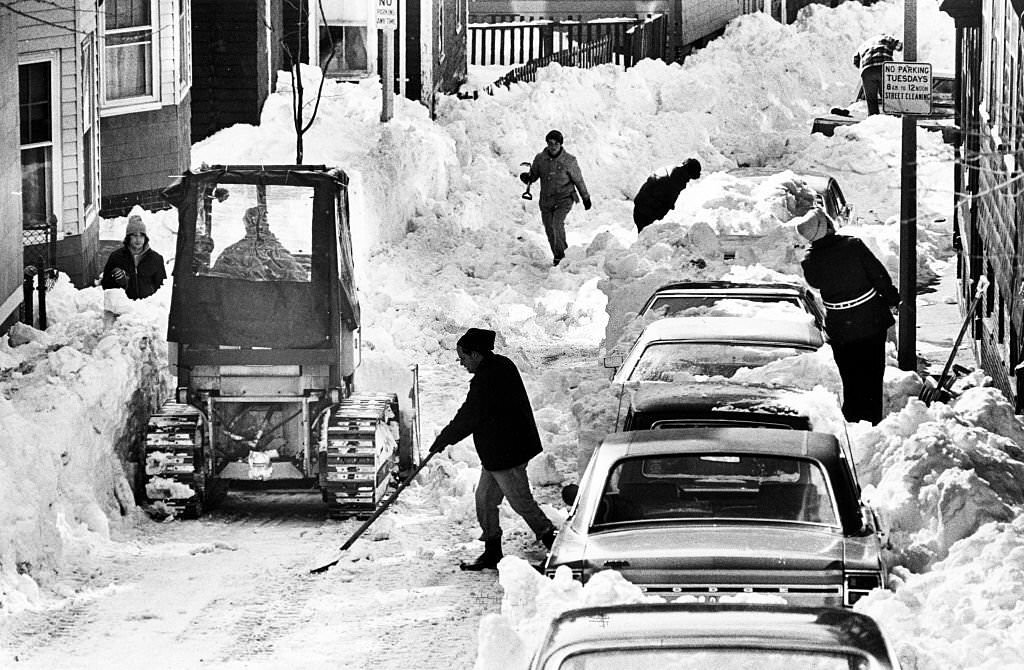
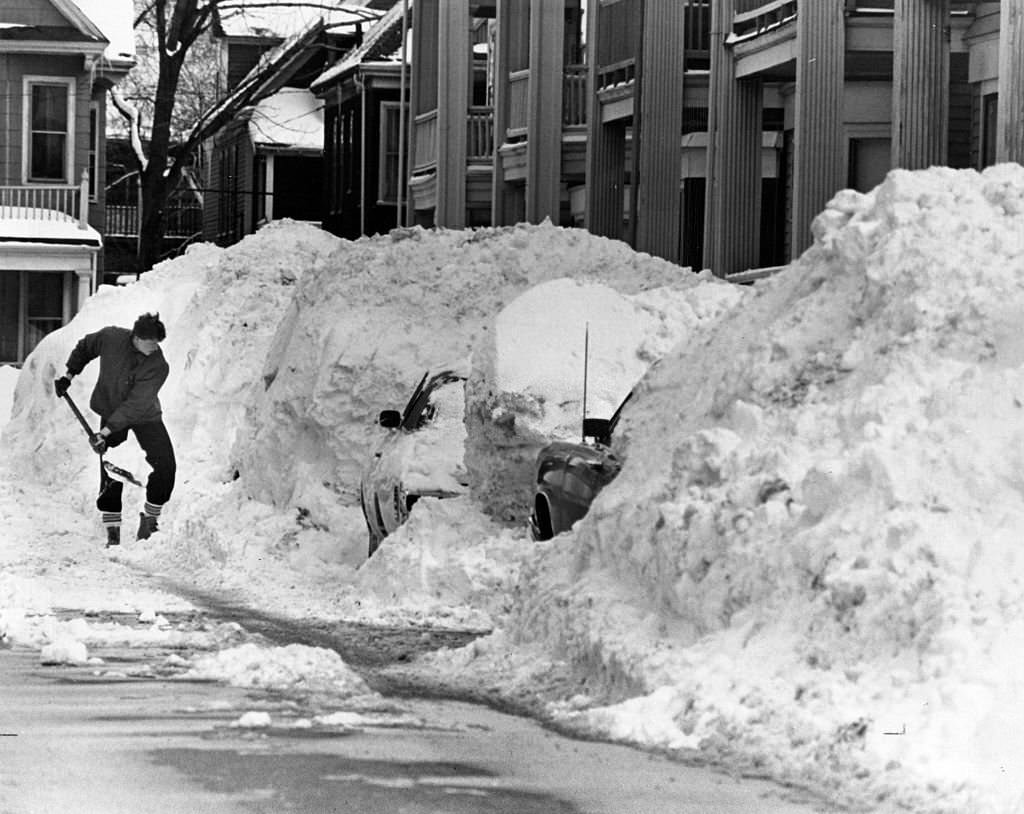
Belton Street in Boston’s Dorchester is plowed out on Jan. 22, 1978, two days after a severe snow storm that approached the record snowfall on the city for a 24-hour period.
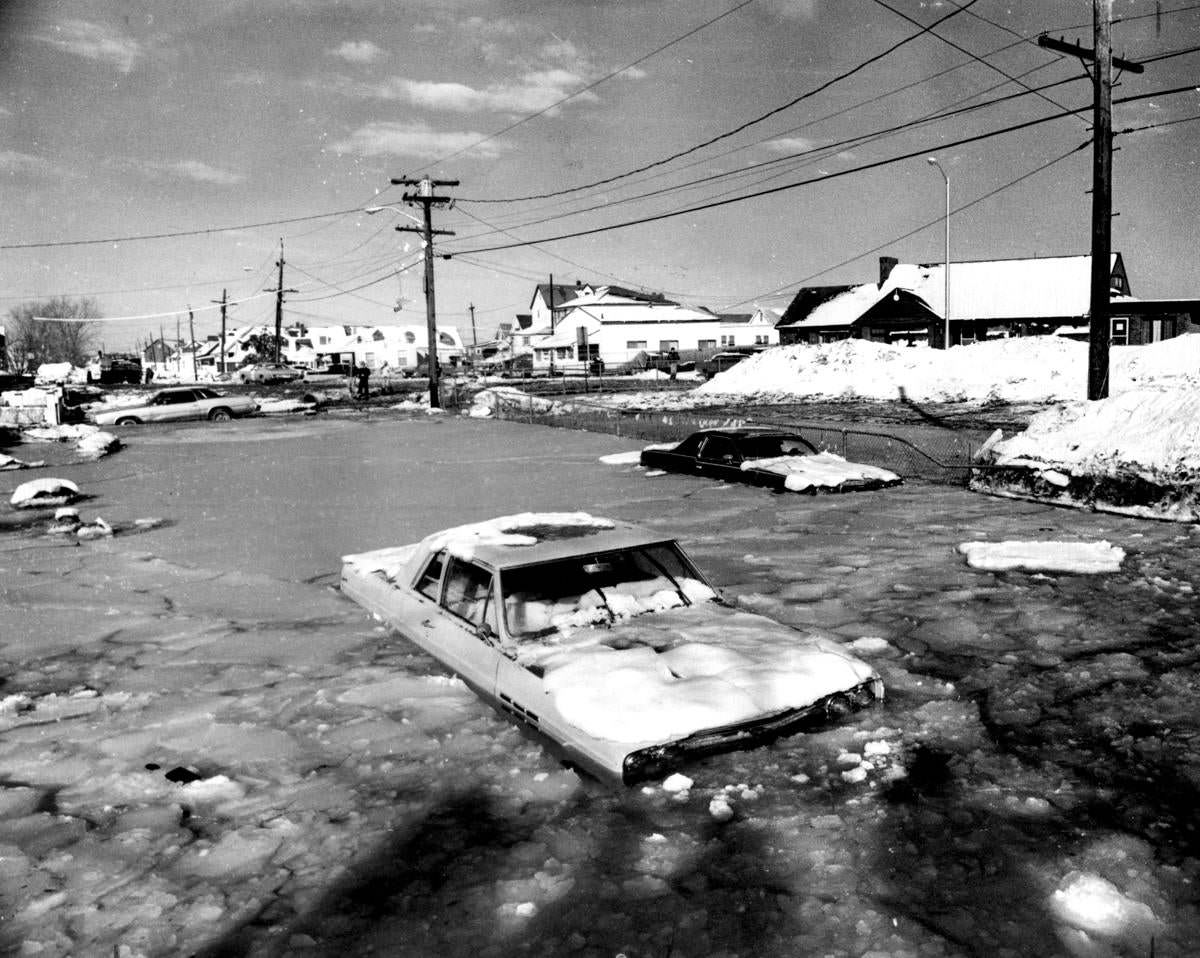
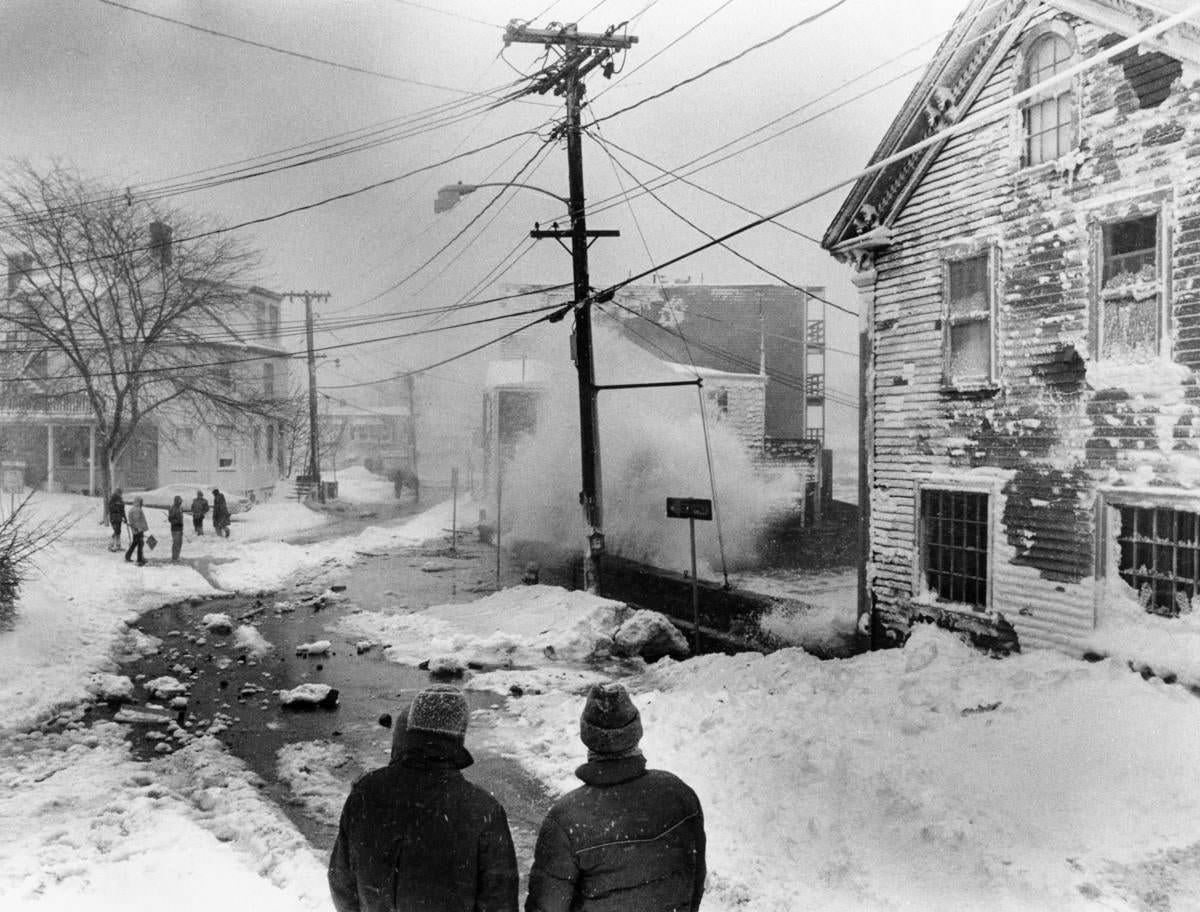
The January storm alone pushed the storm surge 15.2 feet above normal low tide along Massachusetts Bay. Coastal communities took a brutal hit. Homes were swamped, and in low-lying towns the flooding was severe enough to force evacuations. The National Guard launched boats to pull people off flooded highways, where drivers had become stranded during the afternoon rush hour as the storm rapidly intensified. Ninety-nine people died. Property losses reached $1.3 billion. Governor Michael Dukakis declared a state of emergency, and all vehicular traffic was banned from roads for several days — a near-unprecedented move for a major American city.
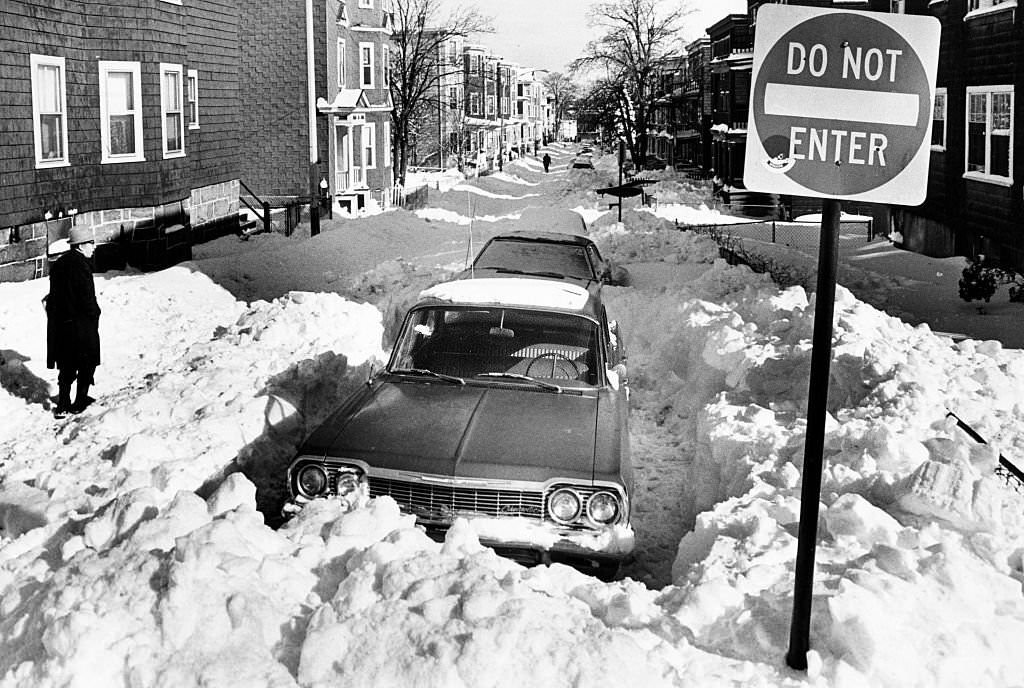
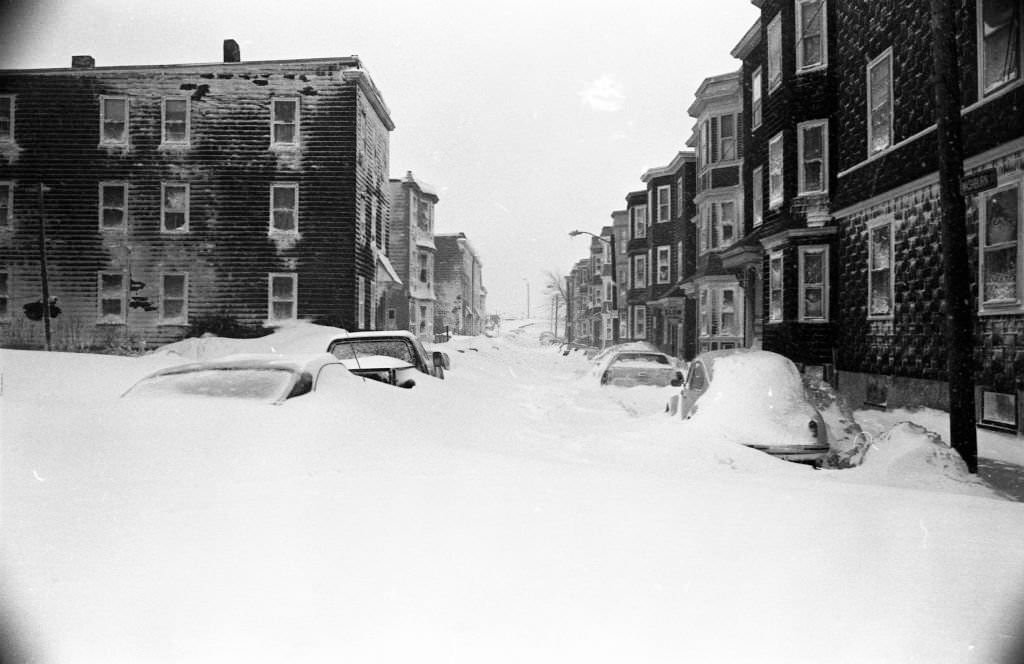
Lyon Street in Boston’s Dorchester is impassable, 1978, two days after a severe snow storm that approached the record snowfall on the city for a 24-hour period.
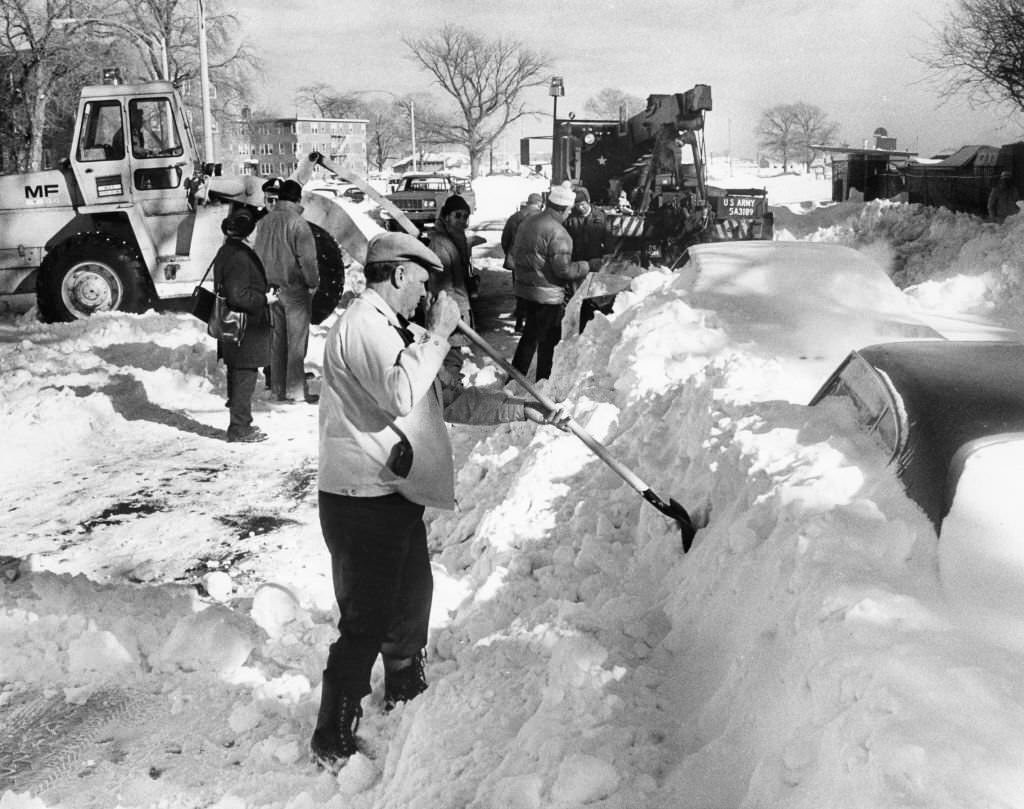
Heavy machinery, dump trucks, and tow trucks worked around the clock removing abandoned cars and carving channels through snow-packed streets. Then, before the city had fully dug out, the second storm arrived.
The Northeastern United States blizzard of 1978 hits Boston.
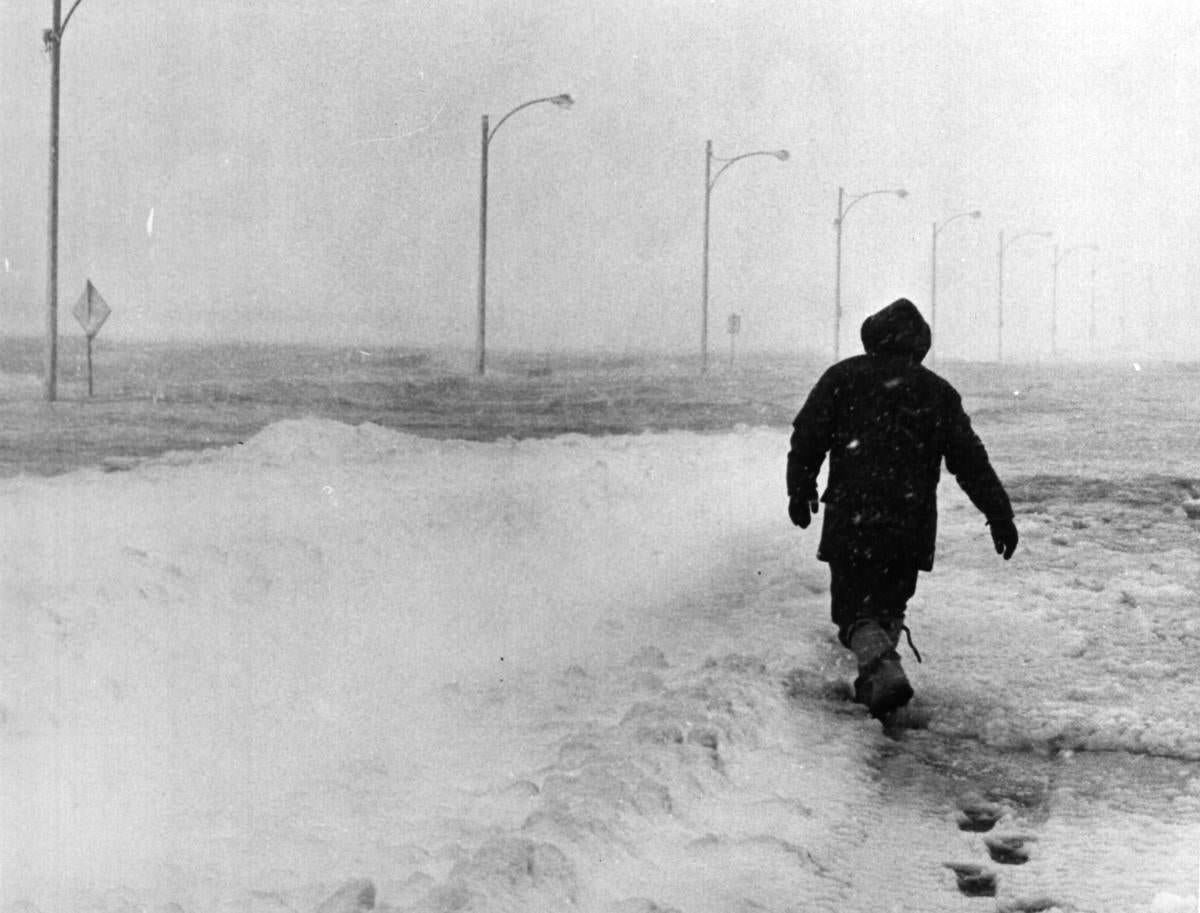
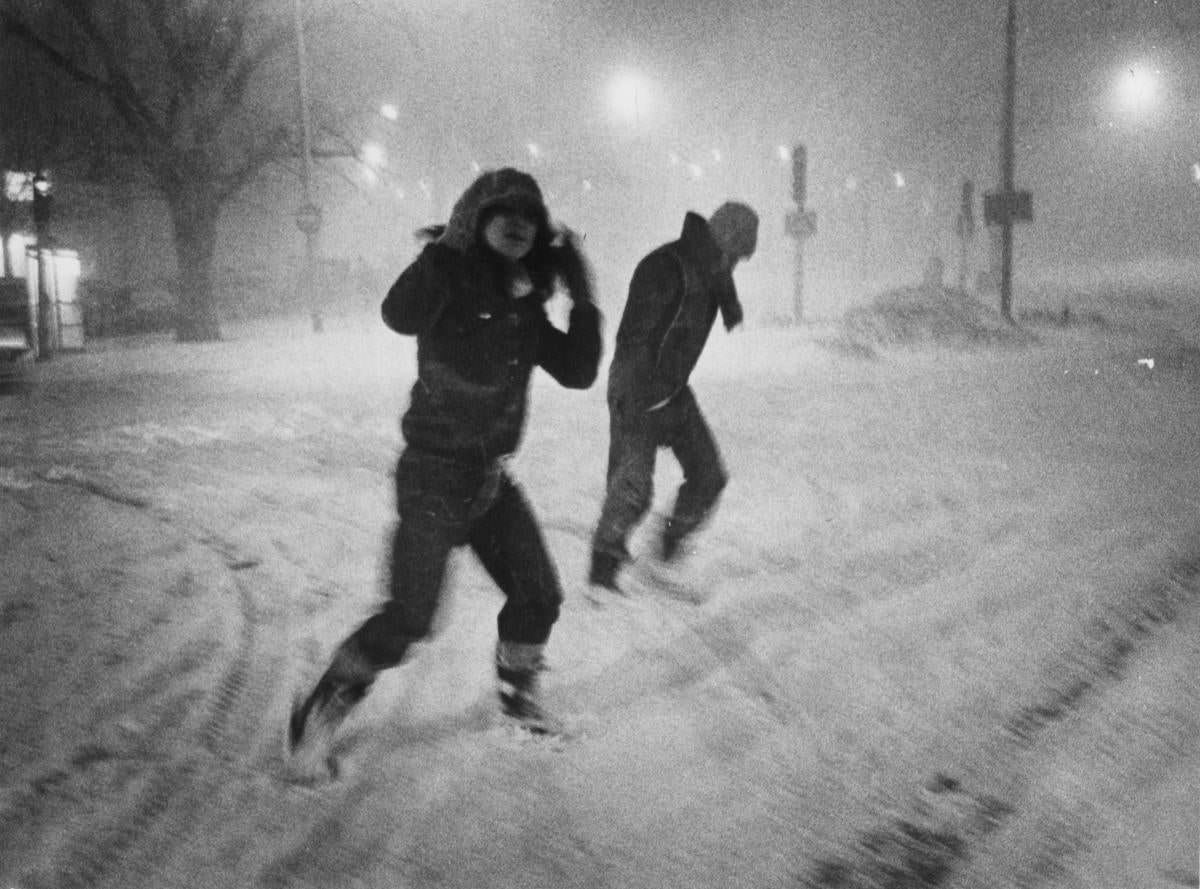
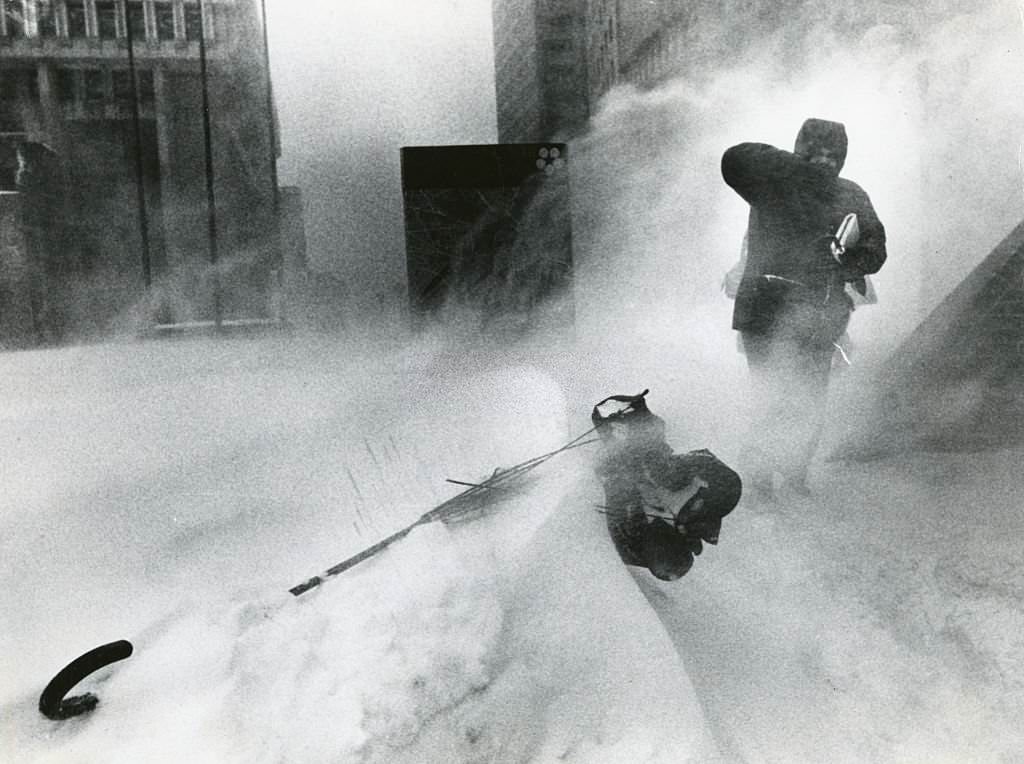
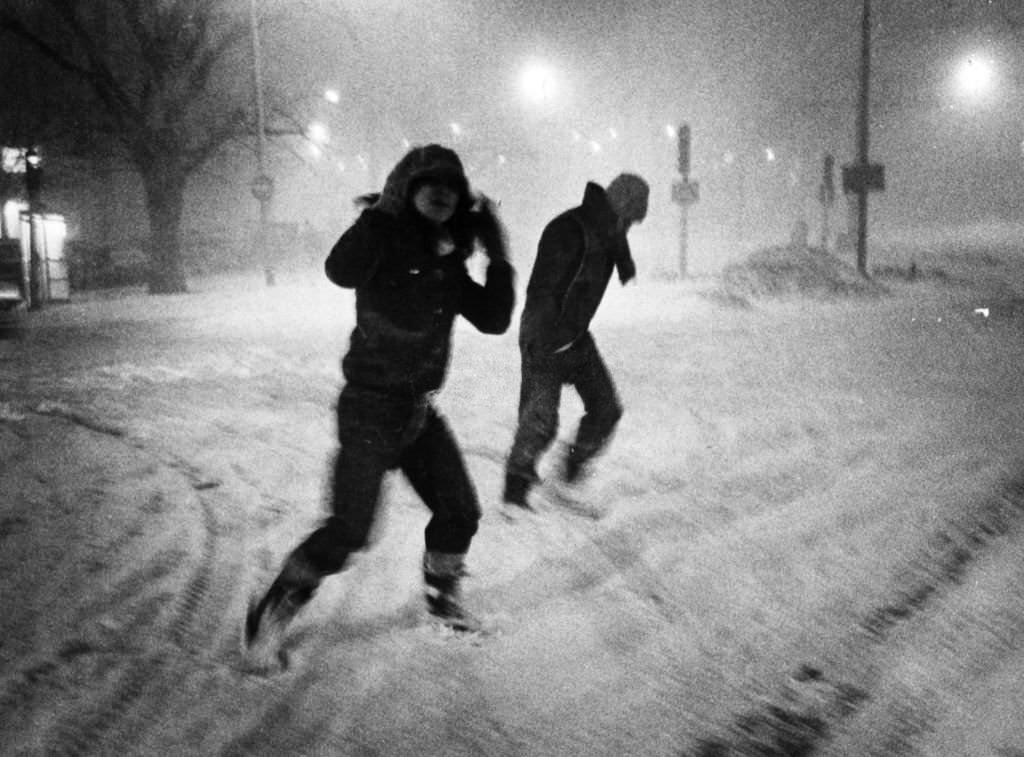
Starting on the morning of Monday, February 6, and continuing through the evening of Tuesday, February 7, a nor’easter buried Boston under 27.1 inches of snow in just 32 hours and 40 minutes. It was the single greatest snowfall the city had recorded in that time span. The storm did not ease in gradually — it hit during the workday, trapping commuters on foot and in cars almost immediately. On Commonwealth Avenue and Washington Street, pedestrians bent into the wind and pushed through knee-deep drifts just to move a city block.
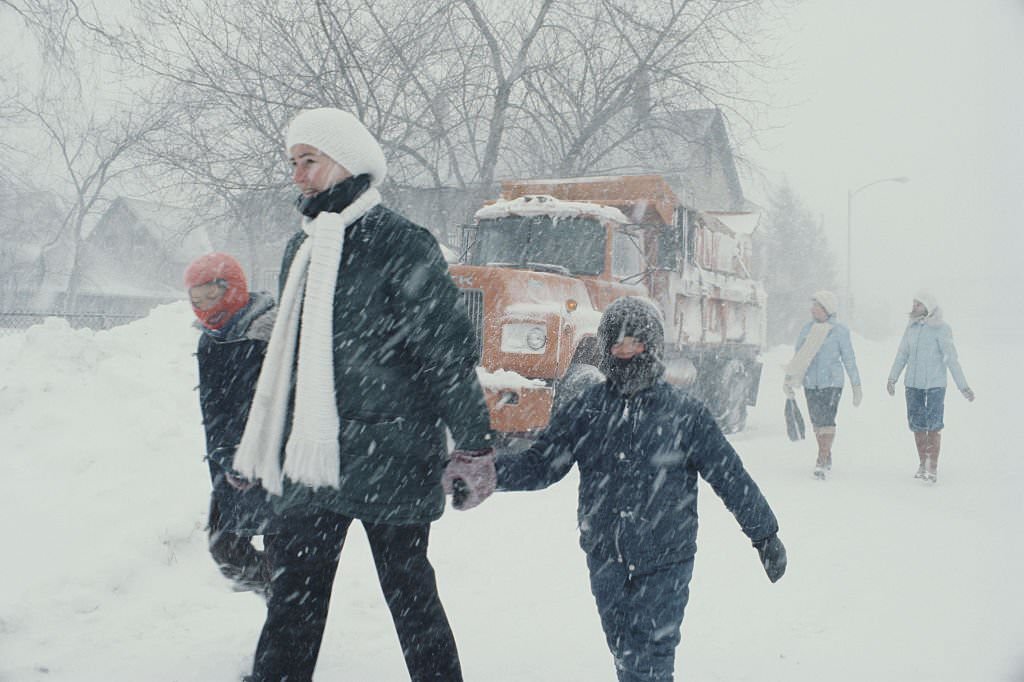
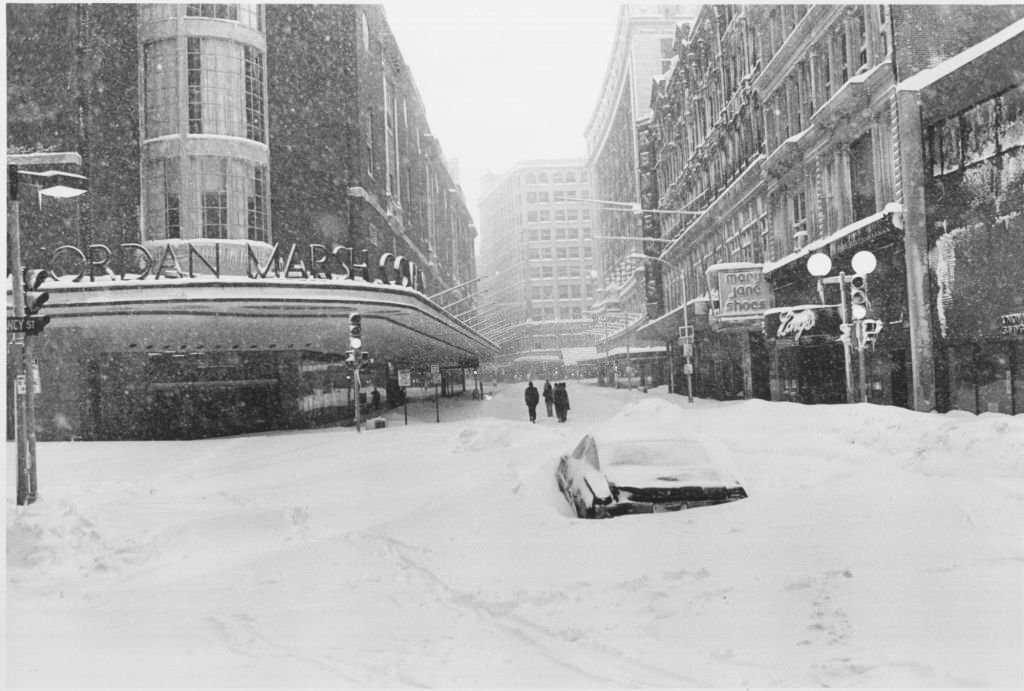
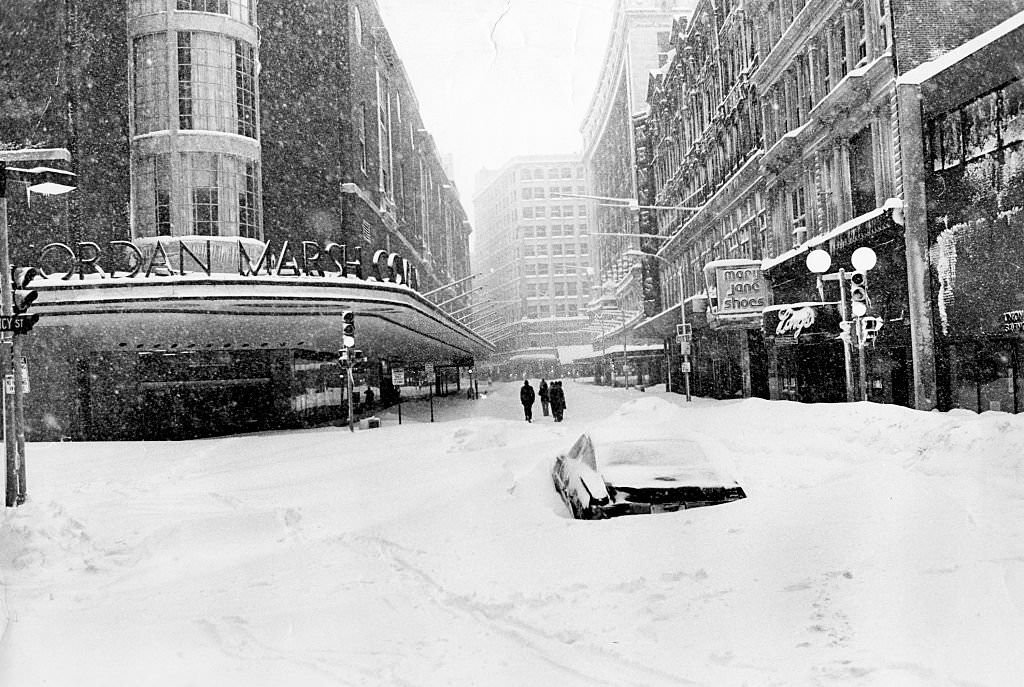
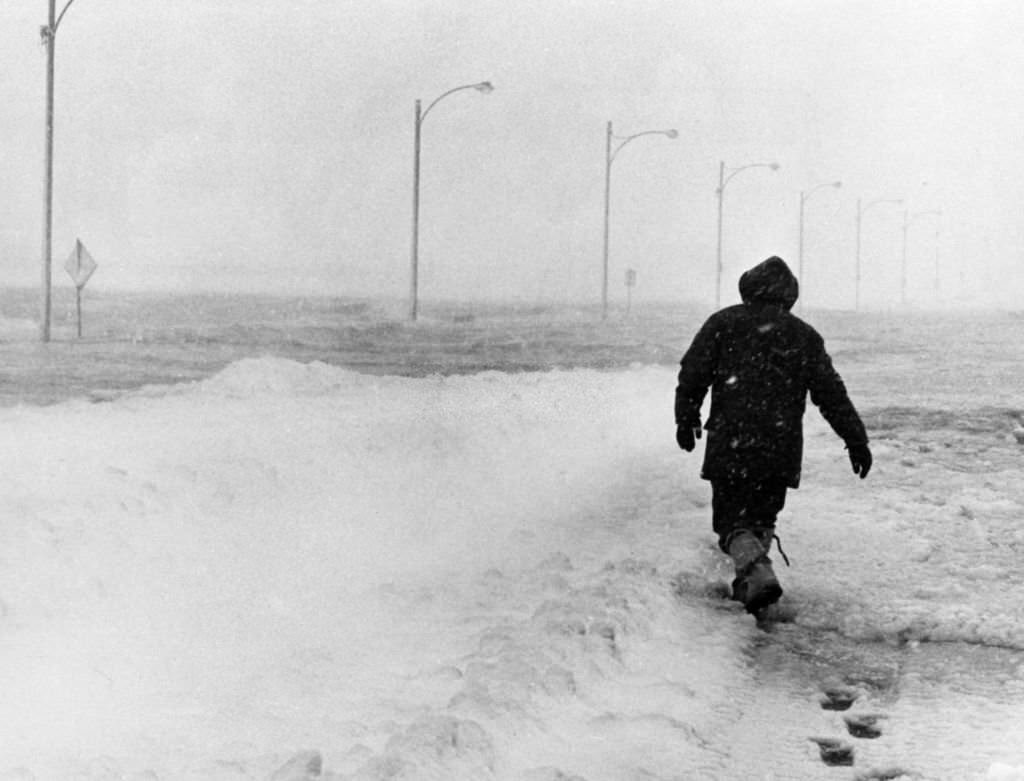
Boston’s Washington Street was buried in snow on Feb. 6, during the blizzard.Pedestrians braved the wind and snow of the blizzard while crossing Commonwealth Avenue in Boston on Feb 6.
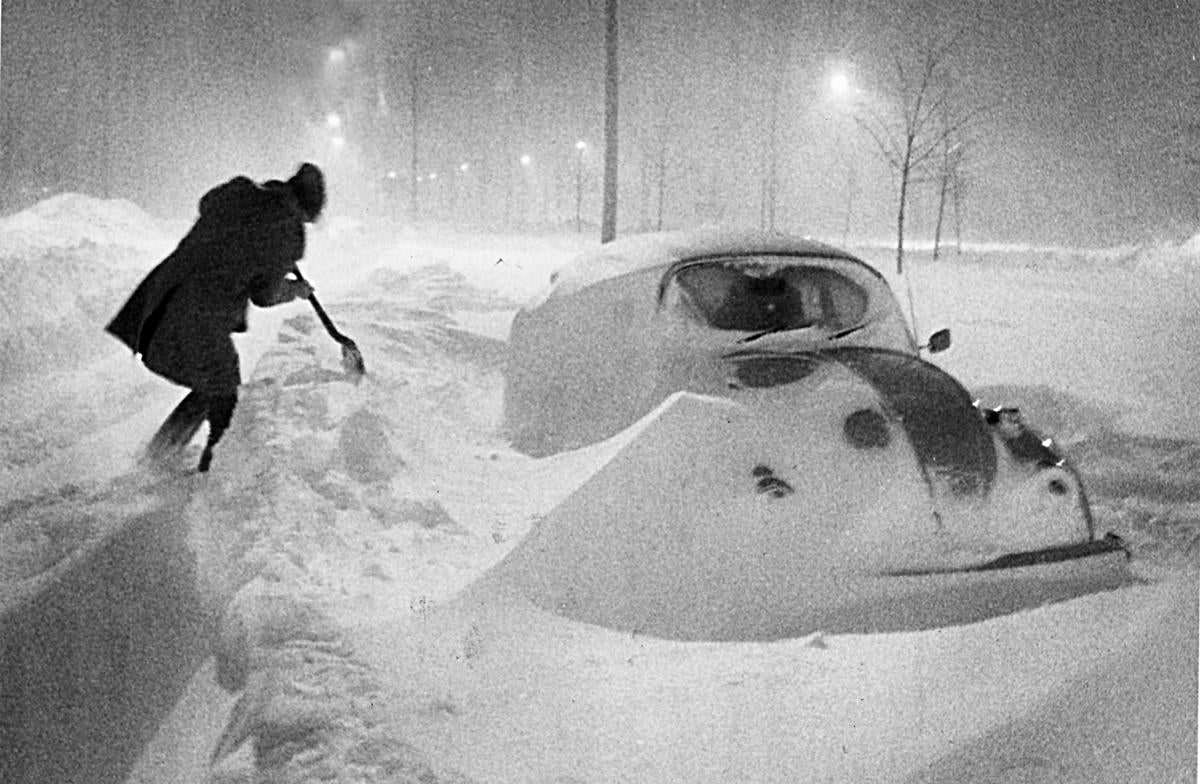
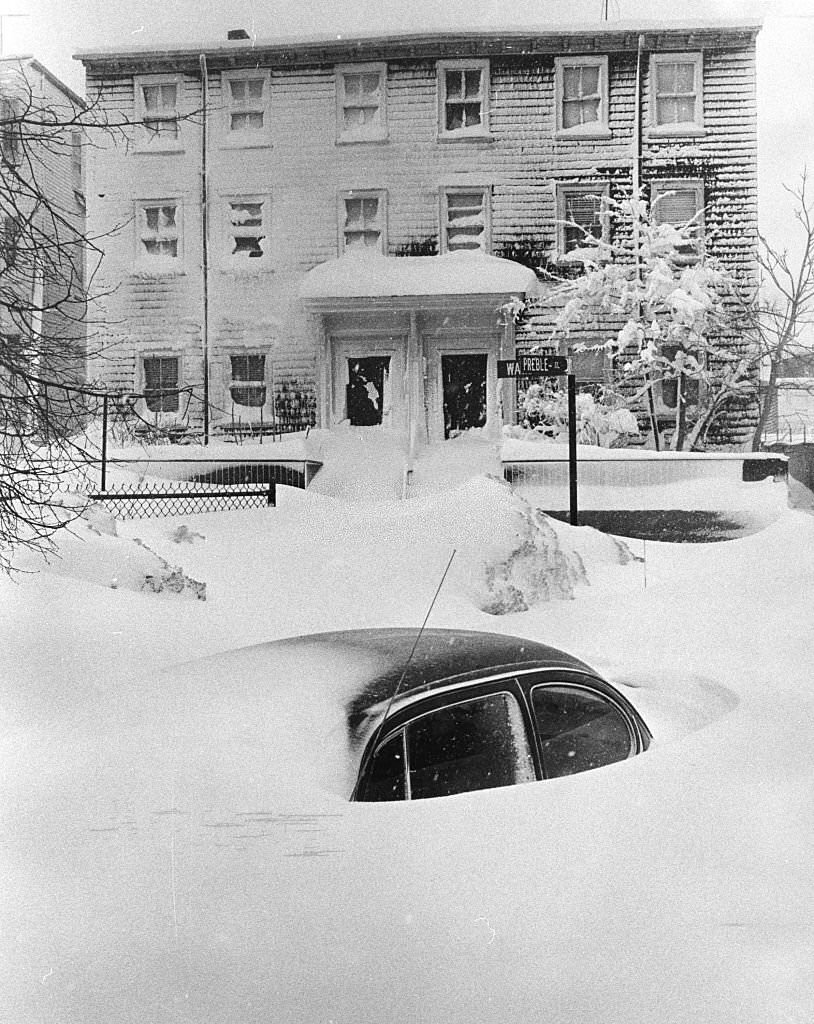
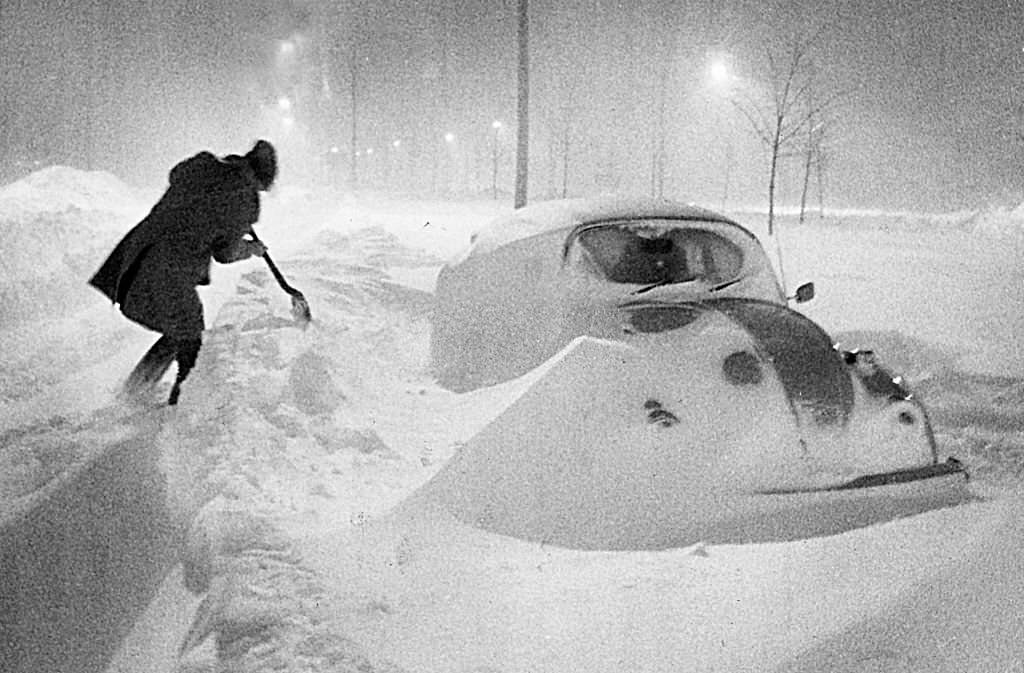
By the time the storm peaked, Boston’s streets had become nearly impassable. Cars were buried up to their windows under drifts on streets like Preble Street in South Boston and Washburn Street across the city. On Morrissey Boulevard in Dorchester, falling and drifting snow swallowed vehicles whole in the early morning hours of February 7.
Falling and drifting snow surrounded a car on Morrissey Boulevard during early morning hours of the blizzard on Feb. 7.Falling and drifting snow surrounds a car on Morrissey Boulevard during the early morning hours of Feb. 7, 1978.
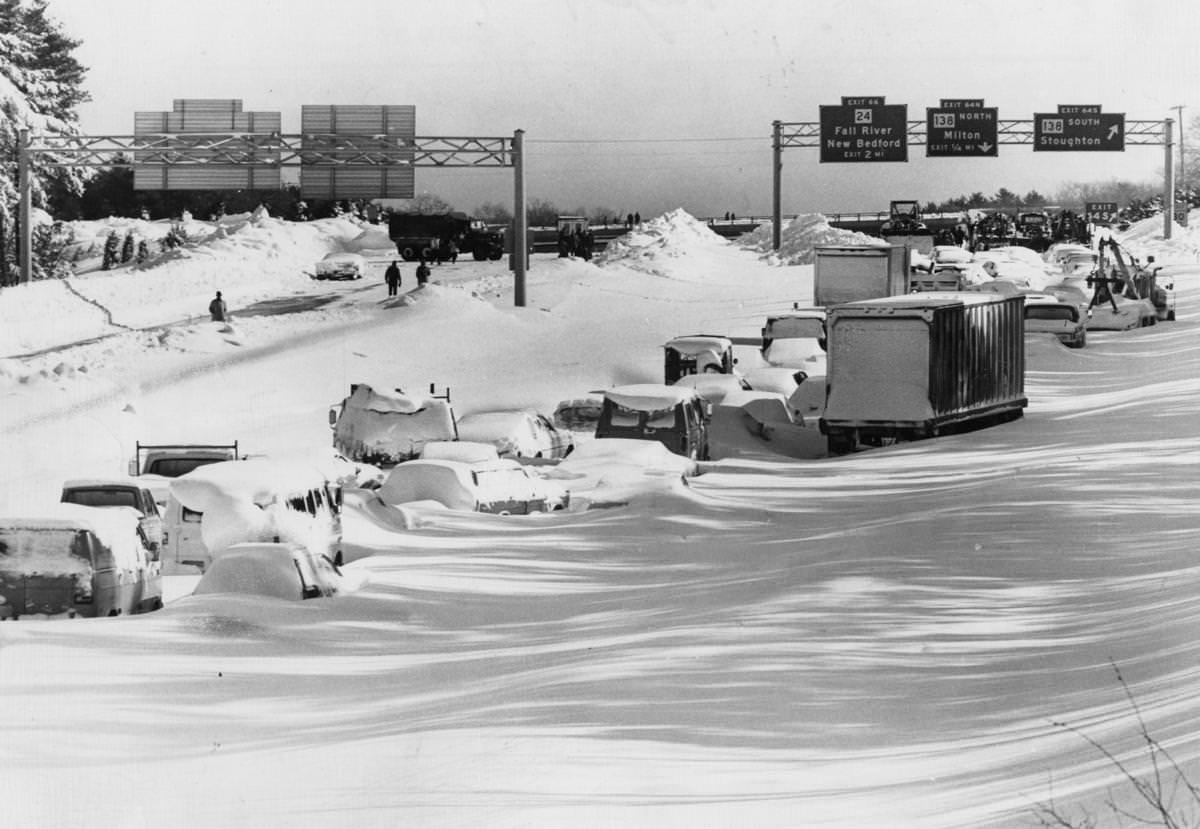
Out on Route 128, one of the region’s main arteries, hundreds of vehicles sat completely snowbound. Drivers who had tried to outrun the storm were trapped for hours. Some abandoned their cars entirely and walked to safety. The ban on vehicle traffic that followed lasted for days, leaving highways lined with ghost cars half-buried in white.
Vehicles were snowbound on Route 128 South in the aftermath of the massive blizzard on Feb. 8, 1978.
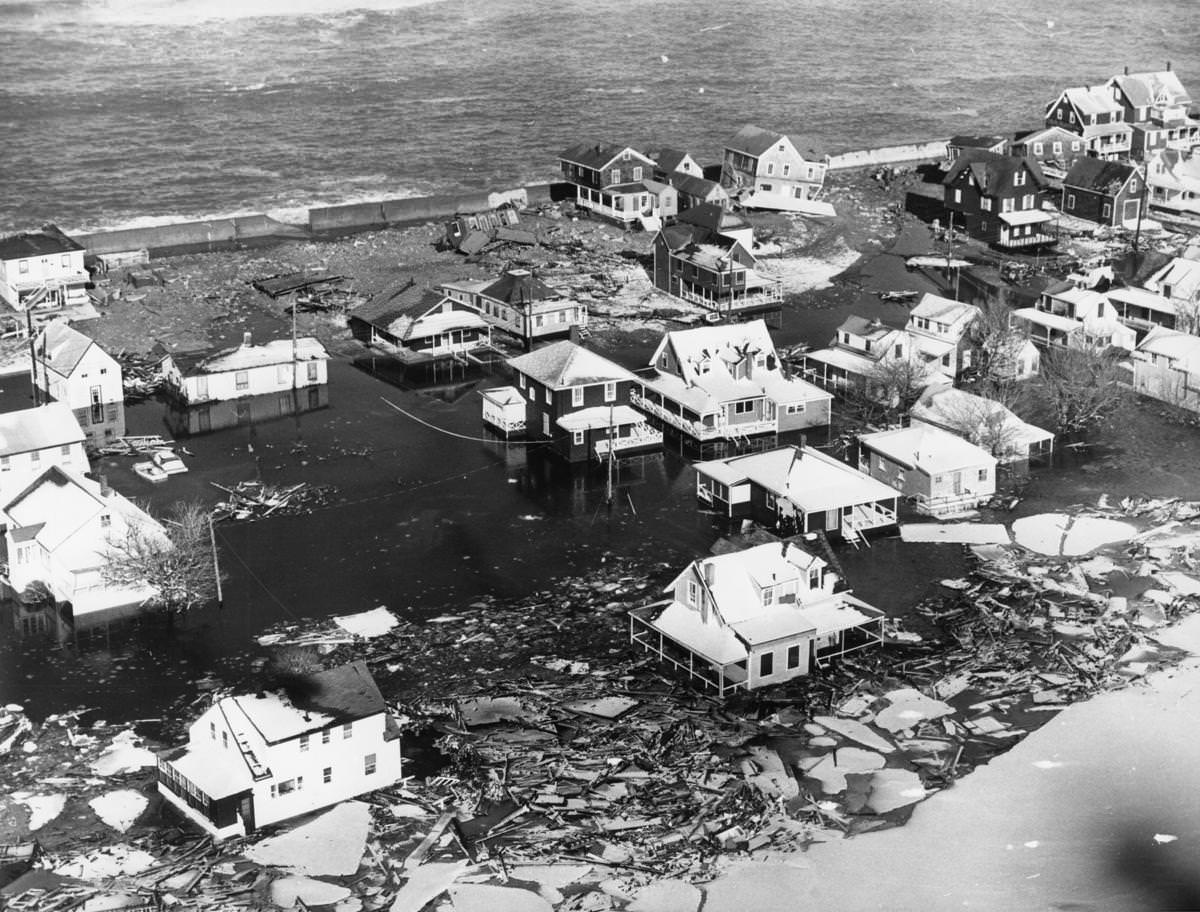
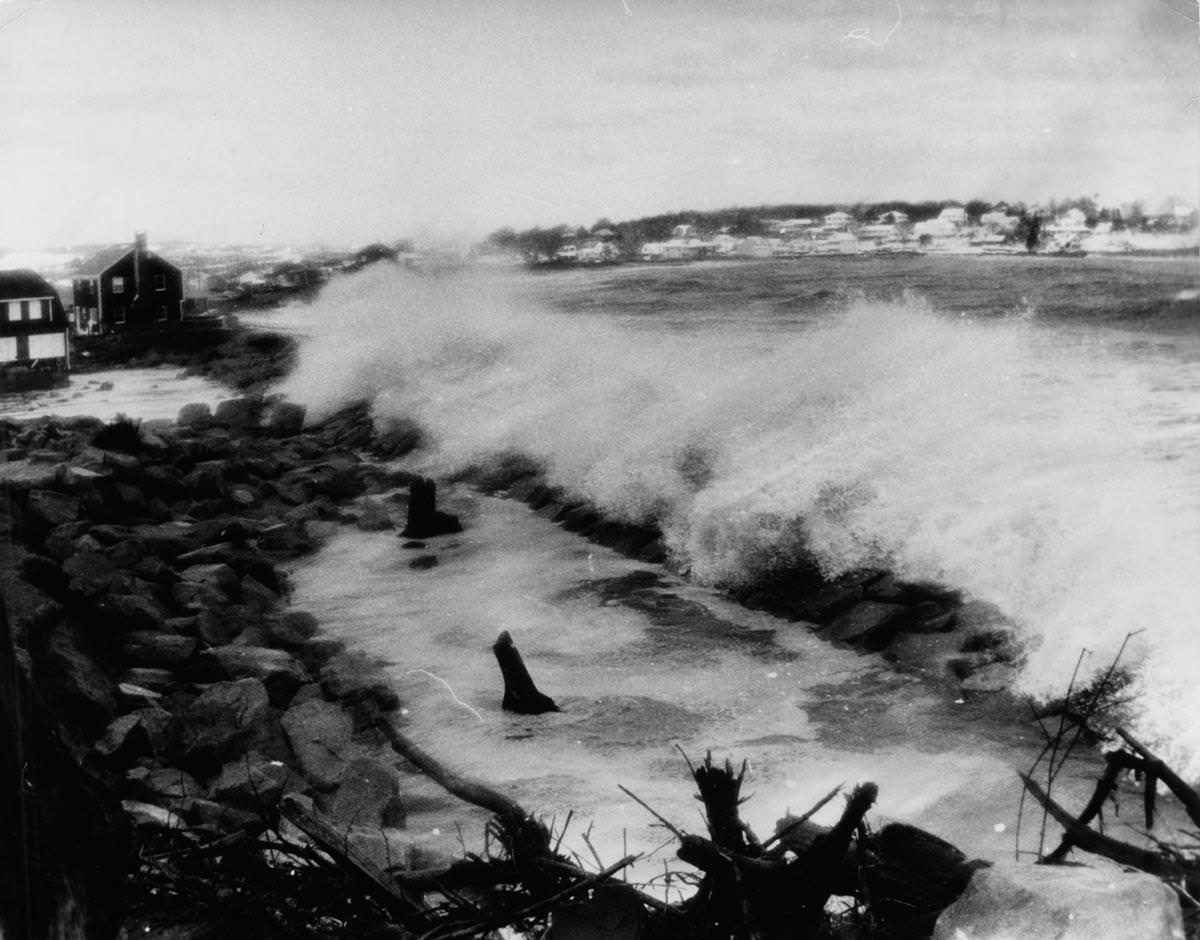
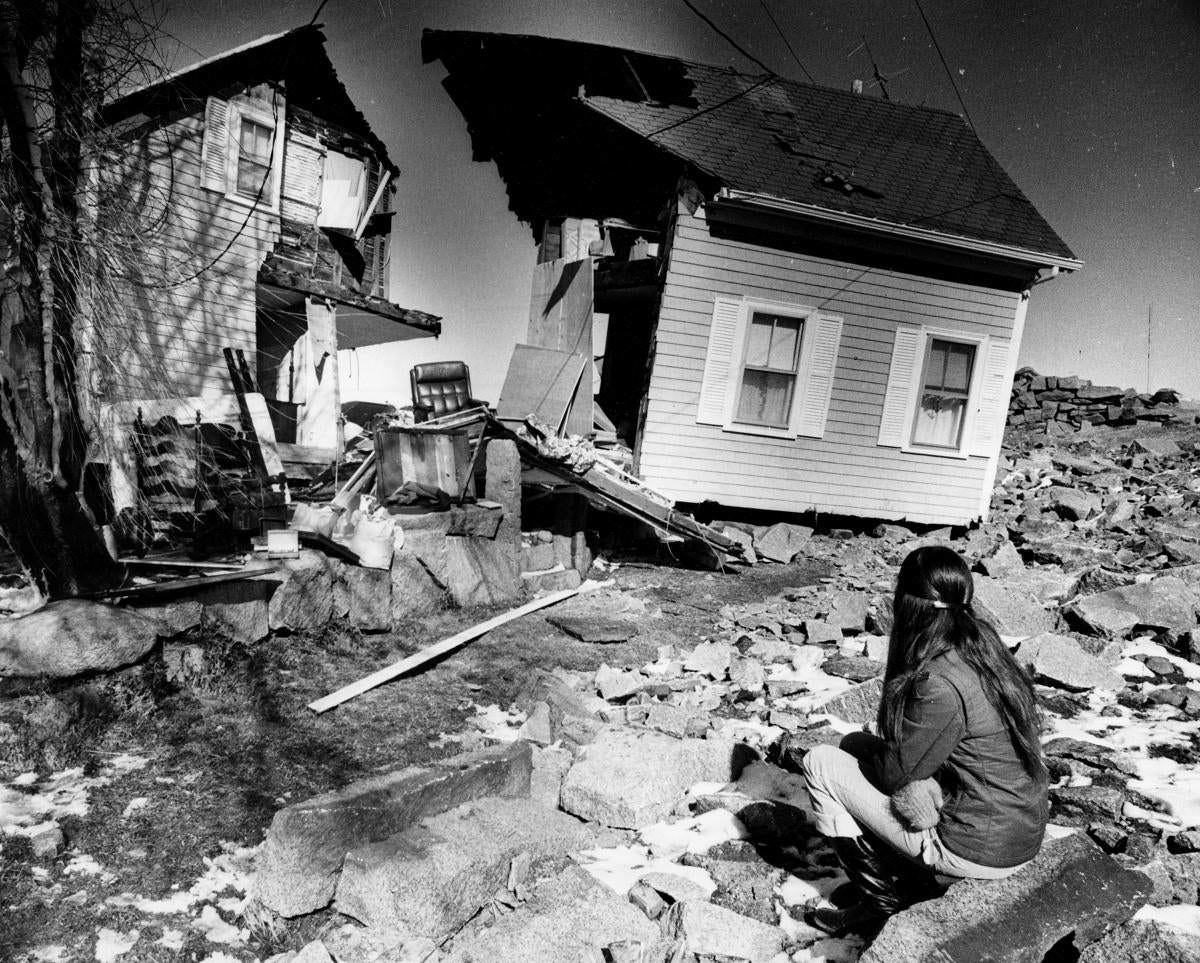
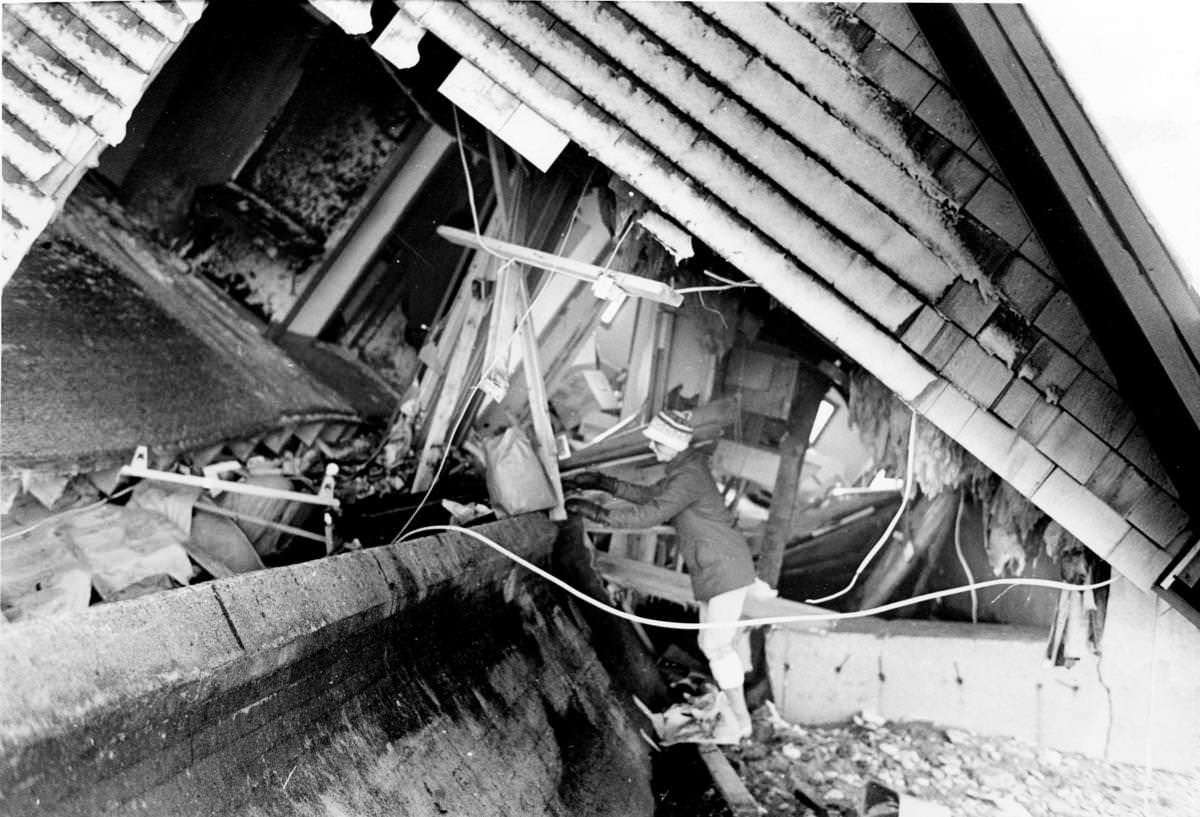
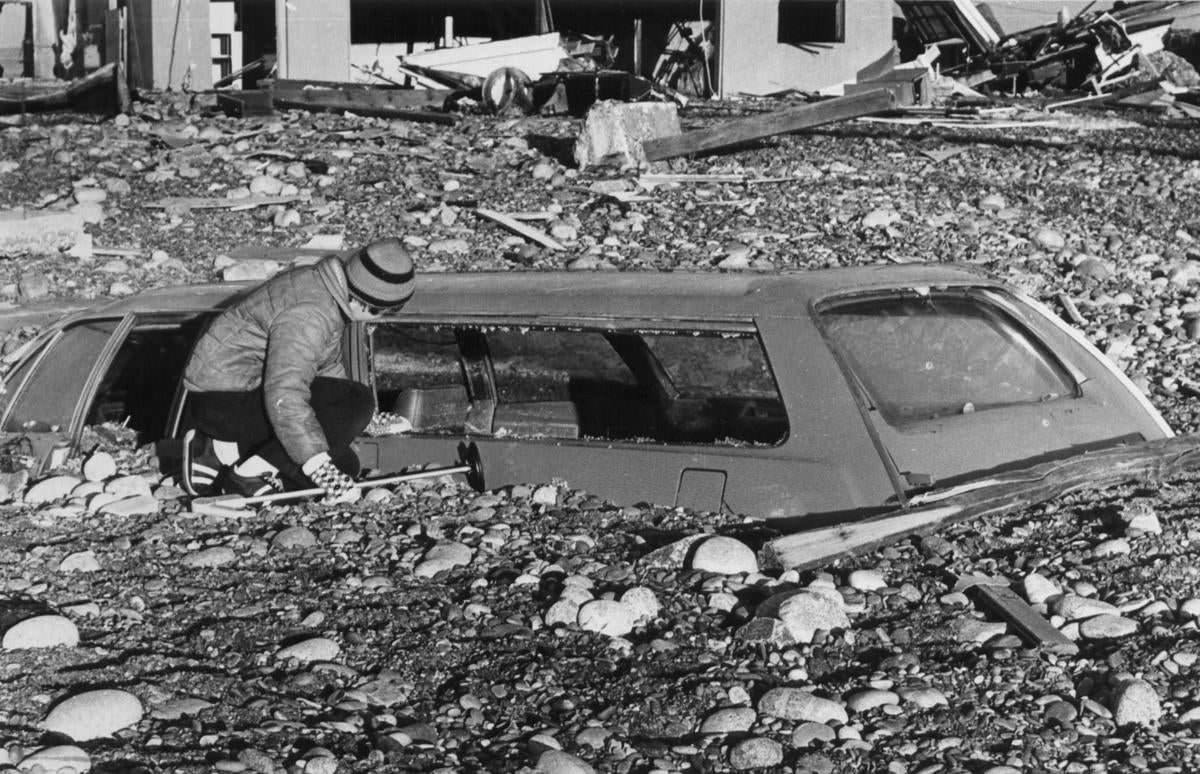
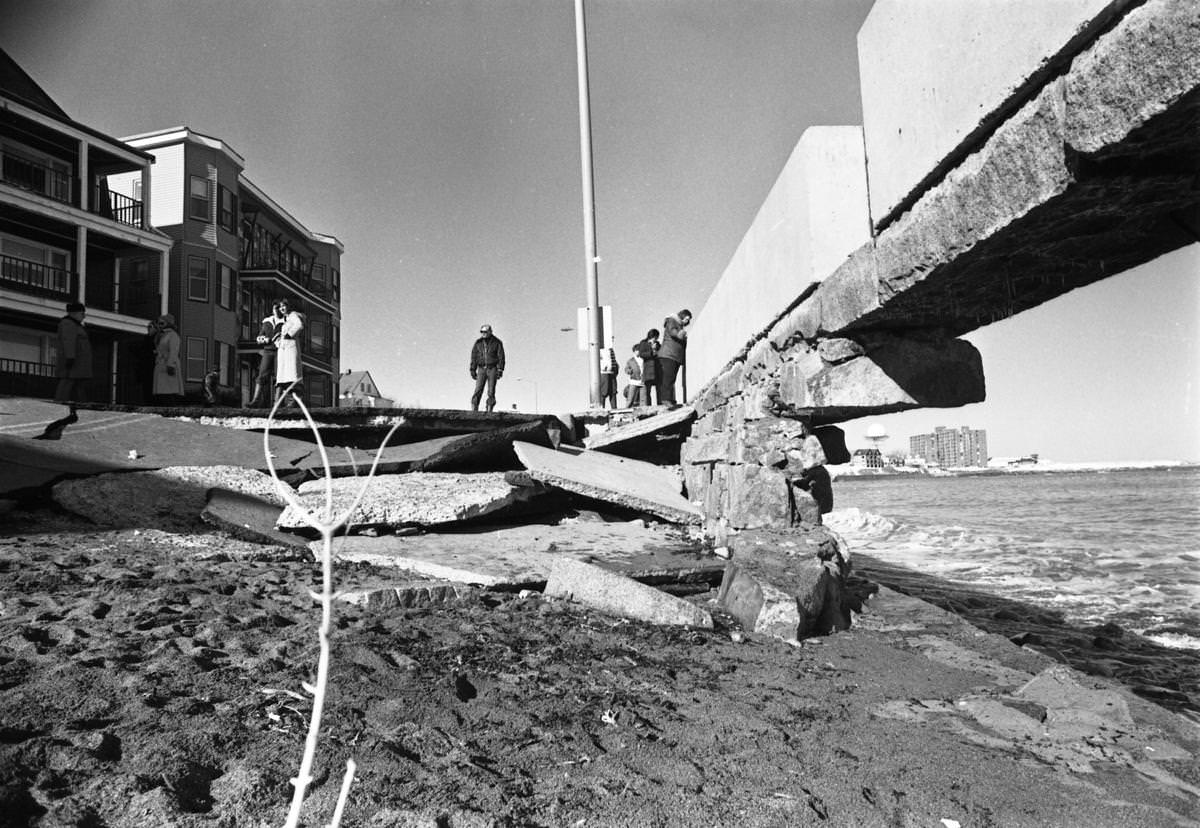
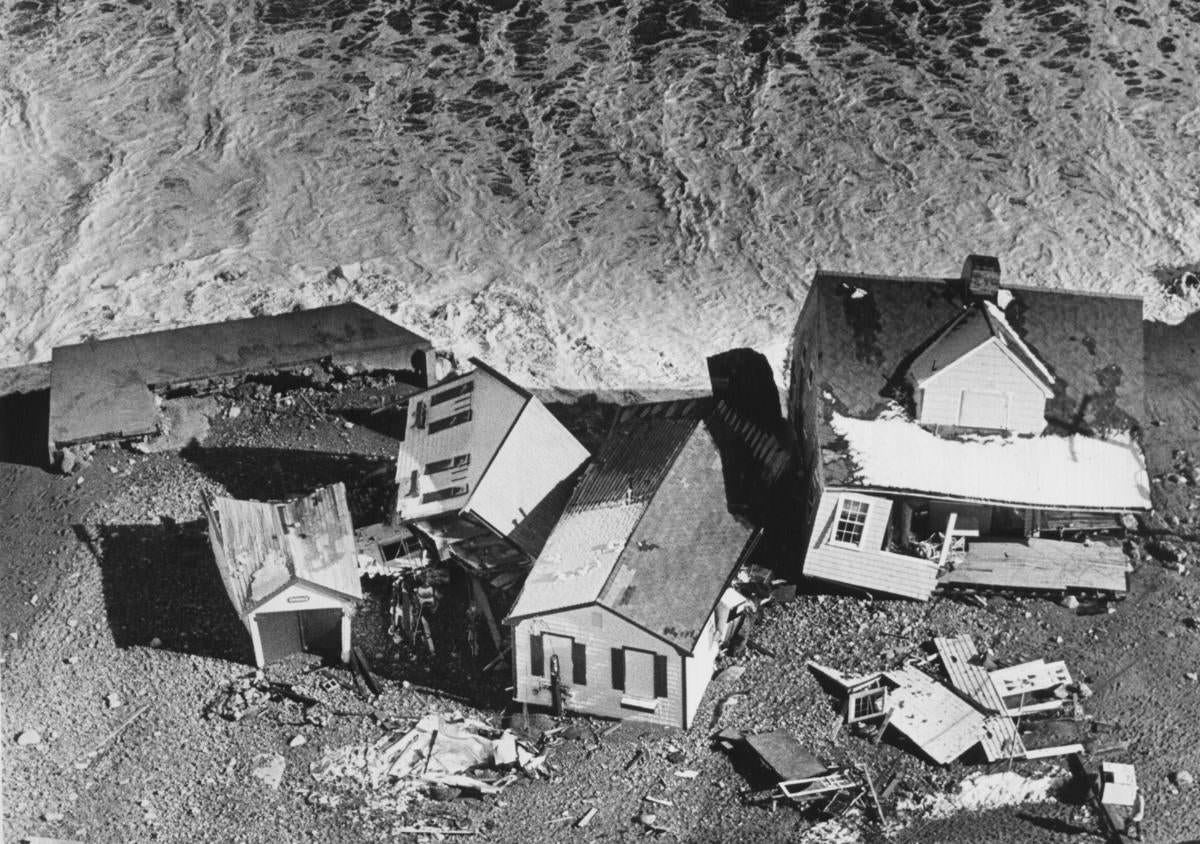
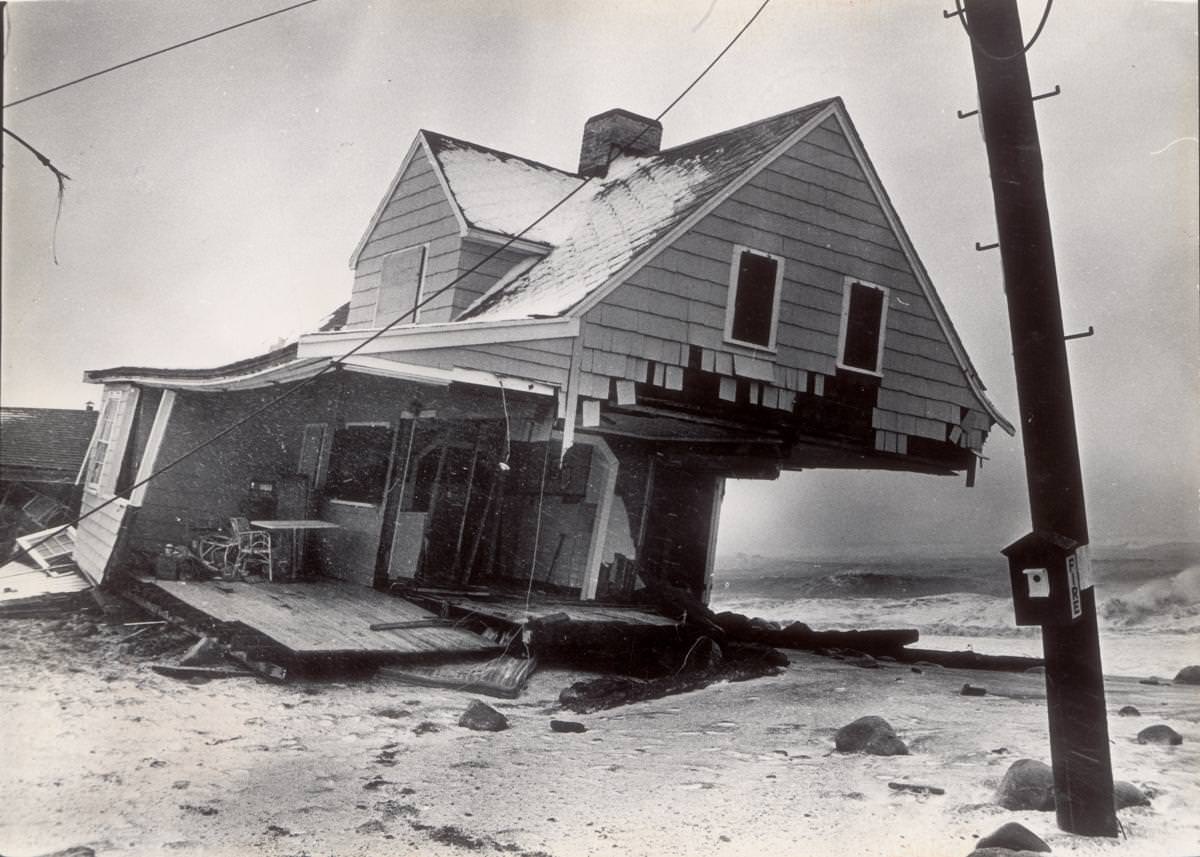
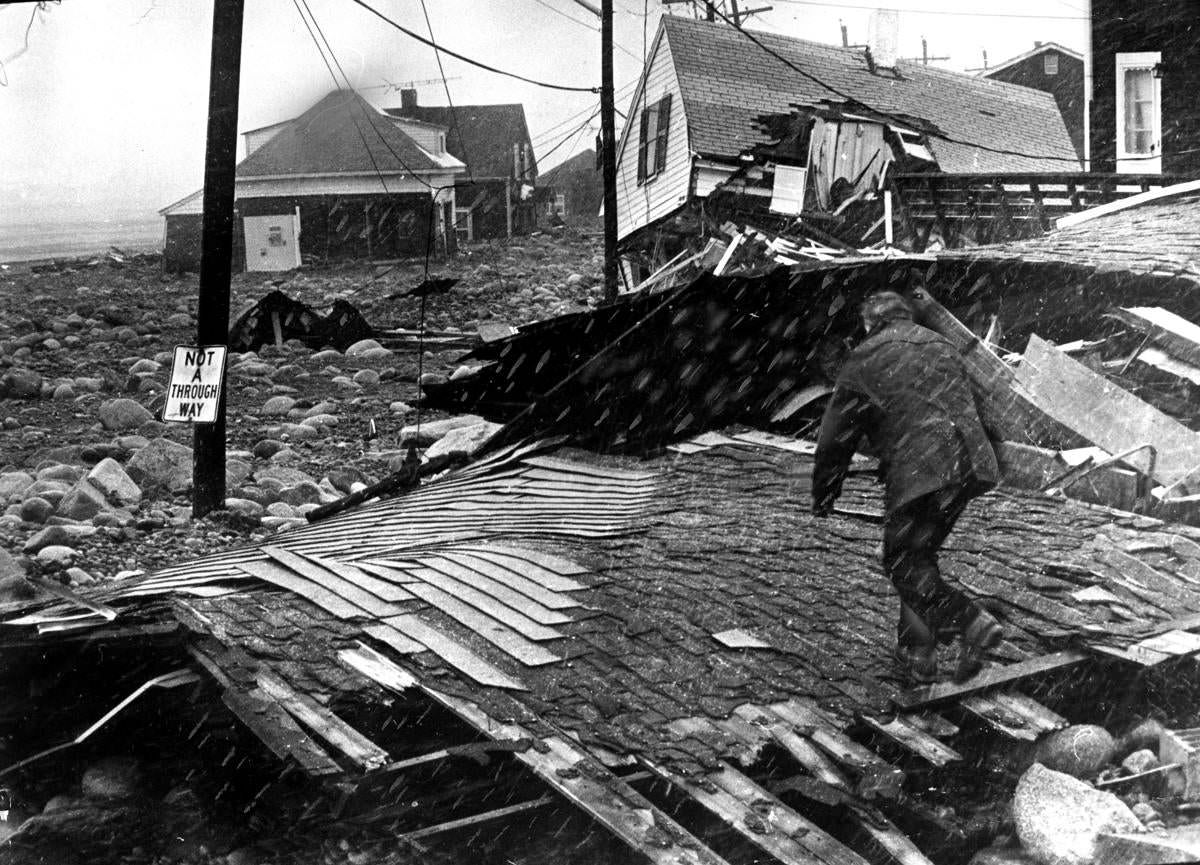
Along the coast, the February storm was equally catastrophic. Massive waves hammered communities from Scituate to Marblehead. The surge tore through sea walls and rolled into neighborhoods, flooding streets and demolishing structures that had stood for decades. In Scituate’s Peggotty Beach, more than 25 houses were demolished outright. Rocks, timber, and household debris were scattered across the entrance to Town Way. In Rockport, the storm reduced homes to rubble.
A huge wave at the height of the storm crashed into the cliffs in Scituate.Destroyed homes on Peggoty Beach in Scituate.More than 25 houses, including this one, were demolished on Scituate’s Peggotty Beach during the blizzard.A house destroyed by the blizzard in Rockport.
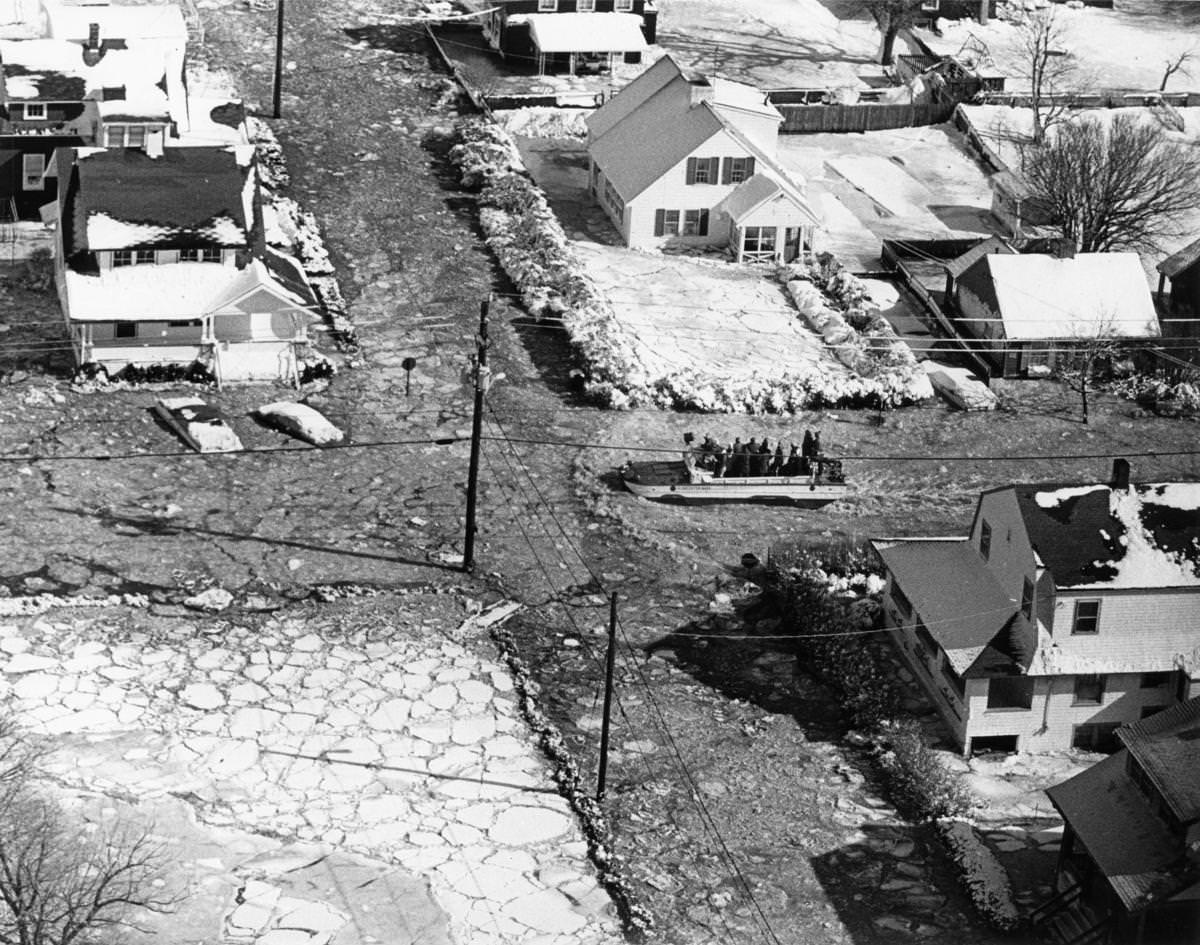
The coastal flooding extended from Hull to Winthrop to Revere. In Hull, homes and streets along Jerusalem Road disappeared under water. In Revere, cars submerged along Winthrop Parkway, and residents had to wait on upper floors for rescue teams to reach them. Army personnel from Fort Devens worked through five feet of slush trying to reach stranded couples and families.
Homes and streets were flooded along Jerusalem Road in Hull.A rescue vehicle moved through the flooded streets in Hull on Feb. 9.Cars submerged on Winthrop Parkway in Revere.A man and woman wait for a rescue team in Revere on Feb. 8.Army personnel from Fort Devens were stuck in five feet of slush trying to rescue the couple in Revere.
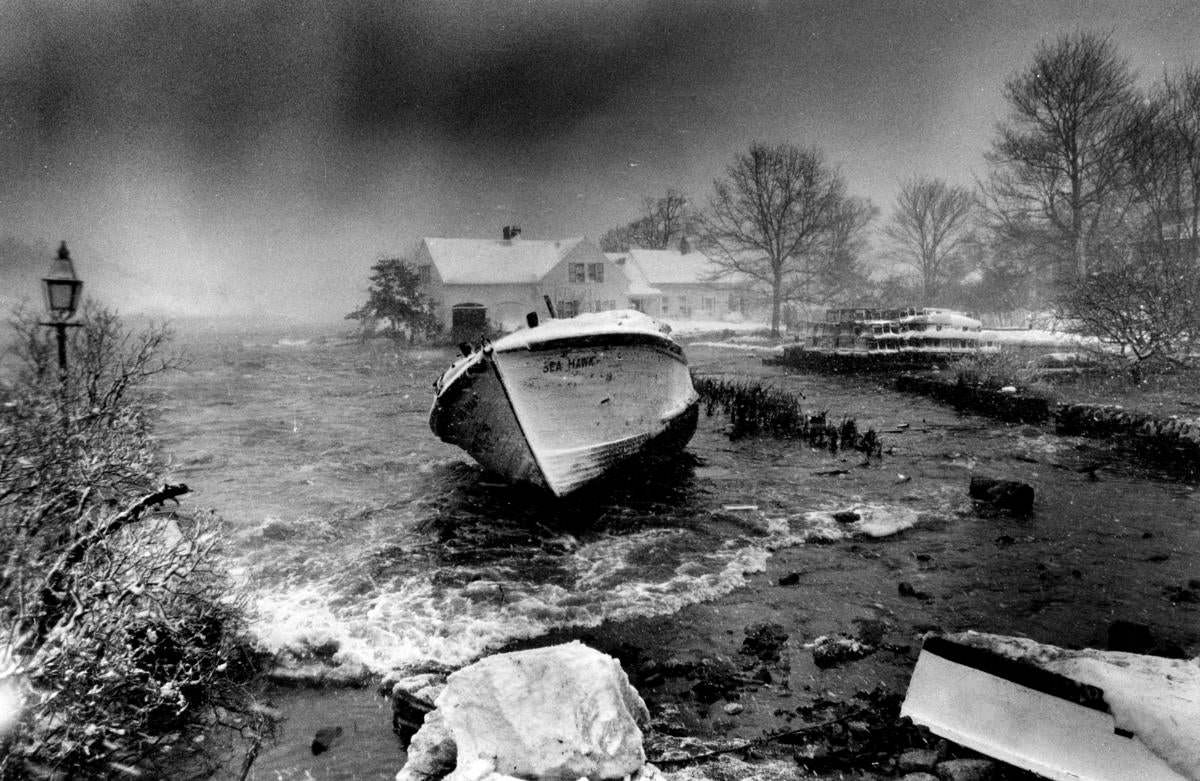
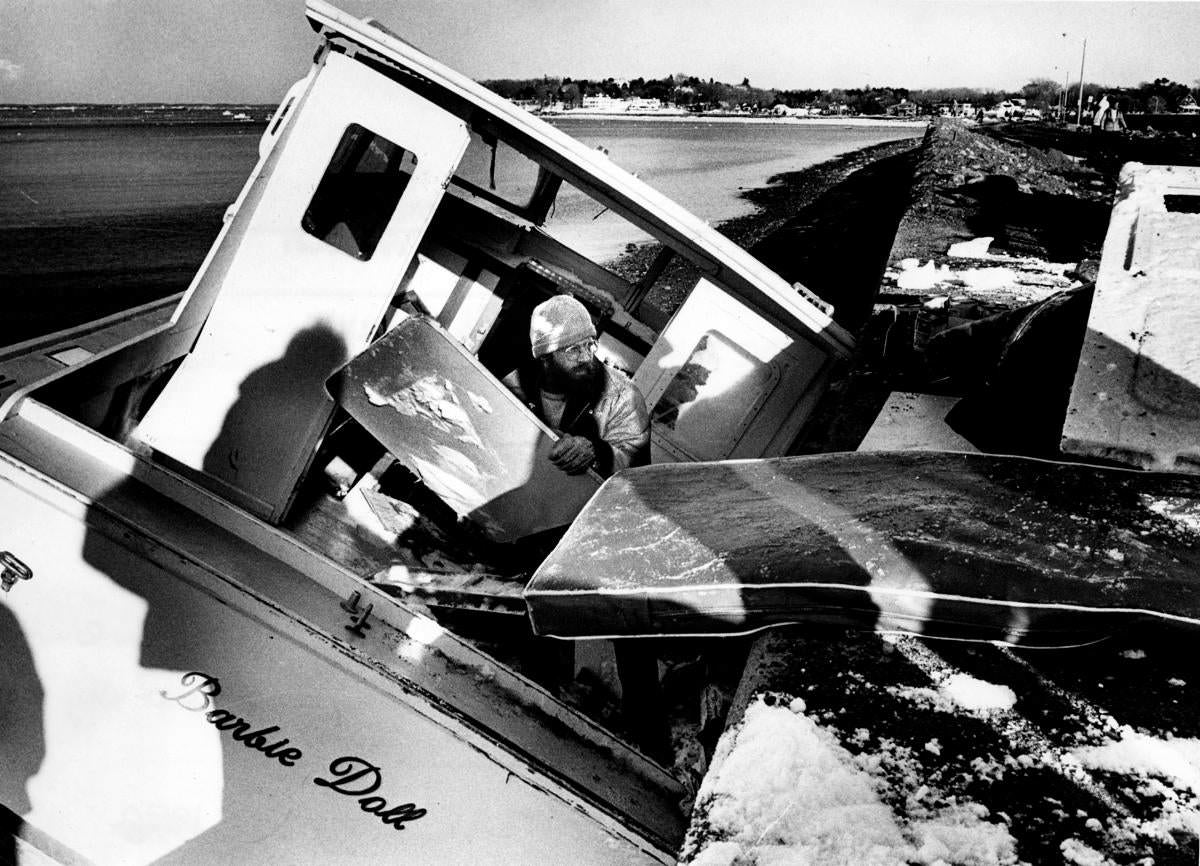
In Marblehead, waves crashed directly onto Front Street on February 7. A boat was washed up into Doliber’s Cove, where tidal waters reached the foundations of nearby homes. A crew member later unloaded the lost vessel from where it had grounded on the Causeway. The sea wall along Winthrop Shore Drive was broken in sections, and residents gathered in the aftermath to look at the damage stretching along the waterfront.
Waves crashed up on Front Street in Marblehead on Feb. 7.A boat was washed up in Doliber’s Cove in Marblehead, where water came up to homes during high tide.A crew member unloaded a lost boat in Marblehead Harbor that washed up on the Causeway.Residents looked at the section of the broken sea wall along Winthrop Shore Drive in Winthrop after the storm.
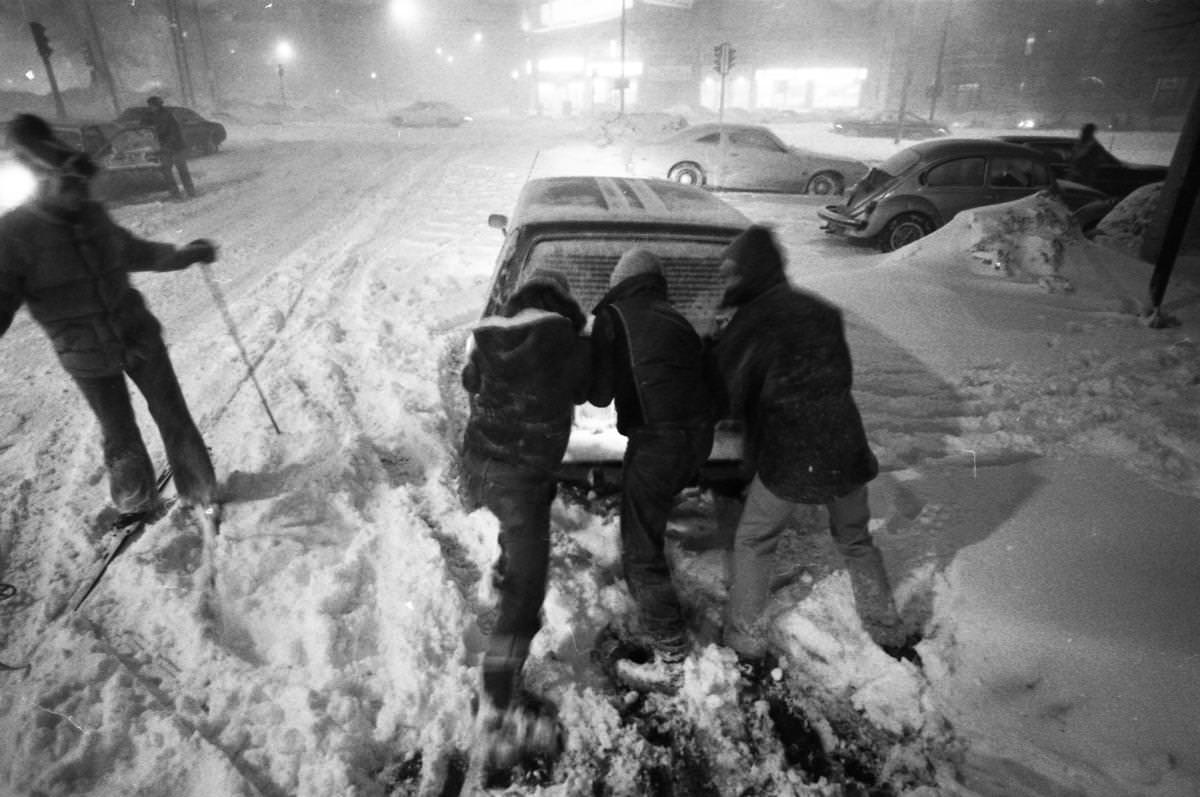
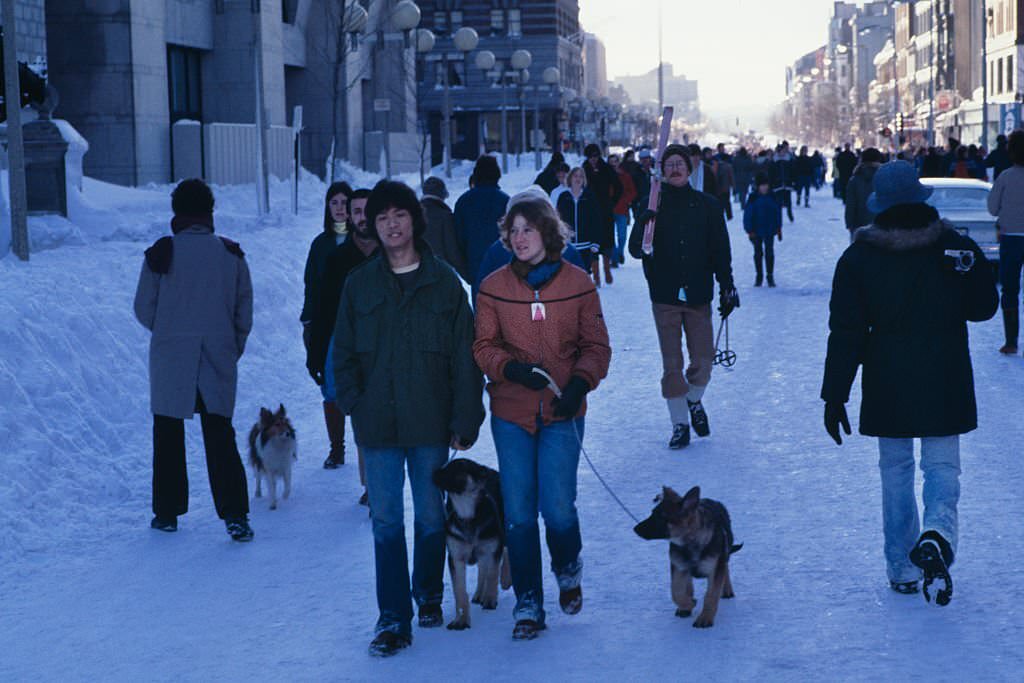
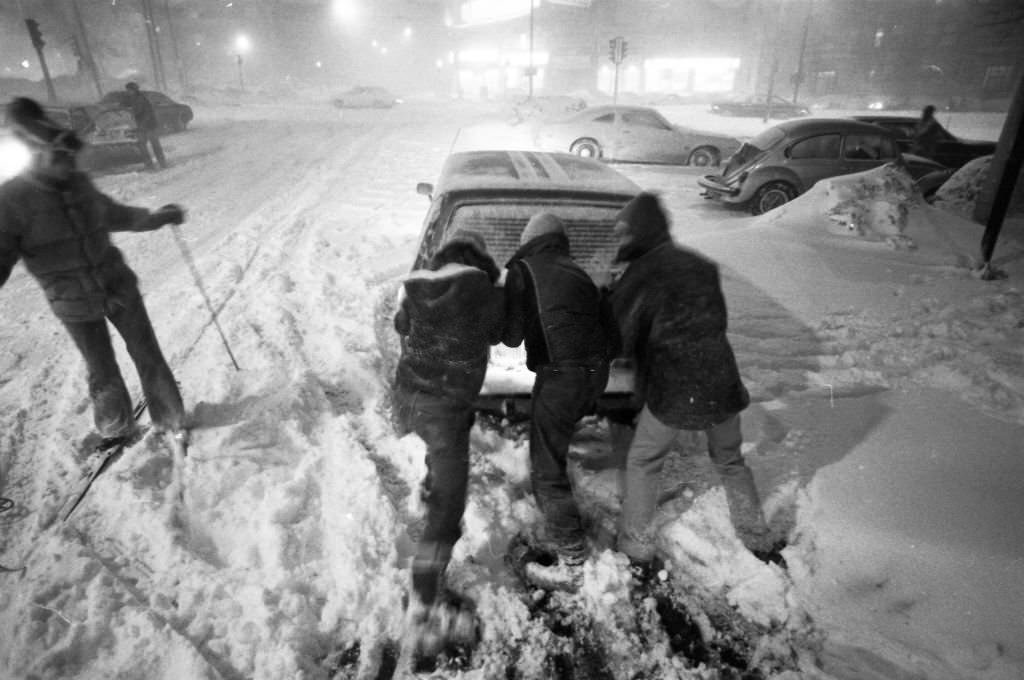
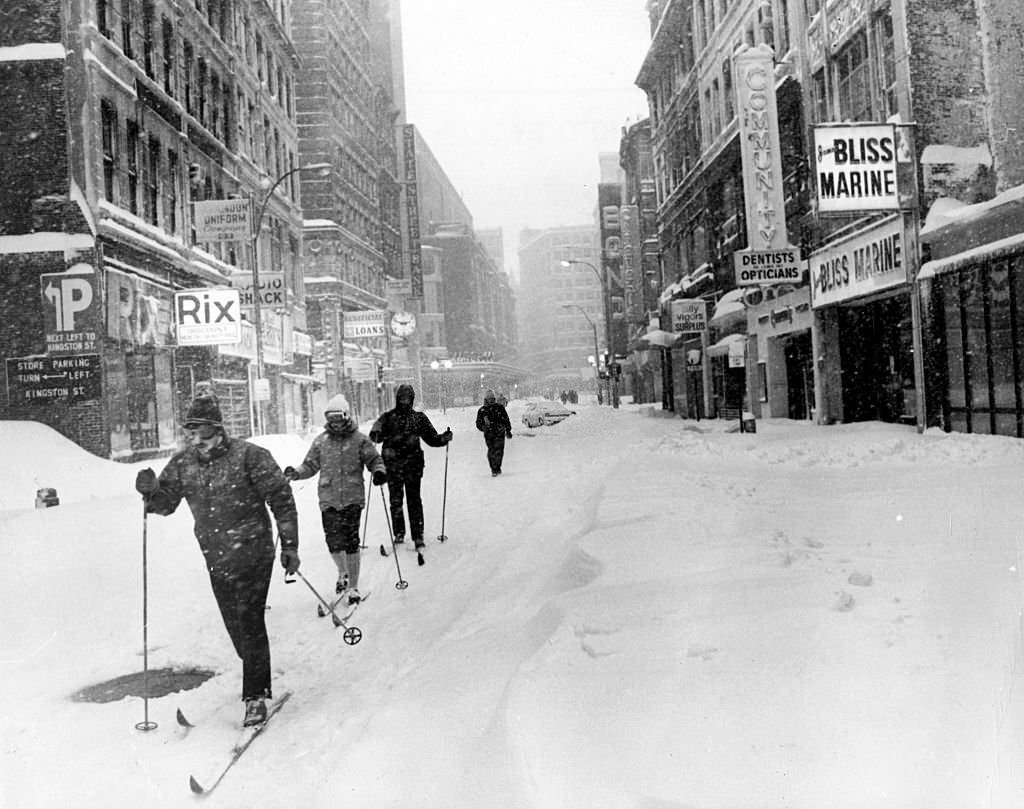
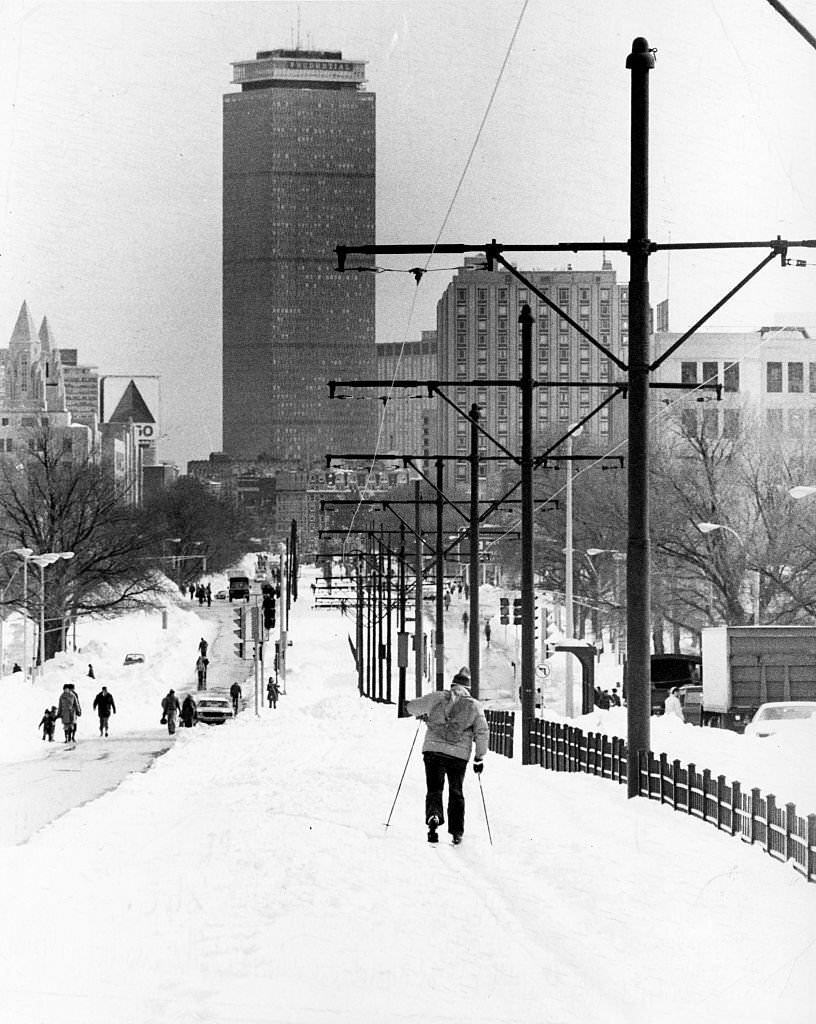
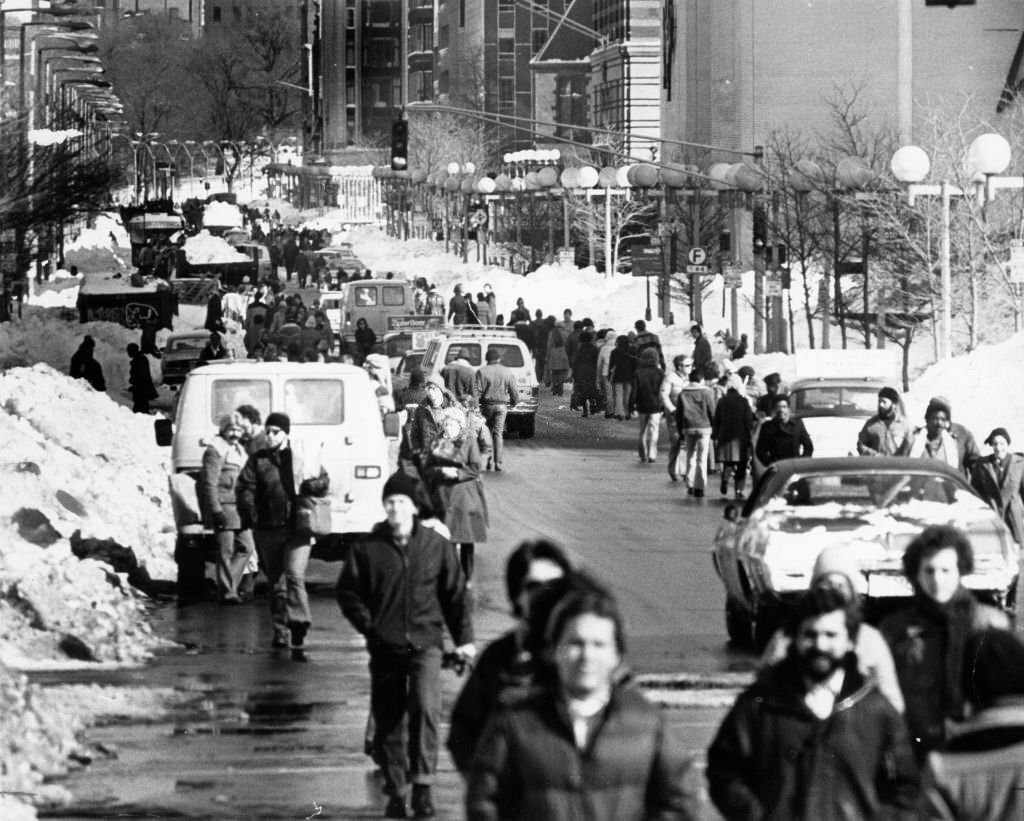
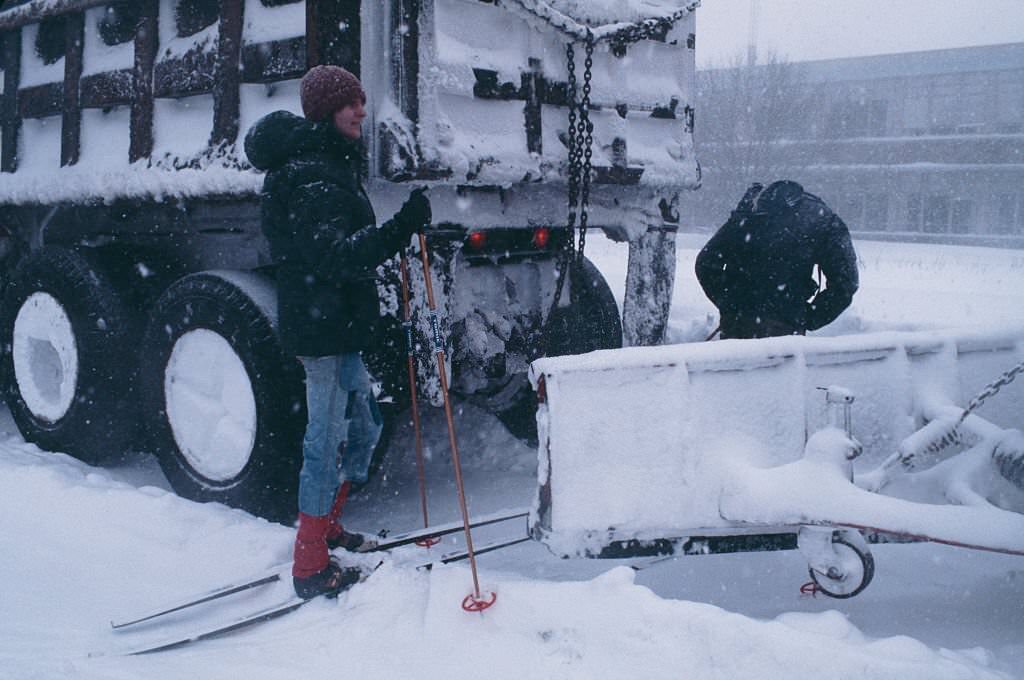
Back in the city, the vehicle ban turned Boston’s streets into pedestrian thoroughfares unlike anything residents had seen before. People walked down the middle of Boylston Street, Washington Street, and Commonwealth Avenue without a car in sight. Some took to cross-country skis to get around. On Summer Street, skiers glided past storefronts. One person skied down the MBTA Green Line tracks on Commonwealth Avenue. On Kelton Street, a skier passed right by three people trying to push a disabled car through the snow.
Pedestrians walking down the middle of Boylston Street in Boston, Massachusetts, during the during the ‘Blizzard of ’78’.It’s a wintry scene on Summer Street, as people use cross-country skis to get around Boston on Feb. 7, 1978.Three people pushed a disabled car as a skier passed on Kelton Street near Commonwealth Avenue in Boston.A person skis down the snowy MBTA Green Line tracks on Commonwealth Avenue in Boston on Feb. 9, 1978, during the “Blizzard of 78”.
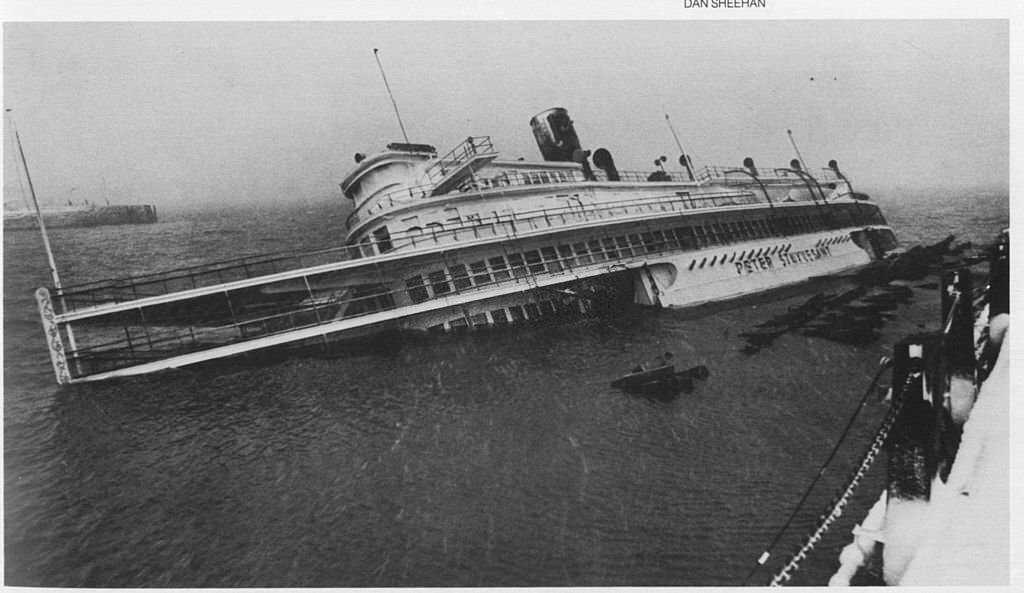
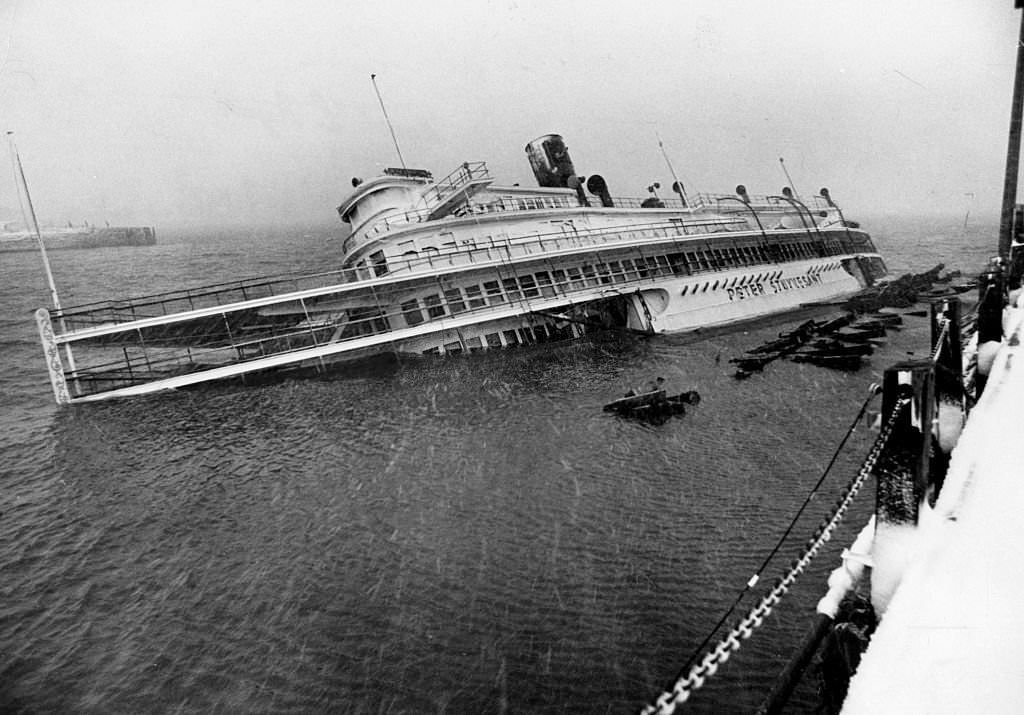
One of the most dramatic losses in Boston Harbor was the S.S. Peter Stuyvesant, a ship that served as a floating cocktail lounge for the iconic Anthony’s Pier 4 restaurant. The blizzard capsized and sank the vessel at its dock, ending its run as one of the city’s most recognizable waterfront landmarks.
S.S. Peter Stuyvesant, a ship used as a cocktail lounge for the adjacent Anthony’s Pier 4 restaurant, capsized yesterday during the “Blizzard of 78”.The Peter Stuyvesant, a famous landmark docked by Anthony’s Pier 4 in Boston, starts sinking during the “Blizzard of 78”.
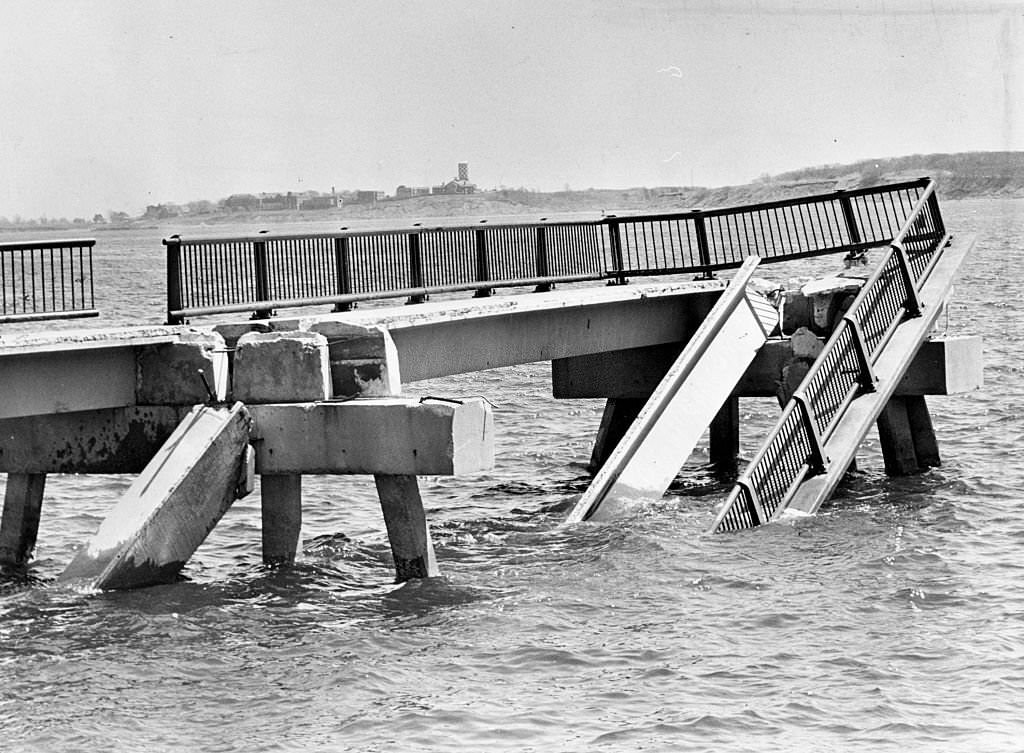
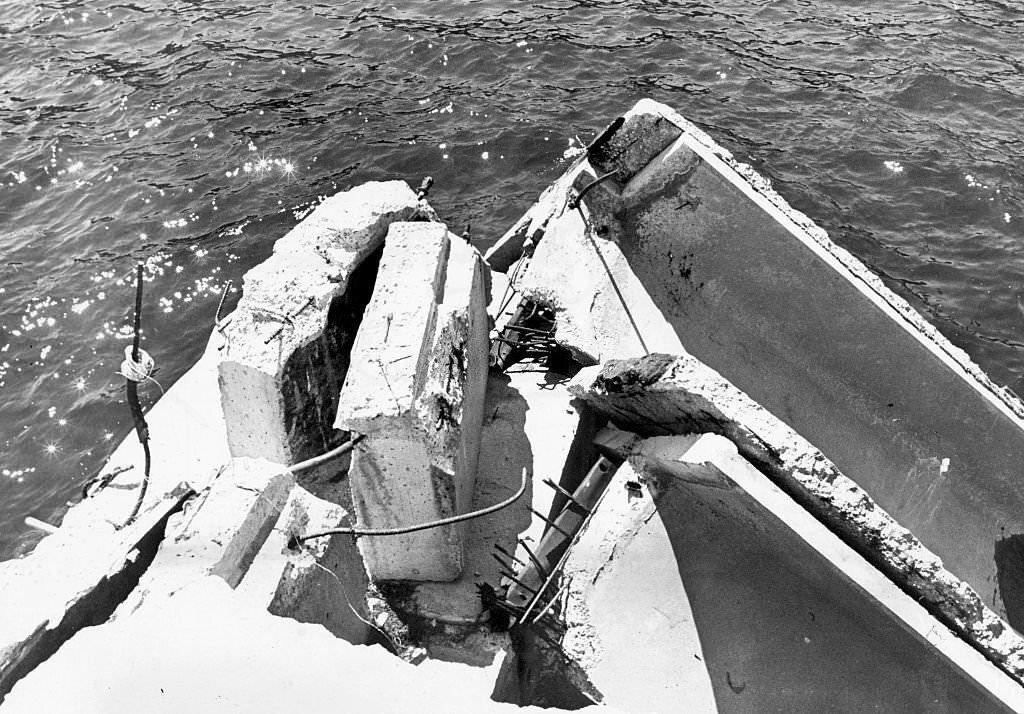
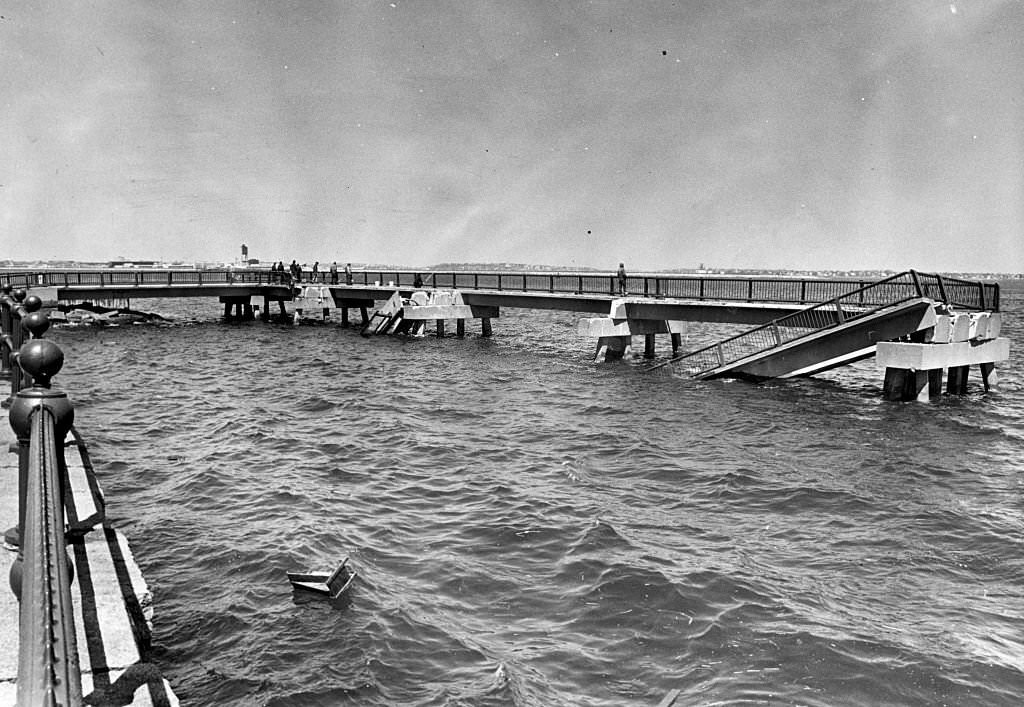
Castle Island also took a direct hit. The fishing pier that jutted into Boston Harbor buckled and toppled into the water during the storm. Aerial views taken after the blizzard showed entire neighborhoods blanketed in white — South Boston’s Fenway and Farragut Road among them — with cars buried so deep that only their rooflines were visible.
Boston’s Castle Island toppled into the harbor during a record-setting blizzard in February 1978.Fishing pier at Boston’s Castle Island toppled into the harbor during a record-setting blizzard in February 1978.
An aerial view shows cars buried in snow on Farragut Road in South Boston on Feb. 8, 1978.
Aerial view of the Fenway in Boston, covered in snow Feb. 8, 1978.
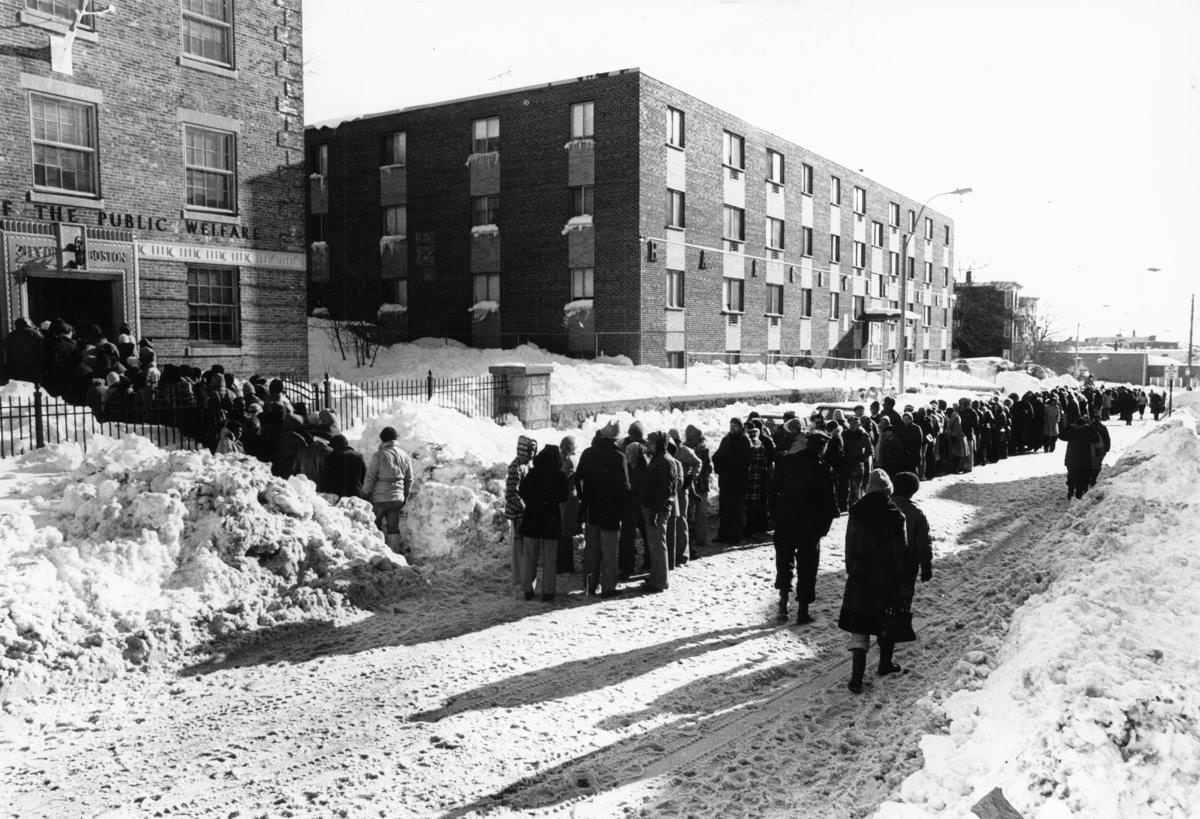
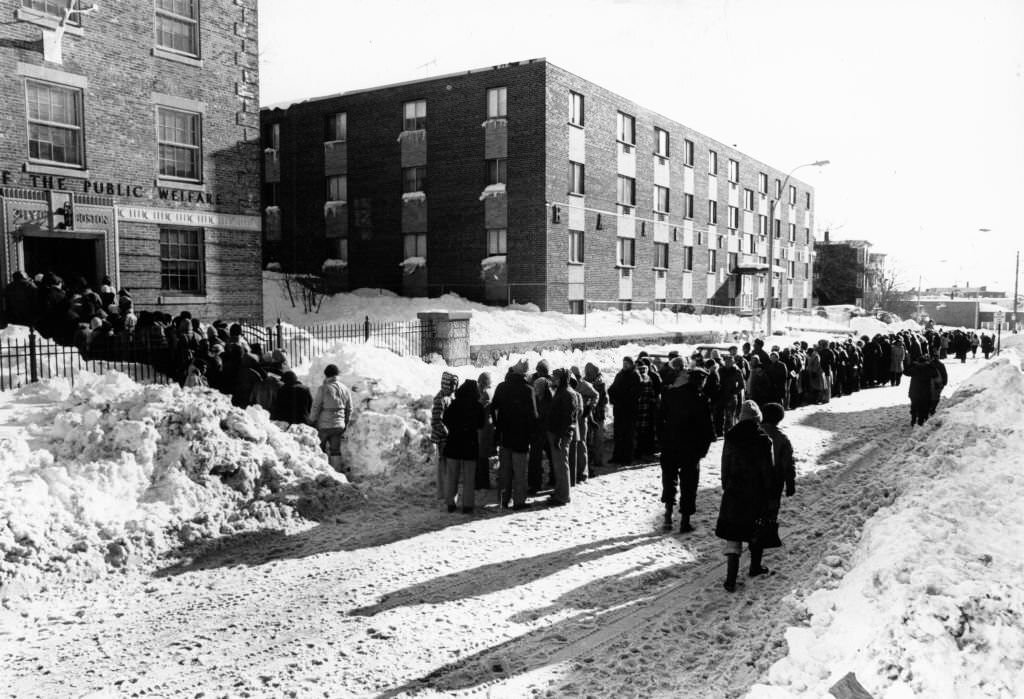
The state of emergency that had been declared prevented the delivery of public assistance checks, and most government offices stayed closed for days. By February 11, thousands of people lined up on Hancock Street in Dorchester, standing in the snow waiting for welfare vouchers. The line stretched around the block. Meanwhile, basic goods like milk were nearly impossible to find. When a delivery truck finally arrived at a Boston store at midnight on February 10, it was immediately surrounded by customers.
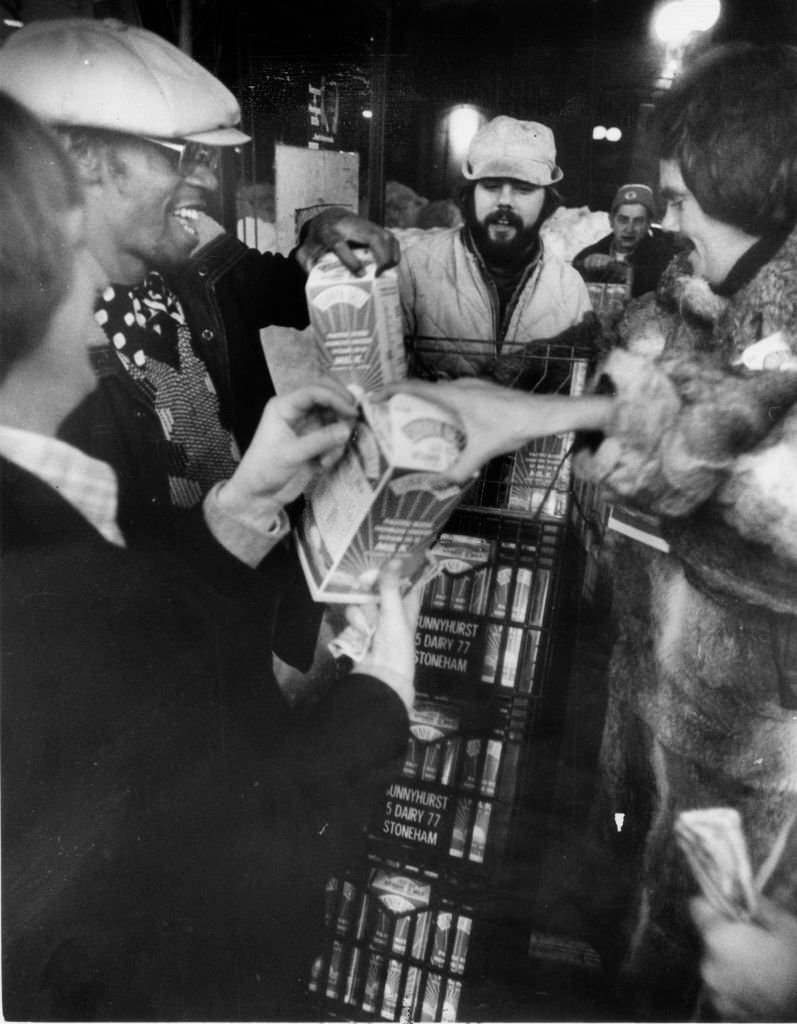
Thousands of people waited for welfare vouchers in the snow on Hancock Street in Dorchester on Feb. 11 following the blizzard.Thousands of people wait for vouchers in the snow on Hancock Street in the Dorchester neighborhood of Boston on Feb. 11, 1978.Pete Cole is surrounded by customers looking to buy the milk he is delivering to a store in Boston at midnight on Feb. 10, 1978.
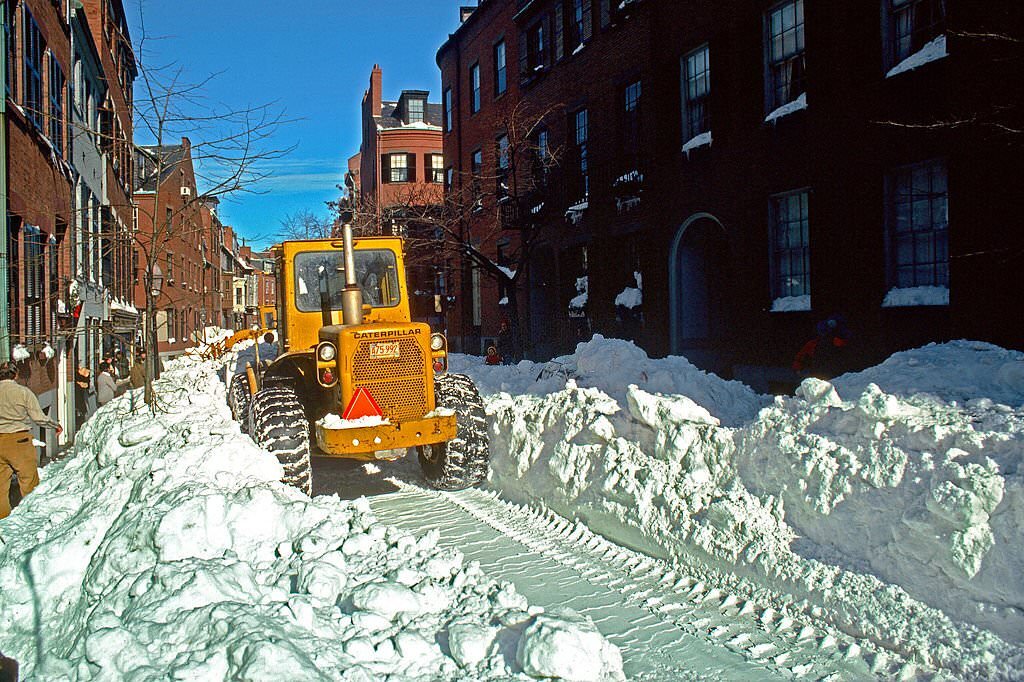
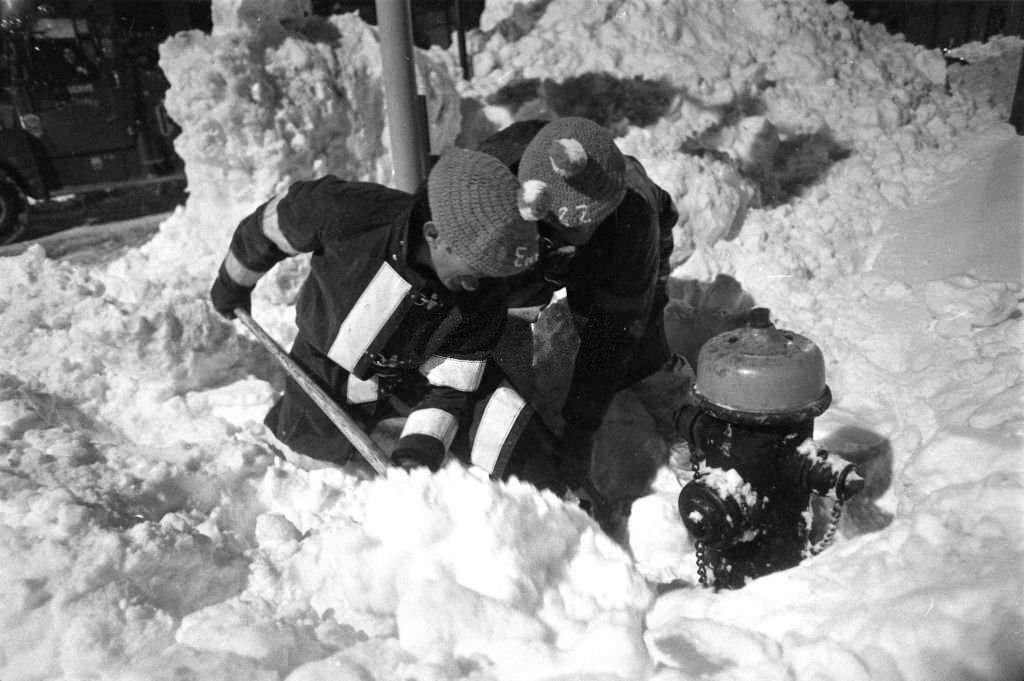
Across the region, ordinary life ground to a halt and then slowly restarted. Residents in Charlestown began shoveling out Pleasant Street by February 11 and 12. Snow removal crews ran dump trucks loaded with snow up Boylston Street throughout the day. Firefighters Pat Moni and Dick Laureana of Engine 22 dug out a hydrant on Massachusetts Avenue while snowplows worked through Beacon Hill’s narrow lanes. The cleanup required car owners, MDC workers, and National Guard troops working side by side on streets like Day Boulevard in South Boston.
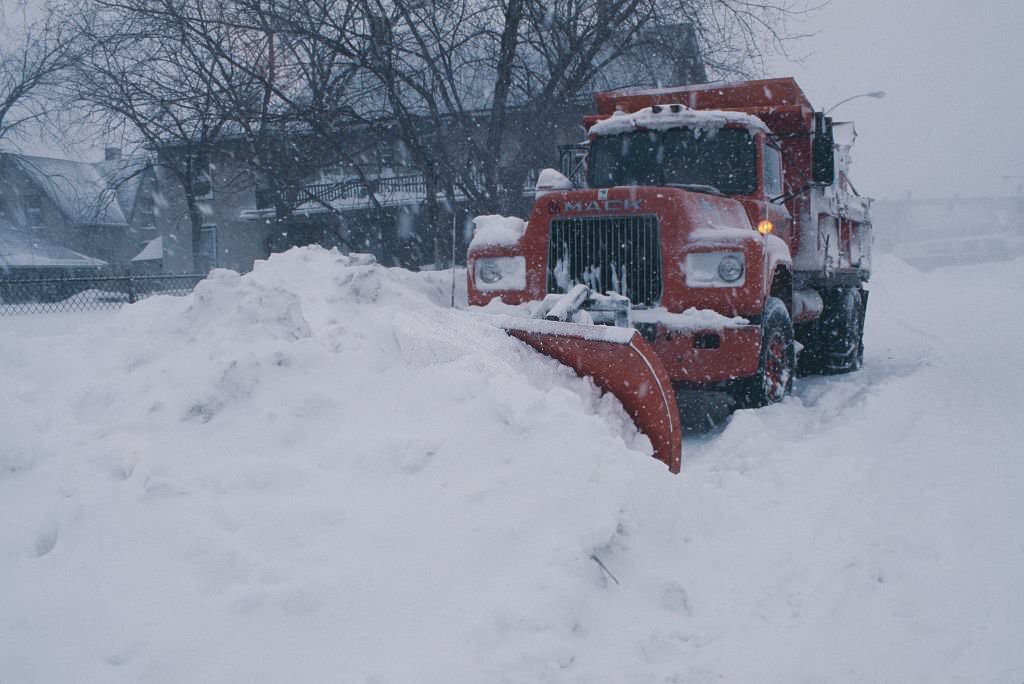
Firefighters Pat Moni and Dick Laureana of Engine 22 dig out a hydrant on Massachusetts Avenue in Boston following the “Blizzard of 78”.Car owners, MDC workers and the National Guard dig out cars buried in snow on Day Boulevard in South Boston after the “Blizzard of 78”A Tractor Travels Down A Snowy StreetA snow plough at work in Boston, Massachusetts, during the during the ‘Blizzard of ’78’, February 1978.
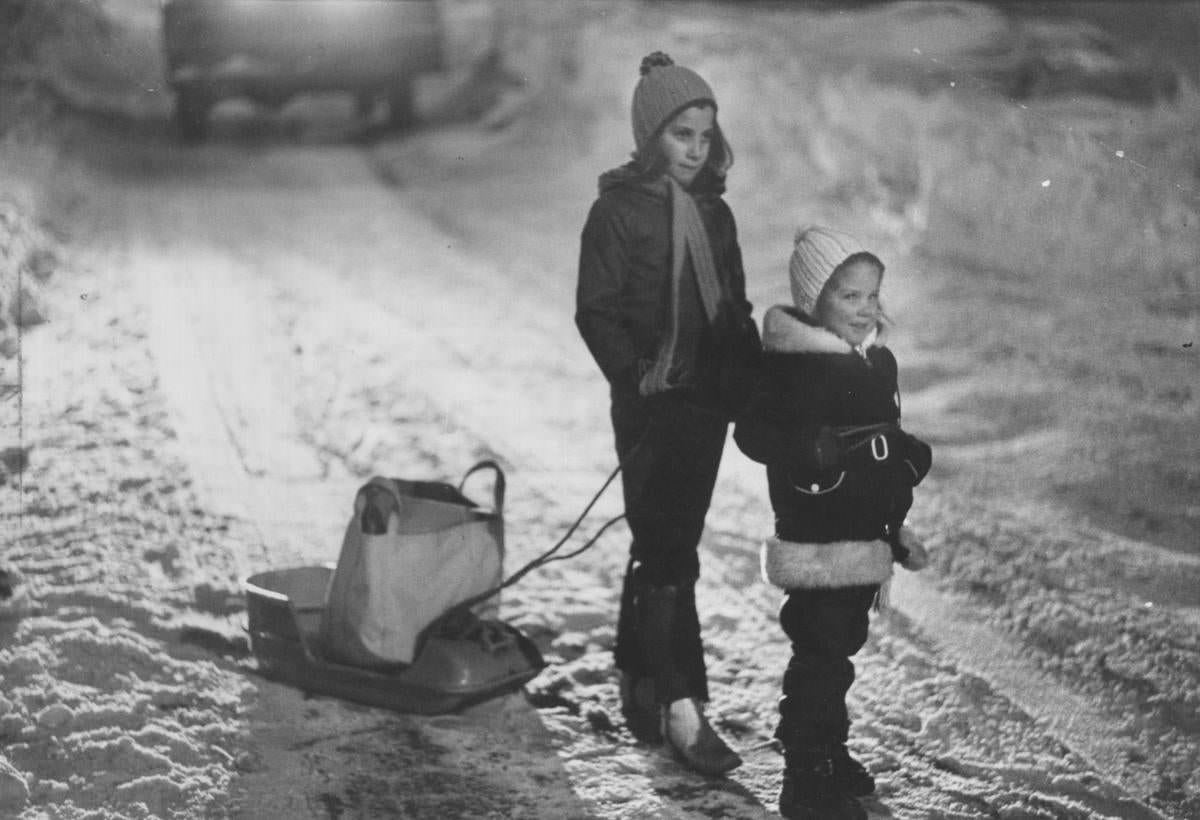
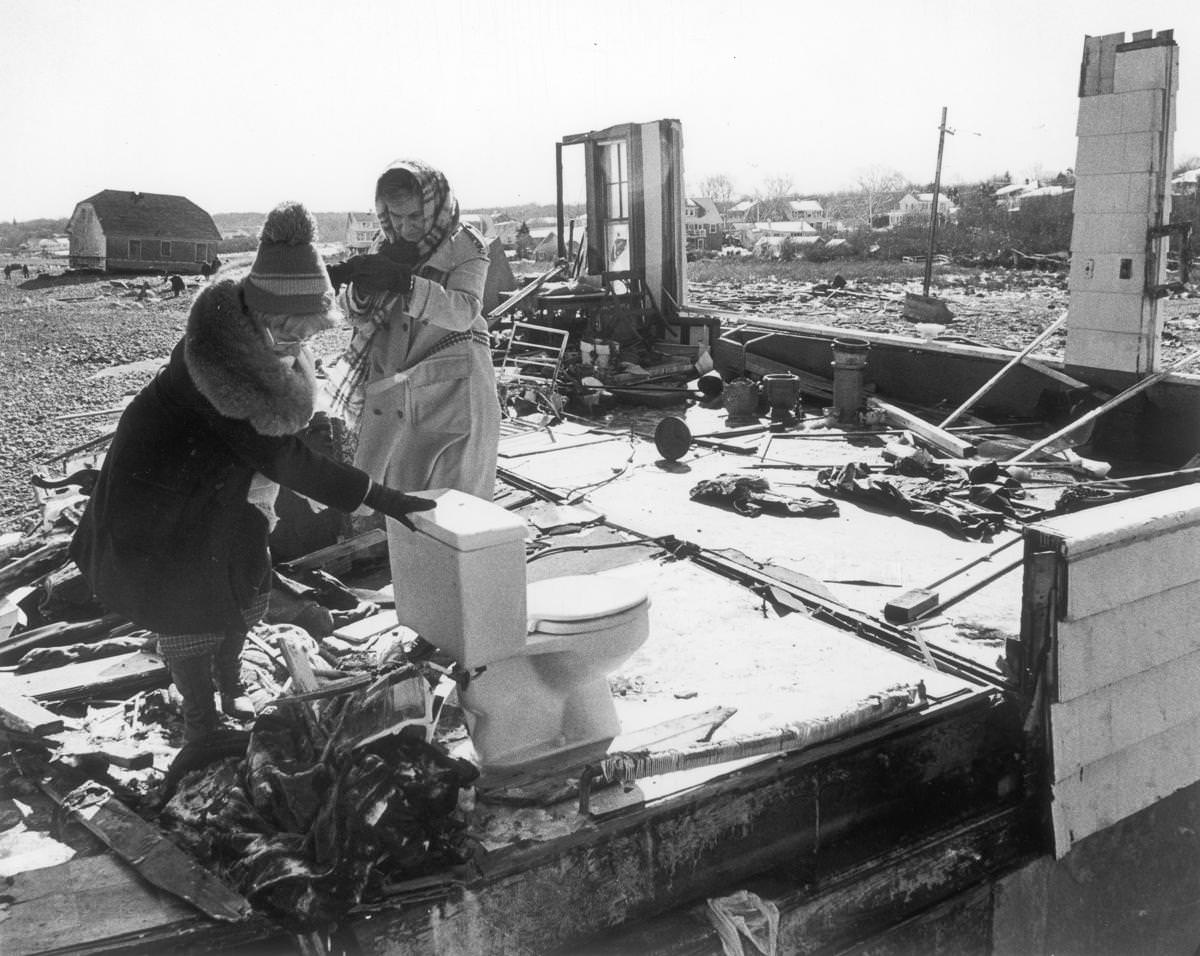
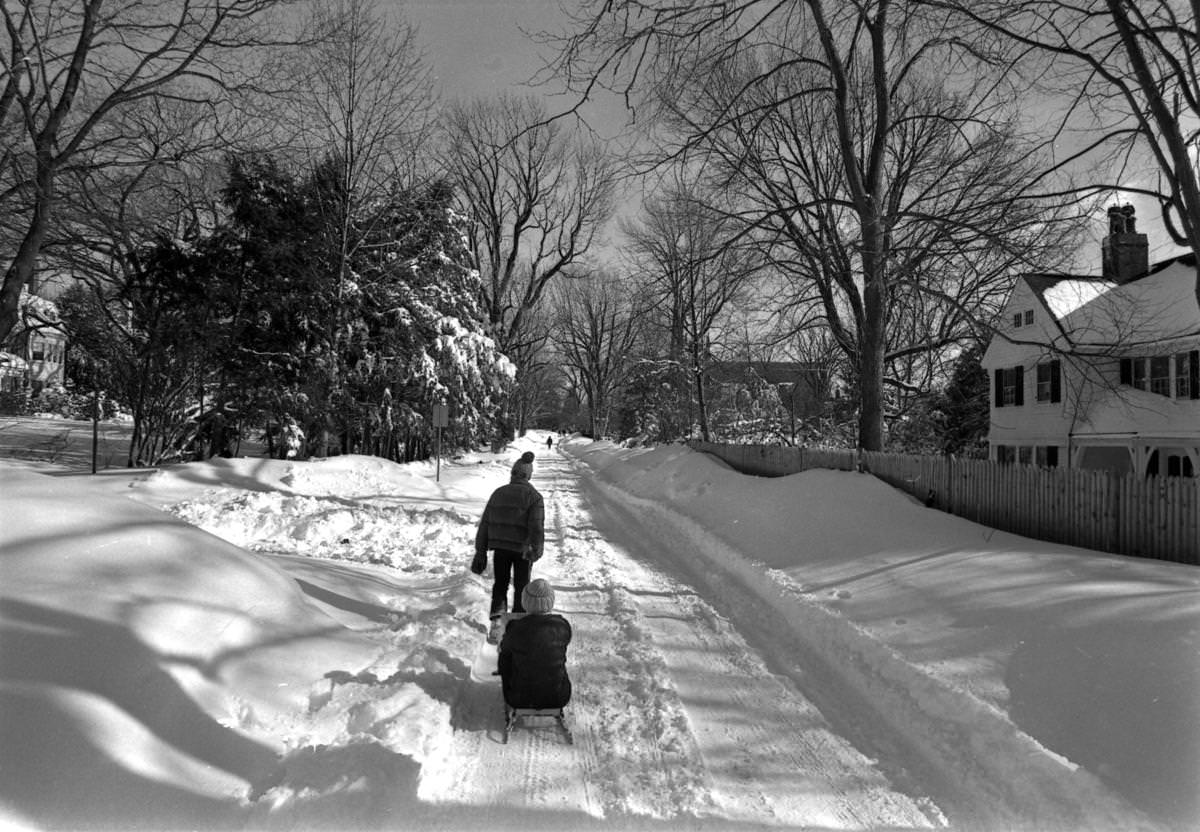
Across the suburbs, residents dealt with their own mountains of snow. In Wakefield, driveways and streets were cleared in narrow single lanes. In Newton, children pulled each other on sleds down roads still too deep for cars. In Quincy, families returned to damaged summer homes to find walls pushed in and floors warped by flooding. In Scituate, survivors like Mrs. Joseph Conley picked through the ruins of their beachside properties before moving in with neighbors, their former homes reduced to a single standing fixture amid scattered debris.
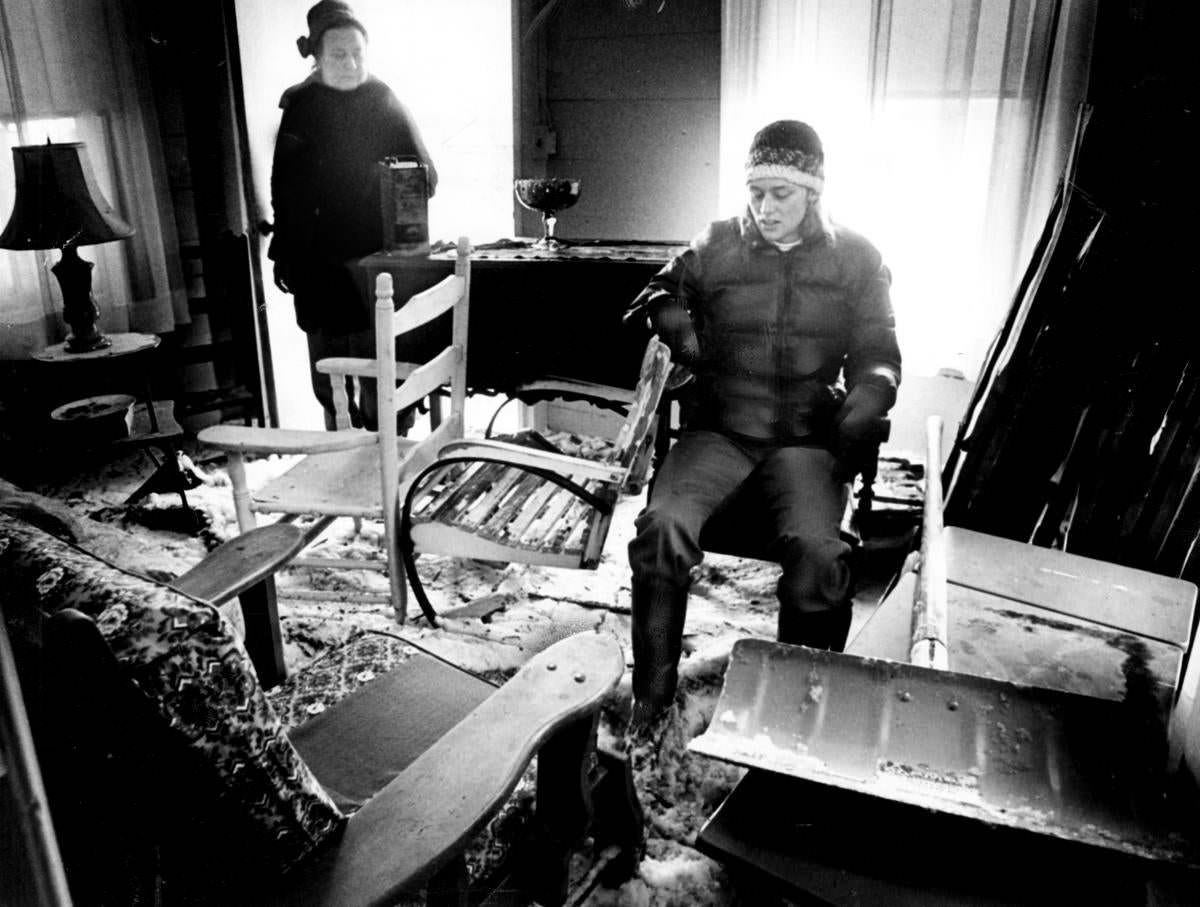
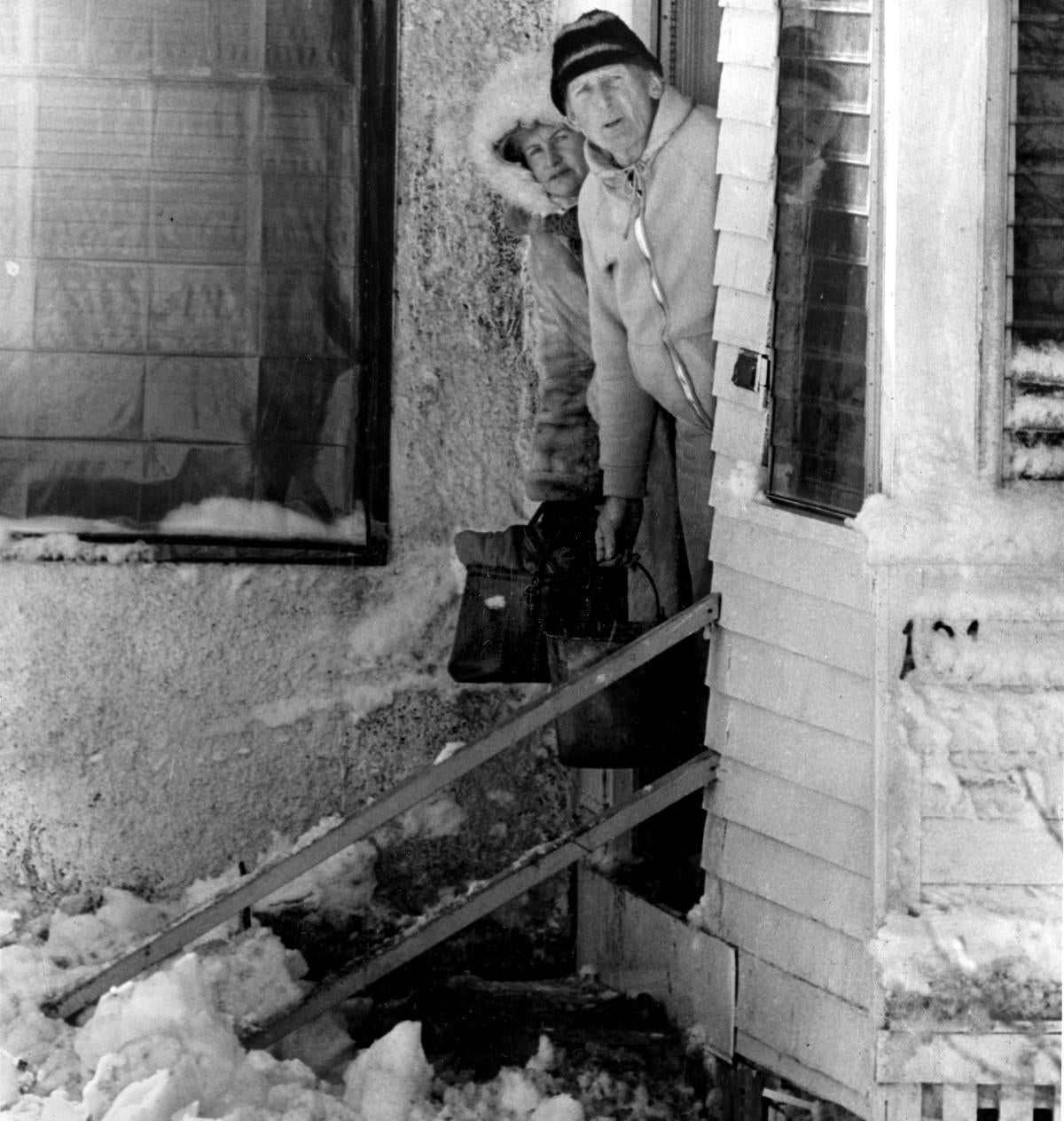
Cleared streets and driveways in Wakefield following the blizzard.One child pulled another on a sled along a snow-covered road in Newton on Feb. 9.Nancy Erickson sat in the living room of her parents’ damaged summer home on Edgewater Drive in Quincy (Hough’s Neck.) Nancy’s mom is in the doorway.Mrs. Joseph Conley leaned on the only remaining fixture at her destroyed house in Scituate as she left with Mrs. Edward Dailey, with whom she is now staying on Feb. 10.The entrance to Town Way at Peggotty Beach was strewn with rocks and house debris on Feb. 8.
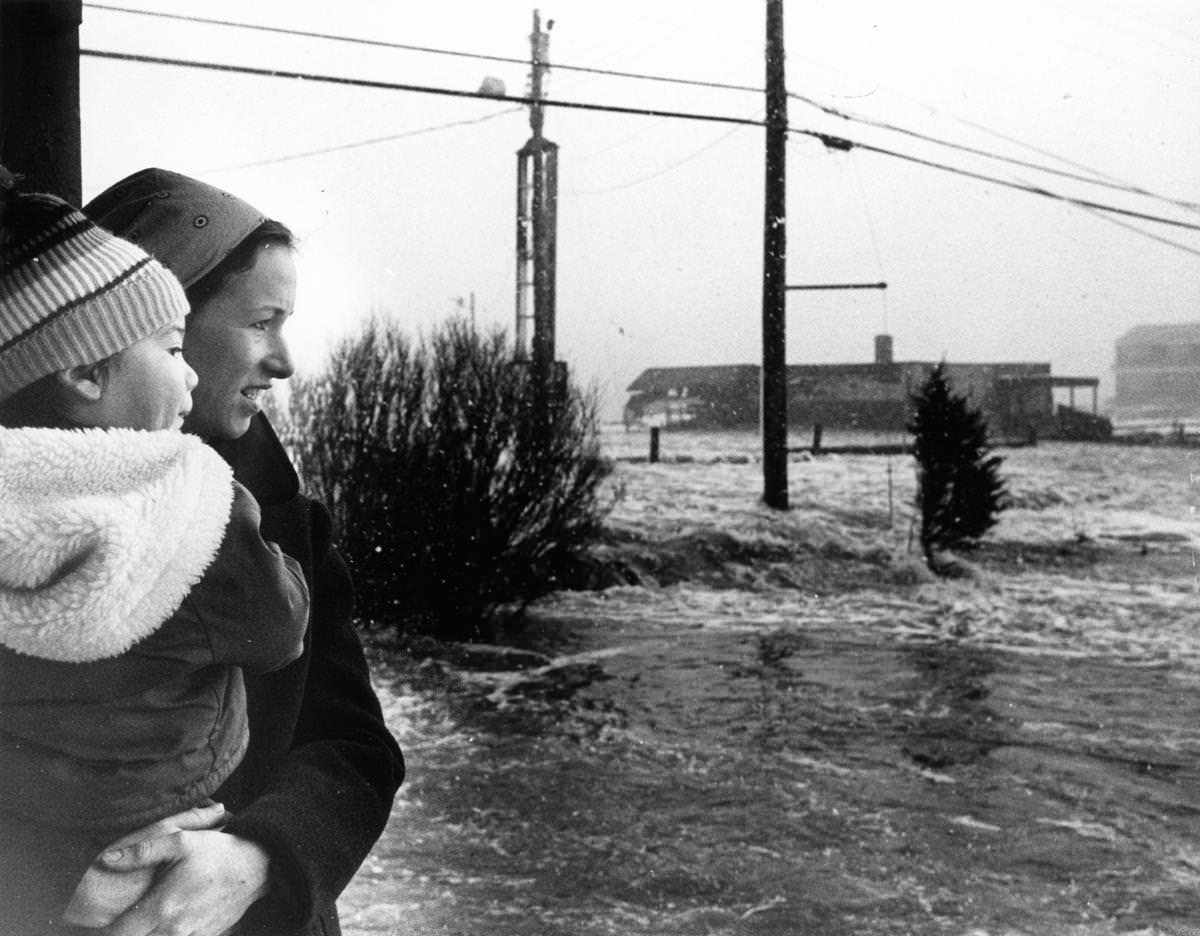
At Minot Beach, Cathy Silva salvaged whatever belongings she could find from a home that the waves had ripped apart. In Plymouth, Kate Figueroa held her two-year-old son Casey as they watched extreme high tides surge through the waterfront on February 7. In Dorchester, Superintendent Edward J. DeSantis walked the length of a flooded Morrissey Boulevard to assess the damage firsthand on February 7.
Cathy Silva salvaged belongings from a Minot Beach home on Feb 9.Kate Figueroa held her son Casey, 2, as they looked out at the extreme high tides and flooding in Plymouth on Feb. 7.Edward J. DeSantis, Park District Superintendent, walked through flooded Morrissey Boulevard in Dorchester on Feb. 7.Park District Superintendent Edward J. DeSantis walks down Morrissey Boulevard in Boston on Feb. 7, 1978.
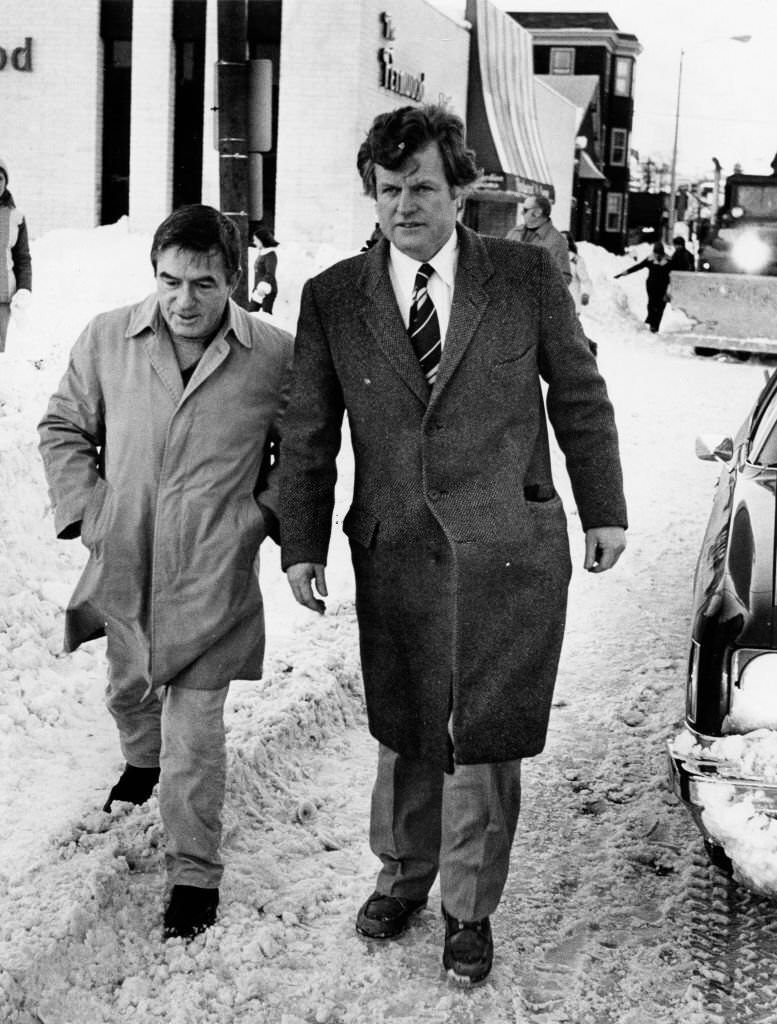
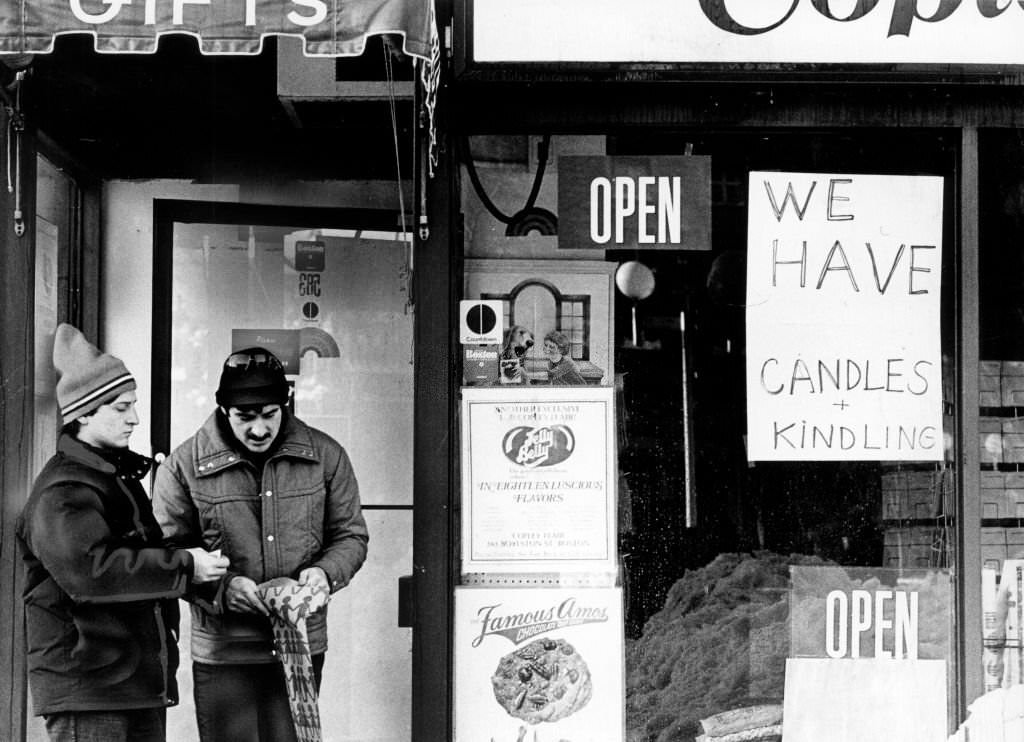
The February blizzard killed approximately 100 people across the Northeast, injured 4,500 others, and caused more than $500 million in damage. Combined with the January storm’s death toll of 99, the two blizzards together killed close to 200 people in a matter of weeks. Senator Edward M. Kennedy walked the streets of South Boston on February 8 to witness the damage directly. Across the city, people found ways to adapt — some opened wood-burning fireplaces and sought out fuel wherever they could. Two men stood outside a Boylston Street store advertising firewood as one of the few commodities still in demand.
Senator Edward M. Kennedy and an aid, Edward Martin, walk down Broadway after a blizzard in Boston on Feb. 8, 1978.Two men stand outside a store on Boylston Street in Boston that is advertising wood on Feb. 8, 1978.
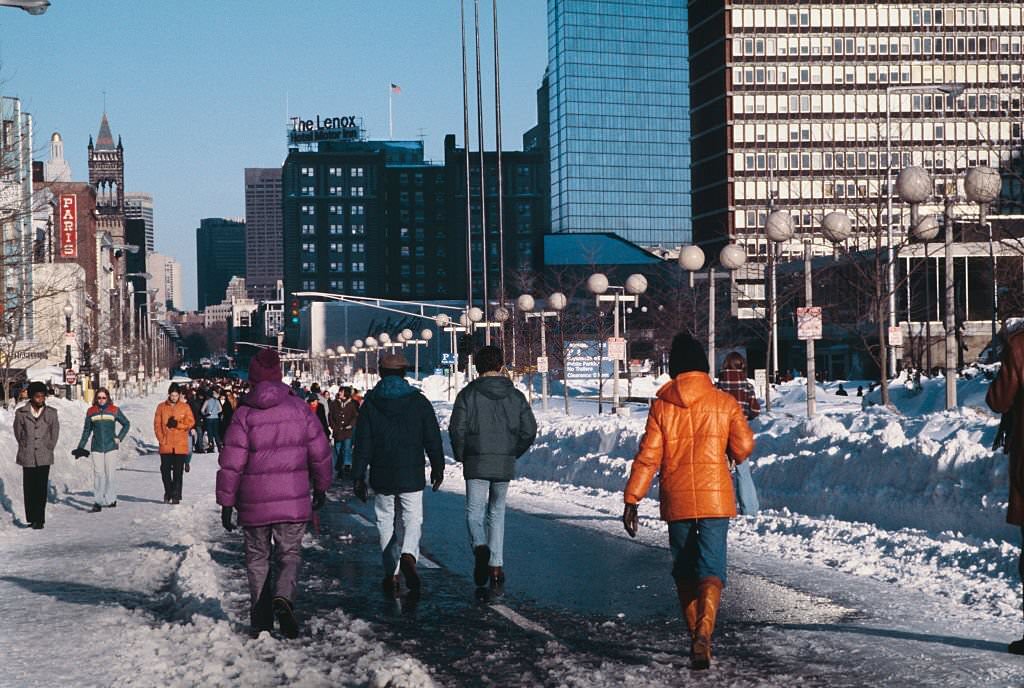
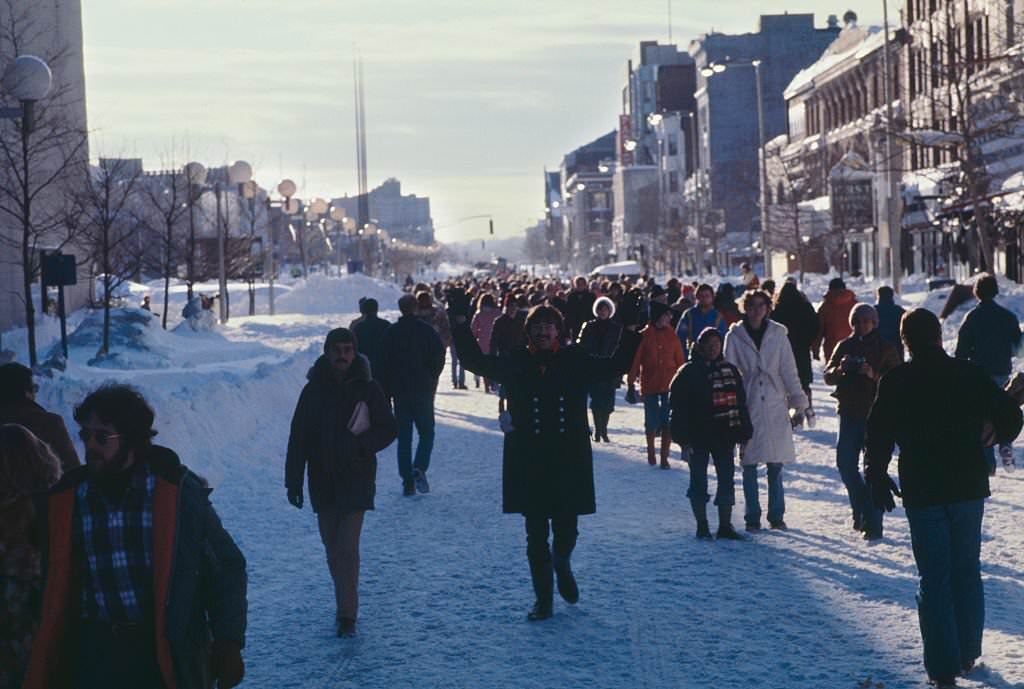
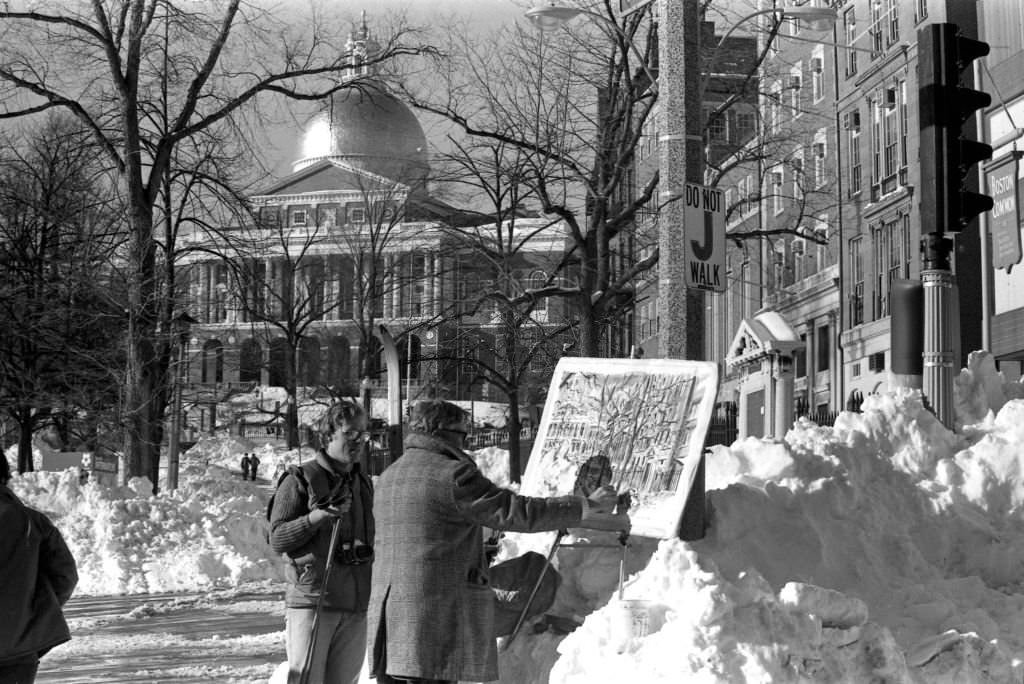
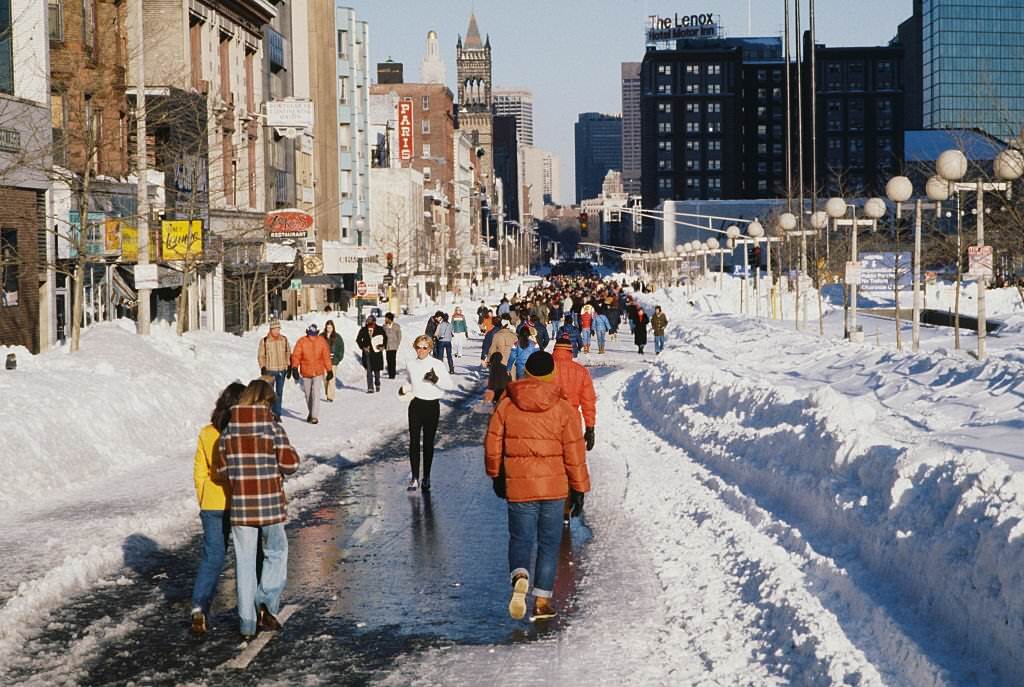
Days after the storm, Newbury Street and Boylston Street took on a new atmosphere. With vehicles still banned and snow piled high on either side, people strolled down the centers of roads that were normally packed with traffic. Artists set up easels to paint the scene. Paul Shea, an art director from Waltham’s public school system, stood on Park Street on February 9 capturing the snowbound city on canvas.
Pedestrians take a sunset stroll along a snow-covered Newbury Street in Boston following the “Blizzard of 78”.Paul Shea, art director in Waltham’s public school system, paints a snowy scene on Park Street in Boston following the “Blizzard of 78” on Feb. 9, 1978.Mrs. Howard Kirk and her daughter, Jane, residents of Boston’s Back Bay, join hundreds of others strolling on Boylston Street days after the “Blizzard of 78”.
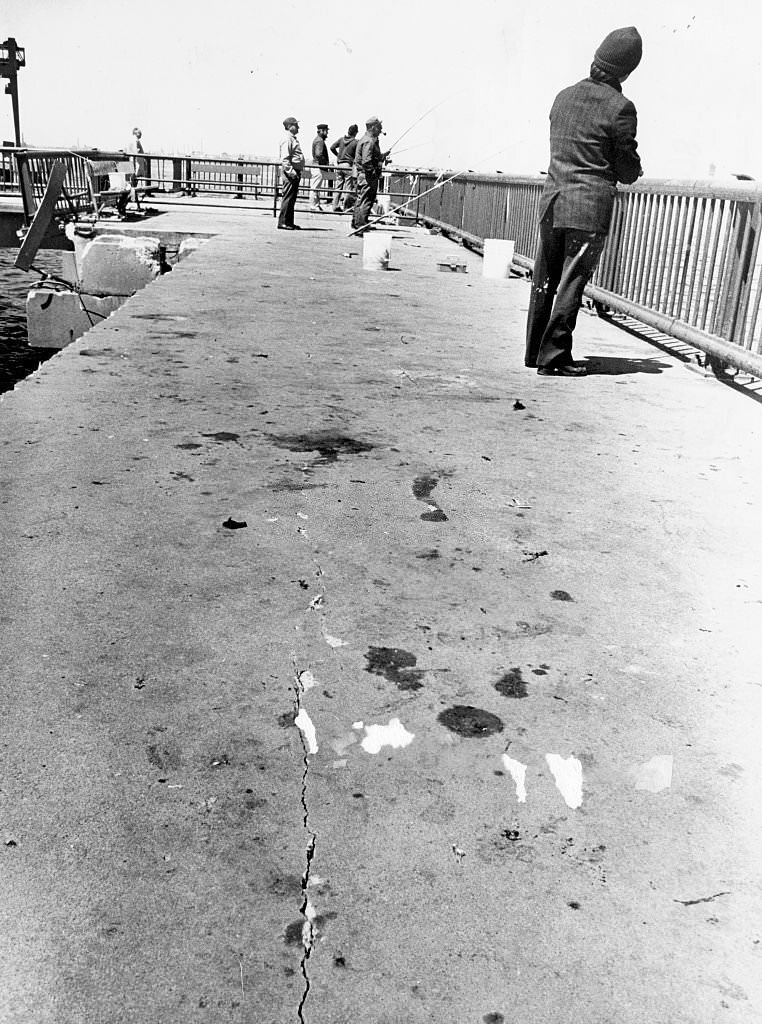
Washington Street began to return to life by February 13, with pedestrians gradually filling sidewalks that had been empty for a week. But plow crews and ice removal workers were still on the job weeks later. On February 18, Jimmy Hanlow was chipping ice off a building on Washington Street. As late as March 4, a car on Hallam Street in Dorchester remained buried deep enough to require serious digging before it could move. The fishing pier at Castle Island, rebuilt and restored, reopened for use months later, with fishermen lining its railing by April 26.
People walk down Washington Street near Bromfield Street in Boston on Feb. 6, 1978, during a record-breaking blizzard.
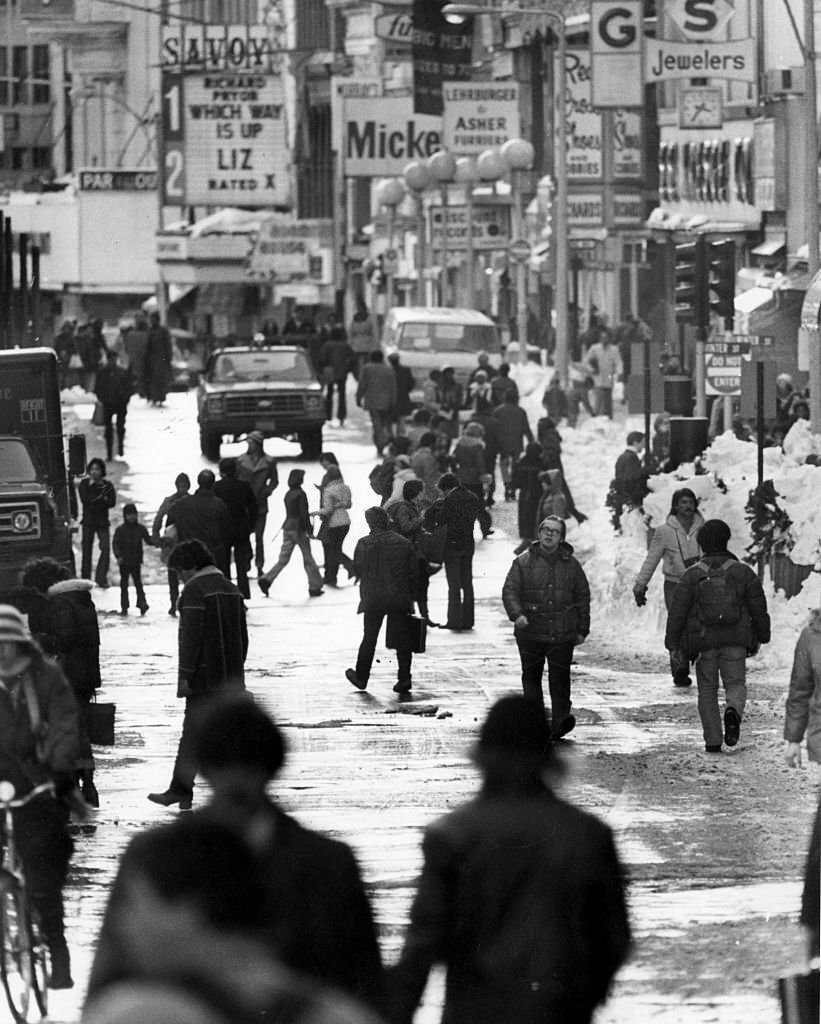
Pedestrian traffic on Boston’s Washington Street on Feb. 13, 1978, following the historic “Blizzard of 78”.
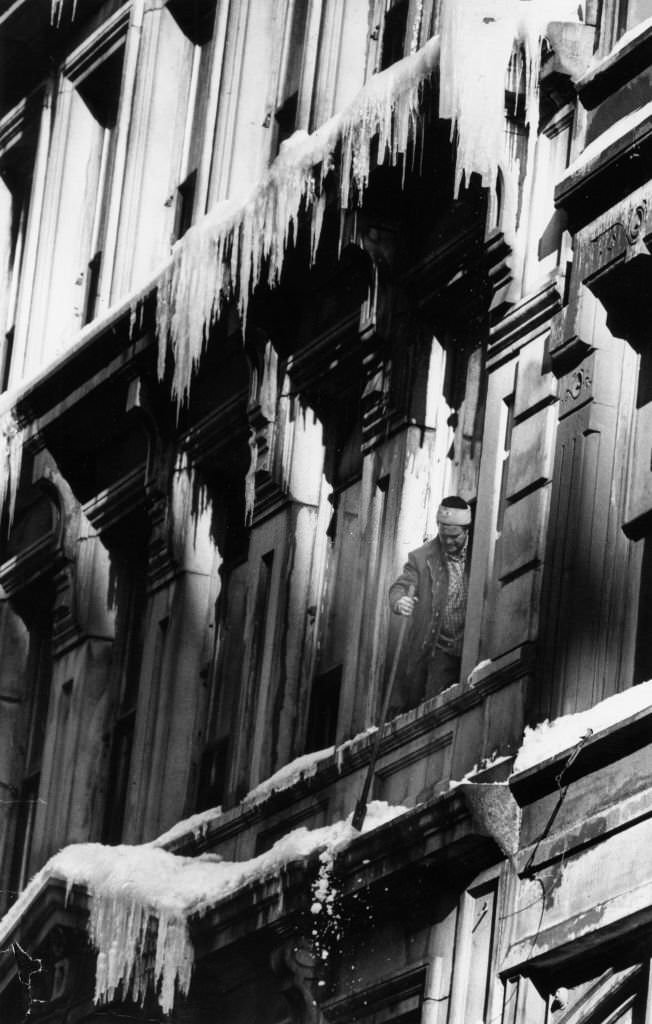
Jimmy Hanlow, working for H&H Buildings, breaks ice off a building on Washington Street in Boston on Feb. 18, 1978.
A would-be motorist has his work cut out for him on Hallam Street in Dorchester on March 4, 1978.Men fish on Boston’s Castle Island pier on April 26, 1978.Part of the fishing pier at Boston’s Castle Island toppled into the harbor during a record-setting winter storm in February 1978.
The following photographs document both blizzards — the January storm and the February nor’easter that defined the winter of 1978 in New England. They show what the storms looked like in real time, street by street, neighborhood by neighborhood, and along the battered coastline from Scituate to Marblehead.
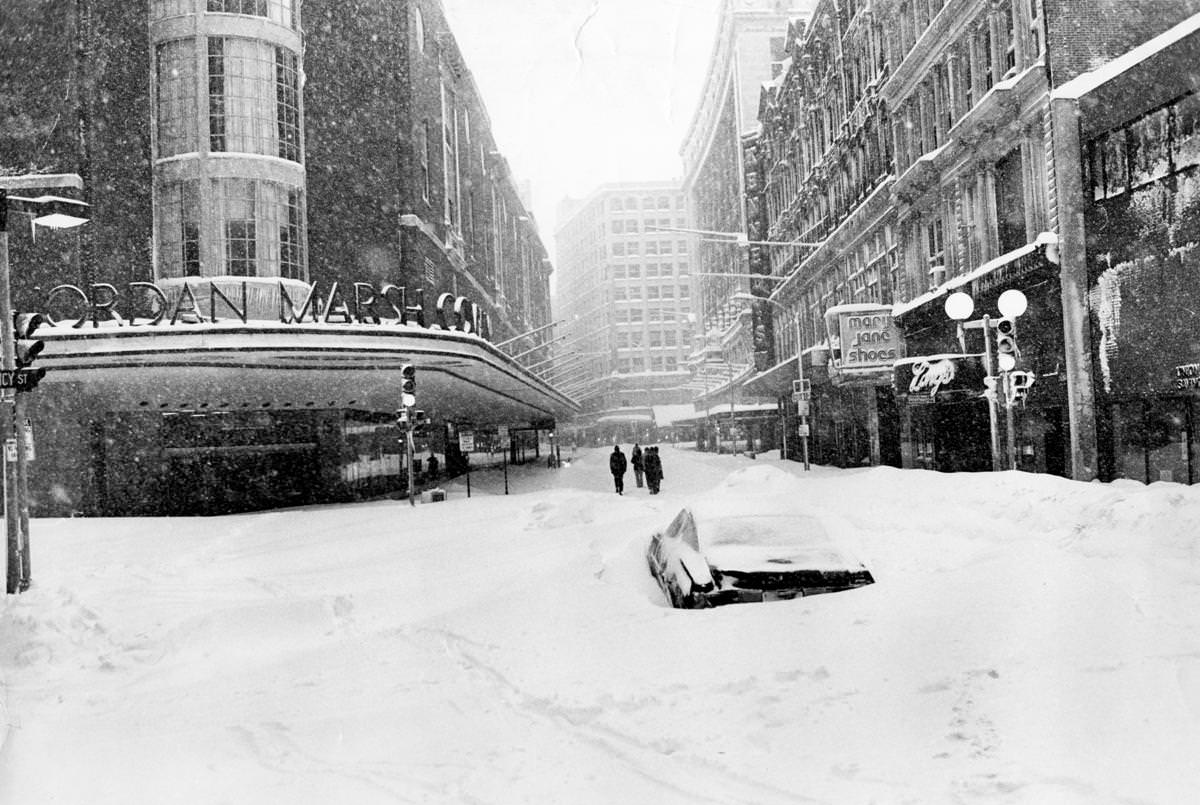
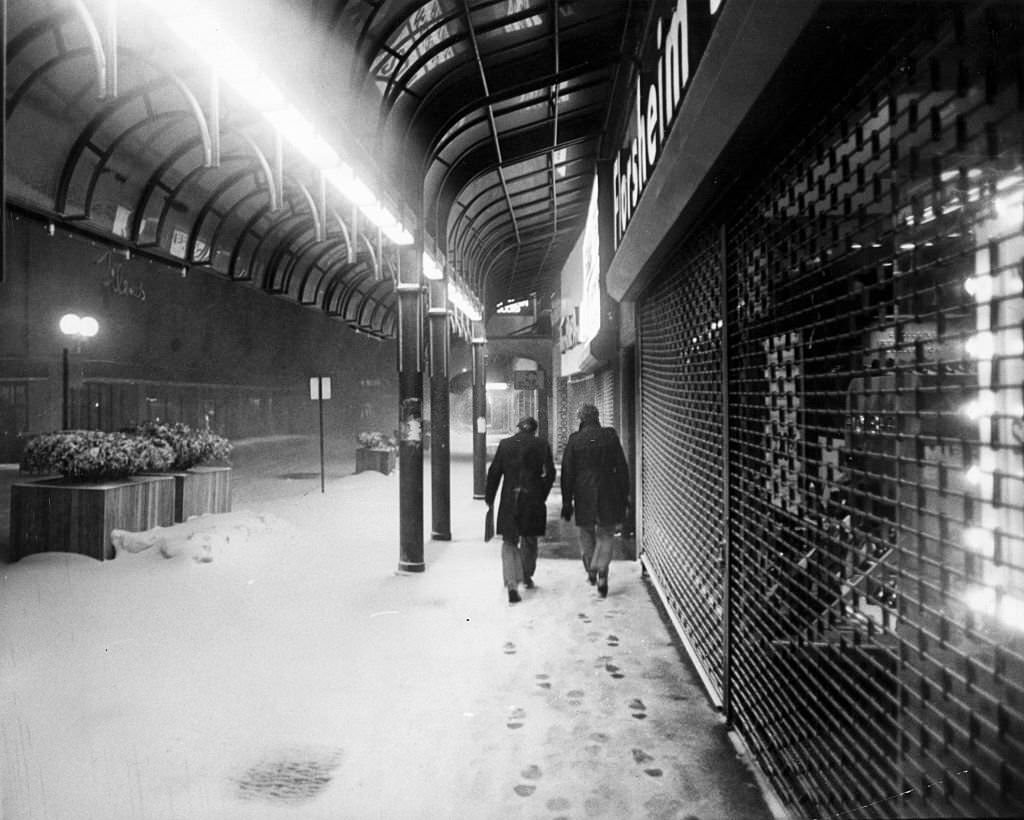
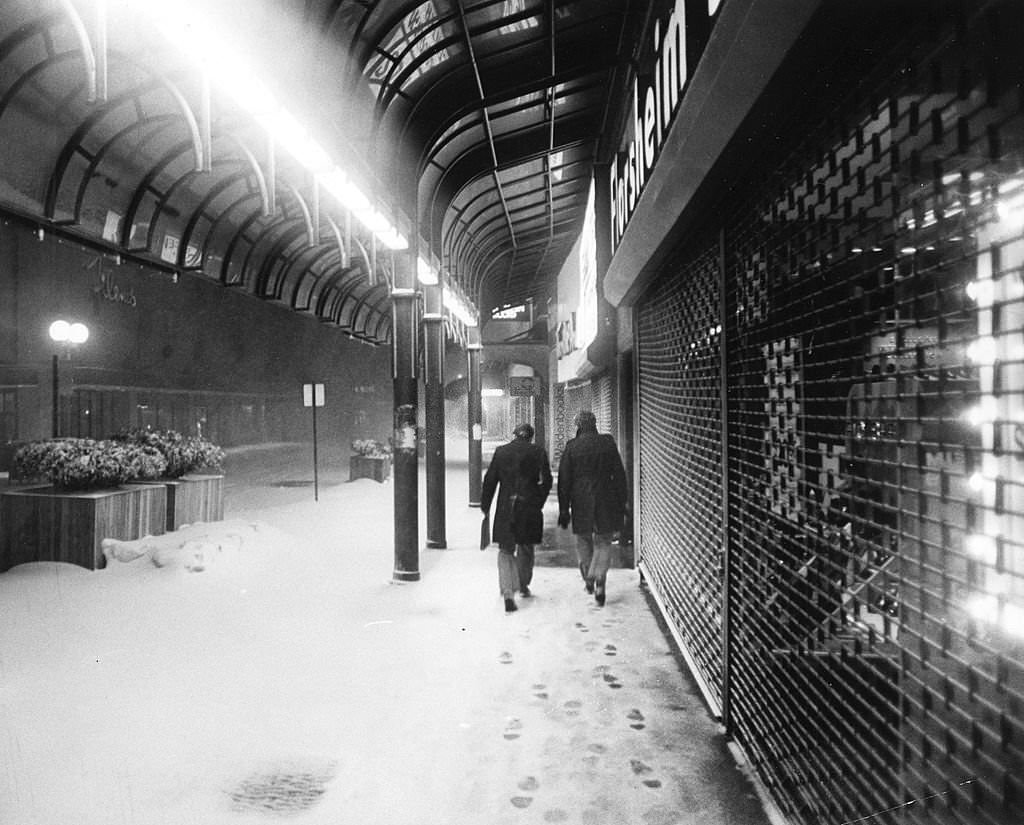
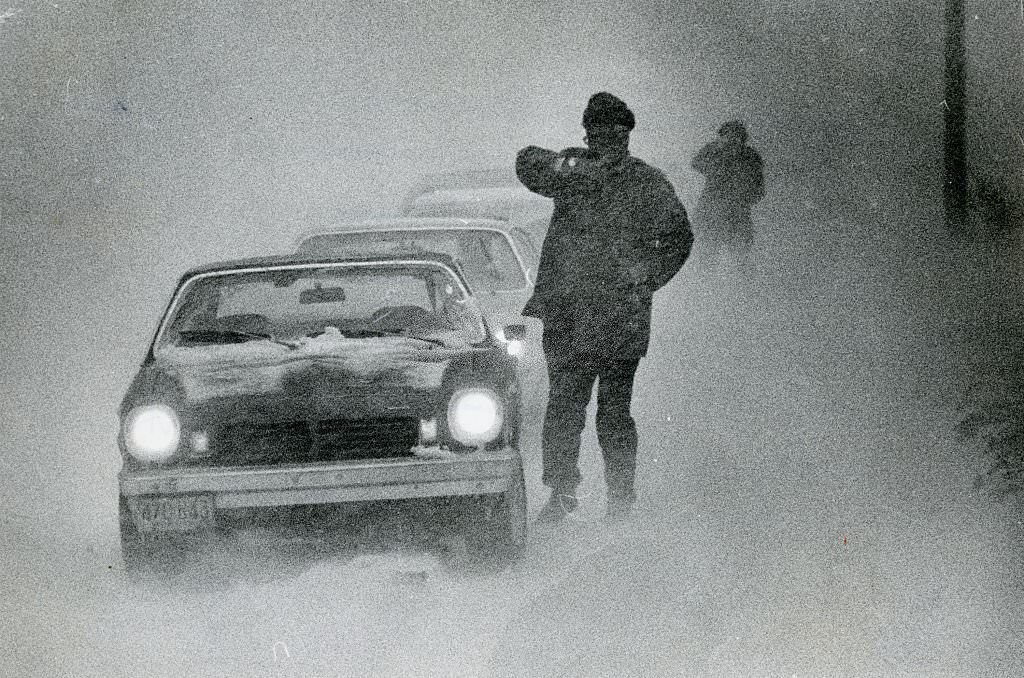
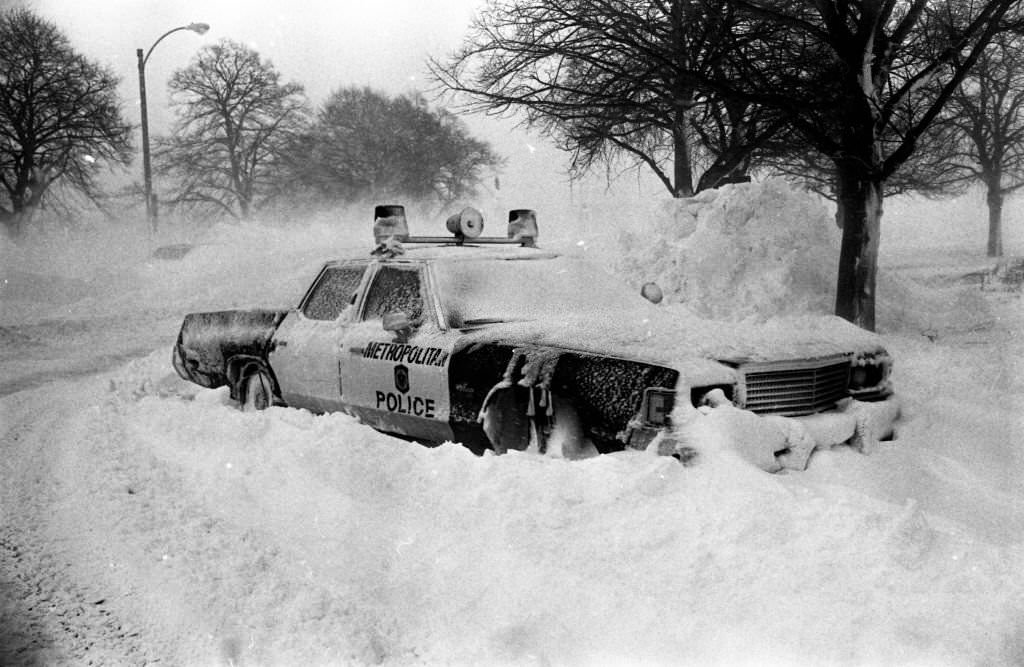
Business in downtown Boston’s shopping district – not to mention this lone automobile – ground to a halt during the snow storm Tuesday, during the “Blizzard of 78”.People walk by closed shops at night Washington Street near Bromfield in downtown Boston following the historic “Blizzard of 78”.People walk by cars trying to make it through the heavy snow and low visibility on Feb. 6, 1978.Boston’s Washington Street is buried in snow on Feb. 6, 1978, following the historic “Blizzard of 78”.Three people push a disabled car as a skier passes on Kelton Street near Commonwealth Avenue in Boston on Feb. 6, 1978.Pedestrians brave the wind and snow of the Blizzard of 78 while crossing Commonwealth Avenue in Boston on Feb. 6, 1978.A snow drift on Preble Street near Ward Street in South Boston covers a car up to its windows at 10 a.m. on Feb. 7, 1978.Cars are covered by snow drifts on Washburn Street in Boston on Feb. 7, 1978.A Metropolitan Police District car is stuck in the snow in Columbia Circle in Boston on Feb. 7, 1978.
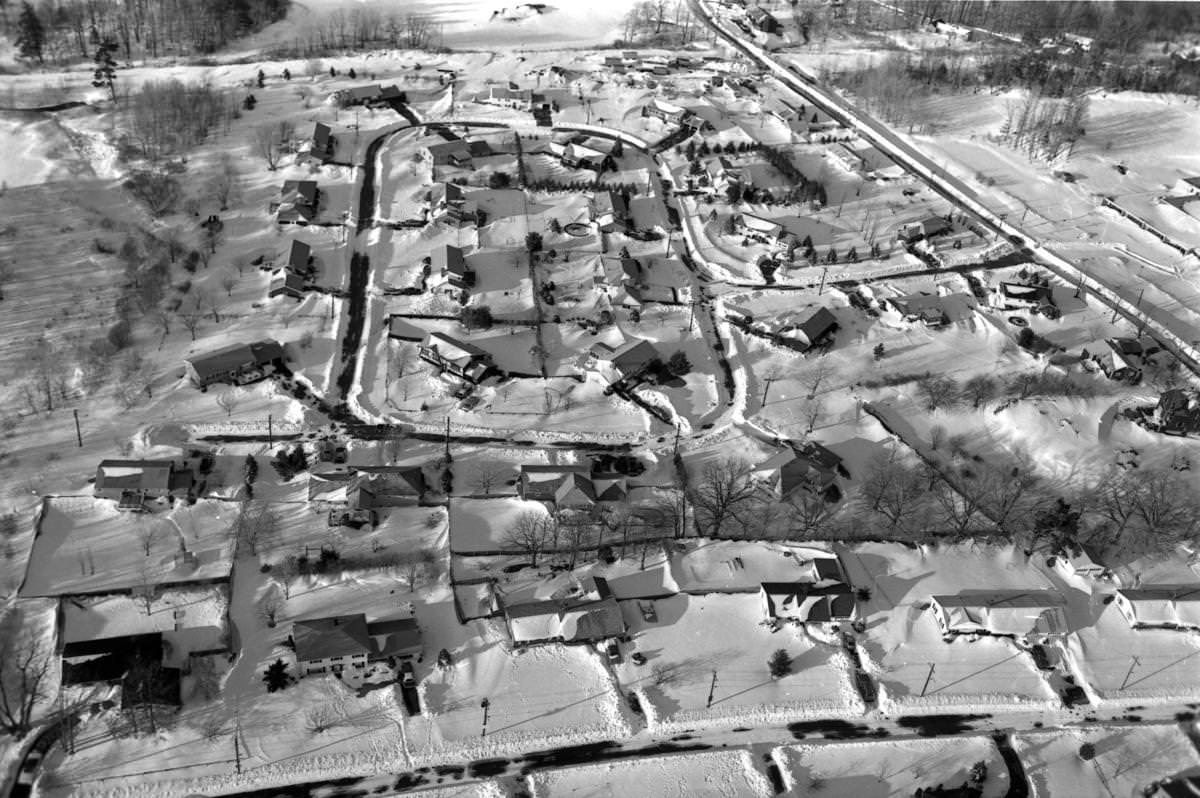
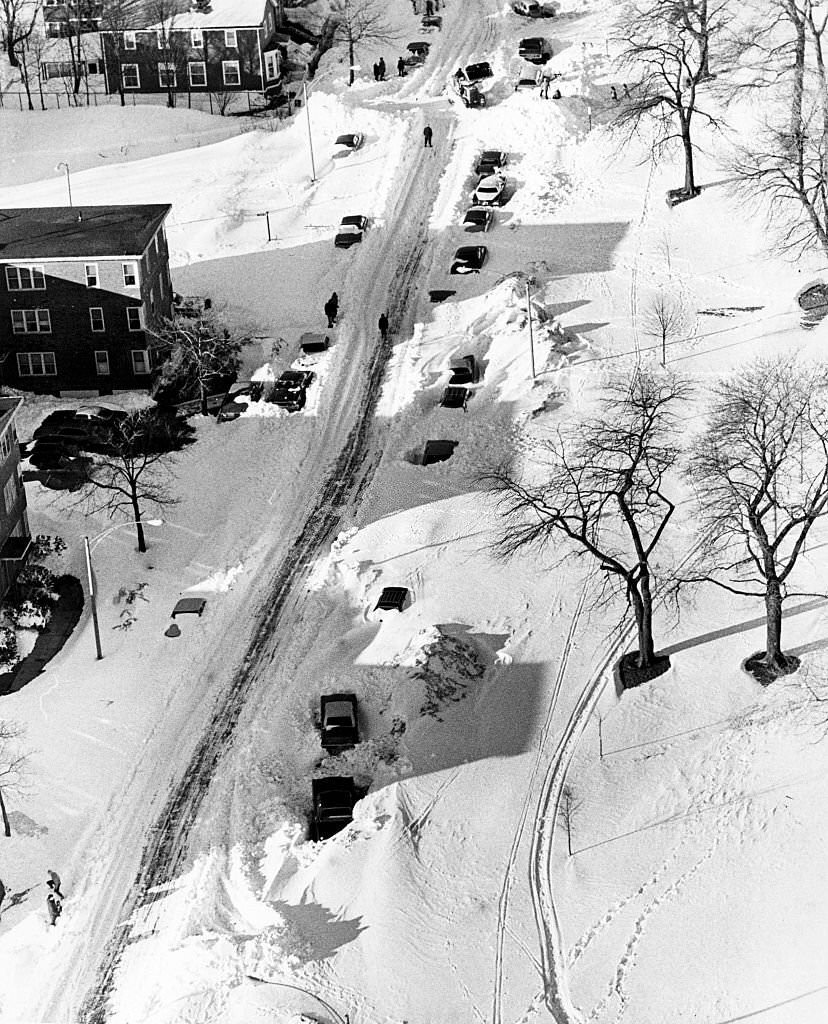
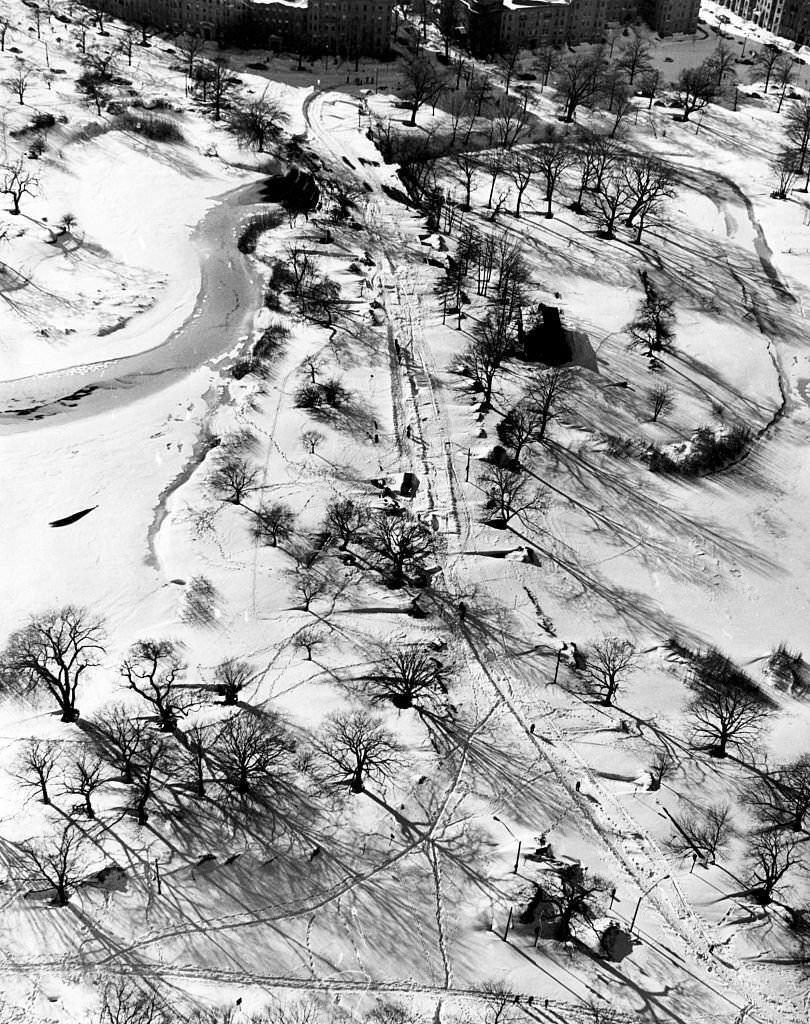
An aerial view of the snowy streets in South Boston on Feb. 8, 1978, following the Blizzard of 78.
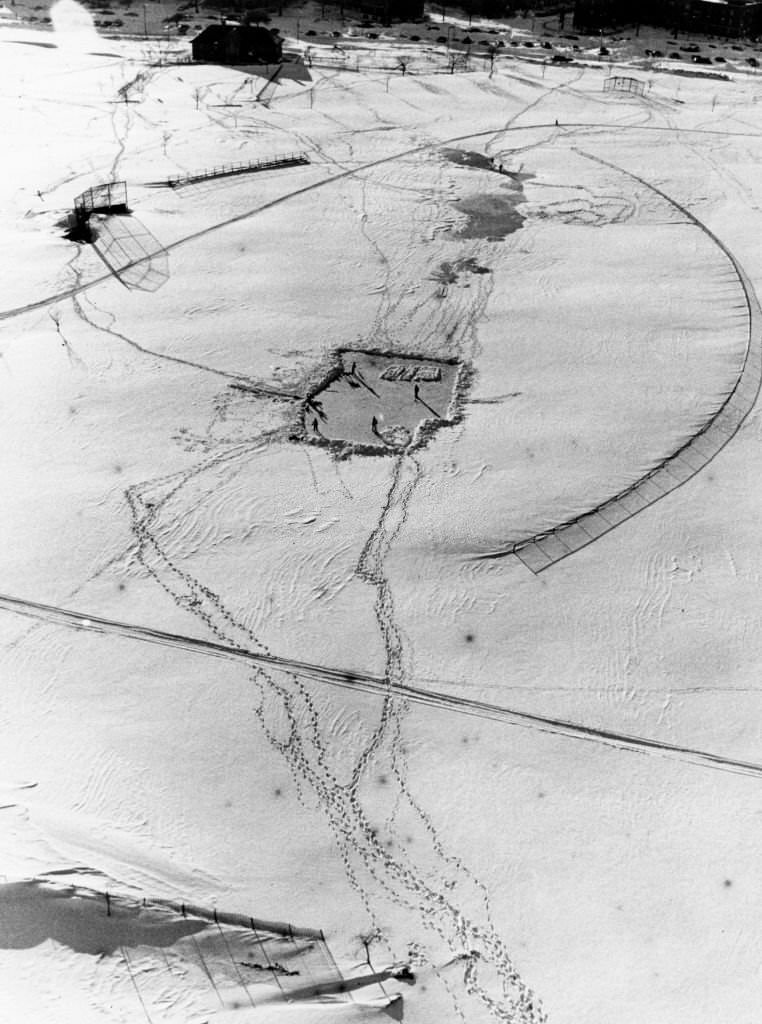
An aerial view of a homemade, outdoor rink in Columbus Park in South Boston on Feb. 8, 1978, following the Blizzard of 78.
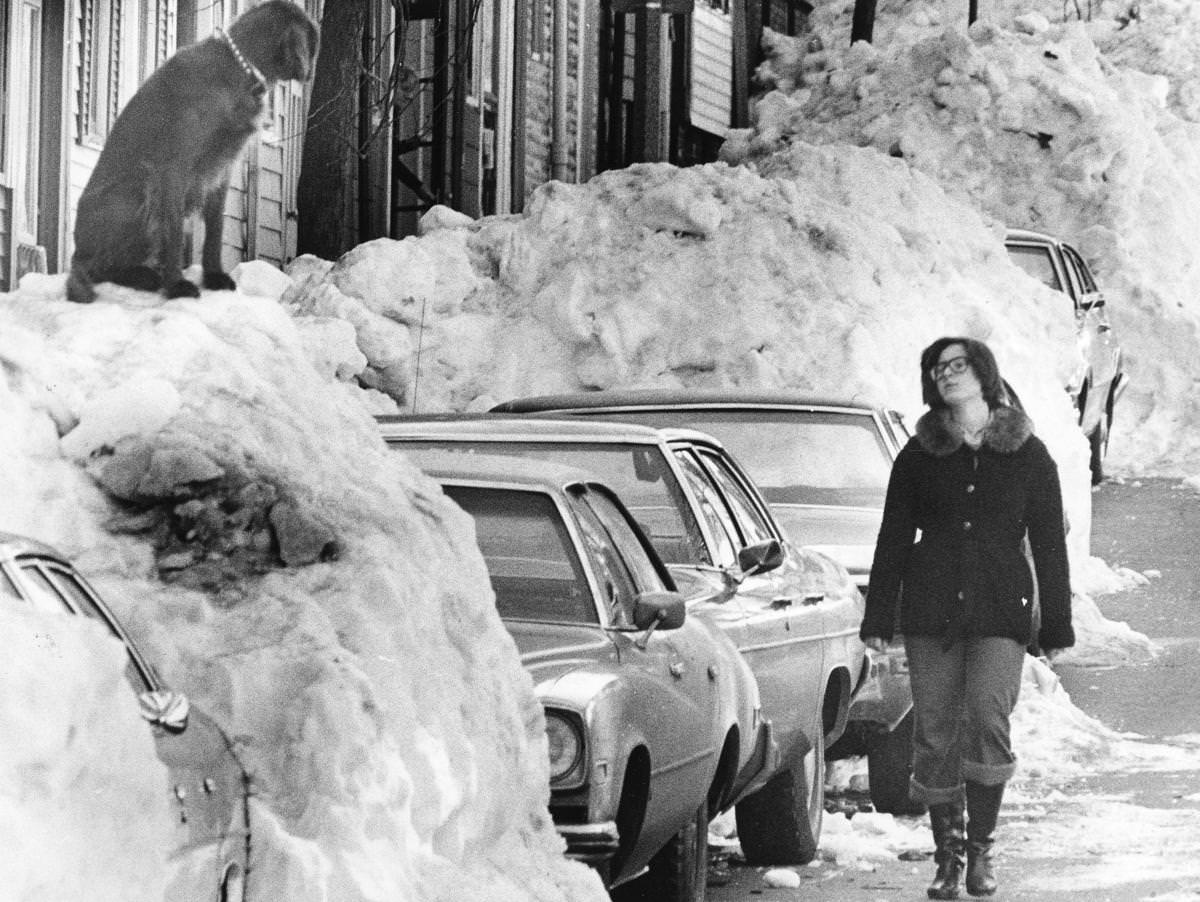
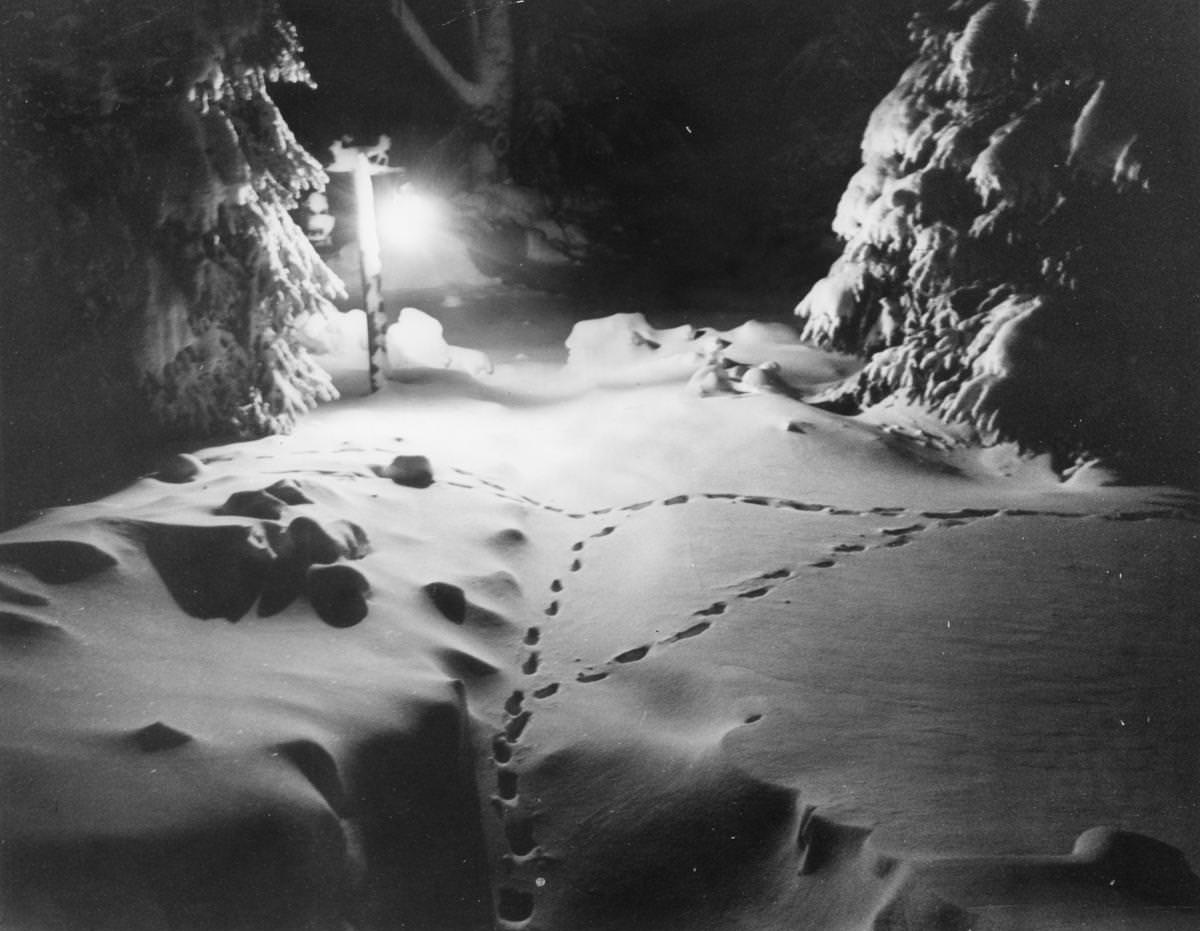
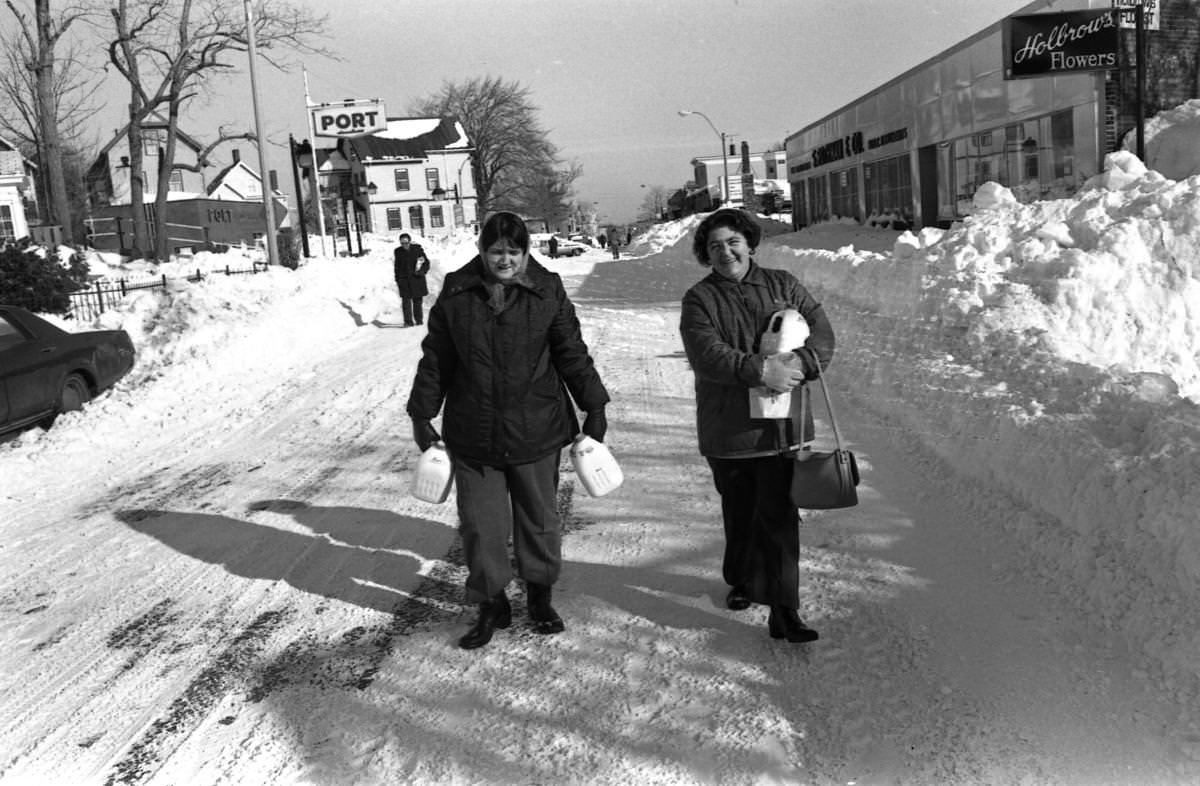
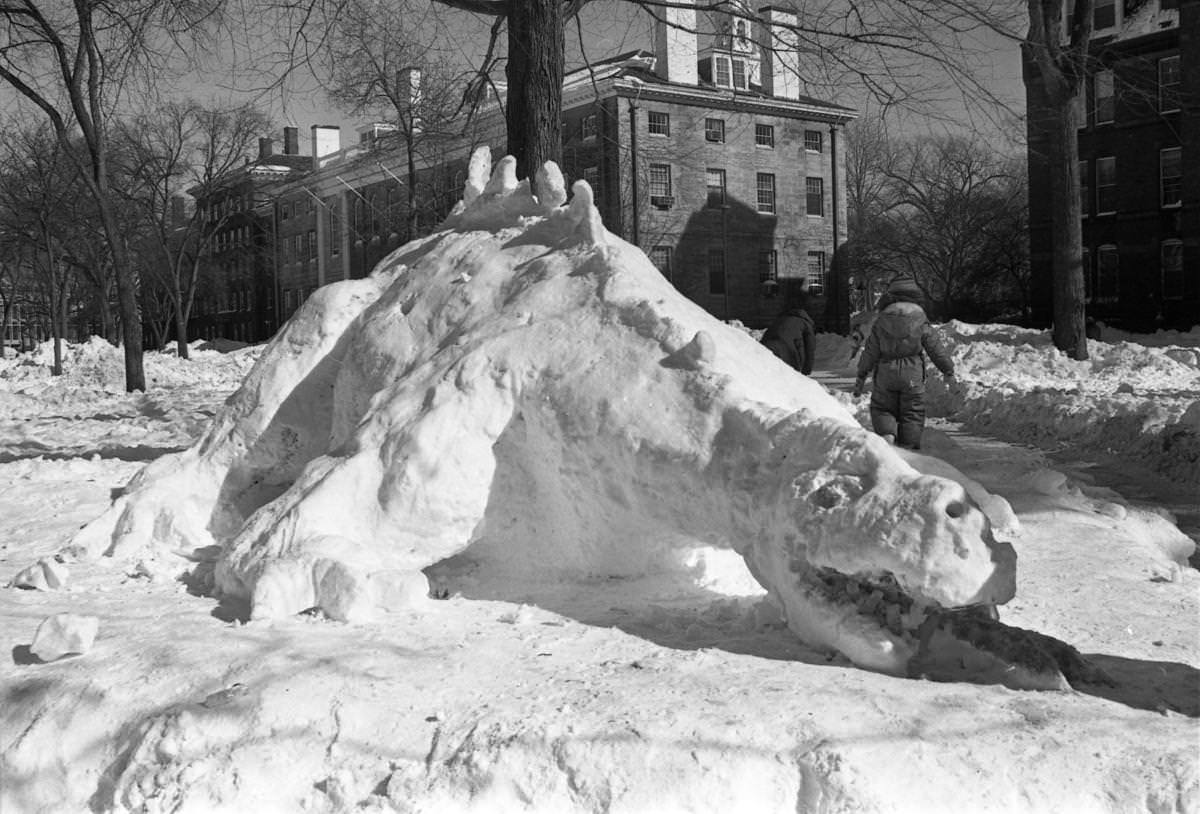
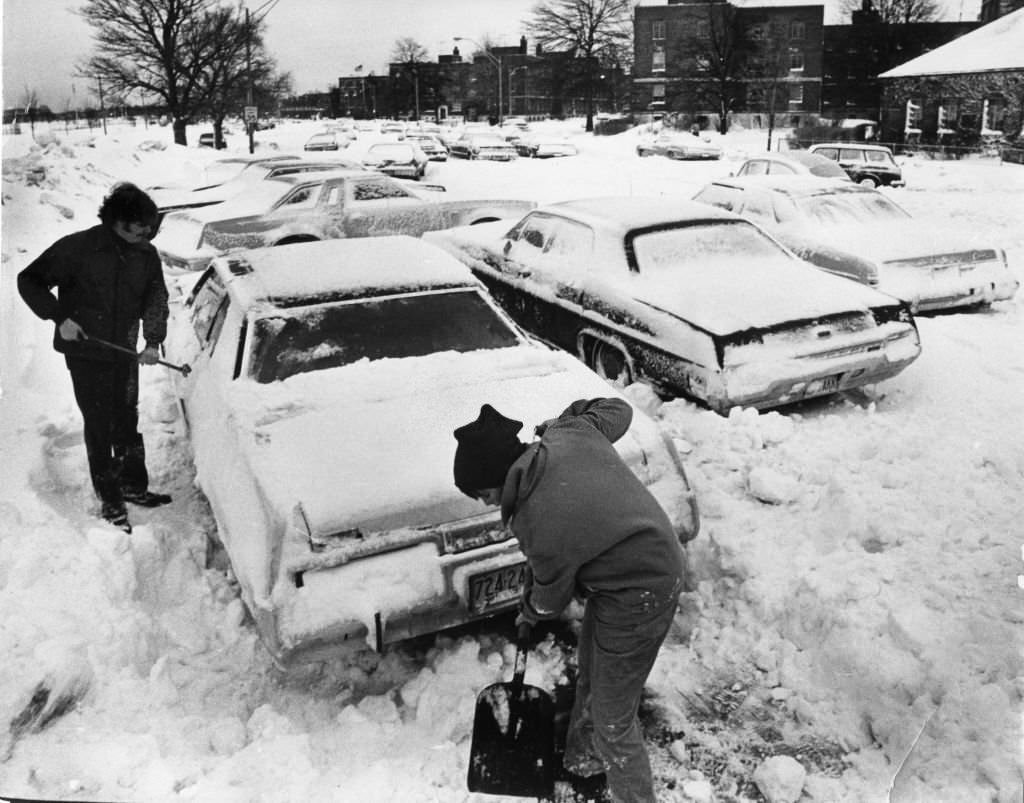
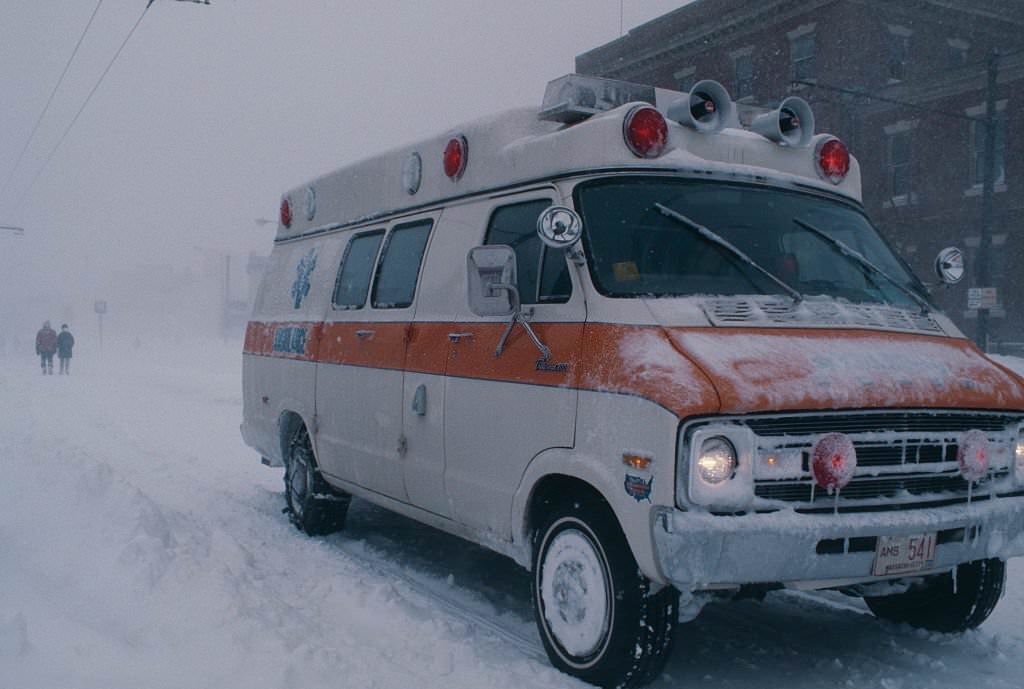
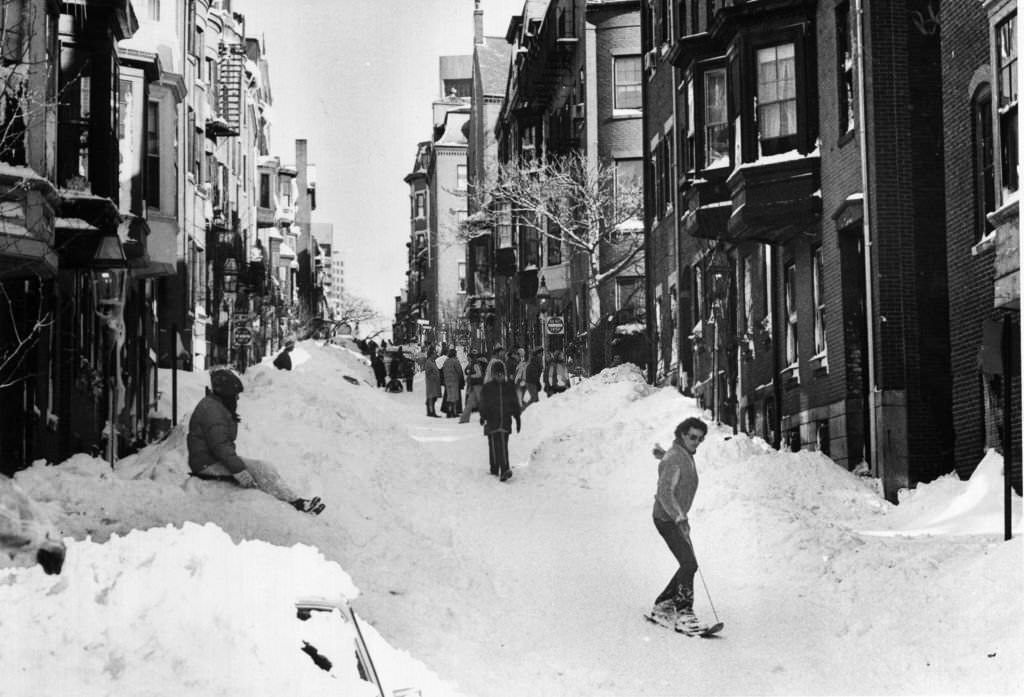
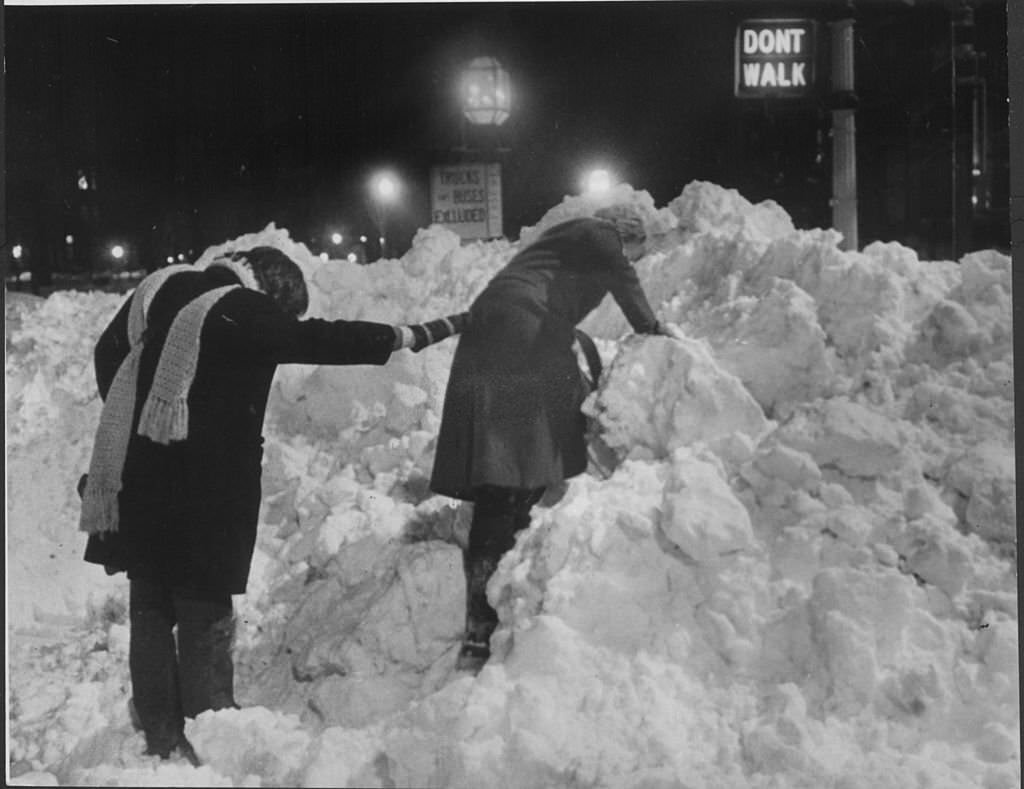
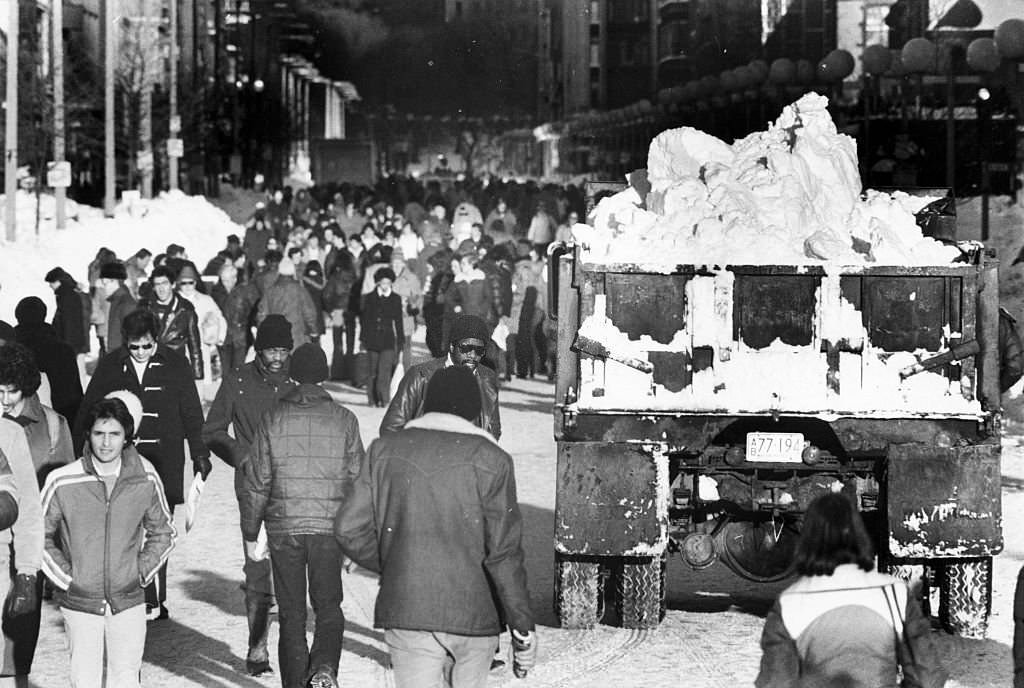
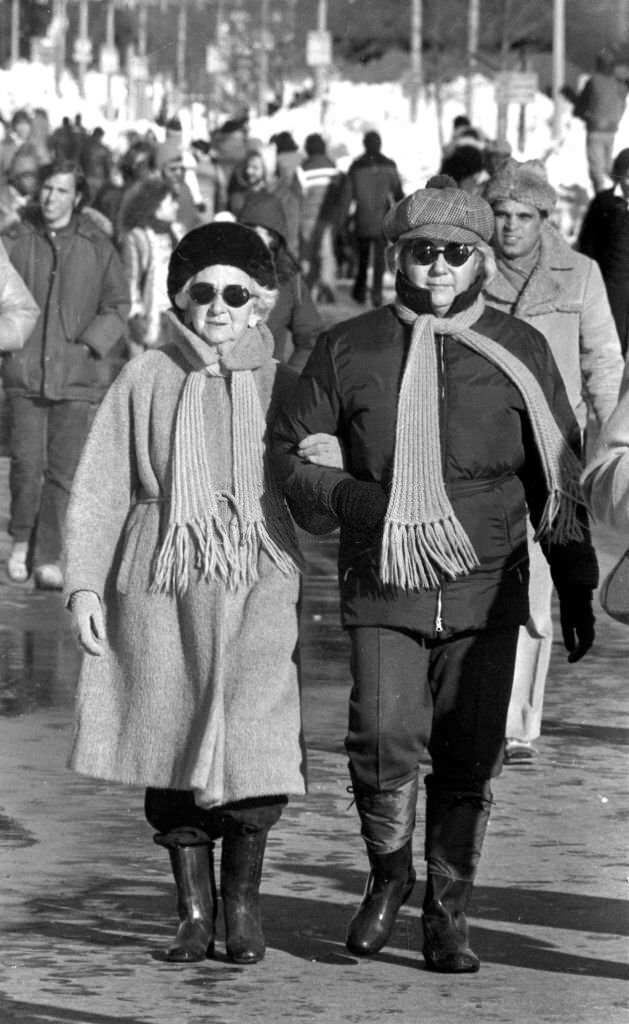
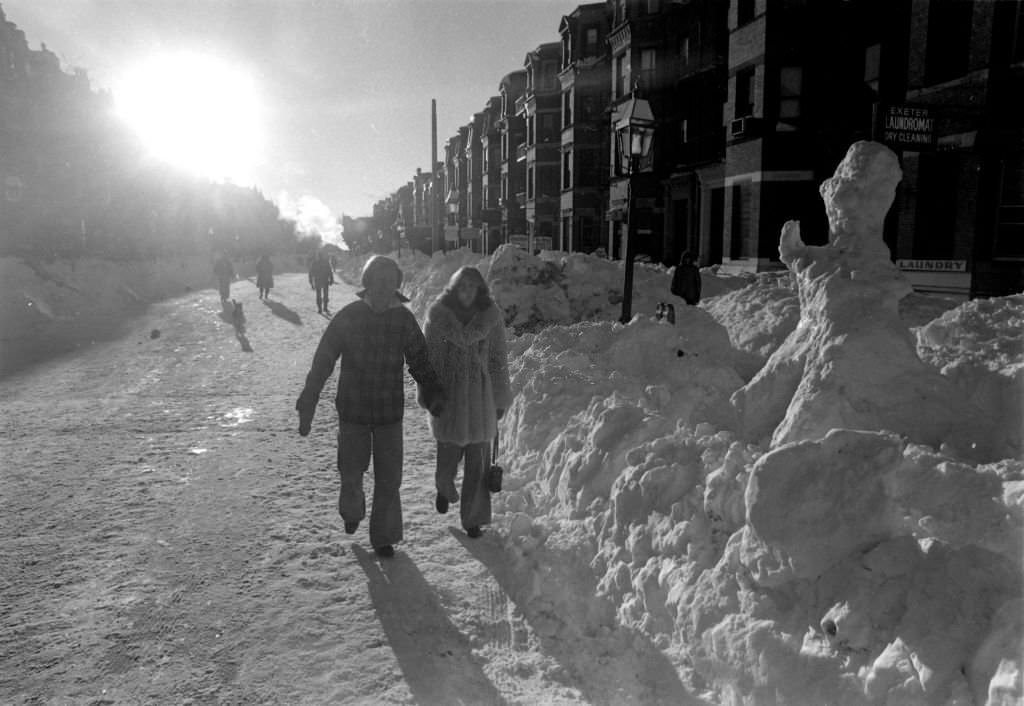
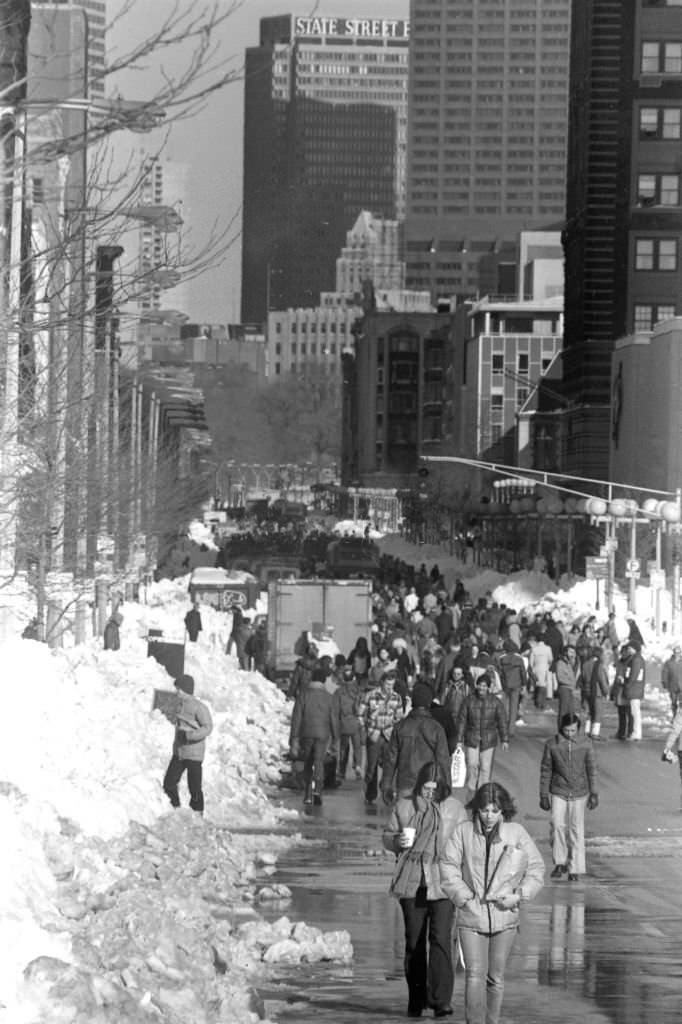
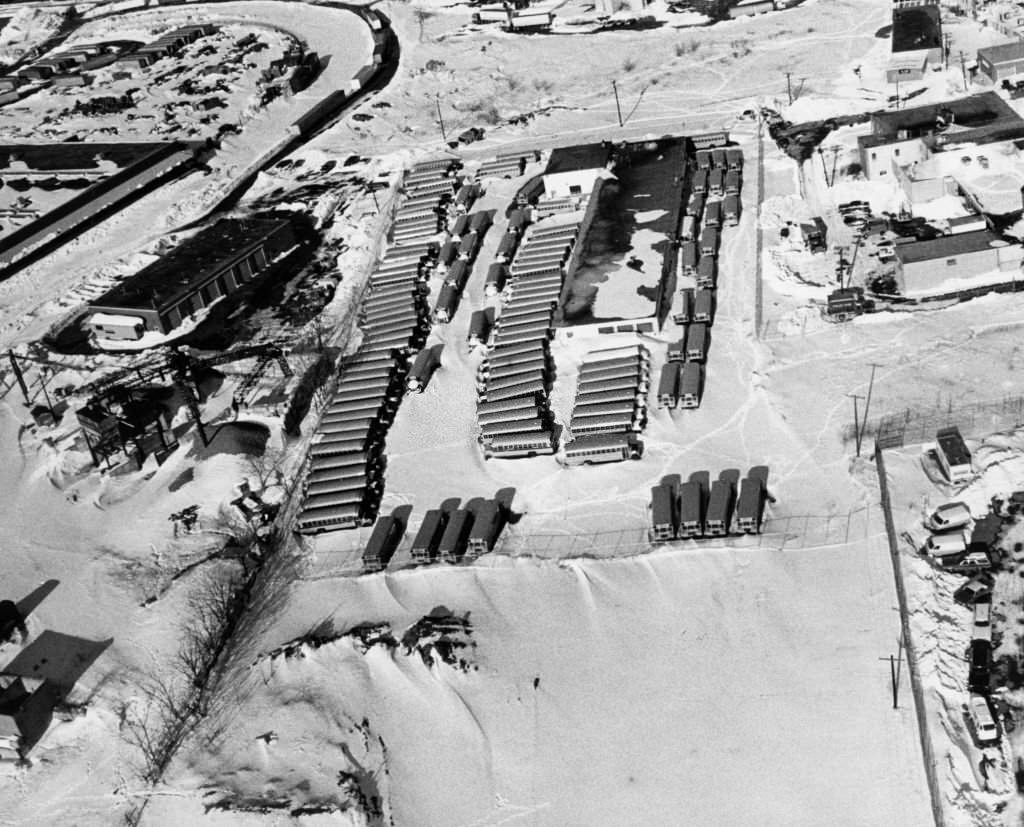
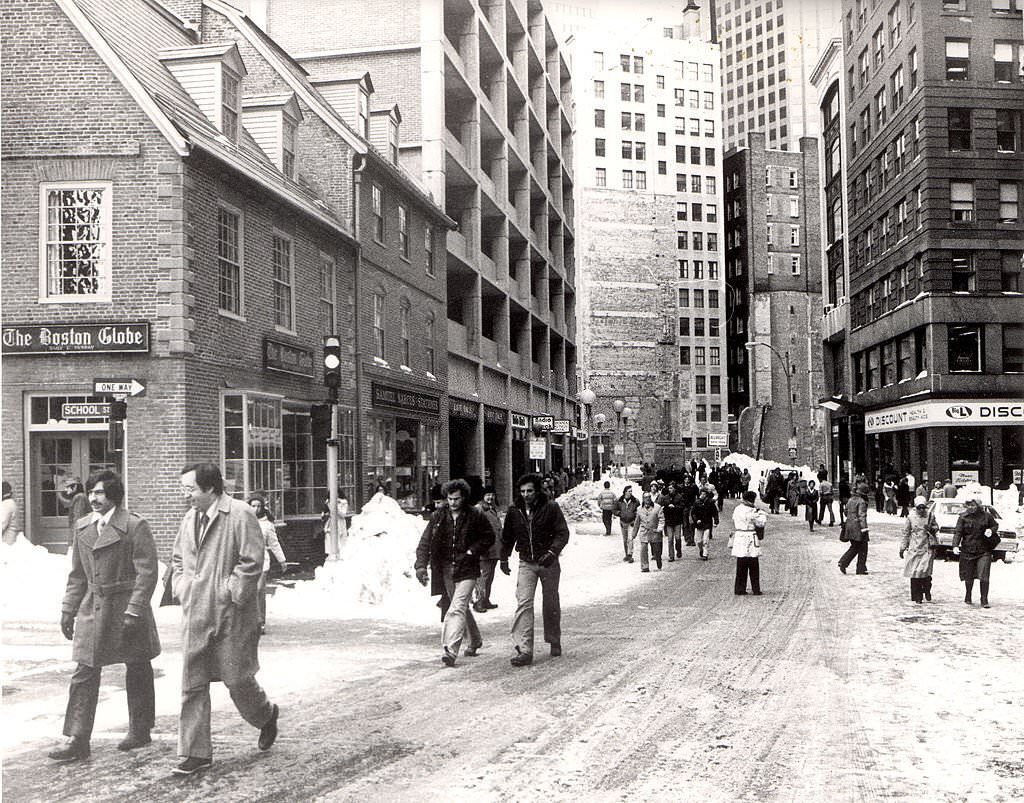
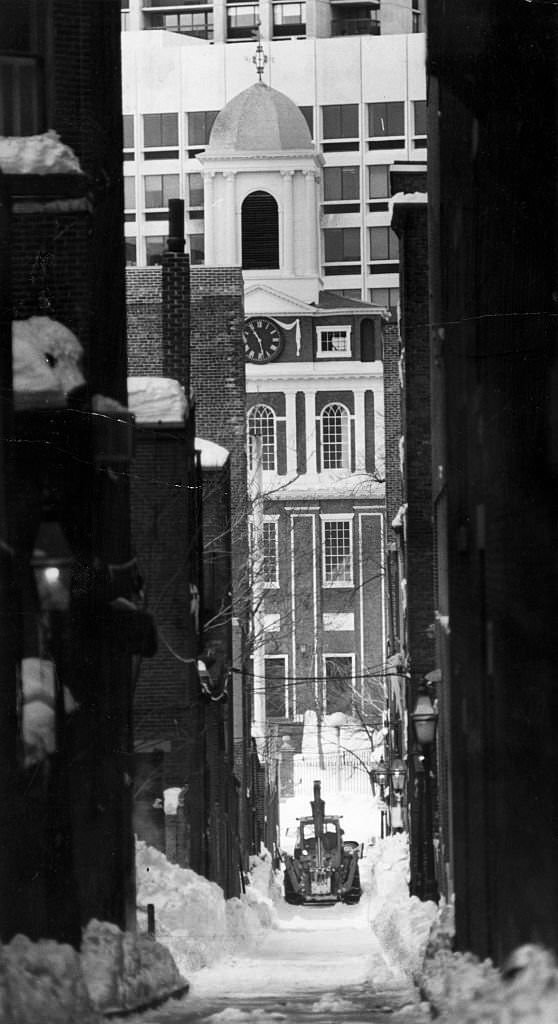
A young man glides down Revere Street in the Beacon Hill neighborhood of Boston on Feb. 8, 1978.Pedestrians climb through tall piles of snow left behind by the “Blizzard of 78”, while crossing the street near Commonwealth Avenue in Back Bay on Feb. 10, 1978.A truck filled with snow passes pedestrians on Boylston Street in Boston at 2 p.m. on Feb. 10, 1978, following the “Blizzard of 78”.An aerial view of school busses stranded in the rear parking lot of the Howard Johnson Motel in Boston on Feb. 10, 1978.People walk down Boylston Street in Back Bay on Feb. 11, 1978, following the Blizzard of 78.People start to dig out Pleasant Street in the Charlestown neighborhood of Boston on Feb. 11, 1978, following the Blizzard of 78.People shovel out Pleasant Street in Boston’s Charlestown area around noon on Feb. 12, 1978.Downtown Boston comes back to life after a week’s vacation following the historic “Blizzard of 78”.A plow clears snow from Ridgeway Lane in front of the Old West Church in Boston’s Beacon Hill on Feb. 14, 1978.Stacy and Lisa Zinck shopped near Gallivan Boulevard in Dorchester on Feb. 10.David Rimilty, 14, peered into a car buried in sand on Mass Hill Beach in Scituate on Feb. 9, after the blizzard.Animal tracks in the snow in Middleboro.Helen Reynolds and Dorothy Carusone returned home from picking up milk in Dorchester.A dinosaur sculpted from snow was built in Harvard Yard in Cambridge.Gandolf, an Irish Setter. watched Martine Carroll, 14, walk down Trenton Street.A commuter fights his way to City Hall MBTA Station passed mangled umbrella during a storm in Boston, 1978.Two people dig out their car after a snowstorm in Boston, 1978.Pedestrians walking down the middle of Boylston Street in Boston, Massachusetts, during the during the ‘Blizzard of ’78’.Pedestrians walking down the middle of Boylston Street in Boston, Massachusetts, February 1978.Pedestrians walking down the middle of Boylston Street in Boston, Massachusetts, 1978An ambulance in a snowstorm during the ‘Blizzard of ’78’ in Boston.A snow plough at work in Boston, Massachusetts, during the during the ‘Blizzard of ’78’.
I used to joke along the lines of never being able to forget the blizzard because they (newscasters) brought it up EVERY TIME we had blizzard/like conditions
The problem with 78 was that we had 12-inches dumped on us only 5 days before, and they were still cleaning up. I worked as a coop student for a company on the Natick/Wellesley line owned a Honda Civic with 12-inch tires. I remember everyone was talking about leaving at noon due to the amount of snow coming down. The president of the company got on the intercom stating that anyone who left early would be fired. At that time, the Natick police entered the building and said the industrial park was closing down and everyone go home. The president started to argue with the cop, I remember the cop putting his finger squarely into the presidents chest and saying we can work this two ways, either everyone goes home or you can be my guest in the Natick jail while all the others go home. I lived behind the state police in Framingham and drove that Honda on sidewalks, through parking lots, ect to get home. 2 hours later, I slid into my mother’s garage where the car remained.
The biggest thing was that they didn’t get days off warning that a storm was coming back then, and they were nowhere near as good at predicting the amount of snow. Not to mention the pre-treatment of roads wasn’t even a thing.
A classic NorEaster! I was in college in NH, where we didn’t get it nearly as bad, as we were inland. Back home Mom and Dad had to strap on the X-C skis to get groceries and I thought that sounded so cool.
I was at Boston College (either in Fulton or Gasson) that afternoon and the building emptied out by mid-afternoon. I suspect that I was the only person in the building. There was a television running so I could get an idea as to what was happening outside. So I stayed there overnight, the T was down (it would be for several weeks), and I walked the 5 miles back to Waban. There was about five feet of snow on the sidewalks so I had to walk on the road. There was very little traffic.
I was freezing along the way but I made it home. I think that we didn’t have power for the next couple of weeks and there was a ban on driving except for emergency vehicles, hospital workers and similar. Some people used skis to travel around. It was a surreal time.
The electrification and dependence on external power to run homes is a drastic difference from back then when homes could function perfectly fine without power.
My 18th birthday, I had tossed my fake id and was looking forward to my first legal alcohol purchase. At least now I’ve learned to only do stupid things when nature isn’t already trying to kill me. Also that anger wards off frostbite
That was one epic storm!!! I was 11yo and got two weeks off from school, one for the storm and one for Feb vacation.
There was a neighborhood market were the locals did their shopping. There were no ATM’s back then so people had little money on hand to buy what they needed. The owner, knowing this allowed people to get their groceries and what not without paying for them until the banks opened. I heard this story many many years later and thought what a great guy to help people out when they needed it.
Great memories! I was in grammar school, and this fell on shopping day! My Dad and brothers had to take sleds and walk into town for groceries!Snow banks over my head!
I used to joke along the lines of never being able to forget the blizzard because they (newscasters) brought it up EVERY TIME we had blizzard/like conditions
I wish I loved anything as much as people who were alive for this love bringing it up at every fucking opportunity possible.
The problem with 78 was that we had 12-inches dumped on us only 5 days before, and they were still cleaning up. I worked as a coop student for a company on the Natick/Wellesley line owned a Honda Civic with 12-inch tires. I remember everyone was talking about leaving at noon due to the amount of snow coming down. The president of the company got on the intercom stating that anyone who left early would be fired. At that time, the Natick police entered the building and said the industrial park was closing down and everyone go home. The president started to argue with the cop, I remember the cop putting his finger squarely into the presidents chest and saying we can work this two ways, either everyone goes home or you can be my guest in the Natick jail while all the others go home. I lived behind the state police in Framingham and drove that Honda on sidewalks, through parking lots, ect to get home. 2 hours later, I slid into my mother’s garage where the car remained.
Thats what I remember also. It had been a bad storm just a week prior.
Those Hondas had small wheels! And I can hear the cop with his Boston accent explaining in no uncertain terms what needs to happen. Laughing.
That was like 2015 but 2015 was worse.
Four weekends in a row, a foot, then two feet, then 14”, then another two feet…
I worked 30 miles away from home and felt like a gerbil in a Habitrail due to the high snow banks.
It didn’t end. I think some weeks were closer to 3 feet.
I found the day by day play by play – https://www.boston25news.com/news/see-the-daily-snow-totals-from-last-years-historic-winter/29565182/
Some of the big storms were only 4 days apart, so yeah definitely 3 feet in the span of a week. Wild.
That photo looks like nothing compared to the amount of snow we got in what was it 2013?
The biggest thing was that they didn’t get days off warning that a storm was coming back then, and they were nowhere near as good at predicting the amount of snow. Not to mention the pre-treatment of roads wasn’t even a thing.
2015 And 93
I was conceived during this storm.
I really thought we’d stop hearing so much about 1978 after 2015. I thought wrong.
I was in college and living in Boston at the time. It just kept snowing and snowing, day after day. It was wild.
I was in college at Salem State. No school for a week!
A classic NorEaster! I was in college in NH, where we didn’t get it nearly as bad, as we were inland. Back home Mom and Dad had to strap on the X-C skis to get groceries and I thought that sounded so cool.
I remember being out of school for a while. I built a 3 room snow igloo in our yard.
That sounds like a kid’s dream come true!
This is so fucking beautiful. Please come back, Winter.
You never know…we might be due.
I was a senior in high school, remember it well, people actually died in their vehicles 😢
I was at Boston College (either in Fulton or Gasson) that afternoon and the building emptied out by mid-afternoon. I suspect that I was the only person in the building. There was a television running so I could get an idea as to what was happening outside. So I stayed there overnight, the T was down (it would be for several weeks), and I walked the 5 miles back to Waban. There was about five feet of snow on the sidewalks so I had to walk on the road. There was very little traffic.
I was freezing along the way but I made it home. I think that we didn’t have power for the next couple of weeks and there was a ban on driving except for emergency vehicles, hospital workers and similar. Some people used skis to travel around. It was a surreal time.
The electrification and dependence on external power to run homes is a drastic difference from back then when homes could function perfectly fine without power.
Best time of my life during that 2 weeks. My friends and I had all rented a floor in a 3 decker before the storm hit and we partied non stop.
Feels like I live through the Blizzard of ’78 many, many times but I wasn’t even born.
What is this white stuff?
I remember that I was 10 and no school for 2 weeks. I had a sled and those hills were asking for it
It was like 3 feet in the south coast. Roads closed for a week. It was awesome.
hhhmmmm, wondering why this is pertinent today, instead of waiting until the anniversary
My 18th birthday, I had tossed my fake id and was looking forward to my first legal alcohol purchase. At least now I’ve learned to only do stupid things when nature isn’t already trying to kill me. Also that anger wards off frostbite
The drifts were pretty extreme and after plowing, there were walls of snow because there was nowhere else to put it but up.
That was one epic storm!!! I was 11yo and got two weeks off from school, one for the storm and one for Feb vacation.
There was a neighborhood market were the locals did their shopping. There were no ATM’s back then so people had little money on hand to buy what they needed. The owner, knowing this allowed people to get their groceries and what not without paying for them until the banks opened. I heard this story many many years later and thought what a great guy to help people out when they needed it.
tough winter for 10 year old like me to have a paper route. Exhausting.
Great memories! I was in grammar school, and this fell on shopping day! My Dad and brothers had to take sleds and walk into town for groceries!Snow banks over my head!