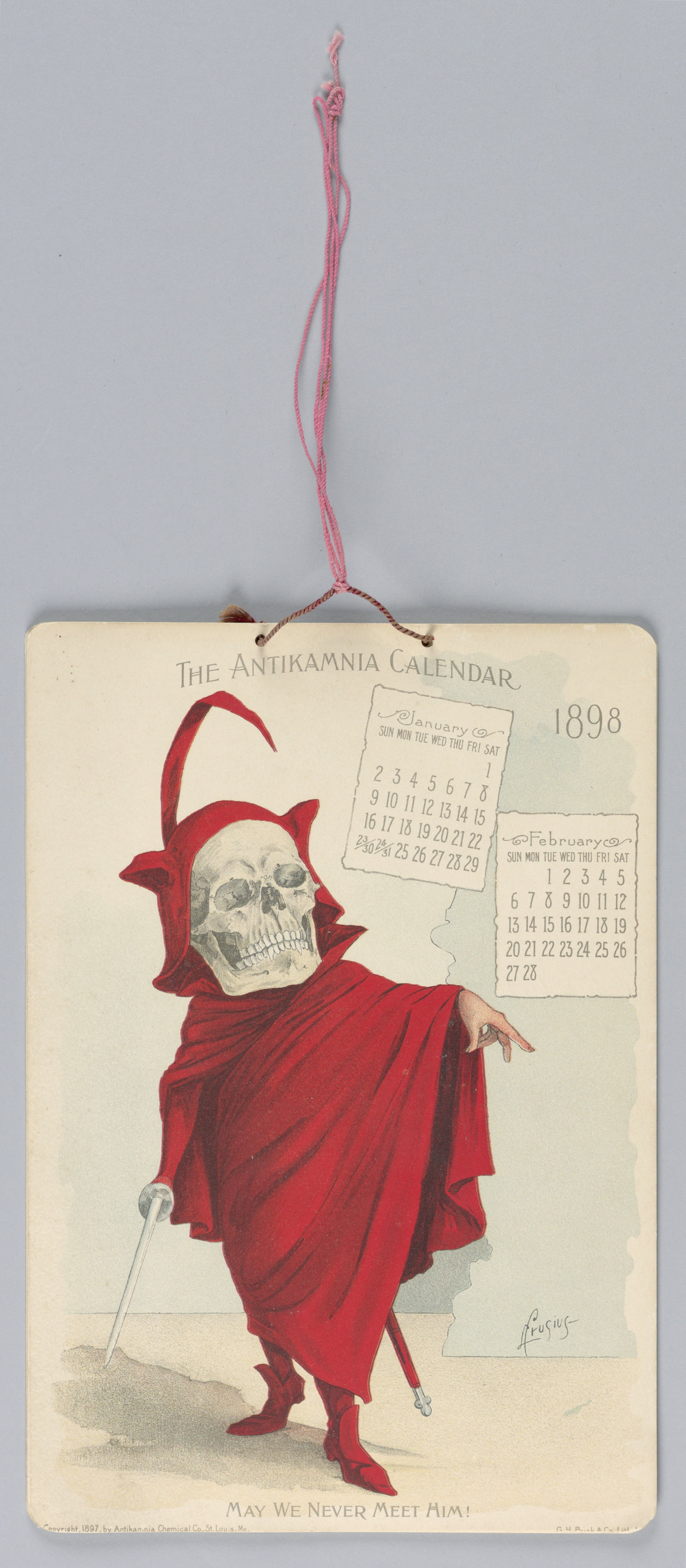
In 1888, the Antikamnia Chemical Company set up shop in St. Louis, Missouri, with a simple pitch: buy our tablets and kill your pain. The name itself was drawn from Greek roots meaning “against pain.” The company sold its products as cures for headaches, neuralgia, and rheumatism — common, miserable ailments that millions of Americans were desperate to treat. Antikamnia Tablets were their flagship product, a combination of acetanilide, caffeine, and antipyrine pressed into a small pill and sold with enormous confidence.
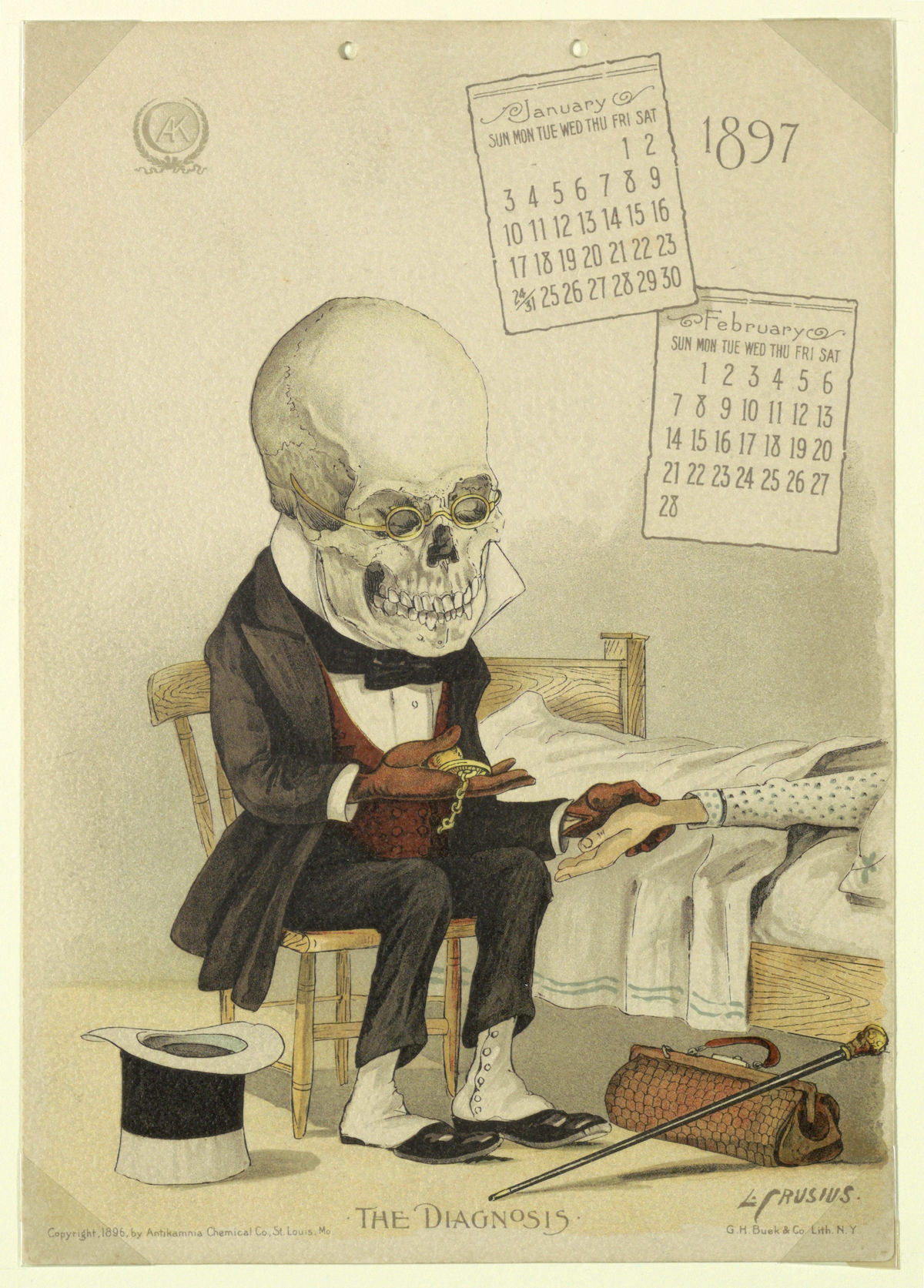
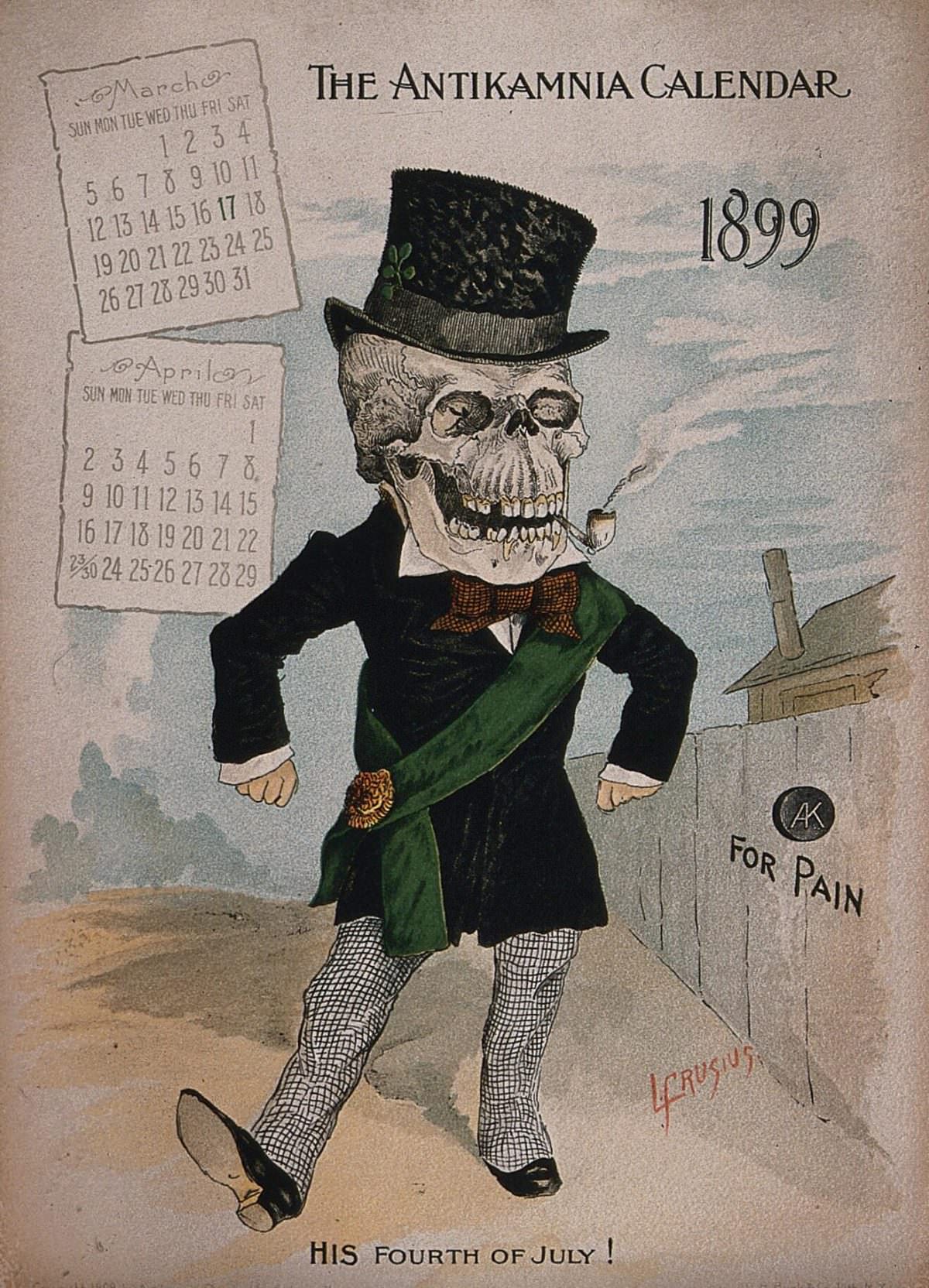
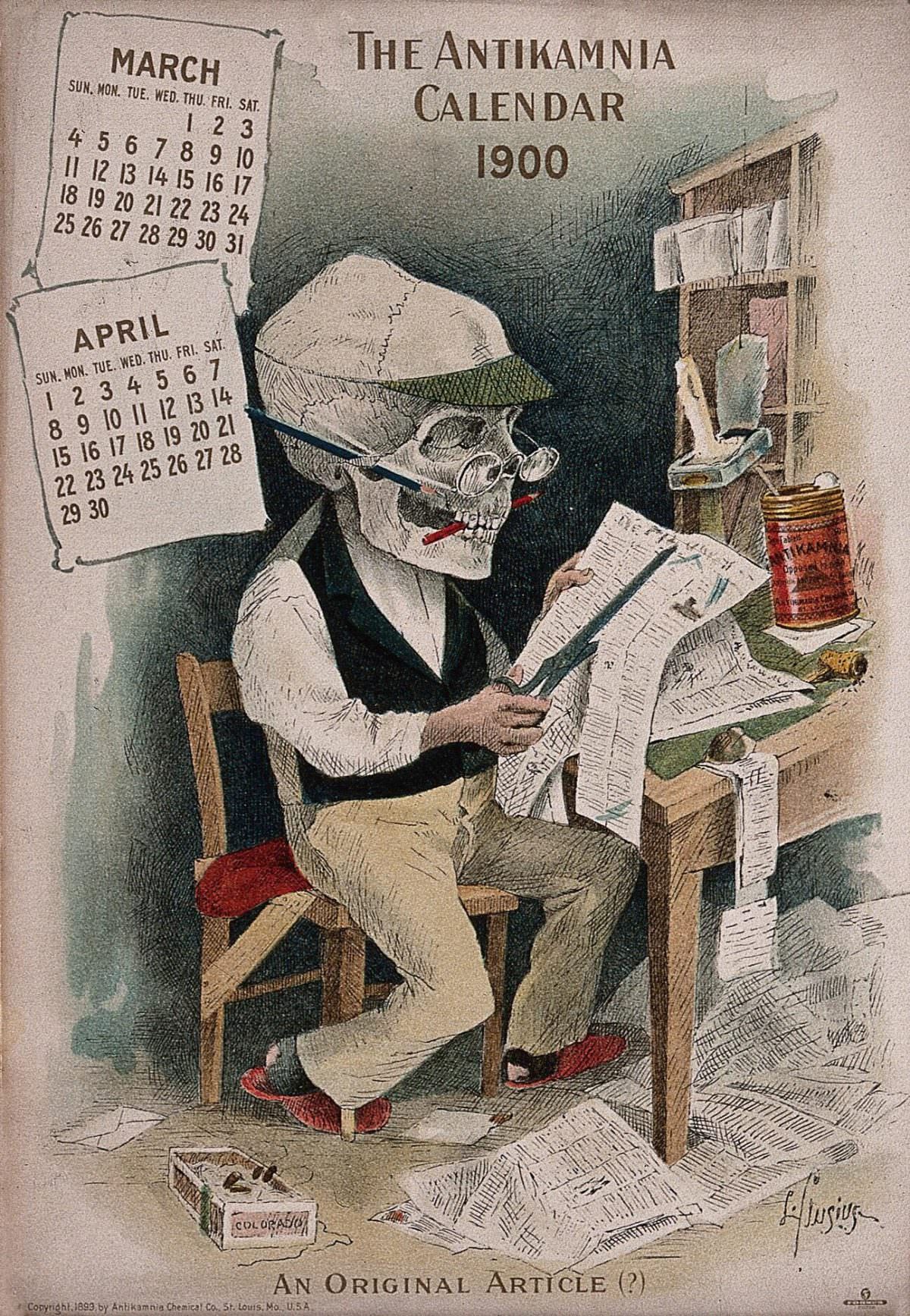
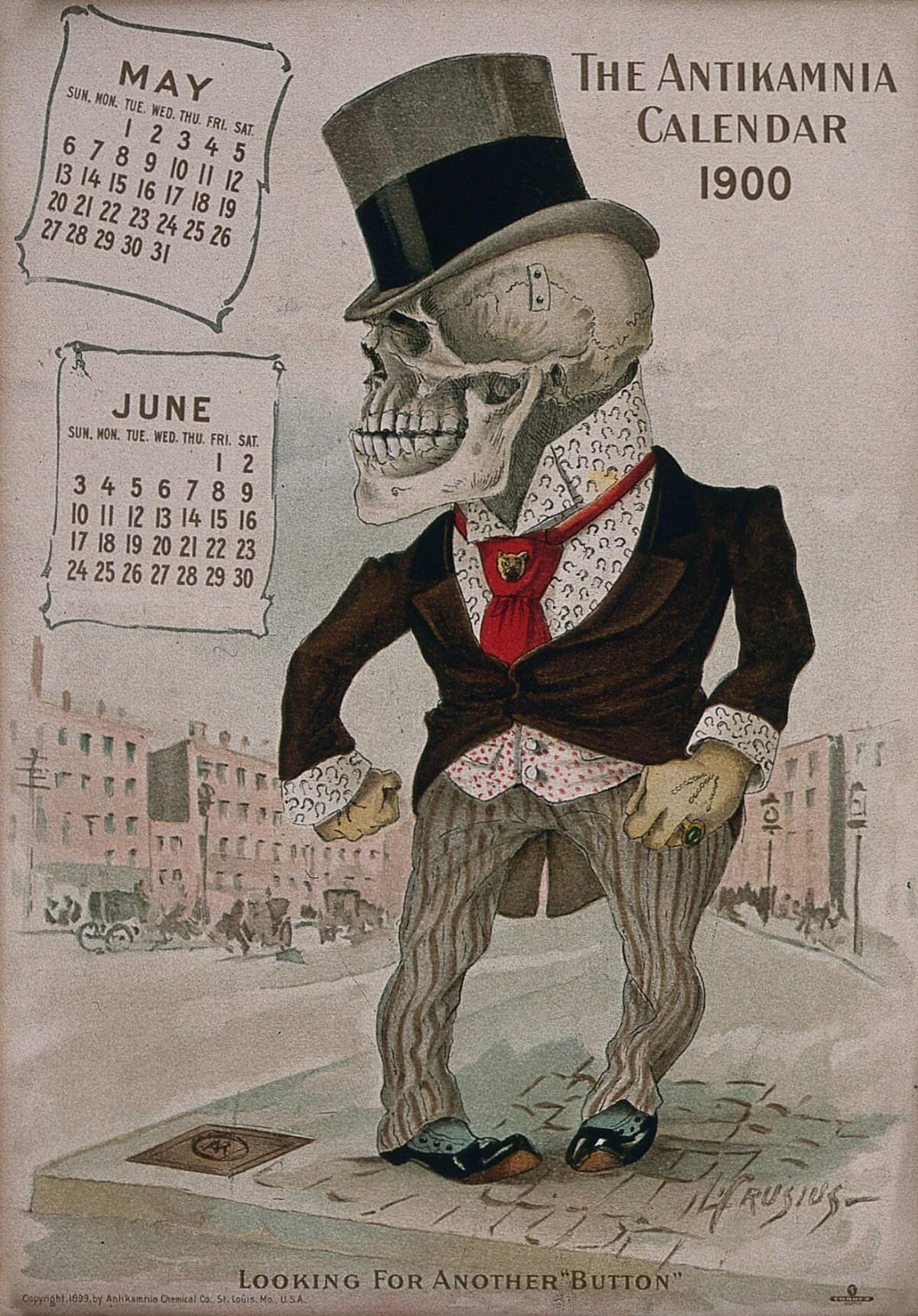
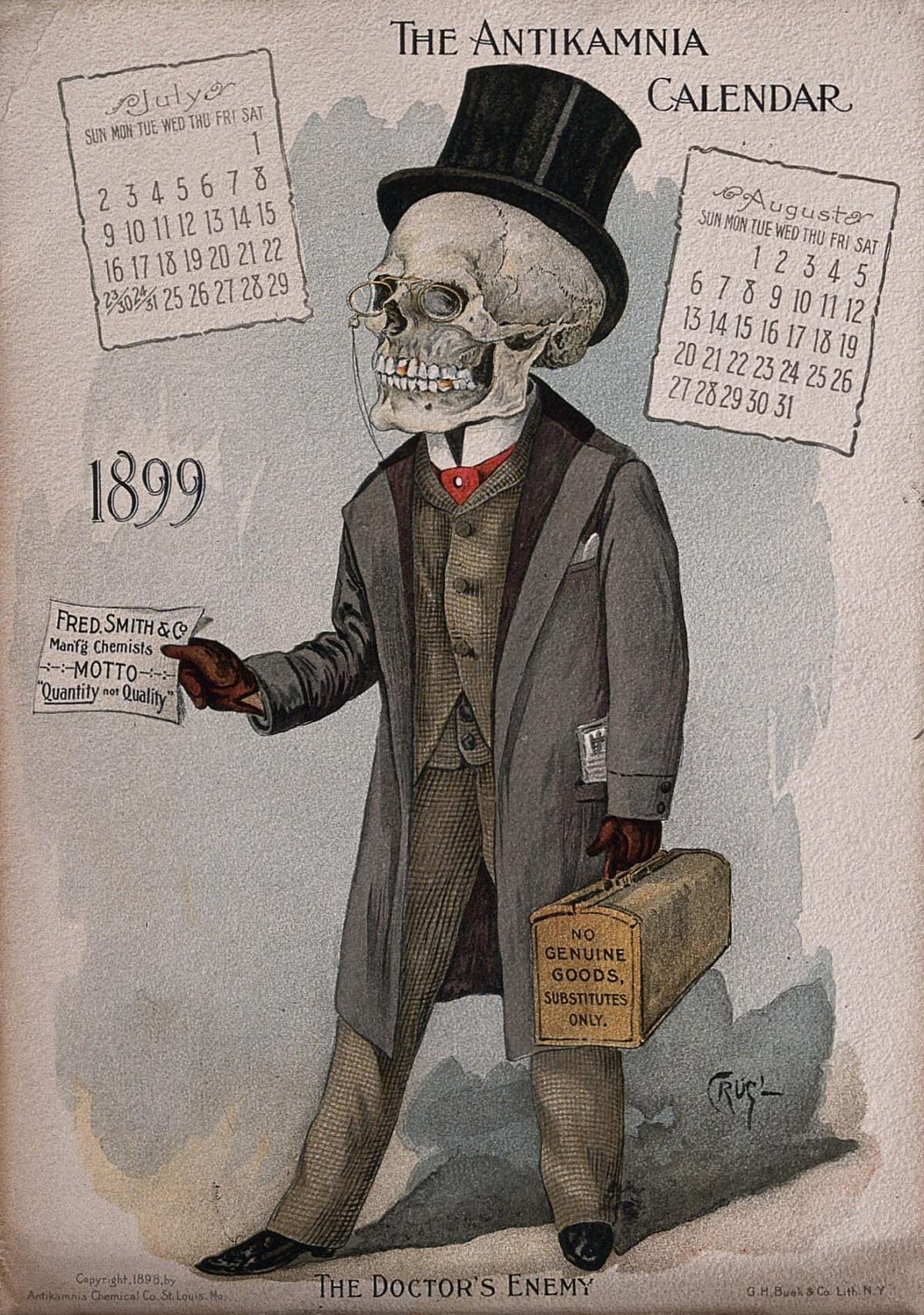
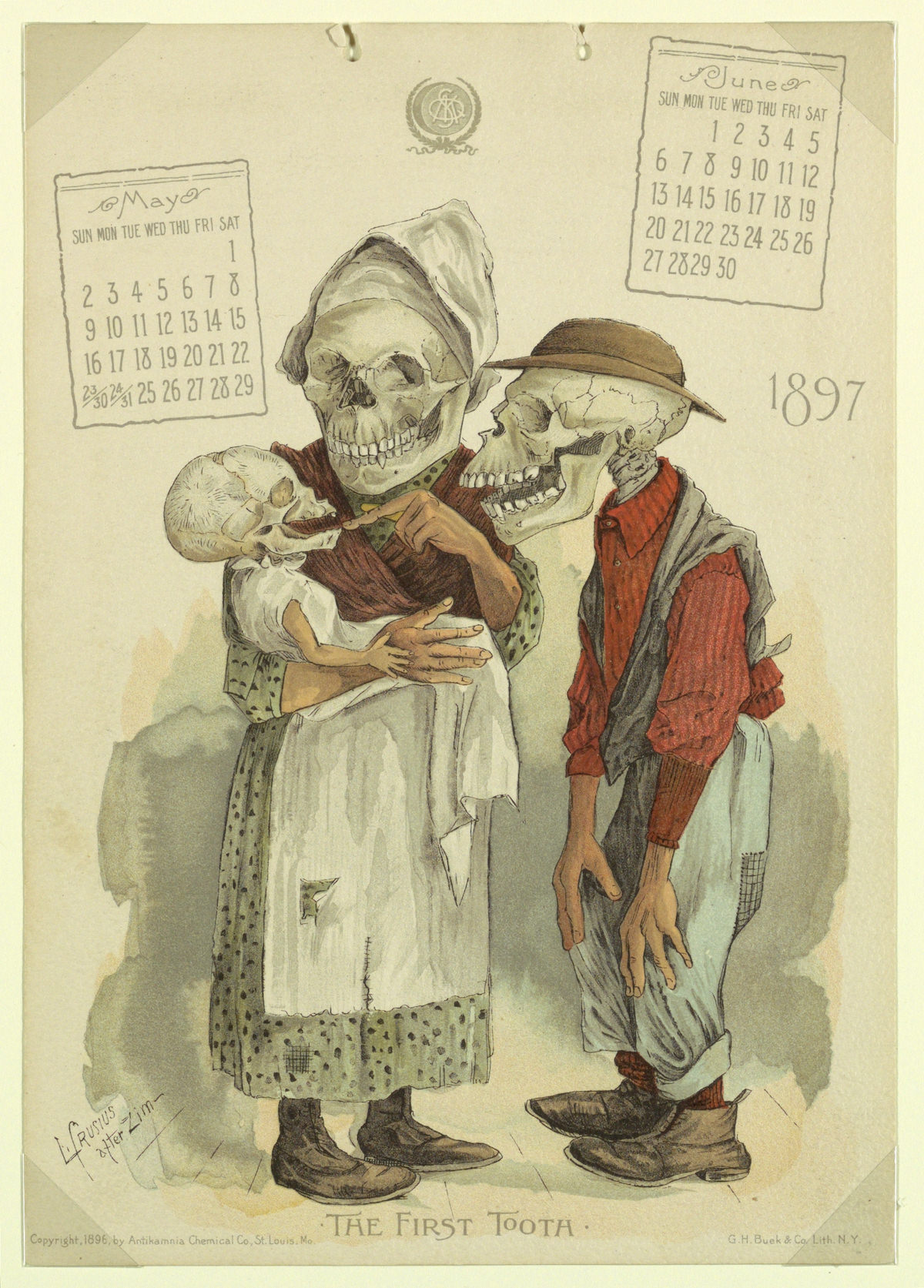
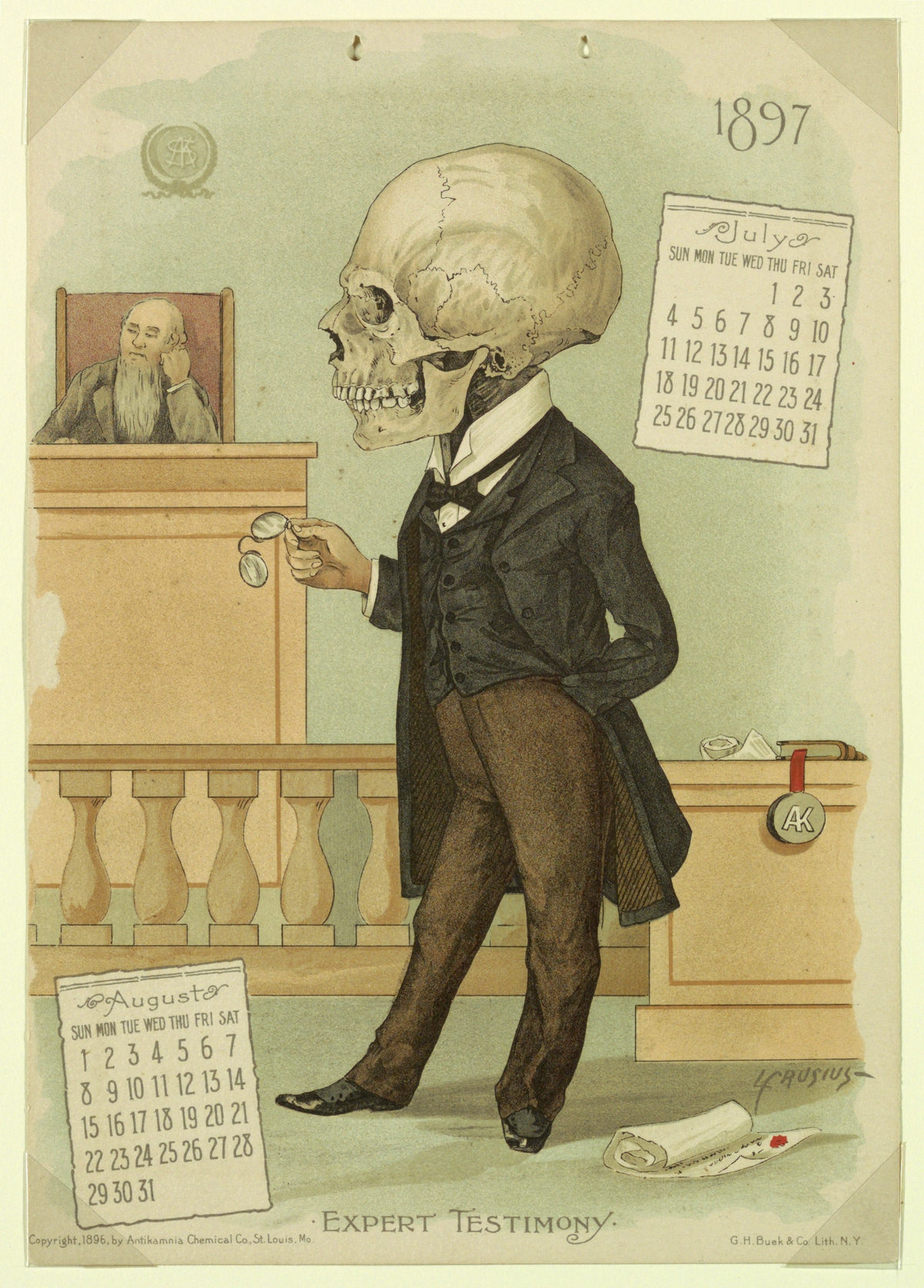
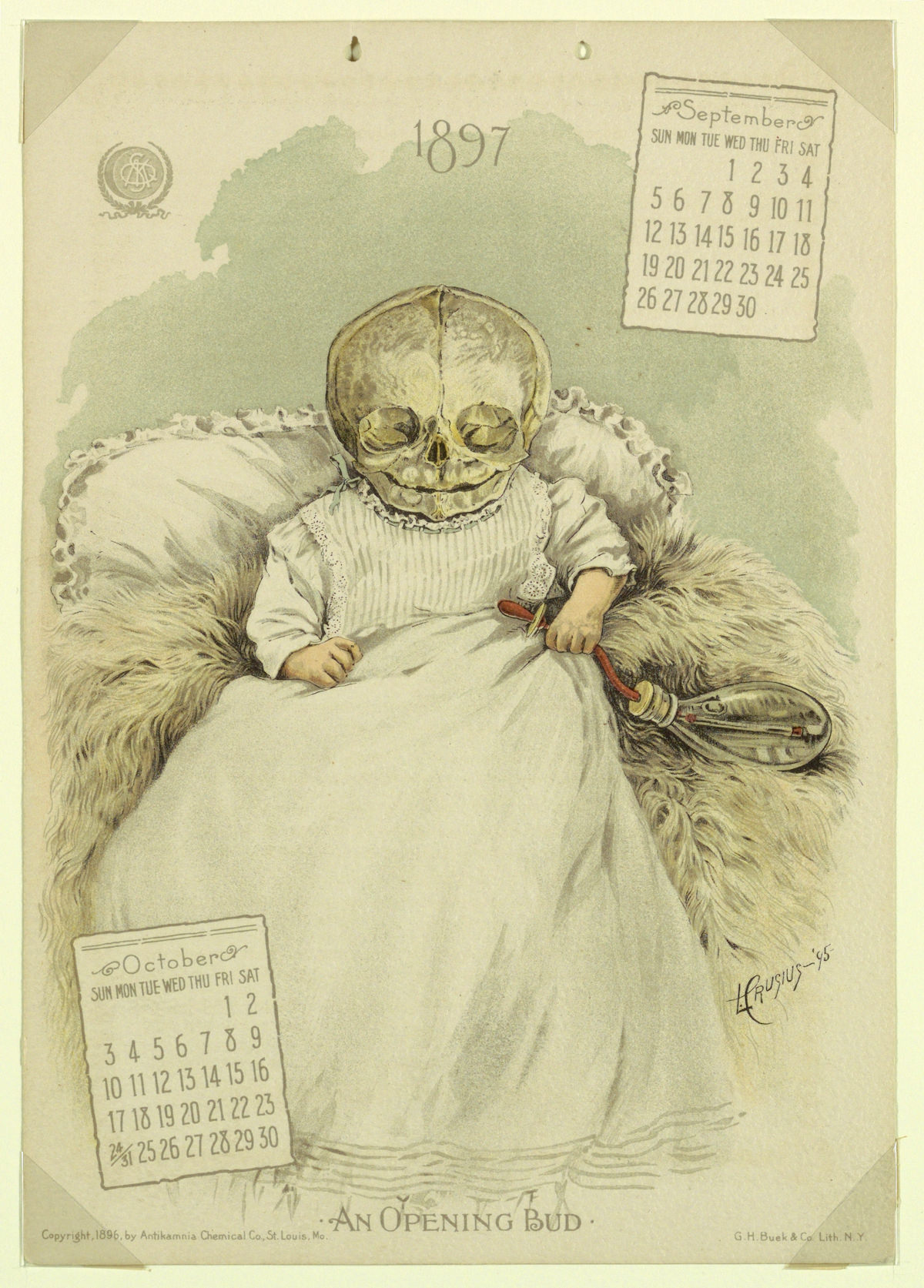
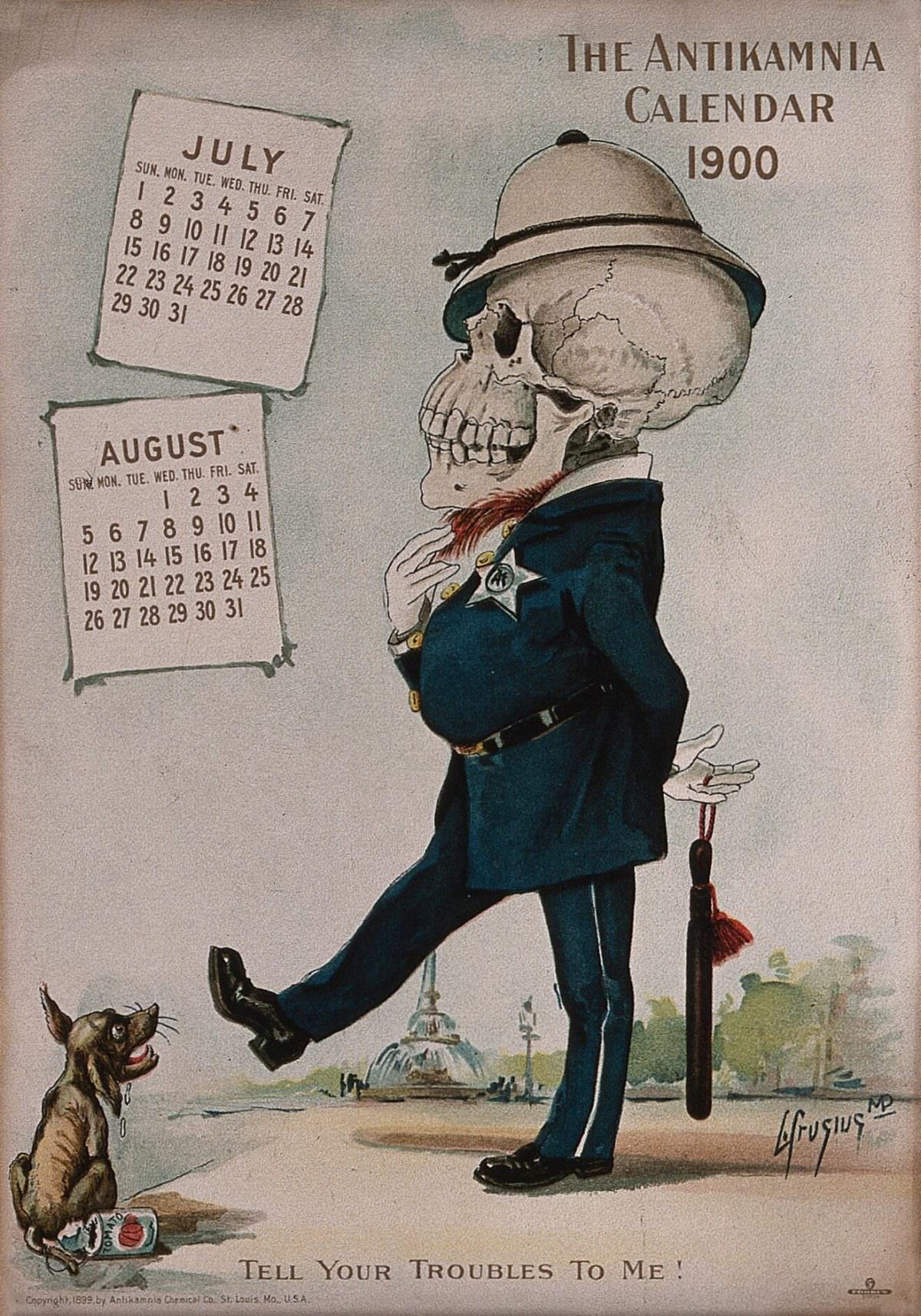
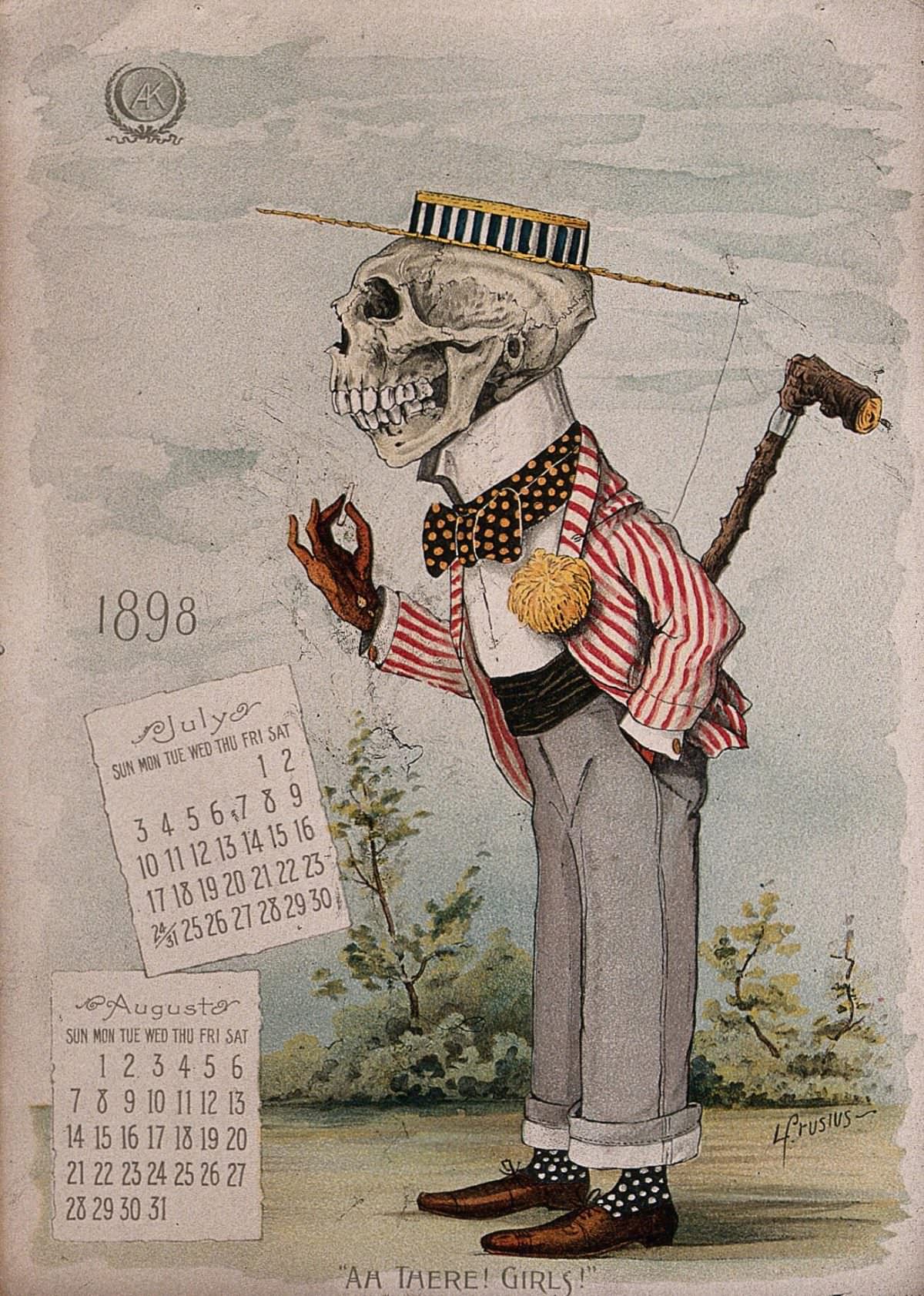
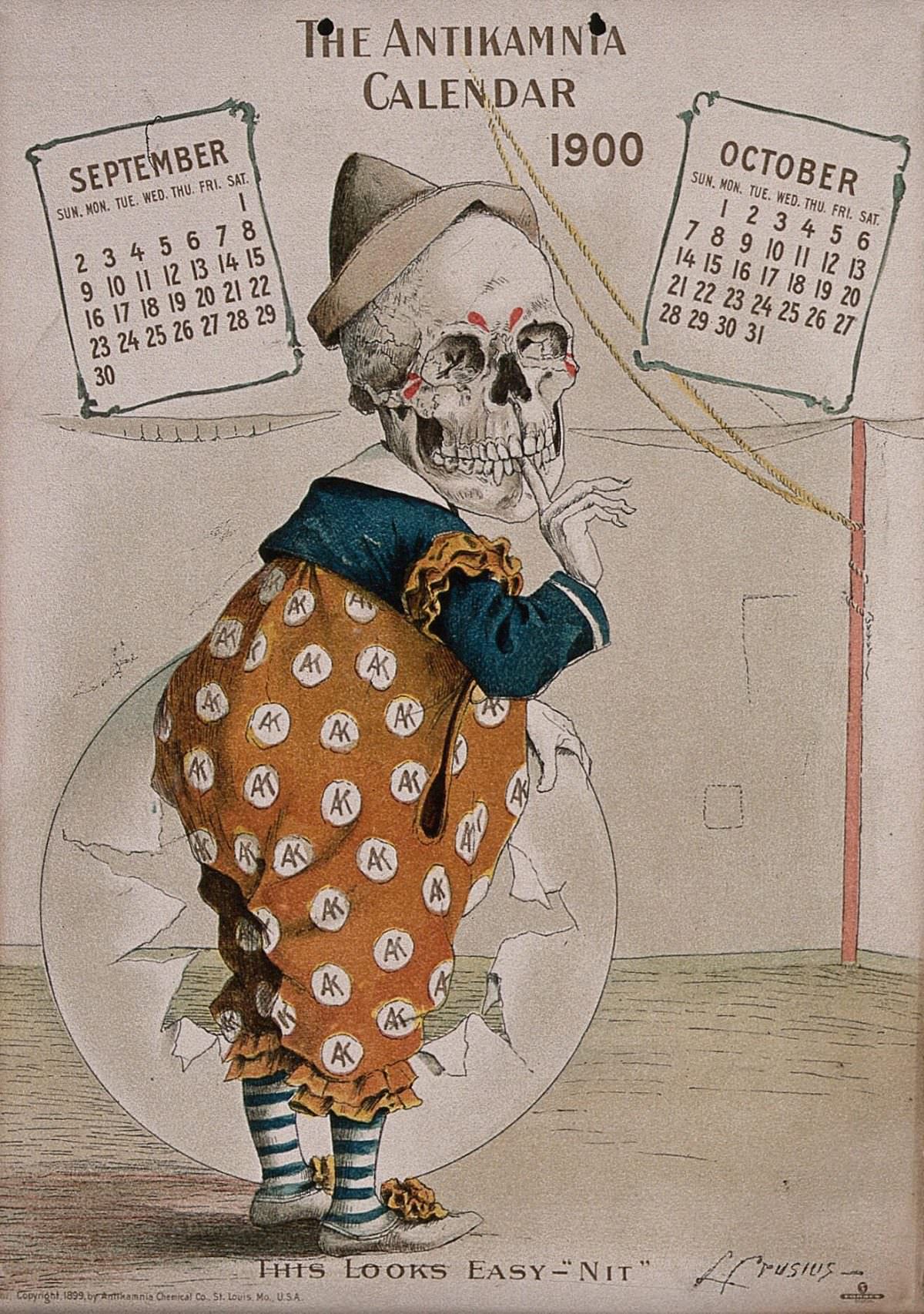
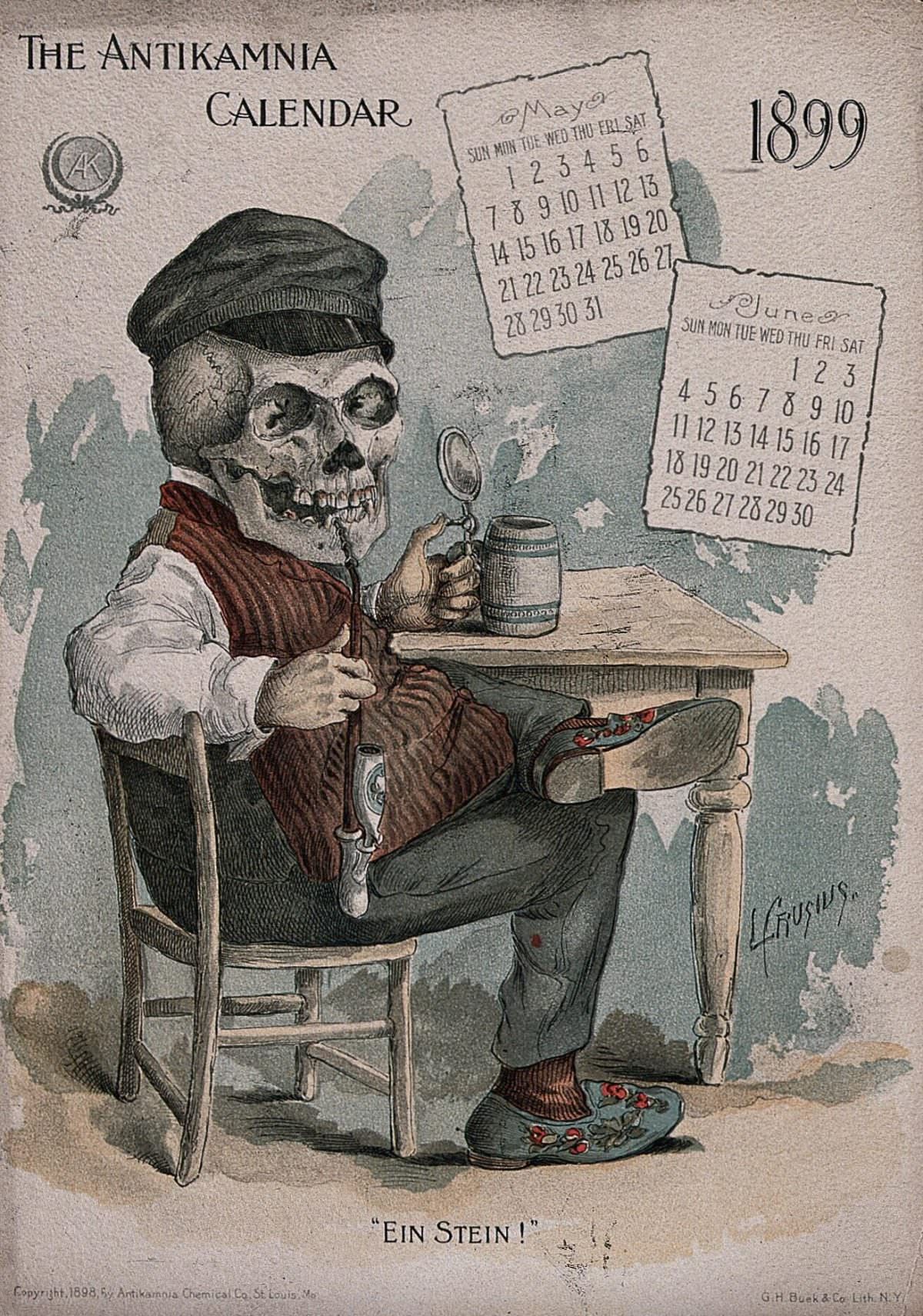
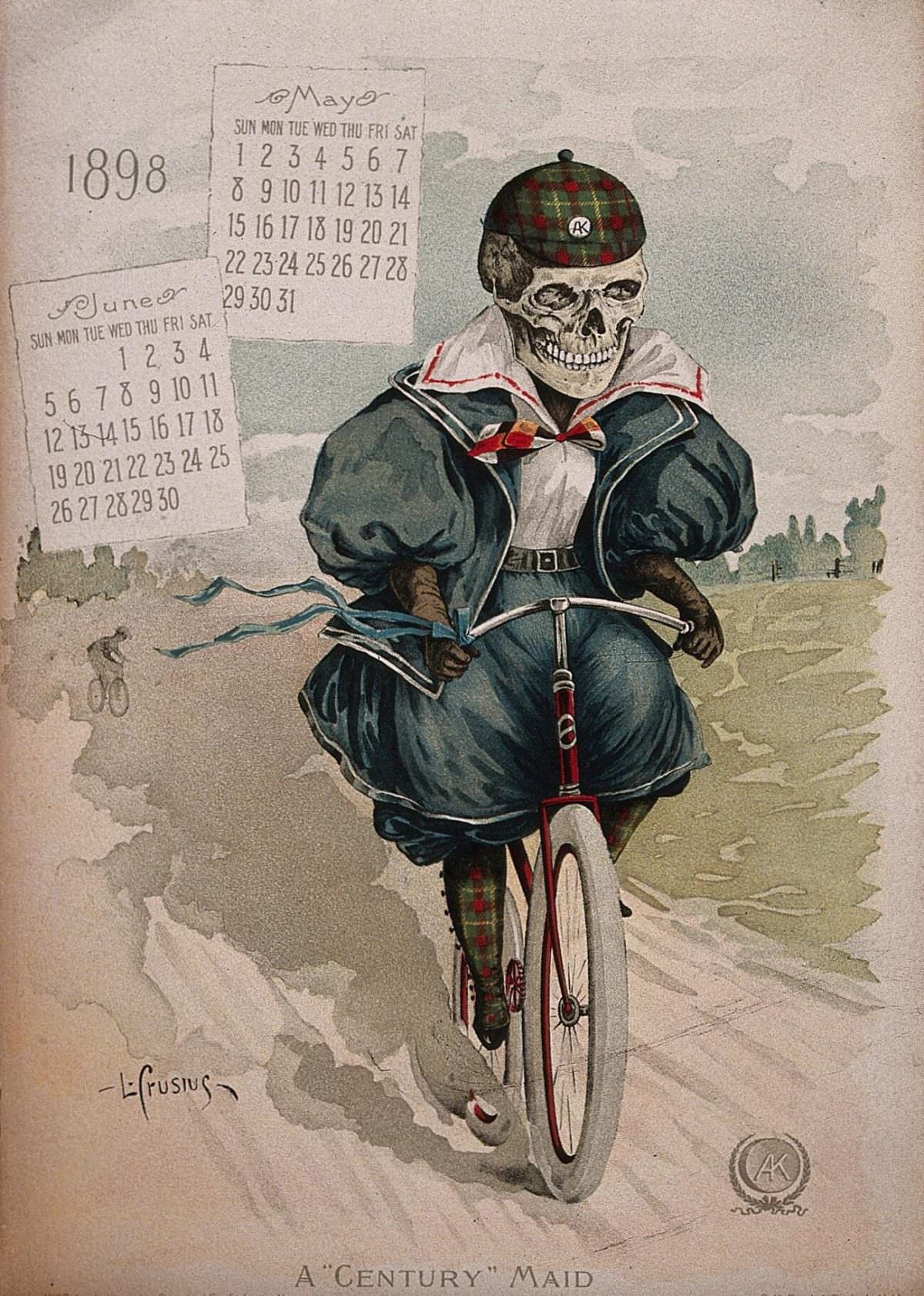
What made Antikamnia stand out wasn’t just its products — it was the advertising. The company ran some of the most visually striking campaigns of the late 19th century, built entirely around skeletons. These were not grim or frightening images. They were playful, even funny. Skeleton figures danced, played instruments, rode bicycles, and posed in everyday situations. The message was clever: pain was the skeleton, and Antikamnia’s tablets were the cure that could vanquish it.
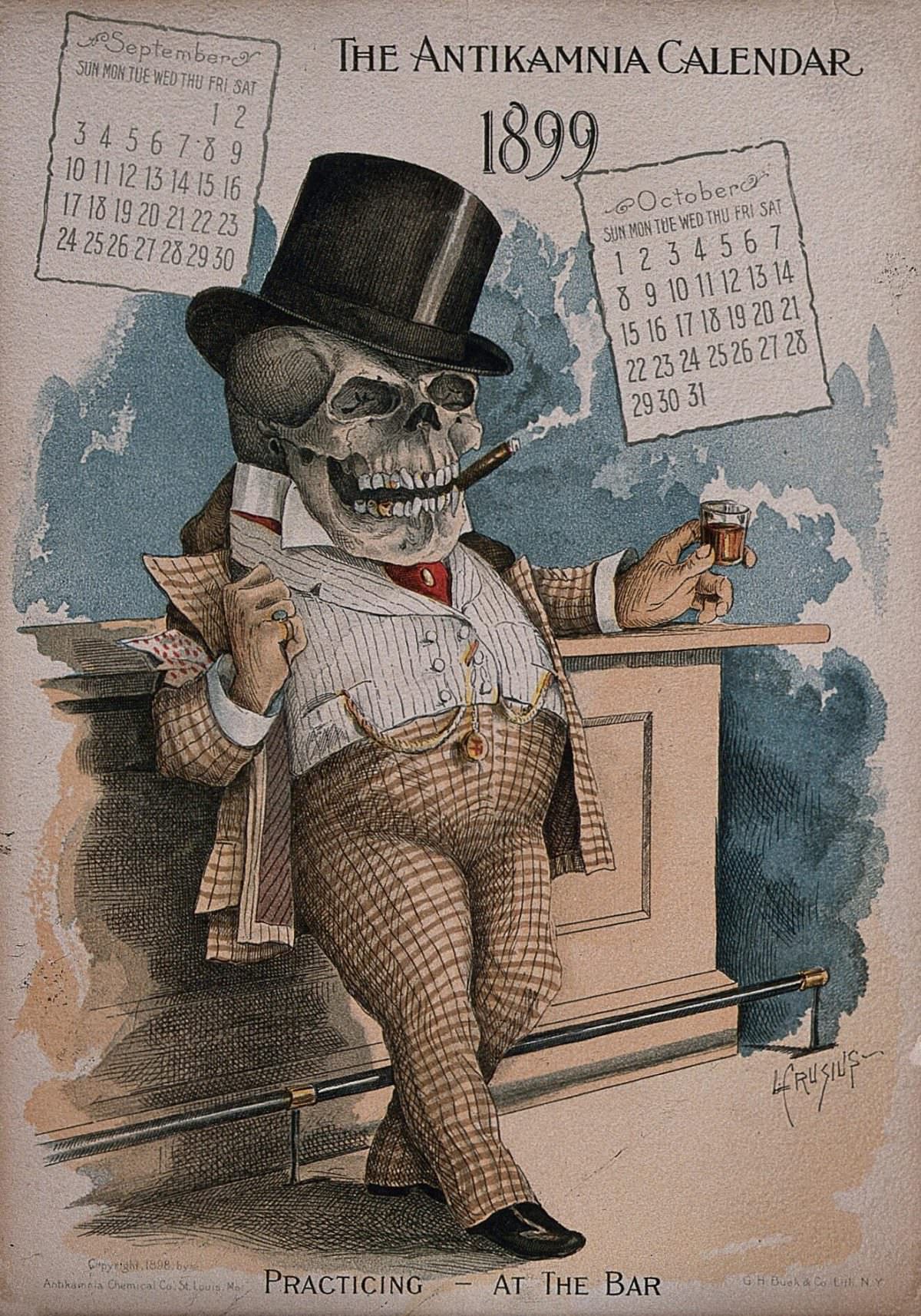
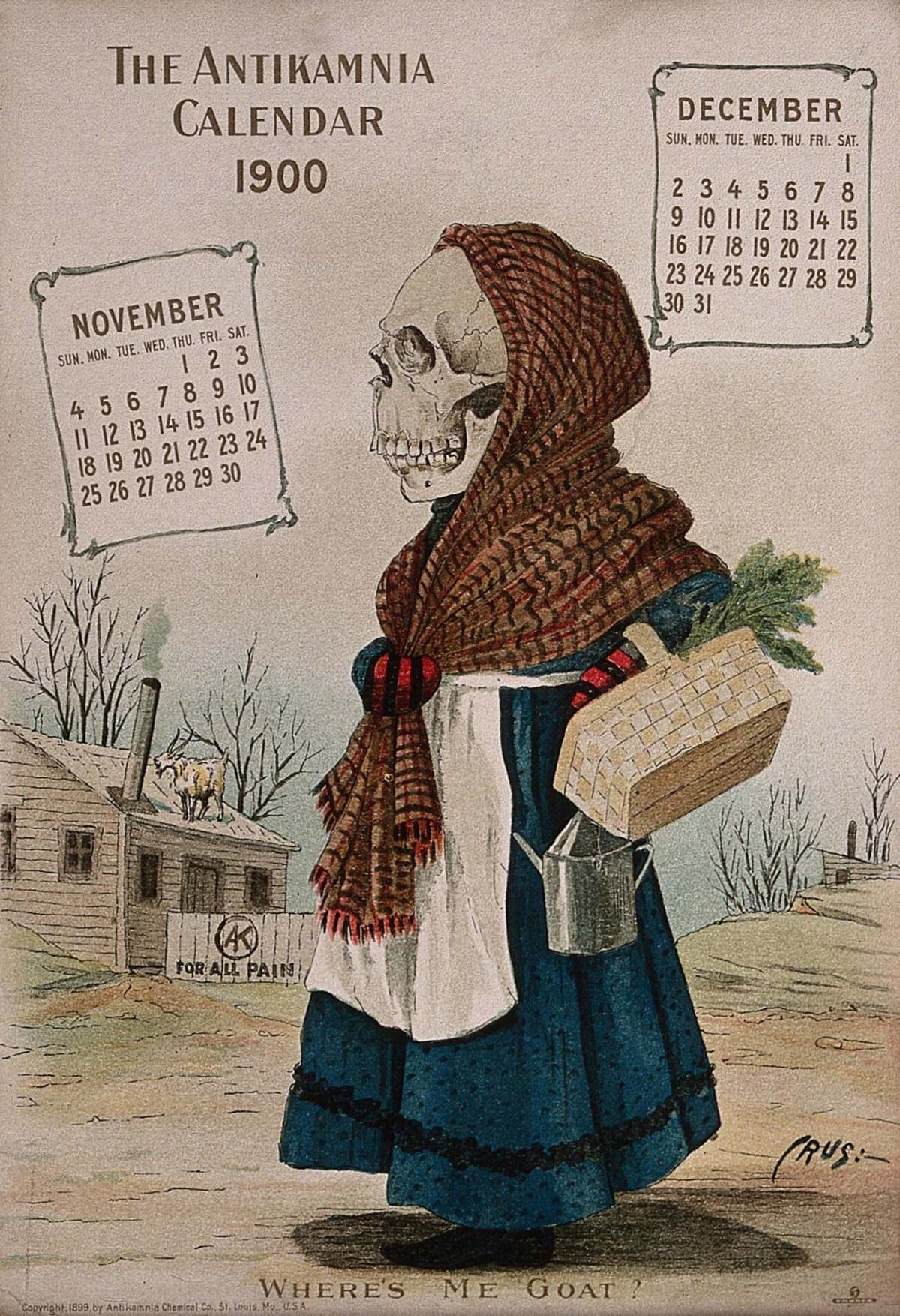
The skeleton calendars became especially popular. Antikamnia distributed illustrated calendar cards to doctors and pharmacists each year, featuring the bone-figure artwork alongside the company’s branding. These weren’t tossed aside — people kept them. The artwork was genuinely appealing, and the company used that appeal to plant its name firmly in the minds of medical professionals and their patients alike.
Behind the charming imagery, the product itself was a different story. Acetanilide, one of the three main ingredients in Antikamnia Tablets, is toxic at high doses. It can cause serious damage to red blood cells, reducing the blood’s ability to carry oxygen — a condition known as methemoglobinemia. Patients who took the tablets regularly, or in larger-than-recommended amounts, were putting themselves in genuine danger. The company made no mention of this risk in any of its advertising.
The American Medical Association examined Antikamnia’s products and found them ineffective. This was a serious blow. The AMA had real authority, and its findings pulled the scientific rug out from under Antikamnia’s confident marketing claims. Doctors who had been receiving those charming skeleton calendars began to look at the product differently.
Federal regulators followed. The Food and Drug Administration took legal action against the company, targeting its misleading advertising practices directly. This was part of a broader crackdown on the patent medicine industry that swept the United States in the early 1900s. The 1906 Pure Food and Drug Act had opened the door to holding companies like Antikamnia accountable for false claims, and regulators walked right through it.
The legal pressure and negative publicity proved fatal for the company. Antikamnia Chemical Company went out of business in the early 1900s. Its tablets were pulled from the market, and the name that had once decorated doctors’ office walls disappeared from shelves across the country.
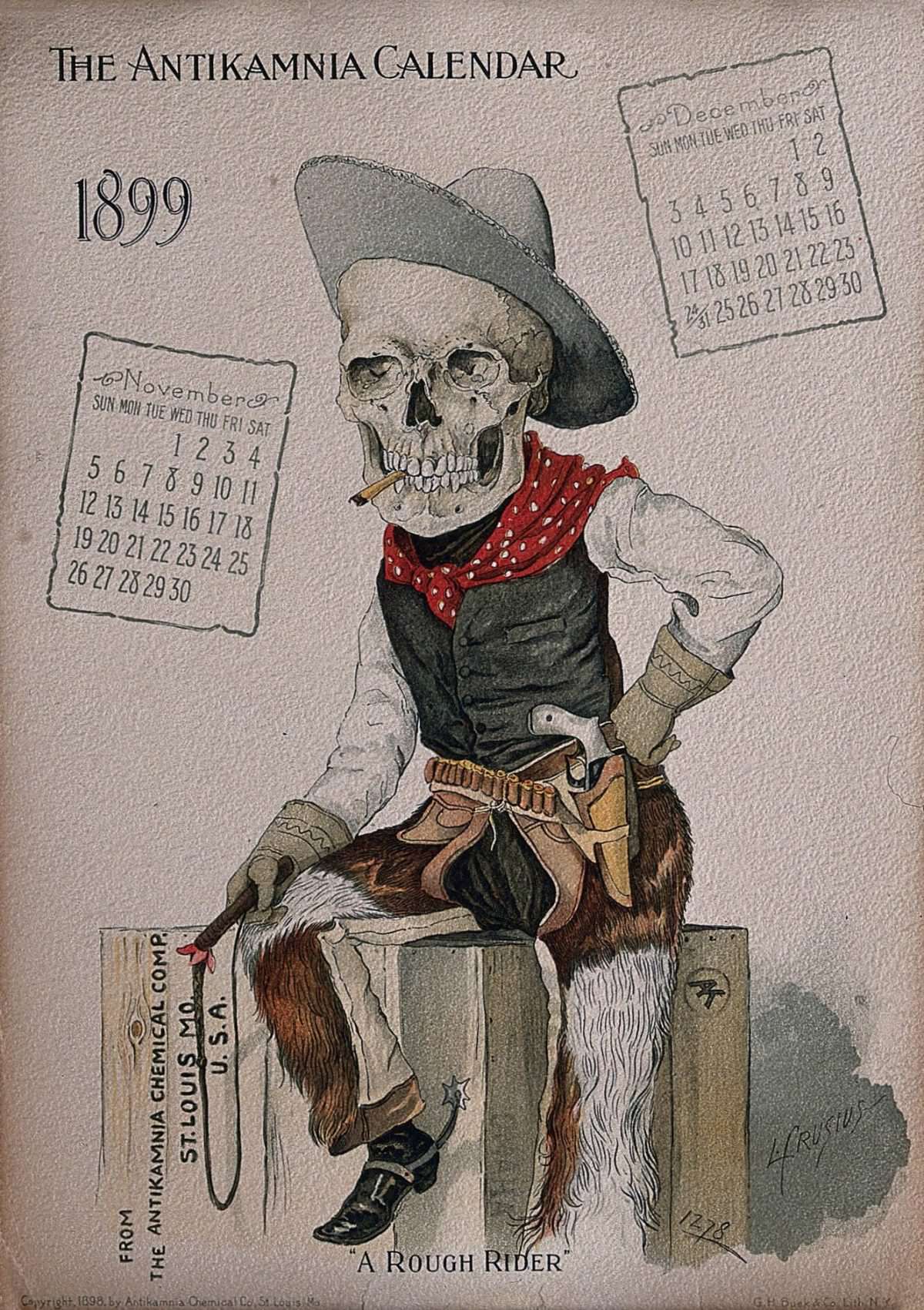
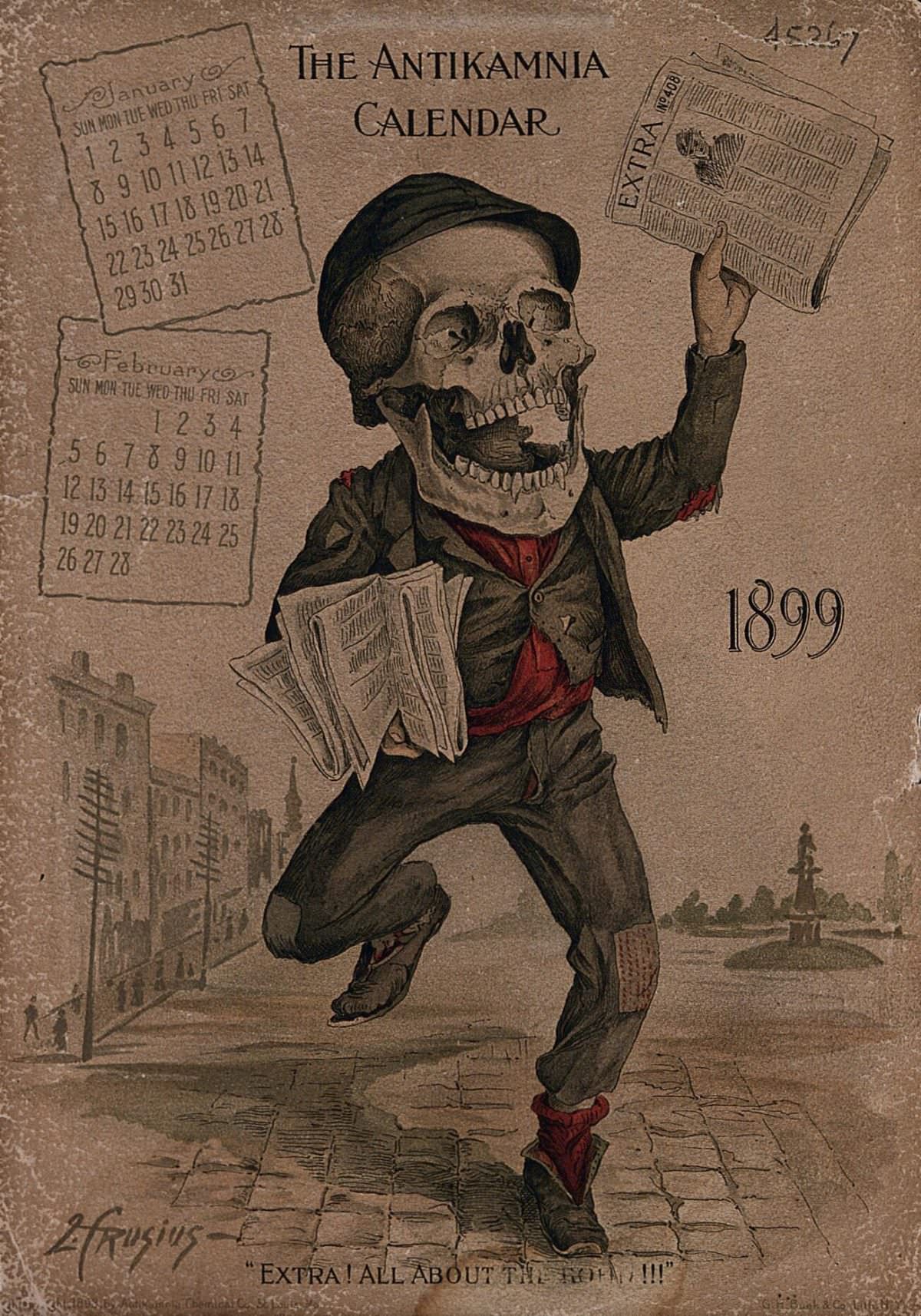
What remains today are the skeleton illustrations — collected, reproduced, and admired as artifacts of a strange and deceptive era in American medicine. They are well-drawn, witty, and undeniably memorable. They are also the face of a company that sold a toxic product to sick people and dressed the whole operation in dancing bones.