Belgium in the 1890s was a country still finding its footing after decades of political change. The Belgian Revolution had erupted in August 1830, when Belgians rose up against Dutch rule and declared independence. Europe formally recognized that independence at the London Conference of 1830–1831. A National Congress then drafted a constitution, and the country’s first Liberal government came to power in 1847. By the time these photographs were taken, Belgium had grown into a thriving nation with busy port cities, Gothic architecture, coastal resorts, and a distinct everyday culture.
The images in this collection were produced using the photochrom process, a technique invented in the 1880s by a Swiss printer. Photochrom used lithographic printing to apply color directly to black-and-white photographs, resulting in vivid, almost painterly images. The process became widely used across Europe for producing postcards and travel images, making it one of the first ways the general public could see the world in color. These photographs capture Belgium’s streets, monuments, waterways, coastal towns, and working people with remarkable detail.
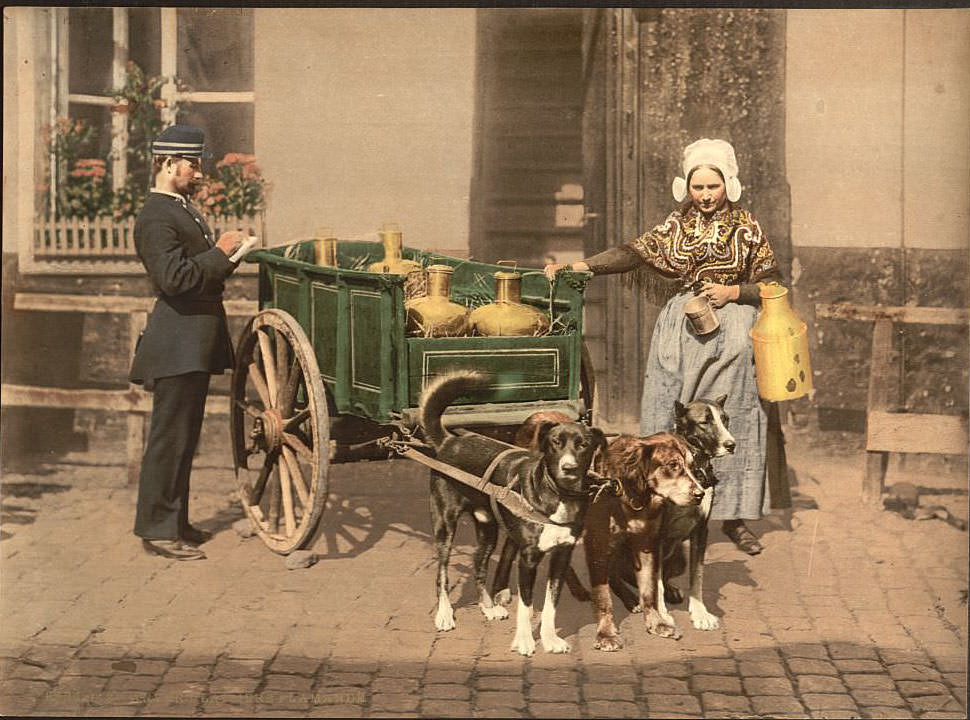
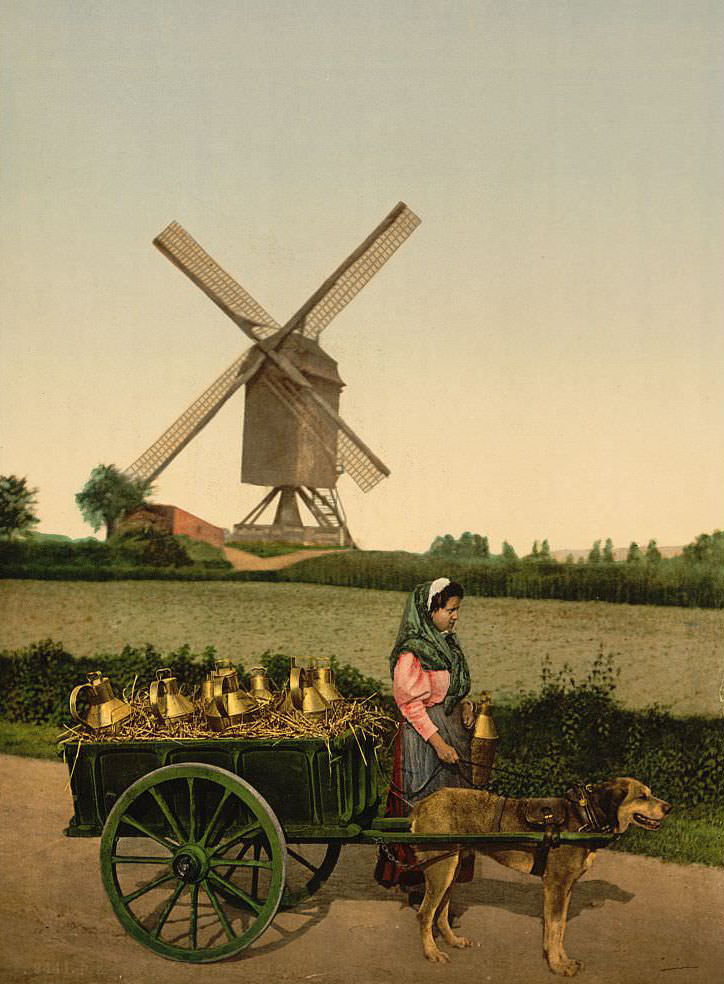
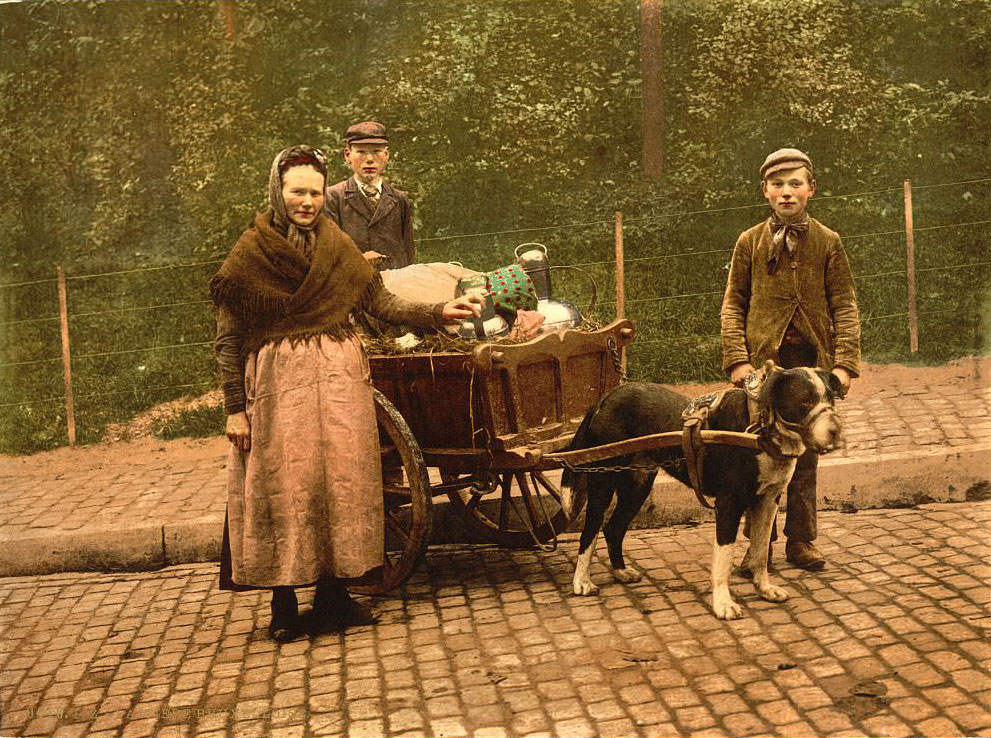
Antwerp was one of Belgium’s most important cities in the late 19th century, serving as a major port on the Scheldt River and a hub of international trade. Its streets and landmarks drew photographers eager to document its scale and character. Among the most recognizable of Antwerp’s working figures were the Flemish milk women, who carried their wares through the city’s streets daily.
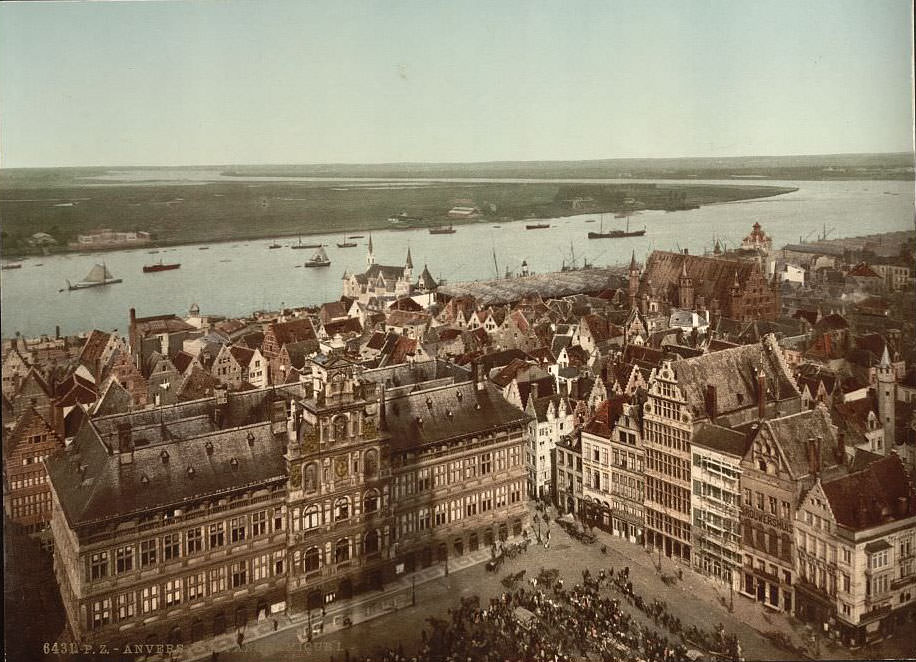
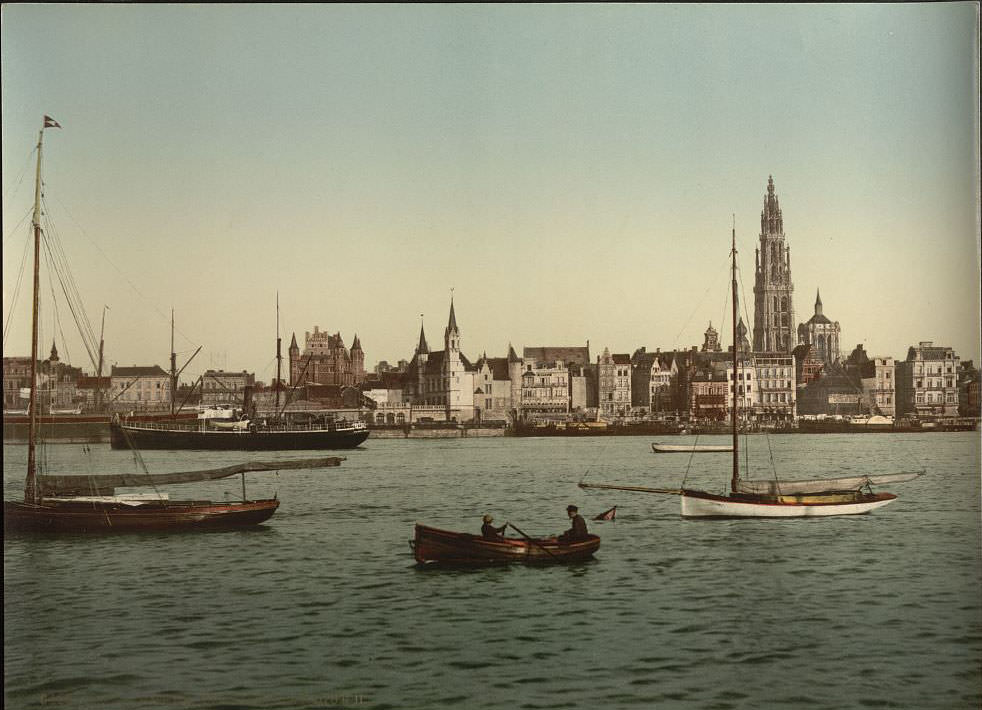
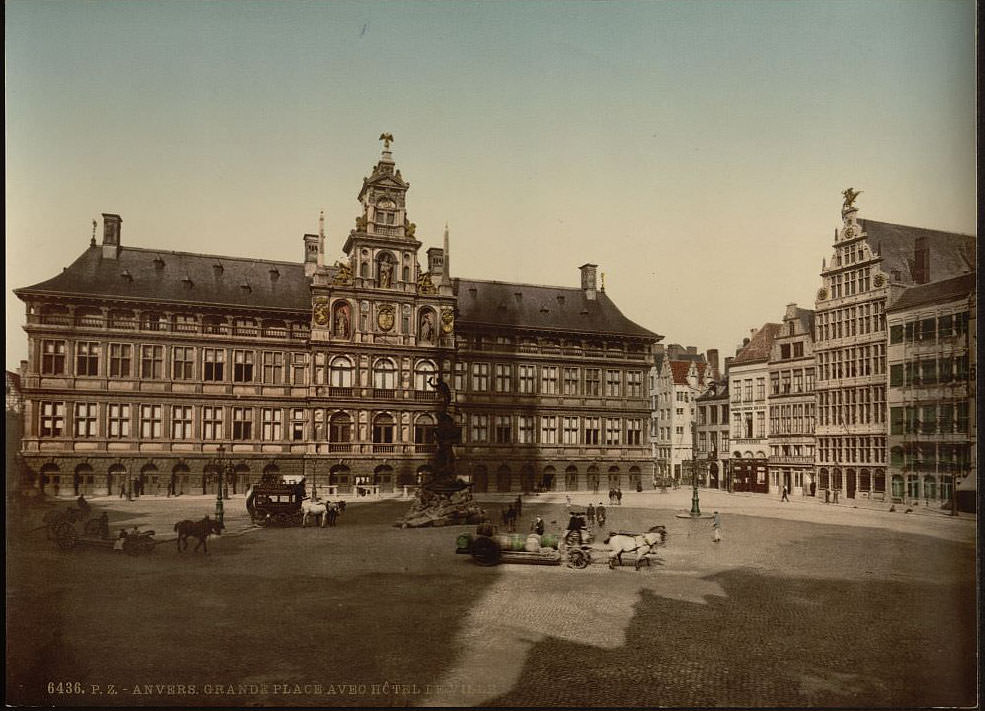
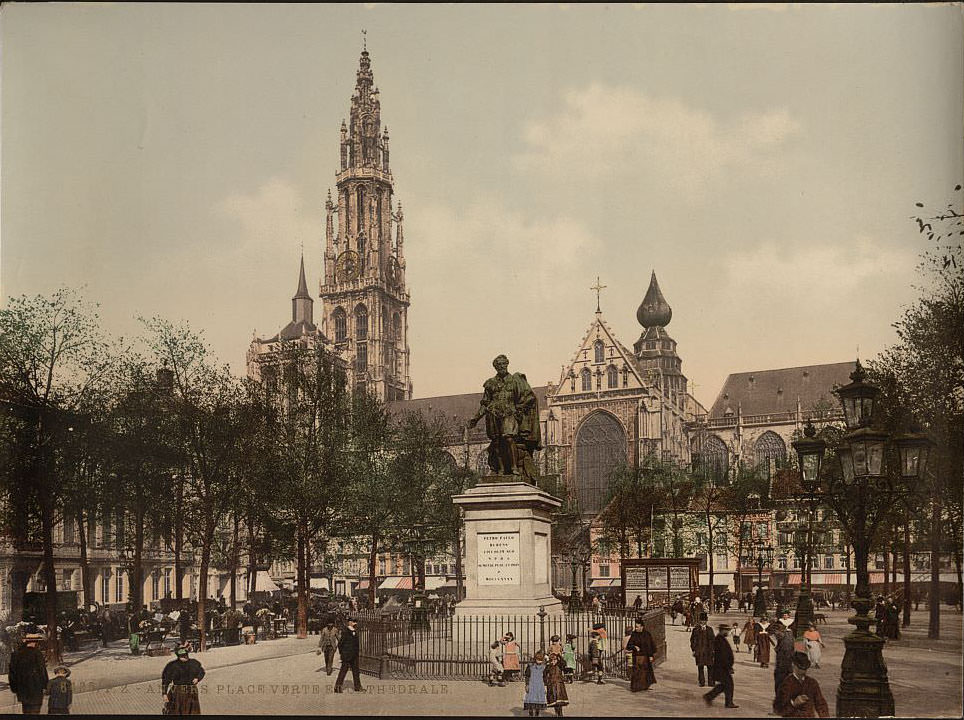
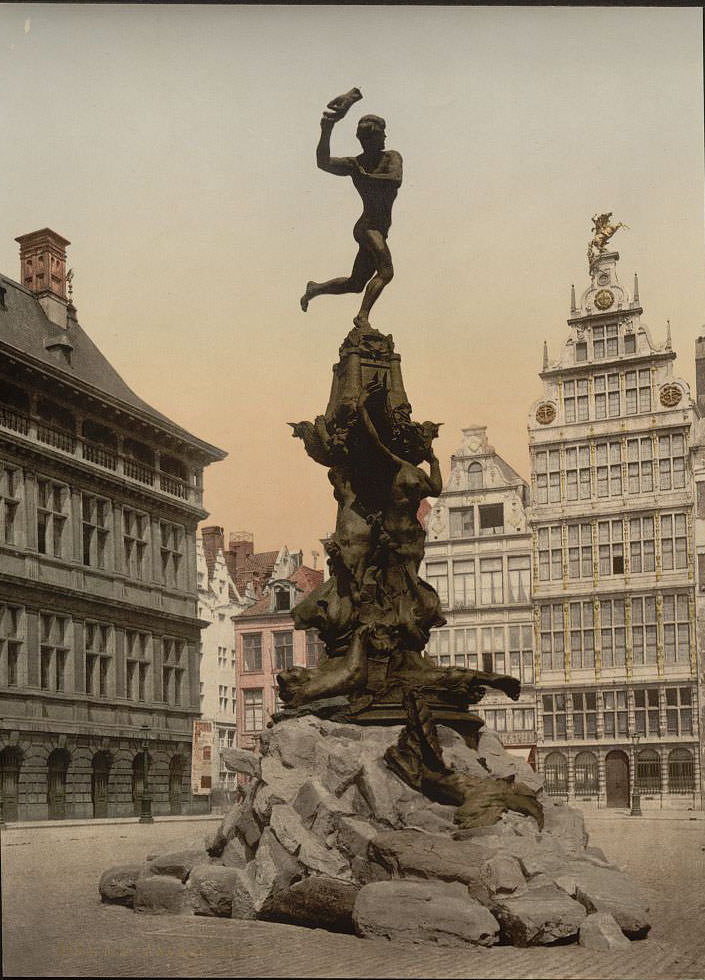
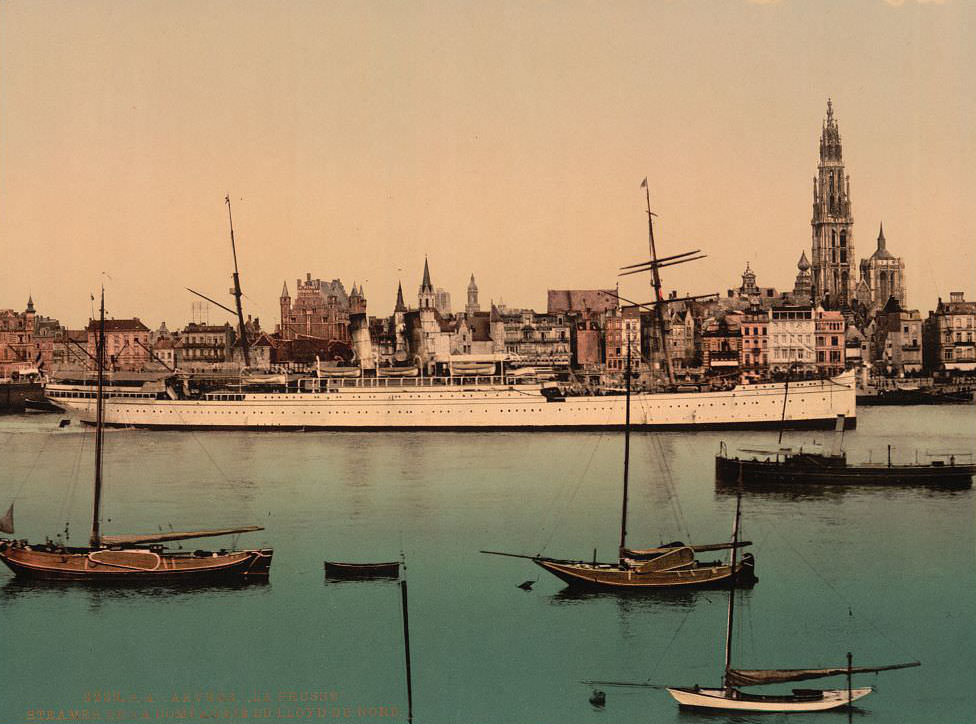
Antwerp’s skyline, dominated by the Cathedral of Our Lady and the medieval Steen fortress, offered sweeping views that photographers captured from multiple vantage points. The city’s Grande Place featured the ornate Town Hall, a centerpiece of civic life. Nearby, the Brabo Fountain stood in the main square, depicting the legendary Roman soldier Silvius Brabo hurling the hand of the giant Druon Antigoon into the Scheldt — the mythological origin story of the city’s name.
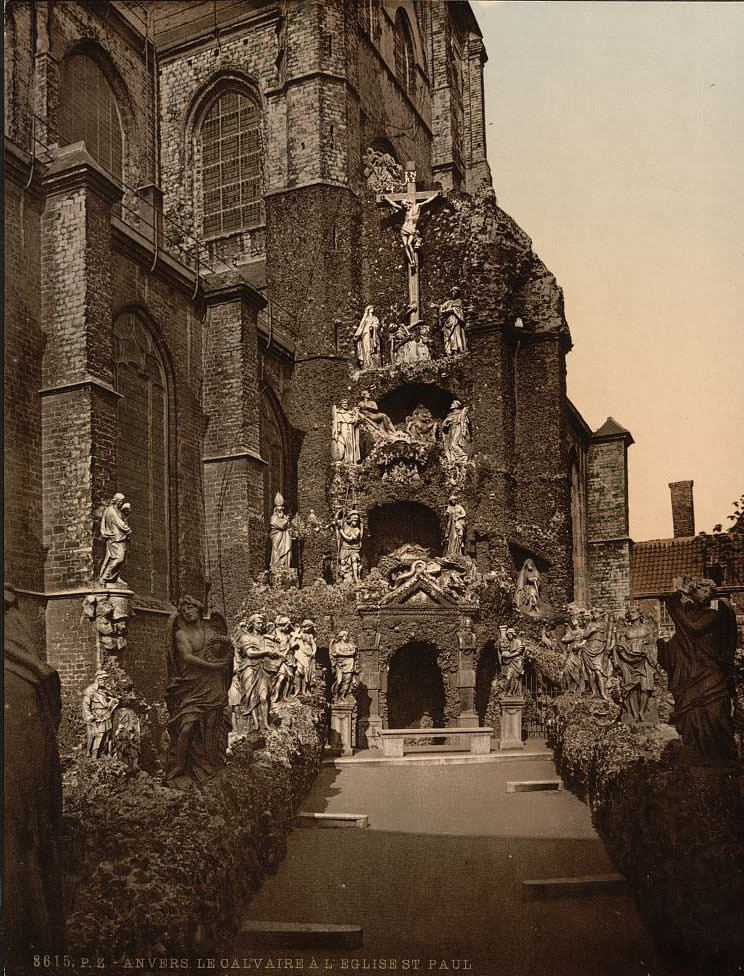
St. Paul’s Church in Antwerp housed one of the most striking outdoor Calvary scenes in Belgium — a sprawling ensemble of carved figures depicting the Passion of Christ set against a rocky landscape in the churchyard. The Grande Place and the surrounding cathedral quarter drew visitors and traders alike, forming the beating heart of the city.
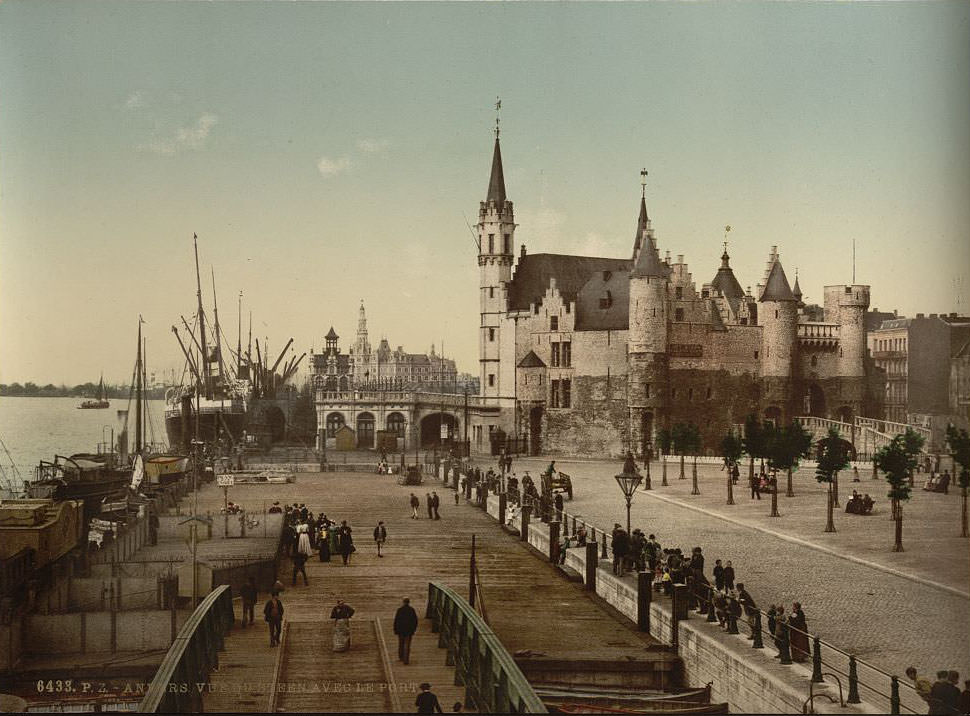
The Steen, Antwerp’s medieval riverside fortress, overlooked the busy port where large ocean-going steamers docked and departed. By the 1890s, the port of Antwerp was one of the busiest in the world. German shipping lines like the North German Lloyd operated regular transatlantic routes out of the city, and their large steamers were a common sight along the quays.
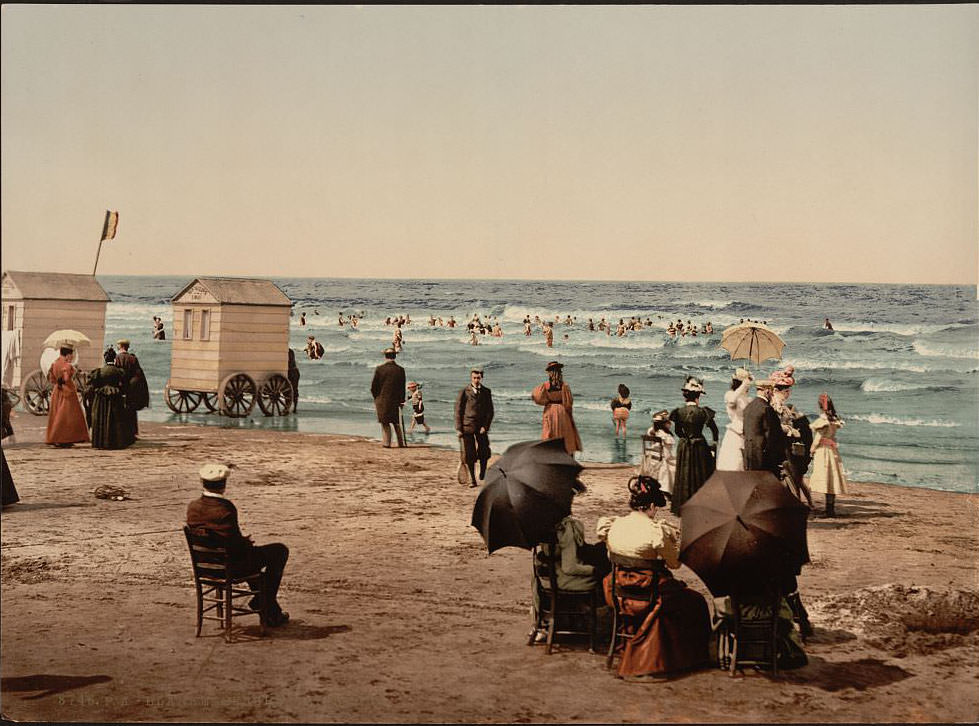
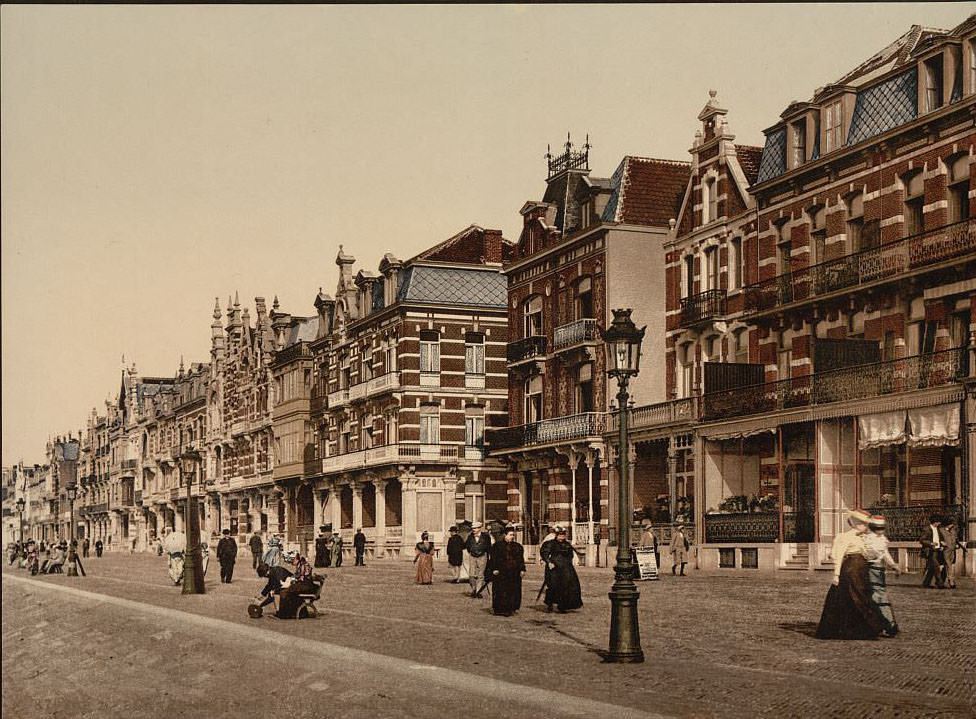
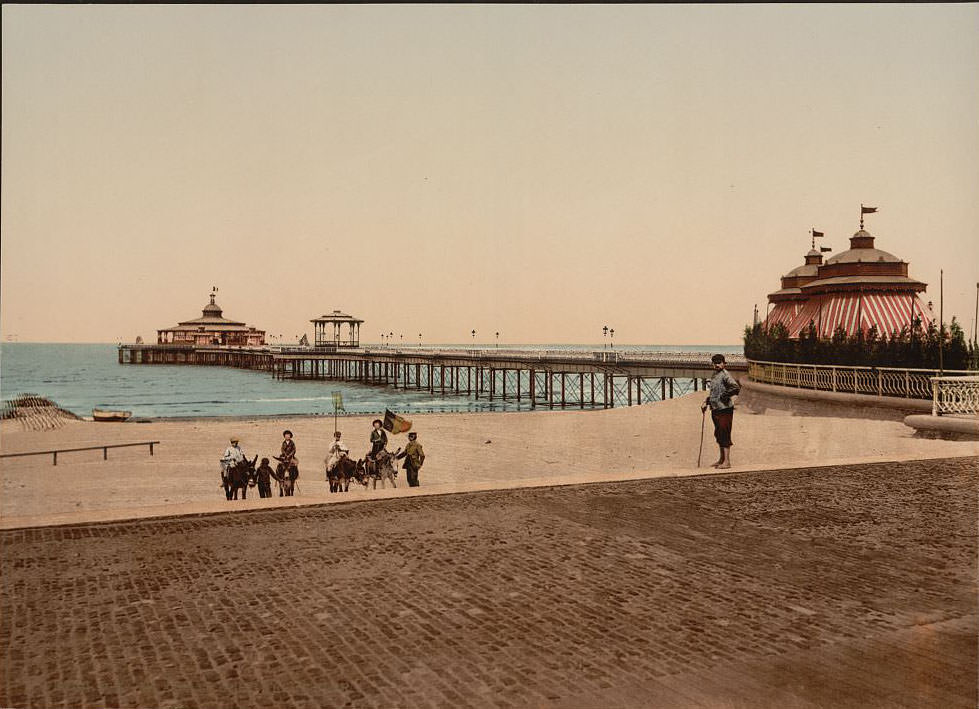
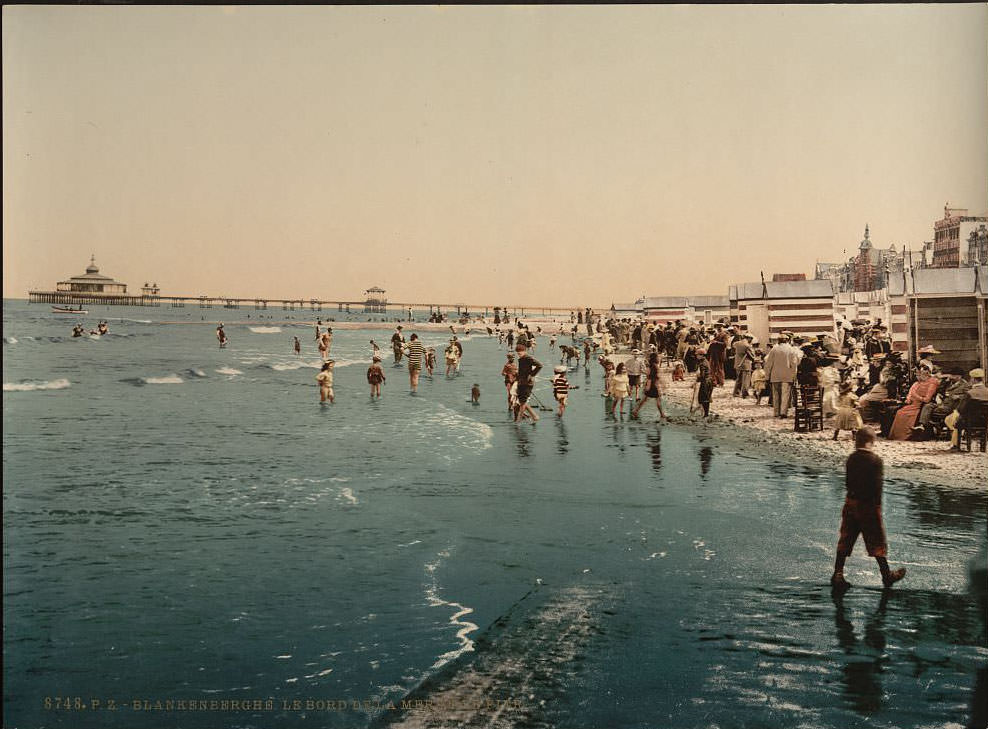
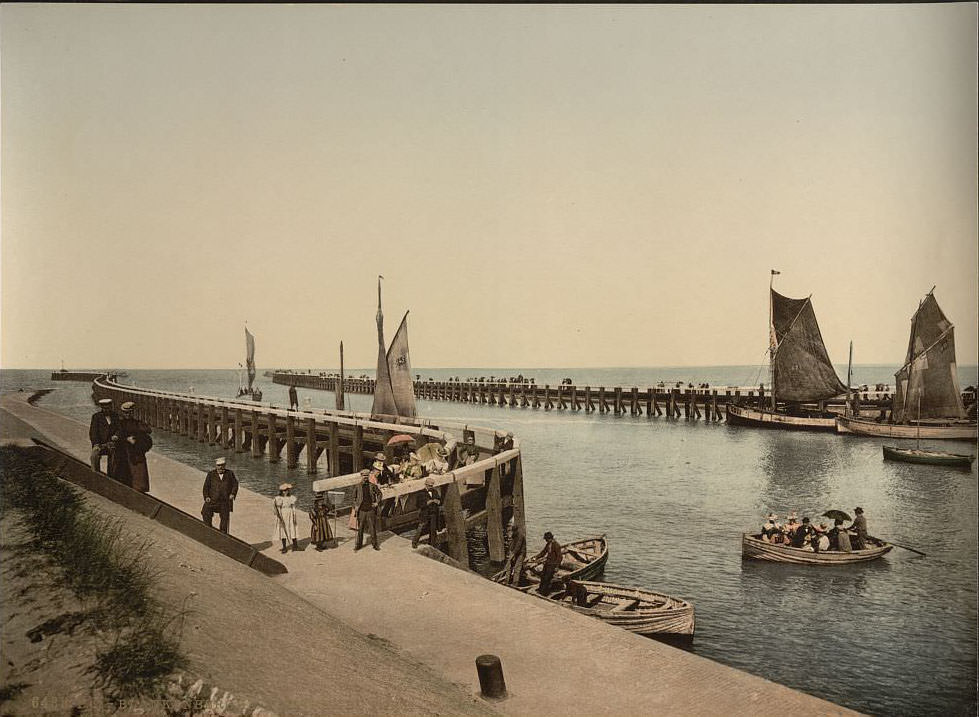
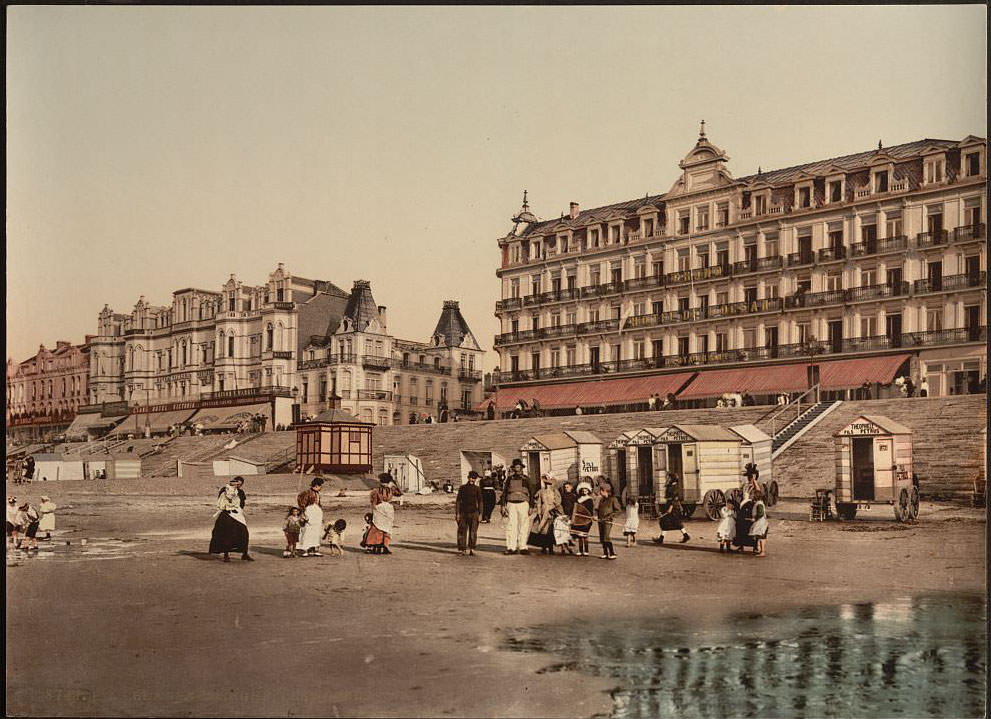
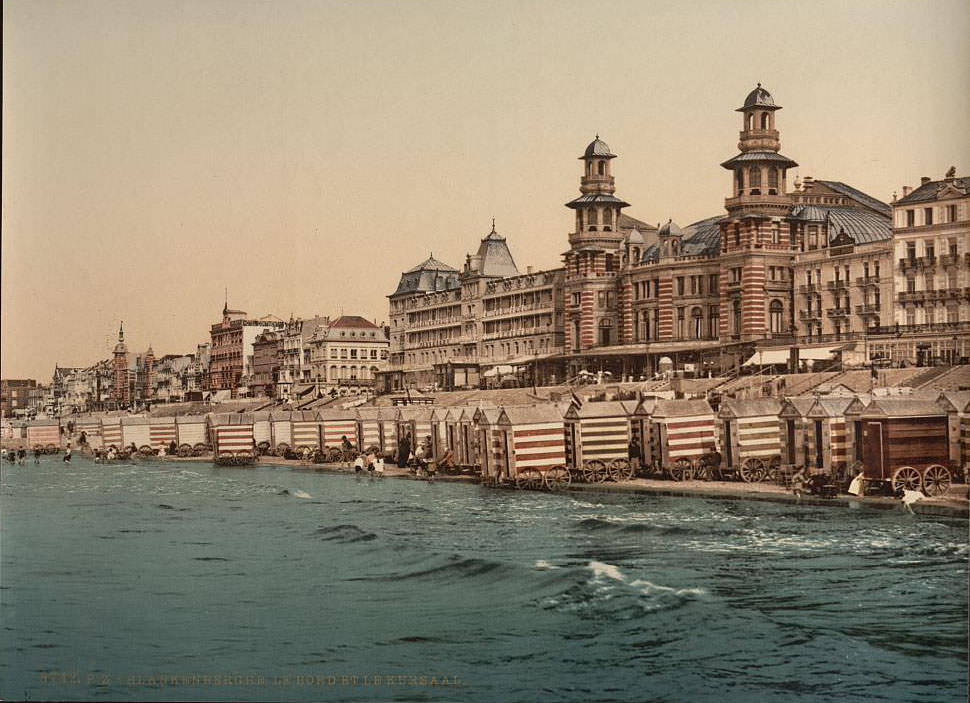
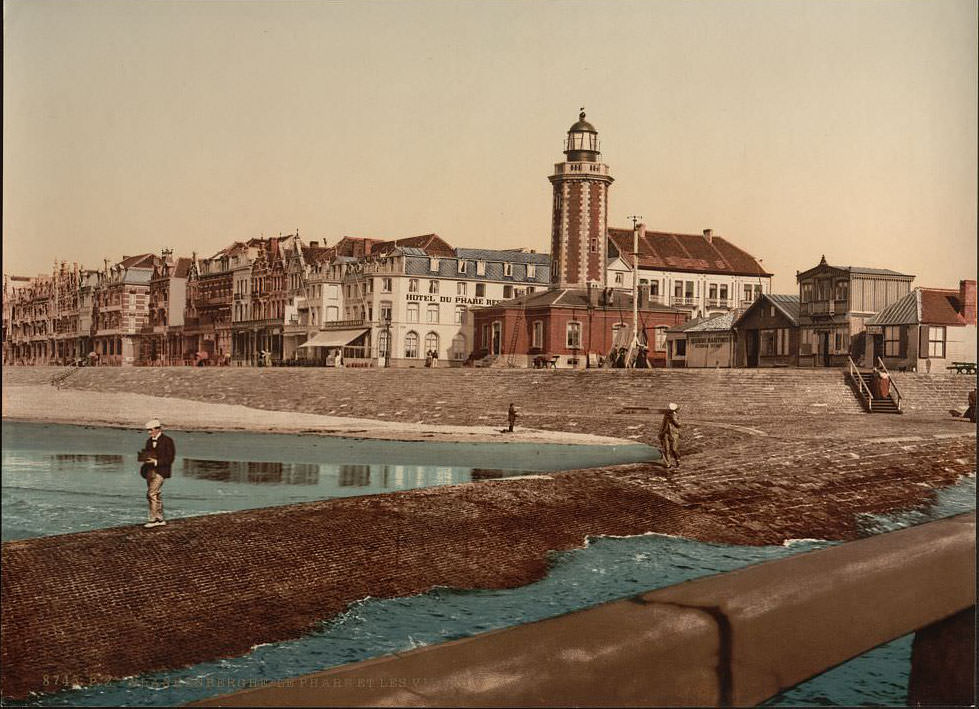
Along the North Sea coast, Blankenberge was one of Belgium’s most popular seaside resorts in the 1890s. Wealthy families from Brussels and Ghent traveled there each summer to enjoy the beach, the pier, and the grand Kursaal — a large entertainment complex that hosted concerts, gambling, and social events. Hotels and private villas lined the seafront, and the beach was a busy scene of bathers, promenaders, and beach vendors.
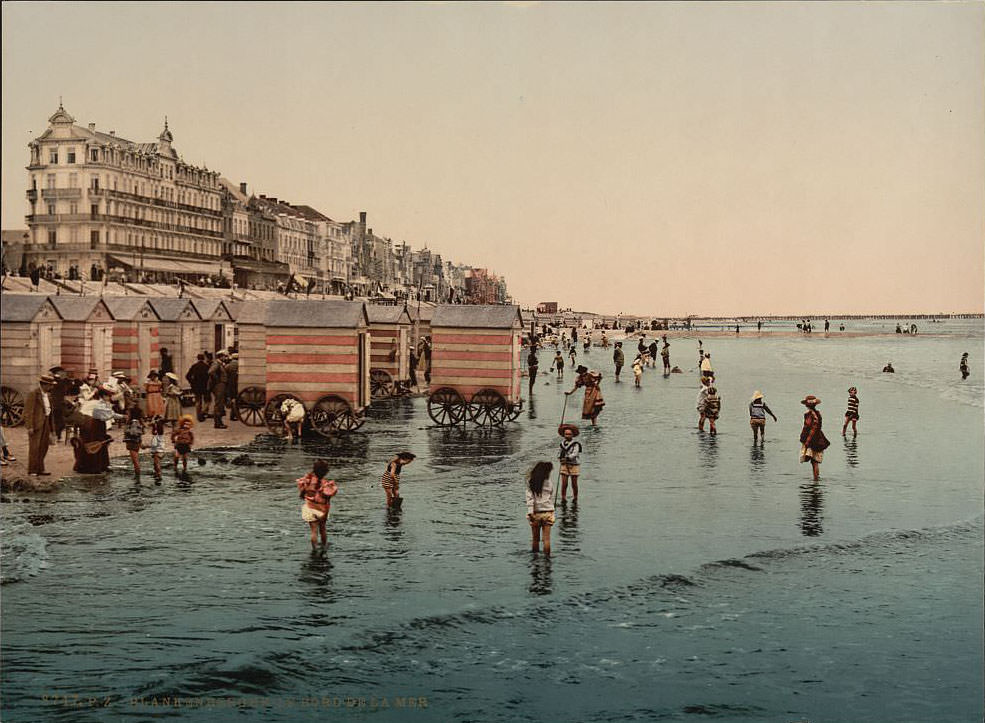
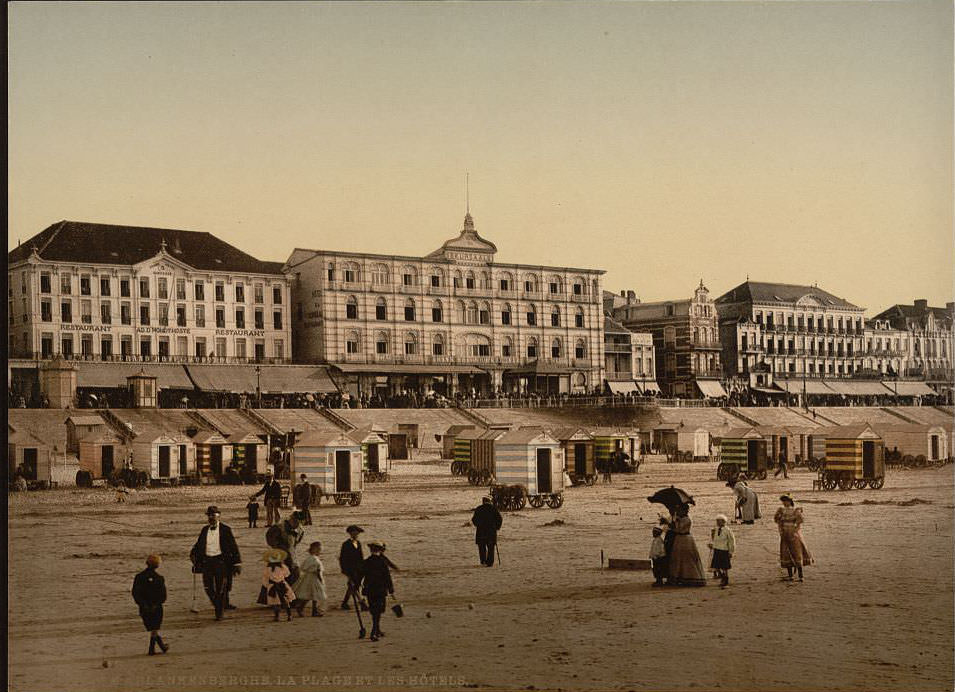
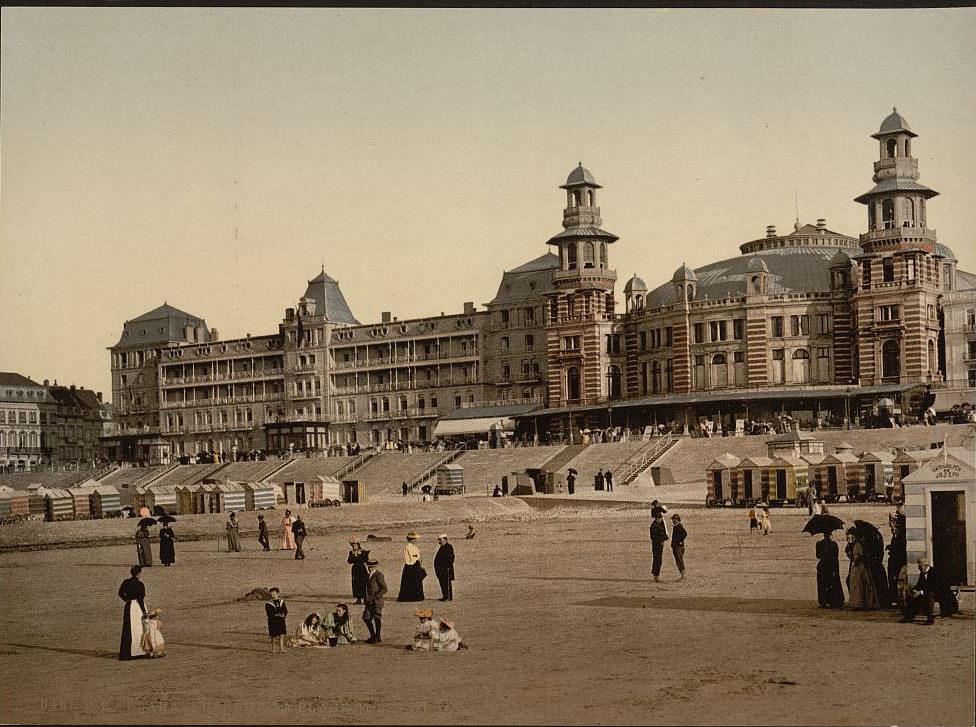
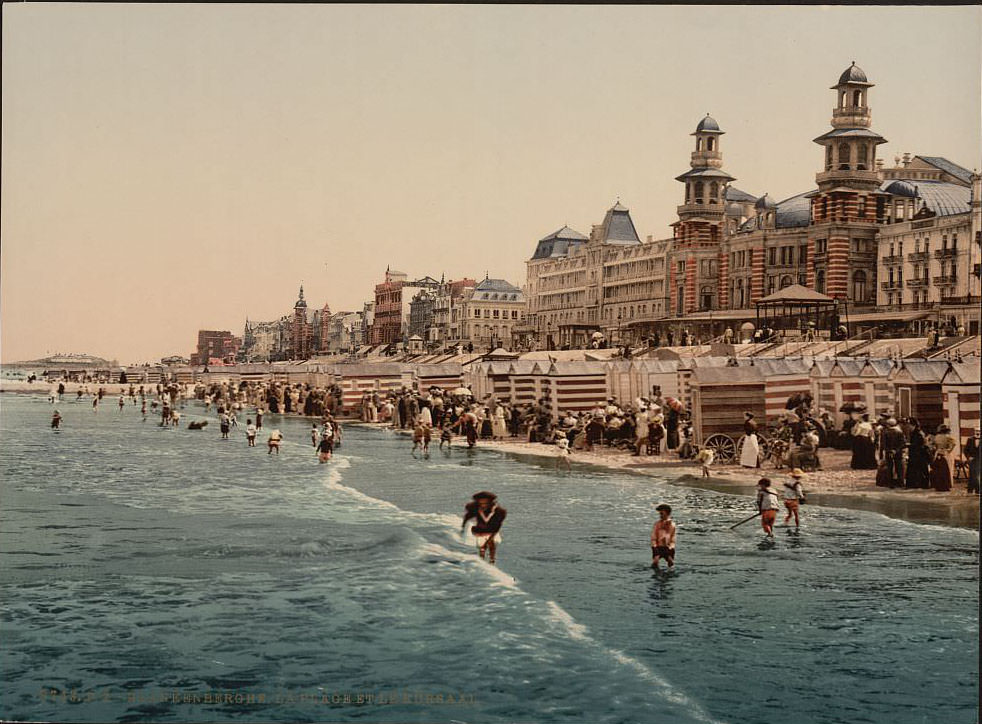
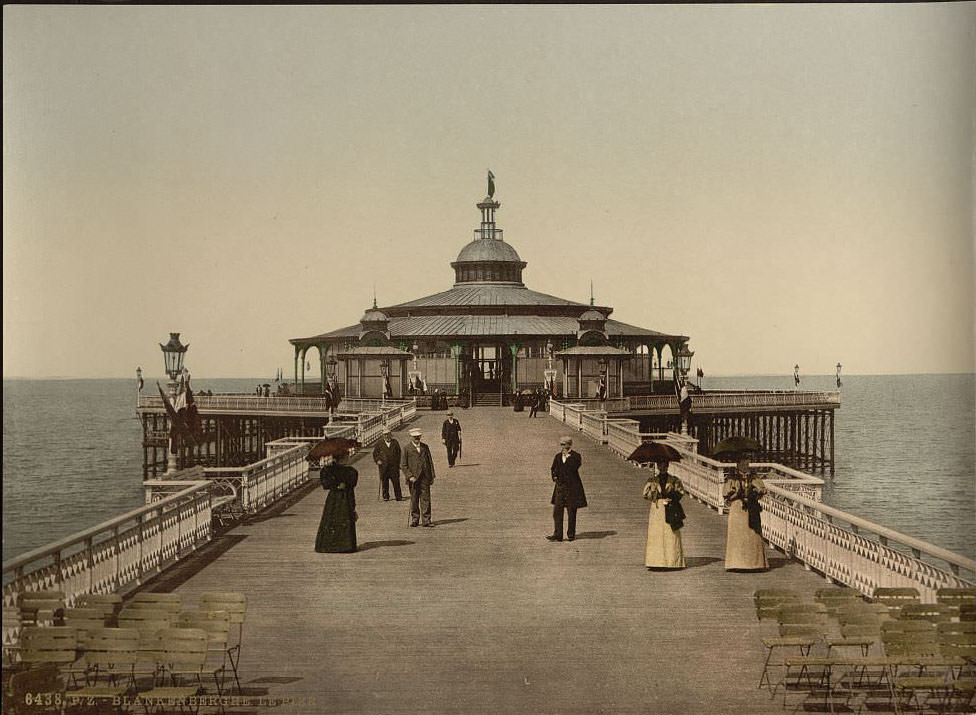
The pier at Blankenberge stretched out over the North Sea and was a focal point of the resort’s social life. Visitors strolled its length to take in the sea air and watch the fishing boats and steamers pass. The lighthouse near the villas marked the edge of the harbor entrance, guiding ships safely into port.
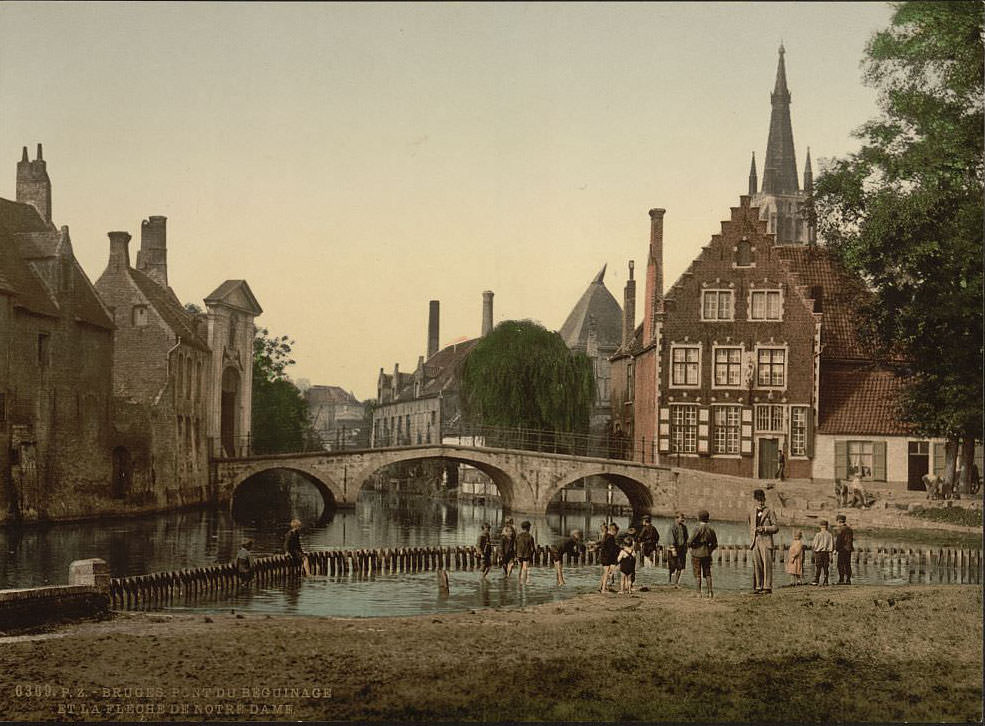
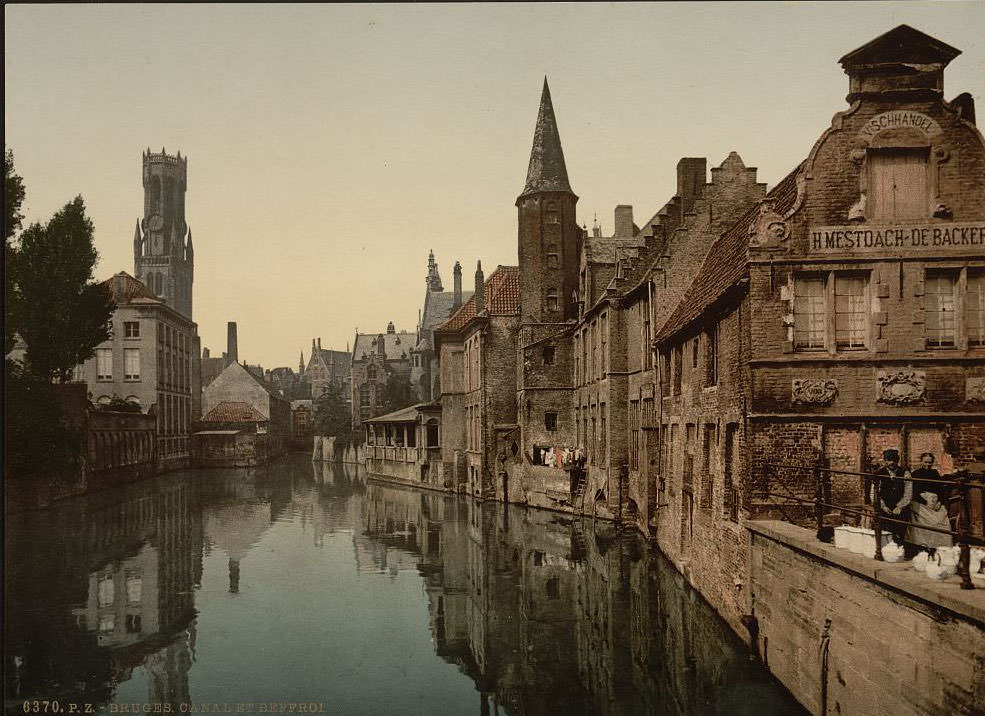
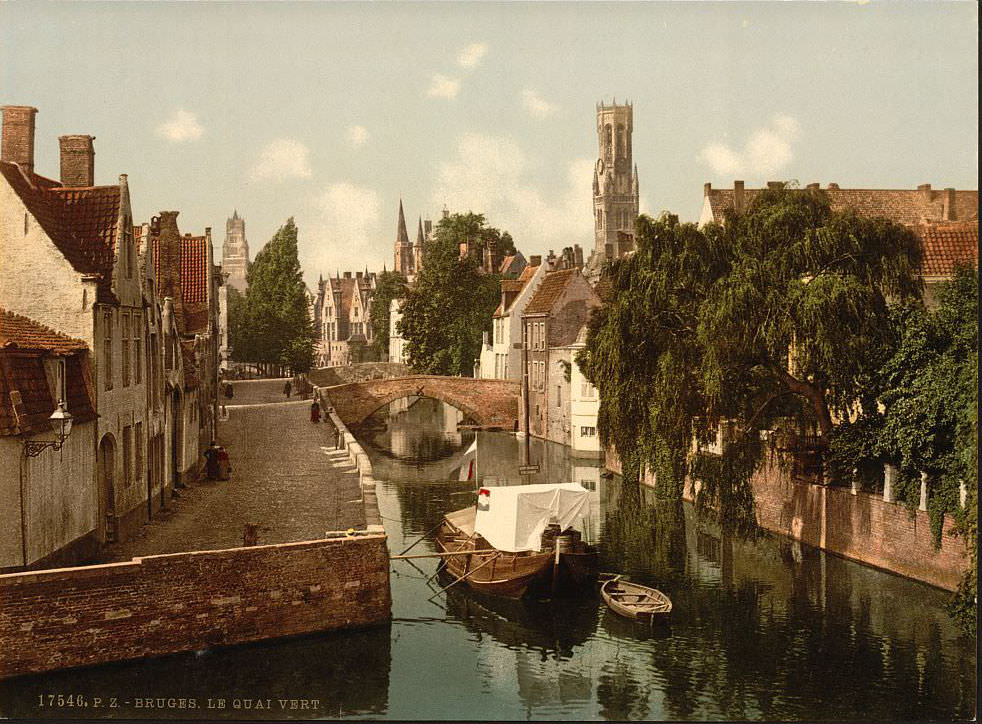
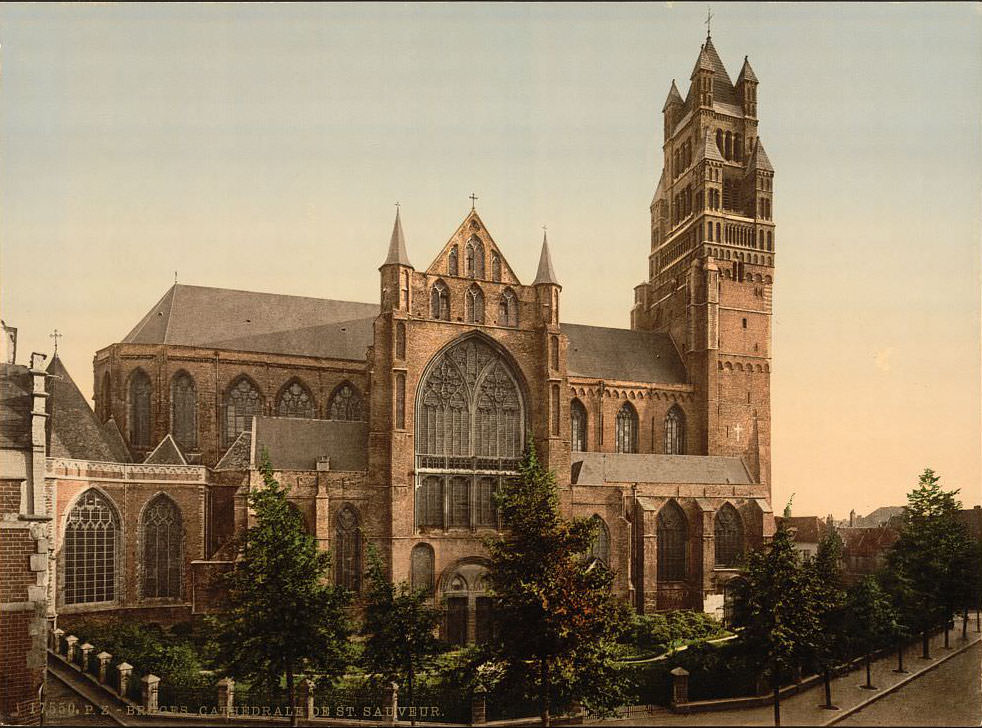
Bruges, known for its medieval canals and preserved Gothic architecture, looked much in the 1890s as it had centuries before. The city had largely been bypassed by industrial growth, which left its old gates, churches, and guild halls intact. The Belfry tower, rising above the market square, had kept watch over the city since the 13th century. The canals that threaded through the city gave Bruges its nickname — the Venice of the North.
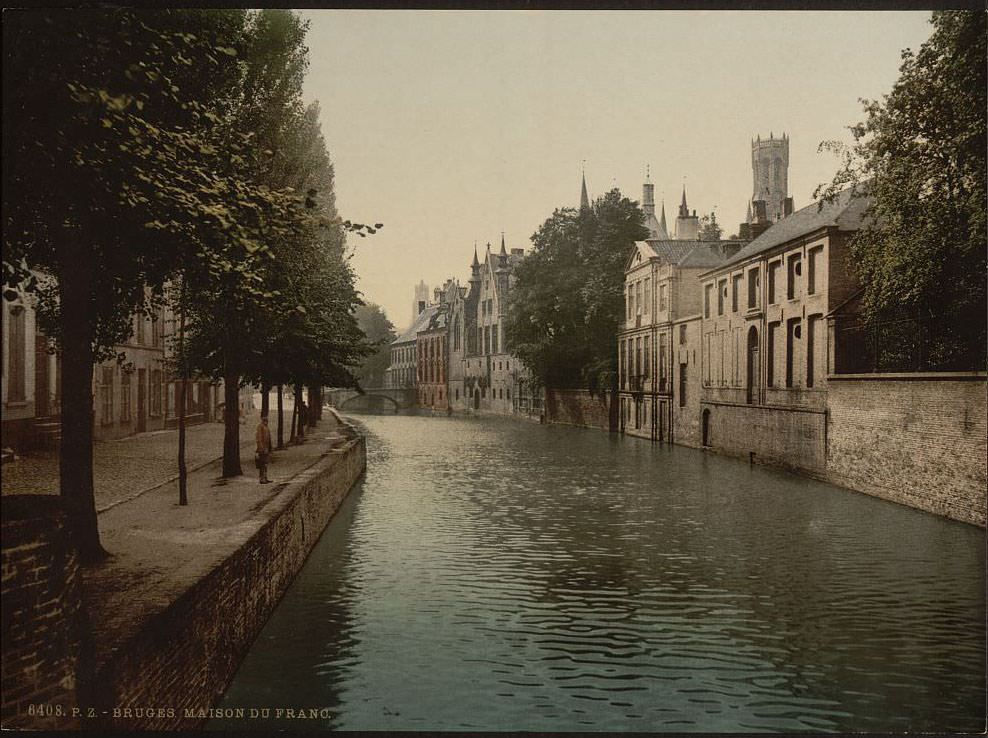
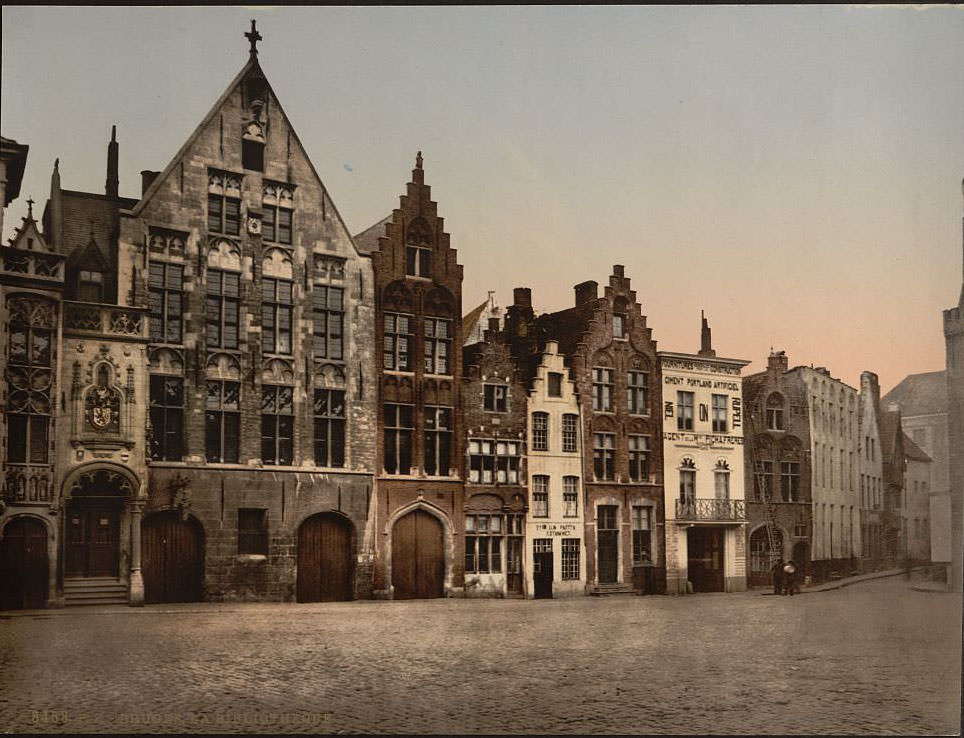
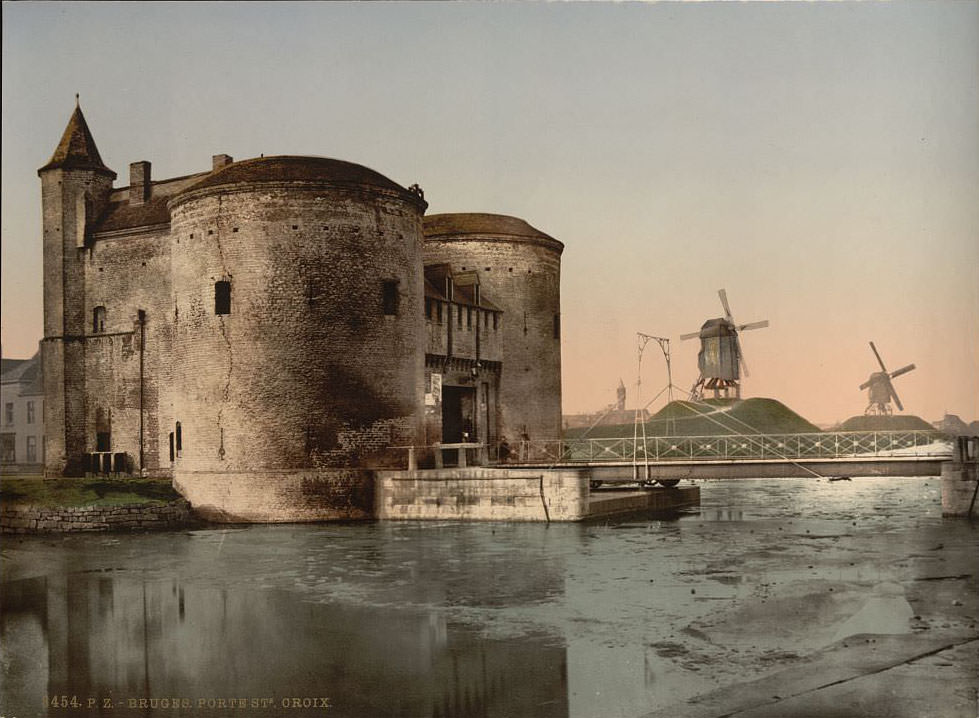
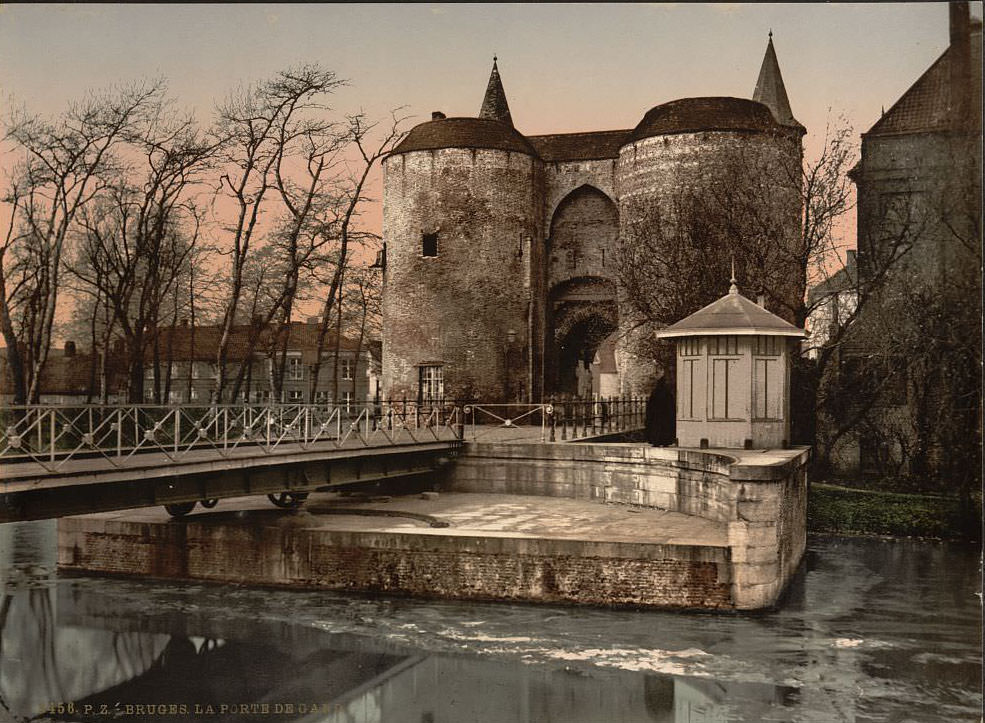
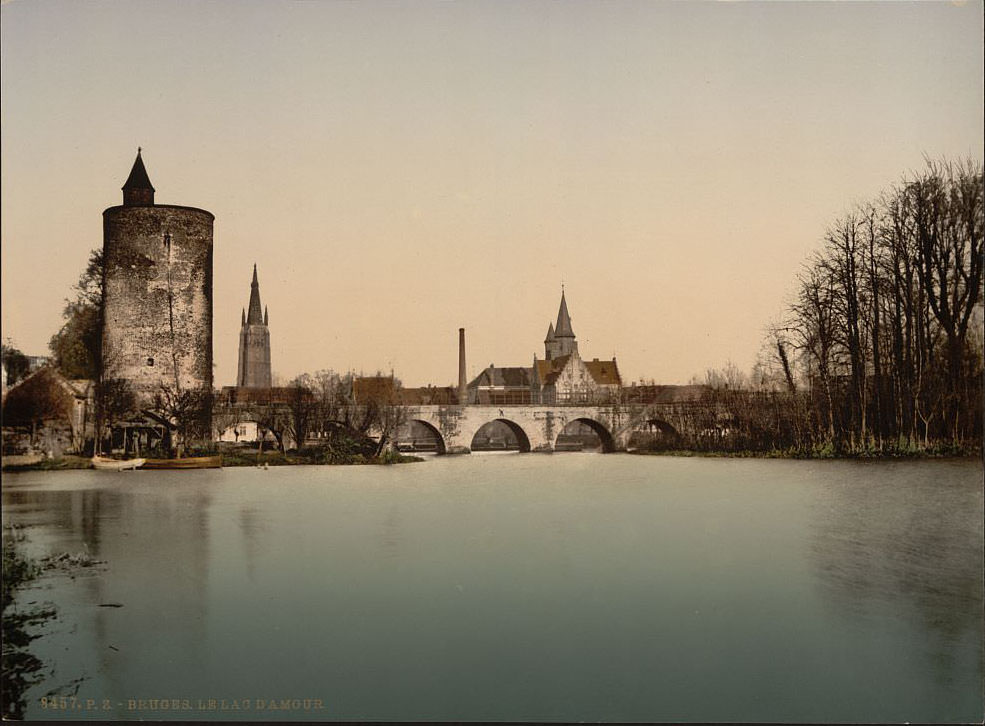
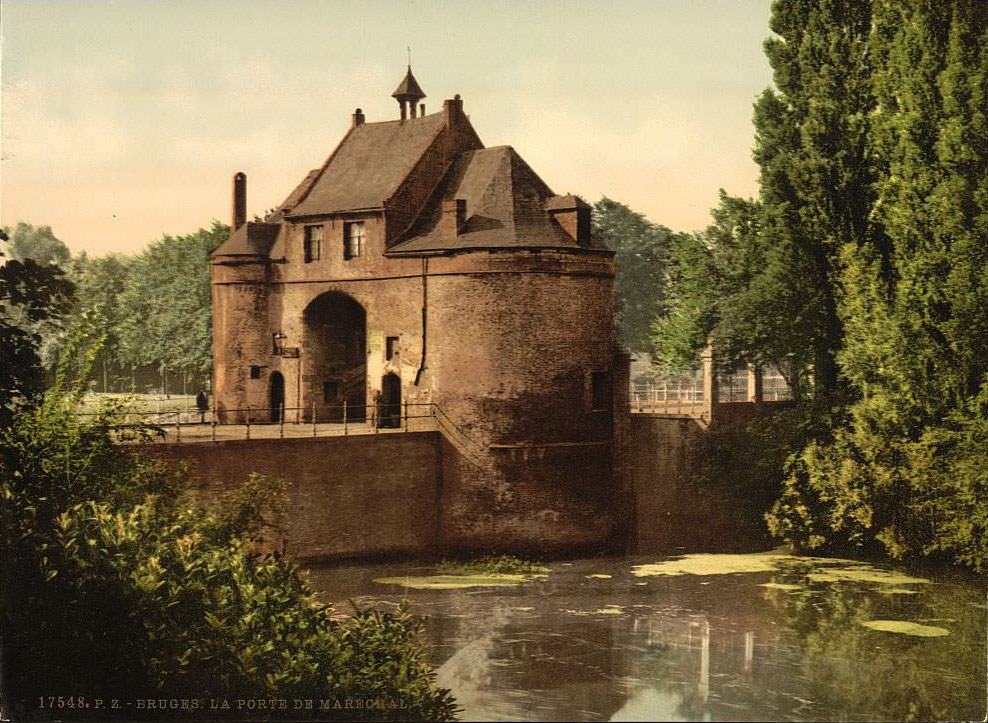
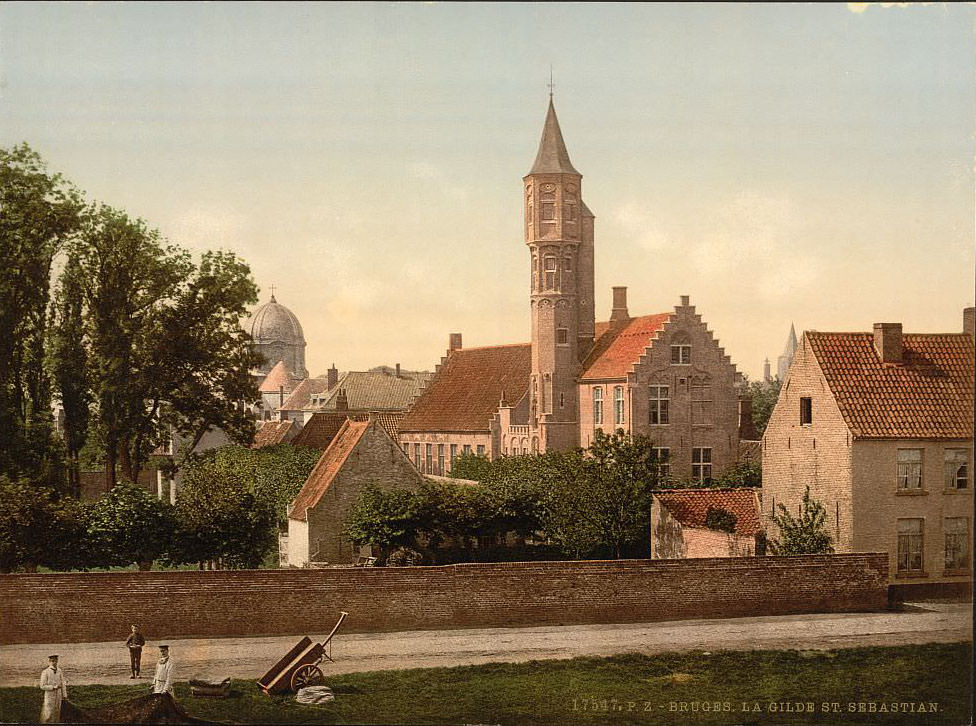
The Lac d’Amour, or Lake of Love, was a tranquil spot on the edge of Bruges where swans glided beneath willow trees — a favorite scene for artists and visitors. The city’s old gates, including the Marechal Gate, were remnants of its medieval defensive walls. The Guild of St. Sebastian, one of the oldest archery guilds in Europe, still maintained its hall in the city, preserving centuries of tradition.
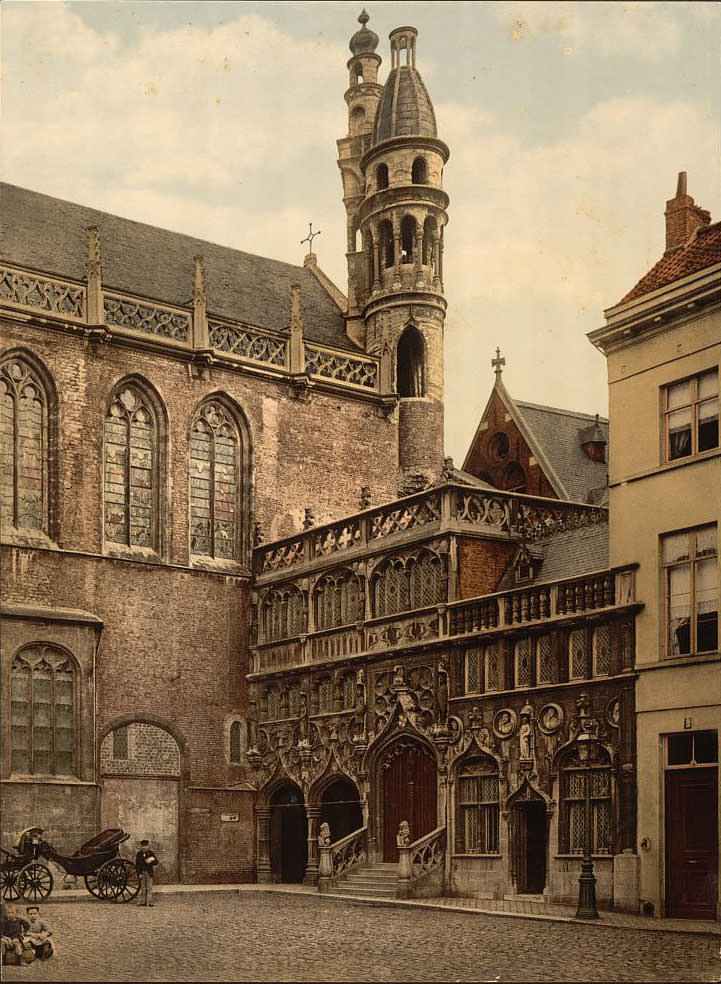
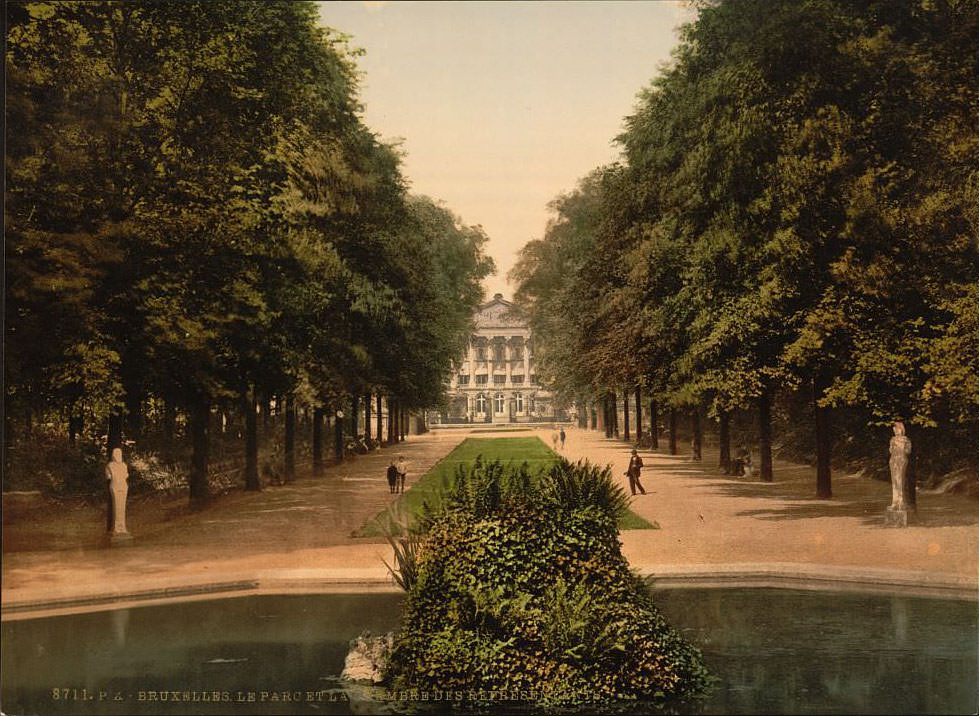
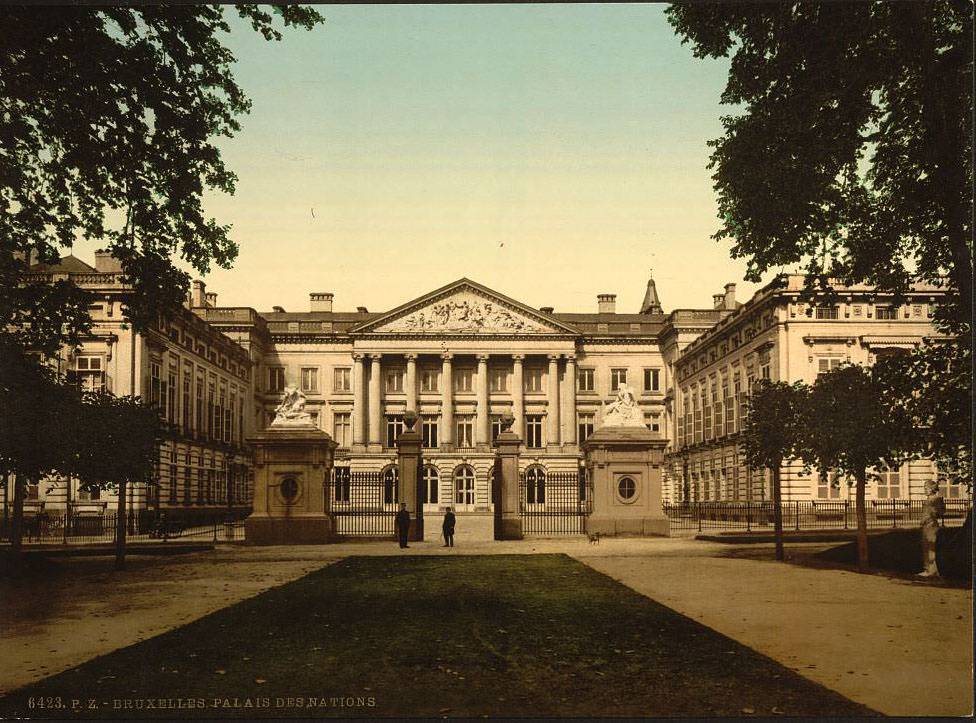
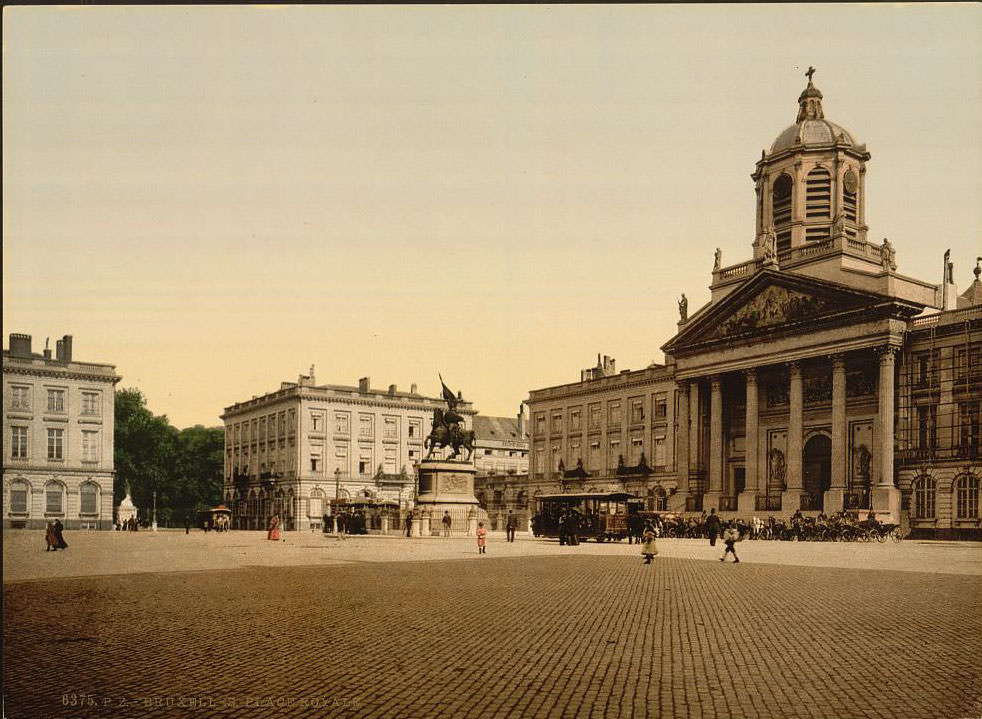
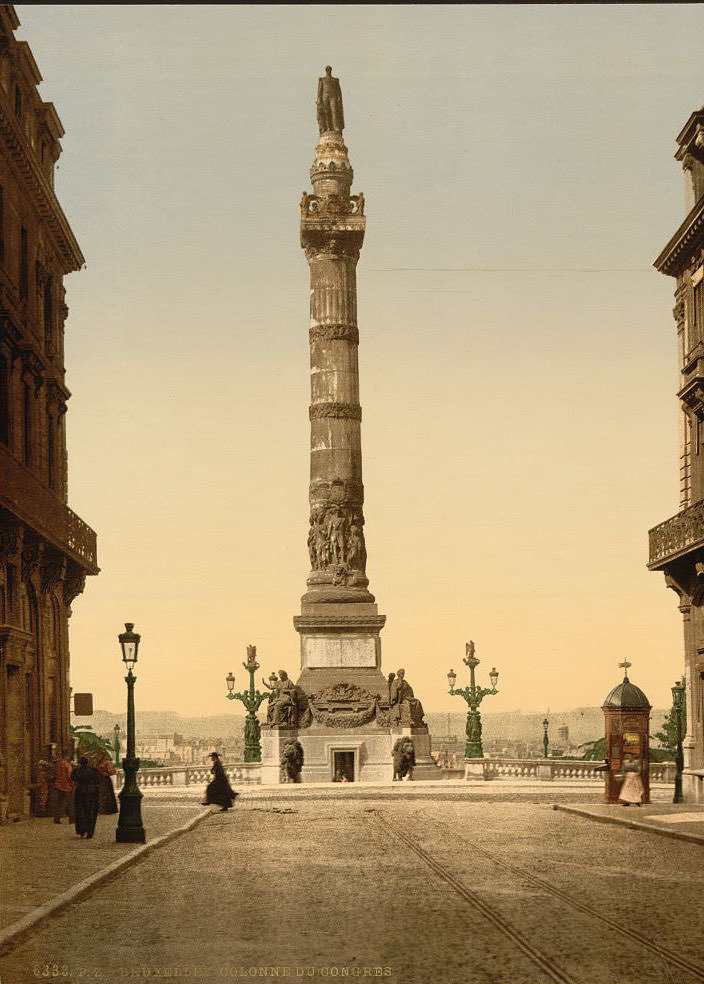
Brussels, the capital, displayed the full ambition of the Belgian state through its grand public buildings and wide boulevards. The Chamber of Representatives met in the Palace of the Nation, flanked by formal gardens. The Royal Palace faced the Place Royale, while the Royal Theatre — better known as the Théâtre Royal de la Monnaie — stood as one of Europe’s leading opera houses. The Column of Congress, erected in 1859, honored the National Congress that had drafted the Belgian constitution.
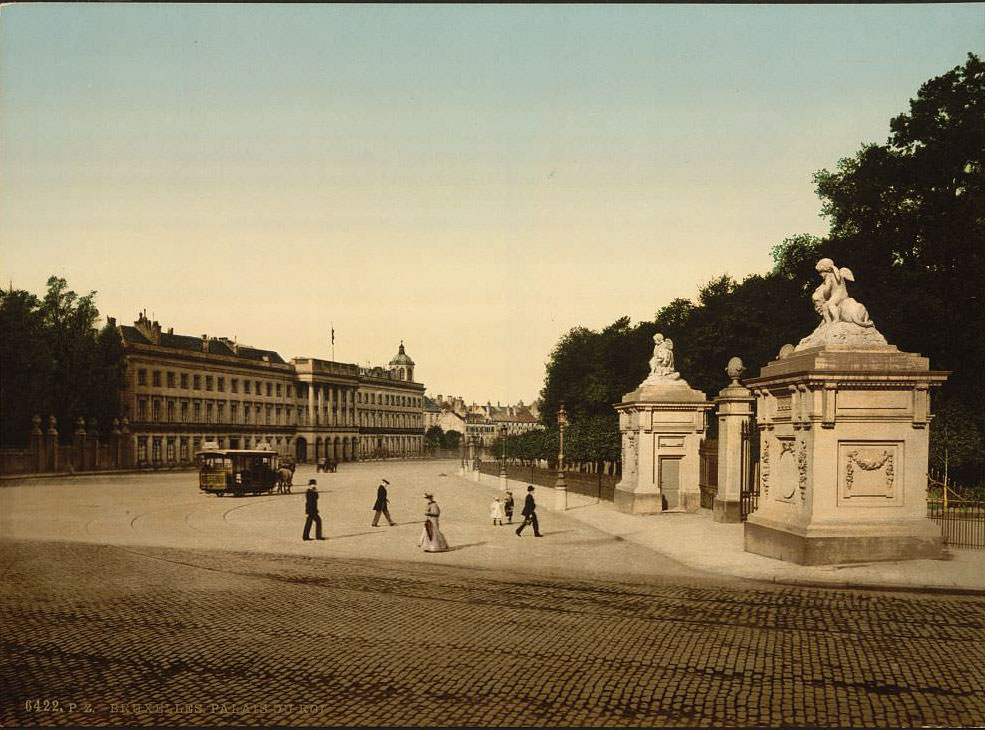
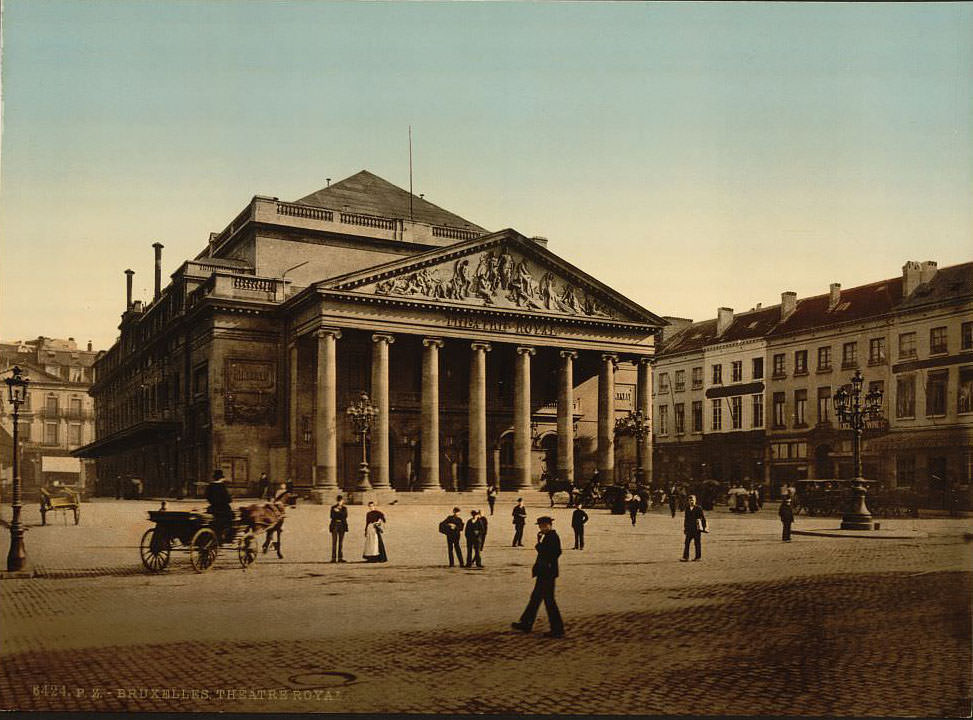
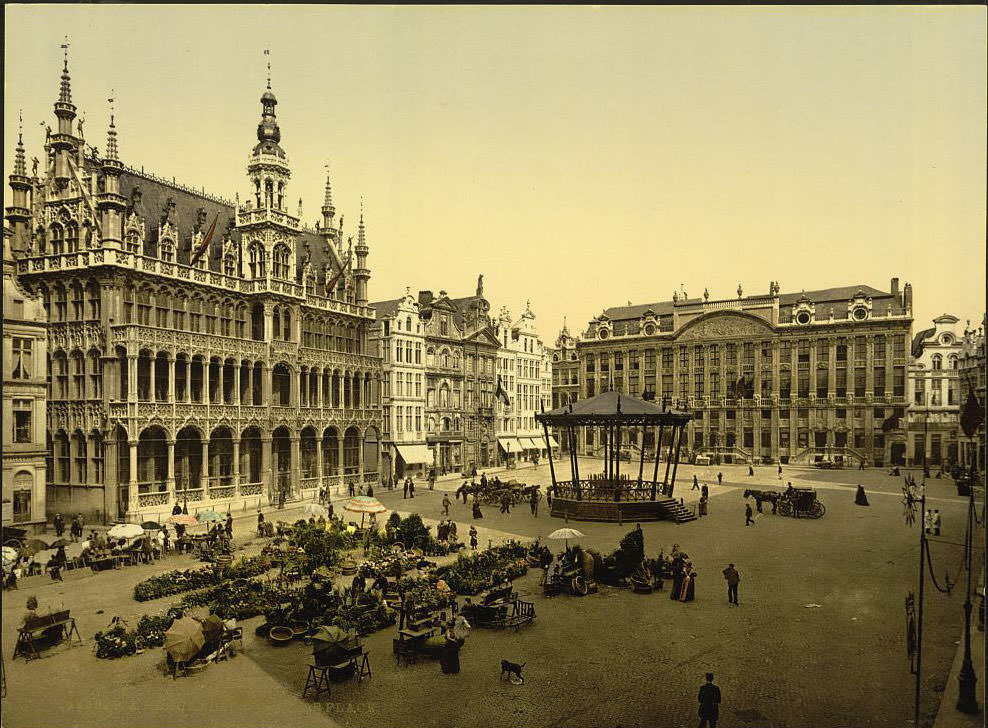
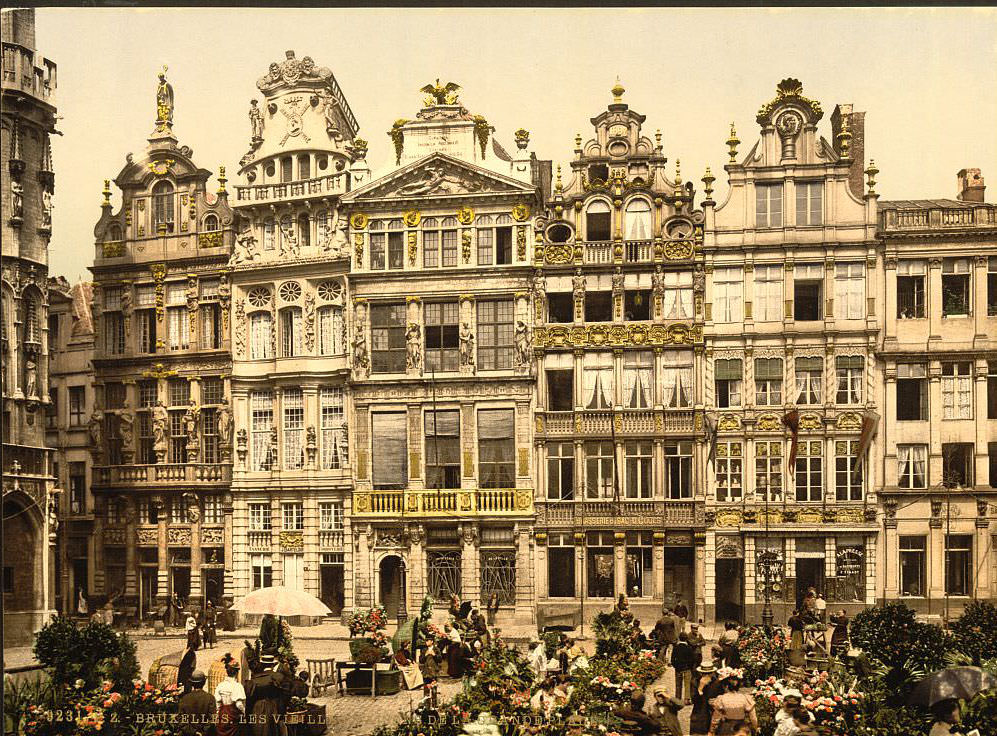
St. Hubert’s Gallery, opened in 1847, was one of the oldest shopping arcades in Europe and a daily gathering place for Brussels residents. The Porte de Hal, a 14th-century tower that once formed part of the city’s second defensive wall, was one of the few surviving medieval structures in the capital. La Grande Place — Brussels’ central market square — was surrounded by the ornate guild houses of the city’s medieval trade corporations, their gilded facades still gleaming.
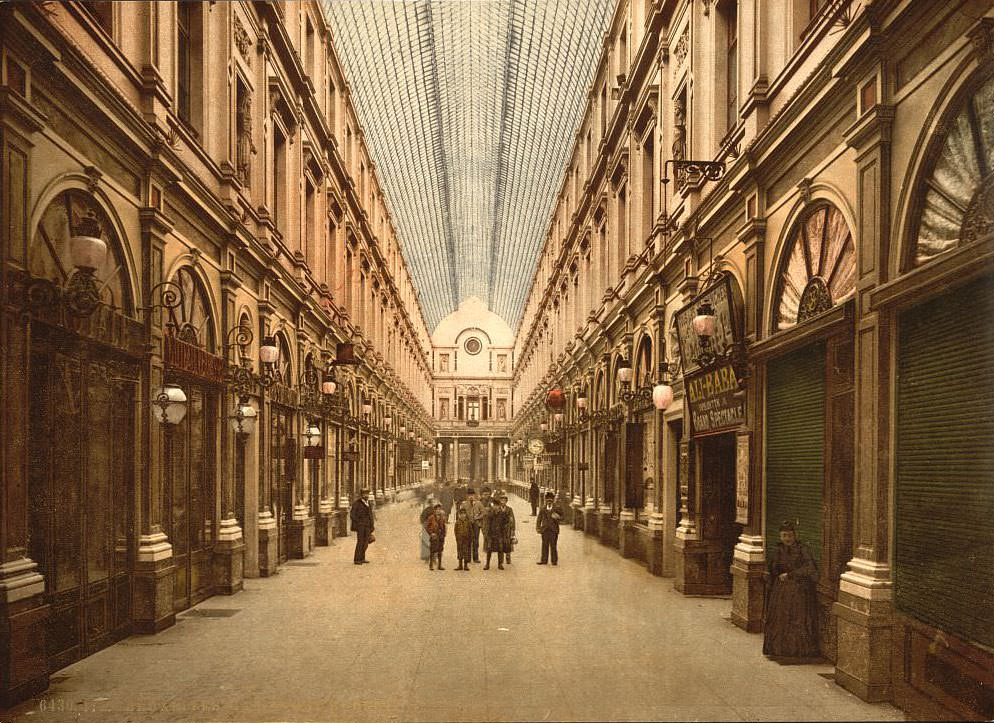
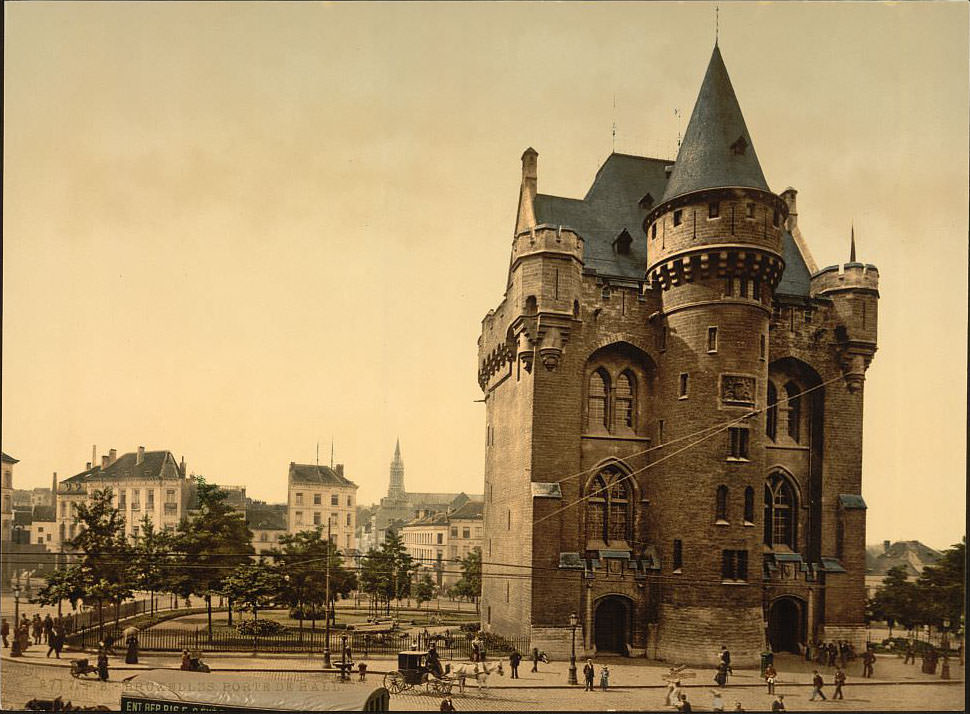
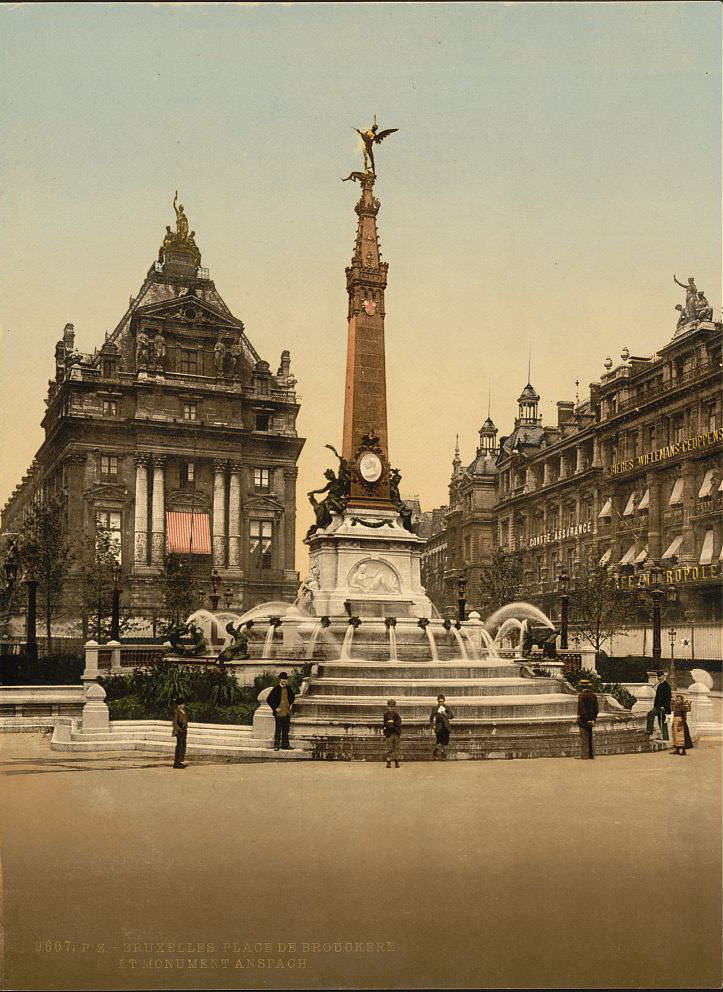
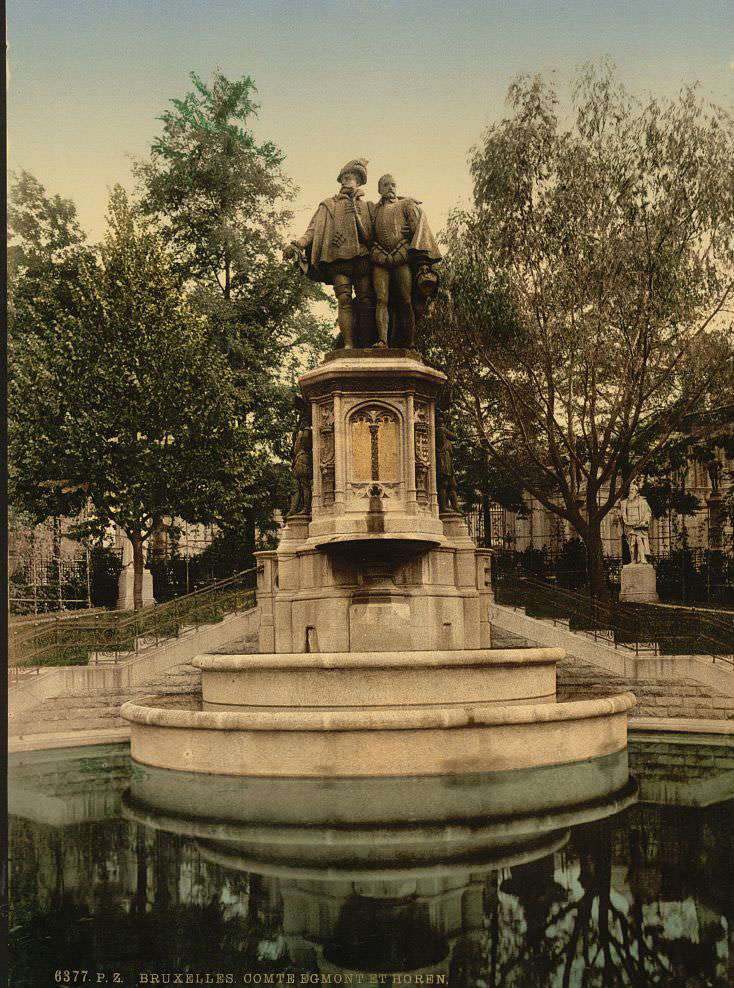
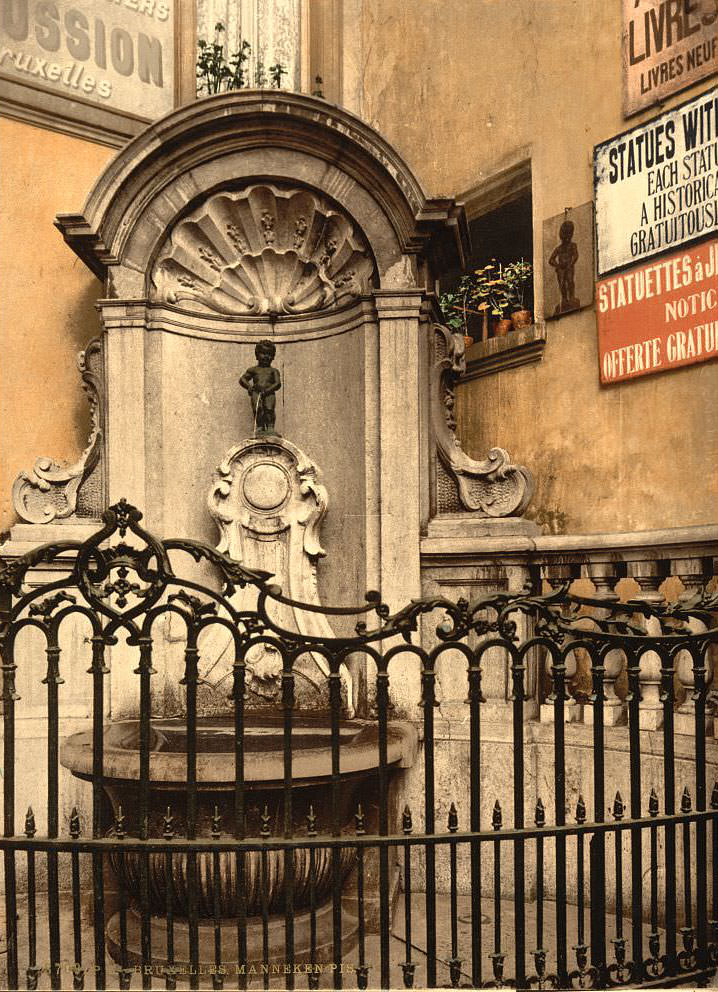
The Brouckere Place honored Jules Anspach, the burgomaster who had overseen Brussels’ major urban renovation in the 1860s and 1870s, which included covering the River Senne and cutting new boulevards through the old city. The monument to Counts Egmont and Hoorn, erected in the Petit Sablon square, commemorated the two Flemish noblemen executed by the Duke of Alba in 1568 during the Spanish occupation. Manneken Pis, the small bronze fountain boy, had been a symbol of the city since 1619.
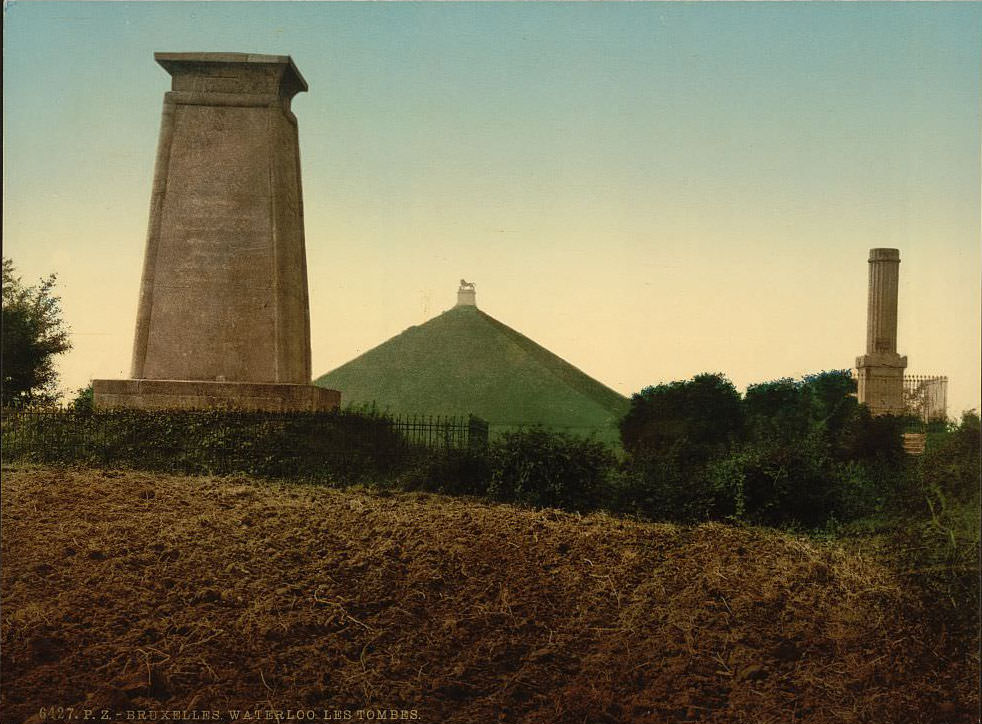
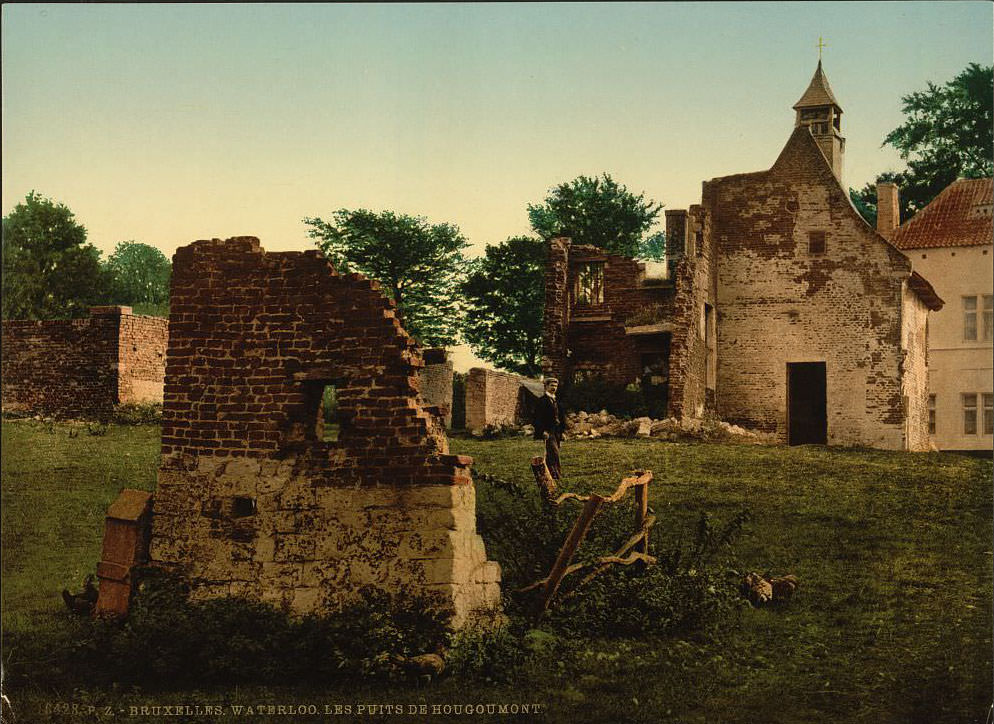
South of Brussels, the battlefield of Waterloo remained a place of pilgrimage in the 1890s. The 1815 battle that ended Napoleon’s rule had left deep marks on the landscape. The wells at Hougoumont Farm, where some of the day’s fiercest fighting took place, were still visible, as were burial grounds and memorials. The tombs at Waterloo drew visitors from across Europe who came to stand on the ground where tens of thousands of soldiers had died in a single day.
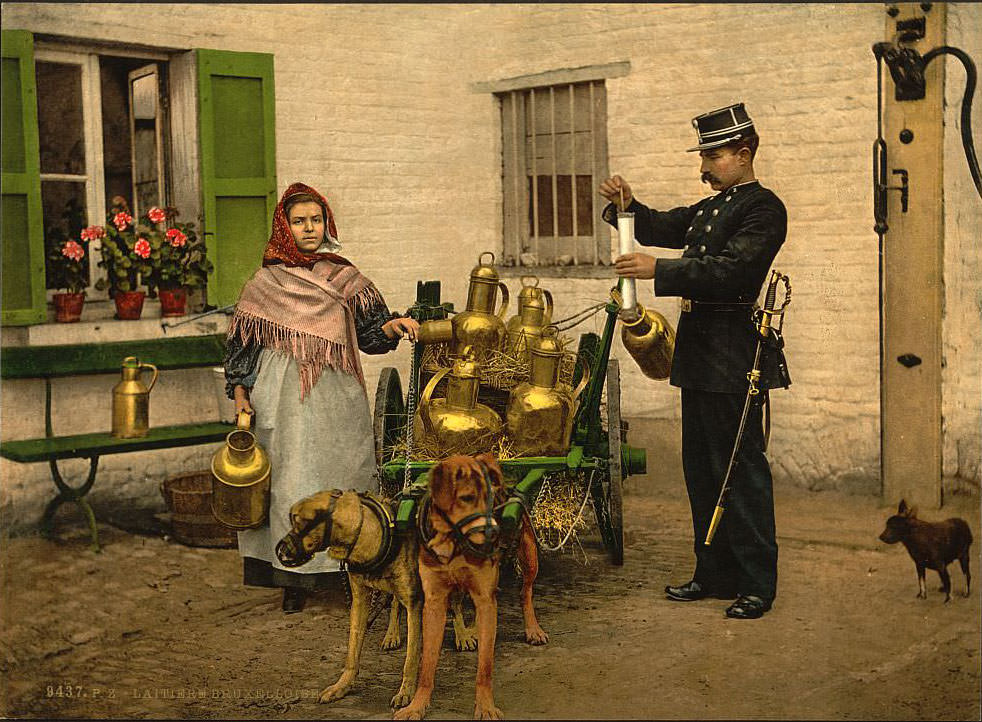
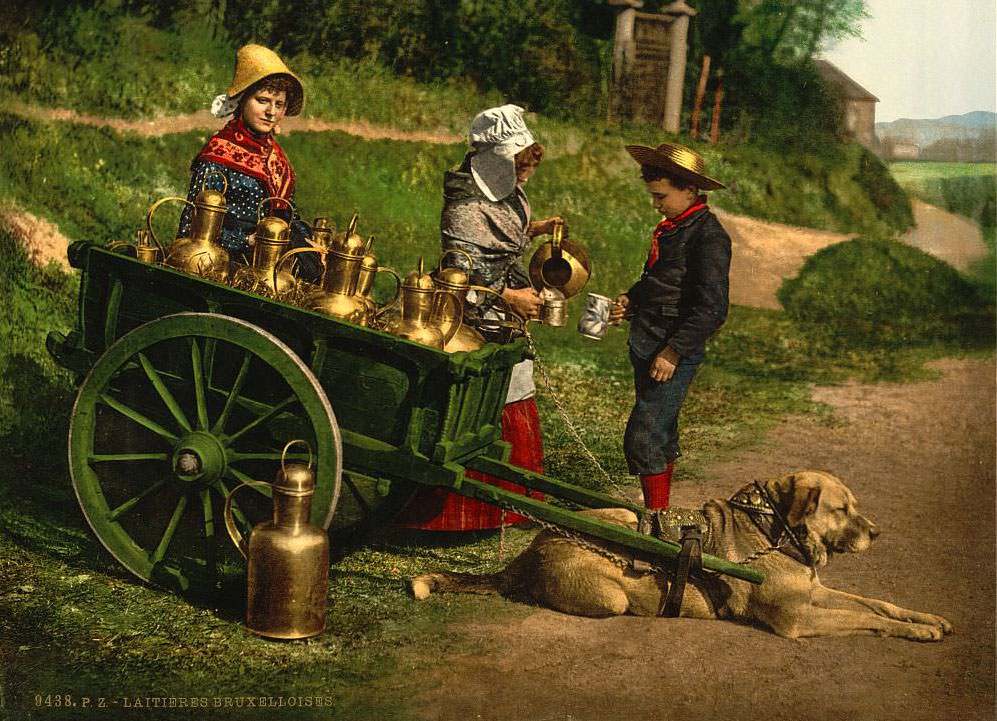
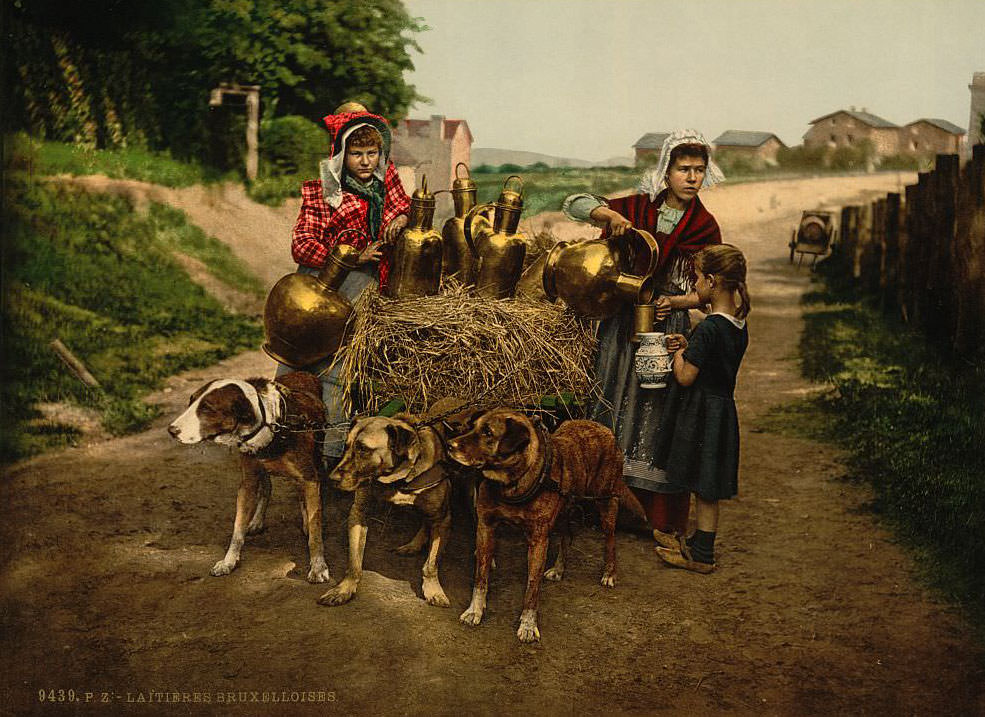
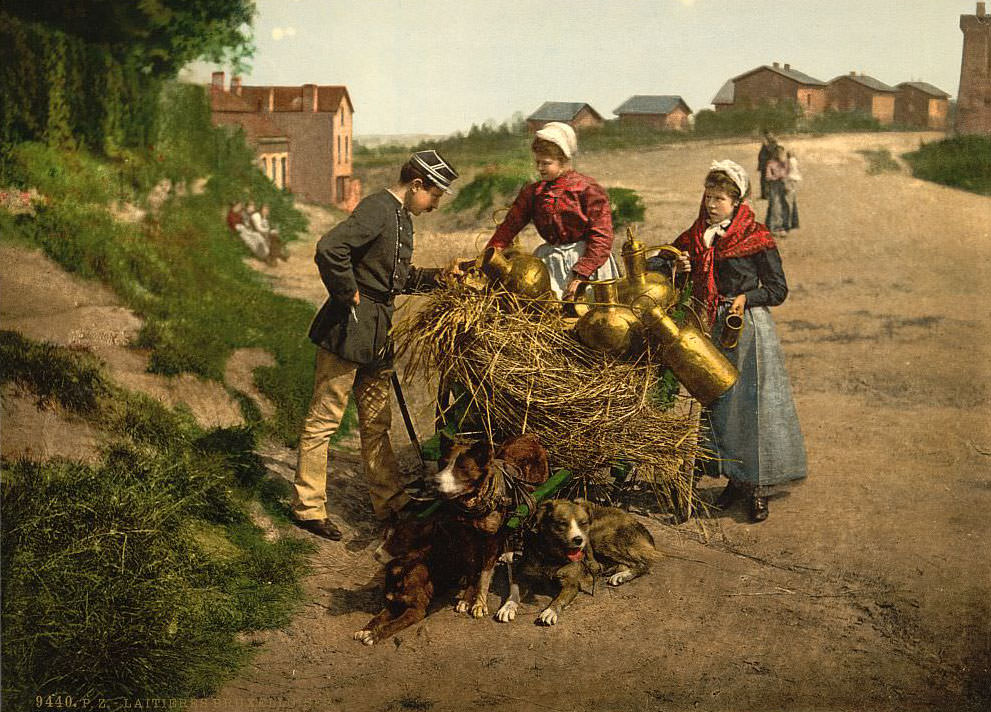
Milk sellers were a fixture of Brussels street life throughout the 19th century. They traveled the city’s neighborhoods on foot or by cart, delivering fresh milk directly to households each morning. Their traditional dress — wooden yokes, brass milk cans, and regional aprons — made them one of the most distinctive and frequently photographed figures in the Belgian capital. Multiple photographers documented them, and their images became widely circulated on photochrom postcards across Europe.
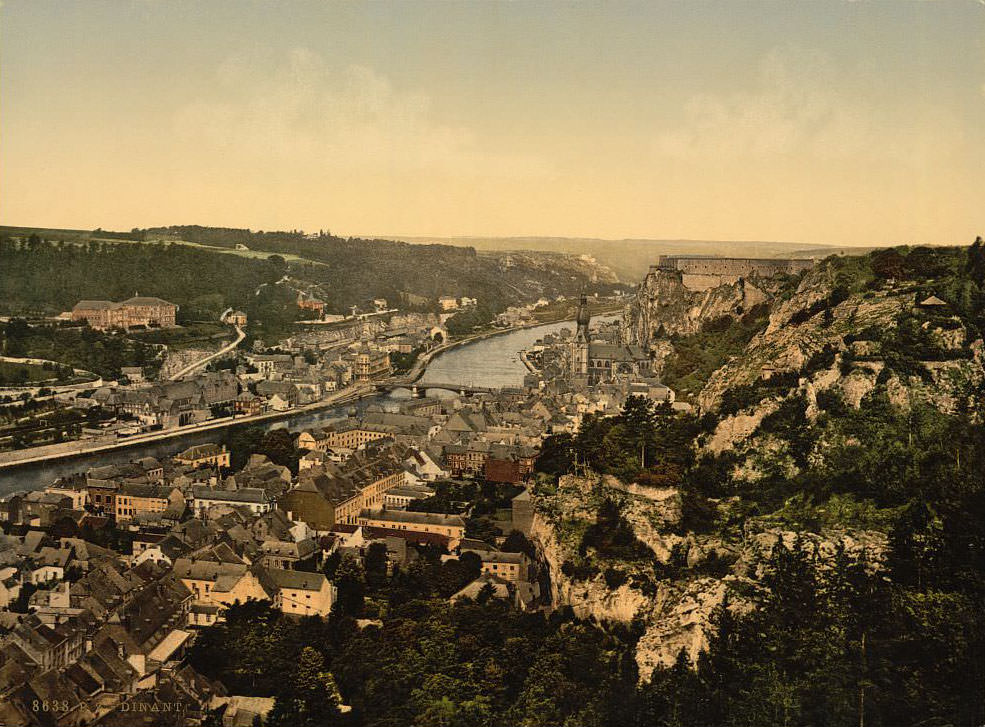
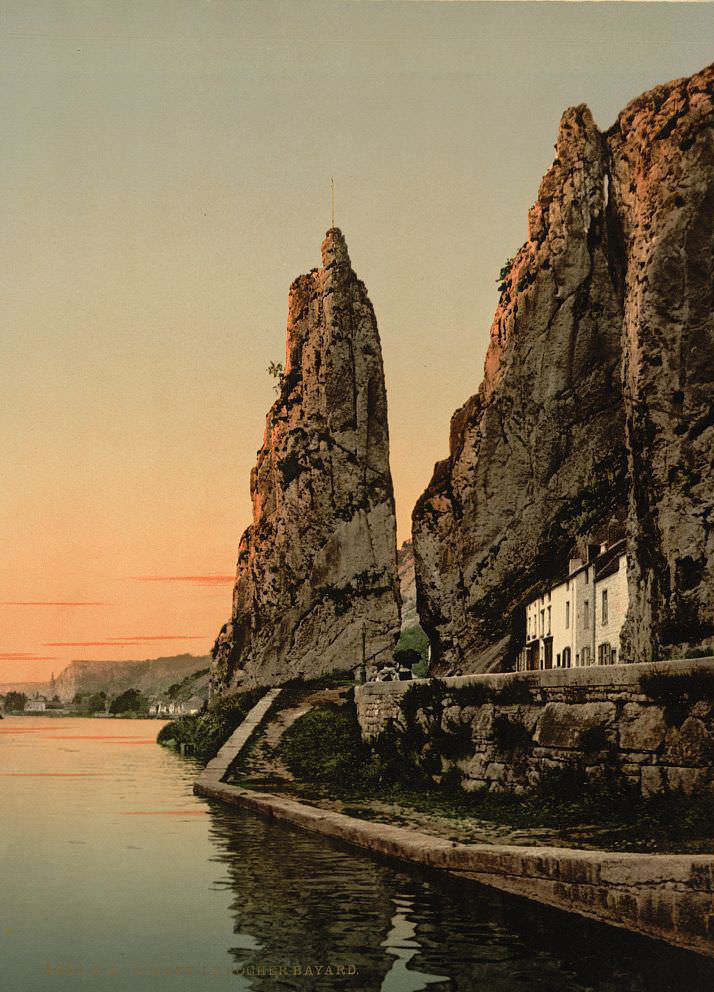
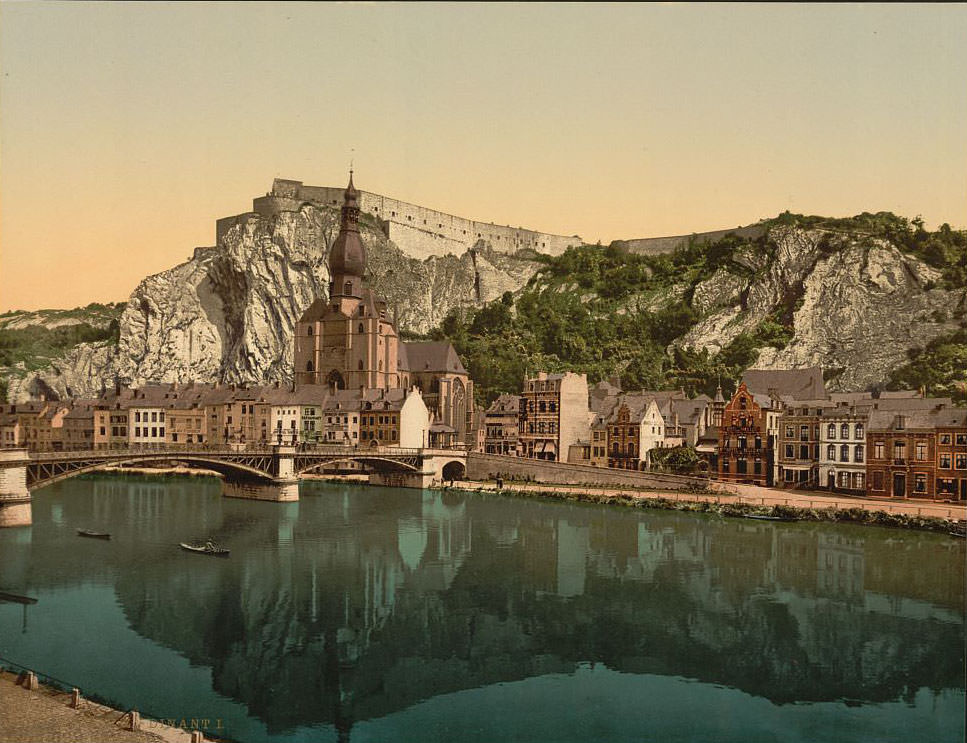
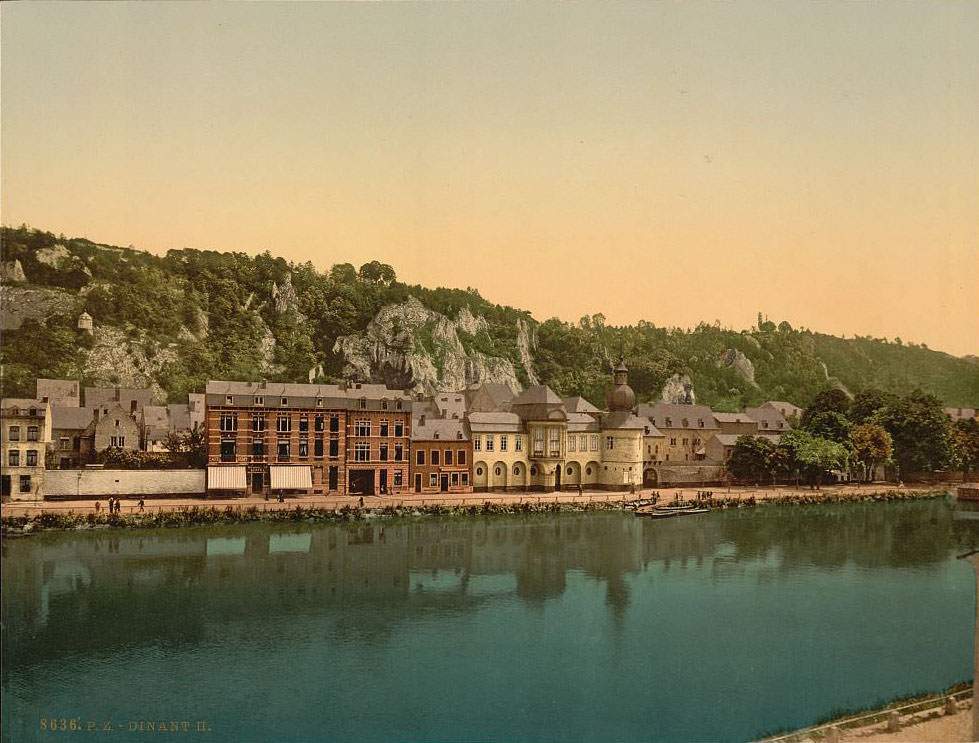
Dinant, a small town on the Meuse River in the province of Namur, was known for its dramatic setting — steep limestone cliffs rising directly behind the town’s waterfront, with the Collegiate Church of Notre-Dame wedged between the rock face and the river. The Bayard Rock, a narrow freestanding pillar of stone standing over 40 meters tall, sat just outside the town and was one of the region’s most visited natural landmarks. According to local legend, it was split in two by the legendary horse Bayard at the command of Charlemagne.
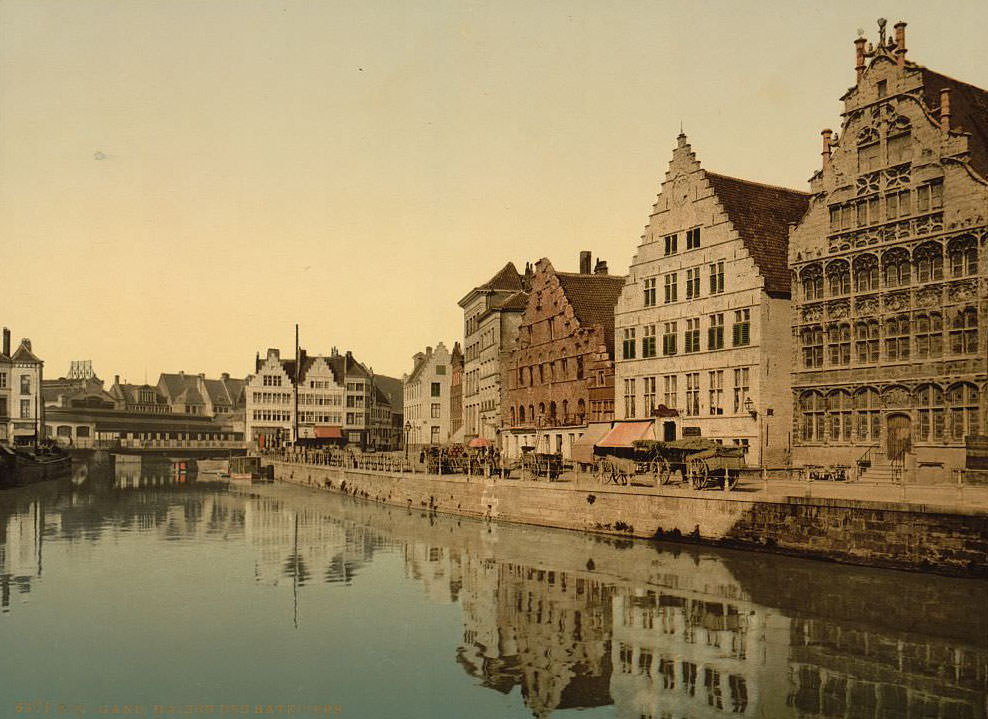
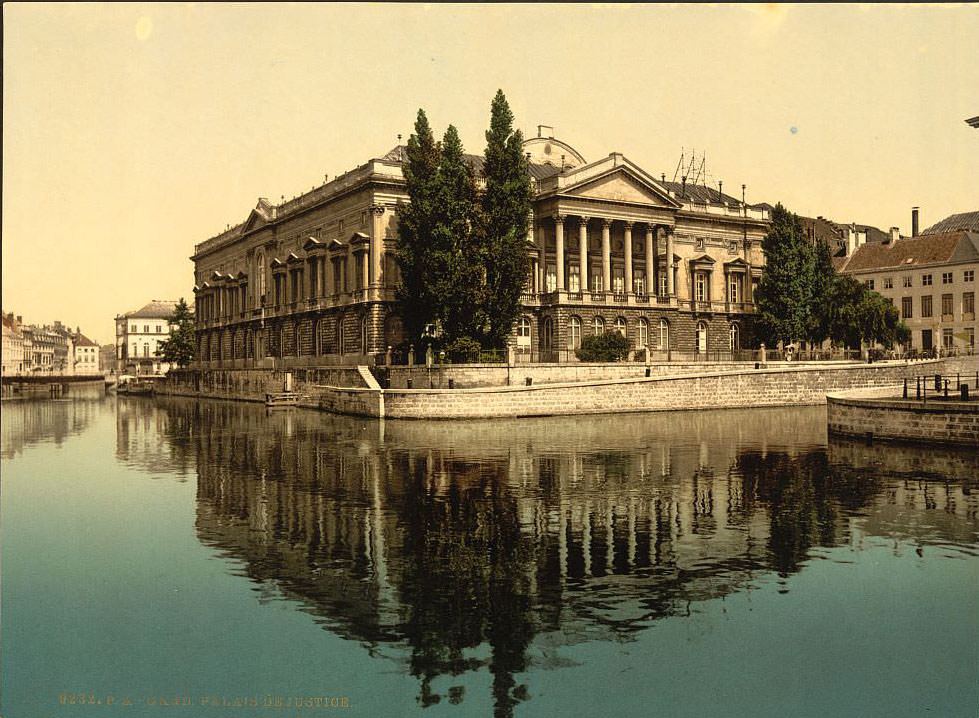
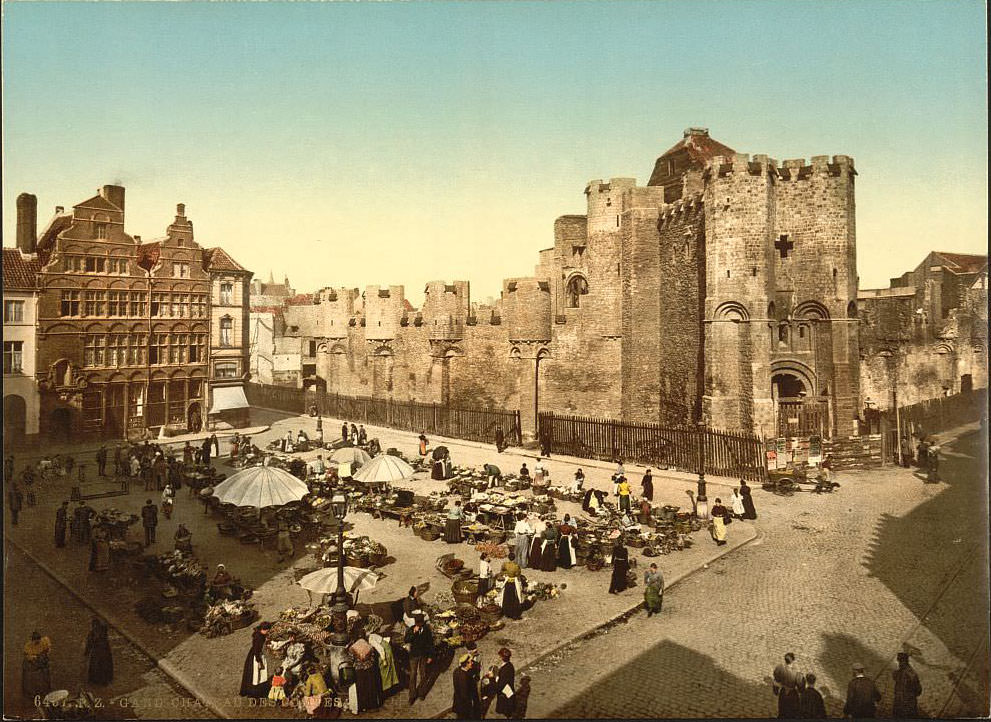
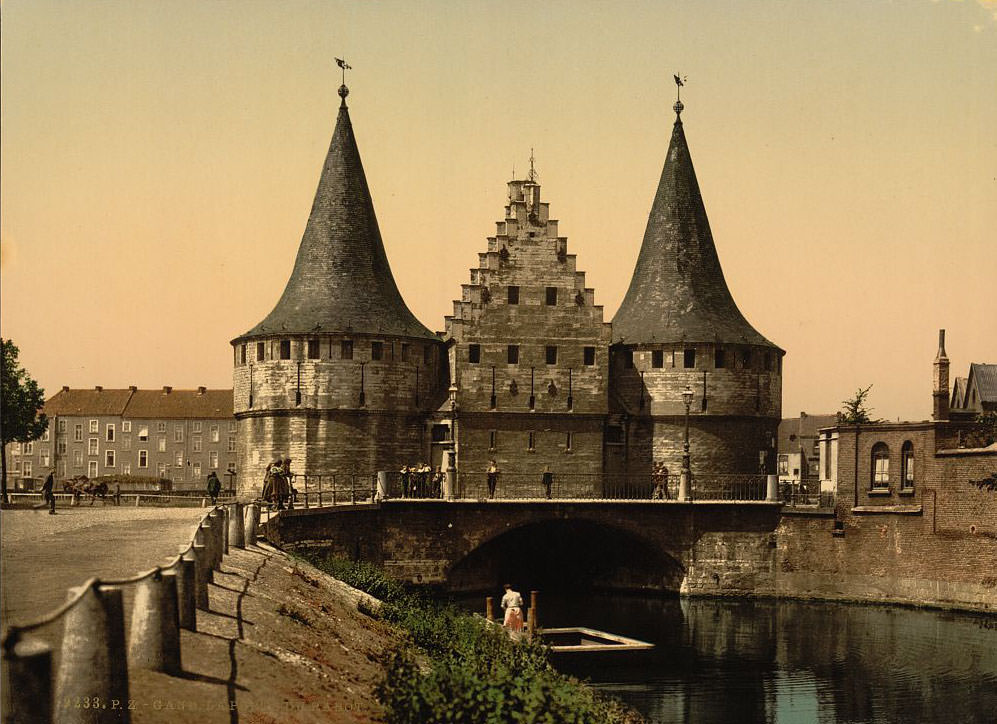
Ghent was one of Belgium’s oldest and most historically significant cities, a former center of medieval cloth trade that still carried the weight of that history in its architecture. The Castle of the Counts — Gravensteen — rose in the center of the city, its stone walls dating back to 1180. The Belfry and the adjacent Cloth Hall anchored the city’s main square, while the Rabot Gate, built in 1489, was one of the last remaining fortified sluice gates in Belgium.
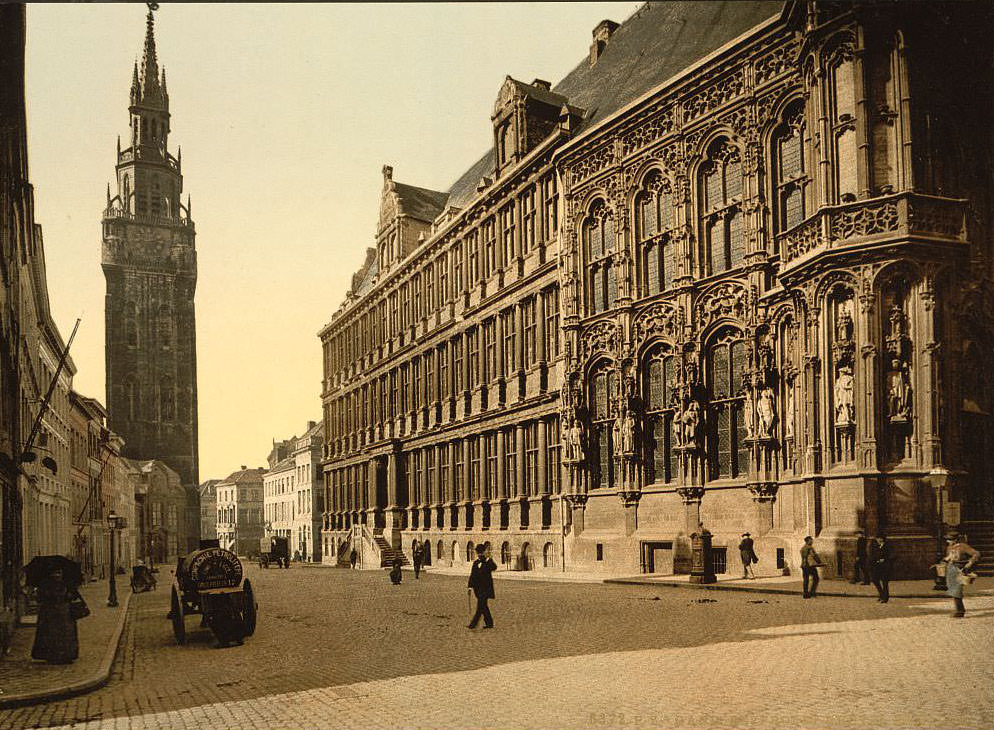
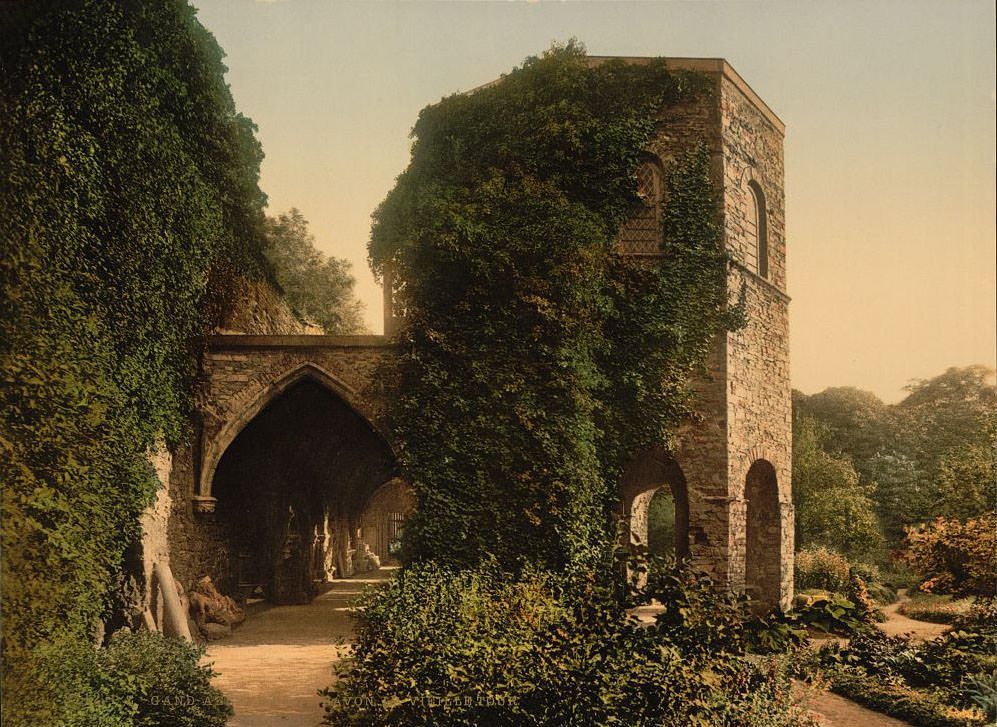
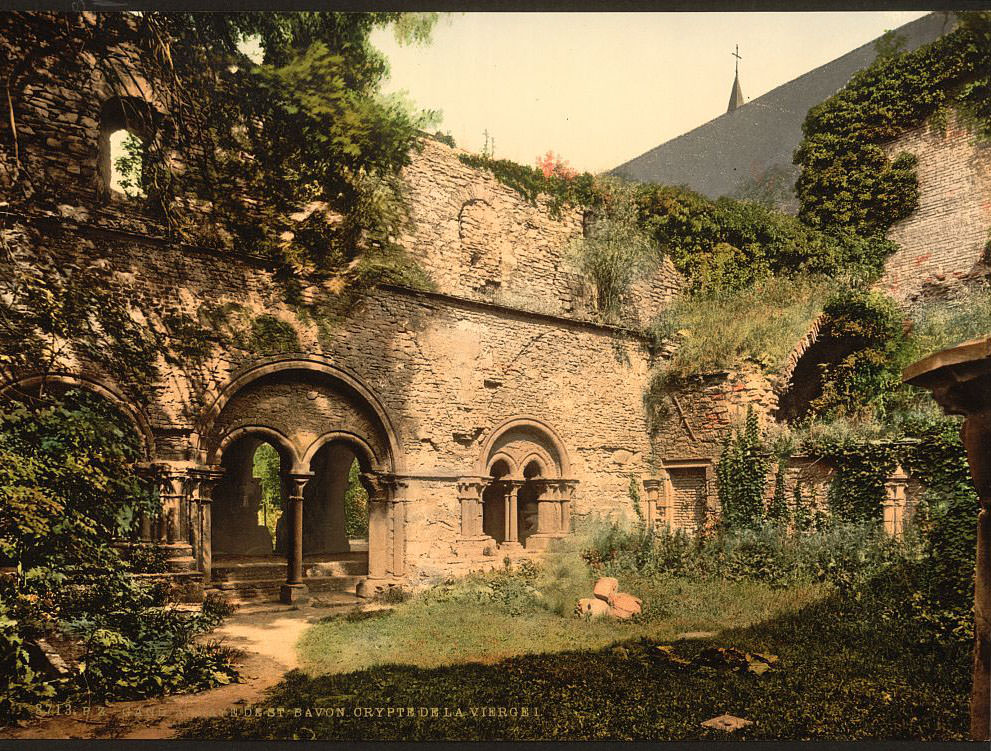
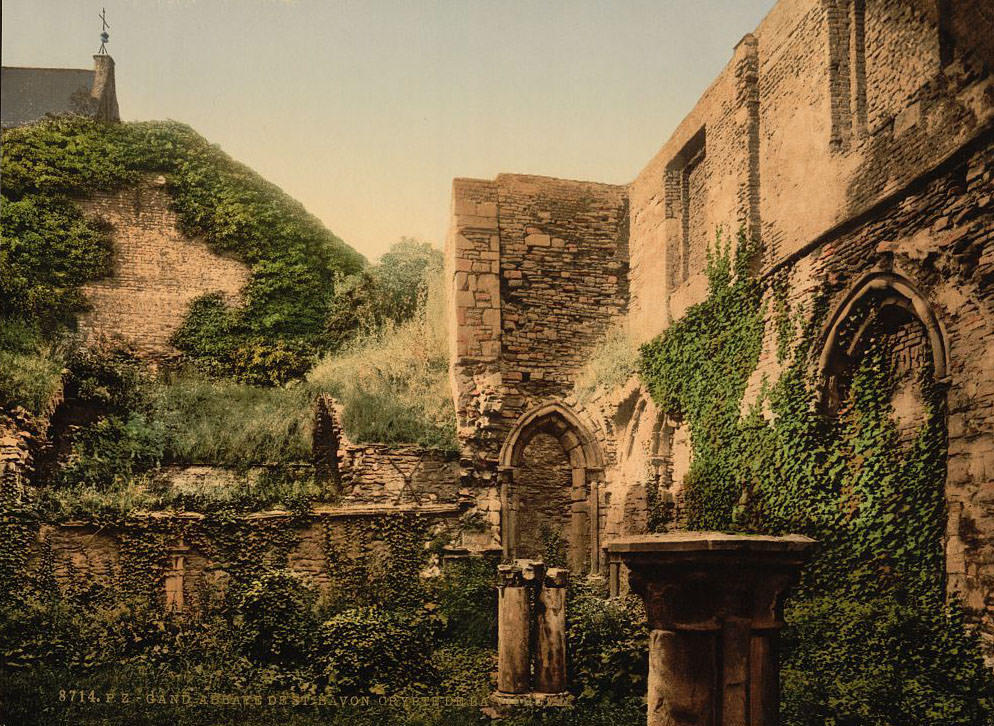
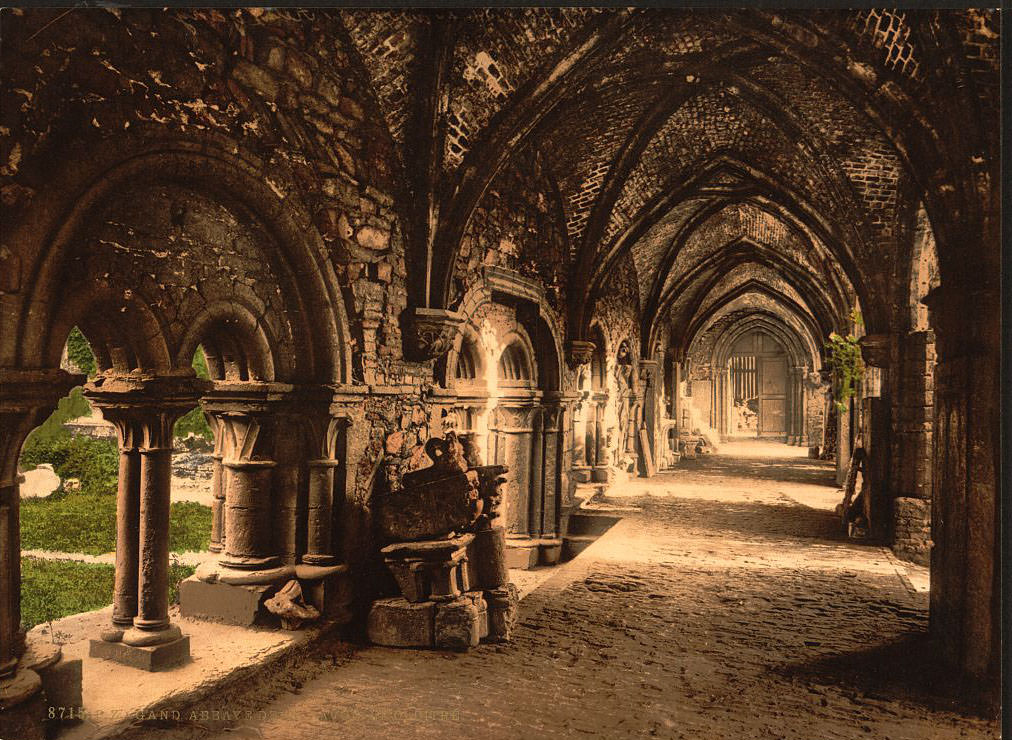
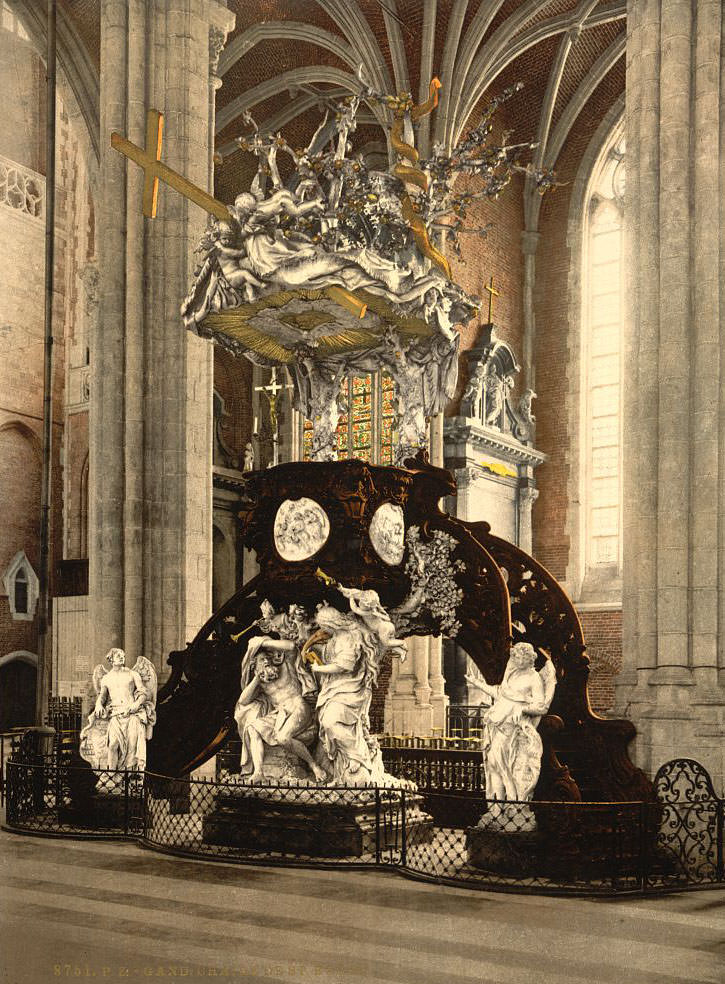
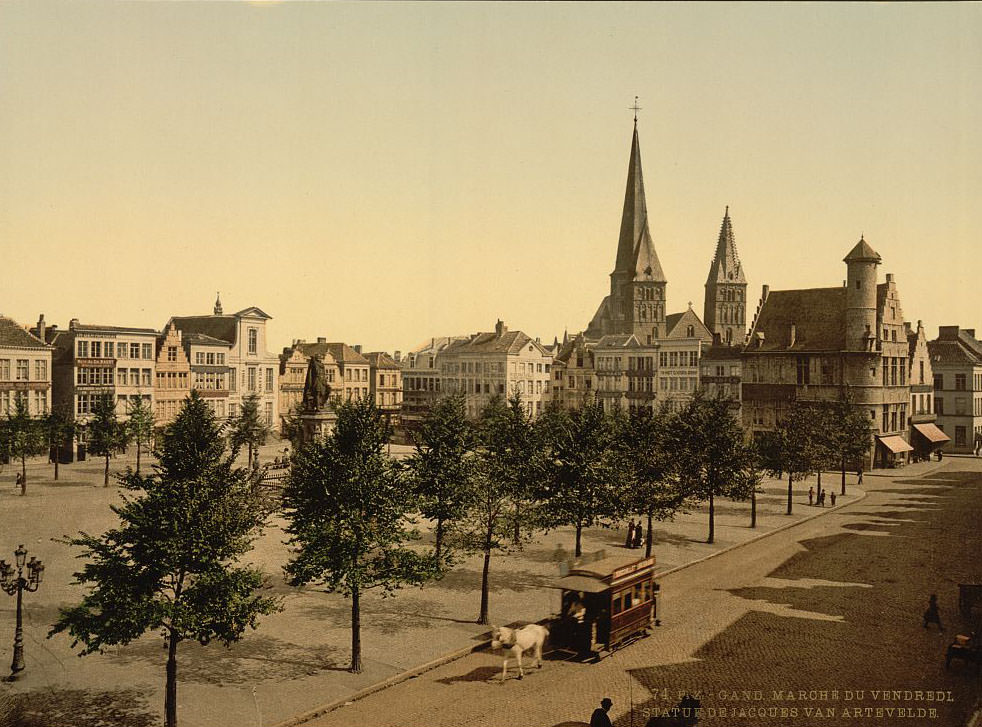
St. Bavo’s Abbey in Ghent had been founded in the 7th century and dissolved during the French Revolutionary period, but its ruins and surviving structures — including the Romanesque crypt, the Gothic cloister, and the old tower — remained standing and accessible to visitors. The pulpit inside the abbey church was a masterwork of Baroque wood carving. The Friday Market square, dominated by the statue of Jacob van Artevelde, honored the 14th-century Ghent statesman who had forged a powerful alliance between Flemish cities during the Hundred Years’ War.
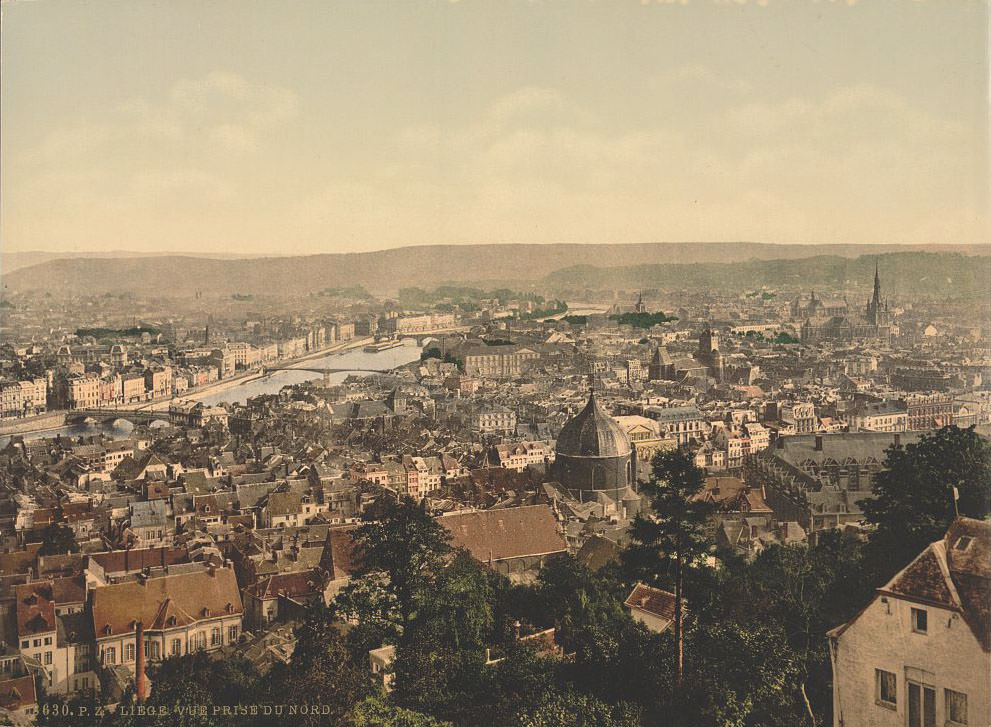
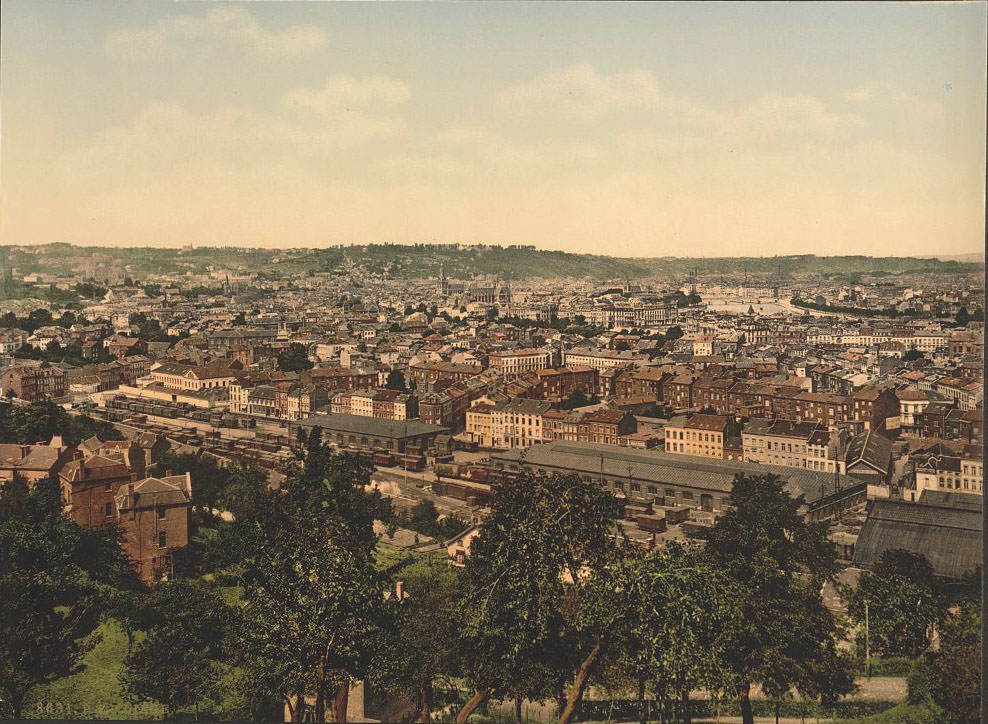
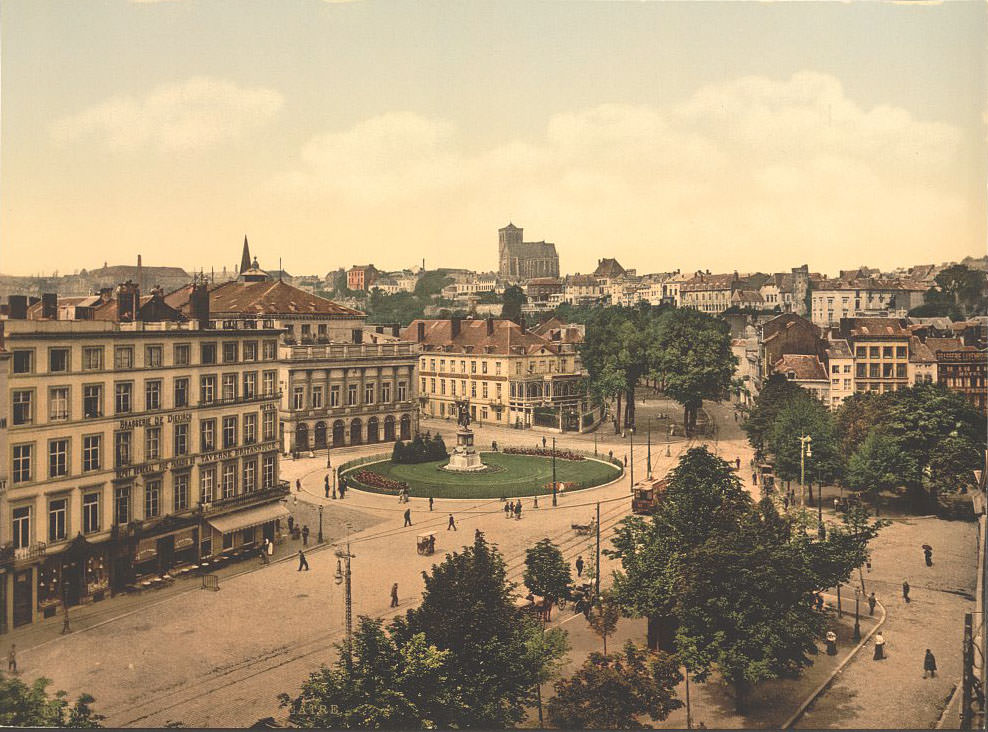
Liège, situated at the confluence of the Meuse and Ourthe rivers in eastern Belgium, was both an industrial powerhouse and a city of grand civic architecture by the 1890s. Its position on high ground gave photographers commanding views of the city and its surrounding hills. The Theatre Place served as the cultural heart of the city, with the grand opera house forming its centerpiece. Observatory Avenue, running along the heights above the city, offered panoramic views that made it a popular destination for locals and tourists alike.
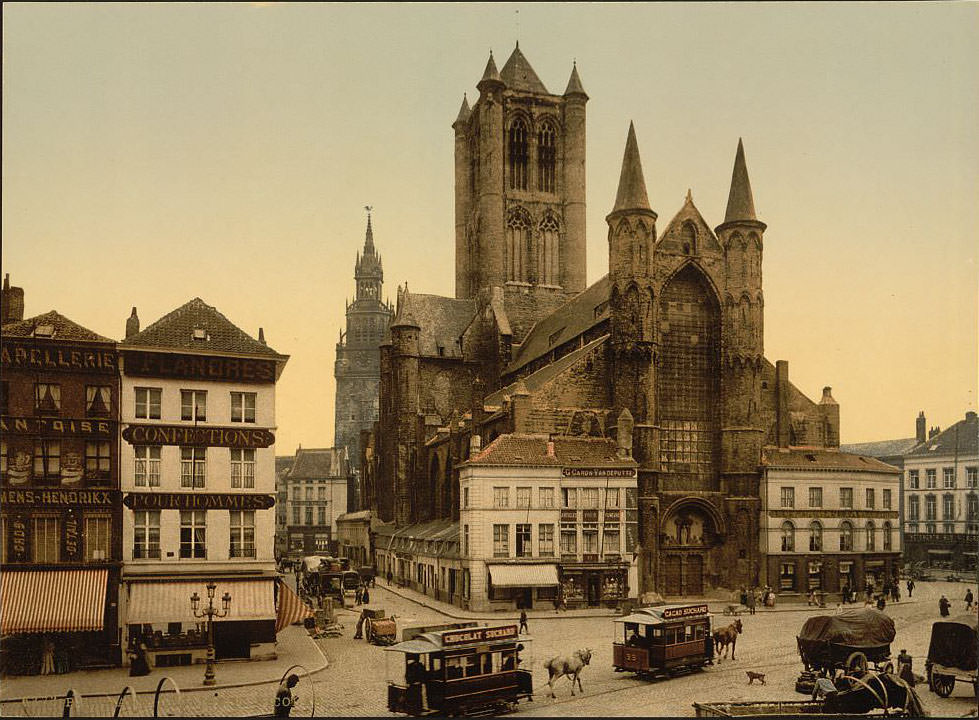
St. Nicolas Church in Ghent was one of the city’s three landmark towers that defined its medieval skyline — alongside the Belfry and St. Bavo’s Cathedral. Built primarily in the 13th and 14th centuries in the Scheldt Gothic style, it stood near the Friday Market and the old cloth halls, a permanent fixture of the city’s commercial and spiritual life.