Selling toilet paper has never been simple. When Joseph Gayetty of New York introduced his “Medicated Paper, for the Water-Closet” in the mid-19th century, he faced a problem that would haunt advertisers for decades: how do you sell a bathroom product without making people uncomfortable just reading about it? Gayetty’s answer was to lean hard into medical language, marketing his sheets as a health product rather than a hygiene necessity. Other early brands followed the same playbook, pitching their tissue specifically as a remedy for hemorrhoids. Medical framing was essentially the only door into the consumer’s mind.
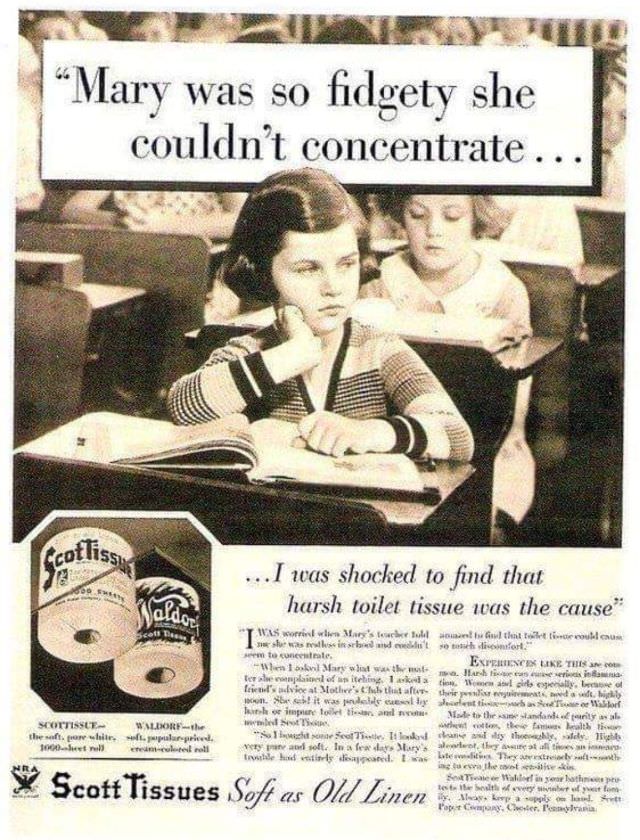
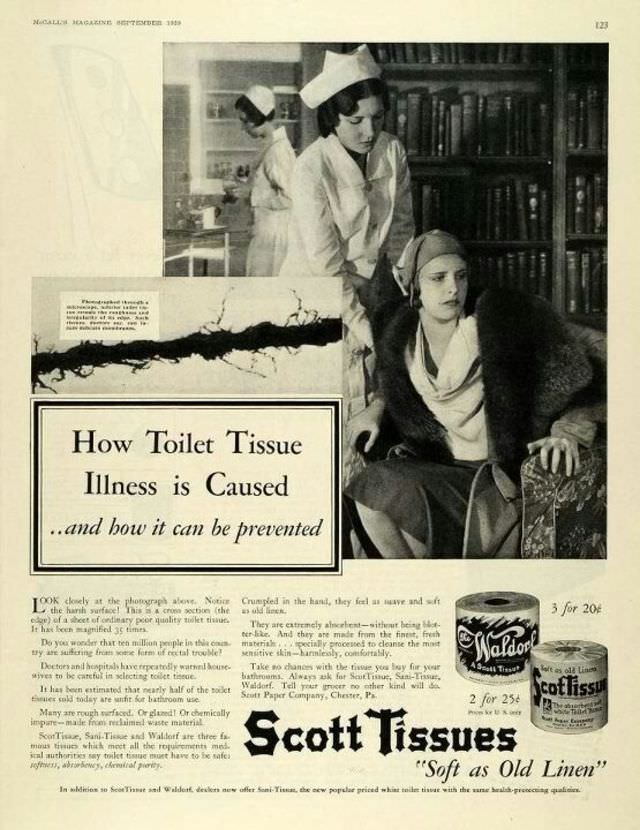
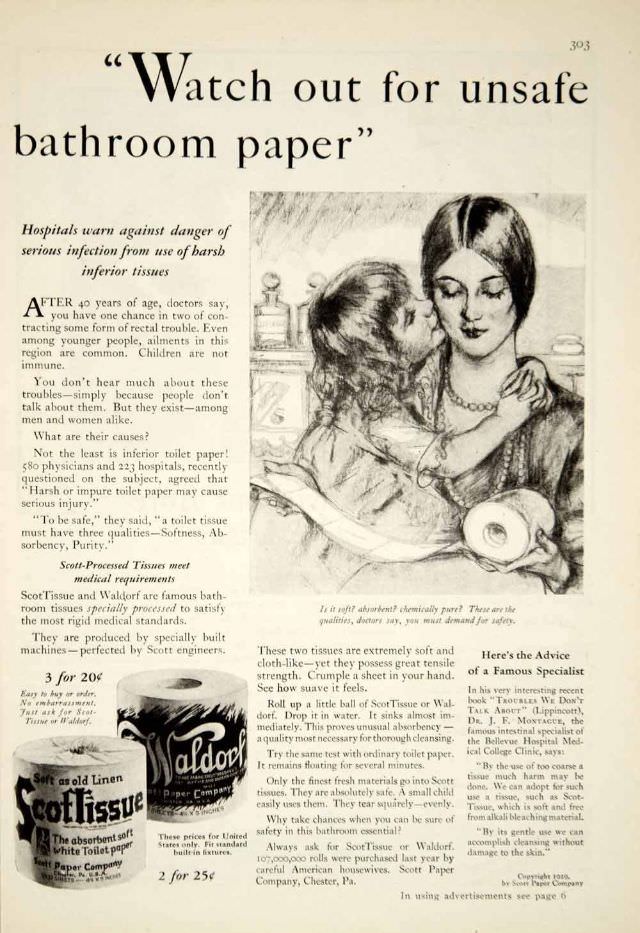
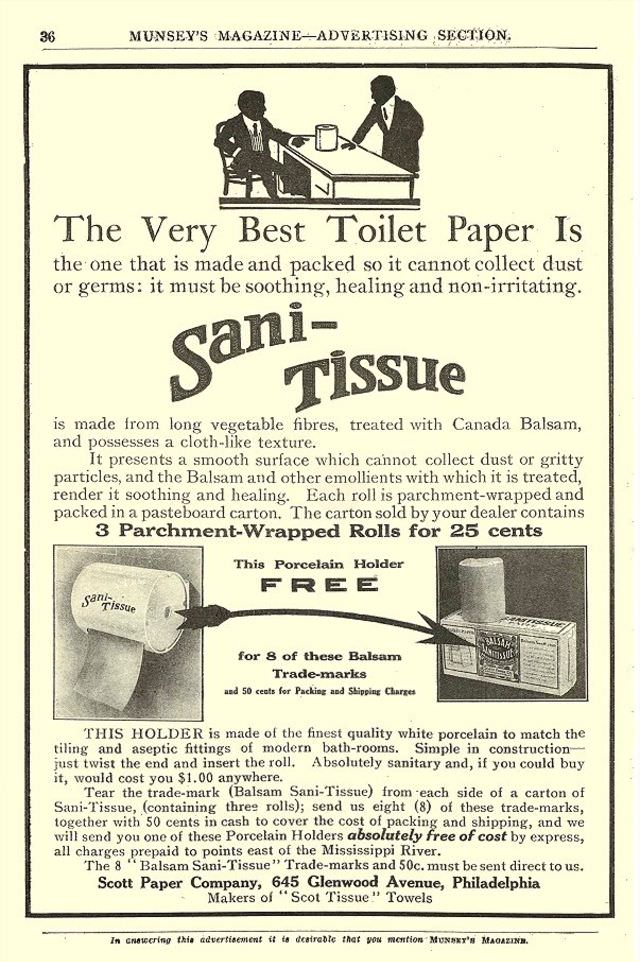
The medical angle wasn’t just a polite workaround — it reflected genuine public concern about the safety of bathroom paper. Early manufacturing processes were inconsistent, and some products did contain harmful substances. Advertisers seized on this anxiety. Brands warned consumers that the wrong toilet paper could make them sick, cause irritation, or introduce dangerous acids into the home. These weren’t subtle warnings. The ads were blunt, sometimes alarming, and designed to make readers feel that their current brand was a health risk.
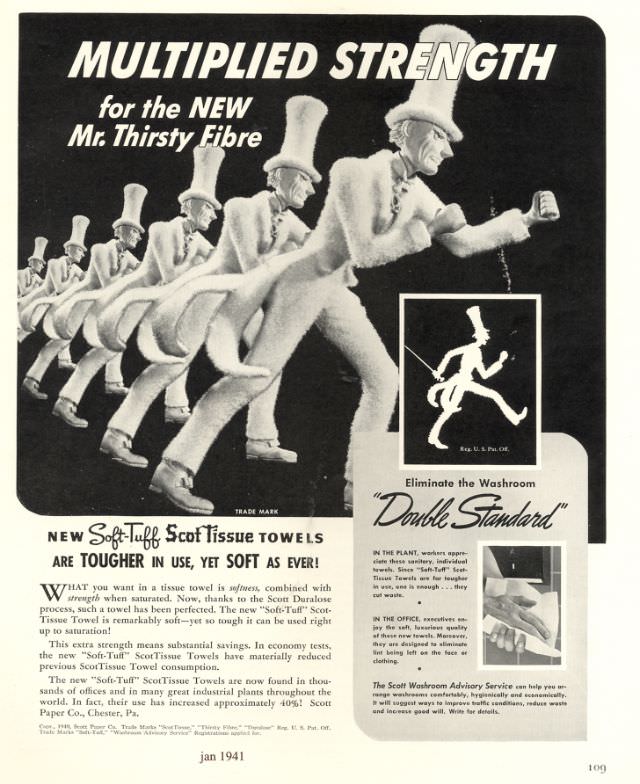
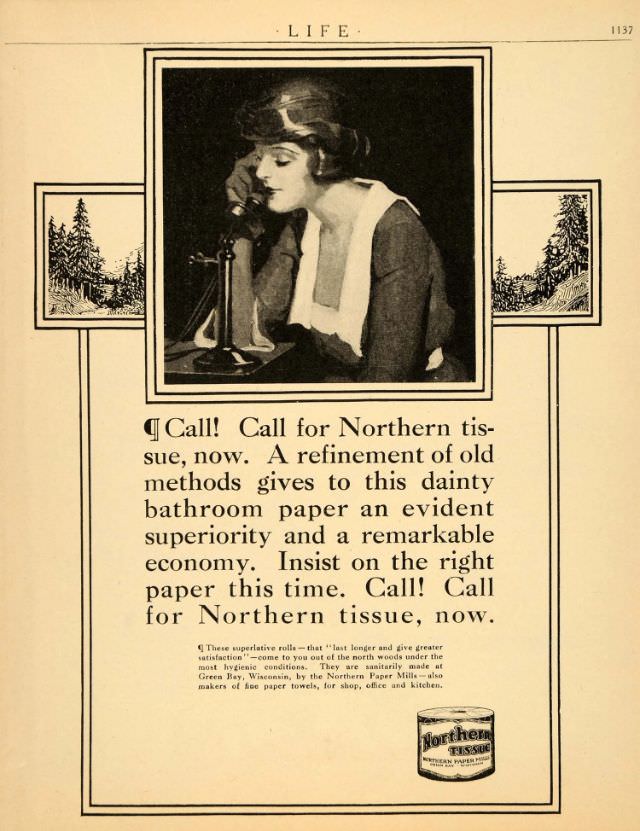
Strength and durability were also major selling points in the early 20th century. Northern Tissue ran ads in Life Magazine during the 1920s promoting their product as tough and long-lasting. Durability mattered to cost-conscious households, and brands worked hard to prove their sheets could hold up. Some advertisements introduced product characters and brand names tied directly to physical performance — names that promised the tissue could handle the job without falling apart.
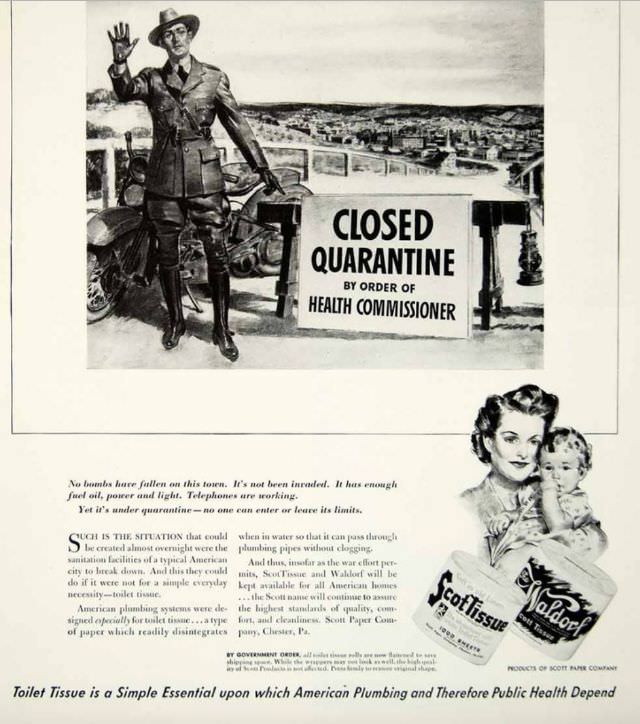
Fear was one of the most effective tools in early toilet paper advertising. Some brands used imagery borrowed directly from public health campaigns — quarantine notices, health commissioner warnings, and infection scares. By framing their competitors’ products as a public health threat, these brands positioned themselves as the safe, responsible choice. It was fear-based marketing at its most direct.
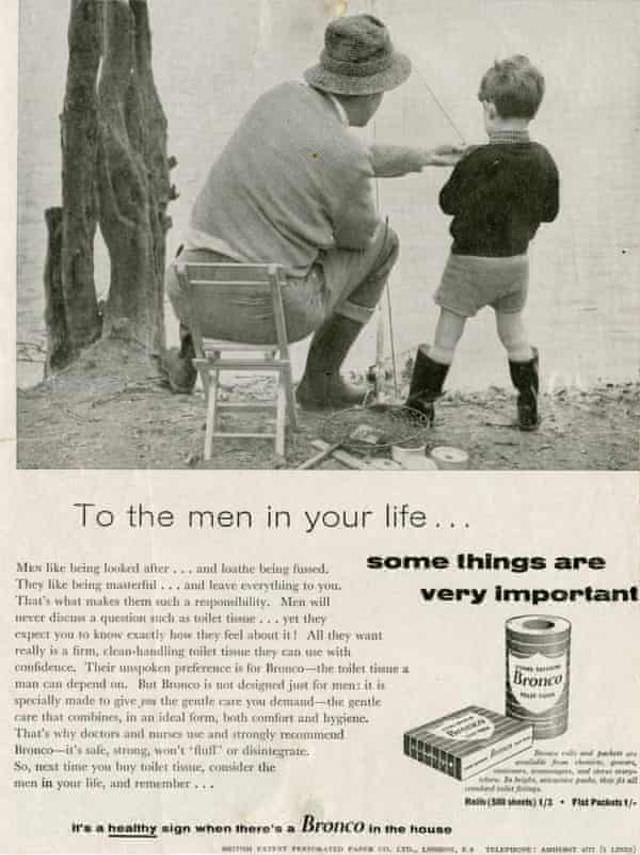
Women were a primary target audience in these campaigns. Ads regularly warned that women were especially vulnerable to skin irritation and health troubles caused by harsh tissue. This wasn’t framed gently — copywriters stated it plainly, often naming the physical discomfort in direct terms. The message was clear: choosing the wrong brand was a personal health decision with real consequences, and women needed to make the right call for themselves and their families.
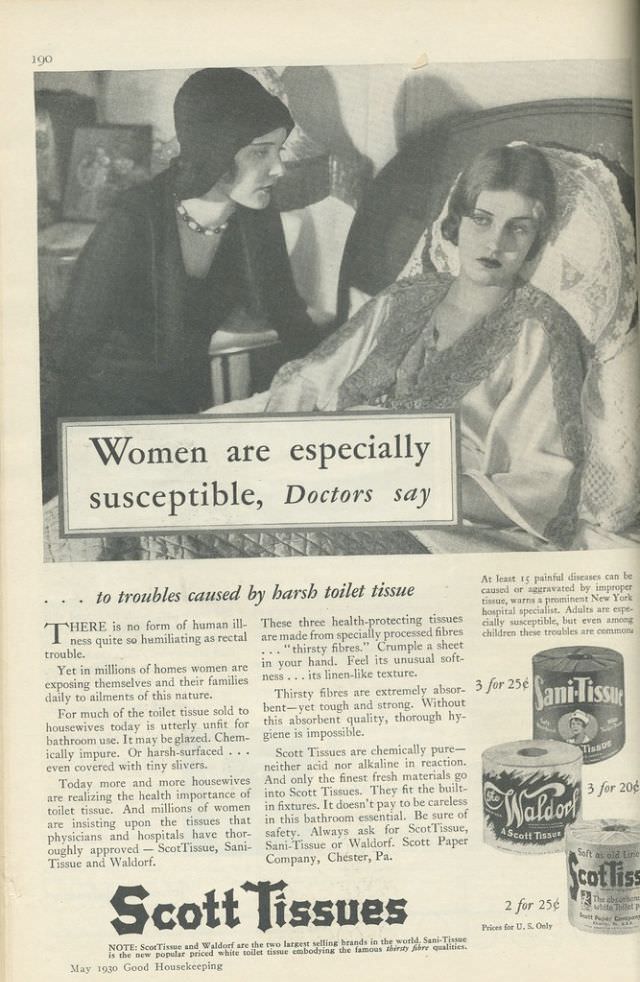
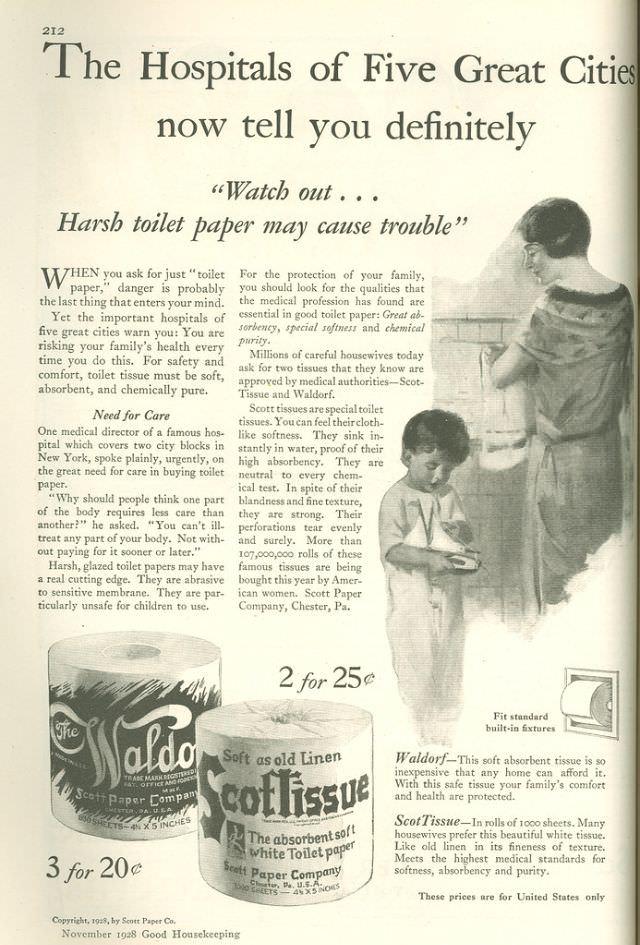
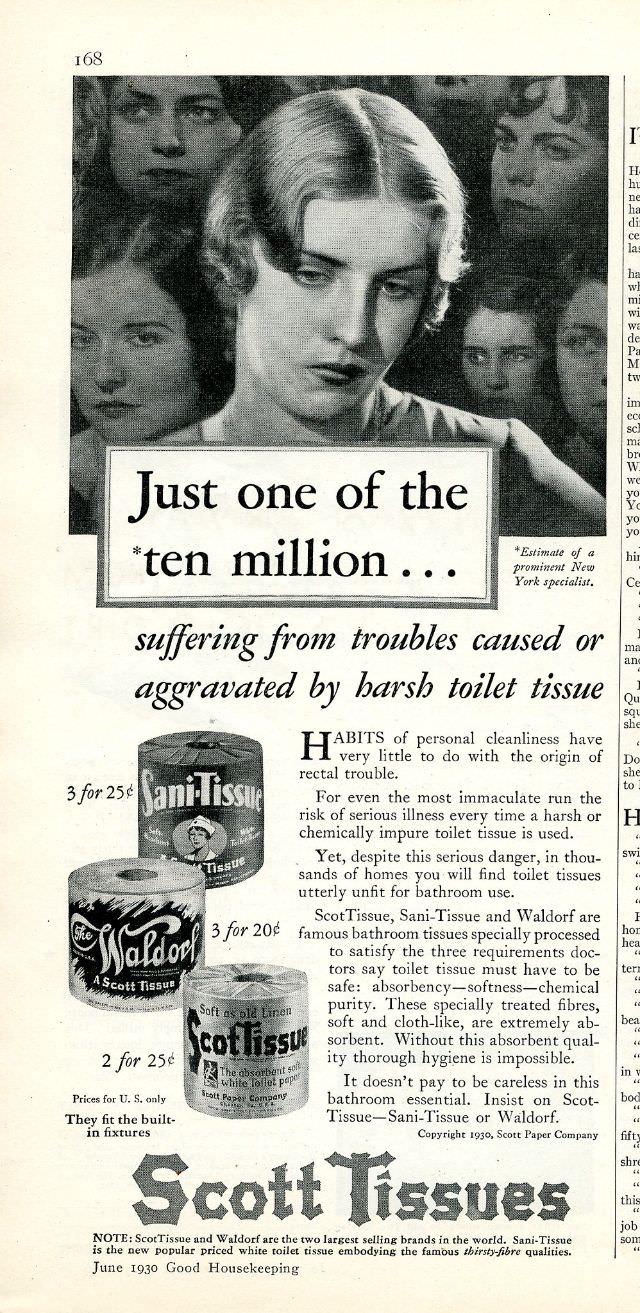
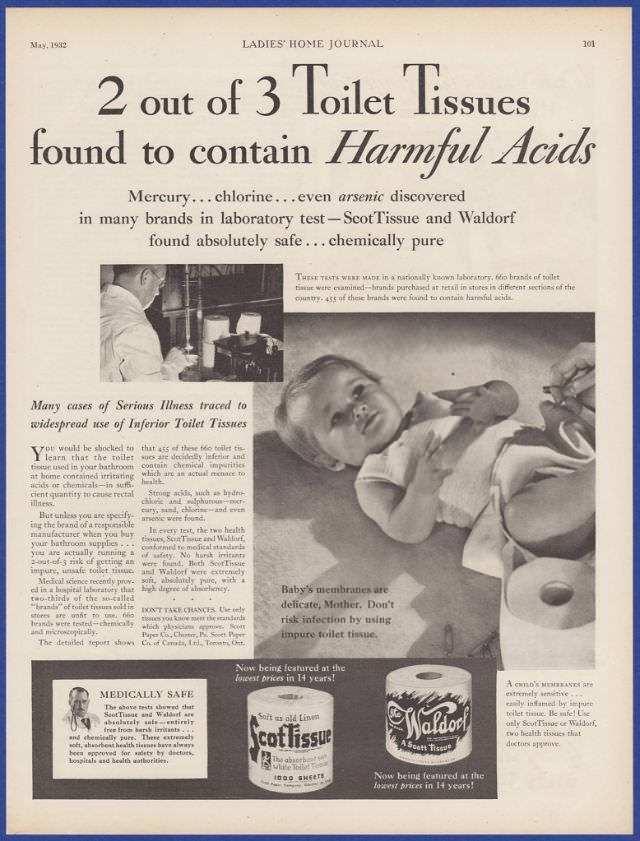
Chemical content became a specific battleground. Some ads cited research claiming that two out of three tissues on the market contained harmful acids. Whether the science behind these claims was rigorous or not, the advertising was persuasive. Brands that could claim their product was acid-free or chemically safe gained a clear edge. Scott was among the brands that pushed this angle aggressively, tying bathroom tissue directly to germ prevention. In 1945, Scott ran a campaign showing a tissue-paper mask being used to block the spread of the common cold — an early and striking link between paper products and airborne illness prevention.
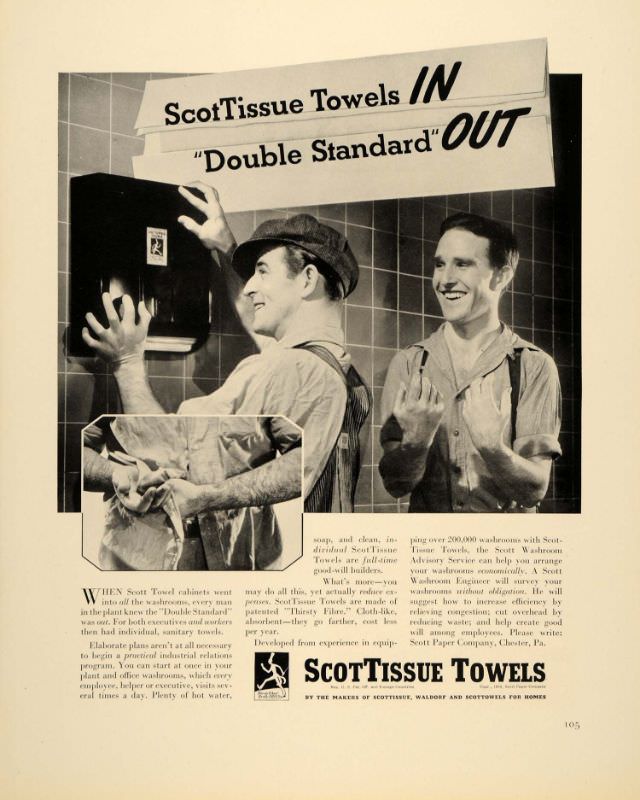
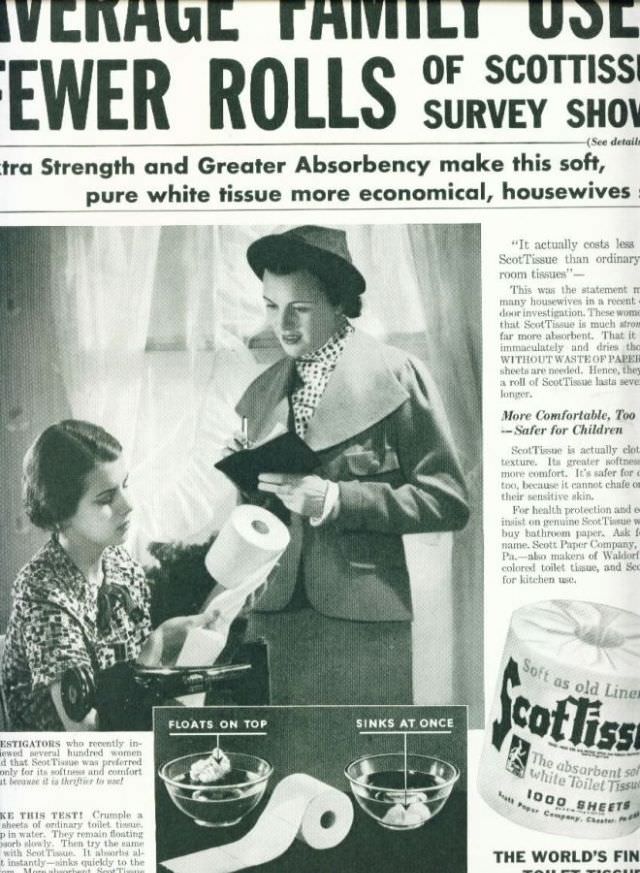
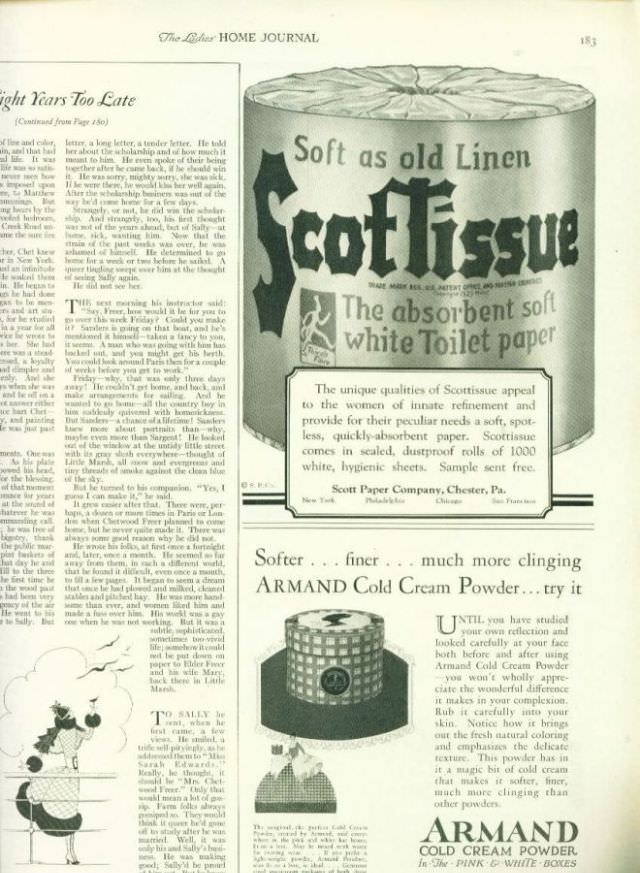
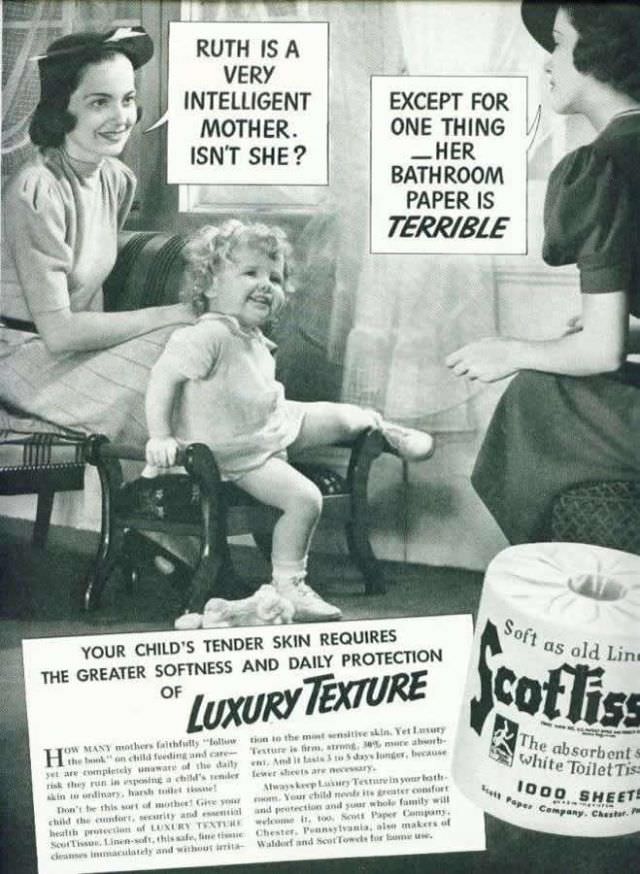
By the 1940s, the tone of toilet paper advertising began to shift. The doom-and-gloom health warnings didn’t disappear entirely, but brands started adding softer messages about comfort, convenience, and satisfaction. Softness became a premium quality worth advertising on its own. Phrases comparing tissue to fine linen appeared in print campaigns, appealing to a sense of luxury and domestic quality. The bathroom was no longer just a health concern — it was a place where comfort mattered.
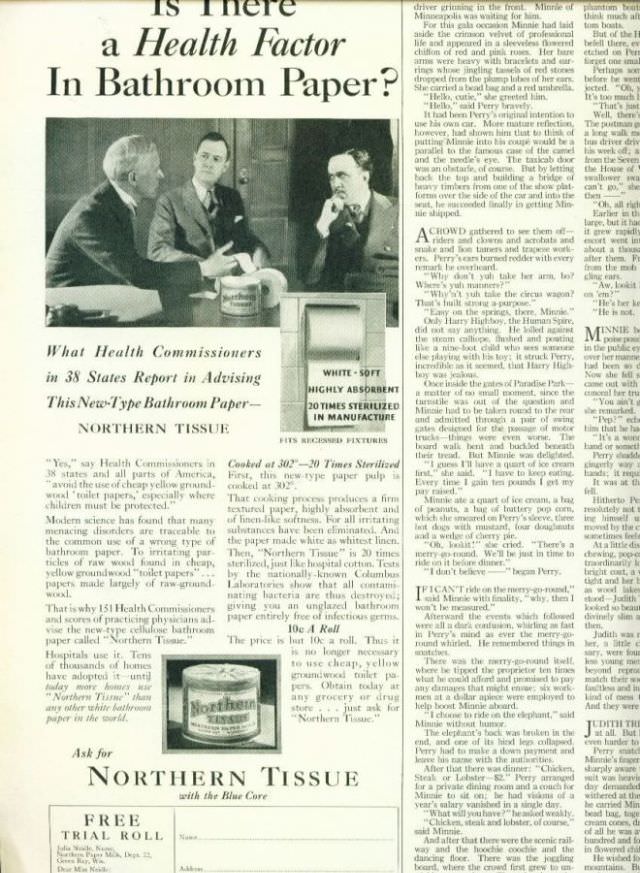
Northern Tissue built a strong brand identity through consistent print advertising, appearing regularly in popular magazines and pushing readers to ask for their product by name. Other brands experimented with promotional offers — free toilet paper holders bundled with tissue purchases — to drive consumer loyalty. These kinds of deals helped move the product from a reluctant purchase to a brand-specific habit.
Some ads used social shame as a motivator. Women in particular were depicted as making embarrassing or unintelligent choices by picking the wrong brand. One campaign framed a character’s poor tissue choice as a reflection of her judgment. These ads were not subtle about it. The message was that a smart, informed woman chose the right toilet paper — and the wrong choice reflected poorly on her household management.
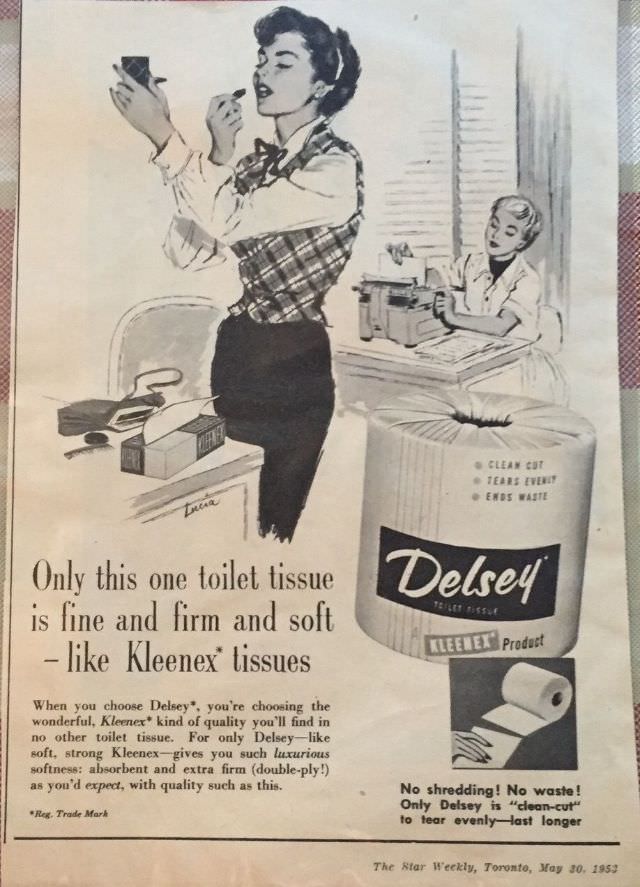
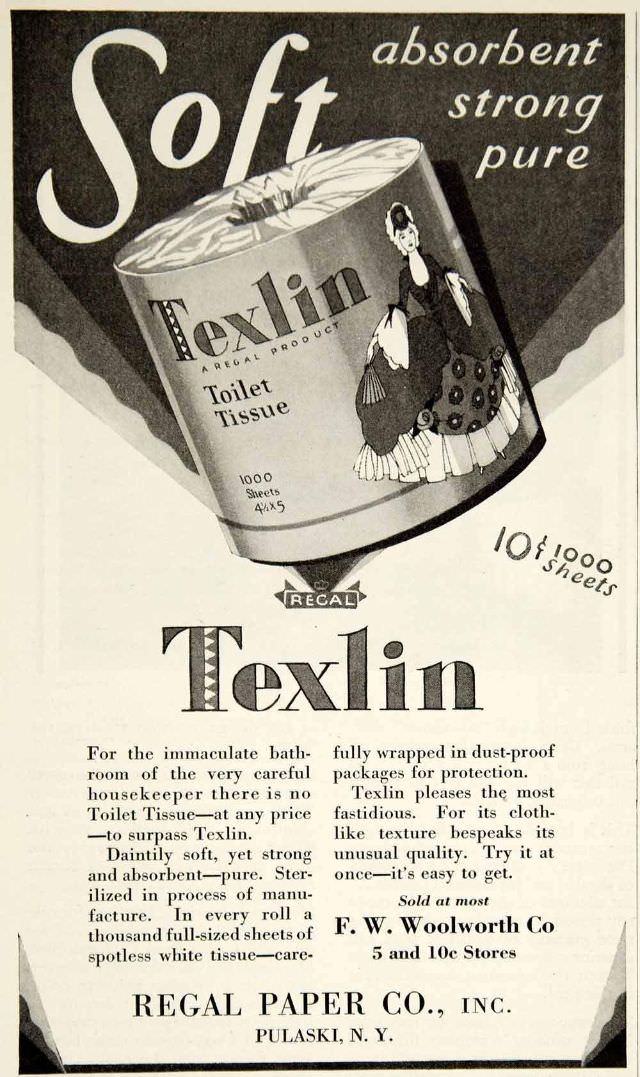
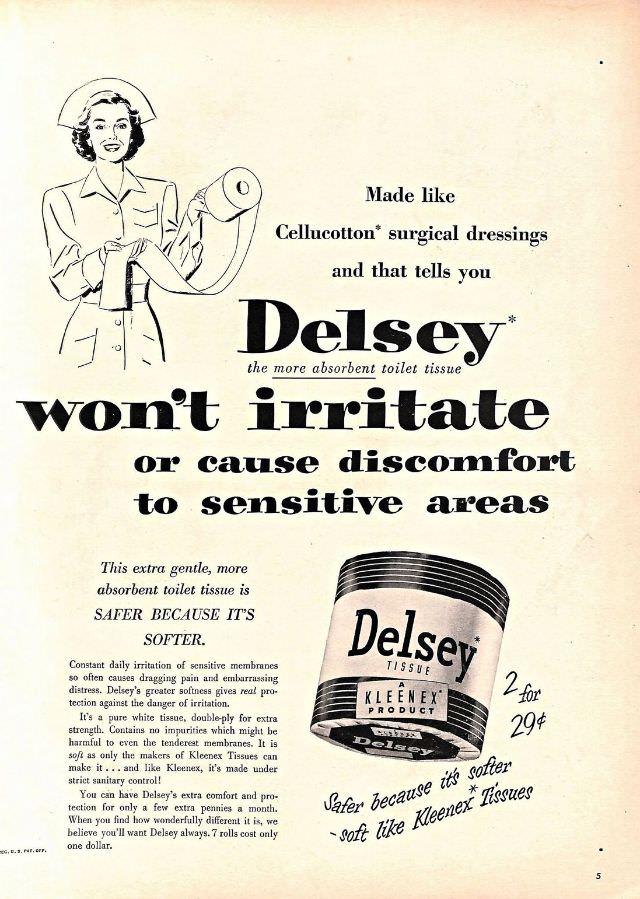
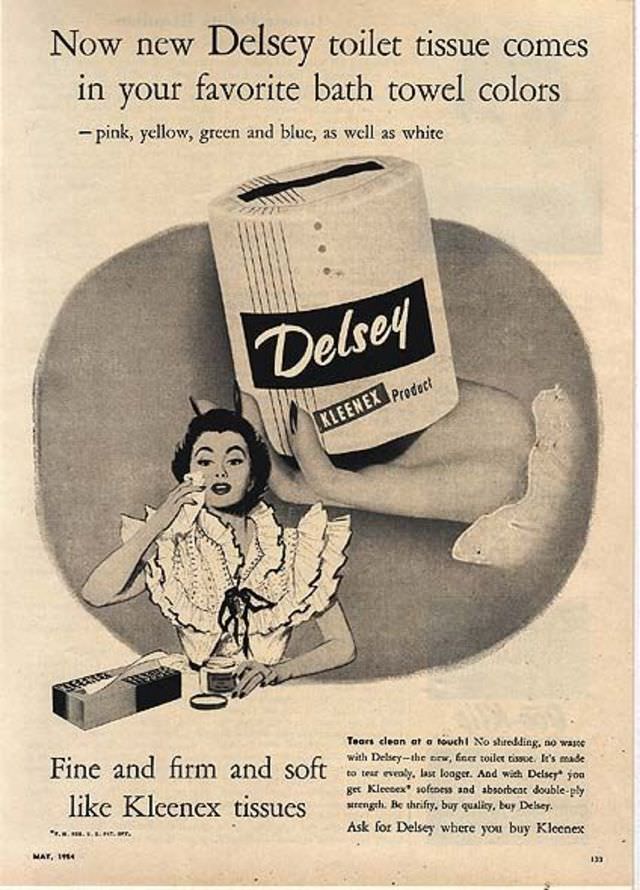
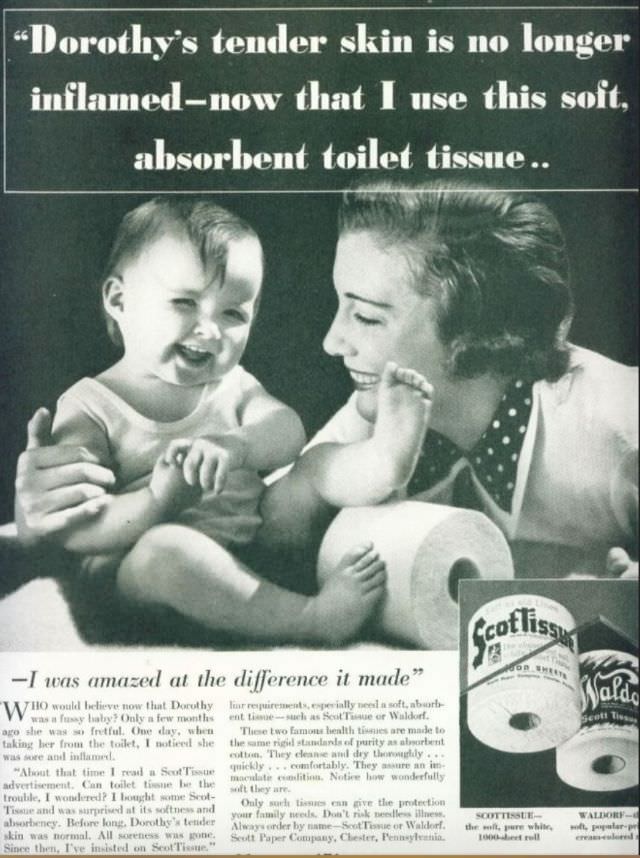
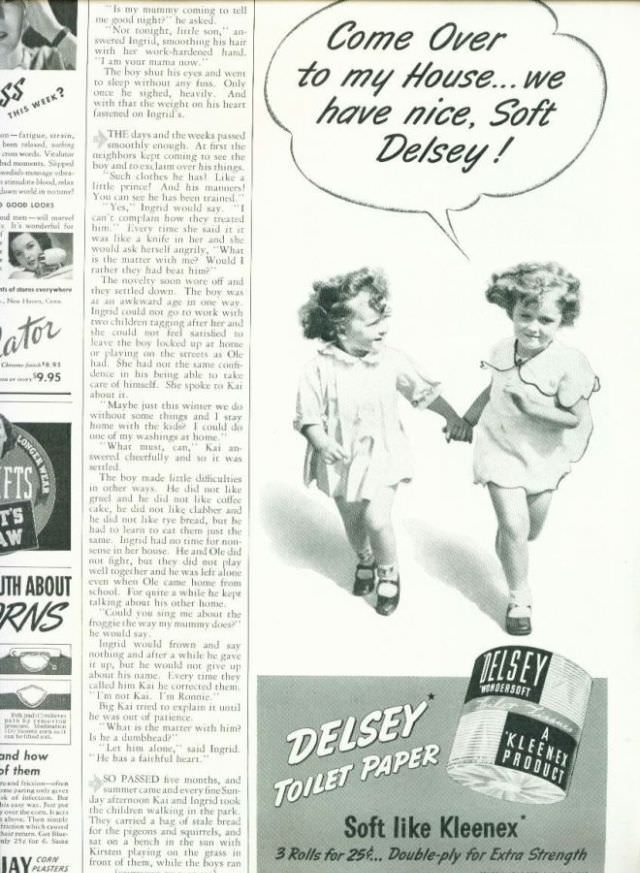
As competition between brands intensified, the list of promised qualities grew longer. Ads claimed products were soft, absorbent, strong, and pure — all at once. Color options eventually entered the picture too, with brands offering tissue in a range of shades to match bathroom decor. What started as a medical product sold through clinical language had evolved into a consumer item marketed on comfort, aesthetics, and lifestyle. Delsey pitched its tissue as non-irritating and gentle, while other brands used named characters like Dorothy to put a human face on the problem of skin irritation and its solution.