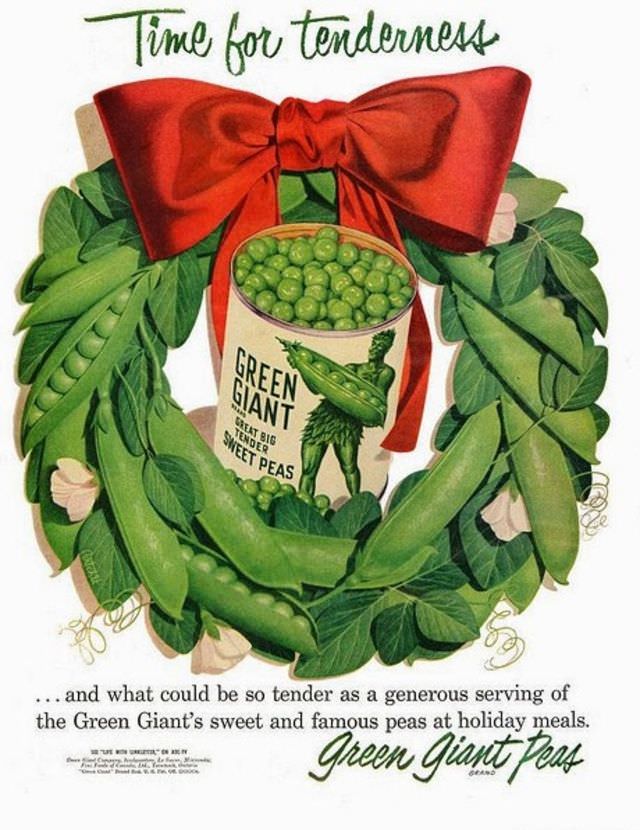
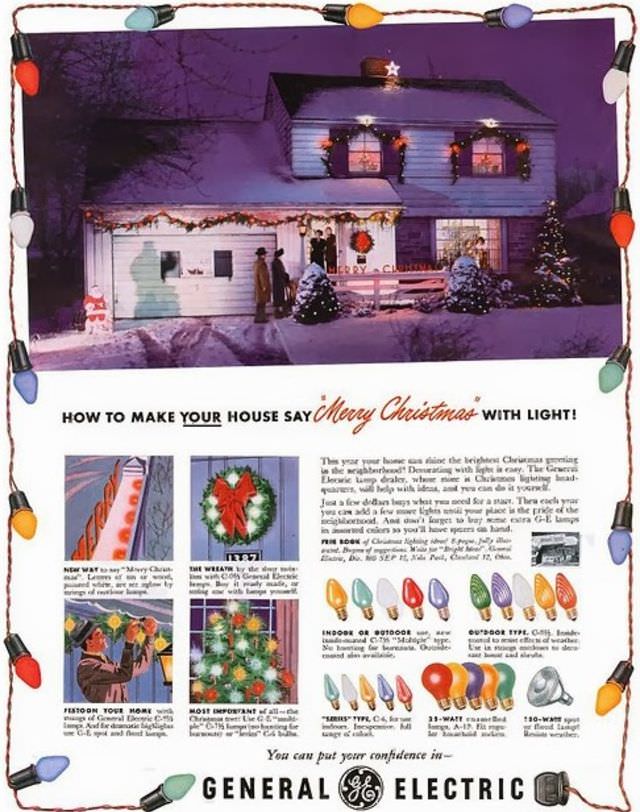
After years of wartime hardship, the 1950s brought a wave of prosperity to American families. Wages rose, suburbs expanded, and stores filled with new products. Christmas became the perfect moment for brands to capitalize on all of it.
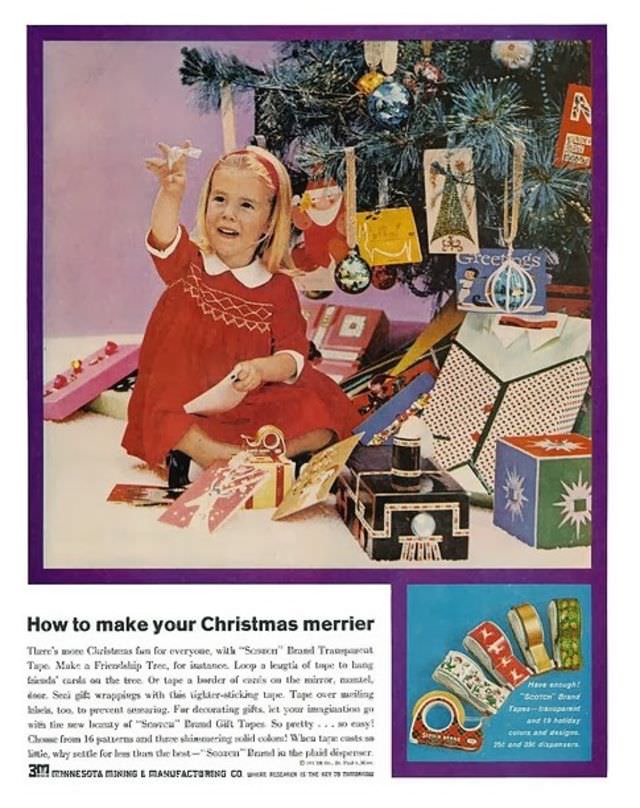
Ads ran in magazines, newspapers, and on the rapidly growing medium of television. Each one carried the same core message: the right gift makes the perfect Christmas.
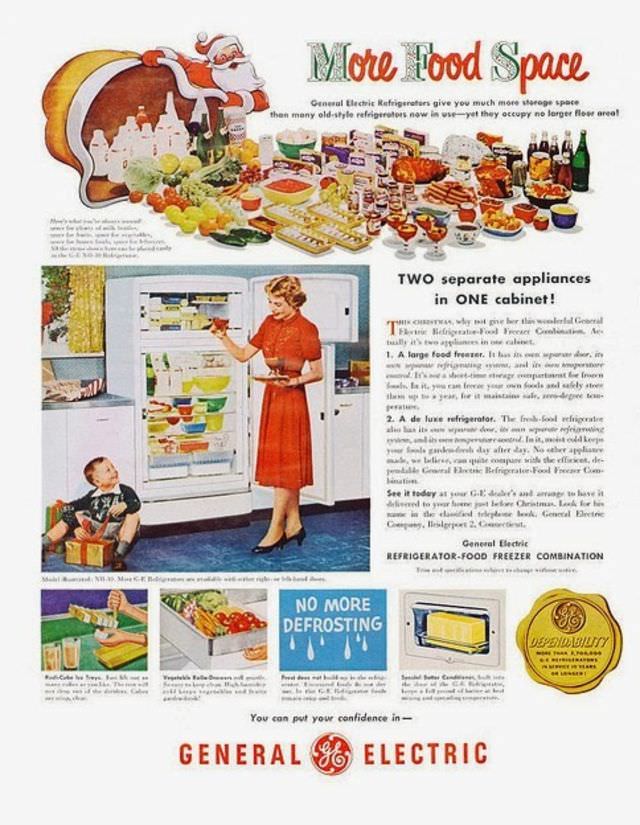
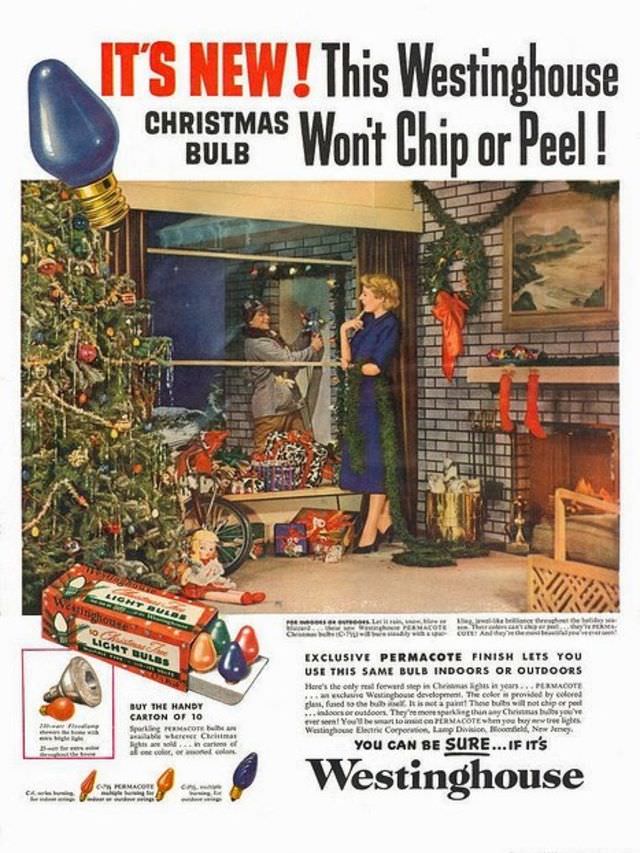
Family was the centerpiece of nearly every ad. Scenes showed cheerful parents, wide-eyed children, and cozy, well-decorated homes. The imagery was polished and idealized — everything looked clean, new, and flawless.
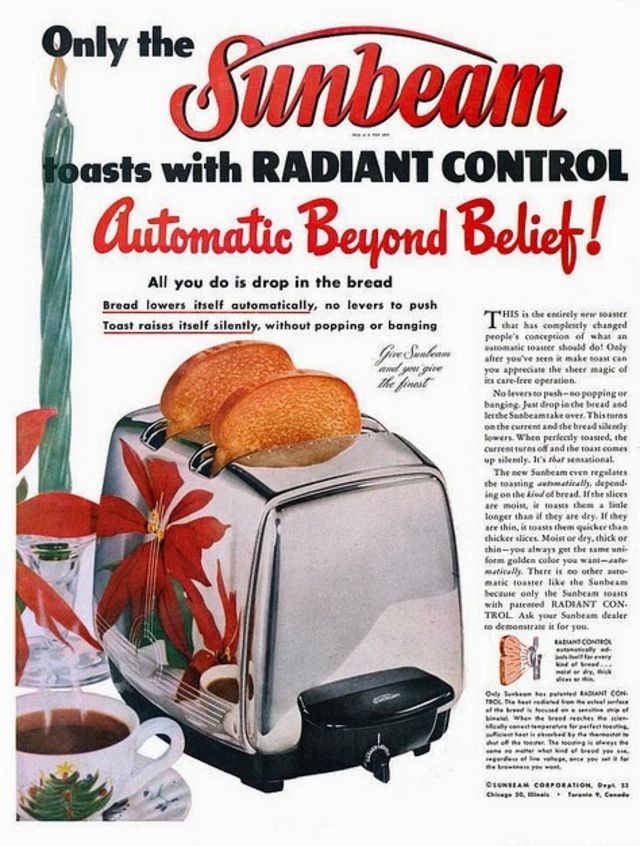
Large home appliances — washing machines, refrigerators, ovens — were frequently marketed as Christmas gifts, often directed at wives. Advertisers framed these purchases as thoughtful and practical.
Cars were among the boldest Christmas gifts advertisers promoted. Print ads showed shiny new vehicles parked in driveways, topped with oversized ribbons, waiting to be discovered on Christmas morning.
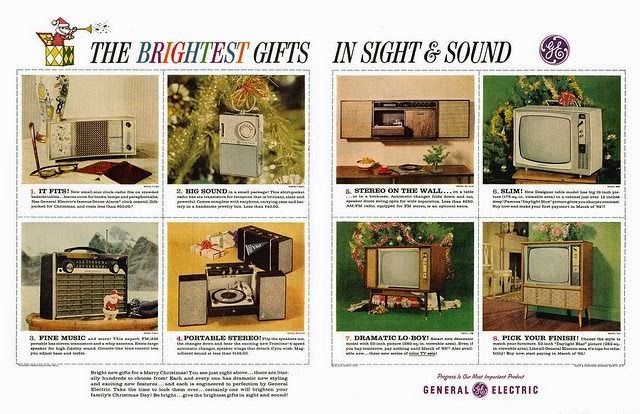
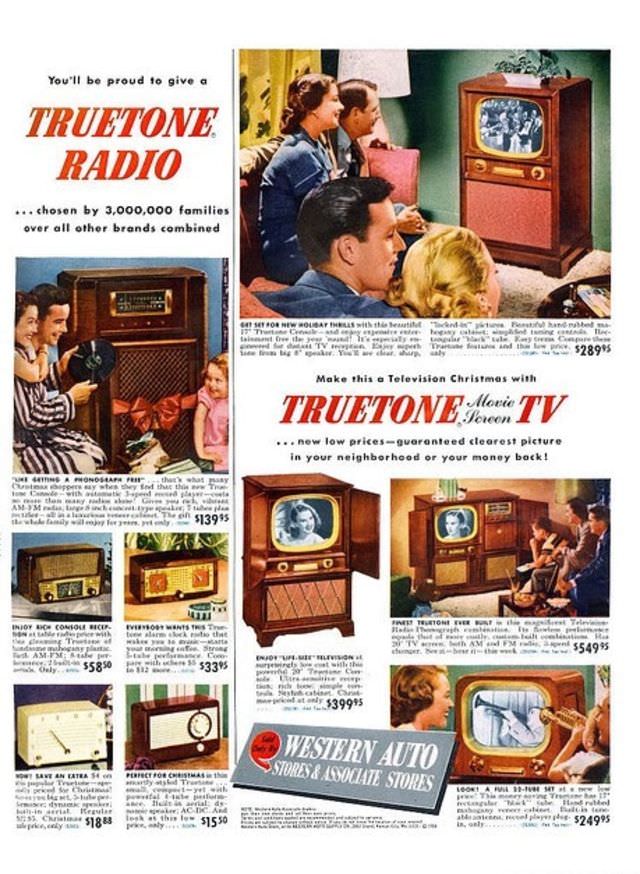
Television sets were among the most coveted gifts of the decade. As TV ownership spread rapidly across the country, advertisers positioned a new set as the ultimate gift for the whole family.
Record players and radios were also popular choices. Ads for these products leaned heavily on the idea of shared entertainment — music filling the living room while the family gathered together.

Toys dominated the gift ads aimed at children. Bright illustrations showed kids tearing open boxes filled with dolls, train sets, and games — all presented as keys to a magical Christmas morning.
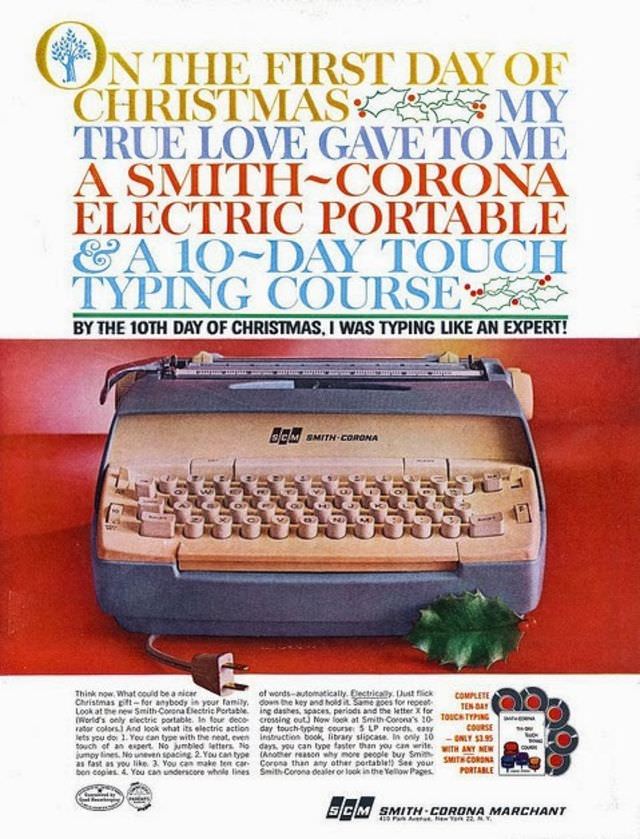
The color palettes in these ads were bold and deliberate. Reds, greens, and golds dominated, tying every product directly to the visual language of Christmas cheer and festive abundance.
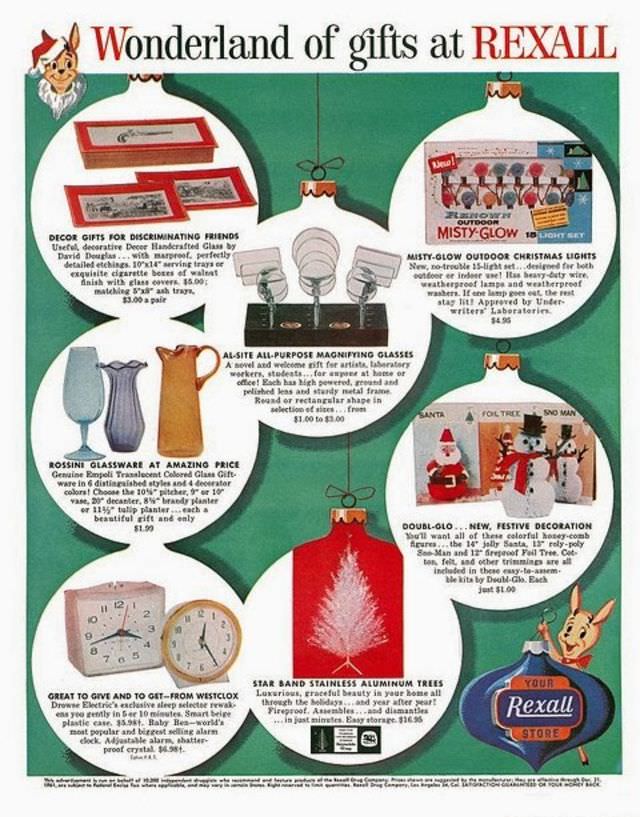
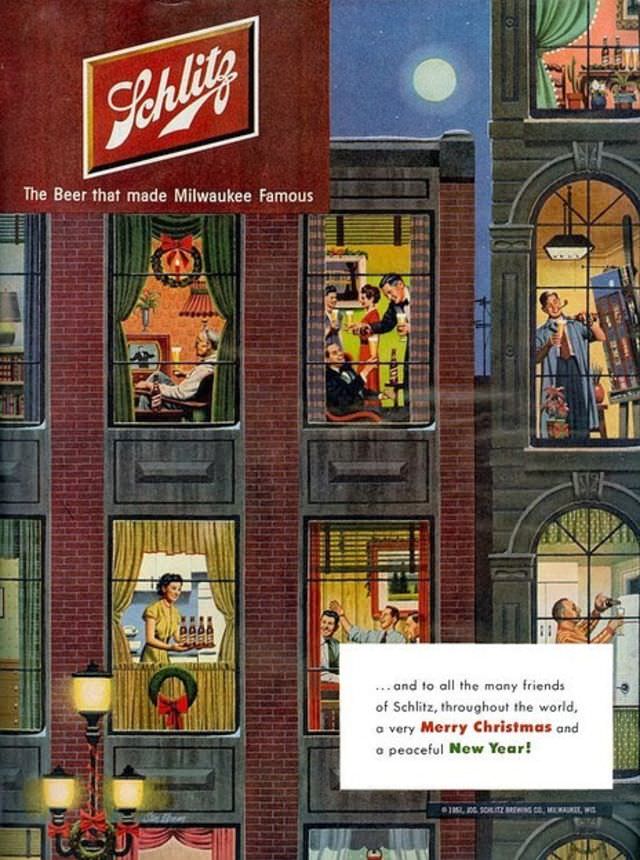
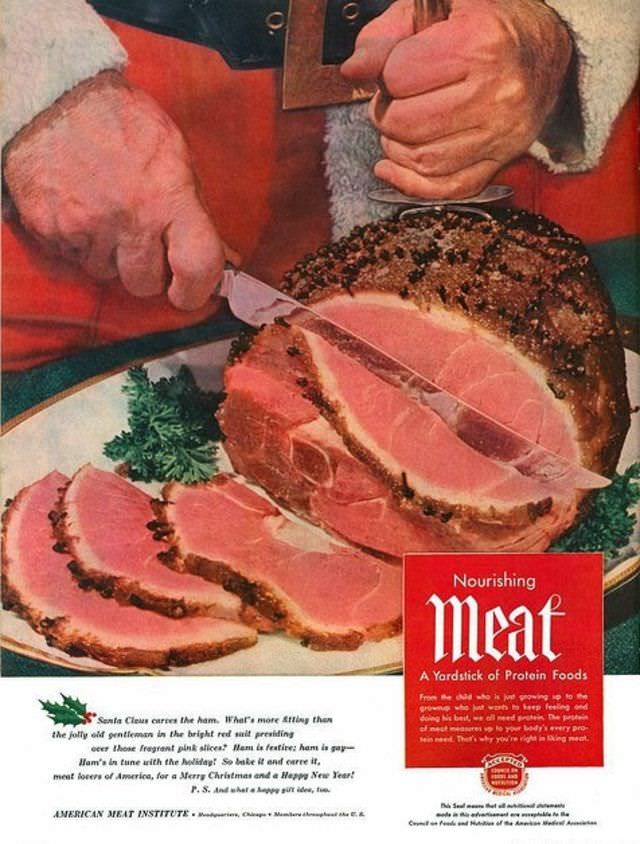
Food and drink brands also pushed hard during the holiday season. Ads for soft drinks, candies, and baked goods placed their products front and center at the holiday table, making them feel essential to the celebration.
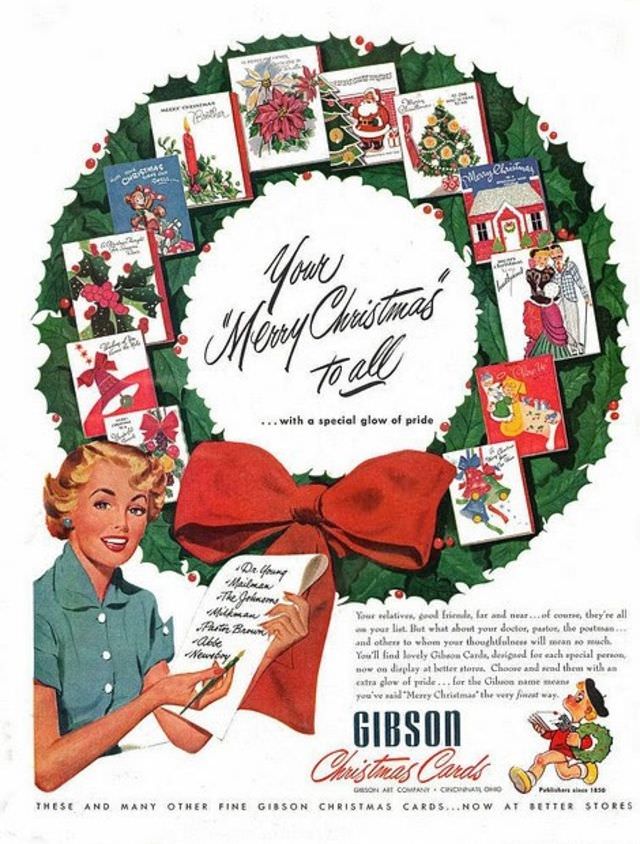
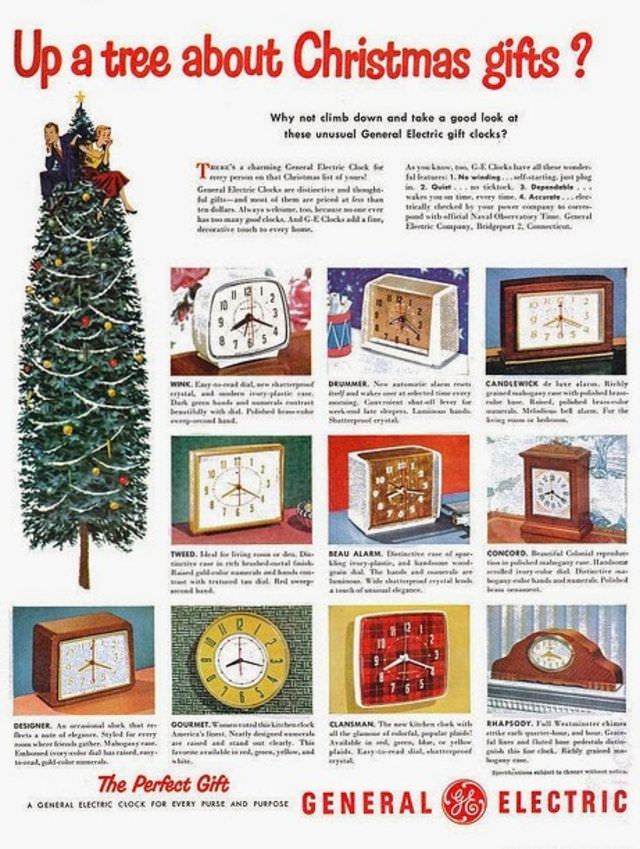
Perfume and cologne makers targeted husbands and wives shopping for each other. Elegant illustrations and romantic copy made these small bottles feel like genuinely special, intimate gifts.
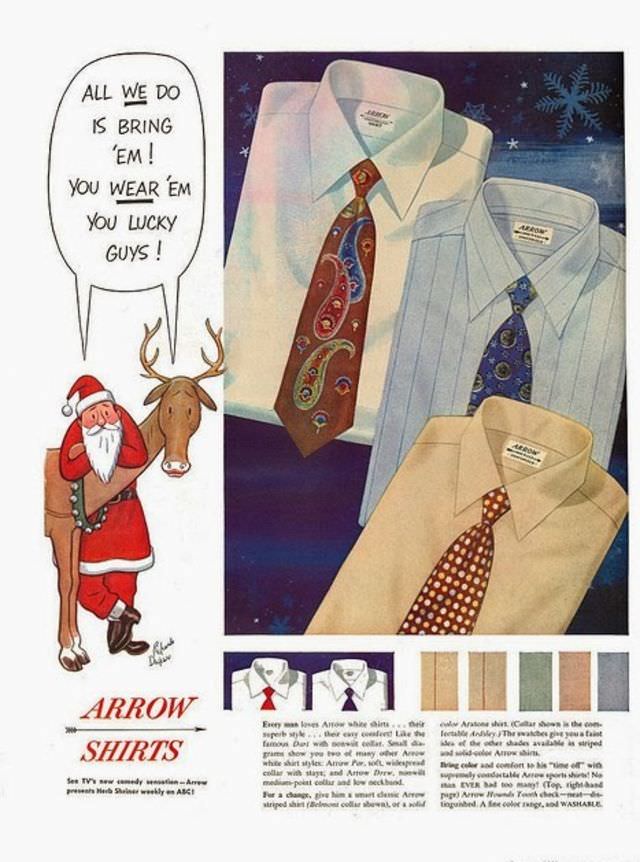
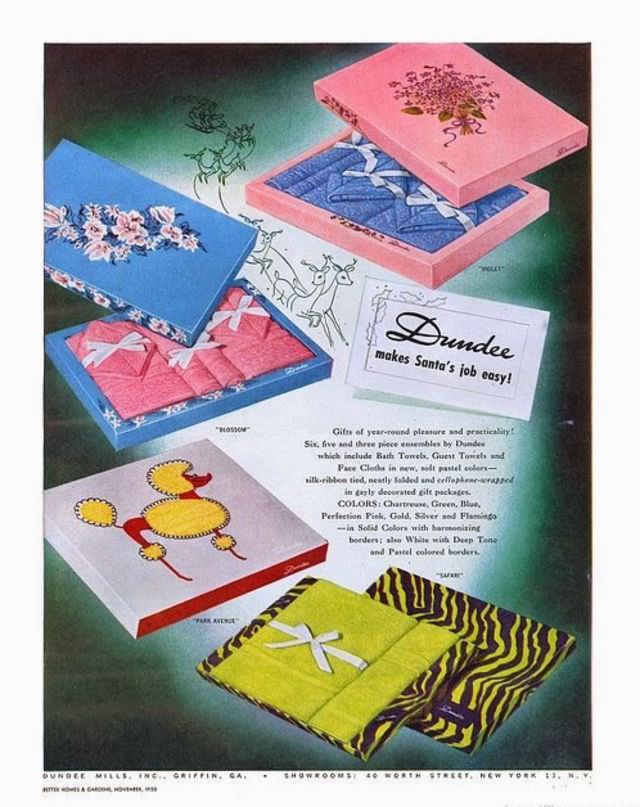
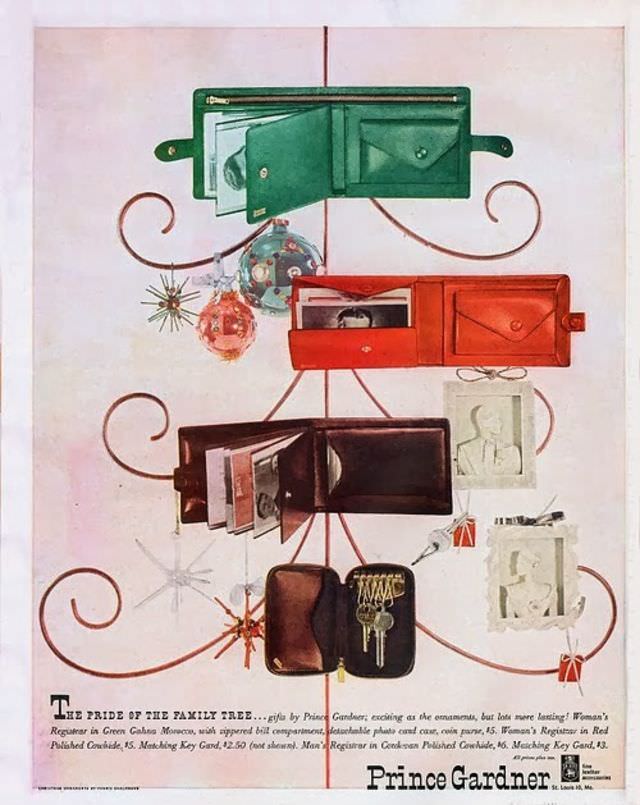
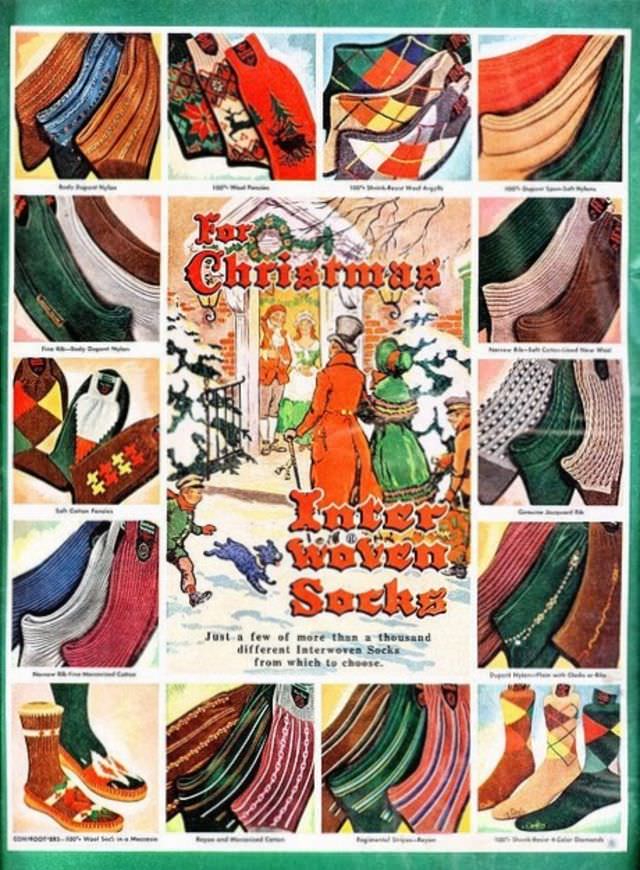
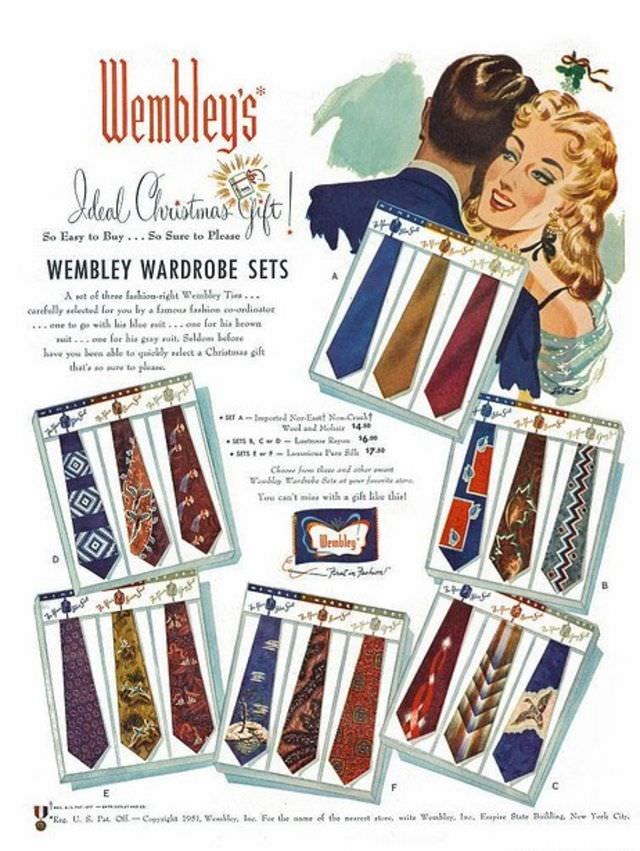
Clothing and jewelry ads filled the pages of mid-century magazines every December. A new watch, a string of pearls, or a cashmere sweater were all presented as gifts that expressed genuine care and good taste.
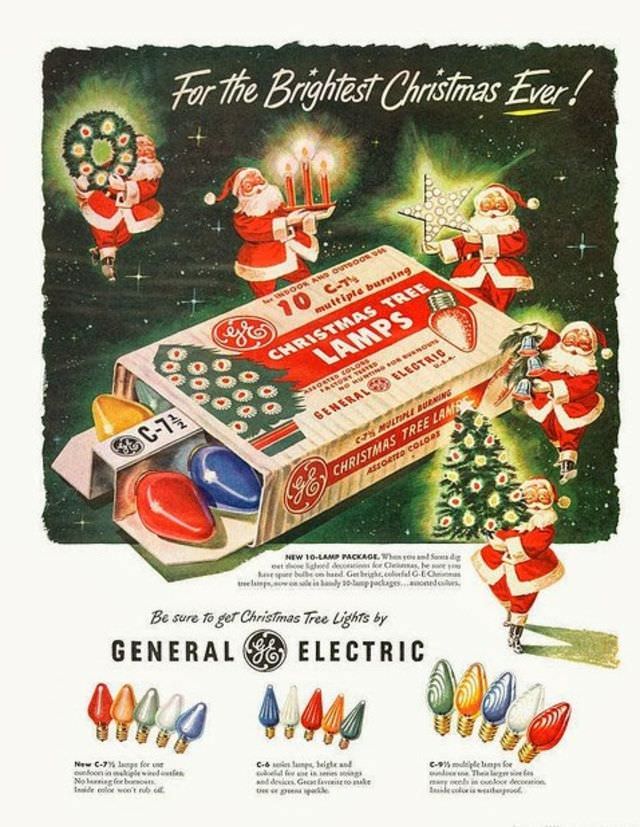
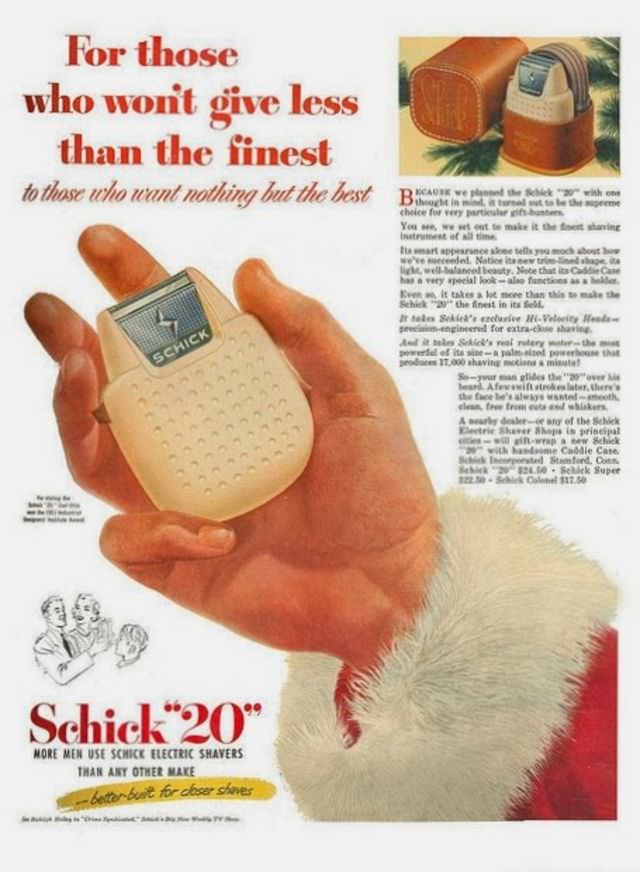
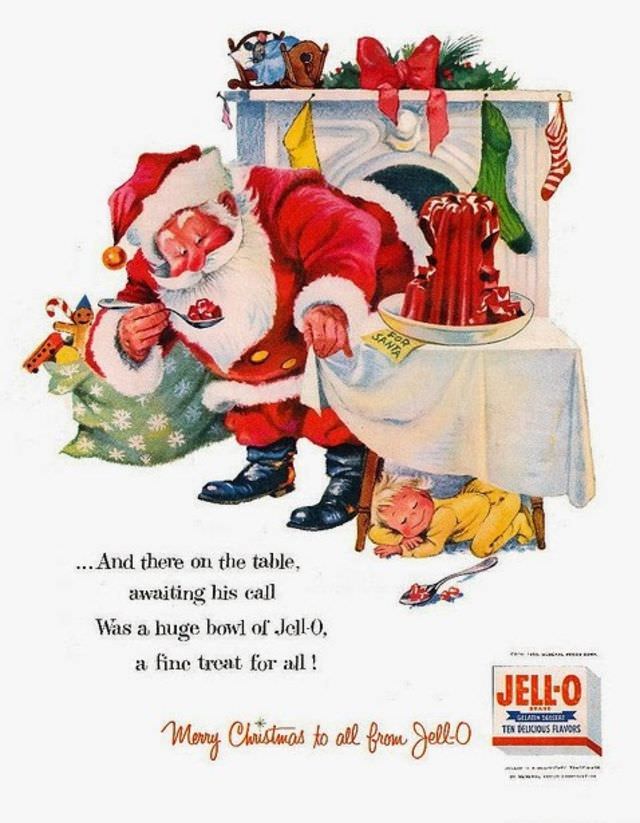
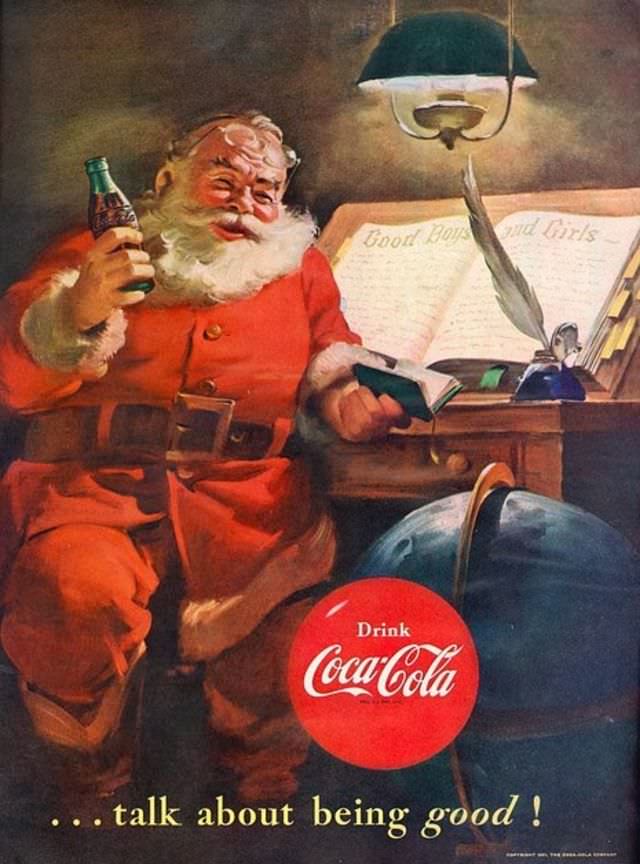
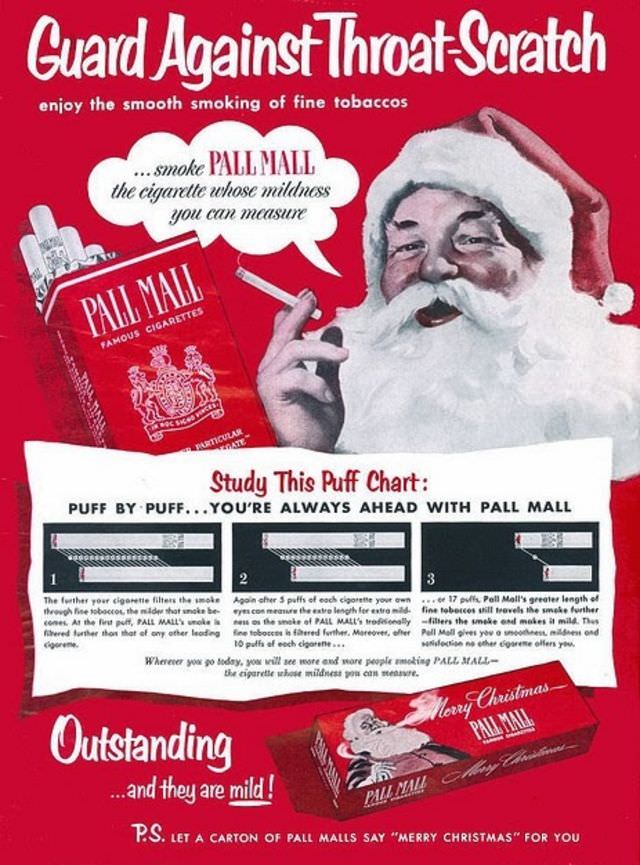
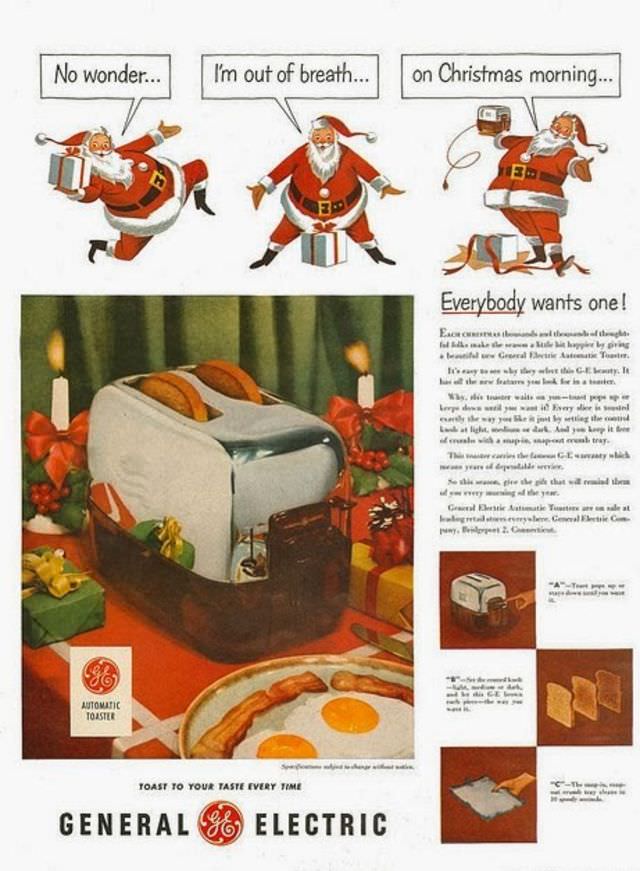
Many ads of this era featured Santa Claus as an endorser. Brands used his image to build trust and warmth around their products, linking everyday goods to the magic of the holiday.
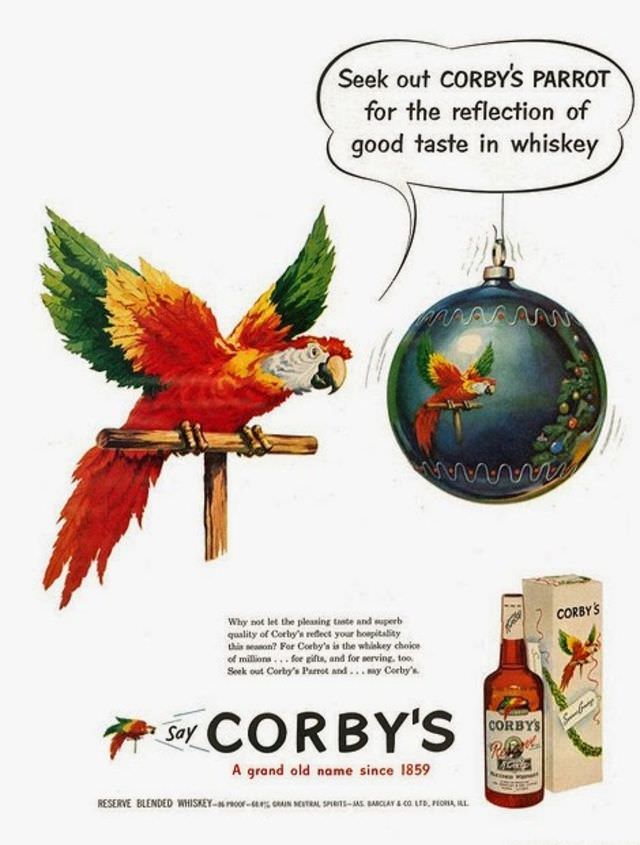
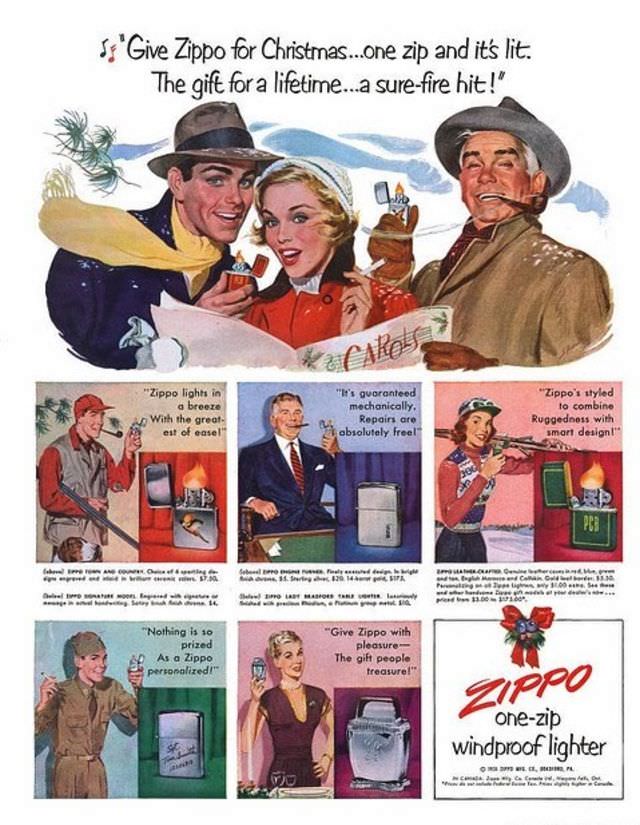
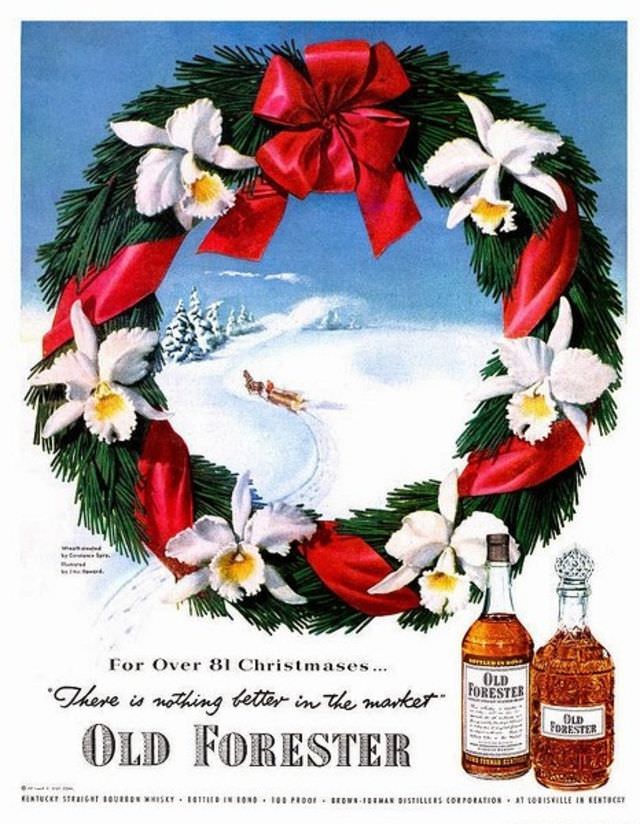
Cigarette and alcohol brands ran Christmas ads openly and without restriction during this era. Whiskey decanters and cigarette cartons appeared in gift guides and full-page magazine spreads just like any other product.
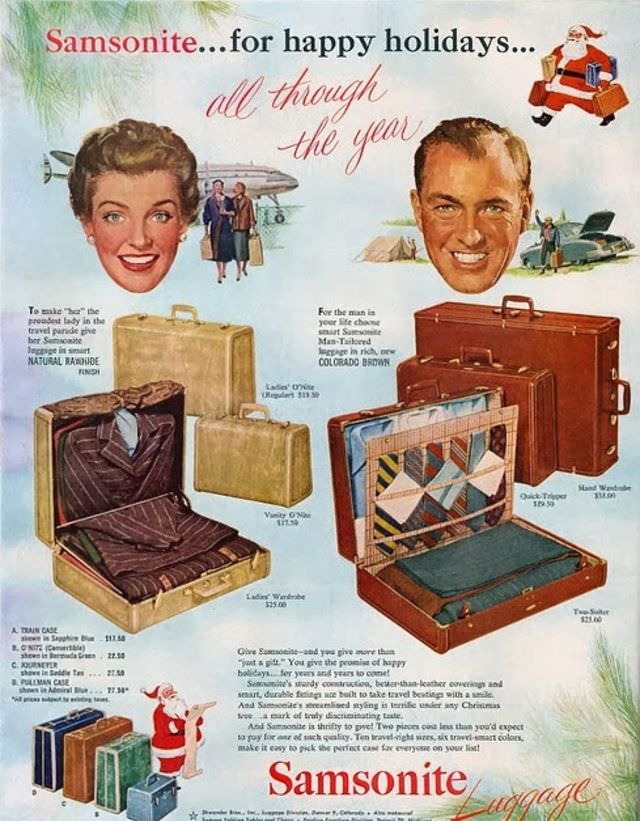
Sport and hobby products also made frequent appearances. Fishing gear, cameras, and golf equipment were advertised as ideal gifts for the man of the house — a reflection of how sharply gendered these ads were.
Taken together, these ads paint a clear picture of 1950s America — a society eager to spend, proud to own new things, and deeply invested in the idea that a prosperous Christmas meant a prosperous life.