By the late 1800s, Russia was a country of striking contrasts. Its population had doubled since the mid-19th century, yet the overwhelming majority of people still lived in rural villages and farmed the land using basic methods. The industrial age had arrived across much of Europe, but Russia was slow to catch up. Factory work was growing, with around 400,000 workers employed — most of them in the textile industry — but cities were still defined more by onion-domed cathedrals and cobblestone squares than by factory smokestacks.
Russia’s first railway line opened in 1837, running between Saint Petersburg and Tsarskoye Selo. By the end of the 19th century, the country had expanded its rail network to roughly 32,000 kilometers. That growth connected distant regions and signaled a slow but real shift toward modernization. Yet for most Russians, daily life remained tied to the rhythms of agriculture and the Orthodox Church. The photographs in this collection capture that world — its architecture, its streets, and its people — in remarkable detail.
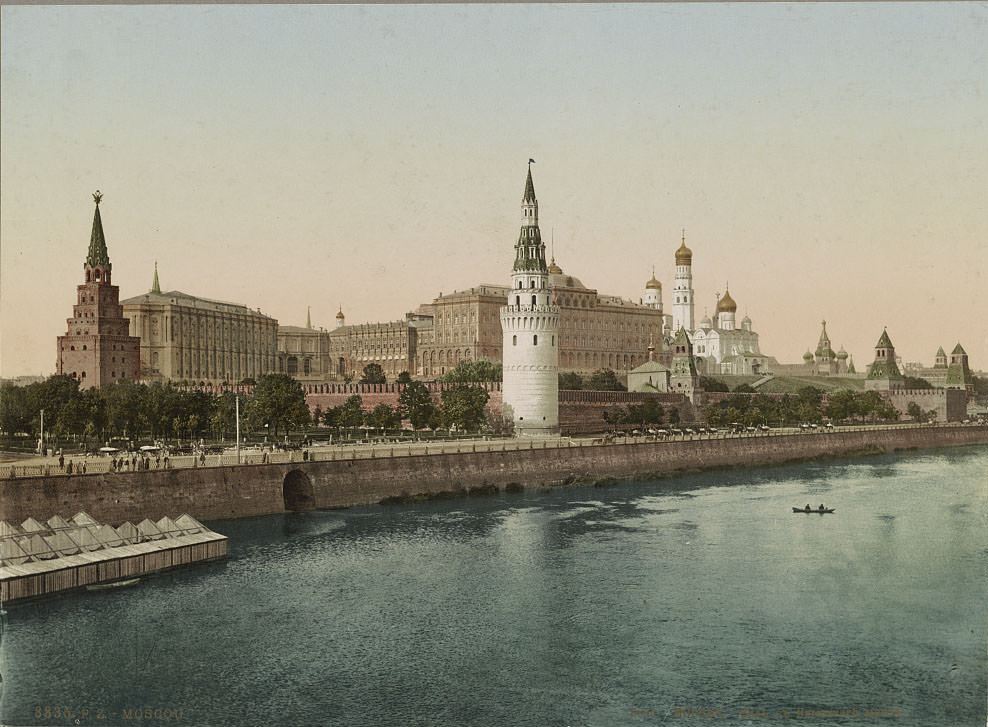
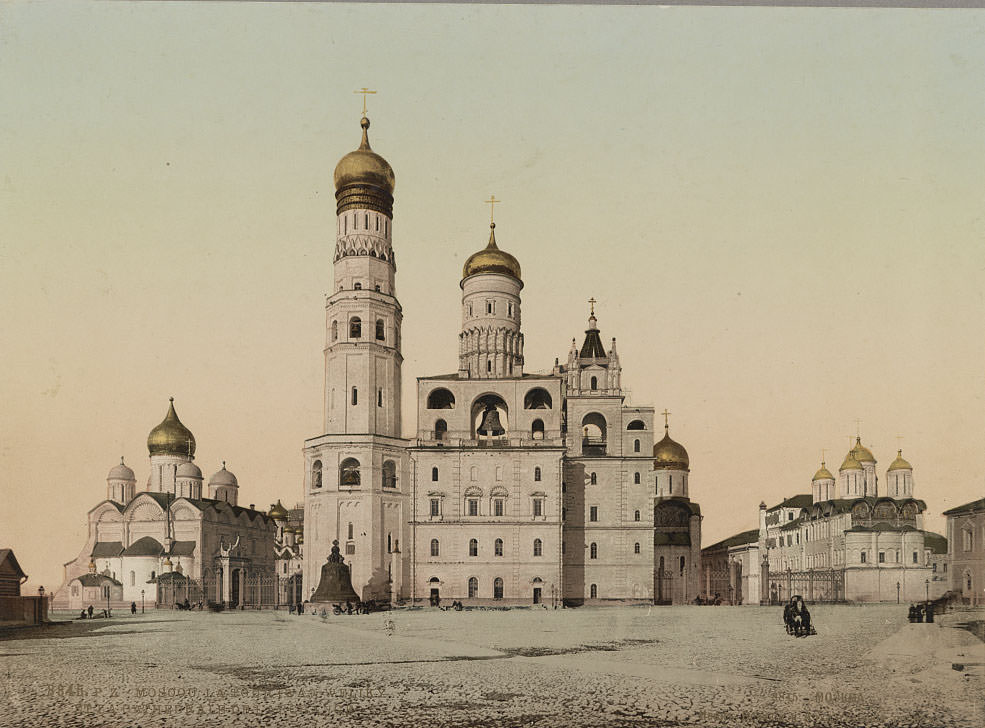
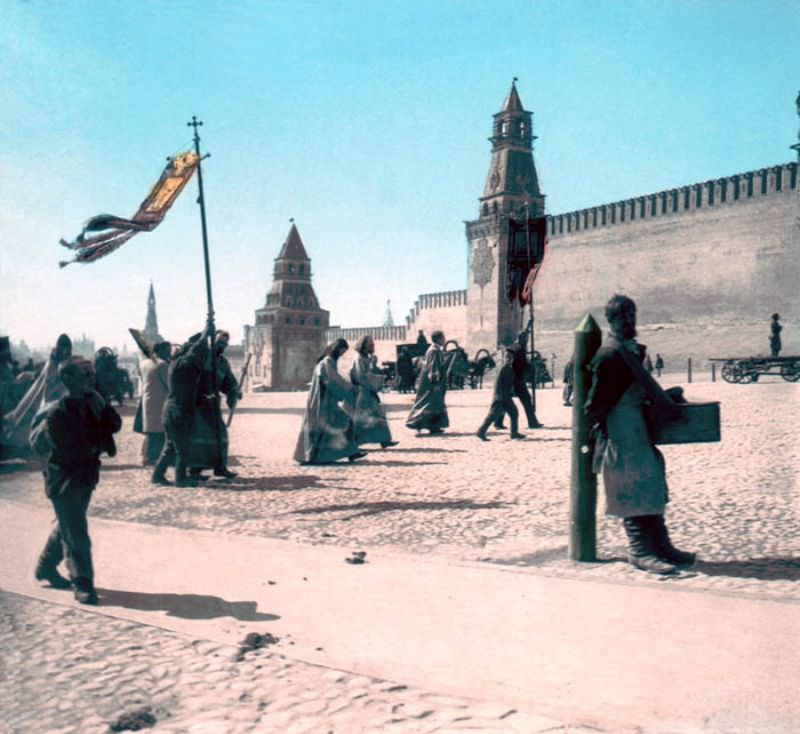
Moscow stood as the spiritual heart of Russia. Its skyline was dominated by golden domes and ancient walls that had endured centuries of war and transformation. The Kremlin complex anchored the city, surrounded by fortified walls and towers that had been rebuilt and expanded since the 15th century. Inside and around it stood some of the most important religious buildings in the country.
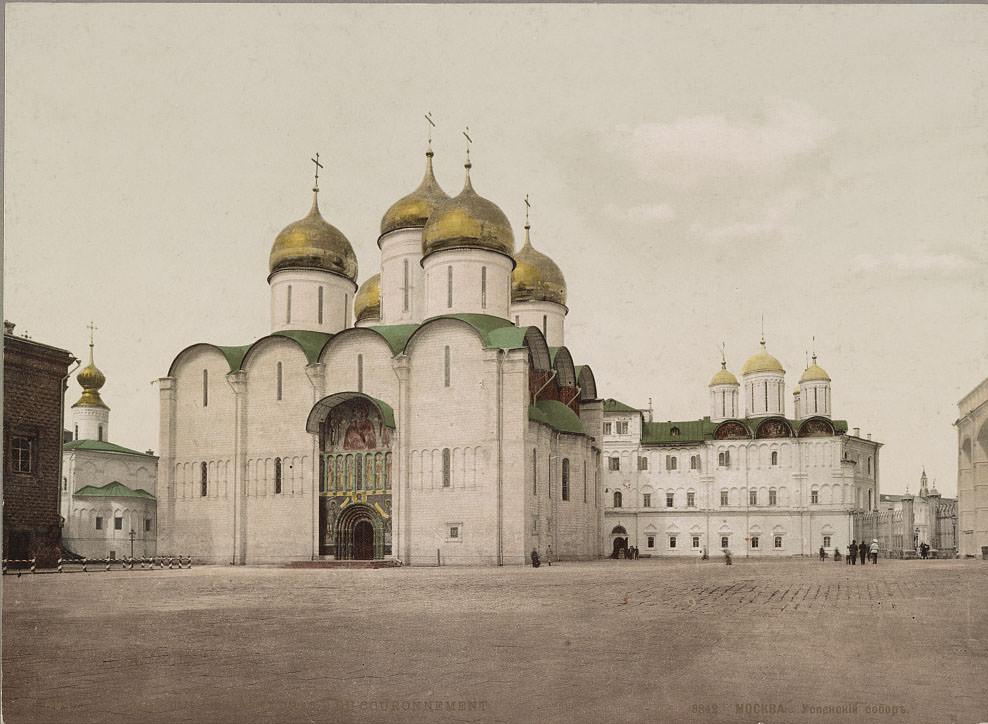
The Cathedral of the Dormition, located within the Kremlin, served as the site of coronations for Russian tsars for centuries. It was built between 1475 and 1479 by Italian architect Aristotle Fioravanti, who was commissioned to bring a new scale and solidity to Russian sacred architecture. Not far from it sat one of Moscow’s most famous curiosities.
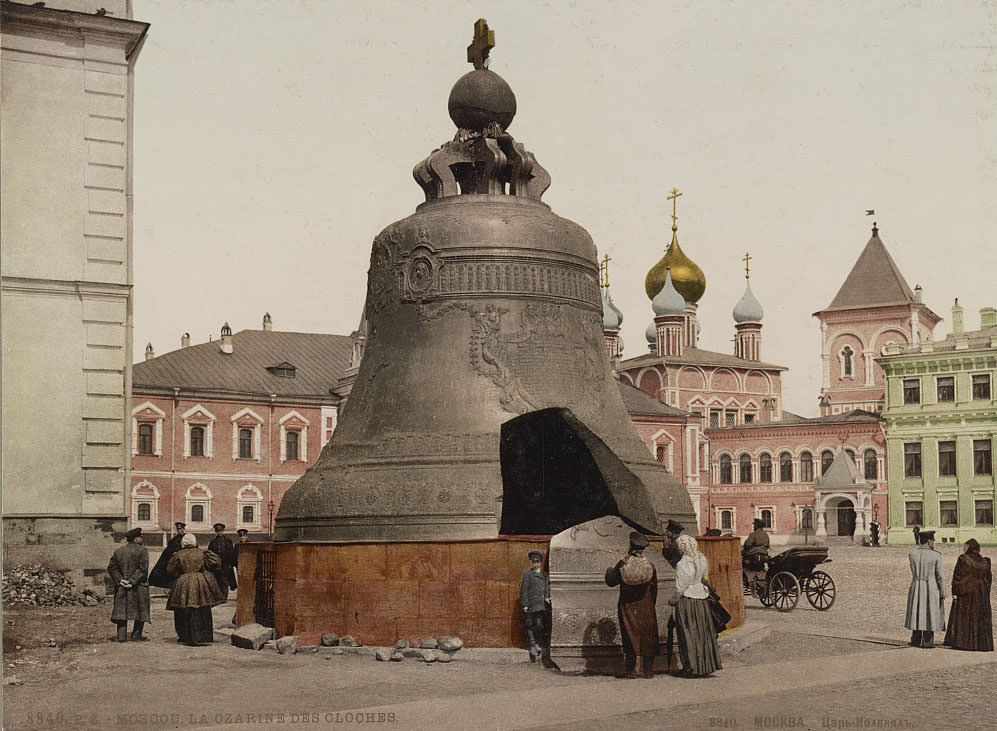
The Tsar Bell is the largest bell in the world, weighing over 200 tons. It was cast in the 1730s but never successfully hung — a fire in 1737 caused a large chunk to break off before it could ever ring. It has sat on a stone pedestal near the Ivan the Great Bell Tower ever since, more monument than instrument.
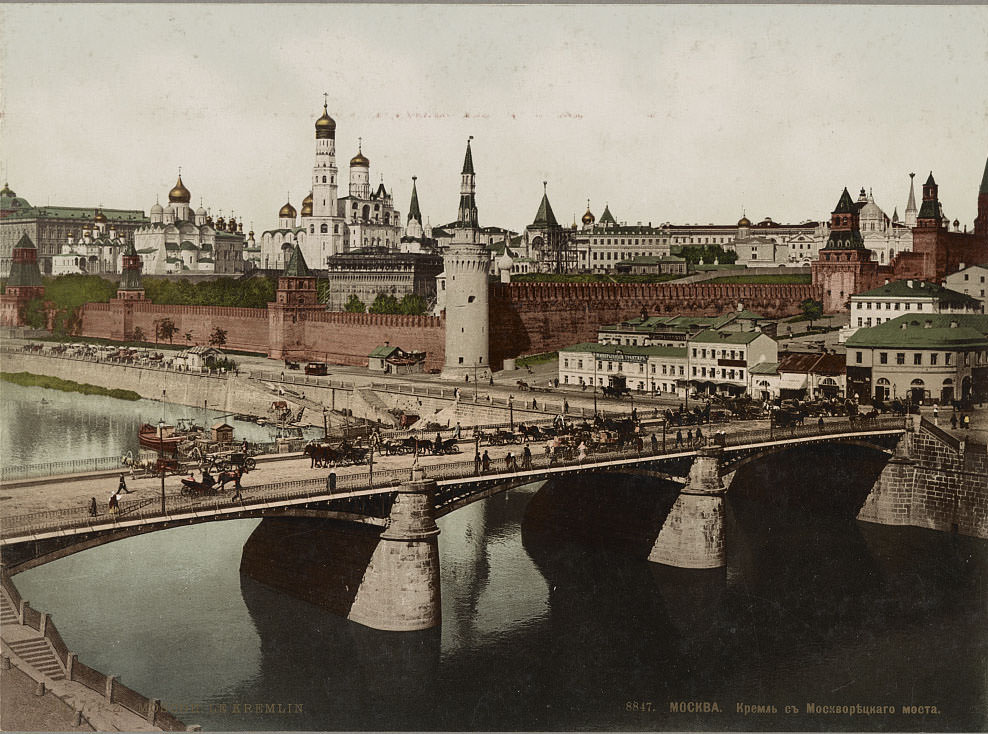
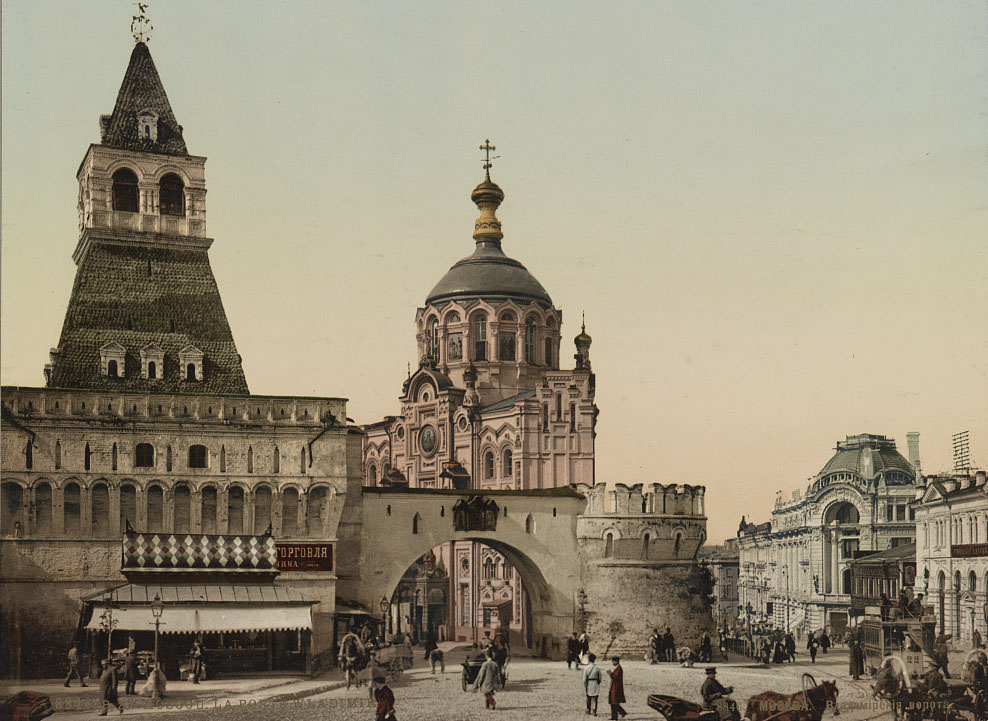
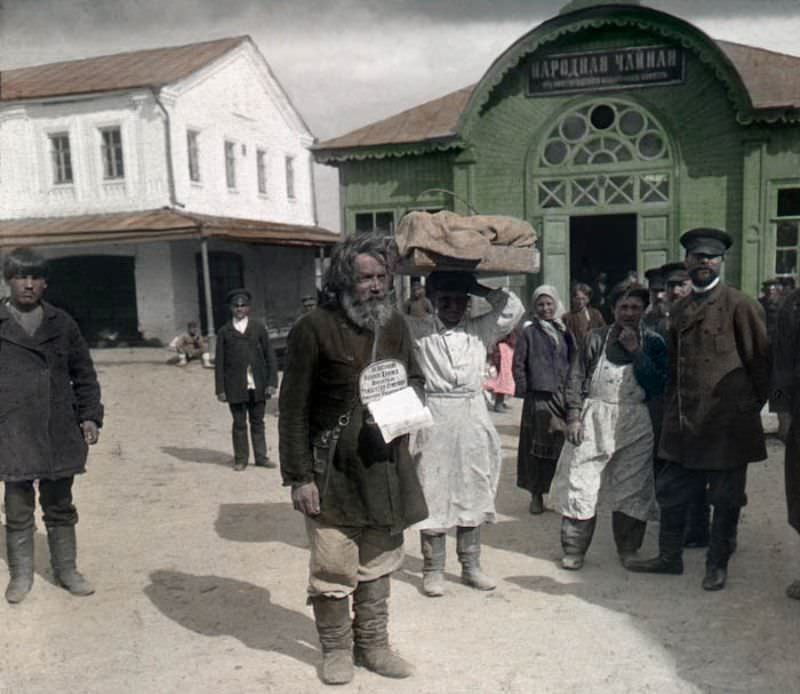
Moscow’s streets in the 1890s were a mix of grand architecture and everyday bustle. Horse-drawn carts shared roads with pedestrians moving between markets, monasteries, and public squares. Triumphal gates and civic monuments marked important routes through the city, many of them built to commemorate military victories.
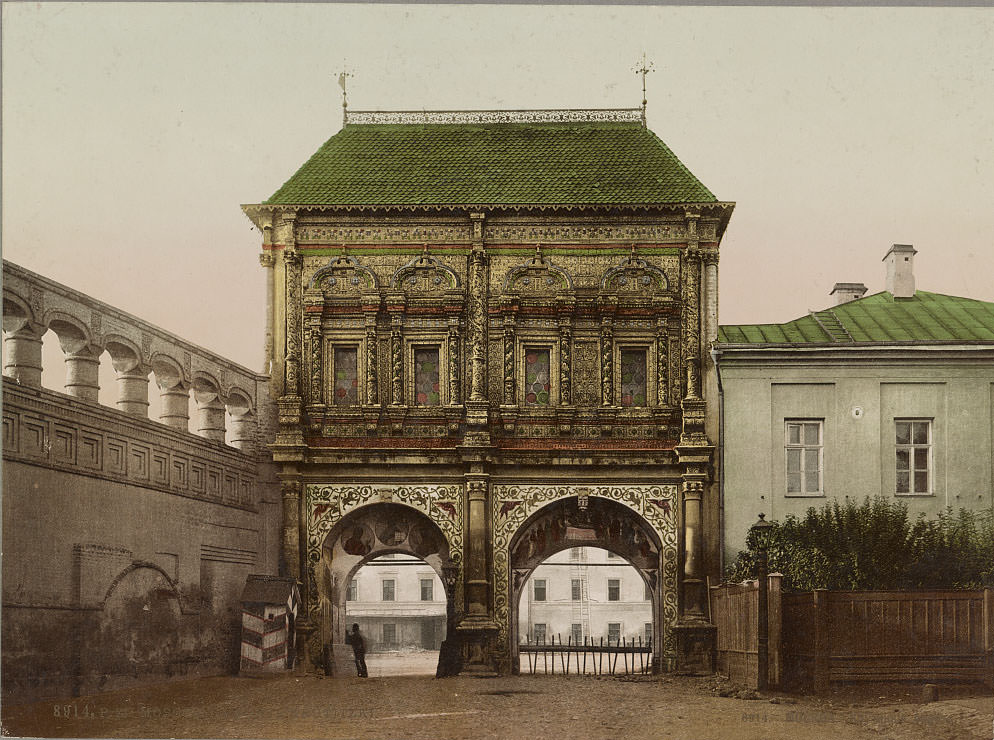
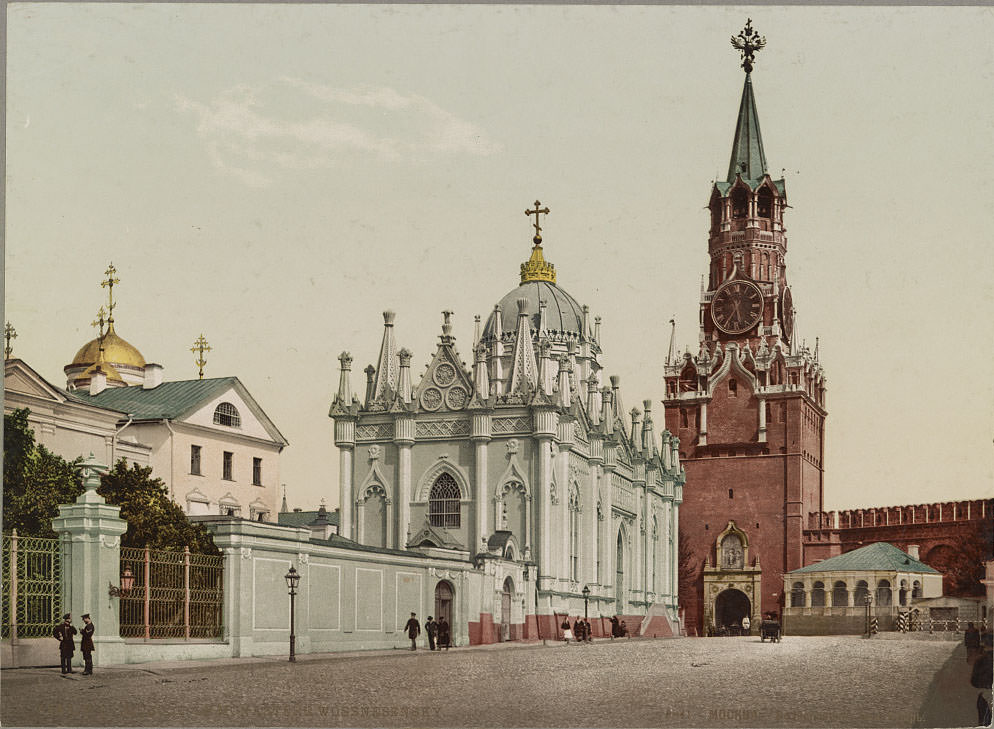
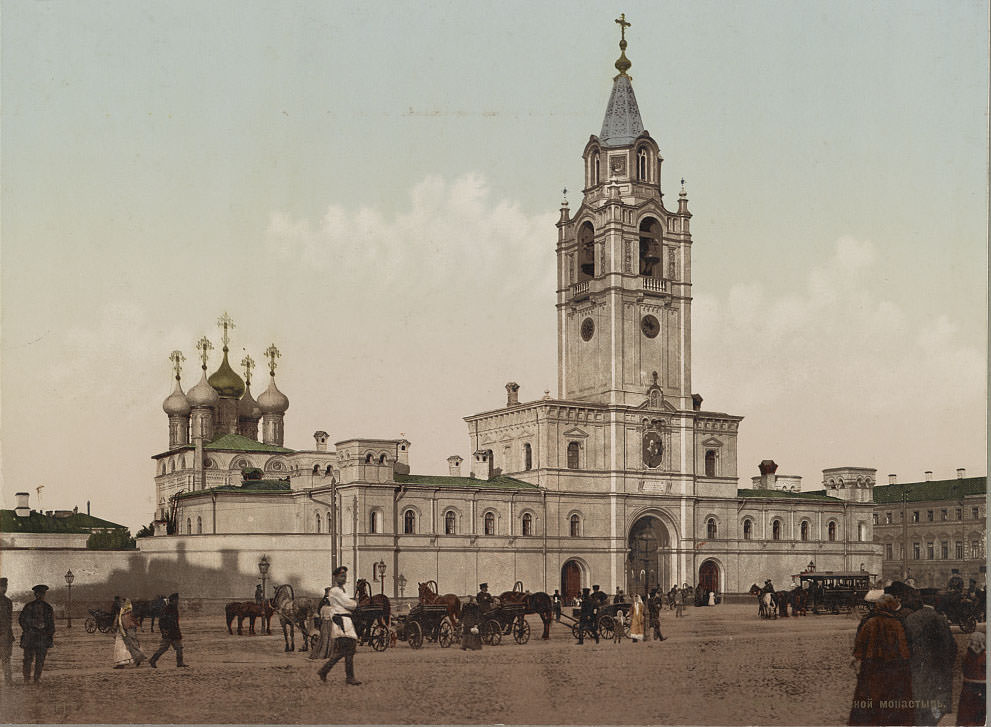
Monasteries were central to Moscow’s identity. The Sretensky Monastery, founded in 1397, marked the spot where Muscovites prayed for protection against the Mongol armies of Tamerlane. The Novospassky Monastery, one of the oldest in Moscow, served as the burial place for the Romanov family before the dynasty rose to the throne in 1613.
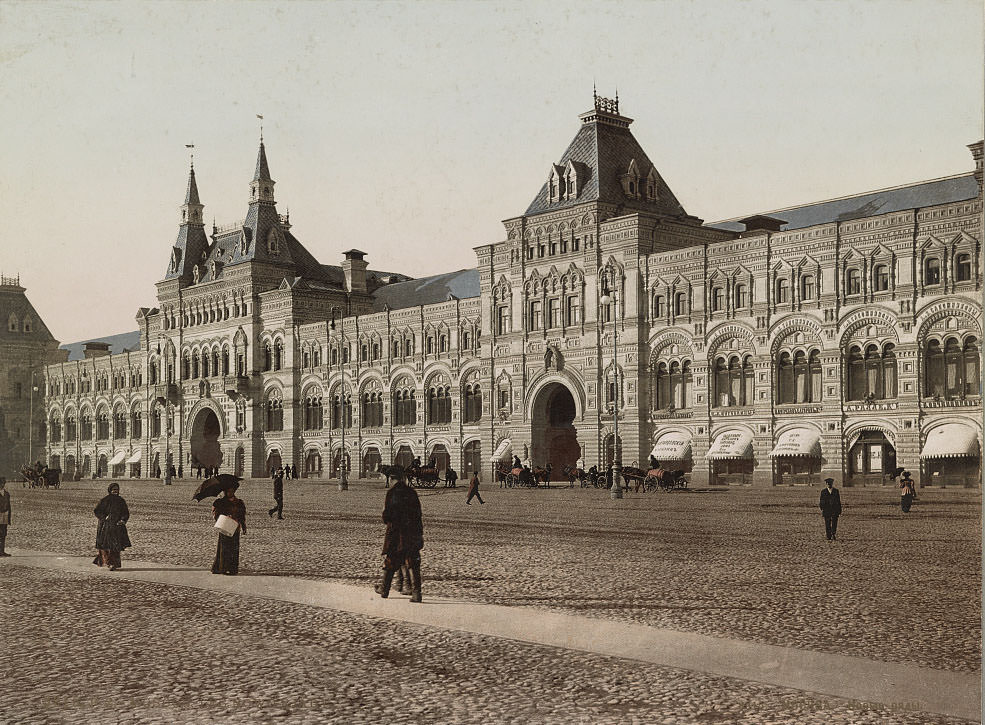

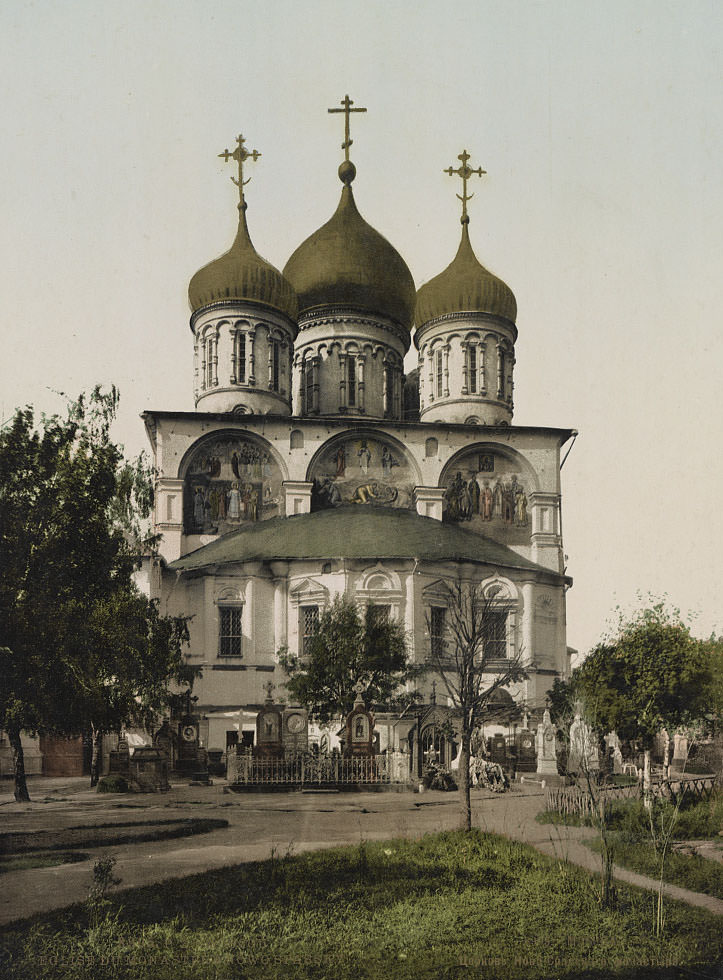
The Grand Kremlin Palace, completed in 1849 under Tsar Nicholas I, served as the official Moscow residence of the Russian emperors. Its long yellow facade stretched along the Kremlin’s southern wall above the Moscow River, blending older Russian architectural styles with neoclassical elements. Nearby, the Ivan the Great Bell Tower rose 81 meters, making it one of the tallest structures in Moscow for centuries.
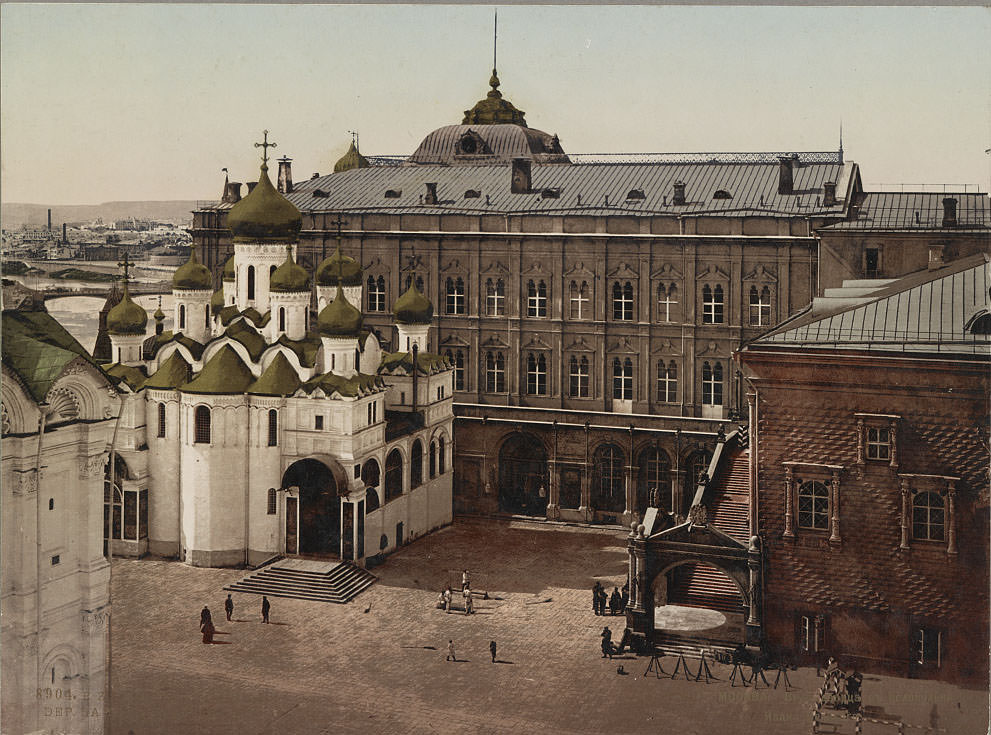
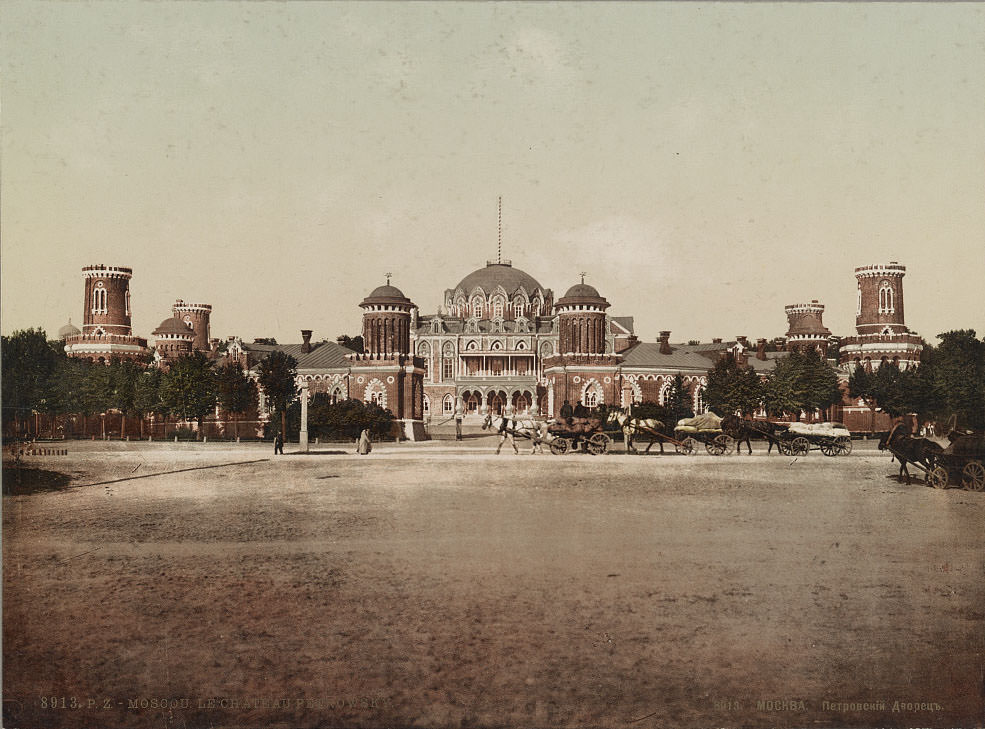
Pushkinskaya Square was one of Moscow’s most prominent public spaces by the 1890s. The monument to Alexander Pushkin, unveiled in 1880, stood at its center — a tribute to Russia’s most celebrated poet. The square was a gathering point for Muscovites of all classes and remains one of the most recognized spaces in the city.
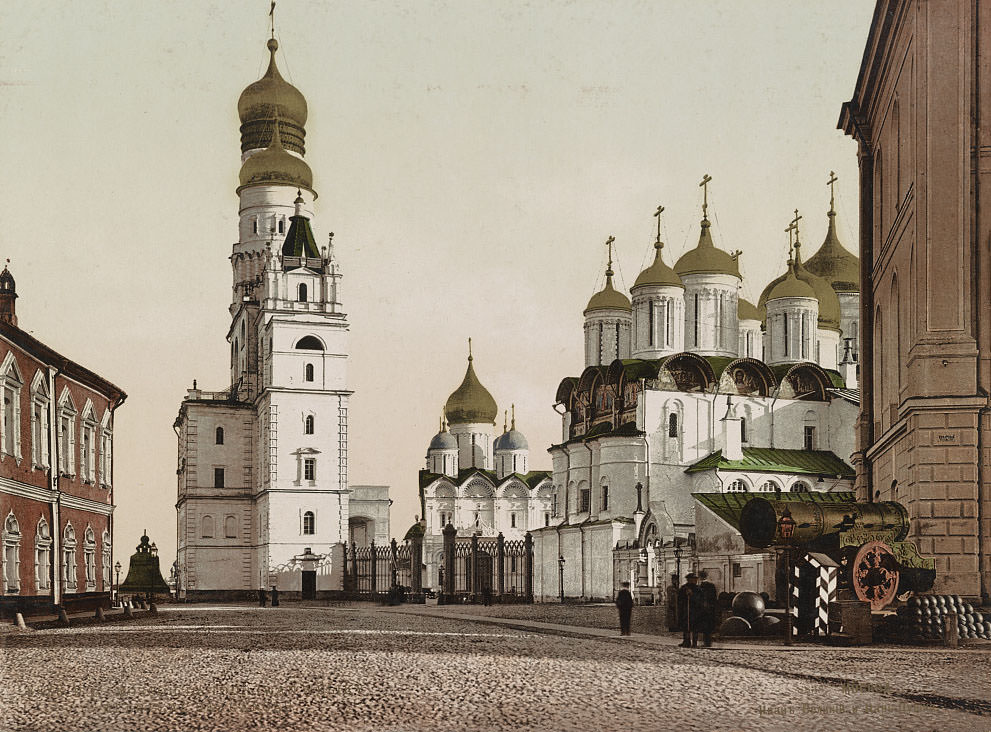
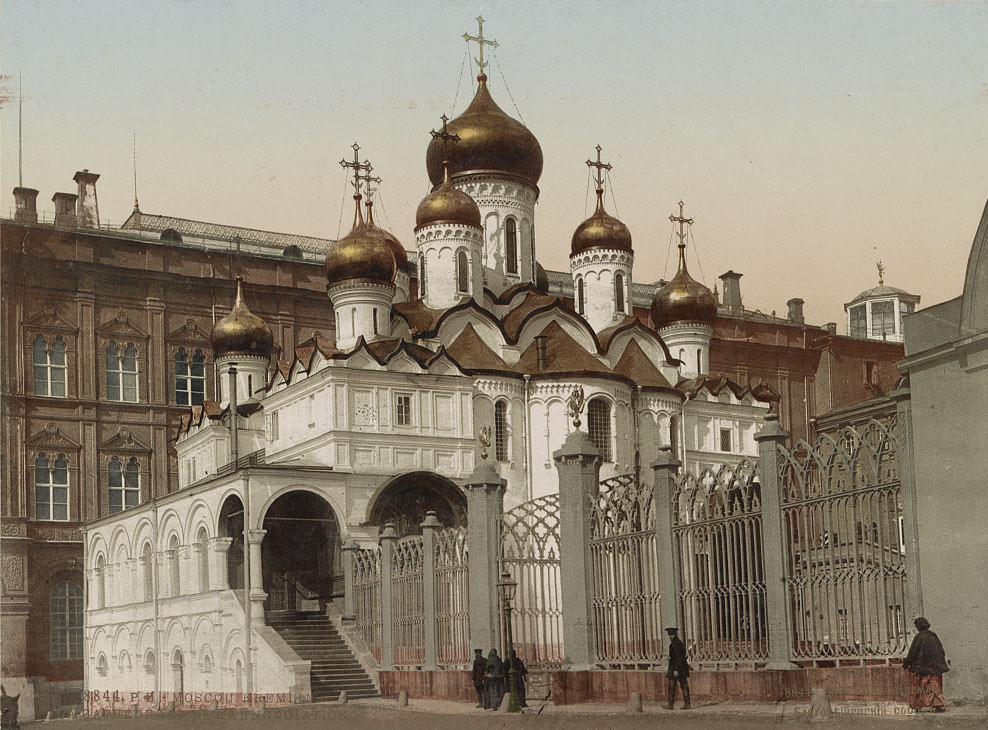
The Tsar Cannon, cast in 1586, sits near the Tsar Bell as another monumental object that was never used for its intended purpose. It weighs roughly 40 tons and was designed to defend the Kremlin, but it has no record of ever being fired in battle. The Cathedral of the Annunciation, also within the Kremlin, served as the private church of the Russian royal family.
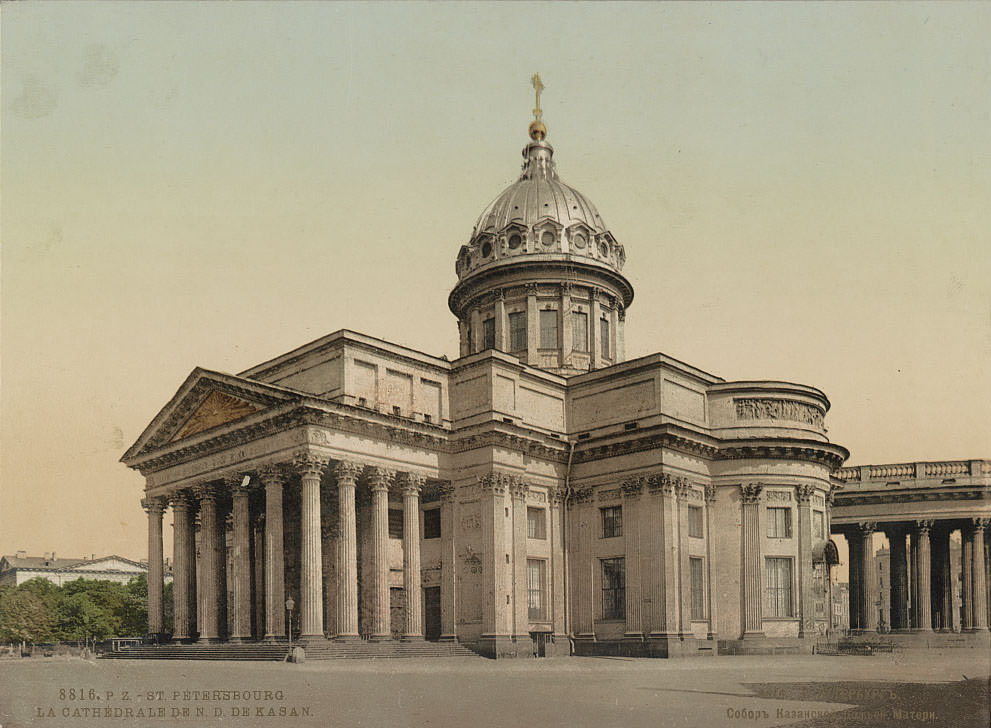
Saint Petersburg, founded by Peter the Great in 1703, was Russia’s imperial capital and its most Westernized city. Peter built it specifically to open Russia to European culture and trade. By the 1890s, it was a city of wide boulevards, grand museums, imperial palaces, and baroque cathedrals — a sharp contrast to Moscow’s more medieval character.
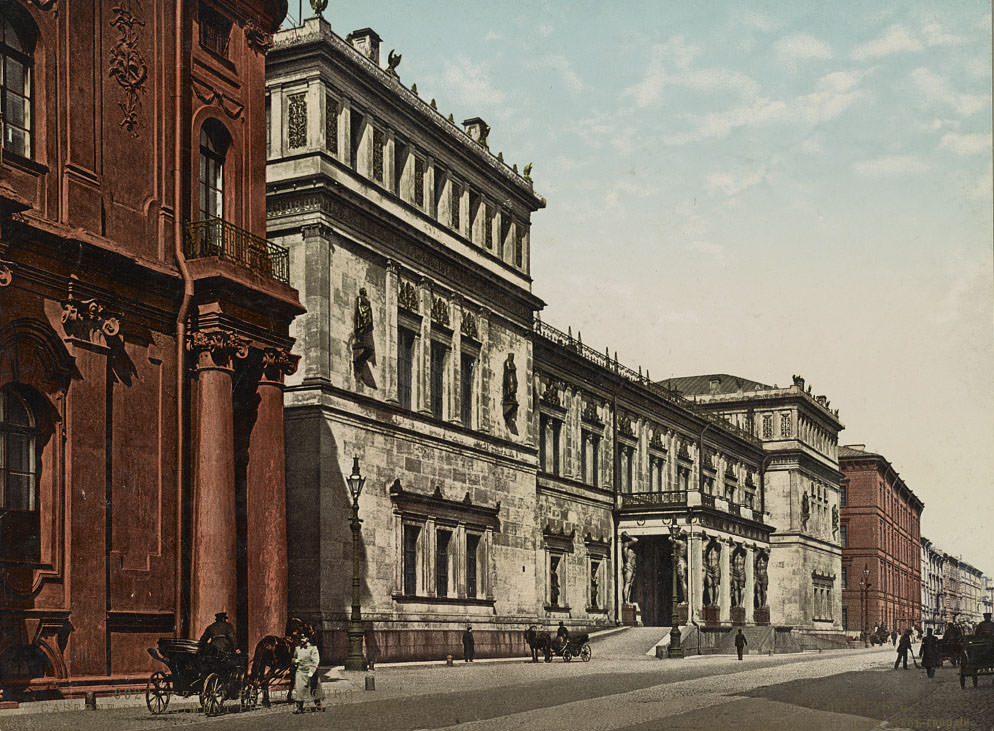
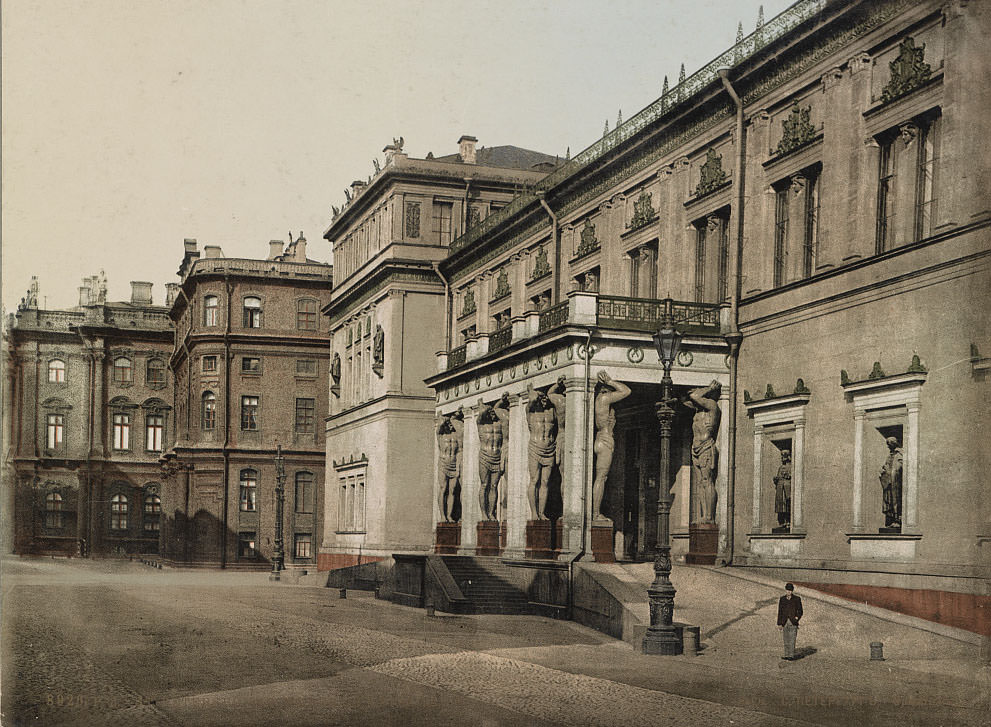
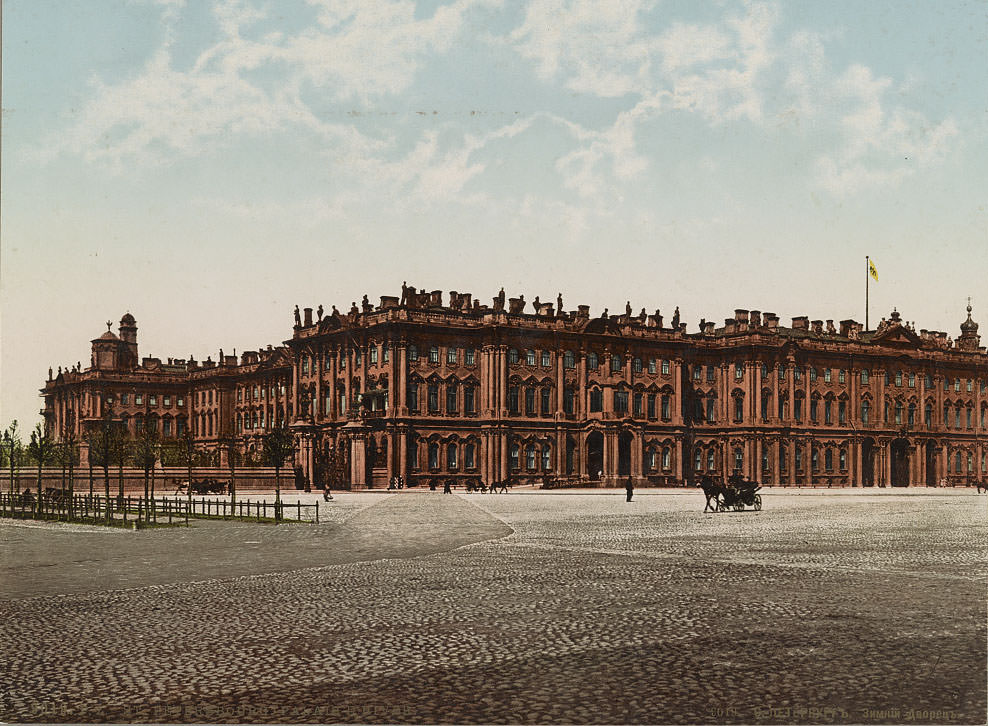
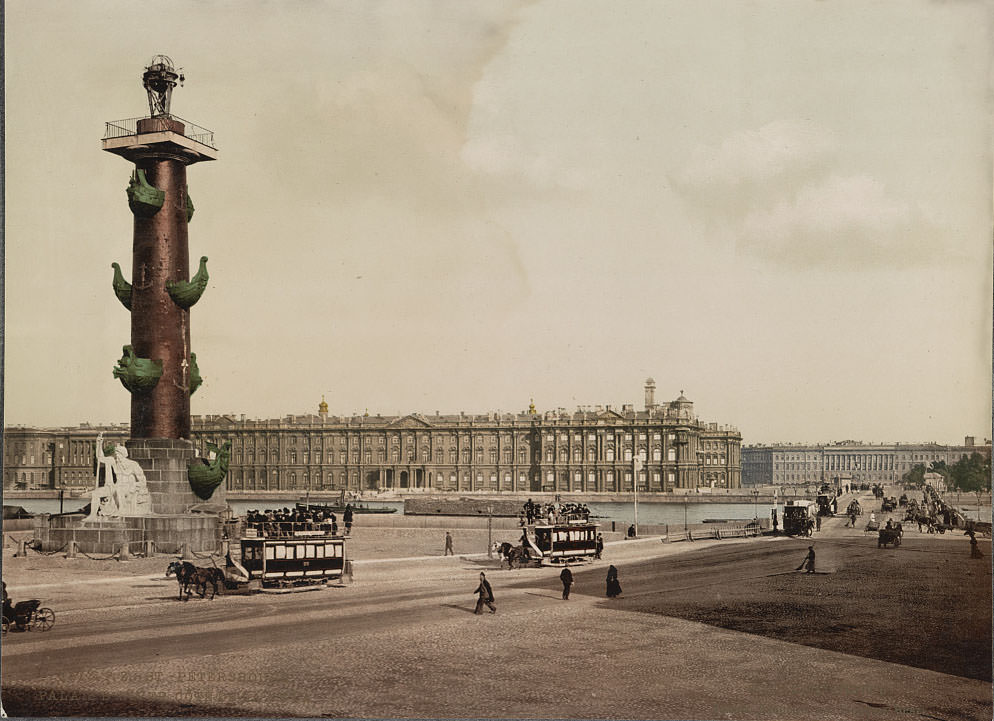
The State Hermitage Museum, housed in the Winter Palace and several adjoining buildings along the Neva River, was already one of the world’s largest art collections by the late 19th century. Catherine the Great began acquiring works in 1764, and the collection had grown to include hundreds of thousands of objects by the 1890s.
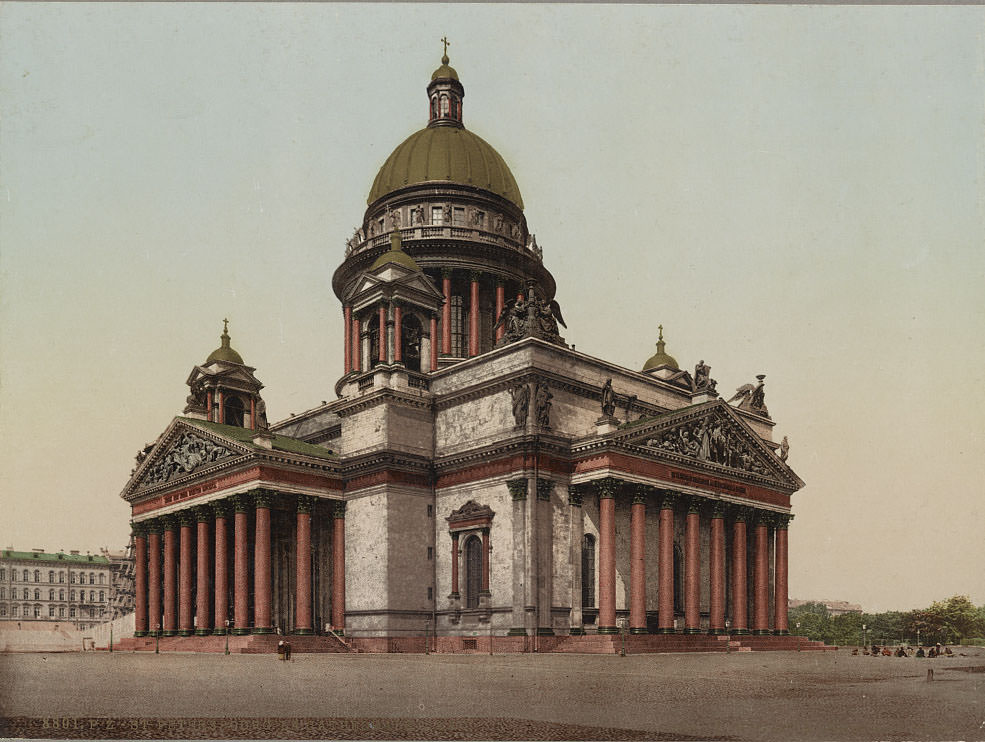
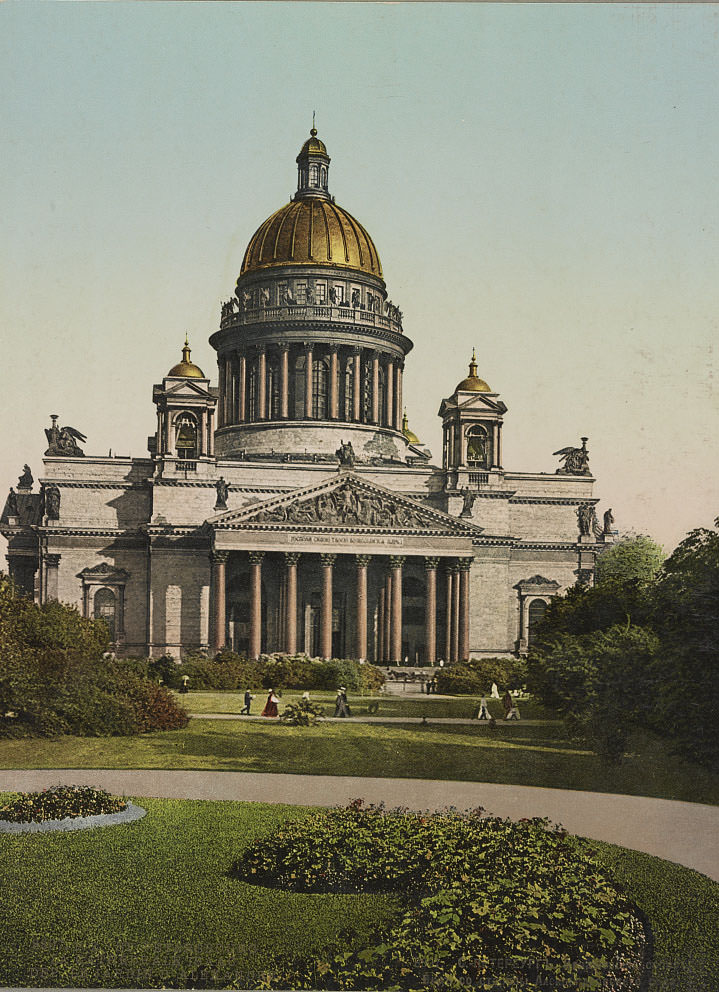
St. Isaac’s Cathedral took 40 years to build, from 1818 to 1858, and required the labor of roughly 400,000 workers. Its gilded dome is visible from across the city. The cathedral could hold up to 14,000 people and was the largest Orthodox church in Saint Petersburg. Its massive granite columns, each weighing 114 tons, were raised into place before the walls around them were even built.
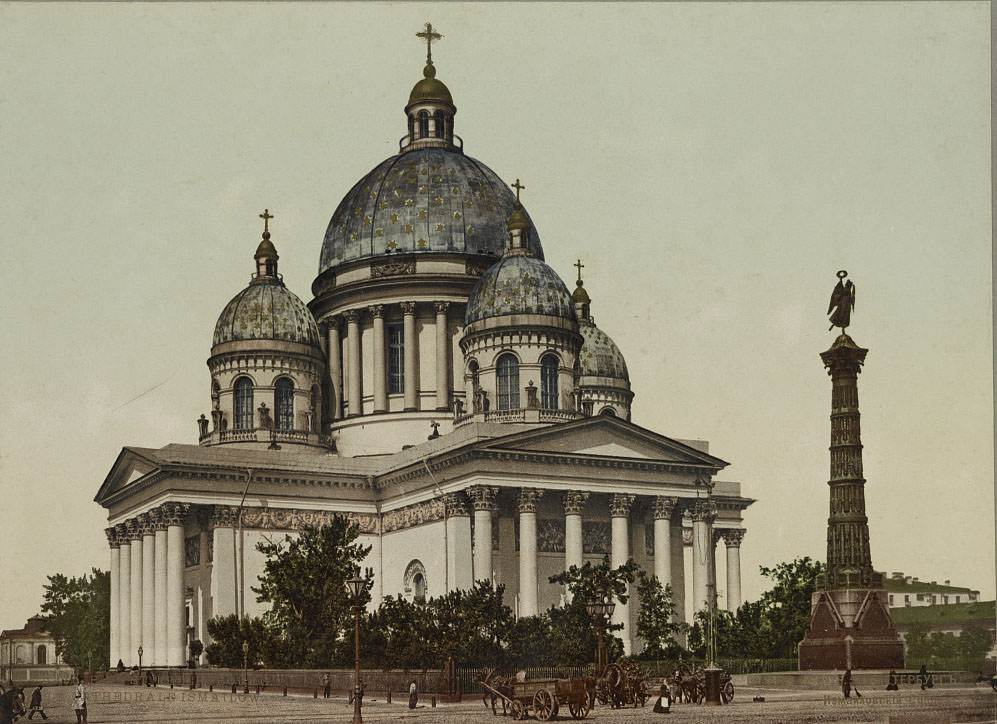
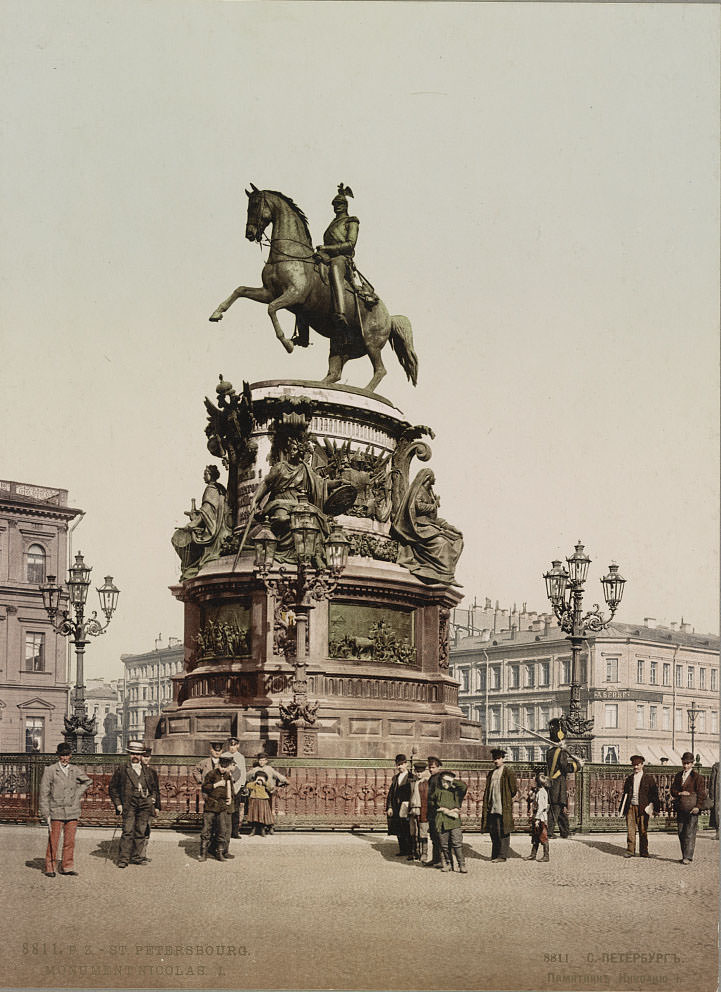
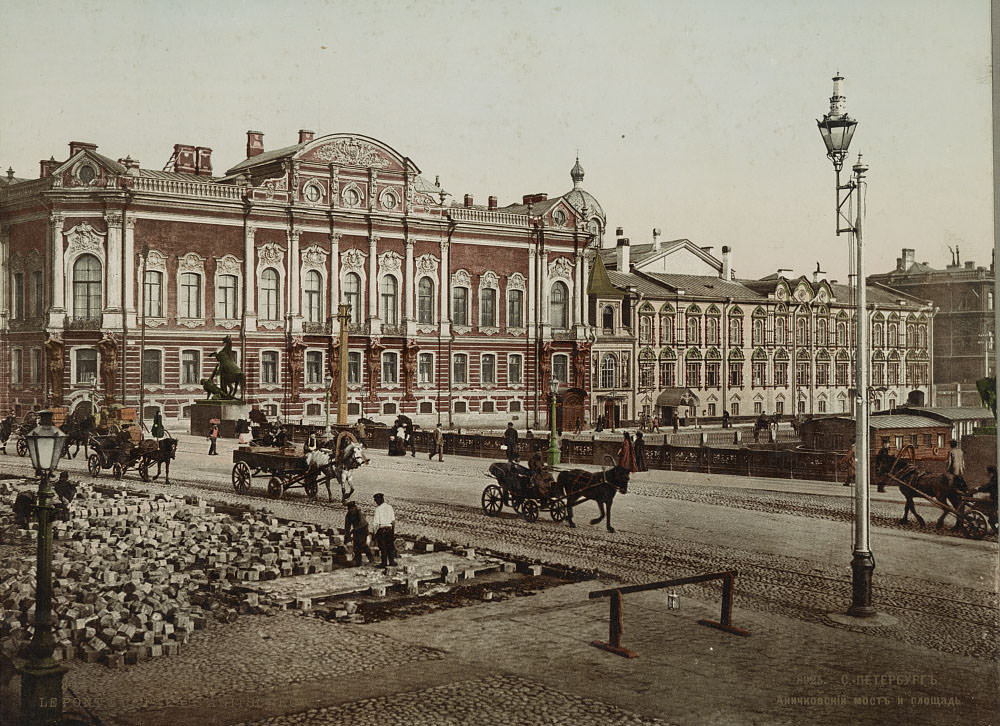
The Anichkov Palace, situated on Nevsky Prospect at the Fontanka River, was one of the oldest and most historically significant palaces in Saint Petersburg. Built in the 1740s, it passed through the hands of multiple members of the royal family and served as the residence of the heir to the throne during much of the 19th century.
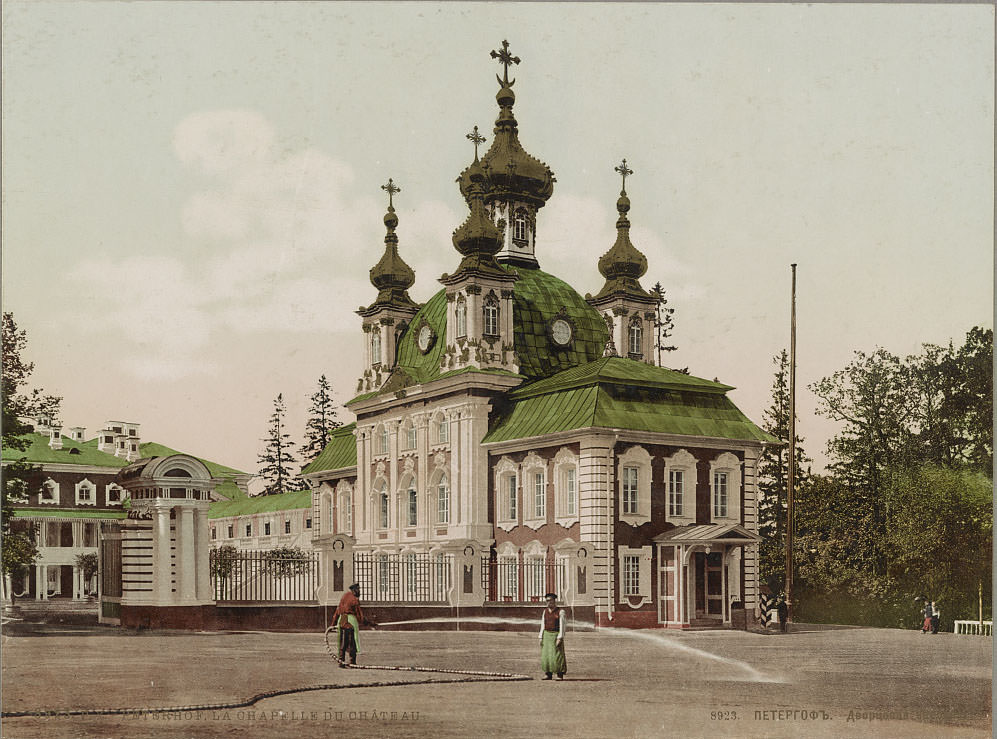
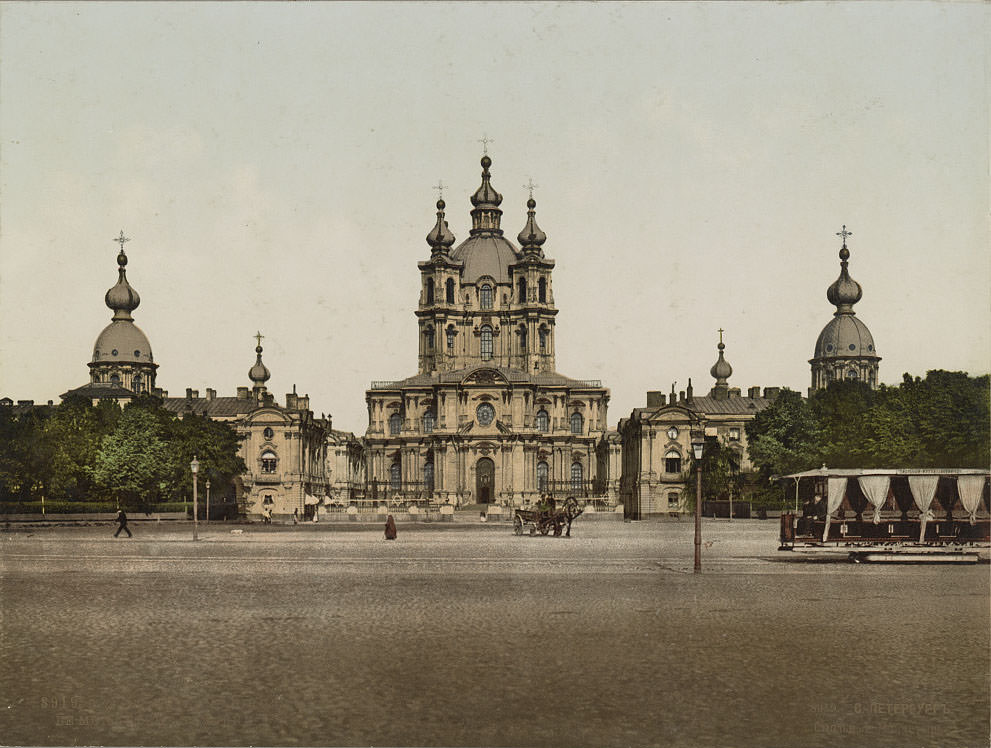
Saint Michael’s Castle, also called the Engineers’ Castle, was built by Tsar Paul I, who was so fearful of assassination that he designed the structure with a moat and drawbridges on all four sides. Despite these precautions, Paul I was murdered in his bedroom there in 1801, just 40 days after moving in. The Smolny Convent, with its striking blue-and-white facade, was designed by Bartolomeo Rastrelli and is considered one of the finest examples of Russian baroque architecture.
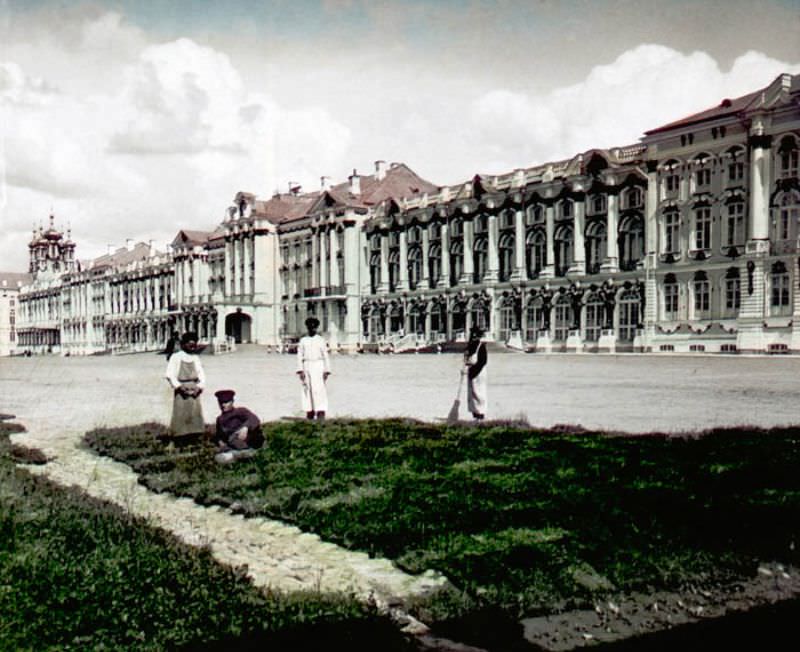
Tsarskoye Selo, meaning ‘Tsar’s Village,’ was the imperial family’s preferred summer retreat, located about 25 kilometers south of Saint Petersburg. The estate included the enormous Catherine Palace, the more modest Alexander Palace, and vast landscaped parks. Russia’s first railway line connected this estate to the capital in 1837, making it both historically and literally a starting point for the country’s rail age.
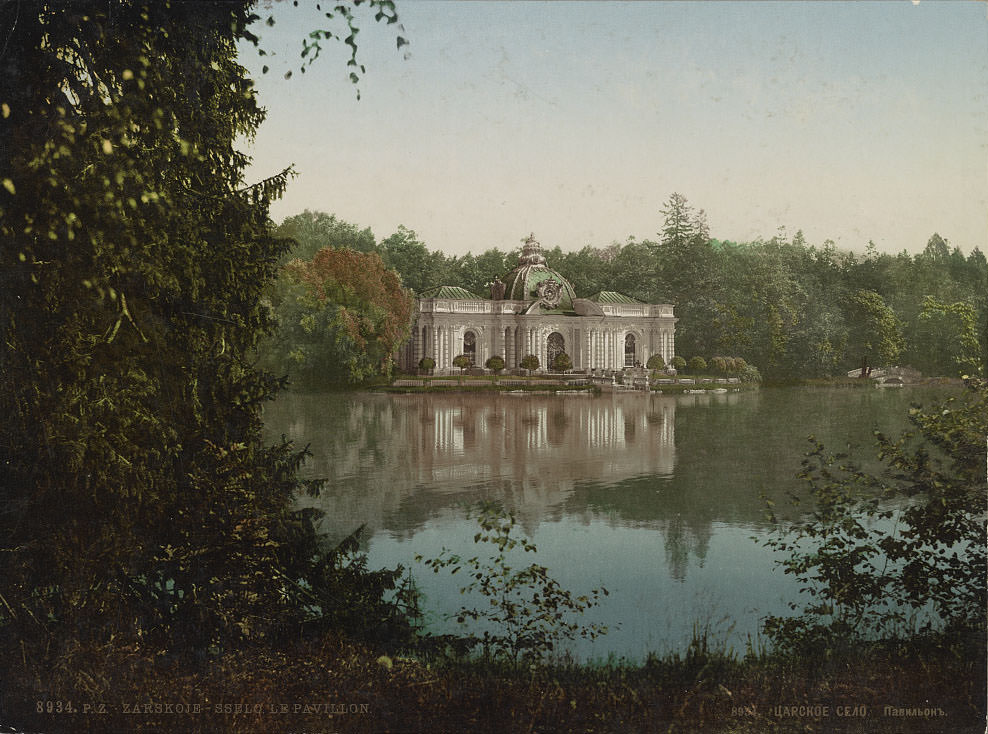
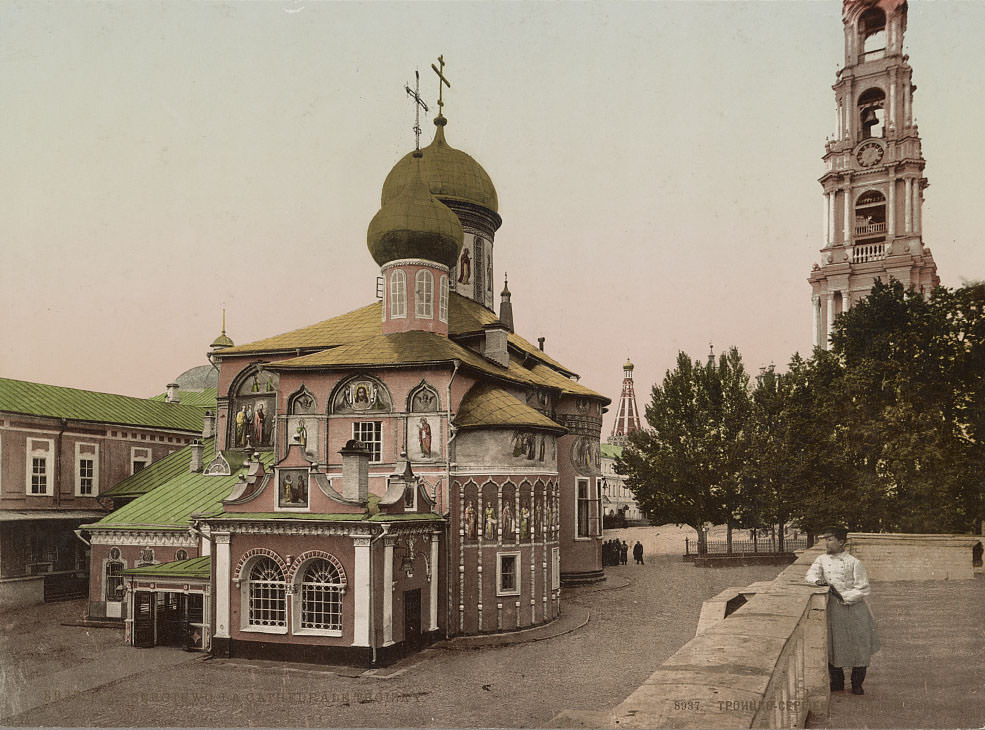
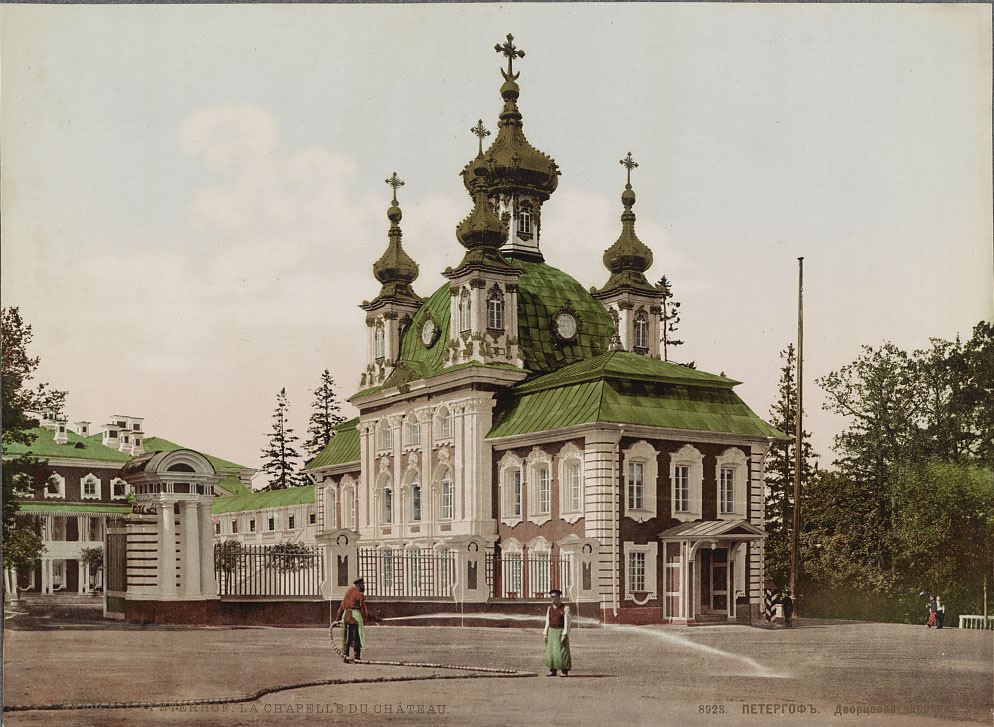
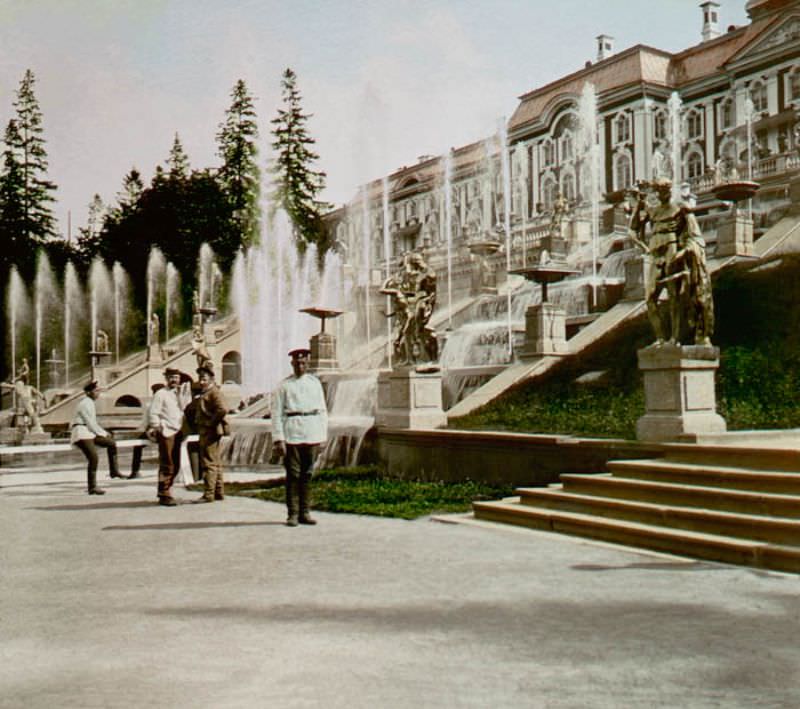
Peterhof, built under Peter the Great starting in 1714, was designed to rival Versailles. Its Grand Cascade featured 64 fountains and 255 bronze statues, all powered entirely by gravity through a system of natural springs and aqueducts. No pumps were used. The palace and its grounds sat on a terrace overlooking the Gulf of Finland, and the fountains remained in use throughout the imperial period.
In 1896, Moscow became the site of one of the most significant events of the decade: the coronation of Tsar Nicholas II. The city filled with processions, crowds, and ceremony. These events were documented in photographs that captured both the grandeur of the imperial spectacle and the texture of everyday Russian life during the same period.
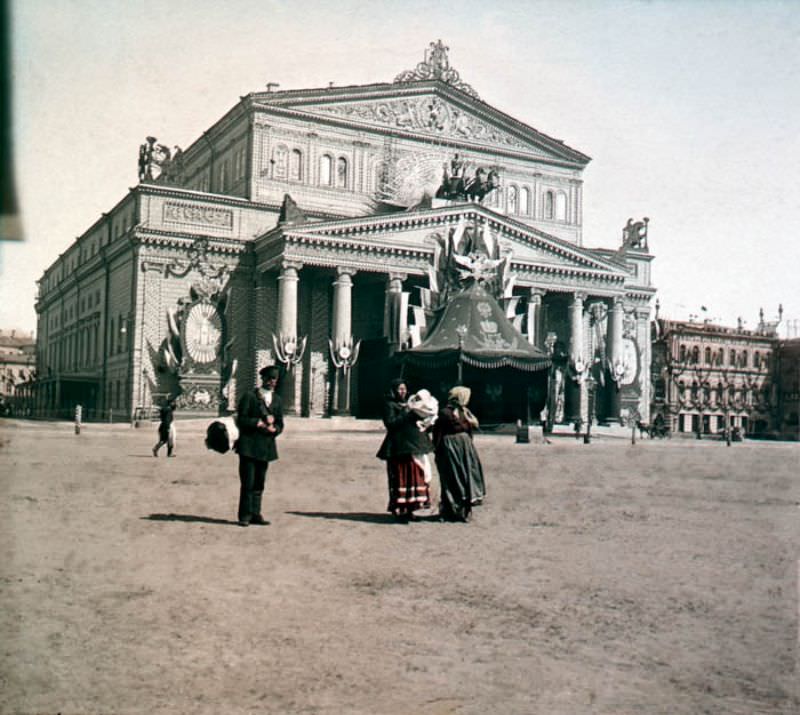
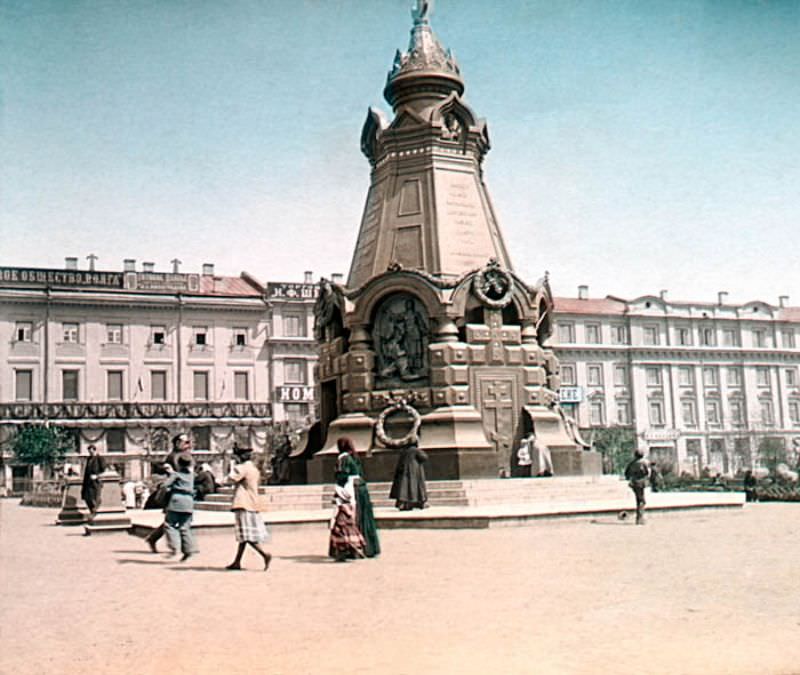
The Heroes of Plevna memorial in Moscow honored the Russian soldiers who died during the siege of Plevna in 1877, a major engagement in the Russo-Turkish War. The monument was funded by surviving veterans and unveiled in 1887. The coronation celebrations of 1896 drew thousands to Moscow, and photographs from that period show the city decorated and animated in ways rarely seen.
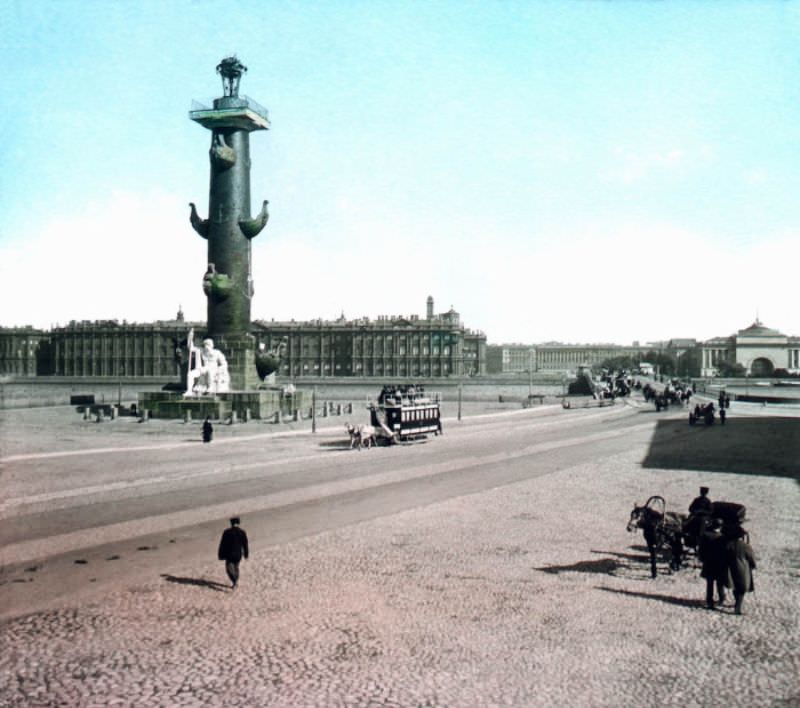
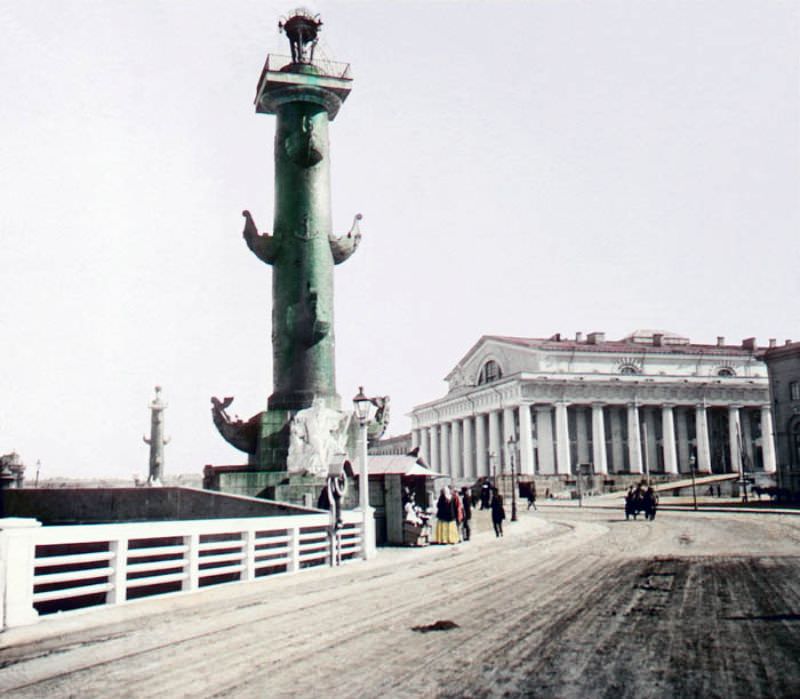
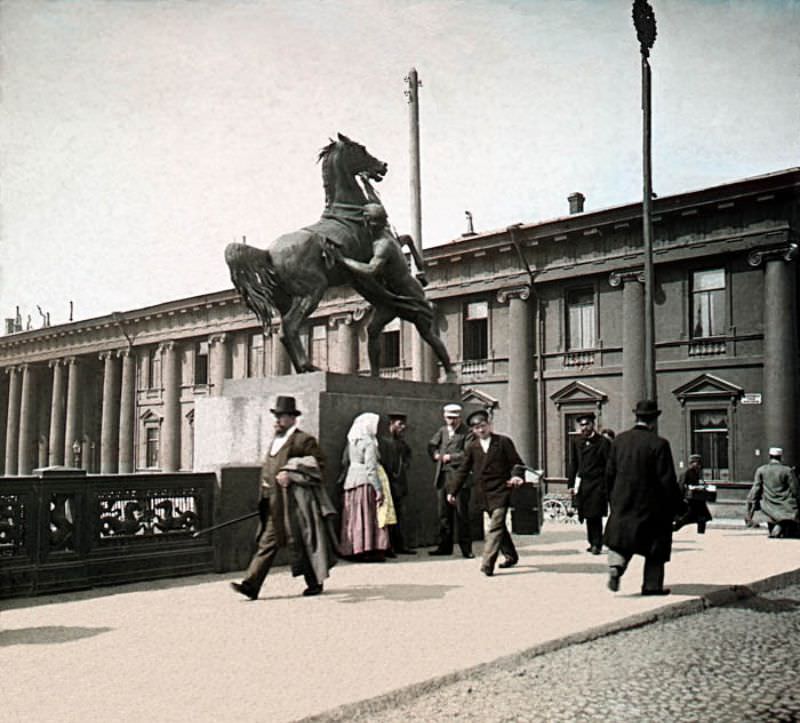
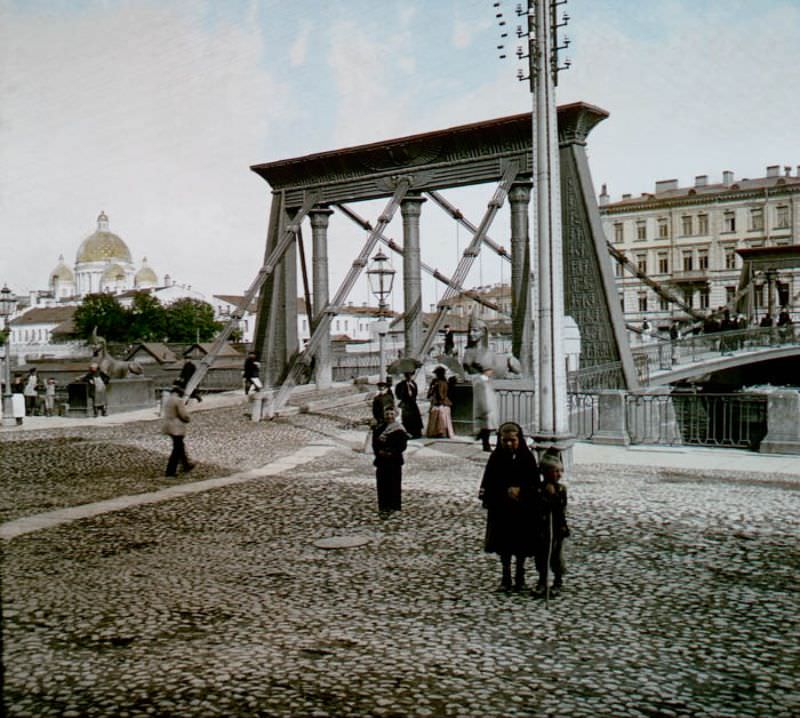
Saint Petersburg’s waterways were central to the city’s identity and economy. Bridges like the Anichkov and the Egyptian spanned the Fontanka River and were notable landmarks in their own right. The Anichkov Bridge was famous for its four horse-taming sculptures, cast by Peter Klodt in the 1840s. The Egyptian Bridge drew its name from its sphinx statues and Egyptian-style cast iron decorations, reflecting a period of fascination with ancient Egypt.
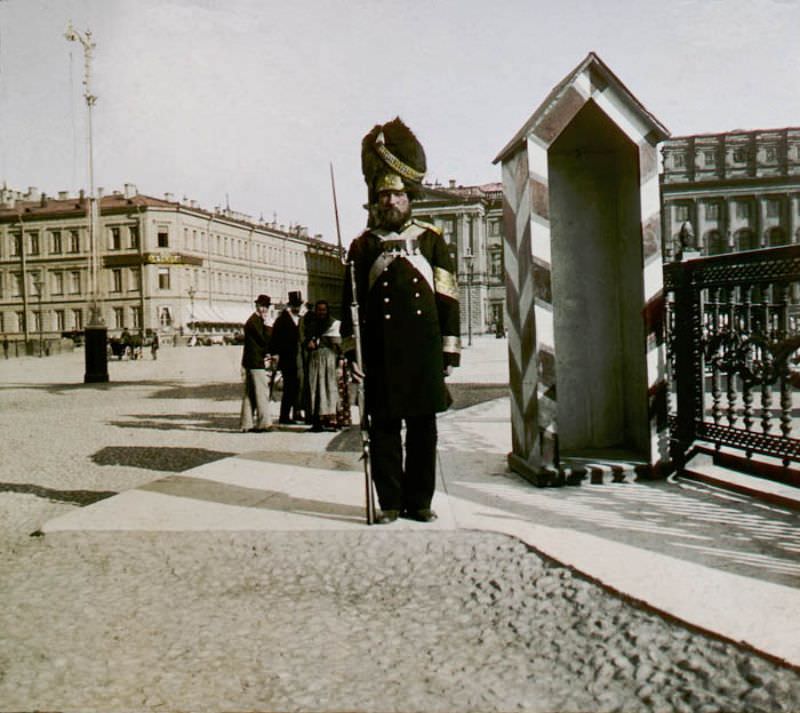
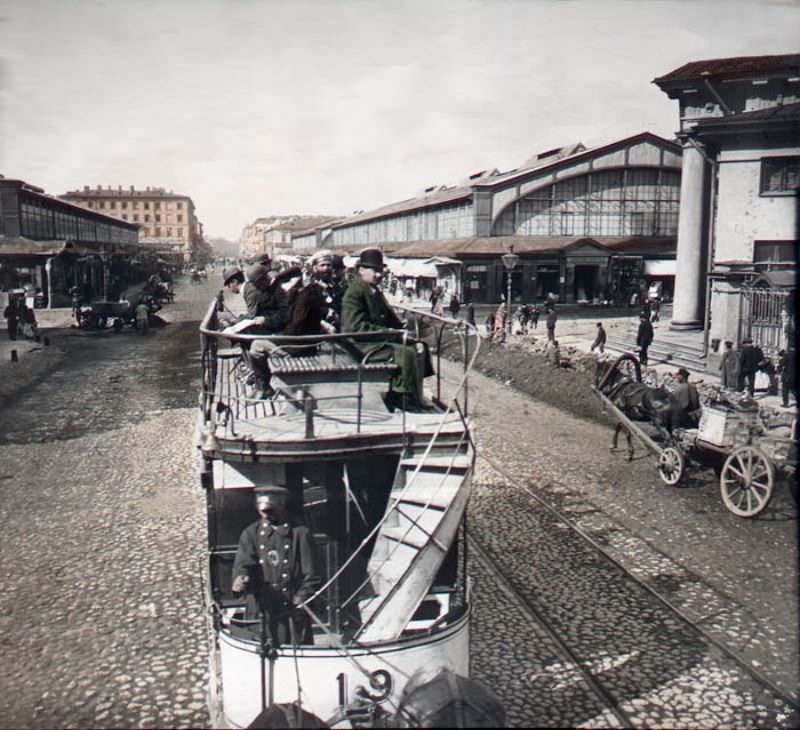
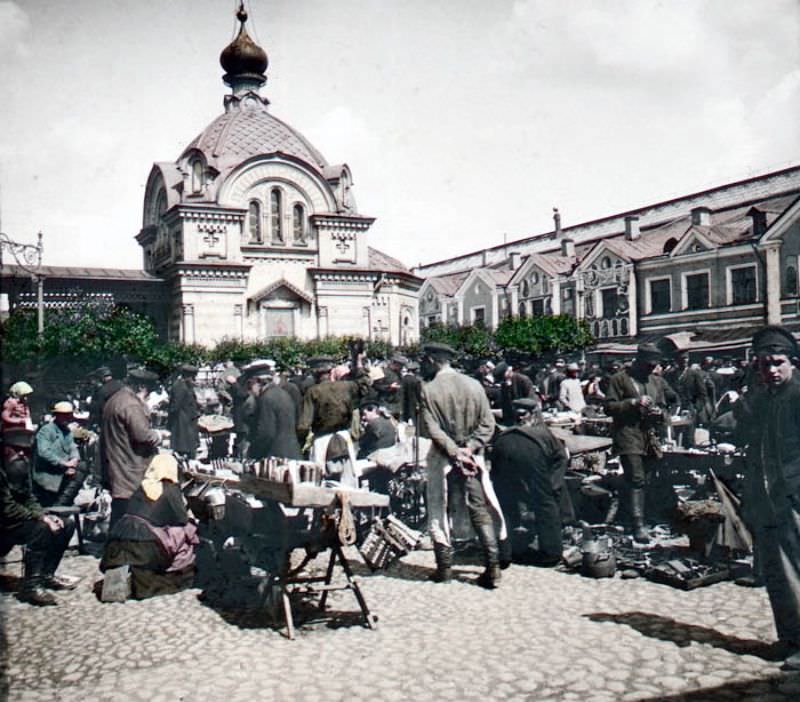
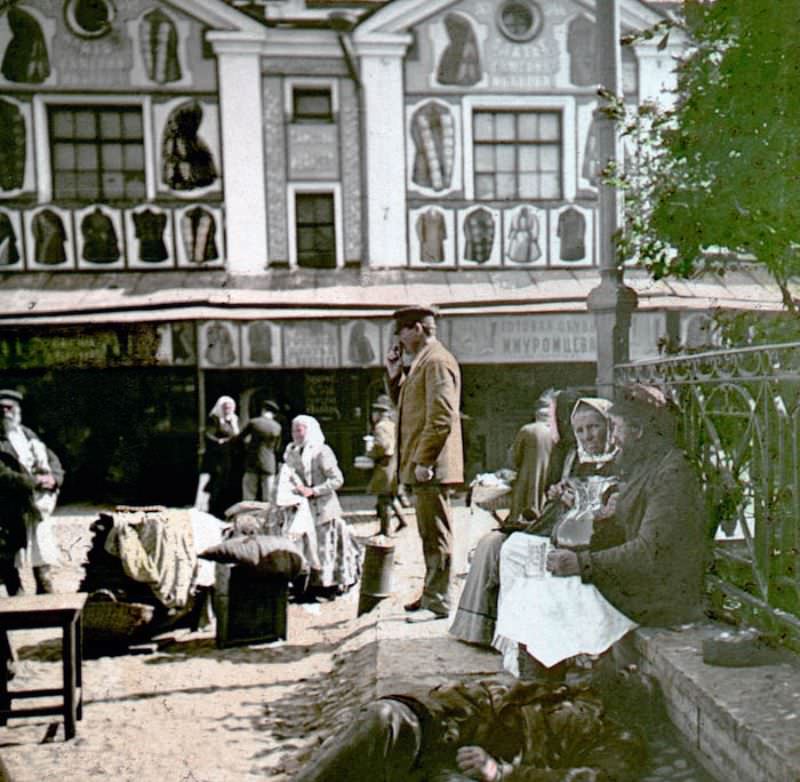
Sennaya Square — or Haymarket Square — was one of Saint Petersburg’s oldest and busiest markets. It served the city’s working-class population and was known as a rough, crowded place where cheap goods changed hands daily. The writer Fyodor Dostoevsky, who lived nearby for many years, set several scenes from his novels in and around this square. The quays along the Neva River were equally active, lined with cabs and commercial traffic.
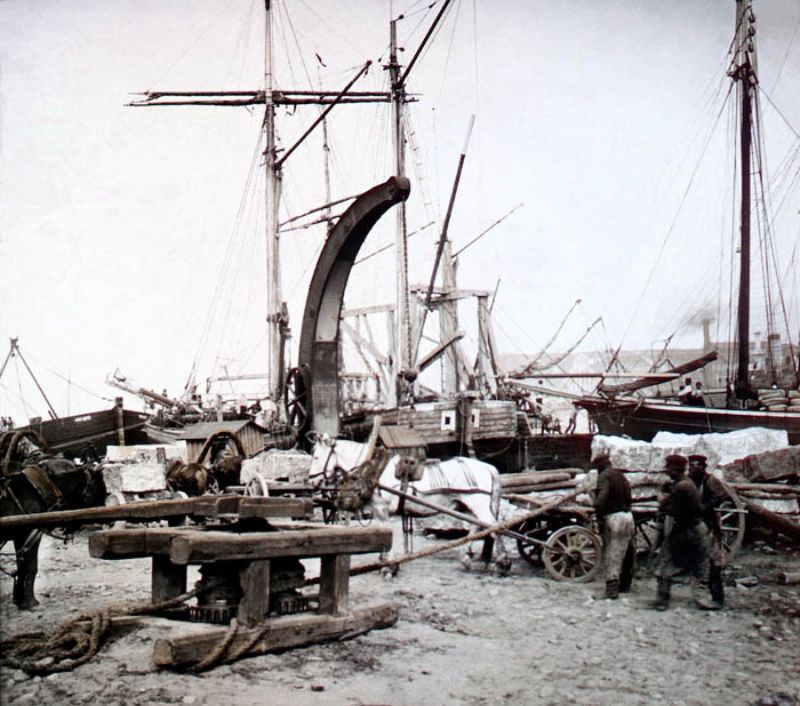
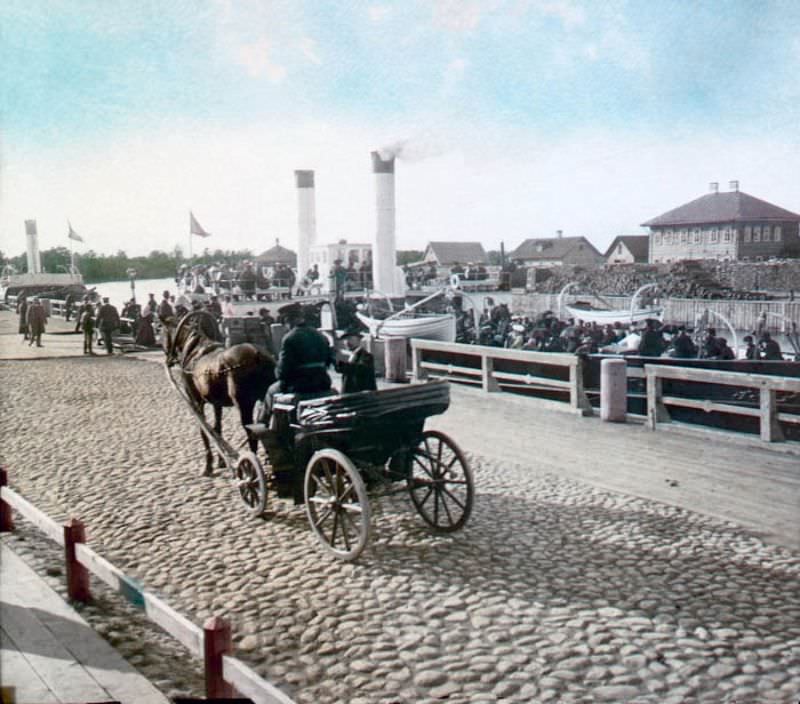
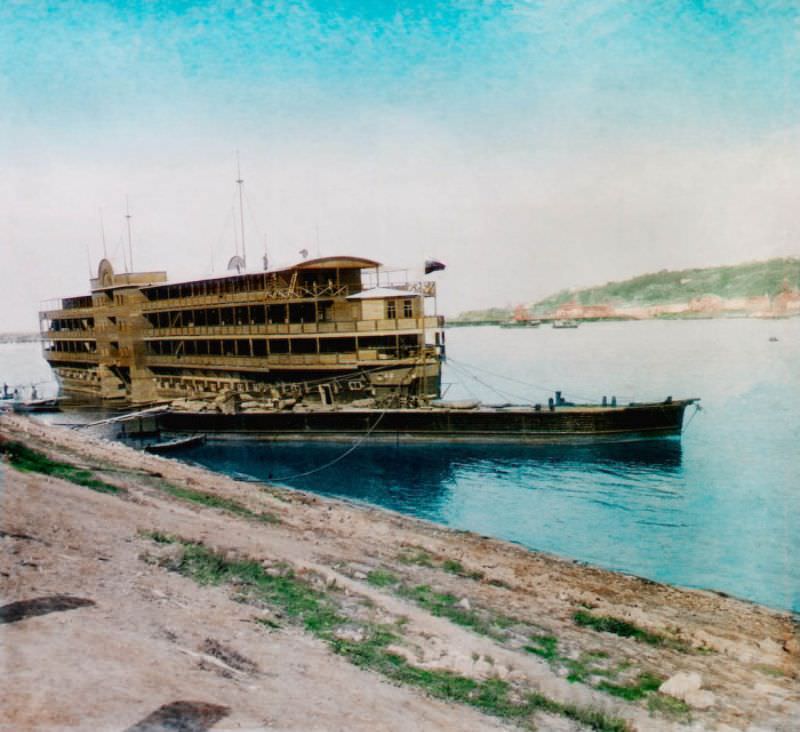
Nizhny Novgorod, located at the confluence of the Volga and Oka rivers, was one of Russia’s most important trading cities. Its annual trade fair, the Nizhny Novgorod Fair, was the largest in the country and attracted merchants from across Russia and Central Asia. In 1896, the city hosted the All-Russia Industrial and Art Exhibition, a major national showcase of industry and culture.
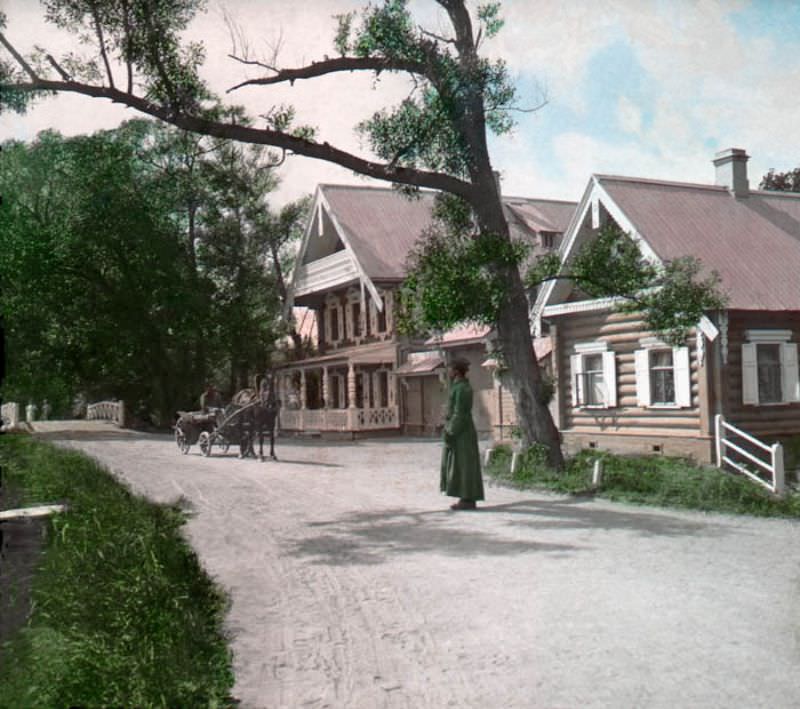
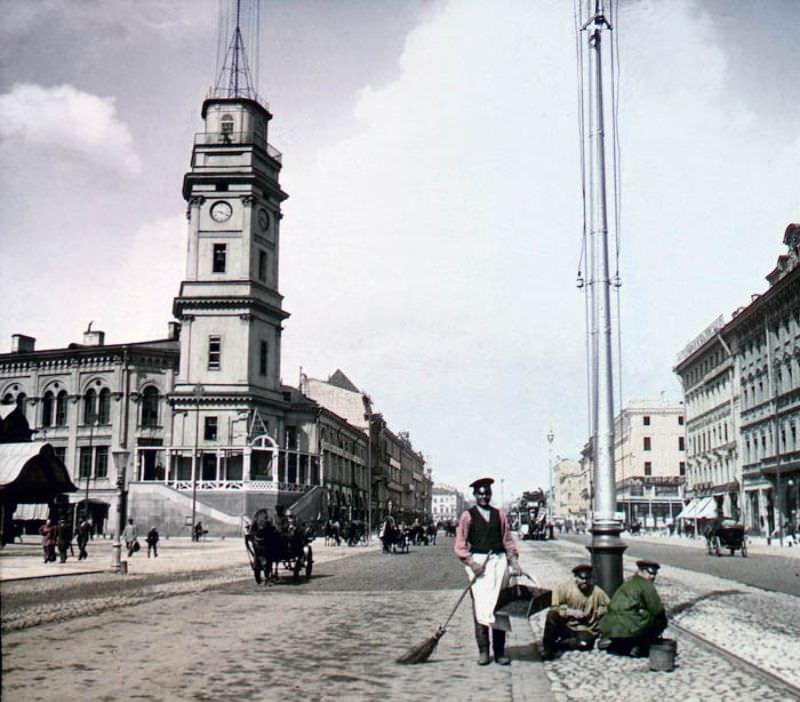
The Alexander Palace at Tsarskoye Selo was the more private of the two imperial palaces on the estate. Built between 1792 and 1796, it became the favorite residence of Nicholas II and his family. The Nevsky Prospect, Saint Petersburg’s main boulevard, stretched nearly five kilometers through the heart of the city and was lined with shops, churches, and public buildings that made it the commercial and social spine of the capital.
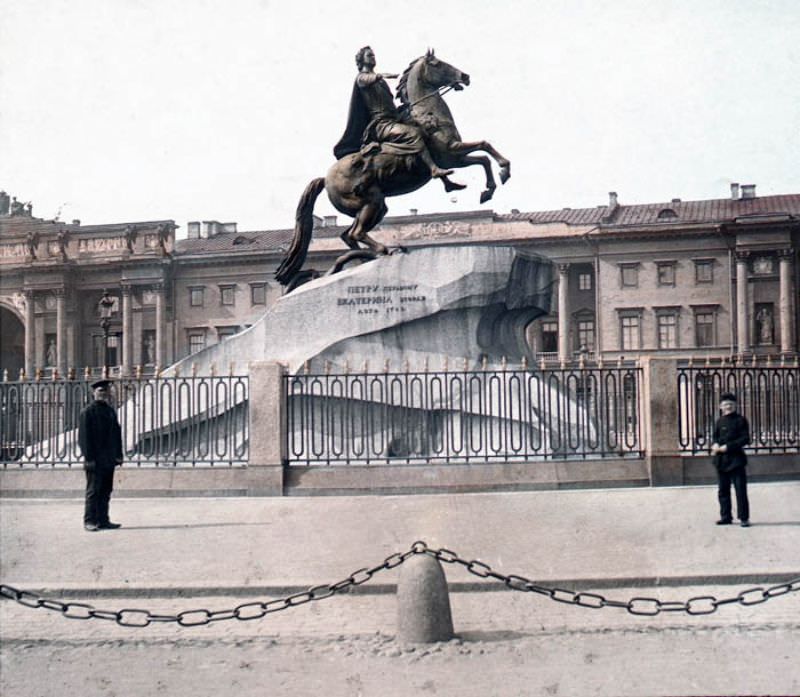
The Bronze Horseman, the famous statue of Peter the Great on Senate Square, was unveiled in 1782 under Catherine the Great. The statue shows Peter on a rearing horse, his hand outstretched toward the Neva River and the sea beyond. It became one of the most recognized symbols of Saint Petersburg. Open-air markets like those photographed on Nevsky Avenue gave the city a livelier, less formal face — one where vendors, laborers, and shoppers mixed freely in the open air.
The coronation of Nicholas II took place in Moscow in May 1896. The ceremonies drew enormous crowds and generated a wave of official and unofficial photography. The coronation procession moved through the city’s major streets, with Nicholas II greeting the public at multiple points along the route. The Paris Hotel on the Tverskaya served as one of the staging points for official processions during the event.
![The procession of correctly Nicholas II] at the Paris Hotel, Moscow, 1896](https://www.bygonely.com/wp-content/uploads/2020/01/Late_19th_century_Russia_52.jpg)
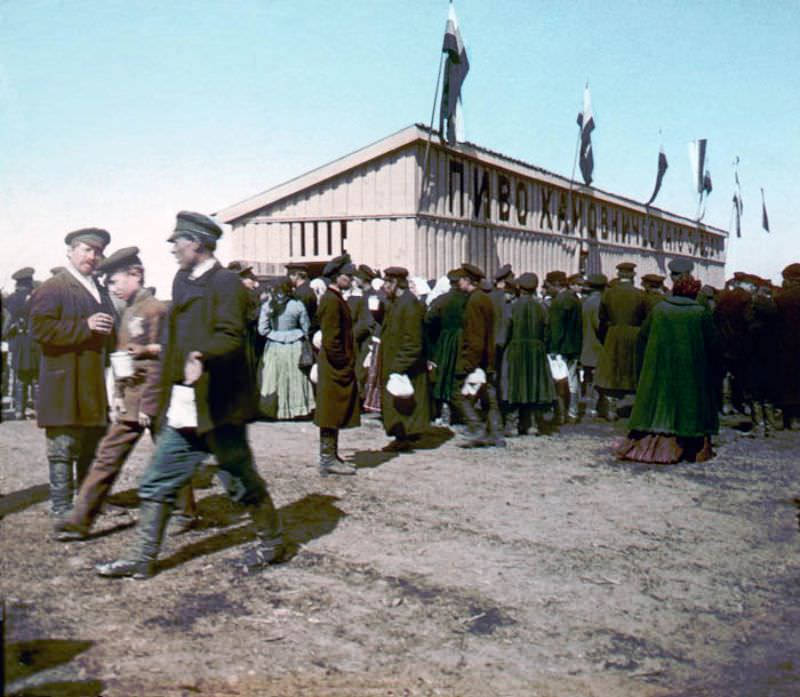
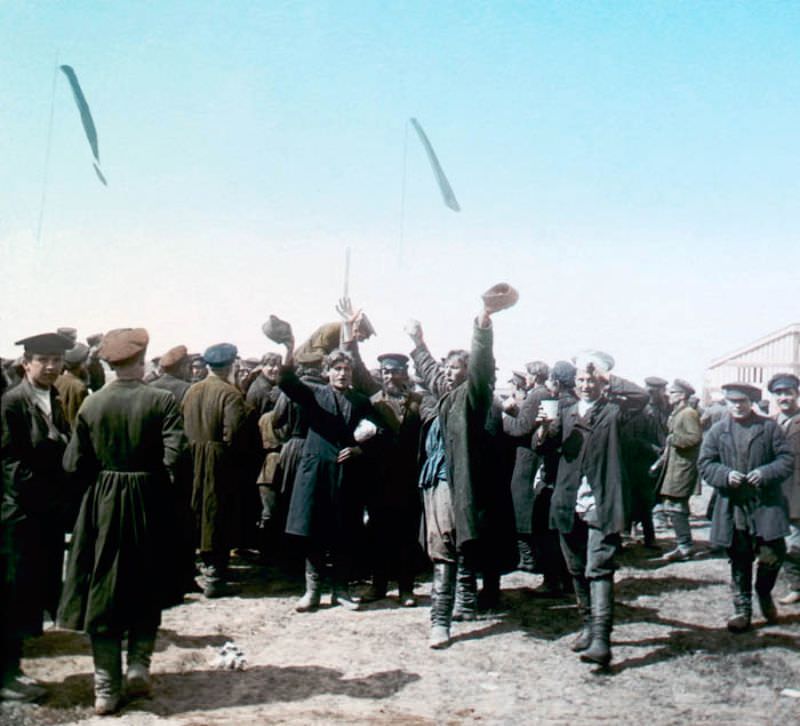
The coronation celebrations extended to Khodynka Field, a large open ground on the outskirts of Moscow used for military exercises. On May 18, 1896, a massive public celebration was held there, with free food, beer, and commemorative gifts distributed to the crowd. An estimated 500,000 people gathered, and in the crush, at least 1,389 people were killed and thousands more were injured in a stampede. The Khodynka tragedy cast a dark shadow over the start of Nicholas II’s reign.