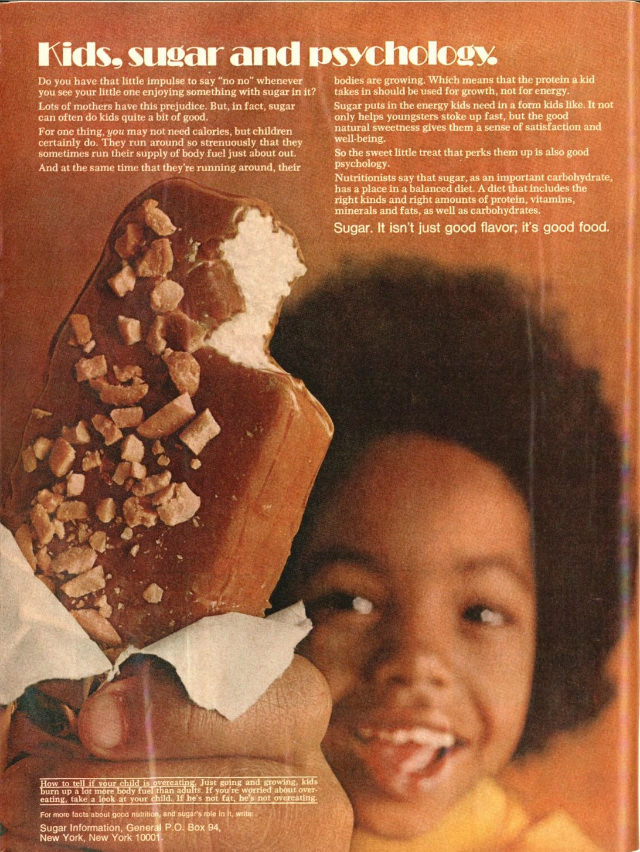
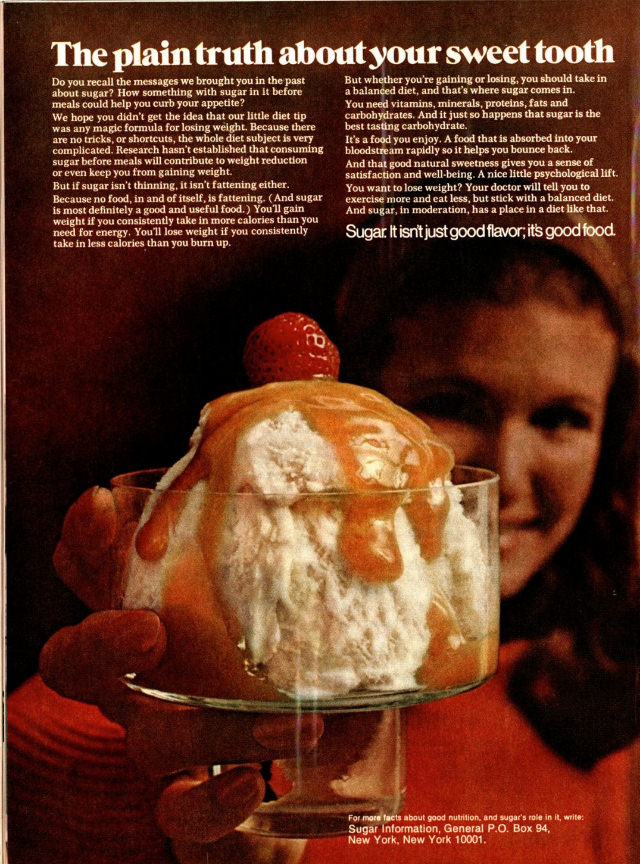
Today, the idea that eating sugar helps you lose weight sounds absurd. But in the 1960s, a group called Sugar Information Inc. spent years running full-page magazine ads making exactly that argument — and they did it with the polished confidence of a public health campaign. These ads weren’t fringe quackery. They were slick, well-funded, and targeted directly at American consumers who were just beginning to worry about their waistlines.
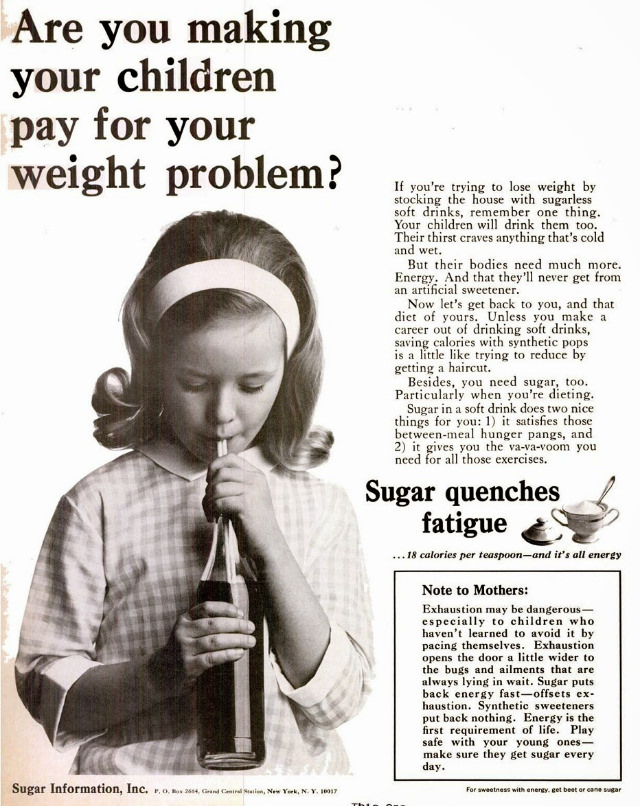
The roots of the campaign go back to the mid-1950s, when health researchers began publishing findings that sugar contributed to weight gain. The sugar industry pushed back hard. Sugar Information Inc. increased its advertising budget and, in 1955, won an award for “public interest advertising” — a sign of just how seriously the group took its role as a public messenger on diet and health.
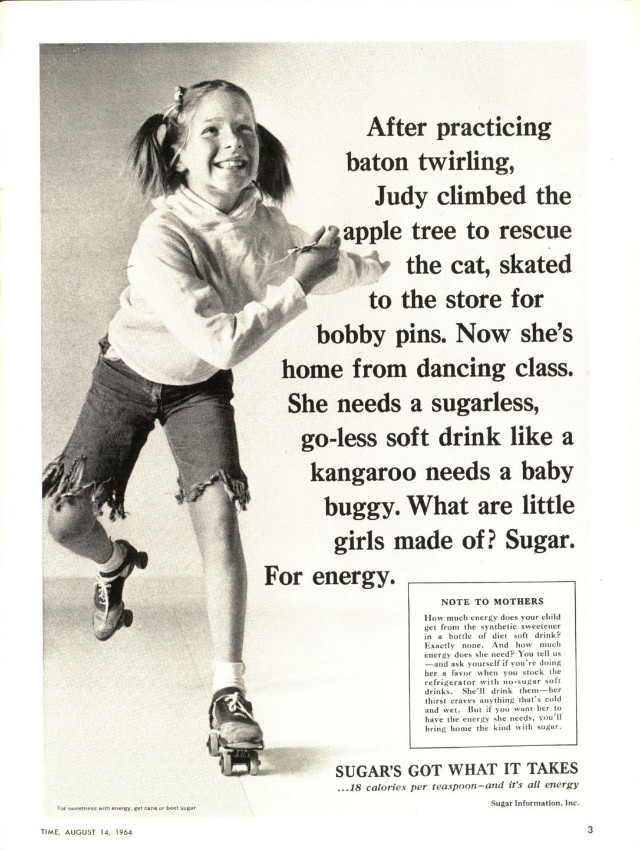
The campaign shifted into high gear in the mid-1960s, and the trigger was diet soda. As low-calorie soft drinks began pulling consumers away from full-sugar beverages, the sugar industry went on offense. Their ads warned that diet sodas were a trap — that they didn’t satisfy hunger or provide real energy the way regular sugar-sweetened drinks did. Choose the diet option, the ads implied, and you’d only end up eating more later.
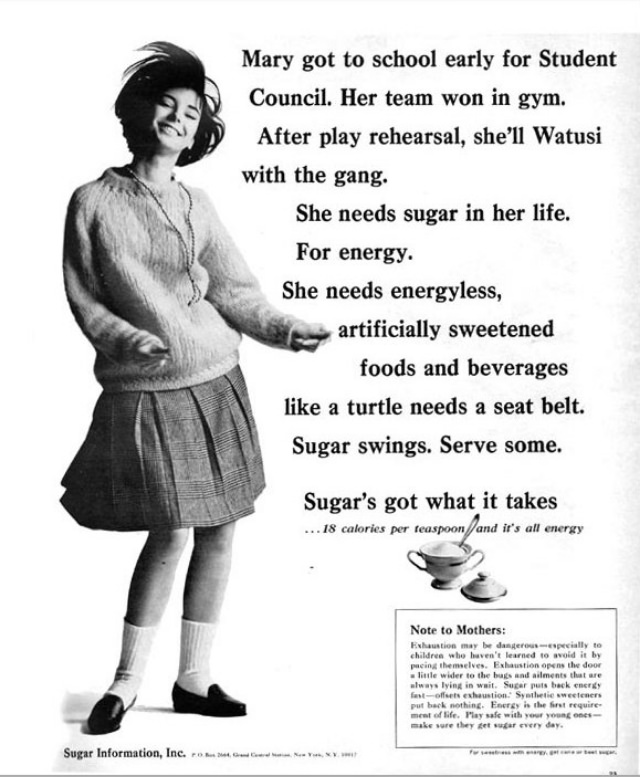
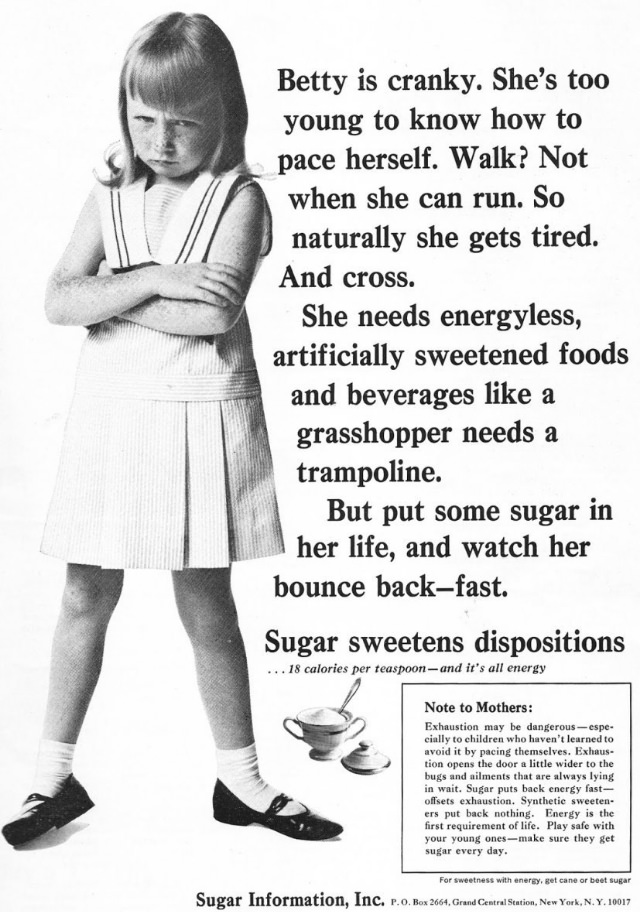
The science the campaign leaned on came from a concept called the “appestat.” A nutritionist had described this idea in a 1952 book on weight loss. The appestat was supposedly the body’s appetite-regulating mechanism — an internal switch that told you when you were full. According to the sugar ads, a broken or poorly functioning appestat left people unsatisfied, causing them to overeat. Sugar, the ads claimed, could fix this by curbing appetite naturally and delivering a reliable burst of energy.
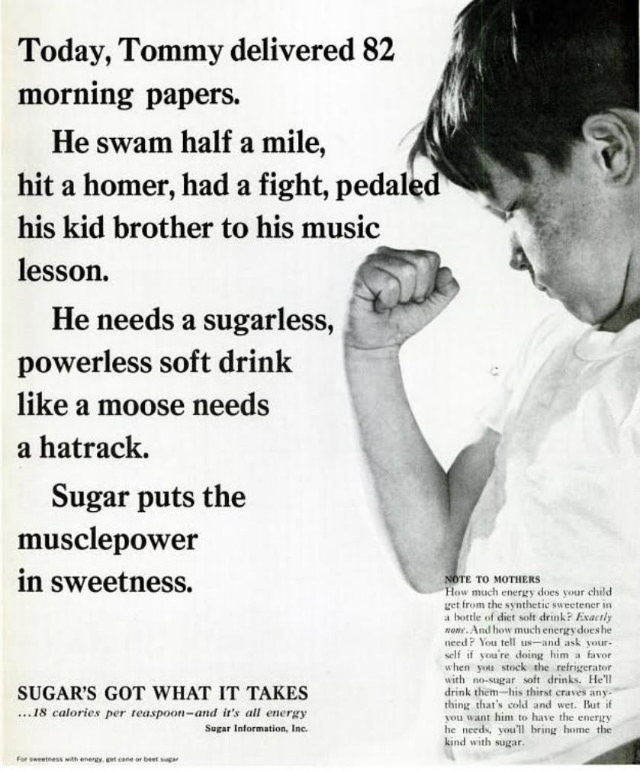
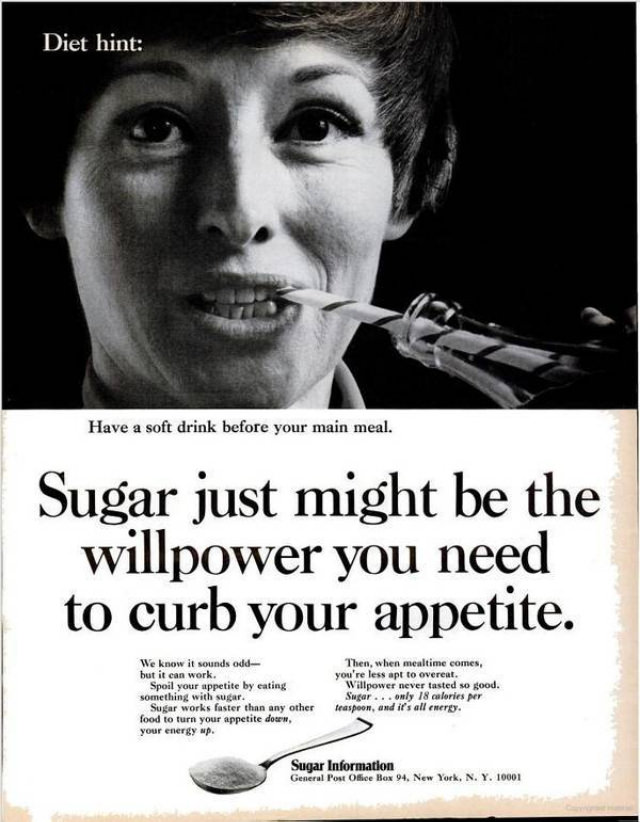
The appestat concept gave the ads a veneer of scientific credibility. Instead of simply saying “sugar tastes good,” Sugar Information Inc. could frame its product as a tool for managing hunger — practically a health food. The ads were careful in their wording, never quite making an outright medical claim, but consistently nudging readers toward the conclusion that sugar before a meal would help them eat less overall.
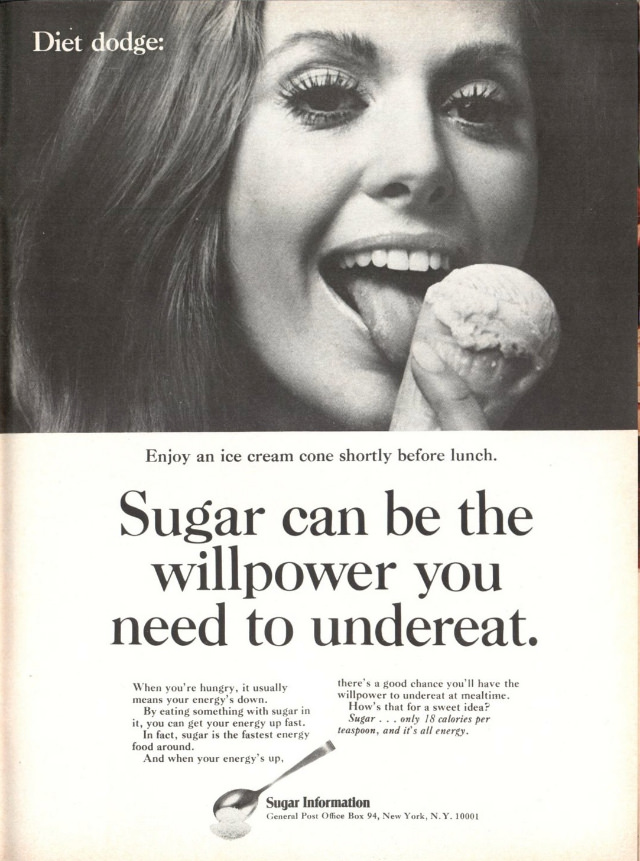
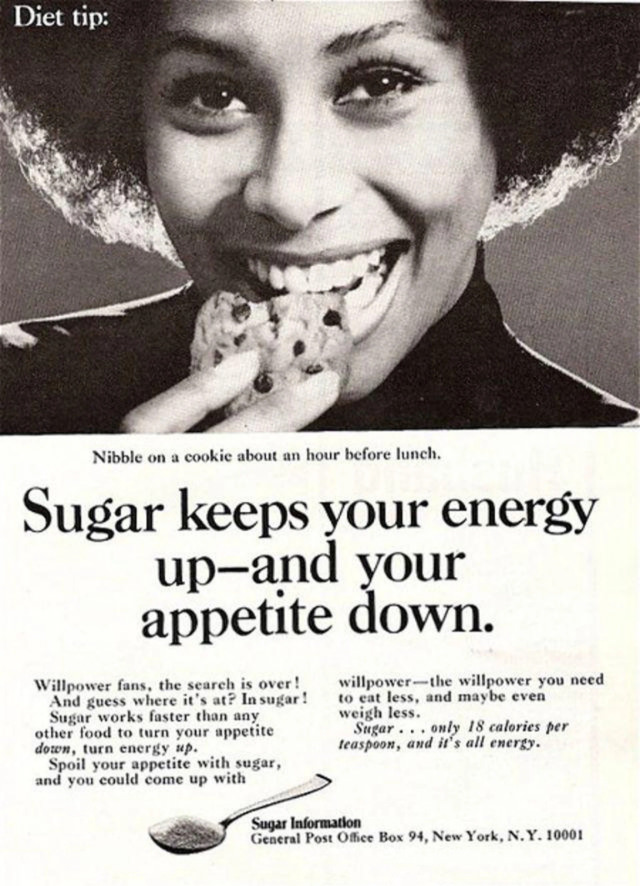
The ads ran throughout the late 1960s and into the early 1970s, appearing in popular magazines aimed at everyday American households. They featured clean design, reassuring language, and authoritative-sounding copy. On the surface, they read like advice from a knowledgeable friend rather than marketing from an industry group protecting its profits.
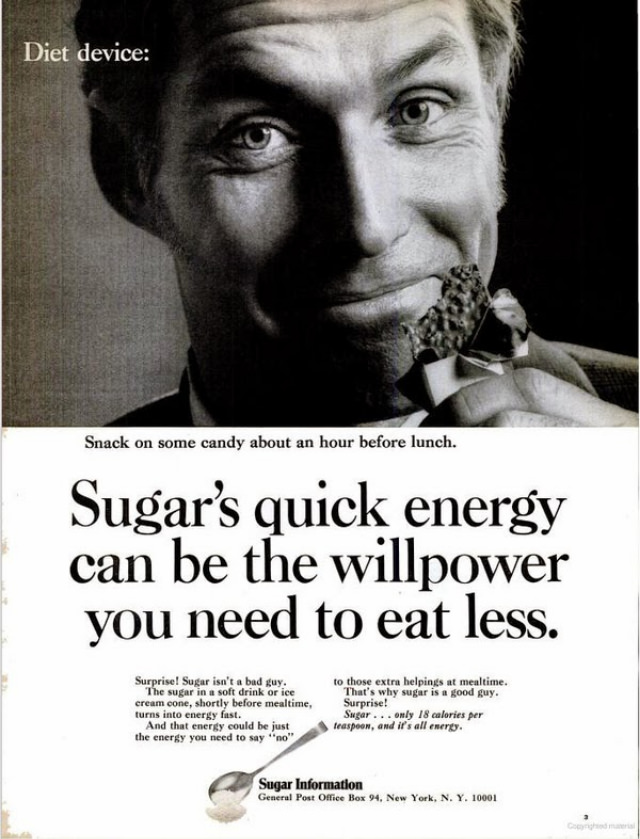
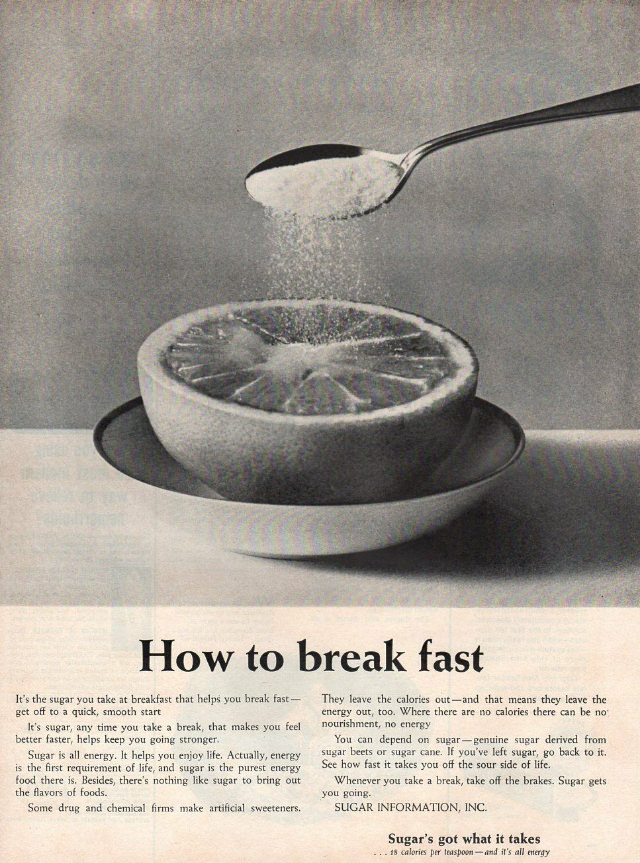
The Federal Trade Commission had seen enough by December 1971. The FTC stepped in and ordered the ads stopped, citing a clear problem: the advertisements strongly implied that eating more sugar would lead to eating fewer calories overall. That was false. Regulators also noted that the FTC was, around this same period, beginning to demand that advertisers actually produce evidence to back up any health-related claims they made in their ads — a shift that put enormous pressure on campaigns built on shaky science.
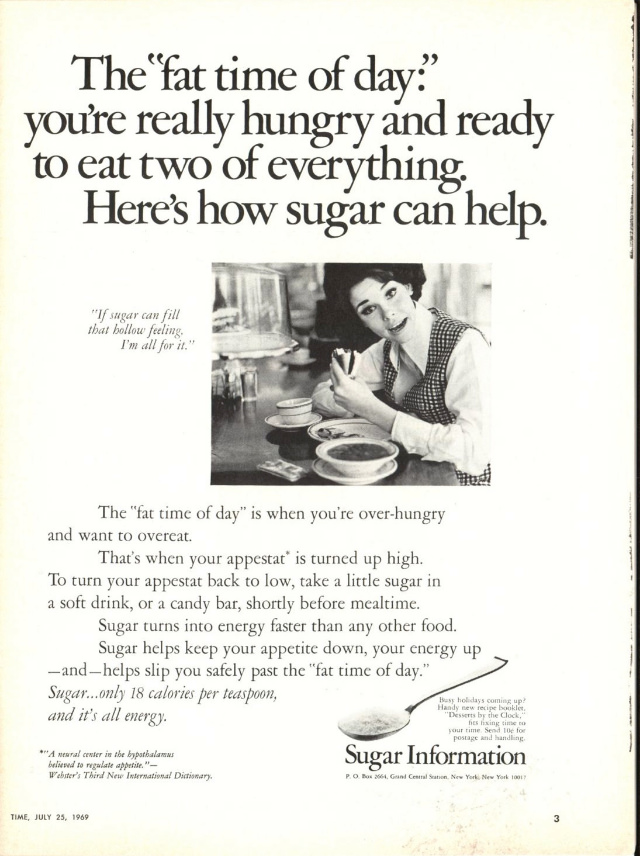
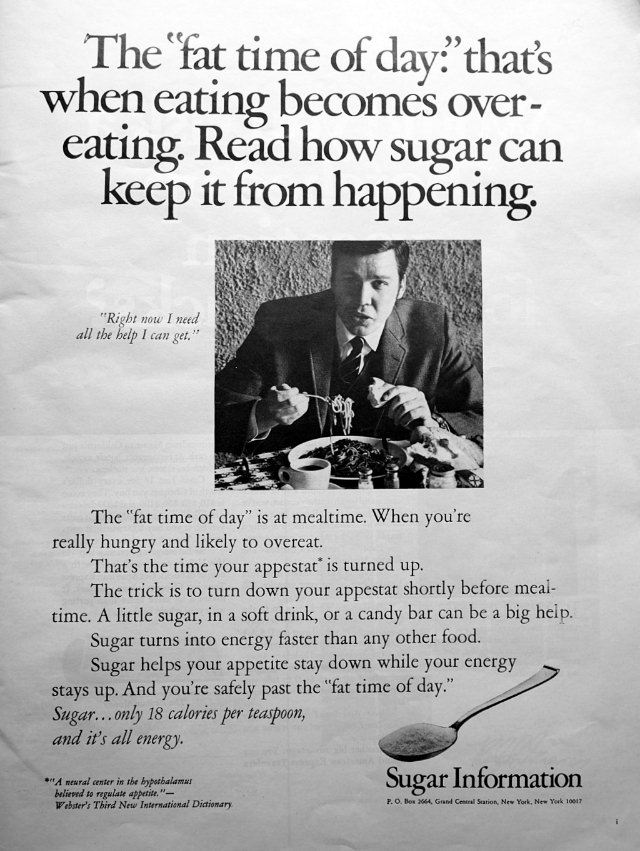
Sugar Information Inc. did not immediately back down. The group initially insisted the ads had contained genuinely good health advice that the FTC had simply misread. It was a bold position, given the FTC’s specific and documented objections. The argument didn’t hold, and the industry group eventually had to accept the consequences.
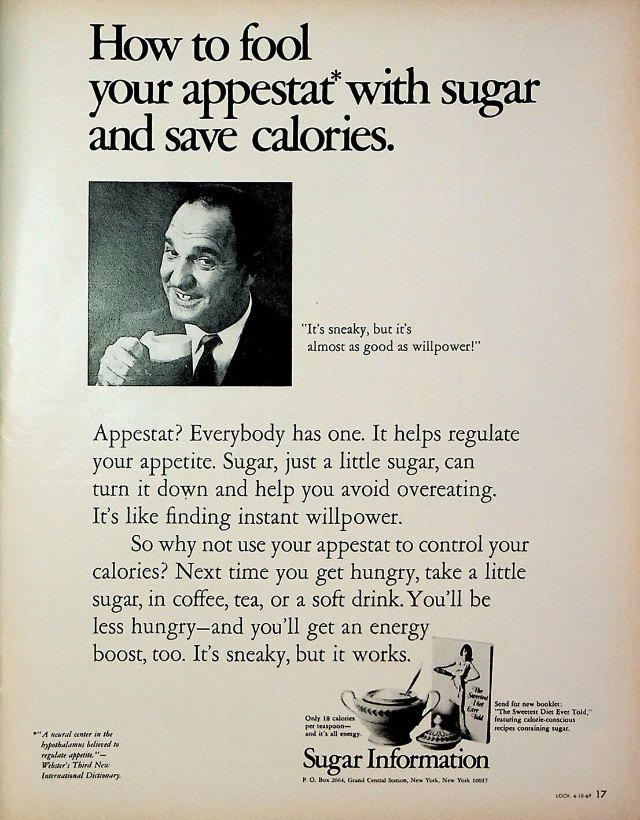
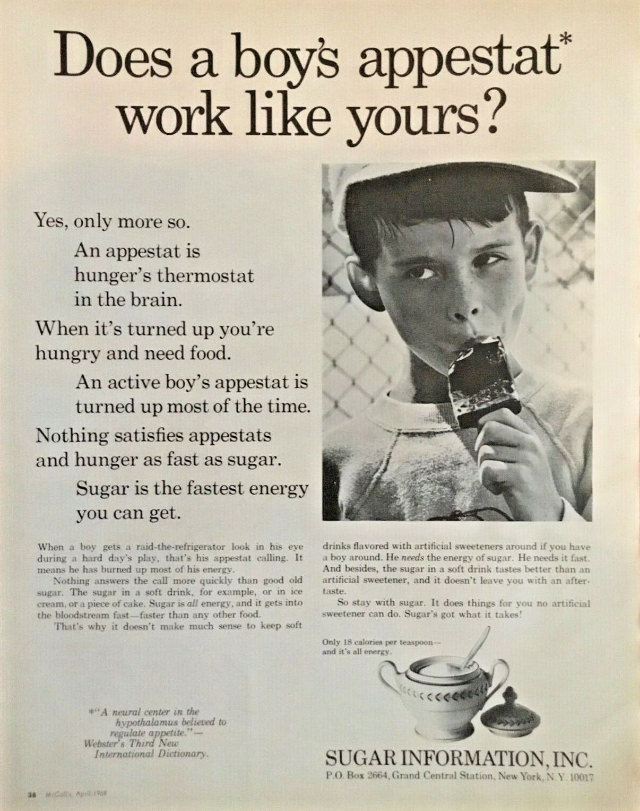
By the end of 1972, the sugar industry group agreed to spend more than $150,000 running a new round of ads. These were designed to walk back and clarify the claims made in the earlier campaign — an unusual and telling outcome. It was a public admission, in the form of corrective advertising, that the original campaign had misled consumers.
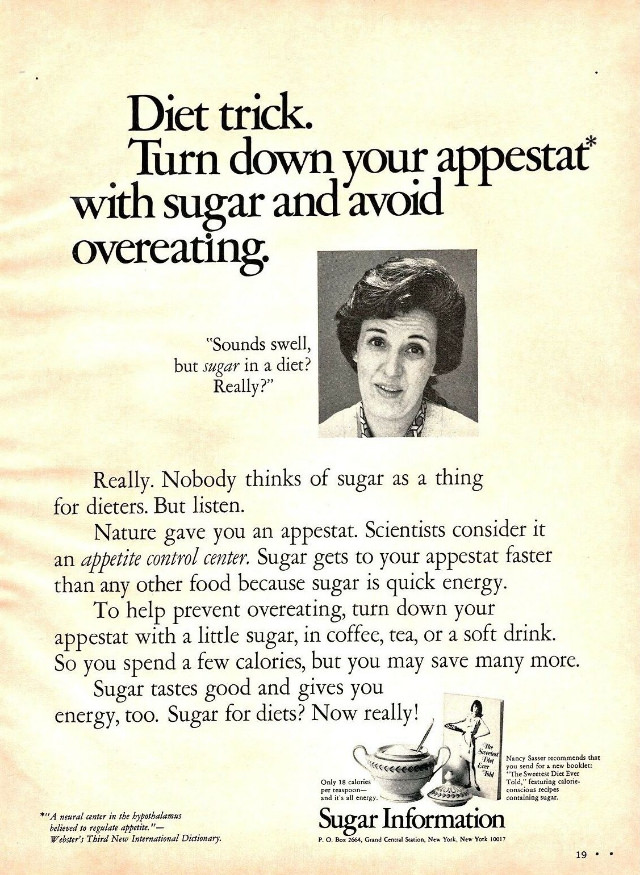
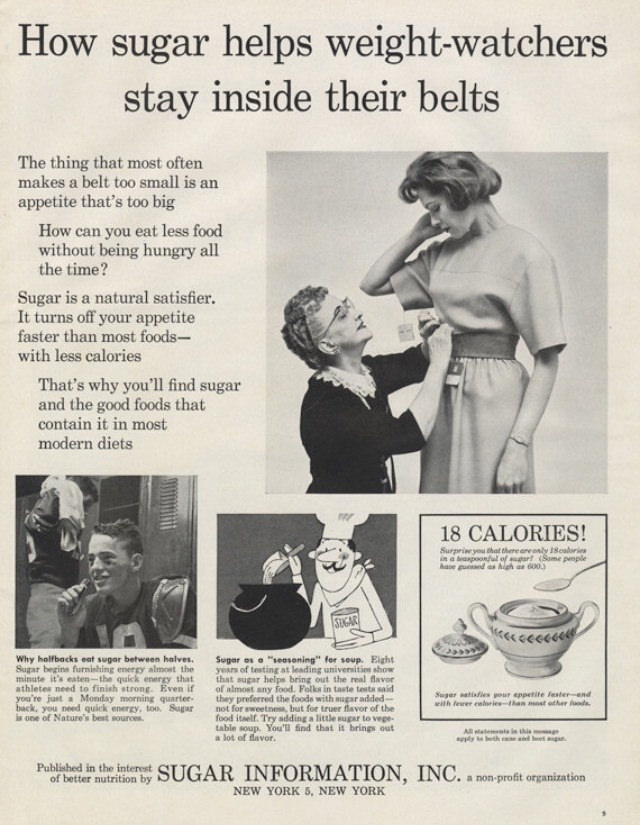
Looking at the original ads now, they are striking in how confidently they present false information. The layout, the font choices, the calm and educational tone — everything was designed to make readers feel they were receiving expert guidance. There were no dramatic promises, just steady, repeated suggestions that sugar was a natural and beneficial part of managing your appetite.
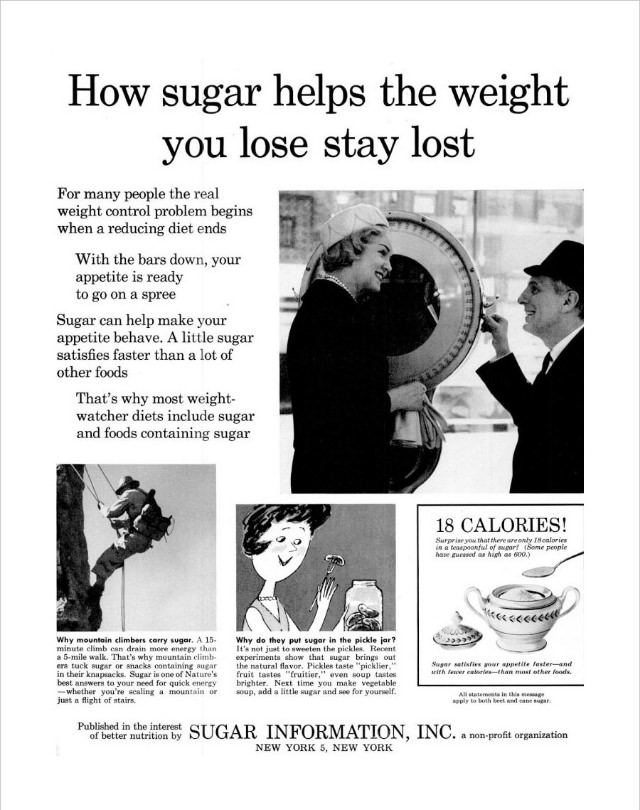
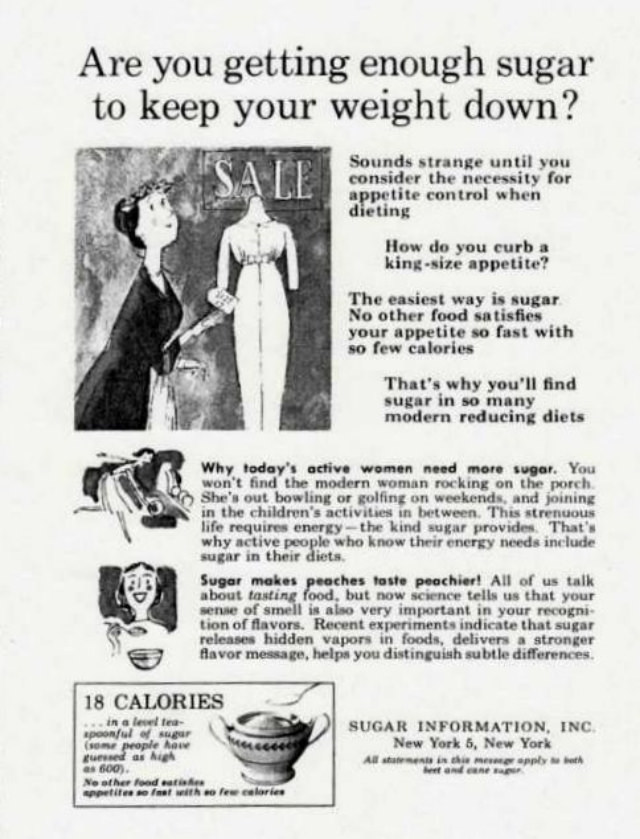
What made the campaign effective in its time was the same thing that makes it so jarring in hindsight: the mid-century public largely trusted institutional advertising, especially when it used scientific-sounding language. The appestat was a real concept that real nutritionists had written about. Sugar Information Inc. took that kernel of nutrition science and stretched it far beyond what the evidence supported.
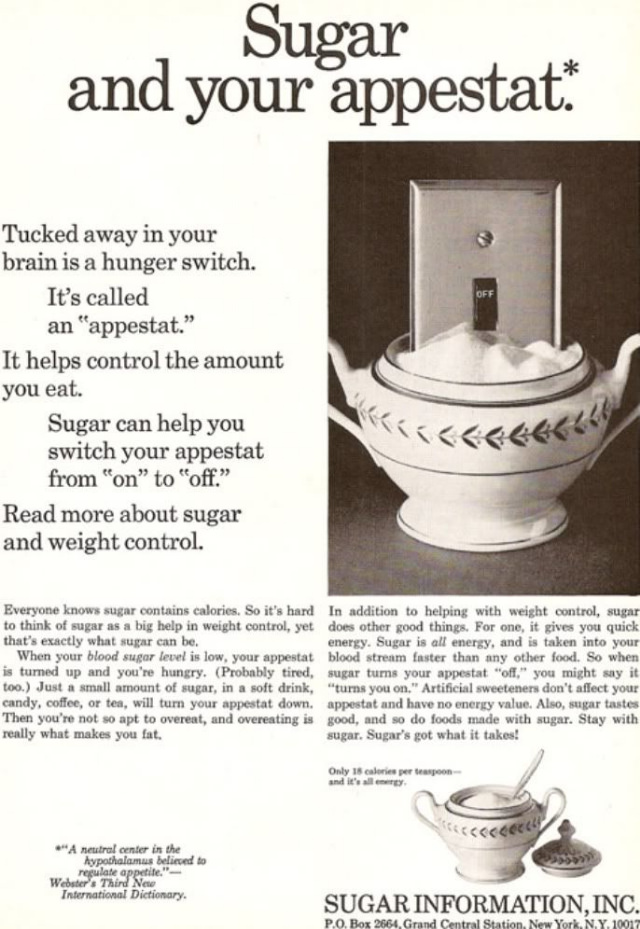
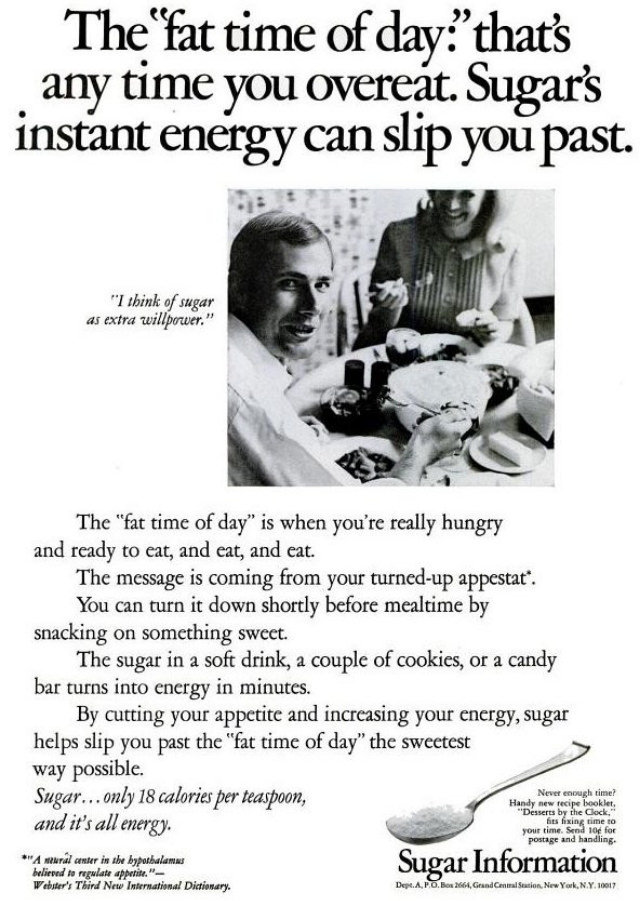
The ads also tapped into a specific cultural anxiety of the era. American consumers in the 1960s were newly conscious of calories and dieting, but nutritional science was not yet widely understood by the general public. That knowledge gap gave industry groups room to operate. Sugar Information Inc. filled that space with messaging that served its own commercial interests while presenting itself as a neutral, helpful source of dietary information.
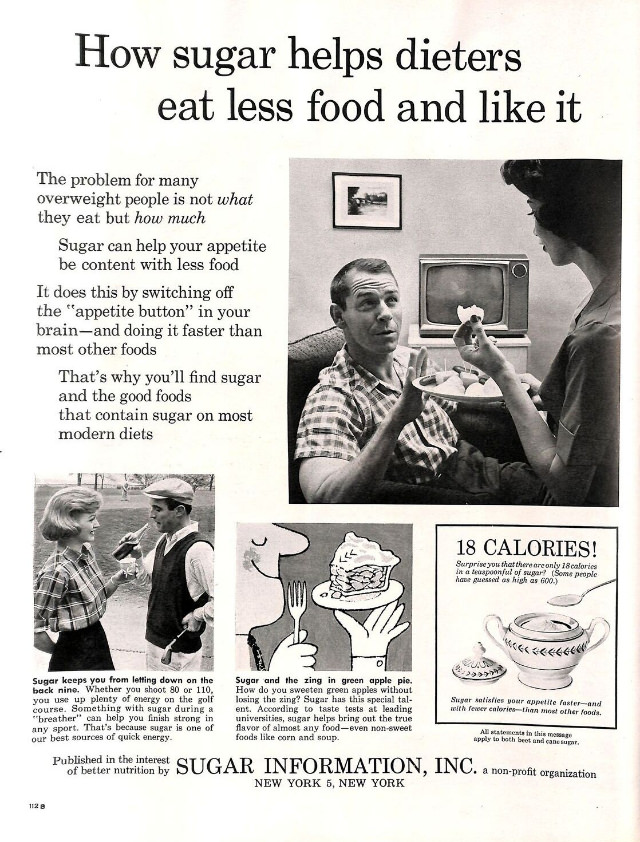
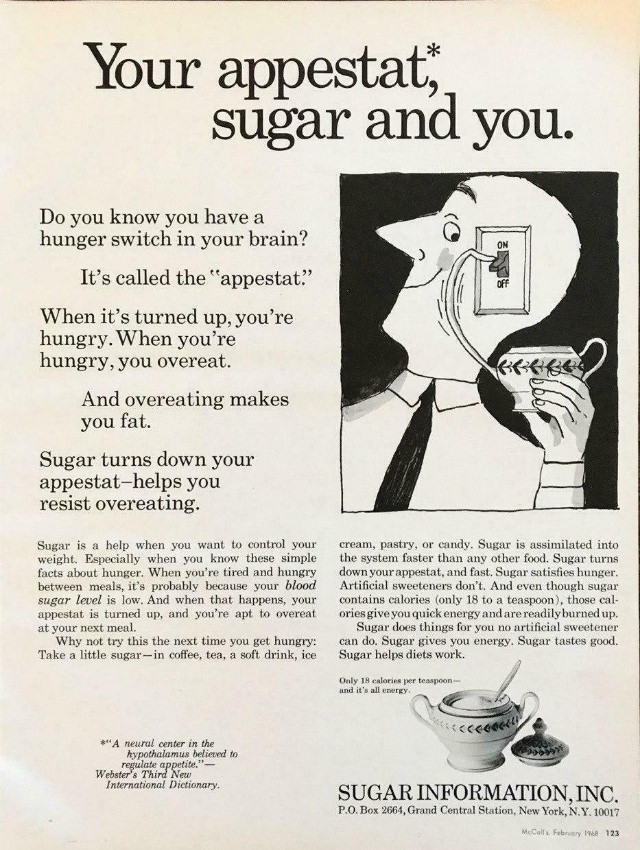
The timing of each ad in the campaign was deliberate. When diet sodas threatened market share, ads appeared to discredit them. When researchers published findings linking sugar to health problems, the industry responded with counter-messaging. The entire effort was reactive — shaped less by public health concerns and more by the need to protect sales.
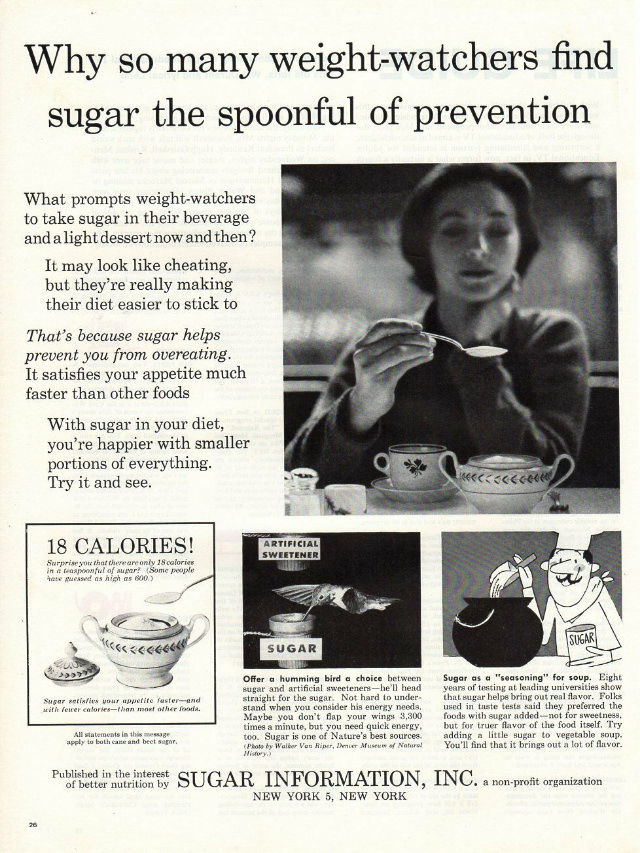
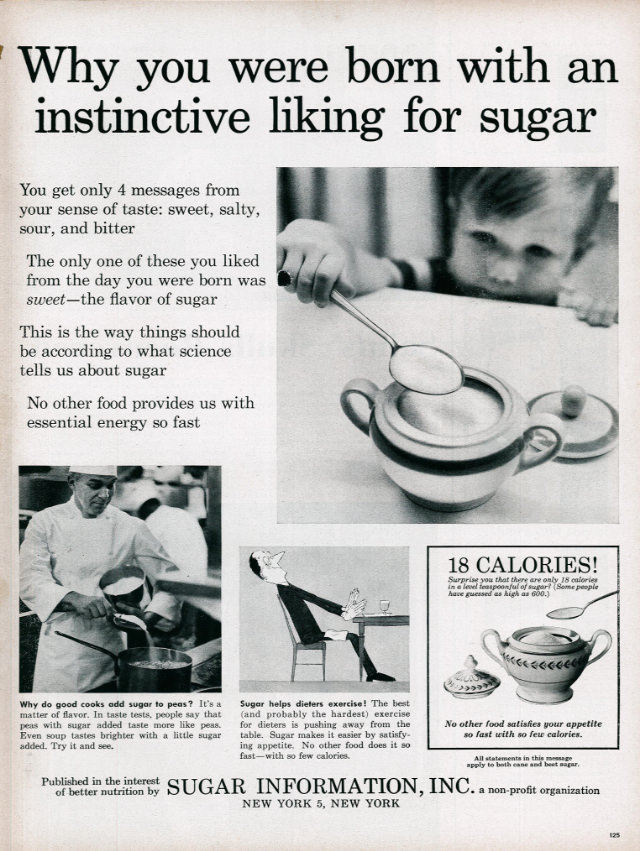
The ads from Sugar Information Inc. stand as a detailed historical record of how an industry group used advertising to push back against science. The FTC’s intervention in 1971 marked one of the earlier moments when U.S. regulators formally demanded accountability for health claims in consumer advertising. The corrective ad campaign that followed in 1972 was among the clearest examples of an industry being forced to publicly undo its own messaging.