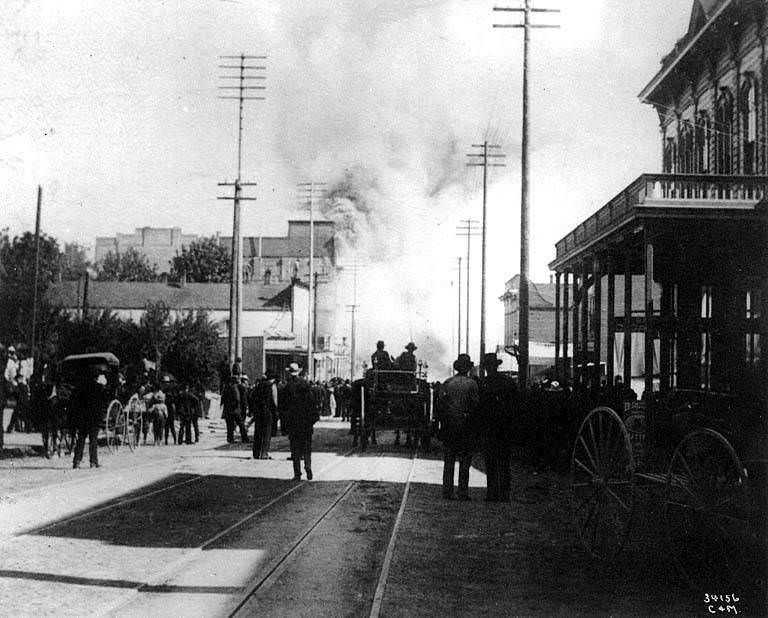
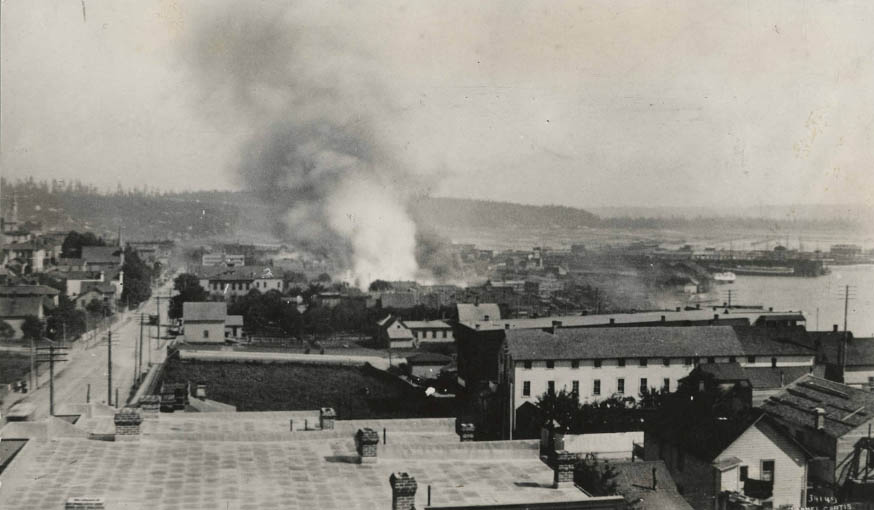
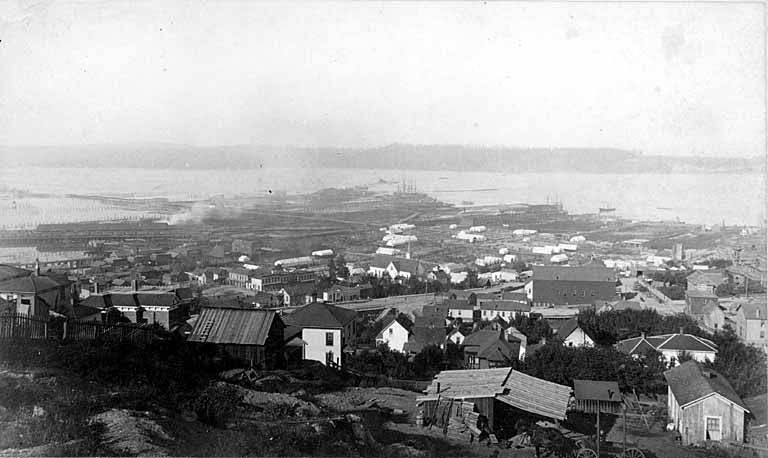
On the afternoon of June 6, 1889, a small accident in a woodworking shop set off the most destructive fire in Seattle’s history. John Back, an assistant to cabinetmaker Victor Clairmont, was heating glue over a gasoline flame at a shop on Front Street — now First Avenue — and Madison Avenue. At around 2:15 p.m., the glue boiled over and caught fire. Wood chips and turpentine soaked into the floor fed the flames instantly. Back threw water on it, but that only thinned the burning liquid and spread it further across the shop floor. Within minutes, the fire was beyond anyone’s control.
Seattle had enjoyed an unusually dry spring that year. Temperatures stayed in the 70s for weeks, and very little rain had fallen. Those conditions left timber-framed buildings bone dry. The city’s streets were packed tightly with wooden structures, and once the fire left the shop, it moved fast. By 2:45 p.m., the fire department had arrived and evacuated the immediate area, but thick smoke had already made it nearly impossible to fight the fire directly.
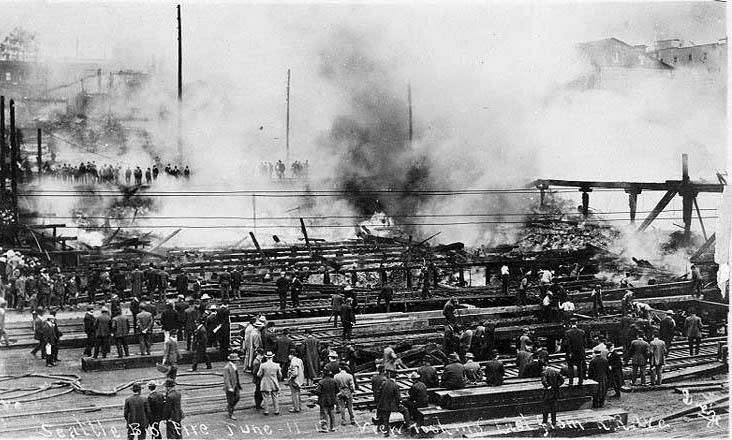
1st Ave., at the start of the fire, June 6, 1889
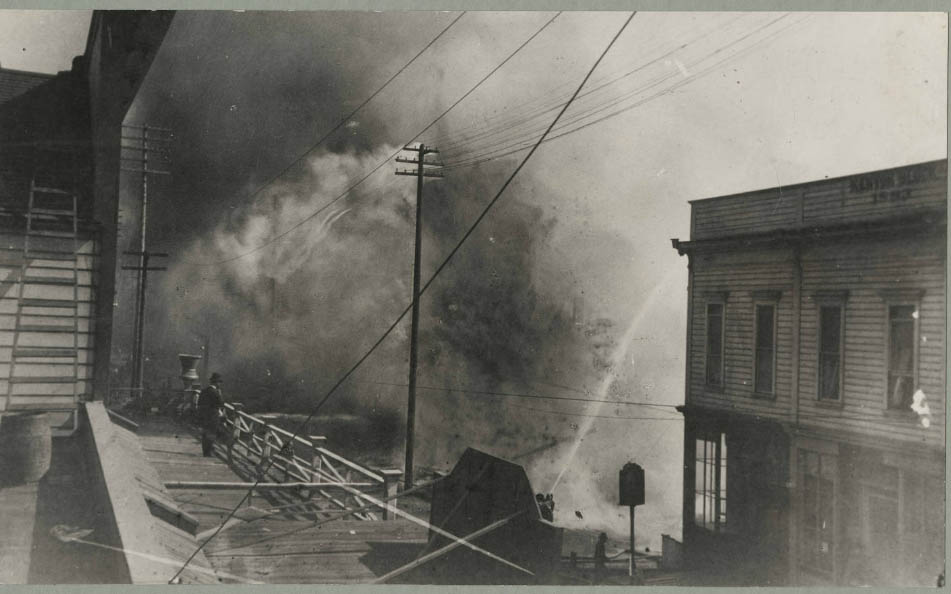
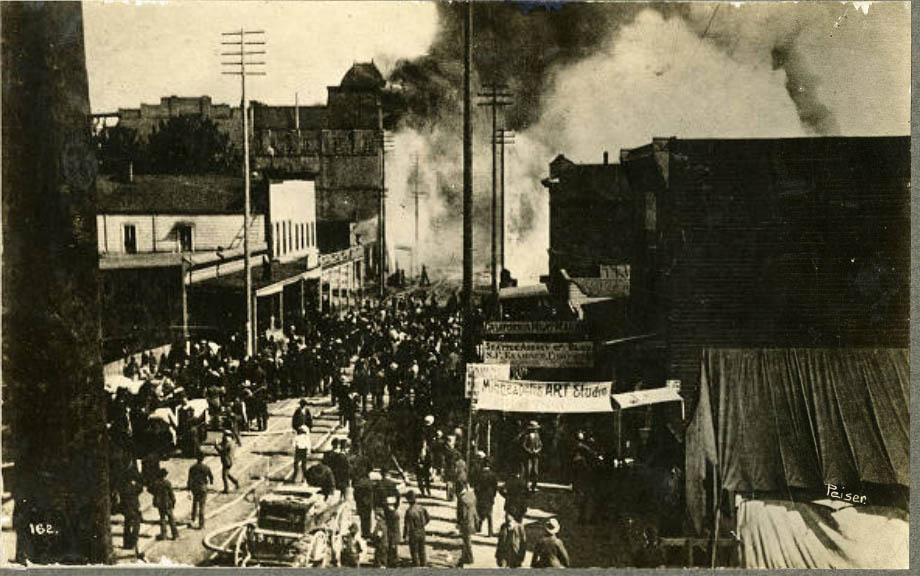
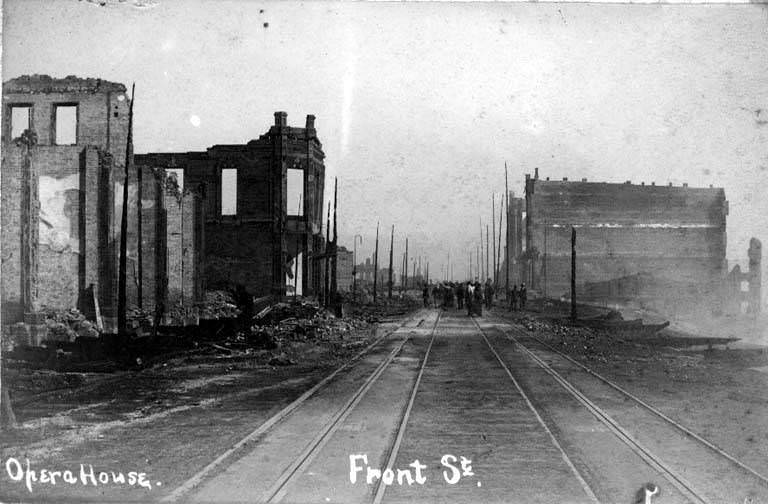
The fire jumped to the Dietz & Mayer Liquor Store, which exploded. It then tore through the Crystal Palace Saloon and the Opera House Saloon. Alcohol-fueled flames consumed the entire block between Madison and Marion Streets in a matter of minutes. The fire was no longer just a building fire — it had become a street-wide inferno.
Fire at southwest corner of 1st Ave. and Madison St., June 5, 1889Fire at 1st Ave. and Madison St., June 6, 1889
Fighting the fire proved nearly impossible because of Seattle’s water system. The Spring Hill Water Company supplied the city, but the infrastructure was badly underprepared for a fire of this scale. Hydrants were spread thin, and the pipes supplying them were hollowed-out logs — some of which caught fire themselves. As more hoses were connected to fight the blaze, water pressure dropped sharply until the hoses stopped working altogether. Firefighters tried pumping water from Elliott Bay onto the Commercial Mill, but the tide was out, and the hoses weren’t long enough to reach the fire side of the building. Crowds, frustrated and panicked, began harassing the firefighters as the situation deteriorated.
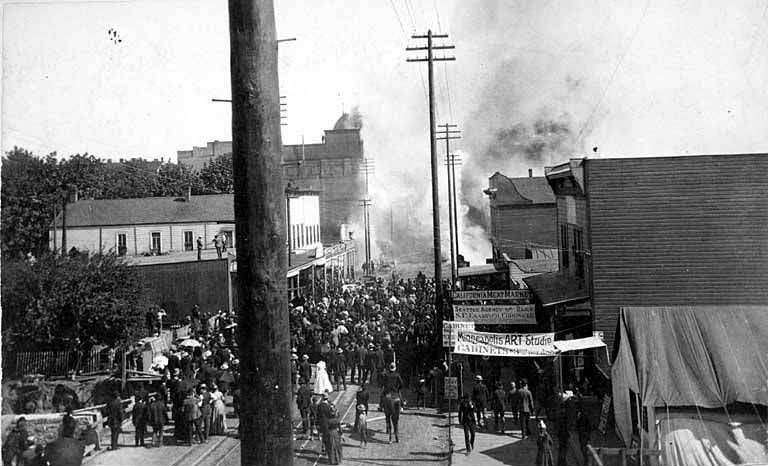
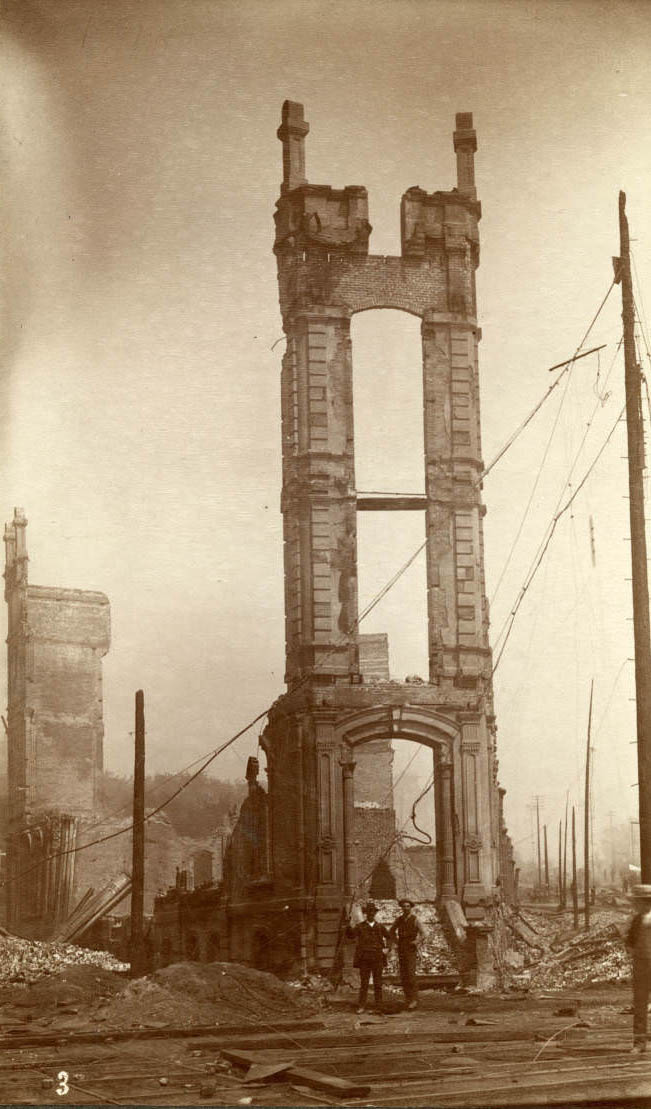
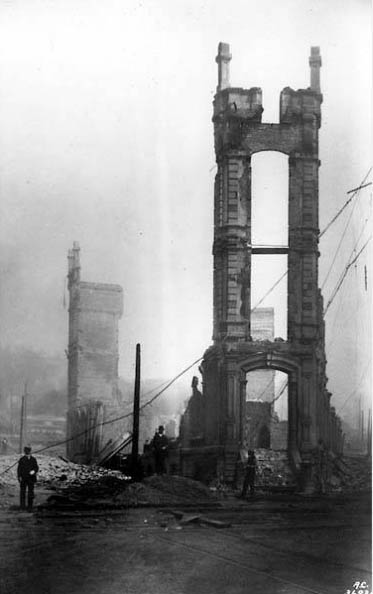
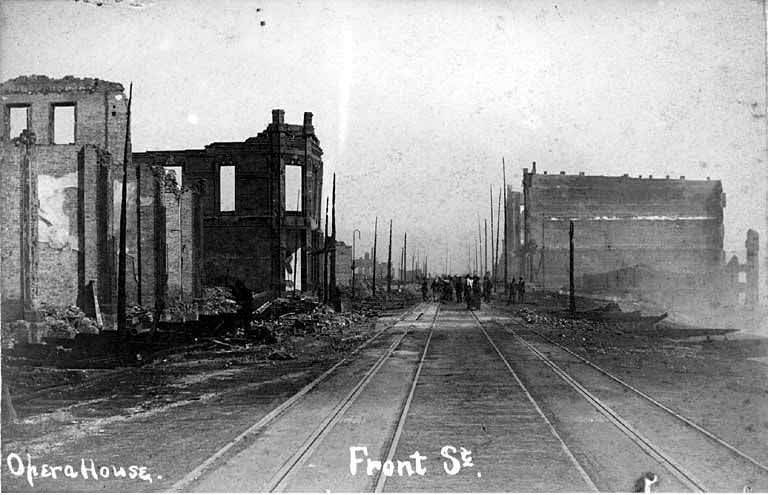
Frye’s Opera House catching fire, with Minneapolis Art Studio on the right and a large crowd of people gathering in the street (recto), 1889
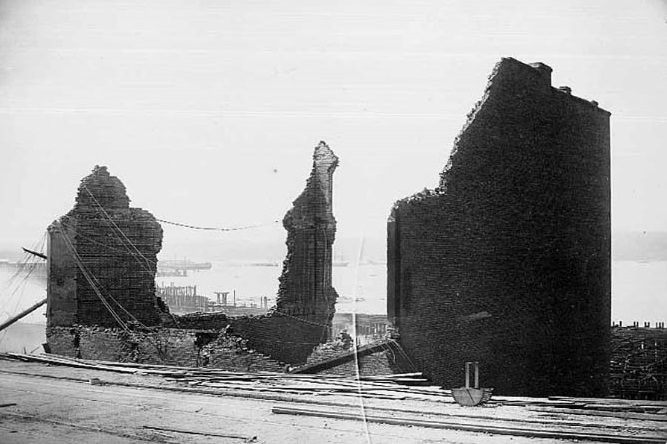
Wind pushed the fire in multiple directions at once. The Commercial Mill, the Colman Building, and the Opera House all caught fire in rapid succession. Mayor Robert Moran took command from acting Fire Chief Murphy — the actual Fire Chief, Collins, was away at a firefighting convention in San Francisco at the time. Moran ordered the Colman Block demolished with explosives to create a firebreak, but the fire jumped past it and spread up the wharf and along Second Avenue. From there, it reached Trinity Church, then crossed the street to the three-story Courthouse.
Fire origin from 1st Ave. and Spring St., June 6, 1889
Several buildings were saved through individual acts of quick thinking. Lawrence Booth climbed to the roof of the Courthouse and poured buckets of water down its sides when hoses could only reach the first floor due to low pressure. His actions saved both the building and the public records stored inside. Jacob Levy’s house and the Boston Block were also preserved because of Booth’s efforts. Henry Yesler’s house survived because someone covered the structure with wet blankets before the fire could reach it.
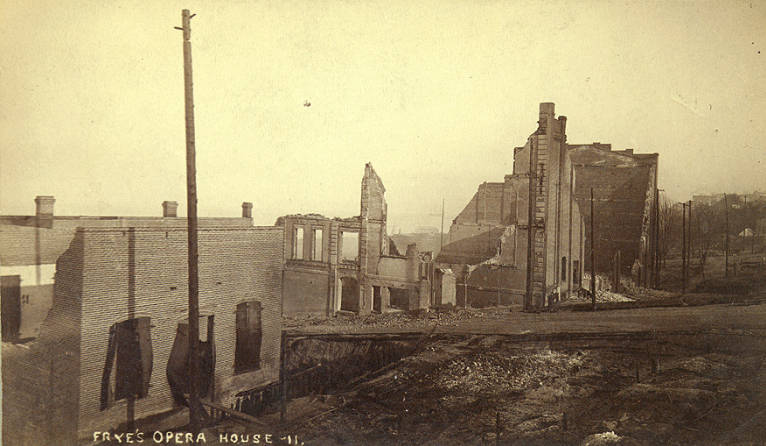
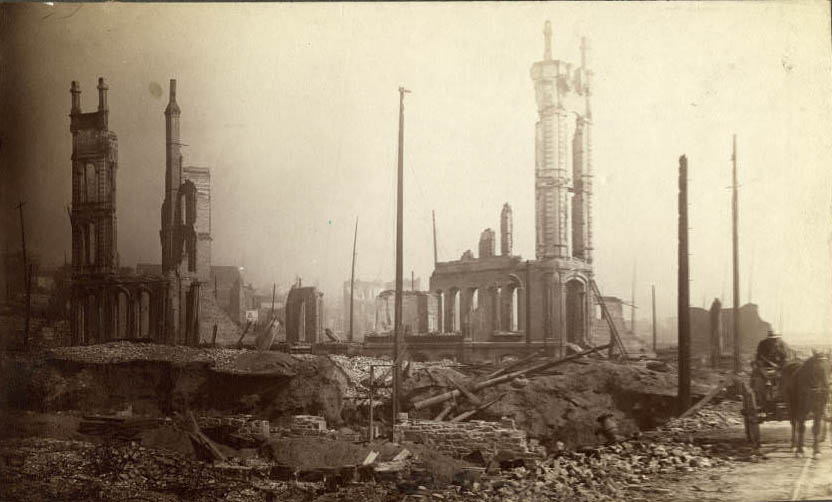
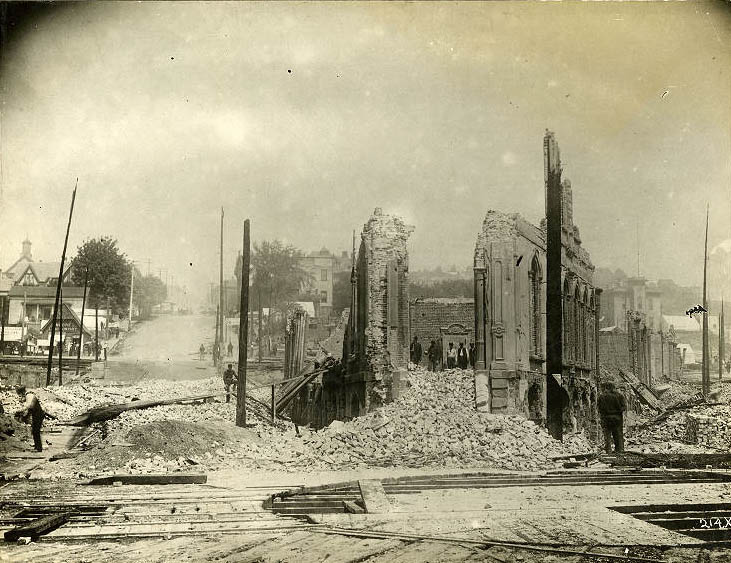
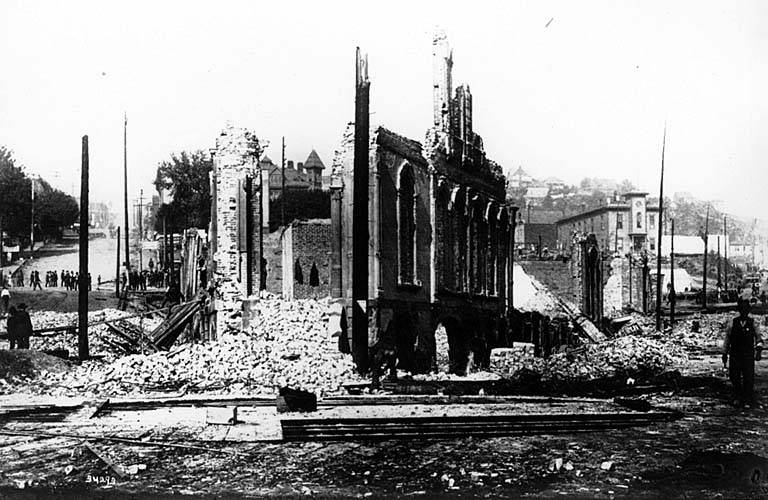
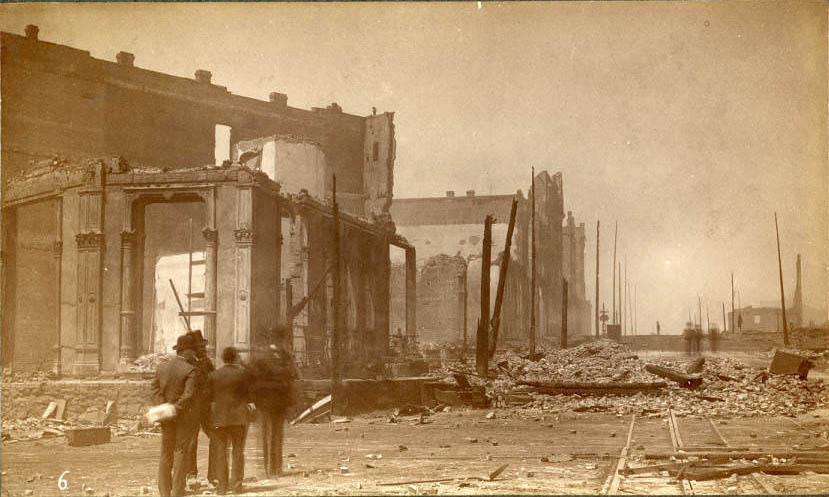
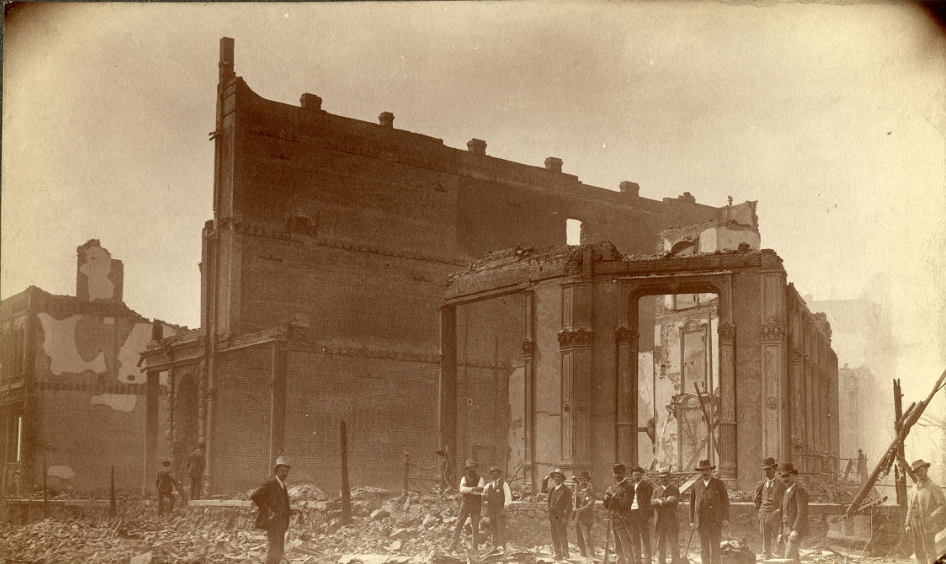
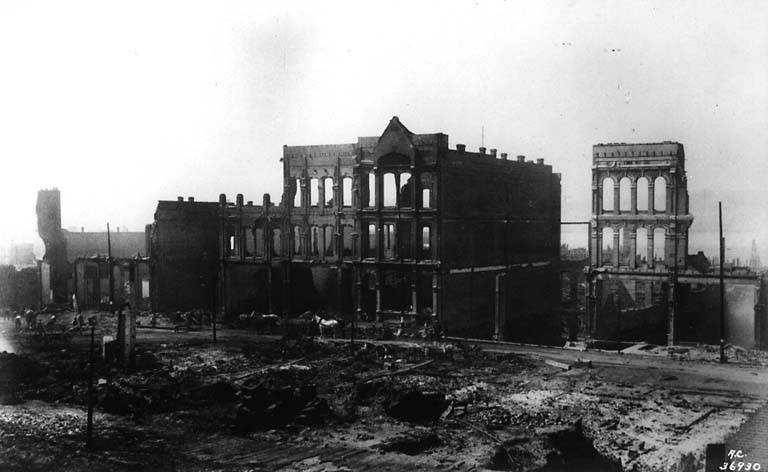
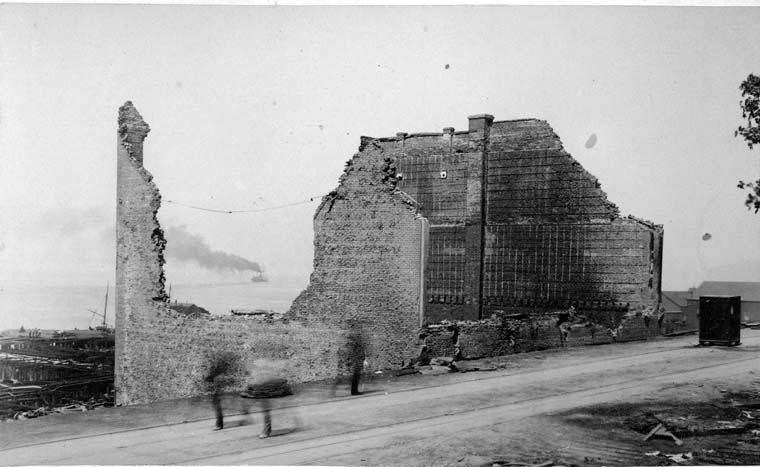
Frye’s Opera House Ruins, June 1889The ruins of Frye’s Opera House, Seattle, Washington, 1889
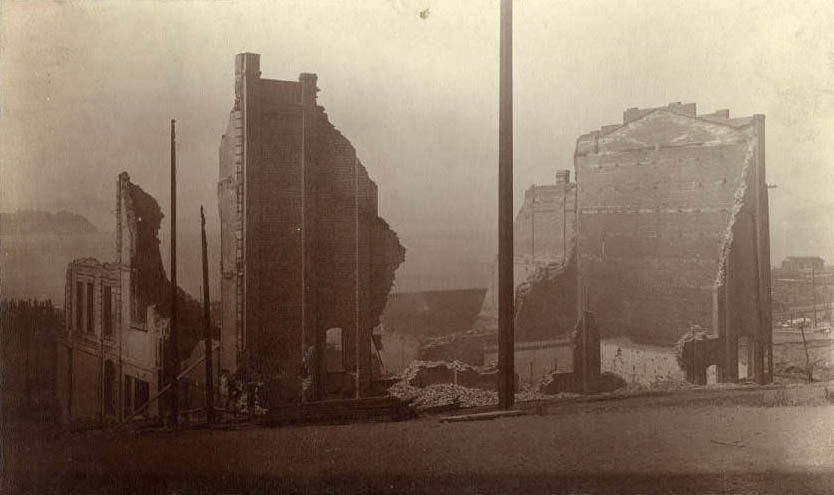
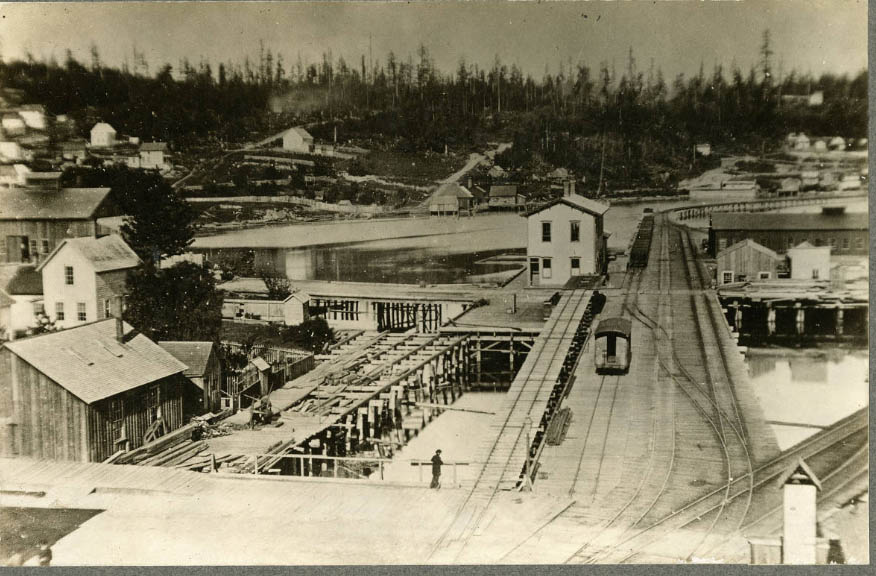
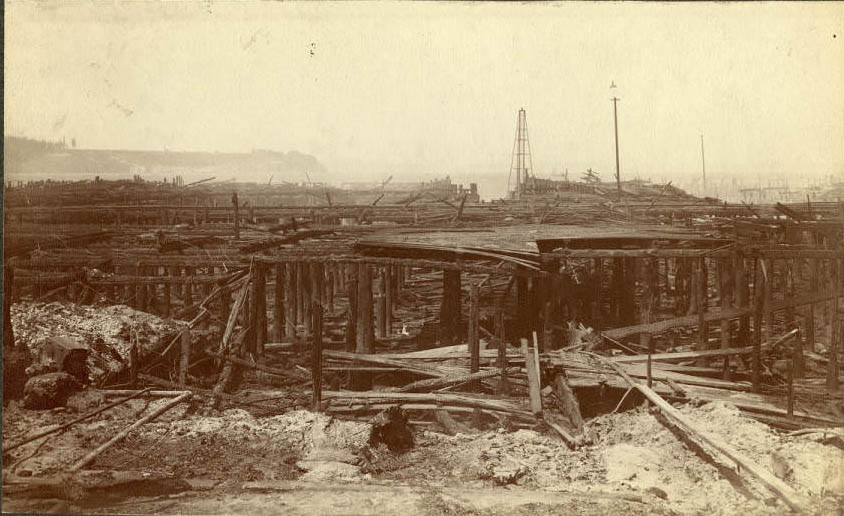
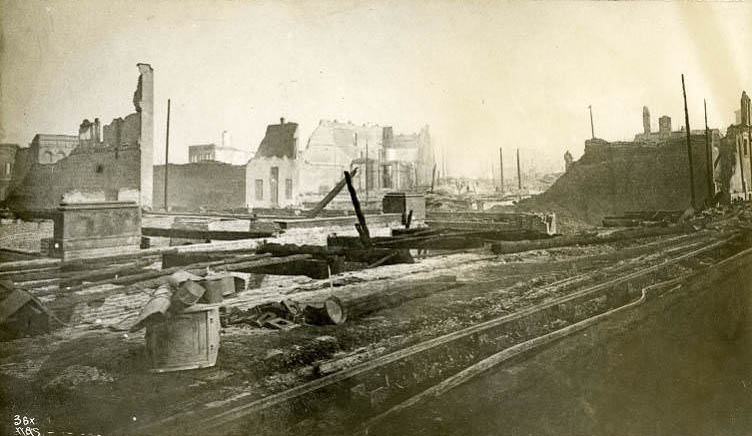
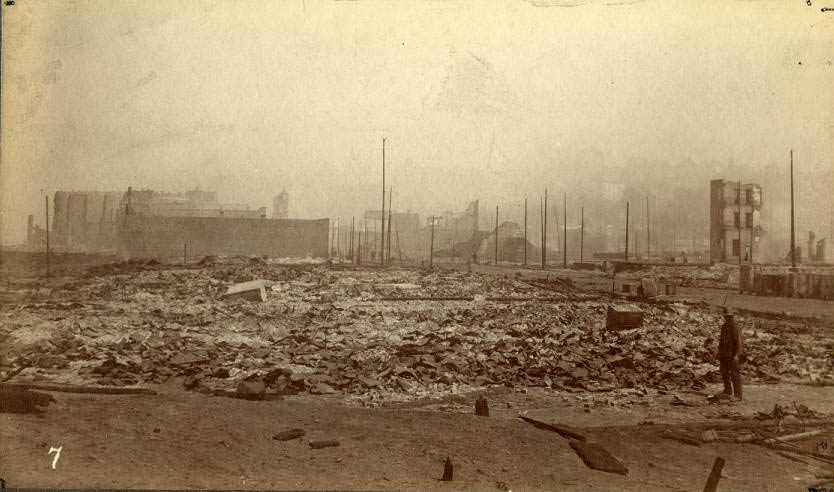
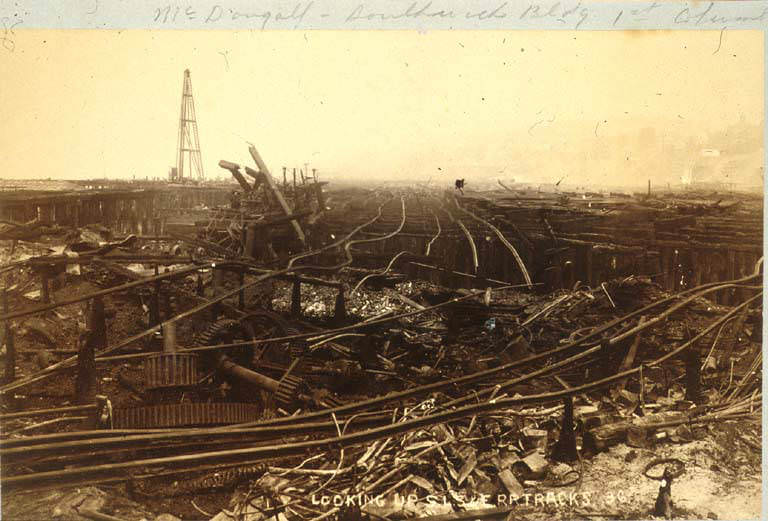
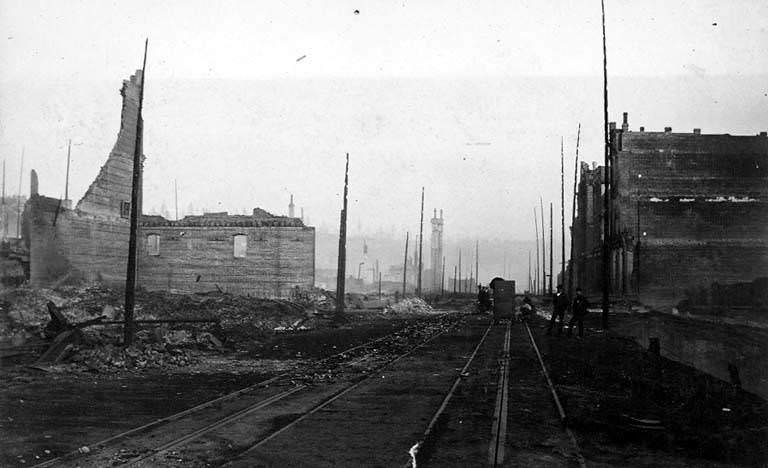
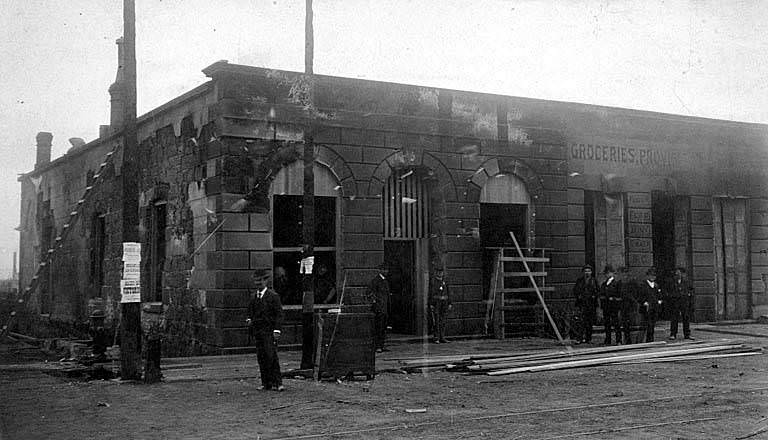
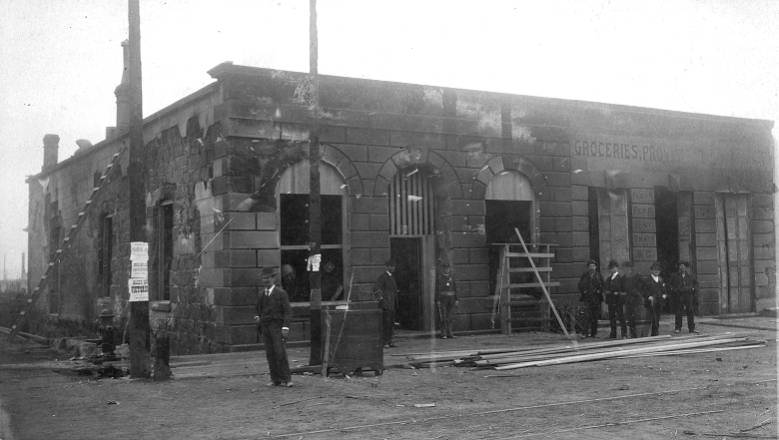
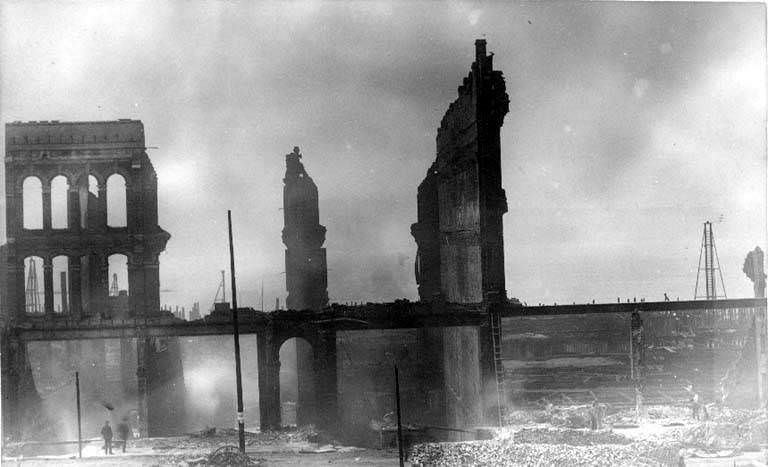
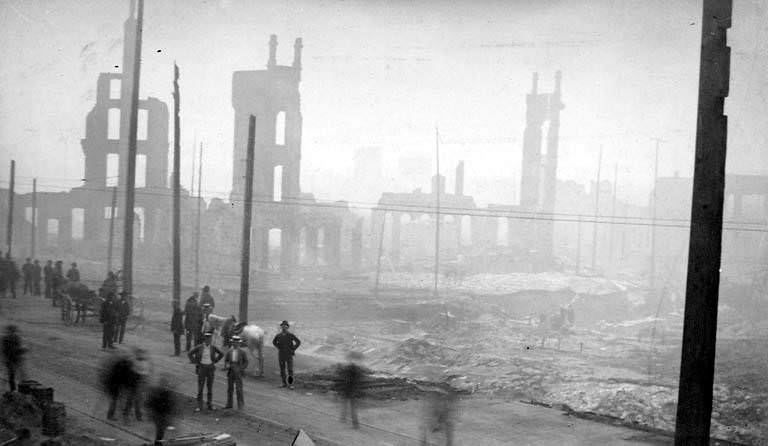
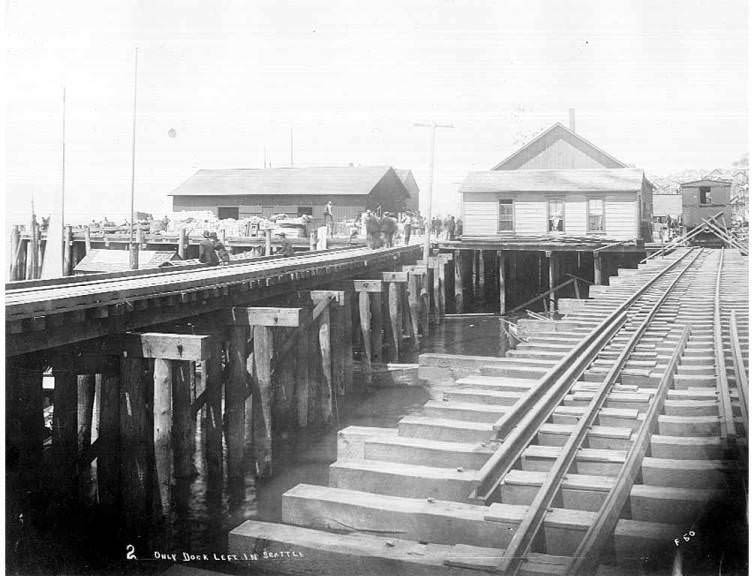
By the morning of June 7, the fire had burned through 25 city blocks. The entire downtown business district was gone, along with four piers and several railroad terminals. The Columbia and Puget Sound Railroad Depot and Machine Shop, built in 1876, was among the structures completely destroyed.
Columbia and Puget Sound Railroad Depot and Machine Shop, 1880In foreground are twisted rails of the Columbia and Puget Sound Railroad.
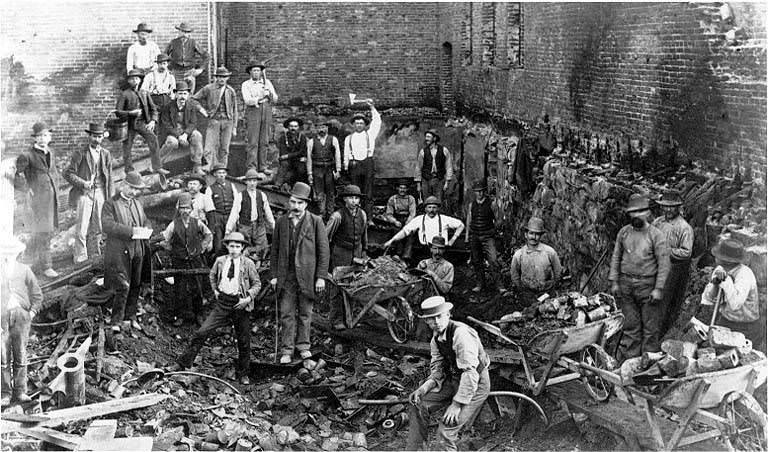
Property losses were estimated at over $8 million, and that figure did not include damage to water systems, electrical infrastructure, or personal losses. Total losses reached as high as $20 million. Tens of thousands of people were displaced, and 5,000 men lost their jobs overnight. During the cleanup, more than one million rodents were killed. One casualty was recorded — James Goin, a young boy — though no reliable records confirming his death have been found.
Ruins of the Puget Sound National Bank, June 1889
Ruins of Puget Sound National Bank in the Occidental Hotel Building, corner of James St. and Yesler Way, 1889
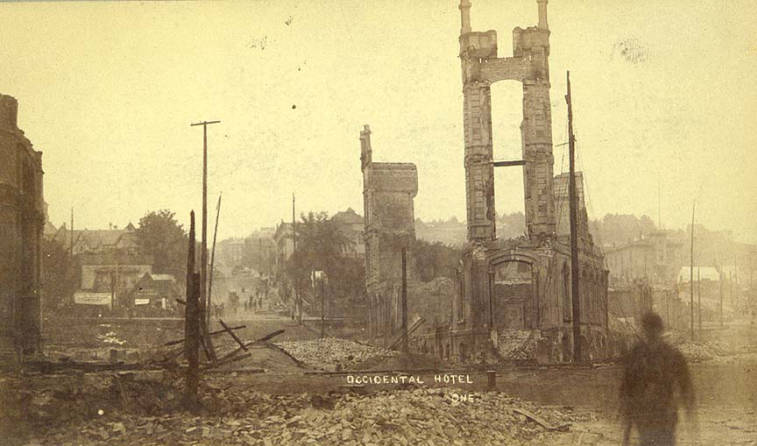
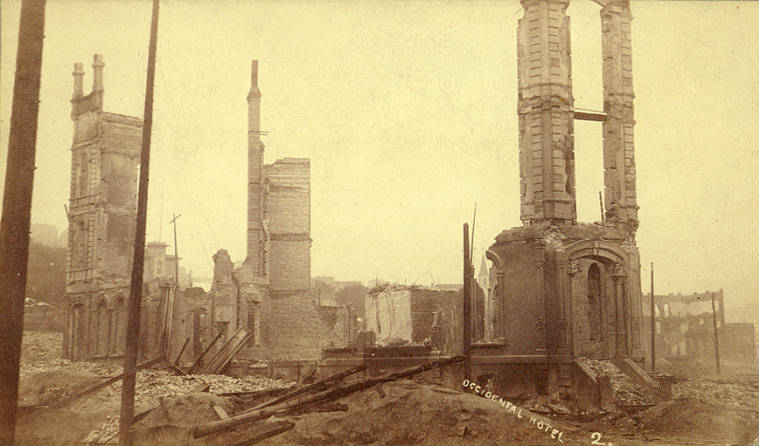
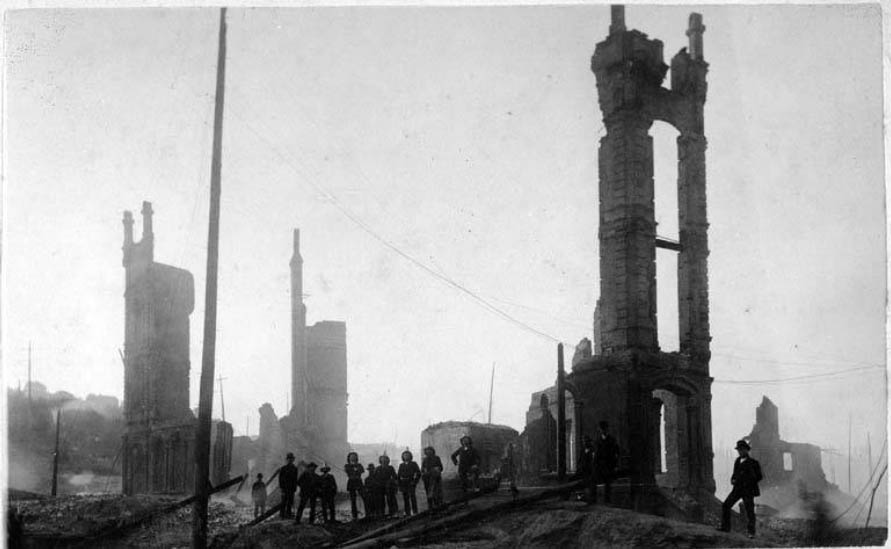
Ruins of the Occidental Hotel, June 1889Occidental Hotel ruins following fire, June 1889Looking east at the ruins of the Occidental Hotel at corner of James St. and Yesler Way.Looking northwest showing the ruins of the Occidental Hotel, corner of James St. and Yesler Way, Seattle, Washington, 1889Ruins of the Occidental Hotel, corner of James St. and Yesler Way, Seattle, Washington, 1889Ruins ruins of the Occidental Hotel between James St. and Yesler Way, 1889The firefighters standing in the ruins of the Occidental Hotel, 1889
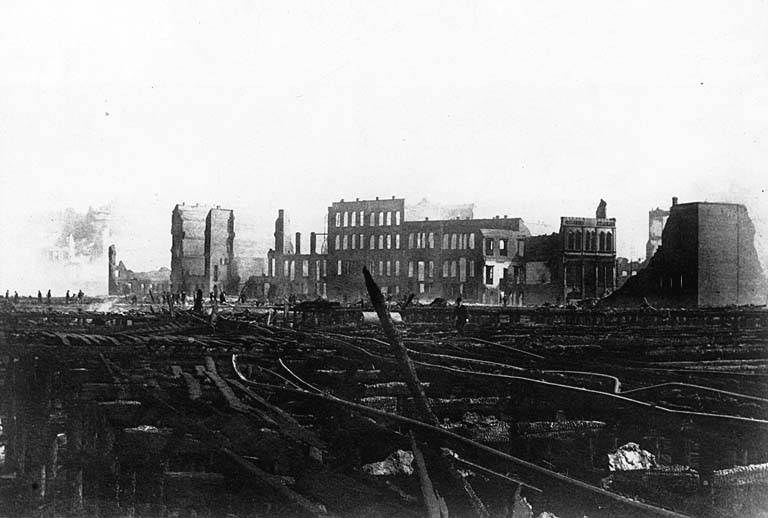
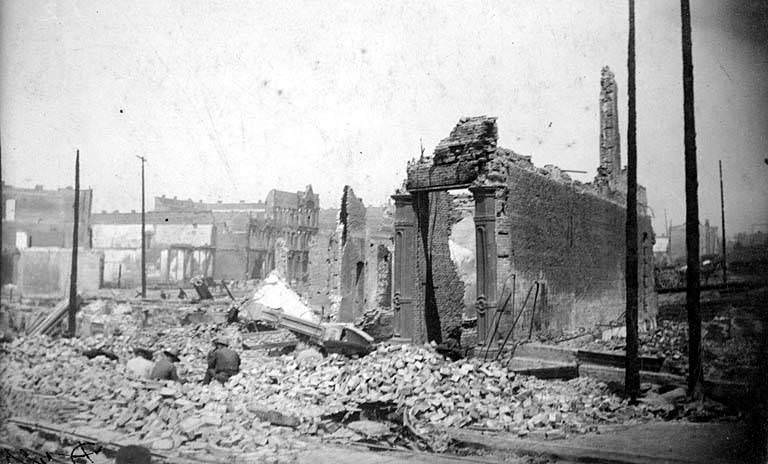
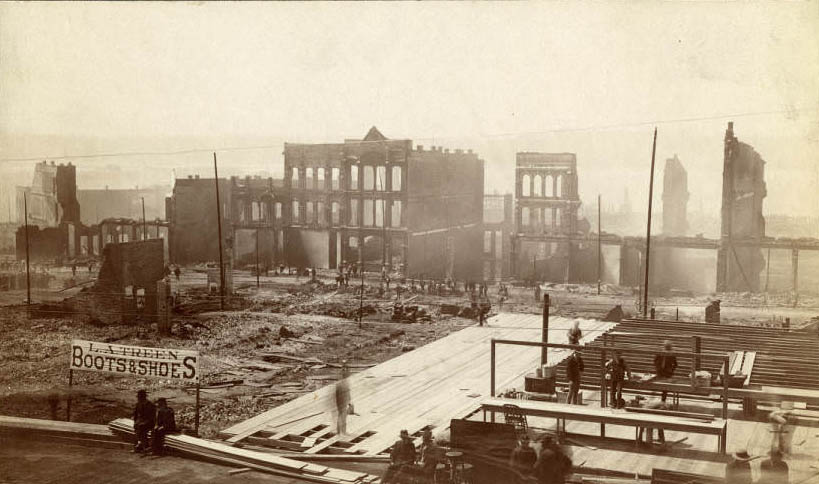
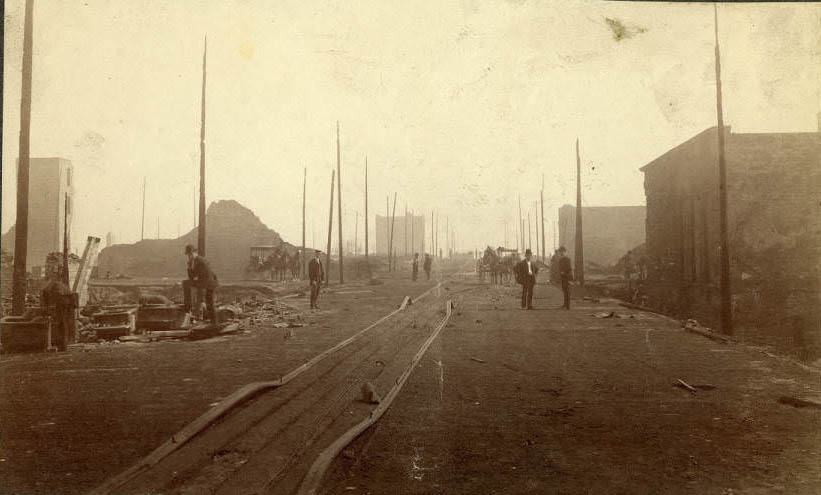
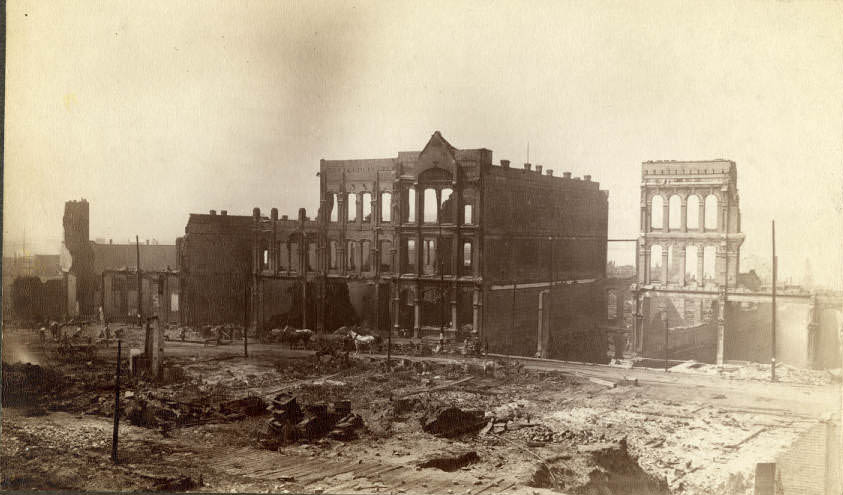
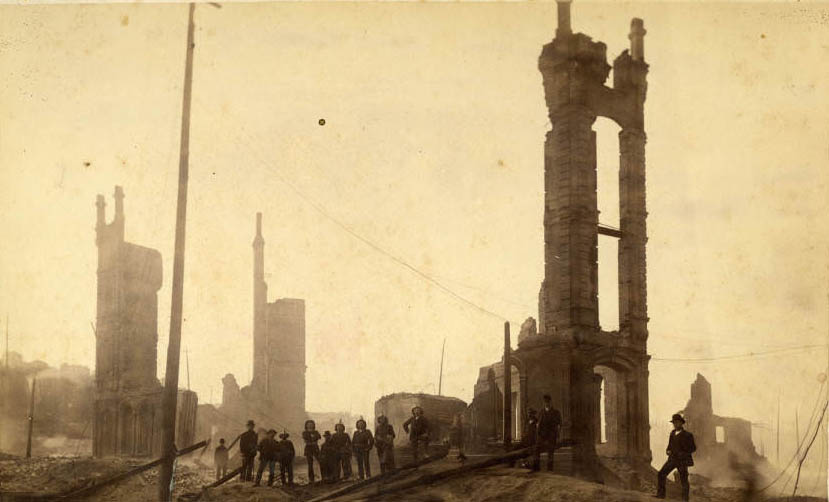
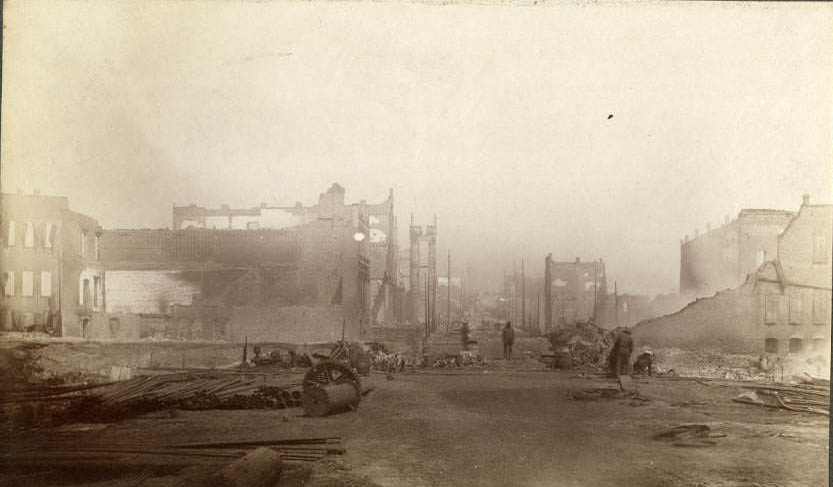
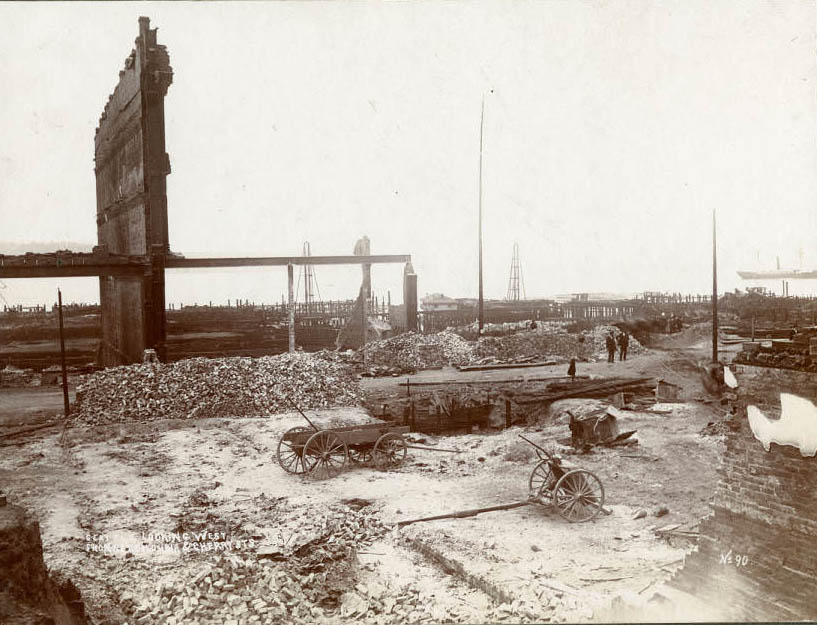
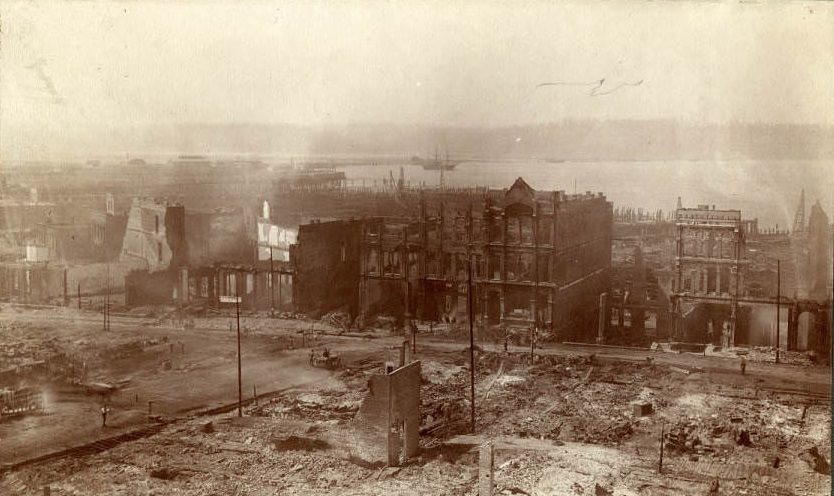
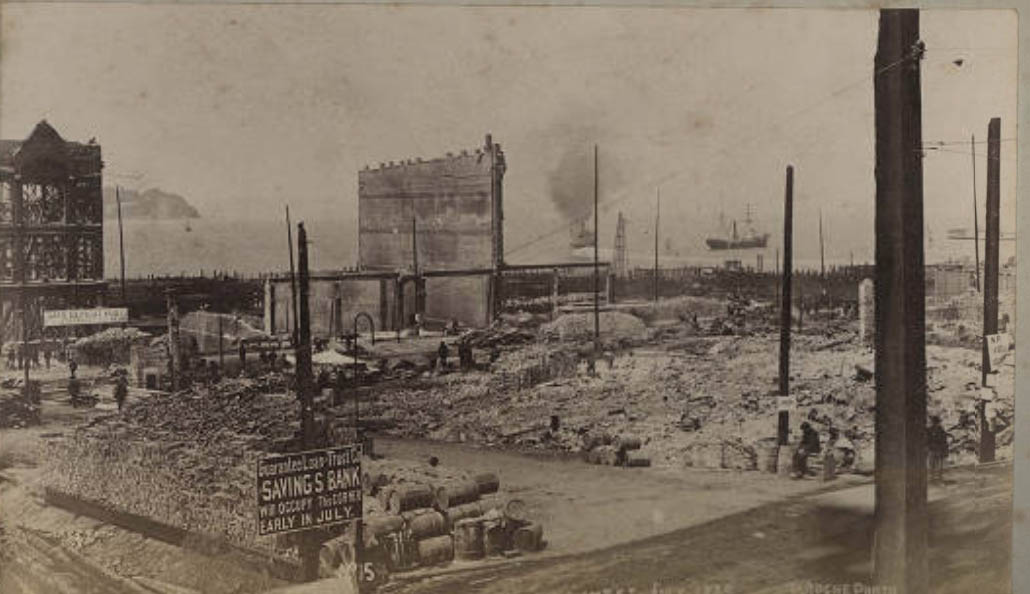
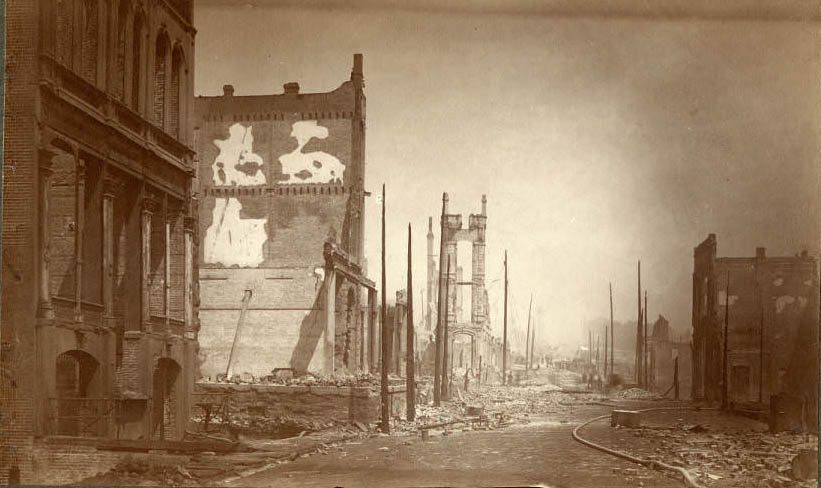
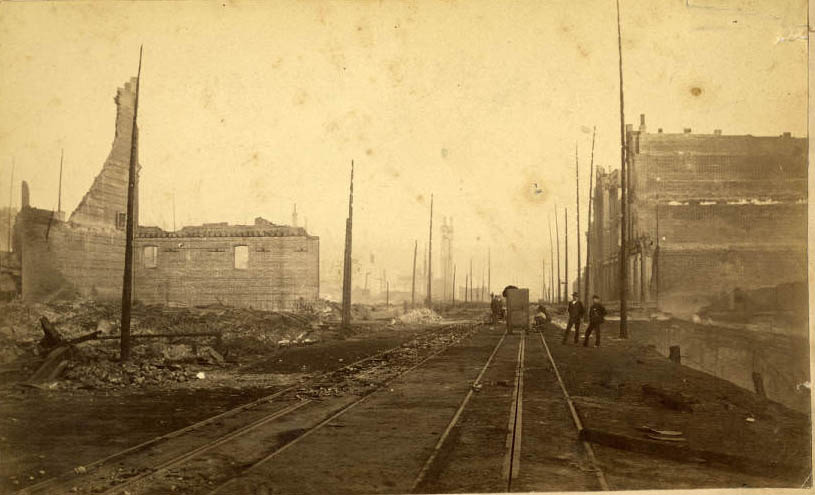
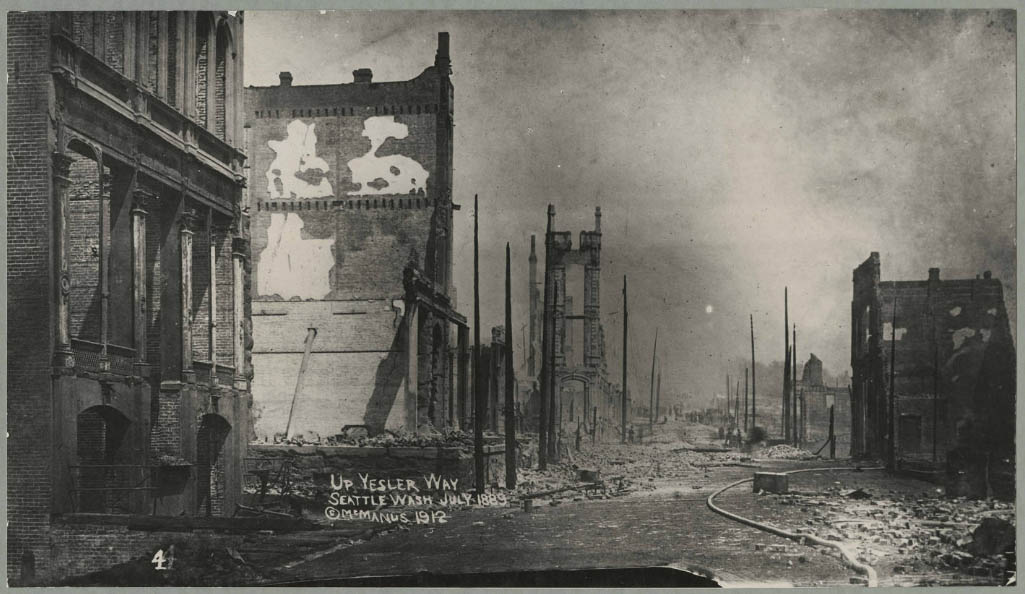
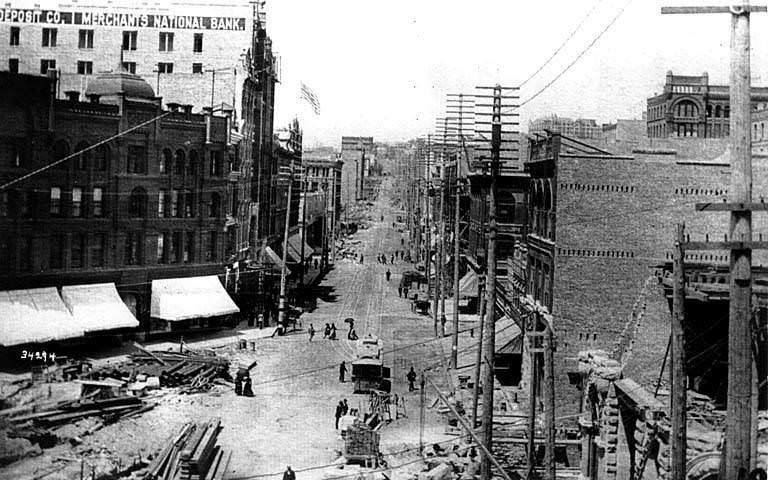
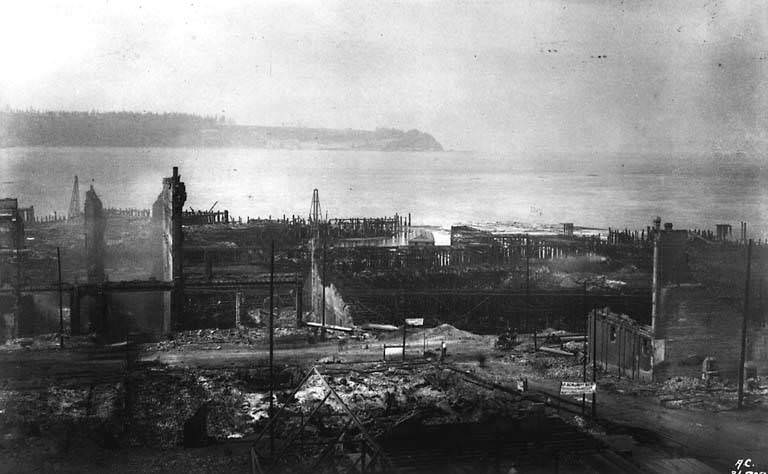
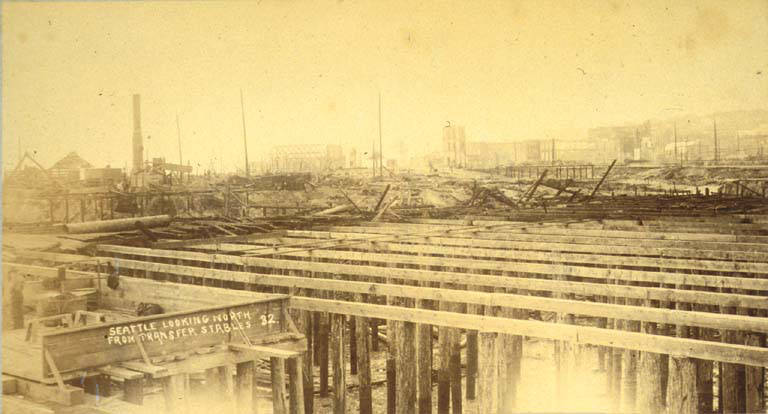
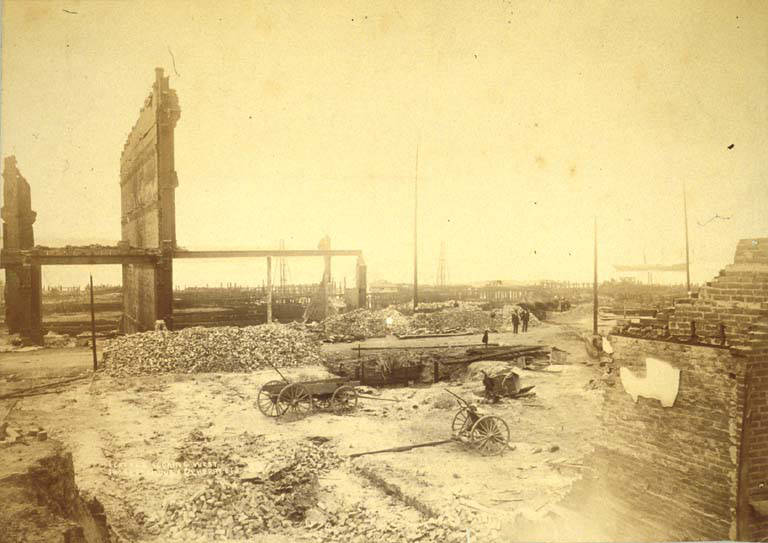
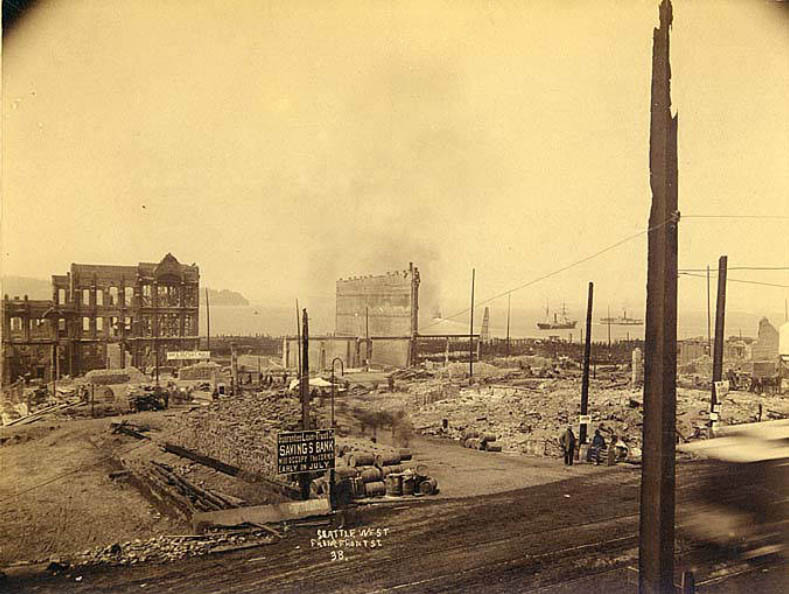
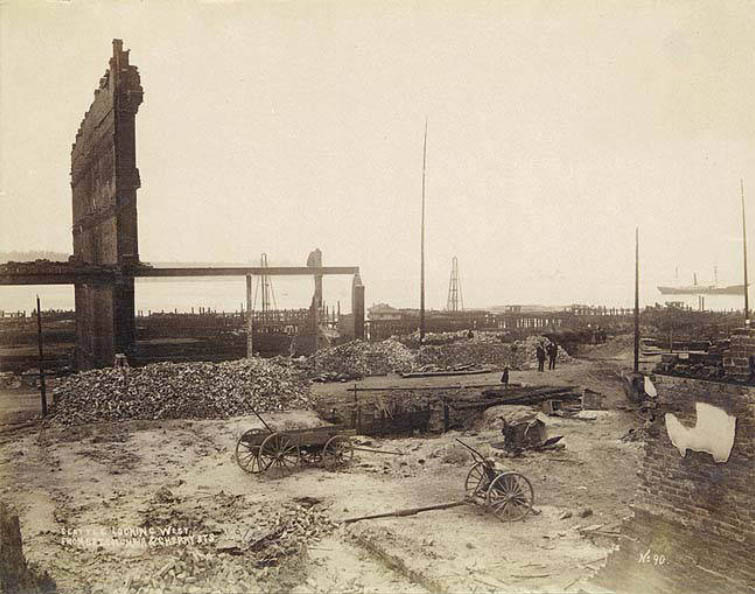
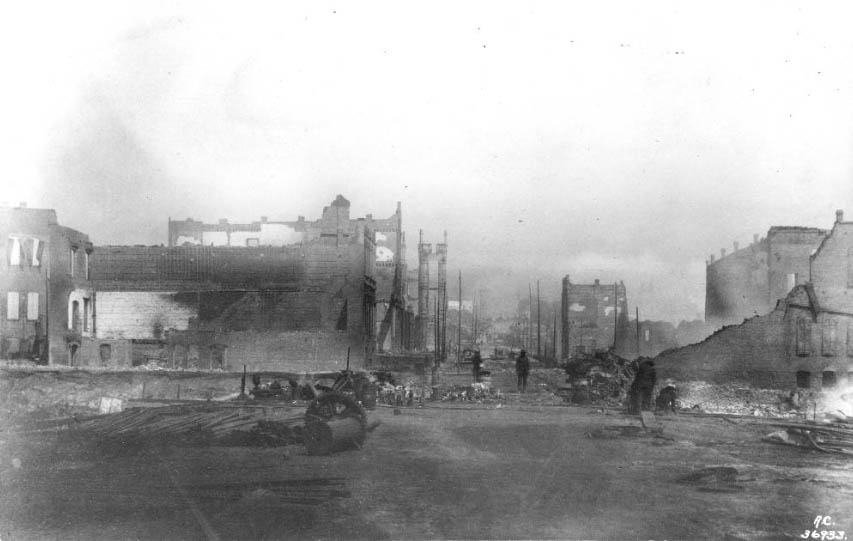
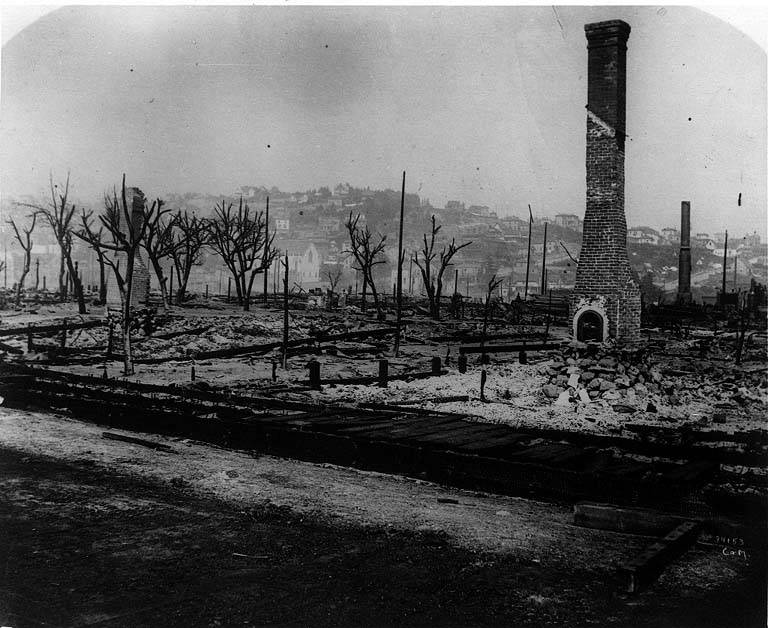
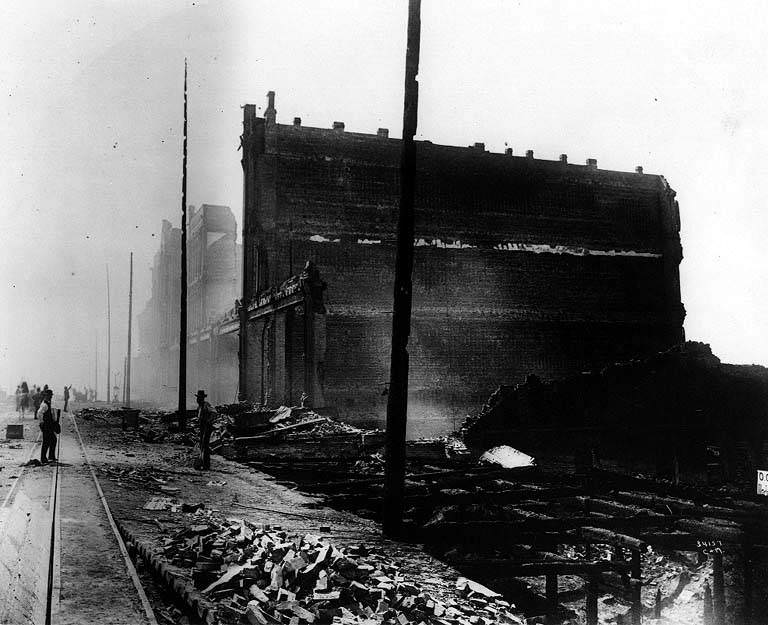
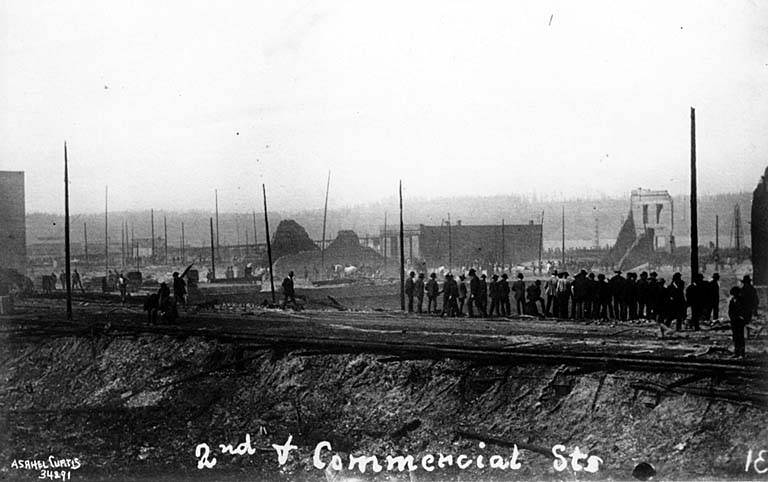
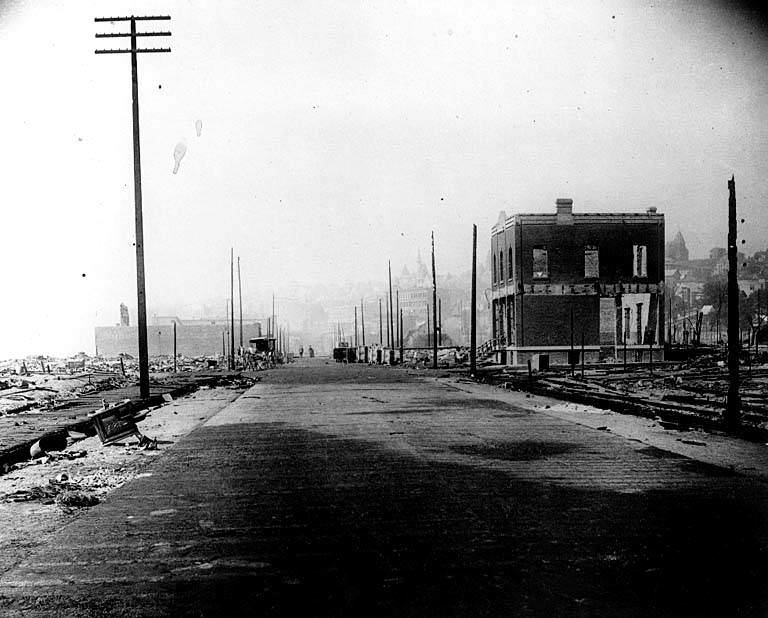
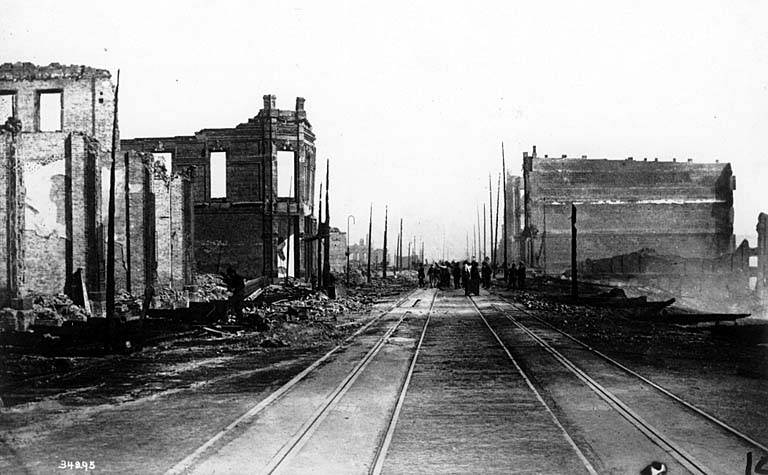
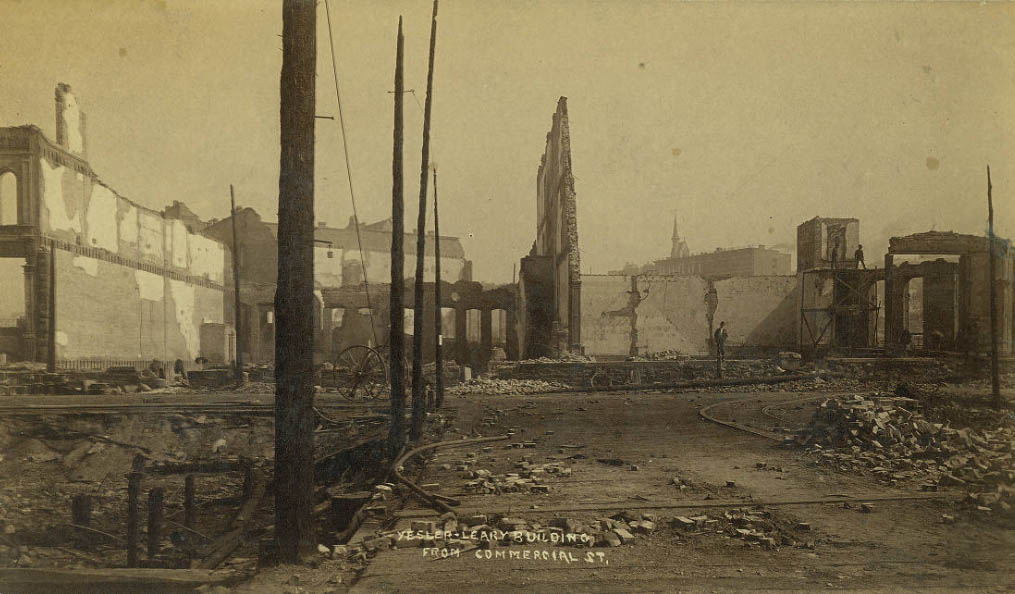
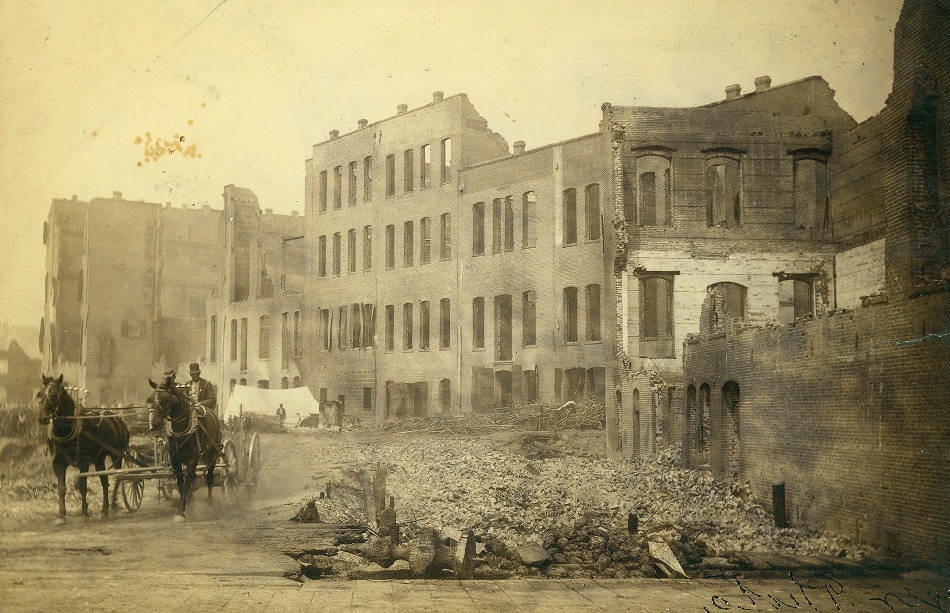
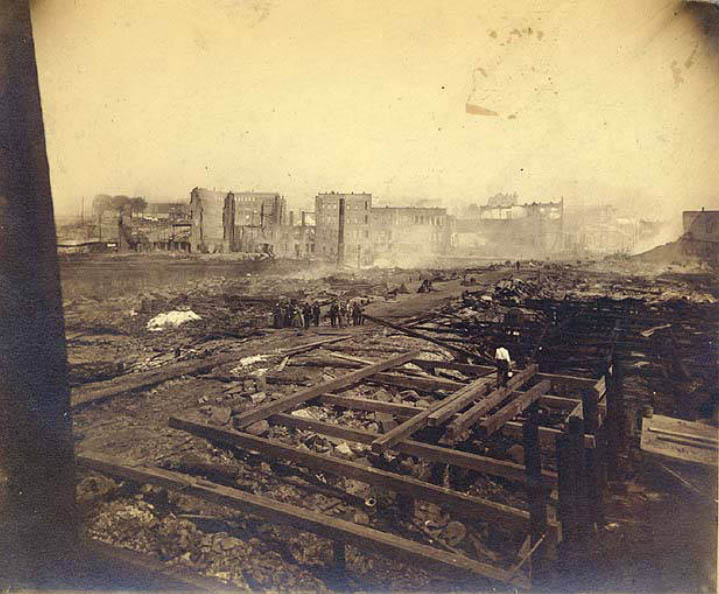
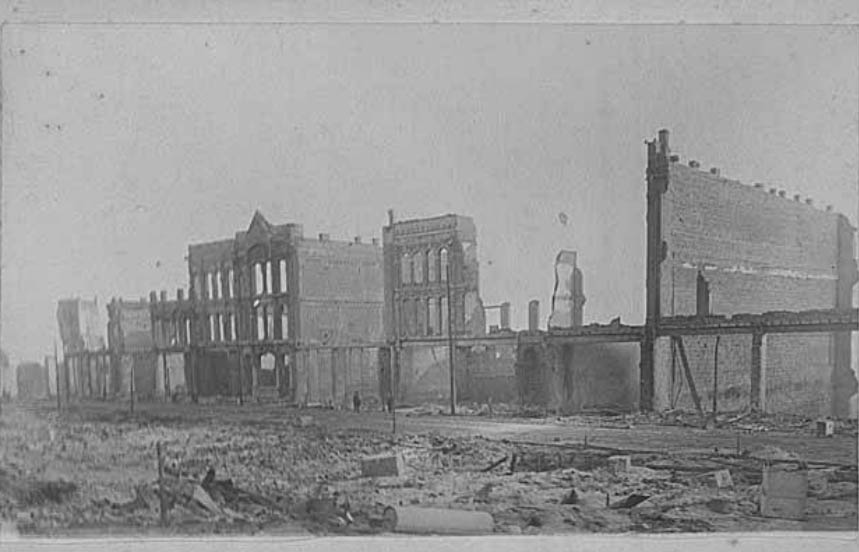
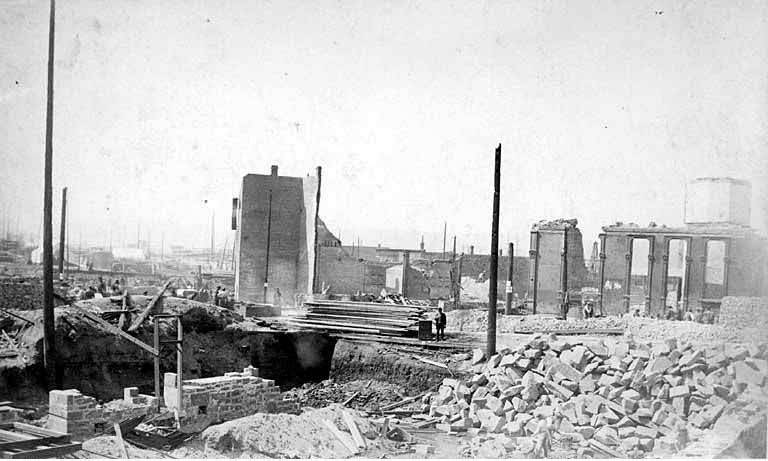
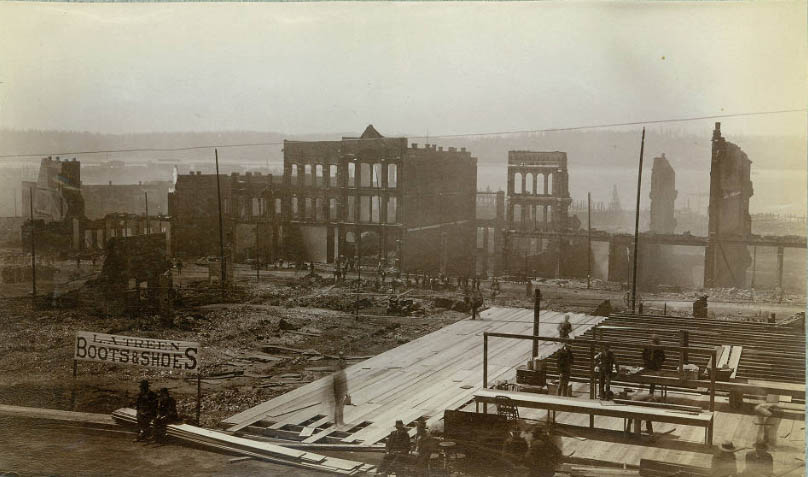
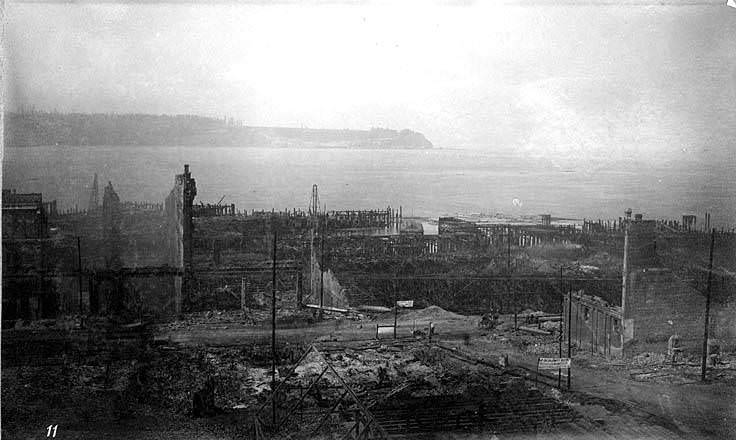
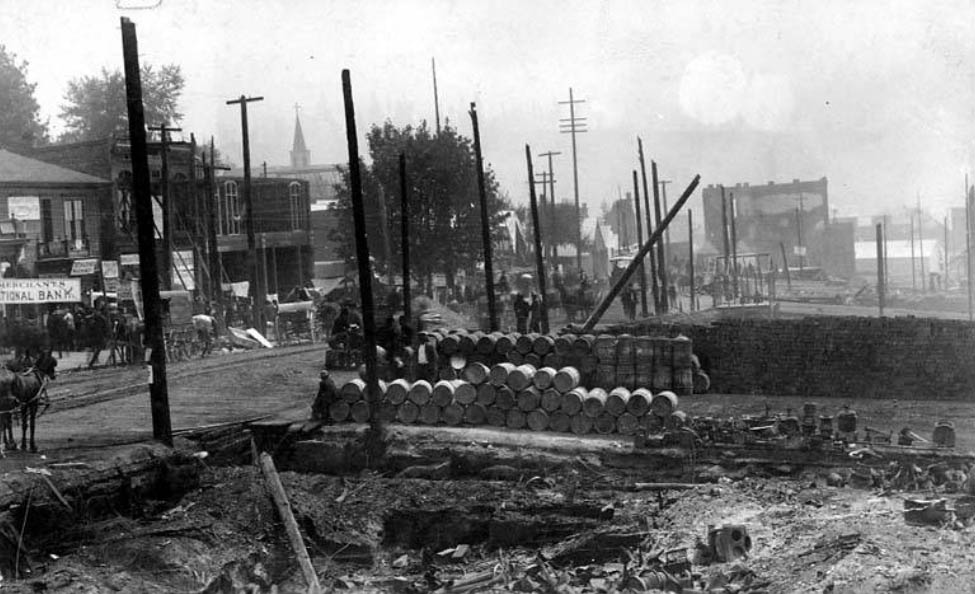
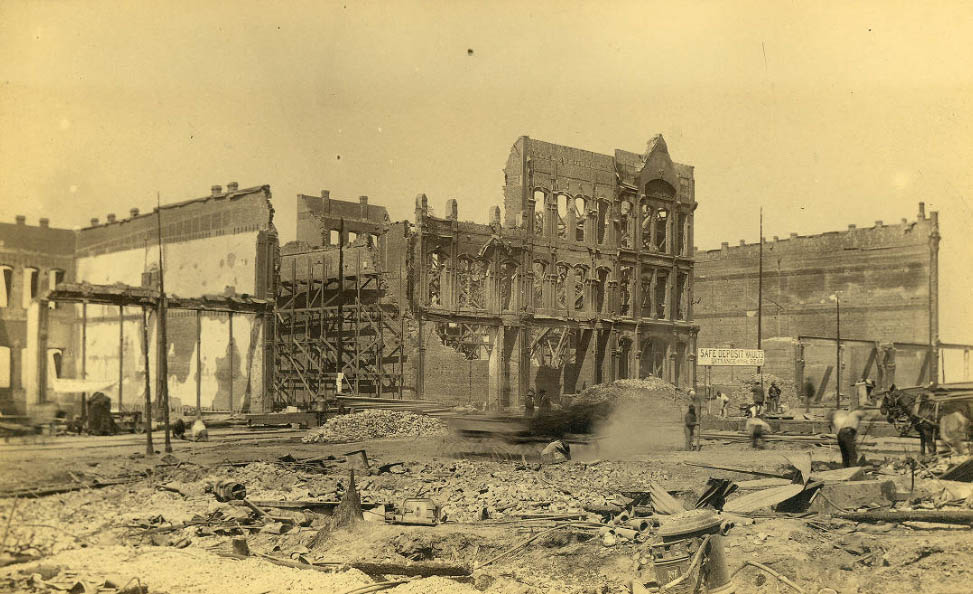
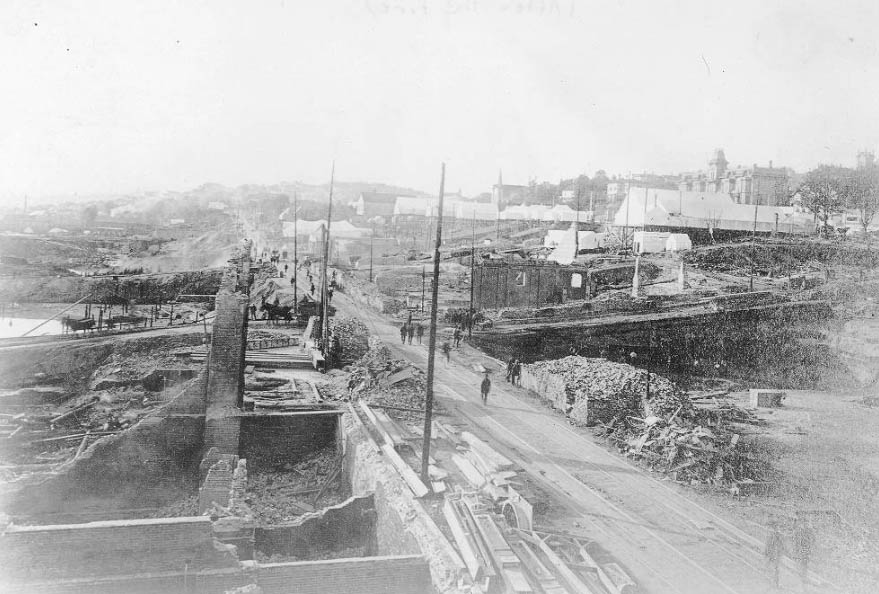
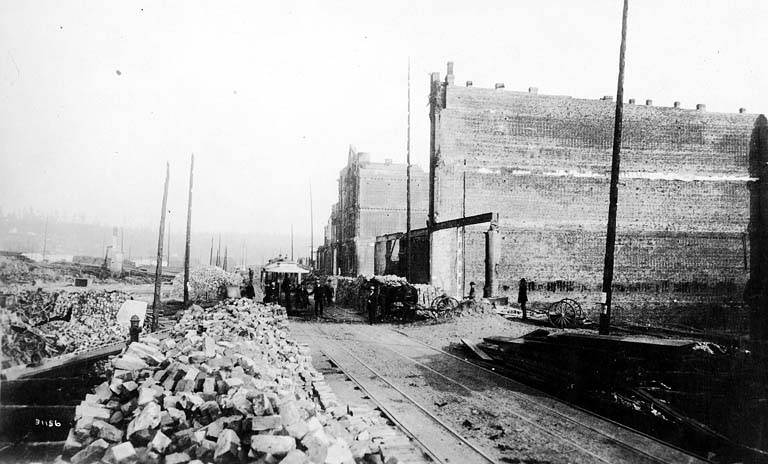
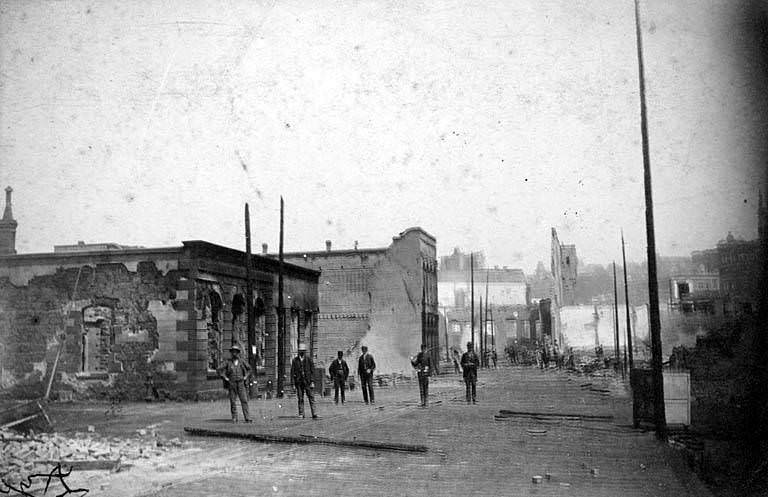
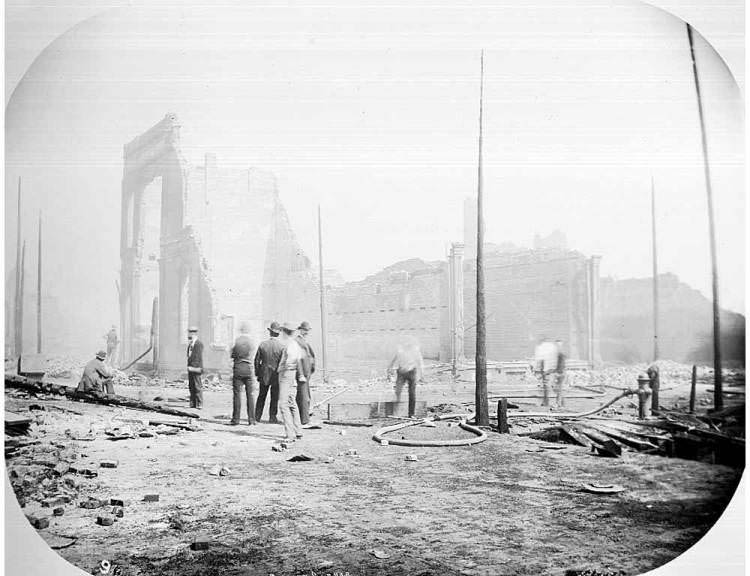
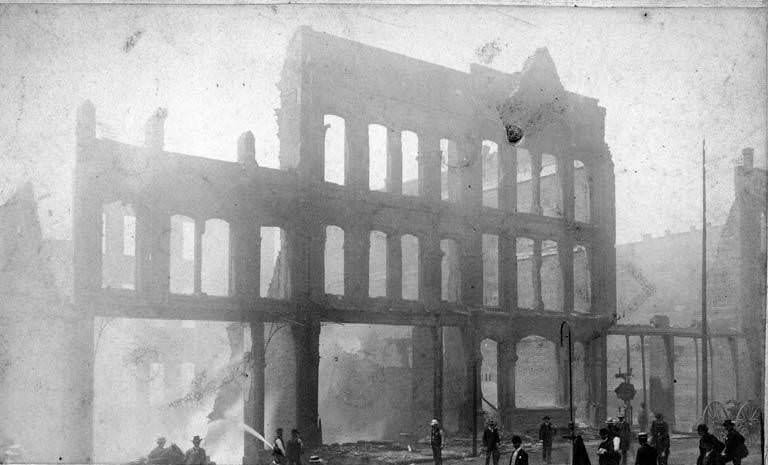
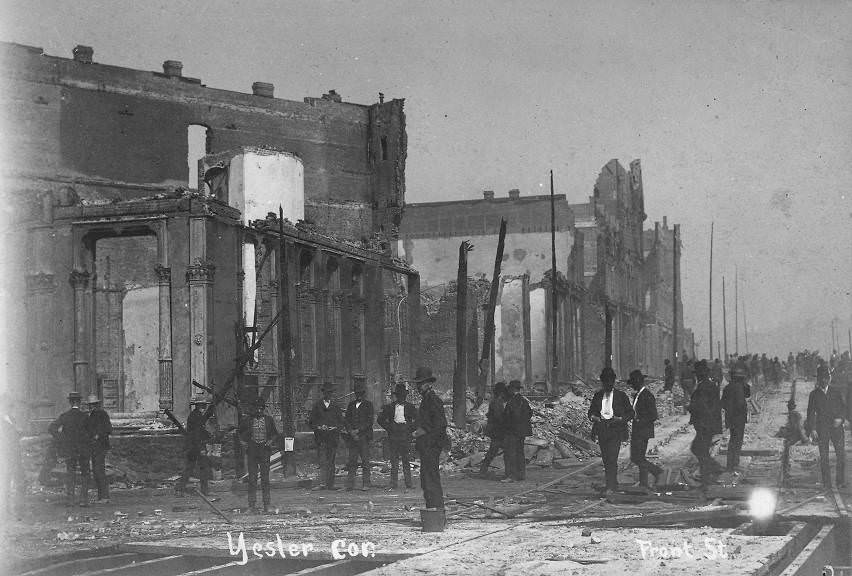
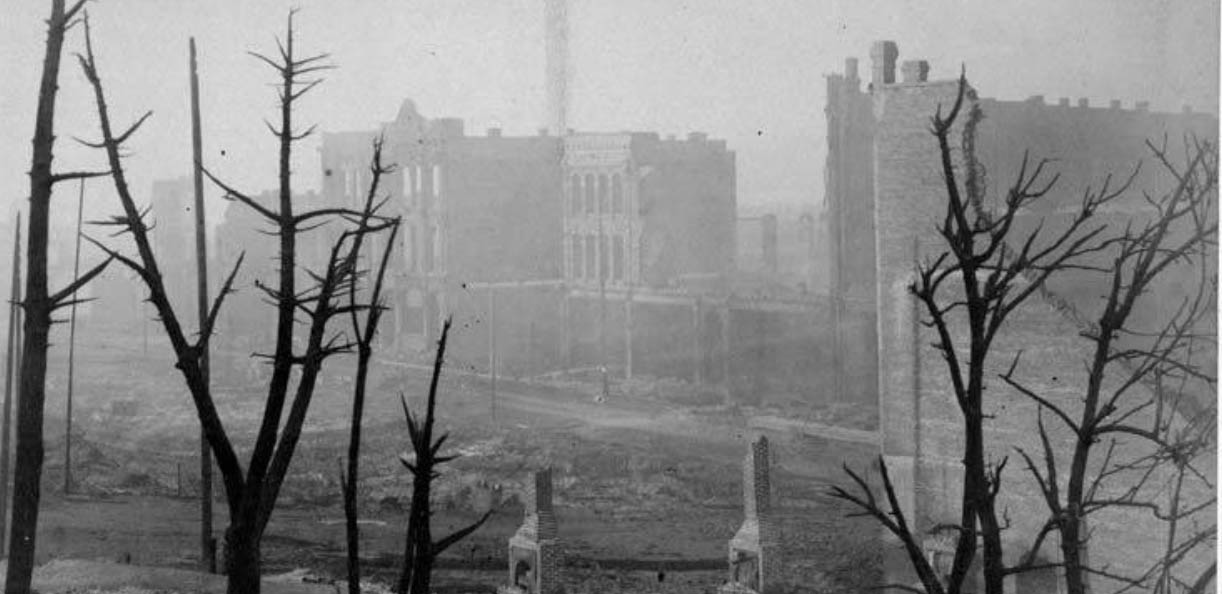
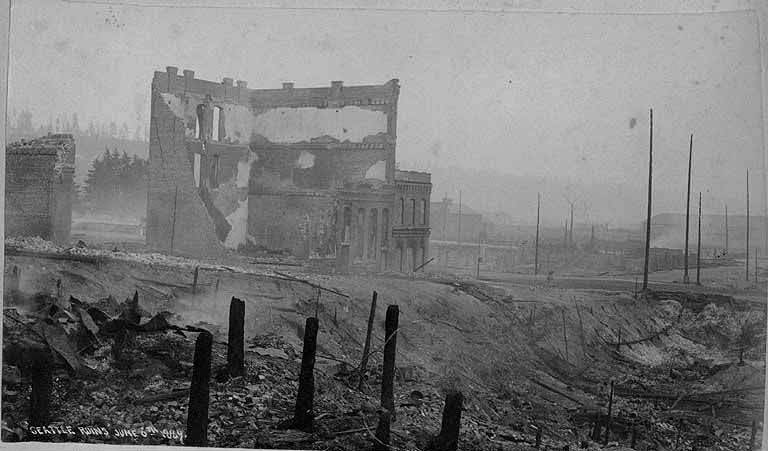
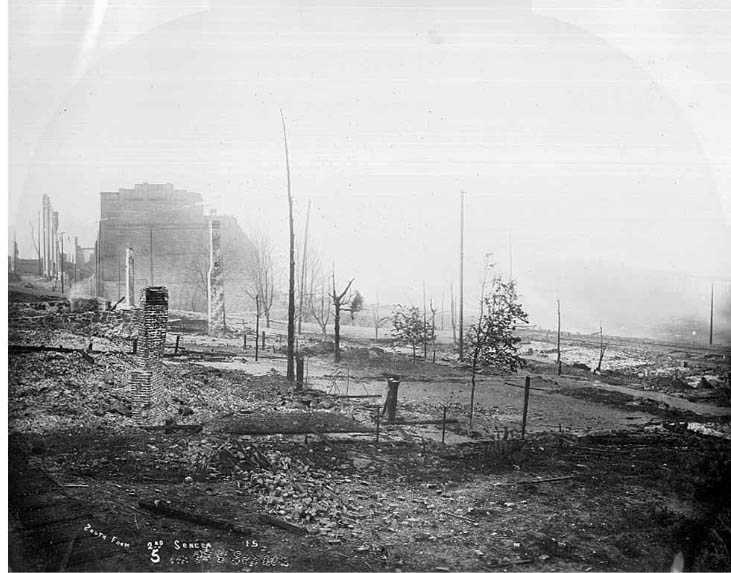
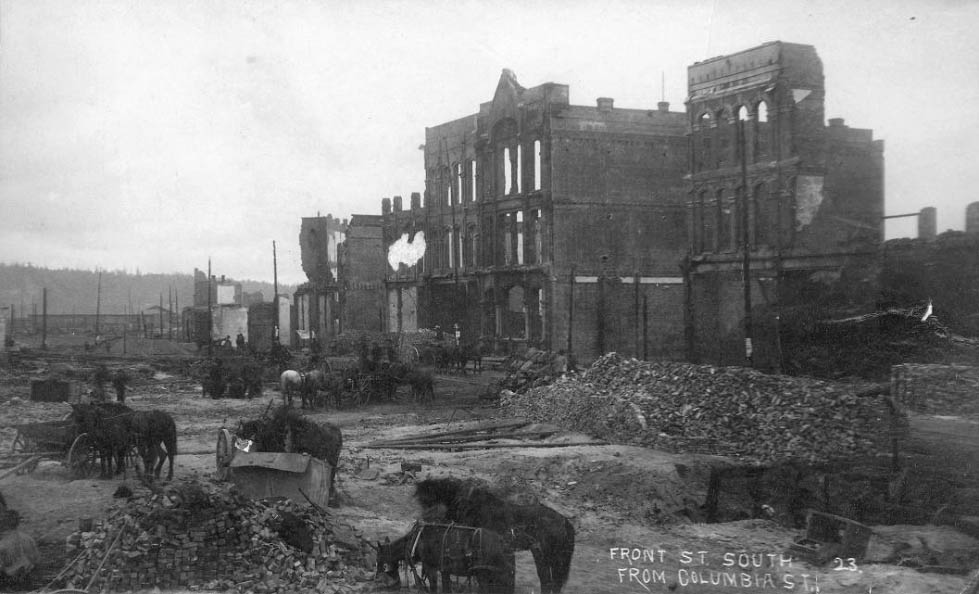
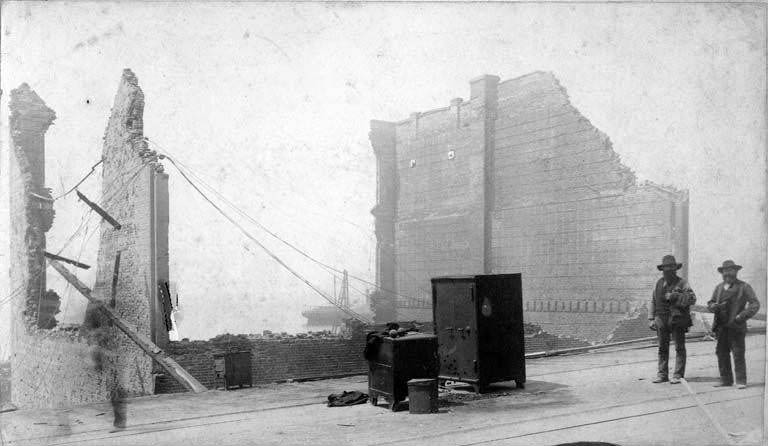
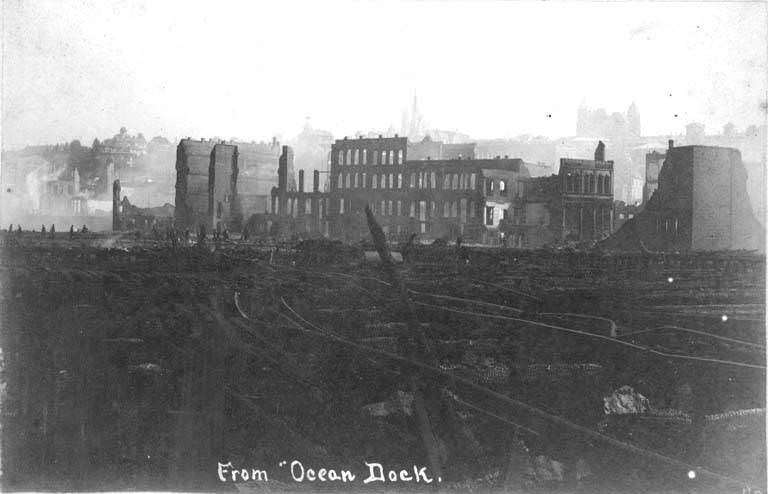
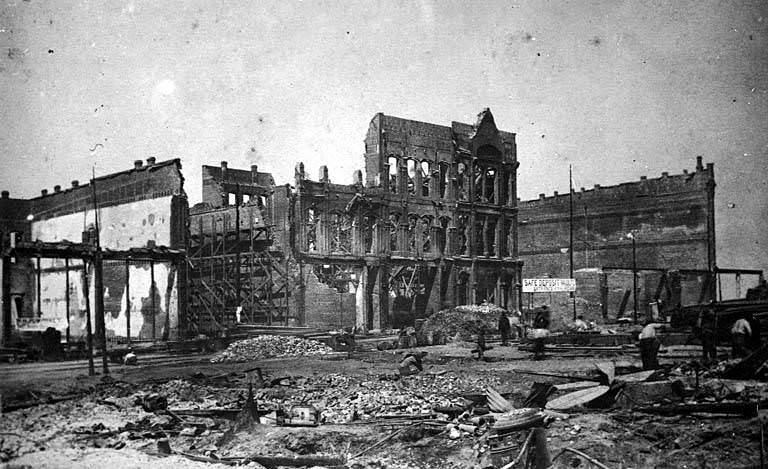
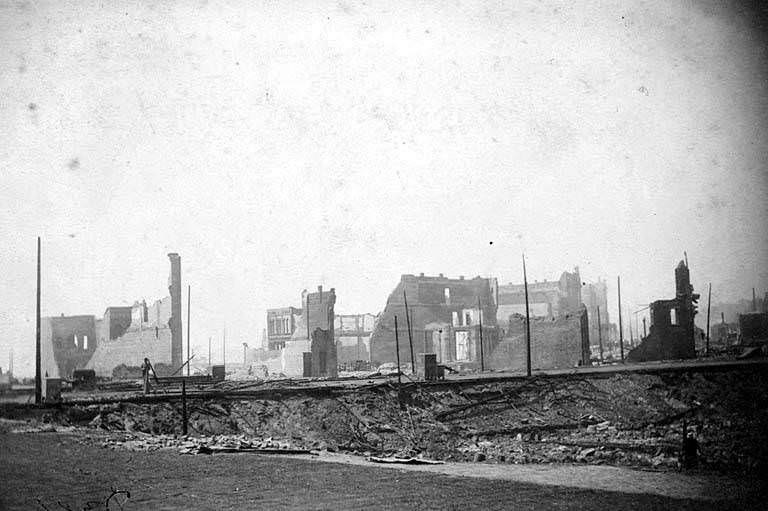
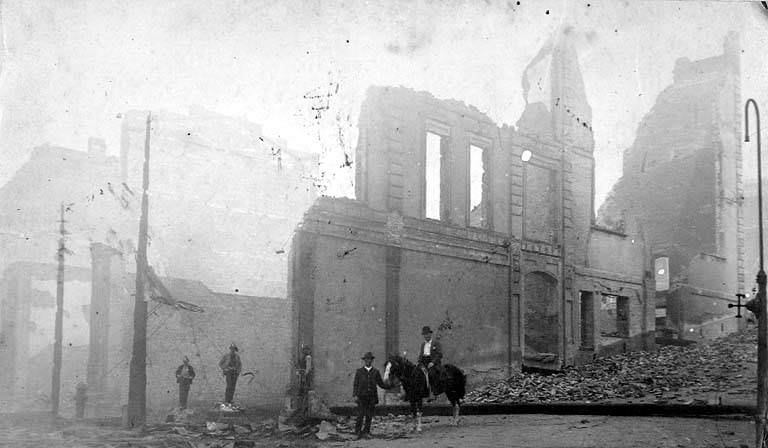
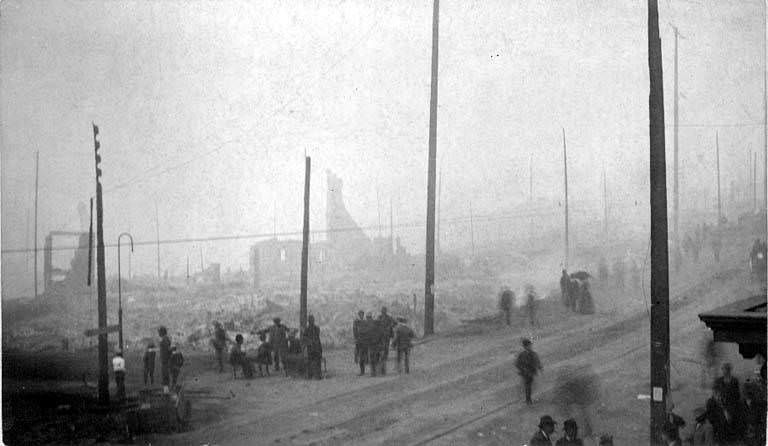
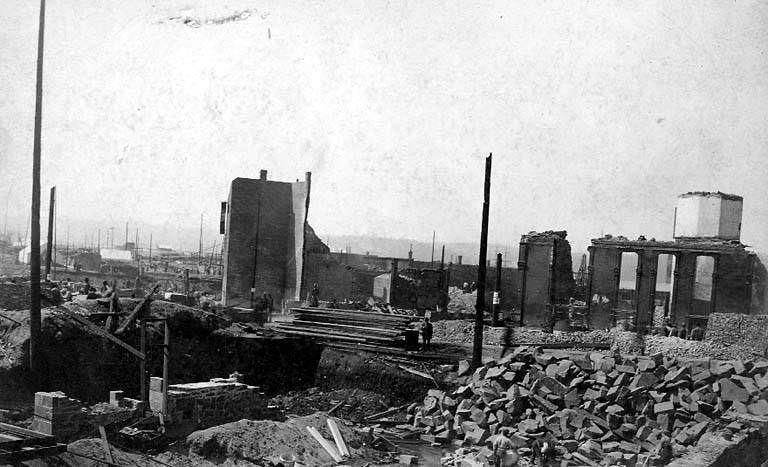
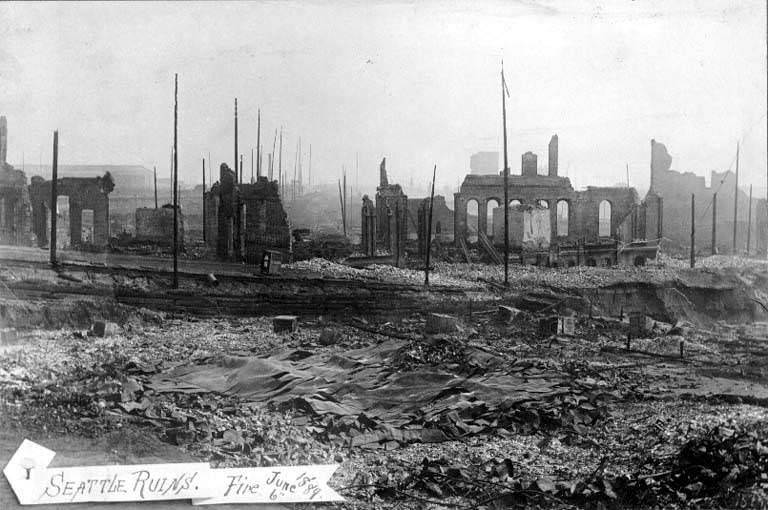
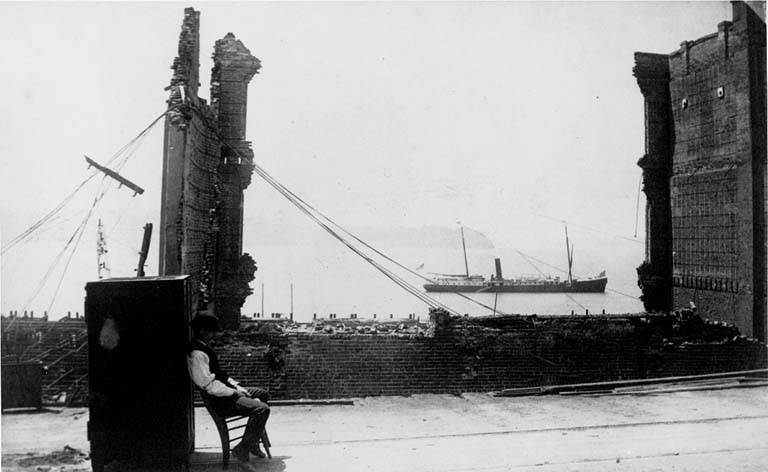
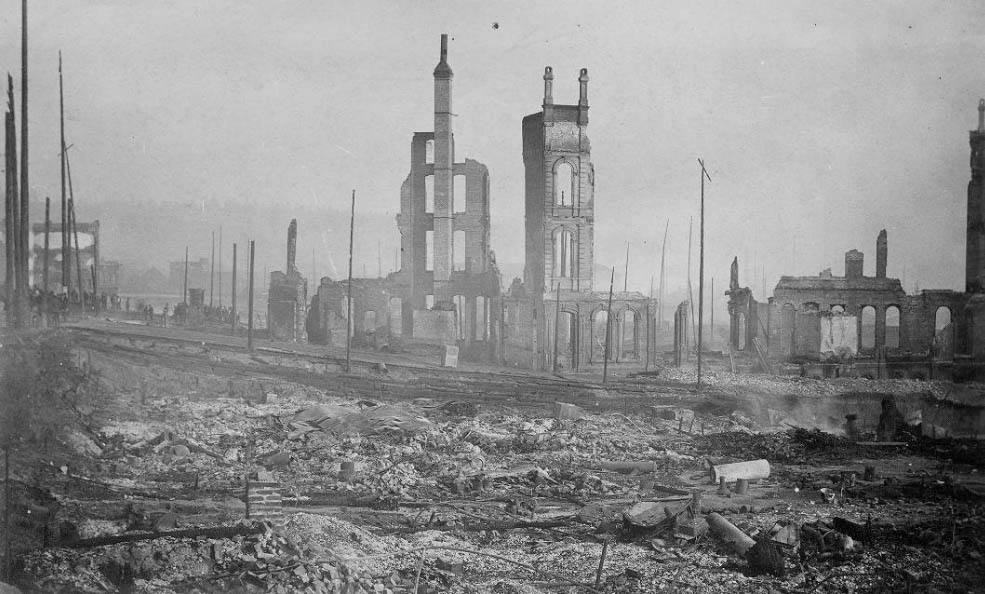
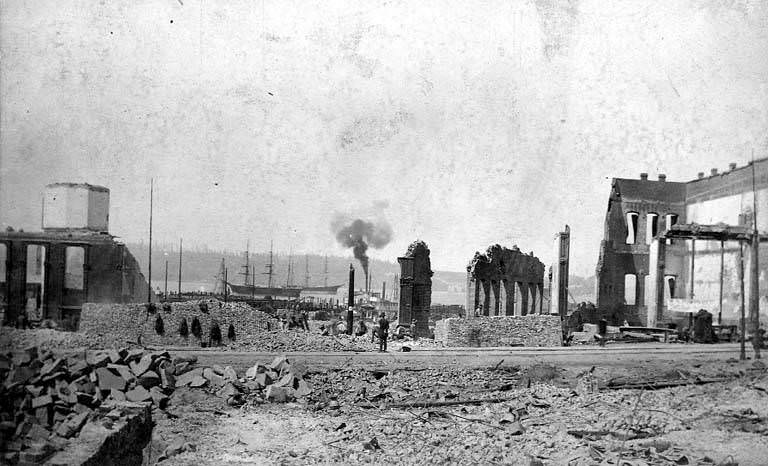
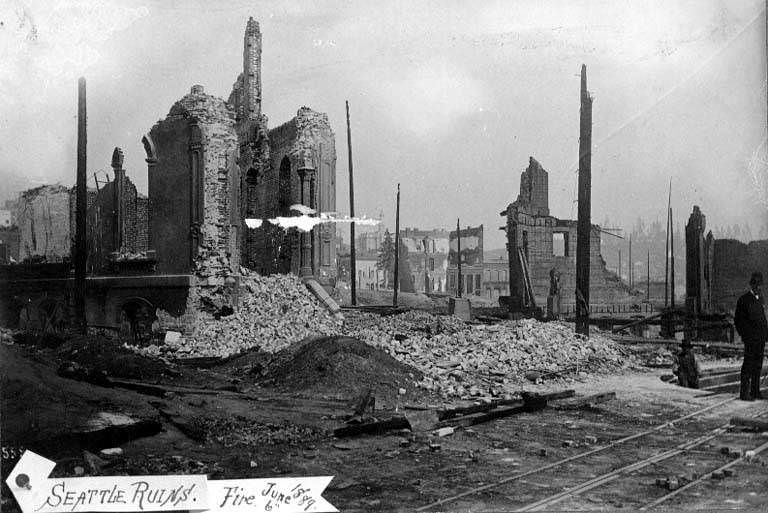
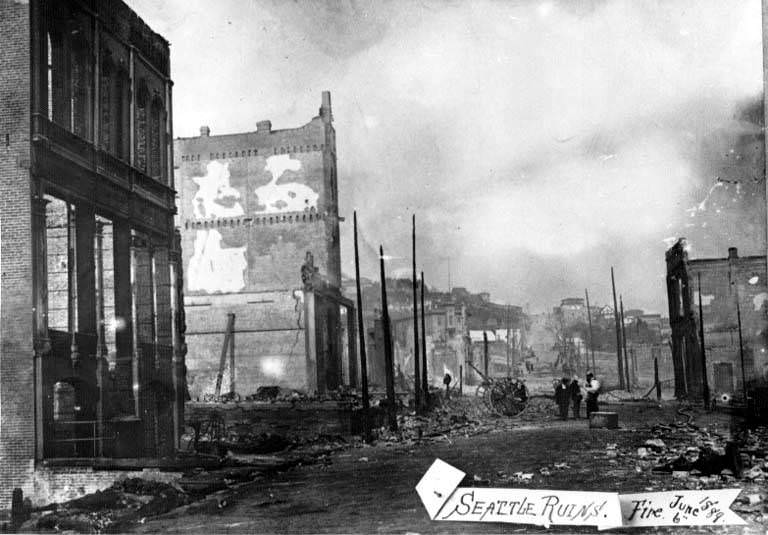
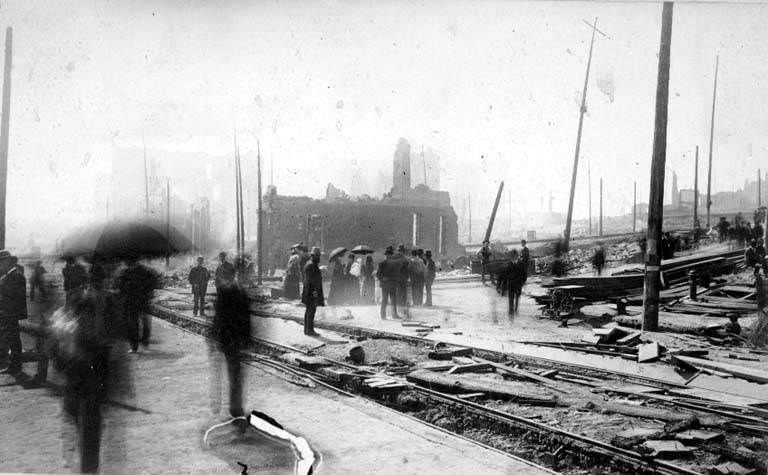
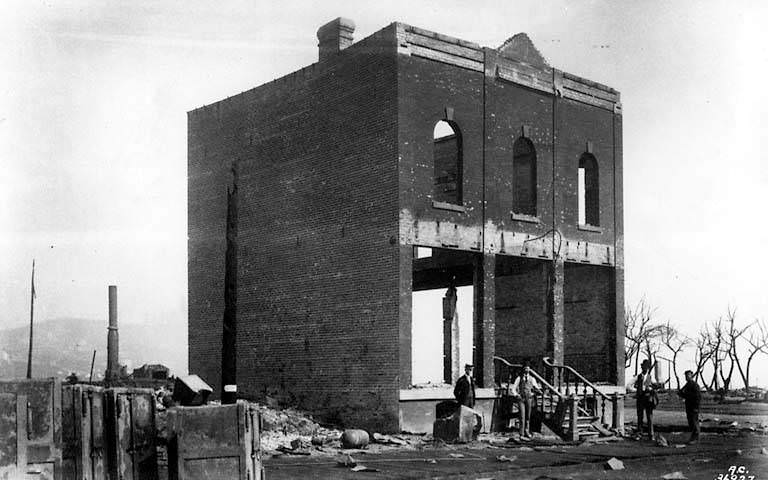
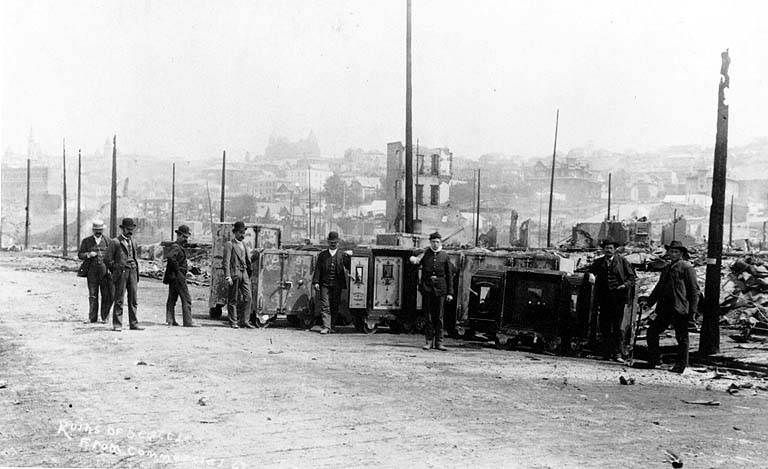
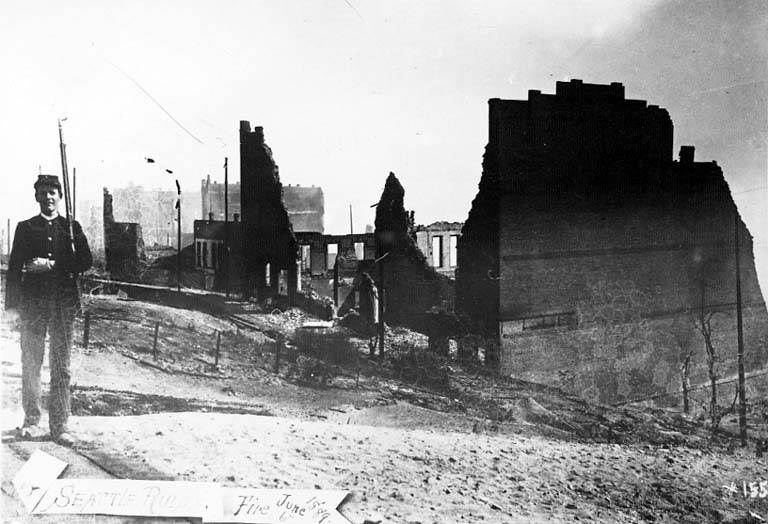
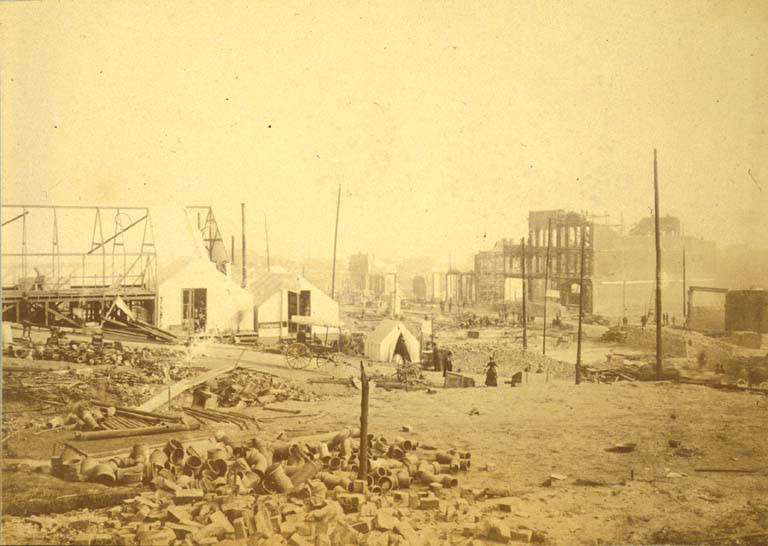
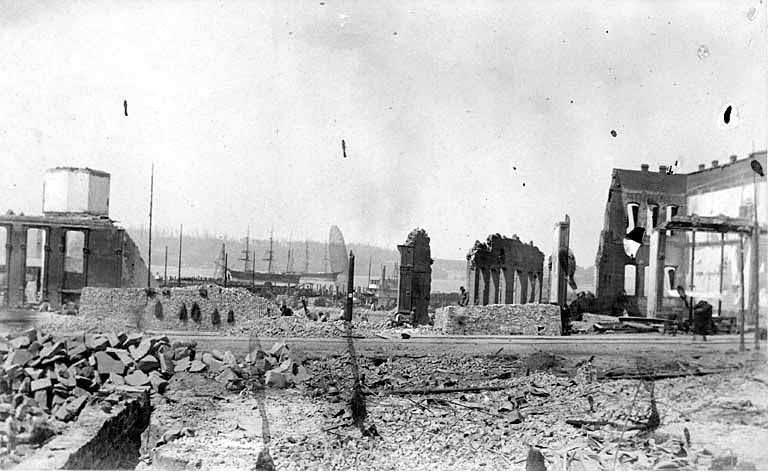
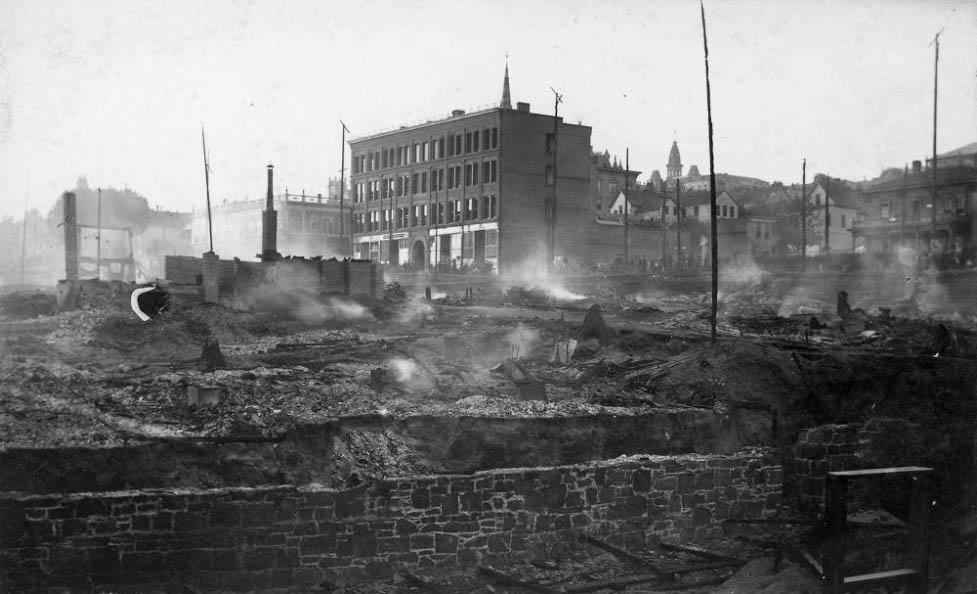
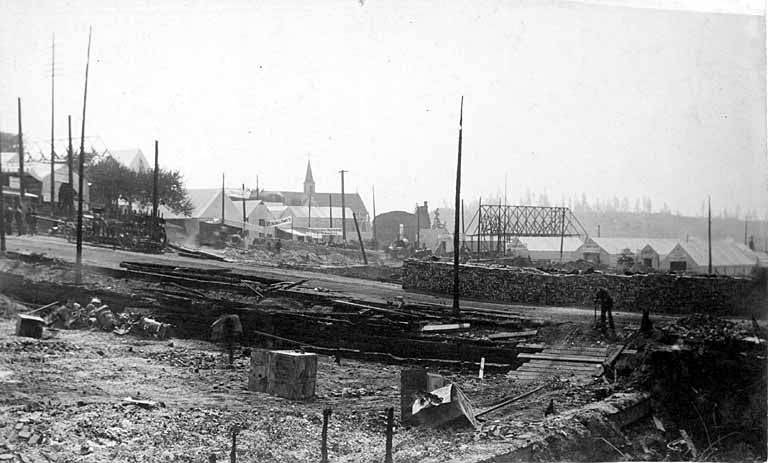
The ruins stretched across the heart of the city. Landmarks that had defined Seattle’s commercial identity were reduced to ash and scorched brick. The Dexter Horton & Co. bank, the Merchants National Bank, the Peoples Savings Bank, and the Yesler-Leary Building were all destroyed. Photographs taken in the days following the fire show block after block of collapsed walls, twisted metal, and bare chimneys standing against the sky.
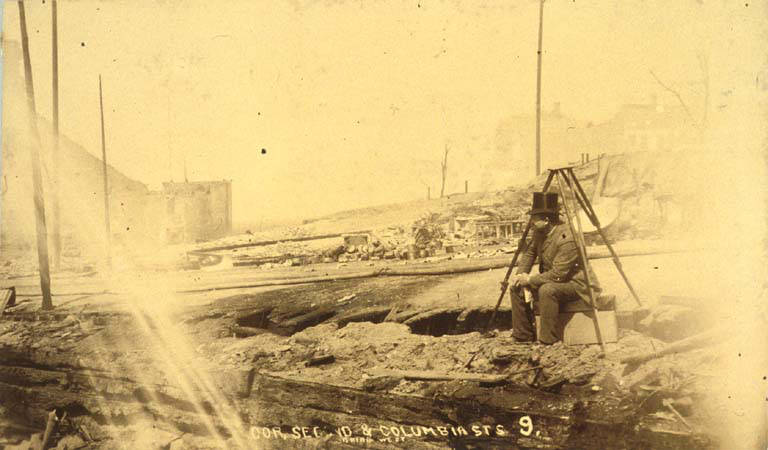
Ruins of Main St. wharves following fire, ca. June 1889Ruins at 2nd Ave. and Columbia St. following the Great Fire, June 1889Fire ruins south from 1st Ave. S. and S. Washington St., 1889Fire ruins on west side of 1st Ave. between Columbia St. and Cherry St., June 1889Fire ruins on 1st Ave., north of Occidental Square, June 1889Fire ruins on 1st Ave., north of Occidental Square, June 1889Fire ruins of the Peoples Savings Bank near 1st Ave. and James St., June 1889Fire ruins near Post Ave. and Yesler Way, June 1889Fire ruins near Columbia St. and Cherry St., June 1889Fire ruins near 2nd Ave. and Columbia St., June 1889Fire ruins near 2nd Ave. and Cherry St., July 1889Fire ruins near 1st Ave. S. and S. Washington St., June 1889Fire ruins near 1st Ave. and Yesler Way, June 1889Fire ruins near 1st Ave. and Madison St., June 1889Fire ruins from 1st Ave. S. and S. Jackson St., June 1889Yesler Way ruins after fire, June 6, 18891st Ave. from Columbia St. after Seattle fire of June 6, 1889.1st Ave., from James St. after the fire of June 6, 18892nd Ave. from Cherry St. after the Seattle fire of June 18892nd Ave. in Seattle after the fire of June 6, 1889Aftermath of Seattle fire of June 6, 1889 as seen from Railroad Ave. to the east.Aftermath of Seattle fire of June 6, 1889, 2nd Ave. and Columbia St., showing destroyed wharves.Looking north at the ruins of the Seattle Lake Shore and Eastern Railway Company tracks, Washington.1889Looking south showing ruins in the vicinity of the waterfront area, Washington.1889Looking south showing the ruins of the downtown area, Washington.1889Looking southeast on 2nd Ave. from near James St.1889Looking southwest toward the harbor, Washington.1889Looking west from 1st Ave. between Columbia and Cherry Streets, Washington.1889Looking west from 2nd Ave. and Cherry St., Seattle, Washington, 1889Looking west from 2nd Ave. and Columbia St., Washington, 1889Looking west from between Columbia St. and Cherry St. Washington, 1889Yesler Way looking east from Western Ave, 1889Looking north from S. King St., remains of buildings with chimney standing at right, 1889Walls of burned building at right; cable car tracks at left, 18892nd & Commercial StreetLooking north on 1st Ave. S. from Jackson St, 1889Looking south on 1st Ave. from near Madison StreetLooking north on 1st Avenue S. at Yesler toward the ruins of the Yesler-Leary Building, Seattle, Washington, 1889Looking west on Main St., Seattle, Washington, 1889Showing the ruins of buildings along 1st Ave. from Columbia to Yesler, Seattle, Washington, 1889View from the waterfront, Seattle, Washington, 1889Yesler Way west of Third Avenue in the summer of 1889.1st Ave. between Columbia St. and Yesler Way, Seattle, 1889Looking south past the ruins of the Frye Opera House on Front St. near Madison St, 1889Lumber and ruins along Front St, 1889Aftermath of the Seattle fire of June 6, 1889The walls standing were those of brick buildings on First Avenue, west side, between Yesler Way and Columbia Street.Looking west toward waterfront and West Seattle, 1889Aftermath of the Seattle fire of June 6, 18891st Ave. and Cherry St, 1889Looking east from 1st Ave. and James St.1889Looking north on 1st Ave. from Cherry St, 1889Looking south along cable car tracks on 1st Ave. from around Marion and Madison Streets, June 1889Looking south on 1st Ave. from Columbia St, 1889Aftermath of the Seattle fire of June 6, 1889 showing 1st Ave. S, 1889Group of men examining the ruins, 1889Front St. and ruins of the Merchants National Bank, 1889Ruins on Yesler Way, 1889Block between 1st and 2nd Avenues and from James (at right) to a little north of Cherry (at left), 1889The ruins along Front Street, 1889The ruins along Front St. including the Merchants National Bank, 1889The ruins of buildings, 1889The ruins of Frye’s Opera House at Northeast corner 1st Ave. and Marion Street, 1889The ruins of the Dexter Horton and Co. bank at 1st Ave. S. and S. Washington Street, 1889The ruins of the Dexter Horton and Co. bank at 1st Ave. S. and S. Washington Street, 1889The ruins of the Northwest Cracker Factory and a safe on the street, 1889The ruins south from 2nd Ave. and Seneca Street, 1889The west of 1st Ave. from Columbia St. to Cherry Street, 1889Two safes and two men in front of ruins of the Cracker Factory, 1889Waterfront in the vicinity of Washington Street, 1889Frist Ave. and Cherry Street, 1889Looking north on 1st Ave. S, 1889Ruins of Frye’s Opera House at Northeast corner 1st Ave. and Marion St, 1889Aftermath of the Seattle fire of June 6, 1889, showing the ruins of buildings.Aftermath of the Seattle fire of June 6, 1889, showing the ruins of buildings.Aftermath of the Seattle fire of June 6, 1889, showing the ruins of buildings.Seattle ruins. Fire June 6, 1889Aftermath of the Seattle fire of June 6, 1889, showing the ruins of buildings.A man leaning up against a bank safe in the ruins of a building, 1889Vicinity of Pioneer Square, 1889A view toward the waterfront, 1889Aftermath of the Seattle fire of June 6, showing the ruins of buildings.Aftermath of the Seattle fire of June 6, showing the ruins of buildings, 1889Aftermath of the Seattle fire of June 6, showing train tracks, 1889
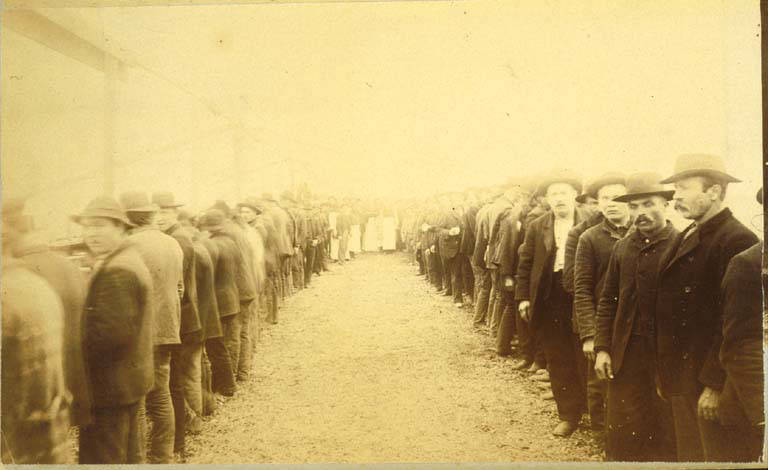
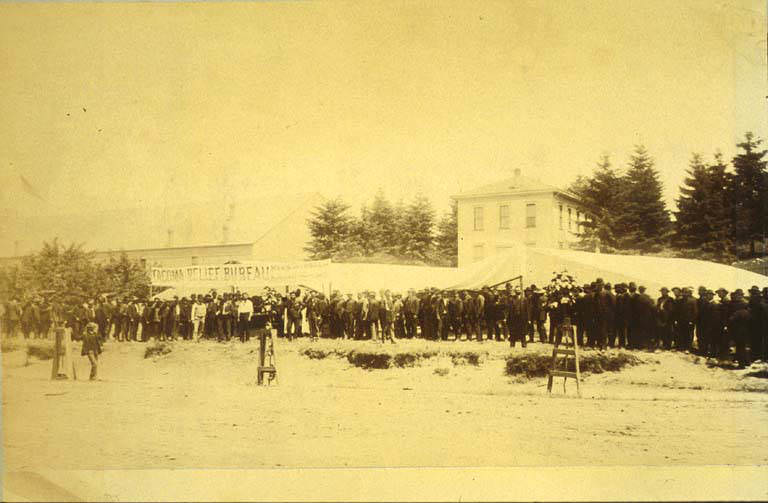
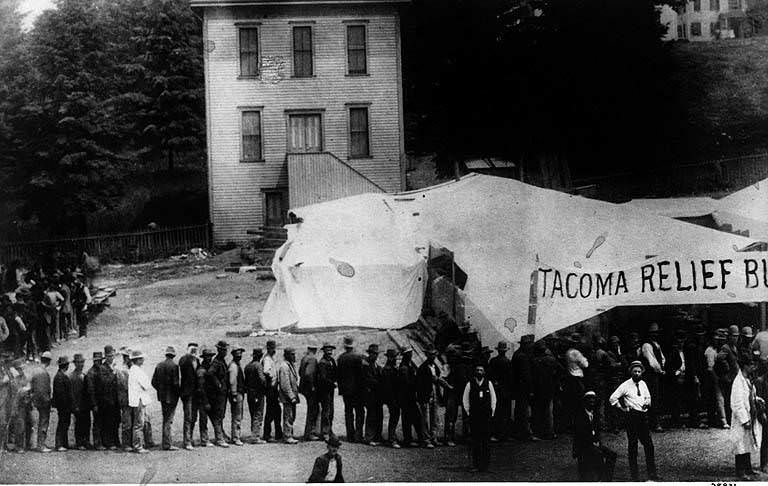
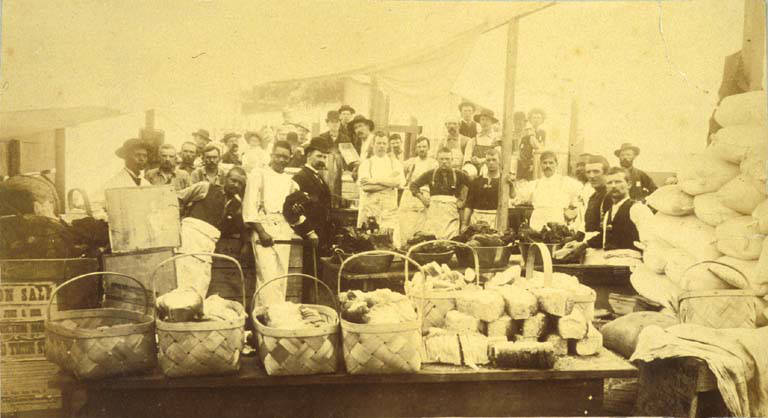
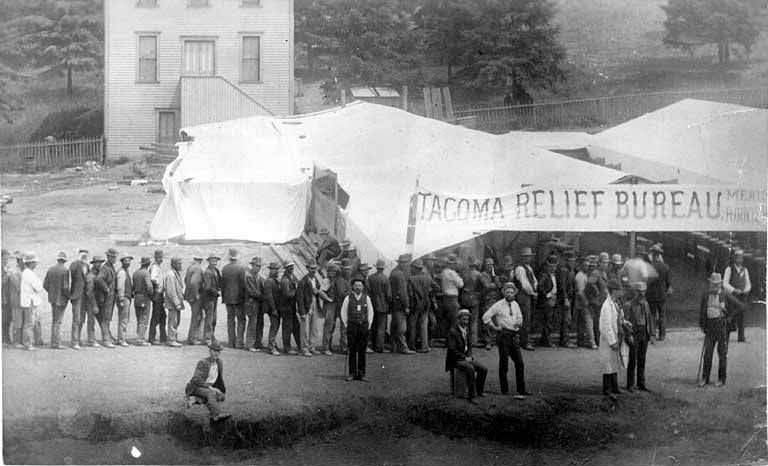
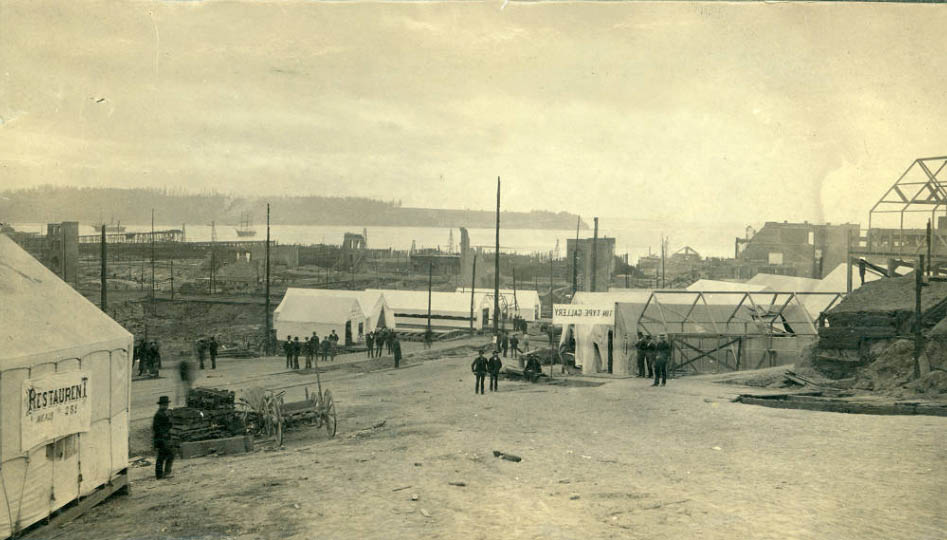
The city wasted no time responding. By 11 a.m. on June 7 — less than 24 hours after the fire started — 600 businessmen gathered to plan the recovery. Two hundred special deputies were sworn in during two weeks of martial law to prevent looting. Relief came from across the country. Tacoma, long a rival city to Seattle, collected $20,000 and sent a relief committee to help. The city’s armory was converted into a dining hall to feed displaced residents. Supplies ordered from San Francisco before the fire arrived by June 18, and relief bureaus closed as early as June 20 because tent restaurants had already opened and were serving the community.
Bread line at the tent of the Tacoma Relief Bureau in vicinity of 3rd Ave. near Union St., Washington, 1889Bread line leading to tent of Tacoma Relief Bureau in vicinity of 3rd Ave. near Union St., Seattle, Washington, 1889Bread line leading to tent of Tacoma Relief Bureau.1889One of the tents of the Tacoma Relief Bureau in vicinity of 3rd Ave. near Union St., Washington, 1889Large line of people in front of the Tacoma Relief Bureau tent near Third Ave. Union St, 1889
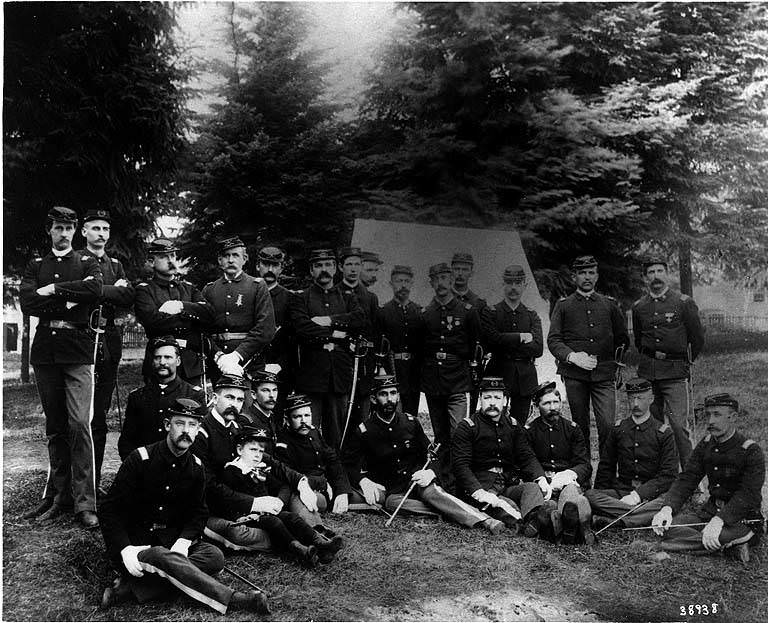
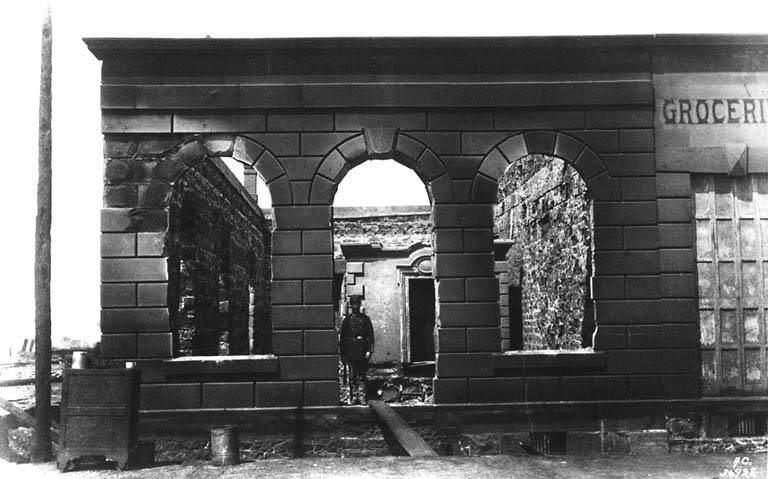
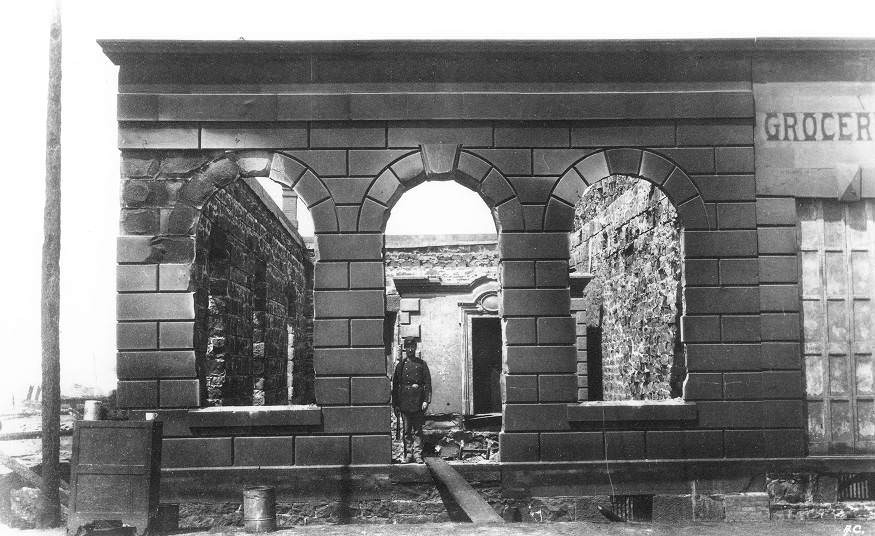
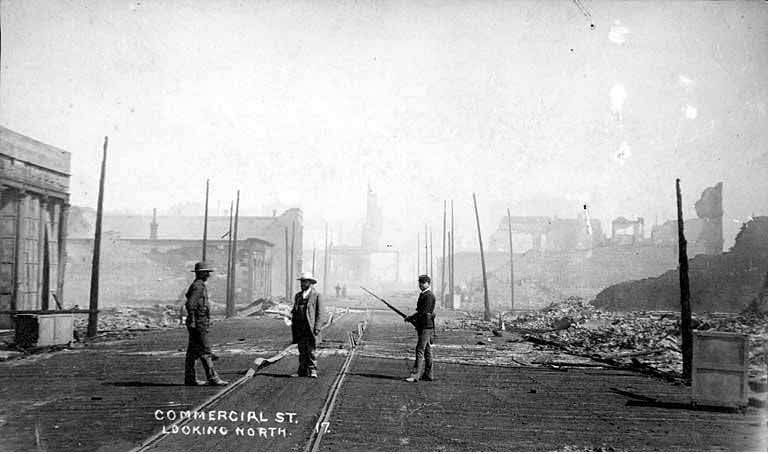
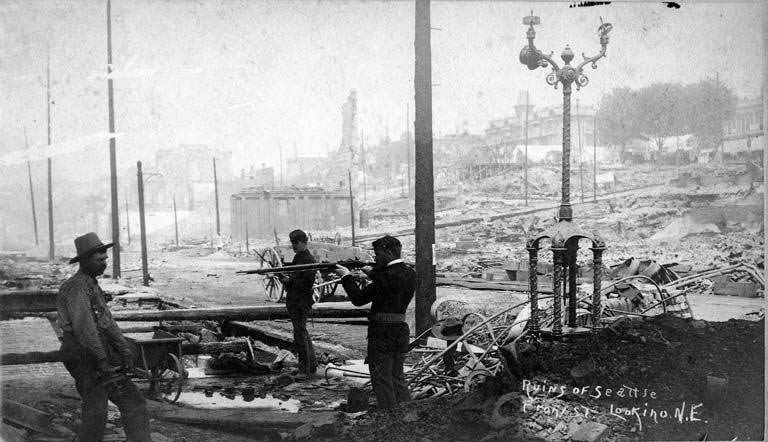
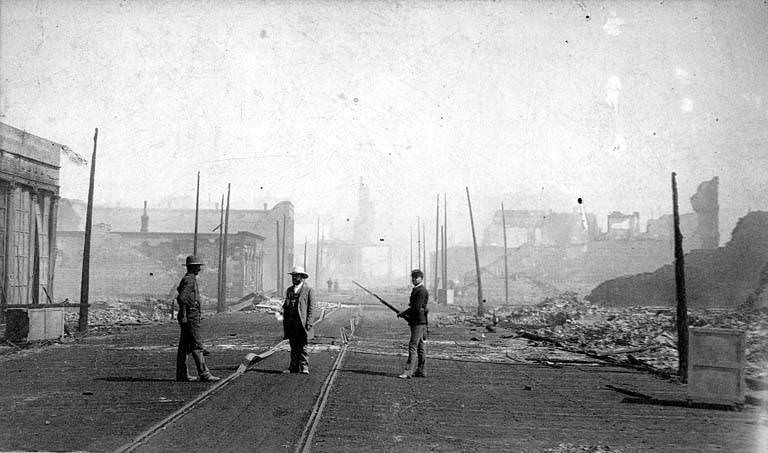
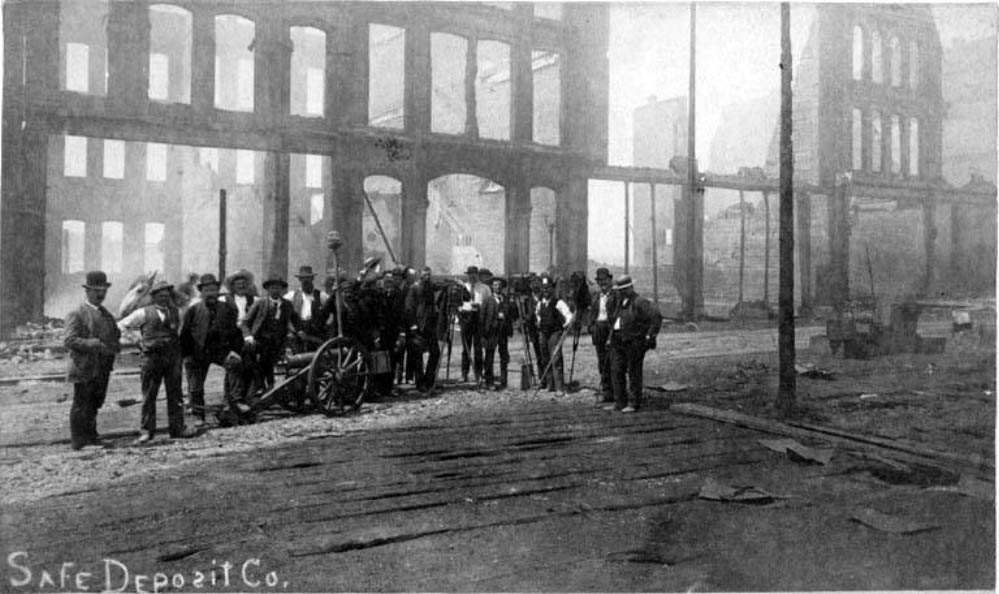
The National Guard was deployed throughout the burned district to maintain order and protect what remained. Photographs from the period show guardsmen stationed among the ruins of banks and commercial buildings, including the Dexter Horton & Co. bank at 1st Avenue South and Washington Street. Arrests for looting were made, with guards leading offenders through the rubble-strewn streets.
Aftermath of Seattle fire of June 6, 1889, depicting officers of the Washington National Guard.1889Remains of Dexter Horton & Co. bank, 1st Ave. S. and S. Washington St., with John B. Denny of the Washington National Guard on duty, 1889Remains of Dexter Horton & Co. bank, 1st Ave. S. and S. Washington St.Ruins of Dearborn Block, 322 1st Ave. S., with John B. Denny of Washington National Guard on duty, 1889Looking north on Commercial St. showing a member of the Washington National Guard and two men, 18891st Ave. S. showing Washington National guardsman, 1889Two guards arresting a looter in the ruins, 1889Washington National Guard member standing to the left, 1889The ruins of buildings and a member of the Washington National Guard, 1889
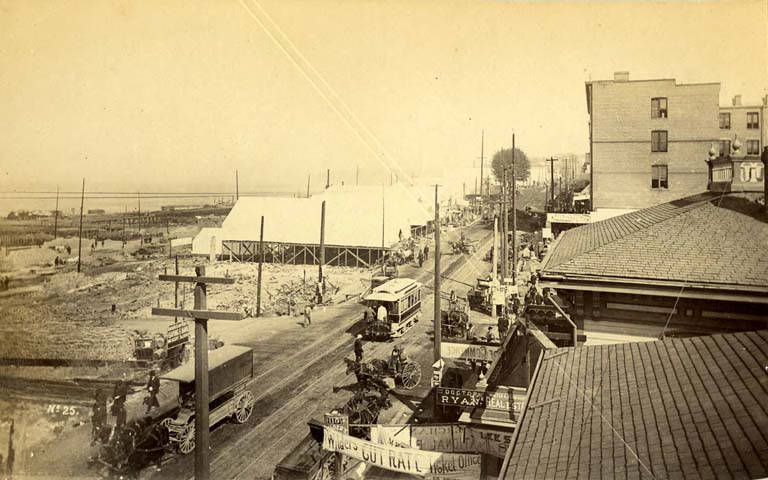
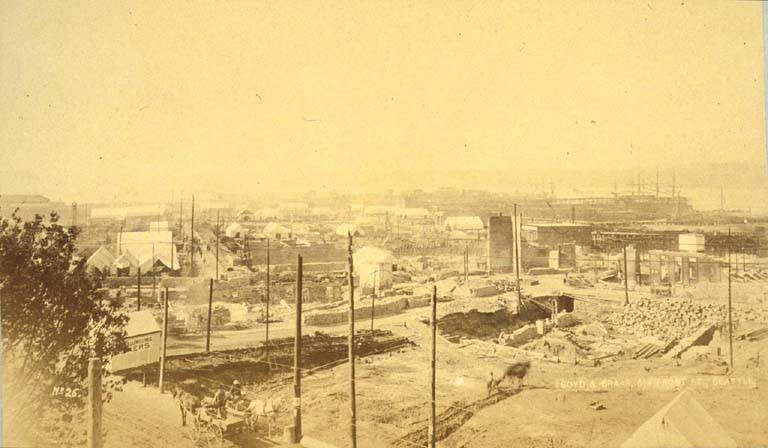
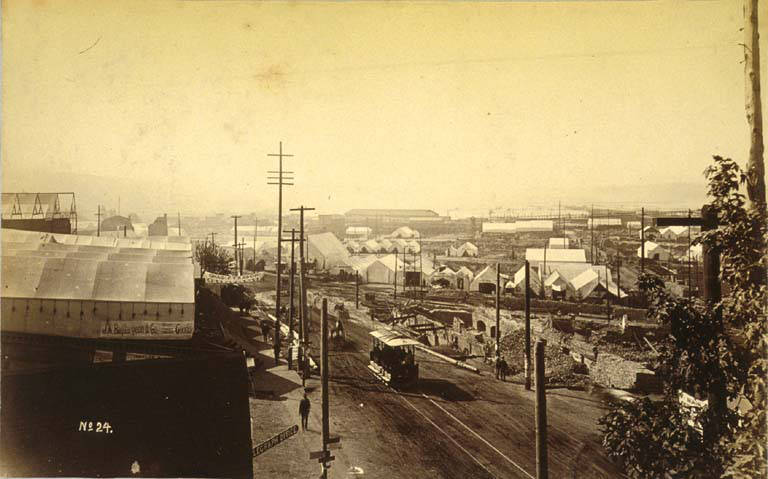
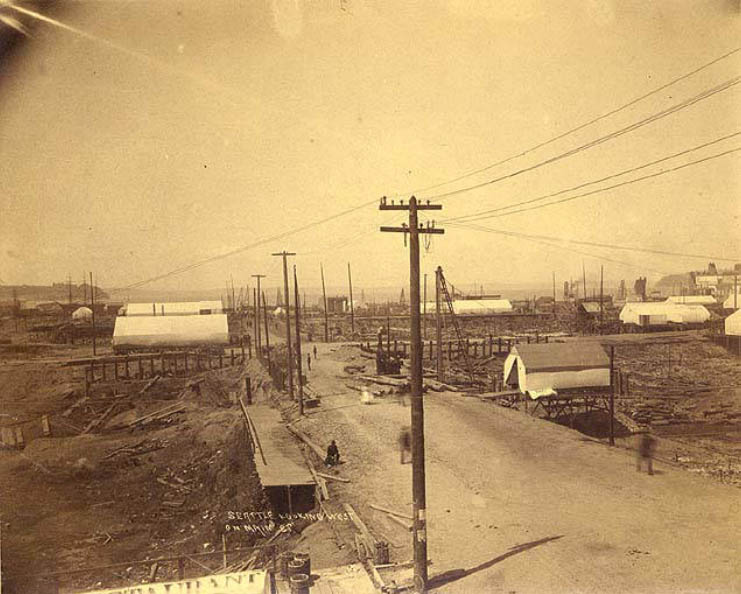
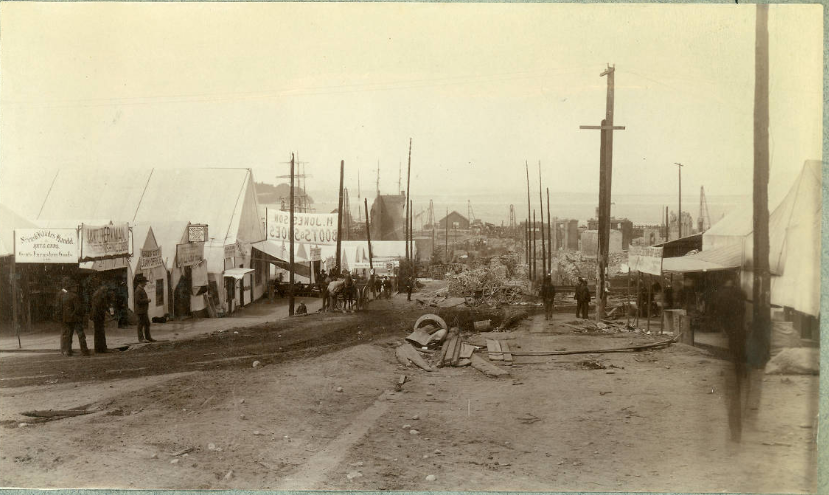
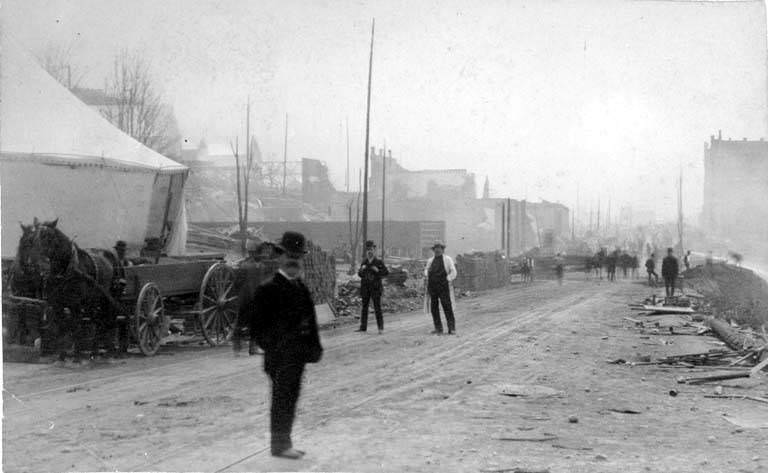
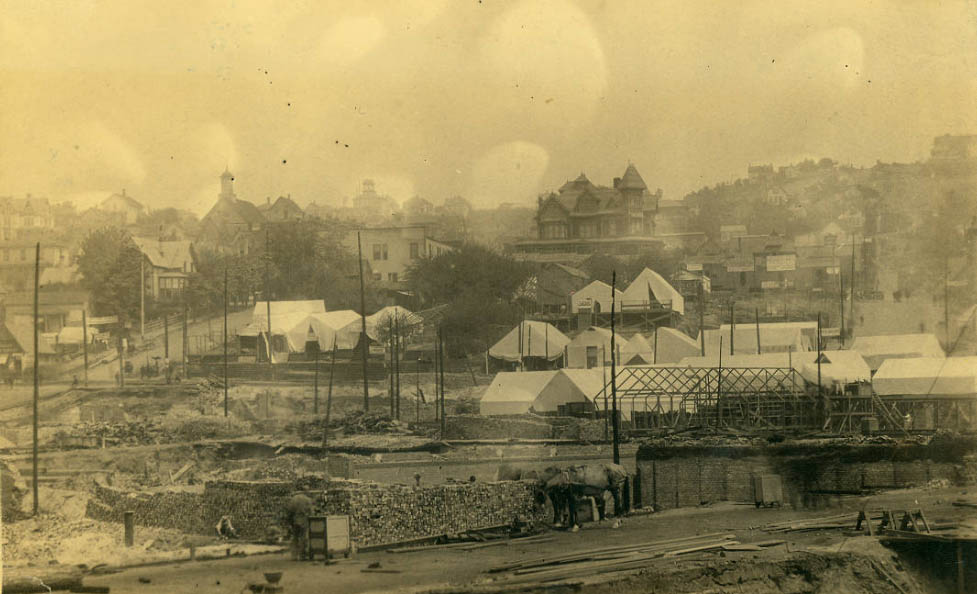
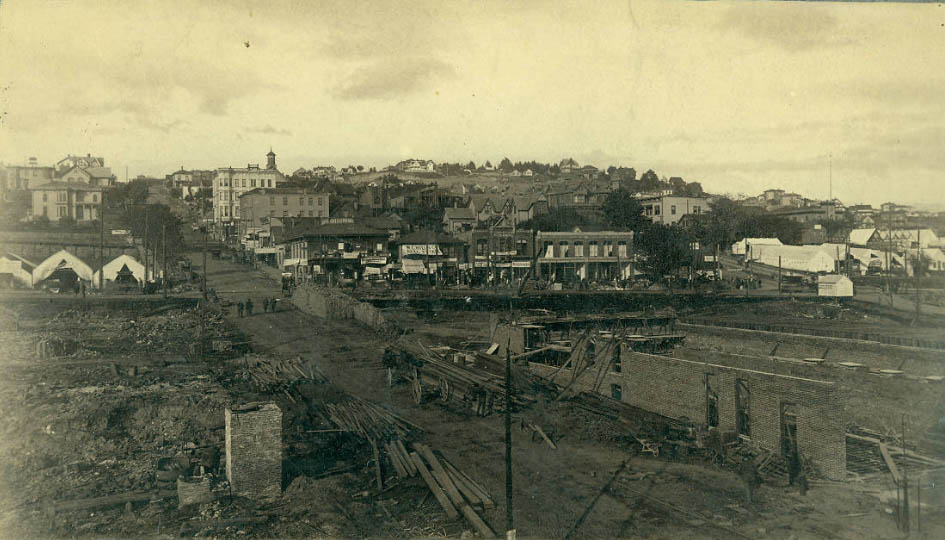
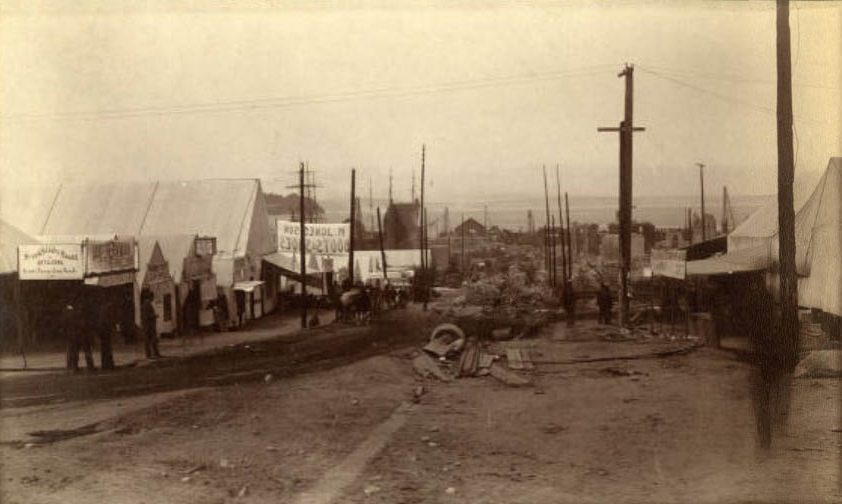
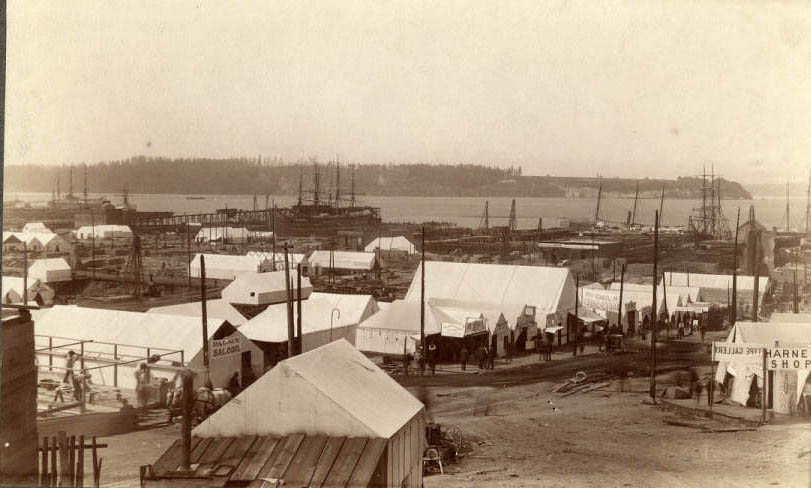
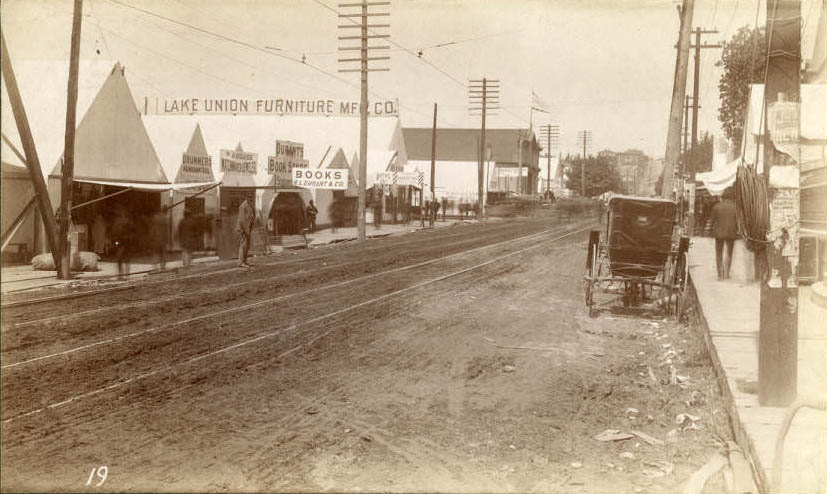
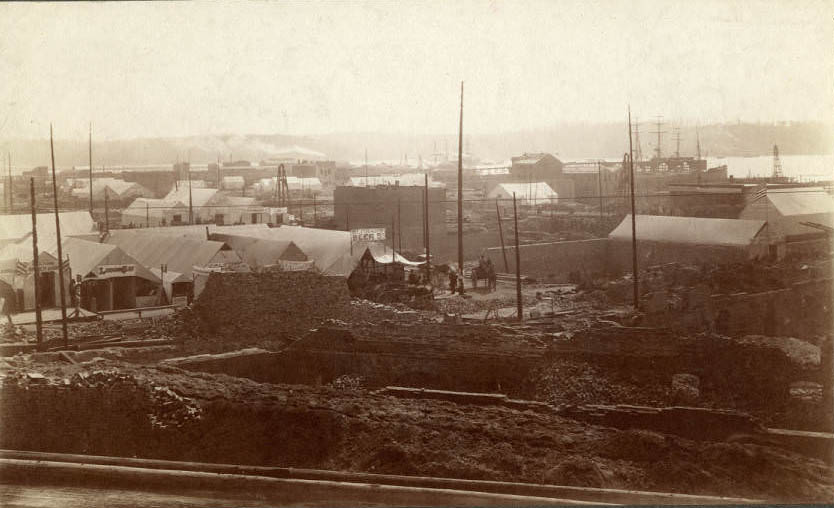
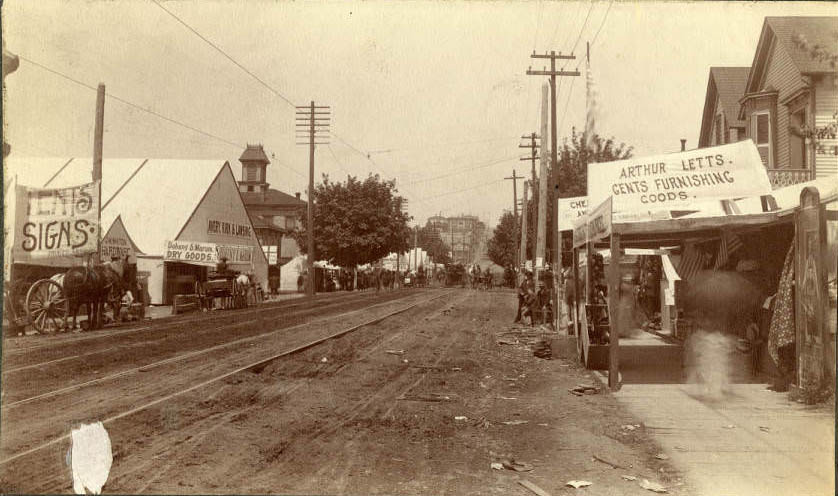
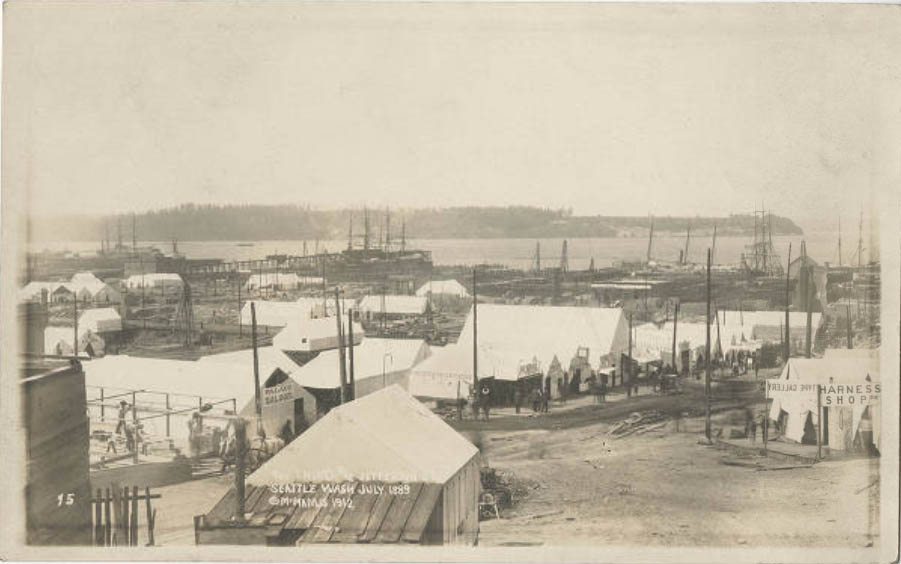
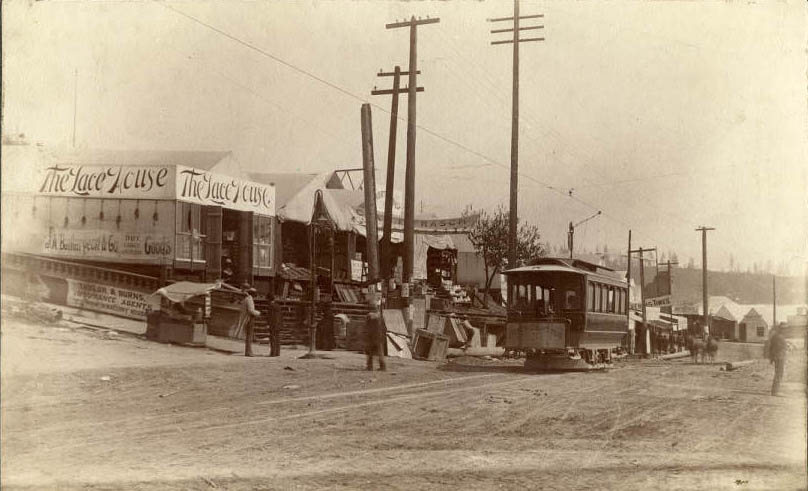
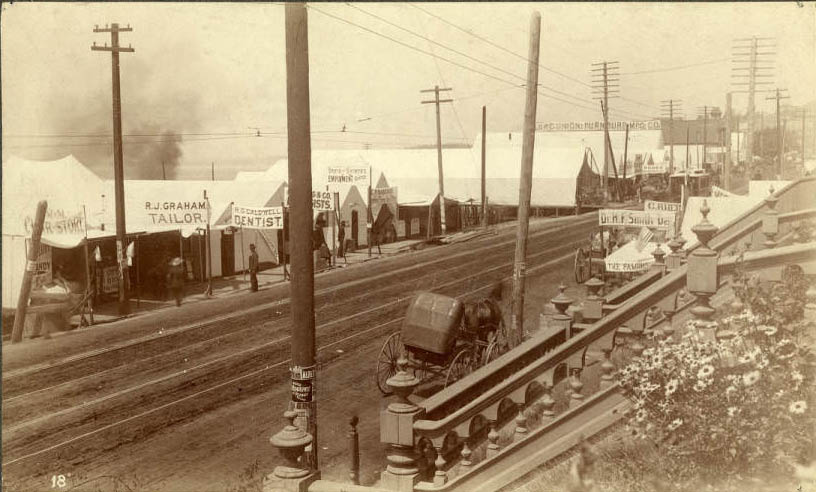
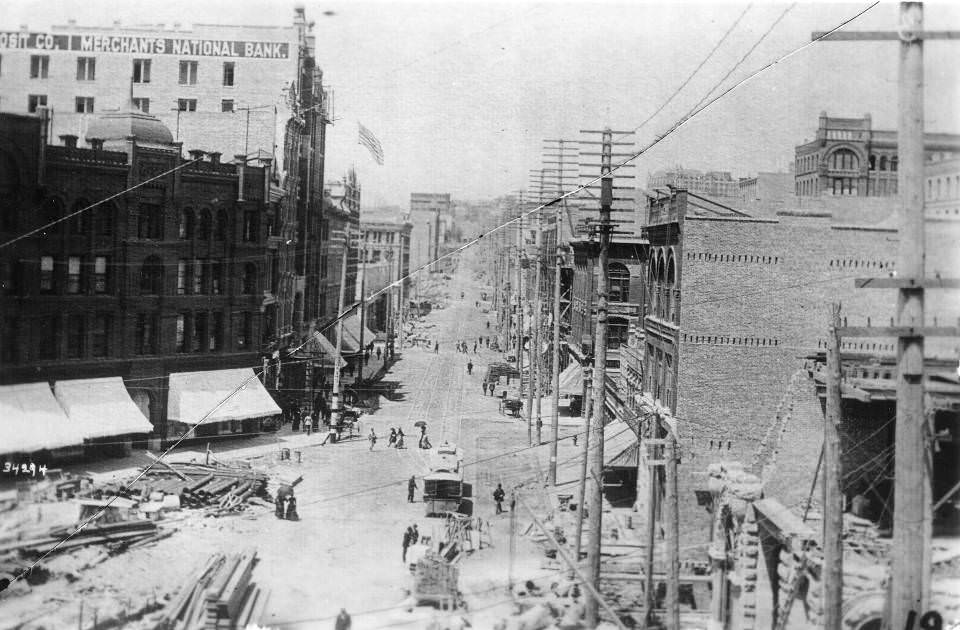
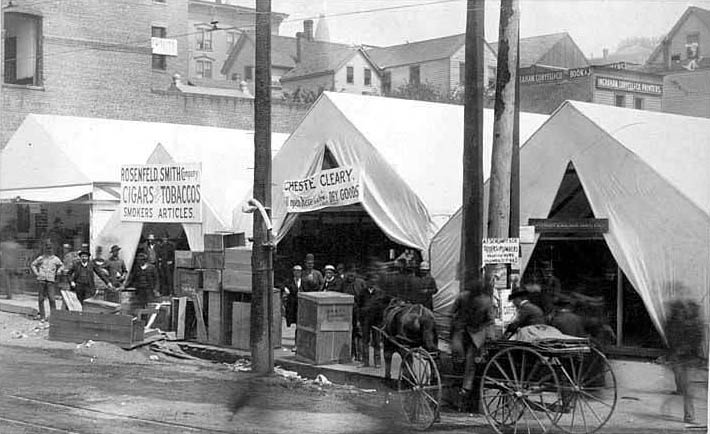
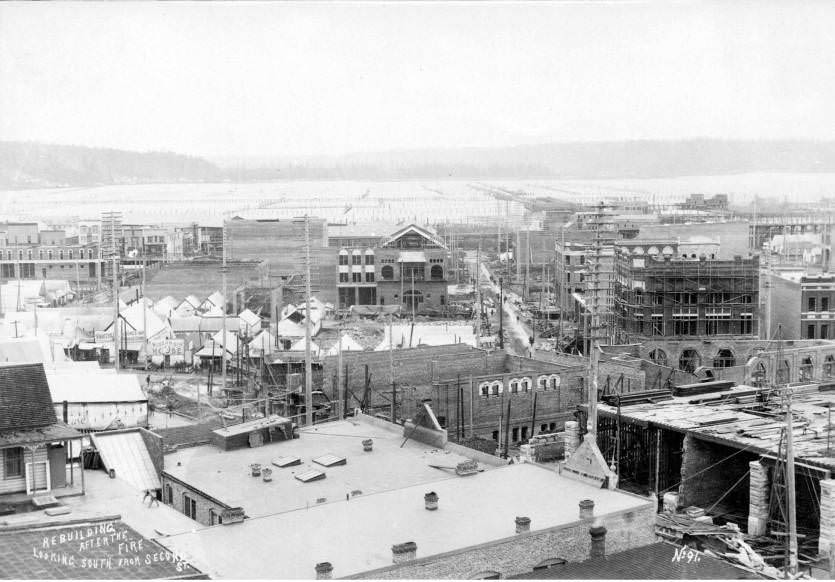
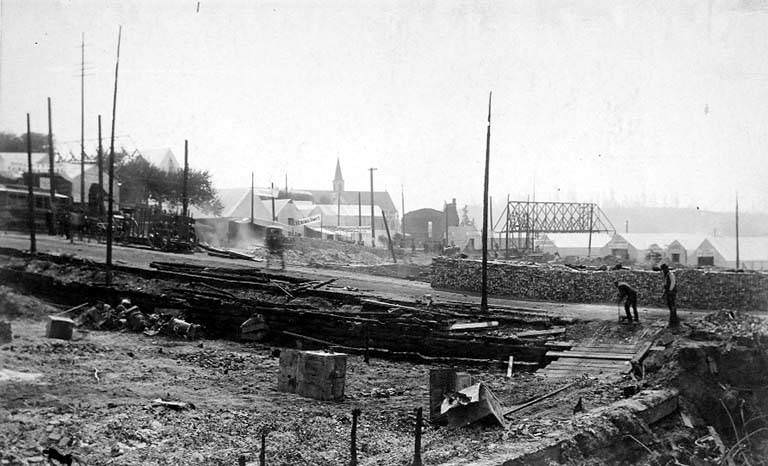
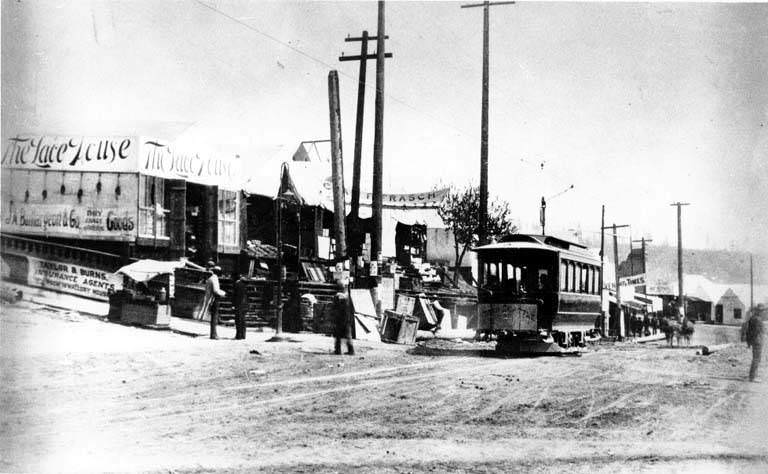
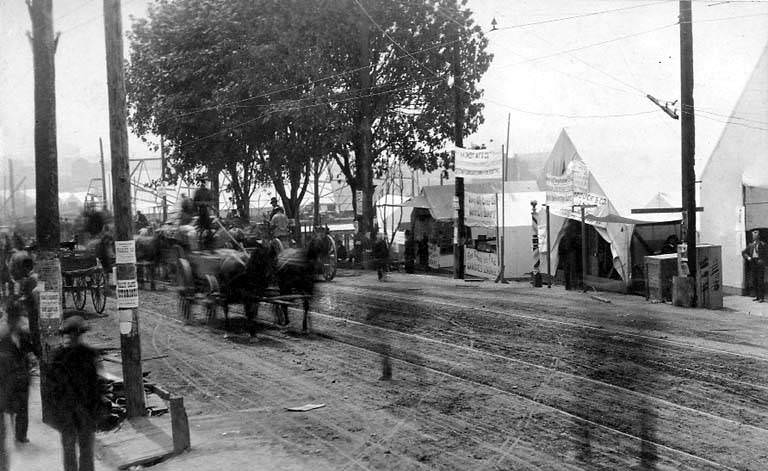
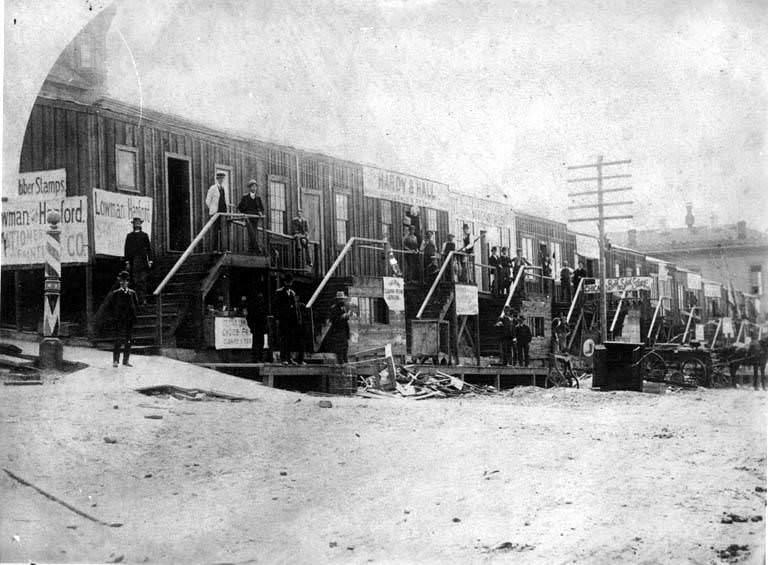
Reconstruction began almost immediately. Within a month, more than 100 businesses were operating out of tents across the burned district. Most owners chose to rebuild on the same lots rather than relocate. New city rules banned wood construction in the burned zone and required brick buildings. The city also took the opportunity to address Seattle’s hilly, uneven terrain by raising street levels — up to 22 feet in some areas. Within one year of the fire, 465 new buildings had been completed, and the business district was largely rebuilt.
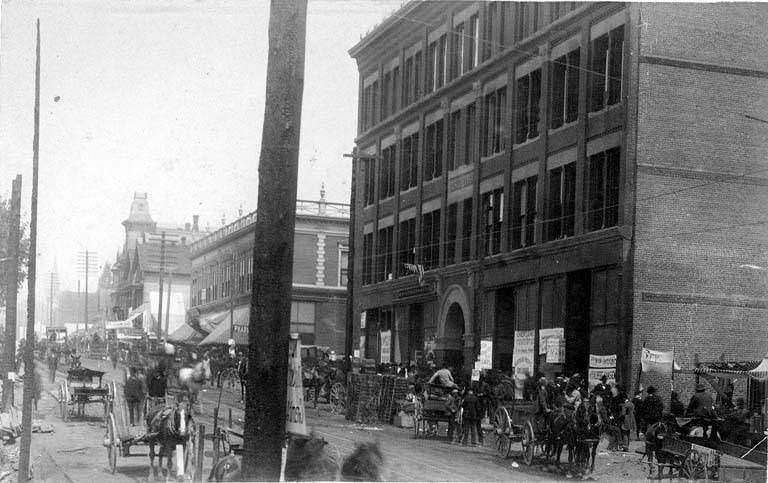
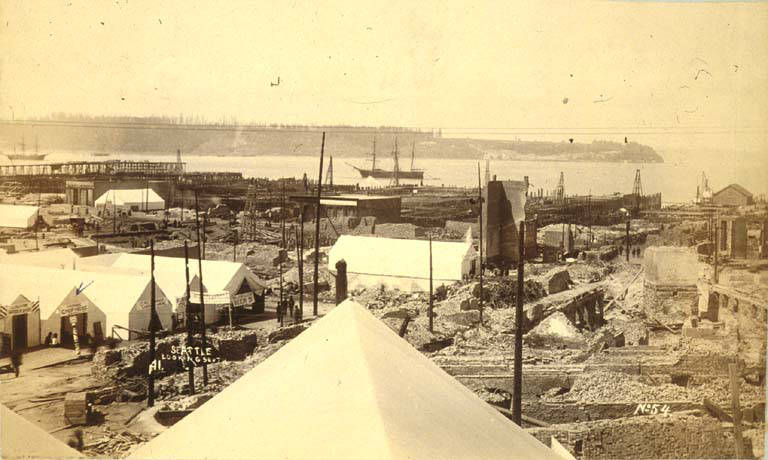
Reconstruction near 3rd Ave. and Yesler Way., June 1889Reconstruction near 2nd Ave. and Yesler Way, June 1889Reconstruction near 2nd Ave. and Madison St., June 1889Reconstruction near 2nd Ave. and James St., June 1889Reconstruction at 2nd Ave. and Spring St. following fire, June 18893rd Ave. and Jefferson St. after the fire, July 1889Temporary buildings at 2nd Ave. and James St. following fire, June 1889Temporary tents at 2nd Ave. and Marion St. following fire, June 18891st Ave., looking north from Pioneer Square, 1890Devastated section of the city, Washington, 1889Businesses housed in tents and street traffic, 1889Looking south showing tents along Yesler Way and construction of the Standard Theatre and other buildings, 1889Looking southwest from a hill showing tents in the burned district and Elliott Bay, 1889Waterfront with reconstruction along Front Street, 1889New building construction at center right after the Fire, 1889Looking southwest from 3rd Ave. and Jefferson St, 1889Goods piled on the Oregon Improvement Co. dock, 1889Front of the Safe Deposit Building located at 701 2nd Ave, 1889Temporary businesses and trolley car, 1889Temporary tent structures erected after the fire on the right, 1889Boston Block on the southeast corner of 2nd Ave. and Columbia St, 1889Businesses at the corner of 3rd Ave. and James St, 1889Excavation work, 1889Looking past James St. showing tents along 2nd Ave. and Yesler Way, 1889
The population of Seattle grew rapidly during the reconstruction period, pushed further by Washington’s admission as a U.S. state in November 1889. Seattle became the largest city in the new state. The fire that destroyed its commercial core in a single afternoon ultimately forced the city to rebuild on a stronger, more durable foundation — in brick, on raised streets, with a redesigned water system.
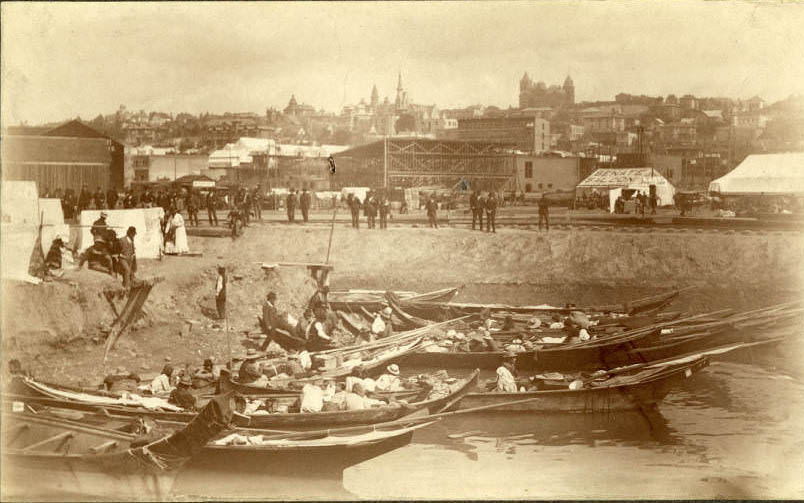
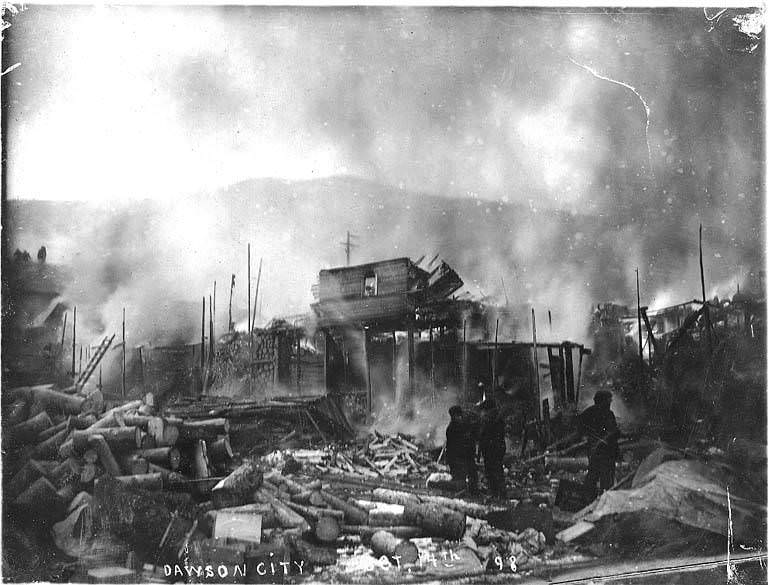
Native American camp on Ballast Island, 1889Aftermath of a fire in Dawson, Yukon Territory, October 14, 1898.