In the 1930s, Seattle was a working city built on raw materials. Its economy ran on timber, fish, and Eastern Washington wheat — all harvested, loaded onto ships, and sent to distant markets. The population sat at around 350,000, and the waterfront was the engine that kept everything moving. But when the stock market collapsed in 1929, that engine stalled hard.
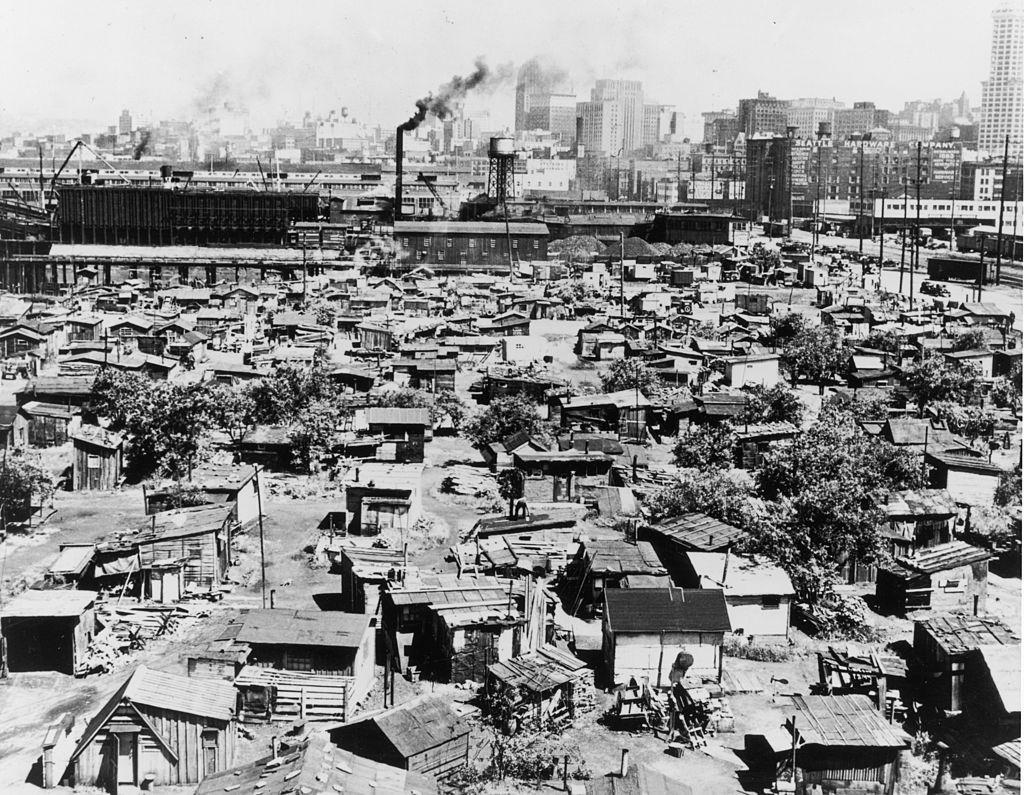
By late 1931, wages across Seattle had fallen 35 percent. As many as 20,000 people were out of work. The city had issued 2,538 housing construction permits in 1930, but by 1932 that number had collapsed to just 361. Retail sales dropped 17 percent. Construction fell by 70 percent. Forty Northwest lumber mills shut down entirely. Shipping and shipbuilding ground to a halt.
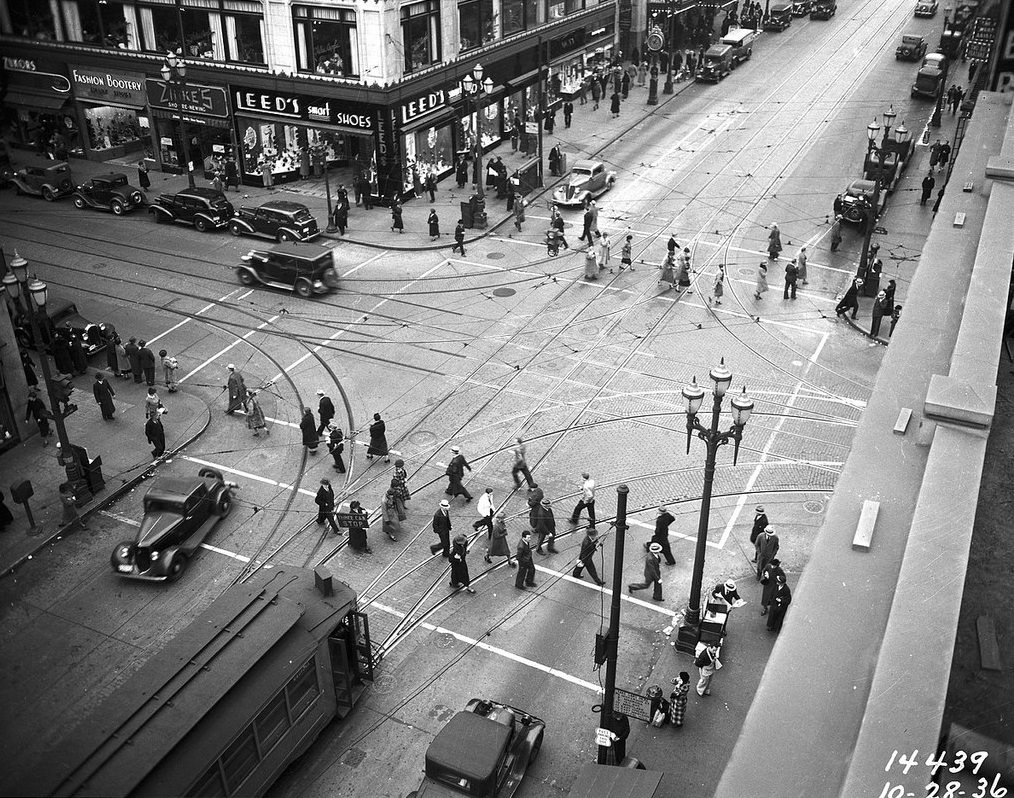
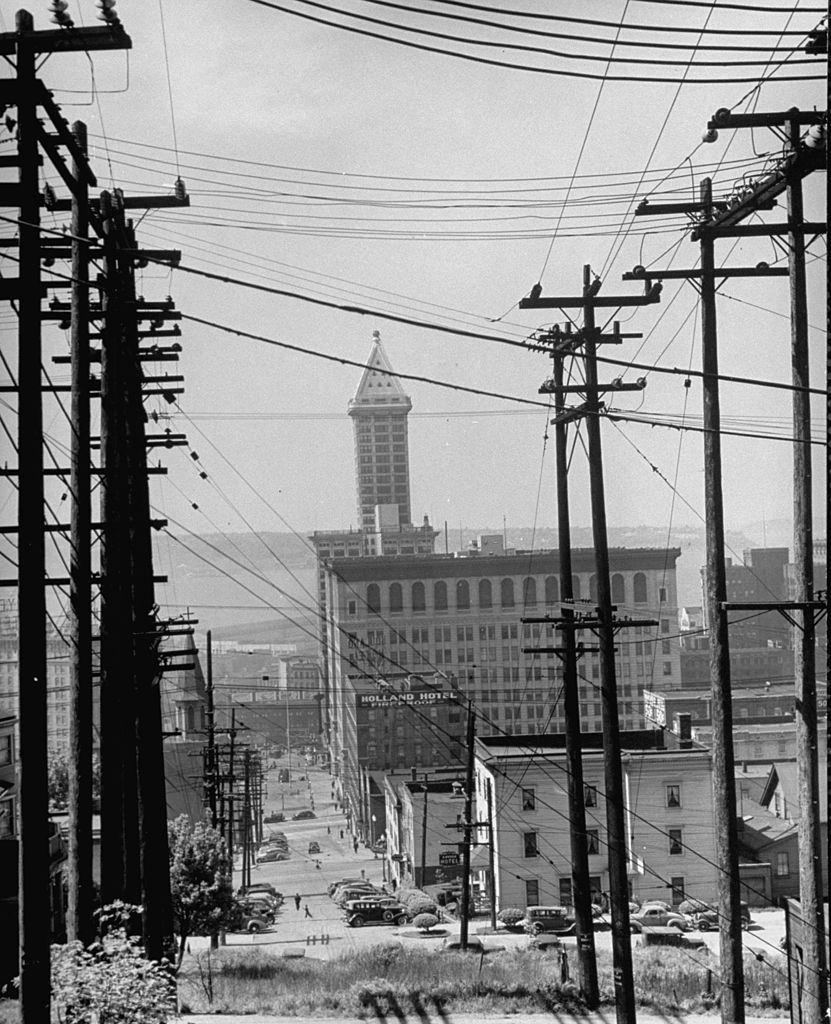
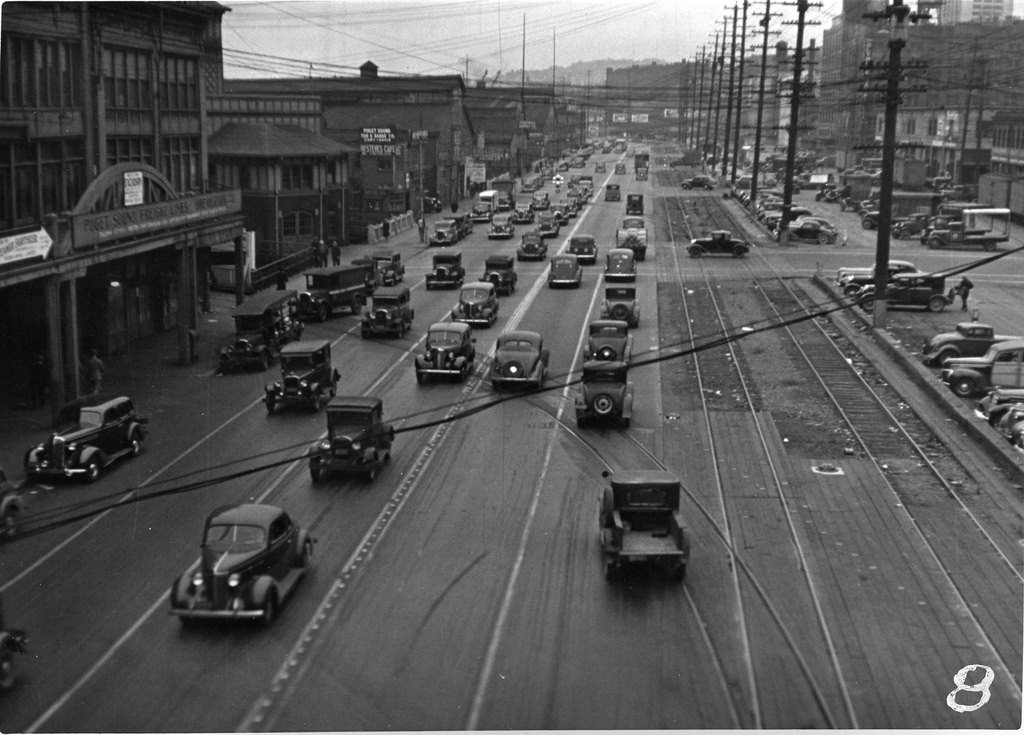
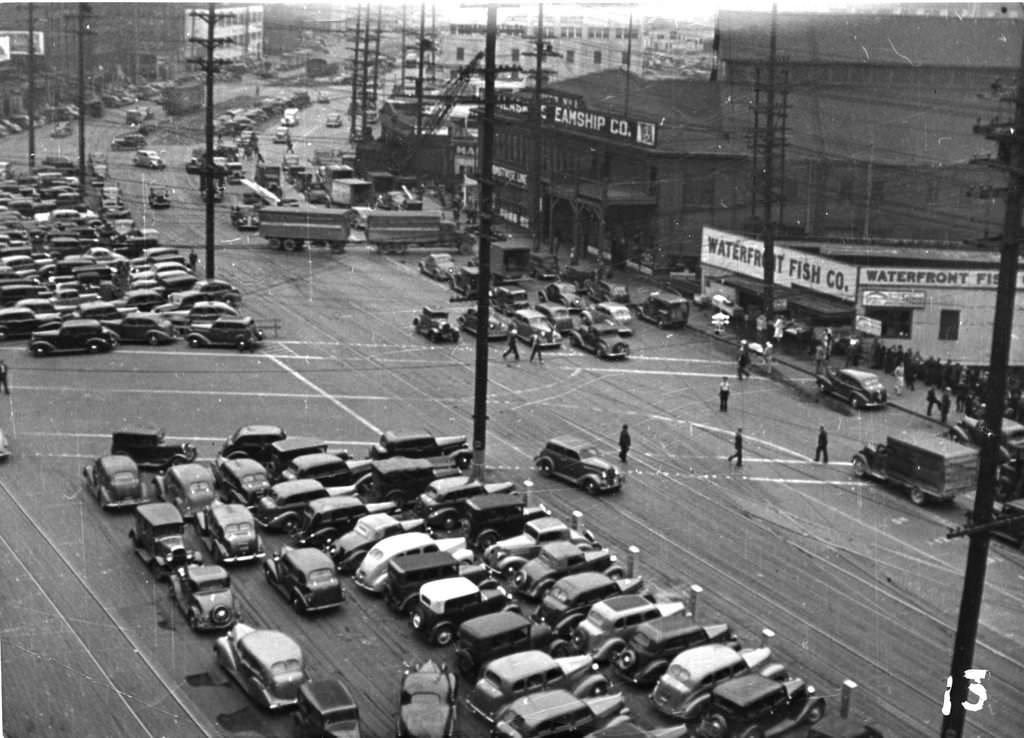
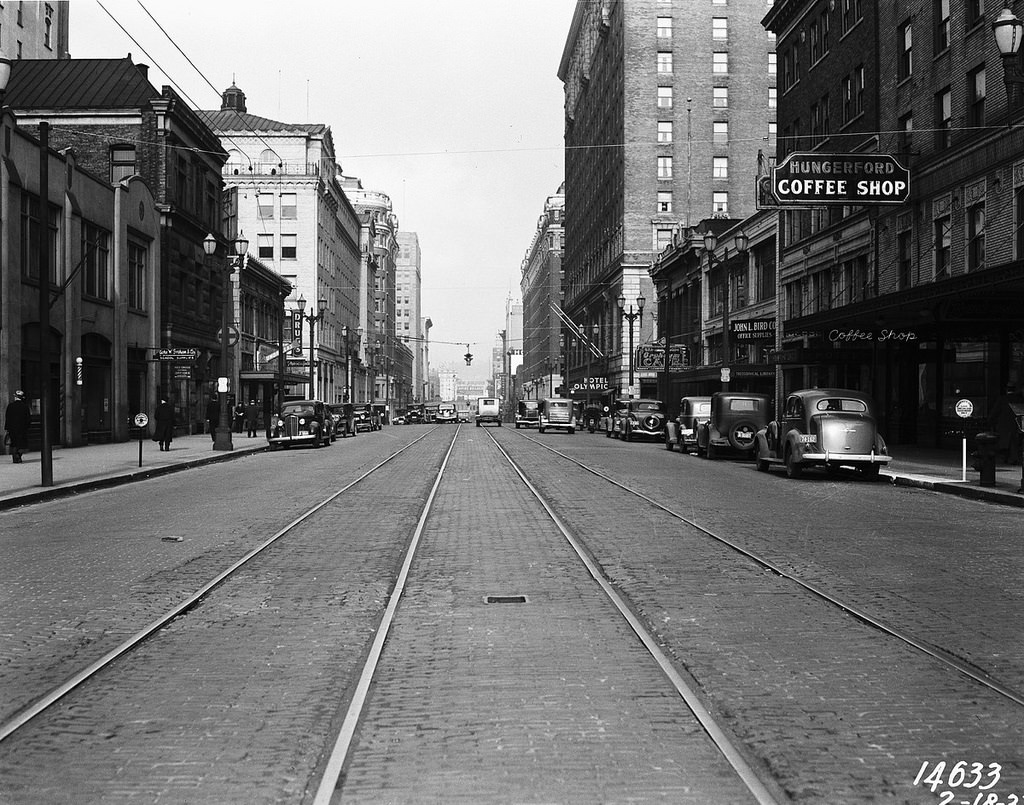
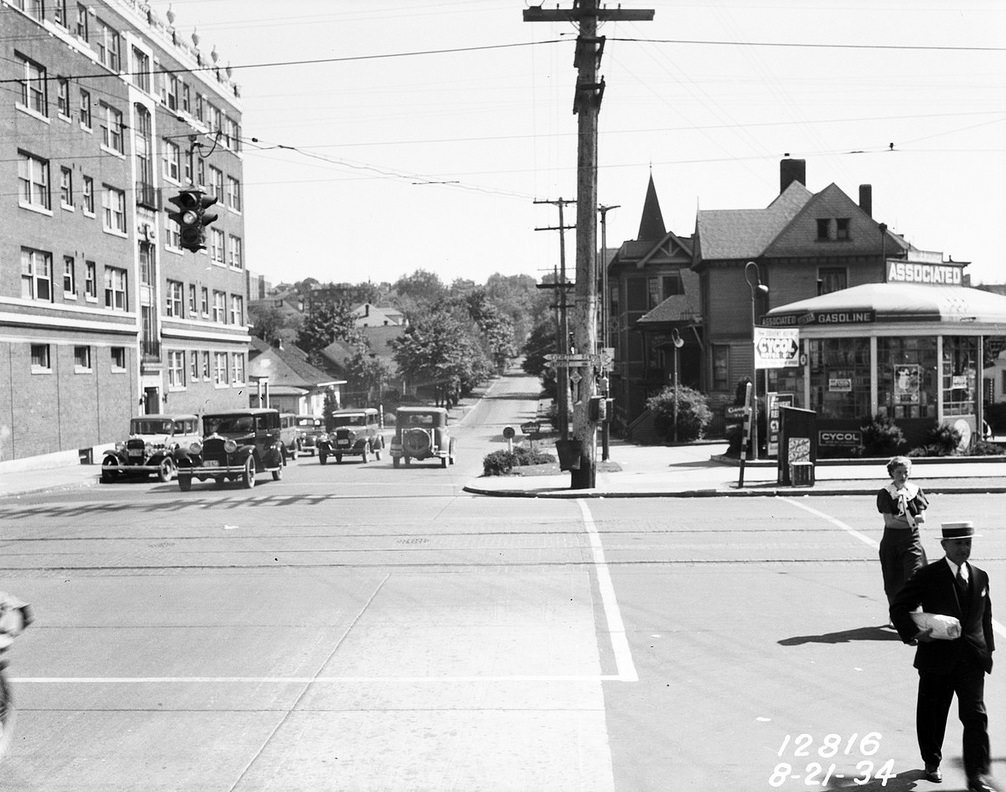
The streets of downtown Seattle still buzzed with activity, but the mood had changed. Storefronts competed for shrinking consumer dollars, and the city’s main corridors showed a mix of commerce and quiet desperation. Trolley lines, pedestrians, and parked cars filled the avenues, even as the economy struggled beneath the surface.
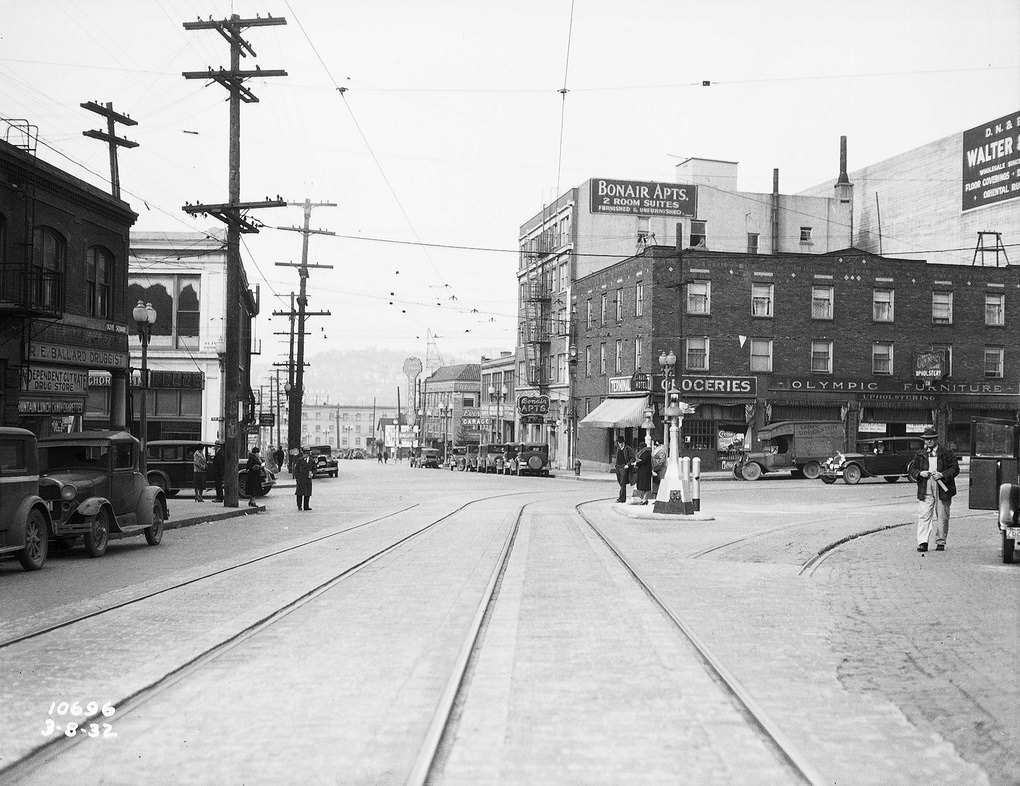
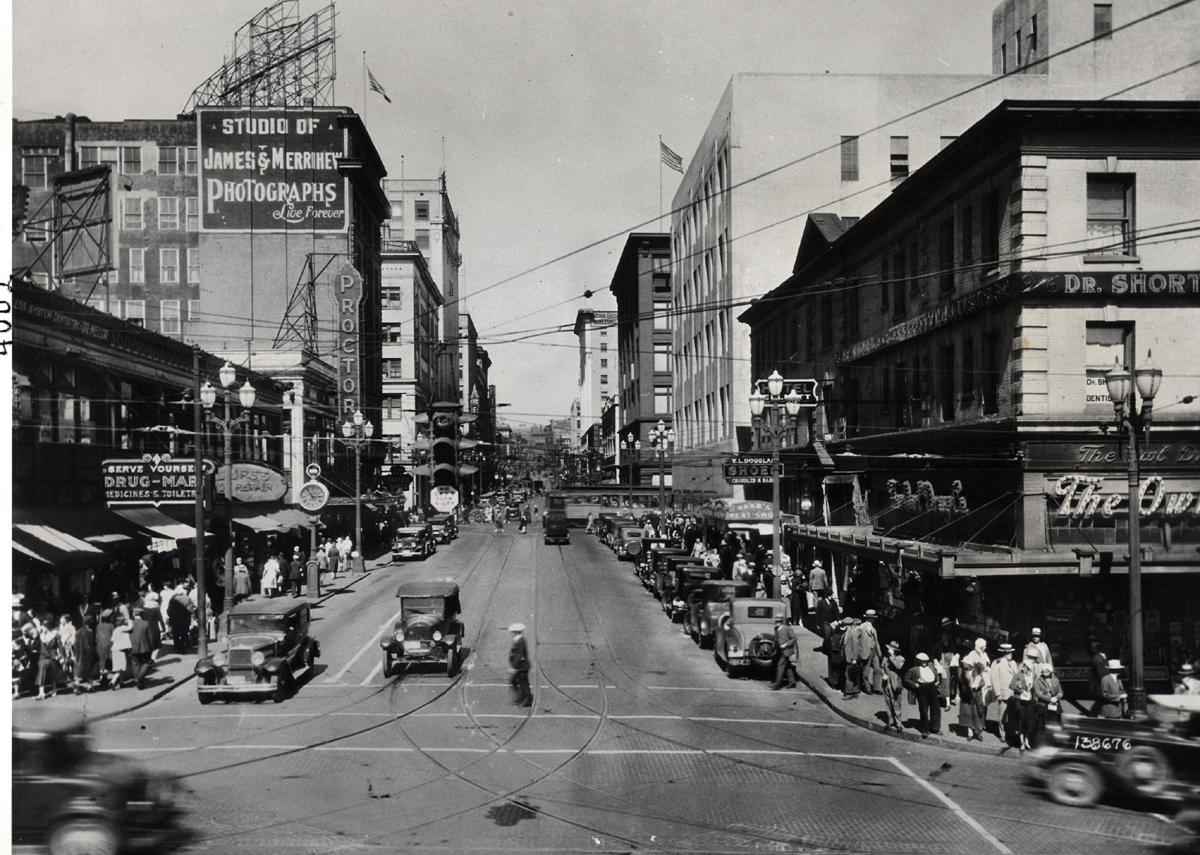
Pike Street was one of Seattle’s main commercial arteries. Looking up from First Avenue in 1930, the street was lined with shops, signs, and the kind of foot traffic that showed a city still trying to function. But beneath that surface activity, the financial damage was already setting in.
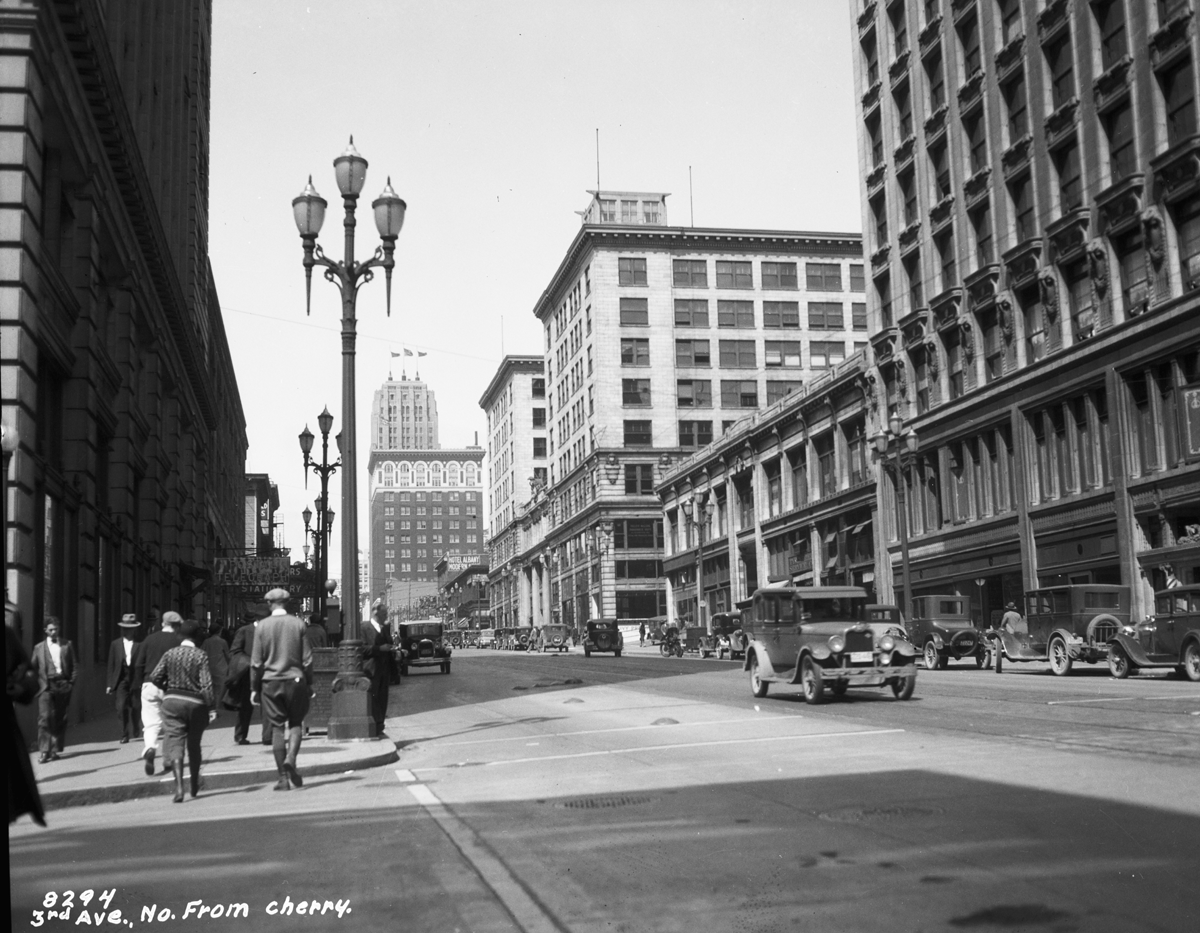
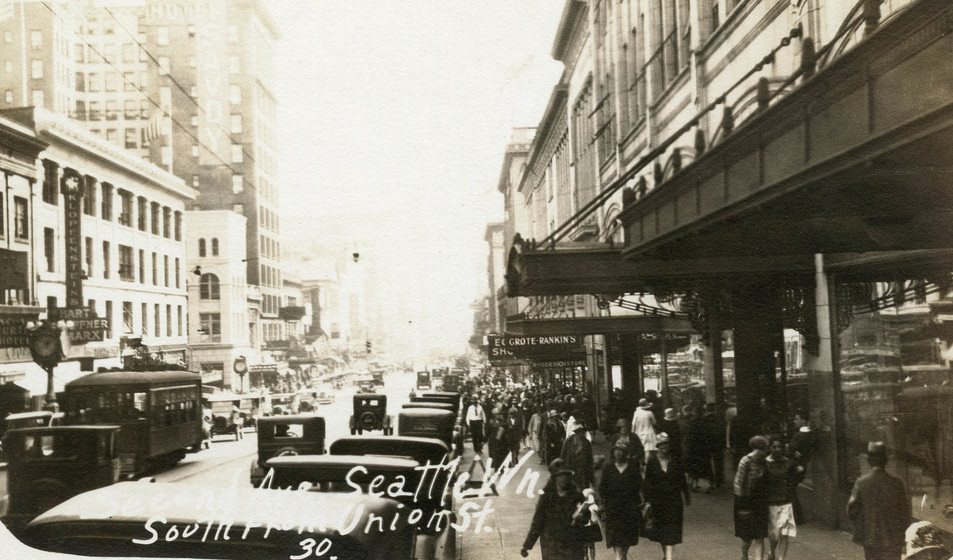
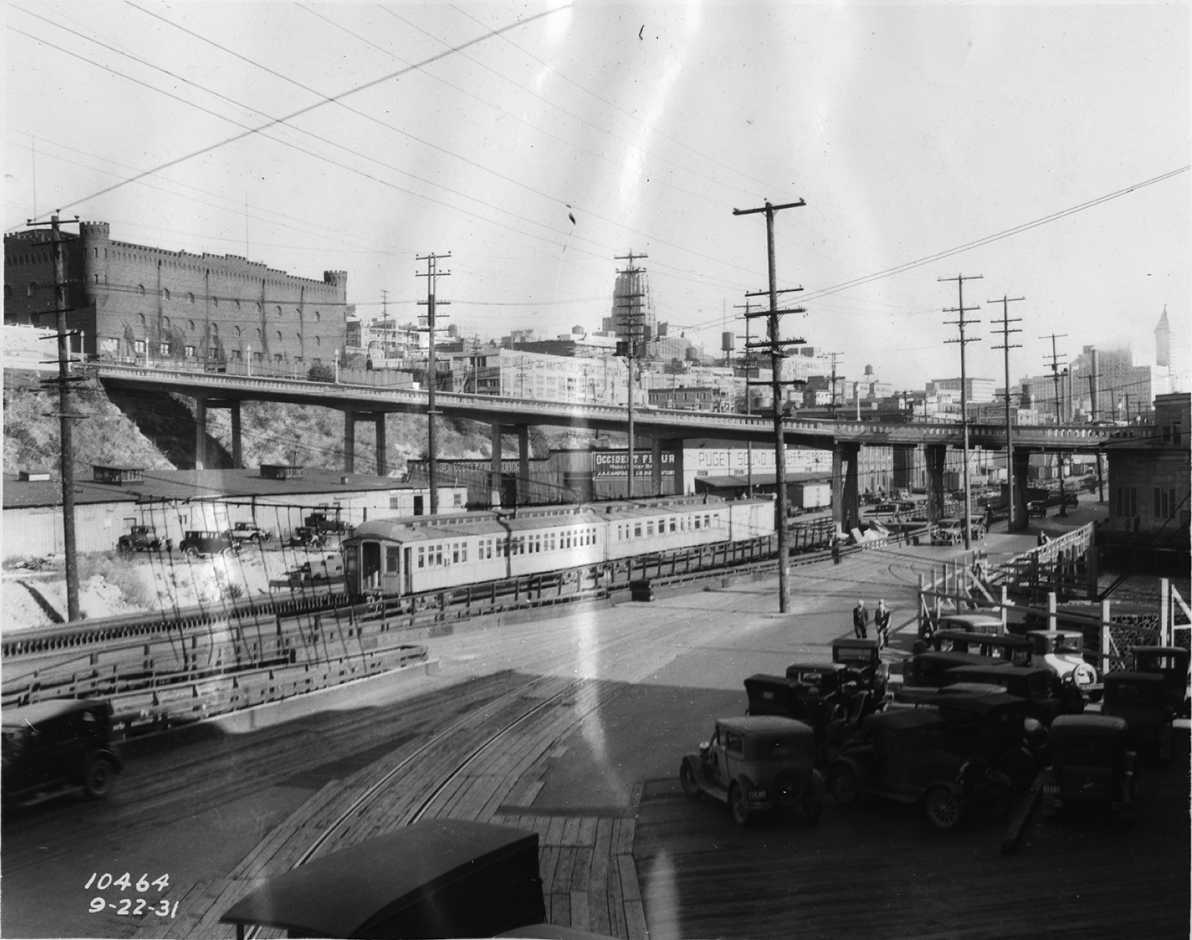
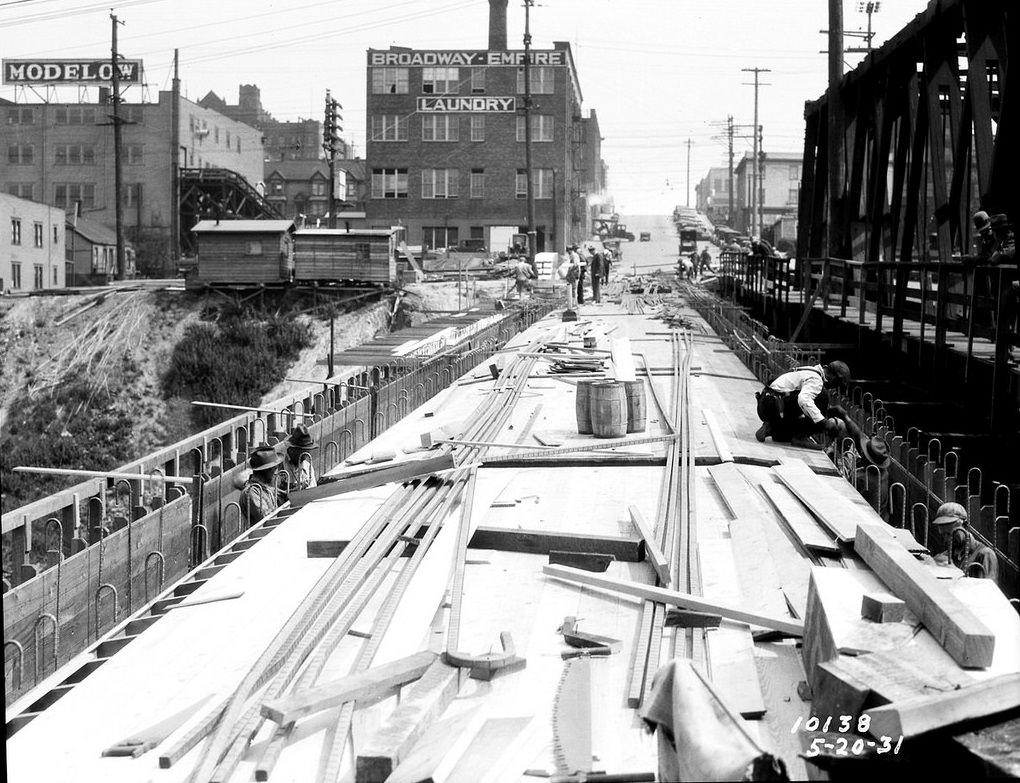
Seattle’s infrastructure kept expanding even as the Depression tightened its grip. The city was mid-construction on several viaducts during the early 1930s, connecting neighborhoods and easing the flow of traffic across the hilly terrain.
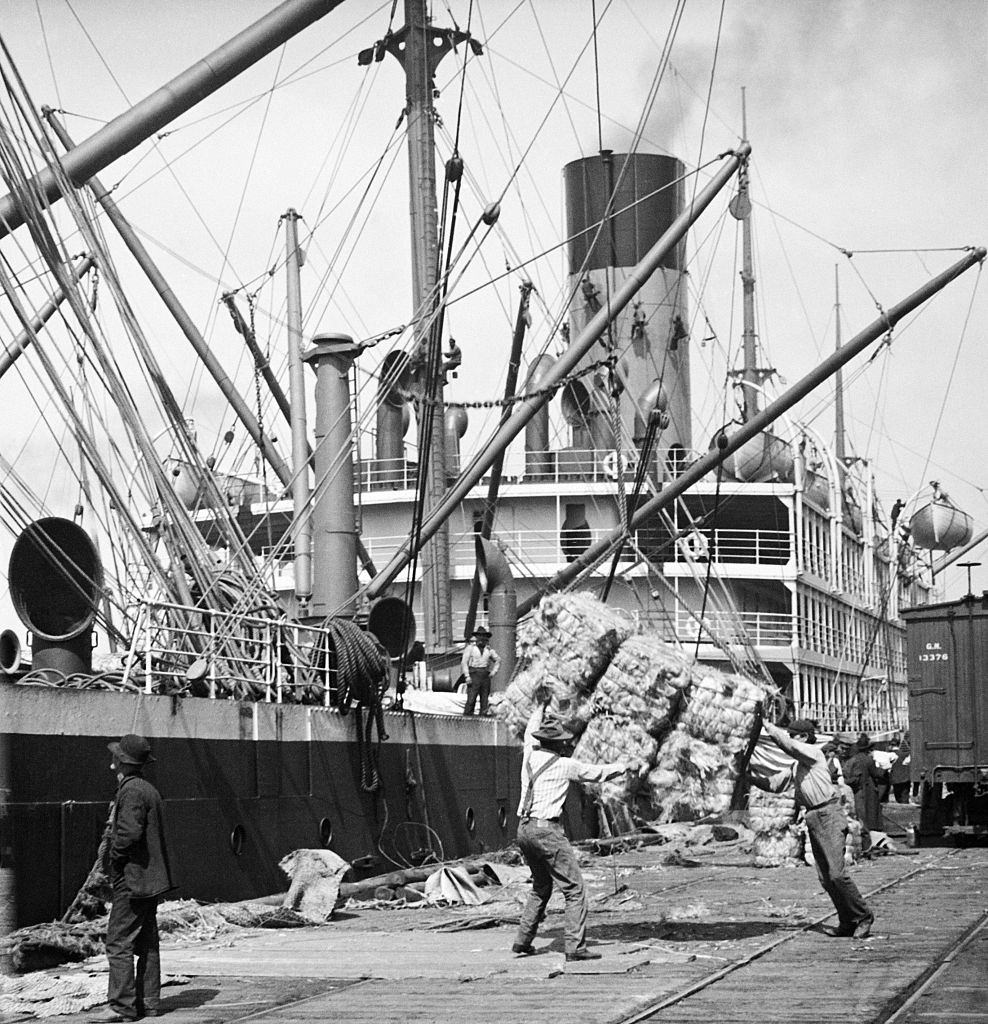
The harbor remained central to Seattle’s identity, even when trade slowed. Ships still moved through the port, and dockworkers still unloaded cargo along Alaskan Way. The waterfront was the city’s lifeline to the outside world, and photographs from the era capture it in both its working grit and its quieter moments.
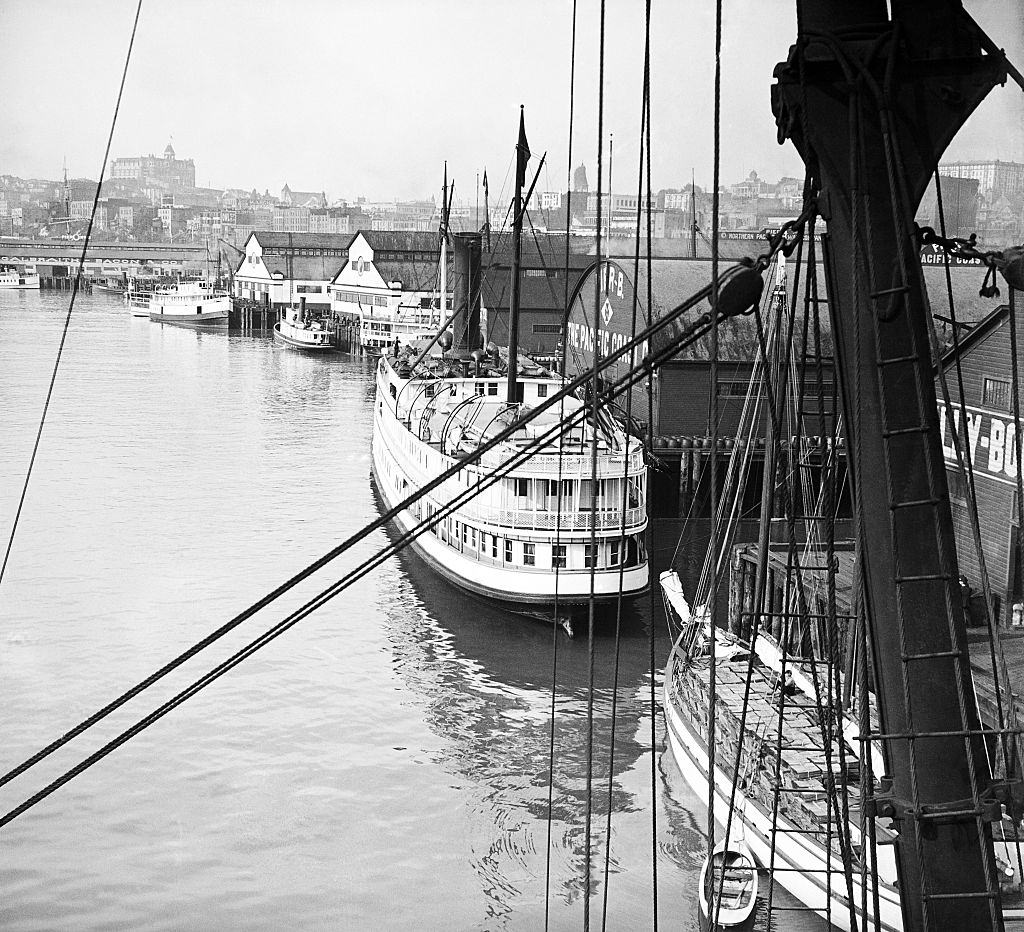
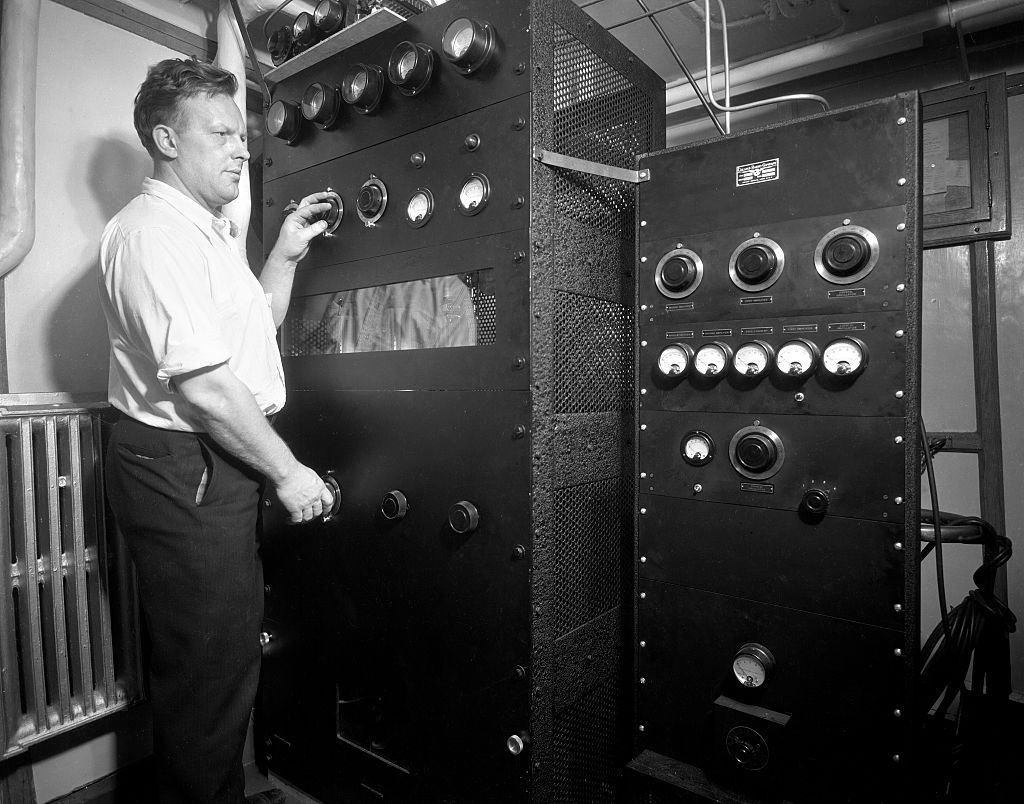
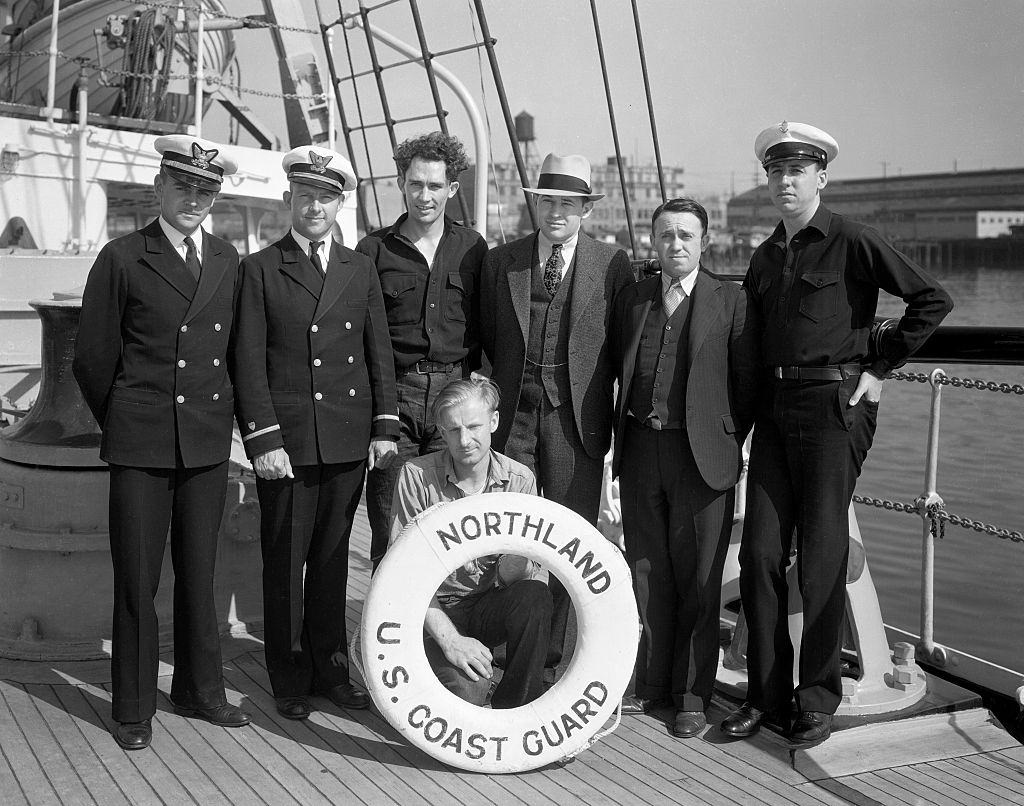
The U.S. Coast Guard also had a visible presence in Seattle’s harbor. The cutter Northland made history by broadcasting CBS Radio messages directly from on board while docked in Seattle — an early example of maritime radio broadcasting that drew public attention.
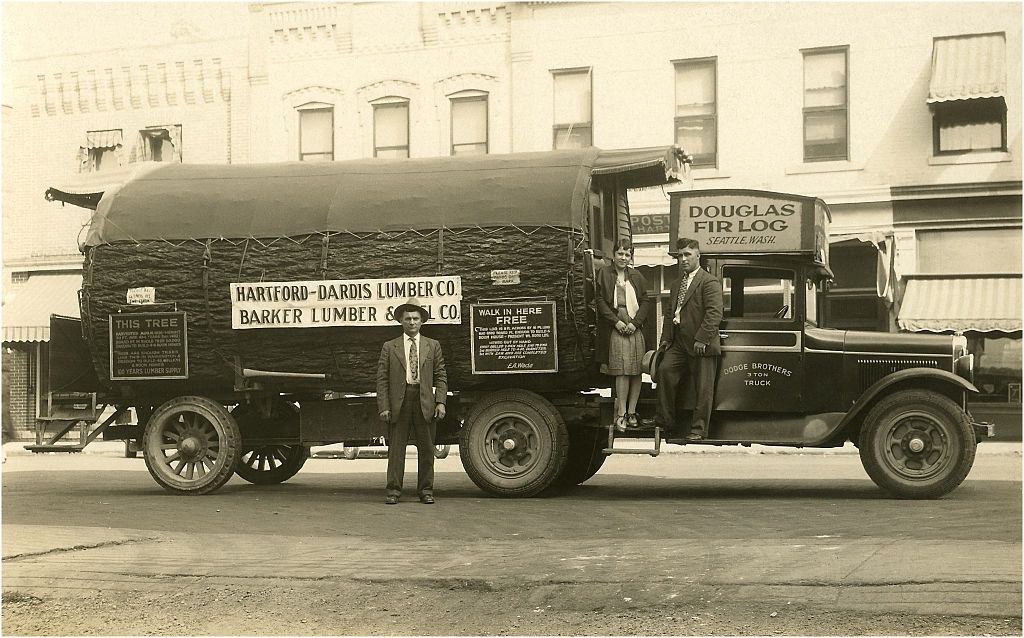
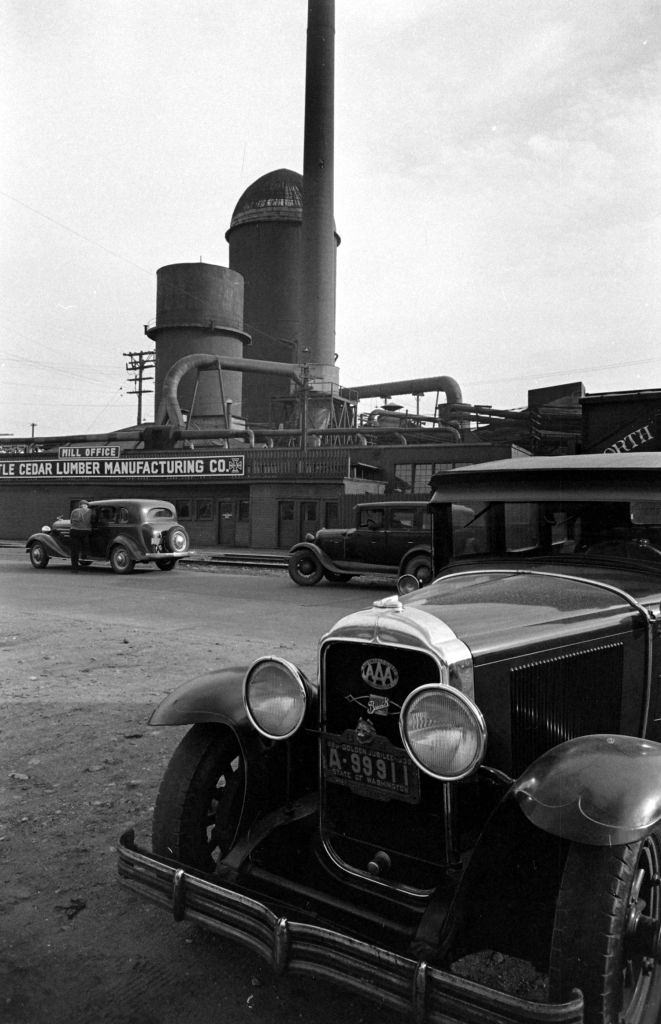
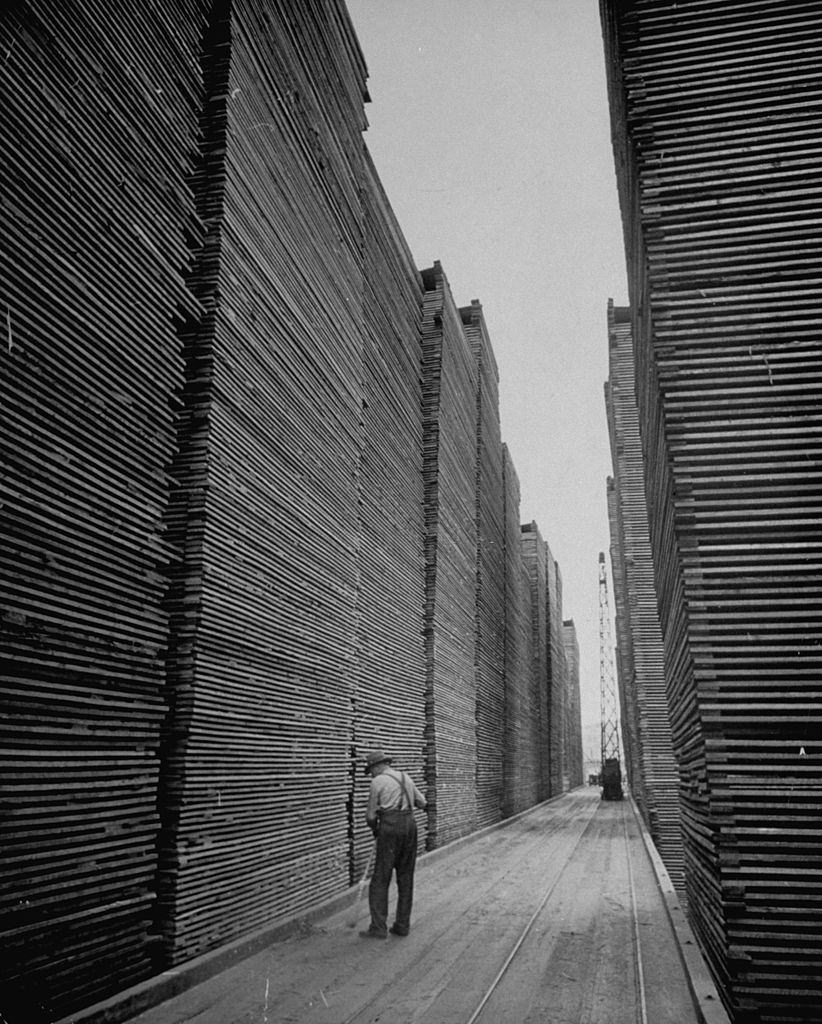
Lumber was still king in Seattle, even as mills across the Northwest closed. The industry that had built the city remained visible in its yards, its trucks, and its workers. Some companies found ways to advertise their scale — one Barker Lumber display featured a massive Douglas fir log mounted on a truck, large enough to be fashioned into a small structure.
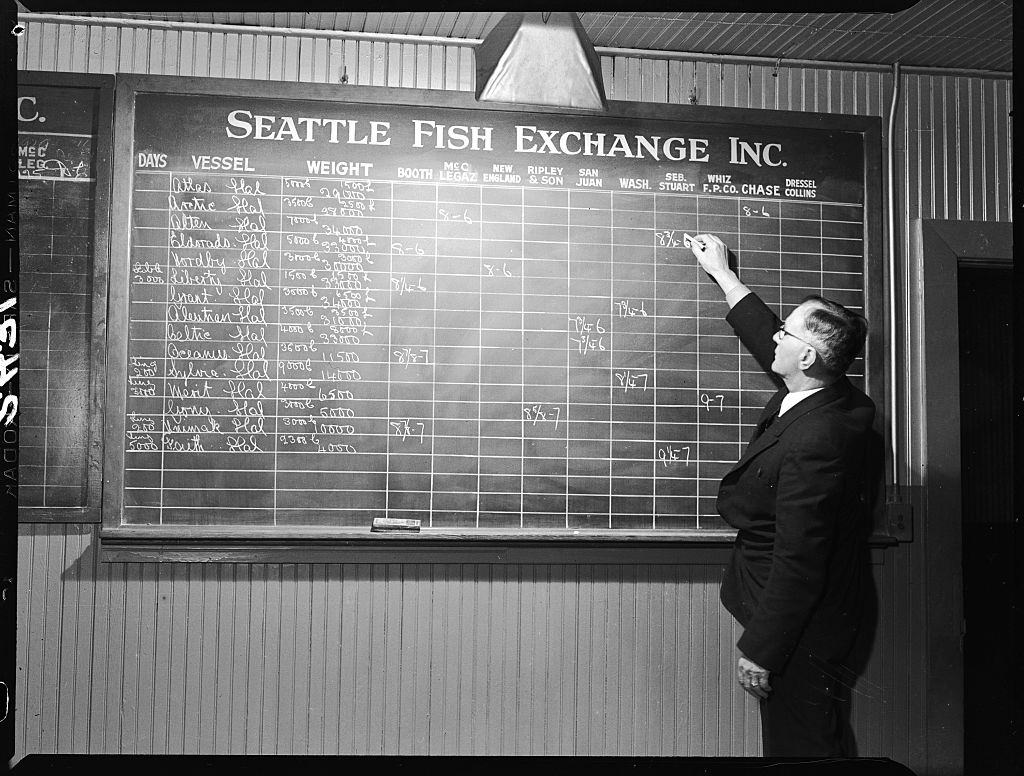
Seattle’s fish trade was equally important. At the Seattle Fish Exchange, traders tracked prices on chalkboards as buyers and sellers moved through the market. The fishing industry employed thousands in the region and fed supply chains that stretched well beyond the Pacific Northwest.
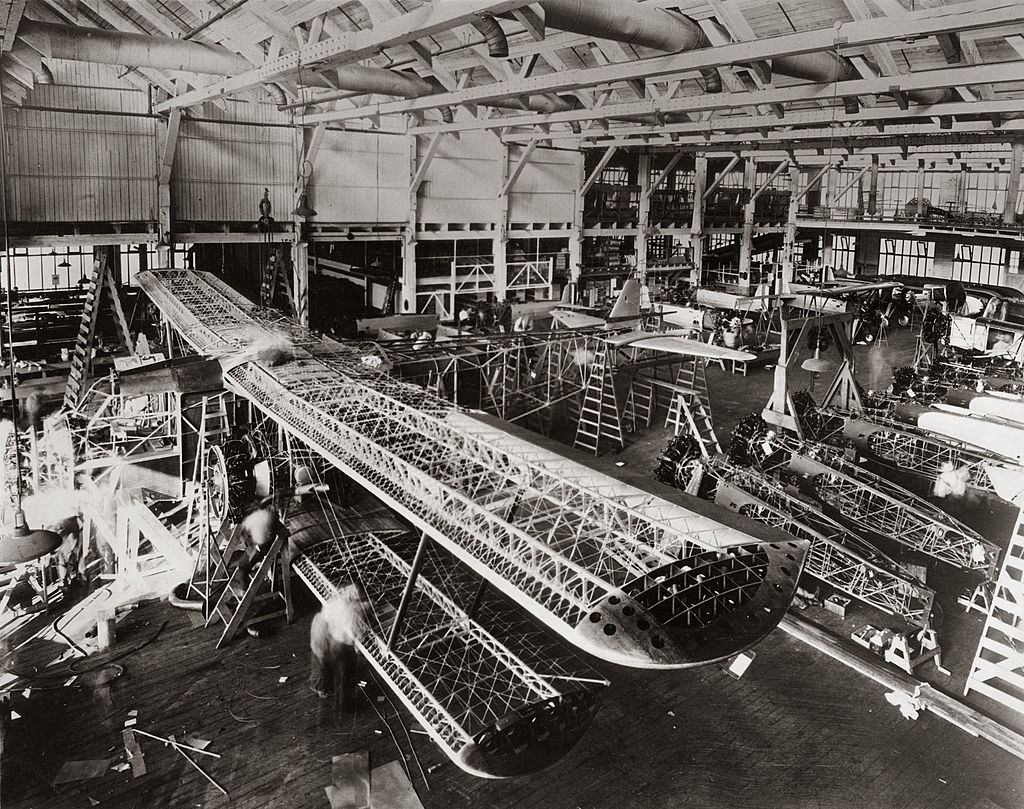
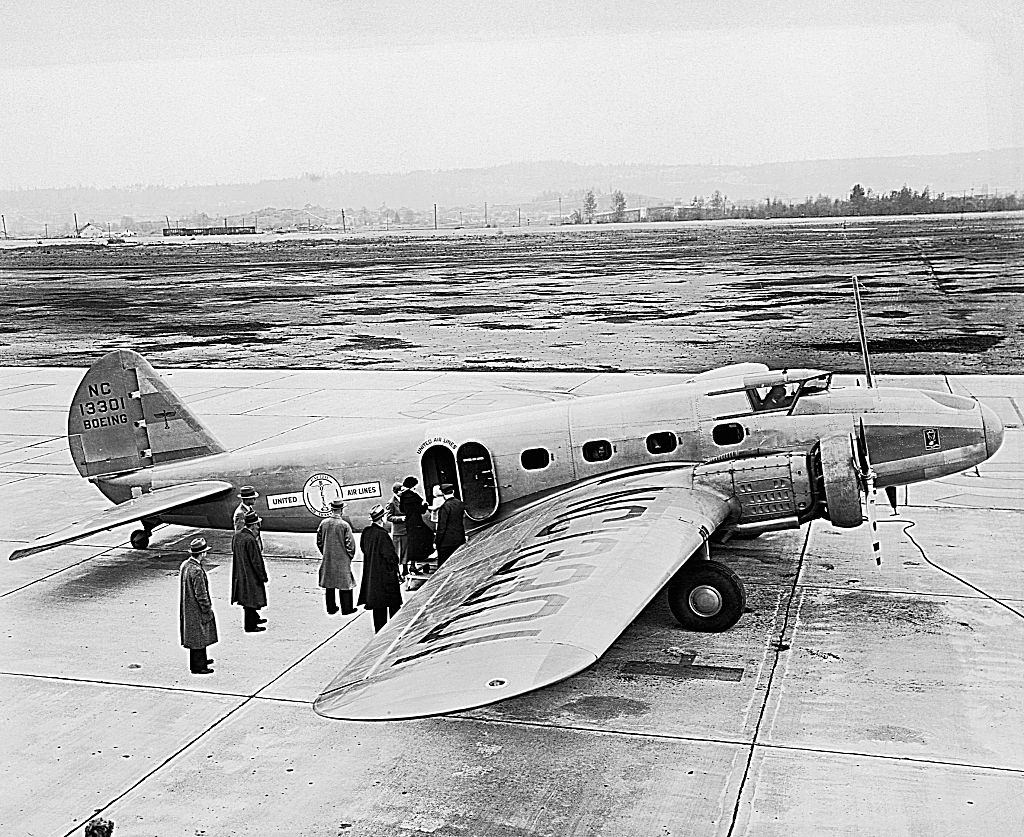
Boeing was already a growing force in Seattle by the early 1930s. The company’s factory on the south end of the city housed large tri-motor transport planes, and Boeing Field was seeing its first commercial passenger flights. The Boeing 247 — one of the first modern airliners — was boarding passengers at Boeing Field as early as the early 1930s.
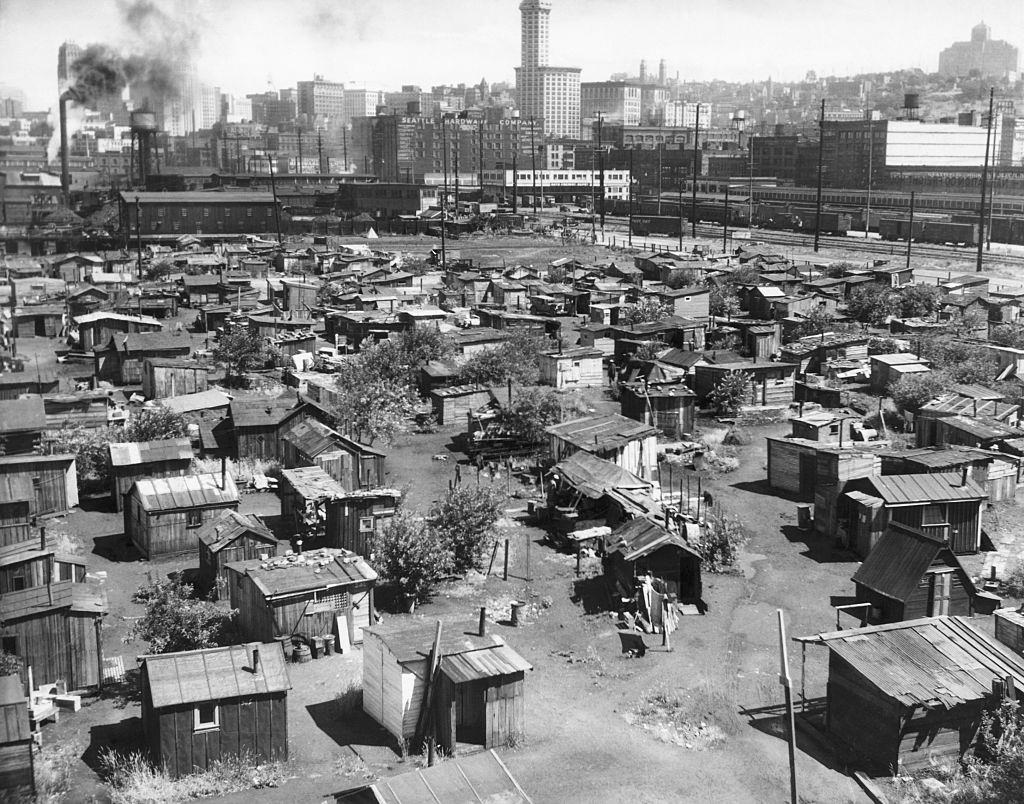
One of the Depression’s most visible symbols in Seattle was Hooverville — a shantytown built just a few blocks south of Pioneer Square. Hundreds of unemployed men lived there in self-built shacks. The residents elected their own mayor, set their own rules, and operated largely outside the city’s official systems. The name was a deliberate dig at President Herbert Hoover, who many blamed for the economic collapse.
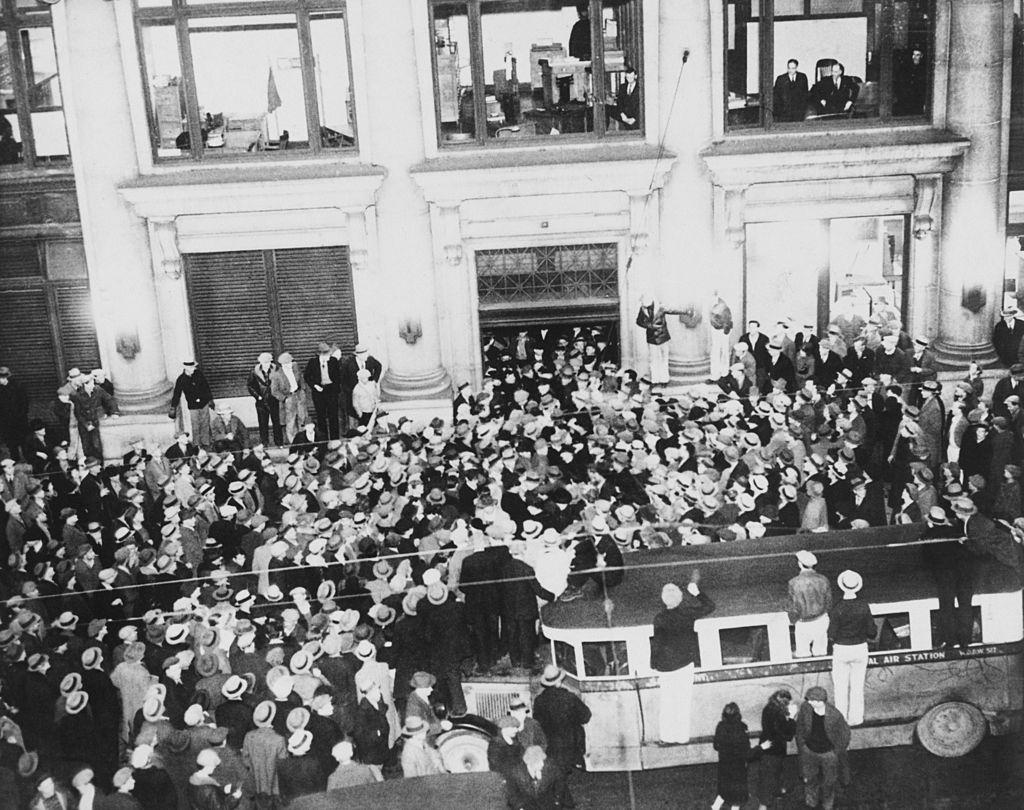
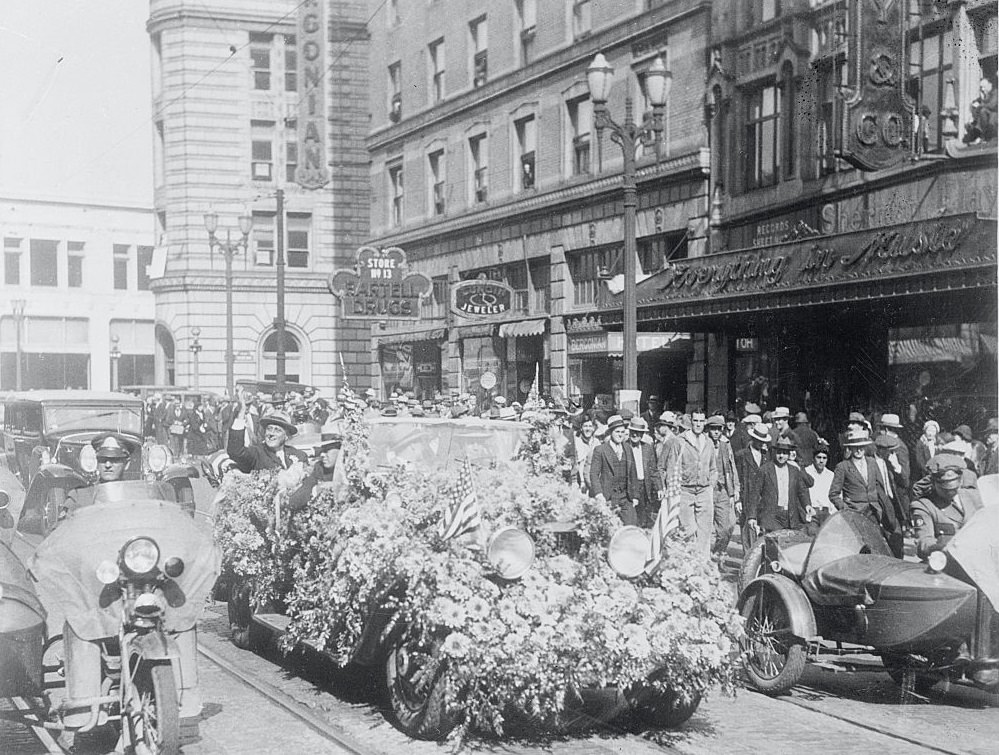
Political pressure was building. Unemployed workers staged protests in front of the King County Courthouse in 1933, demanding relief. A year earlier, Franklin D. Roosevelt had passed through Seattle during his presidential campaign, drawing thousands of supporters into the streets.
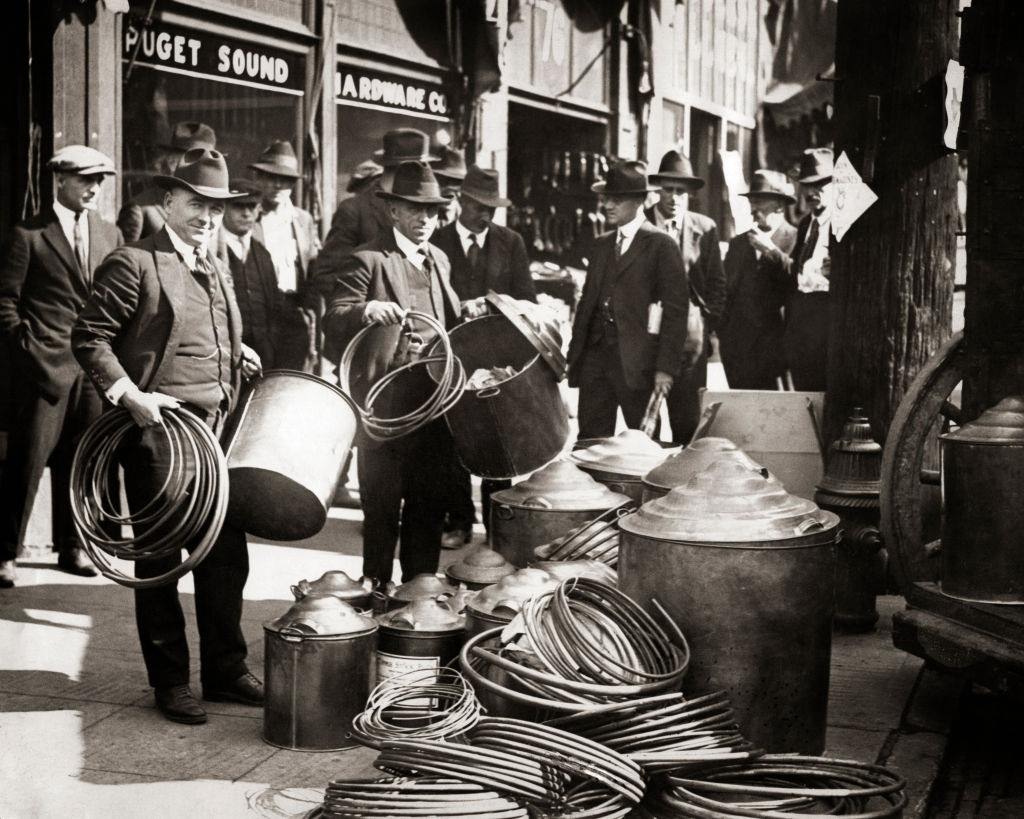
Prohibition was still in full effect at the start of the decade. Law enforcement regularly raided and seized equipment used to manufacture illegal alcohol. Hardware store display items were sometimes confiscated when they were found to be part of bootlegging operations.
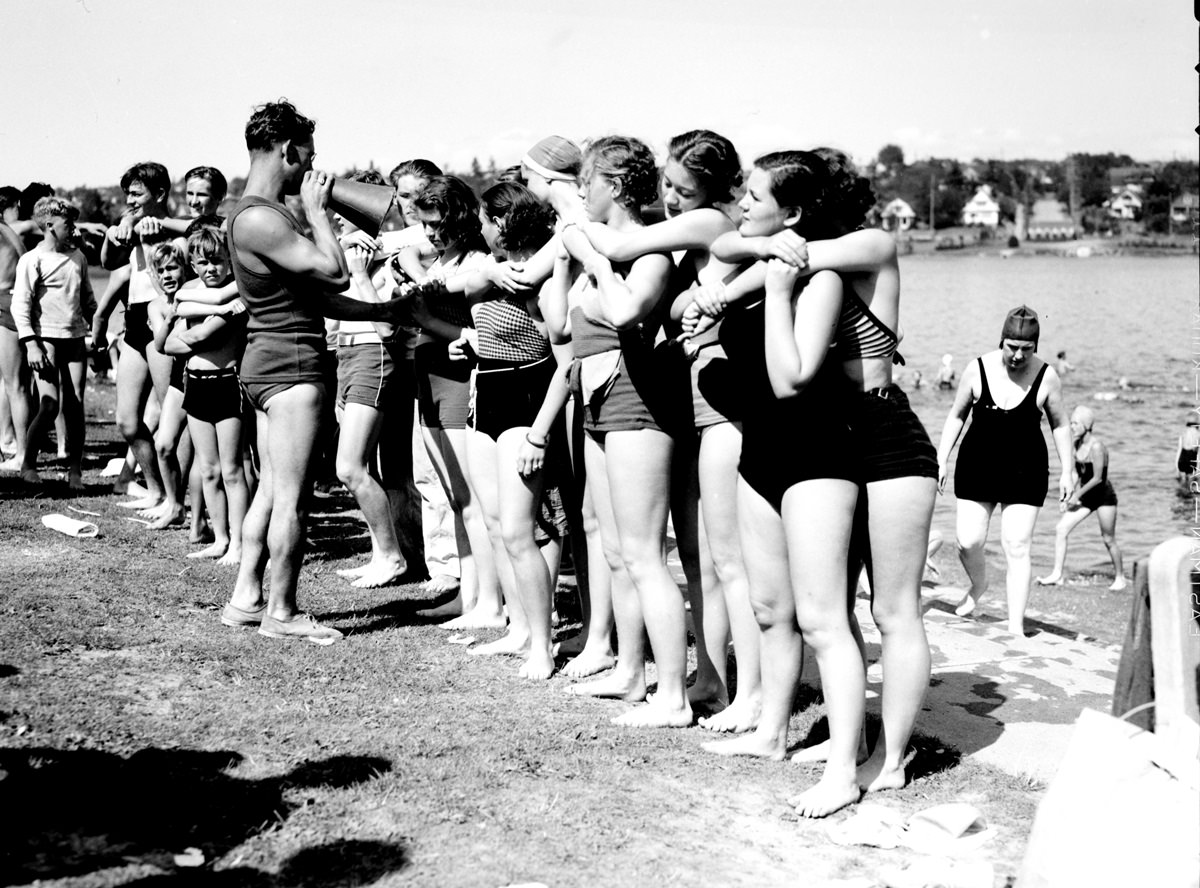
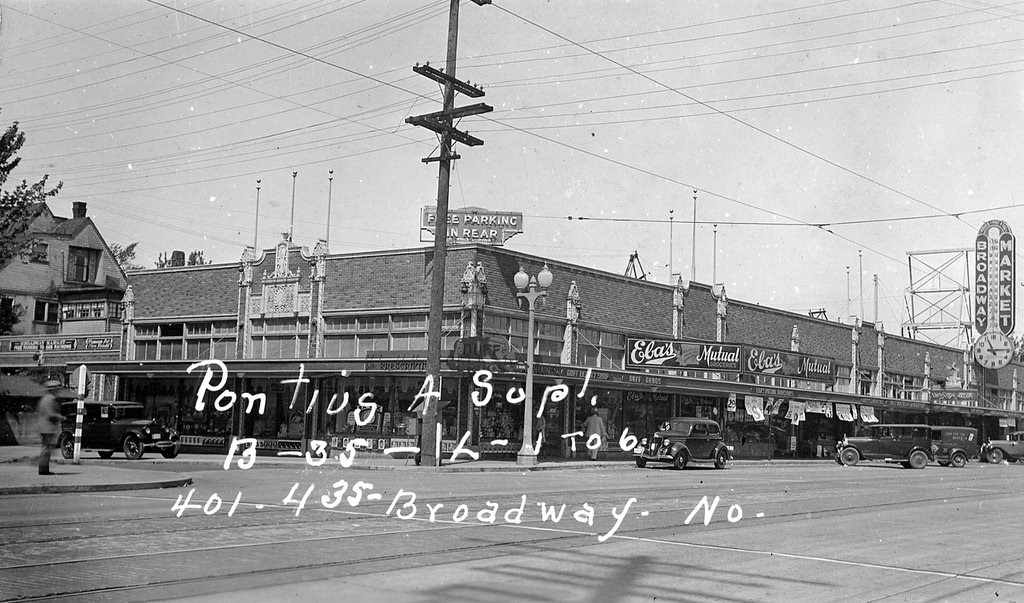
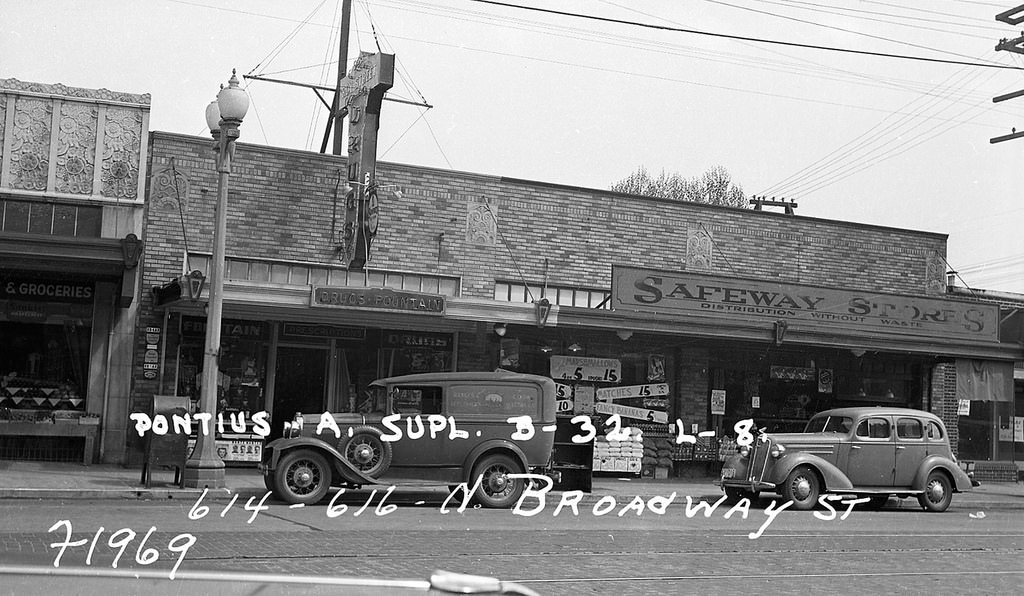
Not all life in 1930s Seattle was defined by hardship. Green Lake drew crowds for recreation, and the city ran organized lifeguard training classes at the water’s edge. Neighborhoods like Broadway maintained their markets and grocery stores. The Safeway at Broadway and Mercer and the Broadway Market at Harrison Street were neighborhood staples throughout the decade.
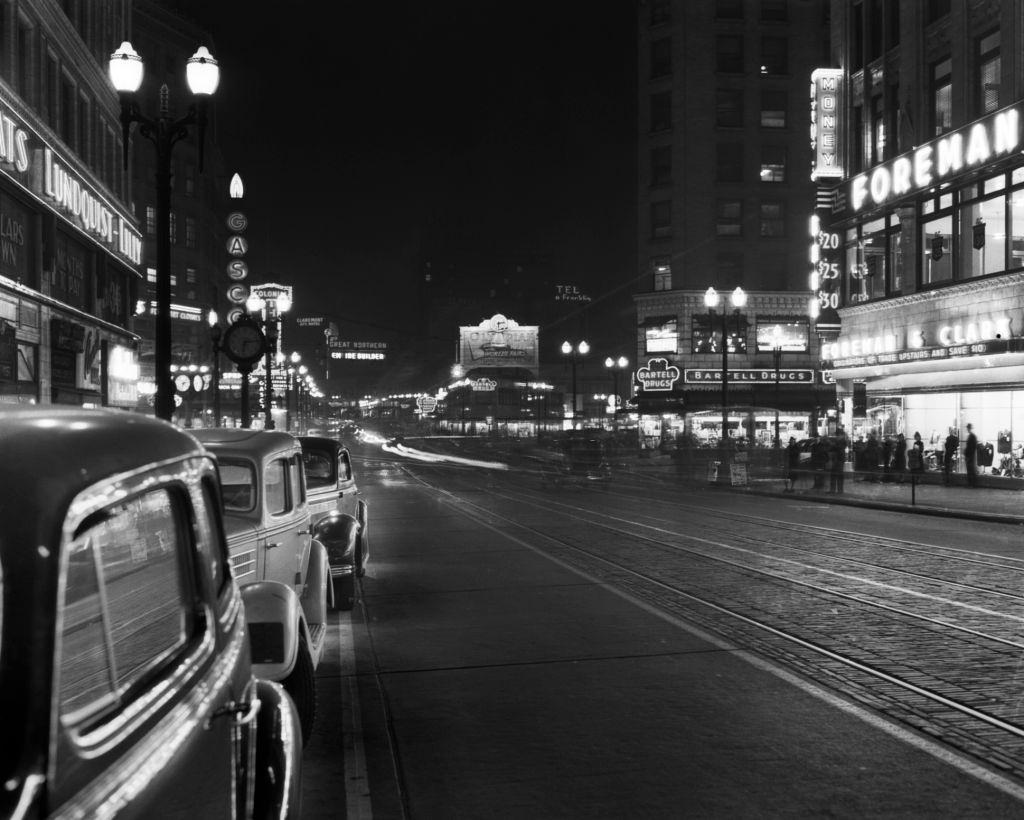
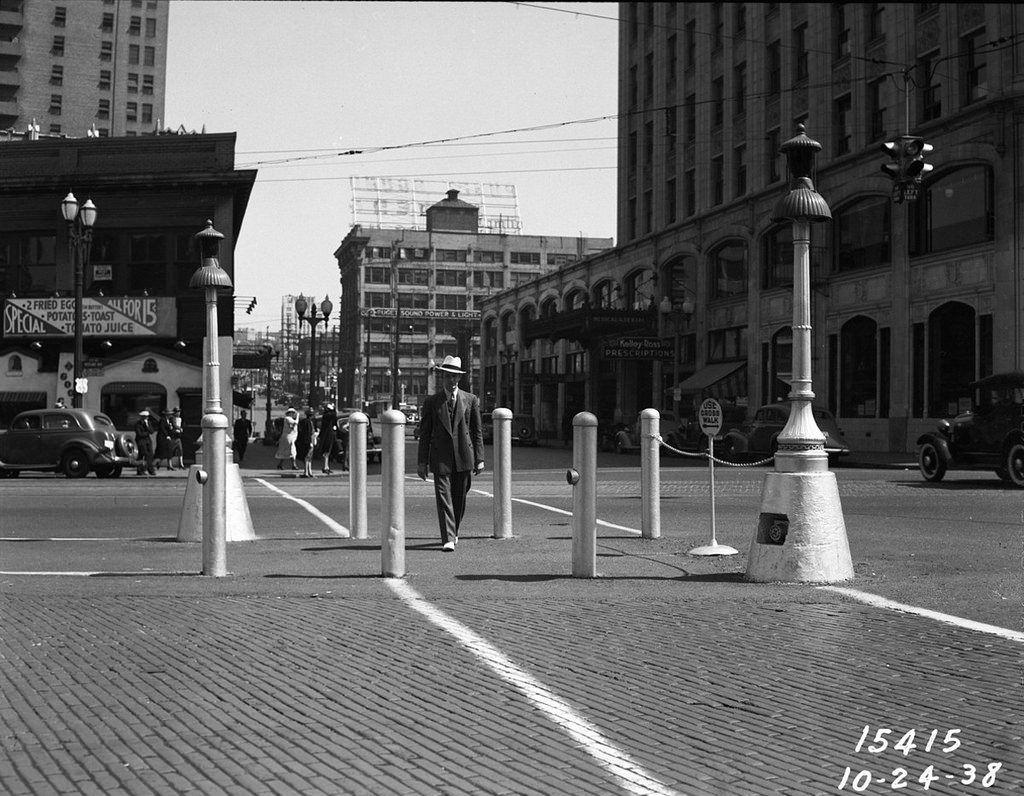
Seattle’s streets were changing visually throughout the decade. Neon signs became more common along major avenues like Fourth Avenue, and the city invested in safety infrastructure like traffic islands to manage the growing number of vehicles.
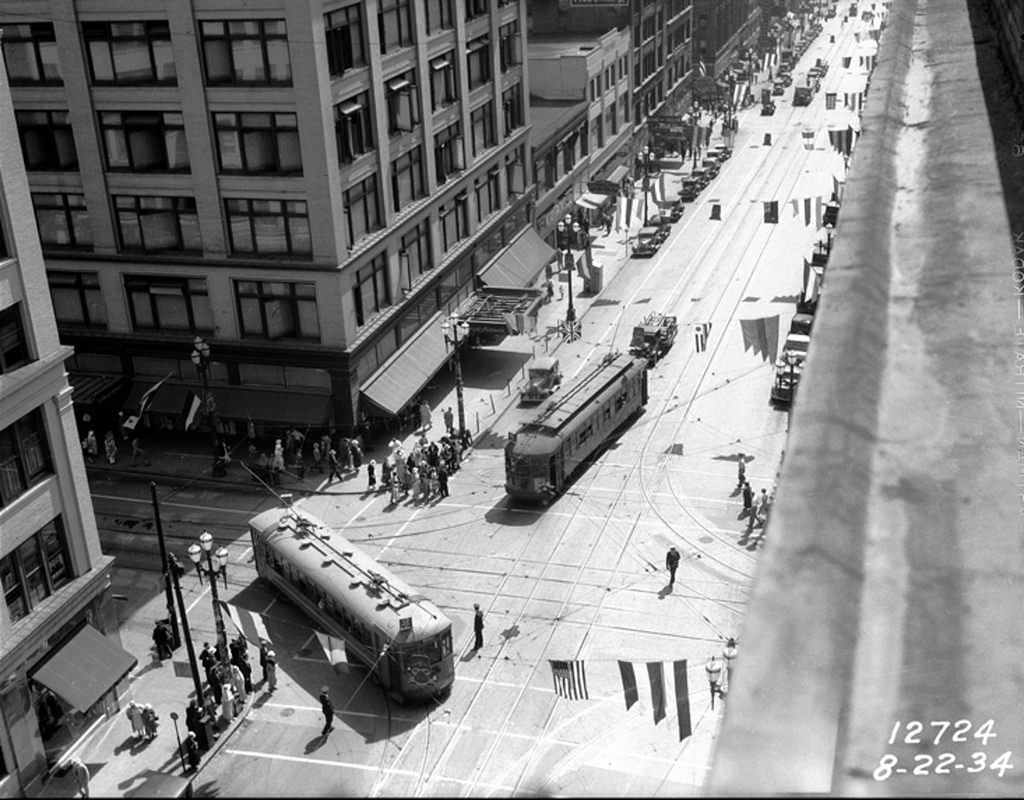
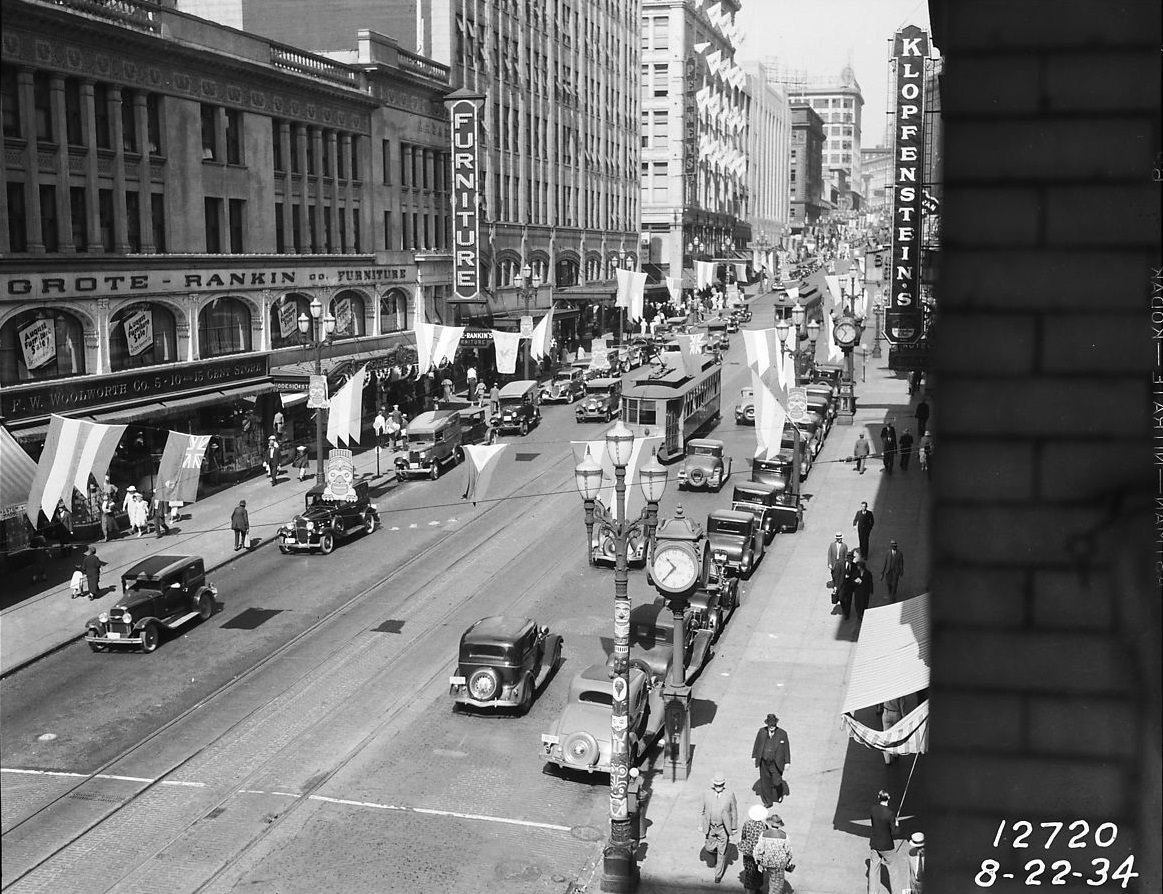
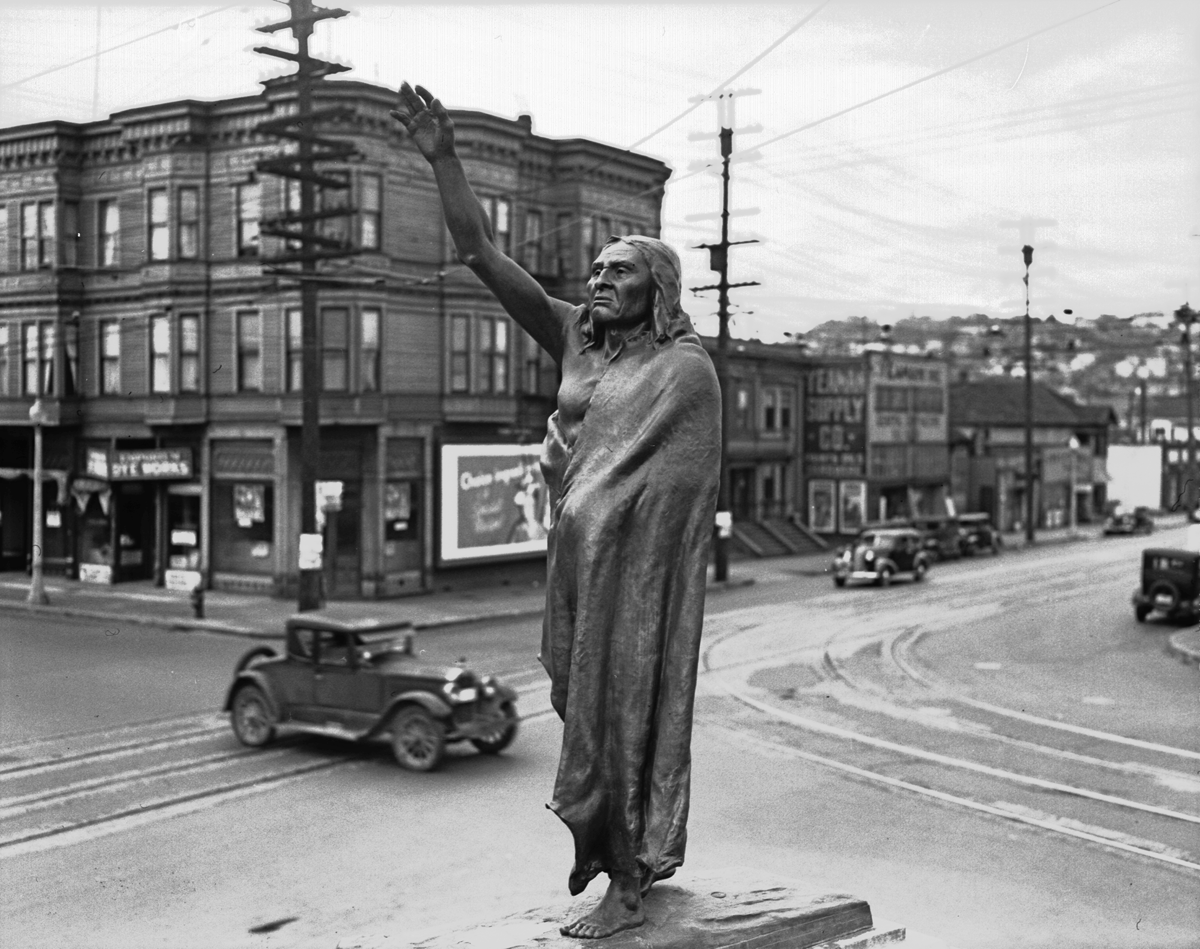
Civic pride still showed up in public celebrations. Second Avenue was decorated for the Potlatch celebration in 1934, a festival that had deep roots in Seattle’s civic calendar. The statue of Chief Seattle at Fifth and Denny stood as a fixture of public space throughout the decade.
Eleanor Roosevelt visited Seattle in May 1937, a sign of the federal government’s increased engagement with the city during the New Deal years. Government programs were already beginning to shift the economic picture by the late 1930s, and Seattle was slowly stabilizing.
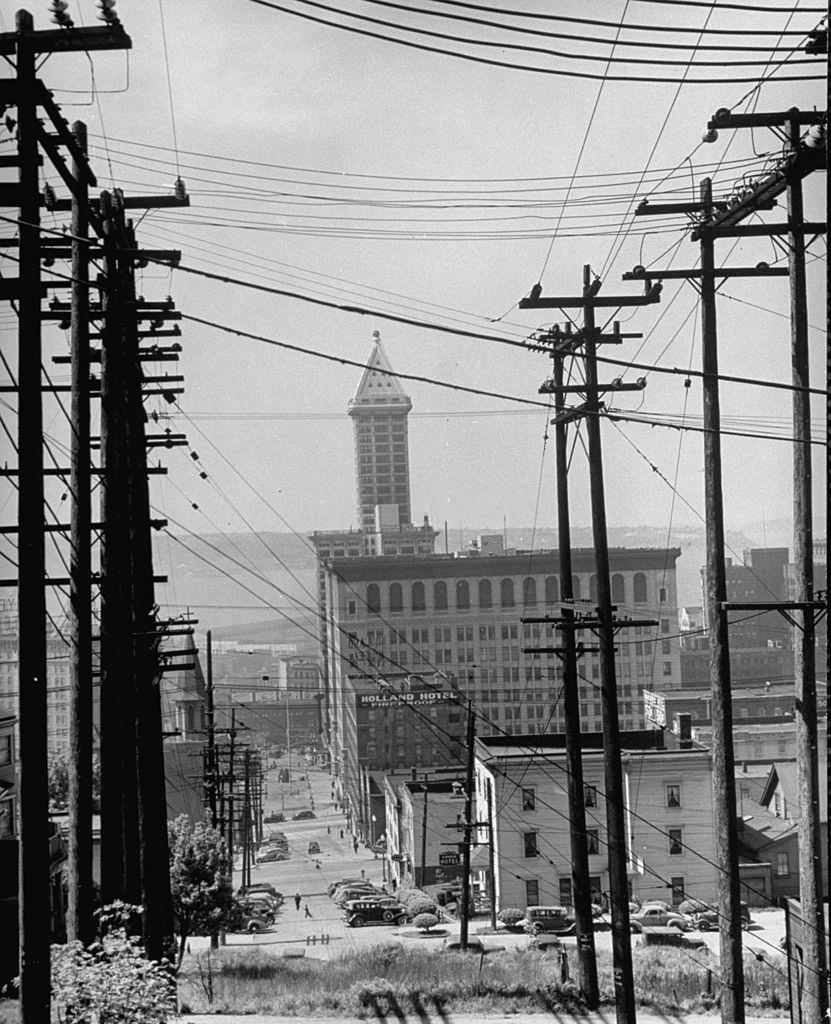
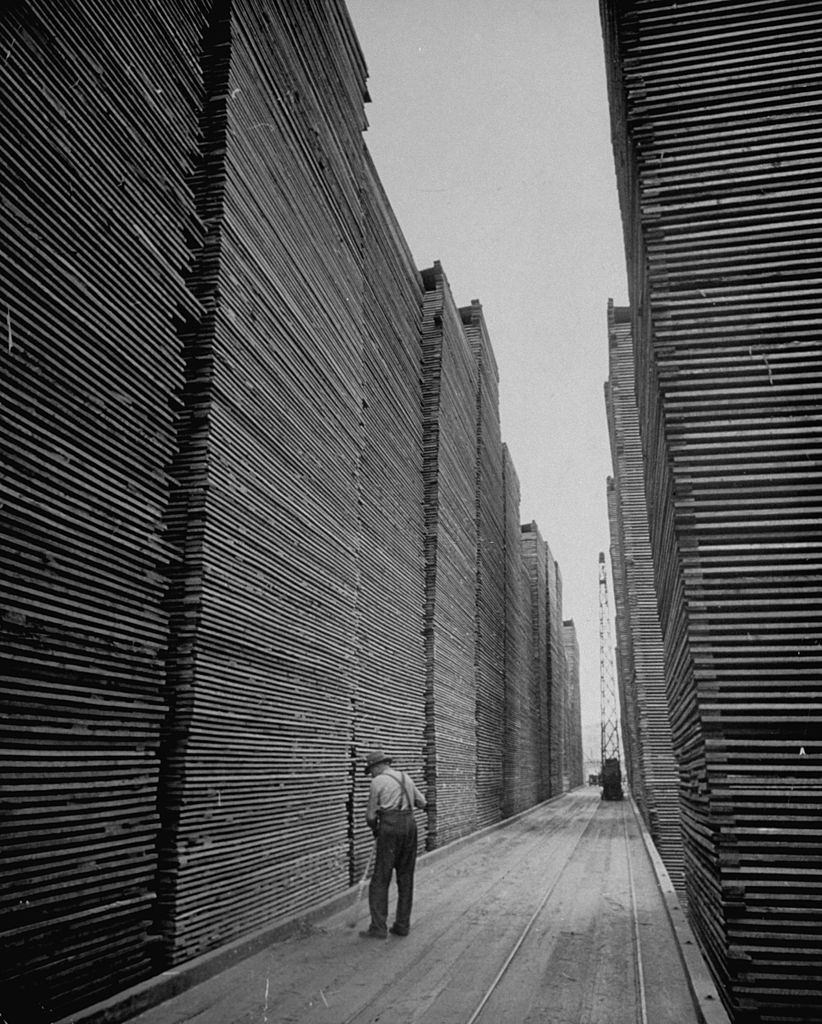
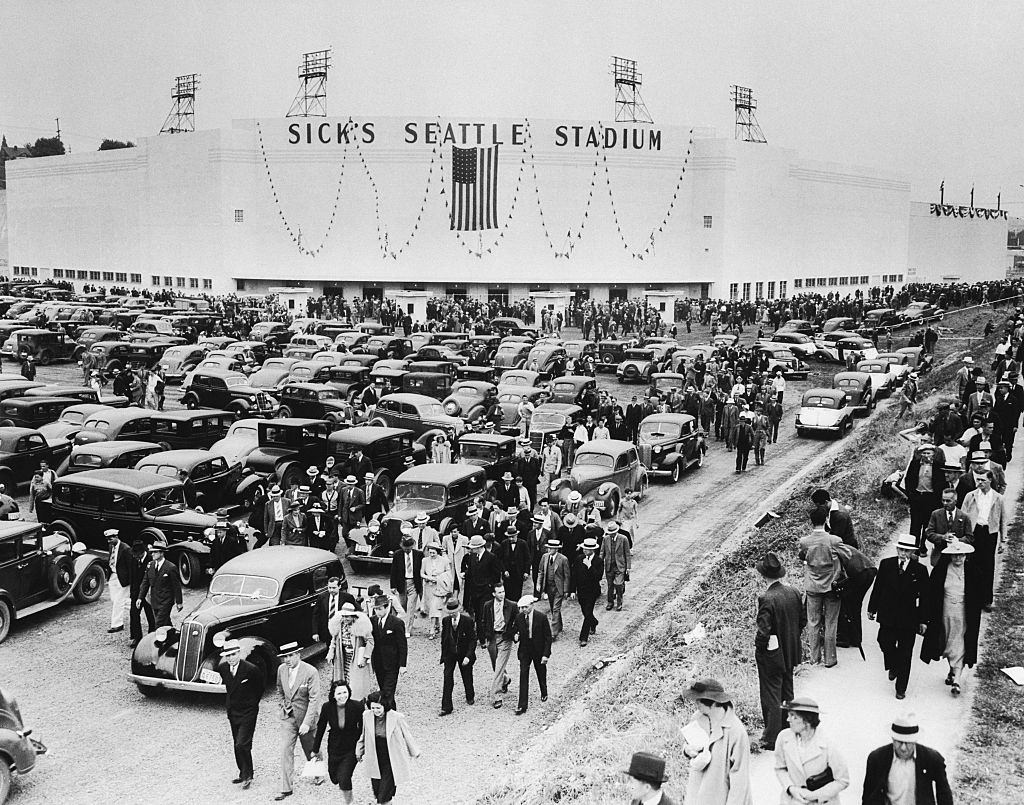
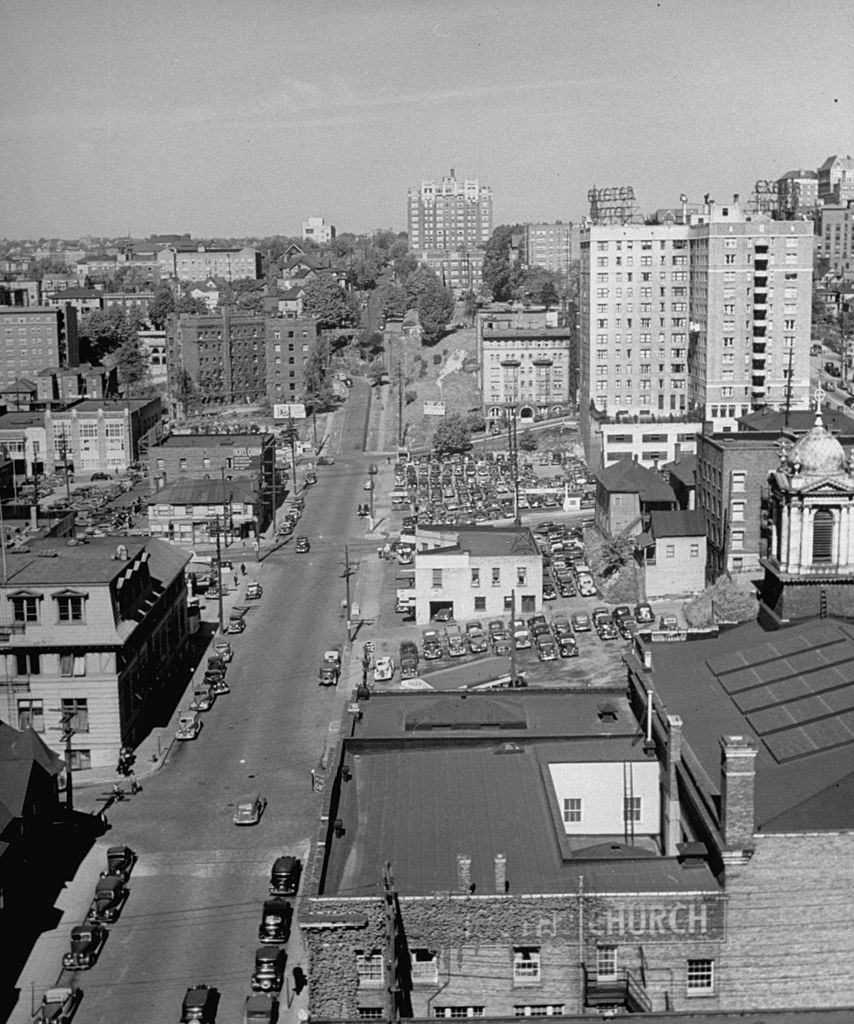
By the late 1930s, Seattle’s skyline and waterfront were taking on a more familiar shape. Views from the hilltops showed a city that had endured a brutal decade and was still standing — its docks active, its neighborhoods intact, and its streets still full of people going about their daily lives.