

During the Gilded Age — roughly the 1870s through the end of the 19th century — America’s grand hotels were far more than places to sleep. They were social stages where the wealthy gathered, dressed well, and ate extravagantly. Thanksgiving gave these establishments a natural opportunity to go all out, and the menus they produced were remarkable records of how the era’s elite celebrated the holiday.
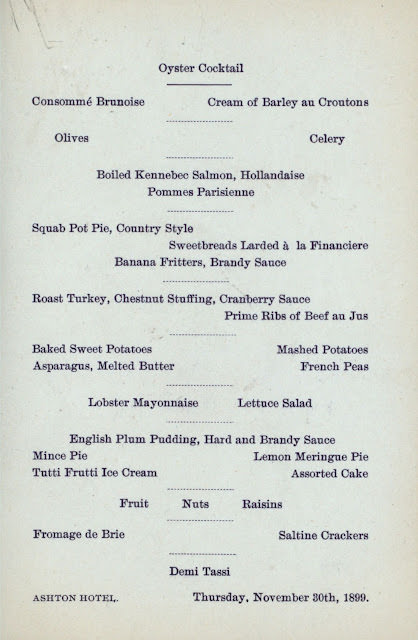
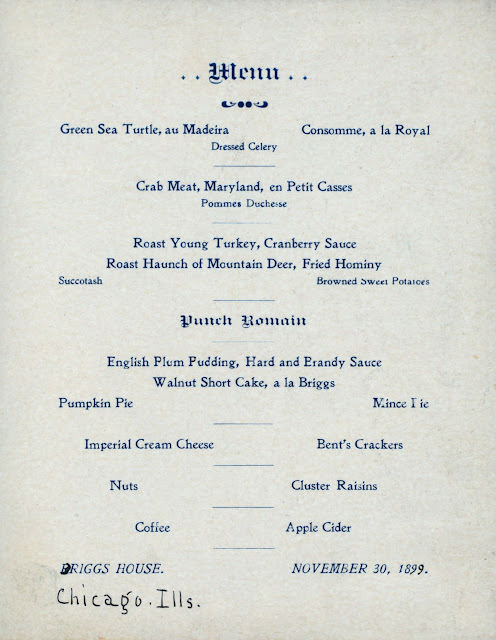
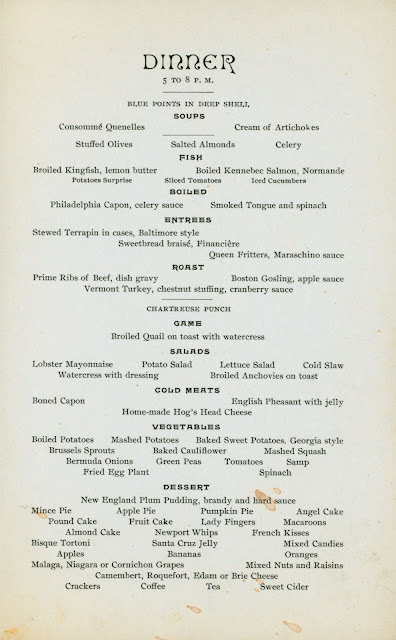
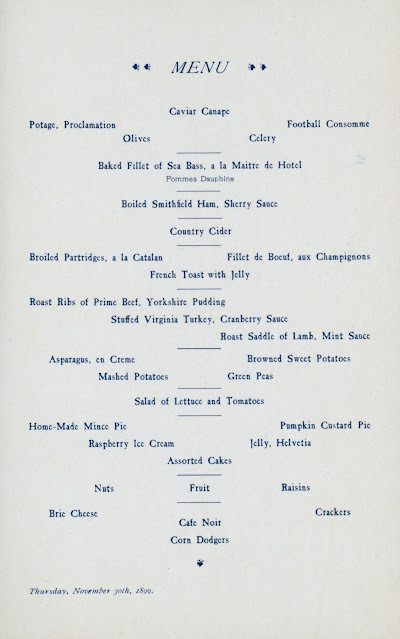
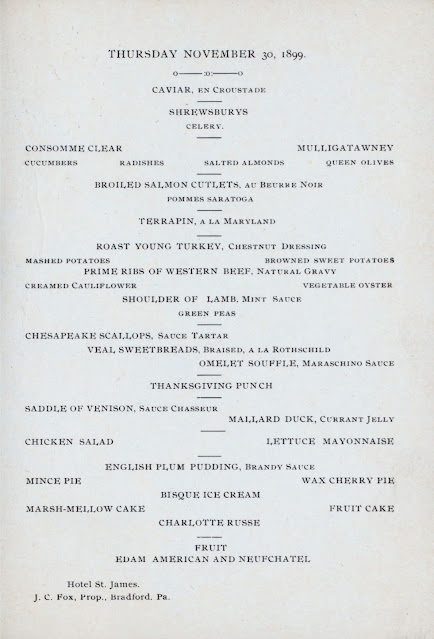
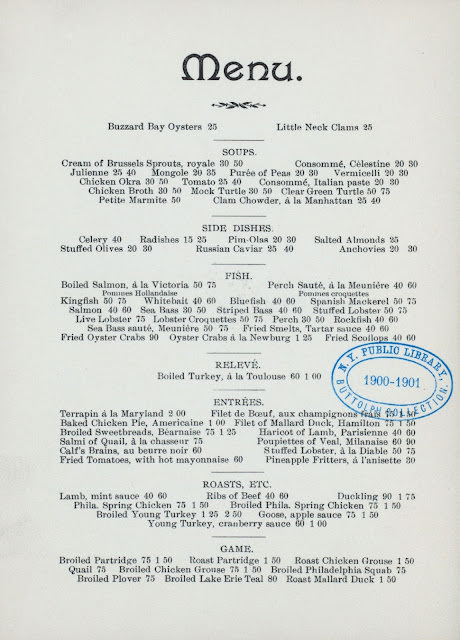
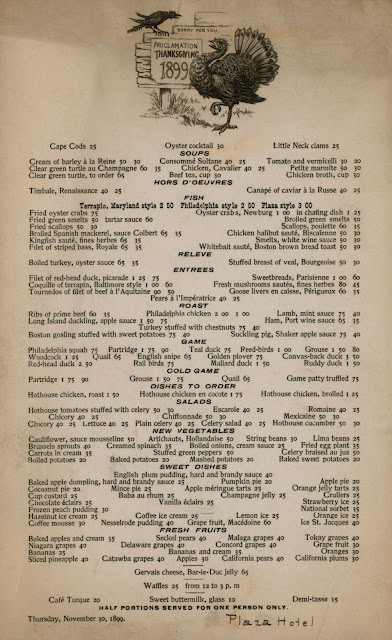
The meal almost always opened with soup. Oyster stew was a popular choice, as were richer preparations like mock turtle soup, which took skill to execute properly. A fish course followed — most often boiled salmon served with Hollandaise sauce, a clear nod to the French culinary techniques that American high-society dining embraced enthusiastically throughout this period.
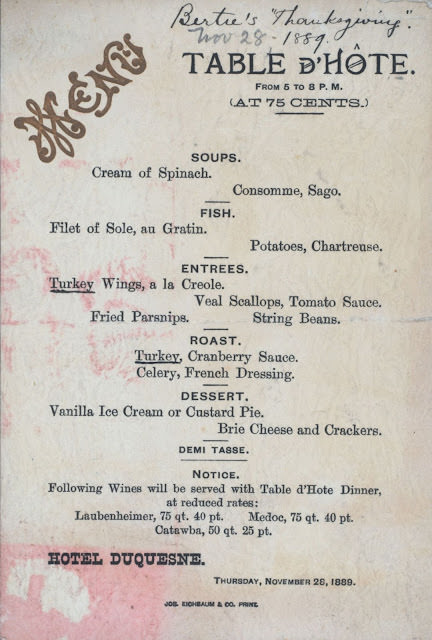
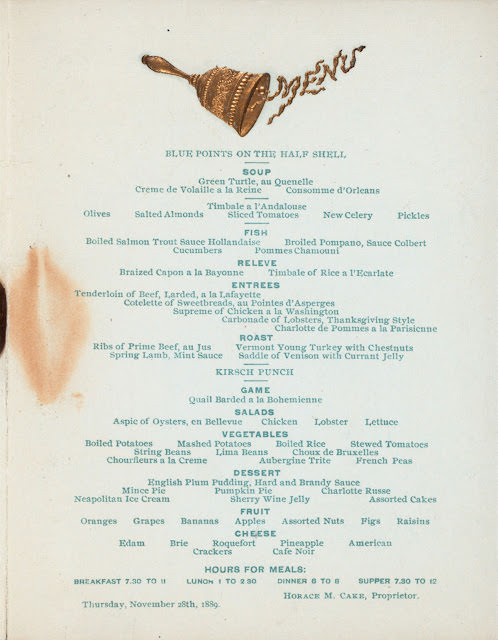
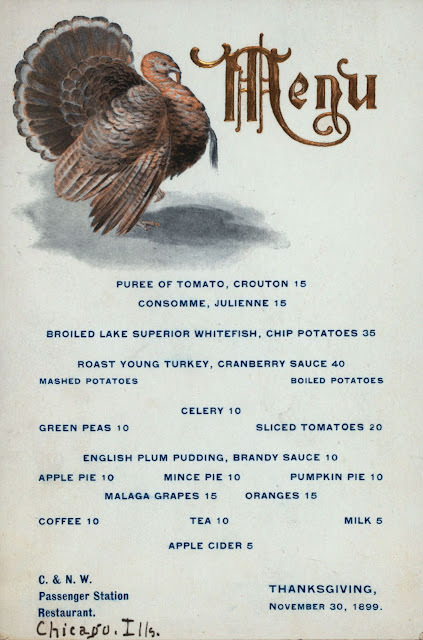
The centerpiece of the meal was roasted turkey — golden, carved tableside, and surrounded by an array of other meats. Roast beef, ham, and venison all appeared regularly on hotel Thanksgiving menus, turning the main course into a full spread rather than a single dish. This abundance was deliberate. It signaled both the kitchen’s range and the hotel’s willingness to spare no expense for its guests.
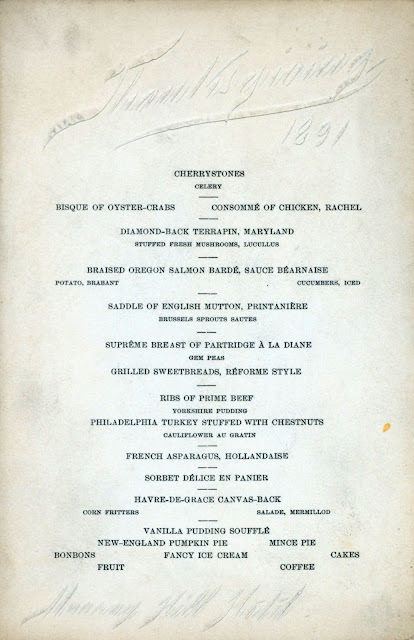
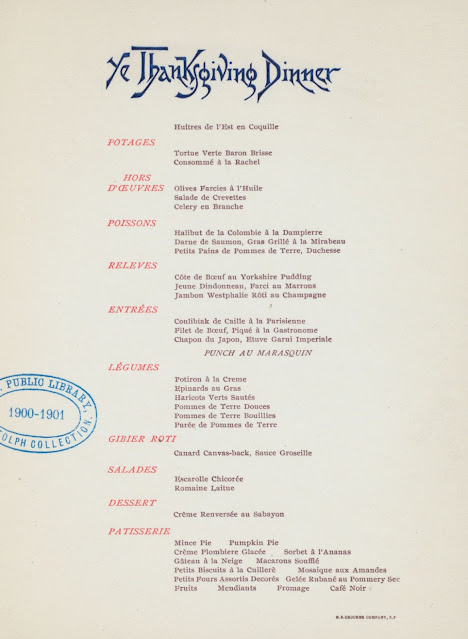
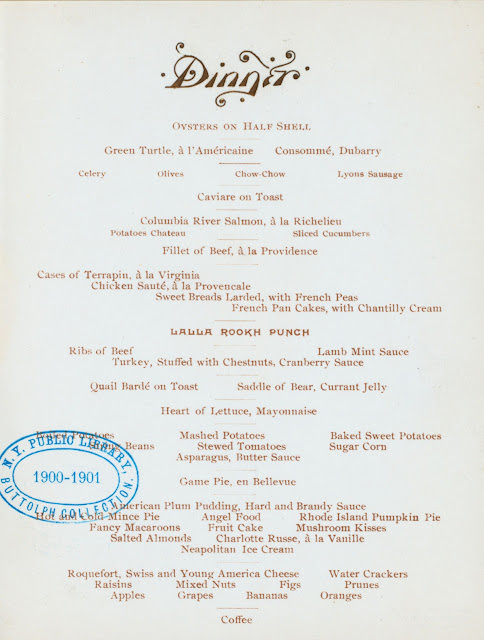
Side dishes filled the table in volume and variety. Classic stuffing, mashed potatoes, sweet potatoes, creamed onions, glazed carrots, and baked squash were all standard. Bread baskets arrived loaded with freshly baked rolls, cornbread, and biscuits. Every component of the meal was made in-house, and the kitchens behind these spreads employed serious, trained staff.
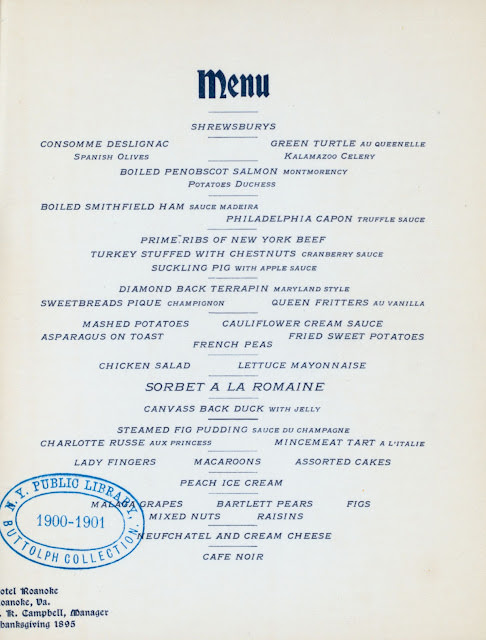
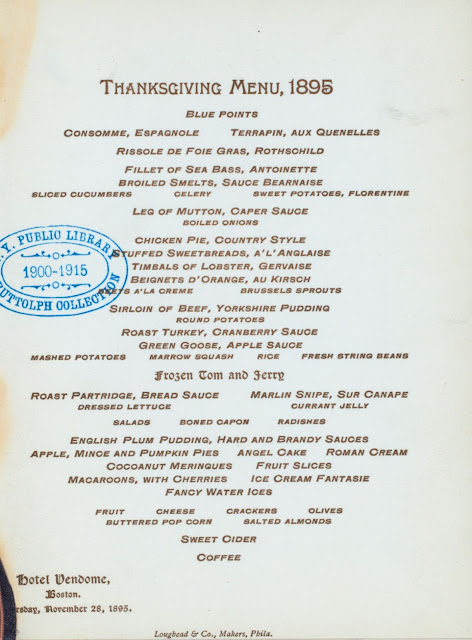
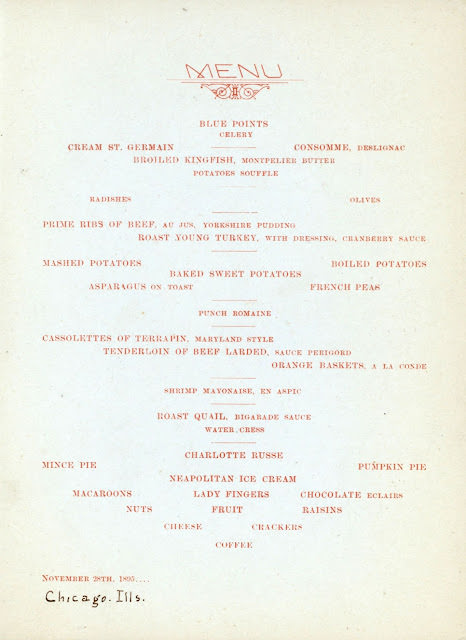
Dessert was equally ambitious. Pumpkin pie held its traditional place, but it shared the table with mince pies, plum puddings, and dense fruitcakes. Exotic fruits like oranges — still a novelty and a luxury for many Americans at the time — were offered alongside these sweets. The beverage program matched the food in sophistication, featuring fine wines and brandies as well as teas, coffees, and ciders.
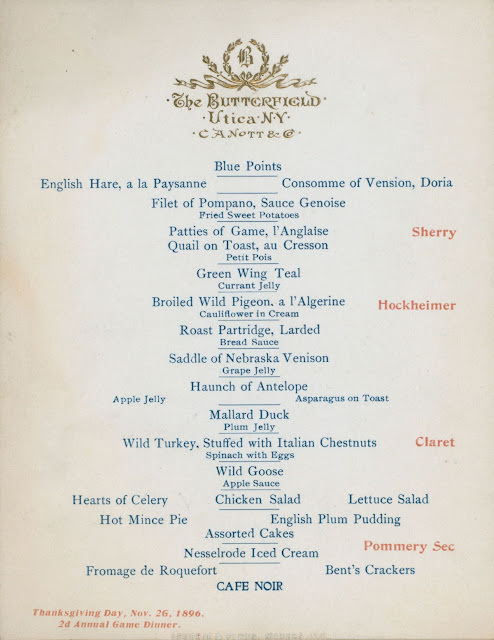
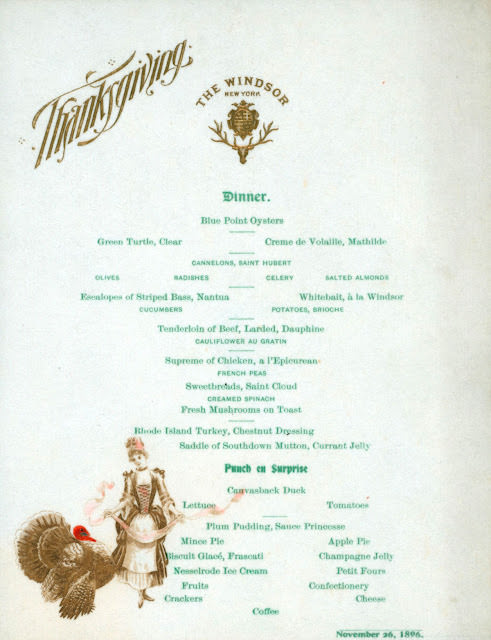
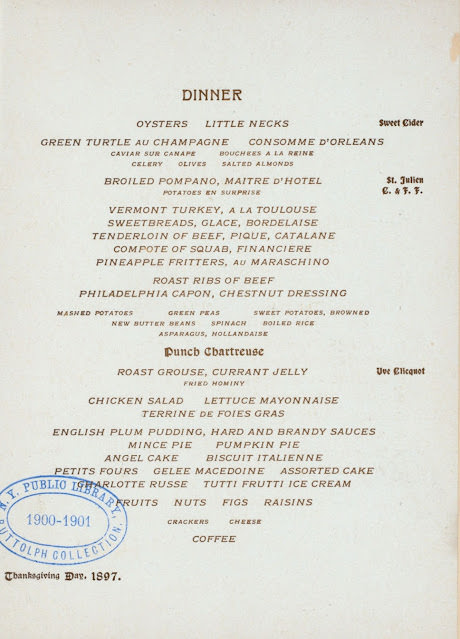
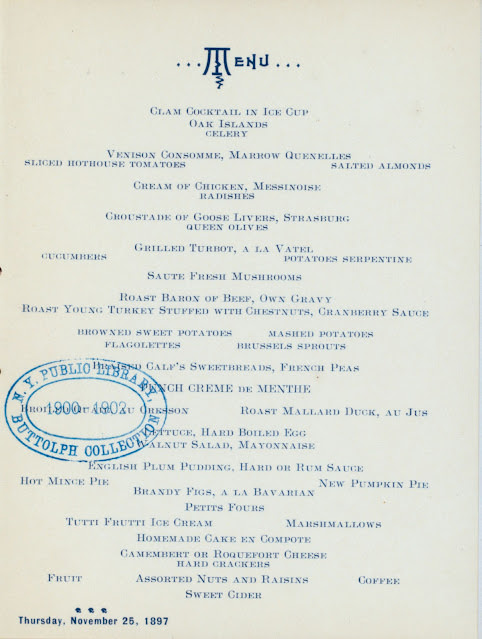
The dining rooms themselves were part of the experience. Table settings were meticulous — polished silverware, pressed linens, and carefully arranged place settings were standard. Service followed formal European protocols. The room, the staff, and the food worked together to create something closer to a theatrical production than a family dinner.
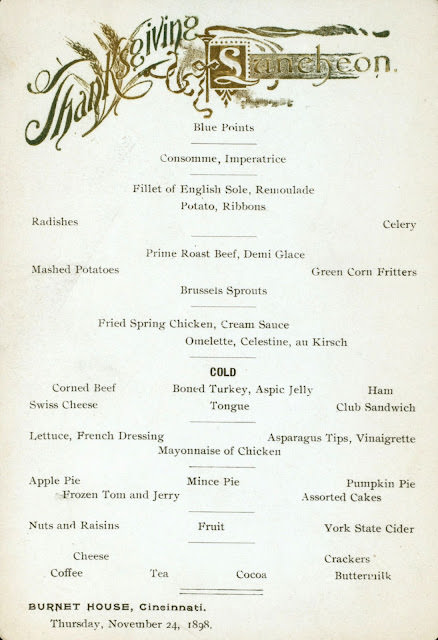
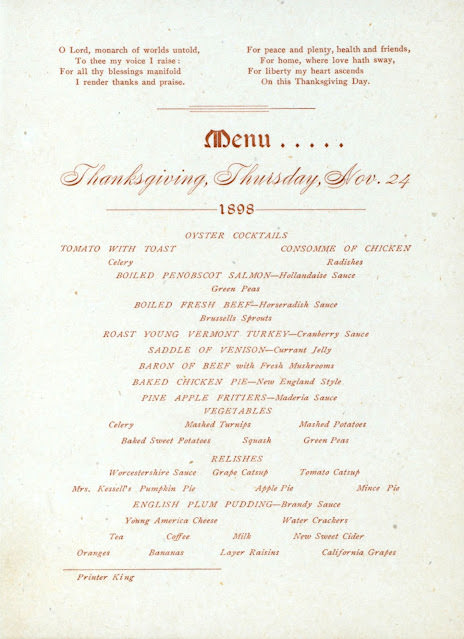
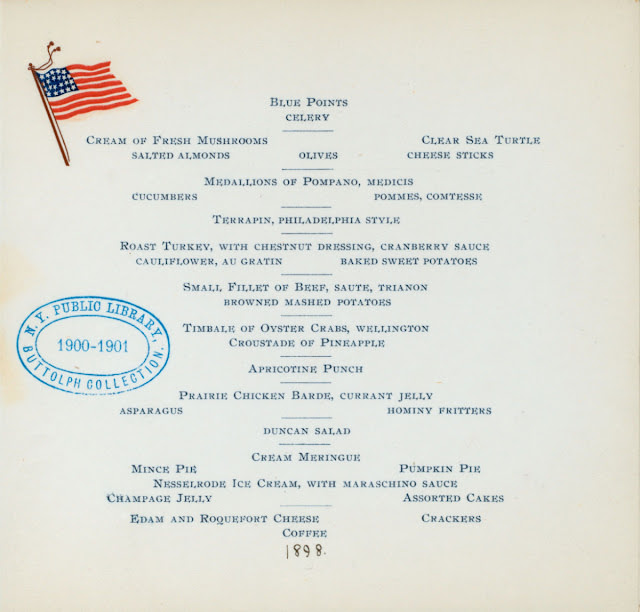
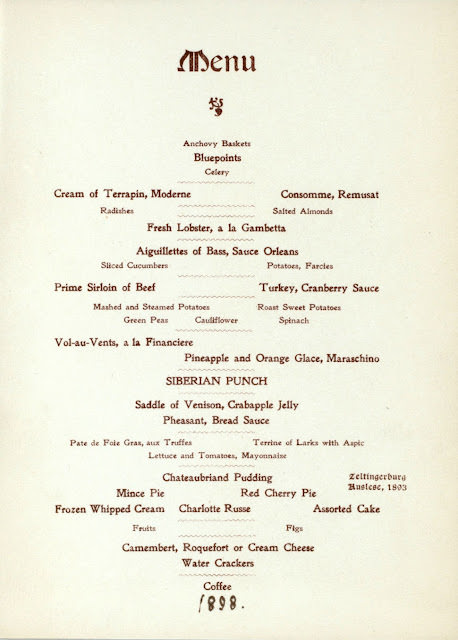
What these menus reveal is a specific cultural moment — one where American hosts wanted to prove their sophistication by layering European refinement onto a distinctly American holiday. French techniques applied to native ingredients like turkey, squash, and cornbread produced something that was neither purely American nor purely European, but a confident hybrid of both.
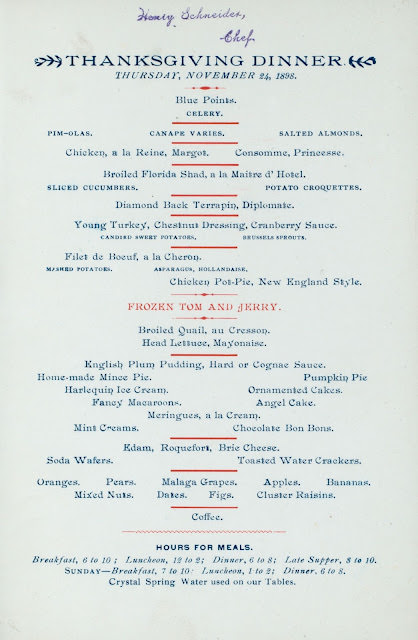
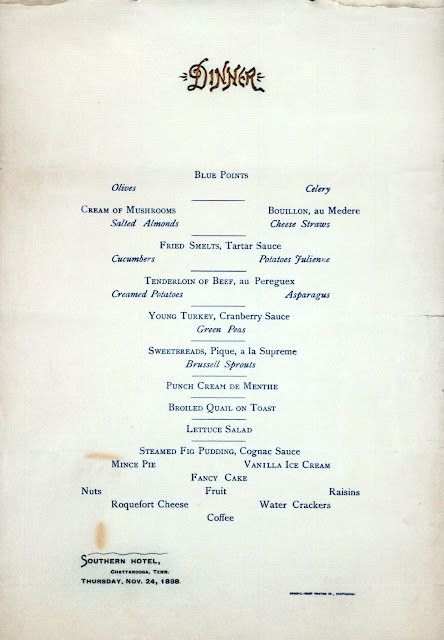
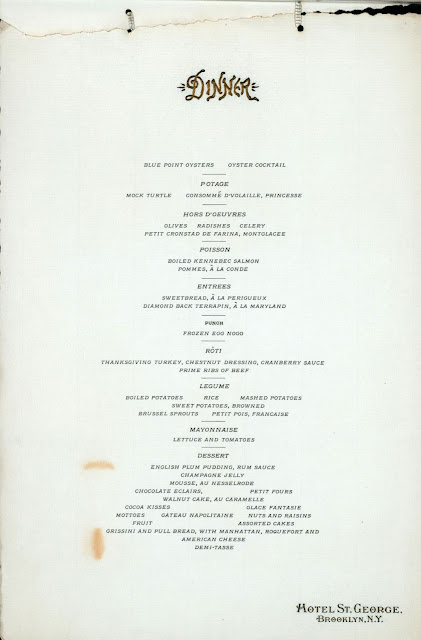
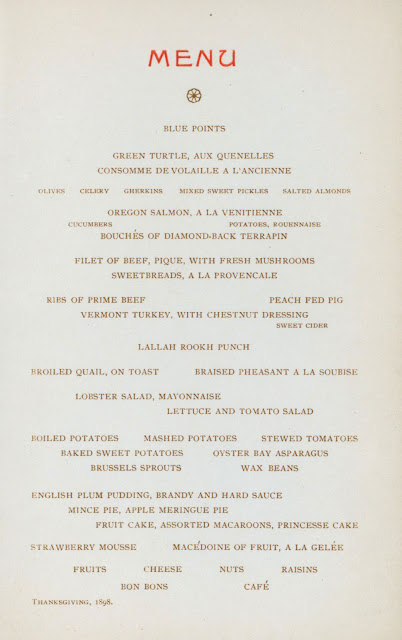
By the late 1890s, competing hotels were producing increasingly elaborate Thanksgiving menus as a form of marketing. A well-printed, multi-course menu card was itself a status symbol — something guests kept as a souvenir. Hotels like the Majestic, the Plaza, and the Broadway Central in New York used their Thanksgiving offerings to attract guests who expected the very best the season had to offer.
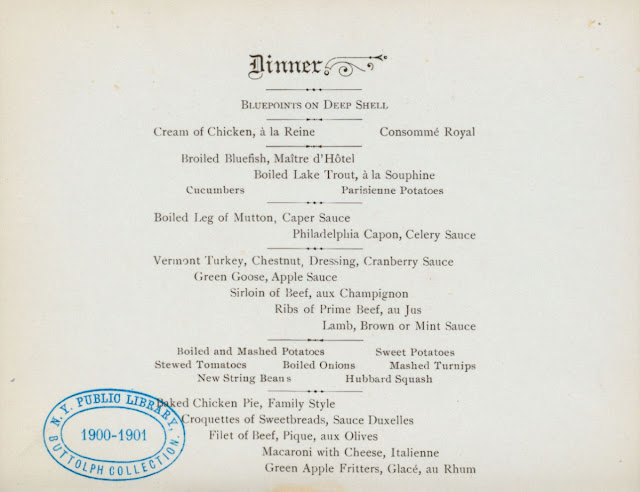
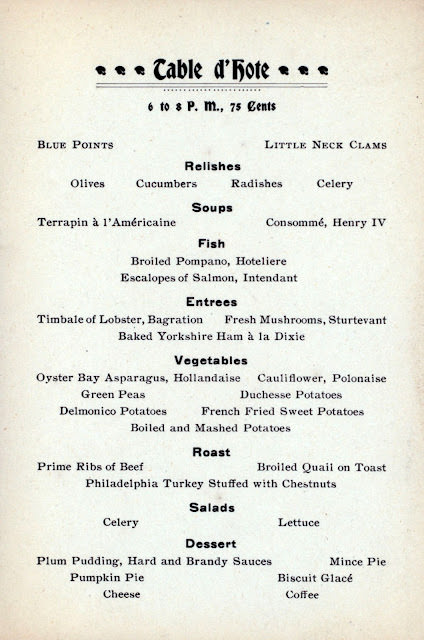

I don’t eat poultry, beef, or pork anymore, but all the fish and vegetable options sound wonderful. I’m a big fan of a good hotel holiday buffet.