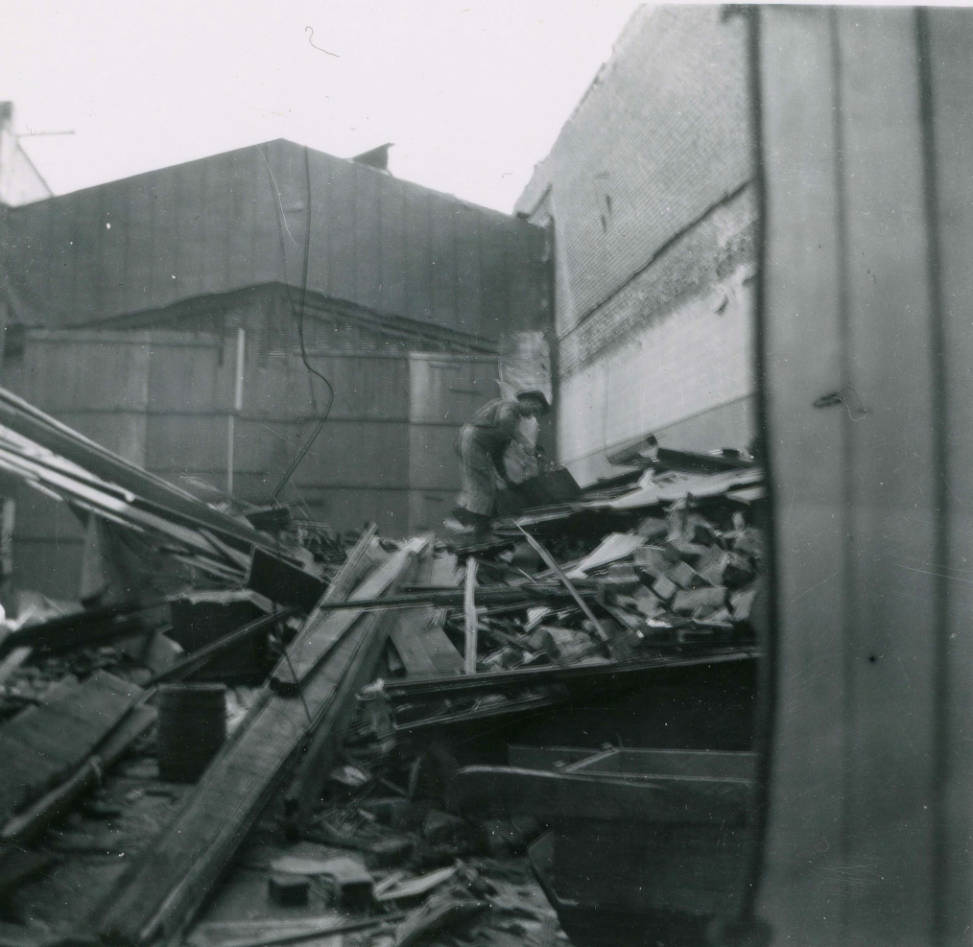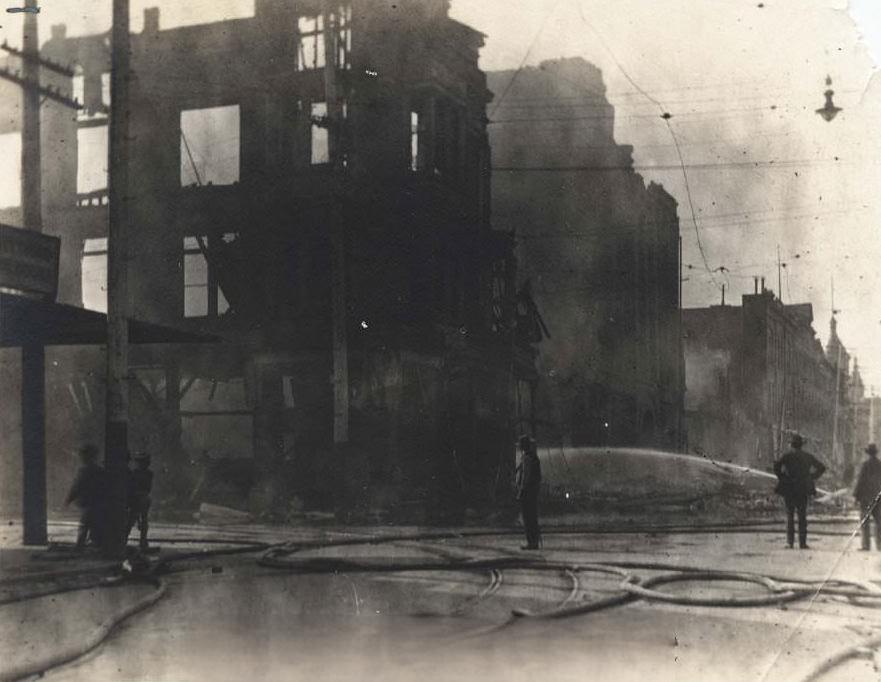

On April 18, 1906, an earthquake estimated at magnitude 7.8 struck California. Most people know the story of San Francisco — the fires, the collapsed buildings, the tens of thousands left homeless. But San Jose, located roughly 50 miles to the south, suffered its own devastating blow. The city was smaller, more rural, and more spread out than San Francisco, which meant the enormous fires that gutted the Bay City were largely avoided. That distance between structures worked in San Jose’s favor. But the shaking itself was just as violent, and the destruction it left behind was severe and widespread.
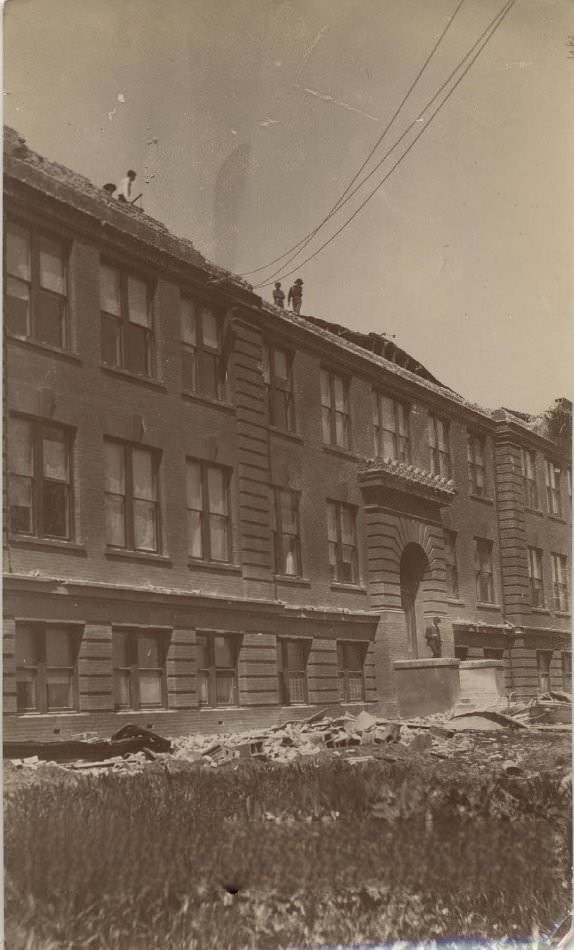
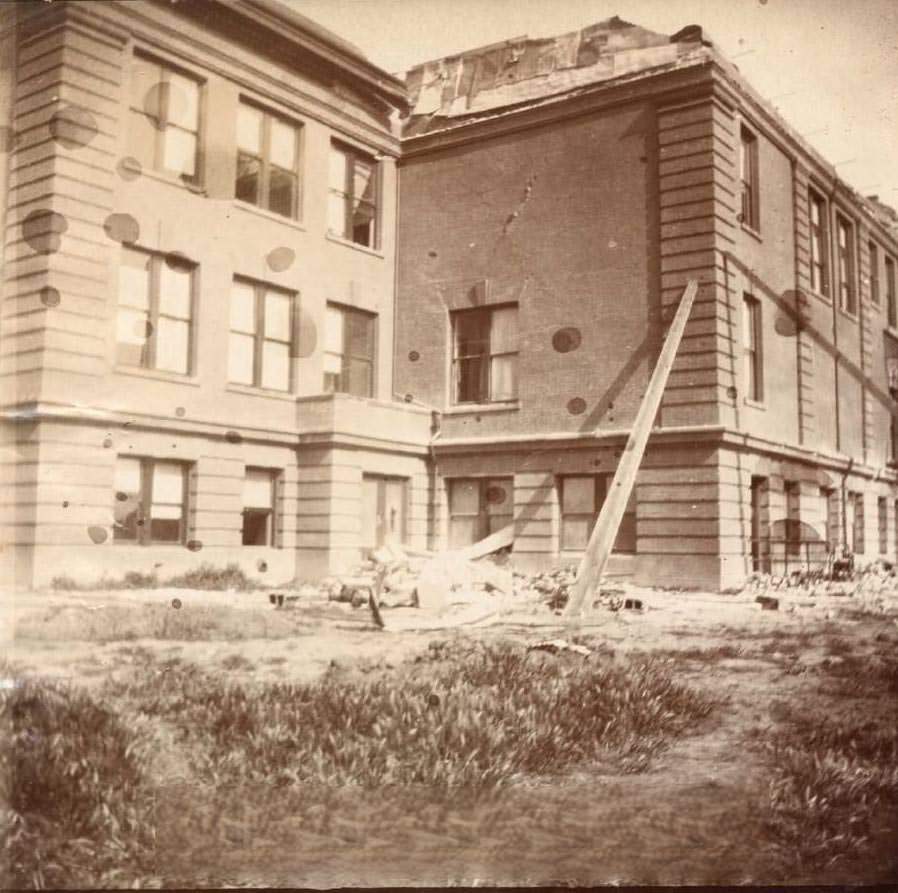
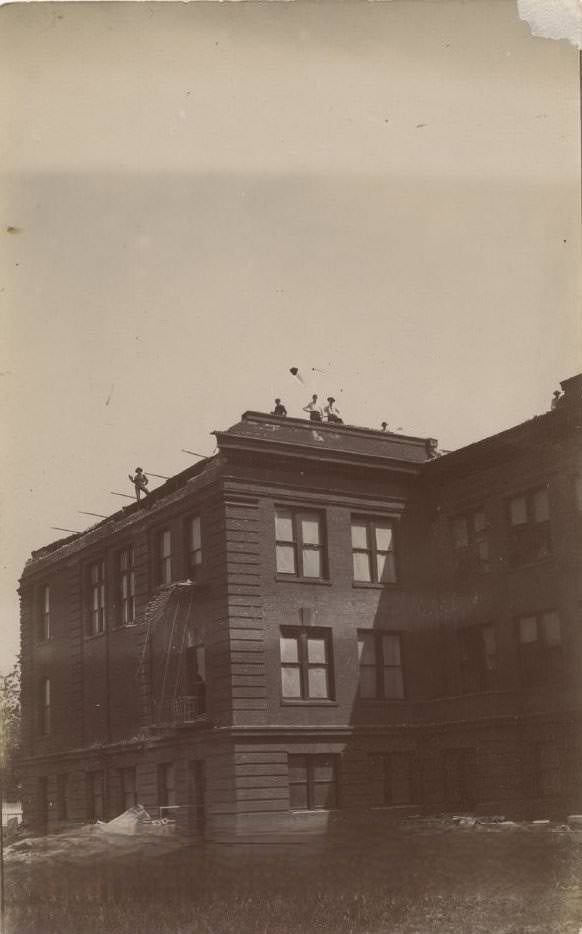
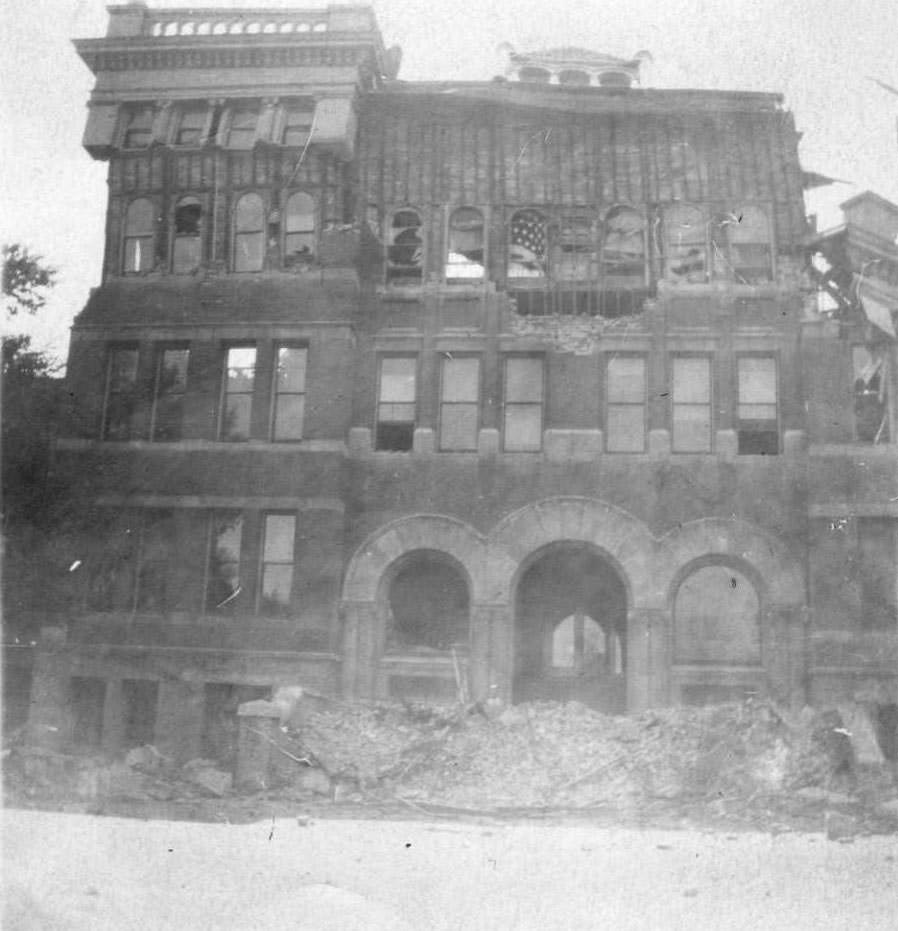
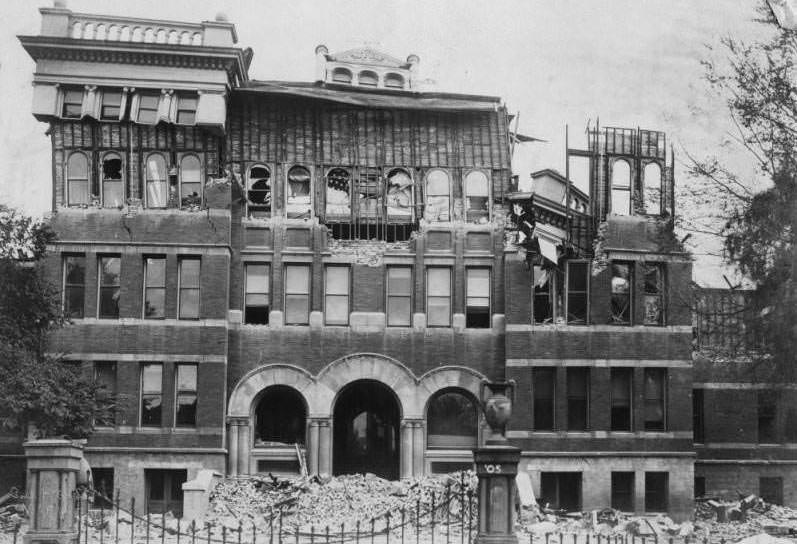
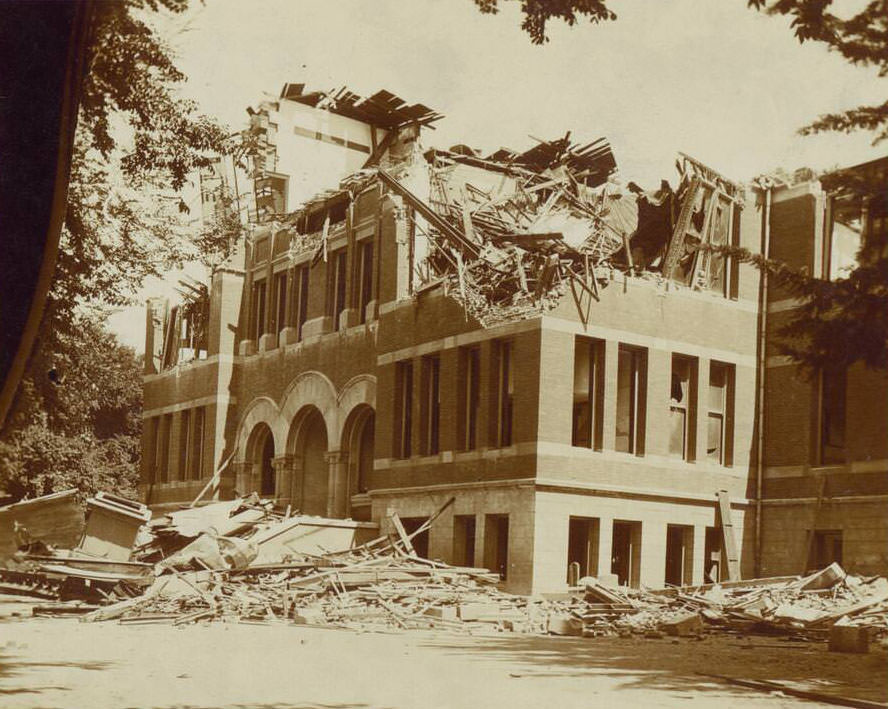
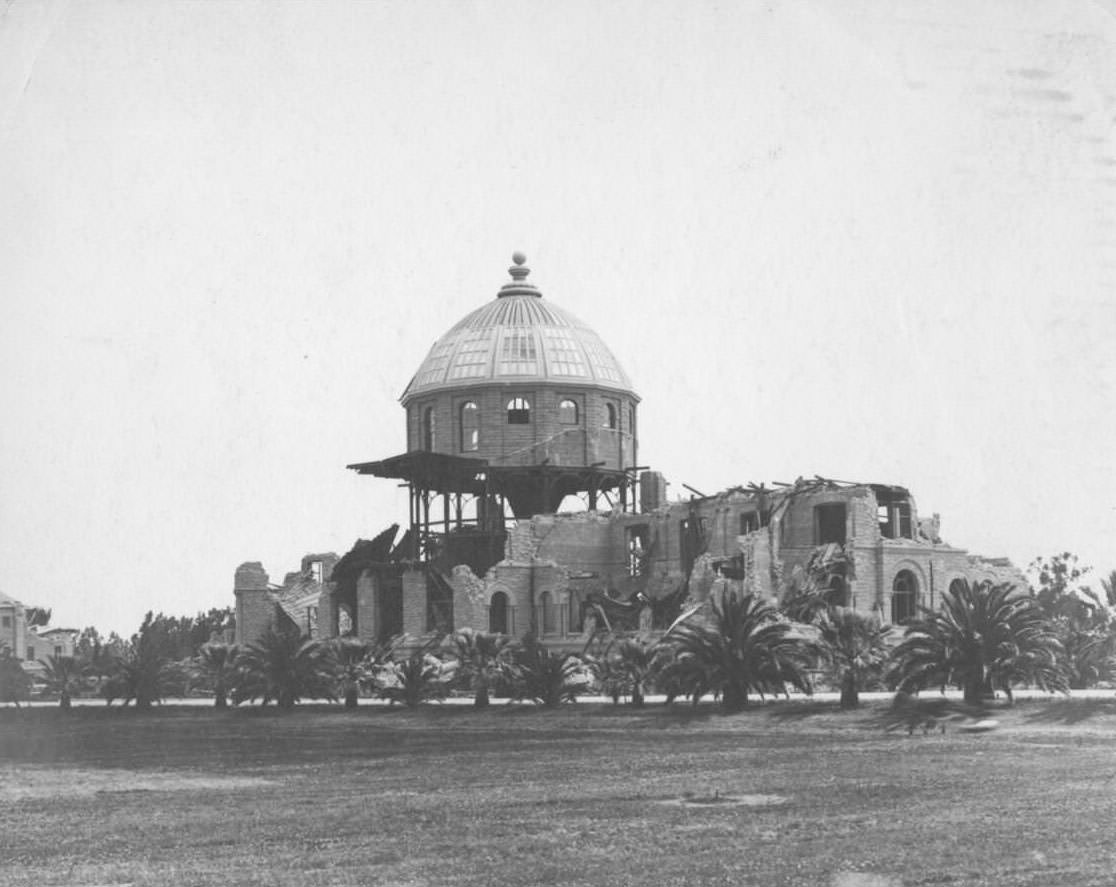
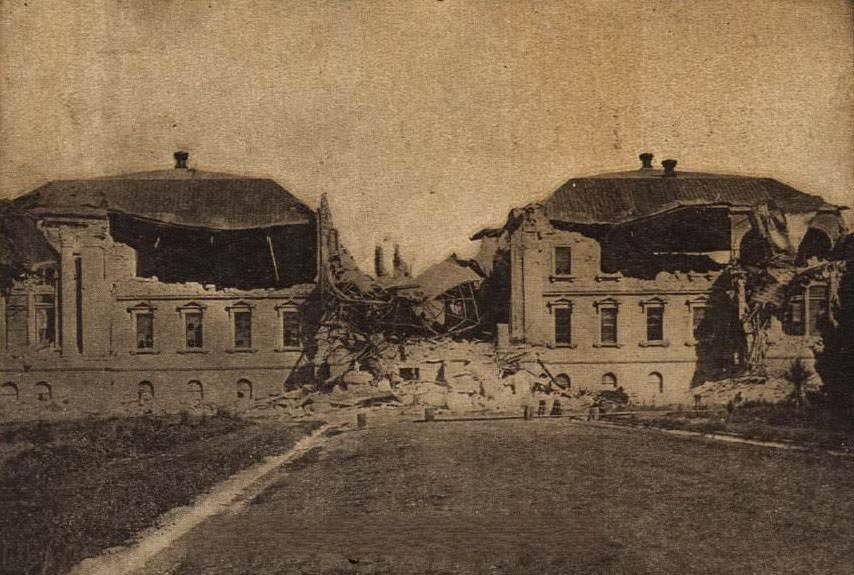
San Jose’s high school, built at the corner of Seventh and San Fernando Streets in 1898 for $100,000, was one of the most prominent casualties. The three-story brick and stone building was constructed to last, but the earthquake reduced it to ruins in seconds. The roof and upper levels caved inward, windows shattered, and the entrance archways were blocked by heaps of rubble. The building was later demolished entirely.
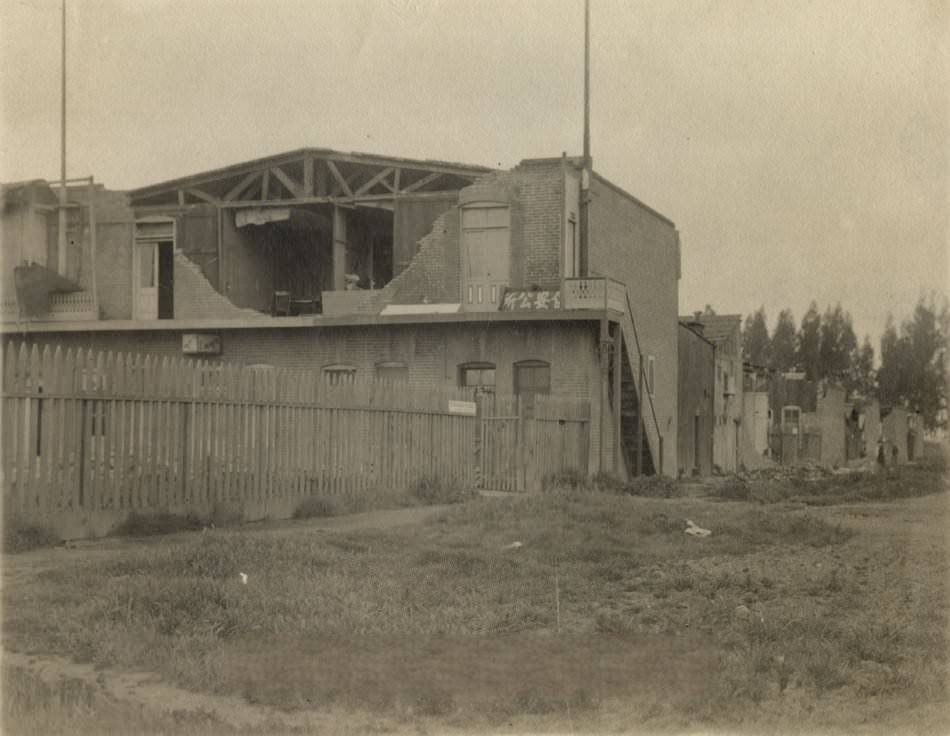
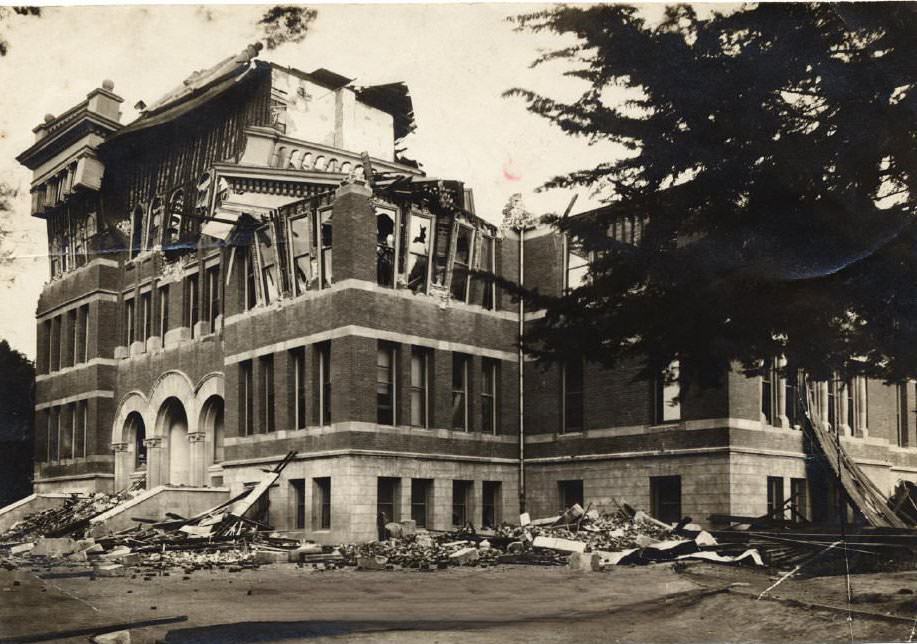
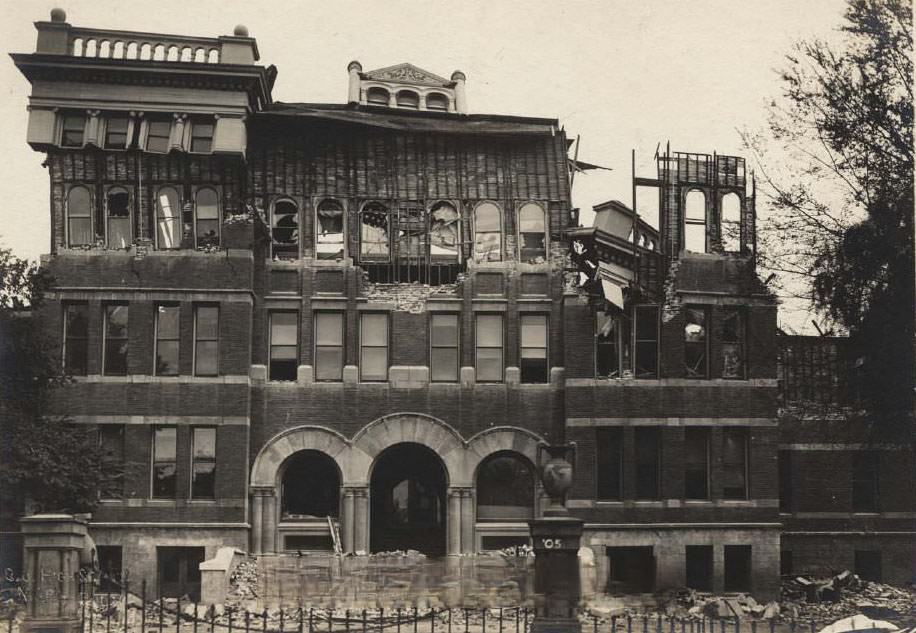
Multiple photographs were taken of the high school from different angles, each one telling the same story. Walls that had stood for eight years were cracked or fully collapsed. The brick facade that once projected civic pride now jutted outward at dangerous angles. Crowds gathered in the streets to look at what remained.
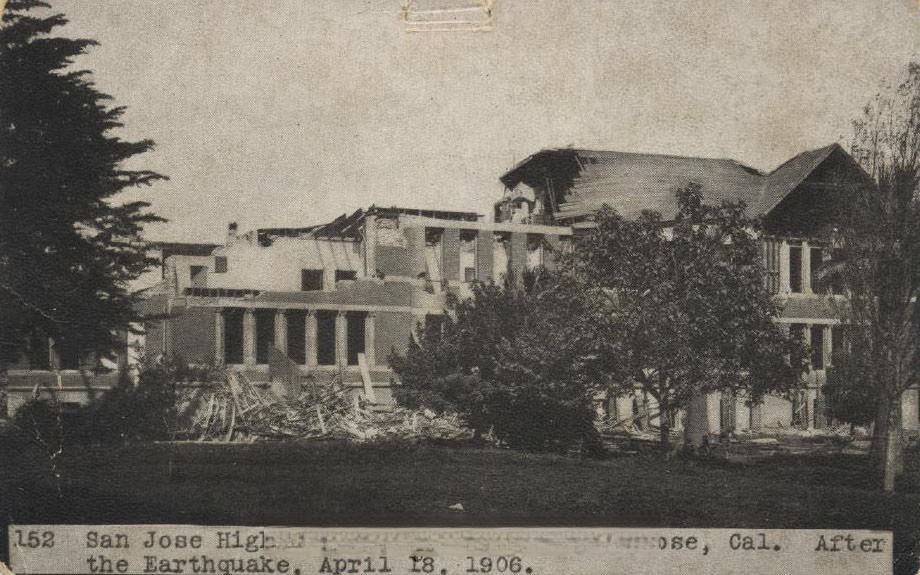
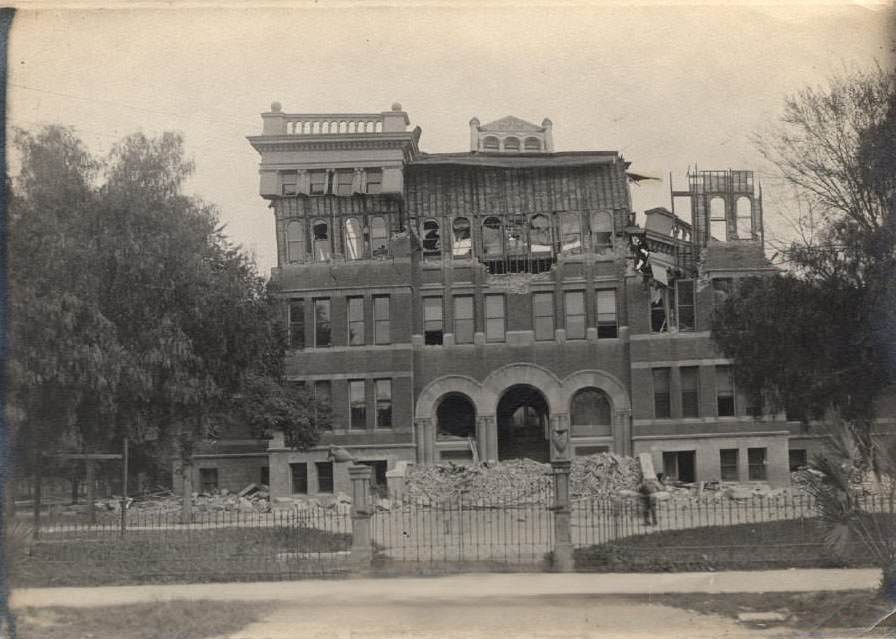
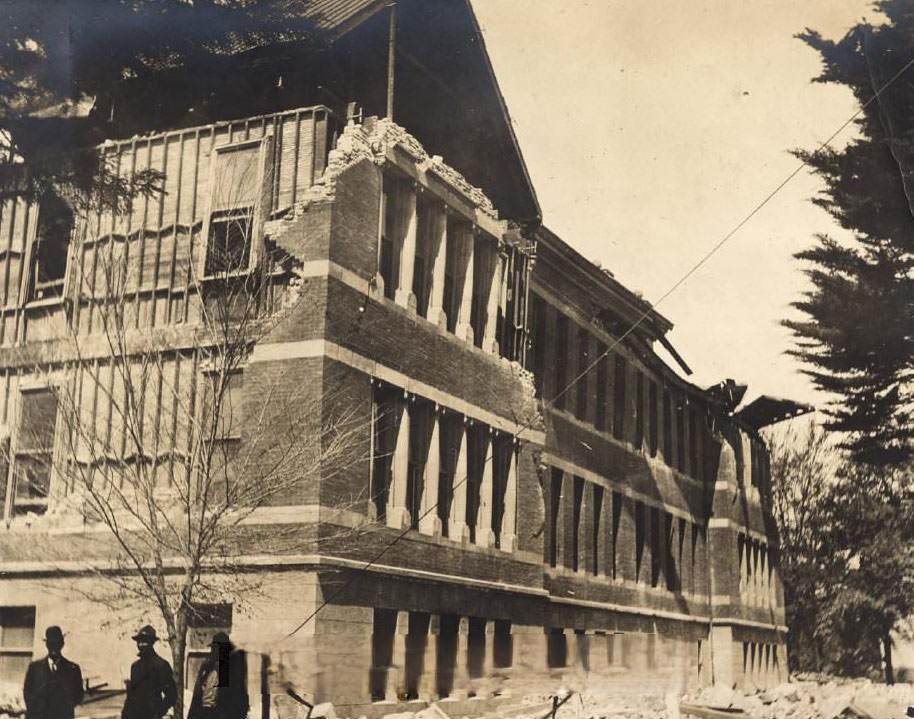
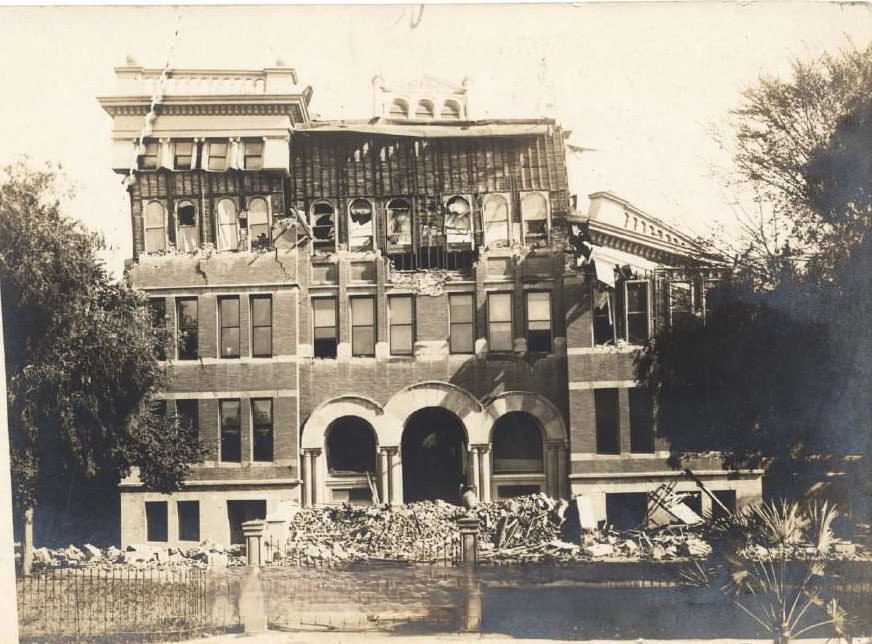
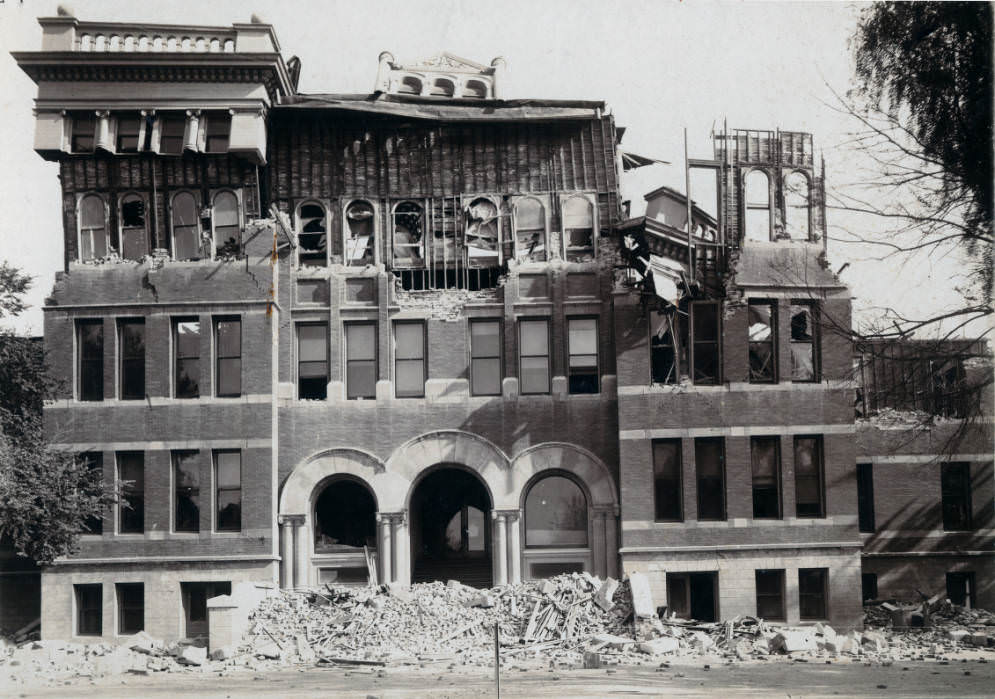
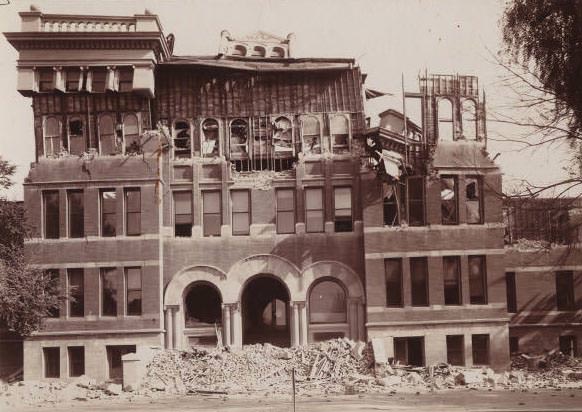
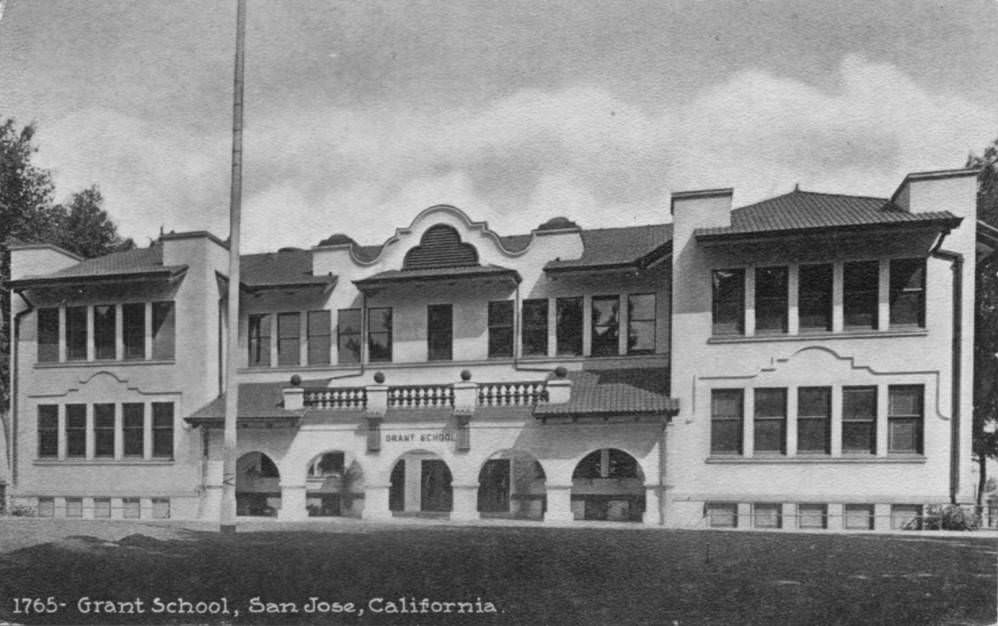
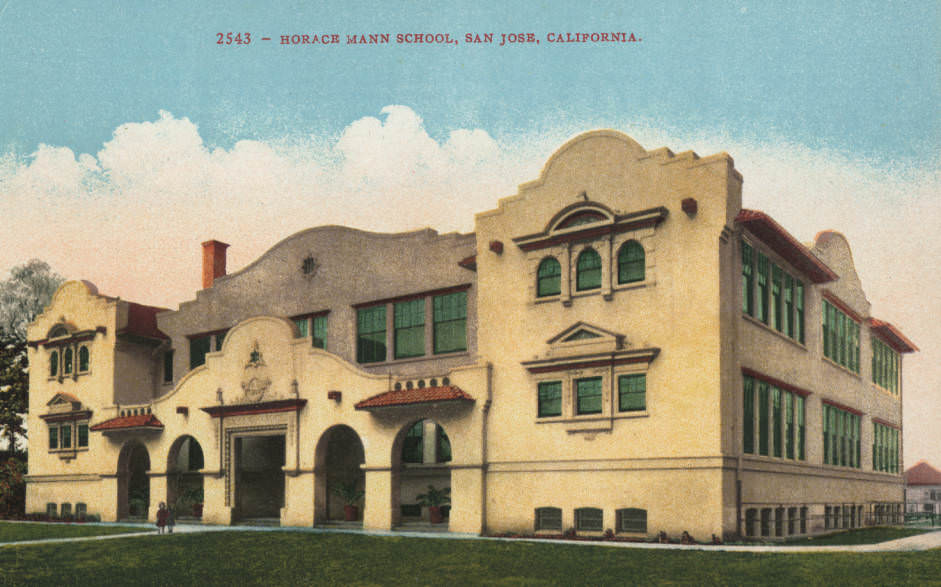
The high school was not alone. Grant School, a two-story frame building, was wrecked completely. The new high school in Normal Park was utterly destroyed as well. Schools across the city had been built with the expectation that they would serve generations of students. Many were gone within minutes of the first tremor.
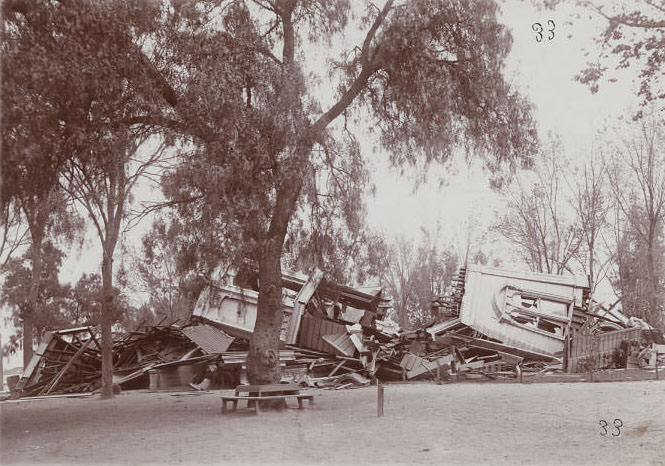
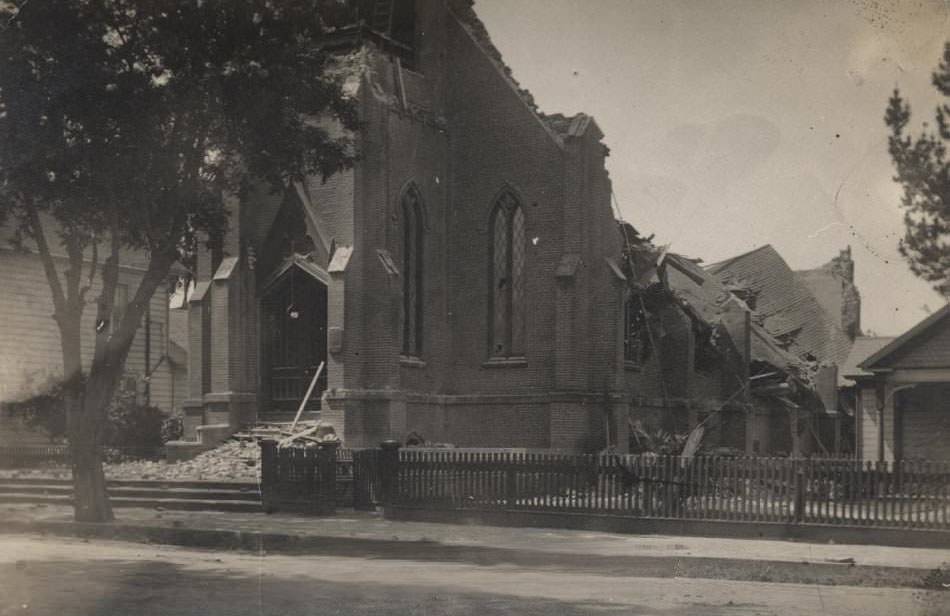
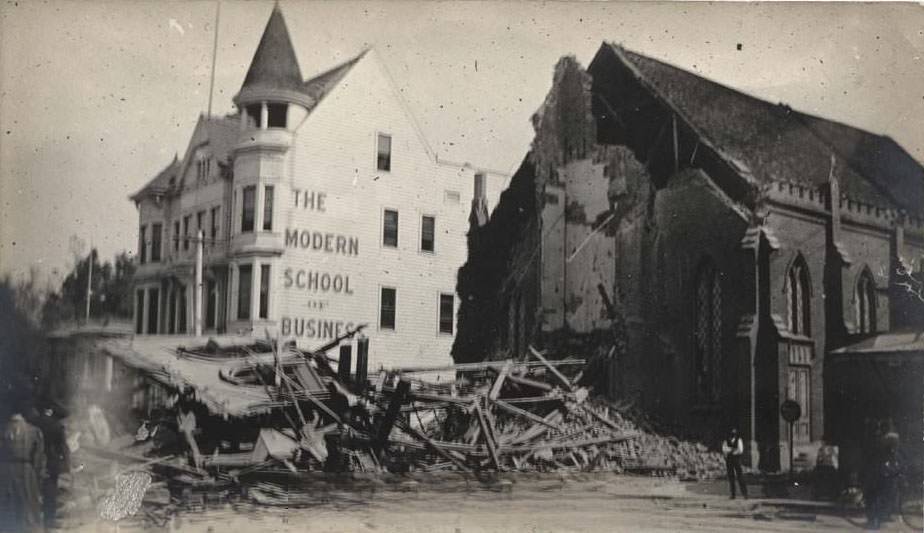
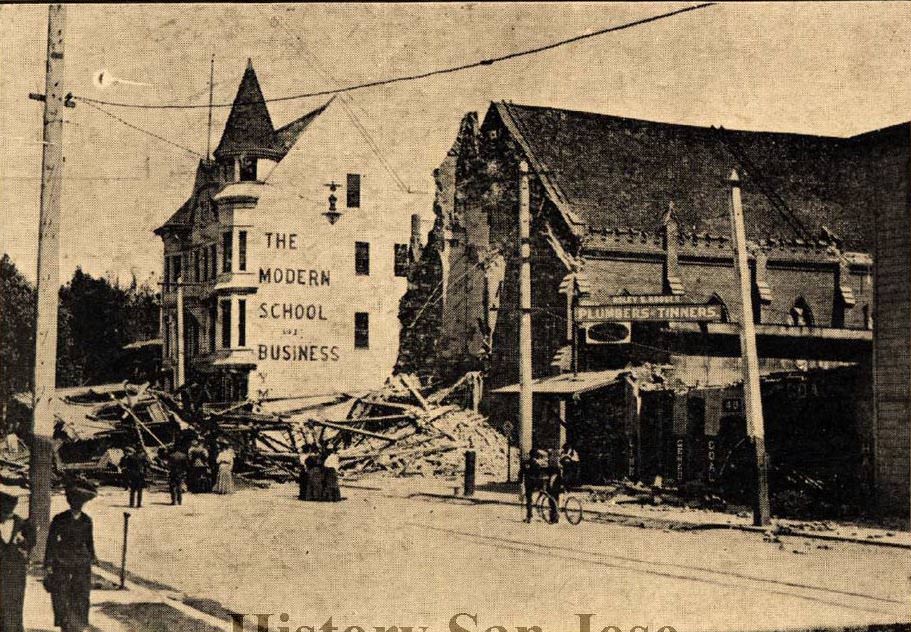
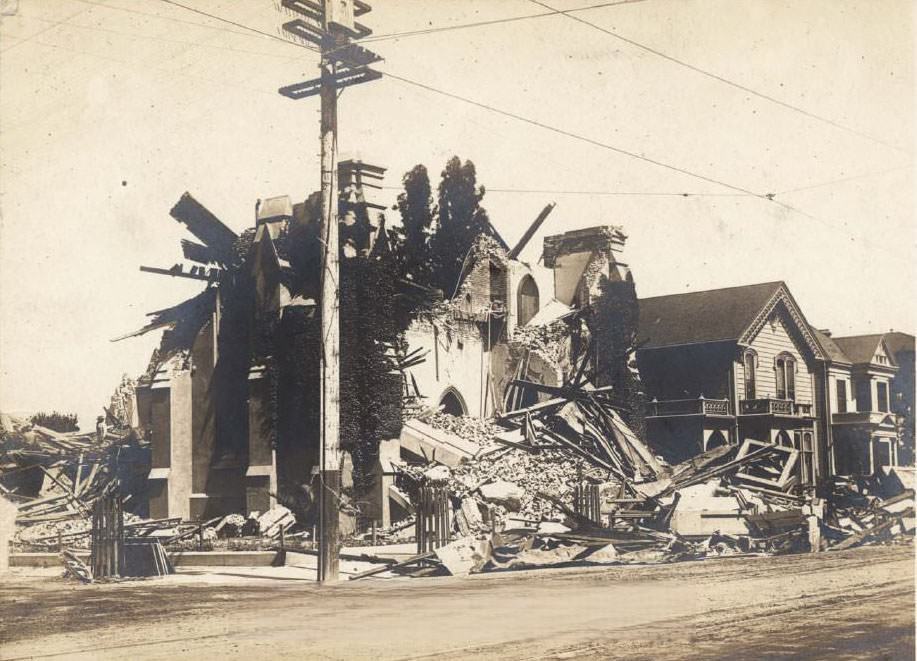
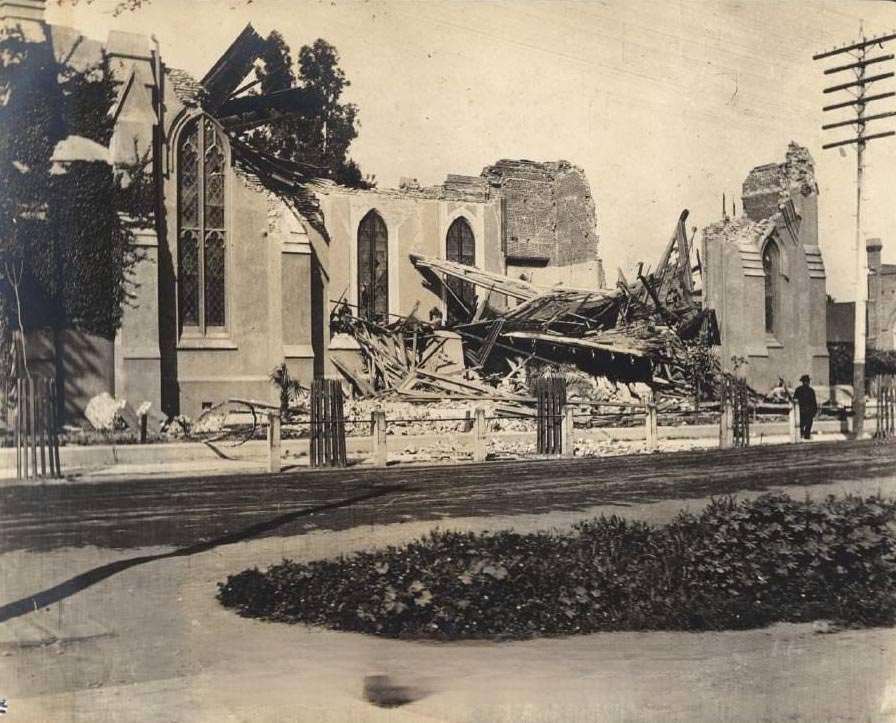
San Jose’s churches fared no better. St. Patrick’s Church was wrecked, as were the First Presbyterian Church, the Centella Methodist Episcopal Church, the Central Christian Church, and the South Methodist Church. Trinity Church also suffered heavy damage. At the First Presbyterian Church on North Second Street, part of the structure tumbled directly into the road, scattering brick across the street in front of the Modern School of Business.
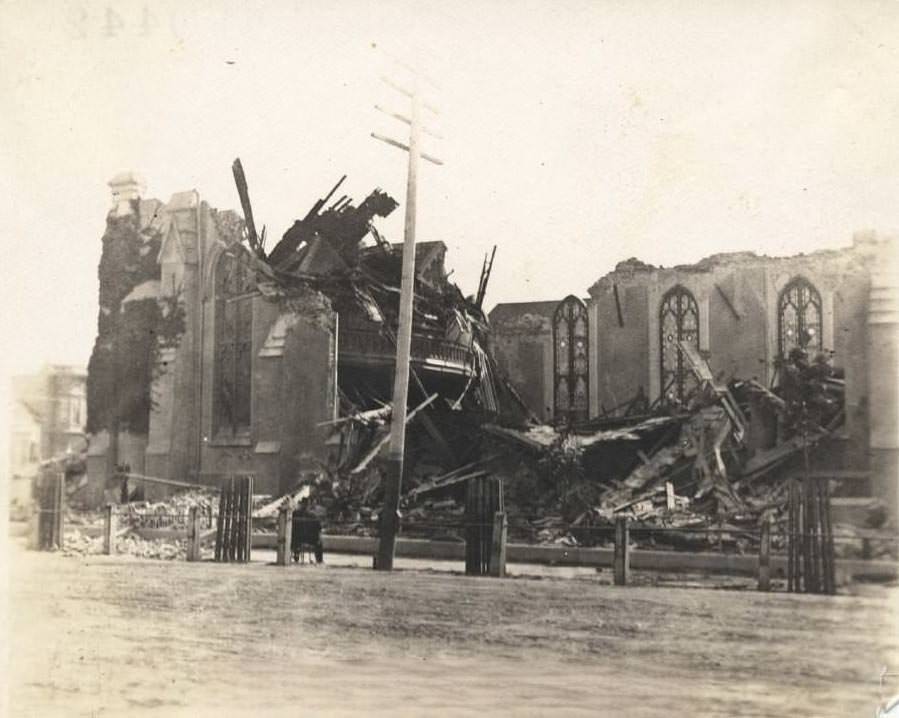
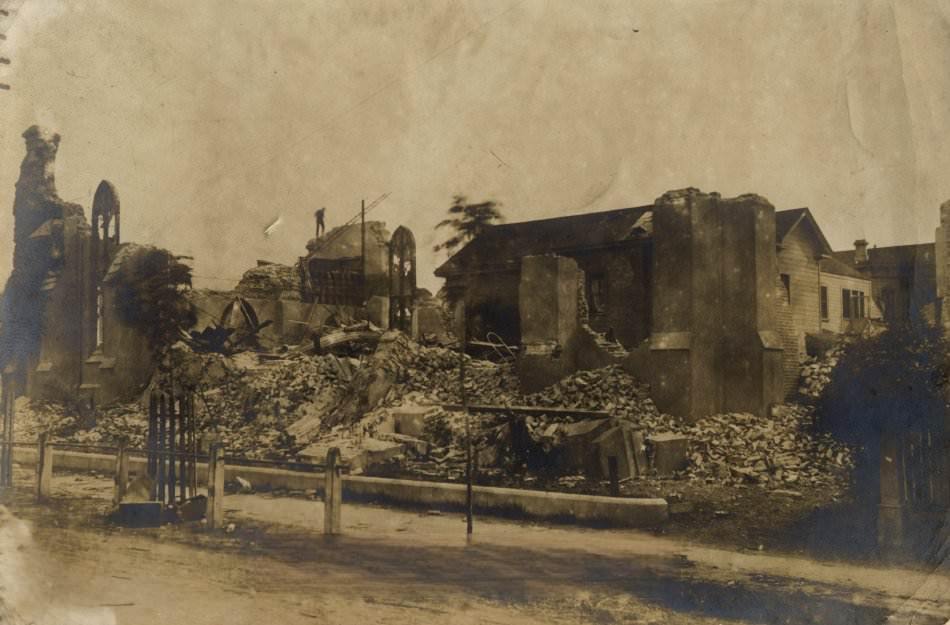
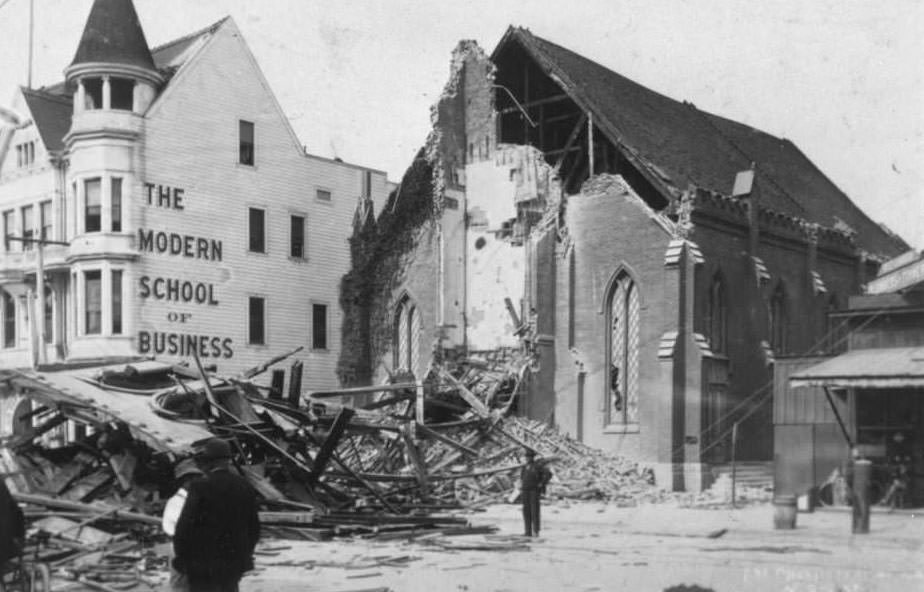
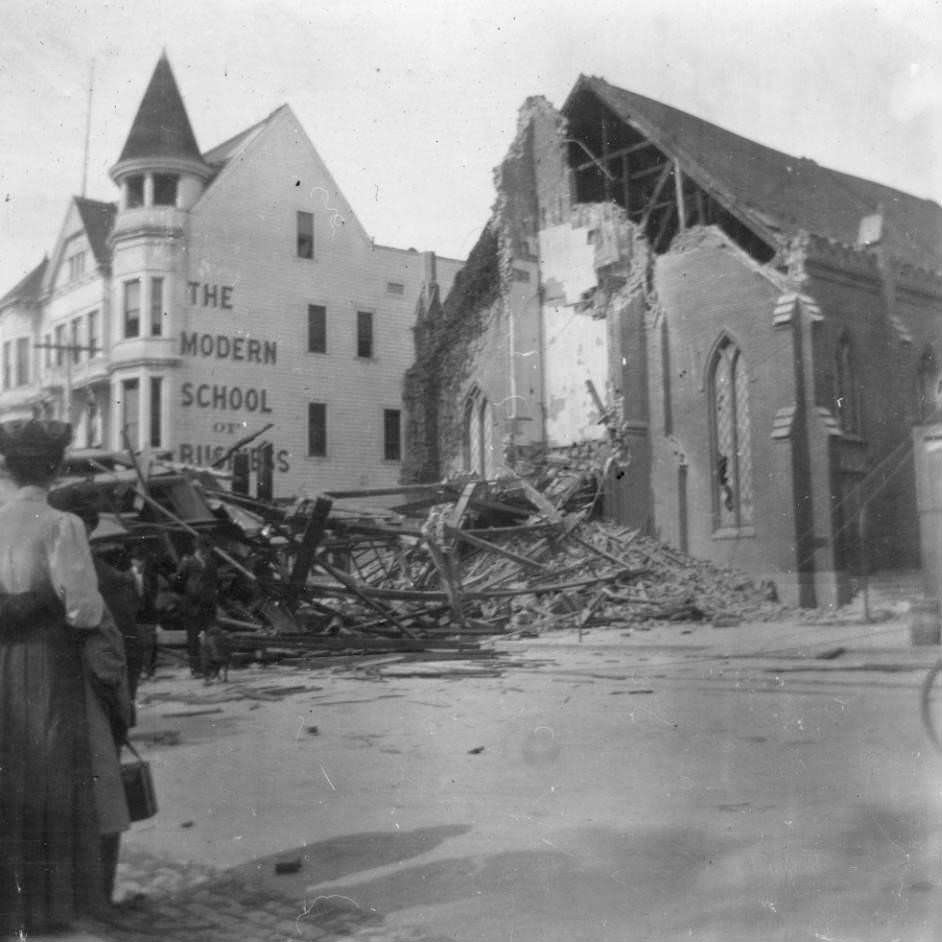
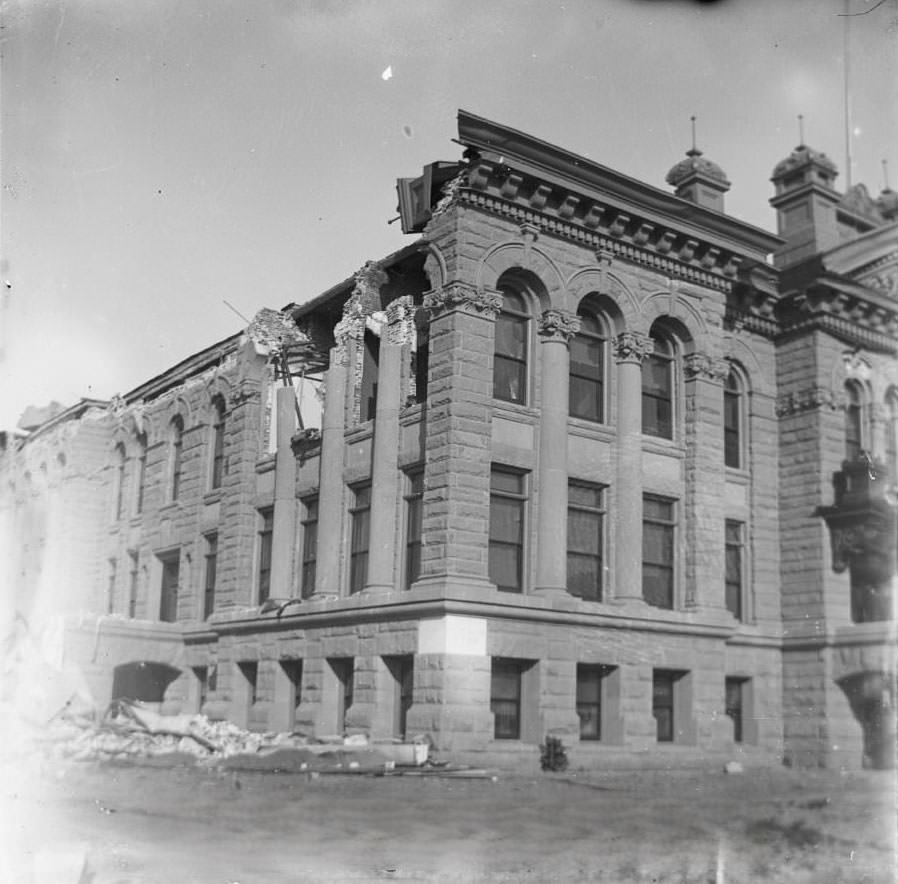
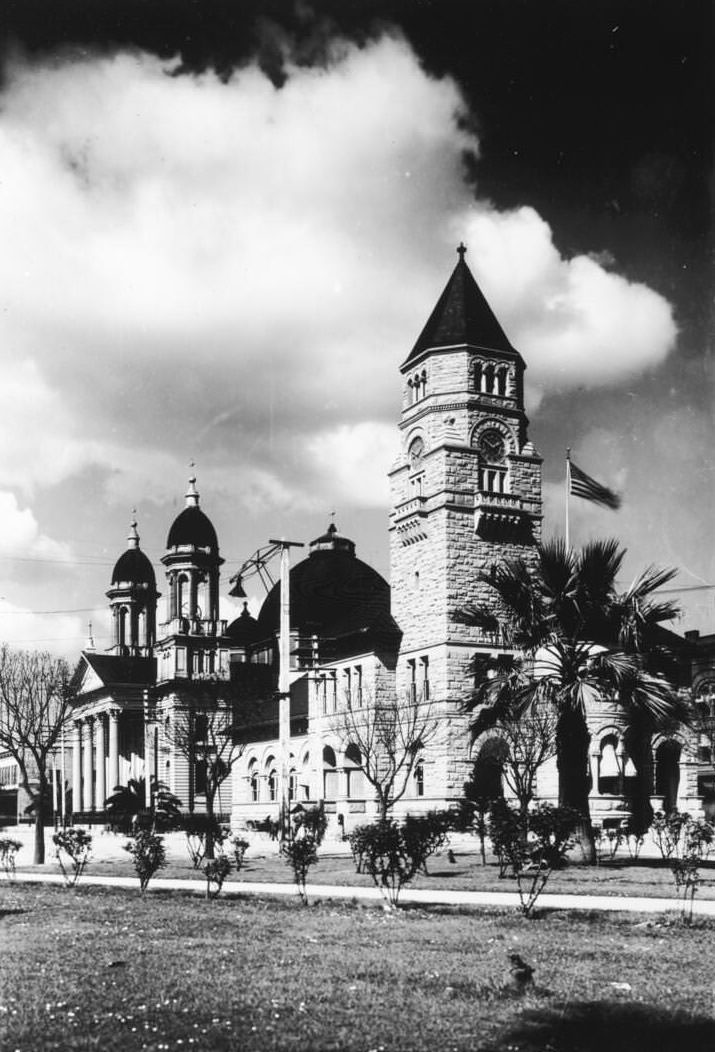
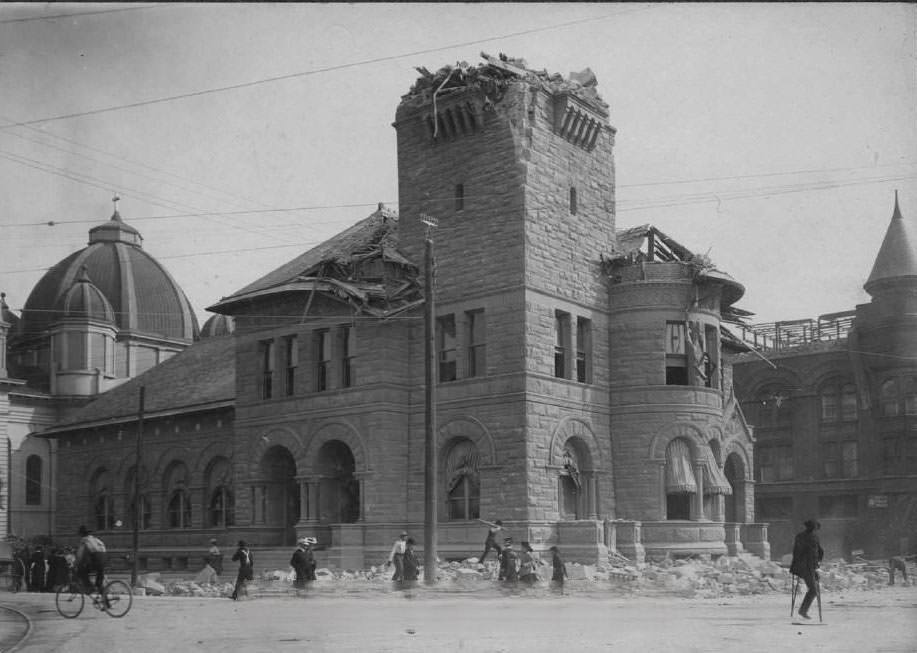
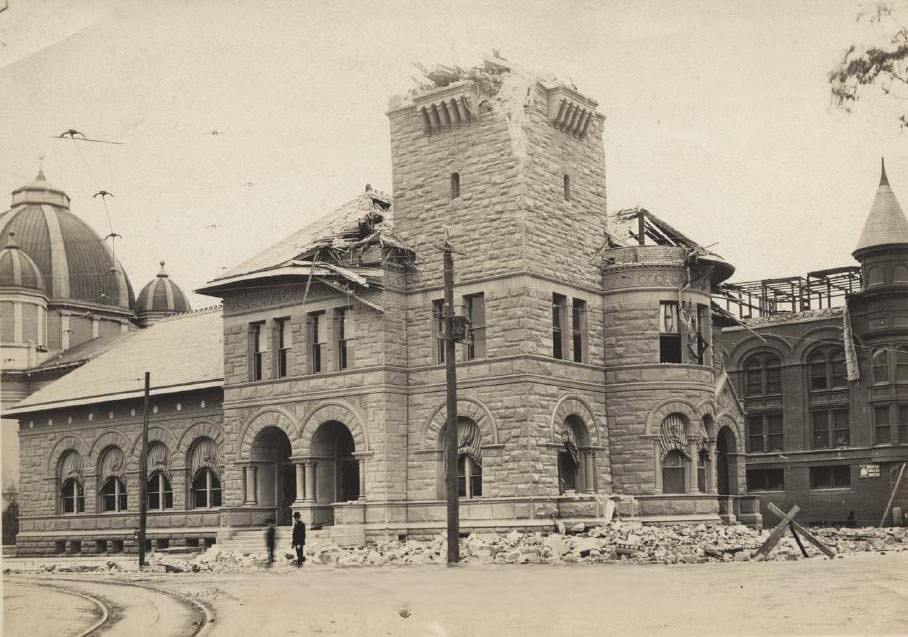
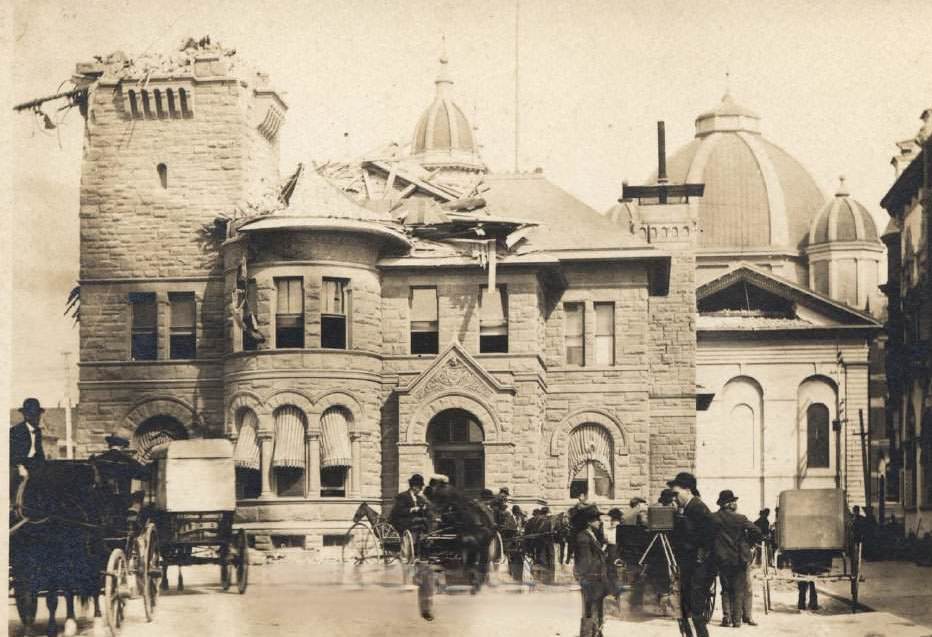
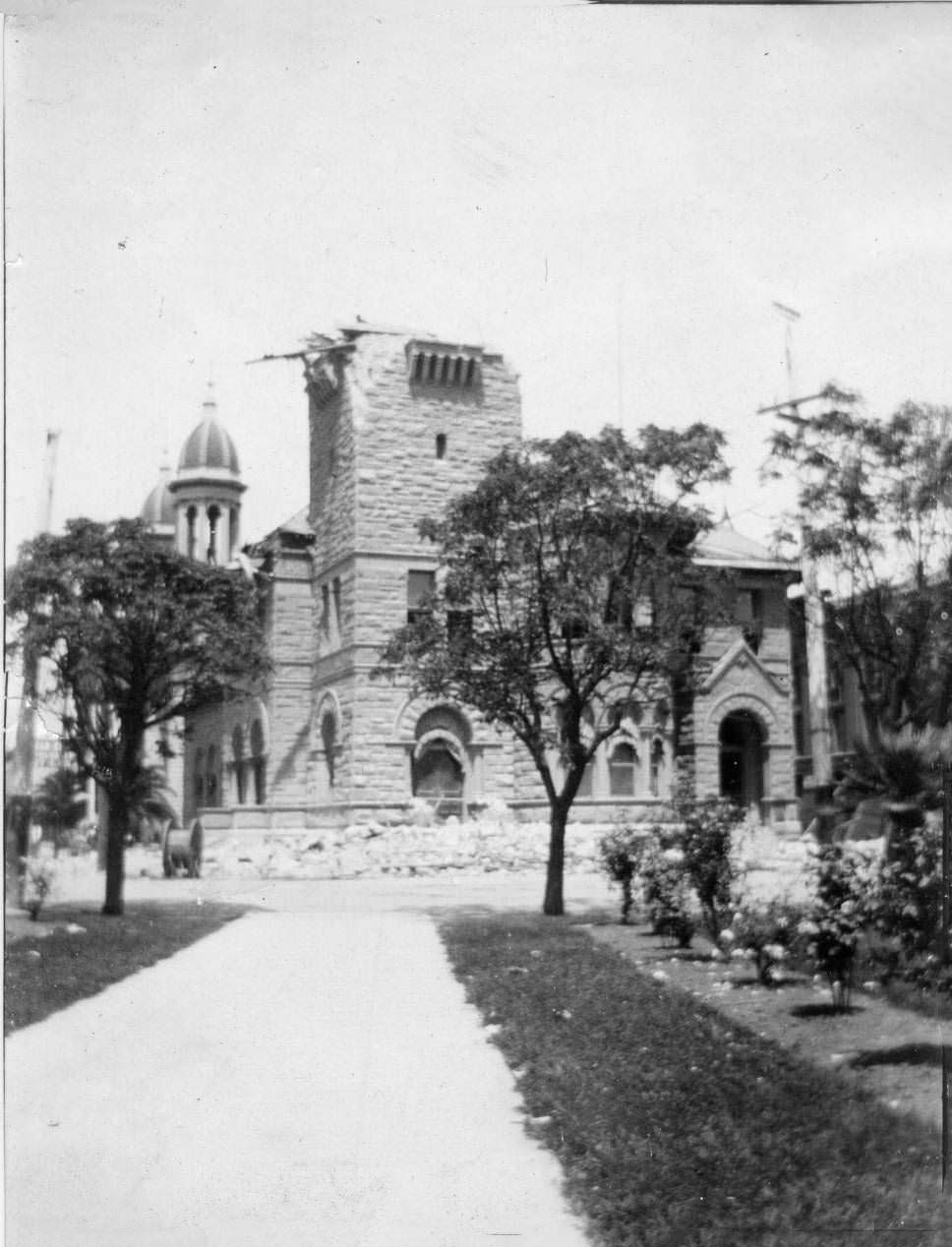
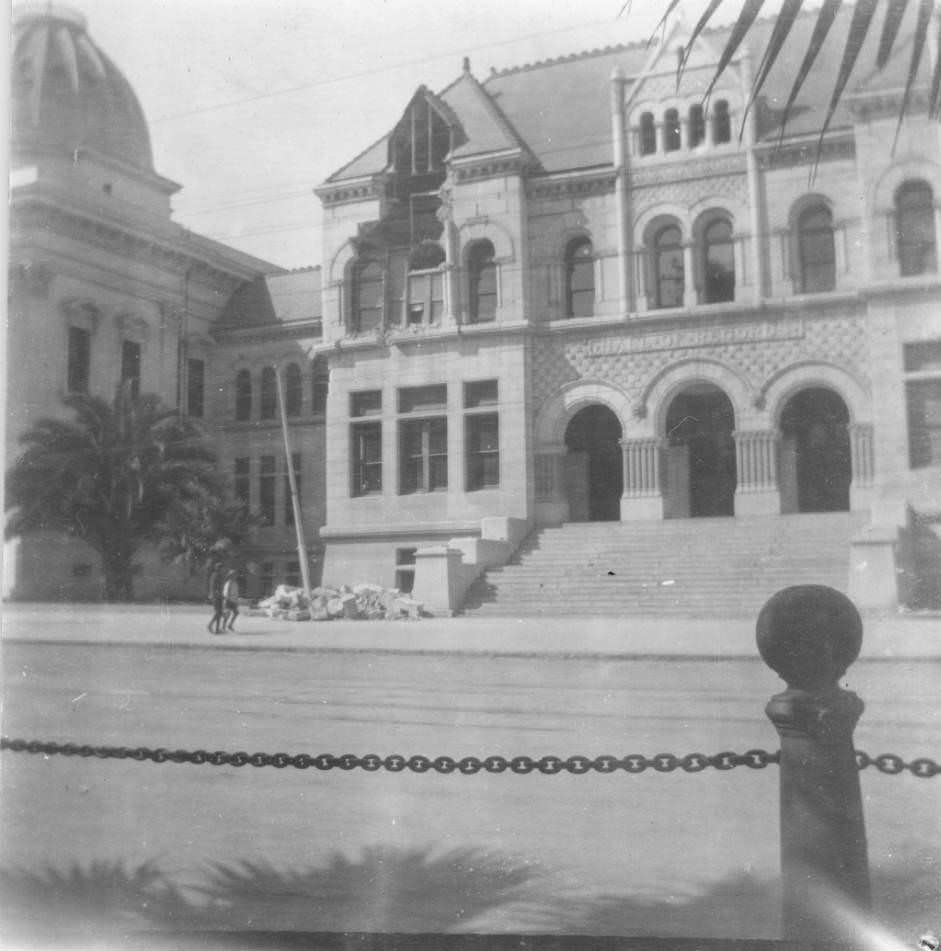
The San Jose Post Office, a striking Gothic stone building on Market Street at San Fernando Street, was one of the most photographed damaged structures in the city. Its tall clock tower with a conical roof had partially collapsed, and rubble covered sections of the roof. Crowds gathered outside, including photographers who documented the wreckage from multiple angles. That same building later served as the city’s public library and has housed the San Jose Museum of Art since 1975.
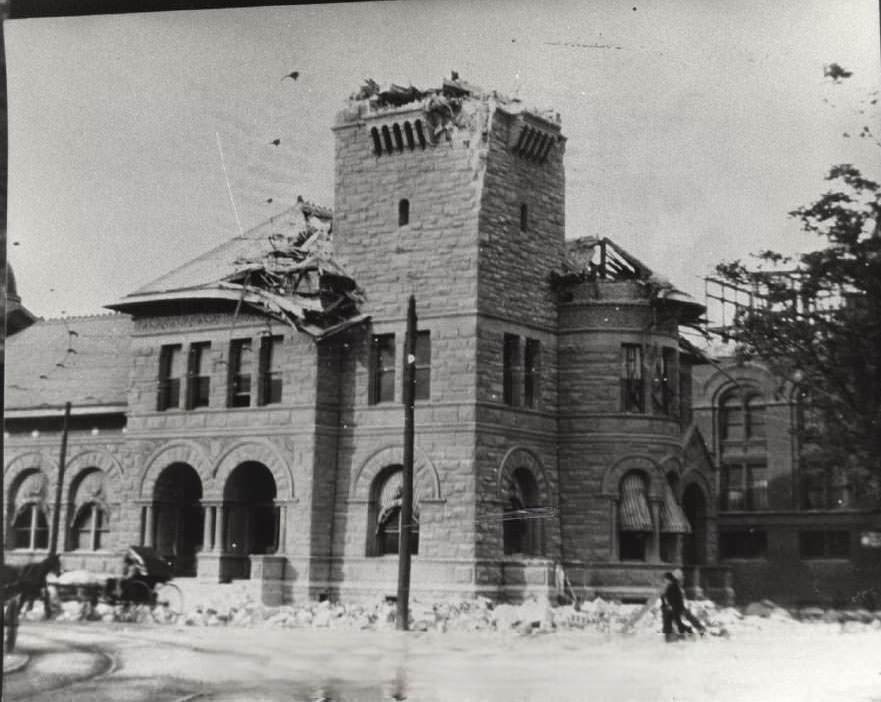
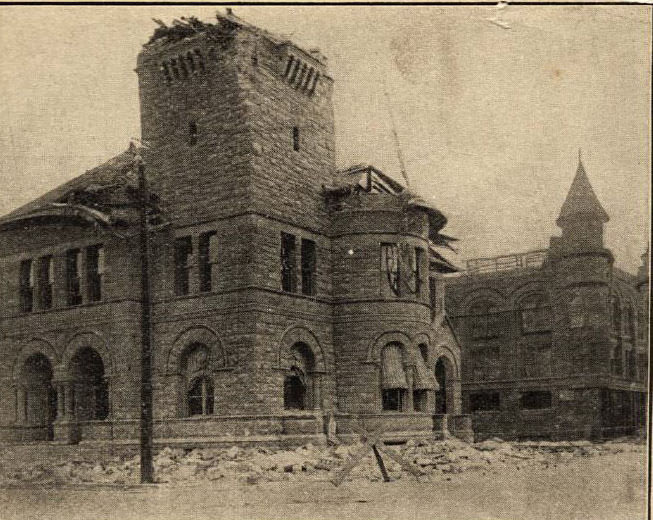
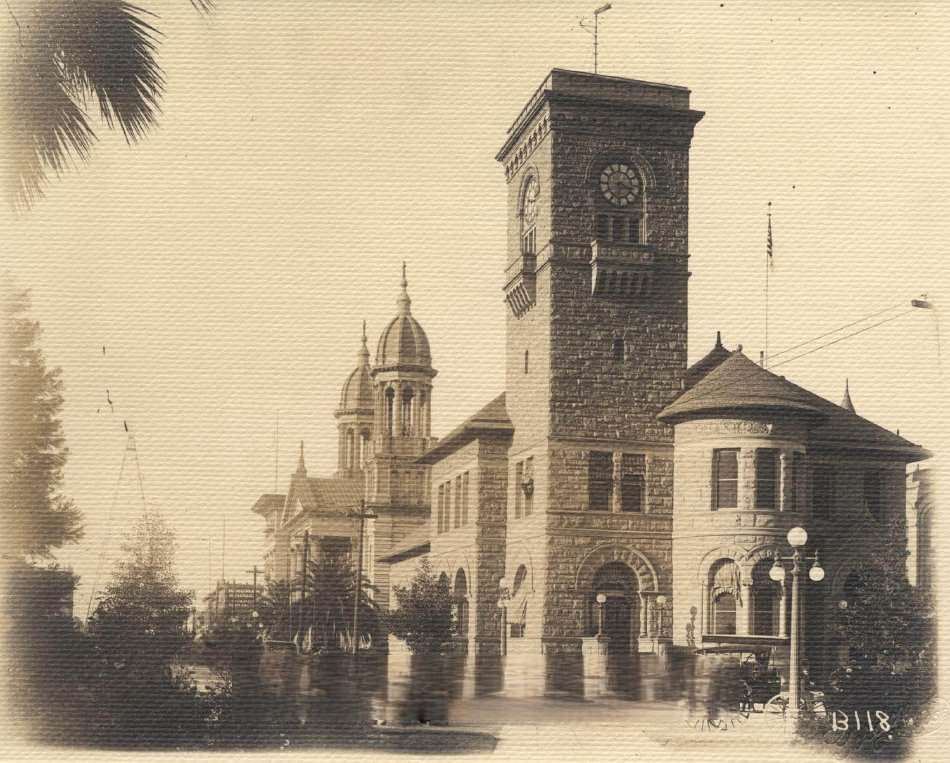
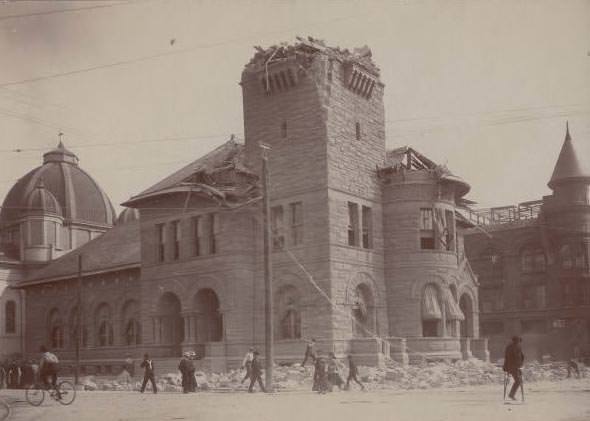
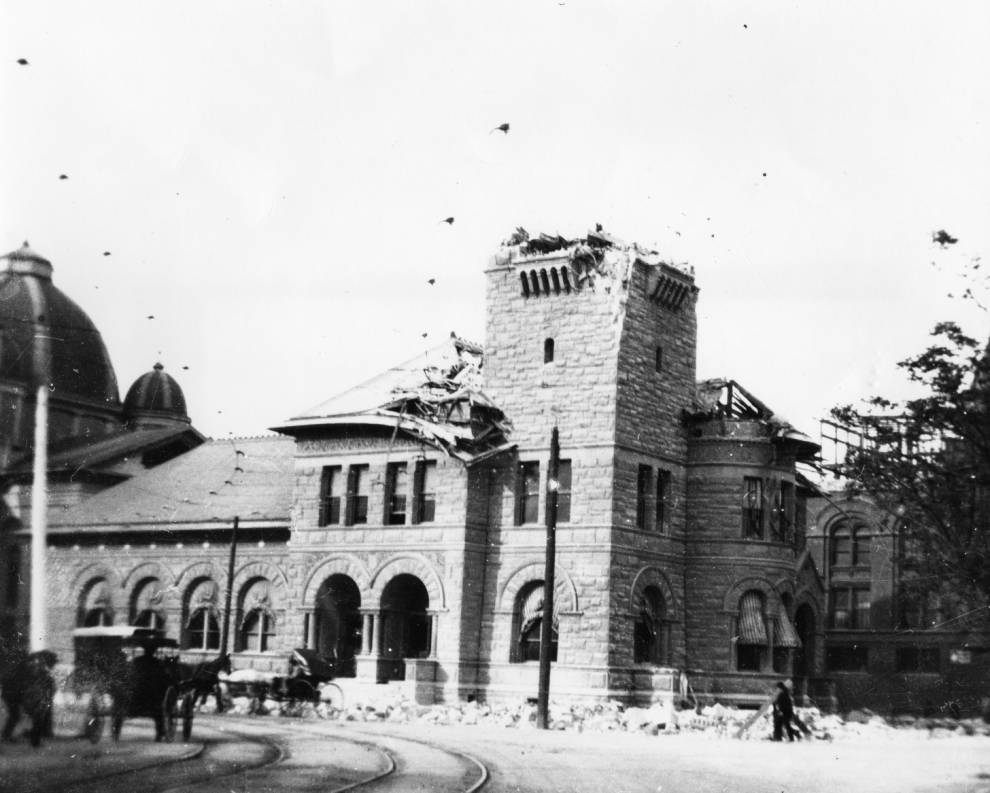
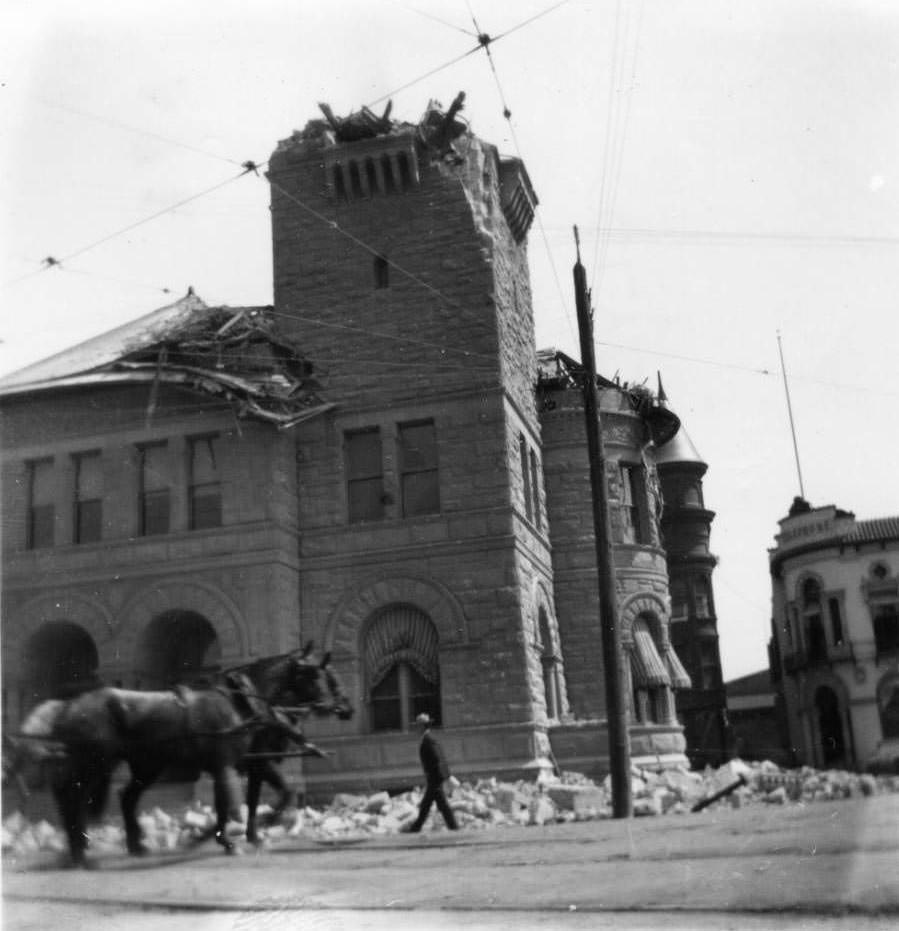
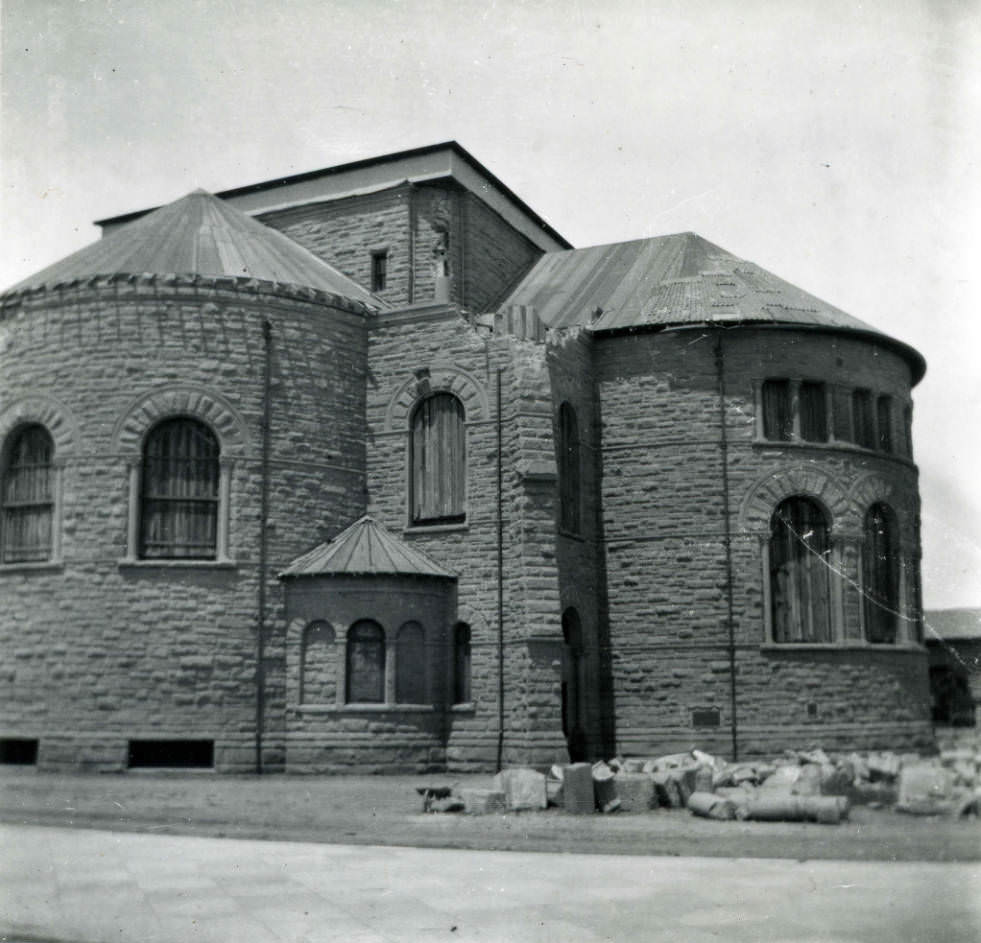
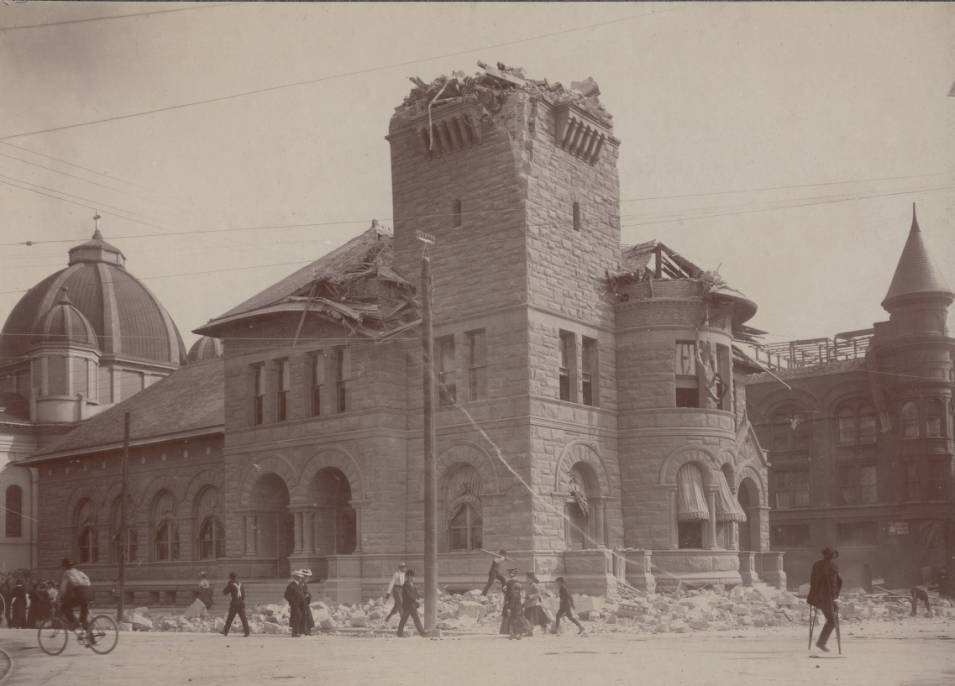
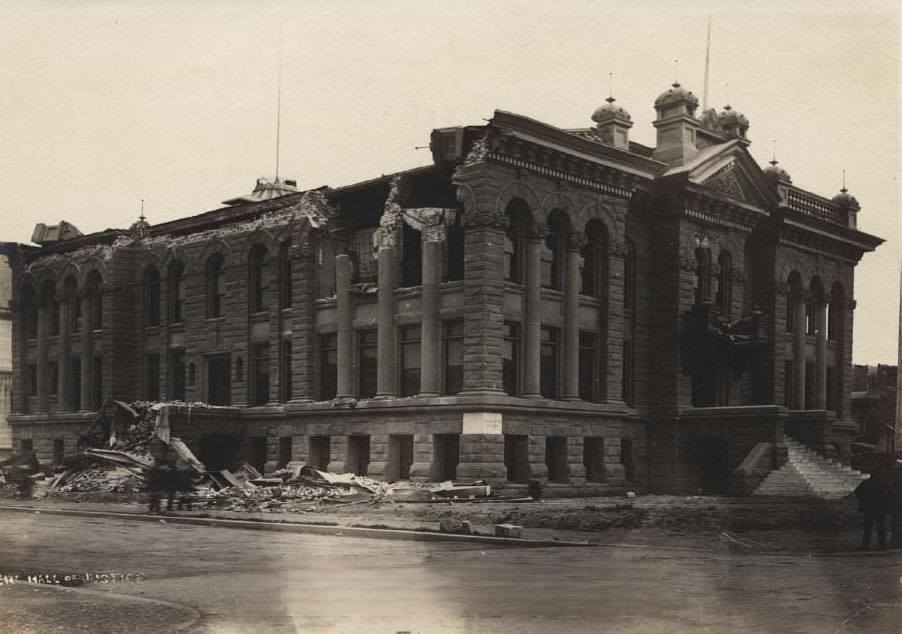
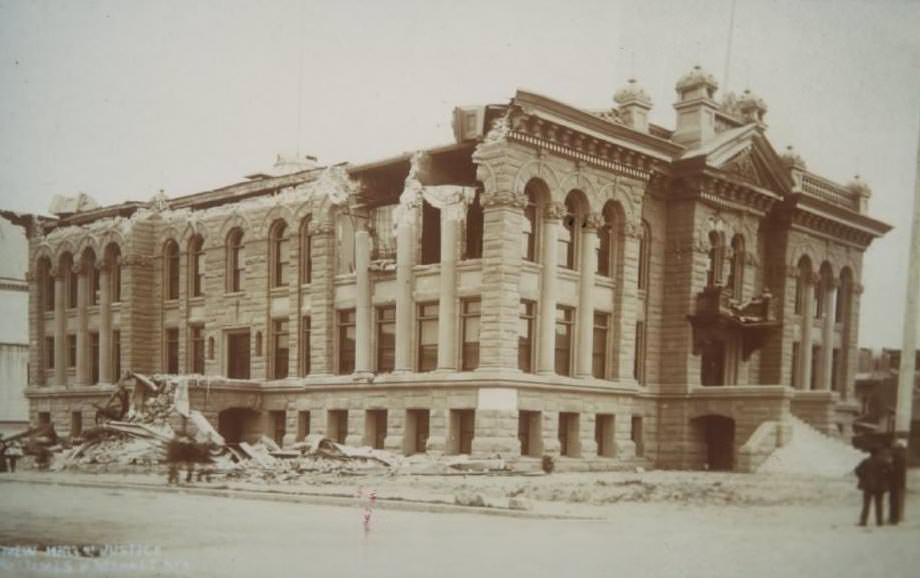
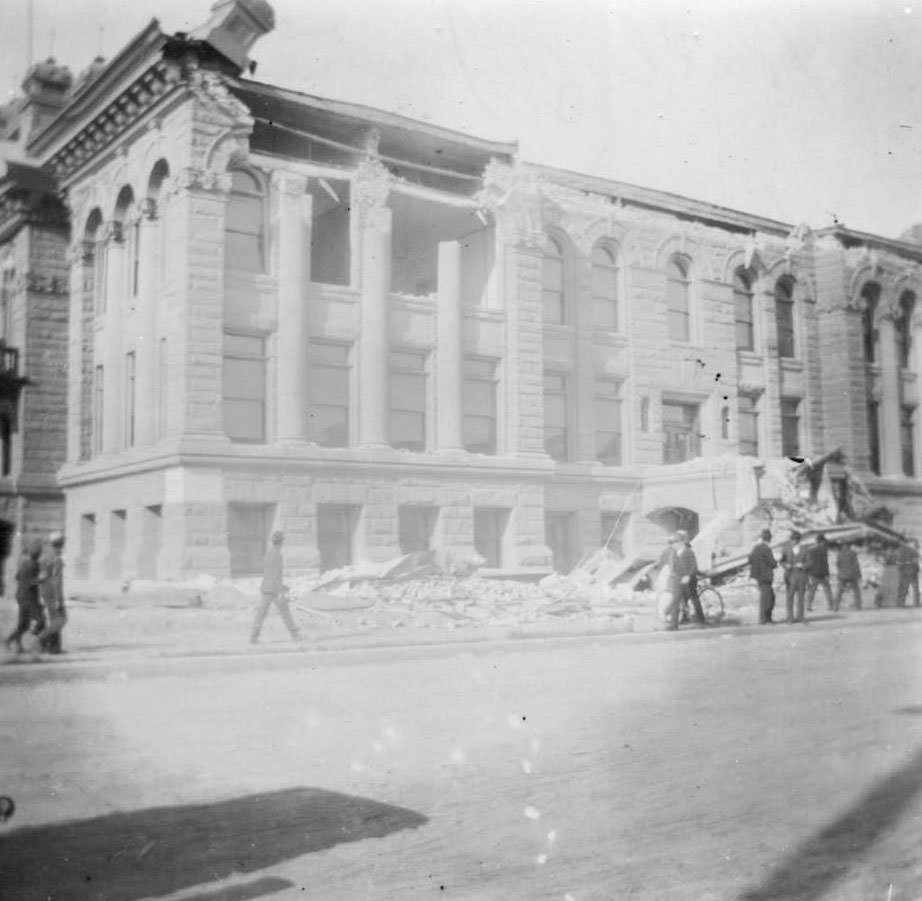
The Hall of Justice at the corner of Market and Saint James Streets had only recently been completed when the earthquake struck. It was badly damaged but was repaired and remained standing until it was deliberately demolished in 1962. The Hall of Records, located at First and Saint James Streets, also suffered significant structural damage.
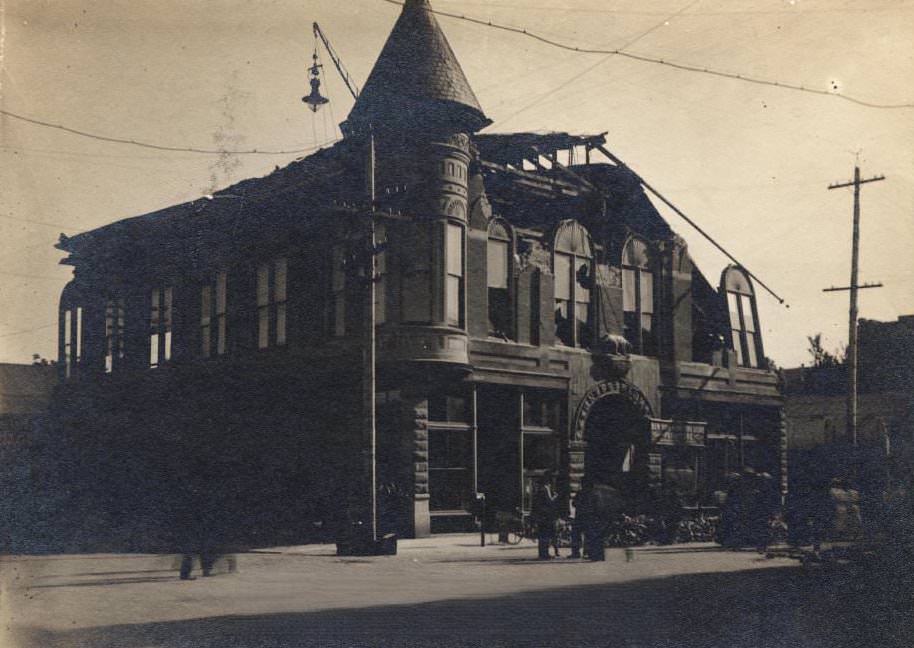
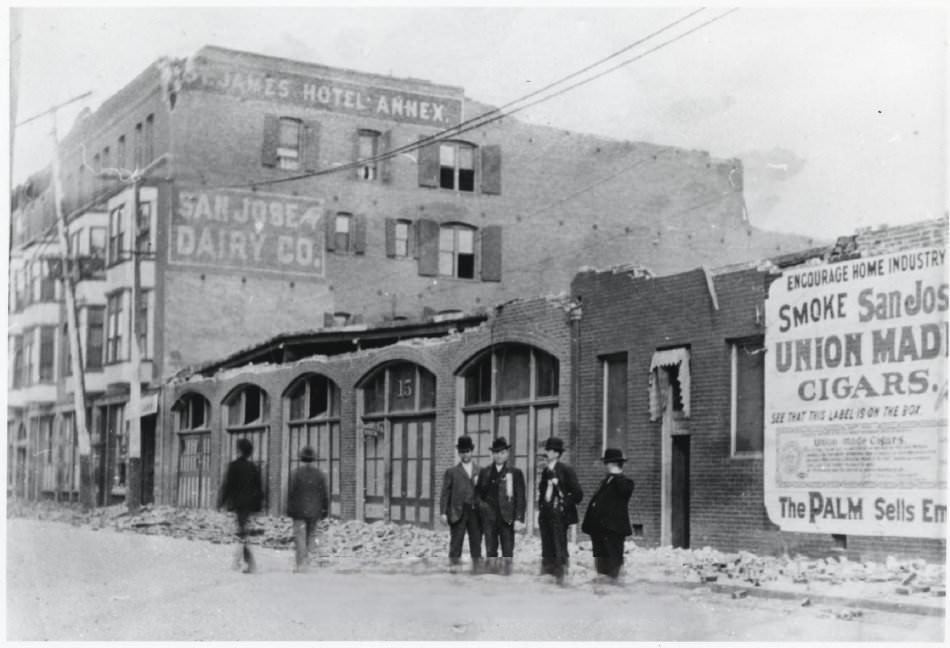
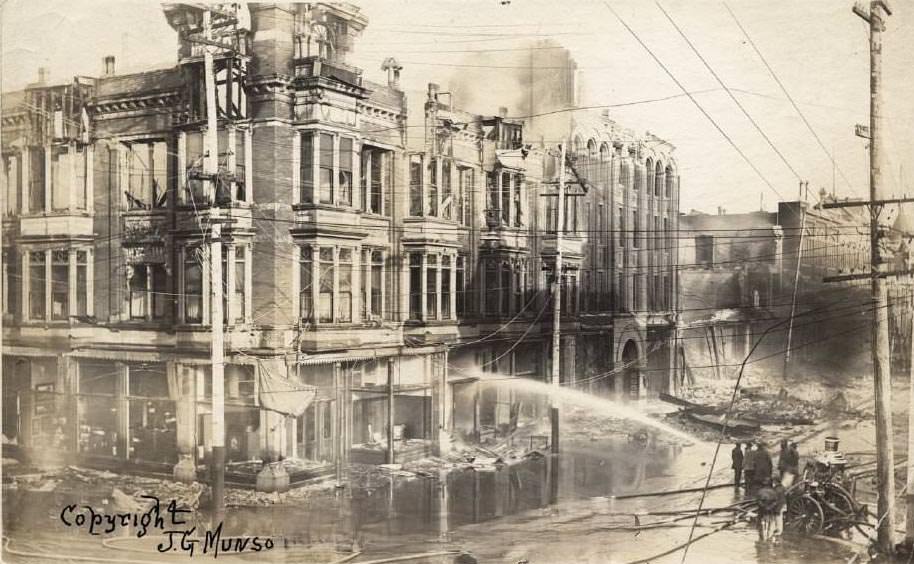
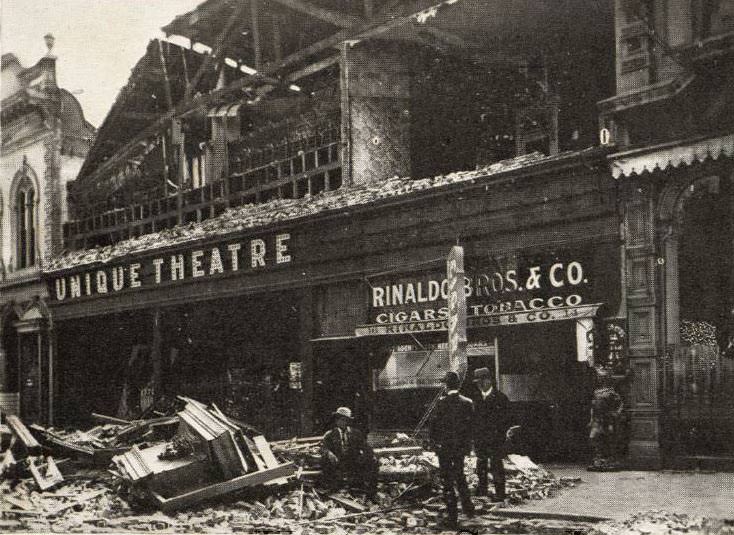
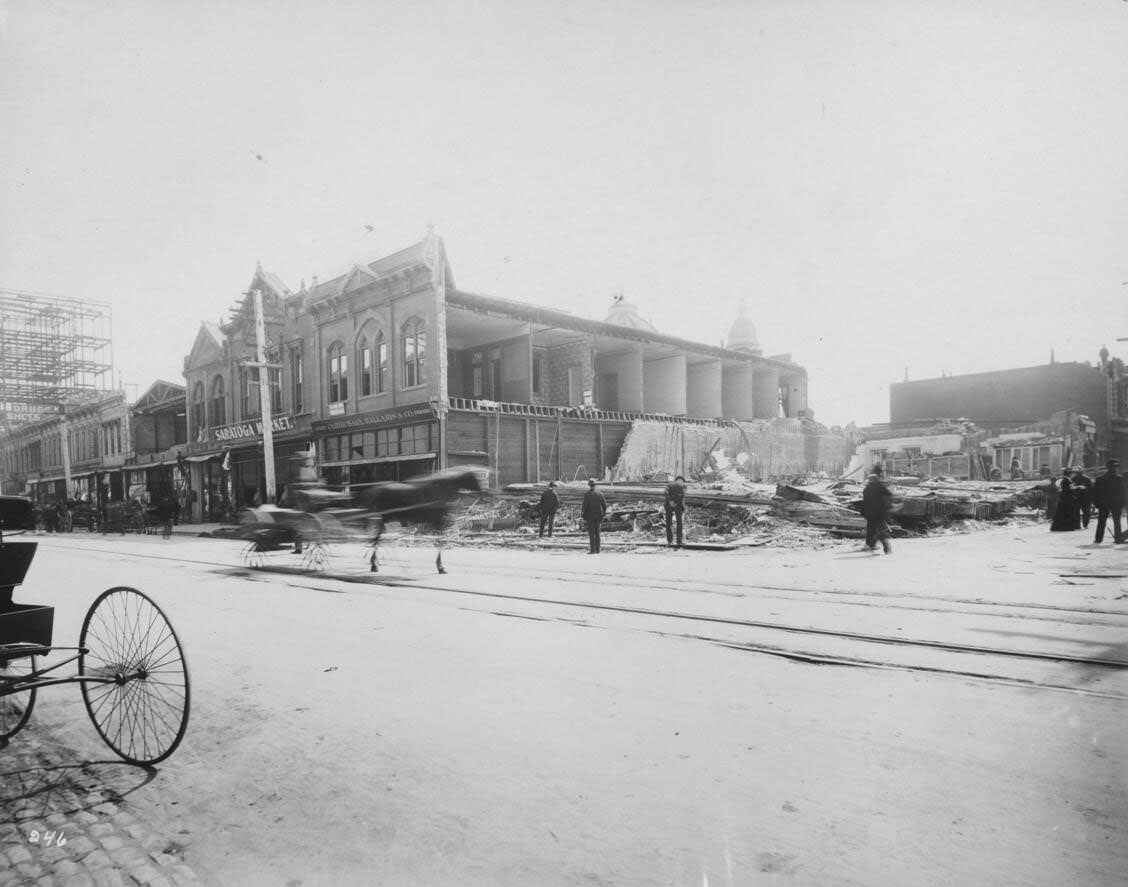
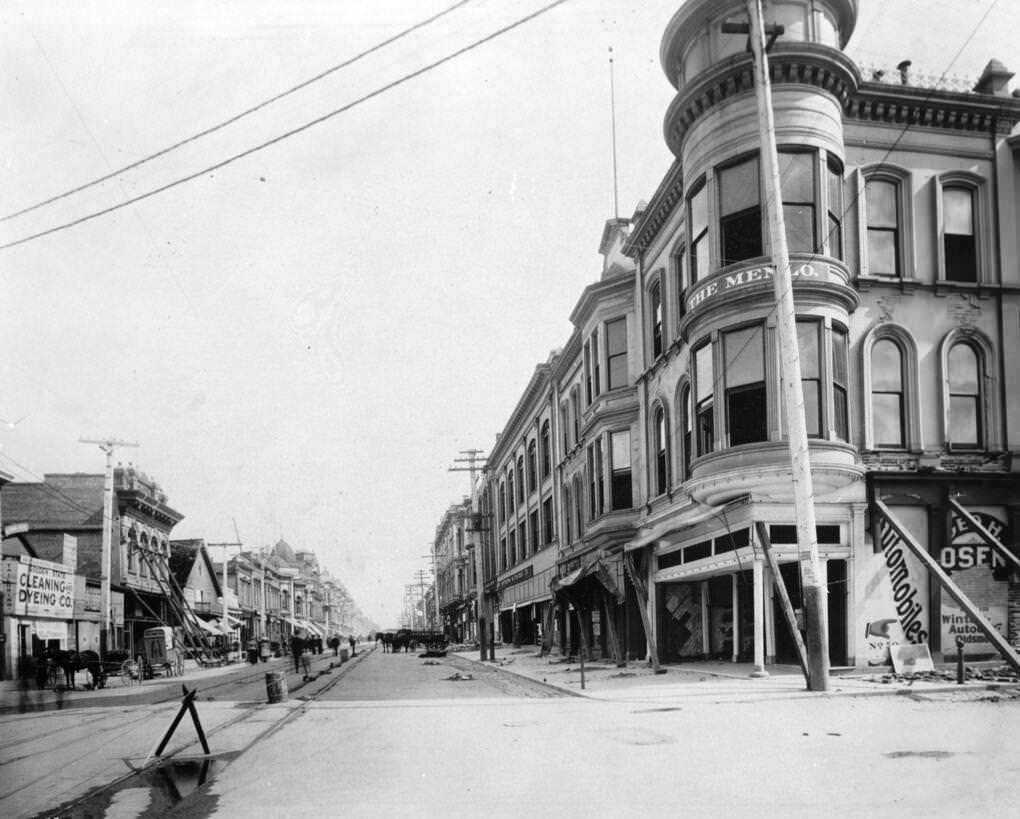
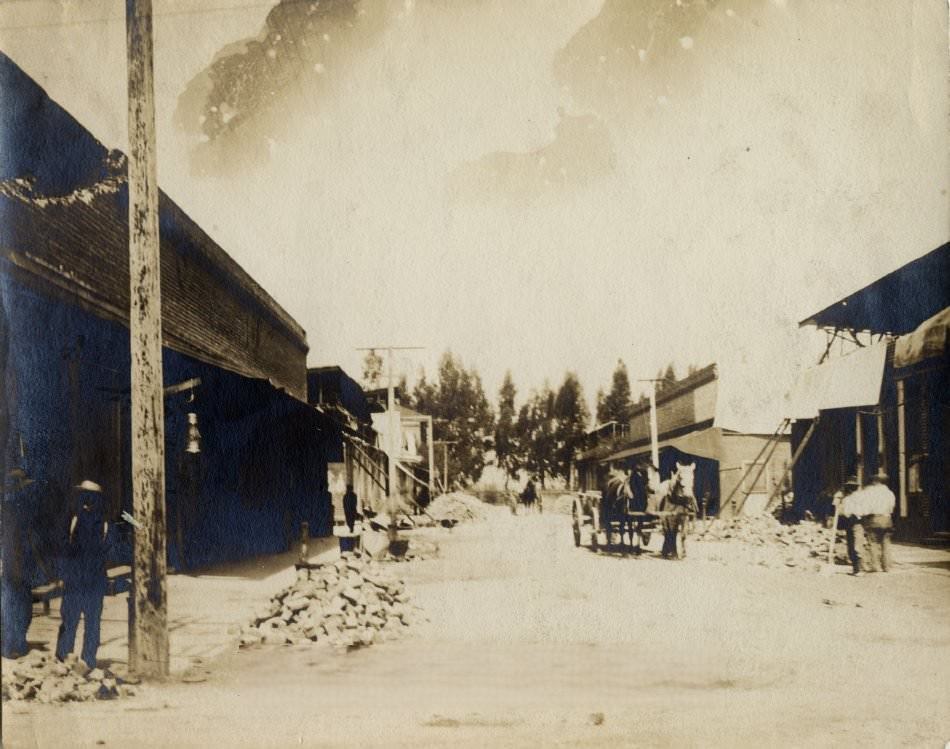
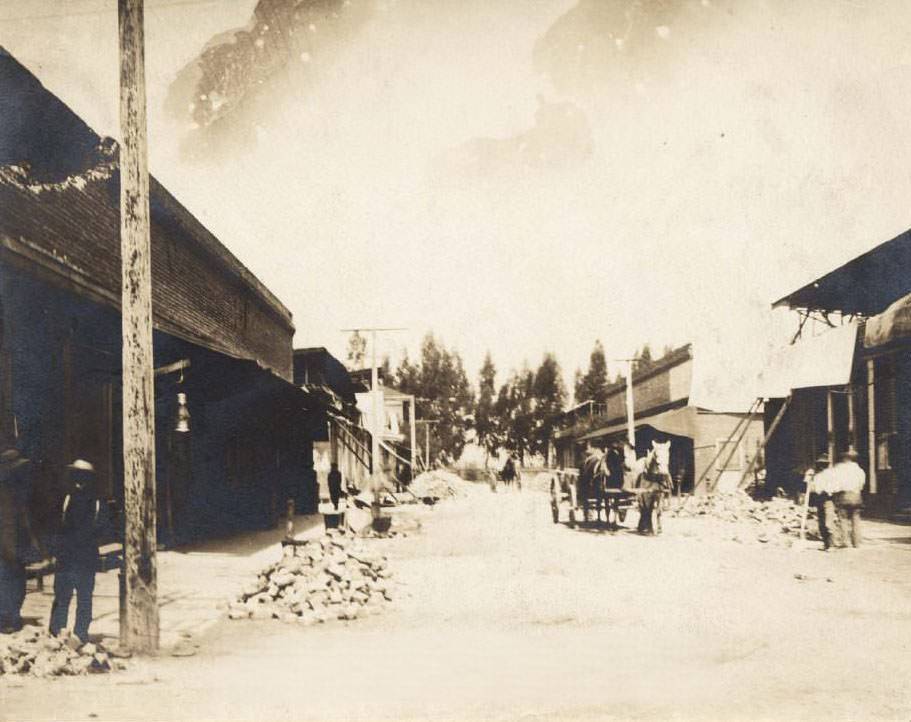
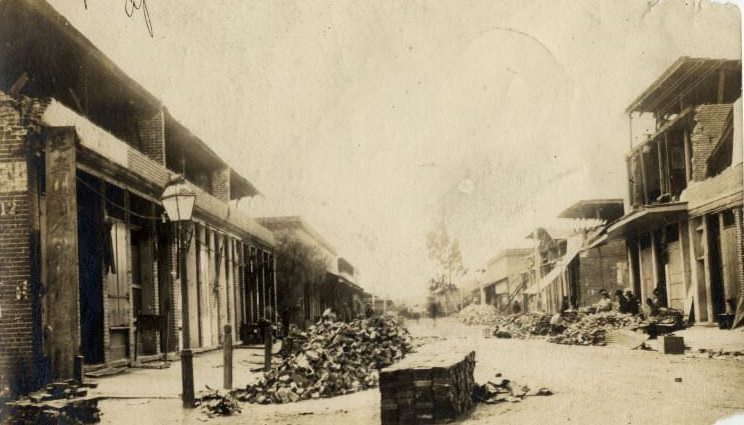
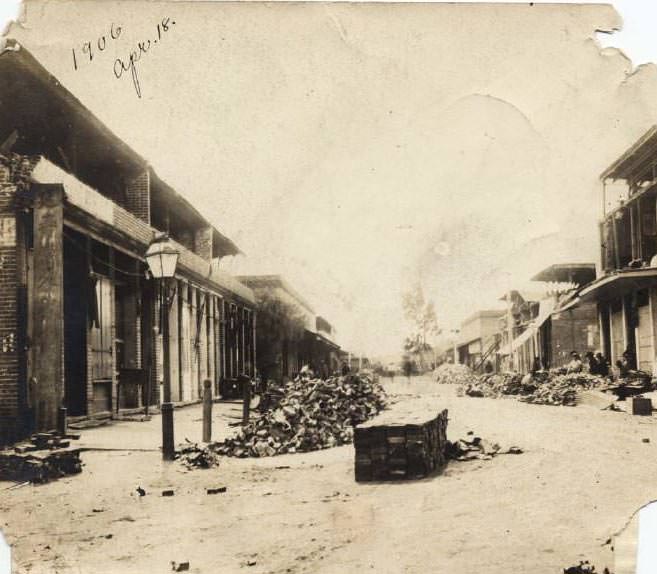
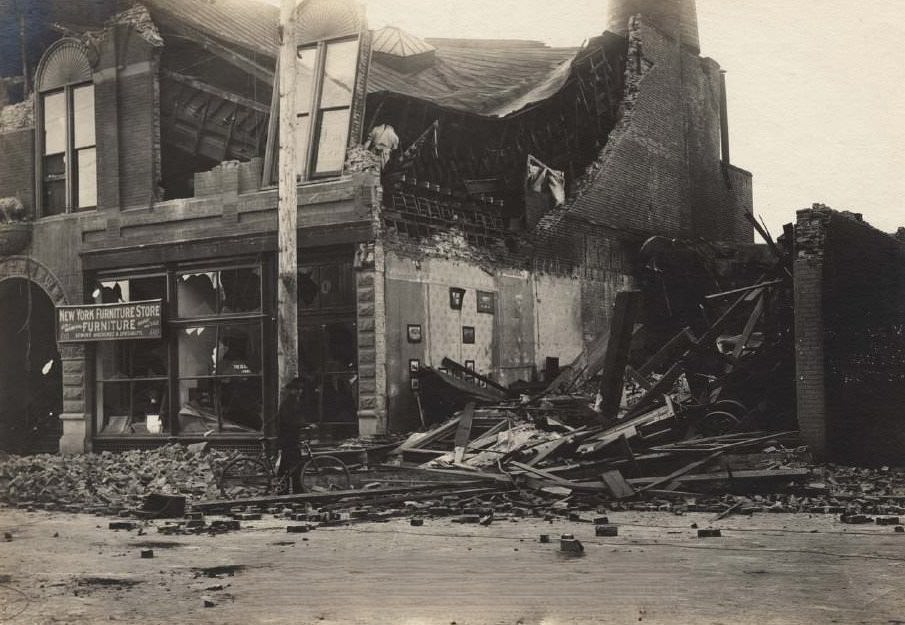
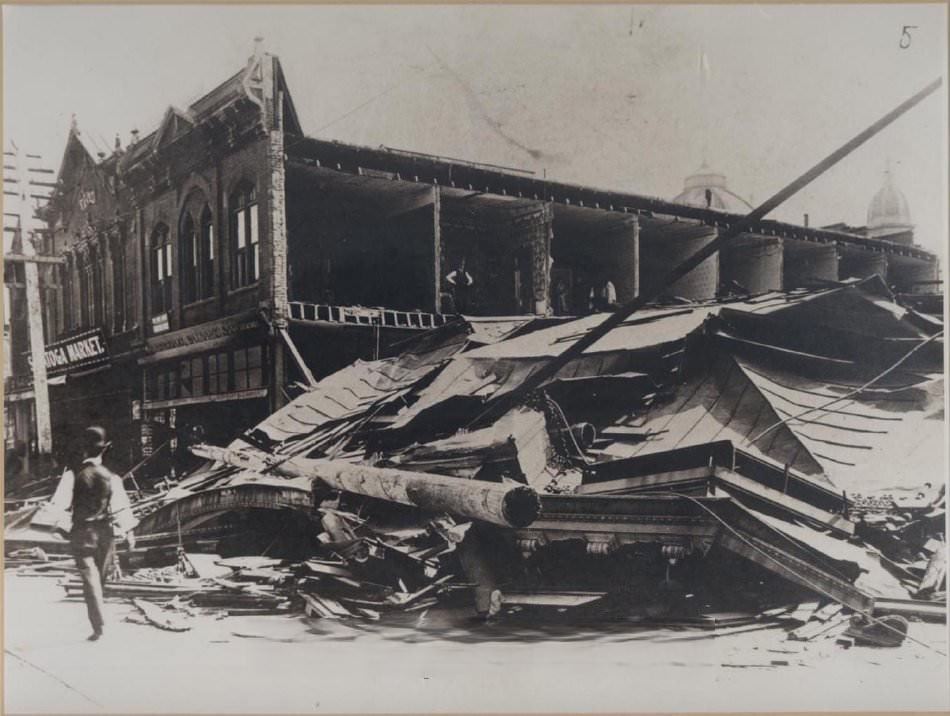
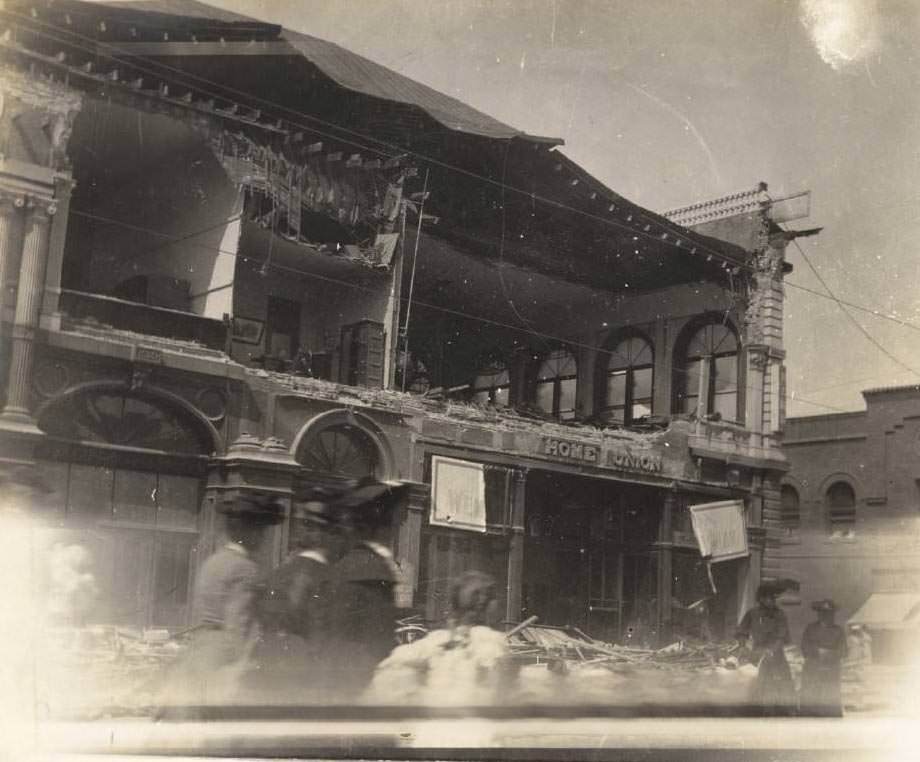
The commercial heart of San Jose took a punishing blow. Along First Street between St. James Park and San Fernando Street, every building on the west side collapsed, toppled, or sustained severe damage. The Auzerias building, the Elks Club, and the Unique Theater on Santa Clara Street were destroyed. On Second Street, the Dougherty building and several adjacent blocks were consumed by fire. The Rucker building at Third and Santa Clara Streets was also destroyed, as was the Nevada & Porter building on Second Street.
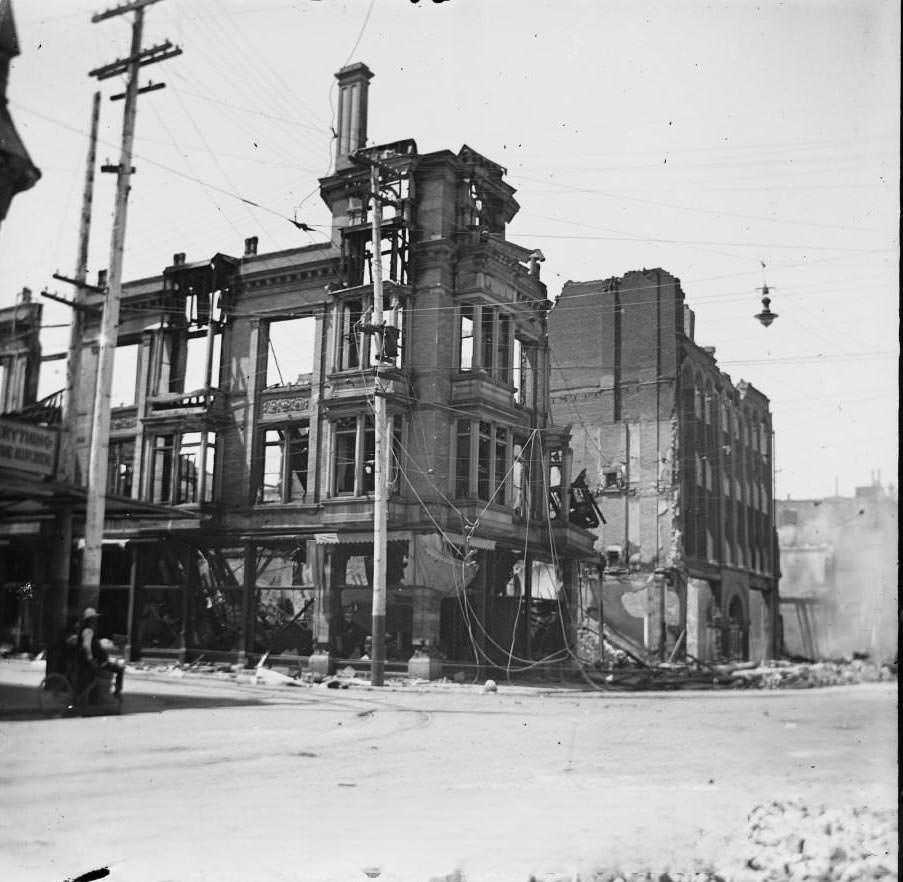
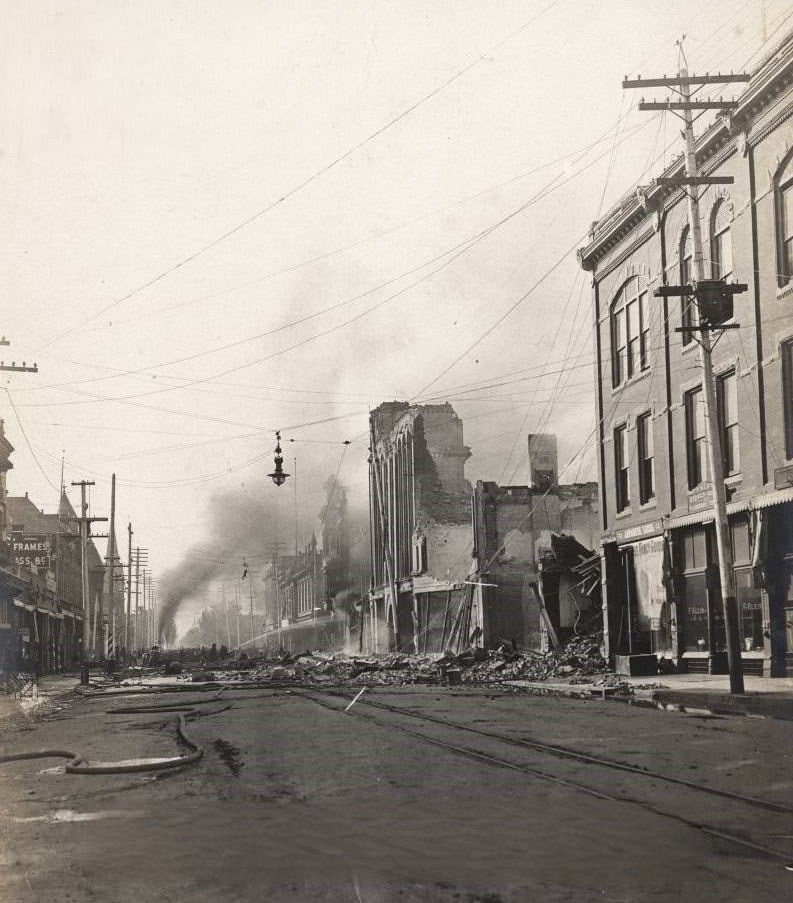
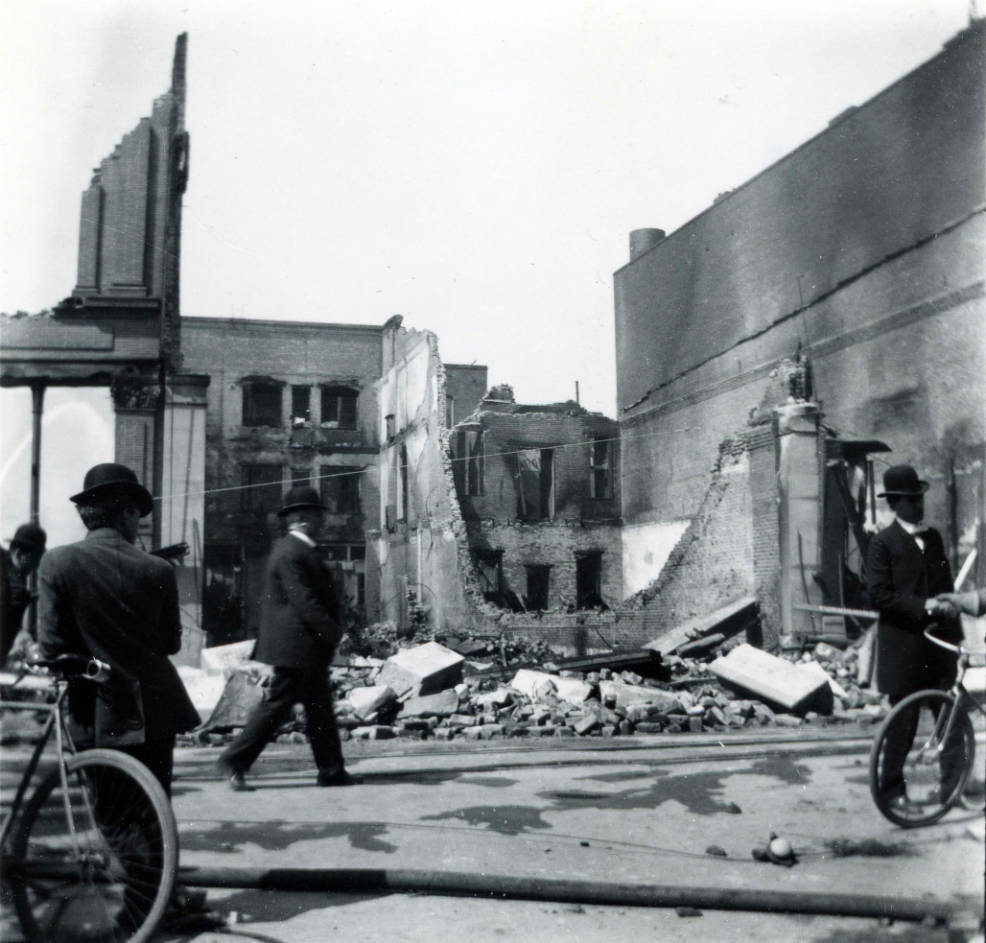
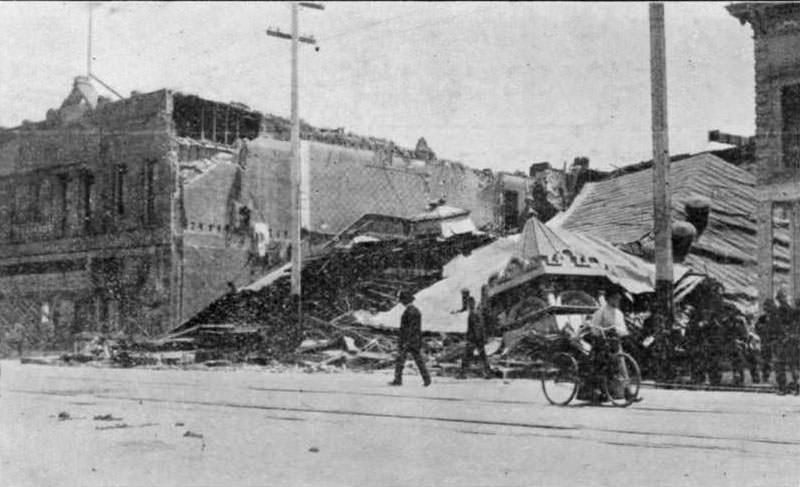
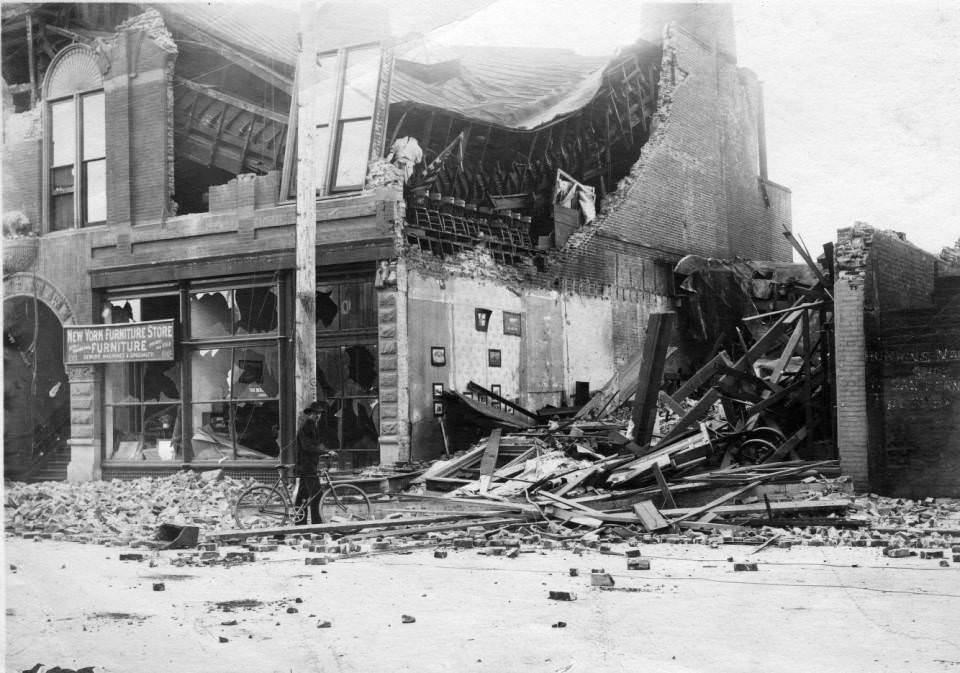
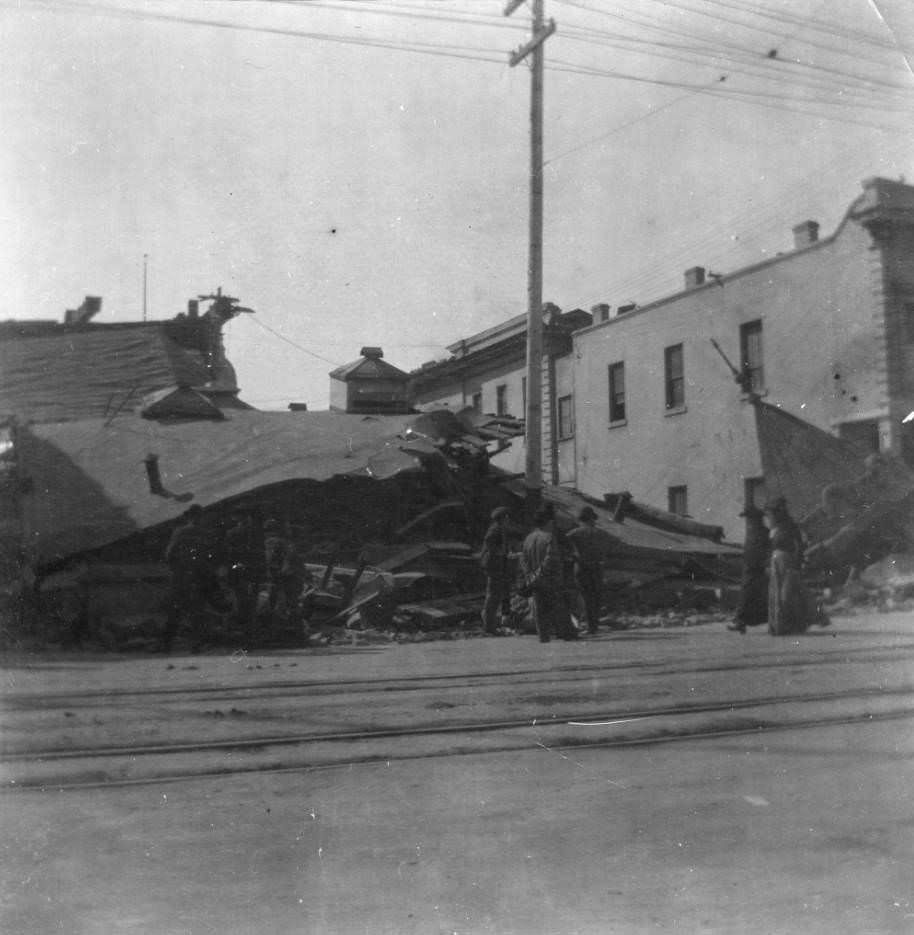
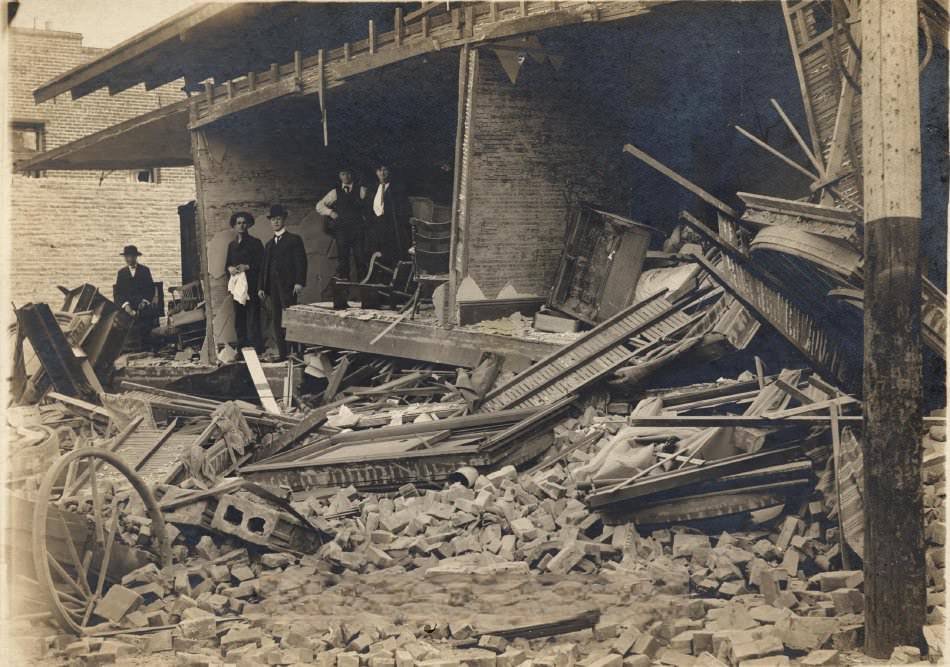
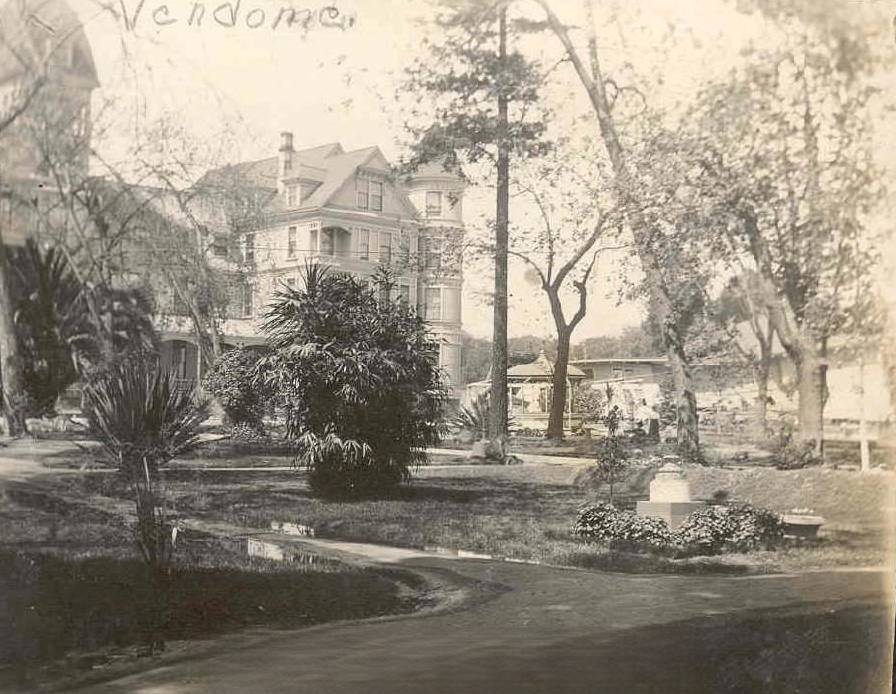
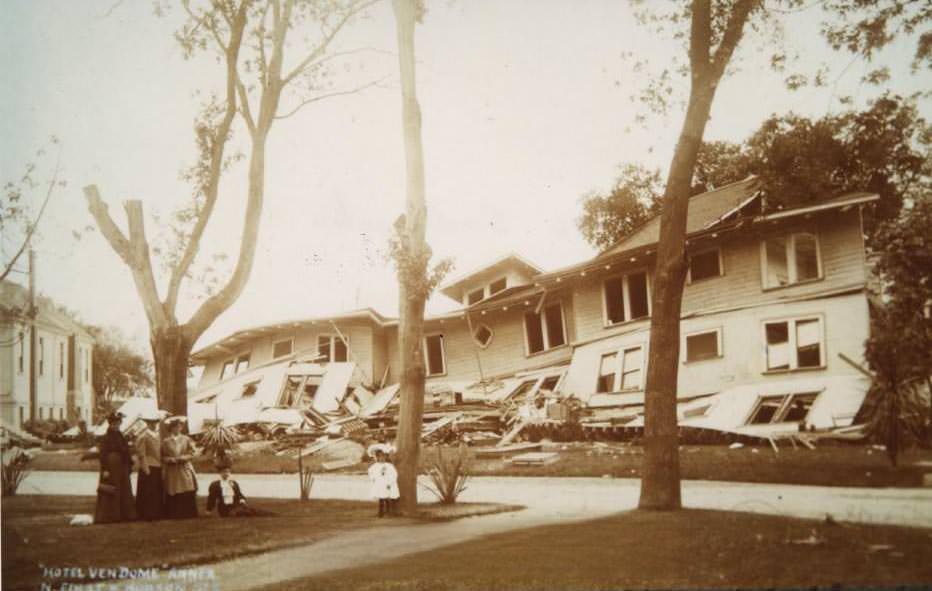
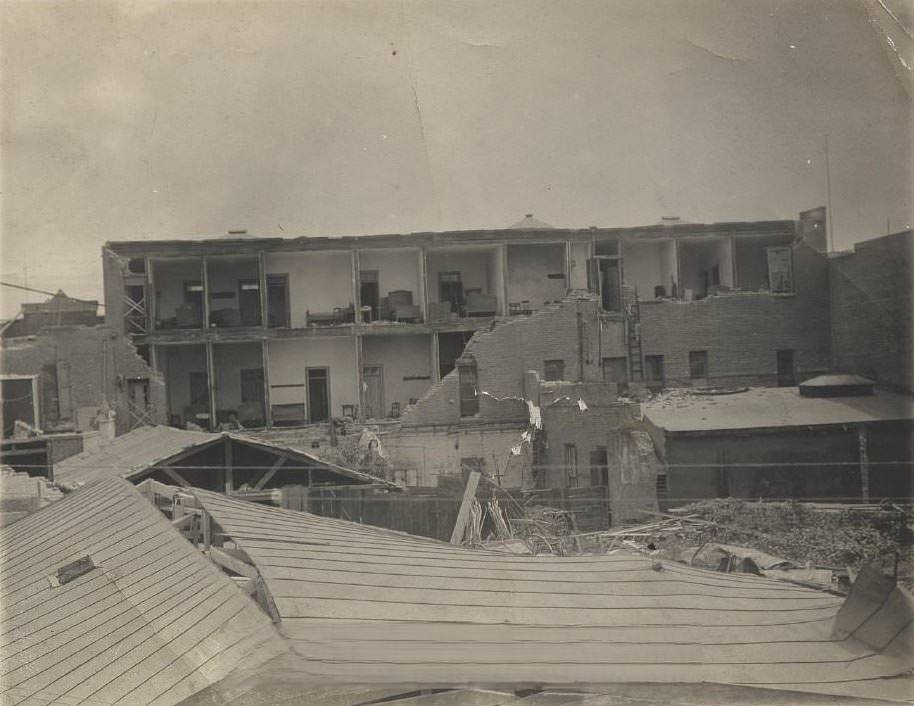
The Vendome Hotel Annex was completely destroyed, and one person was killed in that collapse. Fire swept through multiple blocks nearby. Photographs of the hotel taken after the quake show collapsed walls and heaps of masonry where rooms once stood.
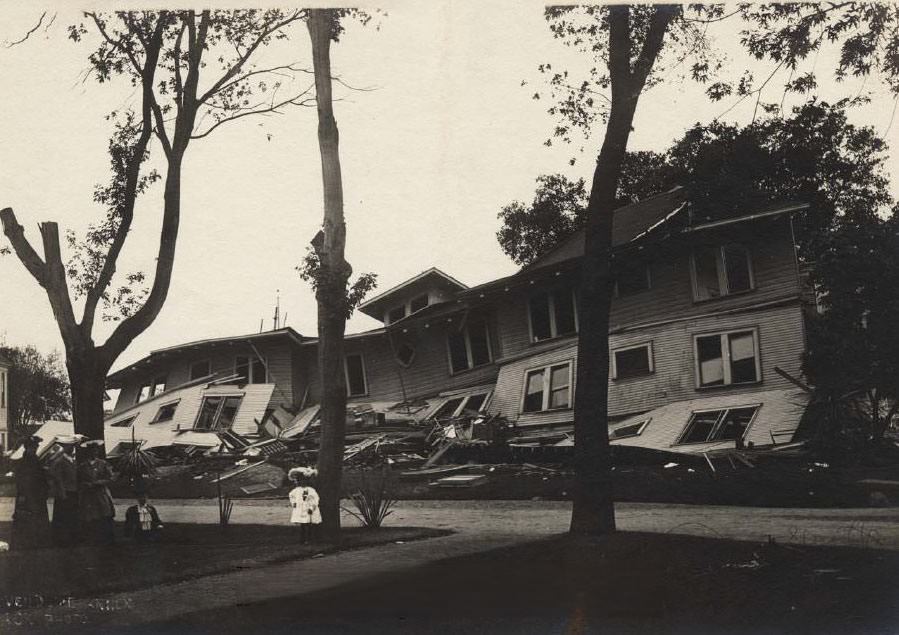
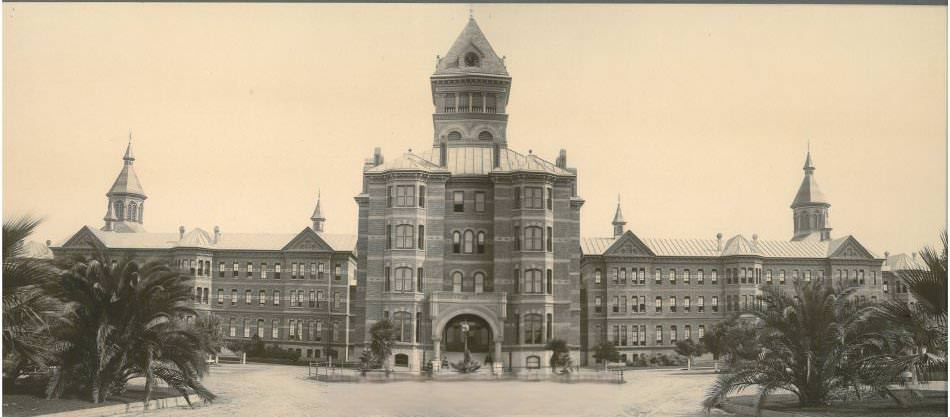
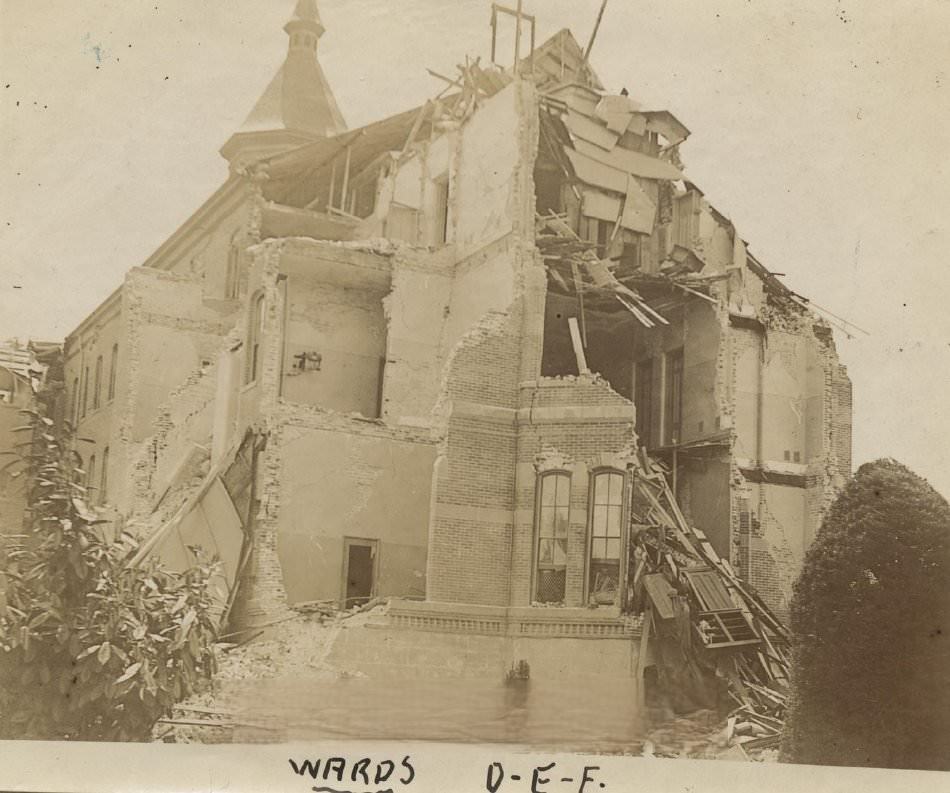
One of the deadliest single sites in the disaster was Agnews State Hospital, also known as the State Insane Asylum, located just outside San Jose near the town of Agnews. The walls of the main building collapsed, pinning patients under fallen walls and debris. More than 100 patients were buried in the wreckage. One hundred students from Santa Clara College responded by traveling to the site in a group to help treat the wounded.
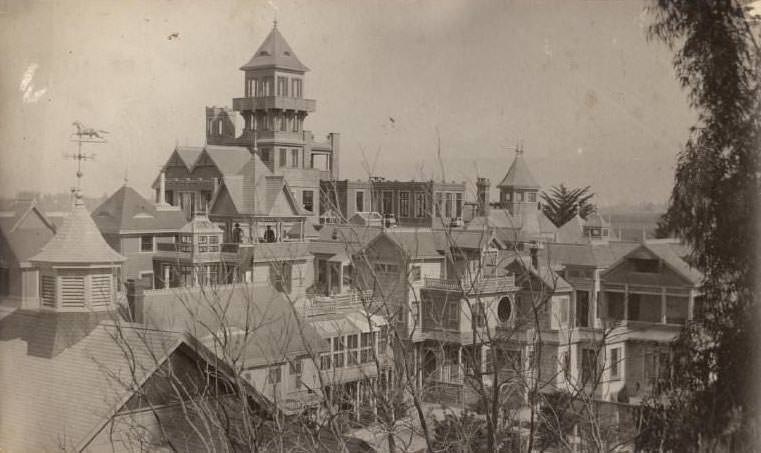
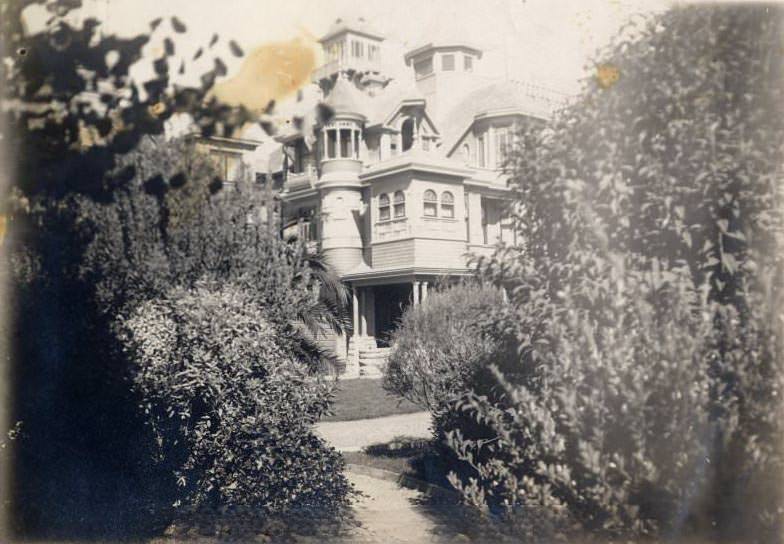
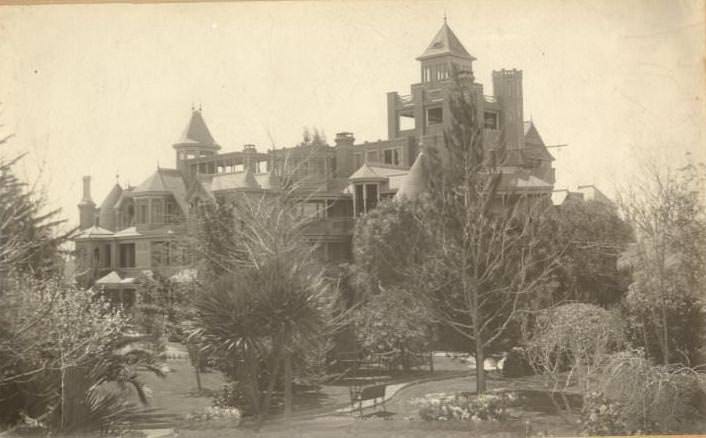
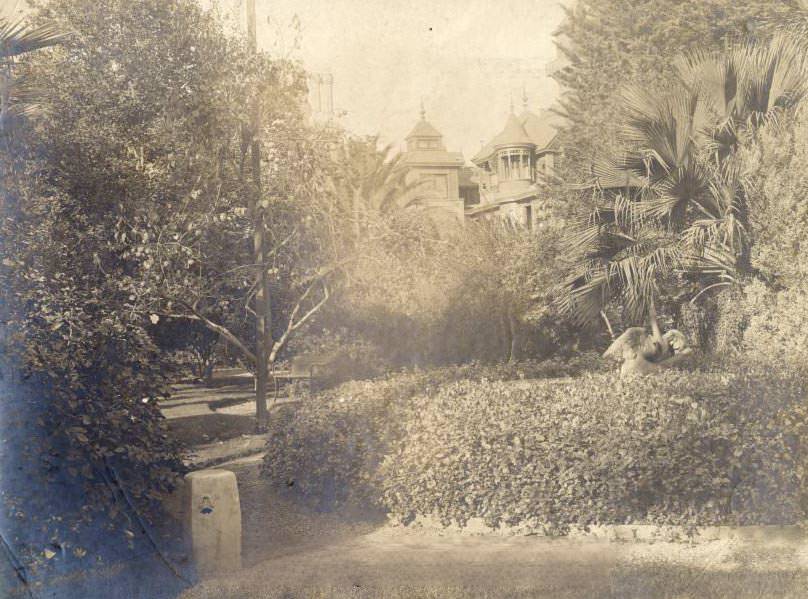
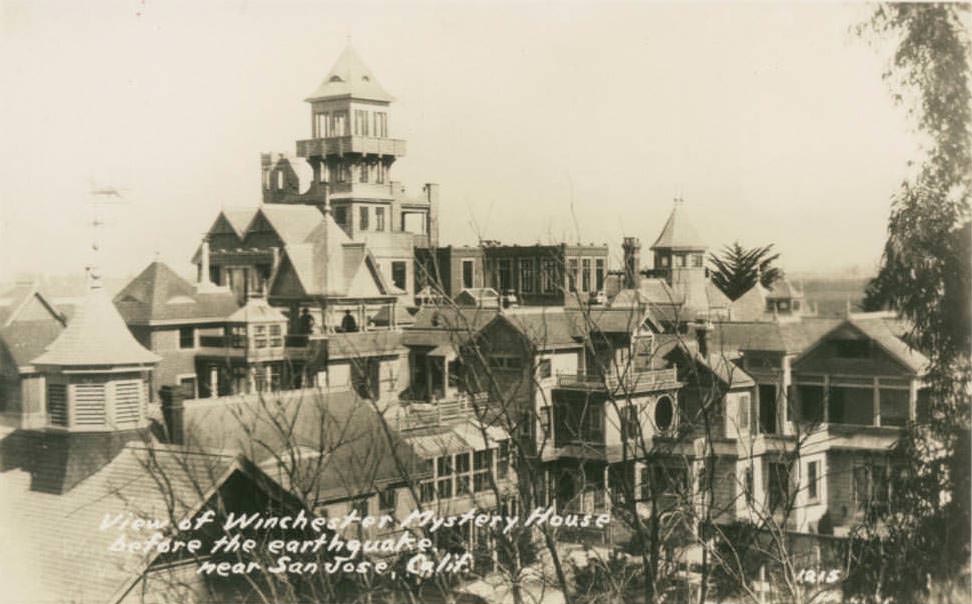
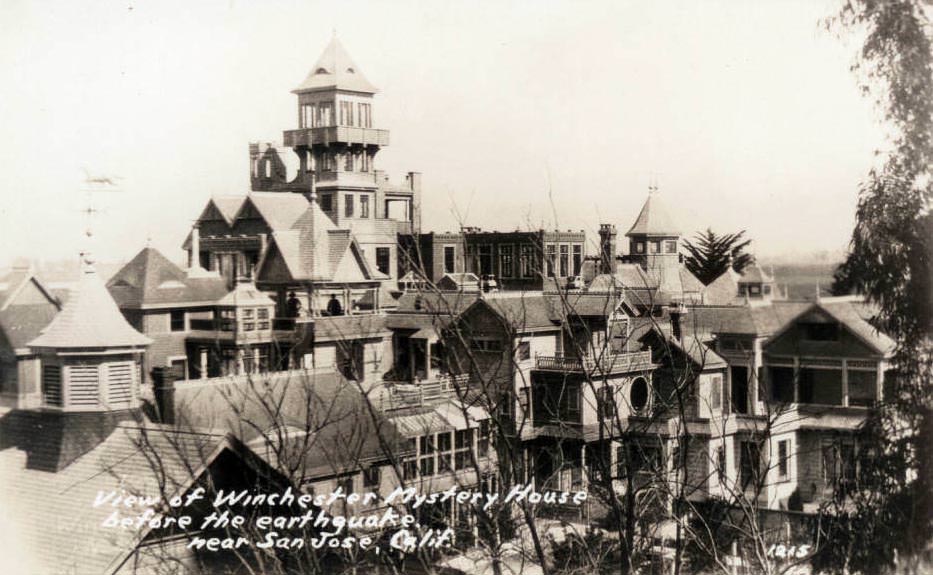
The Winchester House — the sprawling, eccentric mansion built by Sarah Winchester, widow of the rifle manufacturer — was heavily damaged. Before the earthquake, the house had grown to include a central tower that dominated its roofline. That tower was damaged in the quake and was never rebuilt. Pre-earthquake photographs show the full scope of the mansion and the tower that would soon be gone forever.
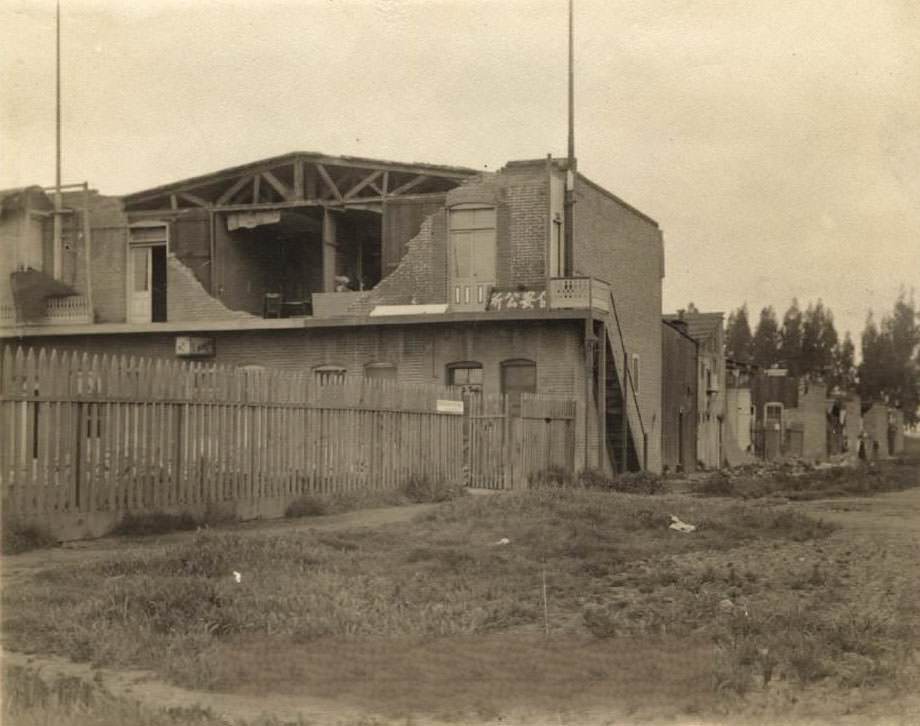
San Jose’s Chinatown was also photographed extensively in the aftermath. Images show streets littered with rubble, storefronts stripped bare, and entire sections of the neighborhood flattened. Much of the damage across the city came from a single common problem: foundations gave way under the shaking, causing structures to sink and then collapse entirely. Buildings that might have survived a lesser quake were swallowed by the ground beneath them.
Stanford University, located just north of San Jose in Palo Alto, also sustained major damage. The campus’s Memorial Arch collapsed entirely. The gymnasium was reduced to ruins. The Zoology building was wrecked. These images from the Stanford campus circulated widely and added to the visual record of how broadly the earthquake’s destruction stretched across the region.
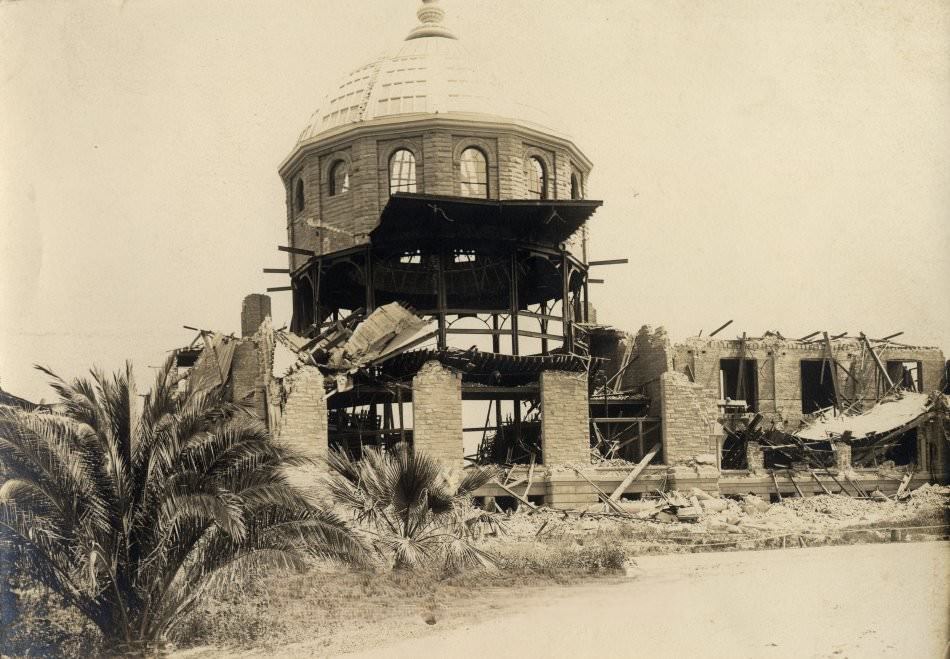
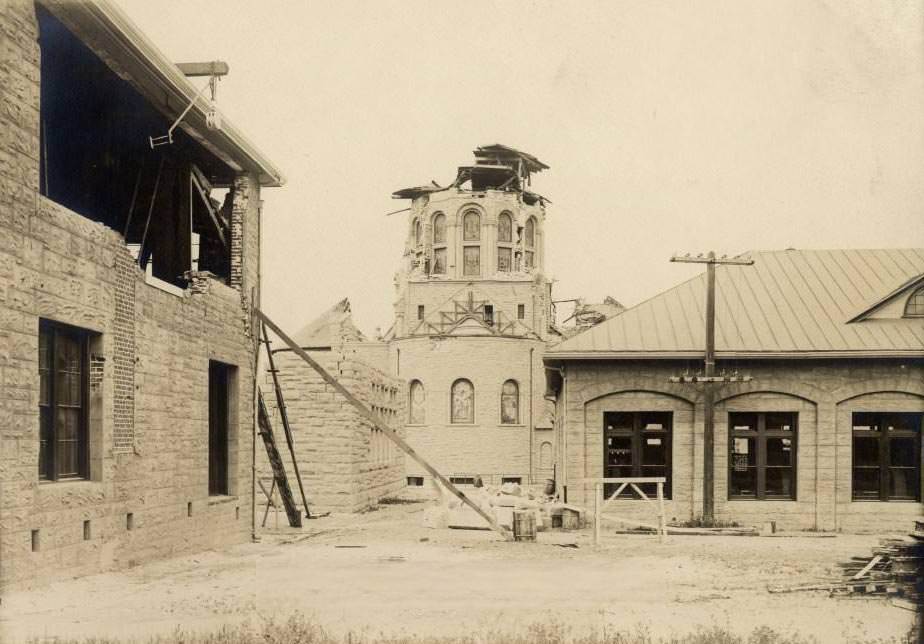
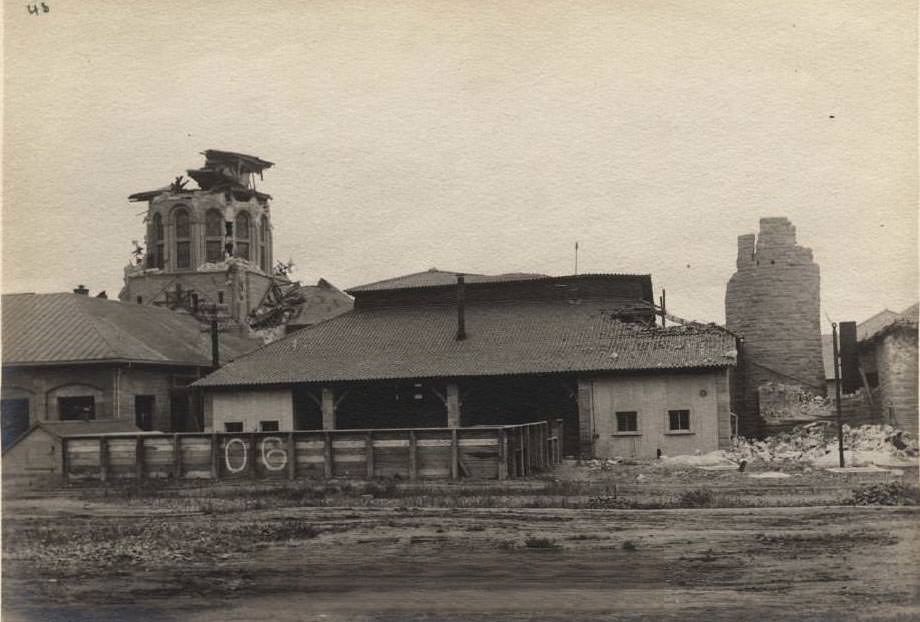
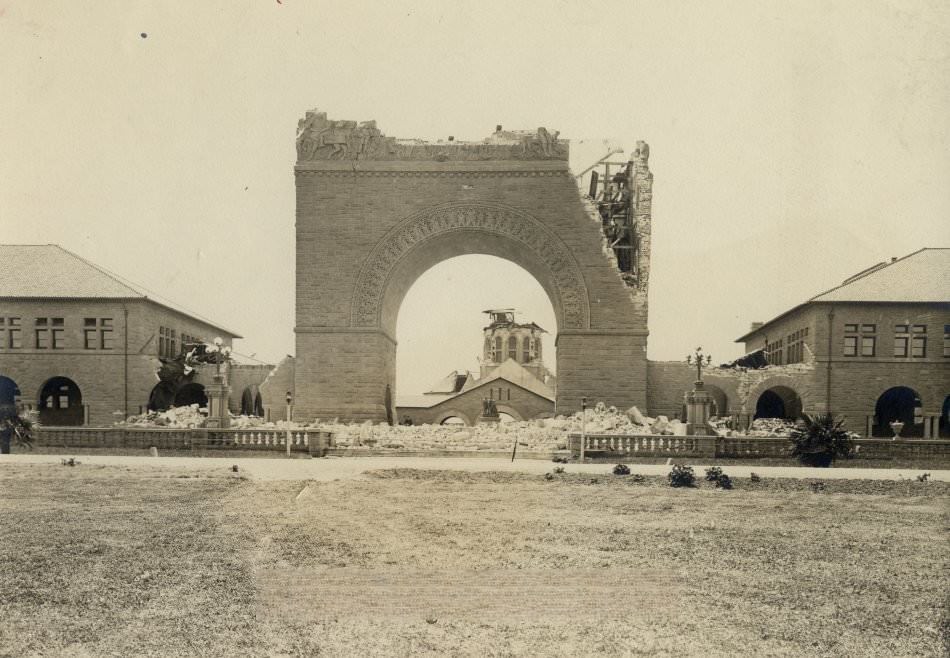
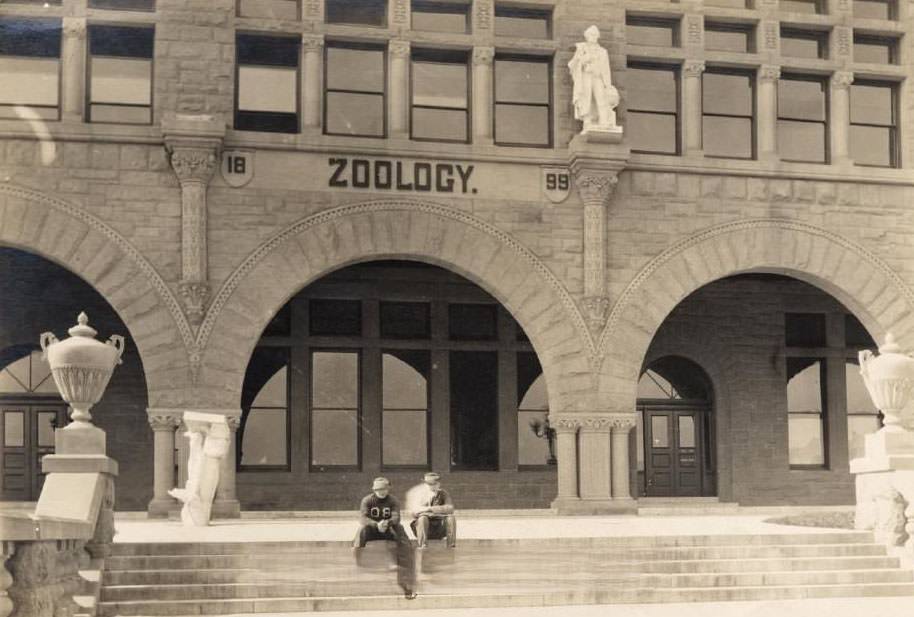
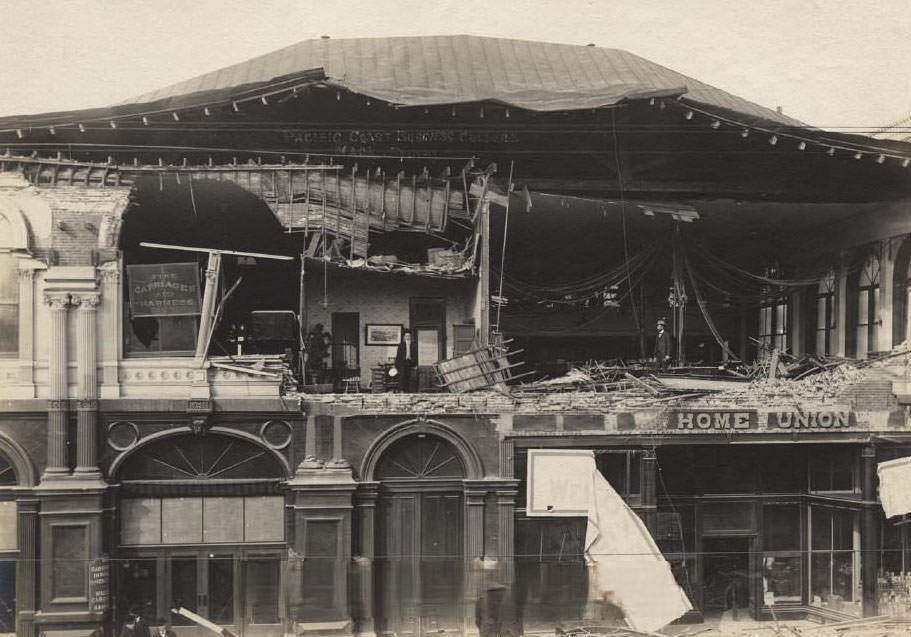
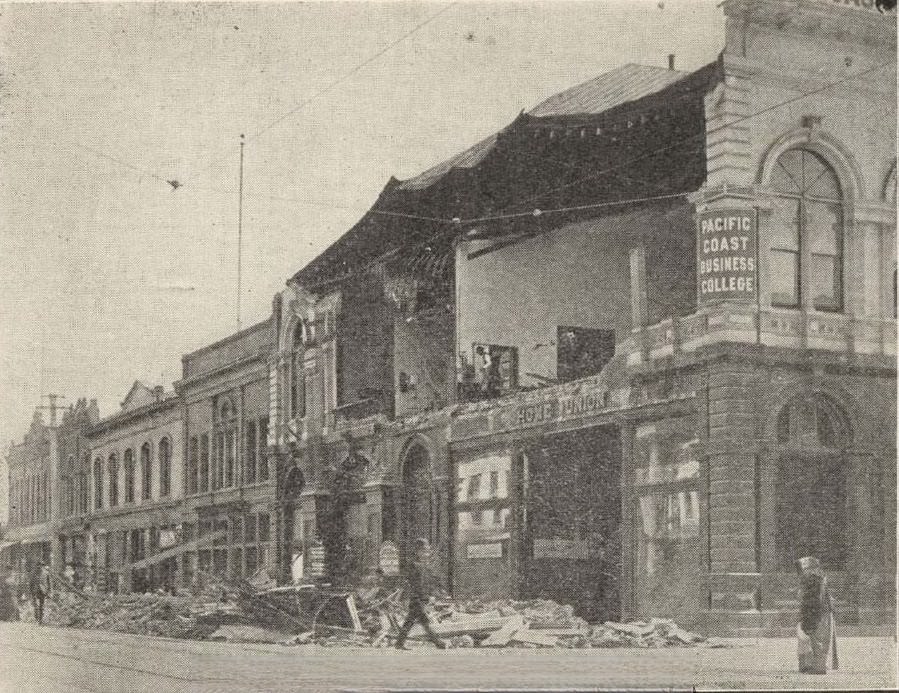
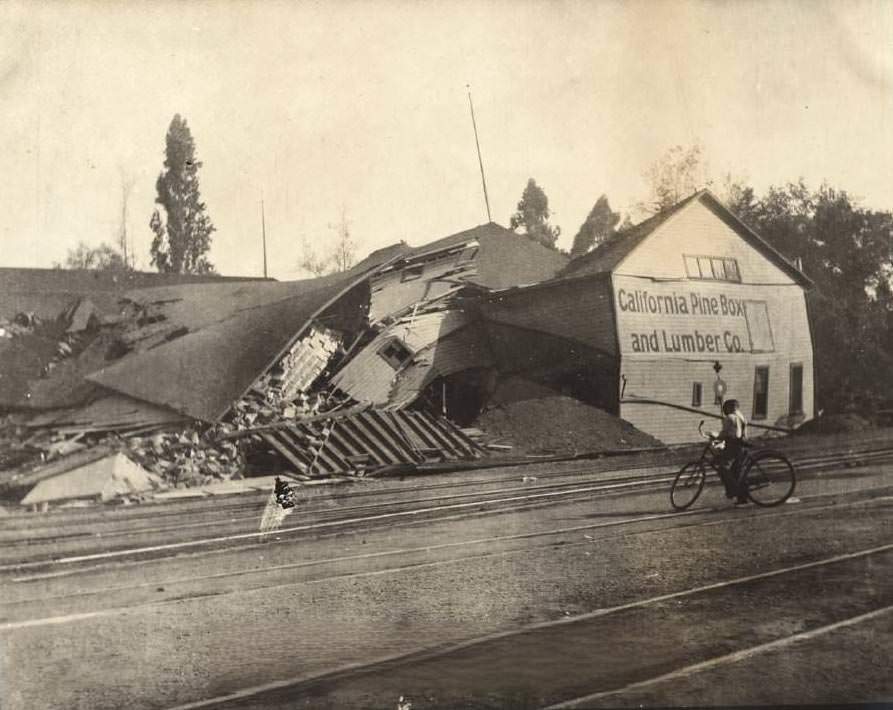
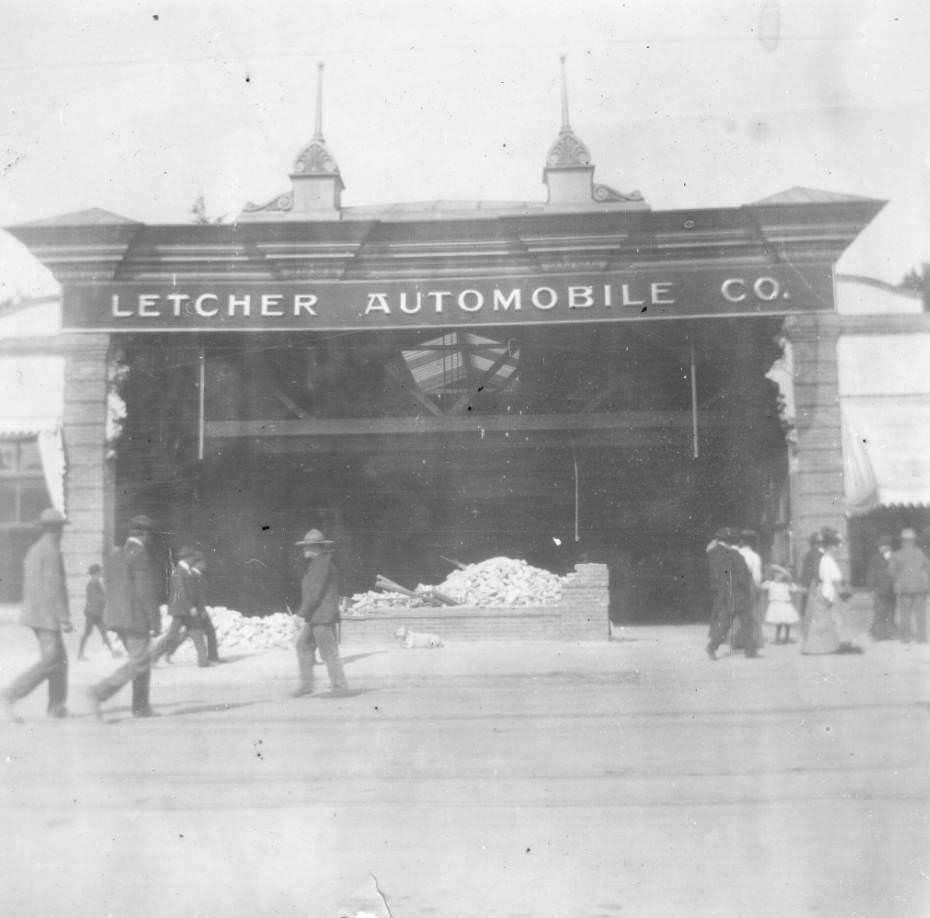
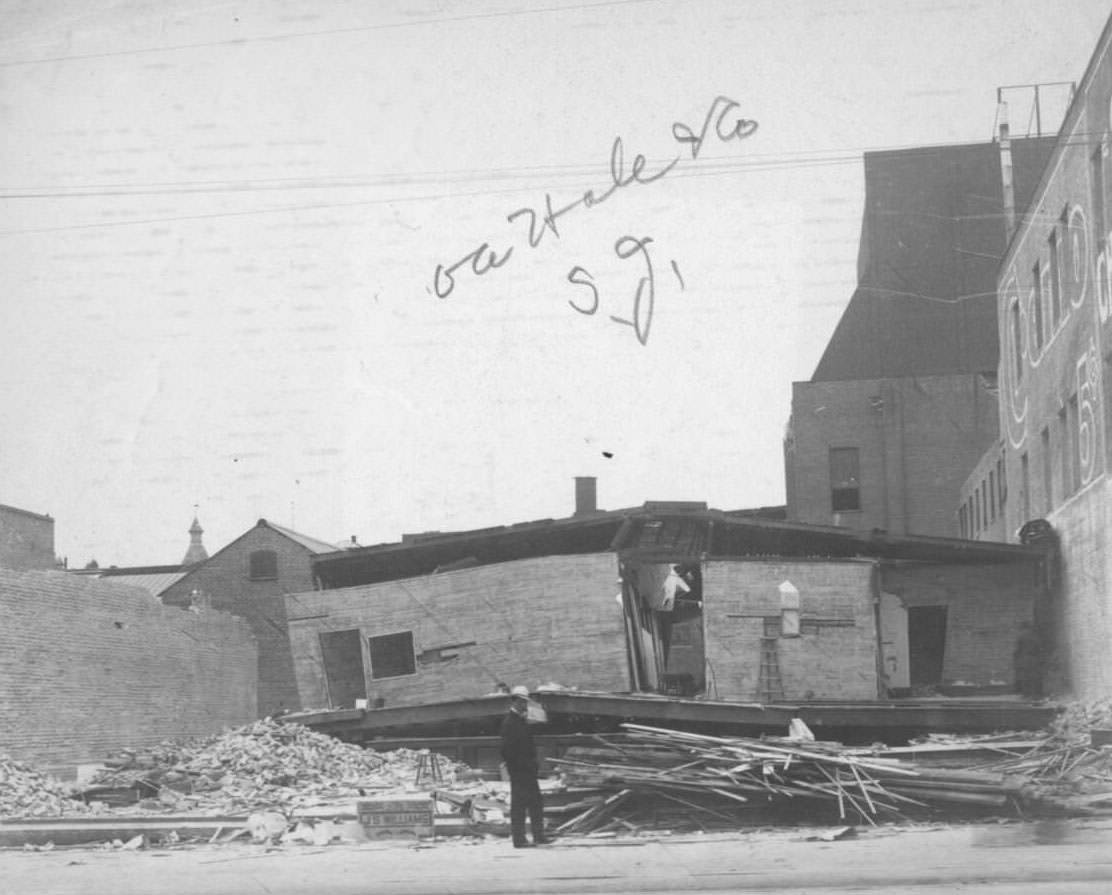
Back in San Jose, businesses large and small were wiped out. The Garden City Implement and Vehicle Company at 61 South Market Street, the Pacific Coast Business College, the San Jose Canning Company, and the California Pine Box & Lumber Company all appeared in photographs showing structural collapse or severe damage. The OA Hale & Co. building stood with its walls intact but its roof detached and its floor buckled beneath it. The Letcher Automobile Company and Carmichael, Ballaris & Co. were also among those that did not survive.
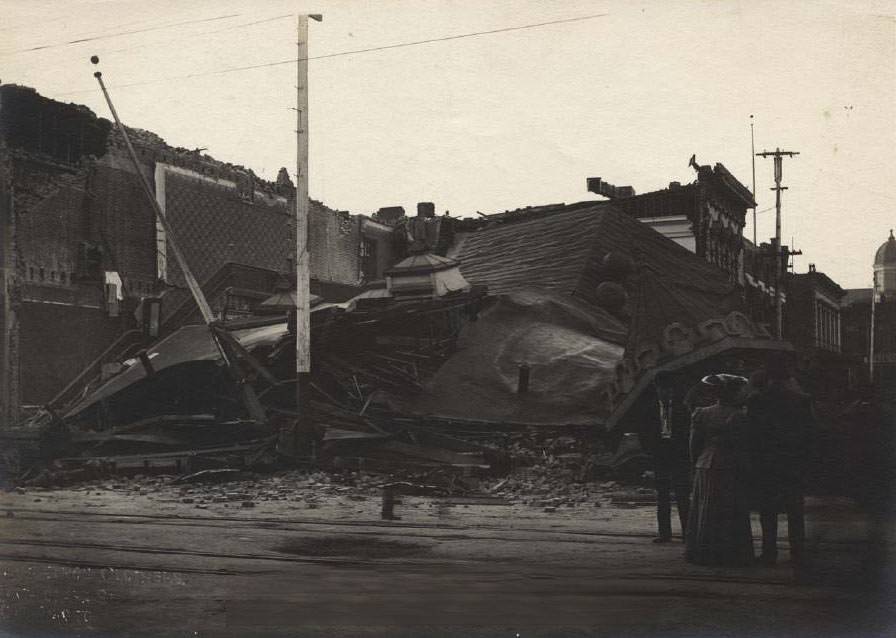
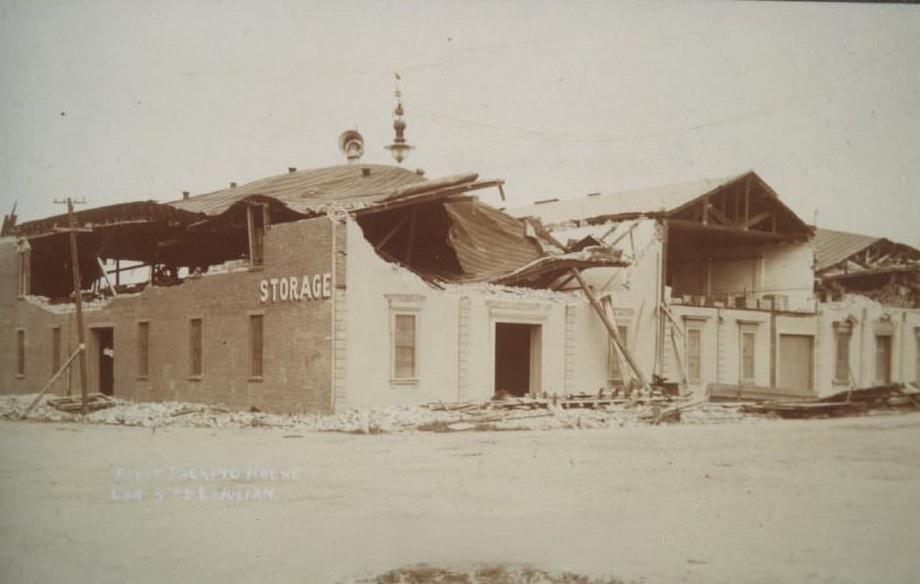
Residential neighborhoods were not spared. Fifteen to twenty homes suffered severe damage, and the cause was consistent: foundations sank under the sustained shaking, dragging structures down with them. Private homes belonging to residents like William L. Manly were photographed in ruins. The Ward residence on North Third Street and the Dougherty house at 460 North Fifth Street — owned at the time by the widow of William Dougherty, founder of one of the largest lumber companies in the state — both show visible structural damage.
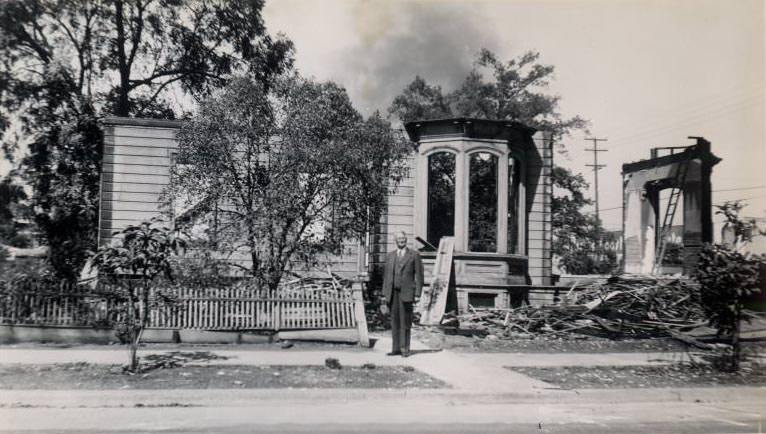
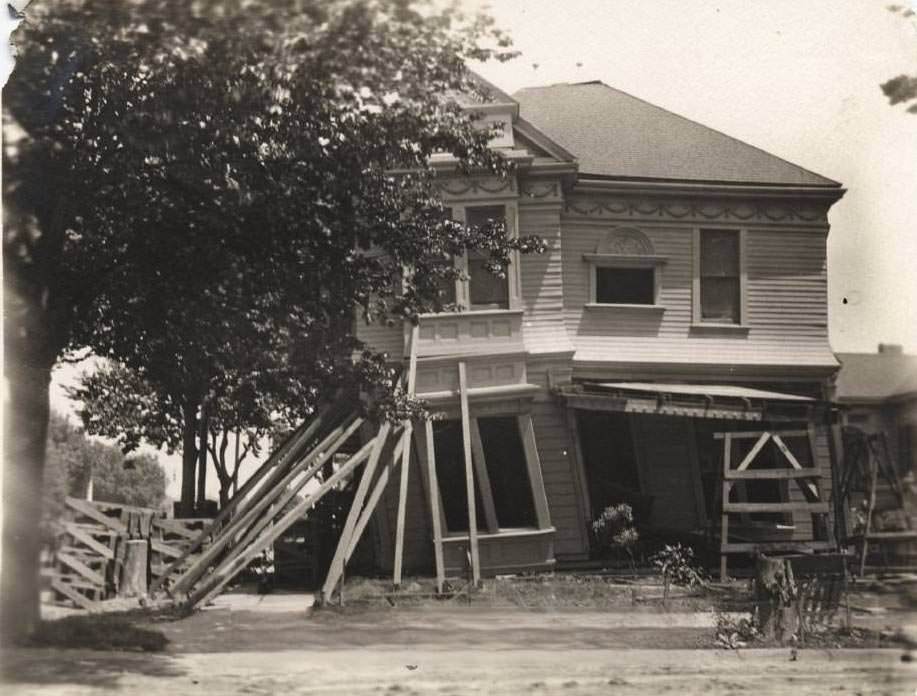
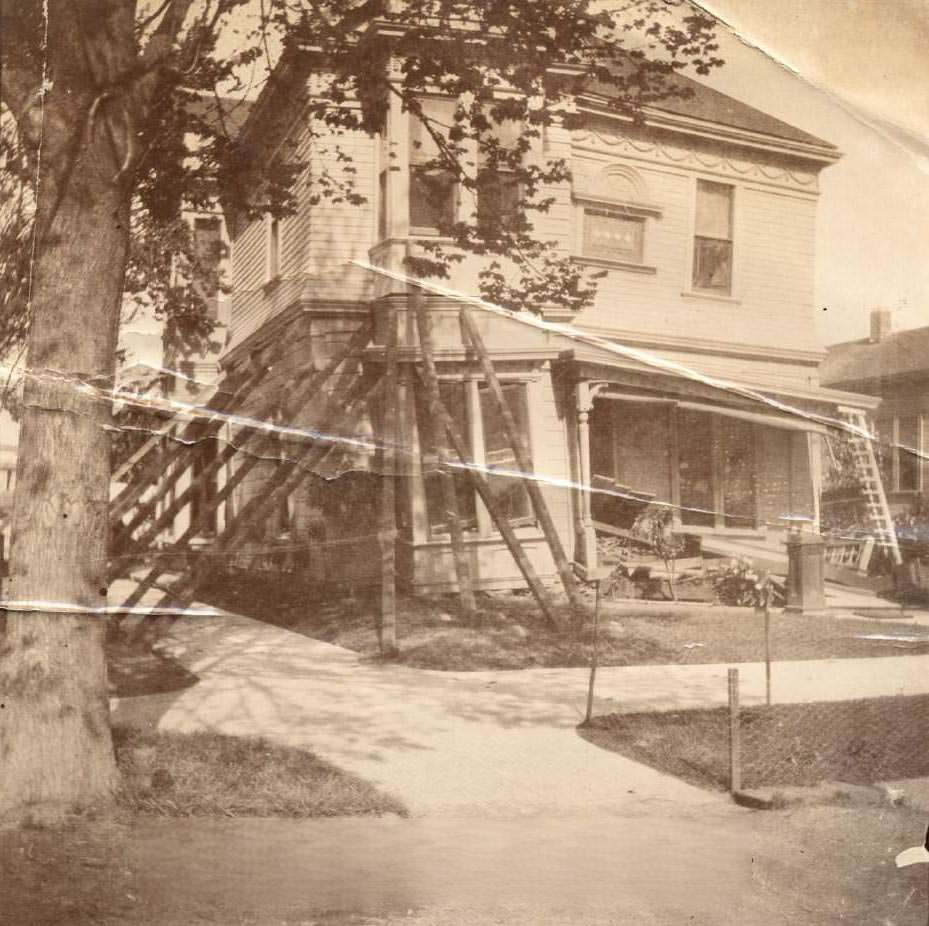
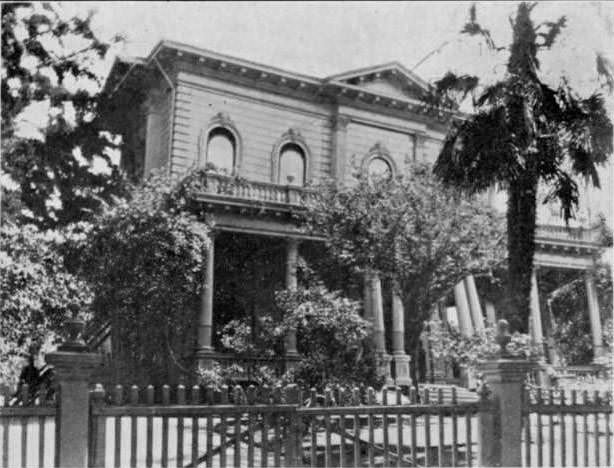
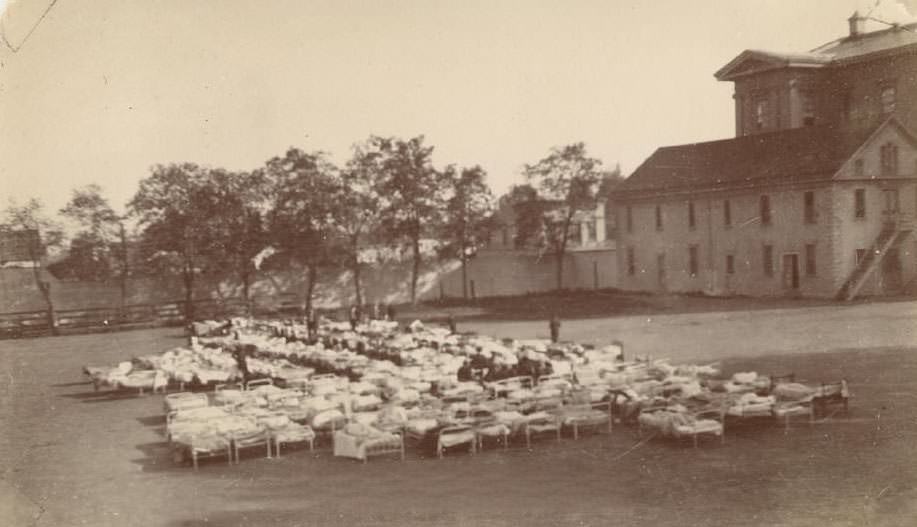
Throughout San Jose, the aftermath looked much the same: brick and stone in the streets, fractured walls leaning against each other, residents pulling belongings out of damaged homes and placing beds on lawns. The St. James Hotel annex and nearby all-brick buildings were heavily damaged. The Santa Clara High School suffered its own major losses. Across the region, the earthquake did not discriminate between church, school, business, or home.