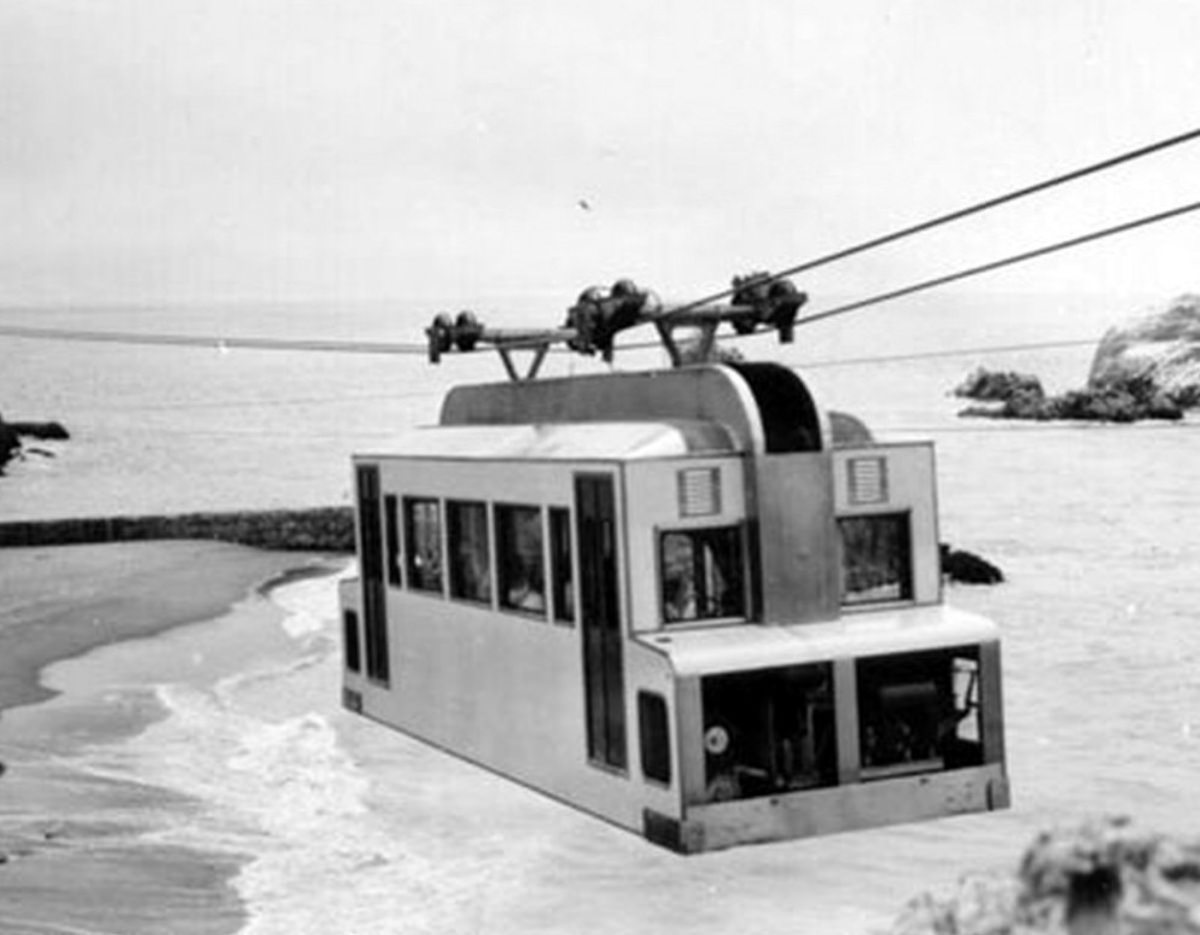
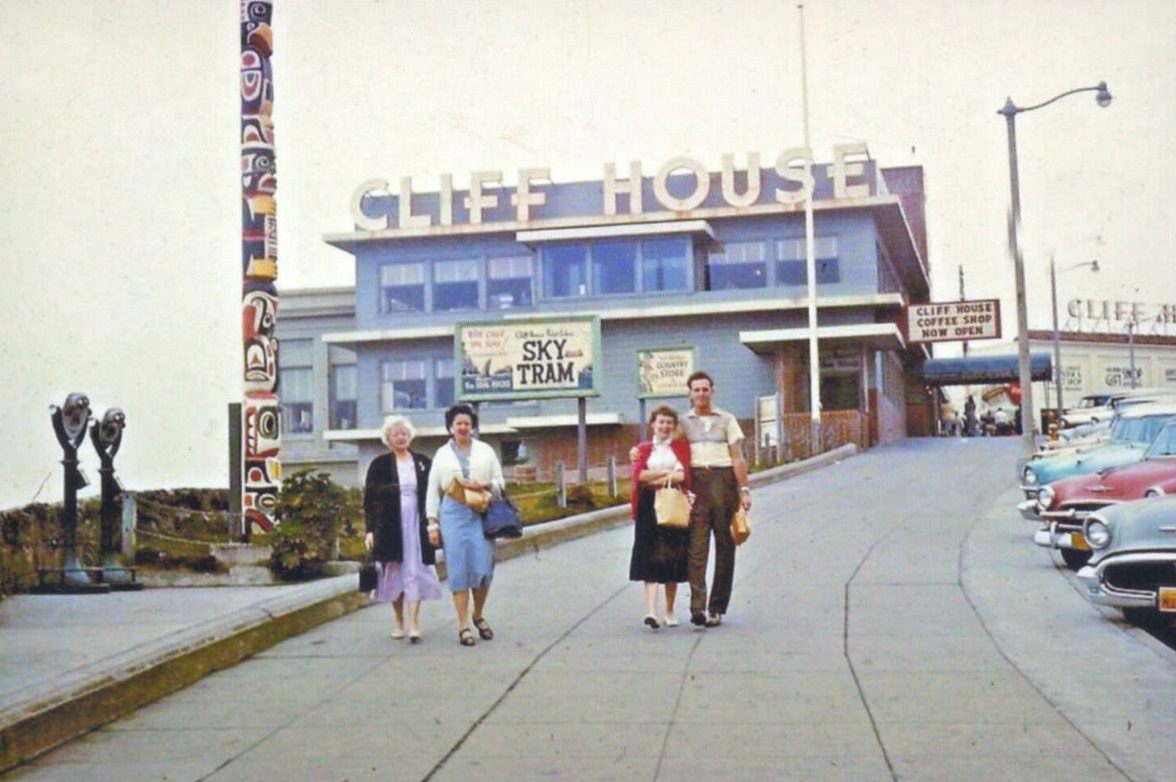
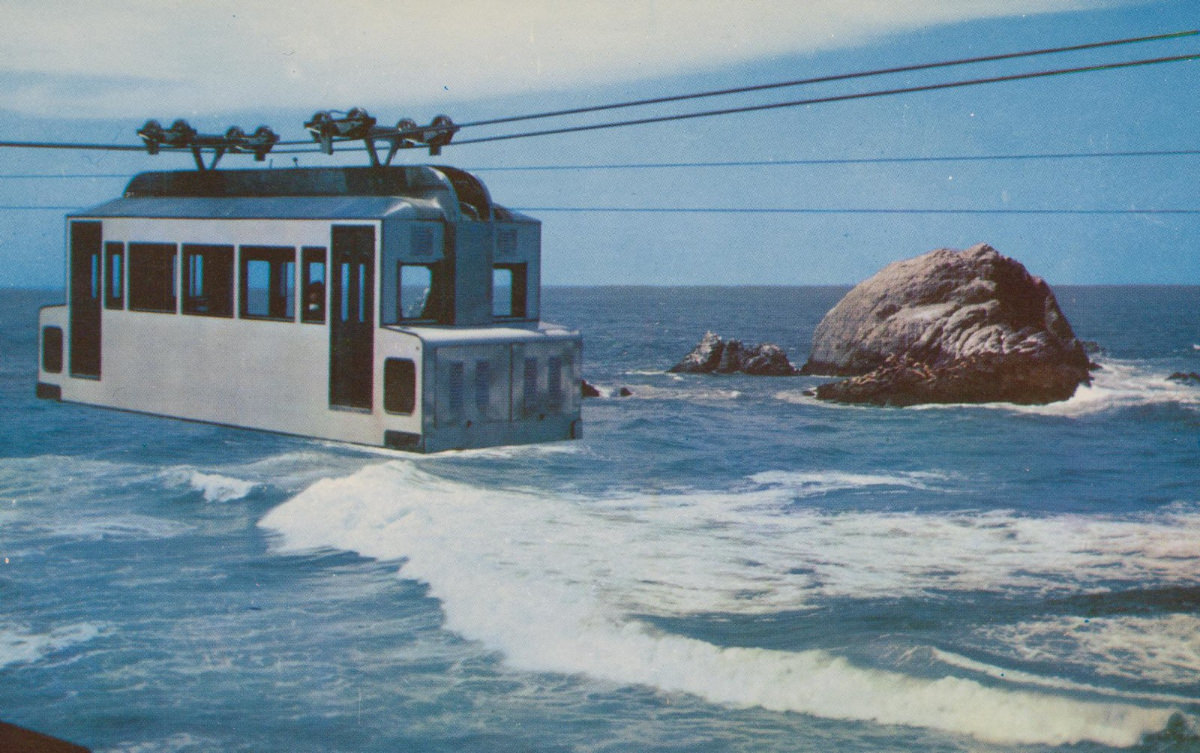
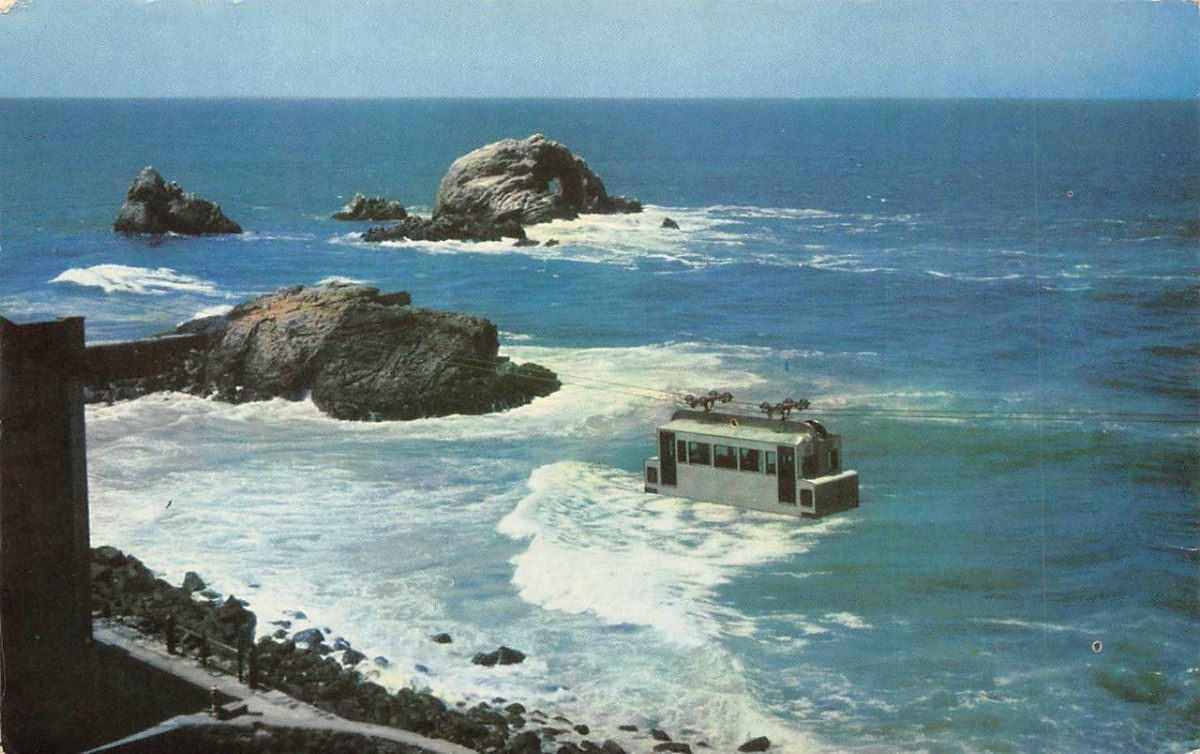
For eleven years, anyone standing near the Cliff House in San Francisco could look out and see a slow-moving gondola gliding above the rocky coastline. This was the Sky Tram — an aerial tramway that connected the Cliff House to a promontory at Point Lobos from 1955 to 1966. It was not a thrill ride. It was something quieter: a four-minute drift over one of the most dramatic stretches of the California coast.
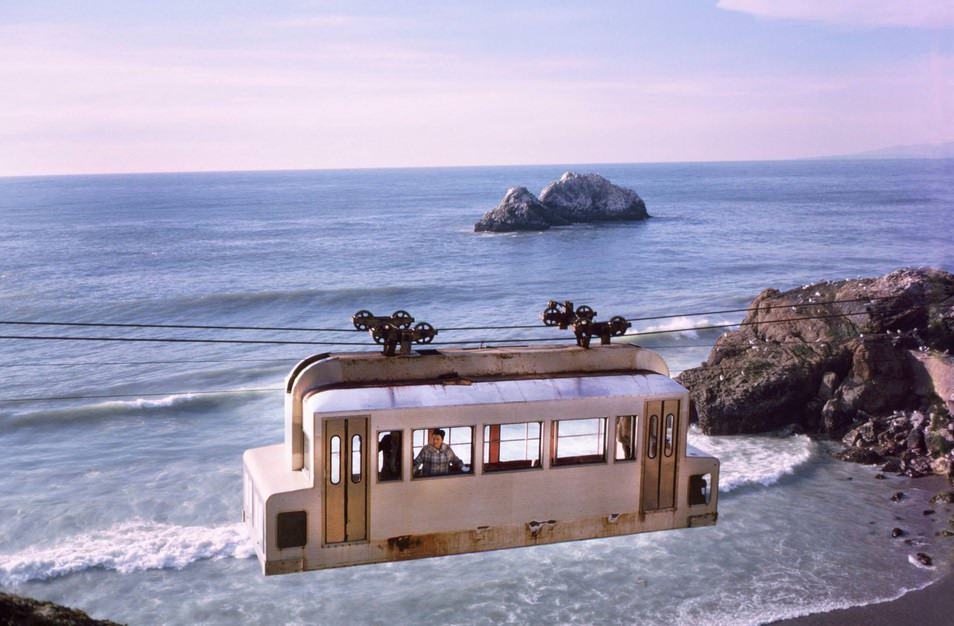
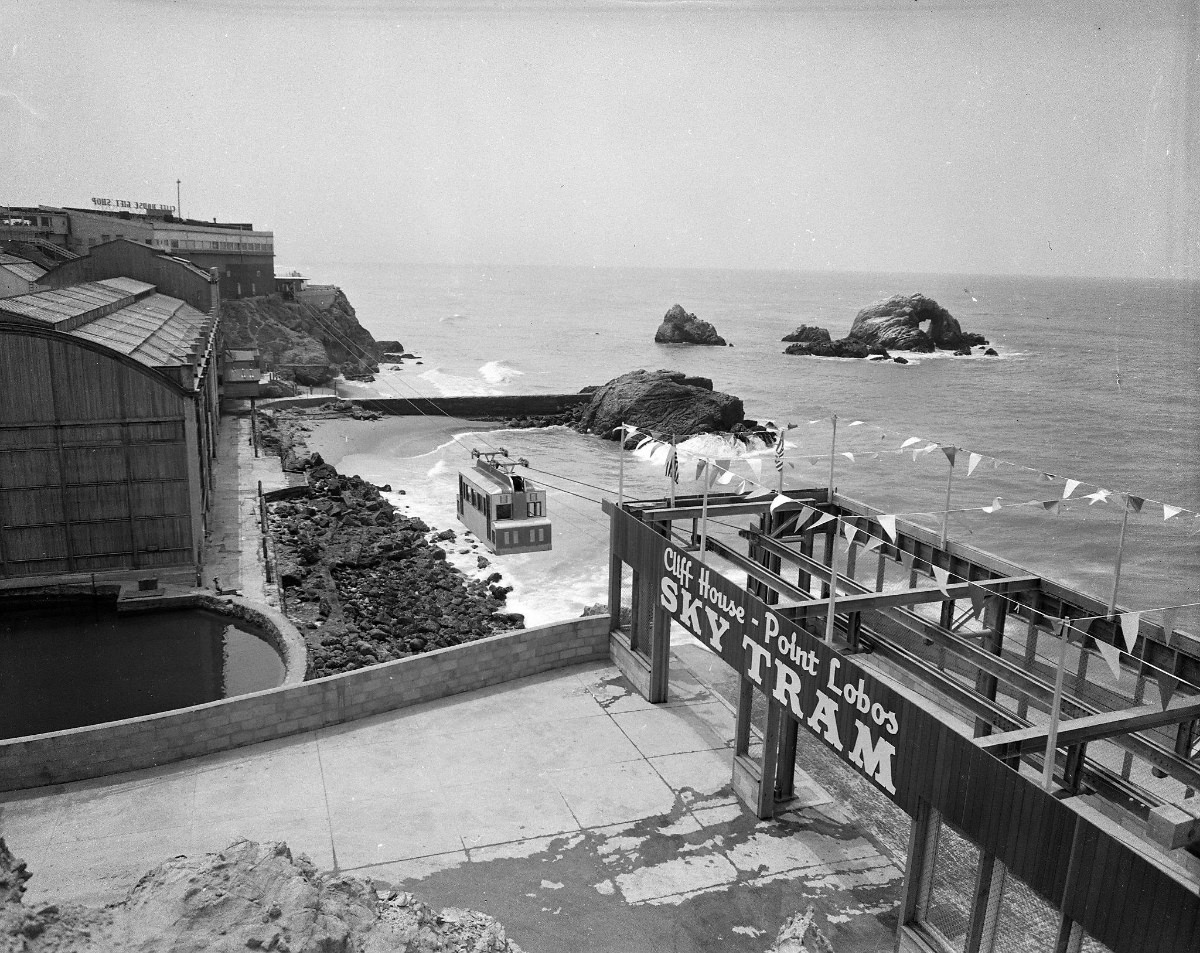
The Sky Tram opened on May 3, 1955. On that first day, riders paid just twenty-five cents each to board. The tram carried up to twenty-five passengers at a time, moving slowly along steel cables stretched a few hundred feet above the Sutro Baths basin below. The ride crossed over the ruins and tidal pools of that grand old bathhouse complex, giving passengers a bird’s-eye view of a place most people only ever saw from the ground.
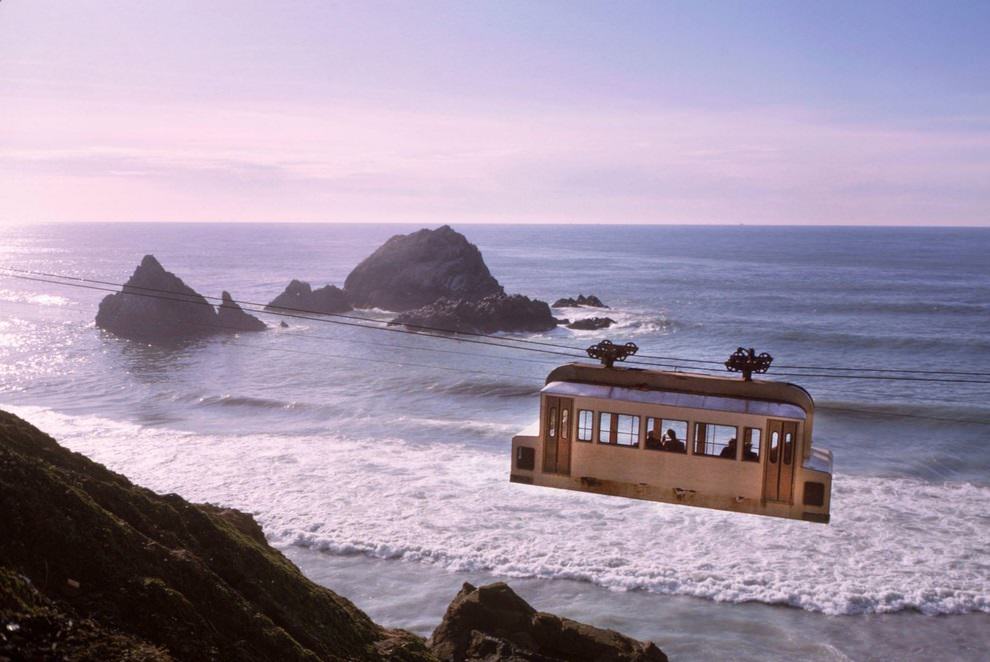
The destination at Point Lobos was designed to add to the experience. Two manmade waterfalls greeted passengers when they arrived at the far end. The whole setup was built for sightseeing, not speed. Once you reached Point Lobos, though, there was no return tram — riders walked back on their own.
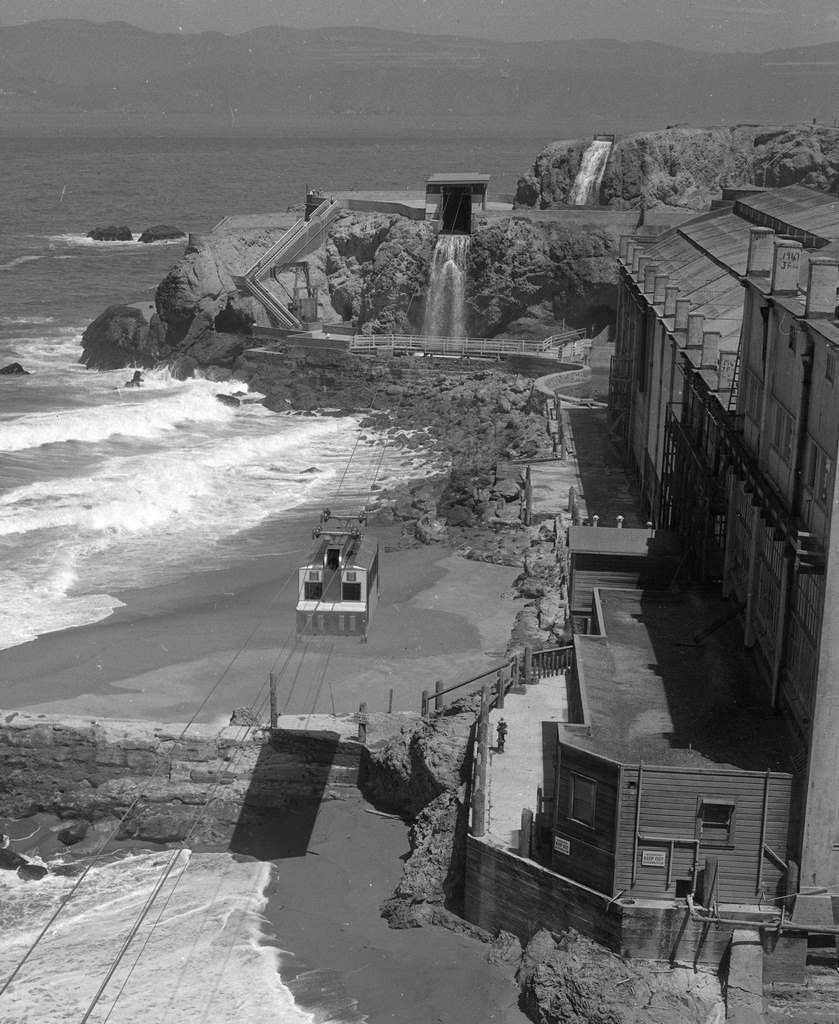
Construction on the tram was completed just in time for its May 1955 debut. The line stretched roughly one thousand feet from the Cliff House Terrace to Point Lobos, running above the open basin where the Sutro Baths once drew thousands of swimmers. By the time the Sky Tram opened, the baths were already in decline, and the tram offered a new reason for visitors to linger along that edge of the city.
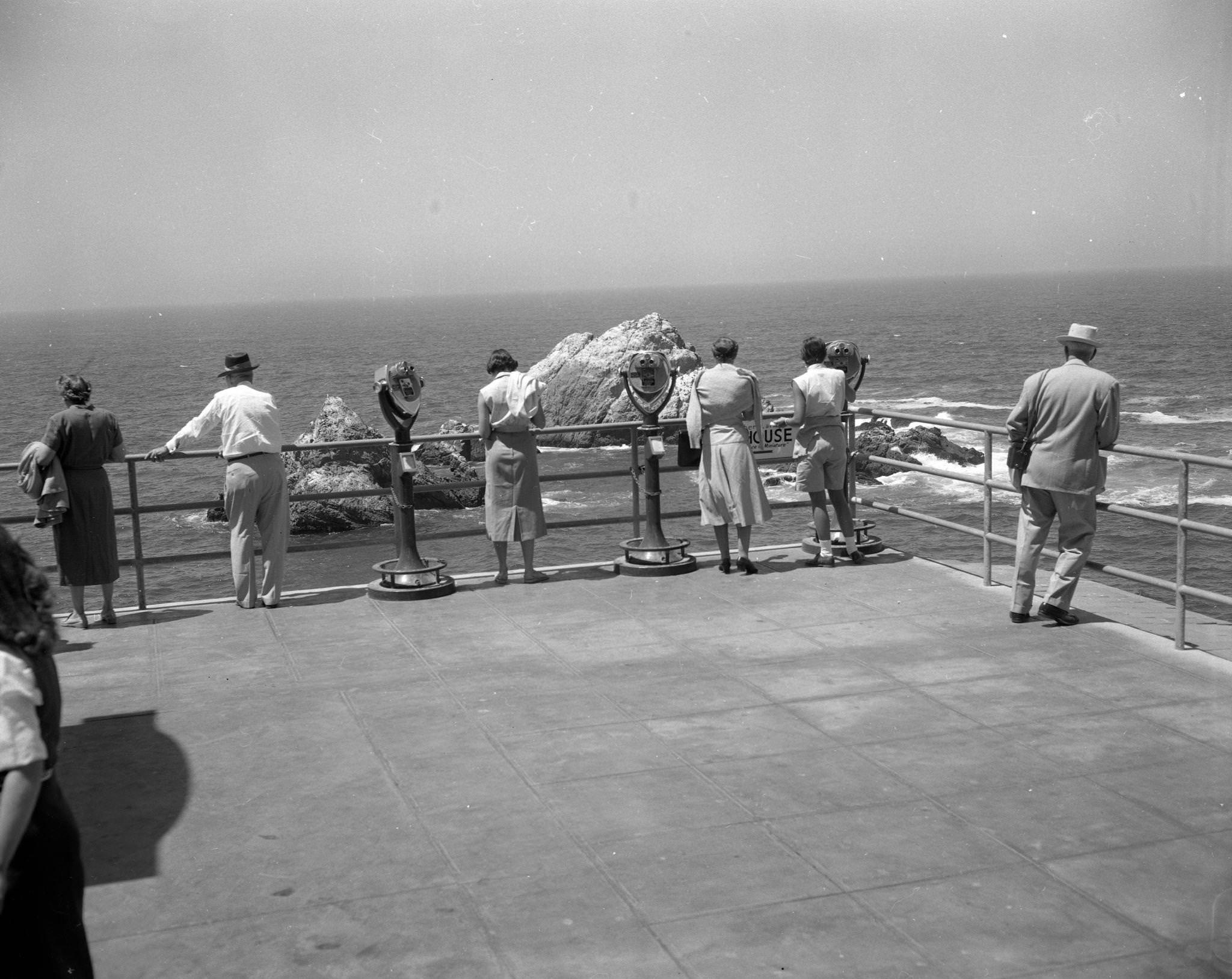
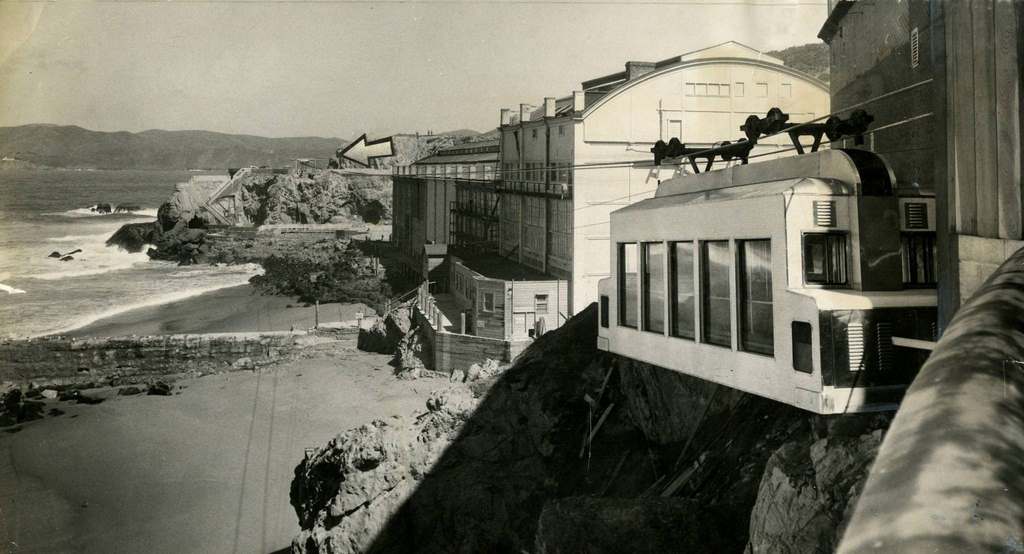
San Francisco’s coastal weather was never predictable, and the Sky Tram operated at the mercy of the elements. Thick fog rolls in off the Pacific with little warning along that stretch of Ocean Beach, and the wind off the water can be fierce. These conditions were not ideal for an open-air gondola ride suspended above a rocky basin.
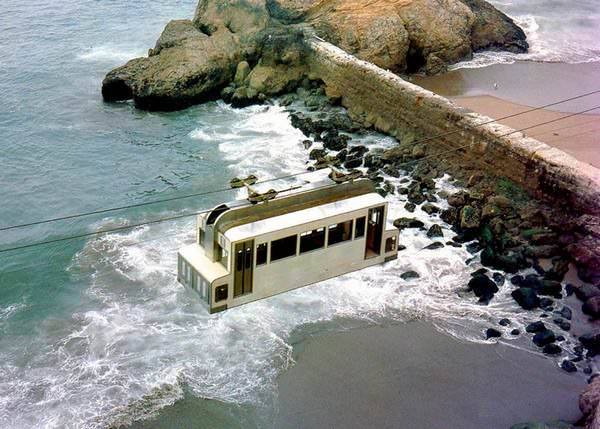
In May 1966, the Sky Tram shut down for good. The combined forces of fog, wind, and dwindling rider interest brought the operation to a close after just over a decade of service. The tram station at the Cliff House end of the line was not immediately demolished. Instead, it was repurposed and served for many years as a visitor center for the Golden Gate National Recreation Area.
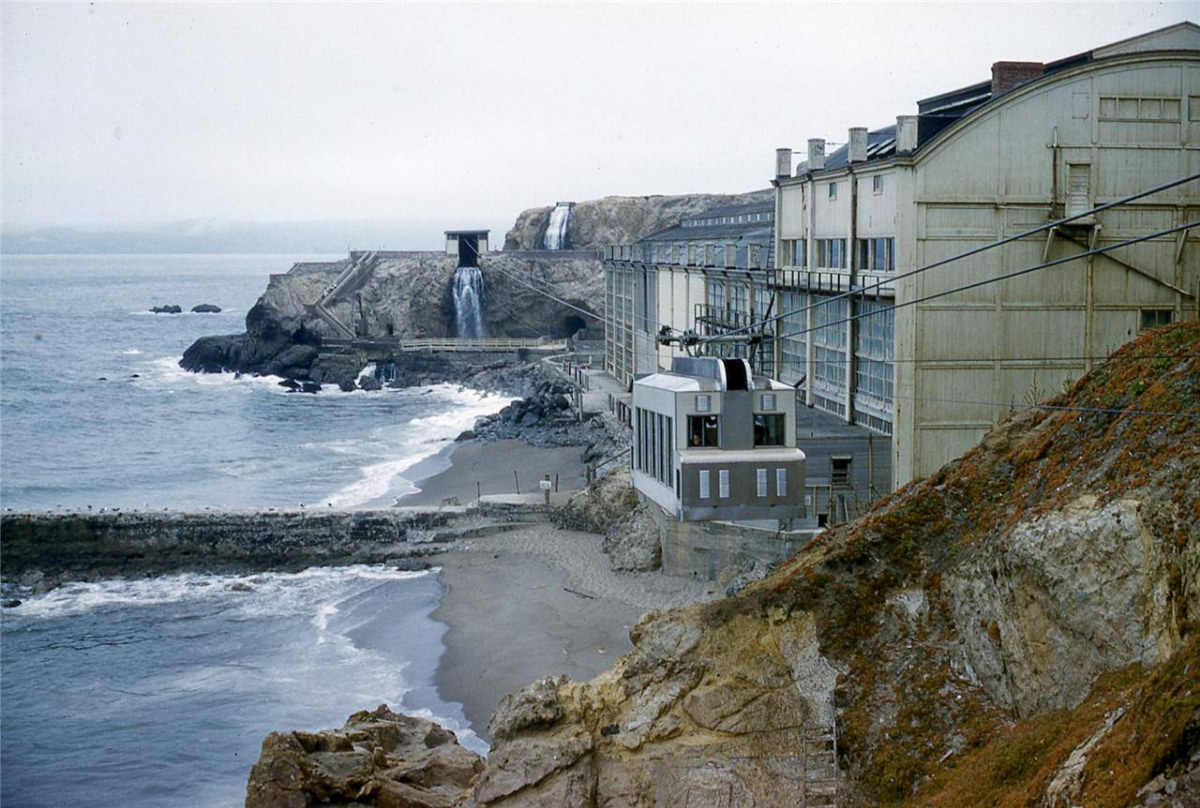
That visitor center use gave the old Sky Tram building a second life that lasted decades longer than the tram itself. It stood as a quiet reminder of the ride that once ran above the baths until the Cliff House underwent a major renovation in 2000. At that point, the building was torn down as part of the broader redevelopment of the site.
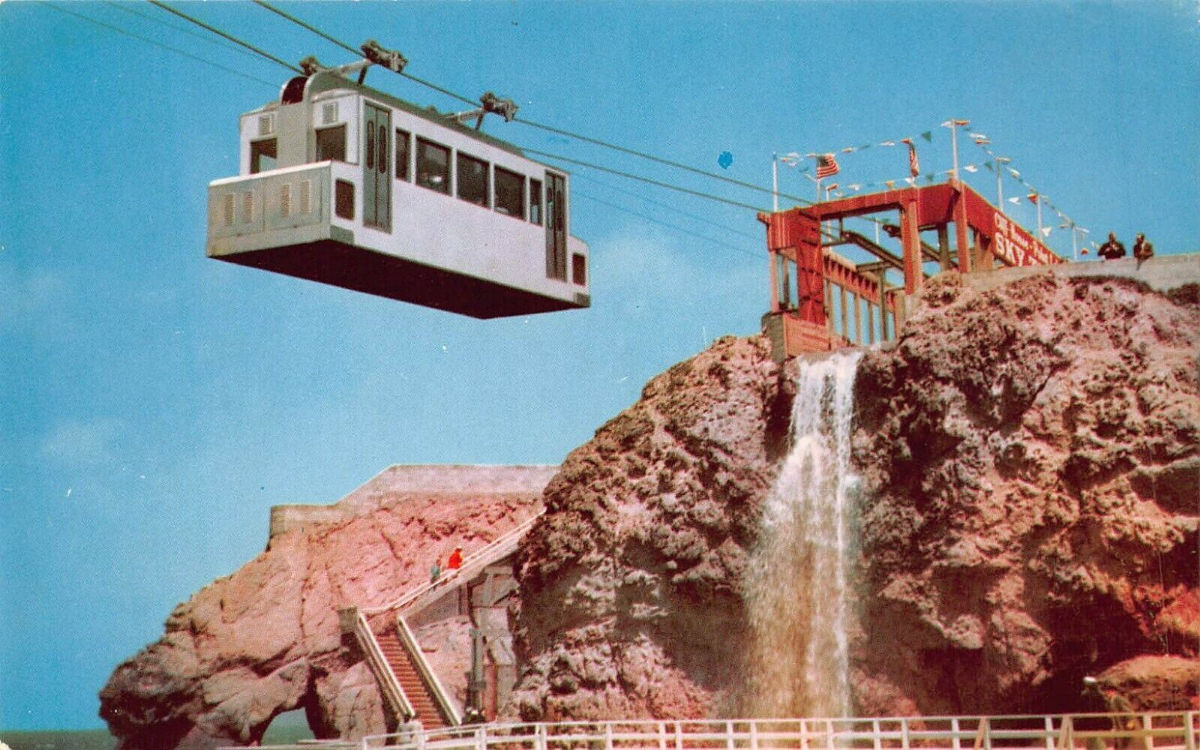
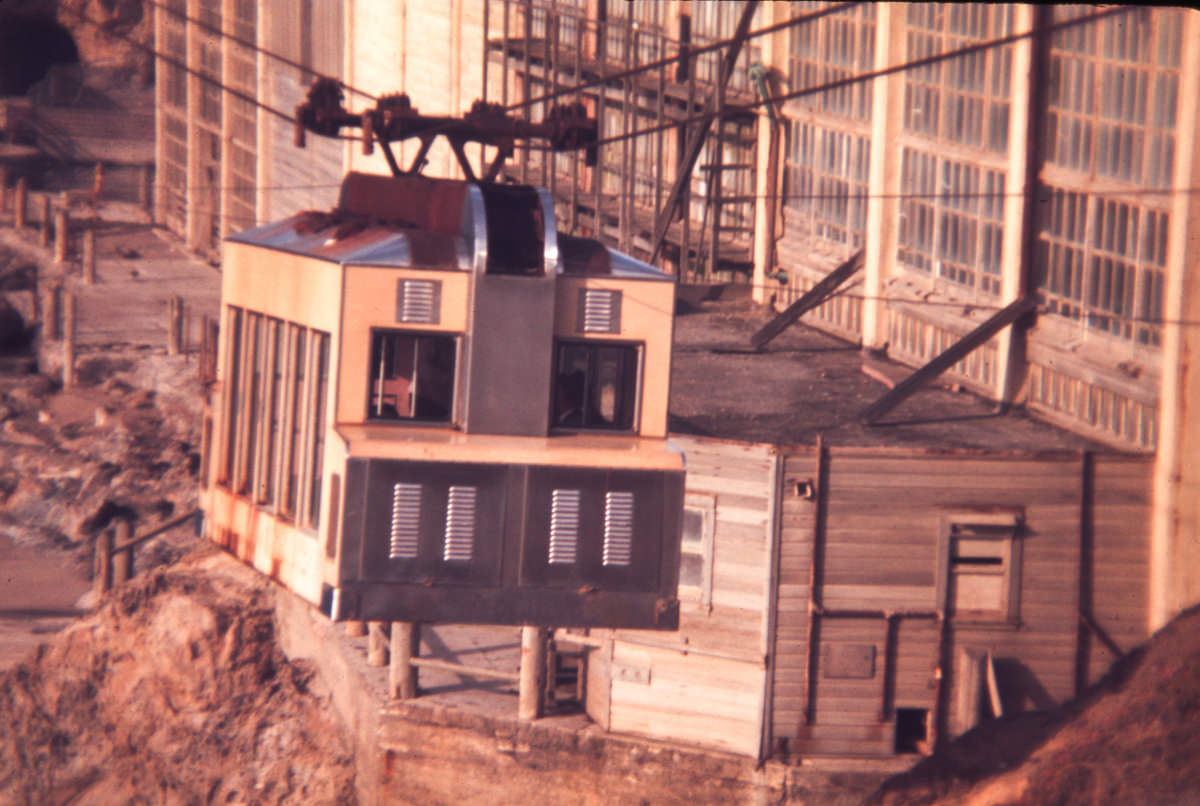
The Sky Tram existed in a specific window of postwar American optimism about leisure and tourism. Aerial tramways and gondola rides were seen as modern attractions — clean, novel, and family-friendly. San Francisco’s version leaned into the natural drama of its setting. Few city tram rides in the country offered a view like the one over the Sutro Baths basin, with the Pacific stretching out to the west and the rocky coastline below.
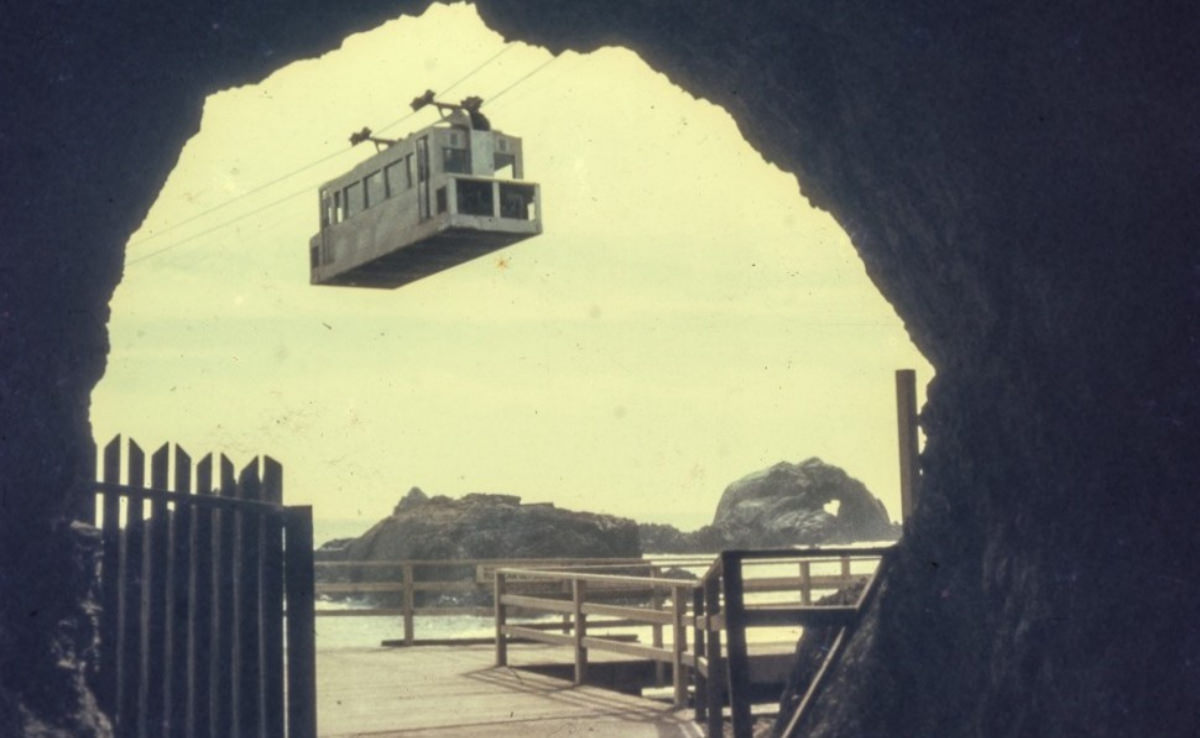
For a quarter, riders got four minutes of open-air views above one of the most scenic corners of San Francisco. The tram was never loud or flashy. It moved slowly and let the landscape do the work. At its Point Lobos end, the manmade waterfalls added a touch of engineered spectacle to an already striking natural backdrop.
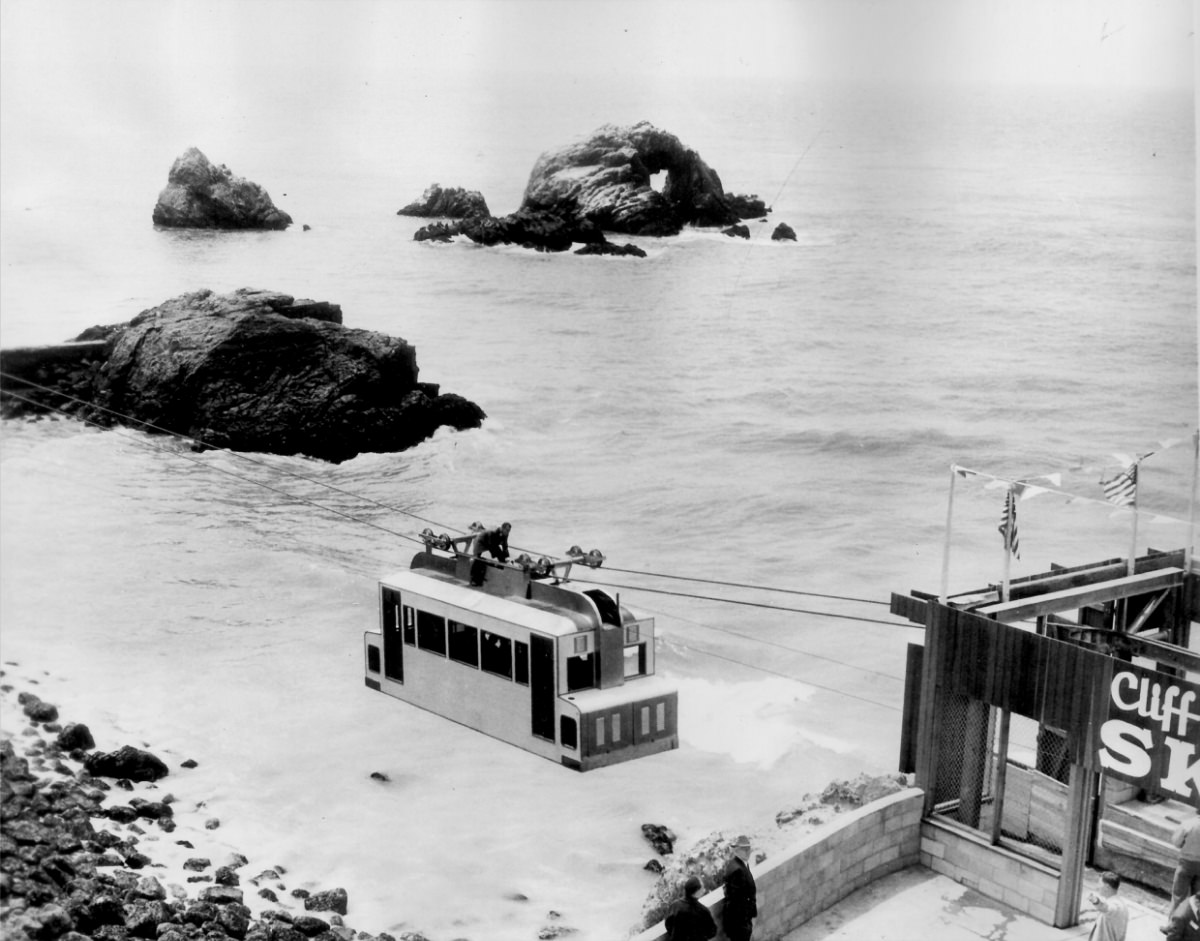
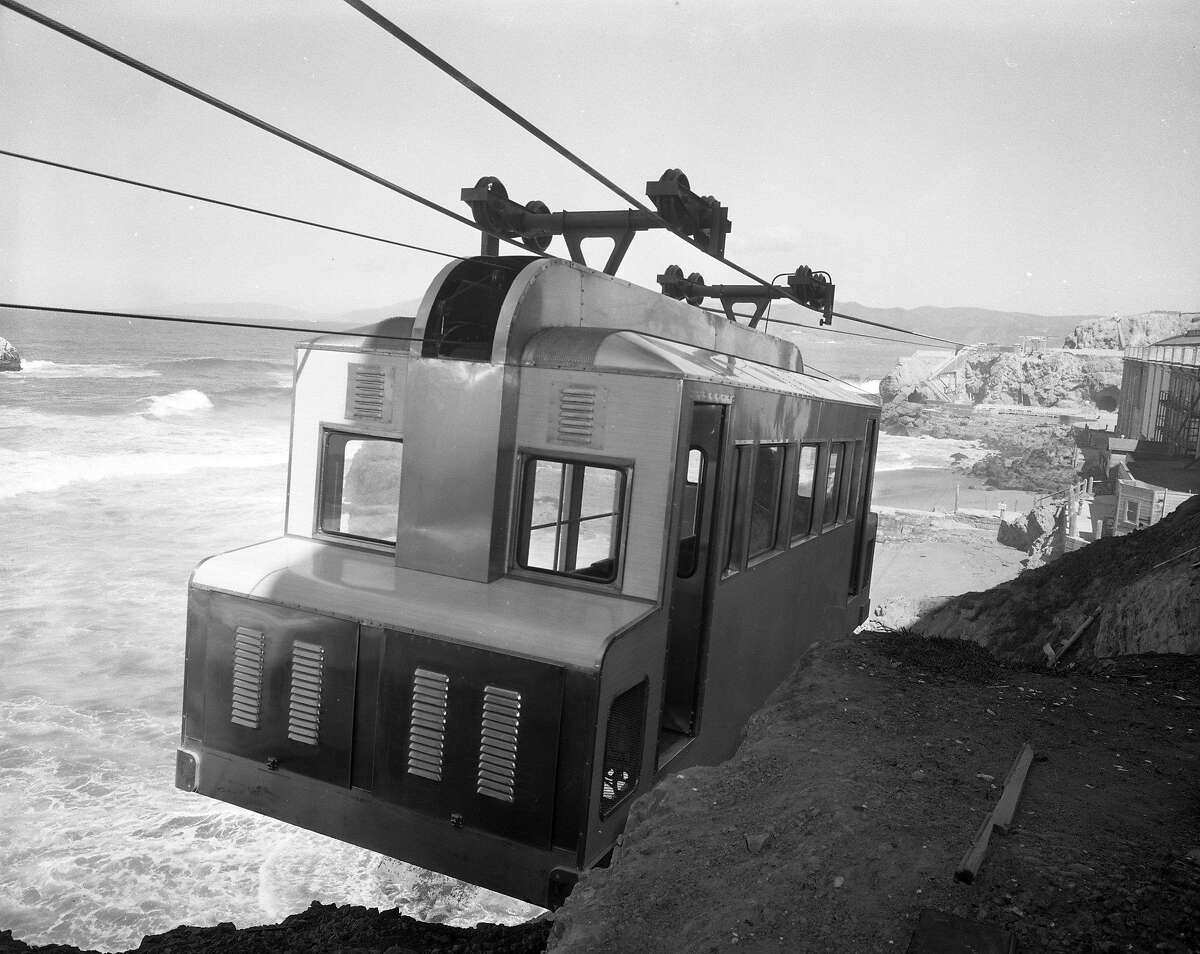
Photos from 1955 and 1964 show the tram cars suspended above the coast, the Cliff House visible in the background and the ocean beyond it. The images capture a version of the San Francisco waterfront that no longer exists — the Sutro Baths themselves burned down in 1966, the same year the Sky Tram closed, leaving only the concrete ruins that visitors walk through today.