When photography was invented in 1839, every image came out in black and white. For the people captured in those early photos, color was simply out of reach. Within two decades, photographers began experimenting with hand-coloring techniques — applying pigments directly to prints by hand. It worked, but it was slow, imprecise, and highly dependent on the skill of the person doing it.
The next major step came in the early 20th century with the arrival of Autochromes — the first widely practical color photographic process. Autochromes produced far better results than hand-coloring, but they were costly and technically demanding. True modern color photography didn’t arrive until 1935, when Kodak researchers Leopold Godowsky Jr. and Leopold Mannes introduced Kodachrome, the film process that would define color photography for decades.
Today, digital tools have made it possible to bring color to photographs that were taken long before any of these advances. One artist doing exactly that is Ola Shrinina — a former professor of German Language who turned her attention to photo colorization. Her work focuses on Russia in the early 1900s, a period rich with striking portraits of noblewomen, performers, students, and everyday people. The results are vivid and immediate, closing the distance between then and now.
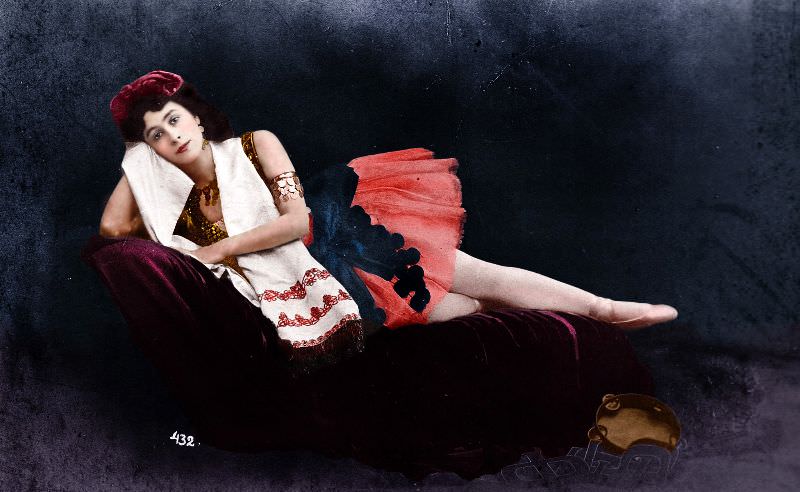
Mathilde Kschessinskaya was one of the most celebrated ballerinas of Imperial Russia. She trained at the Imperial Ballet School and became the prima ballerina assoluta of the Imperial Ballet — a title almost never awarded. Her personal life was equally dramatic; she had close ties to the Romanov family, including a well-known relationship with the future Tsar Nicholas II before his marriage.
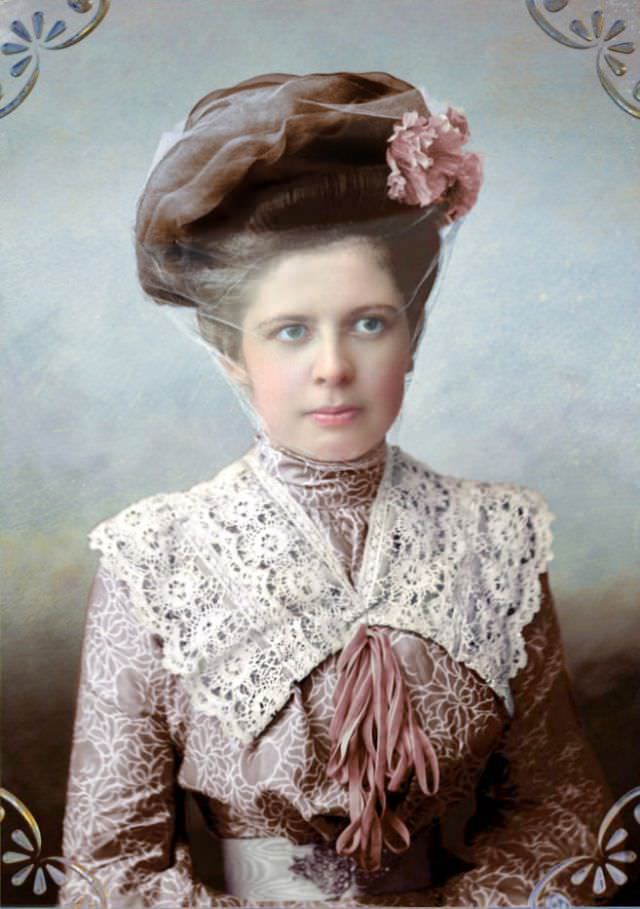
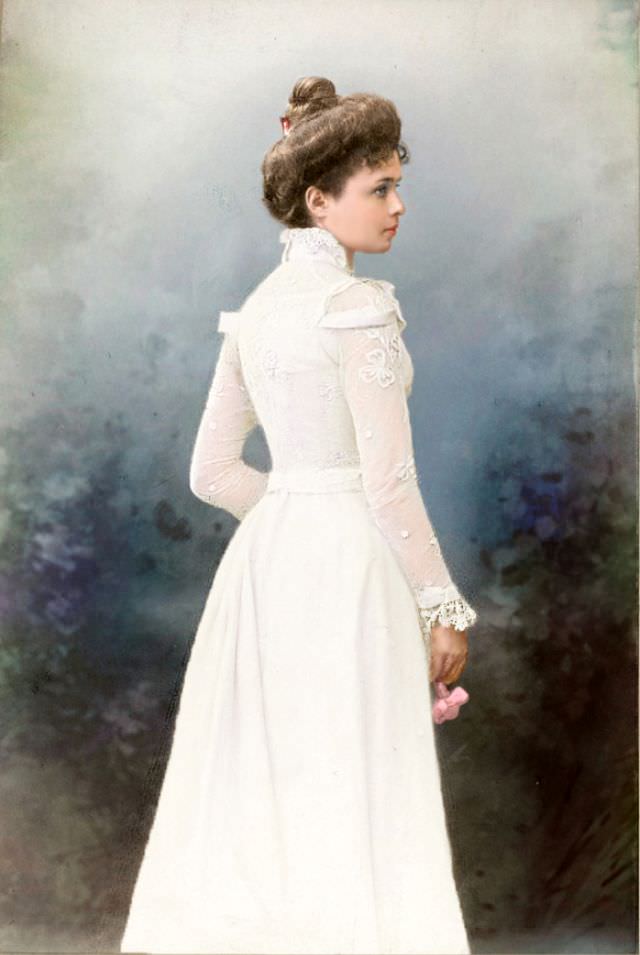
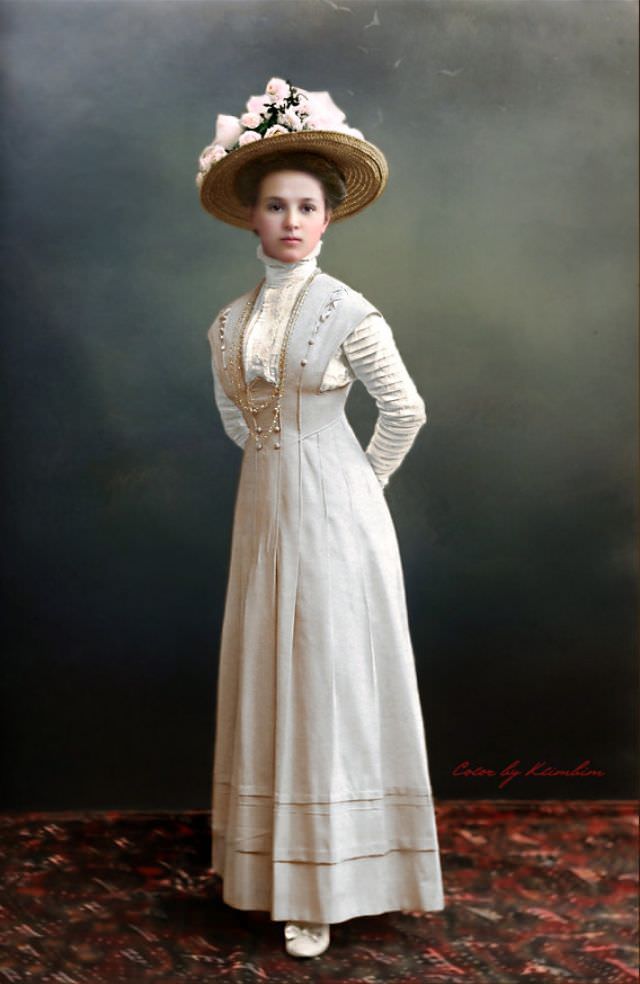
Not all of Shrinina’s subjects were famous. Some of the most compelling images in her collection are portraits of ordinary women from Russian towns and regions. This fashionable lady from Kashin, a small town in the Tver region, is a perfect example — dressed carefully for her photograph, her portrait reflects the pride and style of provincial Russian life at the turn of the century.
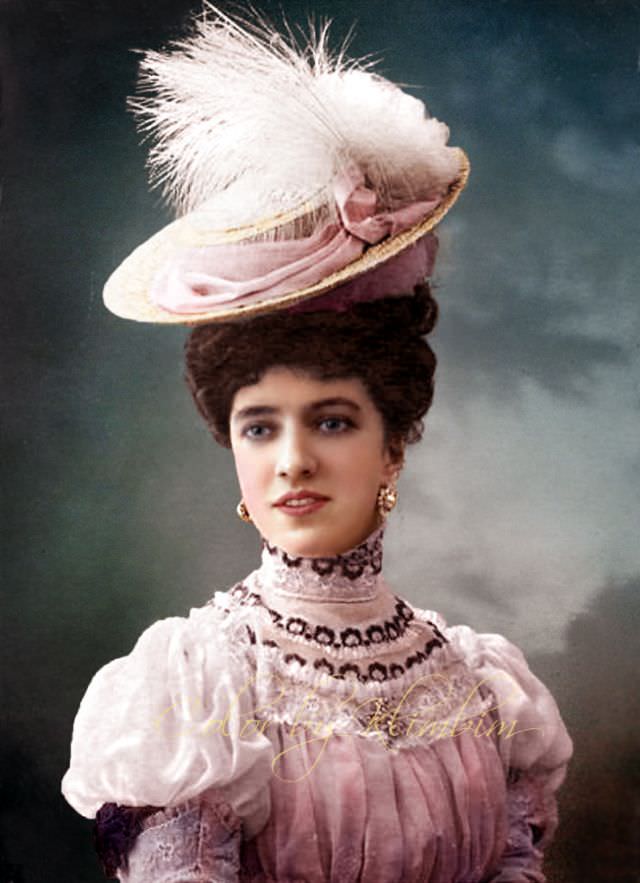
Agrippina Vaganova spent her early career as a dancer with the Imperial Ballet before transitioning into teaching. She went on to develop a highly influential method of ballet training. The Vaganova Academy of Russian Ballet in St. Petersburg still bears her name today, and her teaching system is used in ballet schools around the world.
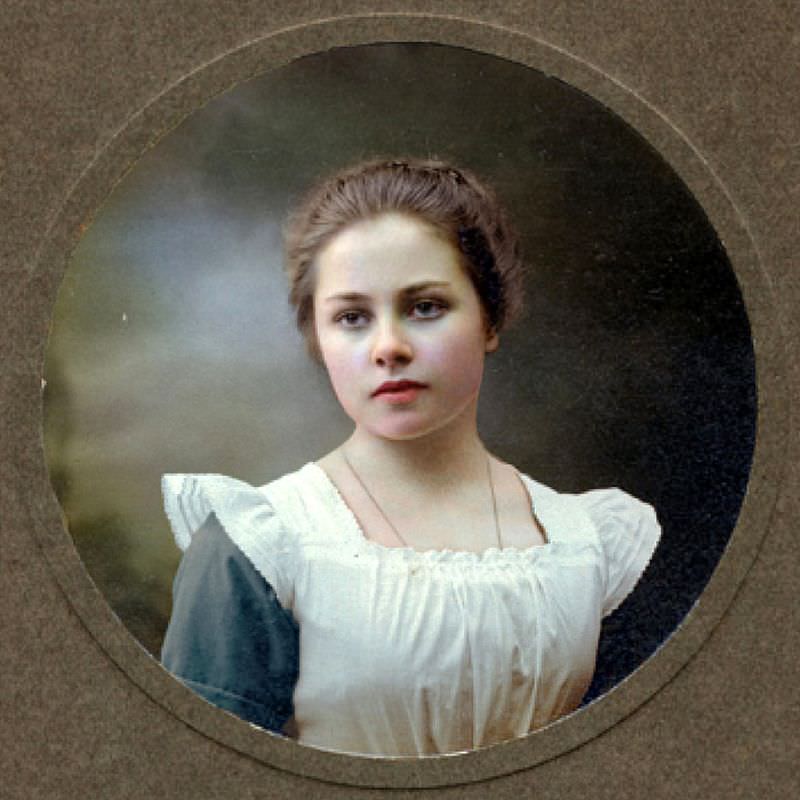
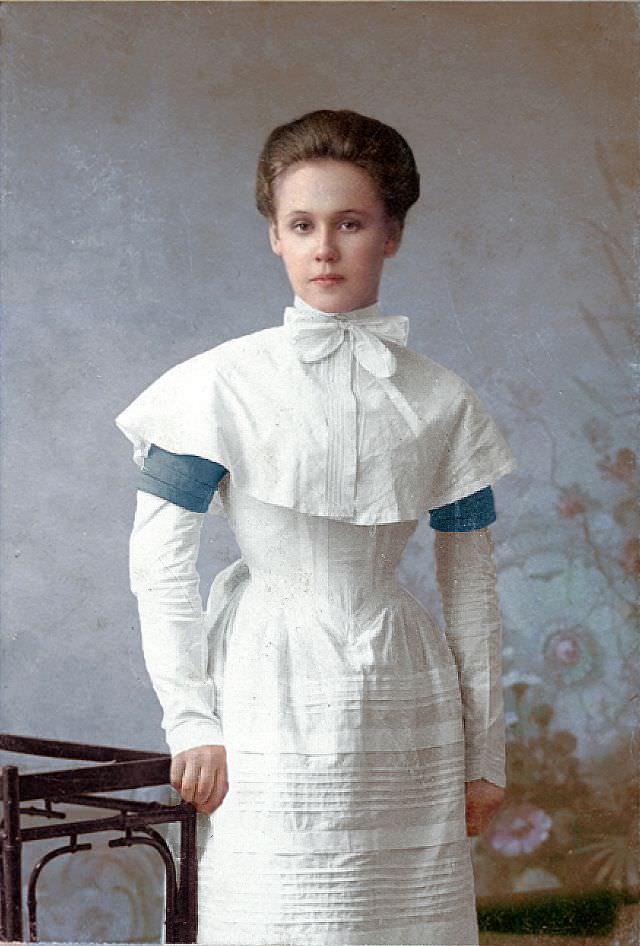
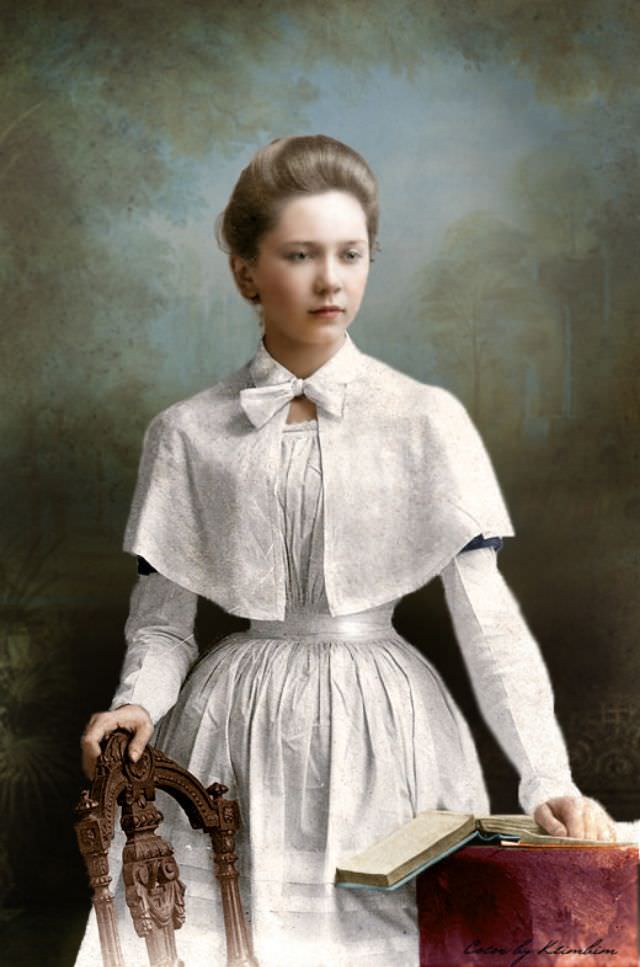
The Alexander Institute for Noble Maidens in St. Petersburg was one of Russia’s elite finishing schools for girls of noble birth. Students lived and studied on campus, receiving instruction in languages, music, etiquette, and academics. These portraits of its students capture the formal, structured world that upper-class Russian girls inhabited before the 1917 Revolution upended everything.
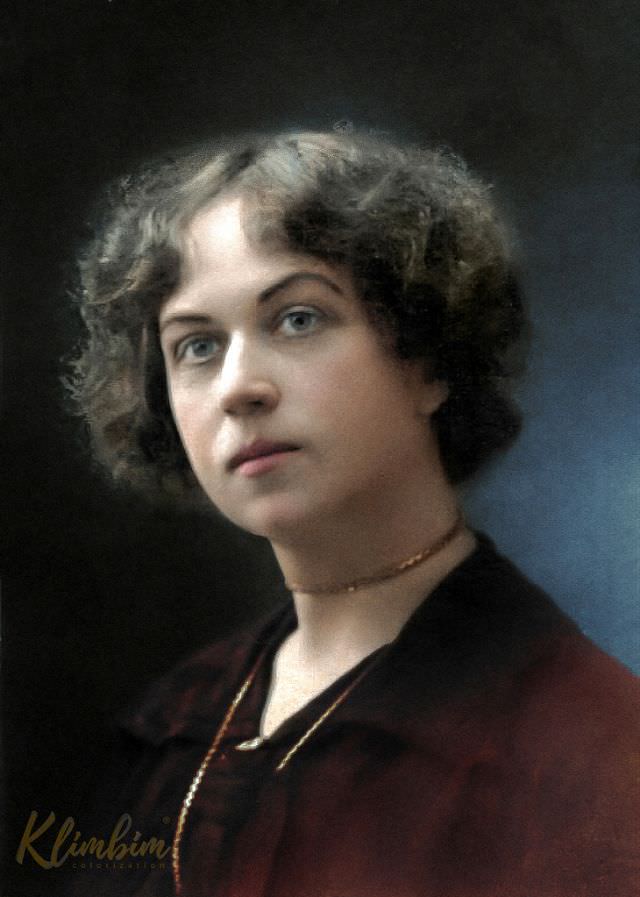
Alexandra Kollontai was a revolutionary, politician, and diplomat. Born into a privileged family, she rejected that world entirely and became one of the most prominent women in the Bolshevik movement. She later served as Soviet ambassador to Norway, Mexico, and Sweden — making her one of the first female ambassadors in modern history.
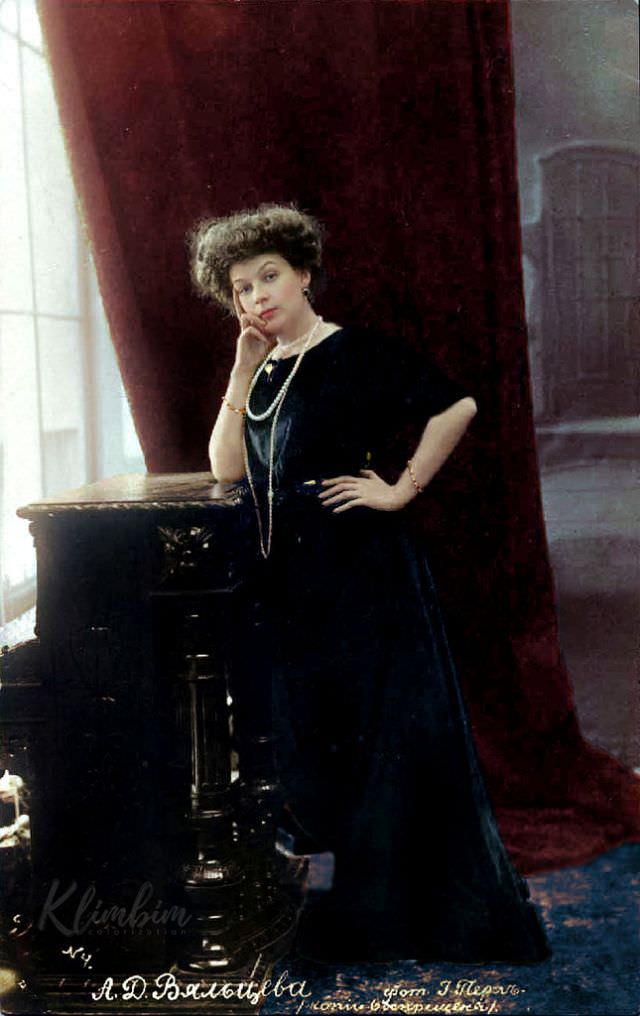
Anastasia Vyaltseva was one of the most popular singers in early 20th-century Russia. Her mezzo-soprano voice made her a sensation in operettas and Russian romances. She was among the first Russian artists to record her voice on gramophone, and her records sold widely. When she died in 1913 at the age of 42, thousands lined the streets of St. Petersburg for her funeral.
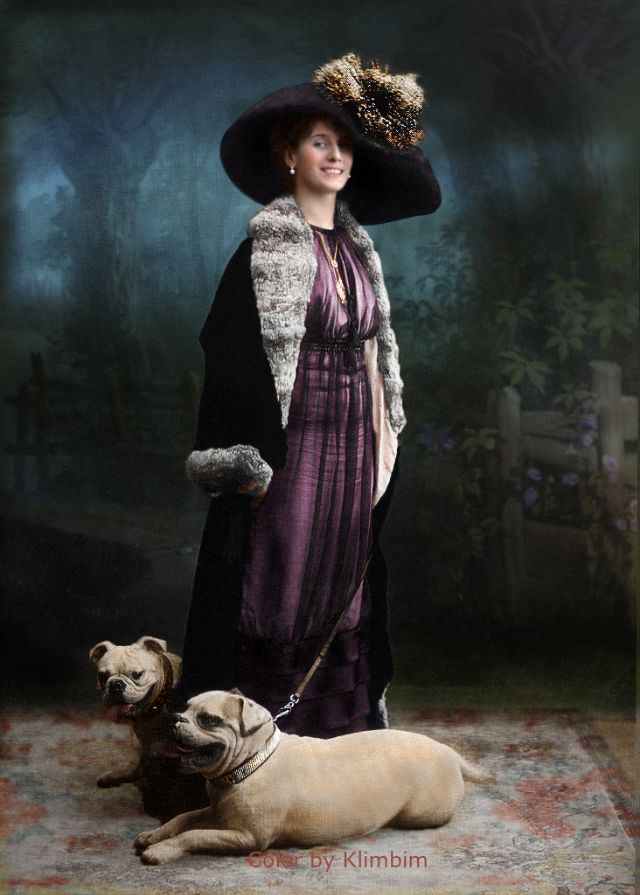
Anna Pavlova is arguably the most famous ballerina in history. Born in St. Petersburg in 1881, she trained at the Imperial Ballet School and rose to become the prima ballerina of the Mariinsky Theatre. She later formed her own touring company and brought ballet to audiences across the globe — from Europe and the Americas to Asia and Australia. Shrinina’s colorized collection features Pavlova extensively, showing her both on and off the stage.
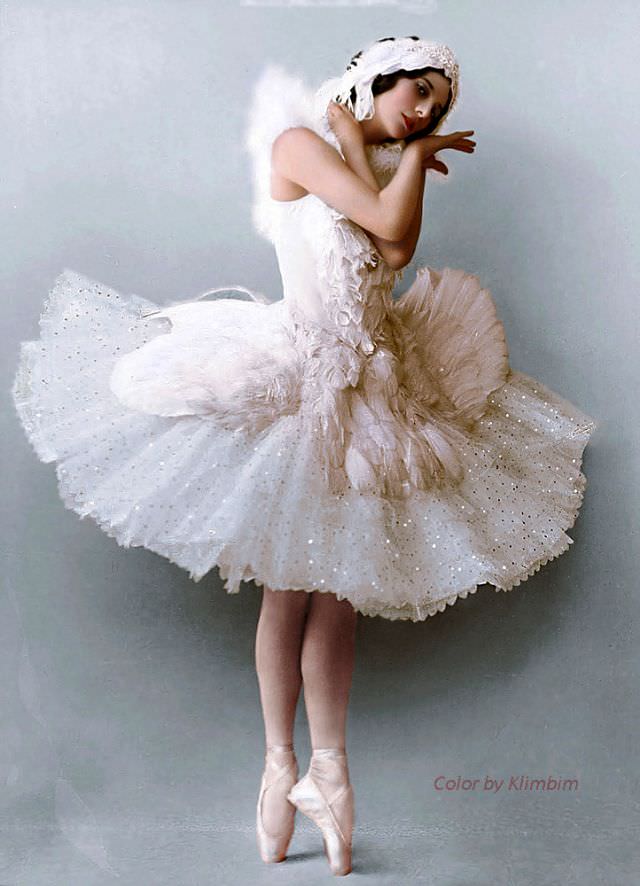
“The Dying Swan” was a short solo piece choreographed for Pavlova by Michel Fokine in 1905. It became the defining performance of her career. The piece, set to Saint-Saëns’ “The Swan,” lasts only a few minutes but was so closely associated with Pavlova that she performed it hundreds of times throughout her life. Seeing it colorized gives the image a new emotional weight.
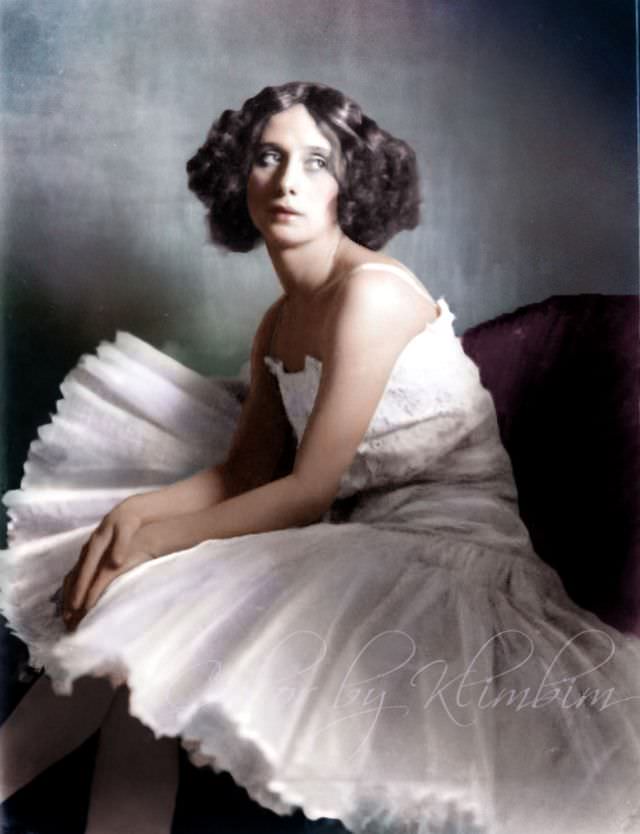
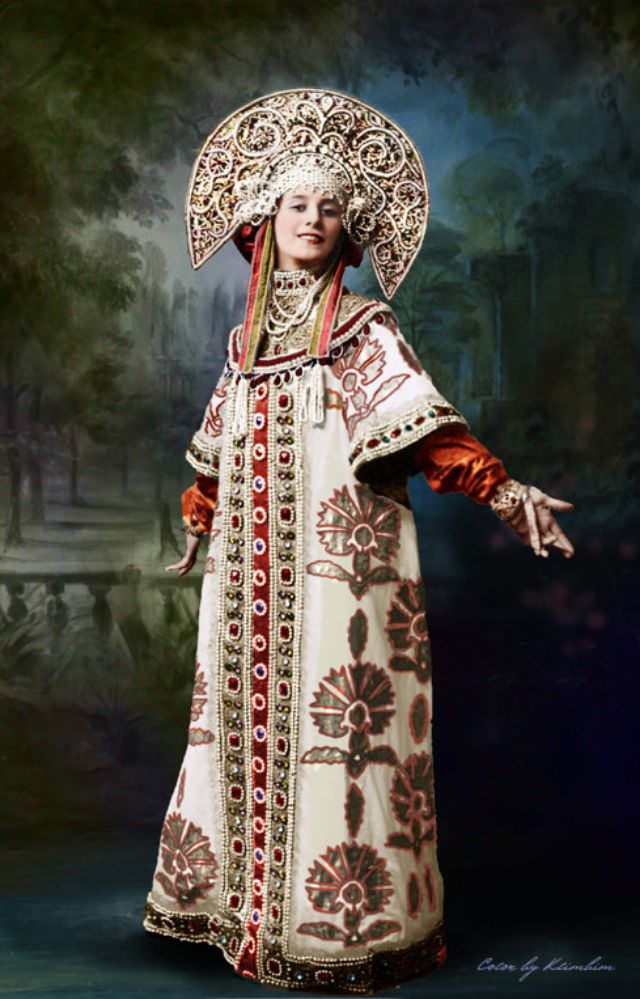
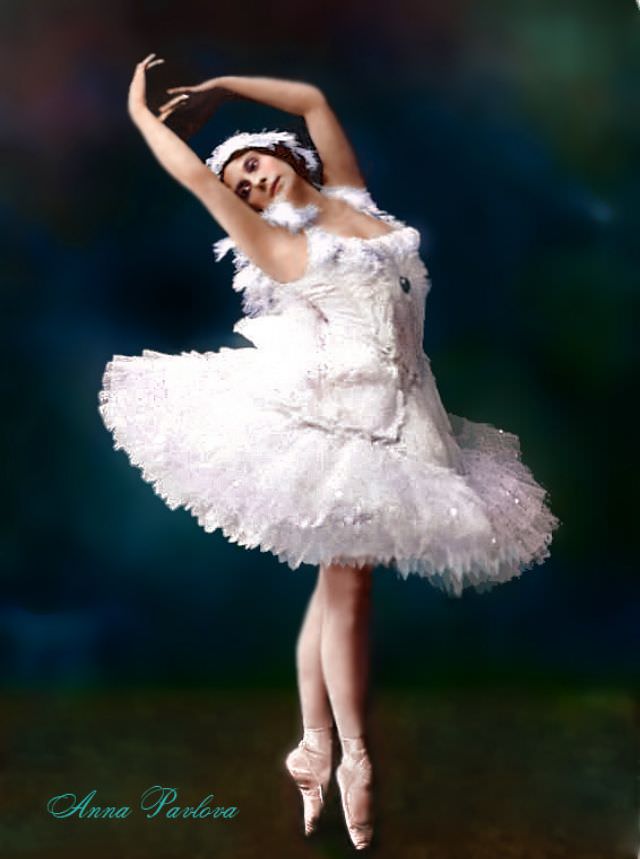
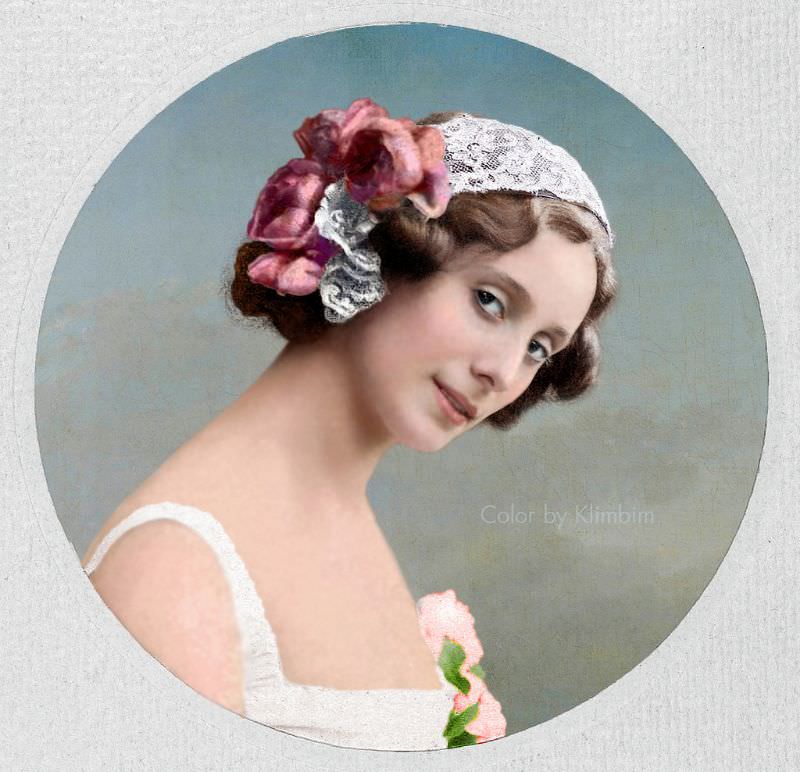
These multiple portraits of Pavlova from the 1900s show her in various poses and costumes — some formal, some relaxed. Together they document how thoroughly she was photographed during her rise to fame, and how naturally she commanded attention in front of a camera.
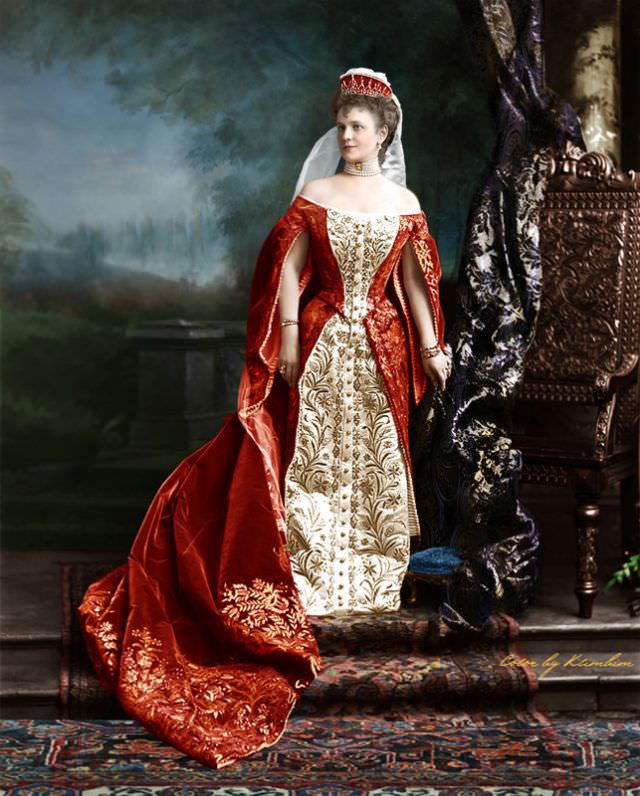
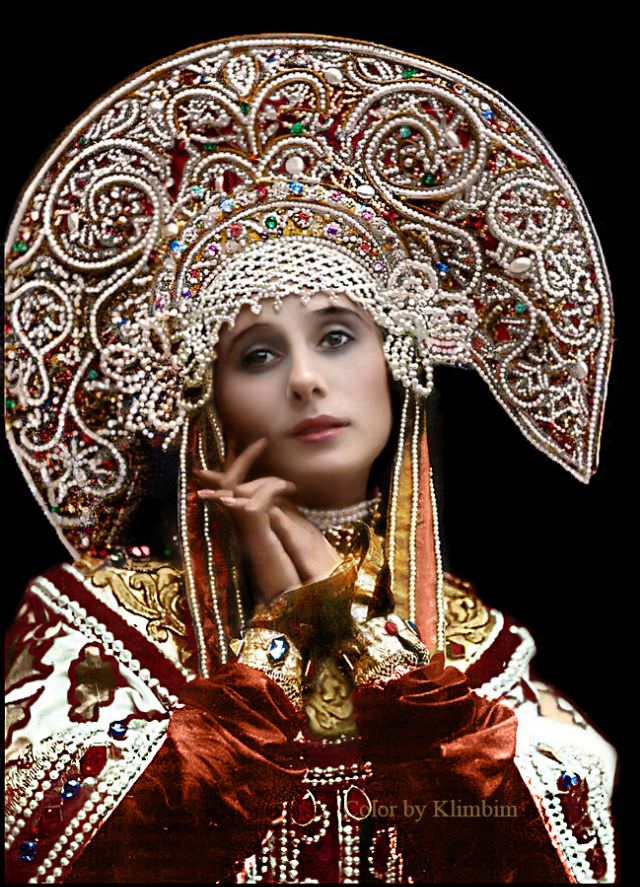
Russian court dress at the turn of the century was an elaborate affair. Women attending the Imperial Court wore long-trained gowns based on 17th-century Russian styles, complete with kokoshnik headdresses and heavily embroidered fabrics. The Baroness Graevenitz is shown here in full court regalia — a glimpse into the ceremonial world of the late Russian Empire.
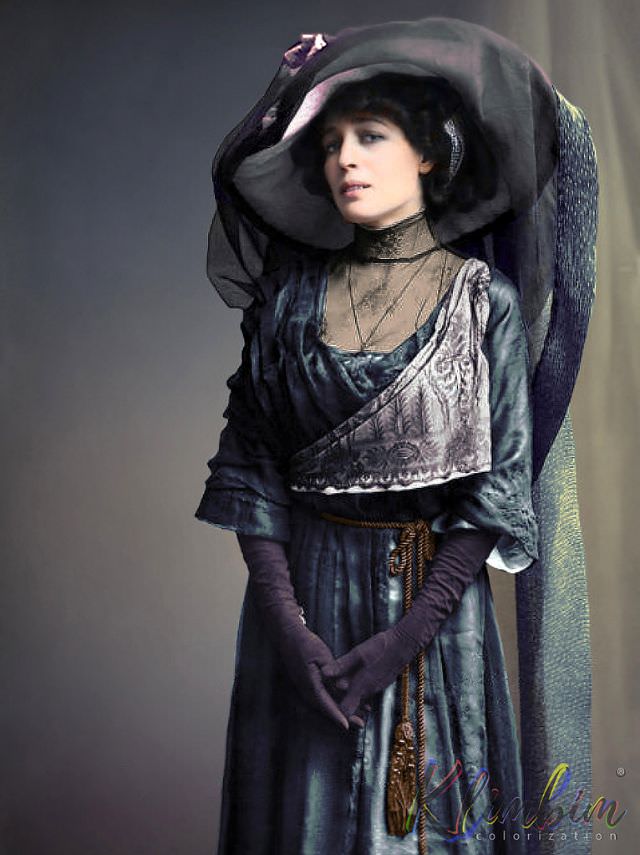
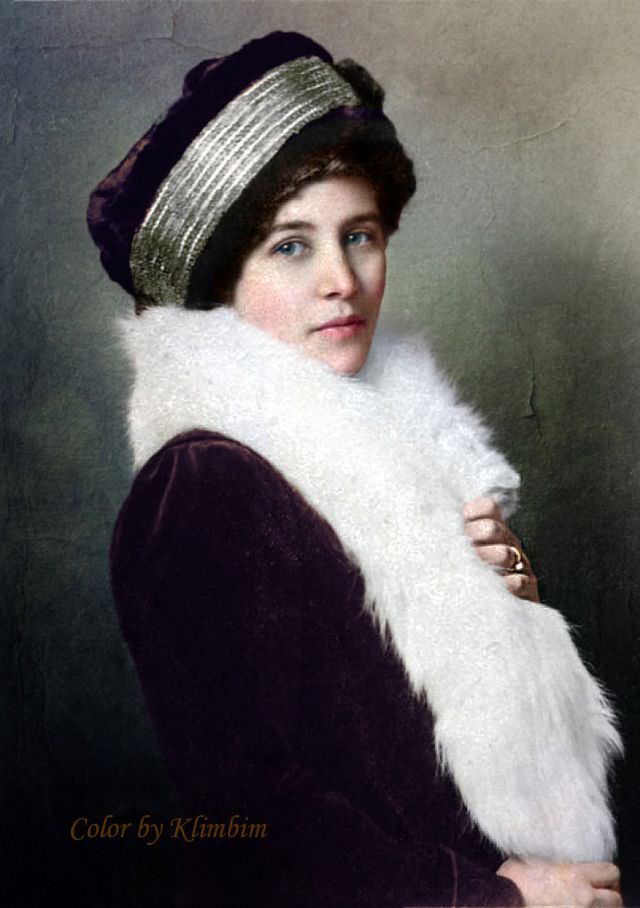
Portraits of Russian noblewomen from this period carry a common quality — a quiet formality mixed with genuine elegance. Countess Sophia Viazemski and Elisabeth Kologrivova represent that world clearly. Their clothing, posture, and expressions all reflect the expectations placed on women of their class in pre-revolutionary Russia.
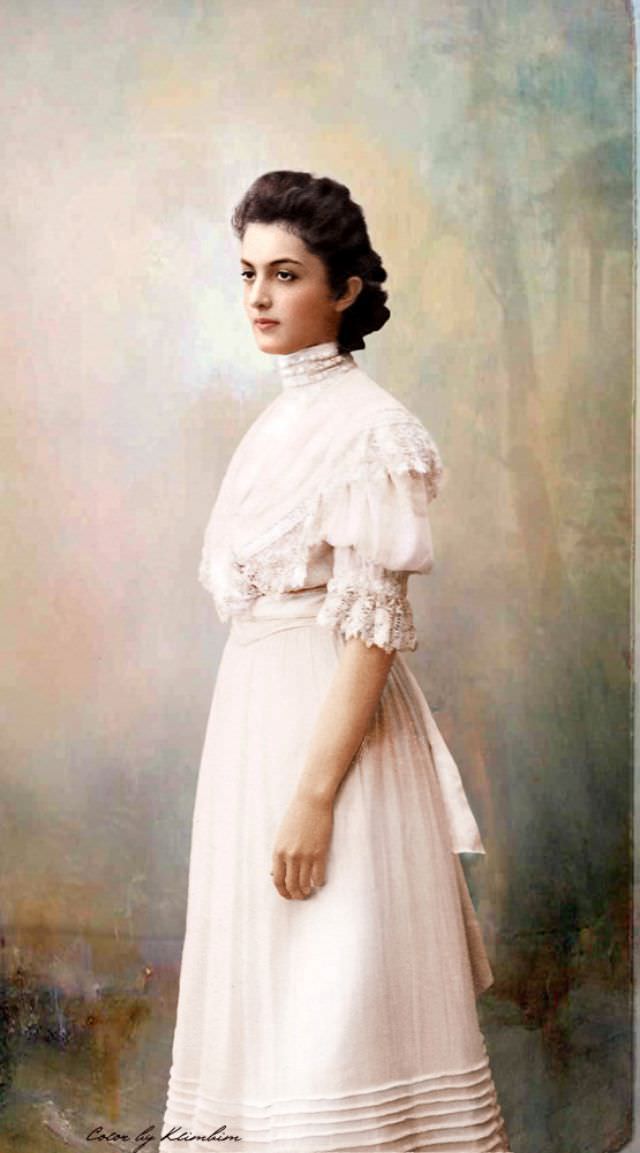
Princess Mary Eristavi belonged to a Georgian royal family that had been absorbed into the Russian imperial system. Georgian nobility occupied a unique position within the Empire — culturally distinct but politically integrated. Her portrait reflects the blending of traditions that characterized Russia’s vast and diverse aristocracy.
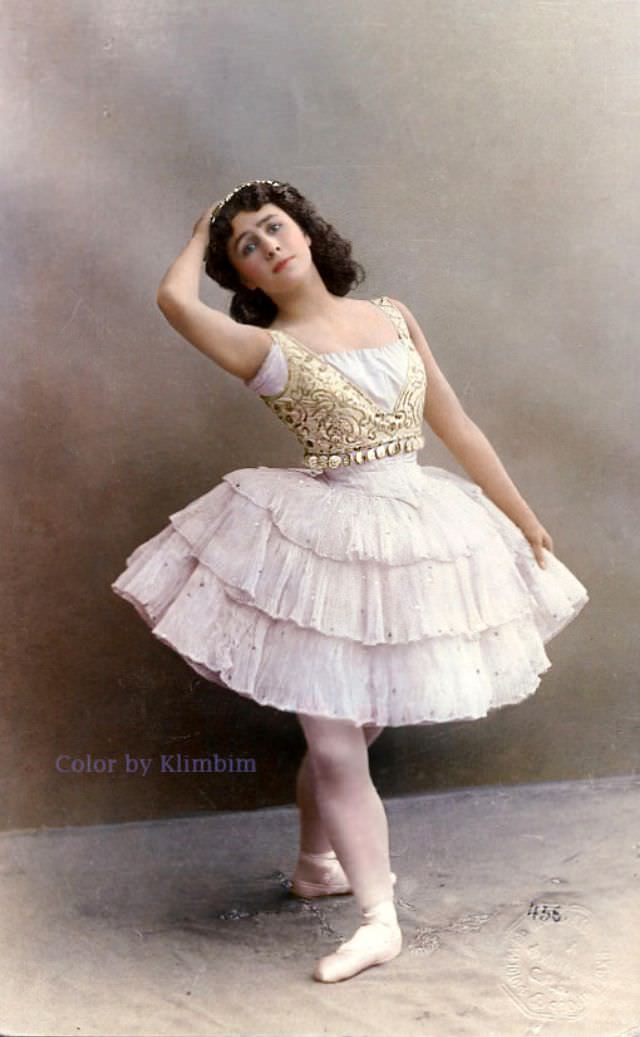
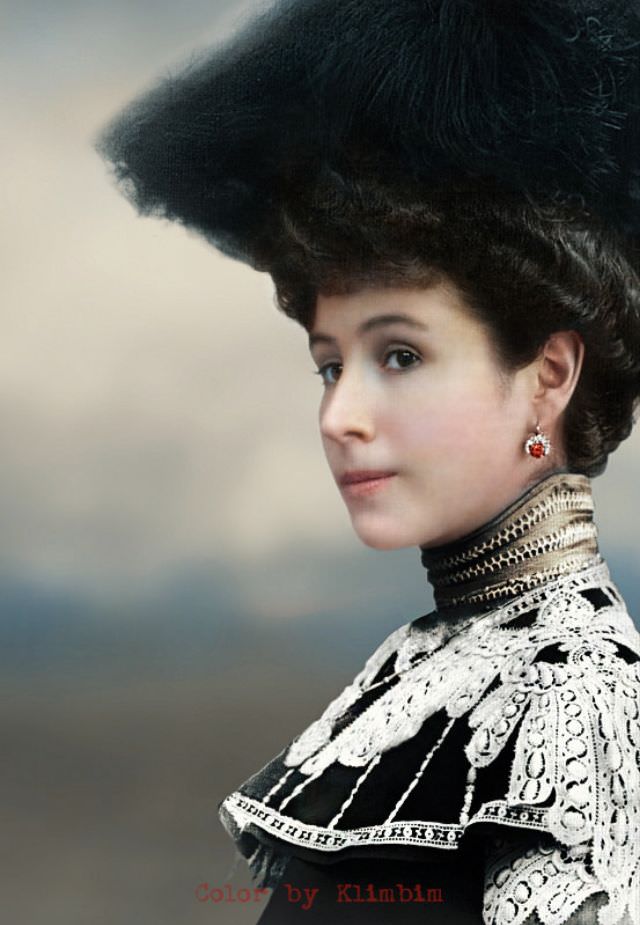
Kschessinskaya appears several times throughout Shrinina’s collection — a reflection of just how prominent she was in Russian cultural life. After the Revolution, she emigrated to Paris, where she opened a ballet school that taught many future stars of European ballet.
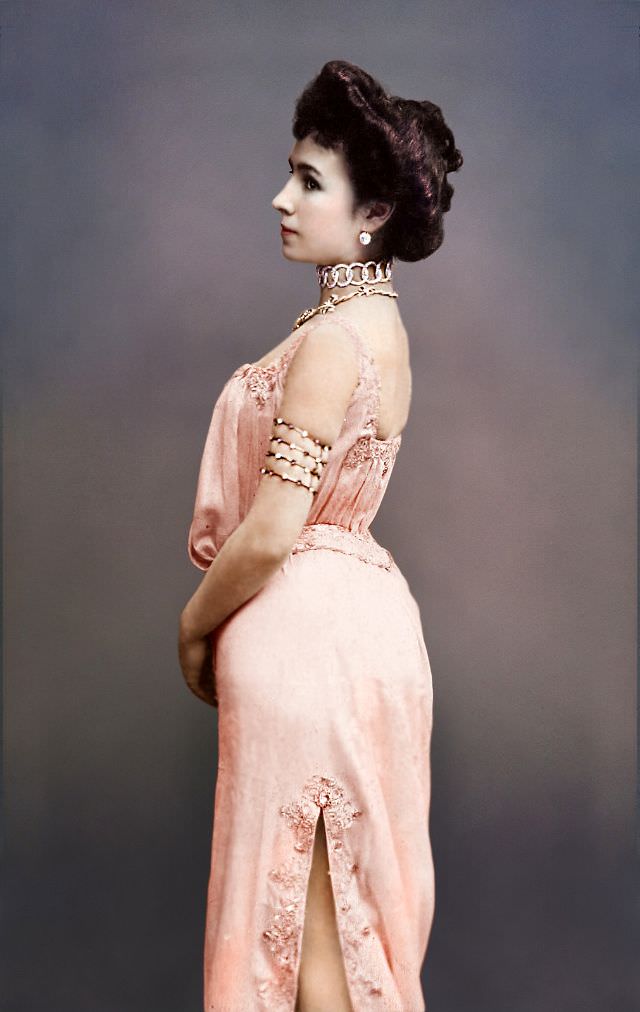
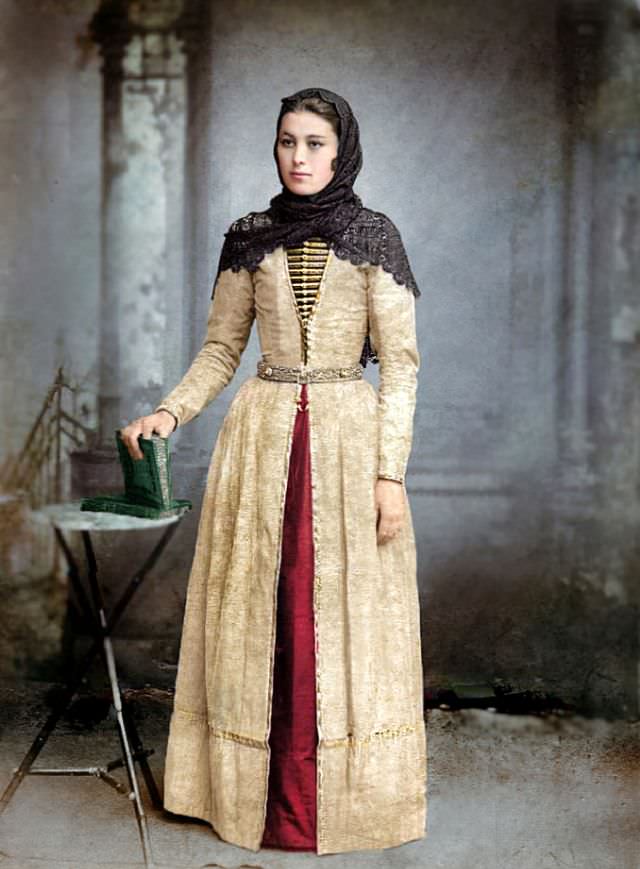
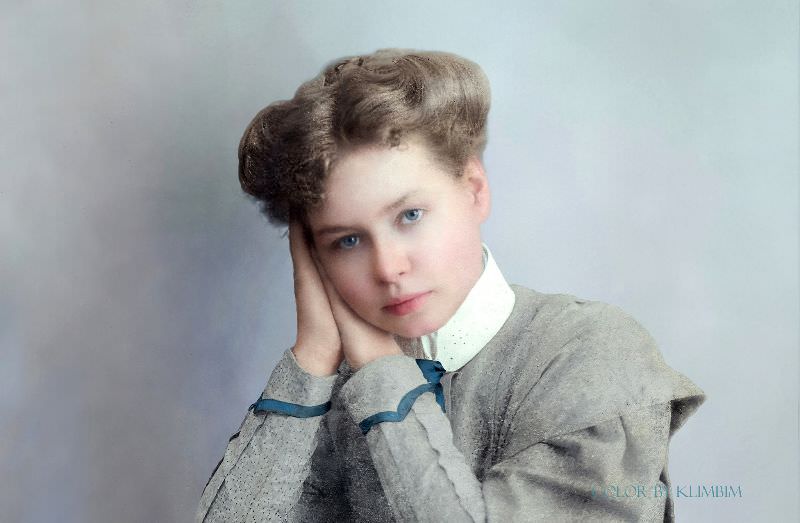
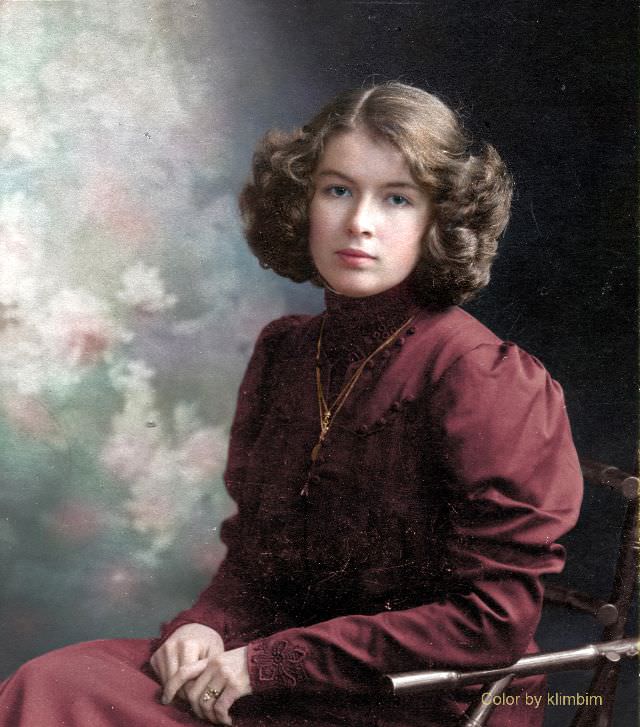
These portraits from the North Caucasus, Saratov, and Siberia show how geographically and culturally wide Shrinina’s collection reaches. Russia at the turn of the century was a vast empire stretching across Europe and Asia. The women in these photographs came from very different environments — yet they share the same composed, direct gaze of someone sitting for a formal portrait.
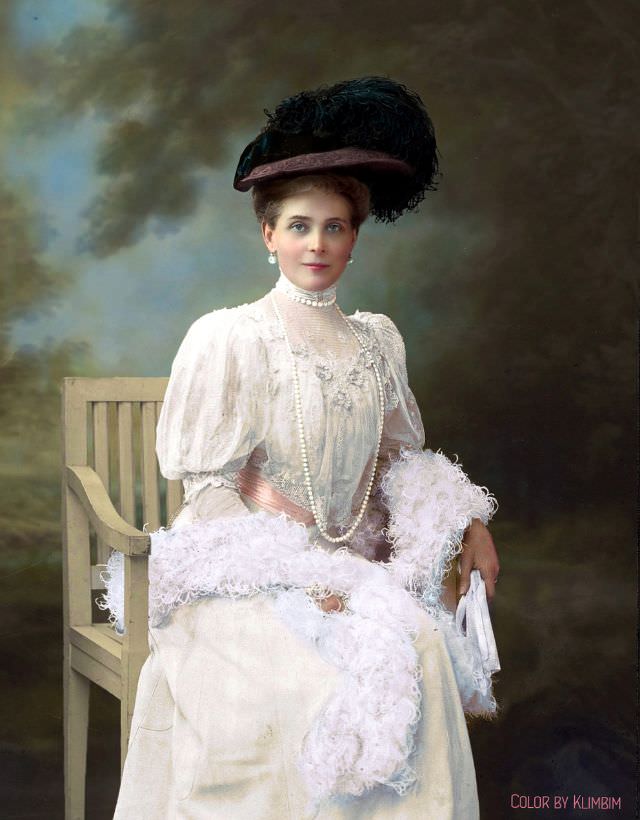
Princess Zenaida Youssoupoff was one of the wealthiest women in Imperial Russia. The Youssoupoff family owned palaces, estates, and vast art collections. Zenaida was known for her philanthropic work and was widely respected in Russian society. She is also the mother of Felix Youssoupoff, one of the men directly involved in the assassination of Rasputin in 1916.
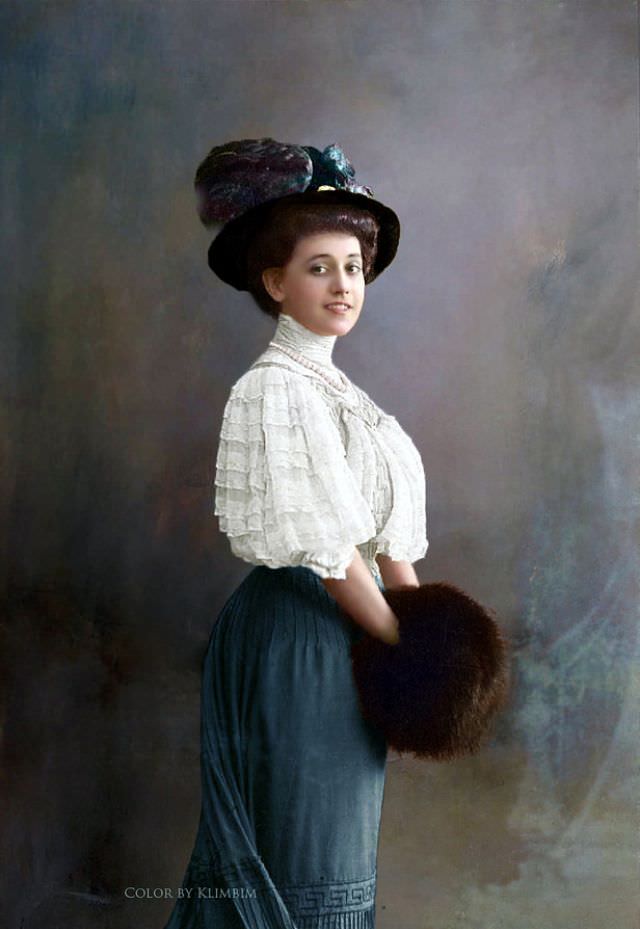
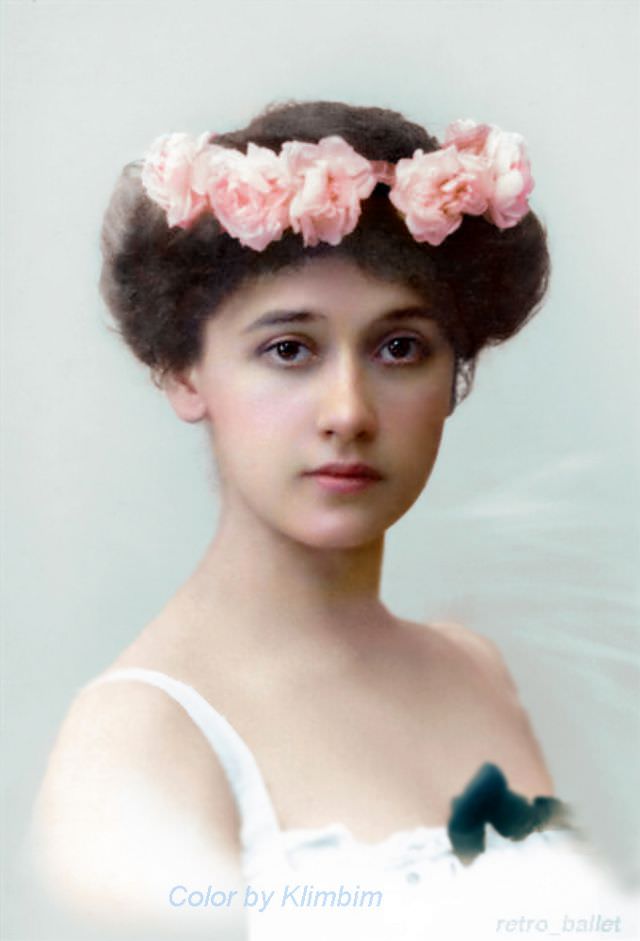
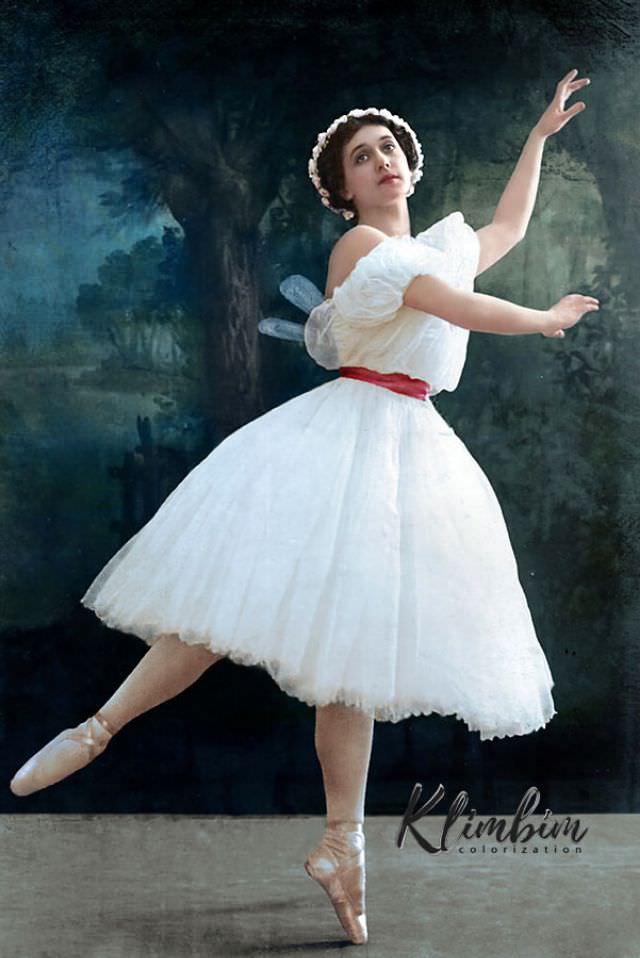
Tamara Karsavina was one of the great ballerinas of the early 20th century and a principal dancer with Sergei Diaghilev’s Ballets Russes. She created roles in several landmark ballets, including “The Firebird” and “Petrushka.” After the Revolution, she settled in London, where she remained active in the dance world for decades.
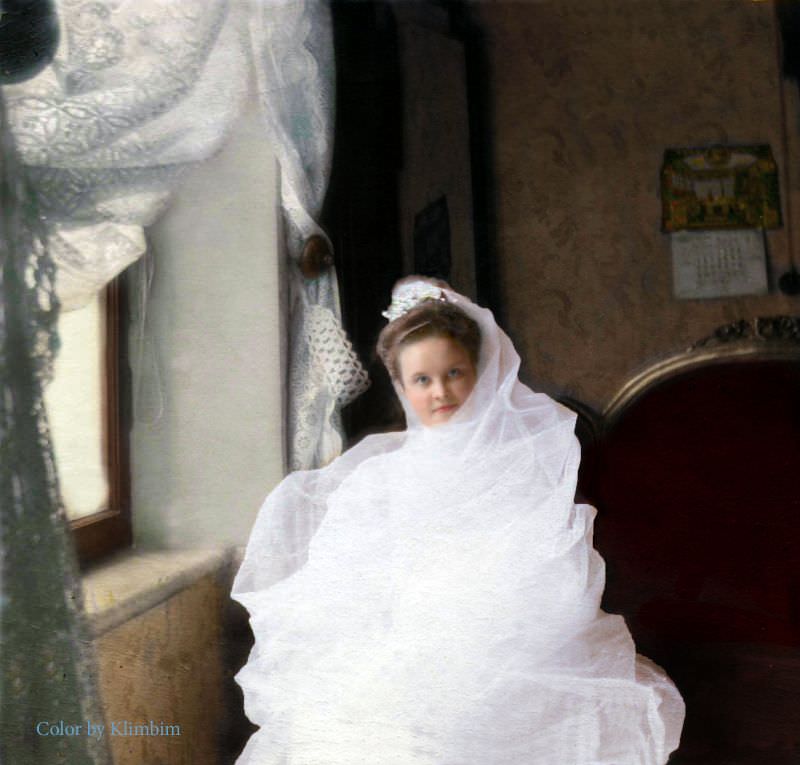
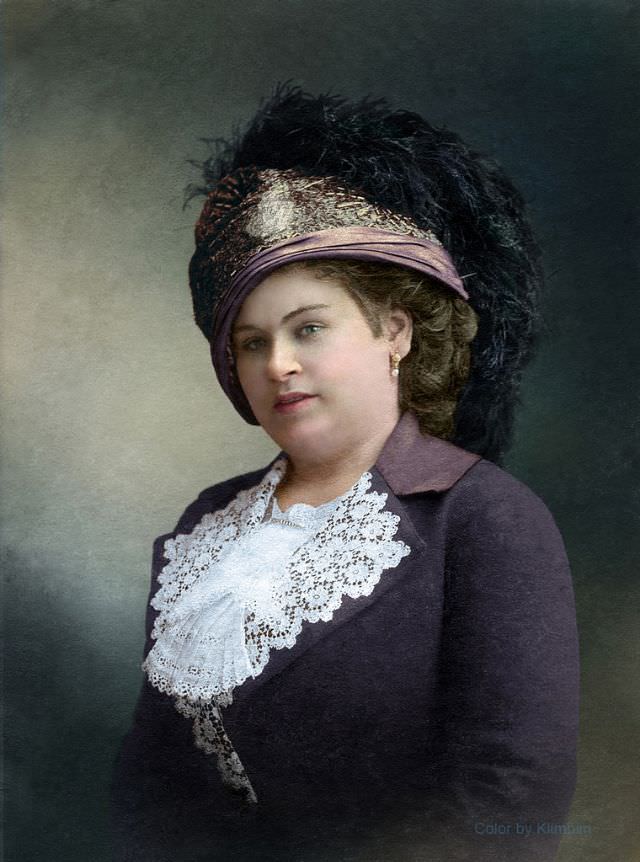
These two portraits from the first decade of the 20th century highlight the range of Shrinina’s work. A young bride dressed for her wedding day in 1903, and a fashionable woman photographed between 1904 and 1907 — both images speak to the everyday rhythms of Russian life that existed alongside the country’s political turmoil.
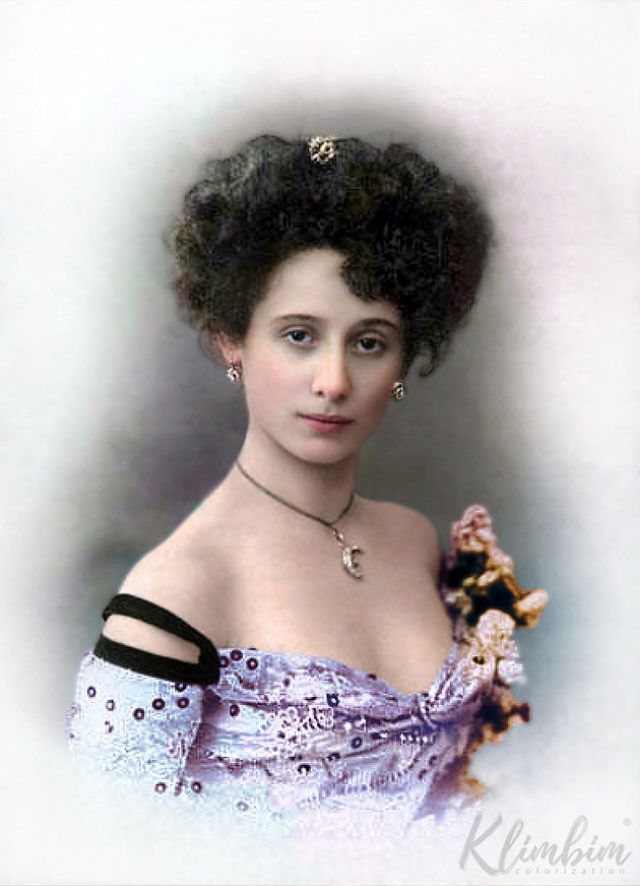
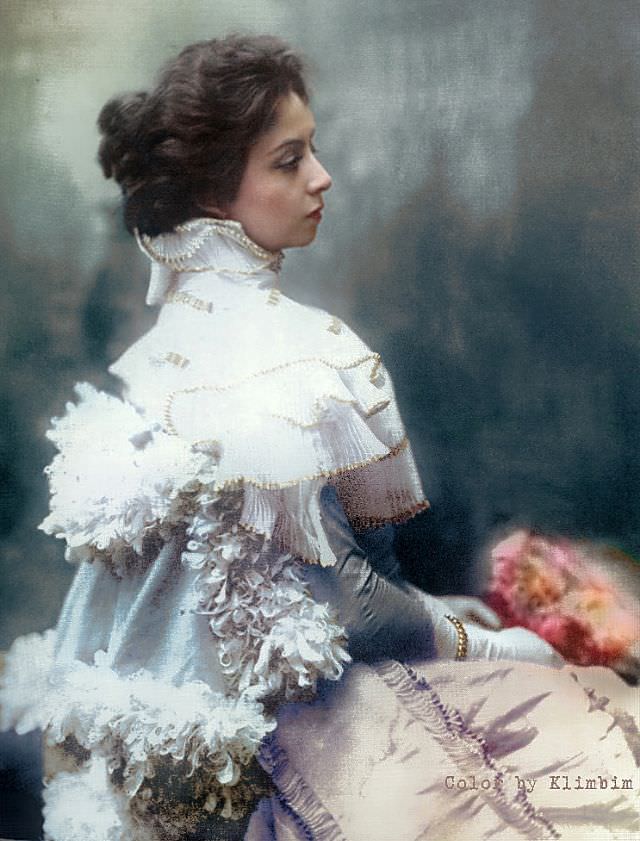
Vera Komissarzhevskaya was one of Russia’s most celebrated stage actresses in the early 1900s. She ran her own theatre in St. Petersburg and became associated with the Symbolist movement in Russian theater. She died in 1910 from smallpox while on tour in Tashkent, cutting short a career that had already made her a legend of the Russian stage.
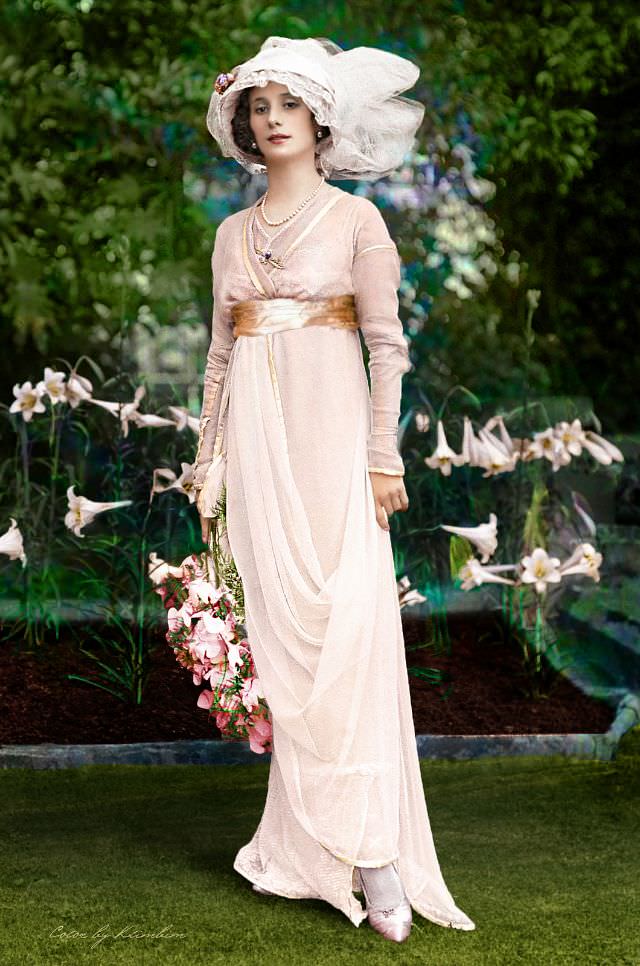
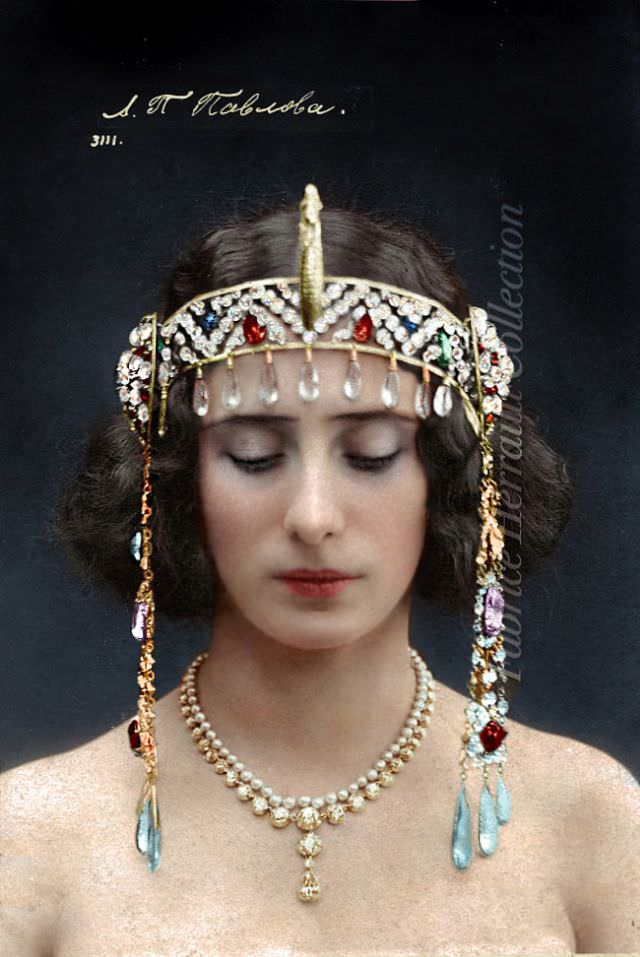
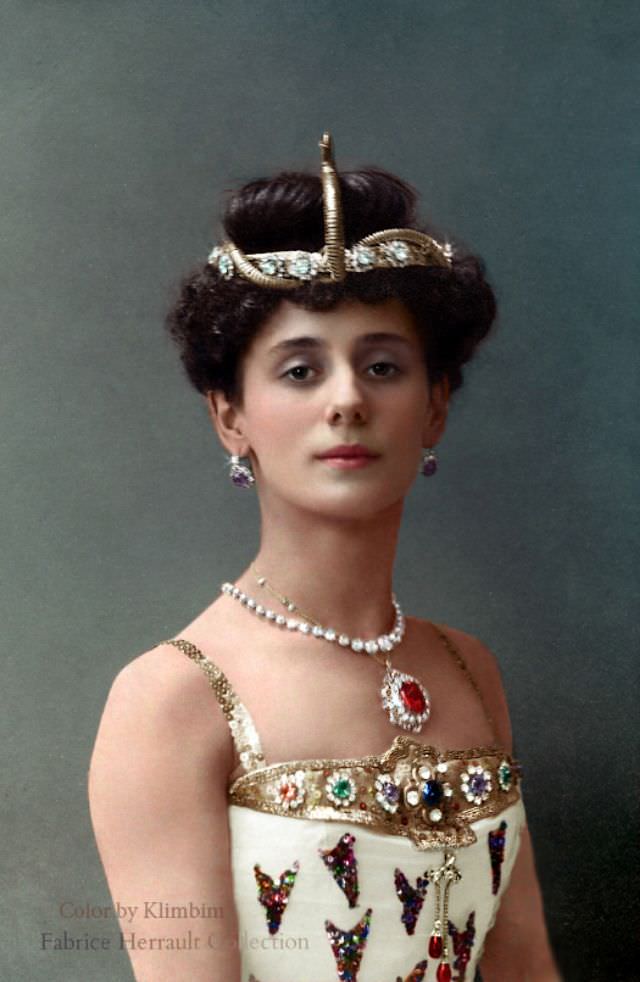
“The Pharaoh’s Daughter” was a grand, full-length ballet that had been a staple of the Imperial repertoire since the 1860s. Pavlova danced the title role, and these 1910 photographs capture her in full costume — a rare look at the elaborate production design of Imperial Ballet performances before the disruptions of World War I and Revolution.
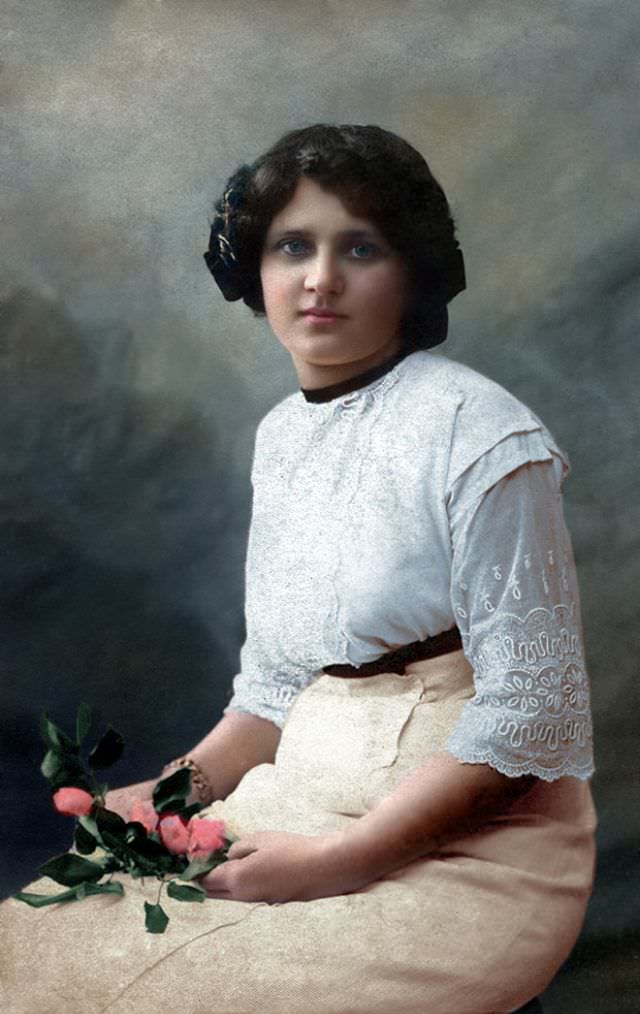
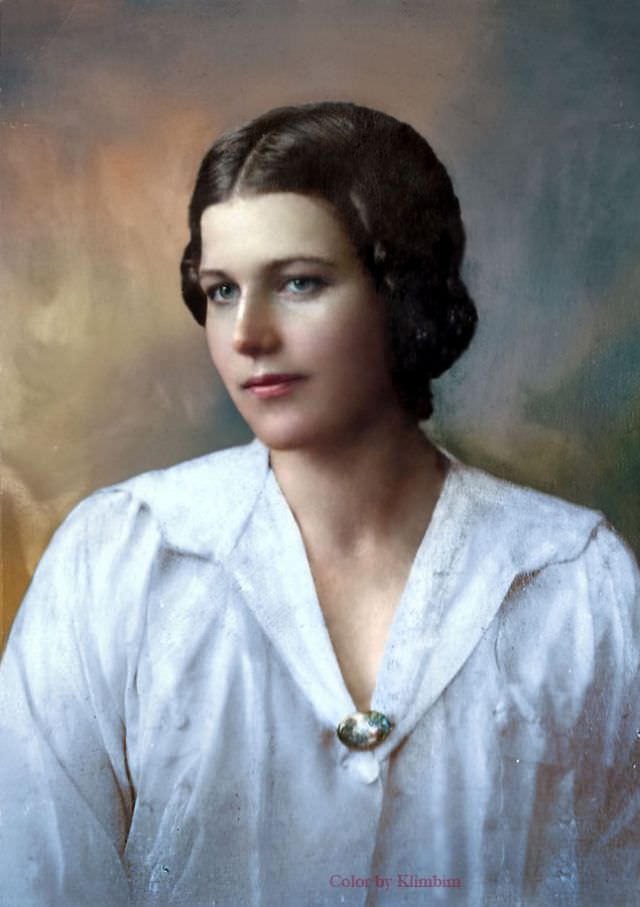
Larissa Reisner was a revolutionary, journalist, and writer who became one of the most prominent women of the early Soviet period. She served as a political commissar in the Red Army during the Russian Civil War and later wrote vivid accounts of the fighting. She died of typhoid fever in 1926 at just 30 years old.
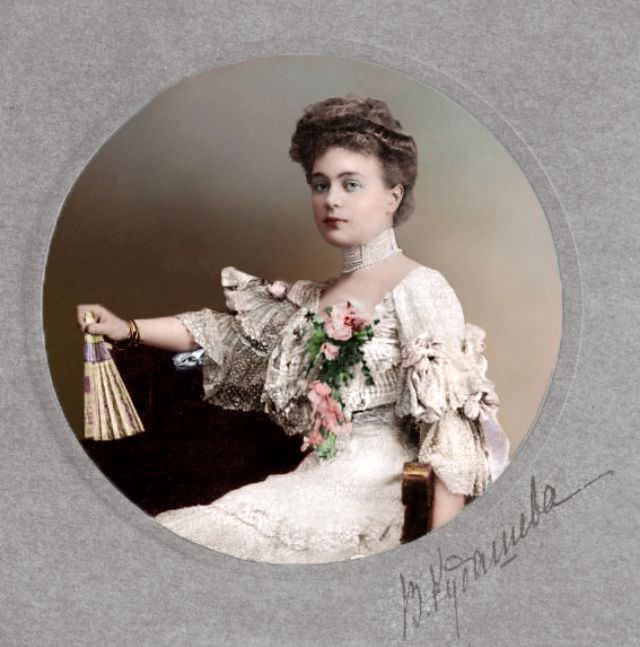
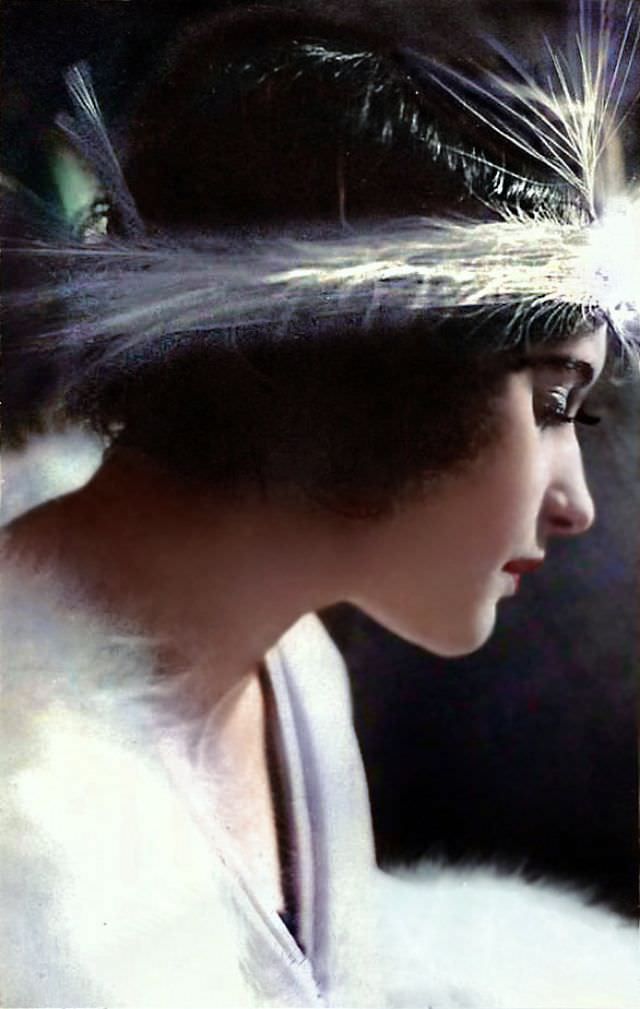
Vera Kholodnaya was the first major star of Russian silent cinema. She appeared in over 40 films between 1914 and 1919 and was enormously popular with Russian audiences. She died during the Spanish flu pandemic in Odessa in 1919, at just 25 years old. Her death cut short what was already one of the most prominent acting careers in pre-Soviet Russian film.
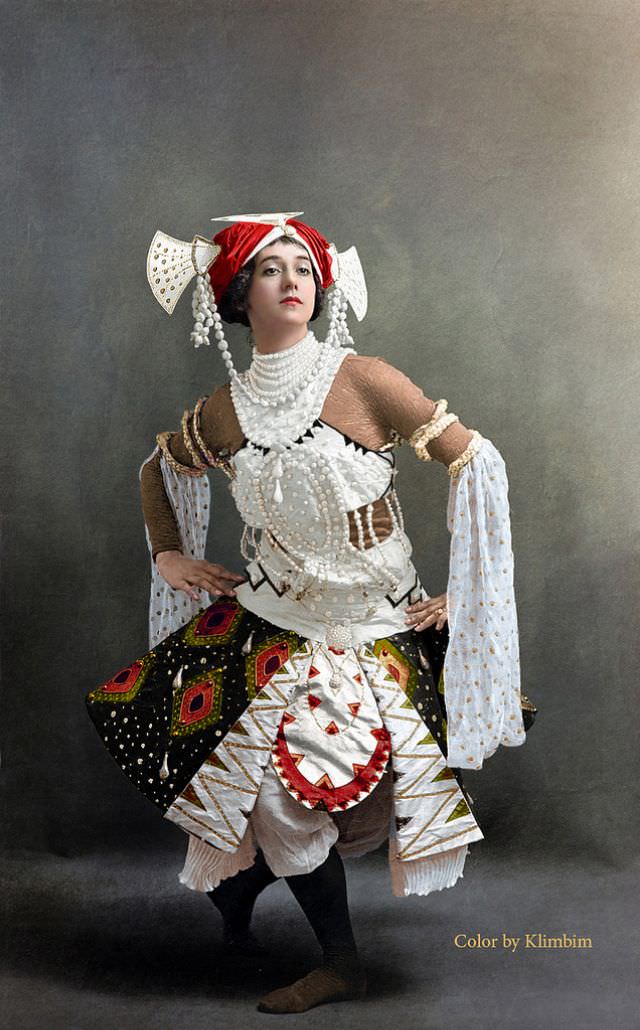
“The Blue God” was a one-act ballet created for the Ballets Russes and premiered in Paris in 1912. Karsavina danced the role of the Fiancée opposite Vaslav Nijinsky in the title role. This photograph of her in costume is a direct record of one of the landmark productions of early 20th-century ballet.
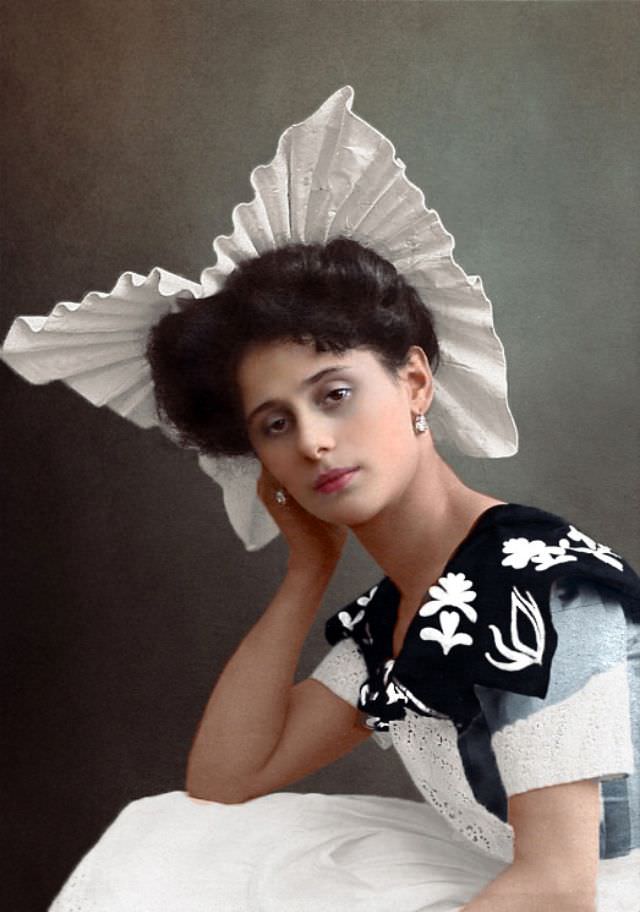
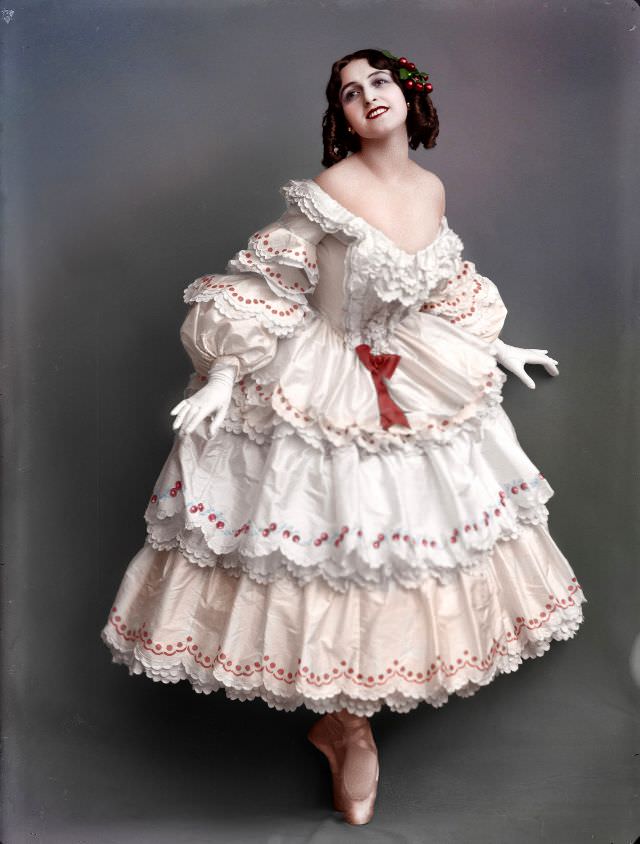
Vera Fokina was a Russian ballerina and the wife of choreographer Michel Fokine. She danced with the Ballets Russes and appeared in several of her husband’s productions. “Le Carnaval,” a light-hearted ballet set to Schumann’s music, was one of Fokine’s early works and remained popular with audiences throughout the pre-war years.
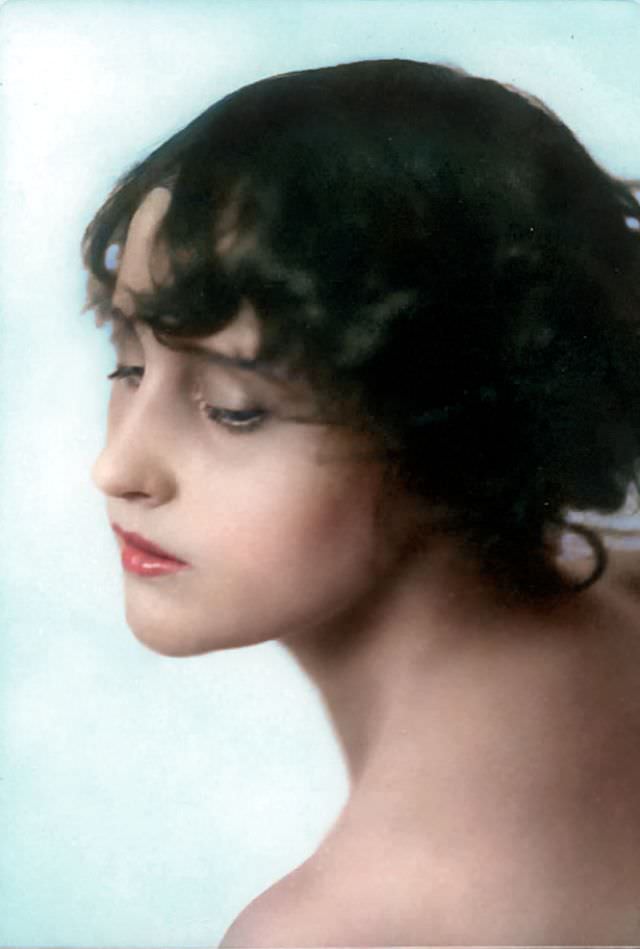
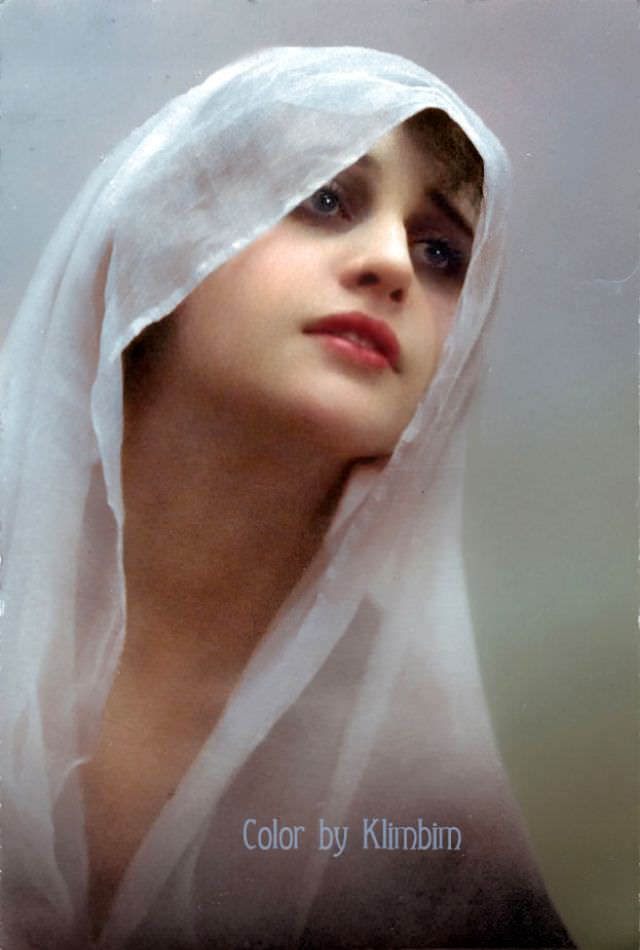
These two photographs of Vera Kholodnaya — taken in 1916 and 1918 — bookend the final chapter of her short life. By 1916 she was already Russia’s biggest film star. By 1918 the country was in the grip of civil war and social collapse. Within a year of that last photograph, she was gone. Shrinina’s colorization of these images makes Kholodnaya’s face feel immediate and present in a way that black-and-white prints simply cannot.