
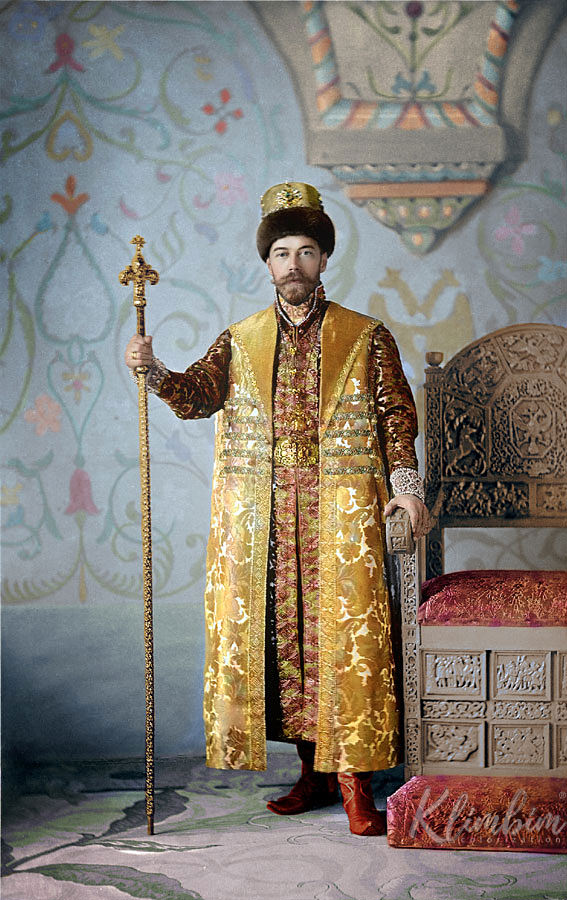
In February 1903, the Winter Palace in St. Petersburg hosted one of the most lavish events in Russian imperial history. Tsar Nicholas II and Empress Alexandra organized a grand costume ball that drew nearly 400 members of the Russian nobility. The dress code was strict: every guest was required to appear in the style of 17th-century Muscovite court dress — the era of Tsar Alexis, Nicholas II’s ancestor. No modern fashions were permitted. For two evenings, the halls of the Winter Palace filled with boyars, grand dukes, princesses, and courtiers dressed in heavily embroidered kaftans, jeweled kokoshniks, and fur-trimmed robes.
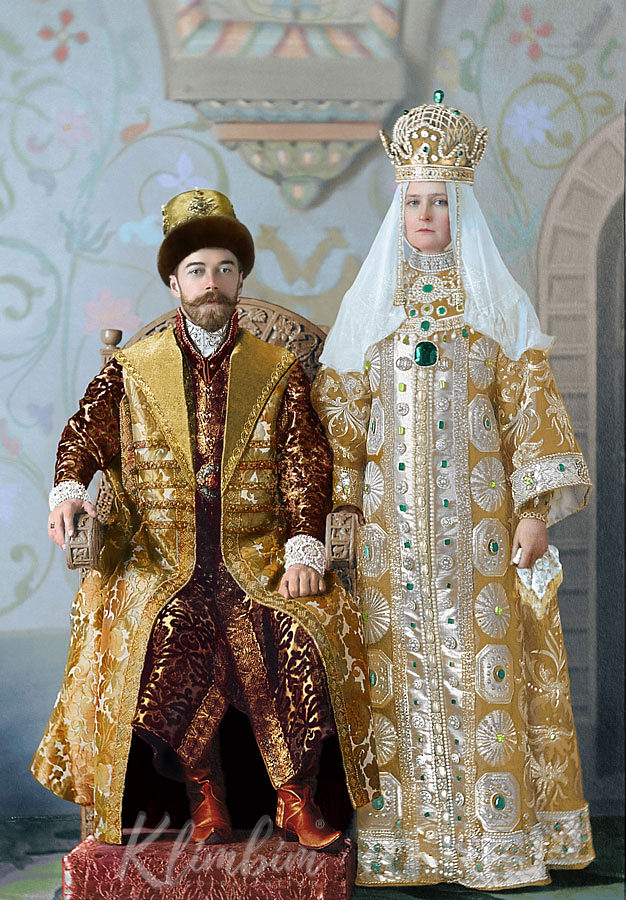
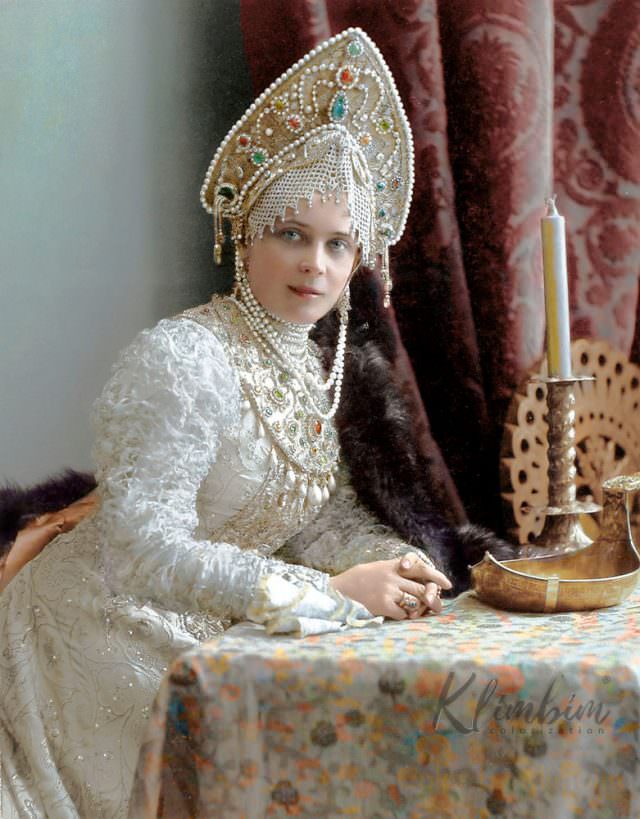
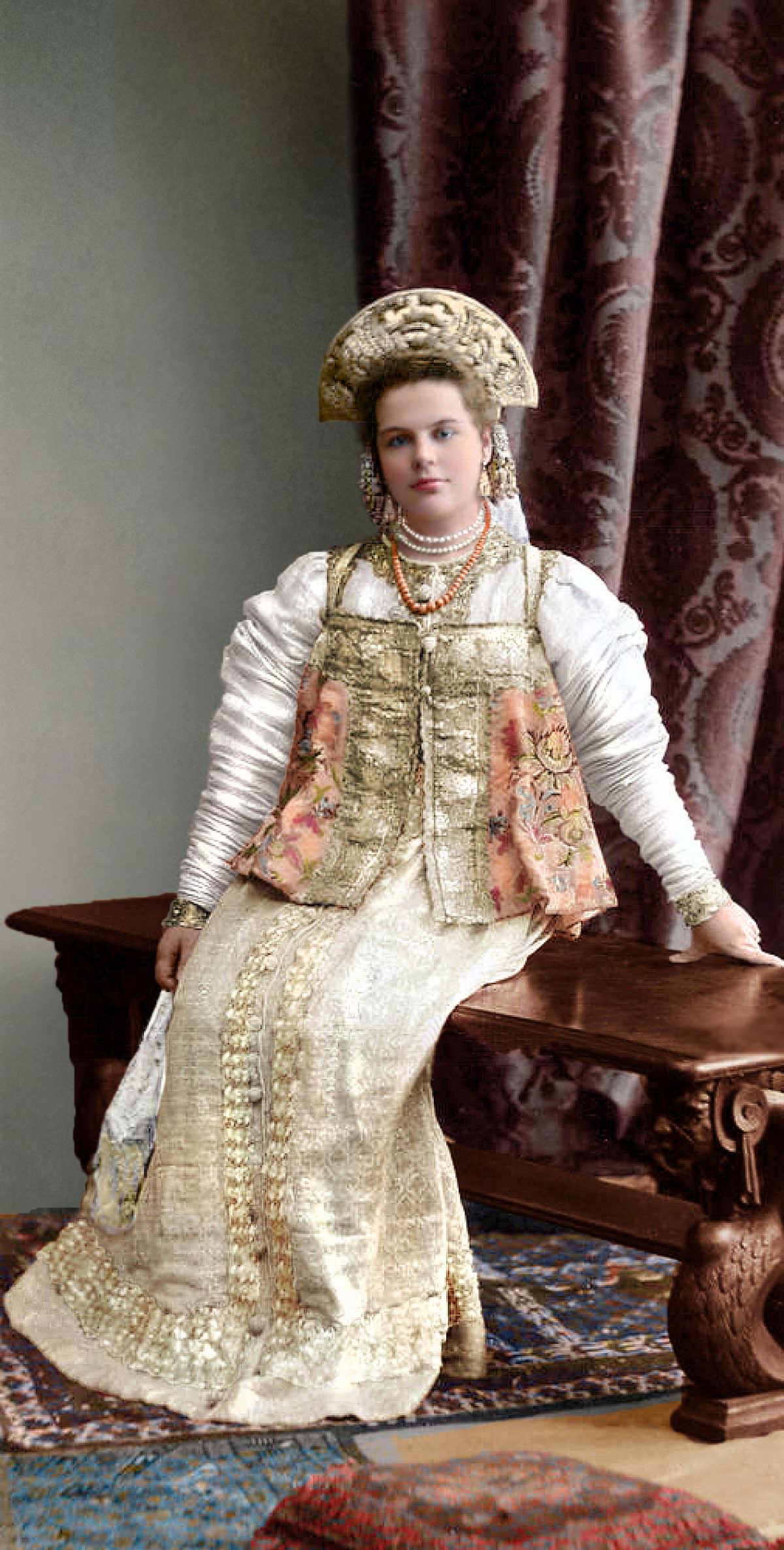
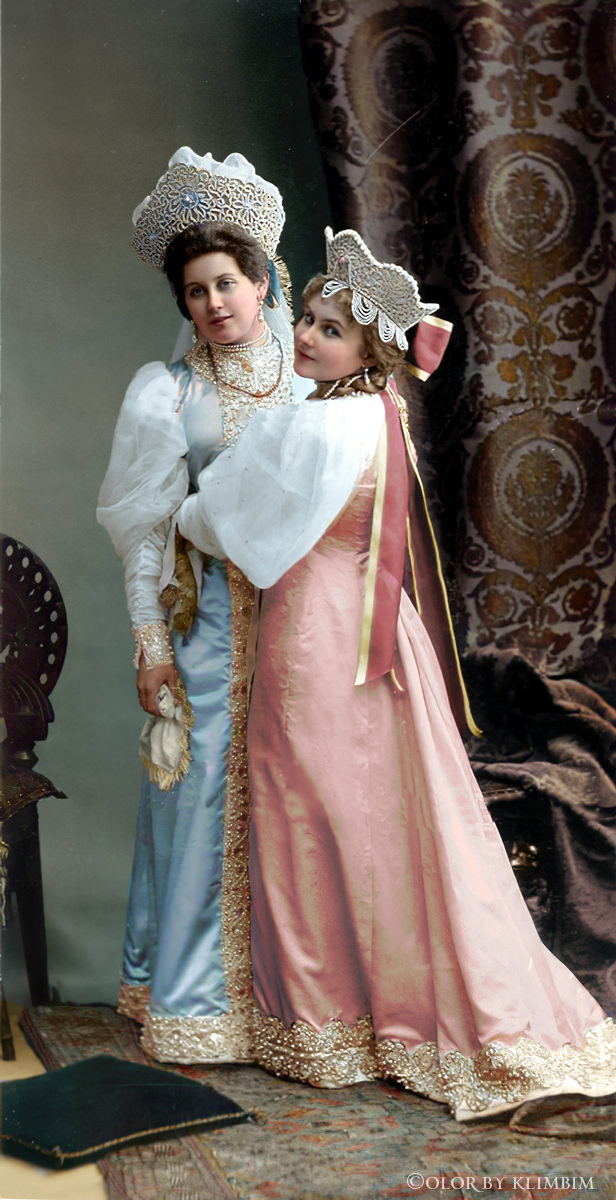
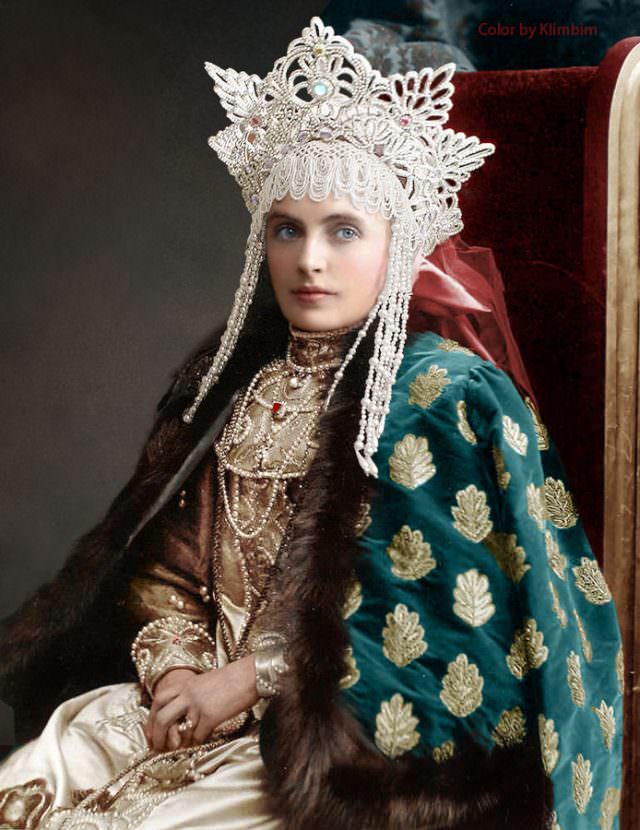
The ball took place across two separate events. The first was a private dinner and concert held on February 11, followed by a larger public masquerade on February 13 at the Assembly of Nobles. Photographer Nikolai Lopukhov documented the guests in full costume beforehand, producing a now-famous series of portrait photographs. These images were later compiled into an official commemorative album, which was distributed among attendees. More than a century later, colorized versions of those photographs offer a vivid new look at one of the final grand celebrations of the Russian Empire.
The Romanov dynasty had ruled Russia since 1613, when Mikhail Romanov was elected Tsar by a national assembly following years of political chaos known as the Time of Troubles. Over the next three centuries, 18 members of the Romanov family held the Russian throne. By 1903, the dynasty had endured wars, revolts, assassinations, and internal conflict — yet the imperial court still operated with a level of wealth and pageantry that few institutions in the world could match. The 1903 ball was a deliberate display of that power and tradition.
Among the most recognizable attendees was Grand Duchess Xenia Alexandrovna, the sister of Tsar Nicholas II. She appeared at the ball dressed in period-appropriate 17th-century costume, as required of all guests. Xenia was a permanent fixture of the imperial court and one of the closer members of the Romanov family circle.
Empress Alexandra Feodorovna, wife of Nicholas II, wore an elaborate reproduction of a 17th-century tsaritsa gown. Her costume was based directly on historical garments from the Moscow Kremlin’s Armory collection. The attention to historical detail throughout the ball was extraordinary — many guests commissioned their costumes from leading tailors and jewelers in St. Petersburg, using museum collections and archival illustrations as references.
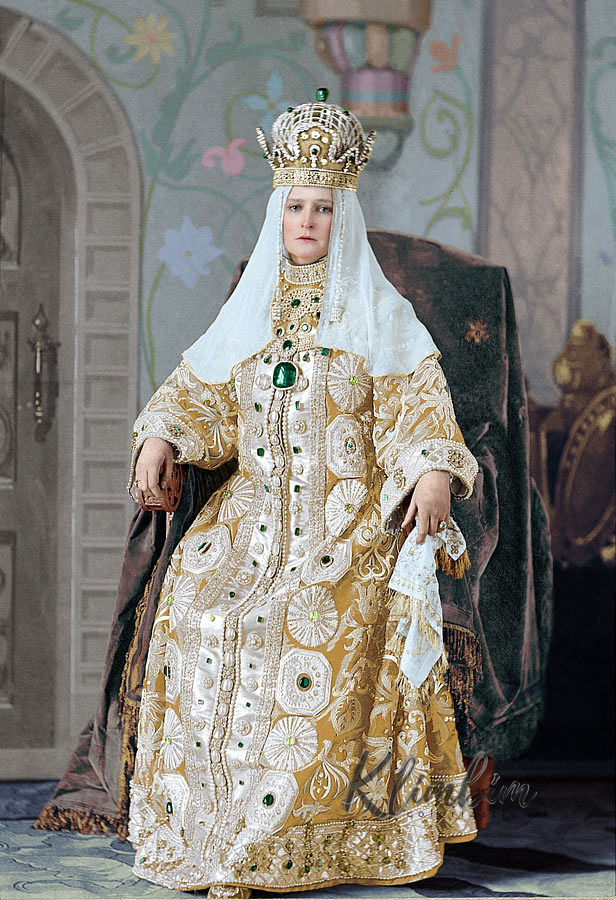
Princess Zinaida Yusupova was one of the wealthiest women in Russia and one of the most striking figures at the ball. The Yusupov family fortune was legendary — their estates and art collections rivaled those of the Tsar himself. Zinaida’s son, Felix Yusupov, would later become infamous for his role in the 1916 murder of Grigori Rasputin, the mystic who had gained enormous influence over Empress Alexandra.
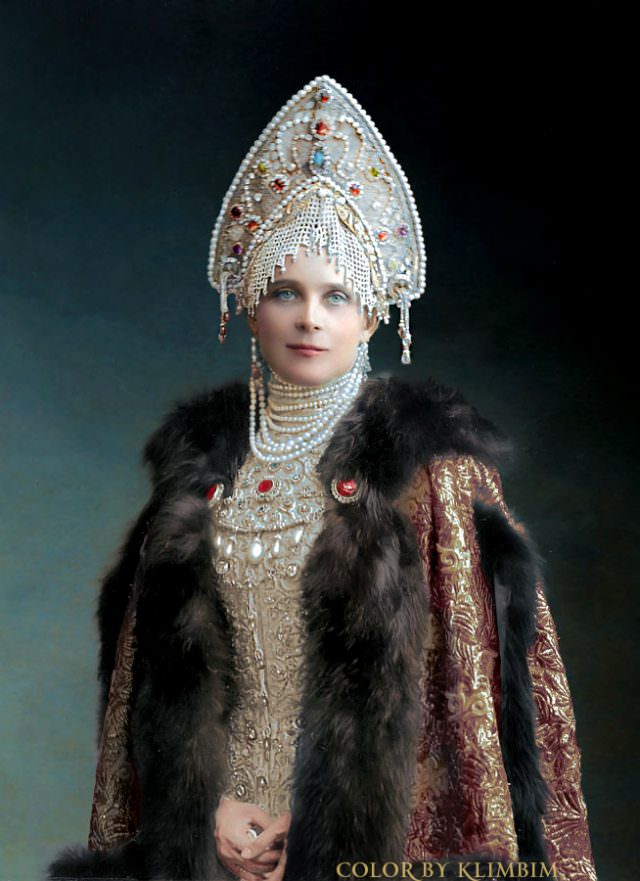
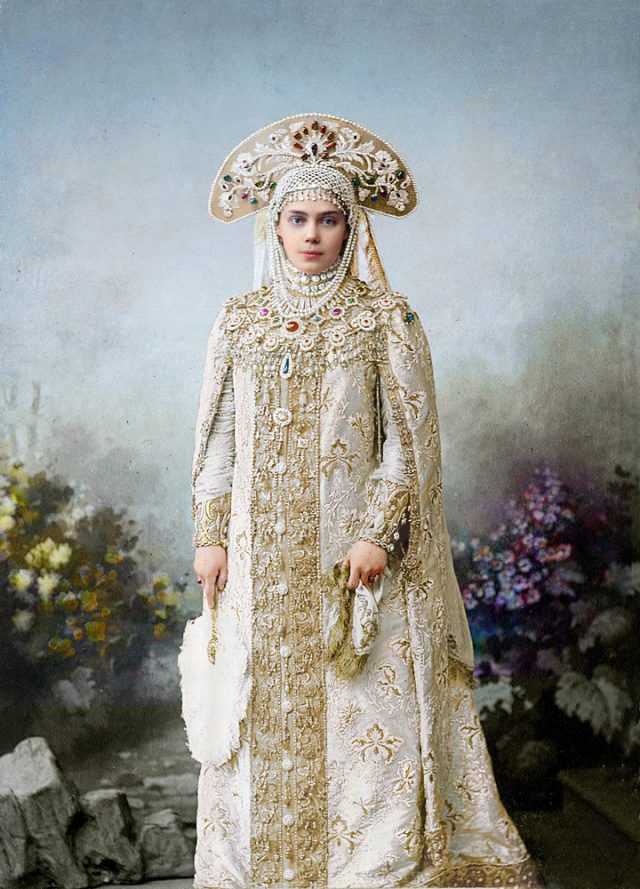
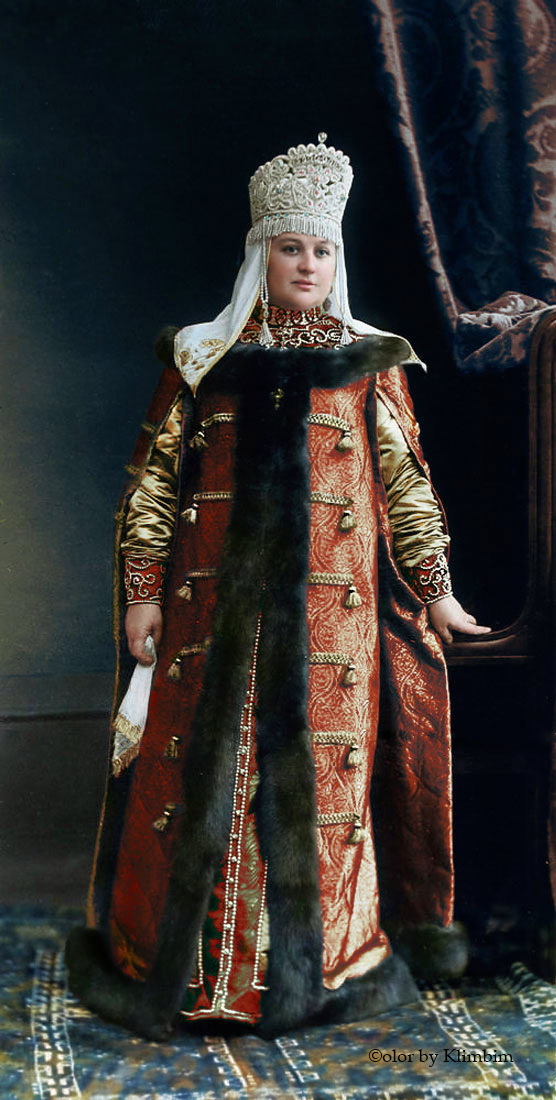
The 17th-century boyar wife costume was by far the most common choice among noblewomen at the ball. The boyars were the highest-ranking class of Russian feudal aristocracy, just below the ruling princes, and their traditional dress featured richly layered robes, high headdresses, and elaborate gold embroidery. Many of the women photographed that evening wore versions of this costume, each customized with their family’s jewels and heirlooms.
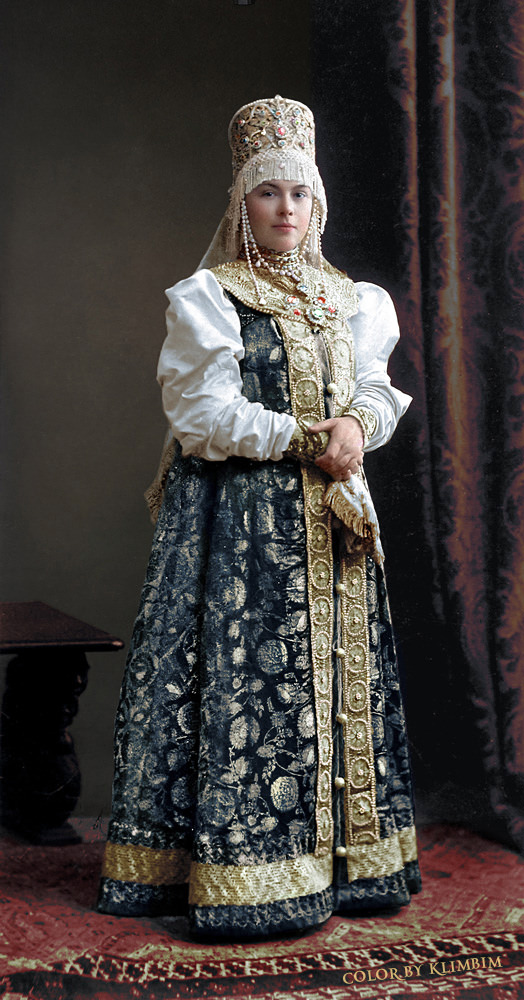
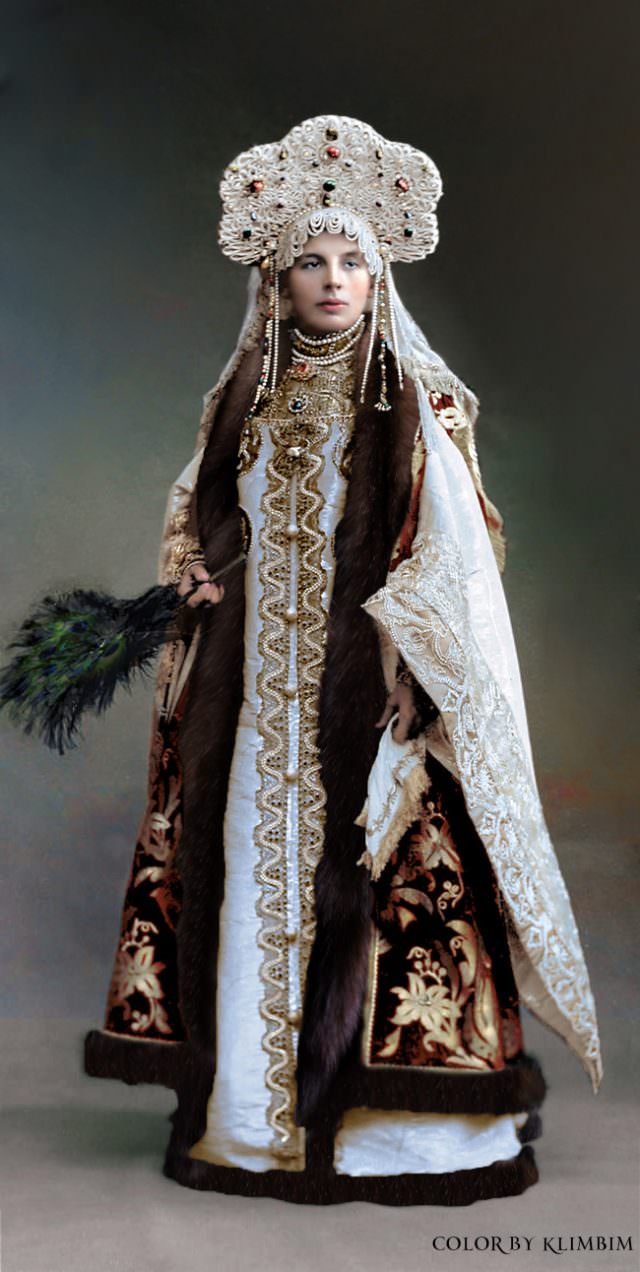
The guest list for the 1903 ball reads like a directory of Russia’s most powerful noble families. Countesses, princesses, and their husbands from houses that had served the Romanovs for generations all attended. For many of them, it was one of the last times the old imperial social world would appear intact. Within two years, Russia would be shaken by the Revolution of 1905, and within 14 years, the dynasty itself would be gone.
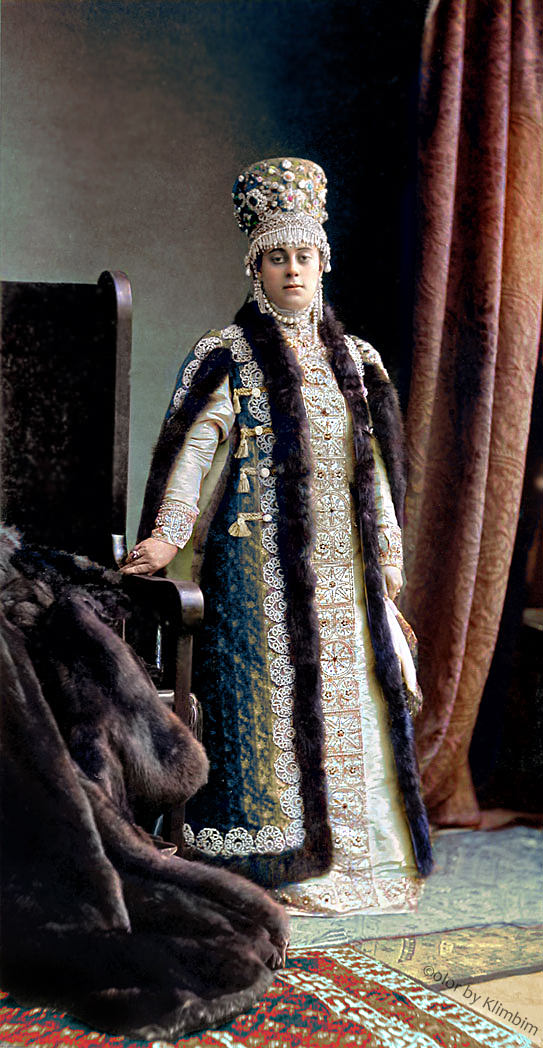
Younger members of the nobility also attended. Mademoiselle Dorothee Bibikow and Mademoiselle Alexandrine Taneiew were among the unmarried women who appeared in the photographs, dressed according to the evening’s strict historical theme. Their portraits show the same level of costume detail as the older, more senior attendees — no guest, regardless of rank or age, was exempt from the 17th-century dress requirement.
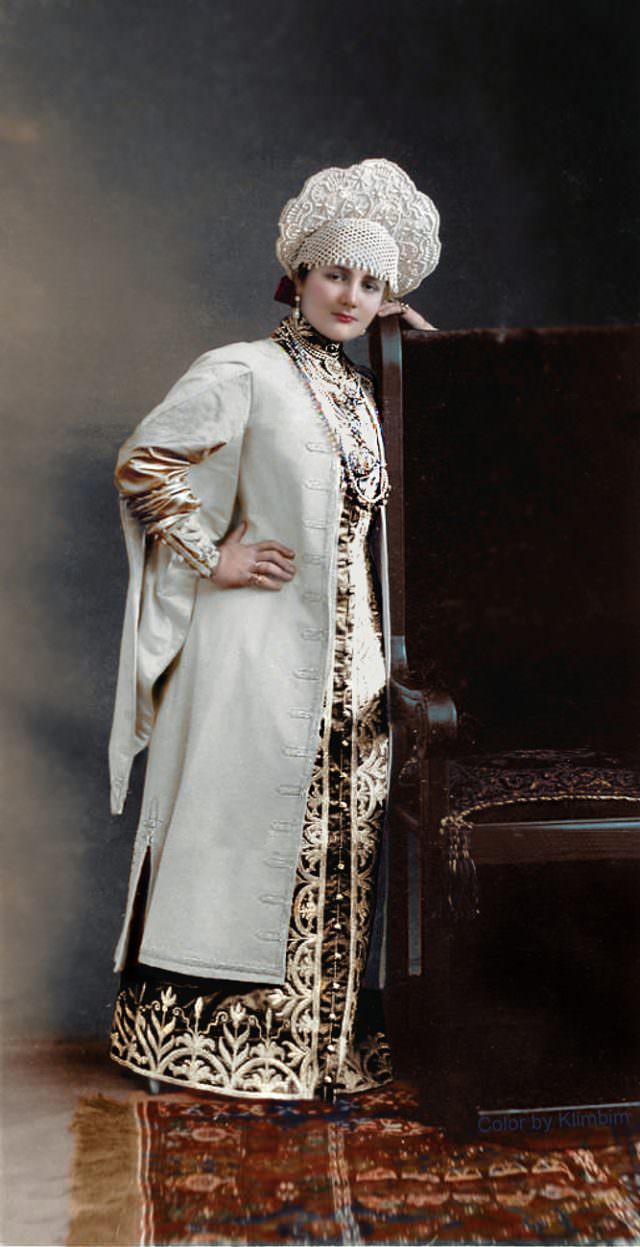
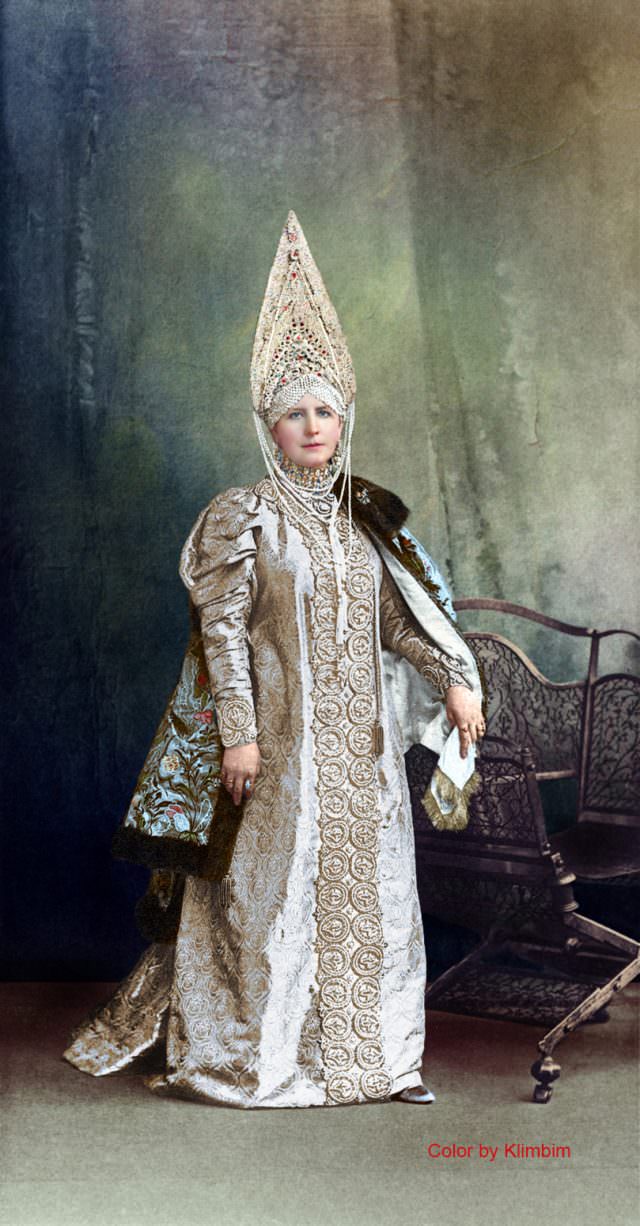
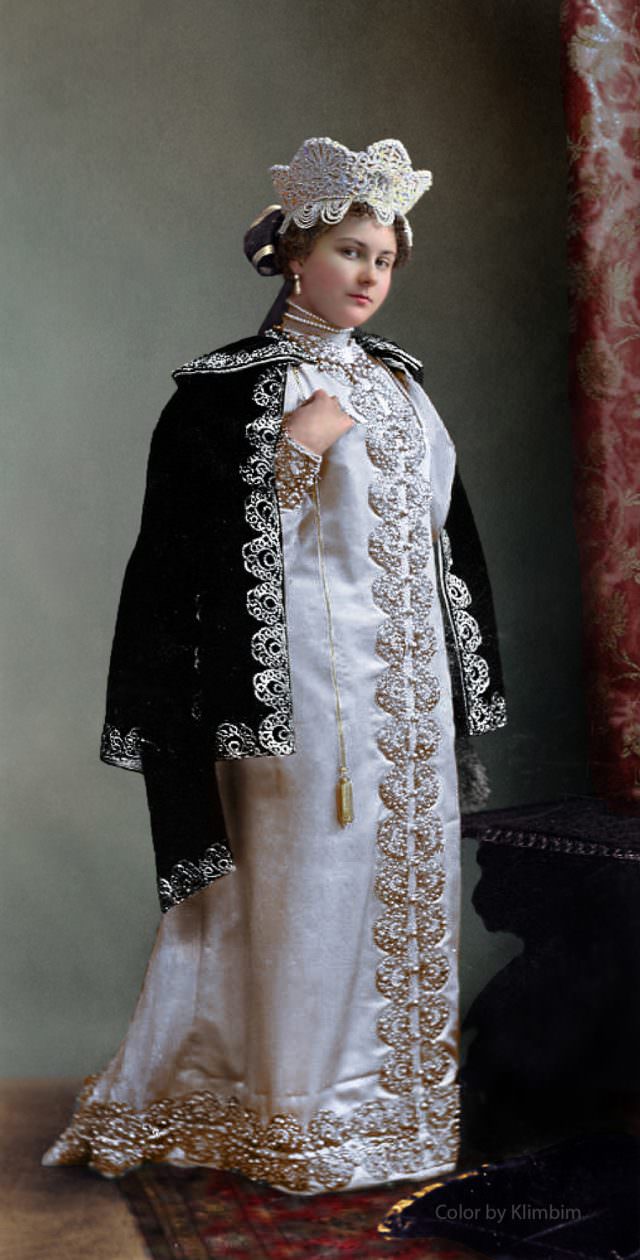
Princess Elisabeth Obolensky served as a bridesmaid to Her Majesty, placing her among the innermost circle of the imperial household. Bridesmaids to the Empress held a formal court appointment and were expected to attend major state and ceremonial occasions. Her presence at the ball was both a social duty and a mark of imperial favor.
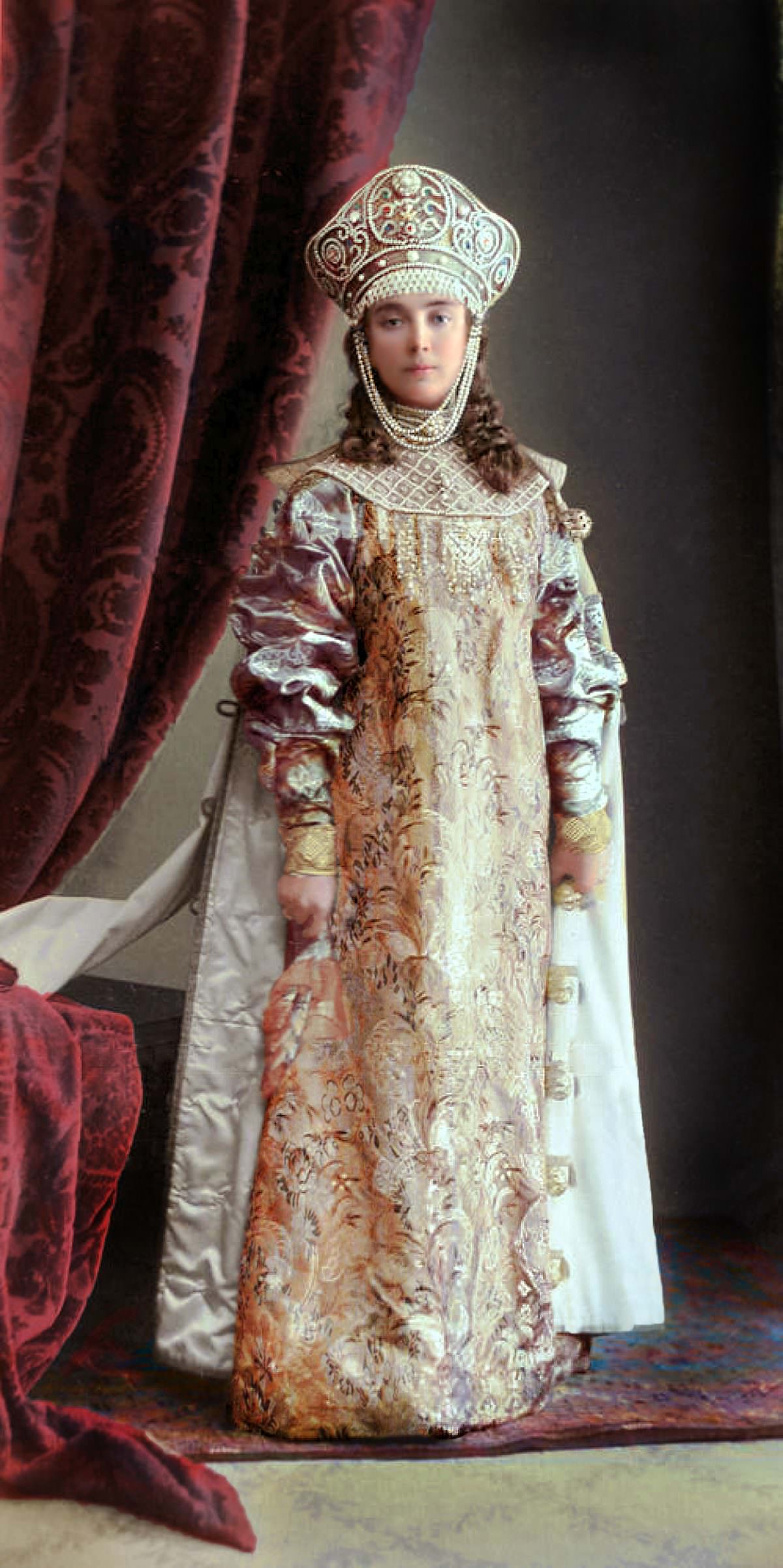
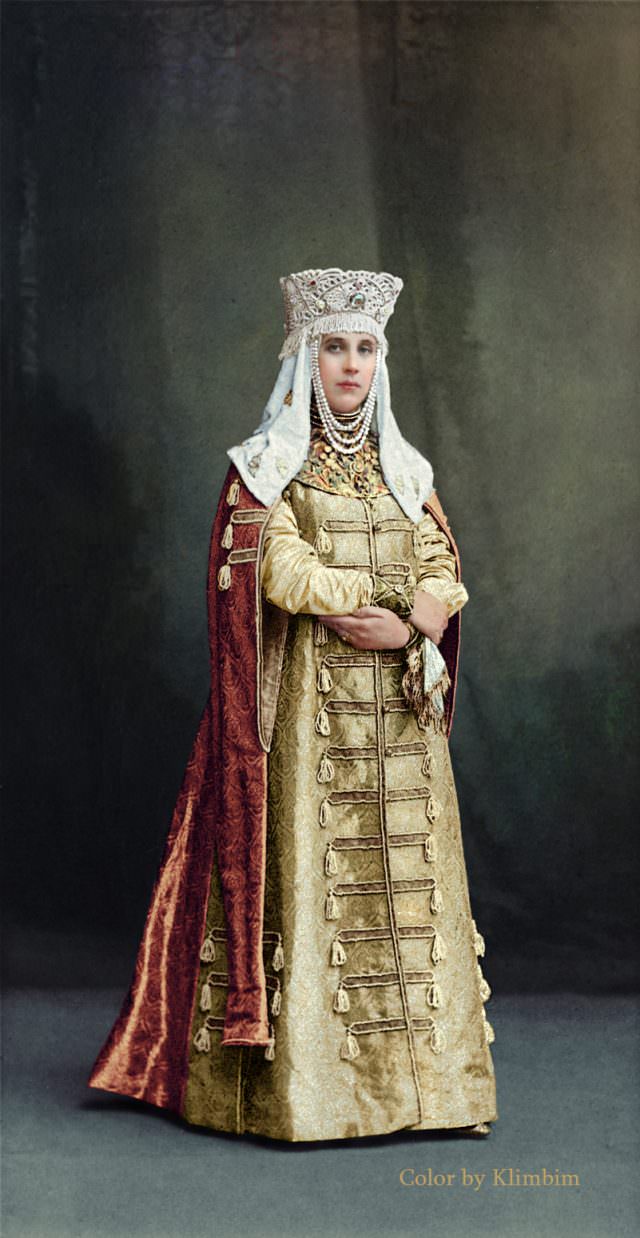
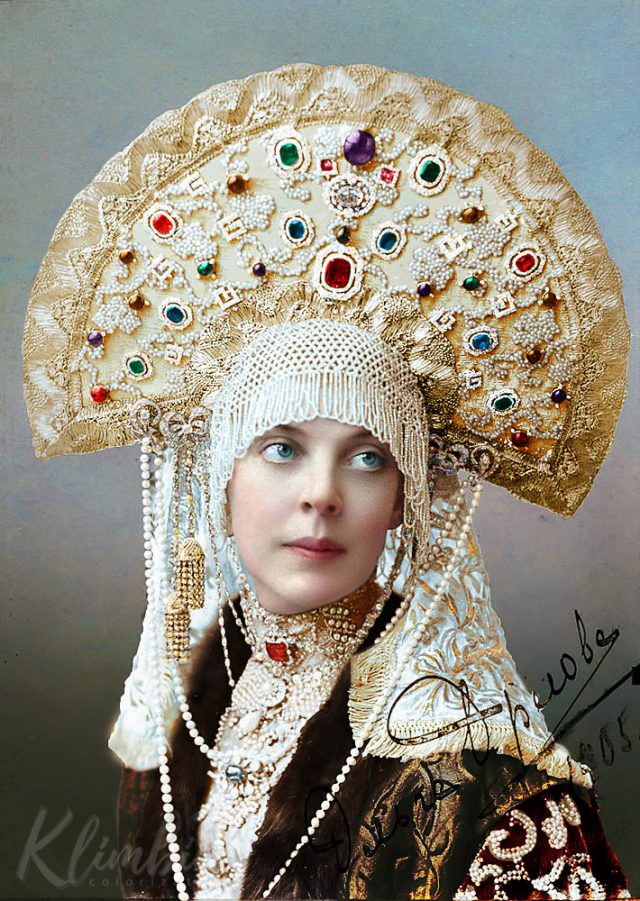
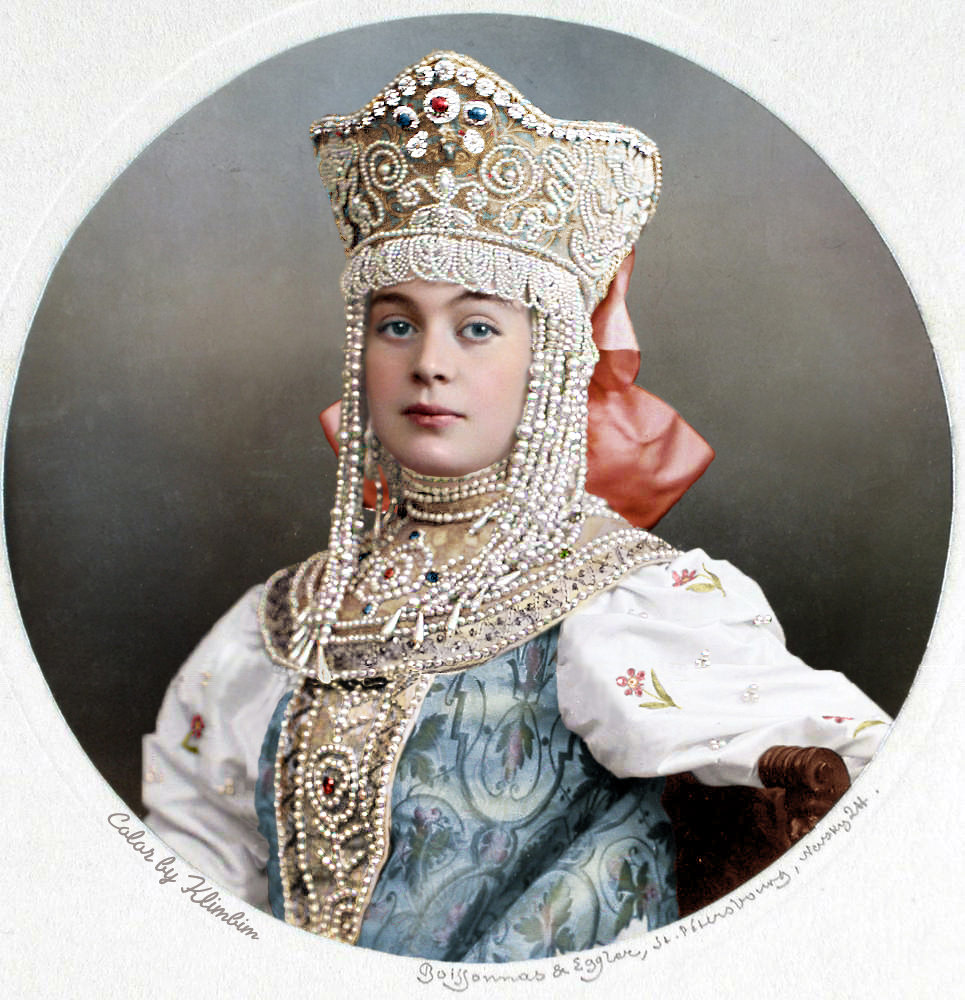
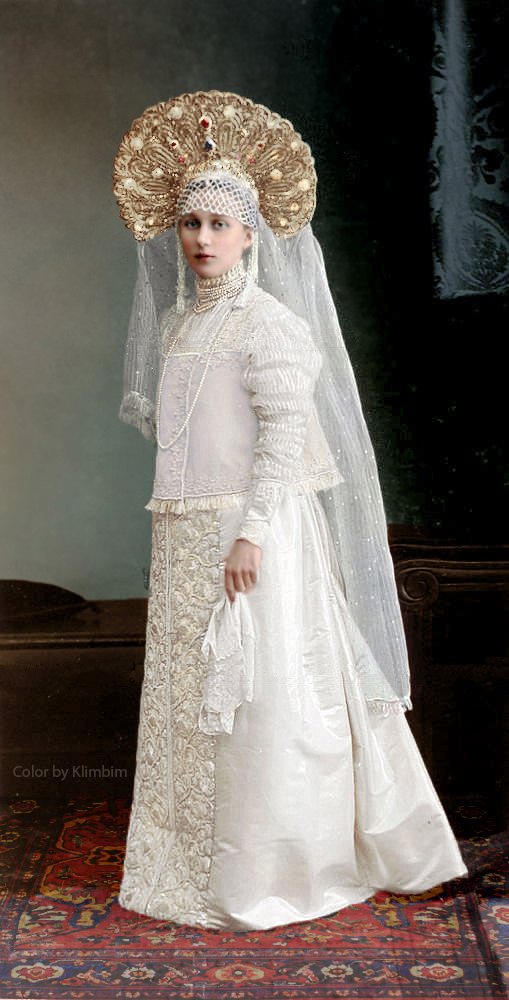
Princess Youssoupow’s portrait from the evening shows the depth of effort that went into the costumes. The headdresses worn by many of the noblewomen — particularly the tall, arched kokoshnik style of the Muscovite period — were often studded with pearls, diamonds, and colored gemstones. These were not theatrical props. Many of the jewels on display that night were genuine family heirlooms worth fortunes.
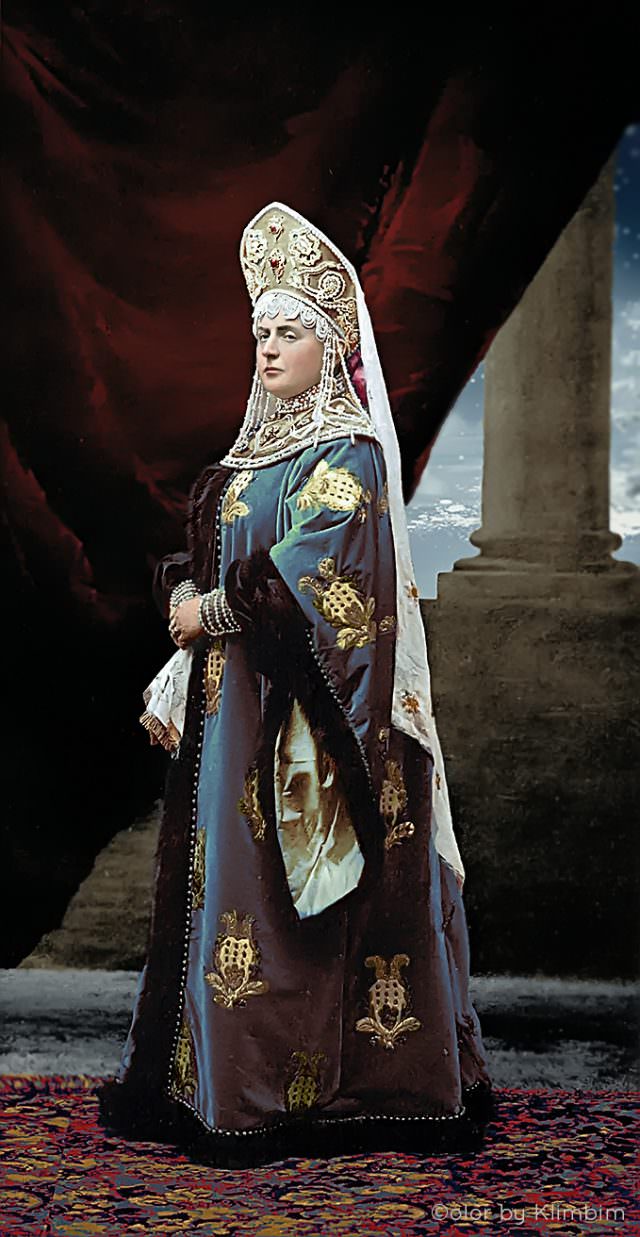
Anna Taneeva, later known as Anna Vyrubova after her marriage, appeared at the ball alongside her sister. She would go on to become Empress Alexandra’s closest personal friend and confidante. Vyrubova’s loyalty to Alexandra and her proximity to Rasputin made her one of the most controversial figures in the late imperial court. In 1903, however, she was simply a young noblewoman at one of St. Petersburg’s grandest parties.
The Romanov dynasty came to a violent end during the Russian Revolution of 1917. Tsar Nicholas II abdicated in March of that year as revolutionary forces dismantled the imperial government. The Bolsheviks, led by Vladimir Lenin, took power later that year. In July 1918, Nicholas II, Empress Alexandra, and their five children — Olga, Tatiana, Maria, Anastasia, and Alexei — were executed by a Bolshevik firing squad in the basement of the Ipatiev House in Yekaterinburg. Their bodies were buried in a concealed mass grave in the Ural Mountains.
The remains of the Romanov family were not discovered until 1991, when excavators located the mass grave in the Urals. DNA testing confirmed the identities of Nicholas II, Alexandra, and three of their daughters. The remains of Alexei and one of the daughters — believed to be Maria — were found separately in 2007 at a nearby site, also confirmed by DNA analysis. In 1998, the identified remains were given a state funeral and reinterred at the Peter and Paul Cathedral in St. Petersburg, the traditional burial site of the Russian tsars.
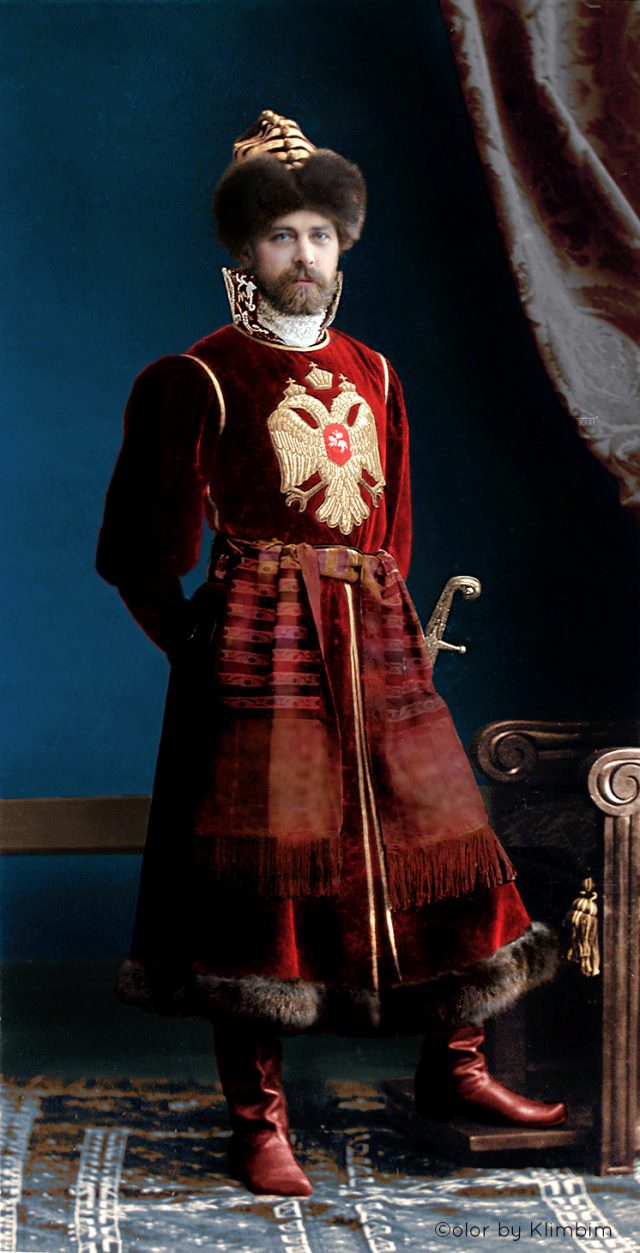
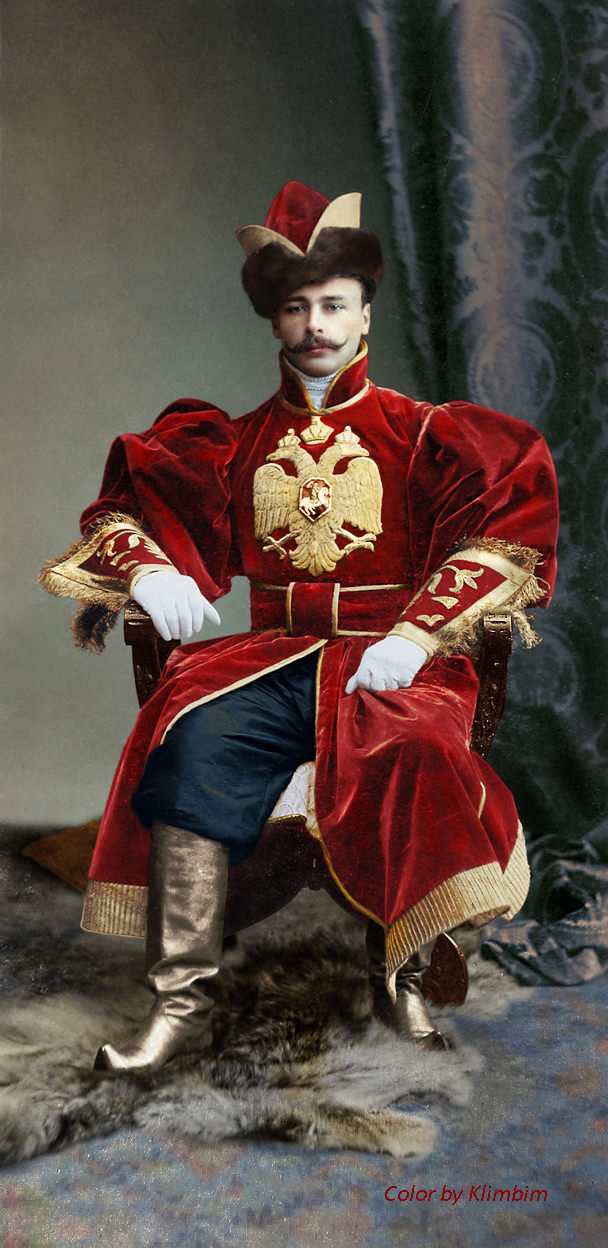
Prince Dmitri Galitzine, photographed in his role as Chief of the Imperial Hunt, represented one of Russia’s oldest and most prestigious noble families. The Galitzines had served the Russian crown for centuries. His formal court title reflects the elaborate hierarchy of the imperial household, where even ceremonial positions like the head of the royal hunt carried genuine social weight and required participation in events like the 1903 ball.
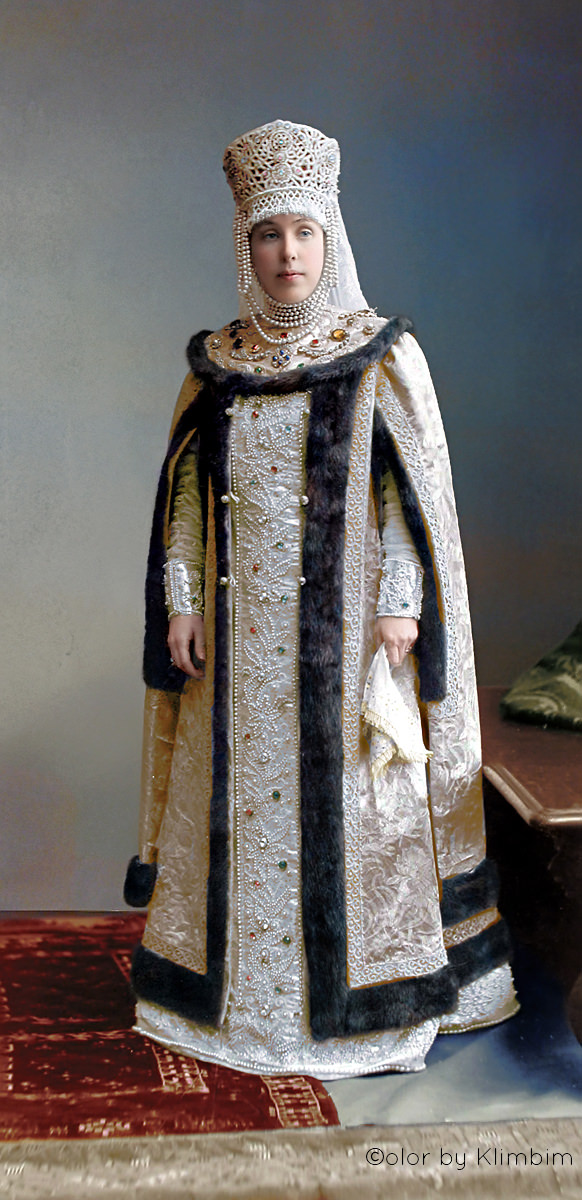
The photographs taken at the 1903 costume ball preserve a world that was already running out of time. The guests who filled the Winter Palace that winter were members of an aristocratic system that had existed for centuries — one that would be dismantled entirely within 15 years. The colorized versions of these portraits restore something that black-and-white photography could never capture: the warmth of the fabrics, the gleam of the jewels, and the faces of people who had no idea they were standing at the end of an era.