In December 1989, Romania became the site of one of the most violent political upheavals of the modern era. While other Eastern Bloc countries were shedding communist rule through largely peaceful transitions, Romania’s path was different. Street fighting broke out across the country. Soldiers fired on crowds. Hundreds of civilians died. And when it was over, Nicolae Ceaușescu — the man who had ruled Romania for 22 years — was arrested, tried in a rushed military tribunal, and executed alongside his wife, Elena, on Christmas Day. The entire process, from arrest to execution, took less than two hours.
The revolution ended 42 years of communist rule in Romania and marked the final violent removal of a Marxist-Leninist government among Warsaw Pact nations. It was the only such transition in 1989 that ended with a head of state being killed. The spark came from the city of Timișoara, where protests against the regime’s forced removal of a local pastor quickly grew into a national uprising. Within days, the unrest had spread to Bucharest and beyond, and the government collapsed.
Throughout the 1980s, life in Romania had grown increasingly hard. Ceaușescu had imposed severe austerity measures designed to pay off the country’s foreign debt. Food was rationed. Heating and electricity were cut for hours each day. Citizens lined up for basic goods. The state controlled nearly every aspect of daily life, and the secret police — the Securitate — maintained a climate of fear and surveillance. By the time the revolution came, most Romanians had been living under these conditions for nearly a decade.
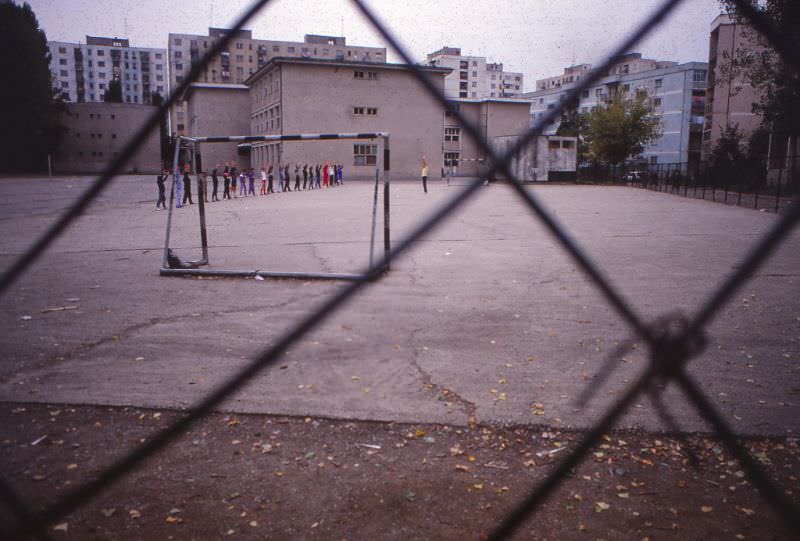
Italian photographer Duccio Pugliese traveled to Romania in 1990, just months after the revolution ended. What he captured was a country standing at a crossroads — the communist system had collapsed, but the infrastructure, the habits, and the scars it left behind were still everywhere. These photographs document that raw, unpolished moment in Romanian history, before reconstruction began and before the country’s direction had fully taken shape.
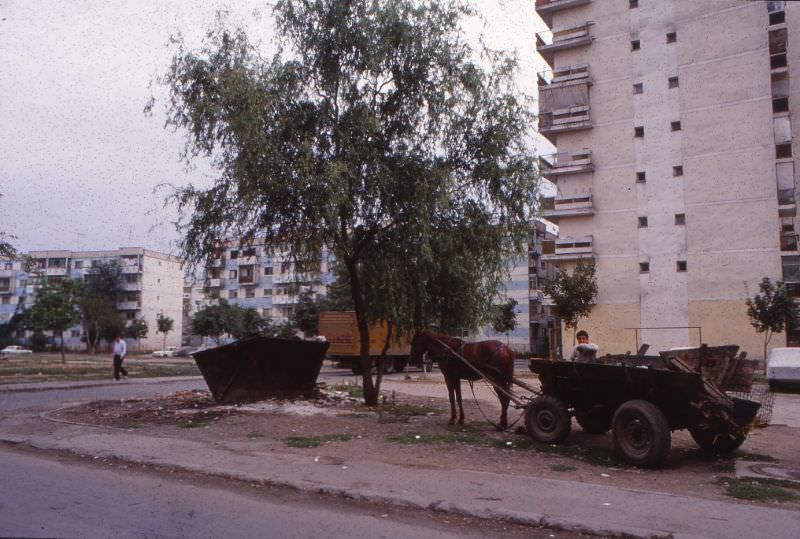
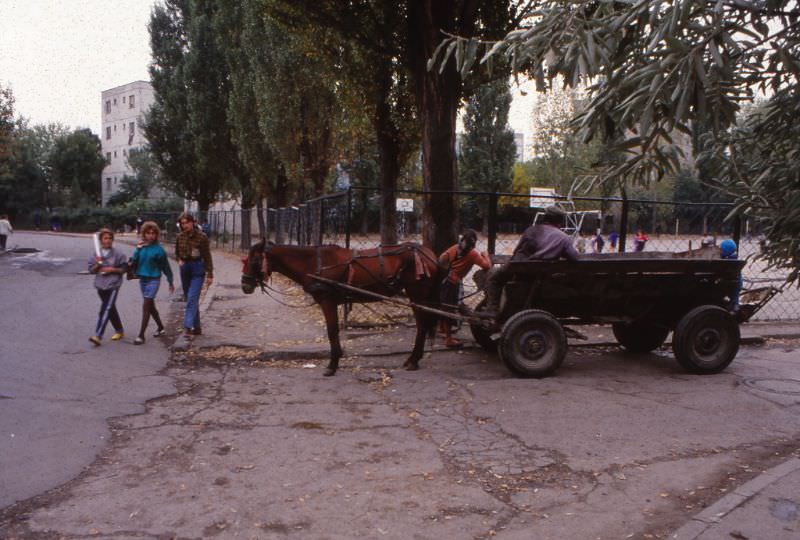
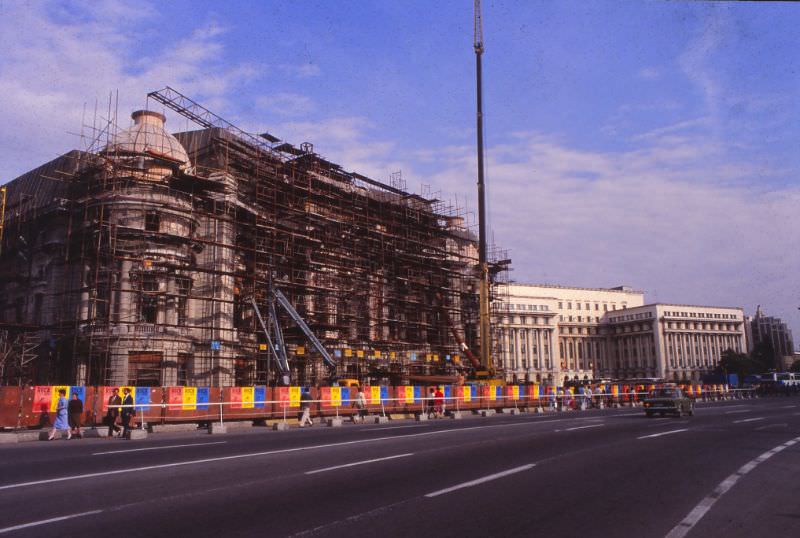
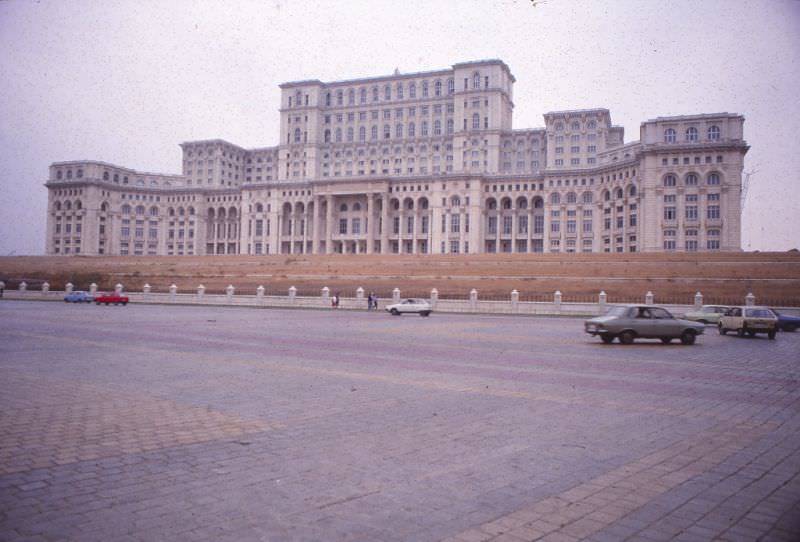
Bucharest, the capital, bore clear marks of the regime it had just escaped. Ceaușescu had spent enormous sums rebuilding large sections of the city in his own image, demolishing historic neighborhoods to construct wide boulevards and oversized state buildings. His most ambitious project was the Palace of Parliament — a colossal structure that, by some measures, is the heaviest building in the world. Construction on it had been ongoing throughout the 1980s, requiring the destruction of entire city blocks and the displacement of thousands of residents.
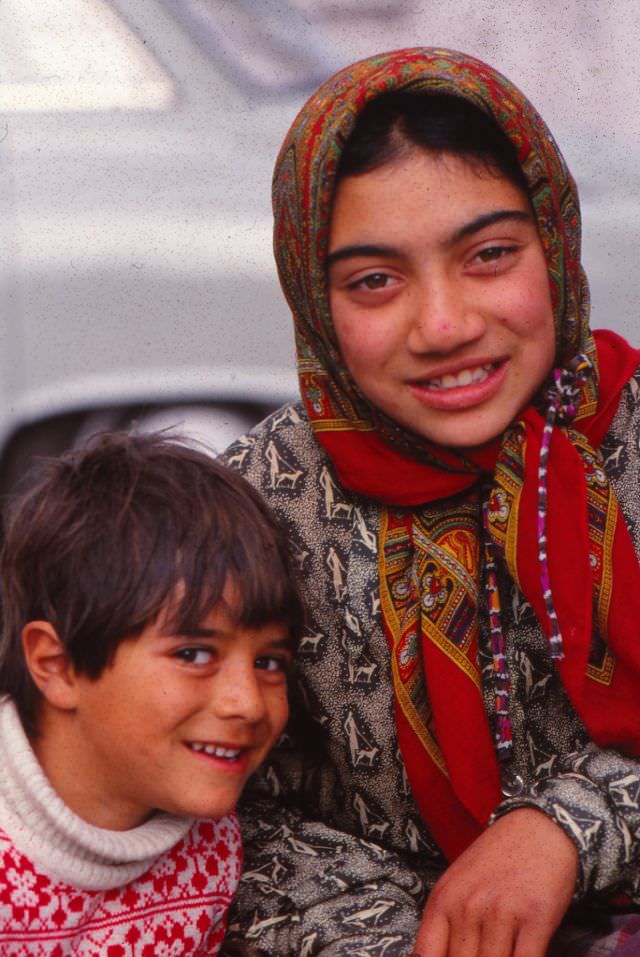
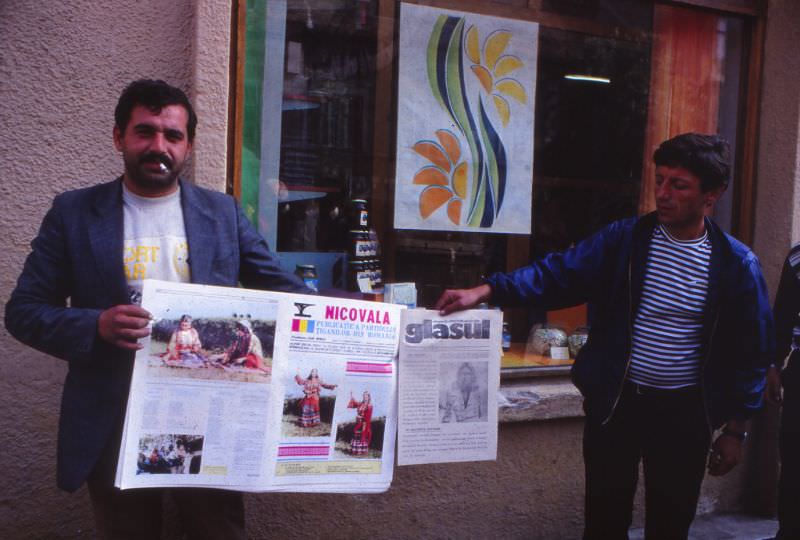
Beyond the capital, Pugliese documented communities that the communist system had shaped in different ways. Romania’s Roma population — often referred to historically as Gypsies — had lived on the margins of official society for decades. Communist-era policies had forced many Roma into state-assigned housing and factory jobs, while discrimination remained widespread. In 1990, with the state apparatus suddenly gone, this community faced the transition with fewer resources and less support than most.
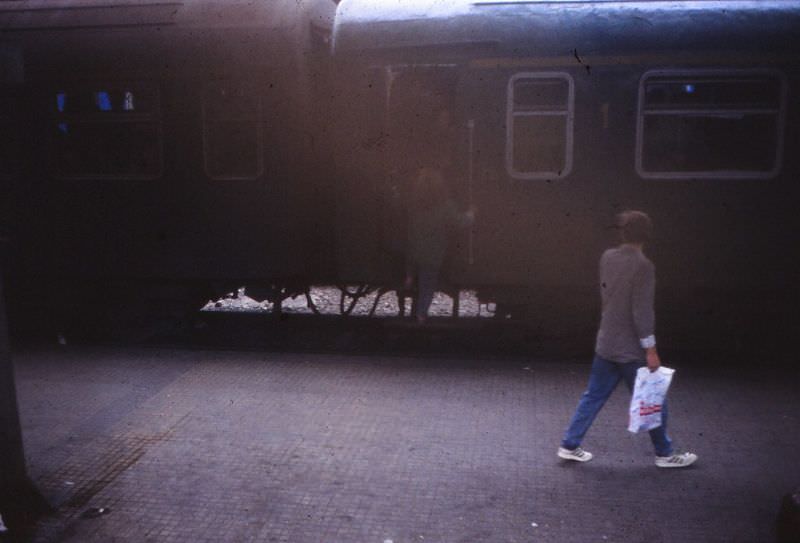
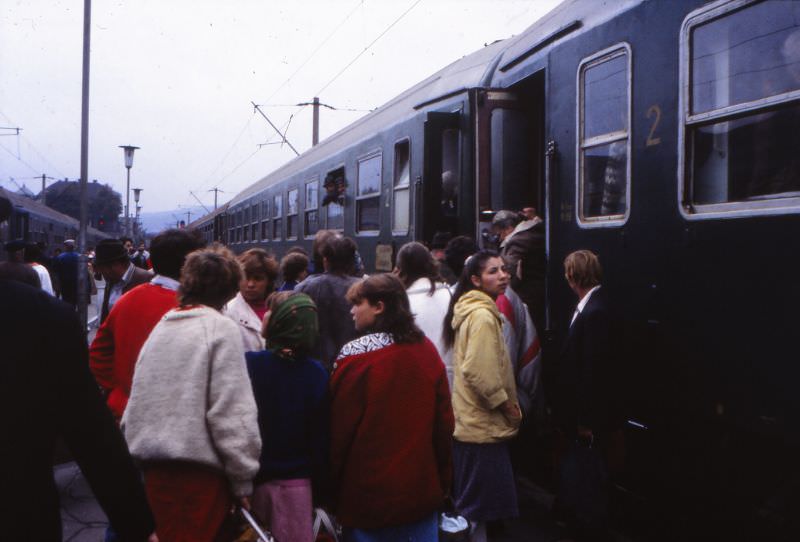
Pugliese also traveled to Sibiu, a city in the Transylvania region with a strong German-speaking minority known as Transylvanian Saxons. Sibiu’s railway station became a focal point of the revolution’s chaos — the city had seen some of the heaviest fighting outside Bucharest during December 1989, with significant loss of life. By early 1990, the gunfire had stopped, but the wounds were fresh.
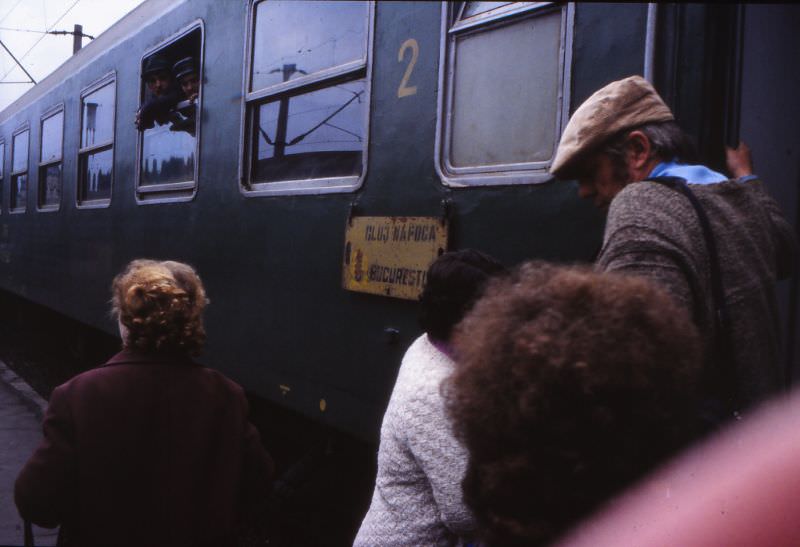
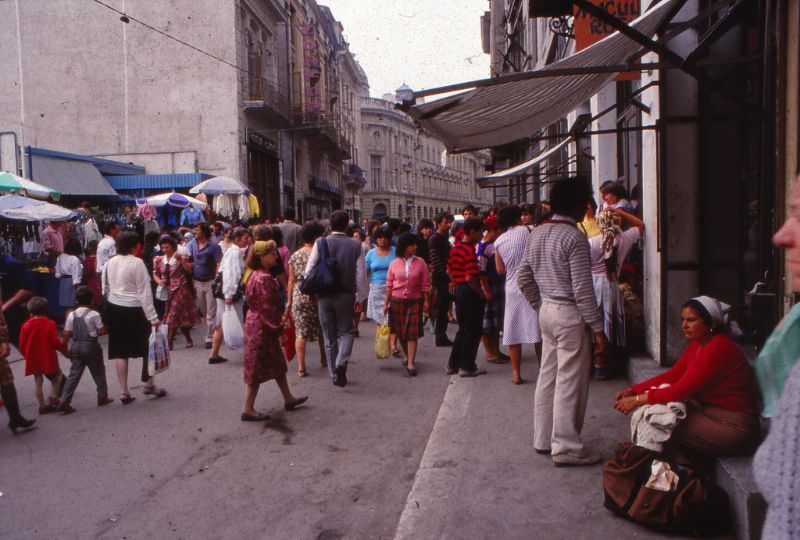
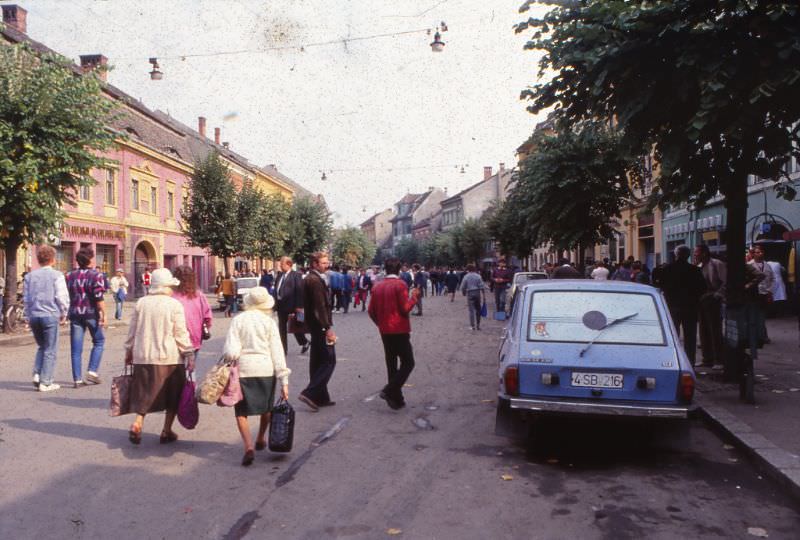
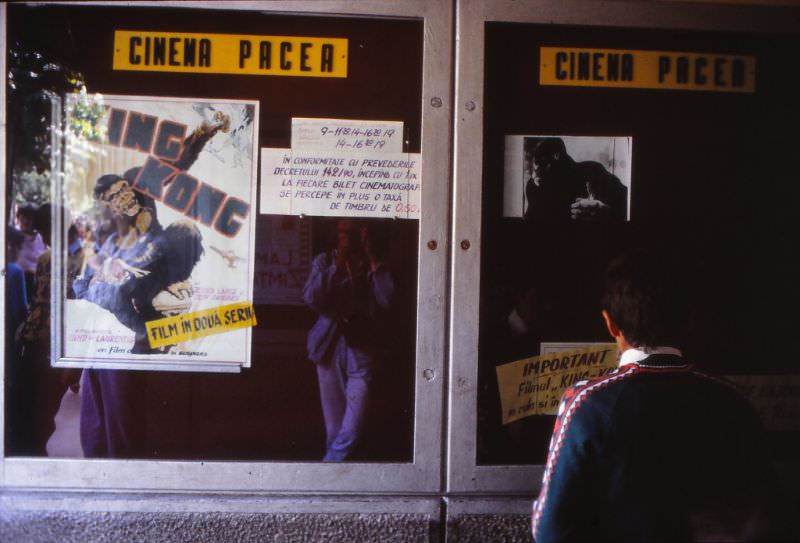
The streets of Sibiu in 1990 showed a city trying to move forward while still absorbing what had happened. Everyday life continued — people went to work, children played, markets stayed open. But the atmosphere was one of cautious adjustment. Institutions that had existed only to serve the communist state were suddenly obsolete, and new ones had not yet taken their place.
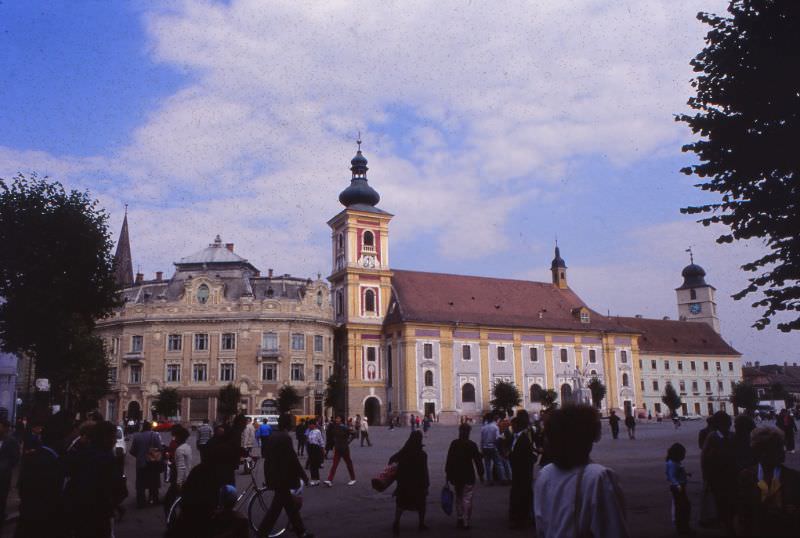
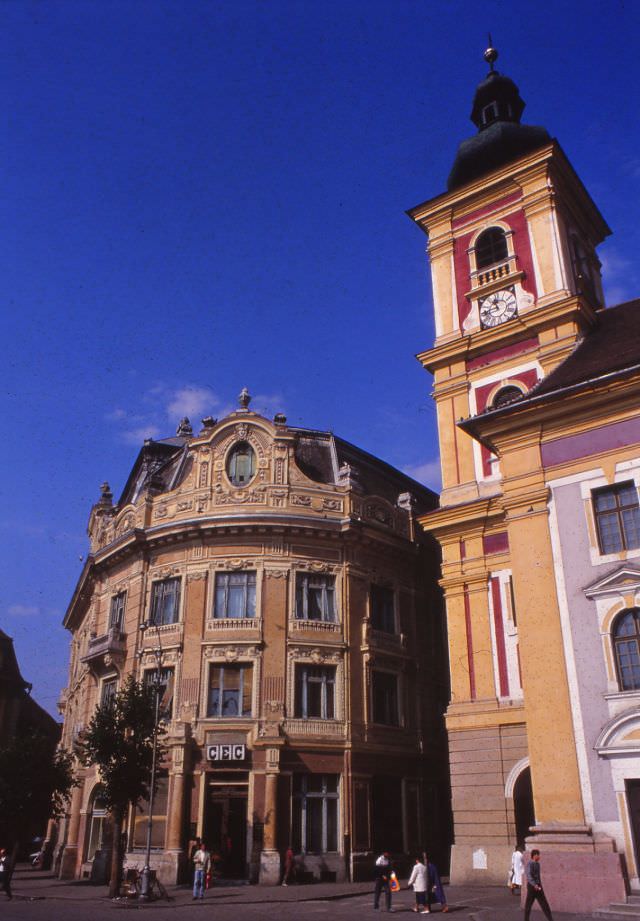
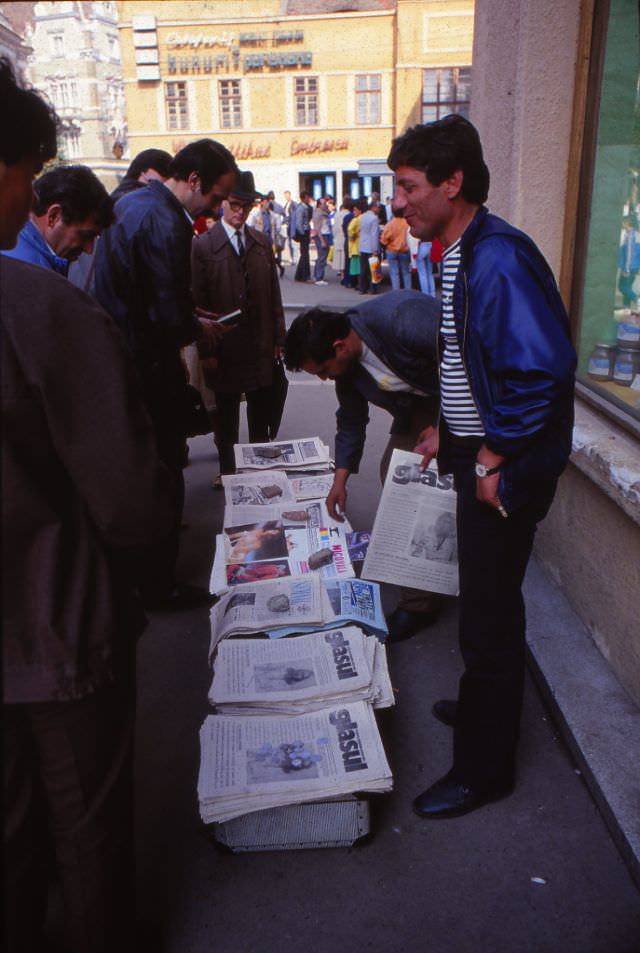
One of the most visible changes in post-revolution Romania was the sudden freedom of the press. Under Ceaușescu, all media had been state-controlled. Newspapers printed only what the regime approved. Independent journalism was not just suppressed — it was dangerous. After December 1989, new publications appeared almost overnight. In Sibiu, as in cities across the country, free newspapers hit the streets for the first time in decades. People gathered around kiosks and read openly, a scene that would have been unthinkable just weeks before.
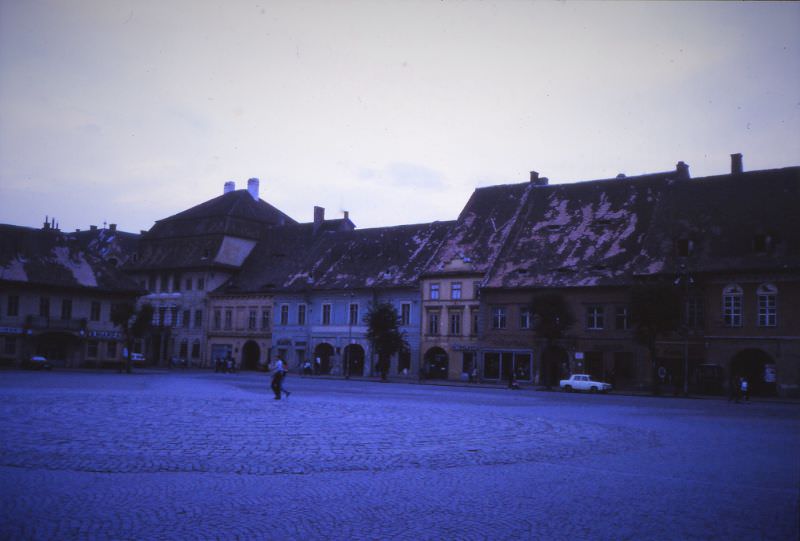
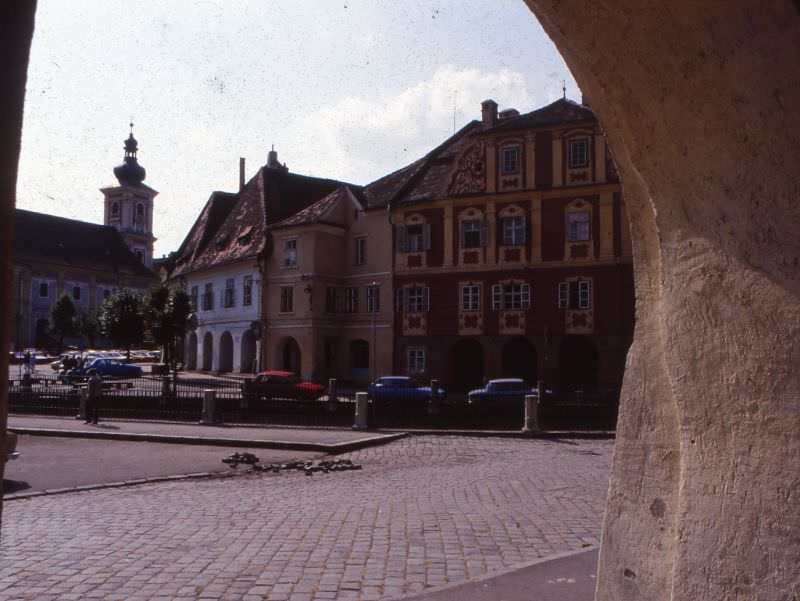
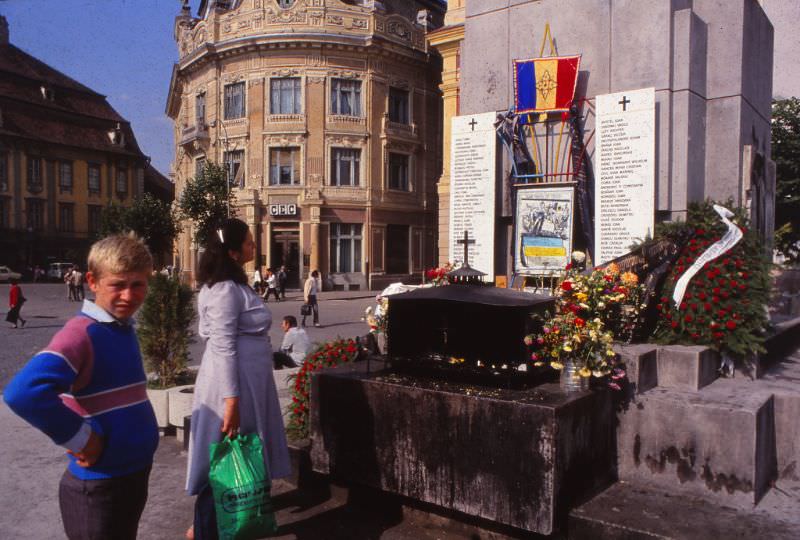
In Sibiu’s Piața Mare — the Large Square at the heart of the old city — a memorial had been erected to honor those who died during the December 1989 uprising. The revolution’s death toll across Romania is estimated at over 1,100 people, with many of those casualties occurring in the days immediately following Ceaușescu’s flight from Bucharest, as fighting between army units and Securitate loyalists continued in cities like Sibiu. The memorial in Piața Mare stood as a direct acknowledgment of that local loss.
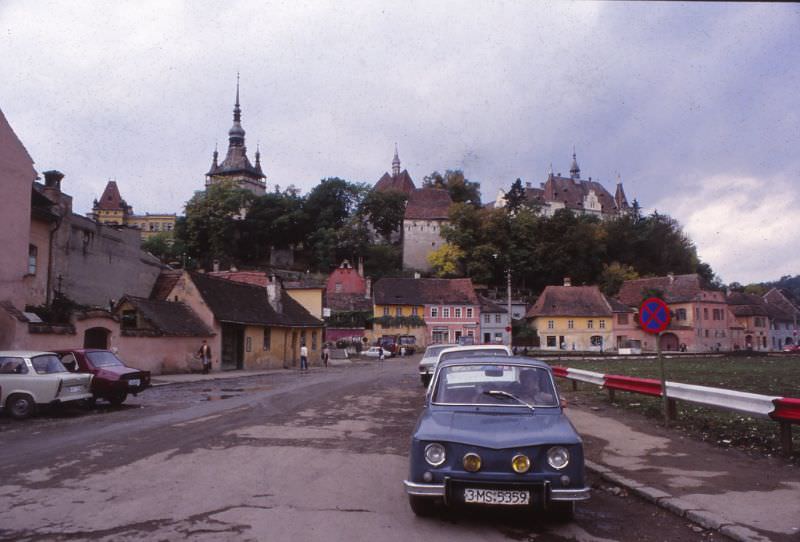
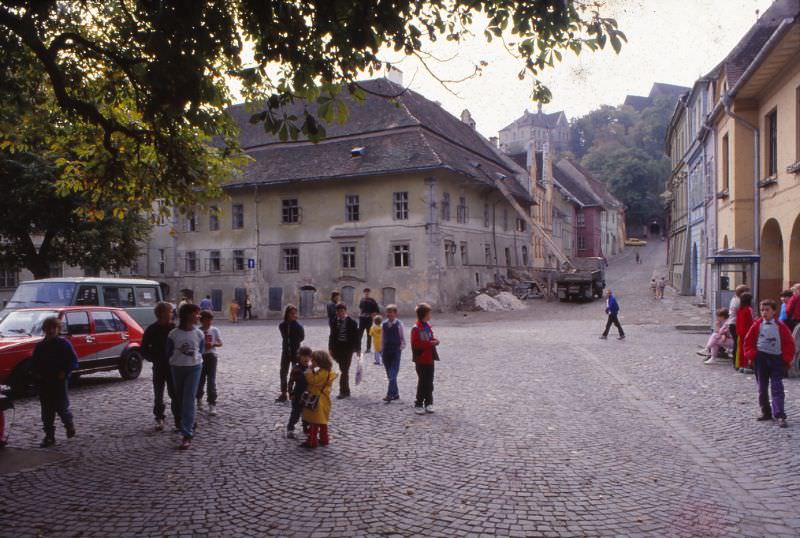
Pugliese also visited Sighișoara, a medieval walled city in Transylvania best known internationally as the birthplace of Vlad III — the historical figure behind the Dracula legend. In 1990, Sighișoara was a quiet, atmospheric place where centuries-old architecture lined narrow cobblestone streets. The communist era had left little visible imprint on the old town’s physical structure, though its social and economic effects ran deep.
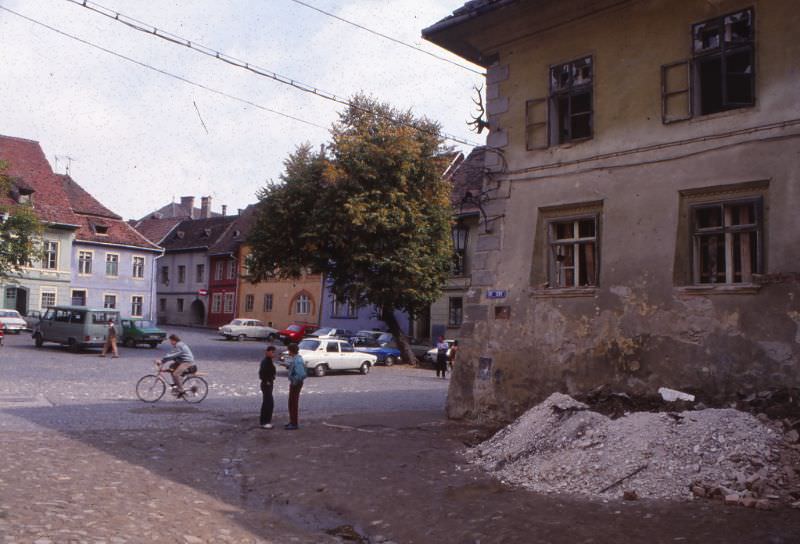
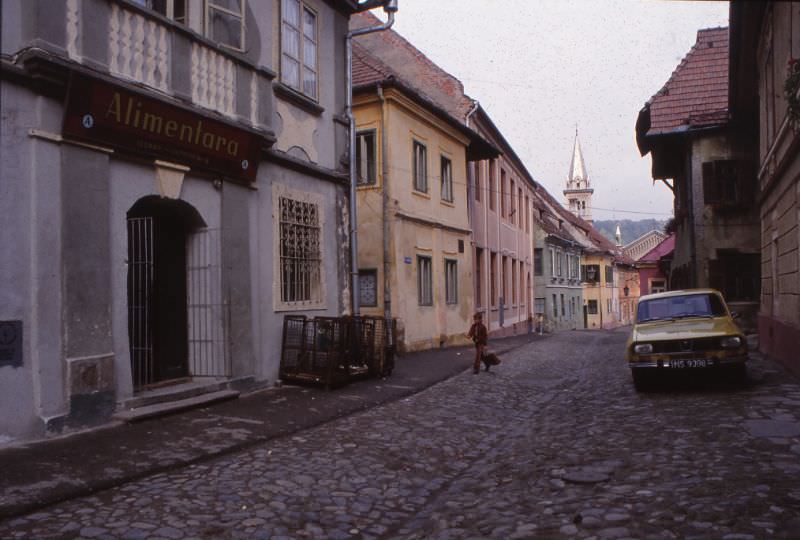
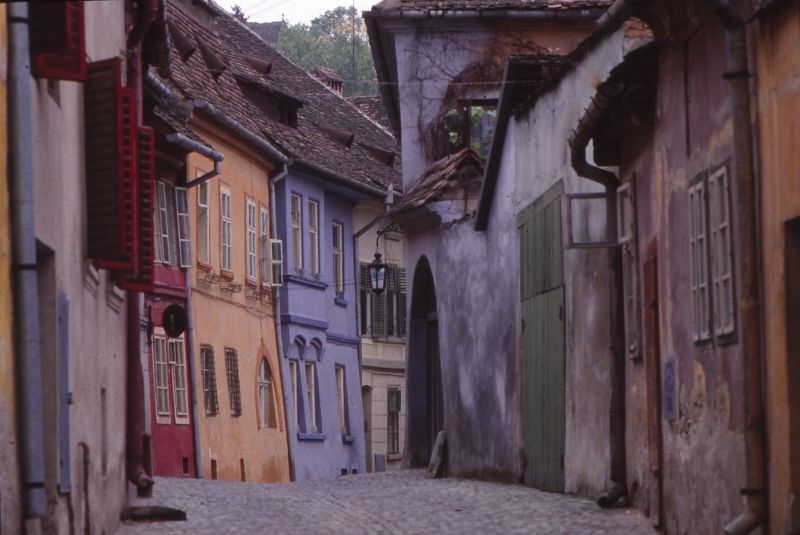
Life in Sighișoara in early 1990 had the texture of a place waiting. Residents went about their routines, but uncertainty hung over everything. Jobs tied to the state system were in question. Prices were shifting. The political future of the country was still being fought over in Bucharest. For ordinary people in a small Transylvanian city, the revolution had removed one reality without yet replacing it with another.
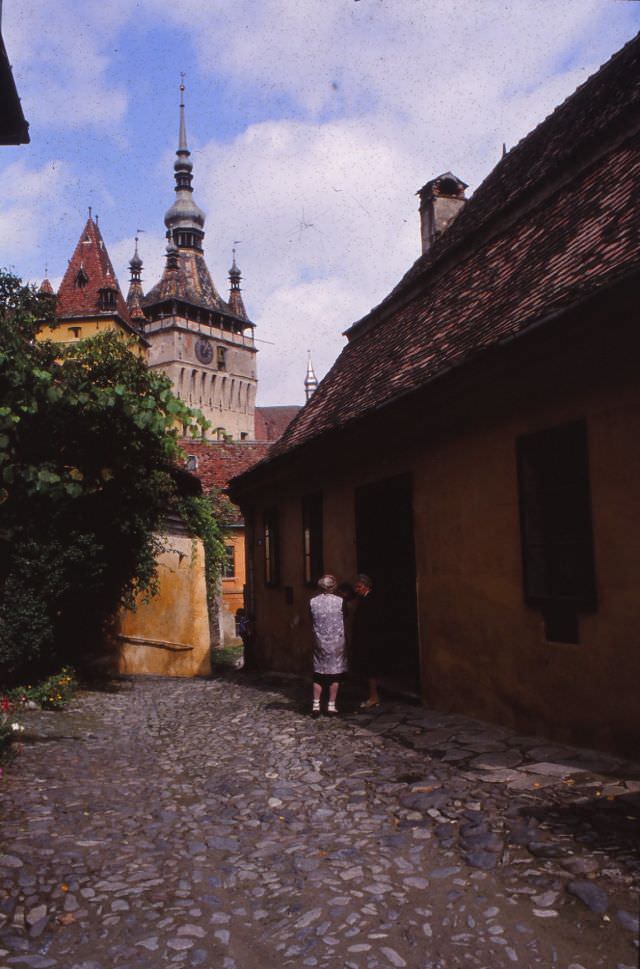
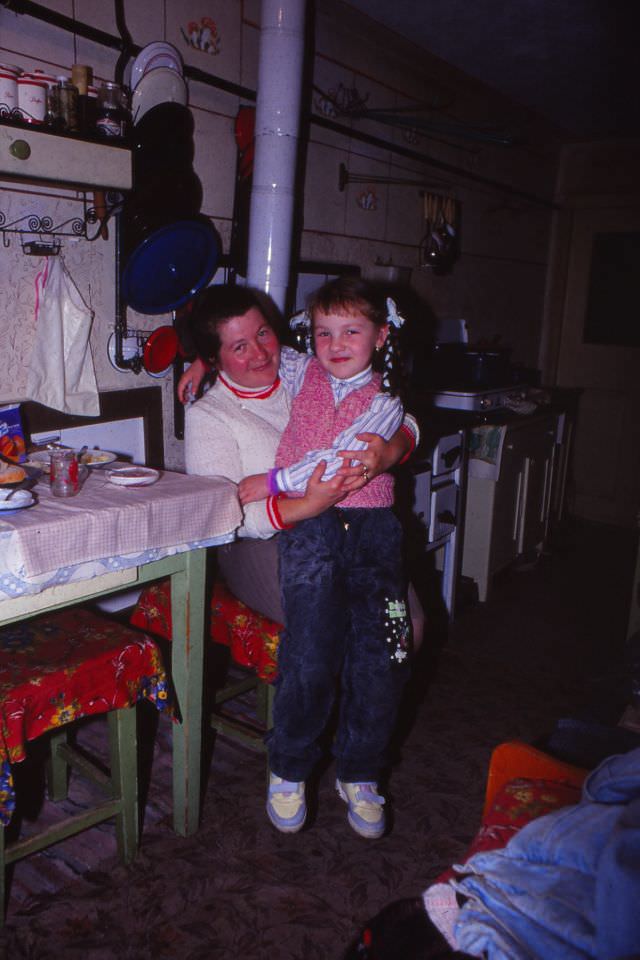
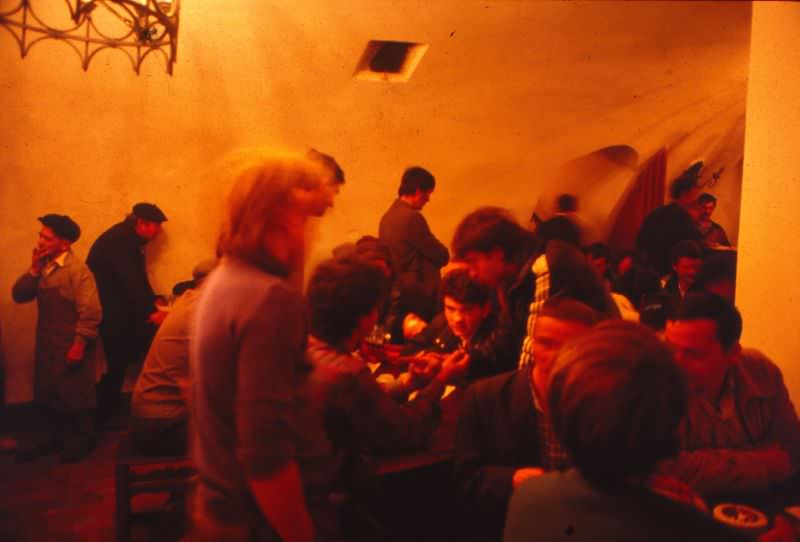
The house where Vlad III was born in the 15th century still stood in Sighișoara’s upper town, and by 1990 it had been converted into a pub. That a medieval nobleman’s birthplace had become a neighborhood bar was very much in keeping with the layered, often surprising character of Transylvania — a region that has passed through Roman, Hungarian, Ottoman, Habsburg, and communist rule, each leaving something behind.
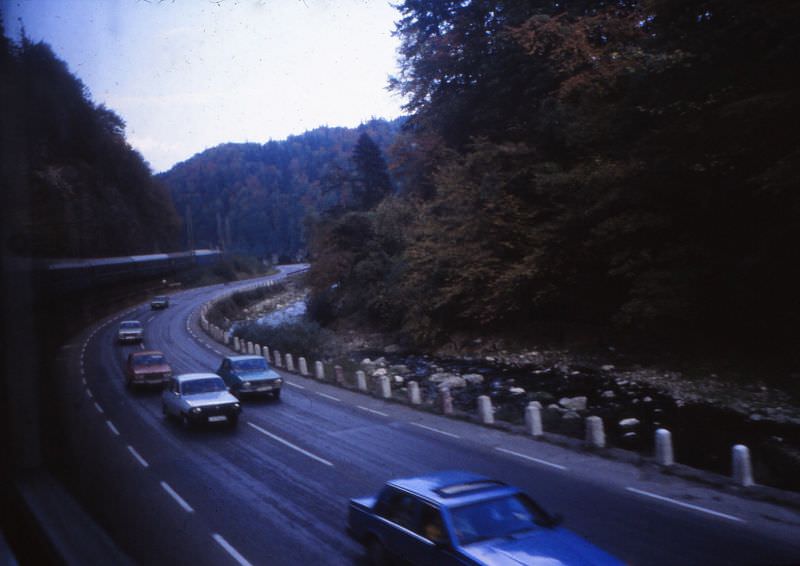
Pugliese’s photographs of the Transylvanian landscape itself round out the portrait of Romania in this moment. The roads and rail lines cutting through the countryside connected cities that had each experienced the revolution and its aftermath in their own way. The land looked as it always had — rolling hills, dense forests, small villages — but the country it ran through was no longer the same one it had been in November 1989.