
By 1942, Phoenix was a city shaped by two powerful forces: the tail end of the Great Depression and the full weight of World War II. The New Deal’s federal spending had pulled Arizona’s economy back from the brink, and Phoenix entered the 1940s in relatively stable shape. Tourism was part of that recovery. Wealthy visitors from across the country were arriving at upscale resorts like the Arizona Biltmore, Camelback Inn, Jokake Inn, the Wigwam Guest Ranch, and the San Marcos in nearby Chandler. But for everyday residents, life in Phoenix looked very different depending on your race.
Phoenix in 1942 was a deeply segregated city. Black and Hispanic residents were legally barred from buying or renting homes north of Van Buren Street. Schools and businesses operated under segregation. Downtown, a functioning Chinatown served Chinese entrepreneurs who ran grocery stores across the city. These were not informal arrangements — they were enforced boundaries that shaped where people lived, worked, and worshipped. Central Avenue was the city’s main artery, lined with businesses, and it drew a sharp line through a divided community.
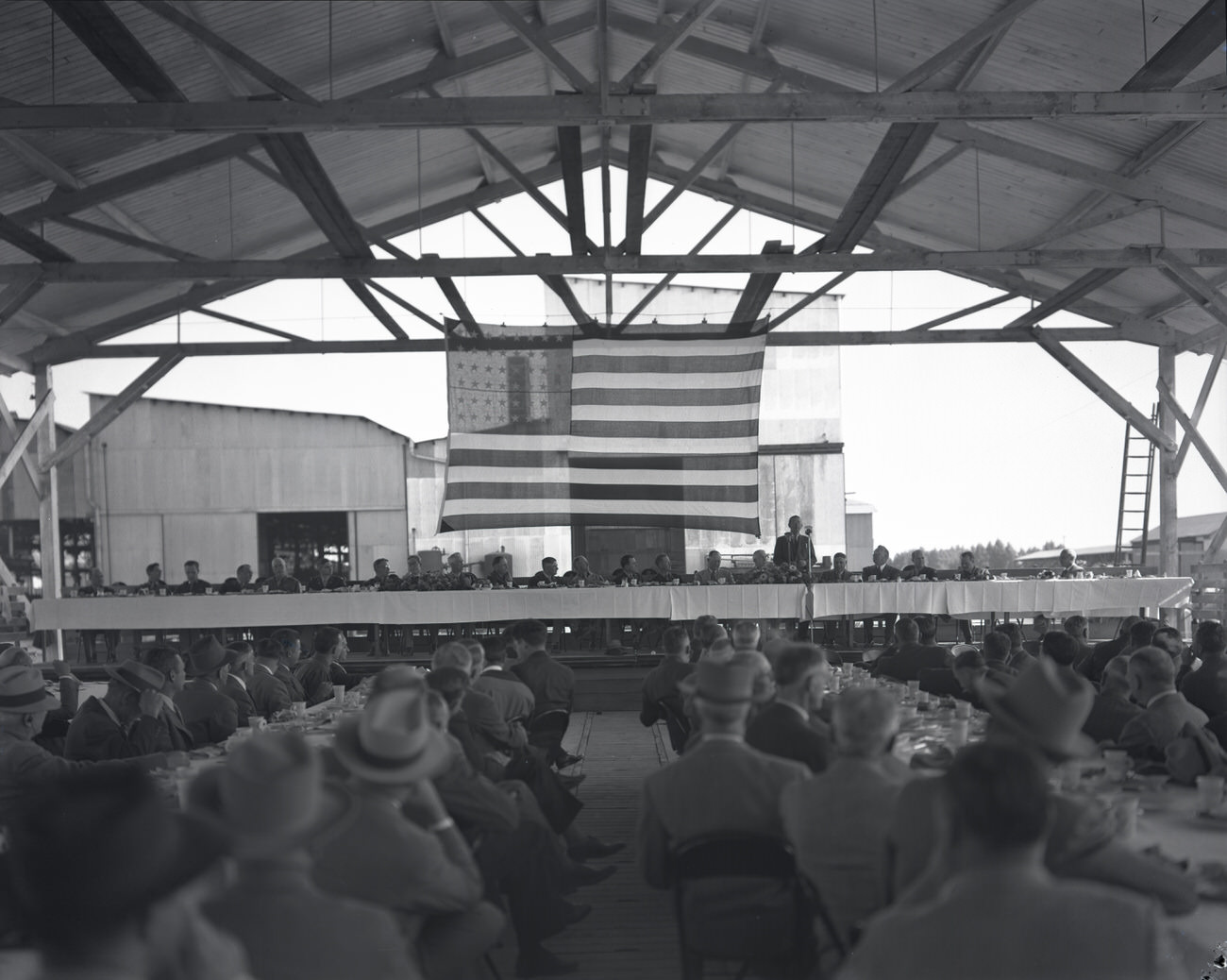
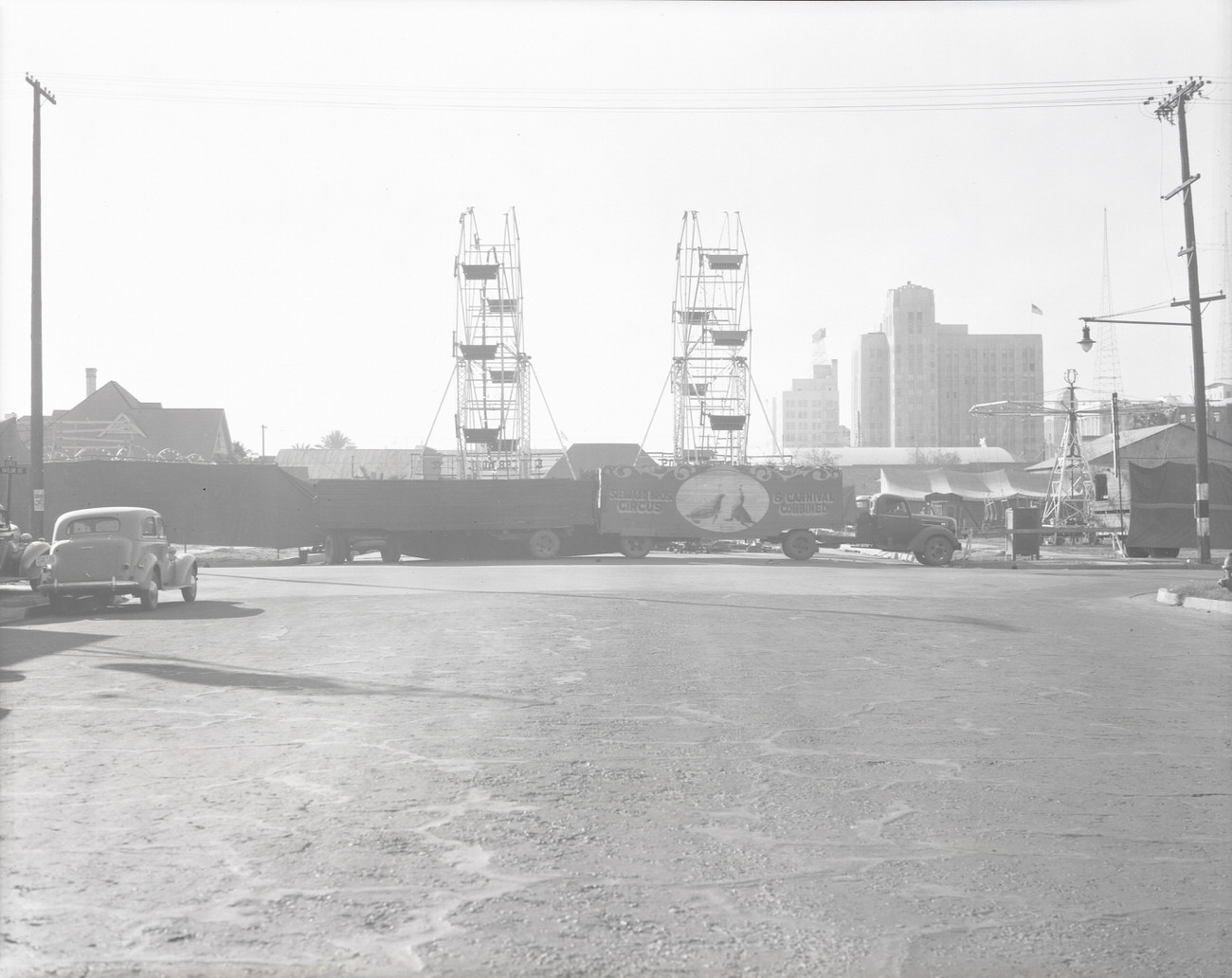
Social life continued despite wartime pressures. The Rotary Club and similar civic organizations held regular events, maintaining a sense of normalcy for Phoenix’s professional class. Street scenes from 1942 show a city that was active and commercially busy, with carnivals and public gatherings still drawing crowds.
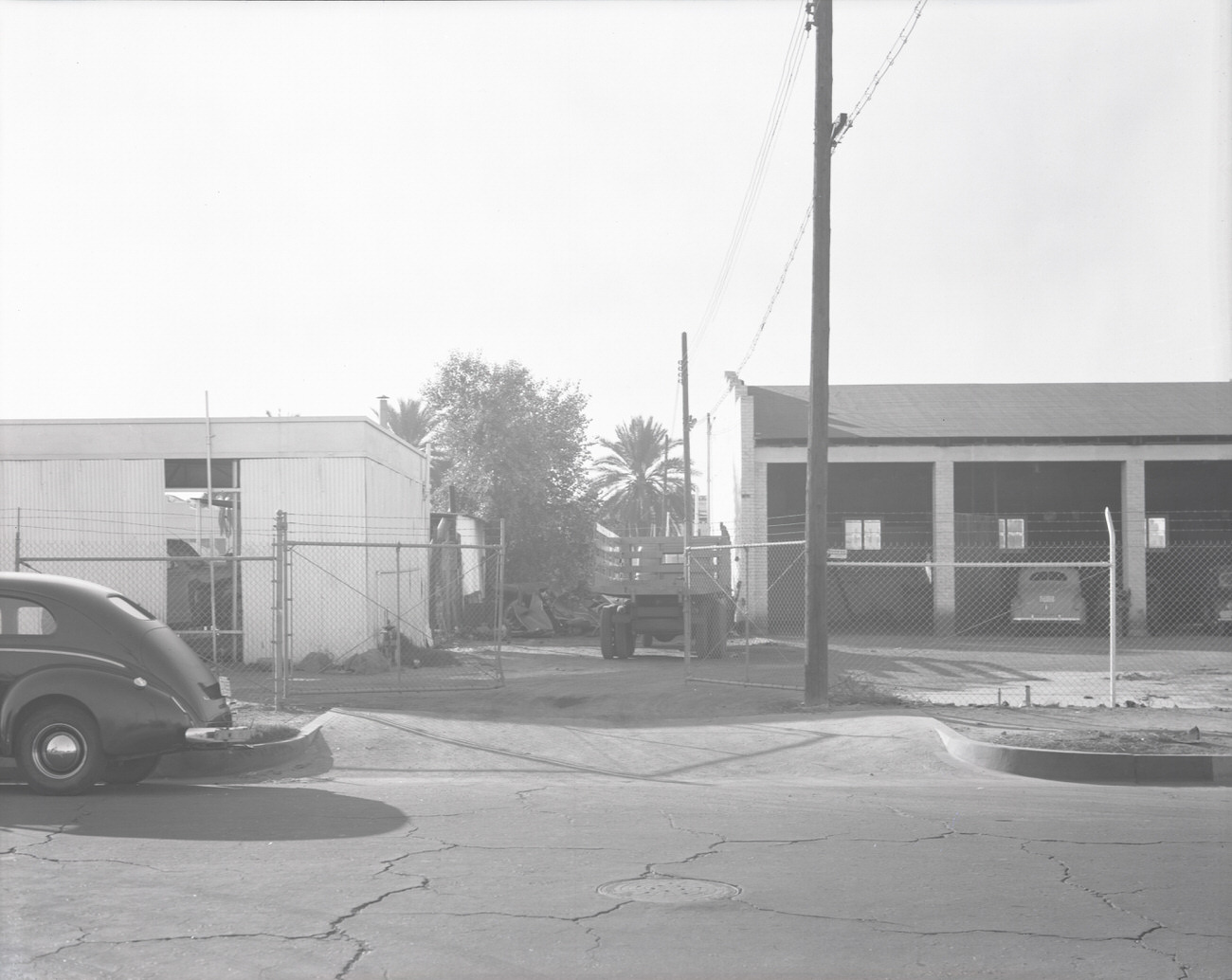
Residential Phoenix ranged from modest bungalows to more established single-family homes. Views from addresses like 1250 S. 7th Ave reveal the low-density, sun-bleached character of the city’s neighborhoods, where desert landscape pushed right up against the edges of residential lots.

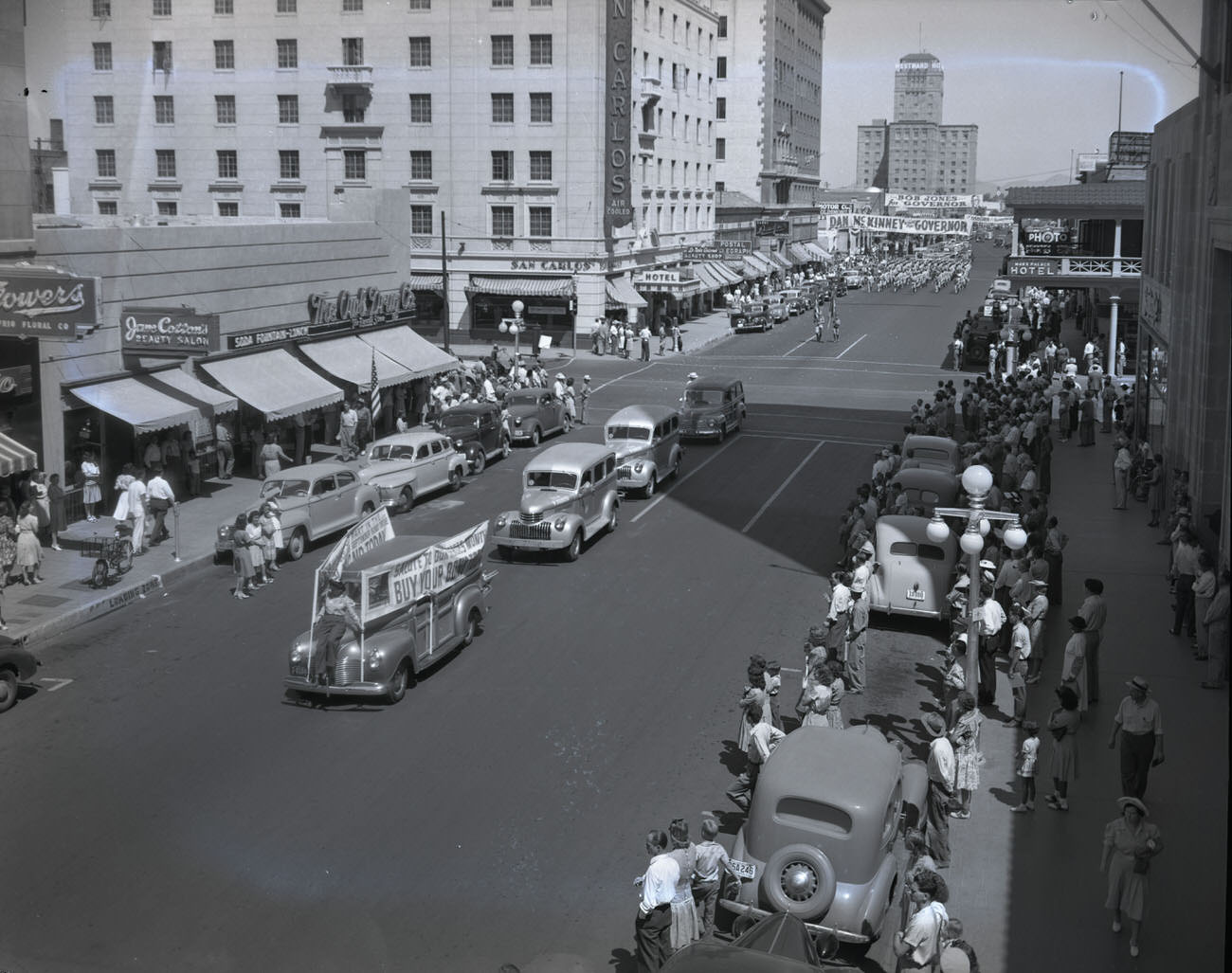
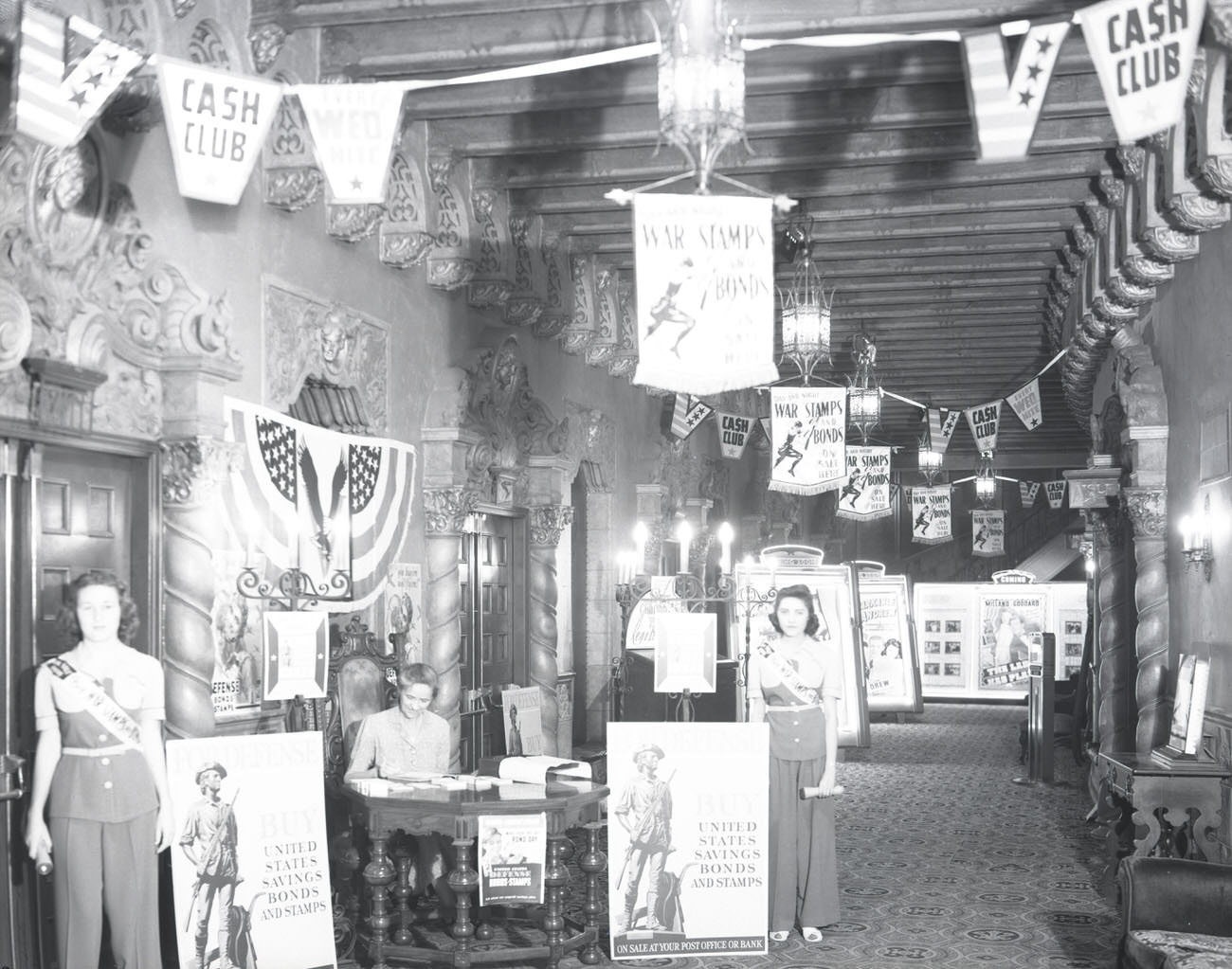
The war effort was visible on Phoenix’s streets. A U.S. Bond Parade moved south on Central Avenue at the intersection with W. Monroe Street, drawing residents out to show their support for the war effort. War bond and stamp promotions were a regular fixture at public venues across the city.
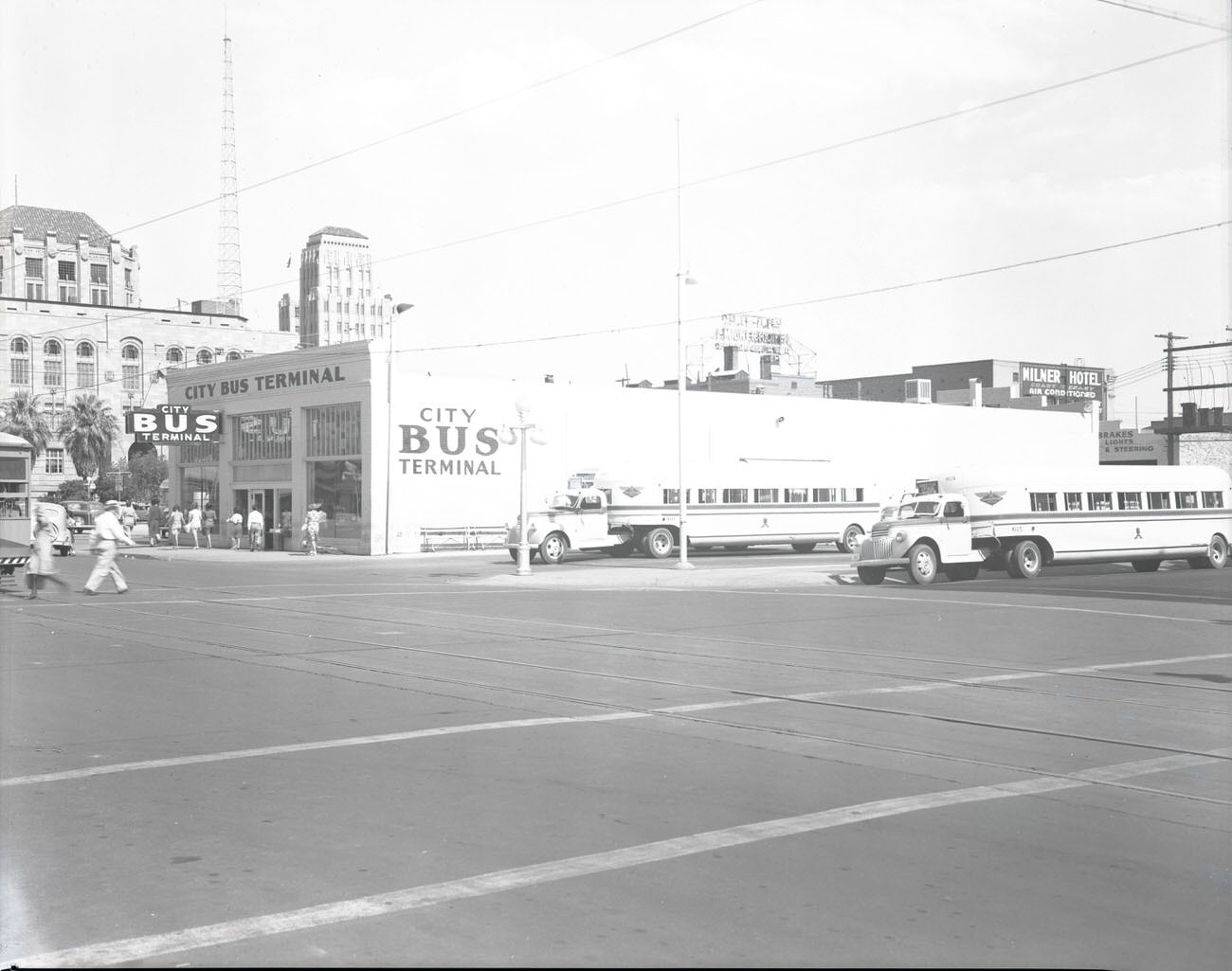
The Phoenix Bus Terminal served as a major transit hub for a city that was still growing its infrastructure. These photos capture the scale and activity of the terminal, where soldiers, workers, and civilians passed through daily.
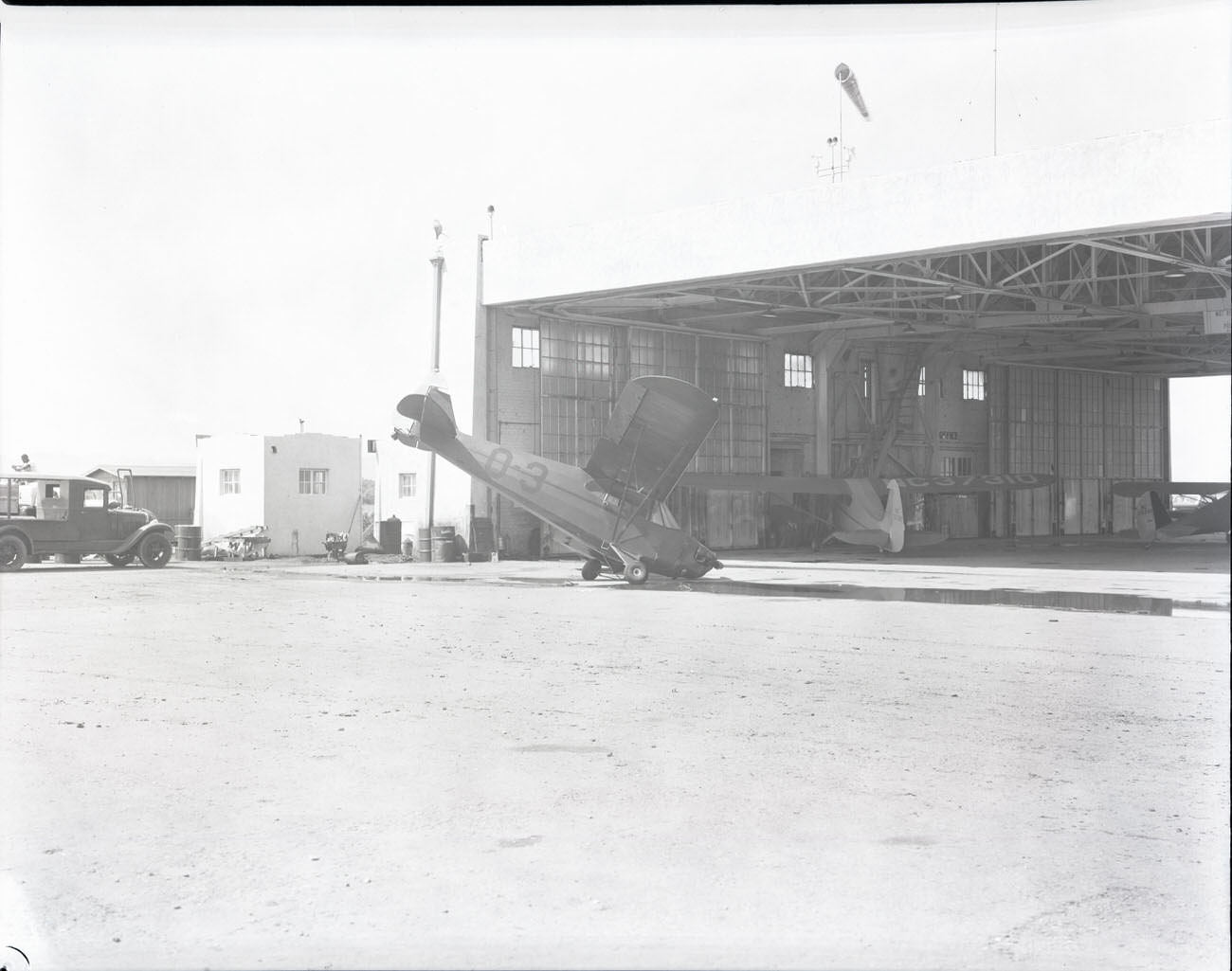
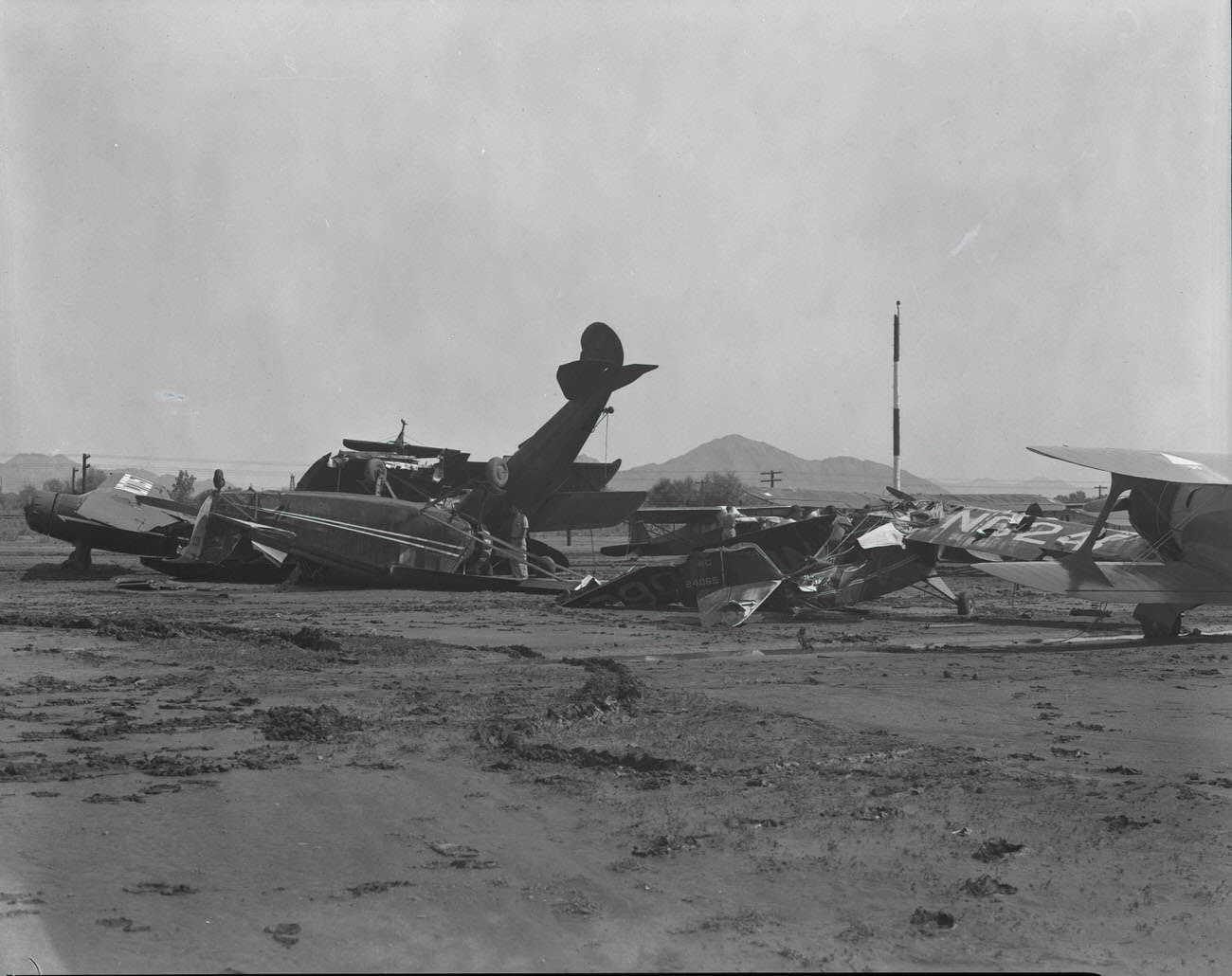
Sky Harbor Airport in 1942 bore visible signs of wartime wear. Damaged aircraft sat in front of hangars, a direct reminder that the war’s reach extended into the Arizona desert. The airport was a critical facility during the war years, used for military training and transport.
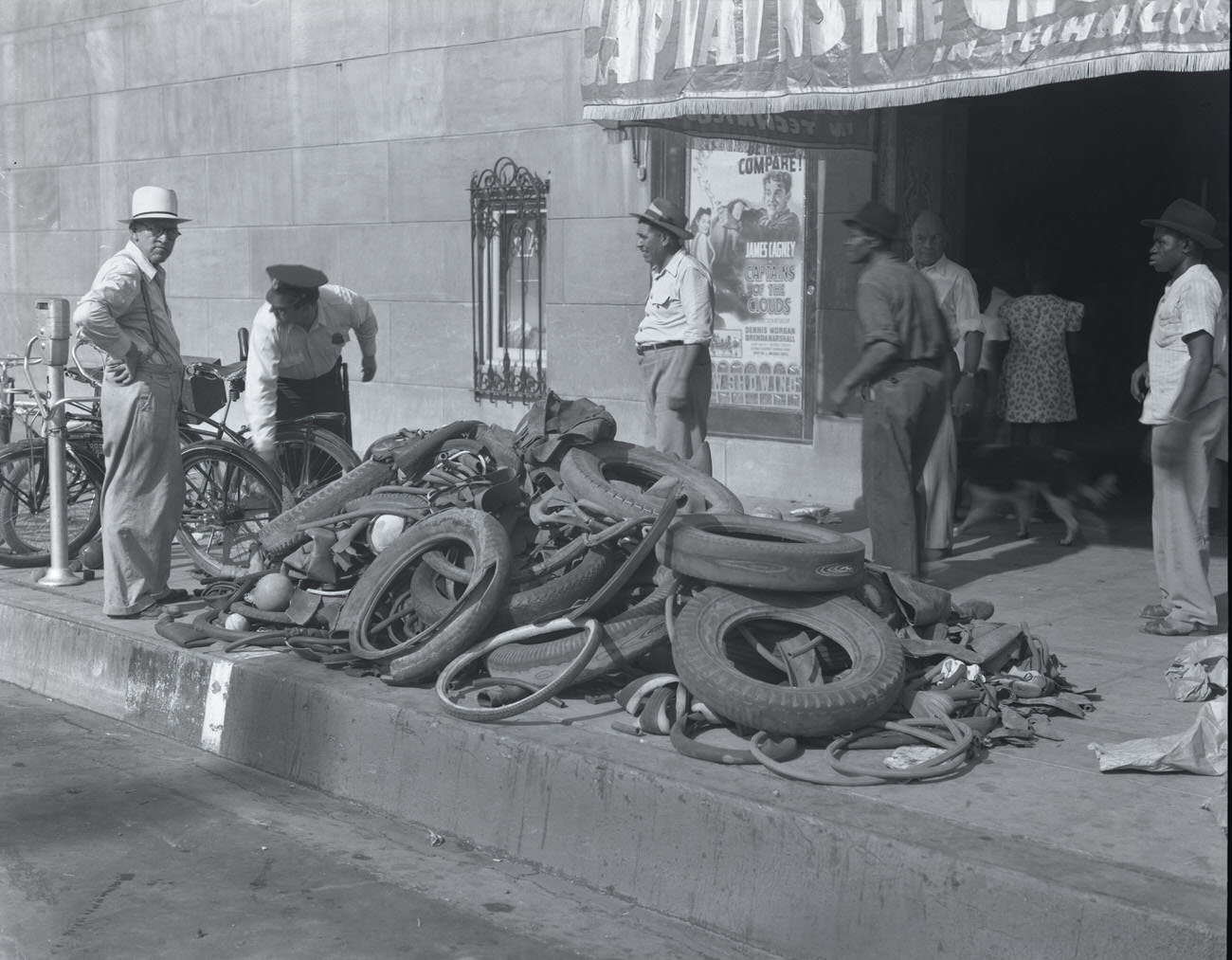
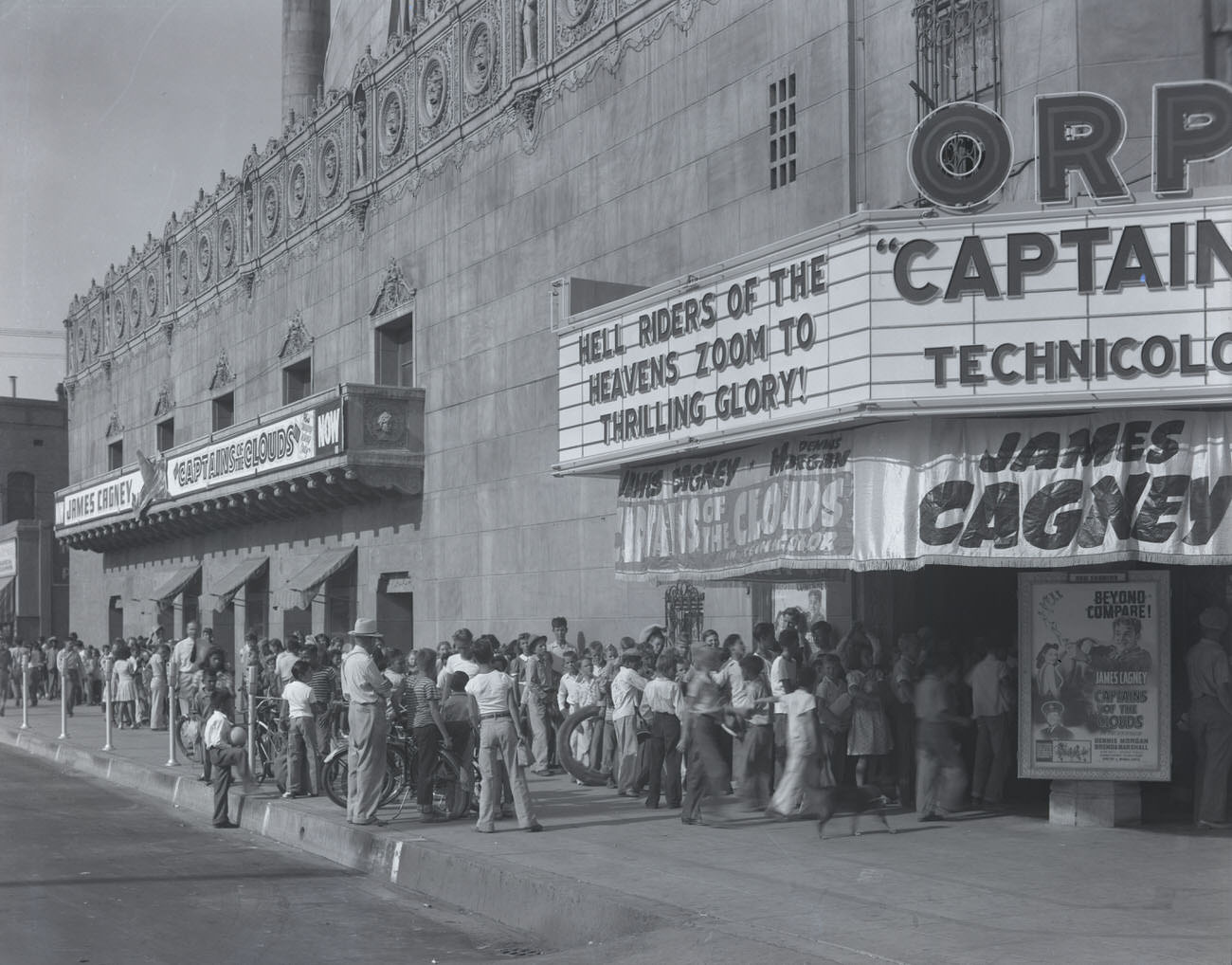
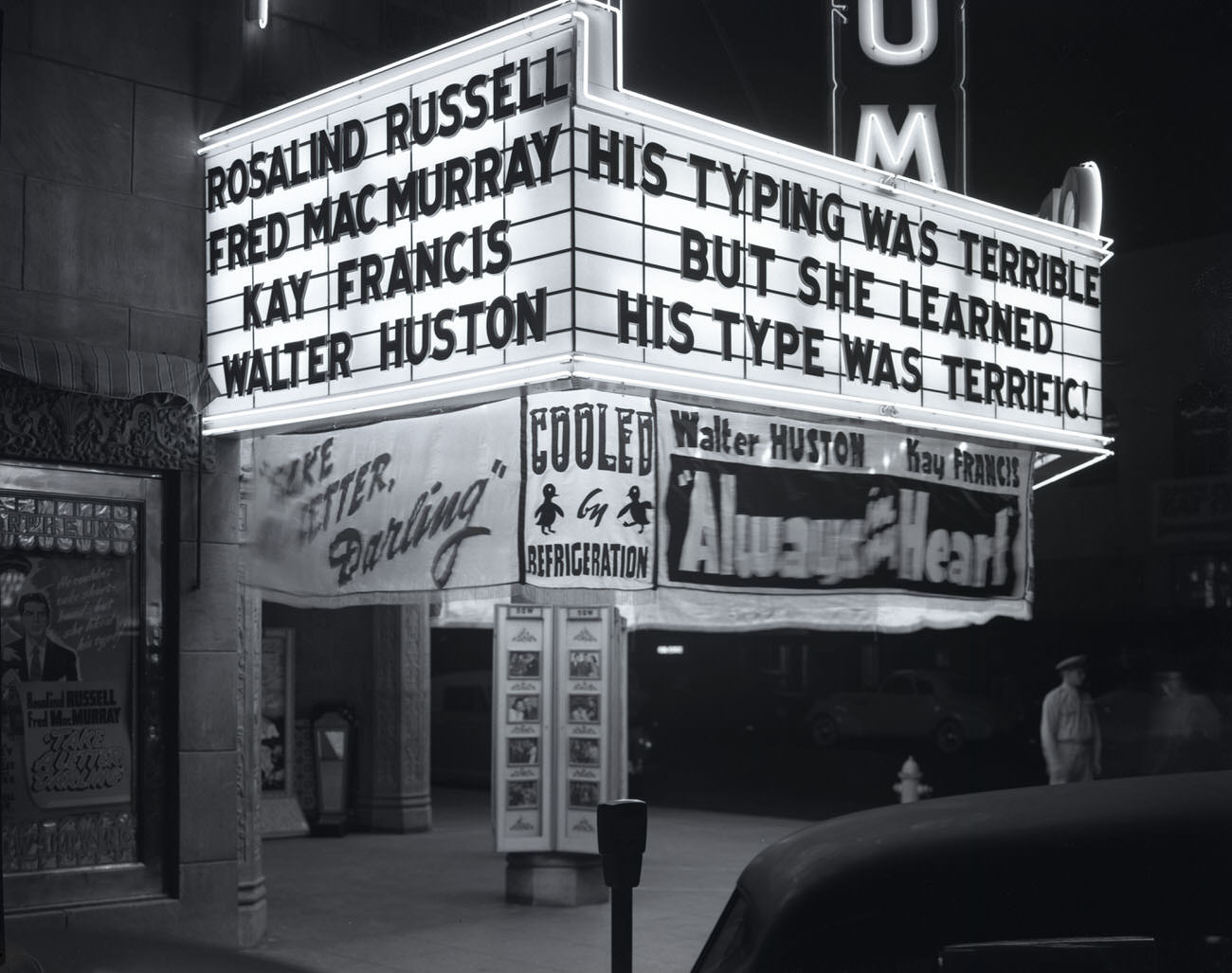
The Orpheum Theatre on Washington Street was one of Phoenix’s most prominent entertainment venues. In 1942, it screened films like “Captains of the Clouds” and hosted war bond and stamp promotions. Piles of scrap rubber collected in front of the Orpheum reflected a nationwide civilian recycling drive to support military manufacturing.
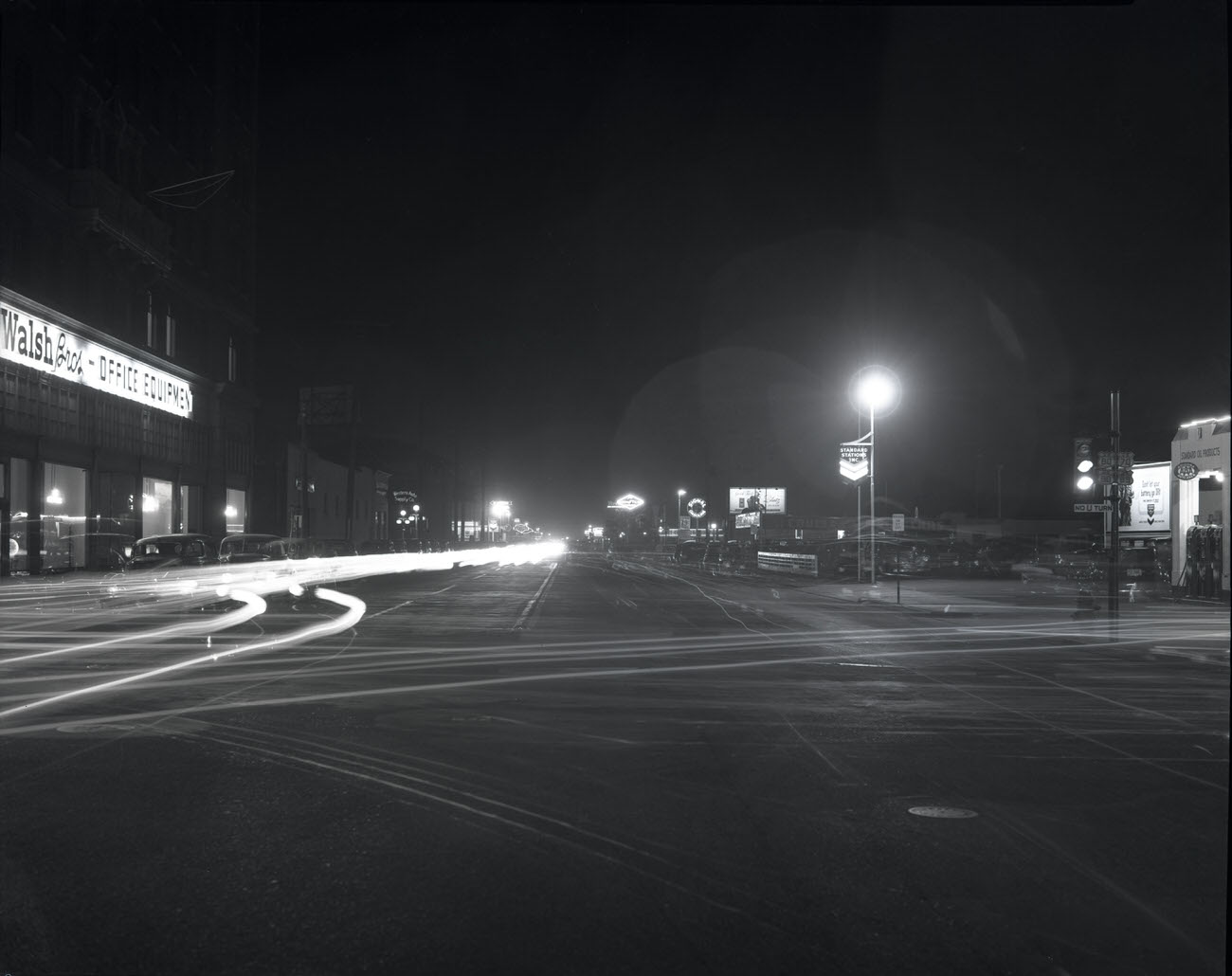
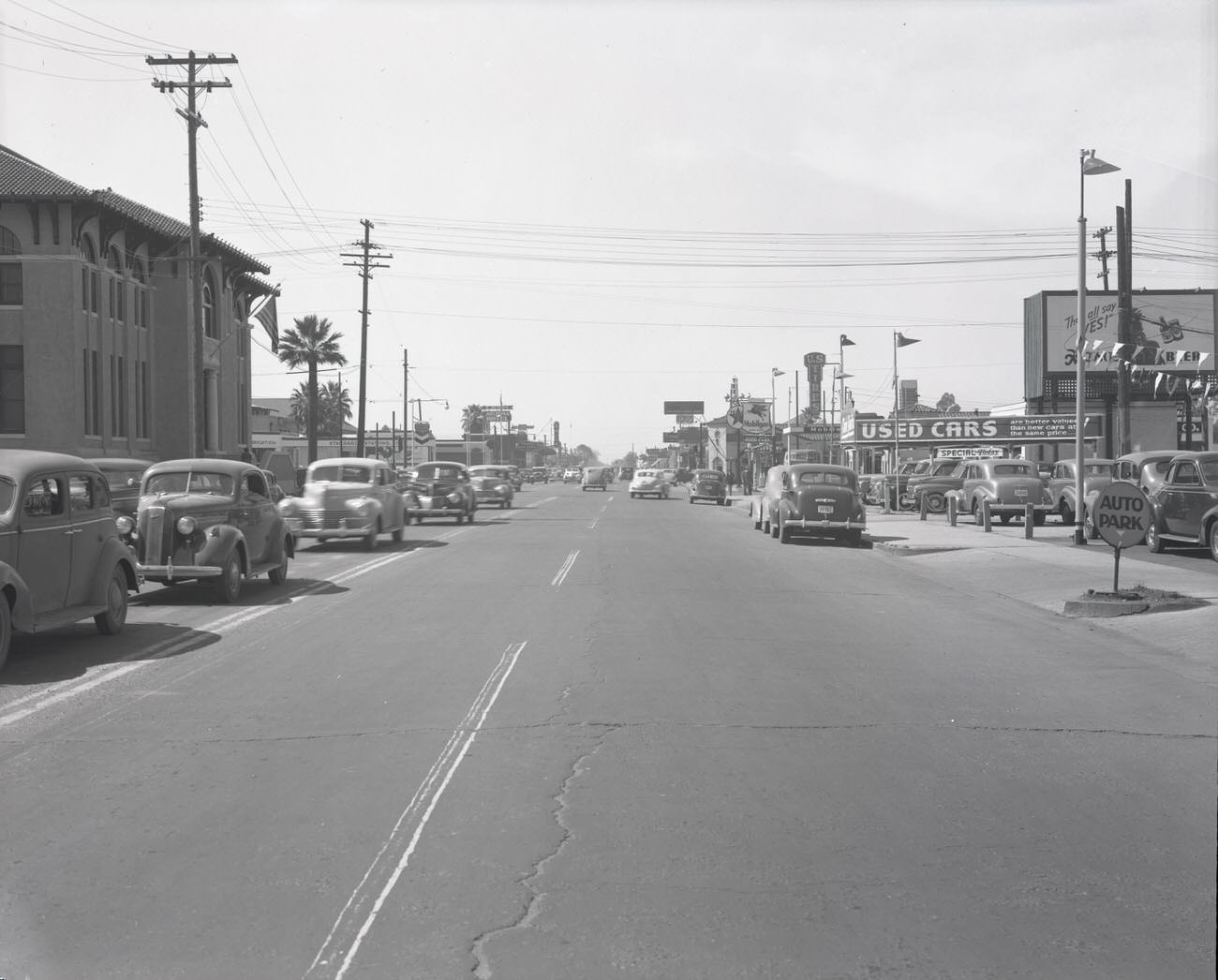
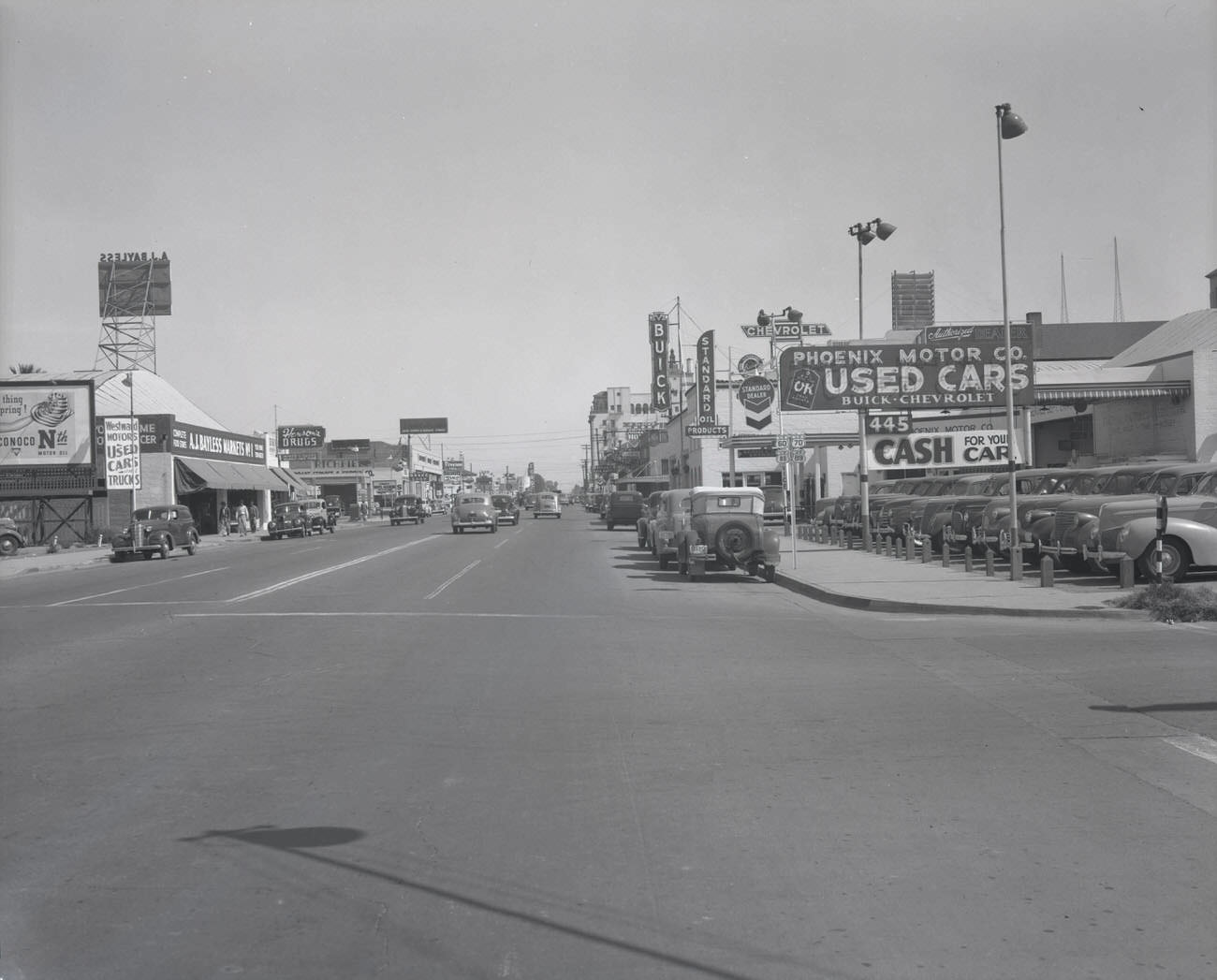
Van Buren Street was more than a commercial corridor — it was the hard boundary of segregation. The intersection of W. Van Buren and N. First Ave., photographed multiple times in 1942, shows a busy downtown stretch with storefronts and street traffic. Businesses like Coulter’s Used Cars at 312 N. Central and Western Auto Supply at 247 N. 1st Ave. were visible landmarks at the intersection with Central Avenue.
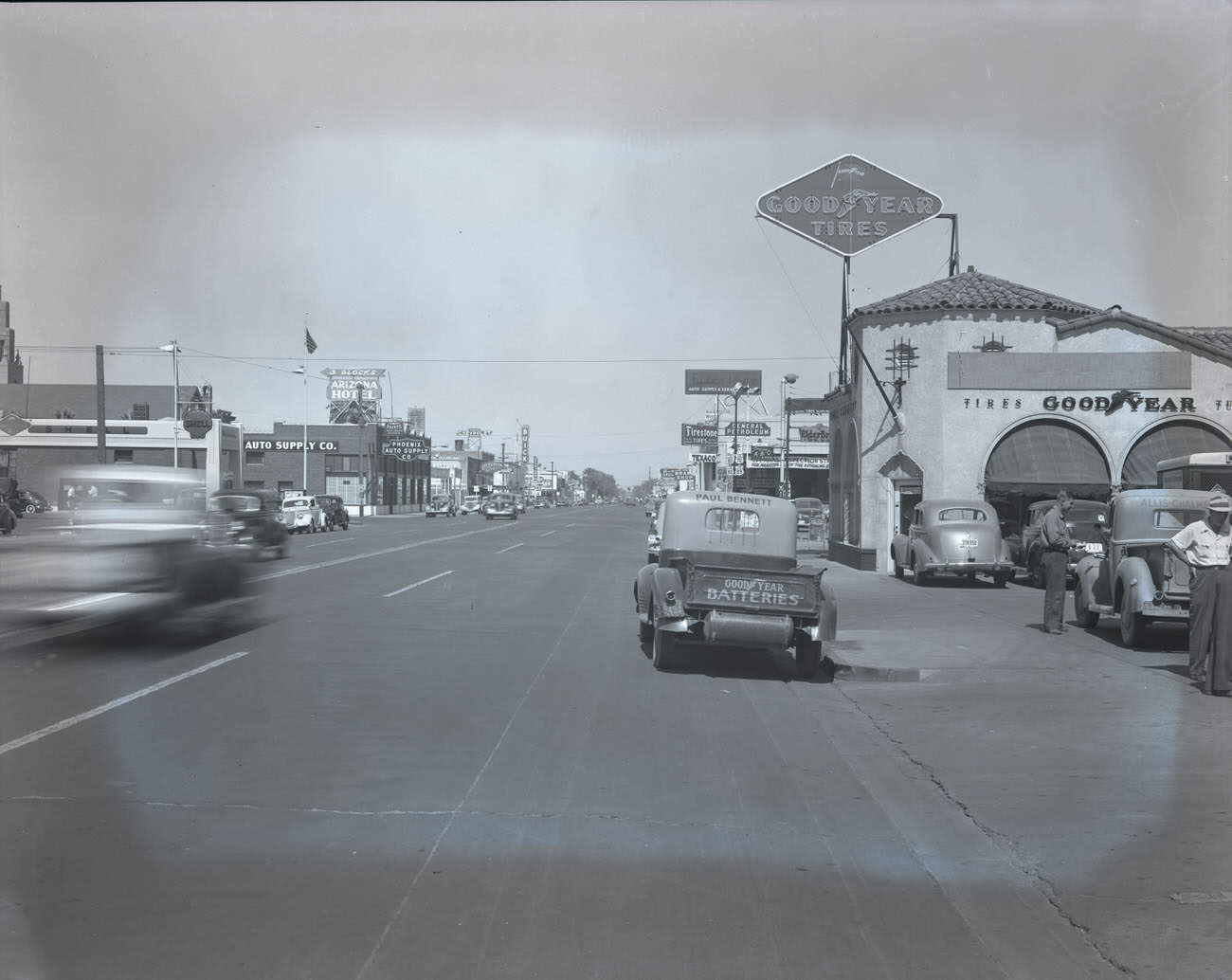
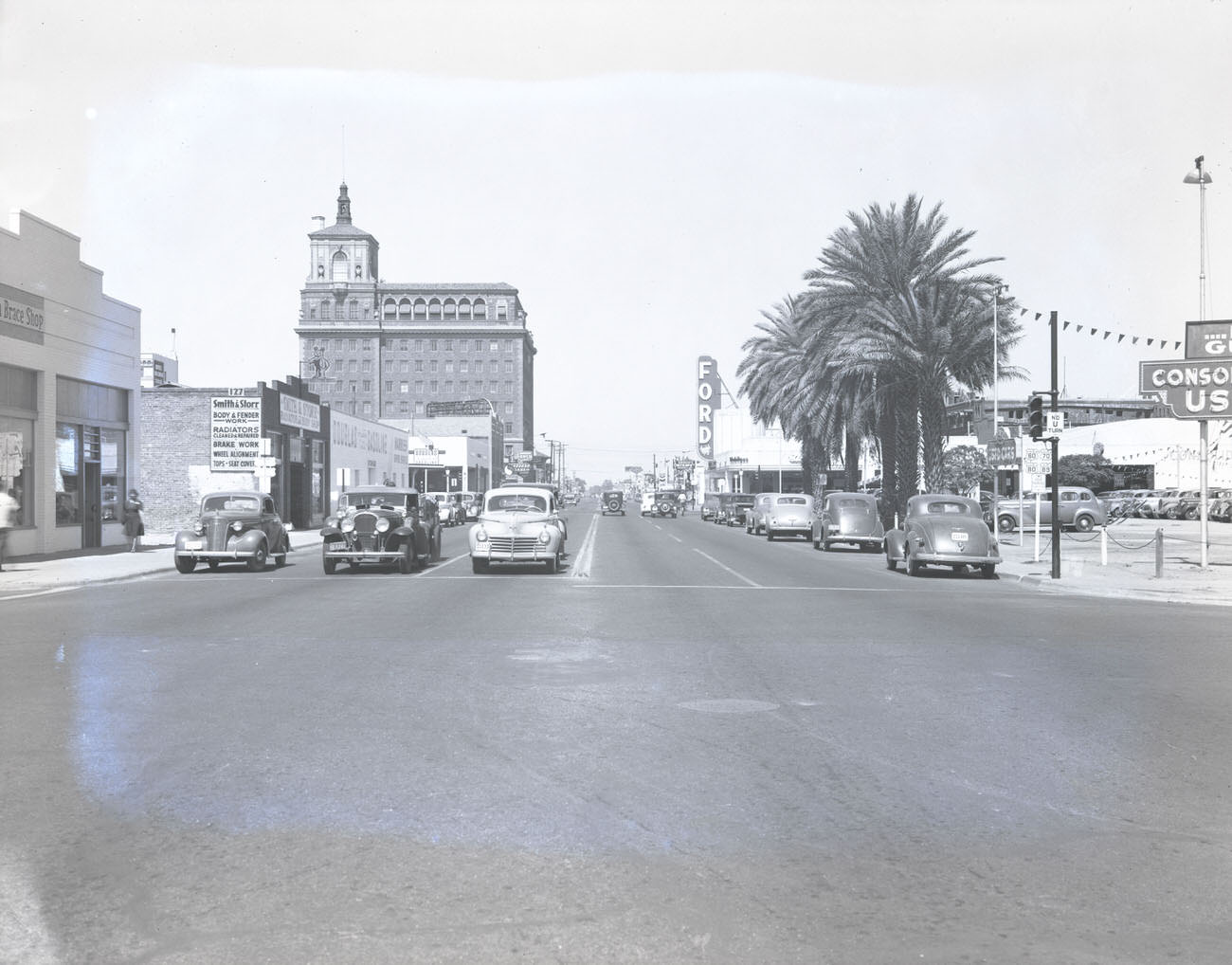
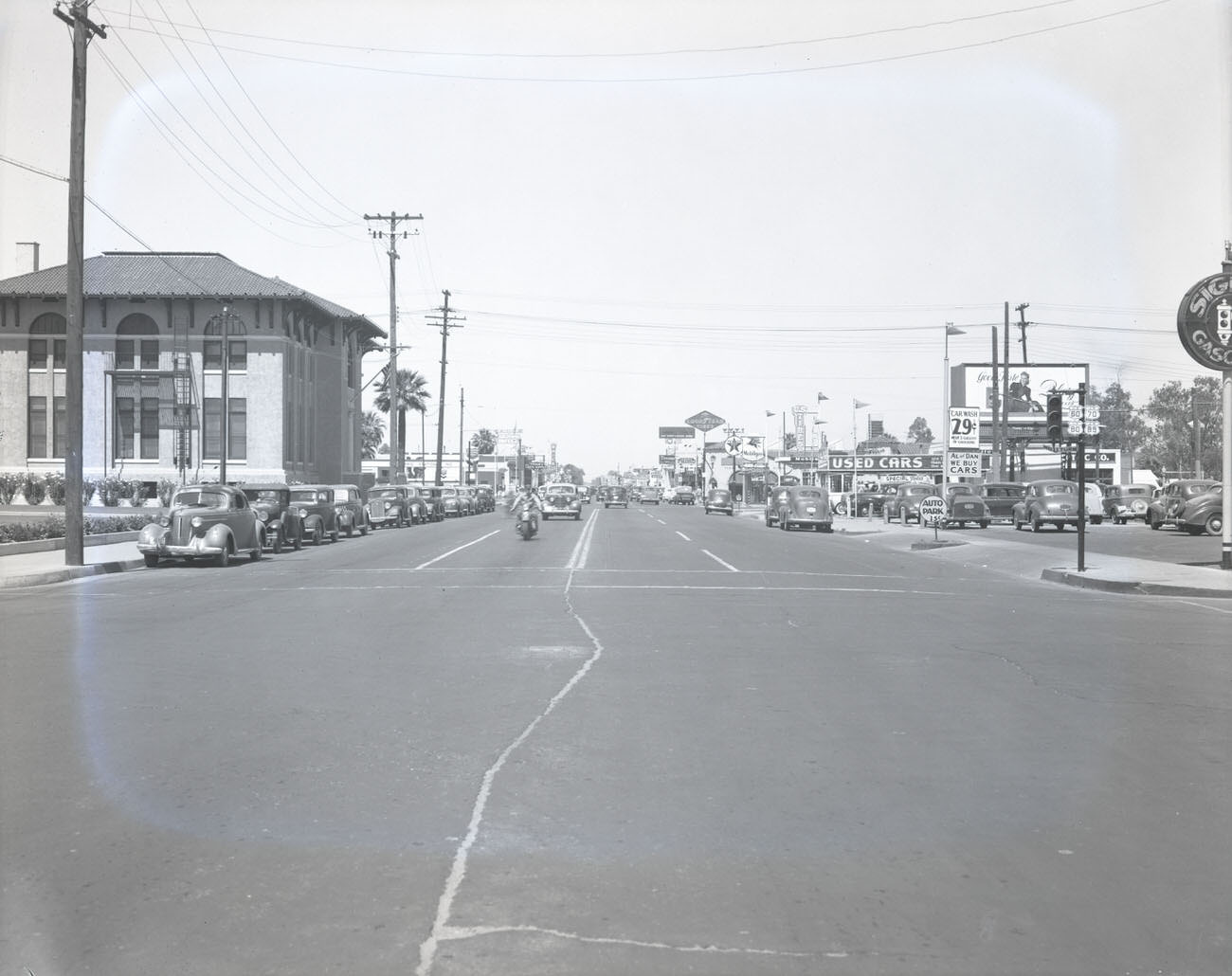
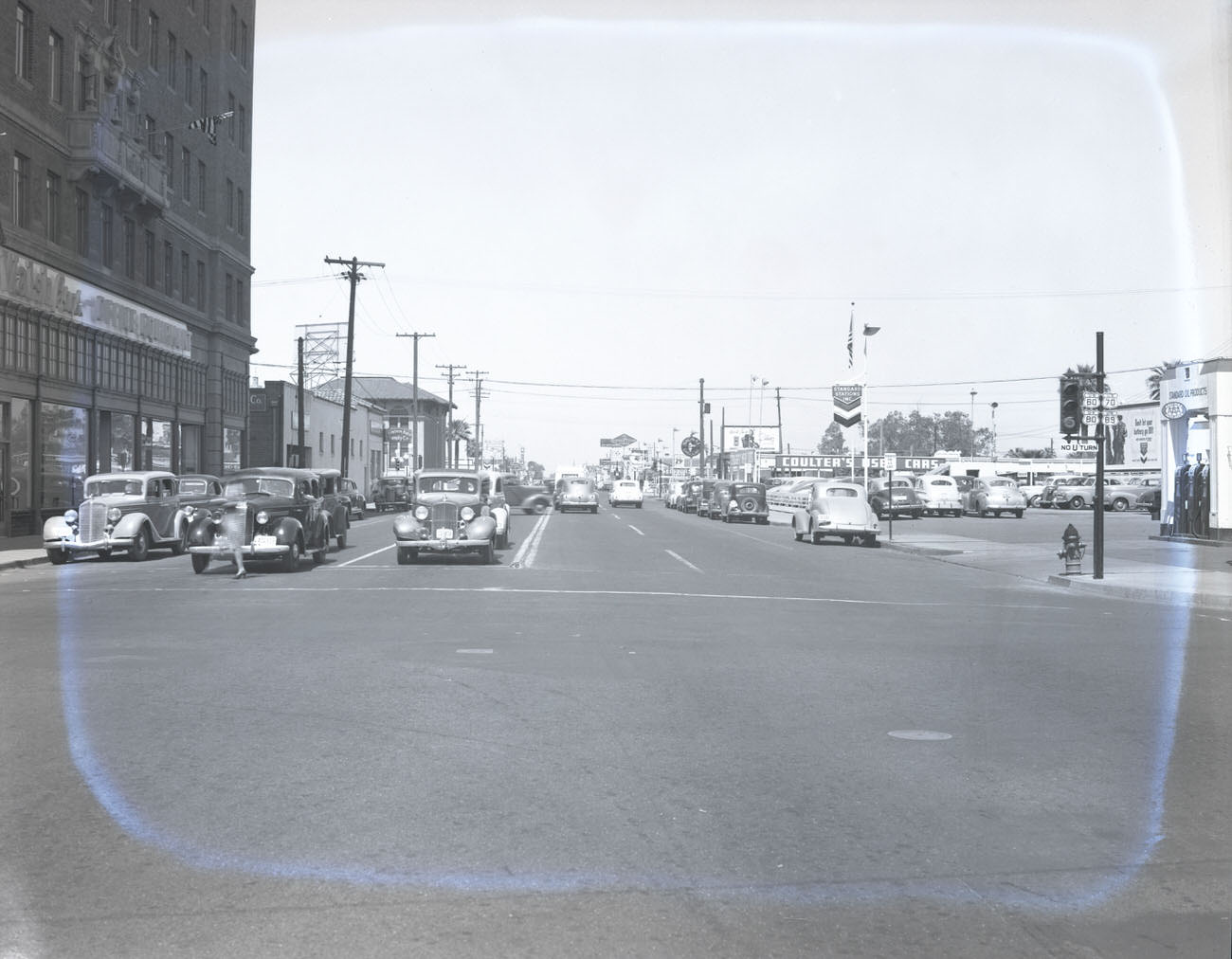
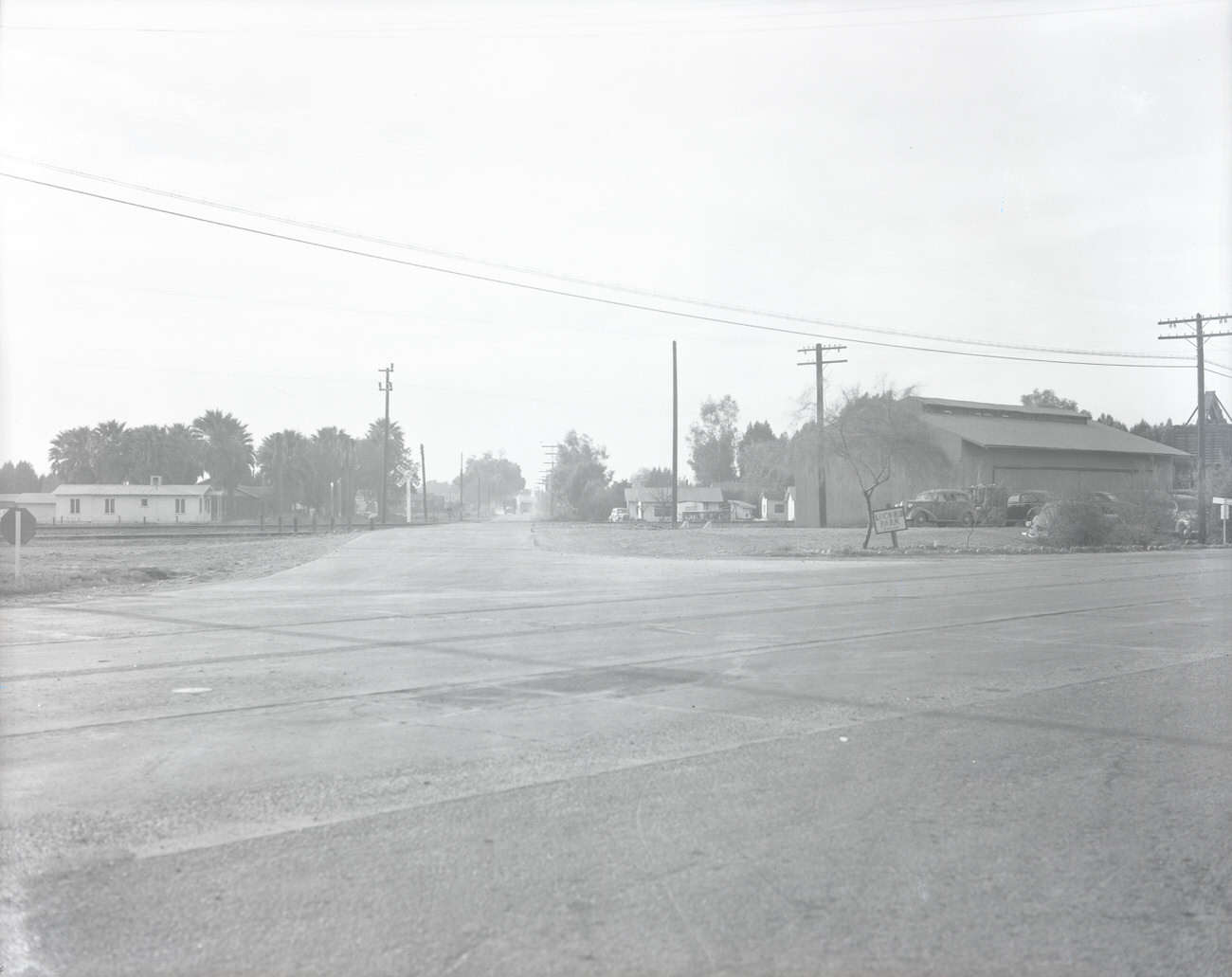
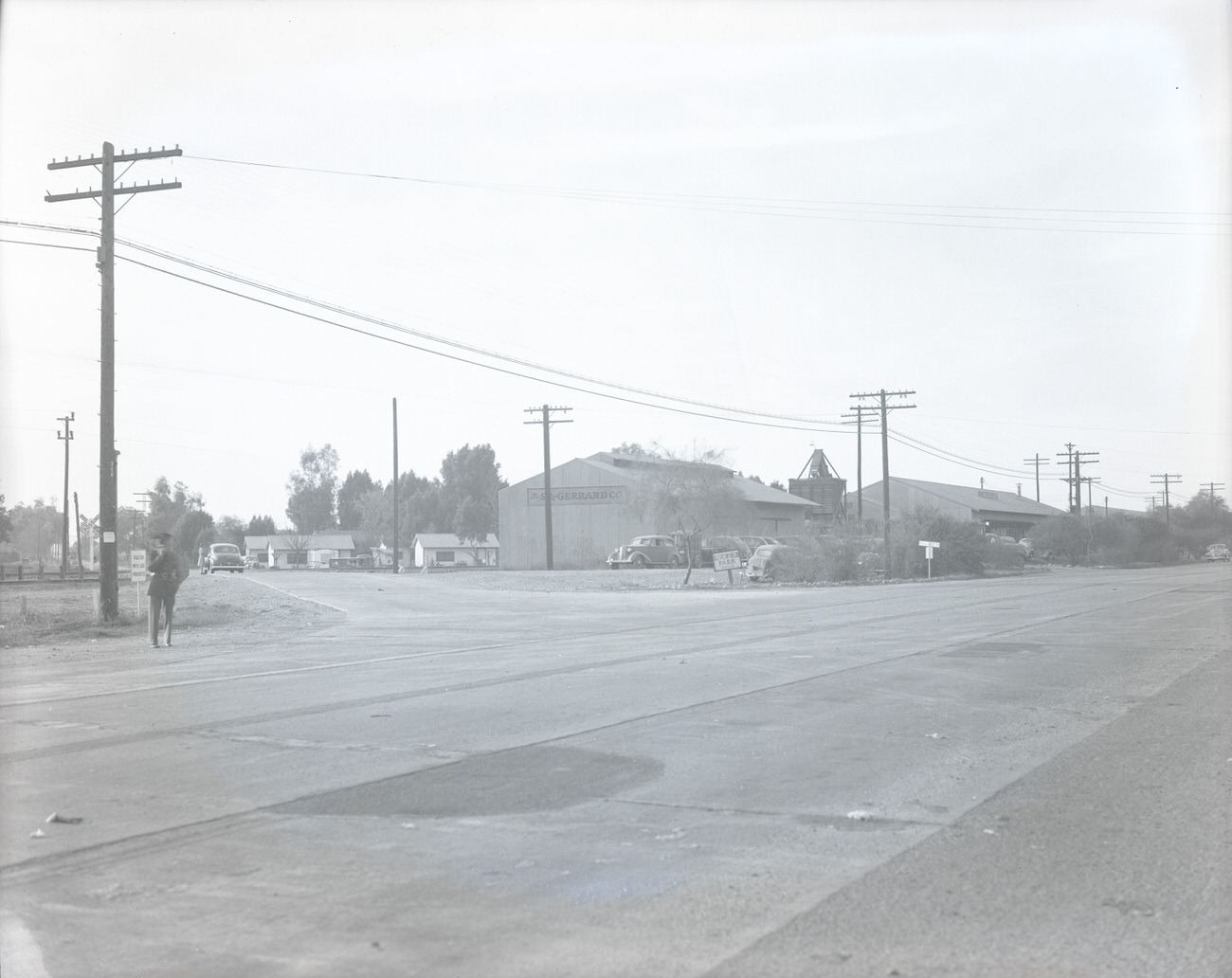
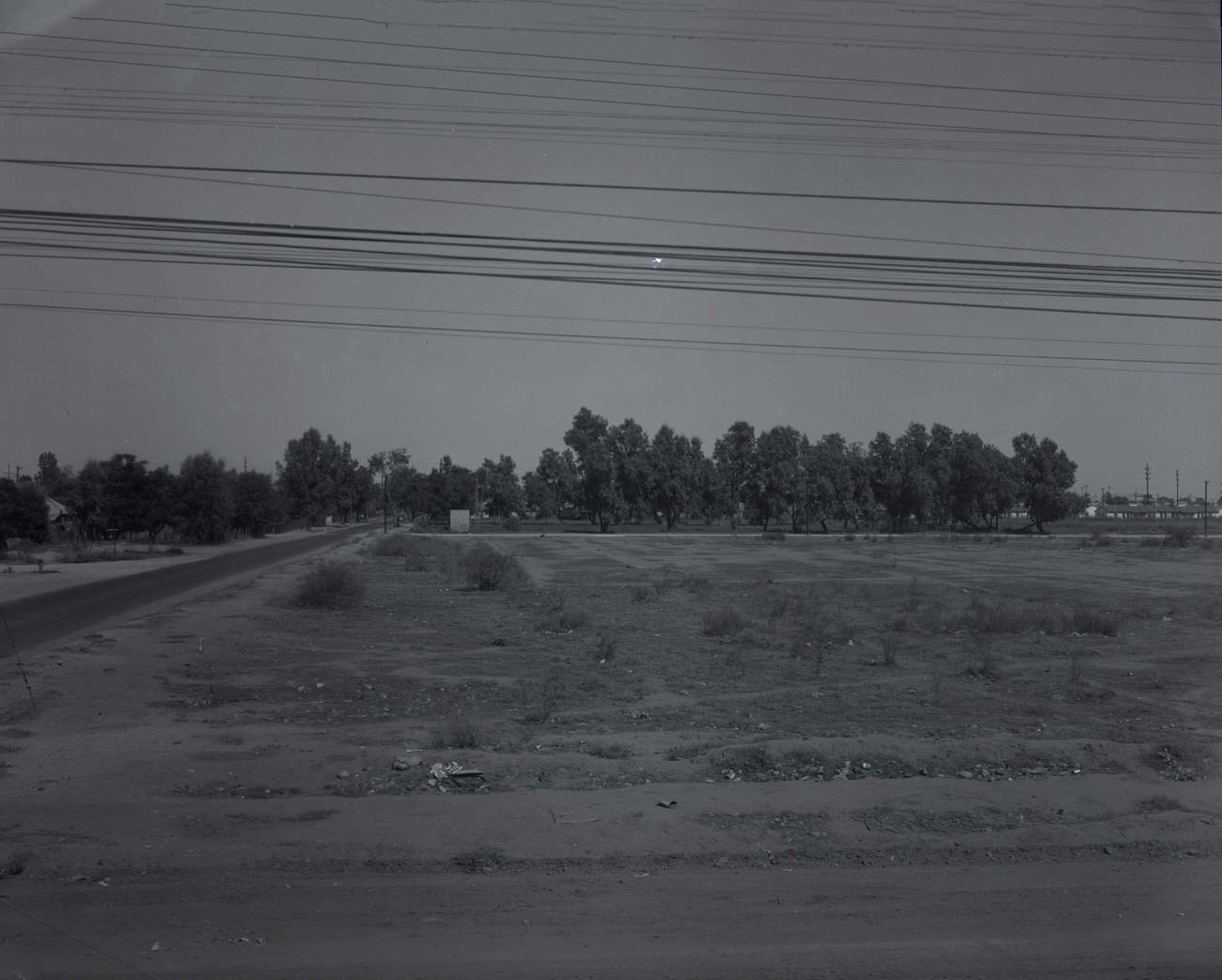
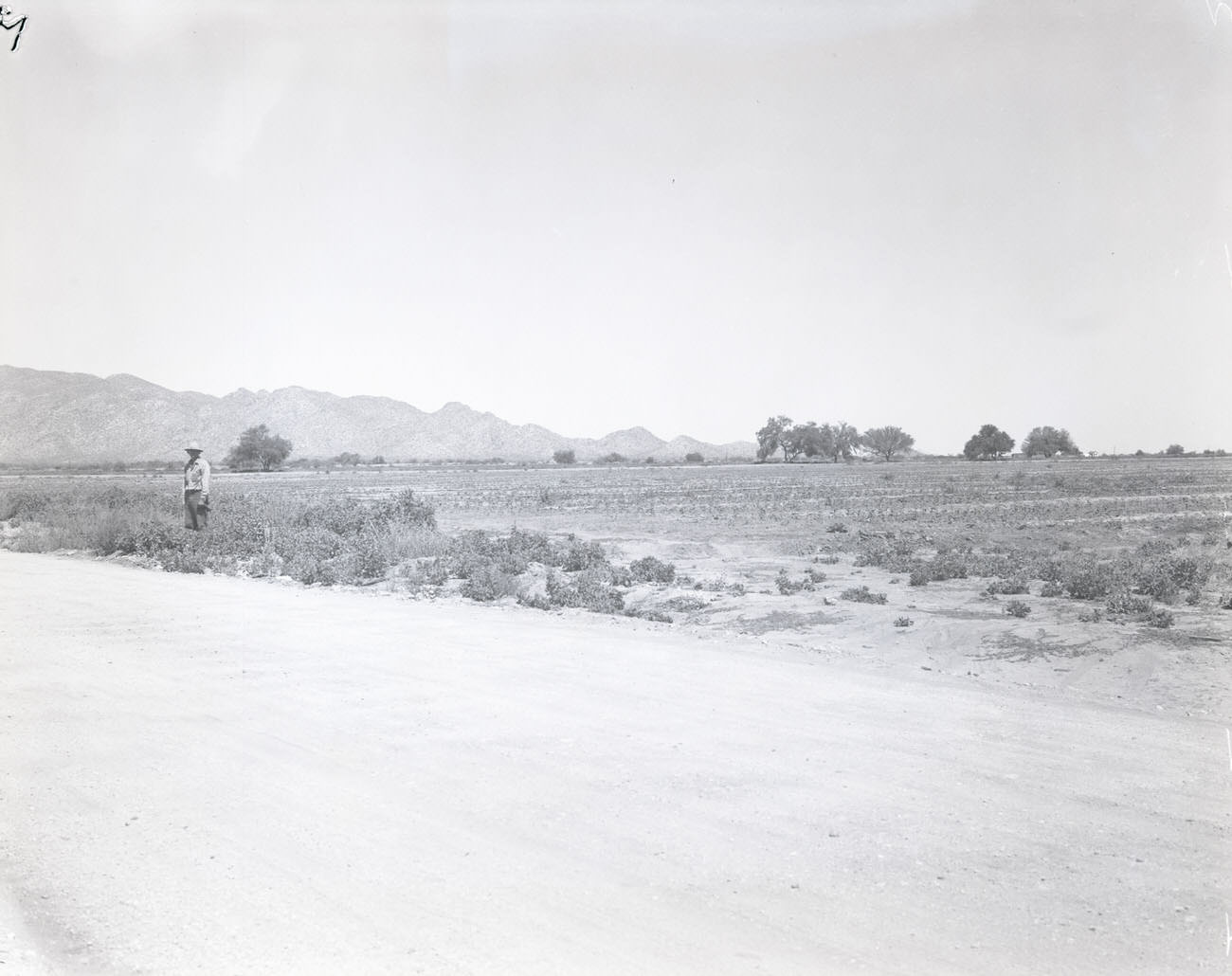
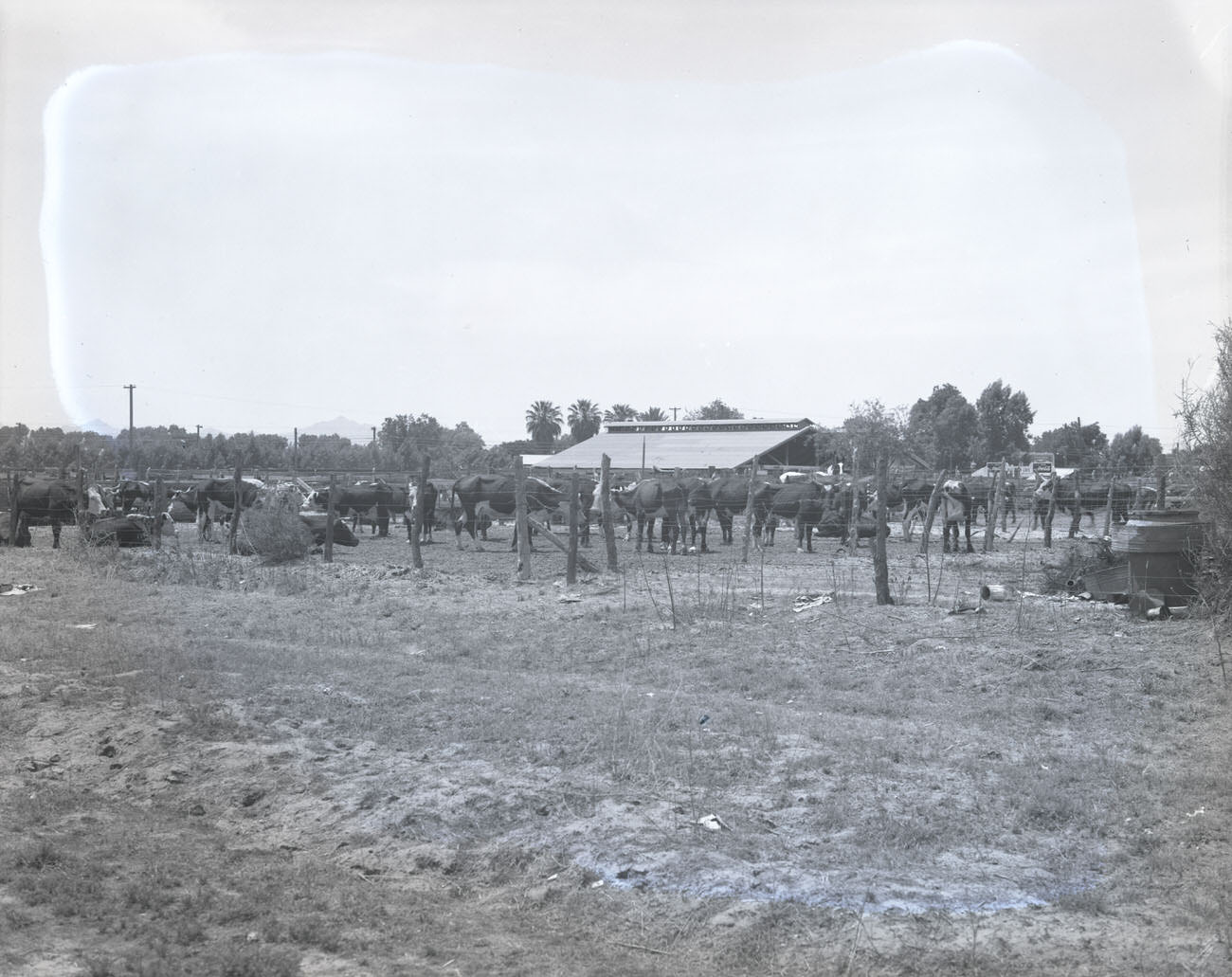
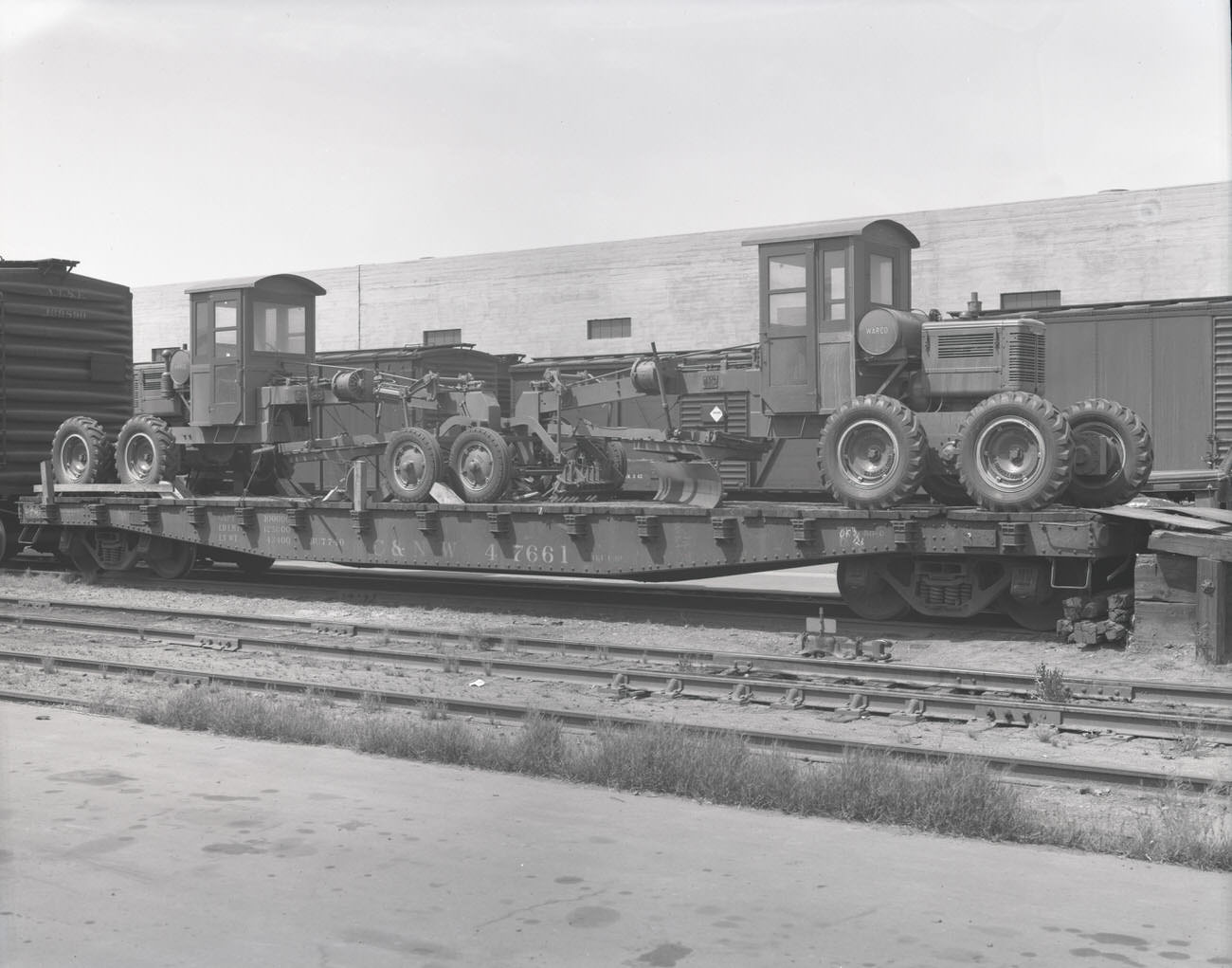
Beyond the city center, the desert roads stretched wide and open. Phoenix’s surrounding landscape in 1942 was largely undeveloped, with cattle stockyards operating as a key part of the local agricultural economy. Mining equipment moved through the city on railroad cars, connecting Phoenix to Arizona’s broader industrial activity.
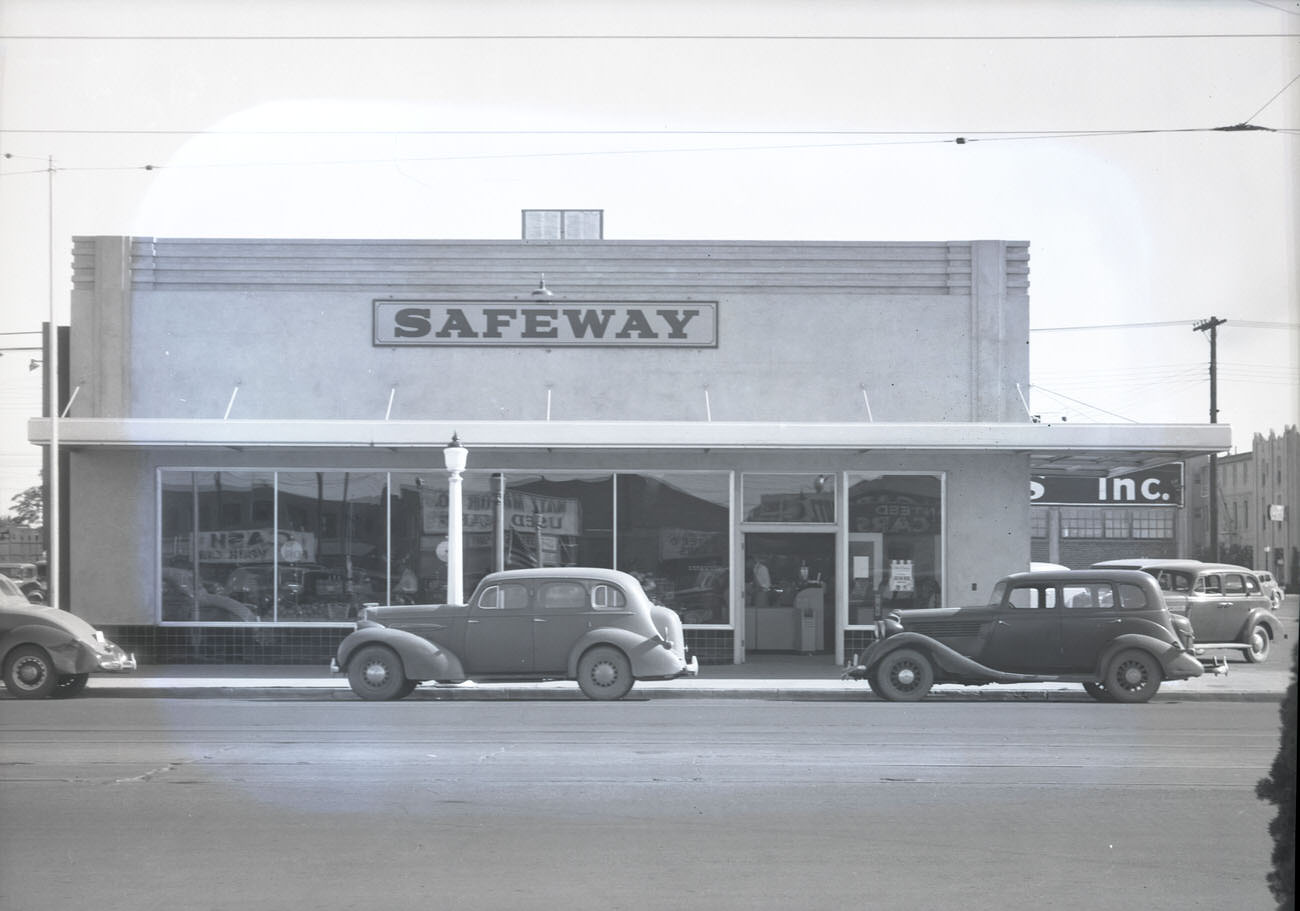
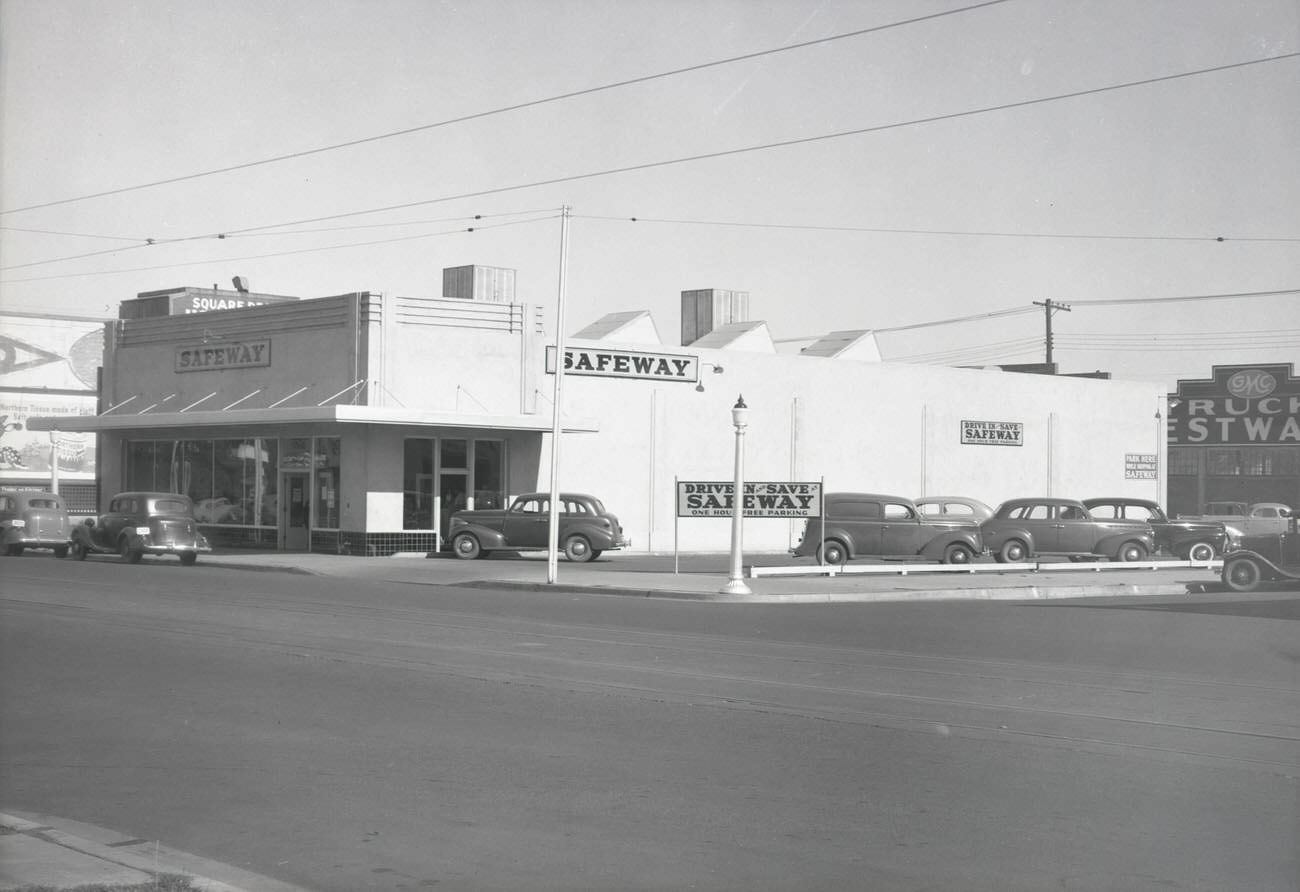
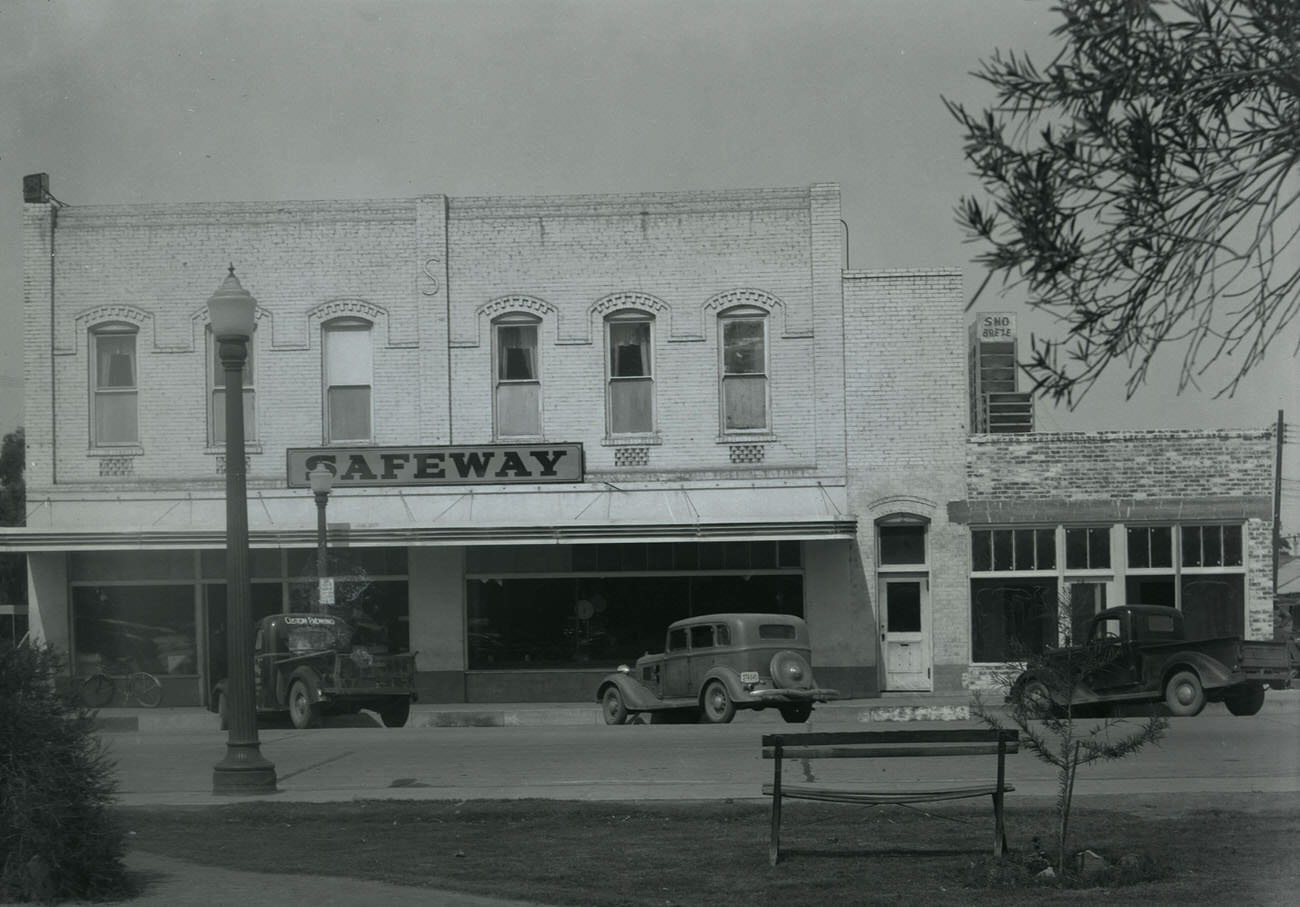
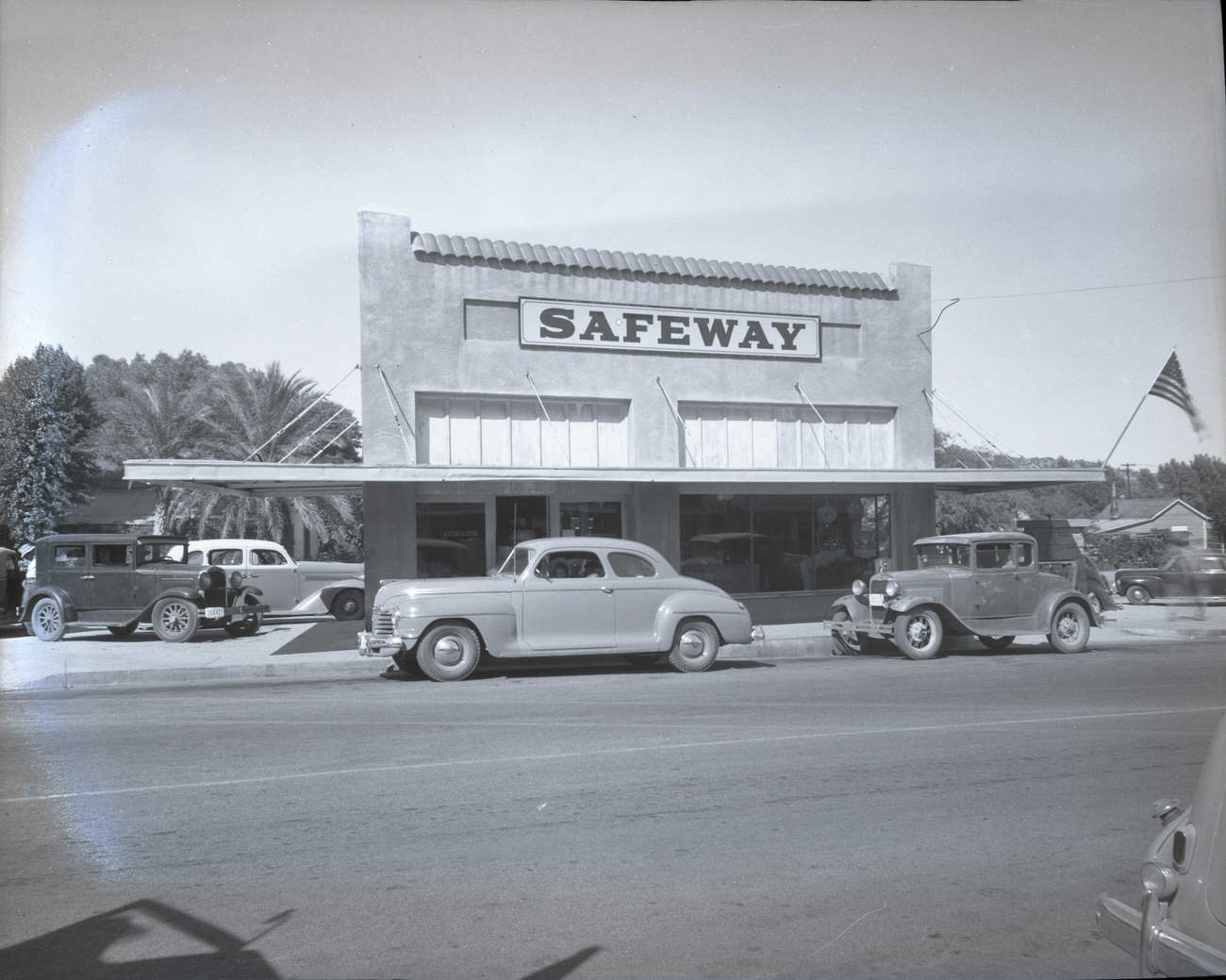
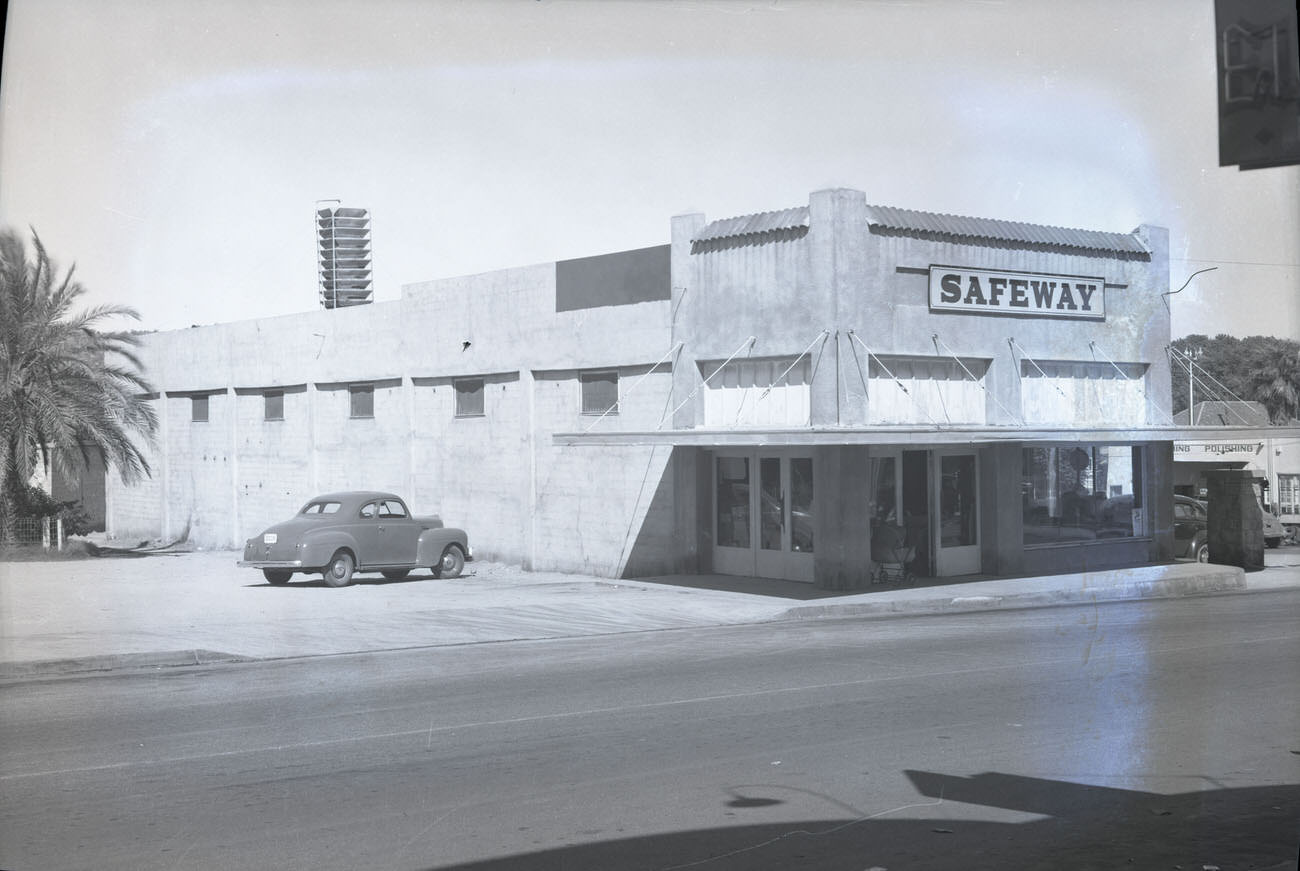
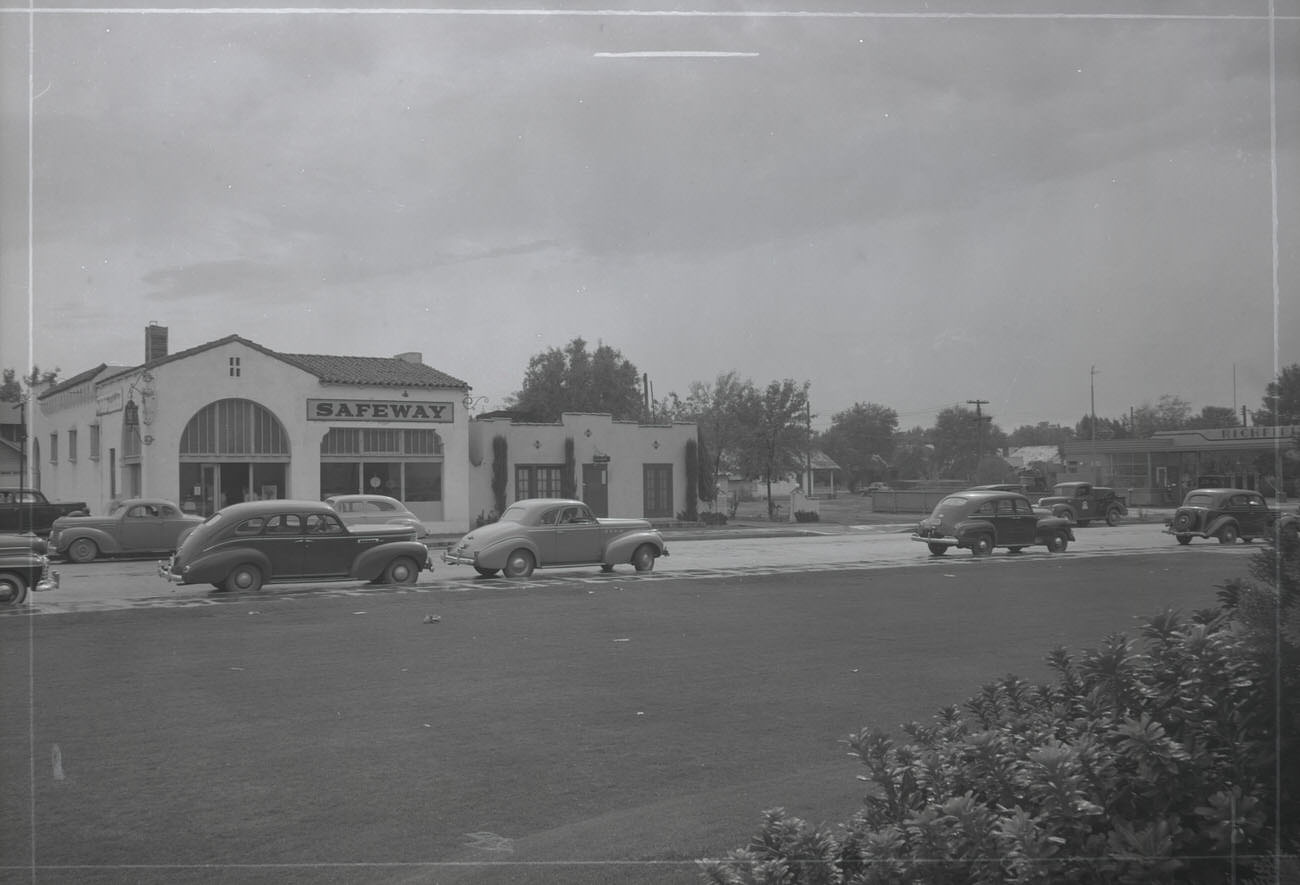
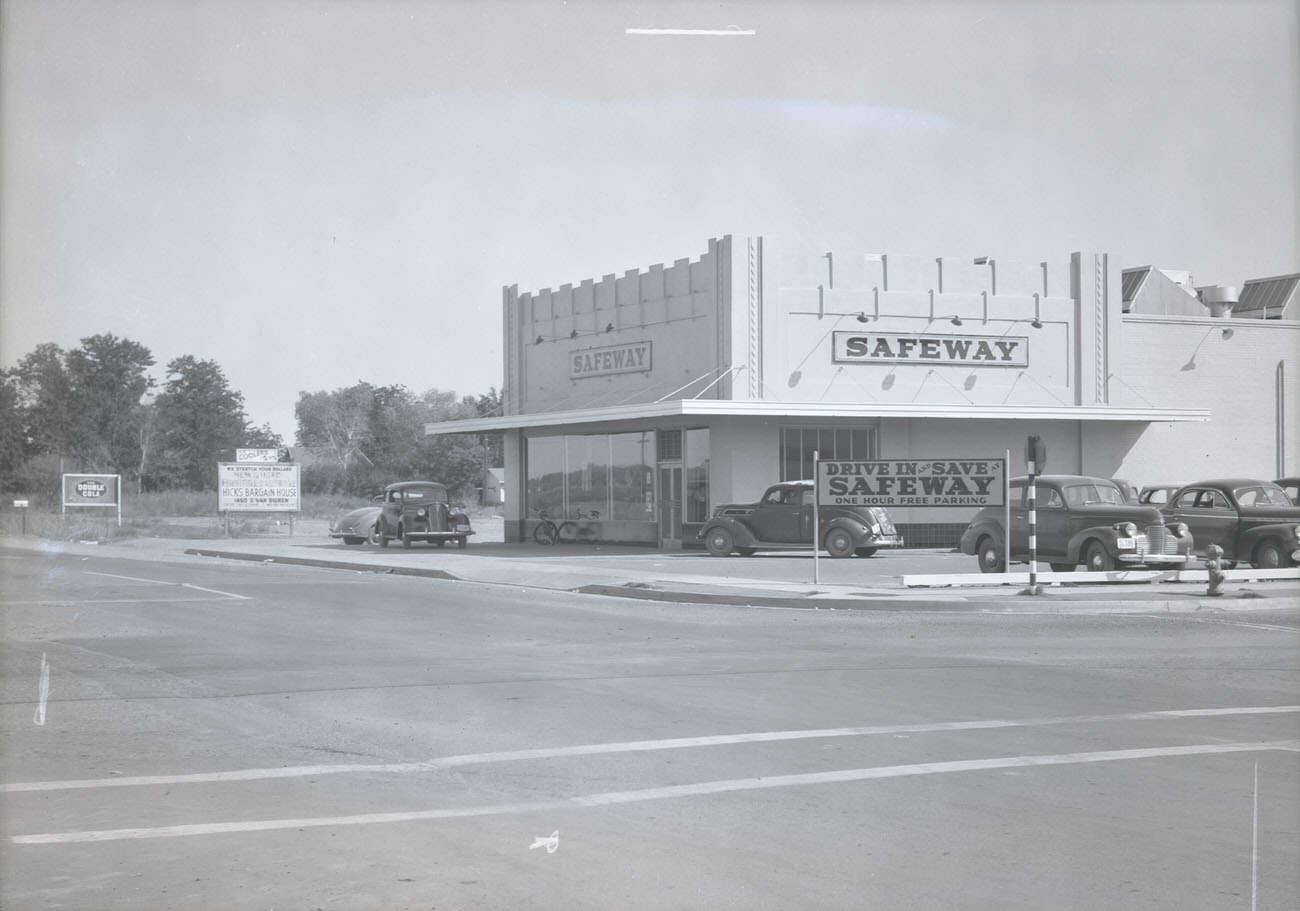
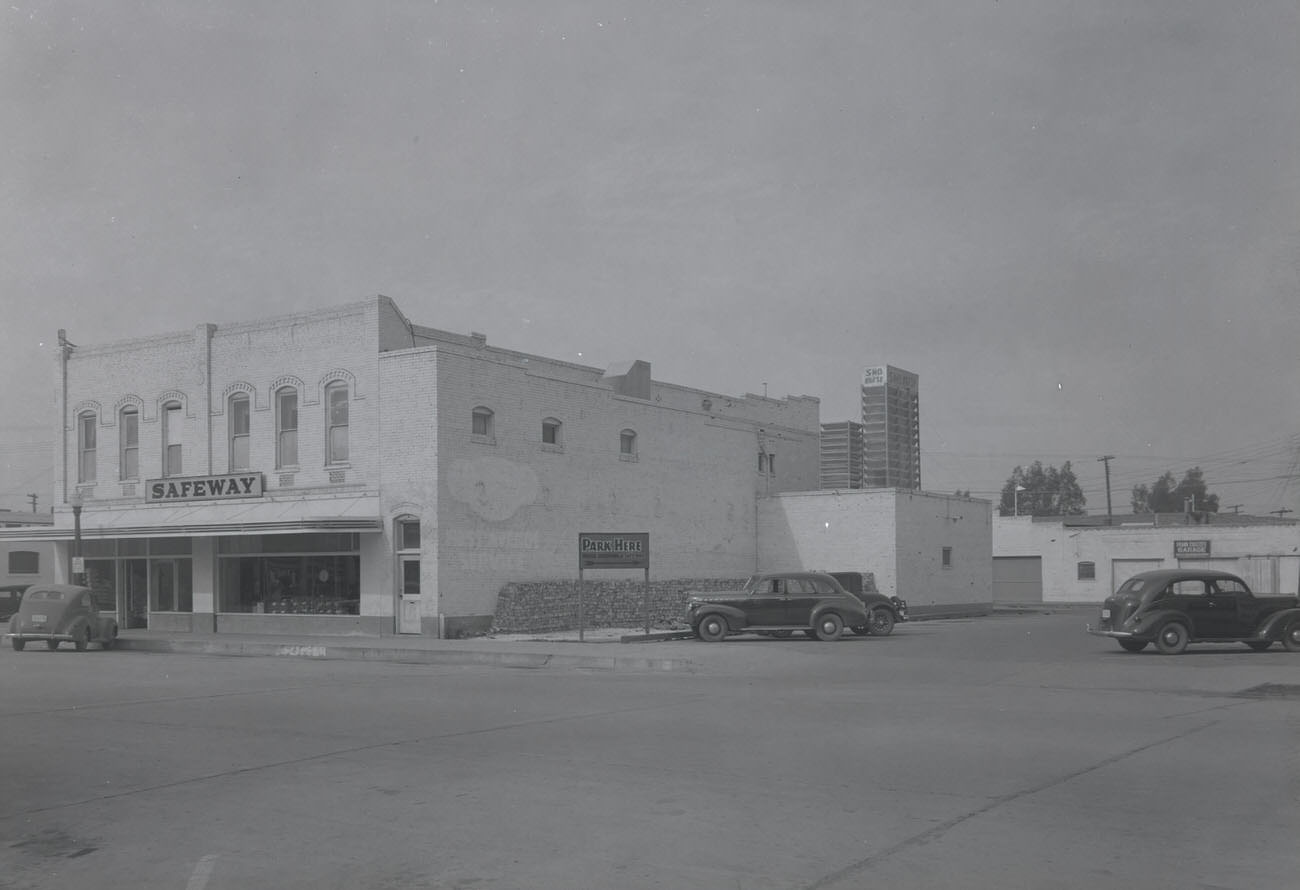
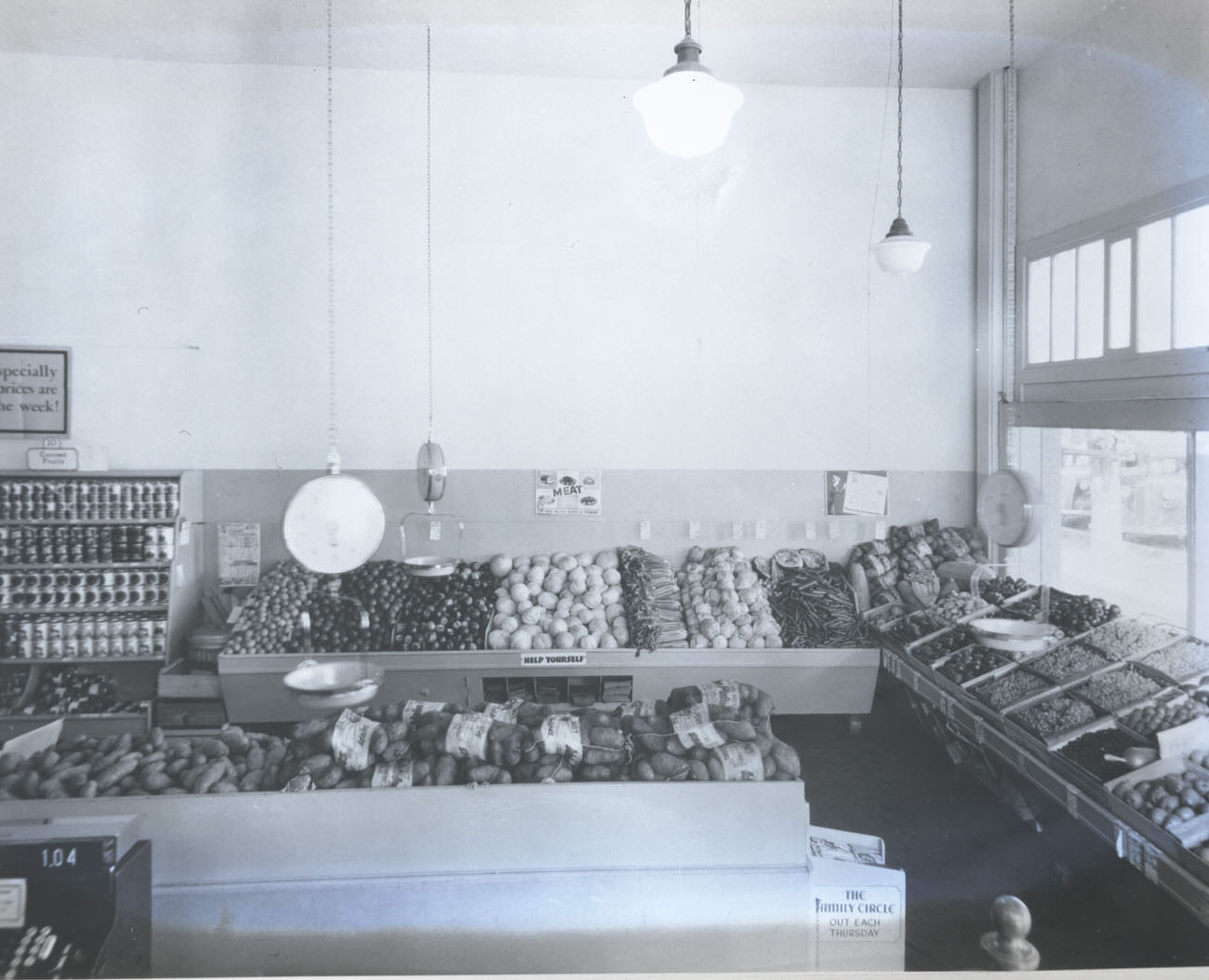
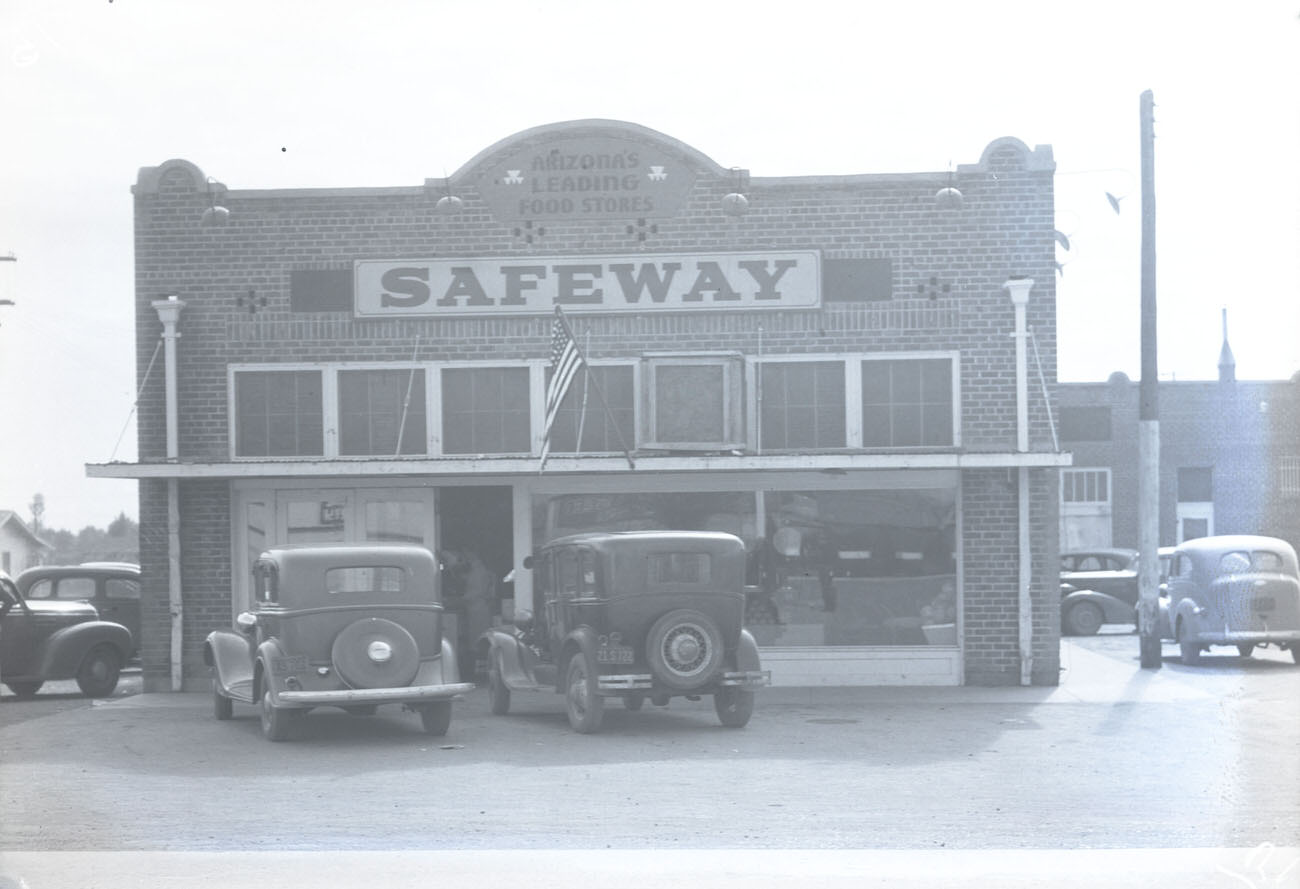
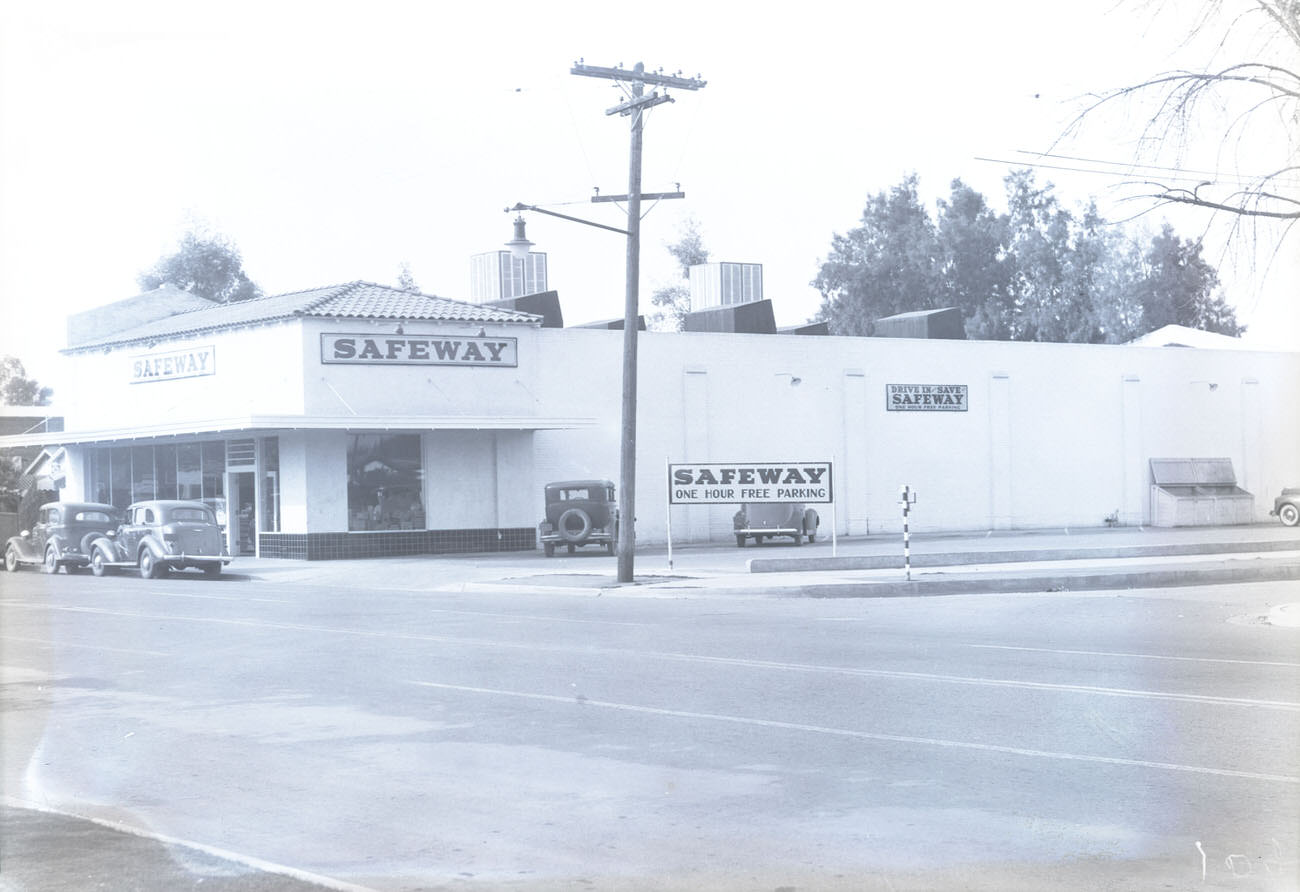
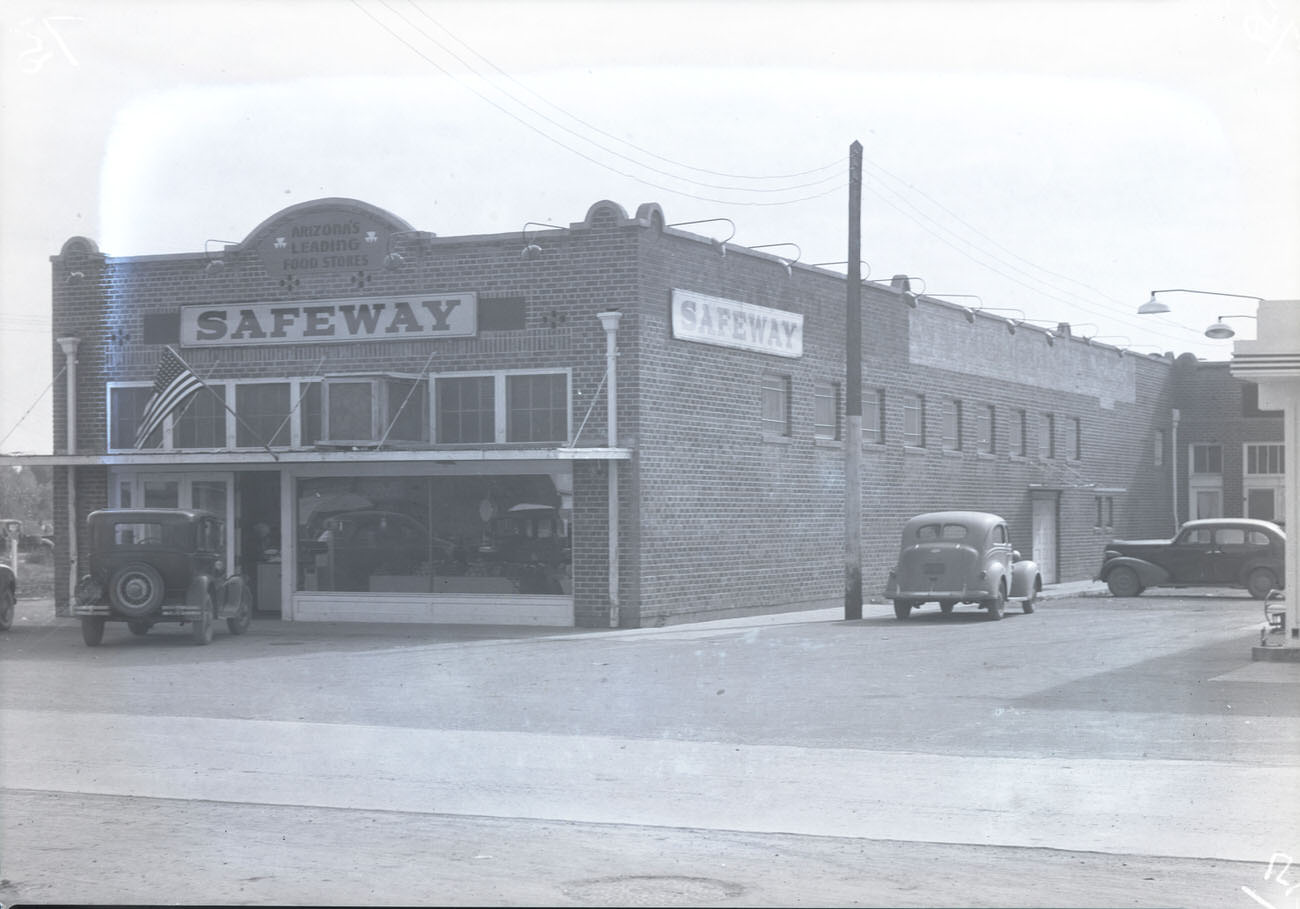
Safeway was a dominant retail presence in Phoenix by 1942. Multiple store exteriors and interiors were photographed that year, showing the chain’s clean, modern storefronts and organized produce sections. These images give a detailed look at how grocery retail operated in a mid-sized American city during wartime rationing.

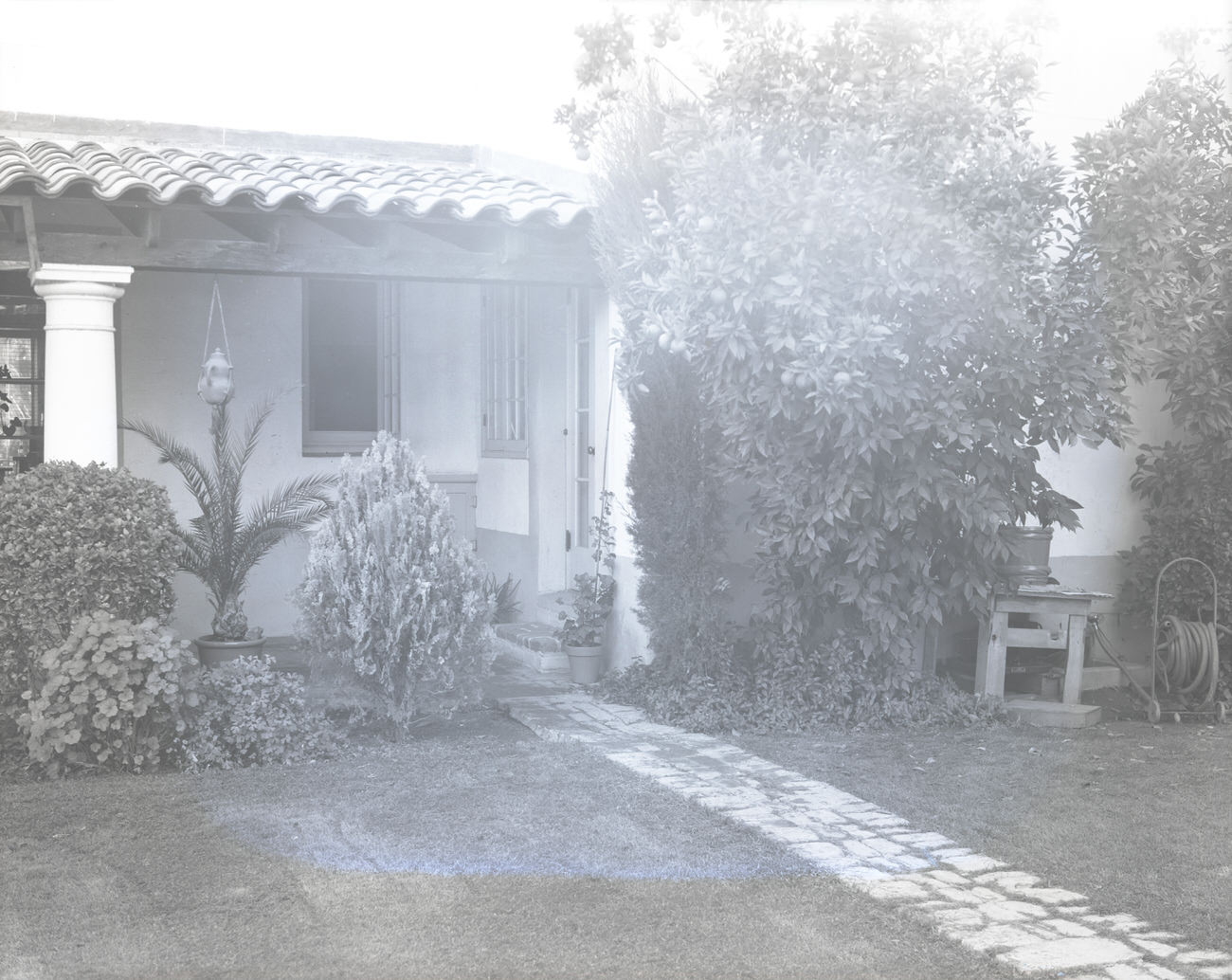
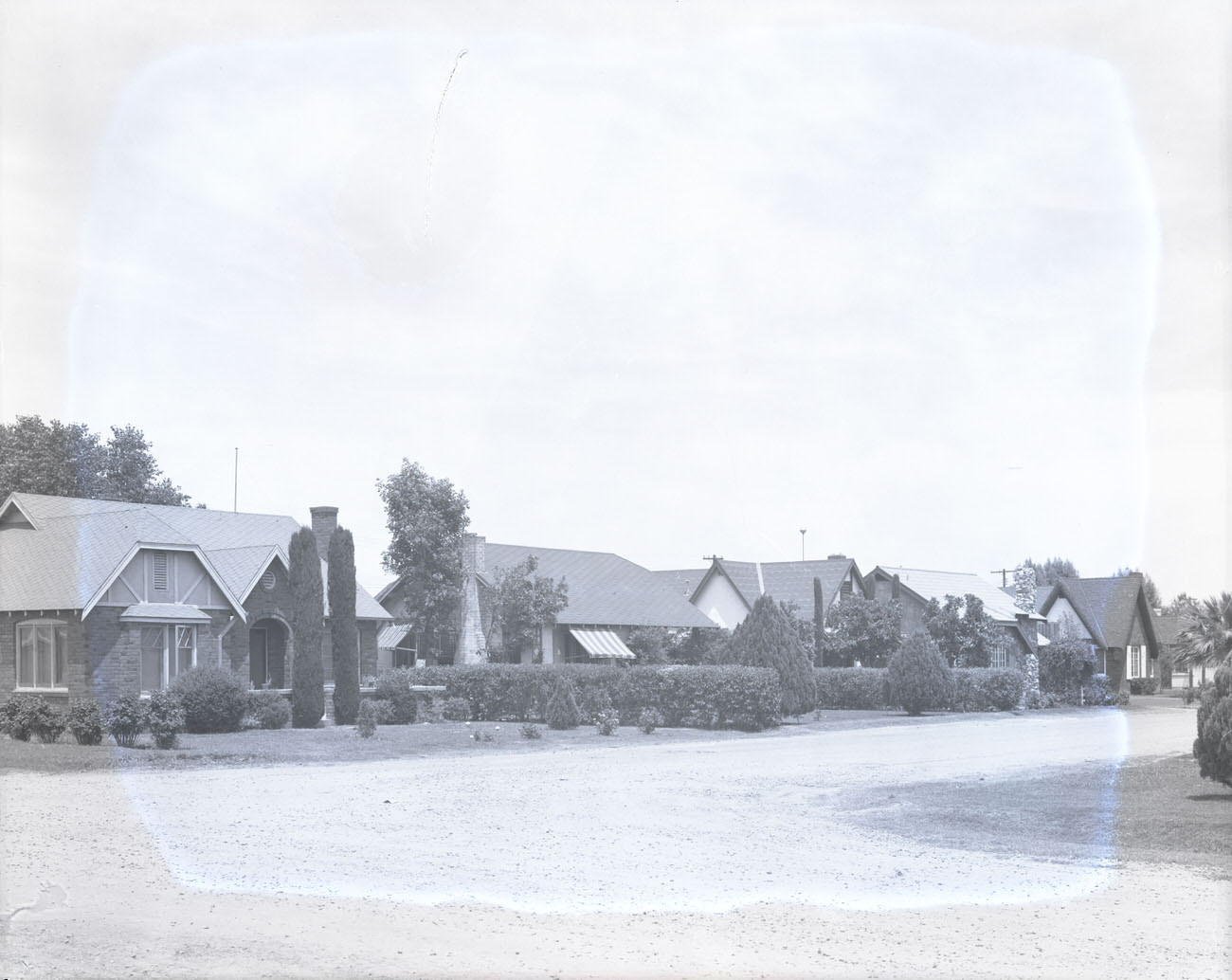
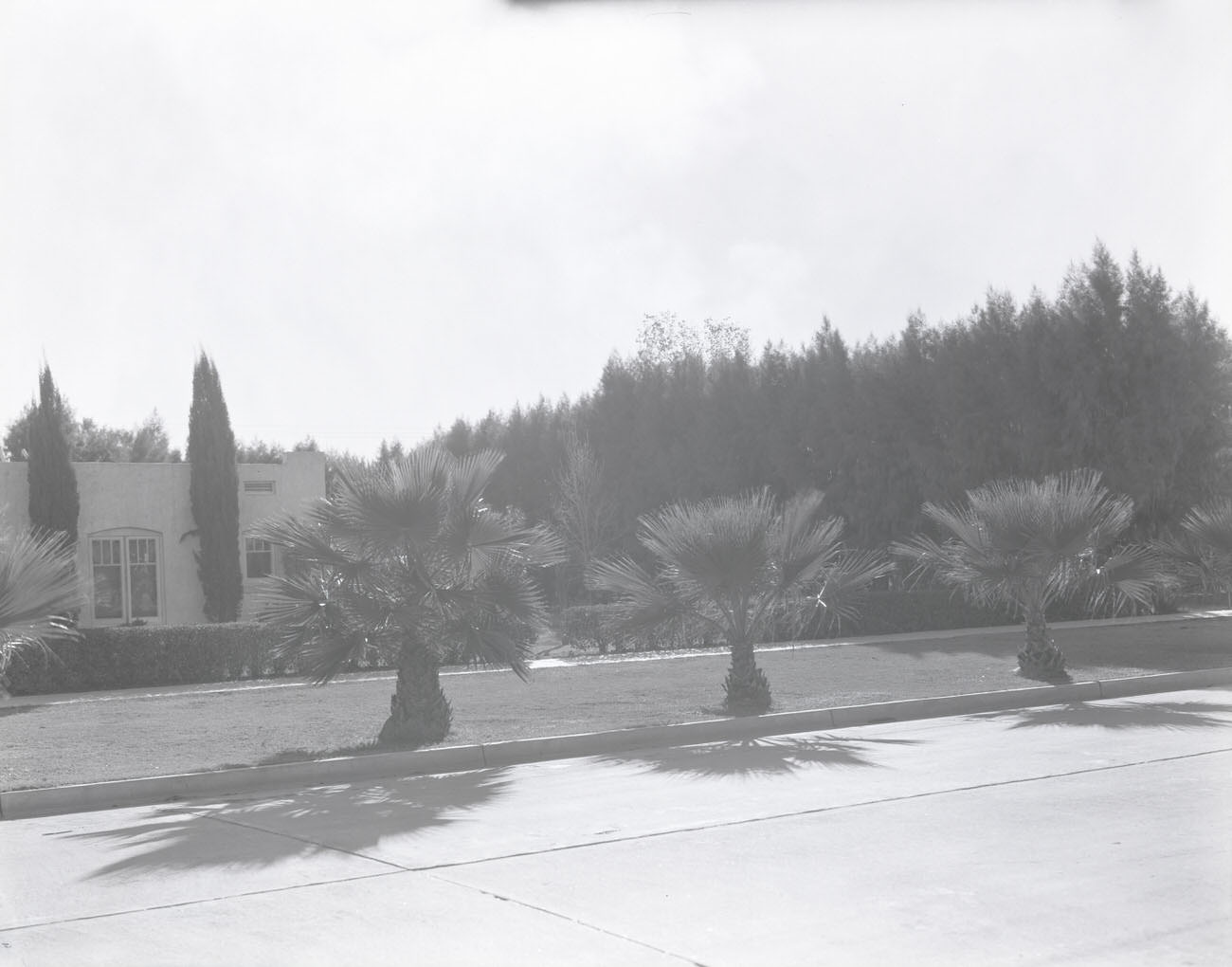
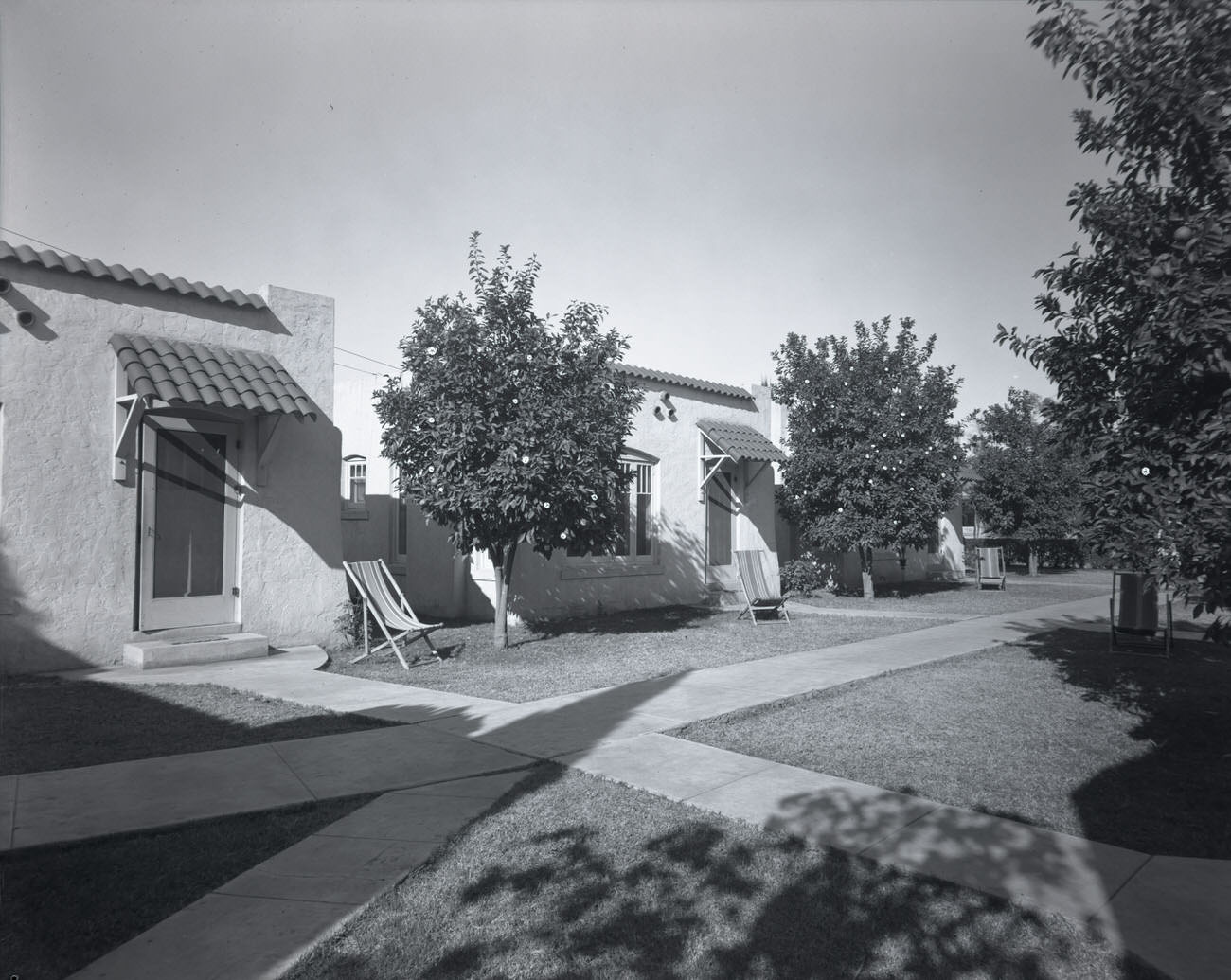
Residential housing in 1942 Phoenix ranged from bungalow courts — clusters of small rental units popular in the Southwest — to private homes like the Andrew C. James residence. These structures reflect the modest, practical architecture that defined working-class and middle-class Phoenix neighborhoods during the era.
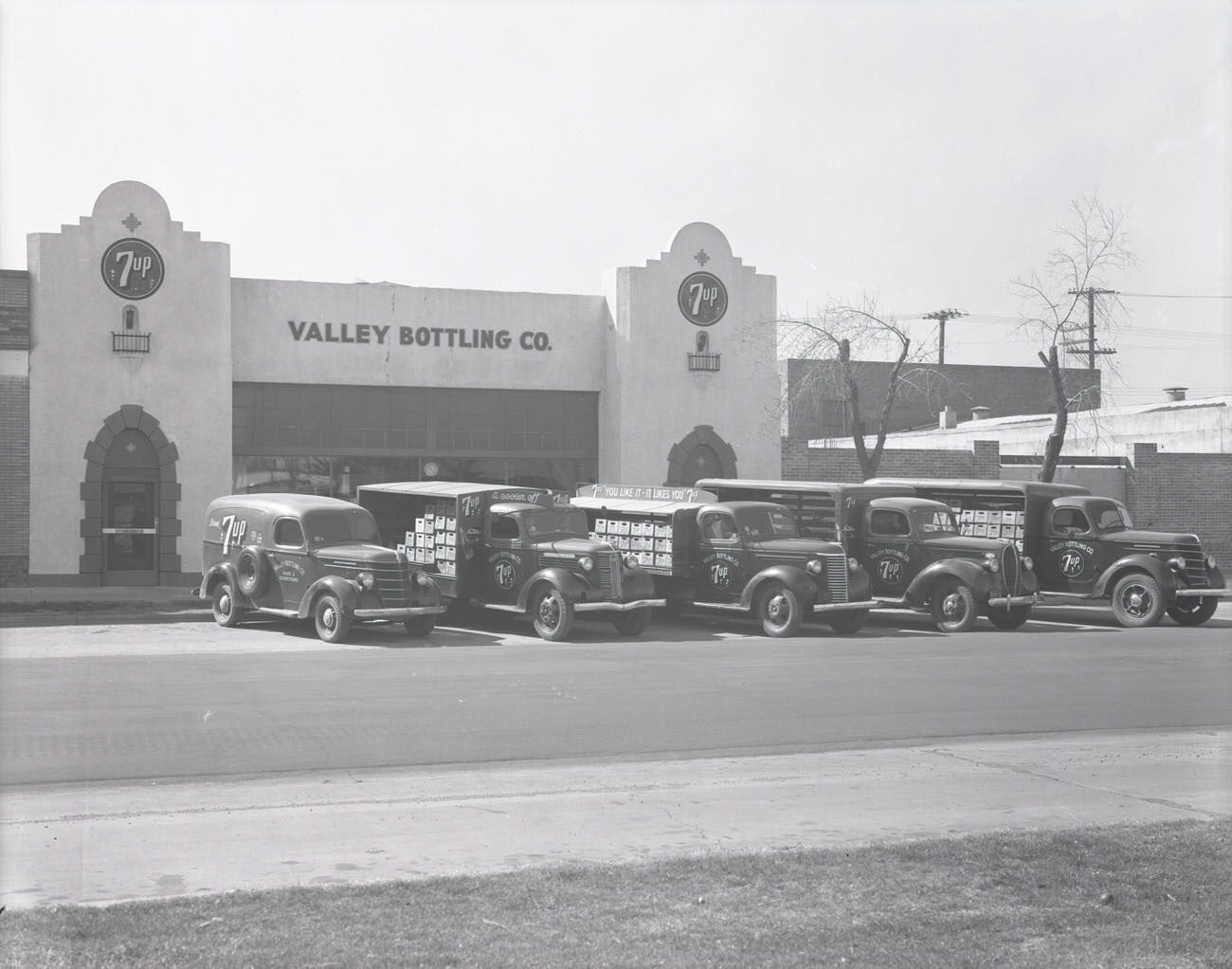
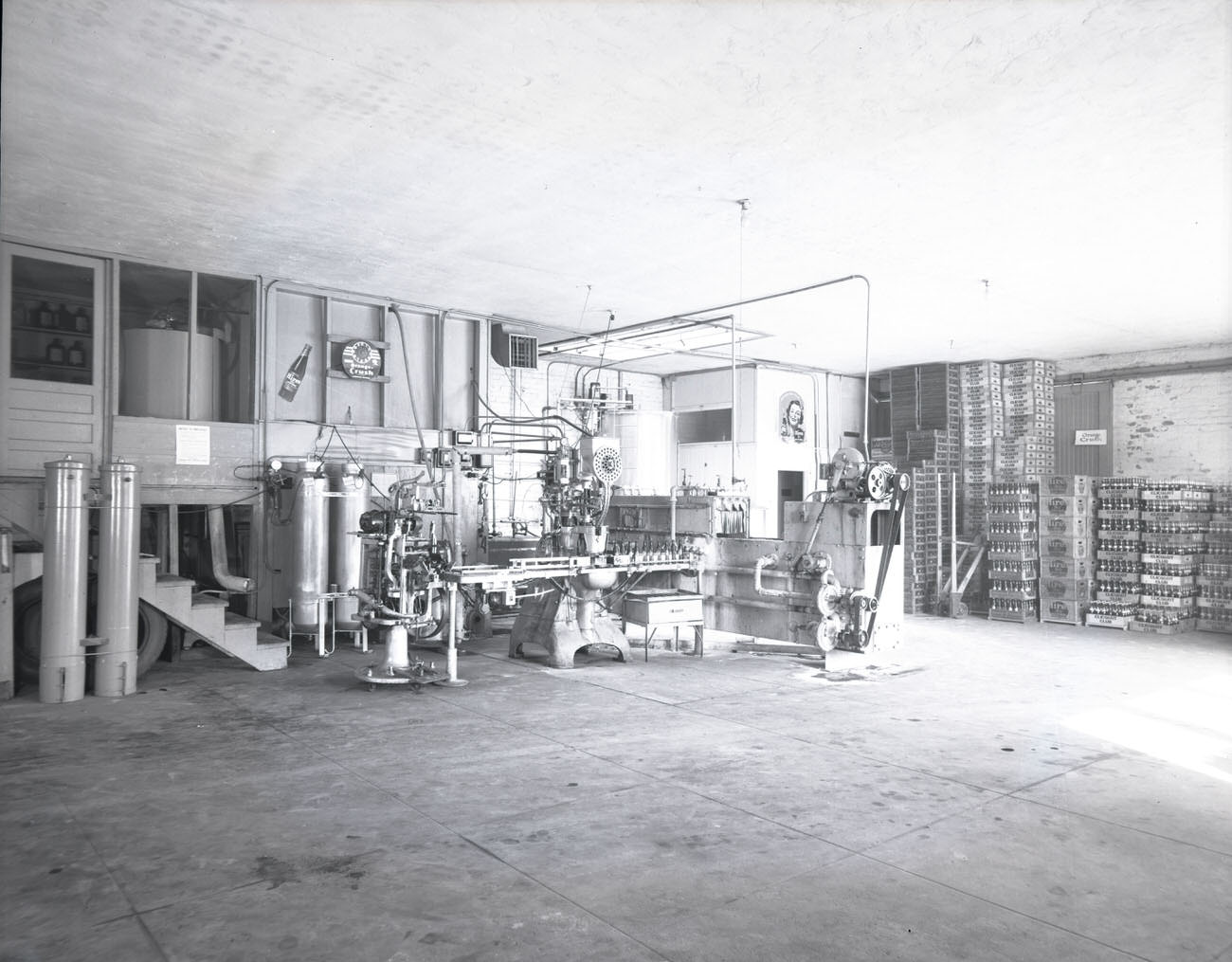
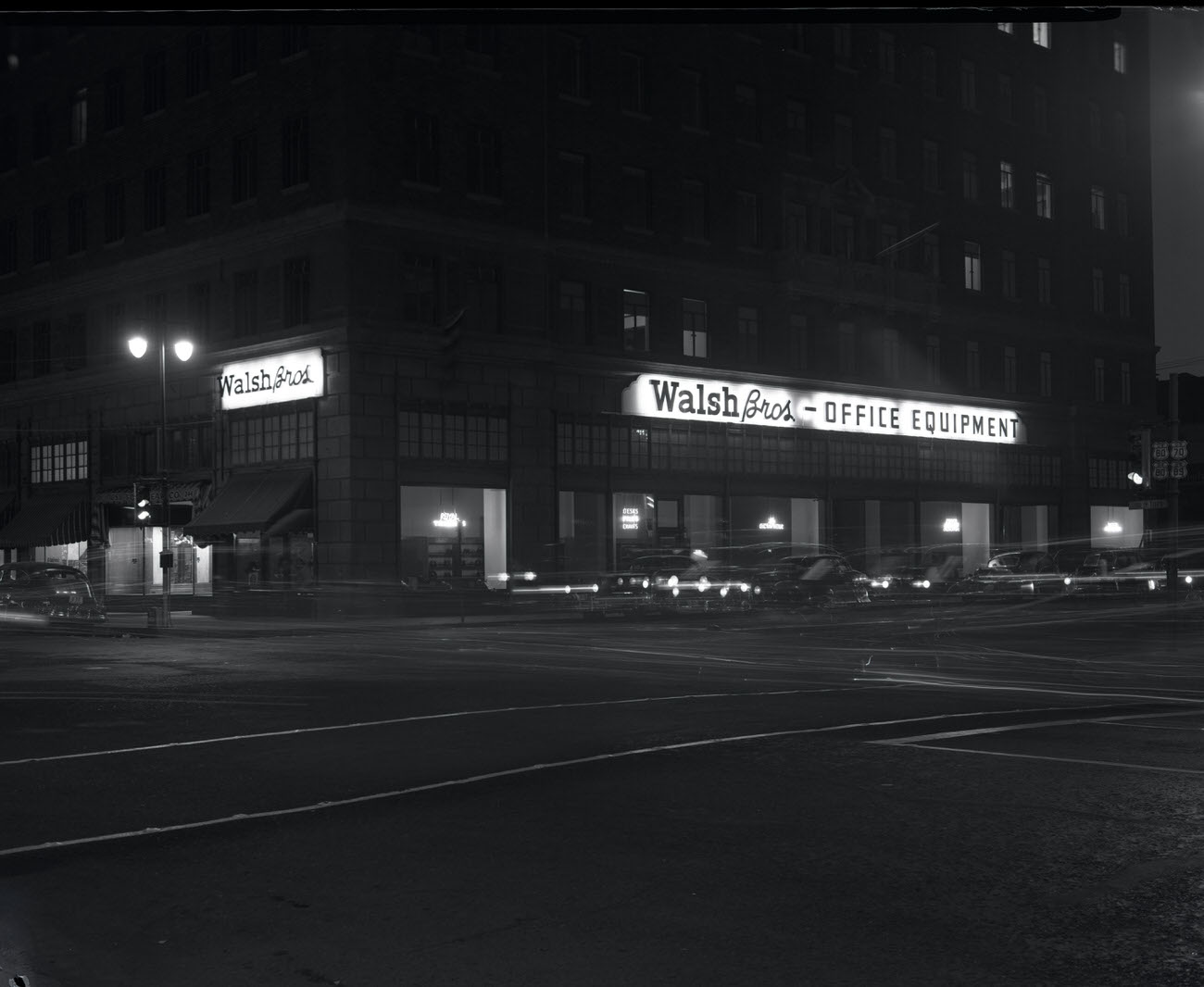
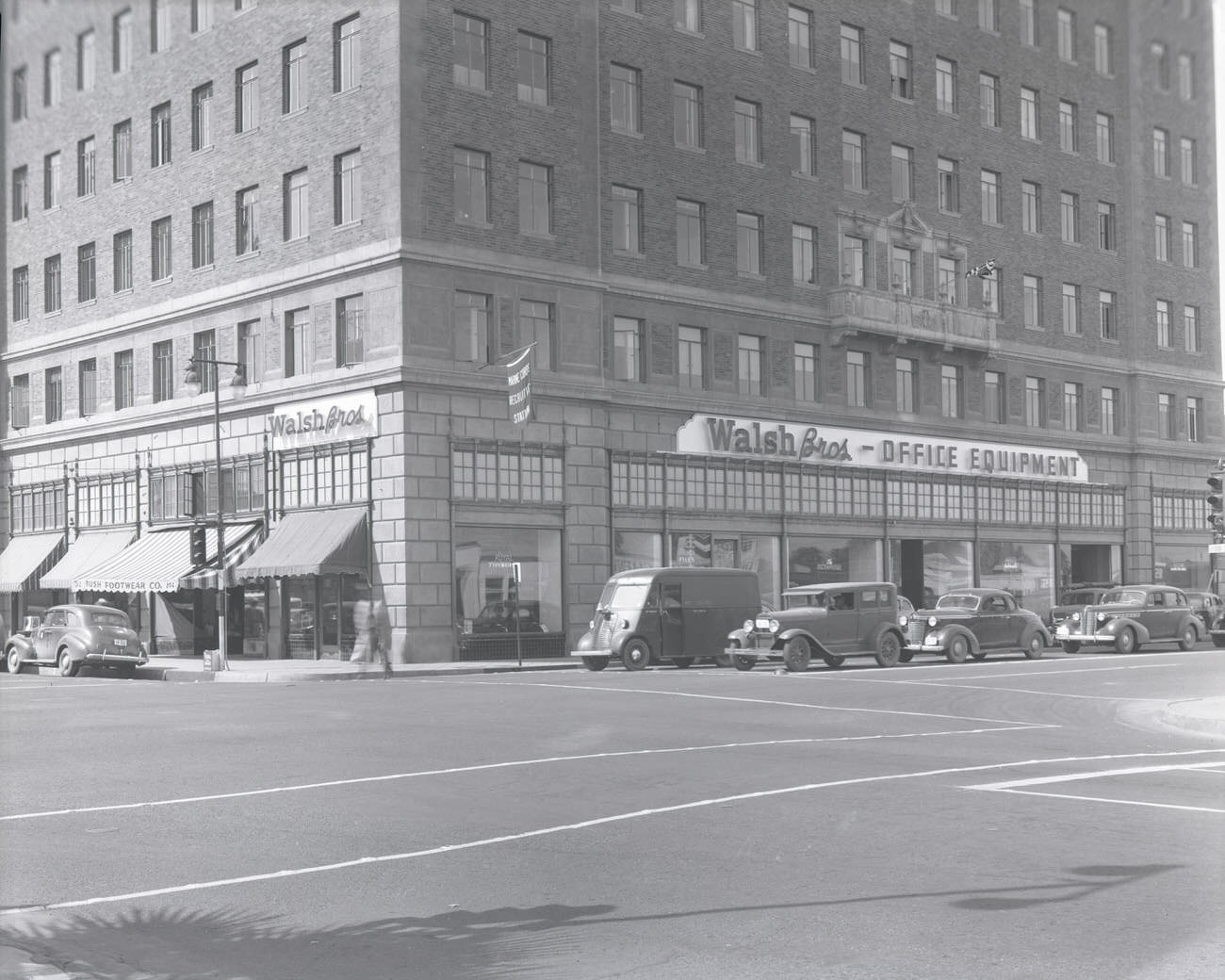
Service stations and local businesses formed the backbone of Phoenix’s commercial landscape. Paul Bennett’s Super Service Station was a recognizable fixture, while the Central Beverage Co. operated both a notable exterior presence and a well-stocked interior. Walsh Bros. Office Equipment had a storefront and a lit nighttime sign, marking it as an established downtown business.
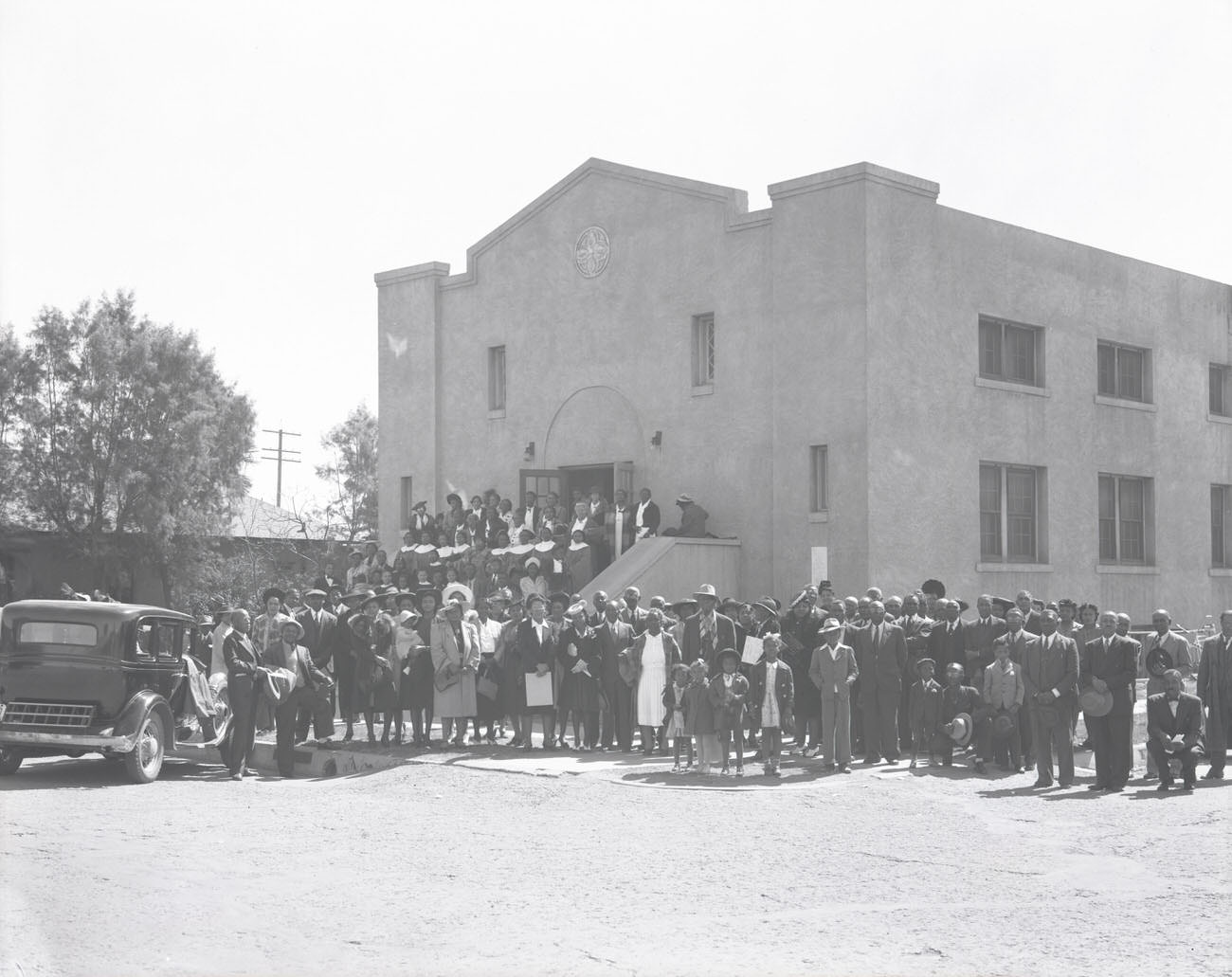
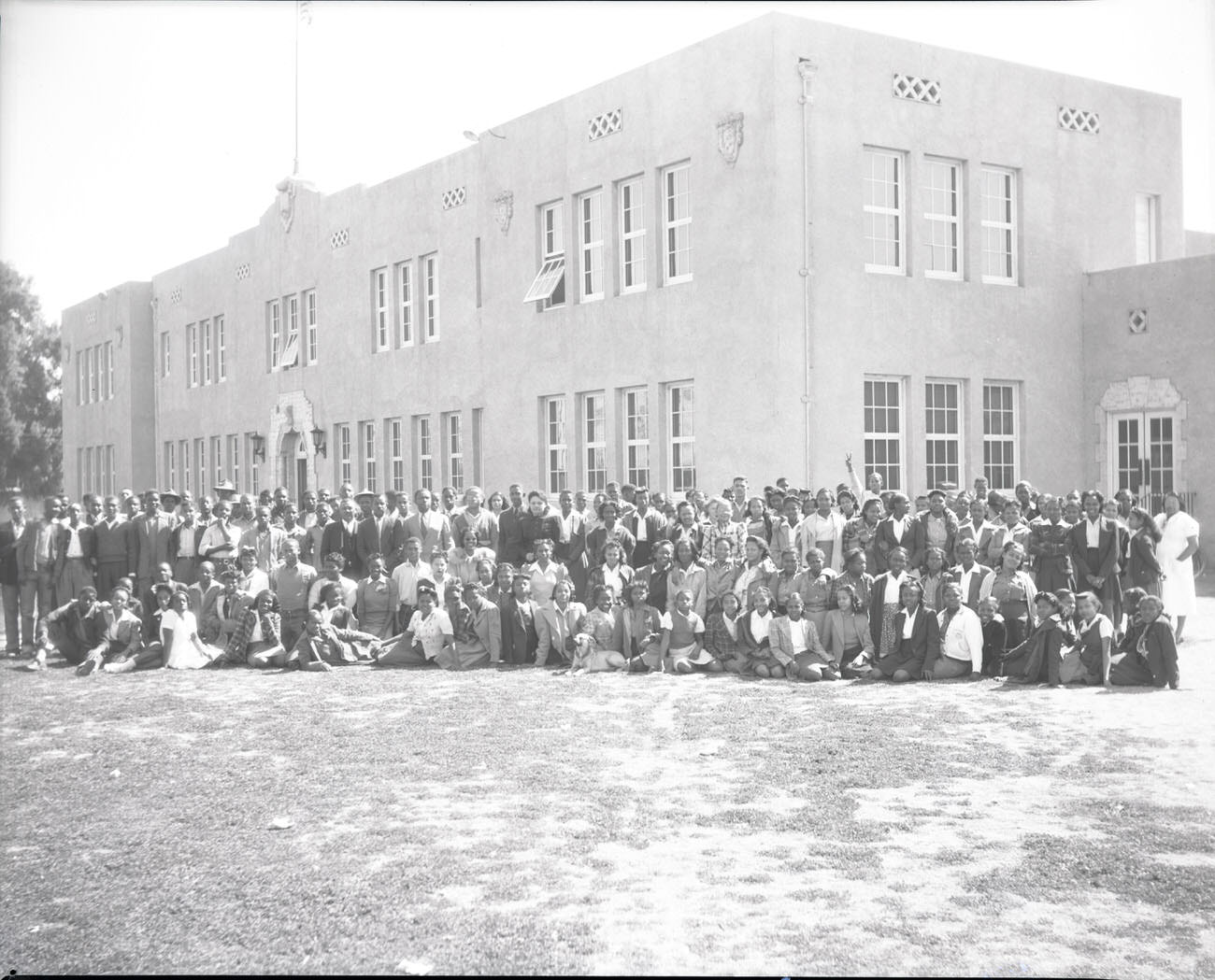
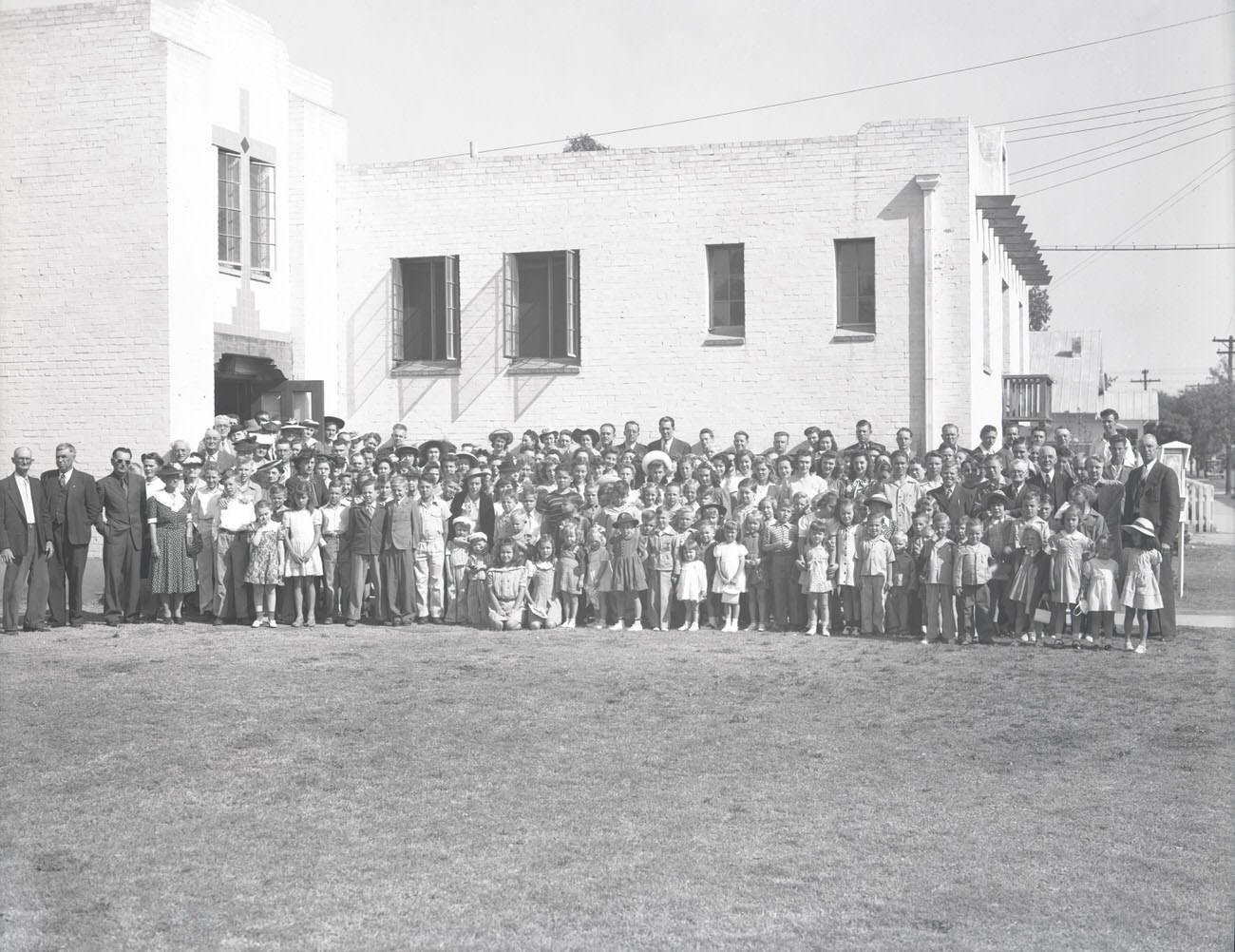
Black churches and schools in Phoenix operated in their own designated spaces under segregation. The First Colored Baptist Church stood on the southeast corner of 5th and Jefferson Streets. Phoenix Union Colored High School — a separate institution from the white high school — served Black students across the city. Photos of parishioners outside the church and students and staff outside the school document the organized, self-sustaining community that existed within those enforced boundaries.
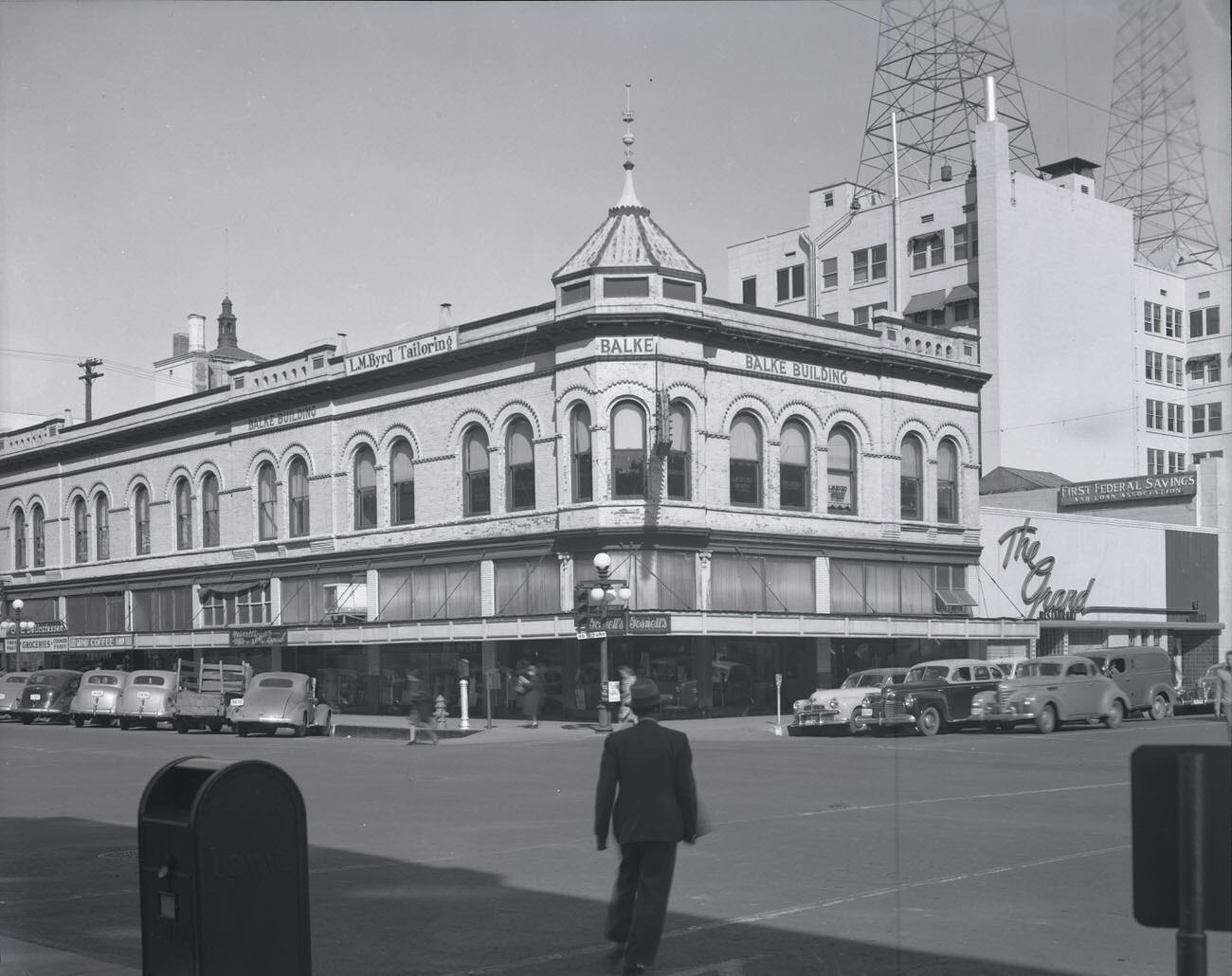
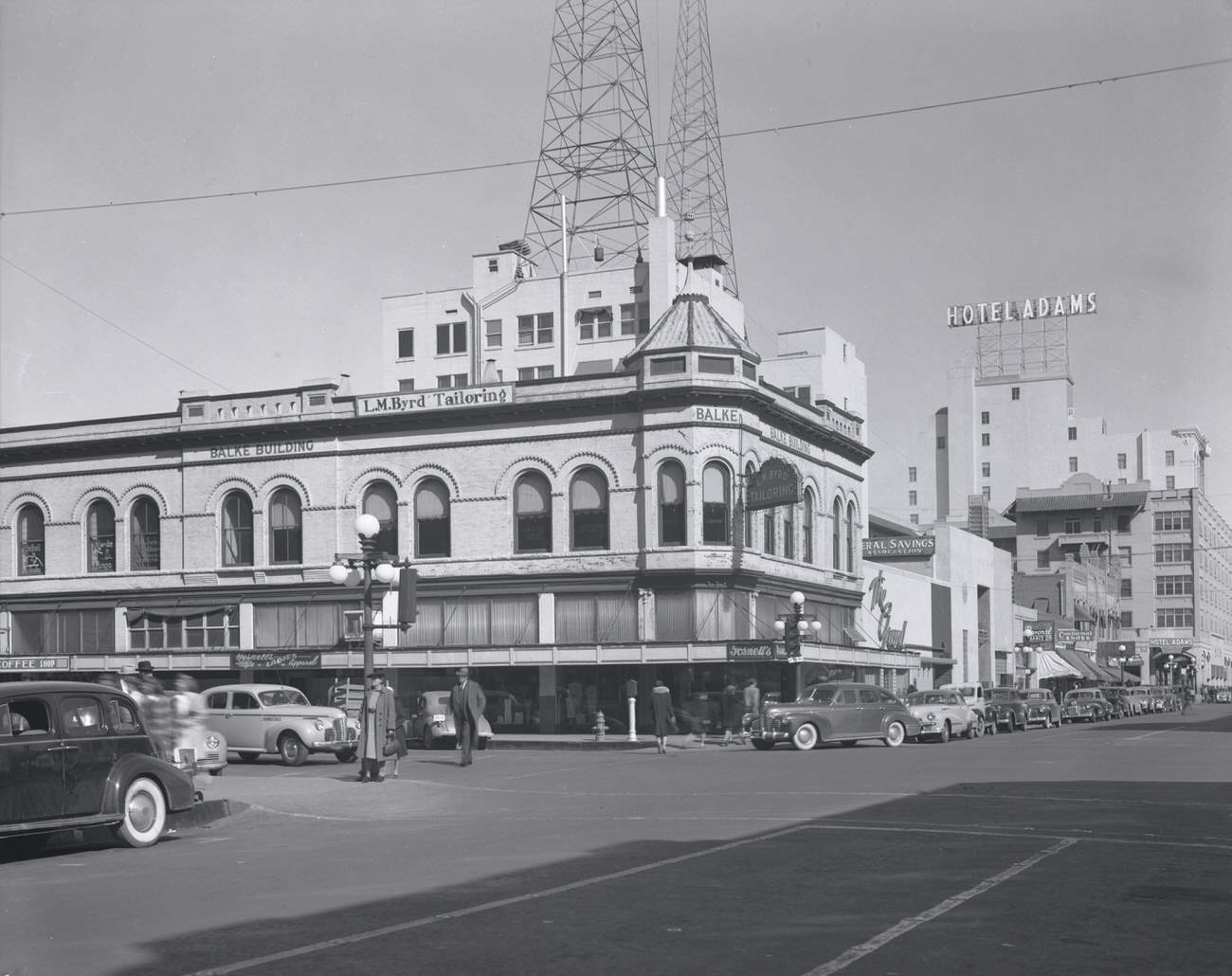
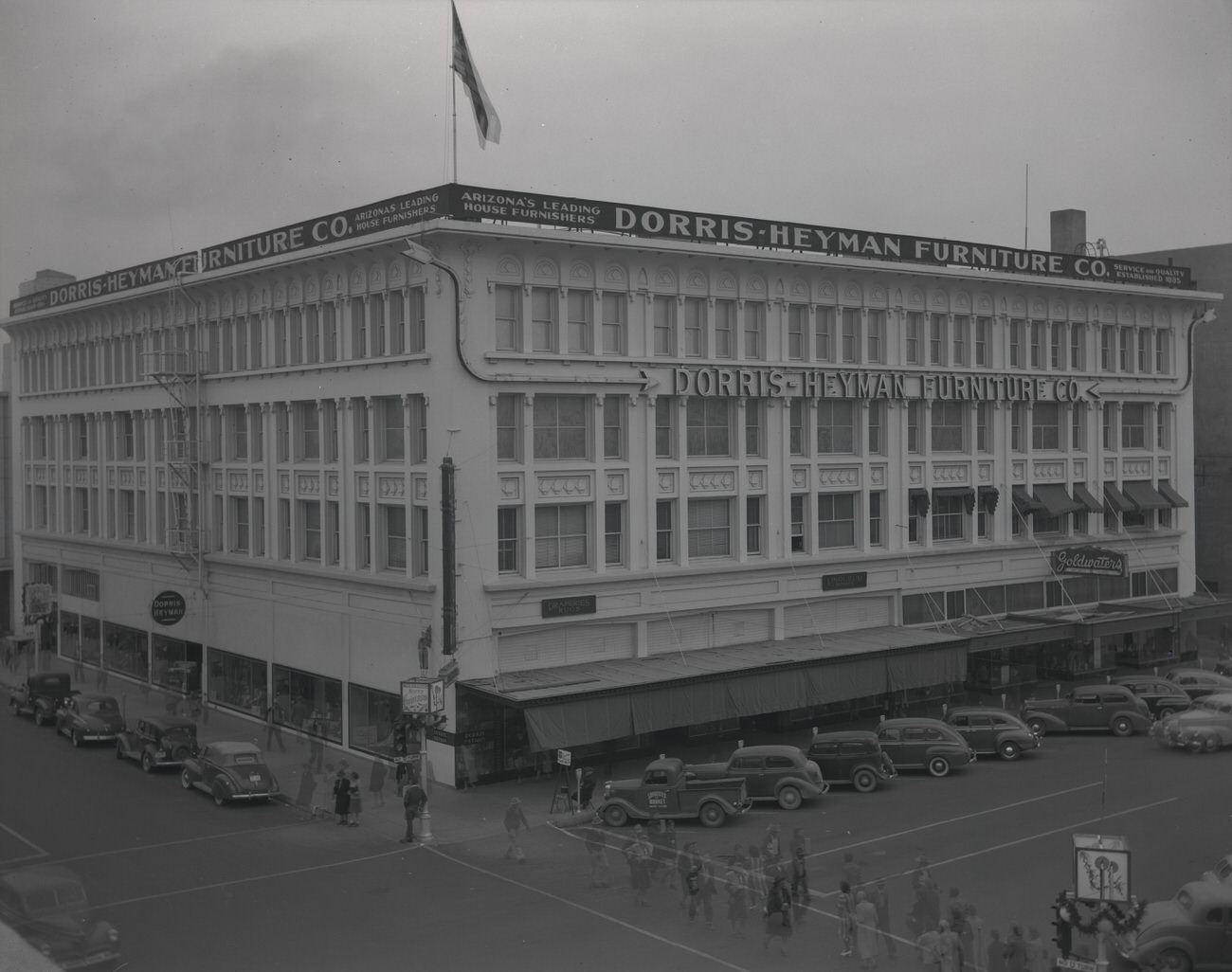
Downtown Phoenix’s commercial buildings told their own story. The Balke Building, on the northeast corner of 1st Avenue and Adams, was a solid presence in the business district. The Dorris-Heyman Furniture Company and the Central Christian Church added to the mix of commerce and civic life that defined central Phoenix in 1942.
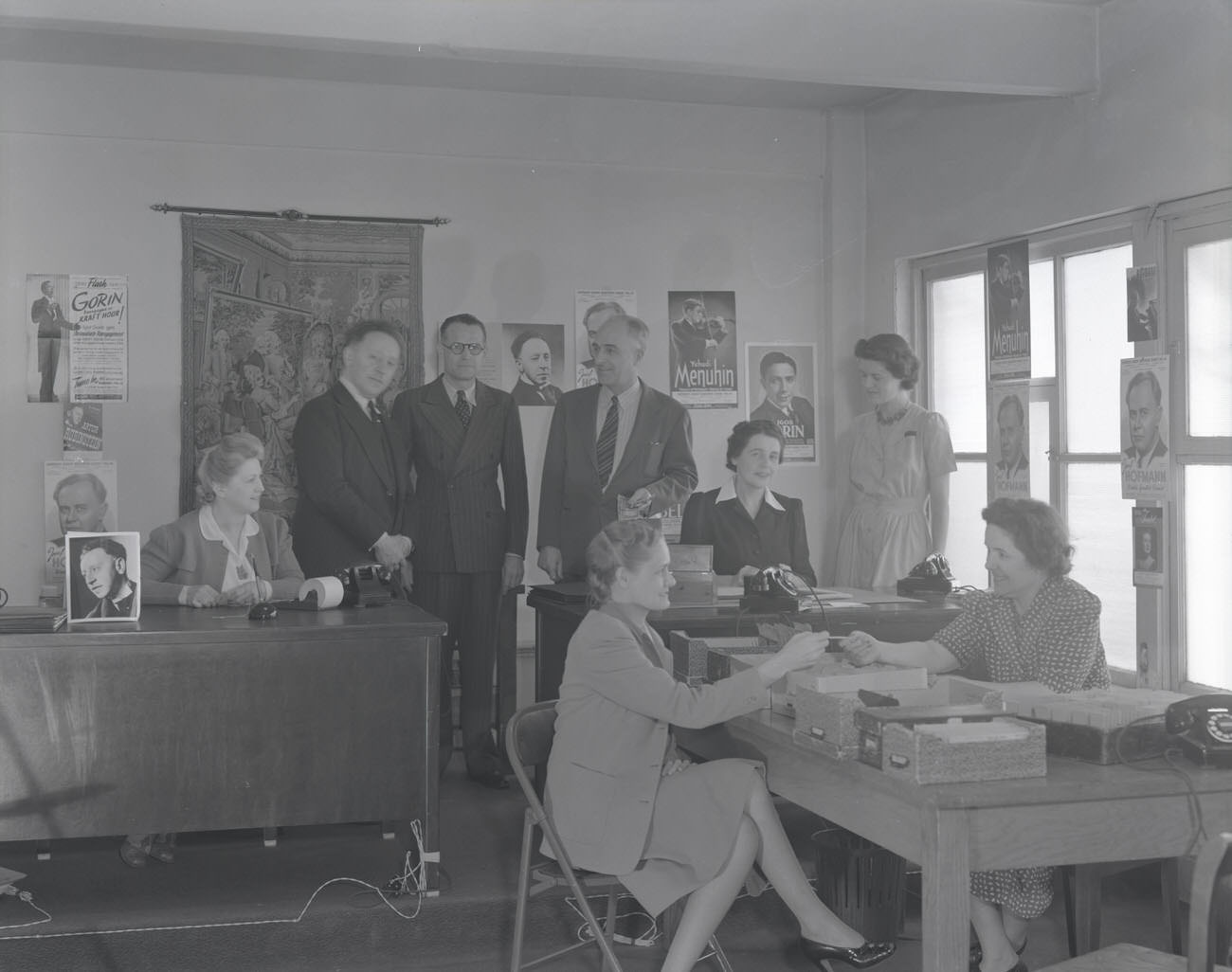
Cultural life in Phoenix extended beyond the movies. The Community Concert Association brought organized musical performances to the city, with member gatherings that reflected Phoenix’s growing civic ambitions. These events existed alongside the daily realities of wartime life — rationing, military service, and the constant presence of war bond campaigns on streets and in theaters across the city.