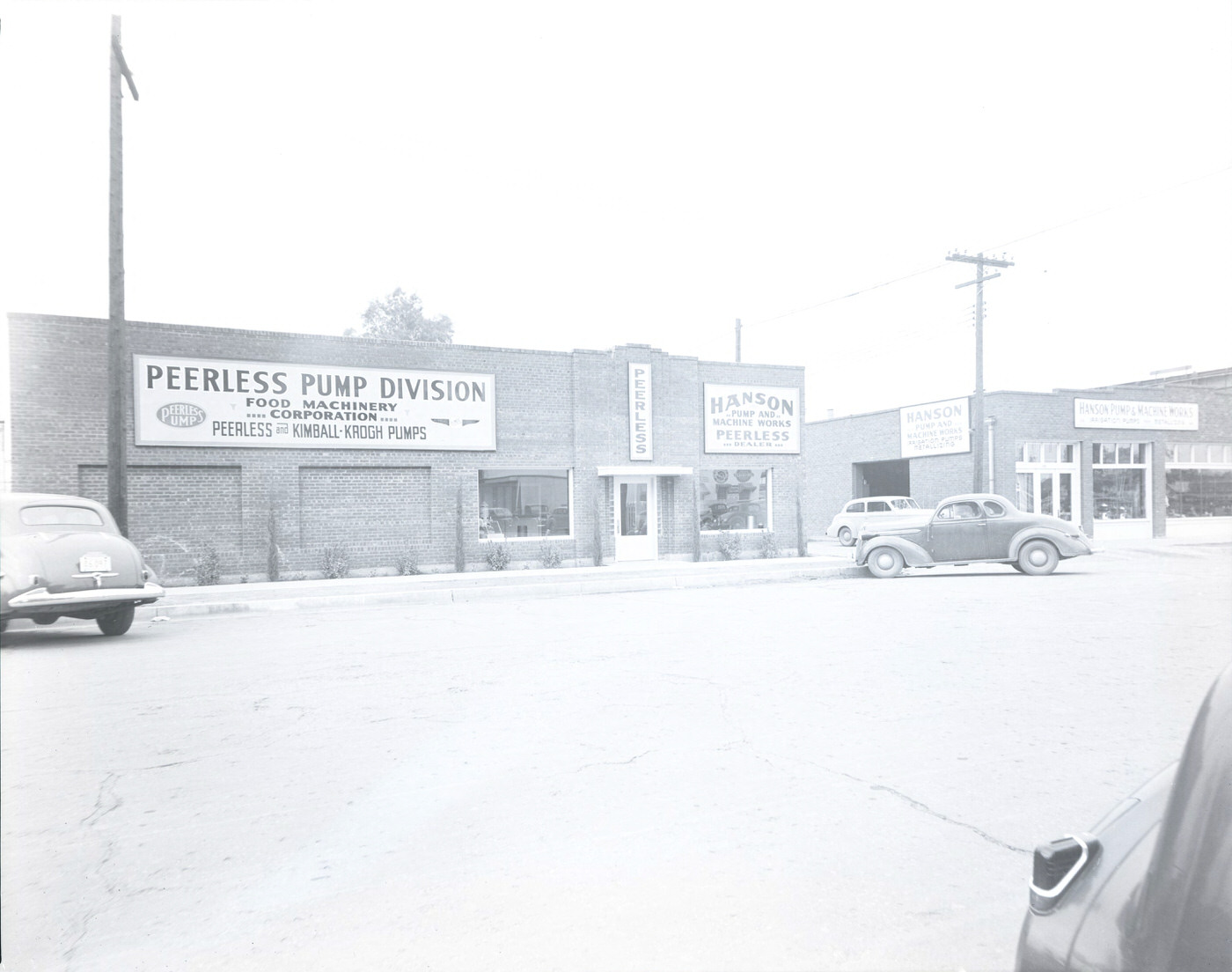
In 1941, Phoenix, Arizona was home to roughly 82,000 people — a modest but fast-growing population that was already reshaping the desert landscape. The city’s economy ran on agriculture. Cotton fields, citrus groves, and cattle ranches defined the region, and the businesses that supported them lined the streets of a compact but busy downtown. That same year, a remarkable set of photographs captured everyday life across the city, from diners and department stores to construction sites and motor courts. Together, they paint a detailed picture of a place that was growing quickly and quietly preparing for a world about to change.
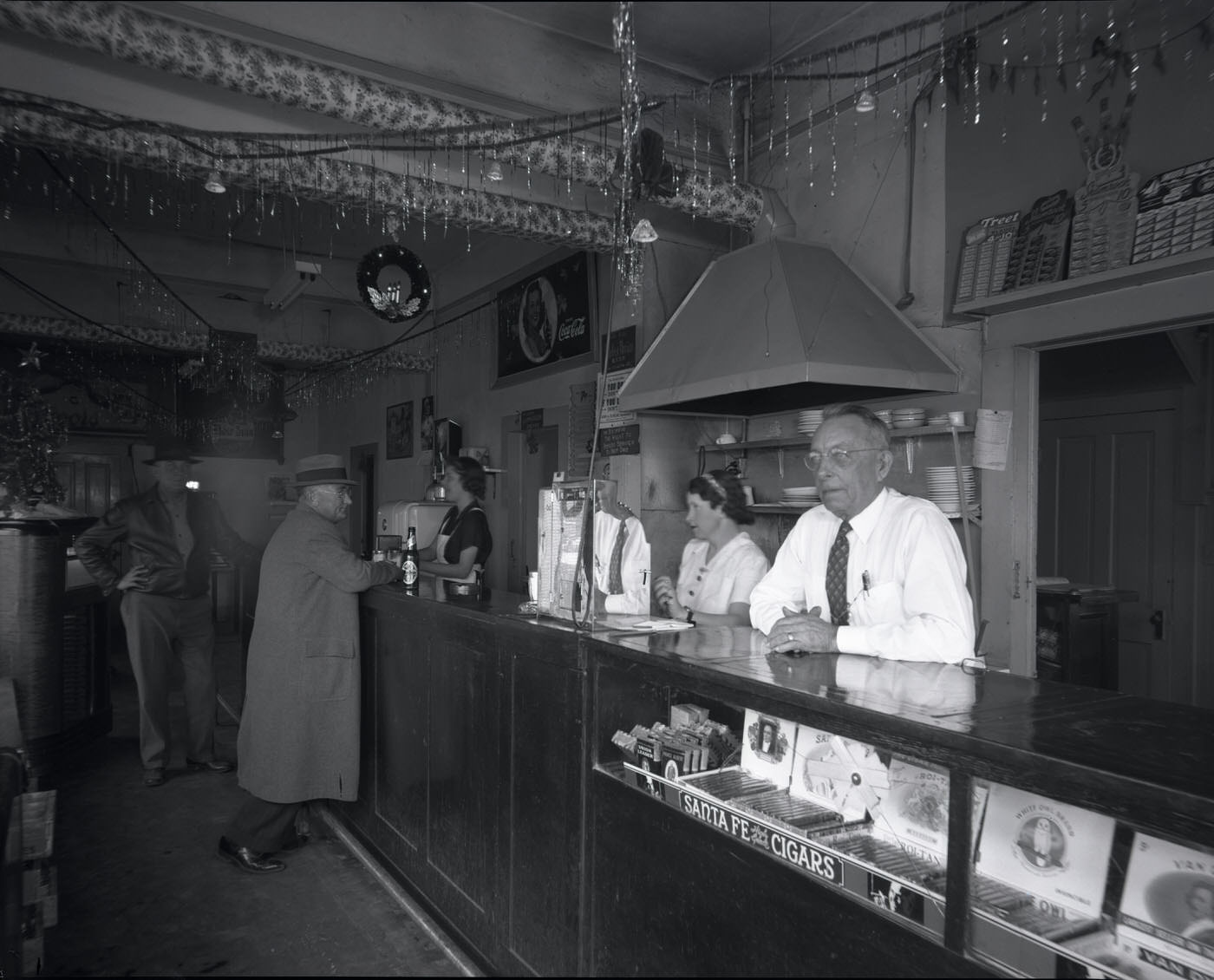
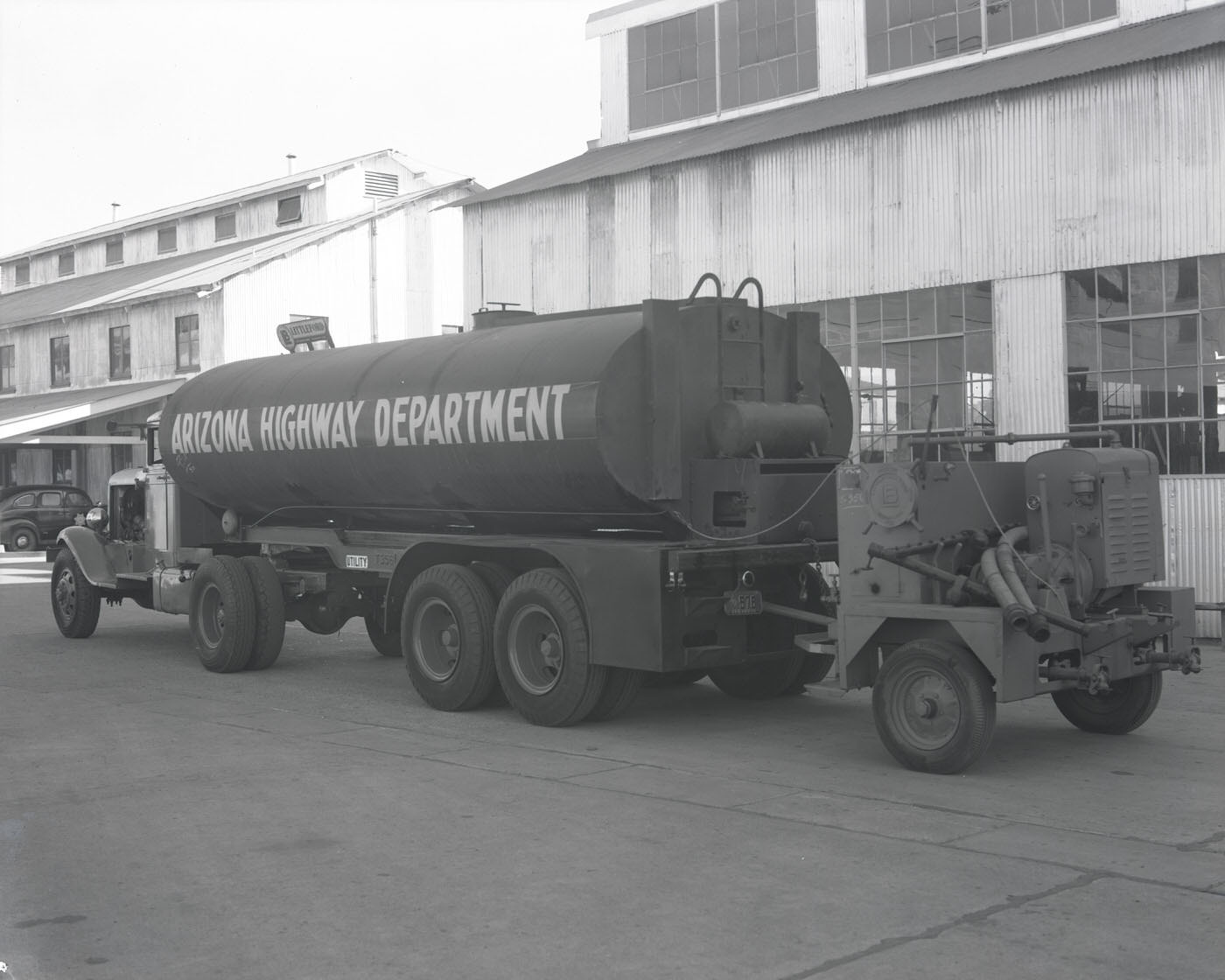
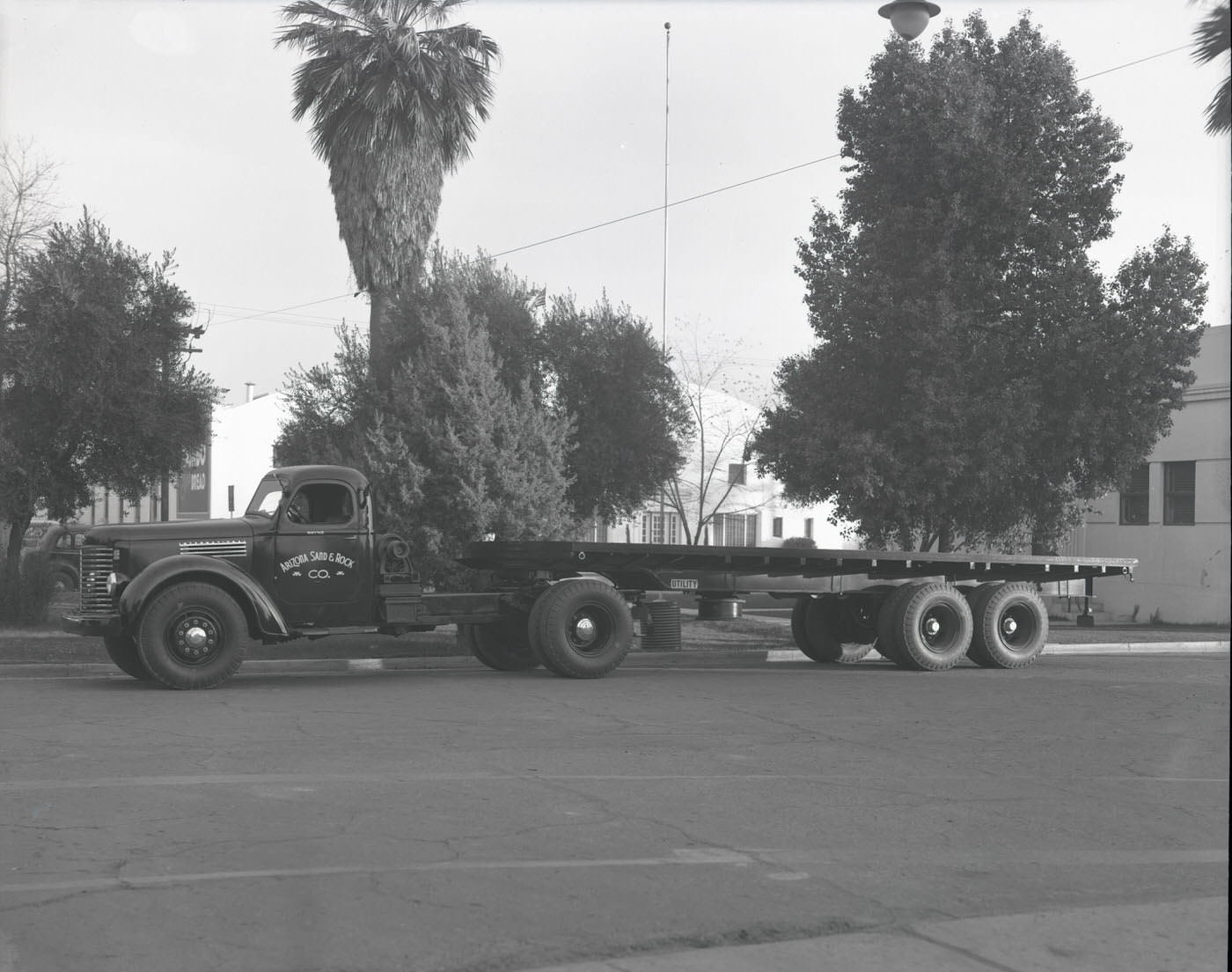
Restaurants like the Dixie Café were part of the social fabric of the city. Locals gathered at counters and booths for affordable meals in air-cooled spaces — a welcome relief from the Arizona heat. Meanwhile, the city’s roads carried a steady flow of commercial traffic. Tanker trucks from the Arizona Highway Department and flatbed rigs from Arizona Sand & Rock Co. were common sights, hauling the materials needed to keep the city’s infrastructure moving.
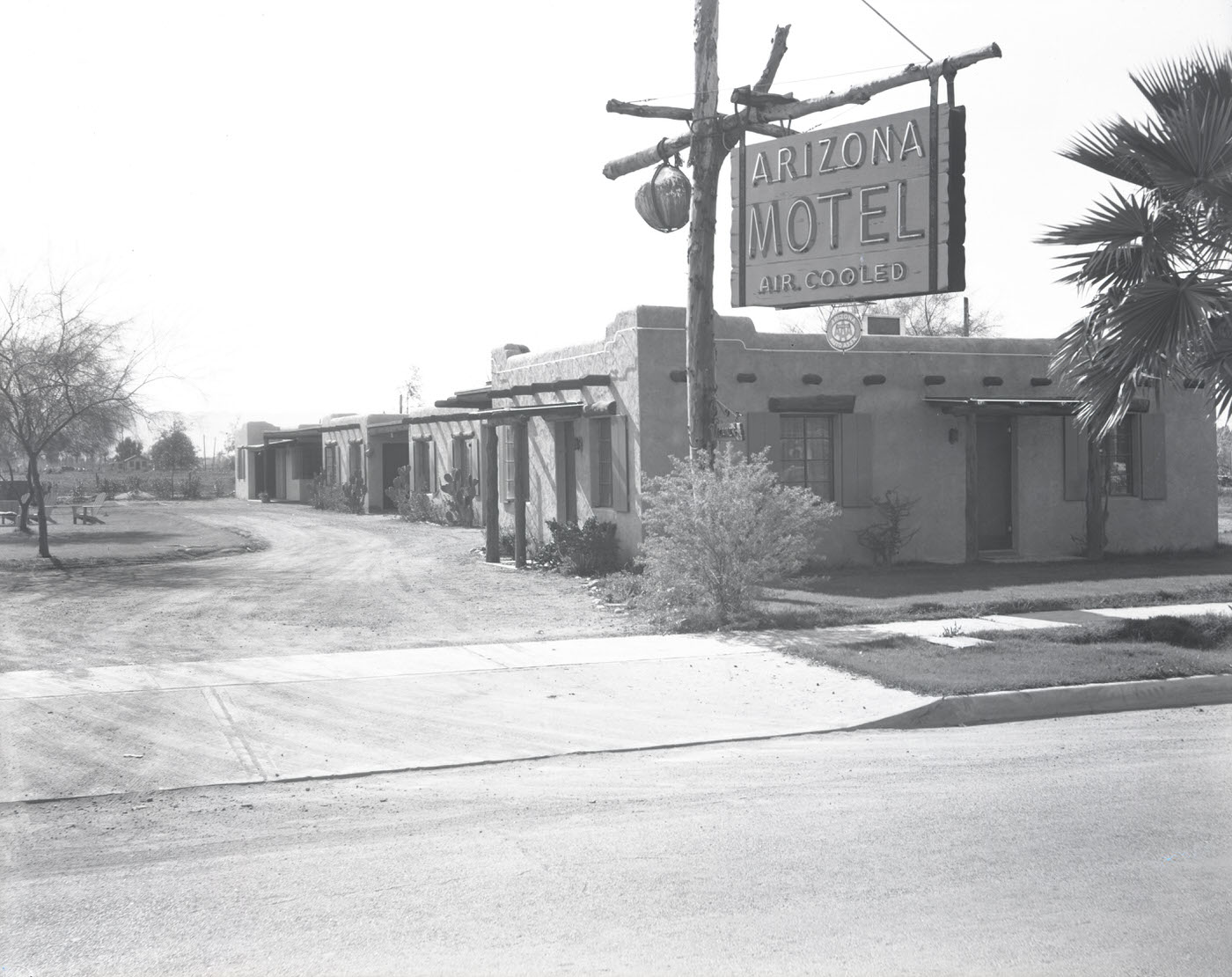
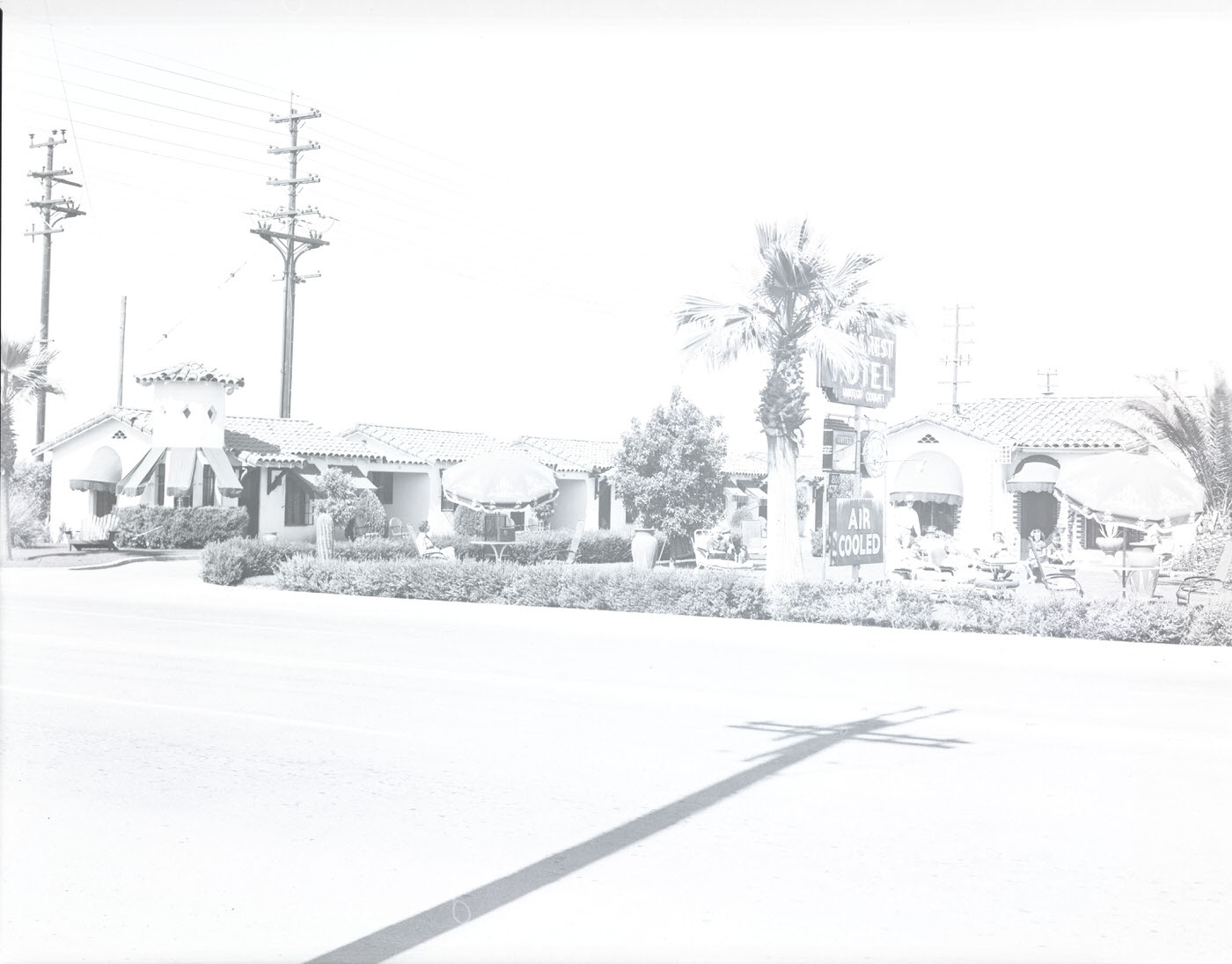
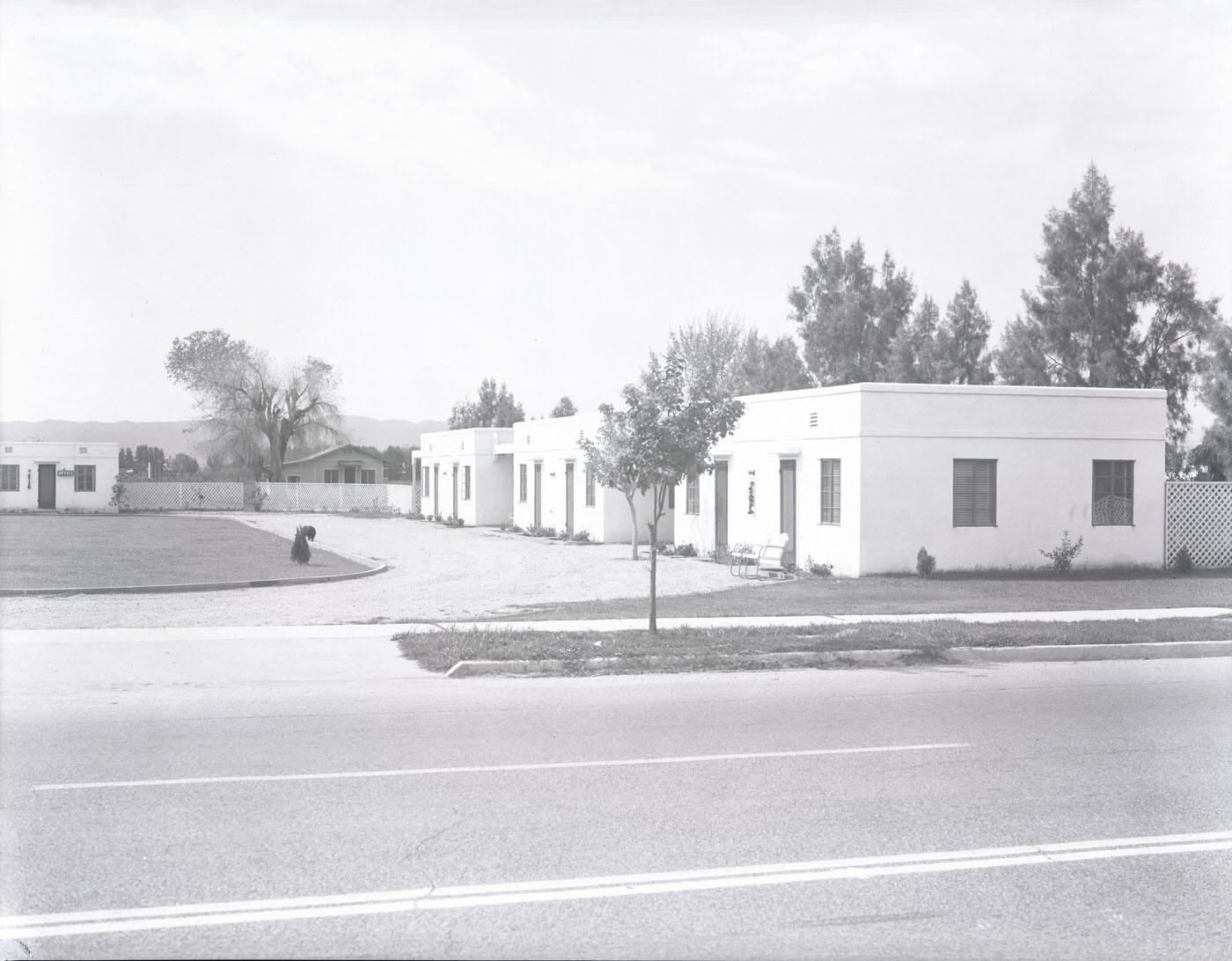
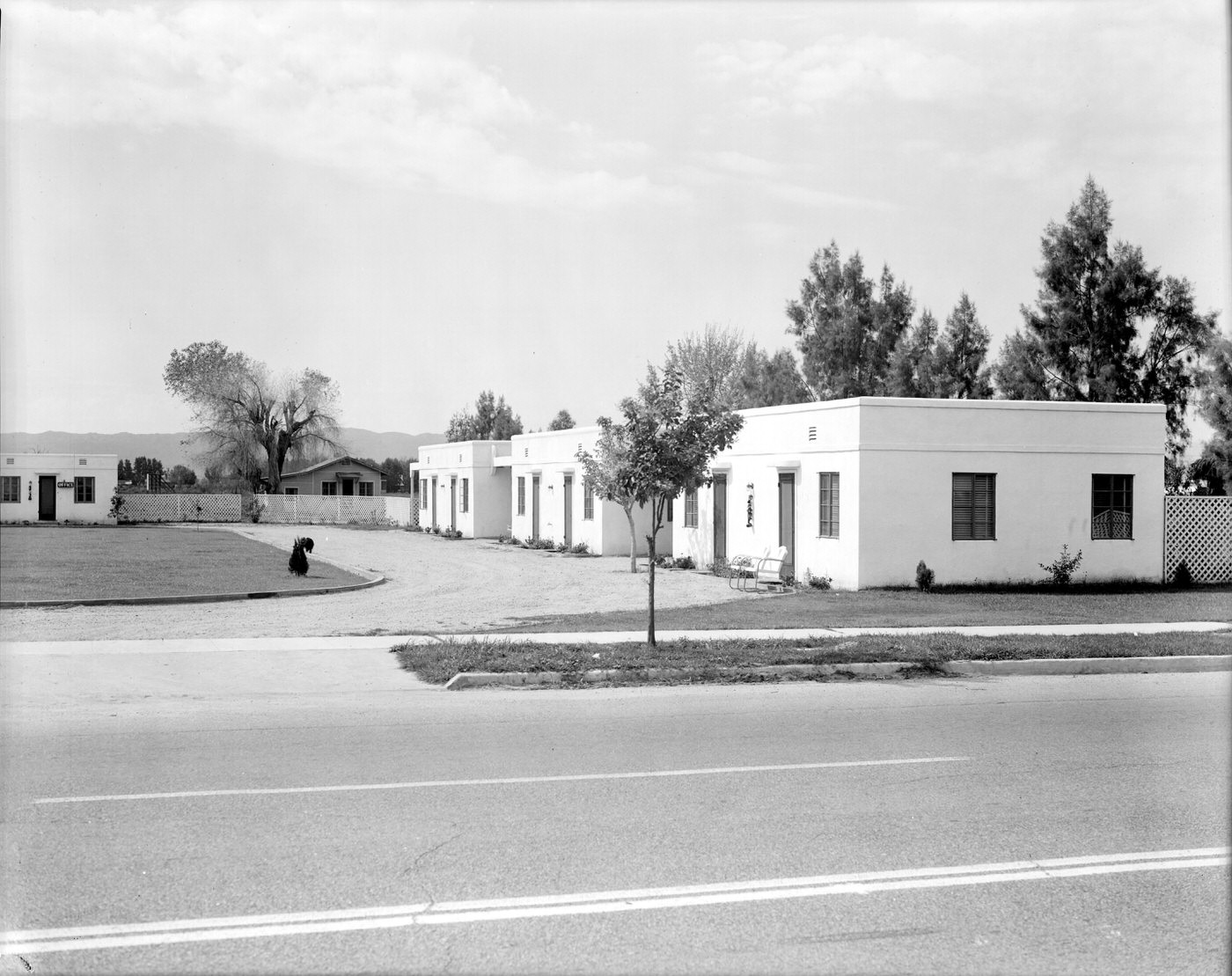
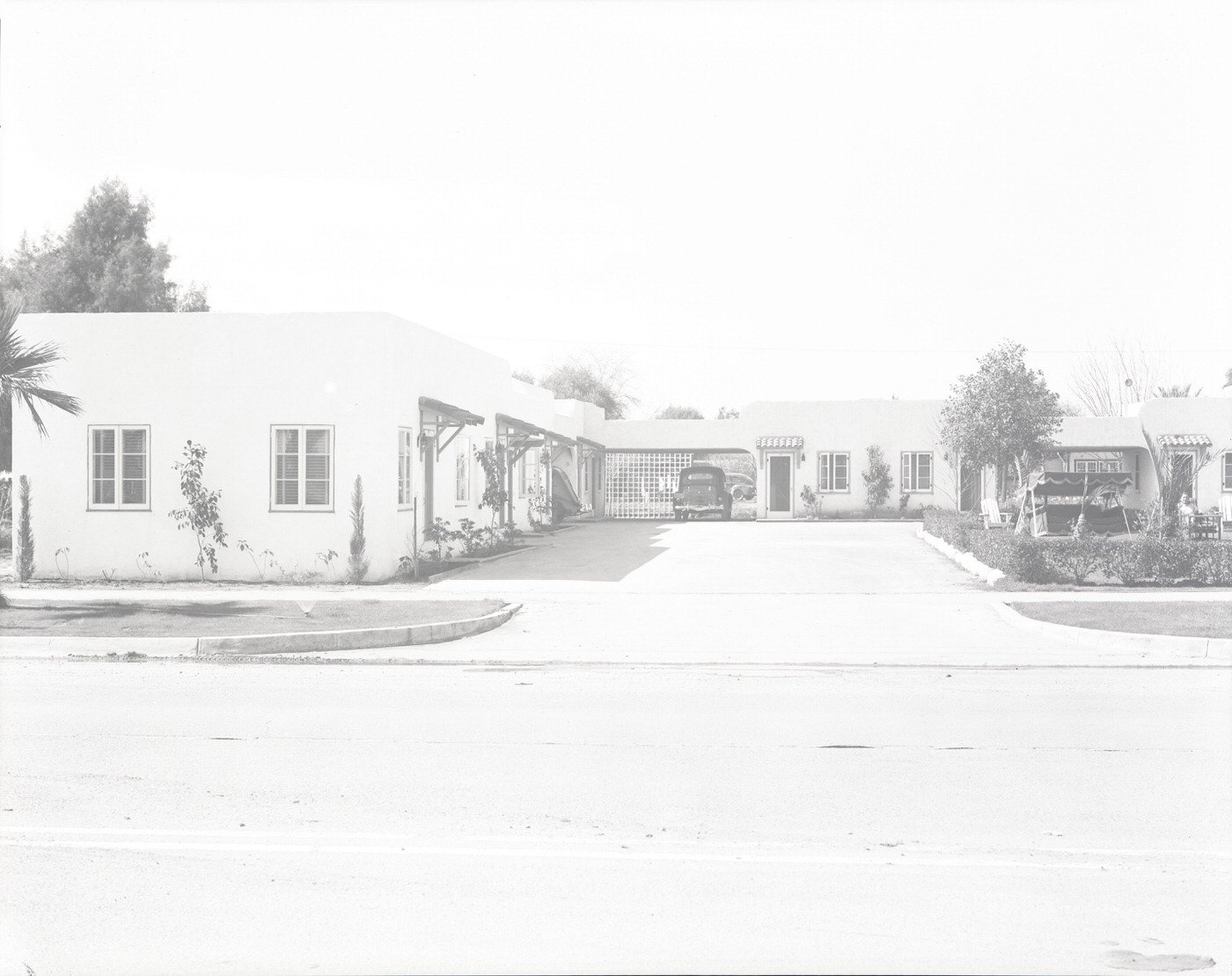
Tourism was growing alongside industry. Phoenix’s warm winters and open desert scenery drew visitors from across the country. Motor courts and motels along Van Buren Street catered to travelers arriving by car, a trend that was reshaping American travel in the 1940s. The Arizona Motel at 2625 E. Van Buren Street was one such stop, offering roadside lodging in a style that was becoming the new standard for highway travel.
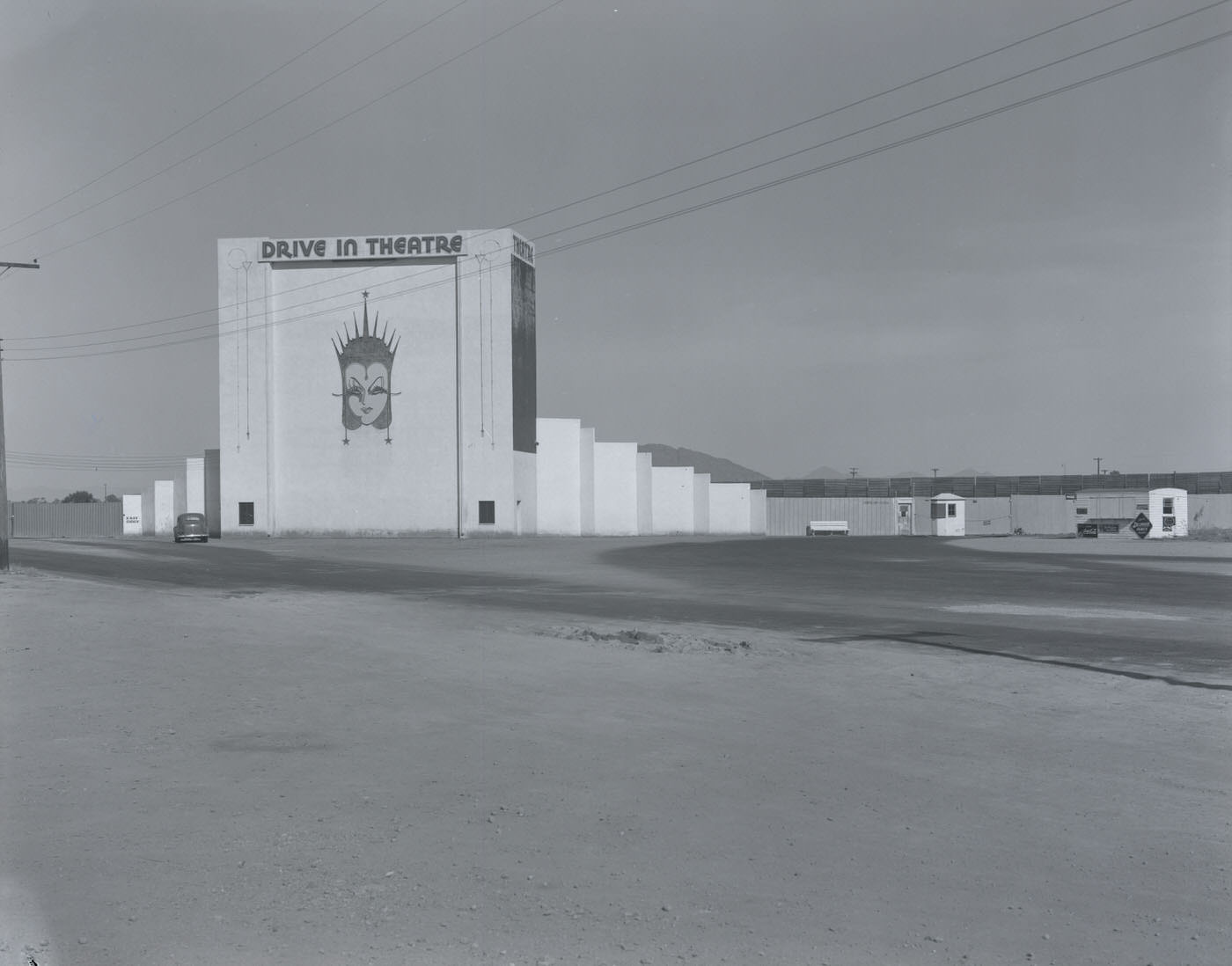
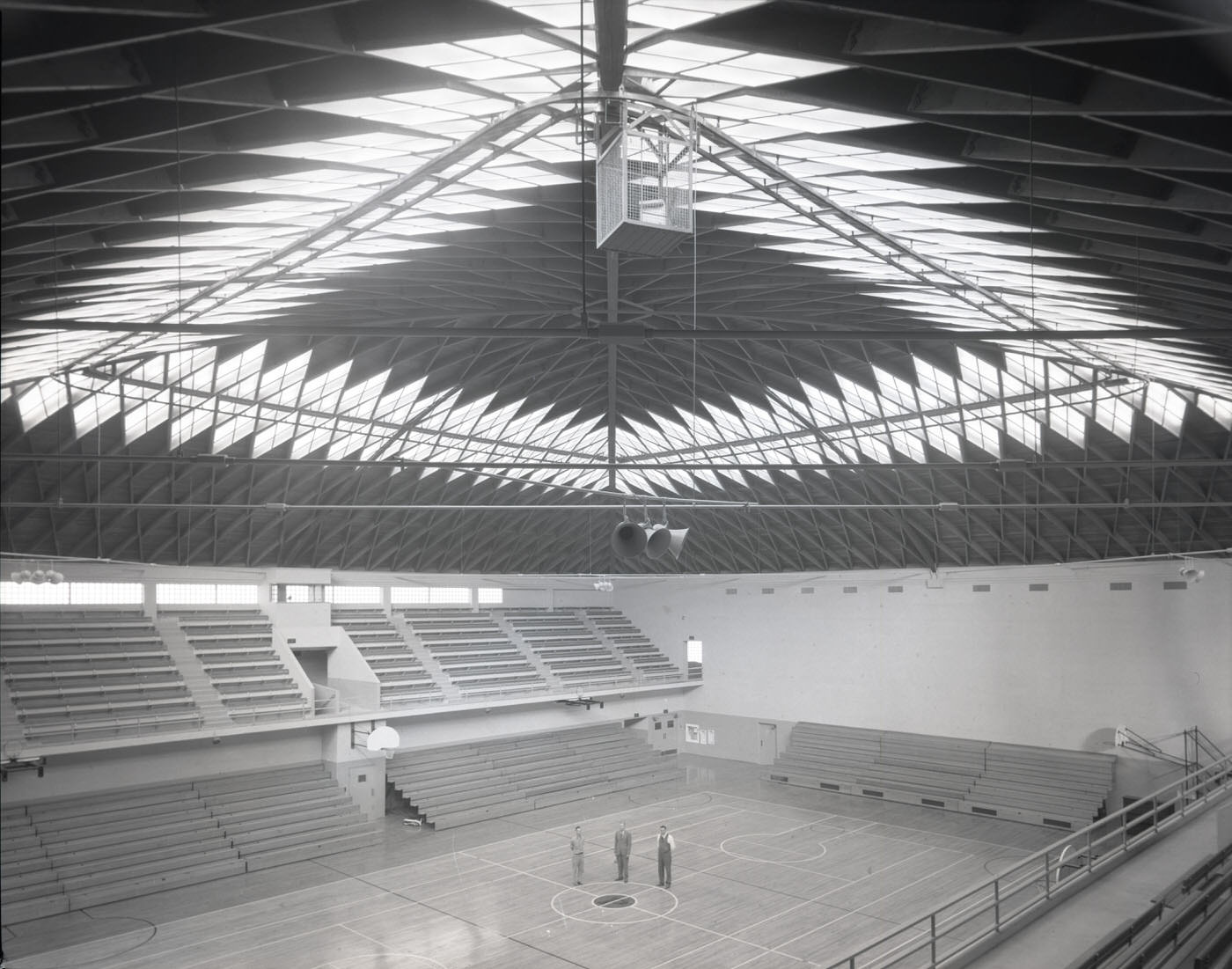
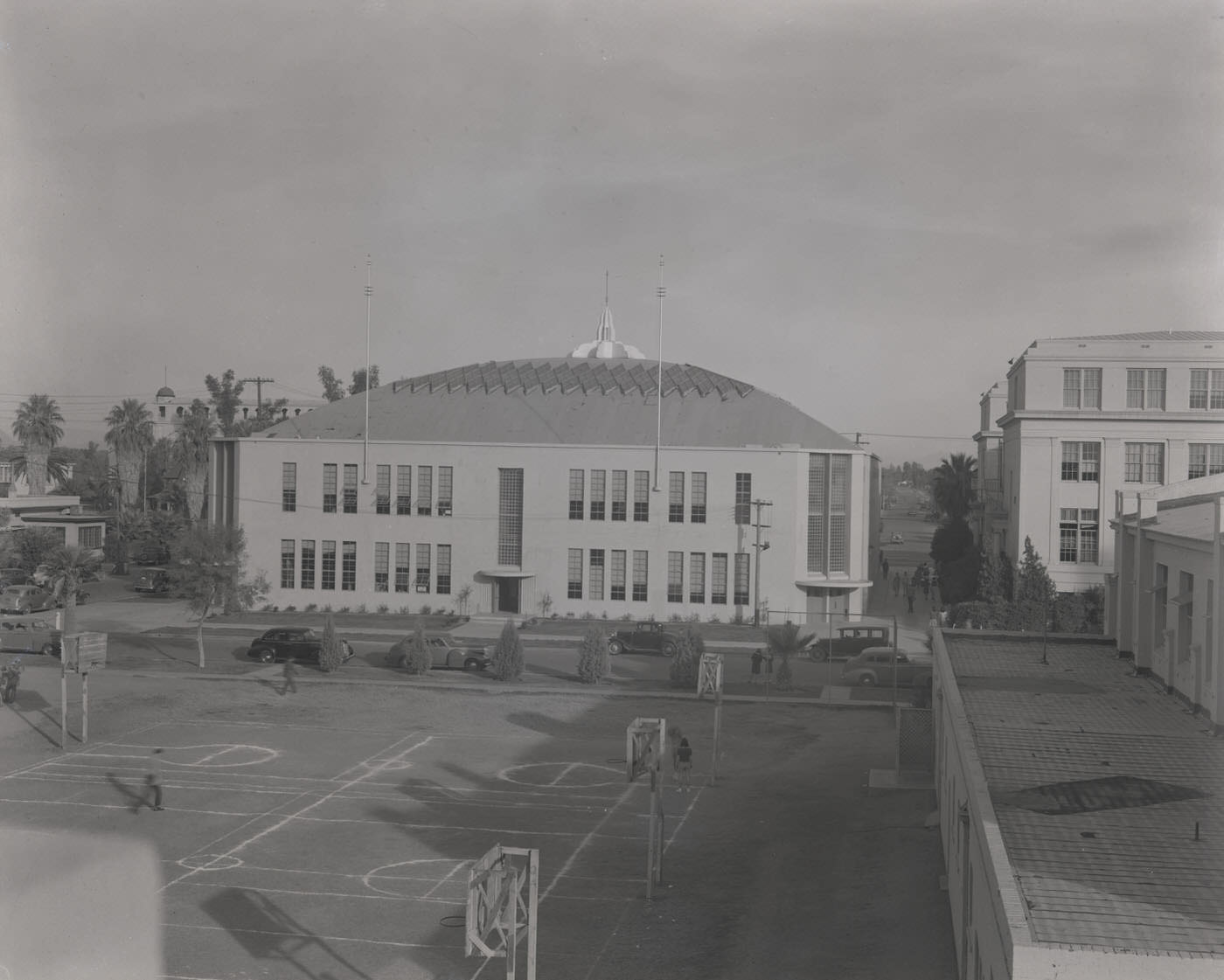
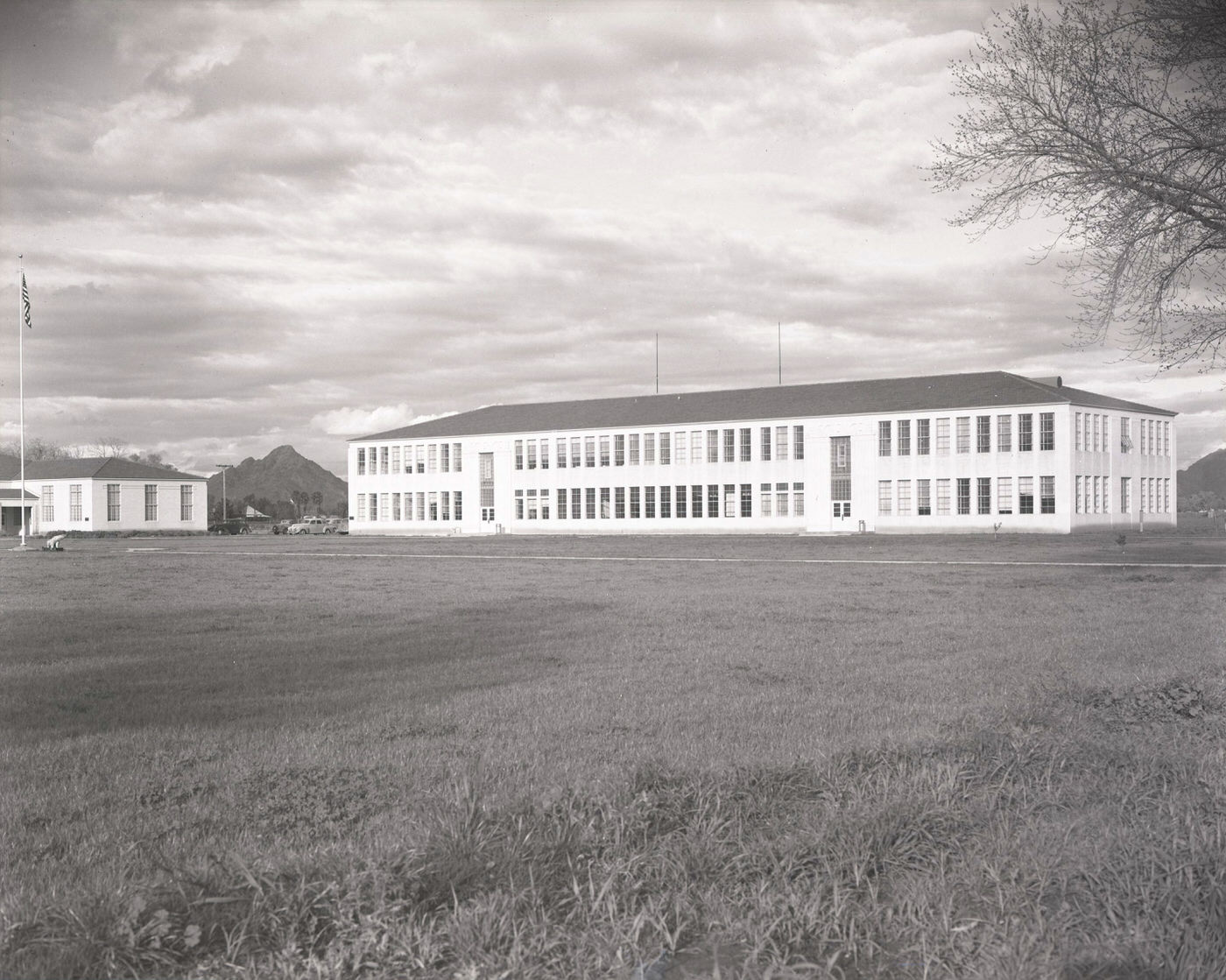
Entertainment options reflected the city’s modest but modern character. The Phoenix Drive-In Theatre at 3600 E. Van Buren gave families a place to watch films without leaving their cars — a format that was exploding in popularity across the American Southwest. Education was also a priority. Phoenix Union High School stood as one of the city’s most prominent institutions, with a gymnasium large enough to serve its growing student body.
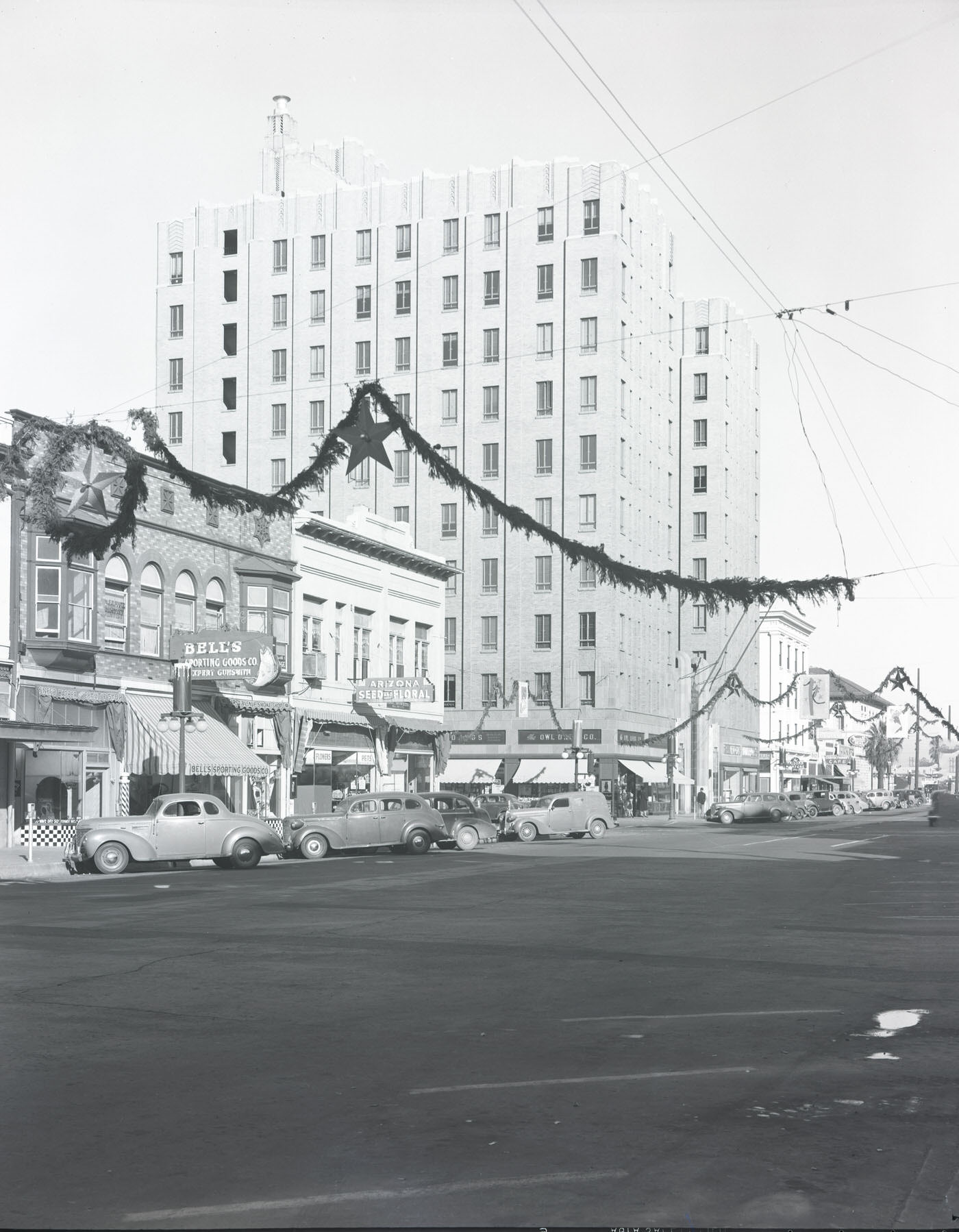
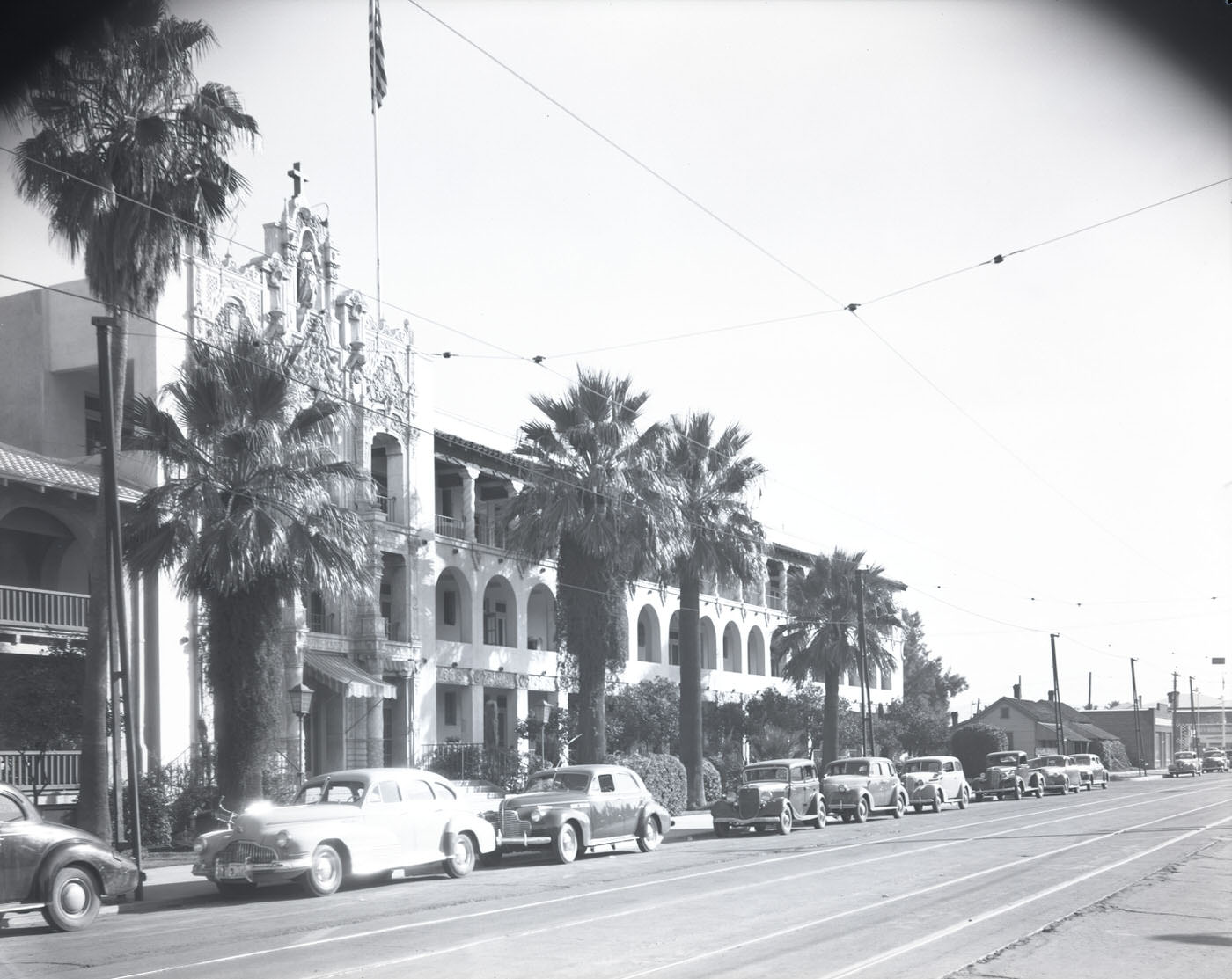
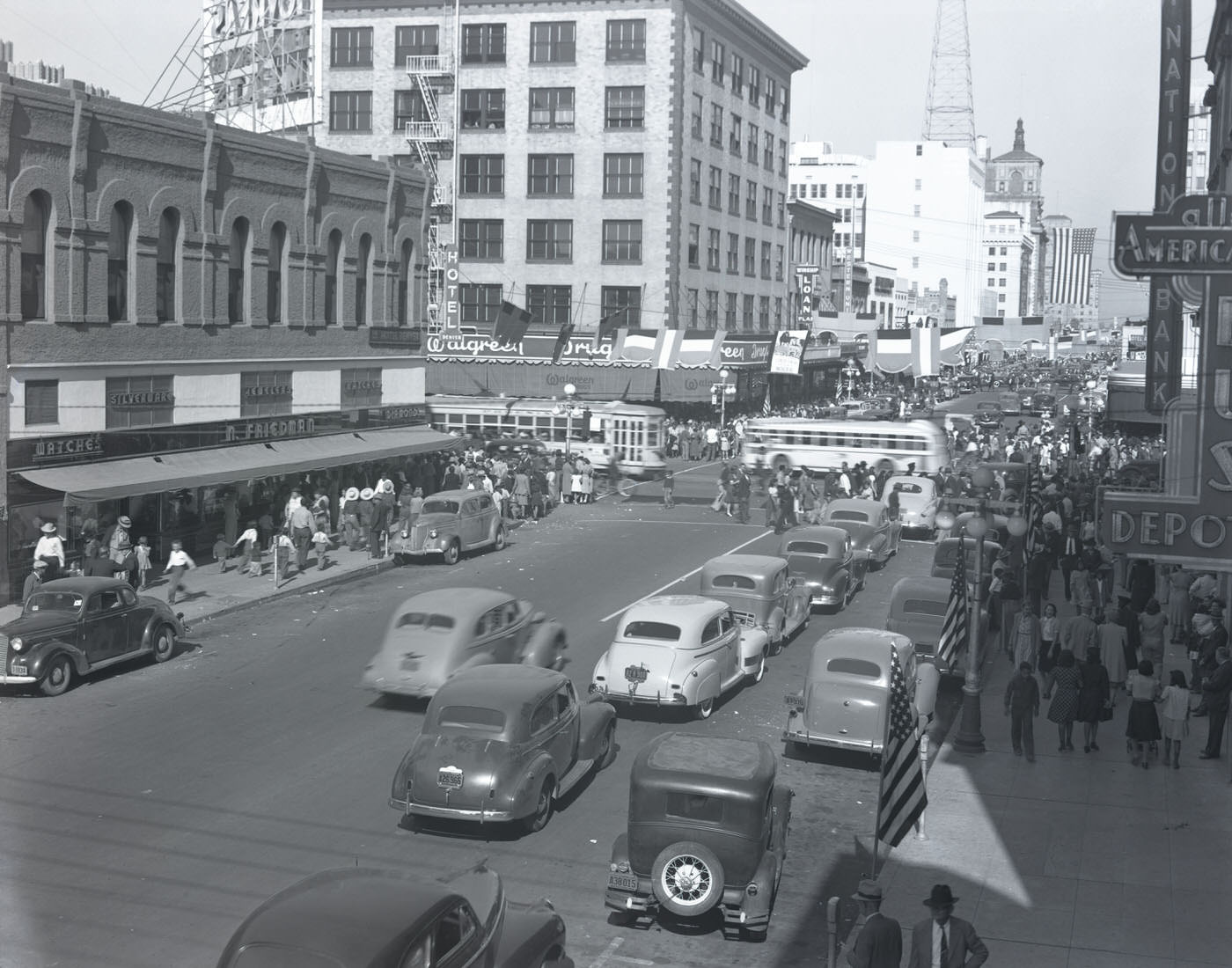
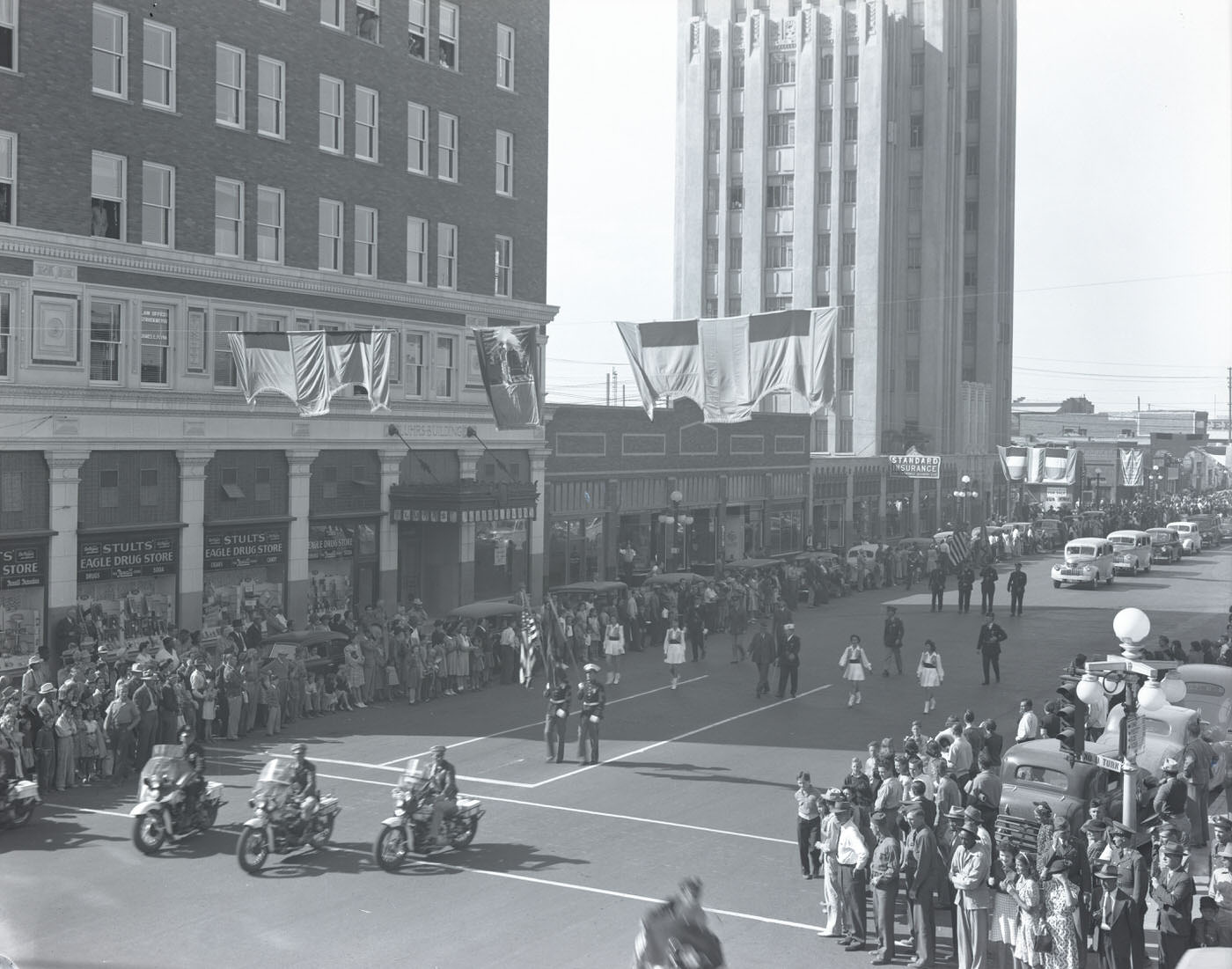
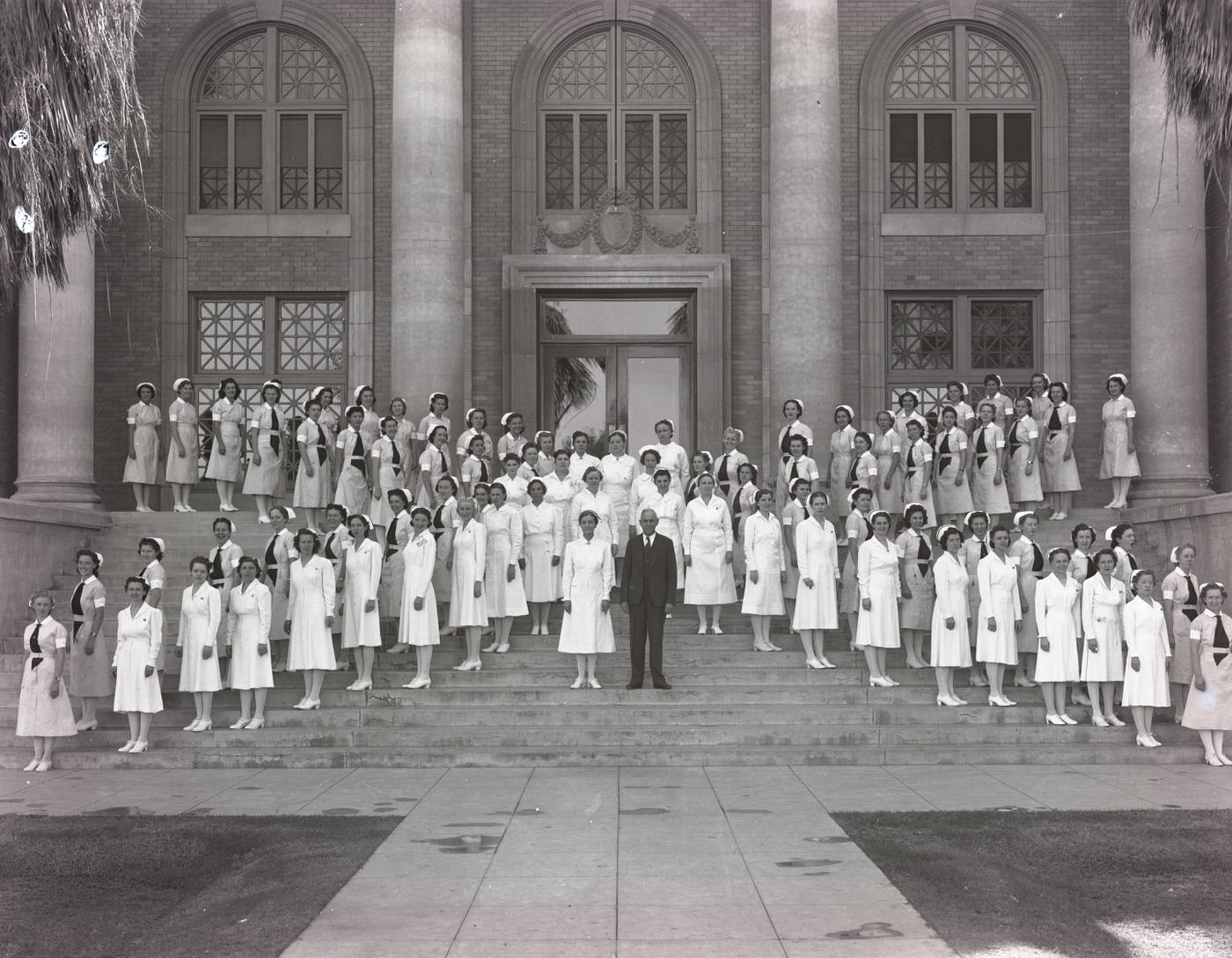
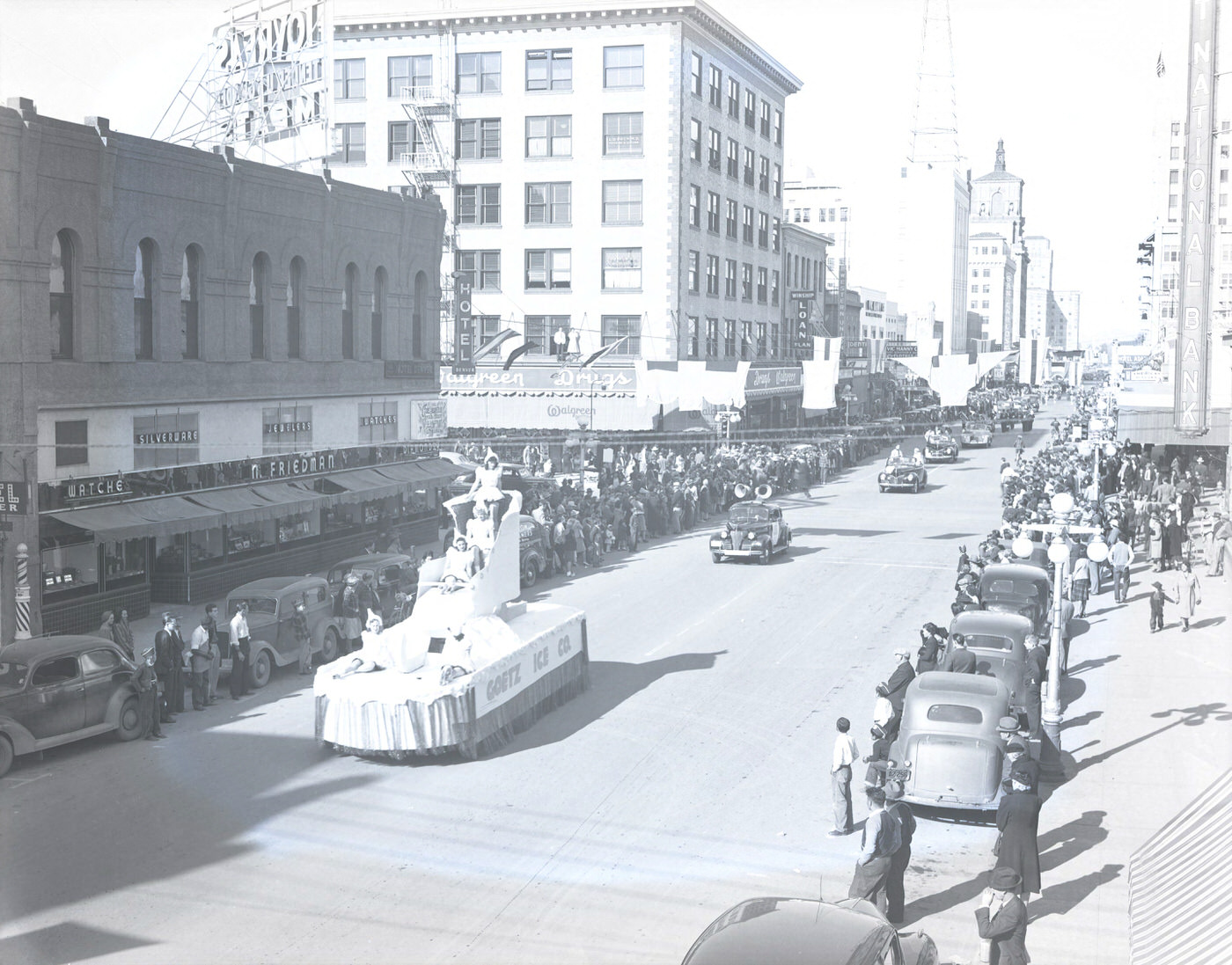
Healthcare in Phoenix in 1941 was centered around a handful of established institutions. St. Joseph’s Hospital and Good Samaritan Hospital both served the city’s residents, their staffs photographed with a quiet professionalism that reflected the era. The downtown area, though relatively small, held its own architectural landmarks. The Luhrs Building — the city’s first skyscraper, completed in 1924 — rose above the surrounding streets and appeared as a backdrop in photographs of parades moving south down Central Avenue past Stults’ Eagle Drug Store.
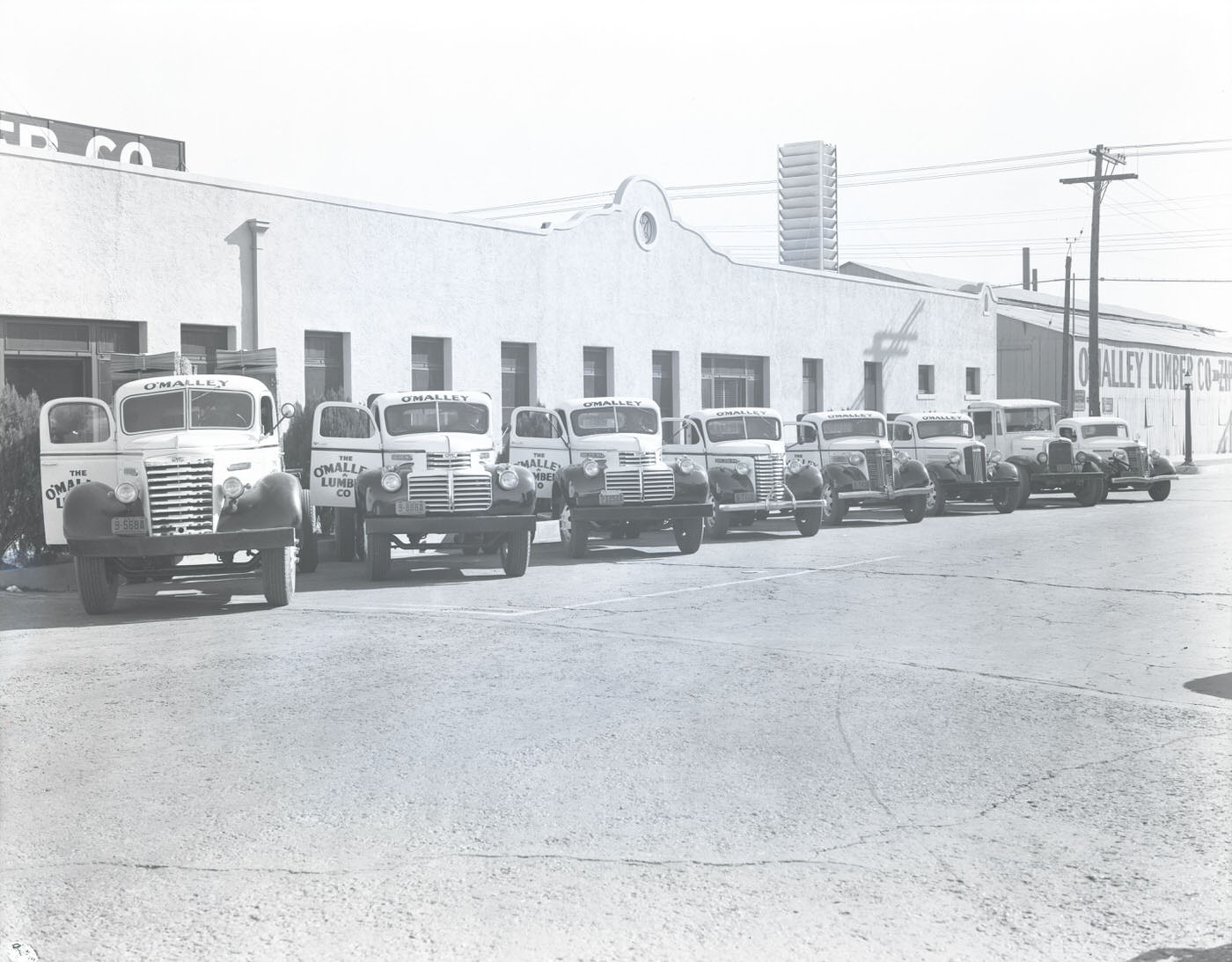
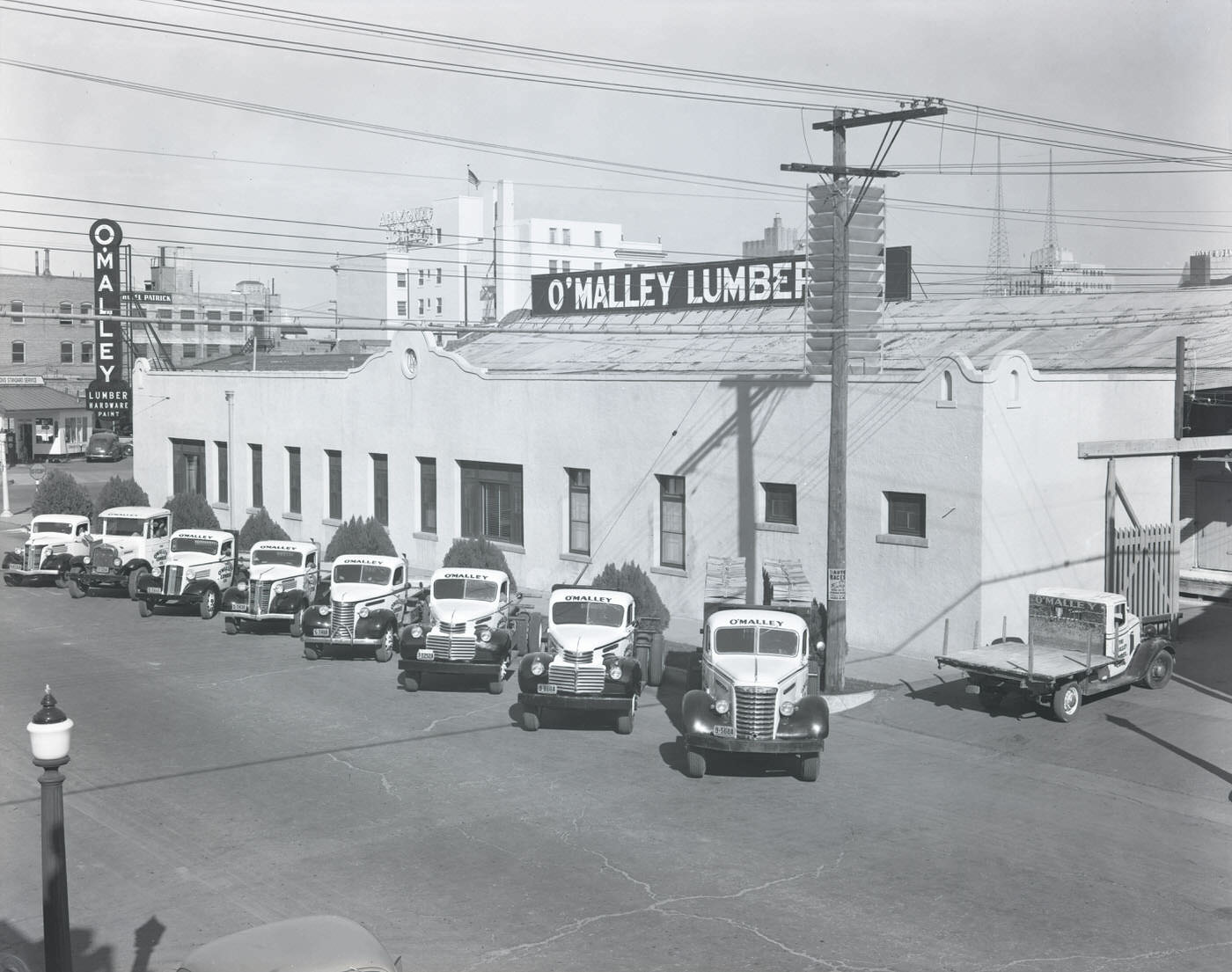
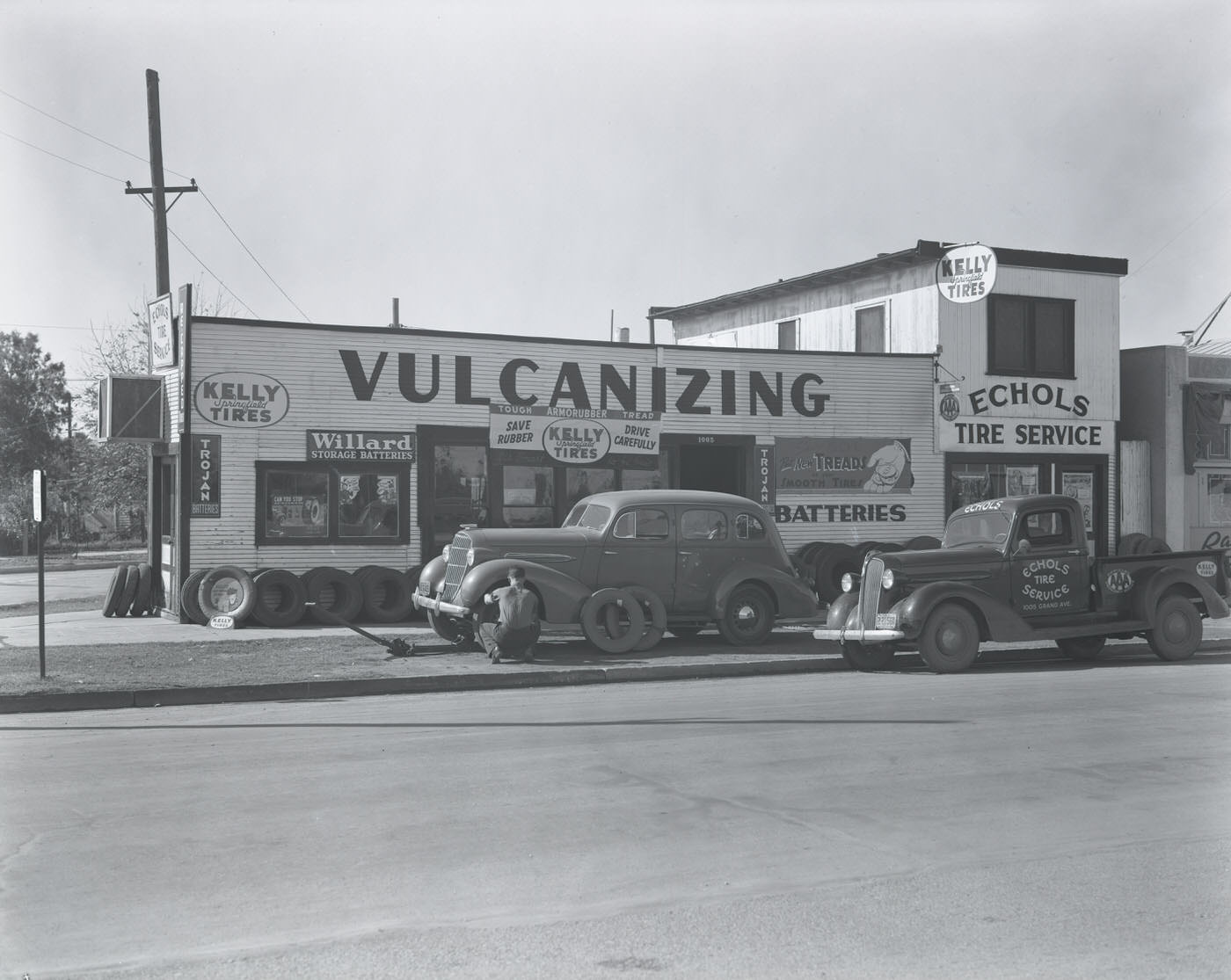
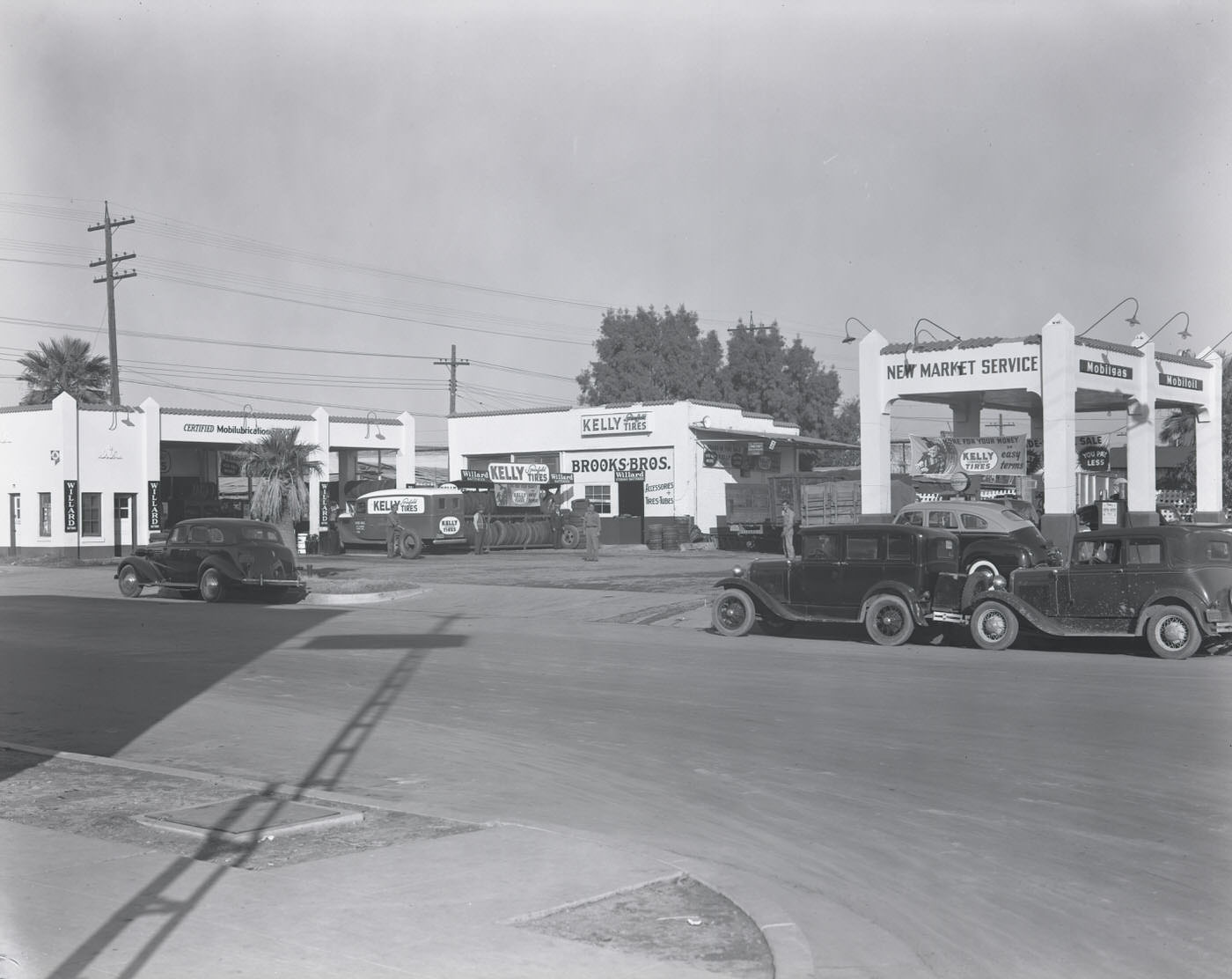
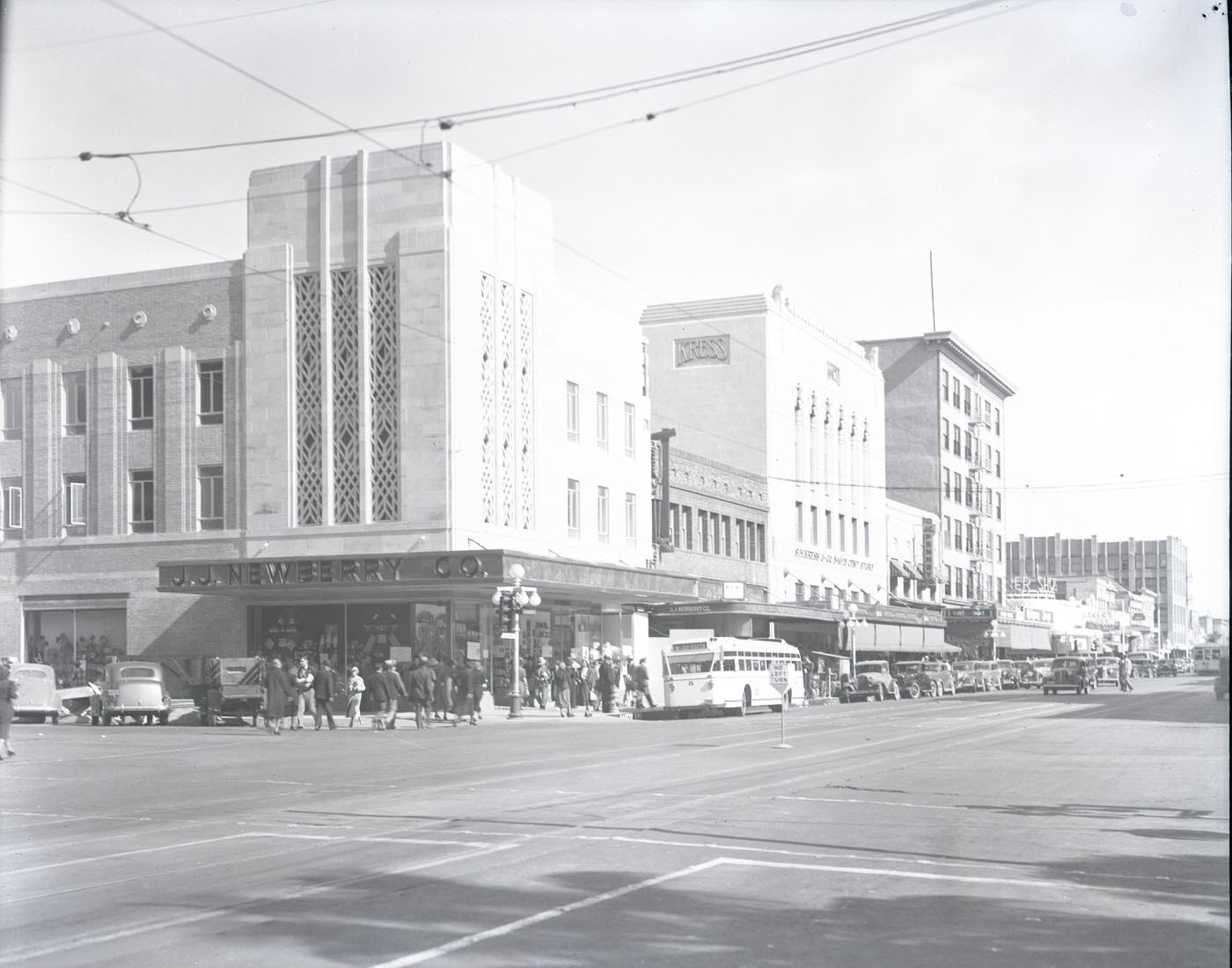
Commerce was thriving across multiple sectors. O’Malley Lumber Co. ran a fleet of trucks to keep up with building demand. The Kelly-Springfield Tire Co. operated a prominent building and lot, serving the growing number of vehicles on Phoenix roads. Chain retailers like J. J. Newberry Co. at 36 W. Washington brought national retail culture to local streets, while the intersection of Washington Street and Central Avenue served as the commercial heart of the city.
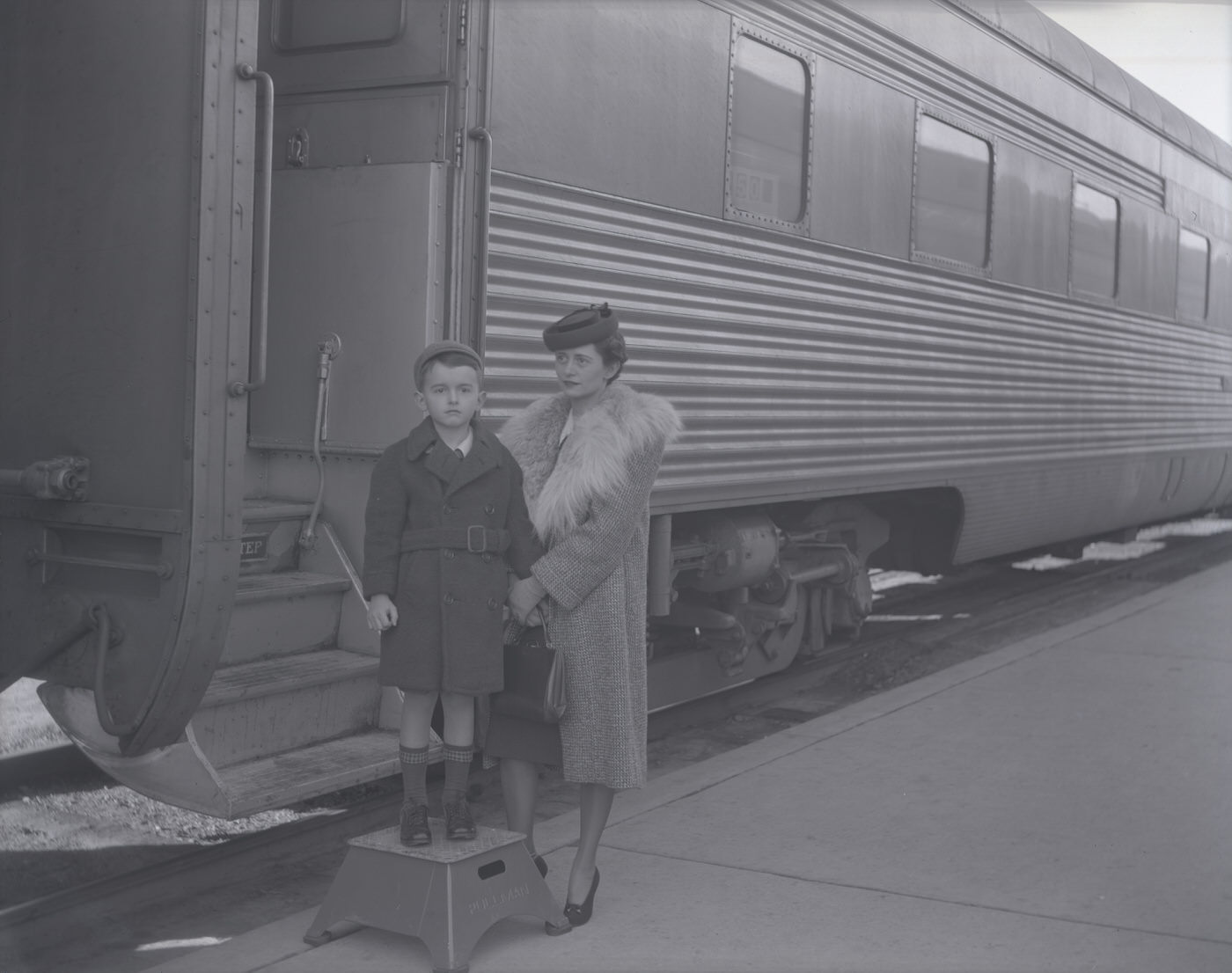
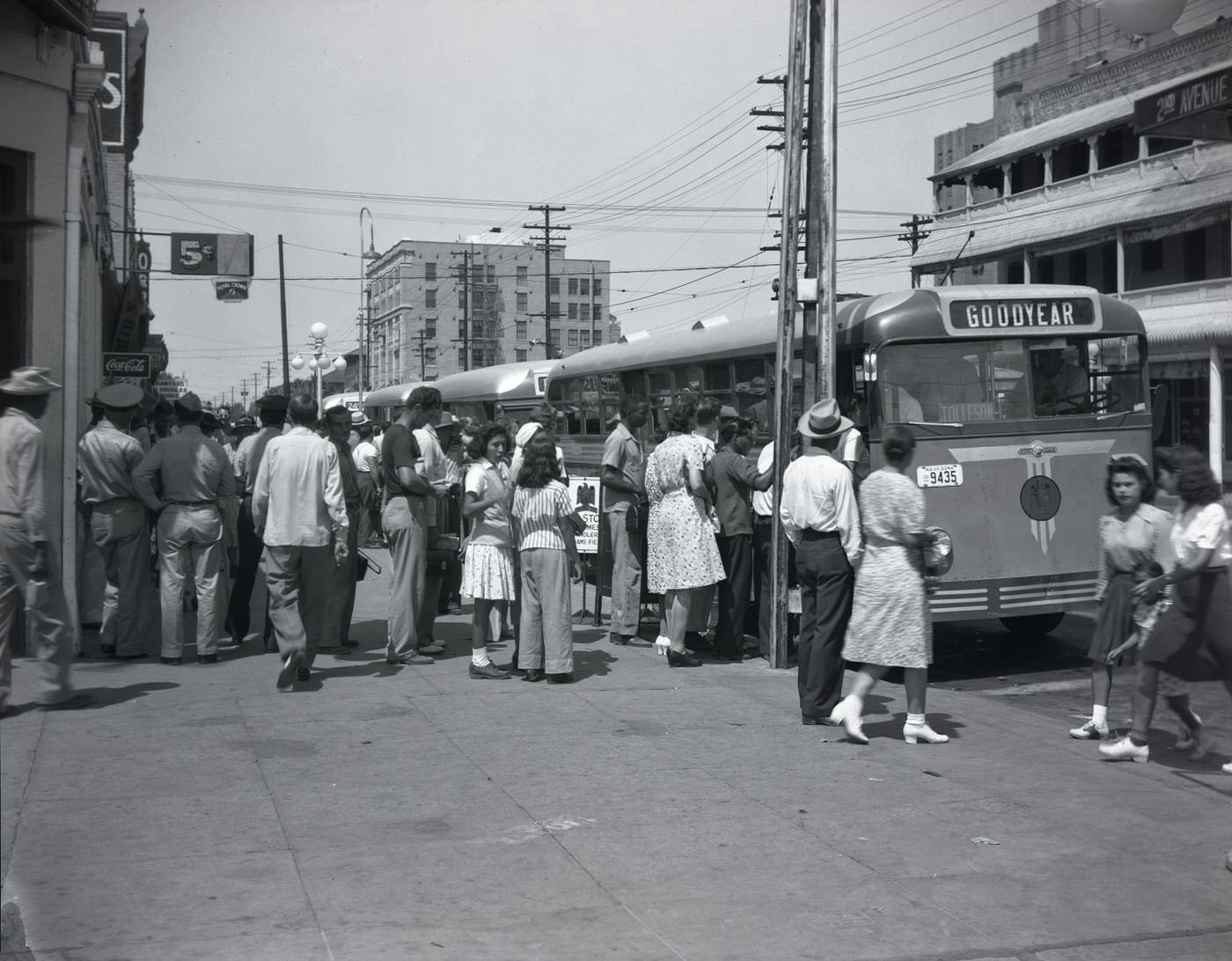
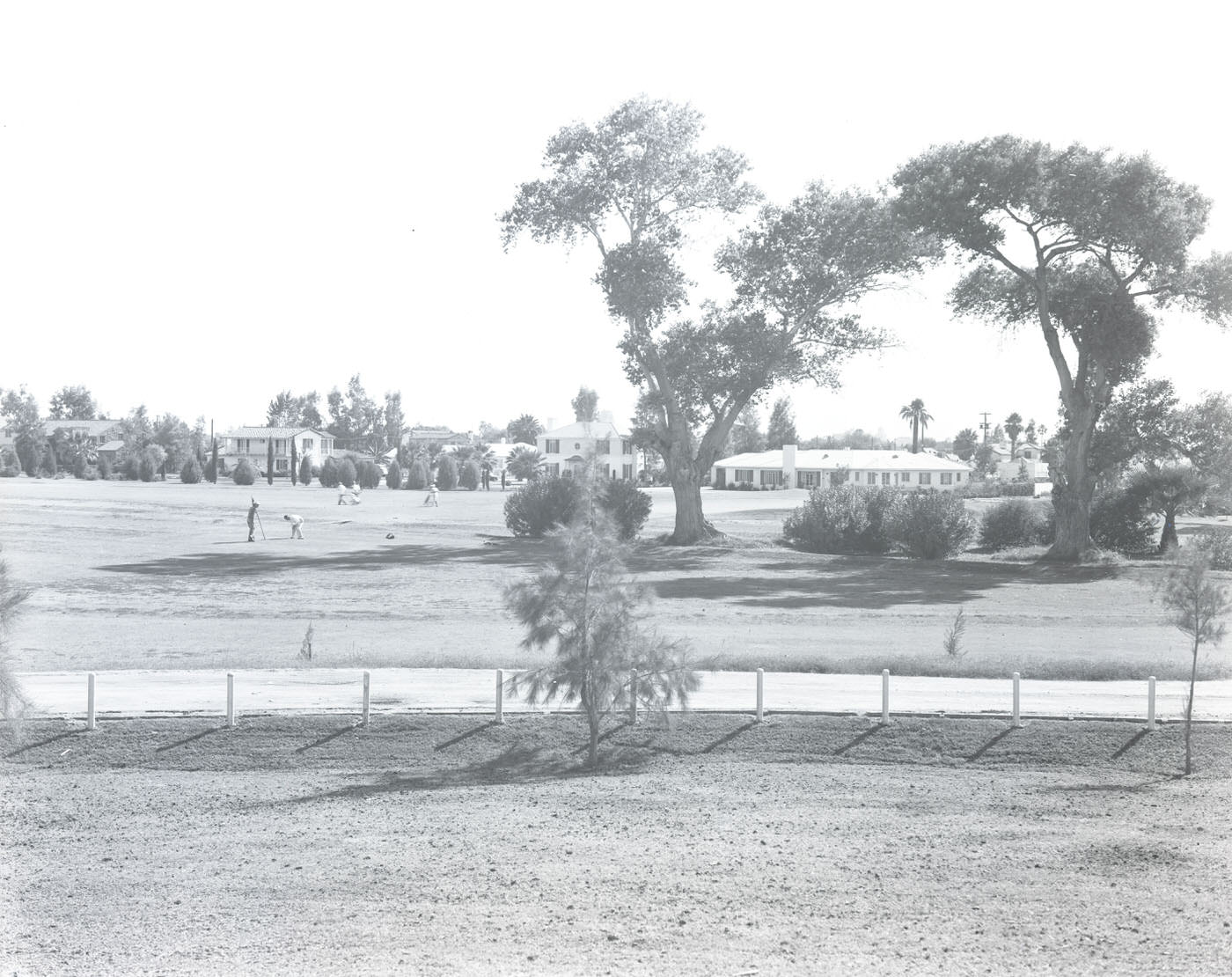
Public transportation connected residents and visitors across the city. Buses loaded passengers at designated stops while Santa Fe trains carried people in and out of the region. The Phoenix Country Club offered recreation for the city’s more affluent residents, its manicured grounds a sharp contrast to the open desert just beyond the city limits.
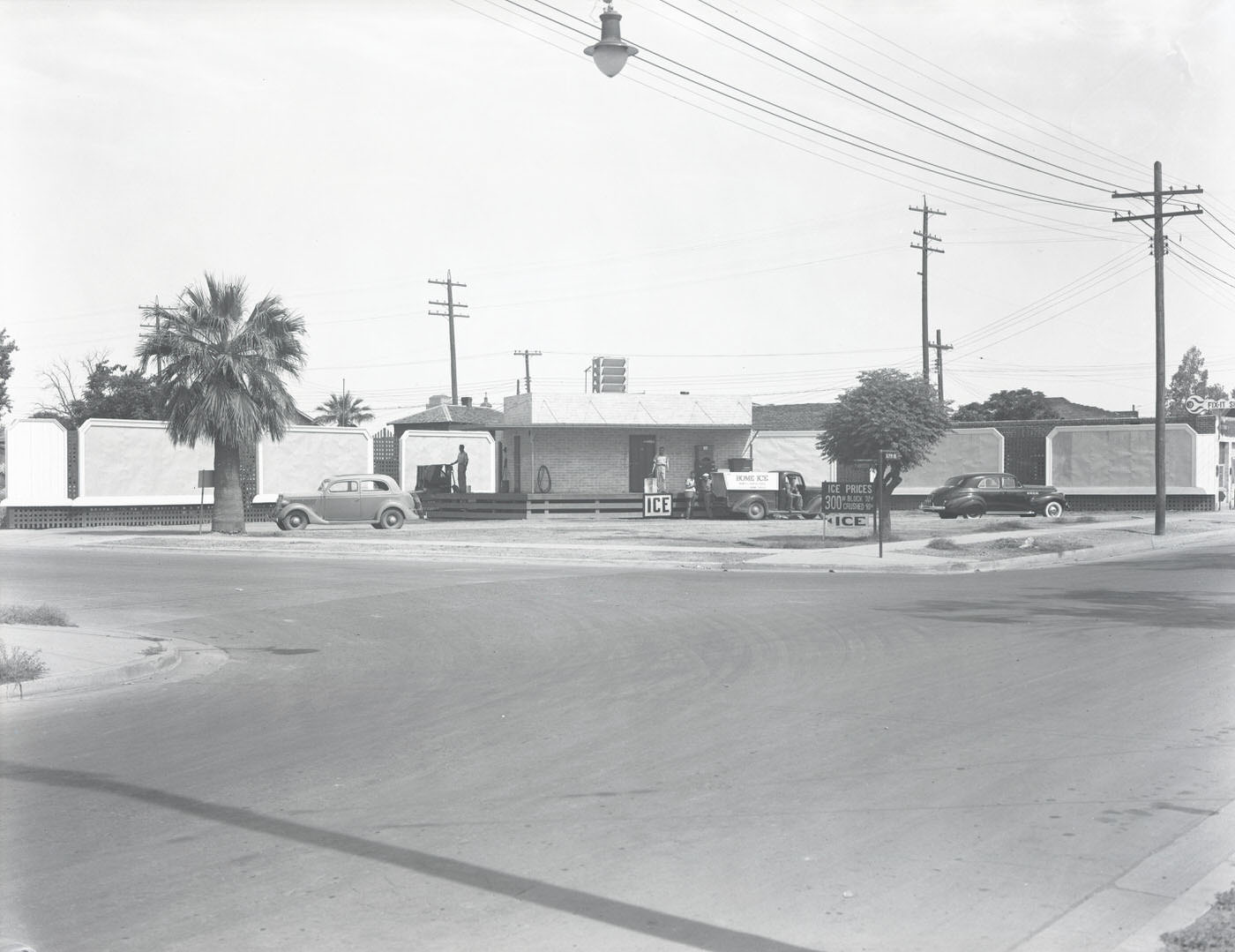
Parades moved through downtown streets, drawing crowds in front of local businesses. The Luhrs Tower loomed in the background as floats and marchers passed the storefronts along Central Avenue. Companies like Goetz Ice Co. even entered floats in these parades, using them as a form of community advertising at a time when local businesses depended heavily on neighborhood goodwill.
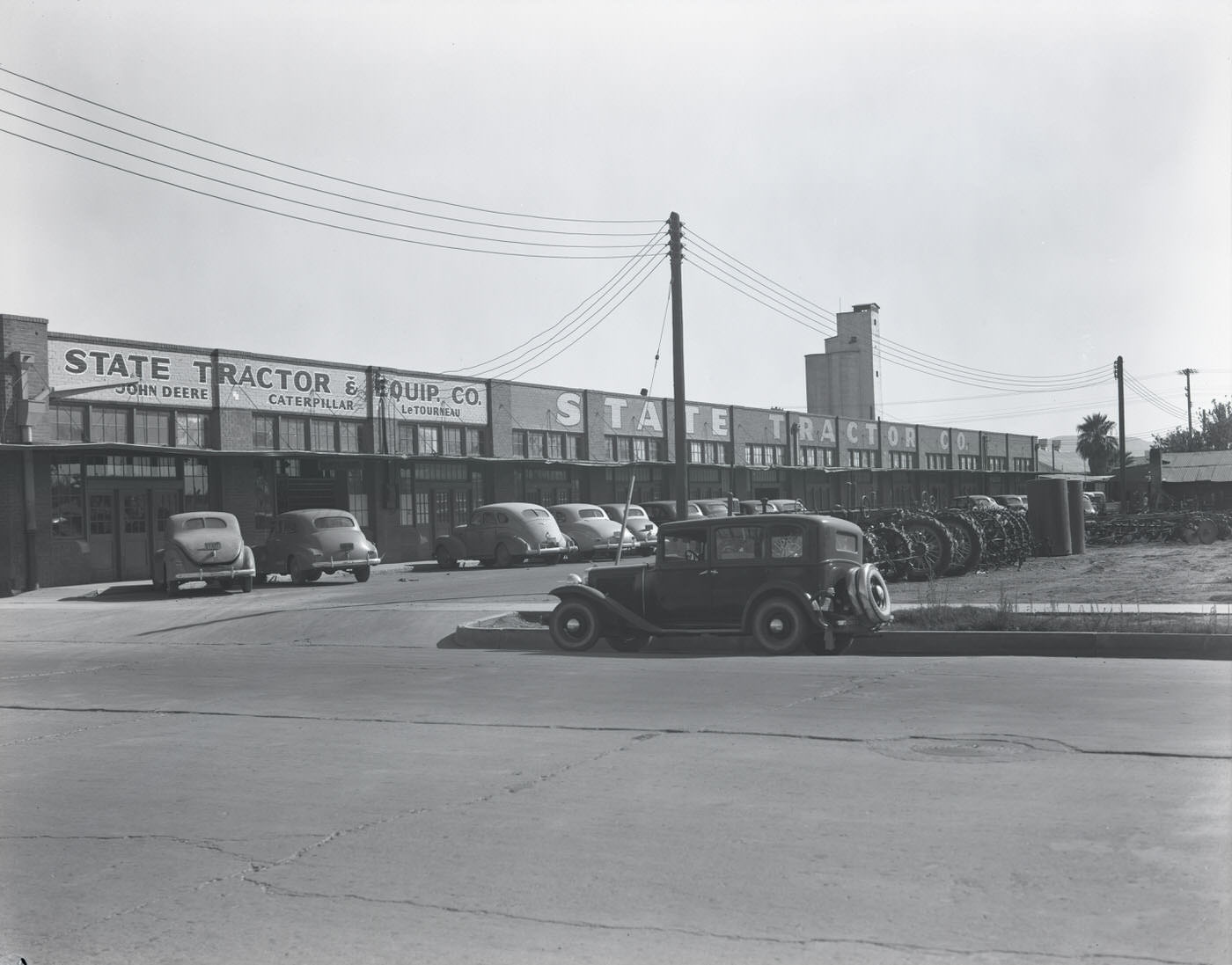
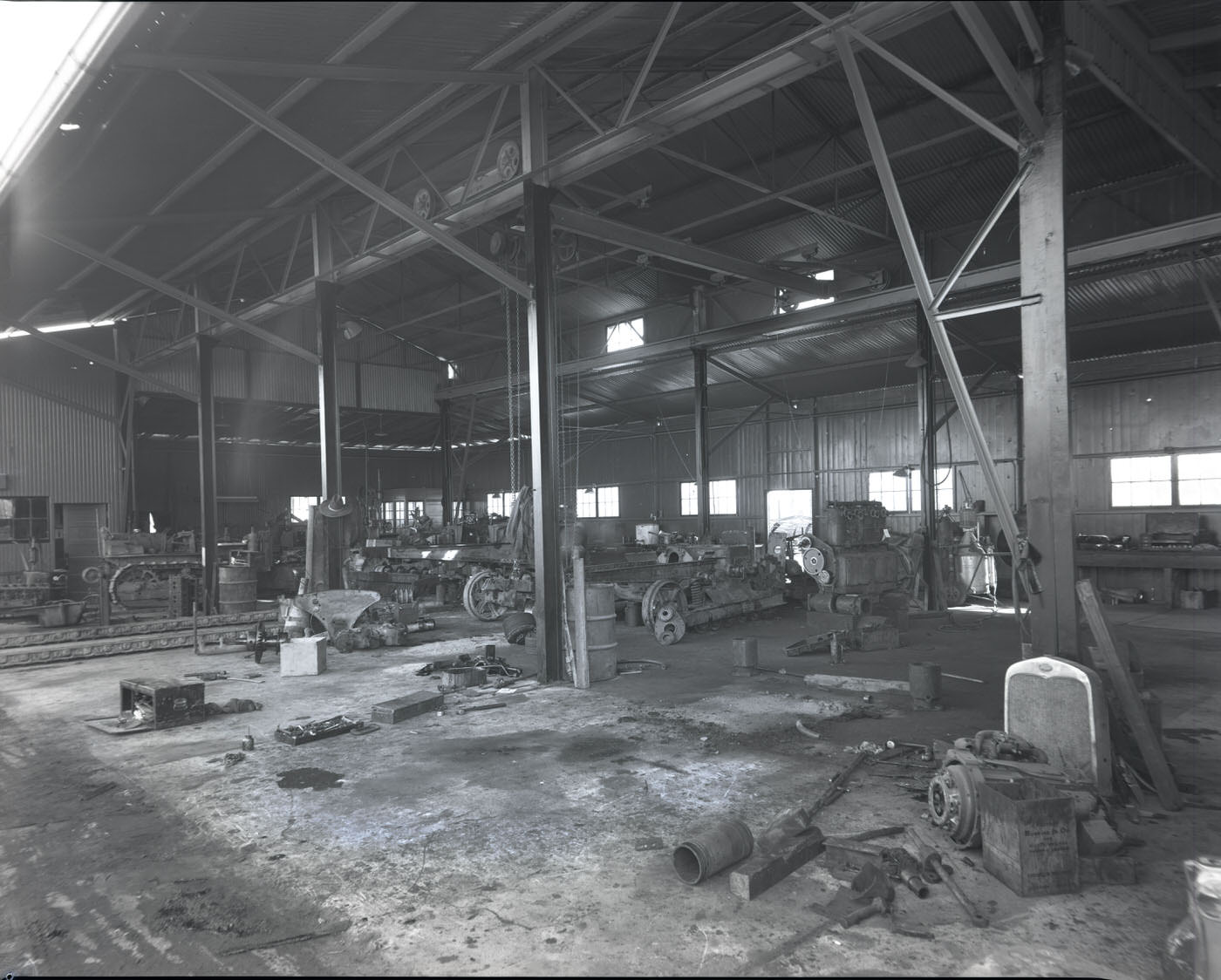
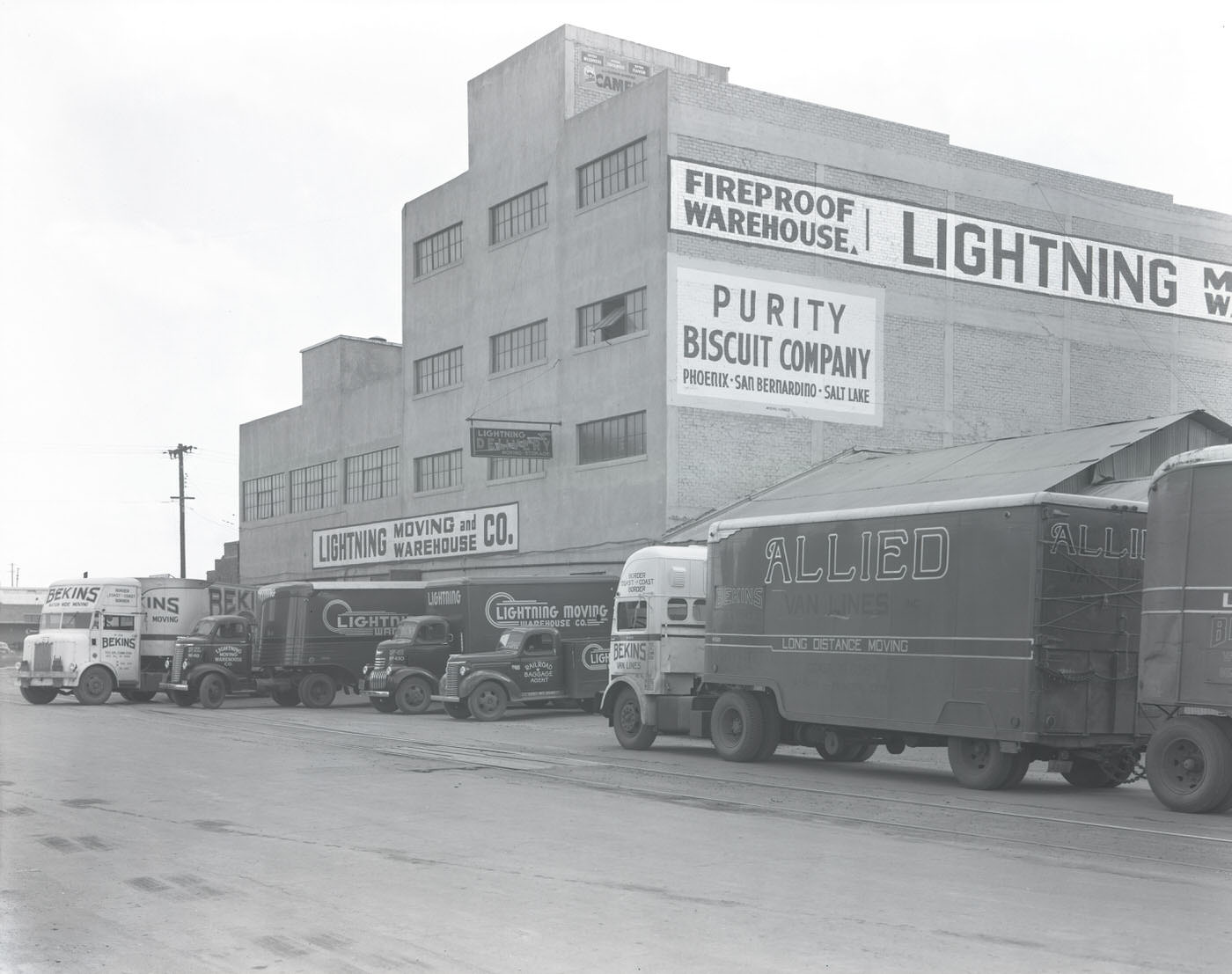
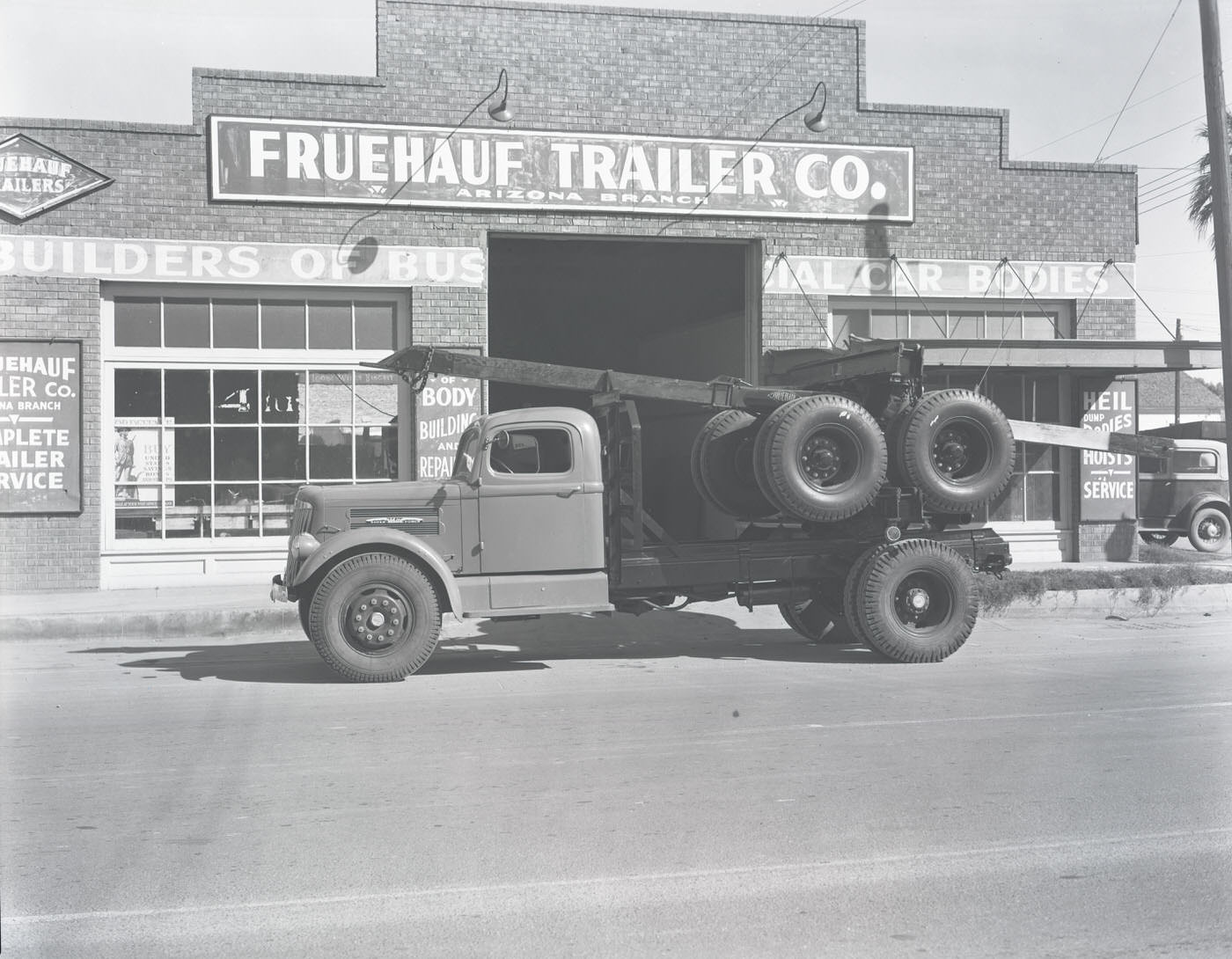
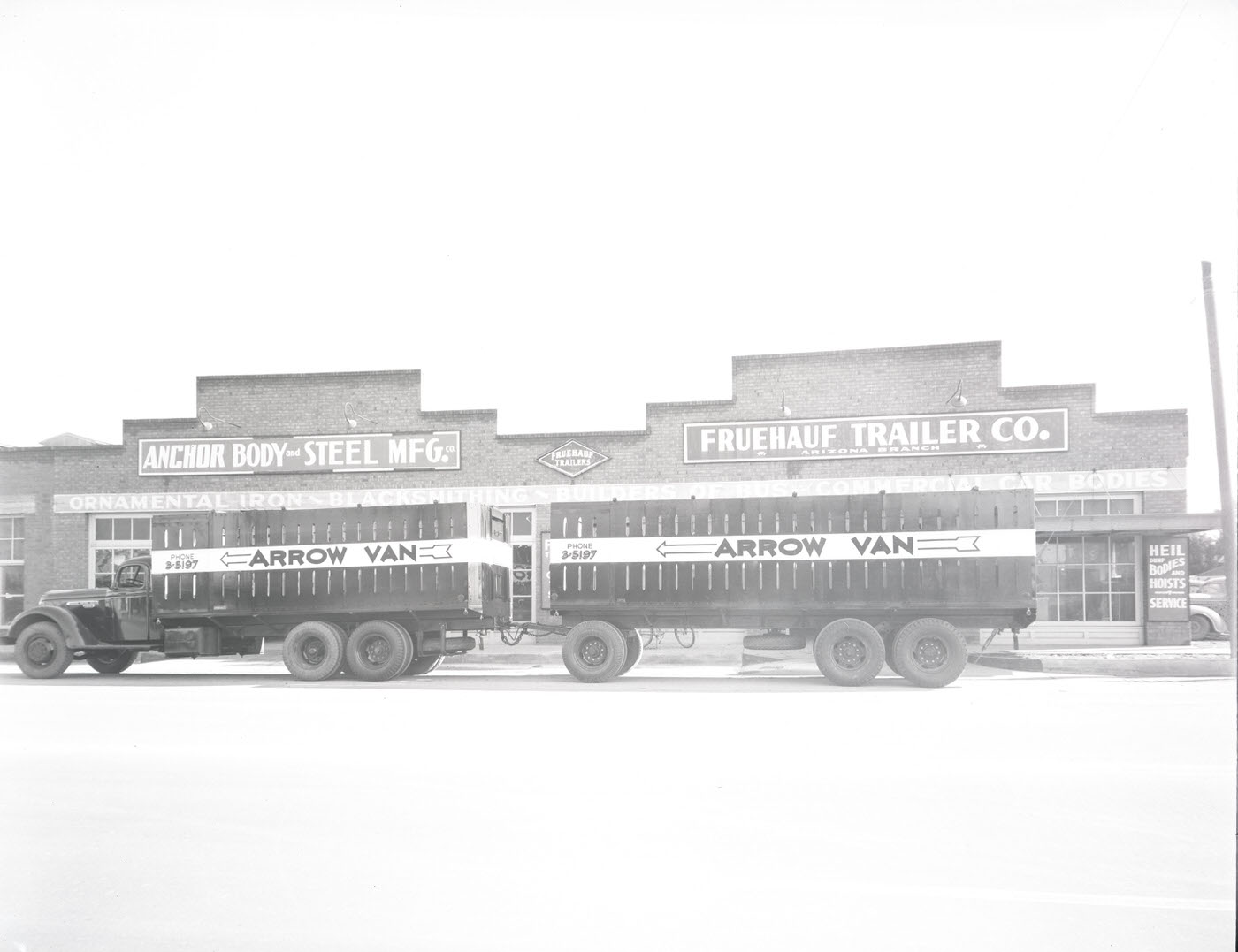
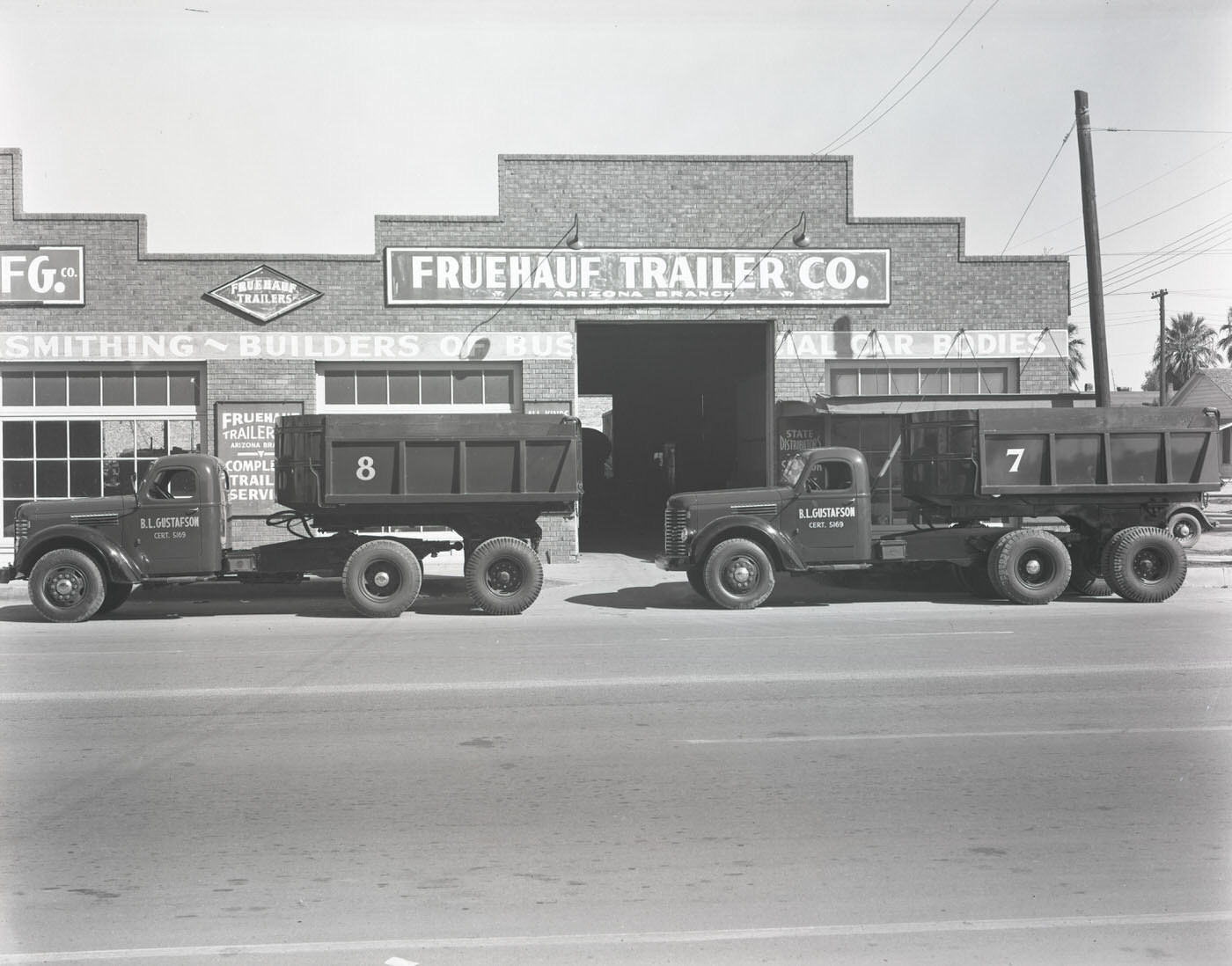
Heavy equipment dealers like State Tractor & Equipment Co. reflected the agricultural backbone of the Phoenix economy. Inside their showroom floors sat the machinery that kept the region’s farms running. Warehousing and freight operations were equally important. Lightning Moving & Warehouse Co. stored goods, while Fruehauf Trailer Co. supplied the hauling industry with the trucks and trailers needed to move products across the desert Southwest.
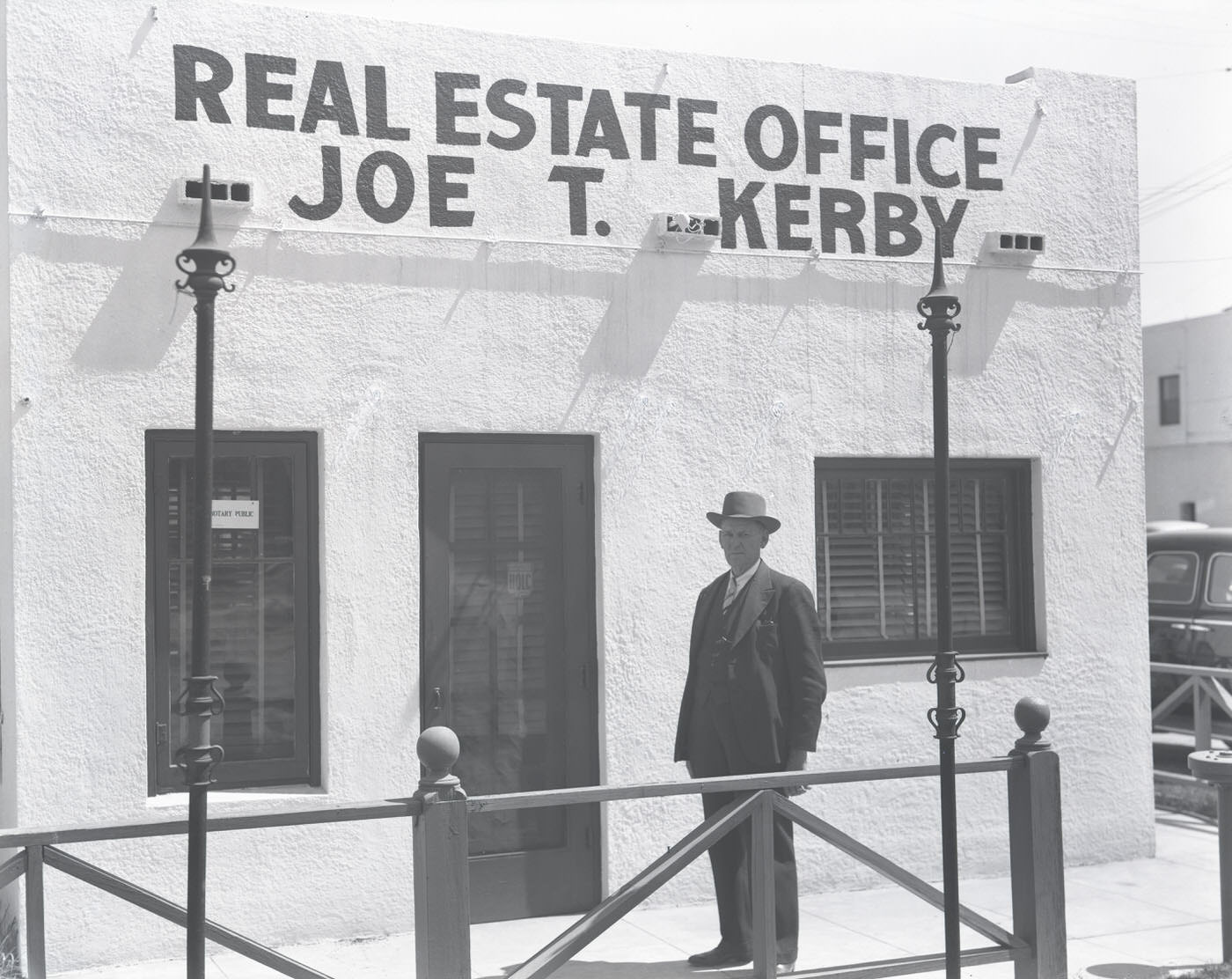
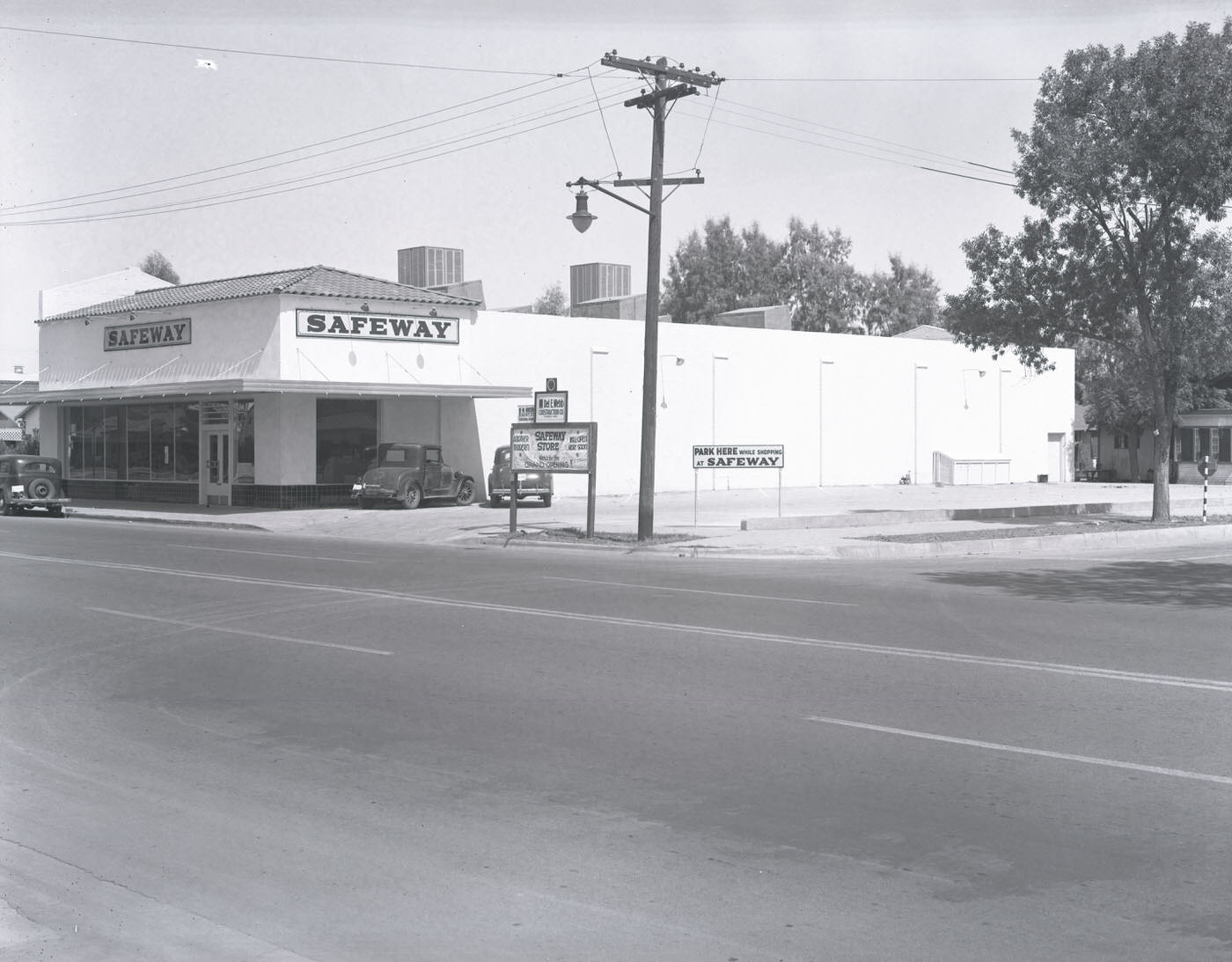
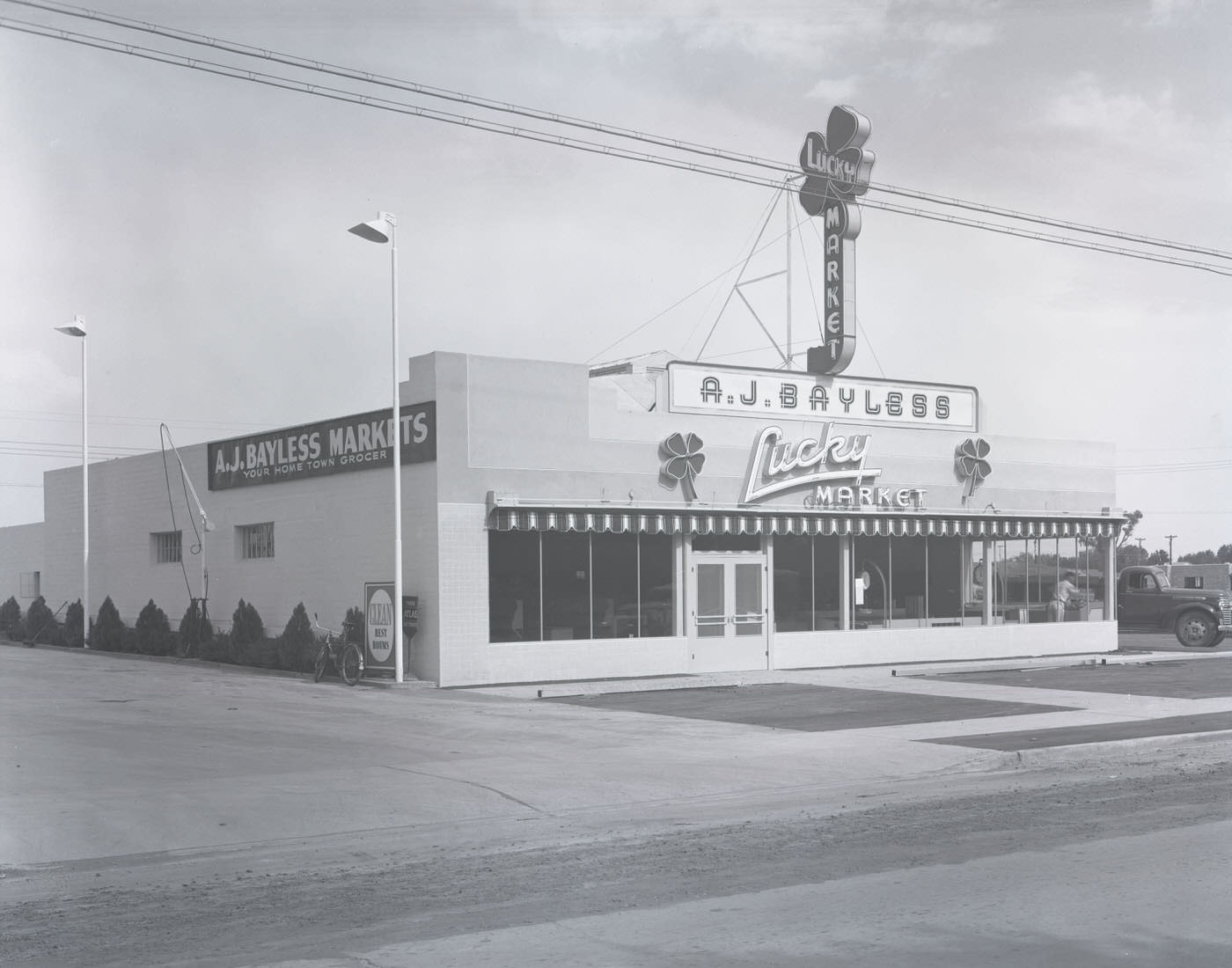
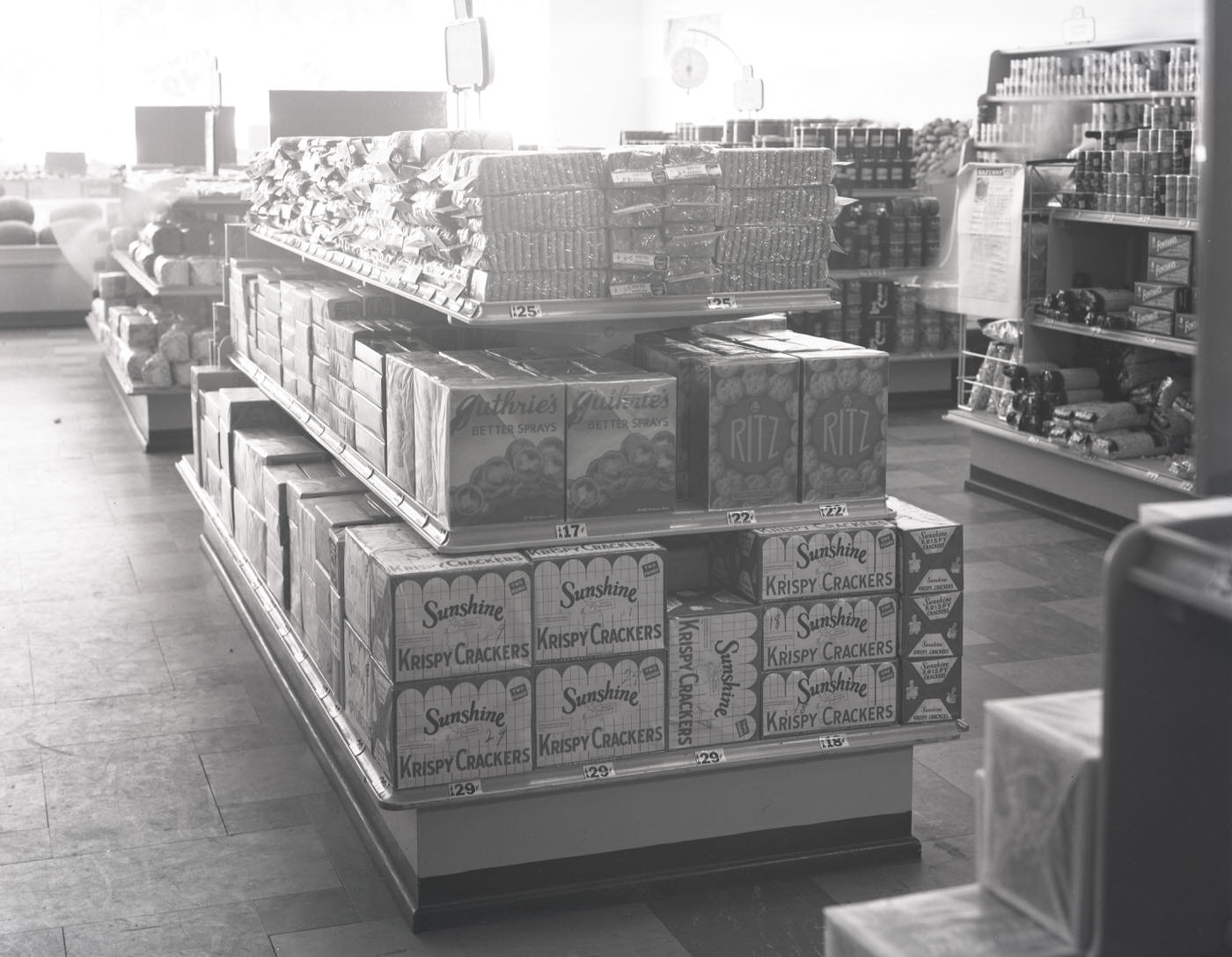
Real estate was also on the move. Joe Kerby’s real estate office stood as a sign of the city’s expansion, handling property transactions in a market that was tightening as more people arrived. Grocery stores like Safeway and A. J. Bayless Co. stocked their shelves for a population that was steadily growing, their aisles photographed in careful detail — rows of crackers and cookies under bright store lighting.
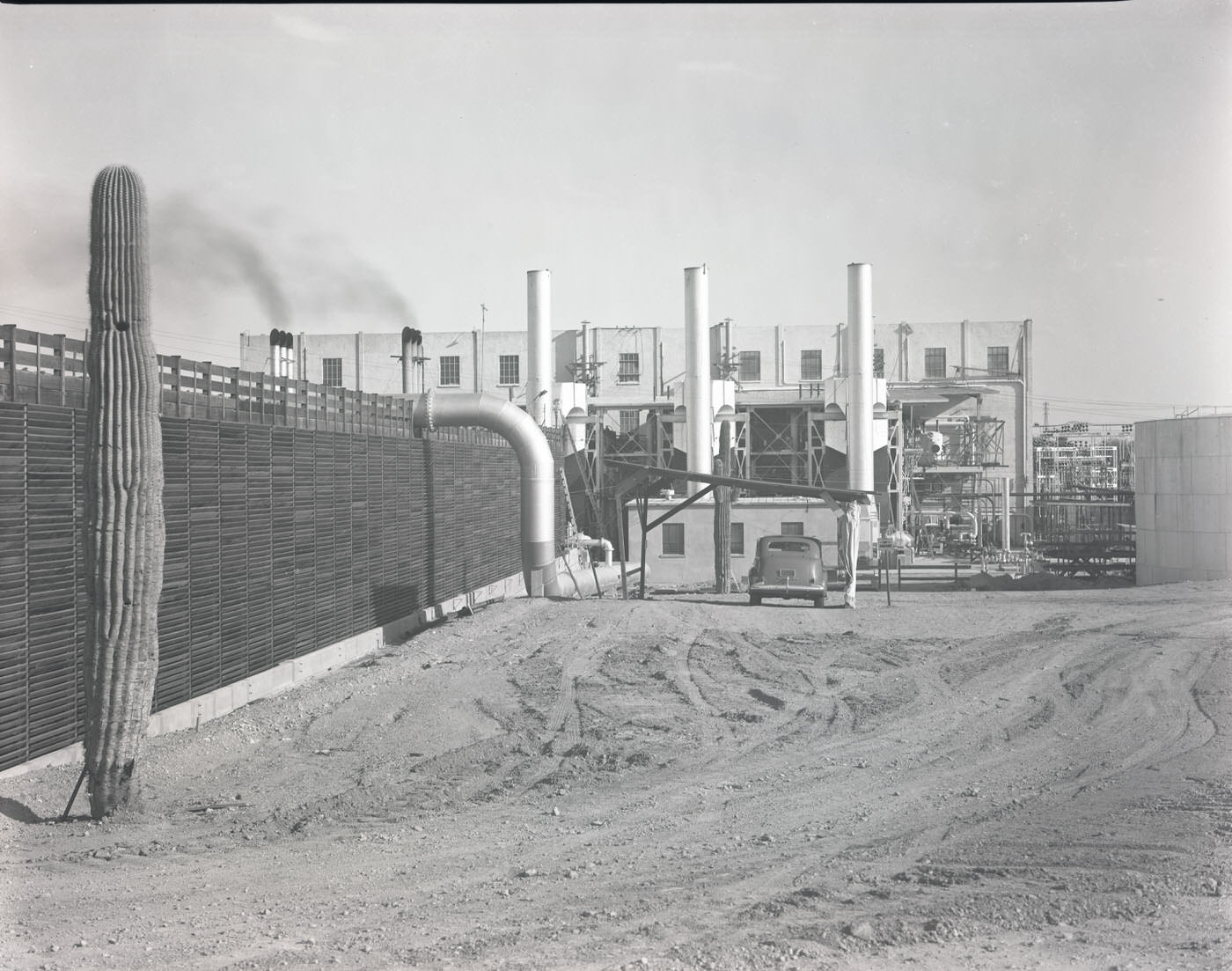
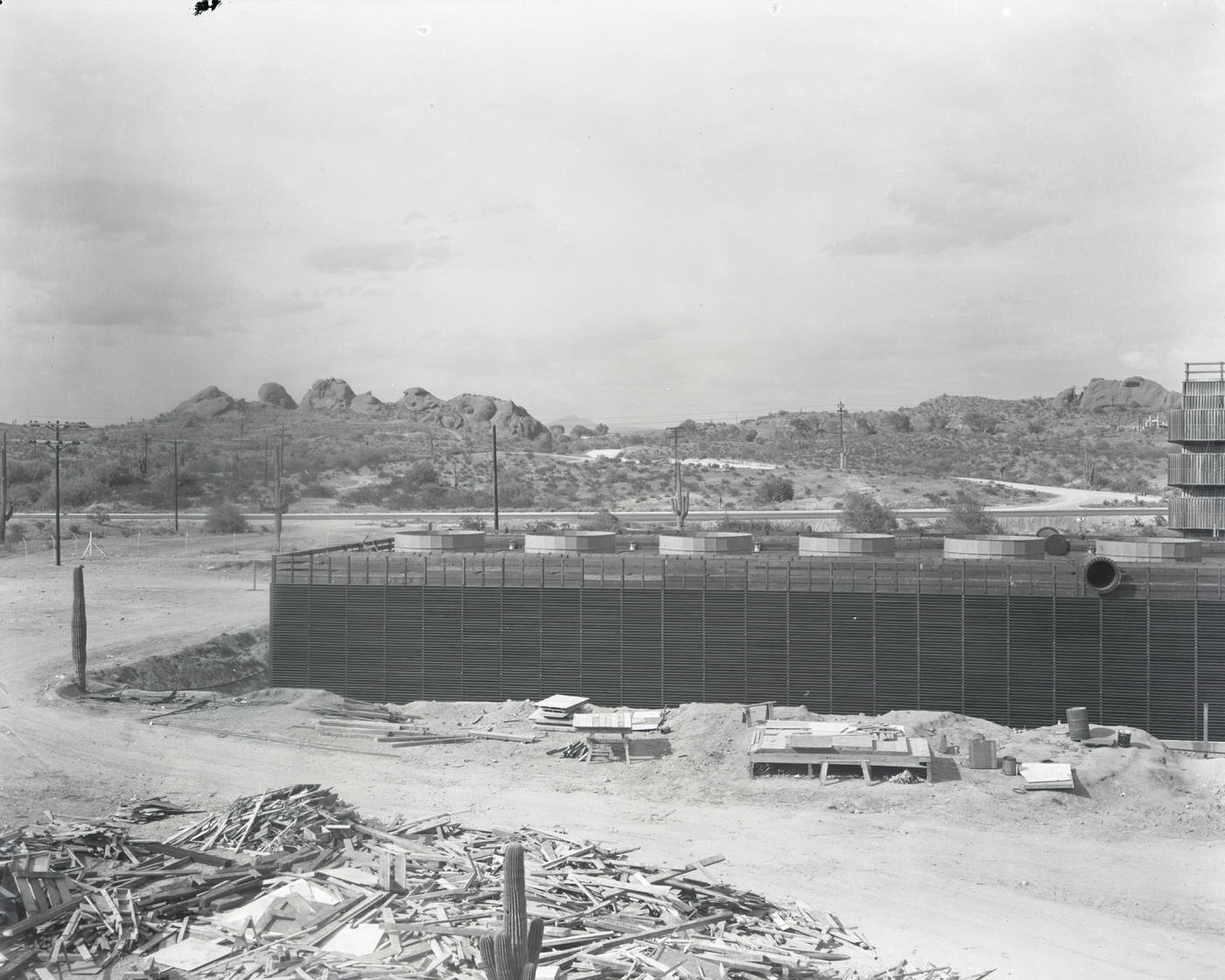
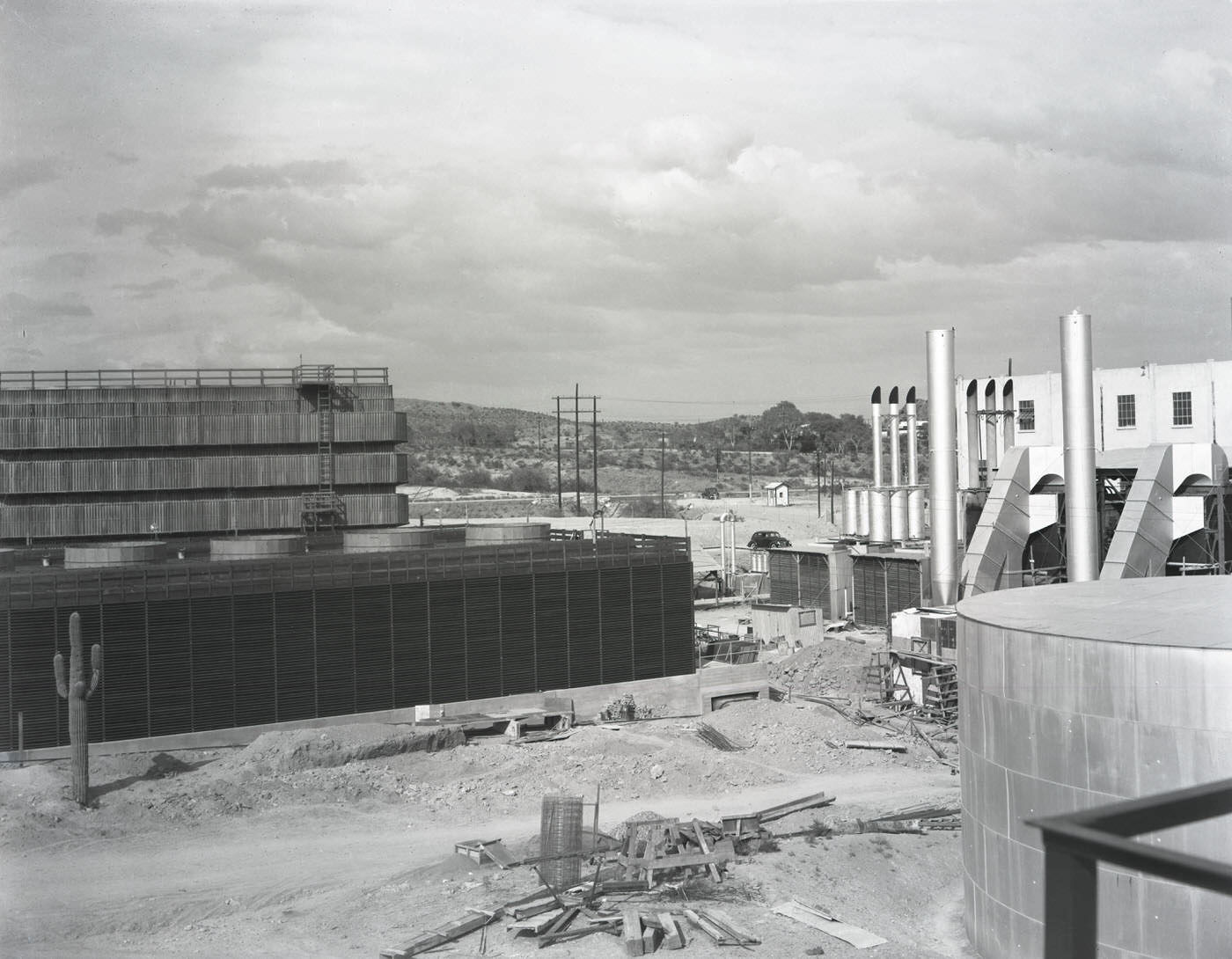
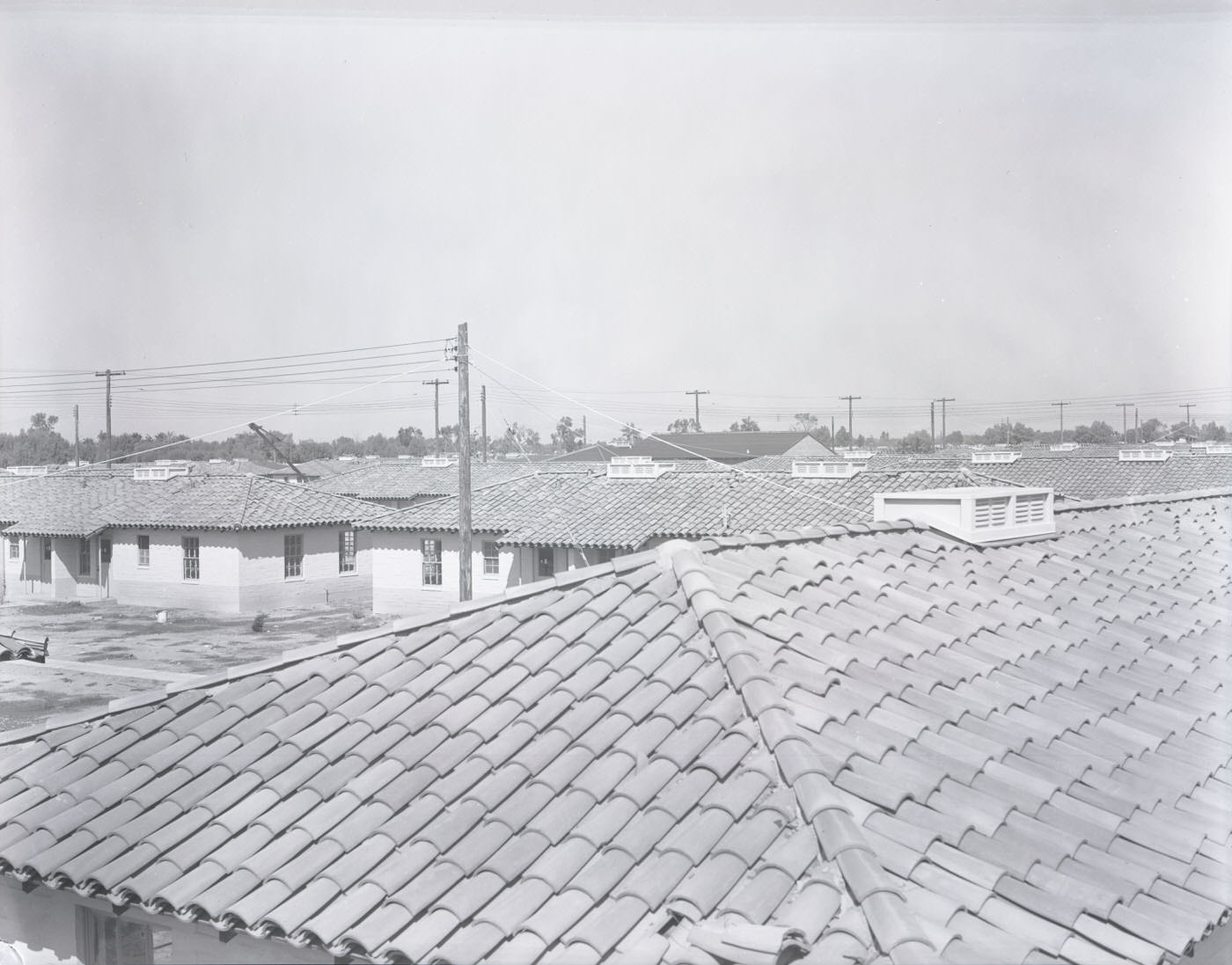
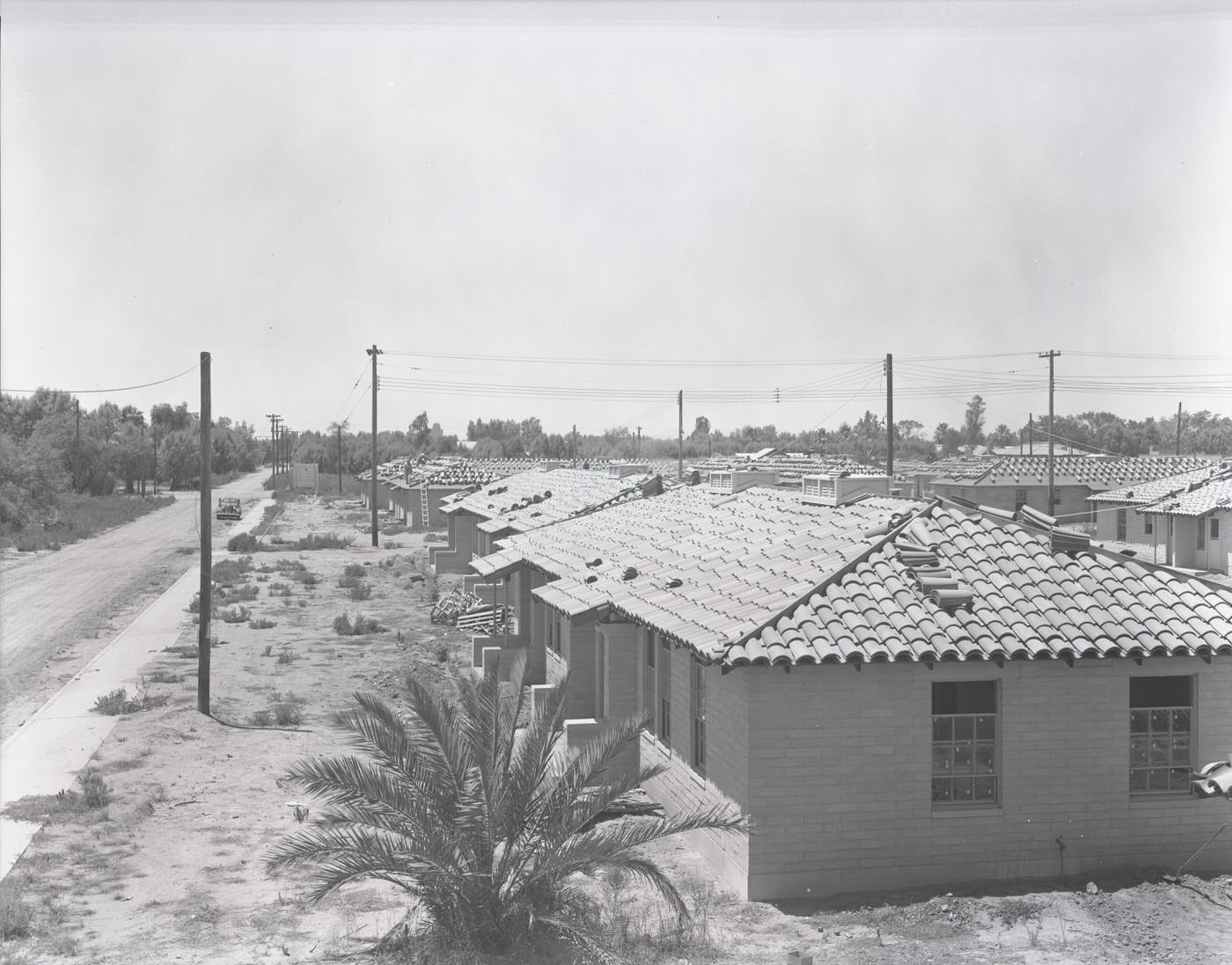
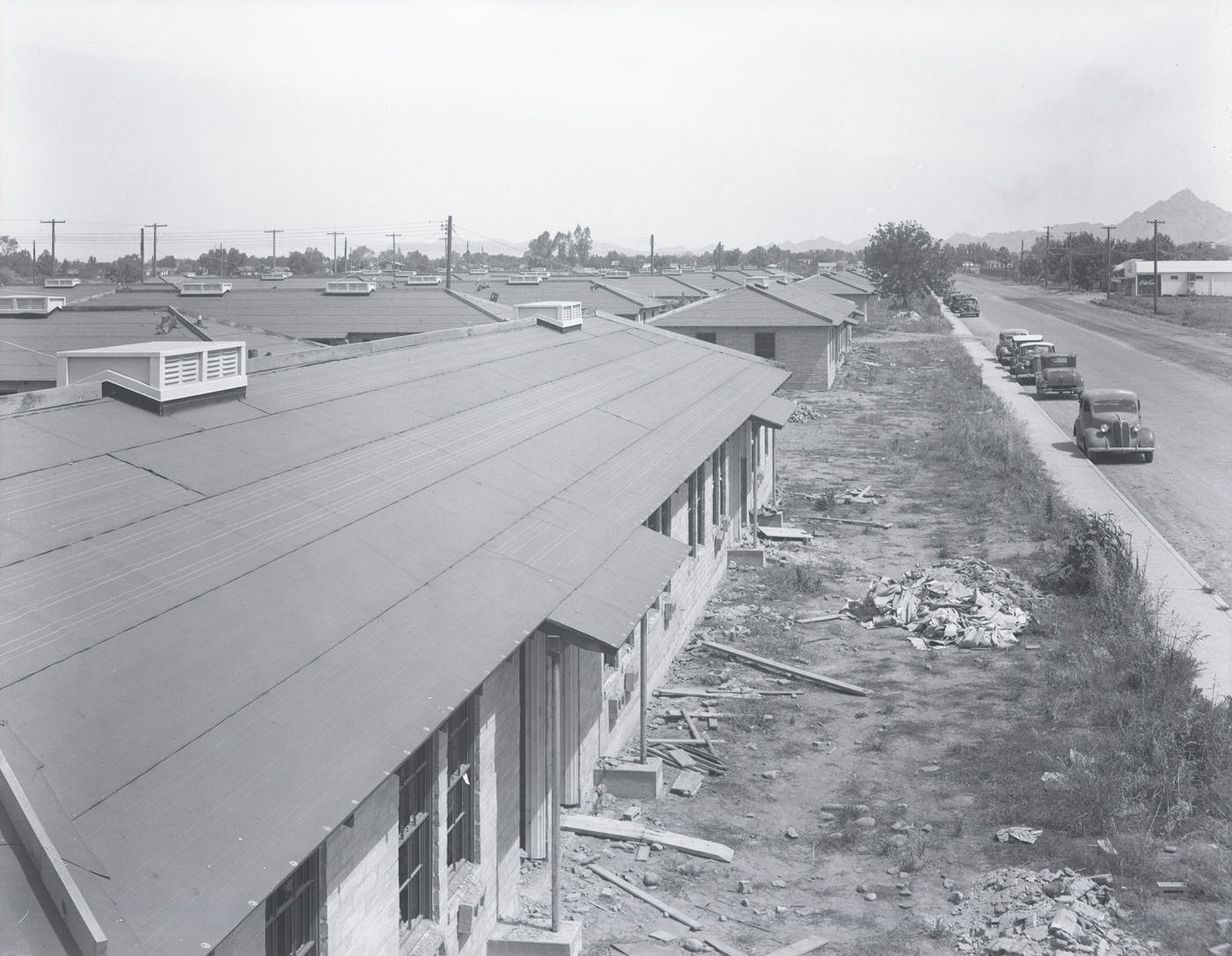
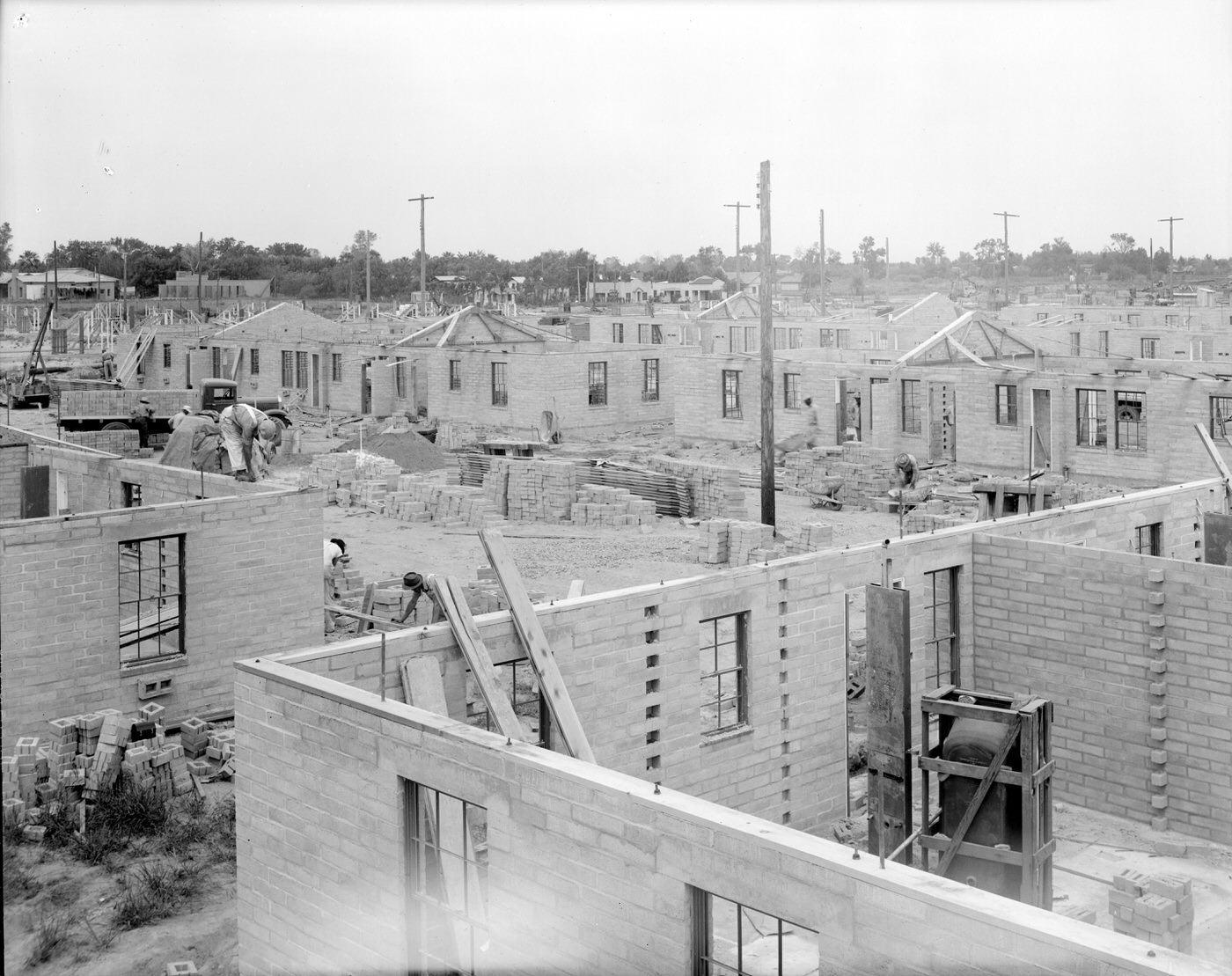
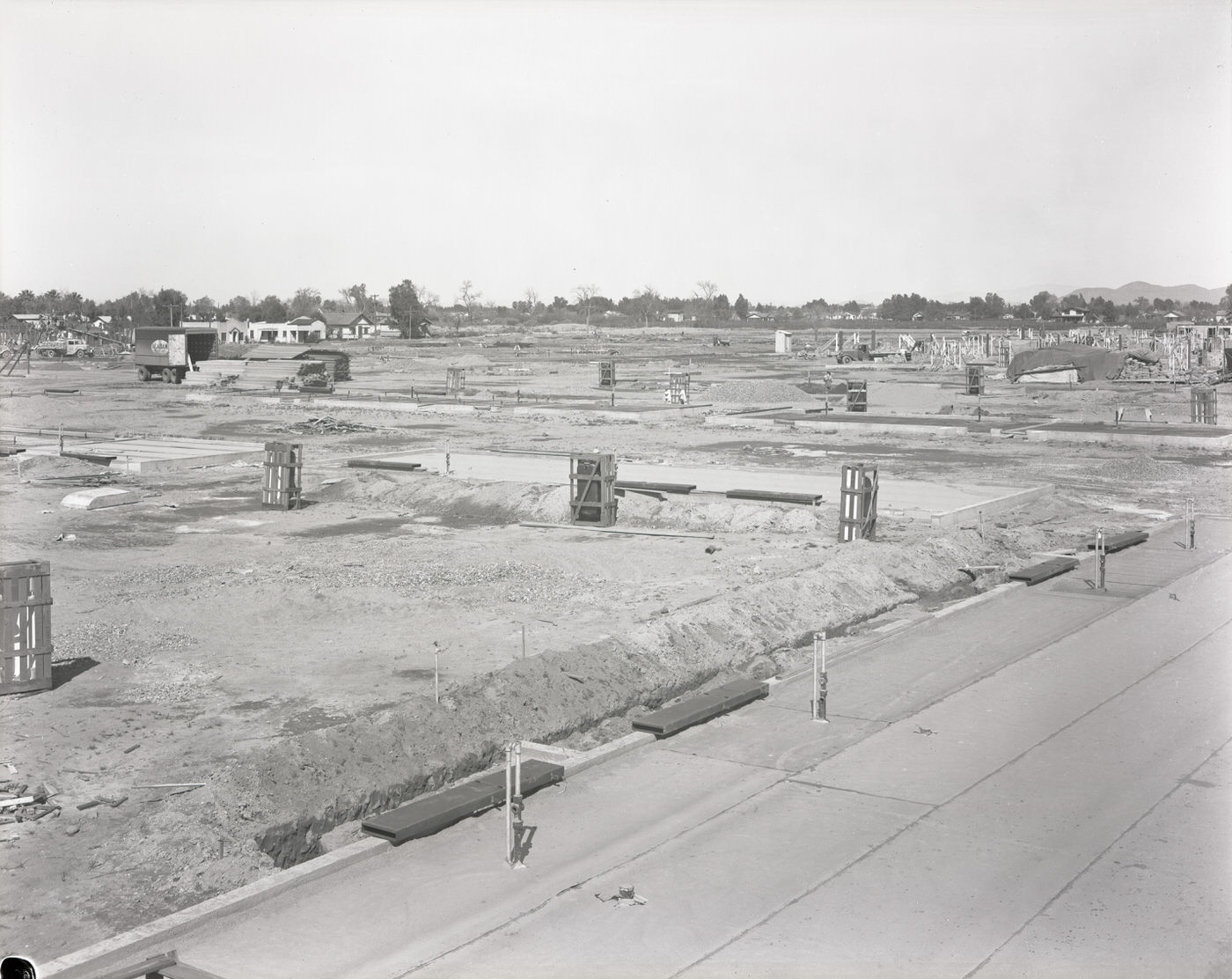
Power was essential to a city growing in the desert heat. The Salt River Project operated a diesel plant that kept electricity flowing to homes and businesses across Phoenix. Construction was constant. E. W. Duhame Construction Co. appeared across multiple job sites, their work visible in photographs taken at different stages of building — from raw ground to rising structures.
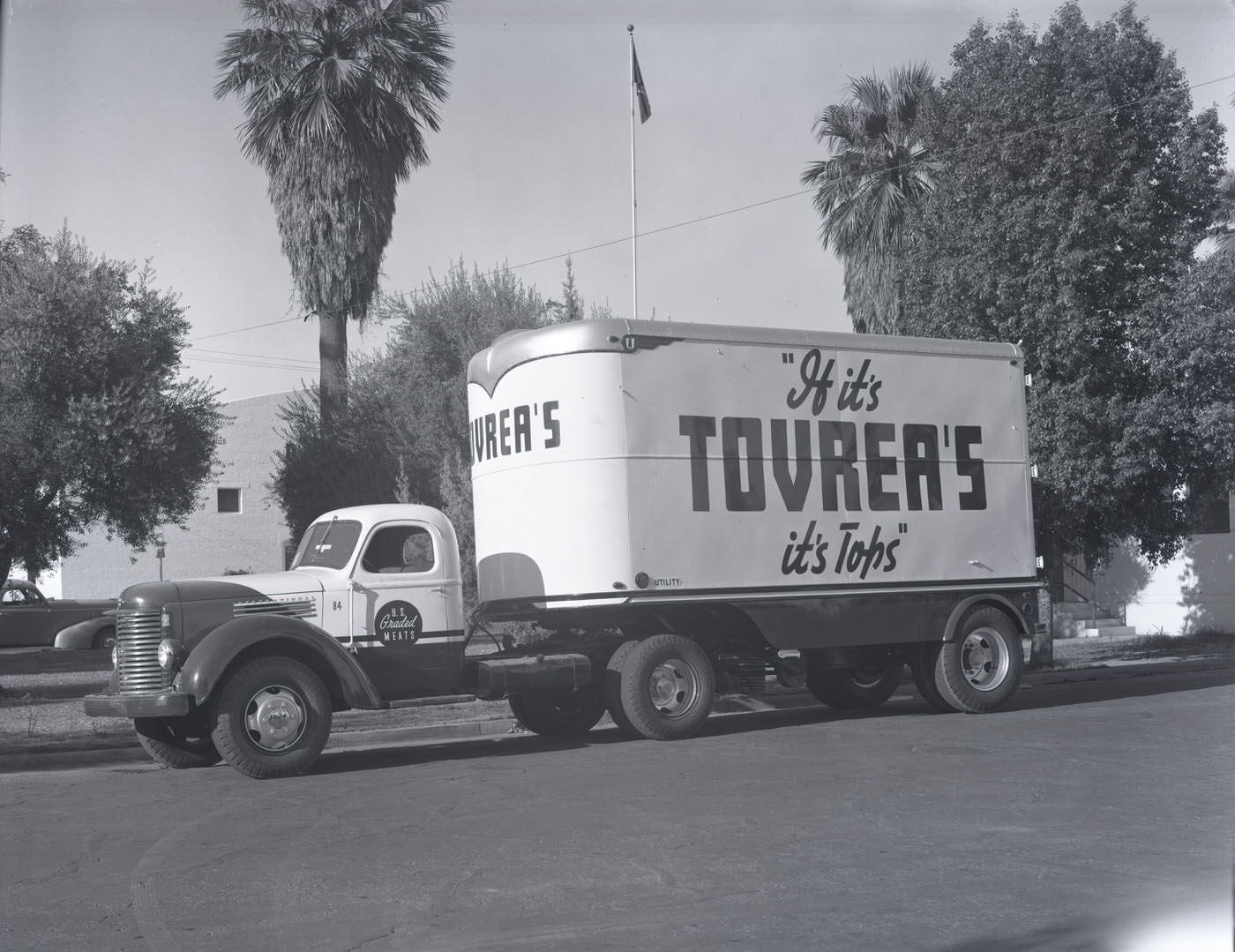
The agricultural industry kept its own fleet of vehicles on the road. Tovrea Meat Co. ran branded trucks through Phoenix streets, a name tied to the city’s cattle industry. Goodyear, already a major presence in Arizona, operated a test fleet photographed in 1941 — a signal that the tire and rubber industry was watching the region closely as war production demands began to mount nationally.
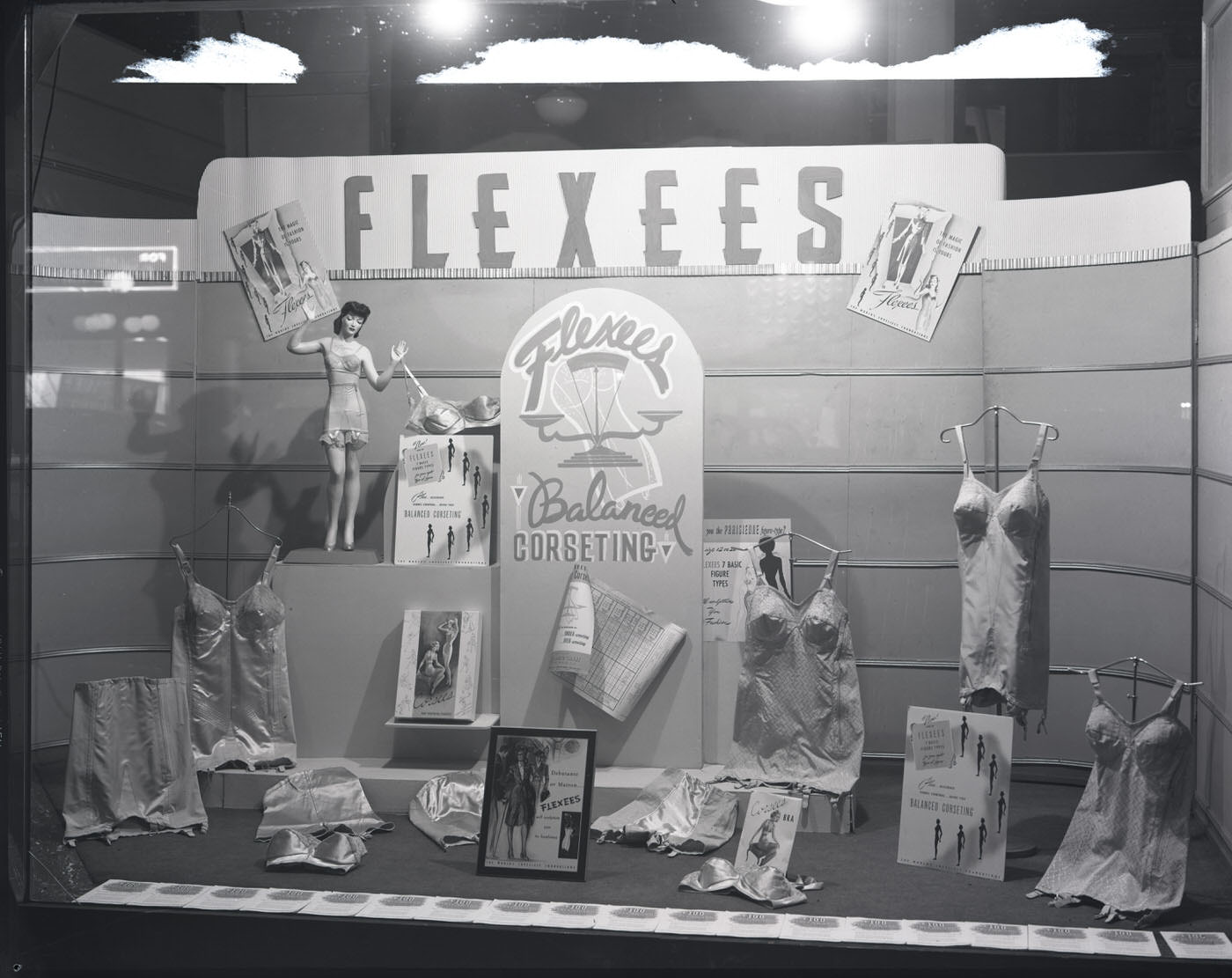
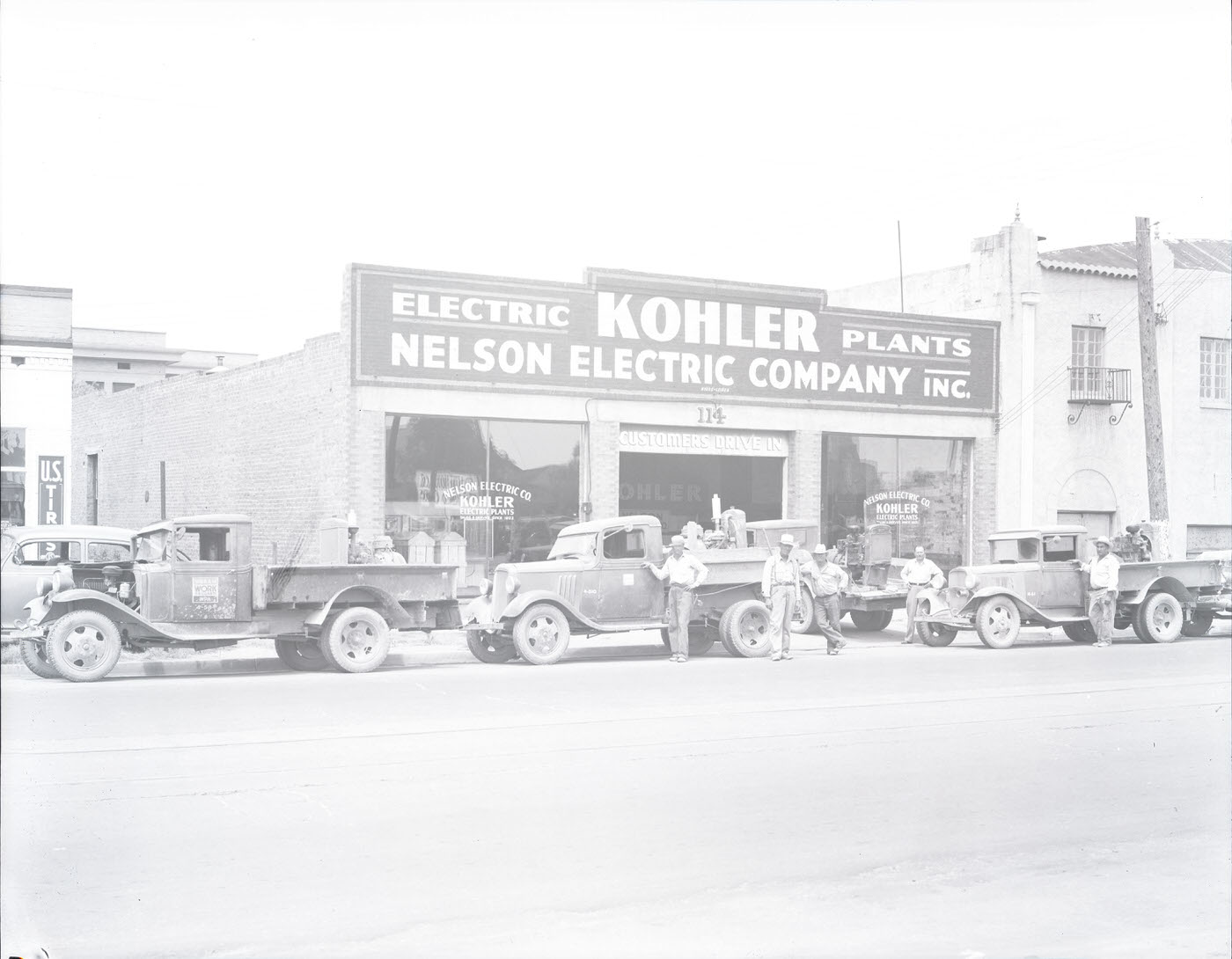
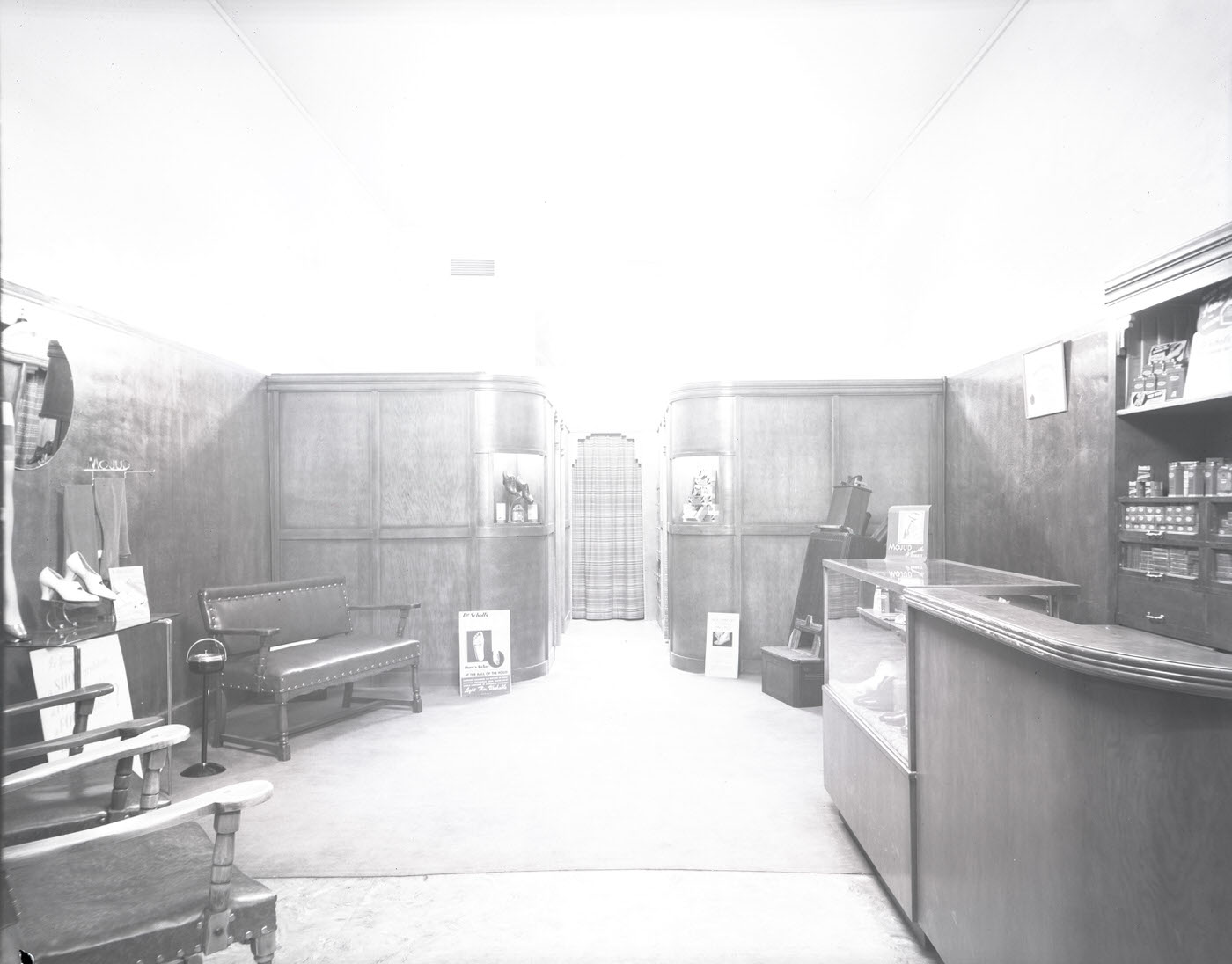
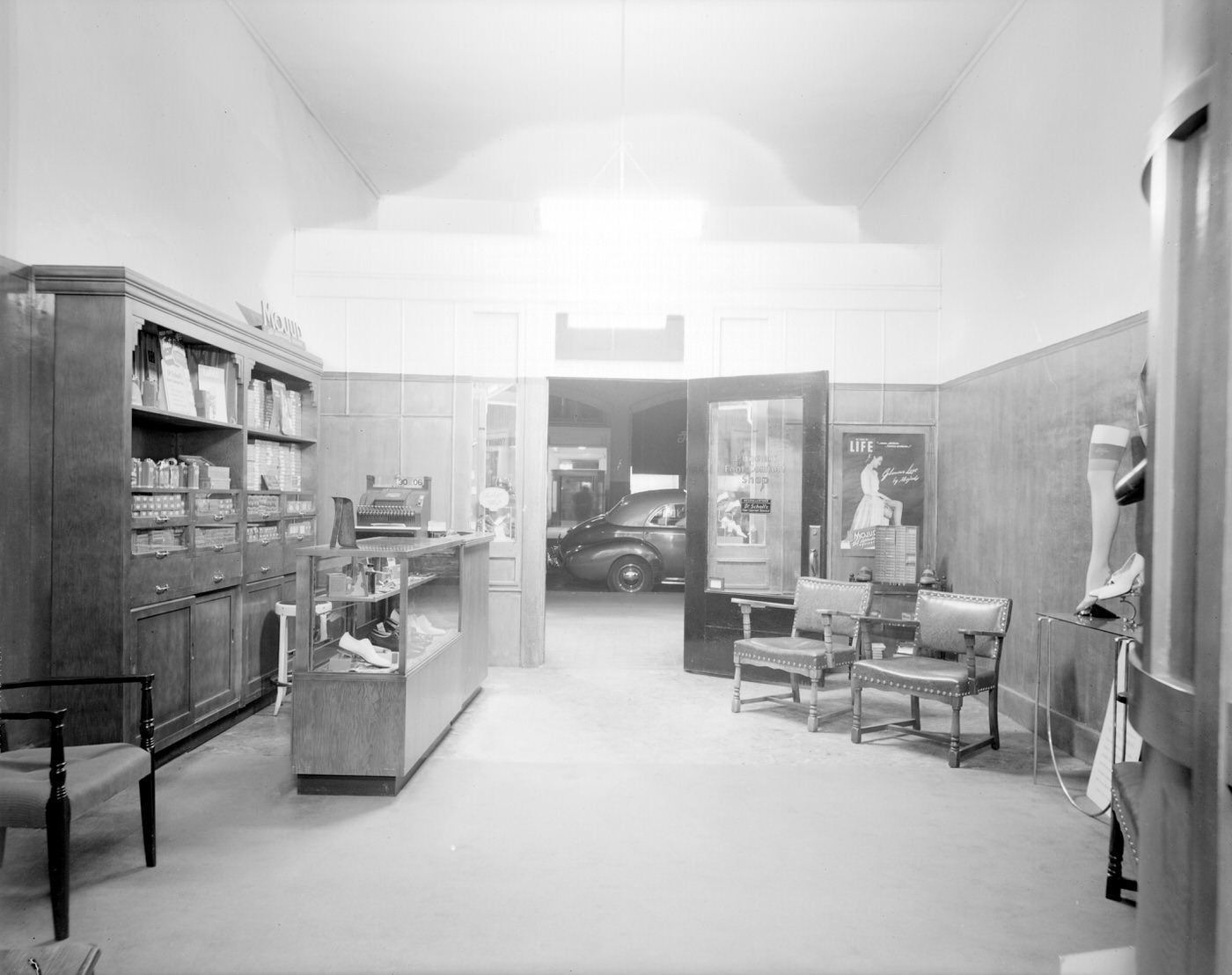
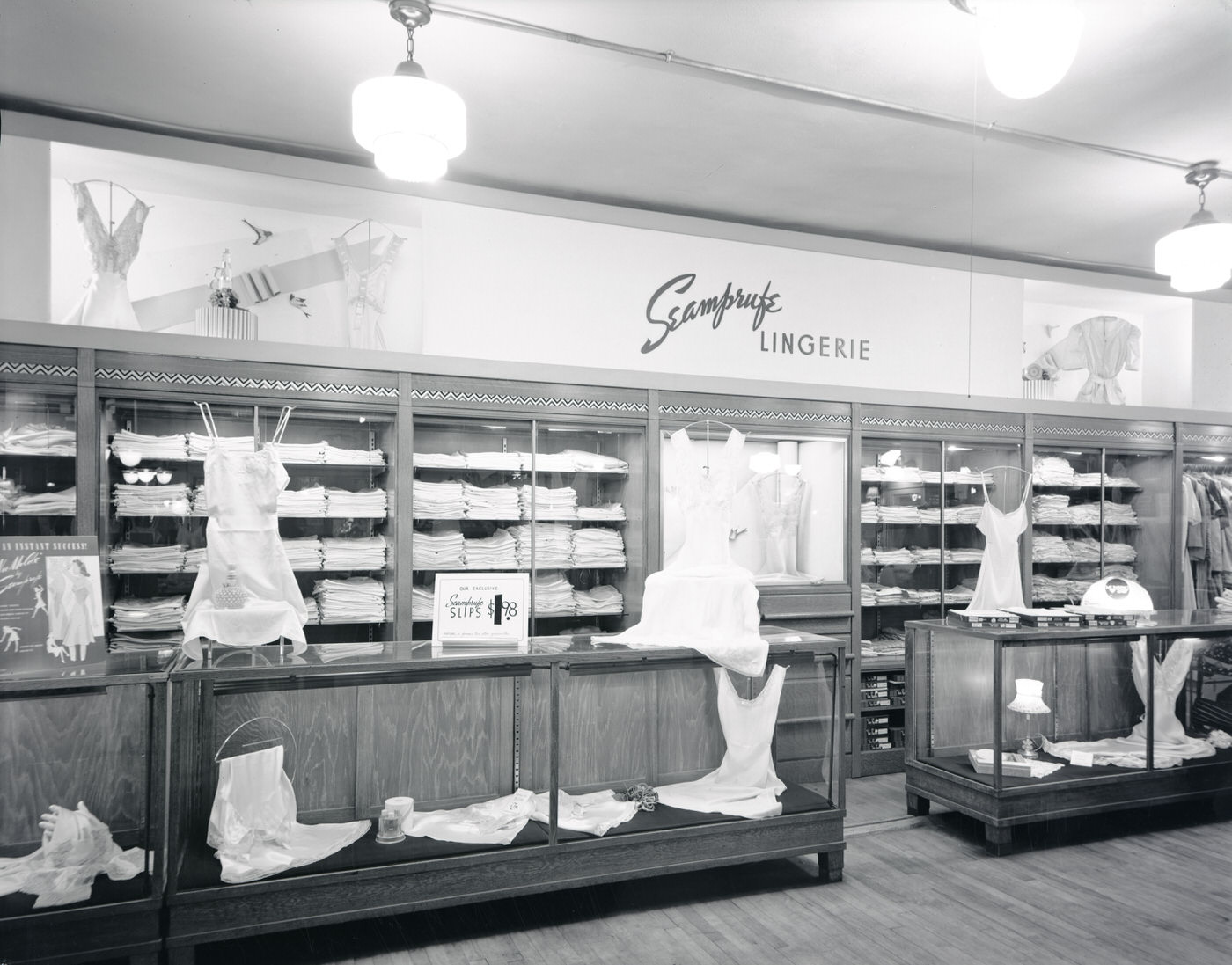
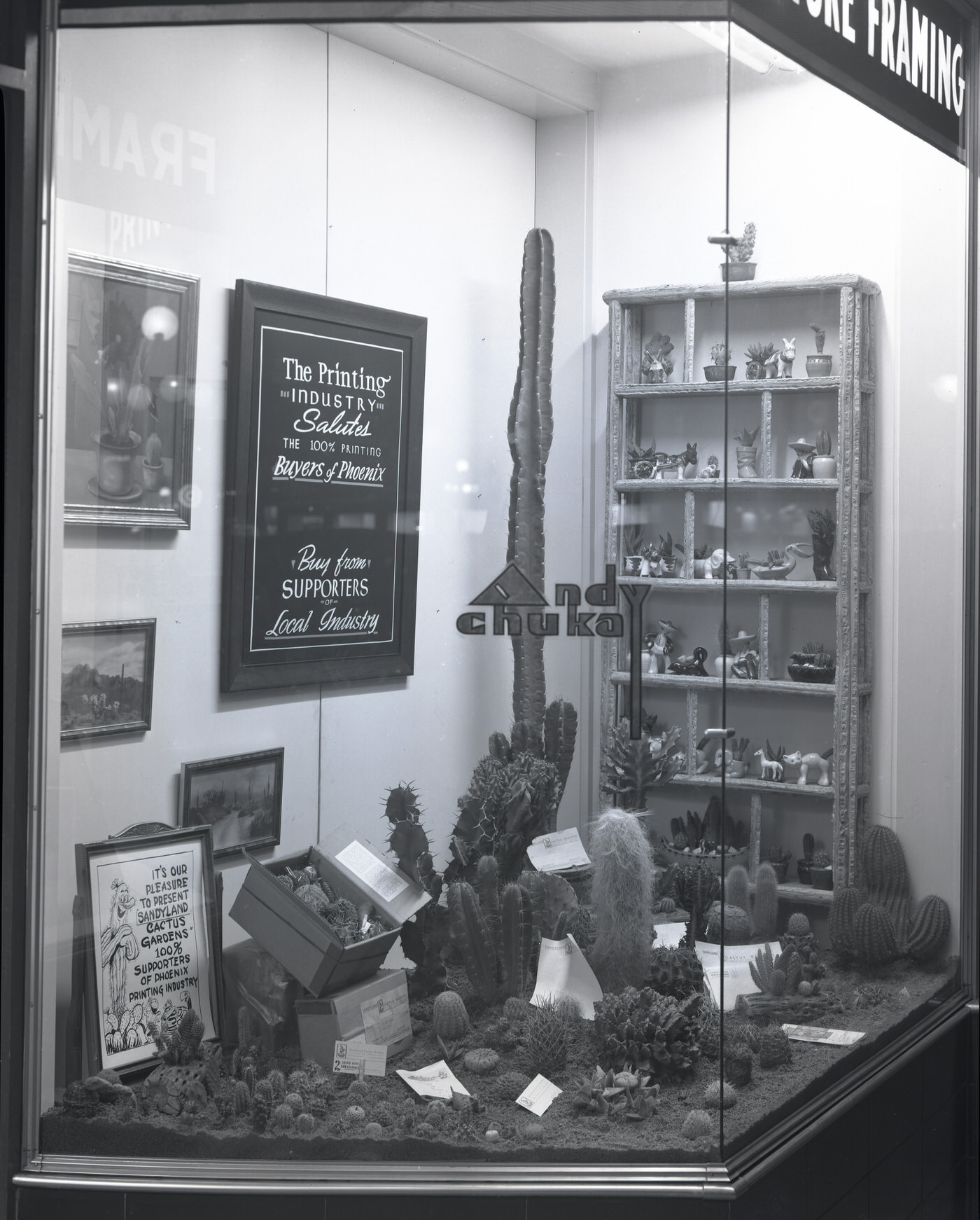
Specialty retailers filled the gaps between the larger chains. Nelson Electric Co. served the city’s growing electrical needs. Dr. Scholl’s Shoe Store kept its interior neatly organized, photographed in detail as if for a catalogue. The Boston Store’s lingerie department and Andy Chuka’s printing and picture framing shop gave the city a retail variety that spoke to a community with enough purchasing power to support niche businesses.
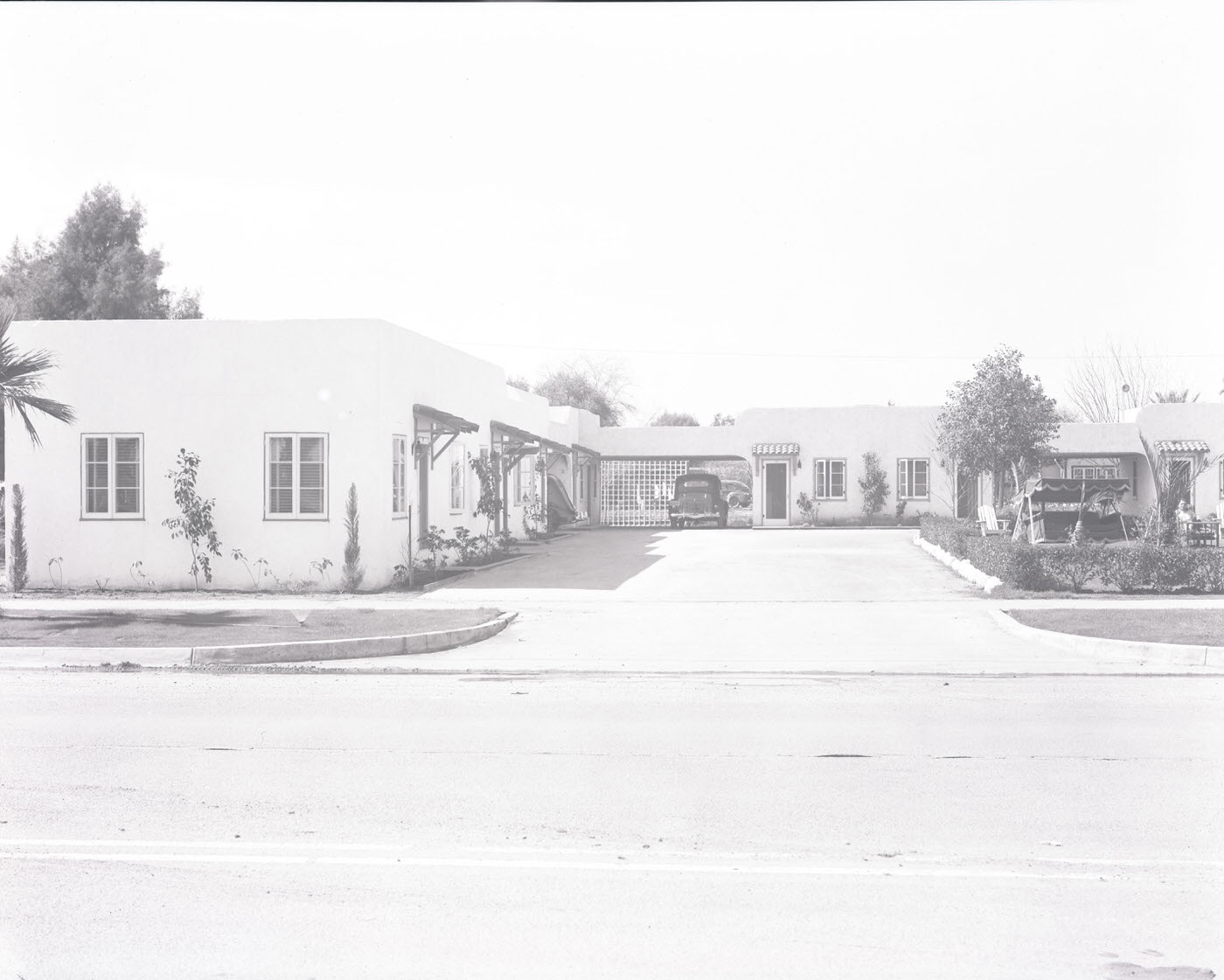
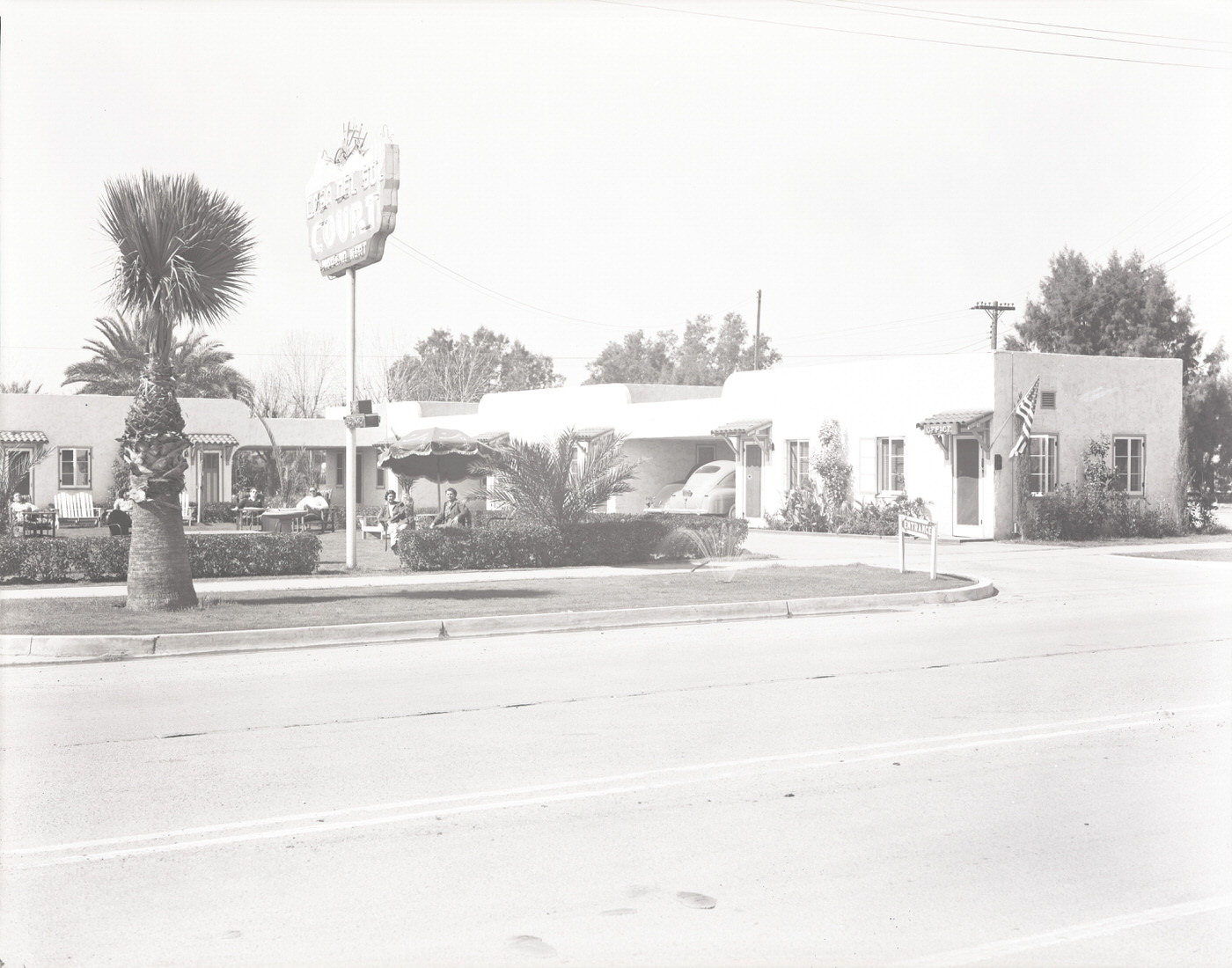
Motor courts dotted the main roads leading into and out of the city. King’s Rest Hotel Motor Court, Palm Lane Motor Court, and Casa del Sol Auto Court all catered to the wave of automobile travelers passing through Phoenix. These roadside stops were more than just places to sleep — they were part of a new kind of American mobility that the highway system was enabling.
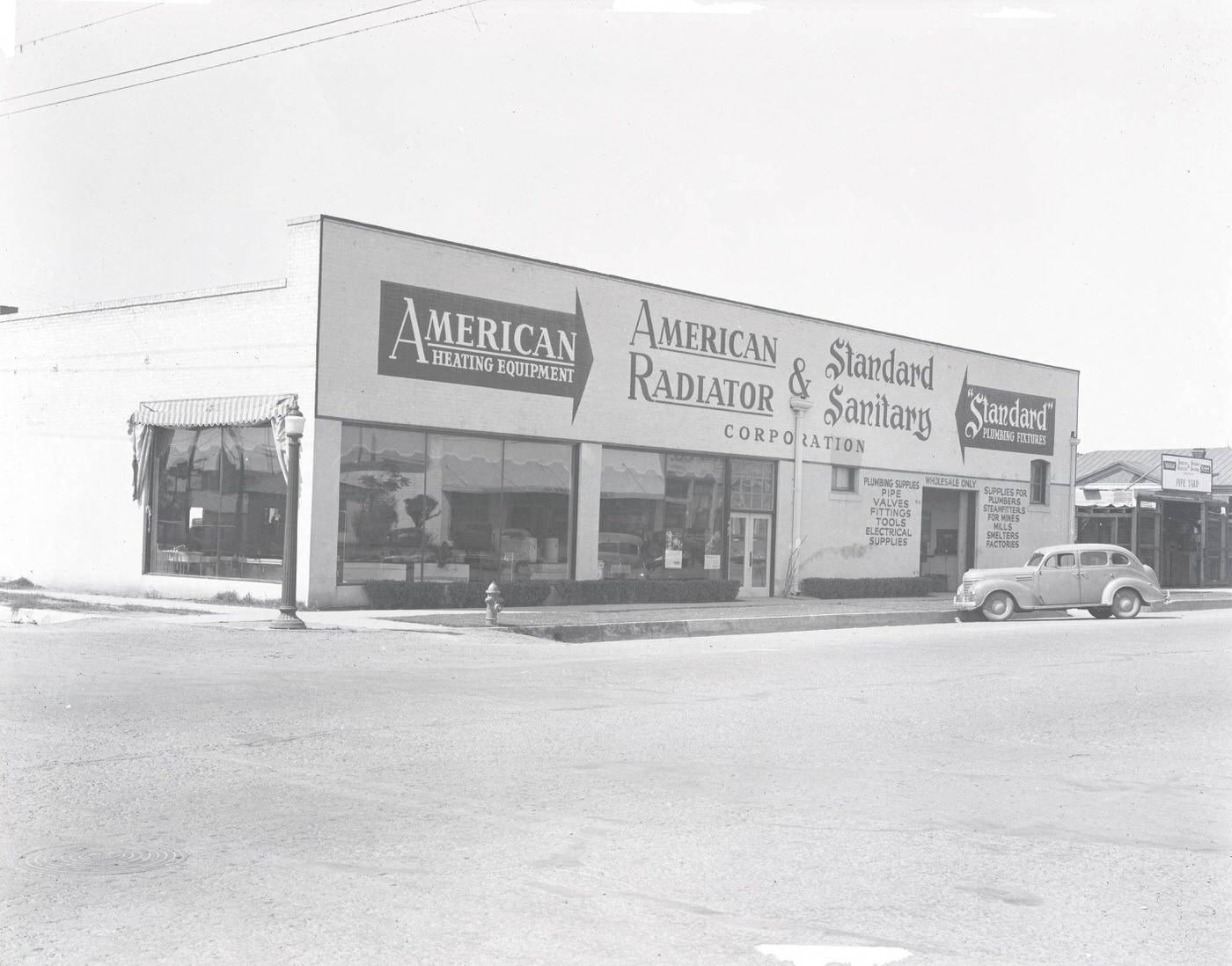
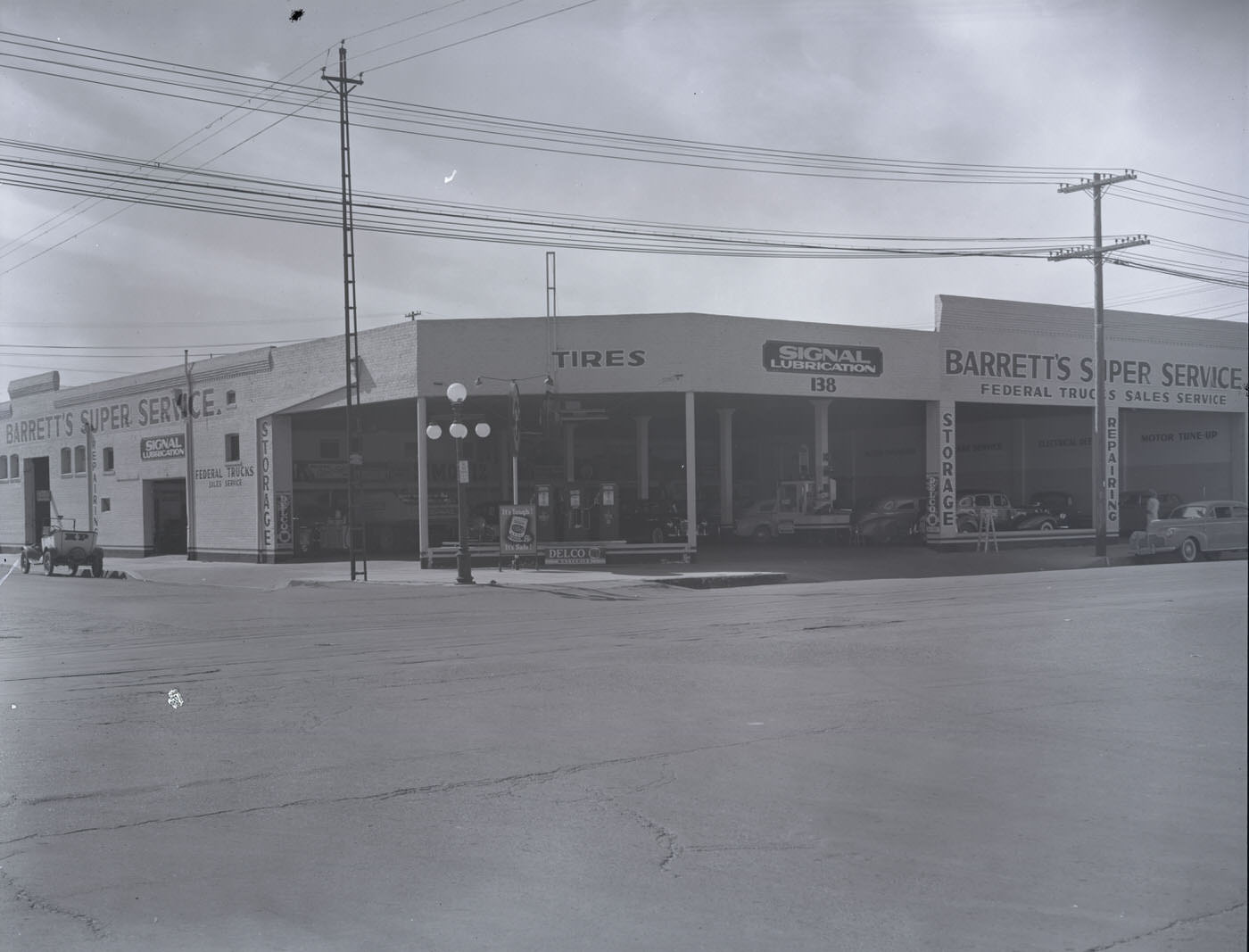
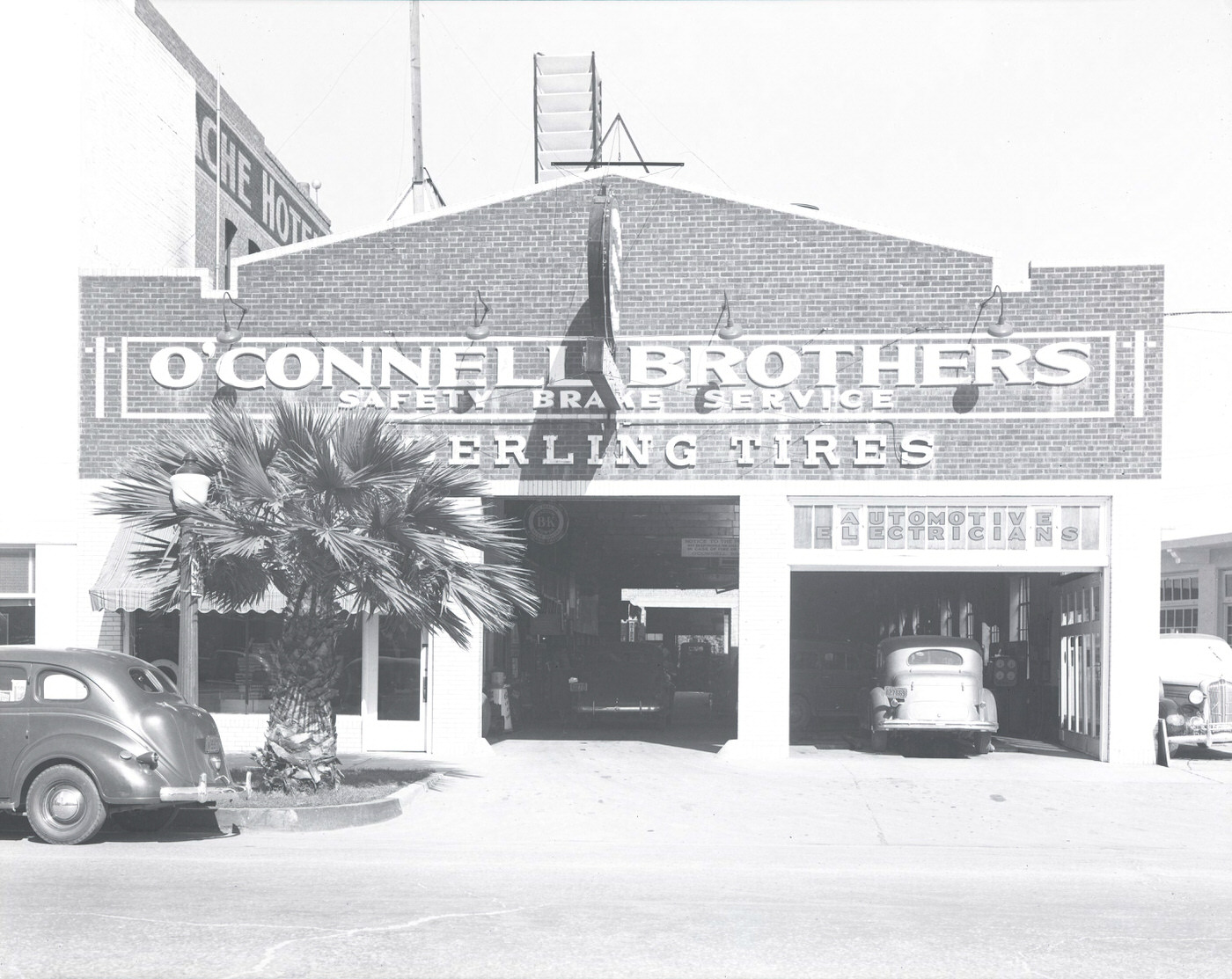
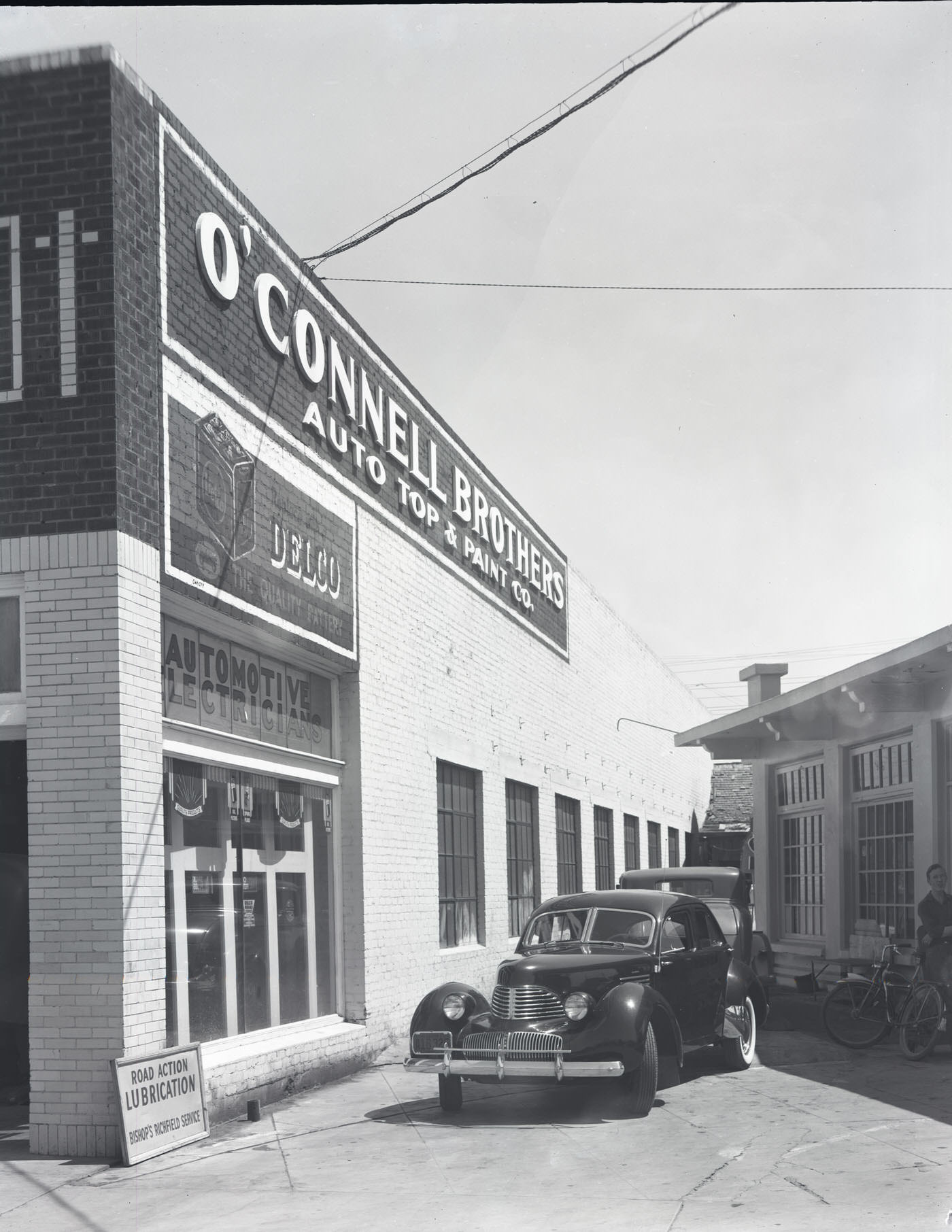
Auto repair shops like O’Connell Brothers kept the city’s growing vehicle fleet in working order. Gas stations and service centers were fixtures of nearly every commercial block. At Phoenix Junior College, students attended classes in buildings that would soon see enrollment shift dramatically as young men left for military service following the attack on Pearl Harbor in December 1941.
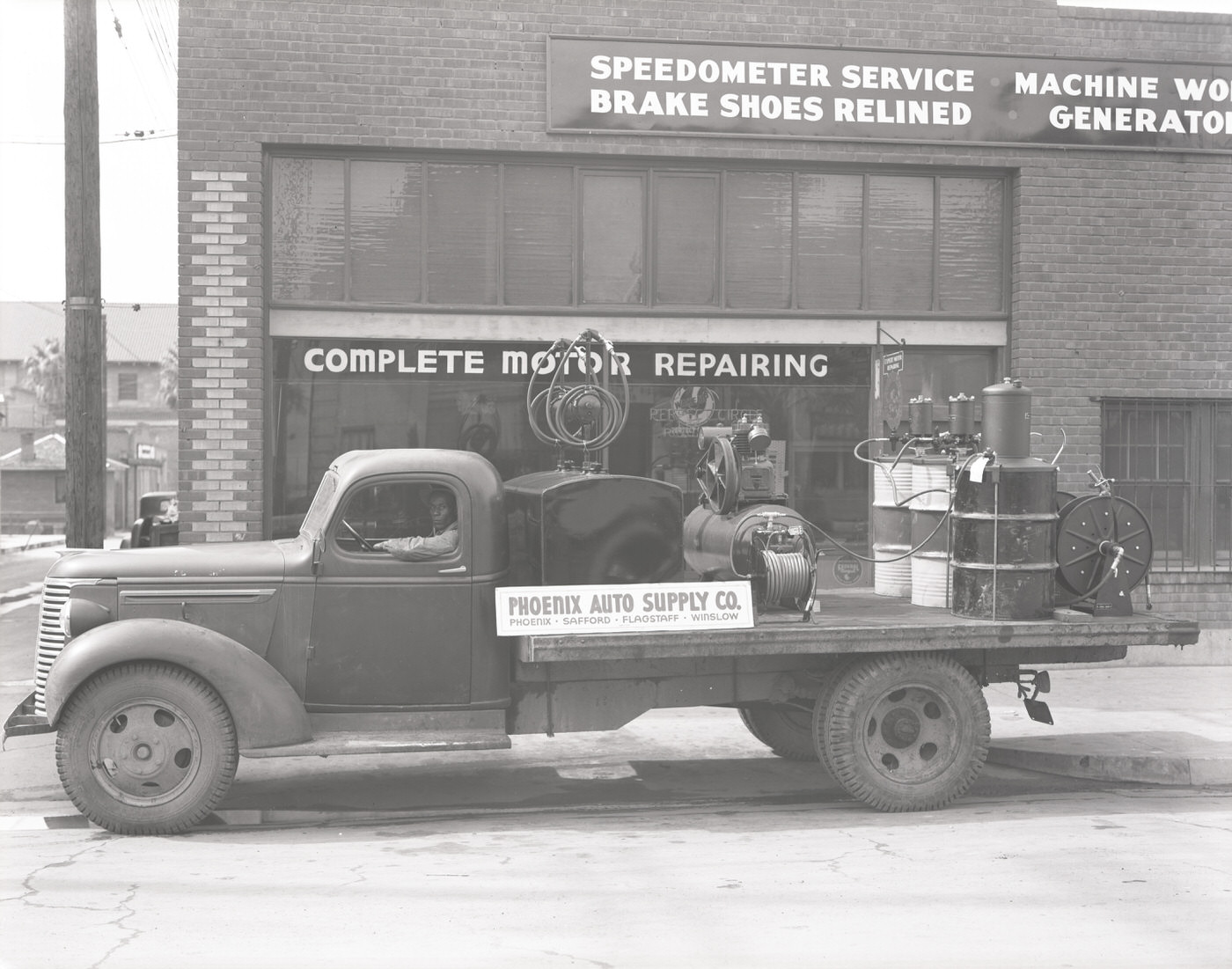
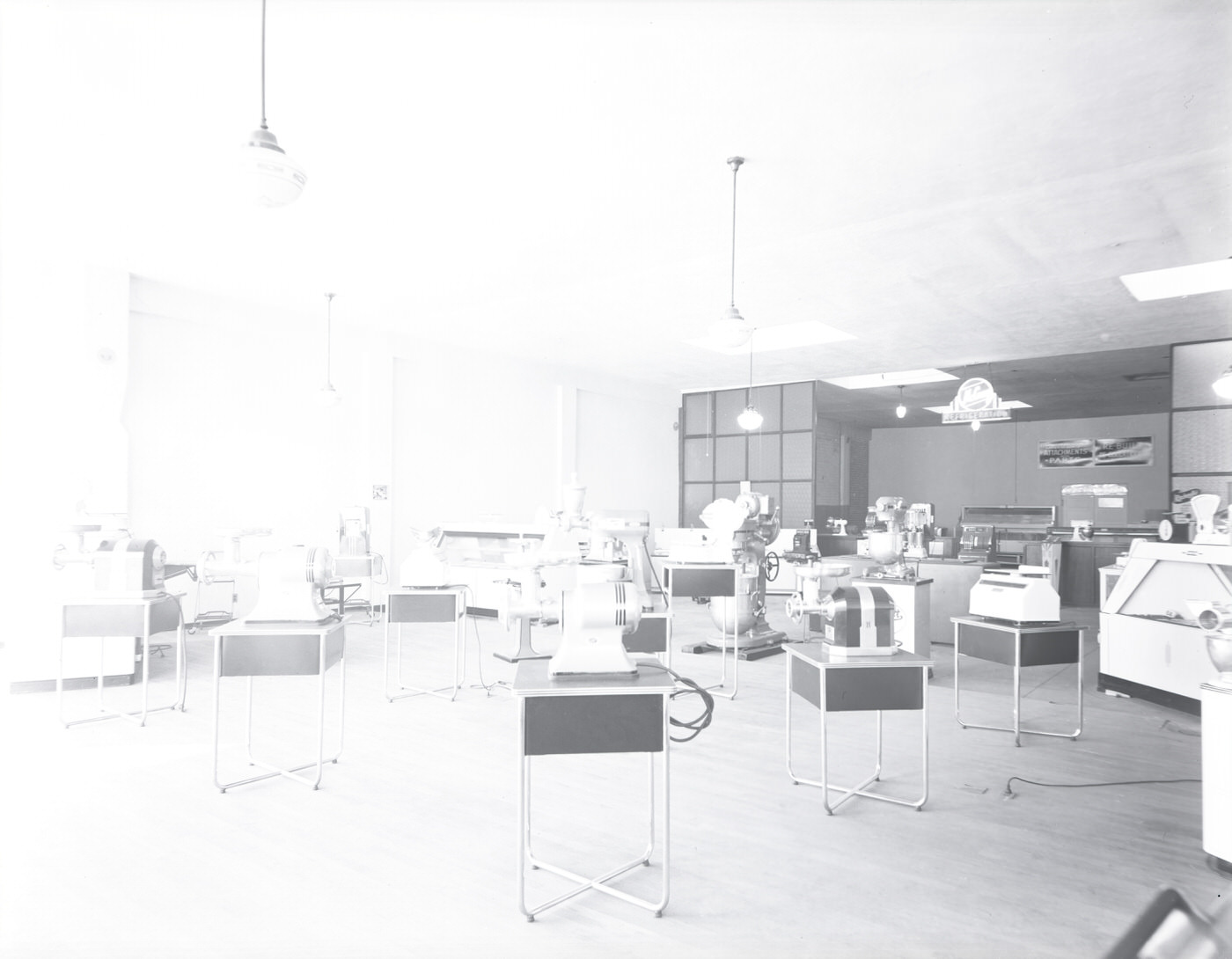
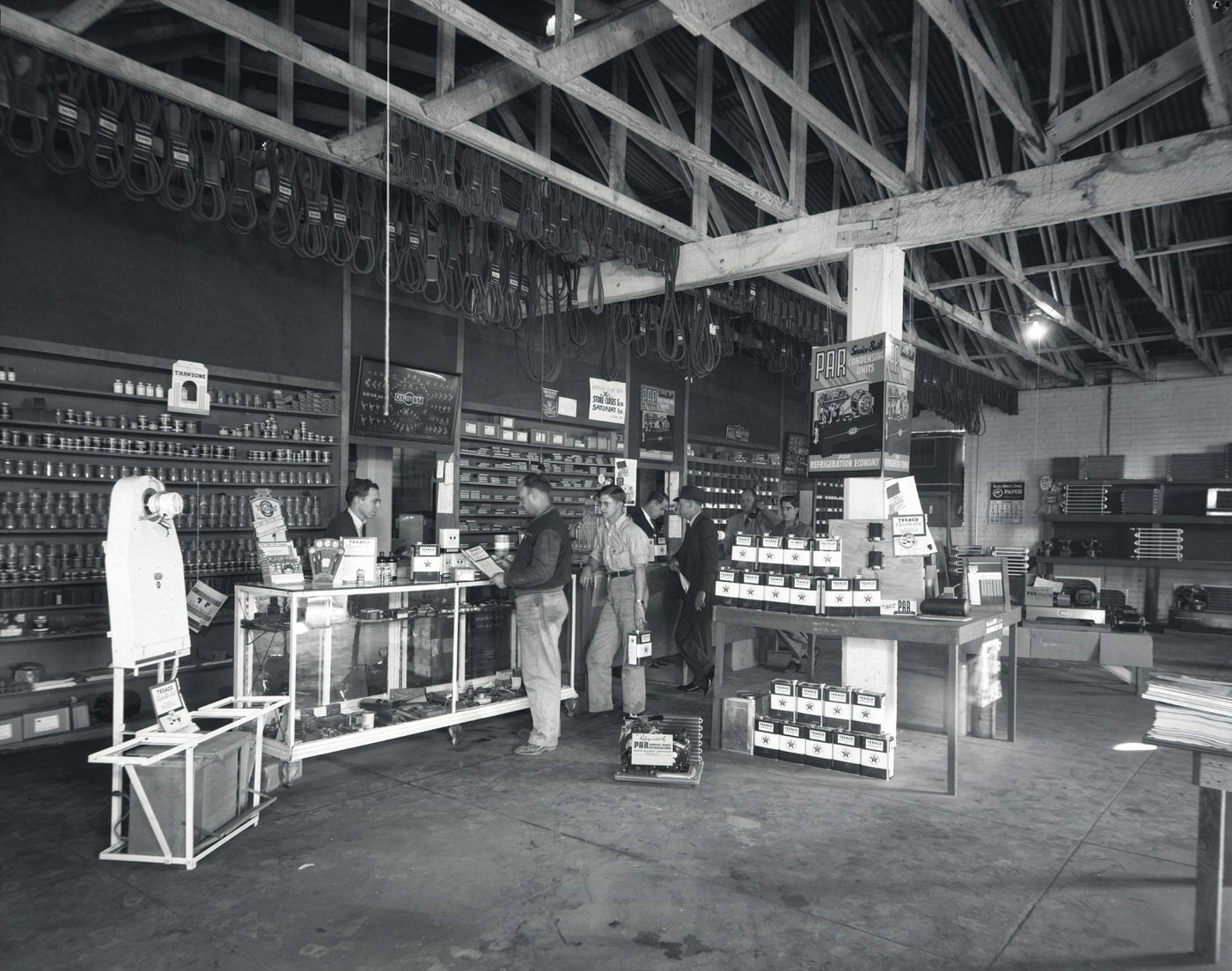
Department stores brought a sense of urban retail to a city that was still finding its scale. The Boston Store’s lingerie department was stocked and organized with care, while Frank Parmenter Co. specialized in food store equipment, outfitting the grocery operations that were feeding the city. Phoenix Auto Supply Co. kept its delivery trucks moving through streets that were increasingly crowded with commerce.
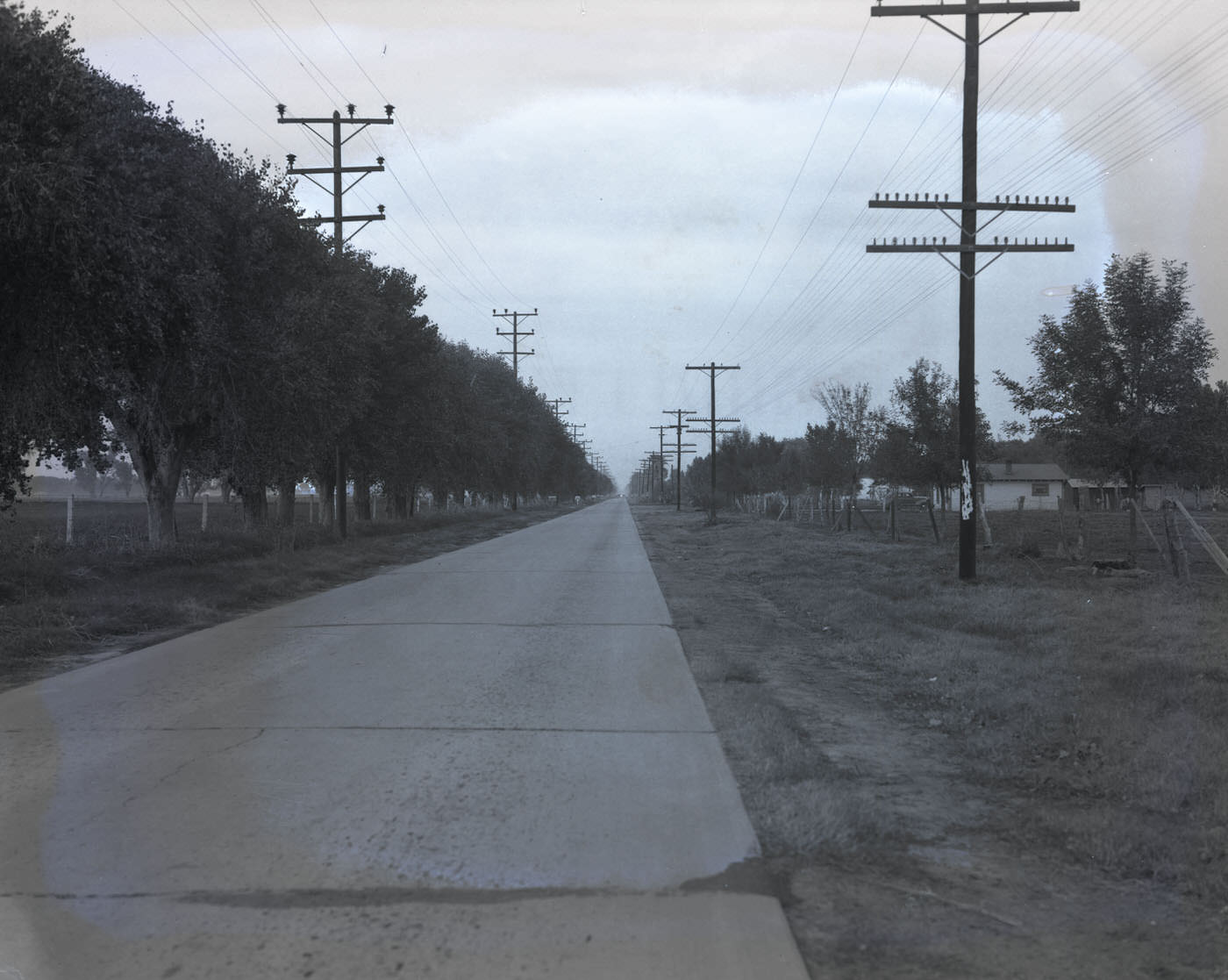
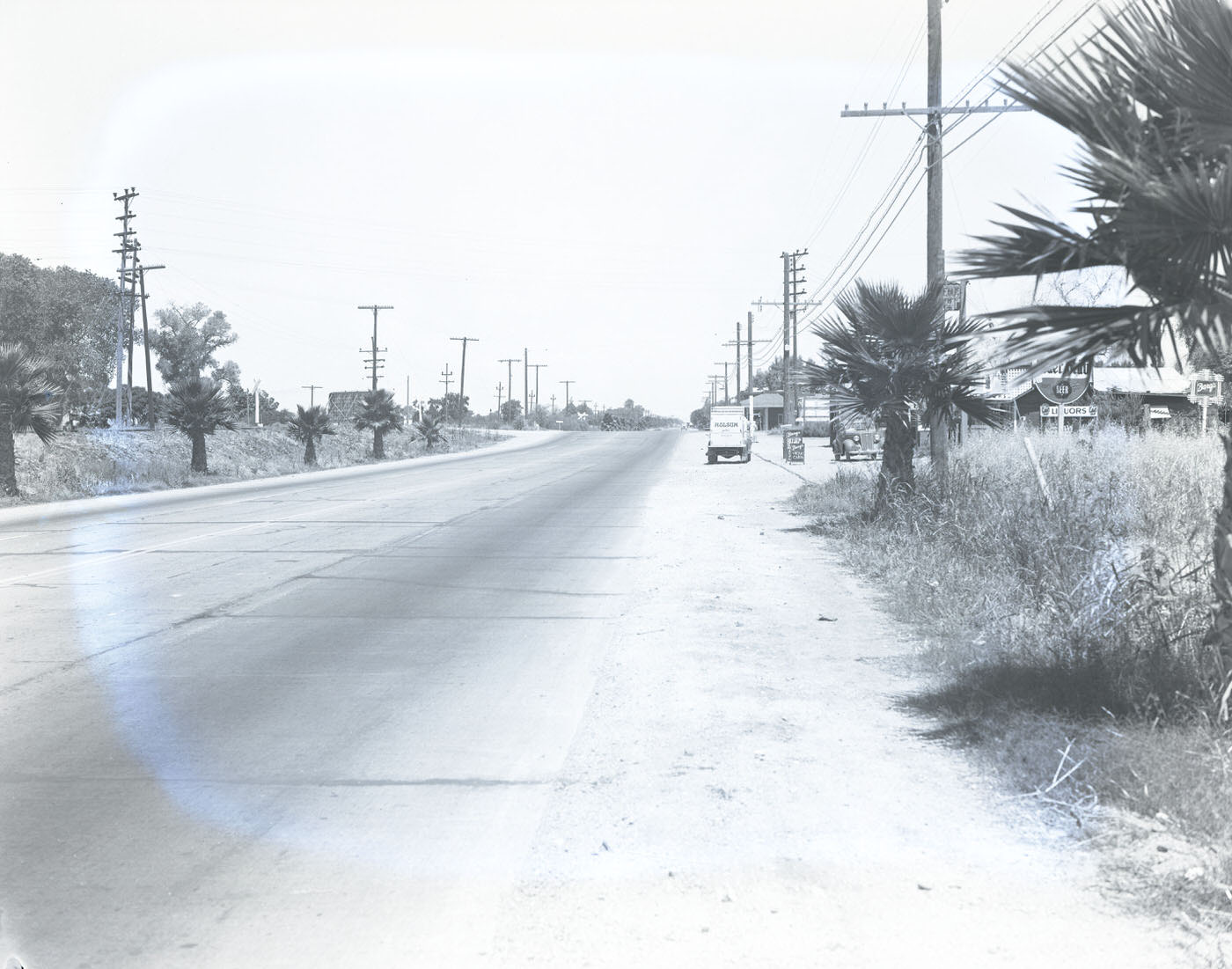
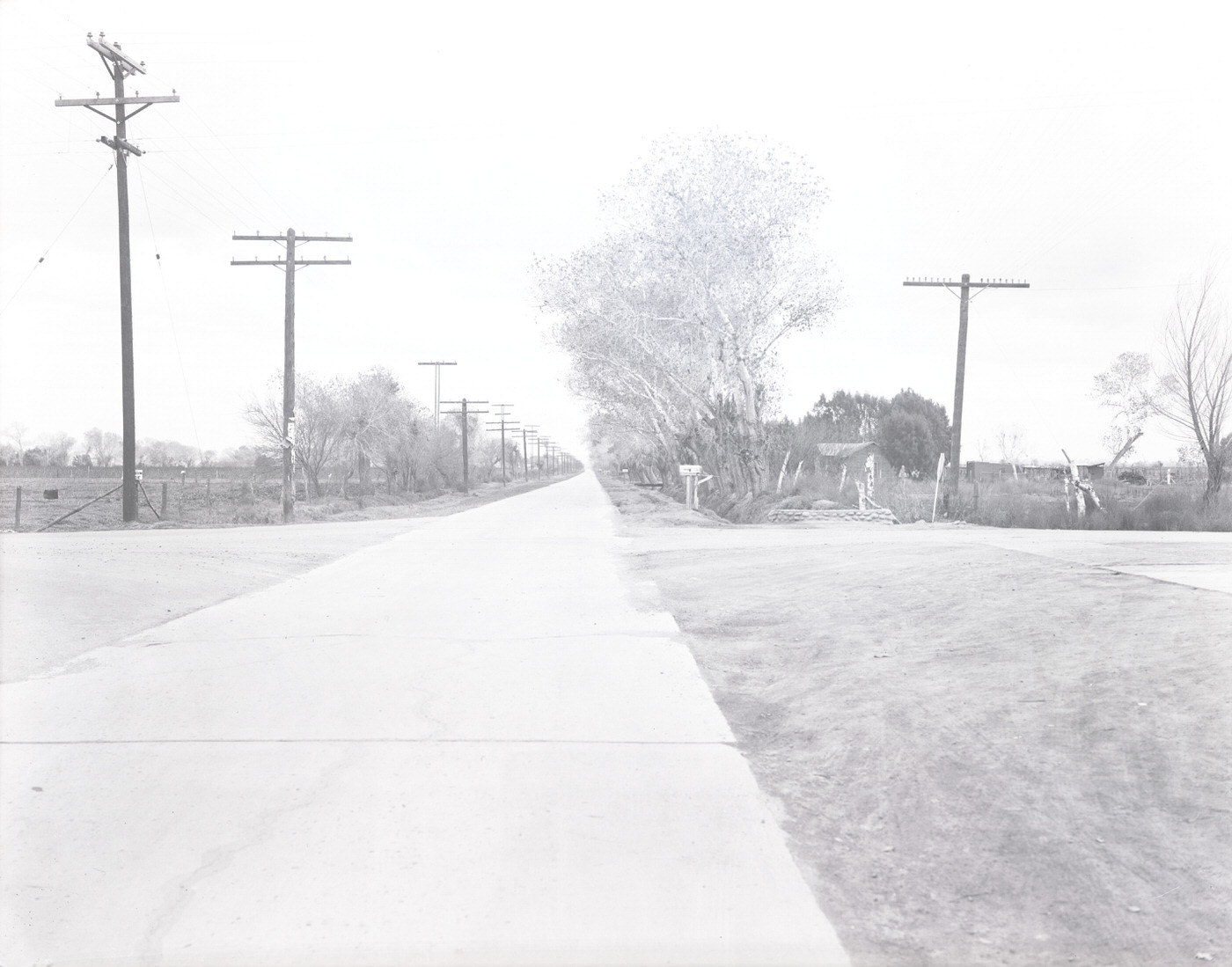
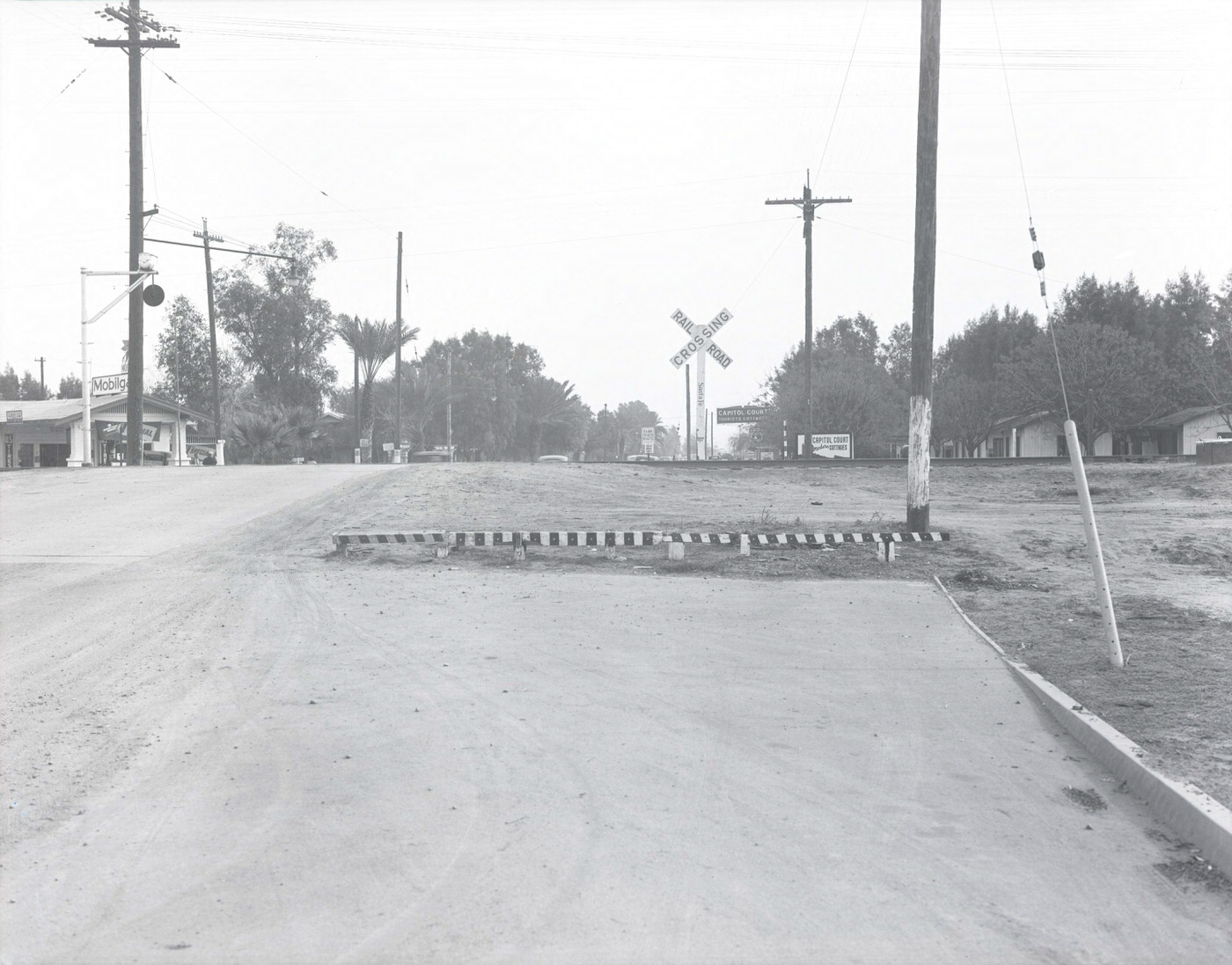
Beyond the city’s commercial center, rural scenes showed the agricultural land that still surrounded Phoenix on all sides. Grand Avenue, running diagonally from the city toward the northwest, crossed irrigation laterals near Thomas Road — a reminder that the desert was only productive because of the elaborate water systems the Salt River Project maintained. Railroad crossings on 19th Avenue marked the routes that carried goods in and out of the region.
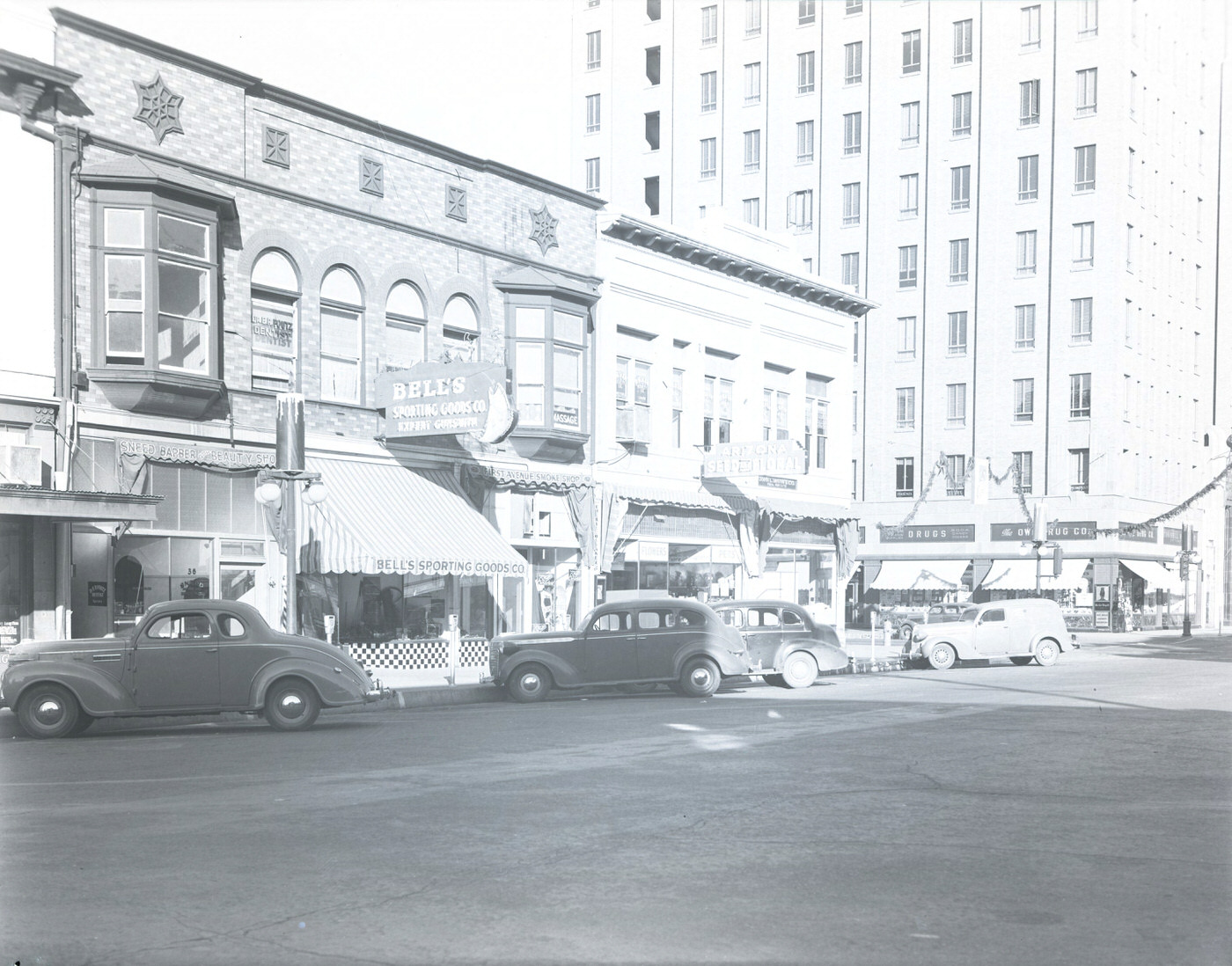
By December 1941, Christmas decorations hung along N. 1st Avenue, visible in photographs showing Bell’s Sporting Goods at number 40 and New Arizona Seed & Floral Co. at number 46. The city was in full holiday mode even as the attack on Pearl Harbor on December 7th pulled the United States into World War II. Within months, Phoenix would become a major hub for military training and war production. Its clear skies and open desert terrain made it a prime location for airfields and military facilities. The national economy was already shifting toward war production, and Phoenix was positioned to shift with it. These photographs, taken throughout 1941, capture a city that was busy, growing, and going about its daily life — unaware of just how dramatically that life was about to change.