In 1960, photographer Ormond Gigli created what would become one of the most recognizable images in American photography. The photograph, titled “Girls in the Windows,” shows 43 elegantly dressed women positioned across 41 windows of a classic New York City brownstone facade. It is a single frame that manages to capture architecture, fashion, and a vanishing city all at once.
Gigli was a working photojournalist based in Manhattan when he noticed that the row of brownstone buildings directly across from his studio had been marked for demolition. Rather than simply watching them come down, he saw an opportunity. He wanted to document the beauty of those buildings in a way that went far beyond a standard architectural shot. The idea that formed in his mind was ambitious — fill every visible window with a woman in formal, colorful dress and photograph the entire facade at once.
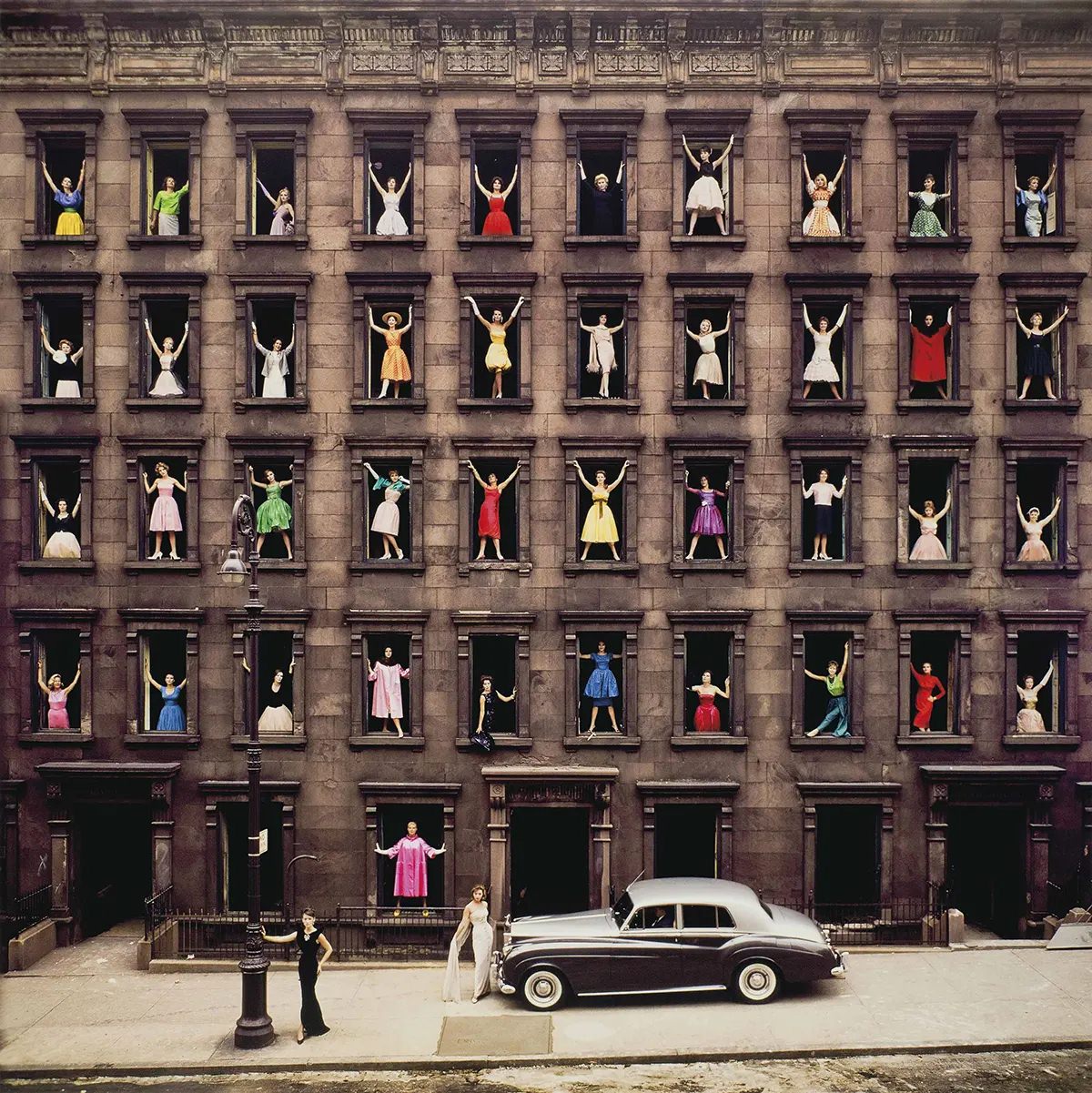
Pulling the project together took serious planning. Gigli recruited 43 women — models, actresses, and his own wife among them. Each woman was dressed in a distinct, eye-catching outfit. The colors were carefully chosen to stand out against the dark stone of the brownstone exteriors and to give the image a sense of rhythm and variety when viewed as a whole. No two women looked the same, and that variety was entirely intentional.
The clothing itself told a story about the era. The outfits reflected the sharp, polished style of early 1960s New York — structured silhouettes, bold colors, and formal elegance. Gigli made sure each woman’s attire worked both on its own and as part of the larger composition. The result was that the women and the building became a single, unified subject rather than two separate elements placed next to each other.
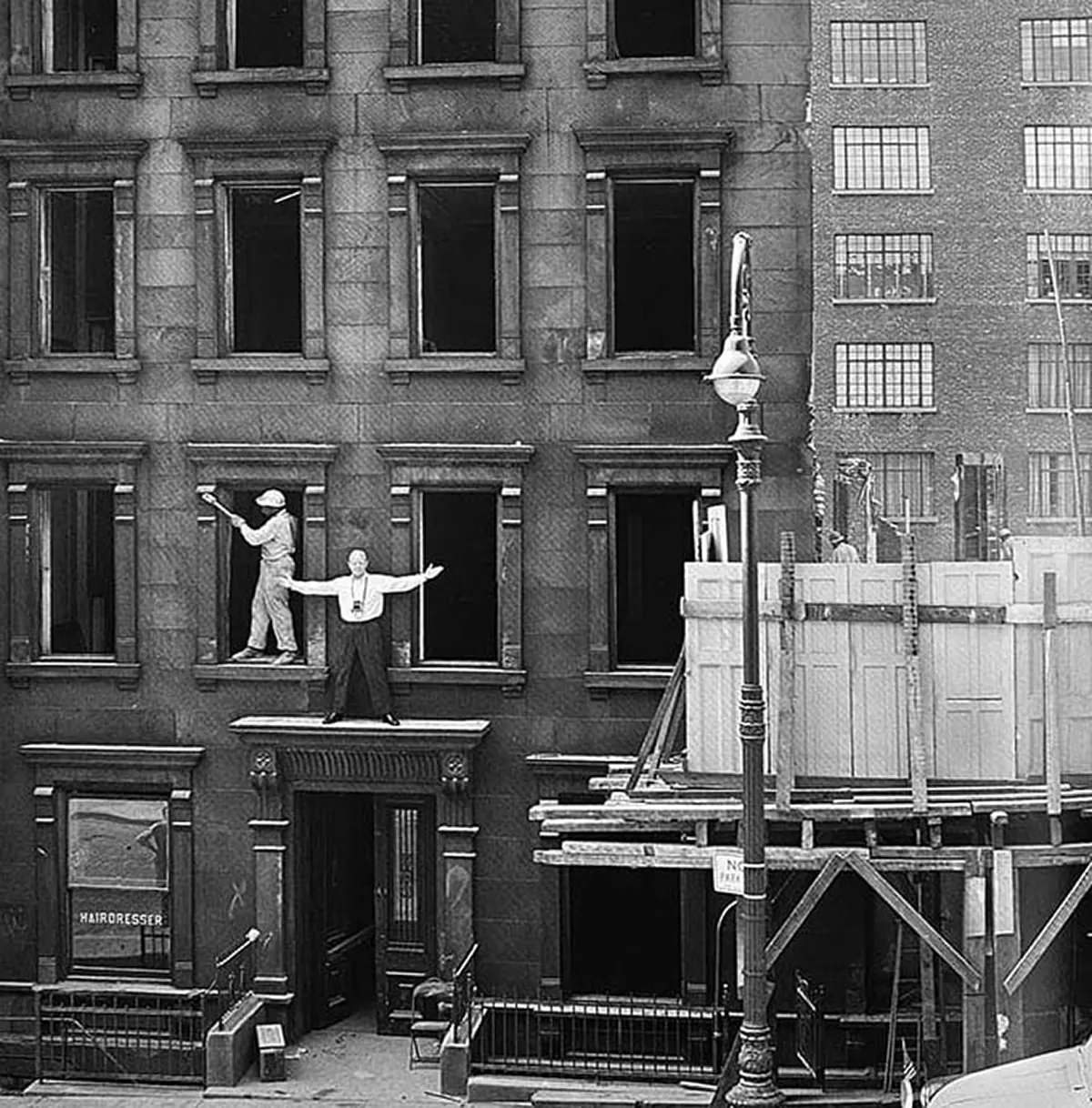
On the day of the shoot, the logistical challenge was enormous. The women were spread across multiple floors of the building, each standing or leaning in a separate window. Gigli could not simply call out directions — the distance and the chaos of a New York street made that impossible. He used a walkie-talkie to communicate with someone inside the building who could relay his instructions floor by floor, window by window. Each pose had to be adjusted in real time until the overall composition looked right from the street below.
Gigli shot the image using a large format camera. This type of camera captures an exceptionally high level of detail, which is why the final photograph holds up so well even when printed at large sizes. Every face, every piece of fabric, every shadow along the brownstone’s ornate stonework is crisp and defined. The technical precision of the equipment matched the precision of the planning that went into the day.
The timing of the photograph added a layer of meaning that has never faded. The brownstones on East 58th Street were torn down shortly after the shoot. Gigli’s photograph is one of the last detailed records of what those buildings looked like before demolition began. The women in their bright dresses, posed with such deliberate care, are framed by a structure that no longer exists. That tension between the living, present moment and the imminent loss of something permanent gives the image a weight that pure fashion photography rarely achieves.
“Girls in the Windows” went on to be shown in galleries and museums around the world. It became Gigli’s most celebrated work by a wide margin, even though he spent decades documenting major news events and public figures throughout his career. The photograph has been reproduced as a poster countless times and remains in wide circulation more than sixty years after it was taken. It endures not because it was a lucky shot, but because every element in it — the location, the styling, the timing, the camera work — was the product of a photographer who knew exactly what he wanted and had the skill to get it.