
In 1955, the Nevada desert served as the proving ground for a series of U.S. atomic bomb tests conducted against the backdrop of the Cold War. LIFE magazine photographer Loomis Dean was on the ground to document each detonation — not the science behind them, but the raw, physical reality of what a nuclear blast does to everything in its path.
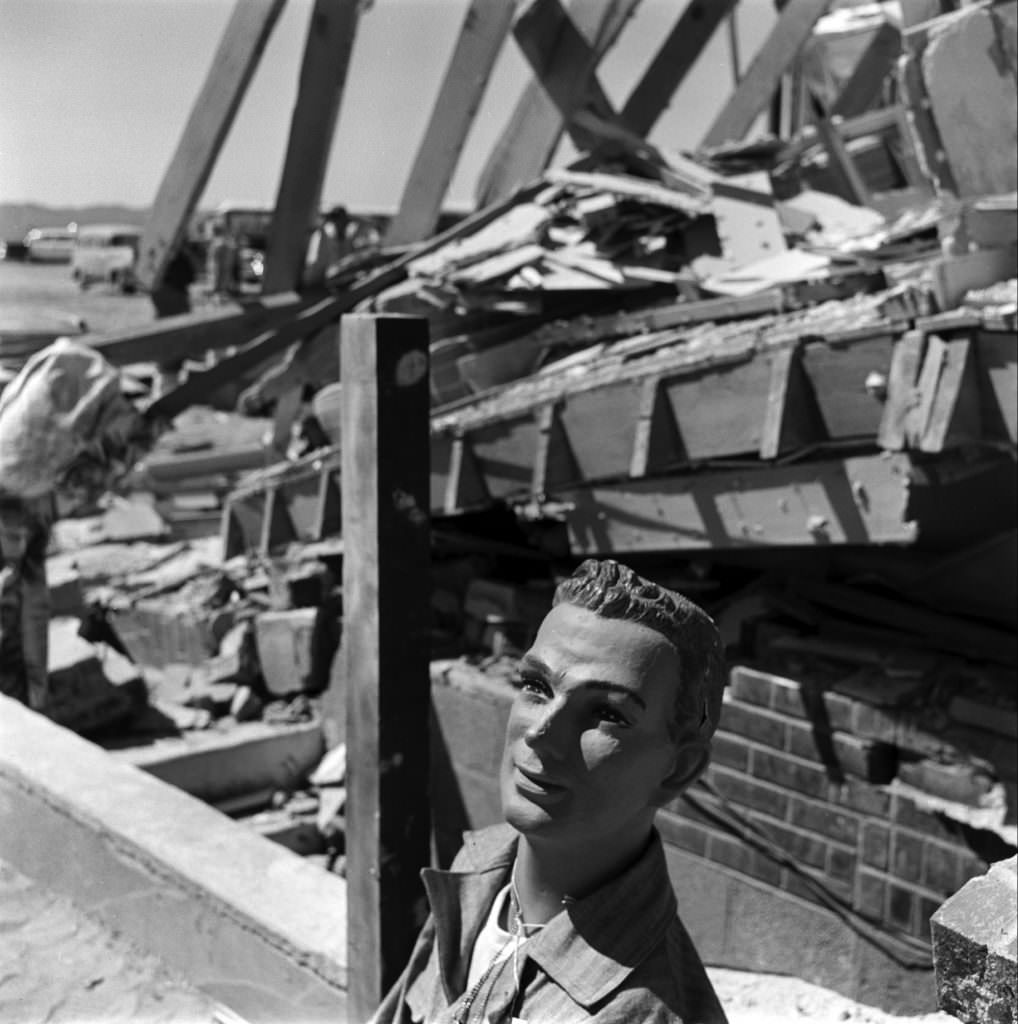
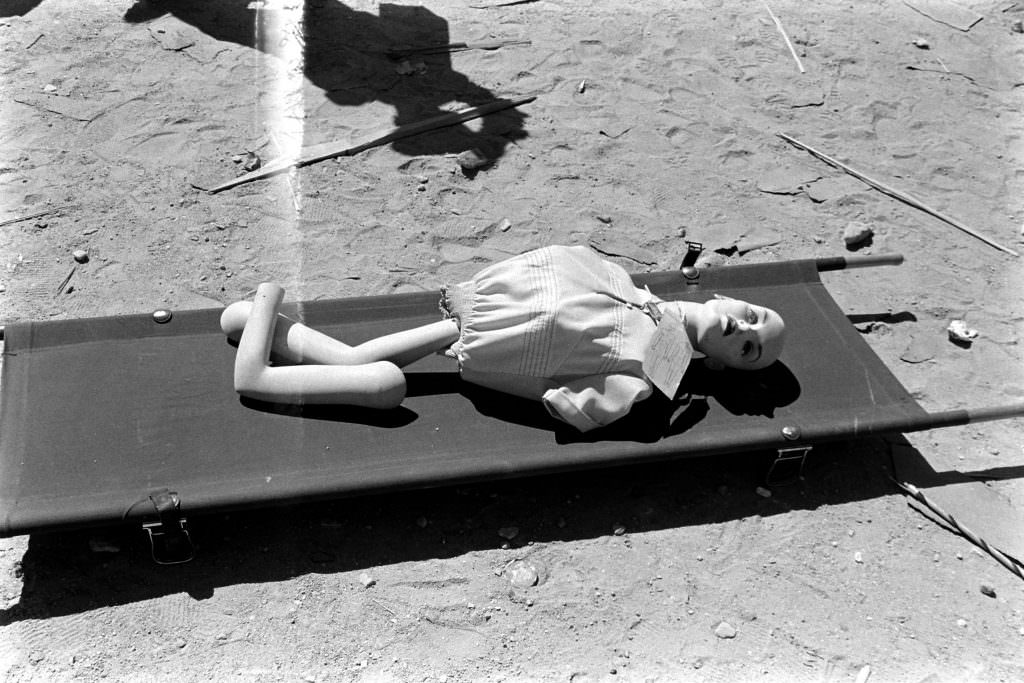
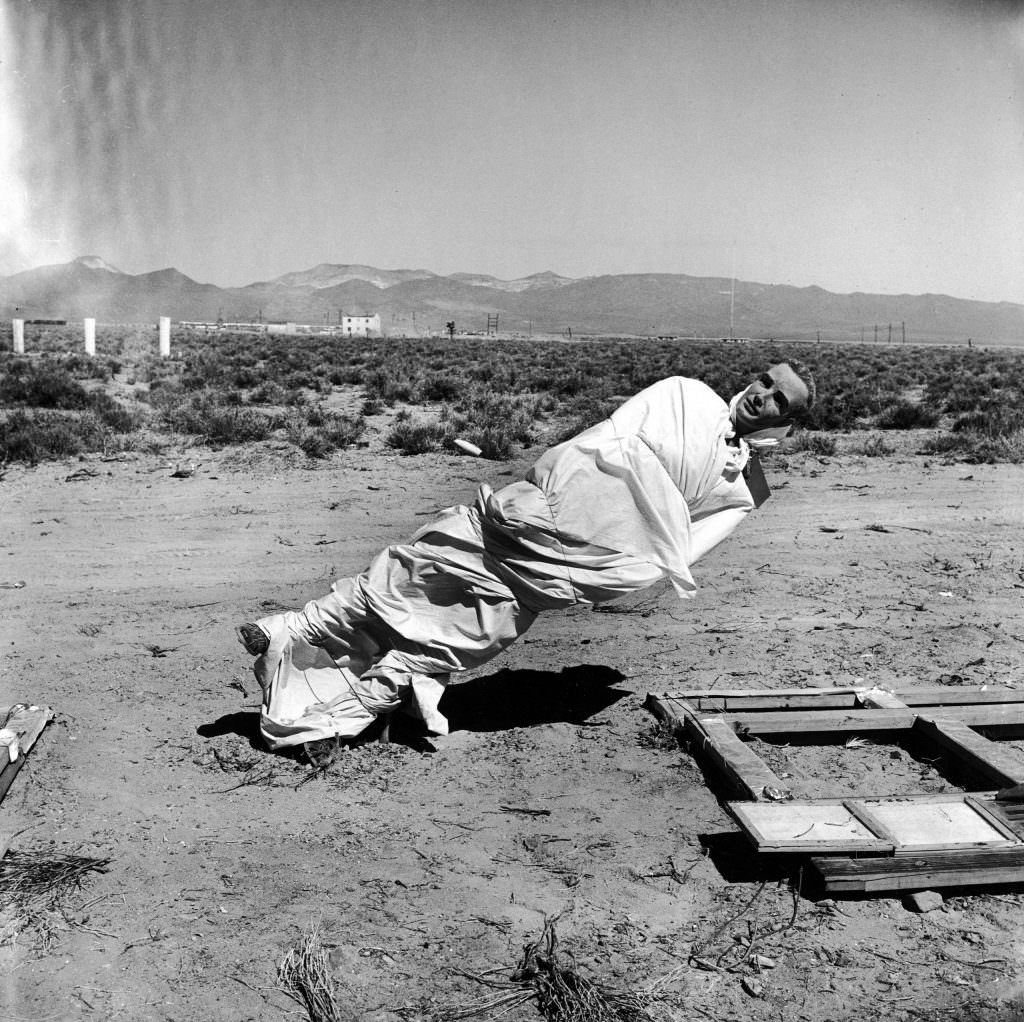
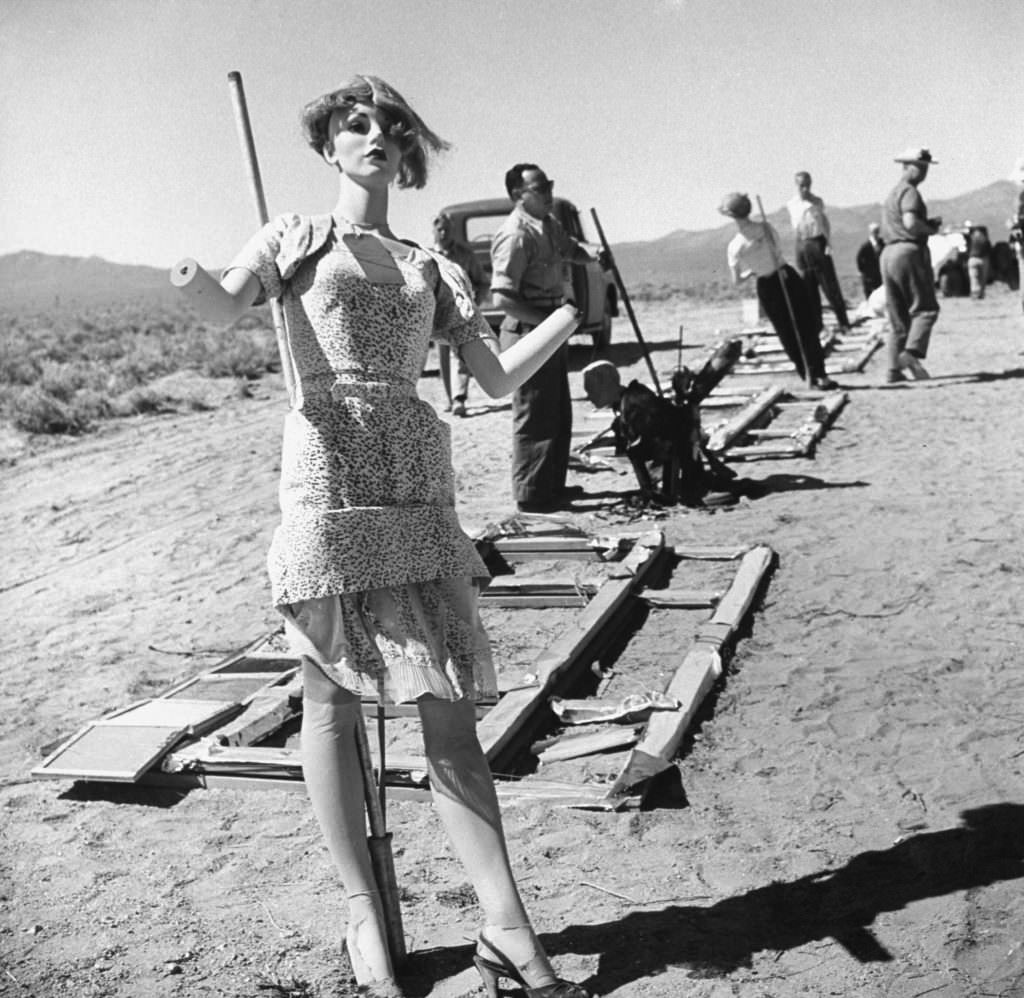
To measure the effects on the human body, test organizers placed mannequins at varying distances from ground zero. The results were precise and brutal. A mannequin positioned 5,500 feet from the blast was found scorched inside its test house, while one placed at 7,000 feet was burned almost completely except for its face.

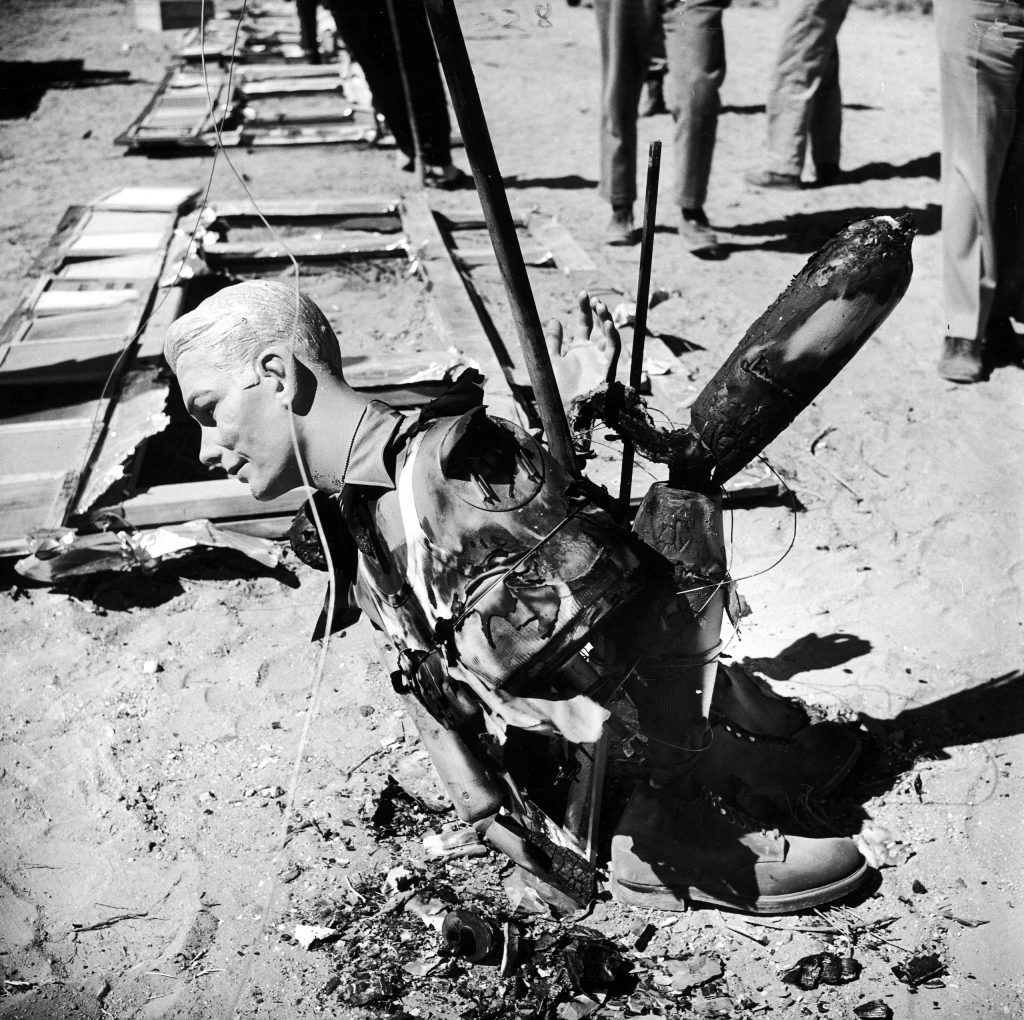
Not every mannequin showed the same level of damage. Some wore light-colored clothing that reflected enough heat to survive the blast largely intact, while the figures themselves told a different story. These controlled placements gave scientists hard data on survivability at each distance.
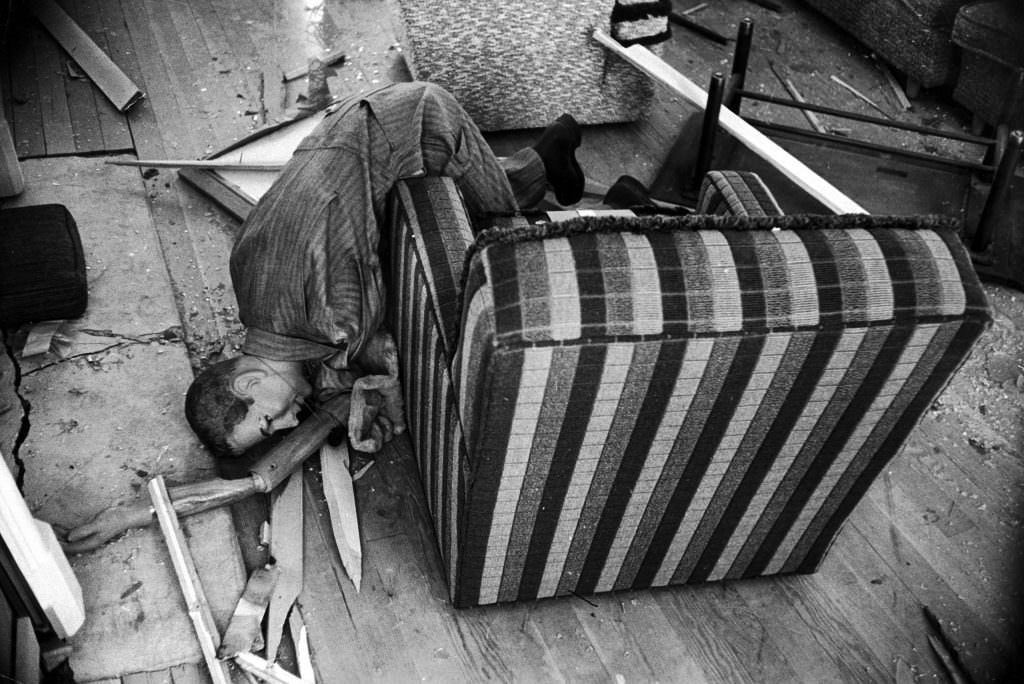
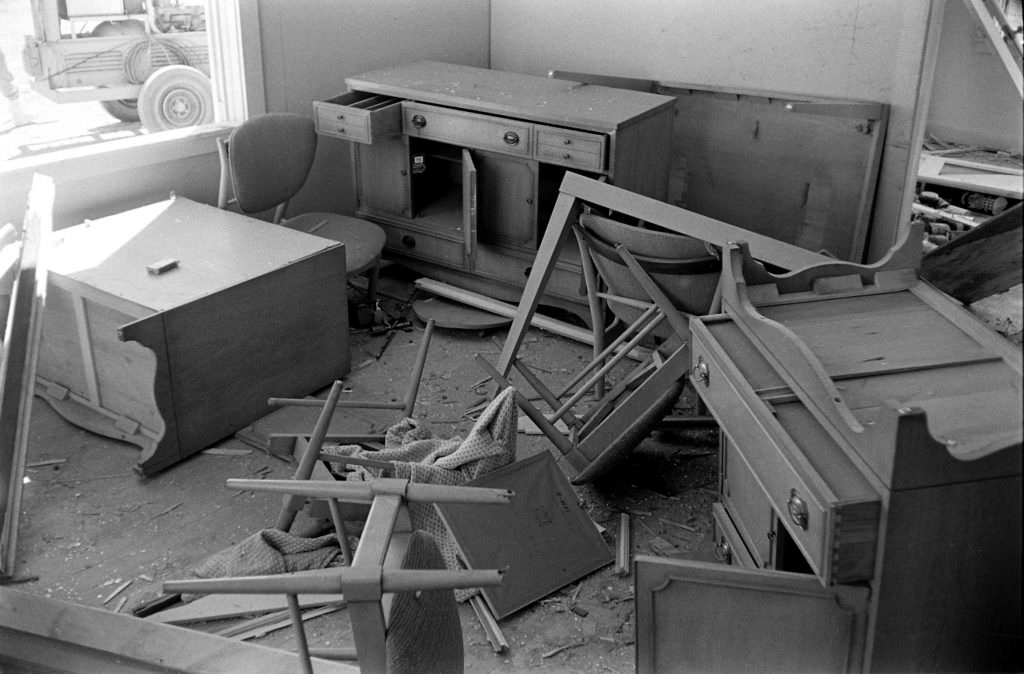
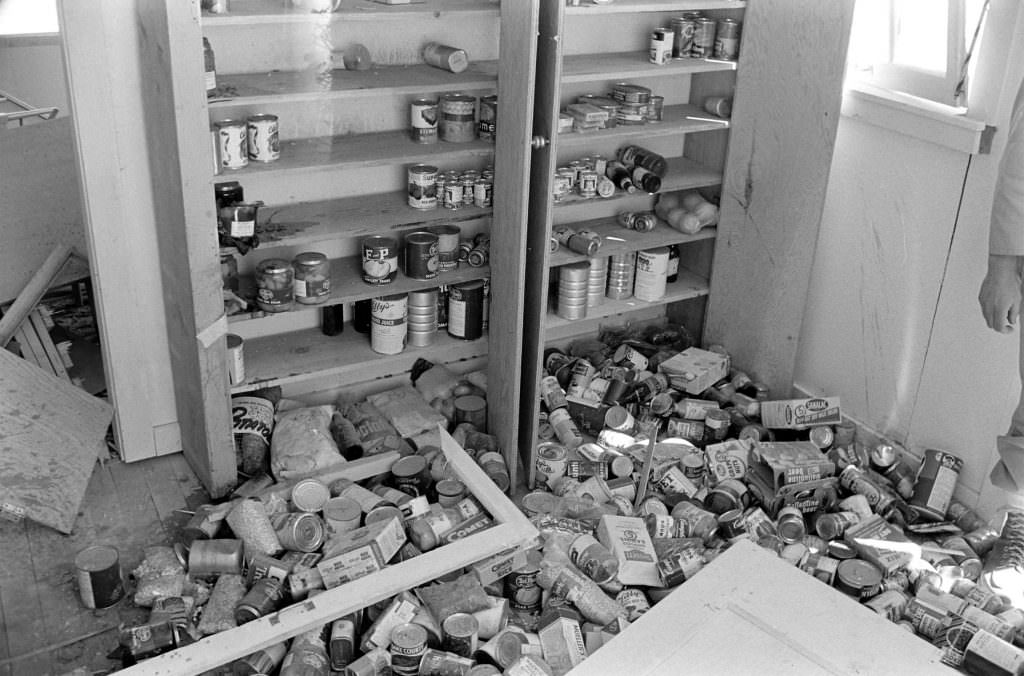
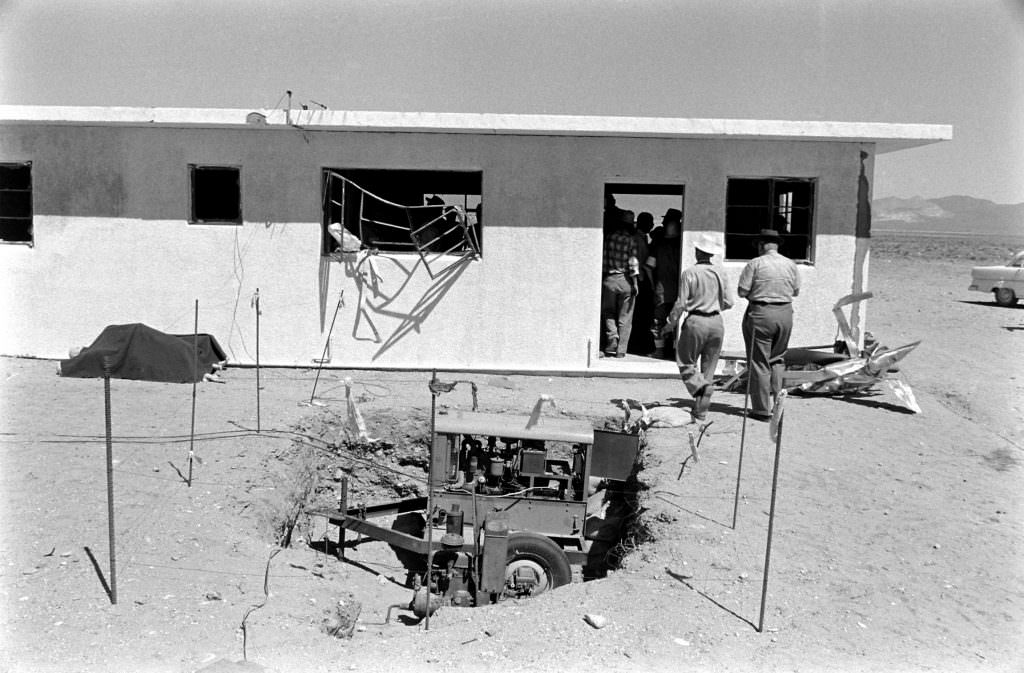
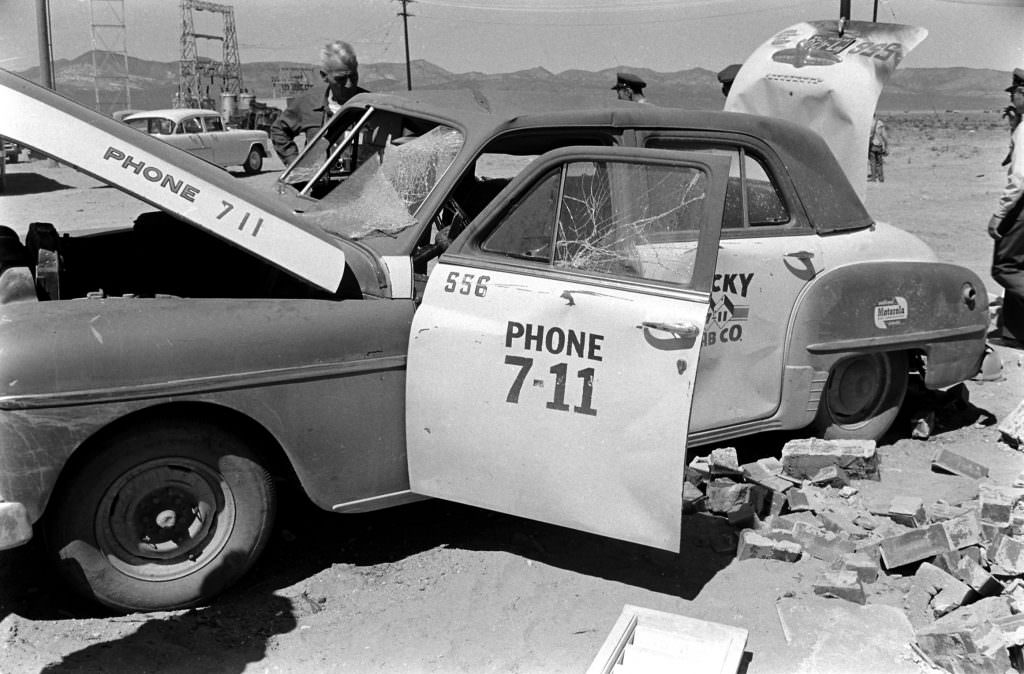
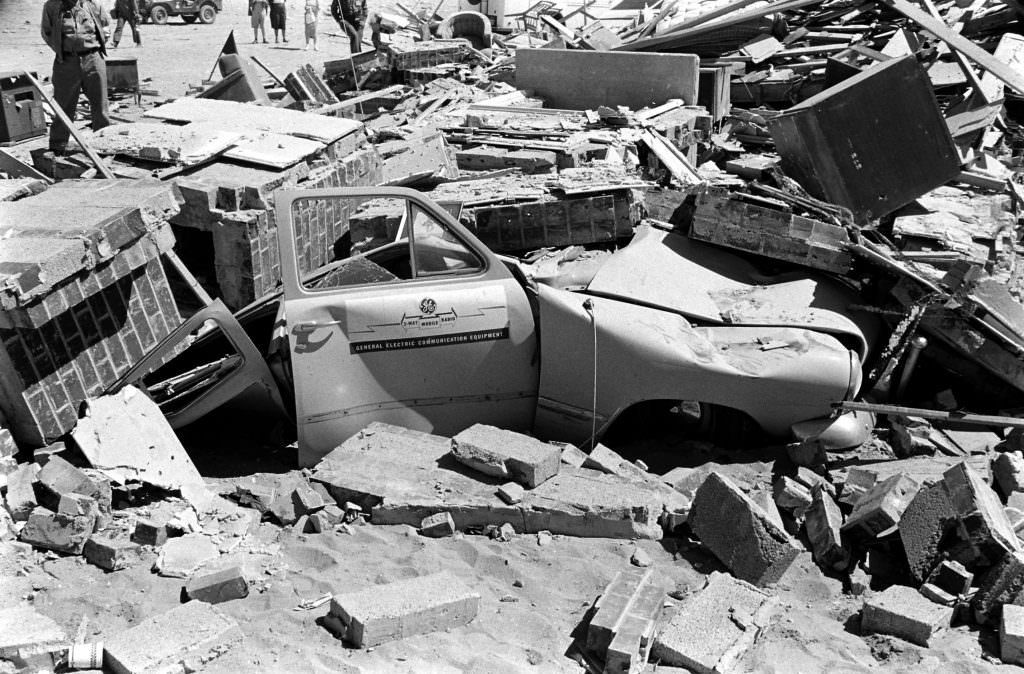
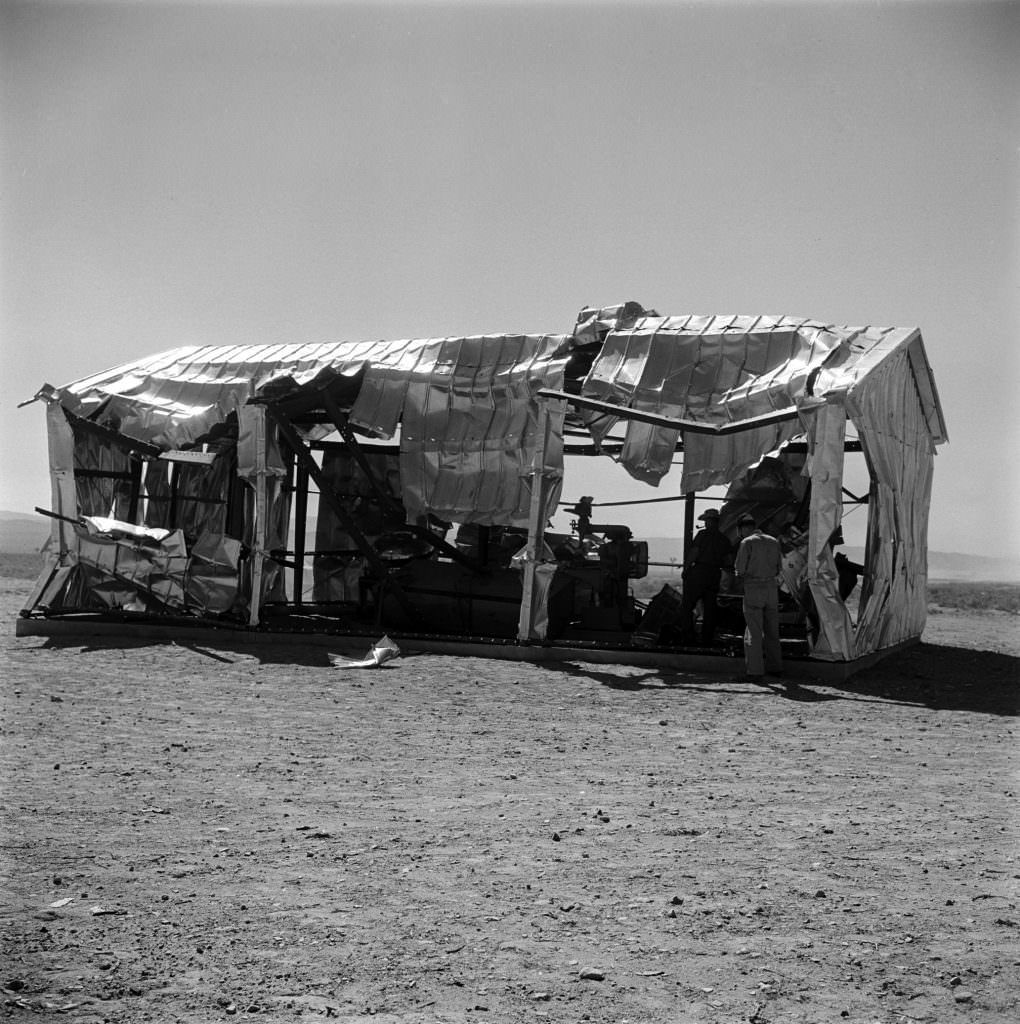
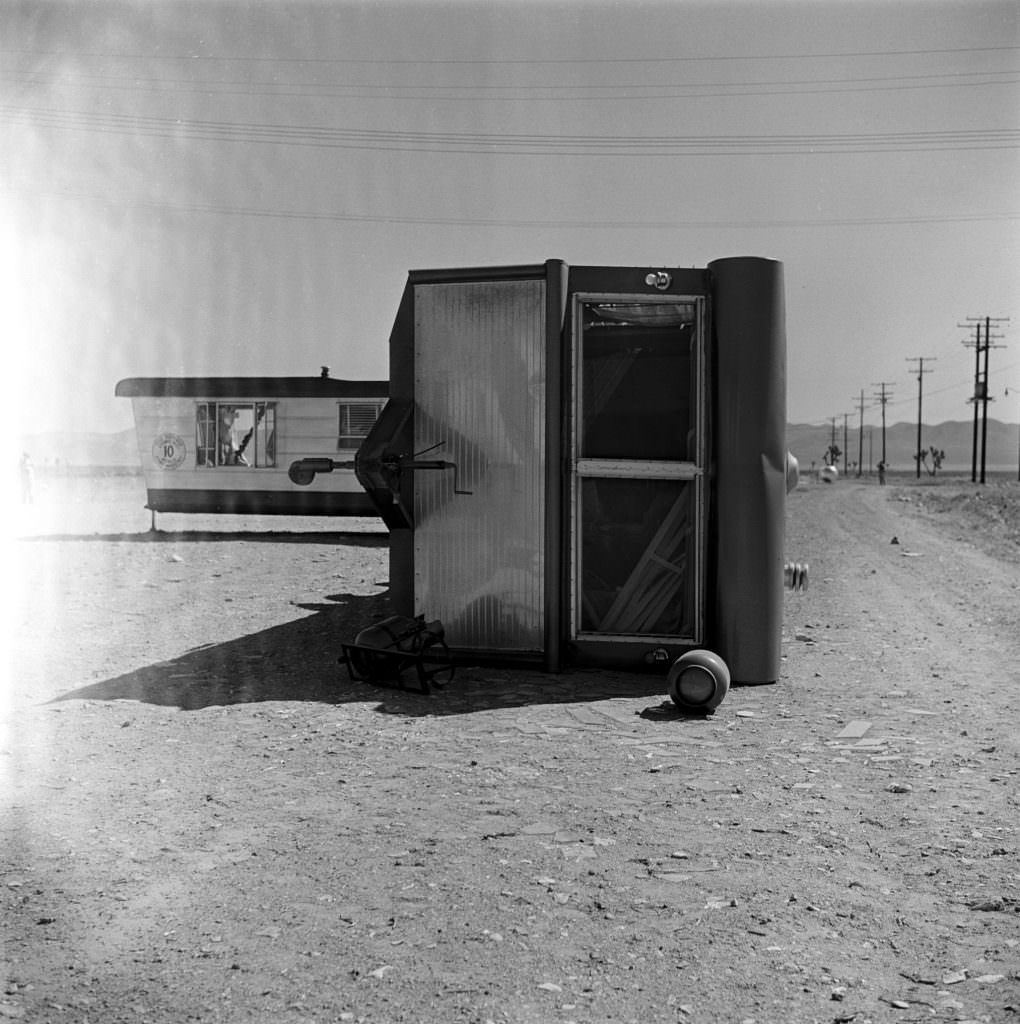
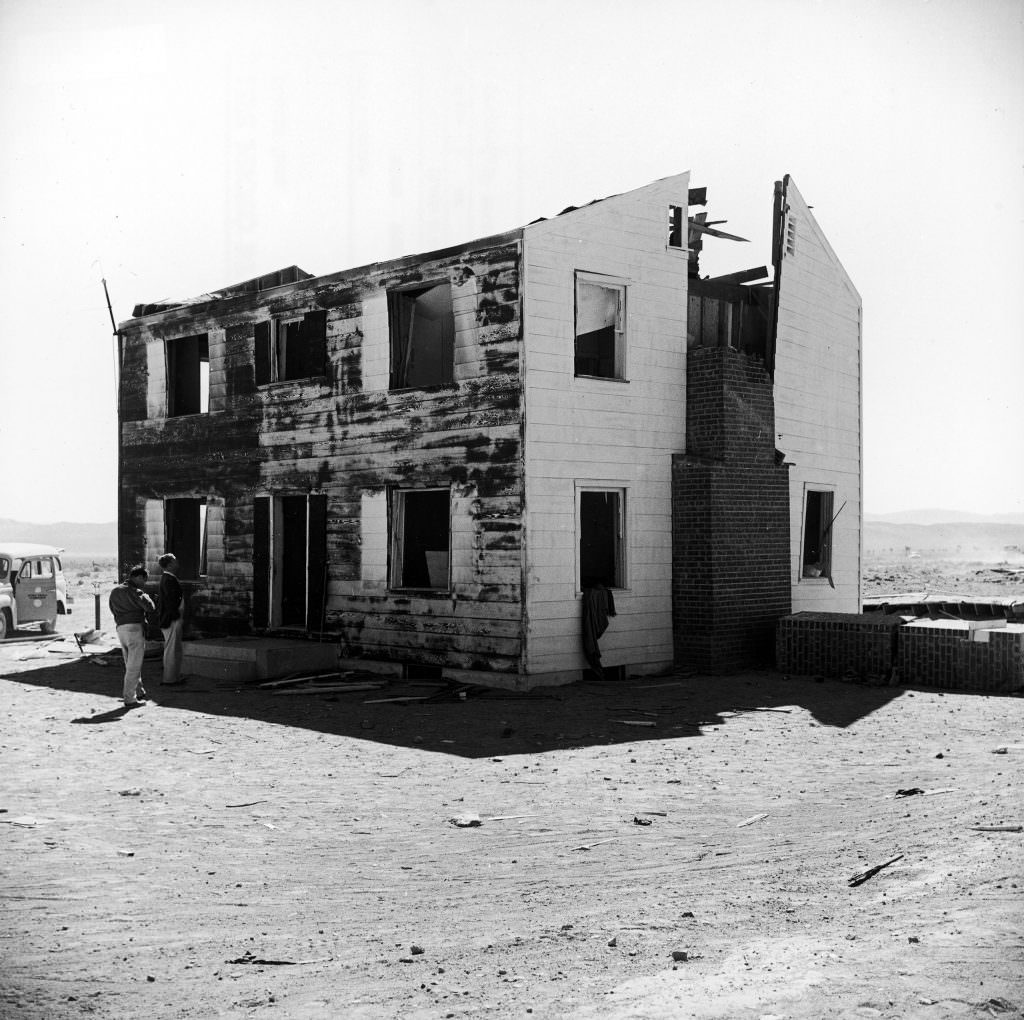
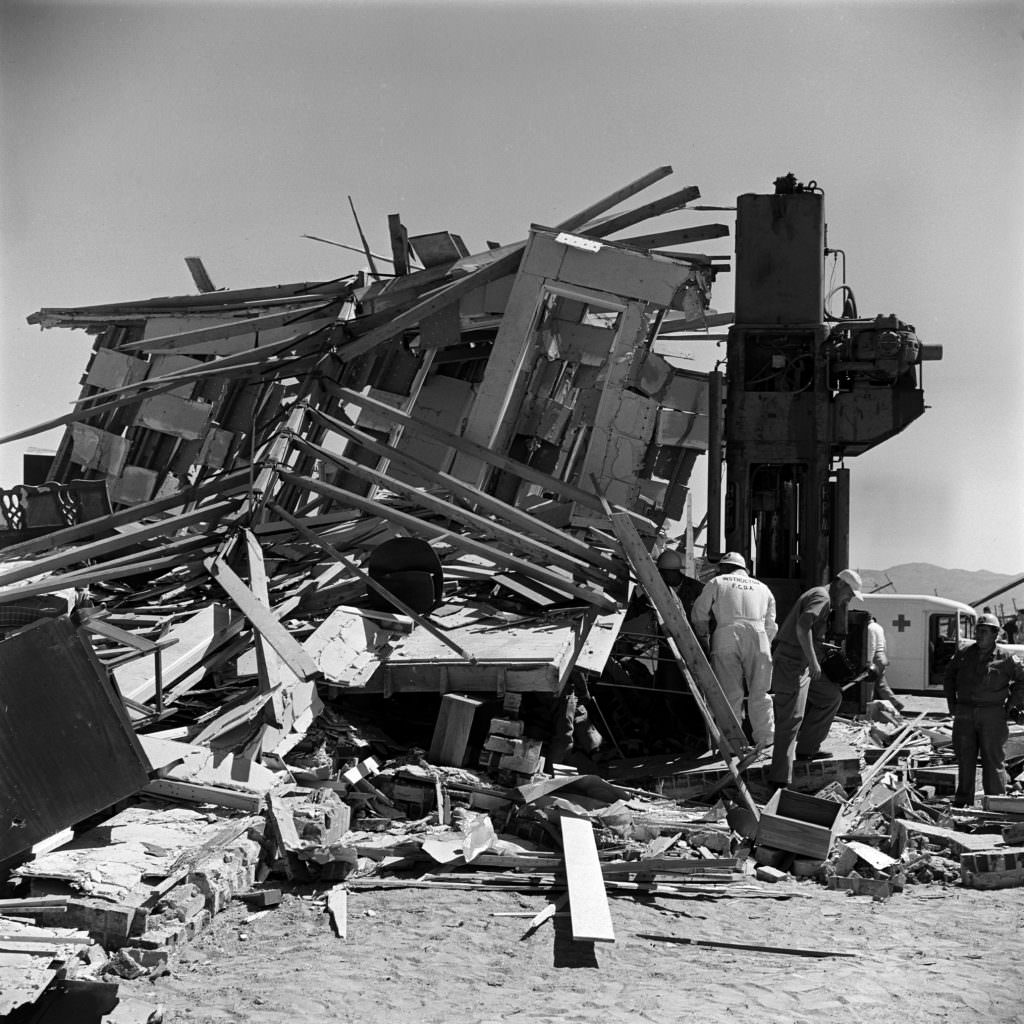
Structures built specifically for the tests fared no better. Houses constructed more than a mile from ground zero were reduced to skeletal wreckage. Walls collapsed inward, roofs vanished, and debris was scattered across the desert floor. These weren’t old or weak buildings — they were purpose-built to be tested and destroyed.
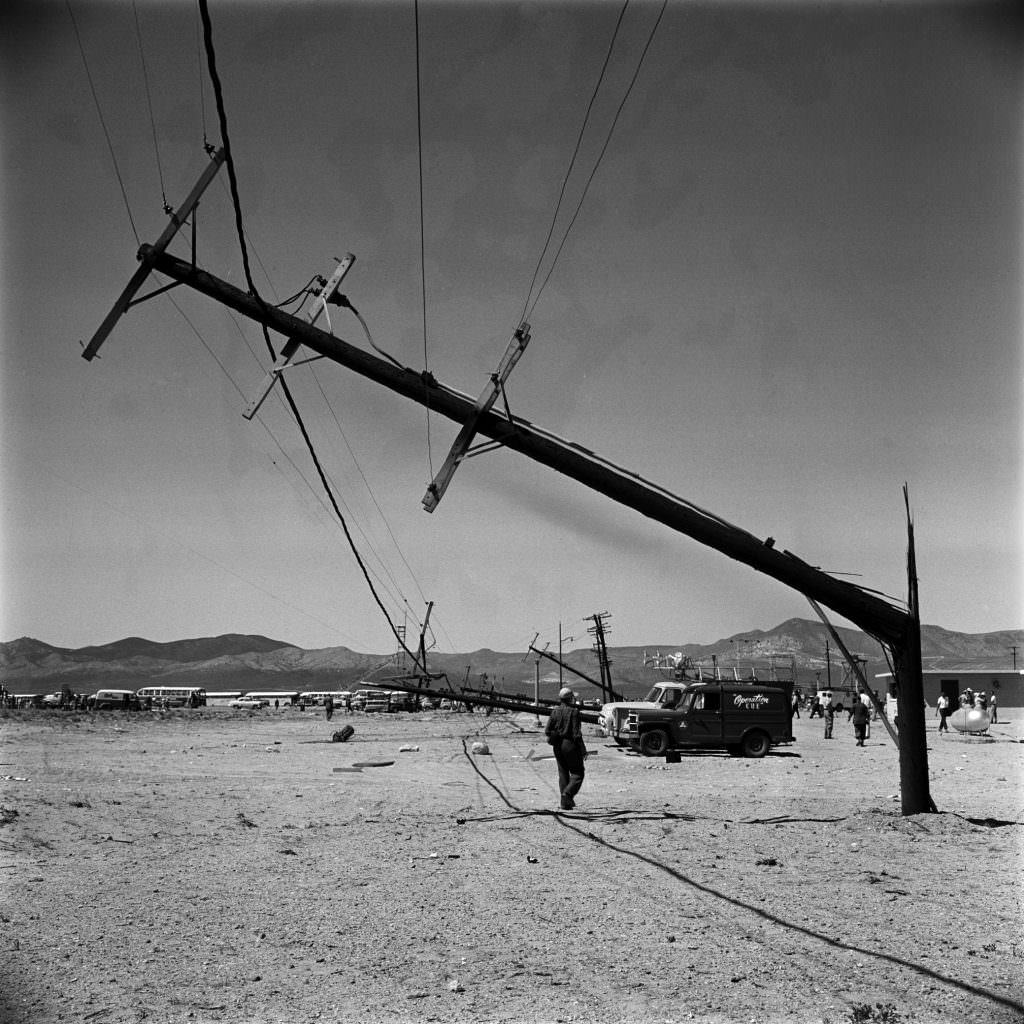
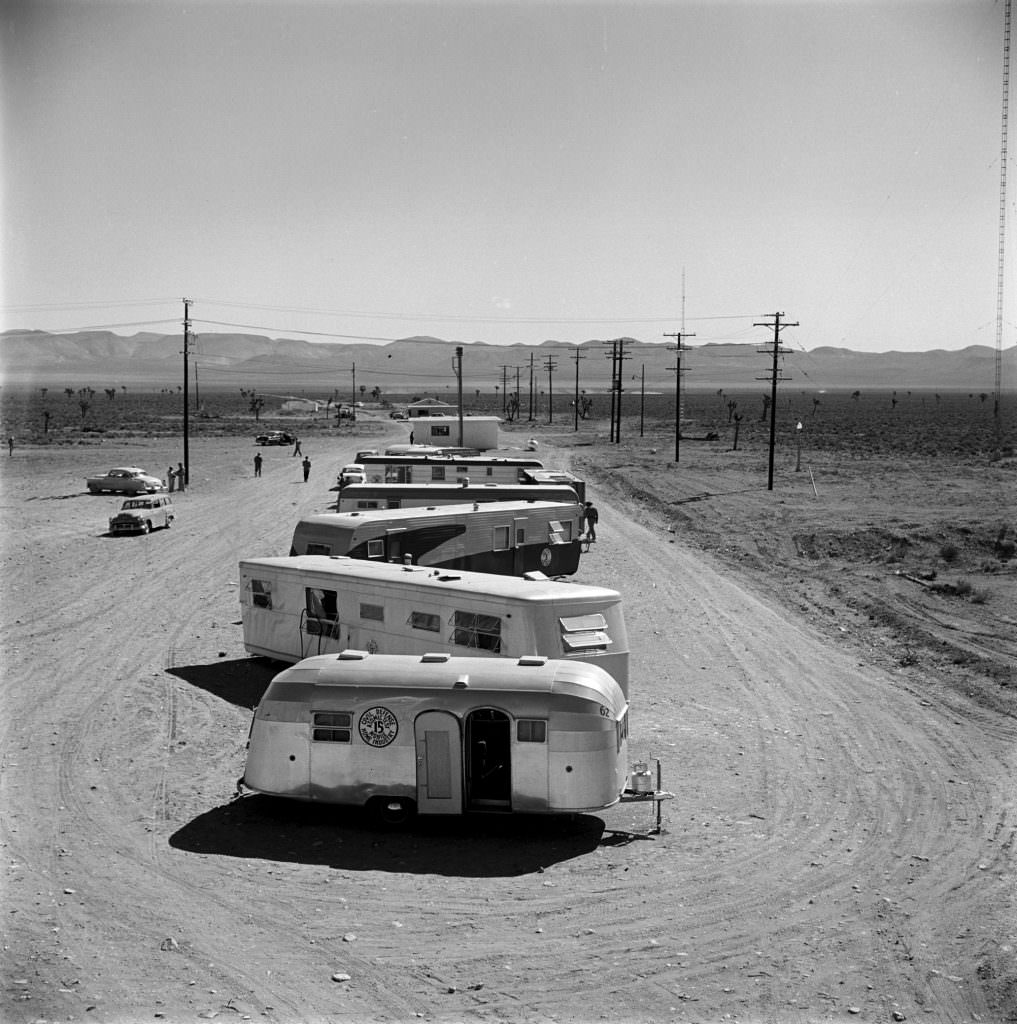
Before each test, vehicles and equipment were staged at measured distances from the blast point. The lineup of trucks and military vehicles waiting on the desert floor underscored the scale of the operation — a vast, organized effort to record exactly what a nuclear weapon could do.
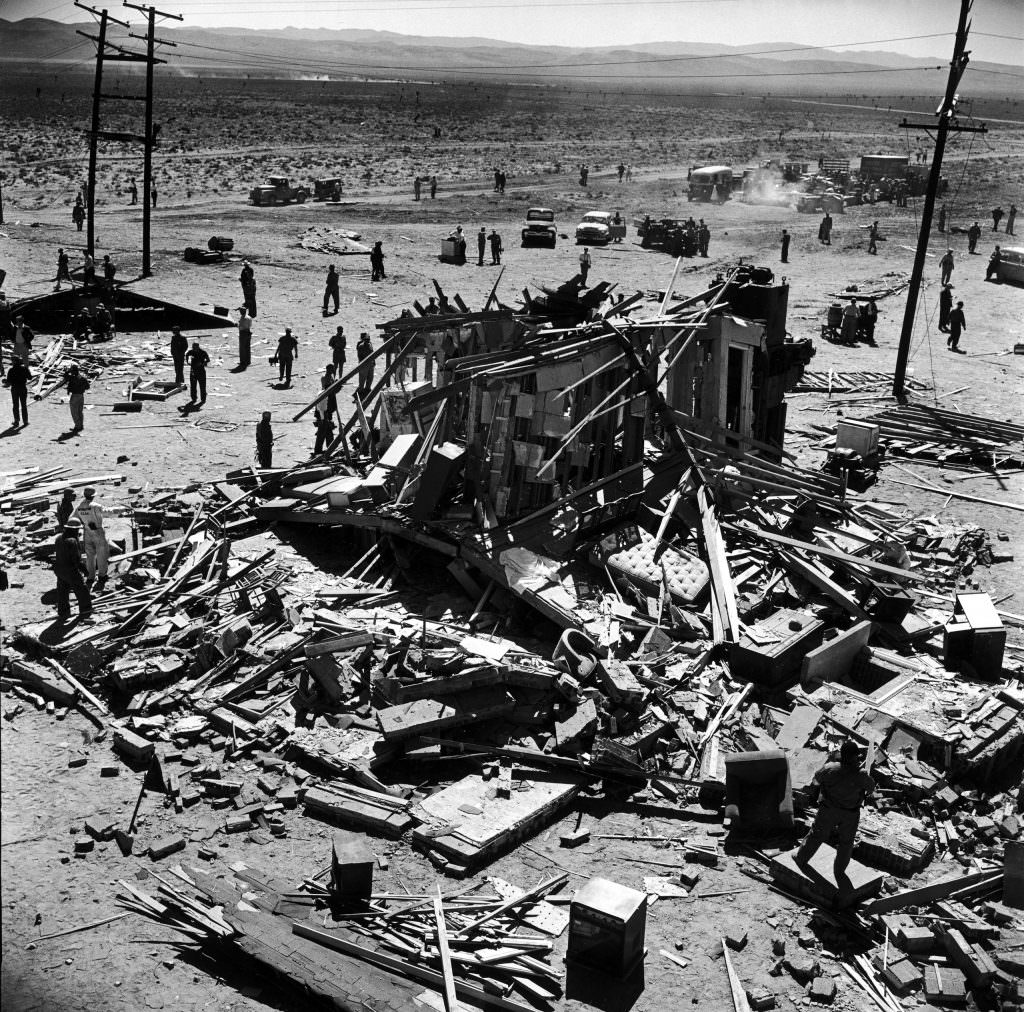
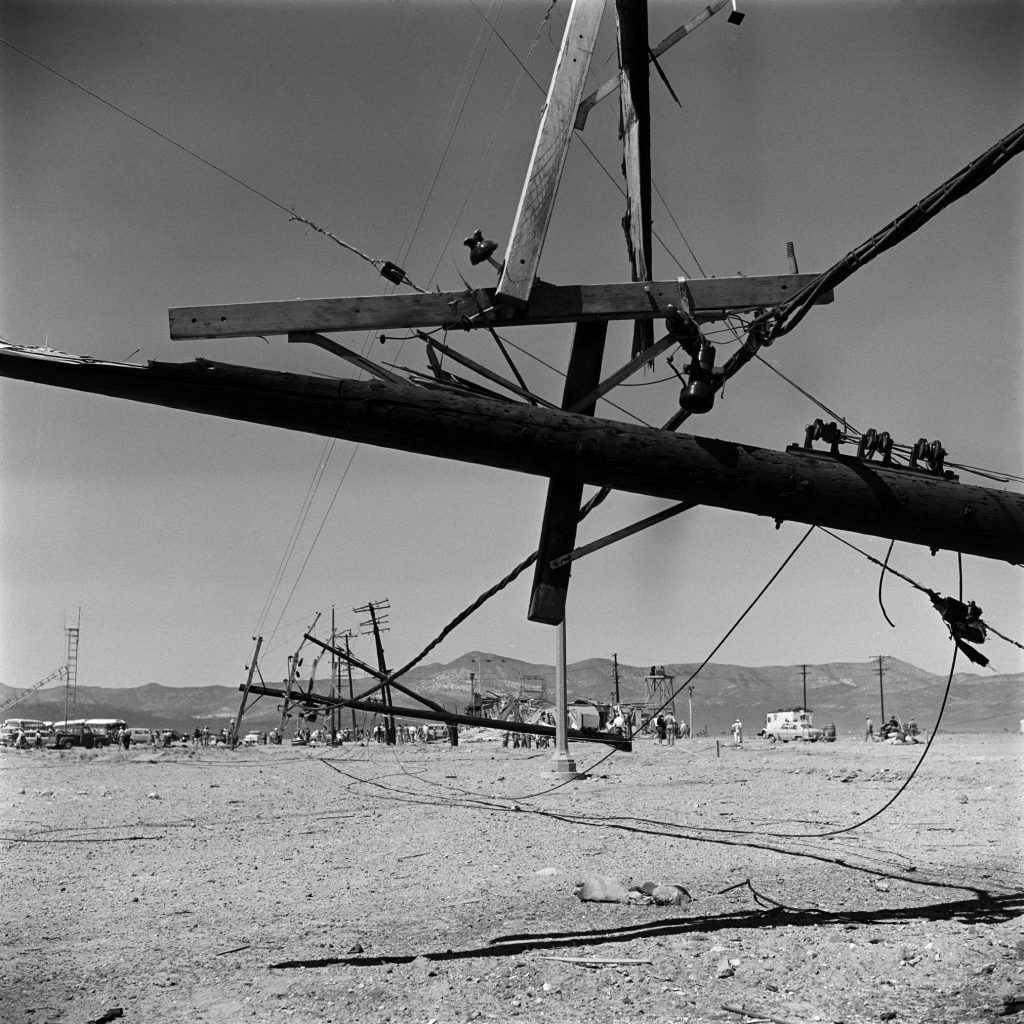
After each detonation, Dean moved through the blast zone with his camera. The desert landscape was fundamentally altered — craters marked the earth, metal was twisted into unrecognizable shapes, and the intense heat had fused sand into glassy surfaces. The silence that followed each test was as striking as the explosion itself.