
Reno, Nevada sits along the Truckee River near the California border, tucked into the foothills of the Sierra Nevada. The city’s first settler was C.W. Fuller, who built a log toll bridge across the river around 1860. When the town was formally established, it was named after Union Major General Jesse L. Reno, a Civil War officer killed in action at the Battle of South Mountain on Fox’s Gap in 1862. For much of its early life, Reno functioned mainly as a distribution point for the surrounding region — a stop along the way rather than a destination in itself.
That changed dramatically in the 20th century. Nevada’s legalization of gambling and the passage of liberal divorce laws transformed Reno into one of the most talked-about cities in the American West. By the 1950s, more than 20 casinos were operating in the city, and slot machines had spread far beyond the casino floor — turning up at the airport, in convenience stores, and even in grocery stores. Reno had fully reinvented itself, and the neon-lit streets of that decade tell the story best.
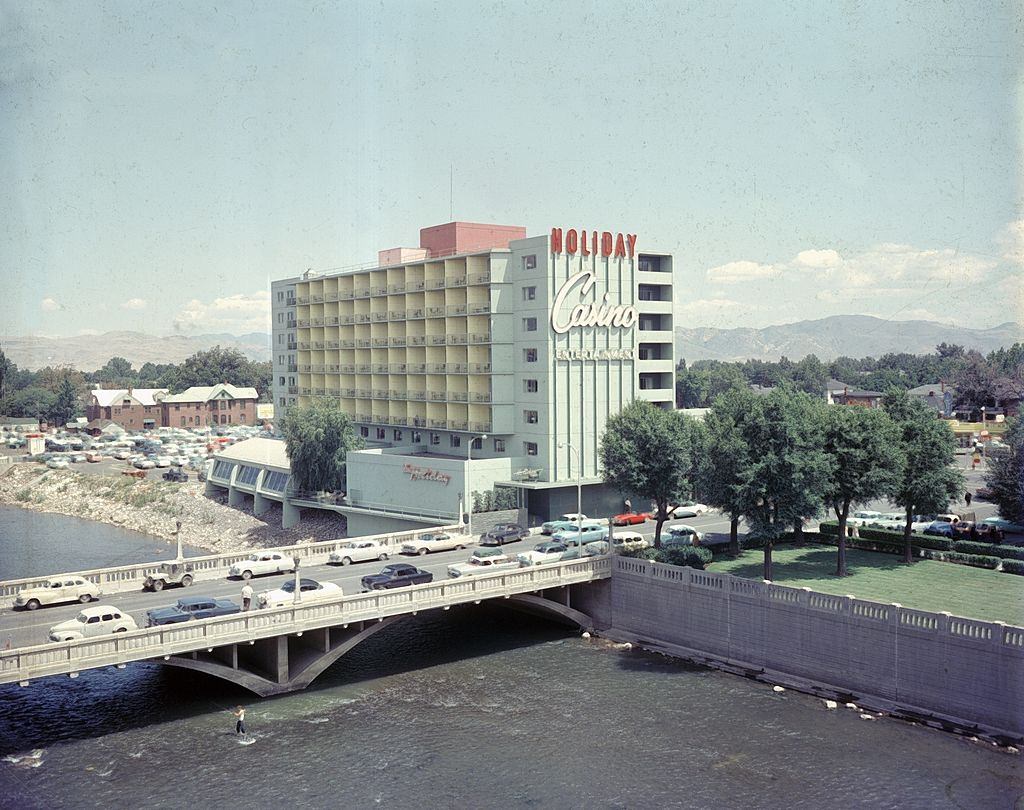
The Holiday Inn hotel and casino was part of the wave of hospitality businesses that catered to Reno’s growing flood of visitors in the 1950s. Hotels weren’t just places to sleep — they were part of the experience, connected directly to the gambling floors and entertainment that drew people from across the country. Virginia Street, Reno’s main corridor, became a showcase of bold signage and competing establishments all vying for attention.
Few symbols defined Reno more than its famous arch sign reading “Biggest Little City in the World.” The phrase captured something real about the place — a city that punched well above its weight in terms of entertainment, reputation, and ambition. The arch became a landmark that visitors and locals alike recognized instantly, framing the street below like a gateway into the city’s world of lights and activity.
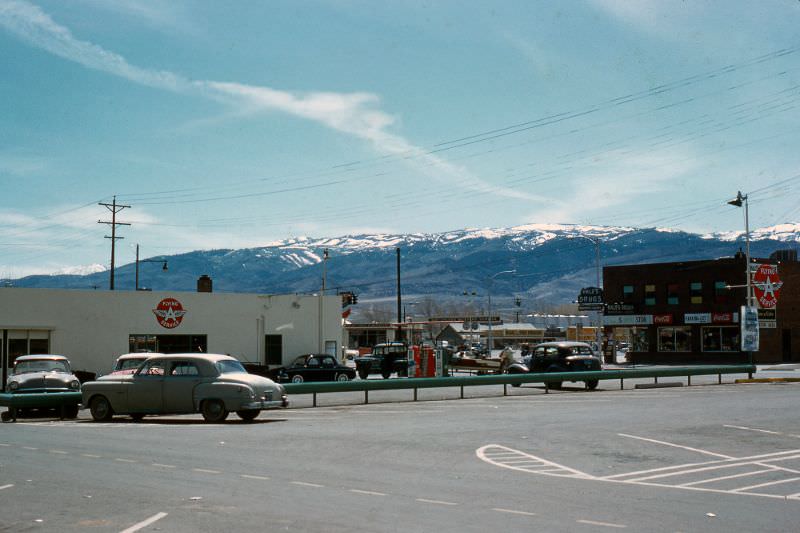
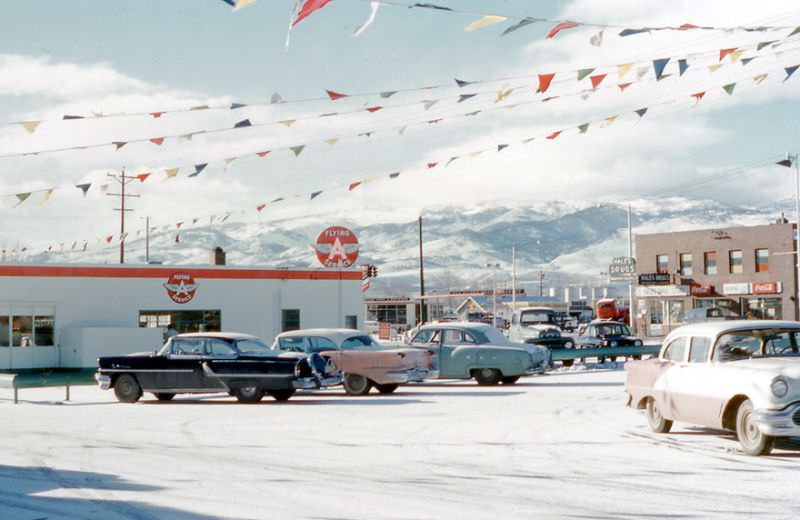
The Flying A Service Station was a familiar sight for drivers passing through or arriving in Reno. In the 1950s, the automobile was king, and service stations like this one were essential stops along the highway. The Flying A brand, operated by Tidewater Oil Company, was known throughout the Western United States, and its clean red-and-white branding stood out against the desert backdrop. For many visitors, the service station was their first real contact with the city.
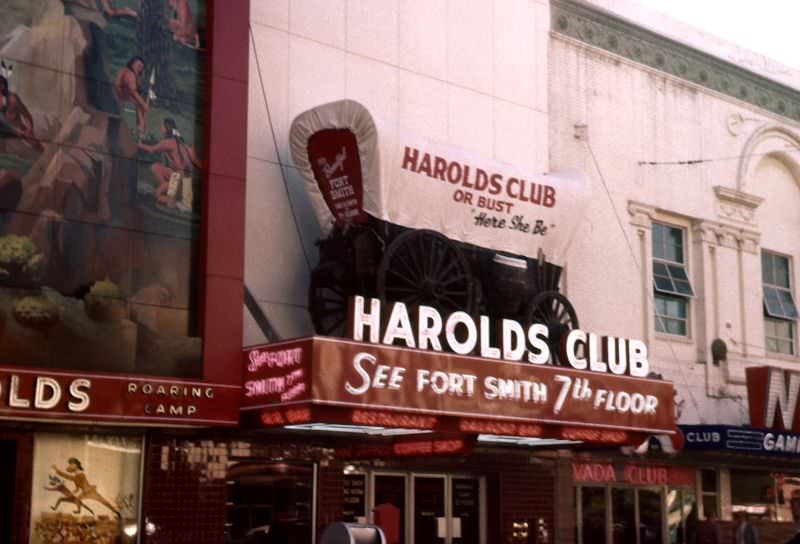
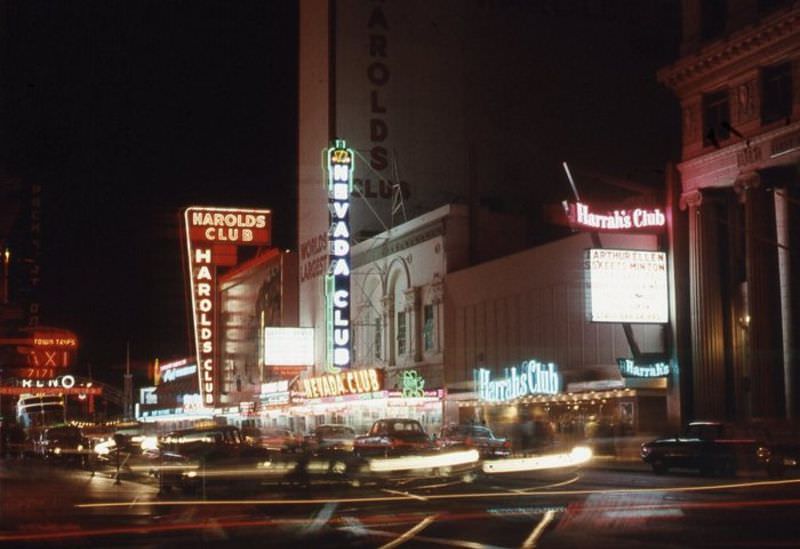
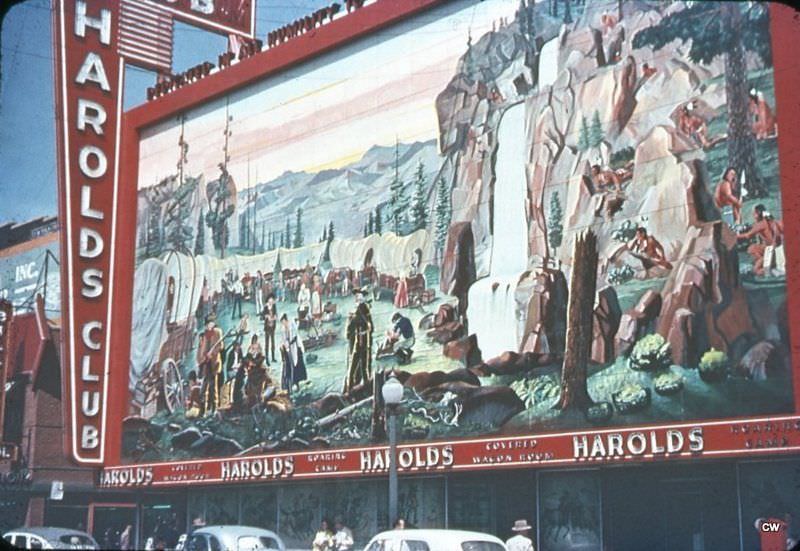
Harolds Club was one of the most recognizable gambling establishments in all of Nevada during the 1950s. Founded by Raymond “Pappy” Smith and his son Harold in 1935, the club grew into a Reno institution. The Smiths were pioneers in casino marketing, placing billboard advertisements along highways across the country — some as far away as Europe and the Middle East — with the simple message: “Harolds Club or Bust.” By the 1950s, the club was drawing enormous crowds and helping set the tone for what a modern American casino could look like.
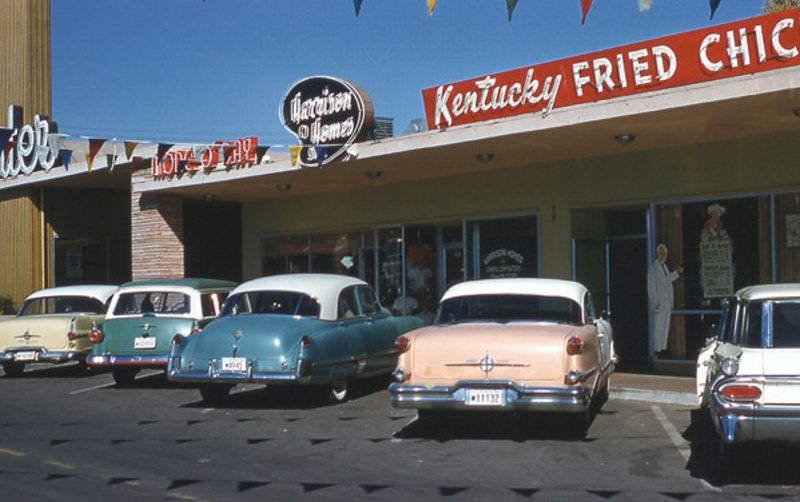
Not everything in 1950s Reno was about gambling. The city was also a living snapshot of American consumer culture at its mid-century peak. Chain restaurants and fast food were beginning to take root across the country, and Reno was no exception. A Kentucky Fried Chicken location in the city during this era reflects how national brands were starting to move into every corner of American life, even in a city best known for its casinos and neon lights.
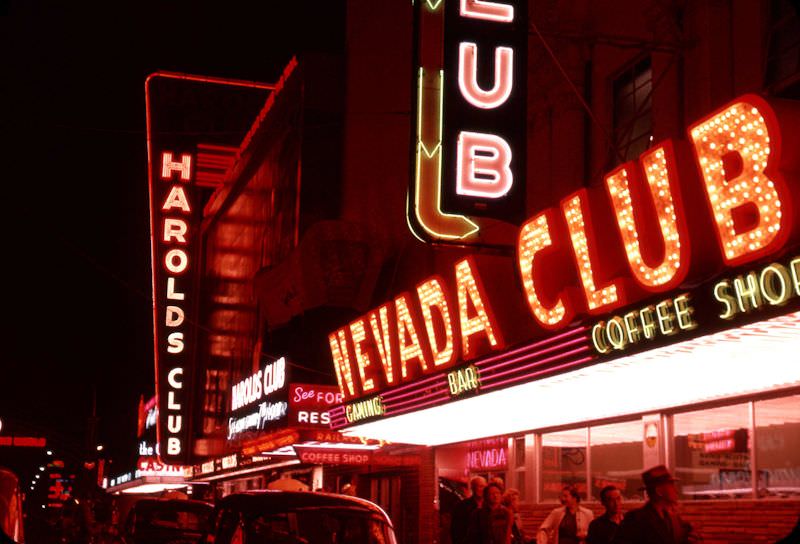
The Nevada Club was another fixture of Reno’s downtown gambling scene. Competing clubs lined the streets, each one trying to outdo the next with bigger signs, brighter lights, and more games on the floor. The Nevada Club held its own among some stiff competition, drawing in players who were looking for a lively night in the heart of the city.
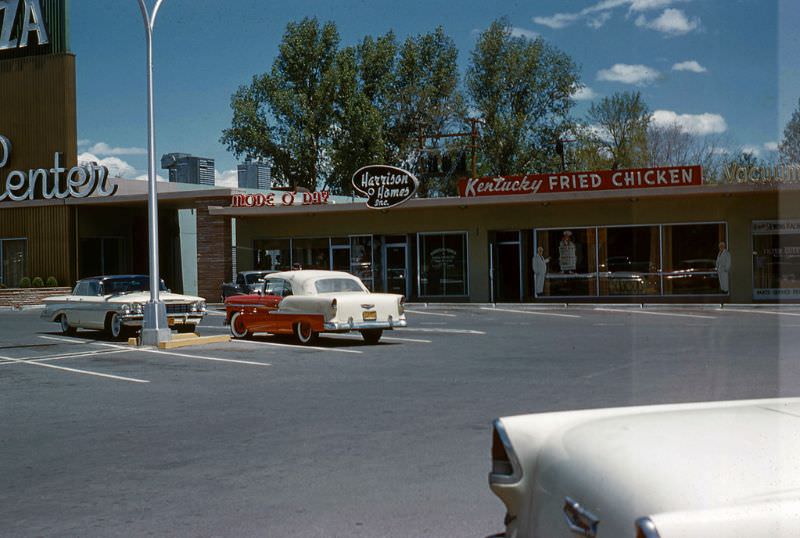
Away from the casino strip, Reno was also a functioning city with everyday needs. The Plaza Shopping Center represented the suburban side of 1950s Reno — a place where residents did their regular shopping, away from the tourist-focused downtown. Shopping centers like this one were booming across the United States in the postwar decade, driven by car ownership, suburban growth, and a consumer economy running at full speed.
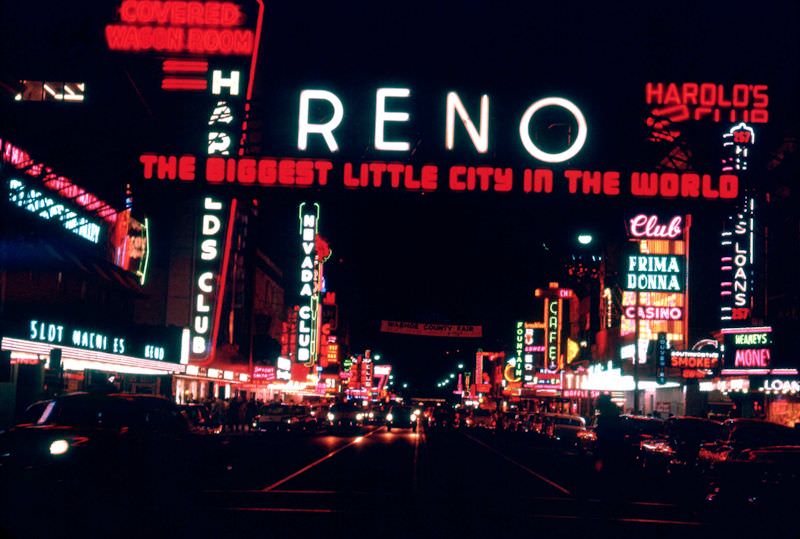
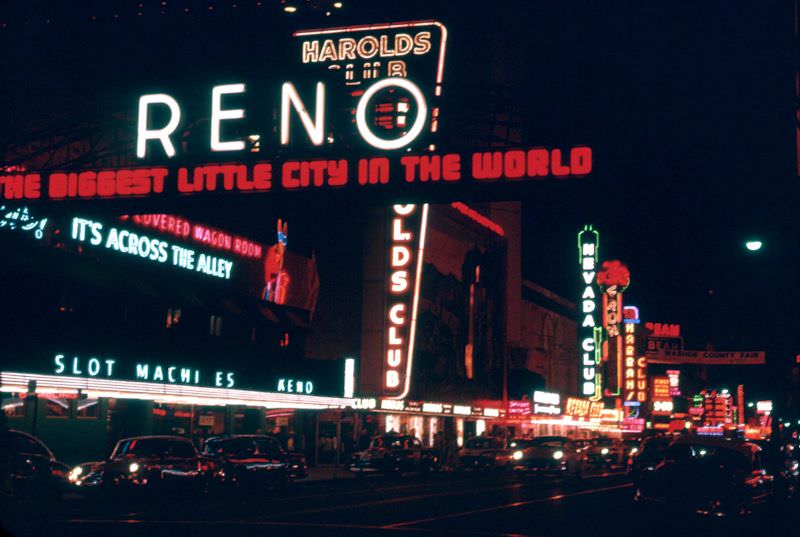
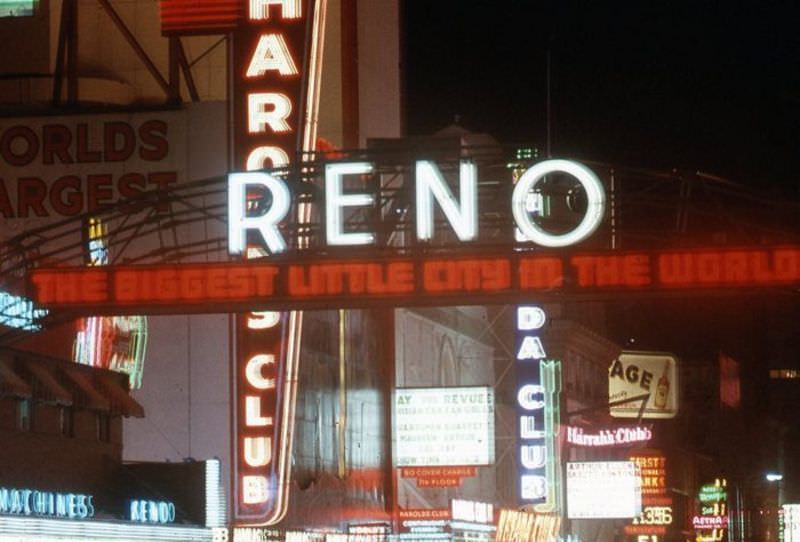
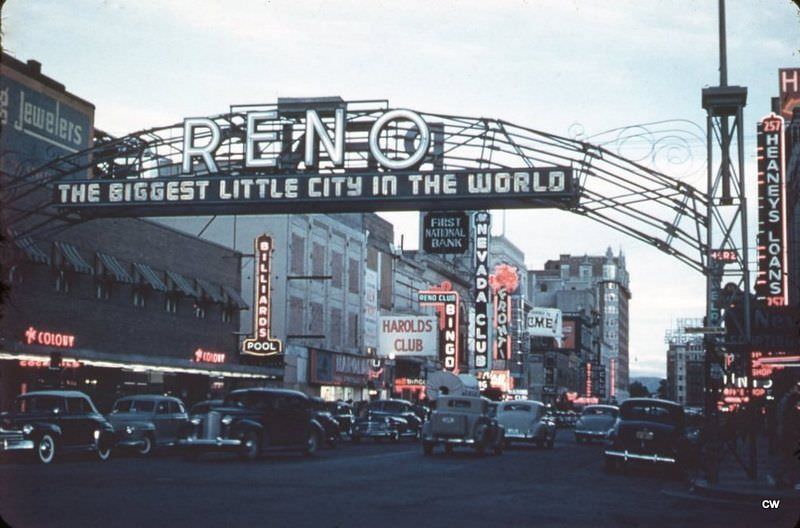
The arch sign appeared in photograph after photograph taken in 1950s Reno — and for good reason. It was the city’s most powerful piece of public branding. Spanning Virginia Street, the arch welcomed visitors who arrived by car along the main drag. The slogan “Biggest Little City in the World” had been officially adopted by the city in 1929 after a slogan contest, and by the 1950s it had become deeply embedded in Reno’s identity. Daytime shots showed the clean lines of the sign; nighttime photos revealed it blazing in full neon glory.
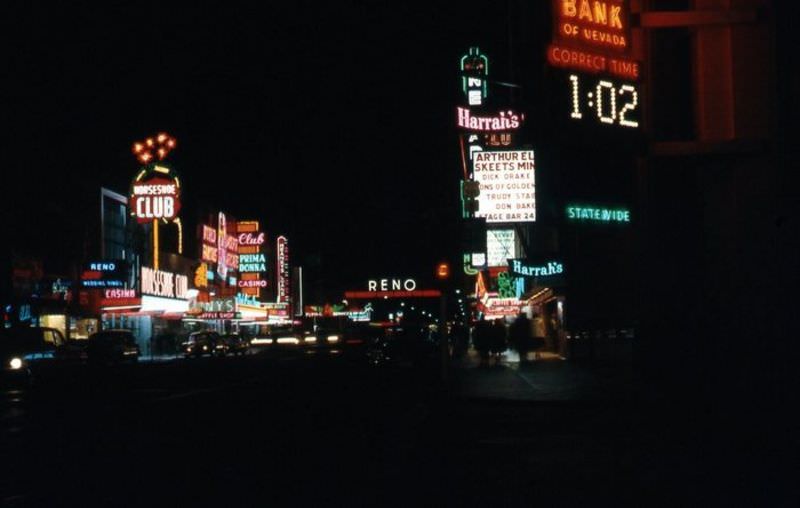
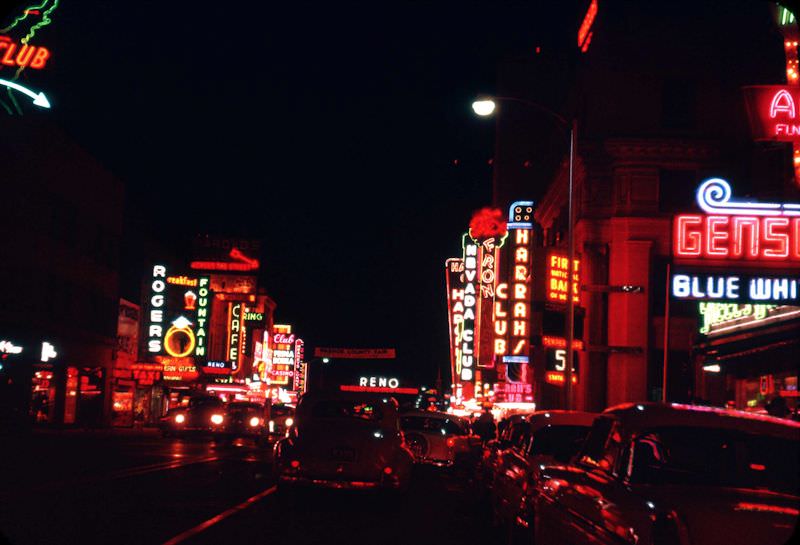
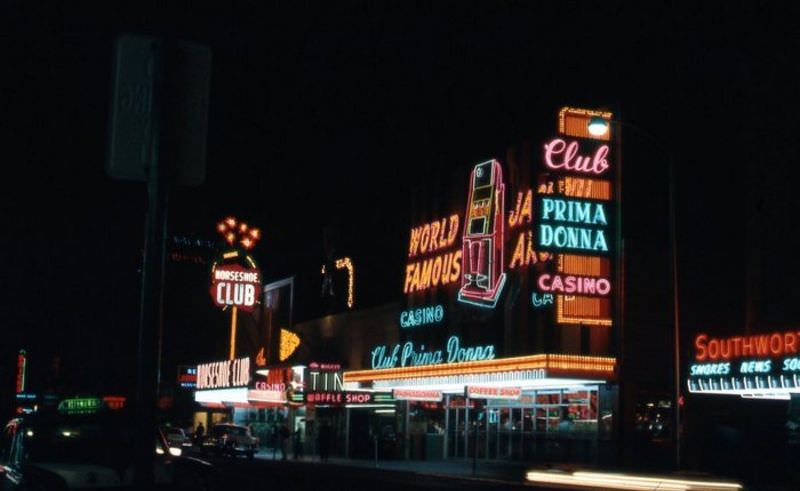
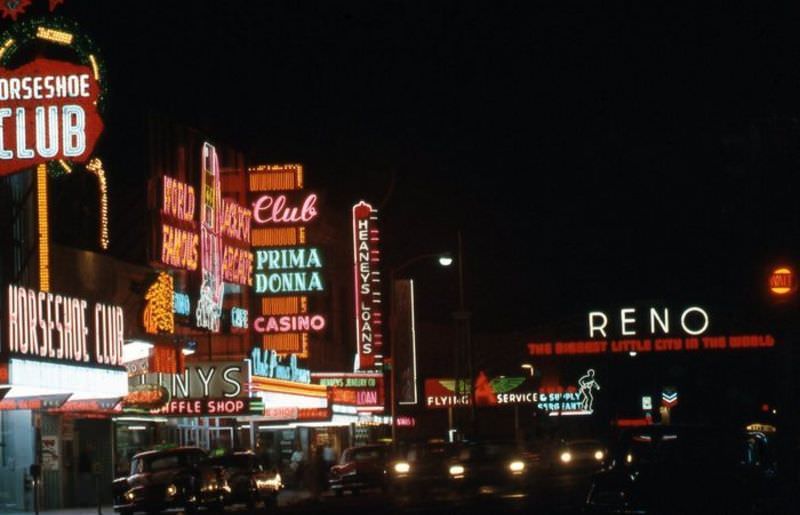
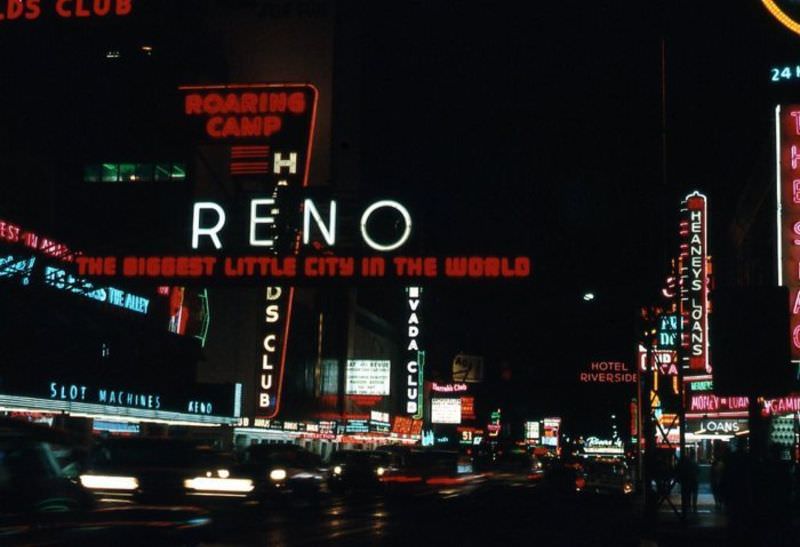
After dark, Reno transformed into something else entirely. The casinos never closed, and the streets stayed active well past midnight. Photos taken in the early morning hours — one captured at exactly 1:02 am — show a city fully awake, with neon signs reflected on wet pavement and cars still cruising the strip. The nighttime atmosphere was a major part of Reno’s appeal, giving the city an energy that felt different from anywhere else in the American West.
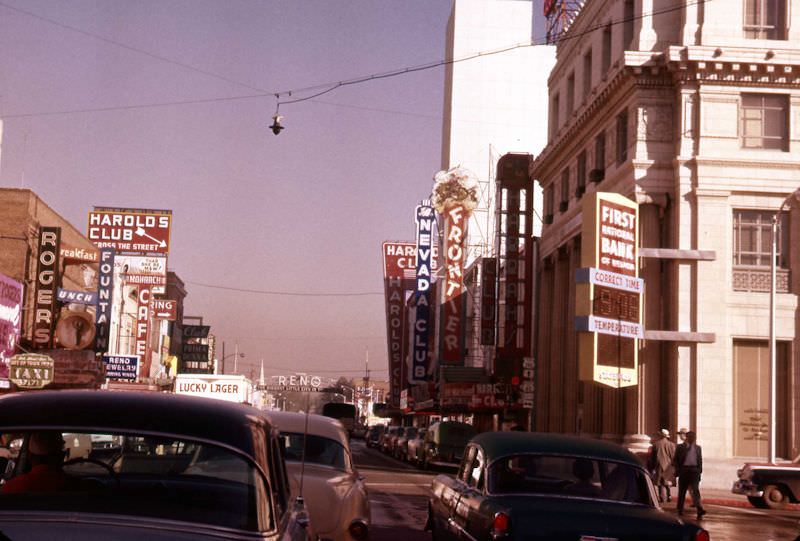
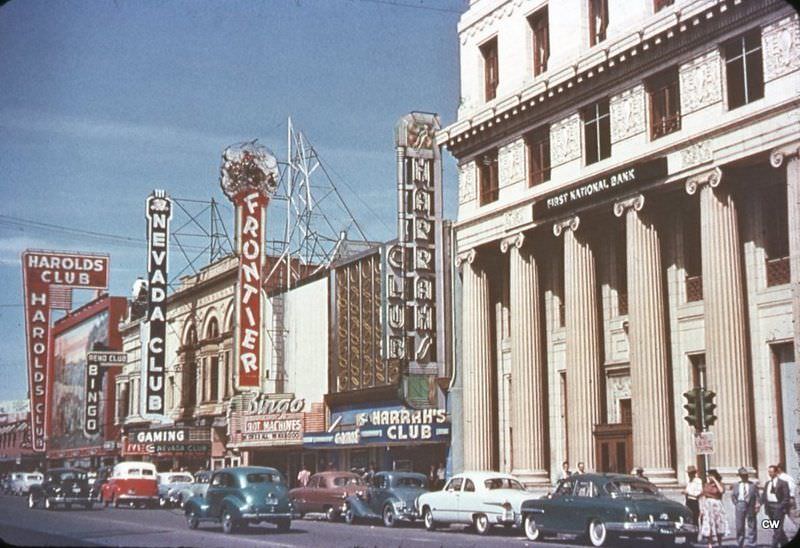
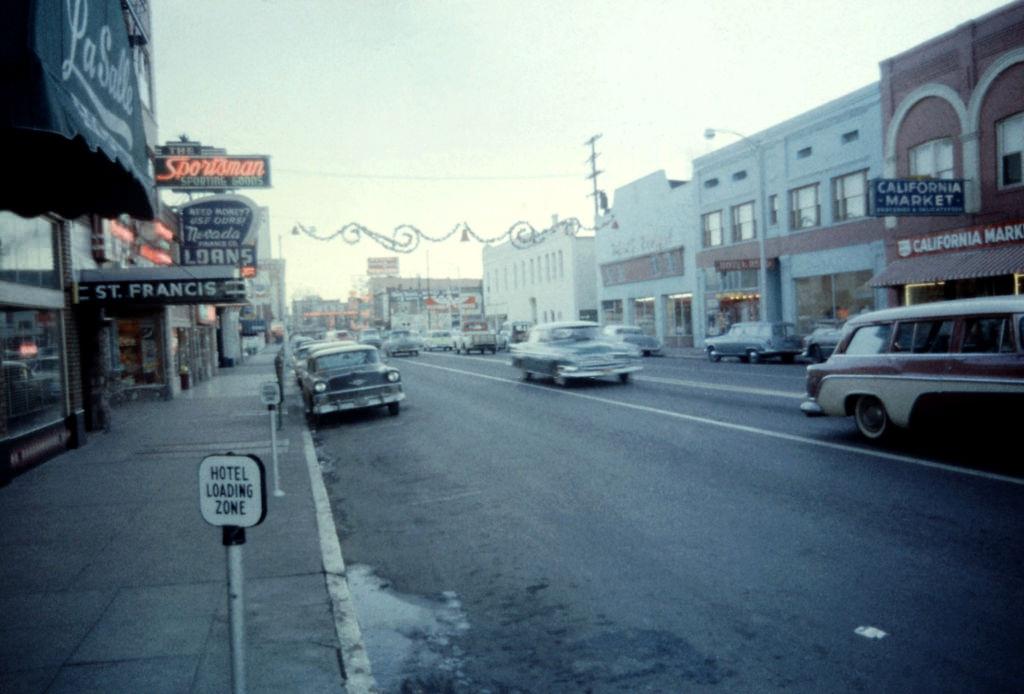
Street-level photos from 1950s Reno capture the everyday rhythm of the city — pedestrians on sidewalks, storefronts open for business, and the mix of locals and tourists that gave downtown its particular character. The fashion, the cars, and the signage all pin these images firmly to their decade. Wide-brimmed hats, chrome bumpers, and hand-painted window signs were everywhere.
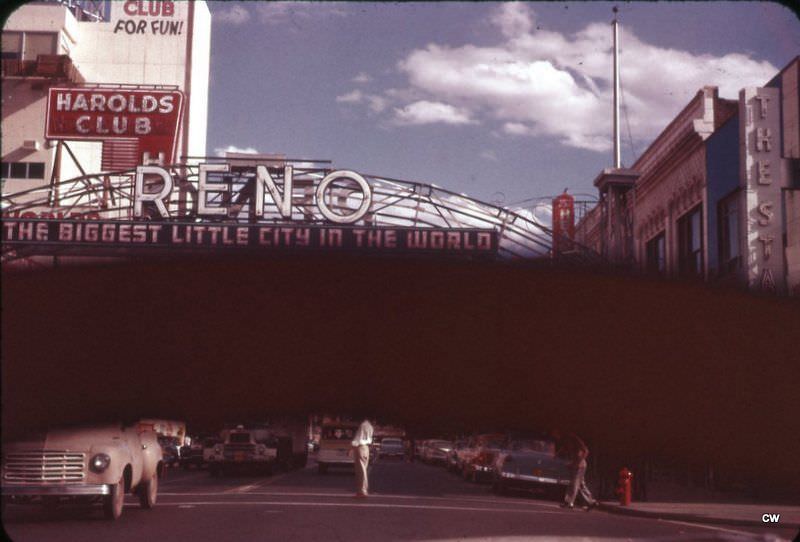
One photo offers a unique view of the city — shot through the steering wheel of a moving car, framing Reno’s streets like a porthole into the past. It captures the driver’s-eye view of what it felt like to cruise through the city in the 1950s, when American car culture was at its height and a drive down Virginia Street was an experience in itself.
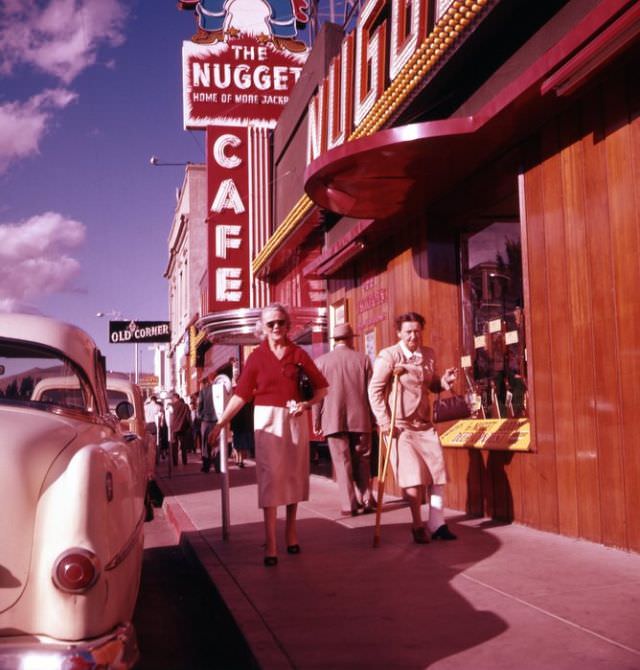
The Nugget Casino was another well-known name in the Reno gambling world. Like its competitors, it used bold signage and a prominent location to pull in customers. The Nugget became particularly associated with Sparks, a neighboring city just east of Reno, but its presence in the broader Reno market during the 1950s was notable. The competition between casinos drove constant upgrades and expansions throughout the decade.
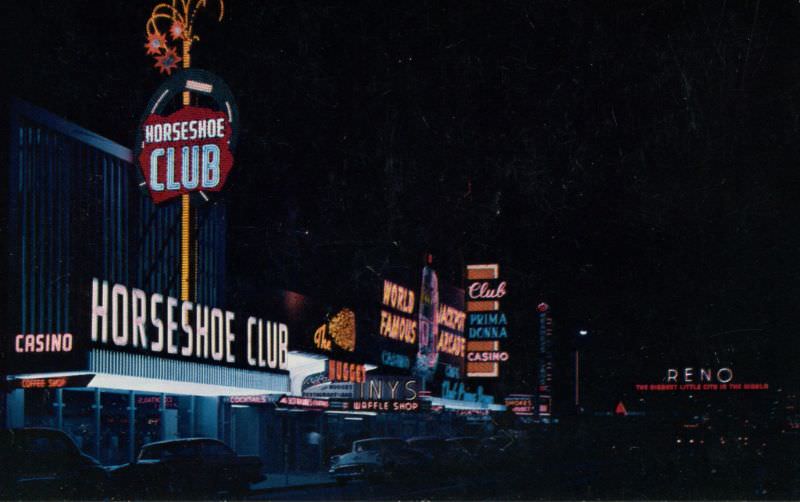
A northward look down Virginia Street puts the whole scene into perspective. This was the spine of Reno — the road that everything else organized itself around. Casinos on both sides, hotels above, and a steady stream of traffic below. The famous arch sat squarely over this street, and looking north from its base, you could see the full length of a city that had built itself around the idea that entertainment and opportunity were available to anyone who showed up.
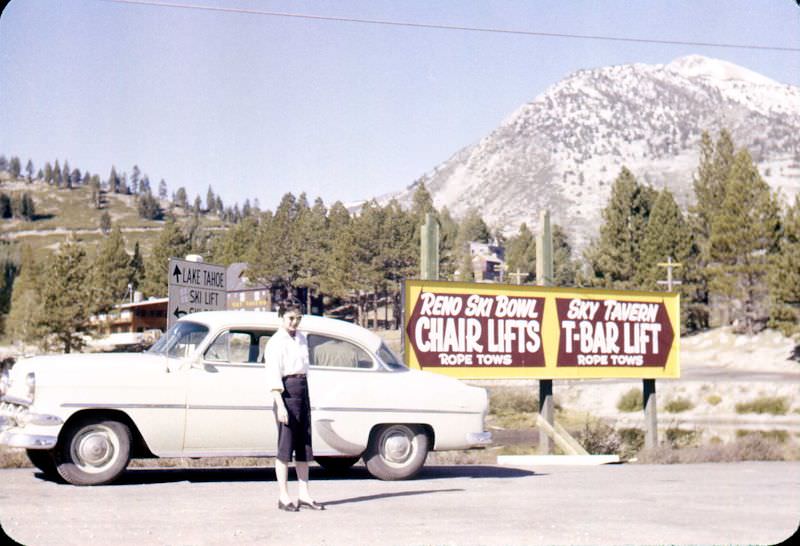
Among all the neon and noise, the personal moments stand out just as much. A young woman posing with her car somewhere in Reno captures the quieter side of the city — a moment that belongs to a person rather than a place. The car itself, polished and proud, is exactly what you’d expect from the 1950s: a heavy chrome-trimmed machine that represented freedom and postwar prosperity. These photos, taken together, paint a full picture of Reno in its 1950s prime — a city that was loud, bright, ambitious, and deeply American.





Downtown must have been absolutely incredible back in the day. Looking at it now, it’s just sad to see what’s happened to it.
It’s disheartening to witness the decline of the entire city due to the emergence of Las Vegas and the Indian casinos on the other side of the border.
Downtown? Sure. The rest of the city? Naw Reno/Sparks has had a glowup.