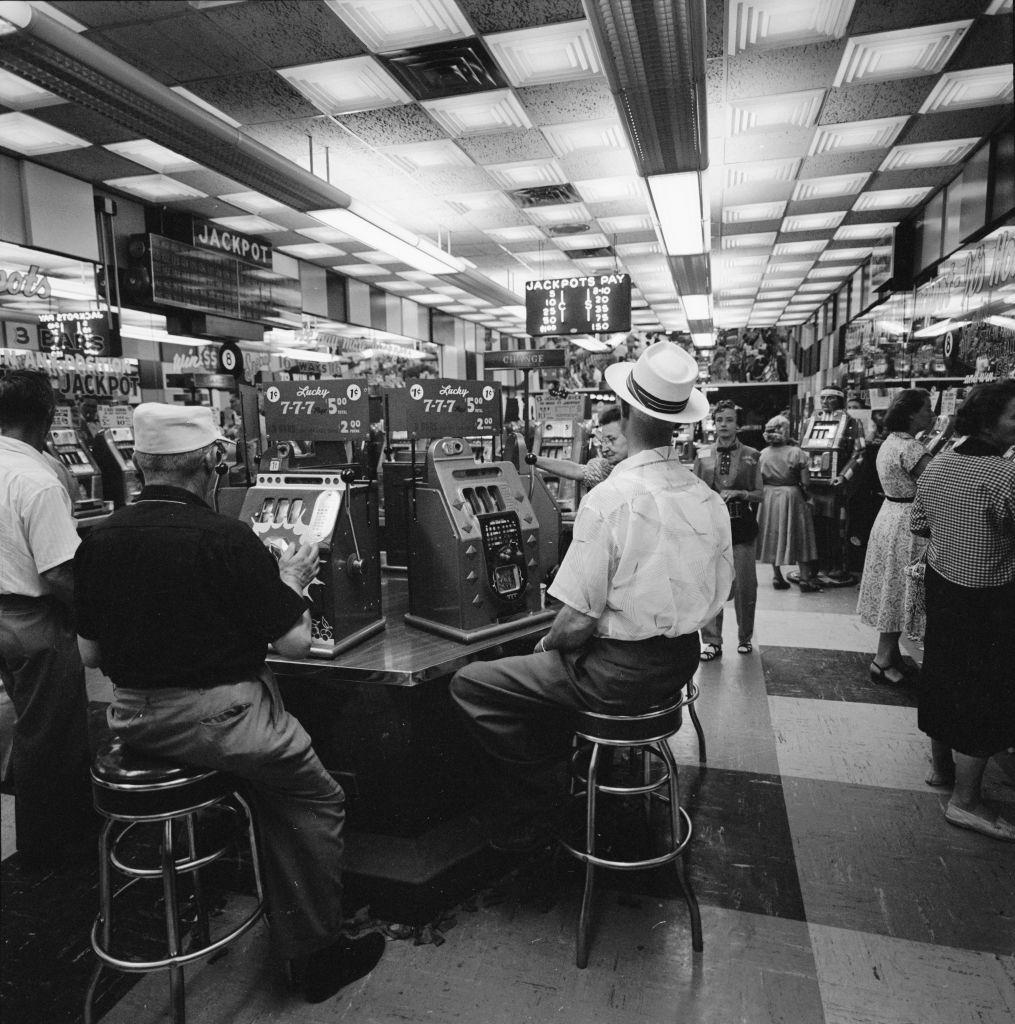
By the early 1950s, Las Vegas was transforming at a pace few American cities could match. New hotels and casinos were rising from the desert floor almost every year. Investors — including organized crime figures, independent businessmen, and Hollywood-connected money — poured capital into the Strip and Downtown. The result was a city that never slept, never dimmed its lights, and never stopped building.
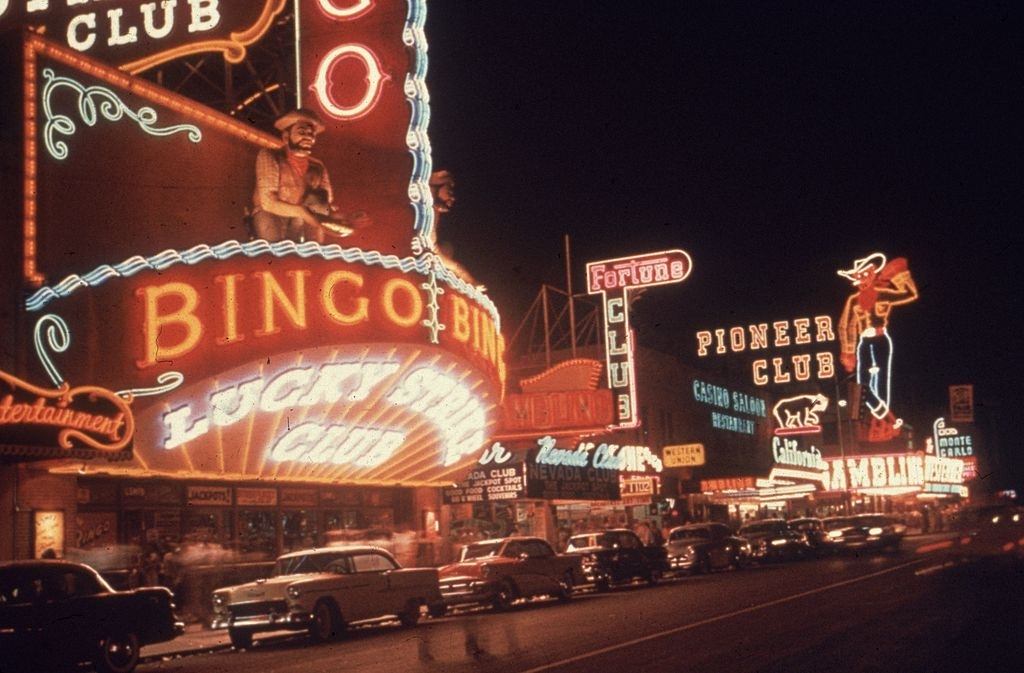
Fremont Street was the original beating heart of Las Vegas. Long before the Strip became the dominant address, Downtown’s Fremont Street packed casinos, clubs, and hotels into a few bright blocks. By the mid-1950s, over 10 million visitors were arriving in Las Vegas each year, and a large share of them made Fremont Street their first stop.
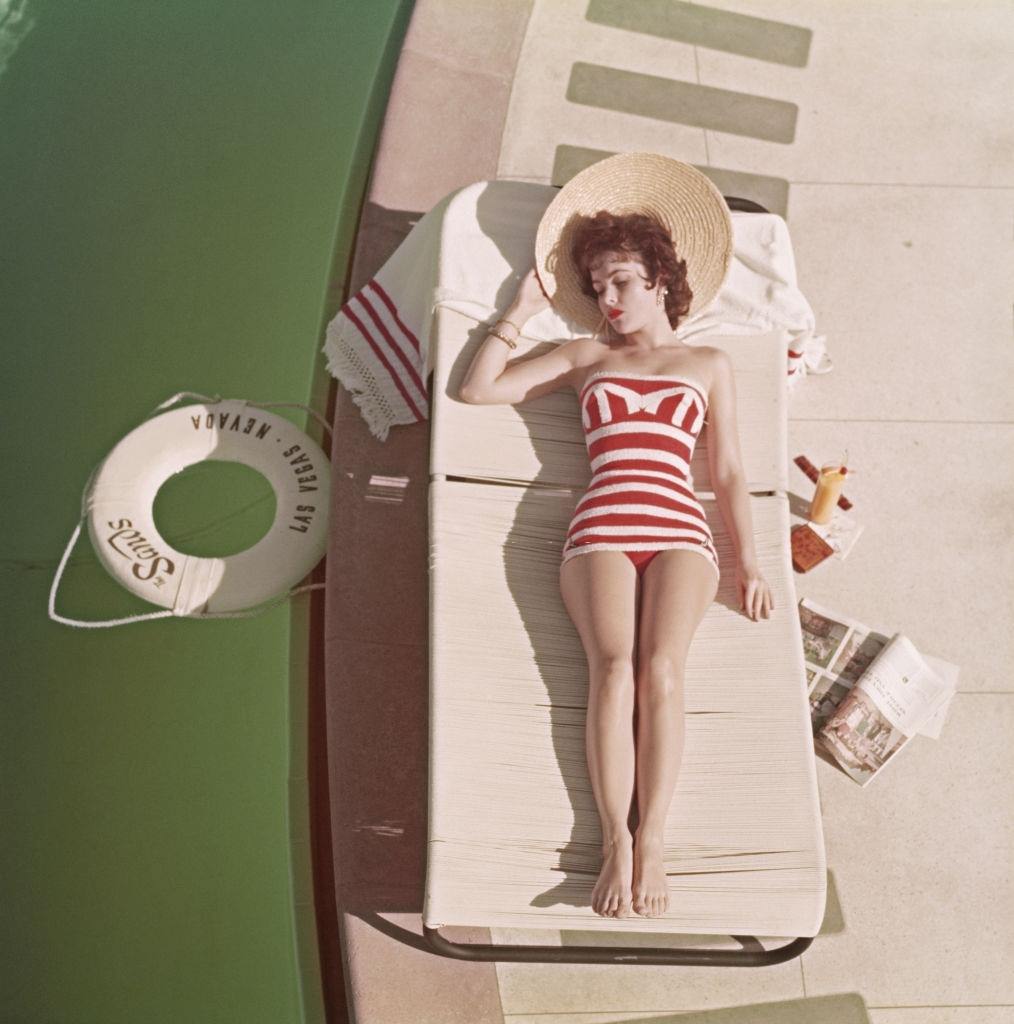
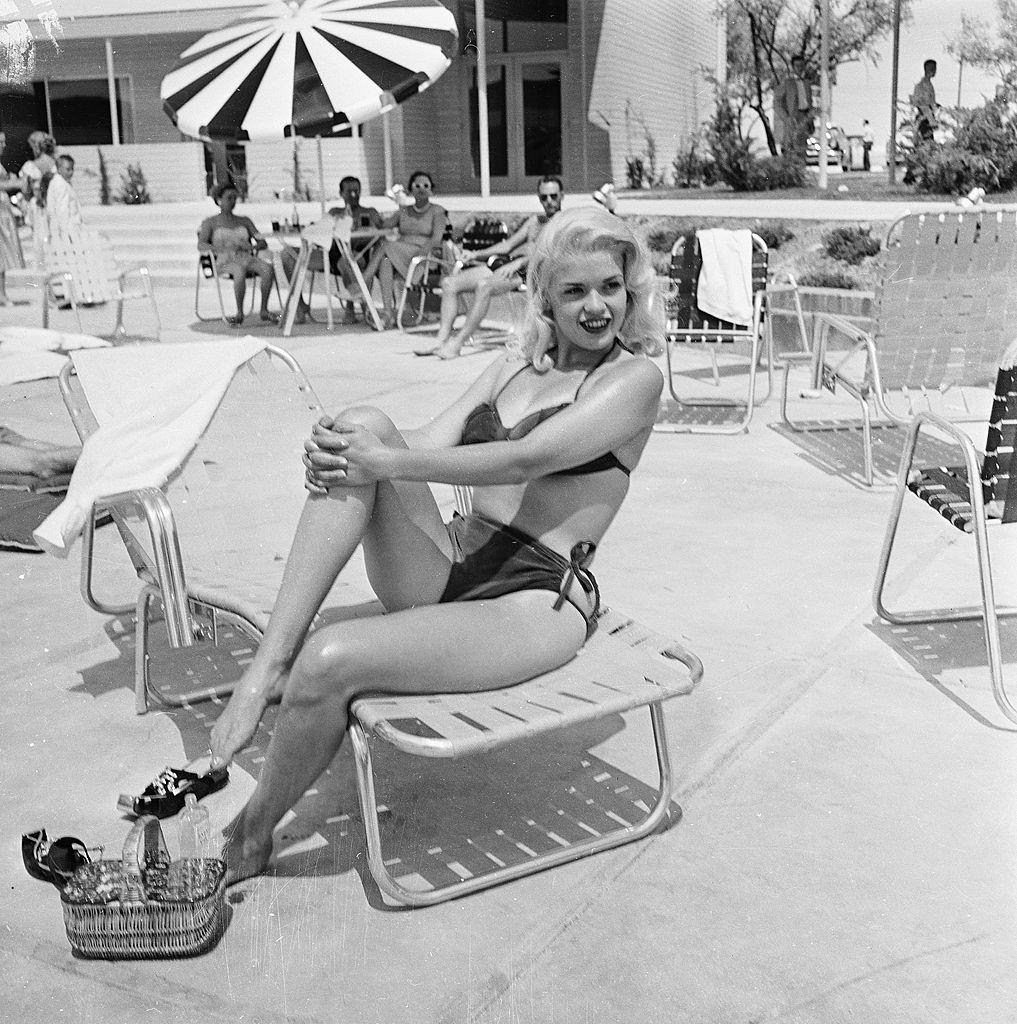
The hotels competed fiercely for guests, and one of their most effective tools was the swimming pool. Luxury hotels like the Sands offered poolside experiences that blended Hollywood glamour with desert heat. Austrian actress Mara Lane was among the many celebrities who frequented these spaces, lending the hotels a star-powered appeal that money alone couldn’t buy.
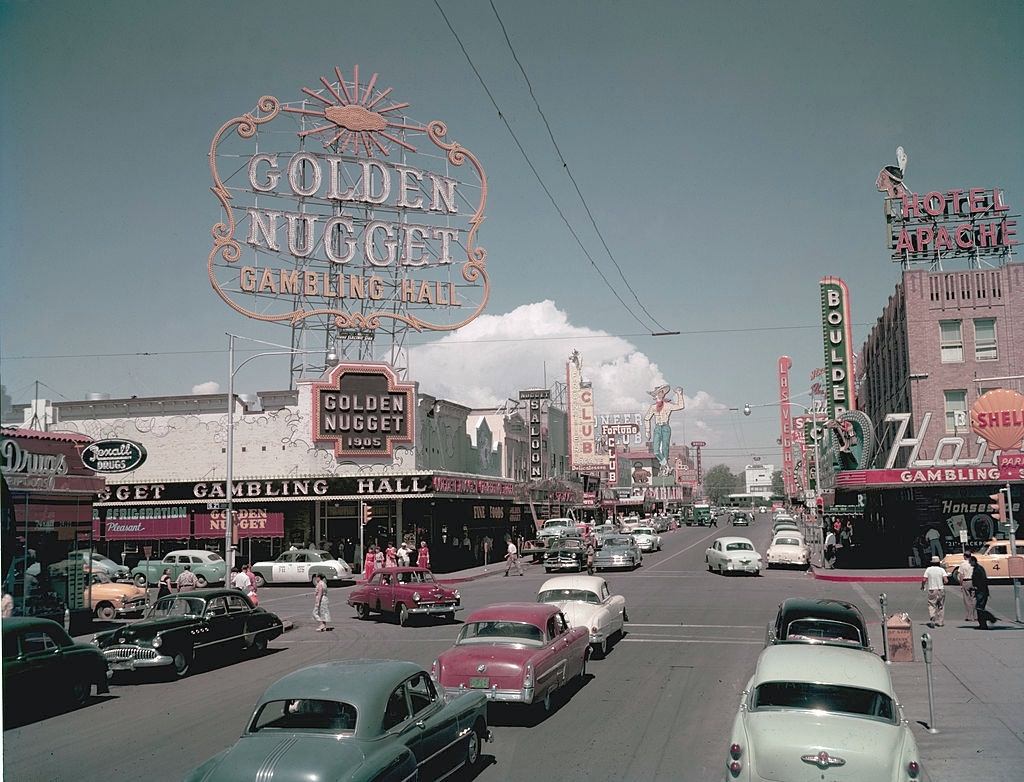
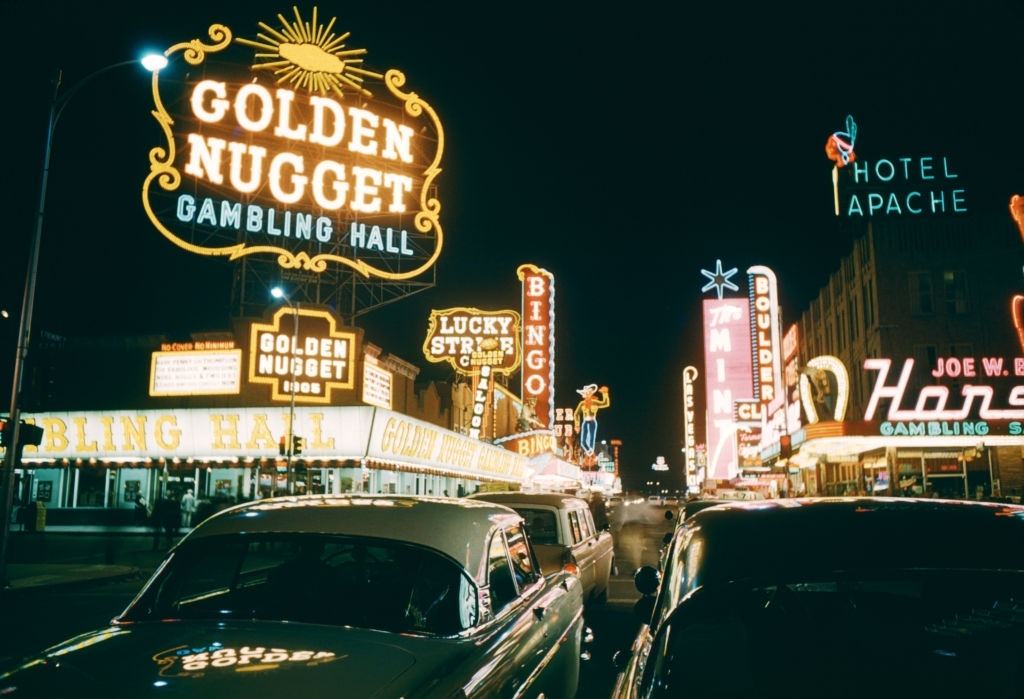
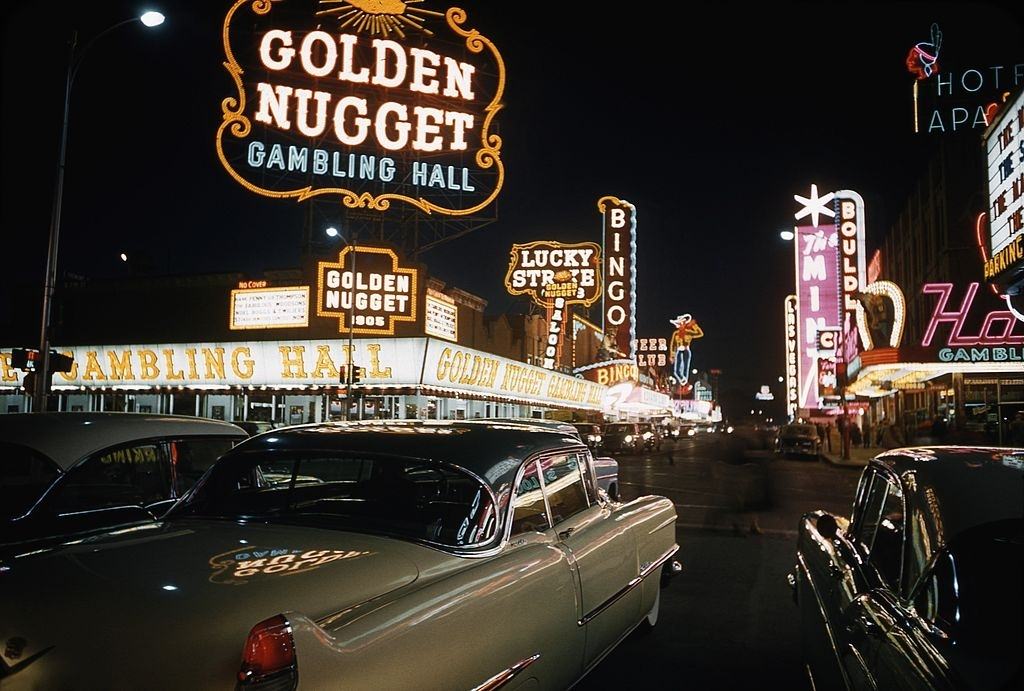
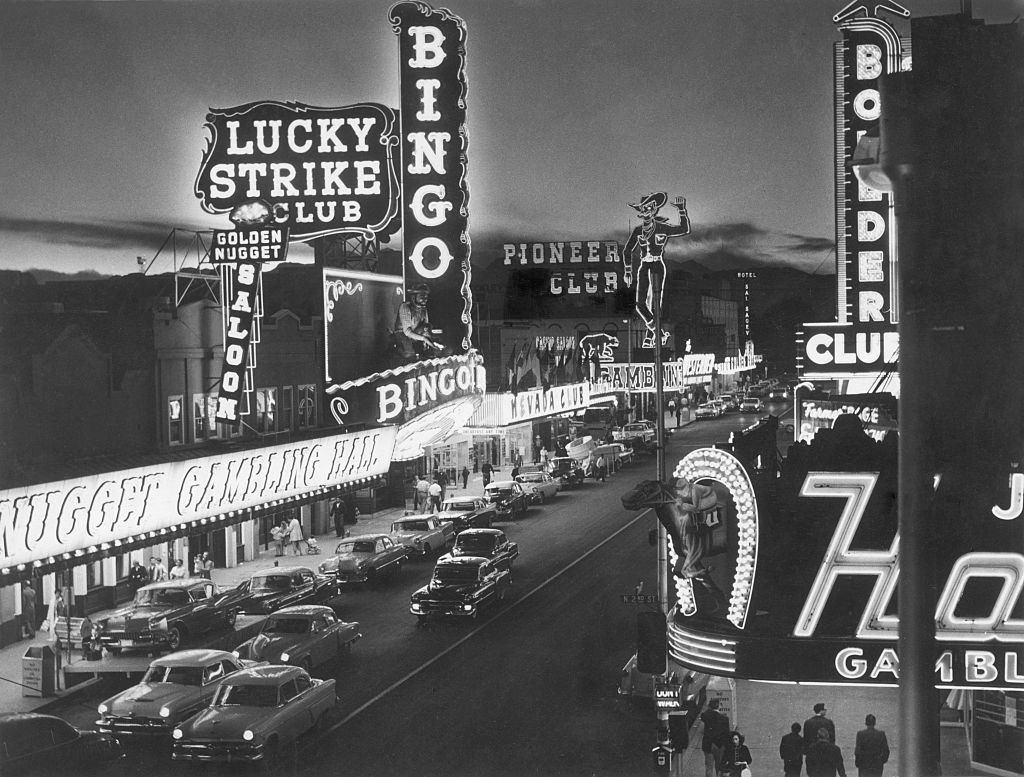
Downtown Las Vegas in the late 1950s was a wall of competing signs, each venue trying to shout louder than the next. The Golden Nugget, The Mint, the Pioneer Club, and the Hotel Apache all crowded Fremont Street, offering gambling, food, and entertainment under one roof. The street had become one of the most recognizable commercial corridors in the country.
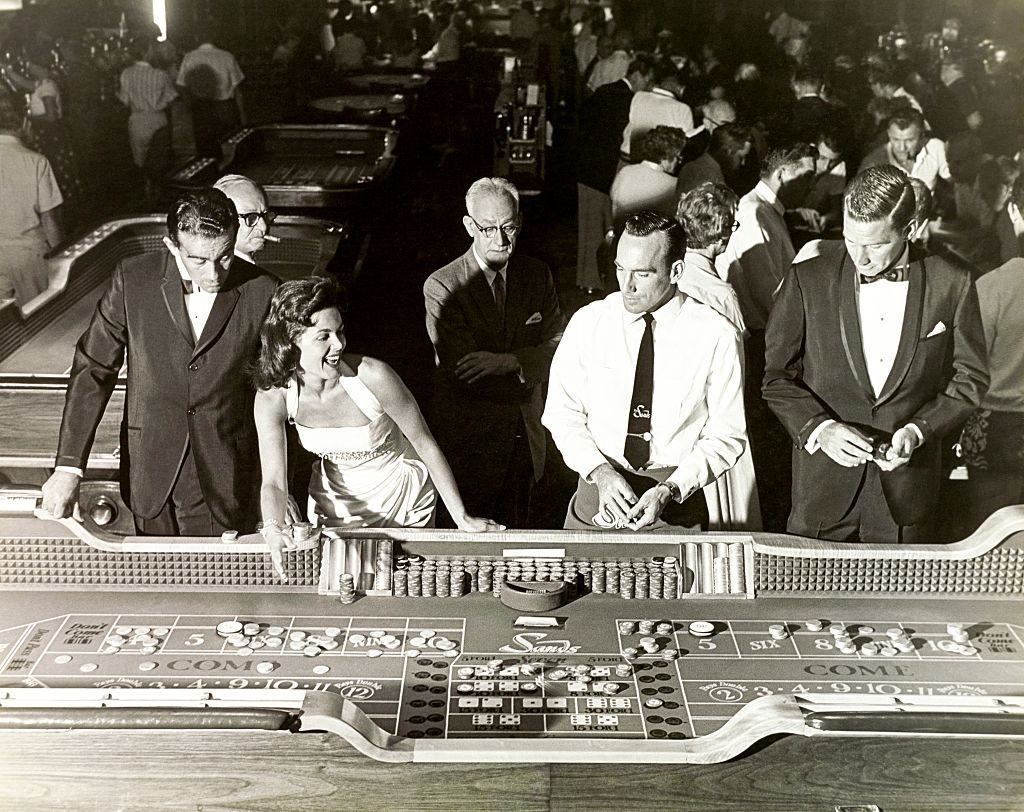
Inside the casinos, the craps table was one of the most social spots on the floor. Players gathered around, bets flew quickly, and the energy was loud and constant. The Sands Hotel, which opened in 1952, became one of the decade’s premier destinations for both gambling and entertainment.
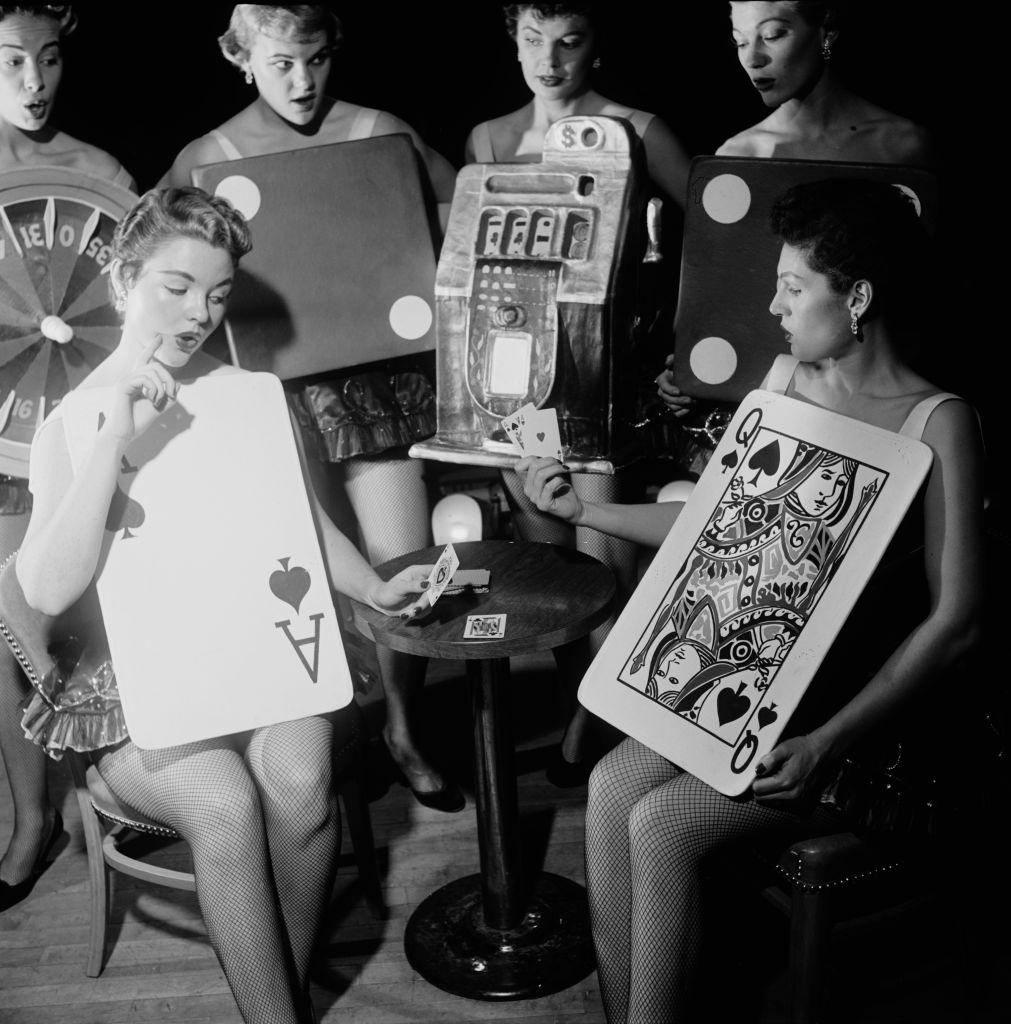
Card games drew crowds from all walks of life. Casinos made sure the atmosphere stayed lively, and the presence of young, fashionable players added to the visual appeal that operators worked hard to project.
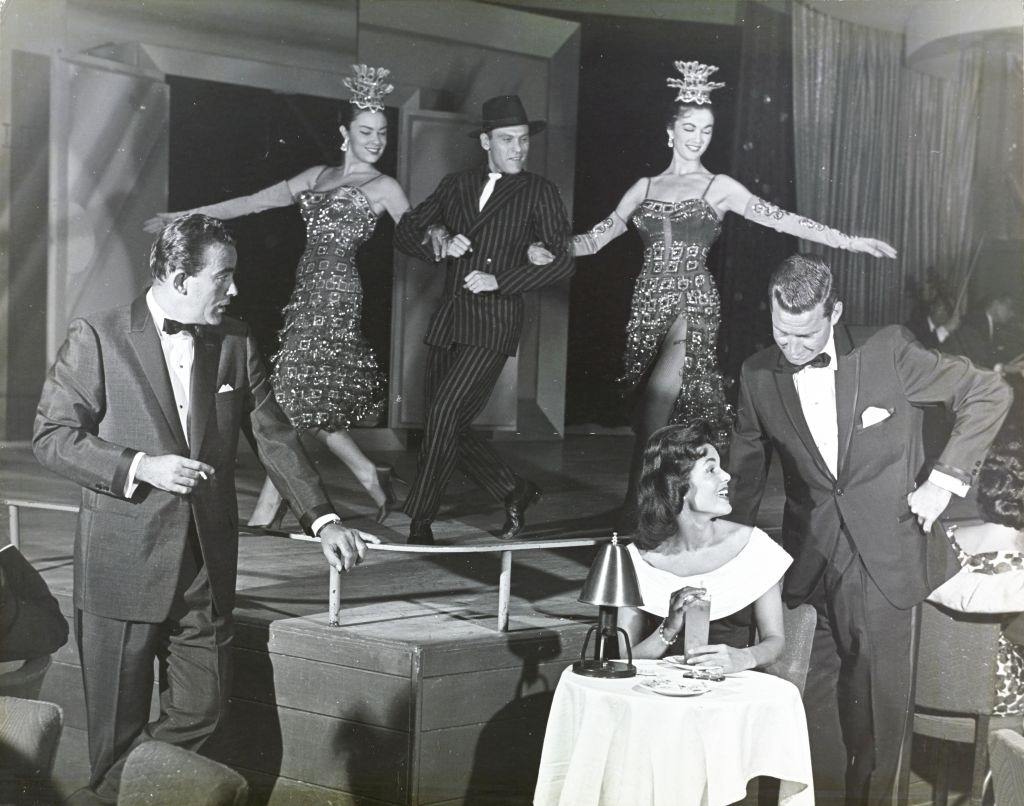
Entertainment was a core part of the Las Vegas business model. Hotels employed full production staffs — directors, choreographers, costumers, and stagehands — to stage nightly shows. The Copa Girls at the Sands were one of the most recognized acts of the era, performing in elaborate, high-energy numbers that kept audiences coming back.
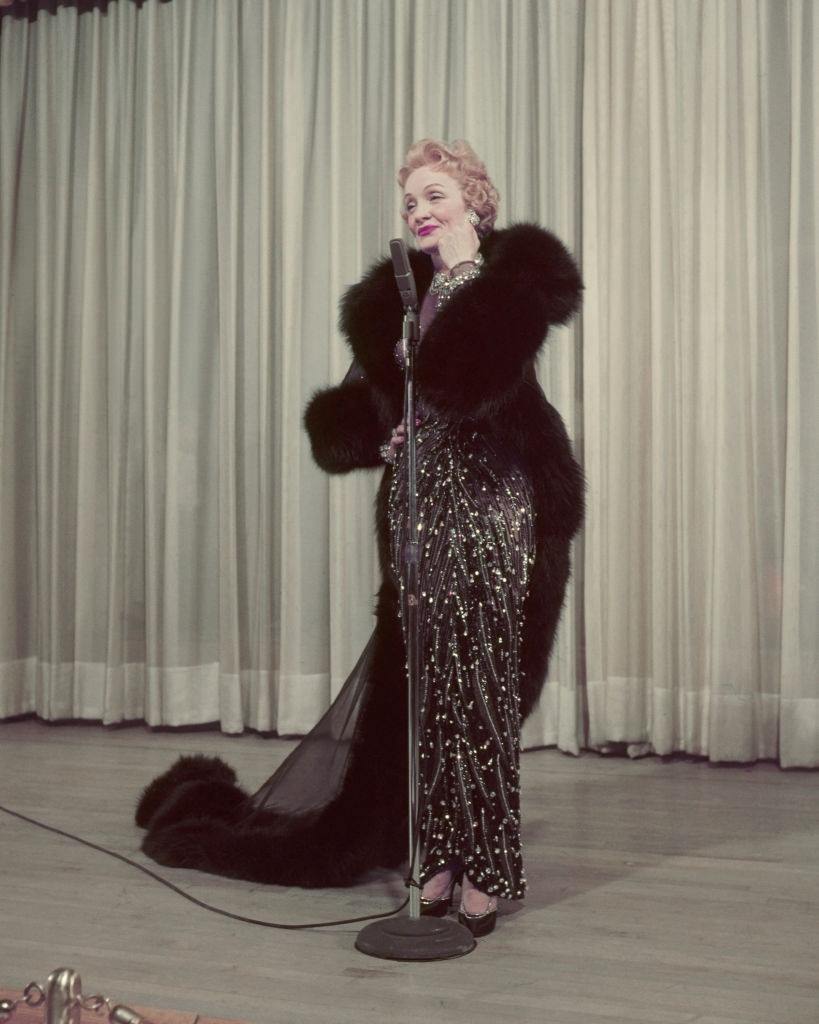
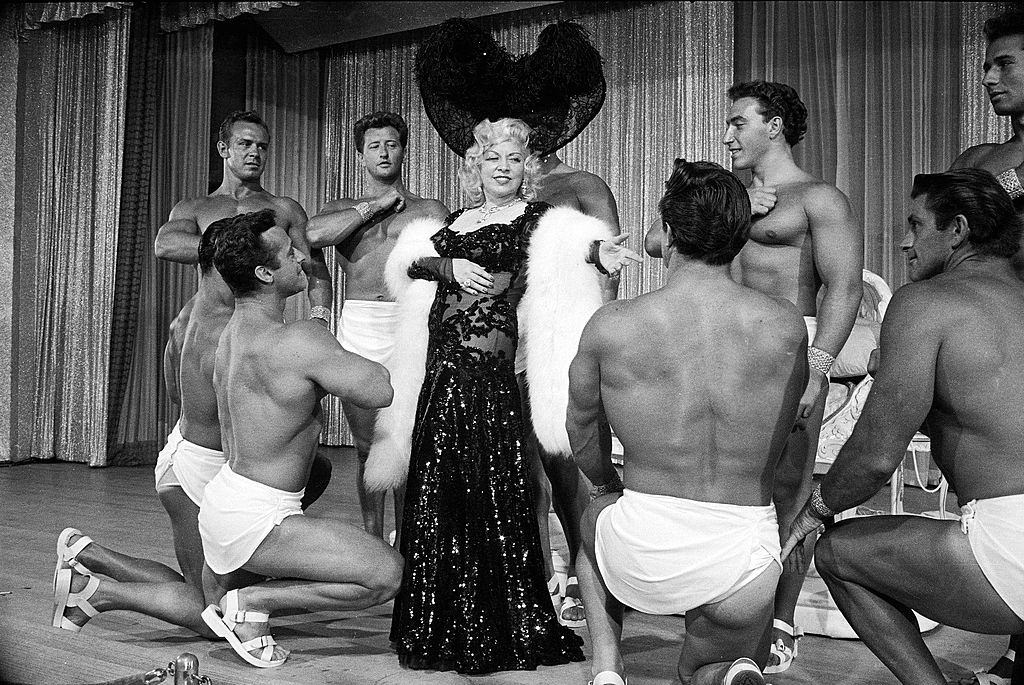
Hollywood stars didn’t just visit Las Vegas — many performed there. Mae West made her nightclub debut at the Sahara in the early 1950s, drawing massive crowds. Las Vegas had become the second city of American entertainment, behind only Los Angeles, and major names actively sought residencies and bookings there.
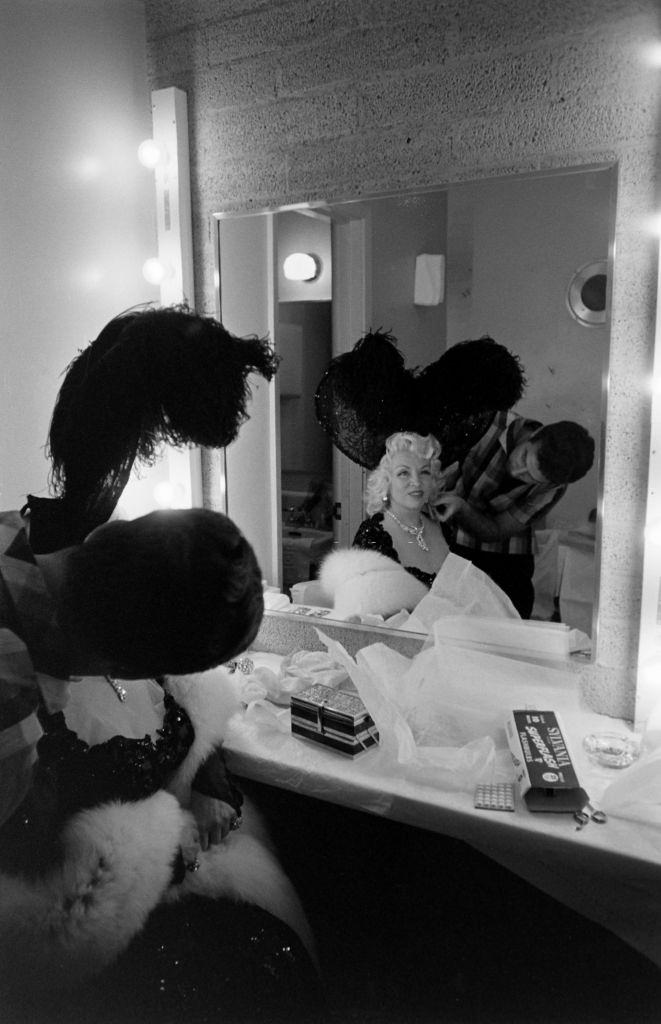
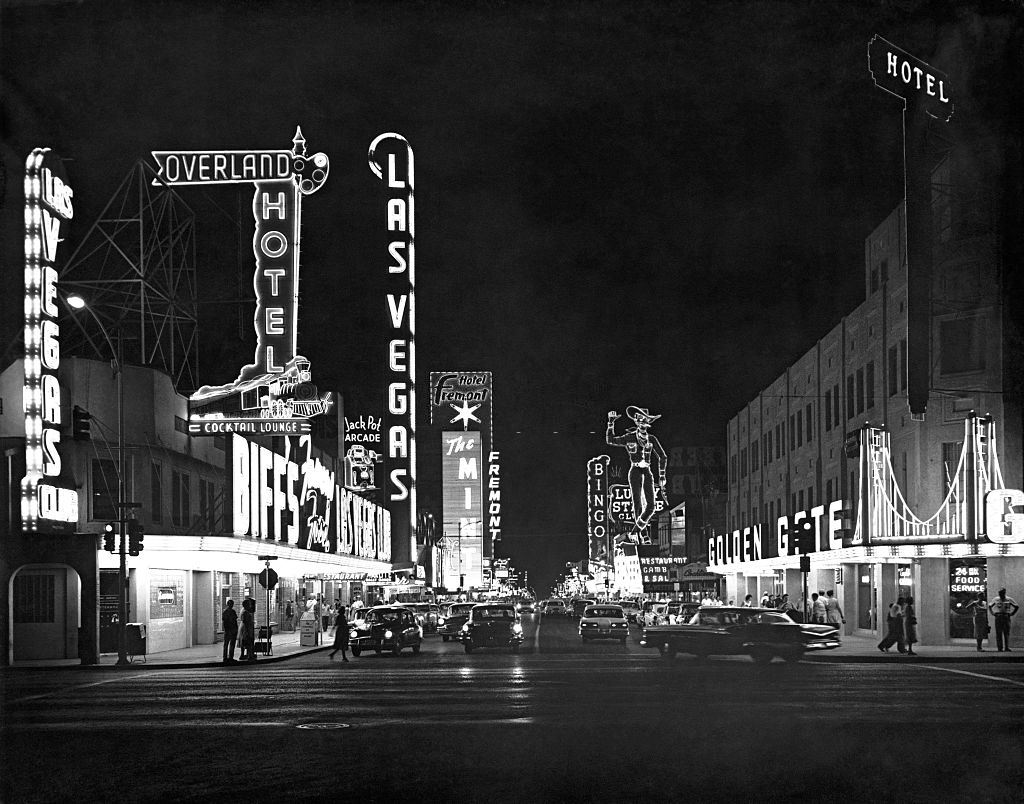
After dark, the neon signs of Fremont Street turned night into a kind of perpetual artificial noon. The sheer density of illuminated signs along the street was unlike anything else in the United States at the time, and photographs from the mid-1950s capture just how overwhelming the spectacle had become.
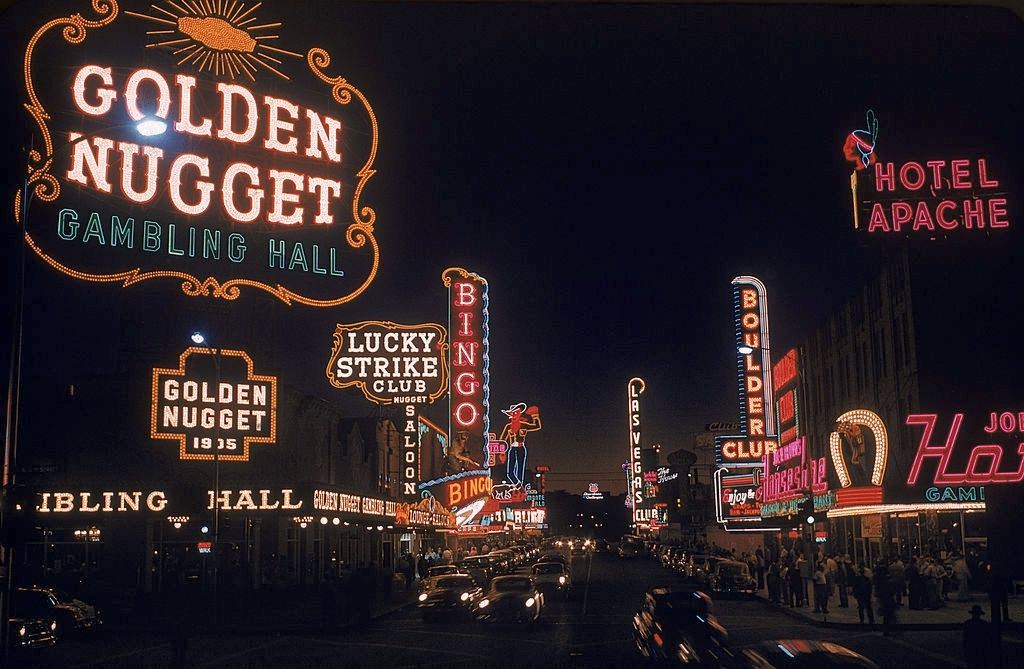
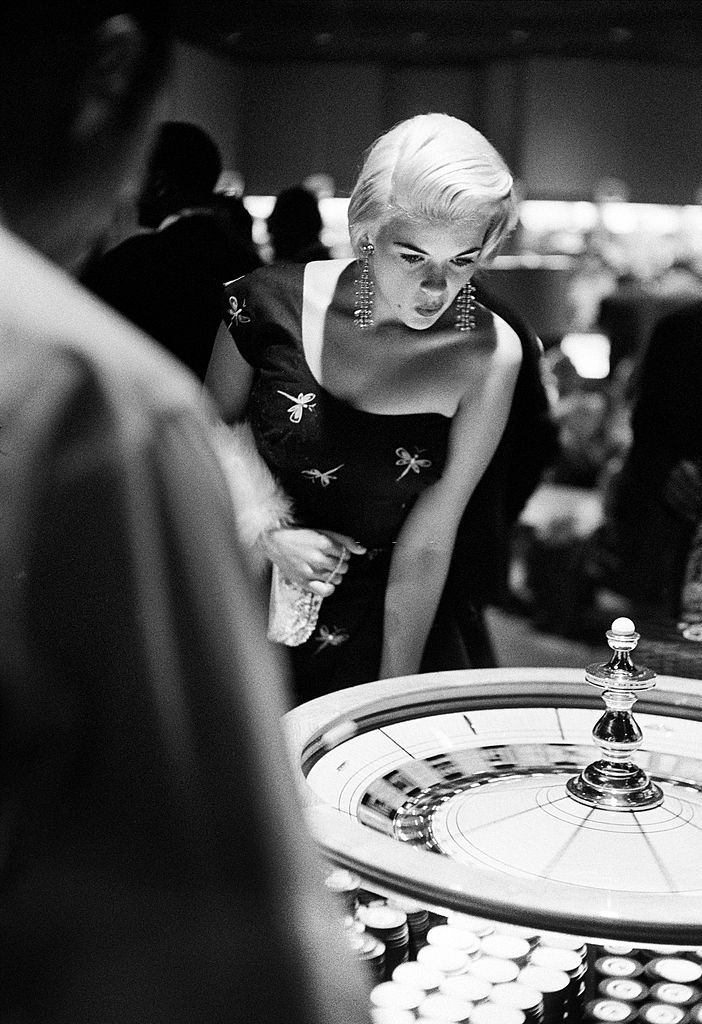
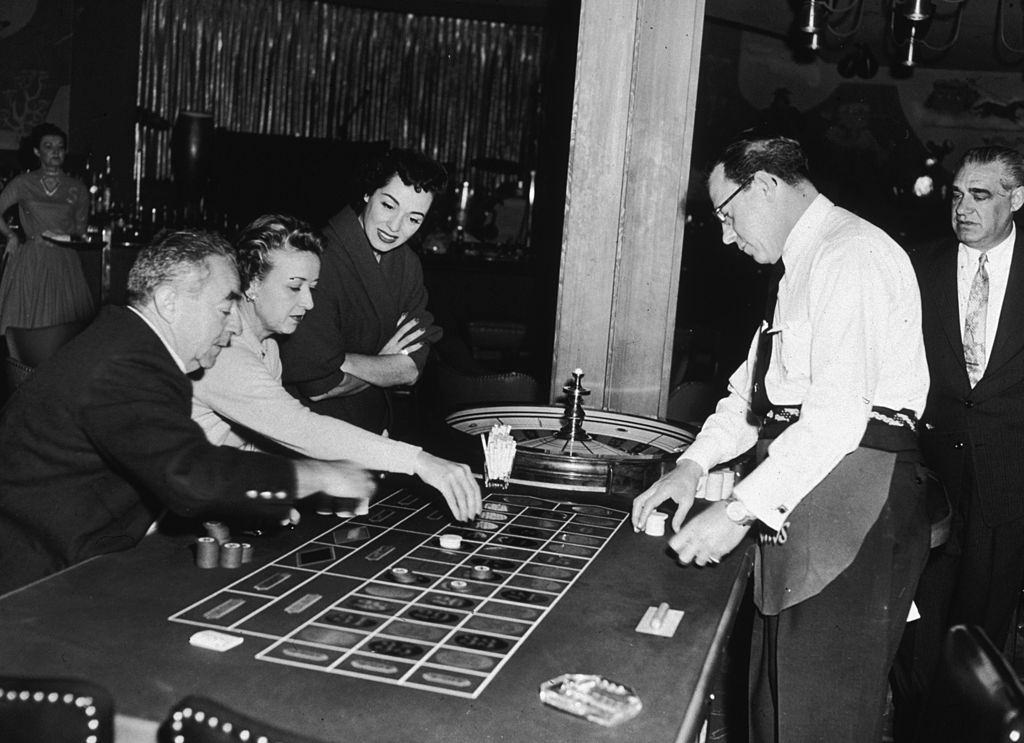
Celebrities were a constant presence on the casino floor, and their appearances generated publicity that hotel owners actively encouraged. Jayne Mansfield, Rita Moreno, and Gloria Paul were photographed together at the roulette table inside the Dunes casino in 1955 — a single image that functioned as both a social record and a marketing moment.
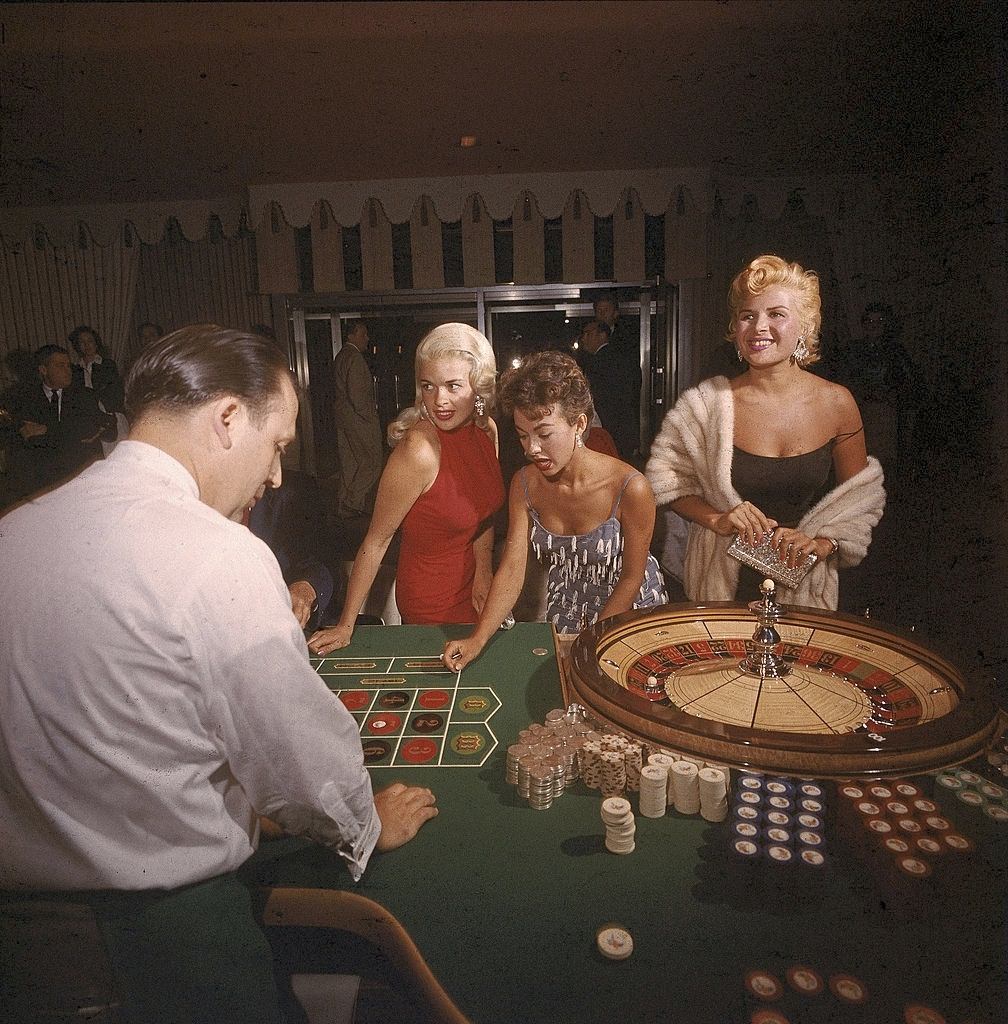
Marlene Dietrich was another major international name who brought her act to Las Vegas in the 1950s. Her 1953 stage performance reflected the city’s growing ability to attract world-class talent that had previously only appeared in New York or European capitals.
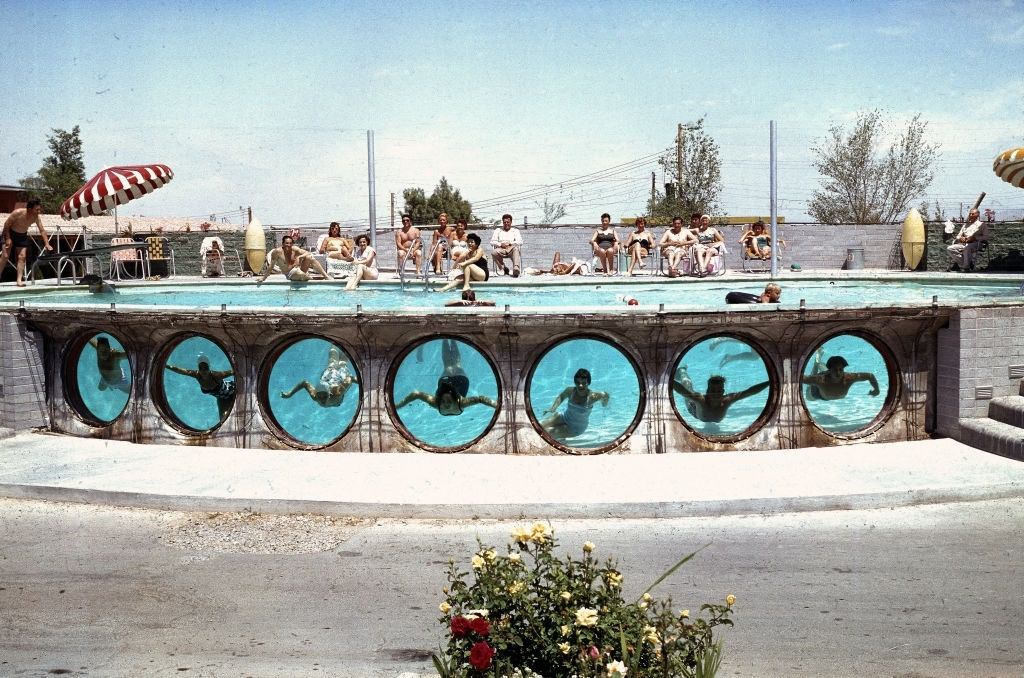
Hotels competed on every front, including pool design. Some venues installed underwater viewing portholes that allowed people outside the pool to watch swimmers from below the waterline — a novelty that drew attention and press coverage alike.
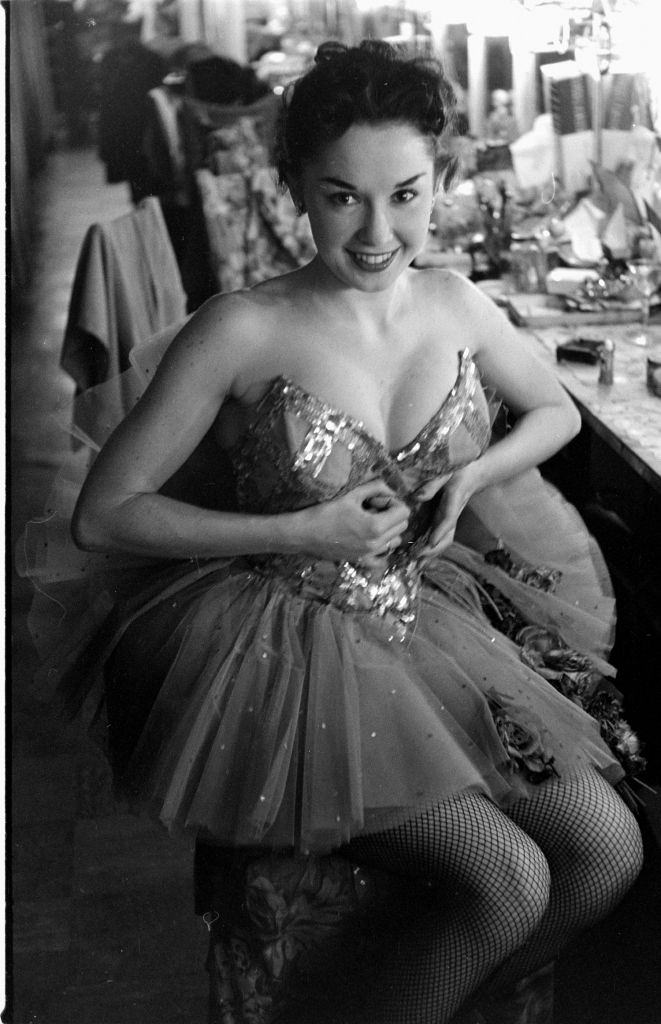
Showgirls were central to Las Vegas entertainment culture throughout the decade. Performers like Dale Strong worked as both showgirls and burlesque dancers, appearing in hotel revues and smaller venue productions across the city.
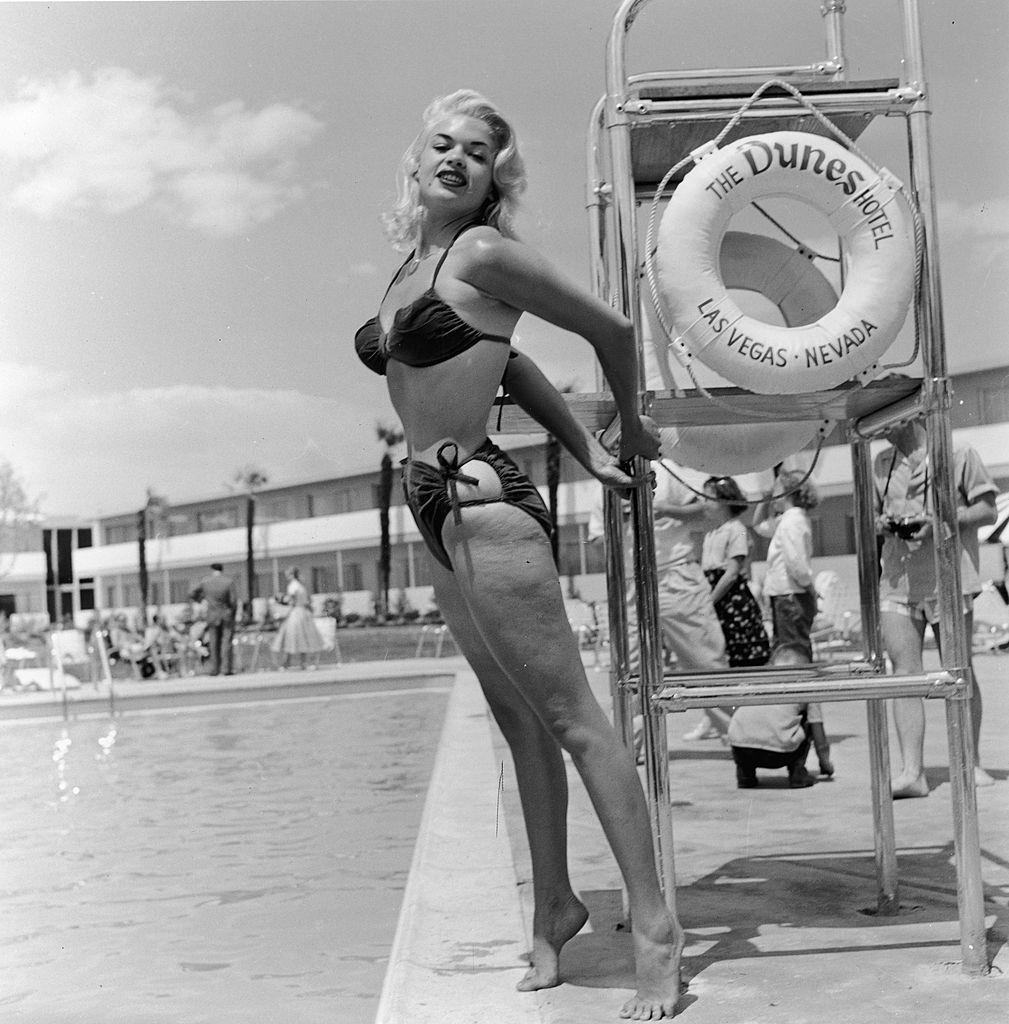
Jayne Mansfield was one of the decade’s most photographed figures in Las Vegas. She appeared at the Dunes Hotel repeatedly, posing poolside and on the casino floor. Her presence was a reliable draw for press photographers and the public alike.
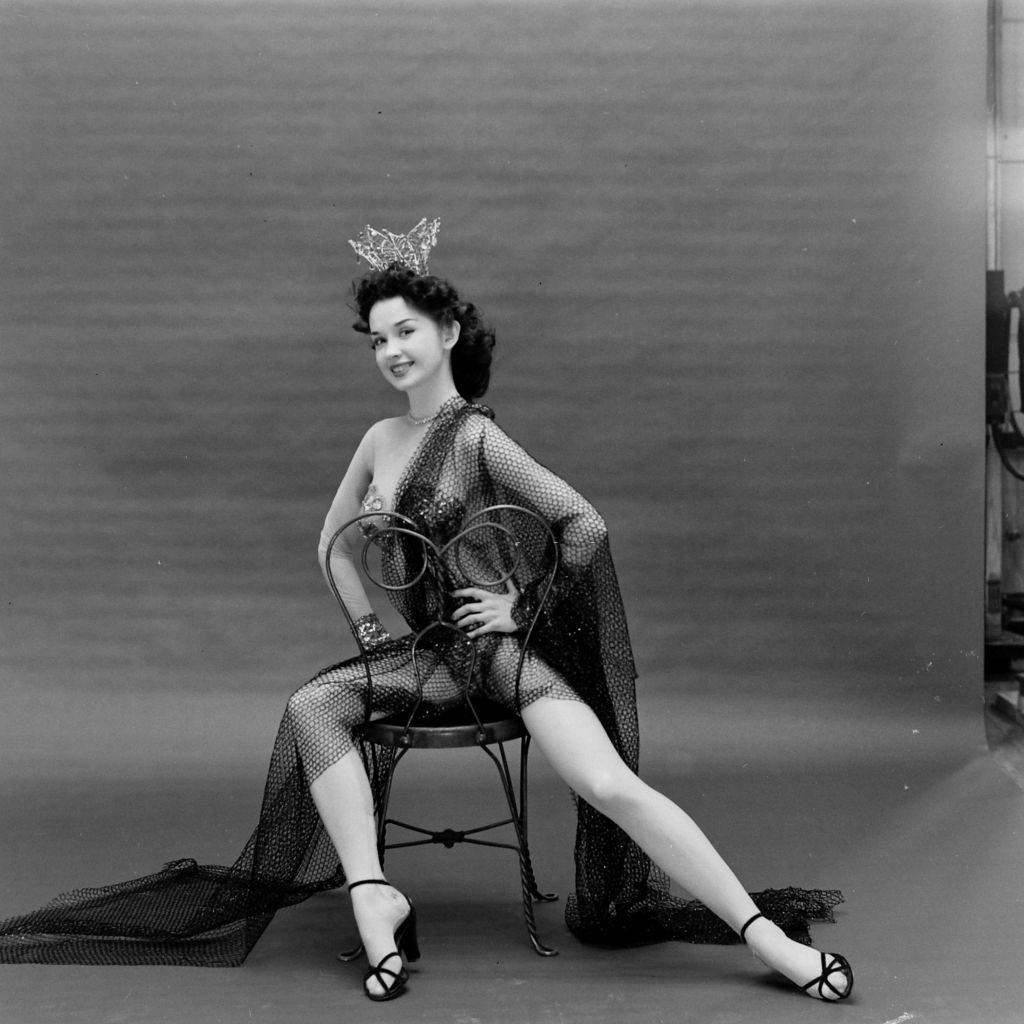
The showgirl was a distinct Las Vegas institution. Performers rehearsed rigorously and often appeared in multiple shows per night. Behind the feathers and costumes were professional dancers and entertainers who treated their work as a serious craft.
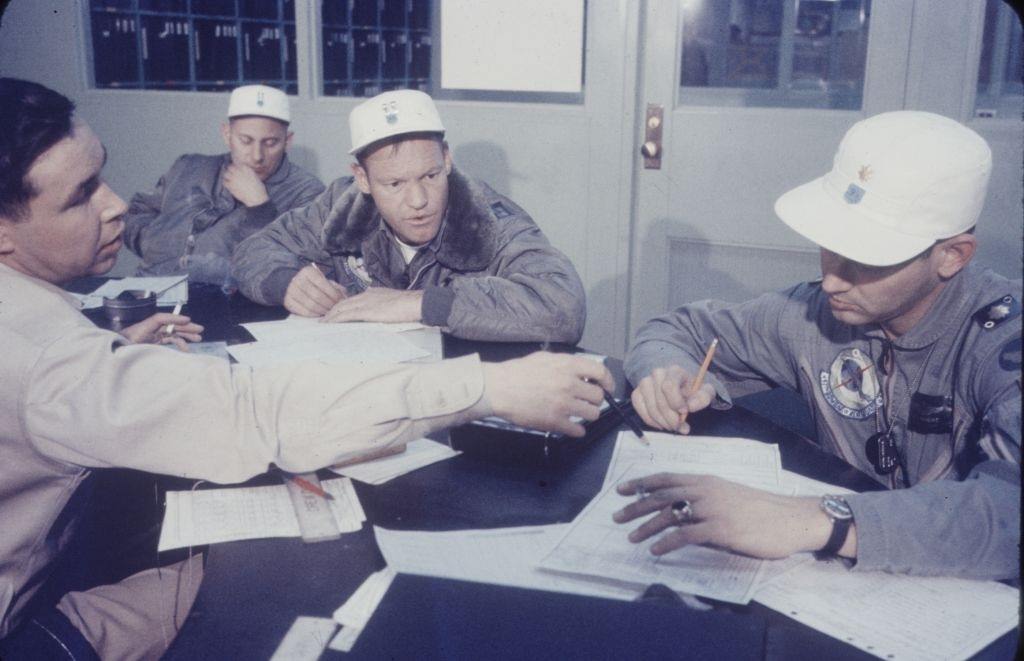
Las Vegas in the 1950s wasn’t only about gambling and entertainment. Nellis Air Force Base sat just northeast of the city, and military personnel were a steady part of the local population. By 1958, operations at the base included the 99th Air Base Wing, whose members worked and lived alongside the civilian community.
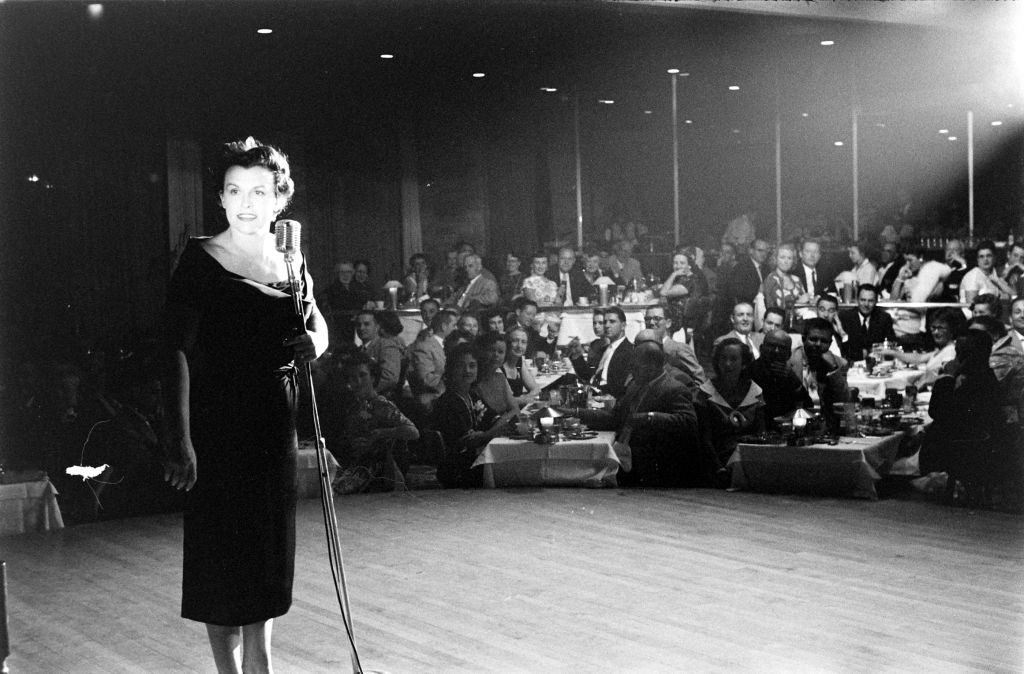
Live music filled Las Vegas venues at all hours. Singer Roberta Sherwood performed at the Riverside in 1956, drawing audiences who came specifically for her voice rather than the gaming tables. Smaller nightclub acts gave the city a more intimate side that existed alongside the grand hotel productions.
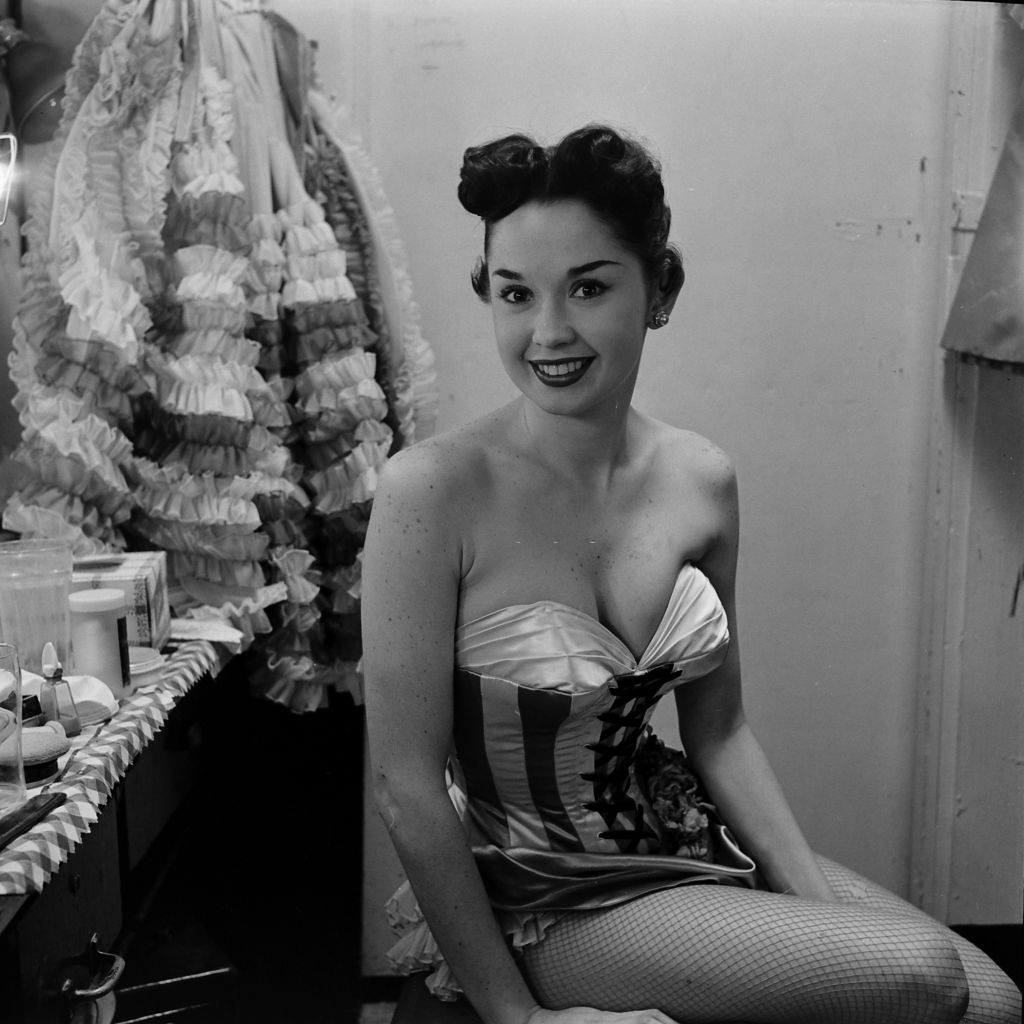
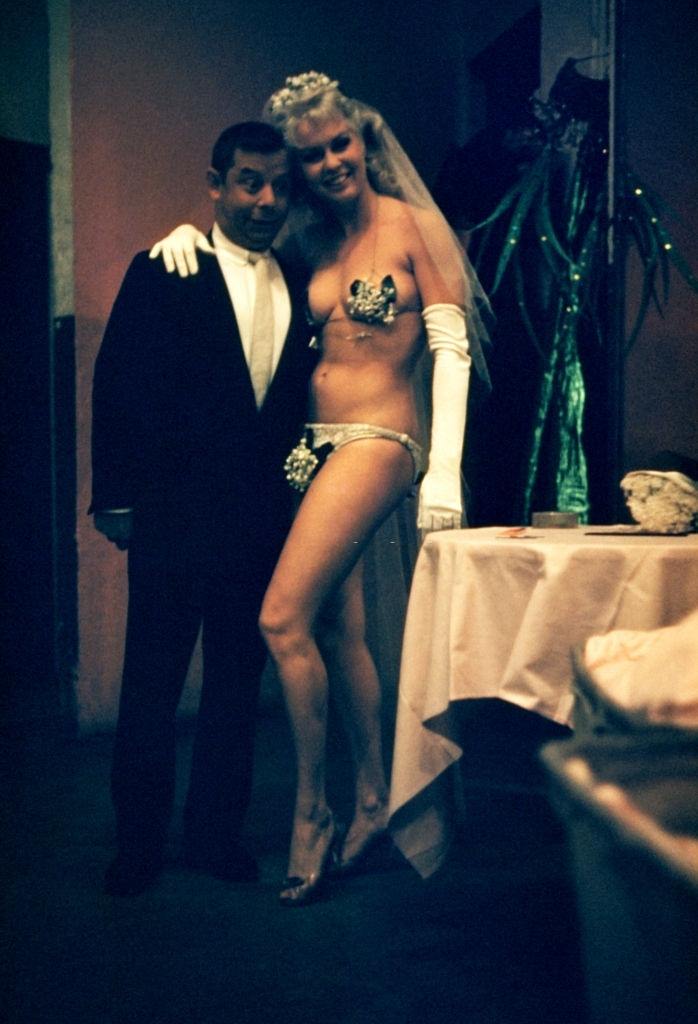
Backstage life in Las Vegas was its own world. Performers like Dale Strong prepared for shows in crowded dressing rooms, doing hair, makeup, and costume checks before stepping in front of packed audiences night after night.
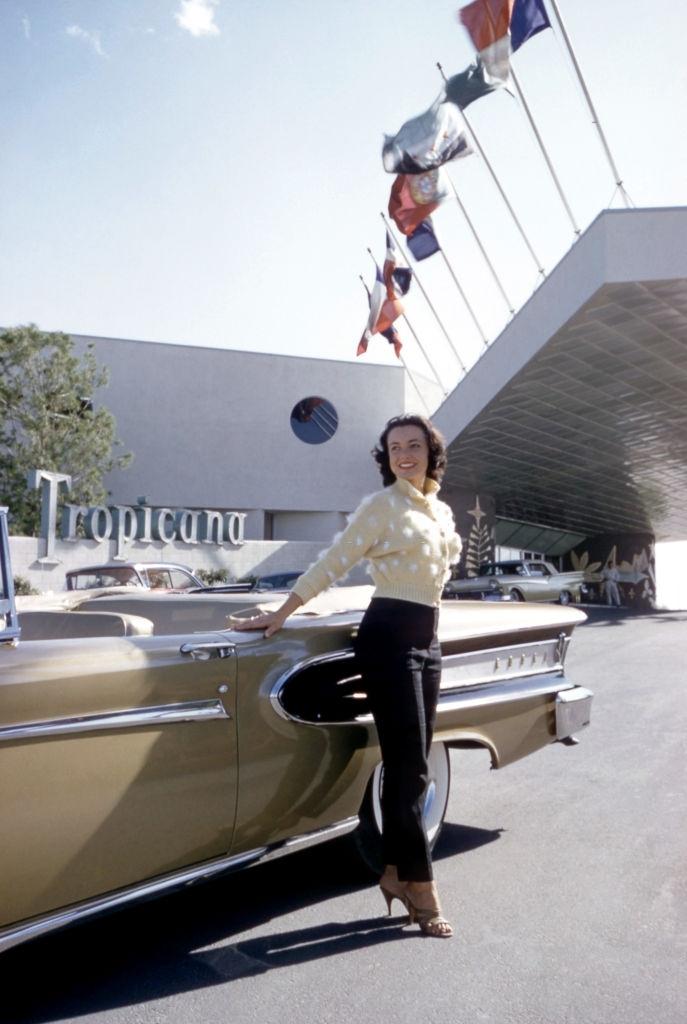
The hotels understood the value of connecting glamour with the latest consumer products. Actress and model Kitty Dolan was photographed outside the Tropicana Hotel in 1958 beside a brand-new Ford Edsel Citation — a pairing of two of that year’s most attention-grabbing names.
The Sands Hotel stage hosted some of the most polished performances in the city. Female vocal acts performed in front of well-dressed crowds, and the venue’s reputation for quality entertainment made it a top booking for singers and variety acts throughout the late 1950s.
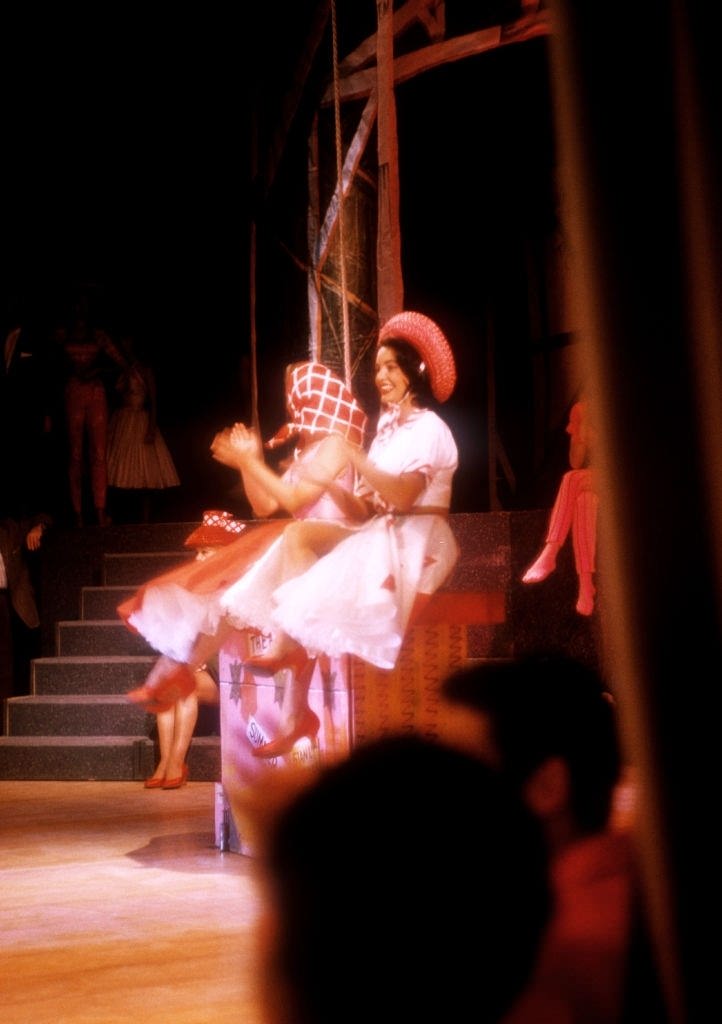
Las Vegas had also built a booming wedding industry by the early 1950s. Nevada’s minimal waiting periods and simple licensing requirements made the city a destination for quick, legal marriages. Couples arrived from across the country, said their vows, and walked out as newlyweds — sometimes within the hour.
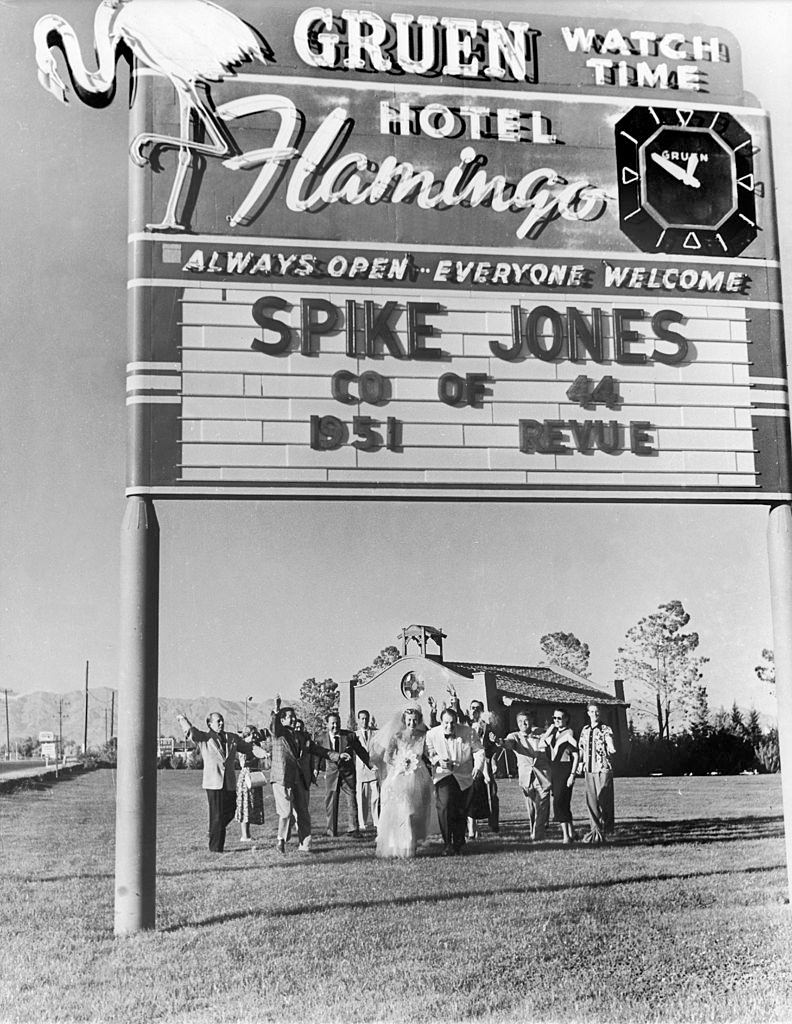
Businesses outside the major hotels used oversized neon signs to compete for attention. The Ranchinn — a combined restaurant, bar, casino, and coffee shop — announced itself with a large neon arrow that was impossible to miss along the roadside, a common tactic in an era when visual dominance on the street translated directly into foot traffic.
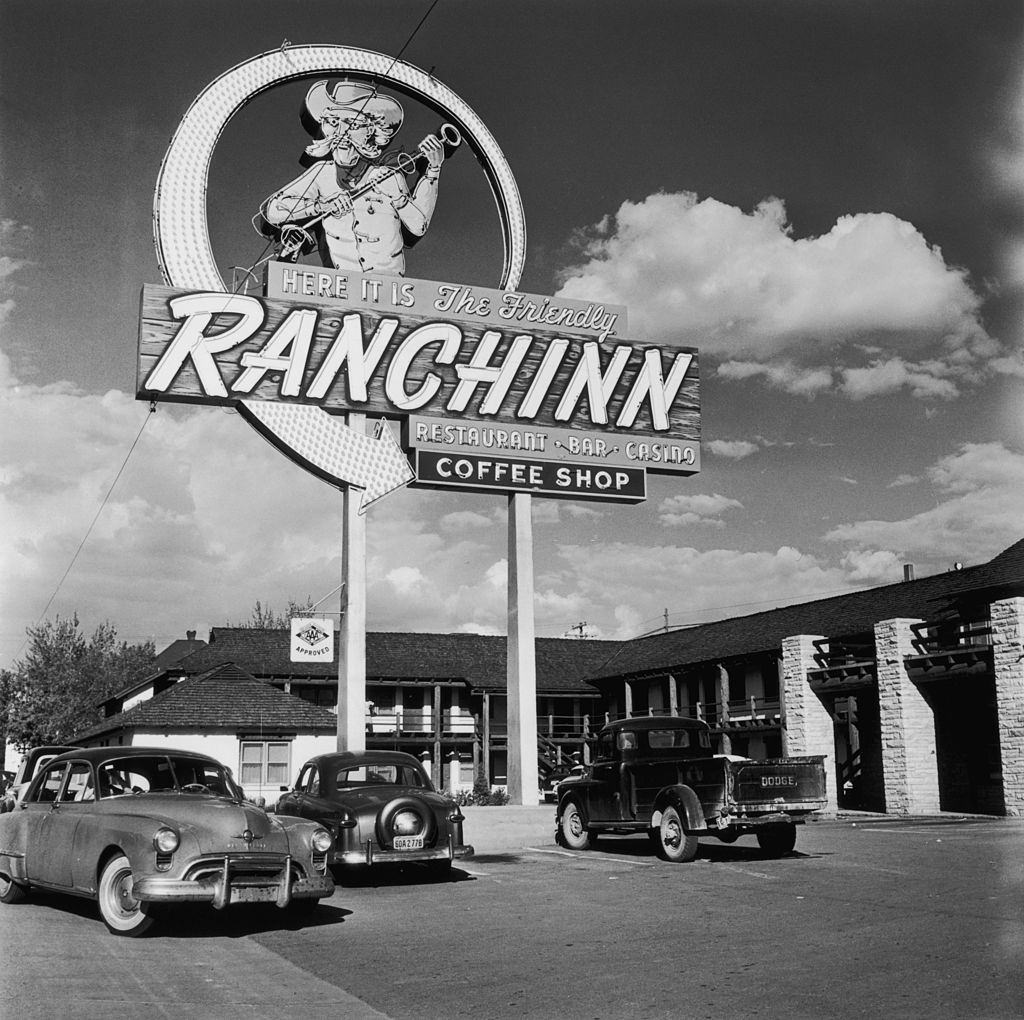
Showgirls often appeared in publicity events that extended well beyond the stage. In 1953, performers Joy Skylar and Florence Walters practiced golf at the Desert Inn Country Club ahead of a special showgirl tournament — a clever promotional event that generated press coverage for both the performers and the venue.
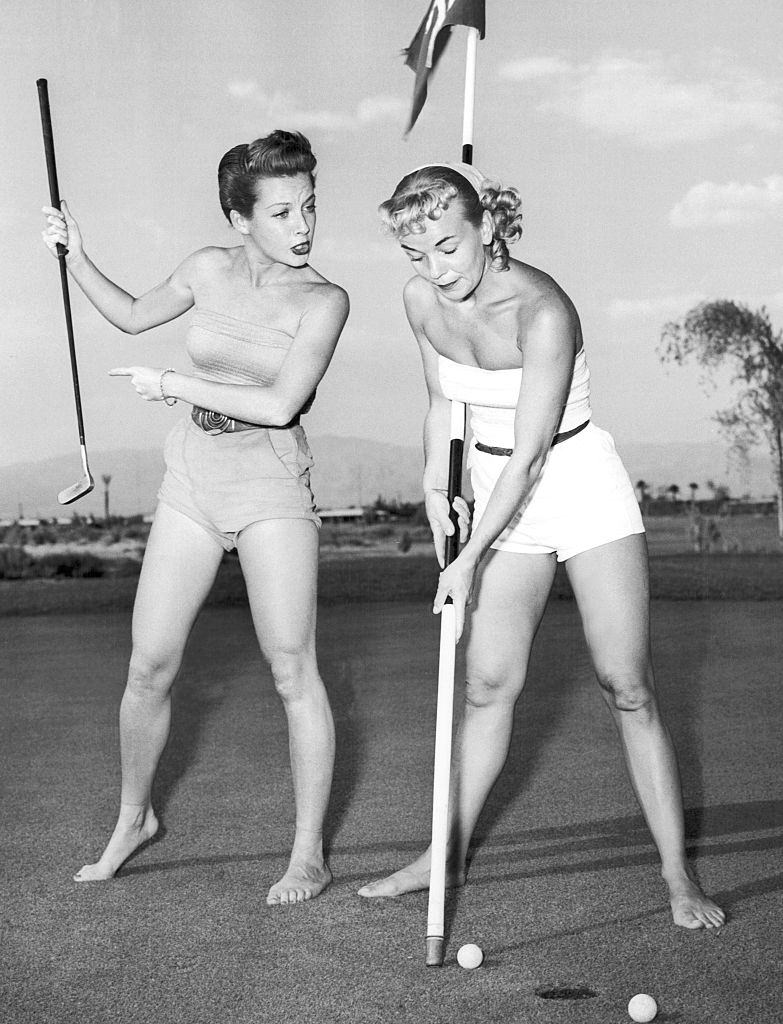
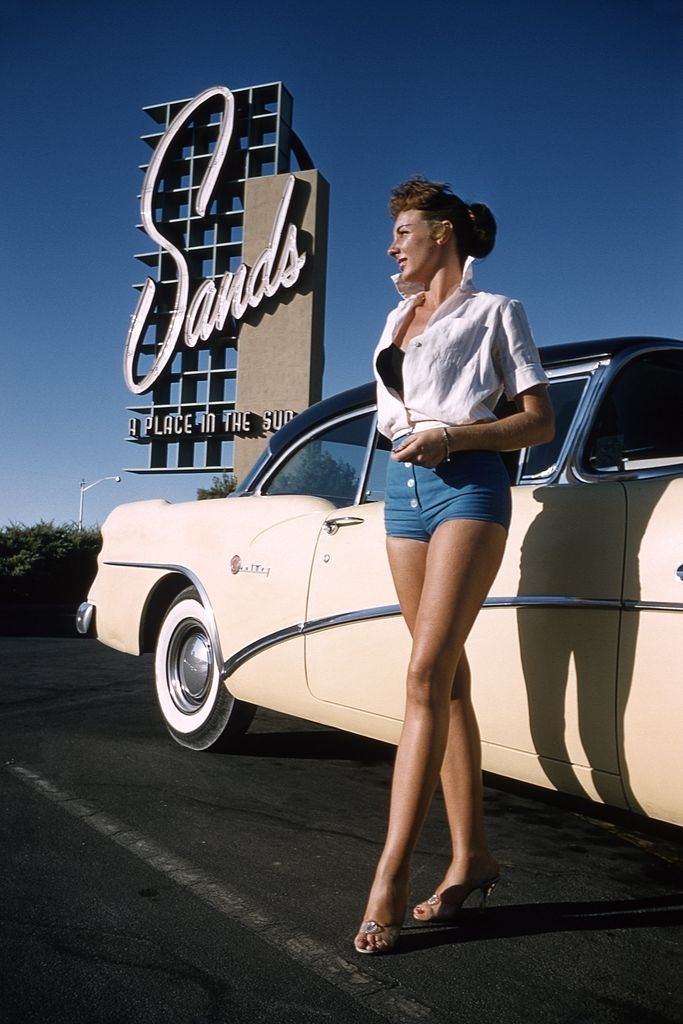
Automobile manufacturers recognized Las Vegas as a powerful advertising backdrop. A 1954 Buick Roadmaster was photographed outside the Sands Hotel in 1955, connecting the car’s image to the glamour and prestige the hotel projected — a strategy that benefited both brands simultaneously.
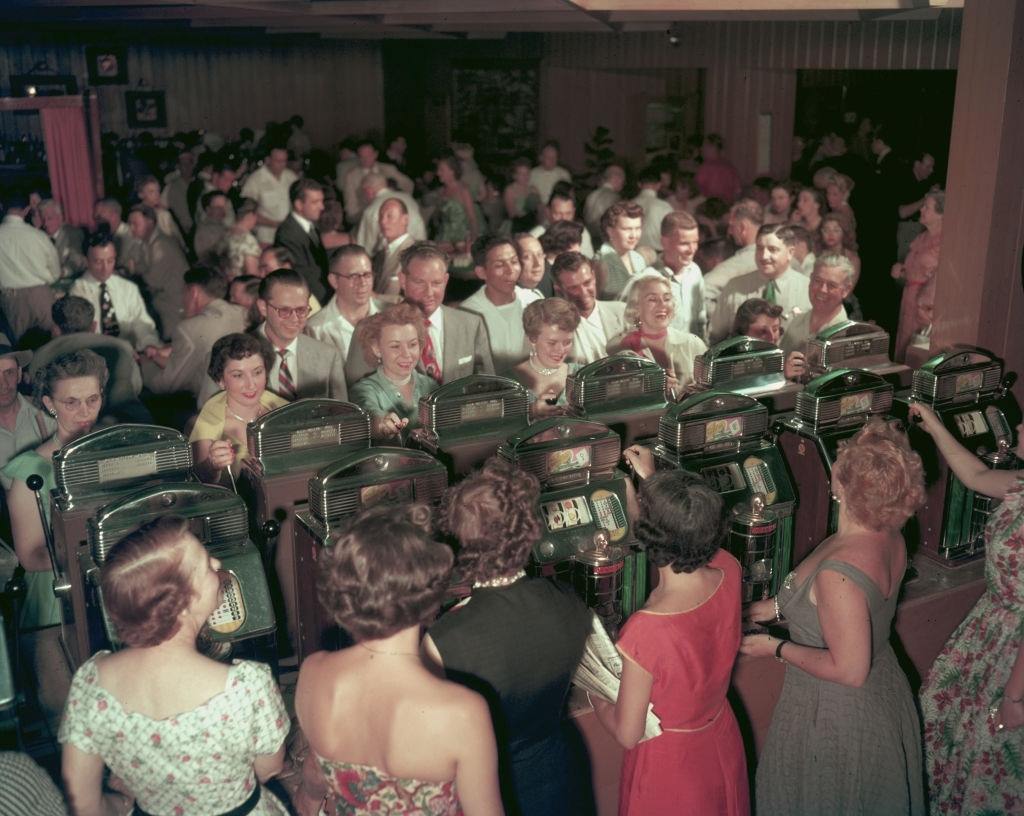
Slot machines were among the most democratic attractions in any Las Vegas casino. No skill was required, bets could be small, and the machines ran constantly. The Desert Inn Casino’s slot room filled with players throughout the day and night, a mix of tourists and regulars feeding coins into rows of Jennings Sun Chief machines.
By 1958, Downtown Las Vegas had developed a skyline dense enough to photograph as a genuine urban scene. The view from Fremont Street showed multi-story buildings, packed signage, and constant pedestrian activity — a far cry from the small frontier gambling town it had been just two decades earlier.
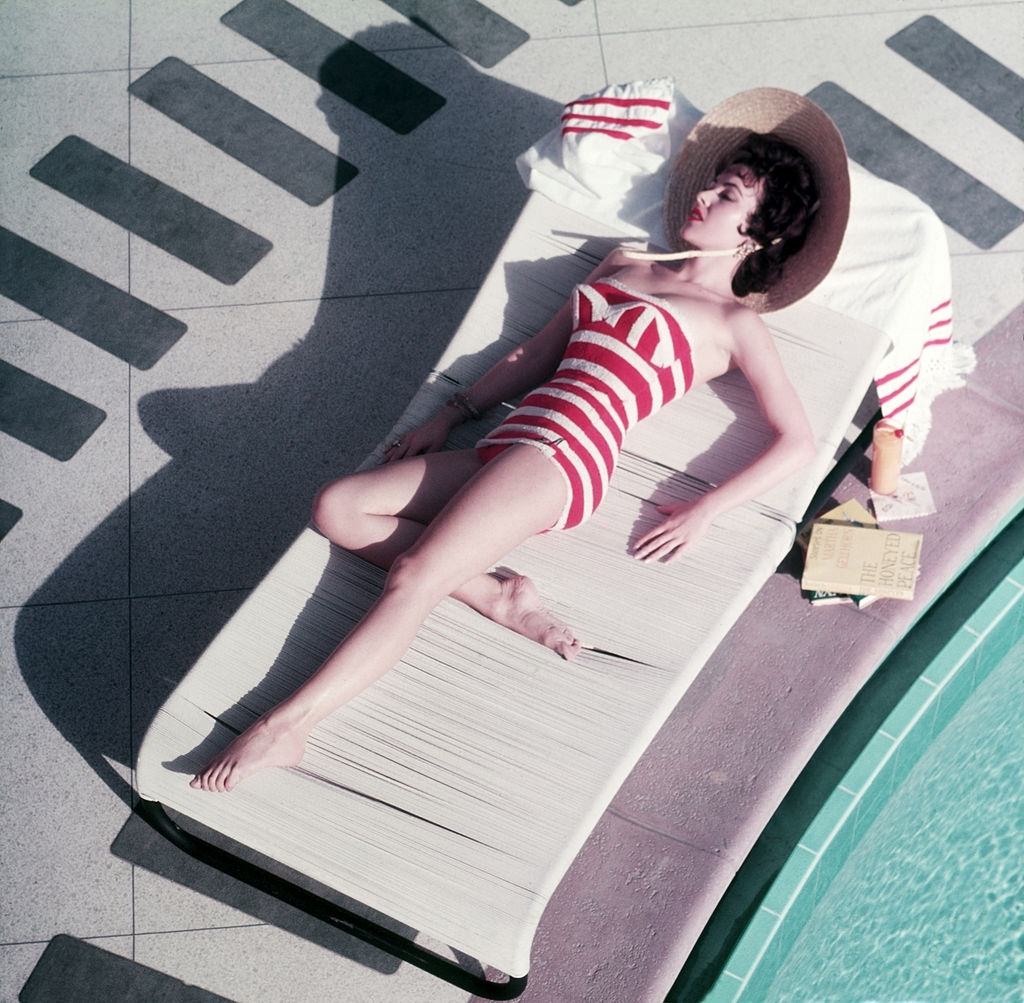
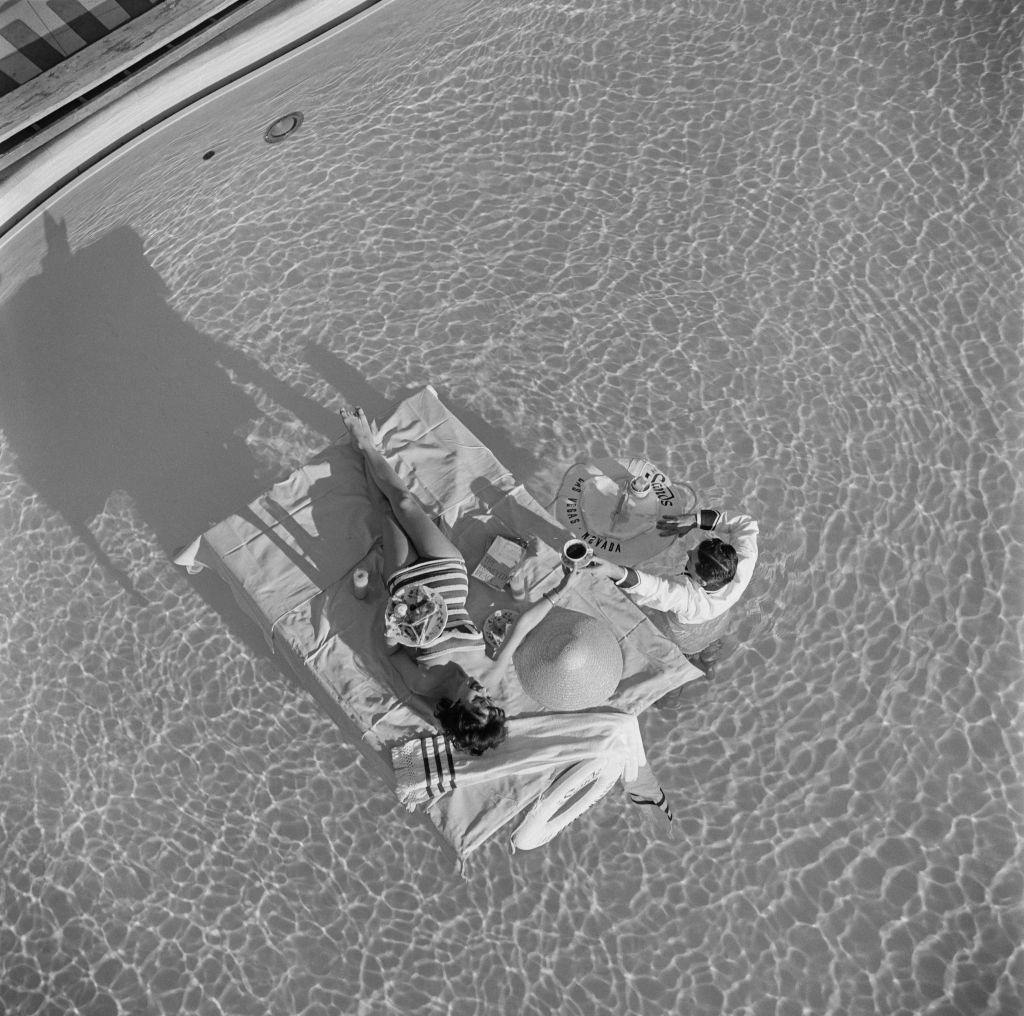
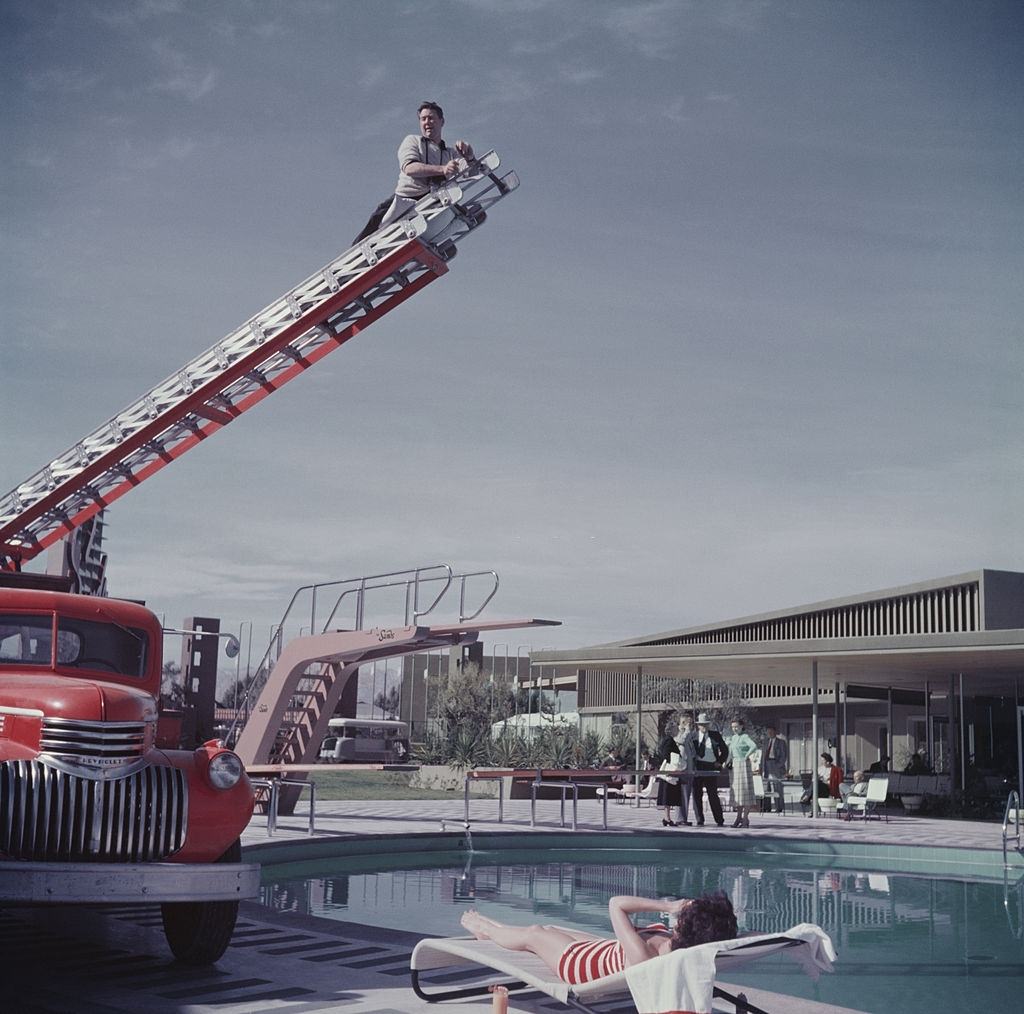
Photographer Slim Aarons made the Sands Hotel pool one of his recurring subjects in 1954. His aerial shots of Mara Lane lounging poolside became some of the most widely reproduced images of mid-century Las Vegas leisure culture, defining a specific vision of sun, water, and celebrity ease.
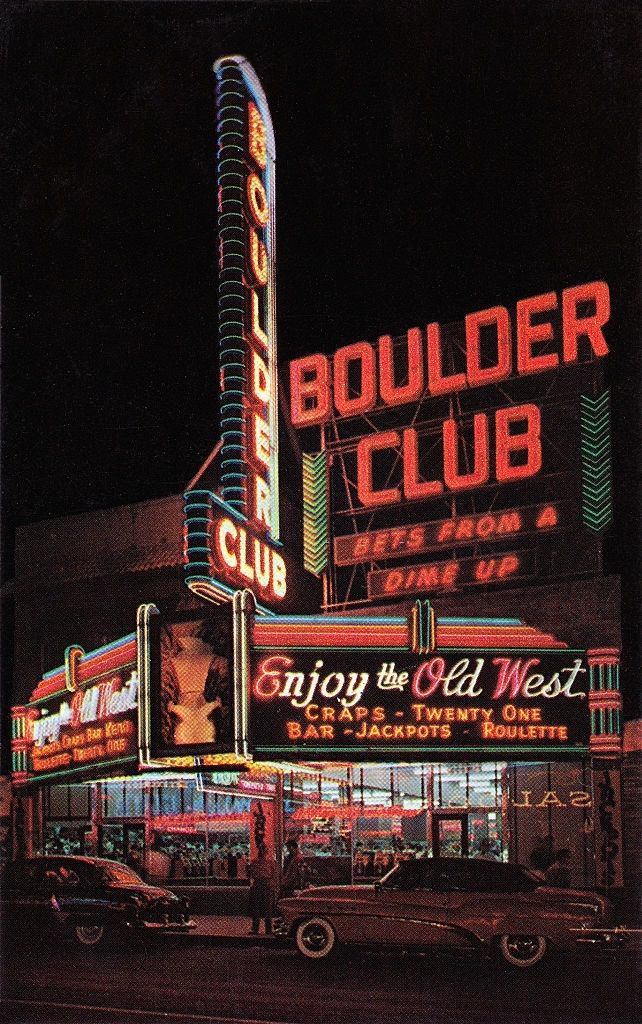
The Boulder Club was one of the oldest operating casinos in Las Vegas when this photograph was taken in 1950. It had been part of Downtown’s Fremont Street since the early 1930s, making it one of the few venues that had witnessed every phase of the city’s growth from a small desert stop to a national destination.
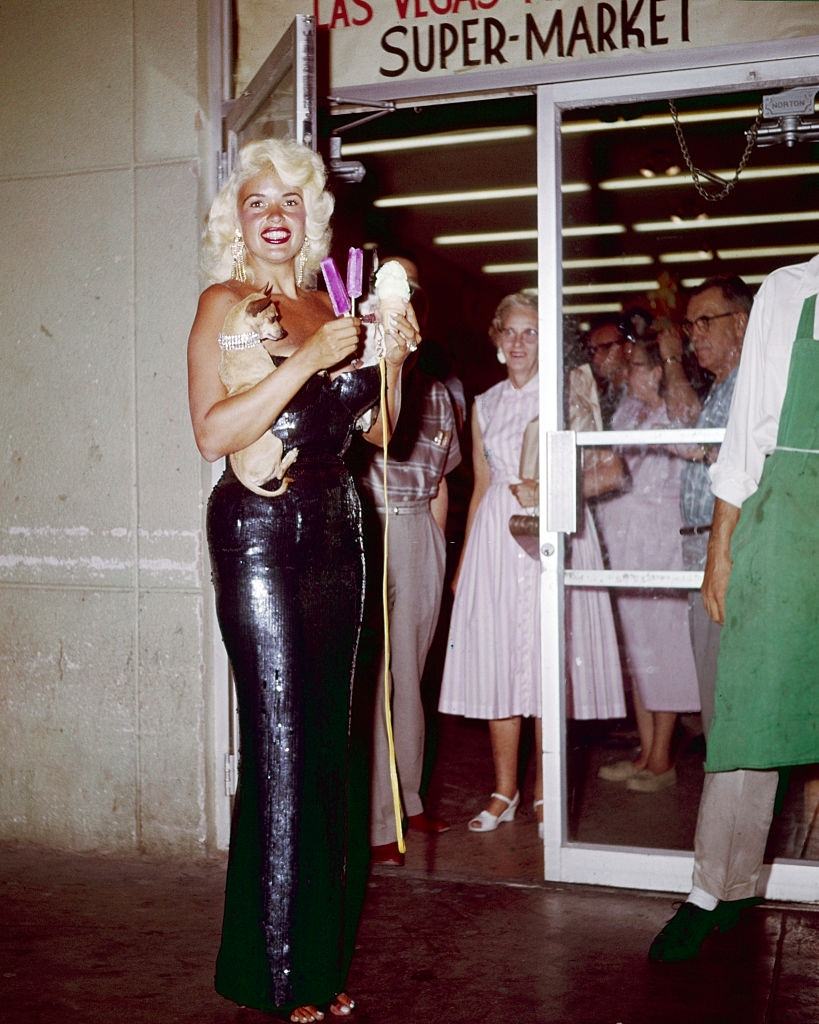
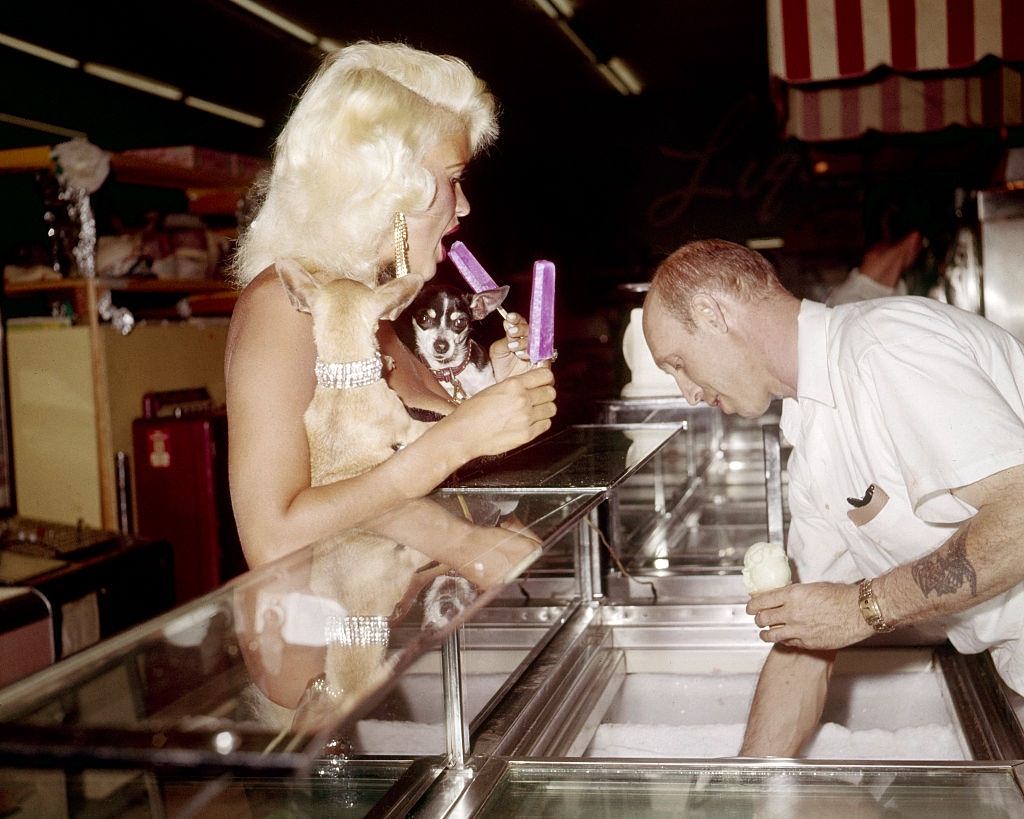
Jayne Mansfield moved through Las Vegas with a casual confidence that made ordinary moments — like grocery shopping — into photographic events. In 1959, she was photographed at a local supermarket with her dogs in tow, a candid image that showed the celebrity culture of the city extended well beyond the casino floor.
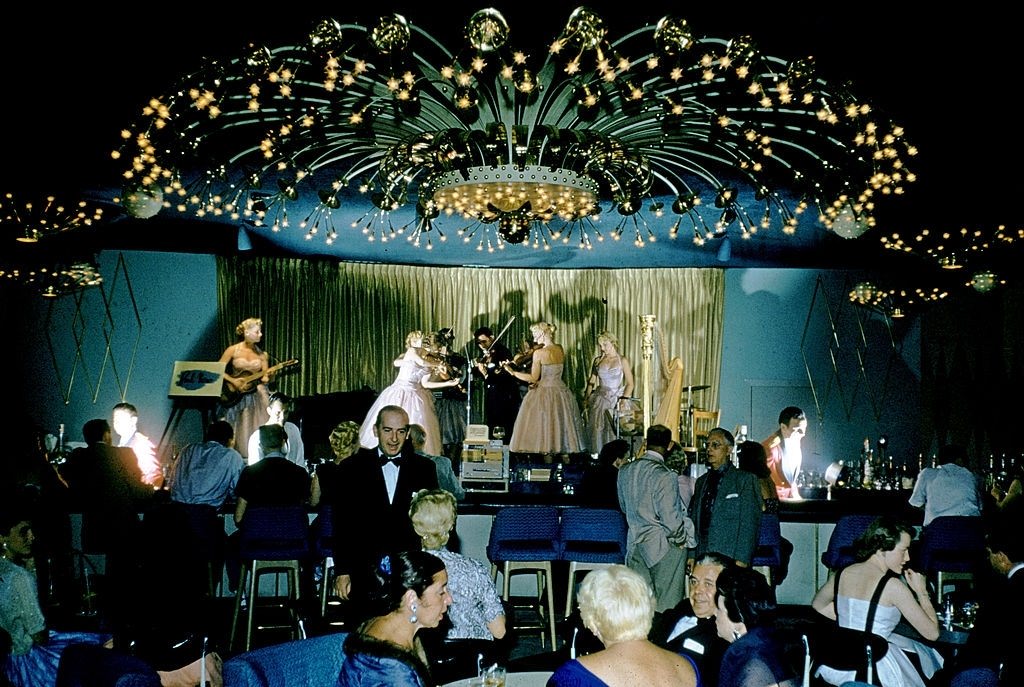
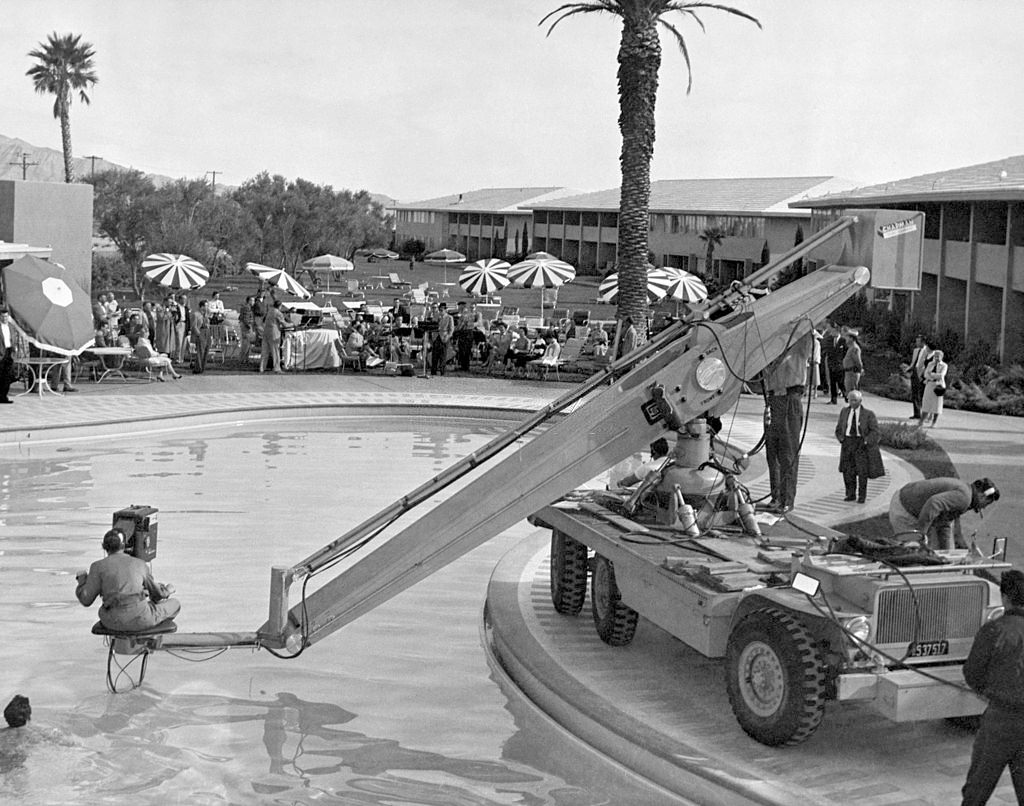
The Riviera Hotel, which opened in 1955 as the first high-rise hotel on the Strip, offered entertainment directly at the bar. House musicians performed on a stage built behind the bar itself, giving drinkers a live soundtrack without ever needing to leave their seats.
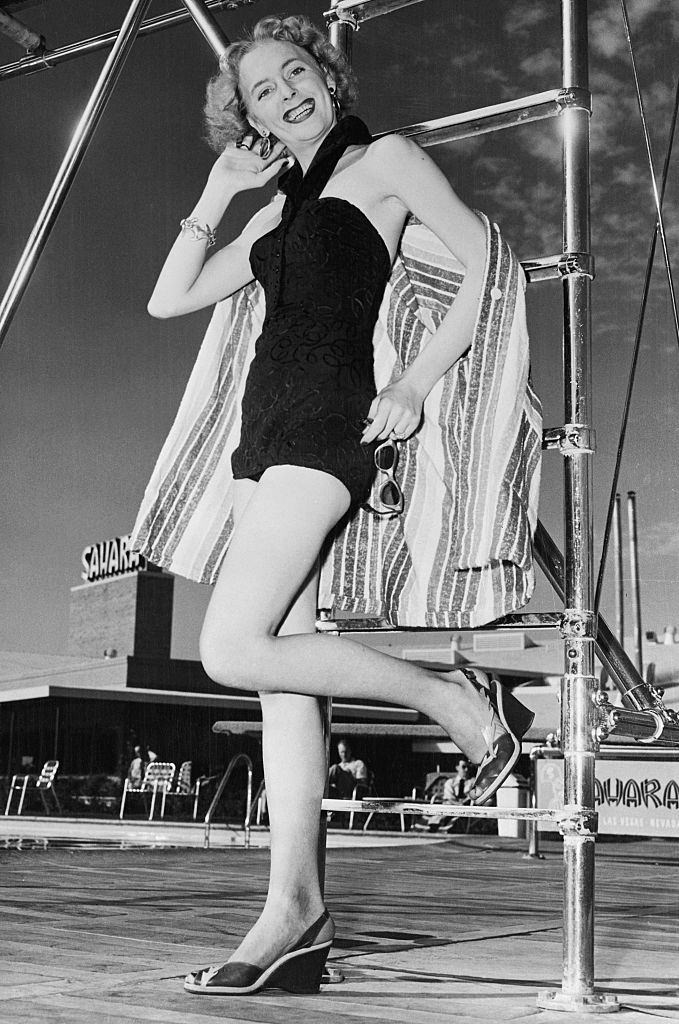
Christine Jorgensen, one of the first Americans to publicly undergo gender reassignment surgery, was photographed at the Sahara Hotel pool in 1955. Her presence in Las Vegas reflected the city’s status as a place where public figures of all kinds came to be seen — and where the press was always ready to capture them.
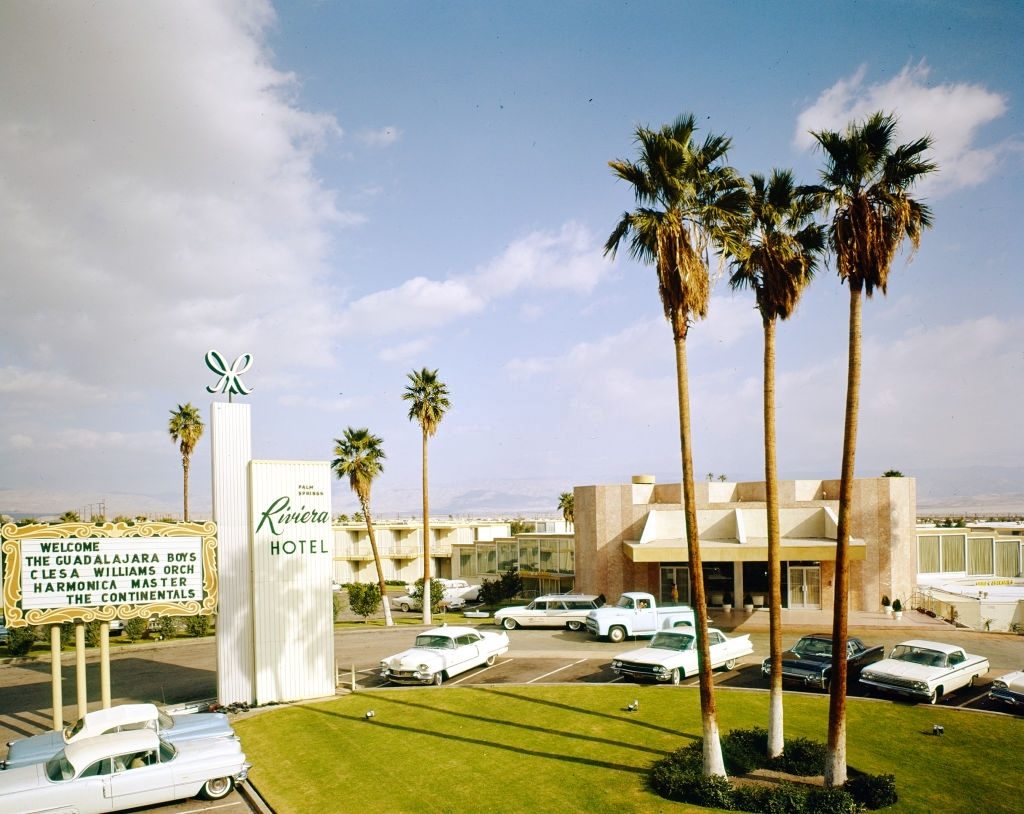
The Riviera Hotel’s exterior in 1957 showed the architectural ambition that defined the Strip’s newer properties. Its nine-story tower set it apart from the lower-slung motels and older casino buildings, signaling that Las Vegas was building for a future that looked more like a major resort city than a frontier gambling town.
Frank Sinatra’s relationship with Las Vegas and the Sands Hotel was one of the defining partnerships of the decade. In 1955, he was photographed with his crew and band at the Sands — a venue where he would return many times and eventually become a part-owner. His performances there helped cement the hotel’s reputation as the city’s premier entertainment address.
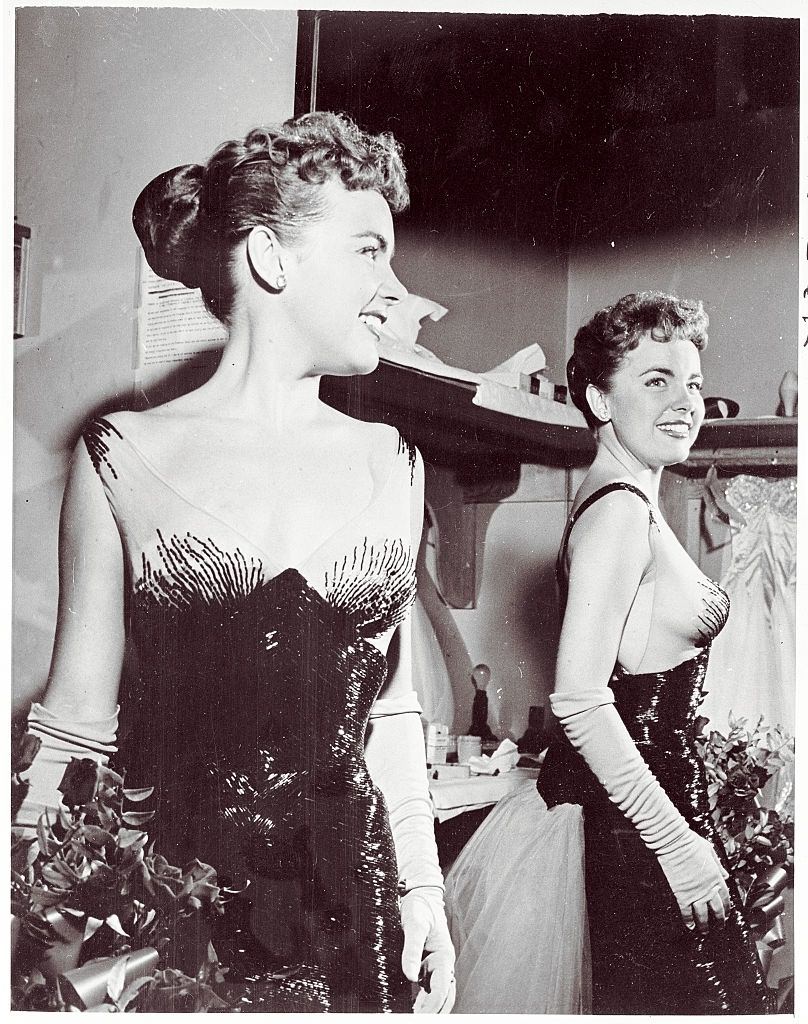
Actress Terry Moore made her nightclub debut in Las Vegas in 1954, performing in a gown that drew immediate press attention. Her appearance was part of a broader pattern in which film actors used Las Vegas as a platform to launch or expand their entertainment careers beyond the screen.
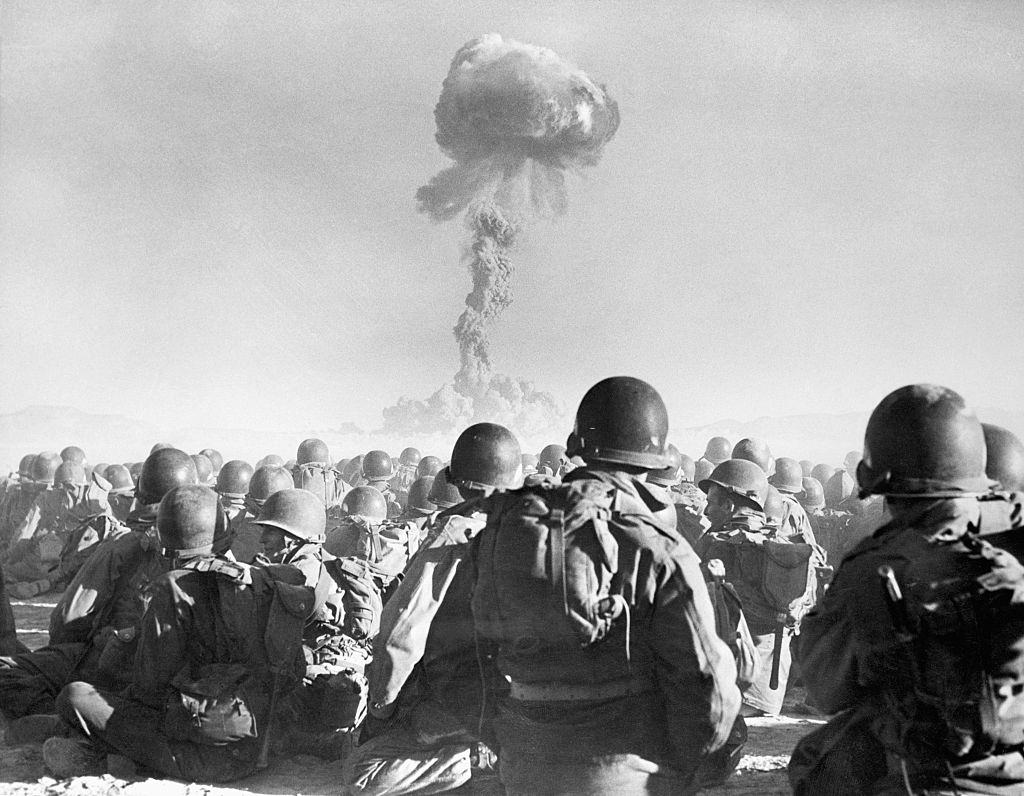
The Nevada Test Site, located about 65 miles northwest of Las Vegas, was active throughout the 1950s. The U.S. military conducted above-ground nuclear weapons tests there, and troops were sometimes positioned at close range to observe the blasts. In 1951, airborne division soldiers watched an atomic explosion at the Atomic Energy Commission’s desert testing grounds — a practice that exposed thousands of military personnel to radiation.
The Sands Hotel pool offered a level of poolside service that few other venues could match. Mara Lane was photographed in 1954 receiving waiter service while sitting in the pool itself — a detail that illustrated how aggressively Las Vegas hotels were marketing luxury as part of the experience, not just an add-on.
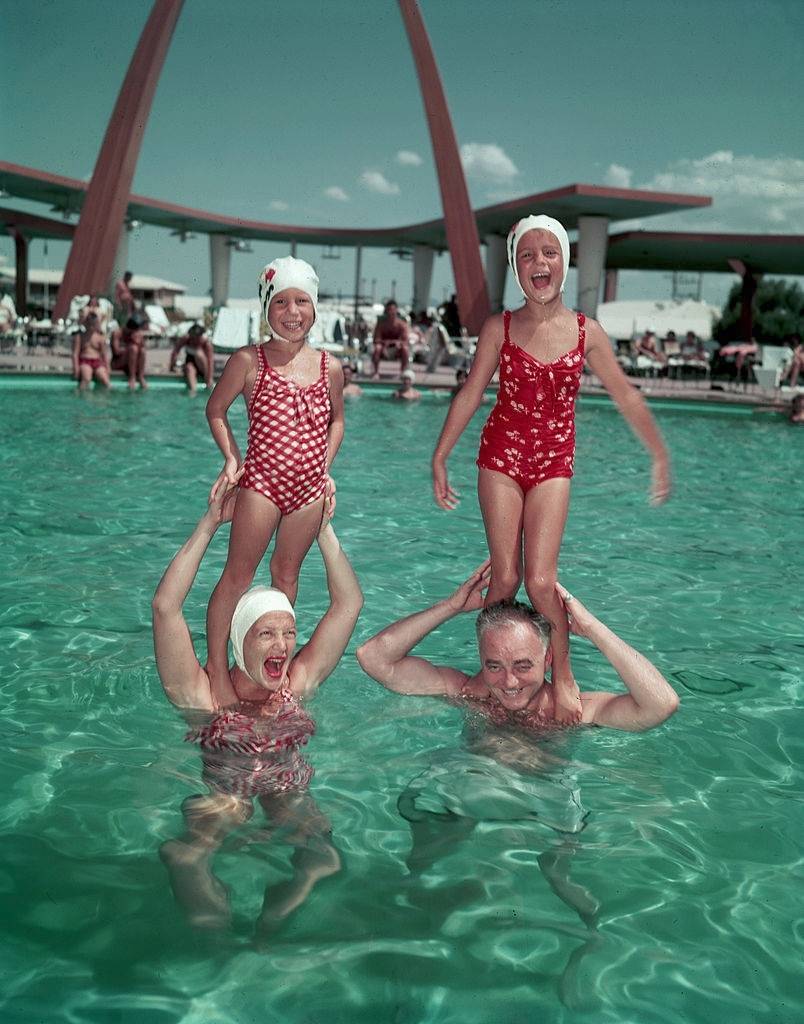
Actress Betty Hutton visited Las Vegas in 1956 with her daughters. Hotelier Wilbur Clark, who owned the Desert Inn, was photographed with Hutton and her children in the hotel pool — a family-friendly image that showed another side of the city beyond its gambling and nightlife reputation.
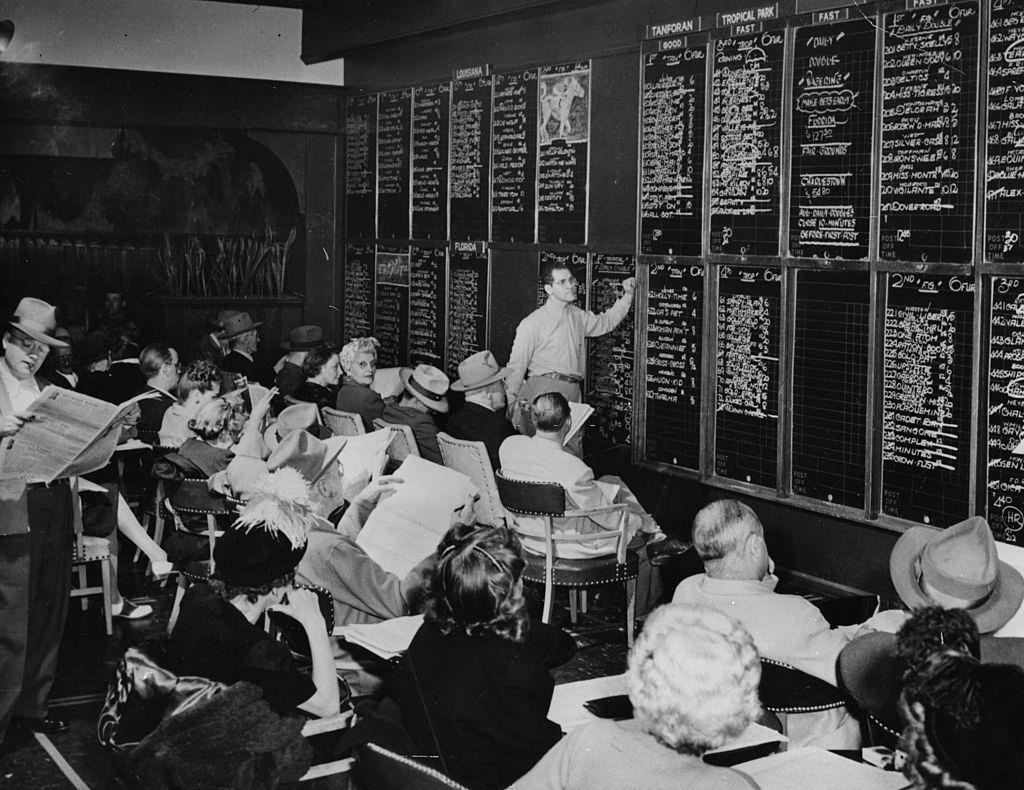
Sports betting was a serious business in 1950s Las Vegas. Dedicated betting shops tracked horse races from tracks across the United States, posting results in real time for rooms full of bettors who watched the boards closely and placed wagers on races they would never see in person.
Jayne Mansfield’s 1959 Las Vegas appearances were extensively documented. She was photographed buying ice cream with her dogs — another candid moment that photographers sought out because her presence, even in routine settings, attracted public interest.
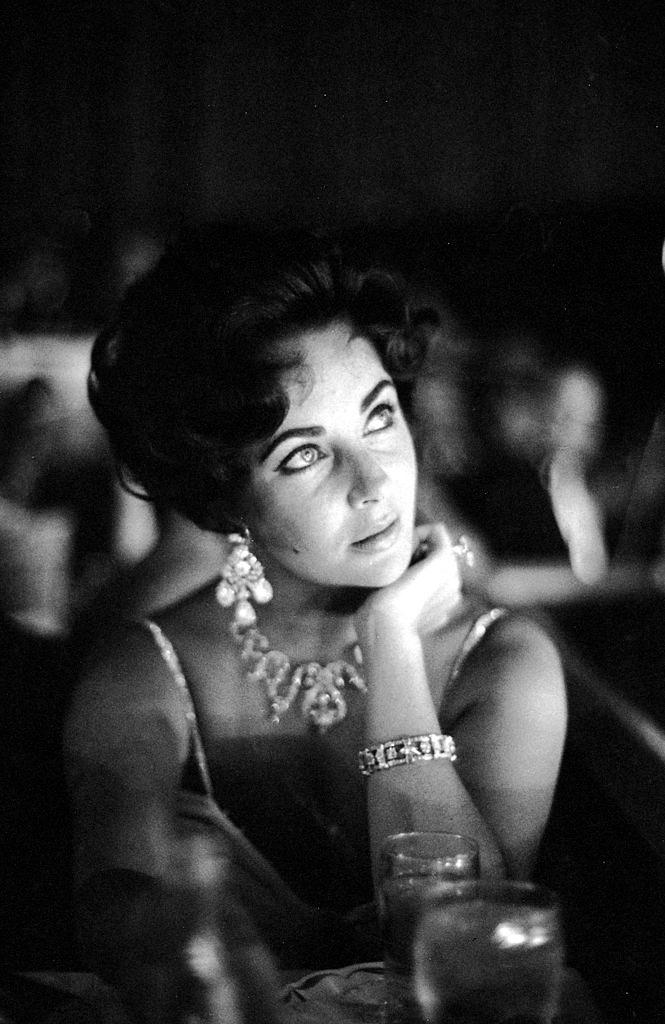
The Tropicana Hotel was one of the Strip’s premier venues by 1959. Elizabeth Taylor attended a performance there by her fiancé, singer Eddie Fisher, and was photographed watching from the audience. The moment captured the overlap between Hollywood’s social world and Las Vegas’s entertainment scene that defined so much of the decade.
By 1958, the Las Vegas Strip was a recognizable stretch of road that had no real equivalent anywhere else in the country. Casinos and clubs lined both sides, their signs reaching skyward in a competition for the attention of every driver who passed. The Strip had become both an address and an idea.
Backstage at the Las Vegas Club in 1956, a showgirl prepared for the night’s performance. Dressing rooms were busy, noisy spaces where performers dressed quickly between shows. These behind-the-scenes moments rarely made the press, but they were as central to the Las Vegas experience as the acts themselves.
Jayne Mansfield at the roulette table in 1958 was a recurring image in Las Vegas press photography. Her appearances on the casino floor were staged with enough spontaneity to look candid, and the resulting photographs circulated widely in magazines and newspapers, keeping the casino in the public eye.
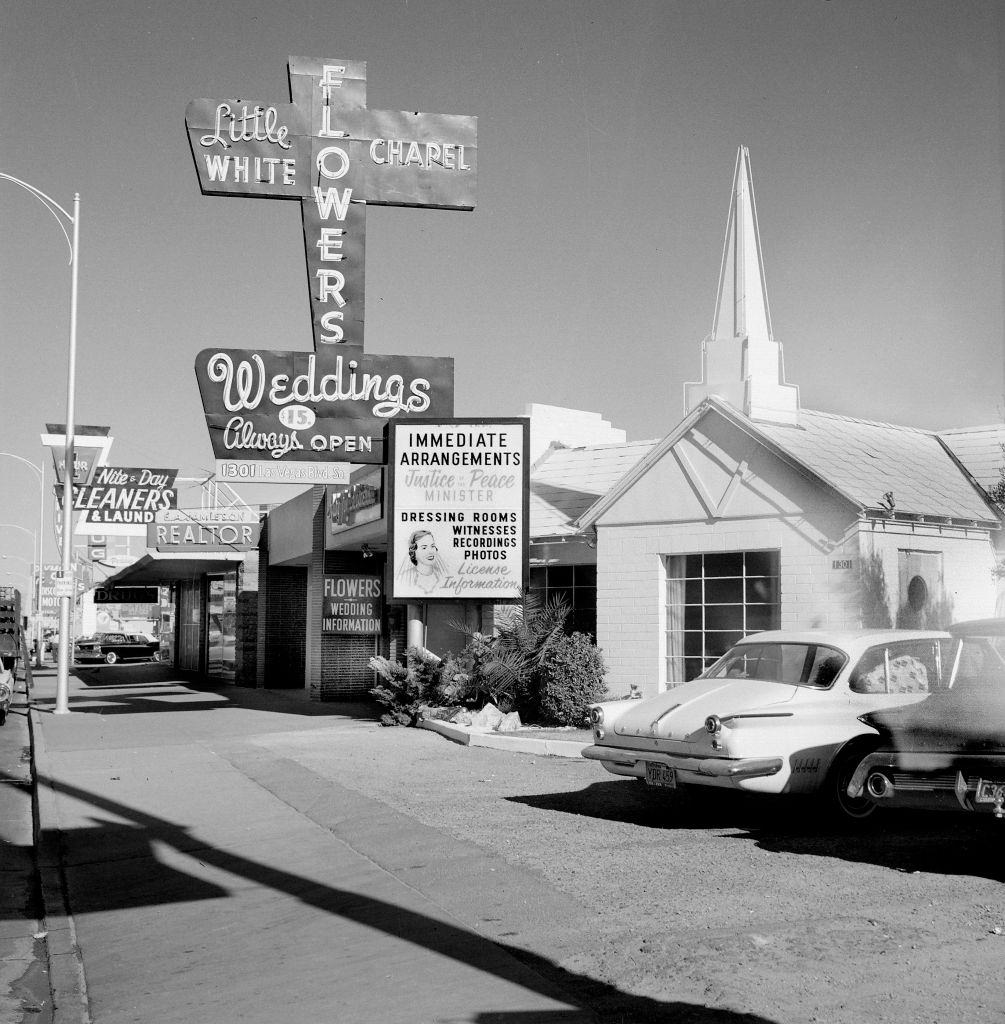
Wedding chapels were a fixture of Las Vegas street life from the city’s earliest days. By 1950, several dedicated chapels operated near Downtown, advertising quick ceremonies at low cost. The chapel in this photograph promised exactly what its sign stated — immediate marriages, no appointment necessary.
Slim Aarons made a career of photographing wealthy and glamorous people in beautiful settings. His 1954 work at the Sands Hotel pool — climbing an extension ladder to shoot Mara Lane from above — produced images that ran in major publications and became defining photographs of mid-century American leisure.
Mae West’s nightclub debut at the Sahara included a performance with loin-clothed male dancers — a deliberately provocative staging that generated press coverage and packed the venue. West, already in her late fifties at the time, used Las Vegas to reinvent her public image and reach a new generation of audiences.
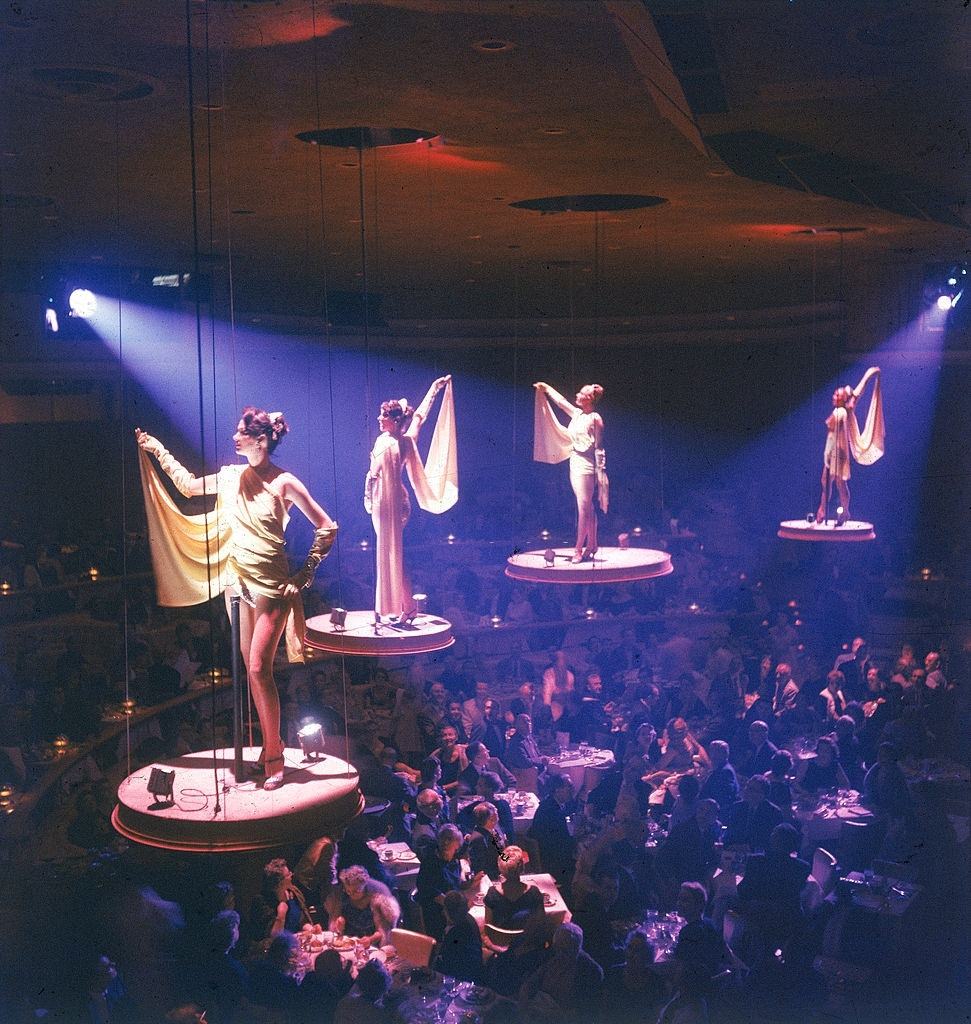
The Stardust Hotel, which opened in 1958, immediately went for scale. The Bluebell Girls — a troupe of international showgirls — performed above the audience on elevated platforms, turning the showroom into a spectacle that surrounded the crowd on multiple levels. It was exactly the kind of production that newer hotels used to distinguish themselves from older competitors.
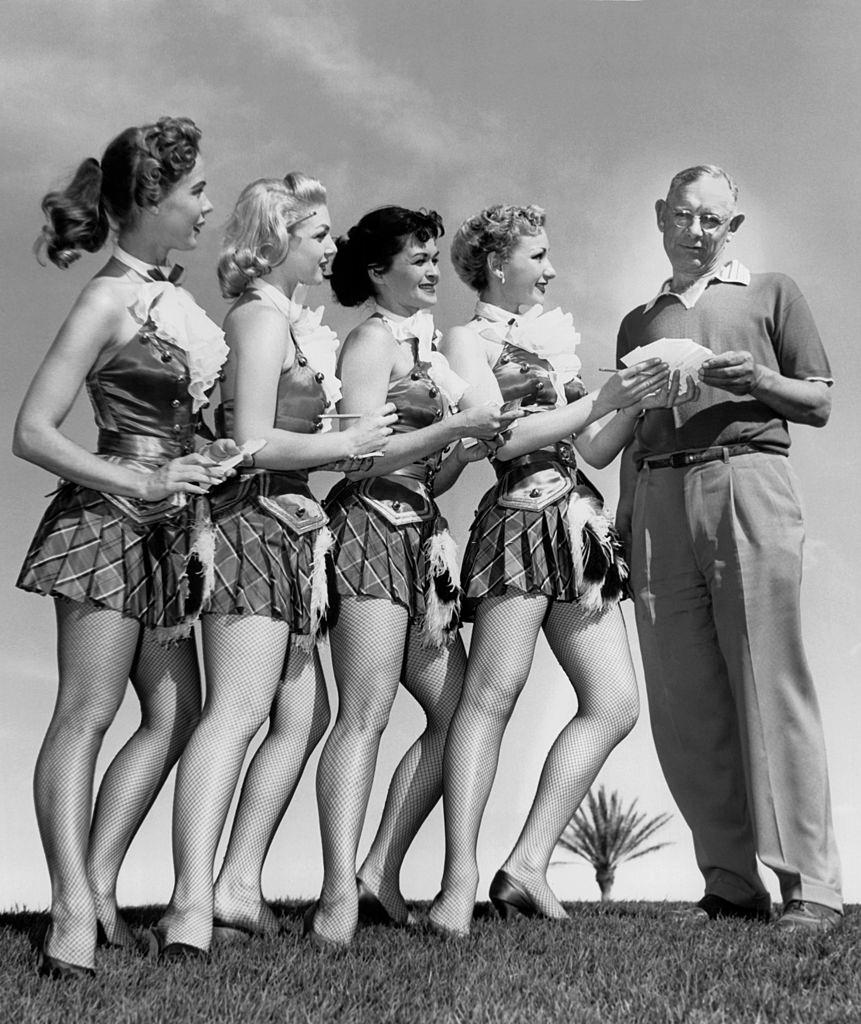
Golf was woven into Las Vegas’s resort culture. The Desert Inn Country Club hosted the Tournament of Champions, one of the PGA Tour’s most prestigious events during the 1950s. In 1957, four young women sold advance tickets to the tournament, linking the world of high-stakes golf to the broader entertainment economy the city had built.
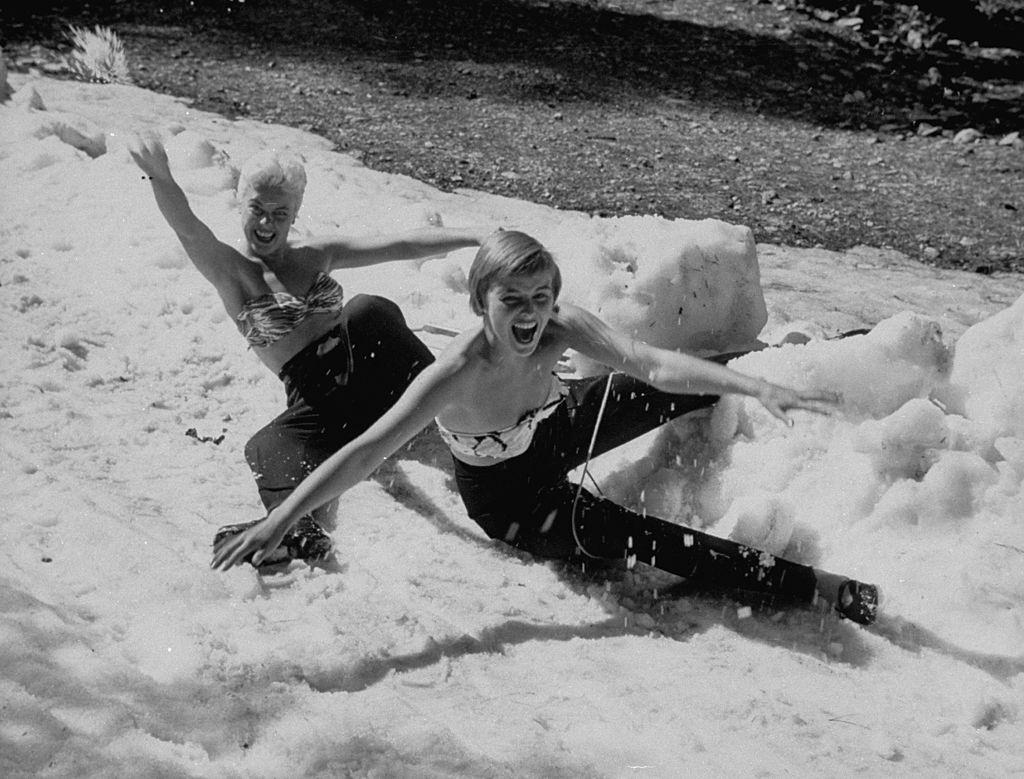
Las Vegas chorus girls lived and worked in a city that, despite its desert location, occasionally saw winter snow. Kim Smith, a chorus performer, was photographed playing in the snow with a friend in 1954 — a rare image that showed the city’s entertainers as ordinary people navigating an unexpected side of Nevada weather.
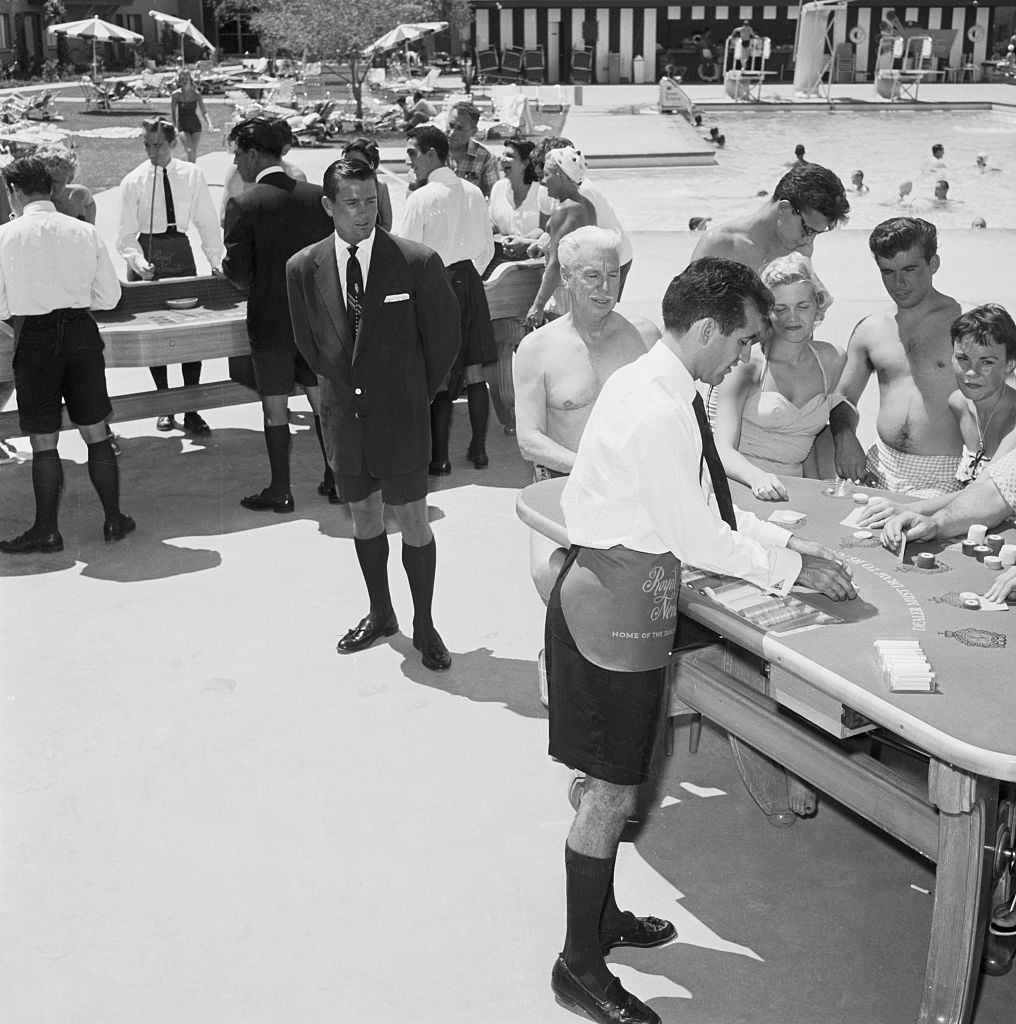
The Royal Nevada Hotel opened in 1955 and brought outdoor gaming tables to its guests — an unusual feature that set it apart from the fully indoor casino environments most venues offered. The open-air tables let players gamble in the Nevada sunshine, combining the feel of an outdoor resort with the energy of a casino floor.
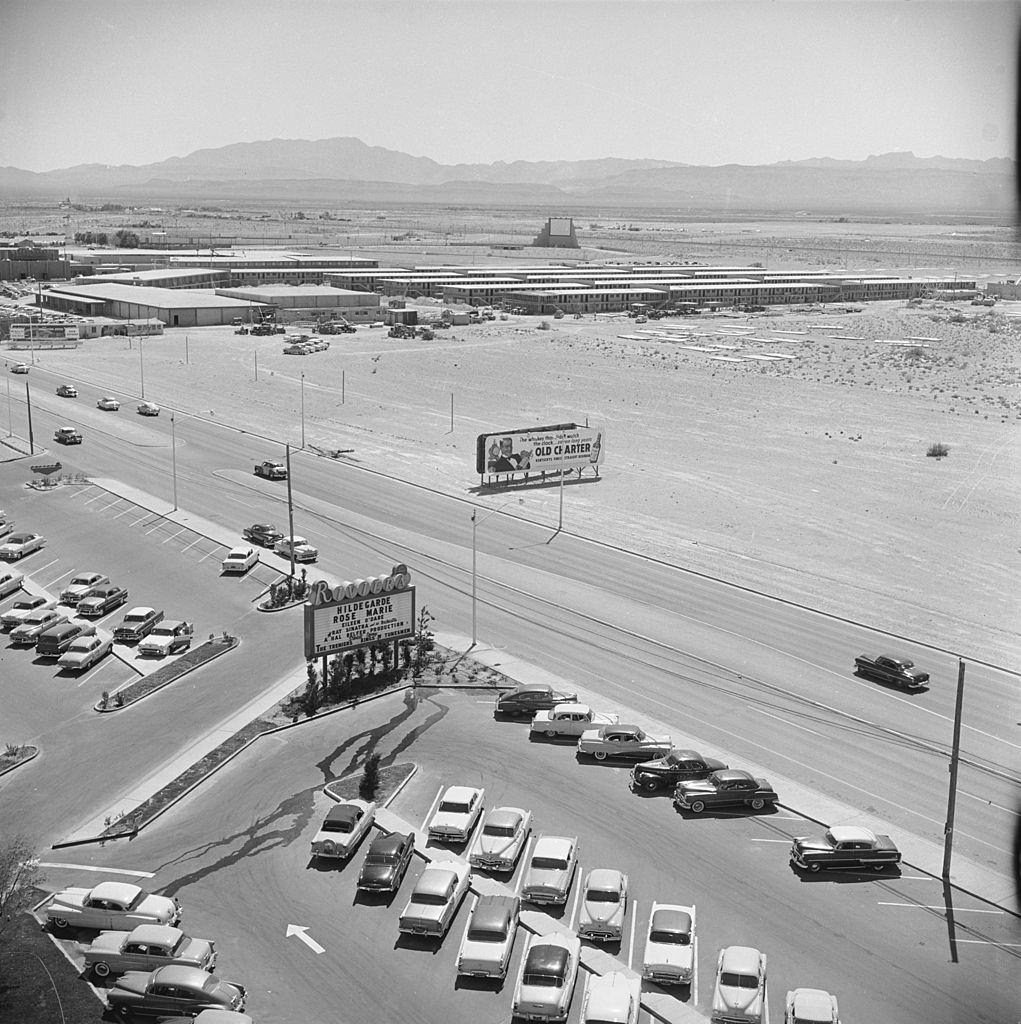
Aerial photographs from the mid-1950s showed just how dramatically Las Vegas was expanding outward into the desert. The Riviera Hotel’s large parking lot sat surrounded by open land in 1955 — space that would be filled with more hotels, roads, and development within the following decade.
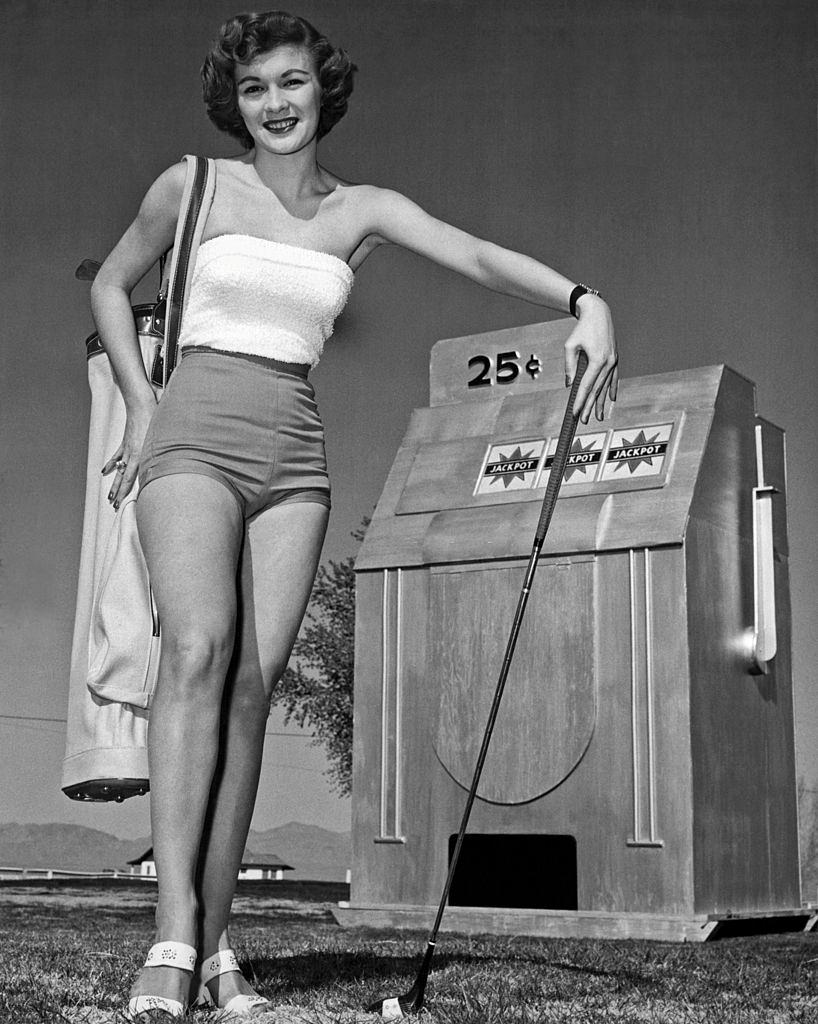
Golf and gambling intersected frequently in Las Vegas’s promotional culture. A woman golfer was photographed in 1956 standing next to a full-scale model of a slot machine placed directly on a golf course — a visual gag that also served as an effective advertisement for both the sport and the city’s gambling identity.
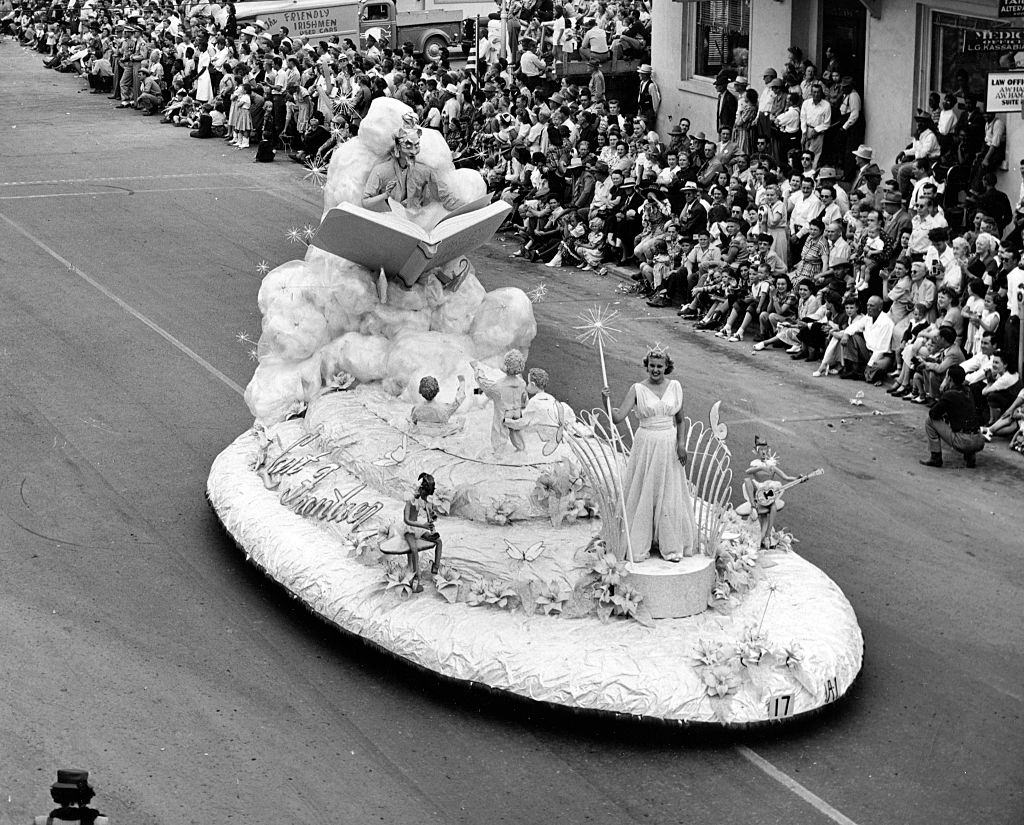
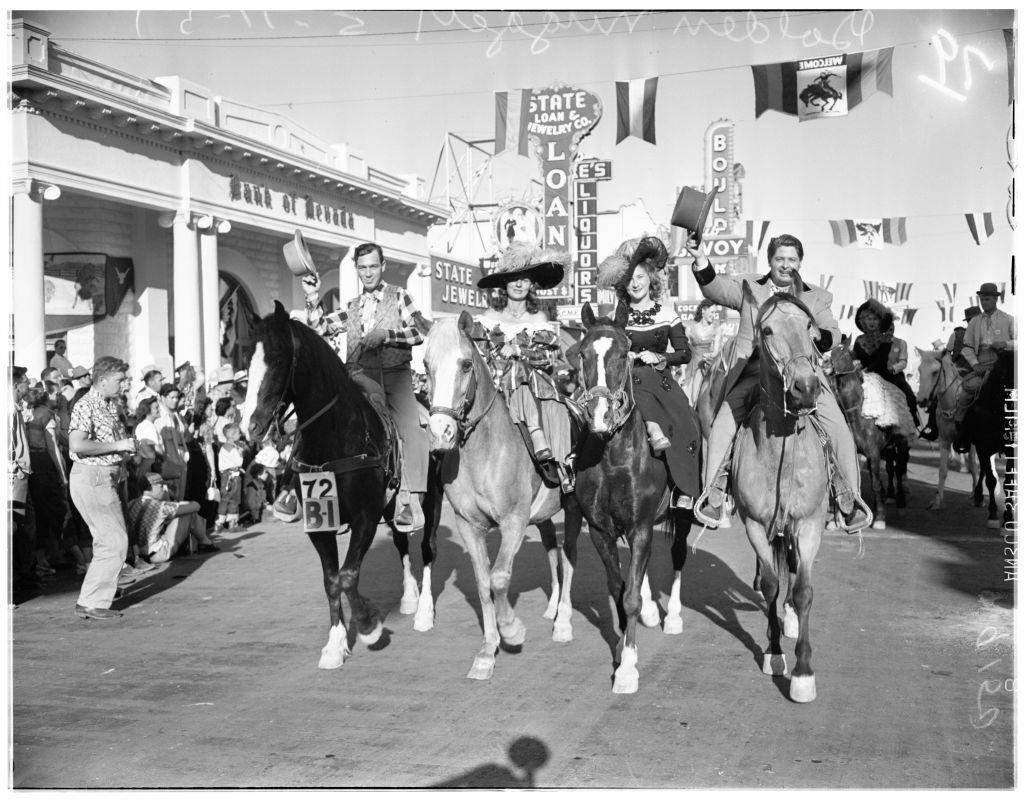
Las Vegas hosted civic events alongside its casino culture. The annual Hellolorado Days celebration honored the city’s frontier heritage with parades, rodeos, and street events. The 1950 parade featured a ‘Queen of Las Vegas’ float moving through streets lined with spectators — a reminder that the city had a local community life that existed alongside its tourist economy.
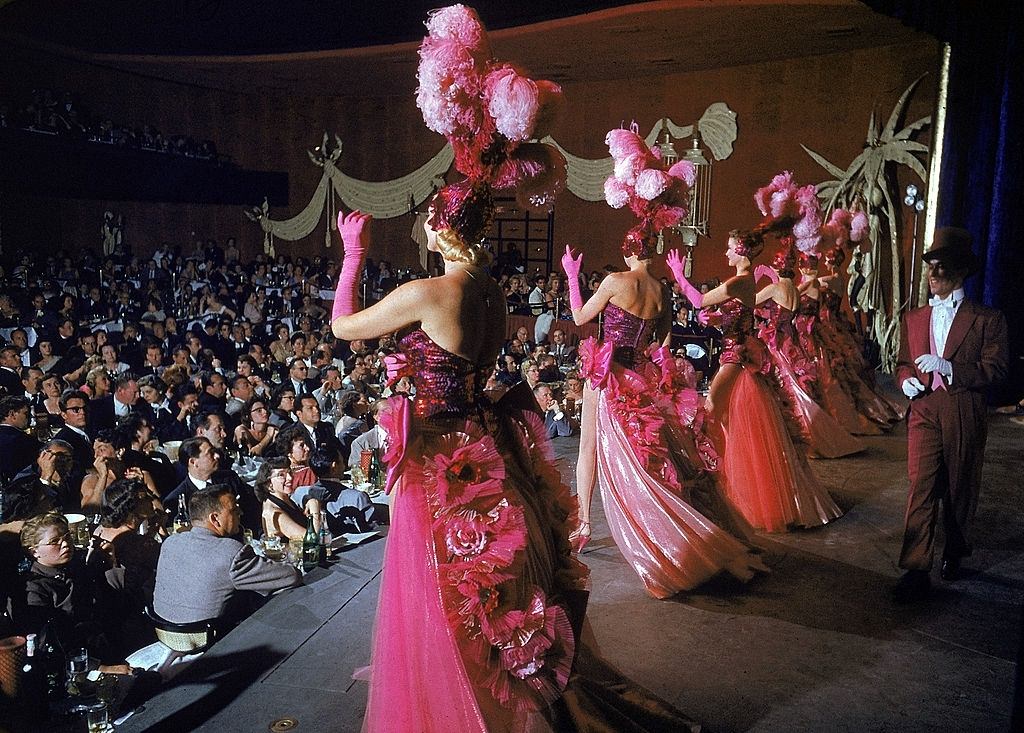
The Dunes Nightclub presented chorus shows that rivaled anything else on the Strip. Las Vegas chorus showgirls performed in tight formations with choreography built for visual impact, and the 1955 productions at the Dunes set a standard that newer venues would spend years trying to match.
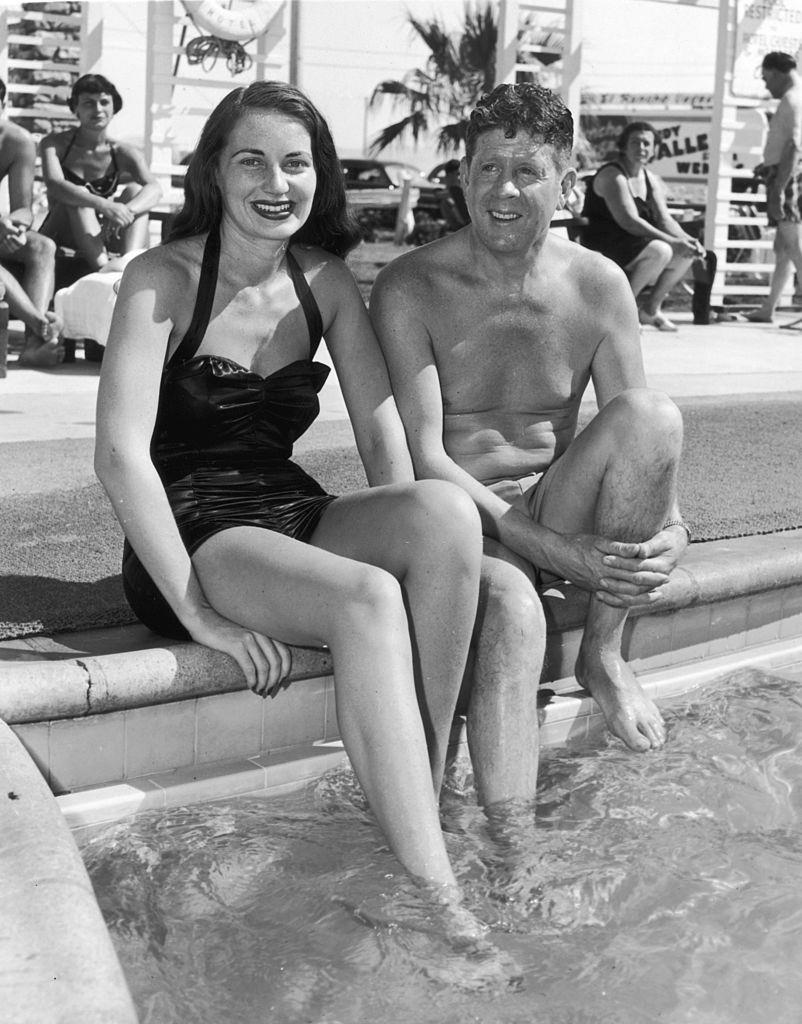
Not all of Las Vegas’s celebrity visitors were there to perform. Actor and singer Rudy Vallee and his wife, Eleanor Norris, relaxed poolside at the El Rancho Vegas resort in 1950, enjoying the property as guests rather than entertainers. El Rancho Vegas, the first resort hotel to open on what would become the Strip, had made poolside leisure a central part of its appeal since the early 1940s.
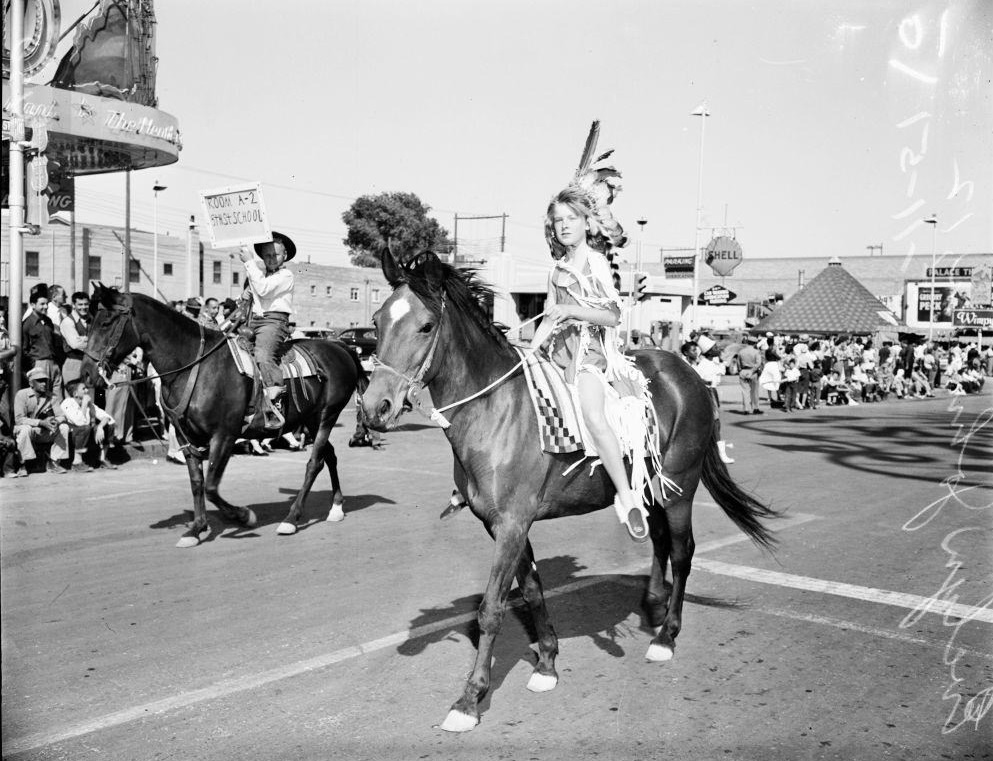
Helldorado Days drew the whole community into the streets. The May 1951 celebration brought out crowds for parades, performances, and Western-themed events that stretched across multiple city blocks. It was an annual ritual that grounded Las Vegas in its own local identity even as the city’s tourist population grew rapidly.
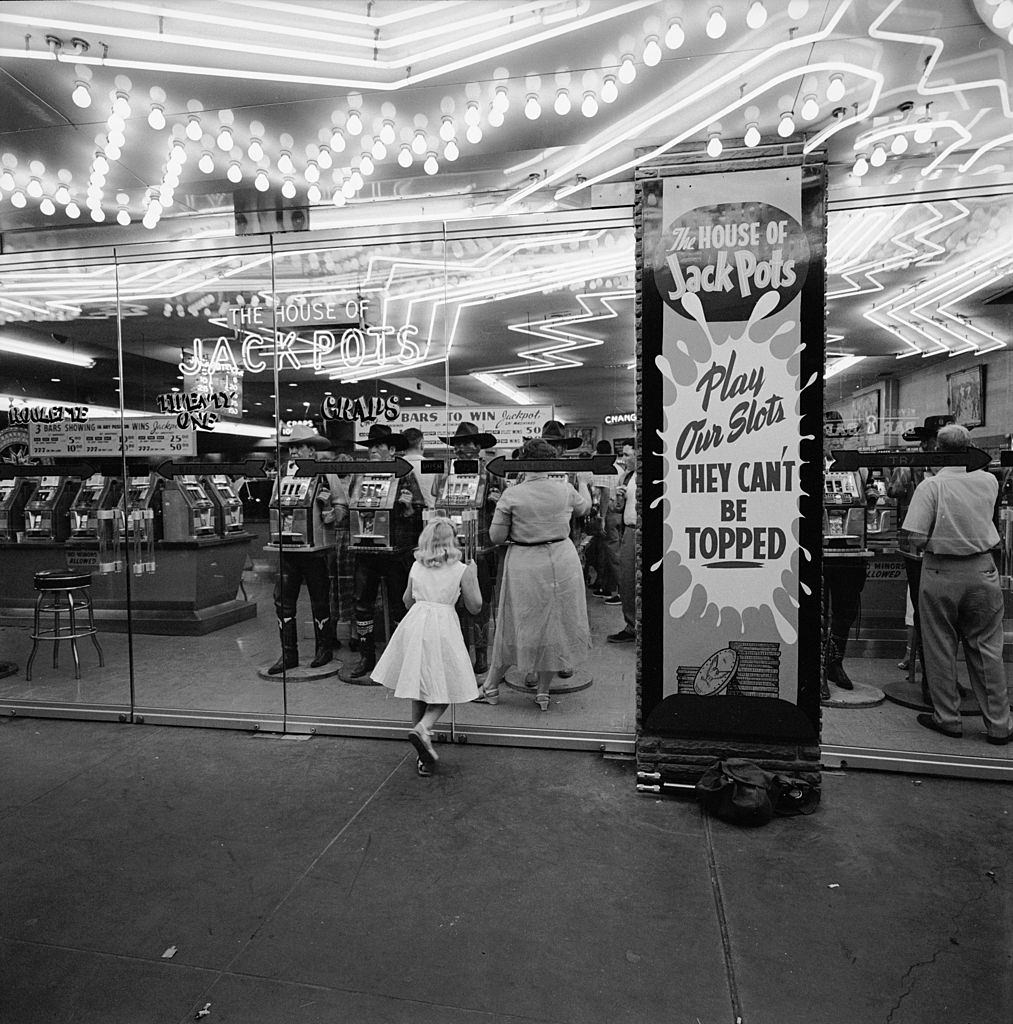
Nevada law in the 1950s did not restrict children from being near casino gaming areas the way later regulations would. A young girl peering through the plate-glass windows of the House of Jack Pots in 1955 watched slot machines and players from the sidewalk — a scene that captured how openly gambling was woven into everyday Las Vegas street life.
Opera singer Marguerite Piazza brought a different kind of fame to the Sands Hotel in 1955. Known for her appearances on television variety programs, Piazza was photographed watching roulette at the Sands — one of many performers who visited Las Vegas as guests and lent the city’s casinos an air of cultural prestige.
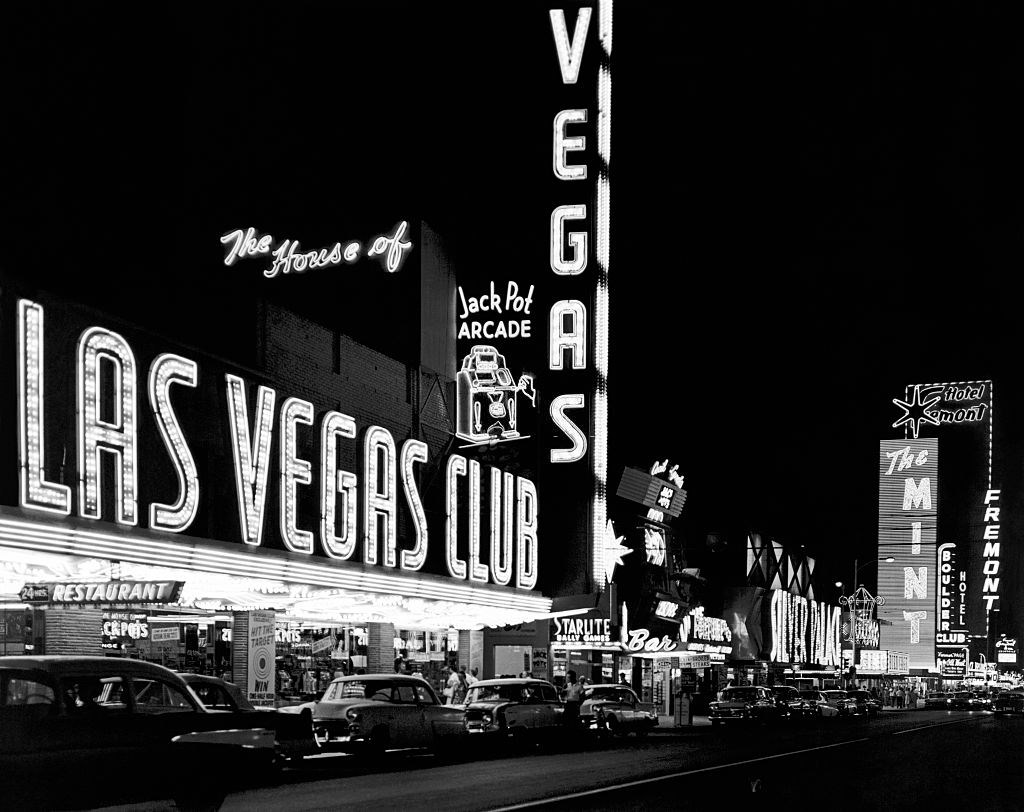
By 1959, Fremont Street’s Downtown casino corridor had matured into a well-established destination. Biff’s Las Vegas Club and The Mint anchored one stretch of the street, their signs competing for attention in the crowded block that had been the original center of Las Vegas gambling since the 1930s.
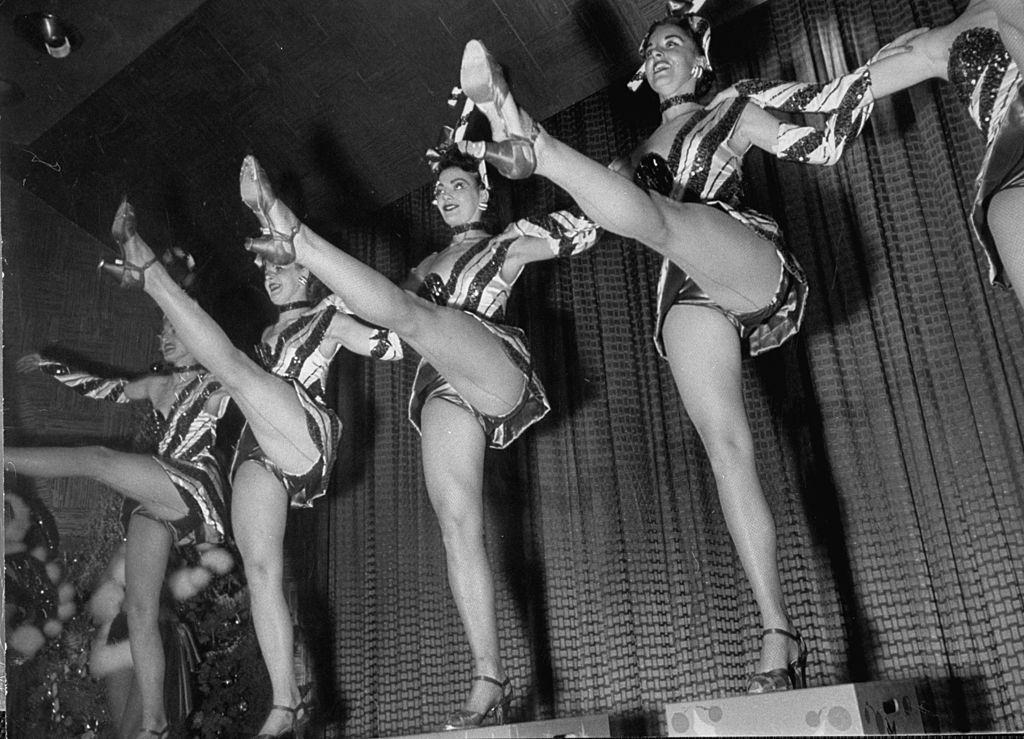
The Sahara Hotel opened in 1952 and moved quickly to establish itself with strong entertainment programming. The Saharem Dancers — billed as ‘leggy hoofers’ in the press — performed precision dance numbers in the new showroom, helping the Sahara build a reputation for high-energy live entertainment from its first year of operation.
The Overland Hotel, Biff’s Las Vegas Club, and the Golden Gate casino occupied adjacent storefronts on Fremont Street by 1959. The Golden Gate, which traced its origins back to 1906, was the oldest hotel in Las Vegas still operating — a point of continuity in a district that was otherwise being rebuilt and rebranded at a constant pace.
Helldorado Days included a children’s parade that ran through Downtown Las Vegas on May 11, 1951. Kids in Western costumes rode horses and marched through streets lined with local families — an event that showed how fully the annual celebration engaged every segment of the city’s population.
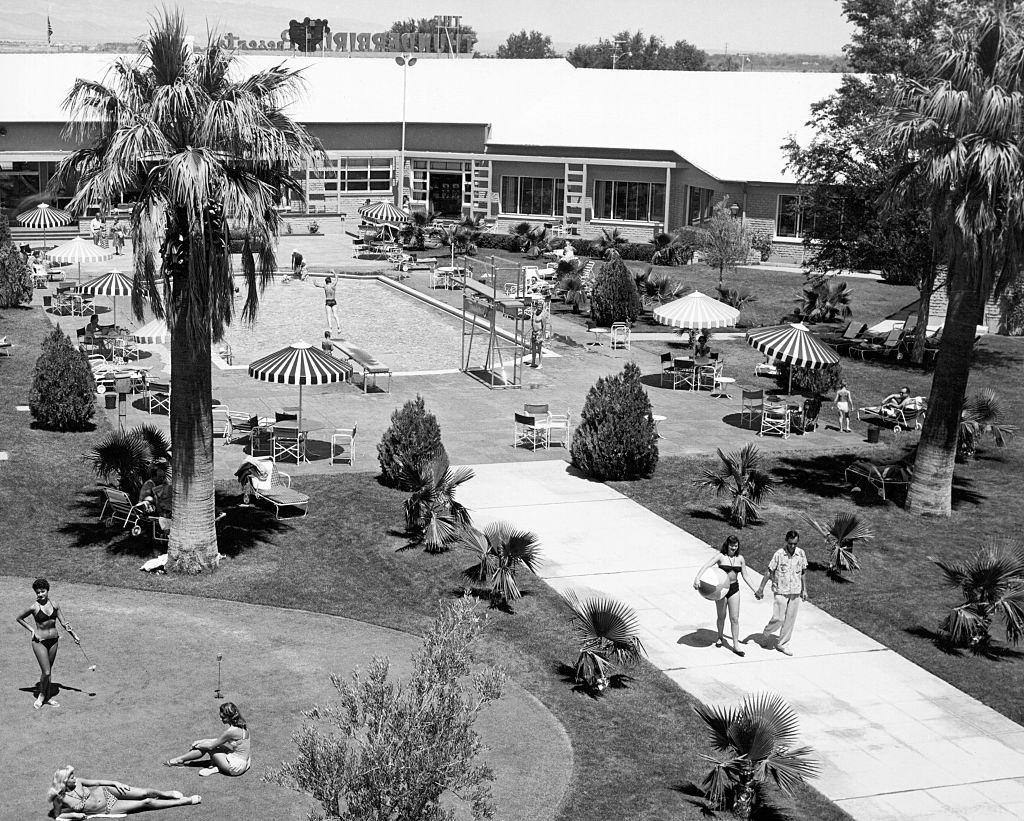
Resort hotels competed as much on outdoor amenities as on casino size. The Thunderbird Resort’s pool and patio area in 1956 offered a well-designed outdoor space where guests could spend hours away from the gaming floor, lounging in the desert sun between meals and evening shows.
Throughout the 1950s, Jayne Mansfield returned to Las Vegas repeatedly and was photographed extensively at the Dunes Hotel. Her ongoing presence in the city — across multiple years and contexts — made her one of the most recognizable faces associated with Las Vegas’s glamour during the decade.
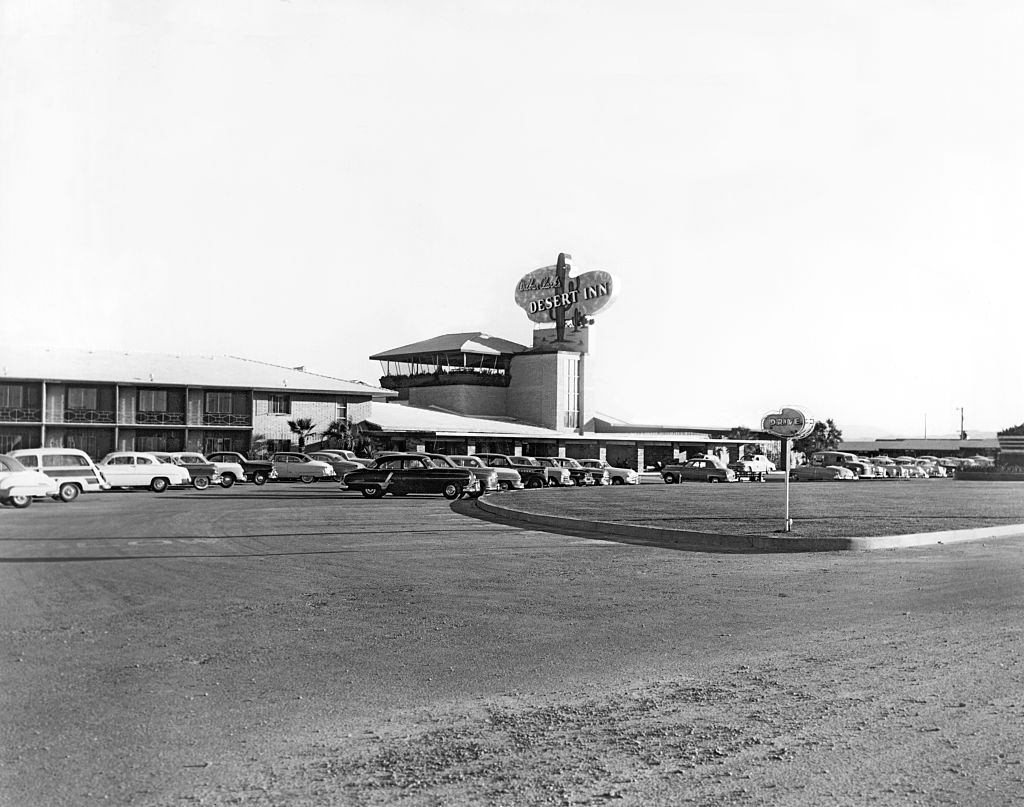
Wilbur Clark’s Desert Inn was one of the most prominent casino hotels in Las Vegas when it opened in 1950. The parking lot view from 1952 showed a property that was already well established, drawing high-end guests and hosting the Tournament of Champions golf event that put it on the national sporting map.
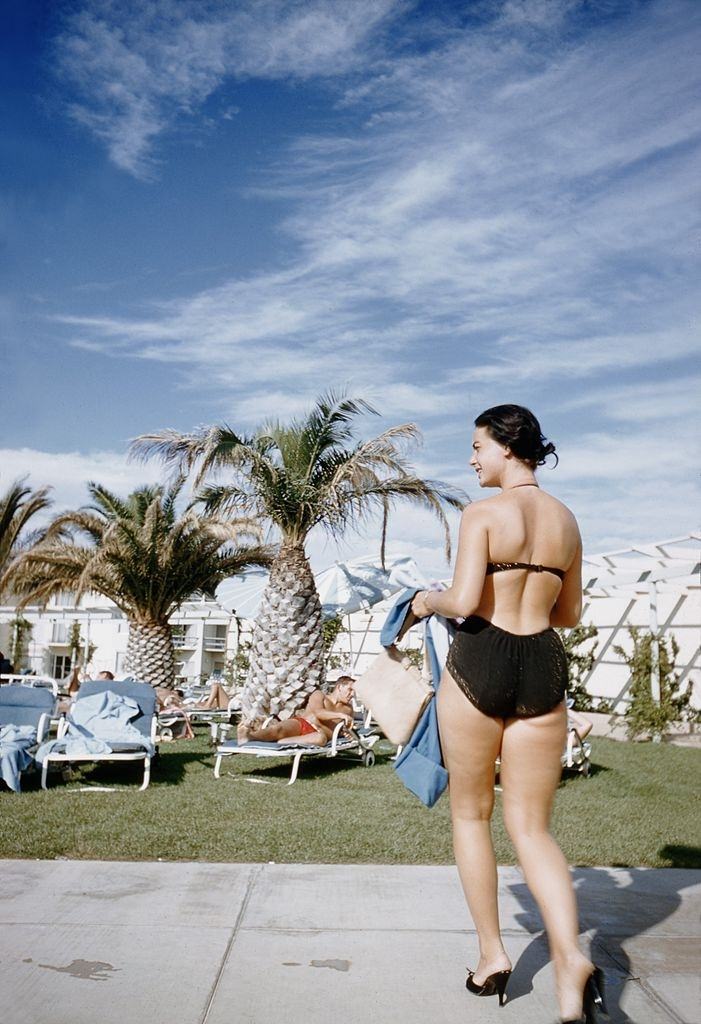
The Tropicana Hotel’s pool was another showcase for the city’s celebrity culture. Actress and model Kitty Dolan was photographed poolside at the Tropicana in 1958, in one of many images from that year that presented the hotel as a destination where beauty, luxury, and fame converged naturally.
In 1955, the Nevada Gaming Control Board was established to regulate and tax casinos and other gaming operations across the state. It was a significant shift — one that brought formal government oversight to an industry that had operated with far less scrutiny in its earlier years. The Board’s creation marked a turning point in how Las Vegas governed the business that had built it.