
Photography in the 19th and early 20th centuries captured a world that was rapidly changing. Among the most striking images from that era are portraits of Native American teen girls, photographed across dozens of tribes and territories throughout the United States and Canada. These images span roughly from the 1860s to the 1910s, and many remain remarkably sharp despite being well over a century old.
Native American women held a meaningful and often powerful place within their communities. In many tribes, women owned the home and all property within it. They managed resources, raised children, and maintained the social fabric of village life. While tribal leadership — the role of chief — was typically held by men, women’s rights within many nations were far broader than those held by women in Euro-American society at the same time.
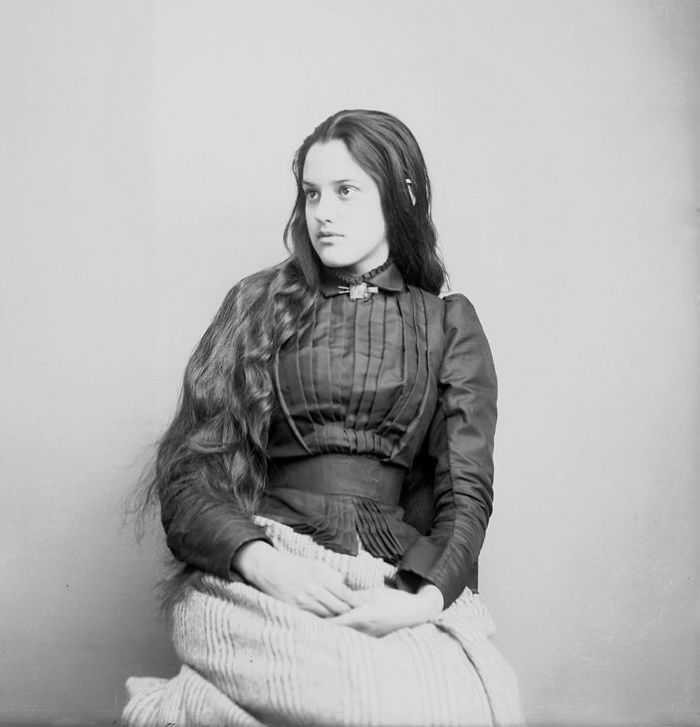
Marcia Pascal was the daughter of U.S. Army officer George W. Paschal and was of half-Cherokee heritage. Her portrait from the 1880s places her at the intersection of two very different worlds — the U.S. military establishment and Cherokee ancestry. Portraits like hers reflect how Native identity persisted even among those living within or alongside American institutional life.
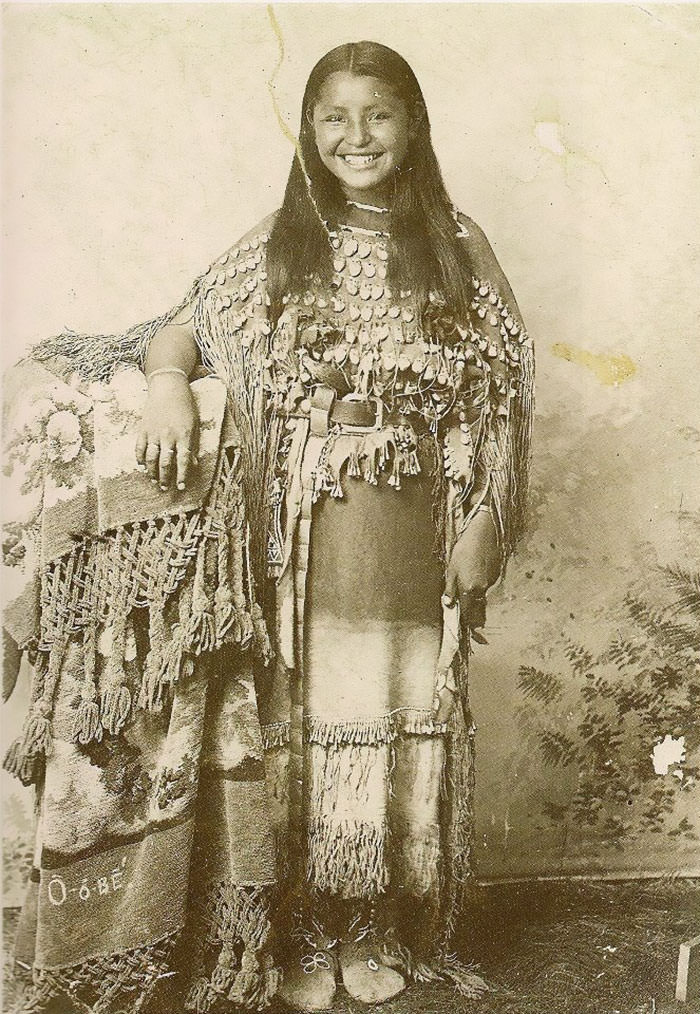
The Kiowa Nation, based largely in the southern Great Plains, produced some of the most recognizable portraits of the era. O-o-be, photographed in 1894, appears with the quiet composure common to formal studio portraits of the time. The Kiowa were known for their warrior culture and rich artistic traditions, including detailed ledger art and beadwork.
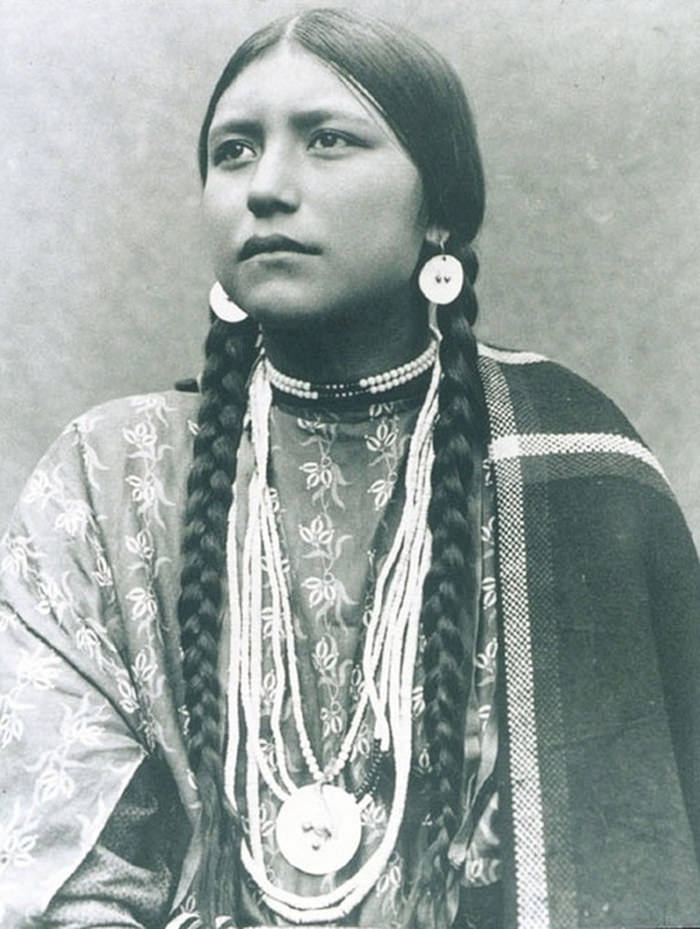
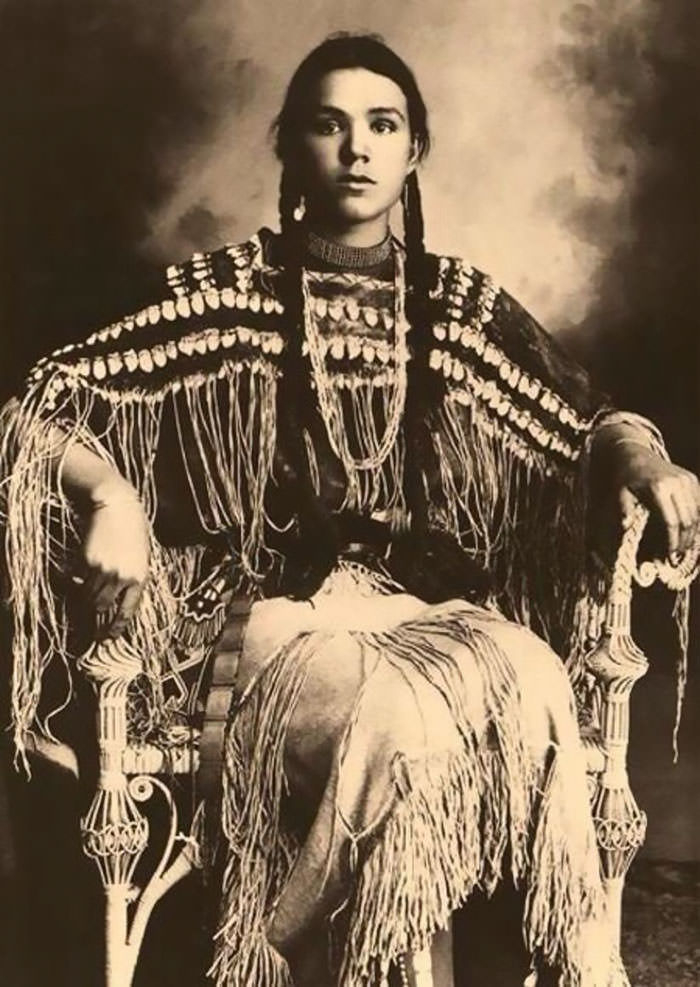
Gertrude Three Finger was Cheyenne, and her portrait dates to a period when the Cheyenne people faced enormous pressure from U.S. government policies, forced relocations, and the aftermath of violent conflicts on the Plains. Her image, taken between 1869 and 1904, is a direct record of a person living through one of the most turbulent periods in Native American history.
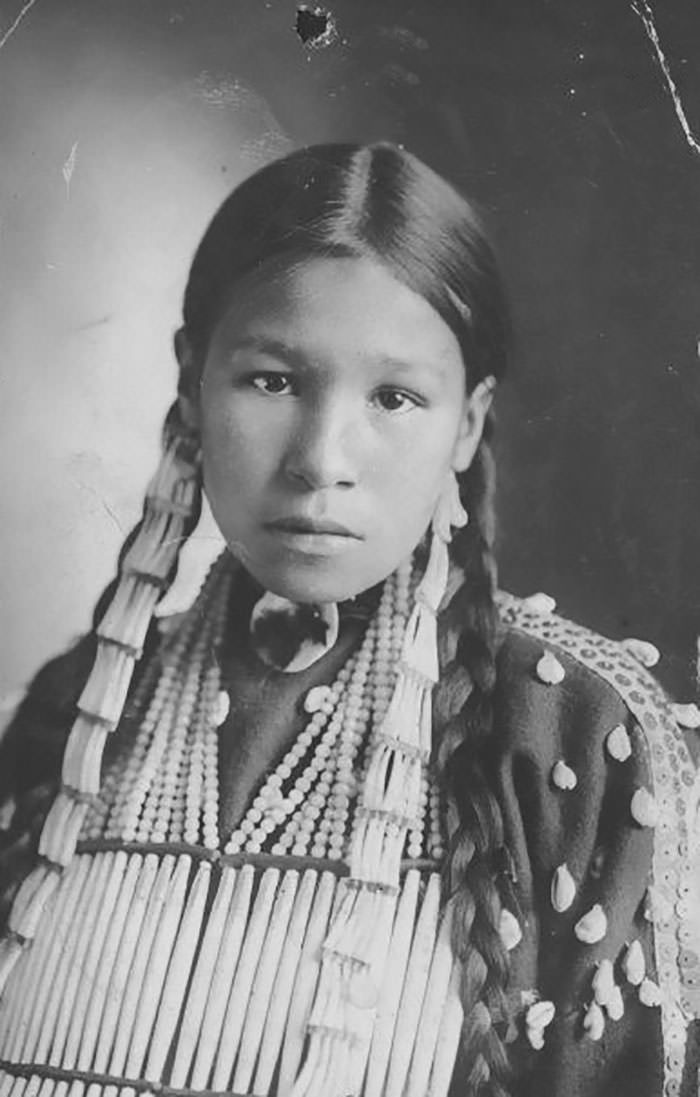
The Lakota Sioux were among the most photographed Native nations of the 19th century. This unidentified Lakota girl was photographed in 1890 — the same year as the Wounded Knee Massacre, one of the deadliest military actions against Native Americans in U.S. history. The year alone gives her portrait a somber historical weight.
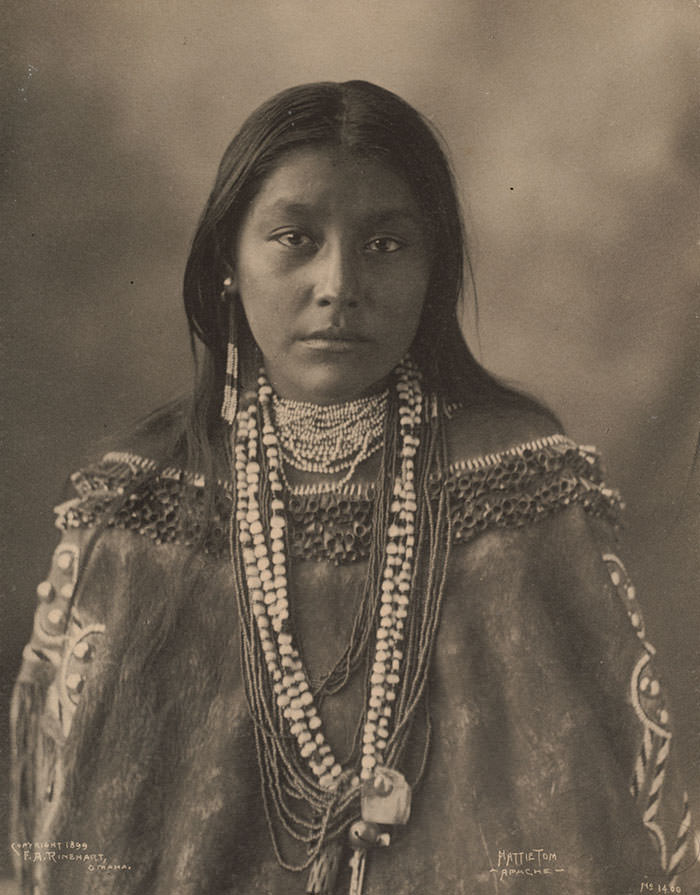
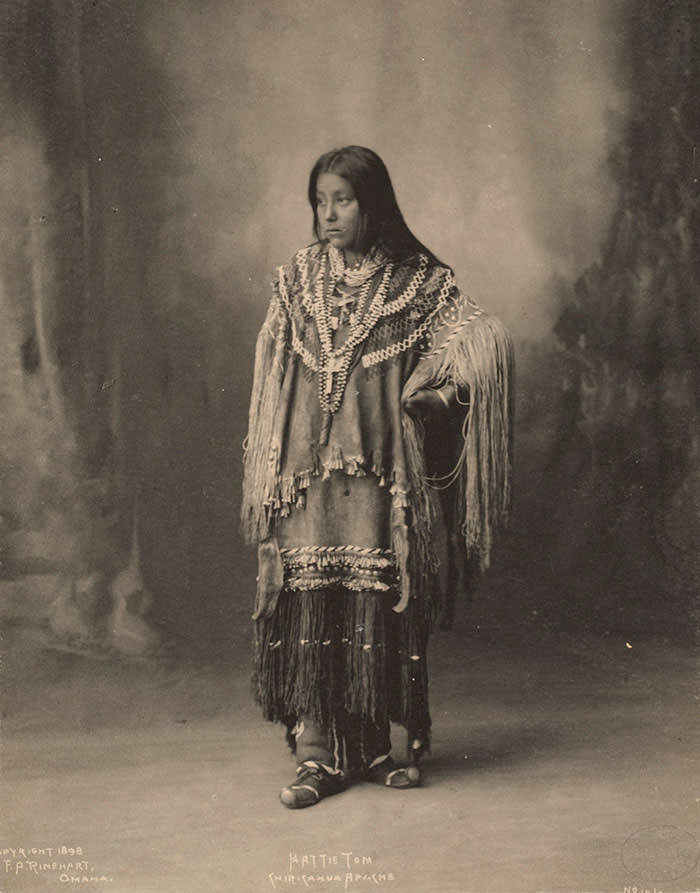
Hattie Tom was Apache and was photographed in 1899. The Apache were known for their extraordinary resilience and guerrilla resistance to both Spanish colonial and later U.S. military forces across the Southwest. By the time Hattie Tom’s portrait was taken, many Apache had been confined to reservations following the surrender of Geronimo in 1886.
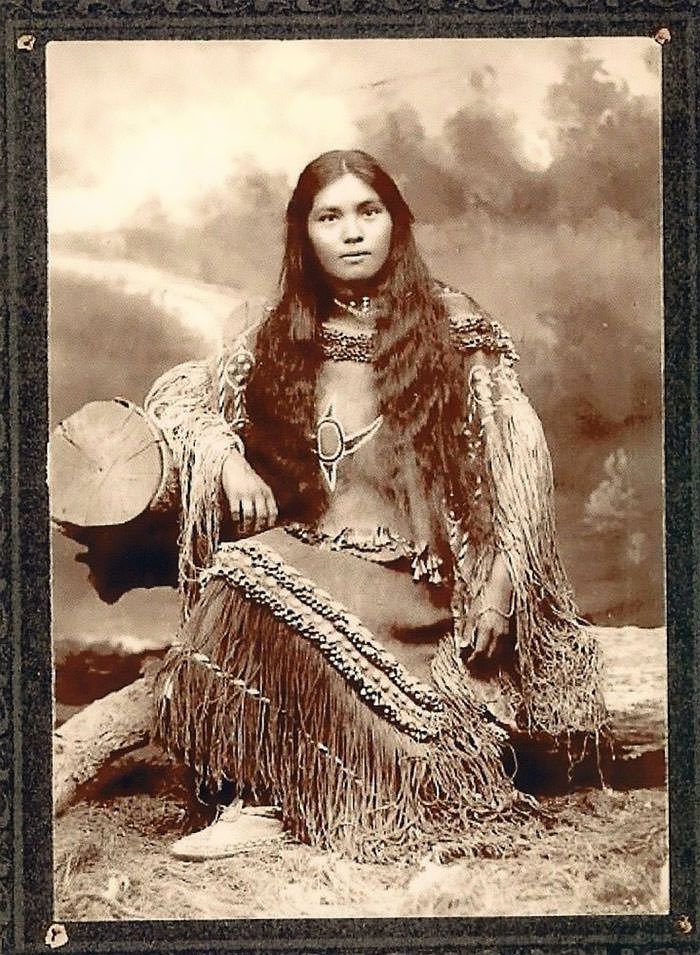
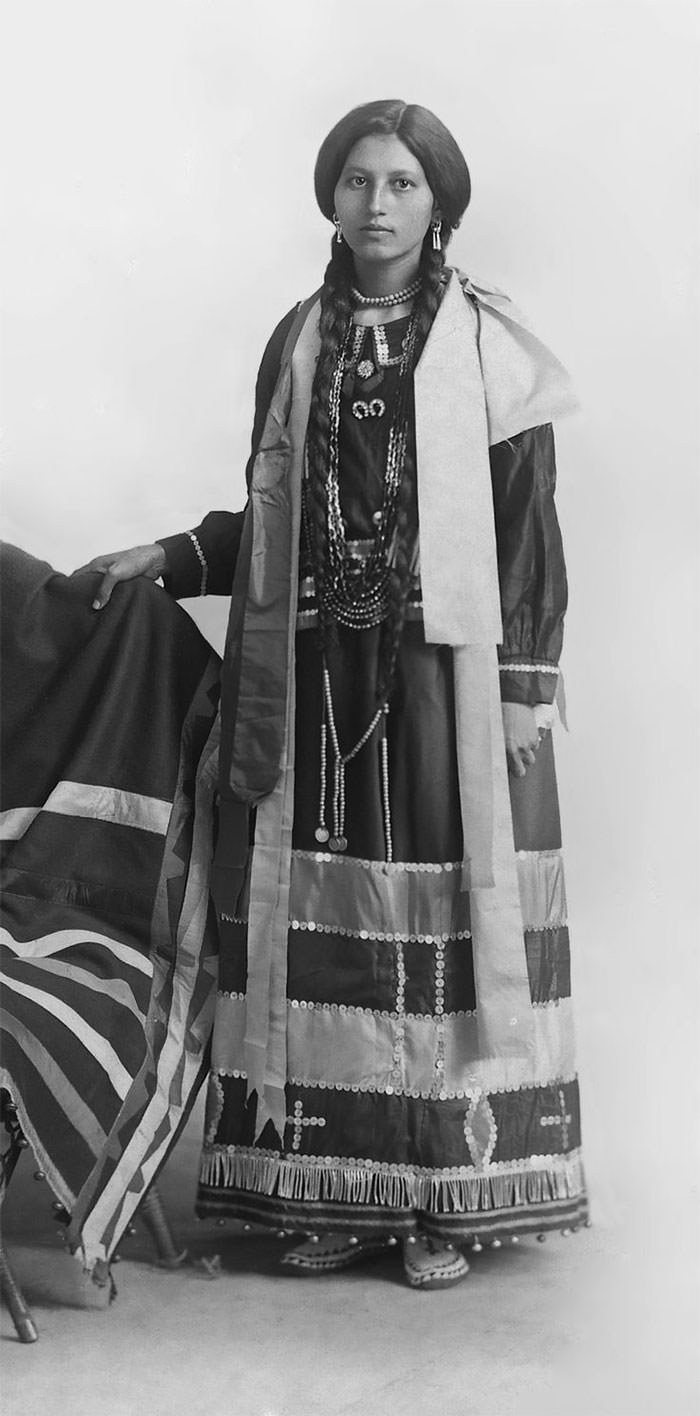
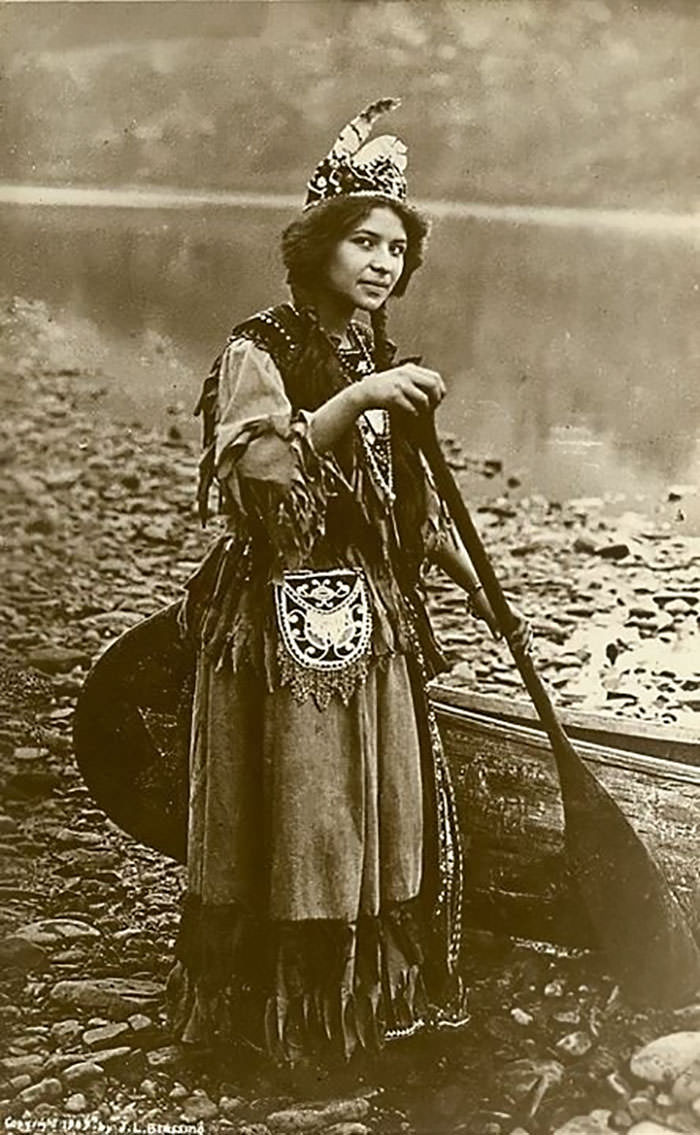
Traditional dress in these portraits is significant. Clothing was not simply decorative — it communicated tribal identity, social standing, and family lineage. Beadwork patterns, the cut of a garment, and the materials used all carried specific meaning within each nation’s cultural framework. Photographers of the era sometimes asked subjects to wear traditional clothing specifically to satisfy the expectations of Eastern American audiences who purchased and collected such images.
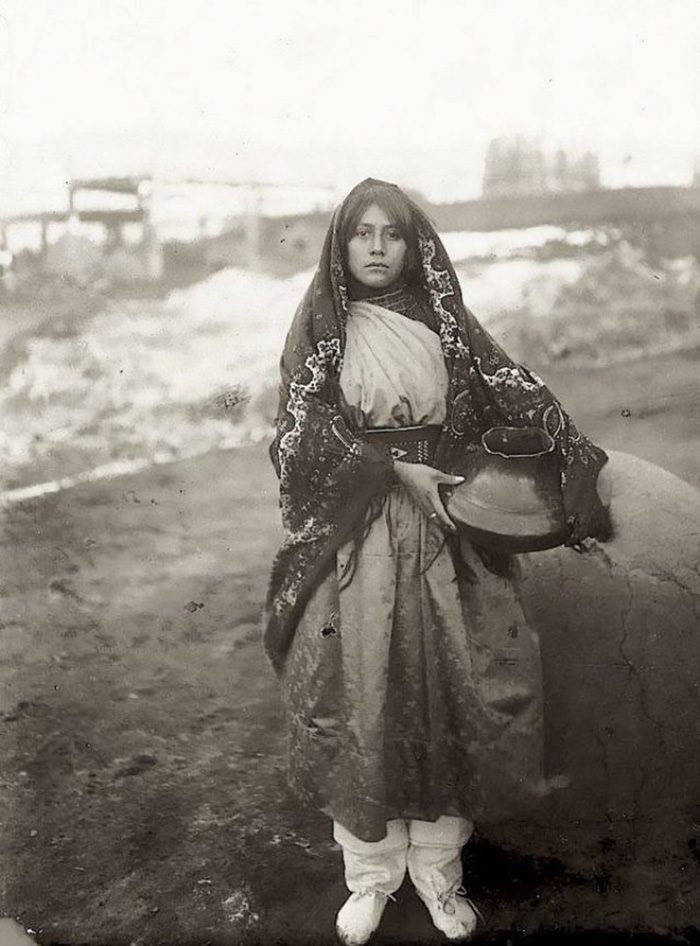
The Taos Pueblo is one of the oldest continuously inhabited communities in North America. This girl, photographed between 1880 and 1890, lived within that ancient tradition. Taos Pueblo architecture — multi-story adobe buildings — has stood for over a thousand years and still stands today as a UNESCO World Heritage Site.
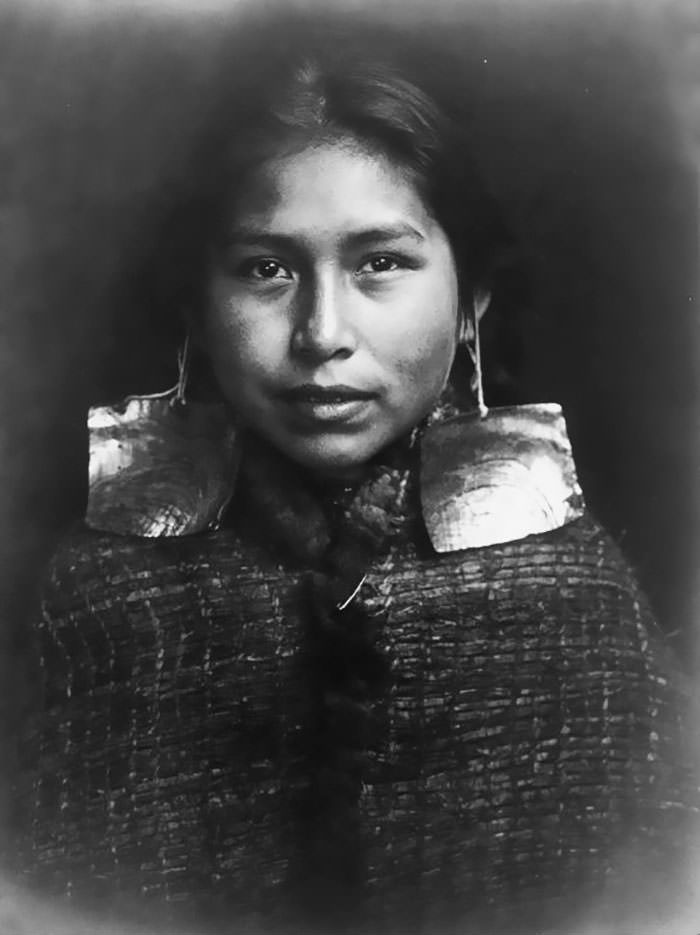
The Tsawatenok, a Kwakwaka’wakw-speaking people from the Pacific Northwest Coast of Canada, appear less frequently in historical American archives. This portrait from 1914 is notable for that reason alone. The Pacific Northwest nations were known for their sophisticated systems of social organization, totem art, and the potlatch ceremony — a feast involving the redistribution of wealth.
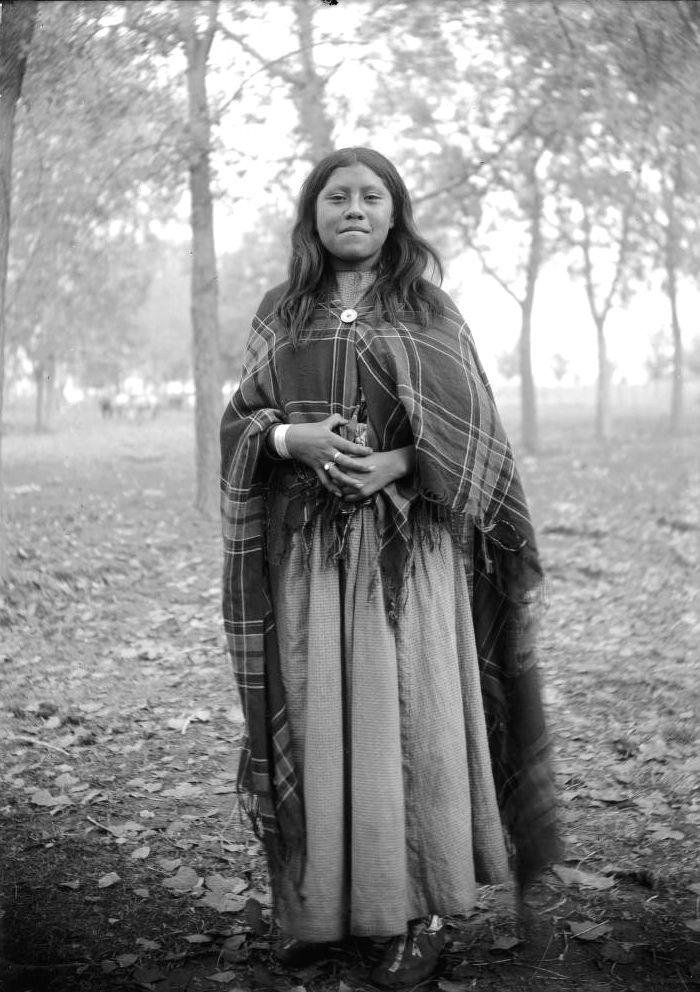
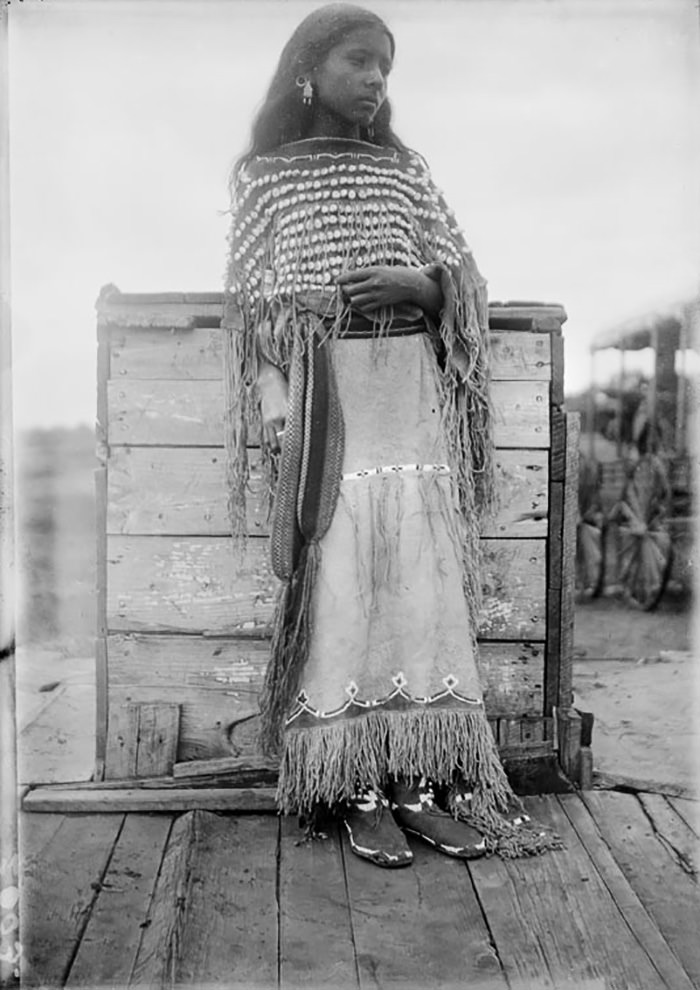
This Kiowa girl was photographed in 1892, just two years after the official closure of the American frontier as declared by the U.S. Census Bureau. The timing is a reminder that these images were taken during a period of enormous political and territorial upheaval for Native nations across the continent.
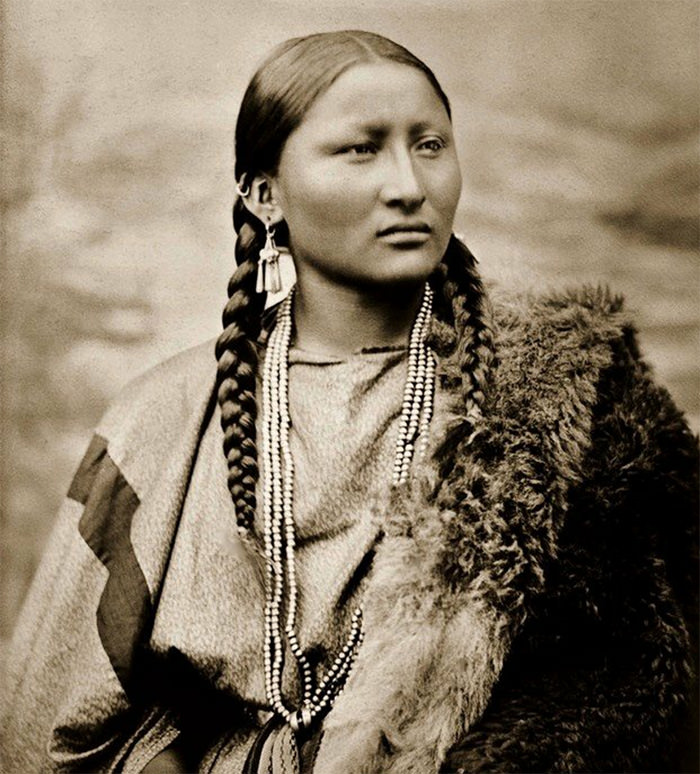
Pretty Nose was a Cheyenne woman photographed in 1878. She is documented as having participated in the Battle of the Little Bighorn in 1876 alongside Lakota and Cheyenne warriors, making her one of the few women known to have fought directly in that engagement. Her portrait carries a specific historical weight that goes well beyond its visual composition.
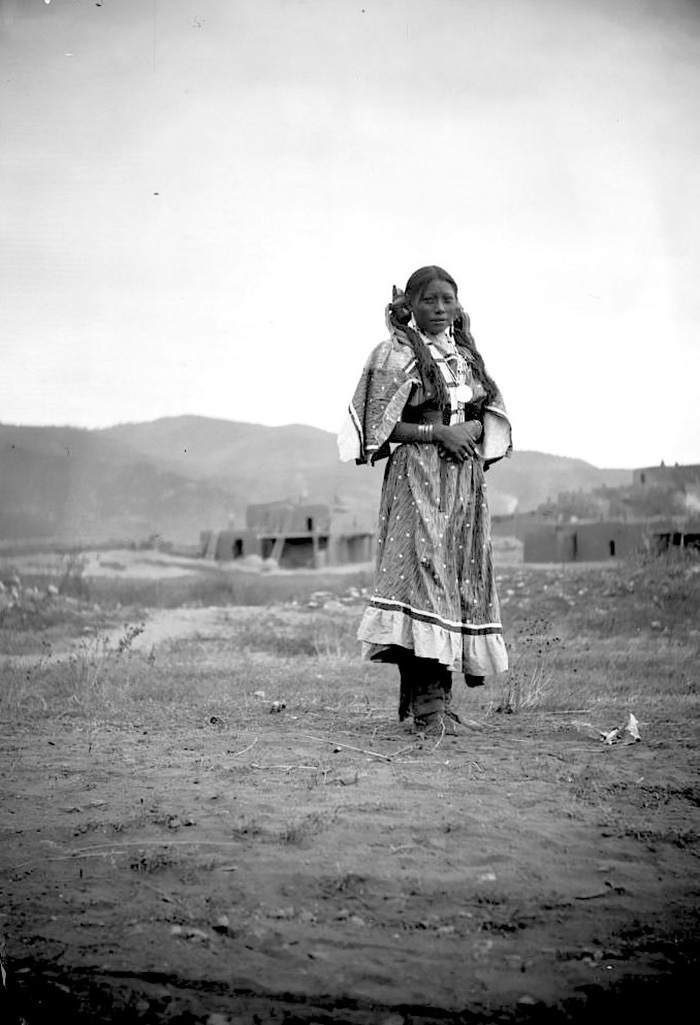
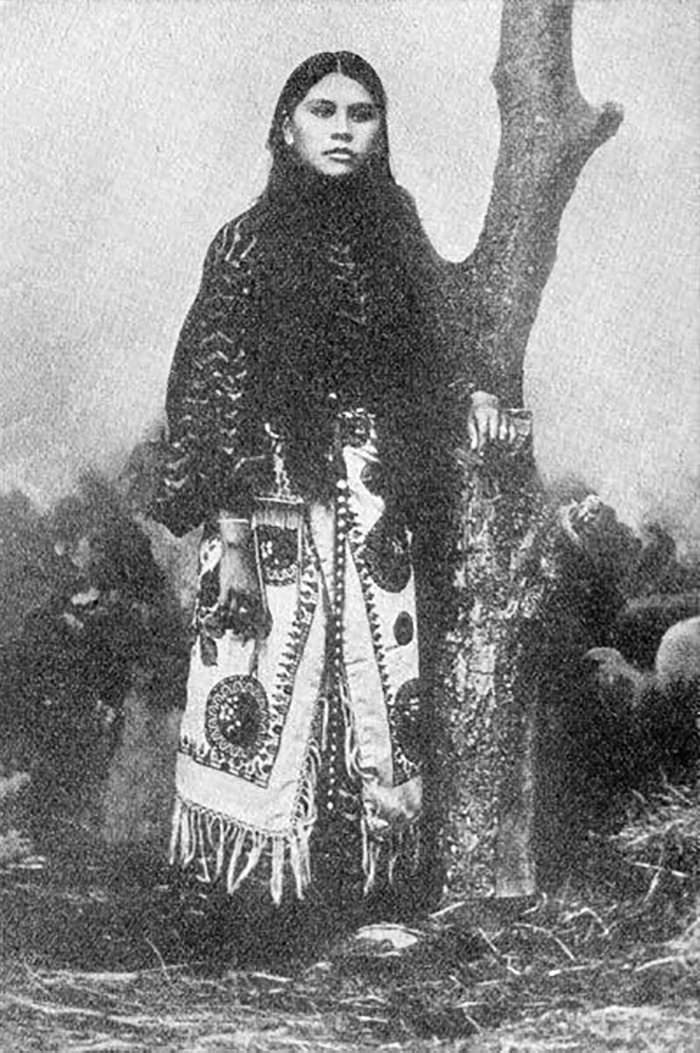
Quanah Parker was the son of Comanche chief Peta Nocona and Cynthia Ann Parker, a white woman who had been taken by the Comanche as a child. He became one of the most prominent Comanche leaders of the late 19th century, navigating reservation life while working to protect Comanche interests. His portrait from this period reflects a life lived across cultural boundaries.
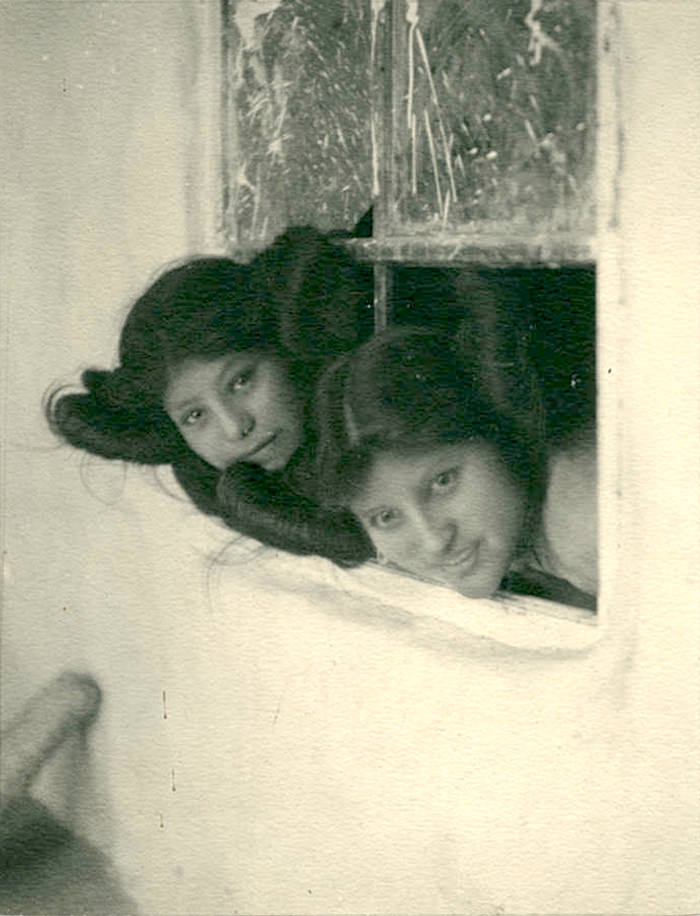
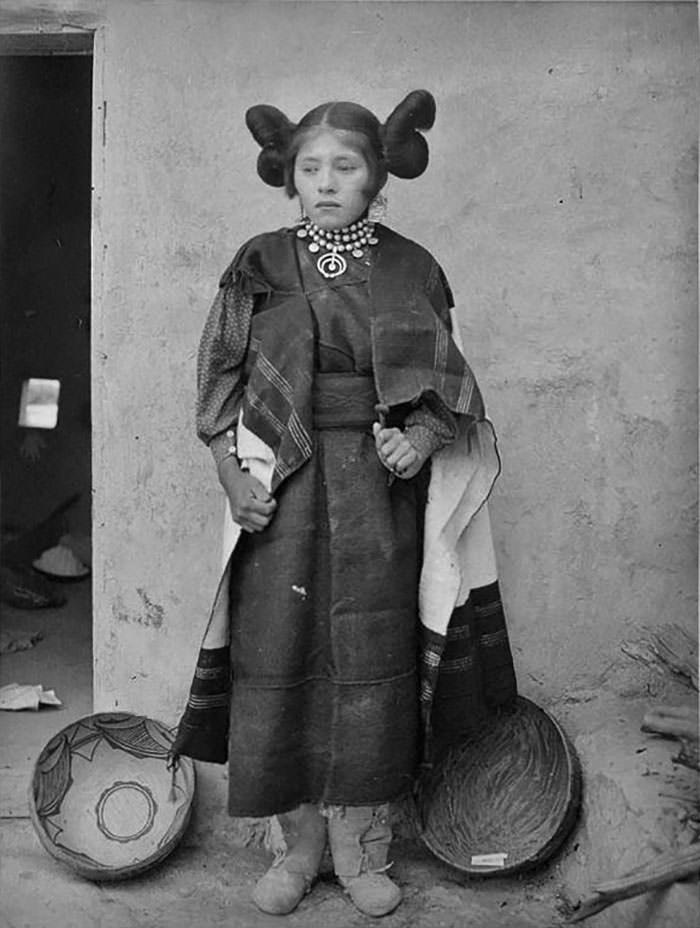
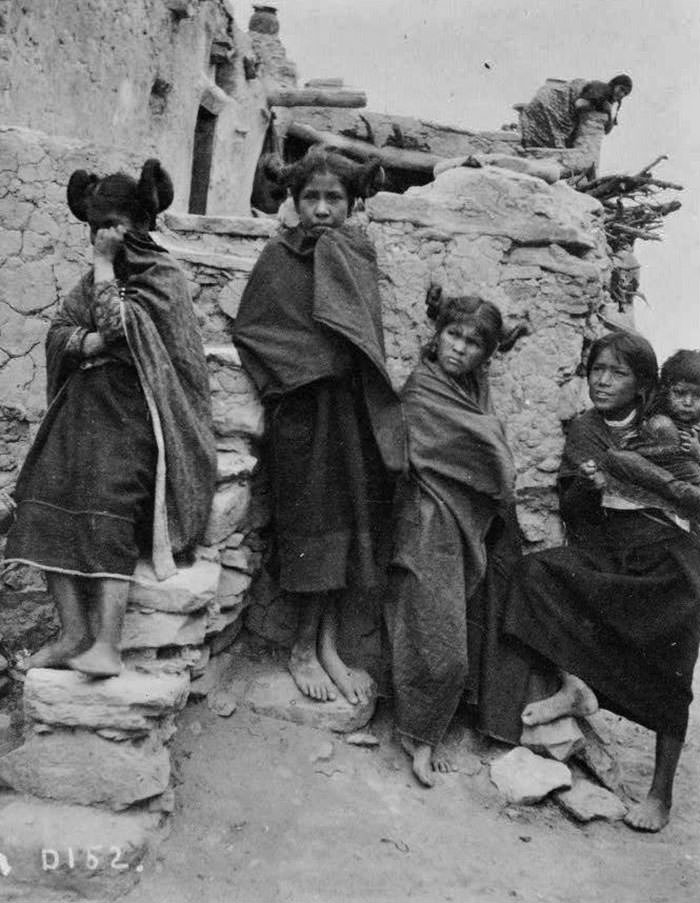
Hopi girls are among the most photographed subjects of Southwestern portraiture from this era. The distinctive squash blossom hairstyle worn by unmarried Hopi women — with hair formed into two large whorls on either side of the head — made them immediately recognizable and became a subject of fascination for outside photographers.
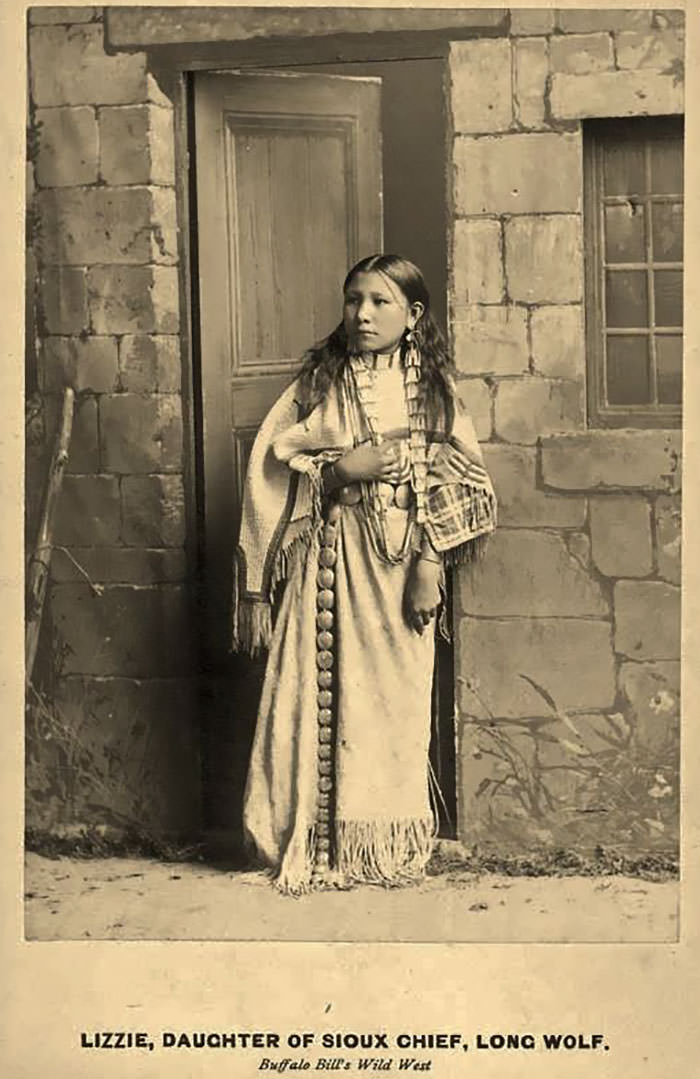
Lizzie Long Wolf performed in Buffalo Bill’s Wild West Show in 1886. The show toured extensively and brought Native American performers before audiences in the United States and Europe. While it provided income and travel, Native participants were often displayed as living spectacles, their cultures reduced to theatrical performance for non-Native crowds.
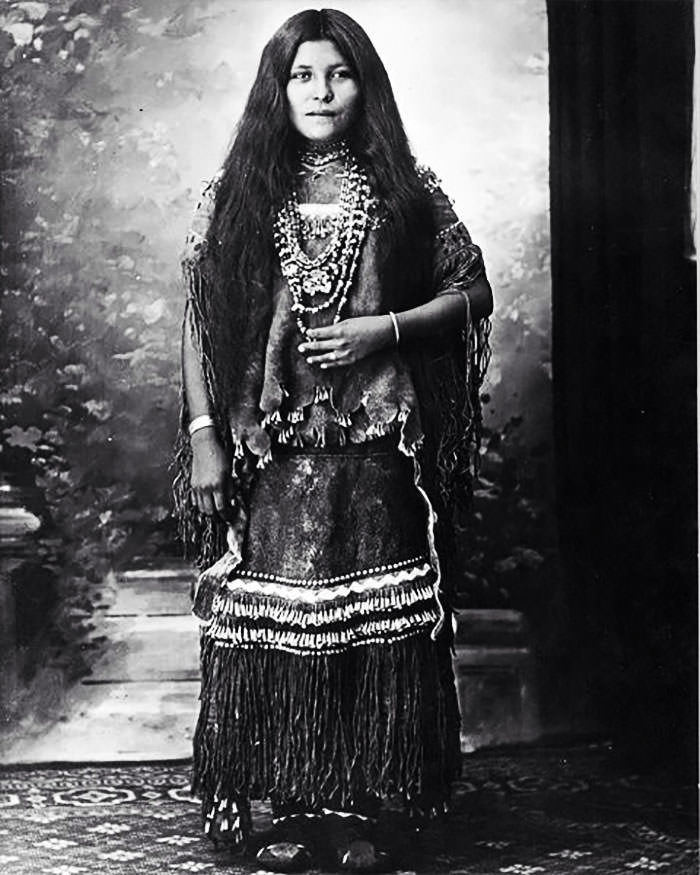
Isabelle Perico Enjady was a Chiricahua Apache held as a prisoner of war from 1886 to 1914 — a span of 28 years. Following Geronimo’s surrender, the U.S. government imprisoned hundreds of Chiricahua Apache, including those who had served as scouts for the Army. They were held at Fort Marion in Florida, then at Mount Vernon Barracks in Alabama, and finally at Fort Sill in Oklahoma. Isabelle’s portrait is a direct record of that imprisonment.
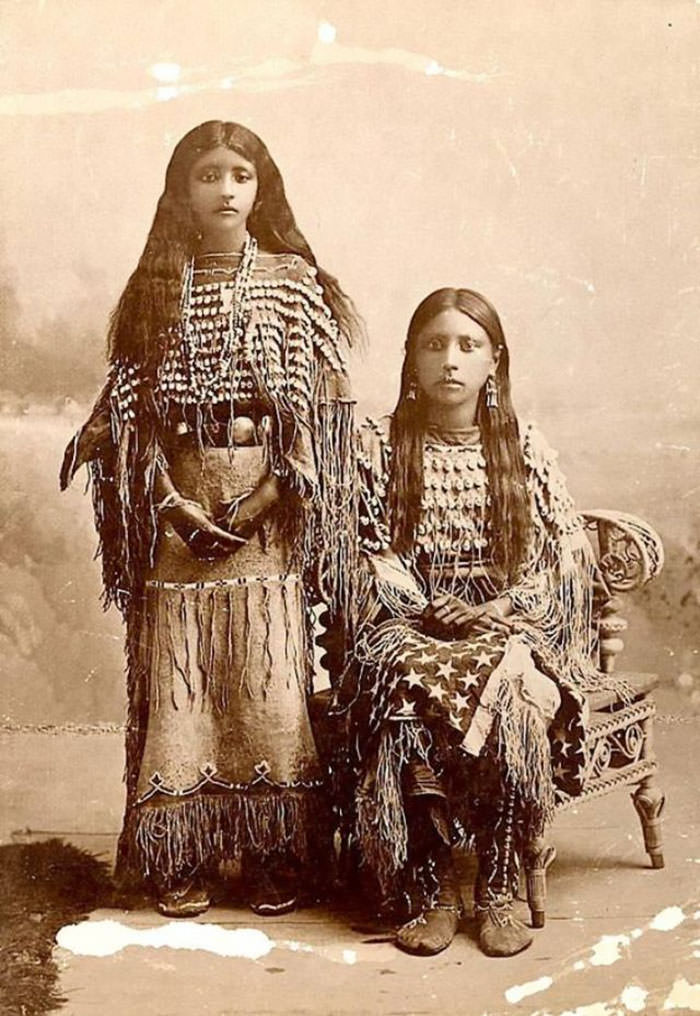
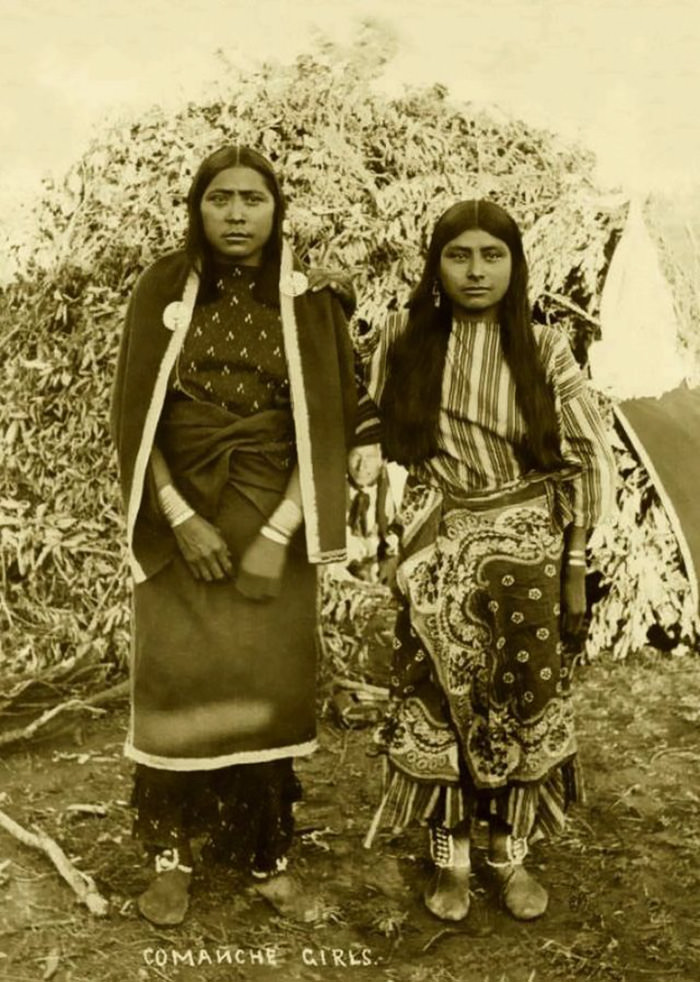
Group portraits of Native American teen girls from this period often show a mix of traditional and Western-influenced clothing, reflecting the cultural pressures of the era. U.S. government assimilation policies — including the forced enrollment of Native children in boarding schools — were actively dismantling traditional dress, language, and practice during the same decades these photos were taken.
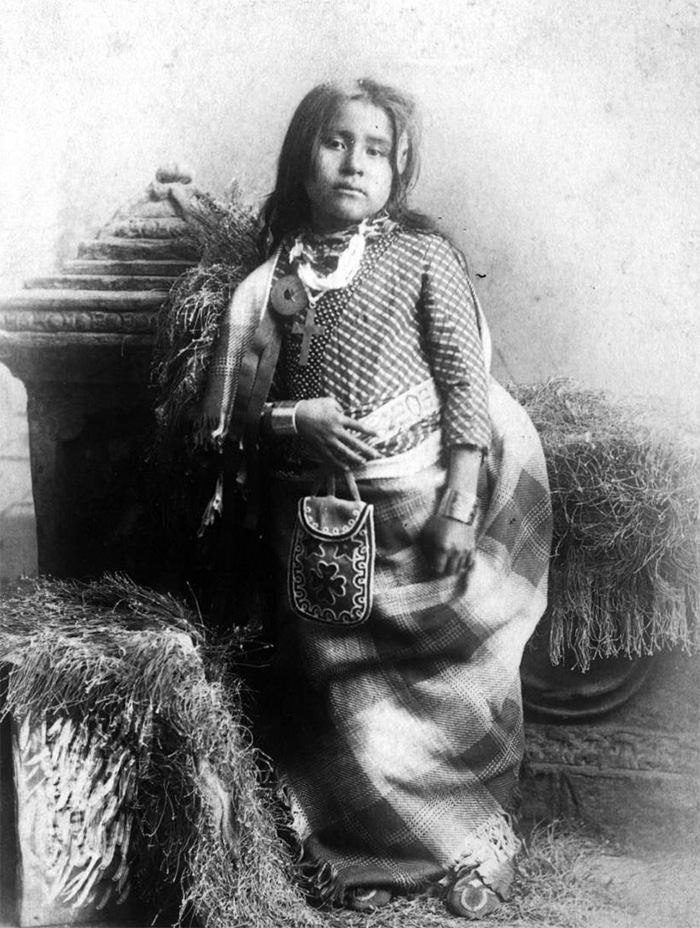
Inusk was the daughter of a Kickapoo chief, photographed between 1880 and 1890. The Kickapoo Nation originally inhabited the Great Lakes region and later spread across Kansas, Oklahoma, Texas, and into Mexico following repeated forced relocations. Her identity as a chief’s daughter places her portrait within the political and social leadership structure of her community.
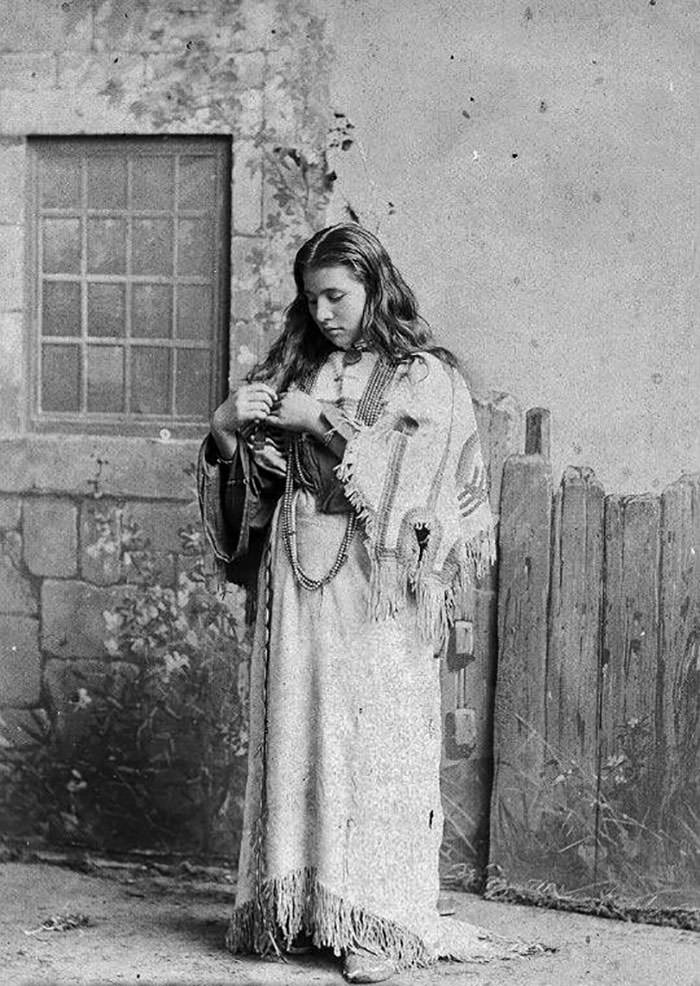
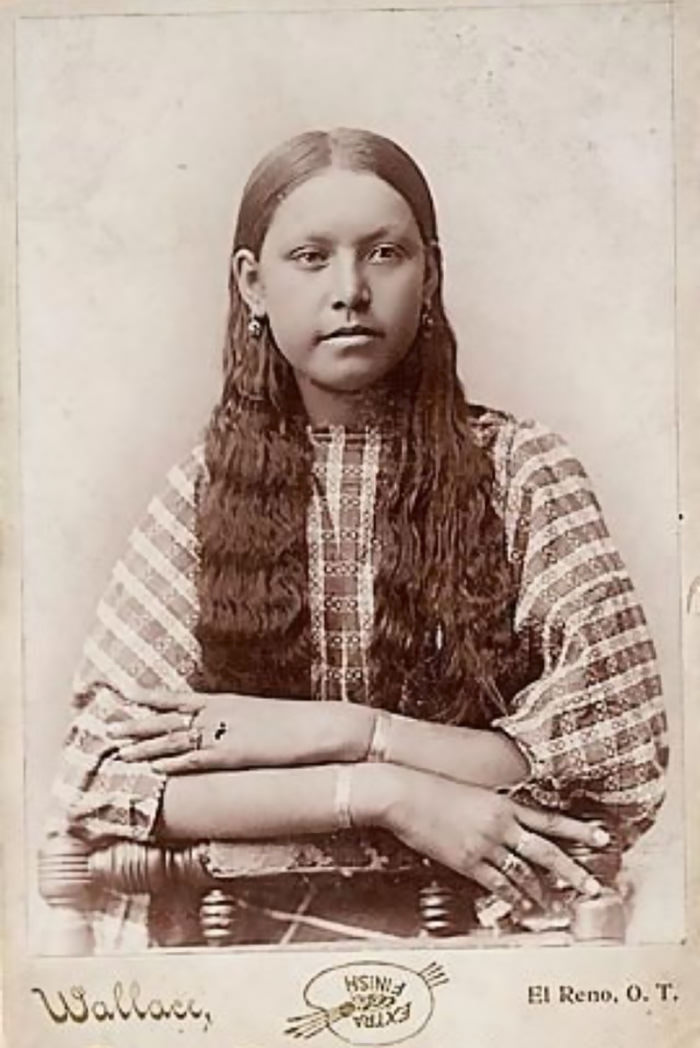
The Comanche were among the most powerful nations on the southern Plains throughout the 18th and 19th centuries. By 1885, when this girl was photographed, the Comanche had been confined to a reservation in Indian Territory following the Red River War of 1874–1875. The portrait captures a young woman within a generation that experienced the full collapse of the free-ranging Comanche way of life.
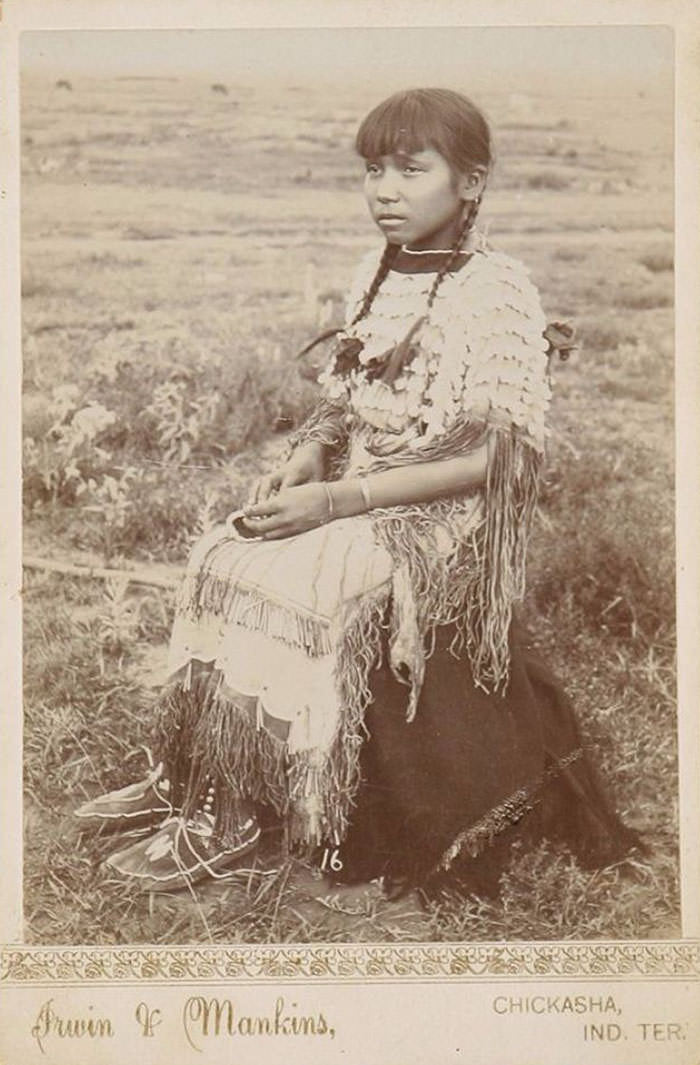
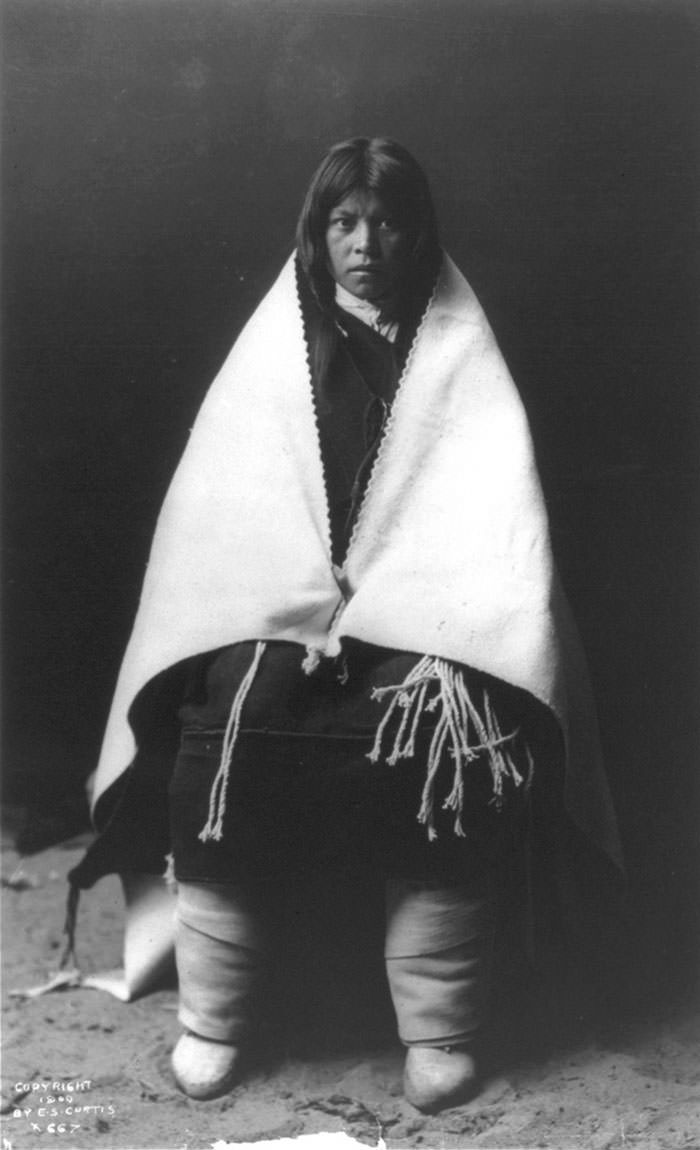
This Hopi girl was photographed on her wedding day in 1900. Hopi marriage ceremonies were elaborate and meaningful, involving days of preparation, specific ritual clothing woven by the groom’s male relatives, and formal exchanges between families. The wedding garments — white cotton robes — were kept throughout a woman’s life and used as burial wrappings when she died.
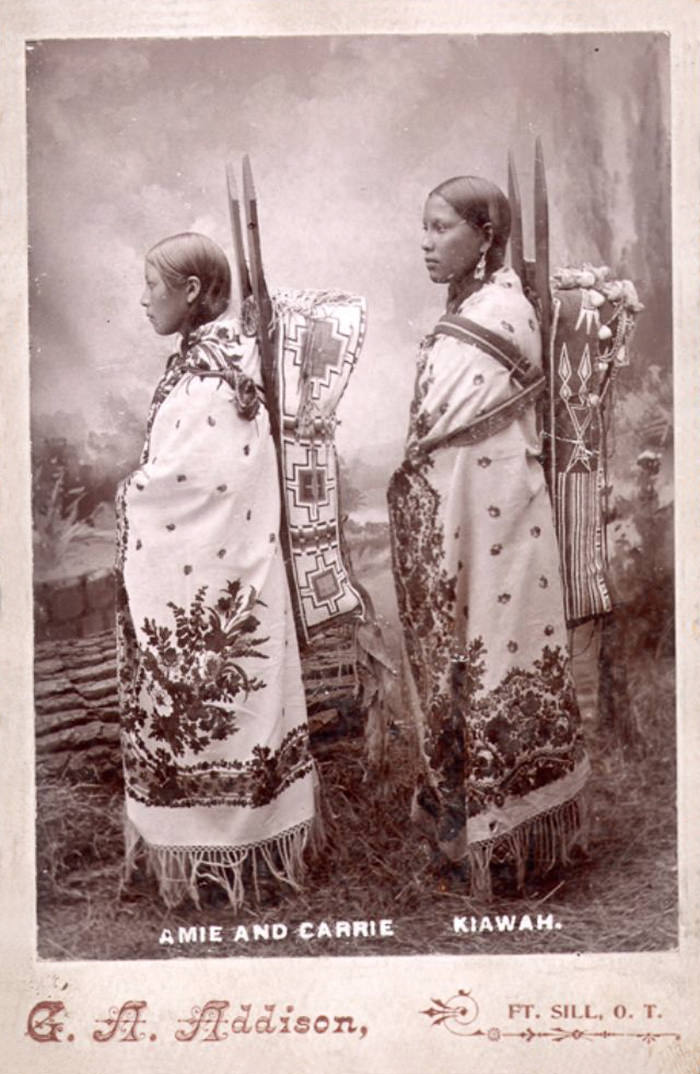
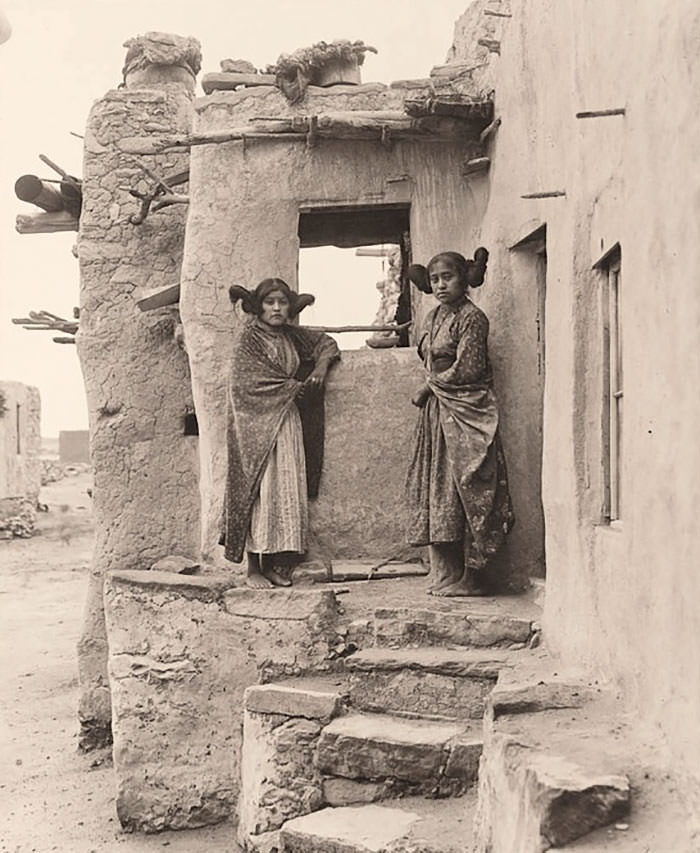
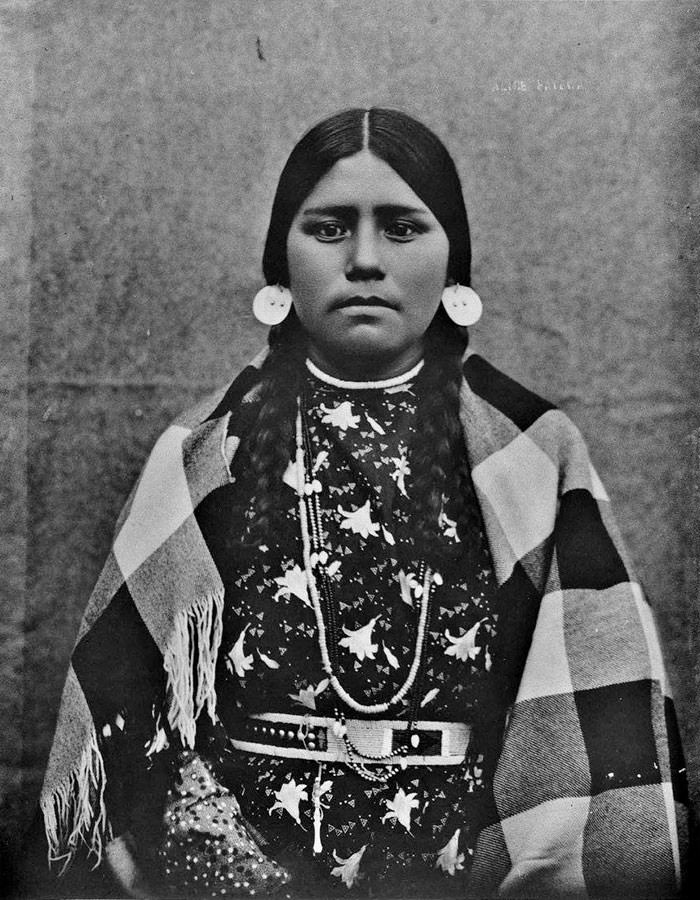
Alice, photographed in 1900, belonged to one of the Plateau nations — possibly Cayuse, Walla Walla, or Umatilla — all of which inhabited the Columbia River Plateau in present-day Oregon and Washington. These nations were deeply affected by the Oregon Trail migration and the establishment of the Umatilla Indian Reservation in 1855 following the Walla Walla Council treaties.
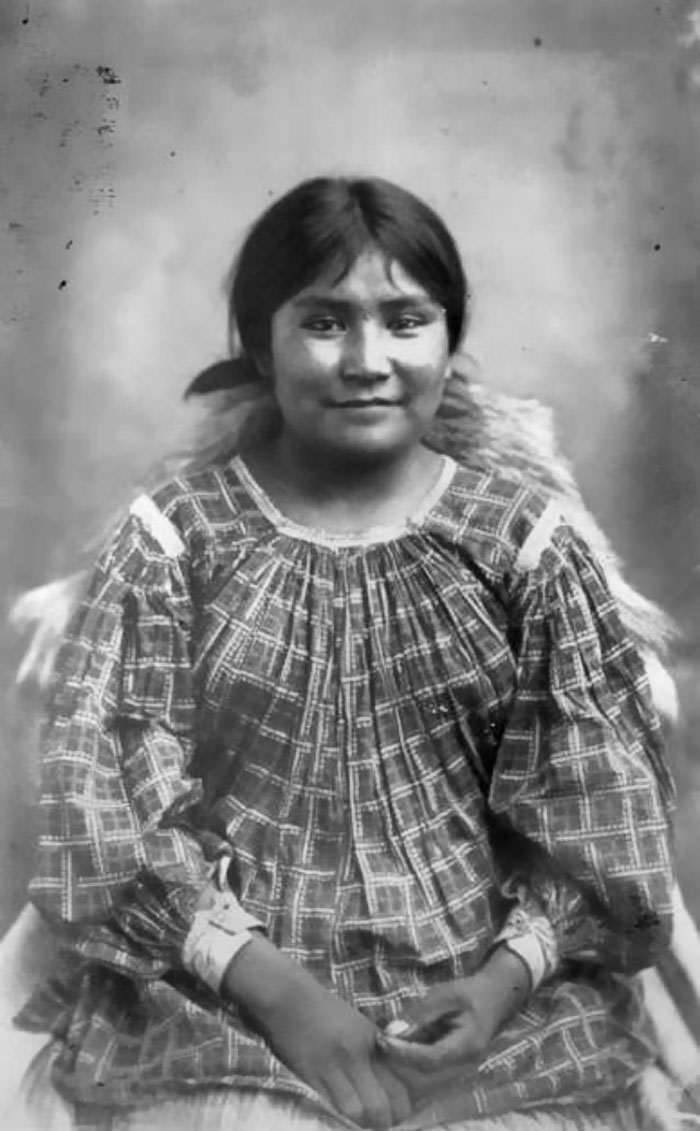
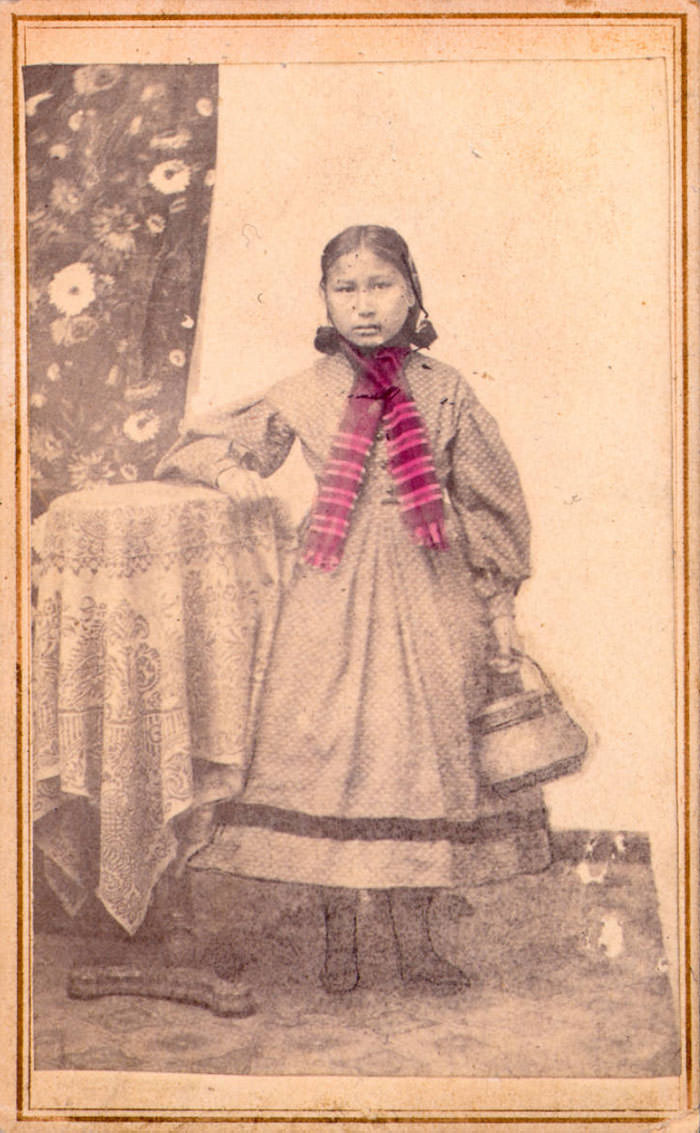
This Arapaho girl holds a particularly tragic place in these archives. She is identified as the only child saved from the Sand Creek Massacre — a military attack carried out on November 29, 1864, in which U.S. Army troops under Colonel John Chivington killed approximately 230 Cheyenne and Arapaho people, the majority of whom were women, children, and elderly. The fact that she survived and was later photographed makes her image one of the most historically significant in this collection.
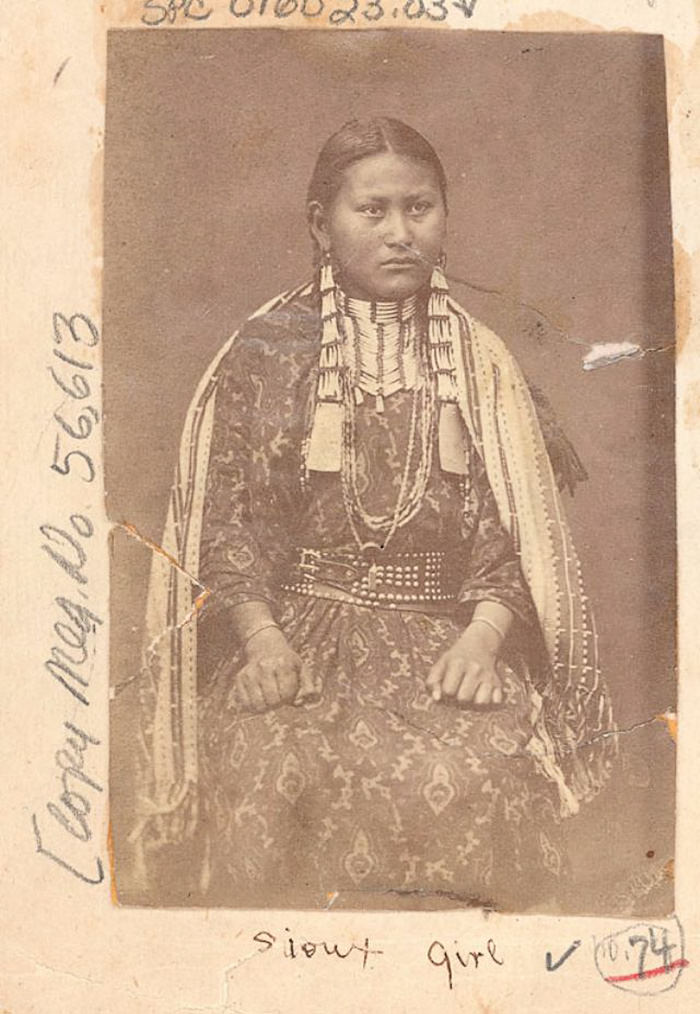
The Yankton Sioux, or Yankton Dakota, inhabited the region around the Missouri River in present-day South Dakota. This portrait of a Yankton girl, undated, shows the formal studio setting typical of the era — a plain backdrop, a deliberate pose, and the careful attention to dress that subjects and photographers alike brought to these sittings.
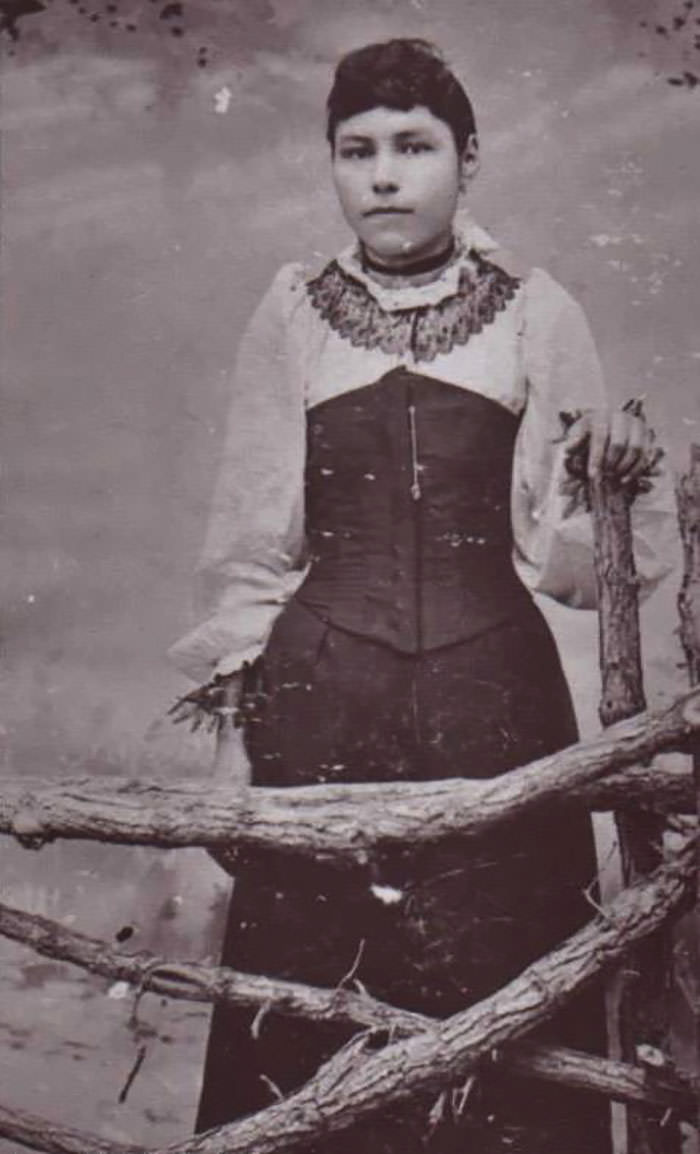
Susan Bullock-Tibbitts was photographed in 1895. Her surname suggests a mixed heritage or a marriage connecting her to non-Native lineage, a common reality in the late 19th century as Native communities intersected with traders, soldiers, missionaries, and settlers. Together, these 36 portraits form a visual record of young Native American women across nations, regions, and decades — each face a specific person with a specific history.





And then we destroyed them, murdered their families and stole their lands.