

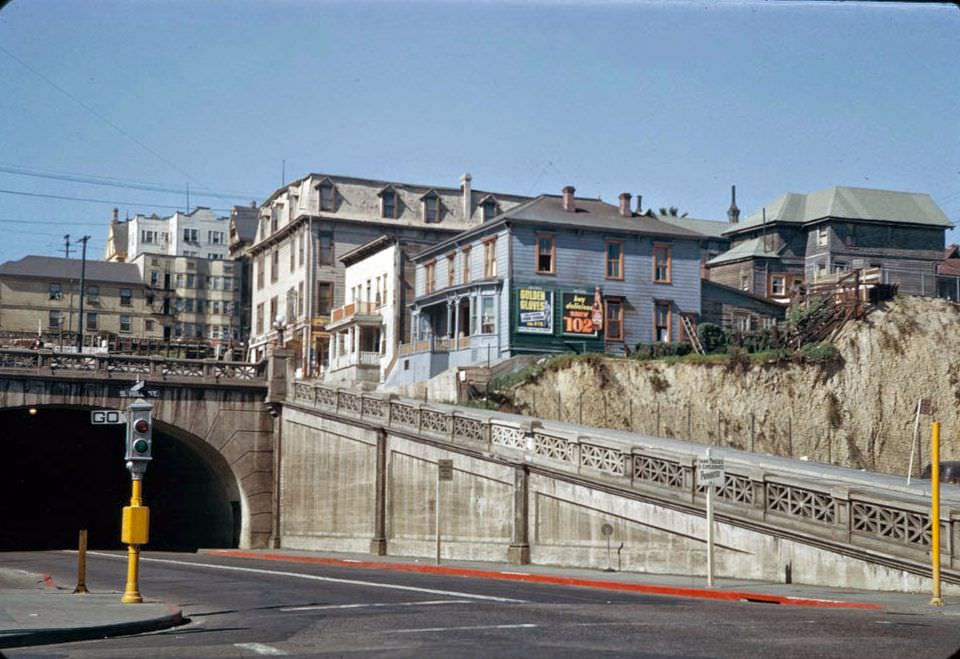
By 1952, the automobile completely dominated the landscape of Los Angeles. City planners aggressively pushed for a modern freeway network to connect the sprawling metropolis. The Hollywood Freeway, a concrete river slicing through the Cahuenga Pass, carried thousands of cars daily between the San Fernando Valley and downtown. Construction crews worked tirelessly on the “Four Level Interchange,” a massive stack of ramps and bridges designed to connect the major highways. This engineering feat symbolized the city’s commitment to private car ownership over public transit.
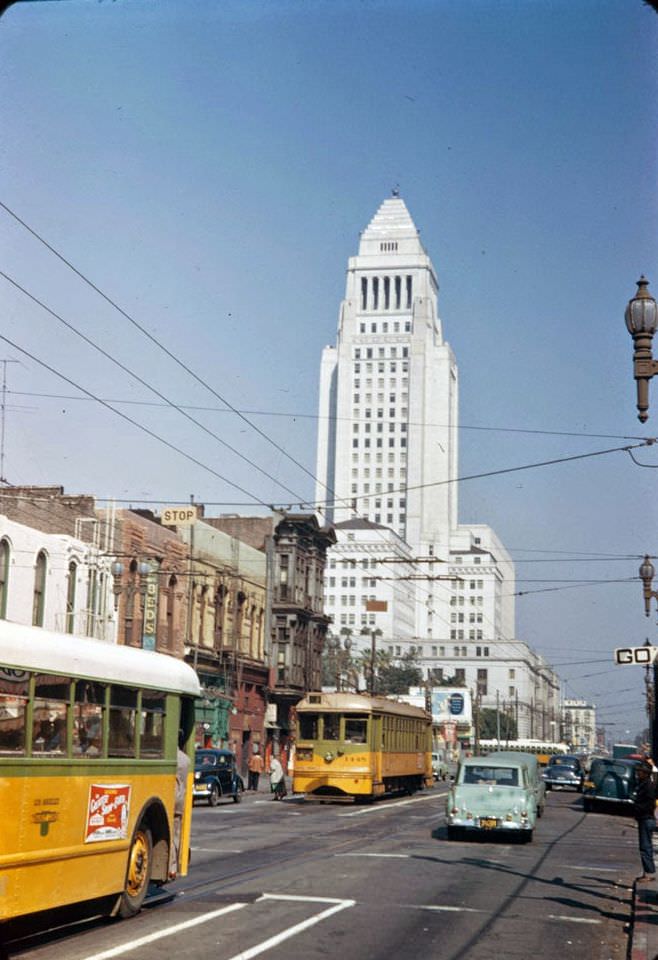
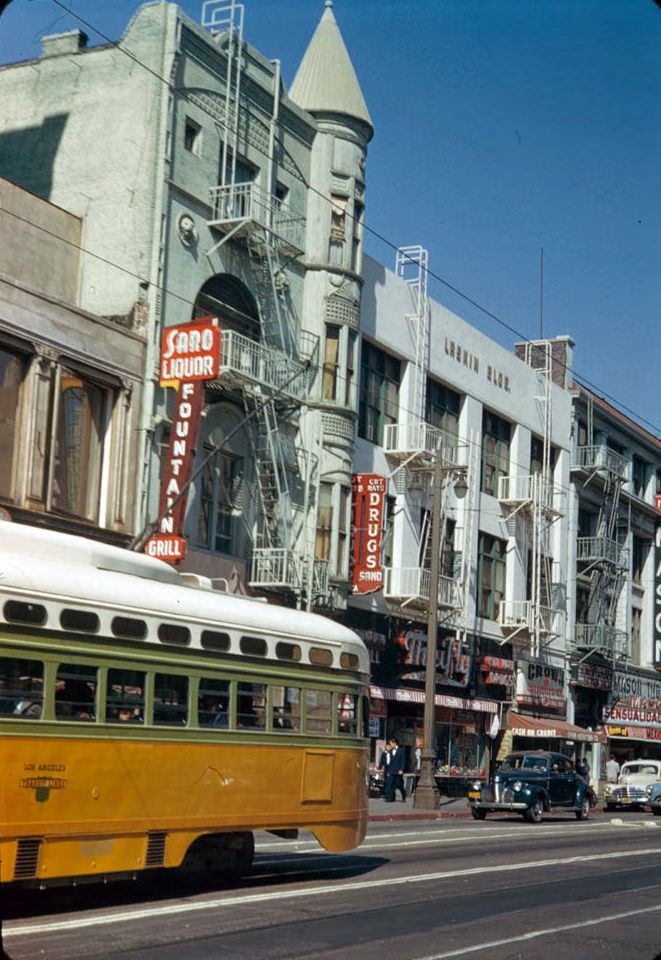
As the freeways expanded, the famous Pacific Electric “Red Cars” faced a sharp decline. Service cuts became frequent, and tracks were paved over to make more room for automobiles. Commuters who once relied on the extensive rail system now purchased sedans and station wagons. The shift created a car-centric culture where drive-in restaurants and theaters became the primary social hubs for young people and families.
The Smog Crisis
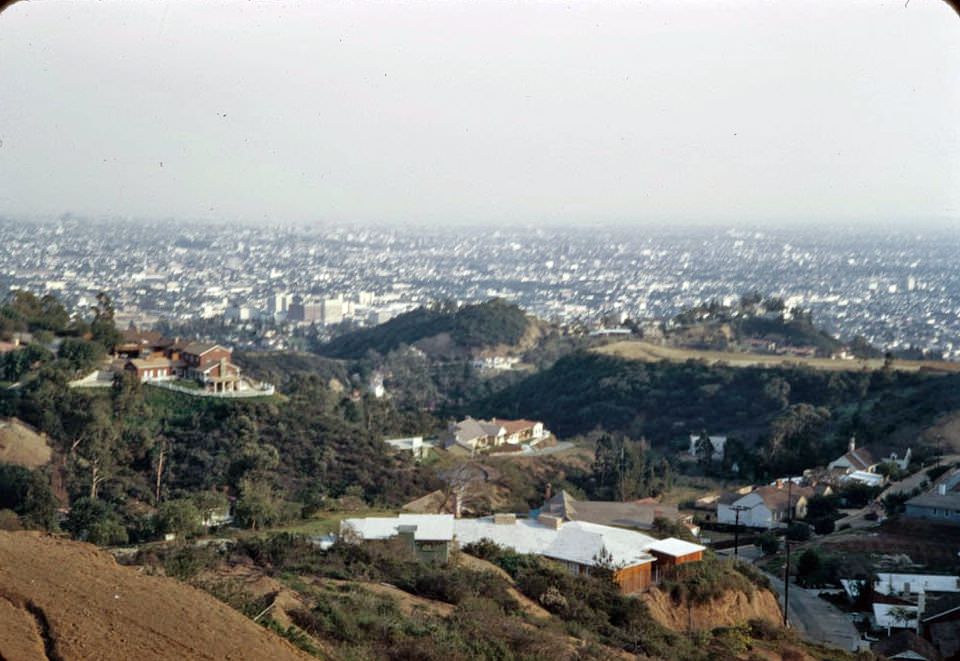
A thick, stinging haze known as smog frequently blanketed the Los Angeles basin in 1952. On bad days, the mountains disappeared behind a wall of gray pollution, and residents suffered from burning eyes and irritated throats. Scientists at the California Institute of Technology, led by Arie Haagen-Smit, had only recently identified that car exhaust and industrial fumes reacted with sunlight to create this ozone pollution.
Read more
The city struggled to manage the crisis. Backyard trash incinerators, a common feature in most homes, puffed smoke into the stagnant air every morning. Local government officials debated bans on these burners and looked for ways to regulate factory emissions. The Air Pollution Control District issued “smog alerts” that warned school teachers to keep children indoors during recess to protect their lungs.
The Suburban Boom in Lakewood
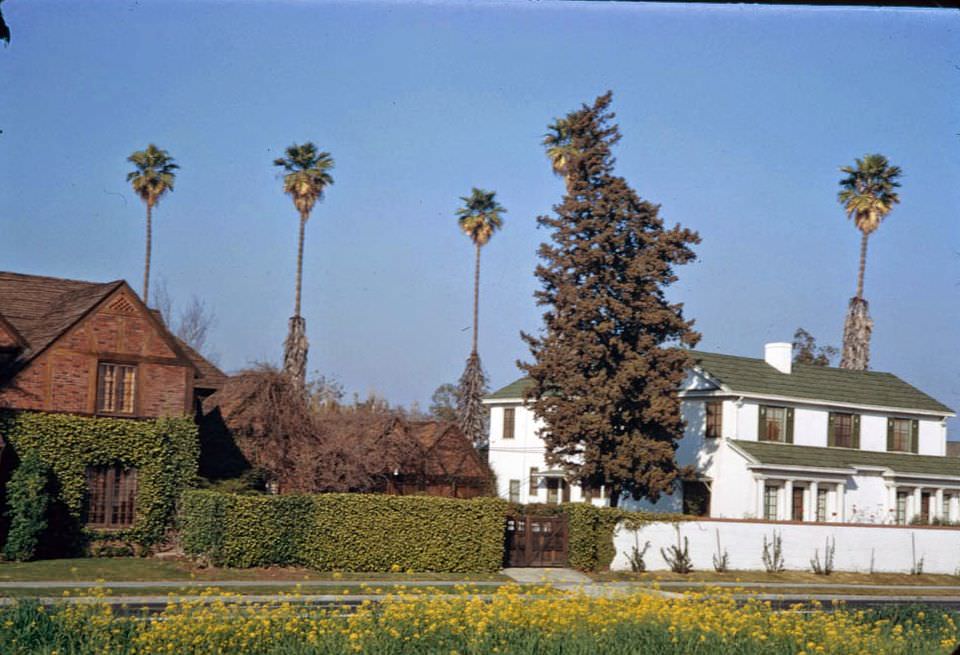
While downtown remained the civic center, the real growth occurred in the suburbs. The development of Lakewood, just south of the city, reached its peak in 1952. Developers built this community with assembly-line speed, finishing dozens of homes in a single day. Young veterans and their growing families flocked to these affordable, cookie-cutter houses.
This new suburban lifestyle centered on the Lakewood Center, one of the largest shopping malls in the world at the time. It offered huge department stores and acres of parking, drawing business away from the traditional downtown retail distinct. The layout of Lakewood served as a blueprint for future suburban developments across the country, prioritizing uniformity and convenience.
Hollywood’s Television Transition
The entertainment industry in 1952 faced a major transformation as television sets invaded American living rooms. Major movie studios, worried about losing audiences to the small screen, responded by releasing grand spectacles and musicals like Singin’ in the Rain. Despite these efforts, television production in Hollywood surged. CBS Television City broke ground in the Fairfax District, cementing Los Angeles as the new capital of broadcasting.
The political climate in Hollywood was tense. The House Un-American Activities Committee (HUAC) continued its investigations into communism within the film industry. Studios blacklisted actors, writers, and directors suspected of communist sympathies, effectively ending their careers. This atmosphere of suspicion altered the types of movies being made, pushing studios toward safer, patriotic, or purely escapist themes.

Hello Kevin
Fascinating portrayal of old LA, thank you.
I live in New Zealand, my mother is a New Zealander. My late American father was in the US Navy and stationed around Los Angeles.
I have tried to trace where my family lived in San Pedro – @ #1429 Lana Place.
I have tried to trace this address a number of times on the internet/Google Street View – just to see where I grew up as I was only 2-4 years old at the time. I have tried search words such as “defunct street addresses” thinking this area may have been redeveloped, but no luck.
Could you help me rediscover this part of San Pedro please ? (or perhaps any other reader of this web page)
Love your posts, this is a enchanting web site. Thank you.
John McGough
Wellington, NZ
Oh, forgot to mention ! – we lived there between 1970 to 1972 before coming to New Zealand