November 22, 1963, began as a day of momentum for President John F. Kennedy. He had spent the morning in Fort Worth, where he addressed a crowd outside his hotel in a light drizzle before delivering a breakfast speech inside. By midmorning, the clouds had cleared. Kennedy boarded Air Force One for the short flight to Dallas Love Field, arriving just before noon to a crowd of supporters pressed against the airport fence, waving signs and straining for a closer look.
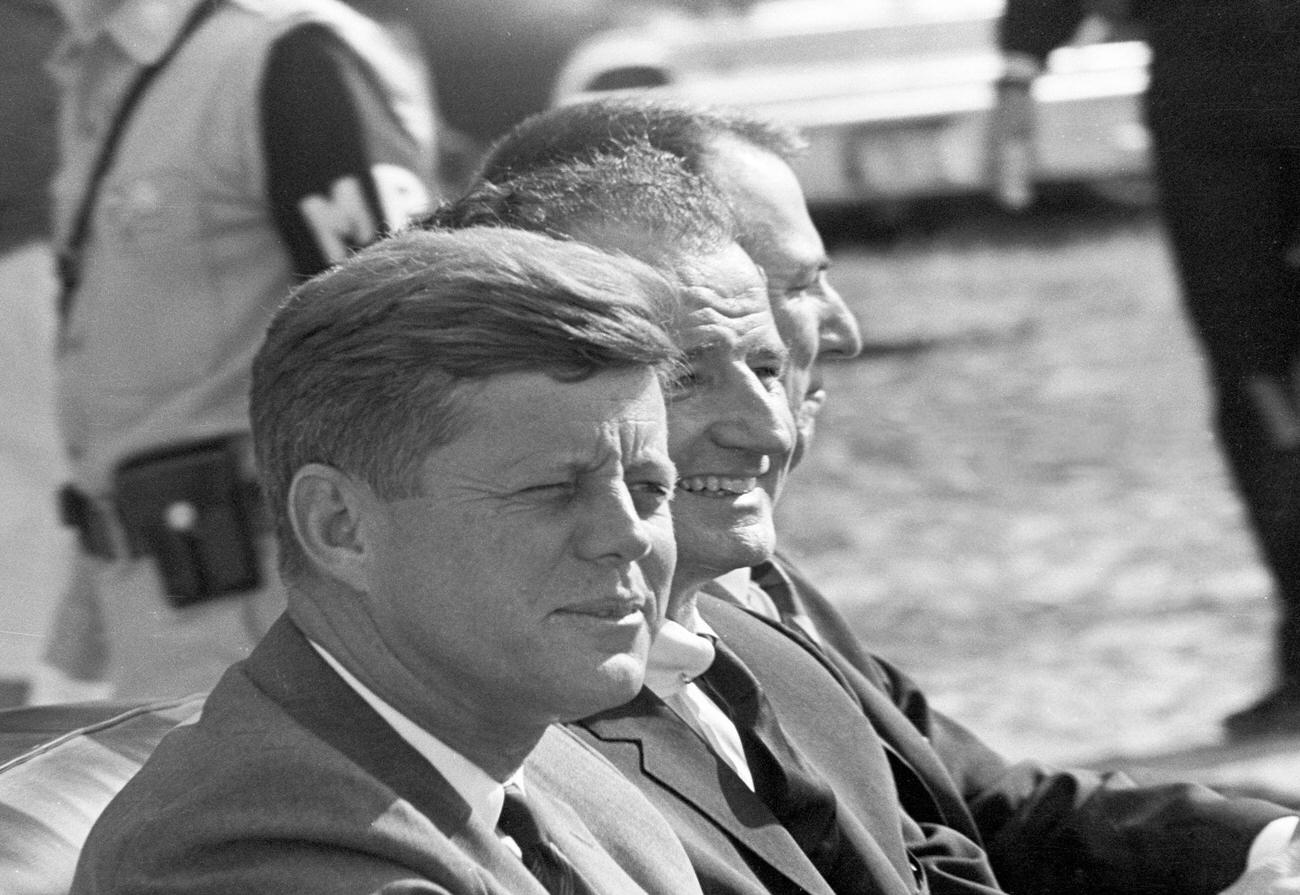
Kennedy’s visit to Texas was driven by a specific political goal. The state’s Democratic Party was fractured, with a sharp divide between liberal Senator Ralph Yarborough and conservative Governor John Connally. Kennedy needed Texas in 1964, and the trip was designed to smooth those tensions while raising funds and building visibility ahead of the re-election campaign. Dallas was the third stop on the Texas swing, following San Antonio and Fort Worth.
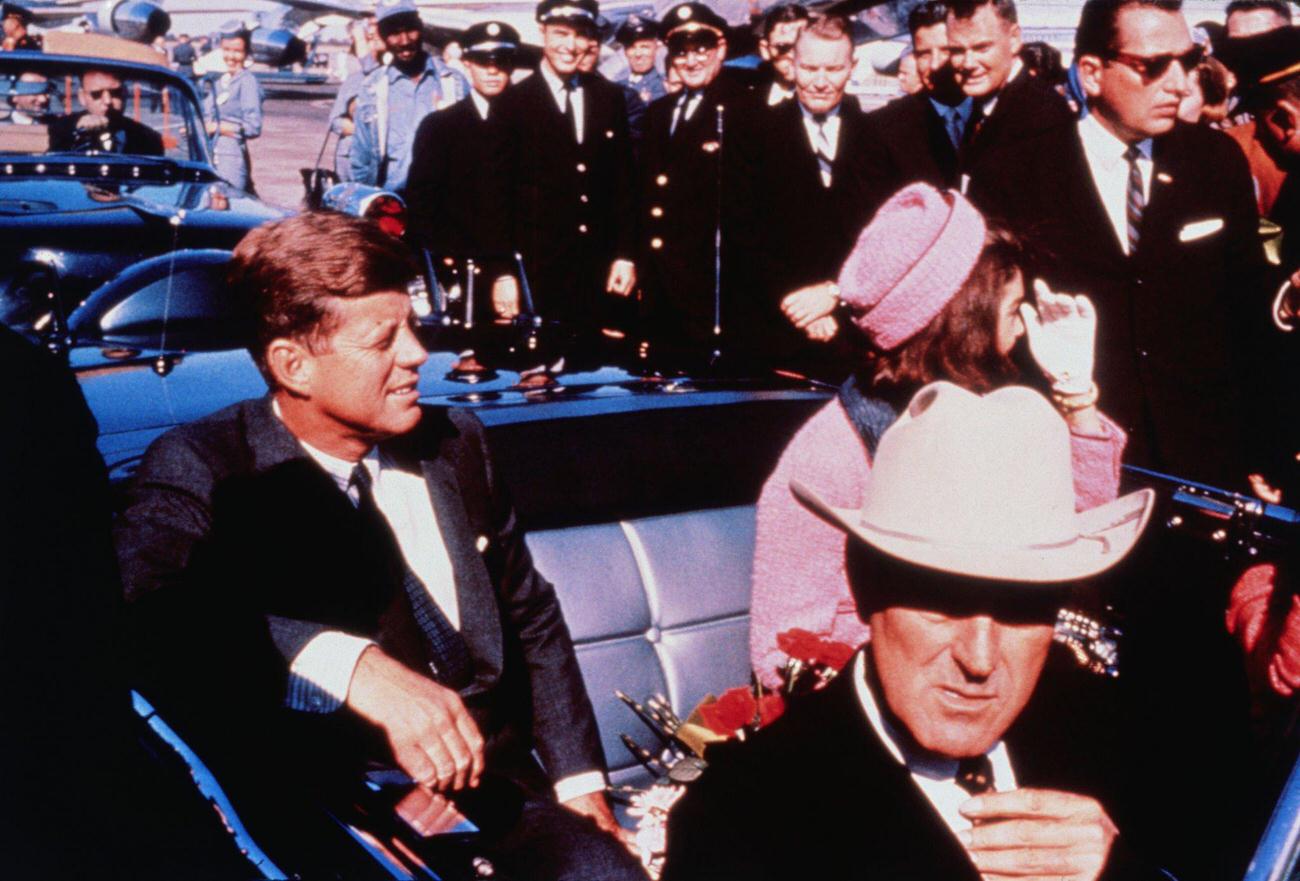
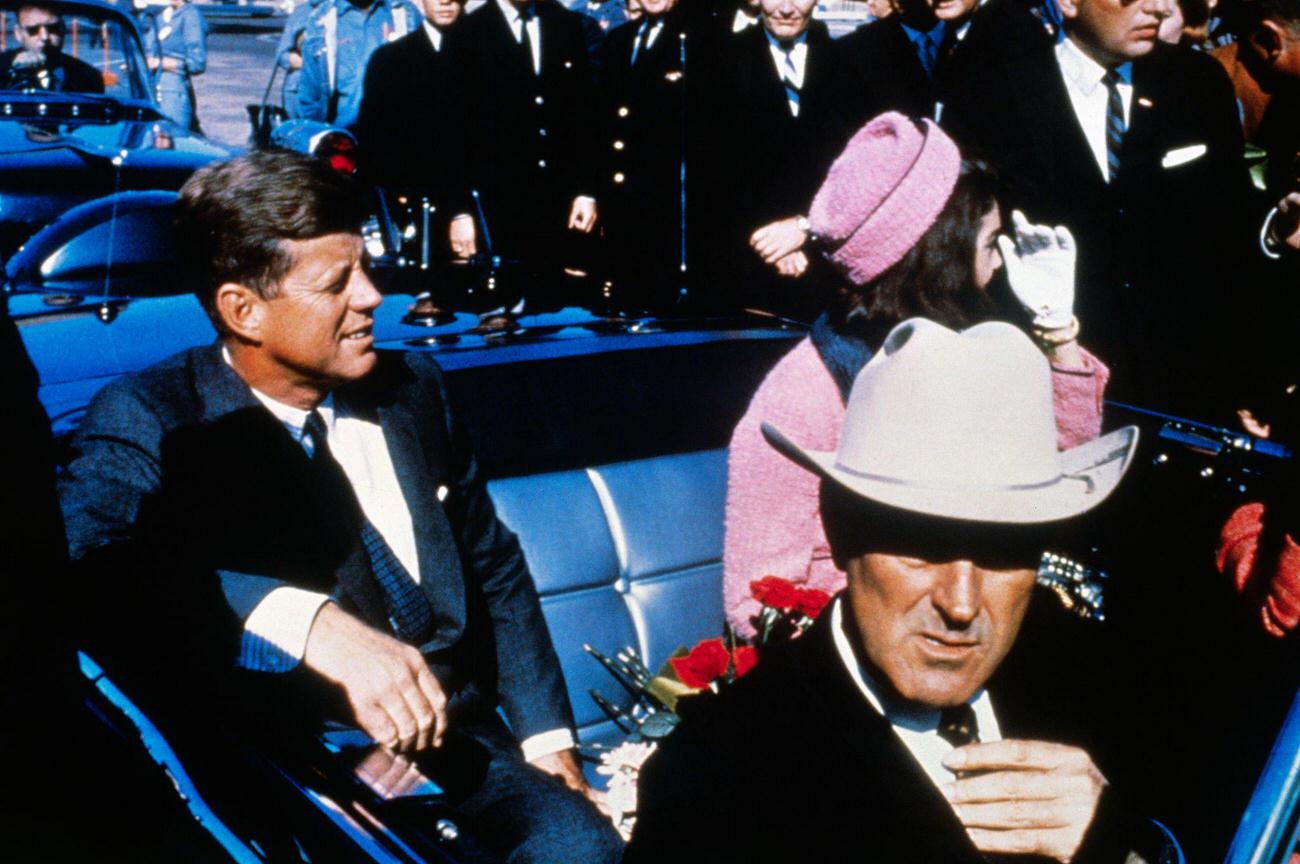
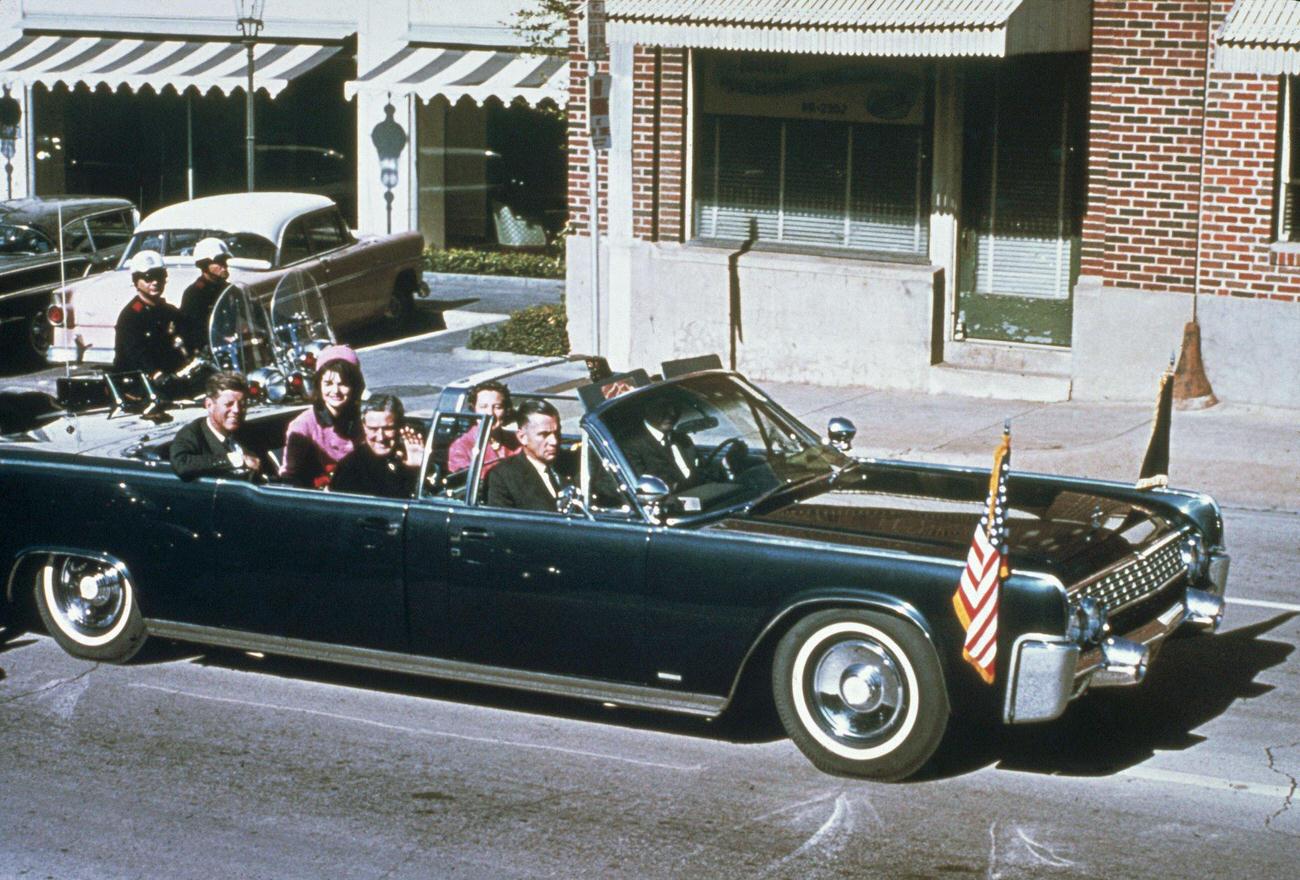
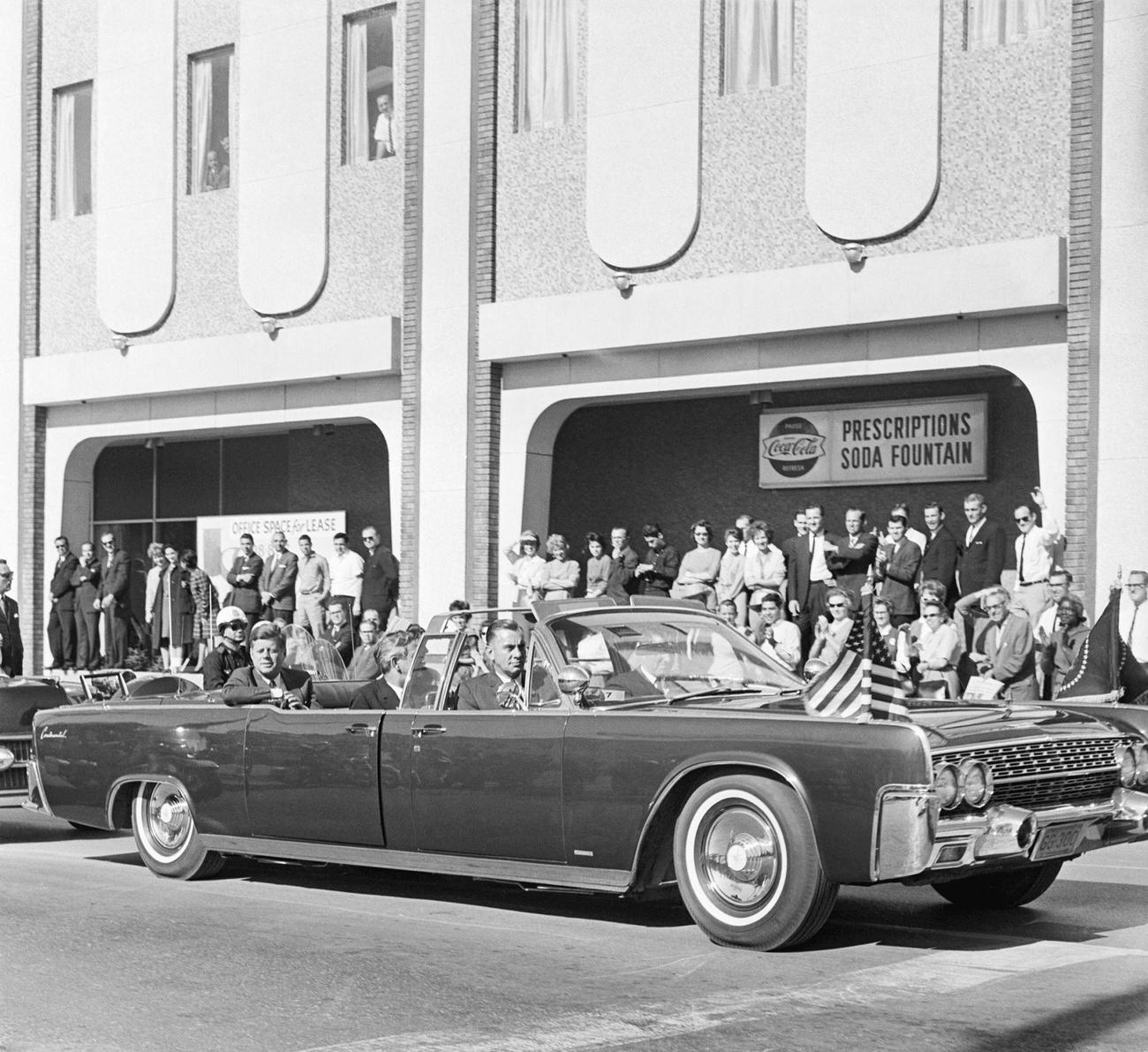
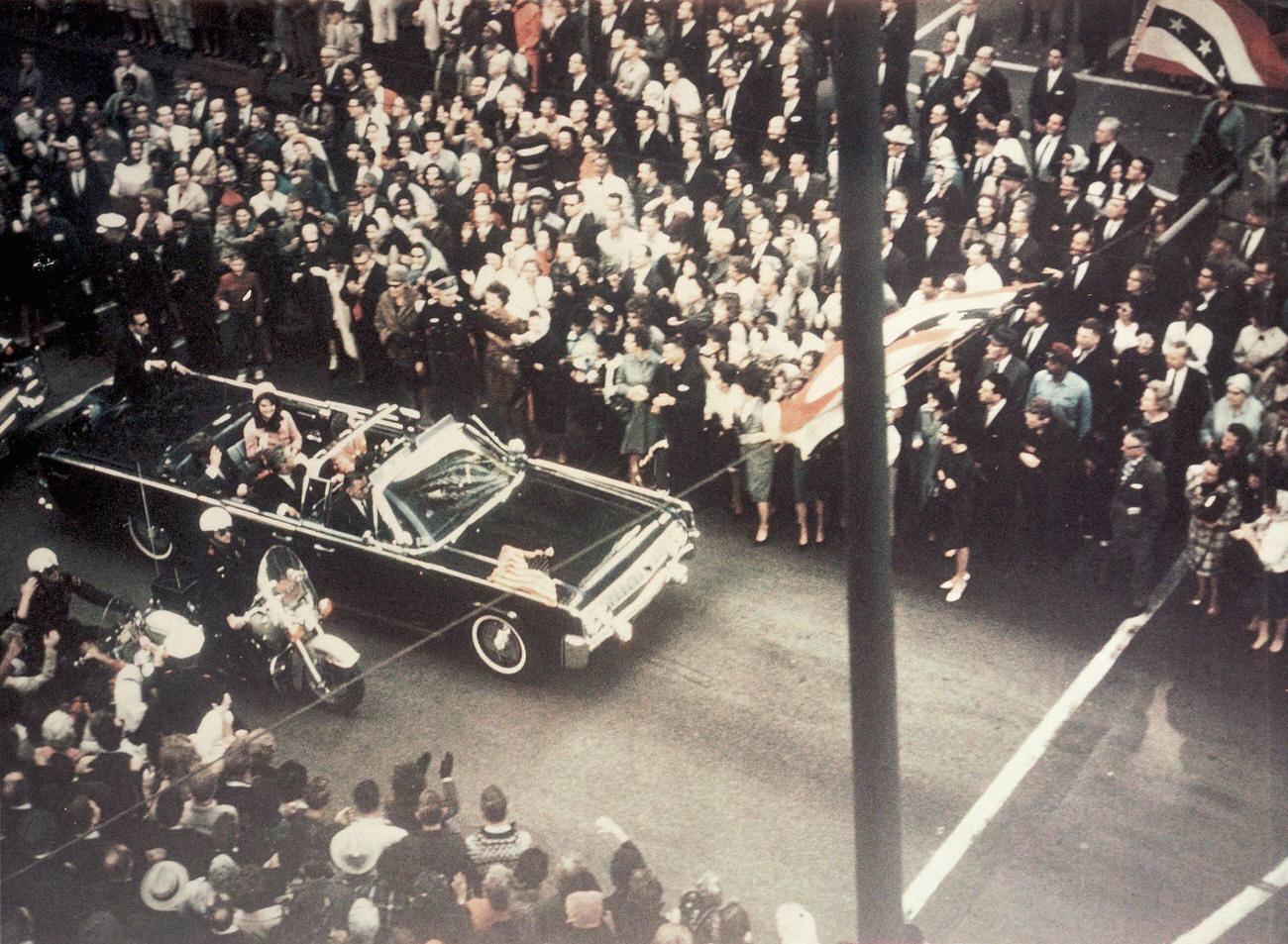
At Love Field, Kennedy and First Lady Jacqueline Kennedy greeted the waiting crowd warmly, shaking hands along the fence line before taking their places in the motorcade. Governor John Connally and his wife Nellie joined them in the presidential limousine — a midnight-blue Lincoln Continental convertible. The bubble top, which could have shielded the occupants, was left off. The weather was clear and warm, and the decision was made to give the Dallas crowd an unobstructed view of the President.
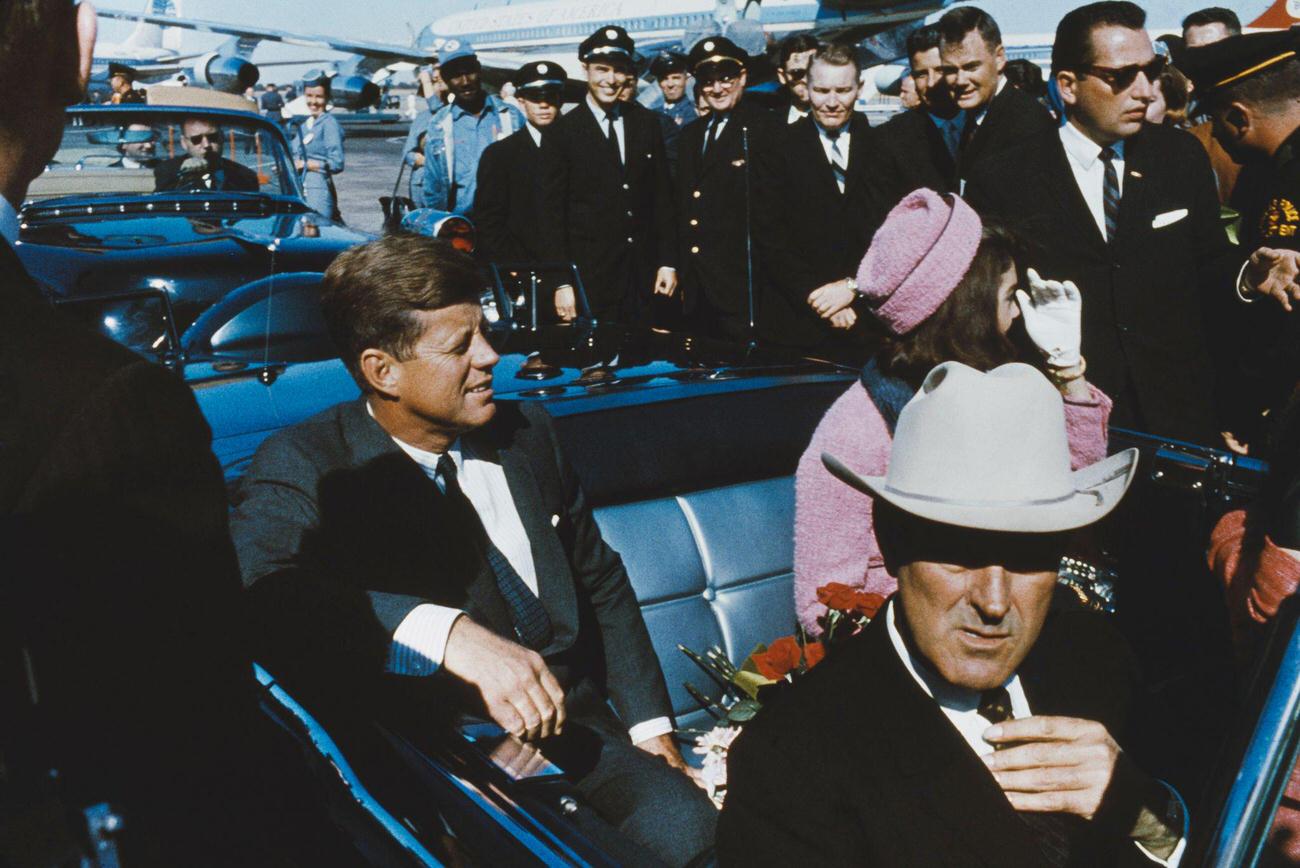
Jacqueline Kennedy wore a pink Chanel suit with a matching pillbox hat — an outfit she had chosen specifically for the Texas appearances. She had been advised that Texas crowds appreciated style, and the ensemble drew immediate attention from the moment she stepped off the plane. Kennedy himself was dressed in a dark suit, looking composed and at ease despite the packed schedule.
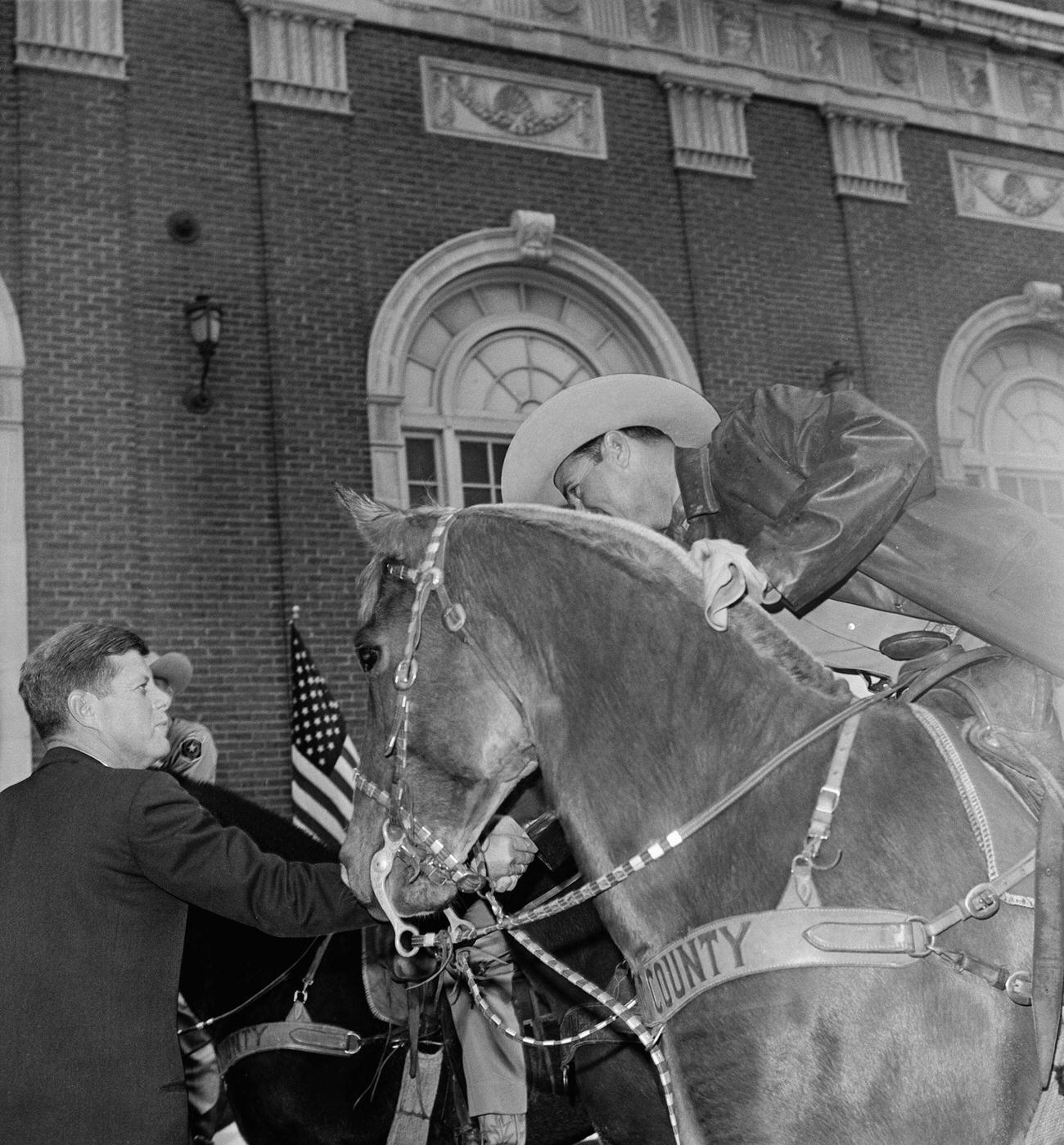
Earlier that same day, Kennedy had made a stop in Fort Worth where he greeted a mounted Tarrant County Sheriff’s posse. He shook hands with the riders after an outdoor speech — a candid, relaxed moment that reflected how accessible he was willing to be on this trip. These brief personal interactions were a deliberate part of his political style.
The Dallas motorcade route had been published in local newspapers the day before. It wound 10 miles through the city, from Love Field through downtown streets, then toward the Trade Mart, where Kennedy was scheduled to deliver a luncheon address. The route was specifically designed to move slowly through densely populated areas, giving as many residents as possible a chance to see the President. An estimated 150,000 to 200,000 people lined the streets that day.
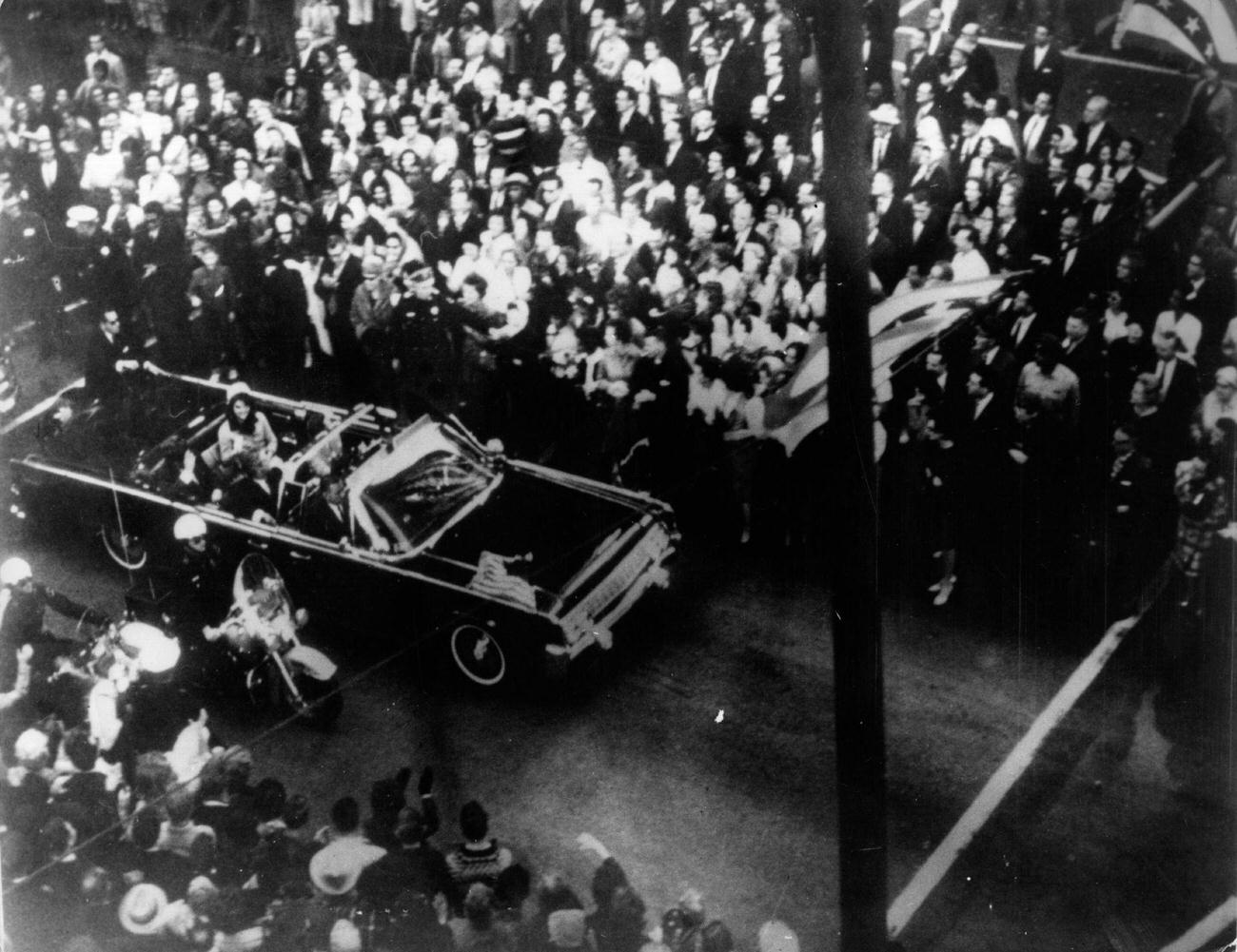
The procession included dozens of vehicles. Behind the presidential limousine followed a Secret Service follow-up car carrying agents, some of whom stood on the running boards scanning the crowds. Then came the Vice President’s car with Lyndon and Lady Bird Johnson, followed by vehicles carrying local officials, press photographers, and reporters. The motorcade moved at roughly 11 miles per hour through the downtown corridors.
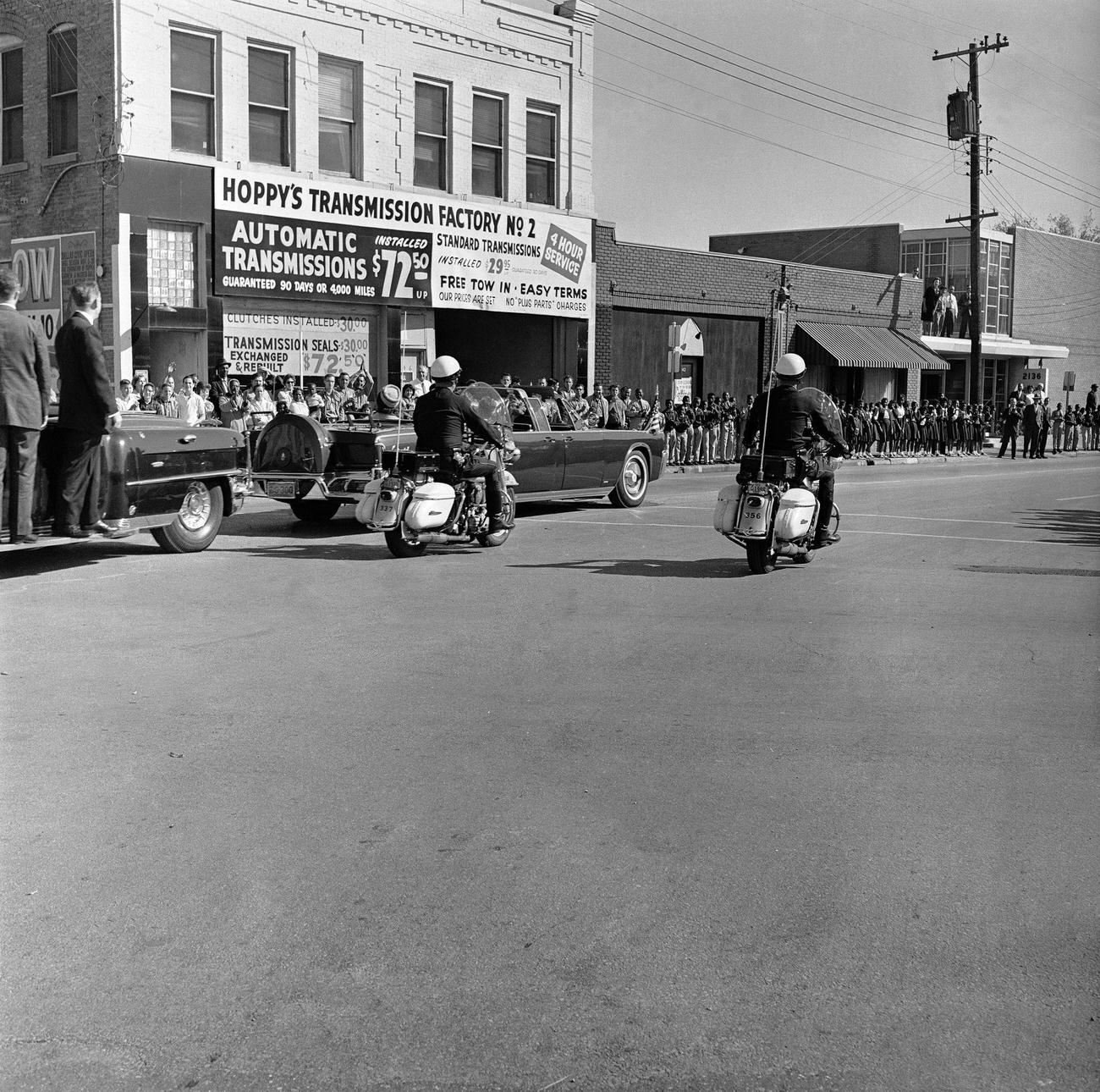
Crowds packed every block of the route. Office workers leaned out of windows, children sat on their parents’ shoulders, and people stood five and six deep on the sidewalks. The response was far stronger than some Kennedy aides had anticipated — there had been concerns about how Dallas, a city with a vocal conservative population, would receive the President. The enthusiasm that greeted the motorcade put those concerns aside, at least for the moment.
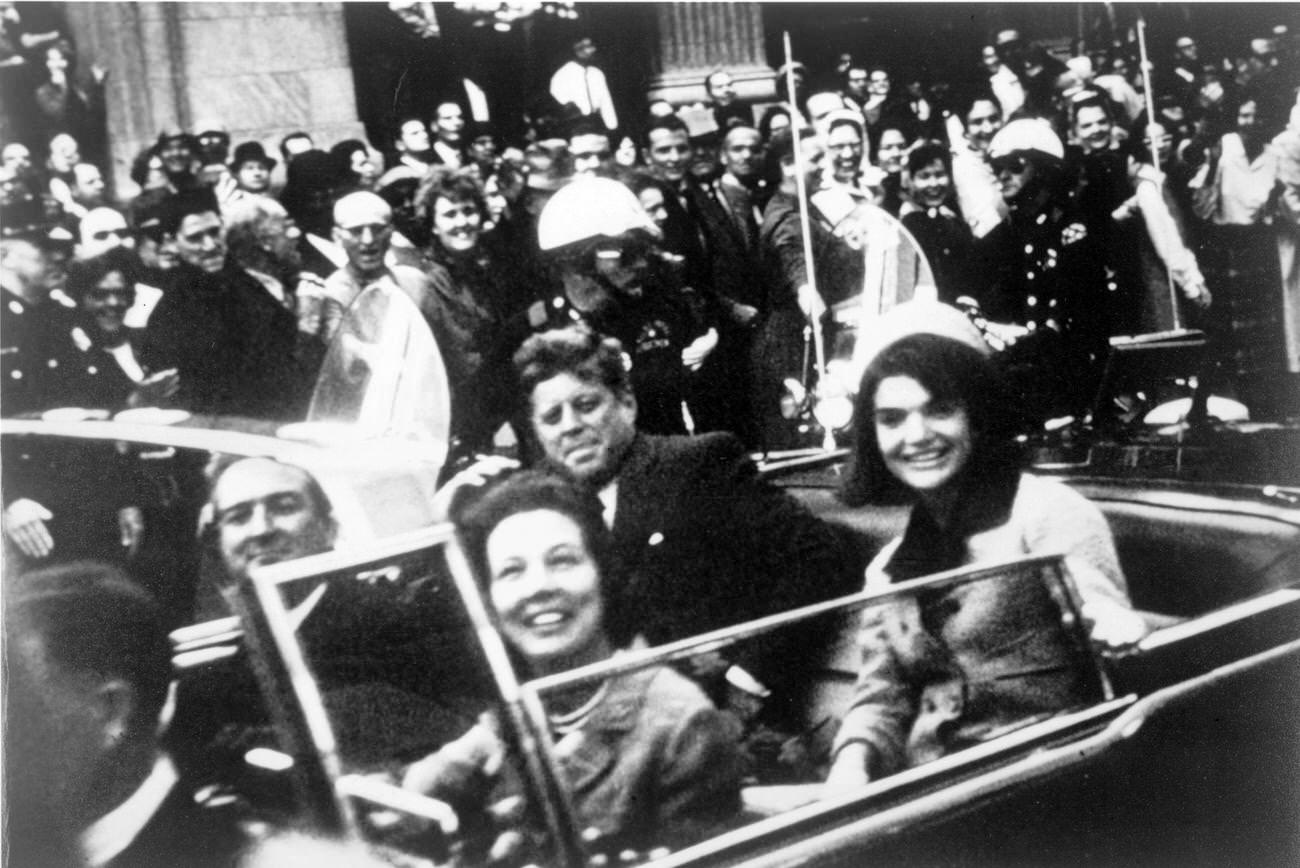
Inside the limousine, Nellie Connally turned toward Kennedy just minutes before the motorcade reached Dealey Plaza. She told him, “Mr. President, you can’t say Dallas doesn’t love you.” Kennedy replied, “No, you certainly can’t.” Those were among his last recorded words.
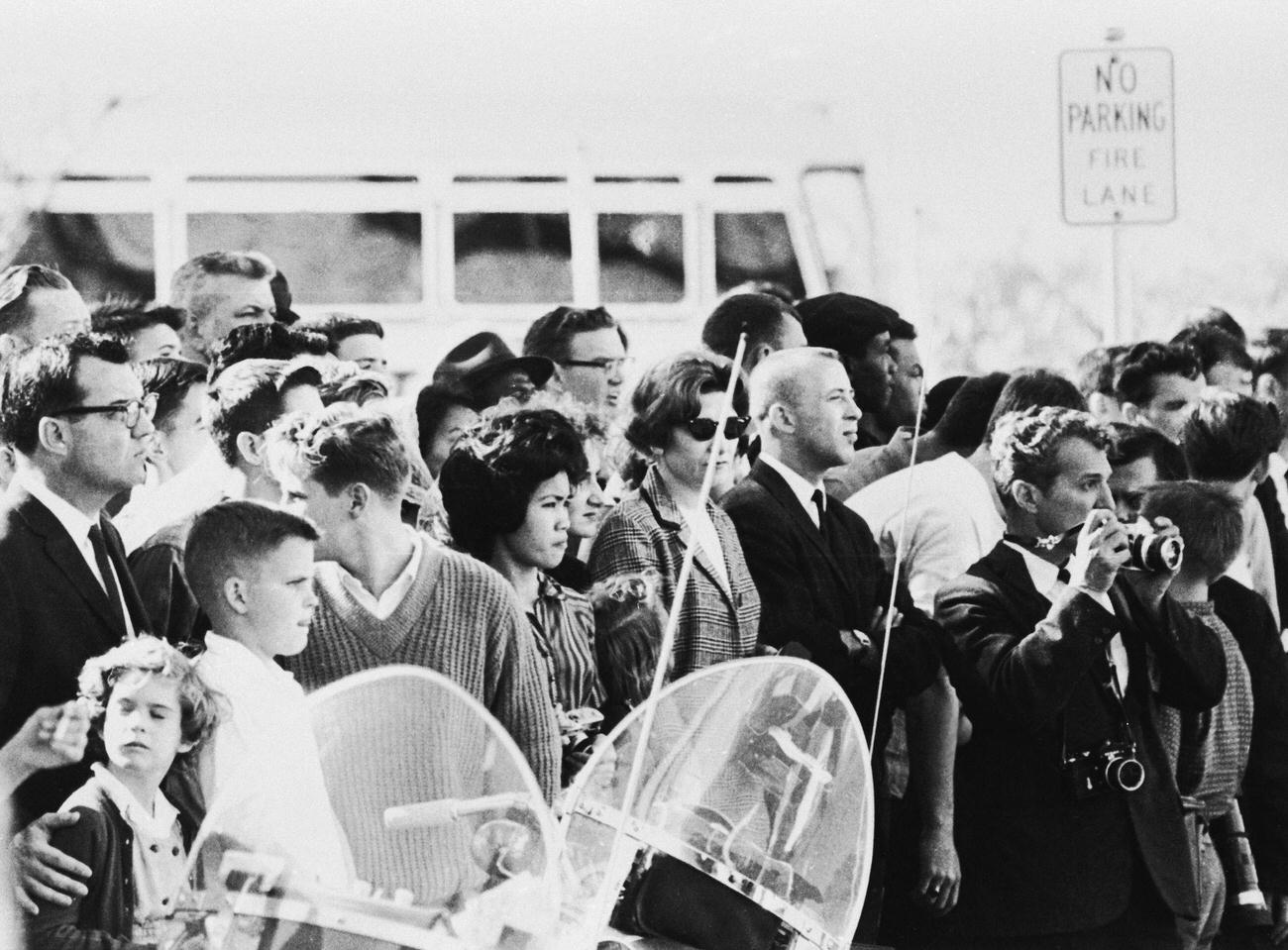
At Dealey Plaza, the crowds thinned slightly compared to the packed downtown blocks. The plaza was a small urban park at the western end of the downtown corridor, flanked by brick buildings and a grassy slope. Spectators stood along the sidewalks and on the grass, cameras raised, waiting for the President’s car to come into view.
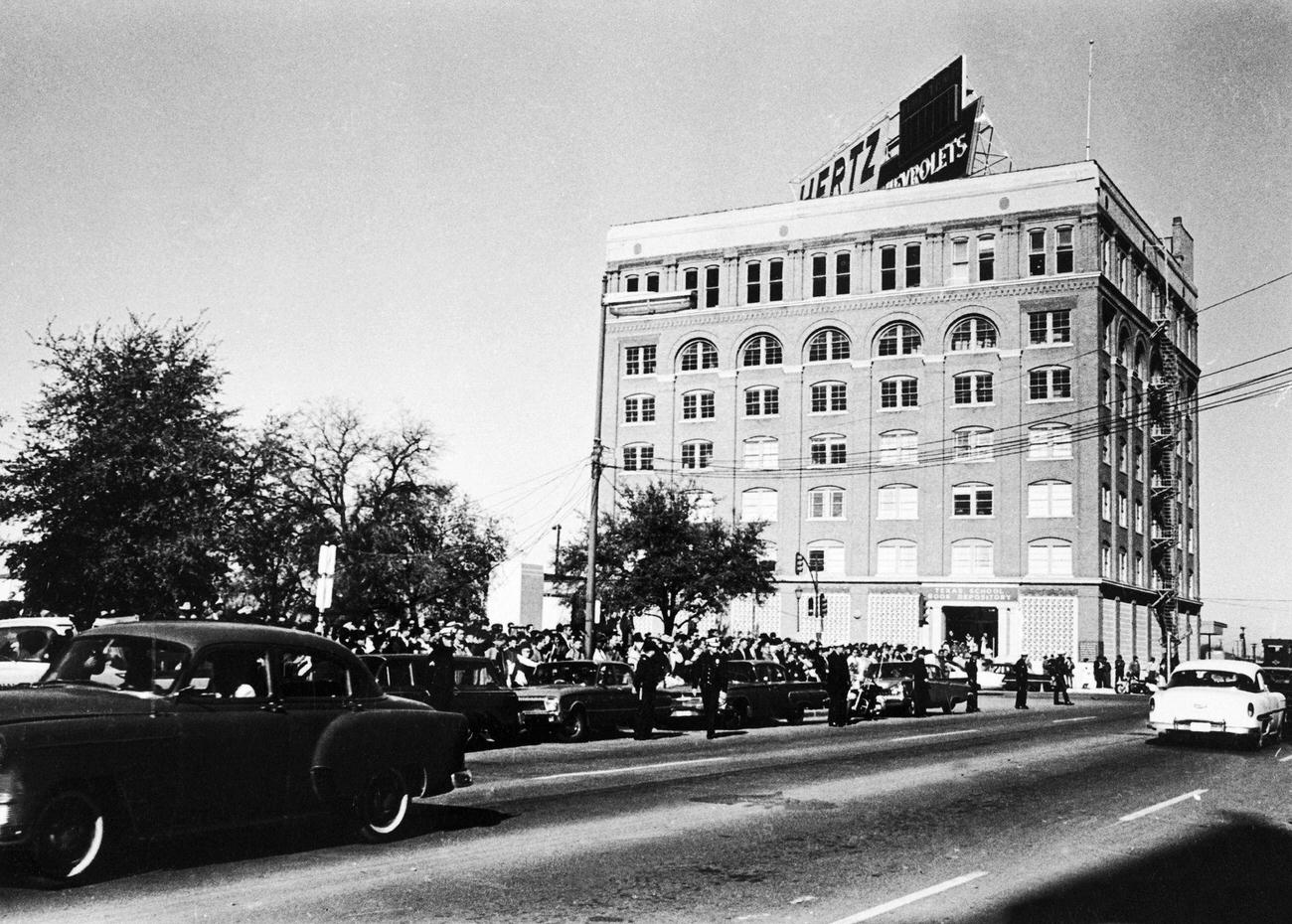
On the north side of the plaza stood the Texas School Book Depository, a seven-story brick warehouse. The motorcade turned left onto Elm Street directly in front of the building, slowing to navigate the curve. Photographs taken by bystanders captured the limousine passing the Depository in the final seconds before the first shot was fired at 12:30 p.m.
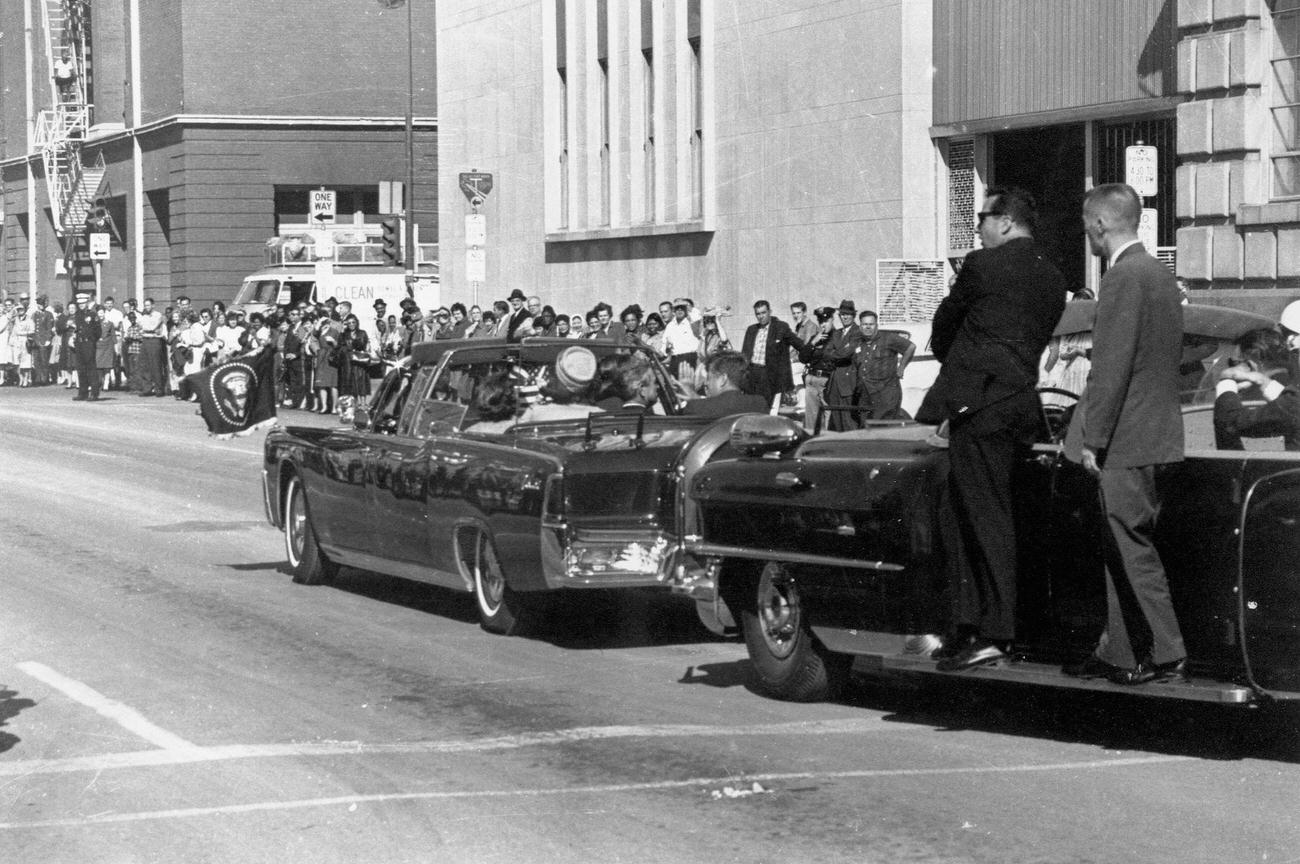
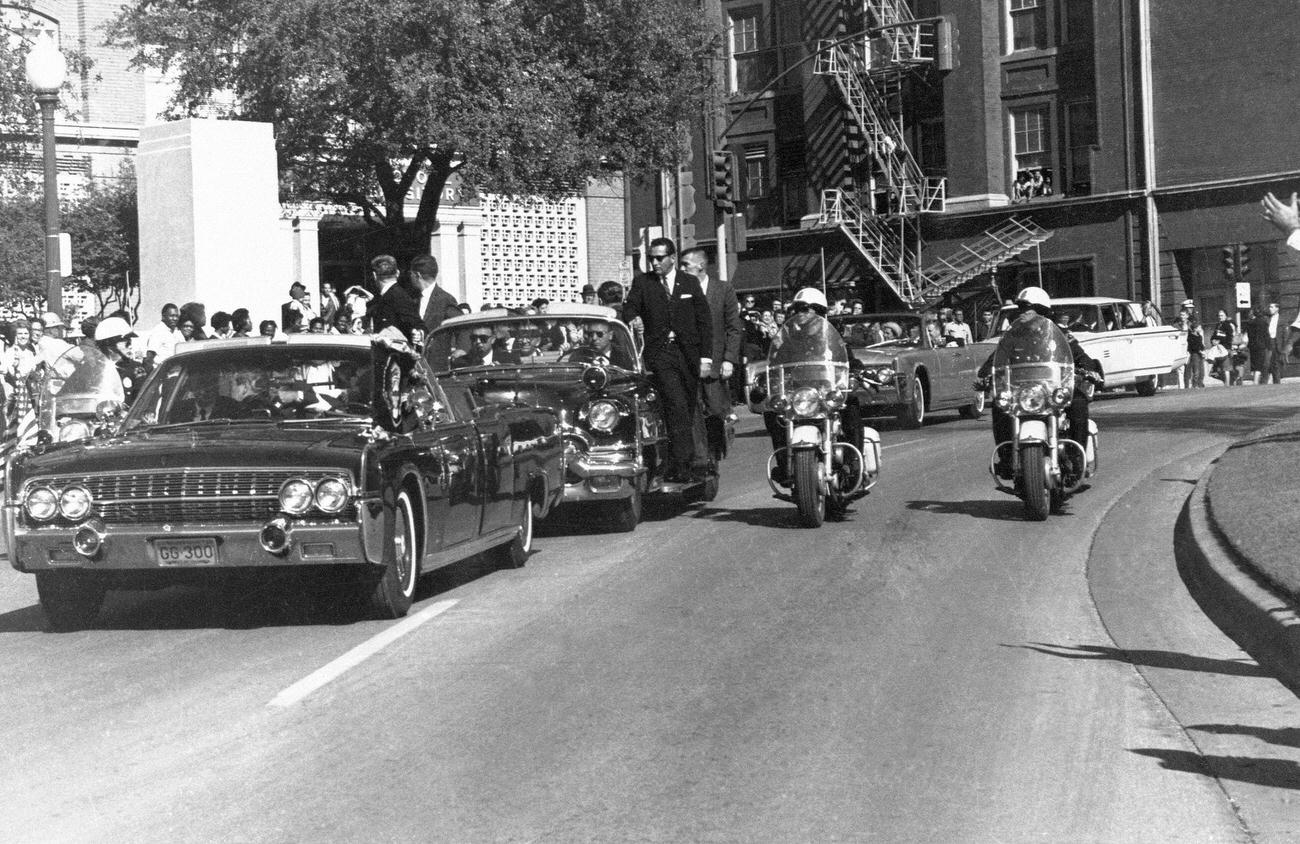
In the moments just before, the scene in and around the limousine was entirely routine. Kennedy waved to the crowd on the right side of the street. Jacqueline looked to her left. Governor Connally sat in the jump seat ahead of Kennedy, slightly lower. Secret Service agents in the follow-up car maintained their watch. There was no visible tension, no apparent threat.
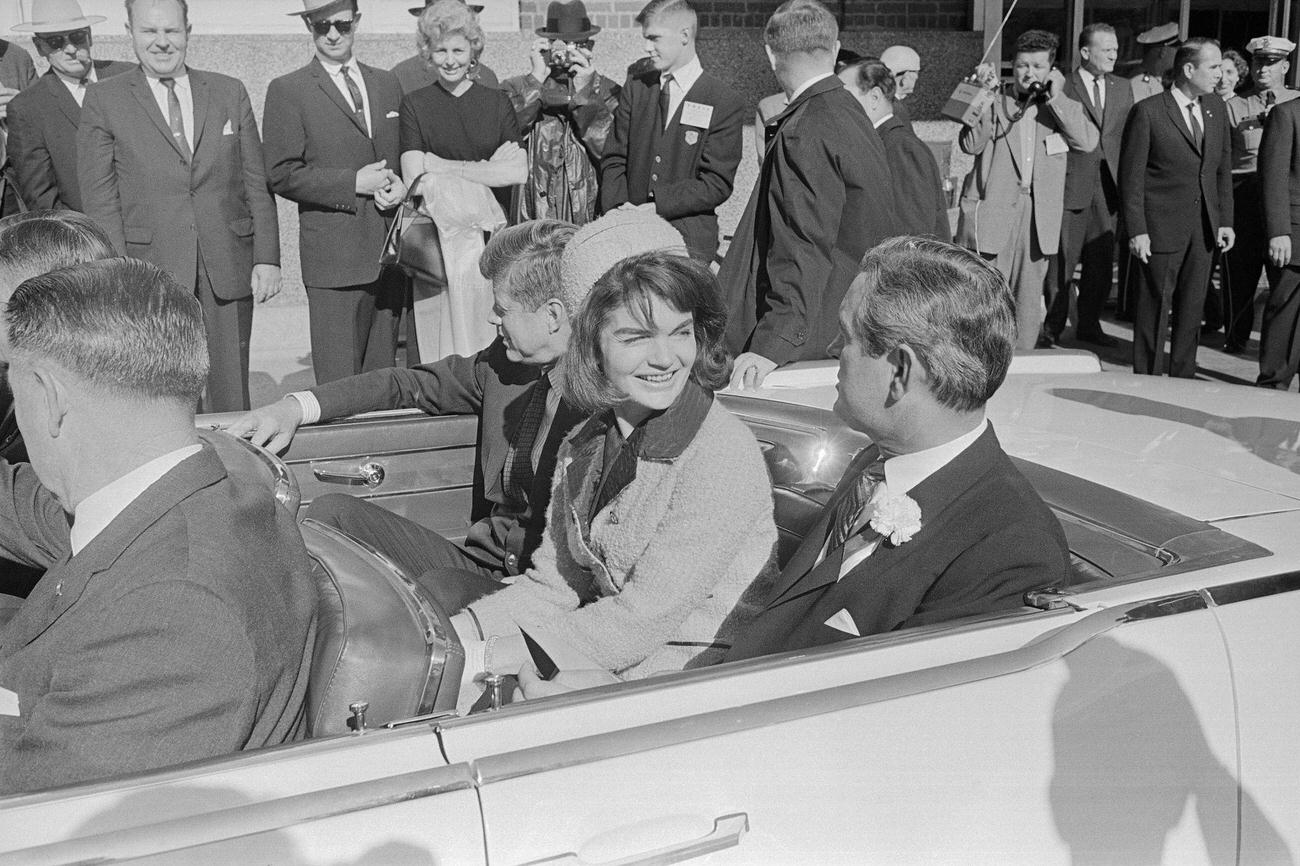
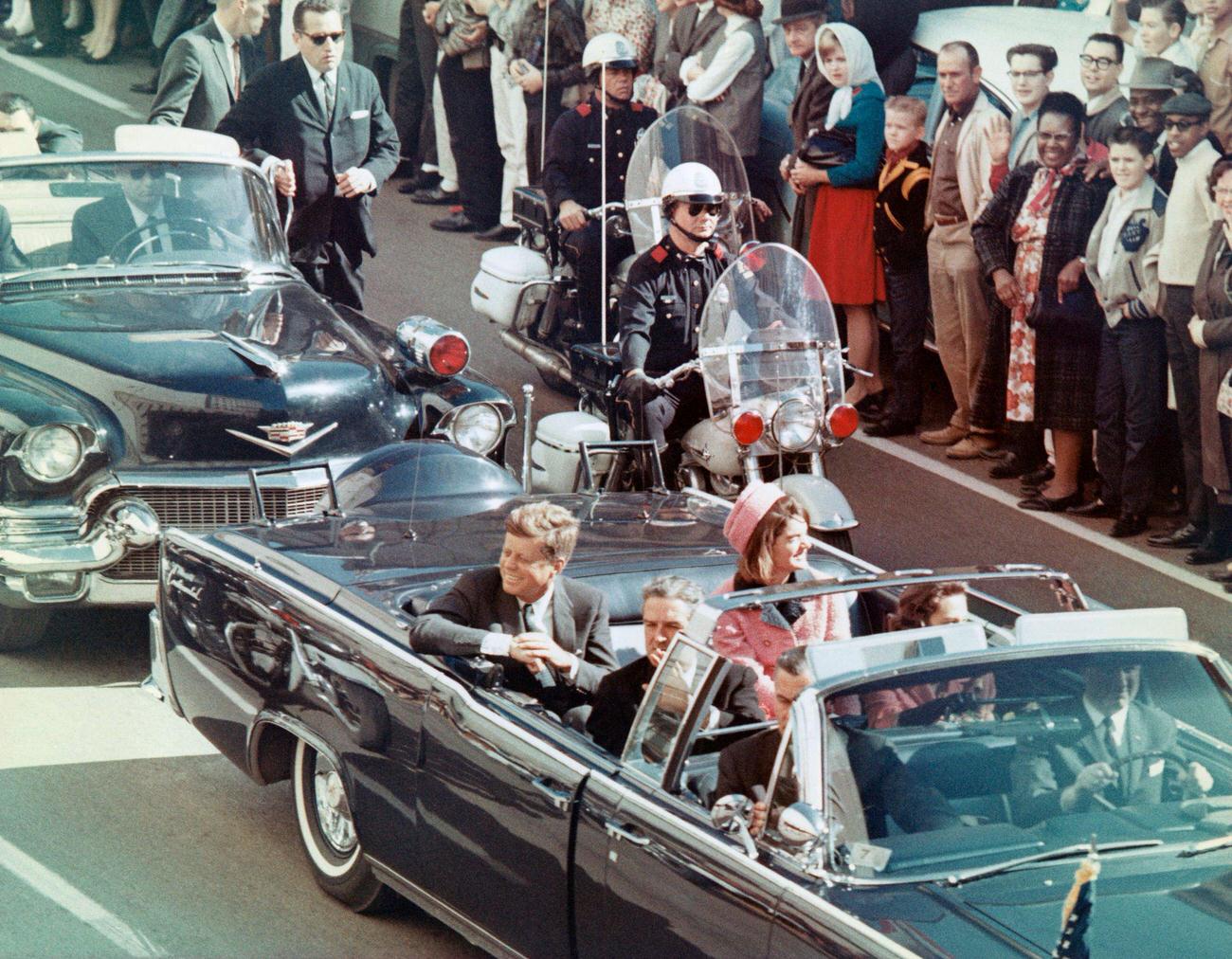
Three shots were fired from the sixth floor of the Texas School Book Depository by Lee Harvey Oswald. Kennedy was struck twice — once in the upper back and once in the head. Governor Connally was also struck and seriously wounded. The limousine accelerated immediately and raced to Parkland Memorial Hospital, roughly four miles away. Kennedy was pronounced dead at 1:00 p.m. He was 46 years old.
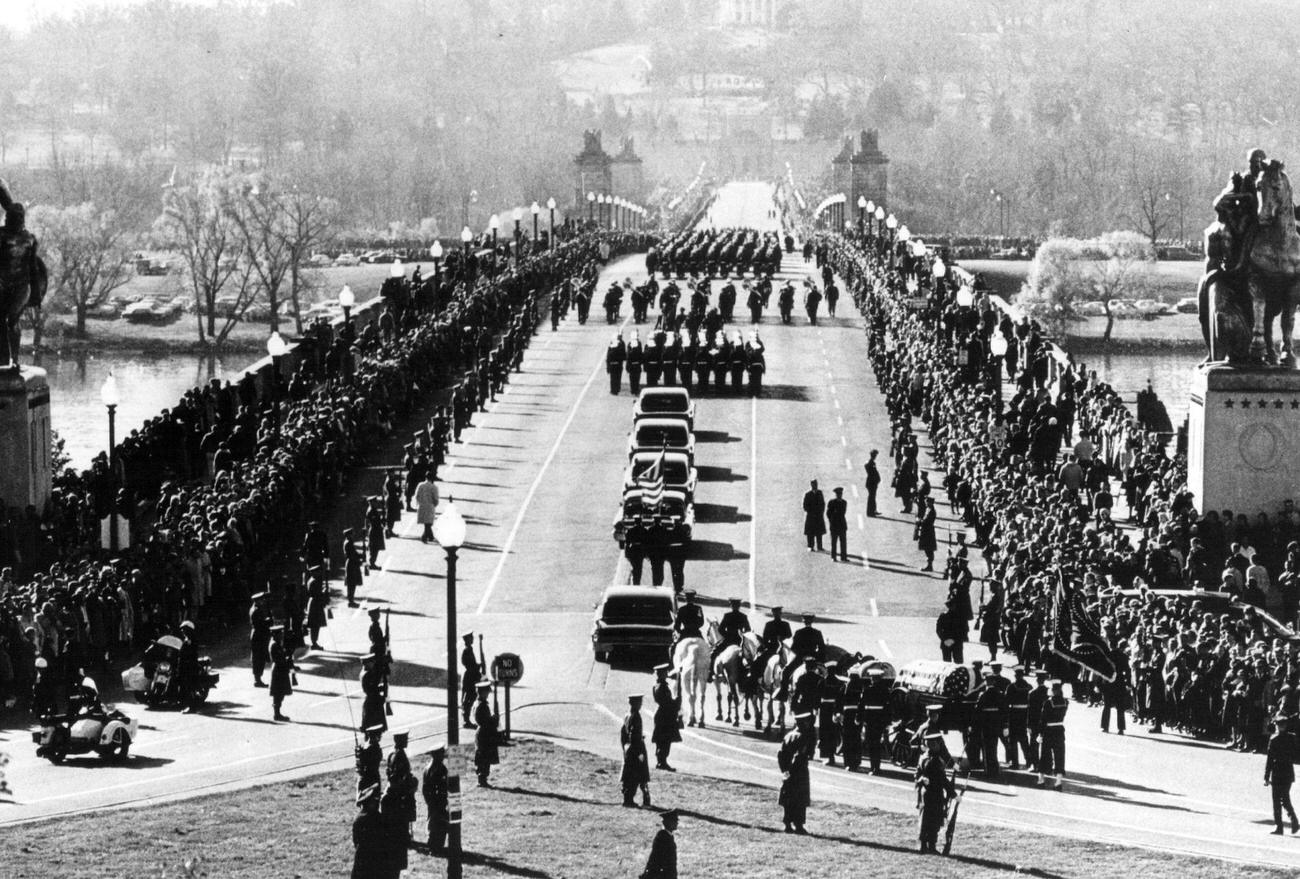
Jacqueline Kennedy refused to change out of her pink suit in the hours that followed. She stood beside Lyndon B. Johnson aboard Air Force One as he was sworn in as the 36th President of the United States, still wearing the bloodstained clothing. Kennedy’s body was flown back to Washington, D.C., where he would lie in state at the Capitol before a state funeral attended by heads of government from around the world.