
For centuries, Japan kept its doors shut to the outside world. Foreign trade was tightly restricted, foreign residents were rare, and the country’s interior remained largely unknown to Western eyes. That began to shift in the mid-1800s, when Japan slowly reopened its ports. In 1862, a Dutch physician named Antoon Bauduin arrived in Nagasaki — one of the few cities where foreigners were permitted — hired by the Japanese government to run a hospital and teach medicine. He brought his medical knowledge, but he also brought a camera.
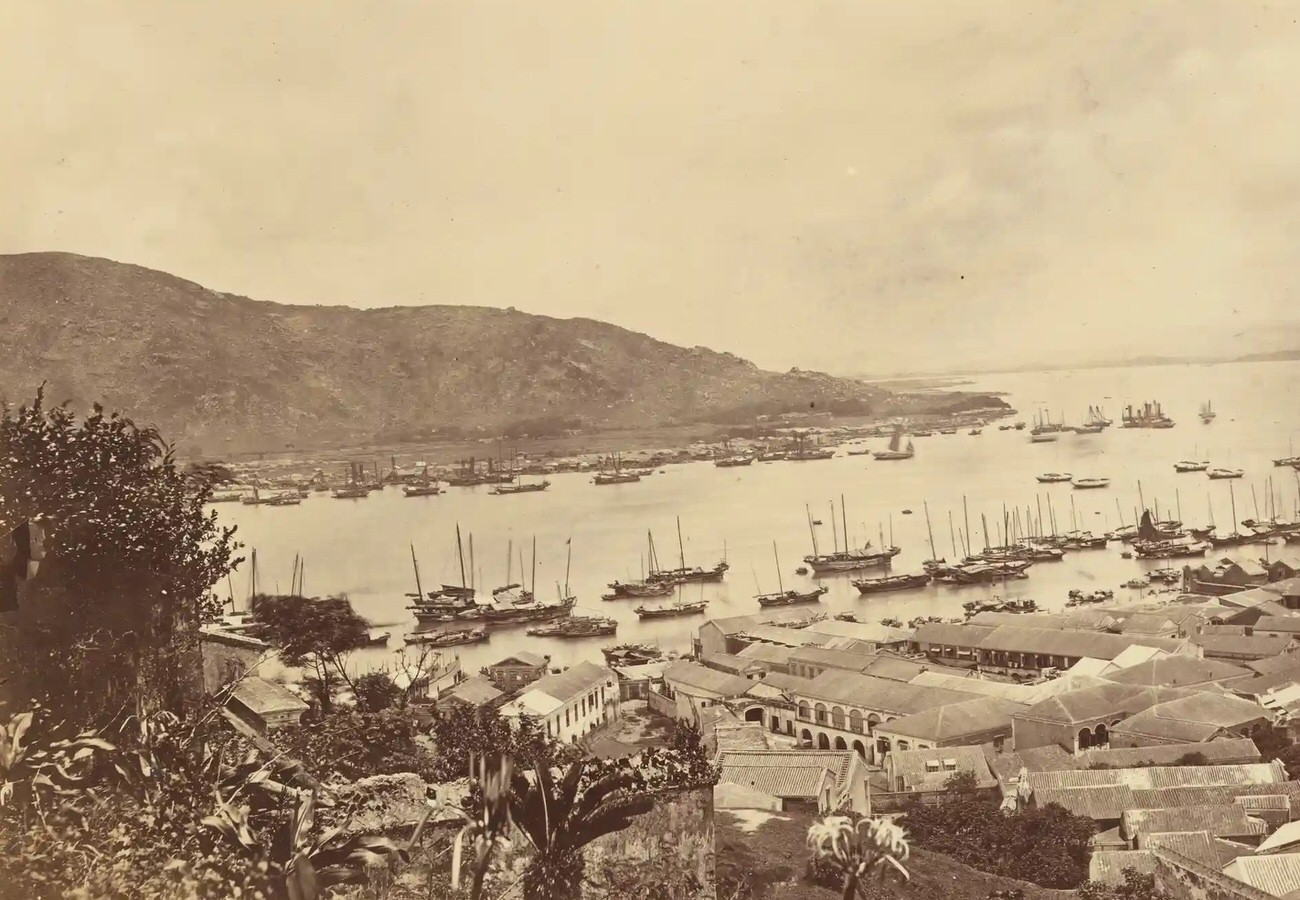
Nagasaki was Japan’s main gateway to the outside world. Its bay buzzed with activity — trading ships, fishermen, and merchants moving goods along the waterfront. Bauduin lived and worked here, and he photographed the city and its surroundings extensively. His images of the bay and the valleys around Nagasaki show a port town still rooted in its pre-modern identity, even as foreign influence quietly crept in.
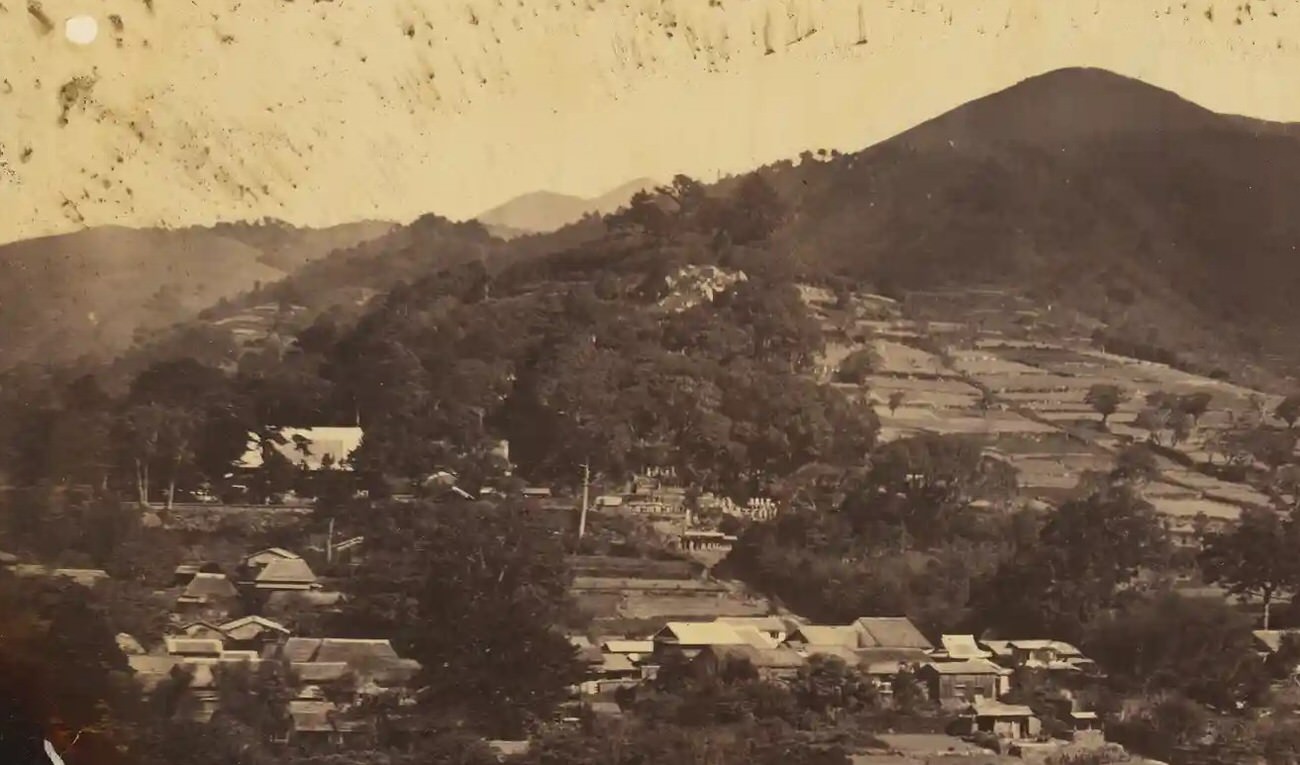
Beyond the city, Bauduin ventured into the surrounding landscape. Rolling hills, quiet valleys, and terraced fields stretched out beyond Nagasaki’s port. These weren’t just scenic backdrops — they were the working environment of farmers and laborers who made up the backbone of Japanese society.
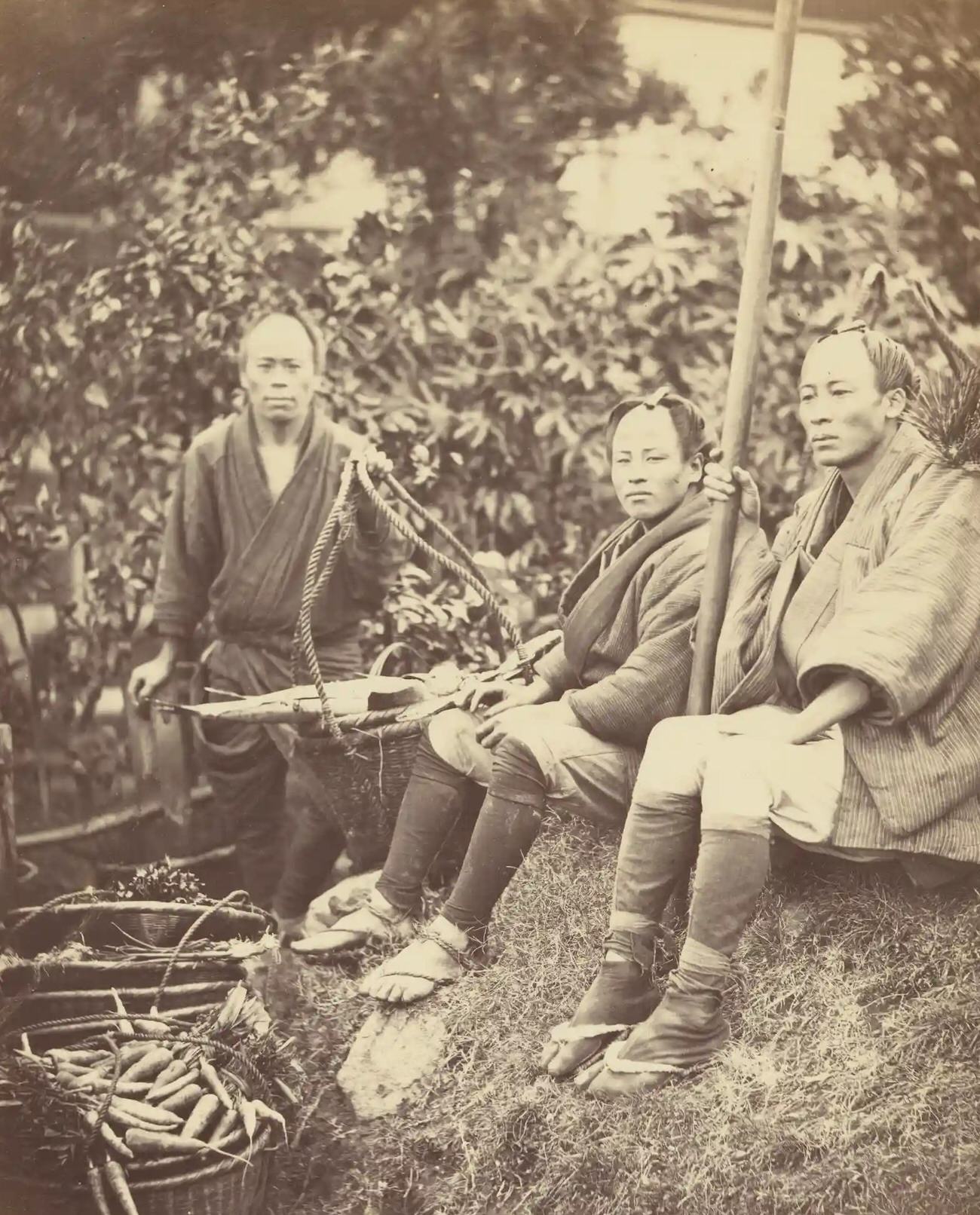
Bauduin photographed ordinary people as readily as he did officials and warriors. His portrait of three farmers is a straightforward record of working-class Japanese life — men who rarely appeared in formal portraits but whose daily labor sustained the country. This willingness to point his camera at common people, not just elites, makes his archive unusually complete.
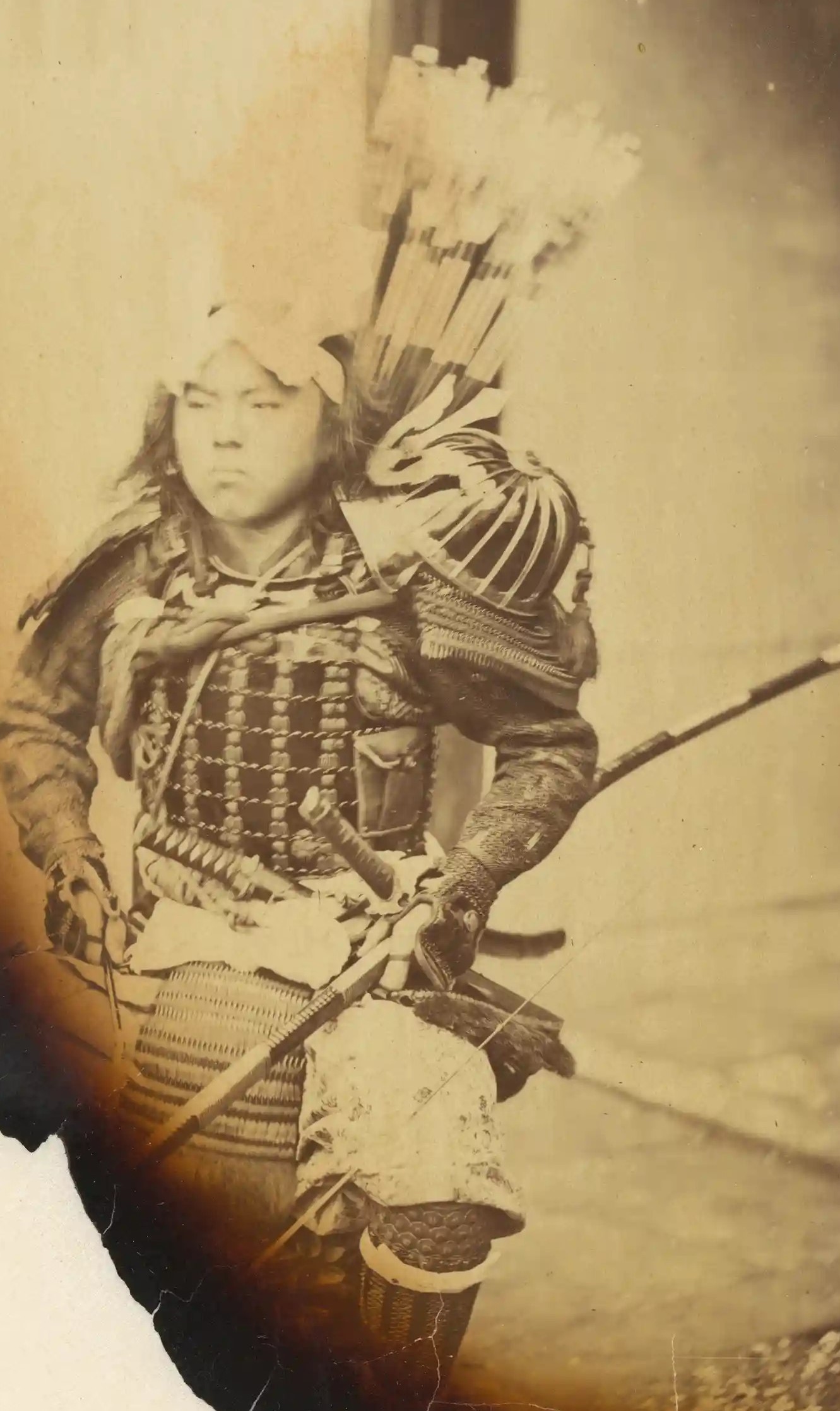
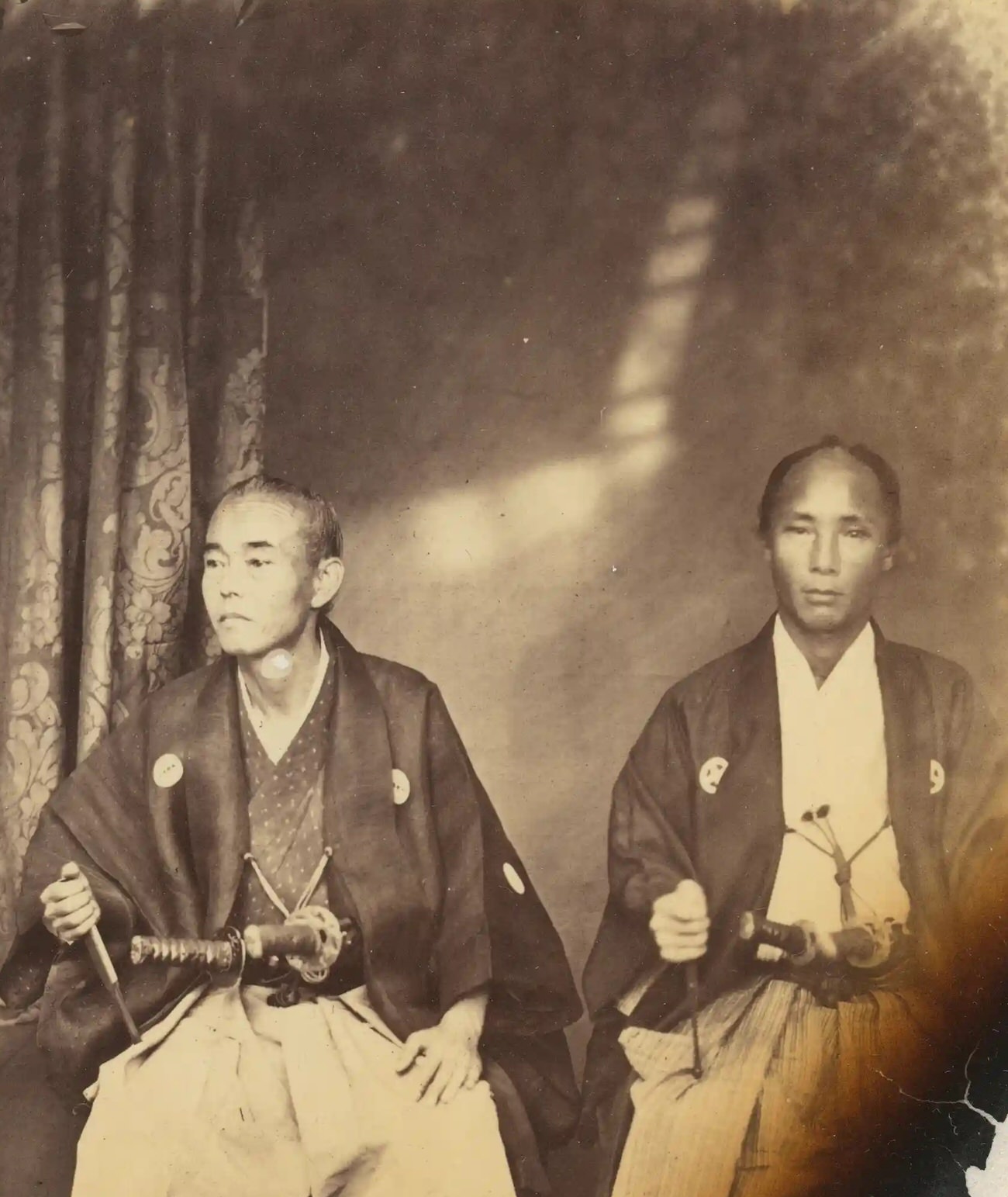
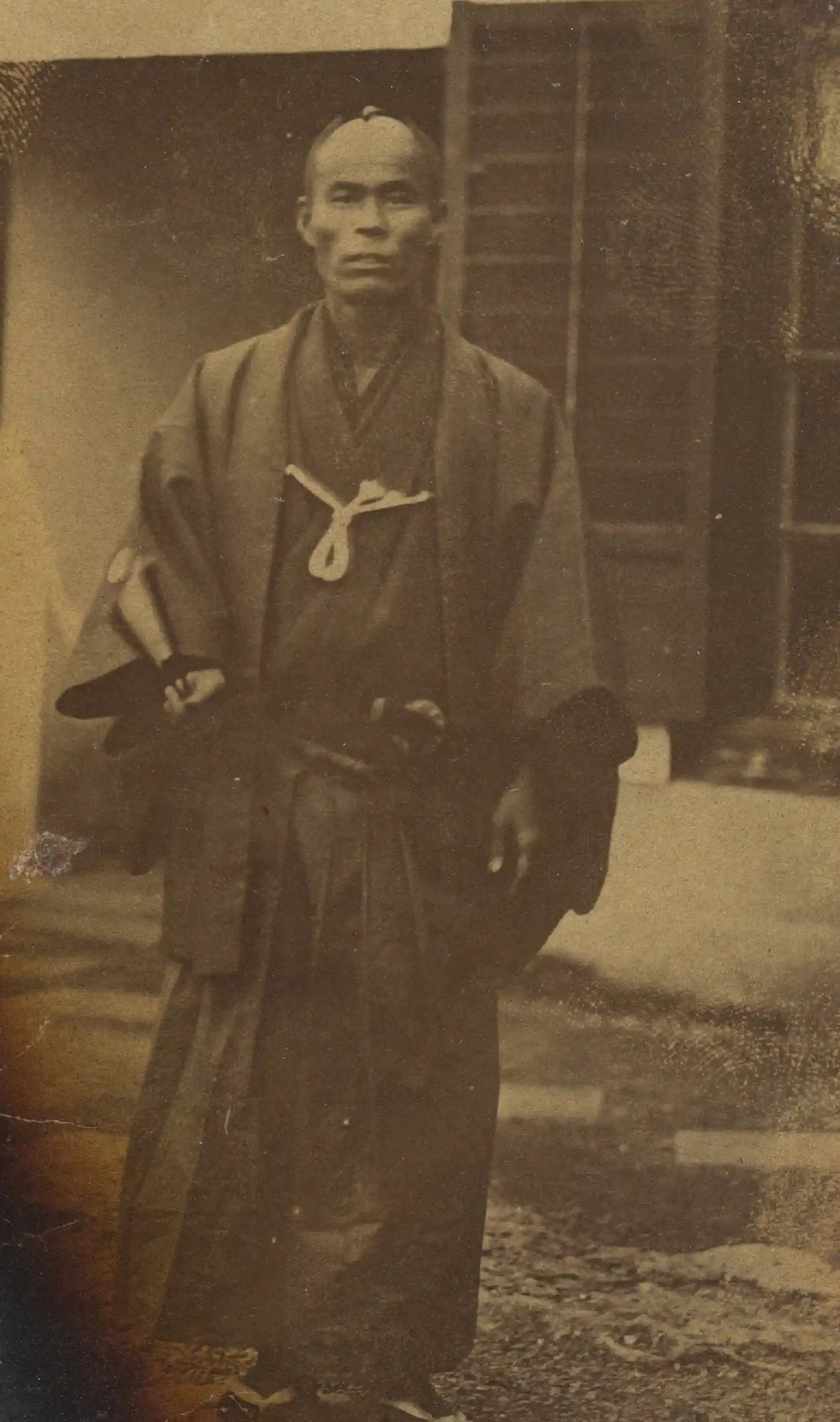
Japan in the 1860s was still a feudal society, and the samurai class remained a visible and powerful force. Bauduin photographed several samurai — some in full armor, others in more everyday dress. These men represented a social order that was already beginning to crack under the pressure of political upheaval, but in Bauduin’s photographs they appear exactly as they were: armed, poised, and in command.
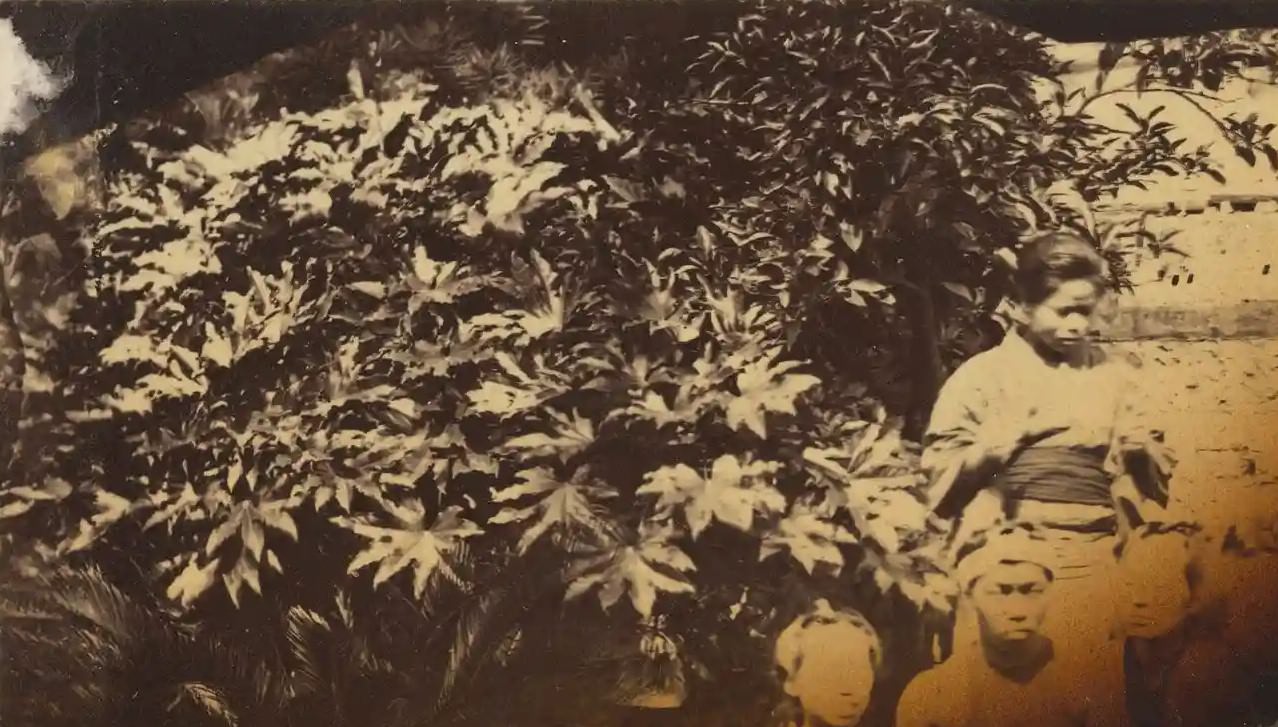
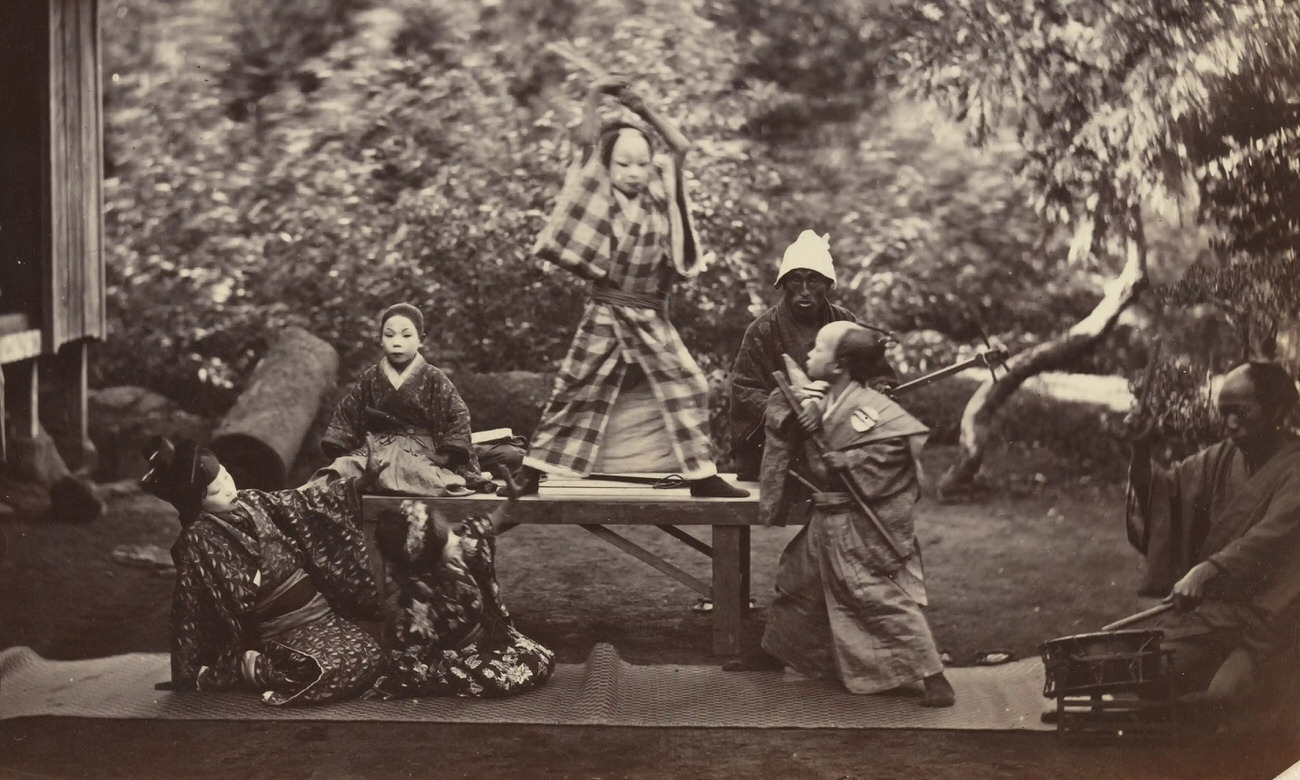
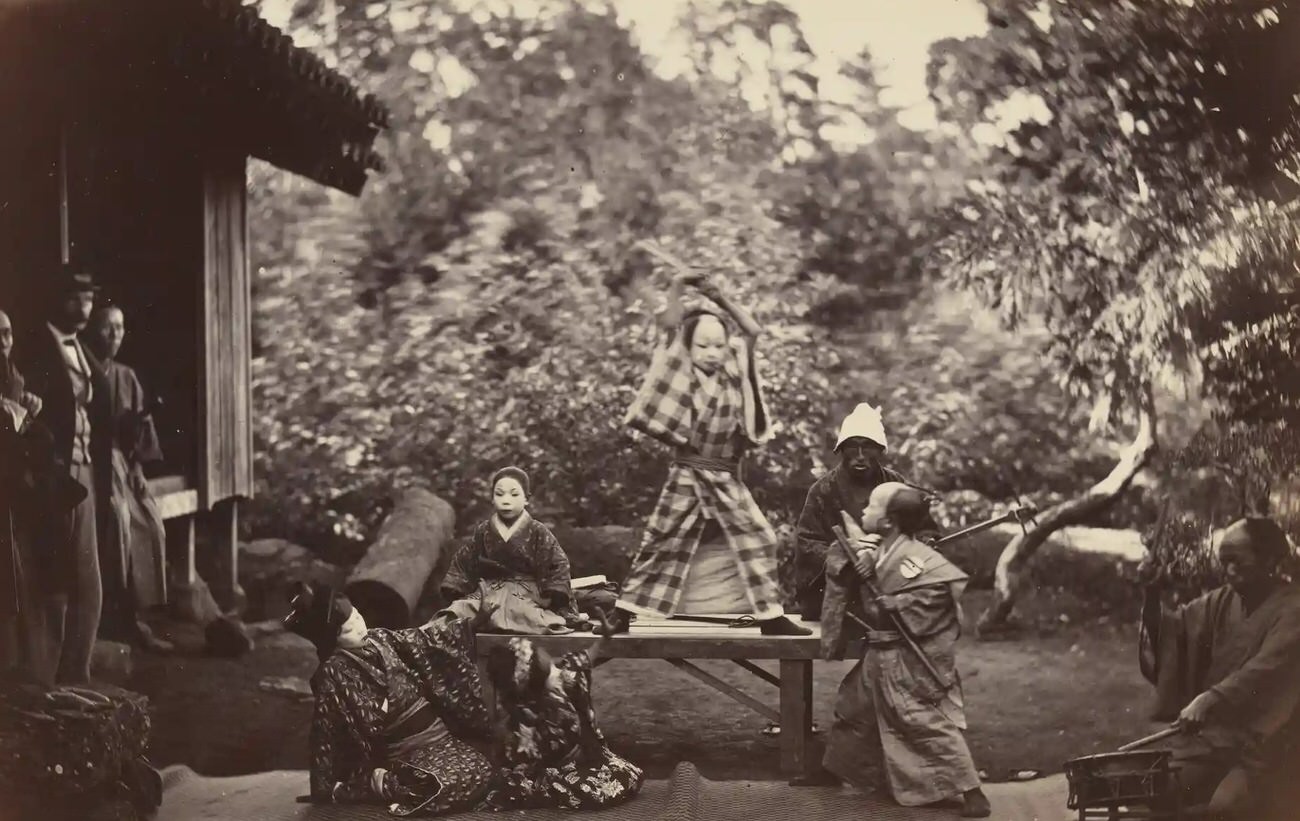
Bauduin also documented Japan’s rich performing arts. Kabuki theatre was a major part of Japanese cultural life, with elaborate costumes, stylized movement, and dramatic storytelling. His photographs from Nagasaki’s theatre scenes in 1865 are among the earliest visual records of kabuki performance.
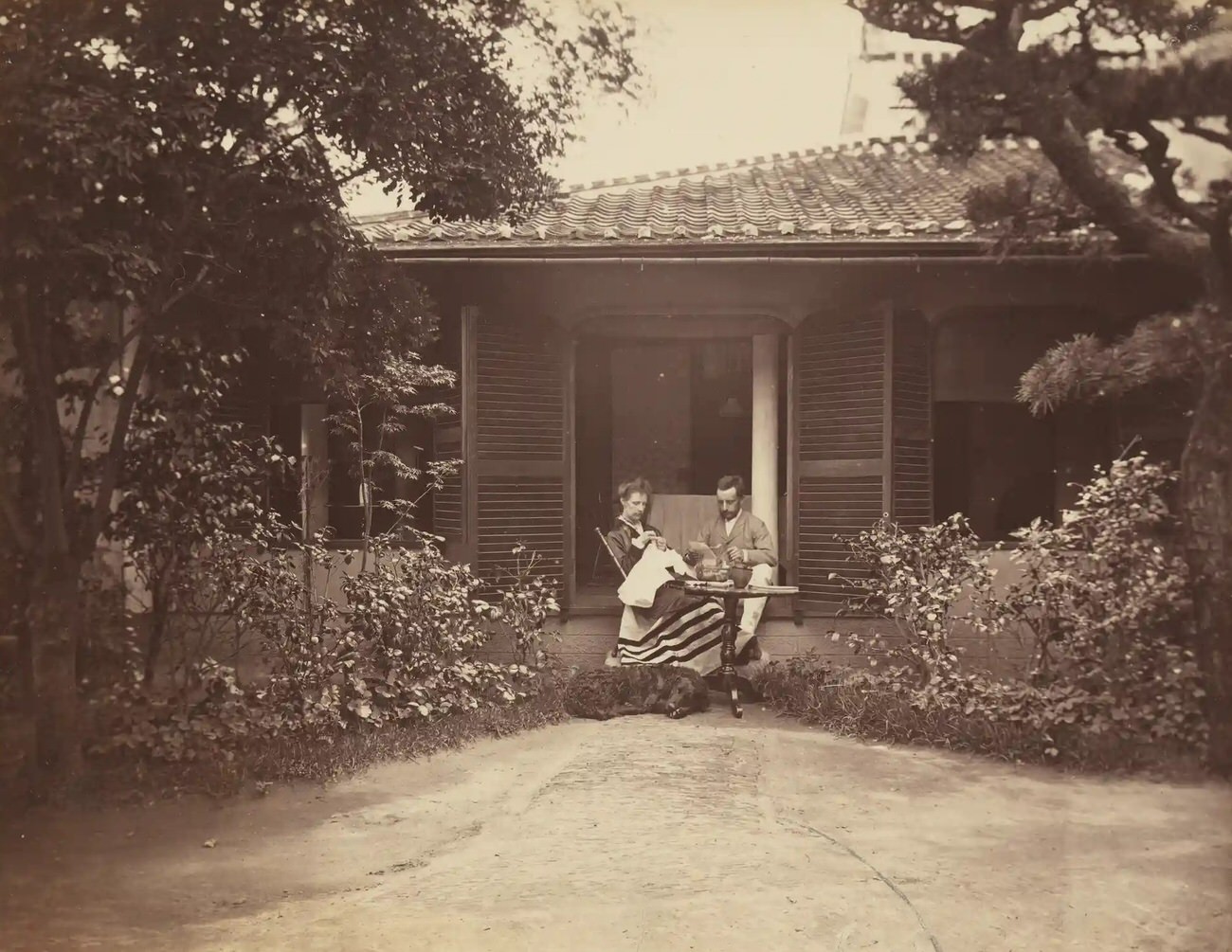
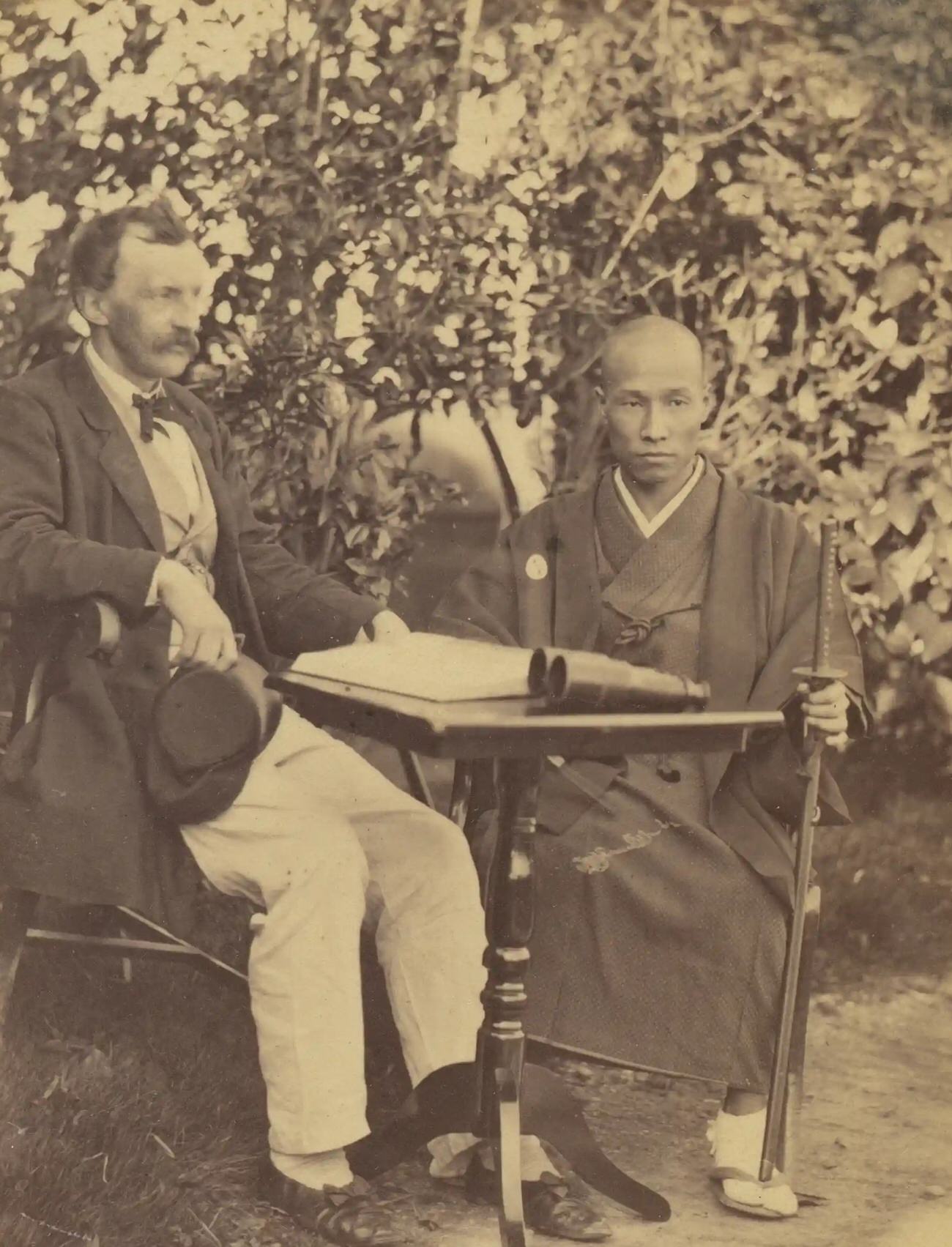
As a physician, Bauduin worked closely with Japanese medical students and colleagues. He trained a generation of doctors at the Nagasaki hospital, and his professional relationships clearly went beyond the classroom. His self-portrait taken alongside a Japanese colleague captures the kind of personal connection that made his five years in Japan more than just a foreign posting.
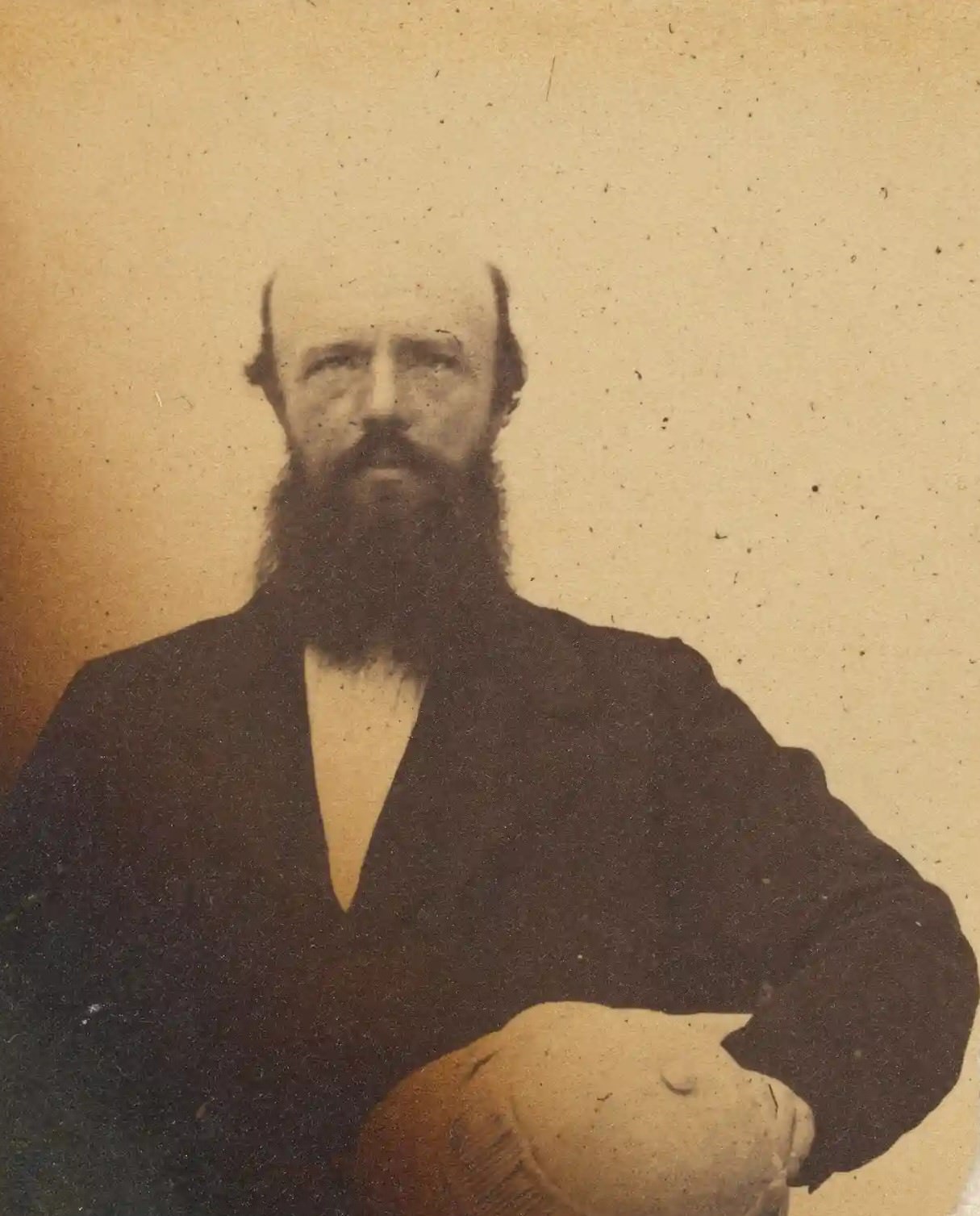
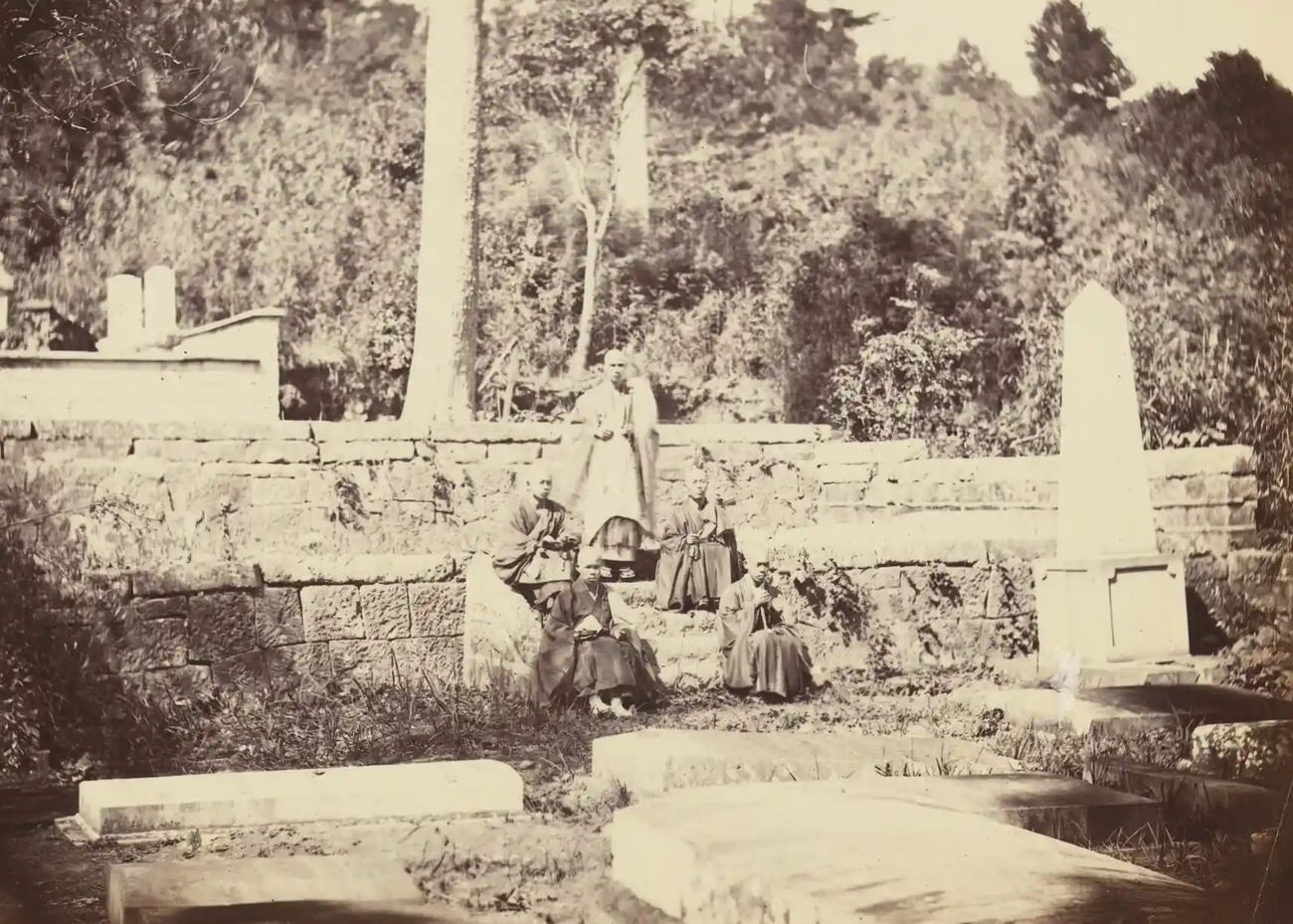
Bauduin’s time in Japan also brought him into contact with other European residents. The Dutch community in Nagasaki had its own social life, cemetery, and traditions. When he photographed the Dutch cemetery at Inasa, he was recording the physical mark that foreign settlers had already left on Japanese soil — graves of traders, doctors, and diplomats who had died far from home.
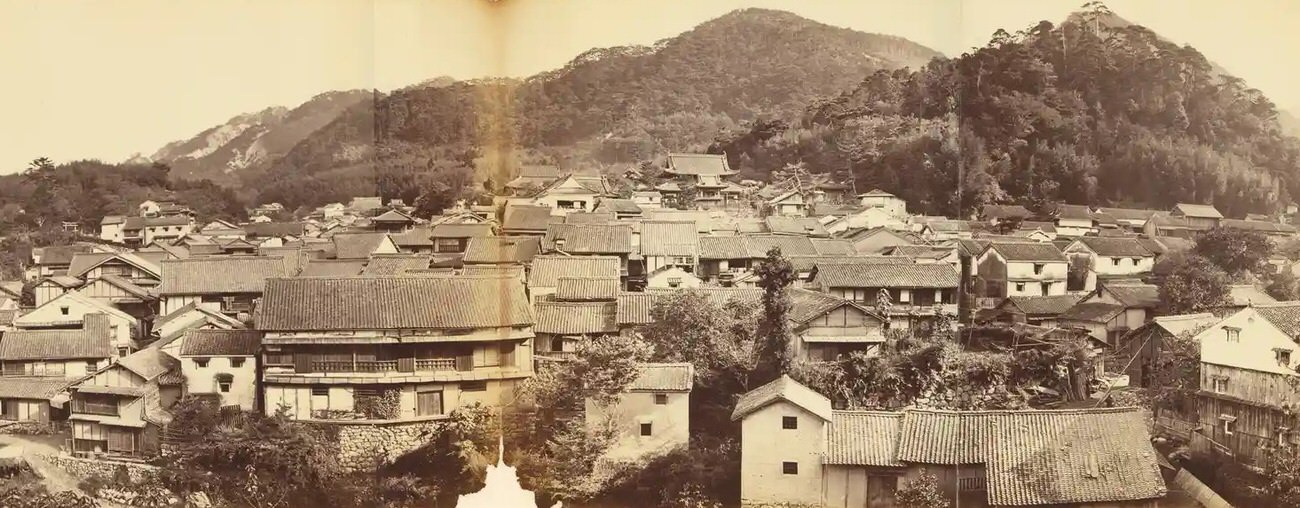
He also traveled beyond Nagasaki. A view over Osaka — Japan’s second-largest city and a major commercial hub — shows that his photographic work extended well beyond his base of operations. These wider travels gave his archive a broader geographic scope than most foreign photographers of the era managed to achieve.
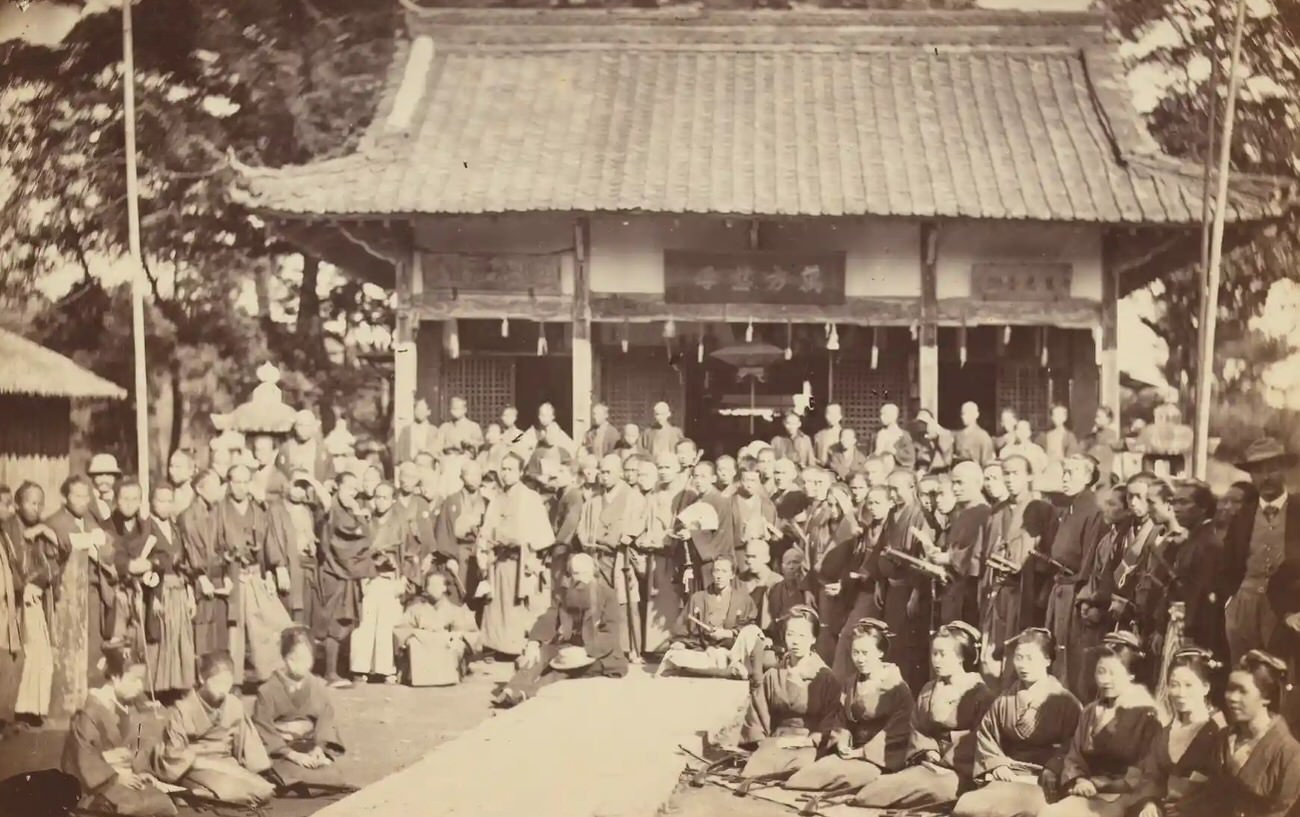
By the time Bauduin left Japan, he had accumulated a remarkable visual record. His farewell party at the Nagasaki hospital in 1867 was attended by Japanese colleagues who had worked alongside him. The photograph of that gathering shows Japanese and Western faces side by side — a fitting image for a man who spent five years bridging two very different worlds through both medicine and photography.