Hey There! Before You Go. 😧
Get the best vintage content straight into your inbox!

Don't worry, we don't spam

Sensuality and Elegance: A Visual Tour of Helmut Newton’s 1960s Fashion Photography

Helmut Newton was born in Berlin in 1920 and fled Germany in 1938 as Nazism tightened its grip on the country. He settled in Australia, built his craft, and eventually broke into fashion photography with a force that few photographers of his era matched. By the start of the 1960s, his work was already reshaping what fashion images could look and feel like.

Before Newton, fashion photography leaned heavily on refined elegance — clean settings, composed poses, clothes presented almost like objects on display. Newton dismantled that approach. He introduced stark, contrasting light that carved out the natural shadows and curves of the human body, and he arranged his compositions with precision while making them feel charged and spontaneous at the same time.
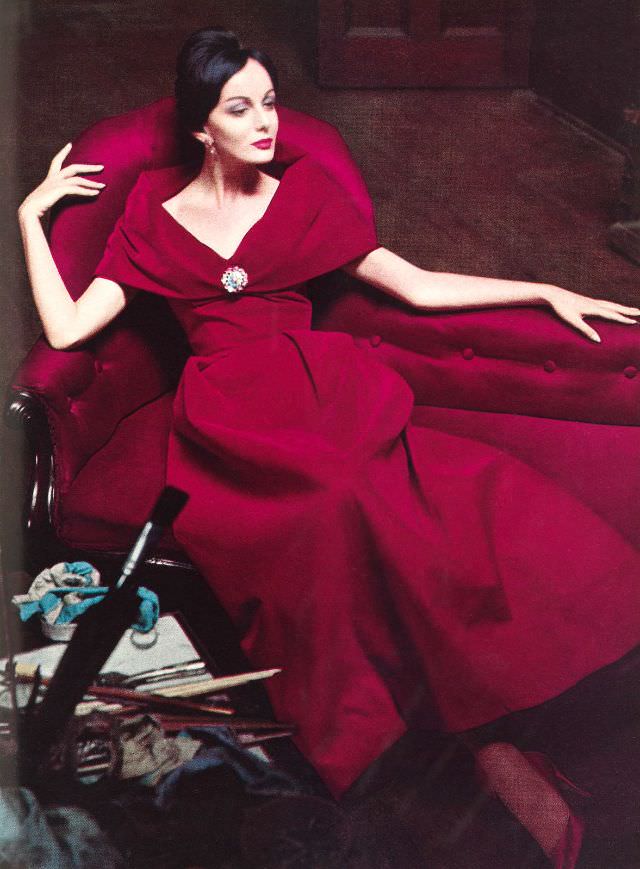
Model in a red evening gown, 1960

Newton’s early 1960s work for major publications like Vogue, Harper’s Bazaar, and Elle gave him a wide platform. He used real-world locations rather than relying solely on studio backdrops, taking models outdoors to create images that felt grounded in actual life. The streets, beaches, and open landscapes became part of the story he was telling.
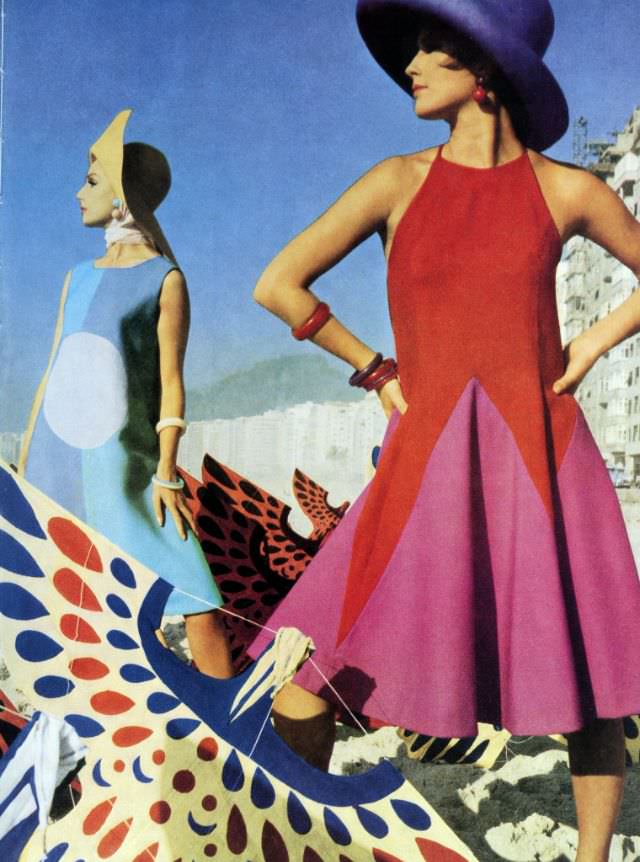
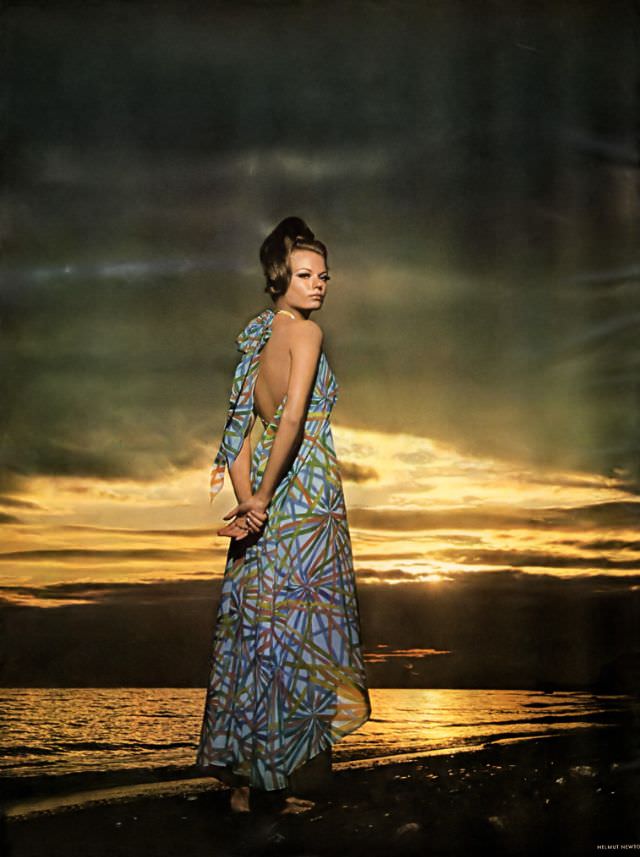
Models in colorful dresses on Copacabana, Rio de Janeiro, 1962
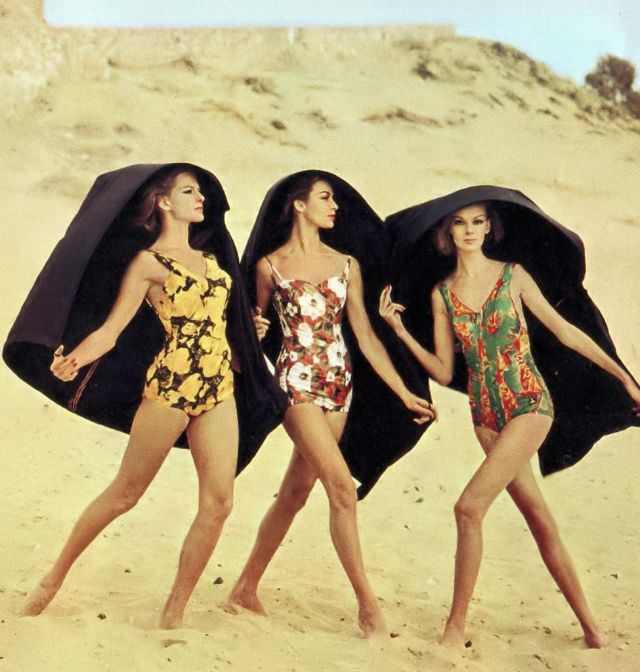
Models in print bathing suits by various designers, Spring/Summer 1962

In 1962, Newton shot models along Copacabana beach in Rio de Janeiro and captured bathing suit spreads that blended designer fashion with a raw, sunlit energy. These weren’t passive poses — his models stood, moved, and occupied space with authority.
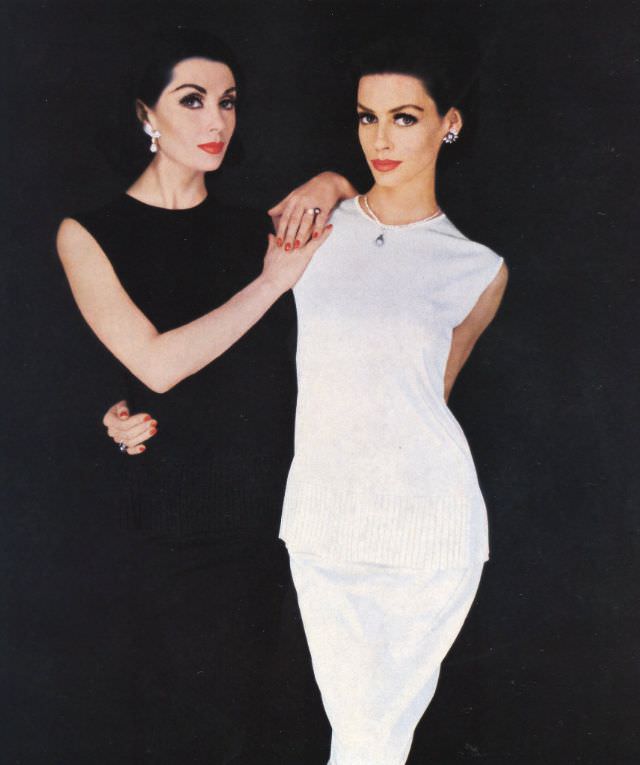
Models in two-piece black and white knit jerseys, May 1962

Newton was an early adopter of color film in fashion photography, and his skillful handling of it added emotional weight to every frame. Color wasn’t decoration for him — it was a tool. The deep red of an evening gown, the contrast of black and white knit against skin, the bold print of a beach ensemble — each choice was deliberate.
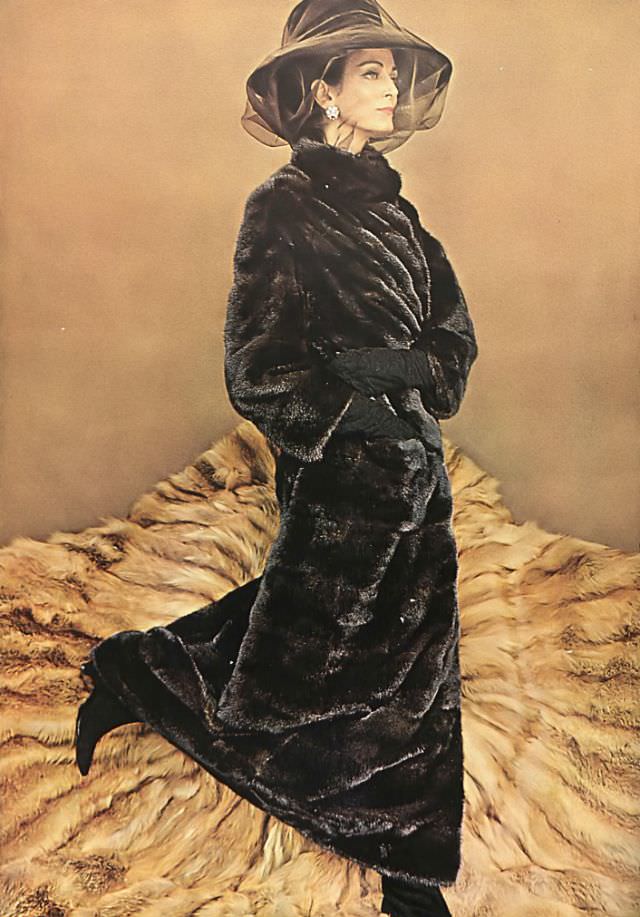
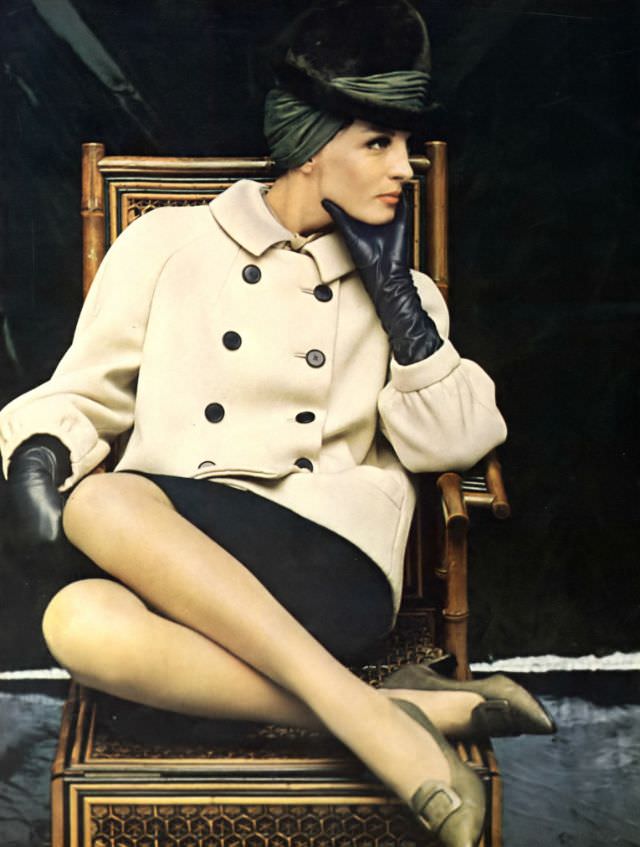
Carmen Dell'Orefice in a mink coat and brown velvet hat by Christian Dior-New York, 1963
Carmen Dell’Orefice in a mink coat and brown velvet hat by Christian Dior-New York, 1963
Mirella Petteni in whipcord topcoat and black skirt by Seymour Fox, September 1963

He worked with some of the most prominent models and designers of the decade. Carmen Dell’Orefice appeared before his lens in a mink coat and Christian Dior hat. Mirella Petteni featured in two September 1963 shoots — once in a Seymour Fox topcoat, once in a Madame Ricci dress with a Japanese-inspired hairstyle. These were not interchangeable editorial images; each had its own character.
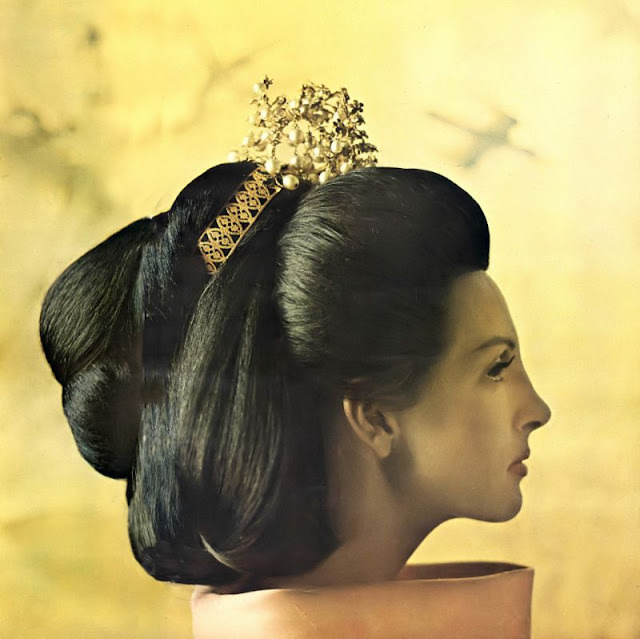
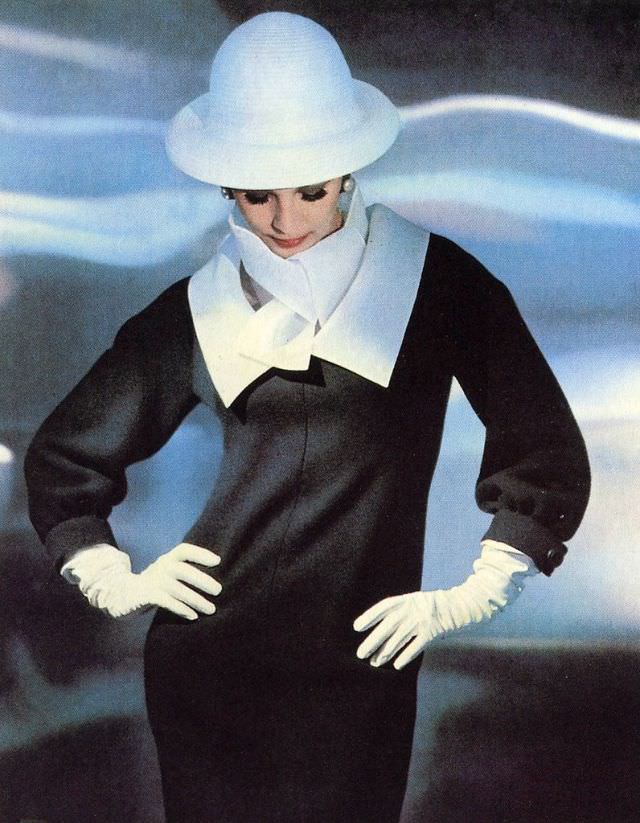
Mirella Petteni with Japanese-inspired coiffure in a dress by Madame Ricci, September 1963
Model in marine blue wool afternoon dress by Yves Saint Laurent, Spring/Summer 1963
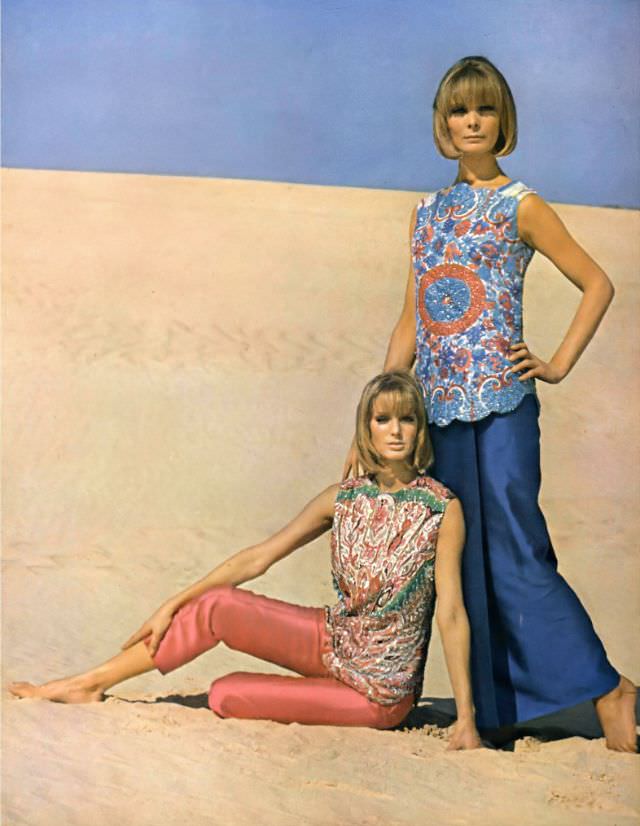
Models in embroidered tunic tops over silk pants by Emilio Pucci, May 1963

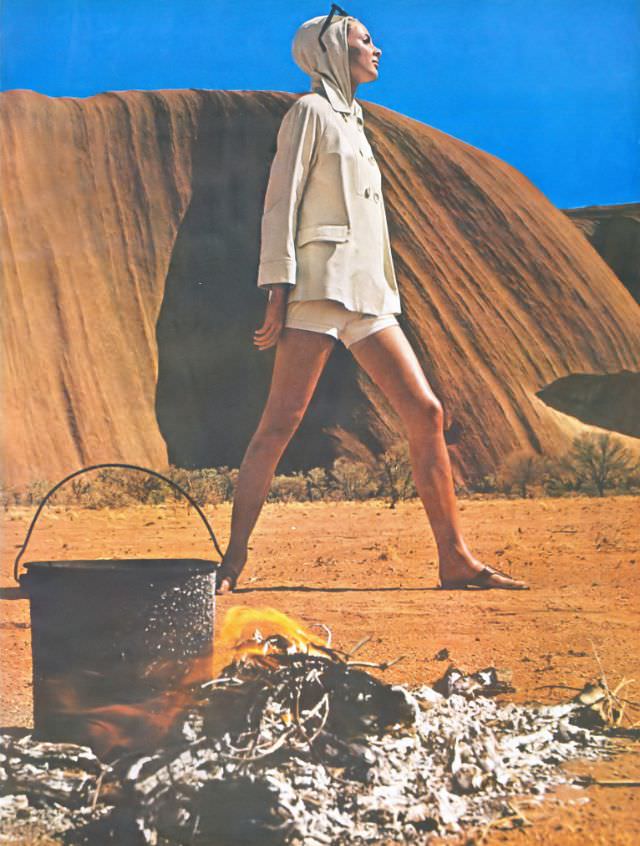
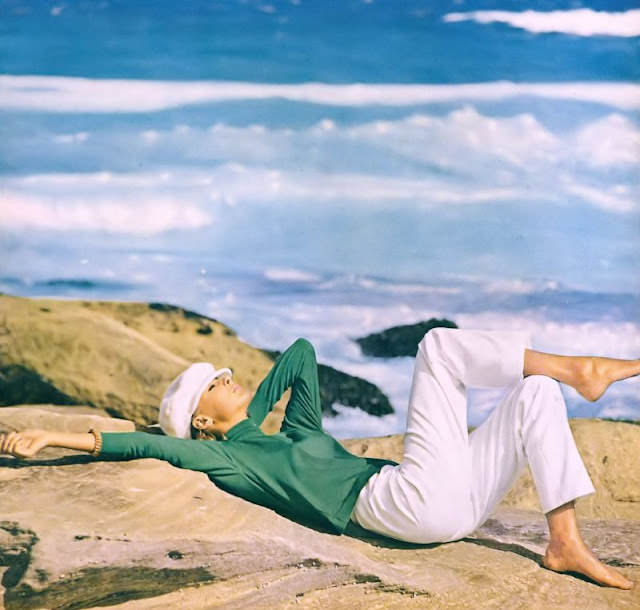
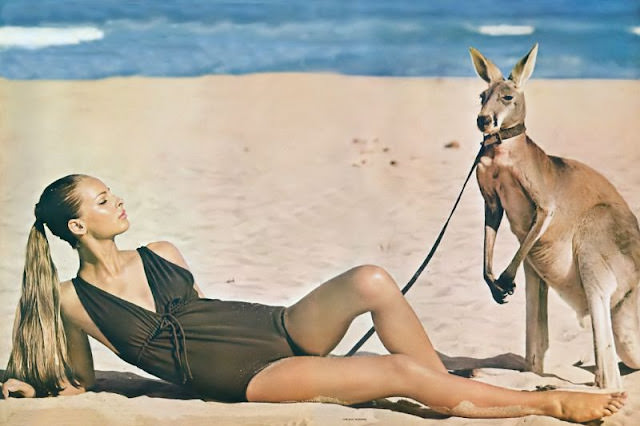
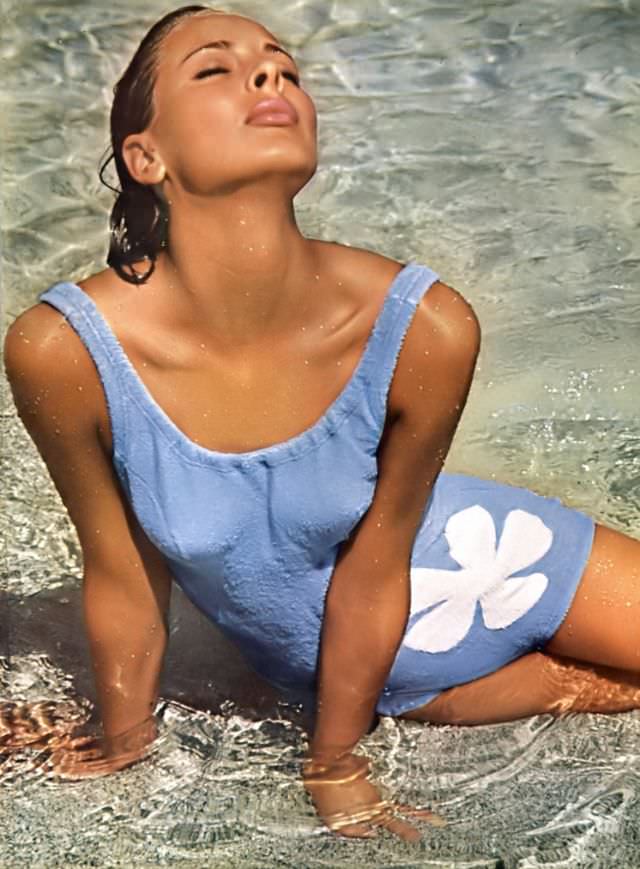
By 1964, Newton had developed a sustained working relationship with model Camilla Sparv. He photographed her across Australia — at Wanda Beach, at Ayers Rock, and in studio settings — capturing her in everything from a brown Empire-waist maillot to a white satin and embroidered yellow velvet gown. The range of those shoots demonstrated Newton’s versatility across environments and garment types.
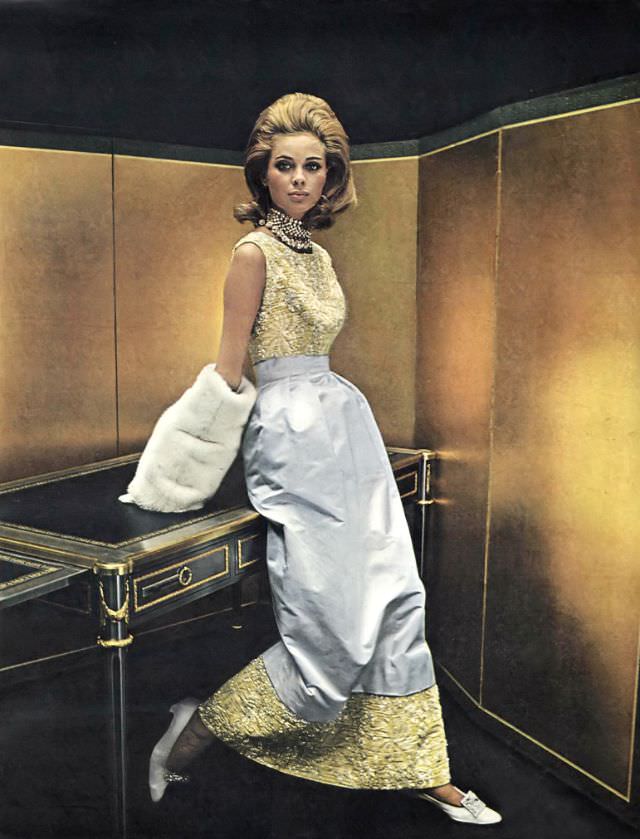
Camilla Sparv in a gown of white satin and embroidered yellow velvet, October 1964
Camilla Sparv in blue French bathing suit at Wanda Beach, Australia, June 1964
Camilla Sparv in a coat and shorts set at Ayers Rock, Australia, May 1964
Camilla Sparv in a silk jersey top and white pants in Australia, May 1964
Camilla Sparv in a brown Empire-waist maillot on Wanda Beach, Australia, May 1964
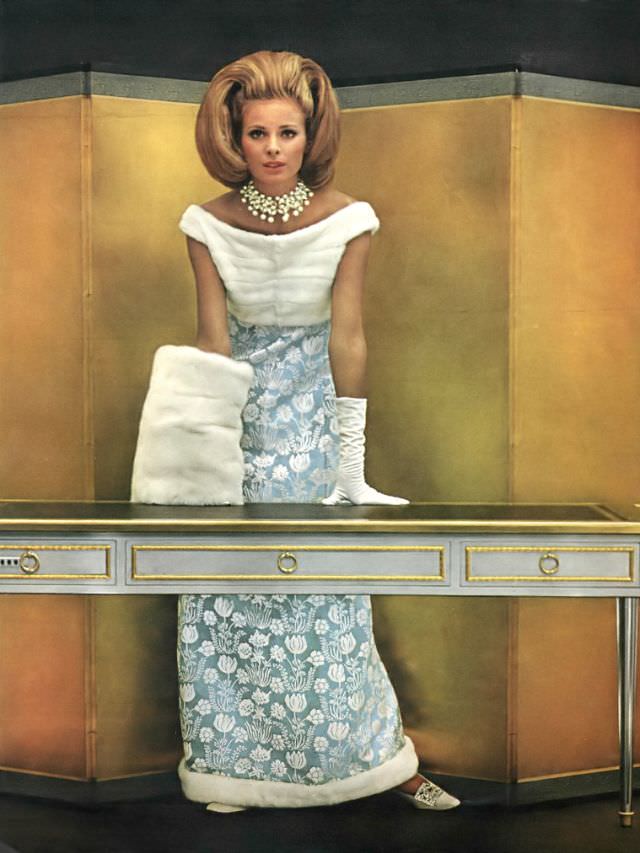
Camilla Sparv in a blue and white brocade dress by Leslie Morris, 1964
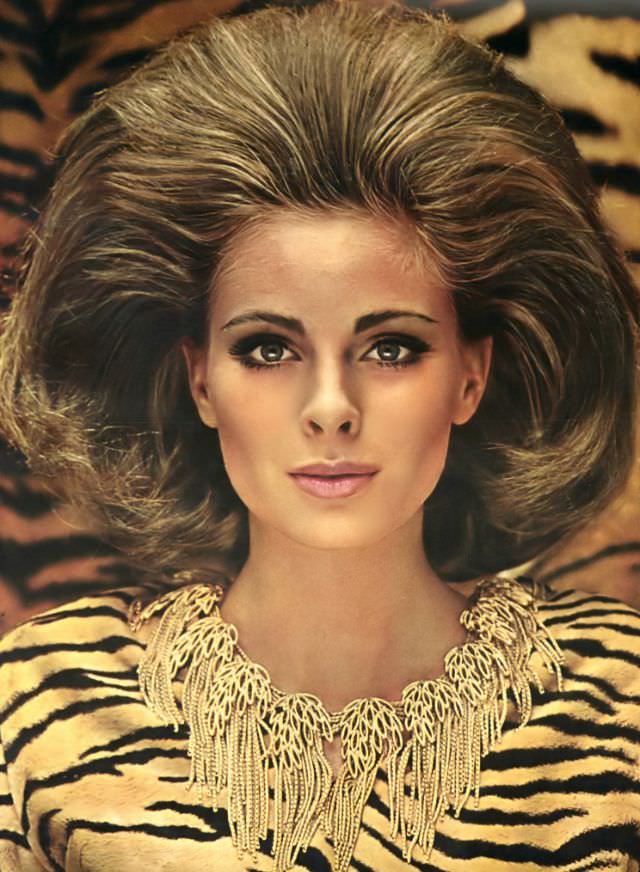
Camilla Sparv wearing a necklace of gilt leaves by Monet, October 1964

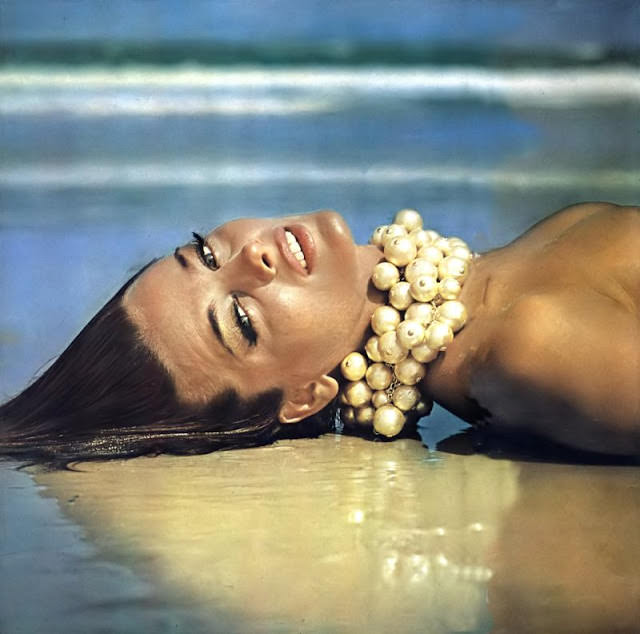
Also in 1964, Newton photographed Dolores Wettach in Hawaii and at Wanda Beach, mixing exotic travel locations with carefully selected accessories and garments. These shoots reinforced his habit of fusing high fashion with recognizable, real-world environments.
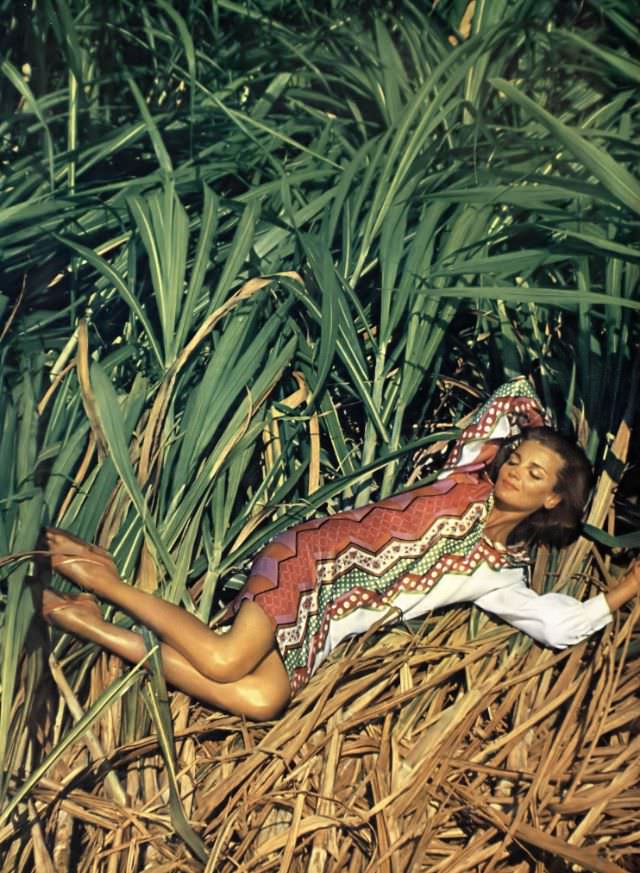
Dolores Wettach in a short silk zig-zagged shirtdress in Hawaii, June 1964
Dolores Wettach wearing golden fake-pearl necklaces at Wanda Beach, Australia, June 1964

Newton used medium and large-format cameras throughout this period, giving his images a level of detail and depth that set them apart from the standard editorial work of the time. That technical precision showed in the texture of fabrics — fur coats, brocade, beaded gowns — all rendered with tactile clarity.
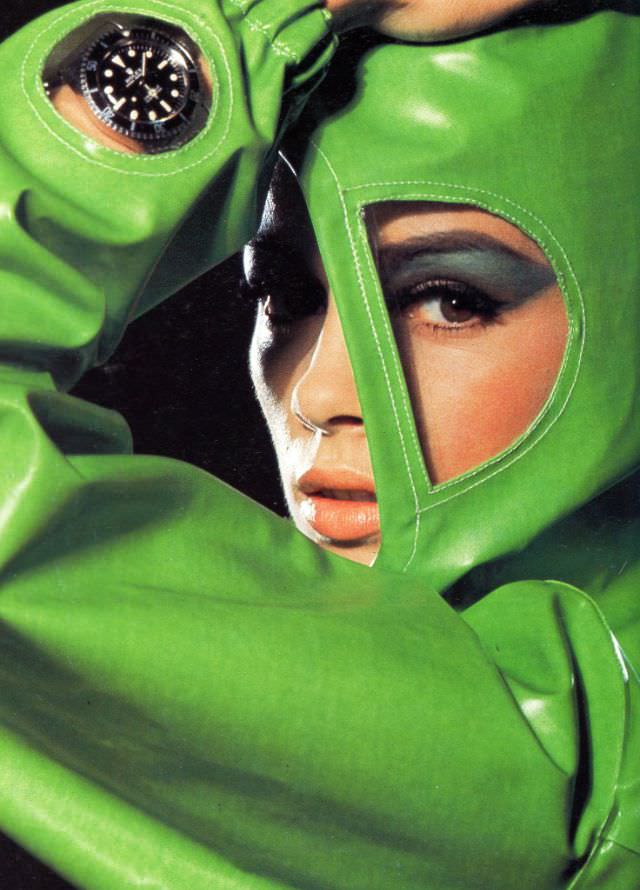
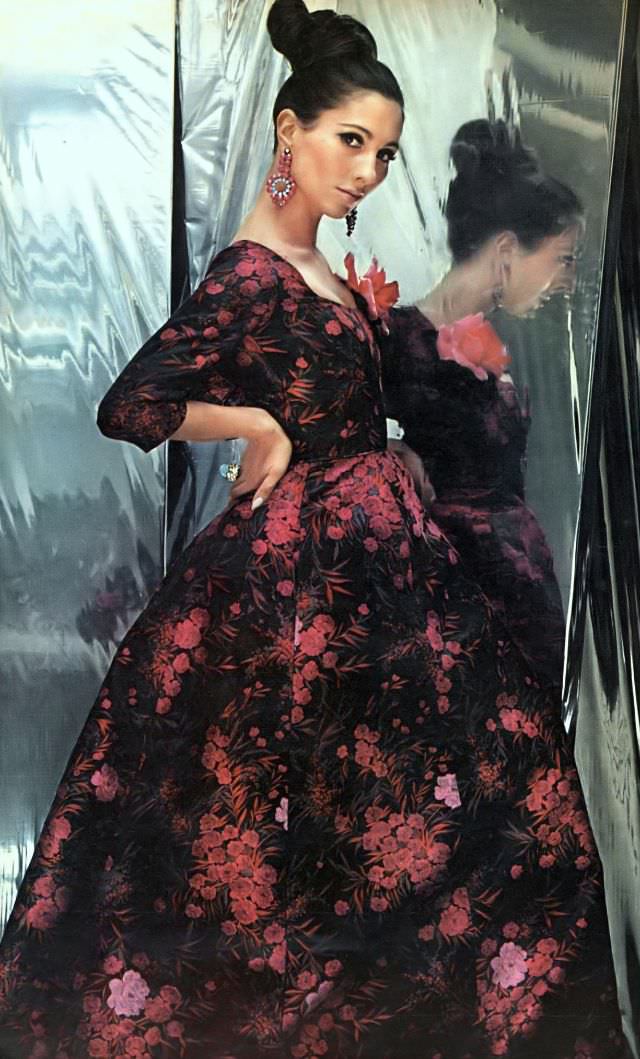
Astrid Heeren, 1965
Astrid Heeren, 1965
Astrid Schiller in a cerise brocade dress by Sophie of Saks Fifth Avenue, October 1965
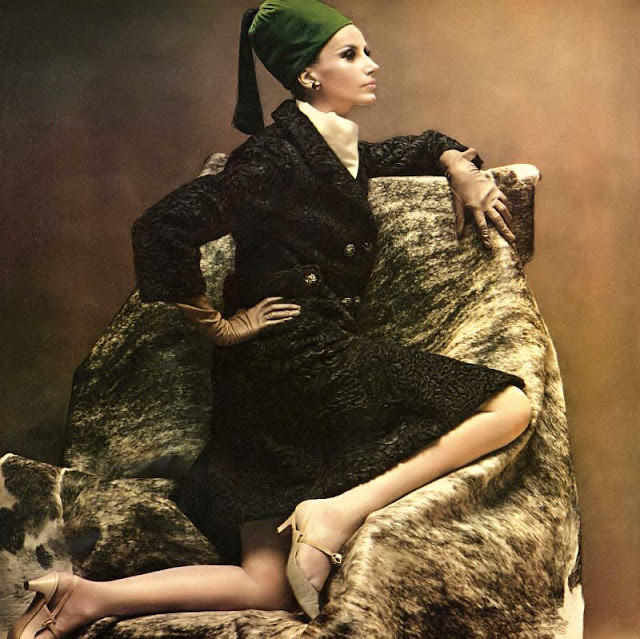
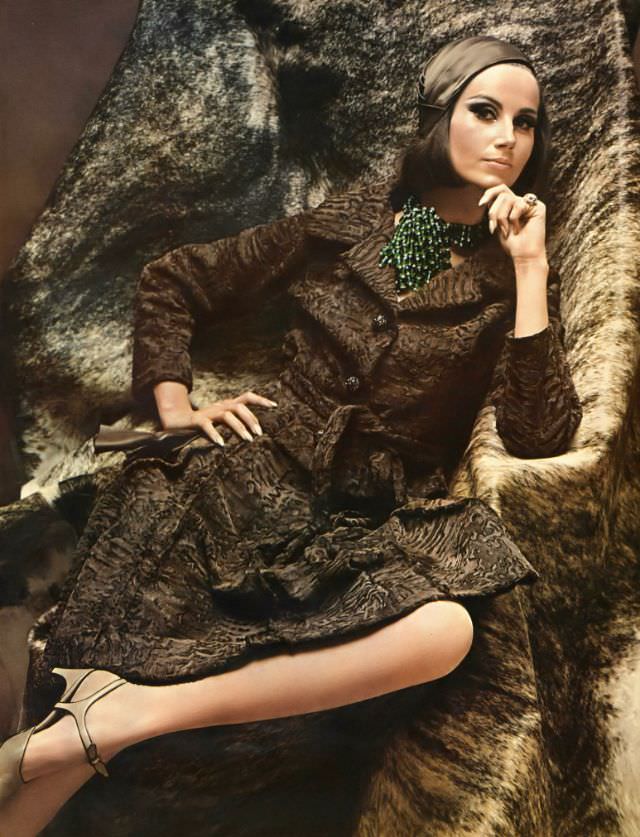
Bettina Lauer in a brown Swakara lamb coat by Ben Kahn, October 1965
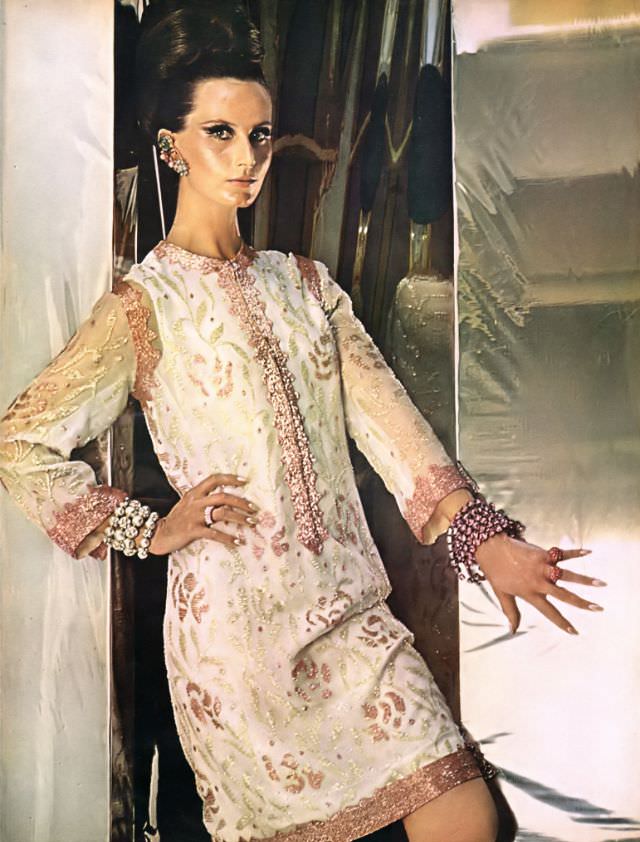
Bettina Lauer in a long beaded gown by Sophie of Saks Fifth Avenue, October 1965
Bettina Lauer in a Russian broadtail lamb suit by Donald Brooks, October 1965
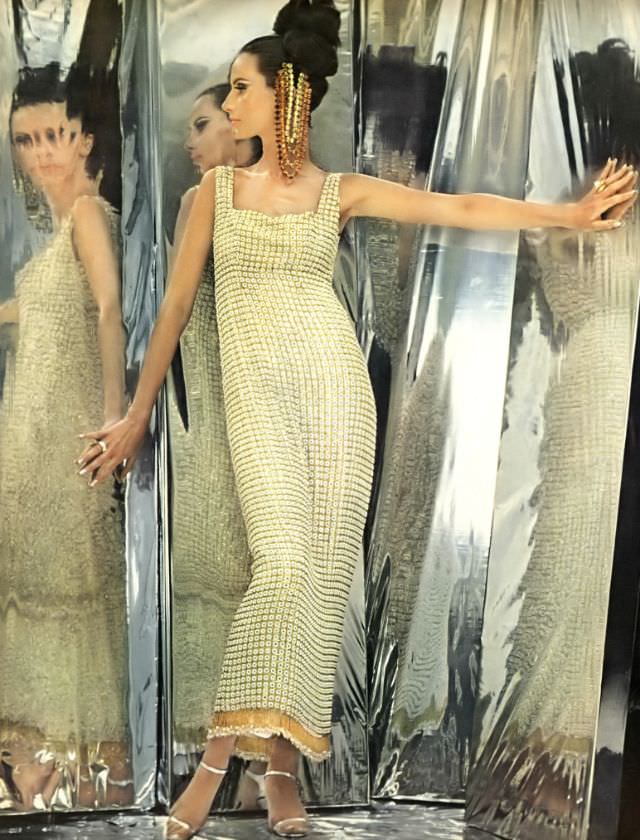
Bettina Lauer in a shift of pale beads on white chiffon by Leslie Morris, October 1965

In October 1965, Newton produced a dense editorial run featuring Bettina Lauer in fur and formal wear from designers including Ben Kahn, Donald Brooks, and Sophie of Saks Fifth Avenue. That same month also featured Astrid Schiller in a cerise brocade dress. These images captured the opulence that Newton balanced so well against his more transgressive instincts.
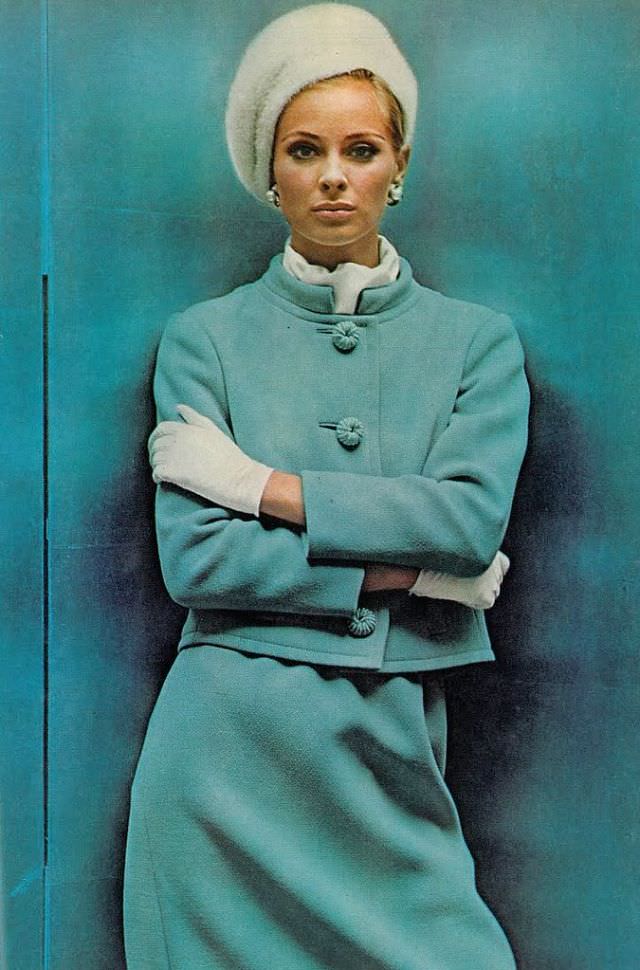
Camilla Sparv in a pale blue wool suit by Seymour Fox, 1965
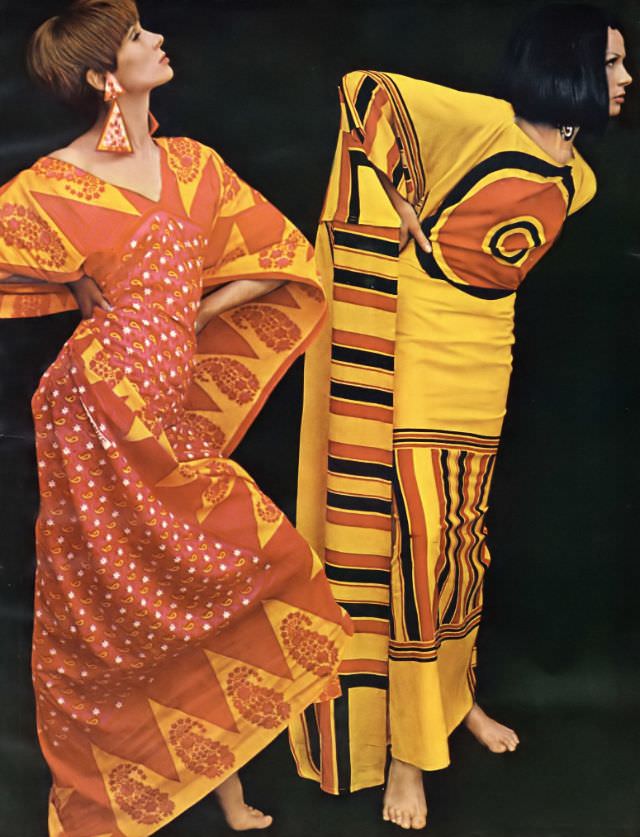
Models in printed cotton gandurahs from Kenya, July 1966

By 1967, Newton’s editorial scope expanded to include lingerie and nightwear, with Marika Green appearing in a Hollywood Vassarette lingerie set and other models wearing Emilio Pucci and Van Raalte nightdresses. These images were sensual without being exploitative — women presented as fully present, not passive.
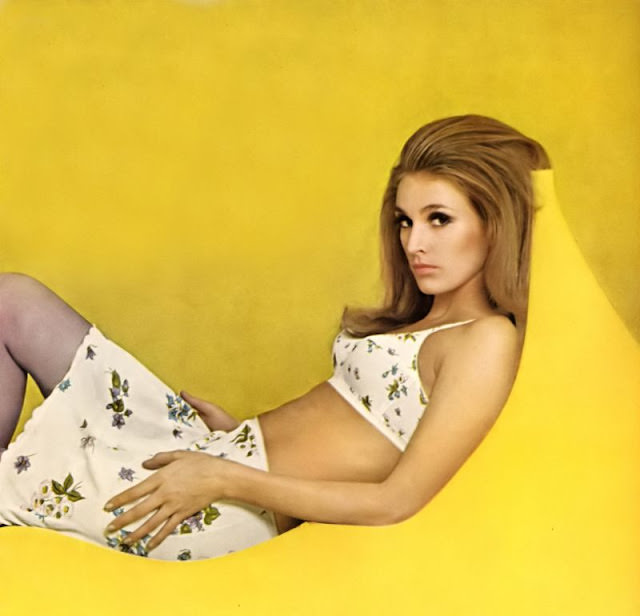
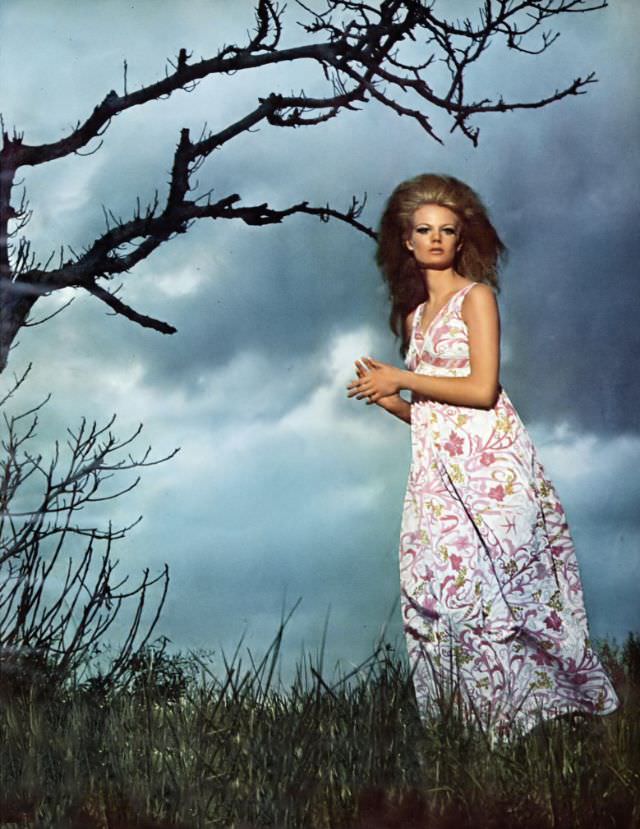
Marika Green in a printed white lingerie set by Hollywood Vassarette, March 1967
Model in an Empire nightdress by Emilio Pucci, April 1967
Model in a rayon-crepe nightdress by Van Raalte, April 1967

The final years of the decade brought some of Newton’s most dramatic editorial work. In September 1968, actress Suzy Kendall was photographed in two bold ensembles — a fake-snake outfit over an emerald plaid shirt and a black vinyl cobra ensemble with red-beaded embroidery. Two months later, Princess Ira von Fürstenberg appeared in a chinchilla jacket by Christian Dior Furs. Newton closed the 1960s the same way he had opened them: with images that commanded attention and refused to be ignored.
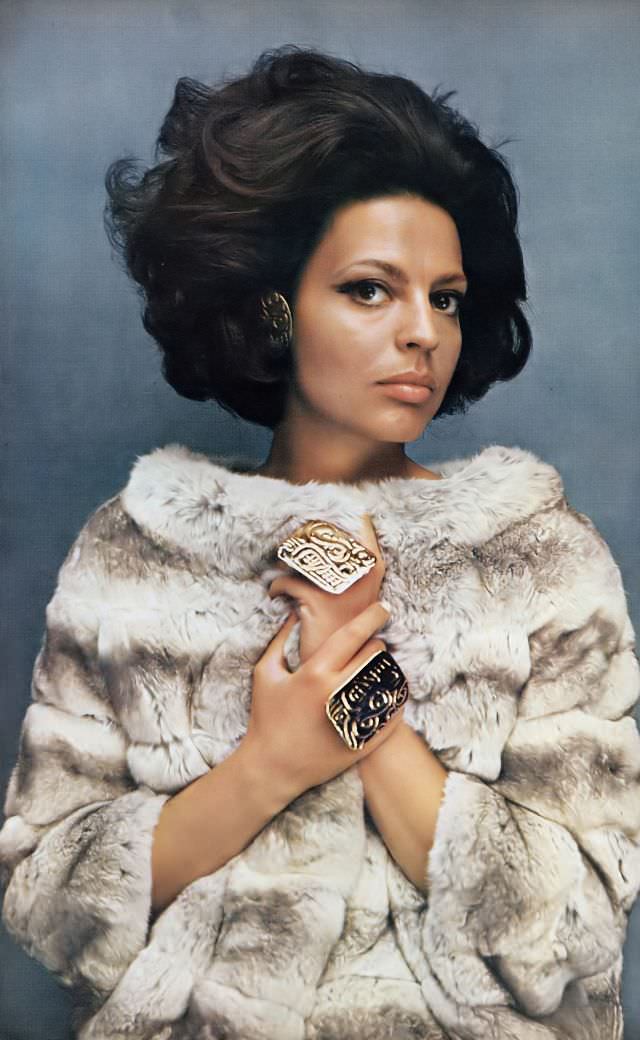
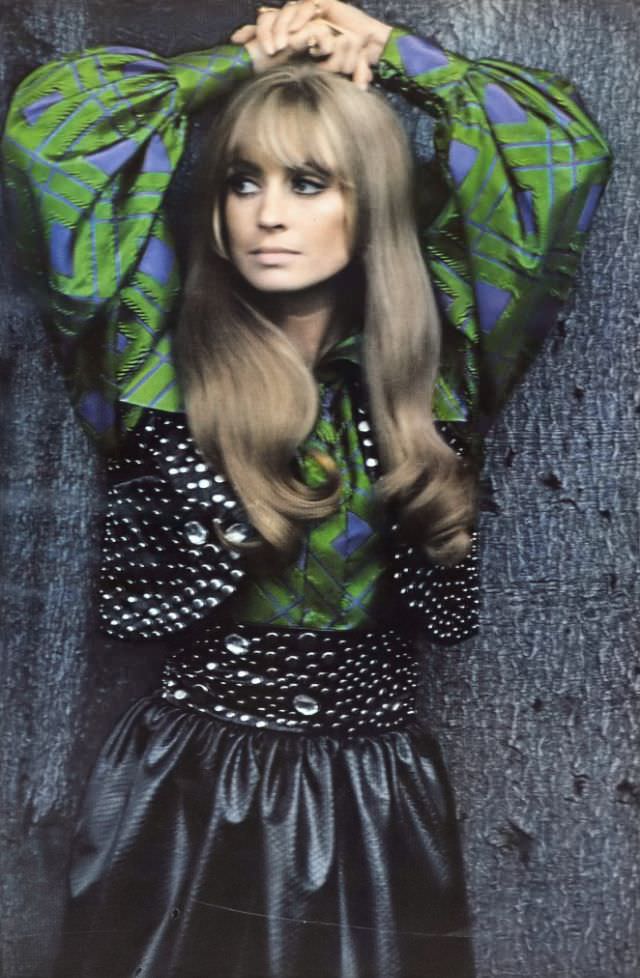
Princess Ira von Fürstenberg in a chinchilla jacket by Christian Dior Furs, November 1968
Suzy Kendall in a fake-snake ensemble over an emerald plaid shirt, September 1968
Suzy Kendall in a black vinyl cobra ensemble with red-beaded embroidery, September 1968
Enjoyed this post? Get new ones in your inbox.

Leave a Comment

Your email address will not be published. Required fields are marked *

Share this Post 🥺

Please take a moment to share this content. Your support is greatly appreciated! 🙌🙏

Share this Post 🥺

Please take a moment to share this content. Your support is greatly appreciated! 🙌🙏
Scroll to Top
 
Hey Friend, Before You Go.. Please like & follow for more interesting content