

The late 1950s marked a golden age for American travel. A booming postwar economy, rising wages, and expanded worker benefits put vacations within reach of ordinary families for the first time. Hotels answered the demand fast — in 1962 alone, more than 2,000 motels and 80 full hotels were built across the United States. The days of a bare room with a cot and a lamp were over. Modern hotel rooms now came with quality furniture, televisions (sometimes in color), and that most celebrated perk of the era: the mini-bar.
Hawaii was a prime destination in this travel boom. The islands became a state in 1959, which added to their appeal and drew a wave of resort development almost immediately. Properties across Kauai, Maui, the Big Island, and Oahu competed to offer guests a lush, tropical experience wrapped in mid-century comfort. The postcards hotels sent out were a key part of their marketing — bright, carefully staged images of bedrooms and lounges designed to make a traveler reach for a pen and book a room.
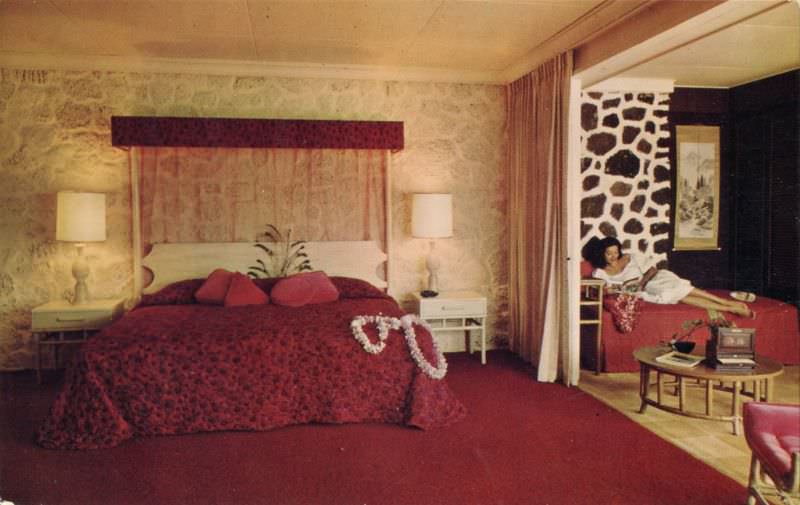
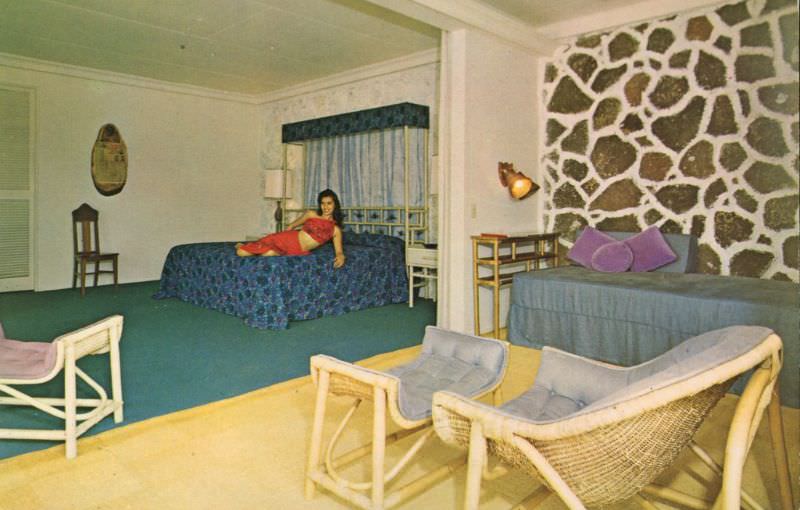
The Hanalei Plantation on Kauai was one of the standout properties of the era. Nestled along the island’s lush north shore, it offered guests a sense of seclusion rare for a resort hotel. Its rooms leaned into the tropical setting, mixing natural textures with the clean furniture lines typical of 1950s design.
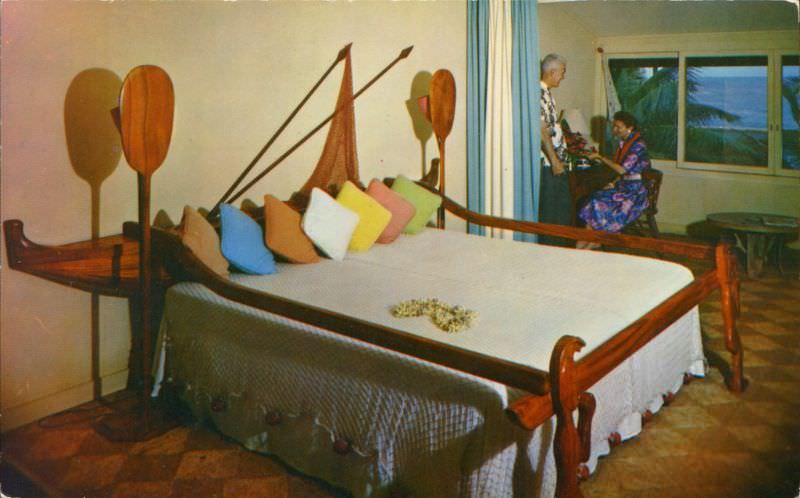
The Coco Palms Hotel was one of Kauai’s most iconic addresses. Built among a grove of coconut palms, the property carried a strong sense of place that few competitors could match. Its rooms reflected the same attention to atmosphere, blending island materials with the amenities travelers expected from a modern hotel.
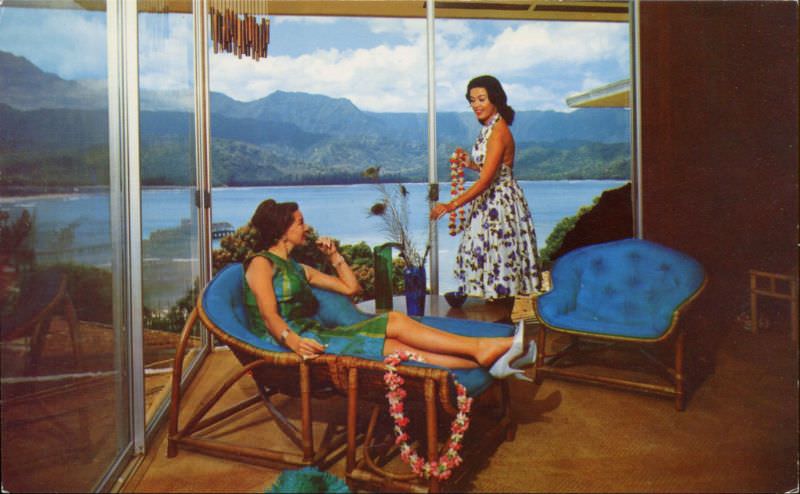
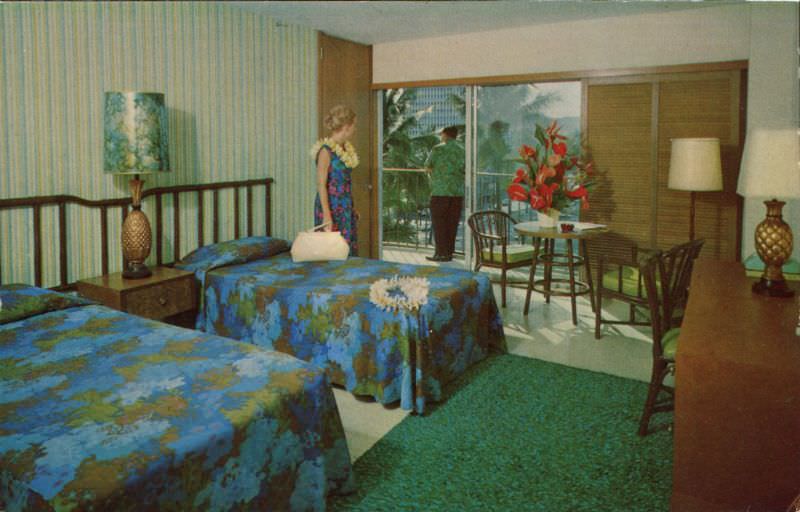
Not every Hawaiian hotel aimed for the luxury bracket. Properties like the Holiday Isle Hotel offered a more accessible option for families and budget-conscious travelers who still wanted a comfortable, well-appointed room. Across the islands, the range of hotels meant that Hawaiian travel was not reserved only for the wealthy.
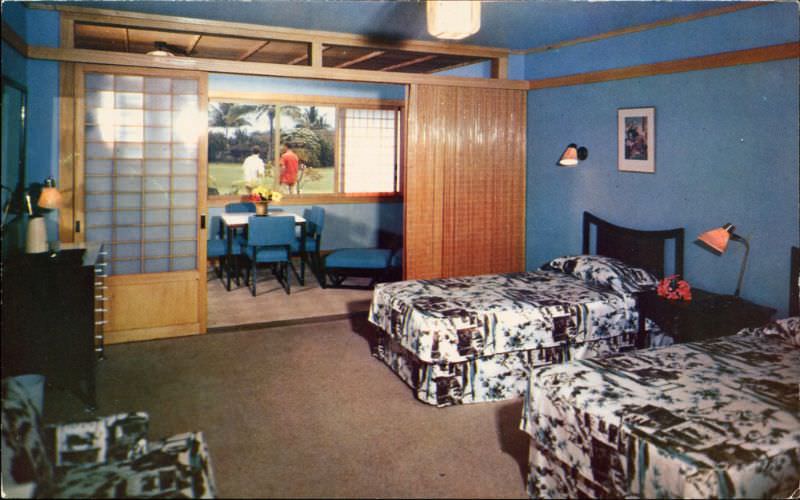
On Maui, the Hotel Hana Maui stood apart from the busier resort strips. Located in the remote town of Hana on the island’s eastern coast, the property offered guests quiet and privacy. Its rooms were designed to feel like a retreat rather than just a place to sleep, with décor that echoed the surrounding landscape.
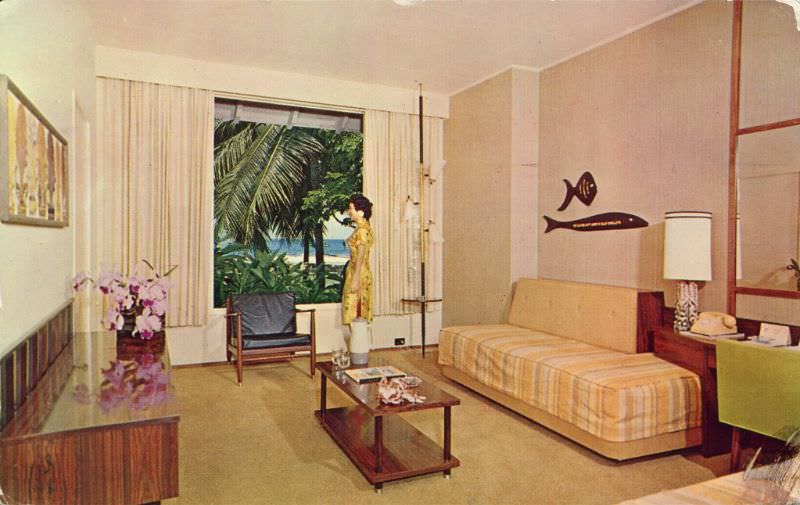
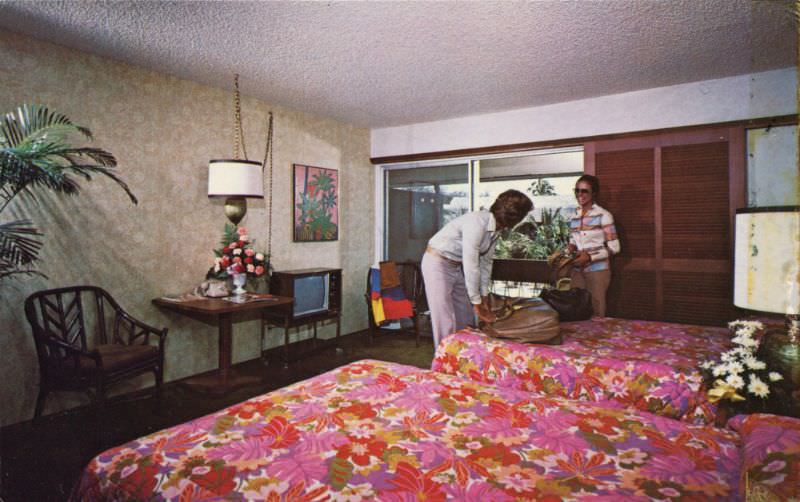
Kauai hosted several distinct hotel personalities. The Kauai Beachboy Hotel carried a relaxed, casual tone that matched the island’s laid-back reputation. Its postcard images show rooms that felt inviting rather than formal — the kind of space a traveler could settle into for a week without feeling like a guest in someone else’s house.
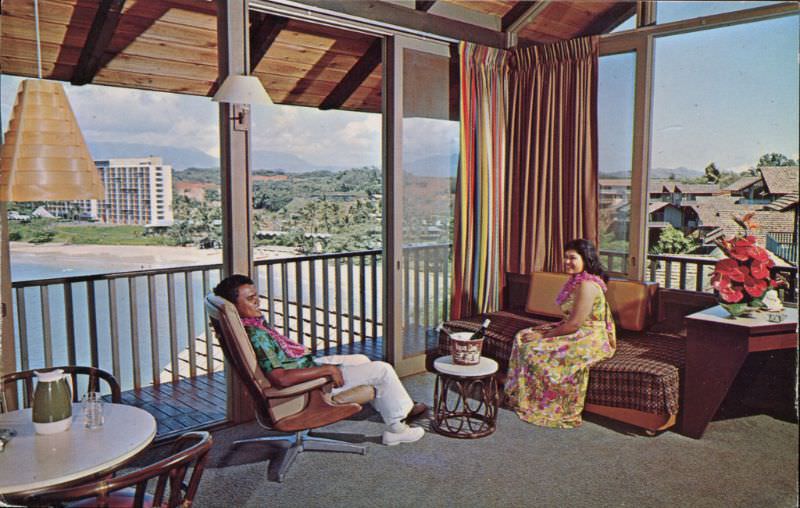
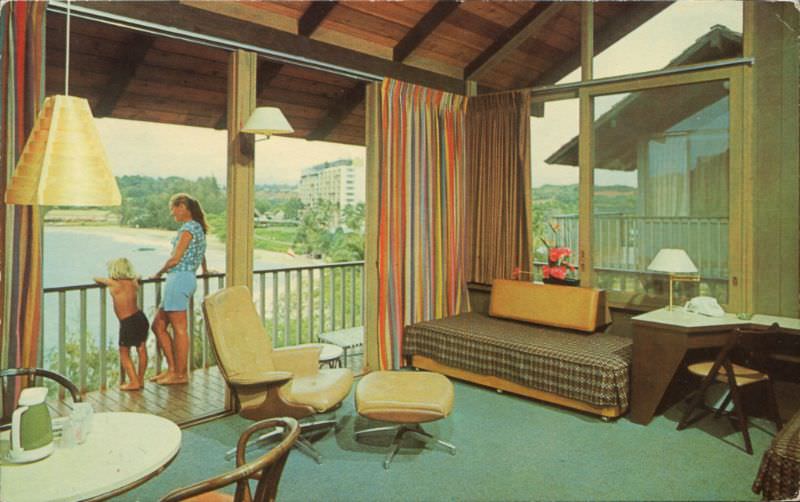
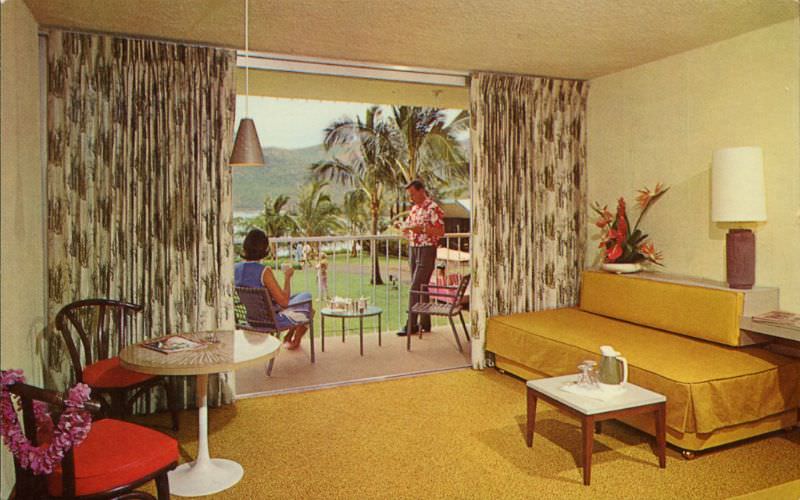
The Kauai Surf Hotel sat right on Kalapaki Beach, giving guests direct access to the water. Its rooms were bright and airy, designed to bring the outdoors in. Multiple postcards were produced showcasing different angles of its interiors, which tells you something about how seriously the hotel took its marketing.
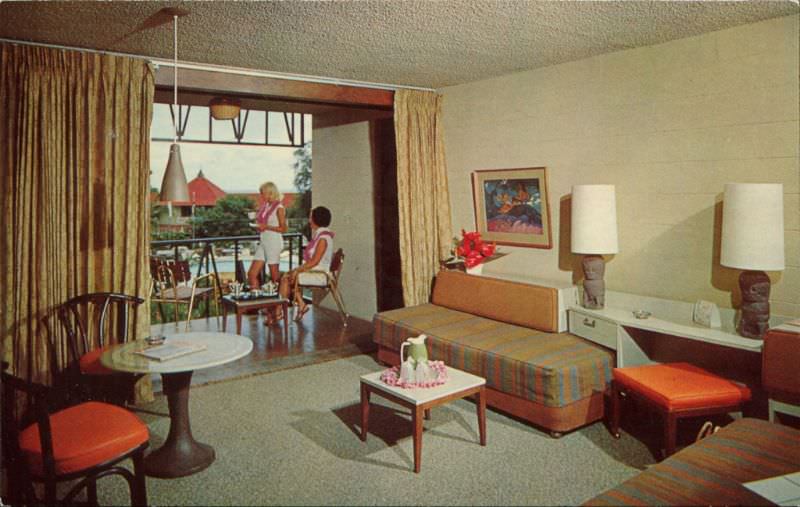
On the Big Island, the Kona Inn was one of the oldest and most established hotels in the islands. Originally opened in 1928, it had already gone through decades of updates by the 1950s. Its rooms by this era reflected the new standard — comfortable, well-furnished, and equipped with the modern amenities that postwar travelers had come to expect.
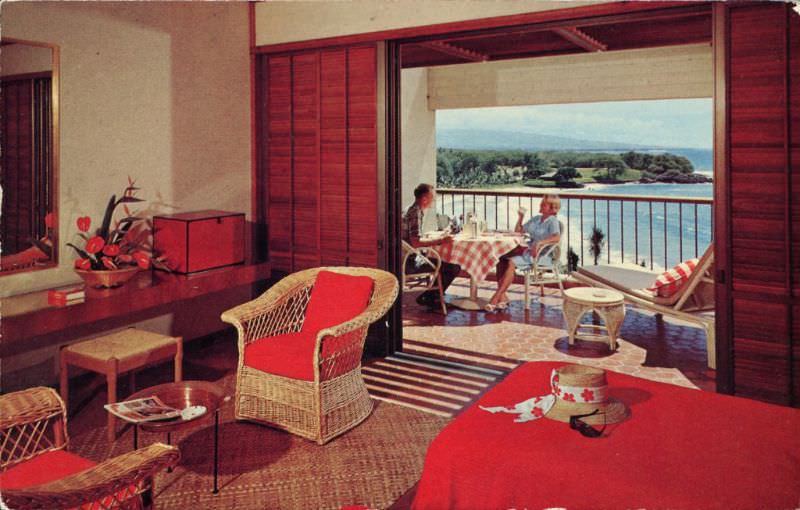
The Mauna Kea Beach Hotel represented the high end of what 1950s Hawaiian hospitality could offer. Set along the Kohala Coast of the Big Island, the property was designed to feel like a destination in itself. Its rooms were spacious and carefully furnished, aimed at guests who wanted a premium experience from the moment they arrived.
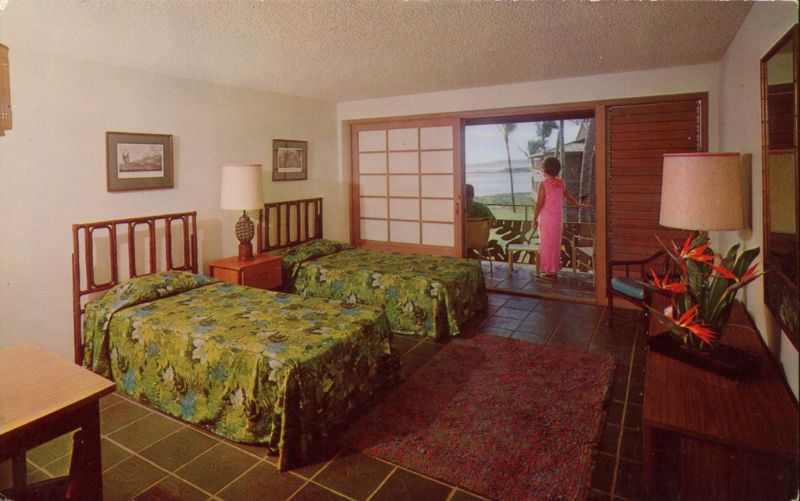
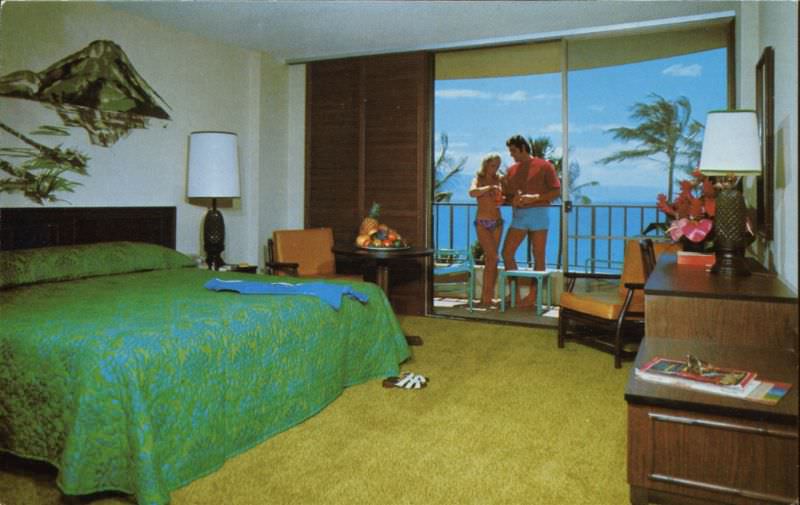
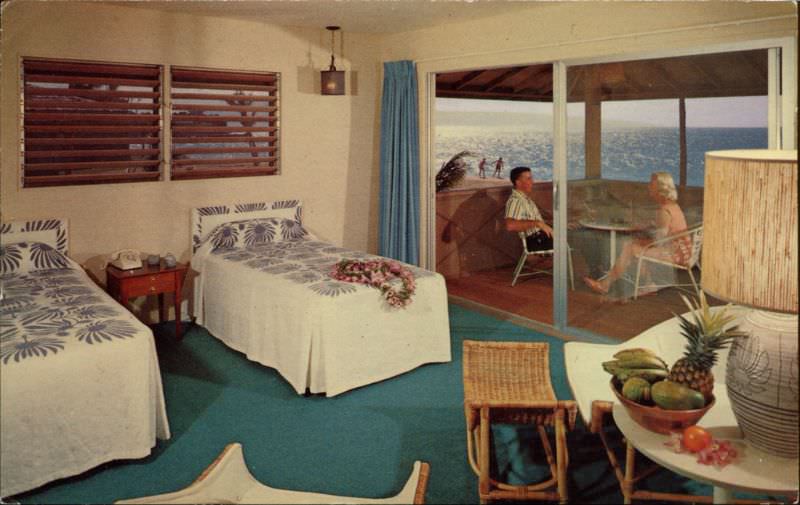
On Maui’s west coast, the Royal Lahaina Hotel anchored the growing Kaanapali resort strip. Its rooms appeared in multiple postcards, showing the clean lines and warm tones that defined mid-century Hawaiian resort style. The hotel was part of a deliberate effort to develop Kaanapali into a world-class vacation destination during the late 1950s and early 1960s.
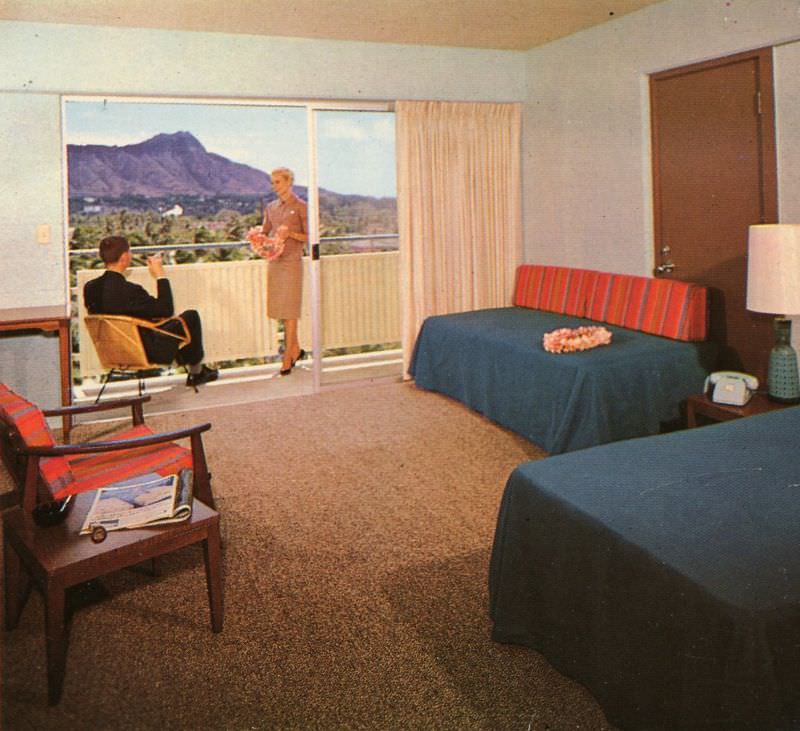
Waikiki rounded out the picture. The Sea Shore Hotel brought the same mid-century sensibility to Oahu’s most famous stretch of beach. These postcards — from Kauai to Maui to the Big Island to Waikiki — capture a specific moment in Hawaiian hotel history, when a new standard of comfort met one of the world’s most compelling destinations.
