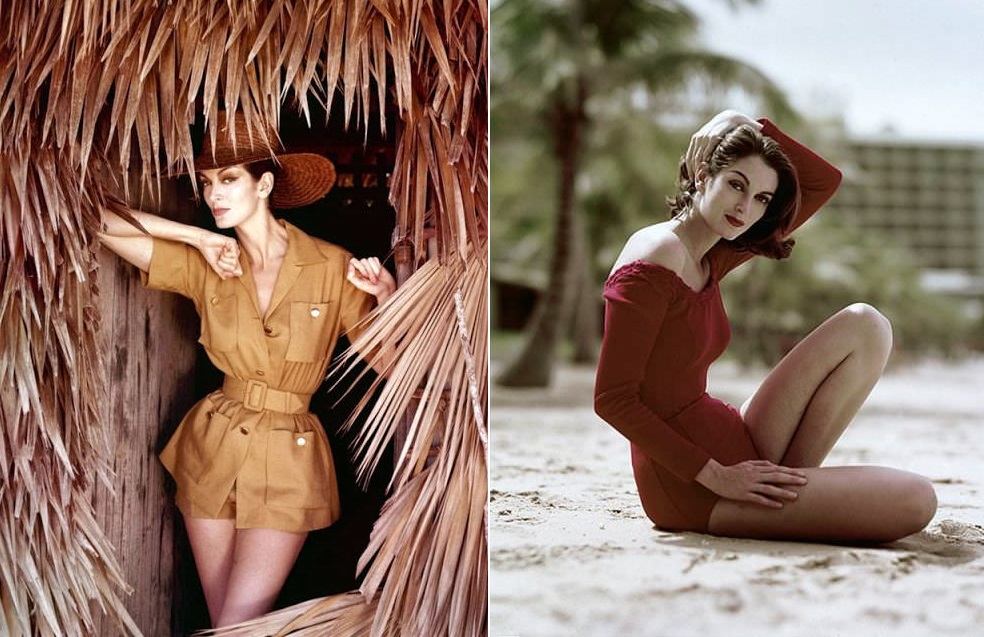
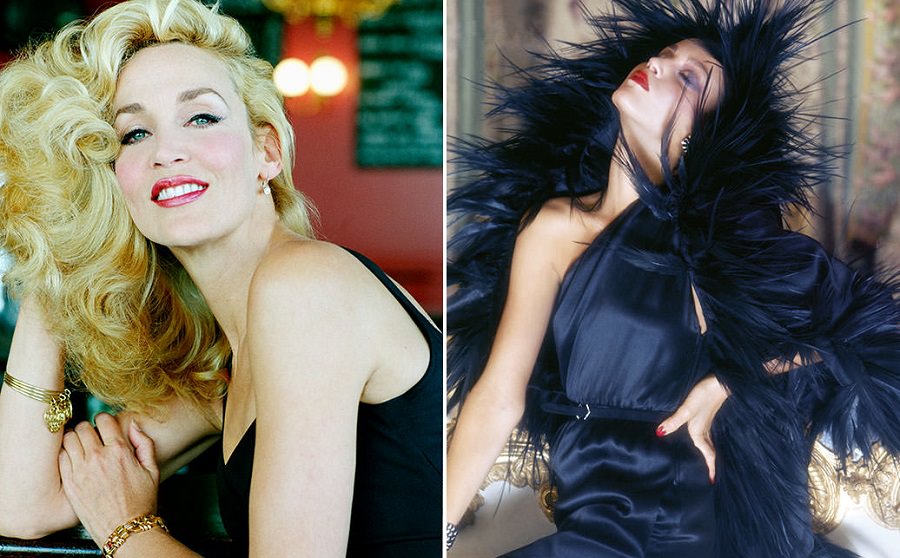
Hey There! Before You Go. 😧
Get the best vintage content straight into your inbox!

Don't worry, we don't spam

The Evolution of Swimsuits: 50+ Photos That Show A Complete History Of Beach Fashion From 1800s To Present Day

The history of swimsuits is really a history of society itself. What people wore to the water — and how much of their bodies they were allowed to show — changed with laws, wars, cultural shifts, and the rise of new materials. No other piece of clothing reflects those changes quite so clearly. This collection of over 50 photographs traces that story from ancient times all the way to the present day.

The story starts much earlier than most people expect. Frescos discovered at the Villa Romana del Casale in Sicily depict women wearing two-piece garments remarkably similar to modern bikinis. These images, estimated to be over 2,000 years old, show girls competing in athletic events. The swimsuit, in its most basic form, is ancient.

Ancient Rome (753 BC - 476 AD)
Ancient Rome (753 BC – 476 AD)

By the 1800s, attitudes toward the body had swung to the opposite extreme. Victorian society demanded that women cover themselves completely, even at the beach. Bathing gowns — heavy, full-length garments made from thick wool or flannel — were standard. These outfits were designed to conceal the female form entirely, even when wet. Some women used a device called a bathing machine, a wooden changing room on wheels that was pulled directly into the sea so a woman could enter the water without being seen on the beach at all.

Victorian Women wtih bathing gowns, 1800s
Victorian era (1837-1901)

Victorian bathing costumes were elaborate. They included long skirts, bloomers underneath, sleeves, and stockings. The goal was modesty at all costs, even if it meant swimming in clothing that weighed several pounds when waterlogged. Fabric inspectors sometimes patrolled beaches to ensure women met the required standards of coverage.

A woman wearing a fashionable bathing costume, 1870
Holidaymakersin bathing suits in the ocean surf at Santa Monica, Calif, 1890

Entering the 1900s, the layers began to thin — but only slightly. Swimsuits from this era still ran from the collar to below the knee, often featuring buttons, ruffles, and matching caps. Wool and flannel remained the dominant fabrics, meaning a day in the water was an exhausting physical experience. Despite the modest appearance, these suits represented a step toward women actually swimming rather than simply wading.

Woman in one-piece bathing suit and cap reclining on a beach in France,1900
Women wearing 1900s swimsuits having right down to the collars and buttons made from heavy flannel or wool fabrics
Edwardian beach fashion plus hat 1906

Bathing machines were still in regular use in the Edwardian era. A photograph from 1906 captures a woman stepping back into one after a swim — a routine that shows how seriously beach modesty was enforced, even as swimwear began to gradually loosen up. Women who pushed the boundaries of acceptable swimwear often faced real social and legal consequences.

Edwardian woman enters a bathing machine after a swim, 1906
A Girl in A Bathing Costume,1909

One of the most significant figures in early swimsuit history is Annette Kellermann. The Australian swimmer made headlines in 1910 by wearing a fitted, sleeveless one-piece suit that showed her arms and legs. She was arrested on a Boston beach for indecency. But the arrest drew enormous public attention, and her style of suit — which allowed real freedom of movement — gradually became accepted as swimwear shifted toward function alongside fashion.

Annette Kellermann, the first woman to swim across the English Channel, 1910
4 women wearing sleeveless fabric swimsuit, 1910
Four young women in matching beach wear run out of the surf, Los Angeles, 1910
Turkish-style bloomers, 1910
4 Women enjoying at beach with differnt bathing suits, 1912

By 1918, silk had made its way onto the beach. Actress Elsie Marson was photographed in a red silk swimsuit with white embroidered spots — a far cry from the heavy wool gowns of just two decades earlier. The shift toward lighter, more decorative fabrics signaled that swimwear was becoming a fashion statement, not just a functional covering.

Actress Elsie Marson in a red silk swimsuit with white embroidered spots, 1918

The 1920s brought a striking moment of uniformity. Men’s and women’s swimwear looked nearly identical — both featuring fitted tank-style tops with short trunks or bottoms. Matching wool suits with horizontal stripes were common across genders. At the same time, enforcement of swimsuit length laws reached a peak. In Washington D.C. in 1922, inspectors on beaches physically measured women’s suits with rulers to ensure they did not expose too much leg above the knee.

When Men's and Women's Swimwears Look the Same, 1920s
When Men’s and Women’s Swimwears Look the Same, 1920s
Women's Swimsuit Fashion in Norway, 1920s
Women’s Swimsuit Fashion in Norway, 1920s
Women wearing 1920s Swimsuit with matching stockings
Woman having her swimsuit measured for length violations on a Washington DC beach, 1922
Five women walking arm-in-arm on the beach wearing wool bathing suits, 1925
A bathing dress,1926

The late 1920s also produced some unusual innovations. A full-face swimming mask appeared in 1928, designed to protect the skin from sun exposure. The same era saw French designer Lucien Lelong release belted one-piece jersey suits with striped detailing — a polished, structured look that pushed beach fashion firmly into the realm of high style.

Full face swimming mask, 1928
Dancer Alice Nikitina wearing a striking bathing suit at the beach in Alassio, Italy, 1929
Belted one-piece jersey bathing suits with stripes on the bottom; designed by Lucien Lelong, 1929

The 1930s pushed swimwear into noticeably more daring territory. Suits became shorter, tighter, and lower-cut. Stretchy synthetic fabrics allowed for higher-cut legs and lower necklines. Actress Joan Blondell modeled a skirt-style suit with a dramatically lower neckline in 1933. Anita Page and Leila Hyams were photographed in form-fitting suits that would have been unthinkable just ten years earlier.

In 1930s Swimsuits were usually  shorter, tighter, and flirtier
In 1930s Swimsuits were usually shorter, tighter, and flirtier
Swimsuit fashion in Paris, France,1930
Woman wearing cut-out swimming suit at the Aquatic gala at Molitor swimming pool, on June 23, 1931 in Paris
Verna Lee Fisher sporting her newly created crossword swimsuit with matching bathing hat, at Palm Beach, 1933
Actress Joan Blondell wearing skirt-style swimsuit with a lower neckline, 1933

Japanese geishas at the beach in the 1930s offered a distinct contrast to Western trends. While Hollywood actresses wore increasingly revealing suits, photographs from Japan show geishas in conservative swimwear paired with black stockings — a reflection of how different cultural norms shaped beach fashion around the world.

Geisha wearing swimsuit with black stockings, 1933
Geishas beach fashion, 1930s (Japanese women  who entertain through performing the ancient traditions of art, dance and singing)
Geishas beach fashion, 1930s (Japanese women who entertain through performing the ancient traditions of art, dance and singing)
Giesha girls, 1935
Giesha girls, 1935
The Latest In swimwear on a beach In California, 1934
Actresses Ida Lupino and Kathleen Burke model the latest swimwear, 1935
Anita page & Leila Hymans -Stretchy synthetic fabrics, with higher-cut legs and lower cut necklines, 1930s
embers of the Pioneer Health Centre in Peckham, south London, learn how to swim on November 19, 1935
1930-1939 style
1930-1939 style

The 1940s brought wartime rationing, which directly impacted swimwear. Fabric was limited, so suits became smaller by necessity. Manufacturers responded by engineering suits with stretchy control panels in the stomach area using a new elastic material called lastex. Built-in bra cups were added to the bust for shape and support. Metal zippers and small buttons at the back became standard closures, and patriotic colors — reds, whites, and blues — were popular alongside floral prints.

Actress Alexis Smith in a swimming costume running along the beach in southern California, 1940
Bathing suit clad female members of the British Imperial Censorship Staff,standing poolside at the Princess Hotel, 1941
1940s swimwear featured stretchy control panels in the stomach, made from a new type of material called lastex
Bra cups in the bust to keep the figure looking good in the revealing, 1940s
Suits fastened with small buttons or metal zippers in the back in 1940s
Any color could be found on a swimsuit, but patriotic colors were popular as well as floral patterns, 1940s
Girls in swimsuits with rifles, 1940s
Model posing in bathing suit in Florida, 1945
Two models wearing bathing suits and bathing caps,1946

The single most disruptive moment in swimsuit history came on July 5, 1946. French designer Louis Réard introduced the bikini at the Molitor swimming pool in Paris — the same pool where a cut-out swimsuit had caused a stir fifteen years earlier. Réard could not find a professional model willing to wear his creation, so 19-year-old Micheline Bernardini, a nude dancer from the Casino de Paris, stepped in. The suit was marketed as revealing “everything about a girl except her mother’s maiden name.” The name came from Bikini Atoll, where the United States had just conducted nuclear weapons tests — Réard believed his design would create an equally explosive reaction.

On July 5, 1946, French model Micheline Bernardini wore the bikini for the first time in Paris.

The 1950s saw swimwear reach genuine high fashion status. Designers like Givenchy and Jantzen produced structured, glamorous suits that appeared in the pages of Vogue. Strapless styles, bold patterns, and plush fabrics like velvet and pink velour made beach clothing as carefully designed as any evening gown. The bikini, though controversial, began appearing in film — Brigitte Bardot wore one in the 1952 French film “Manina, the Girl in the Bikini,” helping push the style into the mainstream.

Bikinis, Swimsuits and all other types of beach wears started emerging in 1950s, designers instroduced wide variety of unique styles.
Brigitte Bardot starred in the 1952 French film
Jean Patchett in oink velvet bathing suit, Vogue, 1951
A girl wearing stylish swimwear, 1952
Model seated with basket on a rooftop, wearing Calypso designed patterned bikini, 1952
Liz Pringle as Liz Benn models a strapless swimsuit by Givenchy Vogue, 1953
A group of southern belle models sunbathe on the beach at Cypress Gardens theme park, Winterhaven, Florida, 1953
Austrian actress Mara Lane lounging by the pool in a red and white striped bathing costume at the Sands Hotel, Las Vegas, 1954
Model standing under beach umbrella wearing summer dress look; pleated short shorts and matching sleeveless shirt, both in a light floral pattern. 1954
Model seated on striped beach towel wearing grey and white patterned strapless bathing suit, 1954
Model is in a tank-top swimsuit in moss green lace over white broadcloth and a beach coat with zipped front, 1954
Model in white shark-skin swimsuit by Jantzen, white straw sailor hat worn over polka-dotted scarf hat, both by Betmar., 1955
Sherry Nelms 'Bathing Suits' for Vogue, 1954
Sherry Nelms ‘Bathing Suits’ for Vogue, 1954
A young woman in a bathing suit, 1956
Model standing on beach wearing a bathing suit in harlequin-diamond wool, 1957
Gretchen Harris,  standing in ocean with open green and blue umbrella, wearing knitted black maiilot of DuPont and water-velvet cap , 1957
Gretchen Harris, standing in ocean with open green and blue umbrella, wearing knitted black maiilot of DuPont and water-velvet cap , 1957
Two models in Rose Marie Reid swimsuits. Model on left stands tree wearing blue suit, mask and flippers; model on right wears white suit with matching cap, and flip
Two women wearing strapless bra, 1958
Model wearing red bathing suit, 1958
Model in yellow swimsuit of knitted cotton and Orlon, 1959
The Bikini Girl on the Boardwalk, 1959
Young women on the Nevada side of Lake Tahoe, 1959

The 1960s transformed swimwear through new materials. Nylon and Lycra made suits tighter and more form-fitting than anything that had come before. The counterculture movement of the era encouraged body confidence, and bikinis shrank further into the 1970s. The decade’s free-spirited attitude meant that less fabric was seen as a statement of liberation rather than scandal.

The introduction of nylon and Lycra in the '60s made suits tighter than ever, similar to the costume Yvonne Craig wore in her role as Batgirl in the television seri
The introduction of nylon and Lycra in the ’60s made suits tighter than ever, similar to the costume Yvonne Craig wore in her role as Batgirl in the television seri
60s is known as hippie's era and its free-love advice suggested that you embrace your body and share it without shame.
60s is known as hippie’s era and its free-love advice suggested that you embrace your body and share it without shame.
Annette Funicello in Swimsuit, 1960s
Minds expanded and bikinis shrank in the '1970s
Minds expanded and bikinis shrank in the ‘1970s

The 1980s delivered swimwear at its most bold and experimental. High-cut legs, neon colors, bold geometric prints, power-suit styling, and metallic fabrics all competed for attention on the same beach. The aesthetic was maximalist — more color, more pattern, more personality. By the 1990s, the pendulum swung toward athletic design. Tankinis — two-piece suits combining a tank top with bikini bottoms — were introduced, offering a middle ground between the modesty of the one-piece and the freedom of the bikini.

From leather to lace, bright colored neon to power-suits, the aesthetic experiments of the 1980s gave the fashion world a colorful mine of styles which continue to
1980s beach fashion
1980s beach fashion
1980s beach fashion
1980s beach fashion
In other words, not too different from what you'd see at the beach or pool today, 1980s
In other words, not too different from what you’d see at the beach or pool today, 1980s
In 1990s fashion trend navigated toward more athletic designs Tankinis were introduced

What the photographs in this collection make clear is that swimwear has never been simply about water. Each suit carries the fingerprints of the era that produced it — its laws, its values, its anxieties, and its freedoms. The full-length bathing gown and the modern bikini are separated by barely 150 years and an enormous shift in what society decided women were allowed to show.

Enjoyed this post? Get new ones in your inbox.

1 thought on “The Evolution of Swimsuits: 50+ Photos That Show A Complete History Of Beach Fashion From 1800s To Present Day”

Leave a Comment

Your email address will not be published. Required fields are marked *

Share this Post 🥺

Please take a moment to share this content. Your support is greatly appreciated! 🙌🙏

Share this Post 🥺

Please take a moment to share this content. Your support is greatly appreciated! 🙌🙏
Scroll to Top
 
Hey Friend, Before You Go.. Please like & follow for more interesting content