Denver entered the 1900s as a city in the middle of reinventing itself. The silver crash of the 1890s had hit Colorado hard, and the city had only just begun pulling out of that slump. Real estate prices stayed depressed until around 1900, when the broader U.S. economy started to recover. What followed was a decade of steady, visible growth. Denver was officially established as a consolidated city and county in 1902, giving it the unified government structure it needed to pursue large-scale projects. Stockyards, brickyards, canneries, flour mills, and leather and rubber goods factories drove employment. Tourism and the service sector expanded alongside them. The Denver Livestock Exchange and the National Western Stock Show gave the city a firm identity as a cattle hub, even as it worked hard to shed its old frontier image.
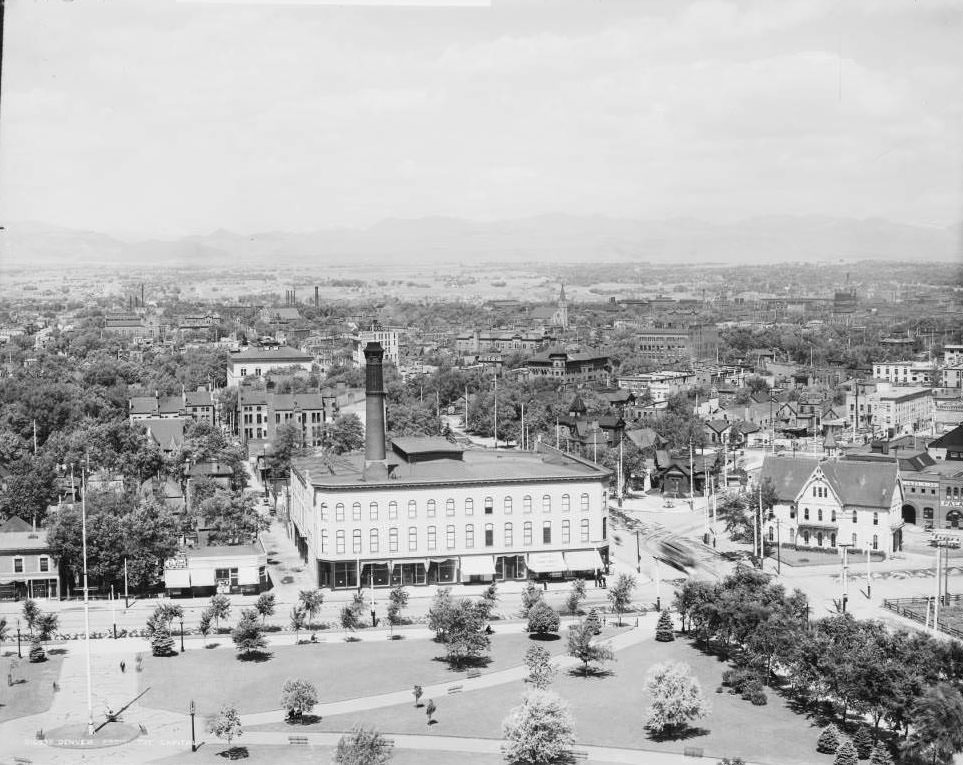
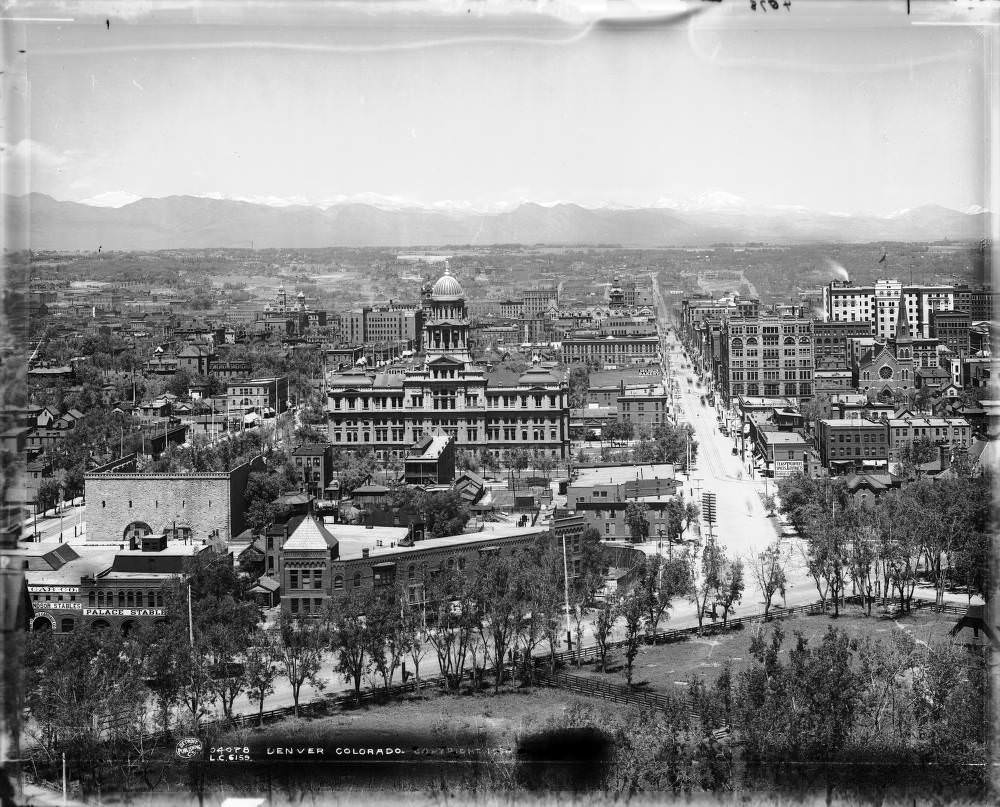
Panoramic view of Denver, Colorado from the Capitol Building, 1900
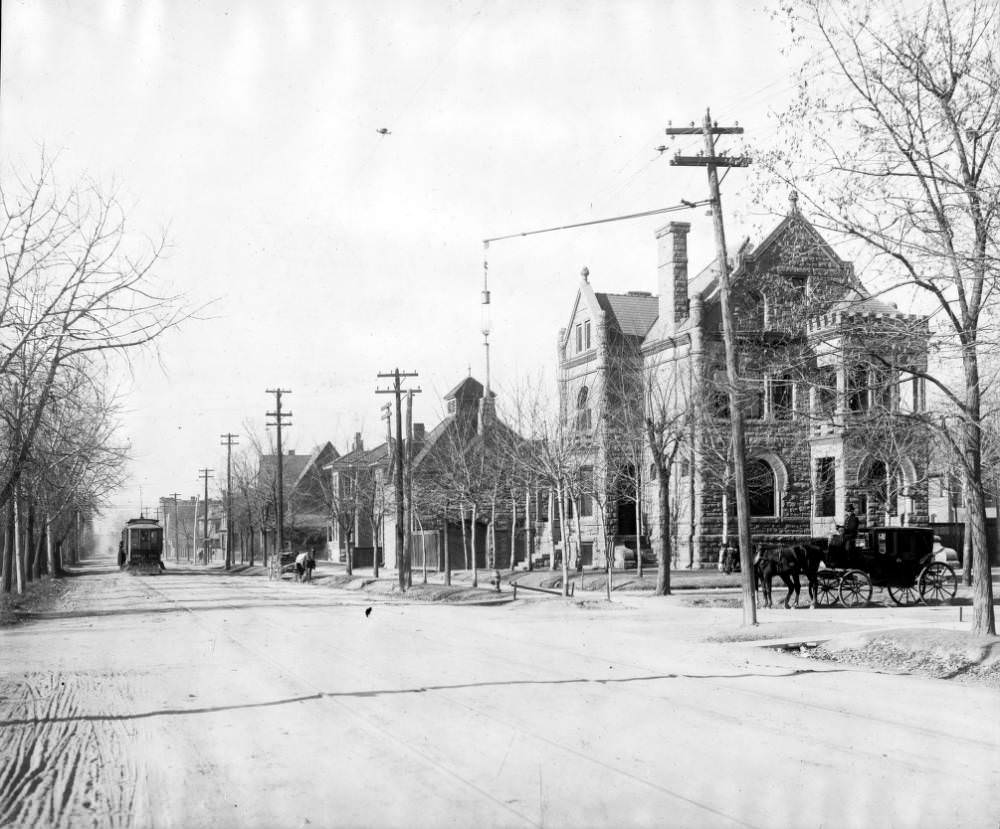
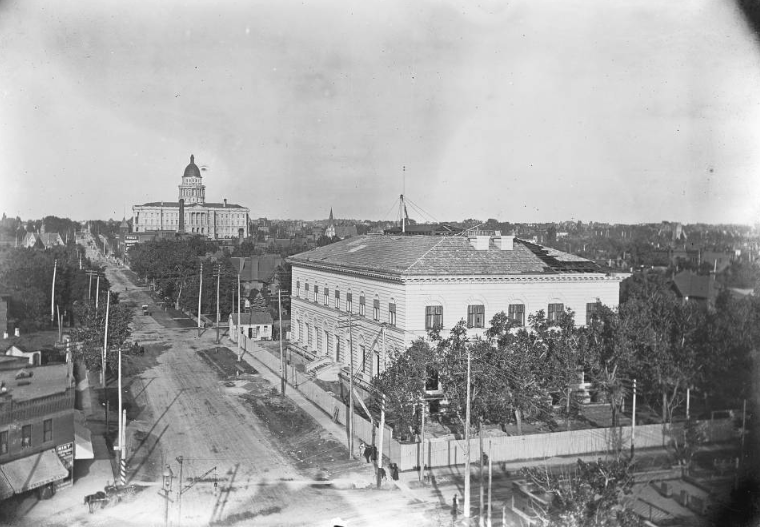
From the top of the State Capitol Building, the Denver of 1900 spread out in every direction. The intersection of Colfax and Broadway sat at the center of civic life. You could see the Denver Fire Department Engine House No. 1, the Denver Cable powerhouse with its tall smokestack, the rusticated stone Denver County Jail with its clerestory windows, and St. Elizabeth Church rising in the distance. Commercial buildings, apartment houses, sidewalks, and parks filled in the landscape. The city had the bones of something permanent, even if the streets still mixed horse-drawn wagons with early electric trolleys.
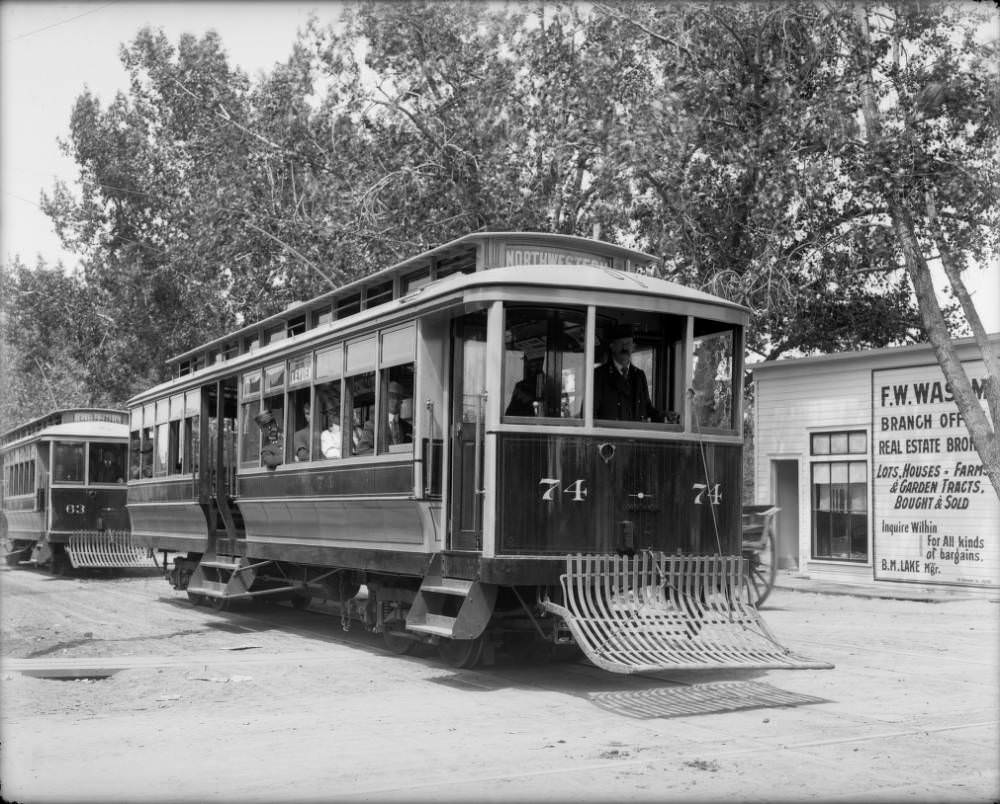
Denver Tramway cars no. 74 and no. 63, 1900
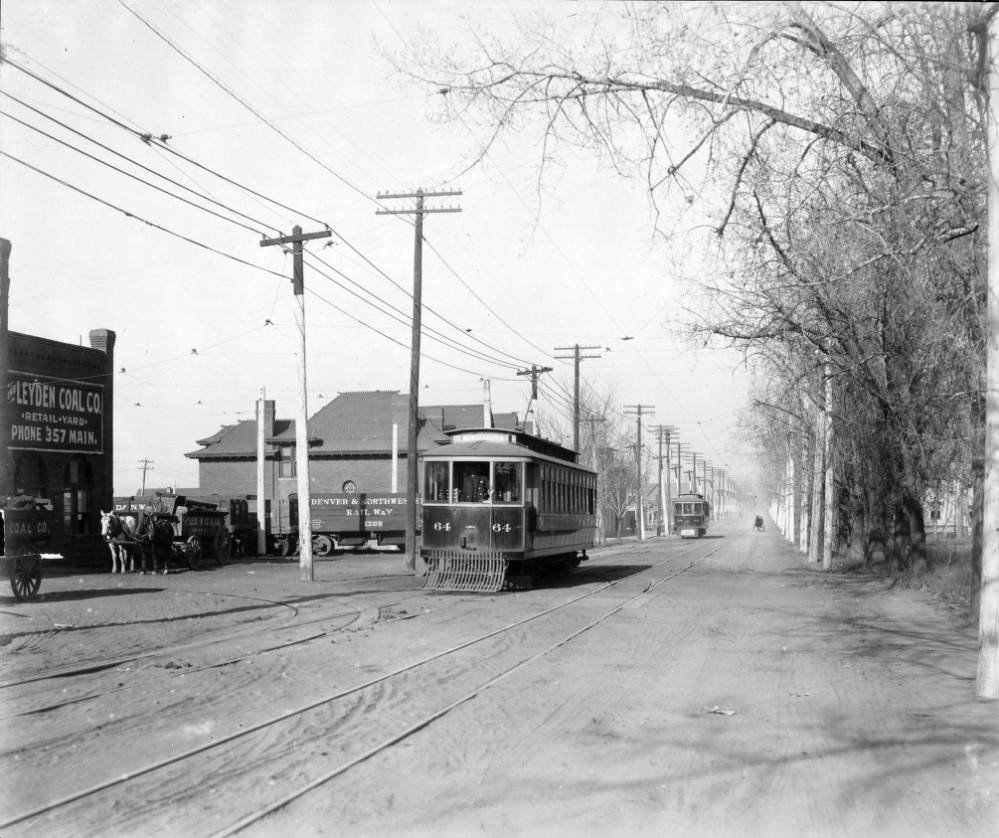
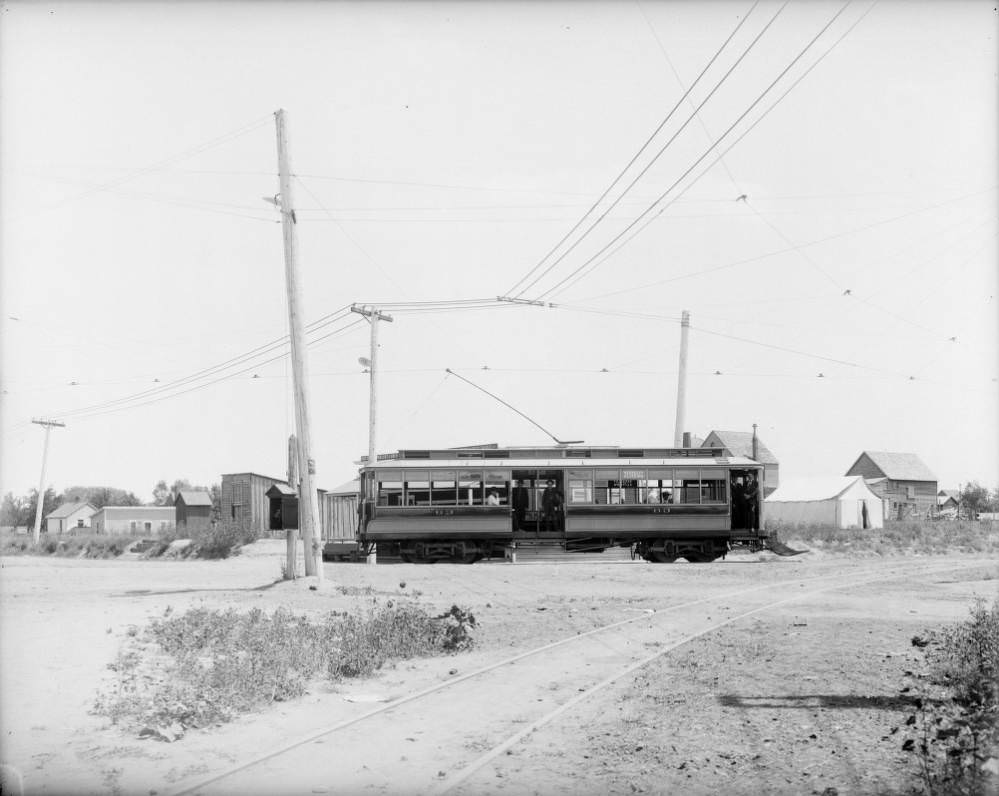
The Denver Tramway Company was the lifeblood of the city’s transportation network. Trolley lines reached into nearly every neighborhood, connecting residents to work, shopping, parks, and rail stations. Cars parked near the intersection of West 38th Avenue and Tennyson Street served riders heading to Elitch Gardens, one of Denver’s most popular destinations. The tramway’s reach went well beyond downtown, with lines running to Berkeley, Englewood, Leyden, and the stockyards. Without these electric streetcars, the city’s rapid expansion into outlying neighborhoods would have been nearly impossible. Conductors in uniform were a common sight across Denver’s streets throughout the entire decade.
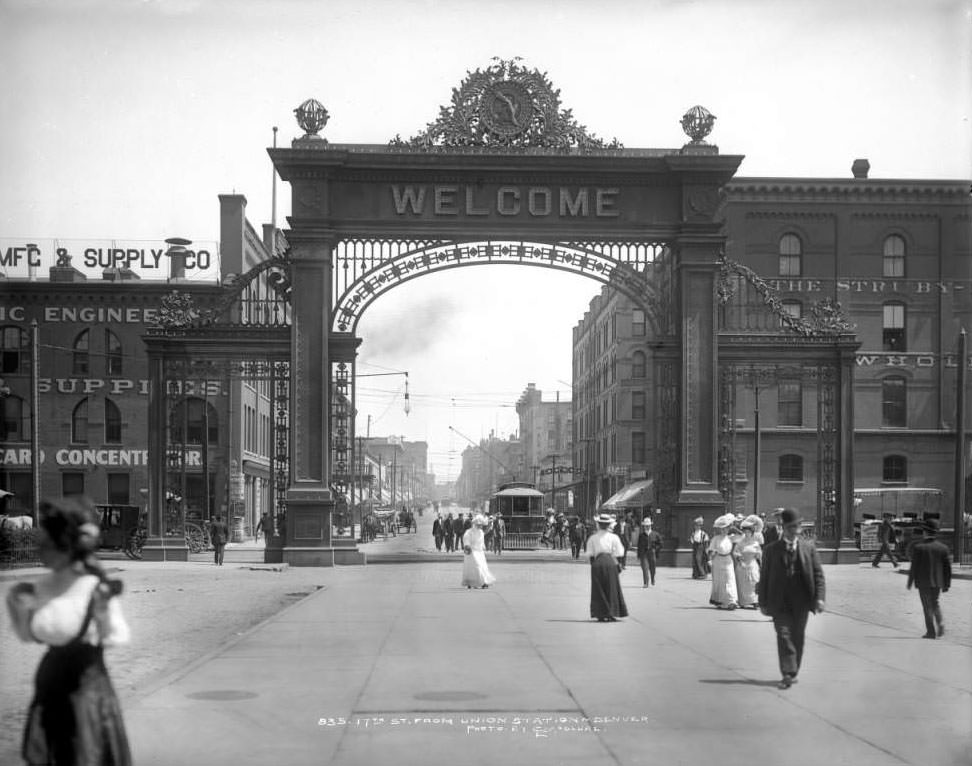
Welcome Arch at Union Station in Denver, Colorado; view of 17th (Seventeenth) street, street railway car number 248, 1906
Union Station served as Denver’s main gateway to the rest of the country. The Welcome Arch that stood at its entrance made a clear statement — Denver was open for business and proud of it. Trains from the Denver and Rio Grande Railroad pulled in and out regularly, connecting the city to Salt Lake City, Pueblo, and points across the mountain west. The station was not just a transit hub but a social space, where residents gathered, travelers arrived, and goods moved in and out of the city at all hours.
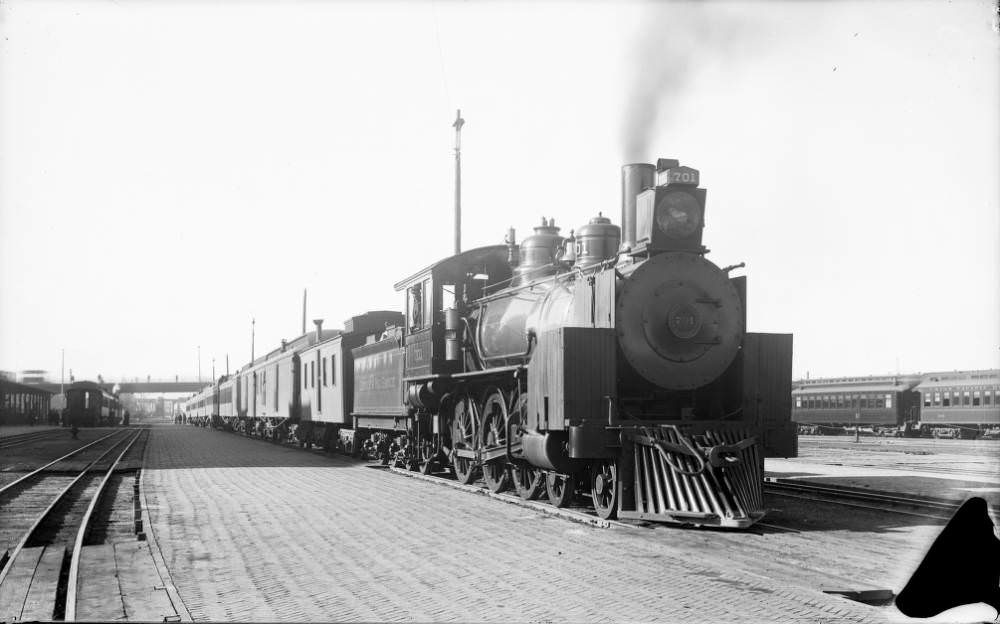
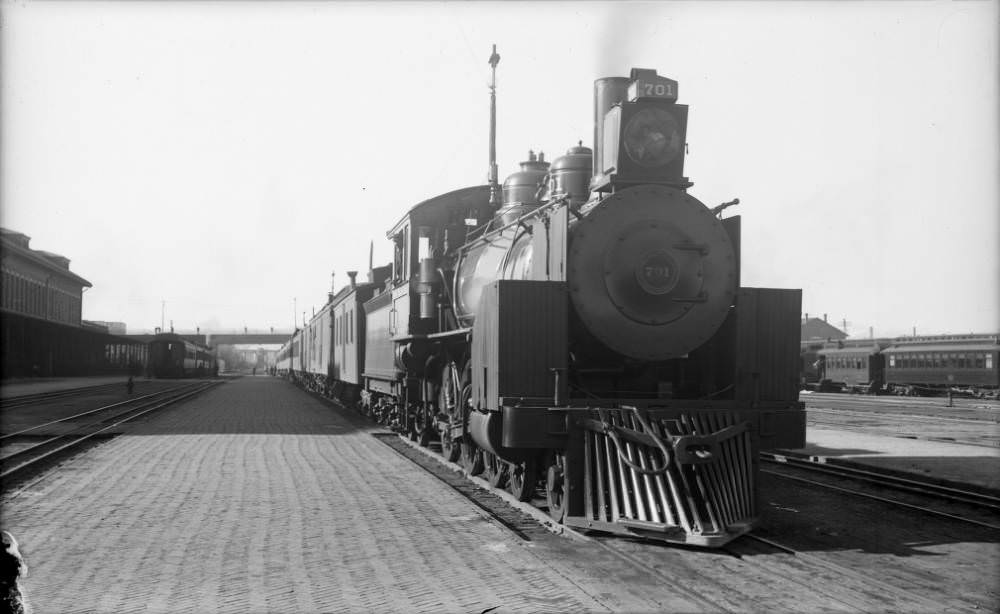
The Denver and Rio Grande Railroad engine no. 701 pulls into the Union Station in Denver, 1909
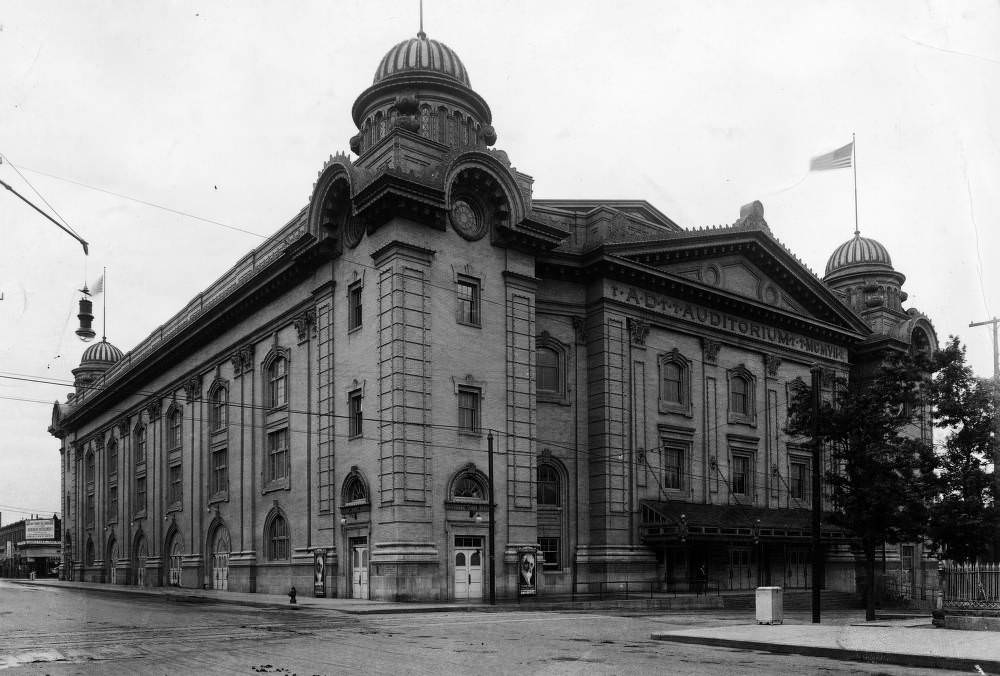
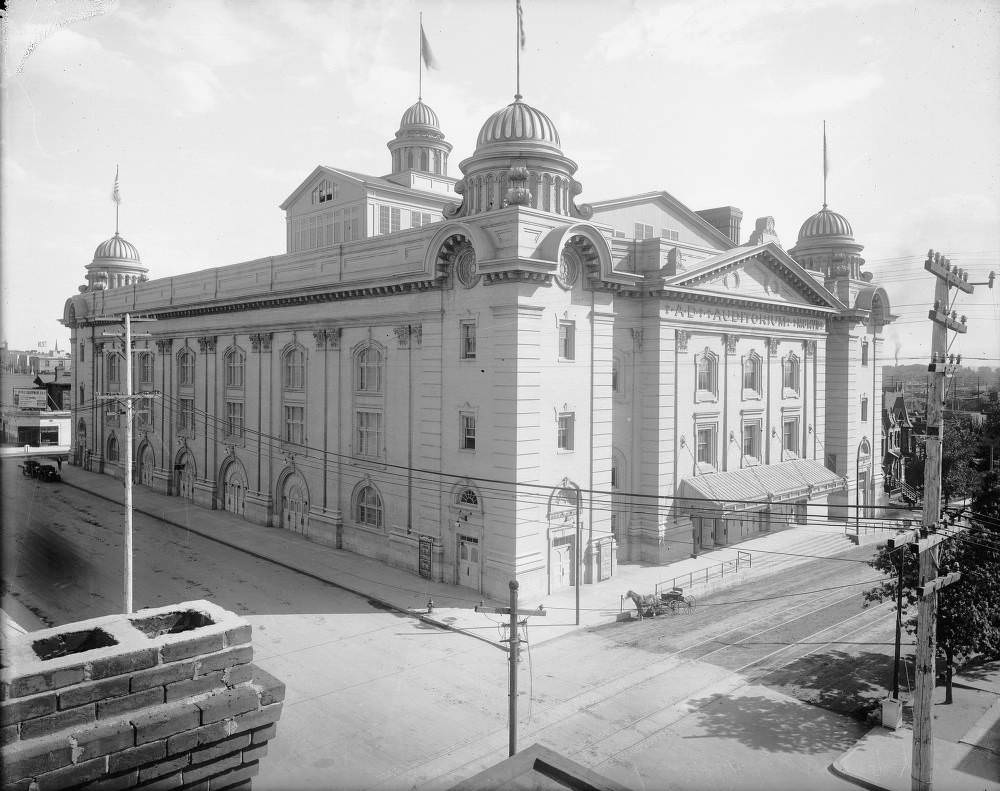
Mayor Robert Speer took office in 1904 and immediately set about reshaping Denver’s public face. His tenure, which ran through 1912, produced some of the city’s most enduring civic landmarks. He pushed through the construction of the City Auditorium, developed the Civic Center, and backed the Denver Museum of Nature and Science. Speer’s vision was to transform Denver from a rough-edged boomtown into a city that could stand alongside any in the nation. He oversaw the construction of Speer Boulevard, a wide, tree-lined parkway that cut through the city along Cherry Creek. City leaders also traveled to Washington D.C. to argue that Denver was ready to host a major national political convention — the first held in a western state.
Denver Municipal Auditorium in Denver, Colorado; shows a stone building with domes and entablature, 1908
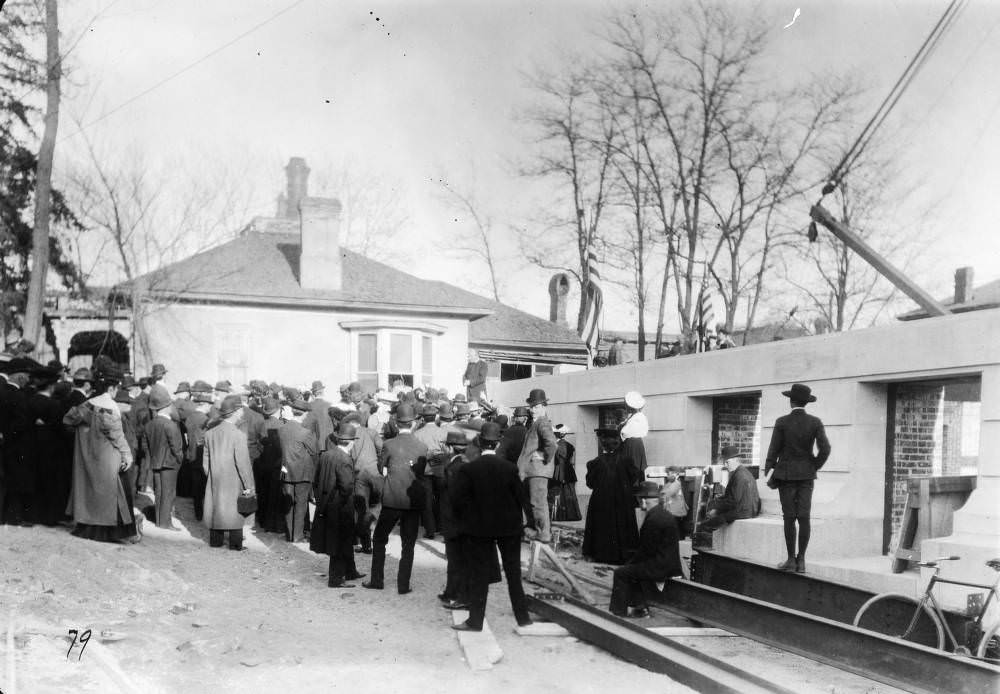
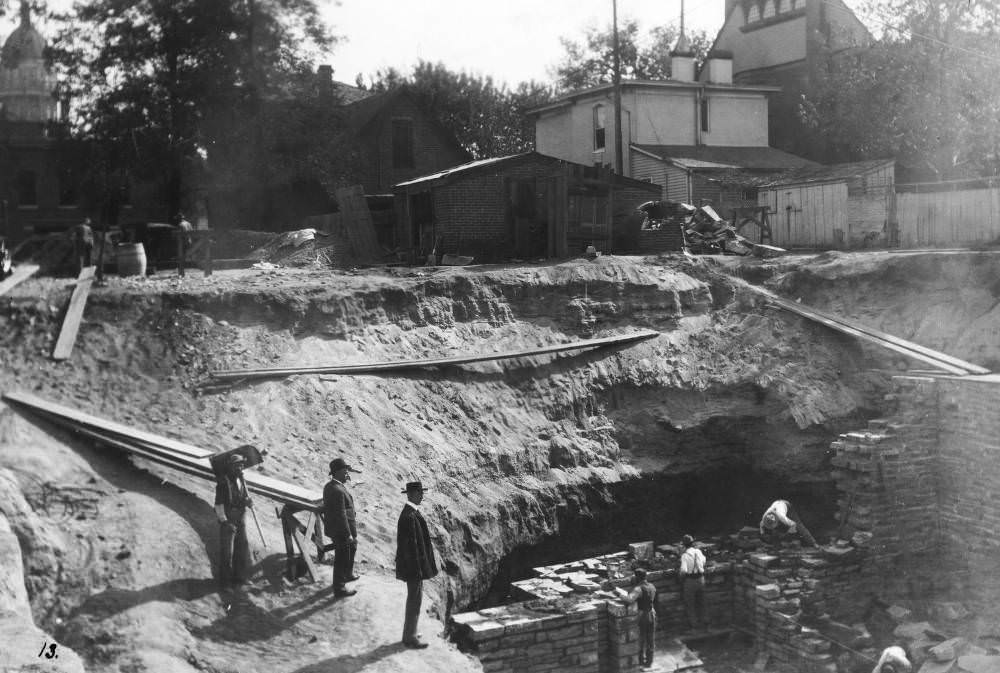
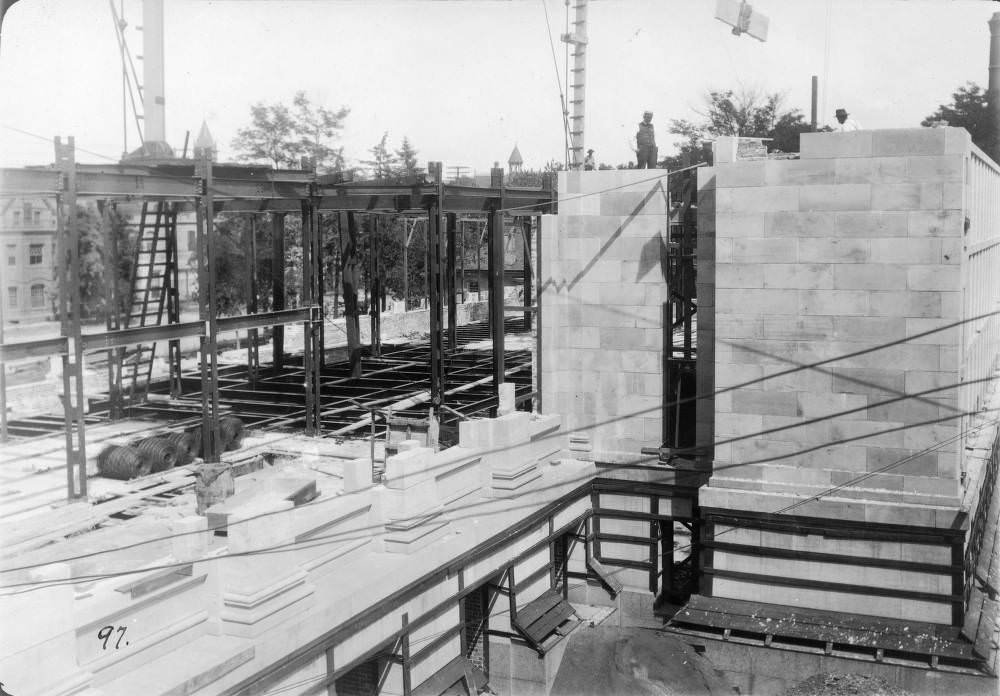
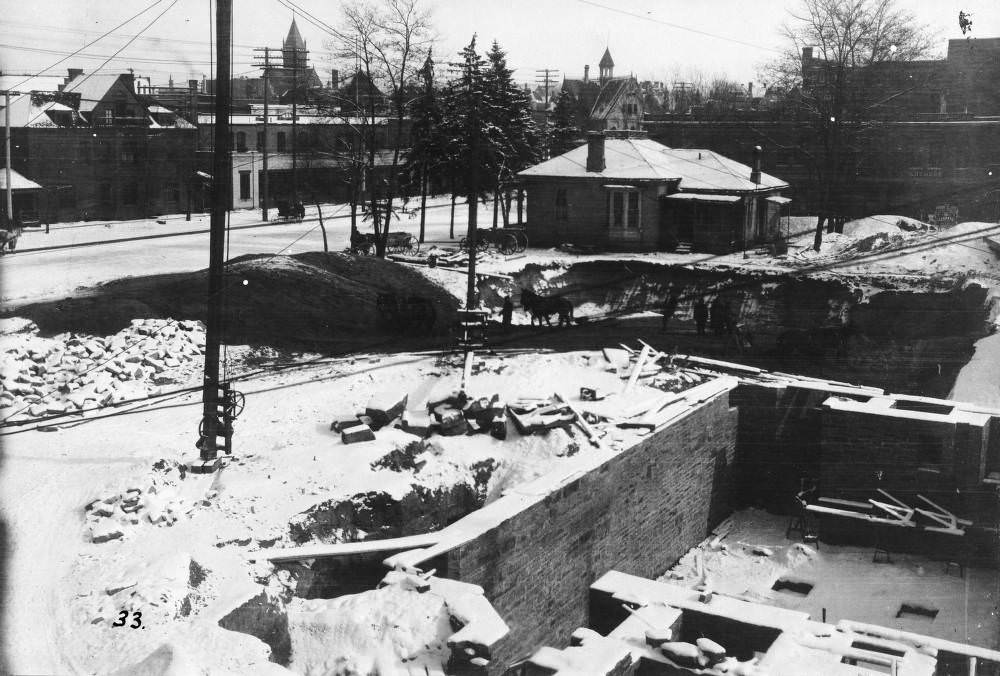
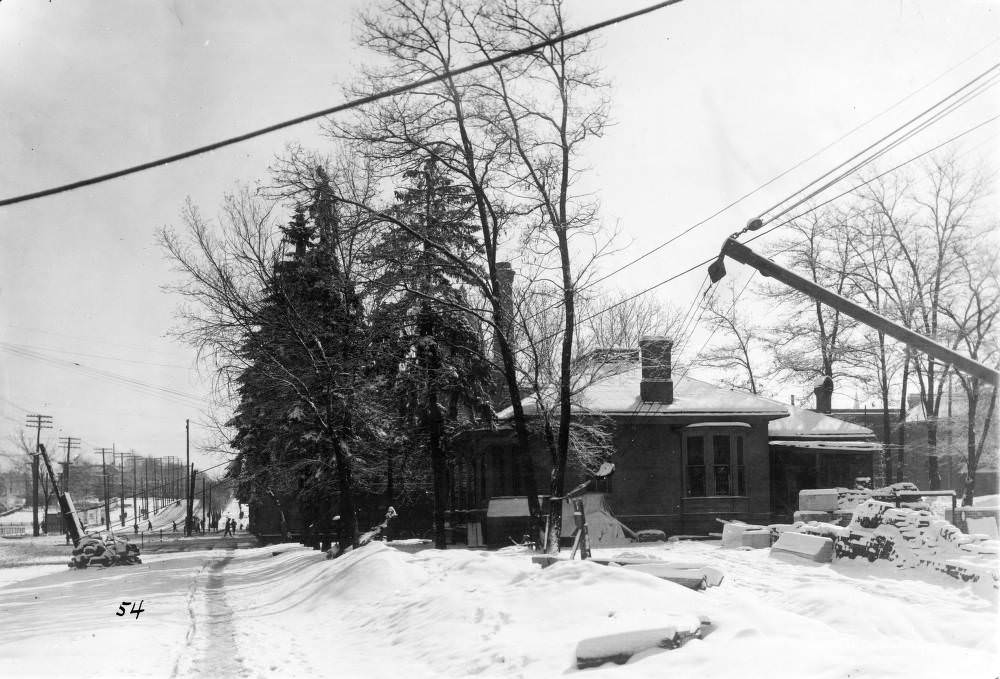
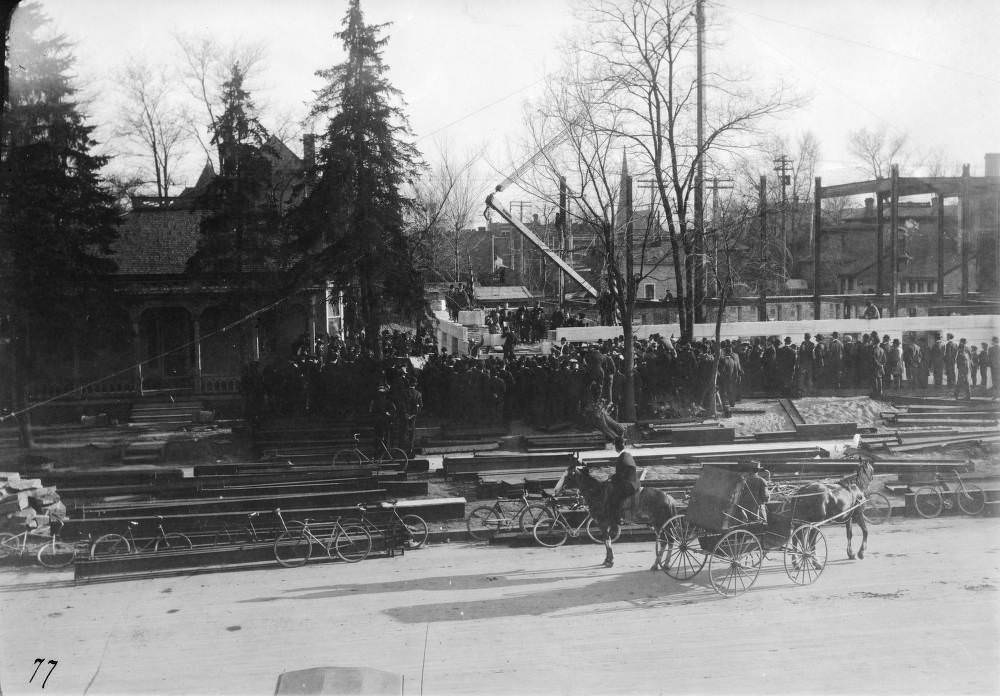
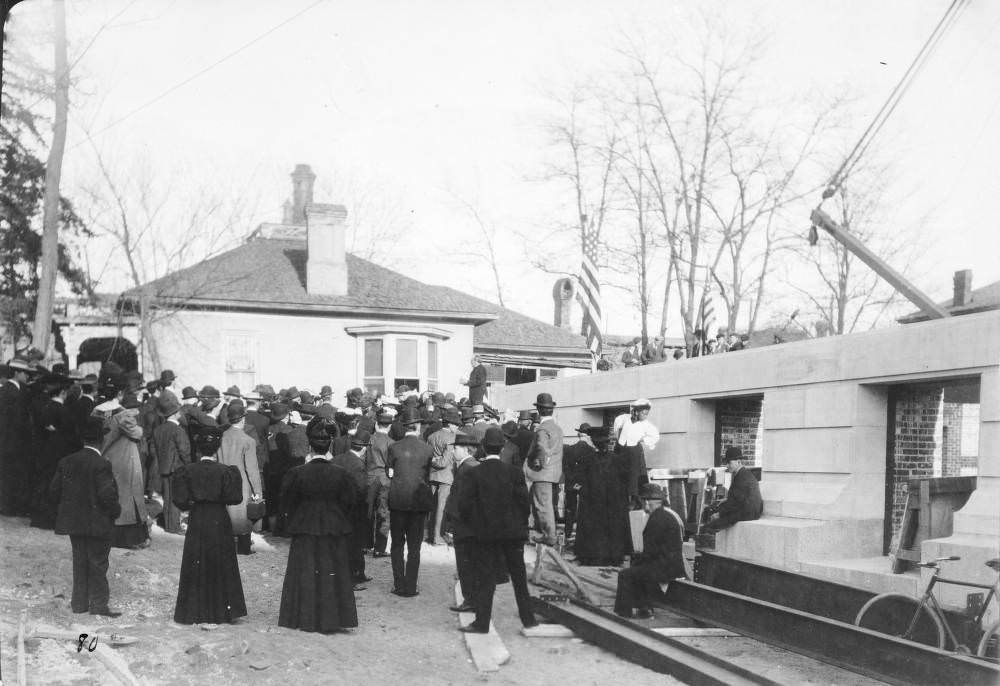
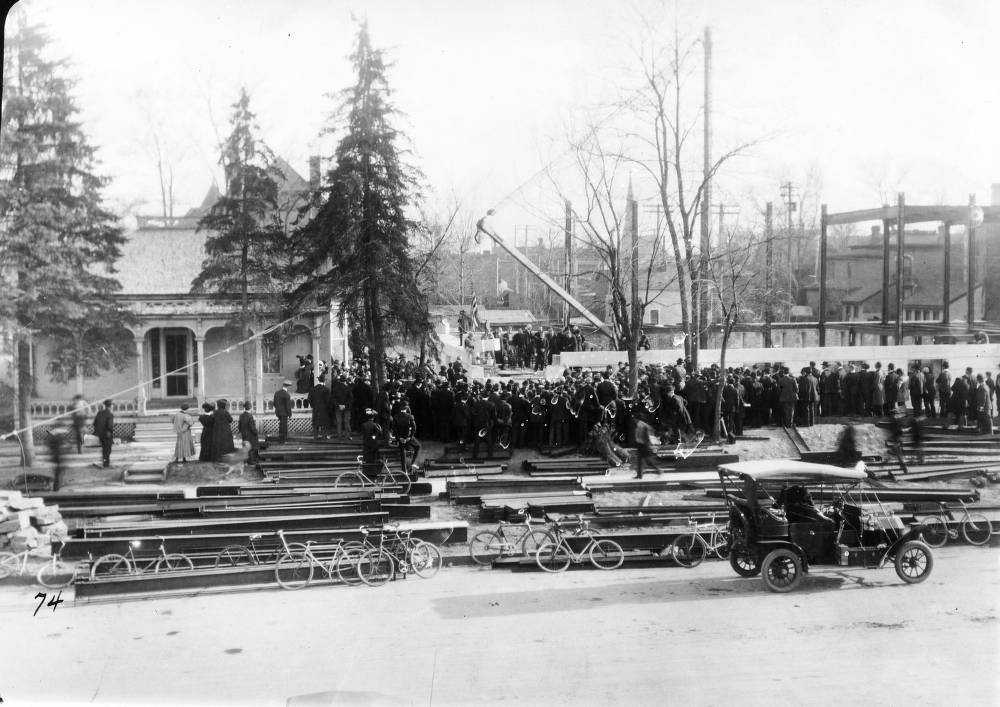
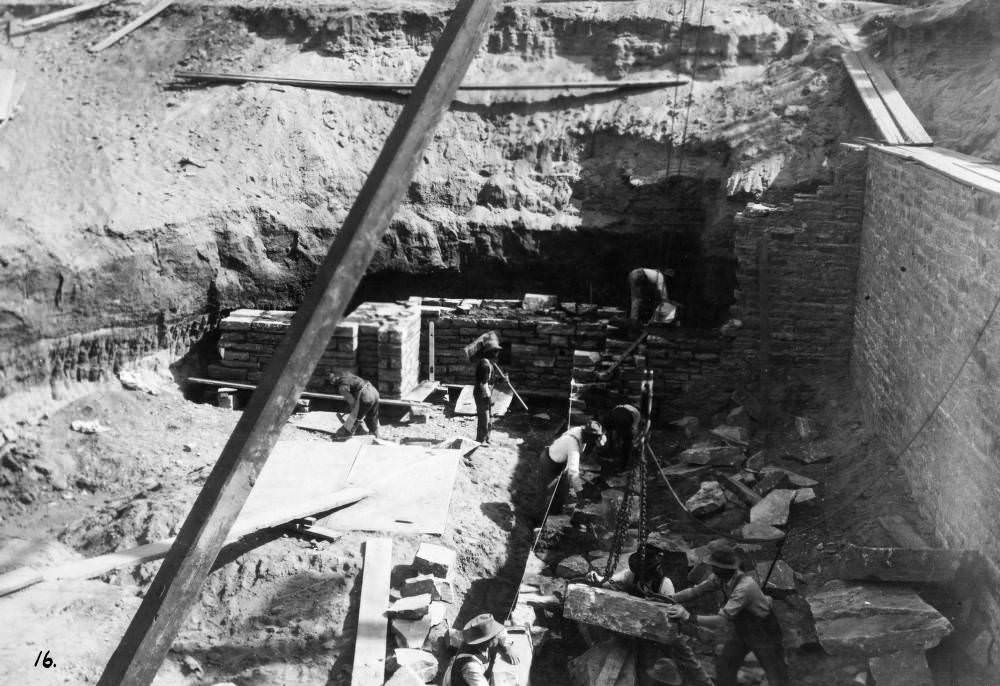
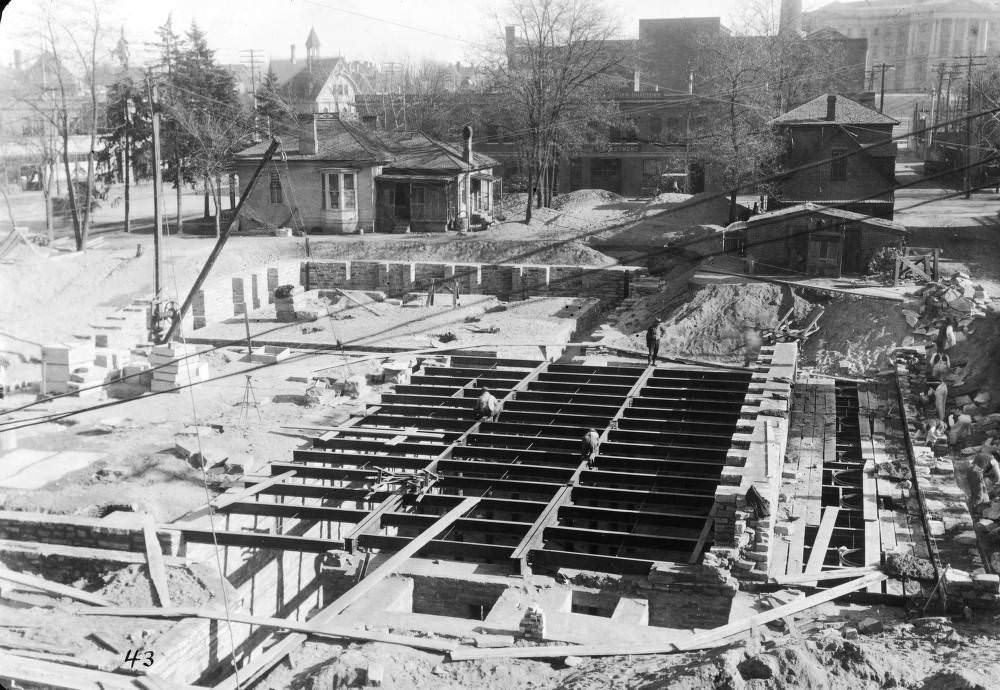
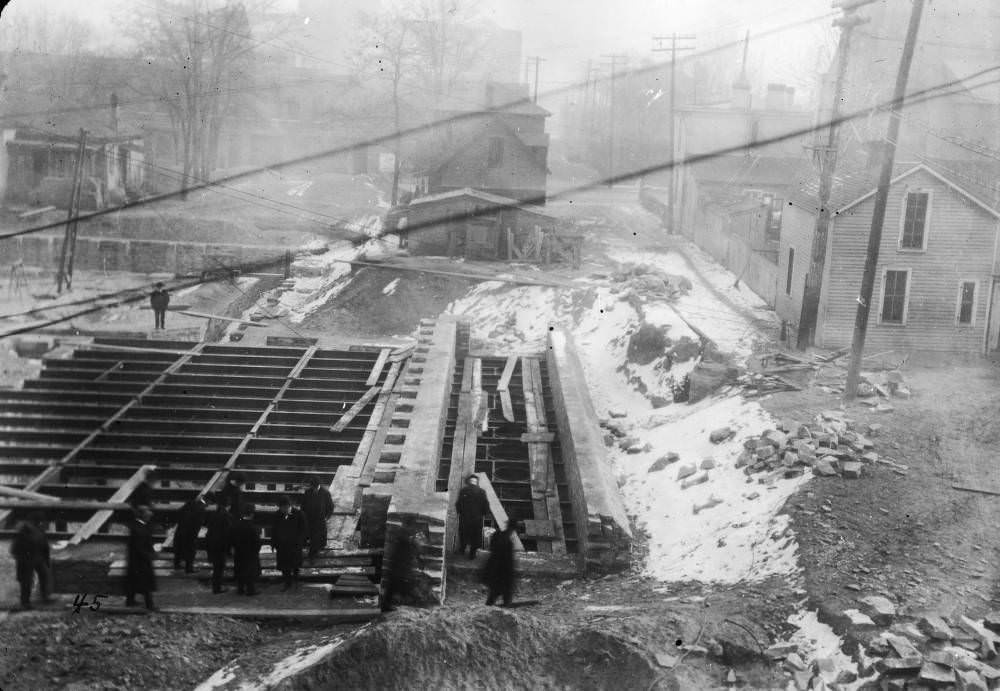
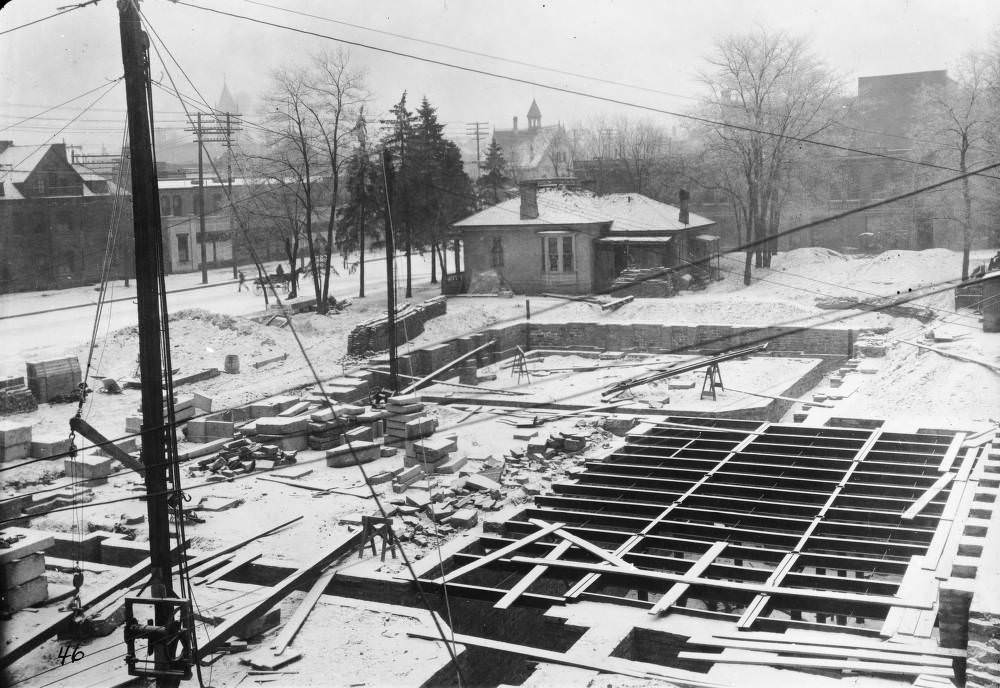
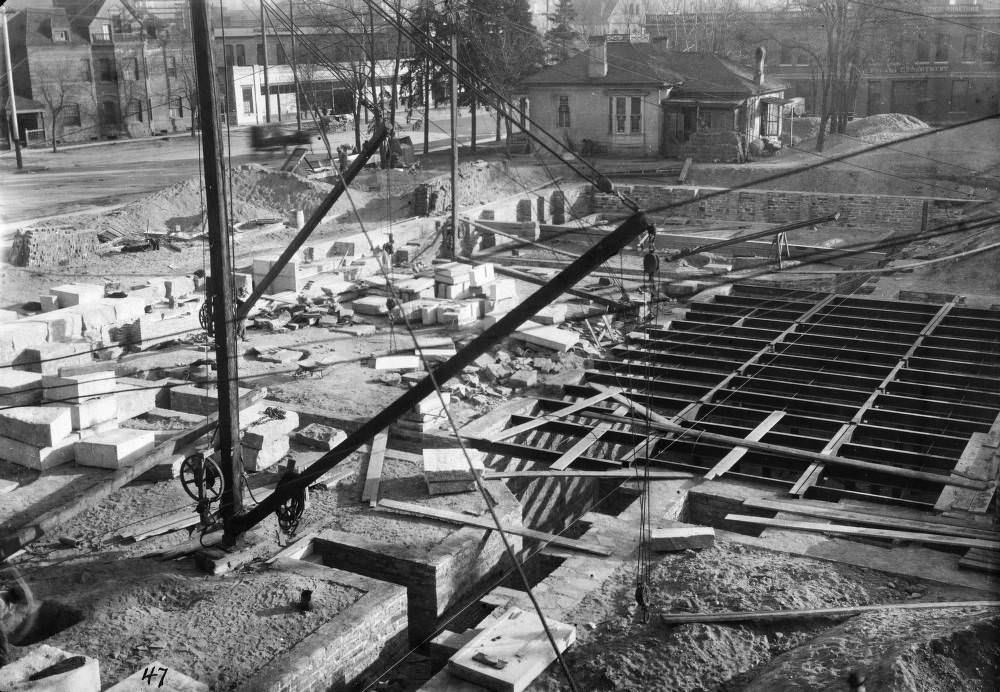
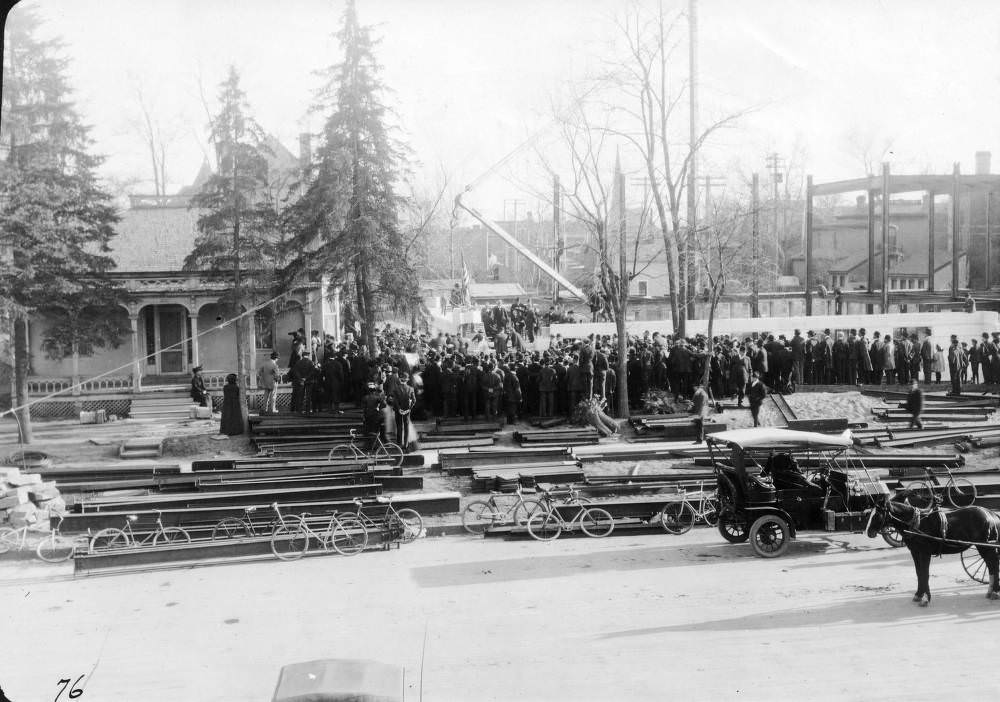
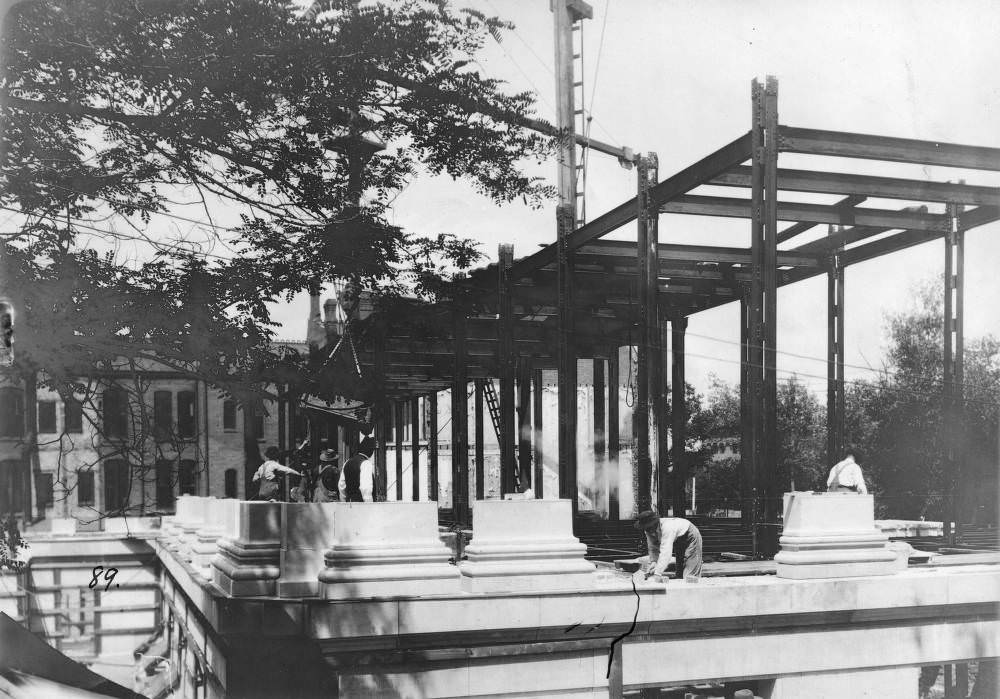
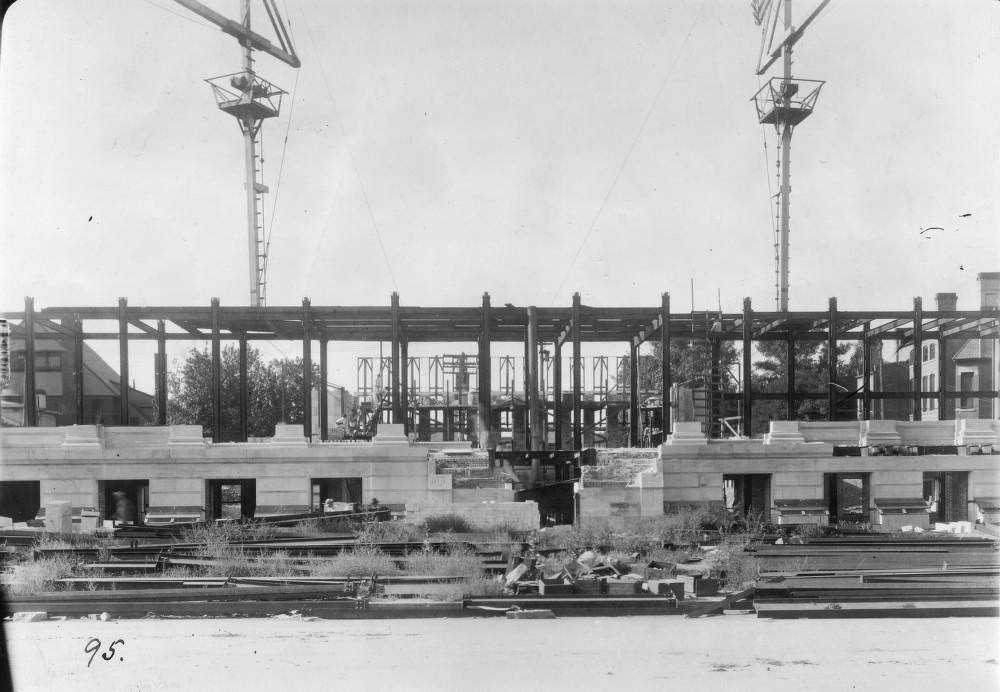
The Denver Public Library was one of the decade’s most closely watched construction projects. Funded in part through Andrew Carnegie’s library grants, the building went up in stages at Colfax Avenue and Bannock Street in the Civic Center neighborhood. Crowds gathered at the cornerstone ceremony, where Colorado Governor Henry Augustus Buchtel addressed the public. Mayor Speer and other officials inspected the foundation walls as work progressed through multiple winters. The completed building would serve as a central resource for the entire city, with a catalog department staffed by trained librarians.
Colorado Governor Henry Augustus Buchtel speaks to a crowd at the cornerstone ceremony at the Denver Public Library (Carnegie) construction site in the Civic Center neighborhood of Denver, 1907
Denver Public Library (Carnegie) construction in the Civic Center neighborhood of Denver, 1906
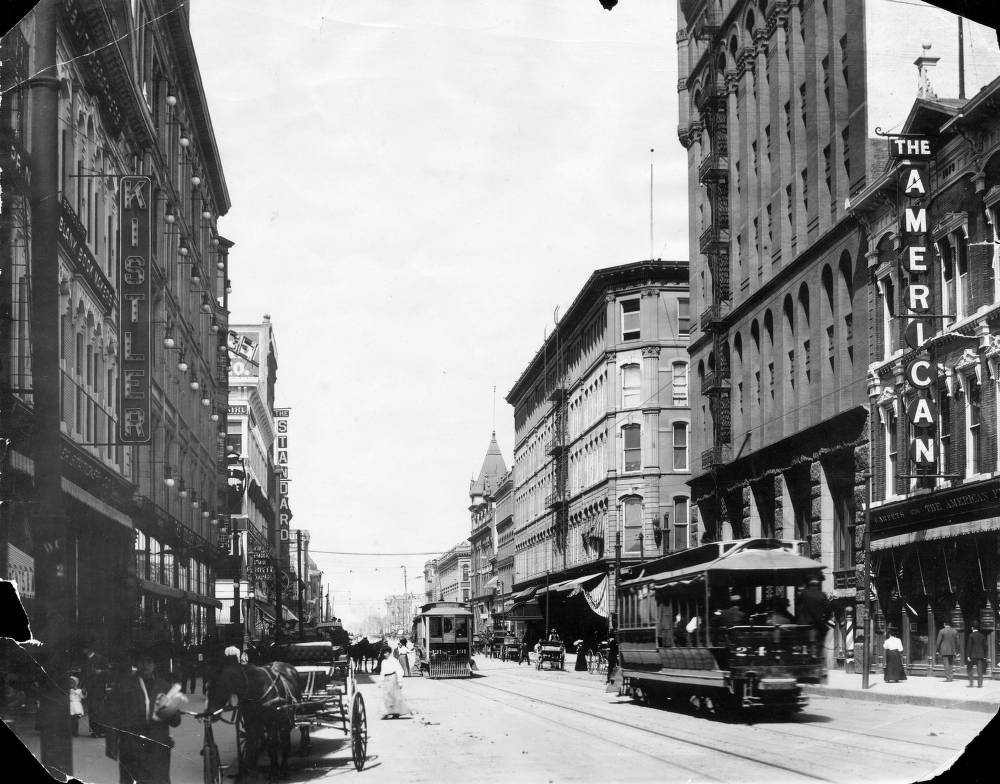
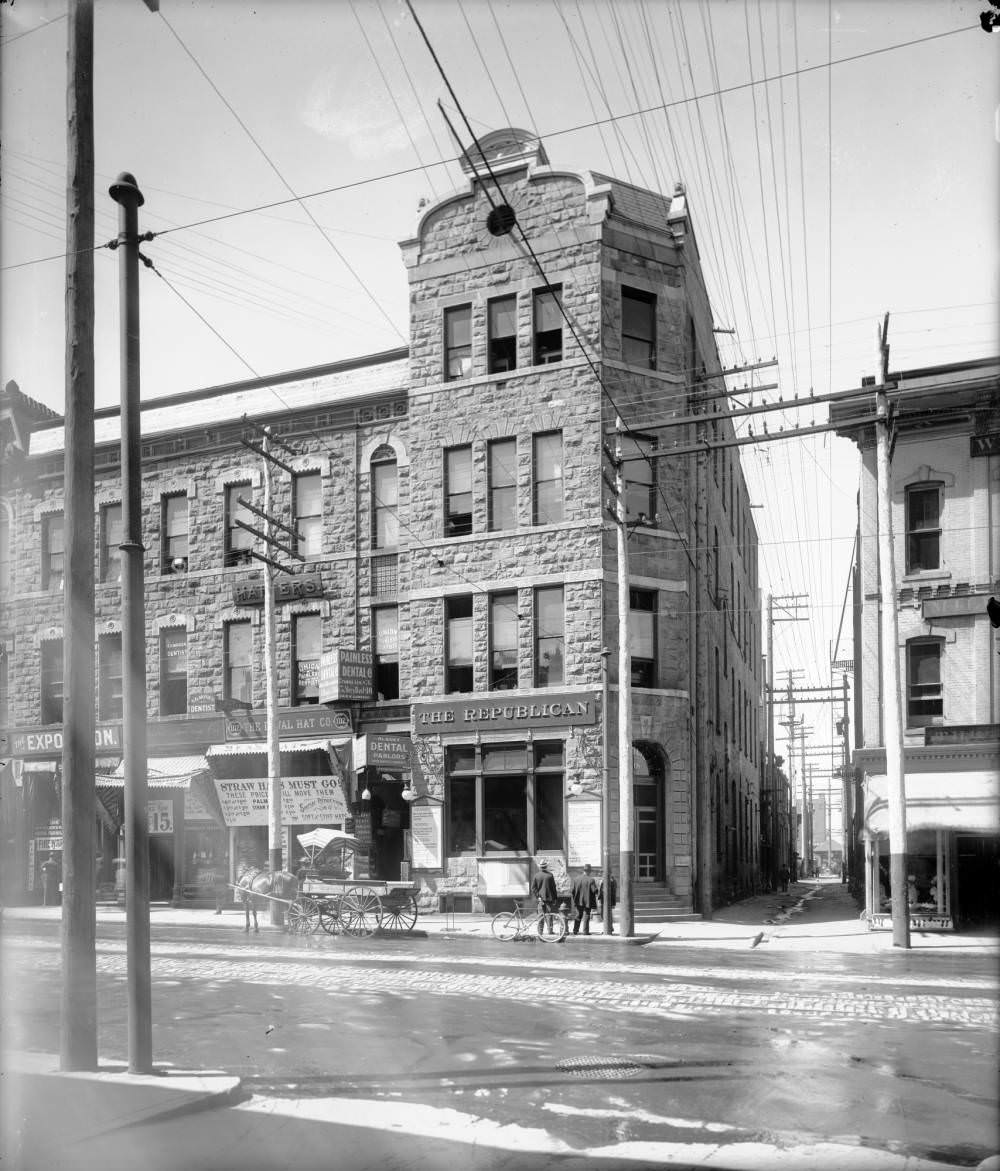
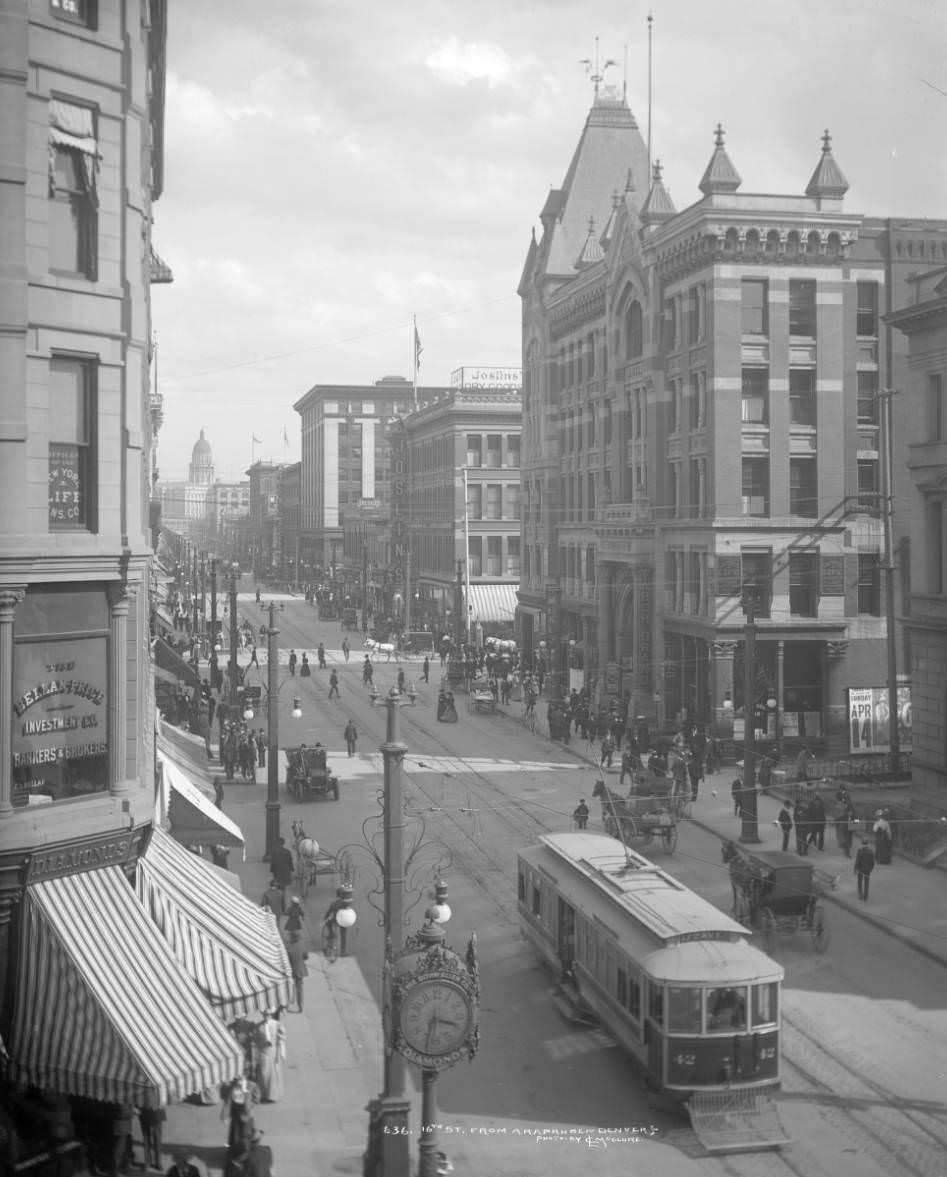
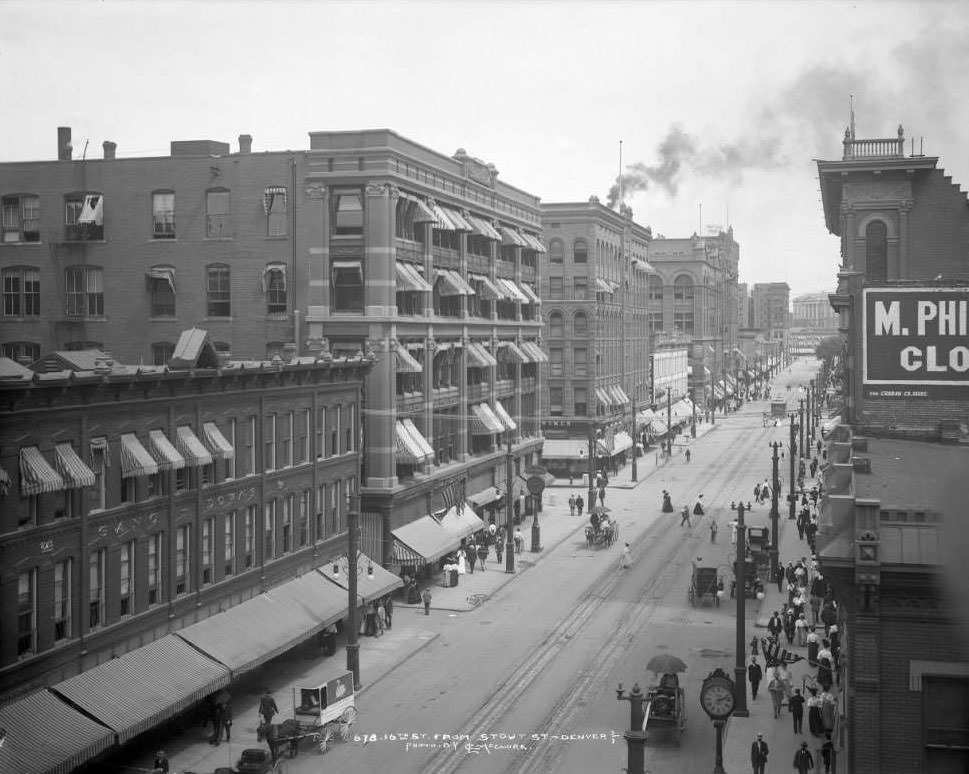
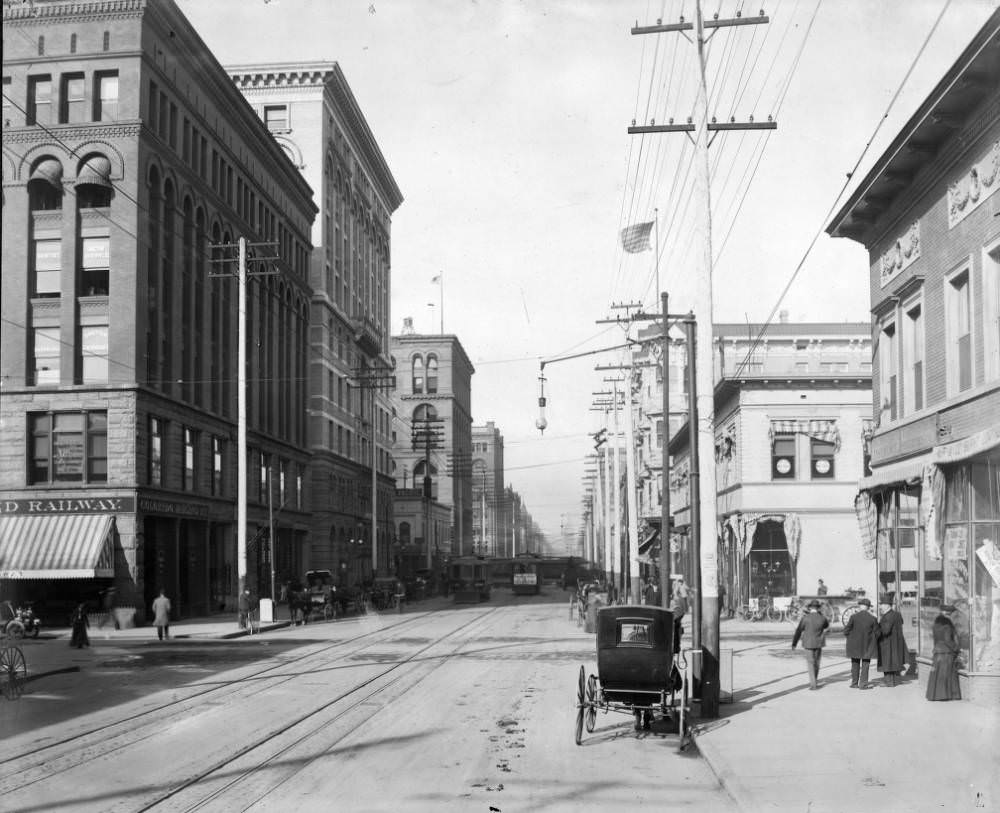
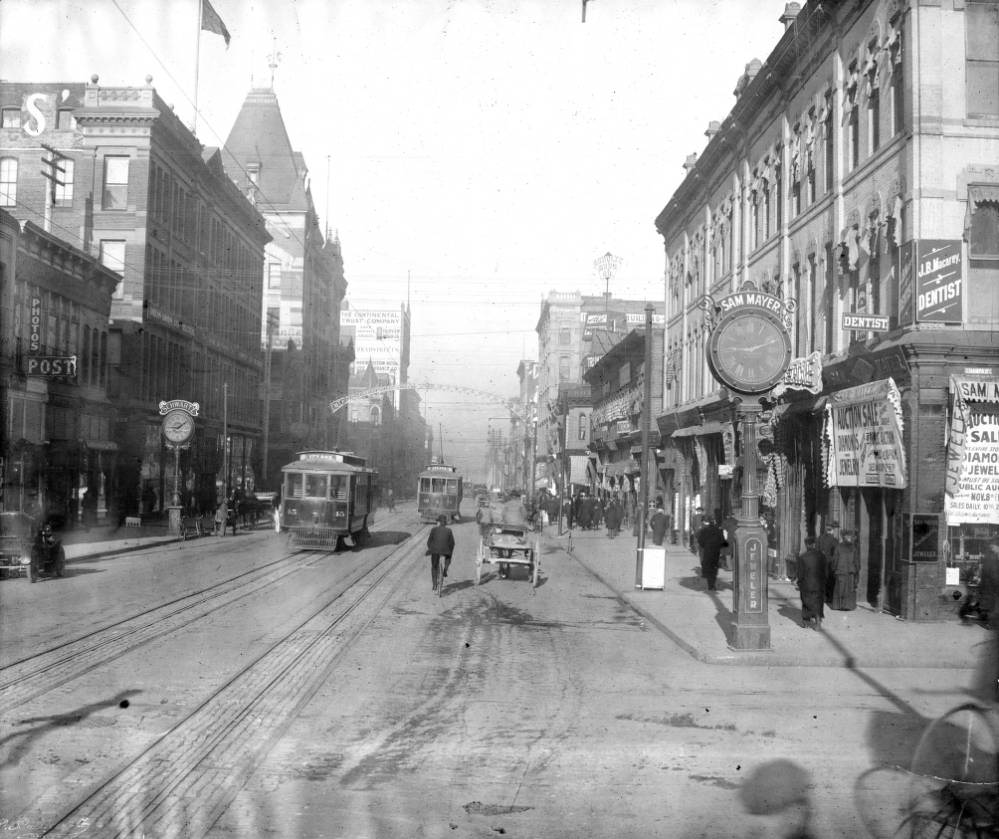
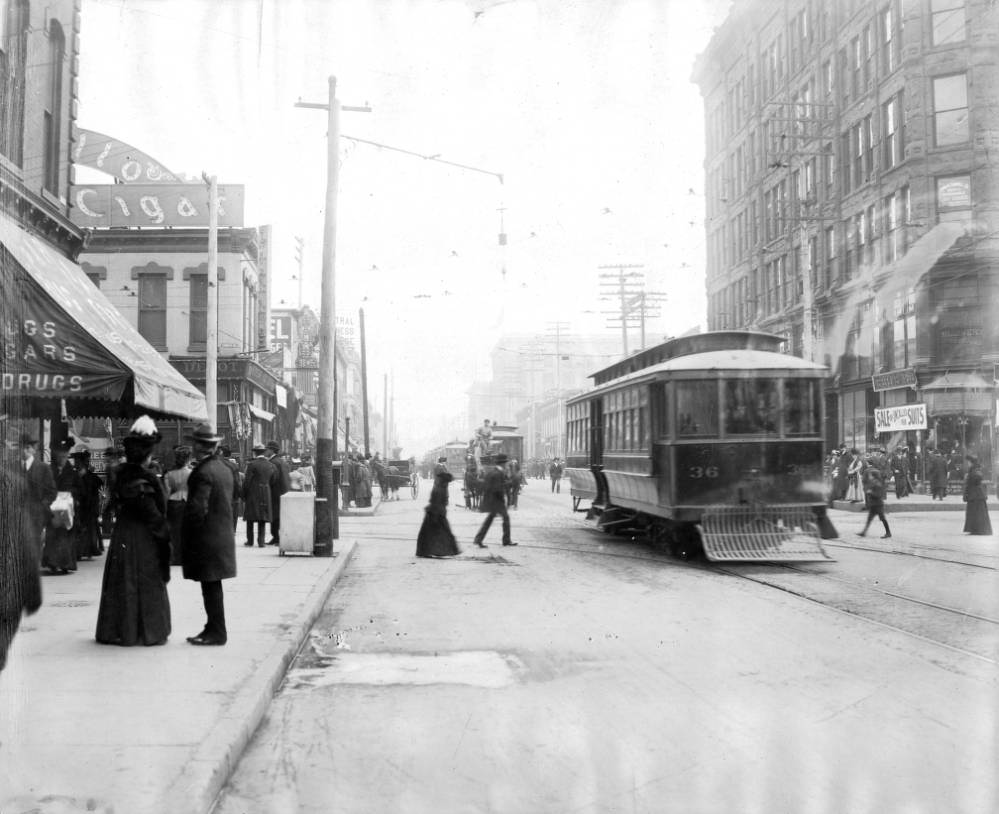
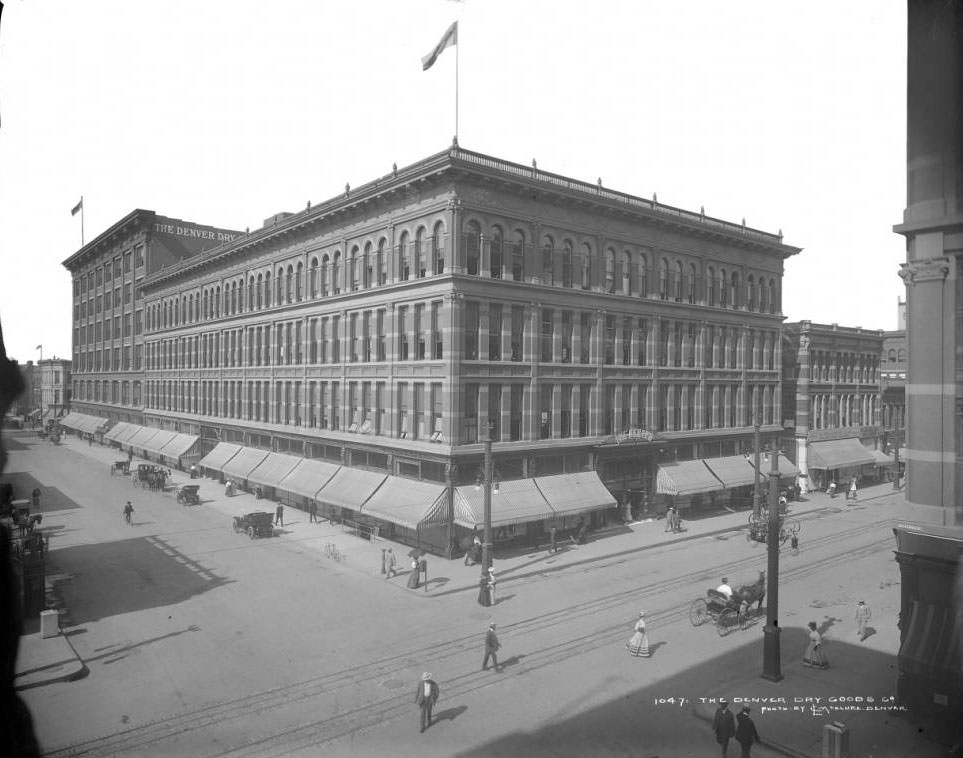
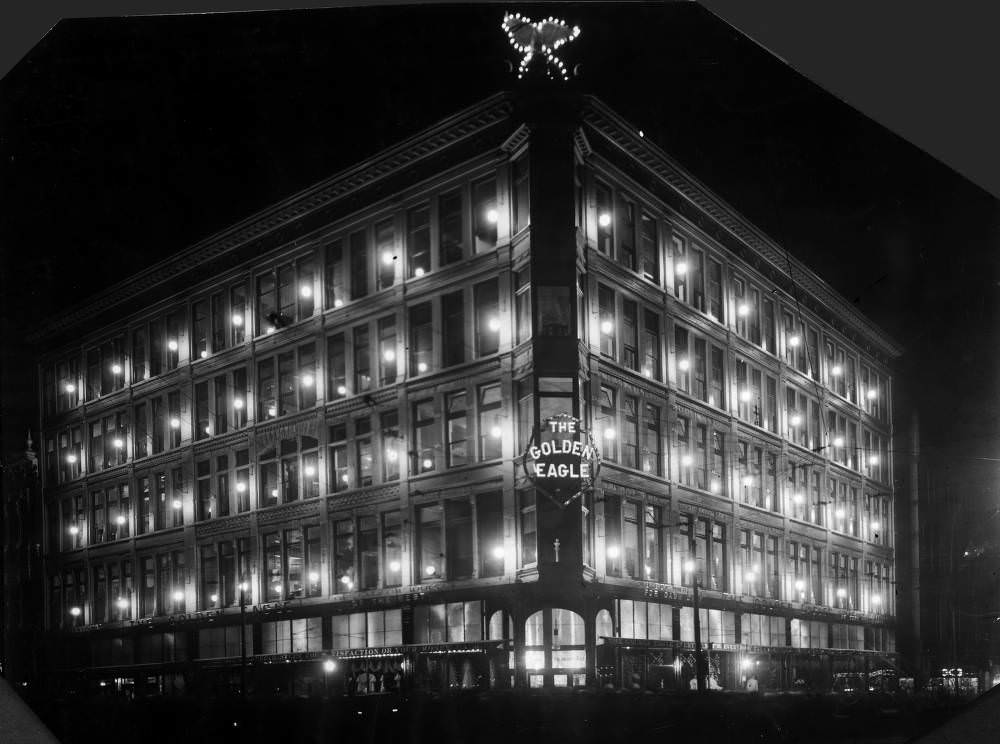
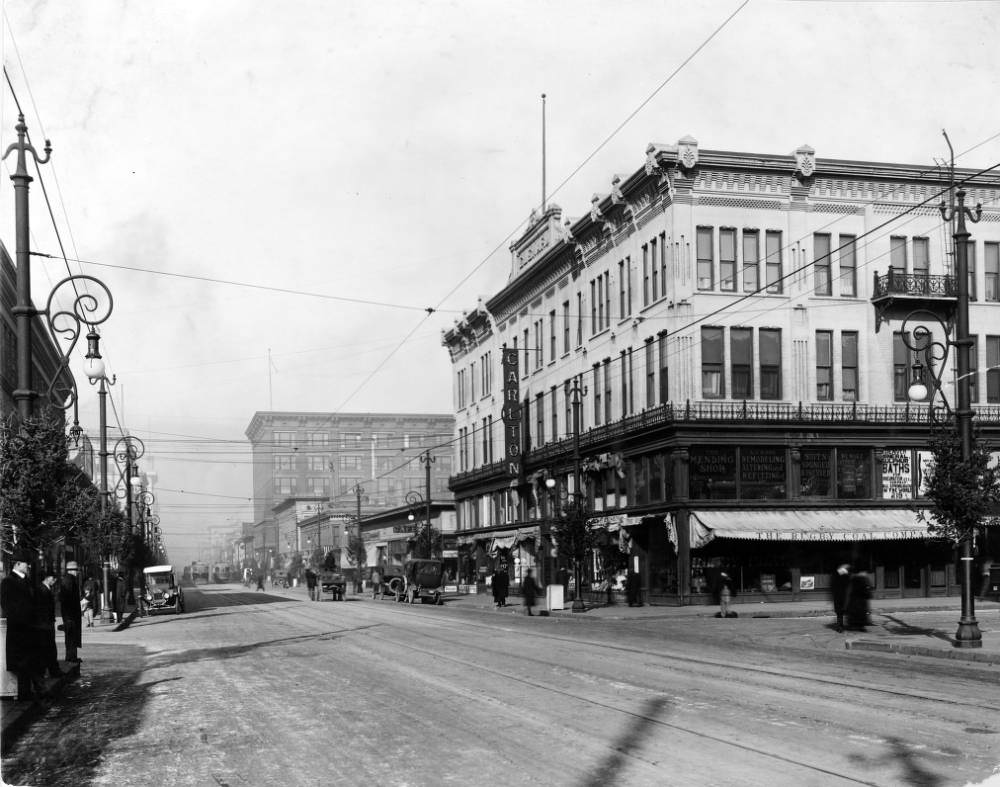
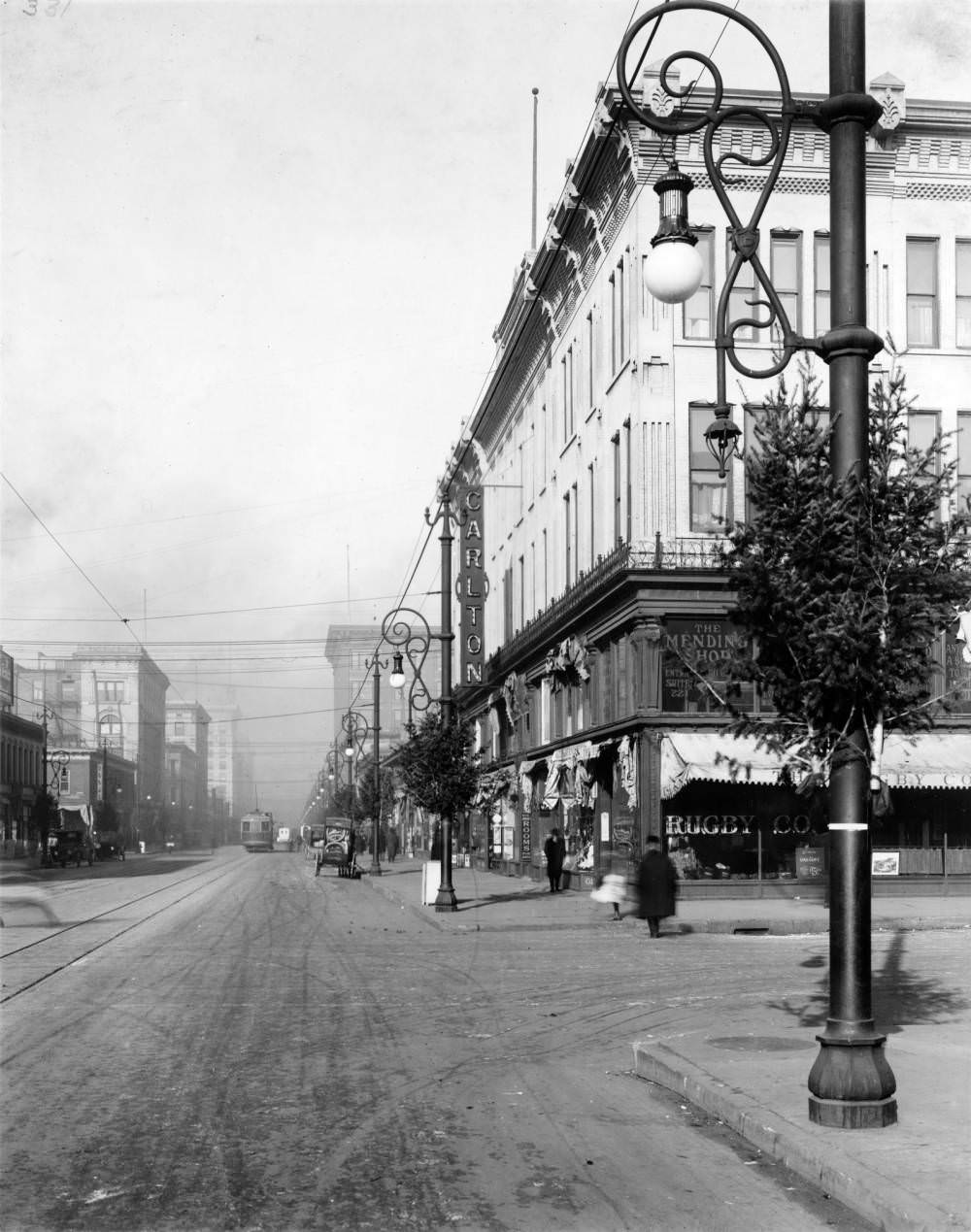
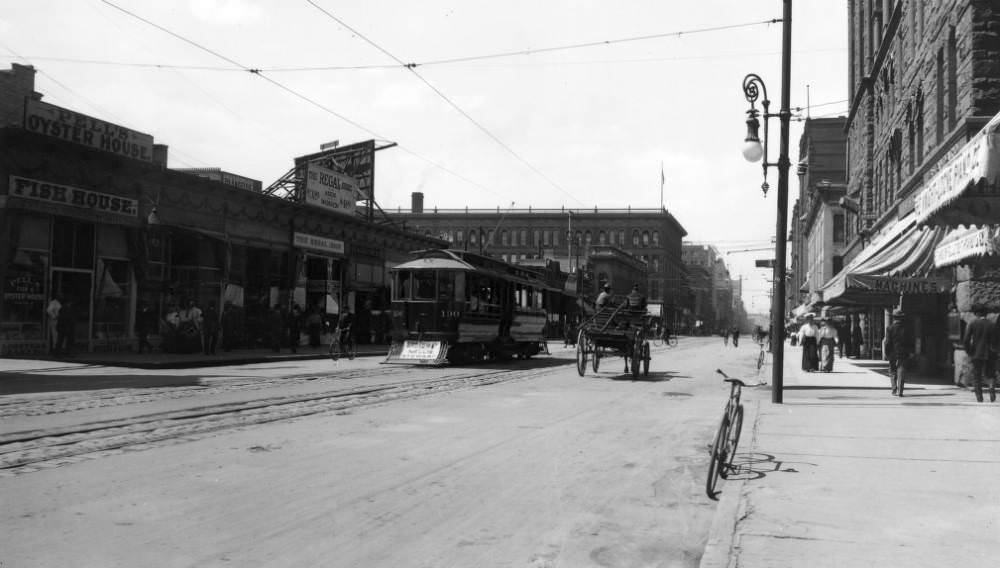
Downtown Denver’s commercial streets were busy and visually dense by the mid-1900s. On 16th Street, pedestrians crowded the sidewalks alongside horse-drawn wagons, bicycles, and electric trolleys. Shops, hotels, and office buildings lined the blocks. The Denver Republican newspaper occupied a four-story stone building at 1118 16th Street, with O’Brien’s Hat Store next door. At the corner of 16th and Lawrence Streets, the Golden Eagle Dry Goods Store lit up the night with electric lights — a striking sight for the era. The Denver Dry Goods building at 16th and California Streets was another retail anchor that drew shoppers from across the city.
View of 16th (Sixteenth) Street in Denver, Colorado; shows pedestrians, traffic, Denver, 1900s
Denver Republican Newspaper building at 1118 16th (Sixteenth) Street in downtown Denver, 1909.
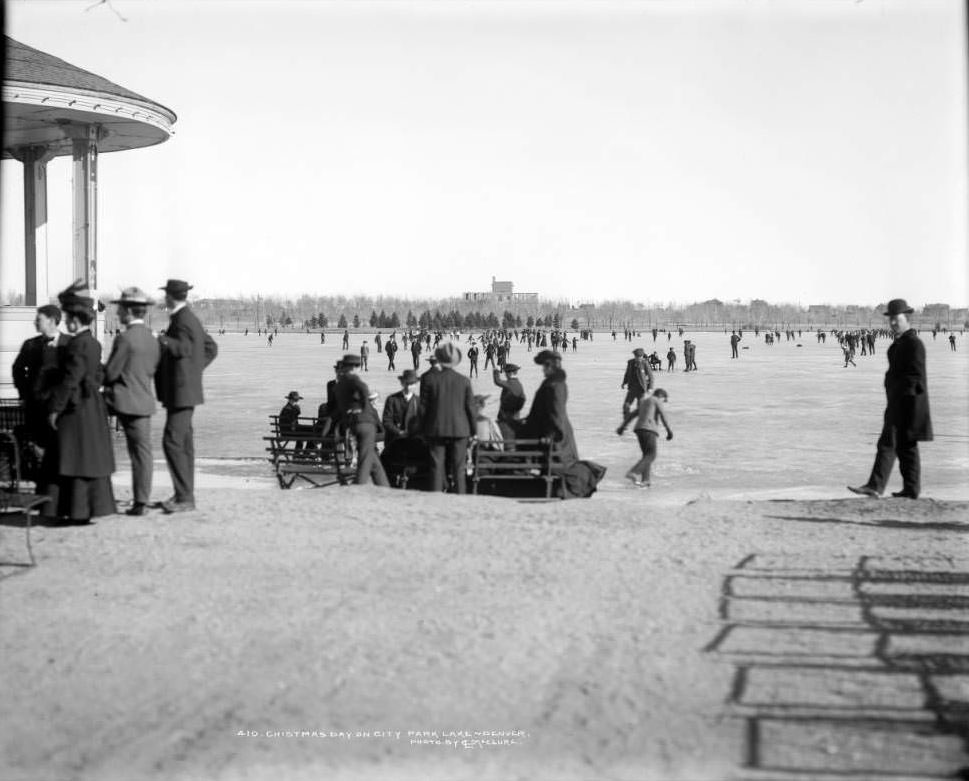
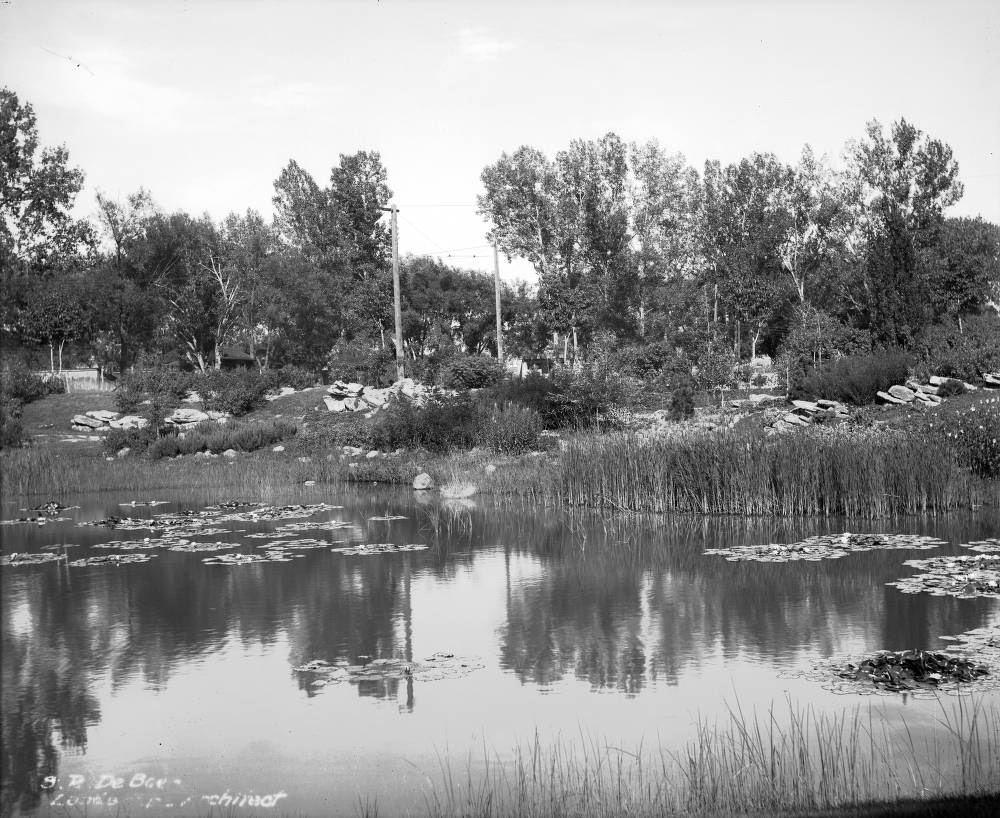
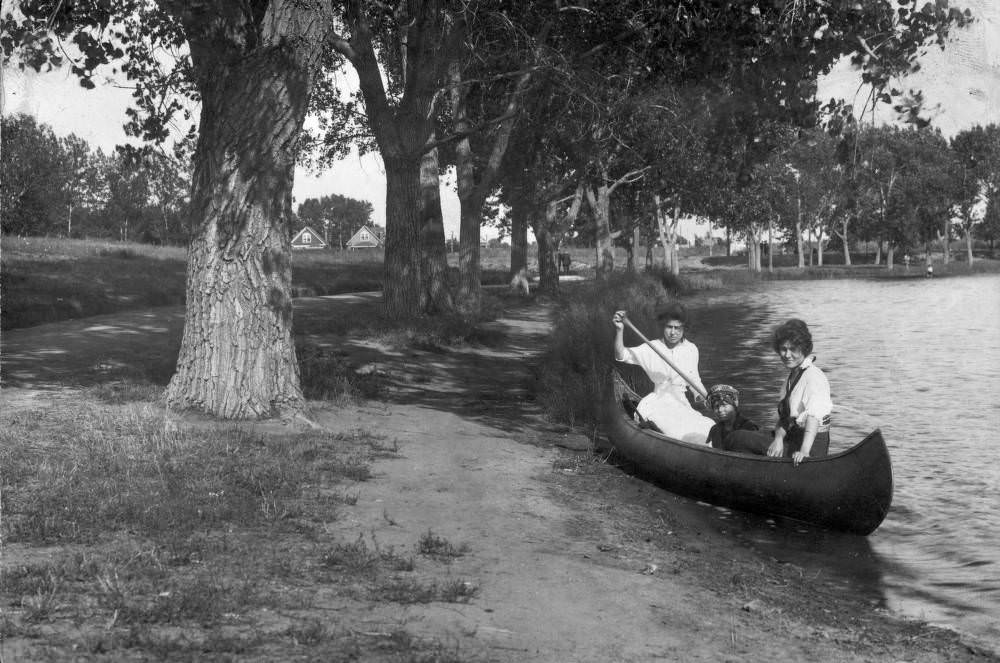
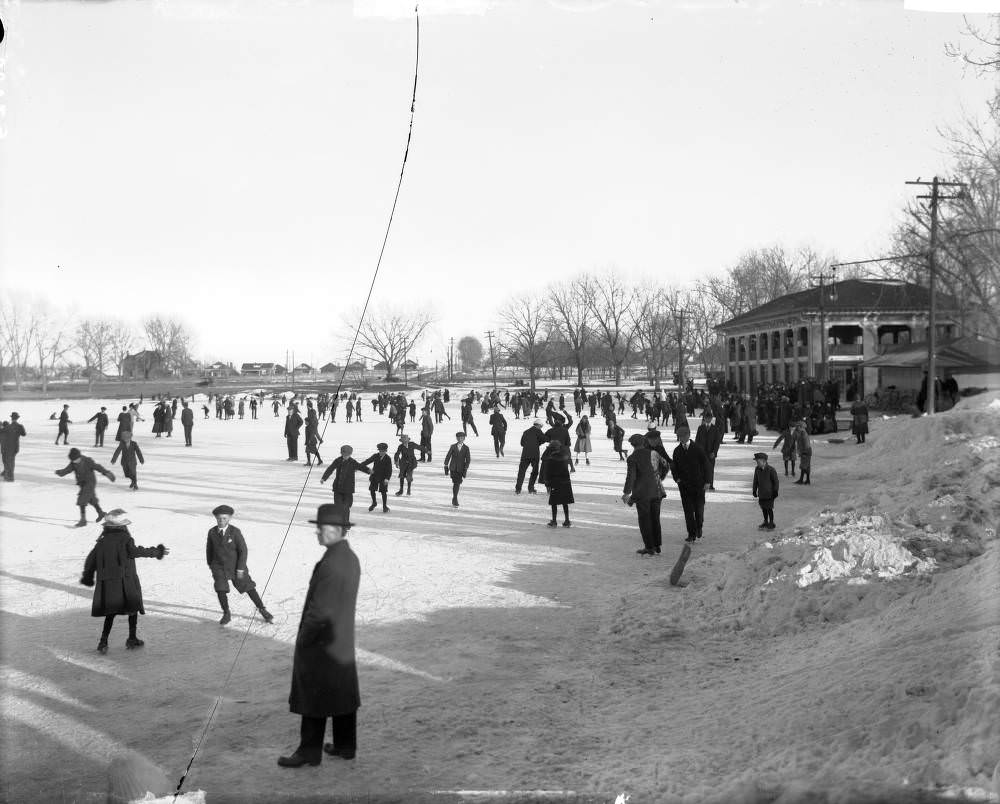
Denver’s parks were active spaces used year-round. In winter, City Park Lake and Smith Lake at Washington Park drew skaters of all ages. In summer, residents canoed on City Park’s Ferril Lake and along Smith Lake’s shoreline. Washington Park itself featured a lily pond, a rock garden, and wide green spaces that made it a favorite gathering place. Berkeley Park, further north, had a beach on Berkeley Lake where families rowed out in small boats. These parks were not passive landscapes — they were woven into the rhythm of daily life.
Ice skating on City Park Lake, Denver, Colorado, 1901. View east to Museum of Natural History building under construction.
View of the lily pond and rock garden at Washington Park in Denver, 1909
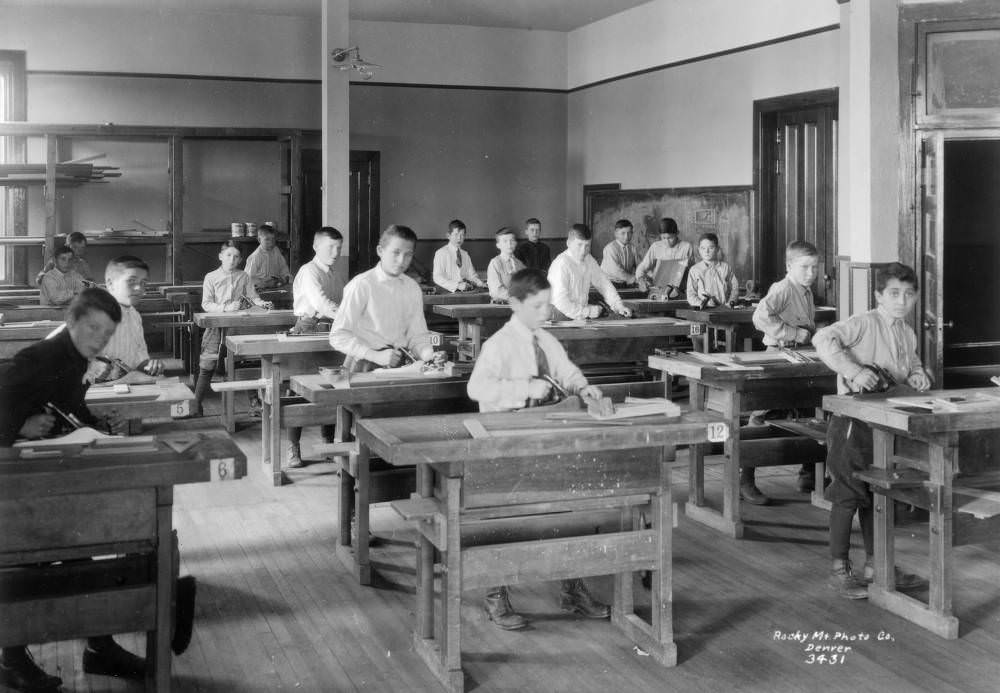
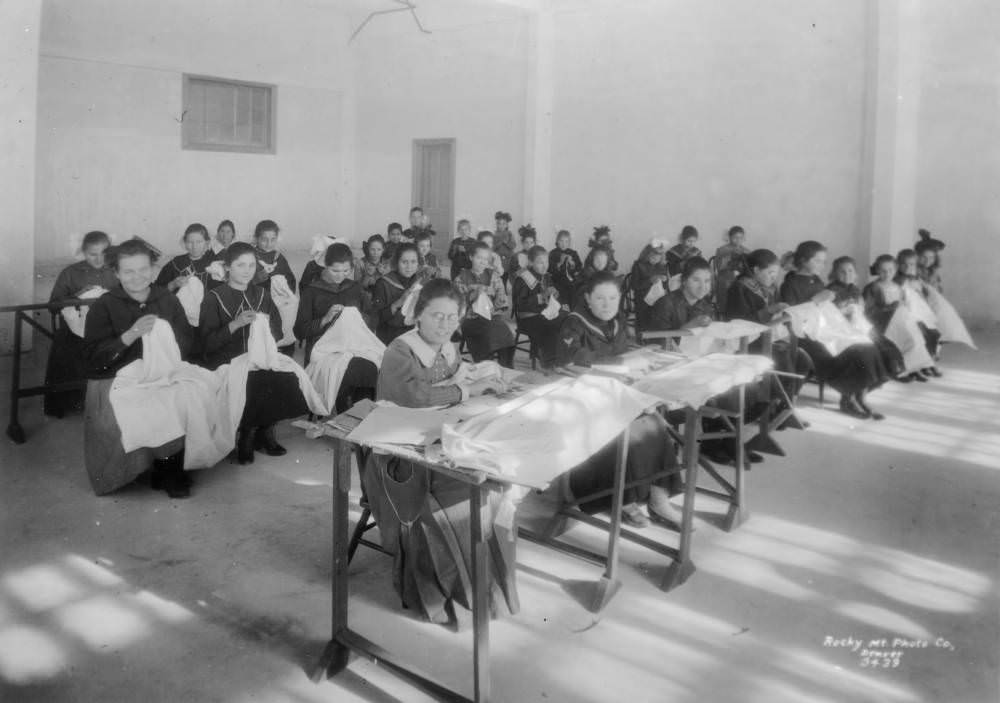
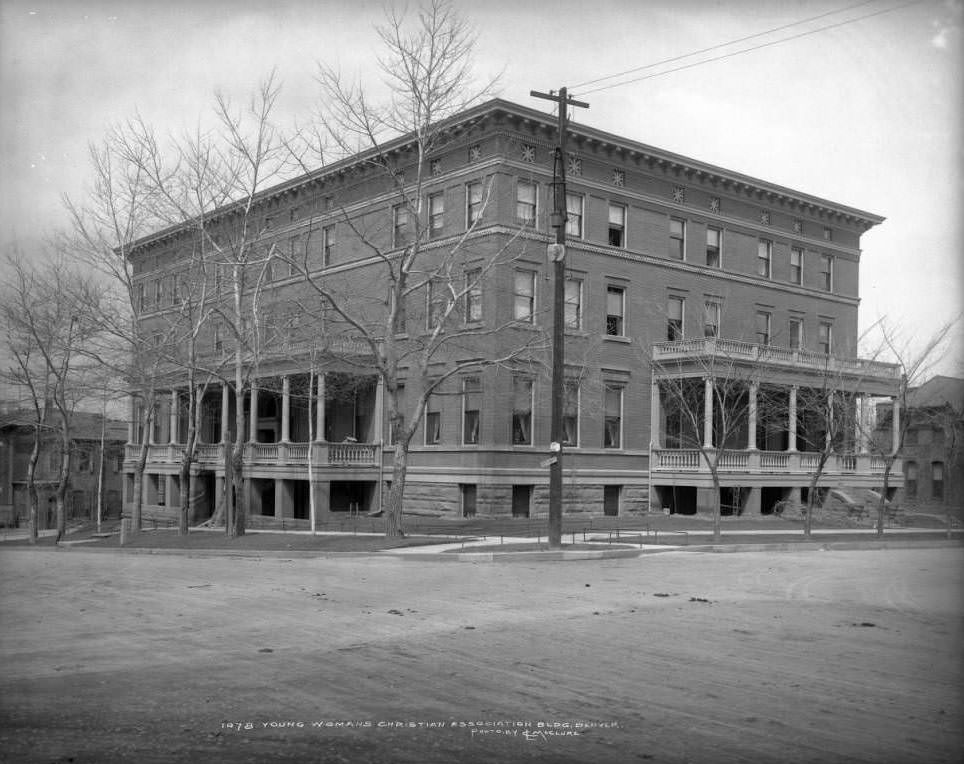
The Denver Orphans’ Home at 1501 Albion Street in the South Park Hill neighborhood provided housing and training for children without families. Boys worked in a woodshop with hand planes and learned practical trade skills. Girls sat at tables in a sewing classroom with their teacher. The institution reflected the era’s approach to youth welfare — structured, skills-based, and self-sustaining. Other organizations served the broader community as well. The Neighborhood House Association on Santa Fe offered services to working-class families in the Lincoln Park neighborhood, and the Young Women’s Christian Association operated a building at 18th Avenue and Sherman.
Boys pose with wood planes in the workshop at the Denver Orphans’ Home (later the Denver Children’s Home) at 1501 Albion Street in the South Park Hill neighborhood of Denver, 1909
Girls and their teacher sit at tables and on chairs and sew in a classroom at the Denver Orphans’ Home (later the Denver Children’s Home) at 1501 Albion Street in the South Park Hill neighborhood of Denver, 1909
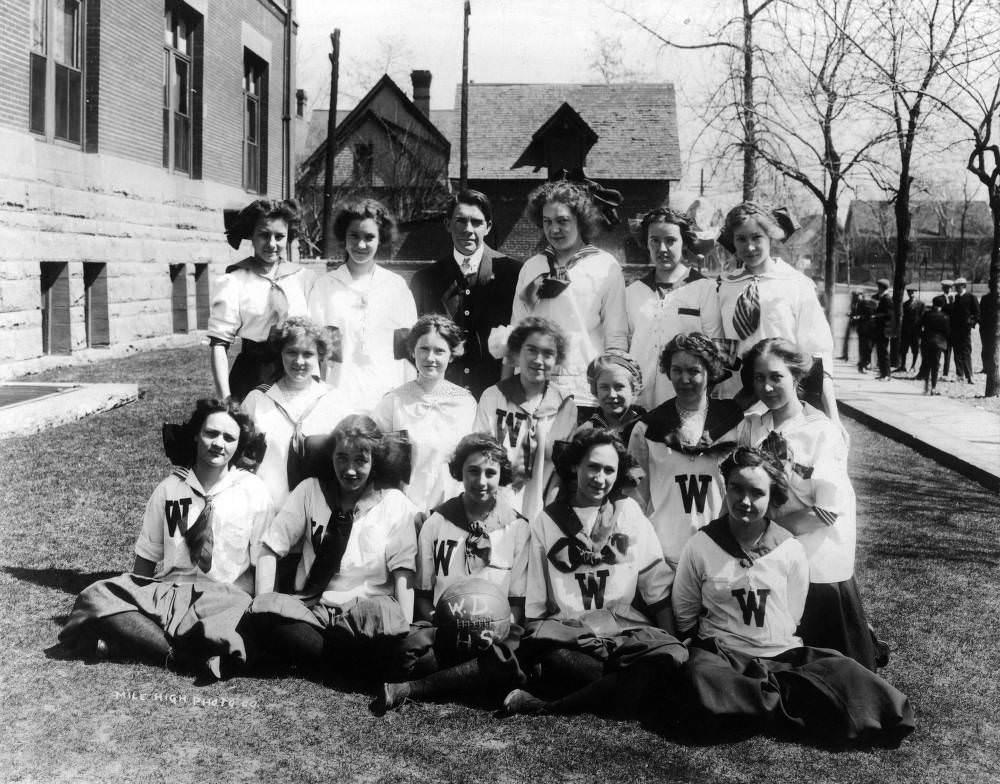
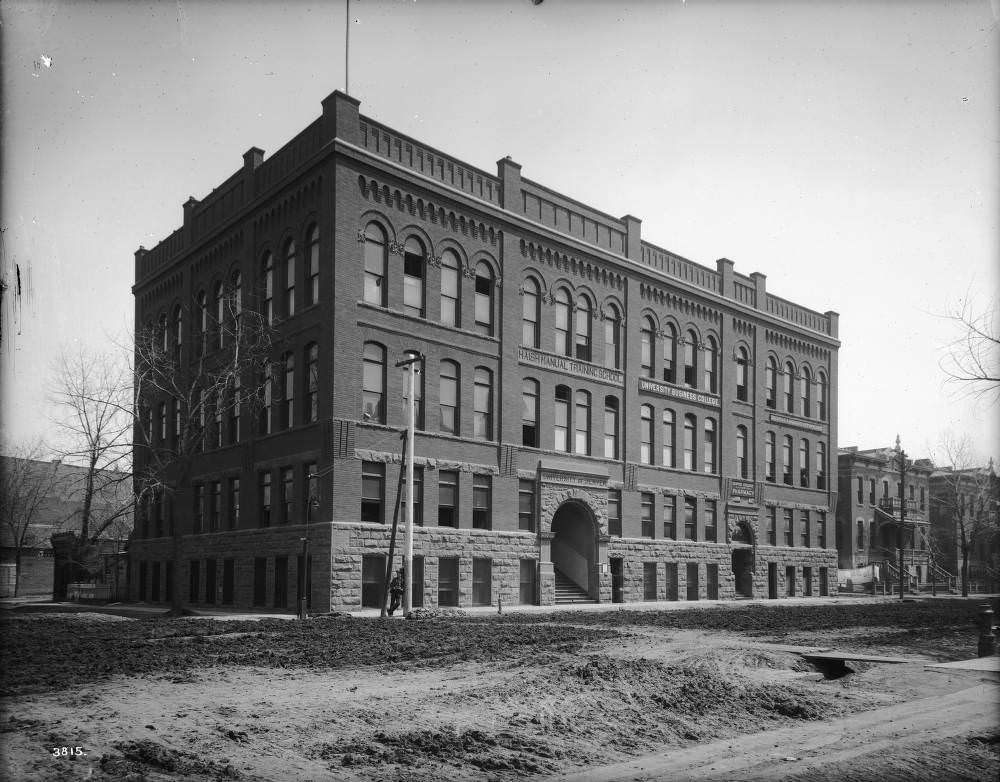
Denver’s schools served a growing and diverse population. Denver High School, also known as East Side High School, stood at 19th and Stout Streets and drew students from across the city. West Denver High School fielded a women’s basketball team by 1908, reflecting how organized sports for women were beginning to find a place in public education. The Haish Manual Training School, located in the University of Denver’s Haish Building at 14th and Arapahoe Streets, provided hands-on technical education. Dean Peck’s Training School for Girls operated in the Montclair neighborhood at 6925 E. 8th Avenue.
West Denver High School women’s basketball team, Denver, 1908
Haish Manual Training School located in the University of Denver Haish Building at 14th (Fourteenth) and Arapahoe Streets, Denver, 1900.
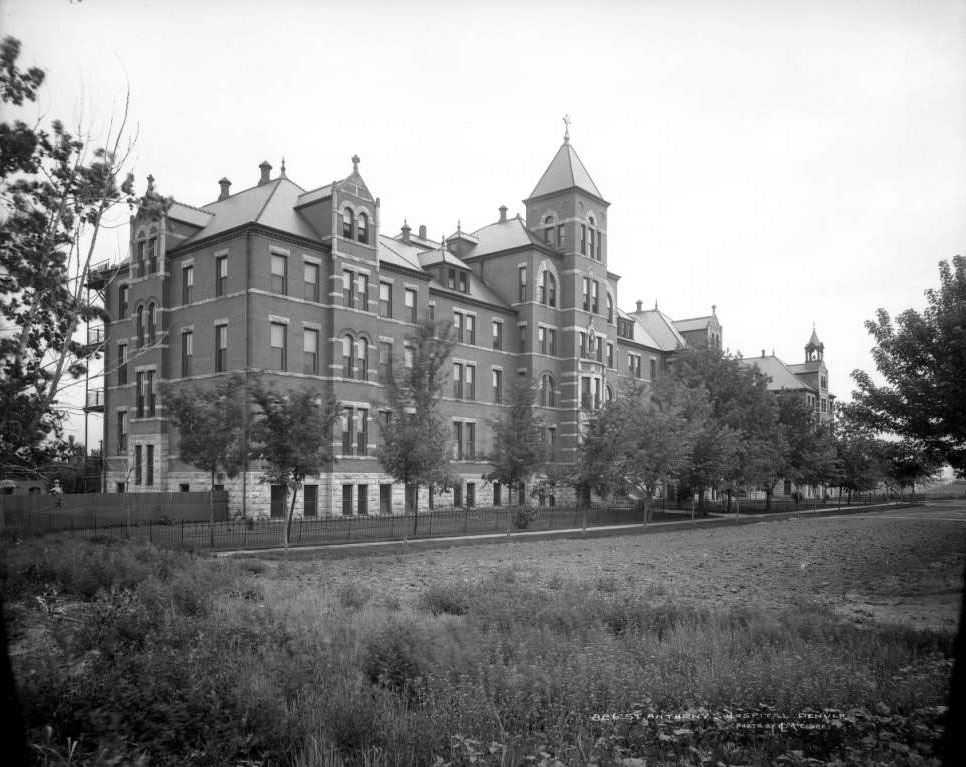
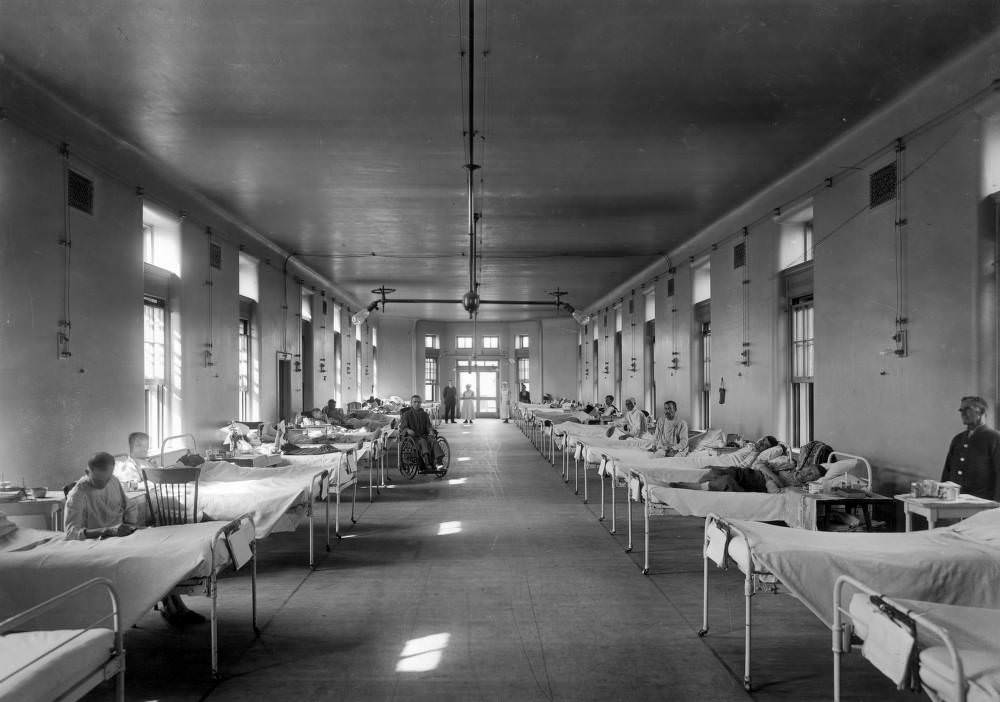
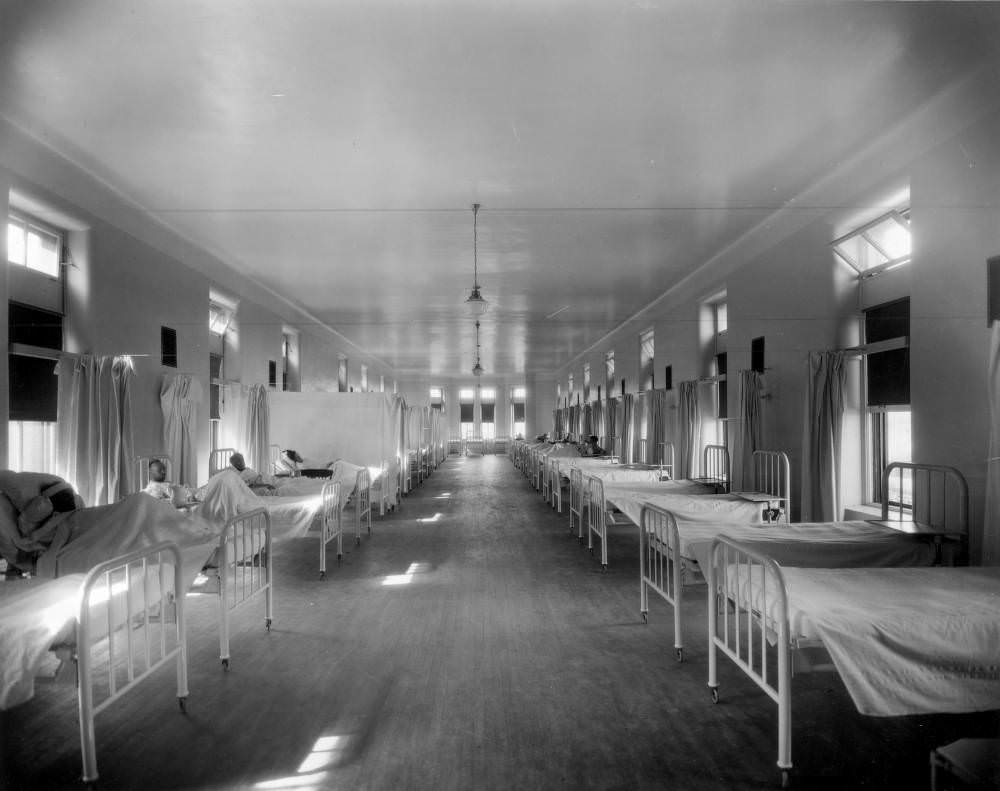
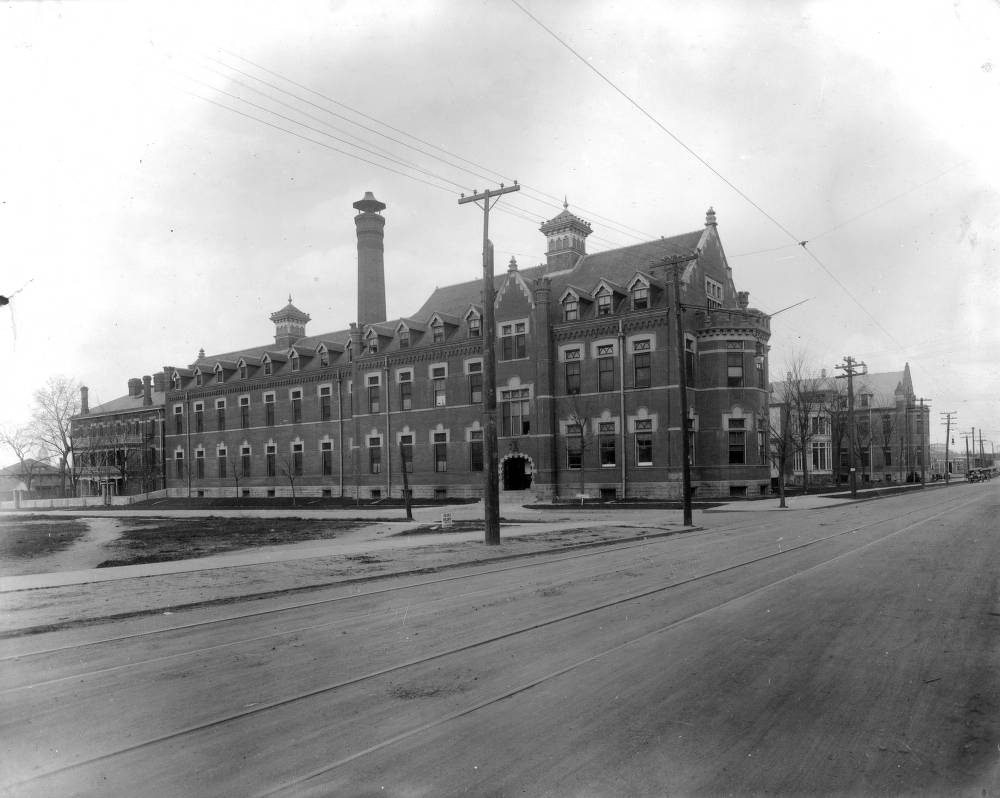
Healthcare in 1900s Denver was provided through a mix of private hospitals and public facilities. Saint Anthony’s Hospital stood at West 16th Avenue and Quitman Street, its exterior reflecting the era’s institutional architecture. Denver General Hospital, located at West 6th Avenue and Cherokee Street, treated patients in open ward rooms. A photograph from 1900 shows sick men in the Tuberculosis Ward lying in beds and sitting in wheelchairs — tuberculosis was one of the most serious public health challenges of the era, and Denver’s dry climate made it a destination for patients seeking relief from the disease.
Exterior view of Saint Anthony’s Hospital, West 16th (Sixteenth) Avenue and Quitman Street, Denver, 1905
Sick men lie in beds and sit in wheelchairs in the Tuberculosis Ward of Denver General Hospital in Denver, 1900
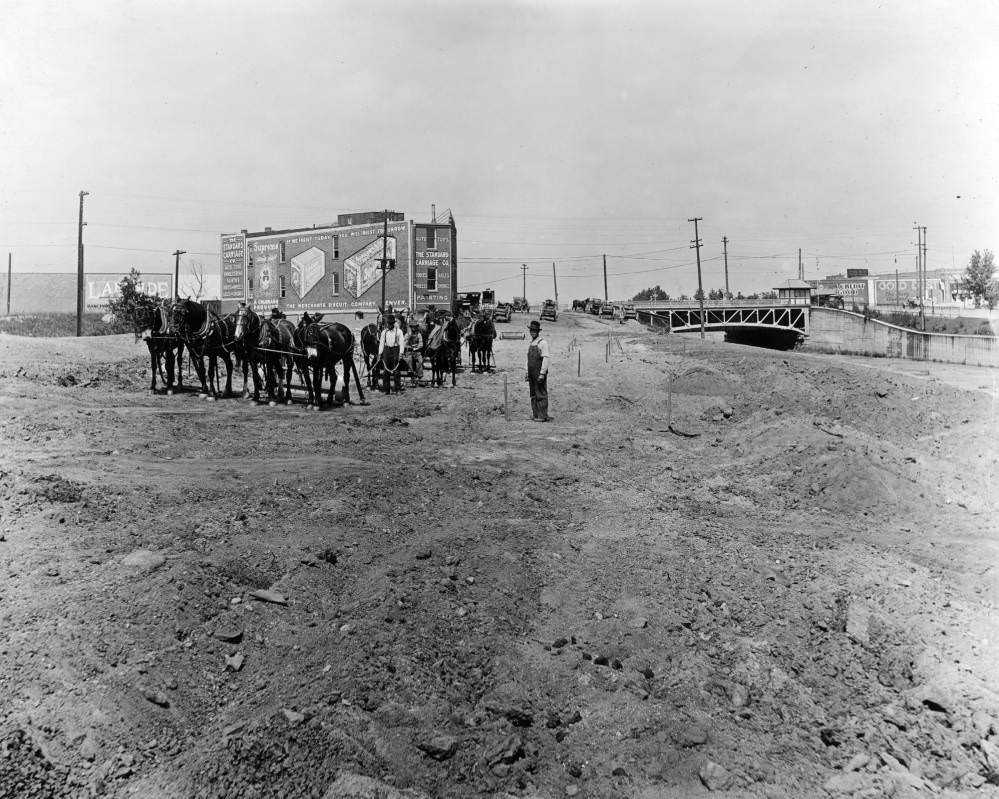
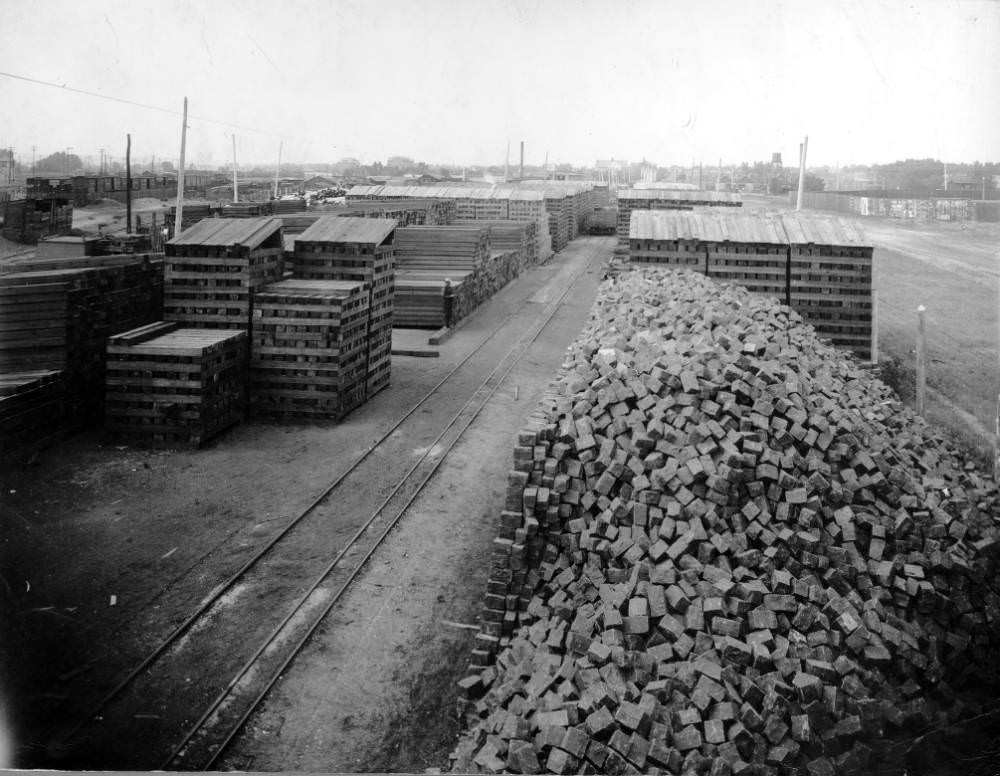
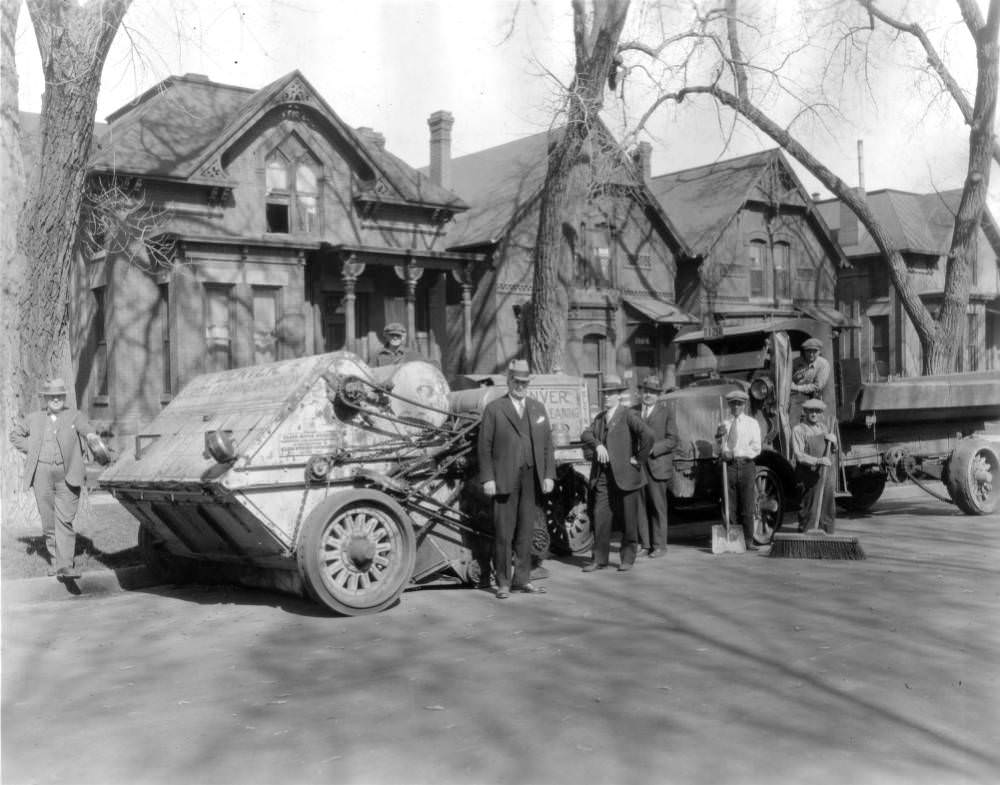
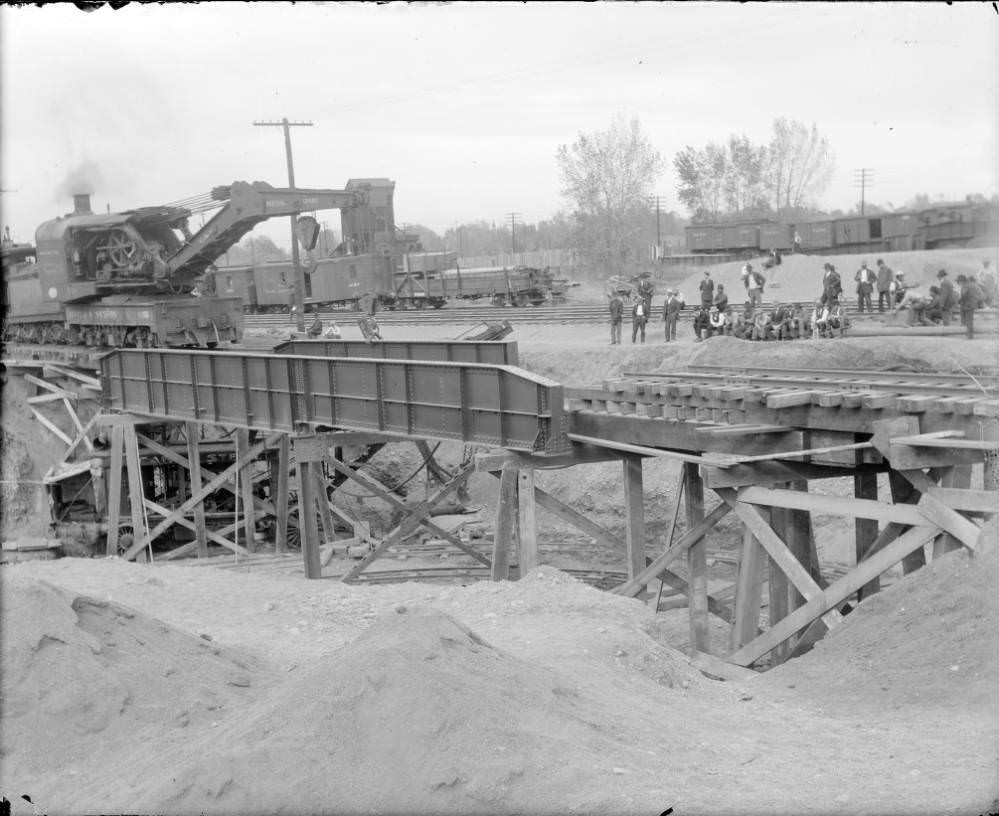
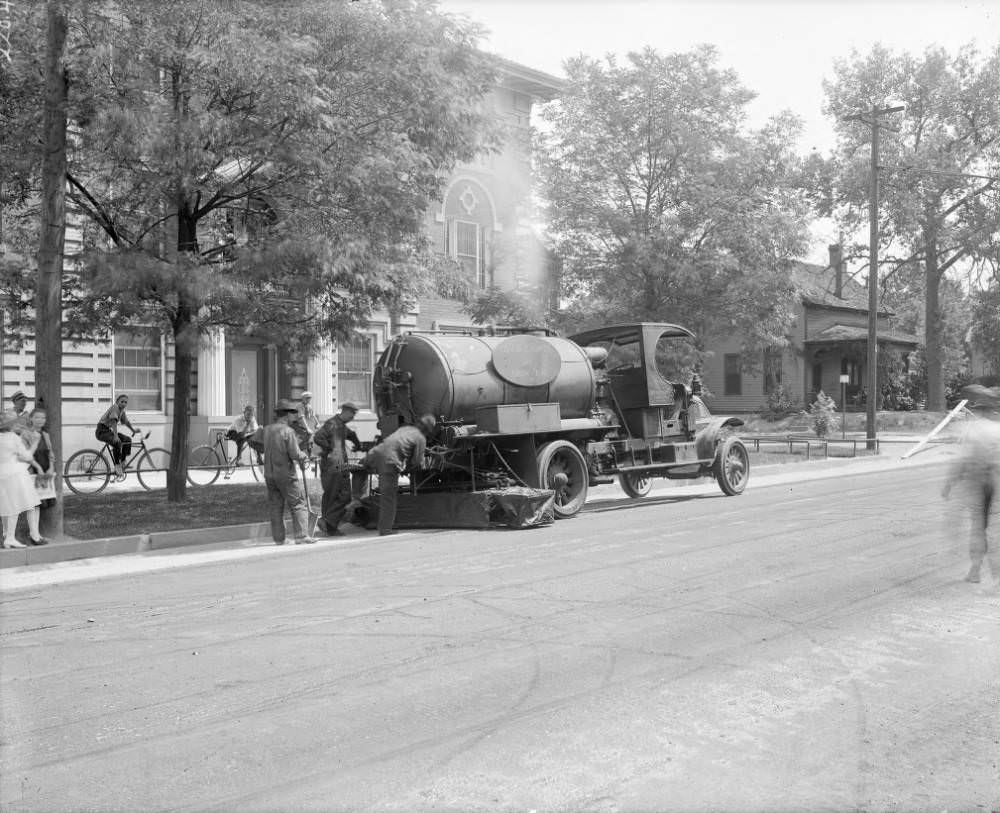
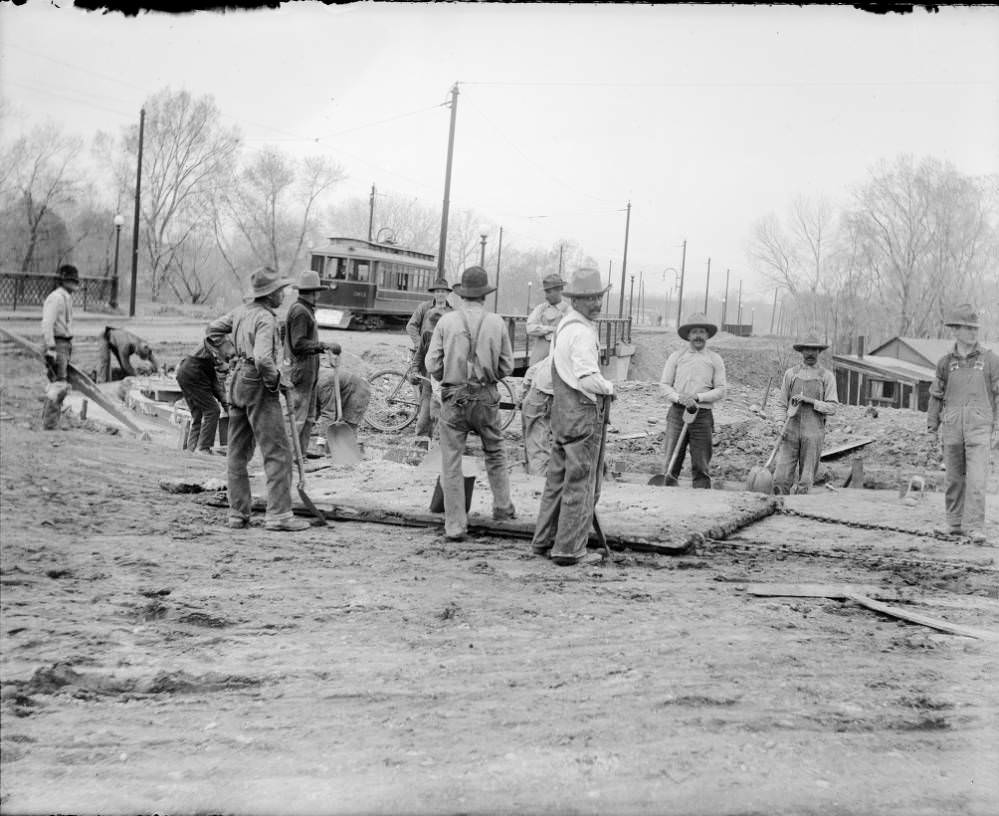
Public works were a major part of Denver’s transformation during the decade. The city’s sanitation division ran horse-drawn water wagons and early motor street cleaners to flush and scrub the streets. Speer Boulevard was cut through along Cherry Creek, reshaping the city’s geography. The Alameda Avenue underpass required a Colorado and Southern Railway crane to hoist metal barriers for bridge construction. Workers poured concrete gutters and laid new trolley tracks throughout the city, with the Denver Tramway Company constantly expanding and upgrading its infrastructure. Supply yards stocked lumber, steel rails, and stone cobbles in preparation for each new phase of building.
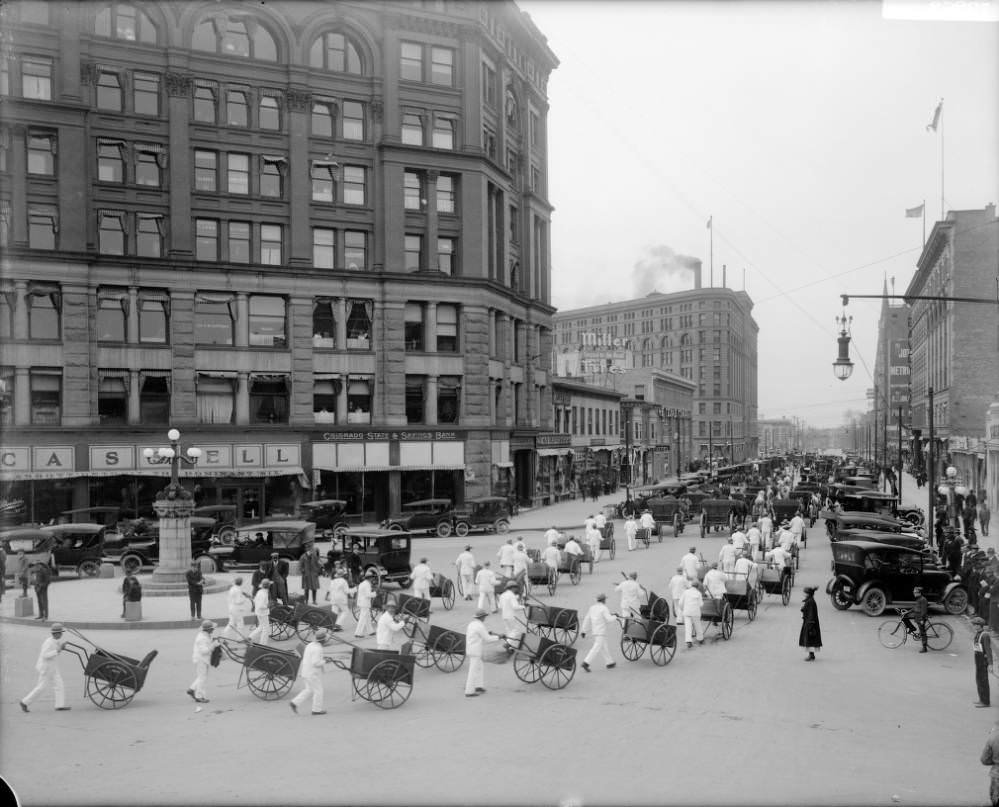
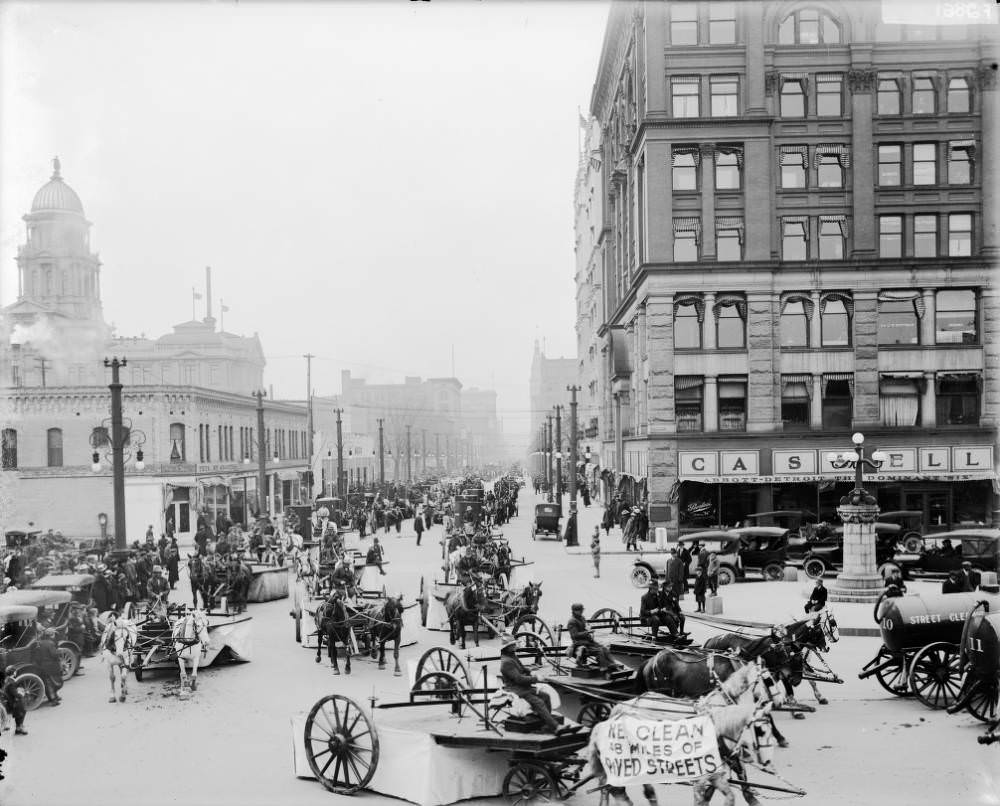
Denver Sanitation street cleaning division flushing machines.1905-1915
View of Speer Boulevard construction, in Denver, 1900s
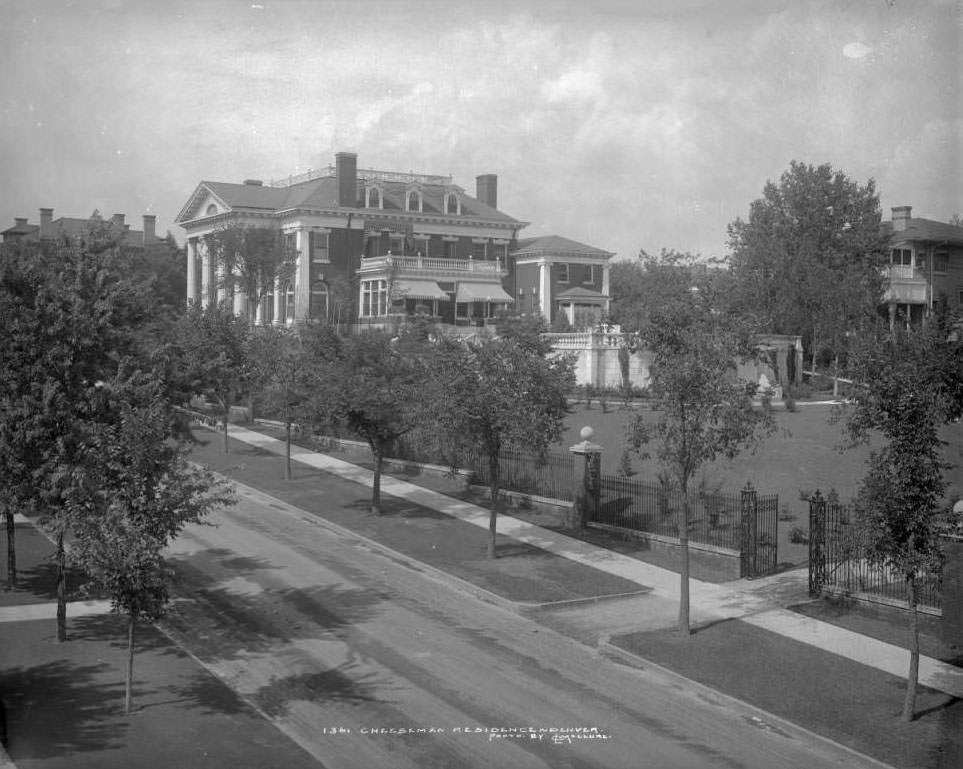
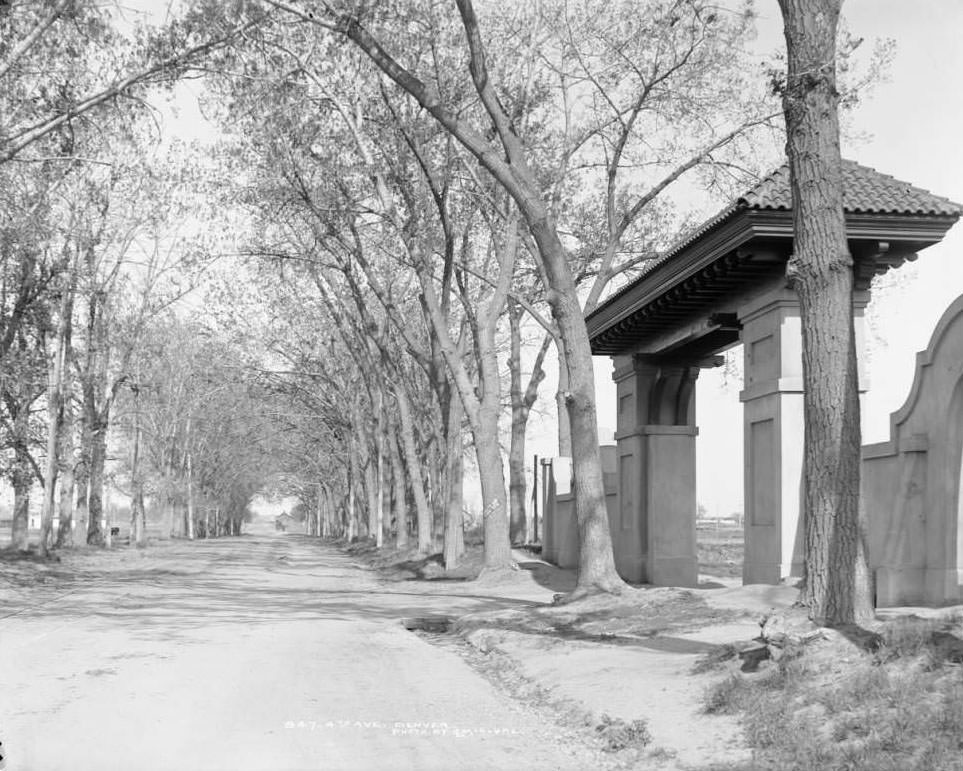
Denver’s residential neighborhoods took on distinctive characters during the 1900s. Capitol Hill attracted wealthy families, with elaborate Victorian and Romanesque Revival homes like the Walter Scott Cheesman residence at 400 East 8th Avenue, later known as the Cheesman-Evans-Boettcher mansion and eventually the Governor’s Mansion. The Denver Country Club neighborhood had a columned gateway at 4th Avenue and Franklin Street that marked it as a prestigious address. Modest apartment buildings rose at 12th and Pennsylvania Streets and throughout other neighborhoods to house the city’s growing workforce. Houses on Acoma Street and along Bannock Street reflected the more ordinary side of residential Denver.
Exterior view of Walter Scott Cheesman’s residence (later called Cheesman-Evans-Boettcher mansion & Governor’s mansion), 400 East 8th (eighth) Denver, 1908
View of a Victorian Richardsonian Romanesque house at the corner of 1st (First) Avenue and Grant Street in the Speer Neighborhood of Denver, 1905
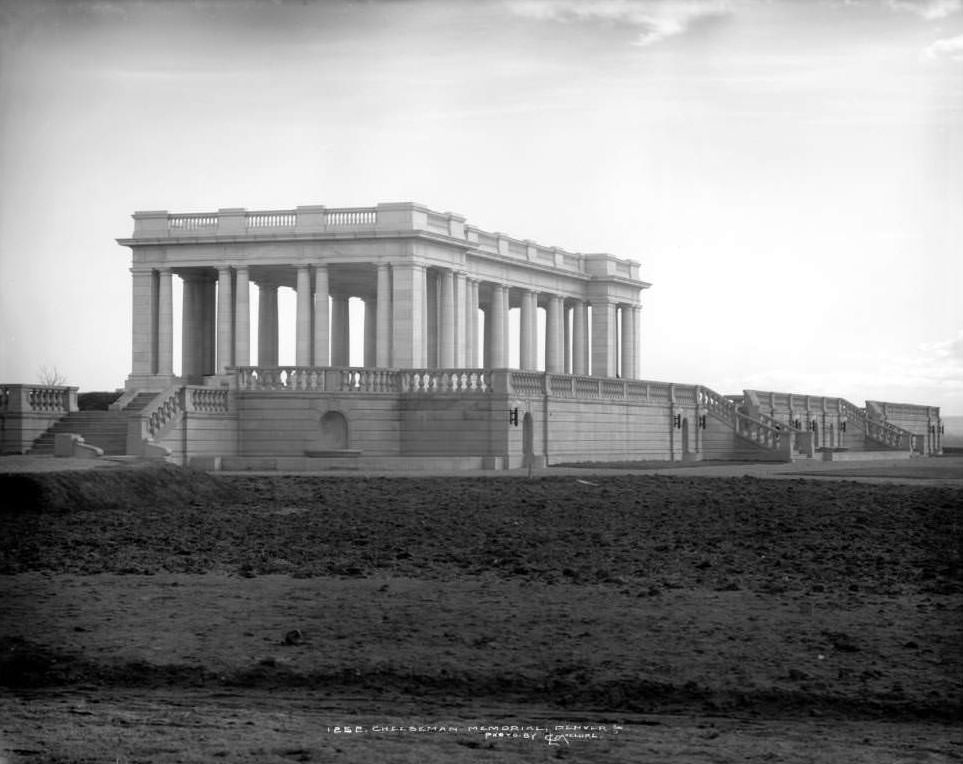
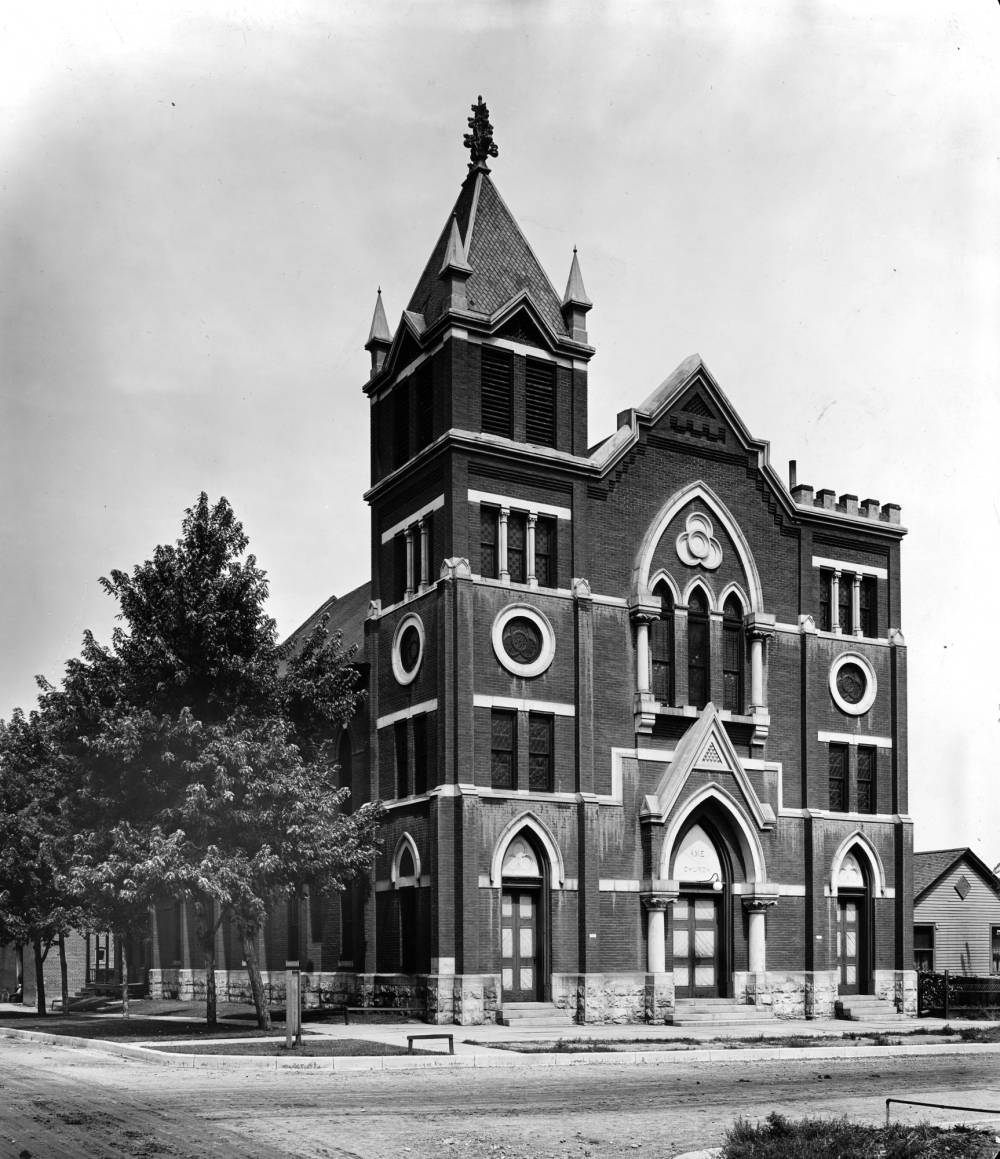
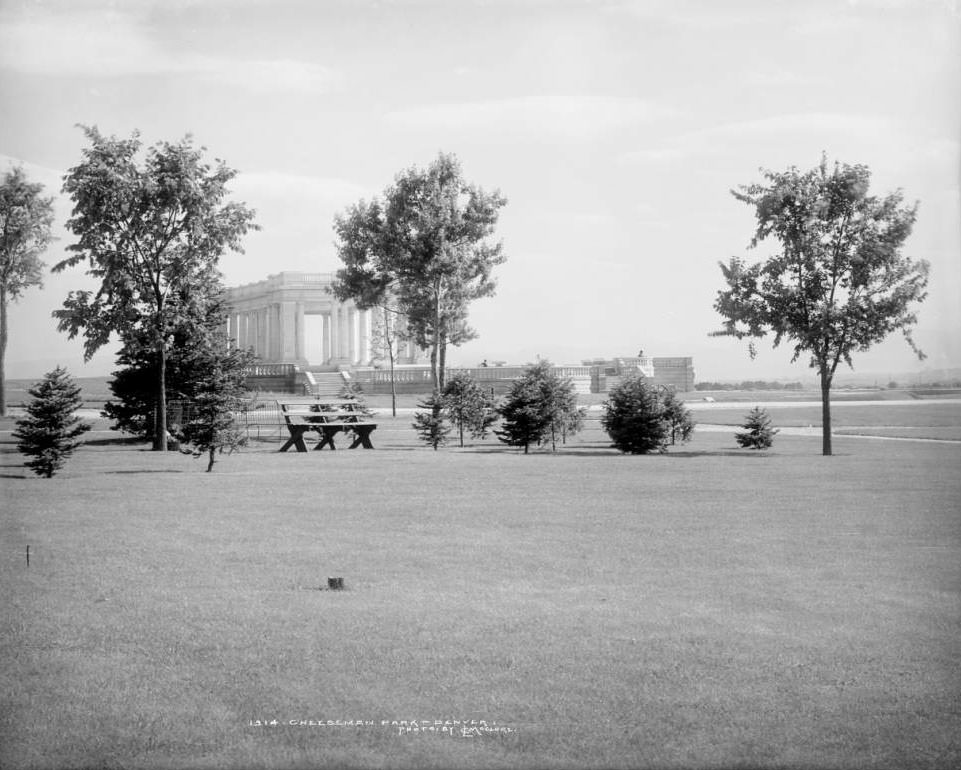
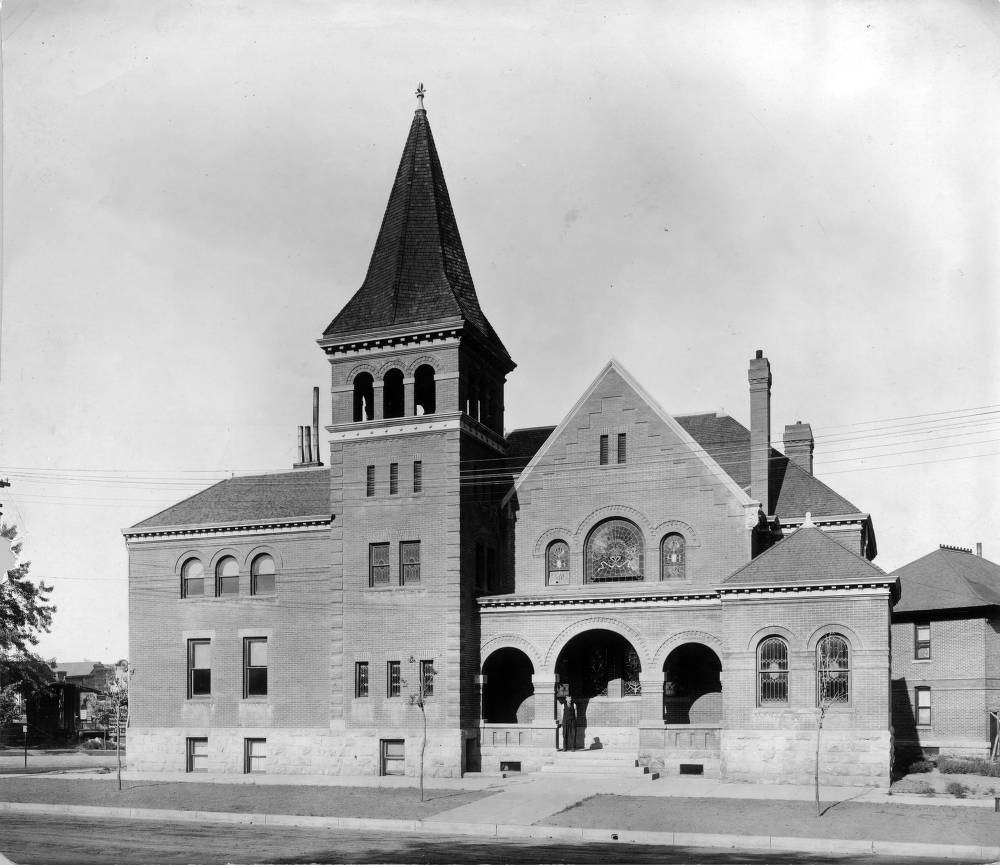
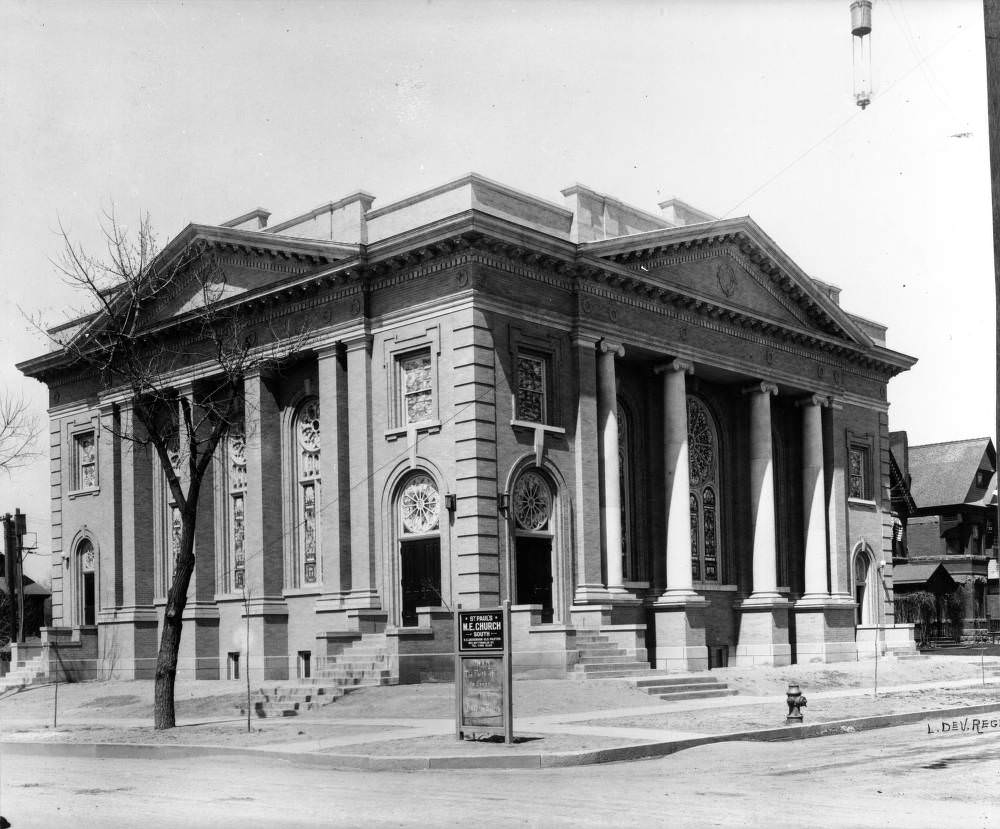
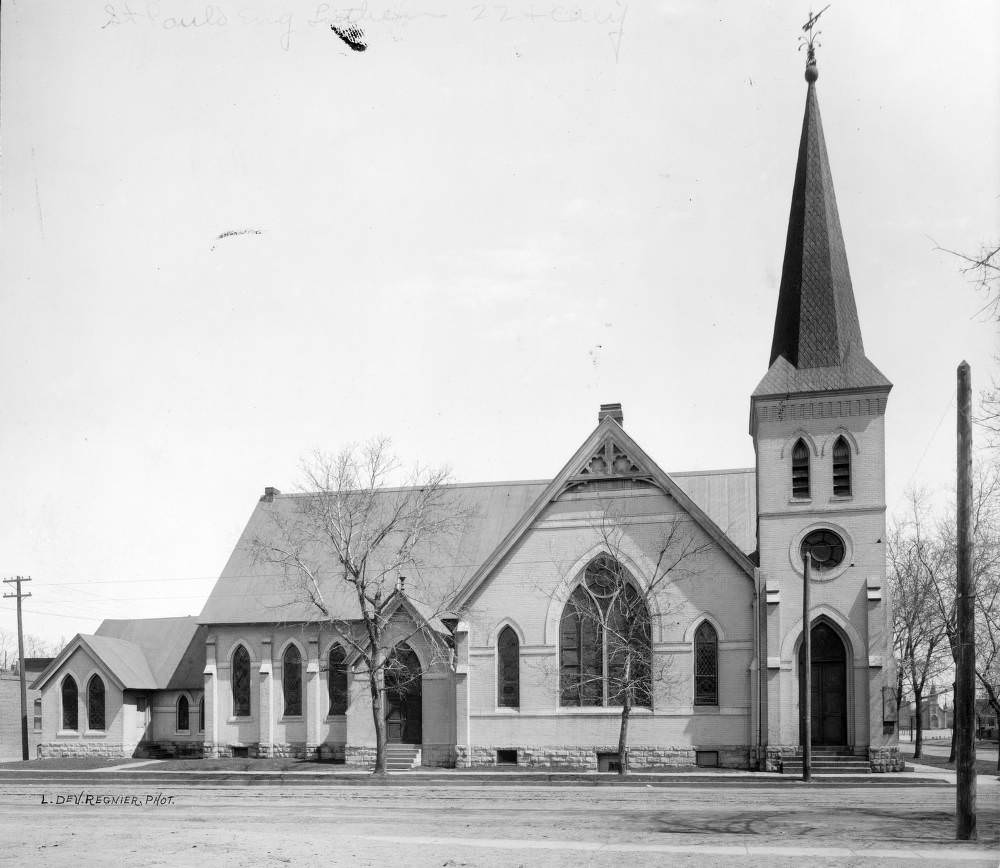
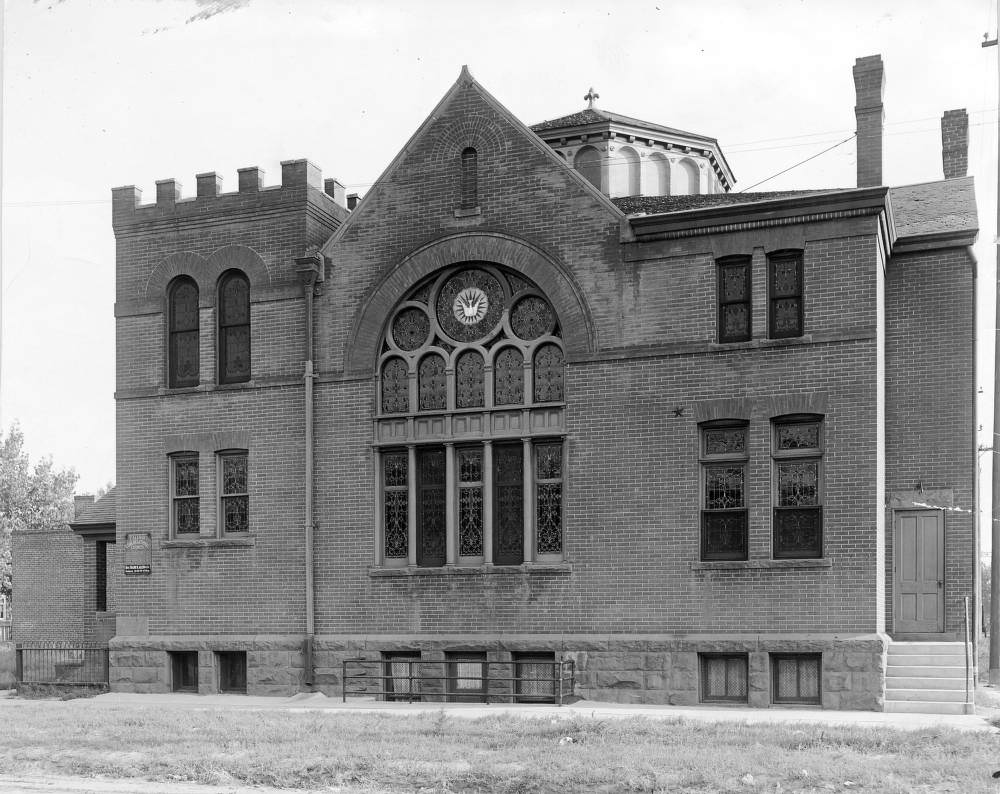
Religion was deeply embedded in Denver’s neighborhood fabric. St. Paul’s Methodist Episcopal Church stood at 16th and Ogden Streets in the North Capitol Hill neighborhood. The Shorter African Methodist Episcopal Church served the Five Points community at 23rd and Cheyenne Streets. St. Paul’s English Lutheran Church was located at 22nd and California Streets. The Boulevard United Presbyterian Church occupied a prominent corner at Lake Avenue and Federal Boulevard in Highland. The Third Congregational Church sat at West 5th Avenue and Fox Street in the Baker neighborhood. Cheesman Park, which sat on land that had once been a cemetery, had the Cheesman Memorial Pavilion as its centerpiece by 1909.
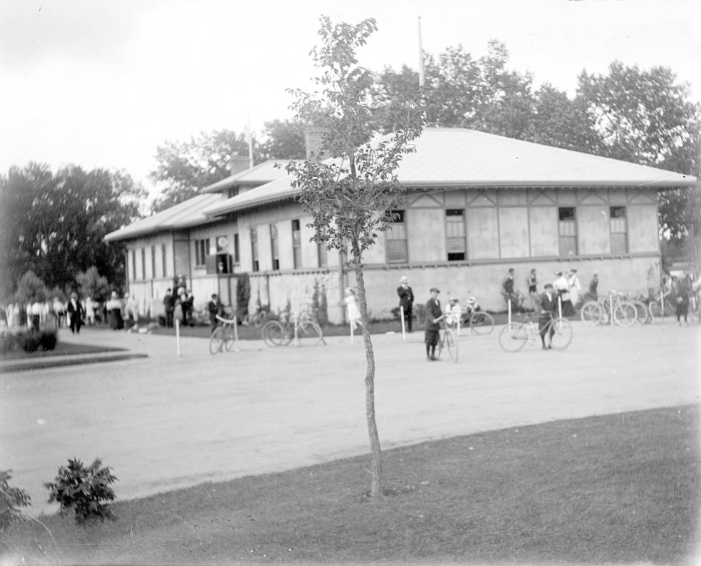
View of Cheesman Memorial Pavilion, Cheesman Park, Denver, 1909
Shorter African Methodist Episcopal Church at 23rd (Twenty-third) and Cheyenne Streets in the Five Points neighborhood of Denver, 1900s
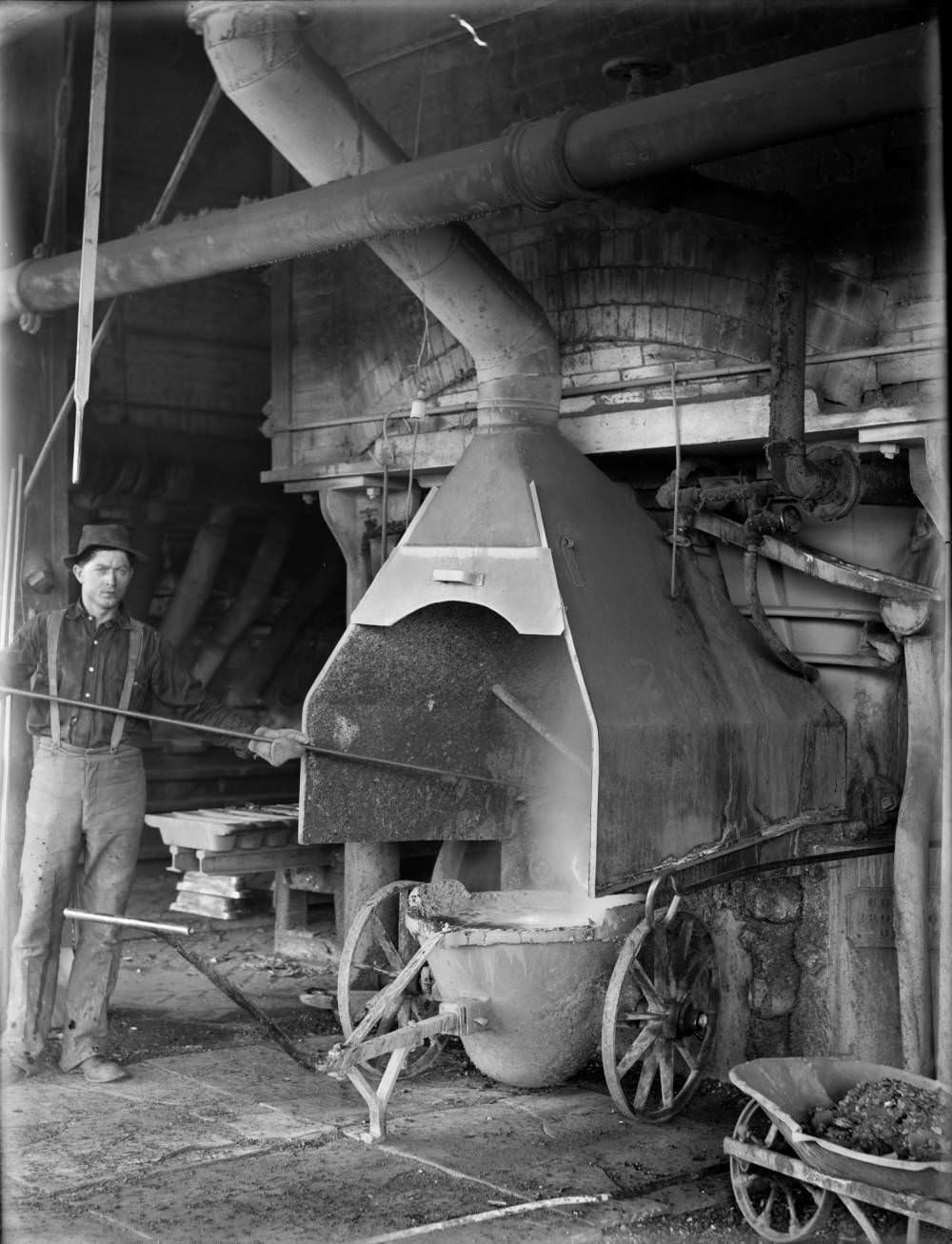
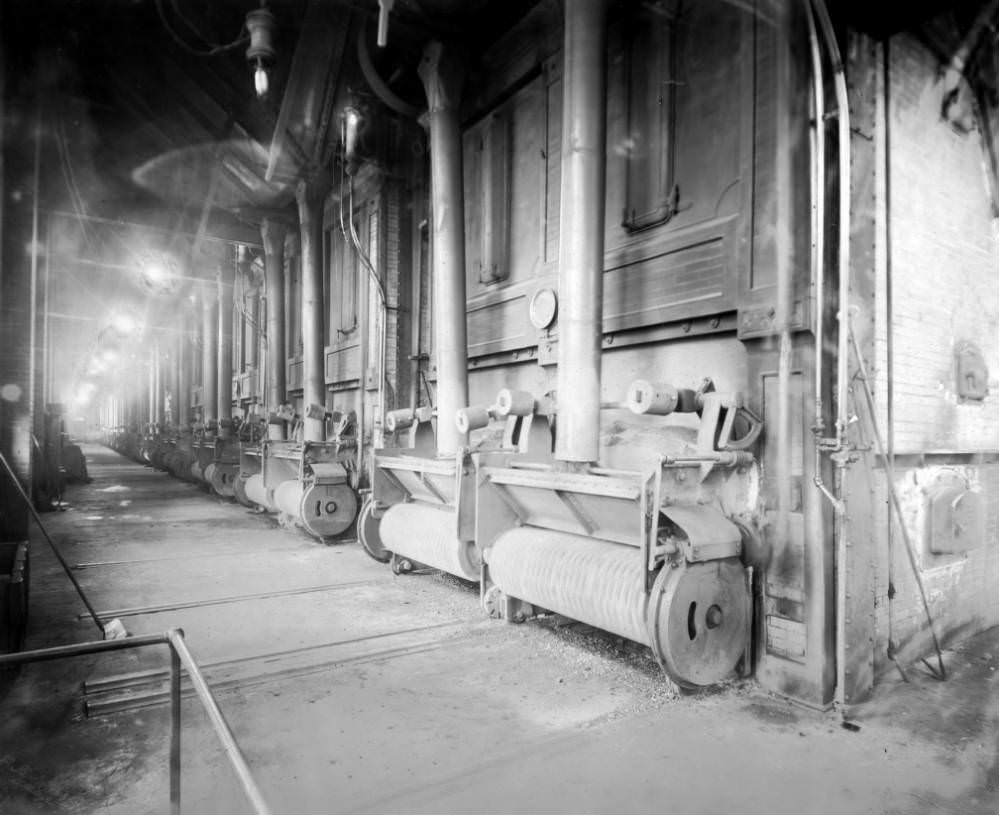
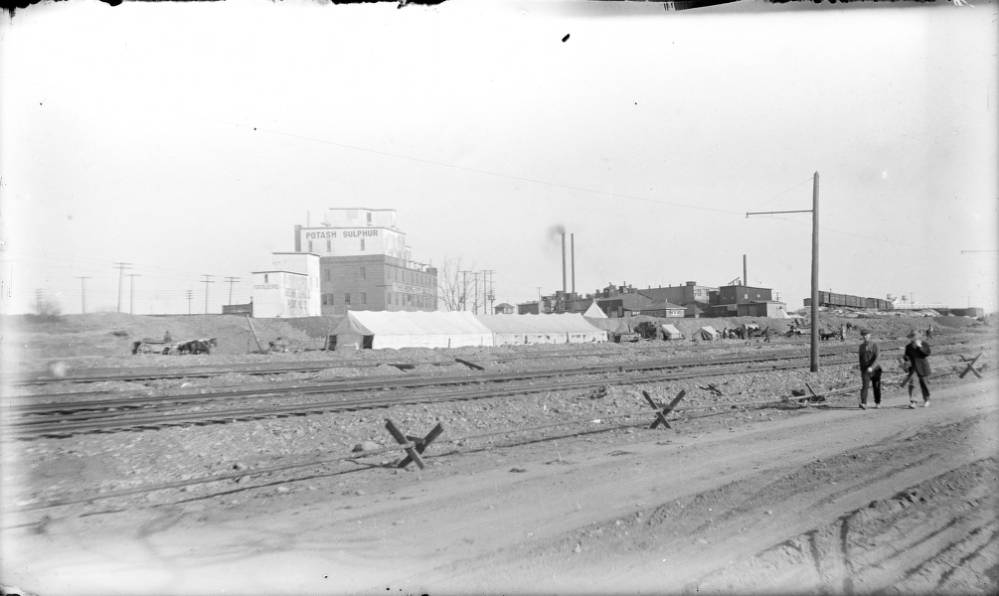
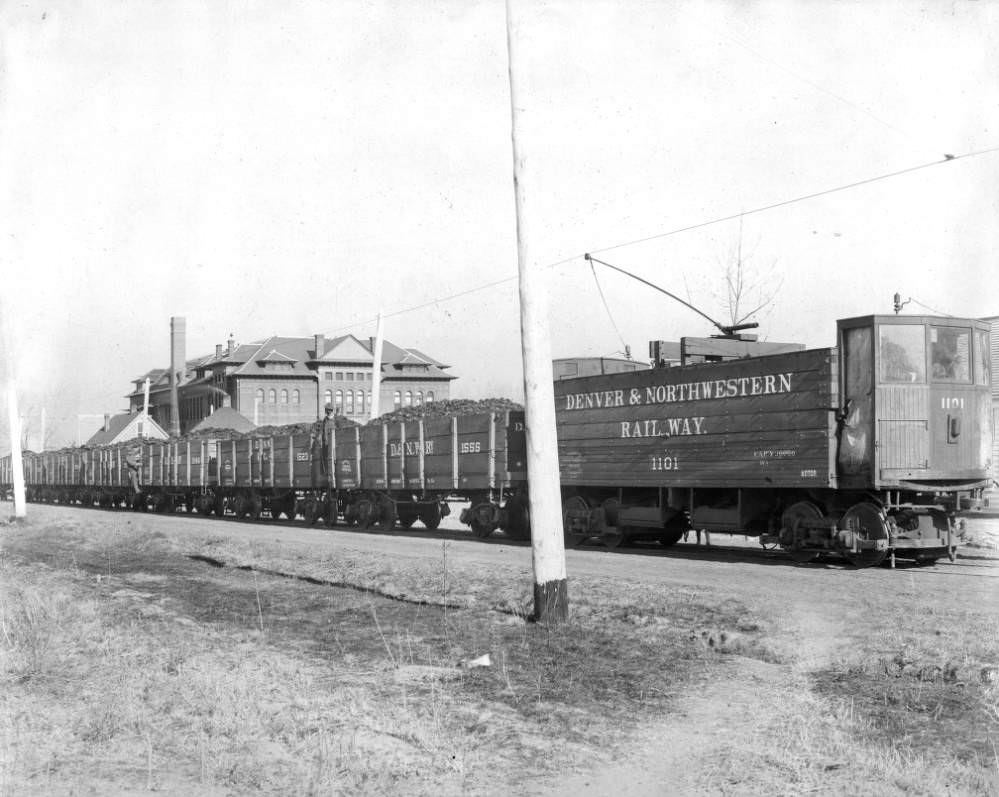
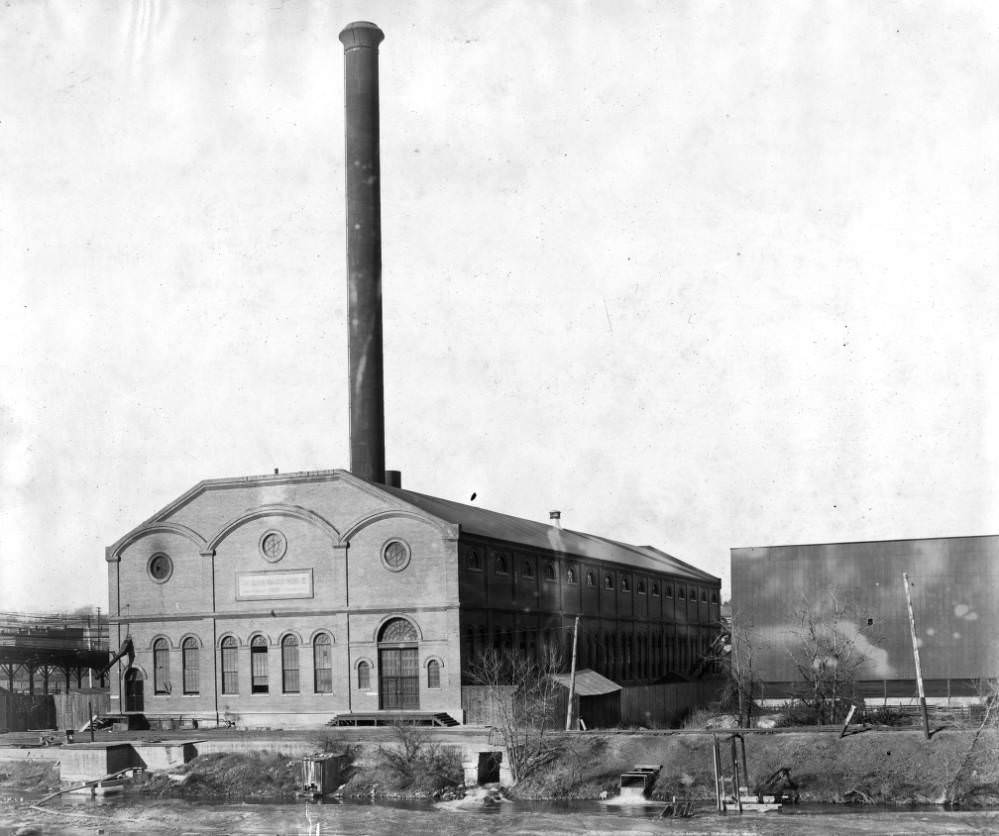
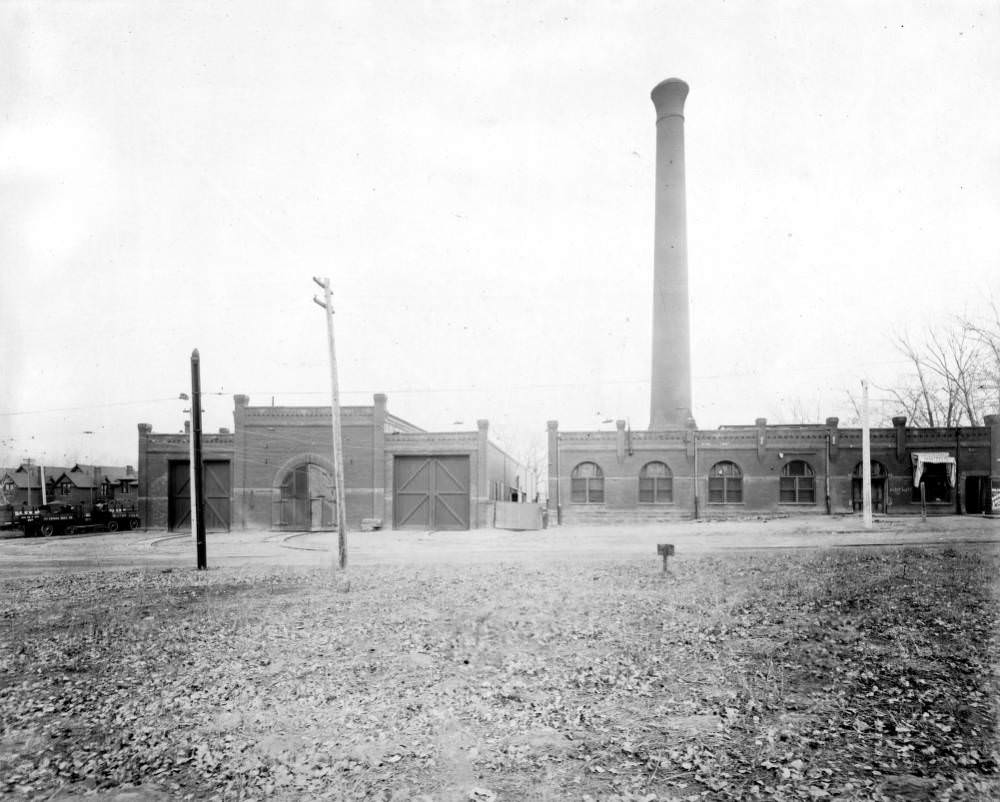
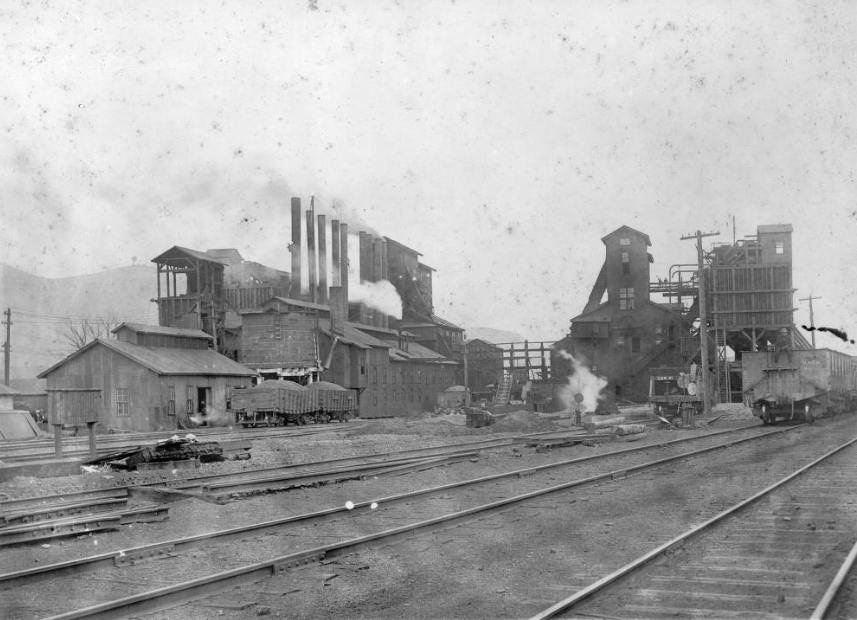
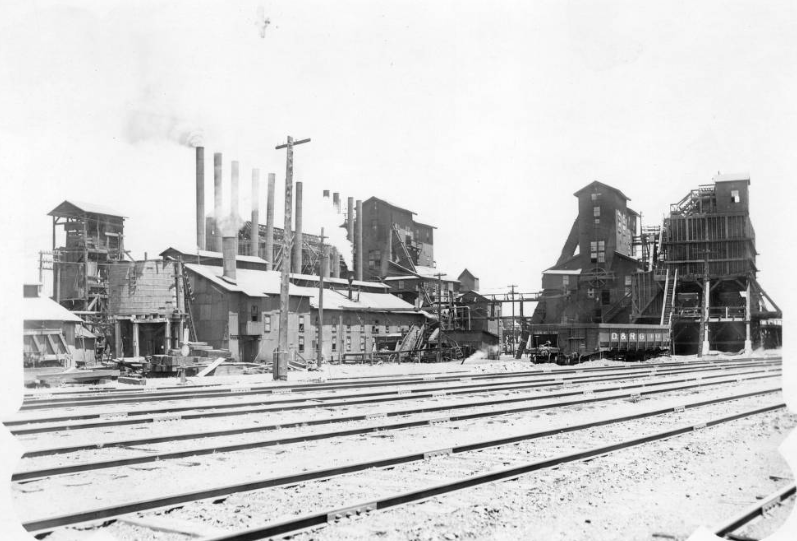
Industry powered Denver from below the surface. The Omaha-Grant smelter processed ore from Colorado’s mines, with workers drawing slag from furnaces in hot, hazardous conditions. Leyden Mine coal trains ran along Denver and Northwestern Railway cars near Alcott Public School at West 41st Avenue and Tennyson Street. The Segundo coal washeries processed fuel that fed the city’s power plants and heating systems. The Denver Tramway Company’s own power station on 18th Street ran massive furnaces and machinery to keep the trolley lines electrified. Denver’s beer industry also contributed to the economy, with numerous breweries operating across the city — though only the Coors Brewing Company, operating out of nearby Golden, would survive long enough to become one of the largest producers in the country.
A worker draws slag from an oven or furnace in the Omaha-Grant smelter in Denver, 1900
Interior view of furnaces and machinery at the Denver Tramway Company power station in Denver, 1905
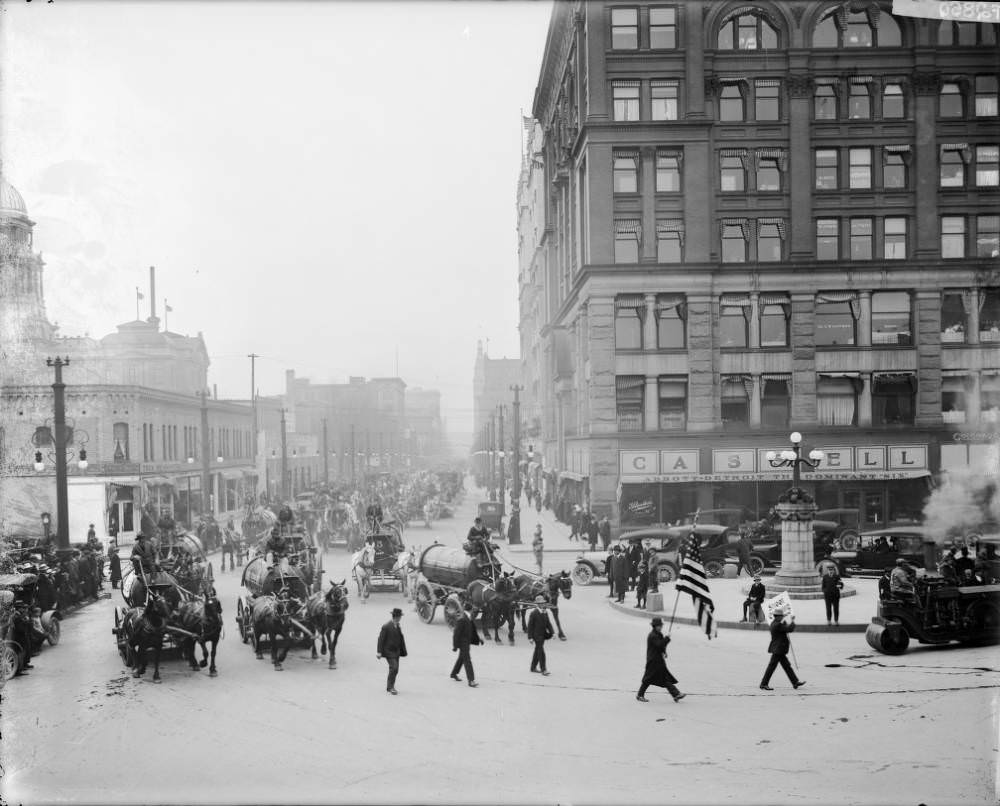
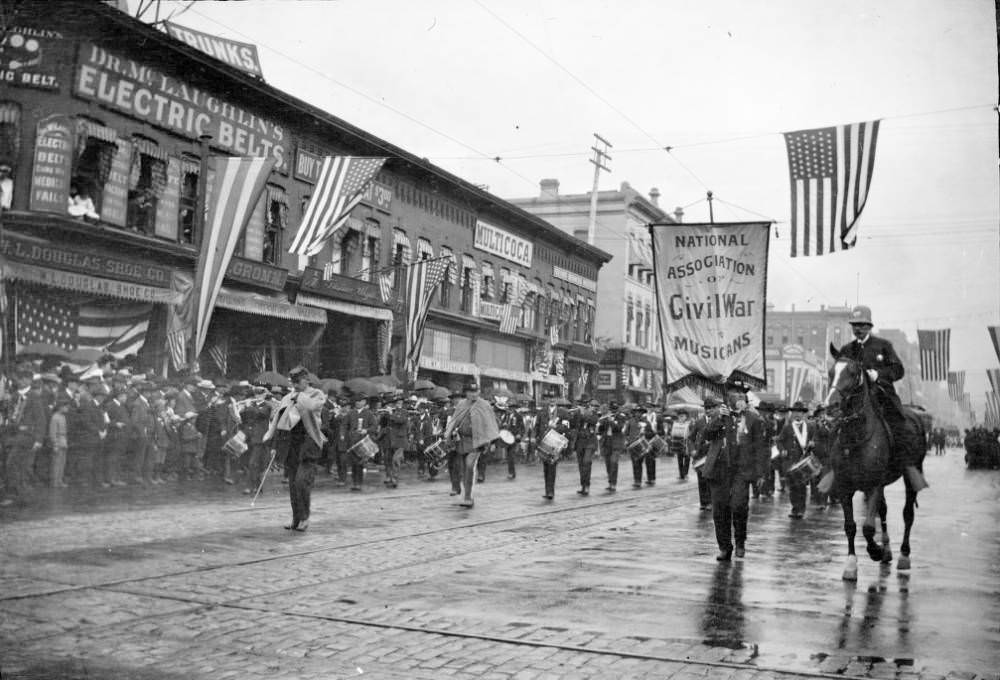
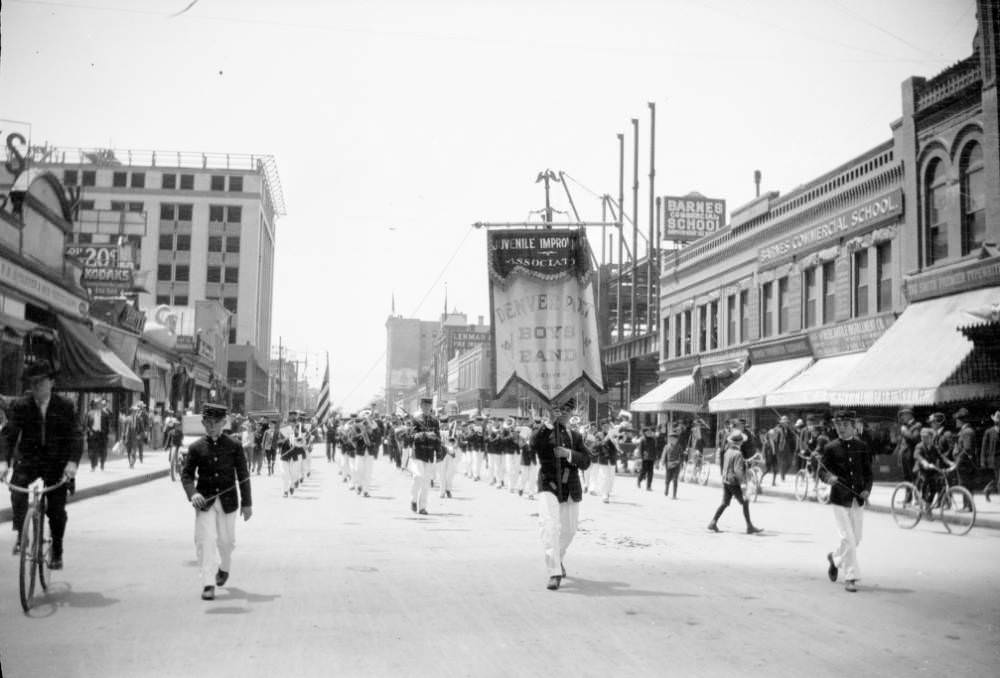
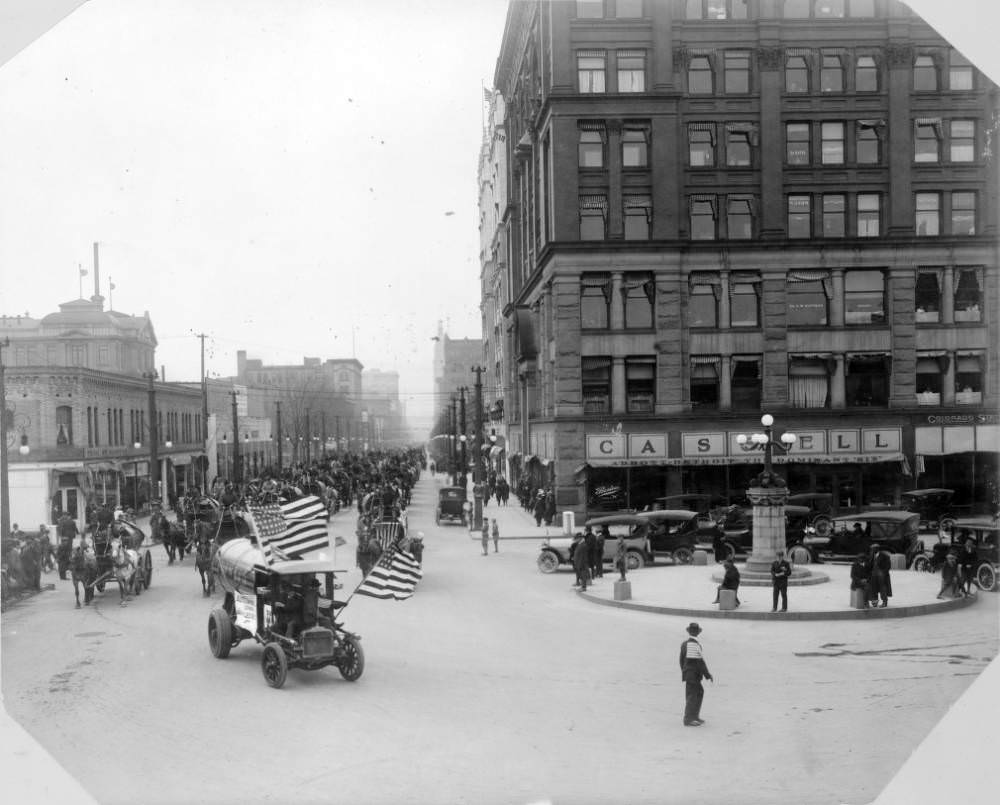
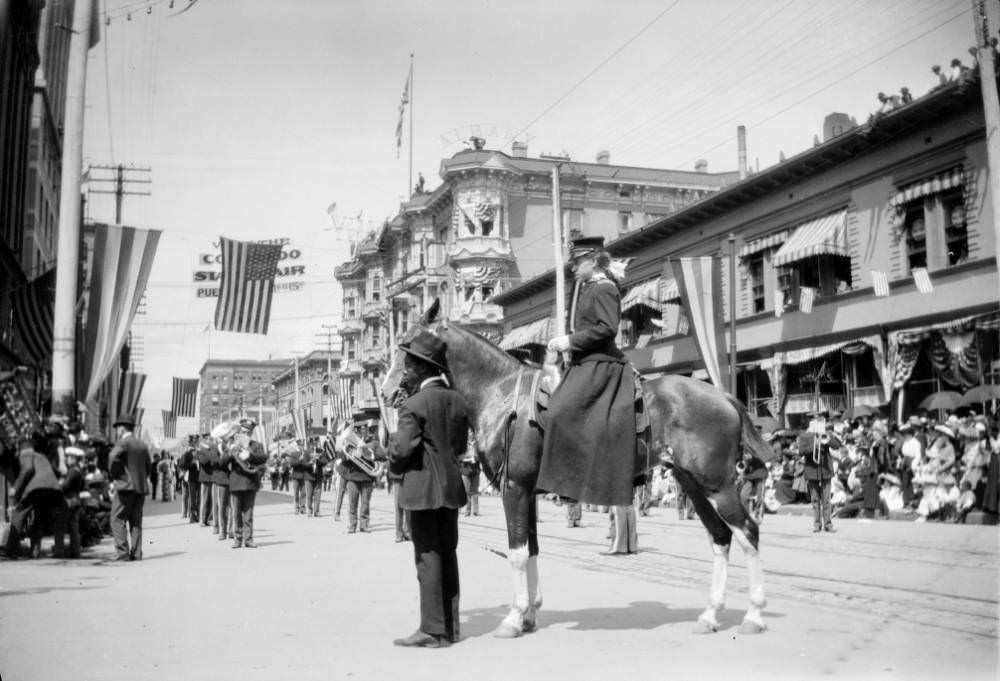
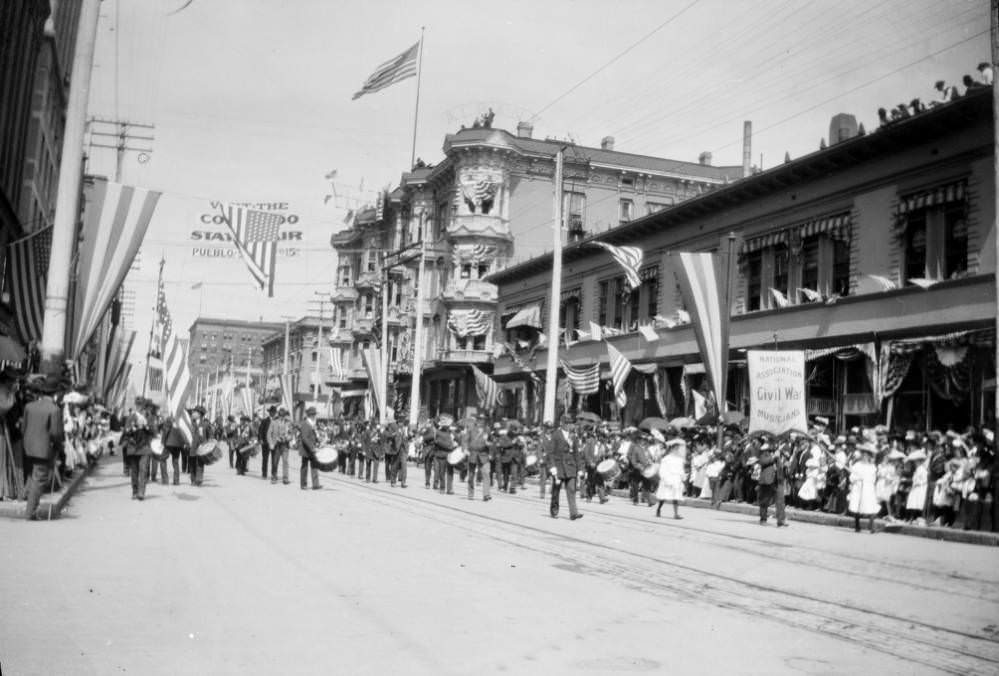
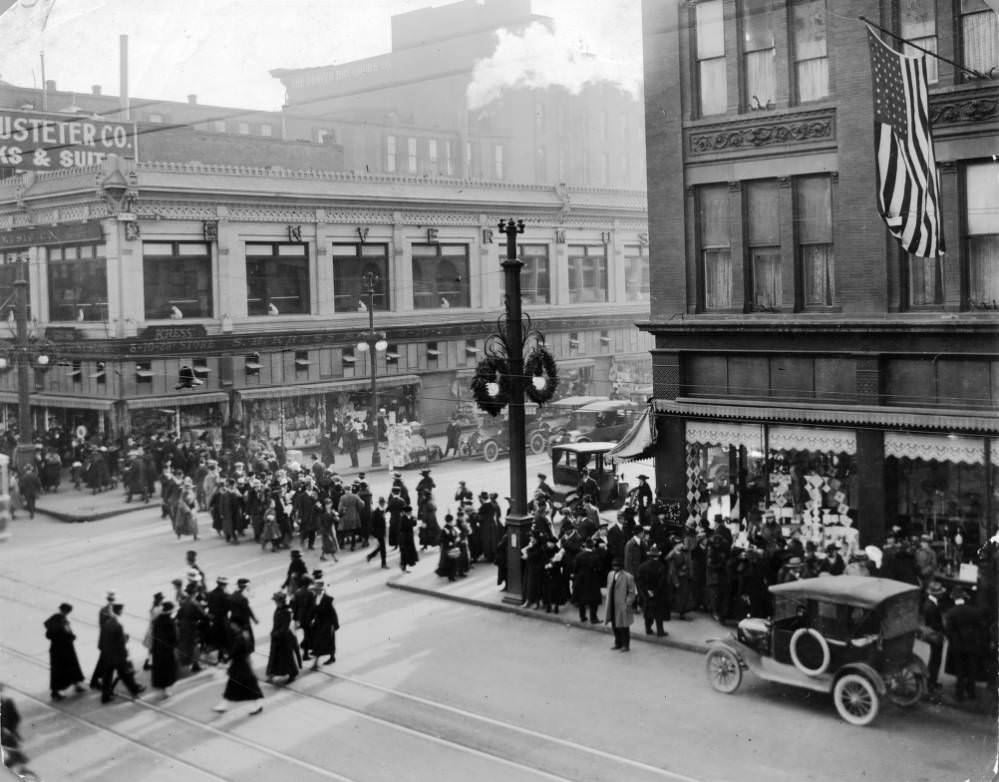
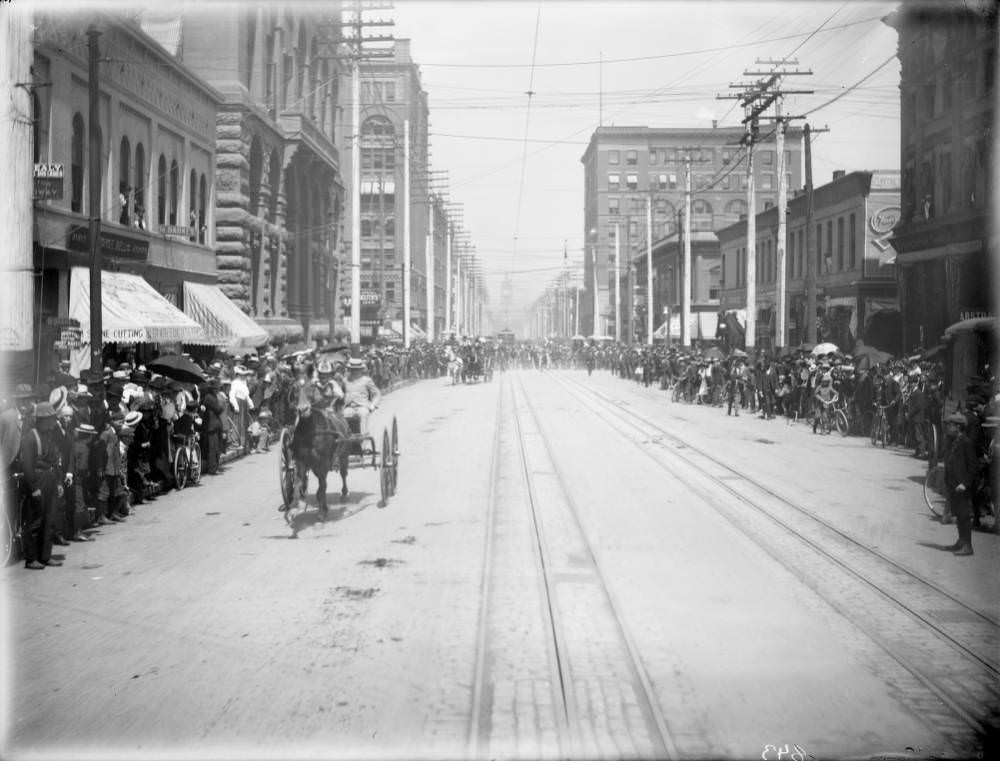
Parades were a regular feature of Denver street life. 17th Street and the intersection of Broadway and 16th Street hosted marching bands, processions, and public celebrations throughout the decade. Boys in marching bands stepped down Champa Street in 1909. Horse-drawn water wagons and steamrollers rolled past the Majestic Building during public demonstrations by the sanitation department. Crowds lined the sidewalks, and electric trolleys waited while processions passed. These events pulled residents out of their neighborhoods and into shared public space, reinforcing the city’s growing civic identity.
Parade at the intersection of Broadway and 16th (Sixteenth) Streets in Denver, 1905
A marching band participates in a parade on 17th (Seventeenth) Street in downtown Denver, 1909
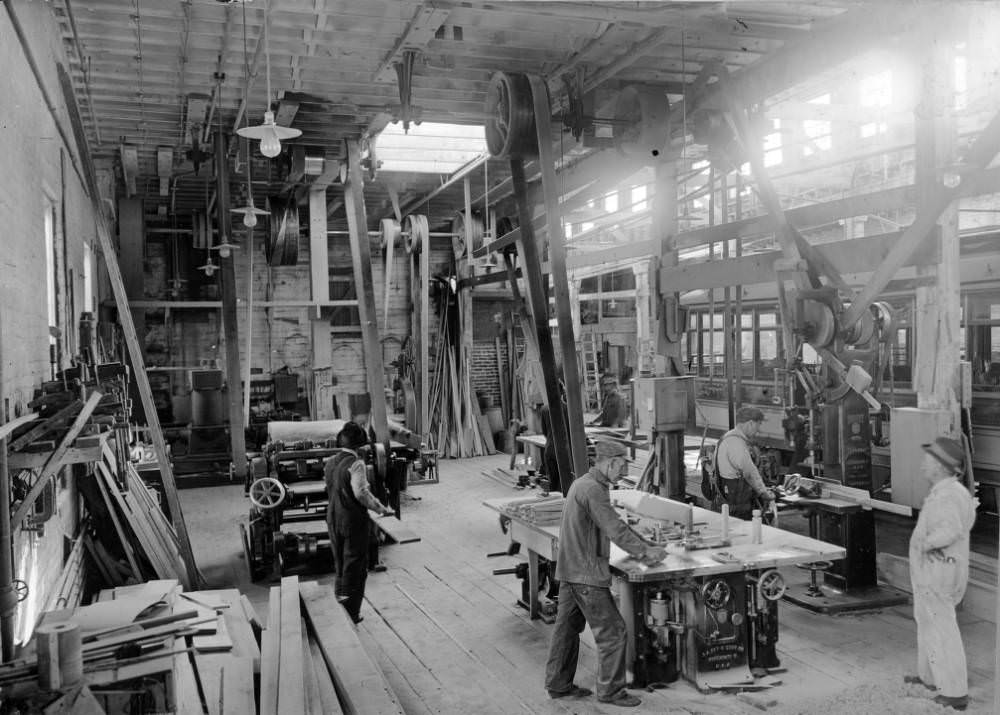
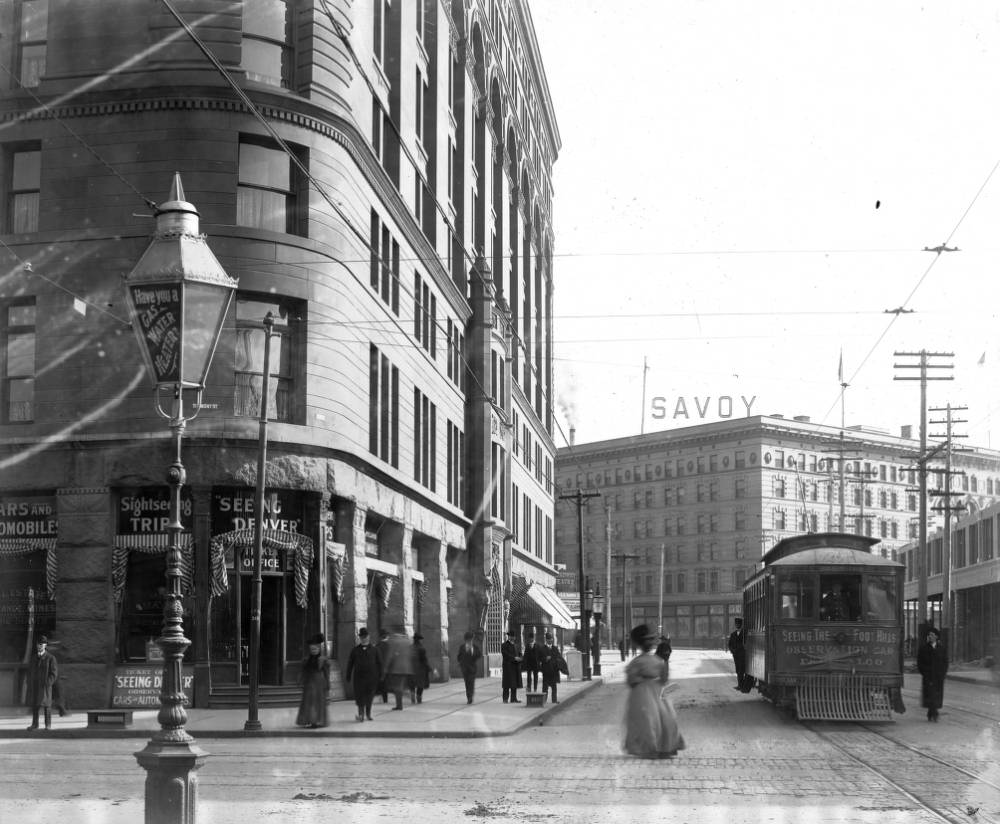
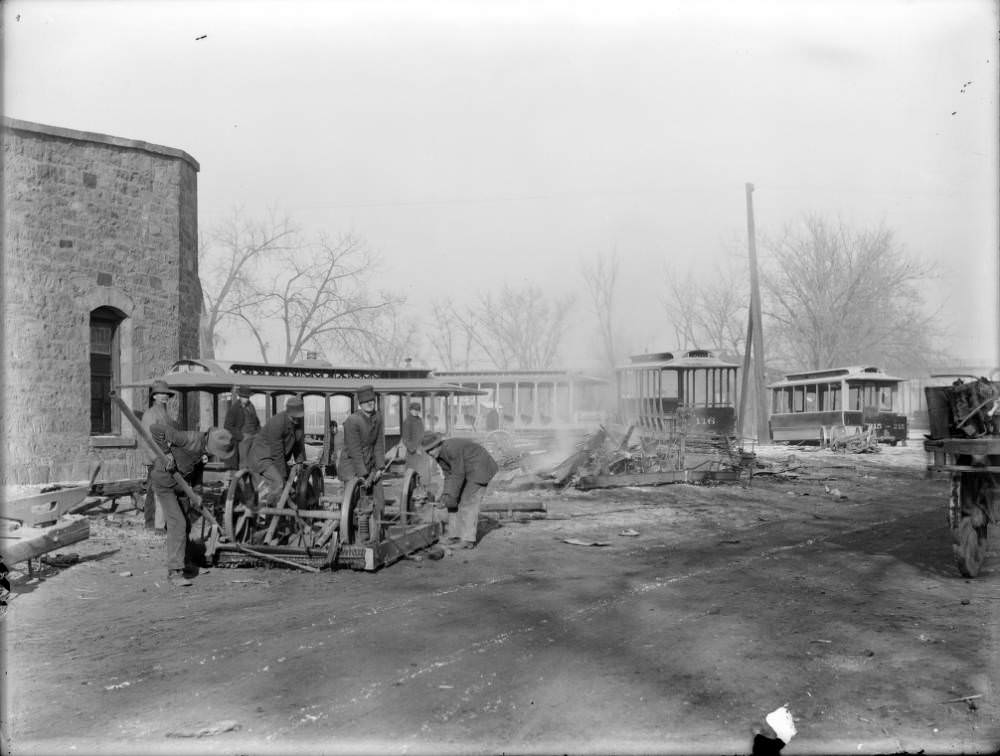
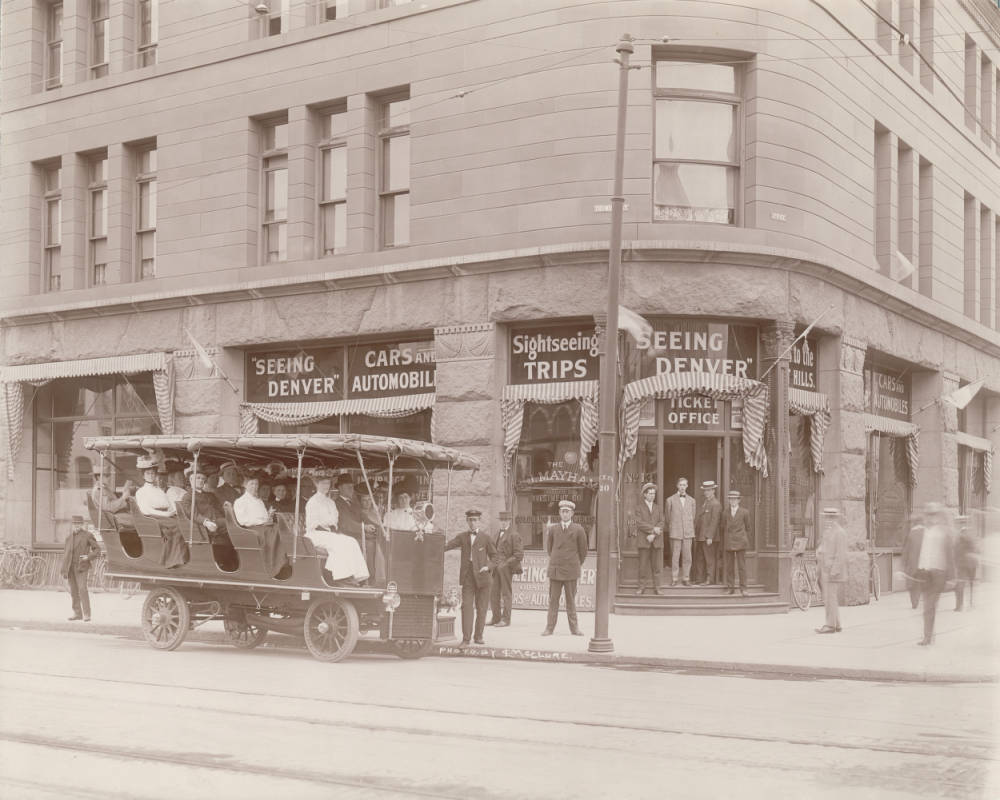
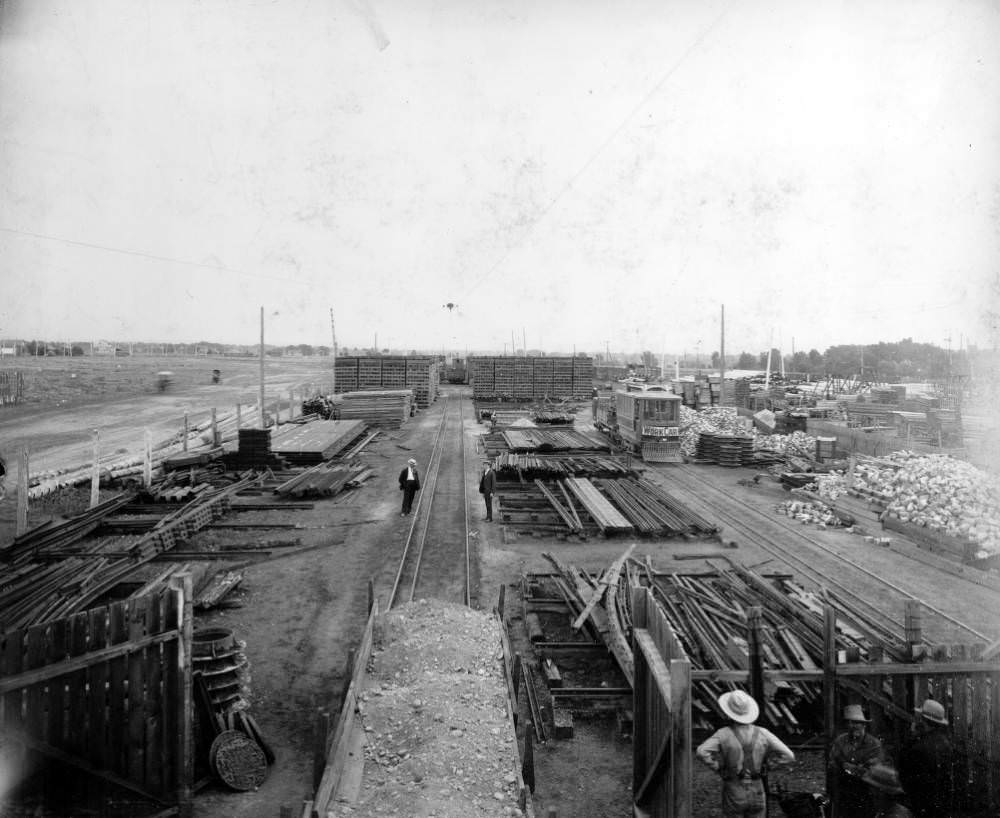
Denver’s tramway network required an enormous amount of behind-the-scenes infrastructure. The company’s garages held dozens of cars at a time, with mechanics working at benches surrounded by table saws, drills, and lumber. Supply yards on the outskirts of downtown stored stacks of steel rails and stone cobbles. Track-laying crews worked in the open street, rerouting and extending lines as the city grew. Old cars were regularly retired, with workers dismantling their chassis and wheels to recover parts. Special cars ran sightseeing routes — the “Seeing The Foothills Observation Car” took riders along 17th Street for views of the Rocky Mountains, and a “Seeing Denver” electric tour coach operated from 17th and Tremont Streets.
Interior of the Denver Tramway Company machine shop shows workers, benches, table saws, drills, and lumber, 1909
View of Denver Tramway Company trolley “Seeing The Foothills Observation Car” on 17th (Seventeenth) Street in Denver, 1905
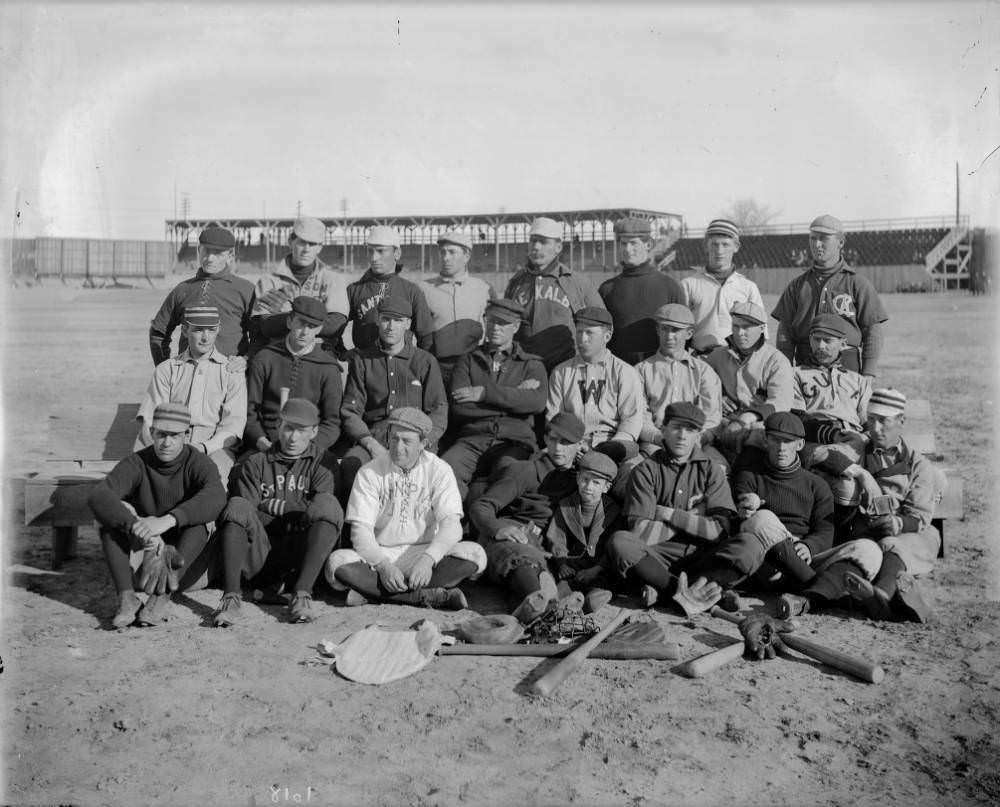
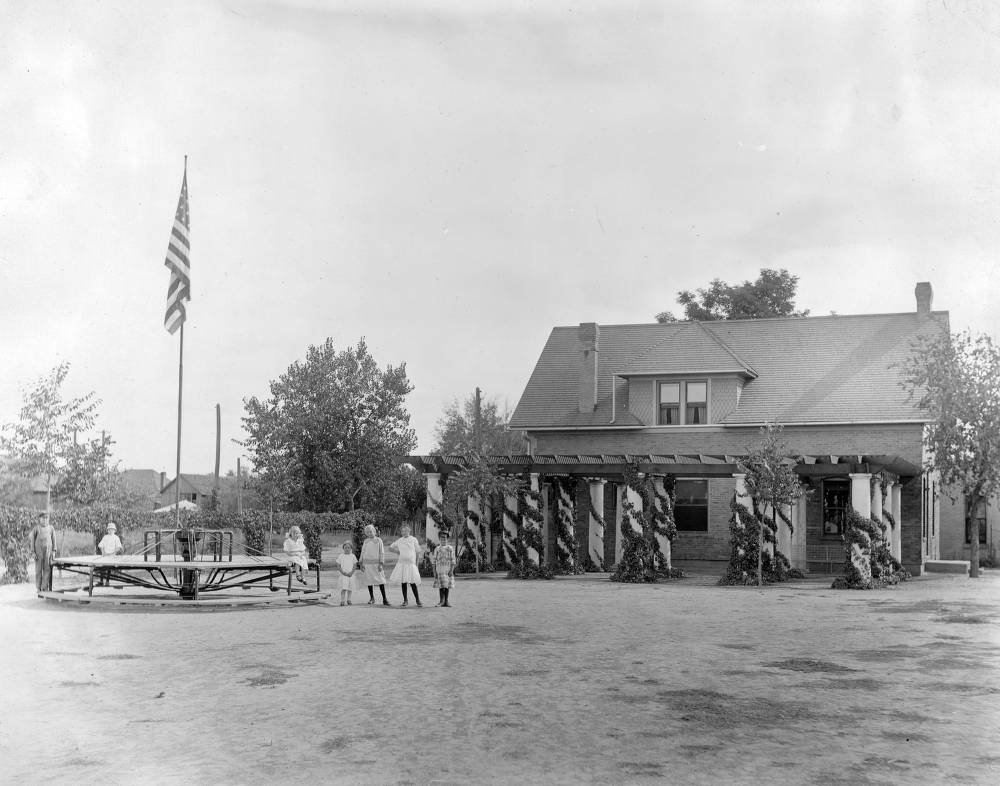
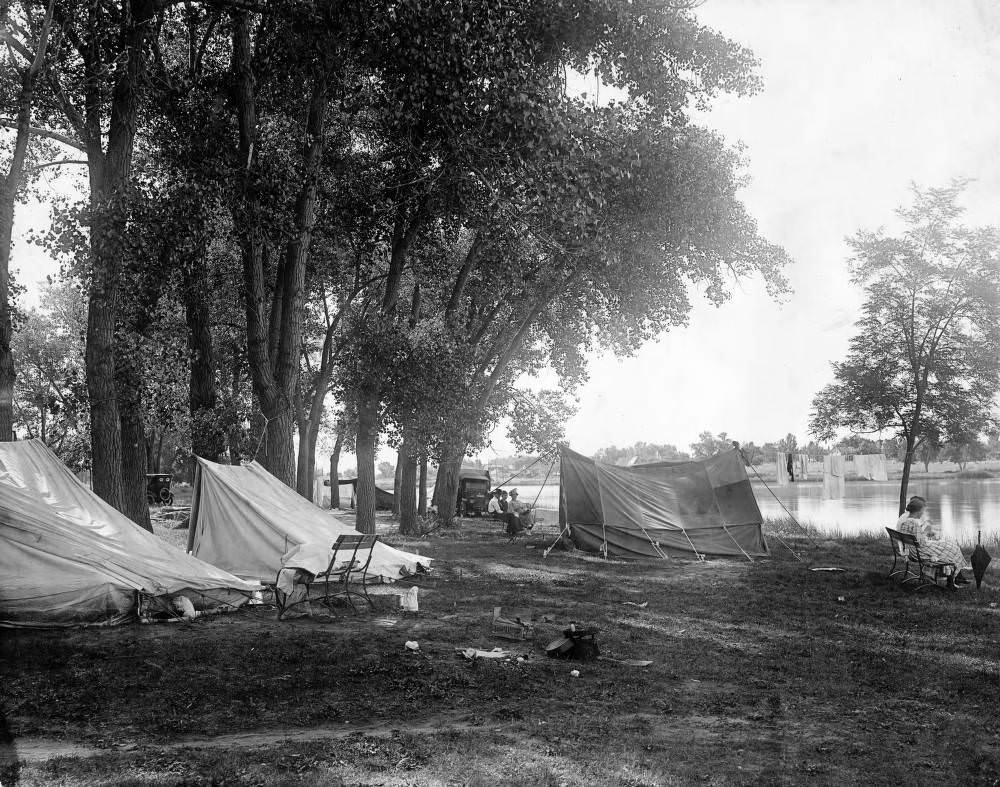
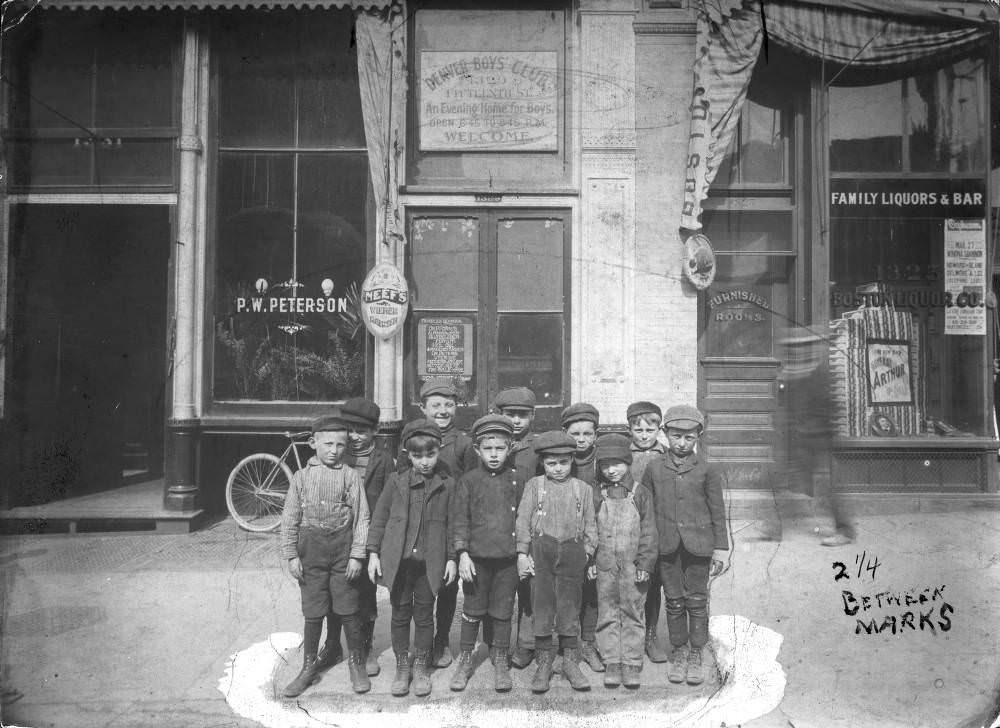
The Denver Bears baseball team was playing organized ball by 1909, posing outdoors at a local field in their uniforms. The Denver Boys Club had its own building at 1329 15th Street, where young members gathered in a city that was quickly building out youth programs and recreational spaces. Elyria Park’s playground had a merry-go-round where children played. Rocky Mountain Lake Park in the Berkeley neighborhood offered camping spots along the lakeshore. Denver was not just building its commercial and civic infrastructure — it was also constructing the social spaces that would define neighborhood life for generations.
Members of the Denver Bears baseball team pose outdoors at a baseball field in Denver, 1909
Children pose on and near a merry-go-round in Elyria Park playground in Denver, 1909
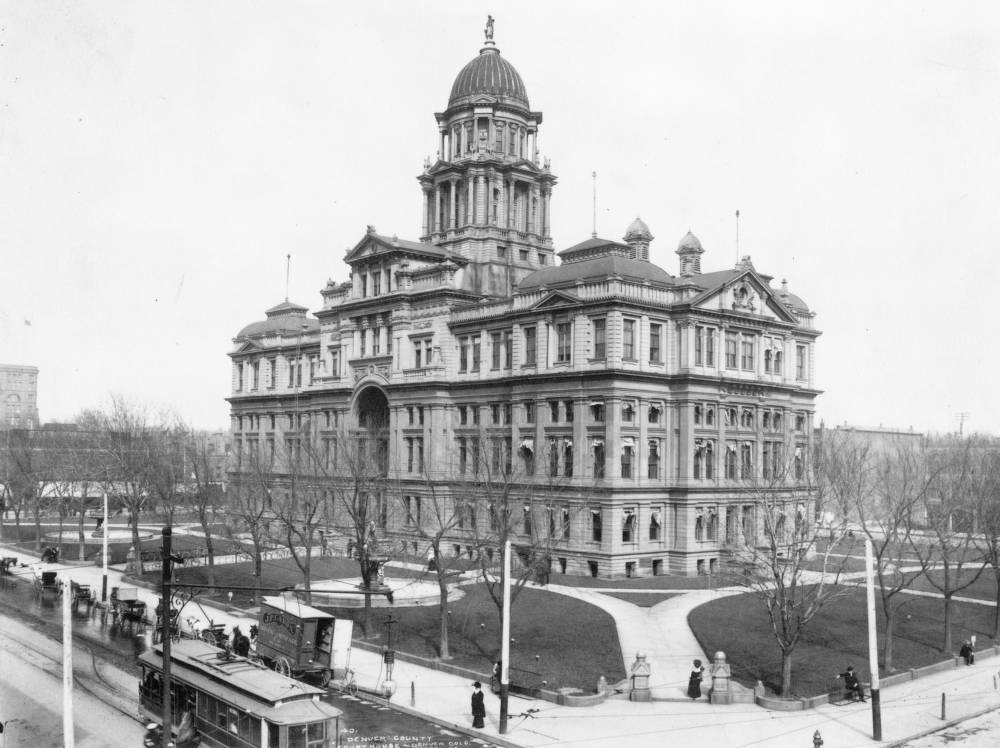
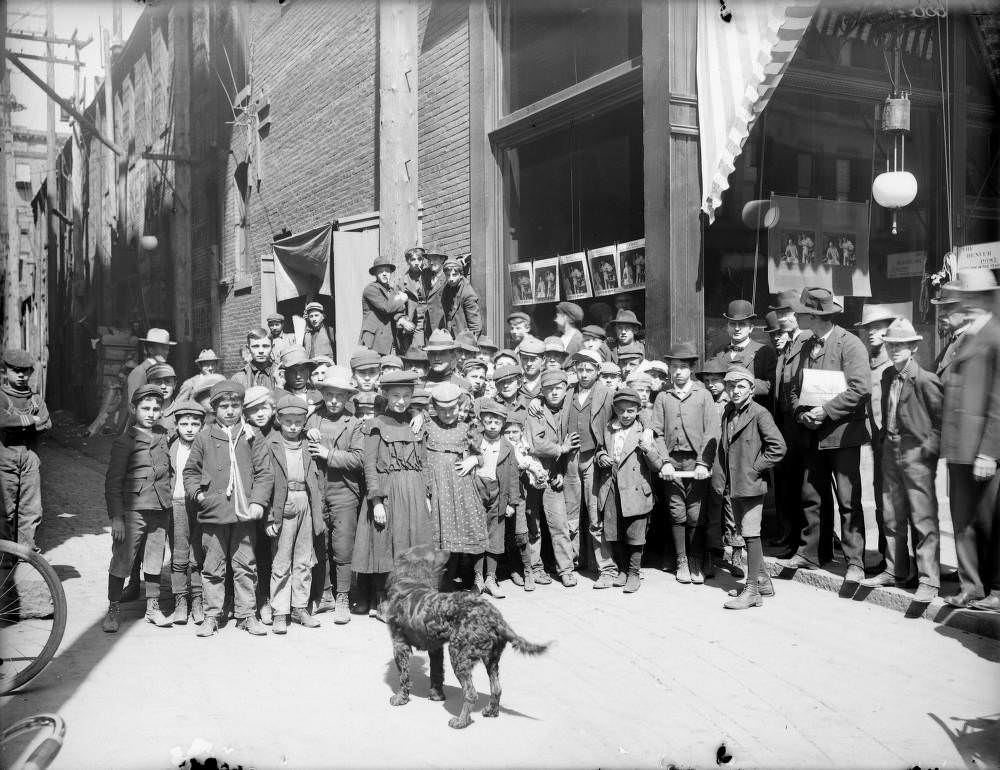
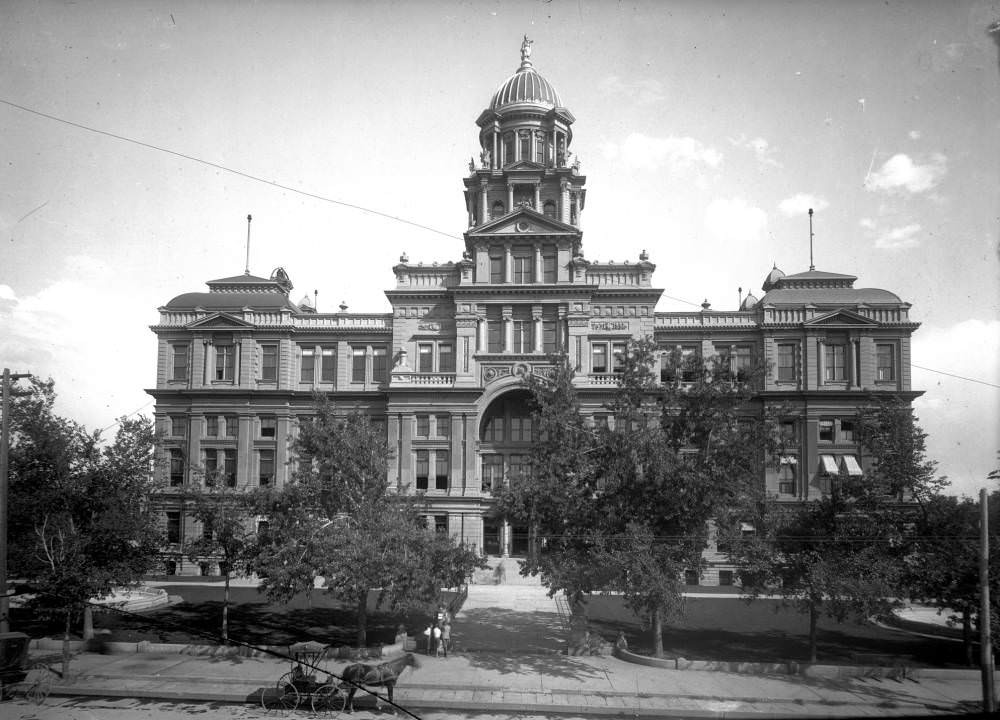
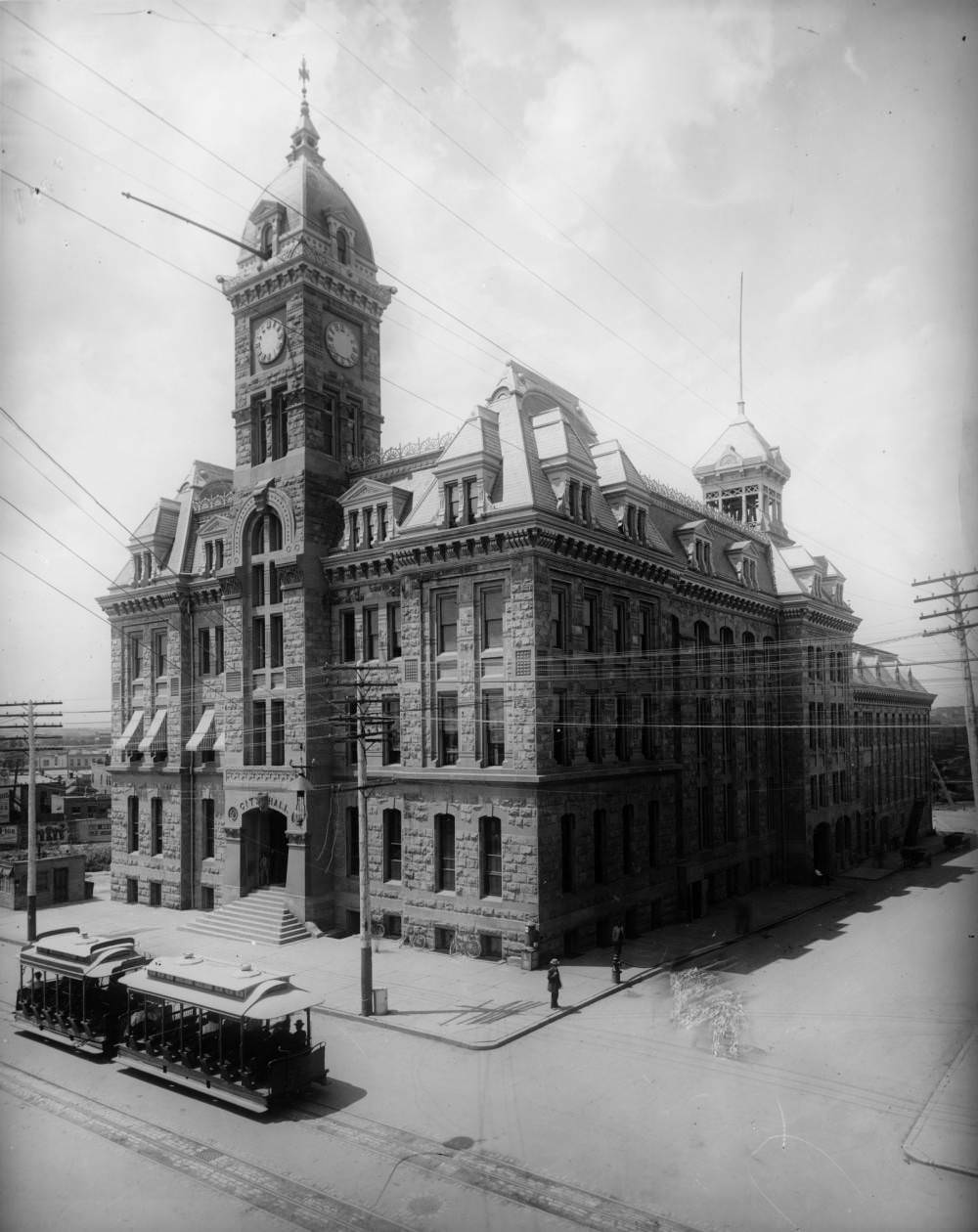
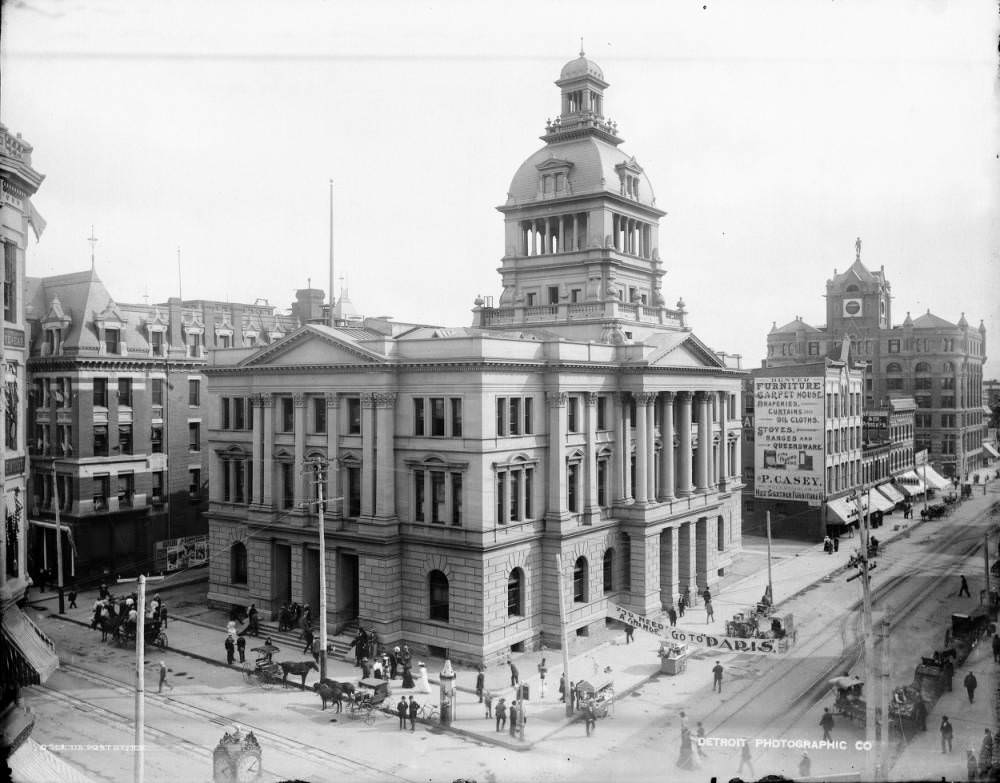
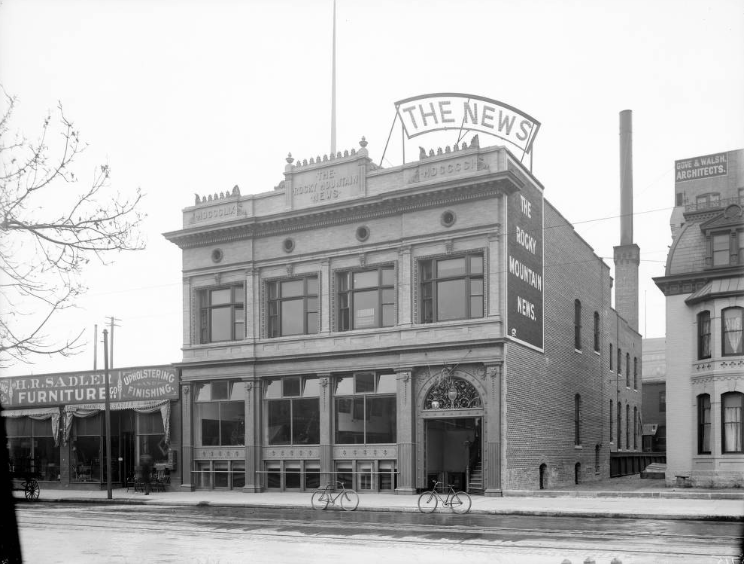
The Denver County Courthouse, originally built as the Arapahoe County Courthouse, anchored the civic core at 15th and Tremont Street. Denver City Hall stood on 14th Street and housed the Fire Department Headquarters on its first floor, where Hook and Ladder No. 1 and Hose No. 4 were stationed. The Federal Mint building gave Denver a national financial presence. The Rocky Mountain News, based at 1720 Welton Street, and the Denver Post, on 16th Street, kept the public informed about a city that was changing faster than any single day’s paper could capture. Children who delivered those papers posed for photographs outside the Post’s offices, their faces part of the city’s daily machinery.
Denver County Courthouse (Arapahoe County Courthouse) on Fifteenth (15th) and Tremont Street in Denver, 1909
A group of children, probably delivery boys and girls, pose outside of the Denver Post newspaper office on 16th (Sixteenth) Street in Denver, 1900
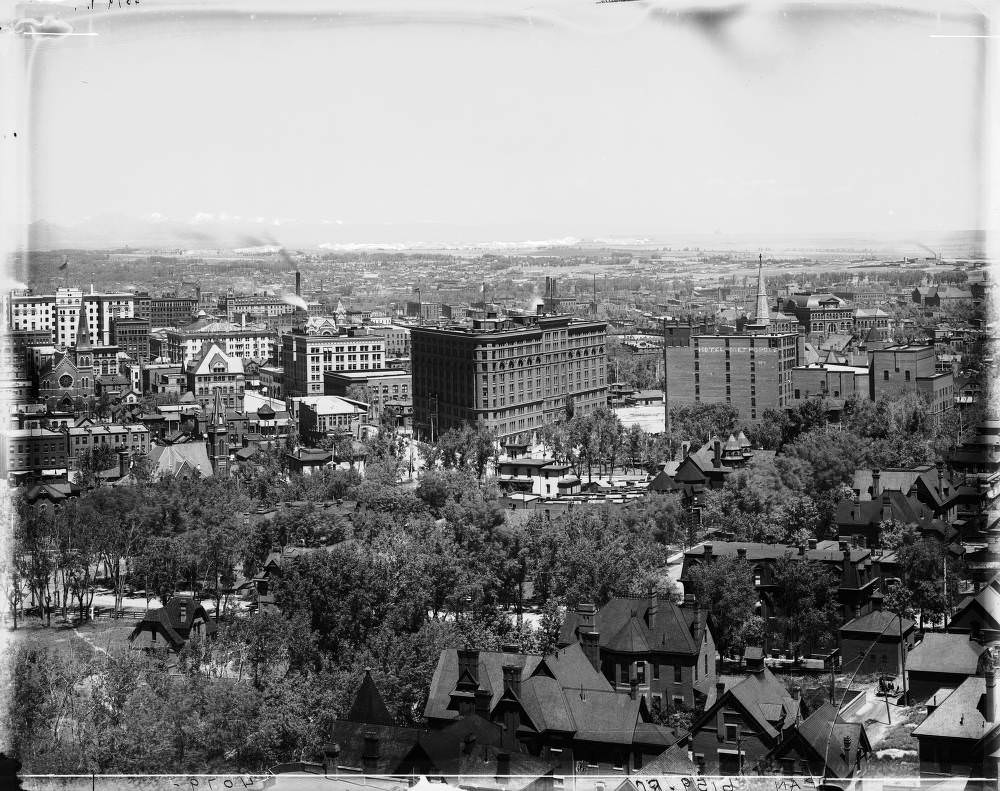
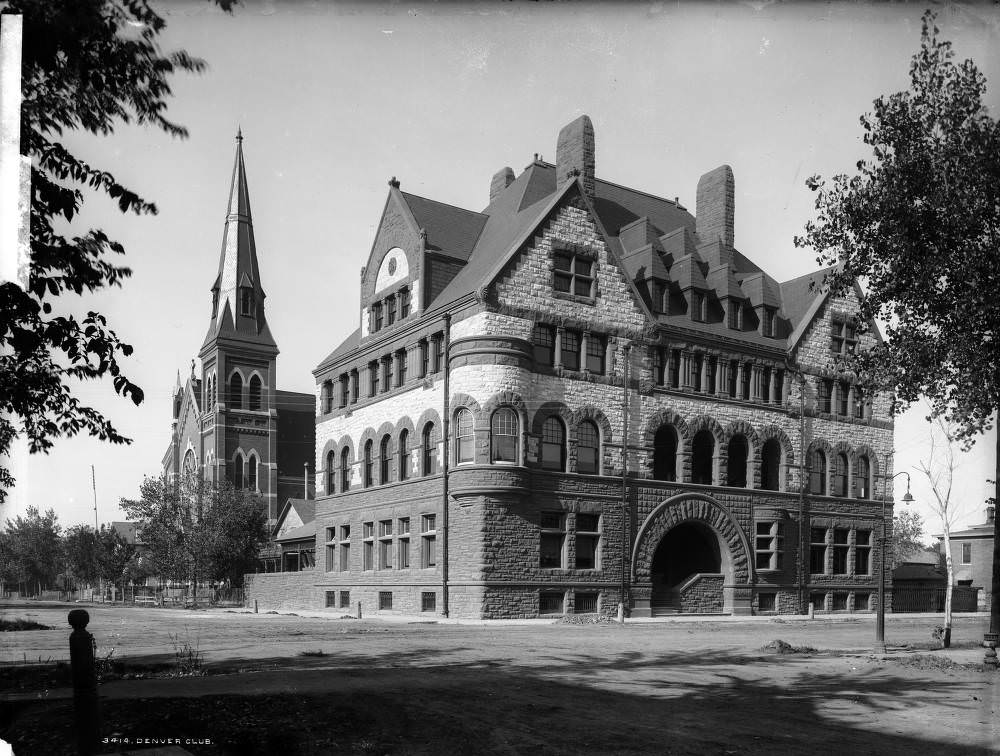
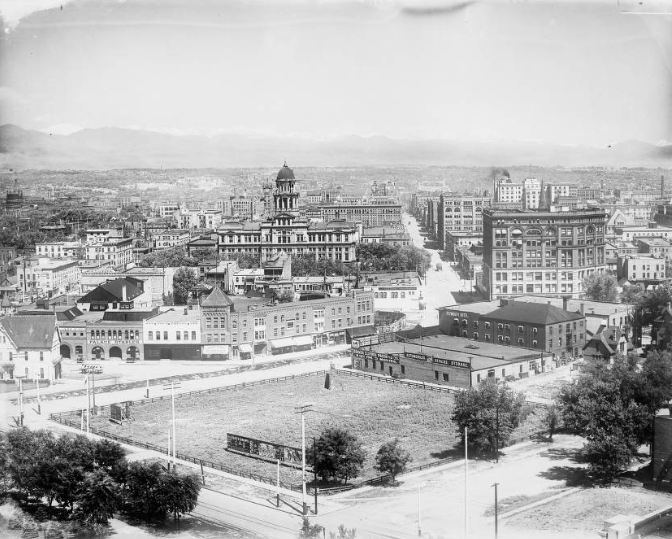
By 1909, a panoramic view of Denver showed a city that looked nothing like the frontier camp it had been just a few decades earlier. The central business district was dense with multi-story commercial buildings, the Brown Palace Hotel, and the Denver Club Building. Electric trolleys ran in every direction. Churches, schools, hospitals, parks, and public libraries were in place across dozens of neighborhoods. The streets were being paved, flushed, and maintained by a municipal sanitation department with its own fleet of machinery. Denver had not just grown — it had organized itself into a city with the infrastructure, institutions, and public spaces to match its ambitions.
Panoramic view of Denver, 1909.
Panoramic view of the central business district of Denver, Colorado from the State Capitol Building. Shows the Brown Palace Hotel, Denver Club Building, 1900s
Below are additional historical photographs capturing the many facets of Denver in the 1900s — from its trolley lines and construction sites to its churches, schools, parks, and people.
Workers dismantle the chassis and wheels from several old Denver Tramway Company cars in Denver, 1909
View of construction of the Denver Tramway’s storage yard and tracks near Jason Avenue (Santa Fe Drive) and Bayaud Street in Denver, 1904.
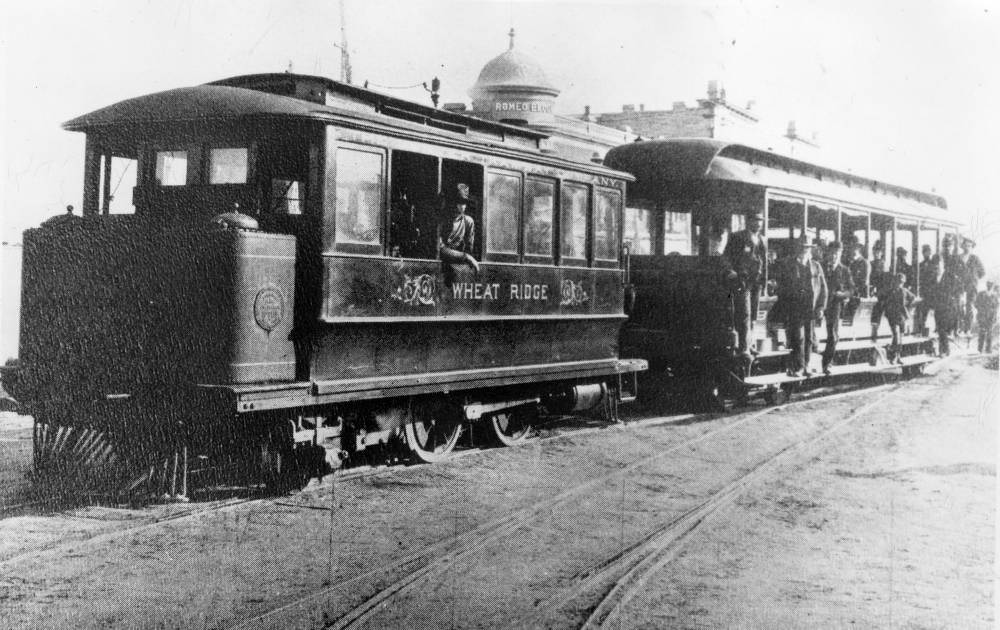
Men and boys pose on the Denver City Tramway Company ‘Steam Dummy’ steam-powered street car at 30th (Thirtieth) Avenue and Zuni Street in the Highland neighborhood of Denver, 1900.
The Denver, formerly Arapahoe, County Courthouse located at 15th (Fifteenth) and 16th (Sixteenth) Streets and Tremont and Court Places in downtown Denver, 1909
View of Tremont Street, in downtown Denver, 1909
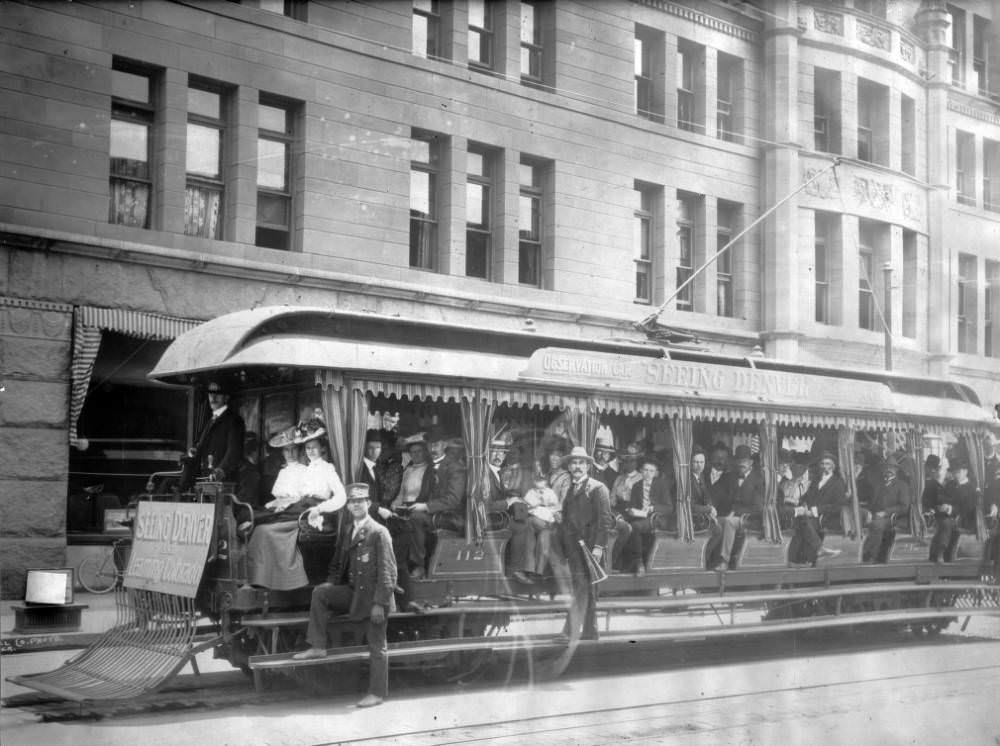
Passengers, conductors, and a tour guide with a megaphone ride on Denver Tramway Company trolley number 112 in Denver, 1900
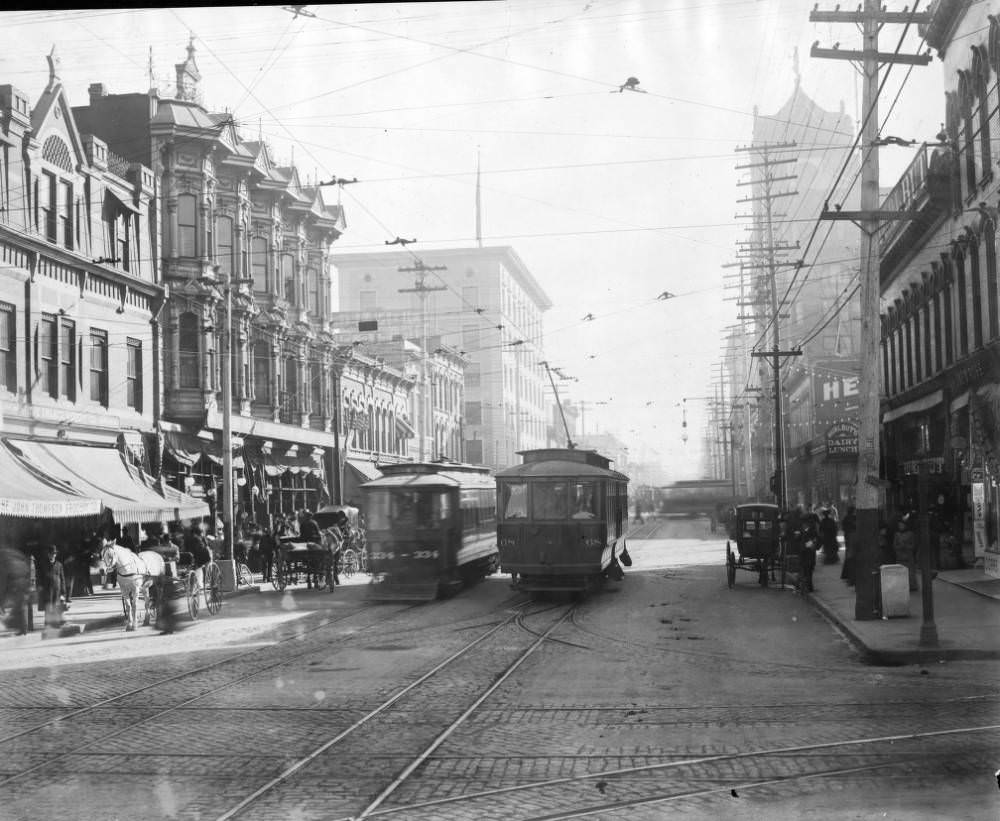
View of Denver Tramway Company trolleys number 166 and 53 on Colfax Street at Broadway in Denver, 1900
Sick men lie in beds in a ward of Denver General Hospital in Denver, 1909
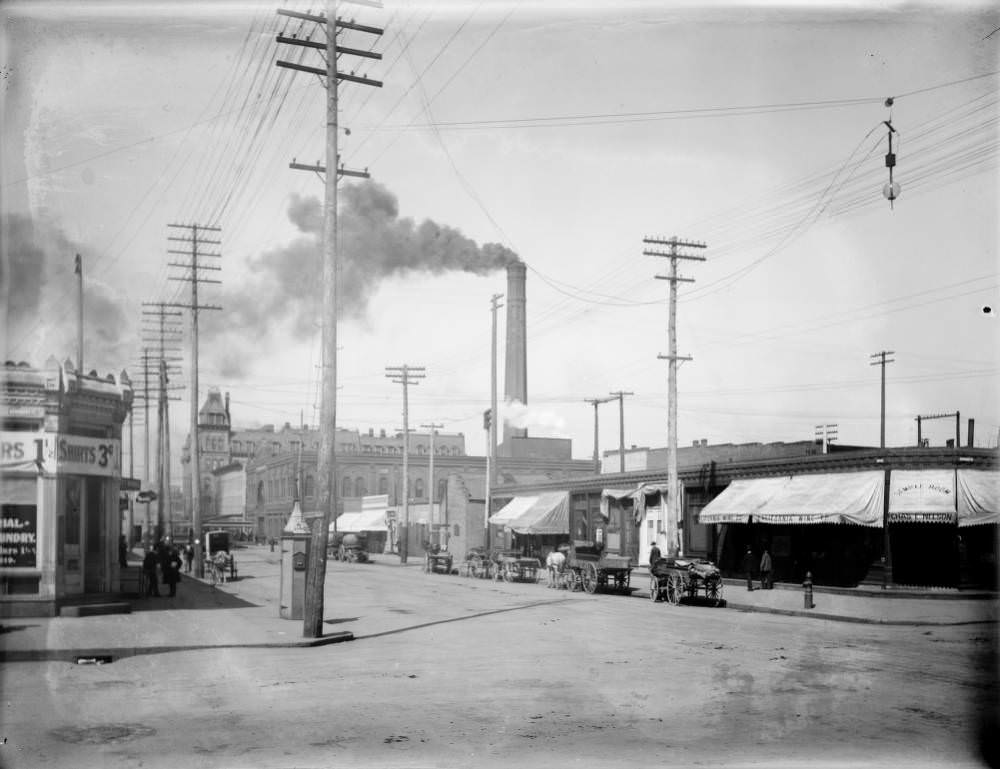
View of 18th (Eighteenth) and Arapahoe Streets with the Denver Cable Car power plant smoke stack in Denver, 1909
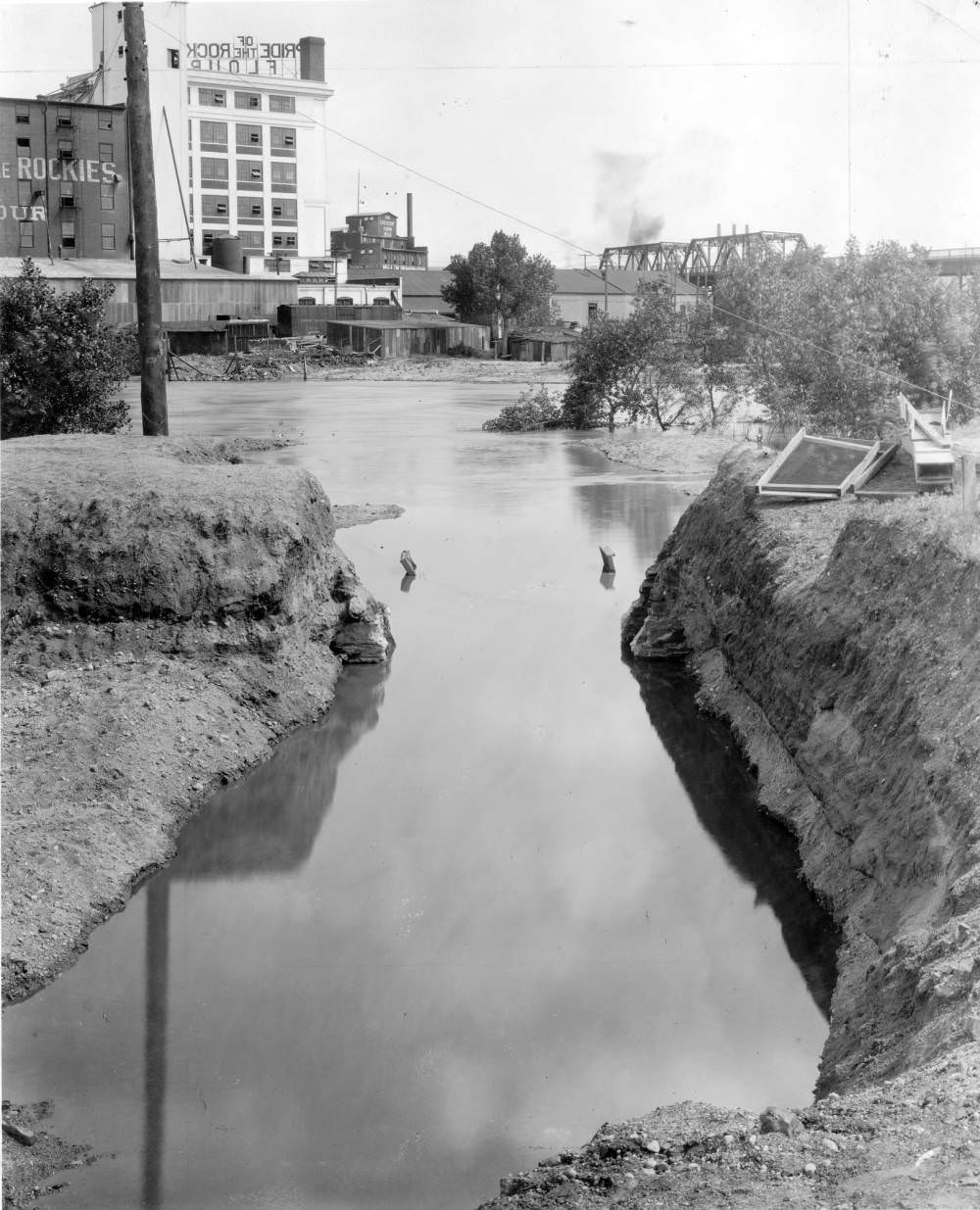
View of a ditch adjoining the South Platte River in Denver, 1909
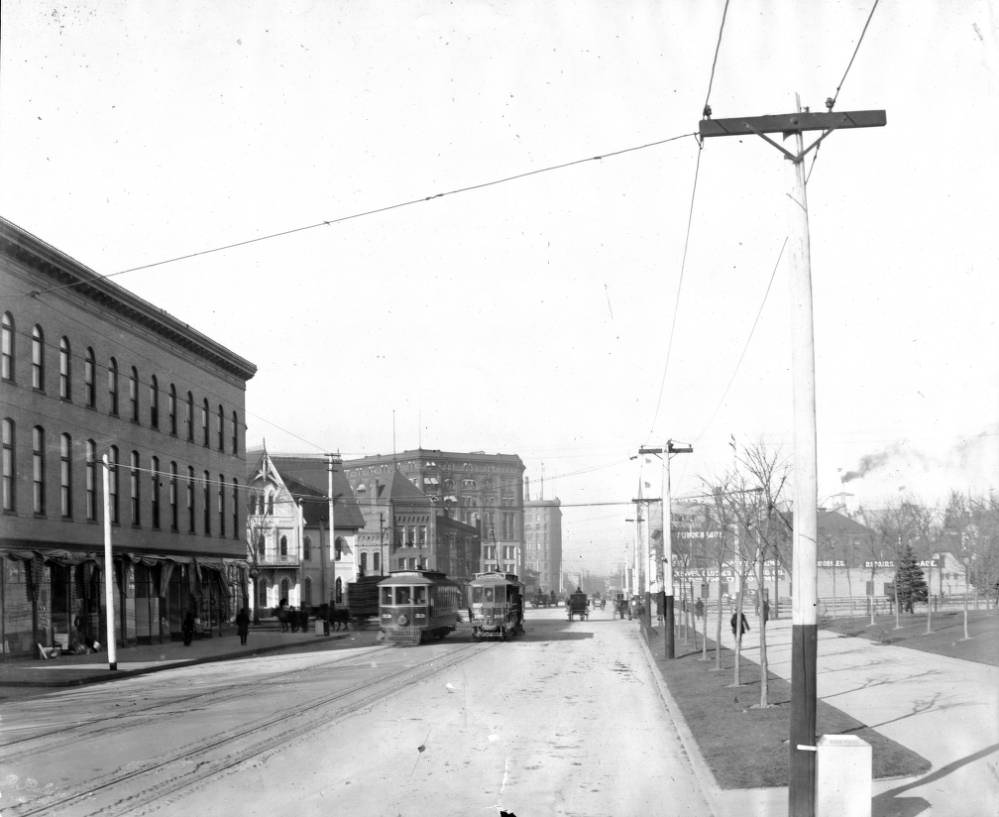
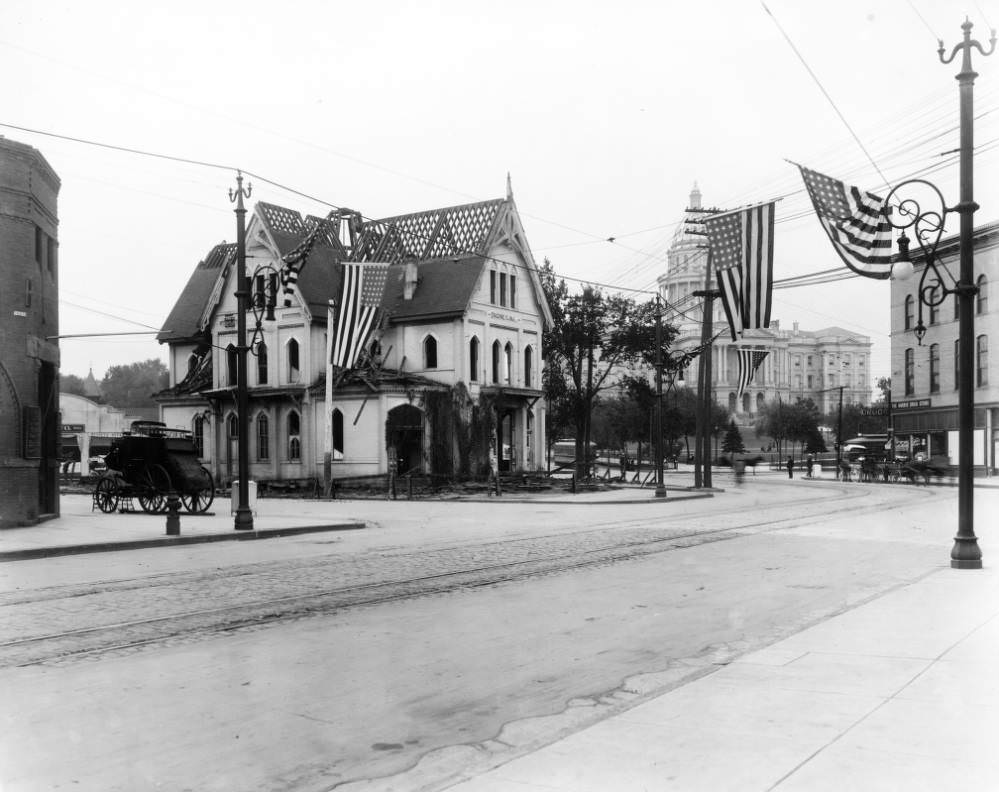
Denver Fire Department’s Engine House Number One is being dismantled, corner of Colfax and Broadway, Denver, 1909
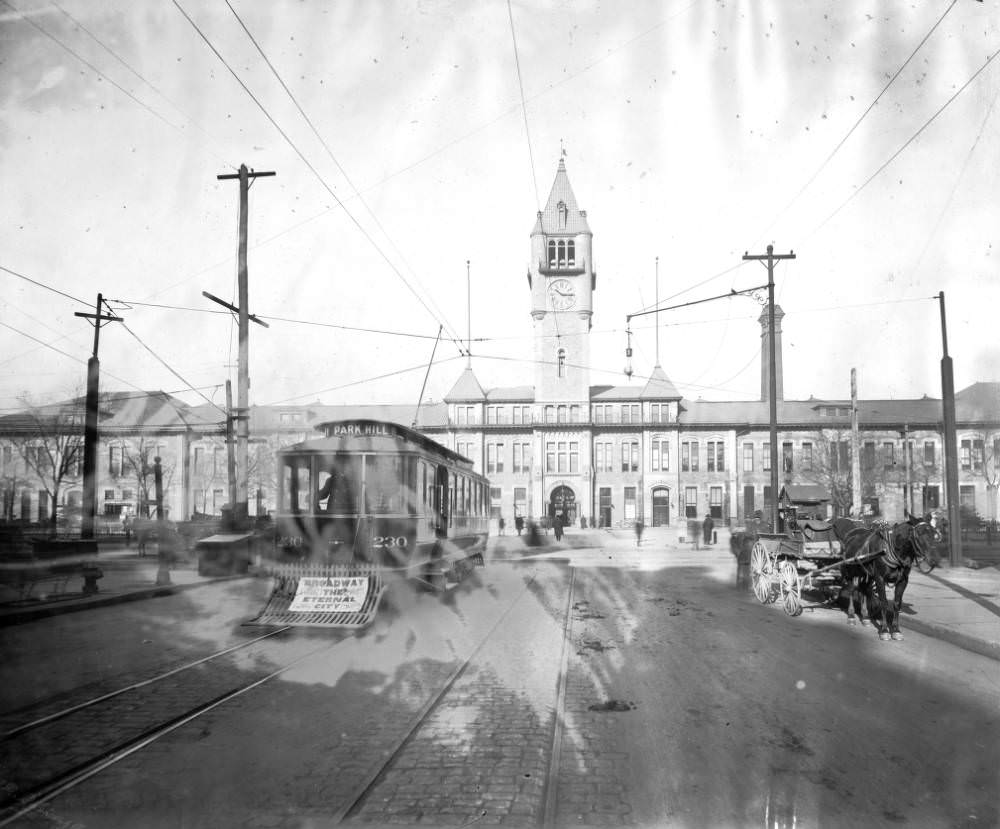
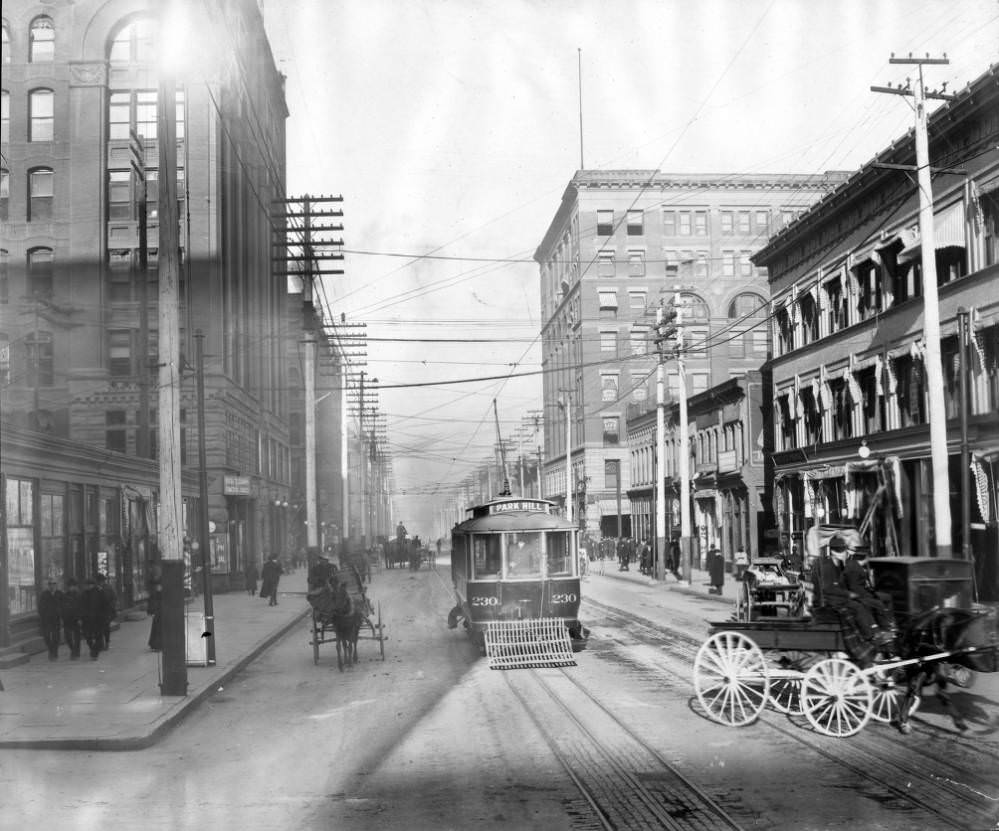
View of Denver Tramway Company Park Hill trolley number 230 on 17th (Seventeenth) Street in front of Union Station, Denver, 1905
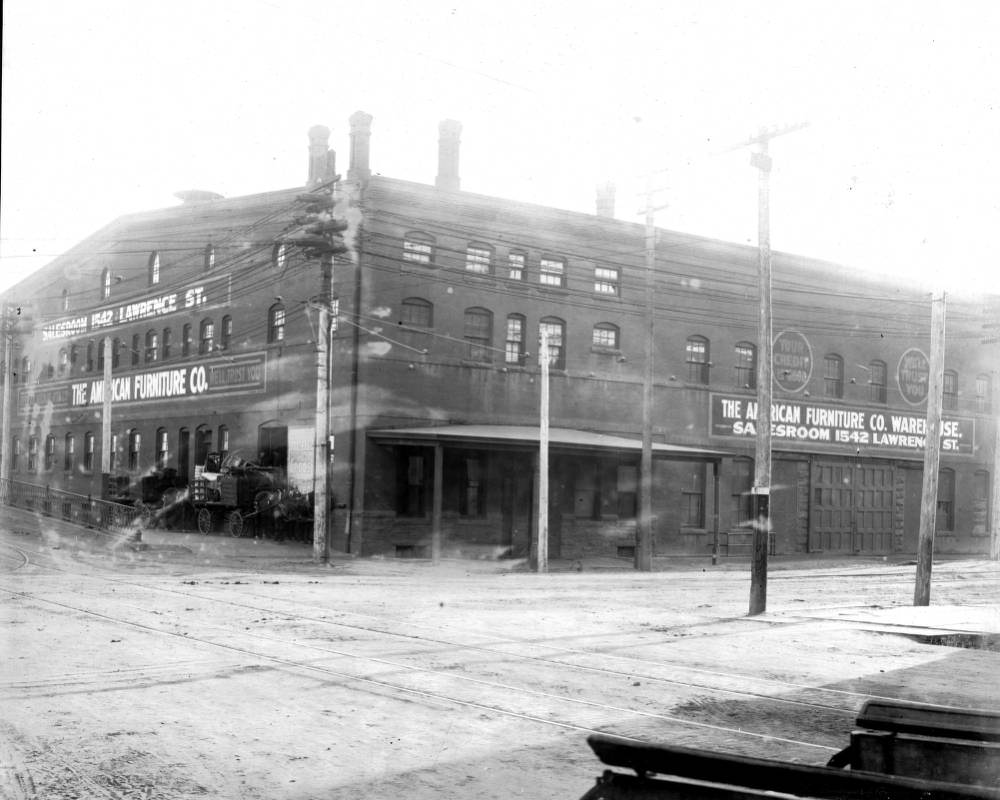
View of horse-drawn wagons, one filled with furniture, next to the American Furniture Company warehouse at 1542 Lawrence Street in Denver, 1905
View of Leyden Mine coal trains, Denver & Northwestern Railway cars number 1101, 1555, 1523, and 1546 with Alcott Public School at West 41st (Forty-first) Avenue and Tennyson Street, Denver, 1900
Conductors pose with Denver Tramway Company trolley West 38th (Thirty-eighth) Avenue number 312 at the entrance to Elitch Gardens in Denver, 1905
View of columned gateway at Fourth (4th) Avenue and Franklin Street, in the Denver Country Club neighborhood, Denver, 1907
Boys in a marching band participate in a parade on Champa Street in downtown Denver, 1909
Two women and a young girl sit in a canoe near the shore of Smith Lake in Washington Park, Denver, 1909
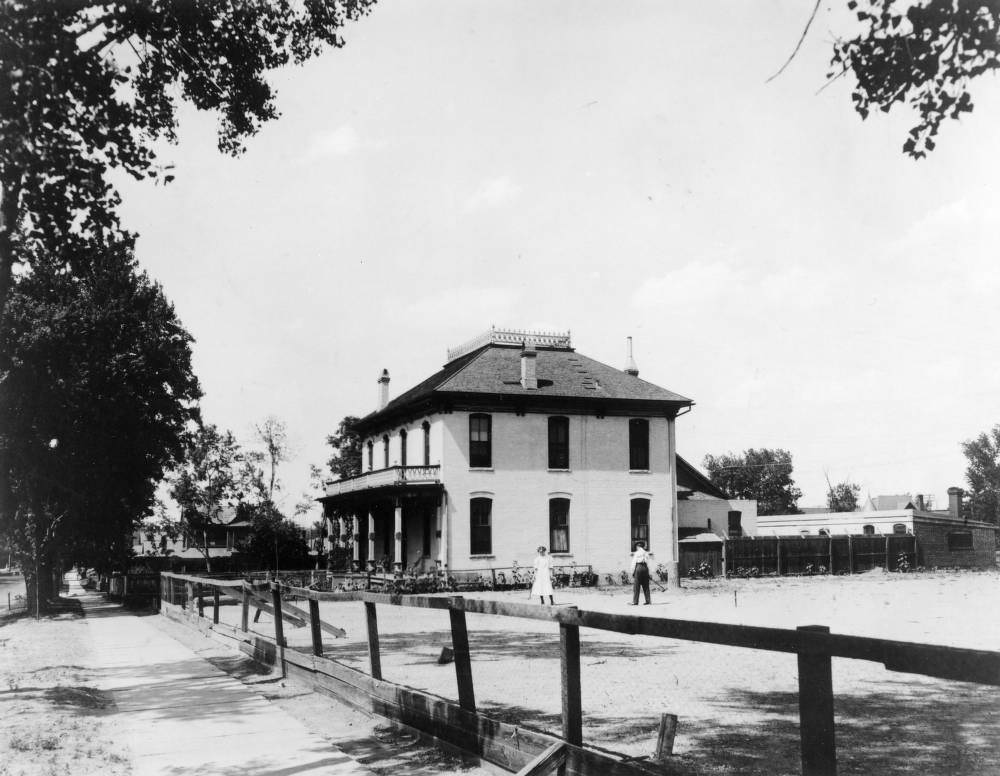
Jolin Wright and Nora B. Wright play croquet in the fenced playground of the Detention Home School (later the Gilliam Youth Center for Juvenile Justice) at 2844 Downing Street in the Five Points neighborhood of Denver, 1903
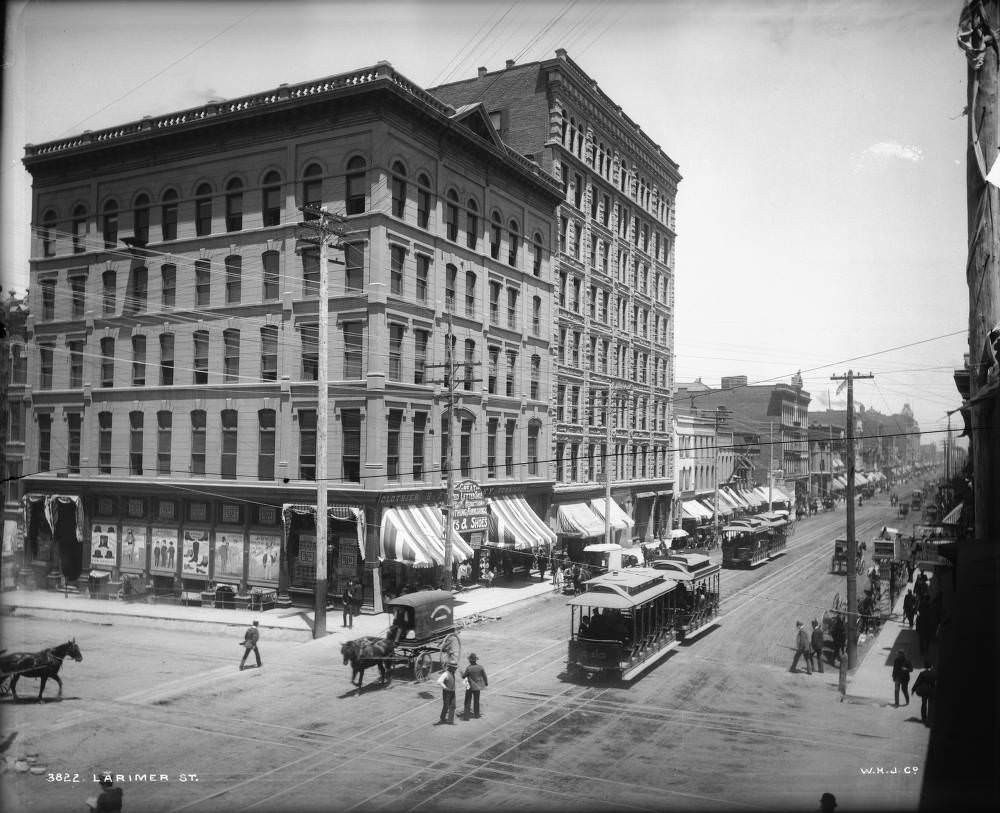
View of Larimer Street from 16th (Sixteenth) Street in Denver, Denver County, 1900
Eighteenth 18th Street cable car house Denver City Cable Railway Co., 1906
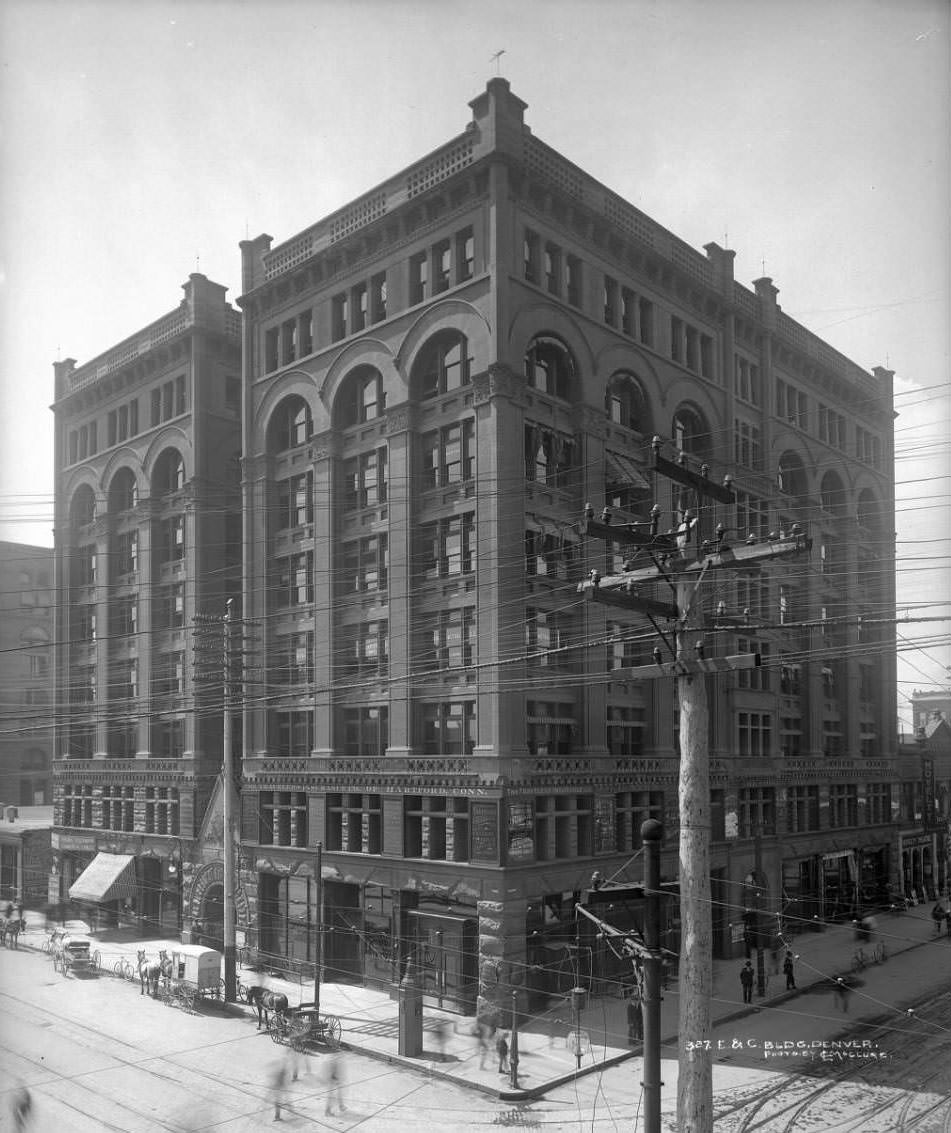
Exterior view of Ernest and Cranmer Building located at 17th (Seventeenth) and Curtis Streets, Denver, 1906
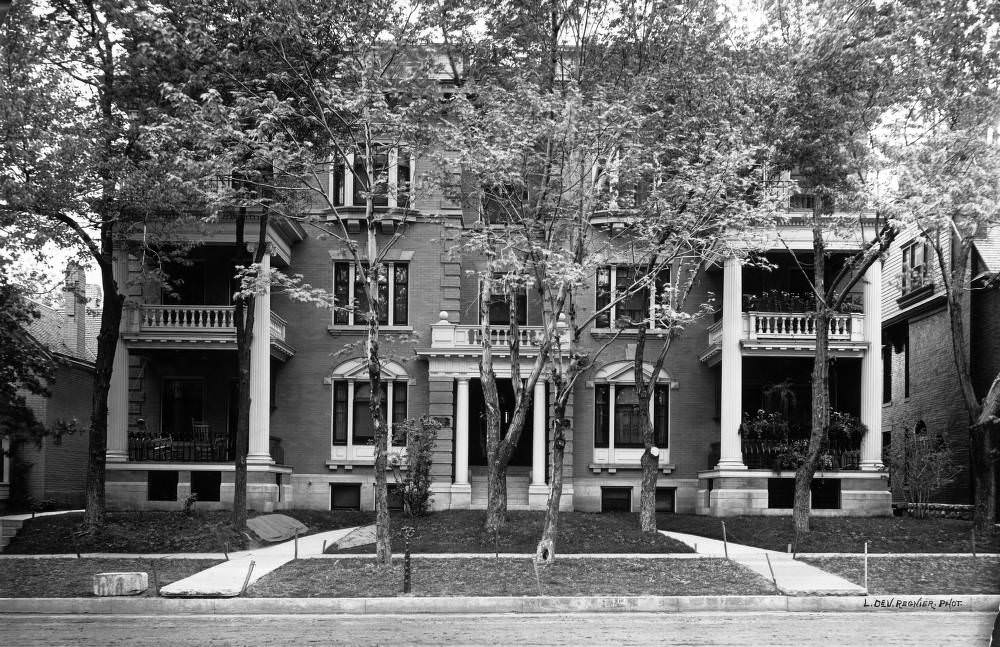
View of apartments at 12th (Twelfth) and Pennsylvania Streets in Denver, 1900
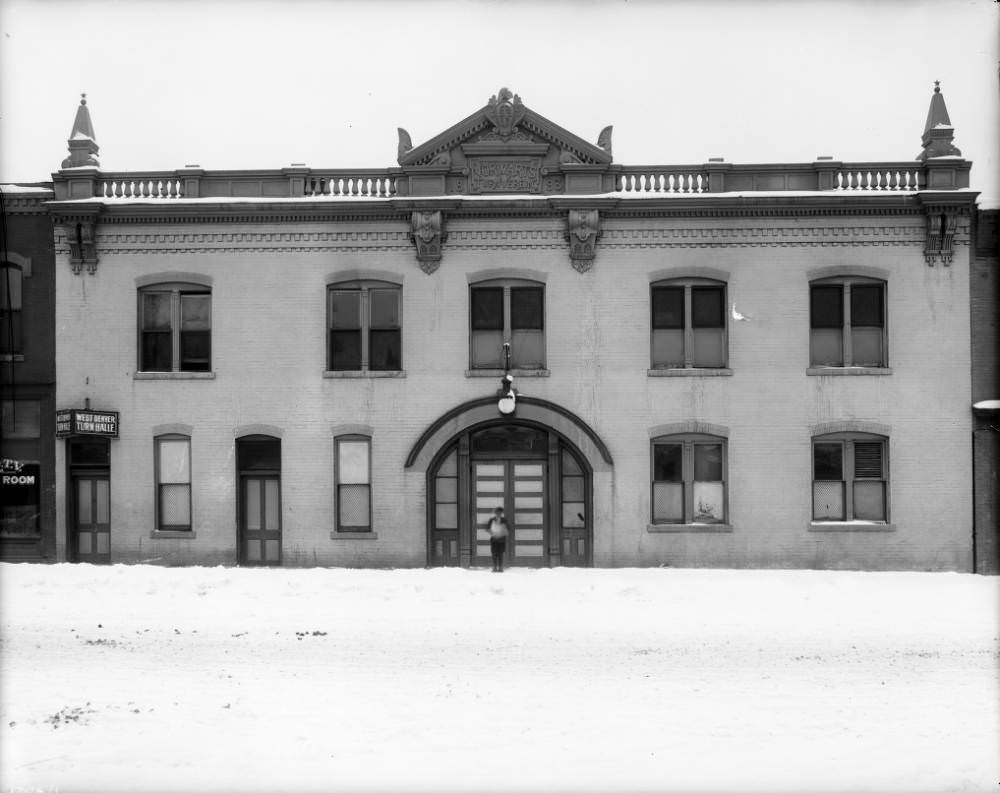
Denver, Colorado west Denver Turnverein meeting hall at 133 – 12th Street, west Denver, 1909
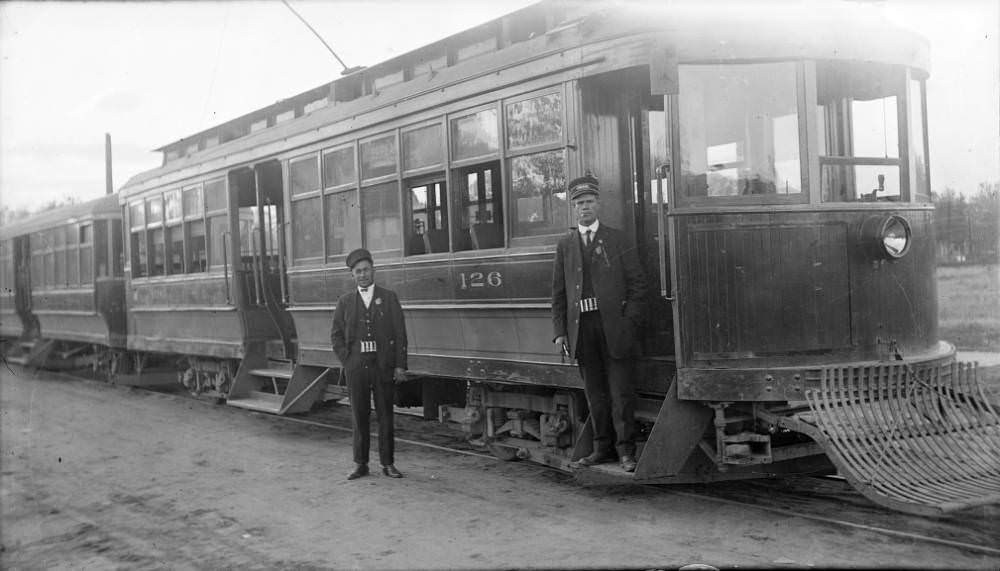
View of Denver Tramway Company car number 126 and a 500-series trailer (South Pearl Street Line), and men in conductor uniforms, in Denver, 1909
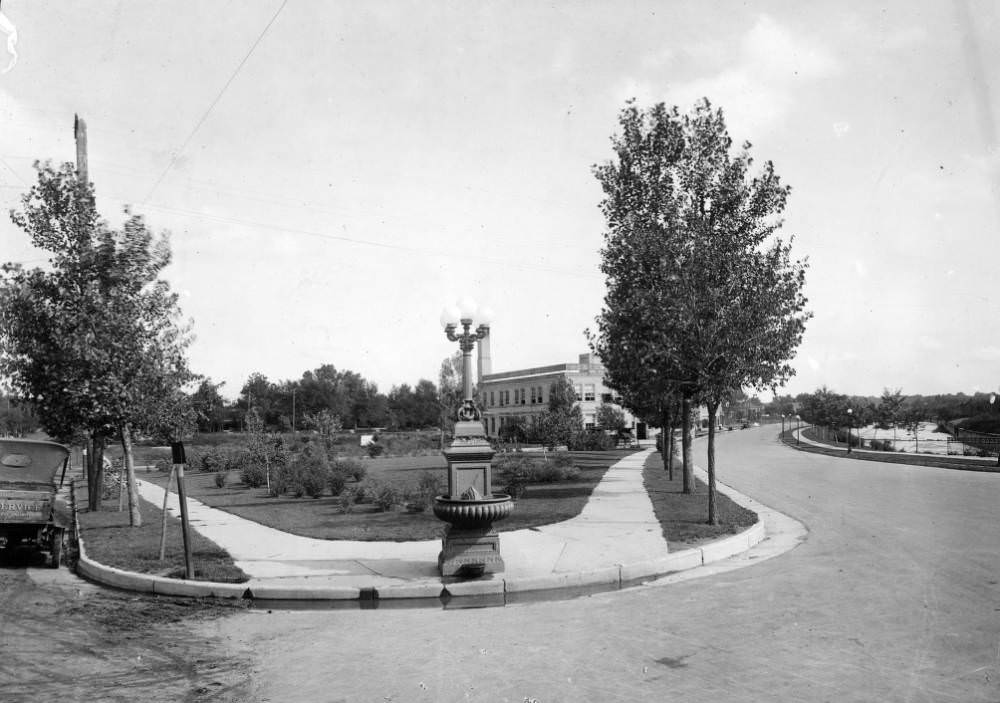
View of the intersection of Speer Boulevard and Lincoln Avenue in Denver, 1909
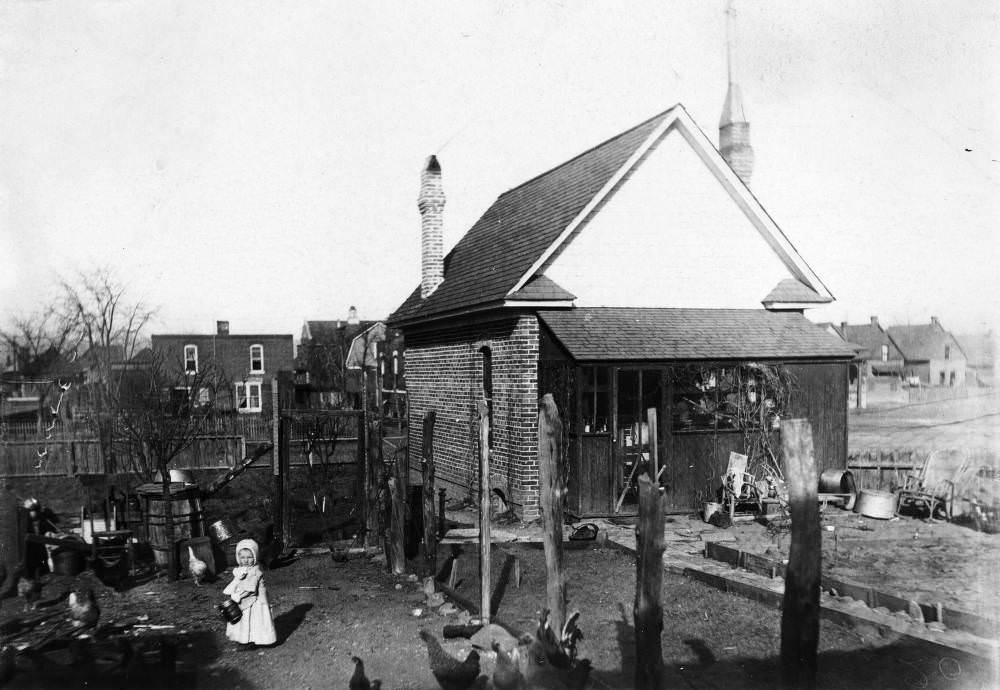
View of a yard at 742 South Emerson Street, Washington Park West, Denver, 1907
View of the Denver Club at 17th (Seventeenth) Street and Glenarm Place in Denver, 1900
Denver Sanitation sprinkling department, 1905
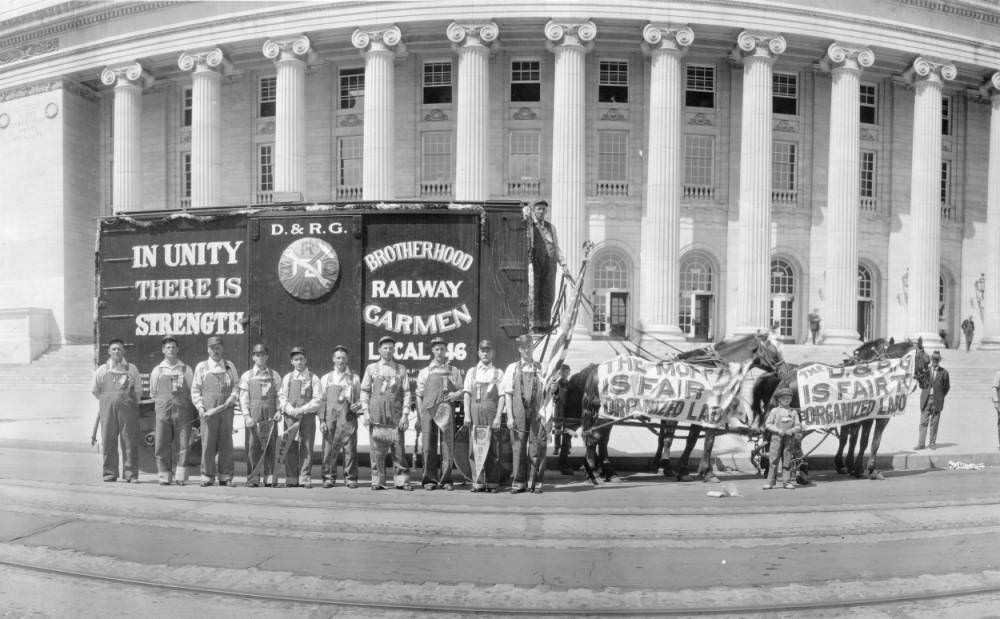
Denver and Rio Grande Railroad employees, men and boys, pose by a horse drawn railroad boxcar in front of the Stout Street Post Office, in Denver, 1909
Engine No. 701 of the Denver and Rio Grand Railway is parked on the tracks at the Union Station in Denver, 1909
Cheeseman Park, Denver, 1909
16th St. from Arapahoe, Denver, 1907
View of 16th (Sixteenth) Street from a three-story building on Stout Street, Denver, 1905
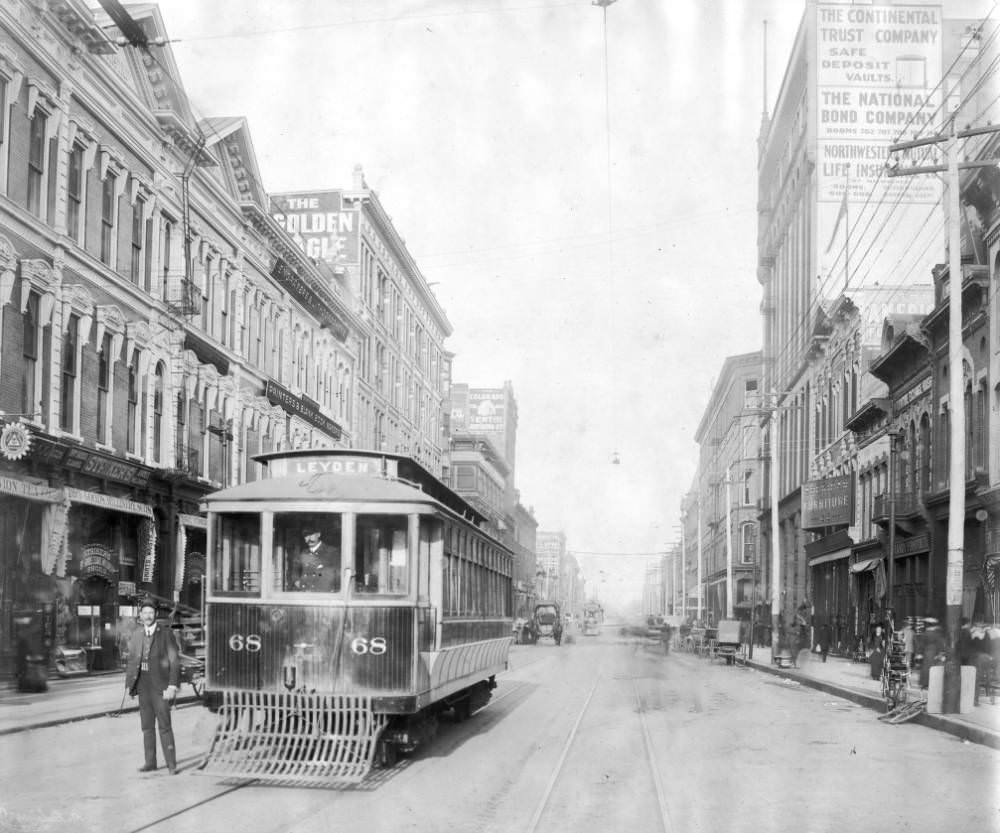
Conductors pose with Denver Tramway Company trolley, Leyden number 68, on Lawrence Street in Denver, 1905
Denver Tramway Company trolleys on 17th (Seventeenth) and California Streets in Denver, 1905
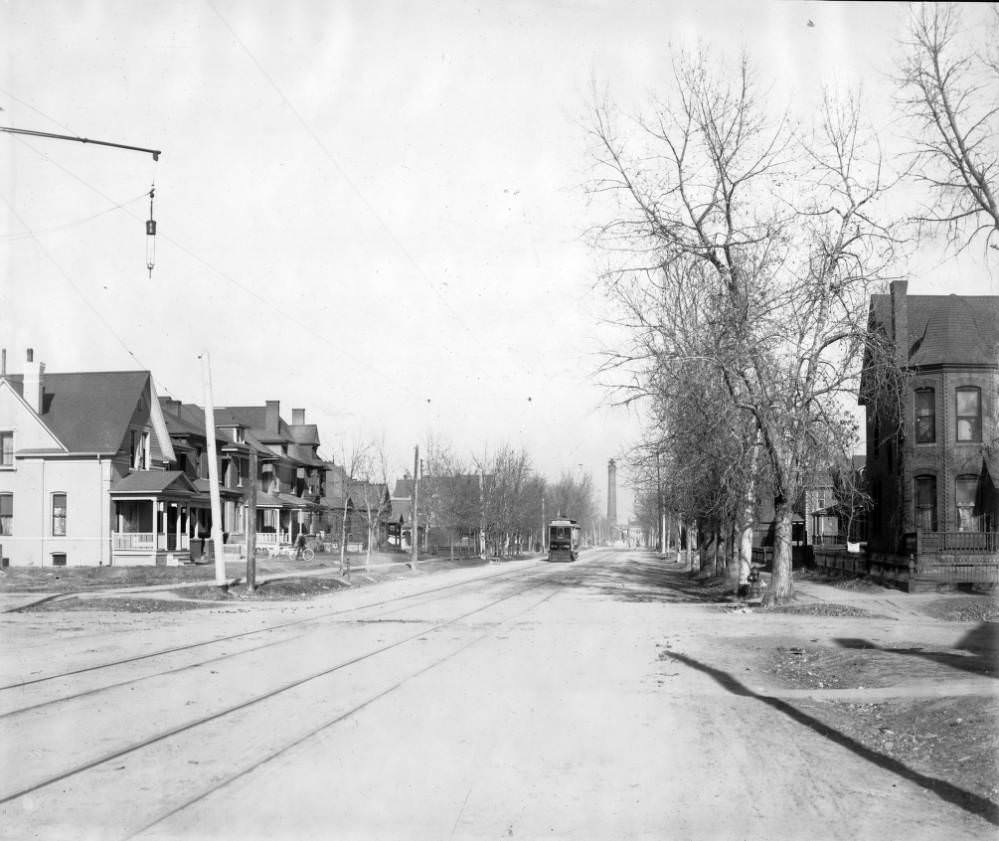
Denver Tramway Company trolley number 200 rides past houses on 17th (Seventeenth) Avenue in Denver, 1900
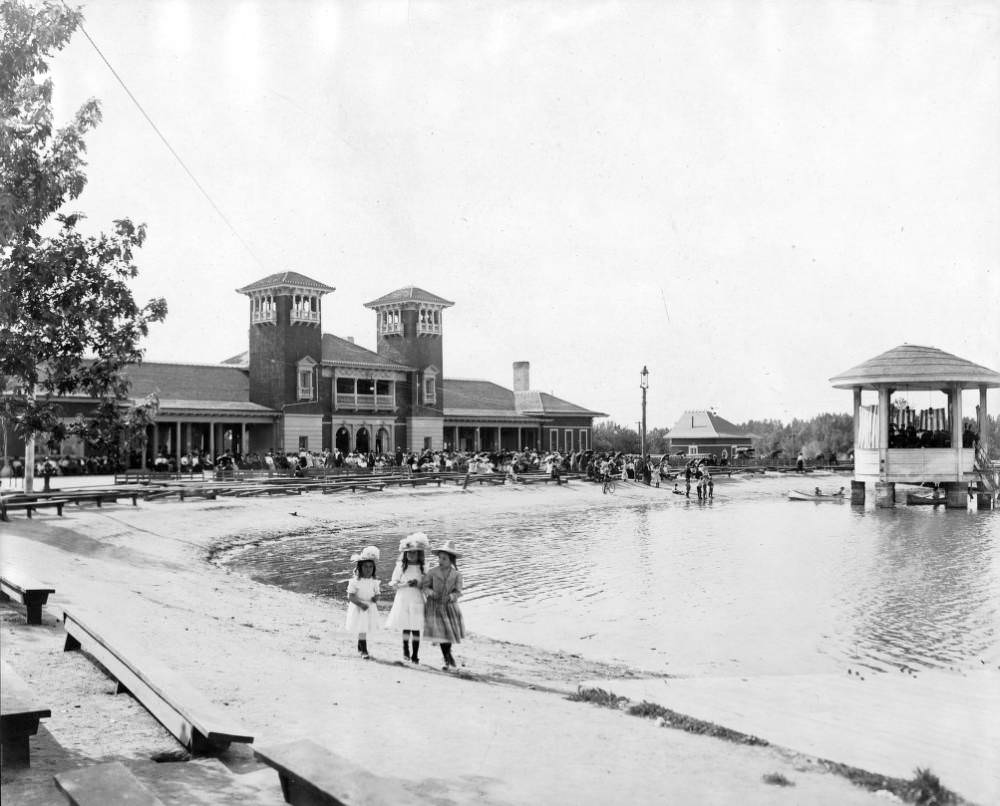
Girls pose on the shore of City Park Lake in Denver, 1905
Denver Tramway Company 17th (Seventeenth) Ave. trolleys number 45 and 42 on 16th (Sixteenth) Avenue at the corner of Champa Street in Denver, 1905
The Arapahoe County Courthouse at 16th (Sixteenth) and Tremont streets in downtown Denver, 1902
Denver Tramway Company trolleys, led by number 36 and followed by the Stock Yard and number 333, are on 15th (Fifteenth) Street in Denver, 1905
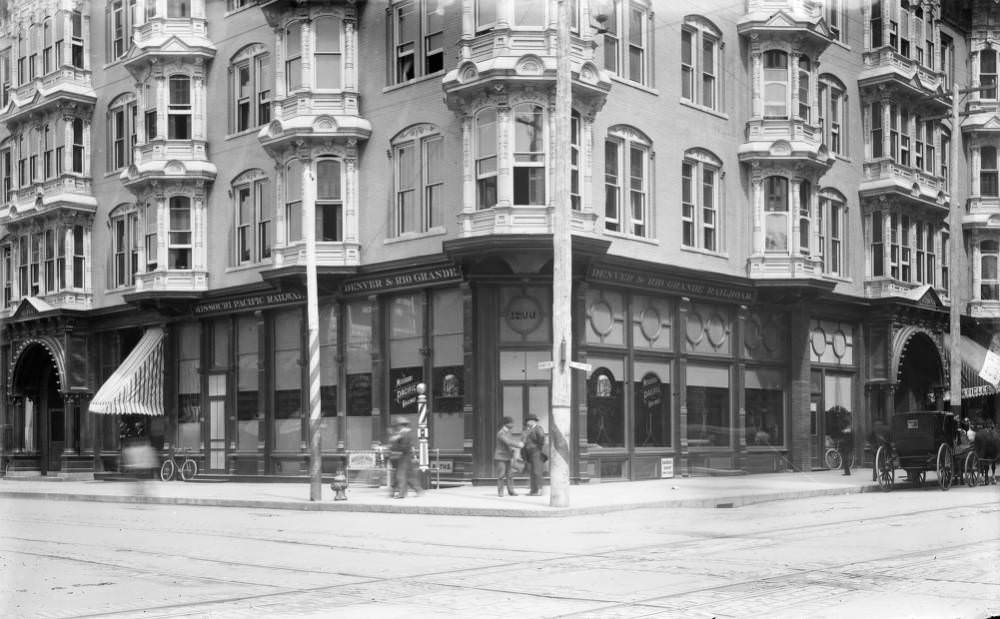
Two men shake hands in front of the Albany Hotel at the corner of Stout and 17th (Seventeenth) Streets in Denver, 1909
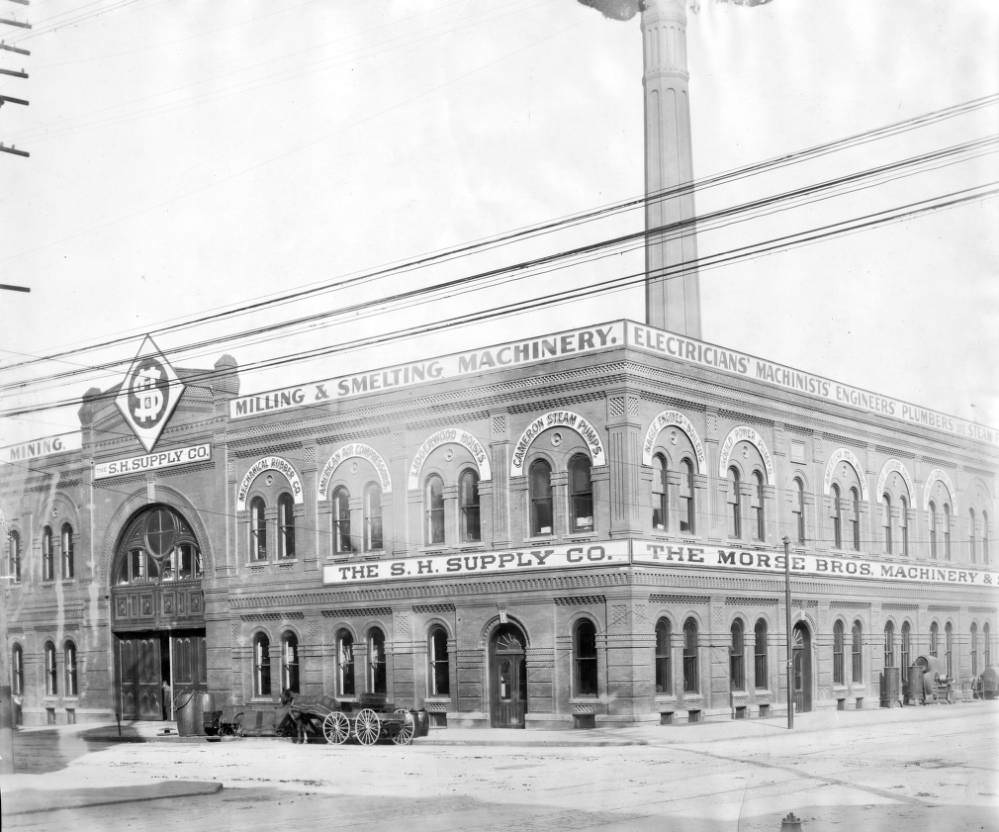
View of the Denver Tramway Power house in Denver, 1905
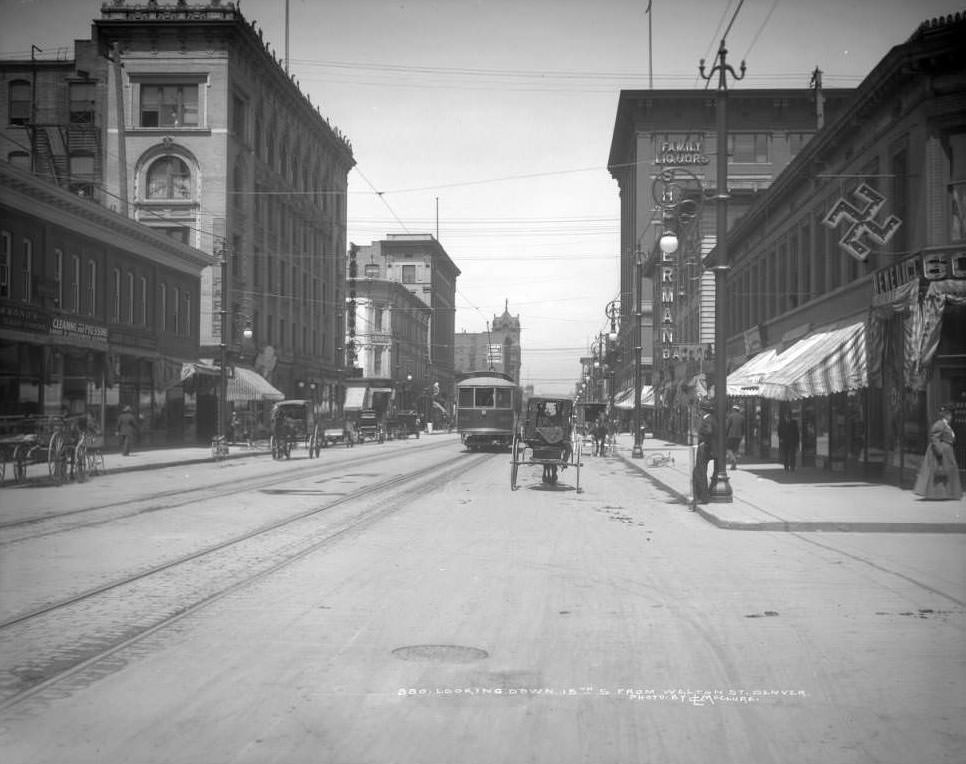
View down 15th (Fifteenth) Street from Welton Street, Denver, 1900s
View of Denver Tramway Company trolley number 237 on Broadway Street in Denver, 1905
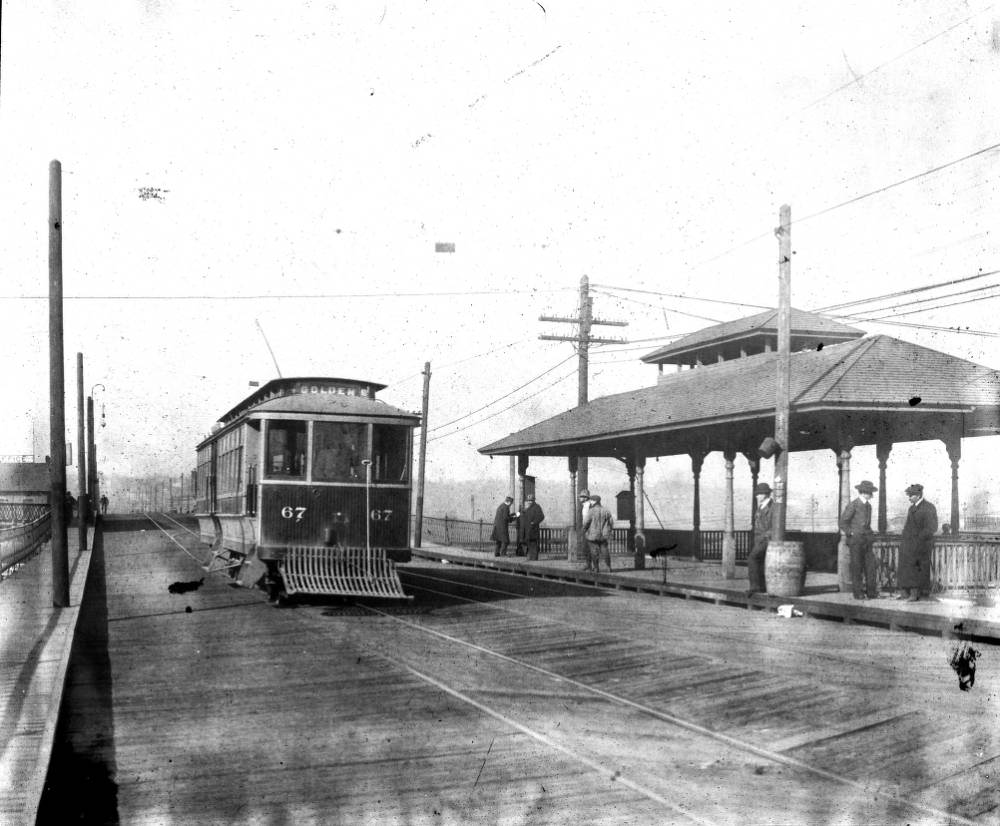
Denver Tramway Company trolley Golden number 67 at Union Station on the 16th (Sixteenth) Street viaduct in Denver, 1905
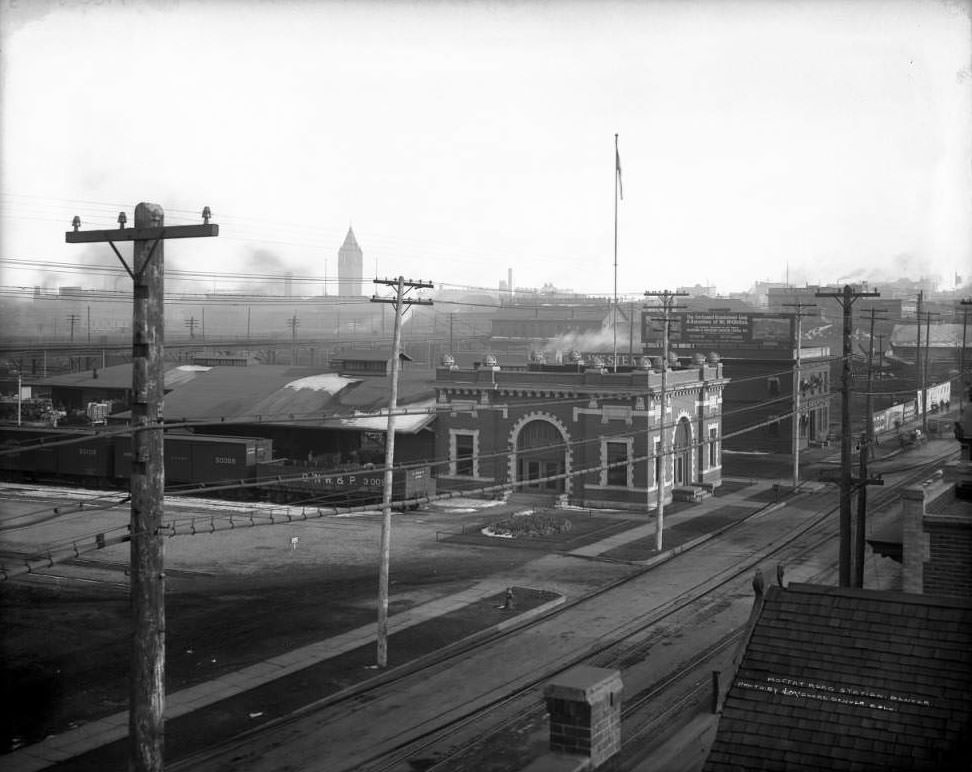
Moffat Road Station (Denver & Salt Lake Railroad) 15th (Fifteenth) Street (15th and Bassett Street) in Denver, 1905
1600 Block of Blake, Denver 1905
Denver Tramway Company supply yard in Denver, Colorado with stacks of lumber and piles of stone cobbles, 1909
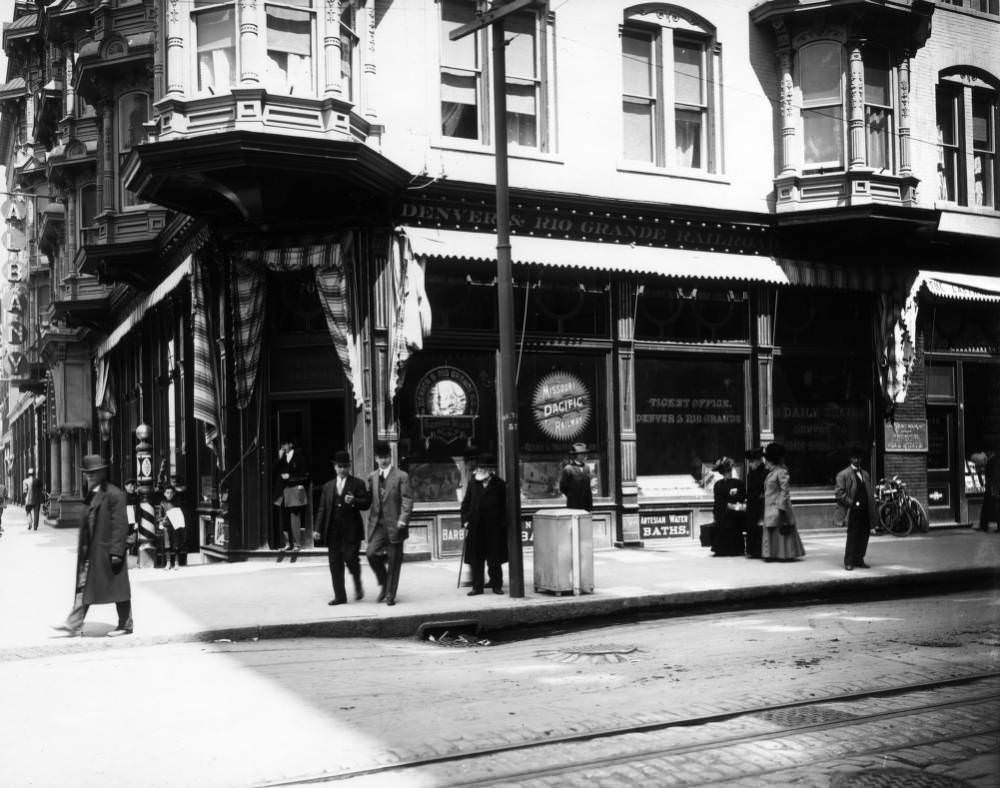
The Denver and Rio Grande Railroad Ticket Office is on the corner of Seventeenth and Stout Streets, in the rocco style Albany Hotel, Denver, 1909
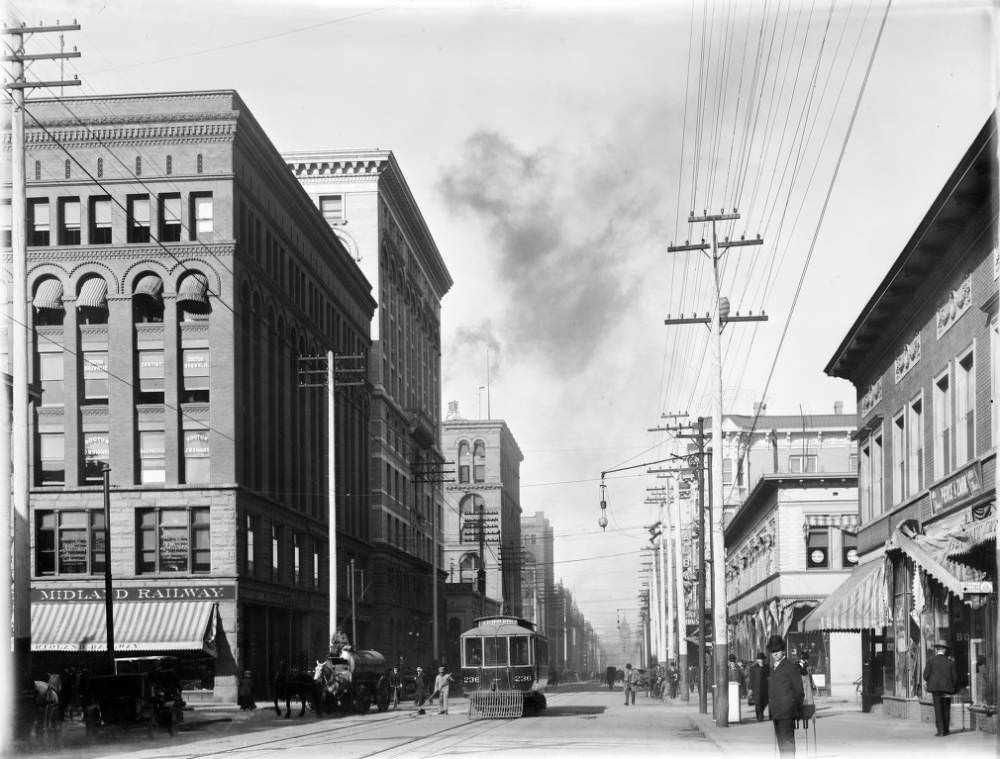
View of 17th (Seventeenth) Street in Denver, Colorado. Pedestrians walk on the sidewalk and in the street. Denver City Tramway Company street car number 232 makes its way north, 1909
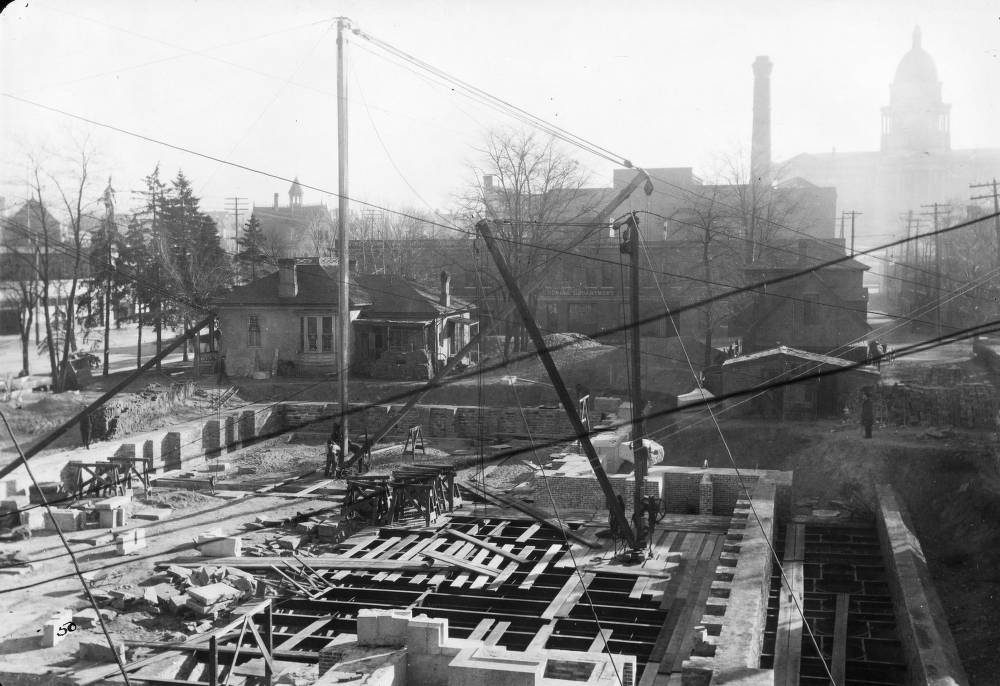
Denver Public Library (Carnegie) construction consists of basement and foundation walls and cranes in Denver, 1907
Exterior view of Denver Dry Goods building, 16th (Sixteenth) and California Streets, Denver, 1908
Denver Public Library (Carnegie) construction in the Civic Center neighborhood of Denver, 1907
Showing Denver’s new motor street cleaner for resident streets with one of the city’s fifty motor trucks in the rear, 1909
View of Denver City Hall (demolished in the late 1940’s) on 14th (Fourteenth) Street in Denver, 1909
The Boulevard United Presbyterian Church at Lake Avenue (Speer Boulevard) and Federal Boulevard in the Highland neighborhood of Denver, 1909
An African American (Black) man stands near a woman on horseback, possibly a drum majorette, during a parade on 17th (Seventeenth) Street at California Street in downtown Denver, 1905
A marching band participates in a parade on 17th (Seventeenth) Street in downtown Denver, 1900s
Exterior view of Young Women’s Christian Association (Y.W.C.A.) building, 18th (Eighteenth) Avenue and Sherman, Denver, 1909
Children, women and men skate on the ice of Smith Lake at Washington Park, Denver, 1900s
A Colorado and Southern (C&S) Railway railroad crane hoists a metal barrier for a bridge on the tracks over the Alameda Avenue underpass construction site in Denver, 1909
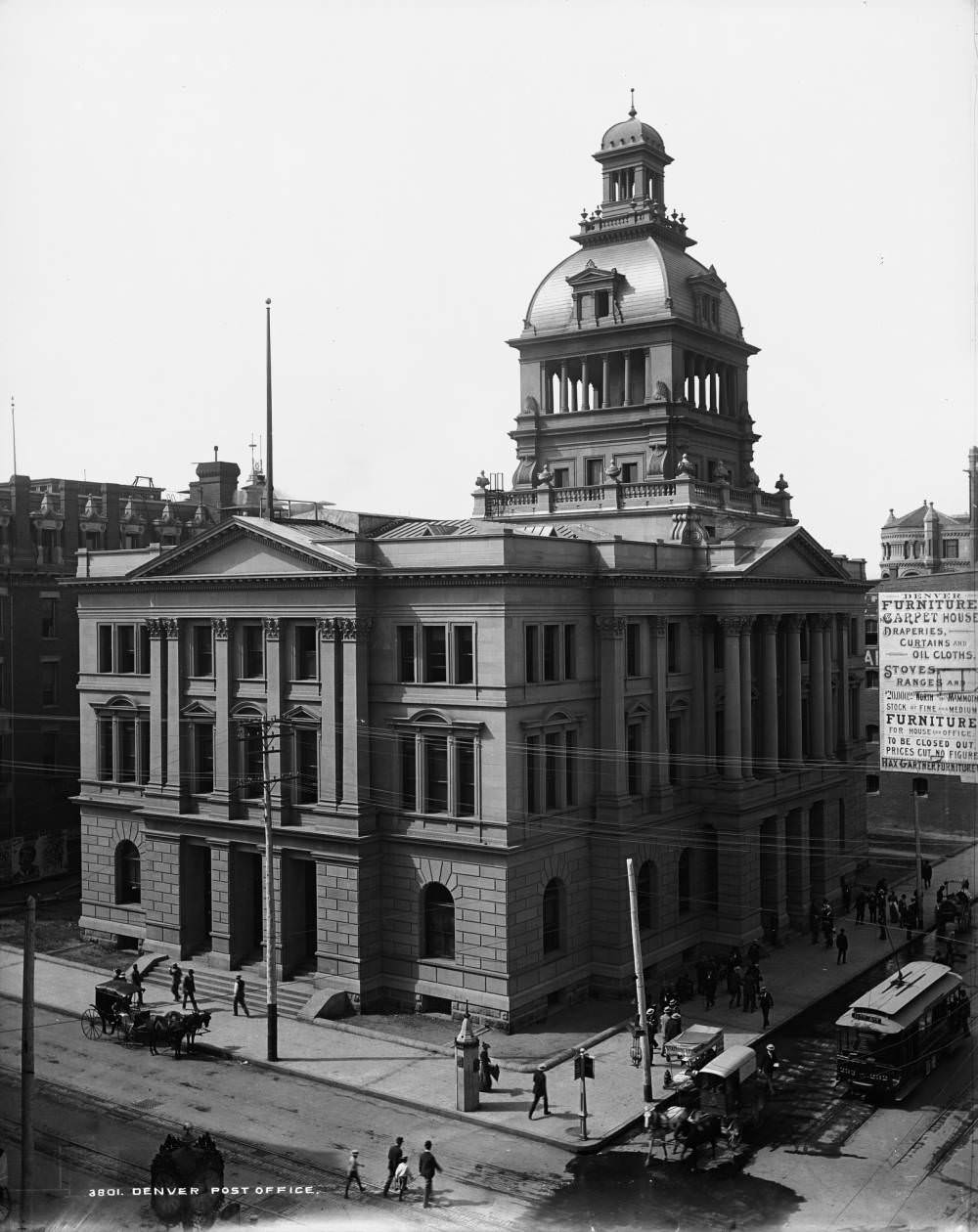
Rooftop view of the Post Office at 16th (Sixteenth) and Arapahoe Street in downtown Denver, 1900
Night view of the Golden Eagle Dry Goods Store, at 16th (Sixteenth) and Lawrence Streets, in Denver, 1900
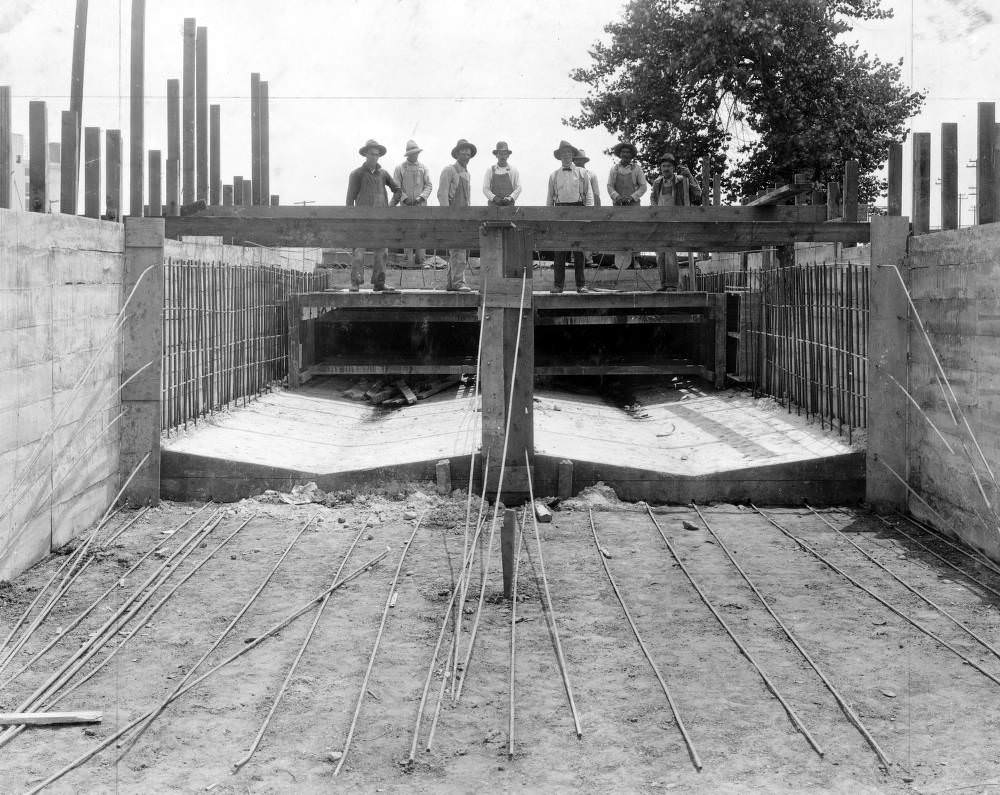
View of flood control construction in Denver, 1909
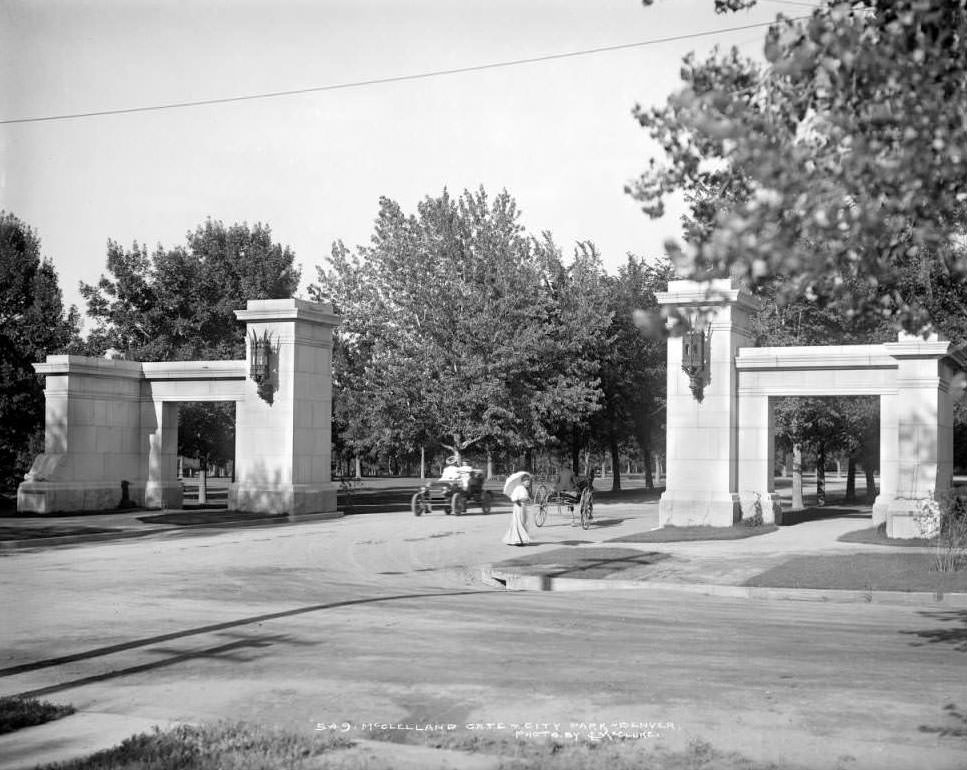
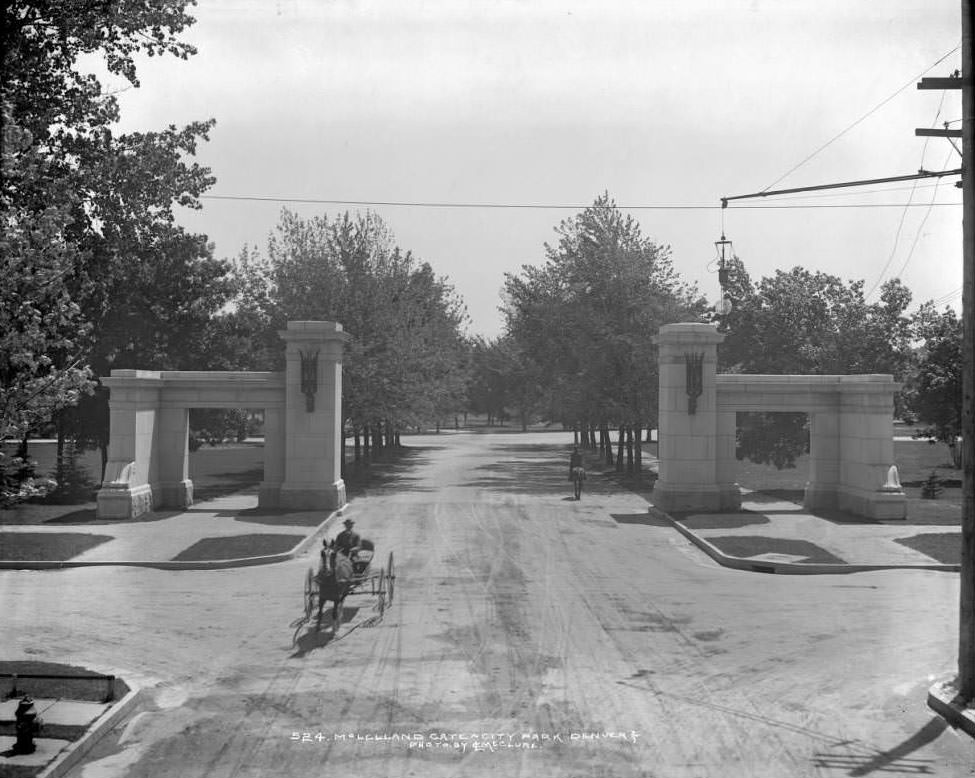
McLellan Gate, 18th (Eighteenth) Avenue entrance to City Park, Denver, Colorado, completed in 1904 as a gift of William W. McLellan, founder of City Park.
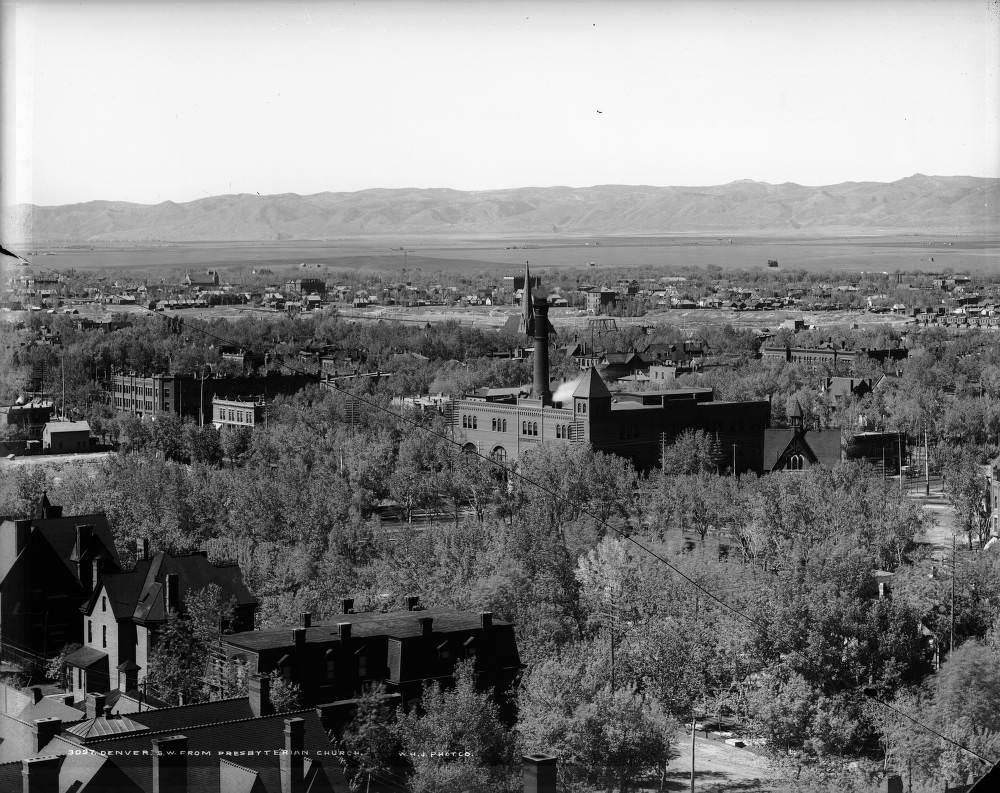
Rooftop view of Denver to the southwest, probably from the Presbyterian church belfry at 17th (Seventeenth) Avenue and Sherman Streets, 1900
Denver High School (East Side High School) at 19th (Nineteenth) and Stout Streets in downtown Denver, 1900
Denver Public Library (Carnegie) construction in Denver, 1900
Denver Public Library (Carnegie) construction in Denver, 1900
People crowd the Denver Public Library (Carnegie) construction site by a crane to watch the cornerstone ceremony in the Civic Center neighborhood of Denver, 1900
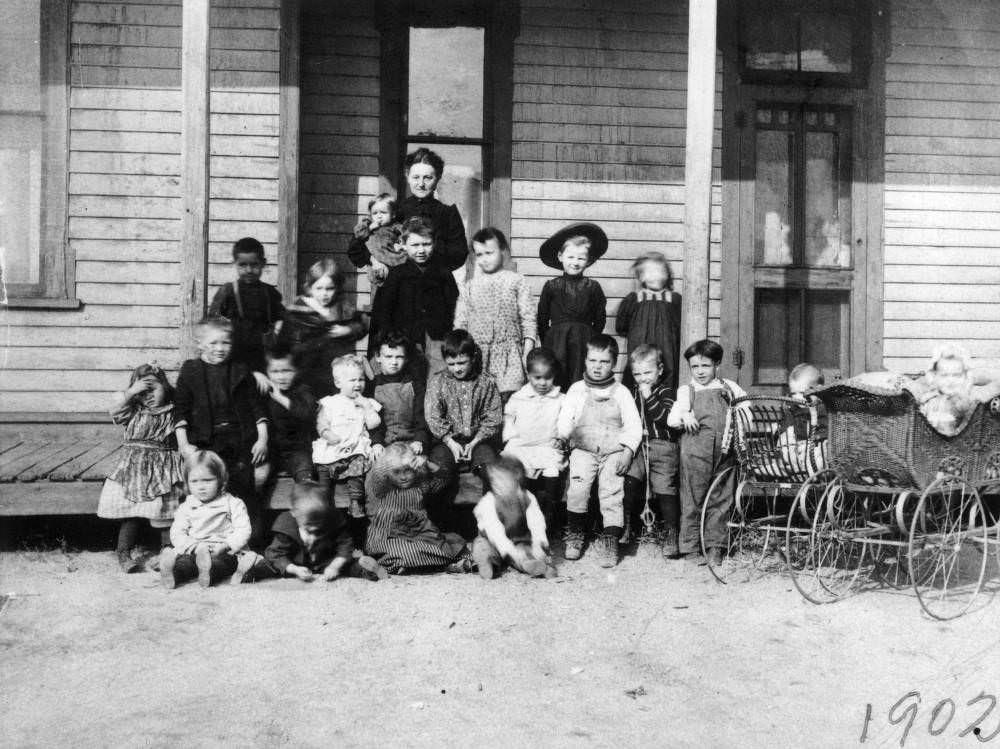
Children and a woman stand on the porch of the Neighborhood House Association building at 962 Santa Fe in the Lincoln Park neighborhood of Denver, 1902
View of apartments in Denver, 1900
View of Saint Paul’s Methodist Episcopal Church at 16th (Sixteenth) and Ogden Streets in the North Capitol Hill neighborhood of Denver, 1900
Colorado Governor Henry Augustus Buchtel speaks to a crowd at the cornerstone ceremony at the Denver Public Library (Carnegie) construction site in the Civic Center neighborhood of Denver, 1900
People crowd the Denver Public Library (Carnegie) construction site by a crane to watch the cornerstone ceremony in the Civic Center neighborhood of Denver, 1900s
View of McLellan Gate, City Park, Denver, 1904
View of the intersection of Glenarm and 15th (Fifteenth) Streets in Denver, 1909
Denver City Tramway Company Central Loop at 15th (Fifteenth) and Arapahoe Streets in downtown Denver, 1900
The intersection of 15th (Fifteenth) and Glenarm Streets in Denver, 1909
View of St. Paul’s English Lutheran Church at 22nd (Twenty-second) and California Streets in the Five Points neighborhood of Denver, 1900
Dean Peck’s Training School for Girls at 6925 E. 8th Avenue in the Montclair neighborhood of Denver, 1900
The Denver Municipal Auditorium at 920 14th (Fourteenth) Street in Denver, 1900s
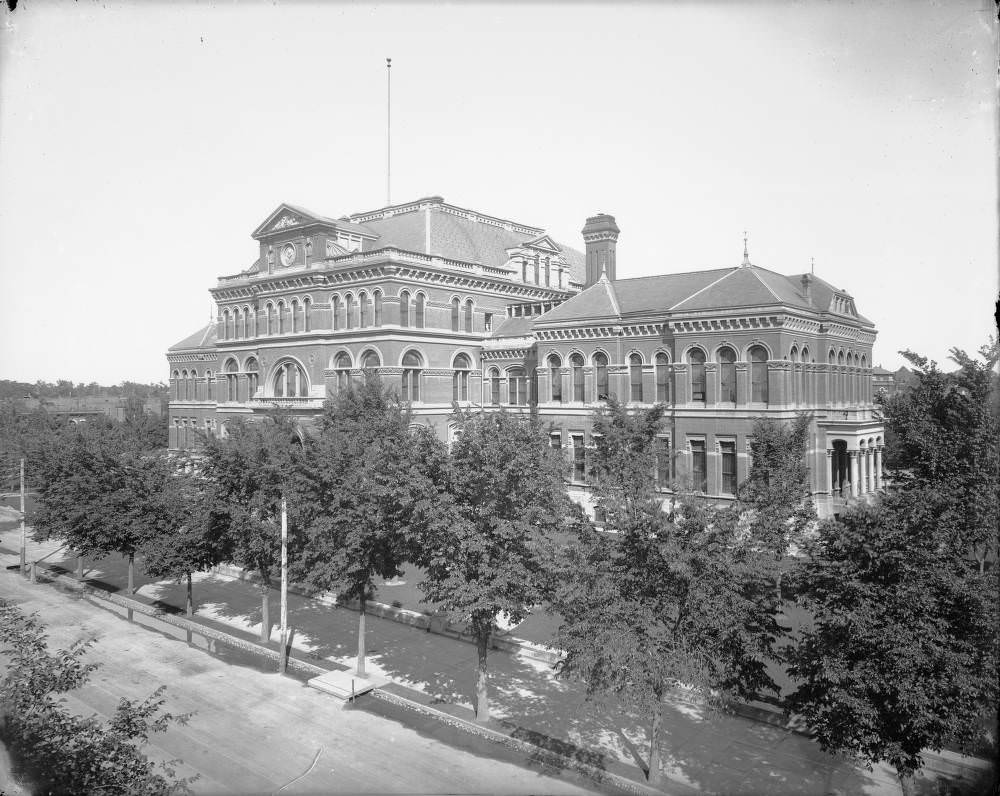
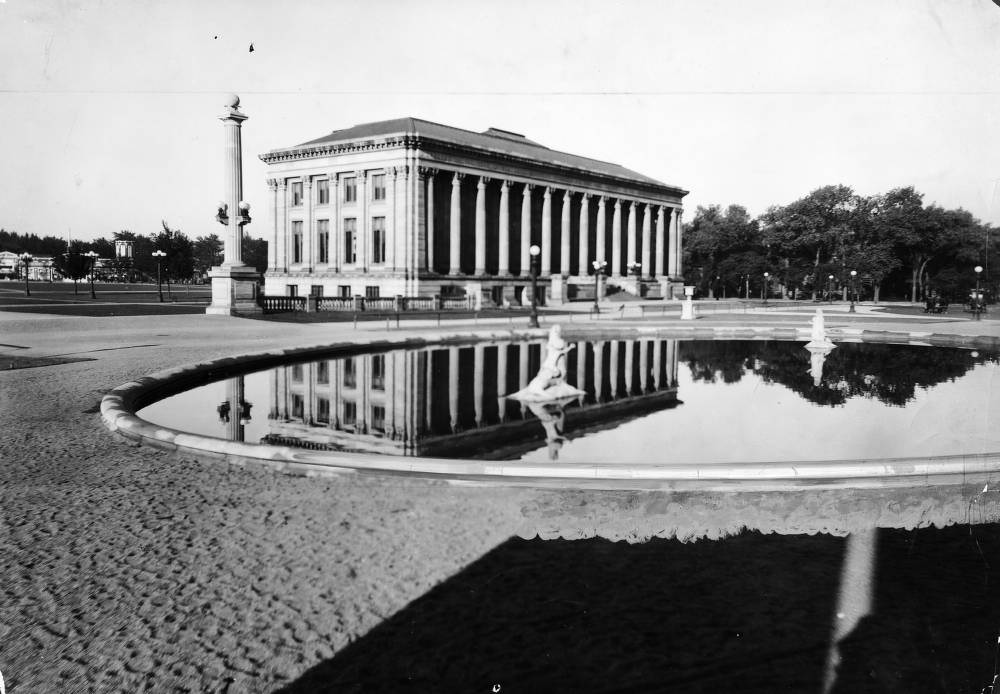
Denver Public Library at Colfax Avenue and Bannock Street in Civic Center Park, Denver, 1909
Pennsylvania Street (ca. 900 block south), in Denver, 1909
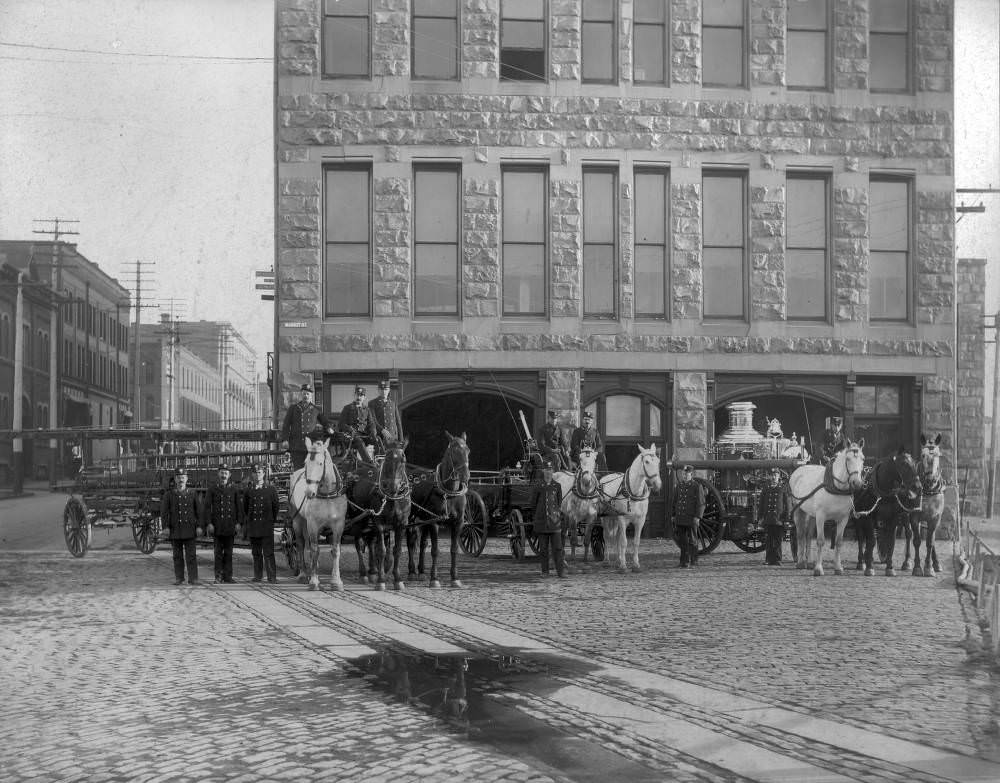
Firemen stand and pose in front of the Denver Fire Department Headquarters with Hook & Ladder No. 1 and Hose No. 4 in the first floor of the City Hall Building at 14th (Fourteenth) and Market Street in downtown Denver, 1900
A procession at the intersection of Broadway and 16th (Sixteenth) Streets in Denver, 1905
A truck applying oil to a street in Denver, Colorado; brick apartments and a frame house are in the background, 1905
Women who include Frances Sims, Agnes S. Hall, Anamtille [?] McClung, and Louise Wells work at desks in the catalog department of the Denver Public Library at Colfax Avenue and Bannock Street in the Civic Center neighborhood of Denver, 1910
The intersection of 16th (Sixteenth) and Stout Streets, in downtown Denver, 1900s
Denver Tramway car 190 heads southbound on 16th (Sixteenth) Street, between Welton Street and Glenarm Place, Denver, 1905
Third Congregational Church at West 5th (Fifth) Avenue and Fox Street in the Baker neighborhood of Denver, 1909
A view of a two story residence in Denver, 1900
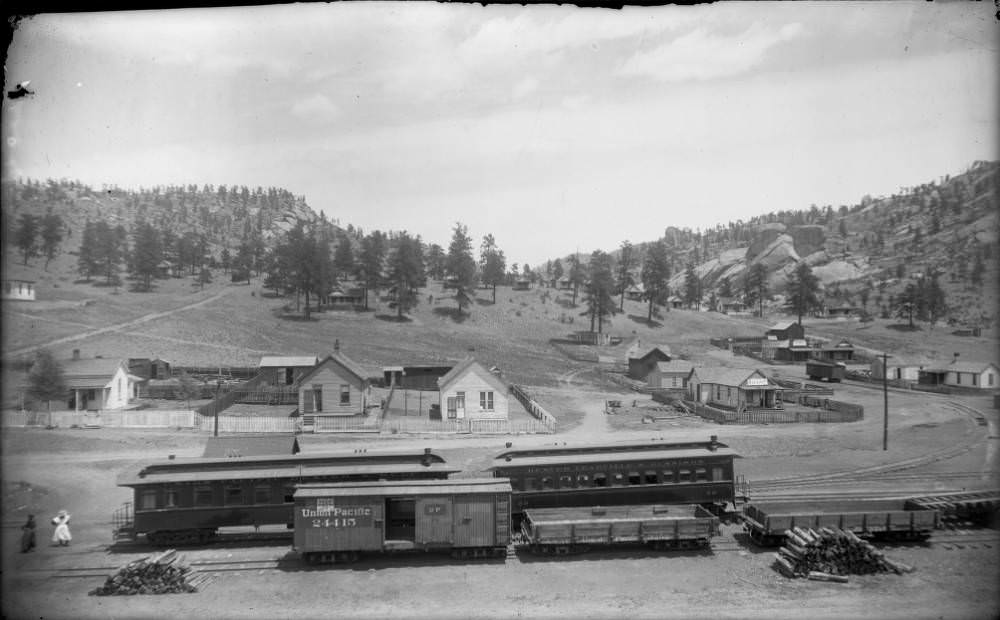
Denver, Leadville & Gunnison Railway at Pine, 1900
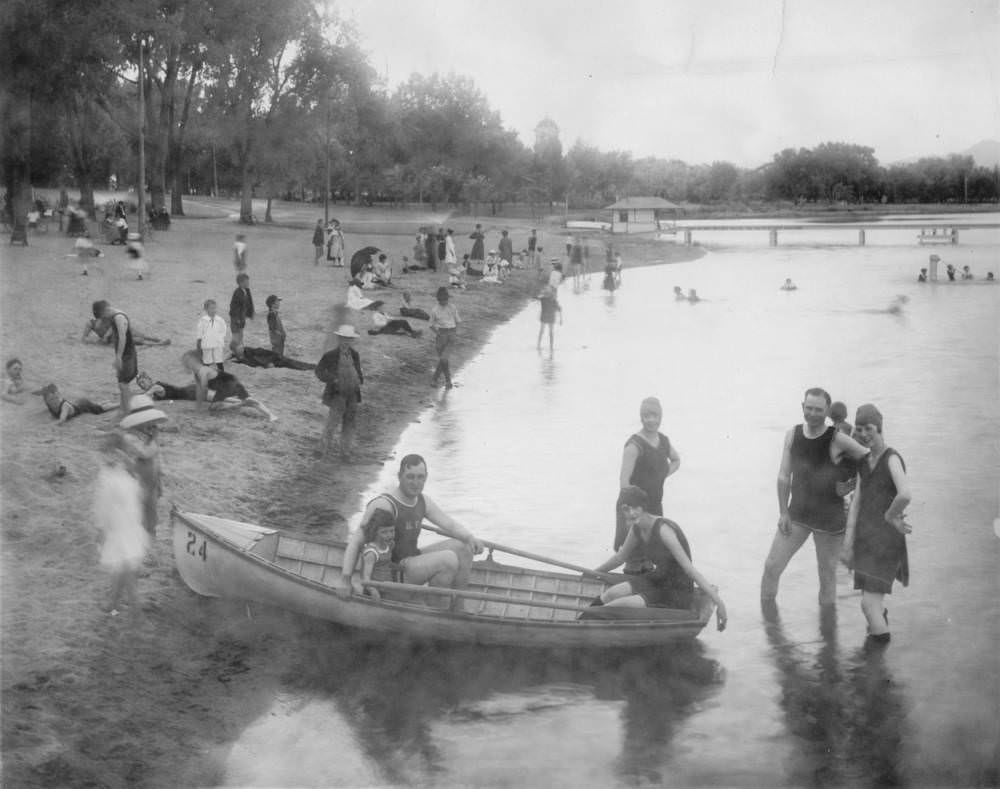
A man, woman and child sit in a rowboat near the shore of Berkeley Park beach on Berkeley Lake in Denver, 1900
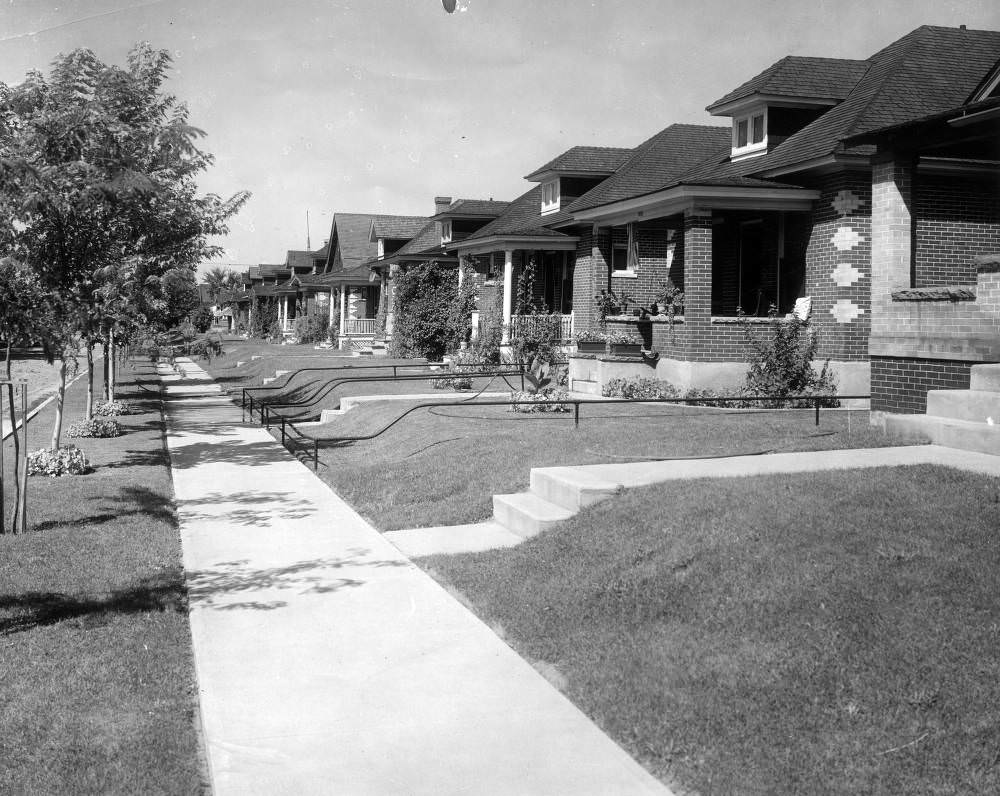
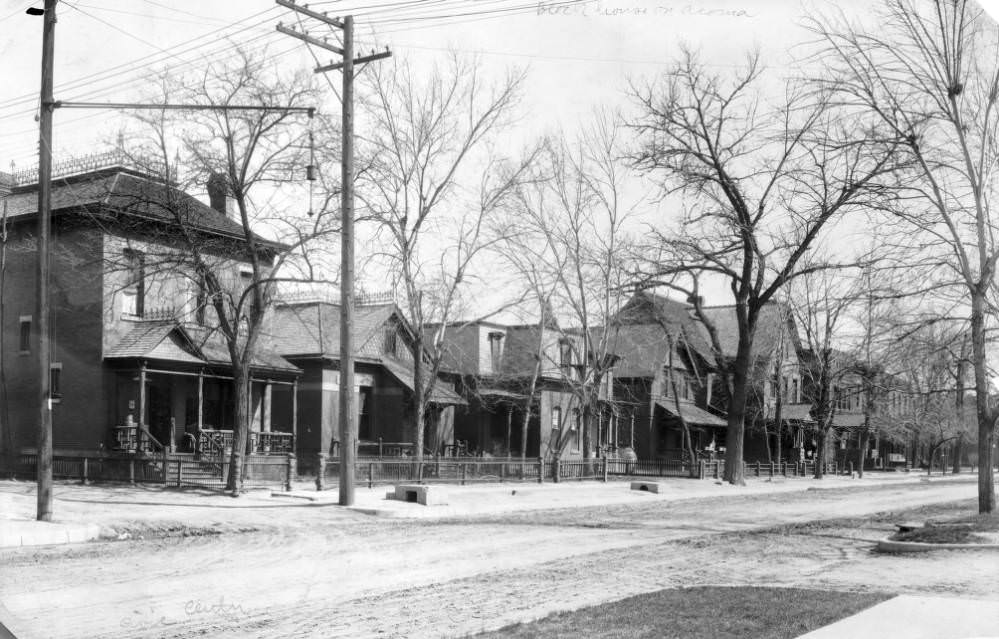
View of houses on Acoma Street in Denver, 1909
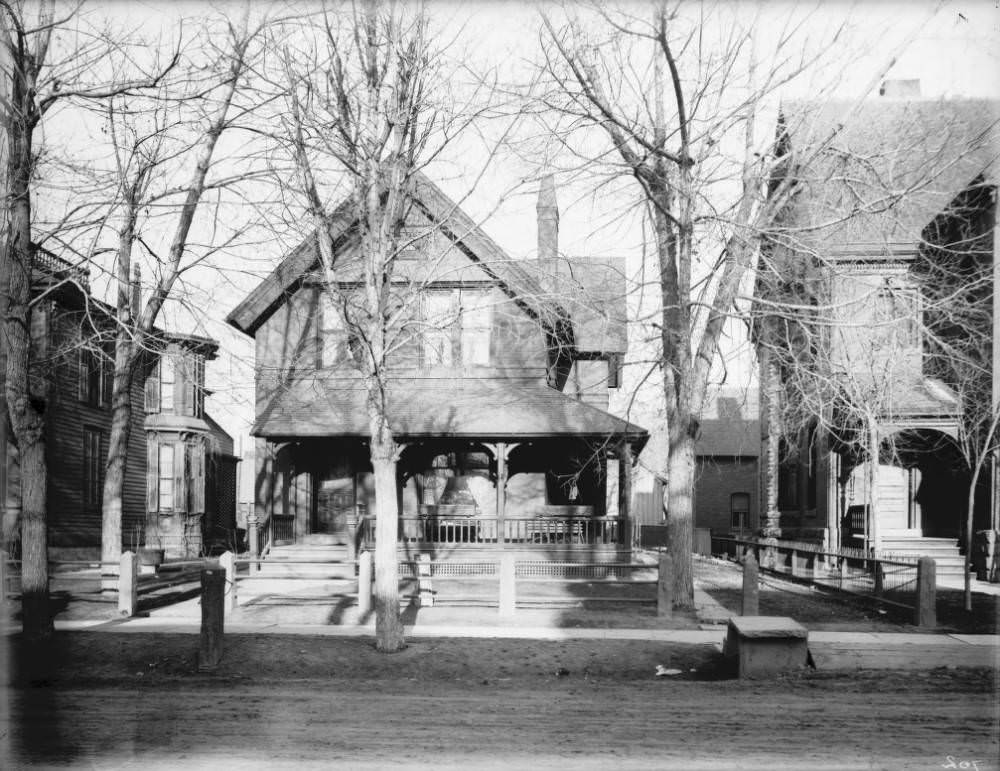
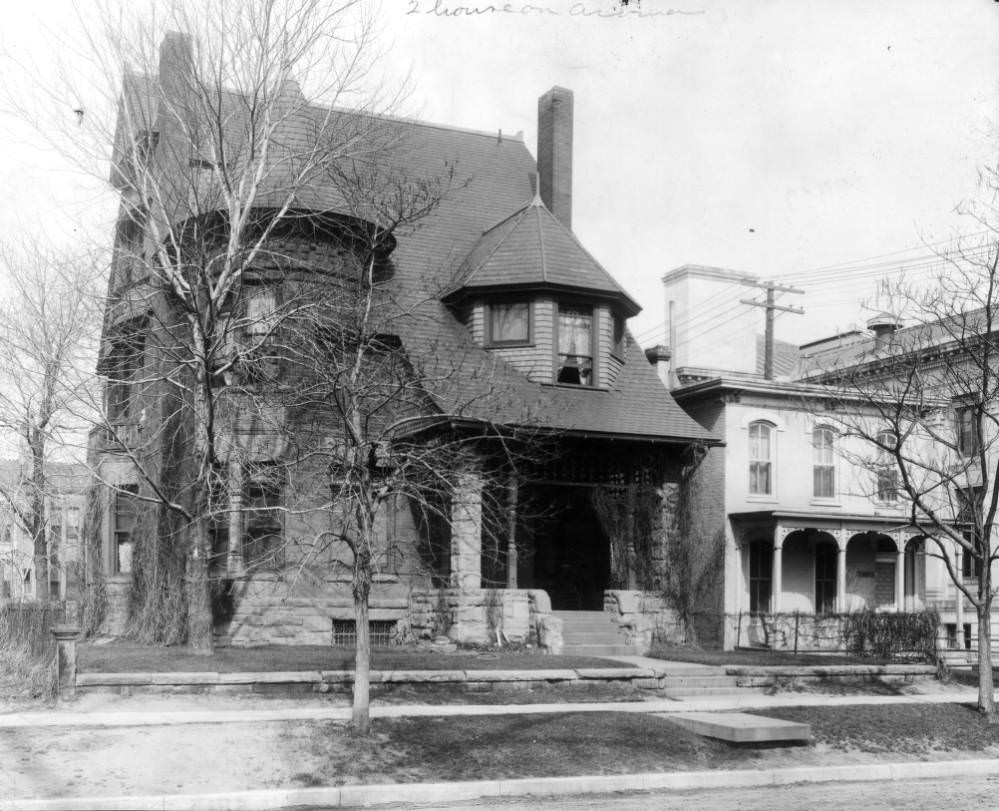
View of Mr. J. B. Newman’s house at 1445 Acoma Street in the Civic Center neighborhood of Denver, 1909
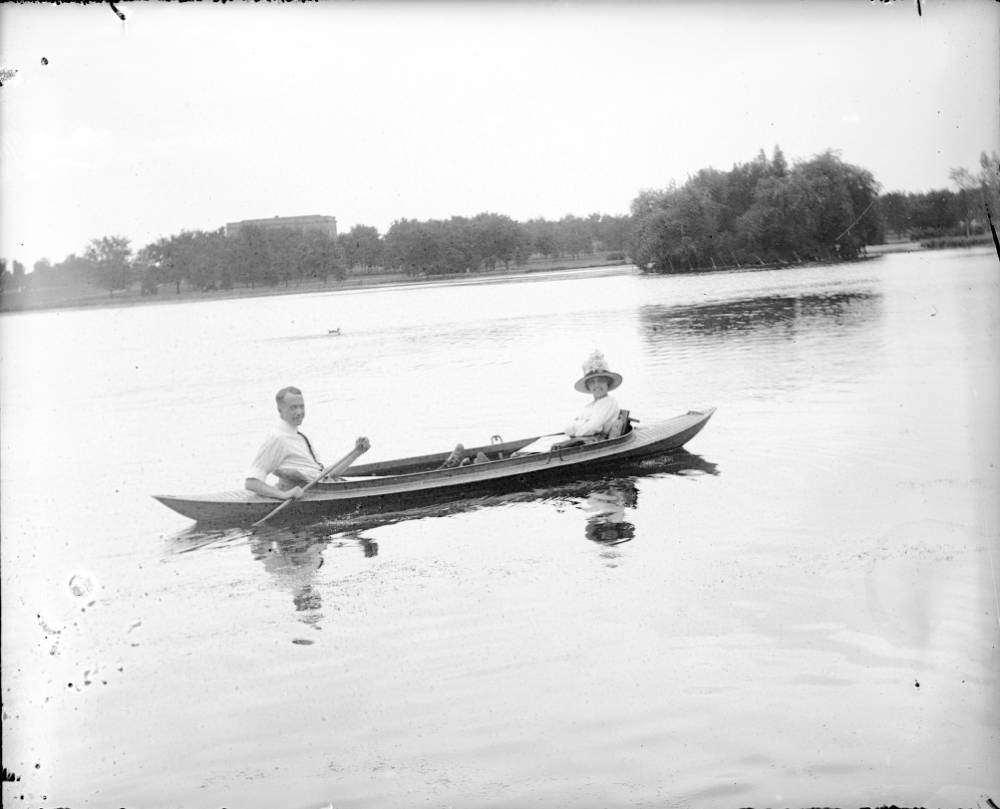
A man and woman pose in a canoe on City Park (Ferril) Lake in City Park, Denver, 1910
Employees pose by a “Seeing Denver” electric tour coach at 17th (Seventeenth) Street and Tremont Street in Denver, 1900
View of a Denver City Tramway Company street car on 17th (Seventeenth) Street in downtown Denver, 1909
Workmen pour concrete into forms for a gutter near the Alameda Avenue bridge in Denver, 1909
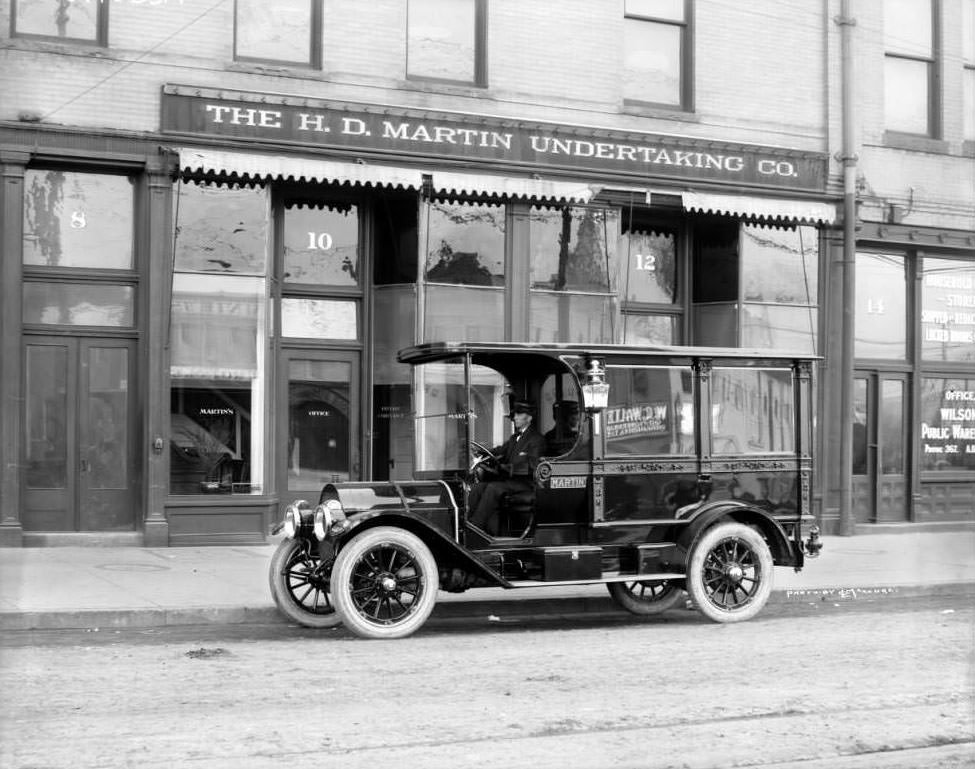
A driver sits in a hearse parked in front of the H. D. Martin Undertaking Co. at 10-12 West Colfax Avenue, Denver, 1900
Denver Tramway Company 17th (Seventeenth) Avenue trolley 44 is by the Kittredge Building on 16th (Sixteenth) Street in Denver, 1905
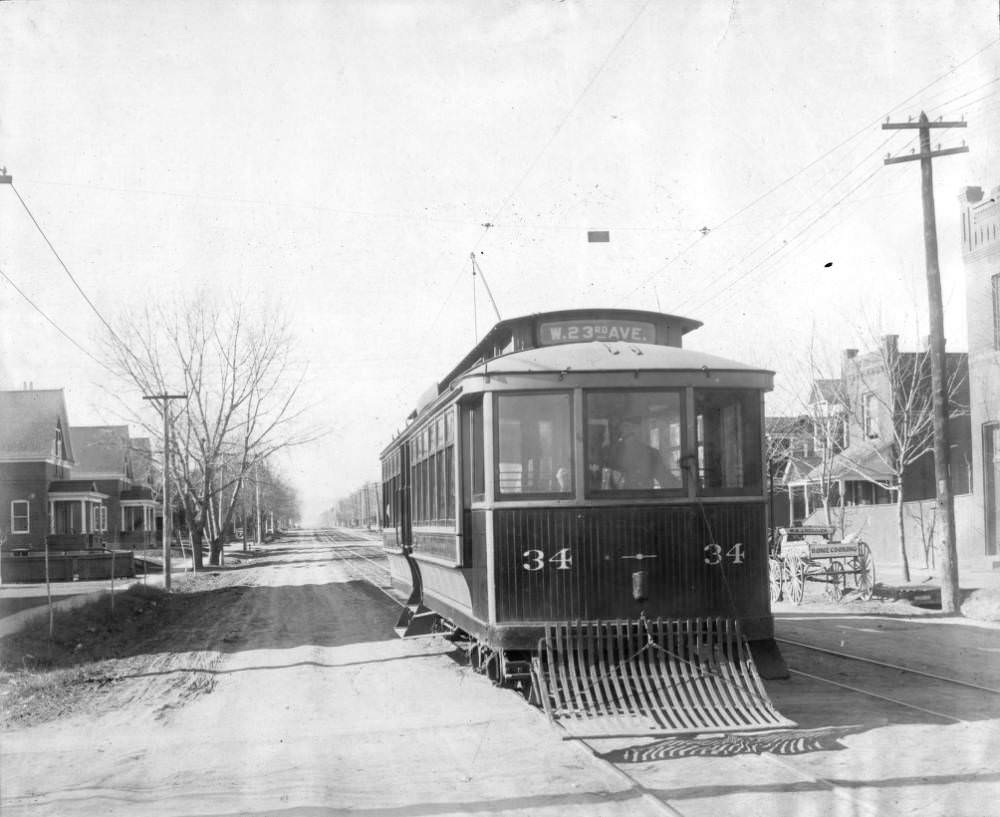
Denver Tramway Company trolley W. 23rd (Twenty-third) Avenue number 34 in Denver, 1905
Stout Street, in Denver, 1900
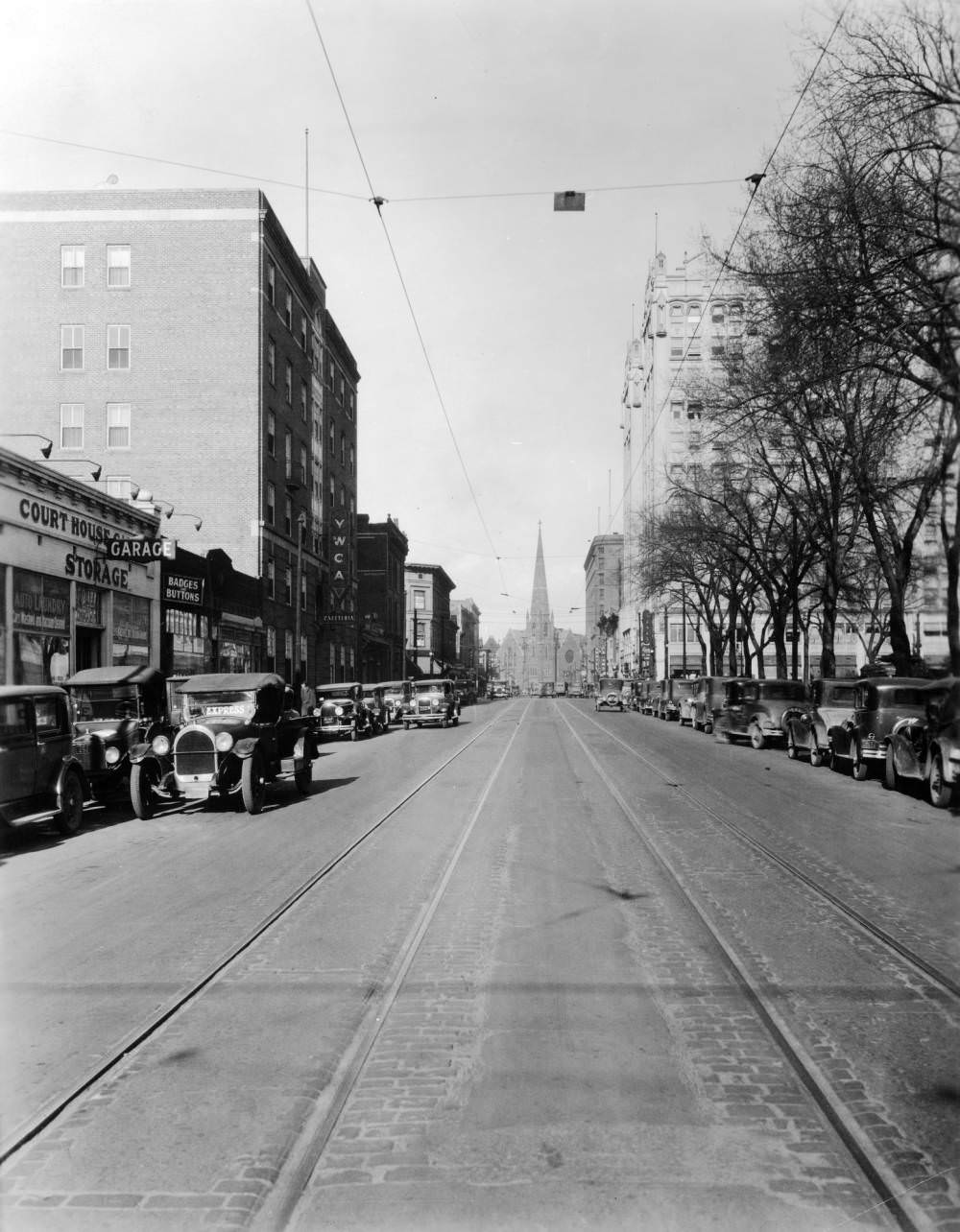
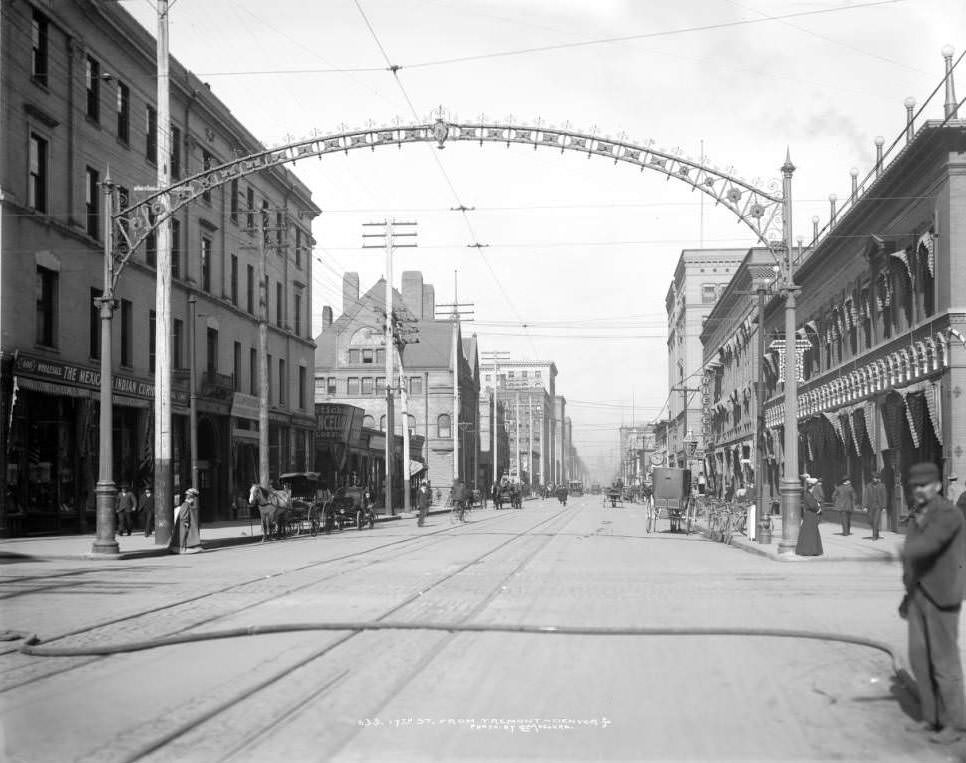
View of 17th (Seventeenth) street from Tremont Place, Denver, 1907
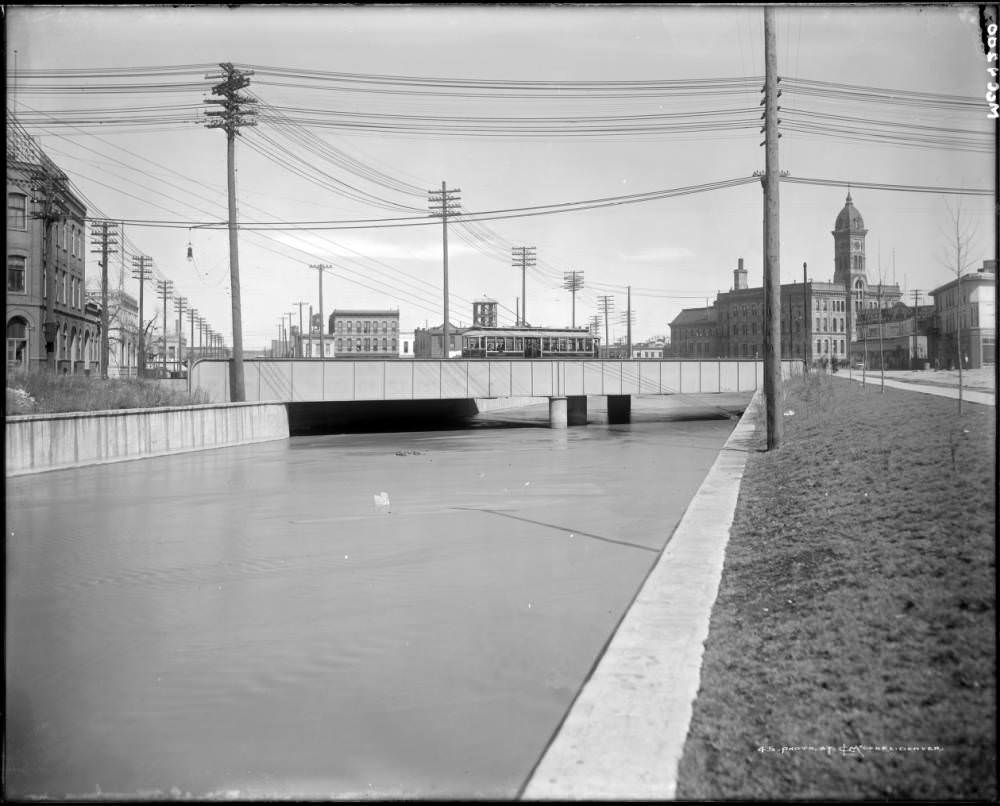
Cherry Creek and (possibly) Lawrence Street bridge, in Denver, Colorado; shows a Denver Tramway Company street railway car, 1907
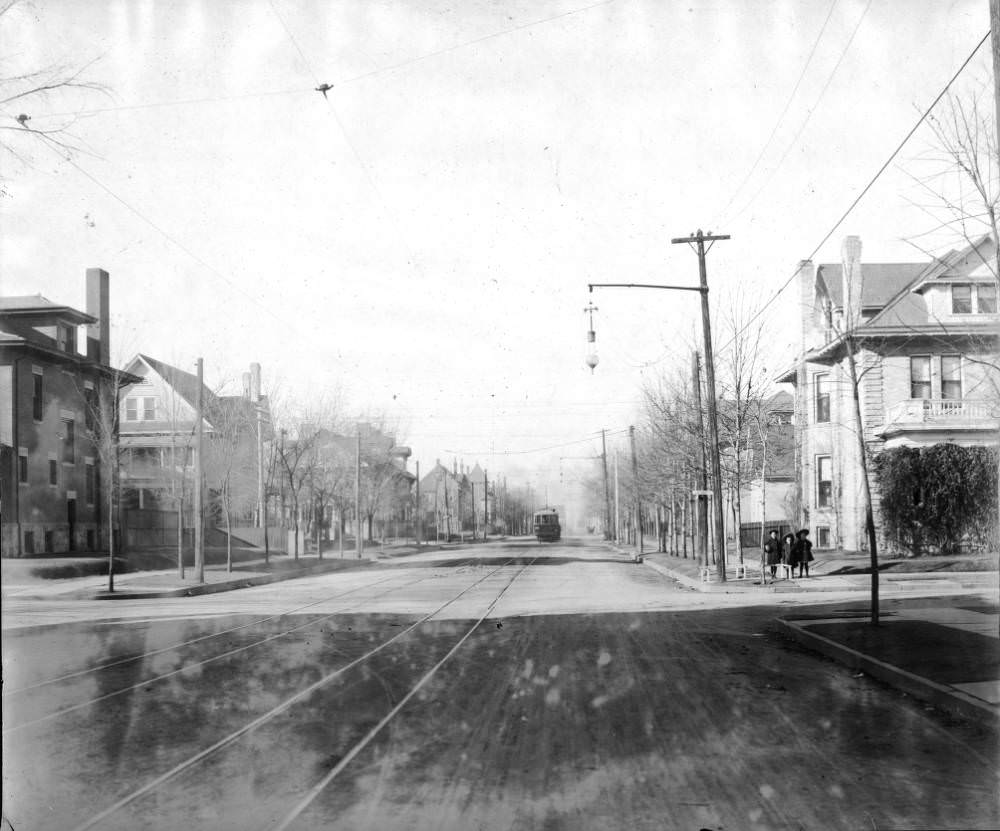
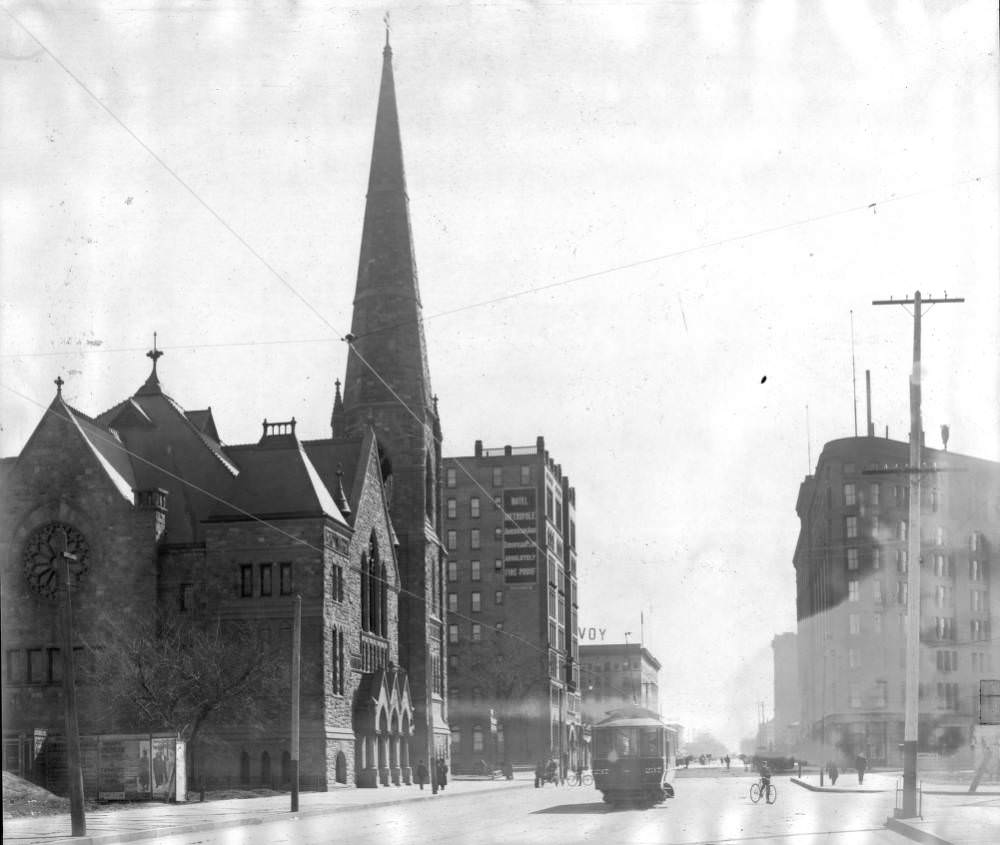
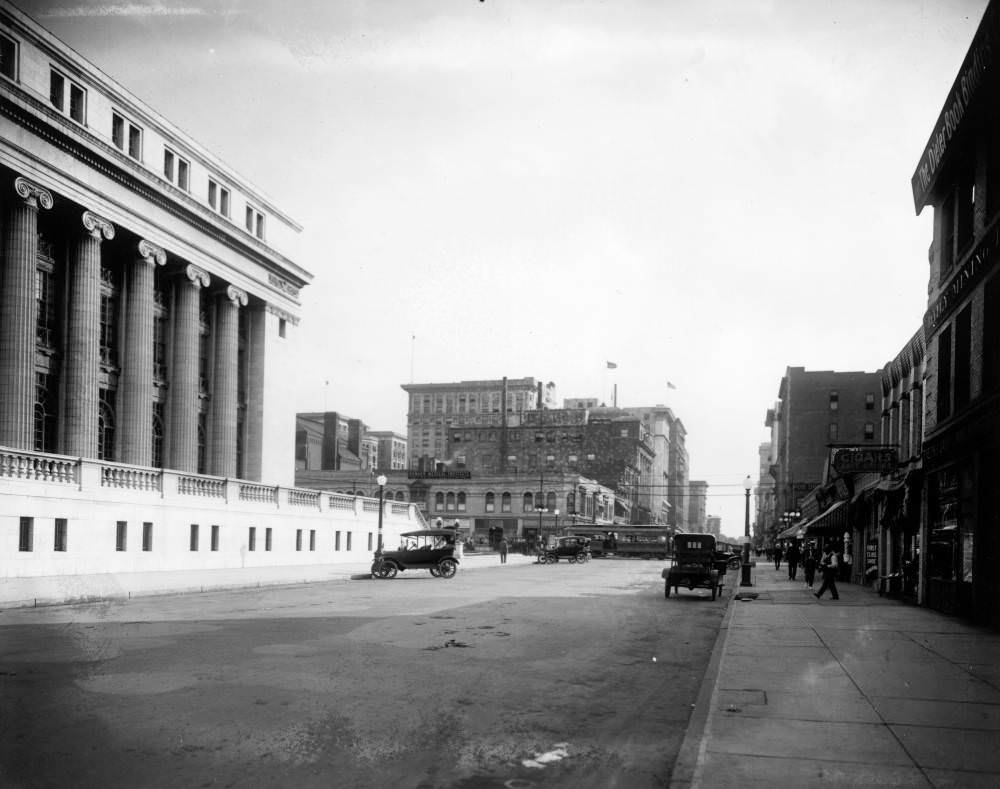
Looking south on B’way extension from East Denver Hi [sic] School, 1909
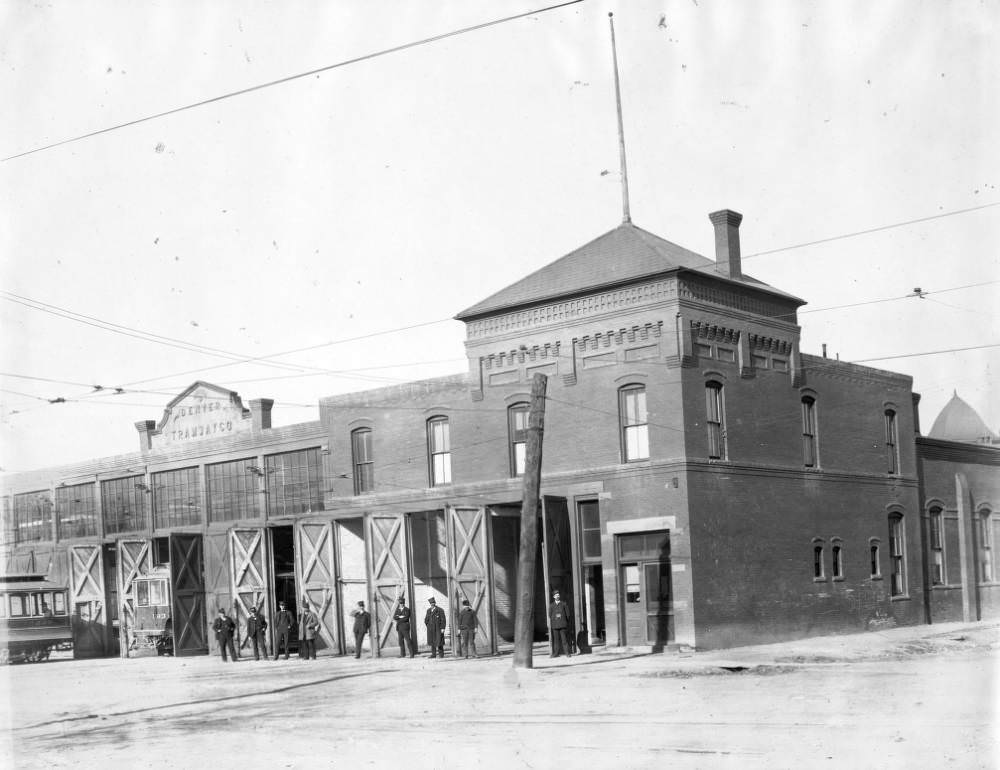
A group of conductors in uniforms pose in front of the Denver Tramway Company garage on Gilpin Street, Denver, 1905
Building (originally Denver City Cable Railway Company power house) at 18th (Eighteenth) and Lawrence Streets in Denver, 1905
Denver Tramway Company trolleys number 334 and 68 on 15th (Fifteenth) Street at Lawrence Street in Denver, 1905
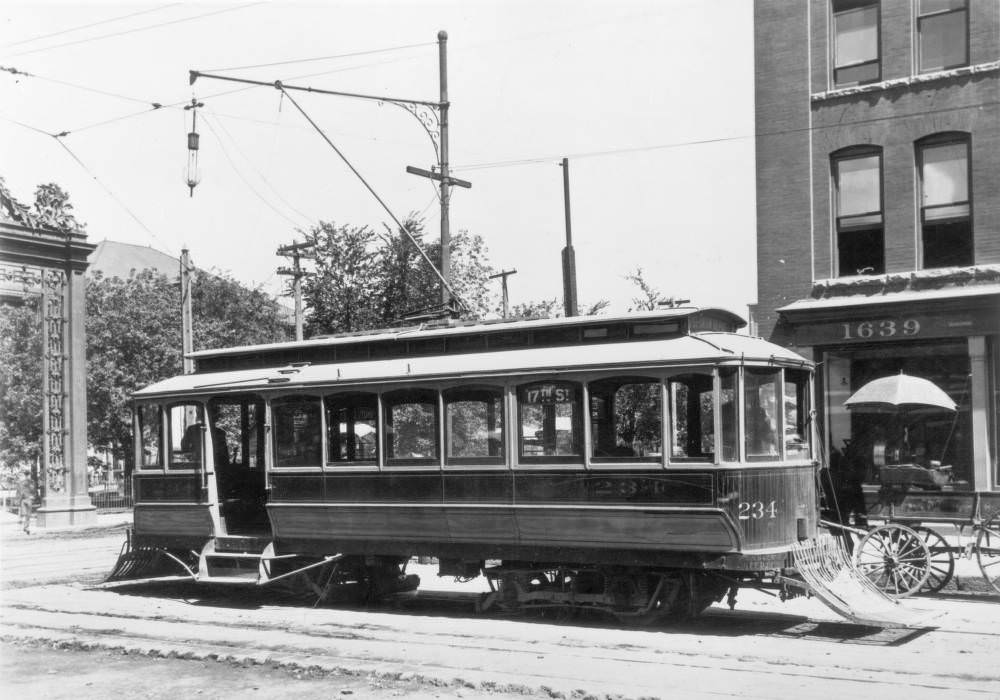
Denver Tramway Company trolley Park Hill number 230 on 17th (Seventeenth) Street in Denver, 1905
Denver Tramway Company trolley number 152 heads south past houses on Bannock Street in Denver, 1905
United States Post Office at 16th (Sixteenth) and Arapahoe Streets in downtown Denver, 1905
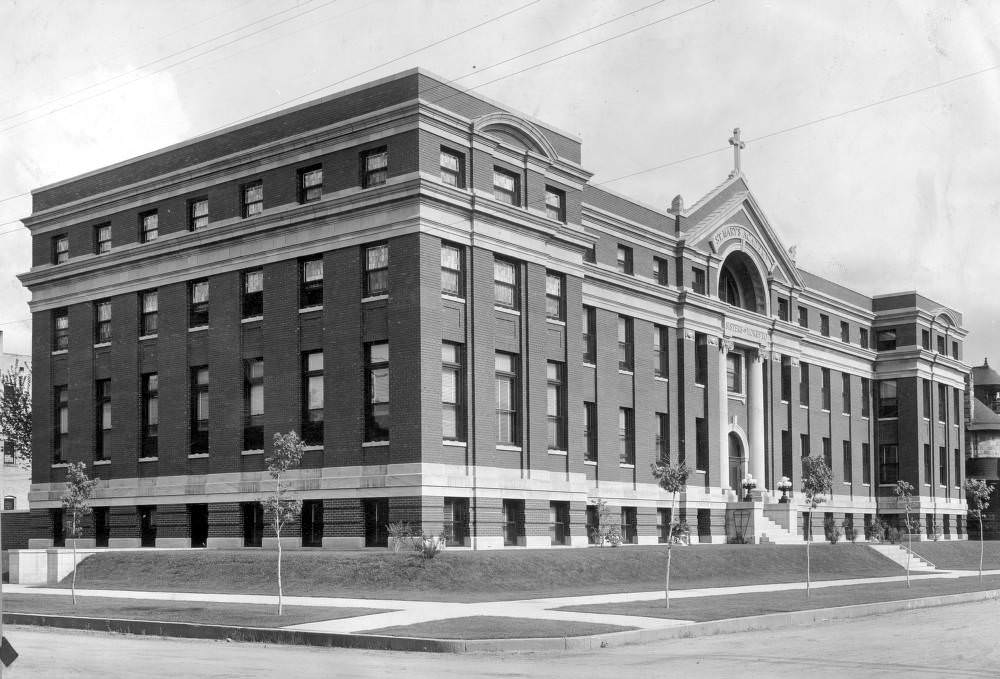
Saint Mary’s Academy at 1370 Pennsylvania Street in the Capitol Hill neighborhood of Denver, 1909
Denver Tramway Company trolley, Berkeley – Elitch number 64, followed by Leyden number 68 in Denver, 1905
Denver Tramway Company garage, Leyden Coal Co. coal wagons, and a building with smokestack at 38th (Thirty-eighth) Avenue in Denver, 1905
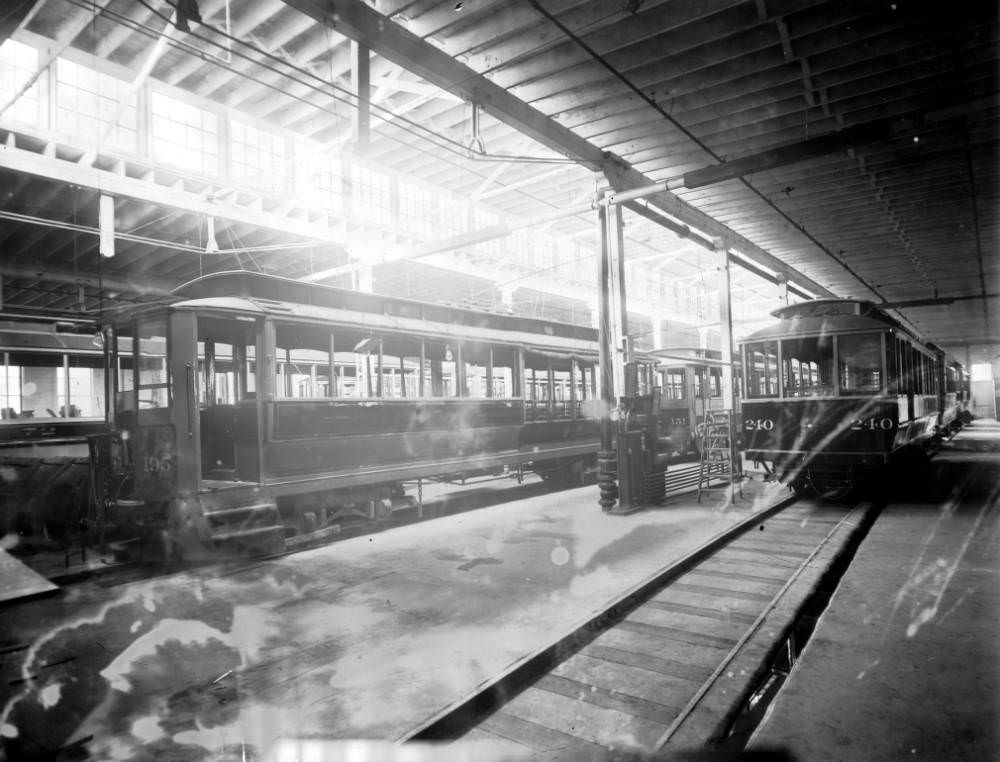
Interior of the Denver Tramway Company garage with trolleys number 195, 151, 72, and 240 at 4th (Fourth) Avenue and Kalamath Street in Denver, 1905
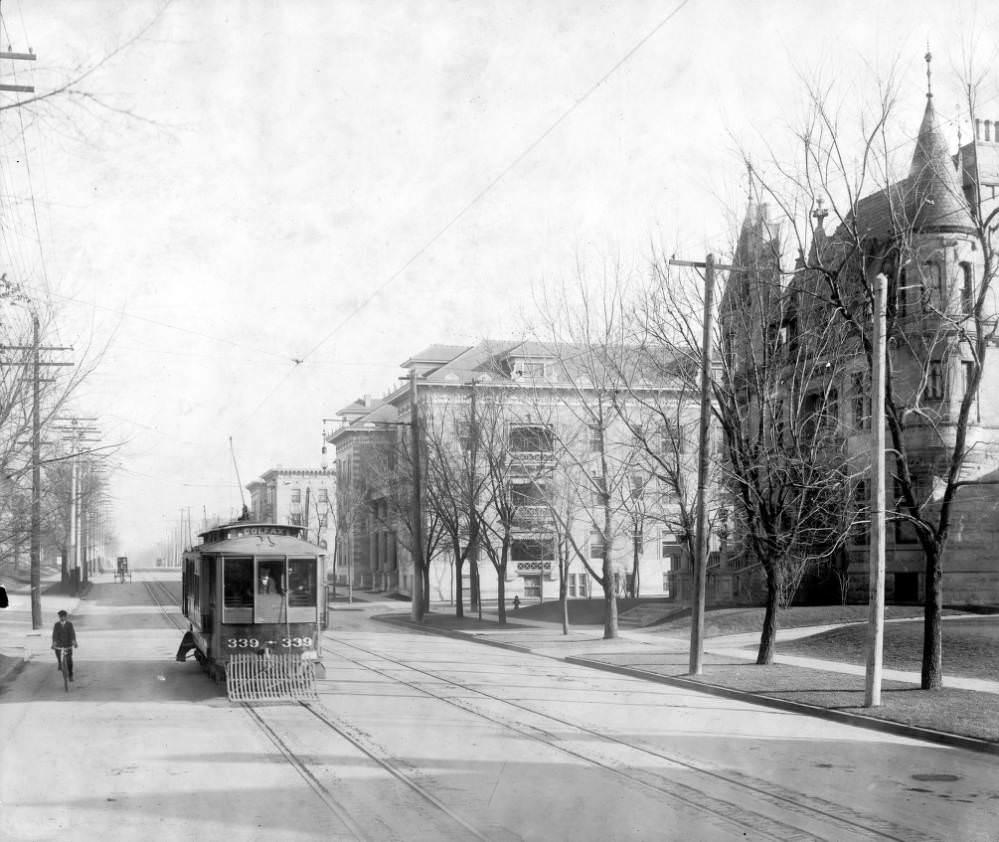
Denver Tramway Company trolley Colfax number 339 is on Colfax Avenue by the Lawrence C. Phipps home at the corner of Marion Street in Denver, 1905
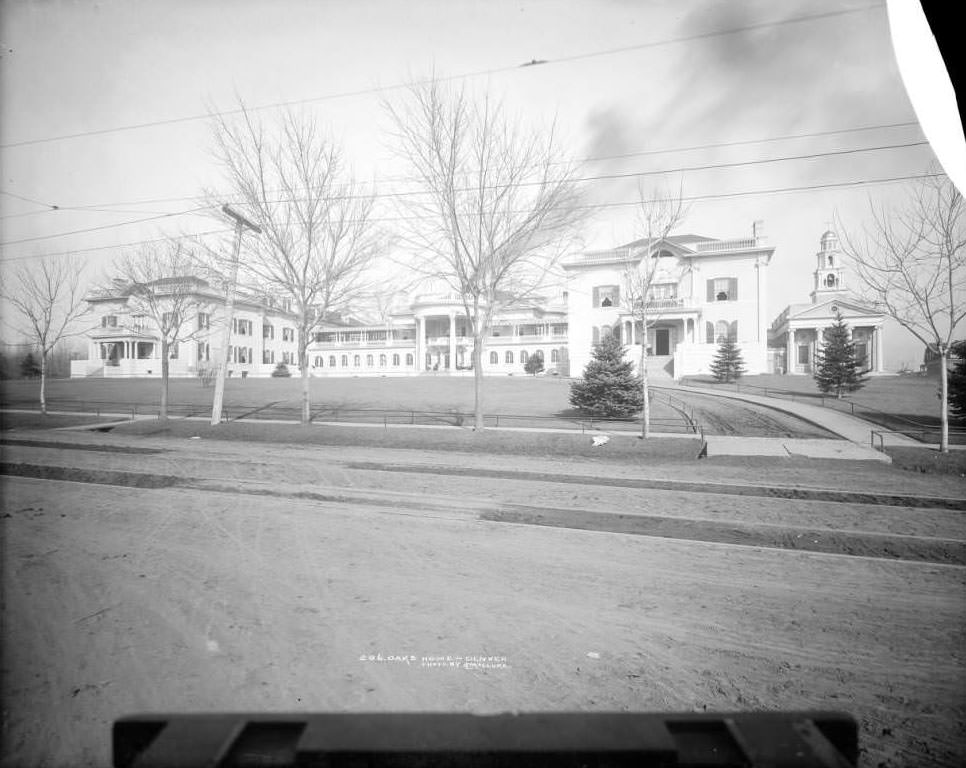
Exterior view of Oakes Home, Denver, Colorado, on West 32nd (Thirty-second) Avenue at Decatur including chapel completed in 1904 center right
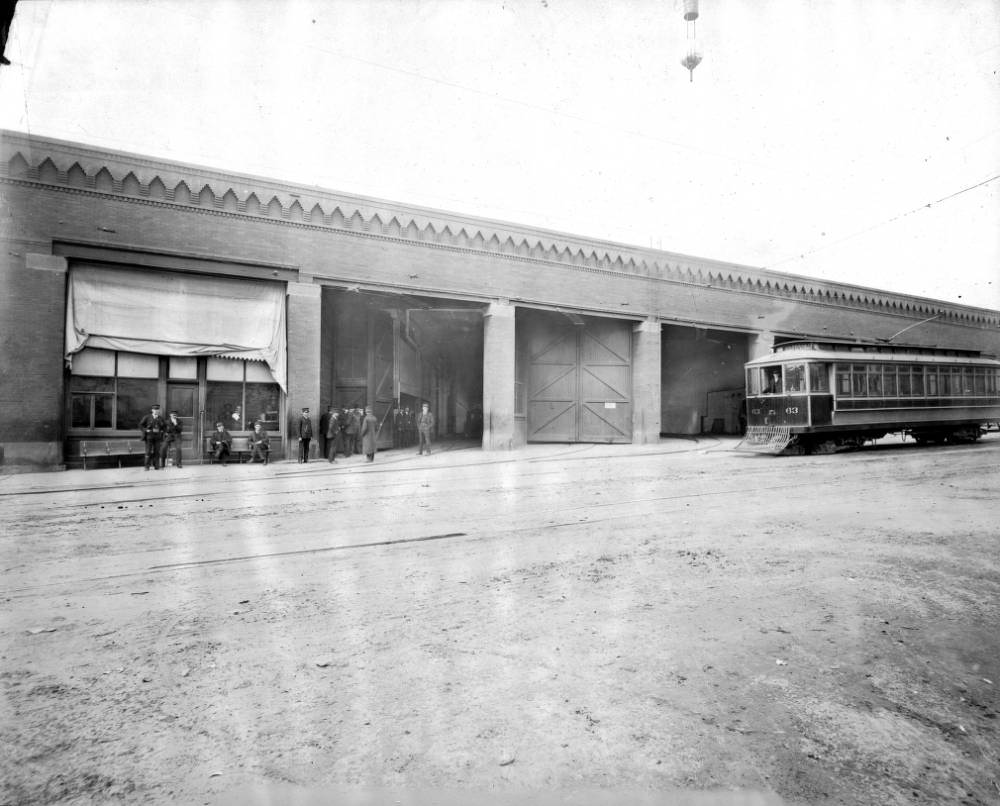
Conductors and trolley number 63 in front of the Denver Tramway Company garage on 30th (Thirtieth) Avenue in Denver, 1905
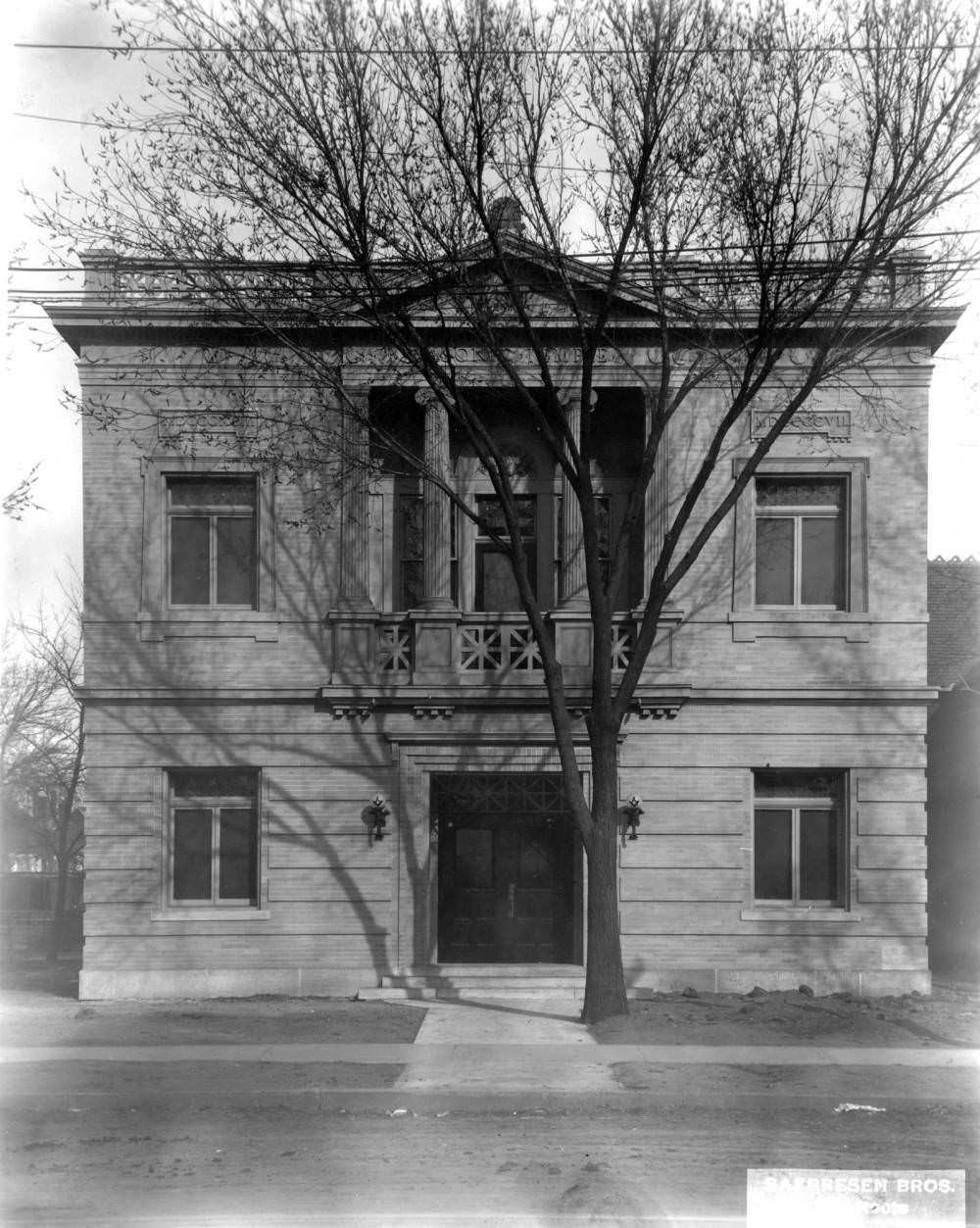
A Freemason Temple, South Denver Lodge Number 93 (A. F. & A. M.), 350 South Broadway, Baker Neighborhood, Denver, 1907
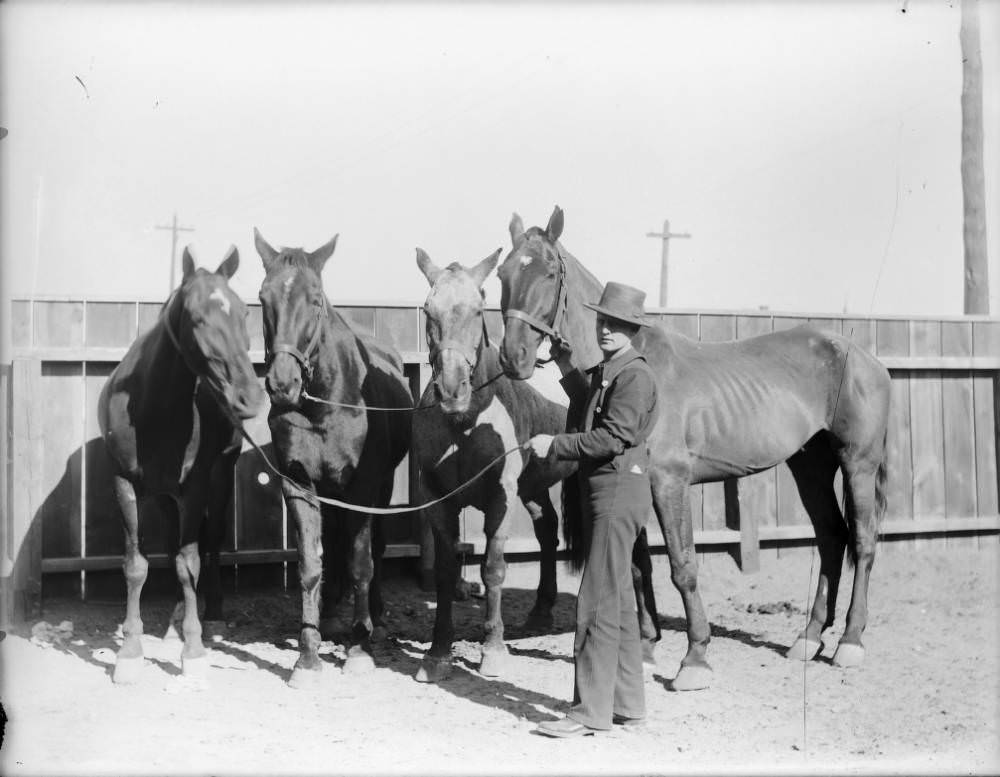
A man and Denver Fire department horses, in Denver, 1900
Denver Fire Dept. fire run or parade, 1902
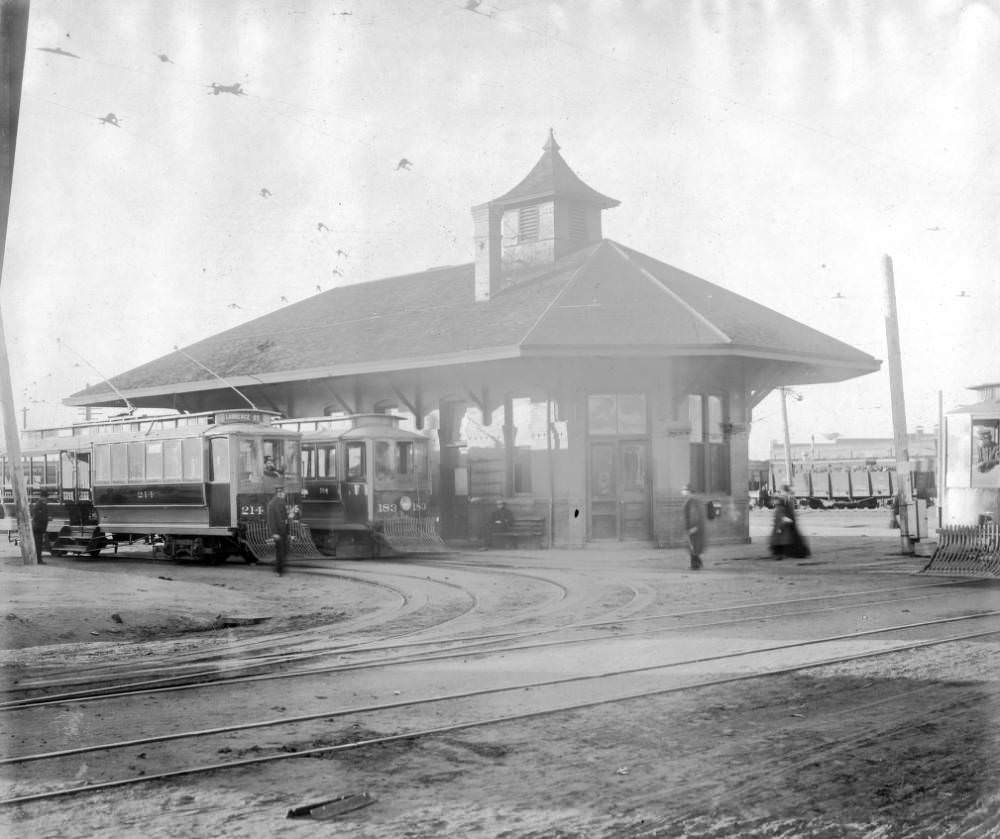
Denver Tramway Company station, with conductors and trolley cars Lawrence Street number 214, and Larimer Street number 183, 1905
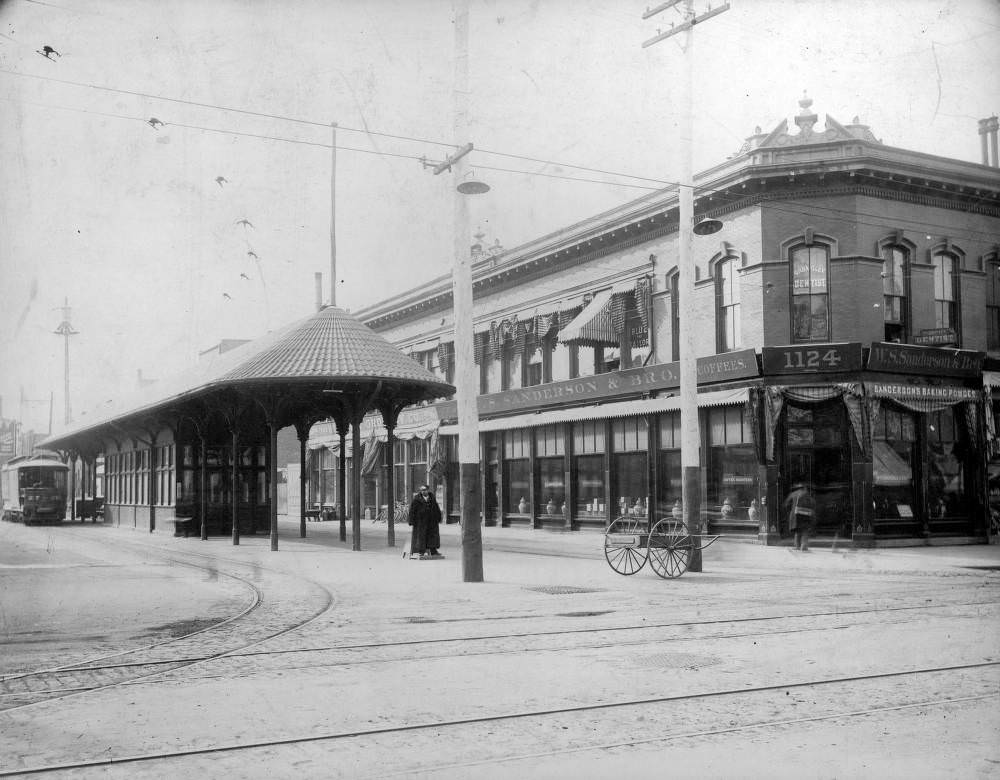
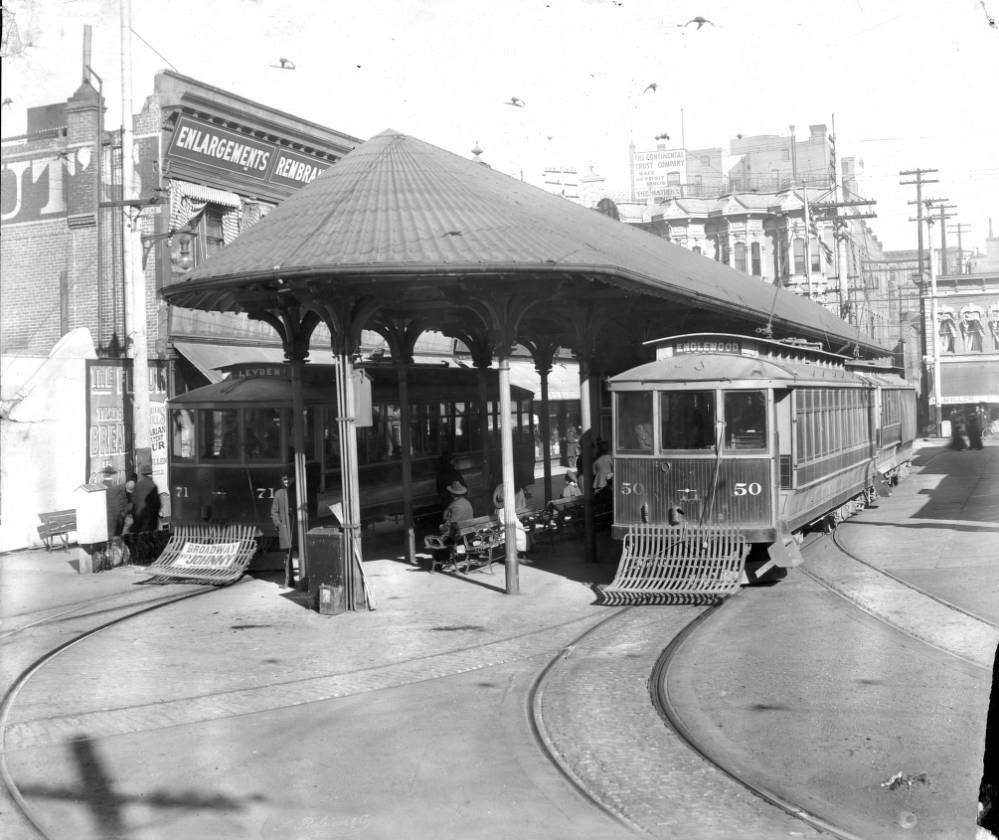
Denver Tramway Company trolley cars Englewood number 50 and Leyden number 71 are parked at a covered stop on 15th (Fifteenth) Street in Denver, 1905
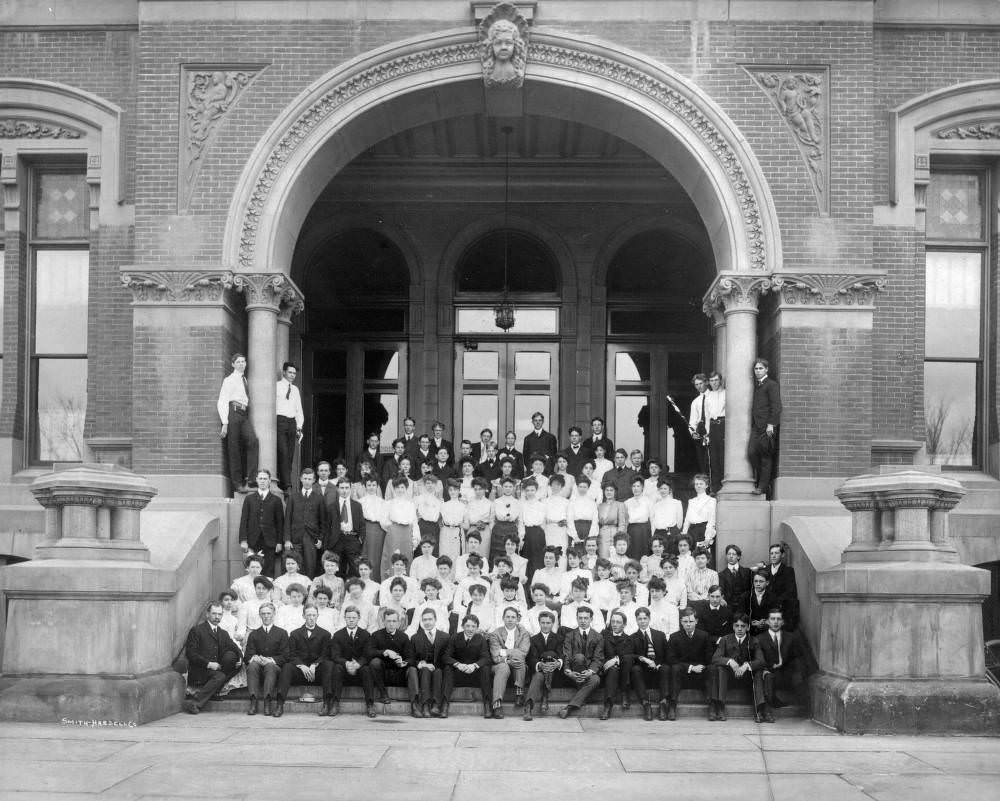
Group portrait of East Denver High School students in Denver, 1900
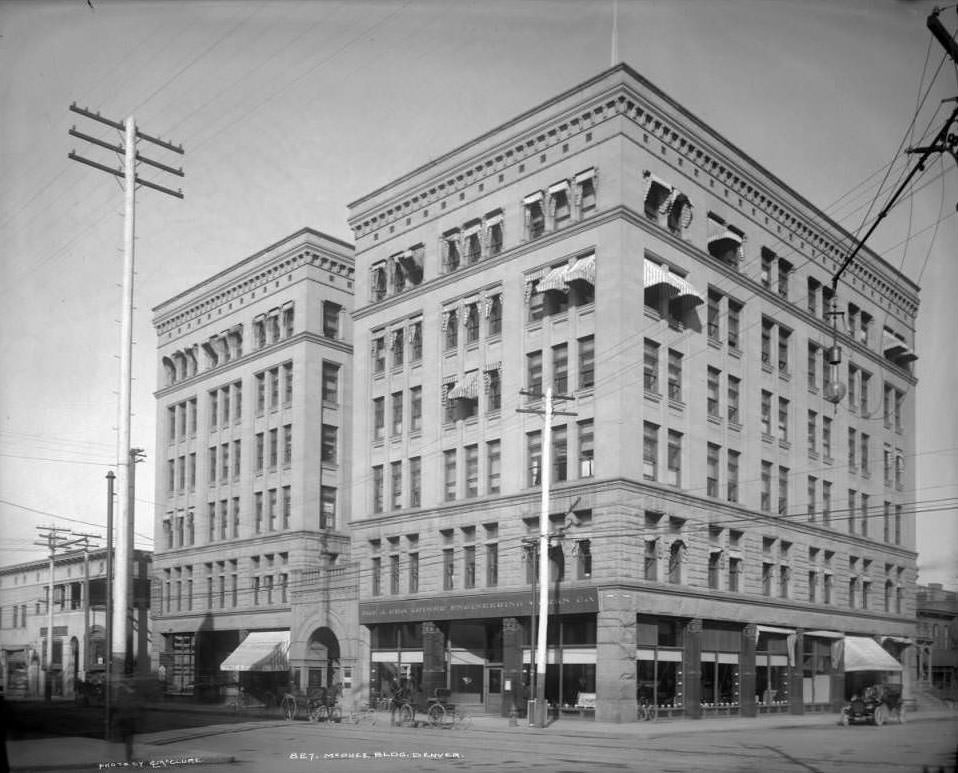
View of McPhee Building, 17th (Seventeenth) and Glenarm, Denver, 1906
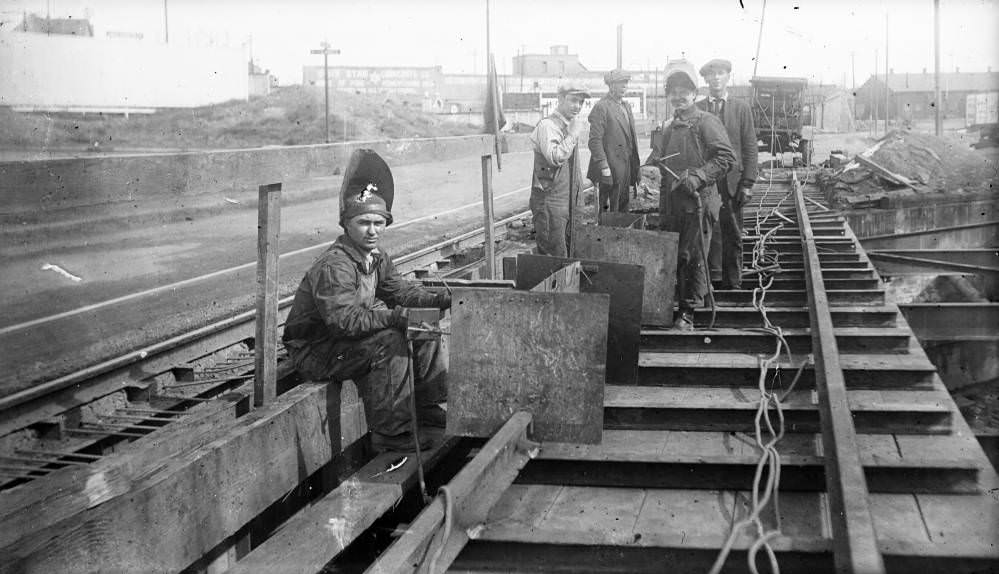
Men working on Denver City Tramway Company streetcar tracks in Denver, 1904
Denver Tramway Company supply yard shows: stacks of lumber and steel tracks, 1909
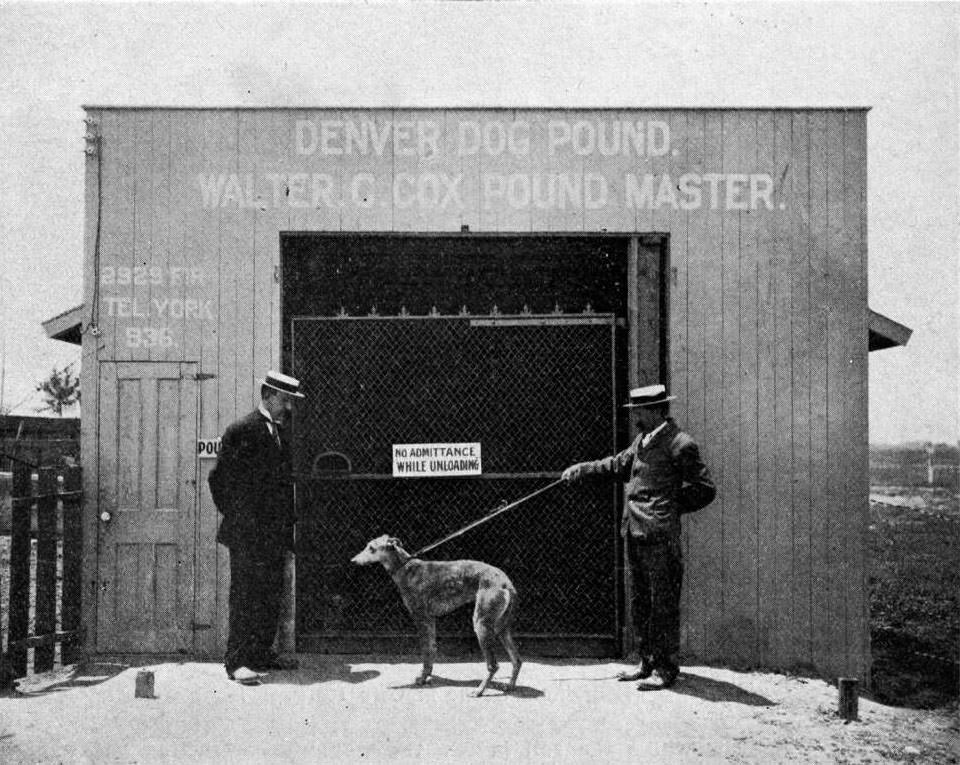
The Denver Dog Pound with animal control officials and dog posing outside of the building, 1909
17th (Seventeenth) Street in Denver, 1900
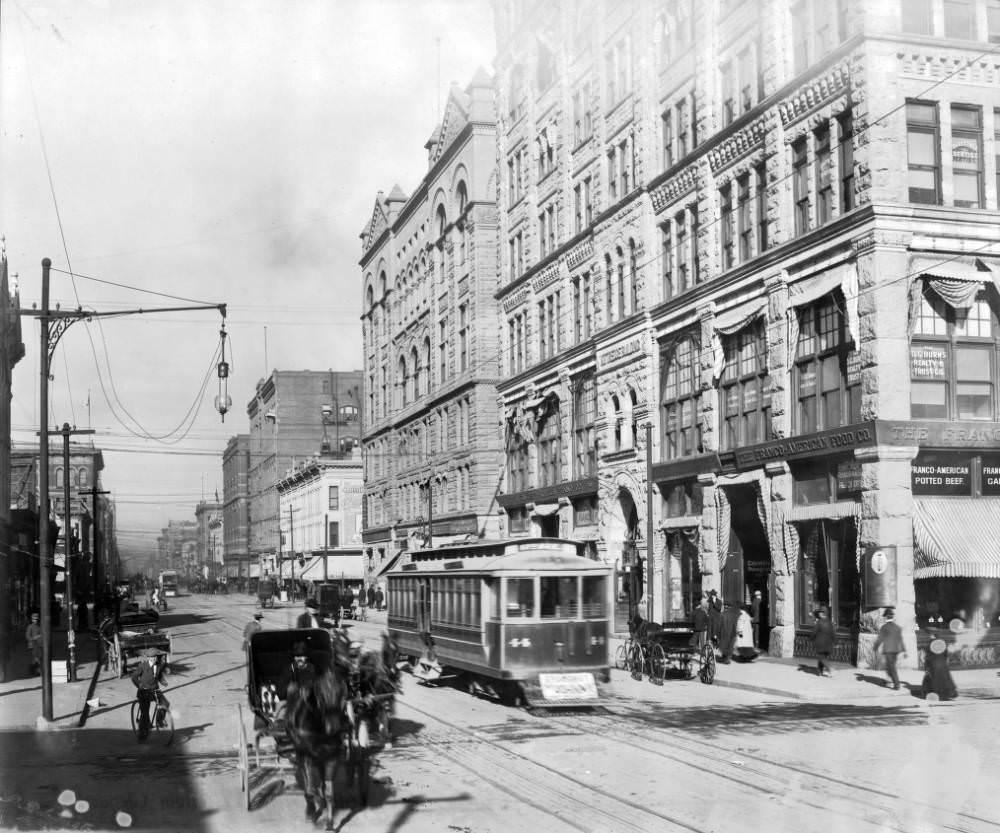
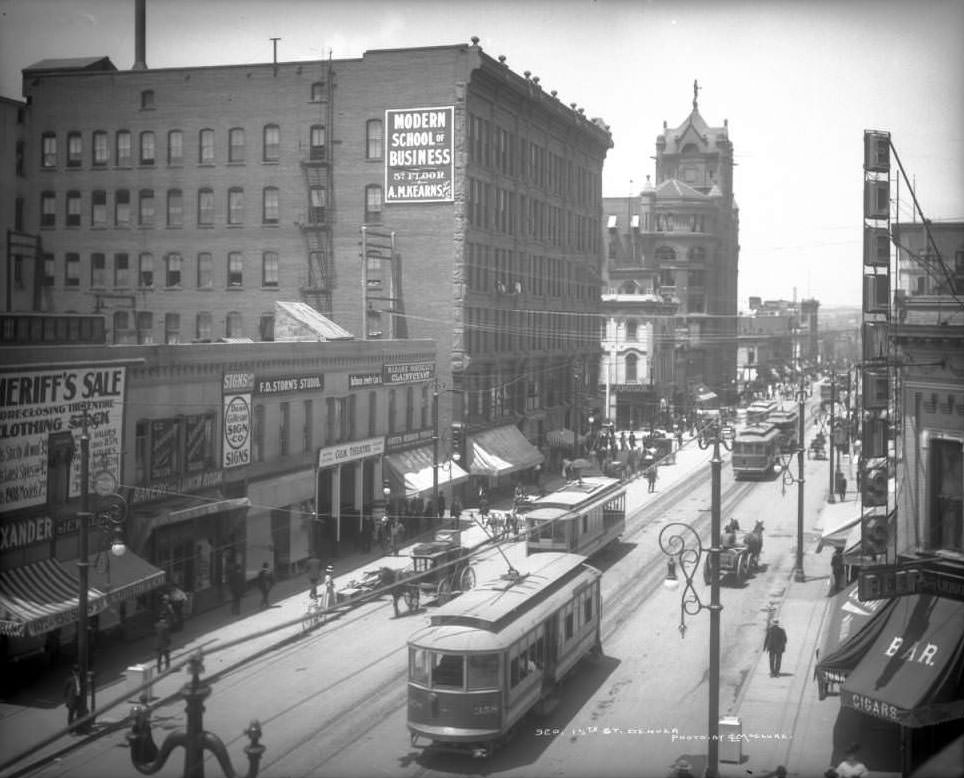
View of 15th (Fifteenth) on a busy day; shows electric street railway cars (or trolleys including car number 358), horse-drawn wagons and carriages, bicycles, men and women on sidewalk and the Mining Exchange Building, 1909
View of camp sites beside Rocky Mountain Lake at Rocky Mountain Lake Park in the Berkeley neighborhood of Denver, 1909
Denver Public Library (Carnegie) construction in the Civic Center neighborhood of Denver, 1906
The Denver Tramway Company car #63 is at the Berkeley Loop at the end of the Berkeley, – Elitch line at Berkeley Park about 40th (Fortieth) and Yates in Denver, 1909
Denver Public Library (Carnegie) construction in Denver, 1906
Men (including Mayor Robert Speer) inspect Denver Public Library (Carnegie) basement and foundation walls in Denver, 1907
Denver Public Library (Carnegie) construction consists of snow-covered basement and foundation walls and a crane in Denver, 1907
Denver Public Library (Carnegie) construction consists of basement and foundation walls and a crane in Denver, 1907
People crowd the Denver Public Library (Carnegie) construction site by a crane to watch the cornerstone ceremony in the Civic Center neighborhood of Denver, 1907
Denver Public Library (Carnegie) construction in the Civic Center neighborhood of Denver, 1907
Denver Public Library (Carnegie) construction in the Civic Center neighborhood of Denver, 1907
Denver General Hospital and Home For Nurses at West 6th (Sixth) Avenue and Cherokee Street in the Lincoln Park neighborhood of Denver, 1909
Young members of the Denver Boys Club stand in front of their building at 1329 15th (Fifteenth) Street in Denver, 1905
Rocky Mountain News building at 1720 Welton Street in Denver, 1909
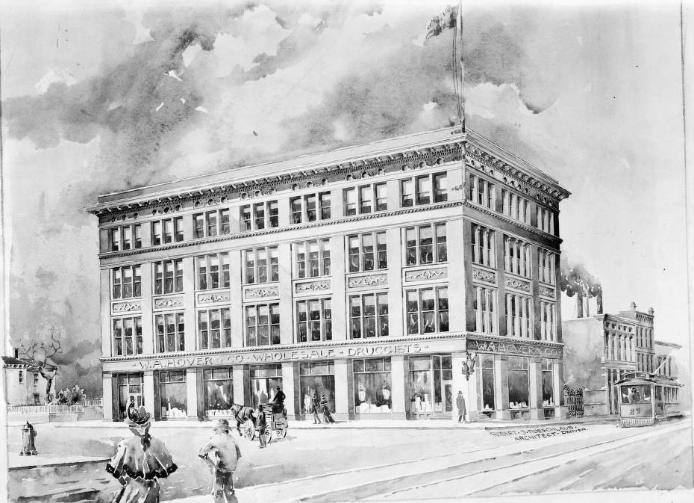
Architectural drawing of the William A. Hover & Company building, 14th (Fourteenth) and Lawrence Street, Denver, 1900
Children stand near a building in Denver, 1900s
Denver from the capital, 1900s
Federal Mint building, 1900s
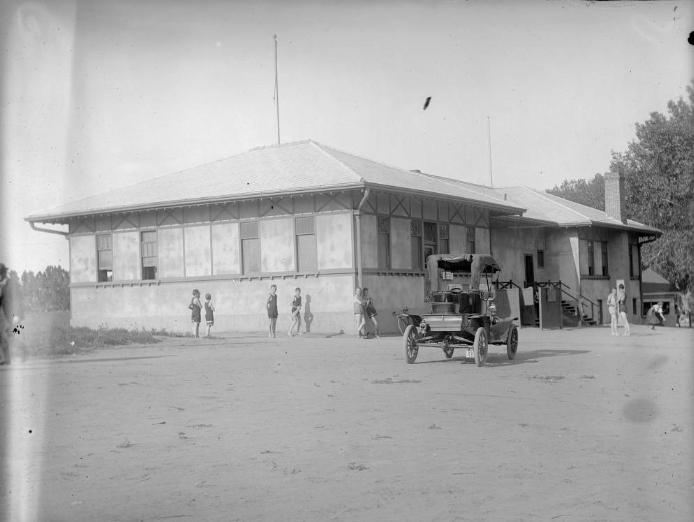
View of people and a (possibly) bath house or spa in Denver, 1904
Mine buildings at Segundo, 1900s
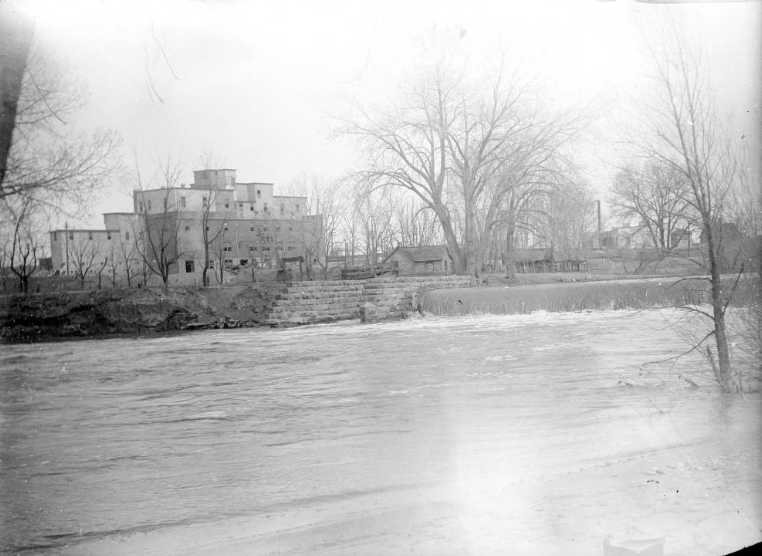
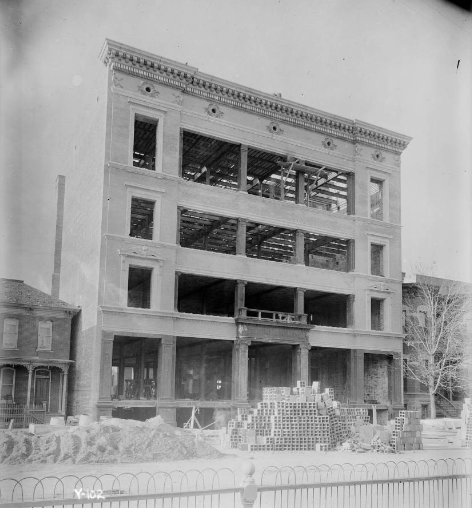
Buildings commercial 5-story near Platte River, Denver, 1904
Denver used to be such a beautiful and proper city
Appearances can be deceiving.
The photo on this page was taken in 1905. At that time, just a few blocks north, Cherry Creek was still a polluted marshland (Speer Blvd came a year later), Grant Street was still unpaved dirt (that turned into rutted, muddy muck whenever it got wet), and those two horses each dropped 10-20 pounds of shit into the street every day, where it either melted into the muck or turned to dust and blew into open windows.
What you also generally won’t see in these old B&W pictures is the pollution, Denver being powered entirely by wood and coal at the time, and temperature inversions being just as much a thing then as they are today.
Not to mention the fact that the Platte was a dumping ground for toxic chemicals up through the 1970’s.




![Women who include Frances Sims, Agnes S. Hall, Anamtille [?] McClung, and Louise Wells work at desks in the catalog department of the Denver Public Library at Colfax Avenue and Bannock Street in the Civic Center neighborhood of Denver, 1910](https://www.bygonely.com/wp-content/uploads/2022/12/Denver_1900s_122.jpg)
![Looking south on B'way extension from East Denver Hi [sic] School, 1909](https://www.bygonely.com/wp-content/uploads/2022/12/Denver_1900s_143.jpg)

Denver used to be such a beautiful and proper city
Appearances can be deceiving.
The photo on this page was taken in 1905. At that time, just a few blocks north, Cherry Creek was still a polluted marshland (Speer Blvd came a year later), Grant Street was still unpaved dirt (that turned into rutted, muddy muck whenever it got wet), and those two horses each dropped 10-20 pounds of shit into the street every day, where it either melted into the muck or turned to dust and blew into open windows.
What you also generally won’t see in these old B&W pictures is the pollution, Denver being powered entirely by wood and coal at the time, and temperature inversions being just as much a thing then as they are today.
Not to mention the fact that the Platte was a dumping ground for toxic chemicals up through the 1970’s.