
Czechoslovakia had one of the most turbulent histories of any European nation in the 20th century. It declared independence from Austria-Hungary in 1918, becoming a new democratic republic almost overnight. Just two decades later, the Munich Agreement of 1938 handed the Sudetenland to Nazi Germany, and other border territories were carved off by Hungary and Poland. By 1939, the country had ceased to exist entirely — Slovakia was declared a separate state and fell under German influence, while Bohemia and Moravia became a German protectorate. After World War II ended in 1945, Czechoslovakia was re-established, though it lost Carpathian Ruthenia to the Soviet Union for good. The country would hold together until January 1993, when it split peacefully into the Czech Republic and Slovakia.
By the 1970s, Czechoslovakia was firmly behind the Iron Curtain. The Soviet Union had crushed the Prague Spring reform movement with tanks in August 1968, and the decade that followed was defined by a policy the Communist Party called “normalization” — a rollback of liberties and a tightening of Soviet control. Soviet soldiers and military vehicles were a visible part of daily life. Yet the country’s medieval castles, baroque churches, and spa towns continued to draw visitors, and ordinary Czechoslovaks went about their lives — going to markets, raising families, and gathering in town squares. The photos below, taken throughout the 1970s, capture this contradiction: a country of extraordinary beauty living under heavy political weight.
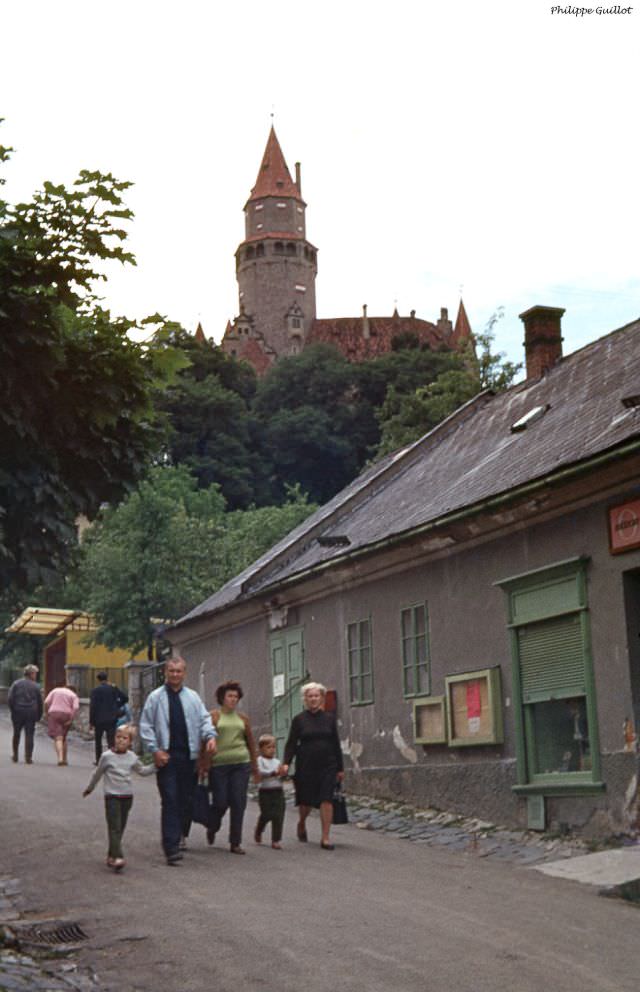
One of the country’s most striking landmarks is Bouzov Castle, a massive fortress in Moravia with roots going back to the 14th century. By the 1970s, it stood as a well-preserved reminder of medieval Bohemian and Moravian history.
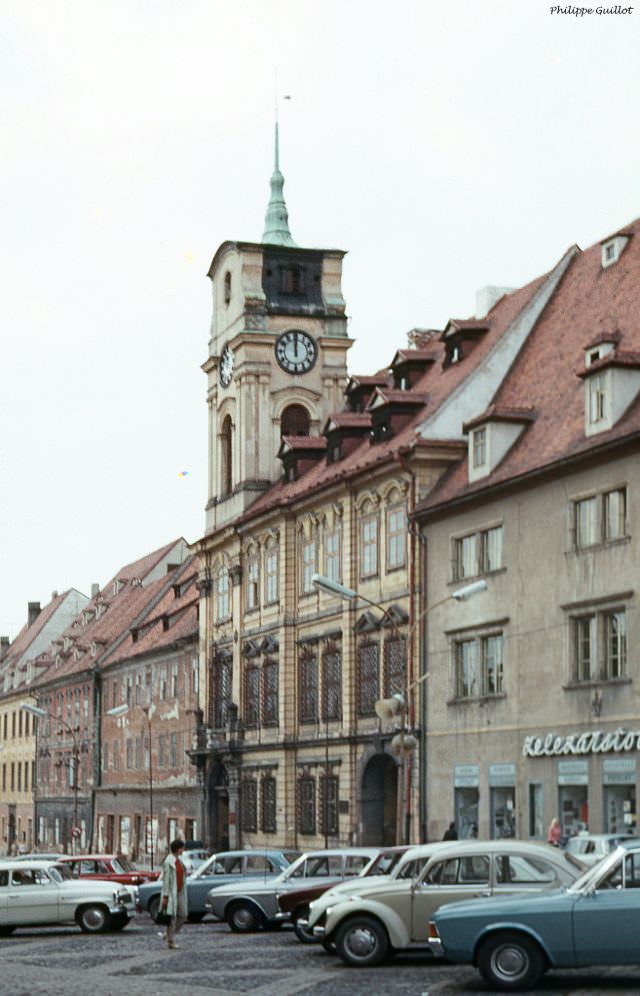
The western Bohemian town of Cheb sits near the German border and carries deep historical weight. Its town hall is one of the most recognizable buildings in the region, reflecting centuries of German and Czech cultural overlap in this part of the country.
Everyday Czechoslovaks lived under a system that controlled nearly every aspect of public life — what could be published, what could be said, and who could travel abroad. Despite this, street life carried on with a certain normalcy. People dressed, worked, and socialized much like their Western European neighbors, even if their political freedoms were far more restricted.
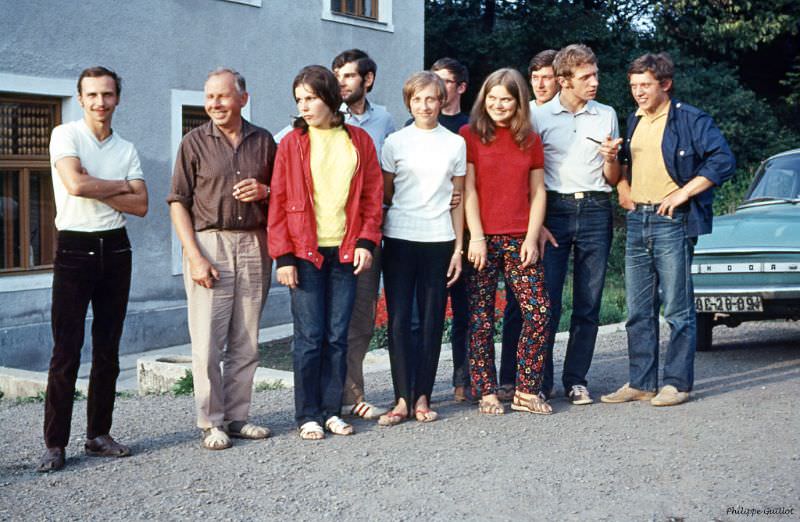
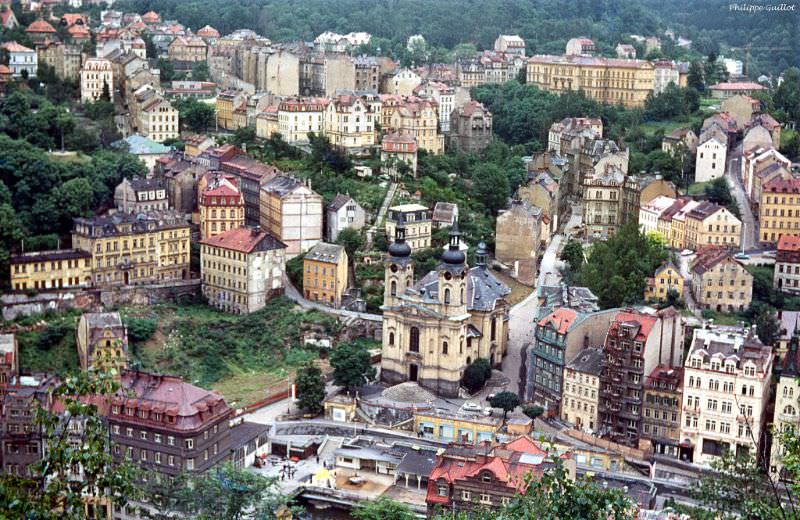
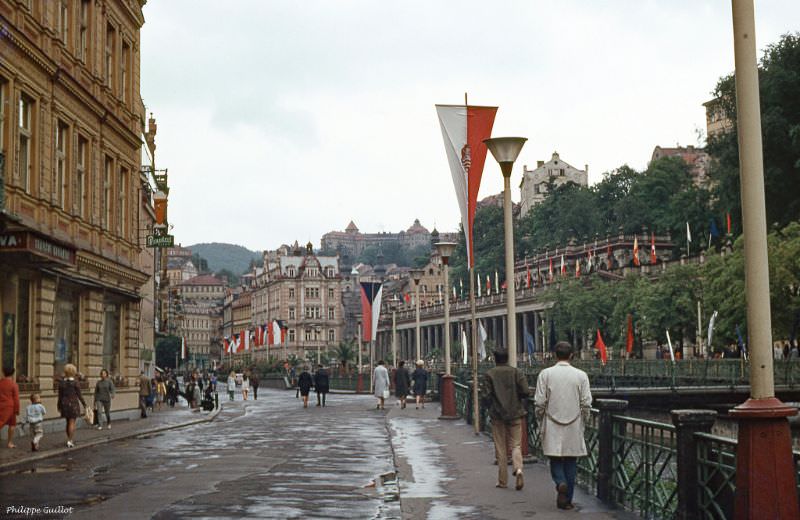
Karlovy Vary — known in German as Carlsbad — was one of the most famous spa towns in all of Europe. Fed by natural hot springs, the city had been a retreat for royalty and the wealthy since the medieval period. In the 1970s, it became a favored destination for Soviet officials and their families, who enjoyed access to rest and recreation facilities that ordinary citizens often could not easily reach.
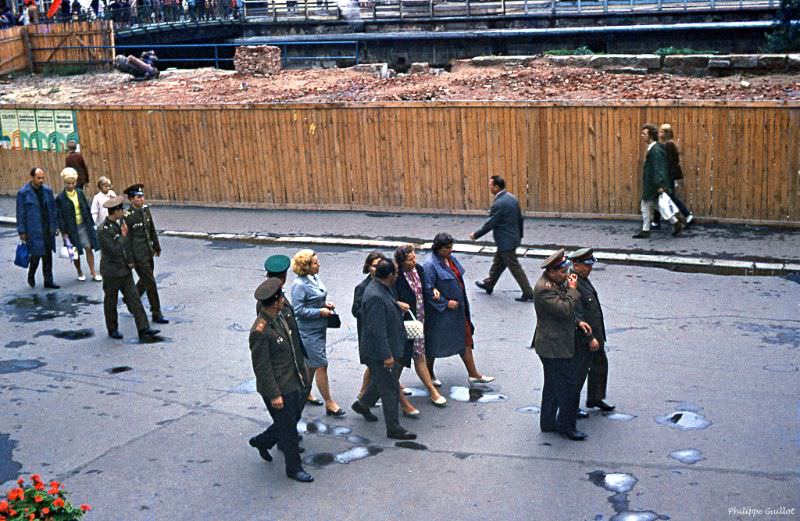
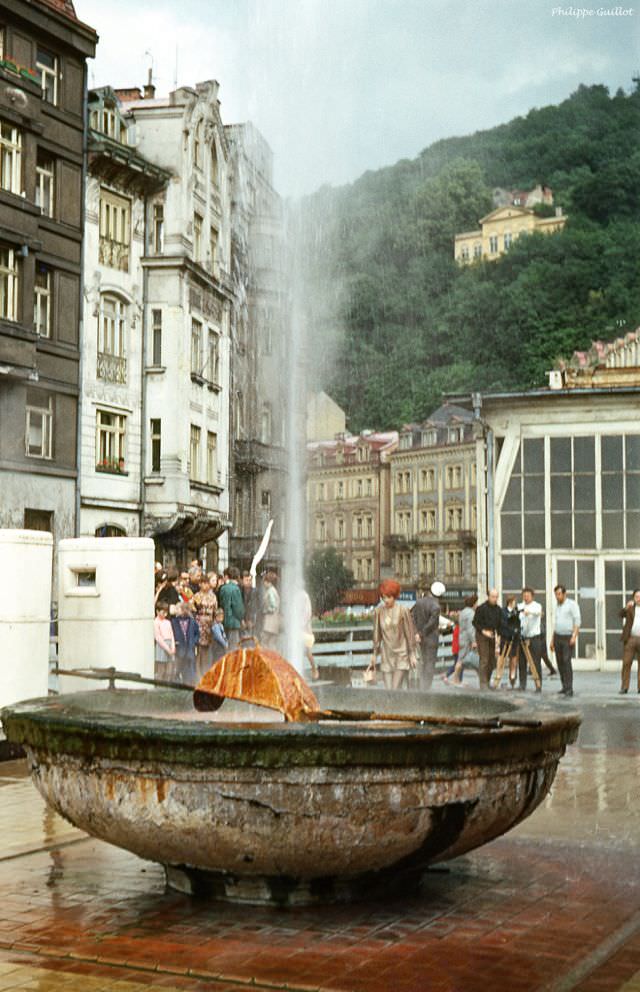
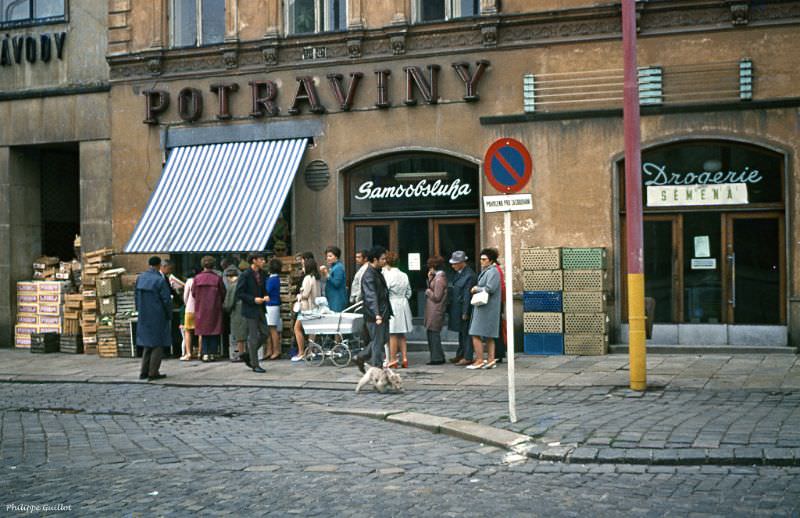
Even in a spa town celebrated for its thermal springs, the realities of socialist-era shortages were never far away. Queuing was a routine part of life across Czechoslovakia in the 1970s, whether for food, goods, or services.
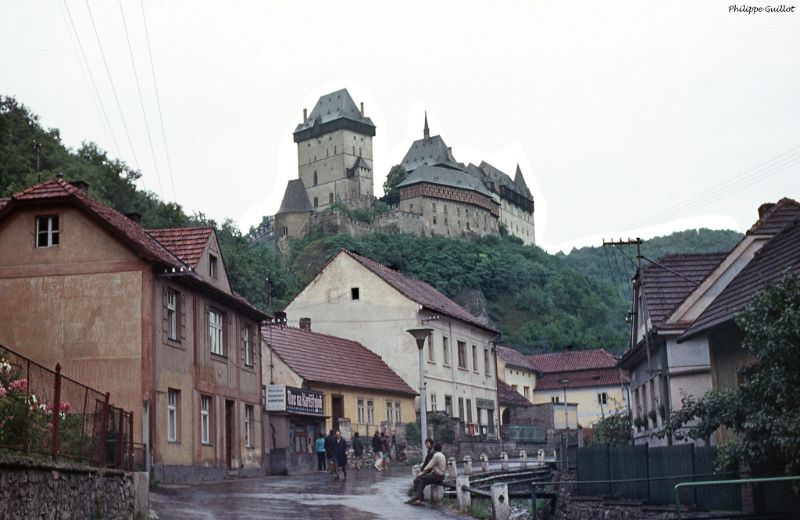
Away from the spa towns, the Bohemian countryside held landmarks of an older era. Karlštejn Castle, built in the 14th century by Holy Roman Emperor Charles IV, was one of the most visited historical sites in the country. It had originally been constructed to safeguard the imperial crown jewels and holy relics.
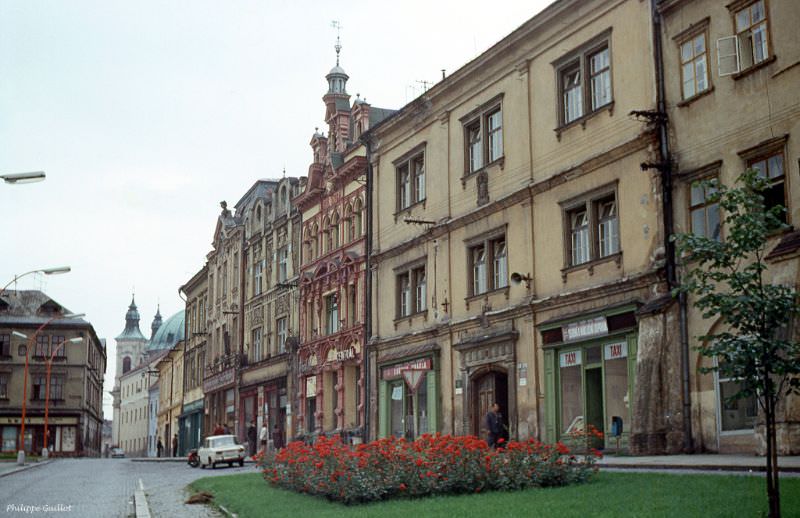
The Moravian city of Kroměříž was home to one of the country’s finest baroque town squares. Its archbishop’s palace and gardens were recognized even then as exceptional examples of European baroque architecture and landscape design.
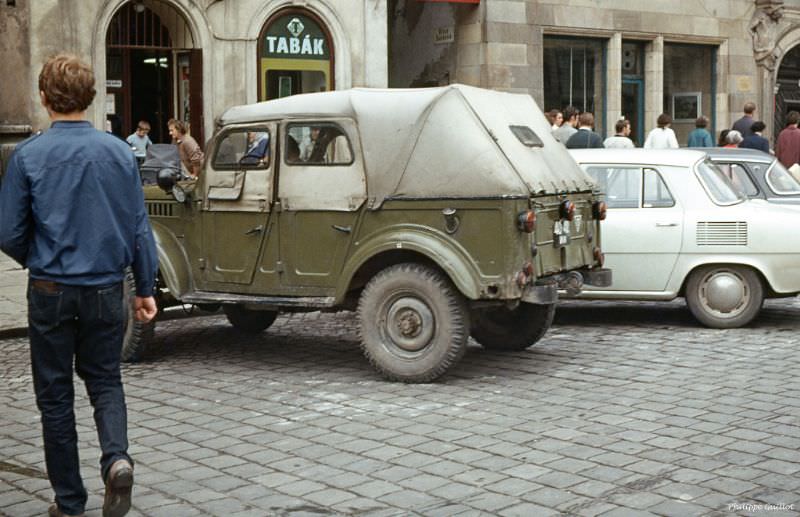
The Soviet military presence was not confined to the capital. In Olomouc, one of Moravia’s oldest cities, Soviet military vehicles were a visible part of the urban landscape — a constant physical reminder of who held ultimate authority in the country following the 1968 invasion.
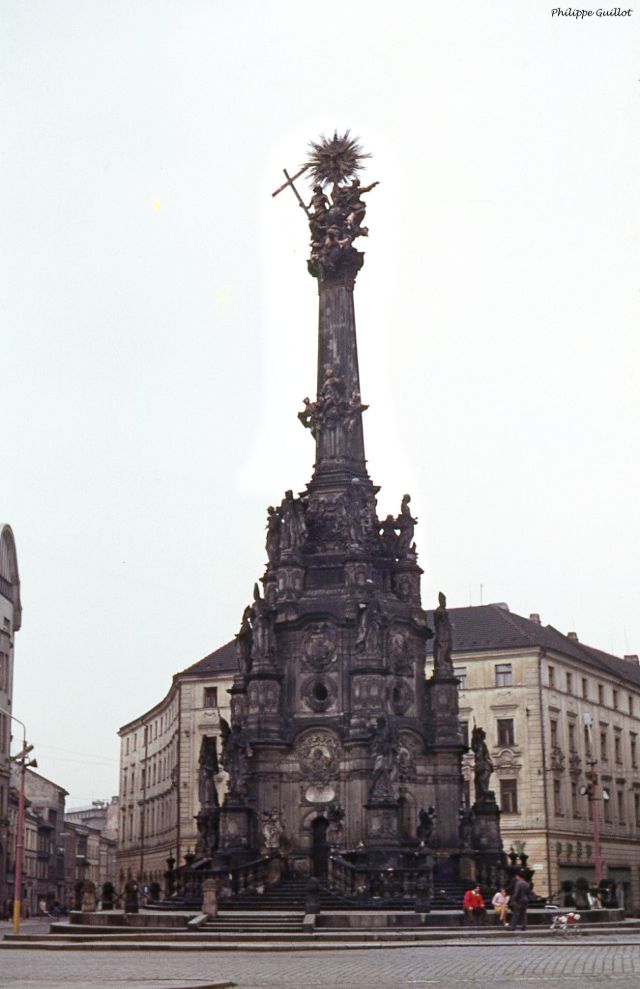
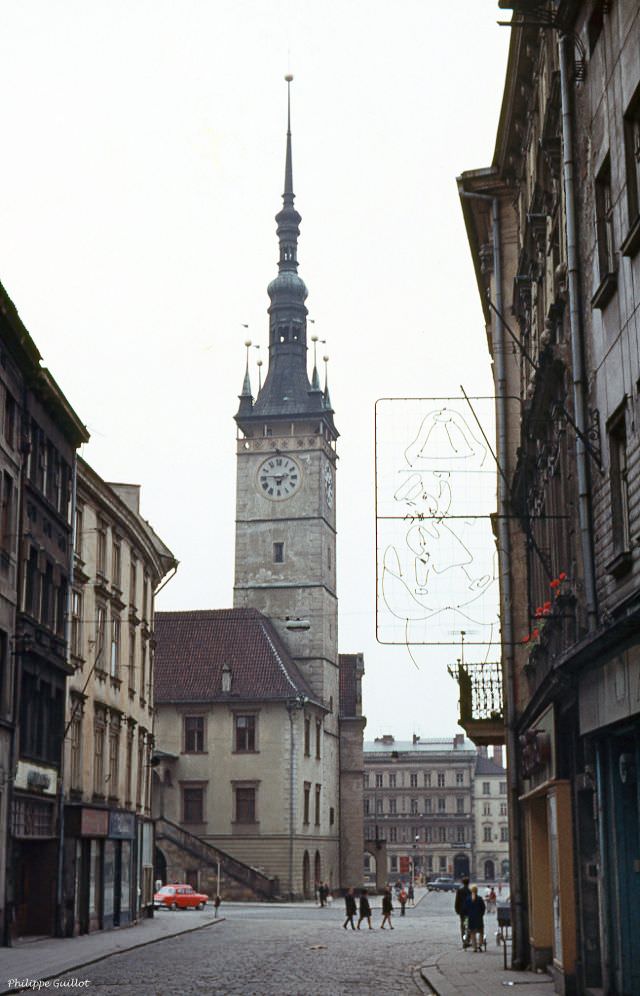
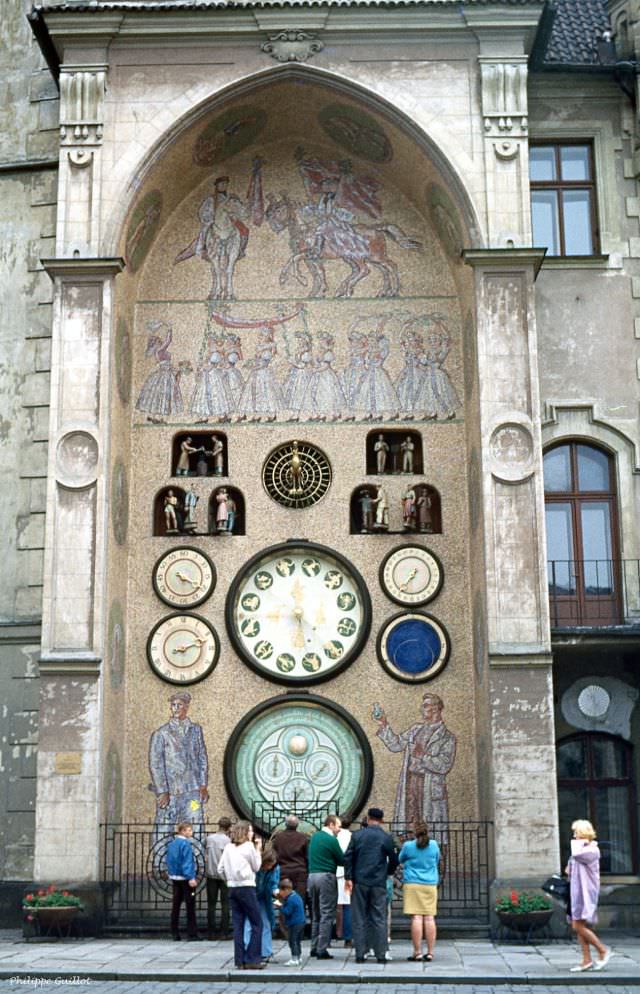
Olomouc itself was rich with religious and civic monuments. The Holy Trinity Column, completed in 1754, is the largest baroque sculpture in Central Europe and a UNESCO World Heritage Site. The city’s town hall, with its distinctive spire, and its famous astronomical clock — redesigned by artist Karel Svolinský after World War II in a Socialist Realist style — were central features of the city’s historic core.
No city defined Czechoslovakia more than Prague. The capital sat at the heart of the country’s history, culture, and political life. Prague Castle — Hradčany — dominated the skyline above the Vltava River, visible from multiple points across the city, including from Petřín Hill to the south and from the old town below.
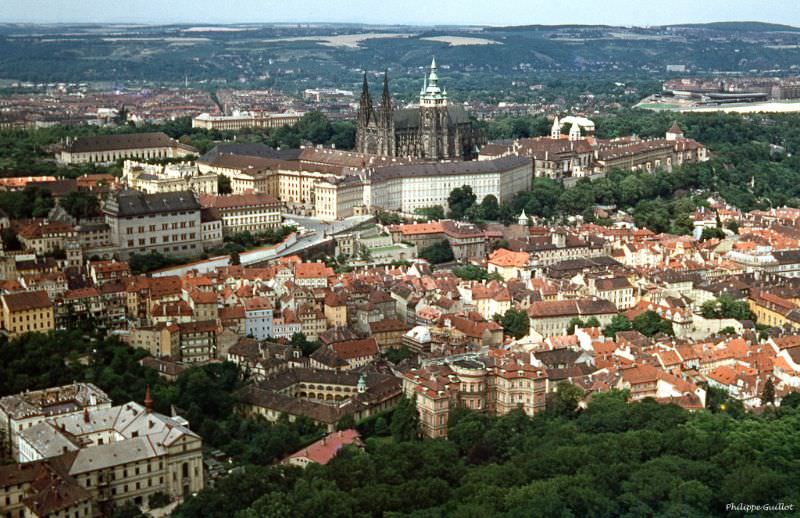
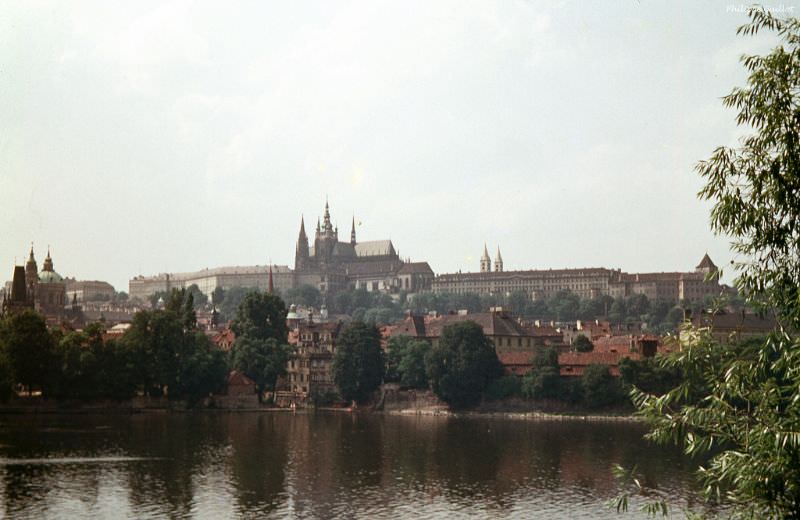
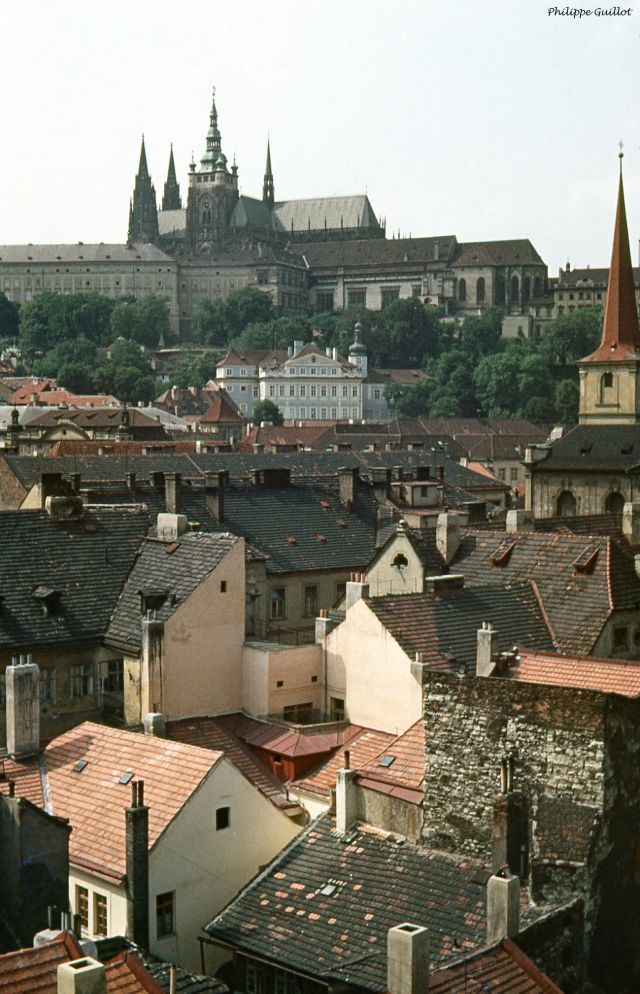
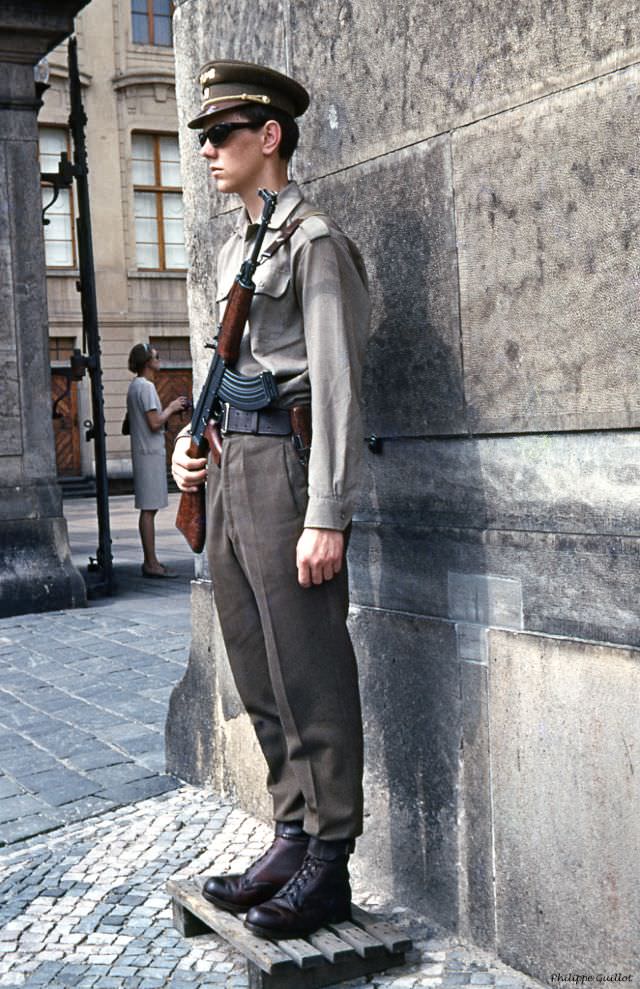
Prague Castle served as the seat of Czechoslovak presidents, including Gustáv Husák, who led the country through most of the normalization period. The castle’s main courtyard, guarded by uniformed sentries, was one of the most photographed spots in the city.
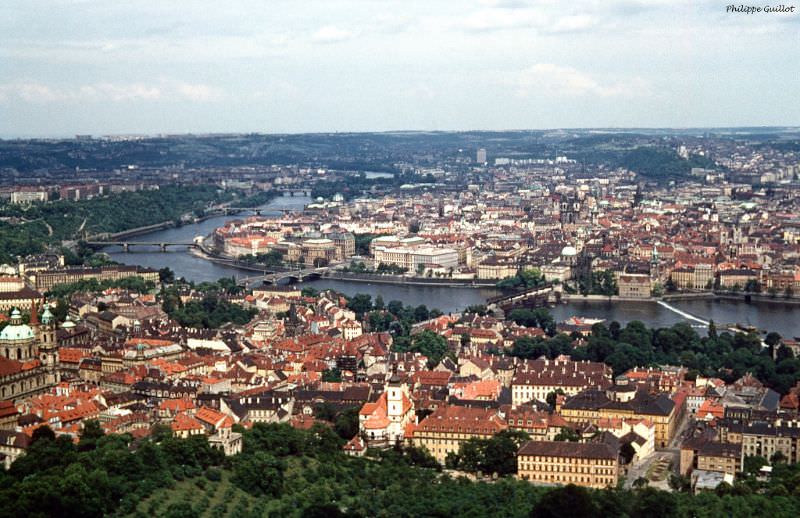
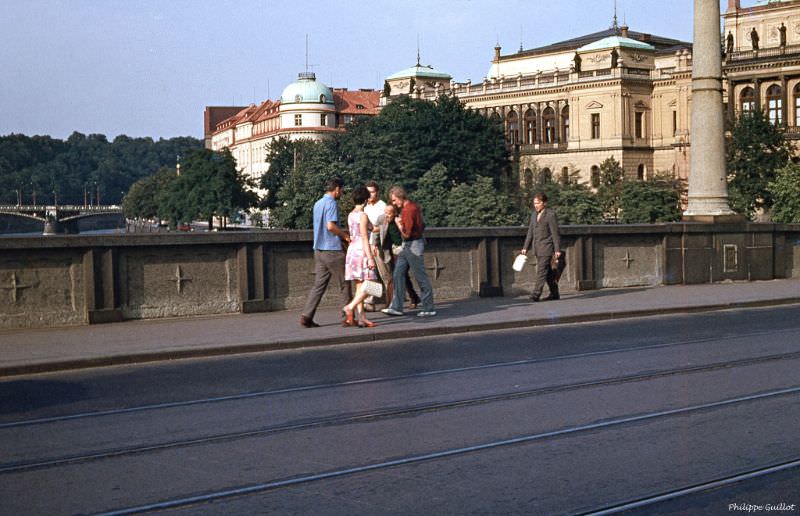
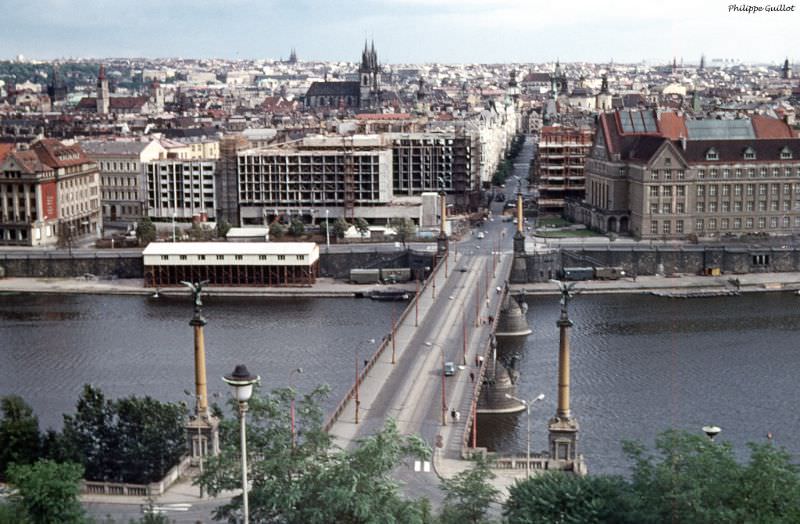
The bridges over the Vltava connected Prague’s neighborhoods and were gathering points for locals and tourists alike. The Čech Bridge, an Art Nouveau structure completed in 1908, offered views across the river toward the castle. Nearby, the Mánes Bridge provided another crossing in the heart of the city.
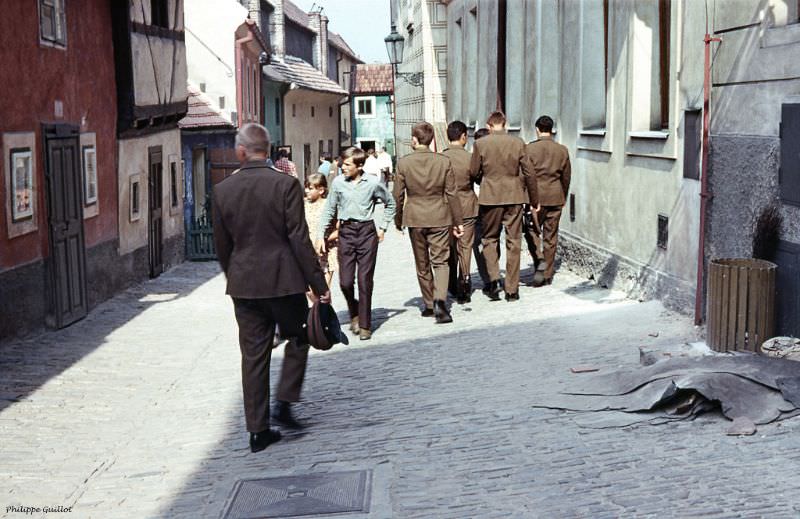
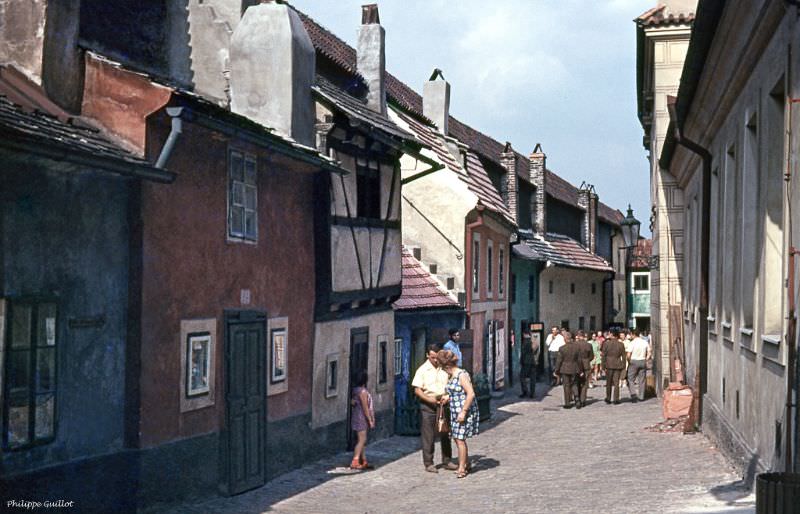
Soviet soldiers stationed in Czechoslovakia were a common sight in Prague’s tourist areas. Golden Lane — a narrow street of tiny medieval houses built into the castle walls — was a popular spot, and Soviet soldiers on leave were photographed wandering its colorful alleyways.
Prague’s Lesser Town, nestled between the castle and the river, was dominated by the massive dome and towers of St. Nicholas Church. Built by the Jesuits in the 17th and 18th centuries, it stood as one of the finest baroque churches in Central Europe.
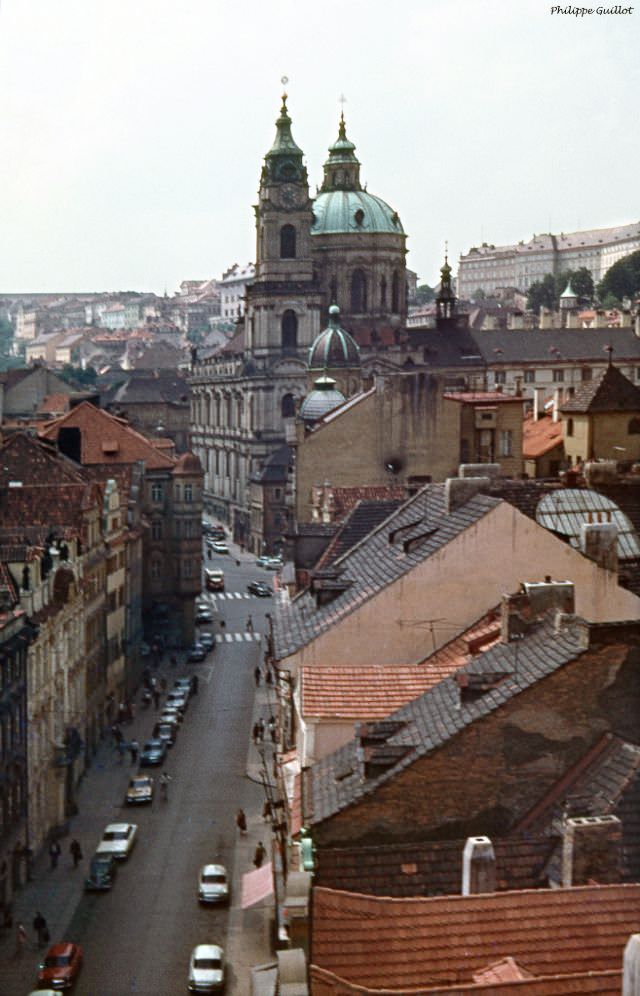
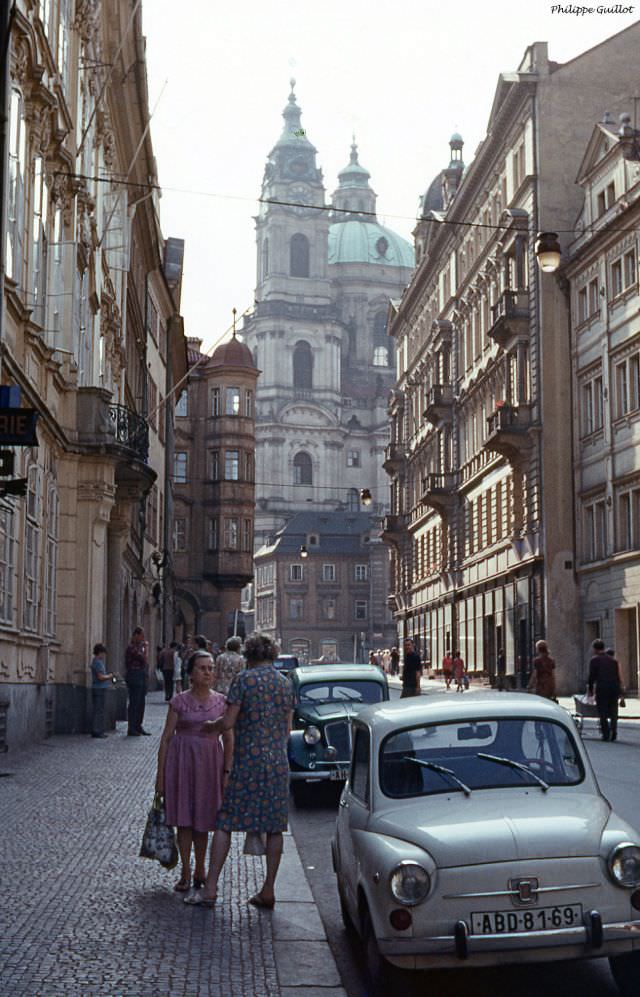
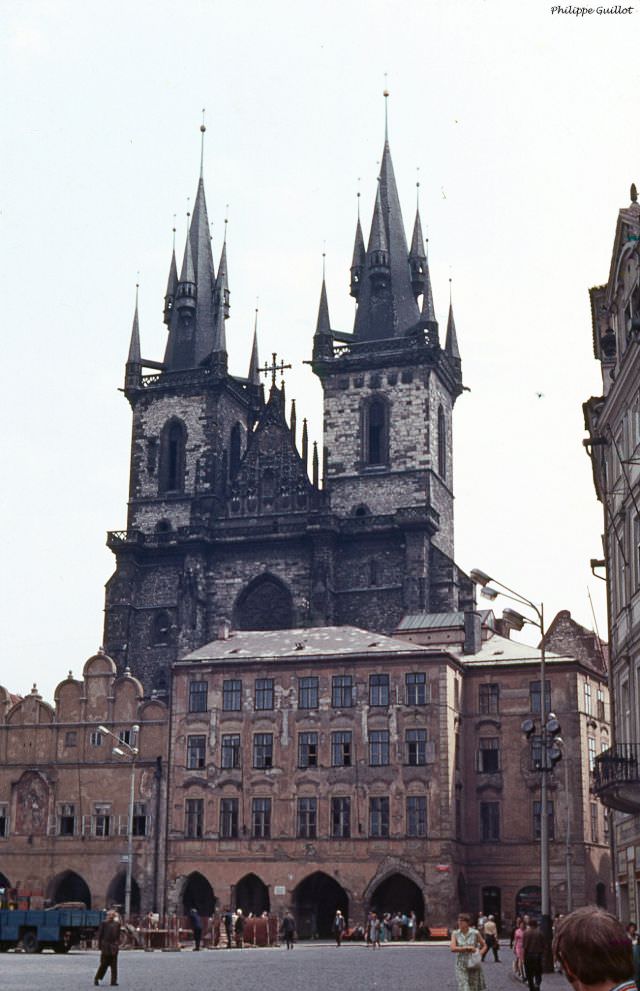
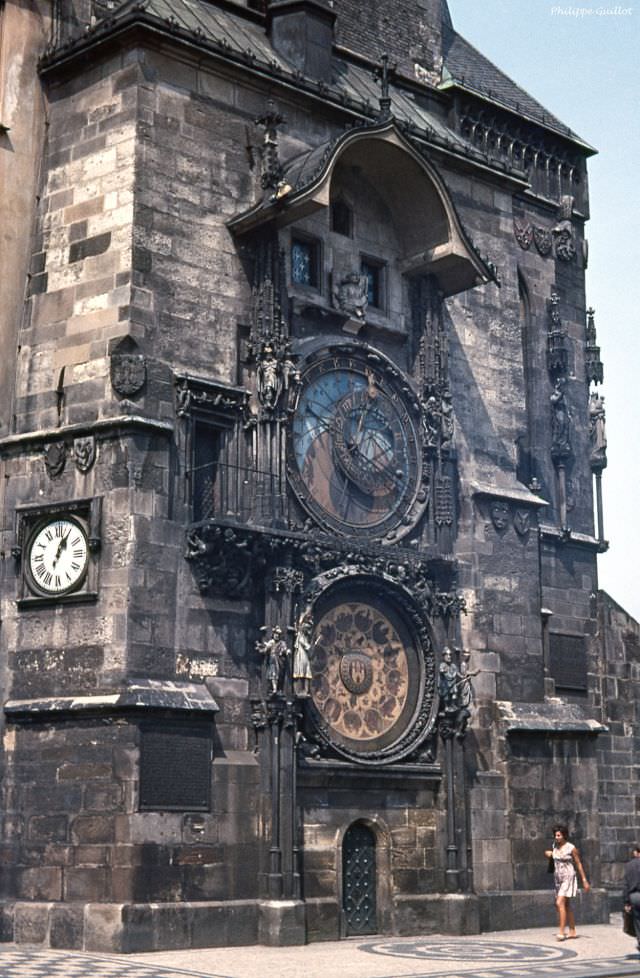
Across the river in the Old Town, the twin spires of the Church of Our Lady before Týn rose dramatically above the rooftops of Staroměstské náměstí — the Old Town Square. The church dated back to the 14th century and had long been one of the defining images of Prague’s medieval skyline. Nearby, the Old Town Hall’s astronomical clock, built in 1410, continued to draw crowds every hour as its mechanical figures moved through their performance.
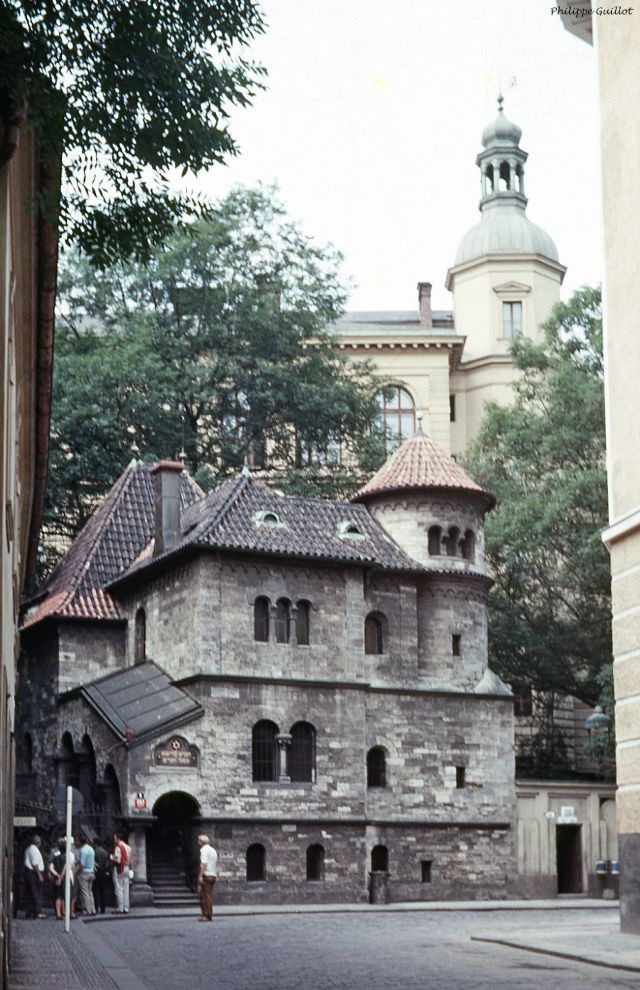
Prague’s Old Jewish Cemetery was one of the most historically significant Jewish burial sites in the world. Used from the early 15th century until 1787, it held an estimated 100,000 graves layered on top of one another due to the limited space within the historic Jewish quarter. By the 1970s, it was a major heritage site and a sobering reminder of the Jewish community that had lived in Prague for centuries.
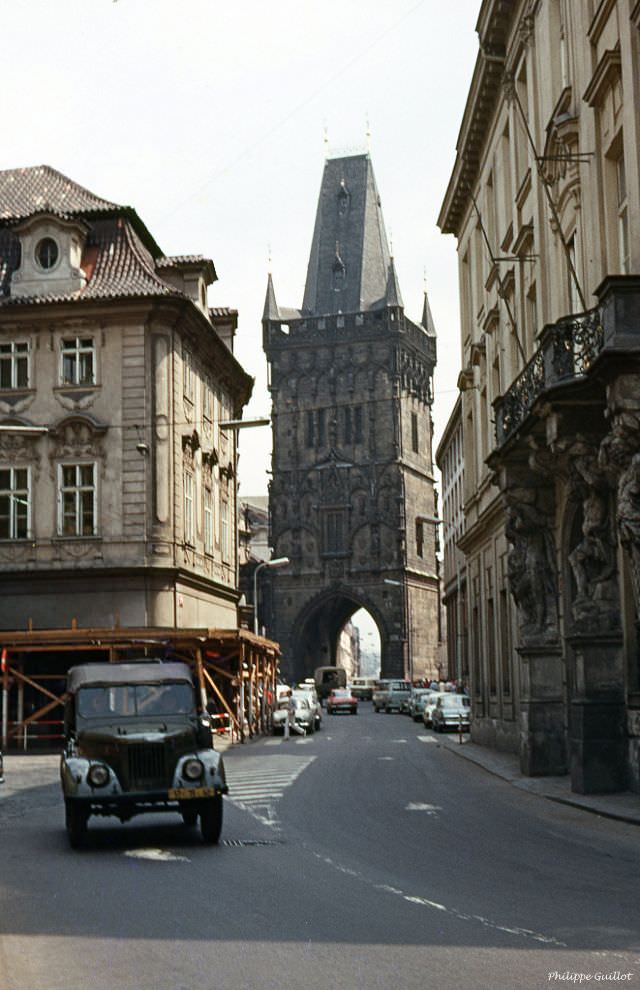
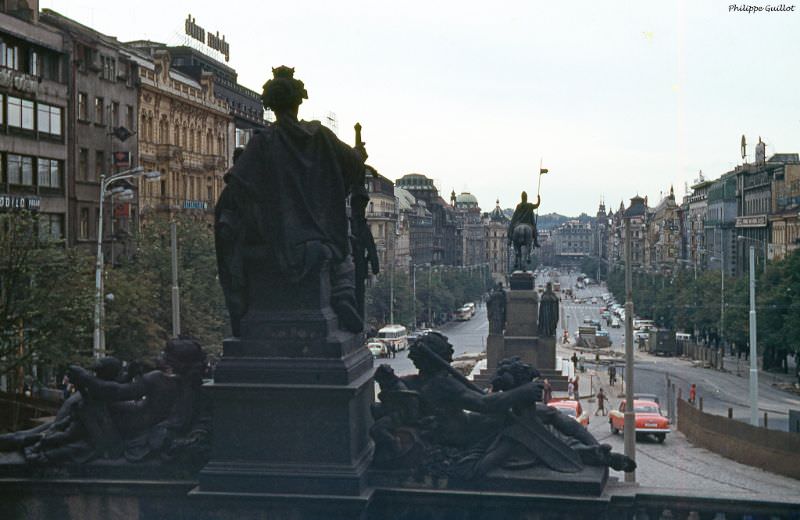
The Powder Tower, a late Gothic gate built in the 15th century, marked the entrance to the Old Town from the east. A short distance away, Wenceslas Square served as the political and commercial heart of modern Prague. It was on this broad, sloping boulevard that some of the most significant moments in Czech history had played out — and would continue to do so in the decades ahead.