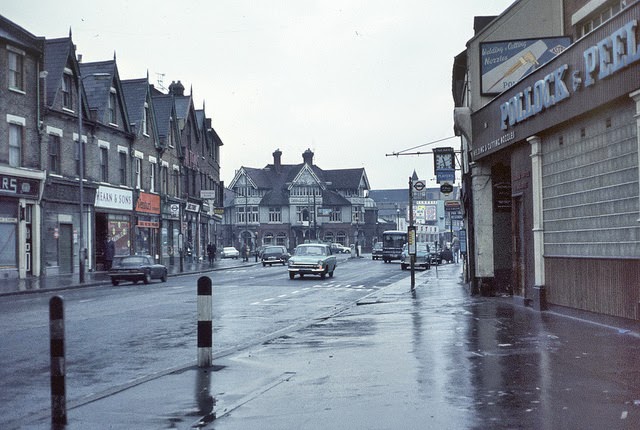
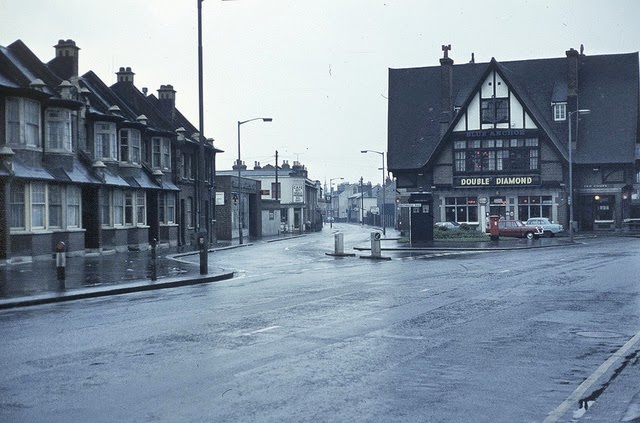
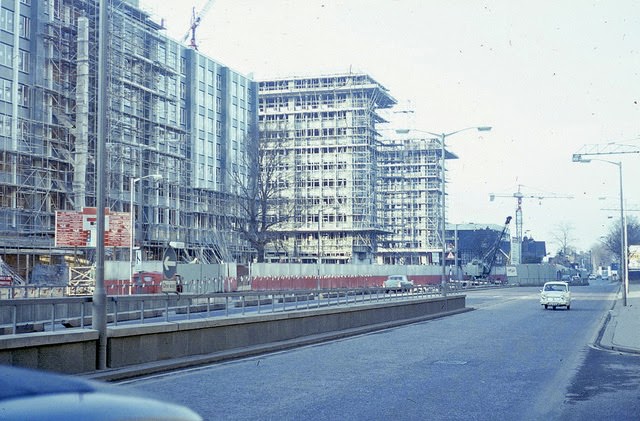
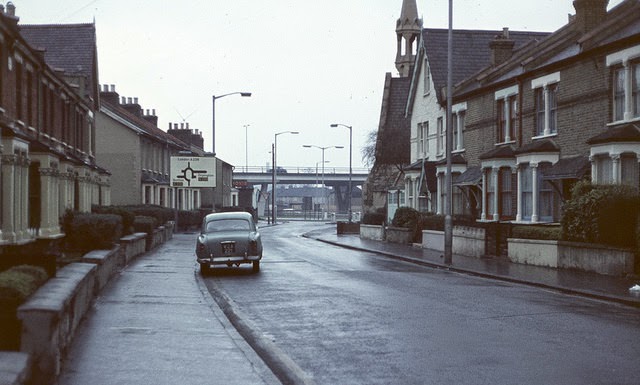
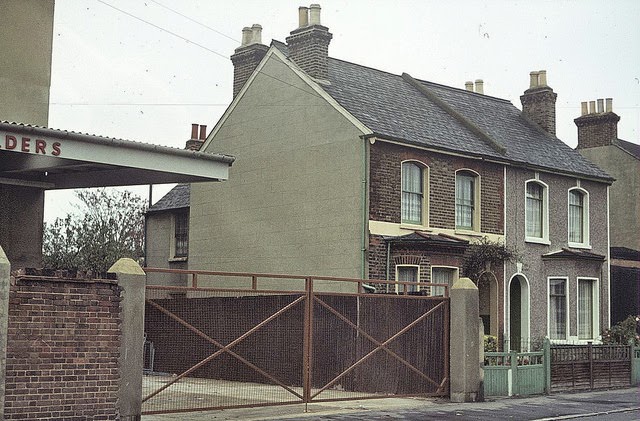
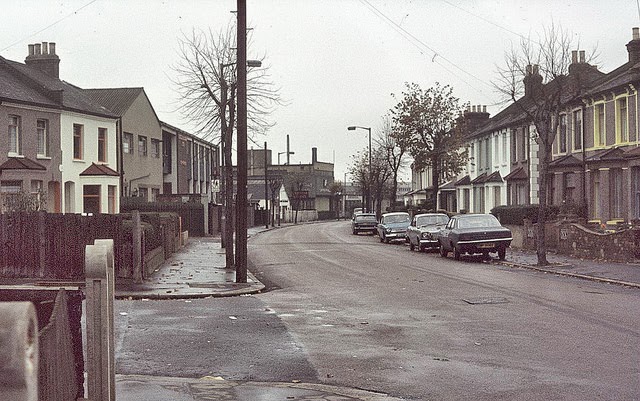
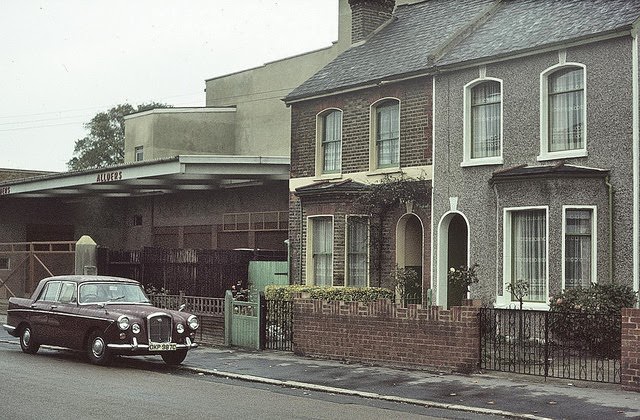
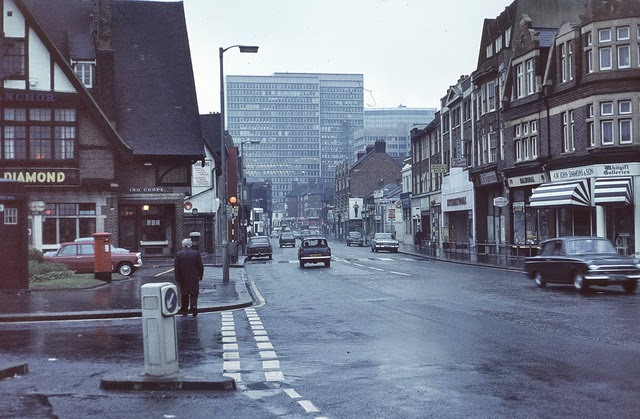
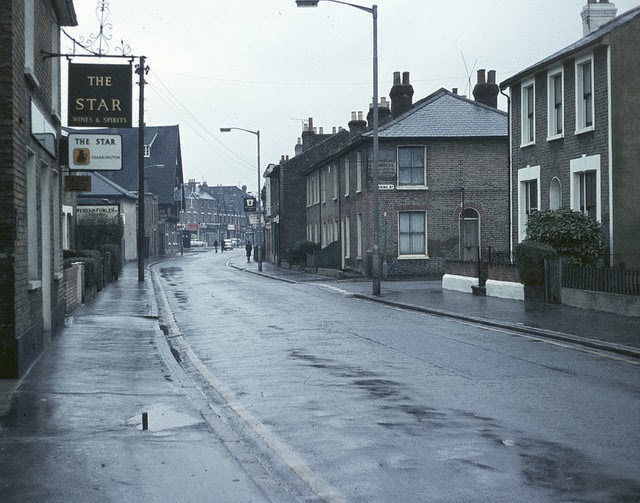
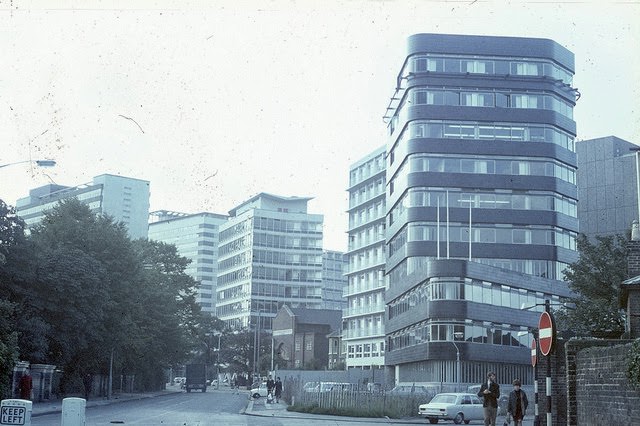
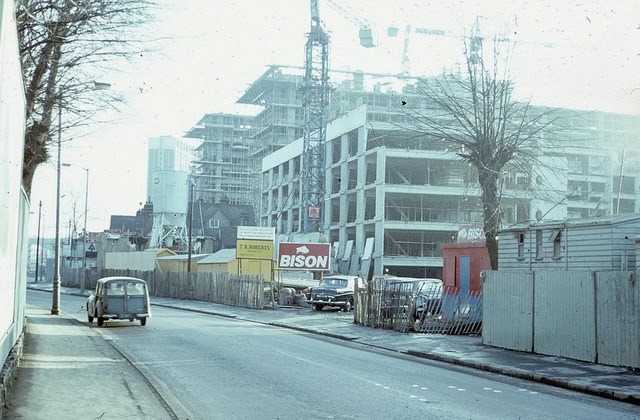
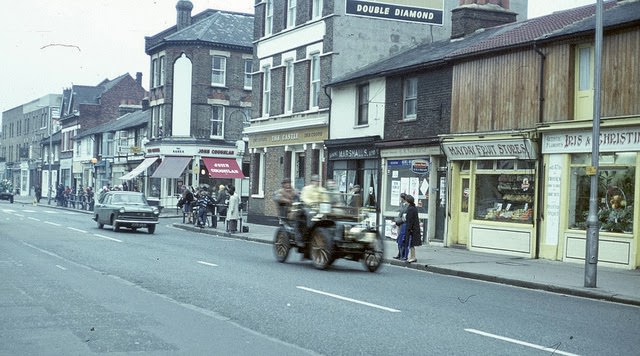
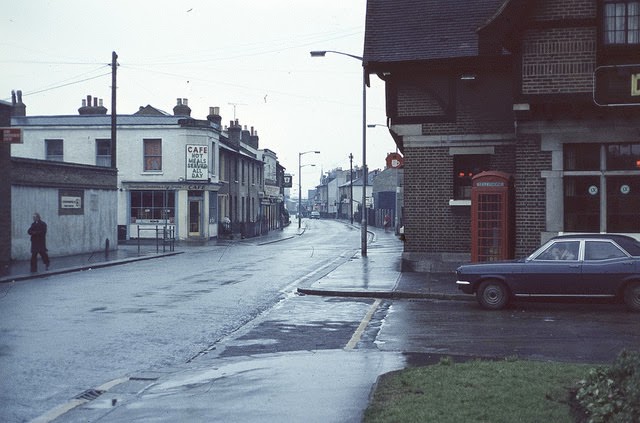
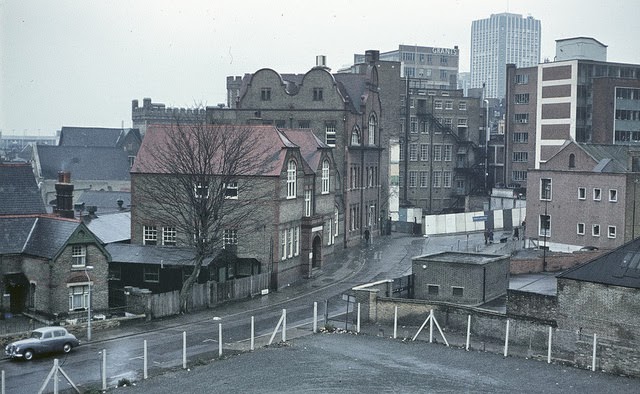
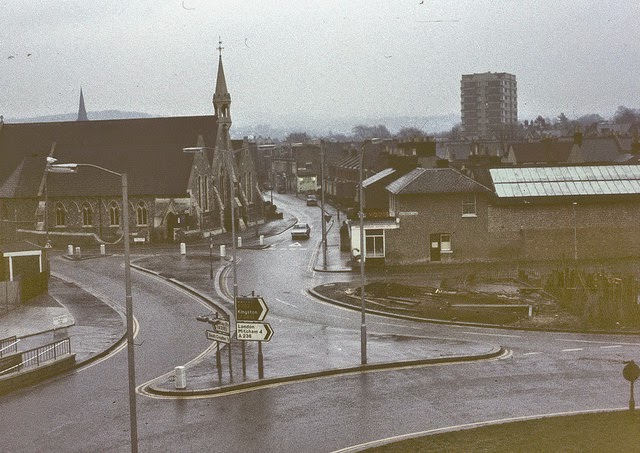
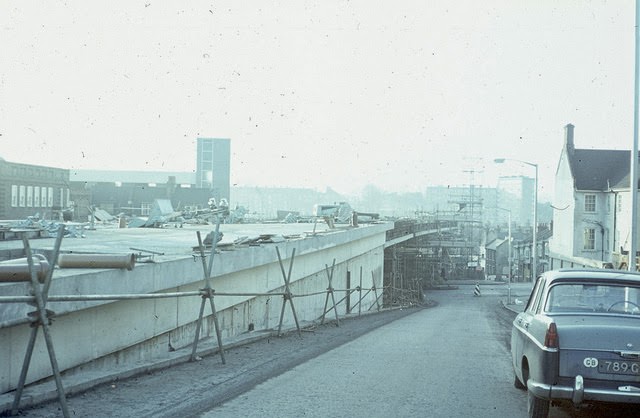
In the late 1960s, Croydon underwent a radical physical transformation that turned a quiet market town into a concrete metropolis. Planners and architects demolished dazzling amounts of 19th-century brick buildings to make way for the future. In their place, massive steel and glass office towers rose up, including the stark St. George’s House. This construction boom gave the town a new, sharp skyline that locals and the press nicknamed “Mini Manhattan.”
The car became the king of the town center. To accommodate the rising traffic, engineers constructed the Croydon Flyover. This six-lane elevated highway cut directly through the urban landscape, hovering above the streets below. Its construction required the destruction of hundreds of homes, changing the geography of the area permanently. By 1969, vehicles sped along this concrete artery, bypassing the congested ground-level roads.
Shopping habits shifted entirely with the development of the Whitgift Centre. This sprawling complex replaced the historic Whitgift School grounds and became one of the largest shopping precincts in the London area. It offered a modern, pedestrian-only environment where people walked on raised walkways separated from the dangerous traffic. The design used stark, geometric concrete shapes that defined the Brutalist architectural style of the decade.
Read more
Fairfield Halls stood as the cultural heart of this new modern town. It hosted the biggest rock and pop acts of the era, offering a venue with acoustics that rivaled central London concert halls. The Greyhound, a pub located opposite the halls, became a legendary spot for live music on Sundays. Young people from across South London flocked here to see bands like Deep Purple and The Who before they achieved global fame.
Despite the modernization, the ancient Surrey Street Market continued its daily trade. Fruit and vegetable sellers shouted their prices from wooden stalls, creating a loud, colorful contrast against the silent, grey office blocks towering above them. Businessmen in sharp suits walked past crate-laden trucks, navigating the strange mix of Victorian tradition and aggressive 1960s urban planning.