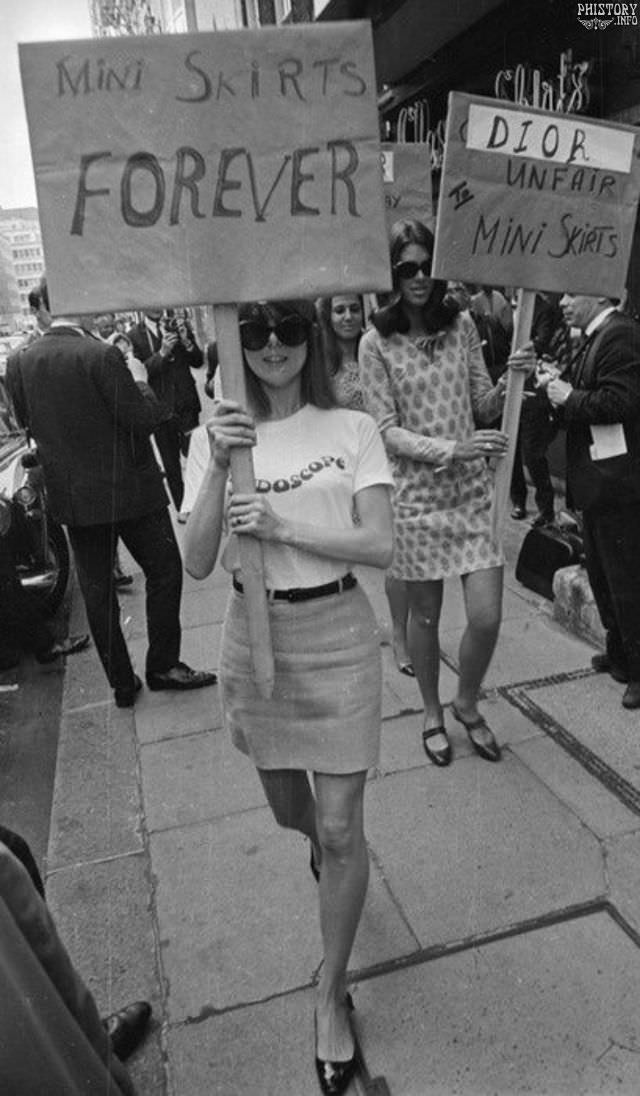
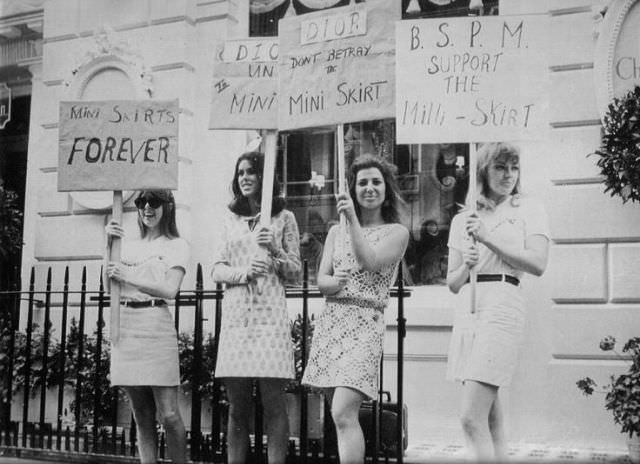
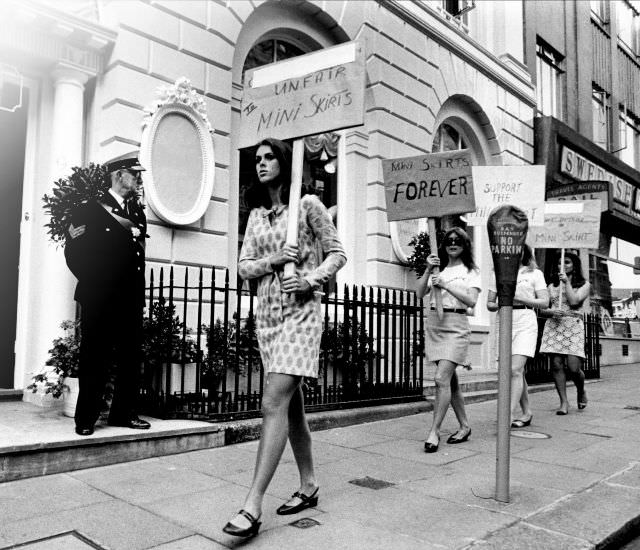
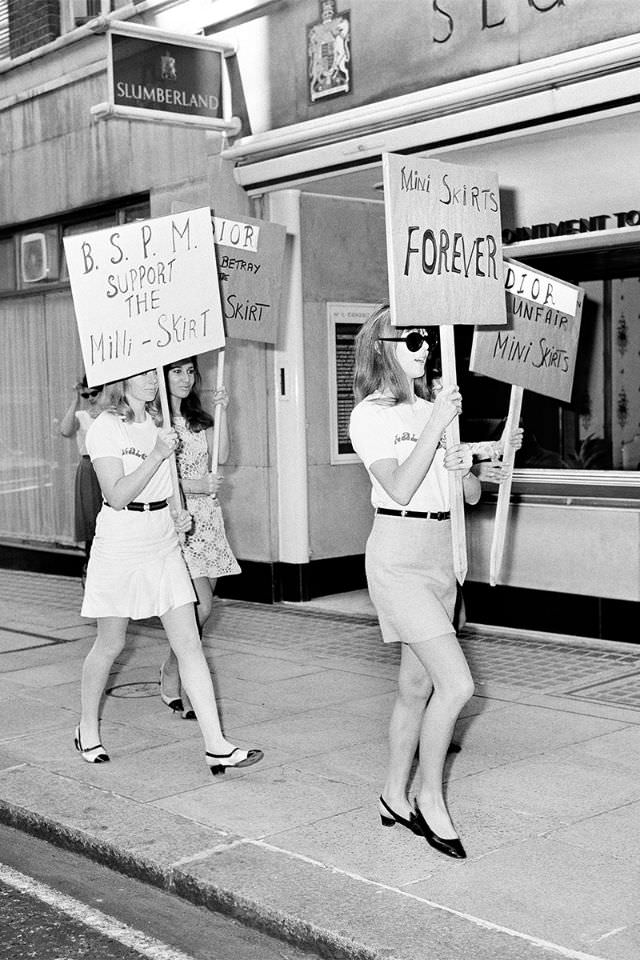
In 1966, a group of young women took to the streets of London with a very specific grievance: Christian Dior wanted to bring back longer skirts. The women organized under the name “The British Society for the Advancement of the Mini-skirt” and marched directly outside Dior’s London headquarters. Their placards read “Mini Skirts Forever” and “Support the Mini-skirt.” This was not a political march or a labor dispute. It was a fight over hemlines — and the women were dead serious.
The garment at the center of all this had only arrived two years earlier. In 1964, British designer Mary Quant introduced the mini-skirt from her boutique, Bazaar, on King’s Road in London. She cut fabric several inches above the knee — a radical break from the modest styles of the 1950s. Quant named the skirt after her favorite car, the Mini Cooper. She designed it to be practical and freeing for young women, and it quickly became the defining look of the decade.
Before the mini-skirt, young women largely dressed like younger versions of their mothers. The short skirt changed that completely. It gave women a distinct visual identity and physical freedom that heavy, restrictive older fashions had denied them. The shift also coincided with the introduction of the contraceptive pill, and together these changes fueled a sexual revolution that challenged long-held expectations for women’s behavior.
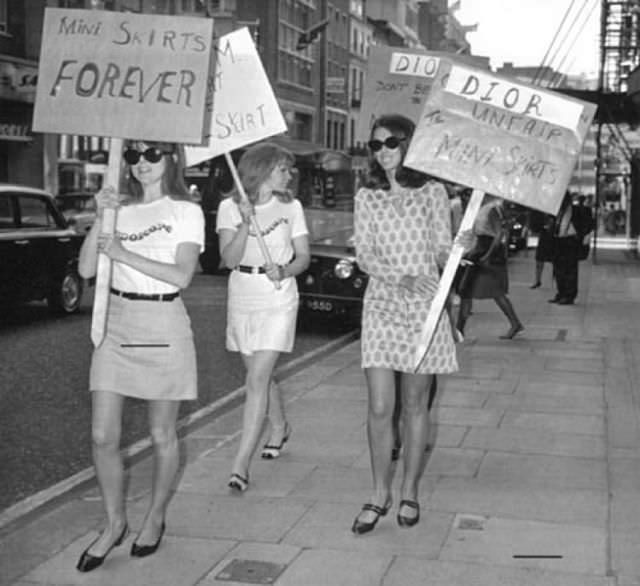
Established fashion houses like Dior pushed back hard. They dismissed the mini-skirt as a passing fad with no sophistication. When Dior unveiled a new collection featuring below-the-knee hemlines, the protesters saw it as a direct attack on their modern identity. Women who had experienced the freedom of shorter skirts refused to surrender it to the dictates of a Paris fashion house.
Traditional commentators had already been sounding alarms about rising hemlines for years, calling the style a sign of moral decline. Yet the London protest made clear who actually held the power in fashion — the consumers, not the critics.
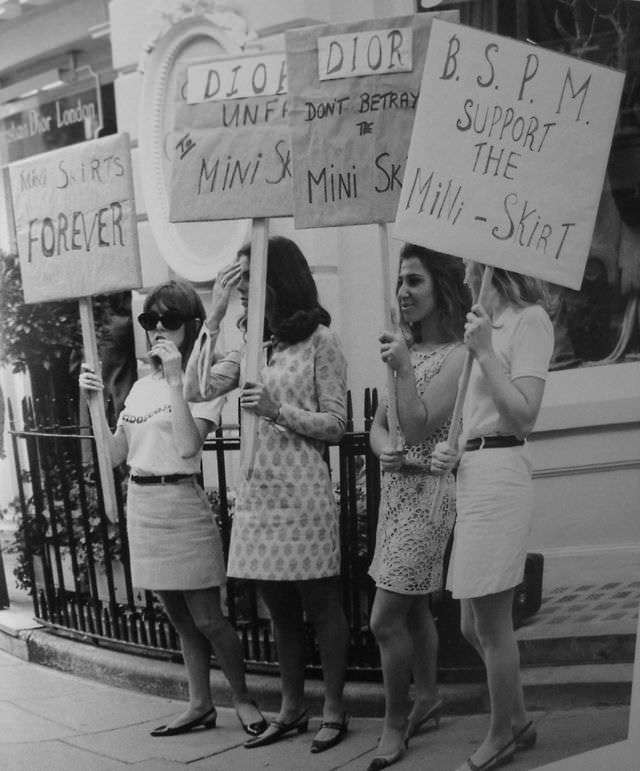
The timing of the mini-skirt’s rise was no accident. Britain in the mid-1960s was in the middle of an economic boom. Wages were up, and young people had real spending power for the first time. A long-standing theory in fashion history holds that skirt lengths rise during prosperous times and fall during downturns. There is no hard statistical proof behind it, but the 1960s fit the pattern almost perfectly.
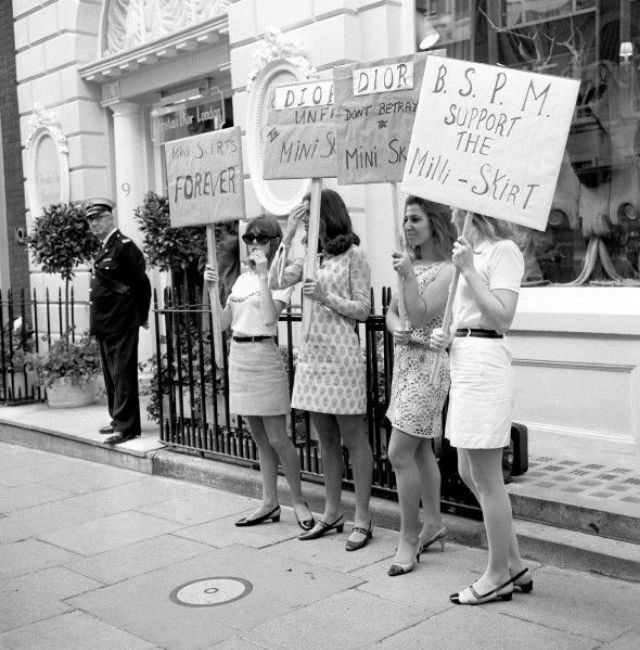
The confidence of the era showed up directly on the street. Bold, revealing fashion was not just a trend — it was an expression of a generation that had money, freedom, and no intention of dressing like their parents. The women outside Dior’s doors in 1966 made that message impossible to ignore.