Sverre Braathens did not come to his love of the circus by accident. As a boy growing up on the Great Plains in Mayville, North Dakota, he watched the Gollmar Brothers Circus roll into town in the early 1900s — the unloading, the parade, the performance. That early experience never left him. Over the following decades, Sverre built one of the most personal and detailed private records of American circus life that existed.
He and his wife Faye were both devoted circus enthusiasts. Sverre started by collecting circus music, then sharpened his photography skills while following shows across the upper Midwest season after season. His collection grew into something far larger than photographs alone. Route books, business records, periodicals, and a wide range of correspondence filled his archive — letters from band members, performers, riggers, and roustabouts alike. Every level of circus life was represented.
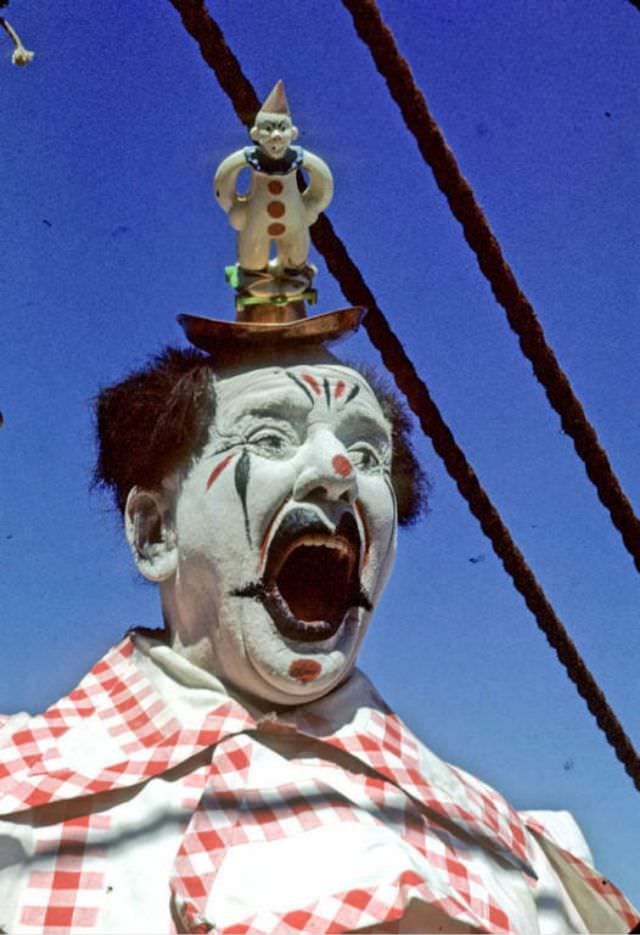
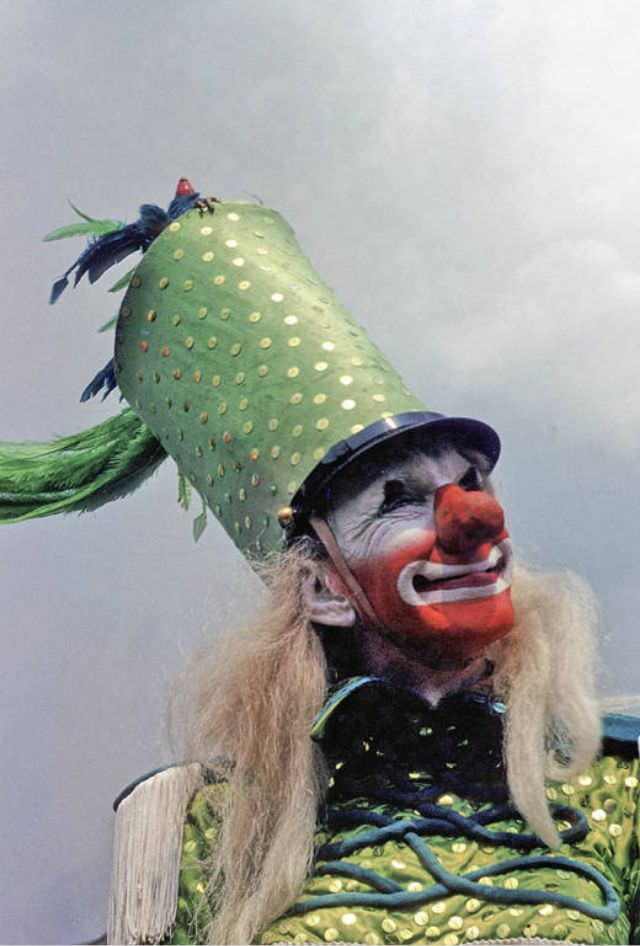
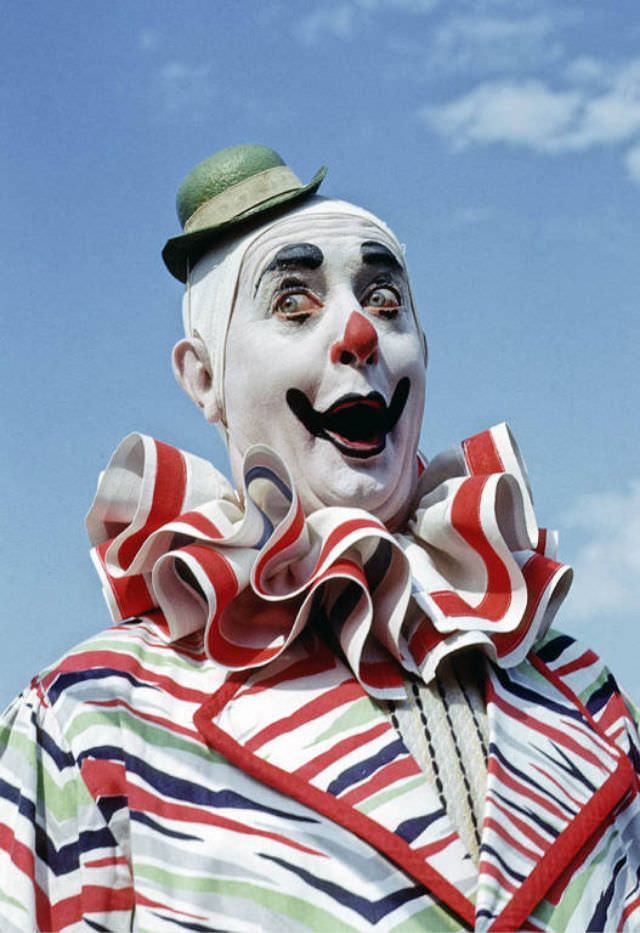
The photographs here span from the early 1940s to the late 1950s. They focus on clowns — performers who have always stood at the center of the circus experience. Some of these clowns were legends in their own time. Others were working professionals whose names filled circus programs year after year. Together, they offer a rare, close-up look at an art form that demanded real skill and dedication. One of the most striking images in Braathens’ collection was not a candid shot at all — it was advertising.
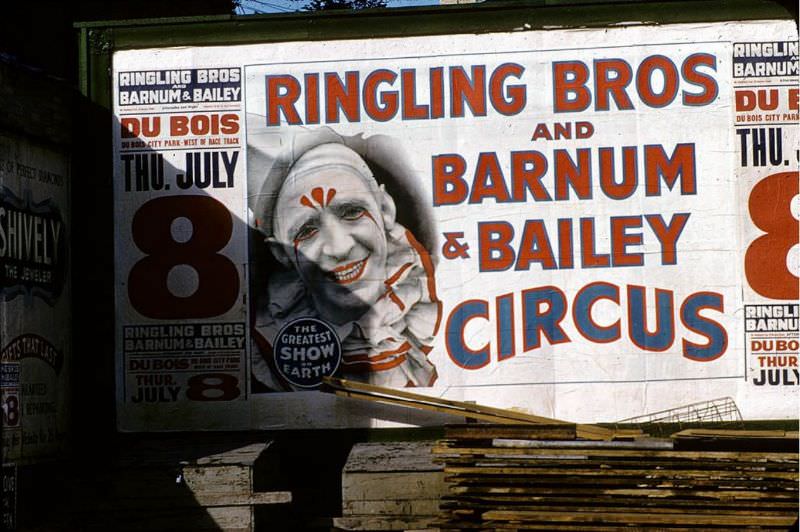
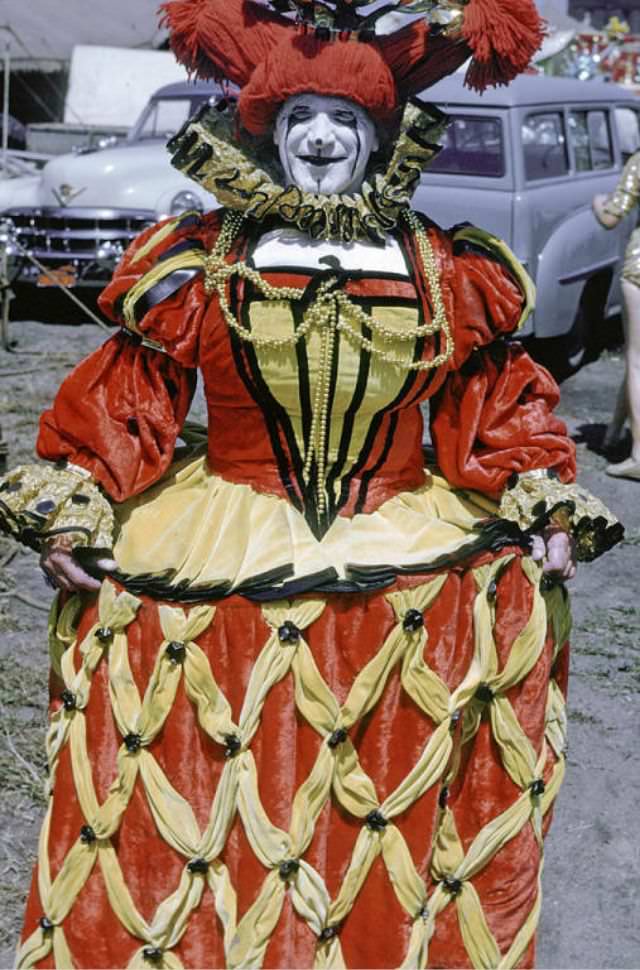
Pat Valdo’s white-face clown appearance on a 24-sheet billboard speaks to just how central clowns were to circus marketing. White-face clowns were among the oldest and most recognizable styles in the tradition, with heavy white makeup, sharp features painted on top, and elaborate costuming. They were the visual anchor of the circus poster — bold enough to be seen from a distance, striking enough to draw a crowd. The spec, short for spectacle, was another core element of circus performance. These large-scale parade numbers featured every performer in elaborate themed costumes, and clowns played a major role in them.
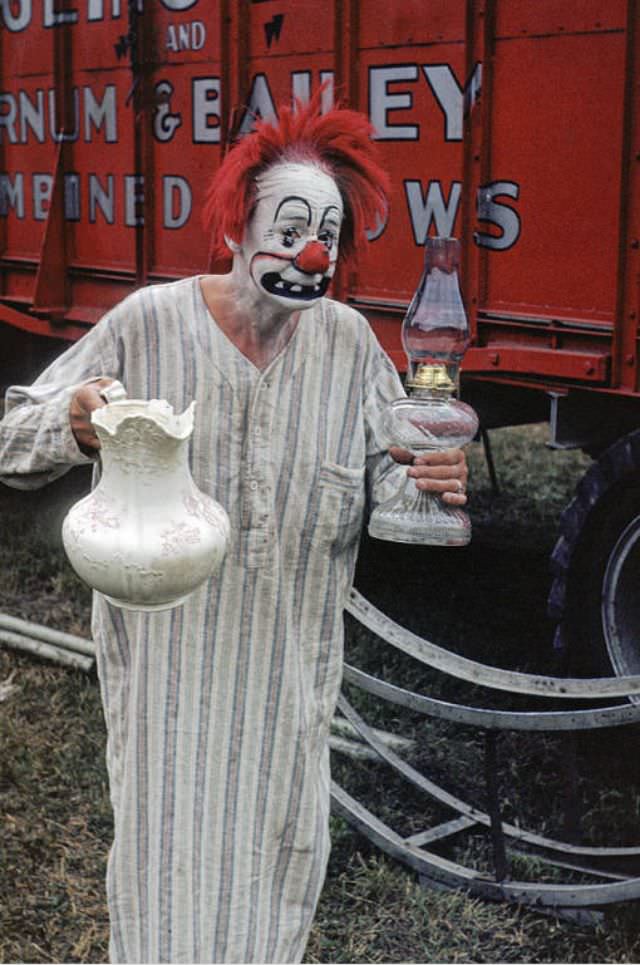
Paul Jerome’s pose with a pitcher and lamp captures the prop-heavy humor that defined classic clown performance. Props were tools — carefully chosen to amplify a gag or a character’s personality. Jerome’s setup hints at a domestic scene turned absurd, which was a reliable formula for circus comedy. Not every clown photo from Braathens’ collection shows performers in full spectacle dress. Some of the most candid and telling shots caught clowns in the middle of an ordinary workday.
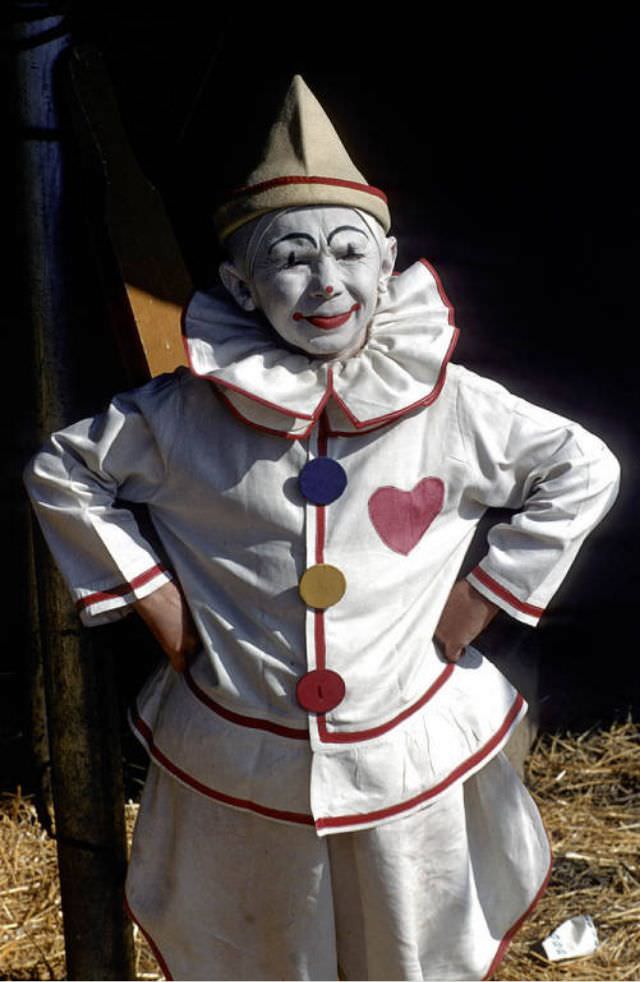
Circus life was physically demanding work, and the heat under canvas on a humid summer day was brutal. Clown makeup did not breathe. Heavy costumes made conditions worse. The expression on a clown’s face in a candid shot often told a different story than the one they performed for the crowd. Felix Adler was one of the most well-known circus clowns of the era, famous for his work with Ringling Bros. and Barnum & Bailey. He appeared in elaborate spectacle floats that required weeks of preparation.
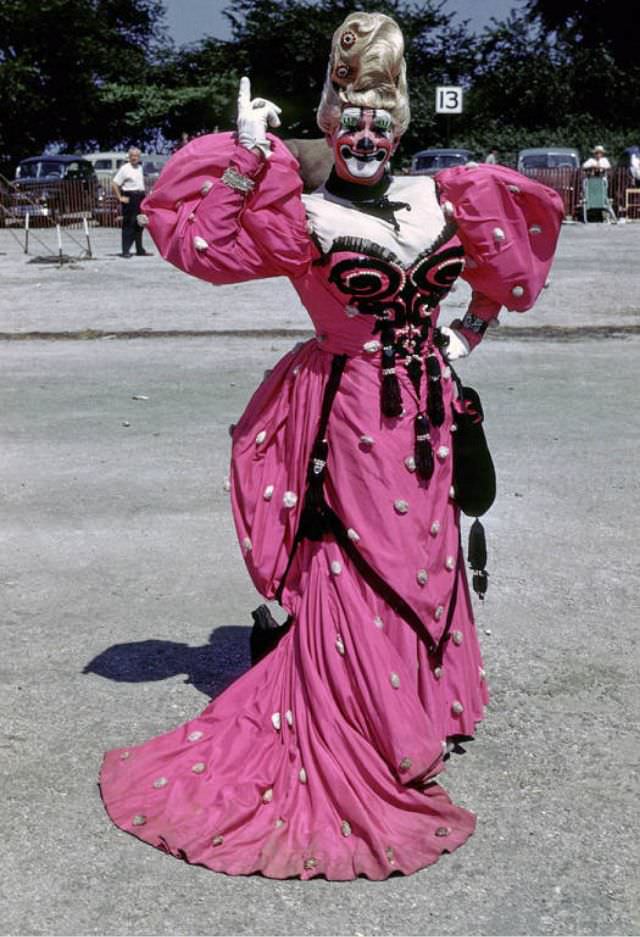
Cross-dressing comedy was a long-standing tradition in circus clown performance. Ernie Burch’s long red dress was not unusual — it was a well-worn comedic device that played to the crowd’s expectations. The contrast between the clown’s exaggerated appearance and feminine attire was designed to generate laughs through visual surprise. Among all the clowns Braathens photographed, one figure stood above the rest in terms of recognition.
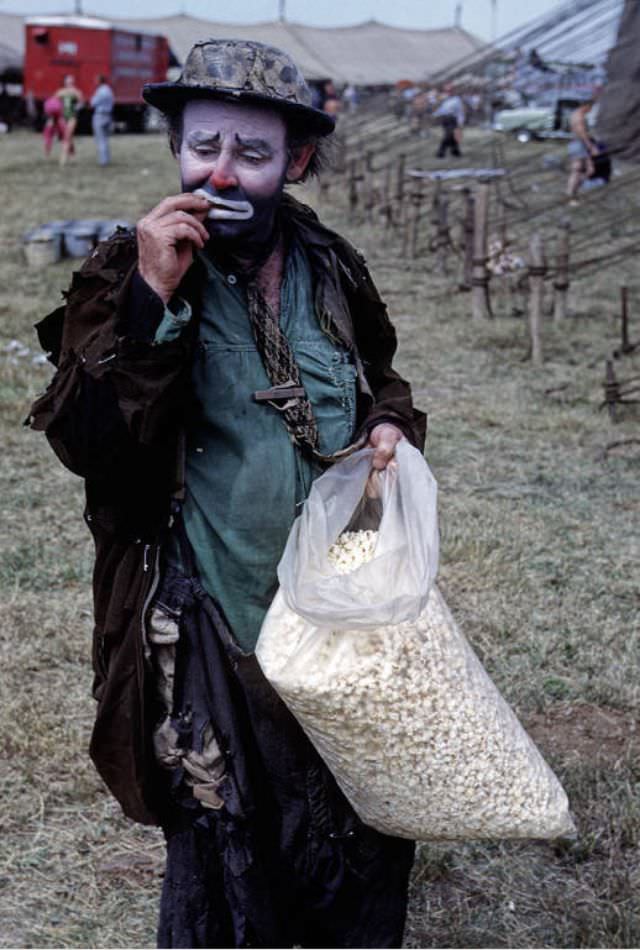
Emmett Kelly’s character, Weary Willie, was a sad-faced hobo clown who became one of the most iconic figures in American circus history. Unlike the painted smiles of traditional clowns, Weary Willie wore a permanent frown — and audiences loved him for it. Kelly’s performance style was built on pathos and physical comedy rather than slapstick chaos. Here, photographed with a large popcorn bag, he looks every bit the part. Braathens also documented many of the working clowns who filled out the roster of major circus productions.
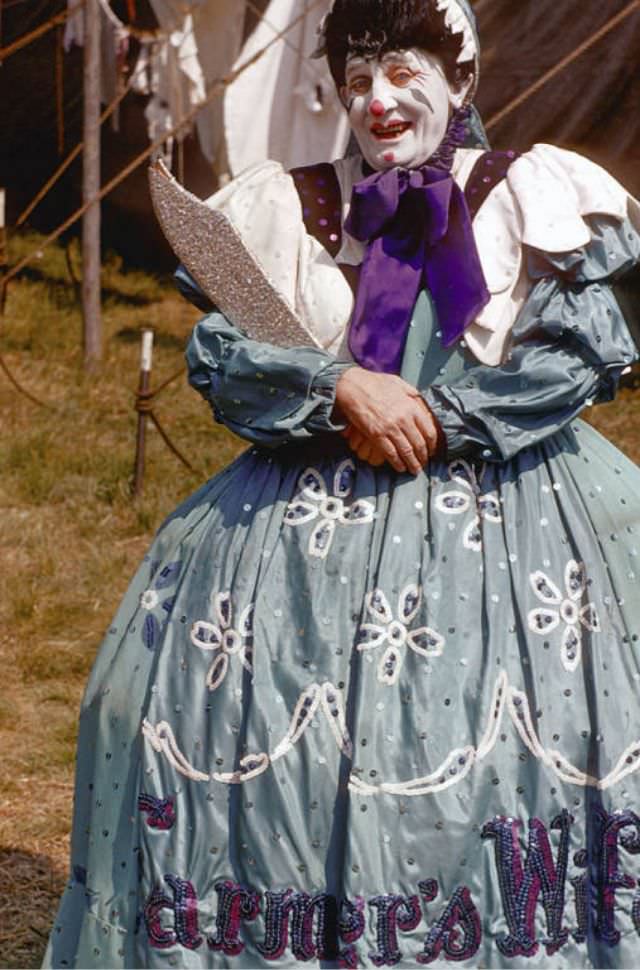
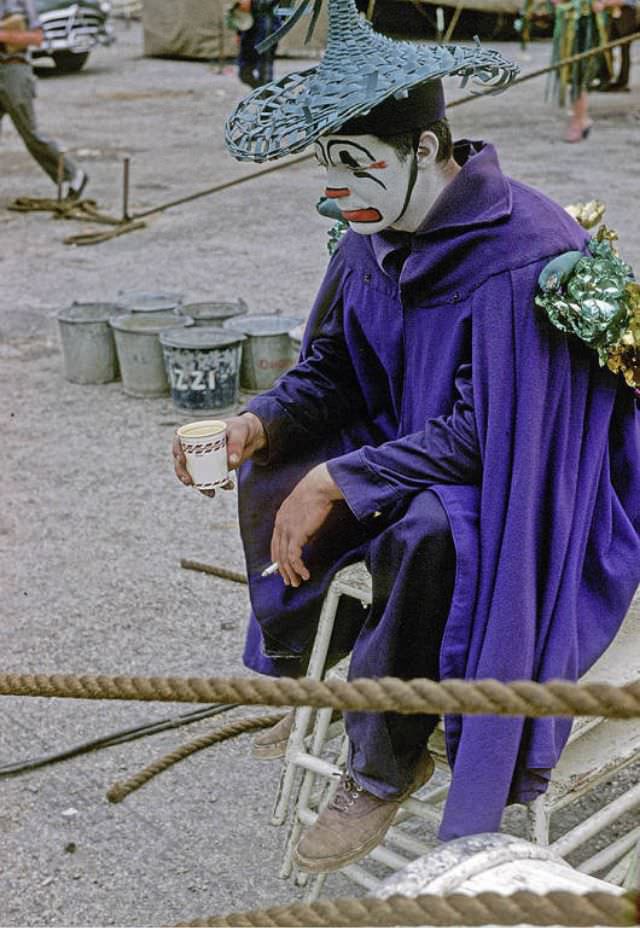
The aerial ballet webb sitter role placed clowns alongside the high-wire and trapeze acts — seated in the rigging as a kind of comedic counterpoint to the dangerous work happening nearby. The wardrobe for these roles was specific and carefully designed to fit the visual theme of the act. Sarasota, Florida, where Bill Hanlon was based, served as the winter quarters for Ringling Bros. and Barnum & Bailey during this era, making it a hub for circus professionals year-round. William Hanlon appeared in Braathens’ collection more than once, in different costumes across different productions.
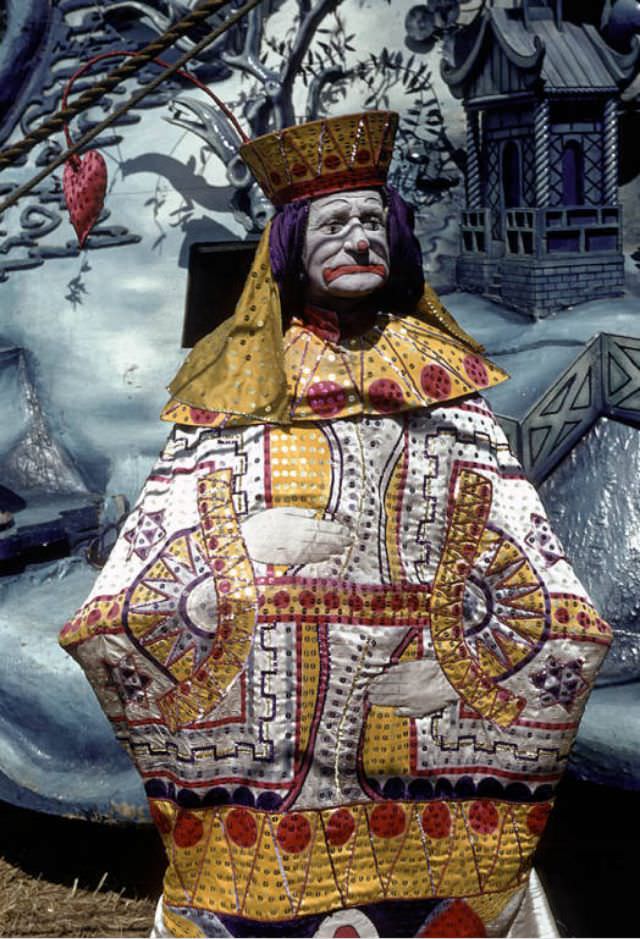
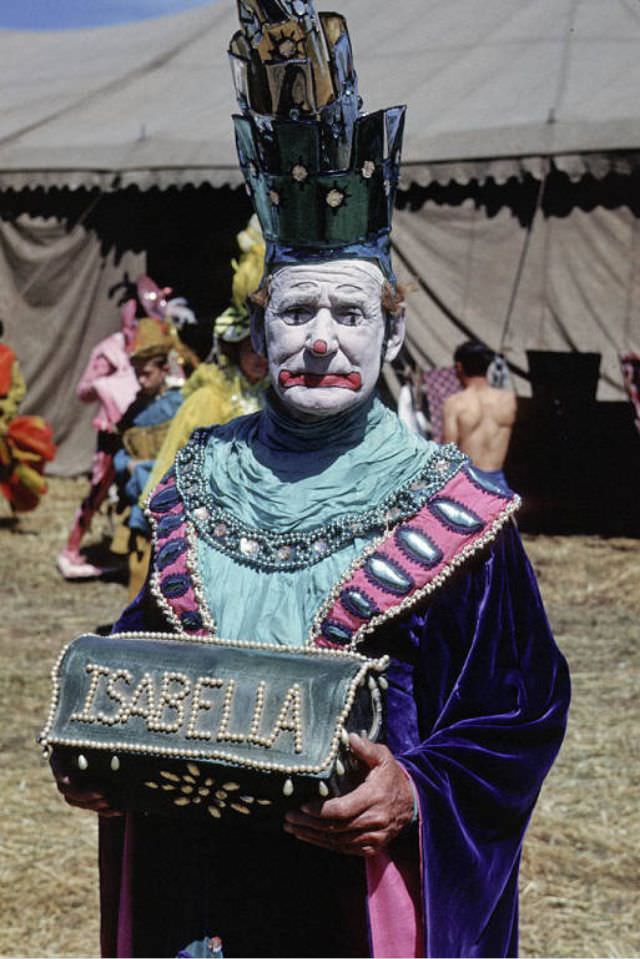
The Good Old Times spectacle was a recurring production theme that allowed costume designers to dress performers in elaborate period-inspired outfits. Arthur Burson’s blue wardrobe is vivid and layered — the kind of costume that read clearly under the bright lights of the big top. The Circus Serenade production offered a different visual palette entirely.
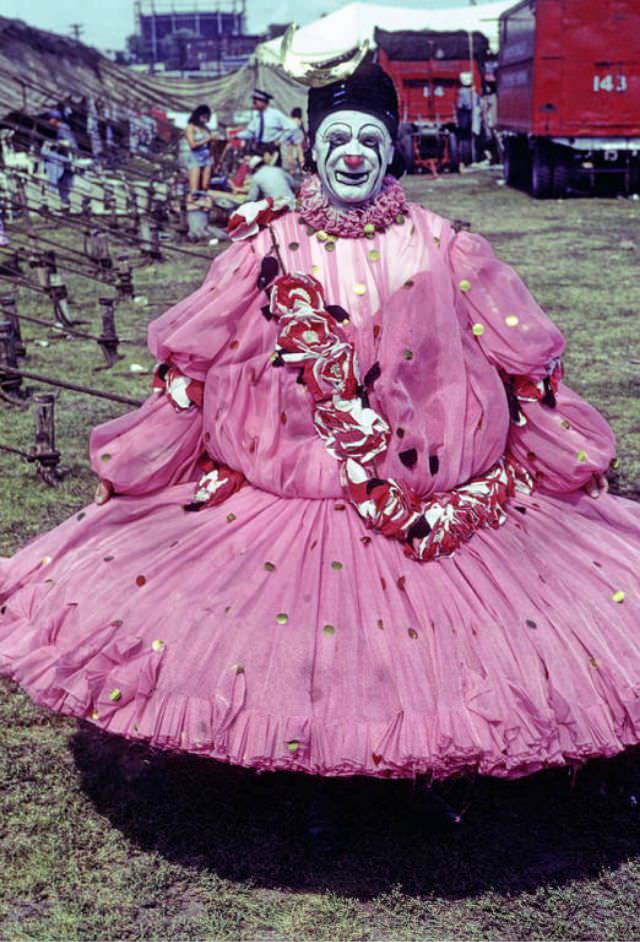
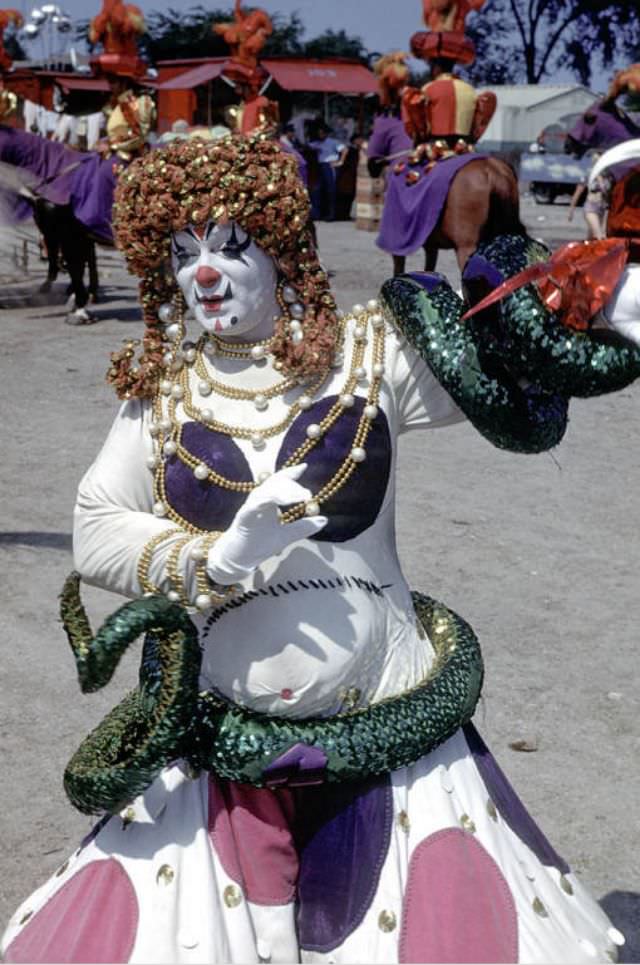
Felix Adler appeared frequently enough in Braathens’ photographs to confirm just how active he was during this period. His spec wardrobe appearances across multiple productions showed a performer who was a constant presence in major circus programs.
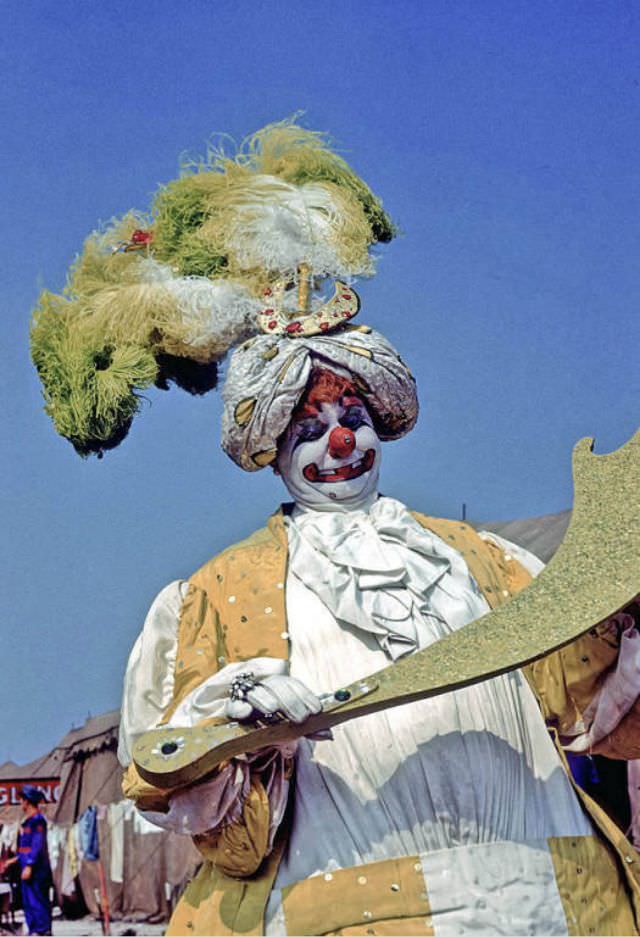
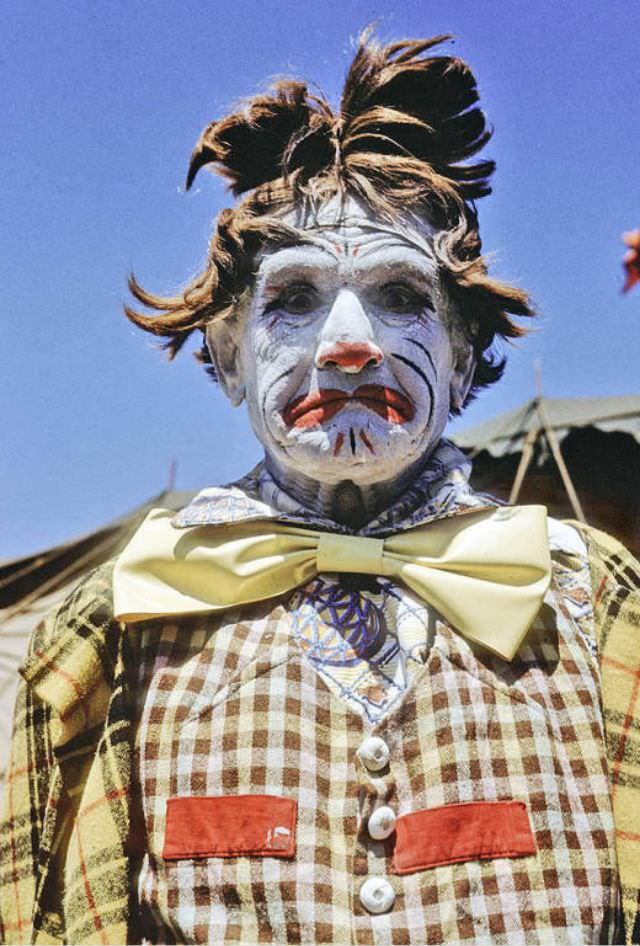
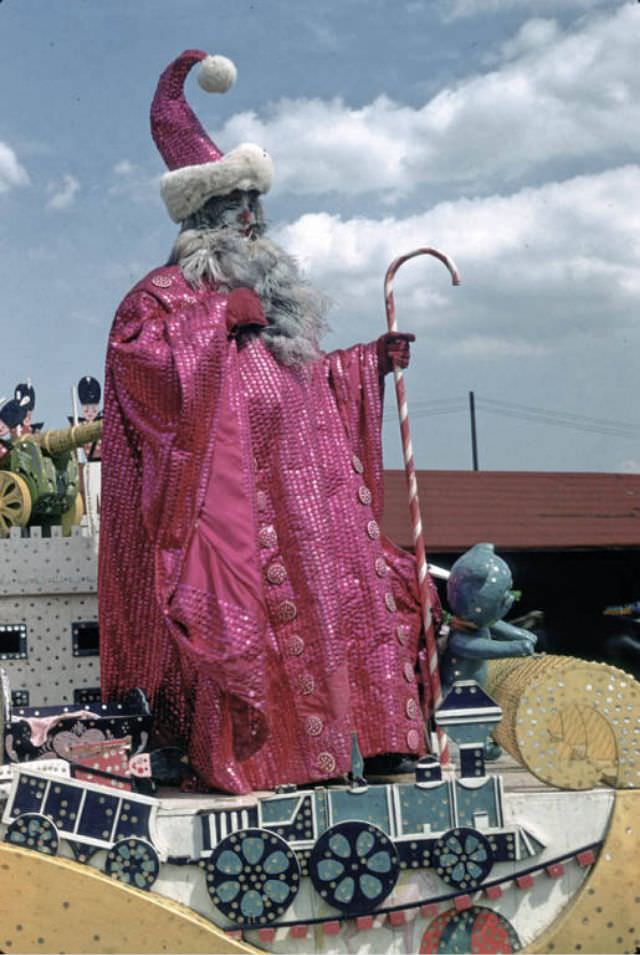
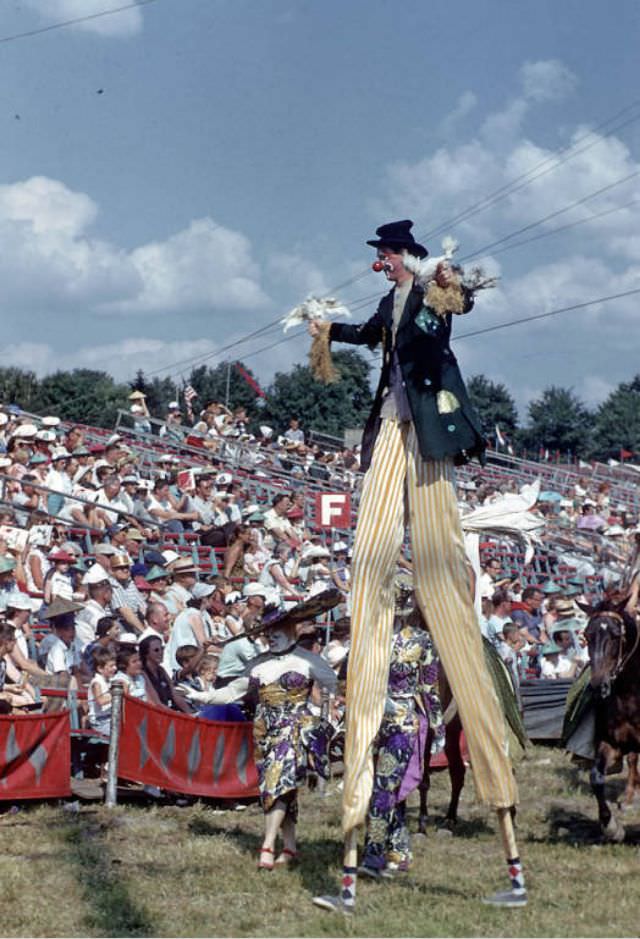
Stilt-walking clowns like Harry Nelson required genuine athletic ability. Moving at height in a heavy costume, staying in character, and engaging with the crowd demanded balance, strength, and practice. The Holidays spectacle was one of the more visually ambitious productions, featuring themed floats and elaborate headpieces that made even a single performer impossible to miss.
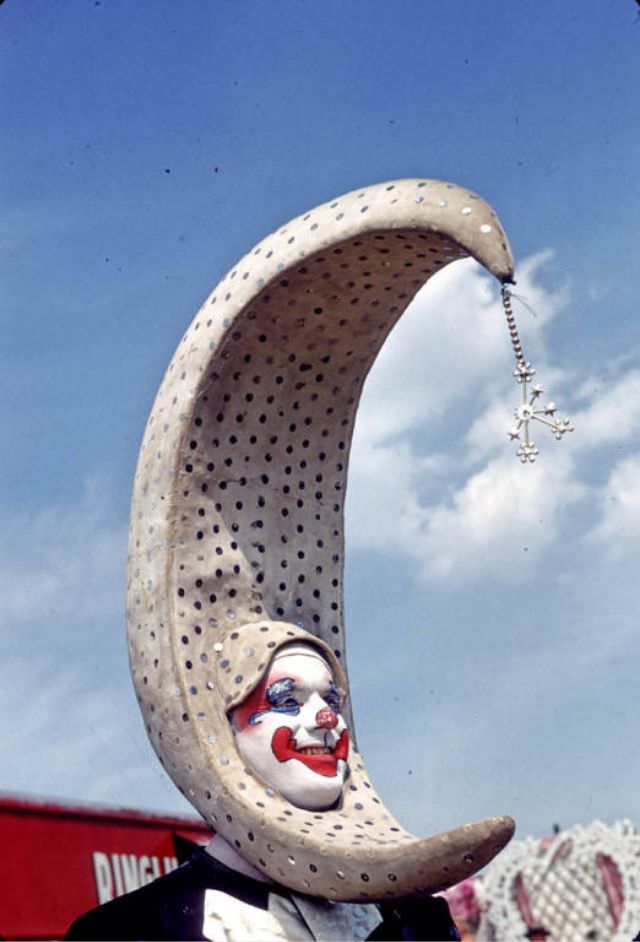
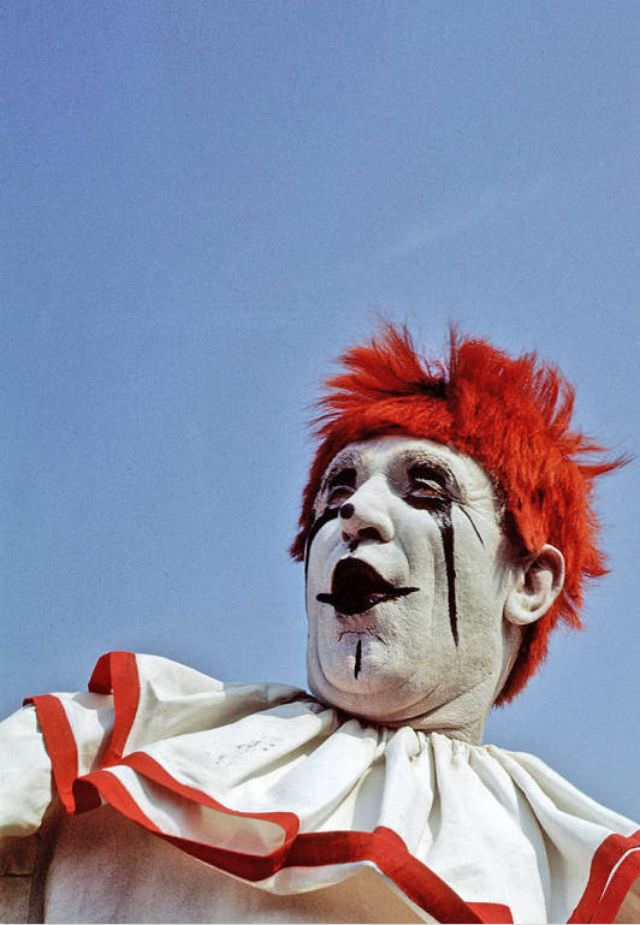
Otto Griebling, like Emmett Kelly, was considered one of the true greats. Born in Germany, Griebling began his career as an equestrian before turning to clowning. His pantomime-based style — often involving a running gag carried throughout an entire performance — set him apart from clowns who relied on quick physical bits. Braathens recognized his stature and documented him as one of the standouts in his collection.
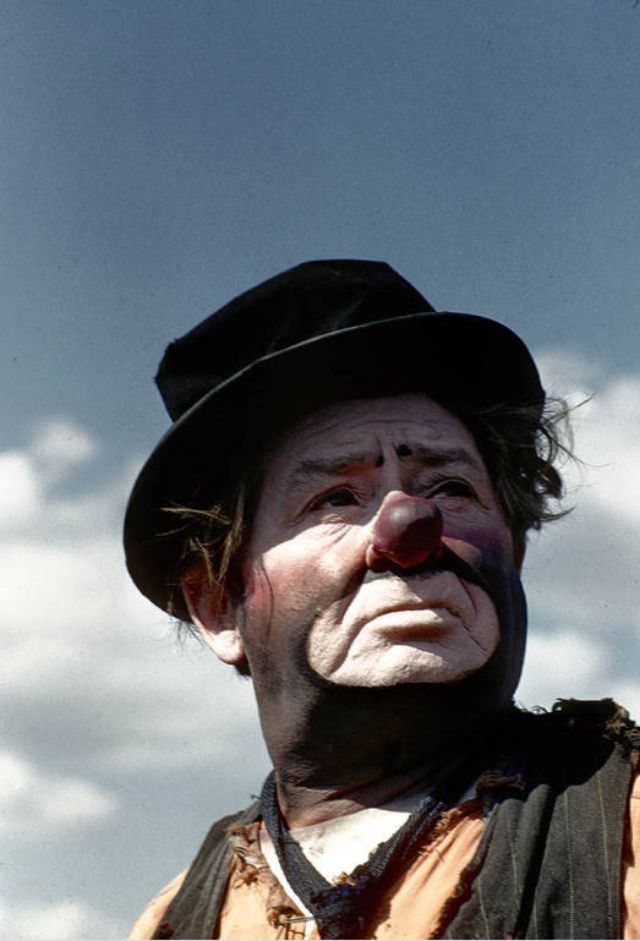
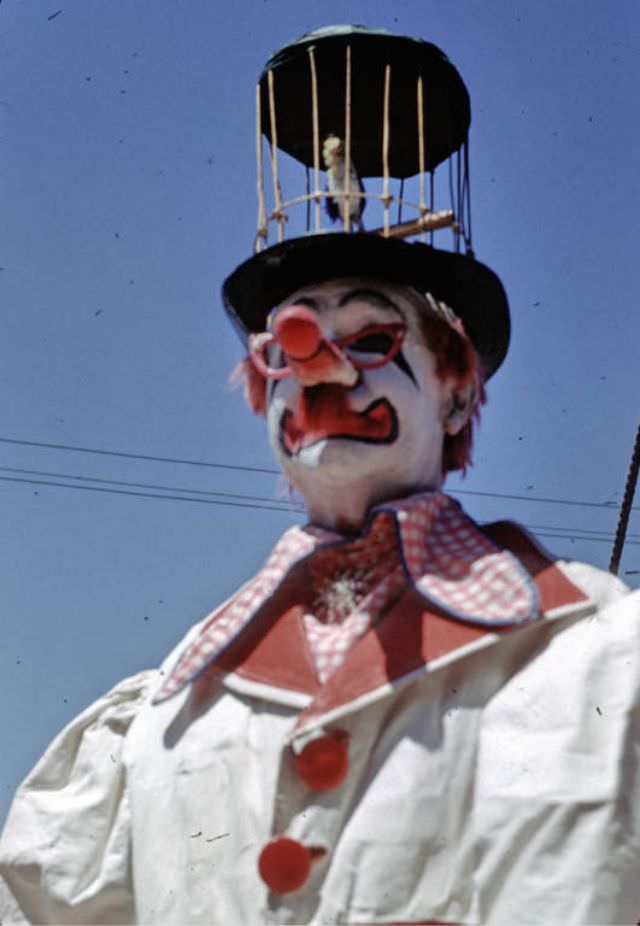
The Holidays spectacle drew a number of clowns into its themed lineup. Gene Lewis was among them, photographed in full Holidays spec wardrobe as part of the large-scale production number. The Fred Hanlon photograph — likely a relative of William Hanlon — adds another layer to the family and professional networks that ran through the circus world during this era.
Stilt-walking appears more than once across Braathens’ photographs, underscoring how common a specialty it was in mid-century circus performance. Whether worked into a comedy routine or used simply to give a performer commanding height above the crowd, stilts were a proven crowd-pleaser.
What Sverre Braathens created over his lifetime was not just a personal photo album. It was a systematic, season-by-season visual record of American circus clowning during one of the art form’s most active periods. His photographs preserve names, costumes, productions, and personalities that would otherwise exist only in old programs and fading memories.