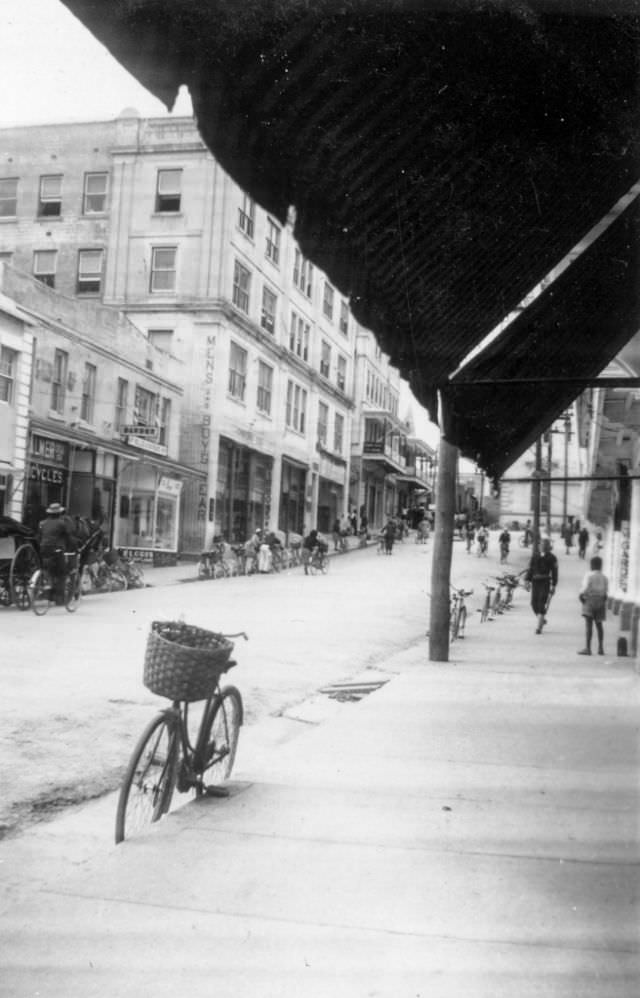
Bermuda is a British overseas territory sitting in the western North Atlantic Ocean, about 1,070 miles east of North Carolina. It is made up of 181 islands, though the main ones are connected by bridges and function as a single landmass. Spanish explorer Juan de Bermúdez first came across the archipelago in 1505, and the islands were named in his honor. For more than a century after that, the islands remained uninhabited by Europeans.
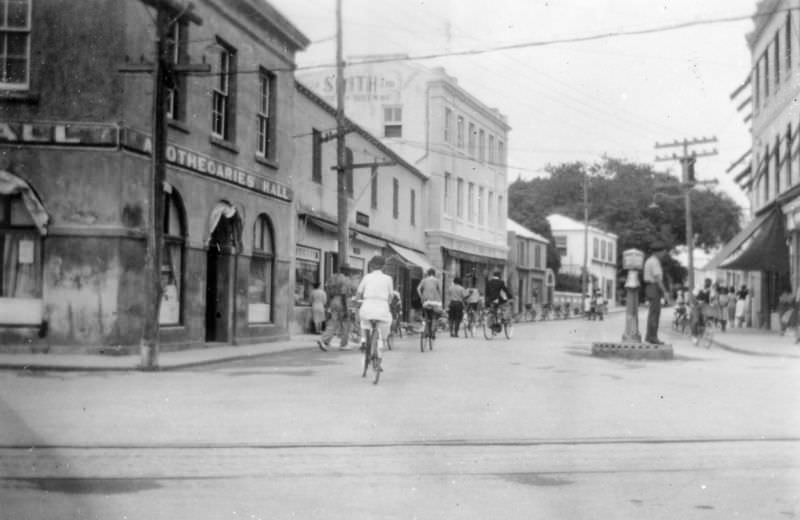
In 1612, English settlers established a colony at St. George’s, making it one of the oldest continuously inhabited English towns in the Western Hemisphere. The settlement grew steadily, and by 1684, Bermuda had become a crown colony after breaking away from the Somers Isles Company, which had previously managed it.
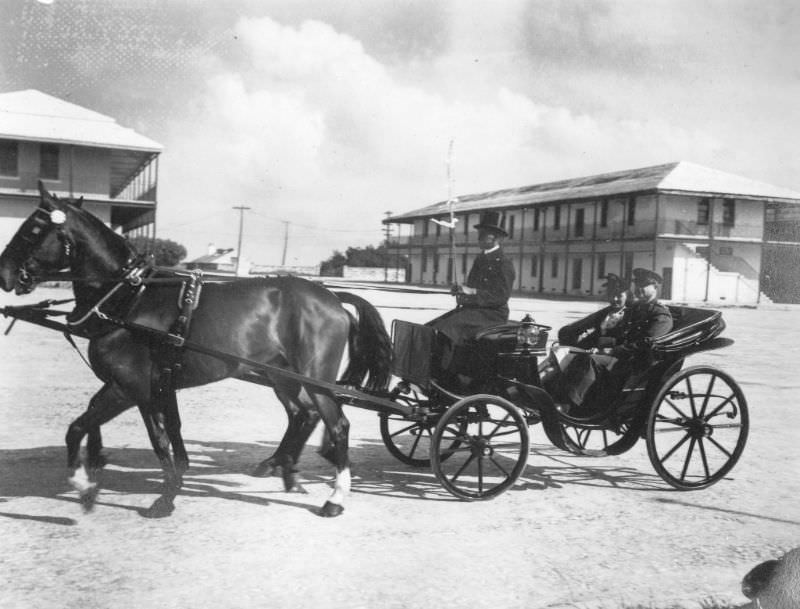
The first enslaved Africans were brought to Bermuda in 1616. Unlike many other British colonies in the Americas, Bermuda never developed a large plantation economy. The slave trade largely wound down by the end of the 17th century, leaving Bermuda on a very different path from colonies like Barbados or Jamaica.
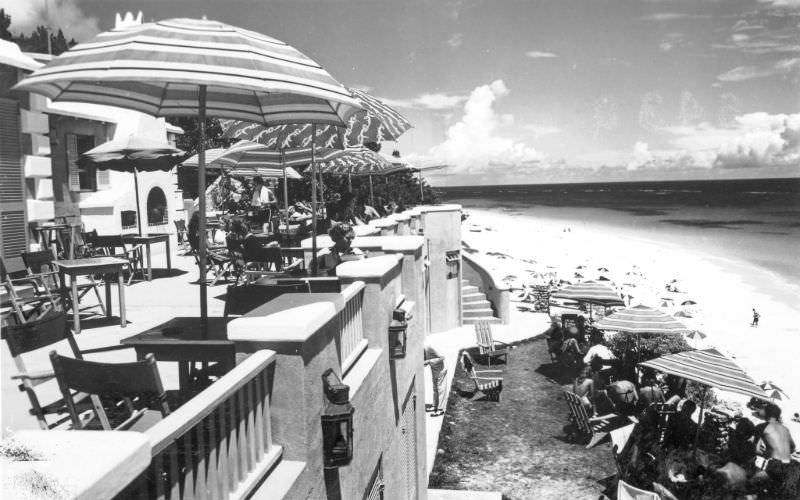
With no large-scale farming to sustain it, Bermuda turned to the sea. The colony became a hub for merchants, privateers, and the Royal Navy. Bermudian shipbuilders became highly skilled, and their work gave rise to two famous designs — the Bermuda rig and the Bermuda sloop — both known for speed and efficiency on the open water.
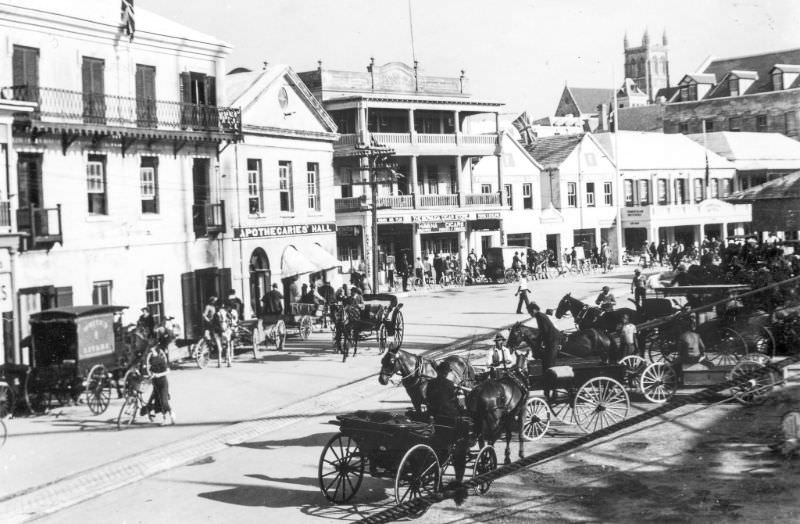
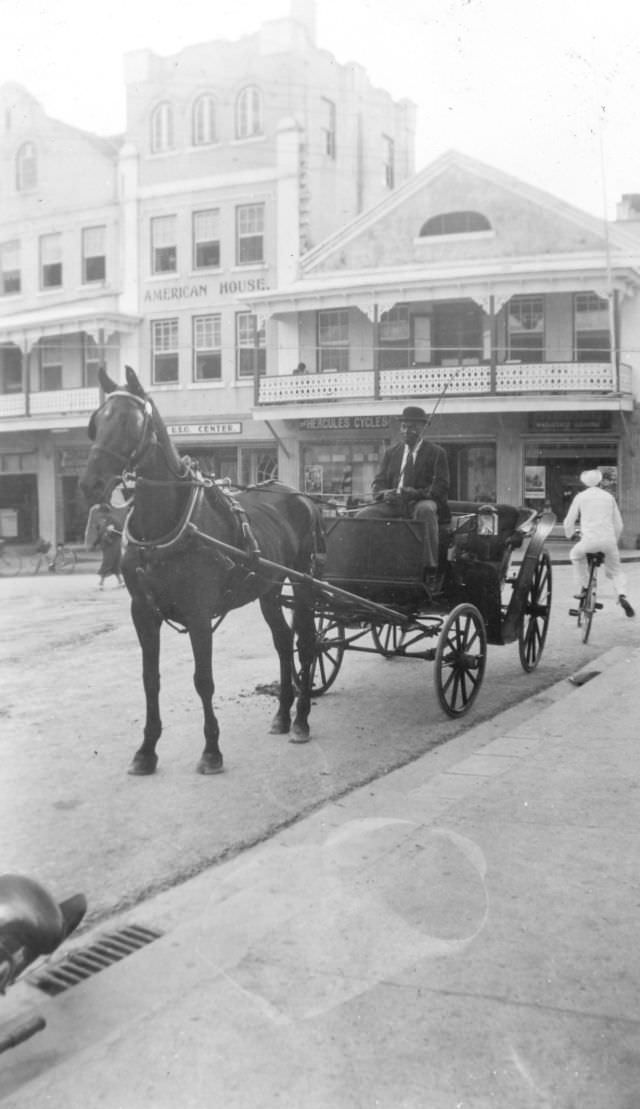
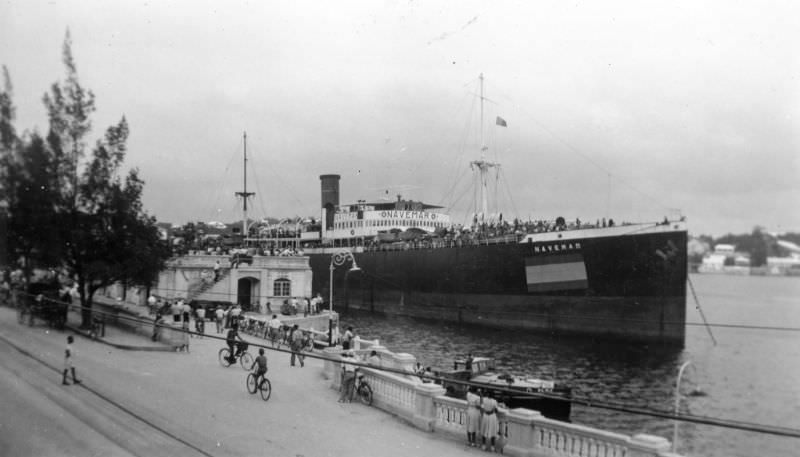
Tourism began to take hold in the 19th century, but it truly gained momentum in the early 20th century. Americans, Canadians, and British travelers arrived by steamship, drawn by Bermuda’s warm climate, pink-sand beaches, and relaxed pace of life. The island became a fashionable destination for the wealthy.
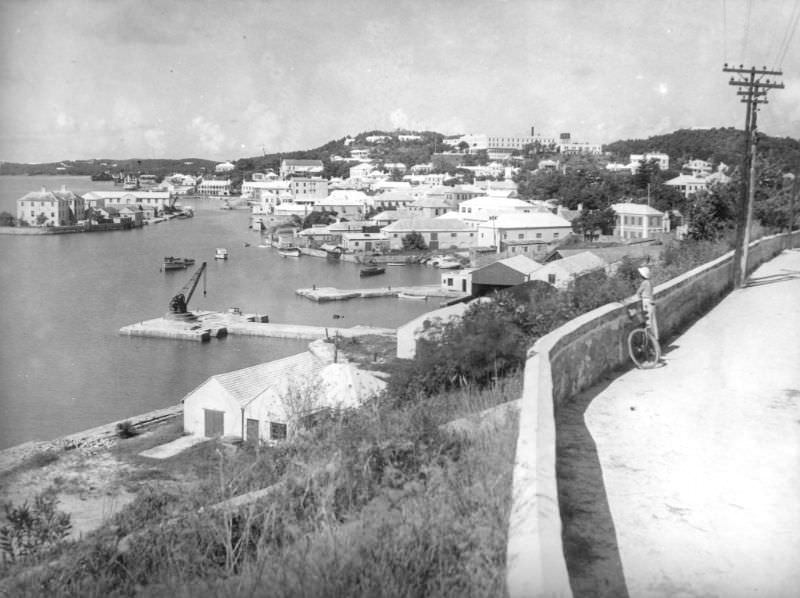
A major turning point came in 1930 when the United States passed the Smoot-Hawley Tariff Act. The law placed heavy taxes on imported goods, which effectively shut Bermuda out of the American market. Bermuda had been exporting produce — including onions, arrowroot, and Easter lilies — to the US for decades. That trade collapsed almost overnight.
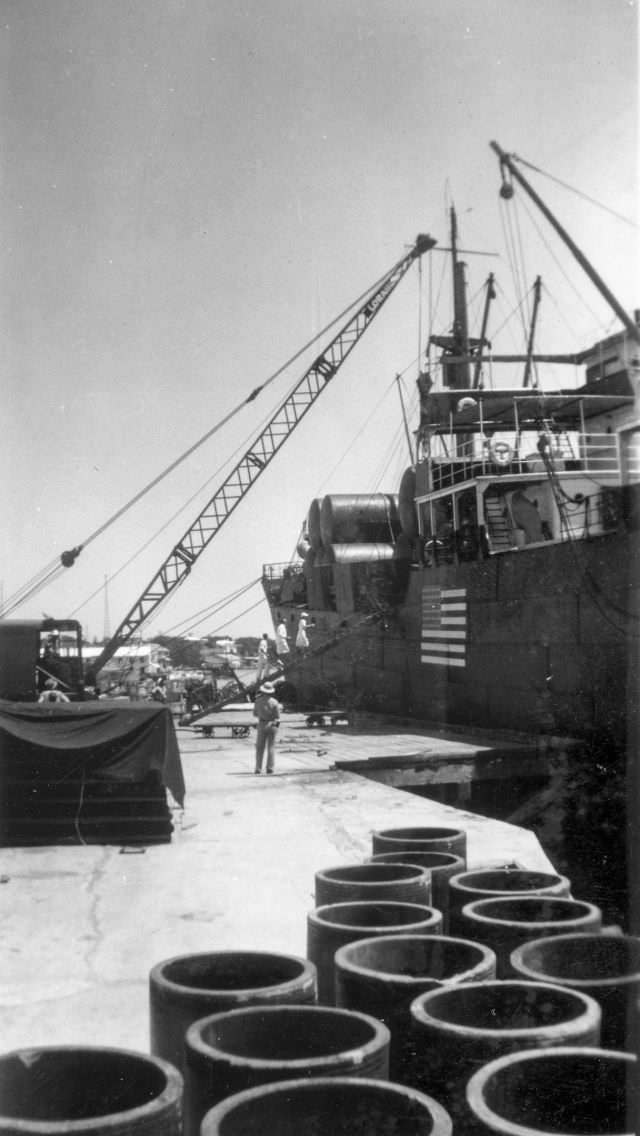
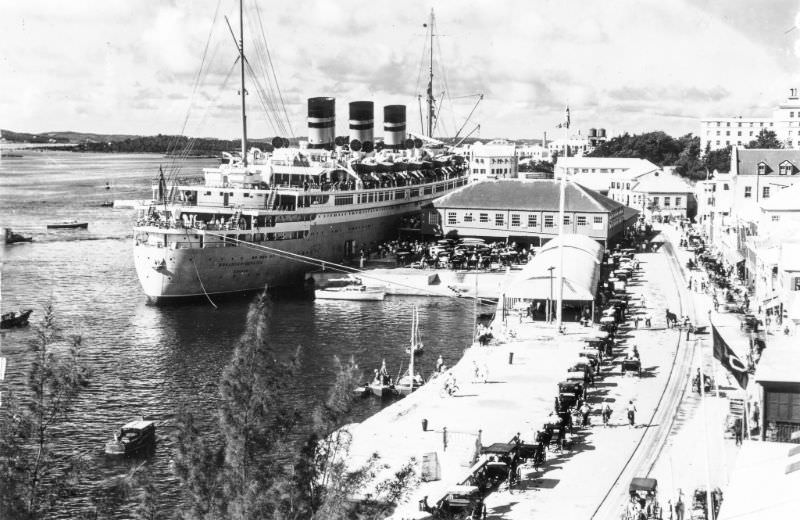
With agriculture no longer a reliable income source, Bermuda leaned even harder into tourism. Hotels expanded, steamship lines advertised the island widely, and Bermuda began marketing itself as a premier holiday spot. By the 1930s and into the 1940s, tourism was the backbone of the local economy.
The Prohibition era in the United States, which lasted from 1920 to 1933, brought a different kind of traffic to Bermuda’s shores. The island became one of the key hotspots for illegal alcohol smuggling into the US. Rum-runners used Bermuda as a staging point, loading up ships with liquor before making runs to the American coast.
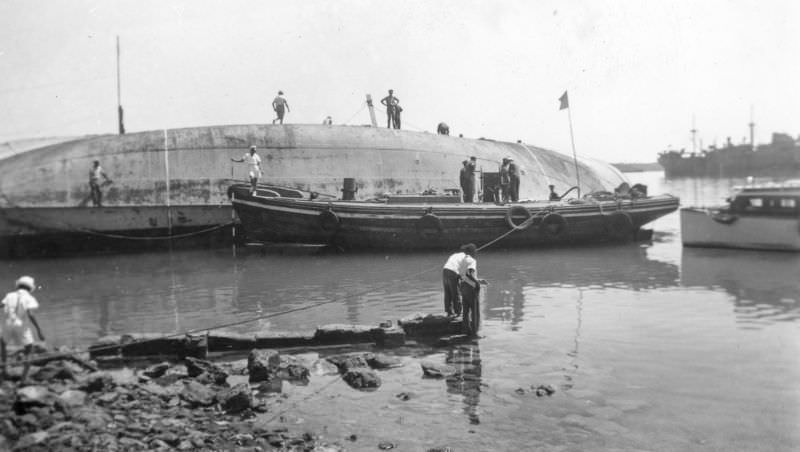
By the 1940s, World War II cast its shadow over even this remote Atlantic outpost. Bermuda held strategic importance for the Allied forces. The US established military bases on the islands under the 1941 Destroyers for Bases Agreement, and Bermuda served as a key refueling and transit point for transatlantic operations.
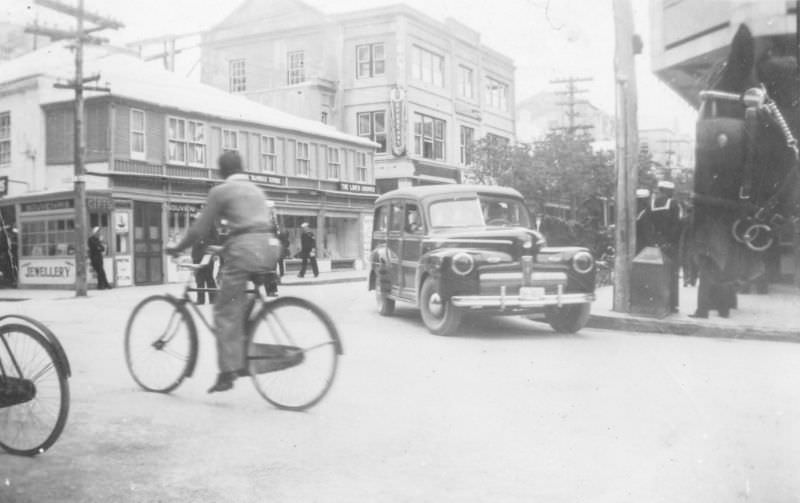
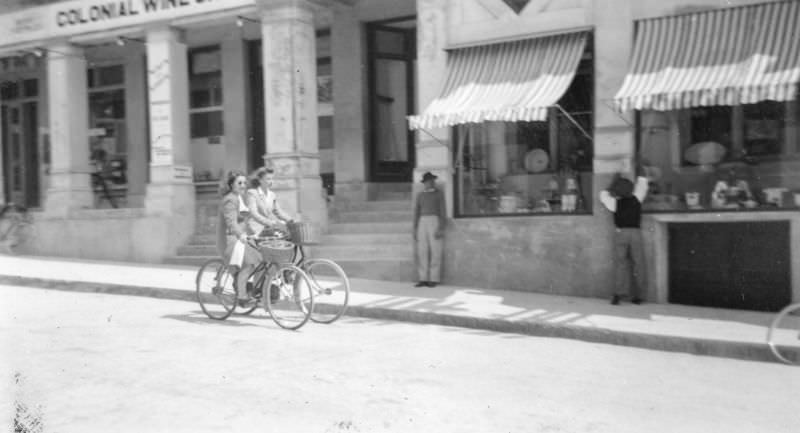
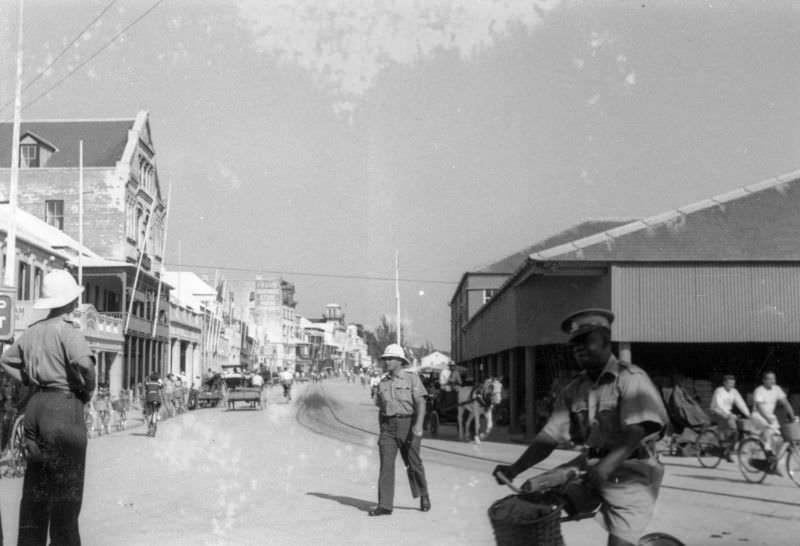
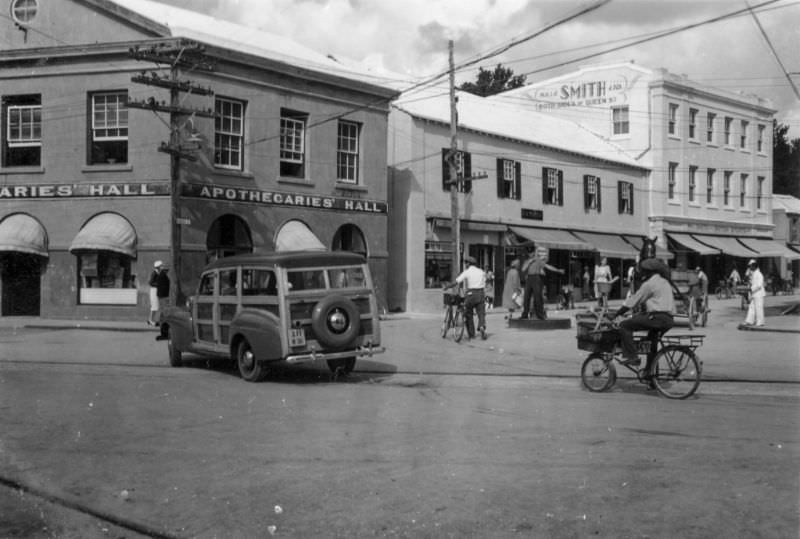
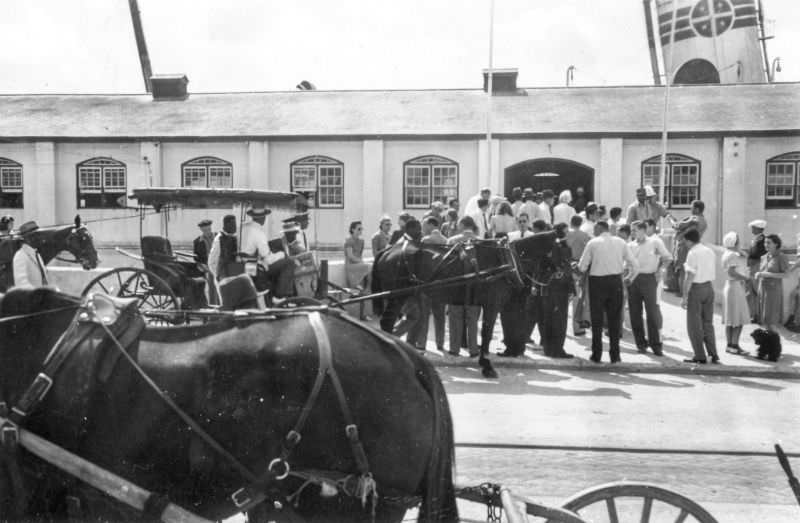
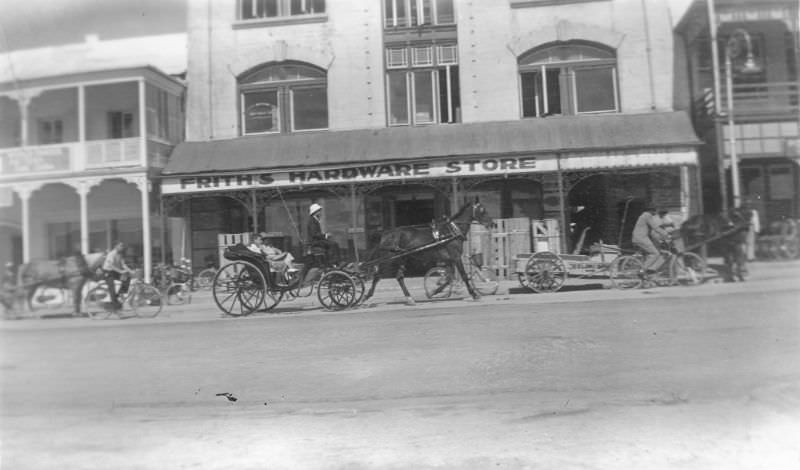
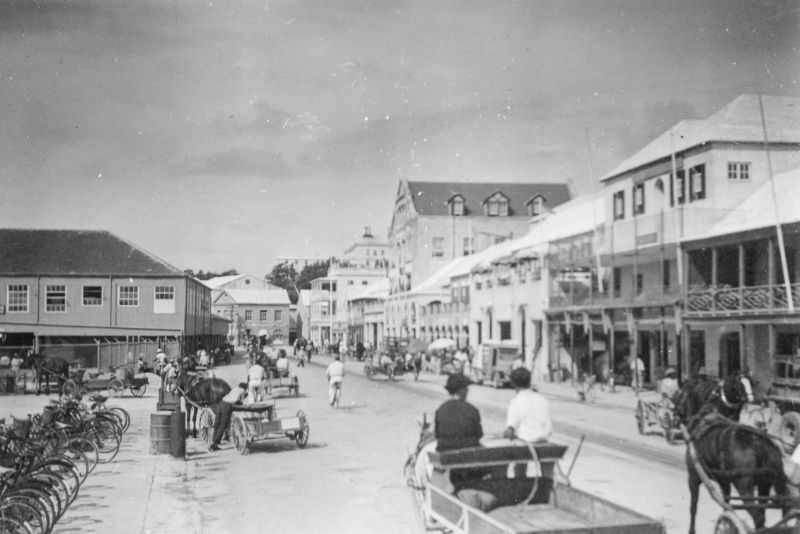
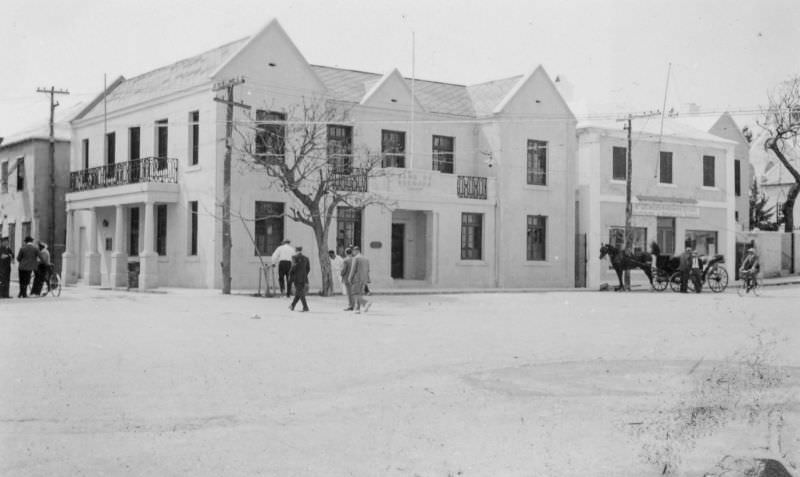
The photos from this era capture a Bermuda that was both timeless and in transition. Pastel-colored buildings, horse-drawn carriages — private automobiles were banned on the island until 1946 — and narrow winding roads defined daily life. The streetscapes had a quiet, unhurried character that visitors found deeply appealing.
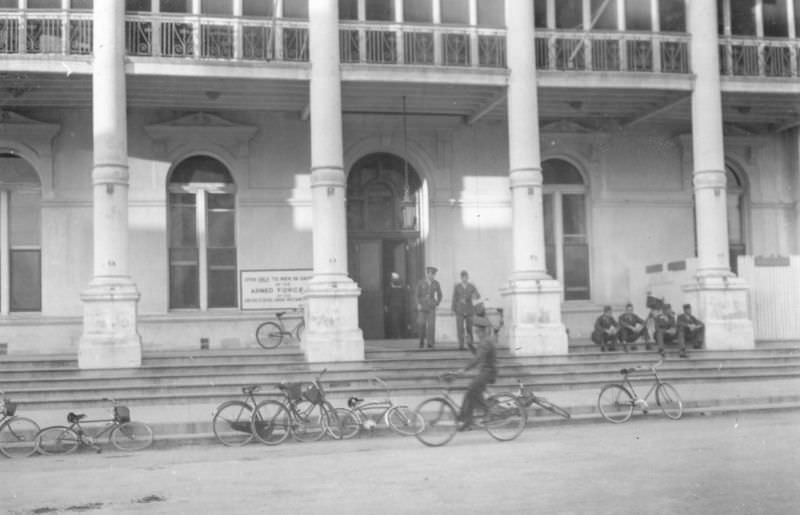
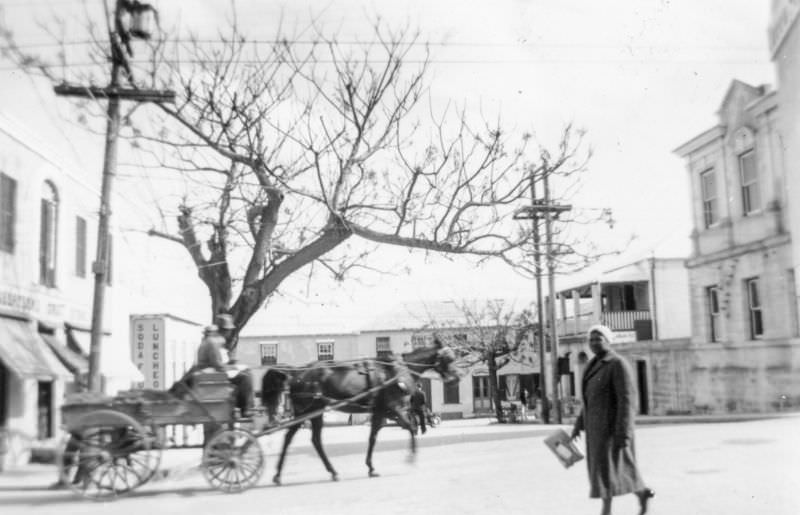
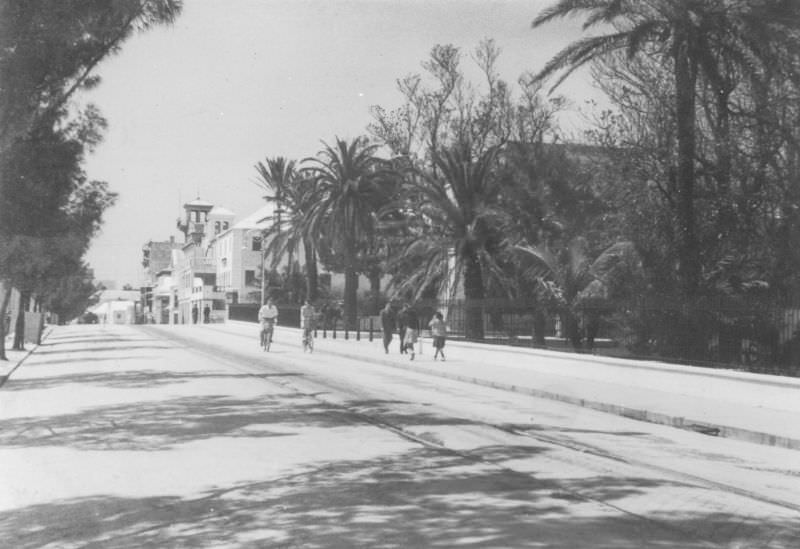
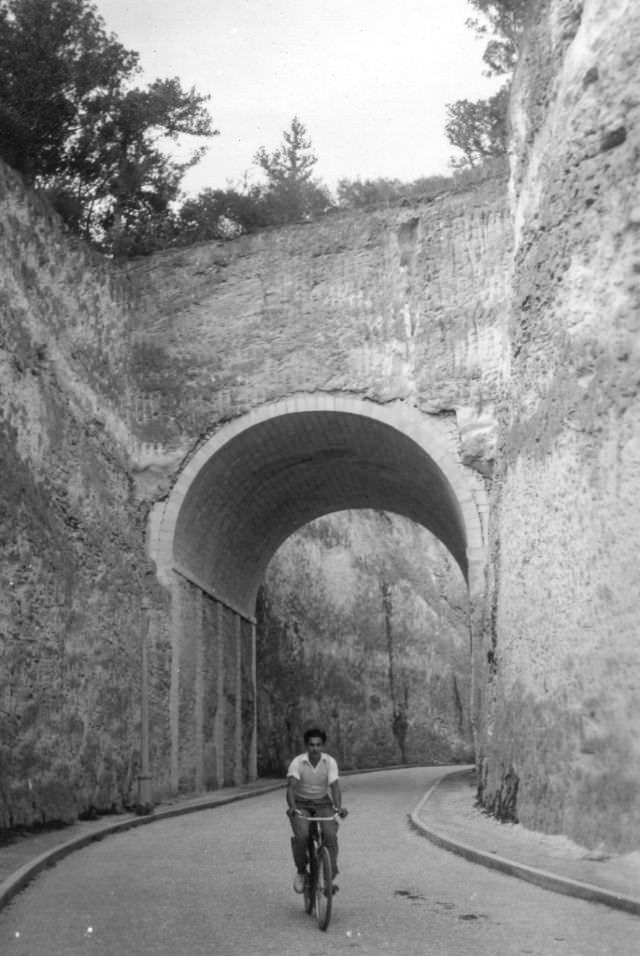
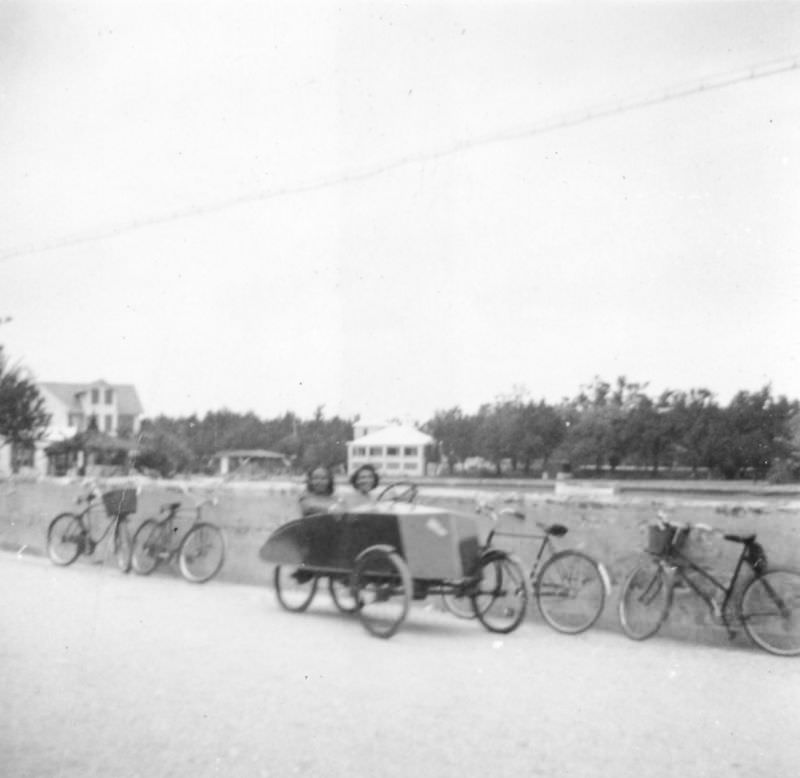
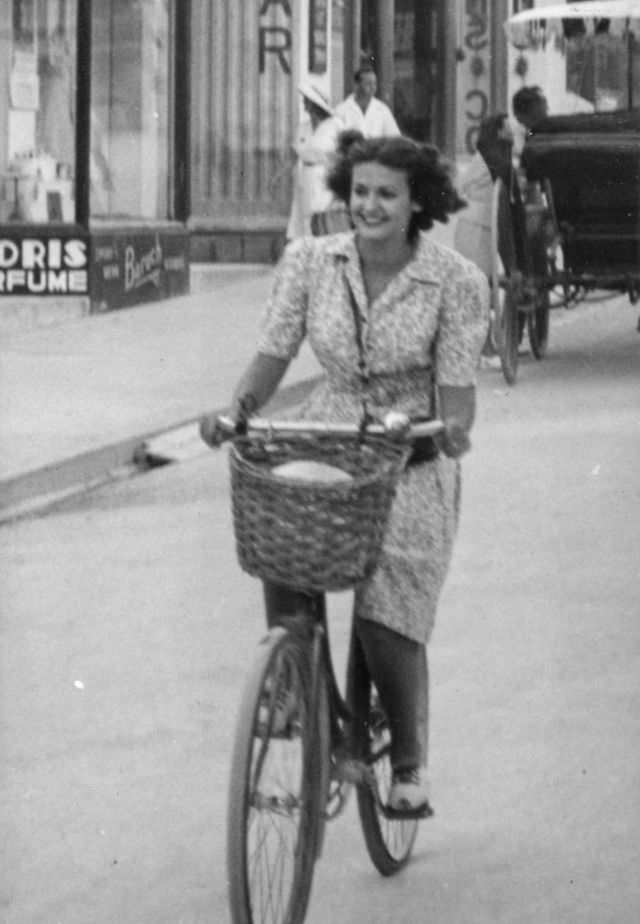
The ban on private cars meant that Bermudians relied on bicycles, horse-drawn carts, and public transport. This gave the island an almost uniquely peaceful atmosphere compared to the rapidly motorizing world outside. Even after cars were permitted in 1946, strict rules kept traffic manageable for years.
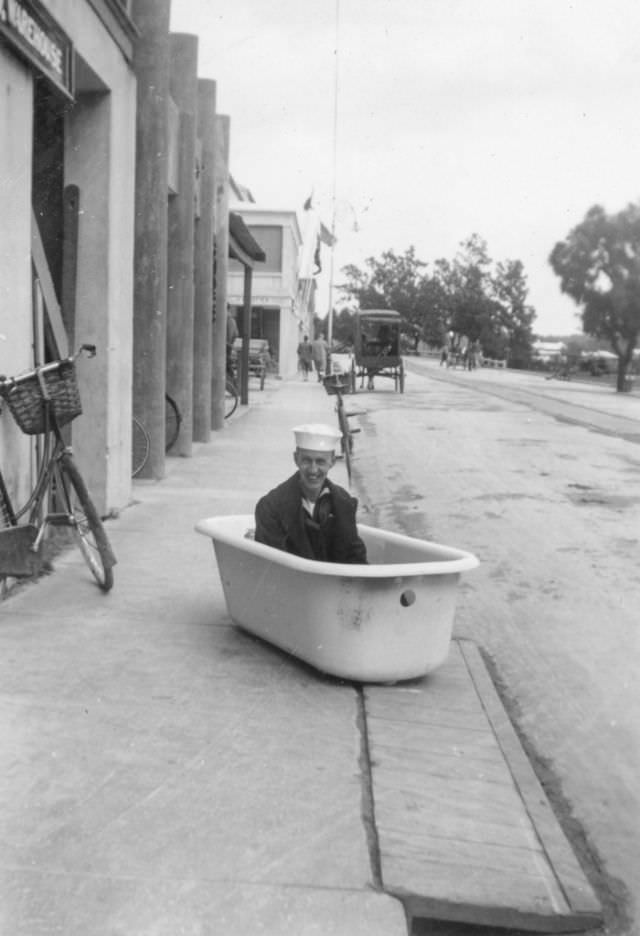
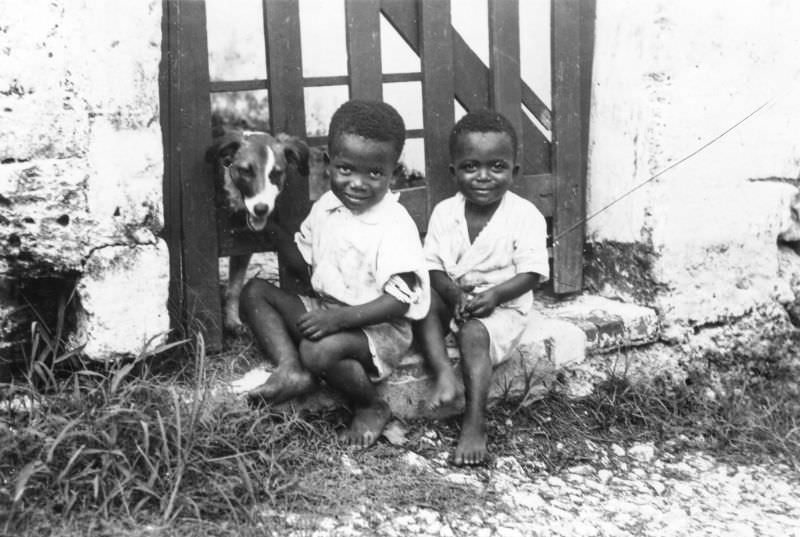
St. George’s, the original English settlement, remained a living piece of history throughout the 1940s. Its old stone buildings, narrow lanes, and historic forts were well preserved. The town’s layout had changed little since the colonial era, making it a remarkable window into early British settlement in the Atlantic.
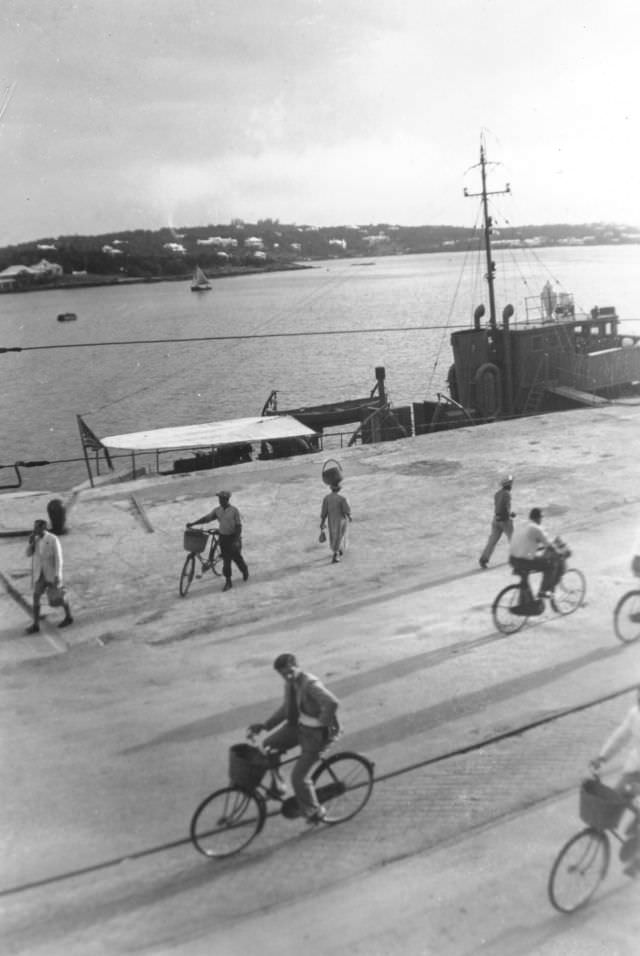
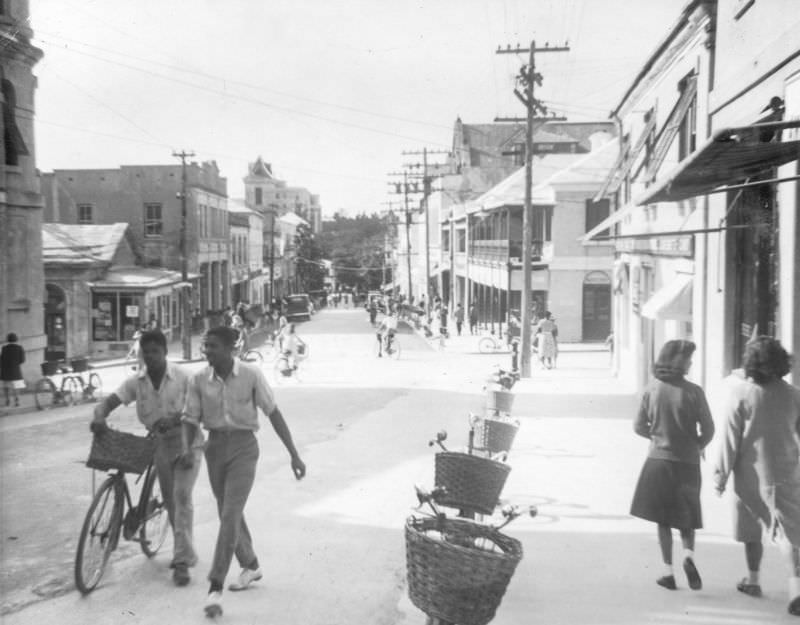
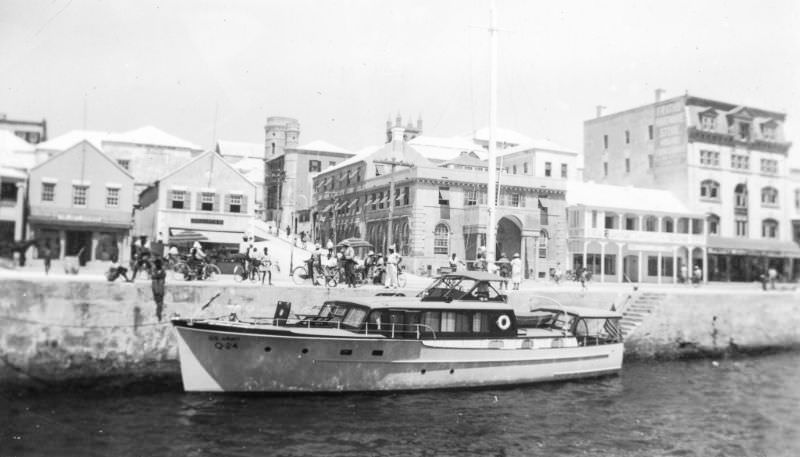
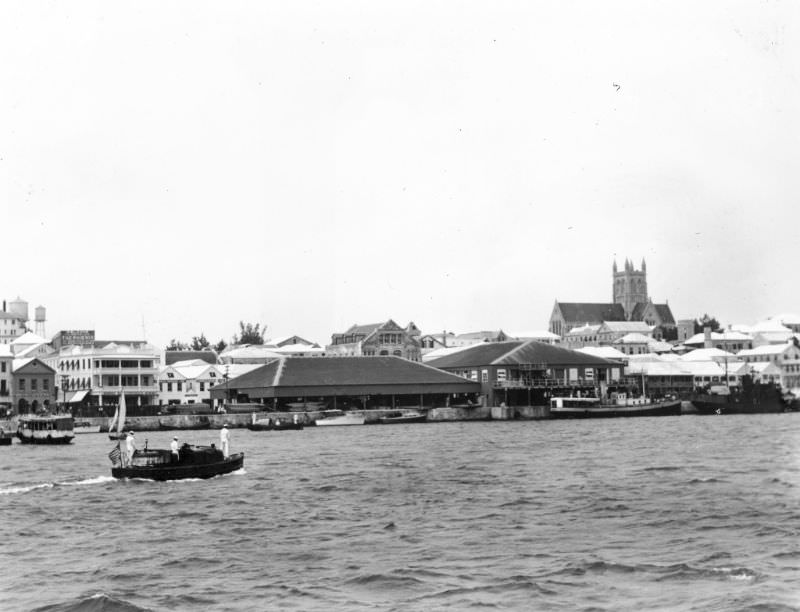
Hamilton, Bermuda’s capital, presented a sharper contrast. As the commercial center of the island, it had a more modern and bustling feel. Front Street, running along the harbor, was lined with shops, hotels, and government buildings that catered to both locals and the steady stream of tourists arriving by ship.
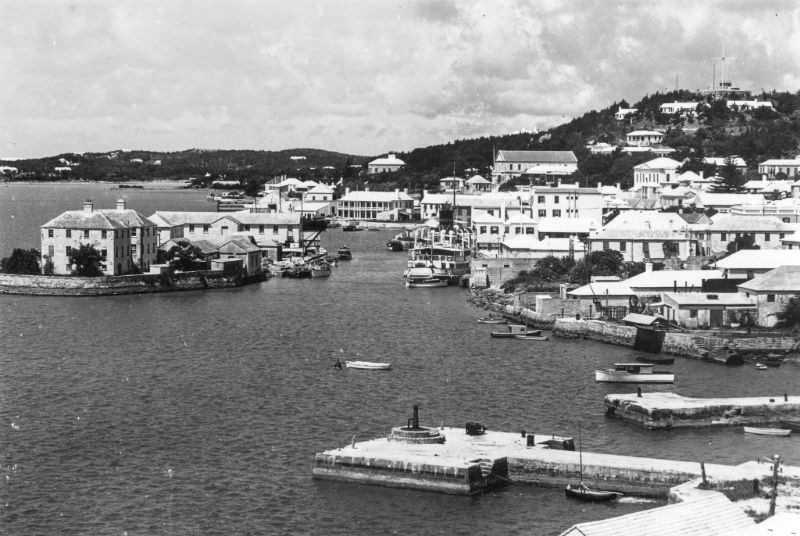
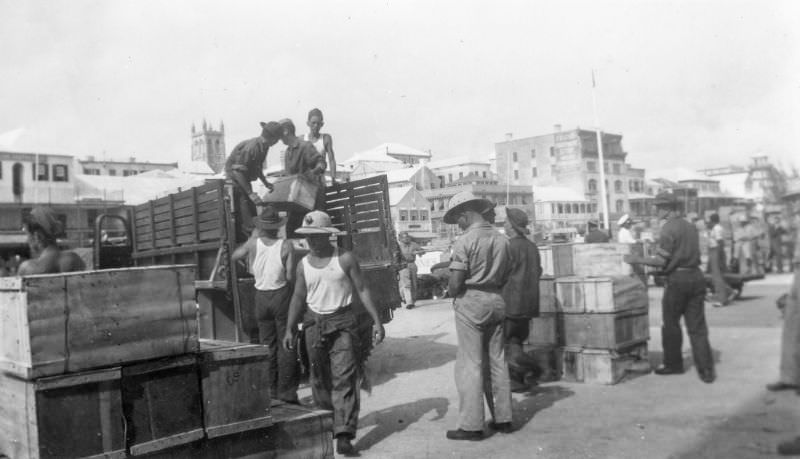
Bermuda’s natural landscape was just as striking as its architecture. The islands are covered in subtropical vegetation, with cedar trees once forming dense forests across the territory. By the 1940s, the Bermuda cedar was already under threat from a scale insect infestation that would devastate the population in the following decade.
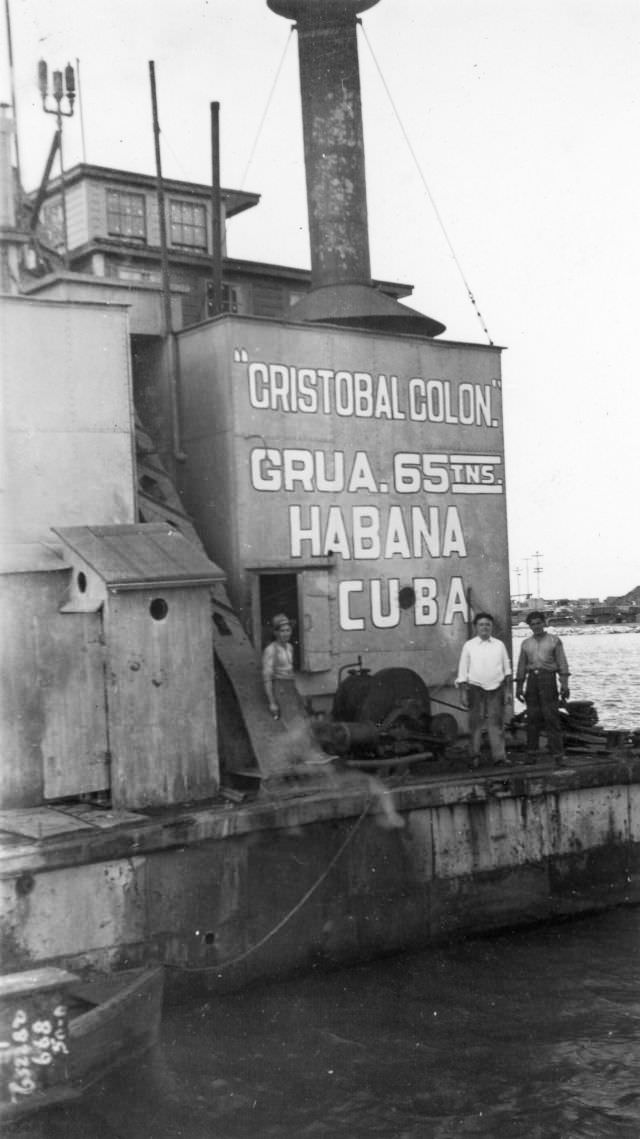
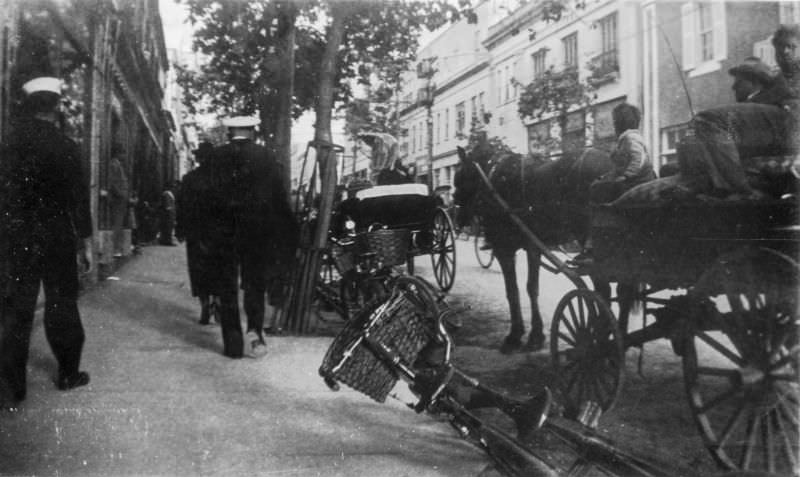
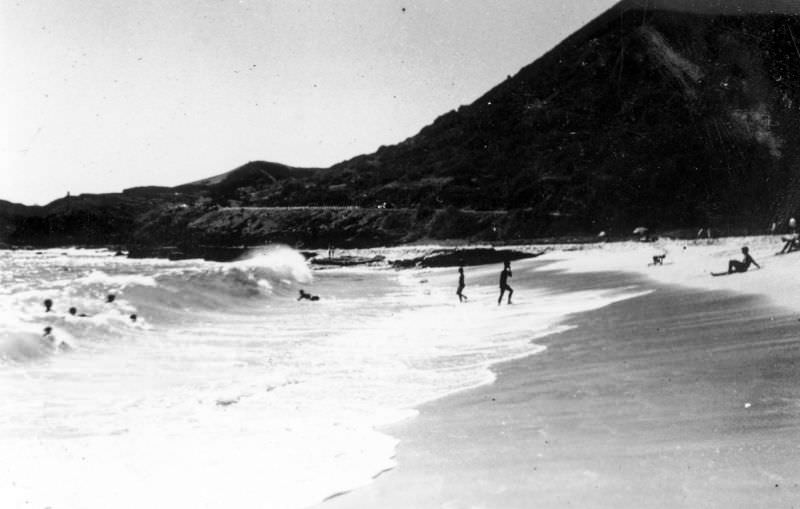
The surrounding waters were crystal clear and teeming with marine life. Bermuda sits atop a submerged volcanic seamount, and its coral reefs — the northernmost in the Atlantic — were a major draw for divers and snorkelers. Fishing was both a livelihood and a leisure activity for many islanders.
Racial segregation was a reality in 1940s Bermuda. Black Bermudians faced restrictions in hotels, restaurants, and schools. The segregation system, similar in many ways to what existed in the American South, remained officially in place until the late 1950s, when a sustained campaign of civil protests forced change.
Despite social inequalities, Bermudian culture in the 1940s was vibrant. Gombey dancing — a uniquely Bermudian tradition blending West African, Native American, and British influences — was performed at festivals and celebrations. The tradition dated back centuries and remained a powerful expression of Bermudian identity.
Cricket was another cultural cornerstone. Bermudians took the sport seriously, and matches drew large, enthusiastic crowds. The annual Cup Match, a two-day cricket match between rival clubs that dates back to 1902, was the social highlight of the summer and served as a de facto public holiday.
The architecture of Bermuda’s homes is instantly recognizable. White-roofed limestone houses have been a feature of the landscape for centuries. The white roofs serve a practical purpose — they collect rainwater, which is channeled into underground tanks beneath each home. Fresh water from rain is the island’s primary water source, as Bermuda has no rivers or freshwater lakes.
The military presence on the island grew considerably during and after World War II. US Naval Air Station Bermuda and the US Army base at Fort Bell brought thousands of American personnel to the islands. Their presence reshaped parts of the island’s infrastructure and had a lasting effect on the local economy and culture.
Transatlantic flying boats also made Bermuda a key stop in the 1930s and 1940s. Pan American Airways and Imperial Airways operated scheduled seaplane services through Bermuda, connecting North America to Europe. The Great Sound served as the landing area for these aircraft, making Bermuda a node in early commercial aviation history.
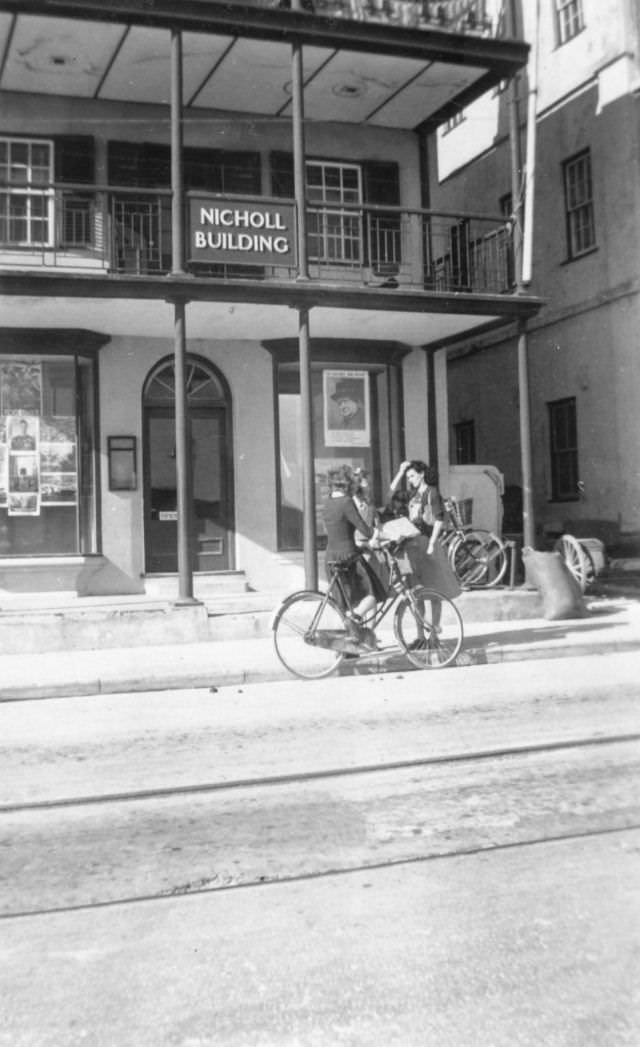
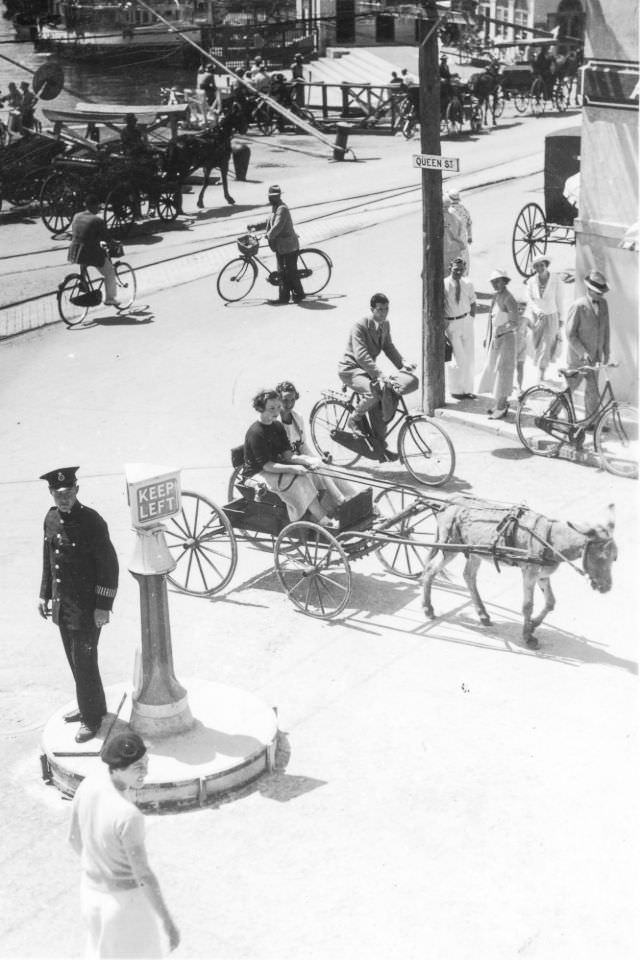
After the war ended, Bermuda moved quickly to rebuild its tourism industry. Luxury hotels reopened, cruise lines resumed service, and the island positioned itself as the ideal postwar escape. The late 1940s also marked the early stages of Bermuda’s transformation into an offshore financial center, a role that would define its economy for the rest of the 20th century.
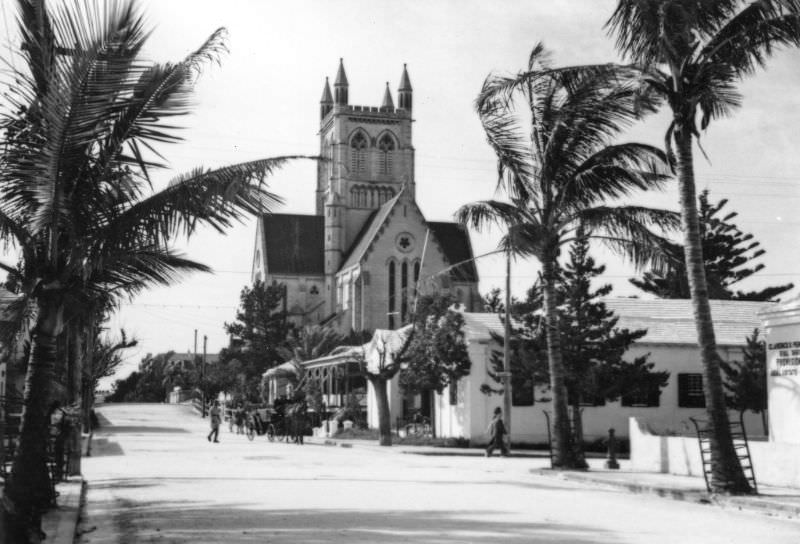
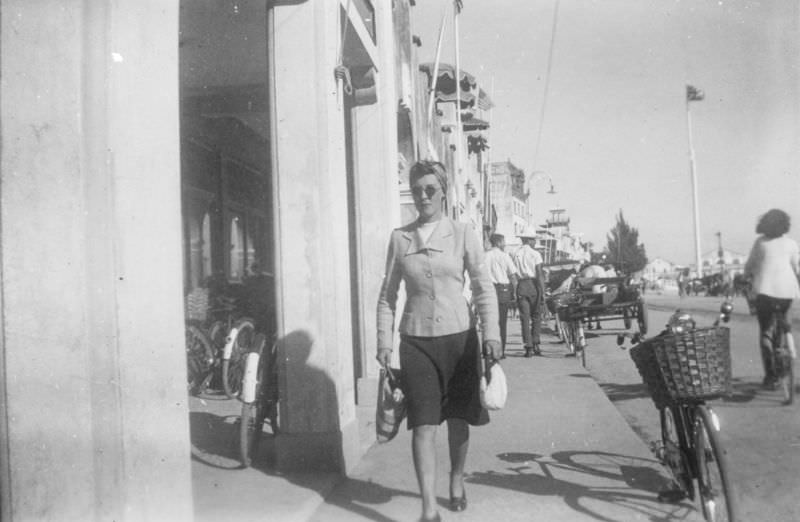
These photographs from the 1940s preserve a Bermuda that was already ancient in some ways and rapidly changing in others. The island balanced colonial tradition with wartime modernity, all set against a backdrop of remarkable natural beauty that drew the world’s attention decade after decade.