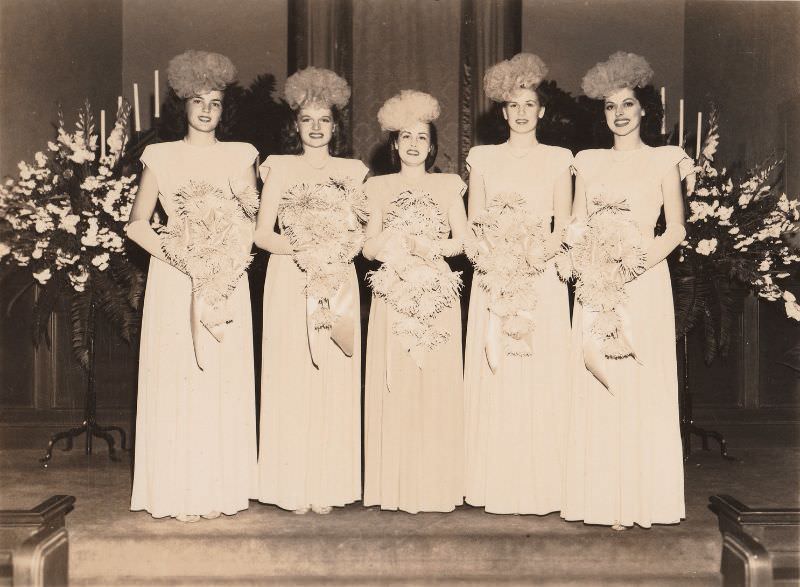
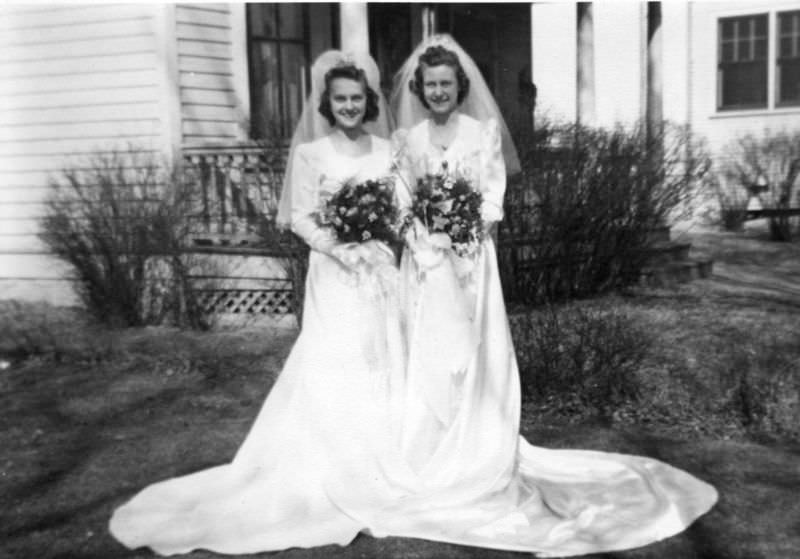
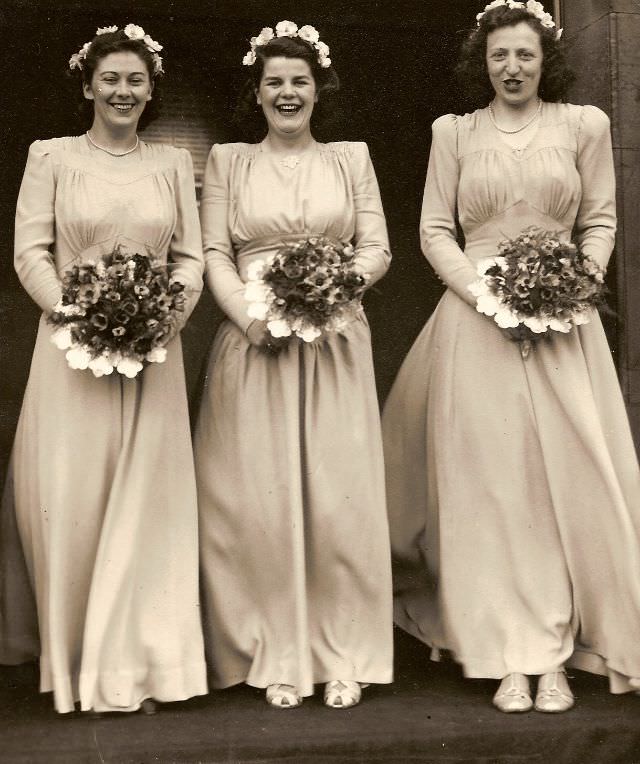
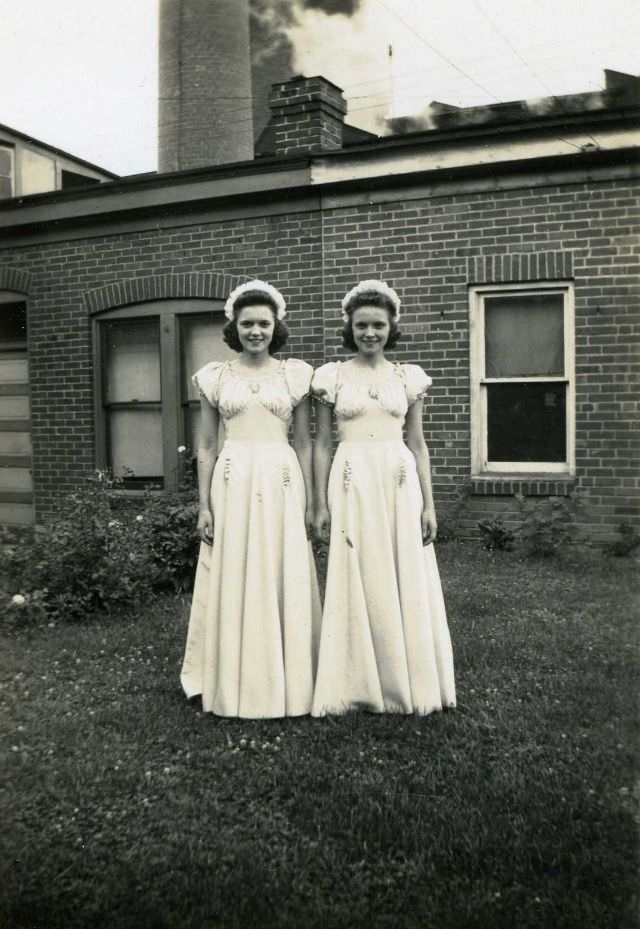
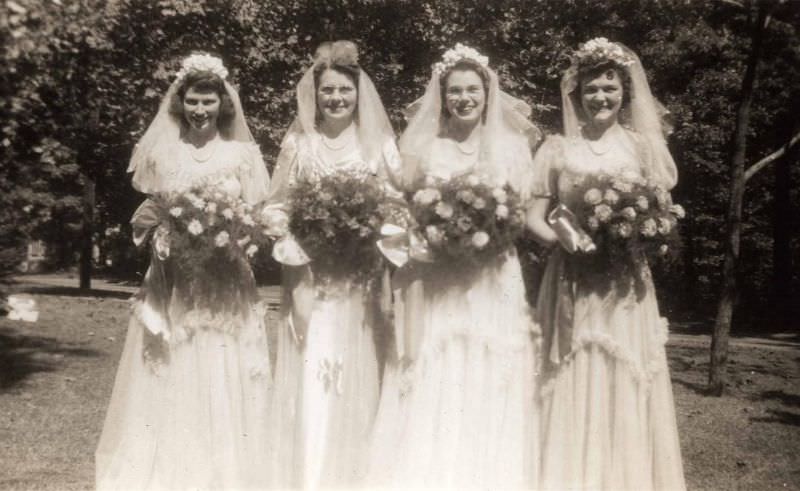
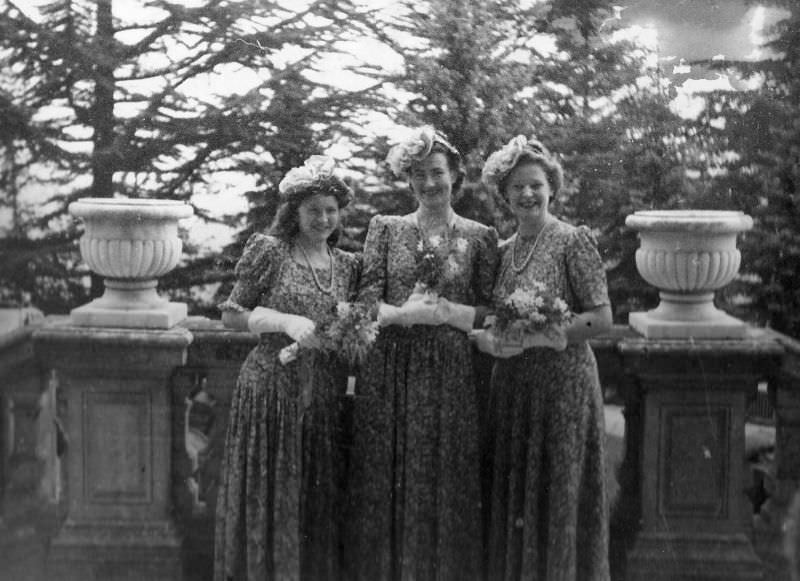
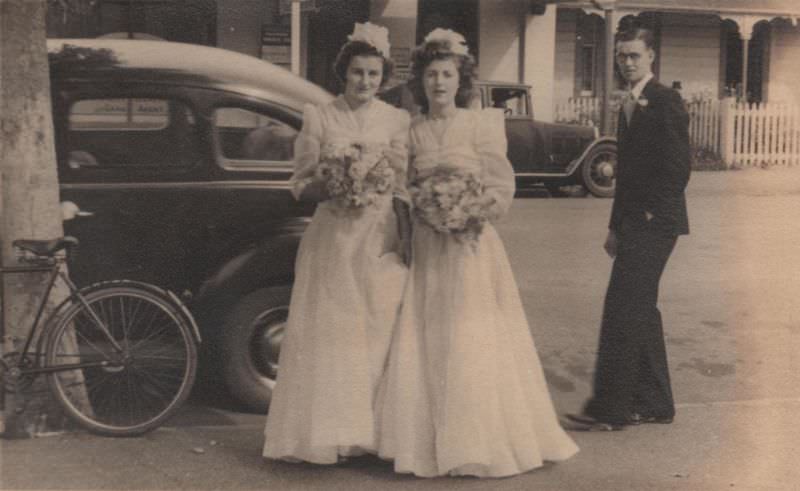
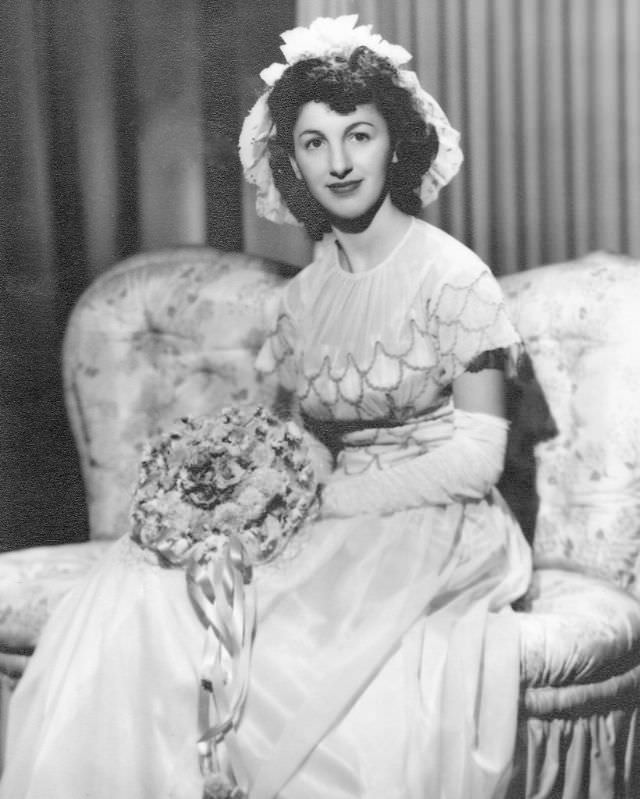
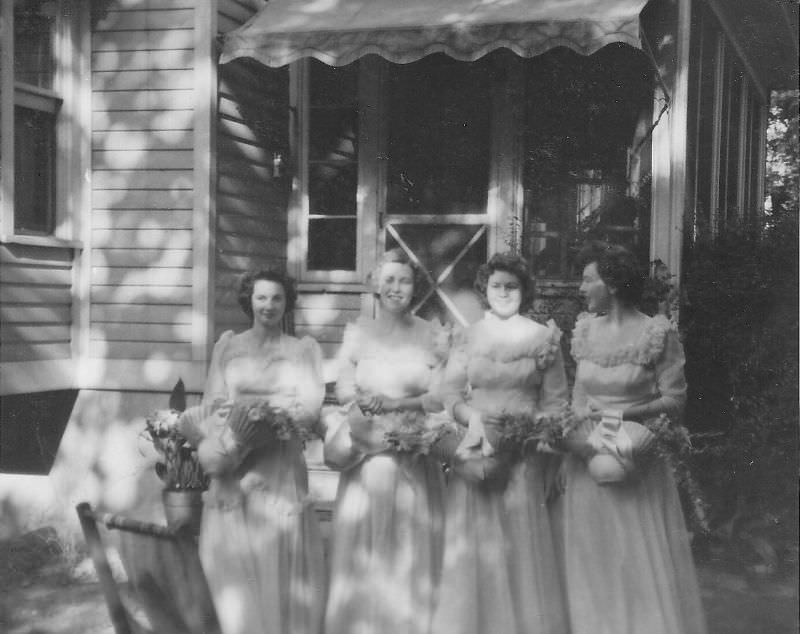
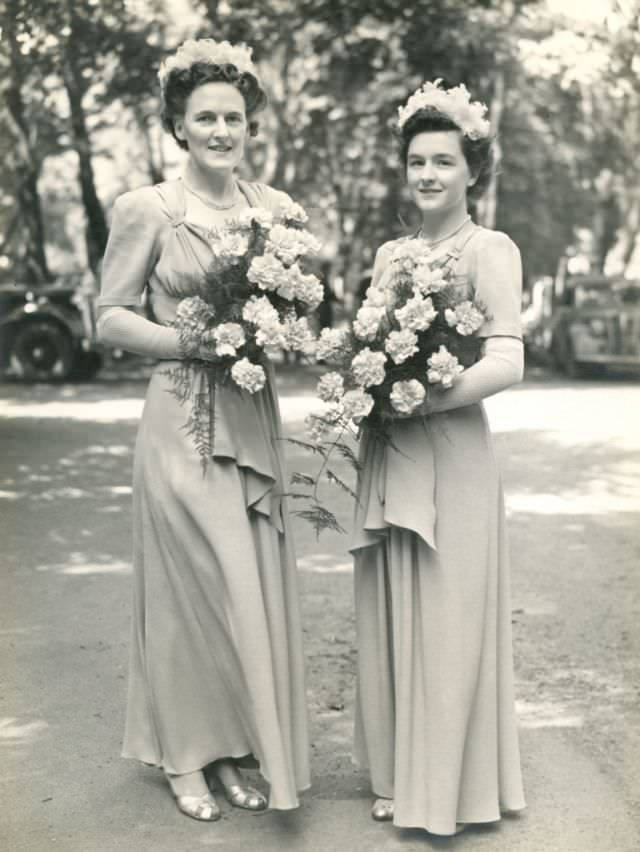
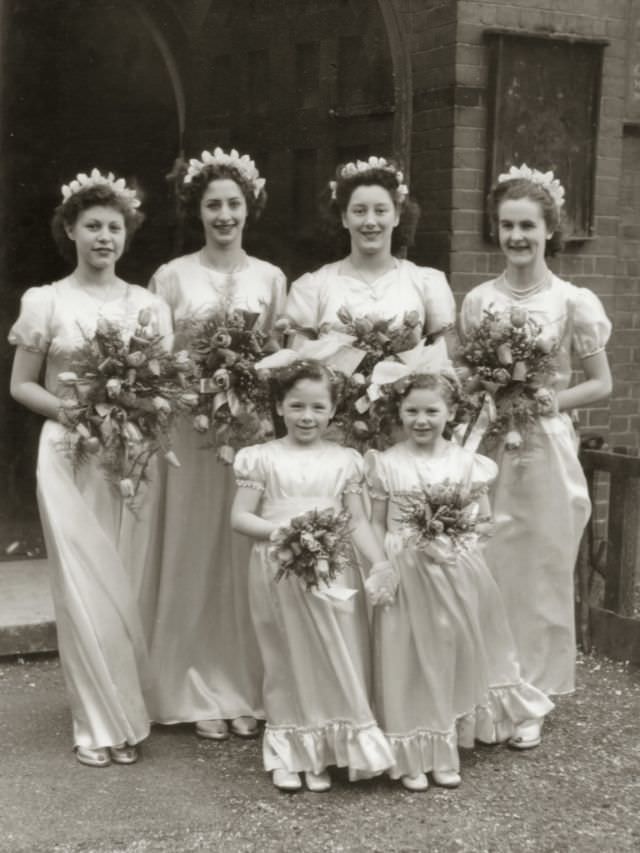
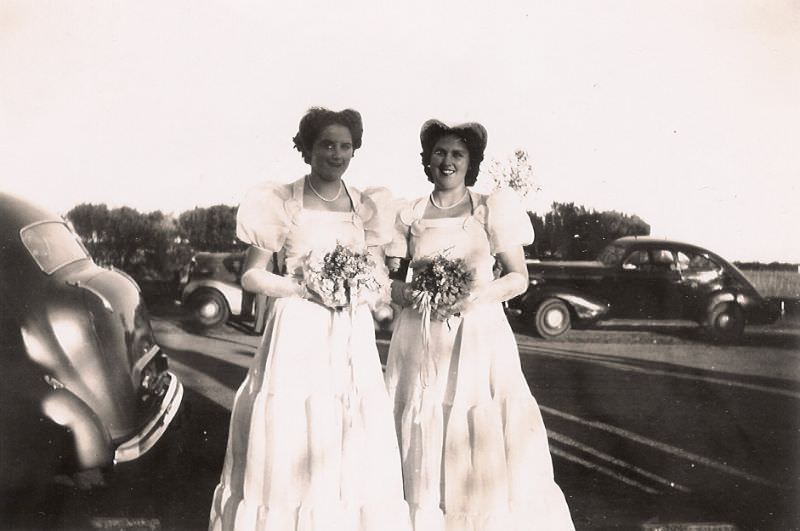
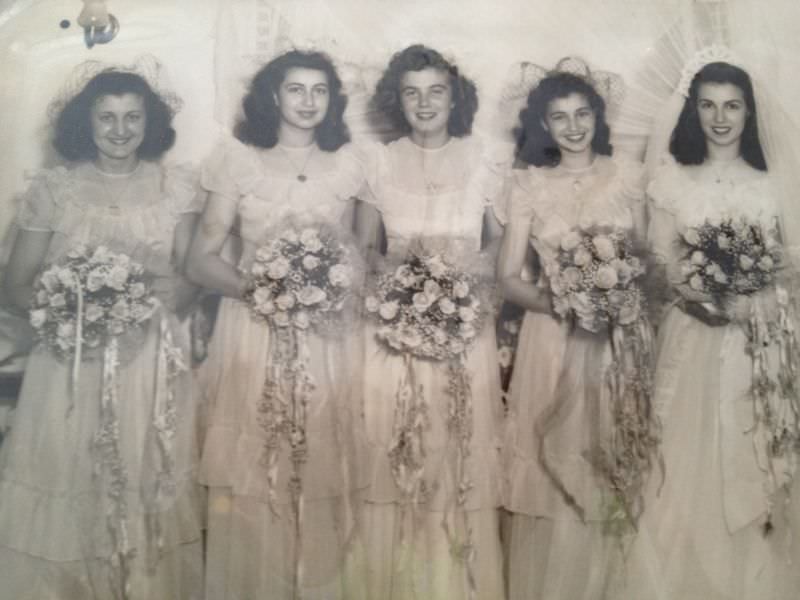
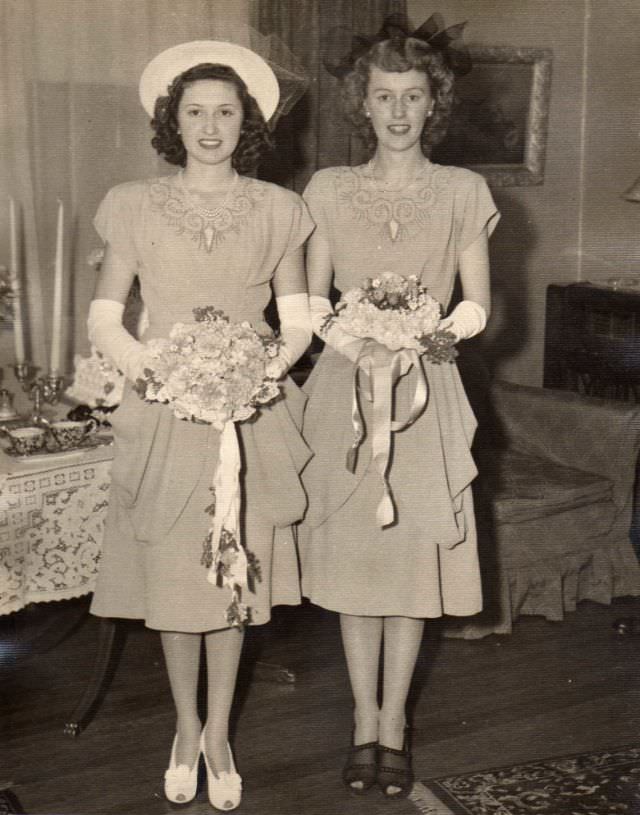
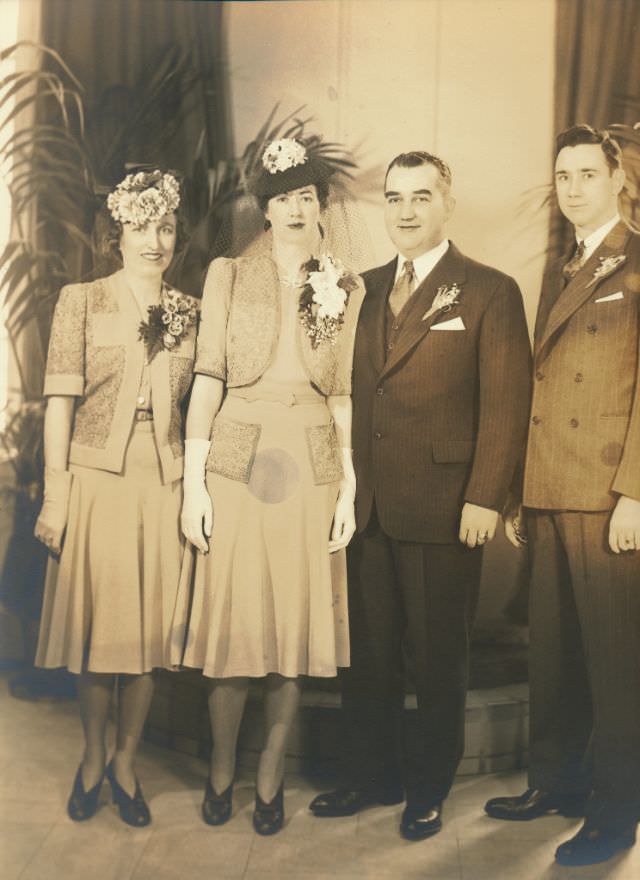
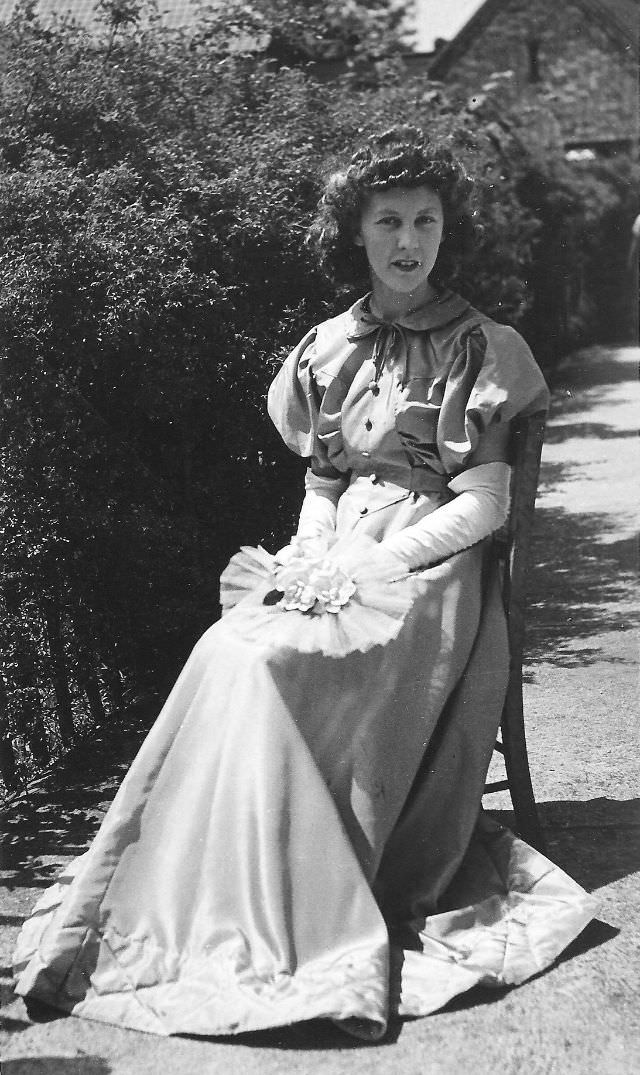
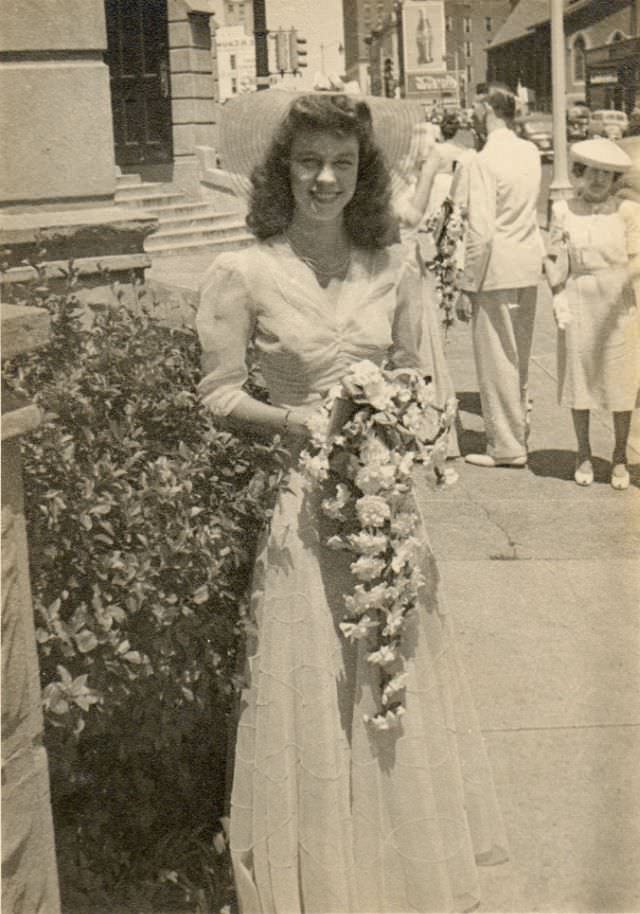
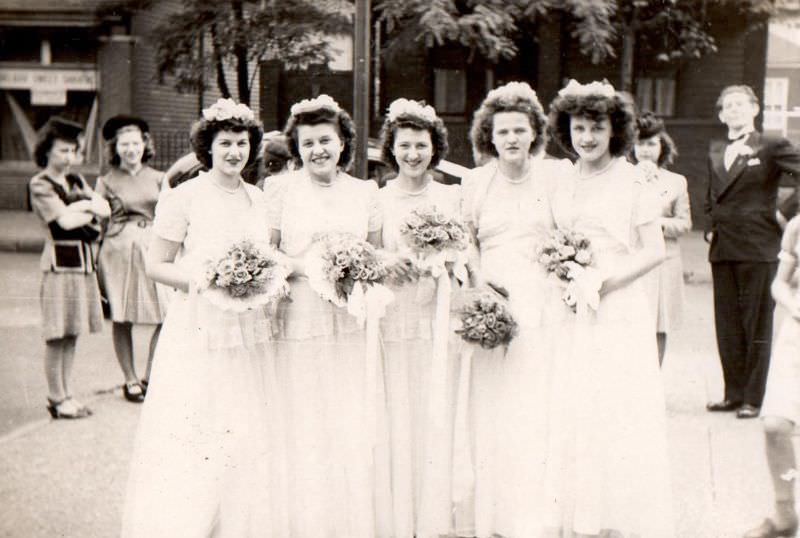
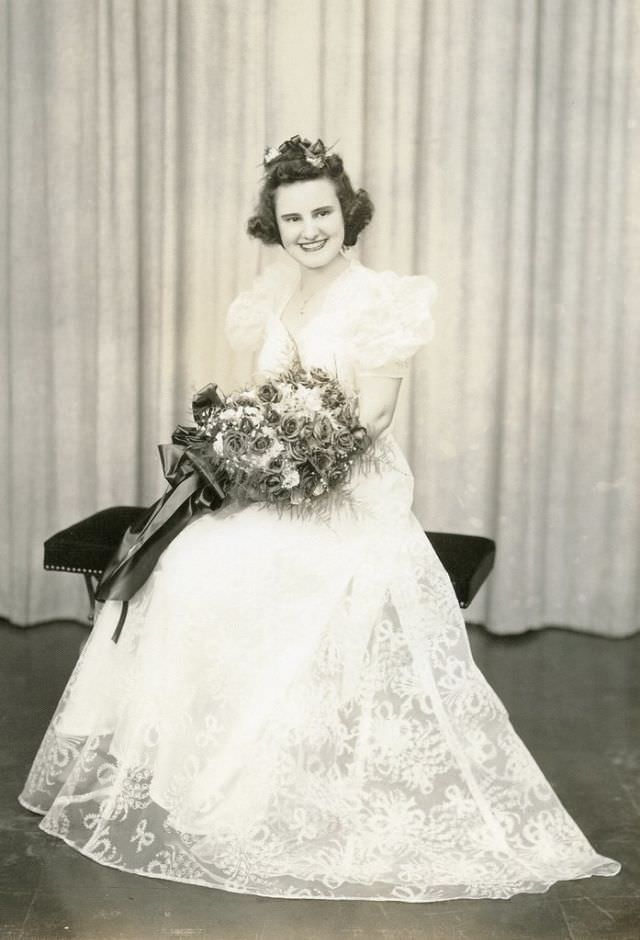
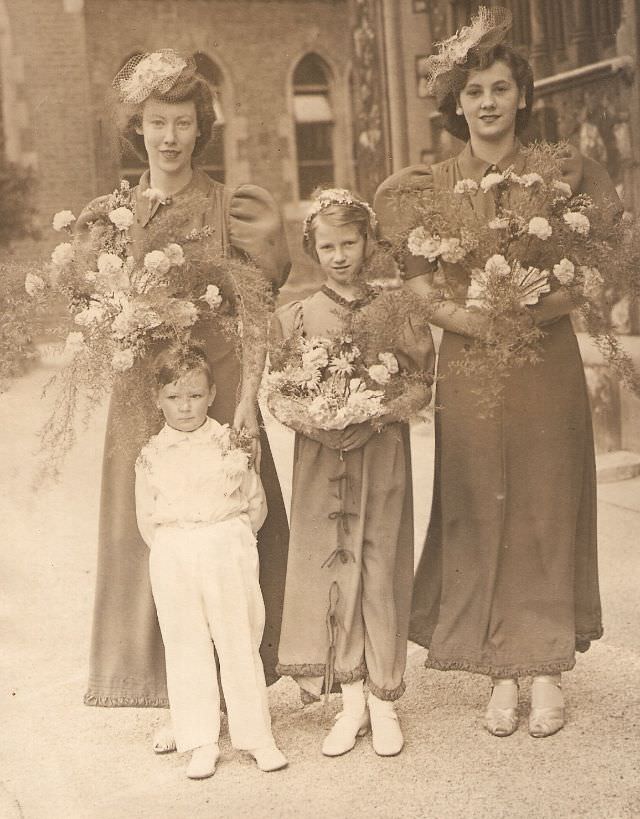
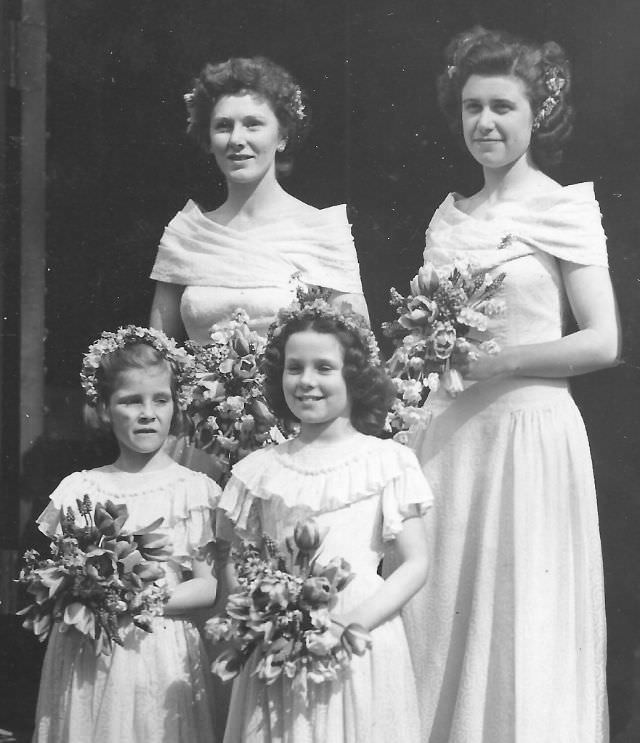
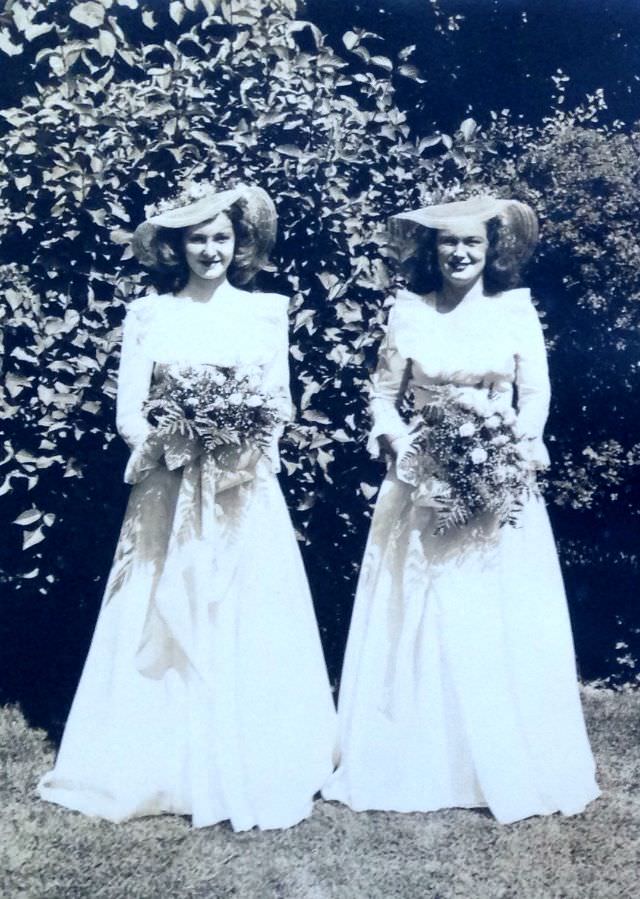
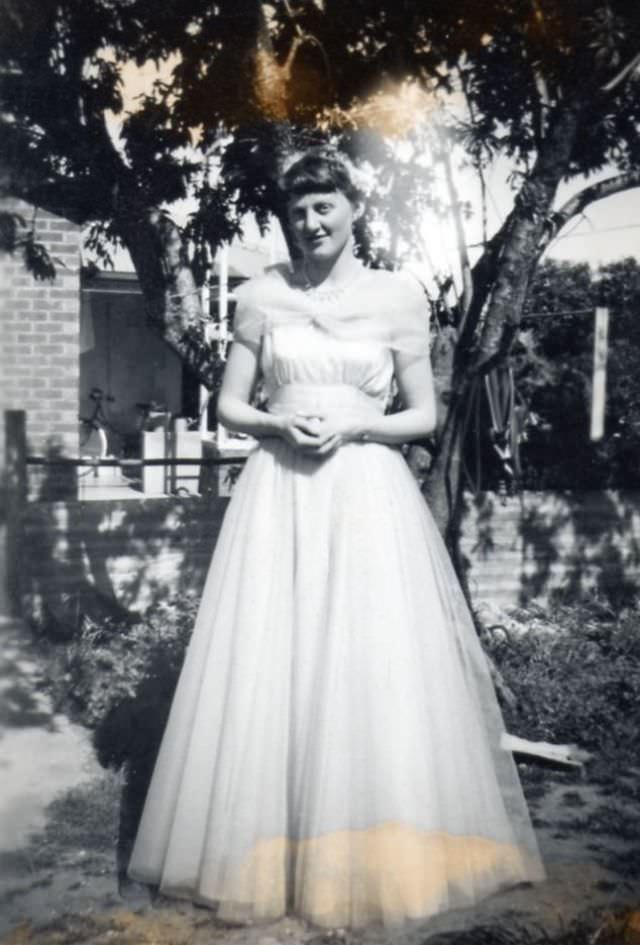
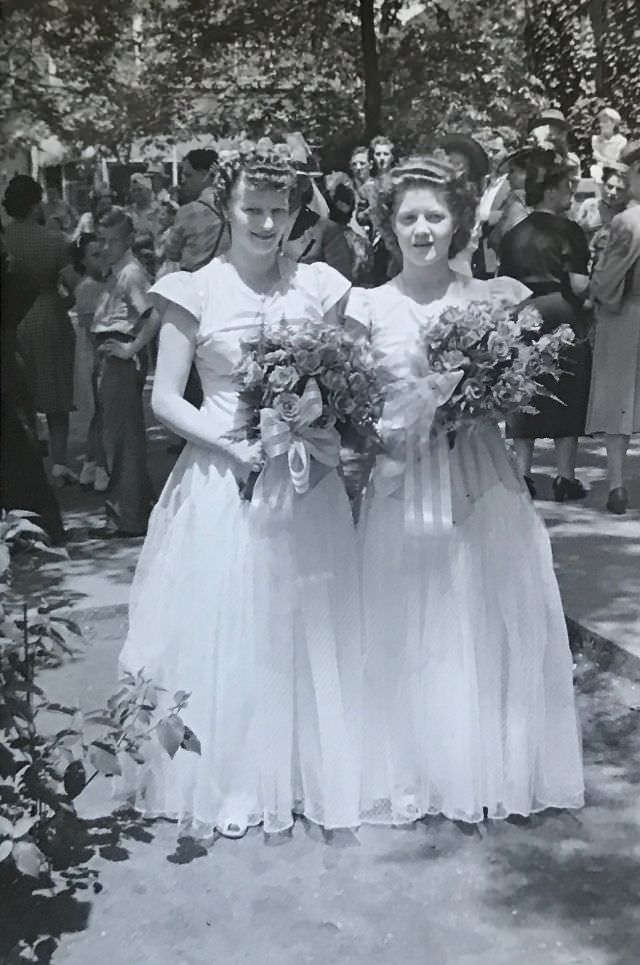
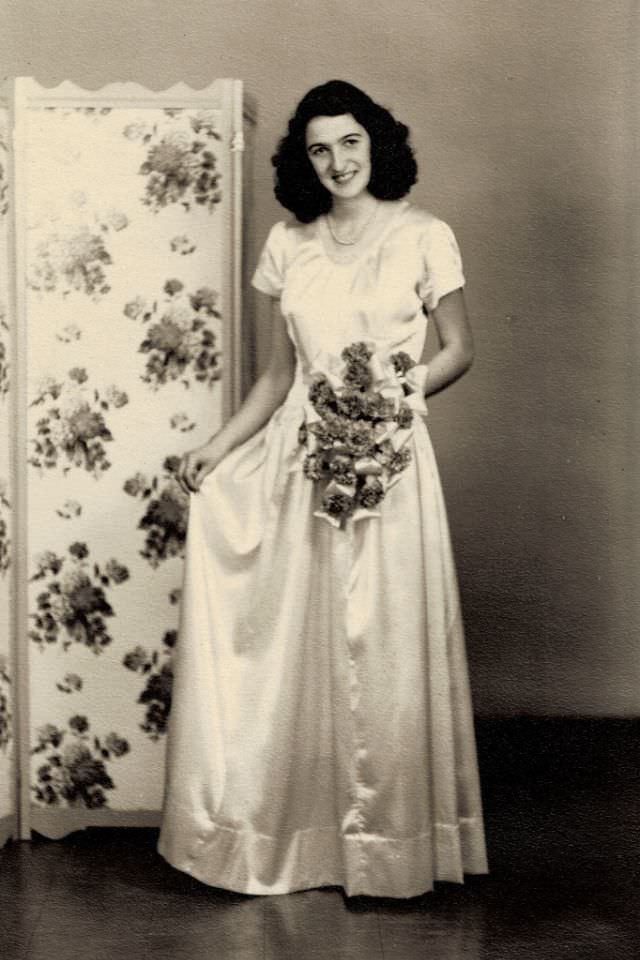
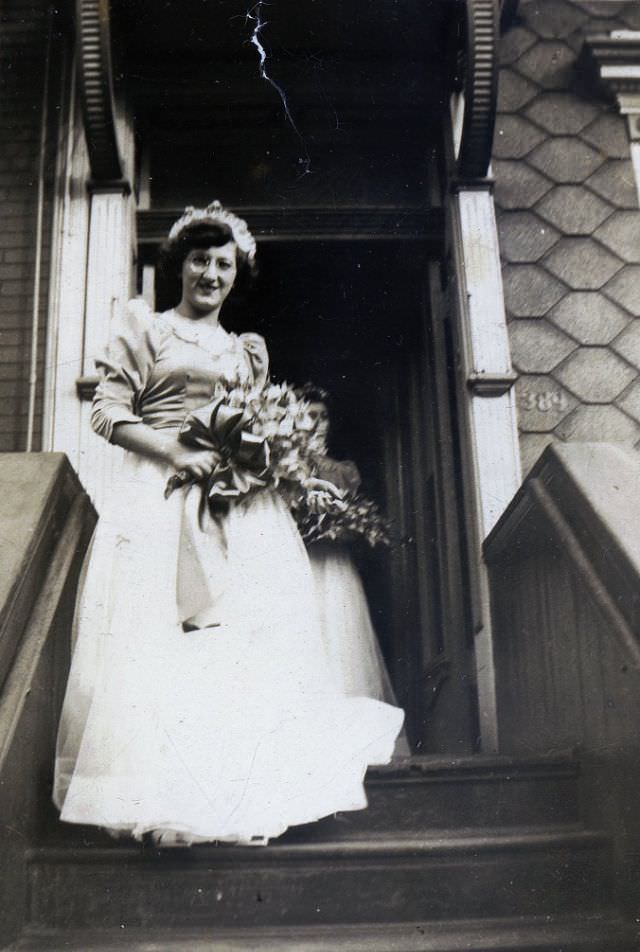
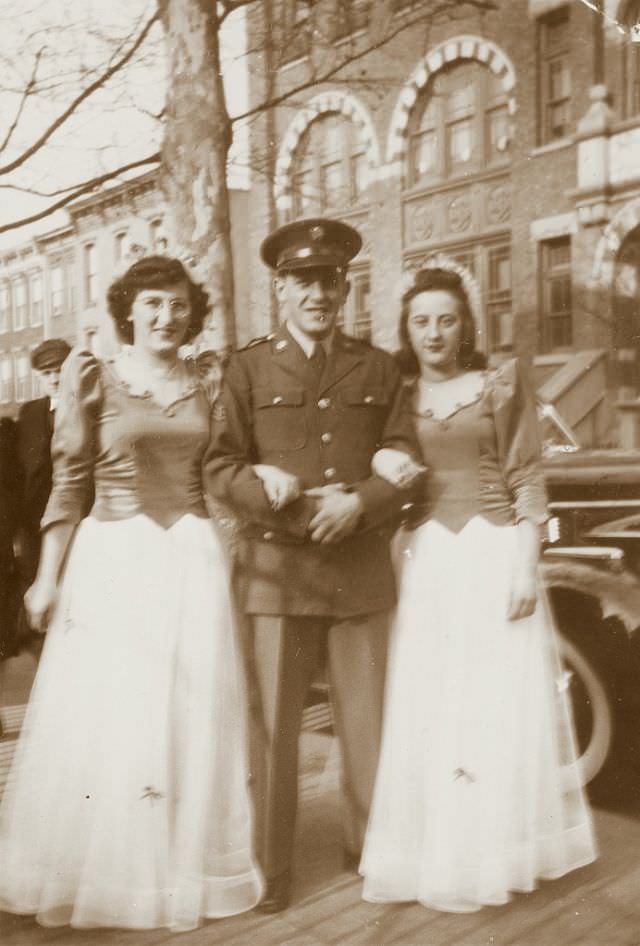
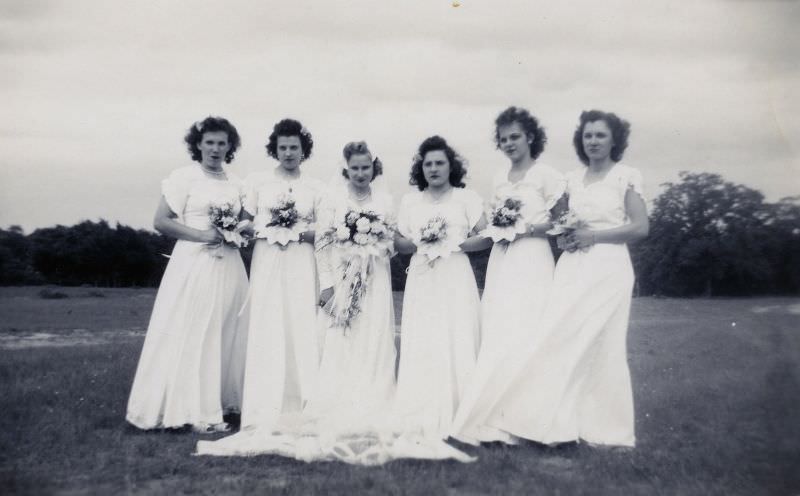
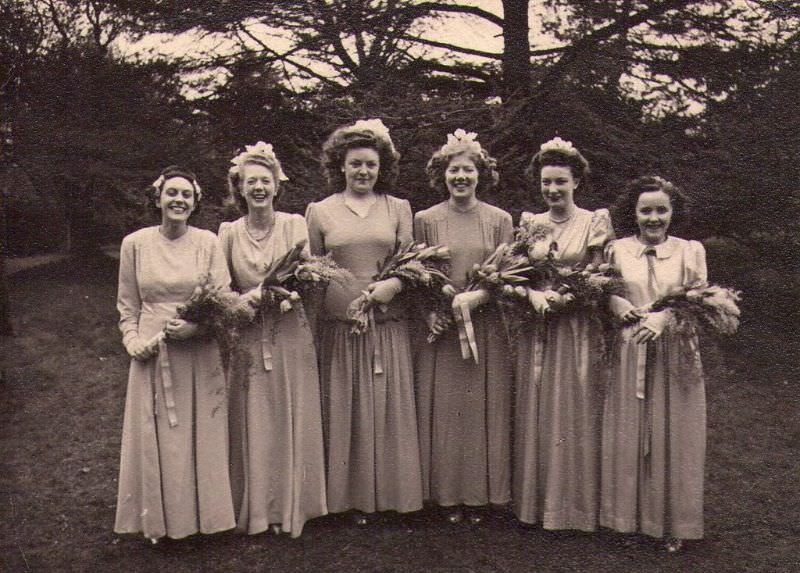
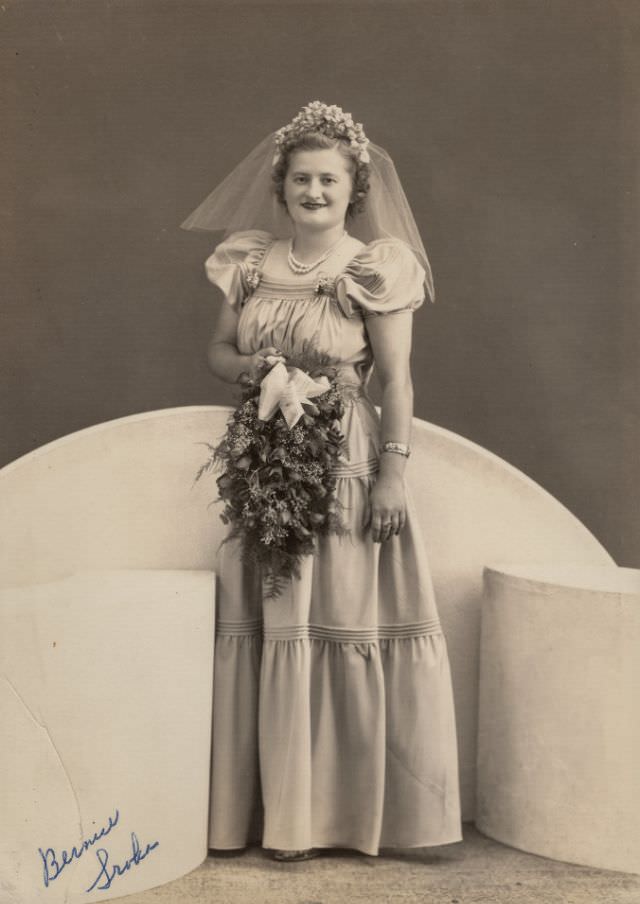
The style of bridesmaids in the early 1940s depended entirely on strict government regulations. The War Production Board issued Limitation Order L-85, which restricted the amount of fabric manufacturers could use for a single garment. As a result, bridesmaids wore dresses with hemlines that ended just below the knee, saving valuable material. The silhouette was sharp and practical rather than flowing or romantic. Designers added heavy shoulder pads to create a boxy, military-inspired shape that defined the upper body. These dresses often featured high necklines and short, puffed sleeves, minimizing the need for excess cloth while maintaining a formal appearance.
The Substitute Fabrics
Since the military required all available silk for parachutes and powder bags, bridal parties turned to synthetic alternatives. Rayon became the standard material for bridesmaids’ gowns during the war years. This fabric mimicked the sheen of silk but felt heavier and draped differently against the body. It took dye well, allowing for vibrant color choices like dusty rose, cornflower blue, and mustard yellow. Velvet was also a popular choice for winter weddings, though it was often used sparingly for trim or bodices due to its cost. Because these dresses were made from durable, practical fabrics with simple cuts, women frequently dyed them black or navy after the wedding to wear as regular cocktail attire.
Read more
Hats and Headpieces
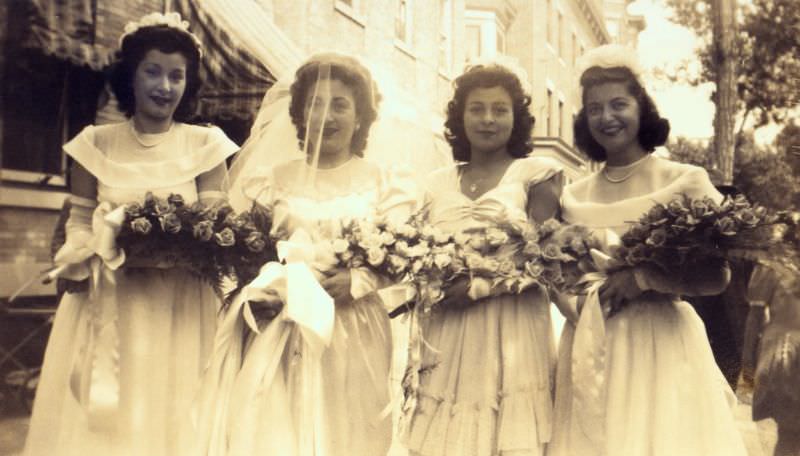
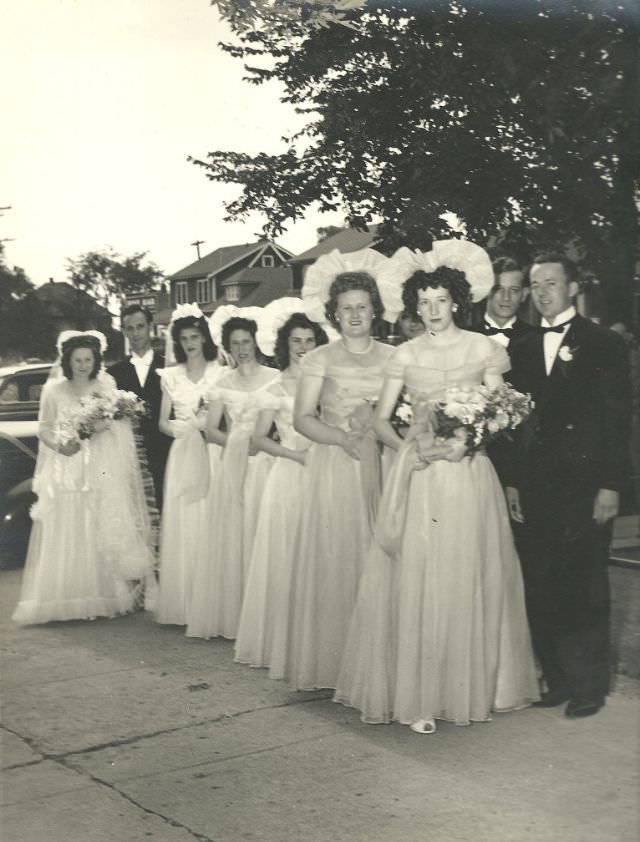
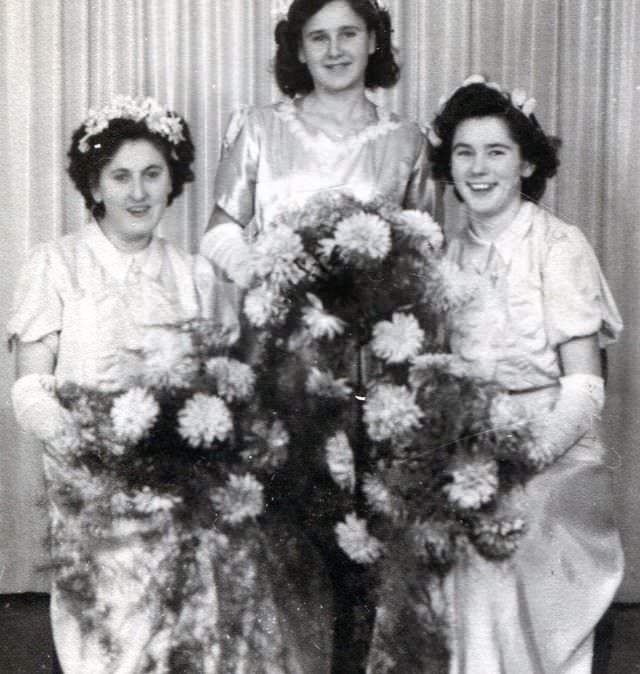
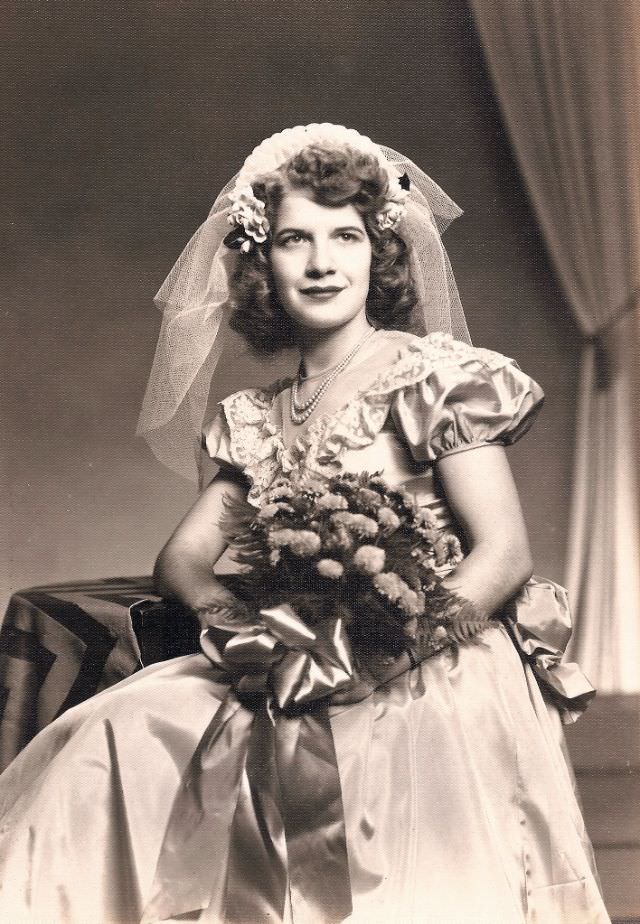
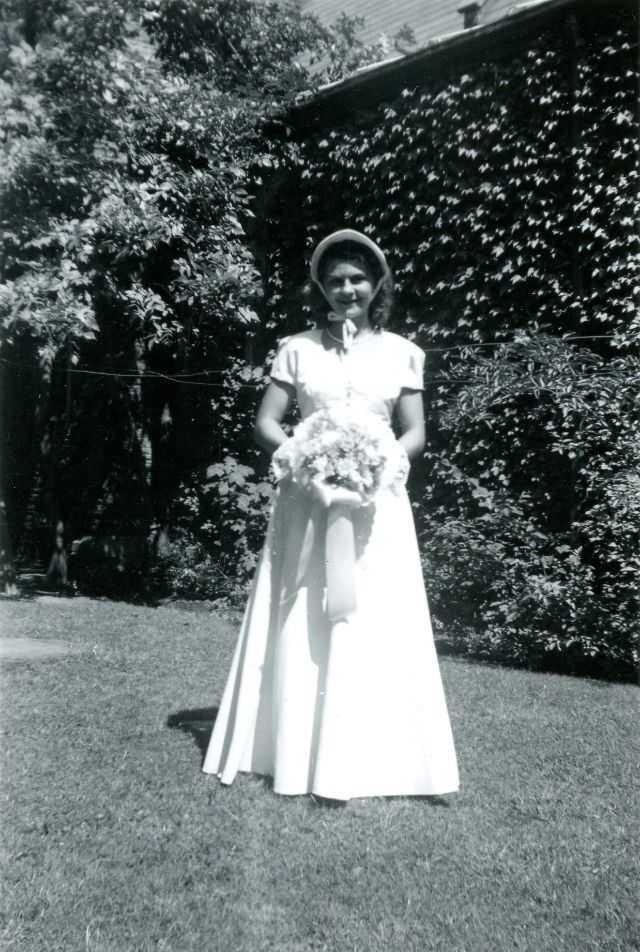
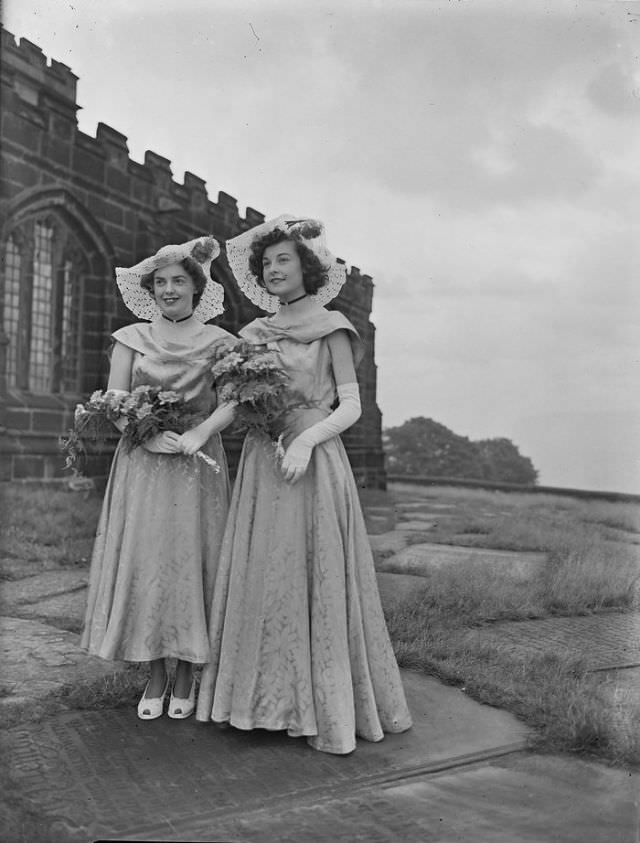
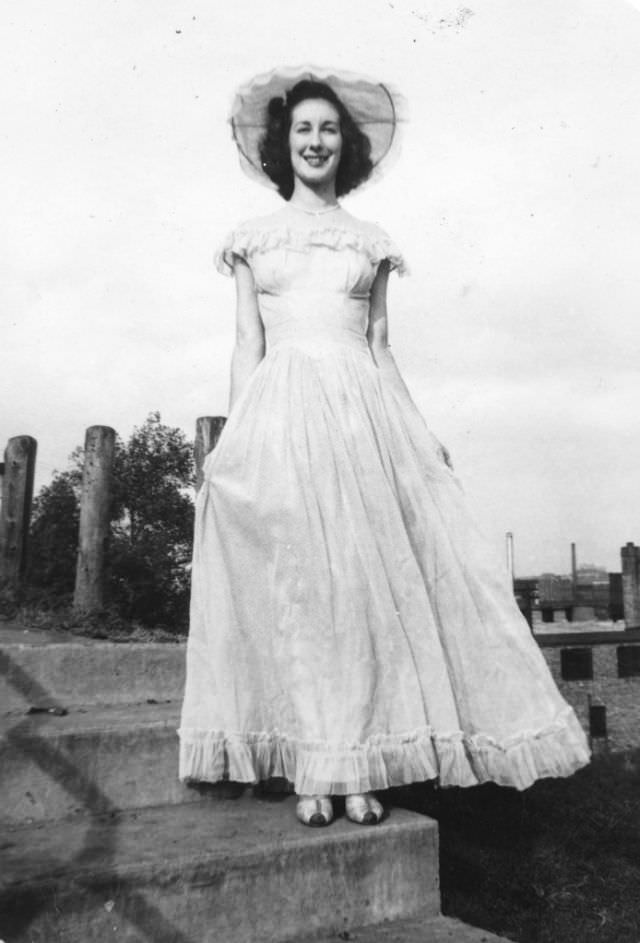
While fabric for dresses was rationed, millinery supplies were not. Bridesmaids compensated for their austere gowns with elaborate and oversized headwear. Large, wide-brimmed hats tipped to one side were a common sight in wedding photographs. Other popular options included “Juliet caps,” which were small, mesh caps adorned with faux pearls or glass beads that hugged the back of the head. Floral crowns made from wax flowers or stiffened fabric framed the face. Short veils often attached to these headpieces, adding volume and drama without breaking the rules regarding fabric consumption.
The Post-War Shift
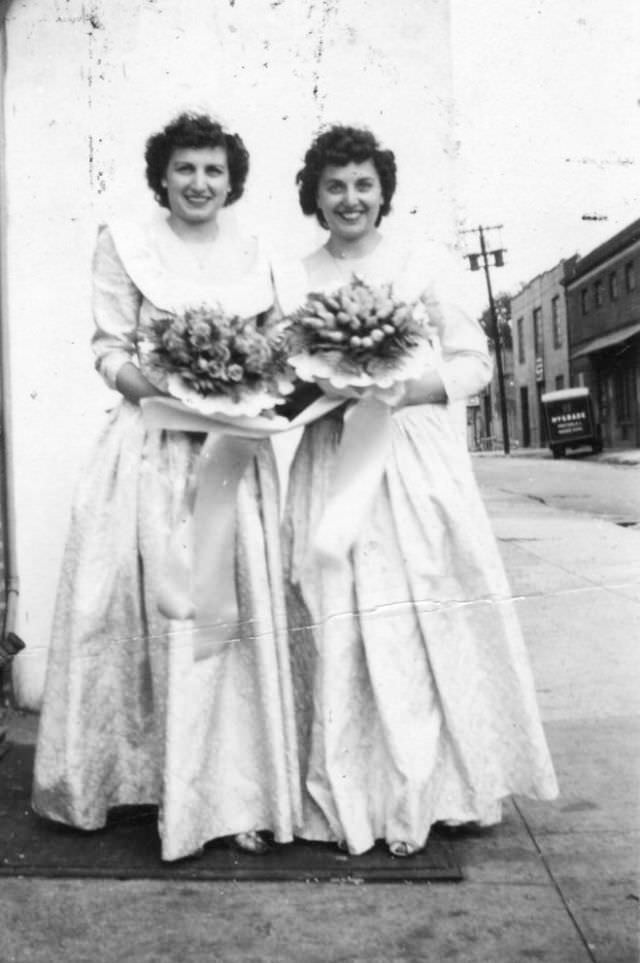
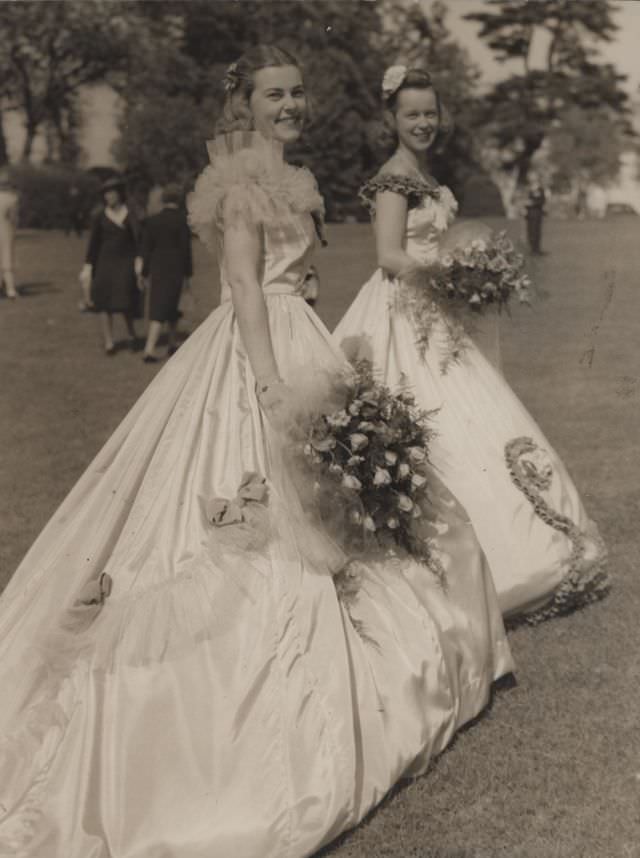
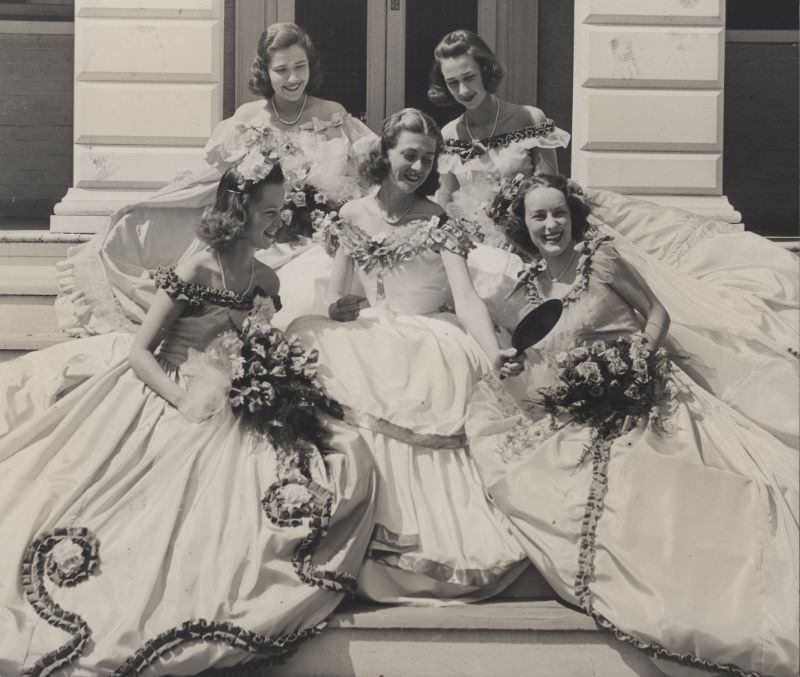
The fashion landscape changed instantly in 1947 with the arrival of Christian Dior’s “New Look.” Once the war ended and rationing eased, the silhouette of the bridesmaid dress transformed. Skirts dropped from the knee to the ankle and became immensely full, requiring yards of taffeta or satin. The sharp, square shoulders of the war years vanished, replaced by soft, rounded sloping shoulders and cinched waists. Pastel colors like mint green and lilac returned to fashion, signaling a move away from the practical dark tones of the early decade. By the end of the 1940s, the bridal party looked entirely different, trading the sensible rayon shifts of the war for expansive, romantic ballgowns.