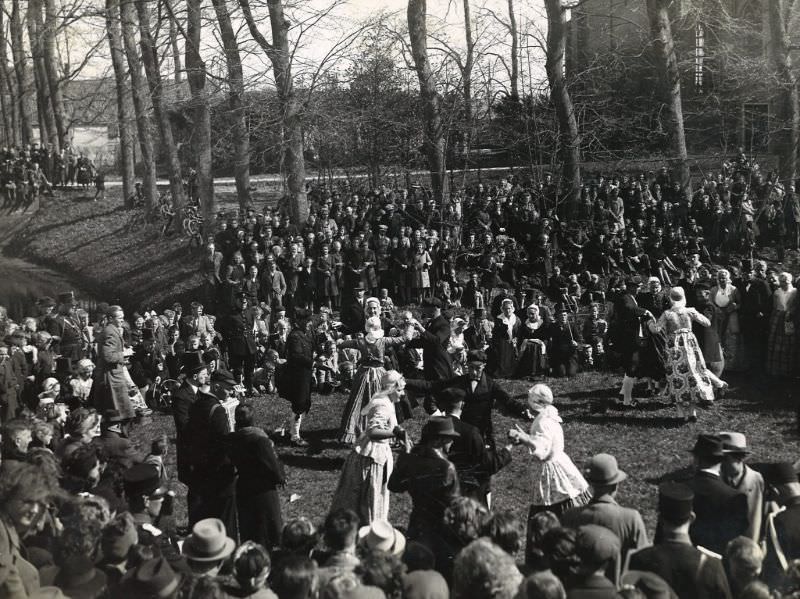
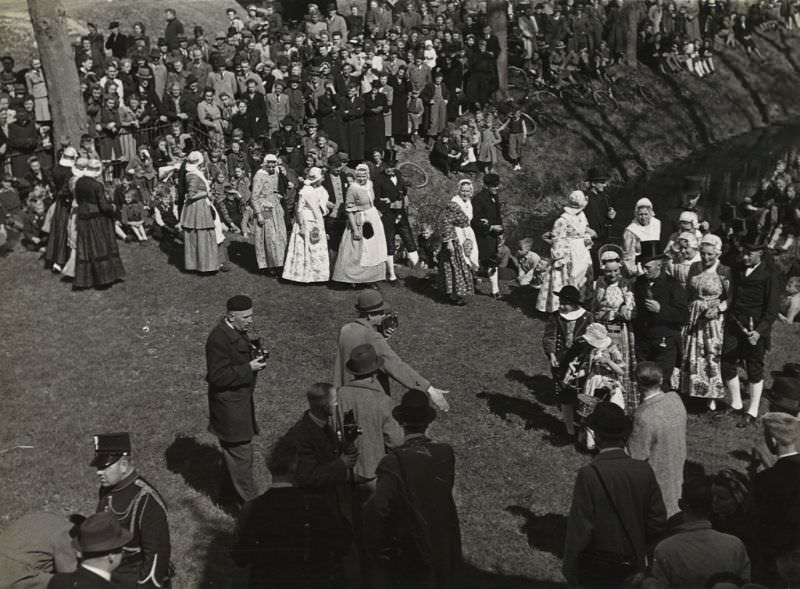
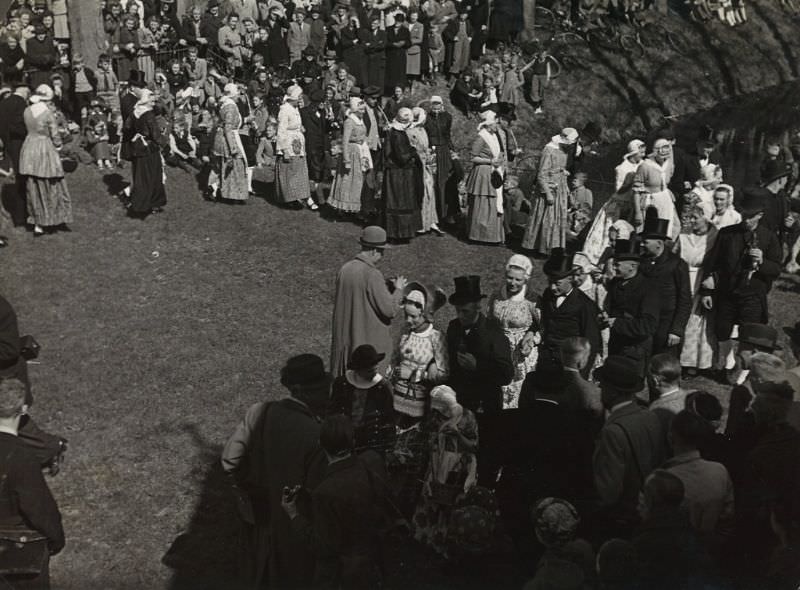
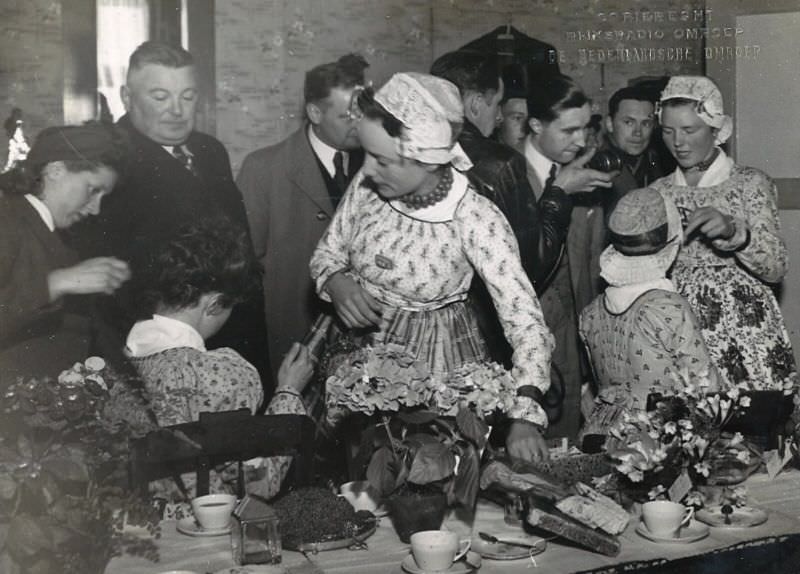
On April 26, 1942, the small village of Stompetoren in the Schermer region of the Netherlands drew an enormous crowd. Germany had occupied the Netherlands for two years, yet that morning, the streets filled not with soldiers or fear, but with curious onlookers, reporters, and as many as 80 photographers. They had all come to witness something rare — a wedding conducted entirely in the old West Frisian tradition.
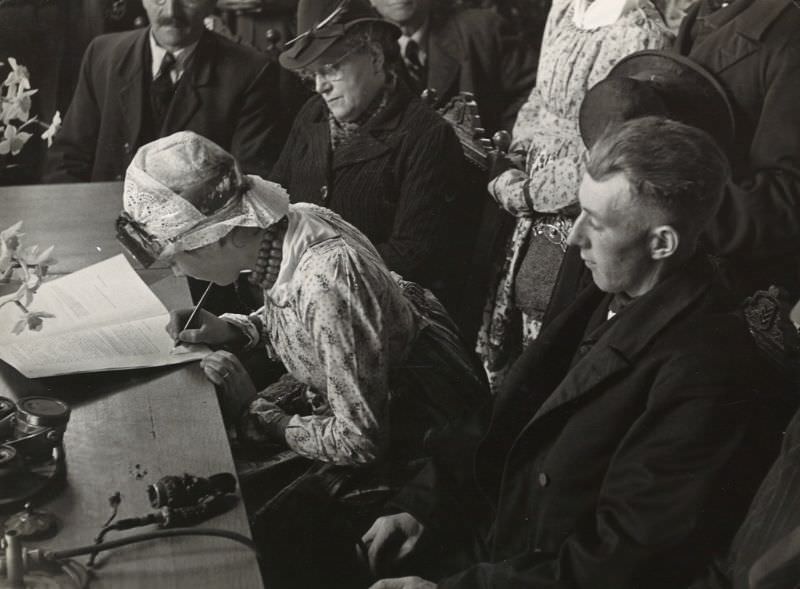
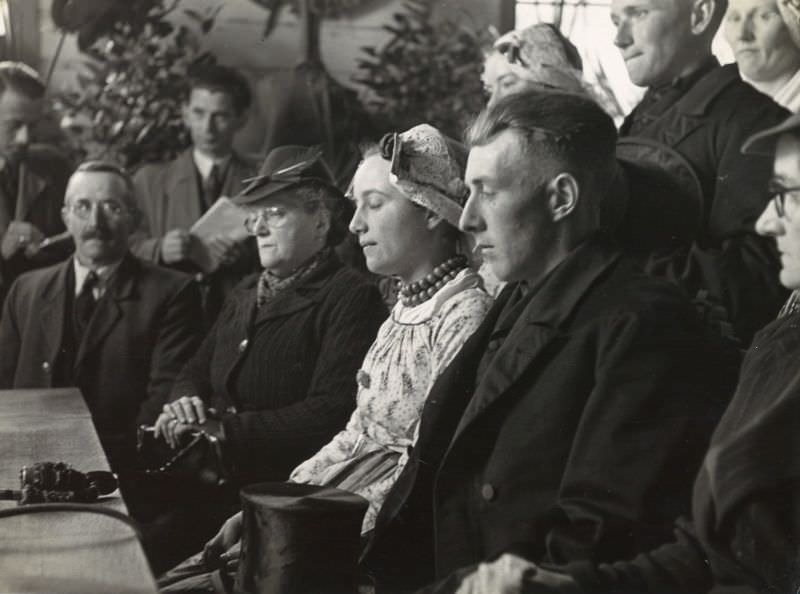
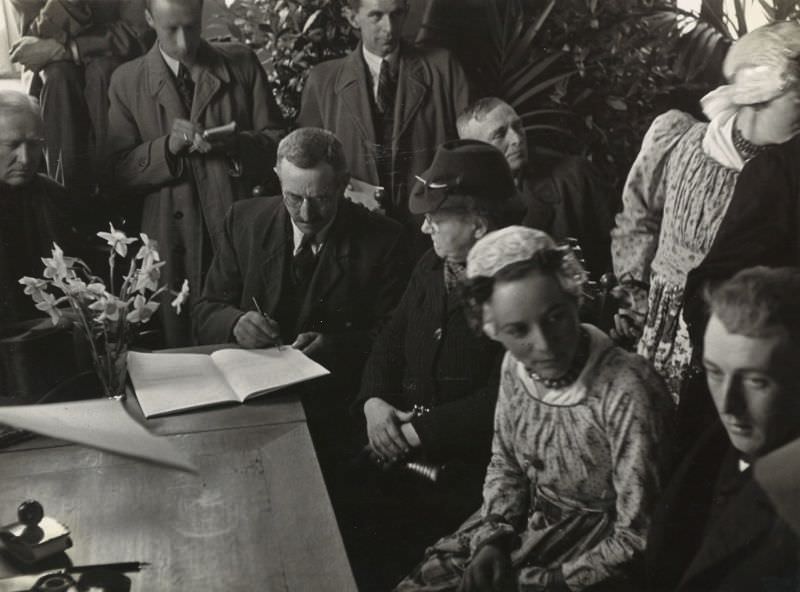
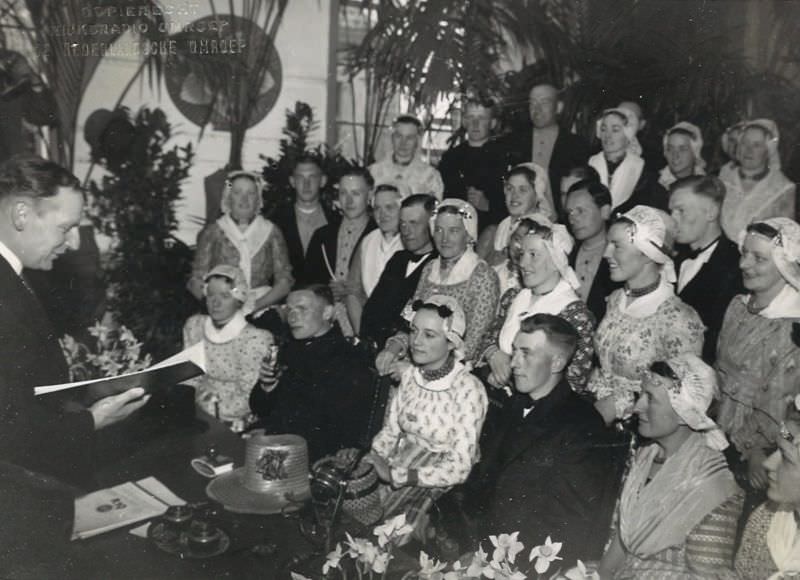
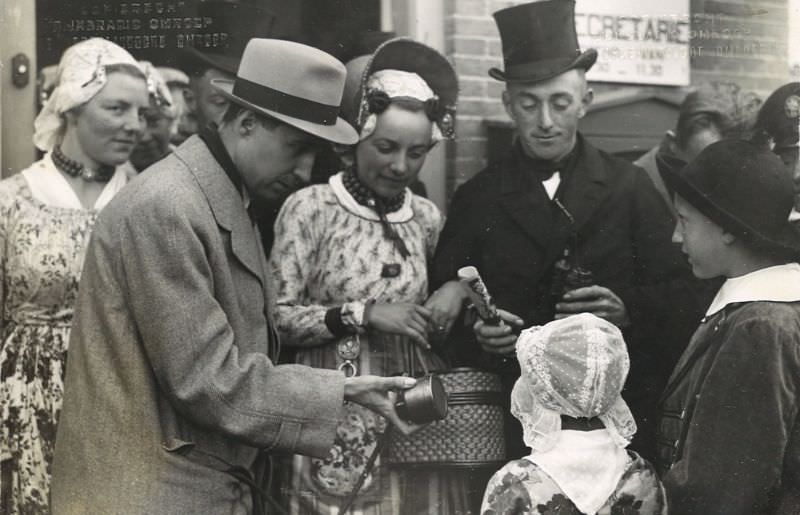
The couple at the center of it all was Geertje Elisabeth Helder, 23, and Piet Korver, 24. Both were born and raised in the Schermer polder and came from cattle ranching families deeply rooted in the land. The ceremony took place in the old school building, which was serving as a temporary home for the municipal secretariat at the time.
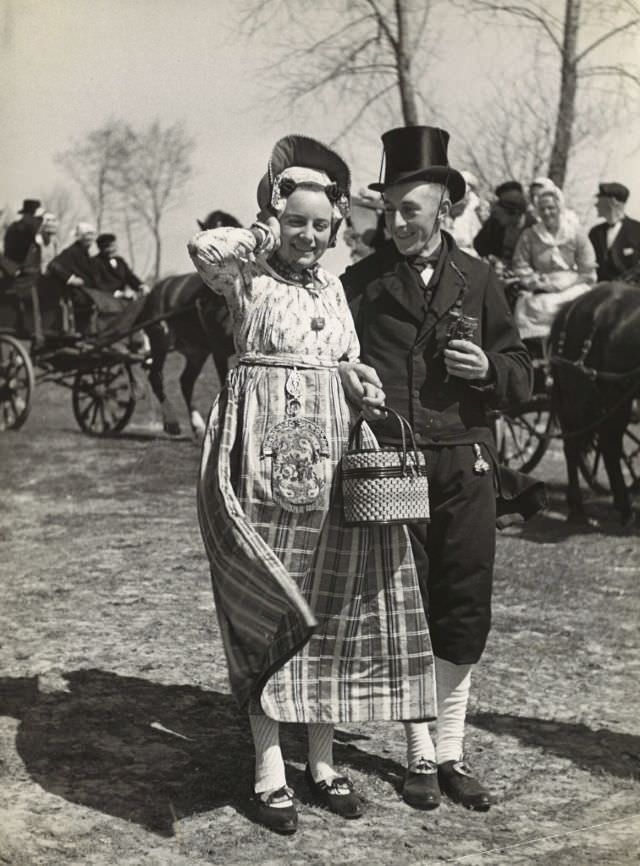
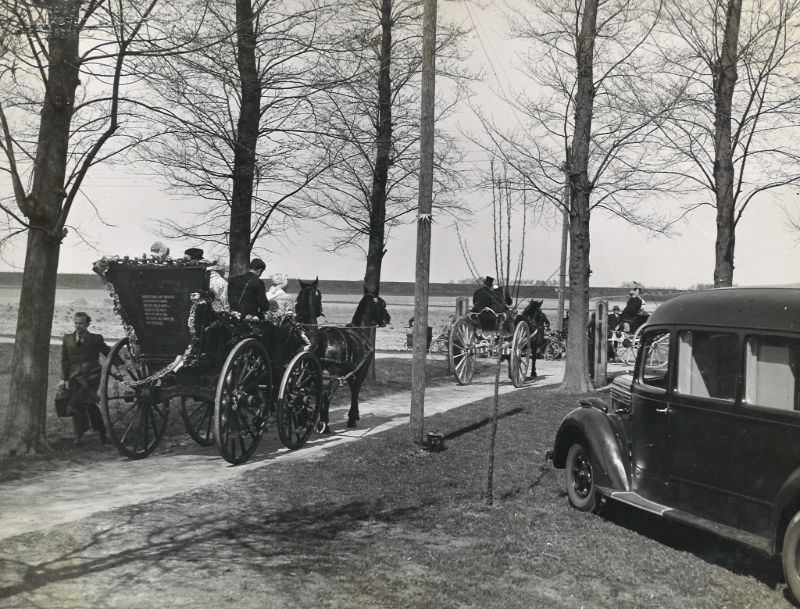
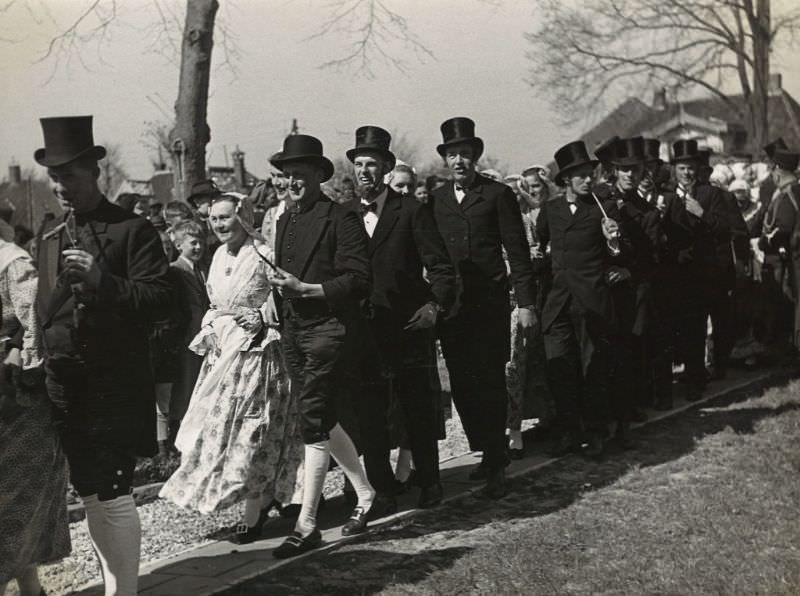
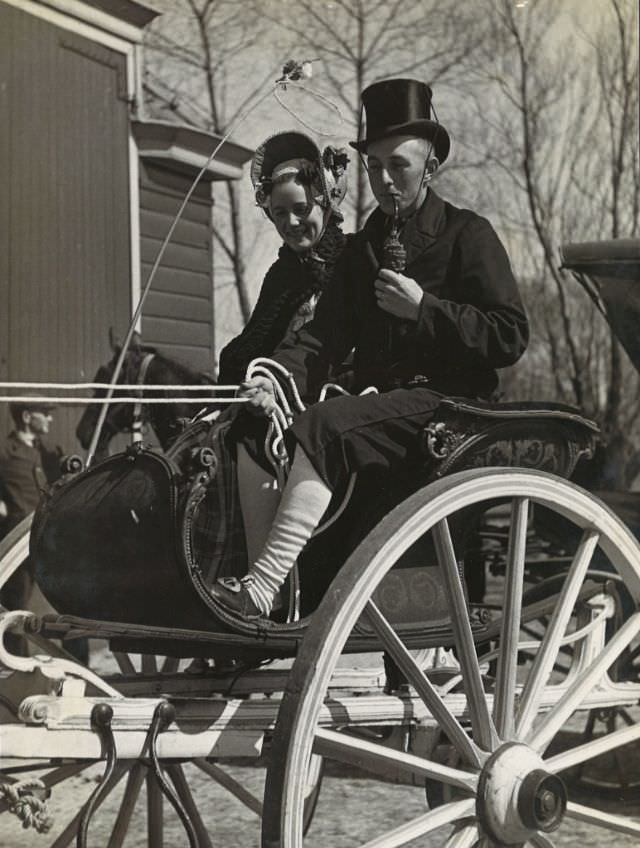
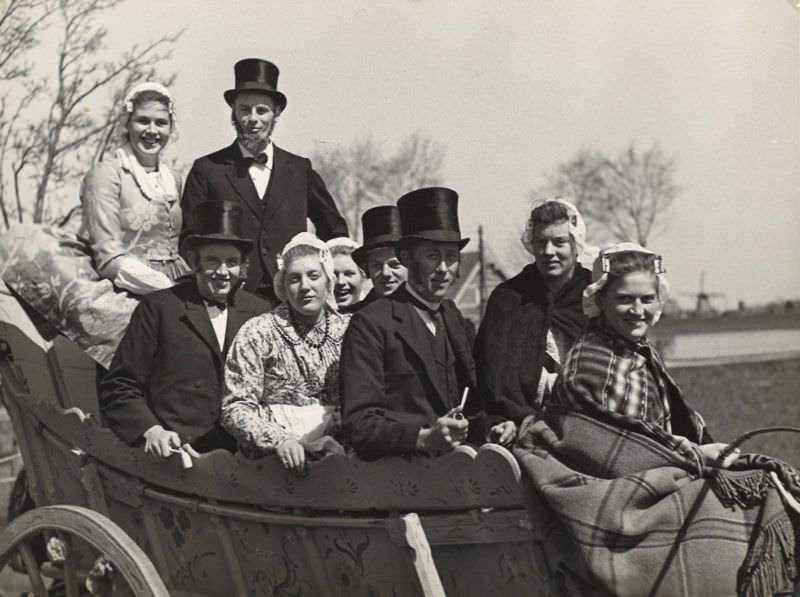
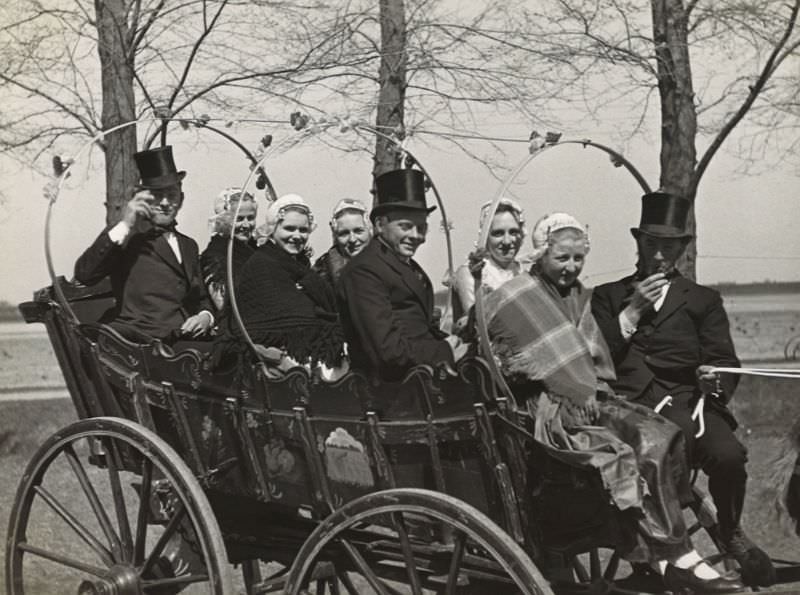
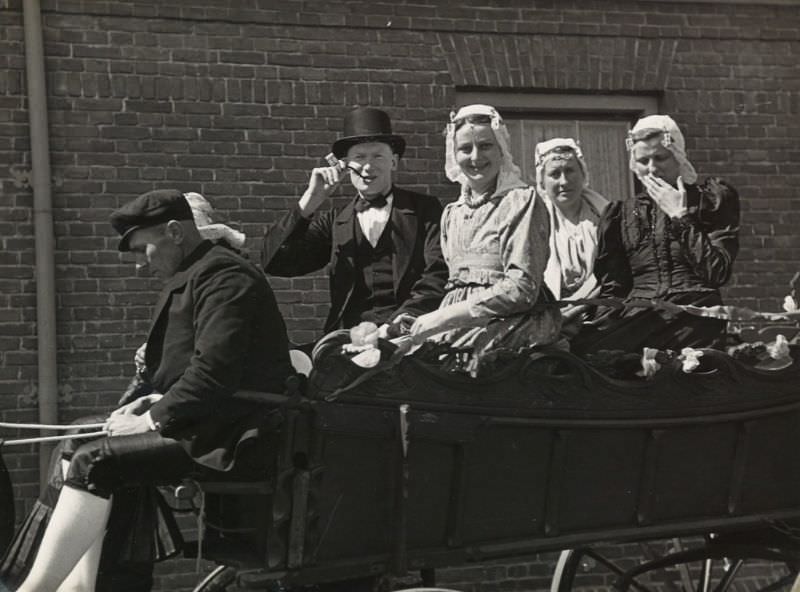
The event was organized at the initiative of Jacob Posch, the mayor of Oterleek. He wanted the wedding to revive the old West Frisian customs that had largely faded from everyday life. Every detail was carefully arranged — from the traditional costumes worn by the couple and many of their guests, to the old horse-drawn carriages that carried the wedding party through the village.
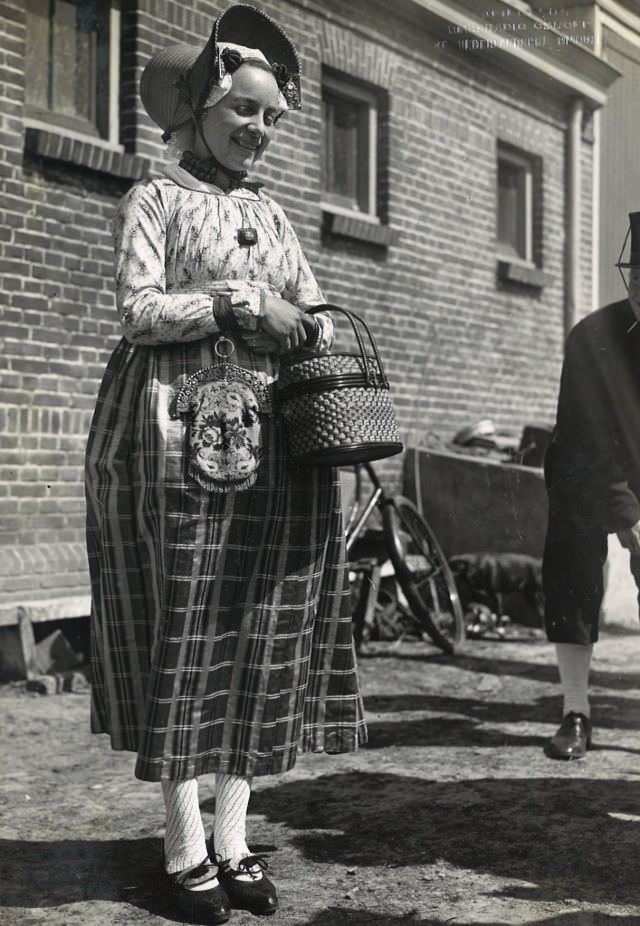
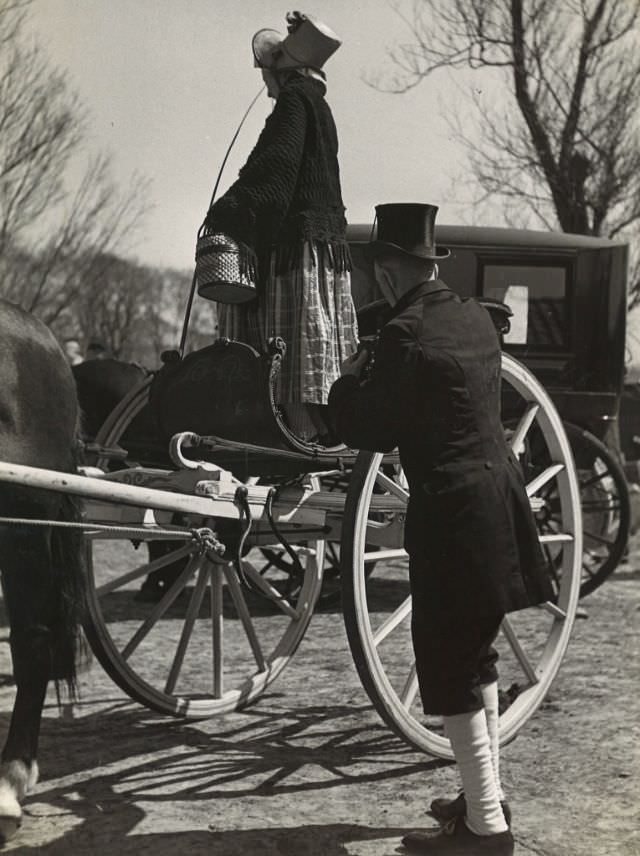
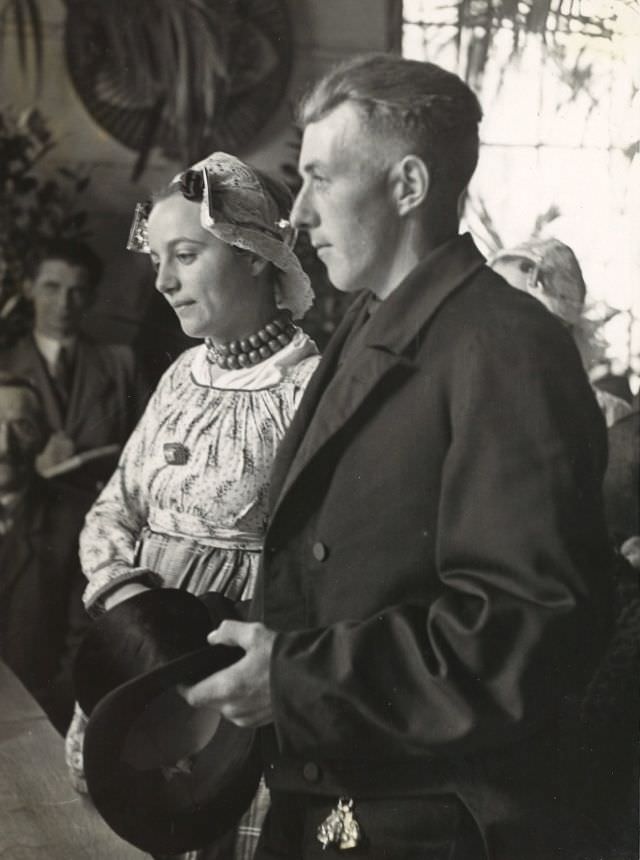
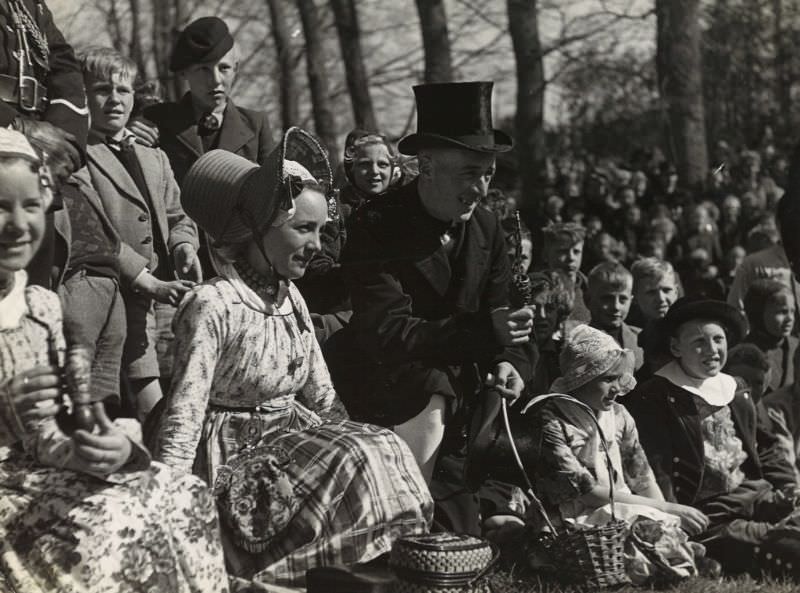
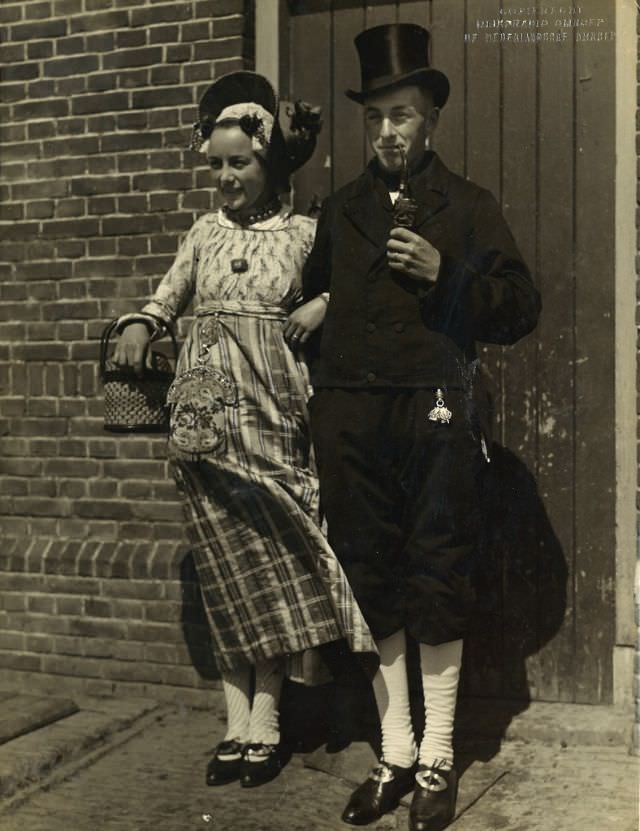
Geertje stood out immediately. She wore a traditional West Frisian costume complete with a golden iron — a distinctive piece of head jewelry that was once a mark of regional identity for women in this part of the Netherlands. Her outfit was not a reproduction. These were real garments tied to real heritage.
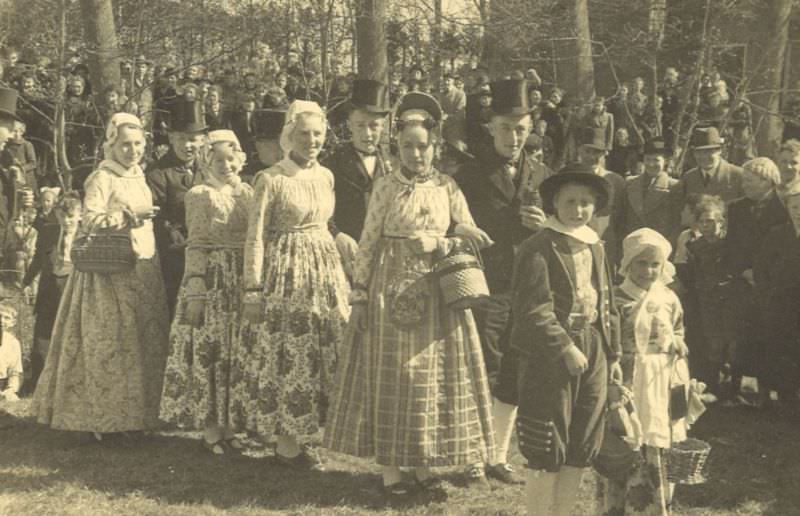
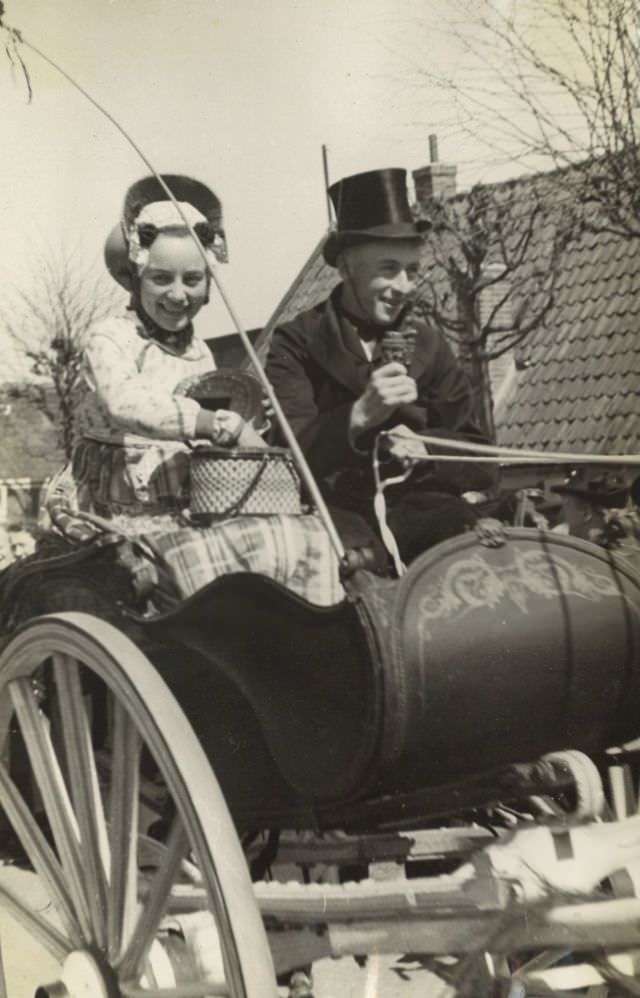
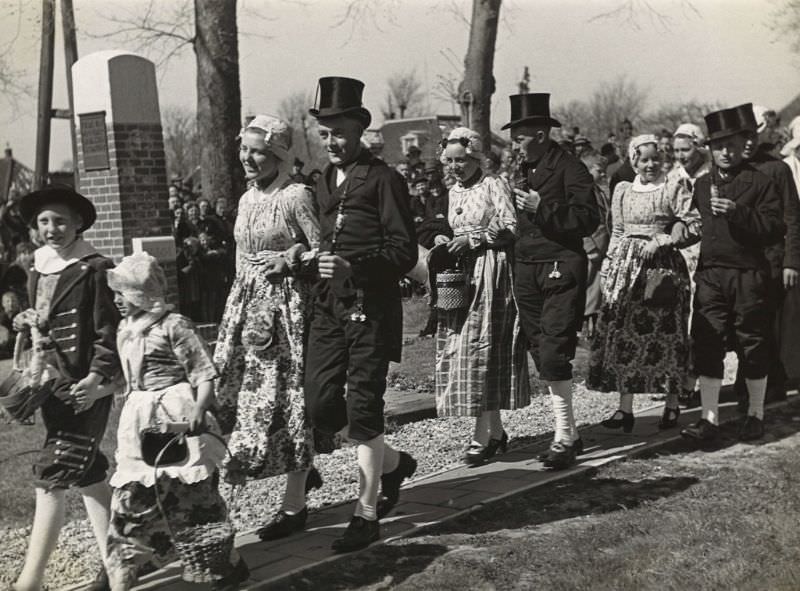
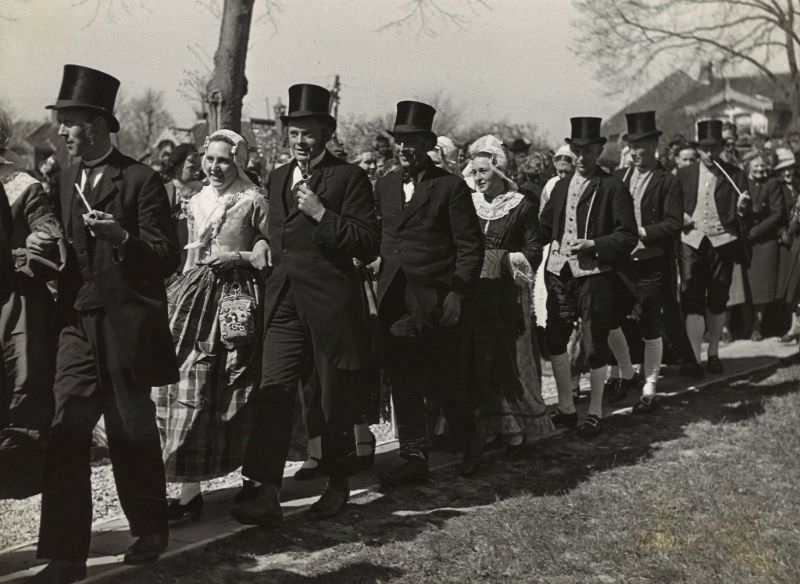
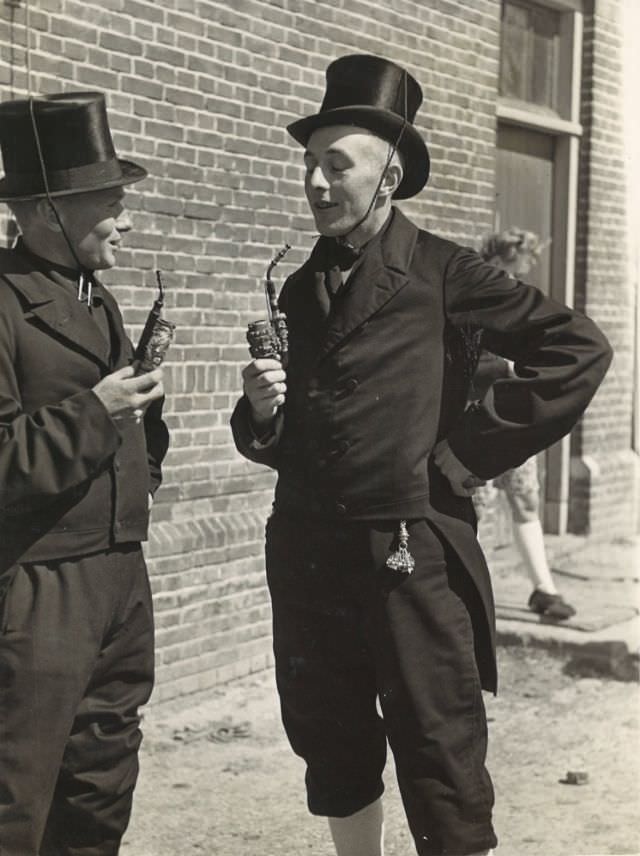
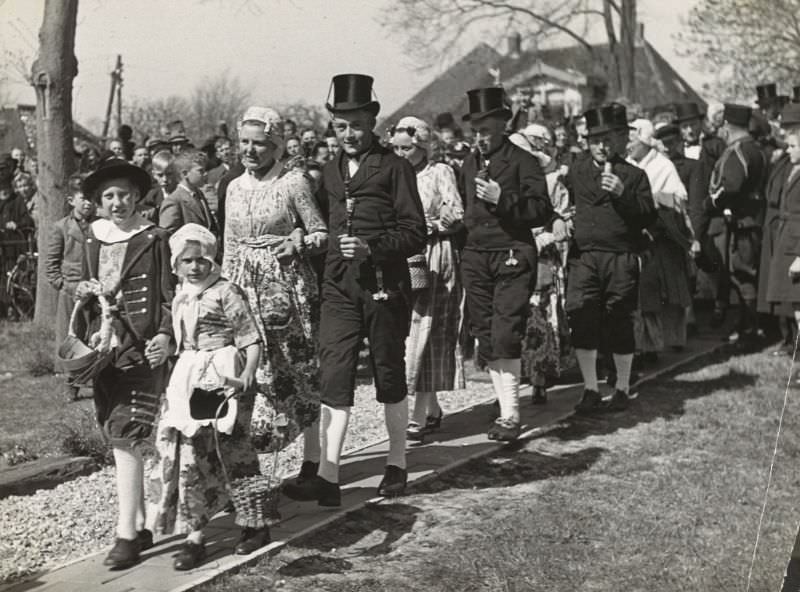
Piet dressed in the traditional black wedding suit worn by men in the old West Frisian custom. He wore long white stockings and carried an original silver sheath knife dating back to 1780 in his pocket. An old-fashioned pipe completed the look — a detail that connected him visually and symbolically to the farmers and cattlemen of generations past.
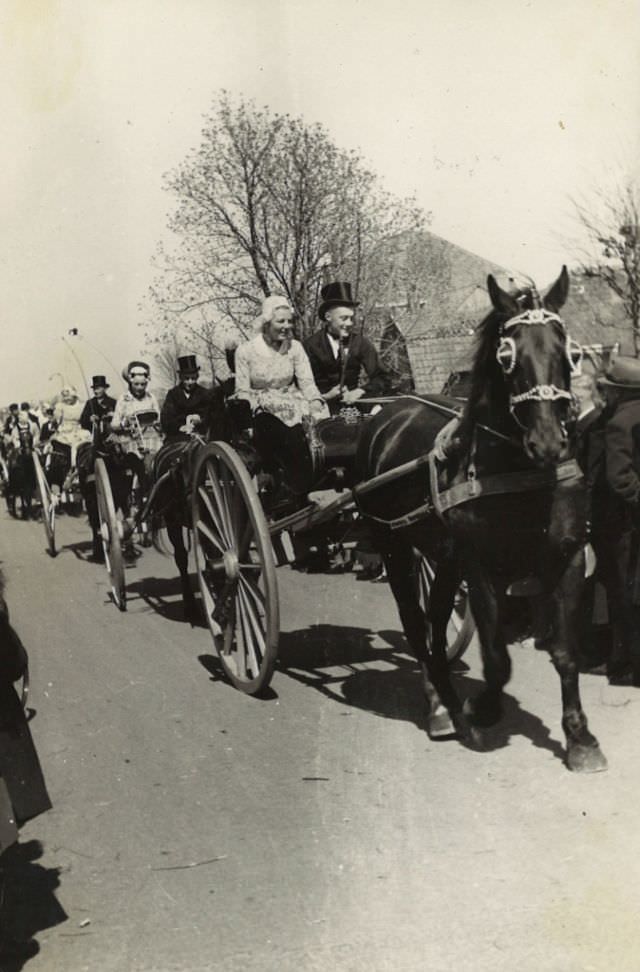
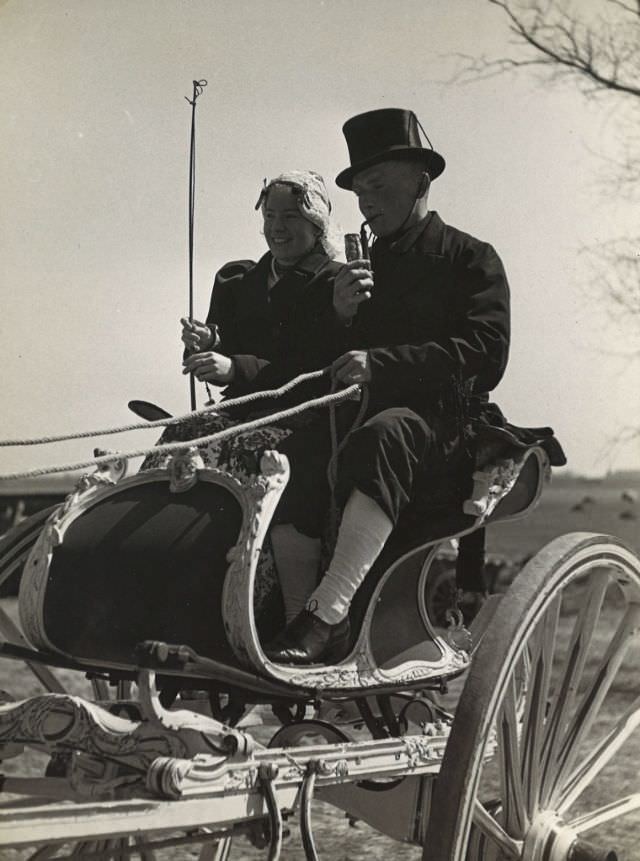
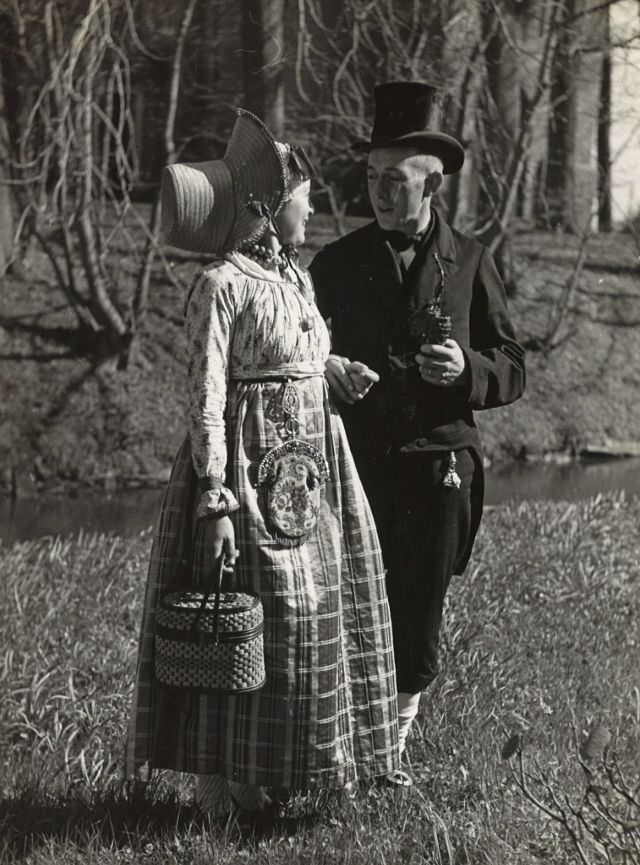
Reporters from Polygon news were present alongside the dozens of photographers, making this one of the most documented rural weddings in Dutch wartime history. The presence of so much press gave the event a public weight far beyond a local celebration.
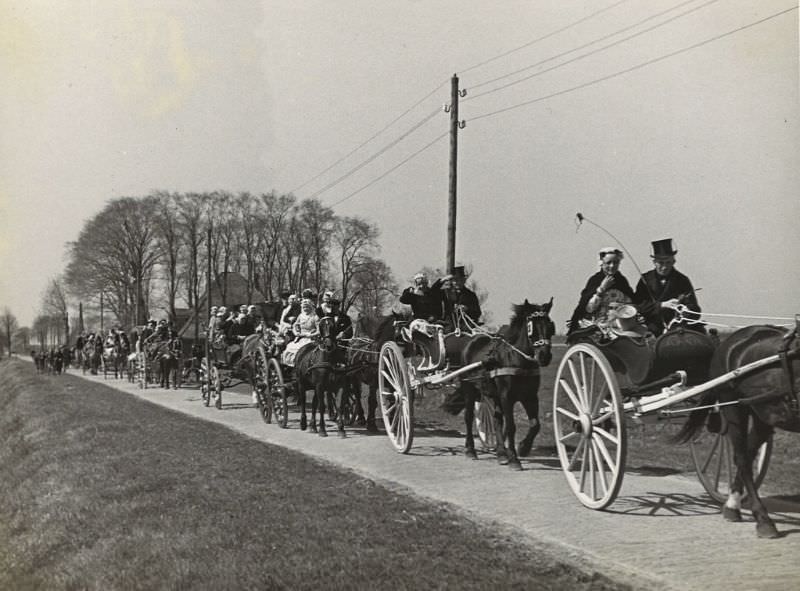
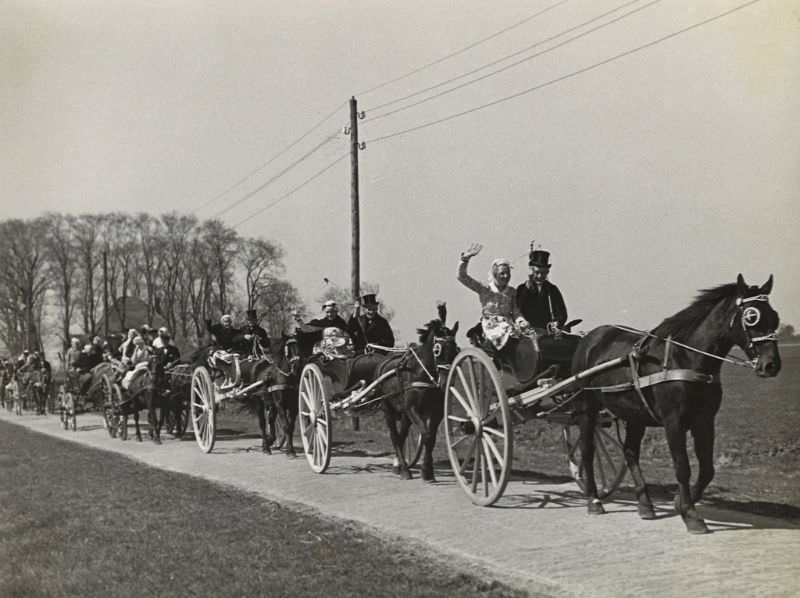
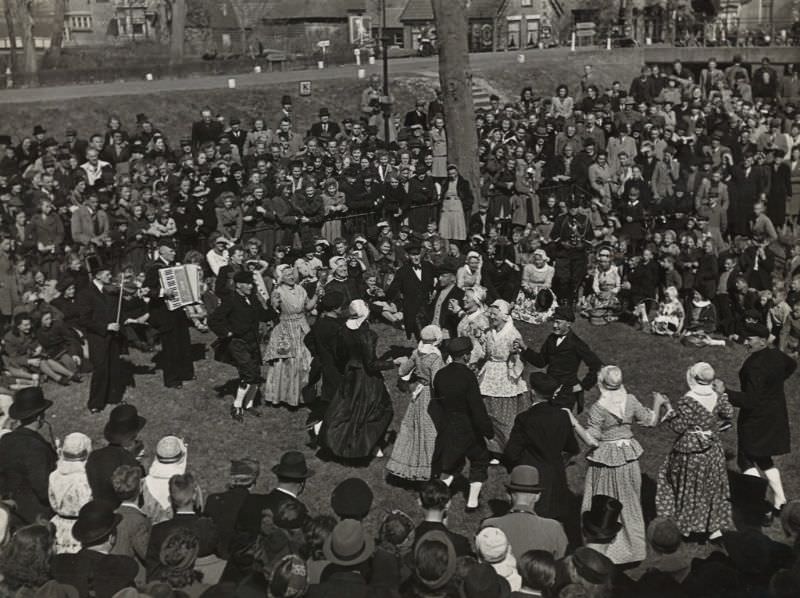
The guests themselves dressed for the occasion. Many arrived in original West Frisian costumes, turning the gathering into a living display of a tradition that most Dutch people had not seen practiced in decades. Old carriages lined the streets outside the schoolhouse, adding to the atmosphere.
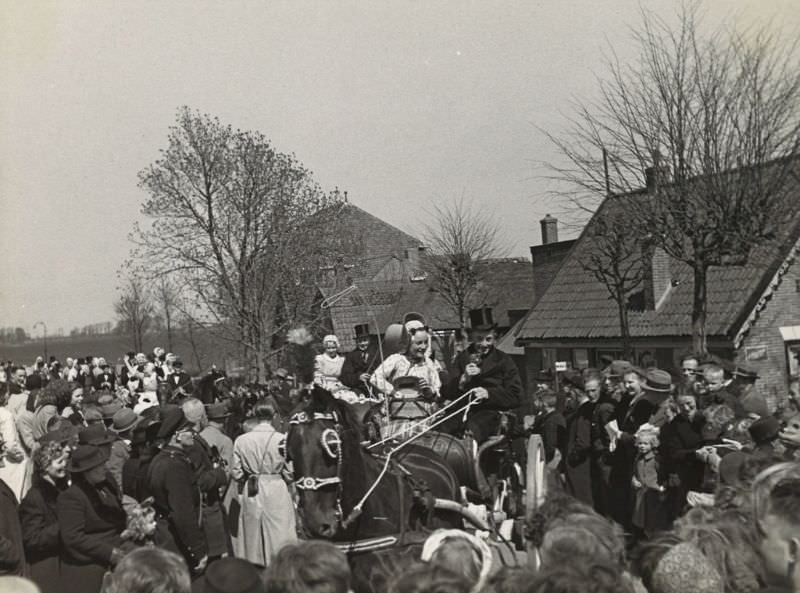
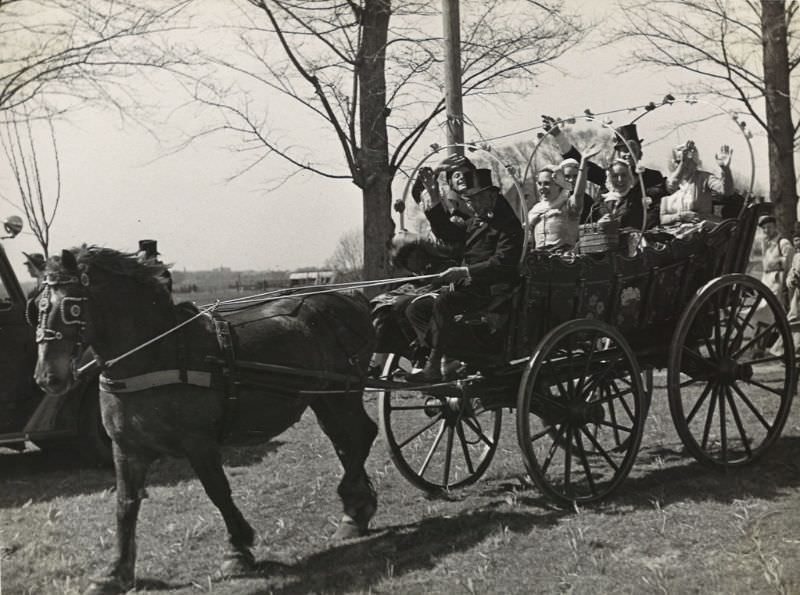
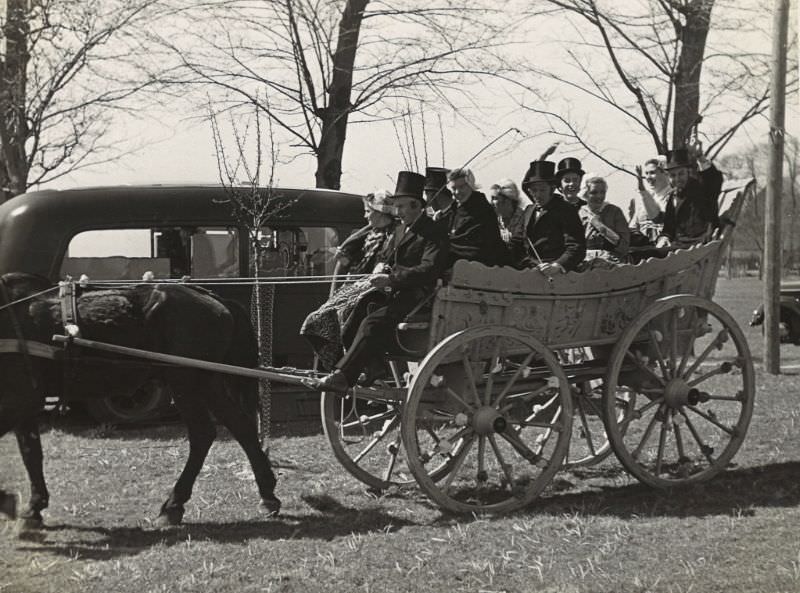
The photographs taken that day preserve a moment that sat at a striking crossroads — a community deliberately reaching back into its past while living under wartime occupation. What the cameras captured was precise and detailed: the cut of the costumes, the shape of the golden iron, the groom’s white stockings, the faces of the crowd watching from the roadside.
Every element of the day was deliberate. Mayor Posch did not simply allow old customs — he organized their revival. The Schermer wedding of 1942 was as much a cultural statement as it was a personal celebration for Geertje and Piet.