
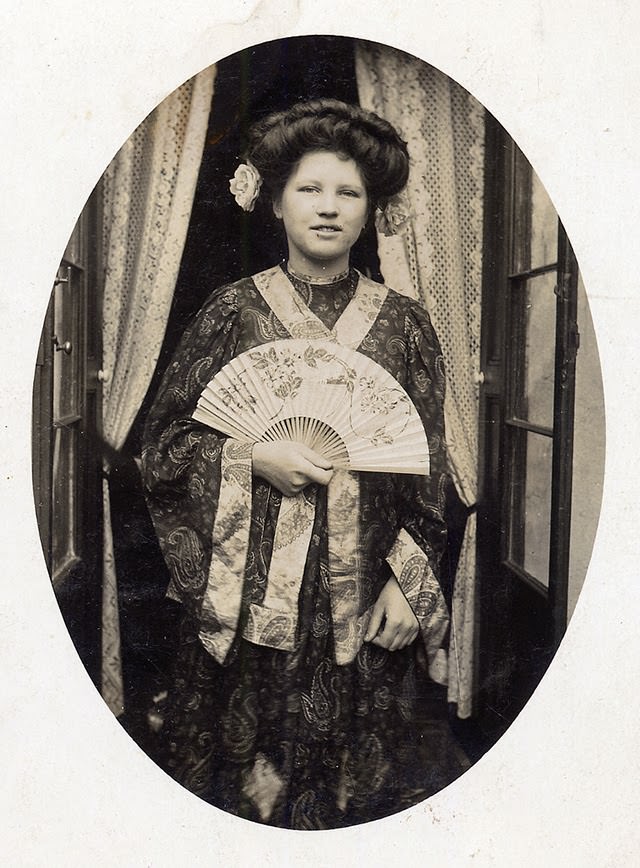
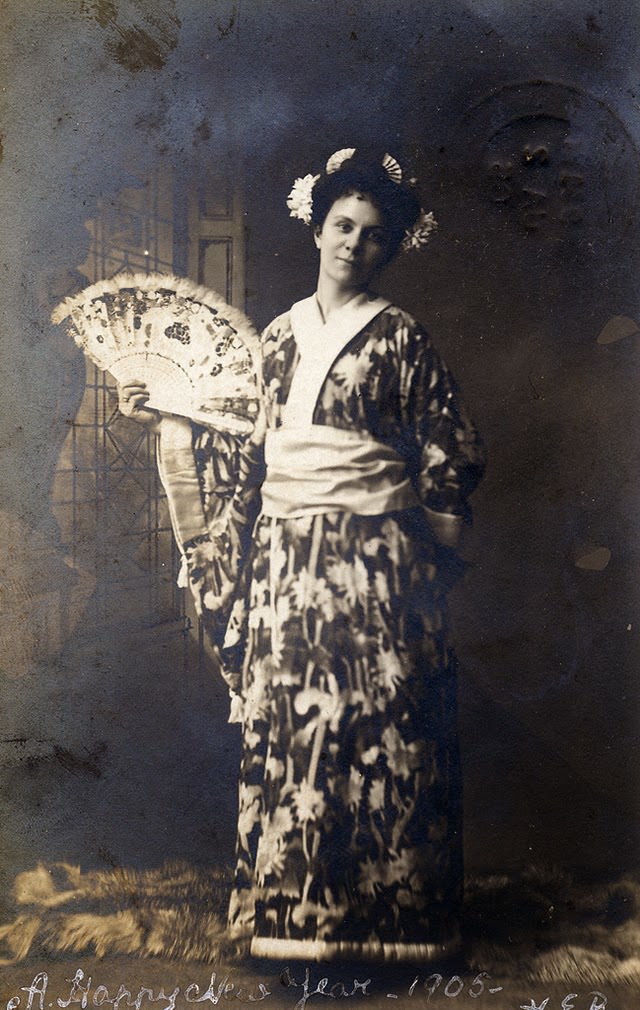
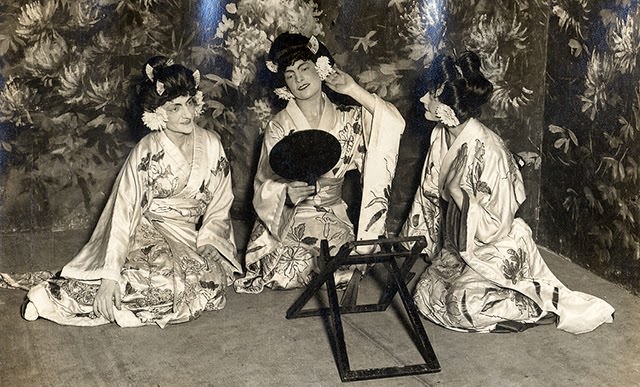
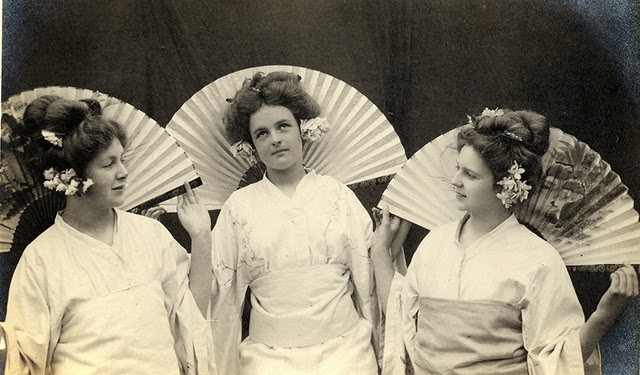
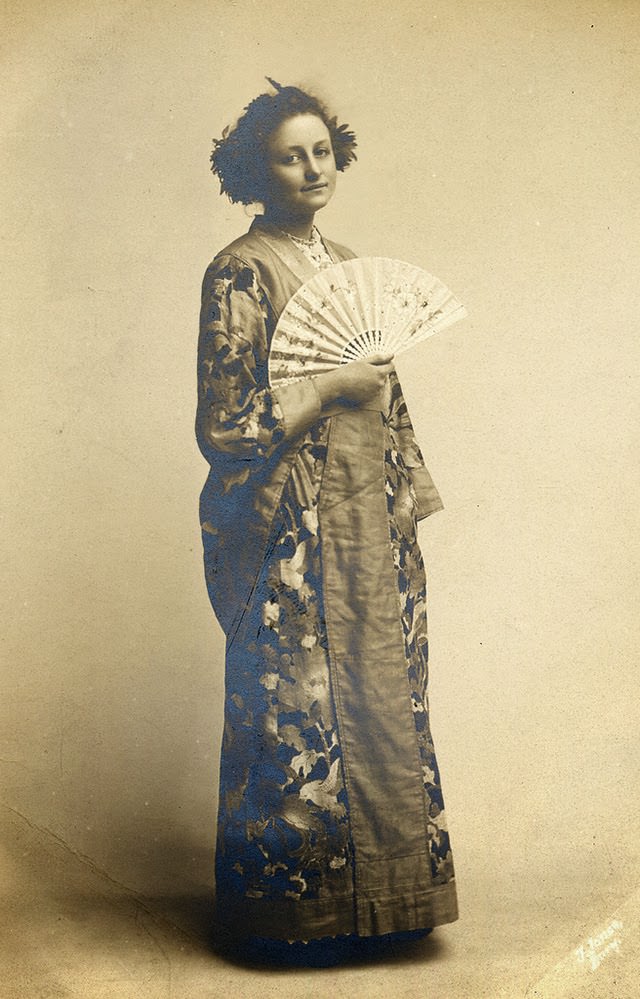
When Japan opened its doors to Western tourists in the early 1900s, European and American women arriving in cities like Yokohama and Kyoto made one activity a top priority: a studio portrait in a kimono. These photographs served as proof of their travels to the Far East — the ultimate souvenir to paste into a scrapbook or mail home as a postcard.
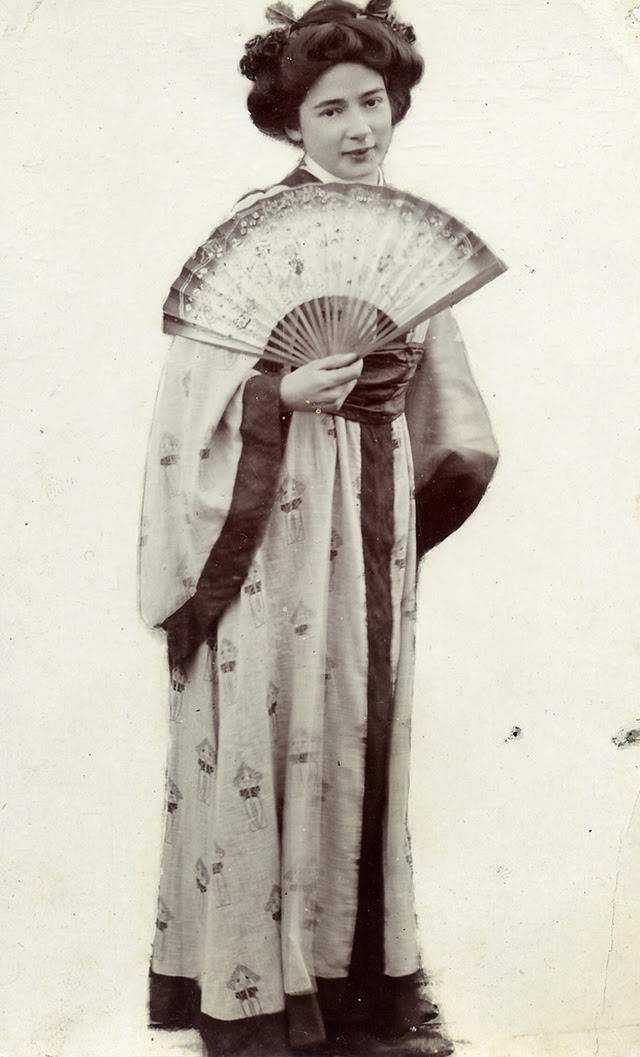
Commercial photography studios built specifically for foreign visitors made the whole experience easy. Women rented colorful silk kimonos for a set period, posed for the camera, and left with a polished portrait. Studio assistants helped them dress, since the T-shaped garment required specific folding and tying techniques that were completely unfamiliar to Western women.
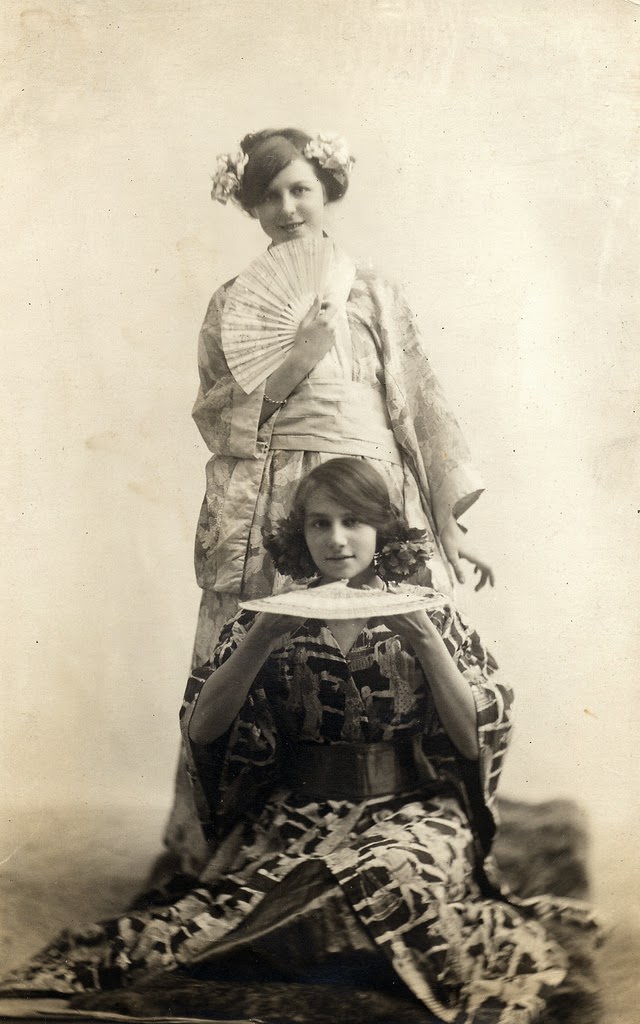
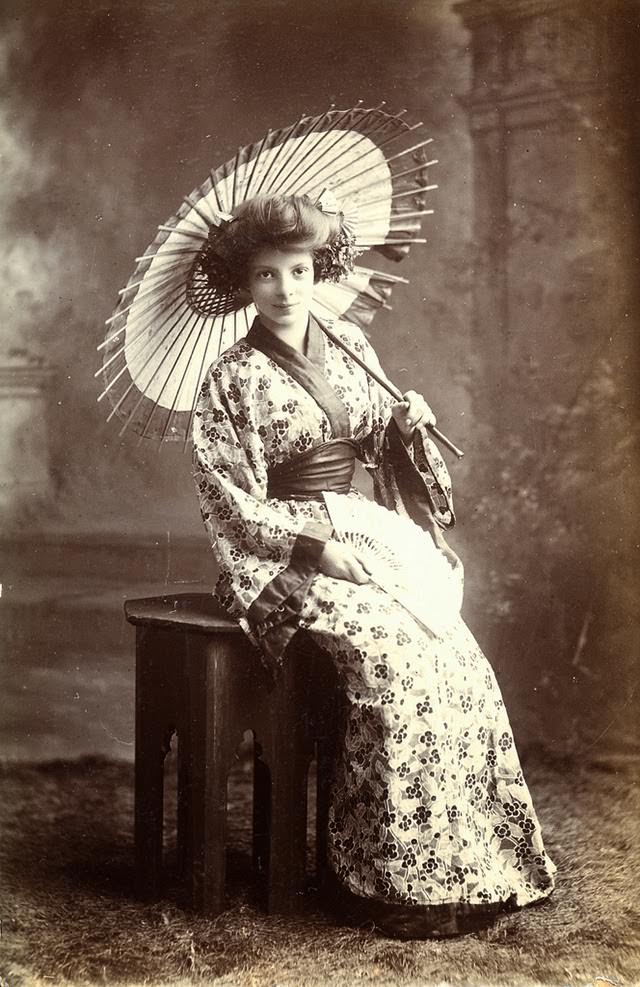
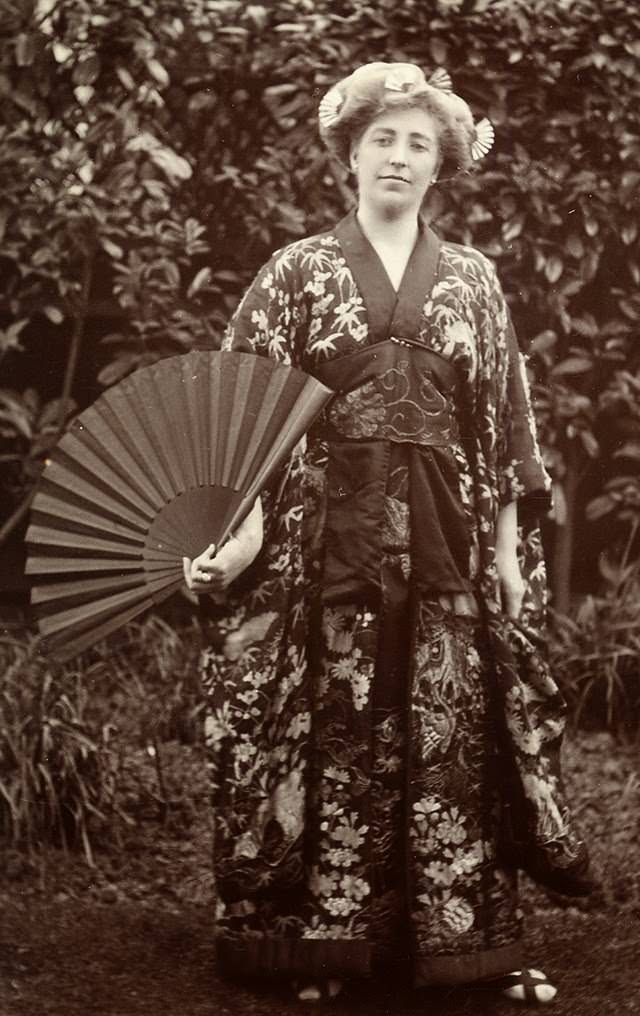
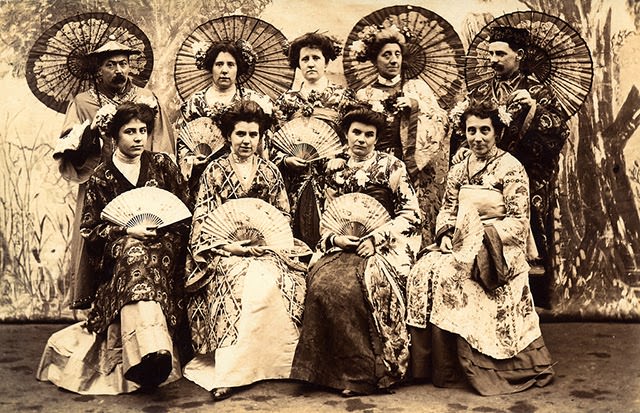
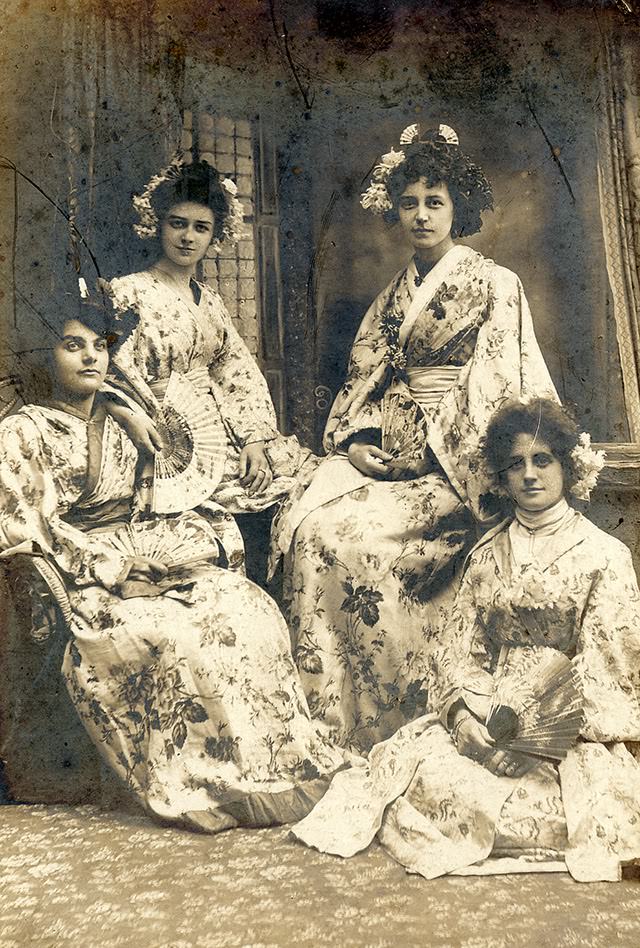
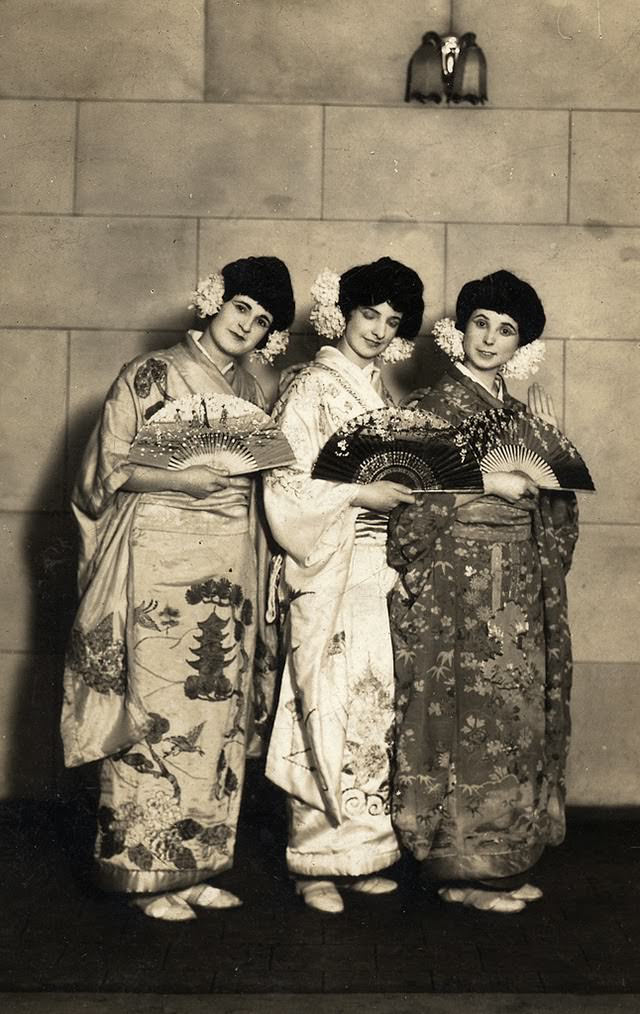
The kimonos stocked by these studios were not what Japanese women wore in daily life. Photographers chose highly decorative pieces featuring bold embroidery of dragons, chrysanthemums, and cherry blossoms. These dramatic designs appealed far more to Western tastes than the subtle, restrained patterns that Japanese women of the era preferred.
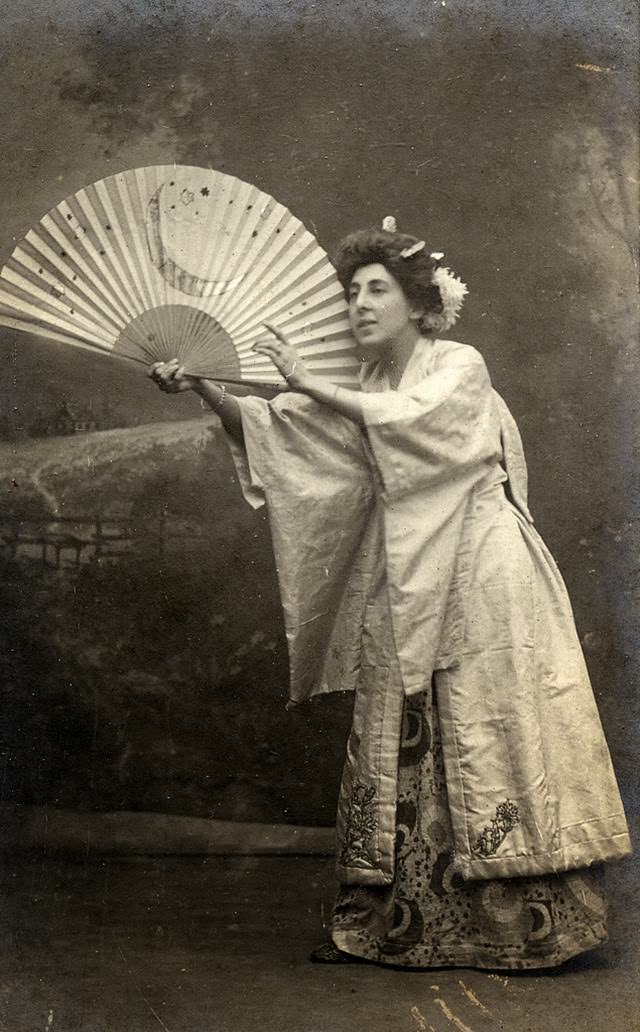
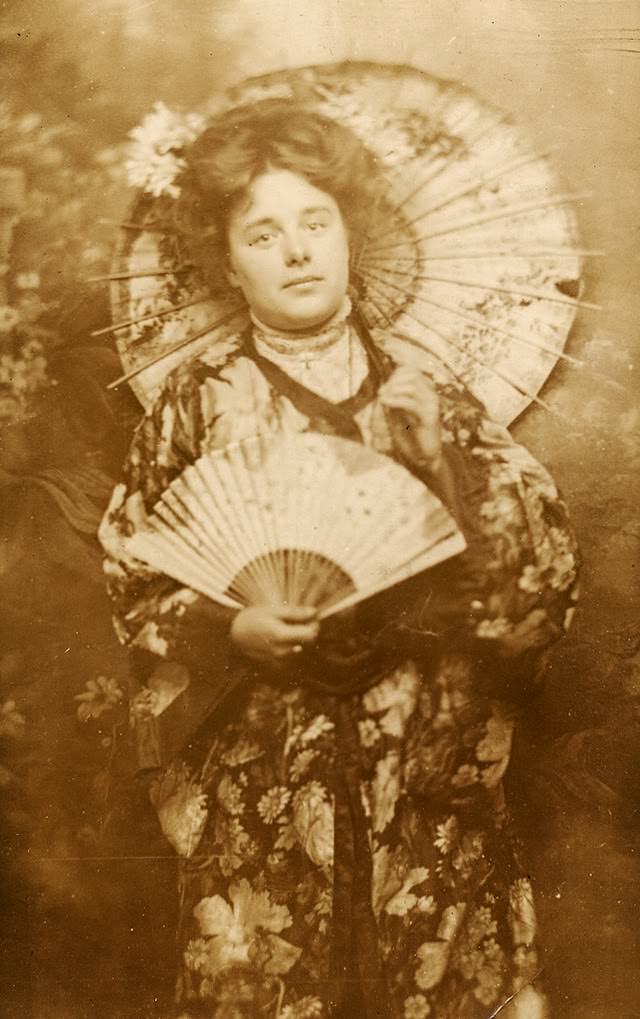
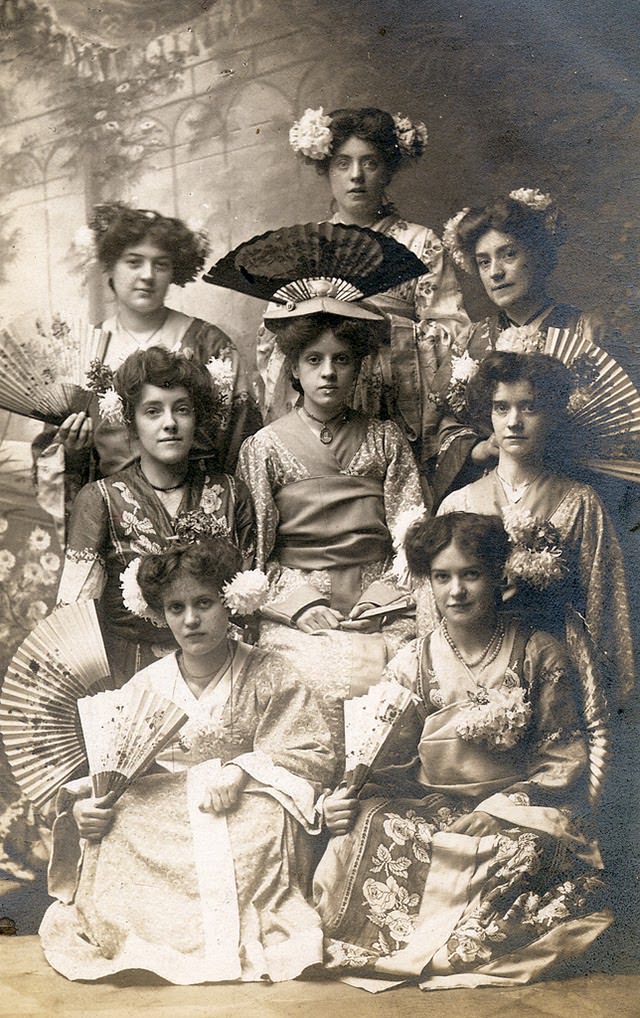
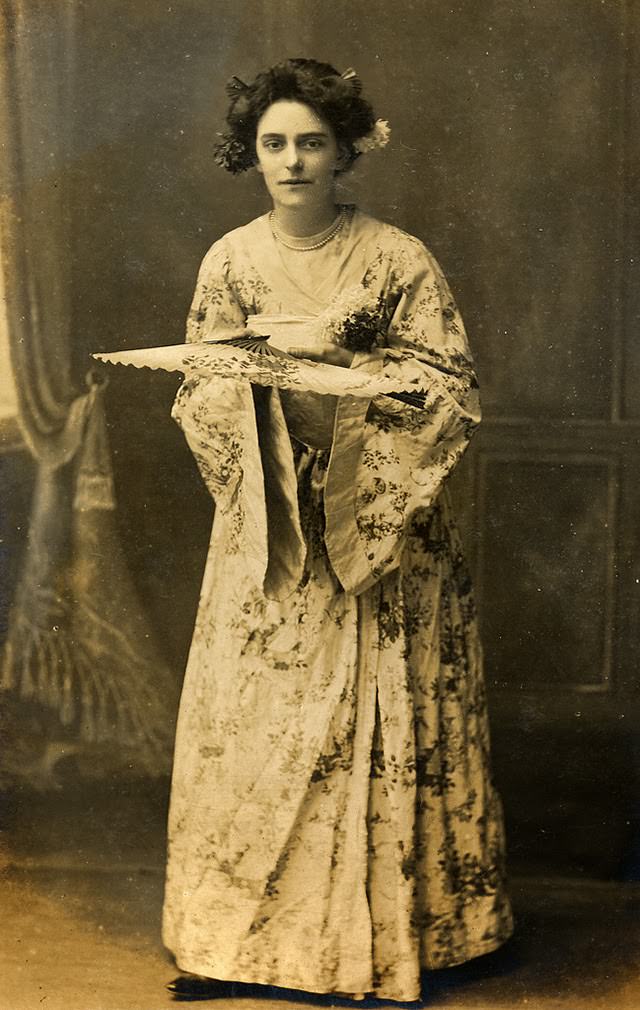
The final look was a clear blend of two very different fashion worlds. Most women kept their corsets and Western undergarments on beneath the kimono, which pushed their silhouette into a rigid hourglass shape — the opposite of the straight, tube-like fit the garment was designed for. Many also kept their hair piled high in Western styles, and in full-length shots, leather boots or heels frequently appeared beneath the hemline instead of traditional tabi socks and zori sandals.
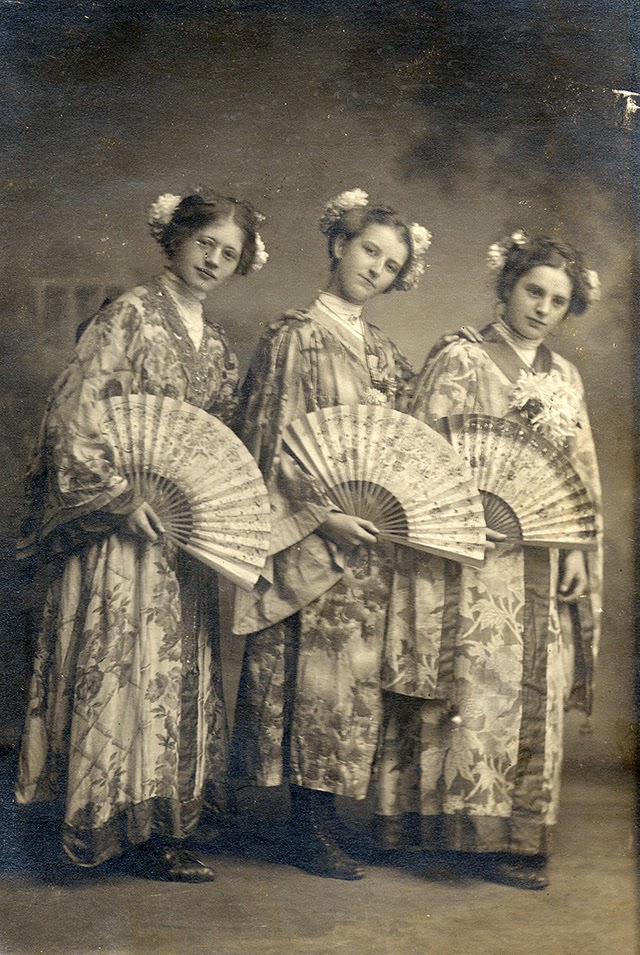
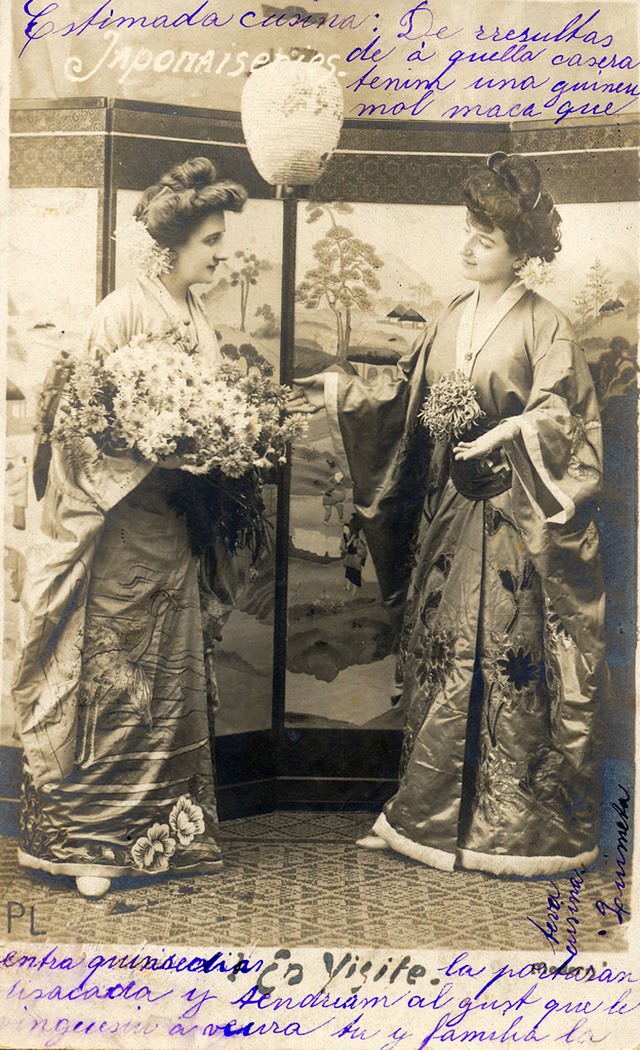
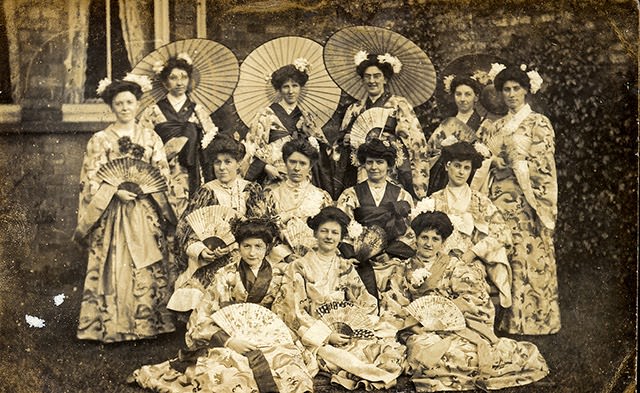
Styling errors were common in these portraits. In Japan, the kimono collar must always cross left over right. Crossing it right over left is reserved strictly for dressing the dead for burial. Unaware of this custom, many Western women wore it the wrong way. They also frequently tied the obi sash too loosely or placed it too low on the waist — mistakes obvious to any Japanese observer, but invisible to the tourists themselves.
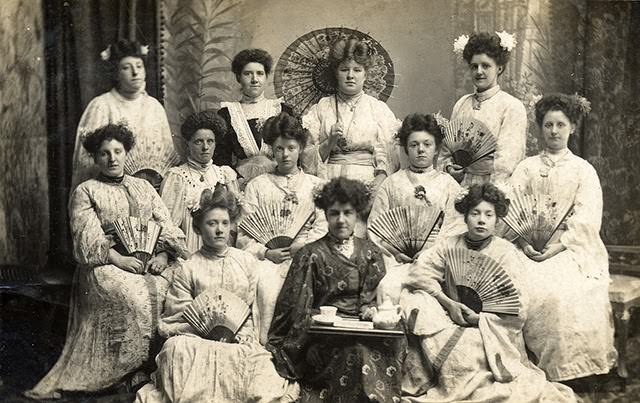
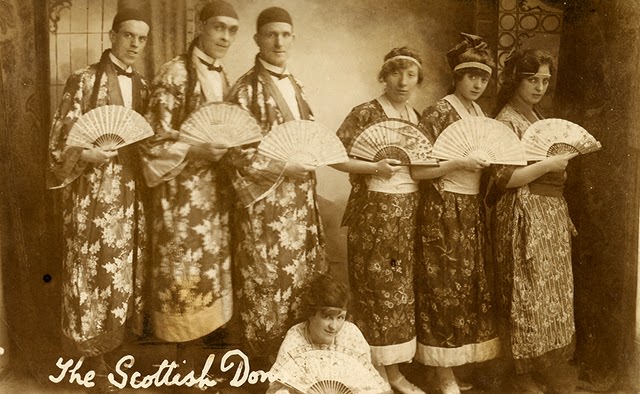
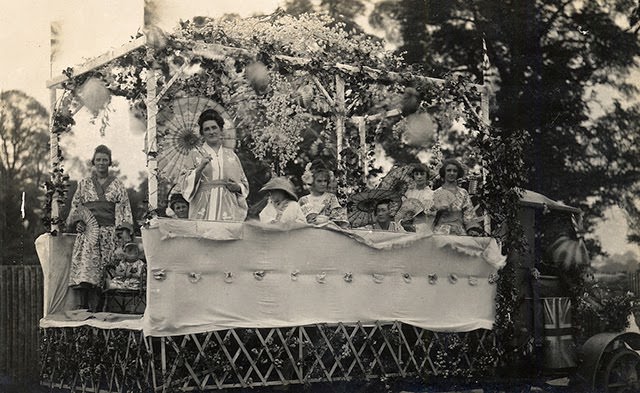
To complete the scene, photographers handed their subjects paper parasols — called wagasa — or folding fans to hold open in front of their faces. Some women mimicked geisha poses they had seen in Japanese woodblock prints, holding their hands in deliberate, studied positions.
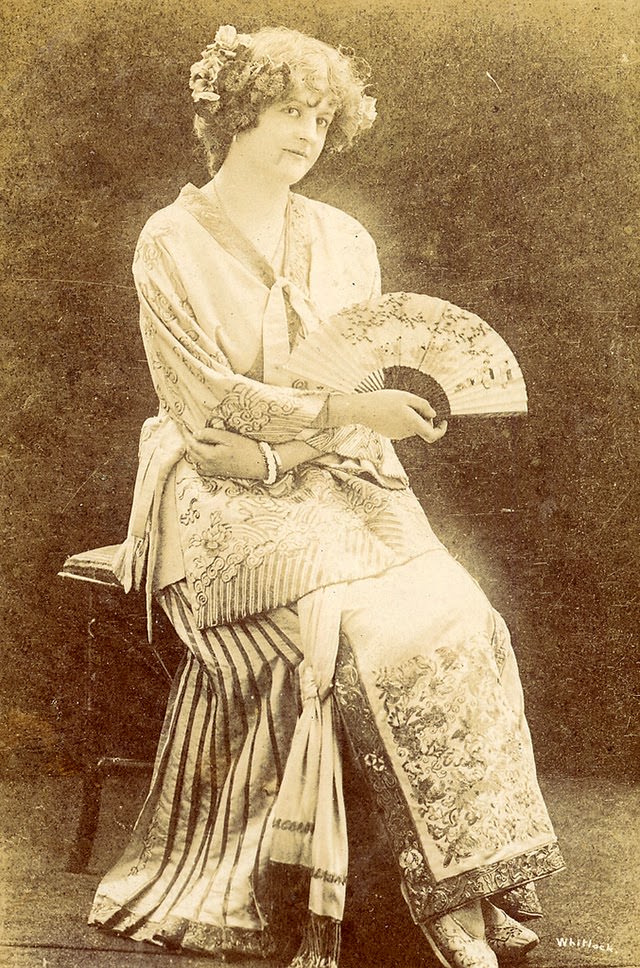
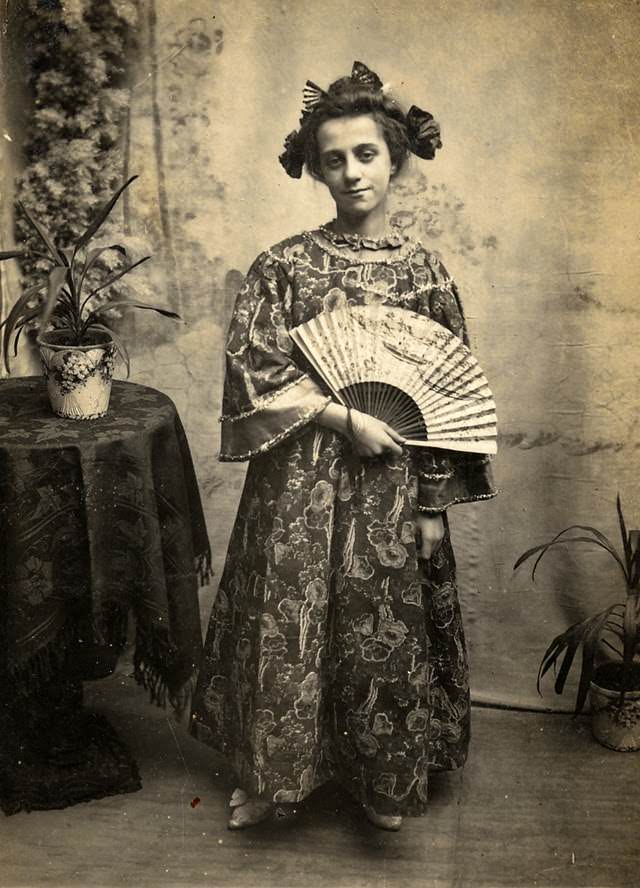
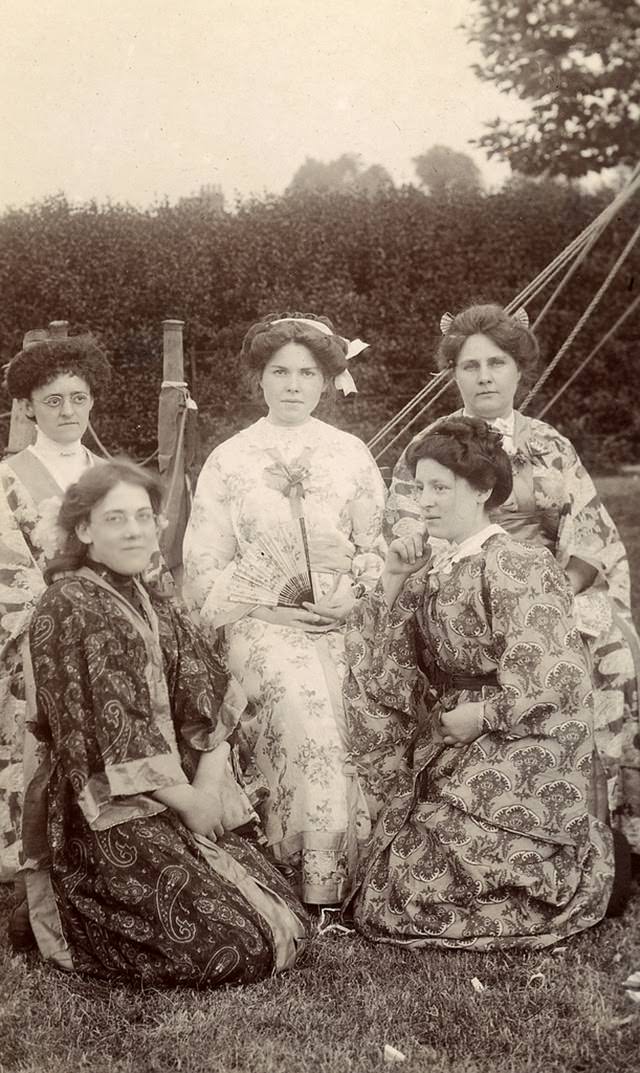
Behind each subject, painted backdrops depicted idealized Japanese scenes — Mount Fuji, bamboo forests, and traditional tea houses. After the session, studios often hand-colored the black-and-white photographs, adding vivid reds, pinks, and greens to the fabric to make the image as striking as possible.
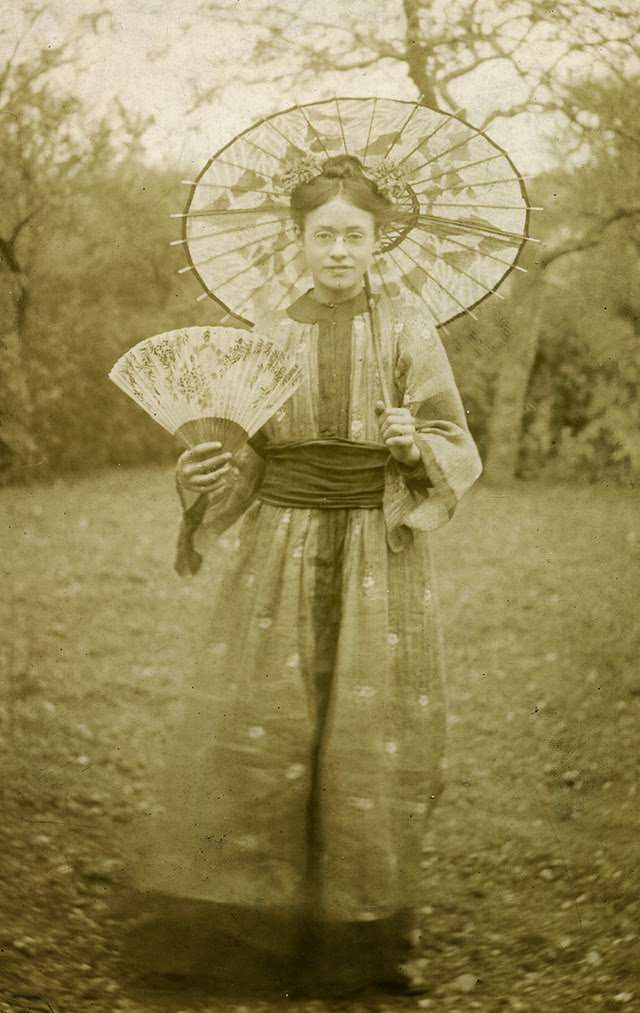
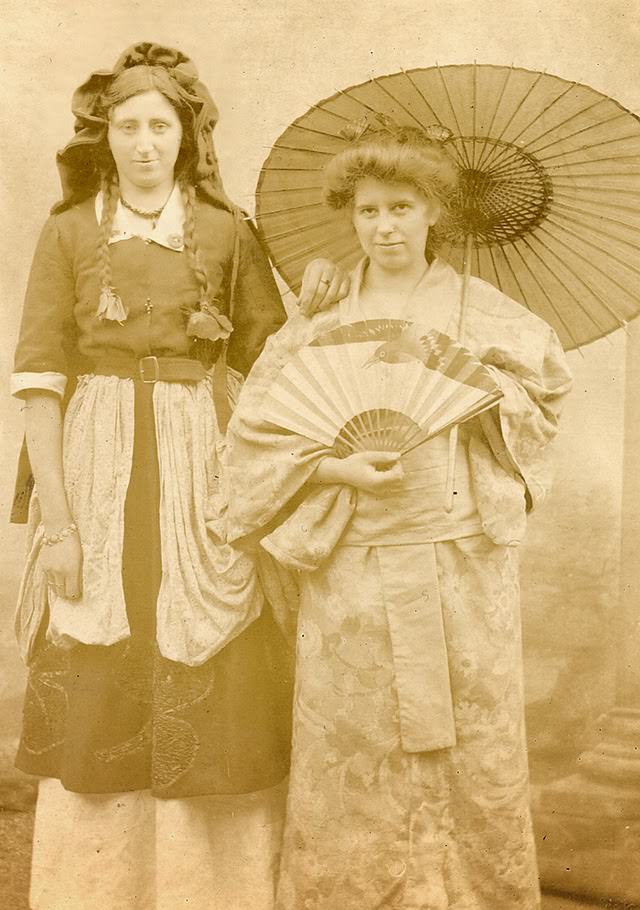
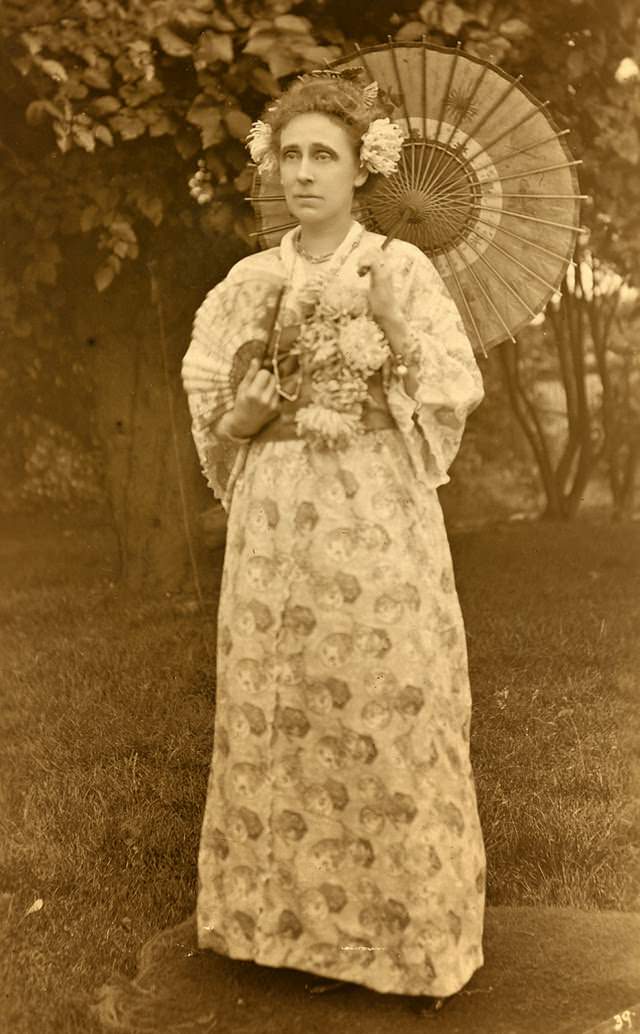
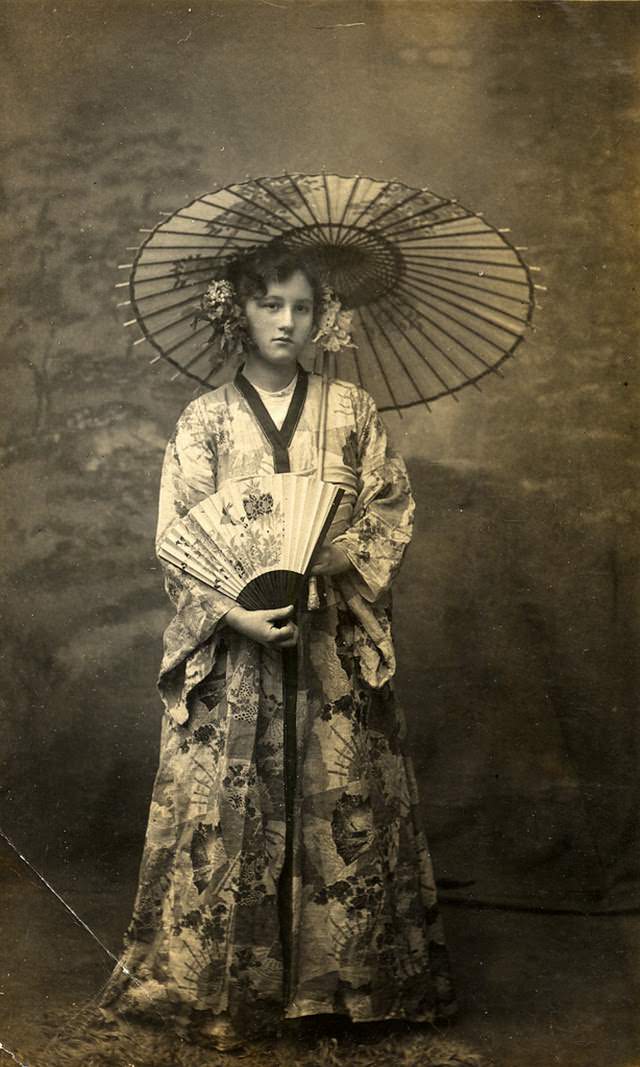
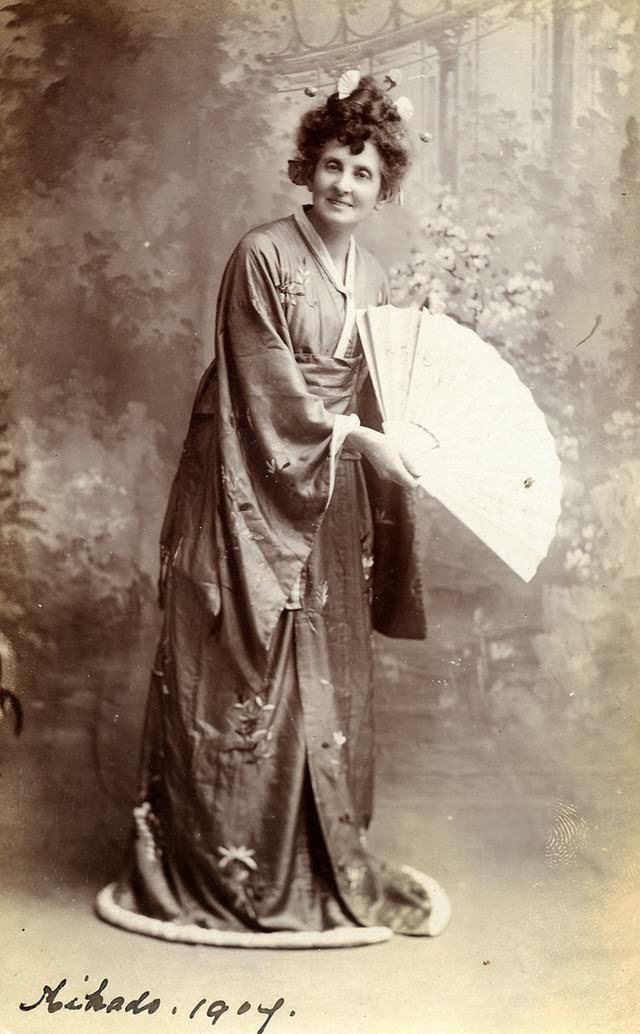
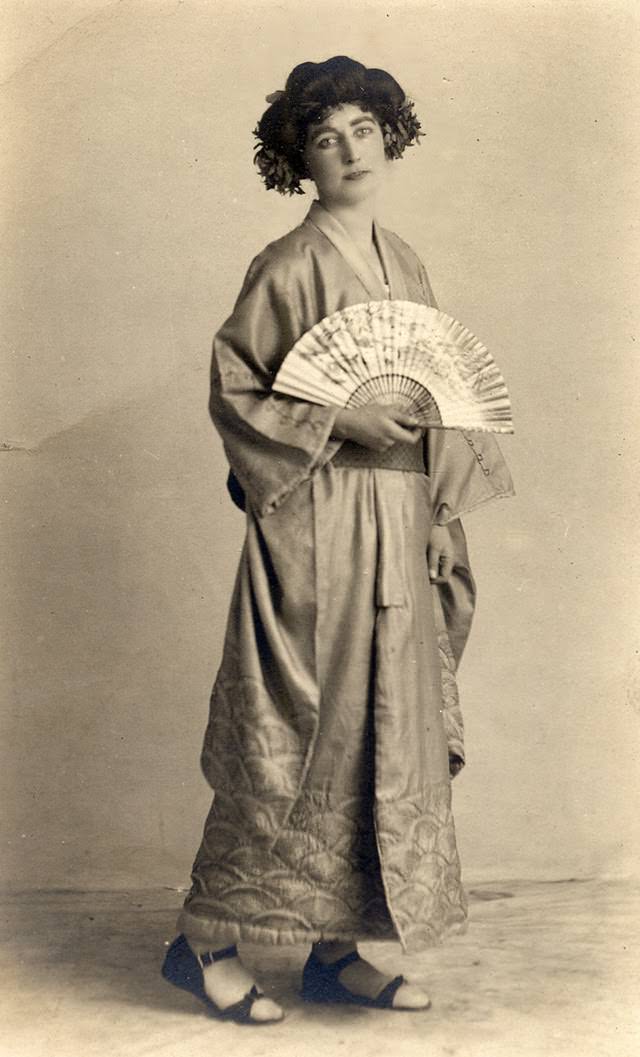
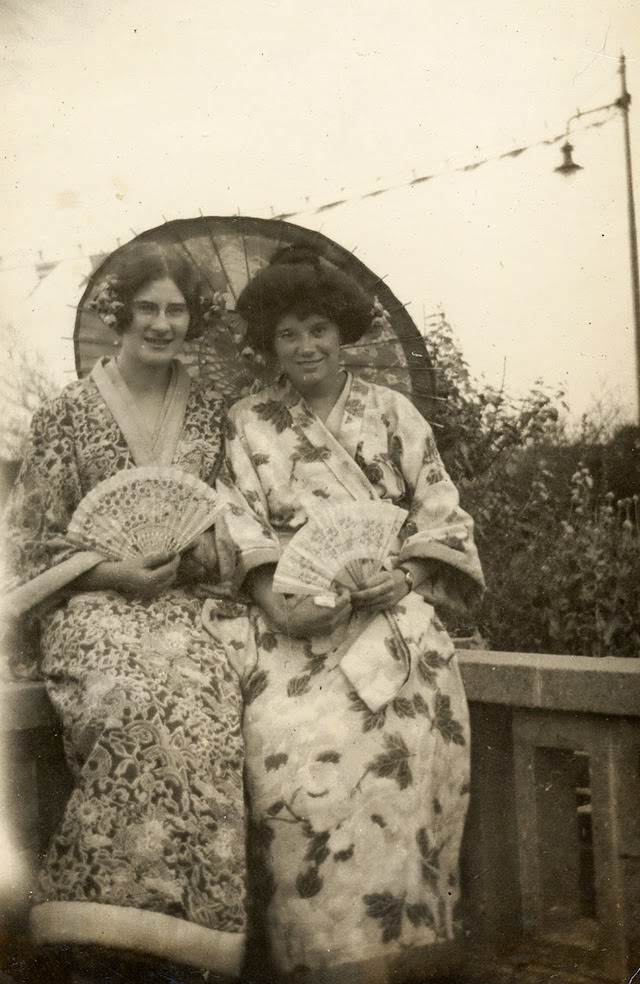
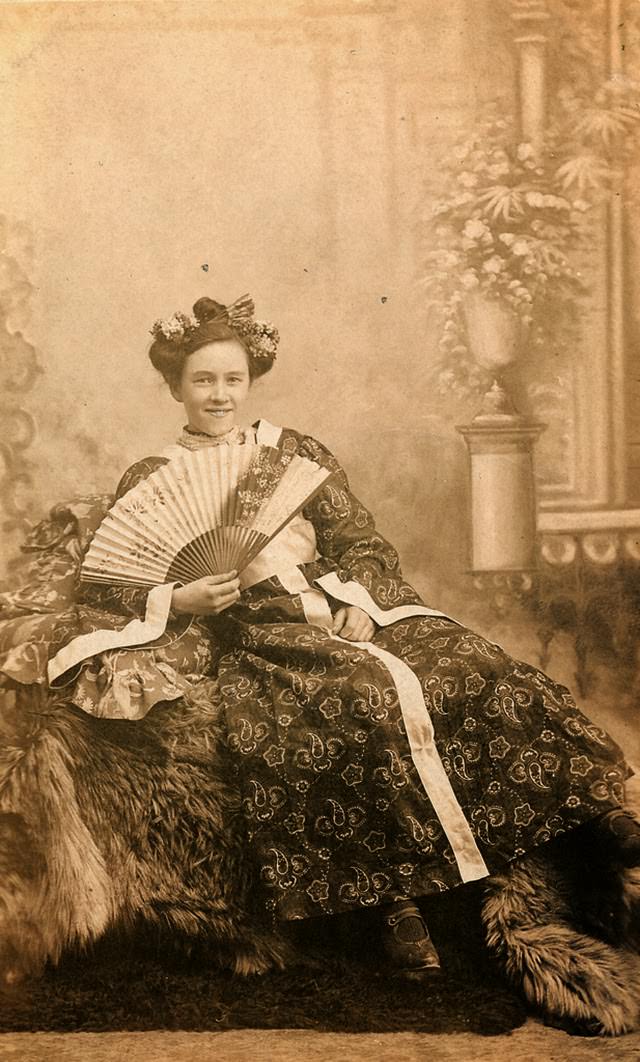
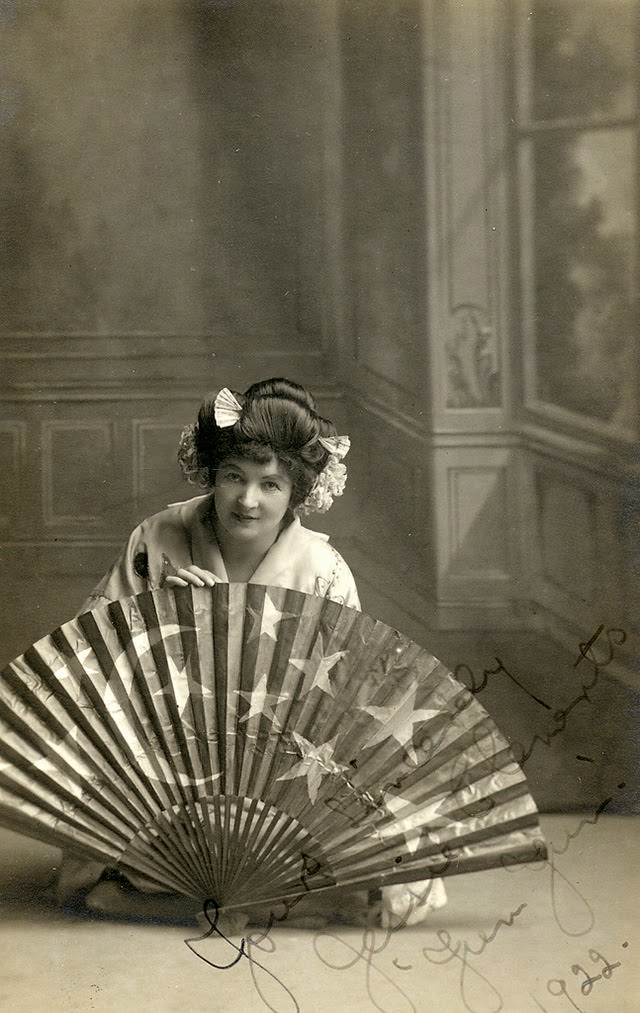
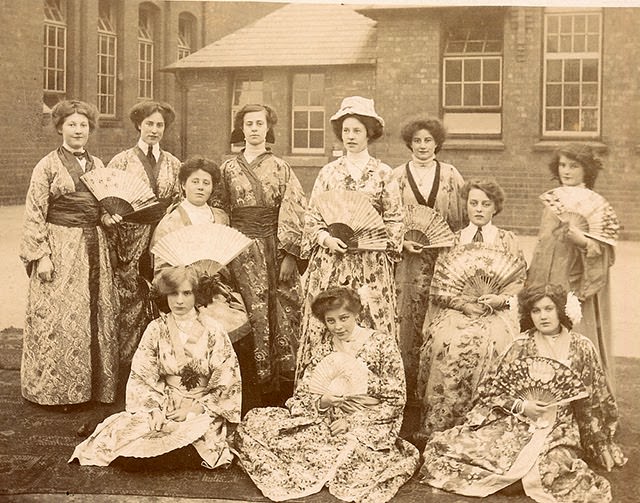


Today all of these white people would be guilty of cultural appropriation.