
in

The Lost World of London: A Gritty Look at the Trafalgar Square in the Early 1900s

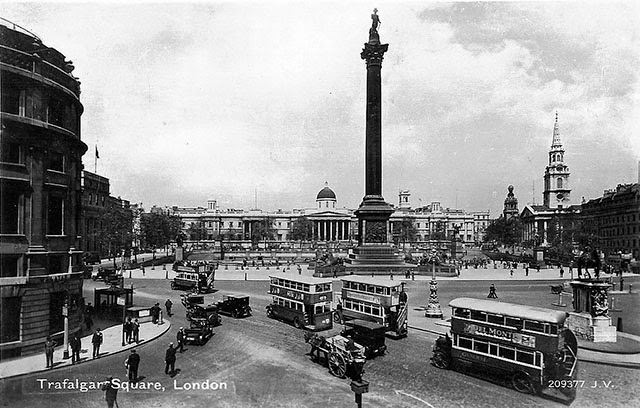
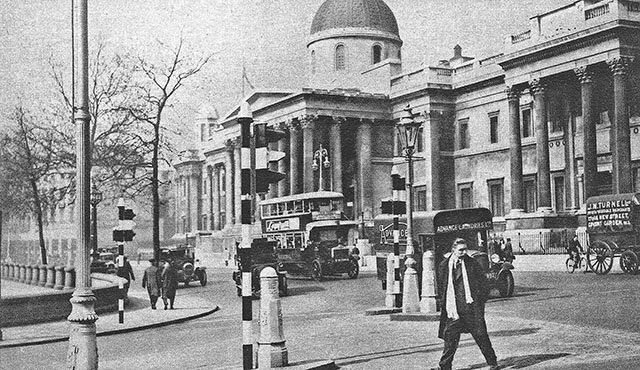
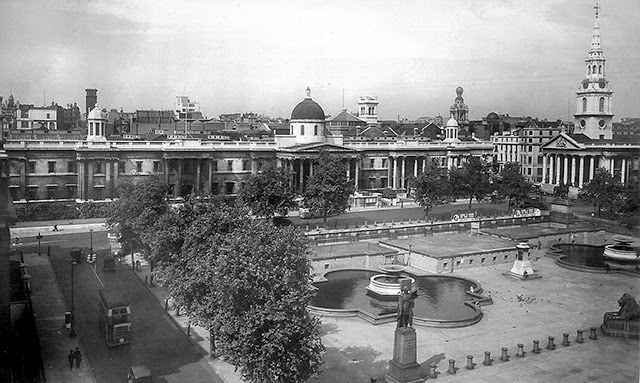
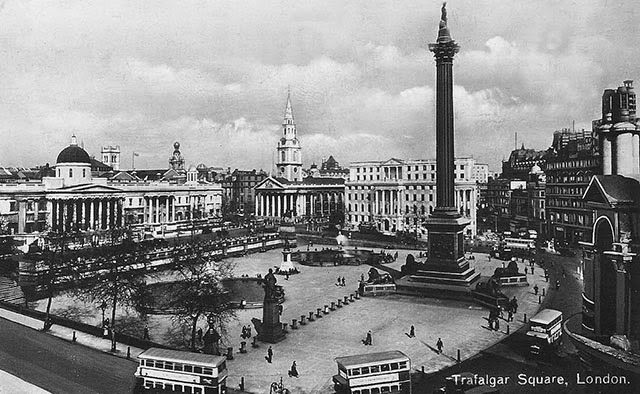
Trafalgar Square in the early 1900s stood as a gray, paved expanse in the center of London. Coal smoke from millions of chimneys stained the stone buildings and monuments with a layer of dark soot. Nelson’s Column rose sharply above the haze, anchoring the space while the four bronze lions at its base watched over the crowds. The air smelled of horse manure, exhaust fumes, and damp wool.

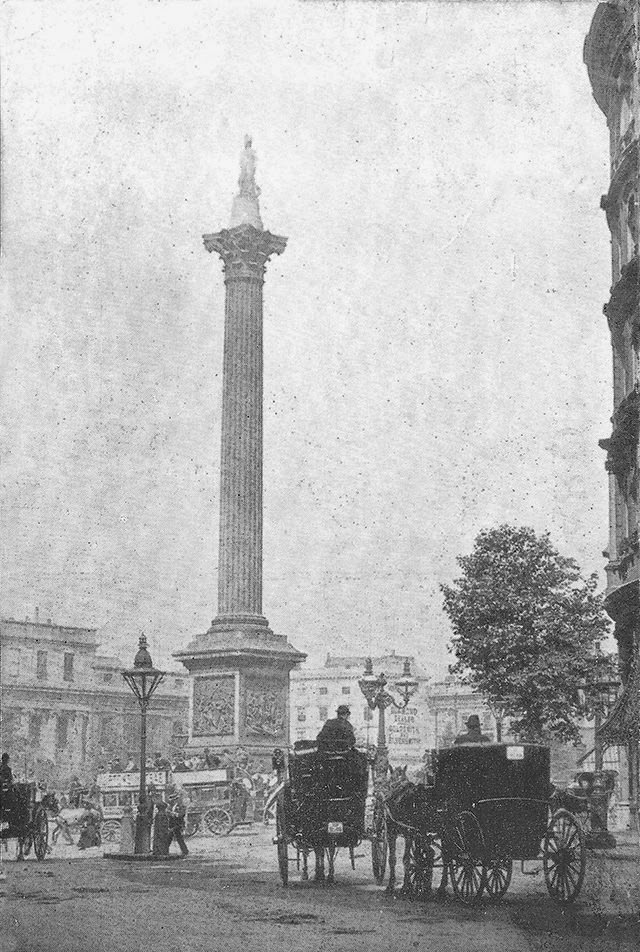
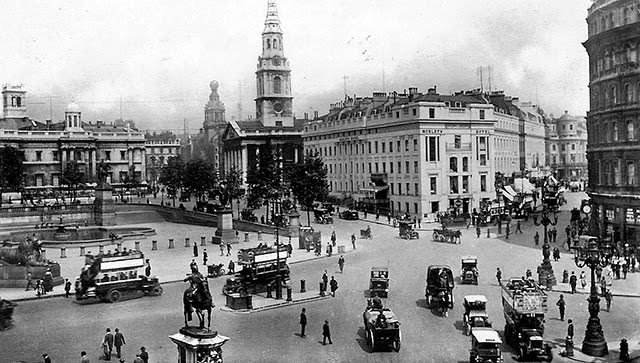
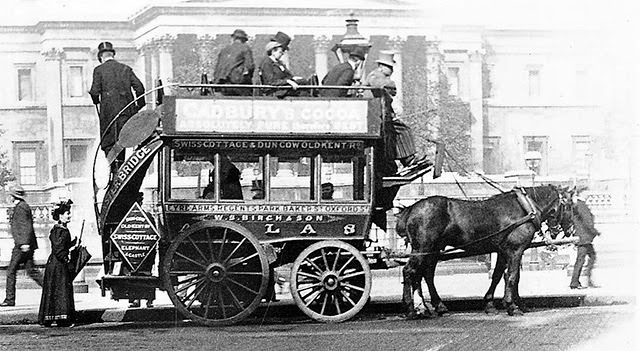
Traffic moved in a chaotic, noisy loop around the central island. This era marked a distinct transition in transportation. Heavy horse-drawn omnibuses clattered over the cobblestones, their drivers sitting high up in open air. Beside them, early motorbuses and private automobiles roared and sputtered. The engines were loud and frequently backfired, startling the horses. Pedestrians dodged between wheels and hooves to cross the street, as there were no traffic lights to control the flow.

On the pavement, life followed a strict social order. Wealthy Londoners walked toward the National Gallery in tailored suits and wide-brimmed hats. Working-class men in flat caps swept the streets or delivered goods. Flower girls sat near the base of the monuments with baskets full of violets and roses. They called out prices to passersby, their hands rough from the cold and the work. Bootblacks knelt nearby, polishing the leather shoes of businessmen until they shined against the grime of the city.

The fountains in the square sprayed water into wide basins, but the water often looked murky under the gray sky. Children sailed small toy boats in the pools on clearer days. Above them, flocks of pigeons descended in thick clouds. Feeding these birds was a popular pastime. Vendors sold bags of seed for a penny, and tourists stood still while birds landed on their arms and hats. The ground was often slick with bird droppings and discarded seed husks.
#1 The bus stops on the south side of Trafalgar Square were removed when the gyratory system was introduced in 1926.

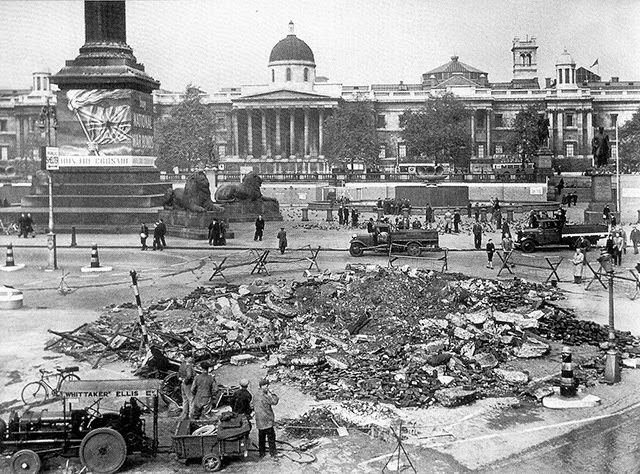
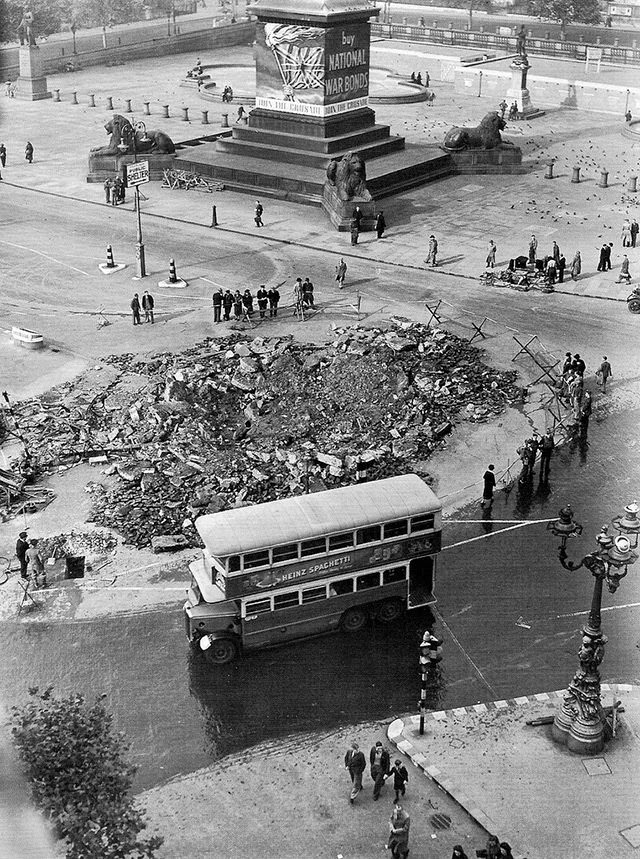
#2 On the night of the 12th October 1941 several bombs hit in the area of Trafalgar Square, the National Gallery was hit and what may have been a bomb from the same stick of bombs hit the roadway above Trafalgar Square Underground Station.

#3 Another view of the bomb crater and clear view of the bomb shelters on Trafalgar Square.

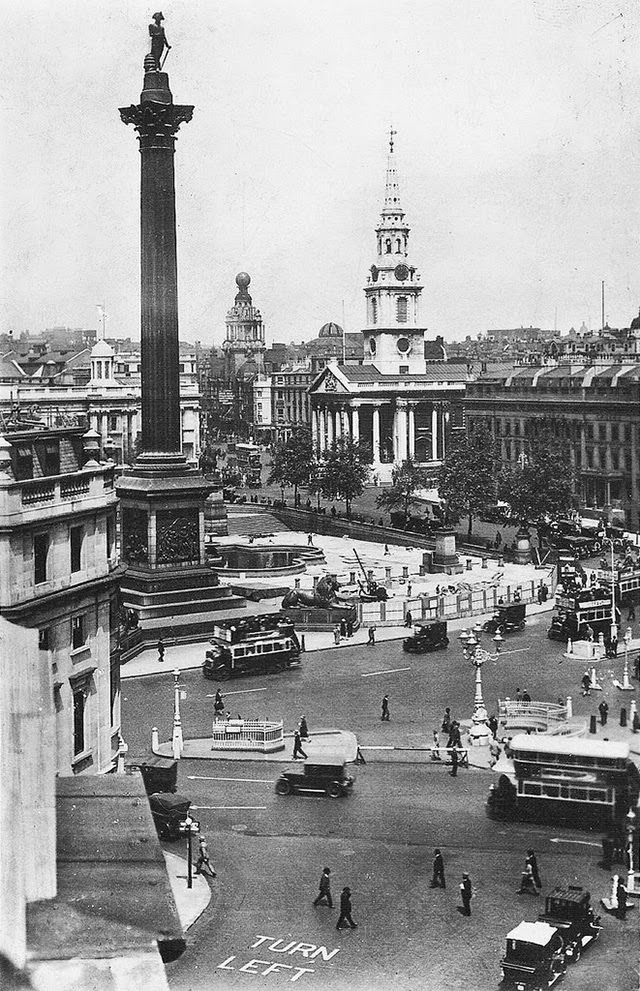
#4 The Trafalgar Square gyratory system was inaugurated at 8am on Monday 26th April 1926, for about six months previously the pedestrian area of the square had been in the process of being repaved with stone blocks, the work can be seen going on in the photograph.

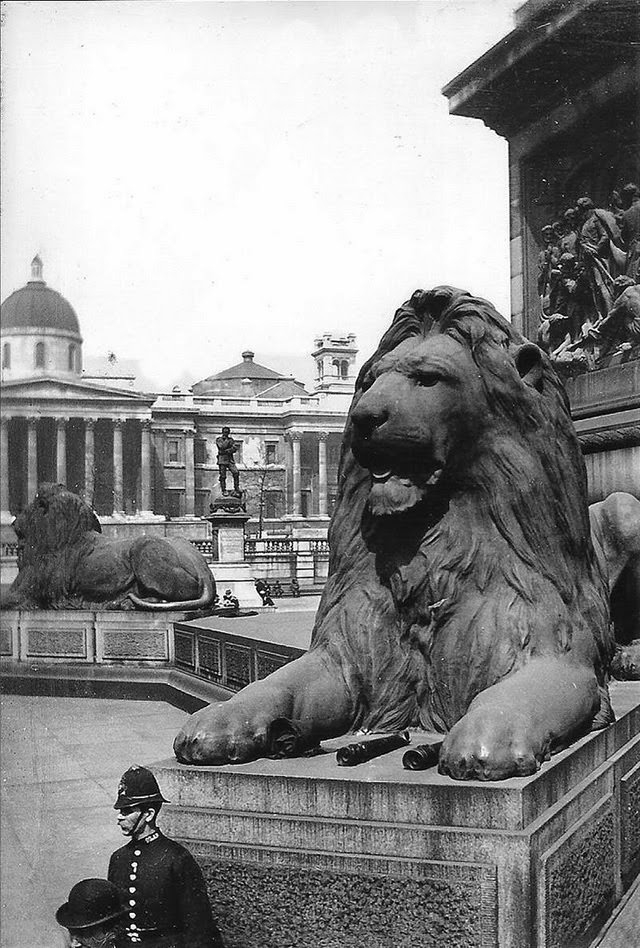
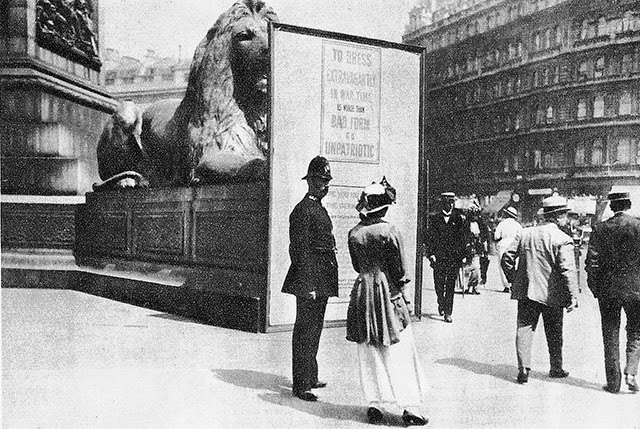
#5 The PC appears to have ‘AR’ on his collar which meant that he was a member of the ‘A’ Division Reserve, these were a body of men who were older and had more experience in the job, they had to be smarter and bigger than the rest and consequently were paid slightly more. He appears to be standing guard over the items between the Lion’s paws which look like chair legs or maybe pipe bombs.
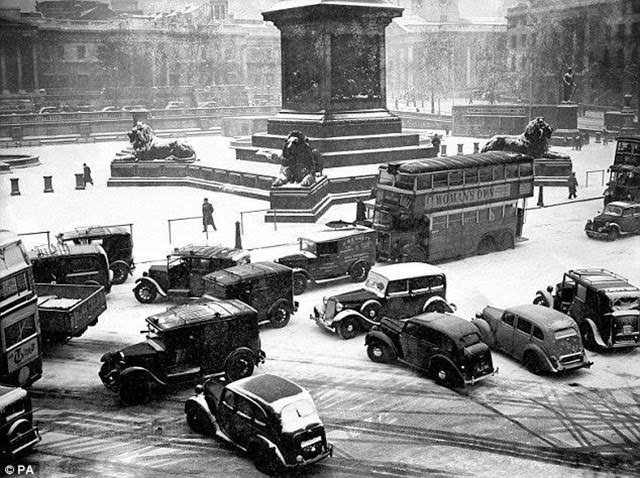
#6 This is how the worst winter in living memory affected Trafalgar Square during one rush hour. The 1946-1947 winter brought chaos and further misery to a country still on the ration with bread prices increasing even after two years of peace.
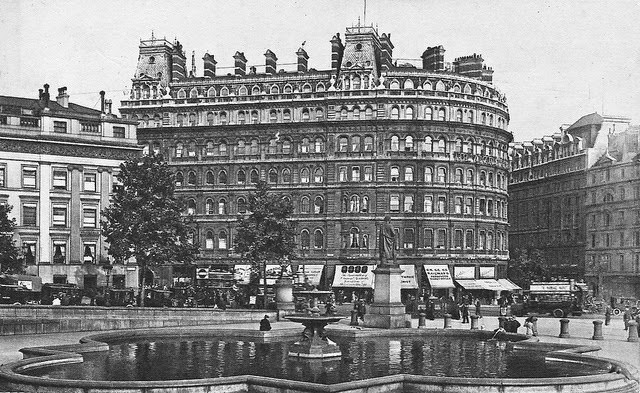
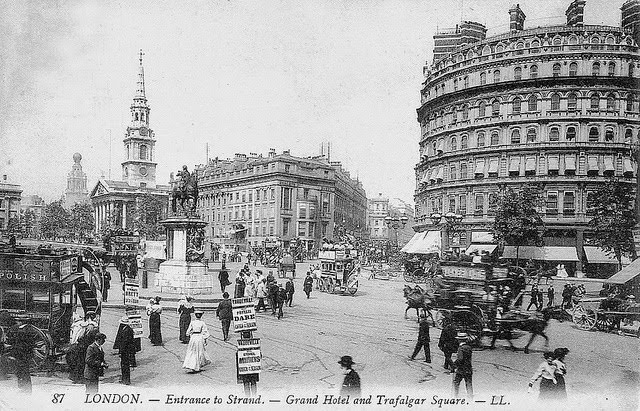
#7 A view of the Grand Hotel across the southeastern corner of Trafalgar Square, circa 1910.

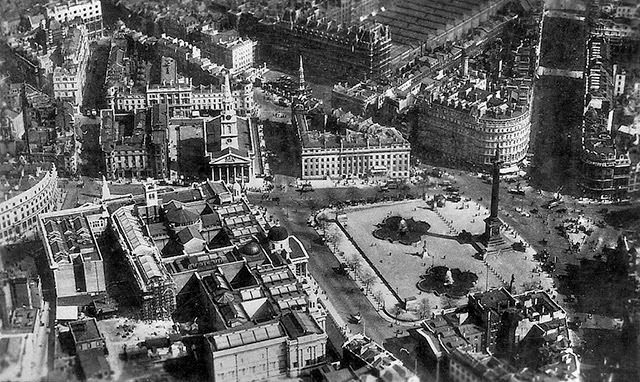
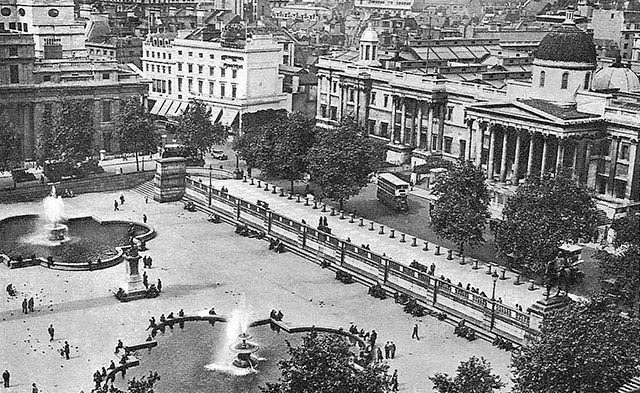
#8 An aerial view of Trafalgar Square and surroundings.

#9 A view of the west side of Trafalgar Square from Cockspur Street showing the cab rank which serviced the Union Club which is left foreground in the photograph.

#10 A pre war view of the area south of Trafalgar Square known as Charing Cross.

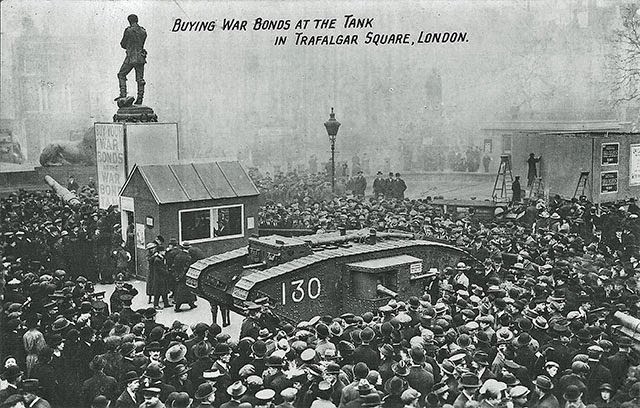
#11 This may well be Monday 26th November 1917, the opening day of the drive to sell National War Bonds from the “Tank Bank”.

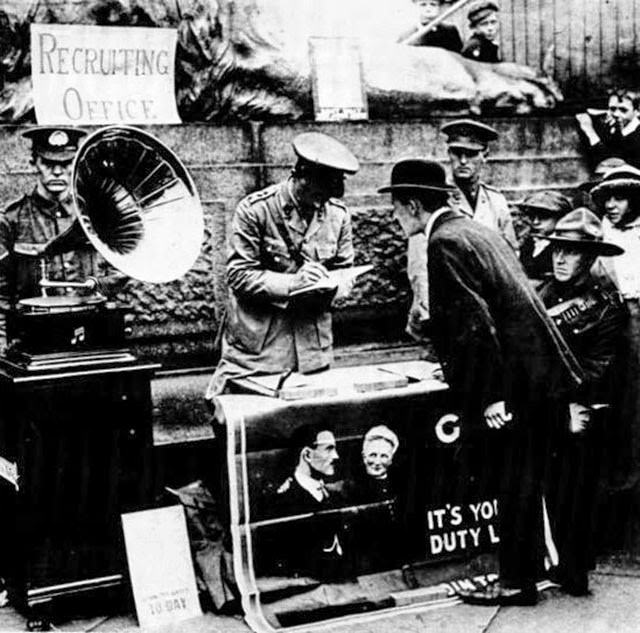
#12 An Army recruiting team in Trafalgar Square during the early days of WW1.

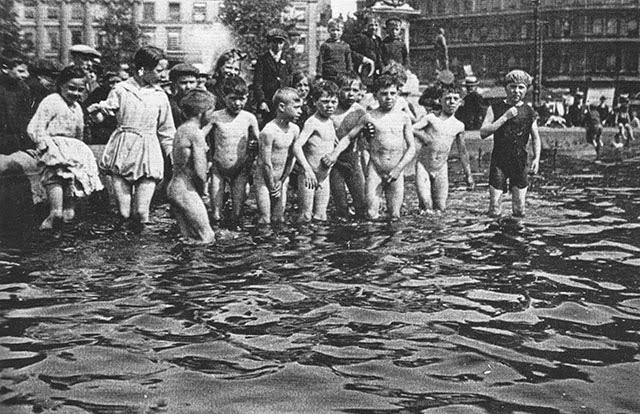
#13 In 1912 there seemed to be a shortage of swimming costumes in and around London especially in the fountains of Trafalgar Square, but the girls still retained their modesty.

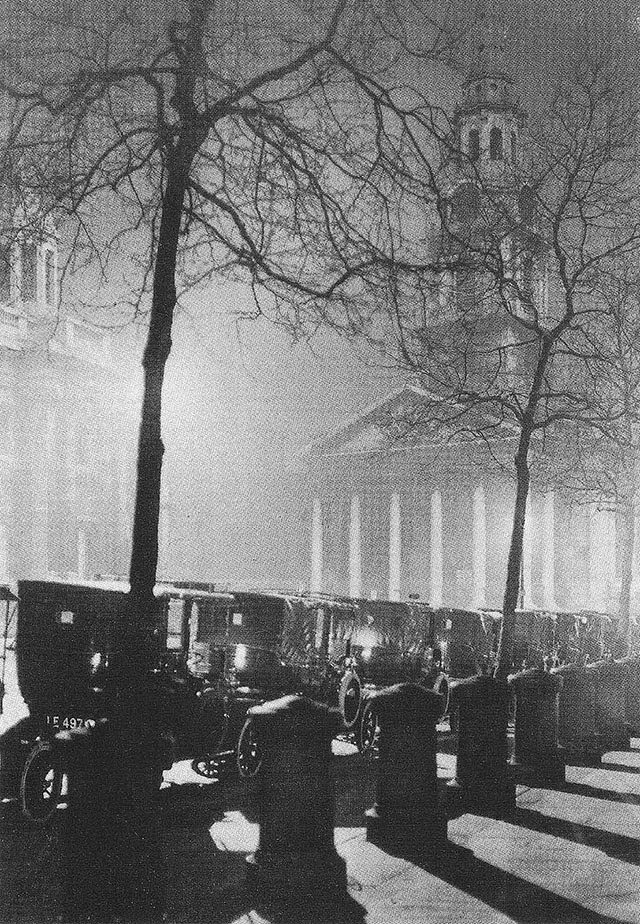
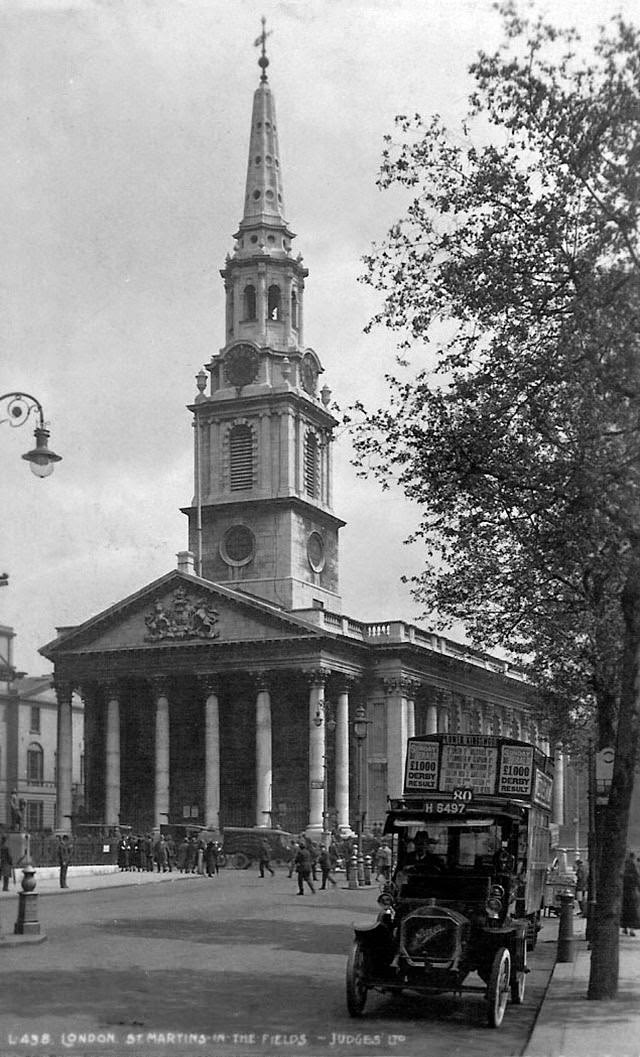
#15 This is a night time photograph of what appears to be a taxi rank on the north side of Trafalgar Square with the church of St. Martin in the Fields in the background. The photograph is dated 1921.

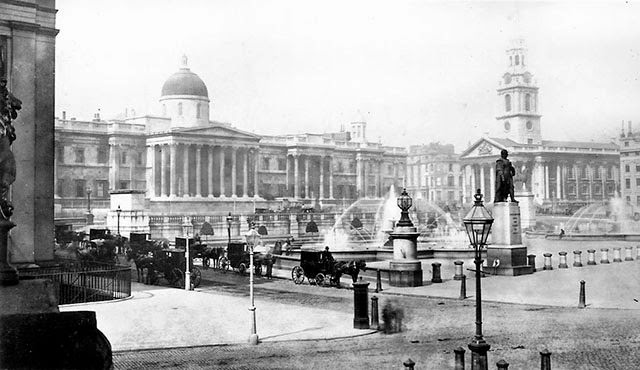
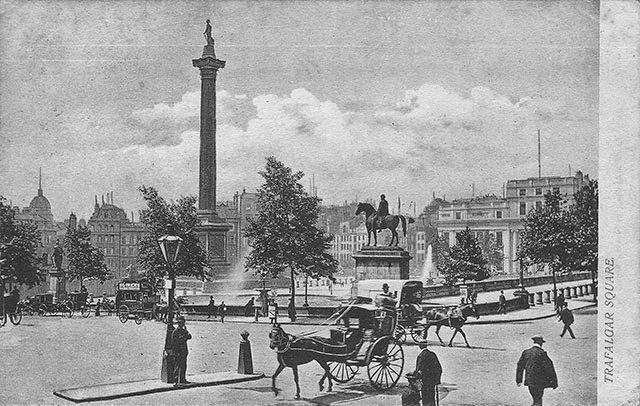
#16 A view of Trafalgar Square looking towards the south west, circa 1904.

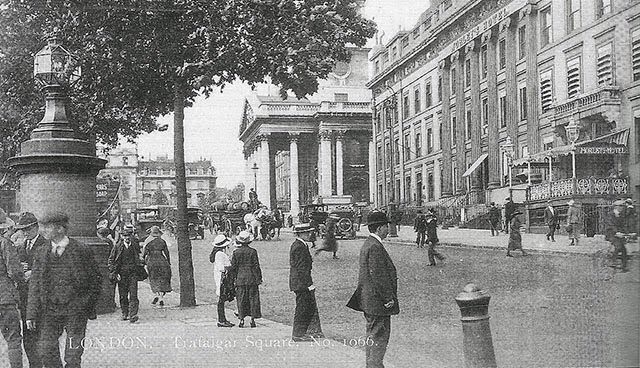
#17 A close up view of Morley’s Hotel, Morley’s Hill and the lamp plinth at the south east corner of Trafalgar Square which was turned into a Police Box in 1926.

#18 This is Saturday 6th July 1929, the 100th anniversary of bus travel in the Capital.

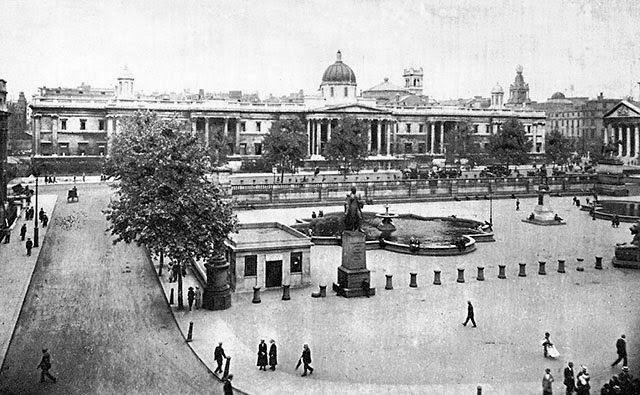
#19 A pre WW2 photograph of Trafalgar Square looking south showing the General Gordon Statue centre foreground.

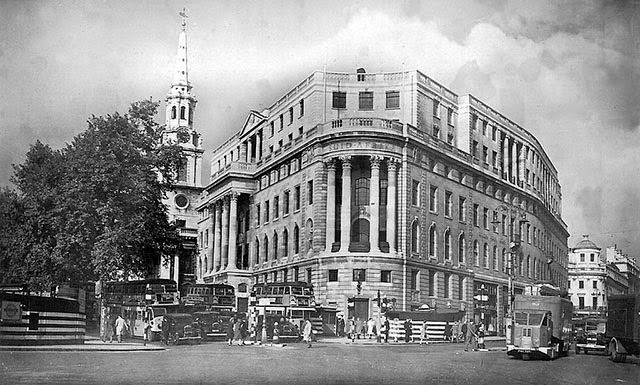
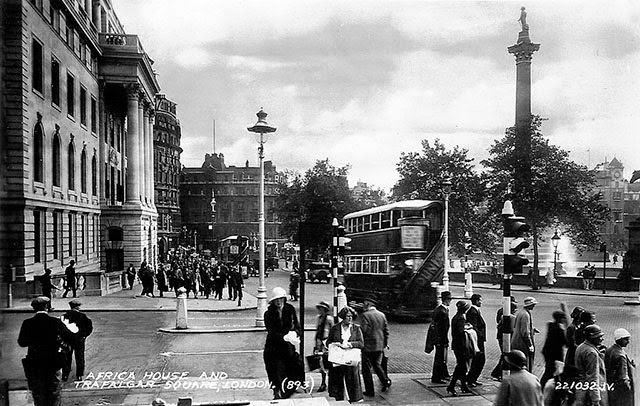
#20 A wartime photo of South Africa House and Morley’s Hill with the black and white striped painted roadside furniture to aid pedestrians and traffic during the blackout.

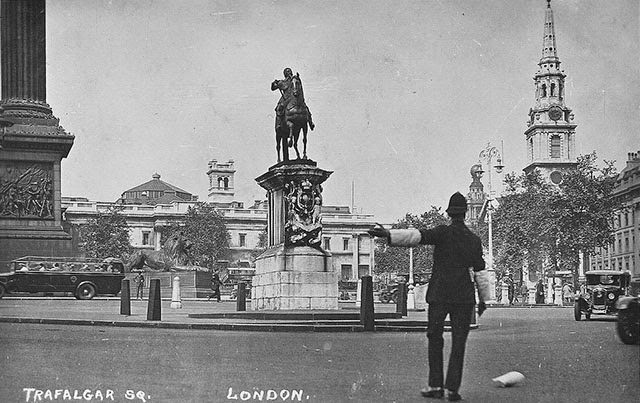
#21 An early 1930s view of Trafalgar Square with a Cannon Row Police Constable directing an interesting assortment of vehicles including a Charabanc on the left .

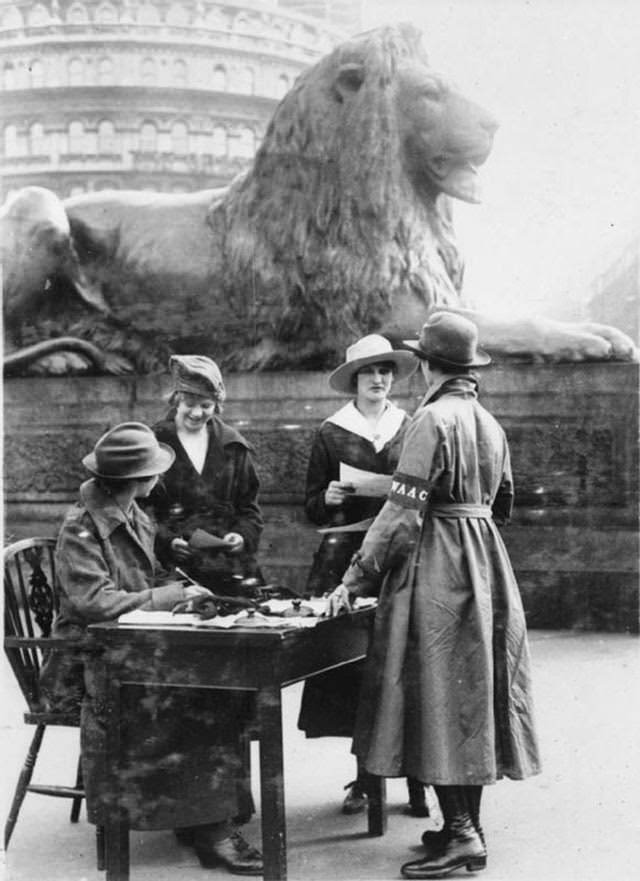
#22 The Women’s Army Auxiliary Corps was formed on 7th July 1917, so this photograph of WAAC recruiters dates from 1917 or 1918. The table in the open on Trafalgar Square suggests that this is 1917, a temporary building was erected in October 1917 on Trafalgar Square for the purpose of recruiting women for the war effort.

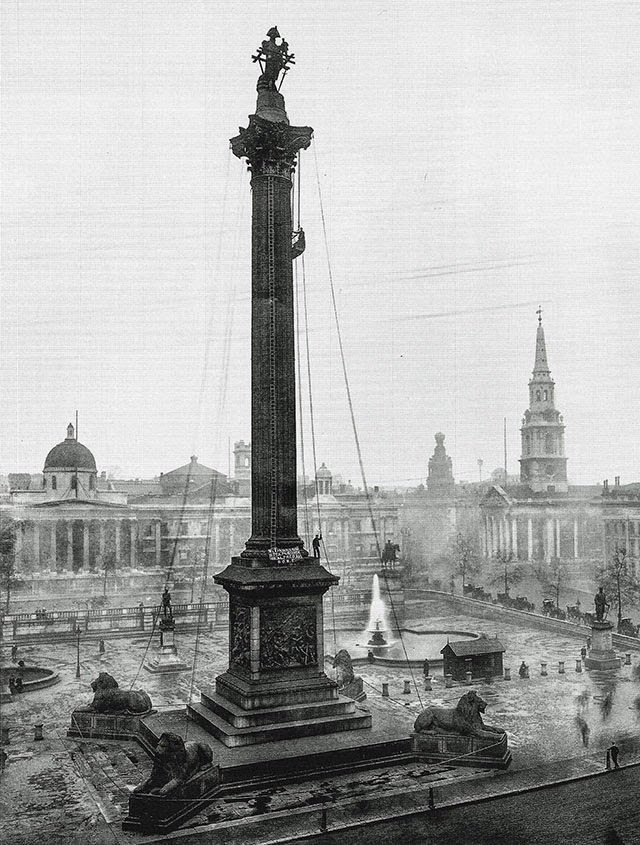
#23 This is spring 1905 and the Steeplejack firm of W. Larkins Co Ltd. are at work cleaning Nelson’s Column for the first time since it was erected in 1843.

#24 This photograph dates from 1904/5, the hit musical “Catch of the Season” ran for over 600 performances at the Vaudeville Theatre during that time.

#25 A view of Trafalgar Square taken from Northumberland Avenue outside the Hotel Victoria showing a Hansom Cab and a ‘Growler’ on the cab Rank in Northumberland Avenue. There is also a Cannon Row Police Constable on the pedestrian refuge bottom left talking to a man wearing a boater, probably 1903/04.

#26 A night time shot of the southwest corner of Trafalgar Square and Cockspur Street, circa 1920s.

#27 This temporary building appeared on the south west corner of Trafalgar Square in October 1917 during WW1.

#28 This photograph is from 1916 when there was no end to the war in sight and economies were being encouraged including official discouragement of extravagant dress.

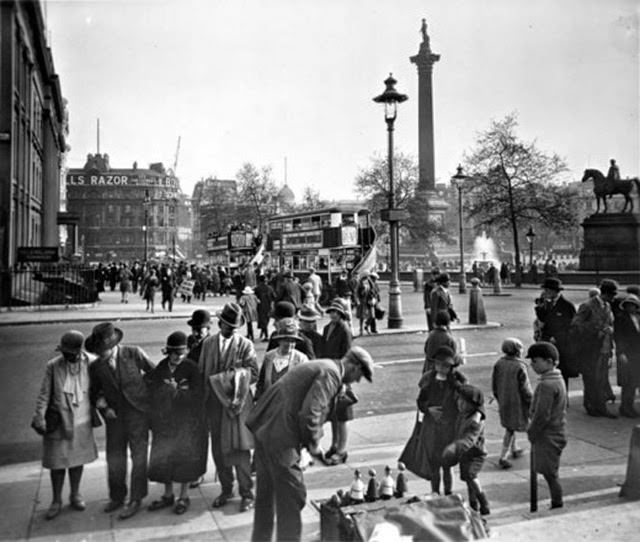
#29 This photograph was taken from the steps of St. Martin in the Fields looking southwards. Every man, woman and child is wearing a hat of some sort, but this is the late 1920s.

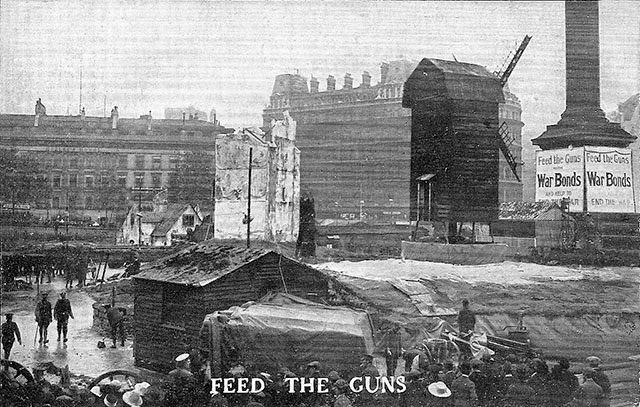
#30 This photograph is from 1918, the whole square was turned into a frontline French or Belgian village and the fountains were drained and filled with mud and twice a day soldiers re enacted an attack on enemy lines and at the end an appeal to the crowds to buy War Bonds. The PC is at the bottom left centre.

#31 An early 1930s photograph of the north east corner of Trafalgar Square with the National Gallery in the background.

#32 A birds eye view of a pre war Trafalgar Square, General Gordon is in the centre of the square; after the war he was put outside the MOD on Victoria Embankment. The large white building in Pall Mall East is Hamptons furniture store.

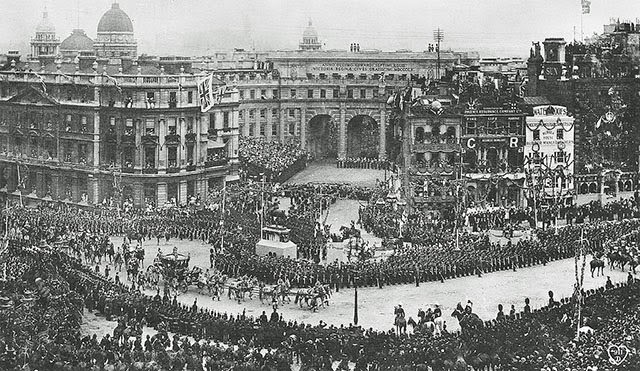
#33 This is Thursday 22nd June 1911 and King George V is returning to Buckingham Palace after his Coronation at Westminster Abbey.

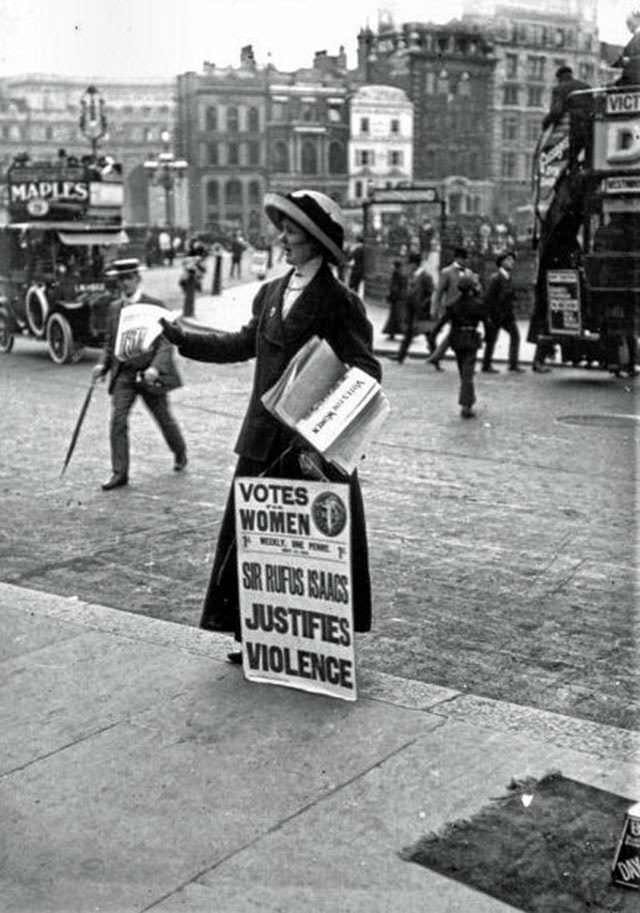
#34 The suffragette is selling the ‘Votes for Women’ newspaper outside Morley’s Hotel in Trafalgar Square, in the background is the newly built Admiralty Arch and the entrance to the new Trafalgar Square underground station. The ‘Votes for Women’ newspaper was one of several suffragette newspapers published during the early years of the 20th century, this particular edition which paraphrased the Solicitor General at the time, was published on Friday 29th April 1910.

#35 This photograph shows very clearly the Bomb shelters which were erected on the square during WW2.

#36 At least three PCs are trying to direct traffic in what seems to be a free for all, circa early 1910s.

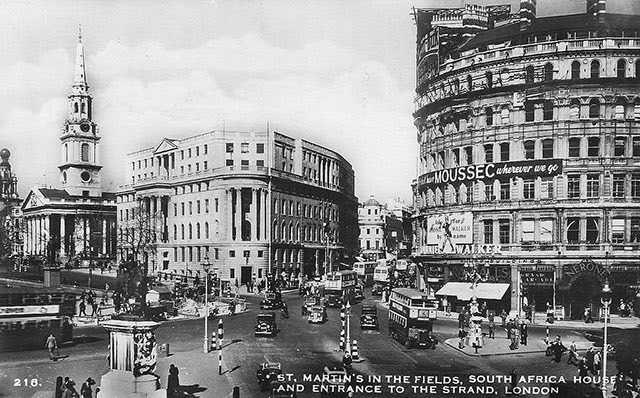
#37 The photographer has taken this photograph from the corner of Duncannon Street and St. Martin’s Place actually on the steps of St. Martin in the Fields. It is the mid thirties, South Africa House has just been completed in 1933 but the fashions seem strangely 1920s.

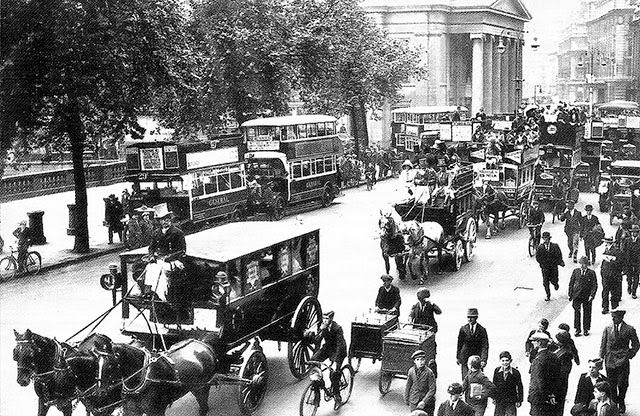
#38 A pre 1926 photograph of an early June scene on the north side of Trafalgar Square. A London taxi cab parked in front of bus both facing the wrong way so it must be before the gyratory system was introduced in 1926.

#39 A late 1930s view of Trafalgar Square taken from the Dent & Co. building which was on the corner of Cockspur Street and Spring Gardens.

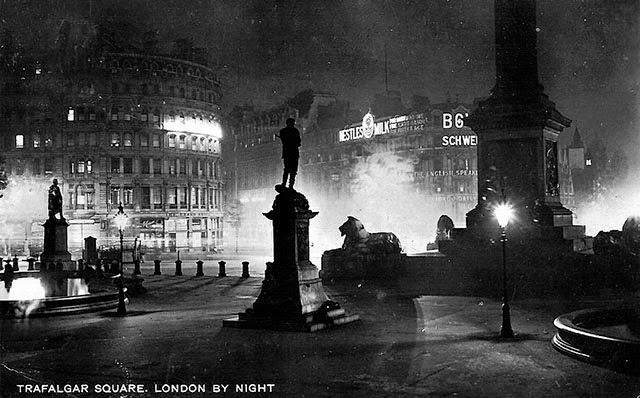
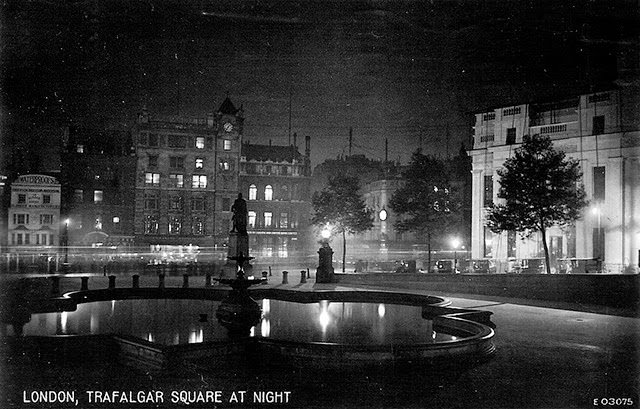
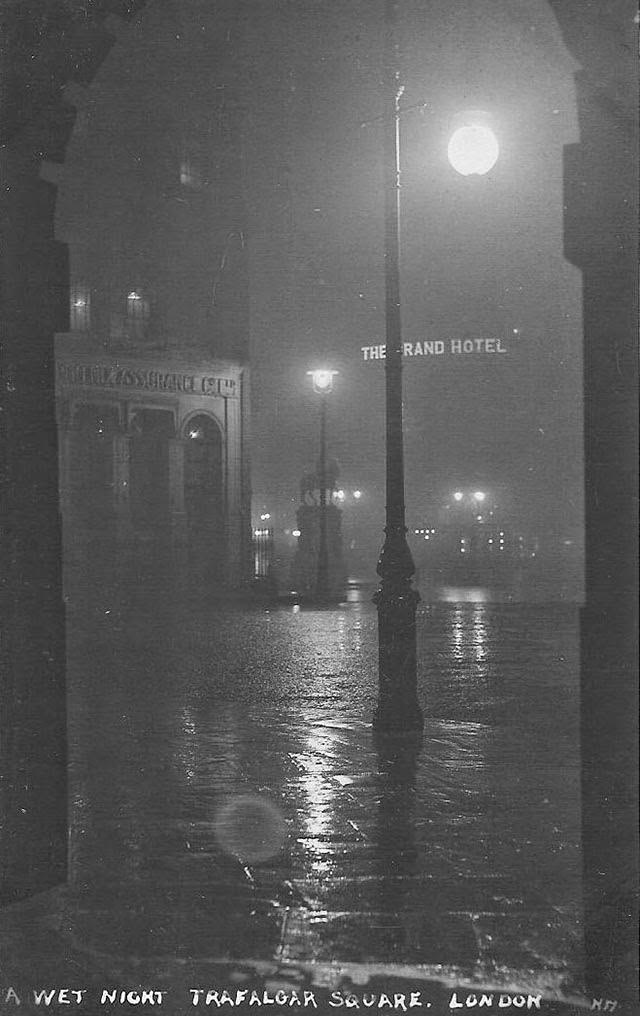
#40 This is a night time view of Trafalgar Square taken from just inside the south pedestrian archway of Admiralty Arch looking roughly north east. This is quite early, the single storey building on the left is a branch office of the Phoenix Assurance Co Ltd, they occupied the building just before WW1.

Avatar of Kevin Clark

Written by Kevin Clark

Kevin Clark is a historian and writer who is passionate about sharing the stories and significance behind historical photos. He loves to explore hidden histories and cultural contexts behind the images, providing a unique insight into the past.

Leave a Reply

Your email address will not be published. Required fields are marked *