Long before air conditioning was common, New York City summers were brutal. Temperatures turned brick tenements into ovens, and asphalt streets radiated heat deep into the night. New Yorkers had to get creative—and these vintage photos show exactly how they did it.
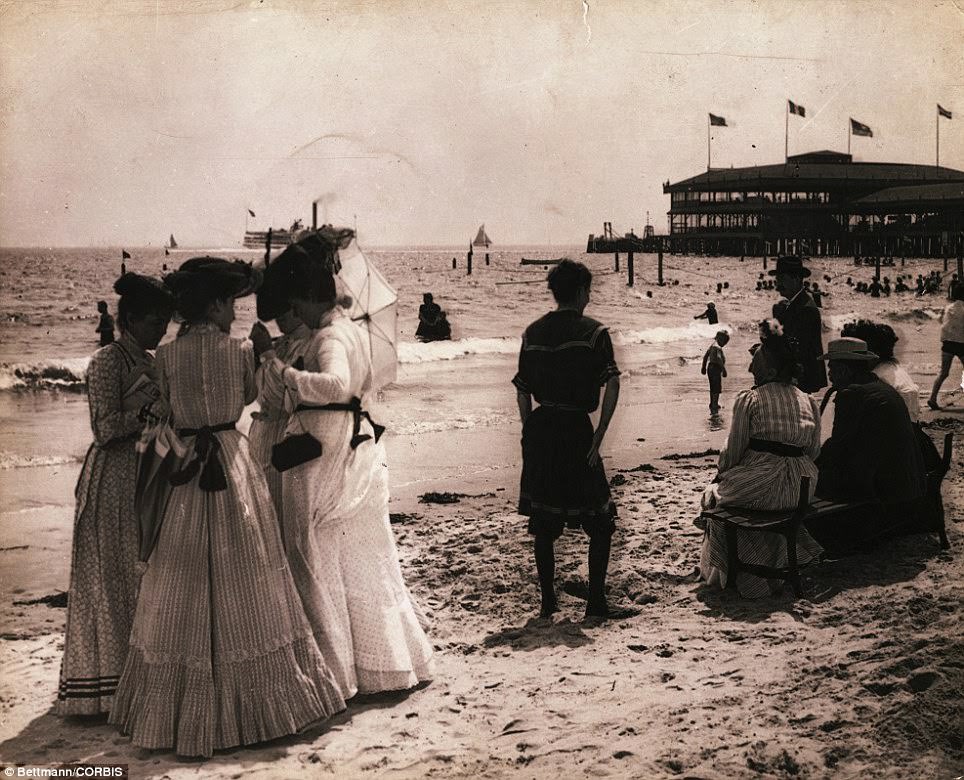
Coney Island Beach ca. 1900
In the early 1900s, the Hudson River and the East River were the city’s unofficial swimming holes. Young boys ignored “No Swimming” signs and health warnings to leap from wooden piers directly into murky water alongside active shipping lanes. Tugboats and barges passed just feet away as kids treaded water near the pilings. Floating wooden bathhouses tethered to the docks offered adults a slightly more enclosed option, letting them soak in the river water without jumping into open channels.
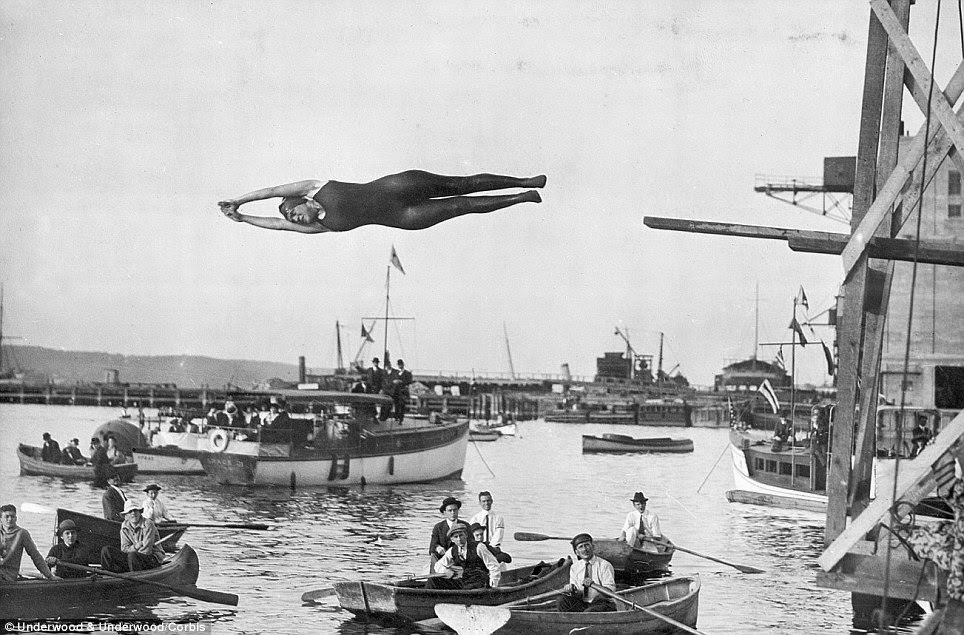
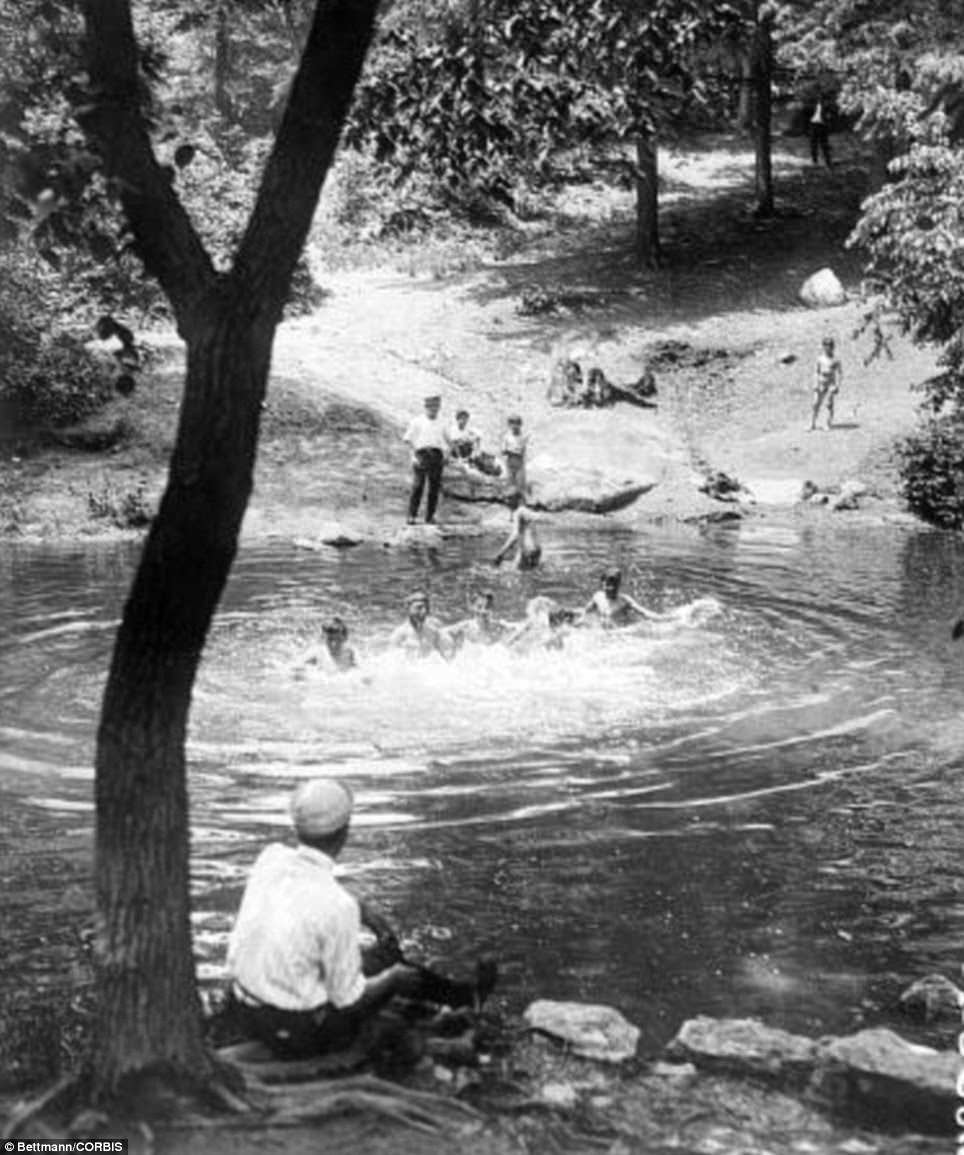
Miss Elsie Henneman dives into the water near the Hudson River Yacht Club.The cooling waters of the little river that runs through Bronx Park offered a delightfully refreshing plunge for neighborhood boys in 1922, in the midst of paved streets and brick buildings
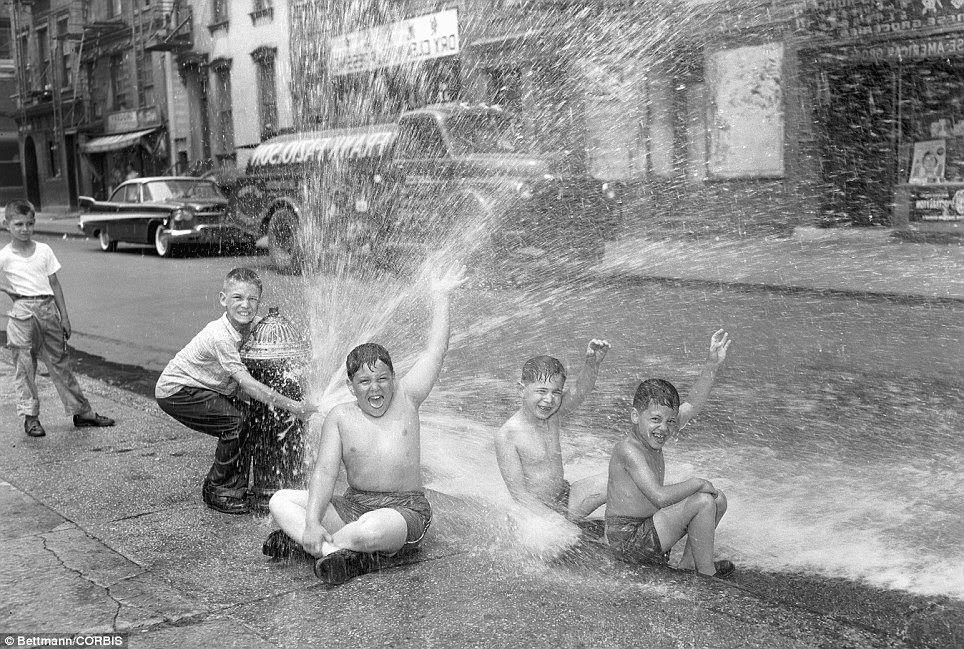
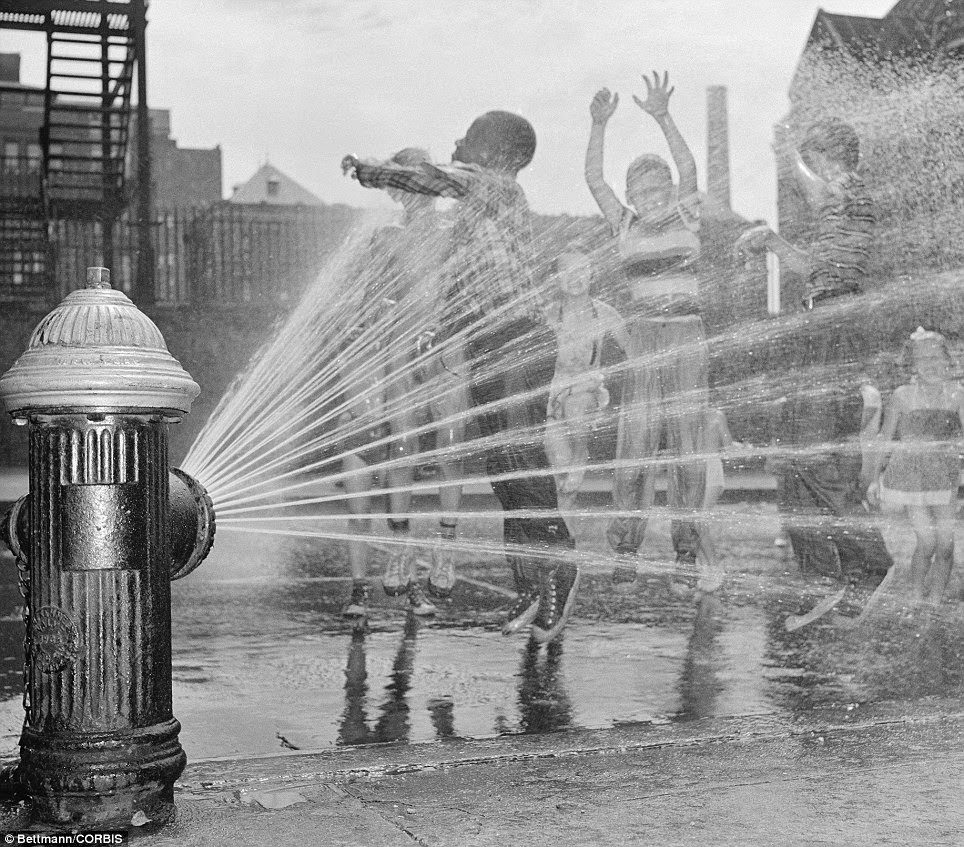
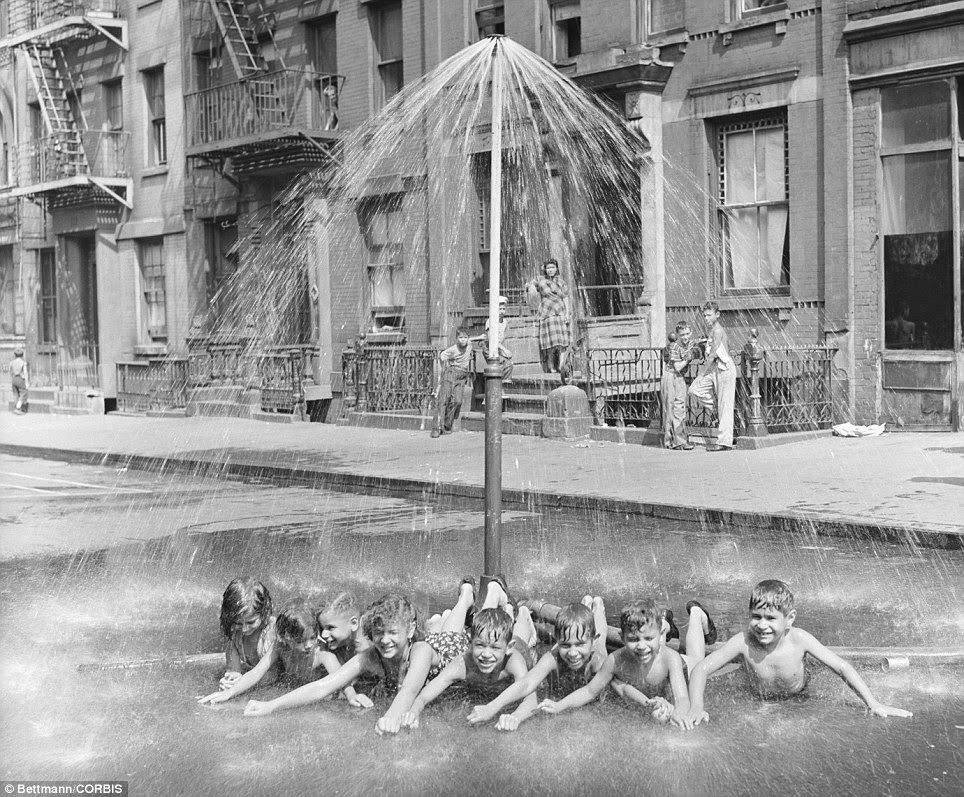
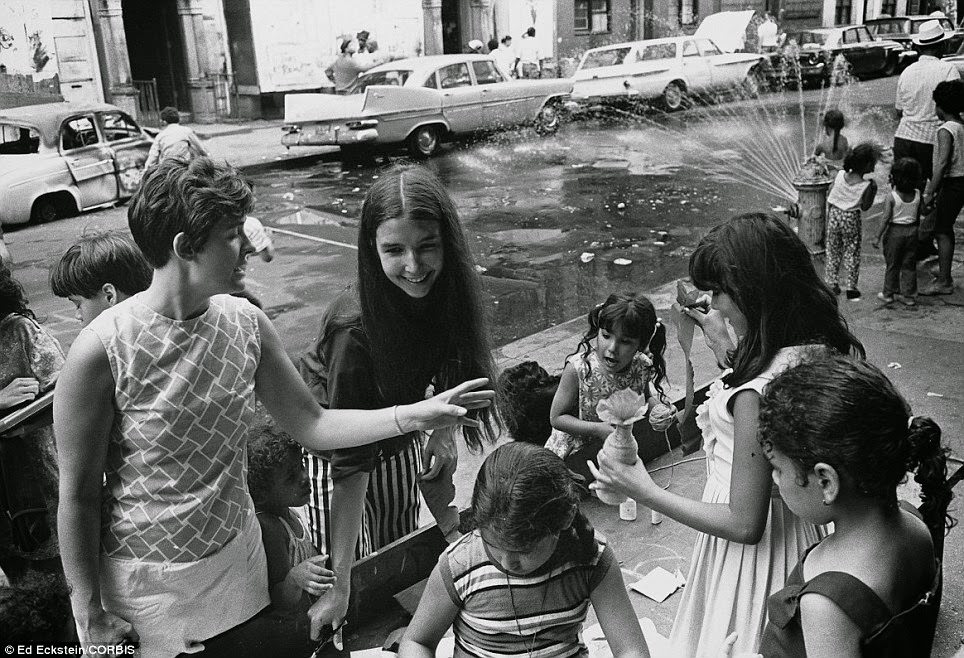
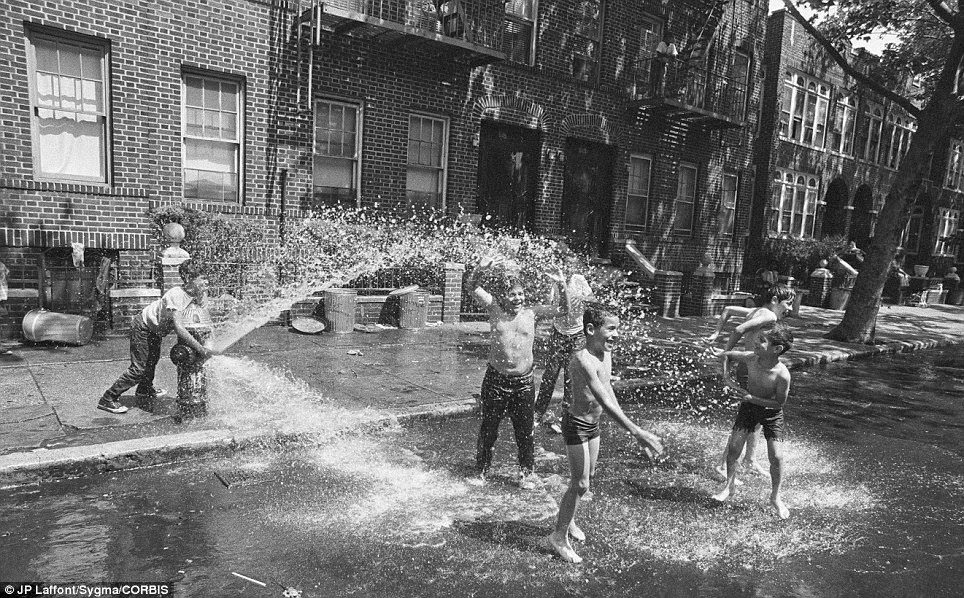
By the mid-20th century, the fire hydrant—called a “Johnny pump” by locals—became the symbol of summer street life. A heavy wrench was all it took to crack the valve open. New York’s water pressure was strong enough to shoot a stream halfway across a city block. Kids placed a tin can with both ends removed over the nozzle, turning the blast into a wide, arcing shower. The cold spray cooled the hot asphalt and gave entire neighborhoods a free water park.
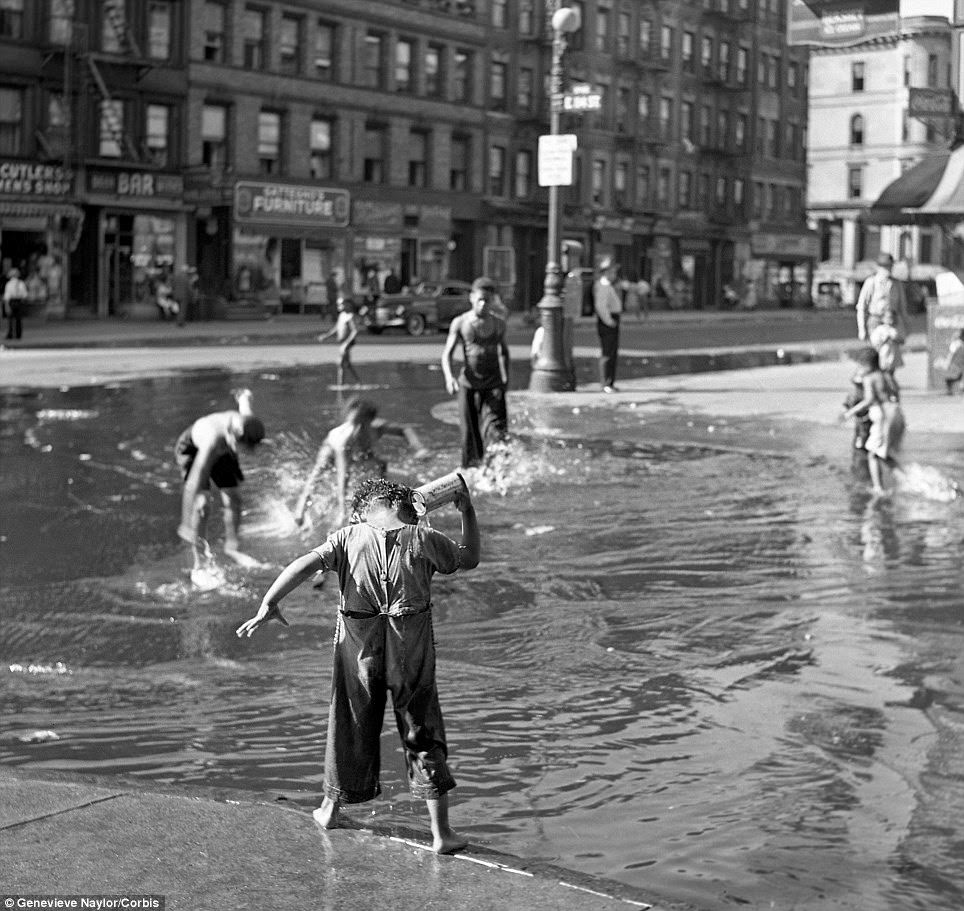
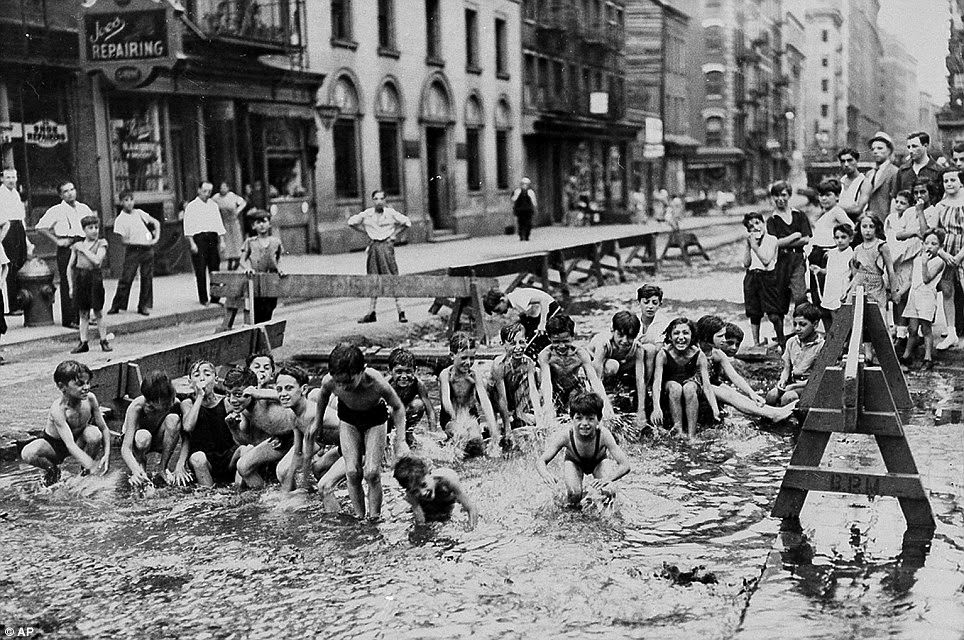
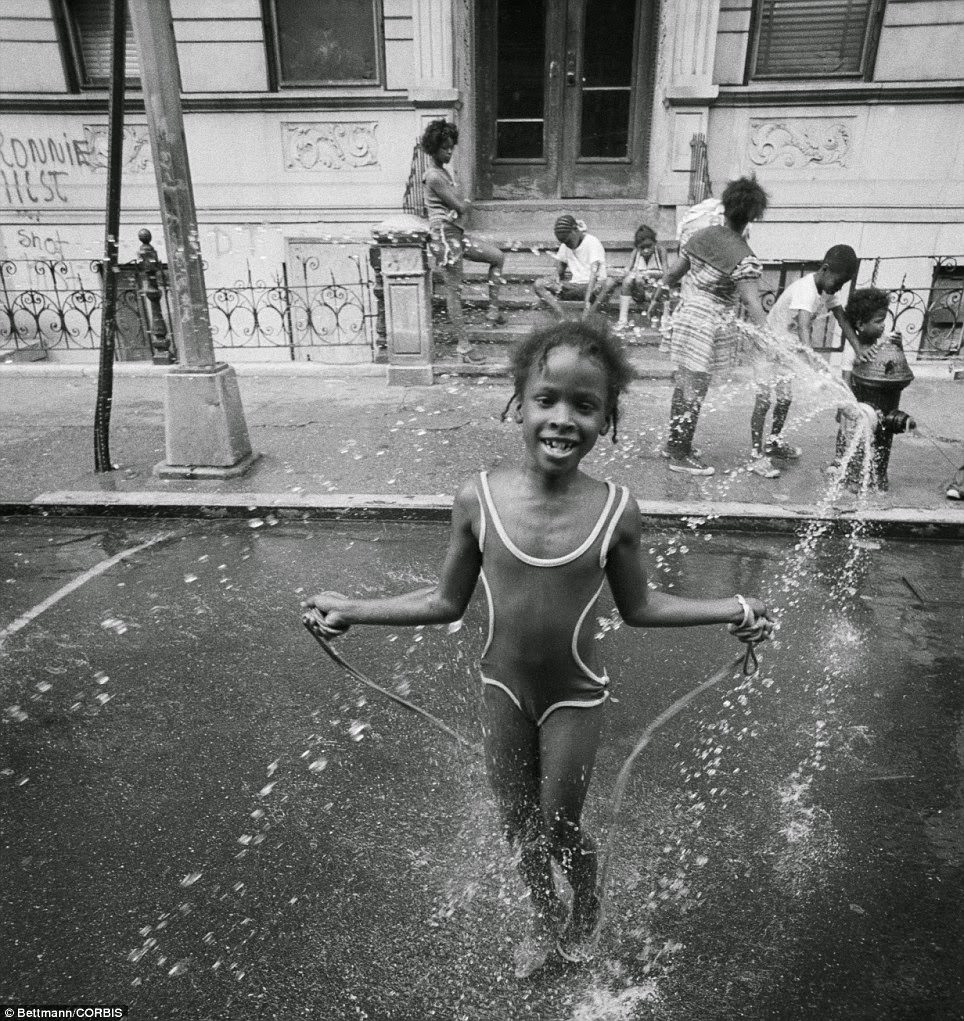
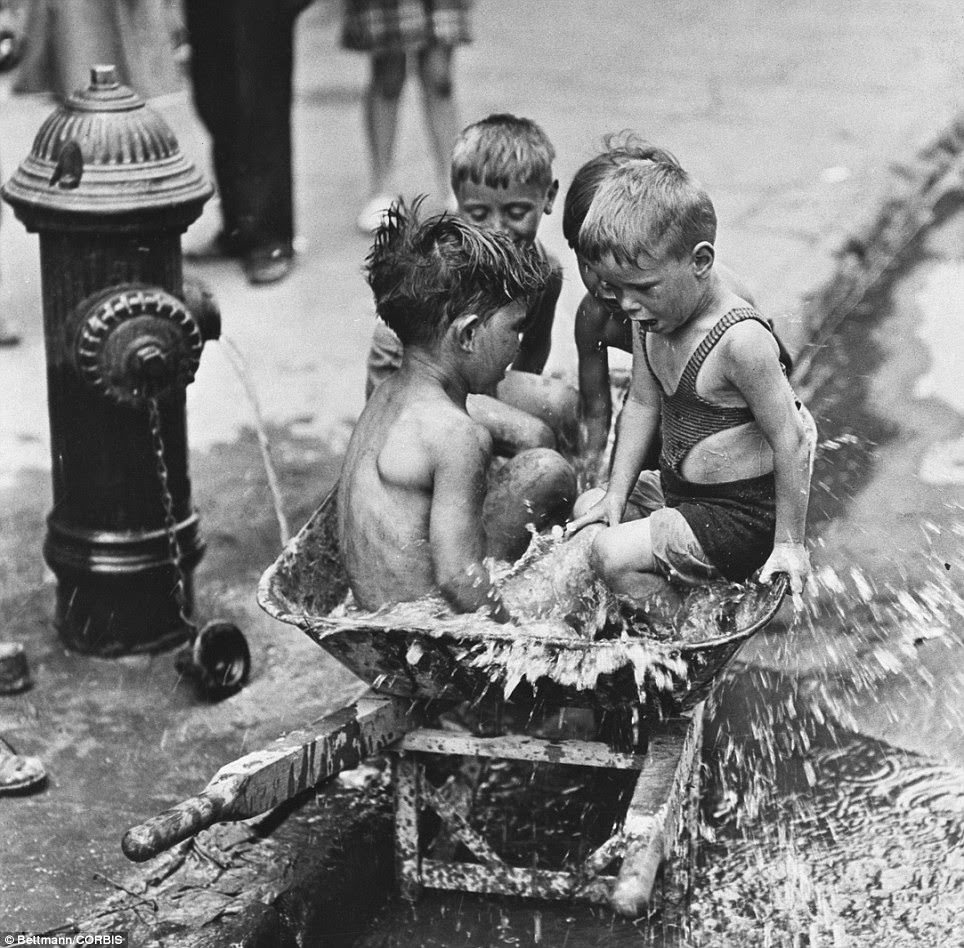
With one youngster manning the hydrant, three boys of New York’s super-heated Lower East Side get a cool and refreshing shower as a brief respite in 1957Children welcomed sweltering weather in 1954 because it gave them a chance to frolic under the spray of fire hydrants; pictured, near New York City’s Columbus CircleDozens of children play in a water-filled 104th street in Harlem during 1939Children on Mulberry St on the Lower East Side turn an excavation site into a temporary swimming hole using water from a fire hydrant as July temperatures hit record heights in the city in 1936While adults can complain about the heat of summer, many children delight in it; a little girl in Harlem skips away the hours in the refreshing spray of a fire hydrant in the 1950sSeated in a WPA wheelbarrow beside a gushing fire hydrant on the Lower East Side, four boys cool off in 95degree heat during 1939Children on East 101 Street, near Lexington Avenue play in a makeshift shower during 1948
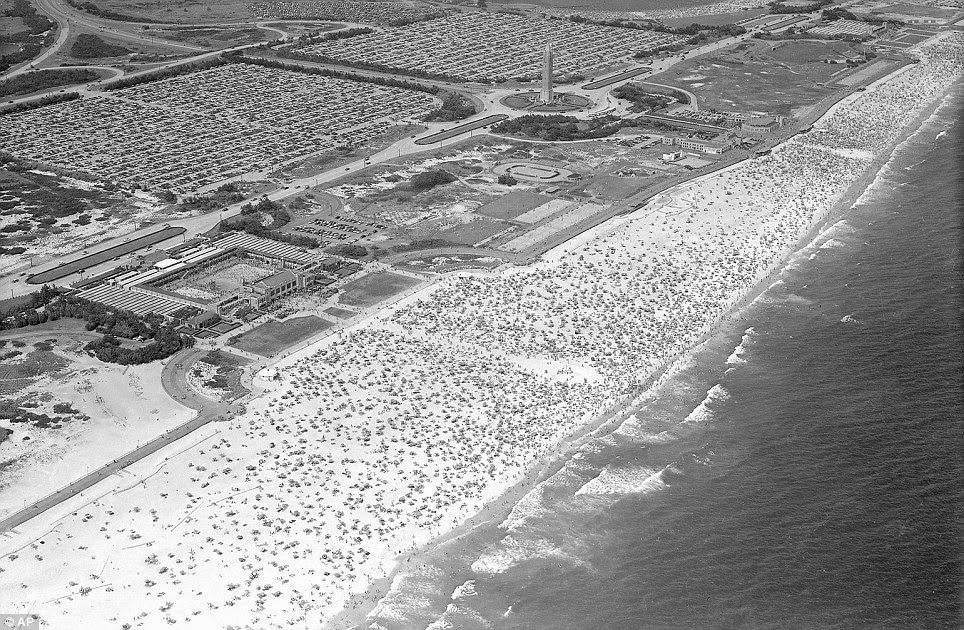
When city pools and hydrants weren’t enough, New Yorkers headed to the parks and beaches. On scorching days, children waded into the Conservatory Water and climbed into the basin of the Bethesda Fountain in Central Park. The Sheep Meadow transformed into an open-air campground at night, with thousands sleeping on the grass. Jones Beach drew enormous crowds—a single 1957 heat wave packed 216,000 people onto its shores in a single day.
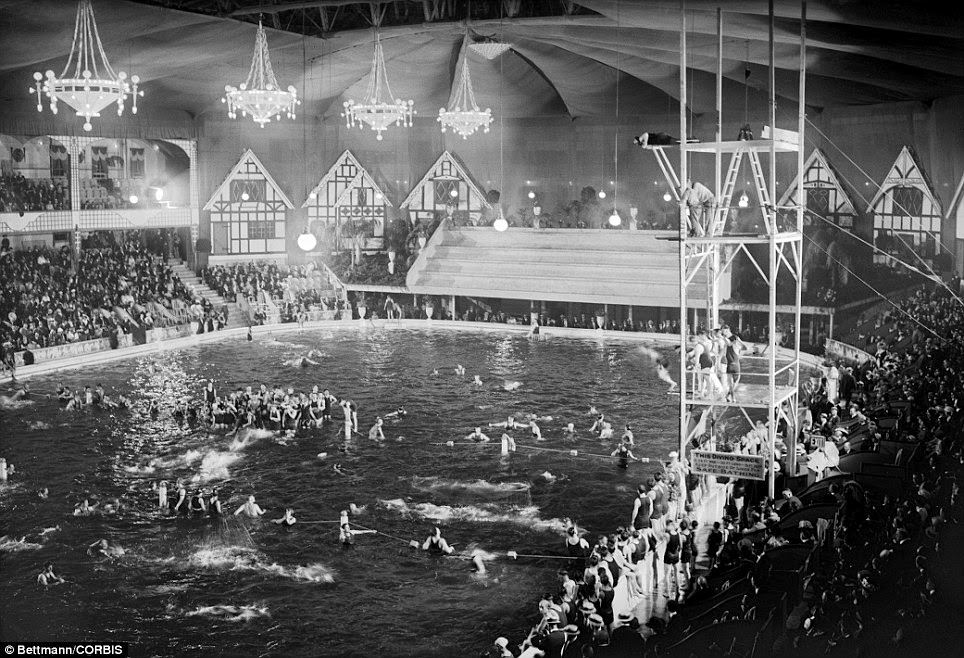
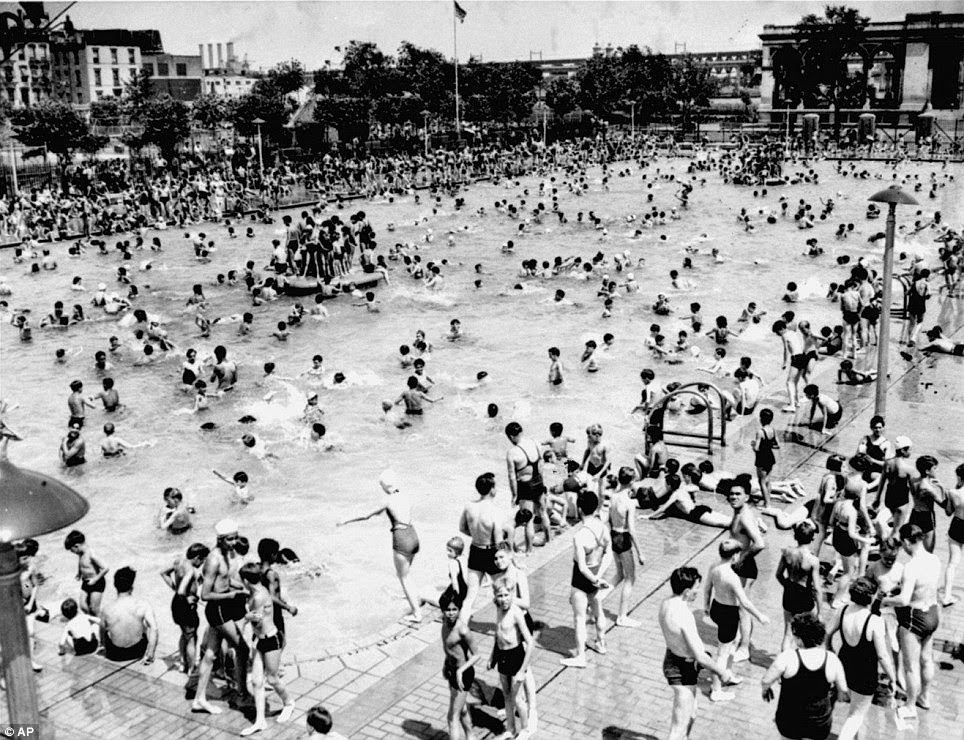
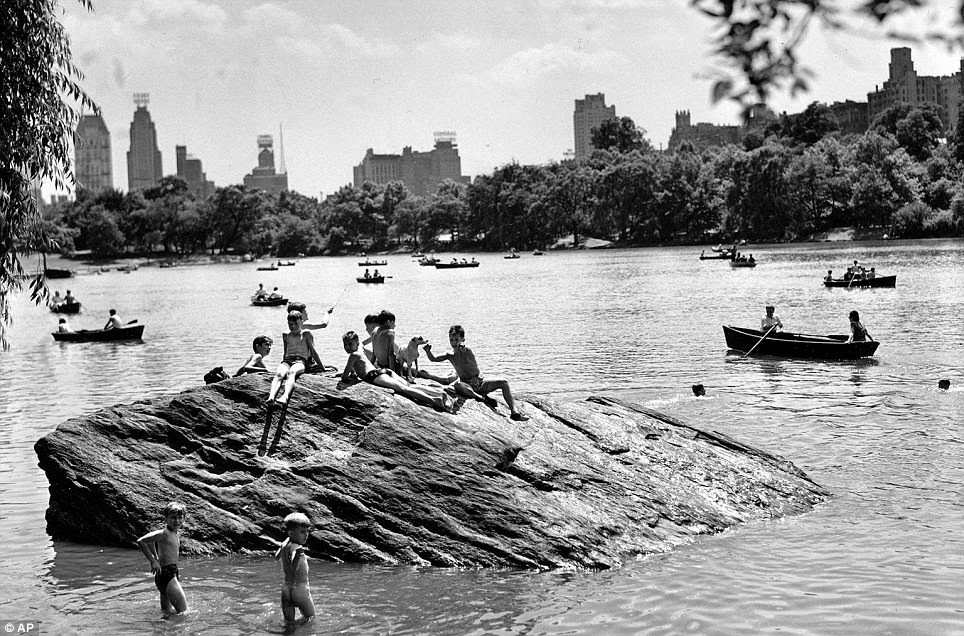
A crowd of 216,000 New Yorkers jams Jones Beach in the hopes of escaping the intense heat that was blistering New York City and the eastern half of the nation in 1957Madison Square Garden transformed into swimming pool scene in Tex Rickard’s luxurious indoor swimming pool which was thrown open to the public in 1921As the sun boils overhead, Upper East Side kids splash in one of the city’s then-new swimming pools at 112th Street and First Avenue during 1938Perched atop a rock in the north end of the Central Park Lake in 1944 are children who take frequent dips while others enjoy boating
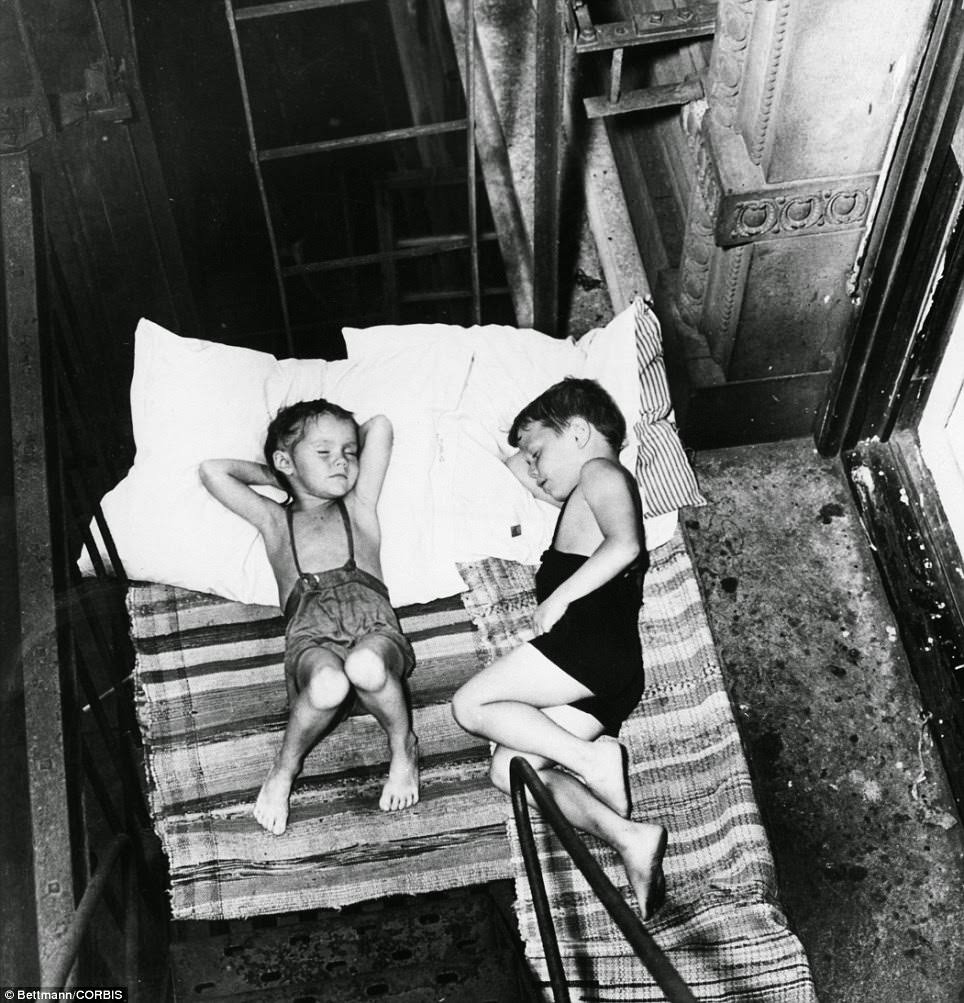
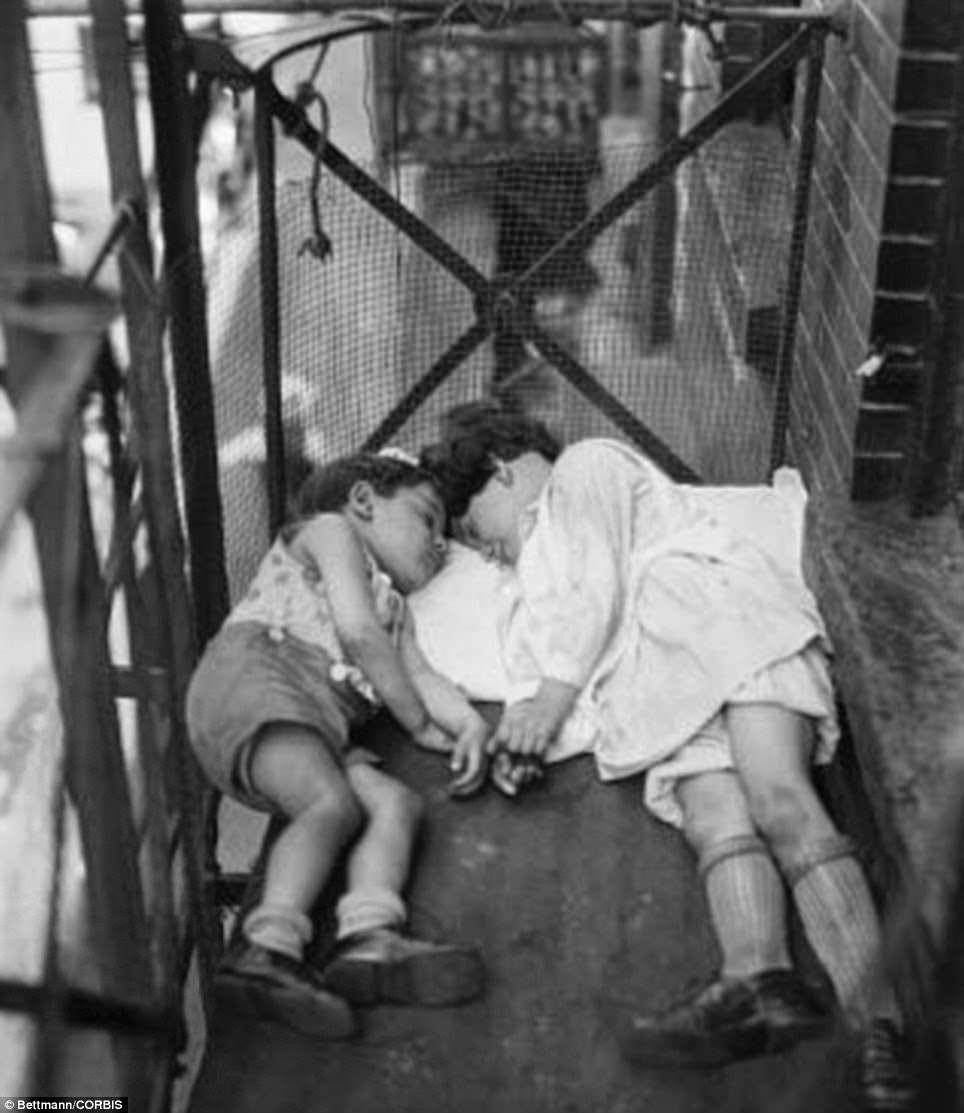
At night, the tenement buildings of the Lower East Side and Harlem offered no escape. Families dragged mattresses, pillows, and sheets through windows and onto iron fire escapes to sleep in the open air. Residents on upper floors climbed to the rooftop—affectionately called “Tar Beach”—to catch whatever breeze drifted in from the harbor.
During summer months, the Lower East Side’s tenement buildings’ tiny rooms became so stifling that many children and tenement dwellers would sleep on the roof, or more frequently, on accessible fire escapesTwo children in New York City keep cool during the hot weather by sleeping outside on the fire escape in 1929Girls play in the street and sidewalks during a block party in New York during the summer of 1970The long, hot summer of 1971 meant children cooled off with a water hydrant – now a classic New York summer scene
Kevin Clark is a historian and writer who is passionate about sharing the stories and significance behind historical photos. He loves to explore hidden histories and cultural contexts behind the images, providing a unique insight into the past.